Lesson 8 of 14 · about 55 minutes · Updated October 28, 2026
Anabaptists Today: Mennonites, Amish, Hutterites and Brethren
You'll be able to
- You'll be able to summarize what the Dordrecht Confession of 1632 teaches on nonresistance, oaths, the ban and shunning, in its own words.
- You'll be able to explain why Jakob Ammann's followers separated in 1693 and how the Amish differ from Mennonites today.
- You'll be able to trace the Hutterites from Nikolsburg in 1528 to their present colonies and describe their community of goods.
- You'll be able to describe the origin of the Brethren at Schwarzenau in 1708 and their divisions of the 1880s and the 2020s.
- You'll be able to give current counts for the main bodies with their year and source, and say which are estimates.
- You'll be able to state what Wisconsin v. Yoder (1972) and United States v. Lee (1982) decided.
Start here: the short version
The Anabaptists began in Zurich in January 1525, when a circle of Zwingli's former students baptized one another as adults. Their opponents named them "rebaptizers." In their first century, as many as 2,500 of them were put to death, most often by burning or beheading.1 Four families of churches descend from that movement or stand close to it today. The Mennonites take their name from the Dutch priest Menno Simons. The Amish separated from the Swiss and Alsatian Mennonites in 1693 under the elder Jakob Ammann, and in 2026 the Young Center at Elizabethtown College counted 421,340 horse-and-buggy Amish, children included, in 728 settlements.2 The Hutterites hold all goods in common, as Acts 2 and 4 describe, and live on about 559 colonies on the northern prairies, about 50,000 people by their own estimate.3 The Brethren began at Schwarzenau in Germany in 1708, when eight people were baptized in the Eder River. They drew on both Pietism and Anabaptism, and the largest branch, the Church of the Brethren, reports that, as of 2025, it had "over 70,000 members in almost 800 congregations in the United States."4
This lesson picks up where Module 79, lesson 12 stops. It covers the Dordrecht Confession of April 21, 1632, which most Old Order groups still use.5 It also covers the Amish division, the move to Pennsylvania, the Hutterite and Brethren stories, the bodies that exist today and their own counts, and the 1972 Supreme Court case Wisconsin v. Yoder. Each body speaks first in its own words. The record follows, and after that come the readings of outsiders.
Where this lesson begins
The first chapter of this story is already told in Module 79. Its lesson on Zwingli, Calvin and the wider Reformation covers the first adult baptisms in Zurich in January 1525, the Zurich council's response of drowning, Michael Sattler and the Schleitheim articles of February 24, 1527, Balthasar Hubmaier, the first Hutterites, the disaster at Munster in 1534 to 1535, and Menno Simons. Read that lesson for those events. This lesson keeps only the points that later Anabaptist churches still argue from.
The sixteenth century in brief
The Anabaptists rejected infant baptism. They baptized one another as adults, on a confession of faith, and gathered churches of people who had chosen to join. The Young Center for Anabaptist and Pietist Studies, at Elizabethtown College in Pennsylvania, sums up what that choice meant for the state churches around them: "They were, in fact, some of the earliest proponents of the separation of church and state."1 Catholic, Lutheran and Reformed rulers all treated rebaptism as a crime. The Schleitheim articles of 1527 set out seven points that the Swiss Brethren held in common: believers' baptism, the ban (church discipline), the Lord's Supper for the baptized, separation from the world, pastors chosen by the congregation, refusal of the sword, and refusal of the oath. Those seven points come back again and again in what follows.
In the Netherlands and north Germany, Menno Simons left the Catholic priesthood and joined the Anabaptists in 1536. The Young Center notes that "many of his followers became known as Mennonites."6 He spent the next 25 years as a hunted elder, and by the end of the century his name had become the common label for the peaceable Anabaptists of the Low Countries, North Germany and, later, Switzerland and the Rhineland. The Hutterites took a separate path in Moravia from 1528. That story is told in full below, because the Hutterites are a living church whose present colonies trace their rule straight back to those first years.
What matters for the later history is this. By 1600 the Anabaptists were not a single church. The Swiss Brethren, several Dutch and Frisian groups (Flemish, Frisian, Waterlander and others), the High German churches and the Hutterites each had their own leaders and their own disputes, mostly about how strictly to apply the ban. The confession of 1632 was written to make peace among some of them. Within 60 years, a quarrel over that same confession's article on shunning would produce the Amish.
The Martyrs Mirror and Dirk Willems
The memory of persecution was gathered into a single large book, Thieleman J. van Braght's The Bloody Theater or Martyrs Mirror of the Defenseless Christians, first published in Dutch at Dordrecht in 1660. Its full title explains its scope: martyrs "who baptized only upon confession of faith, and who suffered and died for the testimony of Jesus, their Savior, from the time of Christ to the year A.D. 1660."7 The book sits in many Amish and conservative Mennonite homes in the English translation by Joseph F. Sohm (first published 1886), and it is the source of the most retold story in the whole tradition.
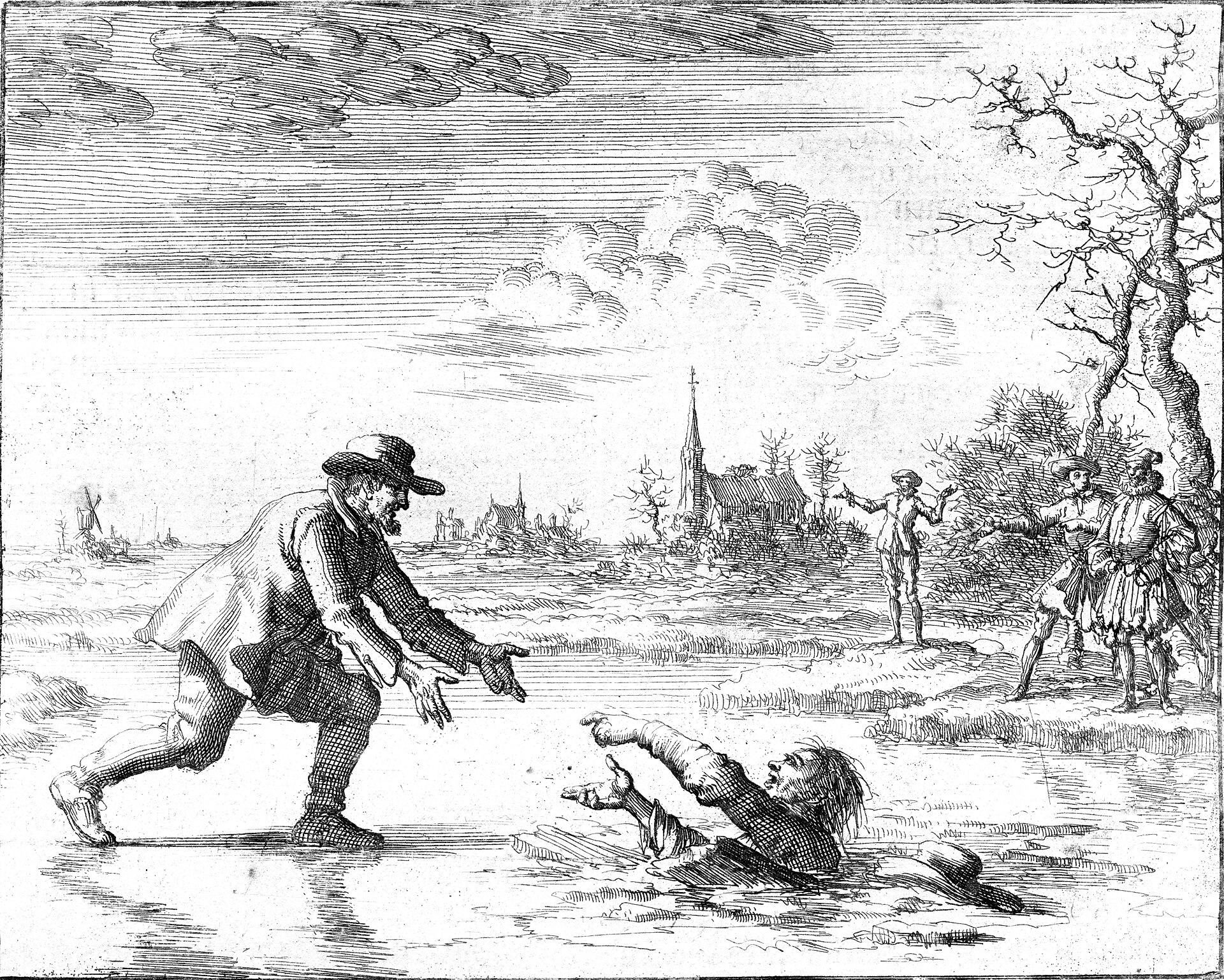
The story is that of Dirk Willems, arrested at Asperen in Holland in 1569. The Martyrs Mirror gives the account "by trustworthy persons" that when he fled across a frozen pond, "the thief-catcher following him broke through, when Dirk Willems, perceiving that the former was in danger of his life, quickly returned and aided him in getting out, and thus saved his life." The pursuer wanted to let him go, but the burgomaster "very sternly called to him to consider his oath," and Willems was seized again and burned "at a lingering fire."8 The book adds that a strong east wind drove the flames away from his upper body, so that he suffered a long death, and that he was heard in the town of Leerdam to cry out "over seventy times."8 The Martyrs Mirror is a partisan book: it calls the persecutors "deceitful papists" and "bloodthirsty, ravening wolves." Its stories rest on court records, letters and the memory of witnesses, and the Dirk Willems entry rests on both witnesses and an official record. The rescue on the ice is told from "trustworthy persons" and from the memoirs of those present at the death. The book then prints a copy of the court's sentence, dated May 16, 1569, "Extracted from the records of the town of Asperen" and certified by the town clerk on October 15, 1606. The sentence condemns Willems to be "executed with fire, until death ensues" for having been rebaptized in Rotterdam and for holding "secret conventicles" in his house at Asperen. It says nothing about the rescue.8 The claim is rated below.

The Dordrecht Confession of 1632
A peace convention at Dort
By the 1620s the Dutch Mennonites were split into several rival groups, and the Flemish and Frisian churches in particular had spent decades banning one another. In April 1632, ministers from a number of these churches met at Dordrecht (Dort), the same city where the Reformed Synod of Dort had condemned the Arminians thirteen years earlier (see lesson 03). The text preserved in the Martyrs Mirror heads it as a confession "drawn up at Dort, at a certain peace convention on the 21st of April, 1632, being a statement of the chief articles of our general Christian faith, as the same are taught and practiced throughout in our church."5 It closes: "Thus done and finished in our united churches, in the city of Dortrecht, the 21st of April, 1632, new style."5
The signatures that follow are grouped by city: Dordrecht, Middelburg, Vlissingen, Amsterdam, Haarlem, Bommel, Rotterdam, Krefeld, Zeeland, Schiedam, Leiden, Blokzijl, Utrecht, Gorinchem, Arnhem and "the Upper Part of the Country." Among the Dordrecht names is Adriaen Cornelissz, the elder of the Flemish congregation there, who is usually named as the author.5 The Martyrs Mirror then adds a note that matters for everything after: "also all the churches in Alsace and in the Palatinate, in Germany, afterwards unanimously adopted and signed it; wherefore it was undertaken to translate the same for their benefit and that of others, into French and into German."5 Through those Alsatian and Palatine churches the confession passed to the Swiss and South German Mennonites and the Amish, and then to Pennsylvania. It is commonly reported that Mennonite ministers in Pennsylvania formally adopted it in 1725, with an English translation printed in Philadelphia in 1727. This lesson could not open a primary record of that 1725 meeting, so the date is reported here, not confirmed.
What the eighteen articles teach
The confession has eighteen articles. The first ten cover the ground shared with most Christians: God and creation, the fall, the restoration through Christ, the incarnation, the law of Christ, repentance, baptism, the church, the election of ministers, and the Lord's Supper. Baptism, in its seventh article, is for "all penitent believers" who "must, upon such scriptural confession of faith, and renewing of life, be baptised with water," so infants are left out by the definition itself. The last eight articles are the ones that marked these churches off from their neighbors. Quotations below are from the Sohm translation as printed in the Martyrs Mirror.
Footwashing (Article XI). "We also confess a washing of the saints' feet, as the Lord Christ not only instituted, enjoined and commanded it, but Himself, although He was their Lord and Master, washed His apostles' feet, thereby giving an example that they should likewise wash one another's feet."5 It is called "a sign of true humility." Most Old Order Amish, Old Order Mennonite and Brethren groups still wash feet at their communion services.
Marriage (Article XII). Marriage is "of two free, believing persons," and the article goes on to restrict it to marriage "in the Lord," meaning within the church.5
The secular authority (Article XIII). The confession teaches obedience to rulers. "We believe and confess that God has ordained power and authority, and set them to punish the evil, and protect the good," and that "we, therefore, may not despise, revile or resist the same, but must acknowledge and honor them as the ministers of God," including to "faithfully pay custom, tribute and taxes."5 Separation from the world did not mean refusing taxes or the law. It meant refusing the sword and the oath.
Revenge (Article XIV). This is the peace article: "As regards revenge, that is, to oppose an enemy with the sword, we believe and confess that the Lord Christ has forbidden and set aside to His disciples and followers all revenge and retaliation, and commanded them to render to no one evil for evil." Believers are to "beat the swords into ploughshares," to "flee for the Lord's sake from one city or county into another, and suffer the spoiling of our goods," and to "pray for our enemies, feed and refresh them whenever they are hungry or thirsty."5 The word the later churches used for this is "nonresistance."
Oaths (Article XV). "Concerning the Swearing of Oaths we believe and confess, that the Lord Christ has set aside and forbidden, the same to His disciples, that they should not swear at all, but that yea should be yea, and nay, nay." A plain word is to bind a believer "as though we had confirmed it with a solemn oath."5
The ban (Article XVI). "We also believe in, and confess, a ban, Separation, and Christian correction in the church, for amendment, and not for destruction, in order to distinguish that which is pure from the impure." A member who "sins again unto death" and "falls into the unfruitful works of darkness" must, once the deed is known, "be separated, put away, reproved before all, and purged out as leaven," so that the church stays pure "and finally, that the sinner may not be condemned with the world."5
Shunning (Article XVII). This is the article the Amish would fight over. "Concerning the withdrawing from, or shunning the separated, we believe and confess, that if any one, either through his wicked life or perverted doctrine, has so far fallen that he is separated from God, and, consequently, also separated and punished by the church, the same must, according to the doctrine of Christ and His apostles, be shunned, without distinction, by all the fellow members of the church, especially those to whom it is known, in eating, drinking, and other similar intercourse, and no company be had with him." The same article then limits it: "Yet, in shunning as well as in reproving, such moderation and Christian discretion must be used, that it may conduce, not to the destruction, but to the reformation of the sinner. For, if he is needy, hungry, thirsty, naked, sick, or in any other distress, we are in duty bound, necessity requiring it, according to love and the doctrine of Christ and His apostles, to render him aid and assistance."5
The final article covers the resurrection and the last judgment. Note the phrase "without distinction" in Article XVII. Read strictly, it reaches husbands and wives at the common table. Read with the limiting sentence that follows, it allows a good deal of discretion. The two readings divided the Swiss churches sixty years later.
The Amish division of 1693
Jakob Ammann and his proposals
Jakob Ammann was a convert to Anabaptism who became an elder among the Swiss Brethren, and who later moved to Alsace with the wave of Swiss Anabaptists leaving persecution in the canton of Bern. The Young Center describes his program in 1693 as an effort "to revitalize" the movement. He proposed holding communion twice a year, where the Swiss custom was once. He urged that footwashing be part of the communion service, following Article XI of Dordrecht. To promote purity and discipline he forbade the trimming of beards and the wearing of fashionable dress.9
Why shunning divided the Swiss churches
The decisive question was shunning (in German, Meidung). Ammann argued that excommunicated members must be shunned in daily life, "Appealing to New Testament teaching and the practice of Dutch Anabaptists," as the Young Center puts it, in effect the plain reading of Article XVII of Dordrecht. Many Swiss ministers practiced the ban by keeping the offender from communion but did not apply social avoidance at the table. The Young Center puts the result in one sentence: "This issue drove a divisive wedge between his followers and other Anabaptists living in Switzerland and Alsace."9 Ammann's followers became known as Amish. The Young Center states that the Amish and the Mennonites have been separate groups since 1693.6
Each side made its case from Scripture and from the confession they shared. Ammann's party pointed to 1 Corinthians 5:11 ("with such an one no not to eat," KJV) and to the Dordrecht text. The Swiss ministers who resisted him pointed to the limiting sentence in the same article and to Jesus eating with sinners. The record also shows that the division was personal and quick. It came after a series of meetings and letters in which Ammann placed under the ban ministers who would not accept his position. The surviving letters of 1693, published in German and in English translation by Mennonite historians, are the main source for those exchanges. This lesson did not open them, so it leaves the details of who said what at each meeting to the reading list. Several attempts at reconciliation followed in the 1690s and 1700s, and some ministers on both sides expressed regret, but the separation held.
Old Order and change in America
Amish and Mennonites came to North America in separate waves during the 1700s and 1800s, often settling in the same districts of Pennsylvania, Ohio and Indiana.6 In the second half of the nineteenth century, the American Amish themselves divided between those who held to the old order of things (the Old Order Amish) and those who accepted changes in meetinghouses, dress and church organization. Most of the second group joined Mennonite conferences over the following decades, under the name Amish Mennonites. Historians date the key ministers' meetings (Dienerversammlungen) to 1862 to 1878. That range is given here from standard reference works and was not checked against a primary record for this lesson.
Groups of Amish origin that drive cars, such as the Beachy Amish and other Amish Mennonites, exist today alongside the horse-and-buggy groups. The Young Center's annual count leaves them out. It covers only "Amish groups that use horse-and-buggy transportation."2 That definition matters every time an Amish population figure is quoted.
Crossing to Pennsylvania
Germantown, 1683
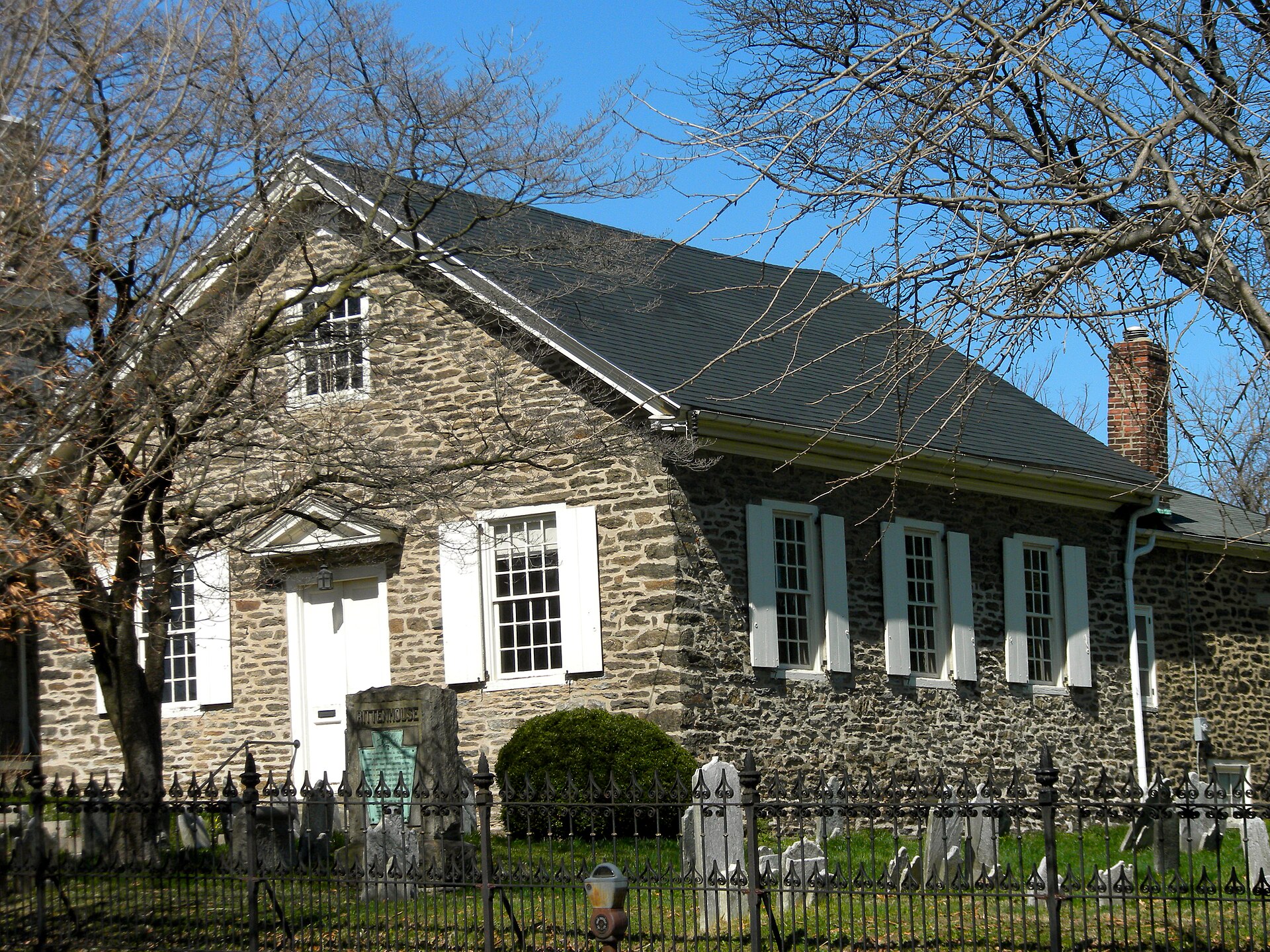
William Penn's colony (see lesson 09) offered something no European ruler did: freedom of worship and no state church. The first Mennonite settlers arrived early. The Germantown Mennonite congregation's own history says that thirteen Dutch Mennonite families "arrived in Philadelphia on October 6, 1683," and settled in what became Germantown, then north of the city.10 The same history states that the settlers built a log meetinghouse in 1708 and replaced it with a stone building in 1770.10 The Germantown Mennonite Historic Trust, which keeps the building as a museum, calls Germantown North America's first permanent Mennonite settlement and identifies the building as the "1770 Germantown Mennonite Meetinghouse."11

The Germantown protest against slavery
The Germantown congregation states: "In 1687, they authored the first protest by white people against slavery in North America."10 The surviving document is dated April 18, 1688. It was signed in the house of Thones Kunders by Garret Henderich, the brothers Abraham and Dirck op den Graeff, and Francis Daniel Pastorius, and it was carried to the Quaker meetings at Dublin (Abington), Philadelphia and Burlington, which did not act on it.12 The original is held at Haverford College's Quaker and Special Collections. The signers belonged to the mixed Quaker and Mennonite community of early Germantown, and the protest went to Quaker meetings, so both traditions claim it. The Historic Trust displays "the table upon which the first protest against slavery in the New World was signed in 1688."11 The year differs between the congregation's page (1687) and the date on the document (1688). The claim is rated below.
Later migrations
Larger waves followed in the 1700s, mostly Swiss and Palatine Mennonites and Amish, who settled the farmland of Lancaster, Berks and Chester counties and later moved west into Ohio, Indiana and Ontario. A second great stream came a century later from the Russian Empire. Dutch and North German Mennonites had settled the Vistula delta in Prussia and then, from the late 1700s, the colonies on the steppe of what is now Ukraine. When the Russian government ended their exemption from military service, many left. The Mennonite Brethren history records that "some 18,000 Mennonites migrated from Russia to North America from 1874 to 1880."13 These Russian Mennonites settled Kansas, Nebraska, the Dakotas and Manitoba, and the Hutterites came with them.
The Hutterites
The blanket at Nikolsburg, 1528
The Hutterites trace their community of goods to a single act in 1528. Their own history says that about 200 people left Nikolsburg in Moravia under Jacob Wiedemann, rather than accept the protection of a lord who offered to defend them by force. Outside the town, "Wiedemann spread a blanket and all the members gave their possessions with willing hearts."14 The group went on to Austerlitz, where the local lords accepted Anabaptists without requiring them to fight in wars or pay war taxes.14
Jakob Hutter, a hatmaker from the Tyrol, first appears at Austerlitz in 1529. He returned to Moravia in 1533 believing God had called him to lead, was at first rejected after he criticized the congregation's failings, and was chosen chief elder after the leader Simon Schutzinger was found hiding money for himself.14 Hutter's leadership was short but decisive, and the community took his name.
Hutter burned at Innsbruck, 1536
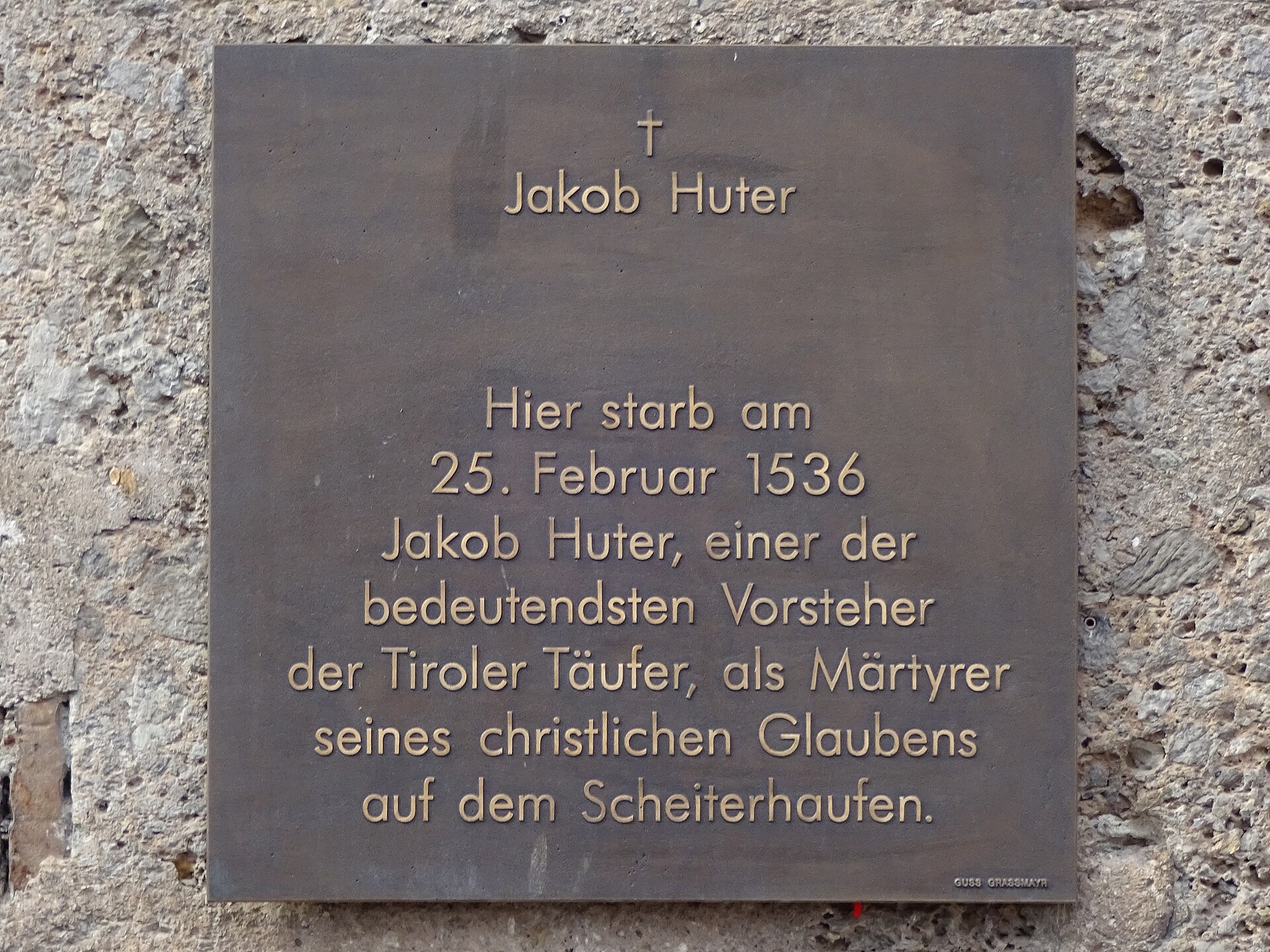
Authorities captured Hutter and his wife Katharina in the Tyrol on November 29, 1535. He was taken to Innsbruck, tortured on the rack, whipped, and, the Hutterite account says, held in freezing water and placed in a hot room, with brandy poured on his wounds, but he gave no names. The Hutterite history states: "On February 25, 1536 King Ferdinand ordered Jakob Hutter to burned at the stake in the public square in Innsbruck," beneath the Golden Roof. Katharina escaped, was recaptured, and was executed about two years later.15

From Moravia to the Dakotas
The Hutterite communities in Moravia grew in the later 1500s. Their history dates "the Golden Period" to 1565 to 1592 and lists the trades of the households (Bruderhofe): wagon making, cutlery, leather working and shoemaking, pottery, watchmaking and weaving, pharmacy and nursing, barbering and surgery, and metal work. By 1621, it says, there were around 102 communities with 20,000 to 30,000 people.16 War and Habsburg persecution then drove them into Hungary and Transylvania. After a war between the Turks and the Habsburgs in 1658, only about 50 Hutterites remained by 1661, and community of goods was abandoned in Transylvania by 1690. It was "revived again in 1755," when Lutheran exiles from Carinthia, resettled by order of Maria Theresa, joined the old Hutterites at Alwinz.17 On October 3, 1767, sixty-seven people left for Wallachia, and from there the group moved on into the Russian Empire, where it lived for about a century, first at Vishenka and Radichev and later near the Mennonite colonies.18
When the Russian exemptions ended, all the Hutterites left. They came to Dakota Territory in the 1870s in three communal groups and a fourth that farmed as individuals. The Hutterite history names them. The Schmiedeleut followed Michael Waldner, a blacksmith (Schmied), and bought 2,500 acres at Bon Homme for $25,000. The Dariusleut followed Darius Walter and settled at Wolf Creek. The Lehrerleut followed Jakob Wipf, a teacher (Lehrer), and built Elm Spring near Ethan, South Dakota. The fourth group, the Prairieleut, had not lived communally in Russia and took up separate homesteads.19 The account also records that thirty-six children and one old man died of dysentery at Lincoln, Nebraska, during the migration.19 The three Leut ("peoples") remain the basic divisions of Hutterite life today. Each has its own senior elder and its own rules on dress and technology, and for most of their history they did not intermarry freely.
World War I and the move to Canada
When the United States entered the First World War, Hutterite young men drafted into the army refused to wear uniforms or to serve. Four of them, Jacob Wipf and three Hofer brothers, Joseph, Michael and David, were held for four months in the military prison on Alcatraz and then moved to Fort Leavenworth, Kansas, where the mistreatment continued. The Hutterite history records: "Eventually both Joseph and Michael Hofer died in the hospital at Fort Leavenworth."20 Both died in 1918.53 The communities also faced local hostility over their refusal to buy war bonds. In 1918 most colonies moved to Canada. The Hutterite history lists fifteen colonies founded at that time: six Schmiedeleut colonies in Manitoba, five Dariusleut colonies in Alberta and four Lehrerleut colonies in Alberta. By 1940 there were 52 colonies in Canada.20 Later, many colonies returned to the Dakotas and spread to Montana, Minnesota and Washington.
Hutterites in their own words
The Hutterian Brethren describe themselves this way: "The Hutterian Brethren or Hutterites are a faith group stemming from the Radical Reformation of the 16th century," and "The Hutterites are a communal people, living on hundreds of scattered Bruderhöfe or colonies throughout the prairies of northwestern North America."21 Of their place among the Anabaptists they write: "Hutterites differ in one major aspect: they believe in sharing their possessions in commons."22 Their page on community of goods states it more simply still, "Hutterites live in community, that is they share all of their possessions," and grounds it in Acts 2:44 (KJV): "And all that believed were together, and had all things common."23
A colony typically holds about fifteen families; the Hutterian Brethren write that "On average, fifteen families live and work on the typical Hutterite colony."21 It owns the land, the buildings, the machinery and the income. Members eat together in a common dining hall, the children attend a colony school, and the colony elects its minister and its manager. When a colony grows too large it buys land and divides into two.
Hutterites today
The Hutterian Brethren give "a total of 559 colonies," with 199 in Alberta, 117 in Manitoba, 81 in Saskatchewan and 69 in South Dakota, the rest spread through Montana, North Dakota, Minnesota, Washington, British Columbia and Oregon. The Schmiedeleut live mostly in Manitoba and South Dakota, and the Dariusleut and Lehrerleut mostly in Saskatchewan, Alberta and Montana. The total population "hovers around 50,000," about 70 percent in Canada and 30 percent in the United States.3 The page gives no year for those figures, so they should be read as the Brethren's own current estimate, not a dated census. The Schmiedeleut themselves later divided into two groups, a split the Hutterite site treats on its own page ("The Schmiedeleut Split").21

The Brethren
Schwarzenau, 1708
The Brethren are a younger branch, born 180 years after Zurich, among German Pietists (on Pietism, see Module 77, lesson 01). Their own history begins with religious dissenters gathered at Schwarzenau, in the county of Wittgenstein. Among them was Alexander Mack, a miller "who had been influenced by both Pietism and Anabaptism." In August 1708, five men and three women, all of whom had been baptized as infants, were baptized in the Eder River. An anonymous member baptized Mack, and Mack baptized the other seven. They called themselves "brethren."4
From the Pietists the Brethren took the stress on personal conversion and the inner life. From the Anabaptists, and especially from the Mennonites they met in the Palatinate and the Netherlands, they took believers' baptism, a church of the committed, nonresistance, the refusal of oaths, and discipline under the ban. Outsiders called them Dunkers or Tunkers, from the German word for dipping, because they baptized by immersion. The largest American branch was known for most of its history as the German Baptist Brethren.
Germantown, 1723, and the move to America
The Brethren left Europe almost entirely within a generation. Their history records that they "began emigrating to North America in 1719 under the leadership of Peter Becker," that Mack brought a group over in 1729, and that most Brethren had left Europe by 1740. The first congregation in the New World was formed at Germantown, Pennsylvania, in 1723,4 in the same village where the Mennonites had settled forty years before.
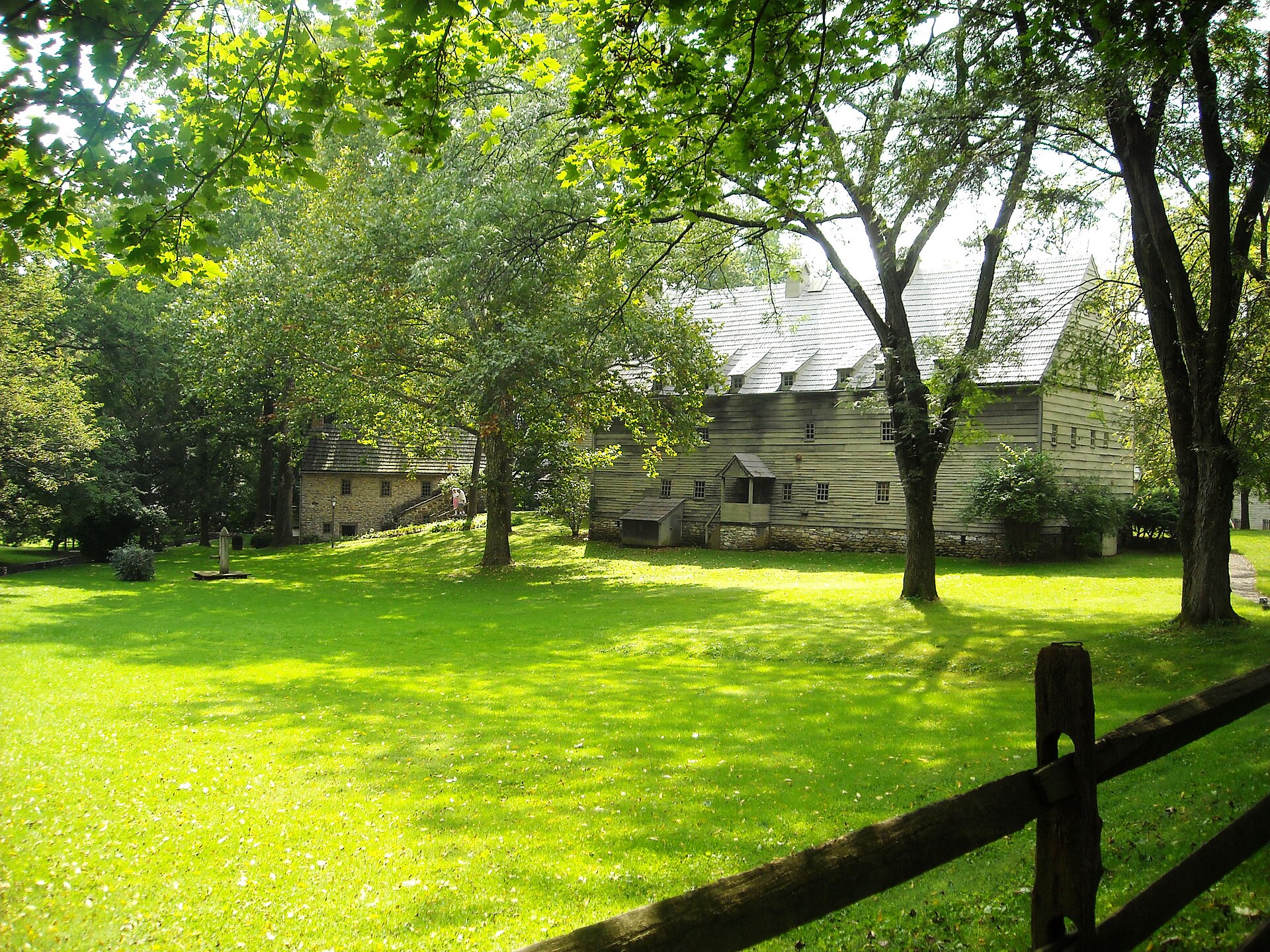
One of the early American Brethren preachers, Conrad Beissel, broke away to found a community of celibate brothers and sisters who kept the seventh day as the Sabbath. Its buildings survive at Ephrata, in Lancaster County. The site, now run by the Pennsylvania Historical and Museum Commission, dates the community to 1732.24 The connection of Beissel to the Brethren is reported in the standard histories and was not confirmed on the site's own page for this lesson.

The division of the 1880s
The Brethren grew with the frontier, through Maryland and Virginia, into Ohio, Indiana, Illinois, Kansas and the West, and governed themselves through an Annual Meeting whose decisions bound the congregations. In the second half of the nineteenth century they divided three ways over the pace of change: Sunday schools, revival meetings, salaried ministers, higher education, the plain dress, and the authority of the Annual Meeting itself. The Church of the Brethren's history calls it "a major schism" in the early 1880s that produced a three-way split.4
- The Old German Baptist Brethren (1881) held to the older practice of the ordinances, plain dress and church discipline. The Young Center dates the Original Conference to 1881 and counts 47 congregations with 3,598 baptized members in its 2023 tables.25
- The Brethren Church, the "Progressive" party, which reference works date to 1882 or 1883, favored revival-style evangelism and objected to required plain dress and to a binding Annual Meeting. The Church of the Brethren history does not name the other two branches, so these details rest on reference works. The Brethren Church's national office is in Ashland, Ohio.26 A further division over the doctrine of eternal security in 1939 produced the group now called the Fellowship of Grace Brethren Churches, centered on Winona Lake, Indiana. That 1939 date is from reference works and was not confirmed against the bodies' own records for this lesson.
- The German Baptist Brethren, the large middle body, kept the name until 1908, when it became the Church of the Brethren.4
The Old Order side has divided further. The Young Center's 2023 tables list seven Old Order Brethren bodies: the Old German Baptist Brethren, Original Conference (1881); the Old Brethren (1913, 7 congregations, 425 members); the Old Order German Baptist Church, which uses horse and buggy (1921, 4 congregations, 181 members); the Old Brethren German Baptists, also horse and buggy (about 1929 to 1930, 2 congregations, 120 members); the German Baptist Brethren Church (1999, 3 congregations, 84 members); the Old German Baptist Brethren, New Conference (2009, 35 congregations, 2,110 members); and the Old German Baptist Church (2020, 12 congregations, 640 members).25 The Young Center notes that men in some of these groups wear beards, which leads outsiders to mistake them for Amish, though like some plain Mennonites they own cars and tractors and use electricity.27
The Church of the Brethren today
The Church of the Brethren, headquartered in Elgin, Illinois, describes its central emphasis as "not a creed, but a commitment to follow Christ in simple obedience," and says, "We hold the New Testament as our guidebook for living." On peace it states: "Brethren have considered participation in war to be unacceptable for Christians," and it lists simple living among the marks of discipleship.28 With the Mennonites and the Quakers it is one of the three historic peace churches.
Its numbers have fallen steeply. The denomination's Yearbook office reported that "Church of the Brethren membership in the United States in 2022 was 81,345," down 5,836 from 87,181 in 2021, in 823 congregations and 22 fellowships, with average worship attendance of 20,733 across 24 districts.29 Its history page states: "As of 2025, the Church of the Brethren had over 70,000 members in almost 800 congregations in the United States."4 The two figures are the body's own and describe different years.
Part of the loss came from a division over sexuality and church authority. A group of congregations formed the Covenant Brethren Church. Christianity Today reported that 52 churches in eight states and in the Democratic Republic of the Congo had left the Church of the Brethren to join it, among them the Mt. Joy congregation in Pennsylvania, which voted to join in April 2021.30 The same report describes the Church of the Brethren's position in its own traditional phrase, that there should be "no force in religion," and notes that it was not fighting the departures. The Covenant Brethren advised congregations to switch only with overwhelming support, recommending a 90 percent vote.30 The Yearbook report adds: "While a number of withdrawing congregations have joined a split-off group, others have gone independent."29
Mennonites today
Mennonite Church USA says it is "one of about 40 different Mennonite groups in the United States."31 They range from congregations that look like any mainline Protestant church to Old Order communities that drive buggies. The Young Center's summary of the range: many Mennonites "drive cars, wear contemporary clothing, support higher education, and use modern technology," and "almost all Amish groups reject these practices," while "The more conservative Mennonite groups dress in plain clothing but drive cars," and also have home telephones and use electricity from public power lines.6 Some Old Order Mennonite groups use horse-and-buggy transportation.6 Worldwide, Mennonite World Conference counts close to 950,000 baptized believers in 9,000 congregations in its 109 member churches, as of September 2026, and 2.03 million baptized believers in 87 countries in the wider Anabaptist family, 45 percent of them in Africa and 29 percent in North America.32
Mennonite Church USA
Mennonite Church USA is the largest of the more assimilated bodies. Its own history says: "Today's denomination was born in 2002," when the United States congregations of the General Conference Mennonite Church and the Mennonite Church merged.33 Reference works describe the two older bodies as coming from different streams, the Mennonite Church mainly from the Swiss and South German settlers of the 1700s, and the General Conference largely from the Russian Mennonite immigrants of the 1870s along with some eastern congregations. The merger was approved in stages in the 1990s and took effect on February 1, 2002, according to reference works this lesson consulted; the denomination's own page gives only the year. Its offices are in Elkhart, Indiana, and Newton, Kansas, and it describes itself in one line: "Members of this historic peace church seek to follow Jesus by rejecting violence and resisting injustice."34
Its doctrinal standard is the Confession of Faith in a Mennonite Perspective, in 24 articles.35 Reference works date its adoption by both predecessor bodies to 1995, at Wichita, Kansas; the denomination's own page gives no date. On baptism (Article 11): "We believe that the baptism of believers with water is a sign of their cleansing from sin," and "Christian baptism is for those who confess their sins, repent, accept Jesus Christ as Savior and Lord." The commentary adds: "Infants and children have no need for baptism, since they are safe in the care of God."36 On peace (Article 22): "We believe that peace is the will of God," and "As disciples of Christ, we do not prepare for war, or participate in war or military service."35 Set beside Articles VII and XIV of Dordrecht, those sentences show the continuity across 363 years. The 1995 Confession even keeps a separate article on foot washing (Article 13), as Dordrecht did.35
The denomination's recent history has been shaped by votes on sexuality, which led whole conferences to leave. In November 2015 the leaders of Lancaster Mennonite Conference, then the denomination's largest conference with 13,838 members in 163 congregations, voted to withdraw by the end of 2017, a proposal ratified by 82 percent of credentialed leaders. When Mennonite Church USA updated its count in January 2016, it reported 78,892 members, down from 95,308 on its website (a figure dating to late 2014), largely because Lancaster members were no longer counted.37 At a special session in Kansas City, Missouri, May 27 to 30, 2022, delegates voted 404 to 84, with 3 abstentions, to retire the denomination's Membership Guidelines, "which, among other things, prohibits pastors from performing same-sex covenant ceremonies." They passed "A Resolution for Repentance and Transformation" by 267 to 212, with 9 abstentions, and an accessibility resolution without dissent.38 Those who supported the changes spoke of confession and inclusion. Those who opposed them, and the conferences that had already left, pointed to Article 19 of the 1995 Confession, which states: "We believe that God intends marriage to be a covenant between one man and one woman for life."39 The 2022 delegates did not amend that article. The Lancaster churches that left continue as a separate conference.
Mennonite Church USA's own pages checked for this lesson did not post a current membership total. Reference works citing Mennonite World Conference give about 50,000 baptized members in about 530 congregations for 2025. This lesson could not open that MWC row, so the figure is reported, not confirmed. The 2016 figure of 78,892 is the last official count found.
Mennonite Brethren and Brethren in Christ
Two other bodies carry Mennonite and Pietist strands together. The Mennonite Brethren began on January 6, 1860, at a meeting in a home in the Molotschna colony in what is now Ukraine. Their history calls it "the charter meeting of the Mennonite Brethren Church." Eighteen men signed a letter of secession affirming the teaching of Menno Simons and criticizing the colony churches' practice of baptism, the Lord's Supper, discipline and leadership; nine more signed within two weeks.13 Many came to North America in the migration of 1874 to 1880. The U.S. Conference was established in 1954 and now has more than 200 congregations, half of them worshiping on Sundays in a language other than English.13
The Brethren in Christ say of themselves: "The Brethren in Christ denomination began sometime between 1775 and 1788, near the present town of Marietta, Pennsylvania." Outsiders called them "River Brethren" because they lived along the Susquehanna, and the group that went to Canada by 1788 was called "Tunkers." They adopted the name Brethren in Christ around the time of the Civil War and organized a general conference in 1879. They name four influences: Anabaptist, Pietist, Wesleyan and, from about 1950, evangelical.40 The Old Order River Brethren are a small plain group from the same root.
Conservative Mennonites
Between Mennonite Church USA and the Old Orders stands a large and varied group of conservative Mennonite churches. One of the oldest organized bodies among them is the Conservative Mennonite Conference, now called the Rosedale Network of Churches, with headquarters at Irwin, Ohio. It reports 118 congregations "with over 13,000 members in 28 states," and fraternal affiliates in Costa Rica, Cuba, Ecuador, India, Kenya and Nicaragua with more than 600 congregations. The page gives no year for those numbers.41 Beyond it are dozens of smaller conferences and unaffiliated fellowships, many formed since the 1950s by congregations leaving larger conferences over dress, television, divorce and remarriage, or doctrine. Most keep plain dress and a head covering for women and refuse military service, though practice varies from one conference to the next.
Old Order Mennonites
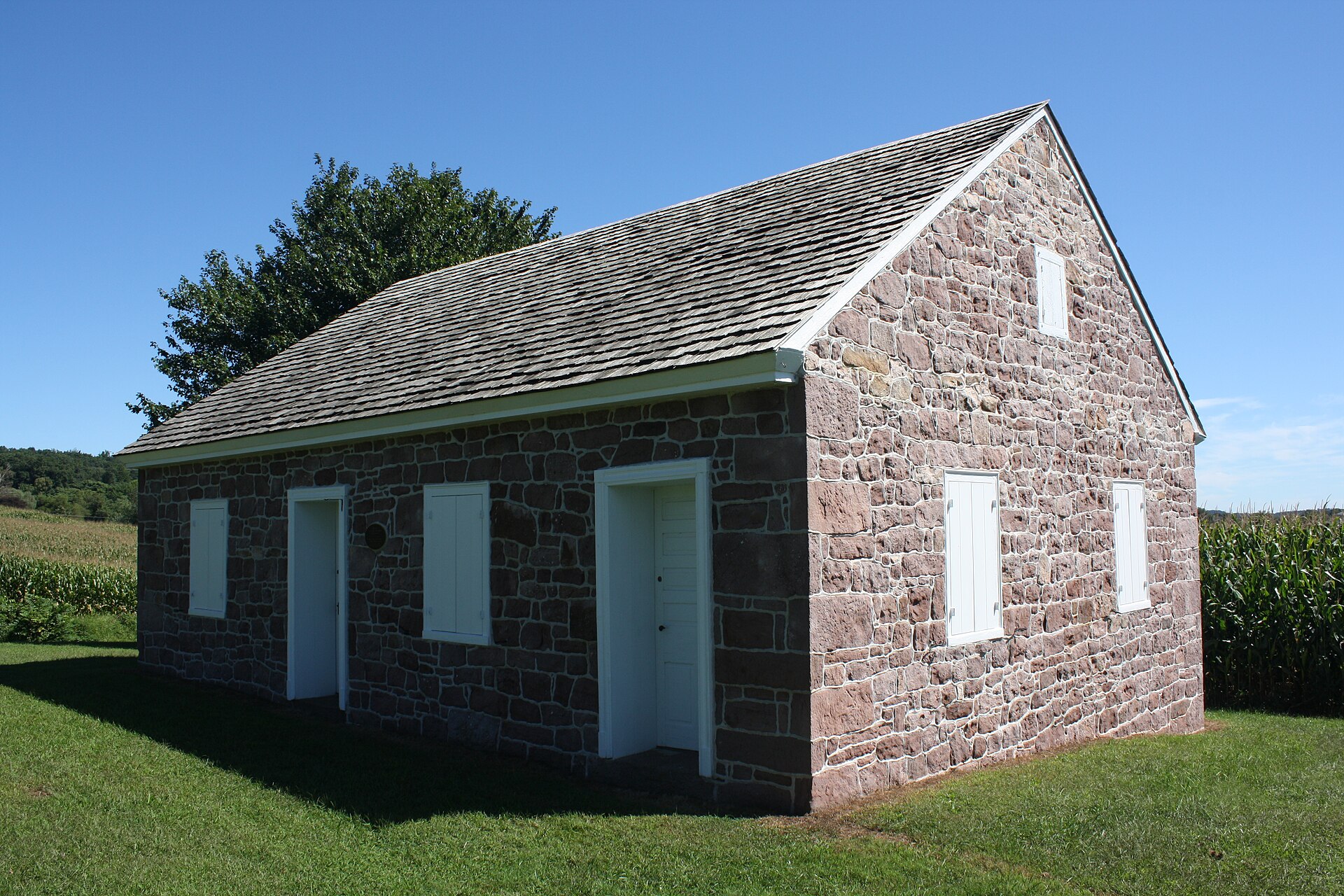
The Old Order Mennonites separated from the larger Mennonite conferences between the 1840s and about 1900, much as the Old Order Amish did. The Young Center's tables date the Stauffer Mennonite Church to 1845, the Old Order Mennonites of Ontario to 1889, the Groffdale Conference to 1893 and the Virginia Old Orders to 1901.42 Reference works name Sunday schools, English preaching and revival meetings among the issues. Today they are the Mennonites most often mistaken for Amish. The Young Center's tables, compiled by Edsel Burdge Jr. and updated in April 2026 from each group's own directories, list the horse-and-buggy groups.42 The largest is the Groffdale Conference (the Wenger Mennonites), with 21 settlements, 68 congregations and a population of 24,929, children included, in its 2022 directory (the table gives no separate count of members). The others include the Old Order Mennonite Church in Canada (10 settlements, 4,631 members, 8,577 people, 2025), the Stauffer Mennonite Church (2,019 members, 4,427 people, 2025), the Midwest Mennonite Conference (2,638 people, 2022), the Old Order Mennonite communities of the Noah Hoover group (1,225 members, 2,669 people, 2023), the Virginia conferences, and the Reidenbach Mennonite churches (228 members, 690 people, 2025).42 Because the groups count in different ways, a single total would mislead. The Young Center also notes that most plain groups "forbid divorce and the ordination of women," choose lay men as leaders, use no musical instruments in worship, and meet in plain meetinghouses "without steeples, stained glass, and ornate furnishings."27

The Amish today
The numbers
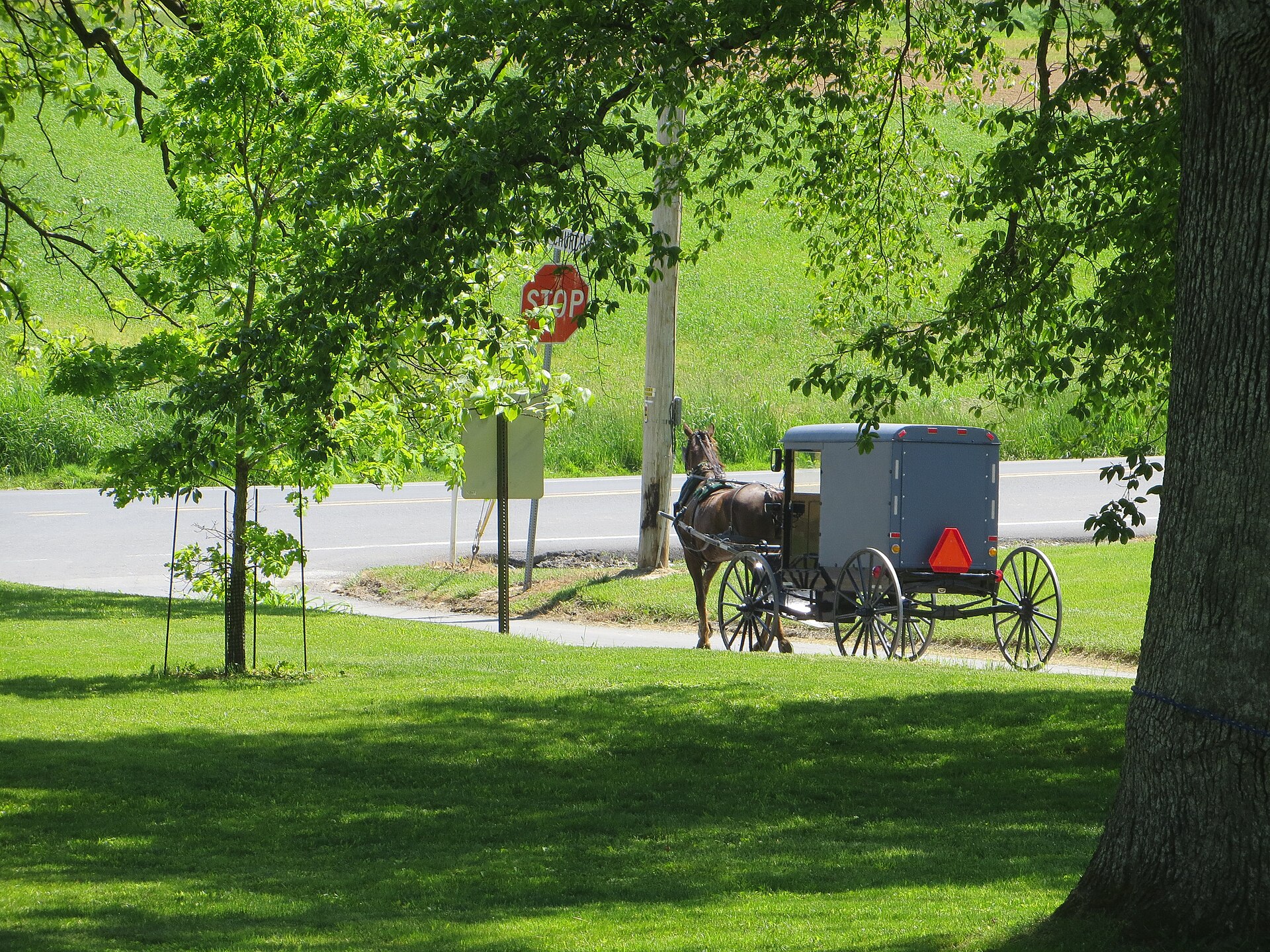
No Amish church body publishes a membership roll for outsiders, and there is no Amish headquarters. The standard figures come from the Young Center for Anabaptist and Pietist Studies, compiled each summer by Edsel Burdge Jr. with Joseph F. Donnermeyer of The Ohio State University and Adam Hershberger of the Ohio Amish Library. They draw on Raber's New American Almanac, the correspondence papers Die Botschaft, The Budget and The Diary, settlement directories, regional newsletters and informants. The counts include children and cover only the horse-and-buggy groups.2 They are careful estimates built from Amish sources, not a census.
For 2026 the Young Center gives a total of 421,340: 414,545 in the United States, 6,655 in Canada and 140 in Latin America (105 in Bolivia and 35 in Mexico). They live in 728 settlements and 3,287 church districts, in 33 states, 3 Canadian provinces and 2 Latin American countries. The five largest states are Pennsylvania (96,535), Ohio (87,760), Indiana (68,025), Wisconsin (28,940) and New York (26,320).2 The Young Center's population profile for the same year rounds the total to 421,200 and reports a gain of 10,245 since 2025, 43 new settlements in the year with none dissolved, growth of 32 percent since 2017 (from about 318,390), and a doubling time of about 20 years. It adds that 85 percent or more of Amish children join the church as young adults.43 For comparison, the 2025 report gave 410,955 for the United States and Canada (411,060 with Bolivia), in 683 settlements.44 The small differences between the two 2026 pages are the Young Center's own and are reported here as published.
The largest settlements in 2026 are the Lancaster County area of Pennsylvania (45,575 people in 301 districts), the Holmes County area of Ohio (38,775 in 332 districts), the Elkhart and LaGrange counties area of Indiana (30,795 in 246), the Geauga County area of Ohio (22,125 in 165) and the Adams County area of Indiana (11,255 in 75).45
Worship, discipline and the Ordnung
The Amish have no church buildings. The Young Center's description: "Every other Sunday, the members of the local district meet in the home of one of their members." The service is long. "An opening sermon, about thirty minutes in length, is followed by the main sermon, which lasts an hour or more." The ministers "preach in the Pennsylvania Dutch dialect and do not use notes," and the hymns, sung in German, are printed in "the Ausbund, the Amish hymnbook," whose words were "many written by Anabaptist prisoners."46 A church district is a congregation of a few dozen families, small enough to meet in one house or barn, and when it grows too large it divides. Each district has its own bishop, ministers and deacon, chosen from among the men of the district, and its own Ordnung, the unwritten order of practice that governs dress, technology and much of daily life. That is why "the Amish" do not all follow the same rules on telephones, tractors or bicycles.
Baptism is voluntary and adult. The baptismal vows are, in the Young Center's words, "a binding commitment to obey God and the teachings of the church." A baptized member who will not "confess their sins" may be placed on probation, and if reconciliation fails the members may vote, on their leaders' recommendation, to excommunicate. Shunning usually follows. Members may not accept rides or goods from the person or share a meal with them, though ordinary conversation may continue, and "the modes of shunning vary considerably in different communities, affiliations, and families." Those who confess and return are received back.47 The purpose stated is the same as in Article XVII of Dordrecht: the reform of the sinner and the purity of the church. Only baptized members can be excommunicated. A young person who leaves before baptism is therefore not excommunicated.
Rumspringa
The years between childhood and baptism are called Rumspringa ("running around"). The Young Center describes it as "a period when some Amish youth, boys more than girls, experience greater freedom," because they are no longer under their parents' close control on weekends and, unbaptized, not yet under the church's discipline. Many spend it in traditional ways (singings, volleyball, picnics). Others buy a car, go to movies or buy a television. "The practice of Rumspringa varies greatly from community to community," wild rebellion is "virtually unknown in some smaller settlements," and the practice is suppressed in some groups, including many New Order Amish.48 It ends with baptism or with leaving.

Wisconsin v. Yoder, 1972
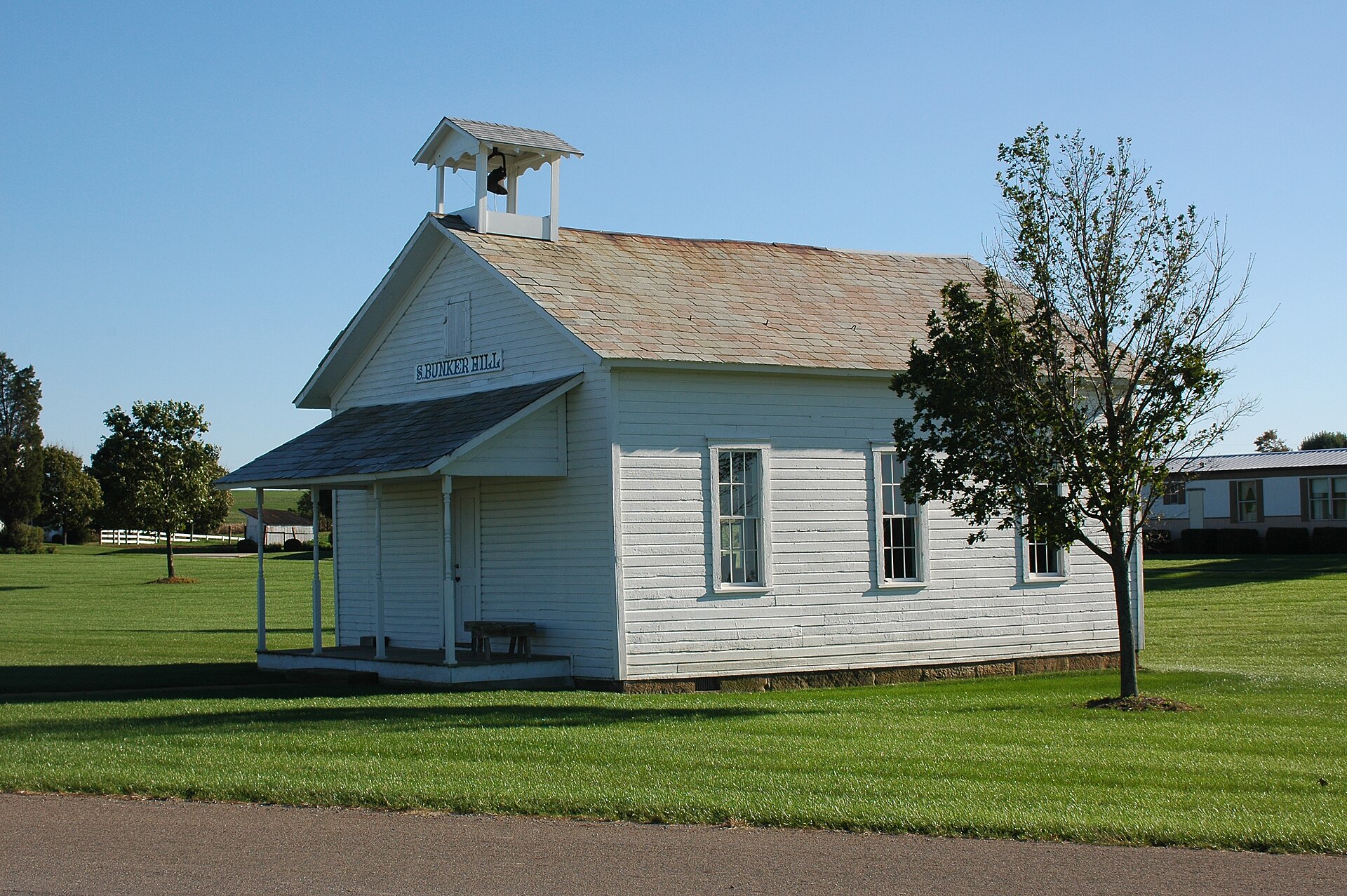
The Amish end formal schooling after the eighth grade, mostly in their own one-room schools. In the late 1960s, Wisconsin prosecuted three fathers in Green County, Jonas Yoder and Wallace Miller of the Old Order Amish and Adin Yutzy of the Conservative Amish Mennonite Church, for refusing to send their children to high school until age 16. Each was fined $5. The Supreme Court decided the case on May 15, 1972. Chief Justice Warren Burger wrote for the Court that the First and Fourteenth Amendments barred the state from compelling these parents to send their children to formal high school to age 16. "Amish objection to formal education beyond the eighth grade is firmly grounded in these central religious concepts," the opinion said. It also set a limit: "Nothing we hold is intended to undermine the general applicability of the State's compulsory school attendance statutes."49
Justice William O. Douglas dissented in part. He accepted that the Amish objection was sincere, but argued that the children had religious interests of their own and should have been heard. He joined the judgment as to Jonas Yoder, whose daughter Frieda had testified that her beliefs matched her parents', and dissented as to Yutzy and Miller, whose children's views were never asked. Justices Powell and Rehnquist took no part.49 The case is still the leading Supreme Court precedent on religious exemptions from school attendance laws.

Social Security and United States v. Lee
The Amish teach that the church, not the state, should care for its widows, its elderly and its sick, and they have long objected to public and commercial insurance. Congress wrote a narrow exemption into the tax code, 26 U.S.C. section 1402(g), for self-employed members of recognized religious groups that conscientiously oppose insurance benefits and provide for their own members. In United States v. Lee, decided February 23, 1982, the Supreme Court held that an Old Order Amish farmer and carpenter who employed Amish workers from 1970 to 1977 still owed the employer's Social Security taxes. The IRS had assessed him over $27,000. "Congress drew a line in [section] 1402(g), exempting the self-employed Amish but not all persons working for an Amish employer," Chief Justice Burger wrote for the Court.50 The Amish pay income, property and sales taxes, and Article XIII of Dordrecht tells them to "faithfully pay custom, tribute and taxes."5
How other churches have seen the Anabaptists
The sixteenth century condemnations
The Lutheran confession of 1530 named the Anabaptists five times. In Article IX, on baptism, the princes who signed it at Augsburg wrote: "They condemn the Anabaptists who allow not the Baptism of children, and affirm that children are saved without Baptism." In Article XVI, on civil affairs, after teaching that Christians may "engage in just war, act as soldiers," and "take an oath when the magistrates require it," it adds: "They condemn the Anabaptists who forbid Christians these civil offices."51 These are the same two points the Dordrecht Confession affirmed a century later, from the other side: baptism for believers only, and no sword and no oath. The Lutherans grouped several different movements under one name, including the antitrinitarians whom Schaff's notes identify, so the condemnations did not all touch the peaceable Swiss and Dutch churches. The Reformed confessions spoke in similar terms. See lesson 01 on the Lutheran confessions and lesson 02 on the Reformed.
The Lutheran request for forgiveness, 2010
Four and a half centuries later, the Lutheran World Federation took up those condemnations. At its Eleventh Assembly, in Stuttgart, Germany, on July 22, 2010, delegates unanimously approved a statement calling Lutherans to express "regret and sorrow for past wrongdoings towards Anabaptists" and asking the Mennonites for forgiveness for past persecutions, according to the news release of the Evangelical Lutheran Church in America.52 The statement did not withdraw the Lutheran doctrine of infant baptism, and the Mennonites did not change theirs. The act concerned the persecution and the way the condemnations had been used against living people.
Scholars and the Anabaptist family
The Young Center lists as basic reading Donald B. Kraybill's Concise Encyclopedia of Amish, Brethren, Hutterites, and Mennonites (2010), Kraybill and James Hurd's Horse-and-Buggy Mennonites (2006), and Royden Loewen and Steven M. Nolt's Seeking Places of Peace (2012).6 Kraybill and Carl Bowman's On the Backroad to Heaven (2001) treats the Old Order Hutterites, Mennonites, Amish and Brethren together. Those authors treat the four families as one tradition with two poles: the assimilated churches, which kept the peace teaching and believers' baptism while adopting modern dress, education and technology, and the Old Orders, which kept the whole pattern of separation. The Young Center's own figures show the two factors behind Old Order growth: a doubling time of about 20 years and retention of 85 percent or more of the children.43 Justice Douglas's partial dissent in Yoder raised the question that critics of the Old Orders still ask: whether a child raised inside such a community, with eight grades of schooling, freely chooses baptism at eighteen.49 Part of the answer lies in the discipline itself: only baptized members can be excommunicated, so a young person who leaves before baptism is not placed under the ban.47
What the record shows and what it does not
- Documented fact: The Dordrecht Confession was signed at Dordrecht on April 21, 1632, by ministers of many Dutch cities, and later adopted by the churches of Alsace and the Palatinate. Its text, including the articles on revenge, oaths, the ban and shunning, survives in the Martyrs Mirror.
- Documented fact: Wisconsin v. Yoder was decided May 15, 1972, and United States v. Lee on February 23, 1982. The Germantown protest against slavery is dated April 18, 1688.
- The bodies' own counts: 81,345 Church of the Brethren members in 2022; 78,892 Mennonite Church USA members in the January 2016 report; about 50,000 Hutterites in 559 colonies (undated); the Old Order Mennonite directories as listed. Each figure is the body's own, with its year.
- Careful estimate, not a census: The Young Center's 421,340 Amish in 2026 is compiled from Amish directories and correspondents and includes children.
- A church's own tradition: The details of Hutter's tortures and the dates of the Hutterite migrations come from the Hutterian Brethren's history. The Dirk Willems rescue story comes from the Martyrs Mirror, which cites "trustworthy persons." His sentence of May 16, 1569, which the book copies from the Asperen town records, is documented; it does not mention the rescue.
- Scholarly reading: That the Amish and Mennonites form one family with two poles, and that Old Order growth comes mainly from births and retention.
- Open questions: The exact course of the 1693 meetings and letters; the date of the formal Pennsylvania adoption of Dordrecht (commonly 1725); the current membership of Mennonite Church USA, which its own pages did not post.
Claims checked
"The Amish and the Mennonites are the same church."
Refuted. They share an origin and the Dordrecht Confession, but the Young Center states that they have been separate groups since 1693, when the followers of Jakob Ammann separated over shunning, communion and discipline.9 Today they have no common organization, though they cooperate in relief work through Mennonite Central Committee and Mennonite Disaster Service.6 Many people who look Amish to visitors are Old Order Mennonites or Old Order Brethren.
"The Amish don't pay taxes."
Refuted as stated, with one real exemption. Article XIII of the Dordrecht Confession tells believers to "faithfully pay custom, tribute and taxes."5 Congress exempted self-employed members of qualifying religious groups from Social Security and self-employment tax under section 1402(g), and the Supreme Court in United States v. Lee (1982) refused to extend that exemption to Amish employers.50 The exemption is the source of the claim. It covers one tax, not taxes in general.
"The Amish are dying out."
Refuted. The Young Center counts 421,340 horse-and-buggy Amish in 2026, up 32 percent since 2017, with 43 new settlements in the last year and a doubling time of about 20 years.243 Some Brethren and Mennonite bodies are shrinking quickly, but the Old Order Amish population has grown every year in the Young Center's series.
"Rumspringa is a wild year when Amish teenagers are sent out to try the world."
Partly supported. Rumspringa is real. Unbaptized young people are not yet under church discipline, and some do try cars, movies or television. But the Young Center states that the practice "varies greatly from community to community," that wild rebellion is "virtually unknown in some smaller settlements," and that some groups suppress it. Many youth spend these years at singings, volleyball and picnics.48 The church does not send its young people out. The freedom comes from their not yet being members.
"Mennonites wrote the first protest against slavery in America."
Partly supported. The Germantown protest of April 18, 1688, signed by Garret Henderich, Abraham and Dirck op den Graeff and Francis Daniel Pastorius, is the document the Germantown Mennonite Historic Trust calls "the first protest against slavery in the New World," and the Germantown Mennonite congregation counts it as its own.111012 The signers were part of a mixed Quaker and Mennonite community, and they submitted the protest to Quaker meetings, which set it aside. Both traditions have a fair claim. The congregation's page dates it 1687, but the document is dated 1688.
"The Dirk Willems story is a pious legend."
Unresolved. The Martyrs Mirror gives his arrest at Asperen in 1569 and his execution in detail, from "trustworthy persons" and from the memory of those present at his death.8 It also prints a copy of his sentence of May 16, 1569, taken from the Asperen town records, which confirms the trial and the sentence of death by fire. The sentence does not mention the rescue on the ice, and this lesson found no other record of it. Nothing in the account is impossible, and the book's other entries often rest on surviving letters and sentences. The rescue may be accurate. It rests on testimony recorded about ninety years later by a writer who was openly partisan.
"The Hutterites are communists."
Refuted as a description. The Hutterites share all property within a colony on the model of Acts 2:44, as their own pages state, and they adopted it in 1528, more than three centuries before modern political communism.1423 Membership is voluntary and follows adult baptism, the colonies own private land under the laws of their states and provinces. Their community of goods is a church discipline, not a theory of the state.
"The Anabaptists were violent revolutionaries."
Refuted for the churches in this lesson. The episode at Munster in 1534 to 1535 is treated in Module 79, lesson 12. The Mennonite, Amish, Hutterite and Brethren churches have all taught refusal of the sword since their beginnings, as Schleitheim (1527), Dordrecht Article XIV (1632), the Hutterites' departure from Nikolsburg rather than accept armed protection (1528), and Mennonite Church USA's 1995 Confession all show.51435
Hard questions and answers
How can a church born in persecution defend shunning its own members?
The Anabaptists answer that the two are different in kind. Persecution used the power of the state, with prison, fire and the sword, against people who had not chosen the state church. Shunning is the act of a voluntary church toward a person who chose baptism and made vows. Dordrecht Article XVII calls it a discipline "not to the destruction, but to the reformation of the sinner," and requires aid for a shunned person who is "needy, hungry, thirsty, naked, sick."5 Former members and outside observers answer that in a small, close community social avoidance can be very heavy, especially when it divides families and businesses. The record supports both observations. The practice is voluntary at entry, its force varies "considerably" from one community to another, and it was the very issue that split the Swiss churches in 1693.479
Why did a church that avoids the courts end up before the Supreme Court?
The Amish fathers in Yoder were defendants, not plaintiffs. Wisconsin charged them under its school attendance law, and they were fined $5 each.49 The case reached the Supreme Court because the state appealed after the Wisconsin Supreme Court ruled for the parents, as the opinion's procedural history records. In Lee, by contrast, the Amish employer himself sued for a refund of the $91 he had paid, and lost.50 The two cases show both paths, a defense against a charge and a claim for a refund.
Did Yoder ignore the children?
Justice Douglas thought so, at least in part. He argued that the children's own religious views should have been heard, and he dissented as to the two families whose children had not testified.49 The majority treated the matter as the parents' right to direct their children's religious upbringing, in a community whose way of life the record showed to be long established and self-supporting, and it limited its holding to the Amish facts before it. The question has remained open in later debates over home schooling and religious exemptions. The lesson takes no side. Both opinions are short and worth reading in full.
Are the Brethren really Anabaptists?
Partly, by their own account. They were born in 1708, nearly two centuries after Zurich, among Pietists, and their founder had been "influenced by both Pietism and Anabaptism."4 They took believers' baptism, nonresistance and church discipline from the Mennonites, but they did not descend from them as a church. The Young Center lists among the Anabaptist groups "the Brethren in Christ, and Brethren groups that began in Schwarzenau, Germany, in 1708."1 The Brethren in Christ name both strands, Anabaptist and Pietist, and add a Wesleyan third.40 "Anabaptist and Pietist" is the most accurate short description, and the name of the Young Center itself uses both words.
If these churches value unity and humility, why have they divided so often?
The record in this lesson is long: Flemish against Frisian before 1632, the Amish in 1693, the Old Orders in the 1800s, the Brethren three ways in the 1880s, the Lancaster departure in 2015 to 2017, the Covenant Brethren after 2020, and seven Old Order Brethren bodies by 2023.25 The churches' own explanation is that they hold that the church must be visibly pure and that practice is part of faith. A church that takes dress, technology and discipline as matters of obedience will divide over them, where a church that treats them as indifferent will not. Their government also places no single authority above the district, congregation or conference that could hold a split together. The Dordrecht Confession itself was written to end a division, and it carried the seed of the next one in its article on shunning.
Can the Hutterite community of goods work outside farming?
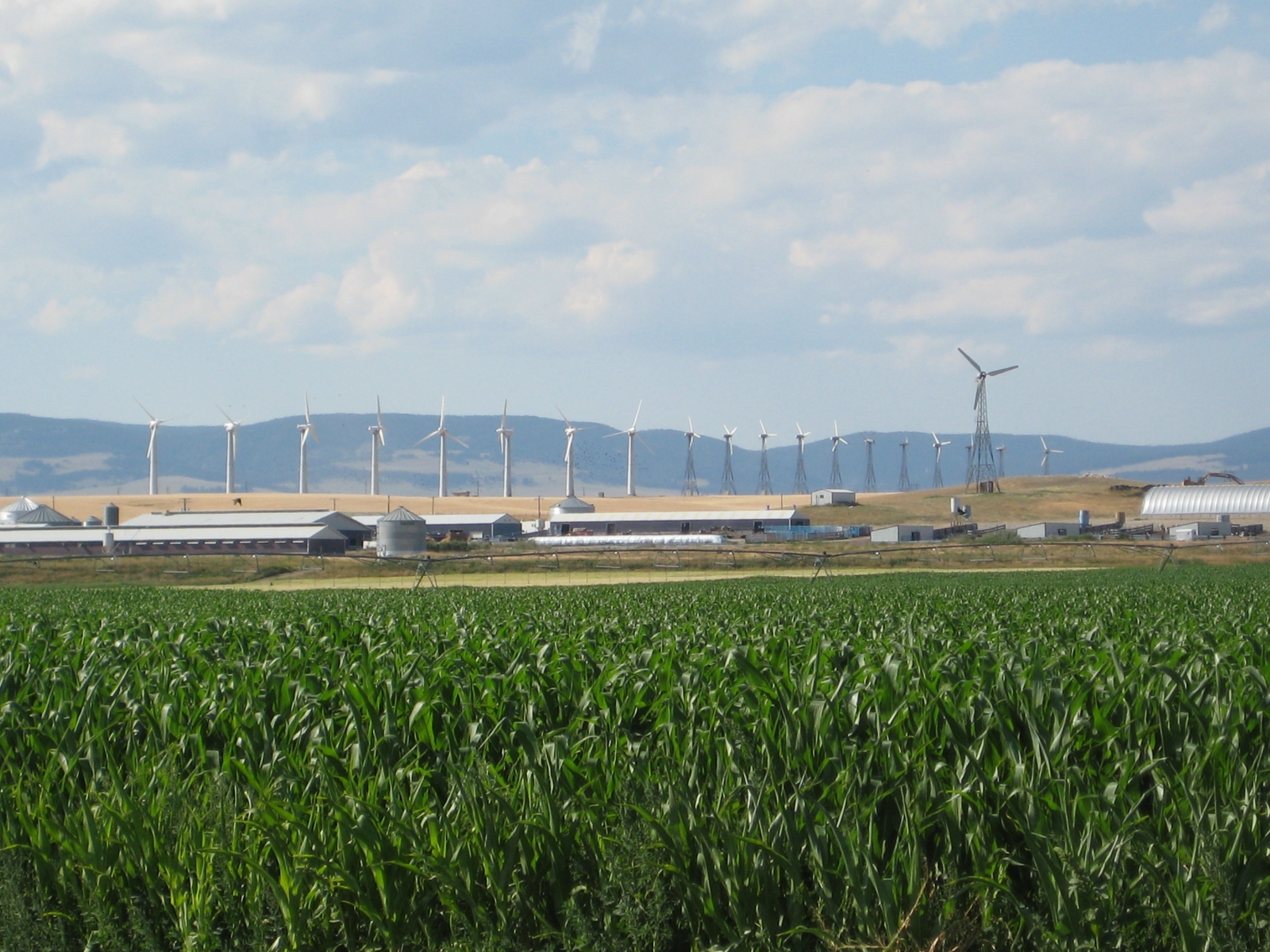
The Hutterites' own history answers in part. In Moravia between 1565 and 1592 their households lived from crafts as much as from farming, with potters, cutlers, weavers, watchmakers, barbers and surgeons.16 The modern colonies are large farming and manufacturing enterprises, as the wind turbines at Martinsdale suggest. The pattern has lasted nearly five hundred years, through a near collapse in Transylvania in the 1600s and a revival in 1755.17 Whether it could last in a city is a question the Hutterites have mostly not tested.
Where to go next
For the first Anabaptists, Schleitheim, the Hutterites' founding and Menno Simons, read Module 79, lesson 12, and for Luther and the Augsburg Confession, lesson 11. In this module, lesson 06 takes up the English Baptists and the question of whether they descend from the Anabaptists, and lesson 09 covers the Quakers, the third historic peace church and the Mennonites' neighbors at Germantown. Lesson 07 covers the Wesleyan and Holiness bodies that influenced the Brethren in Christ, and lesson 14 places all of these families on one chart. On Pietism, the movement from which the Brethren came, see Module 77, lesson 01.
Learn more
- Young Center, Amish Studies: The standard source for Amish population figures, updated each summer, with pages on beliefs and practice.
- Martyrs Mirror at archive.org: The full text, including the Dordrecht Confession and the Dirk Willems account.
- Hutterian Brethren history series: The Hutterites' own account from 1528 to the twentieth century.
- Wisconsin v. Yoder (1972): Read the majority opinion and Justice Douglas's partial dissent side by side.
- Mennonite Church USA, Confession of Faith in a Mennonite Perspective: The 24 articles of the largest assimilated Mennonite body, to compare with Dordrecht.
- Module 79, lesson 12: Zwingli, Calvin and the Wider Reformation: The first Anabaptists, Schleitheim and Menno Simons.
Still being checked (12 items)
These points could not be confirmed against a primary source when this lesson was written and fact checked in October 2026. The text above states each one as uncertain.
- Mennonite Church USA's current membership: its own pages did not post a total. Reference works citing Mennonite World Conference give about 50,000 baptized members in about 530 congregations for 2025; the MWC row could not be opened. The last official figure found is 78,892 (January 2016).
- The formal adoption of the Dordrecht Confession by Pennsylvania Mennonite ministers in 1725 (and an English printing in 1727) is reported in reference works; no primary record was opened.
- Details of the 1693 Amish meetings and letters were not checked against the published letters. The dating of the Amish Dienerversammlungen to 1862 to 1878 is from reference works.
- The Brethren Church's founding date (1882 or 1883), its stated reasons, the 1939 Grace Brethren division and the issues of the 1880s Brethren split come from reference works, not the bodies' own records.
- Conrad Beissel's role at Ephrata and his tie to the Brethren are not stated on the Ephrata Cloister site's home page.
- The 1995 adoption of the Mennonite Confession at Wichita and the February 1, 2002 effective date of the MC USA merger come from reference works; the denomination's pages give only 2002.
- Hutterite colony and population figures (559 colonies, about 50,000) are undated on the Hutterian Brethren site.
- The Young Center's two 2026 pages differ slightly (421,340 and 421,200); both are reported.
- General statements on Amish district size, leaders chosen within the district, the Ordnung, Hutterite dining halls and colony division, the Dunker nickname, and the issues of the Old Order Mennonite separations are standard descriptions not tied to a page opened for this lesson.
- The Commons description of the Germantown meetinghouse says 'built 1700'; the congregation and the Historic Trust give 1770. The lesson follows the congregation.
- The Germantown congregation's page dates the protest against slavery to 1687; the document and the Inquirer give April 18, 1688.
- Whether the Dirk Willems rescue on the ice happened: the Martyrs Mirror rests it on witnesses; the copied sentence of May 16, 1569, confirms only the trial and execution.
Notes
- Young Center for Anabaptist and Pietist Studies, Elizabethtown College, Amish Studies website, "Anabaptists" (retrieved Oct. 28, 2026). Read it online. ↩
- Young Center for Anabaptist and Pietist Studies, Elizabethtown College, Amish Studies website, "Amish Population 2026," compiled by Edsel Burdge Jr. with Joseph F. Donnermeyer and Adam Hershberger (retrieved Oct. 28, 2026). Read it online. ↩
- Hutterian Brethren, "Distribution" (The Leut), hutterites.org; figures undated (retrieved Oct. 28, 2026). Read it online. ↩
- Church of the Brethren, "History," brethren.org, with 2025 membership statement (retrieved Oct. 28, 2026). Read it online. ↩
- "Third Confession, Drawn up at Dort... the 21st of April, 1632" (the Dordrecht Confession), in Thieleman J. van Braght, The Bloody Theater or Martyrs Mirror of the Defenseless Christians, trans. Joseph F. Sohm (first English edition 1886), introduction, pp. 38 to 44 of the Herald Press printing digitized at archive.org, articles VII, XI to XVII and closing signatures (retrieved Oct. 28, 2026). Read it online. ↩
- Young Center for Anabaptist and Pietist Studies, Elizabethtown College, Amish Studies website, "Mennonites" (retrieved Oct. 28, 2026). Read it online. ↩
- Thieleman J. van Braght, The Bloody Theater or Martyrs Mirror of the Defenseless Christians (Dutch original Dordrecht, 1660), title and description, archive.org item MartyrsMirror (retrieved Oct. 28, 2026). Read it online. ↩
- van Braght, Martyrs Mirror, trans. Sohm, "Dirk Willems, A.D. 1569," pp. 741 to 742 of the Herald Press printing digitized at archive.org, with the copy of the sentence of May 16, 1569, from the Asperen town records (retrieved Oct. 28, 2026). Read it online. ↩
- Young Center for Anabaptist and Pietist Studies, Elizabethtown College, Amish Studies website, "Amish Origins" (retrieved Oct. 28, 2026). Read it online. ↩
- Germantown Mennonite Church, "Our History," germantownmennonite.org (retrieved Oct. 28, 2026). Read it online. ↩
- Historic Germantown, "Germantown Mennonite Historic Trust" (member site page) (retrieved Oct. 28, 2026). Read it online. ↩
- Elizabeth Wellington, "How Germantown became the building block of the abolitionist movement," The Philadelphia Inquirer, Feb. 26, 2026 (retrieved Oct. 28, 2026). Read it online. ↩
- U.S. Conference of Mennonite Brethren Churches, "Our Story" (history), usmb.org (retrieved Oct. 28, 2026). Read it online. ↩
- Hutterian Brethren, "Community of Goods" (history series), hutterites.org (retrieved Oct. 28, 2026). Read it online. ↩
- Hutterian Brethren, "Death of Hutter" (history series), hutterites.org (retrieved Oct. 28, 2026). Read it online. ↩
- Hutterian Brethren, "The Golden Years" (history series), hutterites.org (retrieved Oct. 28, 2026). Read it online. ↩
- Hutterian Brethren, "Carinthian Revival" (history series), hutterites.org (retrieved Oct. 28, 2026). Read it online. ↩
- Hutterian Brethren, "Journey to Wallachia" (history series, with menu pages "Migration to Ukraine" and "Vishenka and Radichev"), hutterites.org (retrieved Oct. 28, 2026). Read it online. ↩
- Hutterian Brethren, "Journey to America" (history series), hutterites.org (retrieved Oct. 28, 2026). Read it online. ↩
- Hutterian Brethren, "World War 1" (history series), hutterites.org (retrieved Oct. 28, 2026). Read it online. ↩
- Hutterian Brethren, home page, hutterites.org (retrieved Oct. 28, 2026). Read it online. ↩
- Hutterian Brethren, "History" (overview page), hutterites.org (retrieved Oct. 28, 2026). Read it online. ↩
- Hutterian Brethren, "Community of Goods" (Our Beliefs), hutterites.org, citing Acts 2:44 (KJV) (retrieved Oct. 28, 2026). Read it online. ↩
- Ephrata Cloister (Pennsylvania Historical and Museum Commission and Ephrata Cloister Associates), home page (retrieved Oct. 28, 2026). Read it online. ↩
- Young Center for Anabaptist and Pietist Studies, Elizabethtown College, Amish Studies website, "Old Order Brethren" tables, compiled by Edsel Burdge Jr., August 2023 (PDF) (retrieved Oct. 28, 2026). Read it online. ↩
- The Brethren Church, national office, Ashland, Ohio, brethrenchurch.org (retrieved Oct. 28, 2026). Read it online. ↩
- Young Center for Anabaptist and Pietist Studies, Elizabethtown College, Amish Studies website, "Other Plain Groups" (retrieved Oct. 28, 2026). Read it online. ↩
- Church of the Brethren, "Beliefs," brethren.org (retrieved Oct. 28, 2026). Read it online. ↩
- Church of the Brethren Newsline, "Yearbook reports Church of the Brethren denominational statistics for 2022," Jan. 31, 2024 (retrieved Oct. 28, 2026). Read it online. ↩
- Hannah McClellan, "New Brethren Churches Wrestle with Details of Denominational Division," Christianity Today, Feb. 14, 2022 (print, March 2022, as "Division's in the Details") (retrieved Oct. 28, 2026). Read it online. ↩
- Mennonite Church USA, "FAQ about MC USA" (retrieved Oct. 28, 2026). Read it online. ↩
- Mennonite World Conference, "Membership, map and statistics" (member figures as of September 2026) (retrieved Oct. 28, 2026). Read it online. ↩
- Mennonite Church USA, "History" (retrieved Oct. 28, 2026). Read it online. ↩
- Mennonite Church USA, "Who Are Mennonites" (retrieved Oct. 28, 2026). Read it online. ↩
- Mennonite Church USA, Confession of Faith in a Mennonite Perspective, list of 24 articles and Article 22, "Peace, Justice, and Nonresistance" (retrieved Oct. 28, 2026). Read it online. ↩
- Mennonite Church USA, Confession of Faith in a Mennonite Perspective, Article 11, "Baptism," with commentary (retrieved Oct. 28, 2026). Read it online. ↩
- Tim Huber, "Lancaster's distancing shrinks roll," Mennonite World Review (now Anabaptist World), Jan. 26, 2016 (retrieved Oct. 28, 2026). Read it online. ↩
- Mennonite Church USA news release on the Special Session of the Delegate Assembly, Kansas City, May 27 to 30, 2022 (retrieved Oct. 28, 2026). Read it online. ↩
- Mennonite Church USA, Confession of Faith in a Mennonite Perspective, Article 19, "Marriage" (retrieved Oct. 28, 2026). Read it online. ↩
- Brethren in Christ U.S., "History," bicus.org (retrieved Oct. 28, 2026). Read it online. ↩
- Rosedale Network of Churches (Conservative Mennonite Conference), home page; counts undated (retrieved Oct. 28, 2026). Read it online. ↩
- Young Center for Anabaptist and Pietist Studies, Elizabethtown College, Amish Studies website, Old Order Mennonite (horse-and-buggy) tables from the groups' 2022 to 2025 directories, compiled by Edsel Burdge Jr., updated April 2026 (PDF) (retrieved Oct. 28, 2026). Read it online. ↩
- Young Center for Anabaptist and Pietist Studies, Elizabethtown College, Amish Studies website, "Amish Population Profile 2026" (retrieved Oct. 28, 2026). Read it online. ↩
- Young Center for Anabaptist and Pietist Studies, Elizabethtown College, Amish Studies website, "Amish Population, 2025" (retrieved Oct. 28, 2026). Read it online. ↩
- Young Center for Anabaptist and Pietist Studies, Elizabethtown College, Amish Studies website, "Twelve Largest Amish Settlements, 2026" (retrieved Oct. 28, 2026). Read it online. ↩
- Young Center for Anabaptist and Pietist Studies, Elizabethtown College, Amish Studies website, "Religious Services" (retrieved Oct. 28, 2026). Read it online. ↩
- Young Center for Anabaptist and Pietist Studies, Elizabethtown College, Amish Studies website, "Church Discipline" (retrieved Oct. 28, 2026). Read it online. ↩
- Young Center for Anabaptist and Pietist Studies, Elizabethtown College, Amish Studies website, "Rumspringa" (retrieved Oct. 28, 2026). Read it online. ↩
- Wisconsin v. Yoder, 406 U.S. 205 (1972), argued Dec. 8, 1971, decided May 15, 1972, opinion of Burger, C.J., and Douglas, J., dissenting in part, text at Justia (retrieved Oct. 28, 2026). Read it online. ↩
- United States v. Lee, 455 U.S. 252 (1982), decided Feb. 23, 1982, opinion of Burger, C.J., text at Justia (retrieved Oct. 28, 2026). Read it online. ↩
- The Augsburg Confession (1530), Articles IX and XVI, English text in Philip Schaff, The Creeds of Christendom, vol. 3 (New York: Harper, 1877, public domain), at ccel.org (retrieved Oct. 28, 2026). Read it online. ↩
- ELCA News Service, release 10-206-JB on the Lutheran World Federation Eleventh Assembly action toward Mennonites, Stuttgart, July 22, 2010, Worldwide Faith News archive (retrieved Oct. 28, 2026). Read it online. ↩
- Erik Kaufman, "Refusal of World War I military service led to Hutterite brothers' deaths at Fort Leavenworth," Mitchell Republic, published in The Dickinson Press, Feb. 27, 2024 (retrieved Oct. 28, 2026). Read it online. ↩
Check yourself
1. What was the main issue that divided Jakob Ammann's followers from other Swiss and Alsatian Anabaptists in 1693?
The Young Center states that Ammann's call to shun excommunicated members, citing Dutch practice and Dordrecht Article XVII, 'drove a divisive wedge' between his followers and other Anabaptists.
2. Where and when was the Dordrecht Confession signed?
The text in the Martyrs Mirror closes: 'Thus done and finished in our united churches, in the city of Dortrecht, the 21st of April, 1632, new style.'
3. According to the Hutterian Brethren, what happened outside Nikolsburg in 1528?
The Hutterite history says 'Wiedemann spread a blanket and all the members gave their possessions with willing hearts,' the origin of their community of goods.
4. Which statement about the Young Center's 2026 Amish count is accurate?
The Young Center counts adults and children in horse-and-buggy groups only, compiled from Amish directories and correspondents, for a 2026 total of 421,340.
5. Where did the Brethren begin in 1708?
The Church of the Brethren history records that five men and three women were baptized in the Eder River at Schwarzenau in August 1708.
6. What did the Supreme Court hold in Wisconsin v. Yoder (1972)?
Chief Justice Burger wrote that the First and Fourteenth Amendments barred the state from compelling these parents to send their children to high school to 16, while stressing that compulsory attendance laws in general remain valid.
7. What did Mennonite Church USA delegates do at Kansas City in May 2022?
The delegates retired the Membership Guidelines, 'which, among other things, prohibits pastors from performing same-sex covenant ceremonies,' by 404 to 84 with 3 abstentions.
8. Why did most Hutterite colonies move from the United States to Canada in 1918?
The Hutterite history ties the move to wartime persecution, including the imprisonment of four men at Alcatraz and Fort Leavenworth, where both Hofer brothers died; fifteen colonies were founded in Canada in 1918.
Terms in this lesson
- Anabaptist
- From the Greek for 'rebaptizer,' a name given by opponents to those who baptized adults on a confession of faith from 1525 onward. The churches hold that infant baptism is not baptism, so they do not regard it as baptizing twice.
- Dordrecht Confession
- The eighteen-article Mennonite confession signed at Dordrecht on April 21, 1632, later adopted in Alsace and the Palatinate and still used by many Old Order groups.
- Nonresistance
- The teaching, in Dordrecht Article XIV and later confessions, that Christ forbade his followers all revenge and the use of the sword.
- The ban
- Church discipline by which an unrepentant baptized member is separated from the church, for amendment and not for destruction (Dordrecht Article XVI).
- Meidung (shunning)
- Social avoidance of an excommunicated member in eating and other dealings (Dordrecht Article XVII); the issue behind the Amish division of 1693.
- Ordnung
- The order of practice of an Amish church district, covering dress, technology and daily life; it differs from district to district.
- Church district
- The Amish congregation, which meets for worship in a member's home every other Sunday; the Young Center counted 3,287 in 2026.
- Rumspringa
- The period between childhood and baptism when some Amish youth have more freedom; practice varies greatly by community.
- Community of goods
- The Hutterite practice, from 1528, of holding all property in common on the model of Acts 2:44.
- Leut
- 'People': the three main Hutterite groups, the Schmiedeleut, Dariusleut and Lehrerleut, named for their leaders of the 1870s.
- Old Order
- A label for Amish, Mennonite and Brethren groups that kept the older pattern of plain dress, separation and limited technology when their churches changed in the 1800s.
- Martyrs Mirror
- Thieleman J. van Braght's 1660 collection of accounts of martyrs who 'baptized only upon confession of faith,' including the Dirk Willems story and the Dordrecht Confession.
- Historic peace churches
- The Mennonites, the Brethren and the Quakers, the three church families known for refusing military service.
Sources
- Martyrs Mirror (Sohm translation), archive.org digitized text, including the Dordrecht Confession (1660; English 1886) checked 2026-10
- Augsburg Confession, in Schaff, Creeds of Christendom vol. 3 (1530; Schaff 1877) checked 2026-10
- Wisconsin v. Yoder, 406 U.S. 205 (May 15, 1972) checked 2026-10
- United States v. Lee, 455 U.S. 252 (Feb. 23, 1982) checked 2026-10
- Young Center, Amish Population 2026 (2026) checked 2026-10
- Young Center, Amish Population Profile 2026 (2026) checked 2026-10
- Young Center, Twelve Largest Amish Settlements 2026 (2026) checked 2026-10
- Young Center, Amish Population 2025 (2025) checked 2026-10
- Young Center, Old Order Mennonite tables (PDF) (April 2026) checked 2026-10
- Young Center, Old Order Brethren tables (PDF) (August 2023) checked 2026-10
- Young Center pages: Anabaptists, Amish Origins, Mennonites, Other Plain Groups, Religious Services, Church Discipline, Rumspringa (2026) checked 2026-10
- Hutterian Brethren, history series, beliefs and distribution pages (undated) checked 2026-10
- Church of the Brethren, History and Beliefs (2025) checked 2026-10
- Church of the Brethren Newsline, Yearbook statistics for 2022 (Jan. 31, 2024) checked 2026-10
- Mennonite Church USA, Who Are Mennonites, History, FAQ (undated) checked 2026-10
- Mennonite Church USA, Confession of Faith in a Mennonite Perspective (Articles 11, 19, 22) (1995) checked 2026-10
- Mennonite Church USA, 2022 Delegate Assembly news release (May 2022) checked 2026-10
- Mennonite World Conference, Membership, map and statistics (September 2026) checked 2026-10
- U.S. Conference of Mennonite Brethren Churches, Our Story (undated) checked 2026-10
- Brethren in Christ U.S., History (undated) checked 2026-10
- Rosedale Network of Churches (2026) checked 2026-10
- The Brethren Church, Ashland, Ohio (2026) checked 2026-10
- Germantown Mennonite Church, Our History (undated) checked 2026-10
- Historic Germantown, Germantown Mennonite Historic Trust (undated) checked 2026-10
- Ephrata Cloister (2026) checked 2026-10
- Tim Huber, Lancaster's distancing shrinks roll, Mennonite World Review (Jan. 26, 2016) checked 2026-10
- Hannah McClellan, New Brethren Churches Wrestle with Details of Denominational Division, Christianity Today (Feb. 14, 2022) checked 2026-10
- The Philadelphia Inquirer, on the 1688 Germantown protest (Feb. 26, 2026) checked 2026-10
- ELCA News Service release on the LWF action toward Mennonites (July 22, 2010) checked 2026-10
- Erik Kaufman, Refusal of World War I military service led to Hutterite brothers' deaths at Fort Leavenworth (Feb. 27, 2024) checked 2026-10