Lesson 12 of 14 · about 55 minutes · Updated October 28, 2026
Dominion Theology, Christian Reconstructionism and the New Apostolic Reformation
You'll be able to
- Define theonomy, postmillennialism and dominion as Bahnsen, Rushdoony, North and Wagner each defined them, and explain why the three are not the same thing.
- Trace the older sources each movement names: the Massachusetts Body of Liberties, Westminster Confession 19.4, Kuyper's social spheres, Van Til's apologetics and Ephesians 4:11.
- Describe the New Apostolic Reformation and the Seven Mountains in the words of Wagner and Youth With A Mission, including what Wagner said about theocracy.
- Summarize the Reformed responses (Frame, Kline, the PCA, the OPC, the Reformed Churches of New Zealand, the 1990 Westminster volume, Gordon) and the replies of Bahnsen and North.
- Summarize the Pentecostal and charismatic responses (the Assemblies of God in 1949 and 1999, Pivec, Kolenda, Brown).
- Evaluate popular claims about these movements by going to the primary texts instead of the labels.
Start here: the short version
This lesson describes three related but separate bodies of teaching that are often lumped together under the single word "dominionism." The first is Christian Reconstruction, a movement inside the Reformed and Presbyterian world launched by Rousas John Rushdoony (1916 to 2001), who founded the Chalcedon Foundation in 1965 and published The Institutes of Biblical Law in 1973. Its central teaching is theonomy ("God's law"), set out most fully by Greg Bahnsen in Theonomy in Christian Ethics (1977): the claim that the moral and civil laws of the Old Testament, including their penalties, still bind every nation except where the New Testament itself changes them. Its leading writers added a hopeful view of the end times called postmillennialism and a call, in Gary North's words, for Christians "to exercise dominion in every area of life." The second is the New Apostolic Reformation (NAR), a name the church growth professor C. Peter Wagner says he first tested in 1994 for a worldwide wave of independent charismatic churches governed by living apostles and prophets. The third is the Seven Mountains framing: the idea that a society is shaped by about seven spheres (family, religion, education, government, media, arts and business, in one common list), which Youth With A Mission traces to a 1975 meeting between its founder Loren Cunningham and Campus Crusade founder Bill Bright, and which Wagner and the teacher Lance Wallnau later made central. The writers in these groups disagree with each other on important points, and most NAR leaders are not theonomists. The strongest critics have come from inside their own families: Reformed theologians at Westminster Theological Seminary, the synod of the Reformed Churches of New Zealand, the Assemblies of God (which in 1949 denied that modern apostles and prophets hold "authoritative foundational office" in the church), and charismatic leaders who reject "dominion theology" while defending modern prophecy. Each position is given here in its writers' own words first, then the record, then the critics by name.
Where this lesson begins and what the words mean
The earlier lessons of this module follow denominations: bodies with confessions, assemblies, membership rolls and annual reports. This lesson is different. None of the three movements described here is a denomination. Christian Reconstruction is a school of thought whose writers belonged to several small Presbyterian and Reformed churches. The New Apostolic Reformation, by the testimony of the man who named it, "is not an organization" and "has no leader."1 The Seven Mountains is a teaching framework used by many ministries. So this lesson counts no members. It reads the writers' own books and statements, then the official responses of the churches that had to decide what to do about them.
Three warnings about words come first, because the words themselves have become weapons. "Dominion theology" appears on the cataloging page of Gary North and Gary DeMar's own 1991 book as its first Library of Congress subject heading, so the Reconstructionists did not reject the term.2 Wagner also used the word "dominion" and explained what he meant by it.1 "Theonomy" is older and broader than the movement: a Reformed study committee in New Zealand noted in 1989 that "all Reformed believers could be described as being theonomists in a broad sense," and then defined the narrower, technical sense that was in dispute.3 And "NAR" is now used by some writers for almost any charismatic church they dislike, a usage that charismatic leaders who agree with some of the critics' concerns have called inaccurate.45 This lesson uses each label only in the sense its writers gave it, and it attributes every view to a named person in a named document.
Background taught elsewhere is linked rather than repeated. Calvin's Geneva and the Reformed churches are in Part A, lesson 12. The Westminster Assembly, the Orthodox Presbyterian Church (OPC) and the Presbyterian Church in America (PCA) are in lesson 02, and Calvinism itself in lesson 03. The Puritans and Massachusetts Bay are in lesson 05. Pentecostal and charismatic history (Azusa Street, the charismatic renewal) is in Part C, lesson 02, with a short orientation to Pentecostal bodies in lesson 13 of this module. What "evangelical" means is in Part C, lesson 03. Francis Schaeffer's A Christian Manifesto (1981), which drew on Rushdoony, is taught in Liberty 56, lesson 05, and the place of Puritan law in American legal history in Liberty 56, lesson 08.
The roots each movement claims
Every movement in this lesson describes itself as a recovery of something older. Reconstructionist writers point to the first generation of New England Puritans, to the Westminster Confession of Faith and to the apologetics of Cornelius Van Til, and Abraham Kuyper's teaching on the spheres of society is cited by Reformed writers on every side of the debate. NAR writers point to the apostles and prophets of Ephesians 4:11. The Seven Mountains teachers point to a word they believe God gave in 1975. Whether the older sources actually support the newer movements is one of the main points in dispute, so the sources are given here in their own words.
Abraham Kuyper and "sovereignty in the individual social spheres"
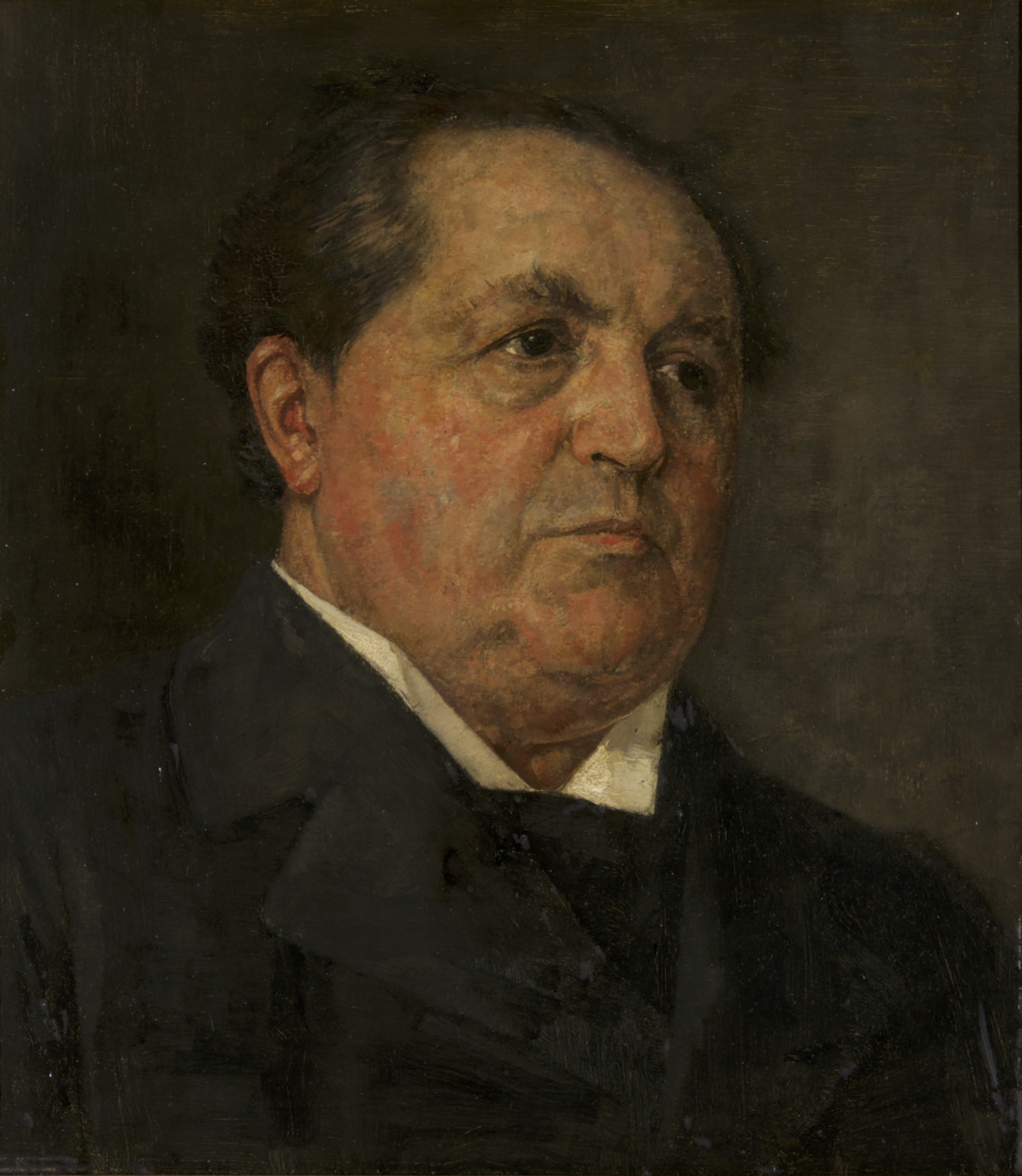

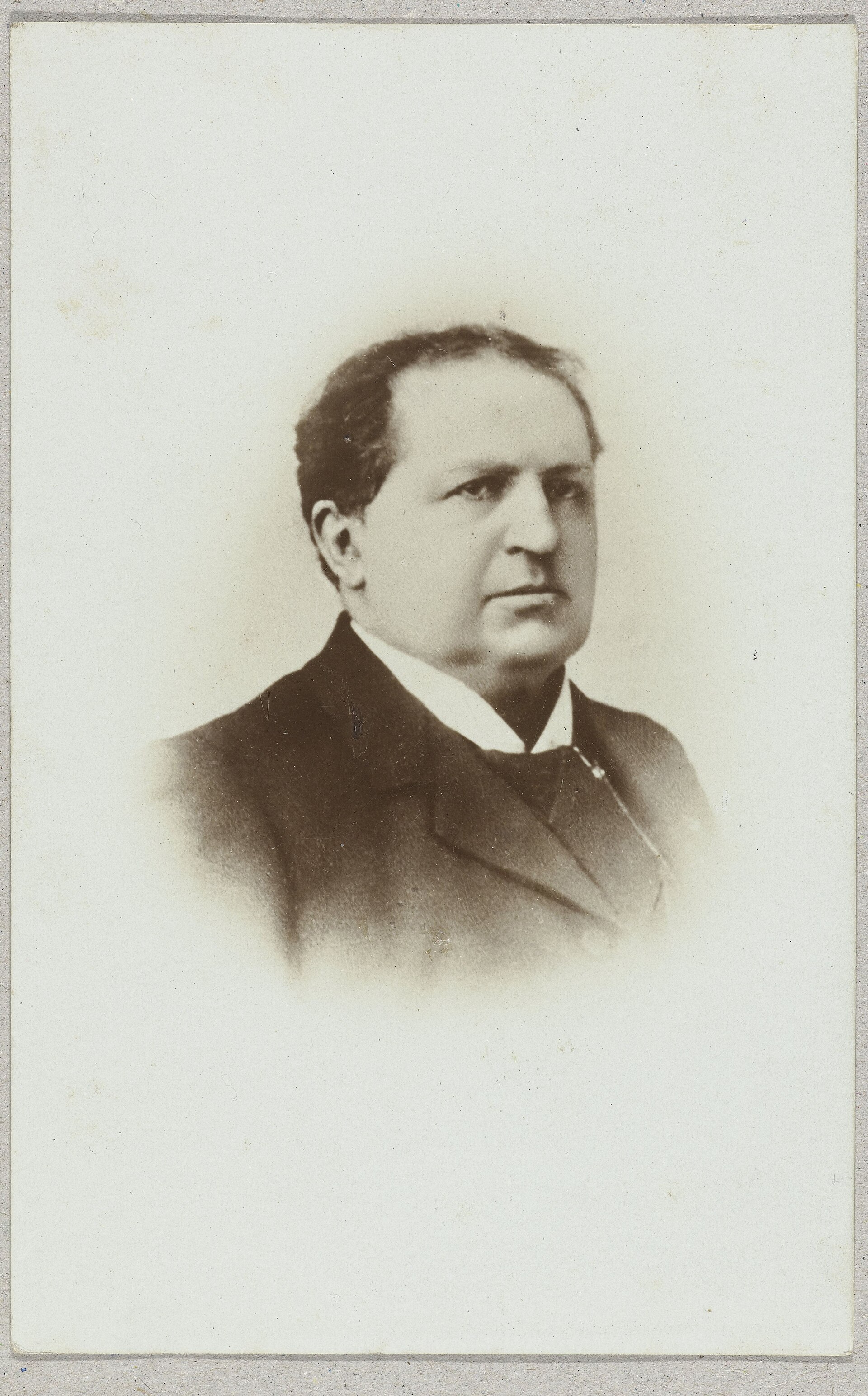
Abraham Kuyper was a Dutch Reformed minister, journalist, founder of the Free University in Amsterdam and later prime minister of the Netherlands. In October 1898 he gave the L. P. Stone Lectures at Princeton Theological Seminary, published in 1899 as Calvinism: Six Lectures; the title page of the American edition describes him as "Professor in the Free University, Amsterdam" and "Member of the States General of Holland."6 In the third lecture, "Calvinism and Politics," he set out the idea later called sphere sovereignty. Society, he said, is not one block run by the state. "The family, the business, science, art and so forth are all social spheres, which do not owe their existence to the State, and which do not derive the law of their life from the superiority of the state, but obey a high authority within their own bosom." He called that authority "sovereignty in the individual social spheres," chosen so "that it may be sharply and decidedly expressed that these different developments of social life have nothing above themselves but God, and that the State cannot intrude here, and has nothing to command in their domain."6
Kuyper's spheres are an older form of the idea that a society has several distinct domains, each answerable to God, which reappears in the Seven Mountains lists. Reformed writers of every view cite him for the claim that every area of life is under God's rule. But Kuyper also drew limits that his later readers have had to answer. In the same lecture he said the magistrates "have to serve God, by ruling the people according to His ordinances," and "have to restrain blasphemy, where it directly assumes the character of an affront to the Divine Majesty."6 Yet he wrote that for more than a quarter century his weekly paper had carried the motto "A free Church in a free State," named "the pile and fagots of Servetus" first among the difficulties in Calvinist political history, and concluded "that only the system of a free Church, in a free State, may be honored from a Calvinistic standpoint."6 He also noted that the Dutch churches were about to reconsider the article of their confession (Belgic Confession, Article 36) that gave the government the task of "extirpating every form of idolatry and false religion."6 A later critic of theonomy, J. Esmond Birnie of Queen's University Belfast, opened his 1997 essay with a different Kuyper text, an 1897 pledge that "God's holy ordinances shall be established again in the home, in the school and in the State," to show that Reformed Christians have long held that nations are subject to God's law while disagreeing about how to apply it.7 Kuyper is often credited with the saying that there is not a square inch of human life over which Christ does not cry "Mine!", from an 1880 address on sphere sovereignty (an address Kuyper himself cites in a footnote to the third lecture); that address was not opened for this lesson, so the saying is reported, not quoted.

The Puritan law codes
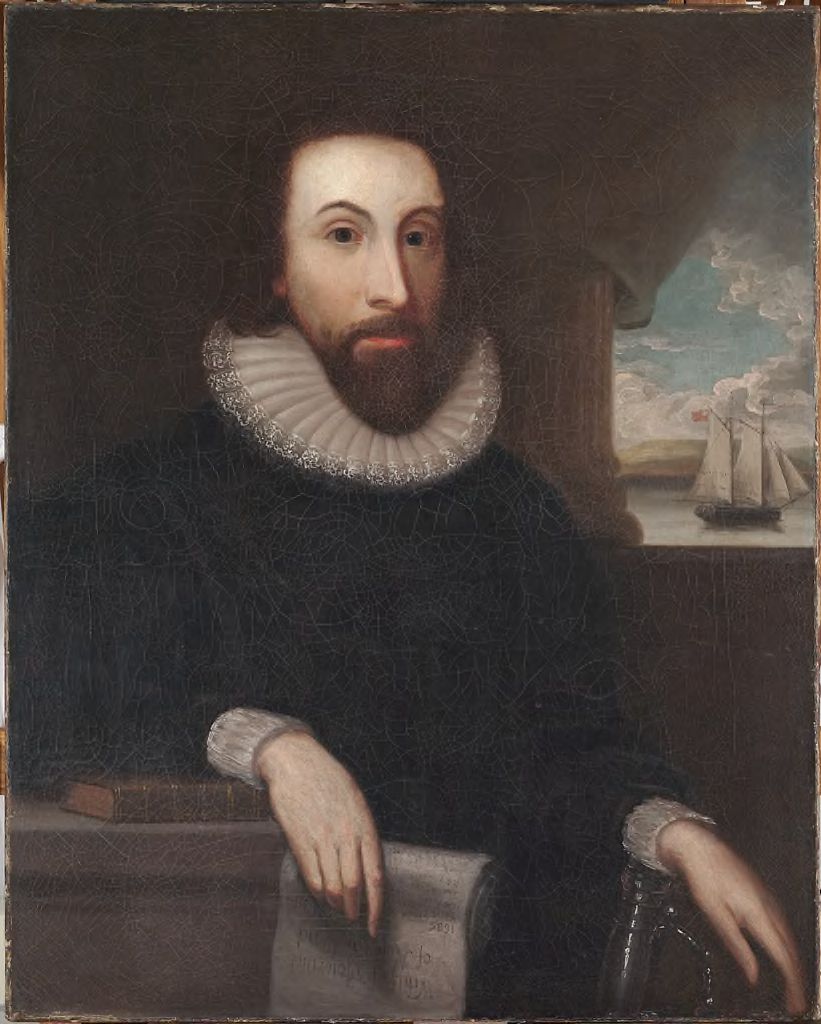

Gary North's preface to the 1991 book he wrote with Gary DeMar states the Reconstructionist reading of New England history directly: "The New England Puritans in the first generation (1630-60) had also believed that Old Testament law is still binding on men and institutions. But after 1660, this faith in God's law steadily faded. By 1700, it was dead."2 The record behind that claim can be read in the Massachusetts Body of Liberties of 1641, the colony's first code. Its first article said that no one should be punished "unlesse it be by vertue or equitie of some expresse law of the Country waranting the same, established by a generall Court and sufficiently published, or in case of the defect of a law in any parteculer case by the word of God."8 Article 94, the "Capitall Laws," gave each capital crime with Bible references in the margin. The first reads: "(Deut. 13. 6, 10. Deut. 17. 2, 6. Ex. 22.20) If any man after legall conviction shall have or worship any other god, but the lord god, he shall be put to death." Others followed for witchcraft, blasphemy, murder, bestiality, sodomy, adultery, man-stealing and false witness against a man's life, each citing Exodus, Leviticus, Numbers or Deuteronomy; the twelfth and last, against conspiracy and rebellion, cites no scripture.8
So the Puritans did draw capital laws from the law of Moses, and Reconstructionists are right that the Body of Liberties cites it. The same code was also a list of procedural liberties (trial, appeal, limits on torture and on forced public service), framed in the language of English law; whether it amounts to what Bahnsen later called theonomy is a question of interpretation, and historians of colonial law disagree. The life of the Massachusetts colony, and the debates among its own ministers, are taught in lesson 05 and in Liberty 56, lesson 08.
The Westminster Confession on the judicial law
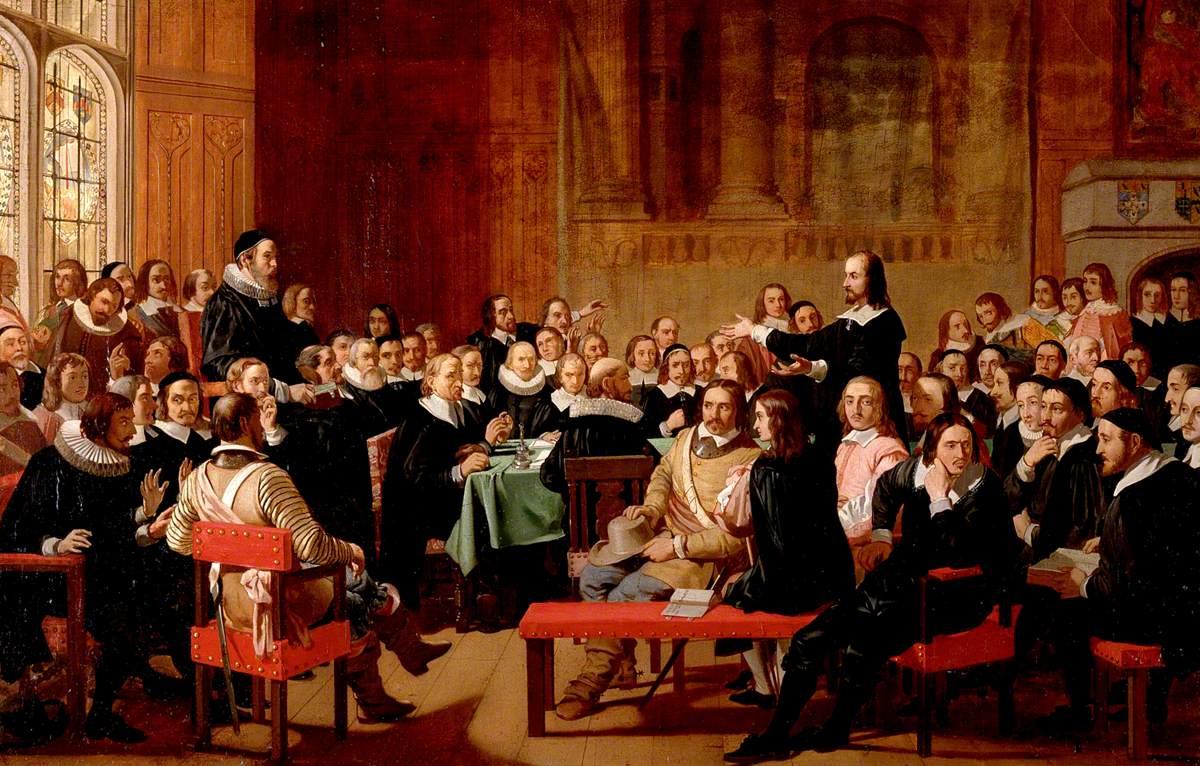

Every Presbyterian side of this debate appeals to the Westminster Confession of Faith (1646 to 1647), the standard of the OPC, the PCA and other bodies described in lesson 02. Chapter 19 divides the law of Moses into three parts. The moral law, summed up in the Ten Commandments, "doth forever bind all." The ceremonial laws "are now abrogated, under the new testament." And the fourth paragraph, the sentence at the center of the whole theonomy debate, reads in the text posted by the OPC: "To them also, as a body politic, he gave sundry judicial laws, which expired together with the State of that people; not obliging any other now, further than the general equity thereof may require."9
Theonomists read "general equity" as the abiding principle, and in their view the penalty, of each civil law. Their Reformed critics read "expired" as the main verb. Chapter 23, in the American revision used by the OPC and PCA, also says that civil magistrates "may not assume to themselves the administration of the Word and sacraments; or the power of the keys of the kingdom of heaven; or, in the least, interfere in matters of faith," and that they are to protect the church "without giving the preference to any denomination of Christians above the rest."9 Meredith Kline, then of Gordon-Conwell Theological Seminary in Massachusetts, argued in his 1978 review that the Reconstructionists were reviving "certain teachings contained in the Westminster Confession of Faith" (at least, he added, "in the Confession's original formulations"), teachings that had since "been subjected to official revision."10 Rushdoony himself, according to Haverland's account of the New Zealand study, called the wording of chapter 19, paragraph 4 "nonsense" (Institutes, p. 551).3
Cornelius Van Til and the rejection of neutrality
The third root is philosophical. Cornelius Van Til taught apologetics at Westminster Theological Seminary in Philadelphia. He argued that there is no neutral ground of reason shared by believer and unbeliever, and that every argument rests on a prior commitment, either to God's word or to human self-rule. Bahnsen quoted Van Til's Christian-Theistic Ethics (p. 134): "There is no alternative but that of theonomy and autonomy."11 North and DeMar dedicated their 1991 book "to the memory of Cornelius Van Til whose expertise in epistemological demolitions created a new movement as a wholly unintended consequence," and North wrote in its preface that Van Til "rejected neutrality in every area of life" and that this was "clearly a new element in the Christian Reconstruction movement."2 The phrase "wholly unintended" matters: the 1987 Christianity Today report on the movement said that Van Til "is said to be opposed to the Reconstruction agenda."12 Rushdoony's book By What Standard? was "a defense of Van Til's philosophy," according to the New Zealand pastor John Haverland's history of the movement.3
Postmillennialism, theonomy and dominion, as each writer defines them
The three words are often used as if they meant one thing. The writers themselves kept them apart. The 1987 Christianity Today report by Rodney Clapp, which Reconstructionists strongly disputed on other points, summarized "the three foundational points underlying all Reconstructionist thought: presuppositional apologetics, theonomy (literally, 'God's law'), and postmillennialism."12 Andrew Sandlin, writing in the Chalcedon Report in August 1995, defined the movement as "Calvinist, theonomist, presuppositionalist, postmillennialist and dominionist," according to Birnie's summary of that article.7
Theonomy
Bahnsen gave the plainest definition in the OPC's magazine New Horizons in April 1994: "The position which has come to be labeled 'theonomy' today thus holds that the word of the Lord is the sole, supreme, and unchallengeable standard for the actions and attitudes of all men in all areas of life." He added at once that the law "cannot be our personal vehicle for gaining favor with God," and that it "aims at Christ as our only righteousness, tutoring us that justification must be by faith in Him."11 The New Zealand study committee, quoting a Bahnsen essay, put the technical claim in one sentence: theonomy holds "that God's word is authoritative over all areas of life, that within Scripture we should presume continuity between Old and New Testament principles and regulations until God's revelation tells us otherwise, and that therefore the Old Testament law offers us a mode for sociopolitical reconstruction in our day, and that this law is to be enforced by the civil magistrate where and how the stipulations of God so designate."3 T. David Gordon, a critic writing in the Westminster Theological Journal in 1994, drew the line between the two terms carefully: Reconstructionists in general want the United States to return to "a more biblical approach" to civil life, while theonomy is narrower and "wishes to see every nation conform its civil practices to those revealed in the" legislation of Moses.13
Postmillennialism
Postmillennialism is the view that Christ will return after (post) a long age in which the gospel succeeds across the world. Rushdoony told Christianity Today in a telephone interview: "I hold to postmillennialism not because I look at the world, but because I look at the Bible. And the Bible tells me all things shall be put under Christ's feet before the end."12 Clapp noted that this hope was "common to evangelicalism up through much of the nineteenth century," and that Bahnsen expected change so gradual that his children and probably his grandchildren would not see it.12 Postmillennialism is not the same thing as theonomy. Jonathan Edwards held a postmillennial hope, a point the charismatic evangelist Daniel Kolenda made in 2022 to argue that critics who revere Edwards do not call his view heresy, and the New Zealand committee reported that its members still disagreed on "eschatology (between the amillennial and postmillennial positions)" after agreeing on much else.43
Dominion
The word comes from Genesis 1:28, "have dominion over the fish of the sea." Rushdoony, in a line Chalcedon now displays on its page about him, wrote: "The purpose and meaning of dominion is to bring forth the meaning and potentiality of man, his society, and the earth and to complete (perfect) the God-ordained purposes of creation."14 North wrote in 1991: "Christians are called by God to exercise dominion in every area of life. God has transferred the ownership of the world to Christians, just as He transferred it to Adam before Adam rebelled. We now are called to take possession of the world in terms of God's covenantal principles, and by means of God's sovereign grace."2 Wagner, who did not write as a theonomist in the sources opened here, gave his own definition in 2011: Satan "succeeded in usurping Adam's dominion," and Jesus "expects His kingdom-minded people to take whatever action is needed to push back the long-standing kingdom of Satan and bring the peace and prosperity of His kingdom here on earth. This is what we mean by dominionism."1 The television preacher Pat Robertson, who told Christianity Today in 1987 that he was premillennial and had not embraced Reconstruction, still said: "The Lord intends his people to exercise dominion in his name."12 The word "dominion" therefore does not by itself identify a theonomist.
Rousas John Rushdoony and the Chalcedon Foundation
His life
Chalcedon's own page about its founder says that Rushdoony's parents "escaped the Armenian genocide in 1915 and arrived in the US in time to give birth to him in April of 1916," and that he died in 2001.14 Haverland's history, drawing on articles by David K. Watson in The Outlook (1988), adds that he became a minister in the Presbyterian Church in the U.S.A., led mission work among Chinese Americans and American Indians, led some members of his church into the Orthodox Presbyterian Church, sent out the first issue of the Chalcedon Report in October 1965, and left the OPC in 1970.3 North's preface says that in 1965 Rushdoony "launched the Chalcedon Foundation, under the auspices of a local Southern California foundation, Americanism Education, Inc., which had been founded by Walter Knott of Knott's Berry Farm fame."2 Chalcedon says he started it "because he felt the modern church had truncated the Christian faith by presenting it as merely an insurance policy against hell," and says he "has been called the Father of the modern Christian and home school movements." It also states that "Christian Reconstruction" was "a term he coined."14 The ministry is now based in Vallecito, California.
The Institutes of Biblical Law (1973)
The Institutes, published in 1973 by the Craig Press in Nutley, New Jersey, is an exposition of the Ten Commandments in which each commandment gathers the case laws of the Pentateuch around it. Its opening, as reproduced on Chalcedon's "Biblical Law" page and in the bookseller Exodus Books' description of the current edition, states the purpose (the book itself was not opened for this lesson; John Frame's review cites one of the same phrases to p. 2). "To attempt to study Scripture without studying its law is to deny it. To attempt to understand Western civilization apart from the impact of Biblical law within it and upon it is to seek a fictitious history and to reject twenty centuries and their progress." The book is called "Institutes" in the older sense of "fundamental principles," because "it is intended as a beginning, as an instituting consideration of that law which must govern society, and which shall govern society under God."1516
Rushdoony distinguished "basic law," such as the Ten Commandments, from "case law," which illustrates a principle "in terms of specific cases," so that "by citing a minimal type of case, the necessary jurisdictions of the law are revealed." The purpose of the whole was "the restitution of God's order." Then came his charge against dispensational teaching: "It is a modern heresy that holds that the law of God has no meaning nor any binding force for man today." The God of Scripture, he wrote, is the one "whose grace and law remain the same in every age, because He, as the sovereign and absolute Lord, changes not, nor does He need to change."15
On how a law-governed society would come about, Rushdoony pointed to conversion. North quoted two sentences from the Institutes (pp. 113 and 122) to answer the charge that Reconstructionists teach salvation by politics: "The key is regeneration, propagation of the gospel, and the conversion of men and nations to God's law-word," and "The key to social renewal is individual regeneration."2 Chalcedon also quotes him: "Every man in Christ must be a walking law and an evidence of the presence of the Holy Spirit. God's government begins with the self-government of the Christian man."14 On the state, Clapp quoted the Institutes: "The state is limited to a ministry of justice, and free enterprise and individual initiative are given the freedom to develop." He also quoted Rushdoony's objection to pluralism, that "in the name of toleration, the believer is asked to associate on a common level of total acceptance with the atheist, the pervert, the criminal, and the adherents of other religions."12 Clapp also reported that Rushdoony's and Bahnsen's reading of the penalties in the law of Moses would make several offenses beyond murder capital crimes, including adultery, sodomy, blasphemy and apostasy; the details are given below under Bahnsen.
The first serious Reformed review came from John Frame of Westminster Theological Seminary in the seminary's journal in 1976. Frame called Rushdoony "one of the most important Christian social critics alive today," but found the book "distressingly unclear in its concepts of antinomianism and legalism," said that "Rushdoony expects too much of the arguments against antinomianism and says too little on the precise question at issue within the Reformed camp, namely, what laws are now binding?" and noted that "he tends to set himself off so sharply from other Reformed thinkers."16
Greg Bahnsen and Theonomy in Christian Ethics (1977)
Greg L. Bahnsen studied at Westminster Theological Seminary and then earned a doctorate in philosophy. In 1976 he began lecturing in apologetics and ethics at Reformed Theological Seminary in Jackson, Mississippi. He rewrote and expanded his Westminster master's thesis as Theonomy in Christian Ethics, published by the Craig Press in 1977.3 In his own later summary, the book "argues for the normativity of the law of God in Christian ethics today," maintaining "that the Old Testament standing commandments have not been abrogated (cf. Matt. 5:17-19) even in matters of crime and punishment."17 Of its nine major sections, he noted, the first six (well over half) argue for the validity of Old Testament law for the Christian "over against the claims of dispensationalism, antinomianism, secularism," and only the seventh concerns the civil magistrate.17
The book's most quoted sentences are about that seventh section. Haverland, summarizing it for the New Zealand churches, quoted Bahnsen: "Every detail of God's law has abiding validity from the time of Christ's advent to the time of his return.... Just as the magistrate of the Old Testament has divine imperatives which he was responsible to carry out, so also magistrates in the era of the New Testament are under obligation to those commands in the Book of the Law which apply to civil affairs and social penology.... Because the penal sanctions of God's law are imperatives delivered with divine authority and approval the follower of Christ should teach that the civil magistrate is yet under moral obligation to enforce the law of God in its social aspect" (pp. 317 to 318). Bahnsen spoke of "the Older Testament Theocracy becoming in the New Testament a Christocracy with international boundaries" (p. 432).3 Clapp quoted another sentence: "Every single stroke of the law must be seen by the Christian as applicable to this very age between the advents of Christ."12
On penalties, Clapp reported that "Bahnsen lists 15 crimes that deserve capital punishment," including "not only murder and rape, but sodomy, Sabbath breaking, apostasy, witchcraft, blasphemy, and incorrigibility in children," and that after the list Bahnsen wrote: "Christians do well at this point to adjust their attitudes so as to coincide with those of their Heavenly Father."12 In a telephone interview for the same article Bahnsen protested that this view "is often misconstrued." The incorrigible son of Deuteronomy 21, he said, is not a small child: "The Law deals with someone who is drunken and a glutton, the 18-year-old who repeatedly gets drunk and beats up his mother and father." Clapp added that, in Bahnsen's view, those to be executed for homosexual practice "must be engaged in 'outward acts' with at least two witnesses," which, Clapp noted, "might be two lines of confirmatory evidence and not literal observers."12 The list itself was not checked against a copy of the book for this lesson; it is reported as Clapp gave it.
Bahnsen's book divided the faculty and students at Reformed Theological Seminary. Haverland reports that the debate "became intense" in 1978, that the seminary board offered Bahnsen a year's paid leave "at the end of which his contract expired," and that "no grounds were cited for this decision."3 Several of his students carried the ideas abroad, including four ministers who later served in the Reformed Churches of New Zealand, which is how that small denomination came to study the question.3 A second printing appeared in spring 1979 and an expanded edition "with Replies to Critics" in 1984.177 Fifteen years later, in the April 1994 New Horizons article already quoted, Bahnsen tied the position to the gospel itself: "Our very need of the Savior arises from a conviction of sin, brought home to our hearts by the Holy Spirit showing our guilt for violating God's commandments."11
Gary North, Gary DeMar and the case in their own words
Gary North, who earned a doctorate in economics, wrote prolifically, with many books published by his Institute for Christian Economics in Tyler, Texas. Haverland names him and Bahnsen as the two men Rushdoony "greatly influenced" who "have become leading proponents of theonomy."3 North also edited the Biblical Blueprints series, which he described as "a self-conscious attempt to prove that the thesis of Christian Reconstruction is correct; biblical law does apply to real-world situations: economics, education, civil government, welfare, politics, foreign policy, and family relations." Some of them were co-published by Thomas Nelson before Dominion Press took over the rights in late 1987.2
The best single statement of the movement by its own leaders is Christian Reconstruction: What It Is, What It Isn't (Tyler, Texas: Institute for Christian Economics, 1991), by North and Gary DeMar, written as answers to critics. Its claims, in its own words:
- On its place: "Christian Reconstruction is the only Bible-affirming movement on earth that offers an uncompromisingly biblical alternative" to "the philosophy of autonomous man" (p. xii).2
- On salvation: "Men are saved by grace through faith, and nothing else." Critics who say Reconstructionists teach political salvation, North wrote, "are spreading a grotesque falsehood" (p. 36).2
- On politics: "Society is far broader than mere politics. Social transformation involves far more than politics. It involves personal and institutional regeneration" (p. 35).2
- On the goal: "Whole nations must be disciplined by Christ. How? Through the imposition of sanctions by Christians in terms of God's Bible-revealed law," and North added that he meant this in every area of life, not only politics (p. 51).2
- On method: "Our faith in the transforming power of the Holy Spirit is the basis of our confidence in a bottom-up, freedom-based transformation of society" (p. 75).2
- On revolution, in DeMar's chapter: "Modern postmillennial Reconstructionists are not revolutionary because they have a more consistently biblical view of the future. Reconstructionists generally believe they have time, lots of time, to accomplish their ends" (p. 141).2
The same 1987 Christianity Today report confirmed the last point from interviews: "They disavow violent revolution. Rushdoony said Christians will take over gradually, sphere by sphere: education, the arts, communication, law, and so on."12 The words "sphere by sphere" show how close the Reconstructionist program could sound to the later Seven Mountains language, though the two grew from different roots.
The Reformed response, 1976 to 2003
The first and most detailed critics of theonomy were Reformed and Presbyterian theologians who shared the Reconstructionists' belief in the authority of Scripture, their covenant theology and, in many cases, their admiration for Van Til. Their objections were mostly about how the Bible's two testaments relate, and about what God has assigned to the church and to the state.
Meredith Kline's review (1978) and Bahnsen's reply
Meredith G. Kline, an Old Testament scholar who signed his review from Gordon-Conwell Theological Seminary in South Hamilton, Massachusetts, reviewed Bahnsen's book for the Westminster Theological Journal. His article, "Comments on an Old-New Error," appeared in volume 41 (dated 1978 to 1979), pages 172 to 189.10 Kline stated the thesis before attacking it: their "special thesis" is that the law of Moses, "more or less in its entirety, constitutes a continuing norm for mankind and that it is the duty of the civil magistrate to enforce it, precepts and penalties alike." He then set it beside its opposite. Dispensationalism, he wrote, "represents an extreme failure to do justice to the continuity between the old and new covenants"; Chalcedon's error was "a failure to do justice to the discontinuity between the old and new covenants."10 His language was severe. He wrote that the movement "held promise of great good," but called its main thesis "a delusive and grotesque perversion of the teaching of Scripture" and said its campaigners had "quickly earned a reputation for a cult-like fanaticism, censoriously disruptive of the Reformed community."10
Bahnsen answered in the Journal of Christian Reconstruction (vol. 6, no. 2, Winter 1979 to 1980). He wrote that he admired Kline's "talents, even when I cannot agree with his reasoning or exegesis," but that Kline had not reviewed the book at all, ignoring its first six sections, and that "apart from emotional pitch, the article has proven to be anticlimactical as a theological argument." He reduced Kline's case to three arguments: Israel's uniqueness "as a redemptive type and as a holy nation," the "name-of-the-Redeemer" argument, and "the argument that Deuteronomy 13 is an embarrassment to evangelism."17 Deuteronomy 13, which commands death for those who entice Israel to serve other gods, was the hard case on both sides: it was the first scripture cited in the first capital law of the 1641 Massachusetts code.8
Kline returned to that point in a 1986 paper written after a faculty forum on theonomy at Westminster Seminary in California. He chose to start "with something that is indisputably held by theonomists," namely "their contention that it is a function of the state to suppress and eliminate those who practice false religions. In my judgment, to impose such a role on the State would be in effect to countermand the great commission." The difference, he insisted, was "not of degree but total contrast."18
The Presbyterian Church in America and the Orthodox Presbyterian Church
Neither of the two larger confessional Presbyterian bodies in the United States condemned theonomy. Clapp reported in 1987 that the PCA "saw enough fuss over Reconstruction that it issued a statement on the subject in 1978. While not endorsing it, the general assembly then decided the Reconstructionist position was not heretical." He quoted the PCA's stated clerk, Morton Smith, saying that Reconstruction "is not really a major item bothering the church."12 The text of the 1978 PCA action itself was not opened for this lesson. The OPC answered a reader's question on its website in 2003: "To the best of my knowledge, our General Assembly has never appointed a study committee on theonomy." Because "there is no one definition of the term," the answer concluded, "You will find a range of opinion in the OPC regarding theonomy, but no official position on the movement one way or the other." It noted that critics argue theonomy contradicts Westminster Confession 19, while "some theonomists argue their views are in fact required by the Westminster Standards."19
A synod decides: the Reformed Churches of New Zealand, 1983 to 1989
The fullest official process on record in a denomination took place in the small Reformed Churches of New Zealand, after ministers trained under Bahnsen began teaching theonomy there. The 1983 synod appointed a committee "to study the ethical teaching commonly known as theonomy in order to: (a) attempt to define what it is and, (b) determine whether such views are consistent with Scripture and Confessions." The 1986 synod received three personal papers and appointed a new committee that included both supporters and opponents. The 1989 synod, meeting at Silverstream, decided to "endorse the hermeneutical principles and conclusions of the report" and circulate it to the churches "as pastoral guidance on this issue."3
The committee first listed what everyone agreed on, including "We are saved by grace through faith and not by works of the law," "There is no conflict between law and love," "All believers should seek to apply God's law in their own lives and in society," and that the ceremonial laws "were fulfilled in Christ." It judged that Bahnsen's phrase "the abiding validity of the law in exhaustive detail" put "his case too strongly," and that the right approach was to "presume continuity between the ethical principles of the Old Testament and those of the New." It named five kinds of Old Testament detail that do not carry over: localized commands (such as the conquest of Canaan), cultural details, administrative details (such as "the type of government, the method of tax collection"), types fulfilled in Christ, and laws tied to Israel's land.3 On the confessions it concluded that it was "not possible to make a blanket endorsement or denial of theonomy with respect to the confessions." On church and state it agreed that "the State is not an agent of evangelism and must not use its power to that end," and that the means the church must use "is the preaching of the gospel of Christ." Two disagreements remained: "the penal sanctions of the Old Testament law and eschatology."3 Haverland, the committee's convener, drew a lesson about method that applies to every side of this lesson: in theological debate there are "the dangers of jumping to conclusions; of being defensive; and of labeling our opponents and so dismissing them."3
Theonomy: A Reformed Critique (1990) and the replies
In 1990 Zondervan published Theonomy: A Reformed Critique, edited by William S. Barker and W. Robert Godfrey, a set of essays by members of the faculty of Westminster Theological Seminary in Philadelphia.713 Birnie described it as responding to theonomy "from the perspectives of hermeneutics, sociology, church history," and social and economic policy, and called the book itself "a disguised compliment to the success of theonomy in gaining influence in the USA especially among the 'Reformed' churches."7 Two chapters cited by Gordon are Vern Poythress, "Effects of Interpretive Frameworks on the Application of Old Testament Law" (pp. 103 to 123), and Richard B. Gaffin Jr., "Theonomy and Eschatology: Reflections on Postmillennialism" (pp. 197 to 226).13 The book itself was not opened for this lesson, so none of its chapters are quoted here. North answered in 1991 with Westminster's Confession: The Abandonment of Van Til's Legacy, which, in Birnie's summary, regarded the seminary's response as "inadequately Reformed in its foundations" and "patchy and even sometimes downright dishonest."7
T. David Gordon's taxonomy (1994)
Gordon aimed his 1994 critique at the method only: "I am evaluating the engine, not the entire train." He warned against confusing "a criticism of a view with a criticism of those who hold it," and wrote that those who do not use the method he described "are free of the critique."13 His main argument was that Bahnsen's reading of Matthew 5:17 to 19 took "fulfill" to mean "ratify," and that Hebrews 7:12 (a change of priesthood means a change of law), Paul's statement that believers are "not under the law," Romans 13's silence about Sinai and the suspension of ceremonial laws by the Jerusalem Council all "point compellingly away from Bahnsen's suggestion that the Sinai legislation is abidingly valid in exhaustive detail." He also turned the historical argument around: by abstracting the Ten Commandments from the Sinai covenant, the Westminster Assembly had set a precedent that, together with reaction against dispensationalism, "created soil in the twentieth century which virtually guaranteed that Theonomy, or something like it, would take root."13
The evangelical debate in named publications, 1987 to 1991
The movement reached a wide evangelical audience in the mid 1980s. Clapp's Christianity Today report of February 20, 1987, carried the headline "Democracy as Heresy" and the summary "Reconstructionists anticipate a day when Christians will govern using the Old Testament as the law book." It reported that Reconstructionist books had been co-published by Crossway and Thomas Nelson, that Rushdoony and North had appeared on the television programs of Pat Robertson and D. James Kennedy, and that Francis Schaeffer's A Christian Manifesto "relied on Rushdoony's social analysis" (see Liberty 56, lesson 05).12 Clapp noted that "some evangelical theologians" praised the Reconstructionists for their affirmation of biblical authority, quoted Frame's praise of the "considerable breadth and depth" of Rushdoony's knowledge of Scripture, but also wrote of "Reconstruction's sometimes breathtaking and scathing arrogance."12 Kennedy told the magazine he was not "a theonomist as such." He said it would be "impractical" for every nation to go theonomic; asked whether it would be desirable, he replied, "Well, I think it would be presumptuous for me or anyone else to disagree with God, don't you?" Robertson said: "I admire many of these [Reconstruction] teachings because they are in line with Scripture. But others I cannot accept because they do not correspond with the biblical view of the sinful nature of mankind or the necessity of the second coming of Christ."12
The Reconstructionists answered sharply. DeMar's introduction to the 1991 book called "Democracy as Heresy" "probably the most infamous attack on Christian Reconstruction," said its conclusions were repeated in later articles that used it as their "only source of information," and cited North's response, "Honest Reporting as Heresy." DeMar also wrote that Clapp had said "he had not had time to read our books in detail, for the Reconstructionists publish too much."2 The same book answered the dispensational critics of the late 1980s, especially the writer Dave Hunt, and the book by H. Wayne House and Thomas Ice, Dominion Theology: Blessing or Curse? (Portland, Oregon: Multnomah Press, 1988), which DeMar cites and answers; the House and Ice book itself was not opened for this lesson.2 For dispensational premillennialists the issue was the end times: they expect Christ to set up his kingdom in person after his return, and North replied that their view put more faith in "a bureaucracy personally administered by Christ" than in the Spirit-empowered gospel.2 Lesson 11 shows where these evangelical bodies stand in numbers.
The New Apostolic Reformation
The New Apostolic Reformation grew from a different family of churches. Its background is Pentecostal and charismatic, taught in Part C, lesson 02, and its theology of the church owes nothing to the Westminster Confession. What links it to the movements above is the word "dominion" and an interest in shaping every area of society.
An earlier argument: the Latter Rain and the Assemblies of God, 1949
The Assemblies of God (AG) has published its own account of the background. A 2026 article in Influence, the AG's magazine for ministers, by Ruthie Edgerly Oberg, explains that the New Order of the Latter Rain "began in 1948 at Sharon Bible School in North Battleford, Saskatchewan," and that its leaders, "including George Hawtin and Percy Hunt, taught that God was restoring the Church to its full New Testament pattern in preparation for the end times." Drawing on Ephesians 4:11, "Latter Rain leaders argued that God was restoring five New Testament ministries: apostles, prophets, evangelists, pastors, and teachers," and the movement "rejected denominational structures."20 In 1949, the article says, "the Assemblies of God General Council adopted a resolution offering six points of clarification." In the article's summary, the second point held that "Modern apostles and prophets do not hold authoritative foundational office in the universal Church," and the fifth that "Personal prophecy should not be used as directive revelation for ministry assignment or life decisions."20 The same article traces Latter Rain themes through the healing revival, the charismatic renewal, the 1970s Shepherding movement and the apostolic networks of the 1980s and 1990s, while cautioning that "this does not mean later charismatic movements were simply a continuation of Latter Rain theology."20
C. Peter Wagner names the movement
C. Peter Wagner served with his wife, Doris, as a missionary in Bolivia from 1956 to 1971 and then taught church growth at Fuller Theological Seminary for thirty years.121 He gave the history of the name in his own words in 2011. The movement's characteristics "began to come together through my research in 1993." Its roots, he said, went back to "the African Independent Church Movement in 1900, the Chinese House Church Movement beginning in 1976, the U.S. Independent Charismatic Movement beginning in the 1970s and the Latin American Grassroots Church Movement beginning around the same time." He tried "Postdenominational" first, but dropped it because of "the objections of many of my friends who were denominational executives." Then: "in 1994, I tested 'New Apostolic Reformation.' 'Reformation' because the movement matched the Protestant Reformation in world impact; 'Apostolic' because of all the changes the most radical one was apostolic governance, which I'll explain in due time; and 'New' because several churches and denominations already carried the name 'apostolic,' but they did not fit the NAR pattern."1 He wrote that he "might have been the first to observe the movement, give a name to it, and describe its characteristics," but denied being its founder: "The NAR is not an organization. No one can join or carry a card. It has no leader."1 He led Global Harvest Ministries and was chancellor of the Wagner Leadership Institute, founded in 1998.1 He died in 2016.4
What the NAR teaches, in Wagner's words
Wagner's article "The New Apostolic Reformation Is Not a Cult," published by Charisma News on August 24, 2011, is the most direct statement of the movement by the man who named it. He wrote that it was a reply to press coverage that linked candidates in that year's presidential primaries to the NAR, and he spoke for himself: "I say 'my position,' because others in NAR might not agree with me, and they are not compelled to do so. NAR has no official statements of theology or ecclesiology."1 His main points:
- Doctrine. "Those who affiliate with it believe the Apostles' Creed and all the standard classic statements of Christian doctrine." The NAR, he said, "represents the most radical change in the way of doing church since the Protestant Reformation. This is not a doctrinal change," because it keeps "the authority of Scripture, justification by faith, and the priesthood of all believers."1
- Apostolic governance. "I take literally St. Paul's words" in Ephesians 4:11 to 12. "Most of traditional Christianity accepts evangelists, pastors, and teachers, but not apostles and prophets. I think that all five are given to be active in churches today." Of 1 Corinthians 12:28 he wrote: "This does not describe a hierarchy, but a divine order. Apostles are first in that order." True apostles are "gifted by God" and then "commissioned" by "other respected and qualified leaders."1
- Prophets. "Every apostle needs alignment with prophets and every prophet needs apostolic alignment," citing Amos 3:7 and 2 Chronicles 20:20.1
- Revelation. "The one major rule governing any new revelation from God is that it cannot contradict what has already been written in the Bible. It may supplement it, however."1
- Theocracy. "Everyone I know in NAR would absolutely reject this idea, thinking back to Constantine's failed experiment." The way to dominion is "to have kingdom-minded people in every one of the Seven Mountains: Religion, Family, Education, Government, Media, Arts & Entertainment, and Business so that they can use their influence to create an environment in which the blessings and prosperity of the Kingdom of God can permeate all areas of society."1
- Structure. "Whereas denominations are legal structures, the NAR is a relational structure. Everyone is related to, or aligned, with an apostle or apostles. This alignment is voluntary."1
About six weeks later, on October 3, 2011, Wagner gave a long interview to Terry Gross on NPR's Fresh Air. NPR's introduction stated that he "describes himself as the first person who noticed the movement, gave a name to it and started writing books about it."21 Asked what he meant by taking dominion, he answered: "we use the word dominion, but we wouldn't want to say that we have dominion as if we're the owners or we're the rulers of, let's say, the arts and entertainment mountain. What we strive to do and our goal is to have people in the arts and entertainment mountain who are committed to the kingdom of God." On government he said: "We believe in working with any, with whatever political system there is. In America, it's democracy and working with the administrative, judicial and legislative branches of the government, the way they are, but to have as many kingdom-minded people in influence in each one of these branches of government as possible so that the blessings of the kingdom will come." (NPR's transcript shows a dash where he broke off and restarted, rendered here as a comma.) Of a picture of the Capitol with a cross on it, used to promote a prayer campaign by two leaders who, he said, were "aligned apostolically with me" and whose campaign had his "tacit affirmation," he said he was "not sure that that might not be interpreted as a theocracy" and called it "probably a mistake," because "I don't believe our Capitol ever wants a cross on top of it, because that would be a sign of a theocracy."21 He also described the role of deliverance from demons in his circle (he and Doris had founded the International Society of Deliverance Ministers) and the idea of "territorial spirits" over cities, teachings that his Pentecostal critics would single out.21
Wagner's claim about size was large. He wrote that "the NAR embraces the largest non-Catholic segment of world Christianity," the fastest growing, and that most new churches in the Global South "would comfortably fit the NAR template."1 That is a description of a broad type of church, not a count of people who accept his teaching on apostles; no membership figure exists, because by his own account there is no membership. It is rated below under "Claims checked."
The Seven Mountains
The 1975 account, in Youth With A Mission's words

Youth With A Mission (YWAM), the mission founded by Loren Cunningham in 1960, counts the Seven Spheres as the second of four "Legacy Words" that shaped it, and dates it to 1975.22 Cunningham died on October 6, 2023, at the age of 88; the obituary posted on his website says he "is often called the 'de-regulator of missions'" for opening short-term, interdenominational service to young people.23 YWAM's account, presented to Cunningham at a YWAM gathering in Townsville, Australia, in September 2015 and now posted on its website, says that while on a family vacation in the Colorado Rockies, Cunningham "had been asking God for understanding on how to see a nation discipled and God had just spoken to him about seven influential spheres of society that shape the worldview, beliefs and values of a culture." At dinner with Bill and Vonette Bright, founders of Campus Crusade, Bright spoke first: "Loren, you won't believe what God has just shown me. If we are going to see our nations changed, we have to impact seven different spheres of society." The account continues: "Within a month after that encounter in the summer of 1975, Darlene heard Francis Schaeffer, founder of L'Abri, speaking on the radio. He too spoke of how we could see nations changed by shaping seven different areas of society with Biblical truth."22 (YWAM's text sets "founder of L'Abri" off with dashes.)
YWAM's list of the seven is "family, economy, government, religion, education, media, and celebration." Its stated goal is teaching; in its account Cunningham thought, "If we could simply teach the principles and practices of God's kingdom in each of these seven arenas then we could see the transformation of our communities and nations." It adds that "several variations of the theme have emerged in recent years" ("some with 7, others with 8 or even 12 spheres," set off with dashes in YWAM's text) while "the foundational principle is the same," and that "whether you call this reality a 'sphere' or a 'mind-molder'" it points to the same God.22 The 1975 story is told from memory decades later. No letter, diary or recording from 1975 was found for this lesson, and Bright's and Schaeffer's own versions were not located.
From spheres to mountains: Wagner and Wallnau
The language of "mountains" came later and from the charismatic side. Wagner used it in 2011, as quoted above, with his own list of seven. Lance Wallnau, a Texas-based teacher and consultant, describes himself on his website as "the innovator who introduced the 'Seven Mountains of Culture' as a fresh template to explain how the church must engage culture at the turn of the century," and says that he directs the Lance Learning Group, "a strategic teaching and consulting company based in Dallas, Texas."24 Wallnau's own books were not opened for this lesson, so his teaching is not quoted beyond that self-description. YWAM's account frames the spheres as places to disciple through teaching; Wagner's frames them as places for "kingdom-minded" believers to gain influence. The difference is one of emphasis that the writers themselves state; neither describes rule by the church.
Pentecostal and charismatic responses
The Assemblies of God
The Assemblies of God, whose U.S. and worldwide bodies together make up, in Pivec's words, "the world's largest Pentecostal denomination,"25 had ruled on the core NAR teaching before the name existed. Its 1949 resolution, as summarized by Influence, denied that modern apostles and prophets "hold authoritative foundational office in the universal Church." Fifty years later, the magazine reports, "In 1999, the General Council entertained a resolution to reaffirm the 1949 resolution condemning these kinds of teachings. The resolution led to the creation of Assemblies of God position papers on modern-day apostles and prophets."20 The article's conclusion states the AG's own view of its history: "Assemblies of God leaders in 1949 did not reject revival. They rejected certain teachings they believed could lead the Church away from biblical foundations."20
The AG position papers themselves ("Endtime Revival: Spirit-Led and Spirit-Controlled," "Apostles and Prophets," "The Kingdom of God" and others) are posted on ag.org, but the site refused automated access during the research for this lesson, so their wording is not quoted here. Holly Pivec, a writer on the NAR, summarized them in 2013: the AG "has rejected the teaching that present-day apostles and prophets should govern the church," "has rejected the teaching that the church should work to take dominion of the earth prior to Christ's return," a teaching she says is "known as 'Kingdom Now' or 'Dominion Theology,'" and has rejected "strategic-level spiritual warfare" against territorial spirits. Her judgment: "On paper, the denomination has rejected key NAR teachings. But, in practice, these same teachings are being promoted in many Assemblies of God churches," because the denomination gives its congregations "great autonomy."25 She notes that some congregations heavily involved in these teachings, such as Bethel Church in Redding, California, have left the denomination.25
Evangelical critics: Geivett and Pivec
Pivec, who holds a master's degree in Christian apologetics from Biola University, and the Biola professor Doug Geivett have written four books on the movement: A New Apostolic Reformation? A Biblical Response to a Worldwide Movement, God's Super-Apostles, Counterfeit Kingdom and Reckless Christianity.26 Pivec states her charge plainly: "NAR teachings and practices have divided families, split churches, stunted the spiritual growth of believers, and left countless Christians disillusioned by promises of healing and miraculous power that haven't panned out."26 Her objections, as listed on her site and in her summary of the AG papers, concern governing apostles, binding new revelation, imparted gifts and strategic spiritual warfare. Dominion appears in her list as one teaching among several, not as the center of the case.25
Charismatic leaders who reject the label
Some of the most pointed responses to the critics came from charismatic leaders who share part of their concern. The evangelist Daniel Kolenda wrote in Charisma on January 26, 2022, that "after talking with those accused of being a part of the NAR, I realized they had never even heard of the group and were shocked to find out they were among its 'members.'" He quoted Wagner's 2011 statement that the NAR "is not an organization" and argued that the critics use the term "as a sort of catch-all, generic label to brand people they dislike as heretics."4 On dominion he drew his own line: "Part of our assignment as the church is to influence society and culture through our gifts, our talents and our lives in general. Most Christians would agree with what I've just stated." He added, "as far as 'dominion theology' goes, what I just described is what I believe and teach," and called postmillennial eschatology "a more radical view of dominion theology," a view he did not claim for himself.4
Michael L. Brown, host of the Line of Fire broadcast, put the matter more precisely in an article published by Charisma News on December 5, 2023. "I freely acknowledge the existence of the New Apostolic Reformation as articulated by Peter Wagner and, in certain ways, spearheaded by him," he wrote, and he acknowledged that he had been "a member and leader in the U.S. Coalition of Apostolic Leaders, but only after the name was changed from 'Apostles' to 'Apostolic Leaders.'" What he denied was "the NAR of the critics," a vast network "poised to take over the world." On the critics' claim that NAR leaders take dominion over the mountains of society, he called it "a gross exaggeration, although some of it is true in terms of dominion theology, a theology I strongly reject."5 Brown also quoted the historian Matthew D. Taylor, who had studied Wagner's archives for a book then forthcoming, The Violent Take It by Force: The Christian Movement That Is Threatening Our Democracy; Brown reported that Taylor "believes there is a direct connection between the events of Jan. 6 and the NAR founded by Wagner." Taylor warned against online writing about the NAR "that sounds like stuff out of a bad conspiracy novel," but added that "reputable people, journalists, scholars, people who've done their research" are "pushing back and saying, 'Yes, there is such a thing as the NAR' and they can marshal a lot of evidence, much of it coming from Peter Wagner's writing and associations."5
The record therefore supports a narrow statement. A network of leaders who called themselves apostles, aligned with Wagner and using his term, did exist; Brown, who rejects dominion theology, was part of a successor coalition; and Kolenda, Brown and the historian Taylor whom Brown quotes agree that broad lists of NAR "members" compiled online are unreliable. They disagree about how far the teachings reach and how dangerous they are.
How the three movements differ
Put side by side in their own words, the three movements answer different questions. Christian Reconstruction asks what law should govern a Christian society and answers with the law of Moses, read through the New Testament, with the civil magistrate enforcing its social commands; it expects that society to come gradually, through conversion, over centuries. The New Apostolic Reformation asks how the church should be governed and answers with living apostles and prophets; Wagner's "dominion" meant placing believers in positions of influence, and he rejected theocracy. The Seven Mountains framing asks where Christians should work and answers with a list of social spheres; in YWAM's version it is a mission strategy for teaching. A person can hold any one of these without the others. The Rushdoony texts quoted here say nothing of governing apostles; Wagner was a charismatic who never claimed to be a theonomist in the sources opened here; YWAM is an interdenominational mission whose account speaks of discipling nations. Their critics are just as distinct: the Reformed critics argue from covenant theology and the Westminster Confession, while the Pentecostal and charismatic critics argue from Ephesians 4, from the AG's 1949 experience and from the sufficiency of Scripture.
What the record shows and what it does not
- Documented fact. Rushdoony founded Chalcedon in 1965 and published The Institutes of Biblical Law in 1973; Bahnsen's Theonomy in Christian Ethics appeared in 1977; North and DeMar defended the movement in 1991. The 1641 Massachusetts Body of Liberties drew eleven of its twelve capital laws from the law of Moses, citing chapter and verse. The Westminster Confession says the judicial laws "expired together with the State of that people." Wagner wrote that he tested the name "New Apostolic Reformation" in 1994. The AG General Council adopted a resolution on Latter Rain teachings in 1949 and considered its reaffirmation in 1999.
- A movement's own claim. That Christian Reconstruction is a recovery of first generation Puritan practice; that Rushdoony coined the term "Christian Reconstruction"; that the NAR is the largest non-Catholic segment of world Christianity; that the Seven Spheres were revealed to Cunningham and Bright in the same week in 1975.
- Scholarly or church reading. That theonomy fails to do justice to the discontinuity between the covenants (Kline, Gordon); that the Westminster Confession neither requires nor clearly forbids every form of theonomy (the New Zealand synod, 1989; the OPC, 2003); that Latter Rain themes resurfaced in later apostolic networks (AG, Influence, 2026).
- Open questions. How many churches actually hold NAR teaching, since there is no membership; how much Reconstructionist writing shaped wider evangelical activism, which the 1987 report described but did not measure; and the exact wording of the PCA's 1978 action and of the AG's later position papers, which were not opened for this lesson.
Claims checked
"Reconstructionists teach that people are saved by political action."
Refuted by their own texts. North: "Men are saved by grace through faith, and nothing else." He quoted Rushdoony: "The key to social renewal is individual regeneration." Bahnsen wrote that the law "cannot be our personal vehicle for gaining favor with God."211 Their critics' objections concern the role of the state, not the doctrine of salvation.
"Christian Reconstructionists plan to seize power by force."
Refuted as to method; supported as to the end they hoped for. DeMar: "Modern postmillennial Reconstructionists are not revolutionary," and North described a "bottom-up, freedom-based transformation." Clapp's 1987 report said they "disavow violent revolution."212 The same writers did teach that, in a society that had come to accept it, the civil magistrate should enforce the social commands of the law of Moses with their penalties, as Bahnsen wrote (pp. 317 to 318, as quoted by Haverland).3
"Theonomy is the official teaching of conservative Presbyterian churches."
Refuted. The OPC says it has "no official position on the movement one way or the other." The PCA, as reported in 1987, judged the position "not heretical" in 1978 without endorsing it. The Reformed Churches of New Zealand declined "a blanket endorsement or denial."19123 The faculty of Westminster Theological Seminary, the school where Bahnsen trained, published a book-length critique in 1990.7
"The Massachusetts Puritans were theonomists."
Partly supported. The Body of Liberties (1641) took eleven of its twelve capital laws from Exodus, Leviticus, Numbers and Deuteronomy and filled gaps "by the word of God."8 North says this faith "steadily faded" after 1660.2 But the code is also a charter of procedural liberties in the English legal tradition, and the Puritans did not frame their system in the twentieth century terms of Bahnsen's book. Calling them "theonomists" reads a modern label back into the seventeenth century.
"Abraham Kuyper was the first theonomist."
Unsupported. Kuyper taught that God rules every sphere of life and that magistrates must "restrain blasphemy," but he praised "a free Church, in a free State," named the burning of Servetus first among the difficulties for Calvinist politics, and noted that the Dutch churches were about to reconsider the Belgic Confession's article on "extirpating" false religion.6 No text opened for this lesson shows him arguing that the civil penalties of the law of Moses bind modern nations.
"C. Peter Wagner founded the New Apostolic Reformation."
Partly supported. Wagner named the movement in 1994 and wrote its defining books, and a network of apostles aligned with him existed. He denied founding it ("I have been called the 'founder,' but this is not the case") and said it "has no leader."1 Brown, who later served in the renamed U.S. Coalition of Apostolic Leaders, agrees that the NAR "as articulated by Peter Wagner" existed and was "in certain ways, spearheaded by him."5
"The NAR is the largest non-Catholic segment of world Christianity."
Unresolved. This is Wagner's own claim, made by grouping most independent and Global South churches that "would comfortably fit the NAR template."1 No count of people who accept governing apostles exists, and Kolenda and Brown reject the broad lists of supposed members; Taylor, as Brown quotes him, warns of websites "with literally thousands of names indexed of different Christian leaders who are supposedly part of 'the NAR.'"4525
"God revealed the Seven Mountains to Loren Cunningham and Bill Bright on the same day in 1975."
Unresolved. The meeting and the shared idea are reported in YWAM's own retrospective account, which says Cunningham received the idea "only a few days earlier" than the dinner, not on the same day. No contemporary 1975 document was found, and Bright's and Schaeffer's own accounts were not located for this lesson.22 YWAM's word was "spheres"; the word "mountains" appears in the sources opened here only from 2011 on, in Wagner and Wallnau.124
"Anyone who talks about 'dominion' is a Reconstructionist."
Refuted. Pat Robertson spoke of exercising "dominion in his name" while rejecting Reconstruction and holding a premillennial view; Wagner defined "dominionism" without theonomy; Kolenda accepts "dominion theology" only in the sense of cultural influence and does not claim the postmillennial view he calls "more radical."1214
"The Assemblies of God accepts NAR teaching."
Refuted as to its official position; unresolved as to its congregations. The 1949 resolution and the papers that followed the 1999 resolution reject governing apostles and prophets, the papers as summarized by Pivec.2025 Pivec argues that the teachings are nevertheless promoted in many AG churches, a claim about local practice that cannot be measured from published documents.25
Hard questions and answers
Is not every Christian who believes the Ten Commandments a "theonomist"?
In the broad sense, yes, and both sides say so. The New Zealand committee wrote that "all Reformed believers could be described as being theonomists in a broad sense," and Bahnsen's own definition (the word of the Lord as the "unchallengeable standard ... in all areas of life") is one many Christians would sign.311 The dispute is over the narrow sense: whether the civil laws and penalties given to Israel bind modern states. On that, the Westminster Confession says the judicial laws "expired," "not obliging any other now, further than the general equity thereof may require," and the debate is over what "general equity" includes.9
Would a theonomic state put people to death for religious offenses?
By the writers' own logic, in principle, for some offenses. Clapp reported that Bahnsen's list of capital crimes included apostasy, blasphemy and witchcraft; Bahnsen answered that the cases are narrowly defined, require witnesses and are often misread.12 Kline made this the decisive point: he said theonomists hold that "it is a function of the state to suppress and eliminate those who practice false religions," and that this "would be in effect to countermand the great commission."18 Bahnsen, for his part, named Kline's Deuteronomy 13 argument as one of the only three Kline had offered and rejected it.17 The New Zealand churches agreed that the state "is not an agent of evangelism" but could not agree on the penal sanctions.3
Does the "dominion" of Genesis 1:28 mean political rule?
The writers answer differently. Rushdoony read it as completing "the God-ordained purposes of creation"; North as a call to "take possession of the world in terms of God's covenantal principles"; Wagner as pushing back Satan's usurped dominion through "kingdom-minded" people in every sphere, while denying that it means owning or ruling those spheres.14221 Their critics answer from other texts: the AG, in Pivec's summary, rejected the teaching that "the church should work to take dominion of the earth prior to Christ's return," and Kline argued that giving the state the task of suppressing false religion "would be in effect to countermand the great commission."2518
Is the "NAR" a real movement or only a critics' label?
Both, depending on the definition. Wagner named a real network of apostolic leaders, and Taylor, as quoted by Brown, says the evidence for it comes largely "from Peter Wagner's writing and associations."5 Wagner himself said it had no membership, no leader and "no official statements of theology."1 Kolenda and Brown accept the narrow movement but reject what Brown calls "the NAR of the critics."45 A careful reader names the person and the teaching rather than the label.
Why does a view of the end times make such a difference?
Because it sets the time frame and the hope. Postmillennial Reconstructionists expected the gospel to win most of the world before Christ returns, so they wrote laws for a future Christian society and, in DeMar's words, believed they had "time, lots of time."2 Dispensational premillennialists expect Christ himself to set up the kingdom after his return, and so their writers, such as Dave Hunt, opposed the Reconstructionist program; North answered them in the 1991 book.2 Robertson, a premillennialist, said he did not "expect some kind of reconstructed utopia here on earth."12 Reformed critics such as Richard Gaffin wrote a chapter of the 1990 Westminster volume on this very question, and the New Zealand committee could not resolve it.133
Do these movements reject religious liberty?
The answer differs by writer and has to be taken from their words. Rushdoony objected to pluralism as treating every belief "on a common level of total acceptance."12 Wagner said, "We honor each religion in a society like our American society," and "I think America needs to make room for liberty."21 Kuyper, cited by many on all sides, defended "a free Church, in a free State."6 The Westminster Confession as revised for the American churches forbids magistrates to "interfere in matters of faith" and requires equal protection of all Christian denominations.9 Herbert's painting of the Westminster Assembly above shows a debate over liberty of conscience inside the Puritan world in 1644: the argument is old, and it has always been argued from Scripture by people on more than one side.
Learn more
- Christian Reconstruction: What It Is, What It Isn't (North and DeMar, 1991): The movement's own leaders answering their critics, free in full.
- Meredith G. Kline, "Comments on an Old-New Error" (1978): The sharpest early Reformed critique of Bahnsen; read it with Bahnsen's reply.
- Bahnsen's reply to Kline (1979-1980): Bahnsen's own summary of his book and his answer to Kline's three arguments.
- John Haverland, "Theonomy: What Have We Learned?" (1995): How one denomination studied the question for six years and what it agreed on.
- T. David Gordon, "Critique of Theonomy: A Taxonomy" (1994): A careful critique of the method, separating theonomy from Reconstruction.
- C. Peter Wagner, "The New Apostolic Reformation Is Not a Cult" (2011): The NAR described by the man who named it.
- Influence, "Leading With Discernment" (2026): The Assemblies of God's own history of the Latter Rain and its 1949 response.
- Kuyper, Calvinism: Six Lectures (1899): Read the third lecture for sphere sovereignty and "a free Church in a free State."
- Liberty 56, lesson 05: A Christian Manifesto: Schaeffer's 1981 book, which drew on Rushdoony.
Still being checked (17 items)
These points could not be confirmed against a primary source when this lesson was written and fact checked in October 2026. The text above states each one as uncertain.
- The text of the PCA General Assembly's 1978 statement on Reconstruction was not opened; it is known here only from Rodney Clapp's report in Christianity Today (Feb. 20, 1987).
- The Assemblies of God position papers ("Endtime Revival," "Apostles and Prophets," "The Kingdom of God") were not opened because ag.org refused automated access; their content is given from Holly Pivec's 2013 summary and the AG's Influence magazine (2026).
- Bahnsen's list of fifteen capital crimes is reported from Clapp (1987), not checked against a copy of Theonomy in Christian Ethics.
- Theonomy: A Reformed Critique (1990) was not opened; its editors, publisher and two chapter titles come from Birnie and Gordon. North's 1991 reply, Westminster's Confession, is known from Birnie's summary.
- The year of Birnie's SBET article (1997) is inferred from the volume number (15.1) and his reference to Bahnsen's recent death.
- Andrew Sandlin's 1995 definition of Reconstruction is known only from Birnie's summary, read from an OCR text.
- Kuyper's "not a square inch" saying and its 1880 address were not opened and are reported, not quoted.
- The 1975 Cunningham and Bright meeting rests only on YWAM's retrospective account; the Francis Schaeffer radio broadcast it mentions was not located, nor were Bright's own accounts.
- Lance Wallnau's books were not opened; only his website's self-description is quoted. The year he began teaching the Seven Mountains is not established here.
- The Charisma News byline for the December 5, 2023 article lists an editor (Marti Pieper); authorship by Michael L. Brown is inferred from the first person text (host of the Line of Fire broadcast) and the copy at thelineoffire.org, which could not be opened (HTTP 429).
- Kline's review is dated vol. 41, no. 1 (Fall 1978) but, according to Bahnsen, appeared in August 1979; the issue itself was not opened.
- Frame's 1976 review was read through the posted reprint; page numbers within the review were not recorded.
- The text of Rushdoony's Institutes of Biblical Law (1973) was not opened; its opening sentences are quoted as Chalcedon and the bookseller Exodus Books reproduce them, and Frame cites one phrase to p. 2.
- Wallnau's course titles were not confirmed; the lesson no longer names a course title.
- The year of Holly Pivec's post on the Assemblies of God (2013) is taken from its web address; the page shows only "May 31."
- Kolenda's article on mycharisma.com carries a "webmaster" byline; it is written in the first person by Kolenda and is treated as his.
- Matthew D. Taylor's words are quoted only as Michael Brown quotes them; Taylor's book was not opened.
Notes
- C. Peter Wagner, "The New Apostolic Reformation Is Not a Cult", Charisma News, Aug. 24, 2011, with the author's note now posted at mycharisma.com (retrieved Oct. 28, 2026). Read it online. ↩
- Gary North and Gary DeMar, Christian Reconstruction: What It Is, What It Isn't (Tyler, Texas: Institute for Christian Economics, 1991): Library of Congress subject headings on the copyright page; dedication; North's preface, pp. xii and xv; pp. 35, 36, 51, 57, 75 (North); DeMar's introduction, p. 9 and n. 21 to 22; DeMar, p. 141; North on premillennialism, ch. "Premillennialism's Faith in Bureaucracy". Free PDF of the full book posted by Exodus Books (retrieved Oct. 28, 2026). Read it online. ↩
- John Haverland, "Theonomy: What Have We Learned?", Ordained Servant 4, no. 2 (April 1995), Orthodox Presbyterian Church, summarizing the Report on Theonomy adopted by the 1989 Synod of the Reformed Churches of New Zealand (Acts of Synod 1989) and quoting Bahnsen, Theonomy in Christian Ethics, pp. 317-318 and 432, and Rushdoony, Institutes, p. 551 (retrieved Oct. 28, 2026). Read it online. ↩
- Daniel Kolenda, "Daniel Kolenda Exposes the NAR Conspiracy", Charisma online, Jan. 26, 2022 (retrieved Oct. 28, 2026). Read it online. ↩
- Michael L. Brown, "An Honest Question for Critics of the NAR", Charisma News, Dec. 5, 2023 (the byline on the page reads Marti Pieper; the first person text is by the host of the Line of Fire broadcast, and the article is also posted at thelineoffire.org) (retrieved Oct. 28, 2026). Read it online. ↩
- Abraham Kuyper, Calvinism: Six Lectures Delivered in the Theological Seminary at Princeton (L. P. Stone Lectures, 1898-1899; New York: Fleming H. Revell, 1899), third lecture, "Calvinism and Politics", pp. 116-139. Public domain scan at the Internet Archive (retrieved Oct. 28, 2026). Read it online. ↩
- J. Esmond Birnie, "Testing the Foundations of Theonomy and Reconstruction", Scottish Bulletin of Evangelical Theology 15, no. 1 (1997; year inferred from the volume number), reviewing Bahnsen's expanded edition (1984) and W. S. Barker and W. R. Godfrey, eds., Theonomy: A Reformed Critique (Grand Rapids: Zondervan, 1990); PDF at Theology on the Web (retrieved Oct. 28, 2026). Read it online. ↩
- The Liberties of the Massachusets Collonie in New England, 1641 (the Body of Liberties), arts. 1 and 94, from Old South Leaflets 7: 261-280, Hanover Historical Texts Project (retrieved Oct. 28, 2026). Read it online. ↩
- The Westminster Confession of Faith, chs. 19.4 and 23.3, text as adopted by the Orthodox Presbyterian Church (retrieved Oct. 28, 2026). Read it online. ↩
- Meredith G. Kline, "Comments on an Old-New Error", review article of Bahnsen, Theonomy in Christian Ethics, Westminster Theological Journal 41, no. 1 (dated Fall 1978; issued Aug. 1979, according to Bahnsen): 172-189, signed from Gordon-Conwell Theological Seminary, South Hamilton, Massachusetts; posted at the Meredith G. Kline Resource Site (retrieved Oct. 28, 2026). Read it online. ↩
- Greg L. Bahnsen, "What Is Theonomy?", New Horizons in the Orthodox Presbyterian Church (April 1994), excerpt reposted by the Bahnsen Institute, Dec. 23, 2023, quoting Cornelius Van Til, Christian-Theistic Ethics, p. 134 (retrieved Oct. 28, 2026). Read it online. ↩
- Rodney Clapp, "Democracy as Heresy", Christianity Today, Feb. 20, 1987, pp. 17-23 (page range as given by DeMar), online archive (retrieved Oct. 28, 2026). Read it online. ↩
- T. David Gordon, "Critique of Theonomy: A Taxonomy", Westminster Theological Journal 56, no. 1 (Spring 1994): 23-43, PDF at Theology on the Web (retrieved Oct. 28, 2026). Read it online. ↩
- Chalcedon Foundation, "Our Founder: Rousas John Rushdoony (1916-2001)", chalcedon.edu (retrieved Oct. 28, 2026). Read it online. ↩
- R. J. Rushdoony, The Institutes of Biblical Law (Nutley, N.J.: Craig Press, 1973), opening of the preface, as reproduced on Chalcedon's page "Biblical Law" (retrieved Oct. 28, 2026) and in the Exodus Books listing of the current edition, exodusbooks.com/details.aspx?ID=5108 (retrieved Oct. 28, 2026); John Frame cites the phrase "whose grace and law remain the same in every age" to p. 2 (note 16). The book itself was not opened. Read it online. ↩
- John M. Frame, review article, "R. J. Rushdoony: The Institutes of Biblical Law", Westminster Theological Journal 38, no. 2 (Winter 1976): 195-217, reprinted at frame-poythress.org (retrieved Oct. 28, 2026). Read it online. ↩
- Greg L. Bahnsen, "M. G. Kline on Theonomic Politics: An Evaluation of His Reply", Journal of Christian Reconstruction 6, no. 2 (Winter 1979-1980), Covenant Media Foundation text PE043, reposted at theonomicarticles.blogspot.com (retrieved Oct. 28, 2026). Read it online. ↩
- Meredith G. Kline, "A Paper Pursuant to the Faculty Forum of February 28, 1986 at Westminster Theological Seminary in California" (1986), posted as "Kline on Multiperspectivalism" (retrieved Oct. 28, 2026). Read it online. ↩
- Orthodox Presbyterian Church, "Q & A: Theonomy and the OPC", Dec. 7, 2003, opc.org (retrieved Oct. 28, 2026). Read it online. ↩
- Ruthie Edgerly Oberg, "Leading With Discernment: Lessons from the Latter Rain movement", Influence magazine (Assemblies of God), Spring 2026 issue, posted June 29, 2026 (retrieved Oct. 28, 2026). Read it online. ↩
- "C. Peter Wagner, A Leading Figure In The New Apostolic Reformation", Fresh Air with Terry Gross, NPR, Oct. 3, 2011, interview excerpts (retrieved Oct. 28, 2026). Read it online. ↩
- Youth With A Mission, "Legacy Word #2: Discipling Nations Through the Spheres of Influence" and "The Four Legacy Words" (account by Darlene Cunningham of the 2015 YWAM Together gathering), ywam.org (retrieved Oct. 28, 2026). Read it online. ↩
- "Obituary: Loren Cunningham, Founder of Youth With A Mission (YWAM)", lorencunningham.com, 2023 (retrieved Oct. 28, 2026). Read it online. ↩
- Lance Wallnau, "About" section of lancewallnau.com (retrieved Oct. 28, 2026). Read it online. ↩
- Holly Pivec, "The Assemblies of God and the NAR", blog post dated May 31 (the year 2013 is taken from the post's address), hollypivec.com (retrieved Oct. 28, 2026). Read it online. ↩
- Holly Pivec, "About", hollypivec.com (retrieved Oct. 28, 2026). Read it online. ↩
Check yourself
1. What does the Westminster Confession 19.4 say about the judicial laws given to Israel?
The Confession says God gave Israel "sundry judicial laws, which expired together with the State of that people; not obliging any other now, further than the general equity thereof may require." Theonomists and their critics argue over what "general equity" includes.
2. In what year did C. Peter Wagner say he first tested the name "New Apostolic Reformation"?
Wagner wrote in 2011 that his research came together in 1993 and that "in 1994, I tested 'New Apostolic Reformation.'"
3. Which book, published in 1977, gave the fullest defense of theonomy?
Bahnsen expanded his Westminster master's thesis into Theonomy in Christian Ethics (Craig Press, 1977). The 1990 Westminster volume was a critique of it.
4. What did the Assemblies of God's 1949 resolution say about modern apostles and prophets, as summarized by Influence magazine?
Influence (2026) summarizes the second of the six points: "Modern apostles and prophets do not hold authoritative foundational office in the universal Church."
5. According to Youth With A Mission's account, who shared the idea of seven spheres of society with Loren Cunningham at a dinner in 1975?
YWAM says Bill Bright of Campus Crusade told Cunningham at dinner that "we have to impact seven different spheres of society," a few days after Cunningham believed he had received the same idea.
6. How did Gary North and Gary DeMar describe the way Reconstructionists expected society to change?
North wrote of a "bottom-up, freedom-based transformation of society" and DeMar that Reconstructionists "are not revolutionary" because they believe they have "time, lots of time."
7. What did the 2003 OPC answer say about the denomination's position on theonomy?
The OPC wrote that its General Assembly never appointed a study committee and that there is "no official position on the movement one way or the other."
8. Which statement about Pat Robertson in 1987 is supported by Christianity Today's report?
Robertson said "The Lord intends his people to exercise dominion in his name" but that he had not embraced Reconstruction and was premillennial, which shows that using the word dominion does not make someone a Reconstructionist.
Terms in this lesson
- Theonomy
- Literally "God's law." In the technical sense of Bahnsen and his school, the view that the Old Testament's moral and civil laws, with their penalties, still bind all nations except where the New Testament changes them.
- Christian Reconstruction
- The movement launched by R. J. Rushdoony (Chalcedon, 1965) to rebuild every area of life, including civil law, on biblical law; Chalcedon says Rushdoony coined the term.
- Postmillennialism
- The view that Christ will return after a long age in which the gospel prevails across the world. Held by the main Reconstructionist writers and by earlier figures such as Jonathan Edwards.
- Dominion
- From Genesis 1:28. Rushdoony and North used it of bringing all of life under God's law; Wagner used it of placing "kingdom-minded" believers in positions of influence, without theocracy.
- General equity
- The phrase in Westminster Confession 19.4 for the part of Israel's expired judicial laws that still obliges others. Its scope is the central question between theonomists and their Reformed critics.
- Presuppositional apologetics
- Cornelius Van Til's method of defending the faith, holding that there is no neutral ground of reason between believer and unbeliever. North called Van Til's rejection of neutrality the new element in Reconstruction.
- Sphere sovereignty
- Abraham Kuyper's teaching that the family, business, science, art and other social spheres answer directly to God and not to the State, which has its own separate sovereignty.
- New Apostolic Reformation (NAR)
- C. Peter Wagner's name (tested 1994) for independent charismatic churches governed by recognized apostles and prophets. Wagner said it had no membership, leader or official theology.
- Apostolic governance
- Wagner's term for the authority of recognized living apostles over aligned churches and ministries, which he called the most radical change of the NAR.
- Seven Mountains
- The teaching that society has seven spheres or mountains (in Wagner's 2011 list: religion, family, education, government, media, arts and entertainment, business) in which believers should gain influence. YWAM calls them spheres and dates the idea to 1975.
- Latter Rain
- The New Order of the Latter Rain, a revival that began in 1948 at North Battleford, Saskatchewan, teaching the restoration of apostles and prophets; the Assemblies of God answered it with a six point resolution in 1949.
- Kingdom Now
- A name used by critics, including Holly Pivec summarizing Assemblies of God papers, for the teaching that the church should take dominion of the earth before Christ's return.
Sources
- Chalcedon, "Biblical Law" (opening of Rushdoony's Institutes of Biblical Law, 1973) (1973 (book); web page undated) checked 2026-10
- Chalcedon, "Our Founder" (undated (retrieved 2026)) checked 2026-10
- Gary North and Gary DeMar, Christian Reconstruction: What It Is, What It Isn't (ICE, 1991), free PDF (1991) checked 2026-10
- Greg L. Bahnsen, "What Is Theonomy?" New Horizons, April 1994 (Bahnsen Institute) (1994-04) checked 2026-10
- John Haverland, "Theonomy: What Have We Learned?" Ordained Servant 4:2 (1995-04) checked 2026-10
- Abraham Kuyper, Calvinism: Six Lectures (Revell, 1899) (1899) checked 2026-10
- J. Esmond Birnie, "Testing the Foundations of Theonomy and Reconstruction," SBET 15.1 (1997) checked 2026-10
- The Massachusetts Body of Liberties (1641), Hanover Historical Texts Project (1641) checked 2026-10
- Westminster Confession of Faith (OPC text) (1646-1647; American revision) checked 2026-10
- John M. Frame, review of The Institutes of Biblical Law, WTJ 38:2 (1976) checked 2026-10
- Meredith G. Kline, "Comments on an Old-New Error," WTJ 41 (1978-1979) checked 2026-10
- Meredith G. Kline, paper after the 1986 Westminster Seminary California faculty forum (1986) checked 2026-10
- Greg L. Bahnsen, "M. G. Kline on Theonomic Politics: An Evaluation of His Reply," JCR 6:2 (1979-1980) checked 2026-10
- T. David Gordon, "Critique of Theonomy: A Taxonomy," WTJ 56.1 (1994) checked 2026-10
- Rodney Clapp, "Democracy as Heresy," Christianity Today (1987-02-20) checked 2026-10
- OPC, "Q & A: Theonomy and the OPC" (2003-12-07) checked 2026-10
- C. Peter Wagner, "The New Apostolic Reformation Is Not a Cult," Charisma News (2011-08-24) checked 2026-10
- NPR Fresh Air, "C. Peter Wagner, A Leading Figure In The New Apostolic Reformation" (2011-10-03) checked 2026-10
- YWAM, "Legacy Word #2: Discipling Nations Through the Spheres of Influence" (posted after 2015) checked 2026-10
- YWAM, "The Four Legacy Words" (posted after 2015) checked 2026-10
- Lance Wallnau, lancewallnau.com (retrieved 2026) checked 2026-10
- Obituary of Loren Cunningham (2023) checked 2026-10
- Ruthie Edgerly Oberg, "Leading With Discernment," Influence (Assemblies of God) (2026-06-29) checked 2026-10
- Holly Pivec, "The Assemblies of God and the NAR" (2013-05-31) checked 2026-10
- Holly Pivec, About (retrieved 2026) checked 2026-10
- Daniel Kolenda, "Daniel Kolenda Exposes the NAR Conspiracy," Charisma (2022-01-26) checked 2026-10
- Michael L. Brown, "An Honest Question for Critics of the NAR," Charisma News (2023-12-05) checked 2026-10