Lesson 2 of 14 · about 55 minutes · Updated October 28, 2026
The Reformed and Presbyterians: Westminster, Scotland and the American Splits (PCUSA, PCA, OPC)
You'll be able to
- You'll be able to explain what makes a church Presbyterian (government by elders in a ladder of courts) and how that differs from Reformed as a doctrinal family.
- You'll be able to date and describe the Scots Confession (1560), the National Covenant (1638), the Westminster Assembly (1643 to 1649) and its standards, and the Disruption of 1843.
- You'll be able to trace the American divisions and reunions from the Presbytery of Philadelphia (1706) to the PC(USA) reunion of June 10, 1983.
- You'll be able to state, in each side's own words, why the OPC left in 1936 and the PCA in 1973, and what the Auburn Affirmation argued in 1924.
- You'll be able to compare the PC(USA), PCA, OPC, EPC and ECO on standards, ordination and size, giving each count with its year and source.
- You'll be able to rate common claims about Presbyterian history against the documents.
Start here: the short version
Presbyterians are the branch of the Reformed (Calvinist) family that is governed by elders (Greek presbyteroi) meeting in a ladder of church courts: the session of one congregation, the presbytery of a region, and over them a synod or general assembly. Their doctrinal standard in the English-speaking world is the Westminster Confession of Faith and its two catechisms, written by an assembly of English divines, with Scottish commissioners taking part, that opened at Westminster Abbey on July 1, 1643. Scotland had already adopted its own Scots Confession in August 1560, and its General Assembly took up the Westminster Confession on August 27, 1647. In Scotland the great break was the Disruption of May 18, 1843, when 474 of 1,203 ministers left the established Church of Scotland over whether the state could place a minister on an unwilling congregation. In America the first presbytery met in Philadelphia in 1706, and the church has divided and reunited again and again: Old Side and New Side (1741 to 1758), Old School and New School (1837 to 1869), North and South (1861 to 1983). The fight between fundamentalists and modernists in the 1920s and 1930s produced the Orthodox Presbyterian Church (OPC), founded in Philadelphia on June 11, 1936, under J. Gresham Machen. Southern conservatives formed the Presbyterian Church in America (PCA) at Briarwood Presbyterian Church in Birmingham, Alabama, on December 4, 1973. The northern and southern mainline churches reunited as the Presbyterian Church (U.S.A.) in Atlanta on June 10, 1983. Later departures produced the Evangelical Presbyterian Church (EPC, first General Assembly 1981) and ECO: A Covenant Order of Evangelical Presbyterians (January 2012). By the bodies' own latest reports, the PC(USA) had 1,019,003 members at the end of 2025, the PCA 400,751 in 2024, and the OPC 33,566 in 2024. This lesson tells each side's story in its own documents, then the record, then the judgments of others.
Where this lesson begins
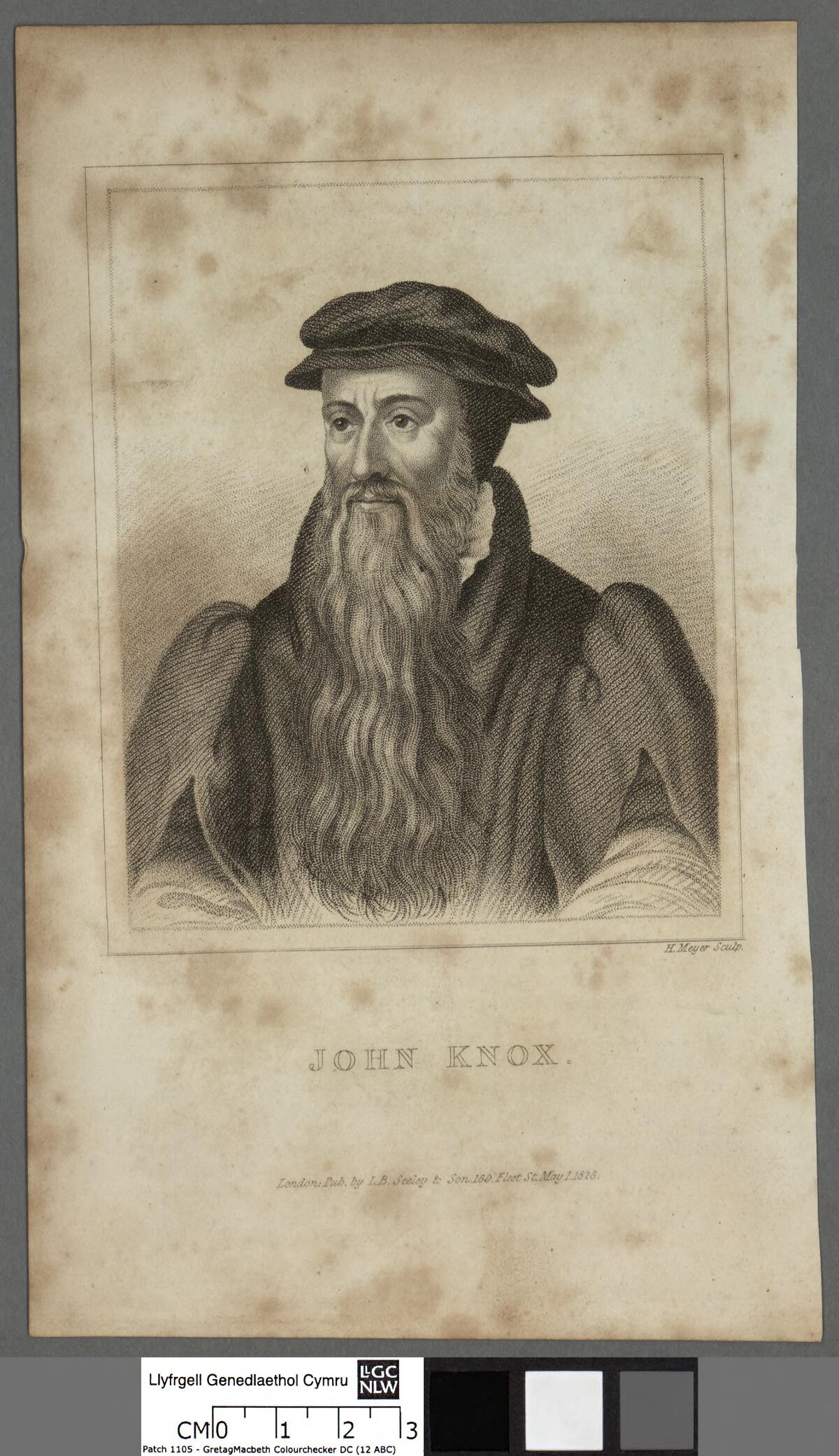
The Reformed churches began in Zurich and Geneva in the 1520s to 1550s. Ulrich Zwingli, John Calvin's Geneva and the spread of the Reformed faith to France, the Netherlands and Scotland are taught in Part A, lesson 12, and Luther's earlier protest is in Part A, lesson 11. John Knox (about 1514 to 1572), who had worked in Geneva and returned to Scotland in 1559, is treated there as well, and is mentioned here only as the leading minister among the six men who drafted the Scots Confession of 1560. The full Calvinist doctrine of predestination, the Five Points, the Synod of Dort and chapter III of the Westminster Confession are the subject of the next lesson, lesson 03, Calvinism in Detail. This lesson concerns the Presbyterian churches as churches: how they are governed, what they confess, where they came from and why they divided.
Two words need defining at the start. "Reformed" names a doctrinal family: the churches that grew from the Swiss Reformation and confess documents such as the Second Helvetic Confession, the Heidelberg Catechism (1563), the Belgic Confession (1561) and the Canons of Dort (1619). "Presbyterian" names a form of church government inside that family, and by custom the English-speaking Reformed churches of Scottish, Scots-Irish and English Puritan descent. The Dutch and German Reformed churches are also governed by elders and synods, but they usually call themselves Reformed, and they confess the "Three Forms of Unity" (Belgic, Heidelberg, Dort) rather than the Westminster Standards. The section on other Reformed bodies near the end of this lesson covers them.

What Presbyterians say about themselves
Scripture as the rule
Every Presbyterian body discussed in this lesson names the Westminster Confession of Faith as a standard, though they hold it with very different degrees of strictness. Its first chapter sets the authority of the Bible above any church. In the 1647 text printed by Philip Schaff in The Creeds of Christendom: "The authority of the holy Scripture, for which it ought to be believed and obeyed, dependeth not upon the testimony of any man or church, but wholly upon God (who is truth itself), the Author thereof; and therefore it is to be received, because it is the Word of God."1 The chapter ends, in the text posted today by the Orthodox Presbyterian Church: "The supreme judge by which all controversies of religion are to be determined, and all decrees of councils, opinions of ancient writers, doctrines of men, and private spirits, are to be examined, and in whose sentence we are to rest, can be no other but the Holy Spirit speaking in the Scripture."2 That sentence was quoted in 1924 by both sides of the great American Presbyterian argument, as this lesson shows below.
Christ the only head of the church
Presbyterians teach that Christ alone is head of the church and that he rules it through elders, some of whom preach and teach (ministers, now often called teaching elders) and some of whom govern with them (ruling elders), with deacons for the ministry of mercy. They reject government by bishops in the Anglican or Roman sense, and they reject the independence of each congregation held by Congregationalists and Baptists: a congregation is under its presbytery, and the presbytery under the higher assembly. The Westminster Confession of 1647 put the headship of Christ in sharply anti-Roman words: "There is no other head of the Church but the Lord Jesus Christ: nor can the Pope of Rome, in any sense be head thereof; but is that Antichrist, that man of sin and son of perdition, that exalteth himself in the Church against Christ, and all that is called God."1 Several American churches later shortened that paragraph. The OPC's posted text now reads: "There is no other head of the church but the Lord Jesus Christ. Nor can the pope of Rome, in any sense, be head thereof."2
The same confession limits what church courts may do. In the OPC text of chapter 31: "Synods and councils are to handle, or conclude nothing, but that which is ecclesiastical: and are not to intermeddle with civil affairs which concern the commonwealth, unless by way of humble petition in cases extraordinary; or, by way of advice, for satisfaction of conscience, if they be thereunto required by the civil magistrate."2 Southern American Presbyterians built on this sentence their doctrine of "the spirituality of the church," and that doctrine became part of the argument in 1861 and again in 1973.
The marks of a true church
The Scots Confession of 1560 gave the Reformed answer to the question that Rome and the Reformers argued over: how can a person know a true church? Its eighteenth chapter, in the original Scots spelling as Schaff reprinted it from Dunlop's 1719 collection, reads: "The notes therefore of the trew Kirk of God we beleeve, confesse, and avow to be, first, the trew preaching of the Worde of God ... Secundly, the right administration of the Sacraments of Christ Jesus ... Last, Ecclesiastical discipline uprightlie ministred, as Goddis Worde prescribes, whereby vice is repressed, and vertew nurished."3 Word, sacrament and discipline: Presbyterian churches have used those three marks ever since to judge both themselves and the churches they left.
Scotland from 1560 to 1690
The Scots Confession of 1560
The Scottish Reformation Parliament met in August 1560. Schaff writes that the confession was drawn up "in four days, by John Knox and his compeers," and Knox's own History, as Schaff quotes it, names the six ministers, all called John: Winram, Spottiswoode, Willock (spelled Hillock in Schaff's text), Douglas, Rowe and Knox. The three estates ratified it on August 17, 1560.4 It carries a title that states its own authority: "Exhibitit to the Estaitis of the same in Parliament, and be their publick Votis authorisit, as a Doctrine groundit upon the infallibil Worde of God, Aug. 1560." Schaff's edition adds the Latin note that it was confirmed by law in 1567.3 The preface opens with the words: "Lang have we thristed, dear Brethren, to have notified to the Warld the Sum of that Doctrine quhilk we professe, and for the quhilk we have susteined Infamie and Danger."3 The Latin translation was made by Patrick Adamson at the request of the Kirk and printed at St Andrews in 1572.3 The Scots Confession remained the Church of Scotland's confession until the Westminster Confession replaced it in 1647, and it was restored to a place of honor in the twentieth century, when the American United Presbyterian Church put it first among the Reformed documents of its Book of Confessions (1967).5
Bishops or elders
For more than a century after 1560 the Scottish church argued about bishops. The Stuart kings, James VI (who also became James I of England in 1603) and his son Charles I, wanted bishops appointed by the crown; a large party of ministers and nobles wanted government by presbyteries and general assemblies alone. Schaff summarized the result: national covenants, "politico-religious agreements for the maintenance and defense of certain principles and privileges," became "a peculiar and prominent feature in the history of the Kirk of Scotland," and, he added, they were "copied from Jewish precedents," citing Joshua 24 and 2 Kings 11.6
The National Covenant of 1638
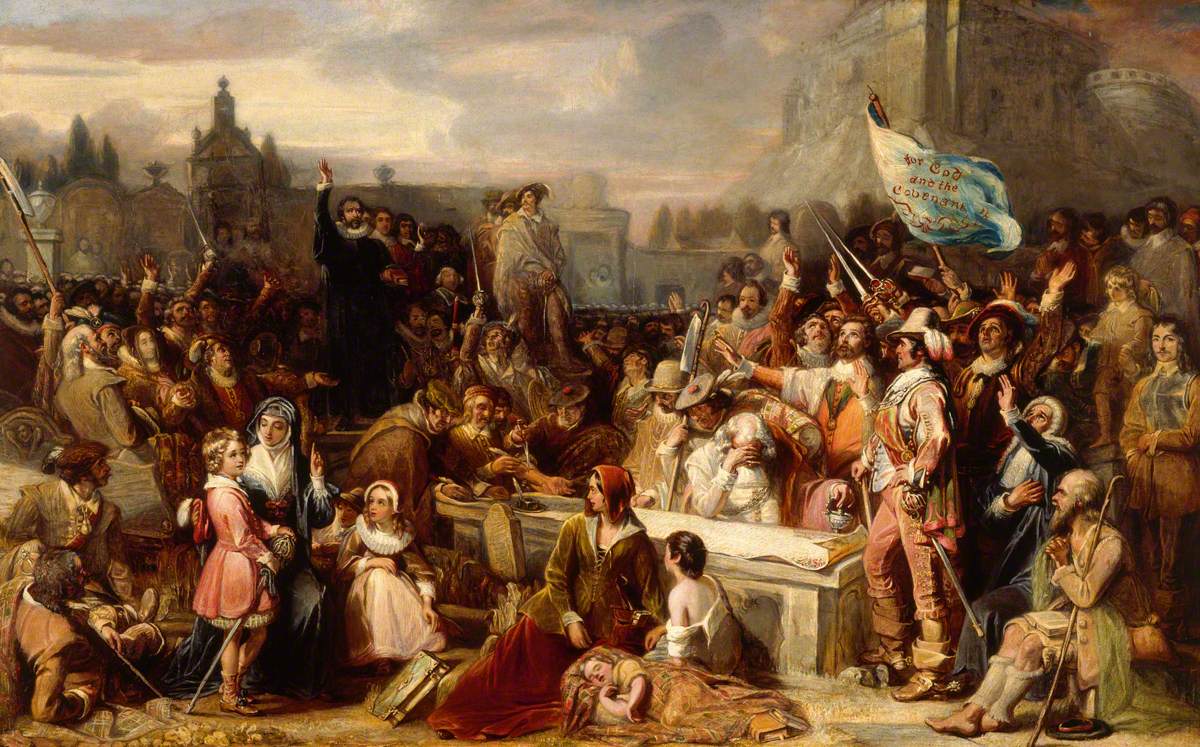
When Charles I ordered a new prayer book for Scotland in 1637, the riot at its first reading in St Giles' in Edinburgh began a national revolt. On February 28, 1638, the National Covenant was renewed and signed in the Greyfriars church in Edinburgh. Schaff describes it as "a most solemn and extraordinary scene" and says that "no less than sixty thousand people flocked to the city from all parts of the kingdom"; the crowd figure is his, from the nineteenth century histories he used, and is not a count.6 The Covenant bound its signers to defend the Reformed religion and resist the innovations of the king's bishops. Those who signed it and its successor documents, and later those who suffered for refusing to give them up, are called Covenanters.

The Solemn League and Covenant
The Scottish revolt fed directly into the English Civil War. In 1643 the English Parliament, at war with the king, needed a Scottish army, and the Scots wanted a Presbyterian settlement in all three kingdoms. Schaff summarizes the treaty that resulted: "The subscription of the 'Solemn League and Covenant' (Sept., 1643) bound both the Parliament and the Assembly to the preservation of the doctrine, worship, and discipline of the Church of Scotland and the extirpation of popery and prelacy."7 "Prelacy" meant government by bishops. That promise is the reason a Westminster Assembly of English divines worked for six years to produce documents that Scotland would adopt and England would set aside.
Restoration, persecution and the settlement of 1690
After Charles II returned in 1660, bishops were restored in Scotland. Ministers who would not conform were put out of their parishes, field preaching was outlawed, and the Covenanters who resisted, especially in the southwest, were hunted down in the 1670s and 1680s. Presbyterian writers have called the worst years "the Killing Time"; the number of people killed is disputed and is not given here because no count was verified for this lesson. After the Revolution of 1688 removed James VII and II, Presbyterianism was, in Schaff's words, "permanently re-established in Scotland by Parliament in 1690, though with a degree of dependence on the state which kept up a constant irritation, and which led from time to time to new secessions."6 Schaff also notes that the Westminster Confession, already approved by the General Assembly and the Scots Parliament in the 1640s, did not receive "the royal sanction" until 1690, under William and Mary.8
The Westminster Assembly, 1643 to 1649
Who sat in the Assembly
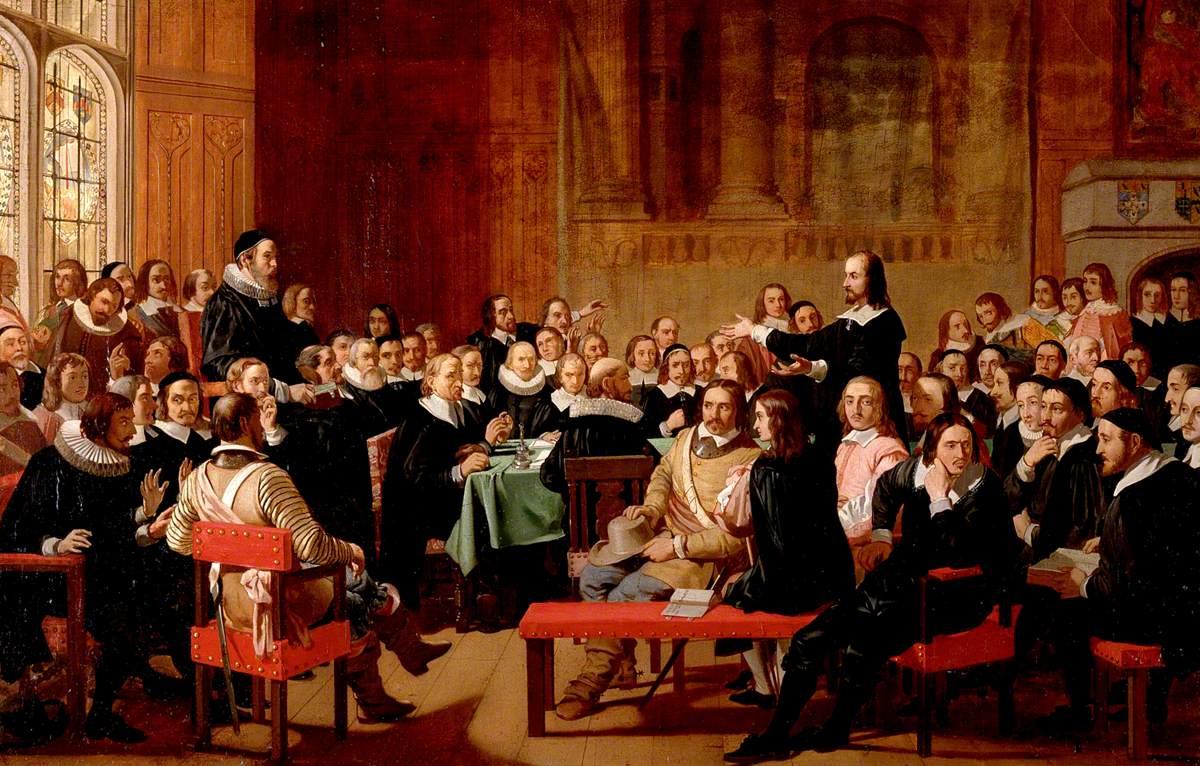
The Long Parliament called the Assembly by ordinance in June 1643 to advise it on the reform of the Church of England. Schaff, who used the Assembly's manuscript minutes as edited by Alexander Mitchell and John Struthers (1874), gives its membership as "one hundred and fifty-one members in all, viz., thirty lay assessors (ten Lords and twenty Commoners)," with the rest English ministers named by Parliament, county by county; the lay members included the lawyer and scholar John Selden and the parliamentary leader John Pym.7 Commissioners from the Church of Scotland, among them the young George Gillespie and Robert Baillie, principal of the University of Glasgow, came in the autumn of 1643 after the Solemn League and Covenant was signed. Baillie's letters and Gillespie's notes of debates are two of the main sources for what was said.7
The Assembly was not of one mind about church government. Schaff describes a majority of Presbyterians, divided among themselves over whether presbytery was of divine right or only lawful and fitting; a small group of "Independents" (Congregationalists) led by Thomas Goodwin and Philip Nye, who wanted each congregation self-governing; and lay members such as Selden who held "Erastian" views, that the state should have the last word over the church.7 A few royalist and episcopal divines named by Parliament stayed away or soon withdrew.
Opening, sessions and close
Schaff's account of the opening: "The Assembly was opened on Saturday, July 1, 1643, in the grand national Abbey of Westminster, in the presence of both Houses of Parliament and a large congregation, by a sermon of Dr. Twisse," the prolocutor (chairman) William Twisse, on John 14:18.7 The members, "three score and nine" on the first day, met at first in the Chapel of Henry VII and from the cold weather of late September in the Jerusalem Chamber of the Deanery.7 It "held no less than 1163 regular sessions from July 1, 1643, till February 22, 1649," meeting weekdays from nine in the morning until one or two, with afternoons for committees. After that it lingered "as a standing committee for the examination and ordination of candidates for the ministry, meeting every Thursday," until, Schaff writes, "March 25, 1652, when it informally broke up before the dissolution of the 'Rump' Parliament by Oliver Cromwell (April 19, 1653)."7 The dates "1643 to 1653" in many textbooks count the Assembly's life to the dissolution of the Rump Parliament on April 19, 1653, the event Schaff names as the end of its informal existence. The regular sessions, which produced the standards, ran from 1643 to 1649.

The Westminster Standards
The Assembly produced a Directory for the Public Worship of God (replacing the English Prayer Book), a Form of Presbyterial Church Government, the Confession of Faith, the Larger Catechism and the Shorter Catechism. The Confession went to Parliament first without Scripture proofs. Schaff gives the printing history: the first edition "was printed, but not published, Dec. 7, 1646," under the title The Humble Advice of the Assembly of Divines ... concerning a Confession of Faith, and a second edition "with the Quotations and Texts of Scripture annexed" was printed "by order of Parliament, dated April 29, 1647."8 The Confession has thirty-three chapters, from Holy Scripture and God's eternal decree through the church, the sacraments and the civil magistrate to the last judgment. The Shorter Catechism, with its first question on man's "chief end," became the most widely taught Presbyterian document in homes and schools for three centuries.
England never adopted the Confession as written. The English Parliament passed a version with changes in 1648 under the title Articles of Christian Religion, and after 1660 the Church of England went back to bishops and the Thirty-nine Articles (see lesson 04). The English Congregationalists adapted it as the Savoy Declaration of 1658 (see lesson 05), and English Particular Baptists adapted it again in the 1689 London Baptist Confession (see lesson 06).8
Scotland took it whole. Schaff: "The General Assembly at Edinburgh, Aug. 27, 1647, after careful examination, adopted it in full as it came from the hands of the Westminster divines, declaring it 'to be most agreeable to the Word of God, and in nothing contrary to the received doctrine, worship, discipline, and government of this Kirk.'" The Scots Parliament endorsed it on February 7, 1649.8 Schaff's comment on the result: "It is a very remarkable fact that this Confession failed in its native land, and succeeded in foreign lands. The product of English Puritans became the highest standard of doctrine for Scotch and American Presbyterians, and supplanted the older Confession of their own Reformers."8
How the Assembly has been judged
Judgments of the Assembly divided from the start. The royalist historian Edward Hyde, Earl of Clarendon, wrote that of its members "there were not above twenty who were not declared and avowed enemies of the doctrine or discipline of the Church of England," and called some of them men "of very mean parts in learning." Schaff, quoting him, replied that "these charges are utterly without foundation."7 Richard Baxter, a Puritan minister who did not sit in the Assembly but knew its members, wrote: "The divines there congregated were men of eminent learning, godliness, ministerial abilities, and fidelity," while regretting that Parliament had not found terms "fit for universal concord" with the Episcopalians and Independents.7 Schaff himself, a German Reformed scholar teaching at Union Seminary in New York, ranked it above every other Protestant synod in scope: "it stands first among Protestant Councils."7 The Assembly's teaching on predestination in chapter III, and the arguments about it, are in lesson 03.
Scotland after 1690: secessions, the Disruption and reunion
Patronage and the secessions
The settlement of 1690 left the Church of Scotland established by law, and in 1712 the British Parliament restored the right of lay patrons (usually landowners) to present ministers to parishes. Much of Scottish church history for the next 160 years is a story of congregations objecting to ministers chosen for them. Schaff's summary: these secessions "down to the great exodus of the Free Church in 1843, were no new departures, but ... returns to the old landmarks."6 The two largest eighteenth century groups were the Secession Church (from 1733, led by Ebenezer Erskine) and the Relief Church (from 1761); the dates are those commonly given and were not checked against a primary source for this lesson. The heirs of the Covenanters who never accepted the 1690 settlement formed the Reformed Presbyterian Church of Scotland, whose American daughter churches (the "Covenanter" Reformed Presbyterians) still sing only psalms in worship.
The Disruption of 1843
The Ten Years' Conflict that ended in the Disruption began when the General Assembly of 1834 passed the Veto Act, allowing a majority of male heads of families to veto a patron's choice. The civil courts ruled against the church in the Auchterarder case, and the House of Lords upheld them (Binfield dates the ruling 1838 to 1839). In the summary of Clyde Binfield in The Oxford Companion to British History, the dispute centered on "whether a minister could be forced on an unwilling congregation," and the Auchterarder ruling confirmed the supremacy of statute law over the church courts.9 On May 18, 1843, at the opening of the General Assembly in St Andrew's Church, Edinburgh, the retiring moderator read a protest and walked out, followed by a large body of ministers and elders, who processed to Tanfield Hall, Canonmills, and constituted the Free Church of Scotland with Thomas Chalmers as its first moderator. Binfield gives the numbers: 474 of 1,203 ministers seceded, "accompanied by a proportionate number of members."9 That is about 39 percent of the ministers, men who gave up their manses, stipends and churches.
The Free Church described its cause as the sole headship of Christ over his church. Schaff, writing in the 1870s, called it a movement whose history "furnishes no brighter chapter of heroic and successful sacrifices for the idea of the sole headship of Christ, and the honor and independence of his Church," and noted that it pushed the established church toward reform, ending in "the total abolition of the Law of Patronage by Act of Parliament," which he dates to 1875.6 Those who stayed in the established church saw it differently: Schaff quotes the Church of Scotland minister Norman Macleod, a member of the 1843 Assembly, who found it harder to remain as "a restorer of the breach" than to leave.6
Reunion and the Church of Scotland today
Most of the Scottish secession churches later reunited: the United Presbyterian Church (1847), the United Free Church (1900, from the United Presbyterians and most of the Free Church) and, in 1929, the reunion of the United Free Church with the Church of Scotland, after Parliament's Church of Scotland Act of 1921 recognized the church's spiritual independence. A minority of the Free Church refused the 1900 union and continues as the Free Church of Scotland; the Free Presbyterian Church of Scotland (1893) is a further small body. These later dates are given as commonly stated and were not checked against primary sources for this lesson. The Church of Scotland reported about 229,000 members at December 31, 2025, a fall of 5 percent from the year before, in its report to the General Assembly of May 2026.10

Presbyterians in colonial America
Francis Makemie and the first presbytery
Presbyterians came to the American colonies from Scotland, from the Scots-Irish settlements of Ulster, from Puritan England and Wales, and as French Huguenots and Dutch and German Reformed. The organizer usually named first is Francis Makemie (about 1658 to 1708), an Ulster minister who worked from the 1680s on the eastern shore of Maryland and Virginia. Schaff gives the founding dates of the organized church: "The Presbytery of Philadelphia, the oldest in America, was organized in 1706, the Synod of Philadelphia in 1717, and the Synod of New York in 1743."11 Makemie's place in the story of religious liberty comes from 1707, when the governor of New York, Lord Cornbury, had him arrested for preaching without a license. The PCA Historical Center quotes Richard Webster's history: on March 11, 1707, "the grand jury examined four witnesses, who testified that Makemie preached no false doctrine"; he was tried in June and acquitted, but "his bail was not discharged until he had paid the whole cost of the prosecution, amounting to the sum of eighty-three pounds, seven shillings and six pence."12
The Adopting Act of 1729
The young synod argued at once about how strictly ministers had to hold the Westminster Confession. The Scots-Irish wanted subscription; some New England-trained ministers distrusted any human creed as a test. The compromise, adopted by the Synod of Philadelphia on September 19, 1729, began with a disclaimer that the synod did not "claim or pretend to any authority of imposing our faith upon other men's consciences," and then required every minister to declare his agreement with the Confession and Catechisms "as being, in all the essential and necessary articles, good forms of sound words and systems of Christian doctrine."11 The same afternoon the synod said it did not receive "some clauses in the twentieth and twenty-third chapters in any such sense as to suppose the civil magistrate hath a controlling power over Synods."11 The phrase "essential and necessary articles" has been argued over ever since: strict subscriptionists read it as all the doctrines of the Confession, and others as a smaller core. The 1910 and 1923 General Assemblies and the 1924 Auburn Affirmation, discussed below, were still arguing about it.
Old Side and New Side, 1741 to 1758
The revivals of the 1730s and 1740s divided the synod. William Tennent's "Log College" at Neshaminy, Pennsylvania, trained revivalist ministers, among them his son Gilbert Tennent, who preached and published The Danger of an Unconverted Ministry in 1740. The PCA Historical Center's account names two issues: revivalists preaching in other men's parishes without leave, and the synod's attempt to require a European or New England college education of new ministers, which the Tennents took as an attack on the Log College.13 On May 27, 1741, a protest in the synod sought to exclude the Log College men; finding themselves in the minority, they left. Charles Hodge, a century later, called it "a disorderly rupture."13 The revival party were called New Side and their opponents Old Side. The New Side grew; by 1758, according to the same account, the Old Side had 22 ministers and the New Side 70.13 The two synods reunited on May 29, 1758, on the basis of the Westminster Standards. In the words of the plan of union as quoted by Thomas Murphy: "Both Synods having always approved and received the Westminster Confession of Faith, and Larger and Shorter Catechisms, as an orthodox and excellent system of Christian doctrine, founded on the Word of God, we do still receive the same as the confession of our faith."1411 Gilbert Tennent, who had done most to cause the split, wrote a pamphlet called The Pacificator urging reunion.14 The New Side founded the College of New Jersey (1746), later Princeton University.
The General Assembly and the American revision, 1788
After independence the church organized nationally. On May 28, 1788, the joint Synod of New York and Philadelphia adopted a constitution and named the church "the Presbyterian Church in the United States of America."11 The first General Assembly met in Philadelphia in 1789. The synod also rewrote the Confession's chapters on the civil magistrate, removing the magistrate's duty to suppress heresy and call synods. The American text of chapter 23, as Schaff prints it and as the OPC posts it, says: "Civil magistrates may not assume to themselves the administration of the Word and sacraments; or the power of the keys of the kingdom of heaven; or, in the least, interfere in matters of faith. Yet, as nursing fathers, it is the duty of civil magistrates to protect the church of our common Lord, without giving the preference to any denomination of Christians above the rest."21 Every American Presbyterian body in this lesson uses the 1788 text of that chapter or a later revision of it. The founders' own role in the new nation, and the place of Puritan and Presbyterian ideas in American law, are discussed in Liberty 56, lesson 08.
The nineteenth century: frontier, schools and war
The Cumberland Presbyterians, 1810
The revivals on the Kentucky and Tennessee frontier around 1800 (the Cane Ridge meeting of August 1801 is told in lesson 10) raised two problems for the Presbyterian courts: frontier congregations needed preachers faster than the colleges could train them, and many revival preachers could not accept the Confession's teaching on election. The Cumberland Presbytery licensed men without the full classical education and allowed them to except the doctrine of predestination. James H. Smylie, professor of church history at Union Seminary in Virginia, summarized the outcome: the Cumberland Presbyterians organized a presbytery in 1810 and became a separate church after the General Assembly failed to bring them back.15 The Cumberland Presbyterian Church revised the Westminster Confession to remove unconditional election; Schaff gives that revision its own section.11
Old School and New School, 1837 to 1869
In 1801 the General Assembly and the Congregationalists of Connecticut adopted a Plan of Union so that settlers in New York and the Old Northwest could form joint congregations. By the 1830s many Presbyterians believed the plan had brought New England theology (the "New Haven" theology of Nathaniel Taylor) and revival methods (associated with Charles Finney) into the church. Schaff's summary of the result: "The division of the Presbyterian Church into Old School and New School, which took place at Philadelphia, June 8, 1837, arose chiefly from contentions in consequence of the Plan of Union formed in 1801 ... and involved two different constructions of the doctrinal standards, the one more strict and conservative, the other more liberal and progressive."11 The Old School majority at the 1837 Assembly abrogated the Plan of Union and declared four synods in western New York and Ohio no longer part of the church (the "Exscinding Acts"), and the New School organized separately in 1838.1115 Slavery was part of the background: the New School drew most of its strength from the North, and Smylie notes that in 1858 New School members in the South formed their own United Synod.15
Princeton Seminary and the Old School
The Old School's intellectual center was Princeton Theological Seminary, founded by the General Assembly in 1812, where Archibald Alexander, Charles Hodge and later Benjamin B. Warfield taught a confessional Calvinism and a high view of biblical inspiration that later writers call "Old Princeton." The 1910 and 1923 doctrinal statements discussed below came from that tradition, and so did J. Gresham Machen.
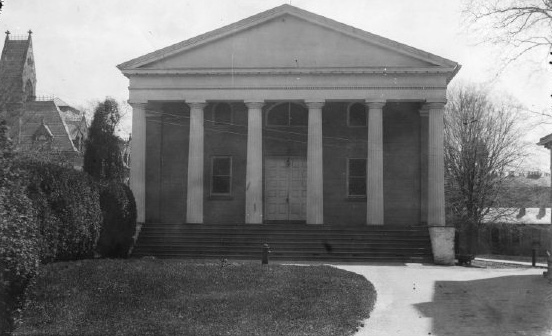

North and South, 1861
The Old School survived the slavery arguments of the 1840s and 1850s because it held, as a matter of principle, that church courts should not legislate on political questions. The war ended that. At the Old School General Assembly in Philadelphia in May 1861, Gardiner Spring of New York moved resolutions pledging the church's support for the federal government. Smylie writes that the resolution backed the federal government as constitutional and called for prayer and fasting, and that the southern members then withdrew.15 The southern presbyteries met at Augusta, Georgia, on December 4, 1861, as the Presbyterian Church in the Confederate States of America, and the church took the name Presbyterian Church in the United States (PCUS) after the war.16 In 1864 the southern Old School and the southern New School United Synod joined, so the southern church was one body.15
The southern church published an "Address to All Churches" at its founding that set out the doctrine of the spirituality of the church. The PCA quoted it again in 1973: "Let it be distinctly borne in mind that the only rule of judgment is the written Word of God. The Church knows nothing of the intuitions of reason or the deductions of philosophy, except those reproduced in the Sacred Canon."17 Historians of the southern church point out that the same 1861 address also discussed slavery and denied that the church had authority to condemn it; that part of the address was not opened for this lesson, and the PCA's 1973 message quoted only the passages on the church's authority. The PCUS remained a separate, mostly southern church for 122 years.
Northern reunion, 1869 to 1870
In the North the Old School and New School reunited at Pittsburgh on November 10, 1869, taking effect in 1870. Schaff prints the doctrinal article of the reunion, adopted unanimously: "The reunion shall be effected on the doctrinal and ecclesiastical basis of our common Standards; the Scriptures of the Old and New Testaments shall be acknowledged to be the inspired Word of God, and the only infallible rule of faith and practice; the Confession of Faith shall continue to be sincerely received and adopted, as containing the system of doctrine taught in the Holy Scriptures."11 The phrase "the system of doctrine taught in the Holy Scriptures" became the ordination vow, and in 1924 the Auburn Affirmation quoted the reunion's terms, each school "recognizing the other as a sound and orthodox body," as proof that the church allowed more than one reading of the Confession.18
Revision in 1903 and union with the Cumberland church in 1906
After a failed attempt in the 1890s, the northern church (PCUSA) adopted a revision of the Confession in 1903, the step the PCA Historical Center names as the prelude to the 1910 Deliverance. Standard accounts say it added two chapters (on the Holy Spirit and on the love of God and missions) and a declaratory statement on election, softening the Confession in ways the Cumberland Presbyterians had asked for since 1810; those contents were not checked against the 1903 text for this lesson.19 In 1906 the PCUSA and the Cumberland Presbyterian Church united; Smylie records the union, and the Auburn Affirmation later noted that it "was opposed by certain members ... on the ground that the two churches were not at one in doctrine; yet it was consummated."1518 A minority of Cumberland congregations refused the union and continue as the Cumberland Presbyterian Church.
Fundamentalists and modernists, 1910 to 1936
The Doctrinal Deliverance of 1910
The modern division of American Presbyterians starts with a complaint from the Presbytery of New York, which had ordained three candidates who would not affirm the virgin birth of Christ. The PCA Historical Center's introduction to the document explains that the 1910 General Assembly dismissed the complaint but told its Committee on Bills and Overtures to draft a statement for future candidates, which "set out five articles of faith judged 'essential and necessary.'"19 The five were the inerrancy of Scripture, the virgin birth, Christ's substitutionary atonement, his bodily resurrection and the reality of his miracles. The Assembly repeated them in 1916 and 1923. Popular writers often call these "the five fundamentals"; they are a Presbyterian list, separate from the twelve volumes of essays called The Fundamentals published from 1910 to 1915. The wider fundamentalist movement and the liberal theology it opposed are treated in Liberty 58, lesson 14 and in lesson 11.
Fosdick's sermon and Machen's book
In 1922 Harry Emerson Fosdick, a Baptist minister serving as preacher at First Presbyterian Church in New York City, preached a sermon titled "Shall the Fundamentalists Win?" It was printed in Christian Work on June 10, 1922, and circulated widely. In the text posted by the History Matters project of George Mason University, Fosdick charged that "the Fundamentalist program is essentially illiberal and intolerant," and predicted: "I do not believe for one moment that the Fundamentalists are going to succeed."20 The 1923 General Assembly answered by directing the Presbytery of New York to see that the preaching at First Presbyterian conformed to the Confession, and it reaffirmed the five points. Fosdick left that pulpit in 1925.
The same year, 1923, J. Gresham Machen (1881 to 1937), professor of New Testament at Princeton Seminary, published Christianity and Liberalism. His thesis, in his own words: "the great redemptive religion which has always been known as Christianity is battling against a totally diverse type of religious belief, which is only the more destructive of the Christian faith because it makes use of traditional Christian terminology. This modern non-redemptive religion is called 'modernism' or 'liberalism.'" He added that the liberal theologian may have retained, after giving up one doctrine after another, something that "is not Christianity at all, but a religion which is so entirely different from Christianity as to belong in a distinct category."21 Machen's argument was that the two were different religions, which is why he and his followers later concluded that they could not stay in one church with the other side. The OPC's historian, D. G. Hart, writes that Machen "emerged as the chief spokesman for Presbyterian conservatives" through such books, and calls him "arguably the most important conservative Protestant thinker of the first half of the twentieth century."22
The Auburn Affirmation, 1924
The answer to the 1923 Assembly came from ministers who called themselves loyal to the Confession and to evangelical Christianity. Its full title is An Affirmation designed to safeguard the unity and liberty of the Presbyterian Church in the United States of America. According to the PCA Historical Center, which posts the text, it "was first published in January of 1924" with 150 names, and a printing of May 5, 1924, "contained the final list of signators, numbering 1274 names," with an addendum of 20 more.18 It is called the Auburn Affirmation because it was printed at Auburn, New York, home of Auburn Theological Seminary.
The signers began with an affirmation of their own orthodoxy: "We sincerely hold and earnestly preach the doctrines of evangelical Christianity, in agreement with the historic testimony of the Presbyterian Church in the United States of America, of which we are loyal ministers."18 They made two main arguments. The first was constitutional: a General Assembly alone, without the concurrent vote of the presbyteries, has no authority to declare what the church believes, so "a declaration by a General Assembly that any doctrine is 'an essential doctrine' attempts to amend the constitution of the church in an unconstitutional manner."18 The second was doctrinal. They quoted the same sentence of the Confession, chapter 1, on the Holy Spirit speaking in Scripture as "the Supreme Judge," and they rejected inerrancy as a test: "There is no assertion in the Scriptures that their writers were kept 'from error.' The Confession of Faith does not make this assertion."18 On the five points they wrote: "We hold most earnestly to these great facts and doctrines," but "we are united in believing that these are not the only theories allowed by the Scriptures and our standards as explanations of these facts and doctrines of our religion."18 They closed by saying: "We do not desire liberty to go beyond the teachings of evangelical Christianity."18
The conservatives read the same document as proof that the church tolerated ministers who did not believe the virgin birth or the resurrection as historical events, since the Affirmation treated those doctrines as "theories" that might be explained in other ways. The PCA Historical Center introduces the text as an aid to discussion "of the errors contained in the Auburn Affirmation," and notes that by 1927 the General Assembly had reversed the course of 1910 and 1923.1819 The 1927 Assembly adopted a report holding that the Assembly could not make the five points binding tests without the presbyteries, which was the Affirmation's constitutional argument.
Princeton reorganized and Westminster Seminary founded, 1929
In 1929 the General Assembly reorganized the governing boards of Princeton Seminary, which had been controlled by a conservative board of directors, and placed two Auburn signers on the new board. Machen and several colleagues resigned and opened Westminster Theological Seminary in Philadelphia that autumn. The OPC's history page says Machen "founded Westminster Theological Seminary in 1929."23 A photograph of its first class of 1929 to 1930, posted by Justin Taylor on The Gospel Coalition's Evangelical History blog, shows among the students Carl McIntire and Harold John Ockenga, who later led the Bible Presbyterian Church and the National Association of Evangelicals respectively.24
The Independent Board and the trials
The next quarrel was over foreign missions. A layman's report of 1932, Re-Thinking Missions, and the views of some Presbyterian missionaries persuaded Machen that the church's Board of Foreign Missions was sending out men who did not hold the faith. In 1933 he and others organized the Independent Board for Presbyterian Foreign Missions. D. G. Hart, writing for the OPC, puts the sequence this way: Machen's "continued opposition during the 1930s to liberalism in his denomination's foreign missions agencies led to the creation of a new organization, The Independent Board for Presbyterian Foreign Missions (1933). The trial, conviction and suspension from the ministry of Independent Board members, including Machen, in 1935 and 1936 provided the rationale for the formation in 1936 of the OPC."22 The 1934 General Assembly had ordered members of the Independent Board to resign from it; Machen refused, was tried by the Presbytery of New Brunswick and was suspended, and the 1936 General Assembly upheld the suspension. The church's position was that a minister who defied the Assembly's lawful order was guilty of disobedience, a question of church order; Machen's was that the Assembly had commanded him to support missionaries whose teaching he believed to be against the Confession, and that obeying would be sin.
The Orthodox Presbyterian Church, June 11, 1936
The new church met on June 11, 1936, in Philadelphia. In the OPC's own summary: "The Orthodox Presbyterian Church was founded on June 11, 1936, in the aftermath of the fundamentalist-modernist controversy, under the leadership of J. Gresham Machen." It adds that "the mainline Presbyterian Church in the USA had departed from historic Christianity, including the rejection of doctrines such as the inspiration and authority of Scripture, the virgin birth of Christ, and the substitutionary atonement."23 Machen wrote in The Presbyterian Guardian of June 22, 1936: "ON THURSDAY, June 11, 1936, the hopes of many long years were realized. We became members, at last, of a true Presbyterian Church; we recovered, at last, the blessing of true Christian fellowship."25 Robert Marsden, an early leader (and father of the historian George Marsden), recalled at the twentieth anniversary that "less than 150 elders, ministers and laymen" gathered at the New Century Club of Philadelphia and elected Machen moderator.24
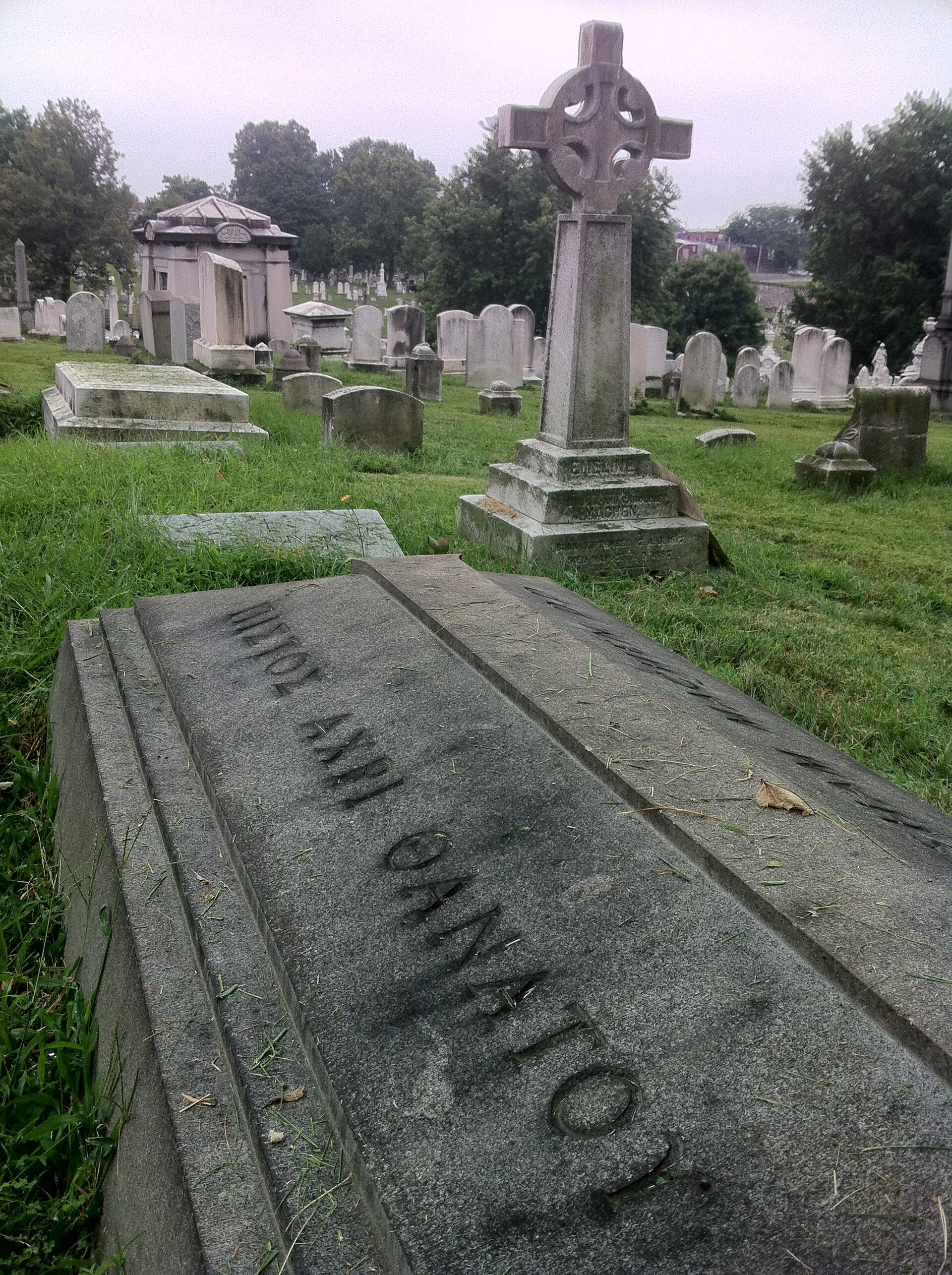
The new body first called itself the Presbyterian Church of America. The OPC says it "was forced by the threat of a lawsuit to change its name in 1939, and it adopted the name Orthodox Presbyterian Church."23 Machen did not live to see it. Hart writes that "only six months after the new denomination's beginning, Machen died in Bismarck, North Dakota while trying to rally support for the OPC."22 His death came on January 1, 1937, of pneumonia. He is buried in Green Mount Cemetery in Baltimore, his native city.

The Bible Presbyterian division, 1937 to 1938
Within a year the new church divided. The PCA Historical Center summarizes the issues: "Issues regarding the exact details associated with Christ's second coming as well as the total abstention from alcoholic beverages formed a divisive wedge," along with the question of independent agencies such as the Independent Board. In 1937 a group met separately from the General Assembly, and on September 6, 1938, "thirty-nine teaching elders and eleven ruling elders" met at Collingswood, New Jersey, as the first General Synod of the Bible Presbyterian Church. Its early ministers included Carl McIntire, J. Oliver Buswell, Allan MacRae and the young Francis Schaeffer, and its synod added premillennial language to its standards.26 Schaeffer's later book A Christian Manifesto is treated in Liberty 56, lesson 05. The Bible Presbyterians themselves divided in 1956; one branch became the Reformed Presbyterian Church, Evangelical Synod (RPCES), which joined the PCA in 1982.
The OPC today
The OPC's history page says it "has slowly grown to over 30,000 members in over 300 churches throughout the United States and Canada" and that it holds to "the historic Reformed faith as expressed in the Westminster Confession of Faith and Catechisms."23 The statistics reported to the 91st General Assembly (June 2025) gave a total membership of 33,566 at the end of 2024, a gain of 179. The statistician's figures in that report count 300 local churches and 41 mission works; the same report's home missions summary gives 305 established congregations and 36 mission works.27 The OPC ordains only men as ministers, elders and deacons; its Form of Government says of officers to be elected that "those elected must be male communicant members in good and regular standing in the church in which they are to exercise their office."28 It belongs to the North American Presbyterian and Reformed Council (NAPARC) and the International Conference of Reformed Churches.23
The southern church and the Presbyterian Church in America
The PCUS in the twentieth century
The southern Presbyterian Church in the United States kept its doctrine of the spirituality of the church longer than the northern church, but by the 1950s and 1960s its seminaries and boards had moved closer to the northern mainline. It joined the National and World Councils of Churches, ordained its first woman minister, Rachel Henderlite, in 1965, and from the 1950s on discussed reunion with the northern church.29 A conservative network formed in response, around the Southern Presbyterian Journal (later the Presbyterian Journal), Reformed Theological Seminary in Jackson, Mississippi (founded 1966), and groups such as Concerned Presbyterians and Presbyterian Evangelistic Fellowship. By the early 1970s these groups were organizing as the "Continuing Presbyterian Church." These organizational details are as commonly reported and were not checked against primary documents for this lesson.
December 4, 1973, at Briarwood
The new church's first General Assembly met at Briarwood Presbyterian Church in suburban Birmingham, Alabama. The PCA Historical Center points out that the date was chosen on purpose: the new body began "on the same day and month as the organization date for the mother church that they were leaving," December 4, 1861, "laying claim as the faithful continuing church." It took the name National Presbyterian Church, "though a year later, that name was changed to the Presbyterian Church in America." Ruling Elder W. Jack Williamson was its first moderator and Morton H. Smith its stated clerk.16 W. Jason Wallace of Samford University, in the Encyclopedia of Alabama, gives the size of the founding: about 260 congregations, mostly from Mississippi, Alabama and South Carolina, "with approximately 41,000 members at its inception." He adds that the name was changed in 1974 after a protest from the United Presbyterian congregation of the same name in Washington, D.C.30
On December 7, 1973, the Assembly issued A Message to All Churches of Jesus Christ Throughout the World, deliberately echoing the southern church's address of 1861. Its reasons, in its own words: "The decision to separate has come only after long years of struggle and heartache on the part of many of us to return the Church to purity of faith and practice." "We have reluctantly accepted the necessity of separation, deeming loyalty to Christ to take precedence over relationship to any earthly institution, even to a visible branch of the Church of Christ." "We are convinced that our former denomination as a whole, and in its leadership, no longer holds those views regarding the nature and mission of the Church, which we accept as both true and essential."17 On Scripture it declared "that the Bible is the very Word of God, so inspired in the whole and in all its parts, as in the original autographs, to be the inerrant Word of God."17
Wallace's summary of the causes, as a historian: the departing congregations cited "a long-developing theological liberalism" in the PCUS, and they objected to the church's social and political statements as a violation of the spirituality of the church.30 Other historians add the planned union with the northern church, women's ordination and the civil rights era; how much weight each deserves is argued, and the PCA's own documents name doctrine and the nature of the church.
"Joining and receiving," 1982
The PCA's 1973 message invited "into ecclesiastical fellowship all who maintain our principles of faith and order." In 1980 the PCA invited the OPC, the RPCES and the Reformed Presbyterian Church of North America to join it. The Reformed Presbyterian Church of North America withdrew, "citing their adherence to exclusive psalmody"; the union with the OPC "failed by a narrow margin" in the votes required; and the RPCES voted on June 14, 1982, at a joint assembly at Calvin College in Grand Rapids, Michigan, by 322 to 90, to join. The PCA received "164 churches, 416 ministers, 20,615 communicant members, 6,139 covenant children, Covenant Theological Seminary, Covenant College."31
The PCA today
The PCA's Administrative Committee reported a total membership of 400,751 for 2024, up 1.84 percent from 393,528 in 2023, in 1,667 congregations, of which 992 sent in statistics.32 The PCA holds the Westminster Confession and Catechisms as its doctrinal standards and the Book of Church Order as its government; it ordains only men as teaching and ruling elders and deacons. It belongs to NAPARC with the OPC and the other conservative Reformed bodies. Its debates since 2000 have been internal: over how strictly officers must subscribe to the Confession, the role of women in ministries that do not require ordination, and in 2021 to 2023 a series of amendments to its Book of Church Order on the qualifications of officers; the details of those votes are left for a later update because they were not verified for this lesson.
The mainline: from 1958 to the PC(USA) in 2026
The United Presbyterian Church, 1958
In the North, the PCUSA united in 1958 with the United Presbyterian Church of North America (UPCNA), itself formed in 1858 from Scottish Seceder and Covenanter descended bodies, at Pittsburgh, to form the United Presbyterian Church in the U.S.A. (UPCUSA).15 The new church appointed a committee to update its doctrinal statement. In place of a revised catechism it wrote a new confession. The Presbyterian Historical Society's account says the Confession of 1967 was passed by the General Assembly in Portland, Oregon, in May 1967 and added to the constitution "by the skin of its teeth," together with a Book of Confessions collecting the Reformed confessions from the Nicene Creed through the Barmen Declaration of 1934.5 The Westminster Confession became one confession among several, which conservatives saw as the end of its authority and the church's leaders saw as a widening of the church's confessional witness.
Reunion, June 10, 1983
After two failed attempts, the PCUS and the UPCUSA reunited at Atlanta. The Presbyterian Historical Society's account: on the evening of June 10, 1983, "over 14,000 Presbyterians gathered at the World Congress Center," with a thirty-minute procession, a Declaration of Reunion and communion. The moderators John Anderson (PCUS) and James Costen (UPCUSA) led the service, James Andrews was elected stated clerk of the united church, and the crowd marched about a mile to Atlanta City Hall, where Mayor Andrew Young greeted them. The two churches had been separate for 122 years.33 J. Randolph Taylor, who with Robert C. Lamar had led the joint committee that brought the two churches together, was elected moderator of the reunion General Assembly.1547 The plan of union allowed southern congregations a period to withdraw with their property, and some did, many to the PCA.
Ordination and marriage votes, 2011 and 2015
From 1978 the northern church, and from 1996 the reunited church in its constitution, barred from ordination persons not living in "fidelity within the covenant of marriage between a man and a woman or chastity in singleness." Repeated attempts to remove that standard failed until Amendment 10-A. On May 10, 2011, Twin Cities Area Presbytery became the 87th presbytery to approve it, by 205 to 56 with 3 abstentions; the amendment removed the phrase and left each session and presbytery to examine candidates by its own judgment.34 In 2014 the General Assembly sent Amendment 14-F to the presbyteries, changing the Directory for Worship to say: "Marriage involves a unique commitment between two people, traditionally a man and a woman, to love and support each other for the rest of their lives." A majority of the 171 presbyteries had approved it by March 17, 2015, and it took effect June 21, 2015.35 The Presbyterian News Service noted that "there is nothing in the amendment to compel any Teaching Elder to conduct a wedding against his or her judgment."36 Supporters described both votes as faithfulness to the gospel's welcome; opponents described them as departures from Scripture, and many congregations left for the EPC and ECO in the years around them (the EPC says it grew "as churches left mainline Presbyterian denominations to join").37 The 1978 and 1996 dates are given here as commonly stated.
The PC(USA) by its own numbers
The PC(USA)'s Office of the General Assembly reported 1,193,770 members in 8,813 congregations in 2021; 1,140,665 in 8,705 in 2022; 1,094,733 in 8,572 in 2023; and 1,045,848 in 8,432 in 2024.38 For 2024 the church's news service reported a net loss of 48,885 members and 140 churches and said 2025 would likely be the year membership fell below one million.39 It did not quite happen: the statistics summary released before the 227th General Assembly in 2026 gave 1,019,003 members at the end of 2025, a decline of 26,845 (about 2.6 percent, which the report called the slowest rate in a decade), in 8,304 congregations. The same report said 60 percent of members were over 55 and 35 percent were 71 or older.40 The same source recalls that the church had more than 2.5 million members in 2000.40 Women have been ordained as ruling elders since 1930 and as ministers since 1956, when Margaret Towner was ordained by the Cayuga-Syracuse Presbytery; the church marked 70 years of women clergy in 2026.29
The EPC and ECO
The Evangelical Presbyterian Church, 1981
The EPC's own history says that in 1980 a group of pastors and church leaders from two major Presbyterian denominations, "concerned about growing theological liberalism in their current denominations," met in St. Louis, Missouri, "to pray and plan about creating a new Presbyterian family of churches," and that "just six months after their initial meeting in St. Louis, the EPC's first General Assembly met near Detroit, with 12 churches in attendance."37 Its motto states its method: "In Essentials Unity, In Non-Essentials Liberty, In All Things Charity; Truth in Love."37 The same page says the founders "encouraged freedom in areas such as electing church leaders, spiritual gifts, worship styles, and ministry approaches."37 Its officers vow that they "receive and adopt the Westminster Confession of Faith and Catechisms as containing the system of doctrine taught in the Scriptures," and the church's statement of beliefs allows that people "committed to the Essentials of the faith might have different approaches to 'non-essential' items."41 The ordination of women is one of the questions the EPC has treated as non-essential: in practice each session and presbytery decides whether to ordain women (this practice is stated from standard accounts and was not found on the church's current pages).
The EPC grew most after 2007, when large numbers of congregations left the PC(USA). Its history page says that "the EPC grew both through church planting and as churches left mainline Presbyterian denominations to join," and that "today, the EPC has over 630 churches, about 8% of which are church plants."37 The page gives no year and no membership figure, and no current member count was found on the church's own site; the count is reported here as the church's own round figure.
ECO: A Covenant Order of Evangelical Presbyterians, 2012
ECO's own account says the Fellowship of Presbyterians began at a gathering in Minneapolis in August 2011 and that ECO was formed "in January 2012, at a conference in Orlando." It gives as reasons that its founders "were concerned by the declining membership within their denomination," that "growing denominational disputes over theology and bureaucracy stole focus from their pastoral calling," and that "many young seminarians were looking for a different context for ordination"; "some pastors and congregations felt God calling them to leave the PC(USA)."42 ECO adopted a short statement of "Essential Tenets" alongside the historic confessions and, like the PC(USA), ordains women. Its own page gives no current count. The Layman reported in February 2014 that ECO had 109 congregations and 181 pastors, and that its synod executive estimated "nearly 40,000" members, an estimate derived from an average congregation size and not a count.43
The other Reformed bodies in North America
The Reformed Church in America
The oldest Reformed body in North America grew from the Dutch colony of New Netherland. The RCA dates its birth to a Lord's Supper: "on a Sunday in 1628, about fifty people gathered around a crude table in a mill loft," in New Amsterdam (now New York). The RCA "has a presbyterian government," with consistories, classes, regional synods and a General Synod, and it calls New Brunswick Theological Seminary, with roots in 1784, "the oldest Protestant seminary in North America."44 It confesses the Three Forms of Unity and, since 2010, the Belhar Confession. After the RCA's General Synod reorganized in 2021 to allow congregations to leave over disagreements about sexuality, a number of churches left; many formed the Alliance of Reformed Churches. A current RCA membership figure from its own report was not verified for this lesson.
The Christian Reformed Church
The Christian Reformed Church in North America (CRCNA), with congregations in the United States and Canada, says of itself: "In 1857, the Christian Reformed Church was born," when Dutch immigrants in western Michigan seceded from the older Dutch Reformed body. Its own history lists the reasons: concern about weak doctrinal preaching, too much accommodation to American culture, the seceders' insistence that they "insisted on psalm-singing only," opposition to "open communion," and a lack of solidarity with the secession movement in the Netherlands.45 A large immigration after 1945, much of it to Canada, enlarged the church. Its Synod 2022 declared that the Heidelberg Catechism's condemnation of "unchastity" includes homosexual sex and that this reading has confessional status, and later synods required officers to align with it; those decisions are reported here as summarized in church news and were not checked against the synod minutes for this lesson.
The United Reformed Churches in North America
The URCNA says that 62 churches met in November 1994 to discuss their concerns, that some had "already left the CRC and were independent," and that its first synod "was held in Lynwood, Illinois in 1996," when 36 churches joined. It confesses the three ecumenical creeds (Apostles', Nicene, Athanasian) and the "Three Forms": the Belgic Confession, the Heidelberg Catechism and the Canons of Dort.46
Smaller Presbyterian bodies
Other American bodies in the family include the Associate Reformed Presbyterian Church (descended from the eighteenth century Scottish Seceders and Covenanters in the South), the Reformed Presbyterian Church of North America (the Covenanters, who sing only psalms), the Cumberland Presbyterian Church and the Cumberland Presbyterian Church in America, the Bible Presbyterian Church, and the Korean American Presbyterian churches. Their memberships were not verified for this lesson. NAPARC, the North American Presbyterian and Reformed Council, links the conservative bodies (among them the OPC, PCA, URCNA and RPCNA); the PC(USA) and RCA belong instead to the World Communion of Reformed Churches and the National Council of Churches.
The family tree of American Presbyterianism
The chart below draws the main divisions and reunions told above, from the first presbytery of 1706 to ECO in 2012. Rows run in order of time but are not to scale. Lines show where a body came from; where two lines meet in one box, two bodies united.
What the record shows and what it does not
- Documented fact: the Scots Confession was ratified by the Scottish Parliament on August 17, 1560; the Westminster Assembly opened July 1, 1643, and held 1,163 numbered sessions to February 22, 1649; the Church of Scotland adopted the Confession on August 27, 1647; the Synod of Philadelphia passed the Adopting Act on September 19, 1729; the Disruption took 474 of 1,203 ministers out of the Church of Scotland on May 18, 1843; 1,274 ministers signed the Auburn Affirmation by May 5, 1924; the OPC was organized June 11, 1936; the PCA December 4, 1973; the PC(USA) June 10, 1983.
- Each church's own claim: the OPC and PCA describe their founding as faithfulness to Scripture against a parent church that had "departed from historic Christianity" or no longer held essential truths; the PC(USA) describes its history as a widening of confessional witness and a church kept together by "mutual forbearance"; the EPC and ECO describe themselves as evangelical and Presbyterian alternatives for congregations that left the mainline.
- Scholarly reading: historians such as Smylie describe American Presbyterian history as a cycle of division and reunion, usually over subscription to the Confession, revival, slavery and the authority of Scripture; Schaff ranked the Westminster Assembly first among Protestant councils and called the Free Church movement a sacrifice for Christ's headship.
- Open questions: how much the founding of the PCA owed to doctrine, to the planned northern union, to women's ordination and to the civil rights era; how many Covenanters died in the 1680s; current membership counts for ECO, the RCA and the CRC, which this lesson could not confirm from the bodies' own reports.
Claims checked
"The Westminster Confession was written by the Scots."
Refuted. The Assembly was called by the English Parliament, and its voting members were English ministers and English lay assessors; Schaff counts 151 members, thirty of them lay. Scottish commissioners such as Gillespie and Baillie took part in the debates after the Solemn League and Covenant of September 1643, and Schaff notes that the English authors never meant it as a test for subscription, "while the Scots adopted it at once."78 It became the Scottish standard because the Kirk adopted it in 1647.
"John Knox founded the Presbyterian Church."
Partly supported. Knox was the chief author of the Scots Confession and the first Book of Discipline, which Schaff says were composed by "six Johns" with Knox "no doubt the chief author of both."4 But Reformed church order by elders came from Geneva and the French Reformed churches, and the full presbyterian system of courts in Scotland was built in the generation after Knox, in the long struggle over bishops. American Presbyterians trace their organized church to the Presbytery of Philadelphia in 1706.11
"Presbyterians split North and South over slavery."
Partly supported. The immediate cause in 1861 was the Gardiner Spring Resolution, by which the Old School General Assembly pledged loyalty to the federal government; the southern presbyteries said the church had no right to rule on a political question.15 Slavery was the cause of the war that produced the resolution, and historians of the southern church have argued that its doctrine of the spirituality of the church also shielded slavery from church censure; that reading is reported here as theirs. The earlier Old School and New School division of 1837 had theological causes as well, as Schaff's account shows.11
"The Auburn Affirmation denied the virgin birth and the resurrection."
Partly supported. The Affirmation's text says its signers "hold most earnestly to these great facts and doctrines," and it does not deny any of the five. It does deny that the General Assembly could make the five points tests for ordination, and it denies that Scripture or the Confession asserts inerrancy. It calls the Assembly's statements "theories," allowing that other explanations of the incarnation and resurrection are acceptable.18 Conservatives read that as a license for ministers who did not hold the virgin birth as a historical fact. What individual signers believed varied and is not settled by the document.
"The PCA was founded to resist racial integration."
Unresolved. The PCA's founding documents give doctrinal and ecclesiastical reasons: Scripture's inerrancy, the nature and mission of the church and the departure of the PCUS from the Confession.17 Historians such as Wallace name "a long-developing theological liberalism" and objections to the PCUS's social and political statements.30 Some of those statements concerned civil rights, and historians disagree about how far opposition to them shaped the departures; the PCA's own General Assembly adopted a statement of repentance for racial sins in 2016, which was not opened for this lesson. The weight of race among the causes is argued by historians and is not settled by the founding documents.
"The PC(USA) has fallen below one million members."
Unsupported (as of the latest report). The PC(USA)'s statistics summary for 2025 gave 1,019,003 members at the end of 2025. Its 2025 news release had predicted the drop below a million that year, but the rate of decline slowed to about 2.6 percent.4039 At that rate the line would be crossed in the 2026 figures, released in 2027.
"A third of the Church of Scotland's ministers walked out in 1843."
Supported, and slightly more. Binfield's figure is 474 of 1,203 ministers, about 39 percent.9
"The American Revolution was a 'Presbyterian rebellion.'"
Unsupported as a quotation; partly supported as a description. The remark is often credited to Horace Walpole or to a Hessian officer, but no original source for either attribution was found for this lesson, so it is not quoted here as anyone's words. Presbyterians were numerous among the patriots, John Witherspoon, president of the College of New Jersey, signed the Declaration of Independence, and the 1788 rewrite of the Confession's chapter on the magistrate removed the state's power over the church, but many Anglicans, Congregationalists and others led the Revolution as well, and some Presbyterians were loyalists.2
"Every Presbyterian is a strict Calvinist."
Refuted. The Cumberland Presbyterians revised the Confession in 1810 and after to remove unconditional election; the PCUSA's 1903 revision softened its language; the PC(USA) since 1967 has a Book of Confessions in which Westminster is one voice among several.115 The OPC and PCA hold the Westminster Standards strictly. The doctrines themselves are compared in lesson 03.
Hard questions and answers
If Presbyterians care so much about one church, why have they split so often?
Because their system binds doctrine and government tightly together. A congregation is answerable to presbytery, and presbytery to the assembly, so a dispute about doctrine becomes a dispute about who has authority to discipline whom. Baptists or Congregationalists can disagree congregation by congregation; Presbyterians must decide as one body or separate. The same tightness explains the reunions: 1758, 1869 to 1870, 1958 and 1983 were all made on the basis of the Westminster Standards, read more or less broadly.1115 The Scots Confession's third mark of the church, discipline "uprightlie ministred," is where most of the divisions began.3
A Catholic asks: if the Holy Spirit speaking in Scripture is the supreme judge, why do Presbyterians keep reaching opposite verdicts?
The question is fair, and the Auburn Affirmation and the 1923 Assembly both appealed to the same sentence of the Confession, chapter 1, to opposite ends.18 The Presbyterian answer is that councils and assemblies "may err," as the Confession says of all synods since the apostles, and that the church's courts are servants of Scripture, not its masters. The Catholic answer is that a living teaching office is needed to settle such disputes. The record in this lesson shows Presbyterian courts settling disputes by vote, and minorities leaving when they could not accept the result.
An Orthodox or Anglican reader asks: how can a church without bishops claim continuity with the apostles?
Presbyterians argue from the New Testament use of "elder" and "bishop" for the same office (for example Titus 1:5 to 7 and Acts 20:17, 28) that the apostles appointed presbyters, and that continuity lies in the apostles' teaching, marked by Word, sacraments and discipline, as the Scots Confession says. The Latin text of the Scots Confession expressly denies that the true church is known by "a successione perpetua episcoporum," a continuous succession of bishops.3 Episcopal churches answer from the early fathers' witness to bishops in every city by the second century; that argument is in Part A.
When a church divides, who left whom?
Each side usually says the other did. The OPC and PCA say the parent churches departed from the Confession and that the separating minority continued the true church; the PCA chose December 4 for that reason.16 The PCUSA in the 1930s held that Machen was disciplined for disobeying lawful church order, not for his doctrine. Readers can judge the theological question by reading both sides' documents, quoted above.
A skeptic asks: does the decline of the PC(USA) and the growth of the PCA prove which side was right?
No. Membership trends reflect birth rates, age, region, immigration and switching as well as doctrine; scholars who argue that stricter churches grow (Dean Kelley, Roger Finke and Rodney Stark) and those who stress birth rates are discussed in lesson 11. The PC(USA) reported that 35 percent of its members were 71 or older in 2025, which by itself predicts decline.40 The PCA's 2024 growth was 1.84 percent.32 The numbers describe what happened; they do not decide what is true.
What do all these bodies still share?
All of them baptize infants and adults, celebrate the Lord's Supper as a sacrament of Christ's spiritual presence, are governed by elders in sessions and presbyteries, and place the Westminster Confession, the Scots Confession or the Three Forms of Unity among their doctrinal standards. All of them read the history in this lesson as their own, from Geneva and Edinburgh to Philadelphia, and they disagree about who has kept faith with it.
Learn more
- Schaff, Creeds of Christendom, vol. 1, sections on Scotland and Westminster: The fullest public domain history of the Westminster Assembly, with the sources it used.
- The Westminster Confession of Faith (OPC text): Read chapters 1, 25 and 31 to see the claims about Scripture and the church that every side in this lesson cited.
- The Auburn Affirmation, full text: Read it in full before reading either side's summary of it.
- Machen, Christianity and Liberalism (1923): The book that framed the conservative case in the 1920s.
- PCA, A Message to All Churches (1973): The PCA's own statement of why it left the PCUS.
- PCA Historical Center: Archive of documents from the continuing Presbyterian churches.
- Presbyterian Historical Society: The national archives of the PC(USA) and its predecessors.
Still being checked (25 items)
These points could not be confirmed against a primary source when this lesson was written and fact checked in October 2026. The text above states each one as uncertain.
- The Westminster Assembly's informal end: Schaff gives March 25, 1652; textbooks giving 1653 count to the dissolution of the Rump Parliament (April 19, 1653). The lesson reports both.
- Thomas Goodwin and Philip Nye as leaders of the Independents, William Twisse's title as prolocutor, and Selden's Erastian views are given from standard accounts; Schaff names Goodwin as an Independent but the other details were not confirmed word for word.
- The 1712 Patronage Act, the 1834 Veto Act, the reading of the protest by the retiring moderator in 1843, and Knox's preaching at St Giles' from 1559 were not checked against primary sources.
- Scottish secession and reunion dates (Secession Church 1733, Relief Church 1761, United Presbyterian Church 1847, United Free Church 1900, Free Presbyterian Church 1893, Church of Scotland Act 1921, reunion 1929) are as commonly given and were not checked against primary sources. Schaff dates the abolition of patronage to 1875; the Act is often dated 1874.
- The number of Covenanters killed in the 1680s is disputed and is not given.
- The first General Assembly meeting in Philadelphia in 1789 and the founding of the College of New Jersey in 1746 were not confirmed in a source opened for this lesson; Princeton Seminary's founding (1812) likewise.
- The contents of the 1903 PCUSA revision of the Confession (two new chapters and a declaratory statement) were not checked against the 1903 text.
- The 1861 southern Address to All Churches: its discussion of slavery is reported from historians' summaries; that part of the text was not opened.
- Fosdick's sermon date (May 21, 1922), his departure from First Presbyterian in 1925, the 1916 repetition of the five points, and the content of the 1927 General Assembly report were not confirmed in a source opened for this lesson.
- The 1929 reorganization of Princeton Seminary's boards (including the claim that two Auburn signers were placed on the new board), the 1932 Re-Thinking Missions report, the 1934 General Assembly order, the trial by the Presbytery of New Brunswick and the 1936 General Assembly ruling are from standard accounts, not opened sources.
- Machen's death date (January 1, 1937) and cause (pneumonia) are not stated in the OPC pages opened, which say only that he died in Bismarck about six months after June 1936.
- The Bible Presbyterian division of 1956 and the descent of the RPCES from one branch of it were not confirmed in an opened source.
- PCUS details: membership in the National and World Councils of Churches, the founding of Reformed Theological Seminary (1966), the Southern Presbyterian Journal and the Continuing Church organizations were not checked.
- The PCA's restriction of ordained office to men is stated from its well known practice; its Book of Church Order was not opened. The PCA's 2016 statement of repentance for racial sins and the 2021 to 2023 Book of Church Order amendments were not opened.
- The UPCNA's formation in 1858 and its Seceder and Covenanter roots, the 1978 and 1996 PC(USA) ordination standards, the effective date of Amendment 10-A, and the 1983 plan of union's property provision for departing southern congregations were not confirmed in an opened source.
- No PC(USA) membership figure for the 1983 reunion was confirmed (it is often given as about 3.1 million).
- ECO: current membership and congregation counts, its ordination of women and its Essential Tenets were not confirmed from its own site, which was partly unreachable.
- RCA: current membership; the Belhar Confession (2010); the 2021 restructuring and the Alliance of Reformed Churches; the RCA's own page does not name New Amsterdam.
- CRCNA: current membership; the Synod 2022 decision on the confessional status of Heidelberg Catechism Q and A 108 and later synod actions were not checked against the synod minutes.
- NAPARC membership of the URCNA and RPCNA, and the PC(USA) and RCA membership in the World Communion of Reformed Churches and the National Council of Churches, were not confirmed in opened sources.
- The attribution of 'a Presbyterian rebellion' to Horace Walpole or a Hessian officer is not supported by any source found; John Witherspoon's signing of the Declaration of Independence is stated from general knowledge.
- The Log College image in the module folder (02-log-college.png) is a 2023 AI-generated rendering, not a historical picture, and was deliberately not used.
- EPC: no current membership figure is posted on its own site (the older About and History pages that gave about 145,000 members and 182 churches in 2007 now return 404 and could not be retrieved from an archive); its practice of leaving women's ordination to sessions and presbyteries is stated from standard accounts.
- UPCNA formation: the lesson gives 1858 (the standard date); Smylie's Presbyterian Outlook article, cited for it, says 1859.
- PC(USA) 1996 ordination standard: the quoted wording ("fidelity within the covenant of marriage between a man and a woman or chastity in singleness") is as quoted by the Presbyterian Outlook in 2011; the Book of Order text itself was not opened.
Notes
- Philip Schaff, The Creeds of Christendom, vol. 3, The Evangelical Protestant Creeds (4th ed., 1919; reprint Baker, 1977), "The Westminster Confession of Faith, A.D. 1647. With the American Alterations," chapters I and XXV (Christian Classics Ethereal Library, retrieved Oct. 28, 2026). Read it online. ↩
- The Orthodox Presbyterian Church, The Confession of Faith (Westminster Confession, American text as adopted by the OPC), chapters 1, 23, 24, 25 and 31, posted at opc.org (retrieved Oct. 28, 2026). Read it online. ↩
- Philip Schaff, The Creeds of Christendom, vol. 3, "The Scotch Confession of Faith. A.D. 1560," title, preface and chapter XVIII, reprinted from Dunlop's Collection of Confessions (Edinburgh, 1719 to 1722) (Christian Classics Ethereal Library, retrieved Oct. 28, 2026). Read it online. ↩
- Philip Schaff, The Creeds of Christendom, vol. 1, The History of Creeds, "The Scotch Confession of Faith. A.D. 1560" (Christian Classics Ethereal Library, retrieved Oct. 28, 2026); Schaff quotes Knox's History of the Reformation, vol. 2, p. 128 (Laing's ed.). Read it online. ↩
- Presbyterian Historical Society Blog, "Where Did the Confession of 1967 Come From?" (PC(USA), Feb. 12, 2016; retrieved Oct. 28, 2026). Read it online. ↩
- Philip Schaff, The Creeds of Christendom, vol. 1, "The Scotch Covenants and the Scotch Kirk" (Christian Classics Ethereal Library, retrieved Oct. 28, 2026). Read it online. ↩
- Philip Schaff, The Creeds of Christendom, vol. 1, section 93, "The Westminster Assembly," drawing on the Minutes ed. Mitchell and Struthers (1874), Baillie's Letters and Journals, Lightfoot's Journal and Gillespie's Notes (Christian Classics Ethereal Library, retrieved Oct. 28, 2026). Read it online. ↩
- Philip Schaff, The Creeds of Christendom, vol. 1, section 94, "The Westminster Confession" (editions of Dec. 7, 1646 and April 29, 1647; Scottish adoption Aug. 27, 1647, and Feb. 7, 1649; royal sanction 1690) (Christian Classics Ethereal Library, retrieved Oct. 28, 2026). Read it online. ↩
- Clyde Binfield, "Disruption," in John Cannon, ed., The Oxford Companion to British History (Oxford University Press), as posted at encyclopedia.com (retrieved Oct. 28, 2026). Read it online. ↩
- "Church of Scotland sees some signs of growth despite fall in membership," Christian Today, May 15, 2026, reporting the statistics presented to the 2026 General Assembly (retrieved Oct. 28, 2026). Read it online. ↩
- Philip Schaff, The Creeds of Christendom, vol. 1, section 99, "The Westminster Standards in America" (Presbytery of Philadelphia 1706; Adopting Act, Sept. 19, 1729; plan of union, May 29, 1758; constitution, May 28, 1788; Old School and New School, June 8, 1837; reunion, Nov. 10, 1869), citing the Records of the Presbyterian Church (1841) (Christian Classics Ethereal Library, retrieved Oct. 28, 2026). Read it online. ↩
- PCA Historical Center, This Day in Presbyterian History, "March 11: Makemie's Trial (1707)," quoting Richard Webster, History of the Presbyterian Church in America, via W. B. Sprague, Annals of the American Pulpit (posted March 2021; retrieved Oct. 28, 2026). Read it online. ↩
- PCA Historical Center, This Day in Presbyterian History, "May 27: Old Side/New Side Split (1741 to 1758)" (posted May 2013; retrieved Oct. 28, 2026). Read it online. ↩
- PCA Historical Center, This Day in Presbyterian History, "February 5: Gilbert Tennent," quoting Thomas Murphy, The Presbytery of the Log College (posted Feb. 2021; retrieved Oct. 28, 2026). Read it online. ↩
- James H. Smylie, "Looking back: Division and reunion a part of U.S. Presbyterian history," The Presbyterian Outlook, March 3, 2008, updated Jan. 7, 2019 (retrieved Oct. 28, 2026). Read it online. ↩
- PCA Historical Center, This Day in Presbyterian History, "December 4: Organization of the National Presbyterian Church" (posted Dec. 2012; retrieved Oct. 28, 2026). Read it online. ↩
- National Presbyterian Church (now Presbyterian Church in America), First General Assembly, A Message to All Churches of Jesus Christ Throughout the World, issued Dec. 7, 1973, text posted by the PCA Historical Center (retrieved Oct. 28, 2026). Read it online. ↩
- An Affirmation designed to safeguard the unity and liberty of the Presbyterian Church in the United States of America (the Auburn Affirmation), first printing January 1924, final list May 5, 1924 (Jacobs Press, Auburn, N.Y.), text and introduction posted by the PCA Historical Center (retrieved Oct. 28, 2026). Read it online. ↩
- Presbyterian Church in the U.S.A., General Assembly, The Doctrinal Deliverance of 1910, with introduction, posted by the PCA Historical Center (retrieved Oct. 28, 2026). Read it online. ↩
- Harry Emerson Fosdick, "Shall the Fundamentalists Win?" Christian Work 102 (June 10, 1922): 716 to 722, as posted by Teaching American History (Ashland University), ed. David Tucker (retrieved Oct. 28, 2026). Read it online. ↩
- J. Gresham Machen, Christianity and Liberalism (New York: Macmillan, 1923), Introduction, full text at the Internet Archive (retrieved Oct. 28, 2026). Read it online. ↩
- D. G. Hart, "Machen and the OPC," The Orthodox Presbyterian Church, opc.org (retrieved Oct. 28, 2026). Read it online. ↩
- The Orthodox Presbyterian Church, "Our History," Historian of the OPC page, opc.org (retrieved Oct. 28, 2026). Read it online. ↩
- Justin Taylor, "80 Years Ago Today: J. Gresham Machen Was Elected Moderator of a New Presbyterian Denomination," The Gospel Coalition, Evangelical History blog, June 11, 2016, quoting Robert Marsden's address of May 23, 1956 (retrieved Oct. 28, 2026). Read it online. ↩
- J. Gresham Machen, "A True Presbyterian Church at Last," in his column "The Changing Scene and the Unchanging Word," The Presbyterian Guardian 2, no. 6 (June 22, 1936), p. 110, PDF of the issue posted by the Orthodox Presbyterian Church (retrieved Oct. 28, 2026). Read it online. ↩
- PCA Historical Center, This Day in Presbyterian History, "September 6: Formation of the Bible Presbyterian Synod" (posted Sept. 2013; retrieved Oct. 28, 2026). Read it online. ↩
- Todd Smith, "91st (2025) OPC General Assembly Report," The Aquila Report, June 22, 2025, reporting the statistician's figures for 2024 (retrieved Oct. 28, 2026). Read it online. ↩
- The Orthodox Presbyterian Church, The Form of Government, in The Book of Church Order, opc.org (retrieved Oct. 28, 2026). Read it online. ↩
- Rhashell Hunter, "PC(USA) celebrates 70 years of women clergy," Presbyterian News Service, March 30, 2026 (retrieved Oct. 28, 2026). Read it online. ↩
- W. Jason Wallace, "Presbyterian Church in America (PCA)," Encyclopedia of Alabama, published Aug. 7, 2008, updated May 9, 2025 (retrieved Oct. 28, 2026). Read it online. ↩
- PCA Historical Center, This Day in Presbyterian History, "June 14: The Joining and Receiving (1982)" (posted June 2019; retrieved Oct. 28, 2026). Read it online. ↩
- Andy Jones, "New Statistics Reveal PCA's Growth in 2024," byFaith (magazine of the Presbyterian Church in America), April 29, 2025, reporting figures published by the PCA Administrative Committee (retrieved Oct. 28, 2026). Read it online. ↩
- Presbyterian Historical Society, "Stories from GA: The 1983 Reunion," PC(USA) News, June 30, 2022 (retrieved Oct. 28, 2026). Read it online. ↩
- "Responses to the 10-A vote," The Presbyterian Outlook, May 10, 2011 (retrieved Oct. 28, 2026). Read it online. ↩
- "PCUSA Makes 'Unique Commitment' to Marriage," Christianity Today, March 18, 2015 (retrieved Oct. 28, 2026). Read it online. ↩
- Toya Richards Jackson, "Amendment 14-F approved," Presbyterian News Service, March 17, 2015 (retrieved Oct. 28, 2026). Read it online. ↩
- Evangelical Presbyterian Church, "Our Story," epc.org (retrieved Oct. 28, 2026). Read it online. ↩
- Presbyterian Church (U.S.A.), Office of the General Assembly, 2024 Comparative Summaries Statistics (Part IV, B1), published May 2025 (retrieved Oct. 28, 2026). Read it online. ↩
- Layton Williams Berkes, "Even as membership declines, 2024 church statistics report shows an increase in financial contributions, adult baptisms," Presbyterian News Service, May 21, 2025 (retrieved Oct. 28, 2026). Read it online. ↩
- Michael Gryboski, "PCUSA sees membership drop by nearly 27,000, loss of 128 churches: report," The Christian Post, June 29, 2026, reporting the PC(USA) Office of Statistics and Rolls narrative summary for 2025 released before the 227th General Assembly (retrieved Oct. 28, 2026). Read it online. ↩
- Evangelical Presbyterian Church, "What We Believe" (Beliefs), epc.org (retrieved Oct. 28, 2026). Read it online. ↩
- ECO: A Covenant Order of Evangelical Presbyterians, "Our Story," eco-pres.org (retrieved Oct. 28, 2026). Read it online. ↩
- Nathan Key, "Newest Presbyterian denomination experiences continued growth," The Layman, Feb. 6, 2014 (retrieved Oct. 28, 2026). Read it online. ↩
- Reformed Church in America, "About," rca.org (retrieved Oct. 28, 2026). Read it online. ↩
- Christian Reformed Church in North America, "History," crcna.org (retrieved Oct. 28, 2026). Read it online. ↩
- United Reformed Churches in North America, "About," urcna.org (retrieved Oct. 28, 2026). Read it online. ↩
- Jerry L. Van Marter, PCUSA News release on the death of J. Randolph Taylor (PresbyNews note 6992), Jan. 4, 2002, as preserved in the Worldwide Faith News archive (retrieved Oct. 28, 2026): Taylor "was then elected moderator of the 'reunion' General Assembly of the Presbyterian Church (U.S.A.) in 1983." Read it online. ↩
Check yourself
1. What does "Presbyterian" describe in the first place?
The name comes from the Greek presbyteros, elder. Presbyterian churches are governed by sessions, presbyteries and synods or general assemblies; Reformed names the wider doctrinal family.
2. When did the Westminster Assembly open, according to Schaff?
Schaff: it opened on Saturday, July 1, 1643, at Westminster Abbey, and held 1,163 regular sessions to February 22, 1649. August 27, 1647, is when the Church of Scotland adopted the Confession.
3. What were the three marks of a true church in the Scots Confession of 1560?
Chapter XVIII names the Word, the sacraments and ecclesiastical discipline; the Latin text expressly denies that the church is known by a perpetual succession of bishops.
4. How many ministers left the established Church of Scotland at the Disruption of May 18, 1843, by Binfield's count?
474 of 1,203 ministers seceded and formed the Free Church under Thomas Chalmers. 1,274 is the number of signers of the 1924 Auburn Affirmation.
5. What did the Adopting Act of 1729 require of ministers?
The Synod of Philadelphia, Sept. 19, 1729, required agreement with the Westminster Standards "in all the essential and necessary articles," a phrase argued over ever since.
6. What was the main constitutional argument of the Auburn Affirmation (1924)?
The signers argued that only the concurrent action of the Assembly and the presbyteries could declare doctrine, so the five-point deliverances of 1910 and 1923 could not bind.
7. Which date did the PCA choose for its first General Assembly, and why?
The PCA Historical Center says the date was chosen to match the founding day of the PCUS, laying claim to be the continuing church.
8. By the PC(USA)'s own latest figures, how many members did it have at the end of 2025?
The 2025 statistics summary reported 1,019,003 members in 8,304 congregations. 400,751 is the PCA's 2024 figure and 33,566 the OPC's 2024 figure; 2.5 million was the PC(USA) in 2000.
Terms in this lesson
- Presbyterian
- A form of church government by elders (presbyters) meeting in courts: the session of a congregation, the presbytery of a region, and a synod or general assembly over them.
- Reformed
- The doctrinal family that grew from the Swiss Reformation of Zwingli and Calvin, confessing documents such as the Heidelberg Catechism, the Belgic Confession, the Canons of Dort and the Westminster Confession.
- Ruling elder and teaching elder
- Ruling elders are members elected to govern the congregation with the minister; teaching elders are ordained ministers of the Word. Both sit in presbytery.
- Westminster Standards
- The Confession of Faith (1646 to 1647), the Larger and Shorter Catechisms (1647) and related documents produced by the Westminster Assembly (1643 to 1649).
- Covenanters
- Scots who signed or held to the National Covenant (1638) and the Solemn League and Covenant (1643), and their descendants who resisted bishops and royal control of the church.
- Disruption
- The withdrawal of 474 of 1,203 ministers from the Church of Scotland on May 18, 1843, over patronage and the church's spiritual independence, forming the Free Church of Scotland.
- Patronage
- The legal right of a landowner or other patron to present a minister to a parish; the main cause of the Scottish secessions until its abolition by Parliament in the 1870s.
- Adopting Act
- The 1729 decision of the Synod of Philadelphia requiring ministers to accept the Westminster Standards in all their essential and necessary articles.
- Old Side and New Side
- The anti-revival and revival parties that divided the American synod from 1741 to 1758.
- Old School and New School
- The stricter and the more revival-friendly parties of American Presbyterianism, separated from 1837 to 1869 to 1870.
- Spirituality of the church
- The southern Presbyterian teaching, drawn from Westminster Confession chapter 31, that church courts handle only ecclesiastical matters and must not legislate on civil or political questions.
- Auburn Affirmation
- A 1924 statement signed by 1,274 PCUSA ministers defending liberty of interpretation and denying that the General Assembly could impose the five points of 1910 and 1923 as tests.
- Book of Confessions
- The collection of creeds and confessions adopted by the United Presbyterian Church in 1967 and kept by the PC(USA), in which the Westminster Confession is one of several standards.
- NAPARC
- The North American Presbyterian and Reformed Council, a fellowship of conservative Reformed bodies including the OPC and the PCA.
Sources
- Schaff, The Creeds of Christendom, vol. 3: The Scotch Confession of Faith, 1560 (1560 (text); Schaff 4th ed. 1919) checked 2026-10
- Schaff, The Creeds of Christendom, vol. 3: The Westminster Confession of Faith, 1647, with the American Alterations (1647; American text 1788) checked 2026-10
- Schaff, The Creeds of Christendom, vol. 1: The Scotch Confession of Faith (history) (1877, 4th ed. 1919) checked 2026-10
- Schaff, The Creeds of Christendom, vol. 1: The Scotch Covenants and the Scotch Kirk (1877, 4th ed. 1919) checked 2026-10
- Schaff, The Creeds of Christendom, vol. 1: The Westminster Assembly (1877, 4th ed. 1919) checked 2026-10
- Schaff, The Creeds of Christendom, vol. 1: The Westminster Confession (1877, 4th ed. 1919) checked 2026-10
- Schaff, The Creeds of Christendom, vol. 1: The Westminster Standards in America (1877, 4th ed. 1919) checked 2026-10
- The Orthodox Presbyterian Church: The Confession of Faith (1646 to 1647, American text) checked 2026-10
- The Orthodox Presbyterian Church: Form of Government (current edition) checked 2026-10
- The Orthodox Presbyterian Church: Our History (Historian) (current page) checked 2026-10
- D. G. Hart, Machen and the OPC (undated) checked 2026-10
- Machen, A True Presbyterian Church at Last (Presbyterian Guardian, June 22, 1936, OPC PDF) (June 22, 1936) checked 2026-10
- Machen, Christianity and Liberalism (1923) checked 2026-10
- The Auburn Affirmation (text, PCA Historical Center) (January and May 5, 1924) checked 2026-10
- The Doctrinal Deliverance of 1910 (PCA Historical Center) (1910) checked 2026-10
- A Message to All Churches of Jesus Christ Throughout the World (PCA, 1973) (Dec. 7, 1973) checked 2026-10
- Fosdick, Shall the Fundamentalists Win? (Teaching American History) (1922) checked 2026-10
- PCA Historical Center, This Day in Presbyterian History (Makemie, Old Side and New Side, Tennent, Dec. 4, Bible Presbyterian Synod, Joining and Receiving) (2012 to 2021 posts) checked 2026-10
- Binfield, Disruption, Oxford Companion to British History (reference work) checked 2026-10
- Smylie, Looking back: Division and reunion (Presbyterian Outlook) (March 3, 2008) checked 2026-10
- Wallace, Presbyterian Church in America (Encyclopedia of Alabama) (2008, updated 2025) checked 2026-10
- PC(USA) 2024 Comparative Summaries Statistics (May 2025) checked 2026-10
- PC(USA) News: 2024 statistics report (May 21, 2025) checked 2026-10
- Christian Post: PC(USA) 2025 statistics (June 29, 2026) checked 2026-10
- Presbyterian Historical Society: Stories from GA, the 1983 reunion (June 30, 2022) checked 2026-10
- Presbyterian Historical Society: Where did the Confession of 1967 come from? (Feb. 12, 2016) checked 2026-10
- PC(USA) News: 70 years of women clergy (March 30, 2026) checked 2026-10
- Presbyterian Outlook: Responses to the 10-A vote (May 10, 2011) checked 2026-10
- Christianity Today: PCUSA marriage amendment (March 18, 2015) checked 2026-10
- Presbyterian News Service: Amendment 14-F approved (March 17, 2015) checked 2026-10
- byFaith: PCA statistics for 2024 (April 29, 2025) checked 2026-10
- Aquila Report: 91st OPC General Assembly (June 22, 2025) checked 2026-10
- Justin Taylor, Machen elected moderator (The Gospel Coalition) (June 11, 2016) checked 2026-10
- Christian Today: Church of Scotland membership (May 15, 2026) checked 2026-10
- EPC Our Story (current page) checked 2026-10
- EPC What We Believe (current page) checked 2026-10
- ECO Our Story (current page) checked 2026-10
- The Layman: ECO growth (2014) (Feb. 6, 2014) checked 2026-10
- Reformed Church in America: About (current page) checked 2026-10
- Christian Reformed Church: History (current page) checked 2026-10
- URCNA: About (current page) checked 2026-10
- PCUSA News obituary of J. Randolph Taylor (Worldwide Faith News archive) (Jan. 4, 2002) checked 2026-10