Lesson 11 of 14 · about 55 minutes · Updated October 28, 2026
Mainline and Evangelical: How the Denominations Divide, With the Numbers
You'll be able to
- Explain what researchers mean by "mainline" and "evangelical," how Pew and ARDA assign denominations to each tradition, and why some bodies reject the label they are given.
- Read a denominational membership figure correctly: the year it describes, what it counts (baptized, confirmed, professing, active, adherents) and whose figure it is.
- Give the main membership numbers, with years and sources, for the United Methodist Church, ELCA, Episcopal Church, PC(USA), UCC, Southern Baptist Convention, Missouri Synod and Assemblies of God.
- Compare the Pew survey shares of 2007, 2014 and 2023 to 2024 with the bodies' own rolls and explain why they move differently.
- Summarize, with their authors' names, the strictness, religious-economy, demographic and secularization explanations of mainline decline, and the evidence for and against each.
- Quote each side's own documents on Scripture, ordination and marriage and connect the votes since 2003 to the departures that formed new bodies.
Start here: the short version
American Protestants are usually sorted into two large groups of denominations. The "mainline" bodies (the United Methodist Church, the Evangelical Lutheran Church in America, the Presbyterian Church (U.S.A.), the Episcopal Church, the American Baptist Churches USA, the United Church of Christ and the Christian Church (Disciples of Christ) are the seven most often named) belong to the National Council of Churches and grew out of the older Protestant churches of colonial and nineteenth-century America. The "evangelical" bodies (the Southern Baptist Convention, the Lutheran Church Missouri Synod, the Assemblies of God, the Presbyterian Church in America and many others) stress the Bible's full authority, personal conversion and evangelism, and many of them belong to the National Association of Evangelicals. The definition of "evangelical" is taught in Module 77, lesson 03 and is not repeated here.
This lesson gives the numbers. By the bodies' own records, the ELCA reported 5,251,534 baptized members at the end of 1988 and 2,588,700 at the end of 2025, a fall of about 51 percent.12 The UCC reported 2,246,610 members in 1960 (a figure that combines its two uniting bodies), 683,936 at the end of 2023 and 666,073 at the end of 2024.362 The Southern Baptist Convention, the largest evangelical body, also shrinks: 12,331,954 members in 2025, its nineteenth straight year of decline.4 In the Pew Research Center's large surveys, the share of American adults who call themselves mainline Protestants fell from 18 percent in 2007 to 11 percent in 2023 to 2024, while the evangelical share fell from 26 to 23 percent.5 Scholars disagree about why. Dean Kelley (1972) pointed to the demands that strict churches make on members, Roger Finke and Rodney Stark to competition among churches, and Michael Hout, Andrew Greeley and Melissa Wilde (2001) to birth rates, which they found explain 76 percent of the shift between cohorts.6 The two families also disagree, in their own documents, about Scripture, ordination and marriage, and the votes on those questions since 1970 explain several of the departures that made new bodies.
Where this lesson sits
Lessons 01 to 10 of this module take the Protestant families one at a time: Lutherans, Reformed and Presbyterians, Anglicans and Episcopalians, Congregationalists, Baptists, Methodists, Anabaptists, Quakers and the Restoration Movement. This lesson cuts across those families. Almost every family on that list has a mainline branch and an evangelical branch: the ELCA and the Missouri Synod among Lutherans, the PC(USA) and the PCA among Presbyterians, the Episcopal Church and the Anglican Church in North America among Anglicans, the American Baptist Churches USA and the Southern Baptist Convention among Baptists, the United Methodist Church and the Global Methodist Church among Methodists, the Disciples and the independent Christian Churches in the Restoration Movement. The line between "mainline" and "evangelical" therefore runs through the families, not between them.
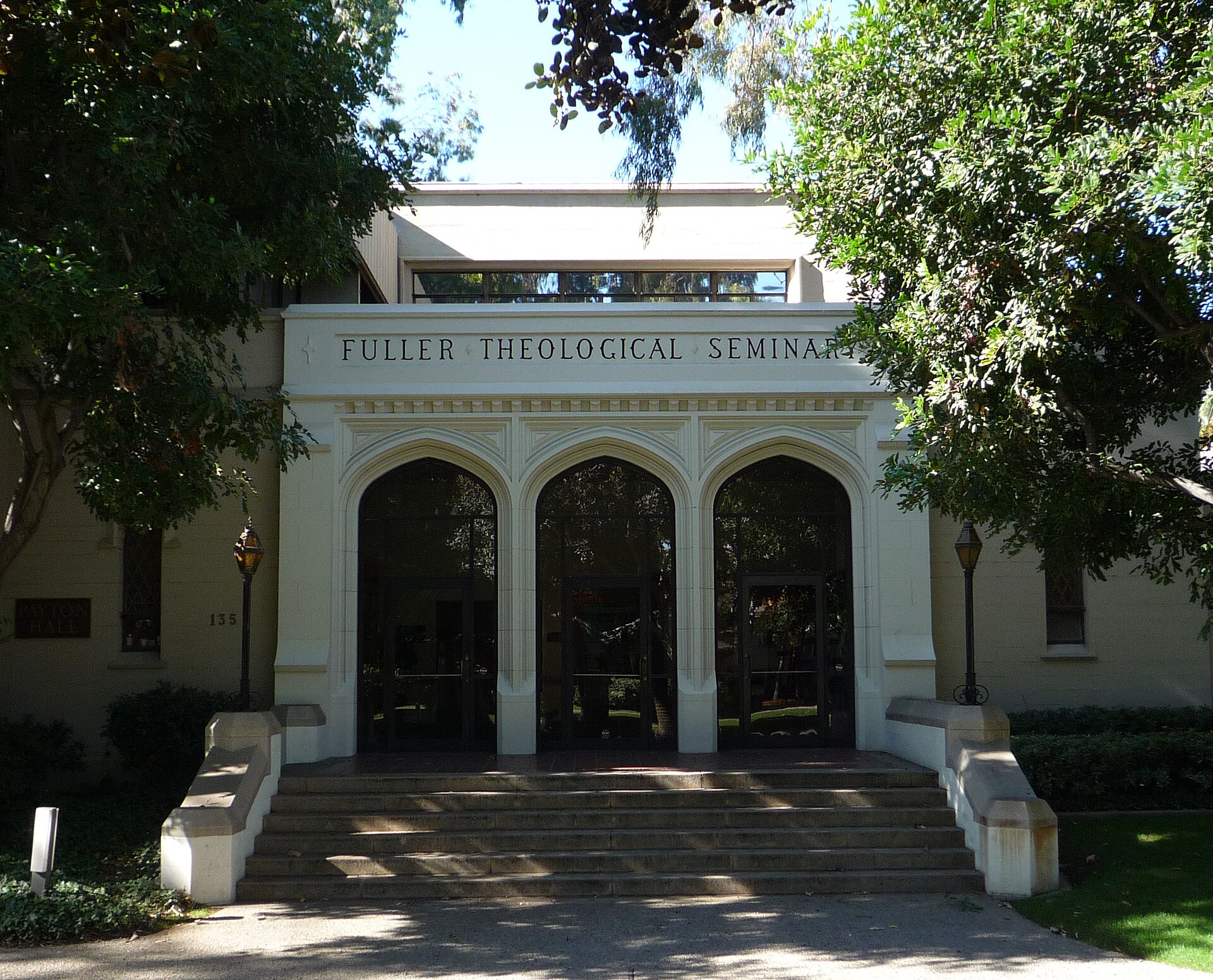
Three neighbouring lessons carry the history that this lesson assumes. Module 77, lesson 03, "Evangelicalism Defined" covers the word "evangelical," David Bebbington's four marks, the fundamentalist and modernist controversy, the founding of the National Association of Evangelicals in 1942 and 1943, Fuller Seminary, Christianity Today, Billy Graham and the Southern Baptist conservative resurgence. Module 77, lesson 04 covers the non-denominational churches, the fastest growing kind of Protestant congregation, which do not appear in denominational yearbooks at all. Liberty 58, lesson 14 covers Karl Barth, liberal theology and the intellectual history of the mainline churches. This lesson does not repeat those stories. It asks three questions: what the labels mean and who uses them, what the bodies' own records and the large surveys show, and how each side explains the change.
What "mainline" means and who uses the word
The word itself
"Mainline" (also "mainstream" or "oldline") is a label scholars and journalists apply. It is not a confession, and no church has a doctrine called mainline. The word came into common use in the twentieth century for the large Protestant bodies that had shaped American public life since the colonial era: Congregationalists, Episcopalians, Presbyterians, Methodists, the northern Baptists, the Disciples and the Lutherans of the older synods. The origin of the term is disputed. One account ties it to the 1920s fundamentalist and modernist debates, another to the wealthy "Main Line" suburbs west of Philadelphia, where many of the old Episcopal and Presbyterian congregations stood. Neither origin story has been confirmed from a first use, and this lesson treats the question as open (see "Claims checked").
The historian William R. Hutchison and the contributors to the volume he edited, Between the Times: The Travail of the Protestant Establishment in America, 1900 to 1960 (Cambridge University Press, 1989), wrote about these churches as the "Protestant establishment": the denominations whose members led universities, foundations, the federal government and the press in the first half of the twentieth century.7 That phrase describes social standing, not doctrine. When writers today say "mainline," they usually mean the same group of bodies after that standing faded.
The "Seven Sisters"
Writers on American religion often name seven bodies as the "Seven Sisters" of mainline Protestantism:
- the United Methodist Church (formed 1968)
- the Evangelical Lutheran Church in America (formed 1988; see lesson 01)
- the Presbyterian Church (U.S.A.) (formed 1983; see lesson 02)
- the Episcopal Church (organized 1789; see lesson 04)
- the American Baptist Churches USA (the former Northern Baptist Convention; see lesson 06)
- the United Church of Christ (formed 1957; see lesson 05)
- the Christian Church (Disciples of Christ) (see lesson 10).
The phrase is a borrowing from the nickname of seven women's colleges. Reference works attribute it to Hutchison's circle in the late 1980s, but this lesson could not open a first use, so the attribution is listed as unverified. The list is a convenience. Pew's survey also counts the Reformed Church in America, the Moravian Church and the Church of the Brethren as mainline,8 and the historically Black Protestant churches (the African Methodist Episcopal Church, the National Baptist Convention USA and others), though many of them belong to the National Council of Churches, are counted as a third tradition of their own.


How researchers sort the bodies
Because "mainline" and "evangelical" are researchers' categories, the most useful definition is the one the researchers publish. The Pew Research Center explains its method in an appendix to its 2023 to 2024 survey: "we group Protestant respondents into one of three 'traditions' - the evangelical tradition, mainline tradition or the historically Black Protestant tradition - based on the specific denomination they identify with."8 (The original uses a dash where this page uses a hyphen.) Pew gives examples: "all respondents who identify with the Southern Baptist Convention are classified as members of the evangelical Protestant tradition; all who identify with the American Baptist Churches USA are categorized as members of the mainline Protestant tradition; and all who say they belong to the National Baptist Convention, USA, are classified as members of the historically Black Protestant tradition."8
People who name no denomination are sorted another way. In Pew's words, respondents "who give a vague answer to questions about their denomination (e.g., 'I am just a Baptist' or 'I am just Methodist' or even 'I am just a Christian') are placed into one of the three Protestant traditions based on their race and/or their response to a question that asks if they think of themselves as a 'born-again or evangelical Christian.'" Pew adds that 36 percent of Protestants in the 2023 to 2024 survey gave such a vague answer.8 That is a large share, and it means that a little over a third of the people counted as "evangelical" or "mainline" in the survey were placed there by a question about self-description, not by a church roll.
Pew's appendix lists every denomination and its tradition. The United Methodist Church is in the mainline tradition and the Global Methodist Church in the evangelical tradition. The Presbyterian Church (USA) is mainline, while the Presbyterian Church in America, the Evangelical Presbyterian Church and ECO are evangelical. The Episcopal Church's members are counted as mainline, and those who name the Anglican Church in North America as evangelical. The Lutheran Church Missouri Synod, the Wisconsin Evangelical Lutheran Synod, Lutheran Congregations in Mission for Christ and the North American Lutheran Church are in the evangelical tradition, while the ELCA is mainline. Nondenominational churches go into the evangelical tradition when the respondent says "evangelical," "fundamentalist" or "charismatic," or describes himself or herself as born again.8 The Association of Religion Data Archives (ARDA) uses a similar scheme, which goes back to a 2000 article by the sociologist Brian Steensland and colleagues in Social Forces that sorted denominations into evangelical, mainline and Black Protestant traditions for survey research.9 ARDA's profile of the Southern Baptist Convention, for example, lists its "Religious Tradition" as "Evangelical Protestant."10
Some bodies do not accept the label they are given. The Missouri Synod, for example, calls itself a confessional Lutheran church and is not a member of the National Association of Evangelicals. The survey label describes where its members fall on the survey's questions, not how the synod describes itself (see lesson 01). The same caution applies to many Black Protestant churches, which hold evangelical doctrines but are counted separately because their history and their members' answers differ.
"Evangelical" is defined in Module 77
The meaning of "evangelical," Bebbington's quadrilateral of conversion, activism, biblicism and crucicentrism, and the NAE and Lifeway belief definition of 2015 are set out in Module 77, lesson 03. For this lesson one sentence from the National Association of Evangelicals' own statement of faith marks the difference most writers have in mind. Its first article reads: "We believe the Bible to be the inspired, the only infallible, authoritative Word of God."11 How the mainline churches state their view of Scripture, in their own documents, is set out later in this lesson.
The two councils: the NCC and the NAE
The Federal Council (1908) and the National Council of Churches (1950)
The institutional form of the mainline is the conciliar movement. The National Council of Churches traces its history to May 1908, when, in its own account, delegates of 32 Christian communions met at the Academy of Music in Philadelphia and formed the Federal Council of the Churches of Christ in America. The Council's history page says the delegates pressed for changes in immigration and labor practice, an end to child labor, better conditions for the poor and limits on alcohol.12 In 1950 the Federal Council and several cooperative agencies of the churches combined to form the National Council of the Churches of Christ in the U.S.A., which describes itself as "a leading voice of witness to the living Christ in the public square since 1950." Its own description today: it "brings together 37 member communions and more than 30 million Christians in approximately 100,000 congregations."13 Its stated mission is "to live as a community of communions called by Christ to visible unity" and to be "sent forth in the Spirit to promote God's justice, peace and the healing of the world."12
The NCC's member list includes the mainline Protestant bodies (among them the ELCA, the American Baptist Churches in the USA and the Christian Church (Disciples of Christ) on the page this lesson opened), the historically Black churches (the African Methodist Episcopal Church, the AME Zion Church, the Christian Methodist Episcopal Church, the National Baptist Convention USA and the Progressive National Baptist Convention), several Orthodox churches (the Greek Orthodox Archdiocese of America, the Armenian Church of America, the Coptic Orthodox Archdiocese and others), two Quaker bodies, the Moravian Church and the Polish National Catholic Church.14 The full list of 37 also includes the United Methodist Church, the Presbyterian Church (U.S.A.), the Episcopal Church, the United Church of Christ, the Reformed Church in America, the Church of the Brethren and the Orthodox Church in America.14 The Roman Catholic Church is not a member. The Southern Baptist Convention, the Missouri Synod and the Assemblies of God are not members.
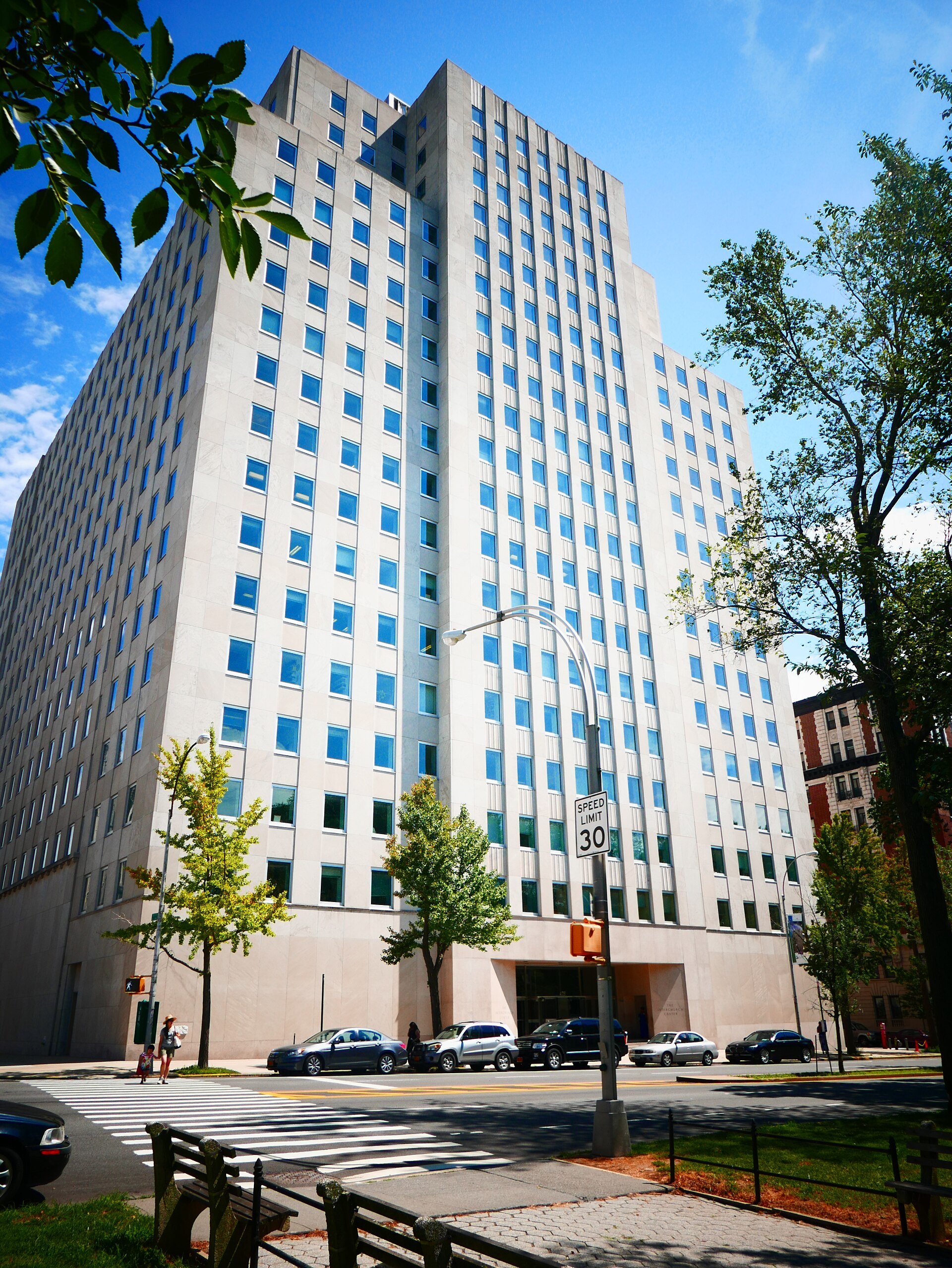

The National Association of Evangelicals (1942 to 1943)
The National Association of Evangelicals was organized in 1942 and 1943 by evangelicals who wanted a cooperative body of their own, outside both the Federal Council and the separatist fundamentalist councils. Its founding, its early leaders and its relation to Fuller Seminary, Christianity Today and Billy Graham are told in Module 77, lesson 03. Today it says it "represents 40 denominations and serves a constituency of millions," and that its members are "40 denominations and thousands of churches, schools and nonprofits."1516 The bodies in membership include ECO: A Covenant Order of Evangelical Presbyterians, whose synod executive is quoted on the NAE's denominations page, and the Assemblies of God, which was among the early members in the 1940s. The Southern Baptist Convention, the largest evangelical body, has never joined, and neither has the Missouri Synod. The NAE therefore does not contain "the evangelicals" any more than the NCC contains every mainline Christian. Membership in a council is one fact about a denomination, and survey classification is another.
Who belongs where: a summary
Putting the councils, the survey schemes and the bodies' own self-descriptions together gives a rough rule. A body is "mainline" in the usual sense when it belongs to the National Council of Churches (and often to the World Council of Churches), has historic roots in colonial or nineteenth-century American Protestantism, ordains women, has full communion or close cooperation with other mainline bodies, and allows a range of views on biblical inerrancy among its clergy. A body is "evangelical" in the usual sense when it requires its clergy to affirm a high view of Scripture (often the word "inerrant" or "infallible"), stresses personal conversion and evangelism, and stands outside the NCC. Many bodies fit only part of each description. The Missouri Synod holds to biblical inerrancy and stands outside the NCC but does not call itself evangelical in the American sense. The Assemblies of God credentials women as ministers and belongs to the NAE. The historically Black churches hold evangelical doctrines and belong to the NCC. The two categories are tools for counting, and they leave much out.
Counting members: what the numbers mean
Baptized, confirmed, professing, active, adherents
Every number in this lesson is a count of something specific, and the bodies count different things. Churches that baptize infants usually report "baptized members," which includes children. The ELCA reports both baptized and confirmed members: at the end of 1988, 5,251,534 baptized and 3,931,878 confirmed.1 The Episcopal Church reports "active baptized members."17 The United Methodist Church counts "professing members," people who have made a public profession of faith, and does not include baptized children in that figure. The PC(USA) counts "active members." The Southern Baptist Convention, which baptizes only believers, counts members on church rolls, many of whom no longer attend. The Assemblies of God reports two figures: "membership" (1,737,524 in 2023) and "adherents" (2,984,352 in 2023), the second including children and regular attenders who have not joined.18
The national compilation used by ARDA comes from the National Council of Churches' Yearbook of American and Canadian Churches. ARDA explains that its figures for each body "are taken from the National Council of Churches' Historic Archive CD and recent print editions of the Council's Yearbook of American and Canadian Churches," which archives the yearbooks from 1916 to 2000, and that "Membership figures are 'inclusive.'" In the Yearbook's definition, inclusive membership means "those who are full communicant or confirmed members plus other members baptized, non-confirmed or non-communicant." ARDA adds that "Each denomination has its own criteria for membership."10
Church rolls and surveys measure different things
A church roll counts people a congregation lists. A survey counts adults who name a church when a researcher asks. The two can move in different directions. A person can remain on a Methodist roll for twenty years without attending, and a person can tell Pew he is a Baptist without belonging to any congregation. Pew's 2014 report estimated that there were "an estimated 41 million mainline Protestant adults in the United States" in 2007 and about 36 million in 2014.19 Both kinds of number are useful, and neither is the "real" count.
When figures conflict
The figures in this lesson sometimes disagree, and the disagreement is reported rather than hidden. Three examples:
- The ELCA's own report for the end of 2010 gives 4,272,688 baptized members.20 ARDA's series, from the Yearbook, gives 4,274,855 for 2010.21 The difference is small and probably reflects late corrections.
- The United Church of Christ's own decade chart gives 1,605,773 members for 1990.3 ARDA gives 1,599,212.22
- For the PC(USA), ARDA's series jumps from 2,886,482 in 1989 to 3,788,009 in 1990 and then declines from that higher level.23 The jump does not match the PC(USA)'s own reports of a steady loss, and it most likely reflects a change in what was reported to the Yearbook (for example, adding baptized members who were not active members). This lesson therefore does not use ARDA's PC(USA) figures after 1989 and uses the PC(USA)'s own figures instead.
The general rule this lesson follows: the body's own report for recent years, ARDA's Yearbook series for the decades before a body published its own statistics online, both where they differ, and a note on the definition in every case.
The numbers, body by body
The figures below come from each body's own published statistics where this lesson could open them, and from ARDA's Yearbook series for the earlier decades. Each figure gives the year it describes. Percent changes are computed for this lesson from the two figures named.
The United Methodist Church
The United Methodist Church was formed in 1968 by the union of the Methodist Church and the Evangelical United Brethren Church (the story of the Methodist bodies is in lesson 07). ARDA's Yearbook series gives the Methodist Church alone 9,893,094 members in 1960 and 10,289,214 in 1967, its last year before the merger.24 For the new church it gives 11,026,976 in 1967 (apparently the two uniting bodies combined) and 10,990,720 in 1968, then 10,671,774 in 1970, 9,519,407 in 1980, 8,789,101 in 1991, 8,340,954 in 2000 and 7,679,850 in 2009.25 In 2019 UM News reported from the General Council on Finance and Administration (GCFA) that United States membership at the end of 2018 was "just under 6.7 million," with average weekly attendance under 2.5 million.26 The church's own "United Methodists at a Glance" page, consulted in October 2026, gives United States membership of 5,424,043 in 29,746 churches from 2022 reporting and notes that the data "will be updated soon." It gives worldwide membership of about 11,299,000 from a GCFA report of November 2025.27 The GCFA data site, umdata.org, consulted in October 2026, shows 3,814,781 members in 20,158 active churches for the United States in the "latest reported statistical year," which the page does not name.60 From 1968 to 2022 the United States membership fell by about 51 percent.
The largest single loss came from the departures of 2019 to 2023. The special General Conference of February 2019 in St. Louis added a process for congregations to leave with their property, open until December 31, 2023. Christianity Today, citing the UM News tally, reported "a total of 7,659 over the past four years," with 5,642 churches leaving in 2023 alone, which it described as "nearly 1 out of 4 of the denomination's 30,000 congregations."28 The Lewis Center for Church Leadership, in its final report of January 16, 2024, counted 7,631 churches "approved by annual conferences for disaffiliation by December 31, 2023," 25 percent of United States churches, holding 24 percent of the denomination's United States membership (lesson 07 compares the counts).61 Many of the departing churches joined the Global Methodist Church, and others became independent. The 2024 General Conference, which met in Charlotte, North Carolina, from April 23 to May 3, 2024, then removed from the Book of Discipline the ban on "self-avowed practicing homosexual" clergy and the language that made performing same-sex weddings a chargeable offense.29 The disaffiliations and the 2024 decisions are told in lesson 07.
The Evangelical Lutheran Church in America
The ELCA began on January 1, 1988 (its history and the merging bodies are in lesson 01). Its Office of the Secretary publishes a "Summary of Congregational Statistics" every year, and the series is online back to 1988. The figures for baptized members at the end of each year are:
- 1988: 5,251,534 baptized and 3,931,878 confirmed members in 11,120 congregations1
- 2000: 5,125,919 baptized30
- 2010: 4,272,688 baptized, after 4,543,037 at the end of 2009 (a fall of 270,349 in one year, the year after the 2009 Churchwide Assembly)20
- 2020: 3,142,777 baptized31
- 2025: 2,588,700 baptized, in 8,208 congregations, with on-site average weekly worship attendance of 531,4362
From 1988 to 2025 the ELCA's baptized membership fell 50.7 percent. The 2010 report's one-year loss of 5.95 percent is the largest among the years this lesson checked and coincides with the departure of congregations to Lutheran Congregations in Mission for Christ and to the North American Lutheran Church, founded in 2010 (see lesson 01).
The Episcopal Church
ARDA's Yearbook series gives the Episcopal Church 3,269,325 members in 1960, 3,429,153 in 1966, 3,285,826 in 1970, 2,786,004 in 1980, 2,446,050 in 1990, 2,333,327 in 2000 and 1,951,907 in 2010.32 The church's own Office of the General Convention publishes baptized members by diocese. Its ten-year table gives 1,956,042 baptized members in 2014 and 1,547,779 in 2023, a fall of 20.9 percent. These totals include the dioceses outside the fifty states (Haiti alone reported 98,403).33 The church's "Fast Facts" for 2023, counting only United States congregations, give 1,394,769 active baptized members, with average Sunday attendance of 386,468.17
For 2024 the Episcopal Church published no membership total. The Christian Post reported in October 2025 that the church's Office of Public Affairs explained that a new method of counting showed "confusion in how churches understood and reported this topline number." Attendance for 2024 was a little over 413,000 and the number of parishes and missions 6,707.34 From ARDA's 1966 figure to the church's own 2023 total the fall is about 55 percent, but the two figures may not count exactly the same people. The Episcopal story is in lesson 04.
The Presbyterian Church (U.S.A.)
The PC(USA) was formed on June 10, 1983, by the reunion of the United Presbyterian Church in the U.S.A. (the northern church) and the Presbyterian Church in the United States (the southern church). See lesson 02. ARDA's Yearbook series gives the northern church 3,259,011 members in 1960 and 3,087,213 in 1970, and the southern church 902,849 in 1960 and 958,195 in 1970, so the two together had 4,161,860 members in 1960 and 4,045,408 in 1970. By 1980 they had 2,423,601 and 838,485, together 3,262,086.3536 For the reunited church ARDA gives 3,122,213 in 1983 and 2,929,608 in 1988.23
The PC(USA)'s Office of the General Assembly publishes comparative statistics. Its 2024 summary gives active membership of 1,193,770 in 2021, 1,140,665 in 2022, 1,094,733 in 2023 and 1,045,848 in 2024, with 8,432 congregations at the end of 2024.37 The church's news release of May 2025 put the 2024 net loss at 48,885 members and quoted Jim Cargal, who oversaw the report as interim director of Mid Council Ministries, that "net losses do not tell the whole story," pointing to rising adult baptisms and income.38 For 2025 the Presbyterian News Service reported on June 29, 2026, from the statistical report prepared for the 227th General Assembly, 1,019,003 members (a loss of 26,845 from 2024) and 8,304 congregations, and the Christian Post reported the same figures.6339 From 1983 to 2024 the church's membership fell about 66 percent, and from the combined forerunners of 1965 (4,254,460 by ARDA) the fall is about 75 percent.
The United Church of Christ
The UCC was formed in 1957 by the union of the Congregational Christian Churches and the Evangelical and Reformed Church (see lesson 05). Its Center for Analytics, Research and Development, and Data publishes an annual Statistical Profile. The 2024 Profile, with data for the end of 2023, reports "4,485 congregations in the United Church of Christ with a total of 683,936 members." Its decade chart gives 2,123,792 members in 1955, 2,246,610 in 1960, 1,960,608 in 1970, 1,736,244 in 1980, 1,605,773 in 1990, 1,377,320 in 2000, 1,058,423 in 2010 and 773,539 in 2020.3 The UCC's later table "Summary Statistics 1955 - 2024" adds 666,073 members in 4,431 congregations at the end of 2024. Its notes say that the figures before 1961 "are combined for the Congregational Christian Churches and the Evangelical and Reformed Church," and that "The losses between 1960-1965 result from decisions of 1,000 Congregational Christian Churches not to unite with the United Church of Christ."62 The Profile explains that "From 2013 to 2023 alone, the UCC encountered a net loss of 631 congregations and 295,303 members," and that some of the decline in congregations "began prior to the formation of the denomination in 1957," when about 1,000 Congregational Christian churches chose not to join. It also says that "From 2005 through 2007, the UCC experienced a loss of nearly three congregations per week on average (mostly as a result of General Synod's resolution regarding same-sex marriage)."3 From 1960 to 2024 UCC membership fell about 70 percent (part of the early loss is the churches that never joined), the steepest fall among the bodies charted in this lesson.
The American Baptist Churches USA and the Disciples of Christ
For these two bodies this lesson relies on ARDA's Yearbook series. The American Baptist Churches in the U.S.A. had 1,607,541 members in 1980, 1,535,971 in 1990, 1,436,909 in 2000 and 1,308,054 in 2010, a fall of 18.6 percent over thirty years, the smallest among the mainline bodies.40 The Christian Church (Disciples of Christ) had 1,801,821 members in 1960, 1,918,471 in 1965, then 1,592,609 in 1968, 1,424,479 in 1970, 1,177,984 in 1980, 1,039,692 in 1990, 820,286 in 2000 and 639,551 in 2010.41 The sharp drop between 1967 (1,875,400) and 1968 most likely reflects the Disciples' restructure of 1968 and the separation of the congregations that became the independent Christian Churches and Churches of Christ, which were then no longer counted with the Disciples. The Yearbook series does not say so itself (see lesson 10). Later counts for both bodies are given in lessons 06 and 10.
The Southern Baptist Convention
The Southern Baptist Convention (founded 1845; see lesson 06) gathers statistics through the Annual Church Profile, compiled by Lifeway Christian Resources from reports by the state conventions. ARDA's Yearbook series, built from those reports, gives 9,731,591 members in 1960, 11,628,032 in 1970, 13,600,126 in 1980, 15,038,409 in 1990, 15,960,308 in 2000, 16,306,246 in 2006 (the last year before the nineteen straight years of decline that Lifeway reports; the same series lists a higher 16,439,603 for 2003) and 16,136,044 in 2010.10 Lifeway's report of May 2026 on the 2025 Annual Church Profile gives membership "dipping to 12,331,954," the "19th consecutive year of membership decline, falling to levels last seen in 1973." The same report gives 46,608 affiliated congregations (268 fewer than the year before), average weekly worship attendance of 4,460,910 and 263,075 baptisms, "up 4.96% from the previous year."4 From 2006 to 2025, membership fell 24.4 percent.
The SBC figures show two things at once. The evangelical side's largest body has been shrinking for nineteen years, so the common picture of growing evangelical churches and shrinking mainline churches does not hold for it. And attendance is only a little over a third of membership, which shows how much a church roll can differ from the number of people in the pews. The SBC's history of membership is also told from the Annual Church Profile in Module 77, lesson 03.
The Lutheran Church Missouri Synod
ARDA's Yearbook series gives the Missouri Synod 2,391,195 members in 1960, a peak of 2,788,536 in 1970, then 2,625,650 in 1980, 2,602,849 in 1990, 2,554,088 in 2000 and 2,278,586 in 2010.42 The synod's own Reporter gave baptized membership at the end of 2014 as 2,097,258, "down 66,440 (3.1%)" from 2013, with 1,641,679 confirmed members and 6,105 congregations.43 From 1970 to 2014 the fall was about 25 percent. The synod's later figures, its history and its doctrine are in lesson 01. The synod's loss since 1970 has been much slower than the ELCA's, which makes the two Lutheran bodies a frequent pair in the debate described below.
The Assemblies of God
The Assemblies of God (founded at Hot Springs, Arkansas, in 1914; see lesson 13 and Module 77, lesson 02) is the main example of an American Protestant body that grew through the whole period. ARDA's series gives 508,602 in 1960, 625,027 in 1970, 1,732,371 in 1980, 2,181,502 in 1990, 2,577,560 in 2000 and 3,030,944 in 2010.44 The jump between 1970 and 1980 is too large to be growth alone and probably marks a change from reporting members to reporting adherents. The General Secretary's Office table for 2013 to 2023 gives 3,127,857 adherents in 2013 and 2,984,352 in 2023 (a ten-year fall of 4.6 percent), membership of 1,805,381 in 2013 and 1,737,524 in 2023, and 12,681 churches.18 The AG's own news service wrote in 2026 that since 1975 U.S. adherents had grown "from 1.2 million to more than 3 million," and that ethnic minority and immigrant churches grew from 2,260 in 1989 to 5,081 in 2024, "40% of all AG congregations in the U.S."45
What the surveys show: Pew, 2007, 2014 and 2023 to 2024
The Pew Research Center has run three very large surveys of American religion, in 2007, 2014 and 2023 to 2024, each of more than 35,000 adults. (Pew calls the series by a name that this site's style rules do not allow in its text, and the notes give the reports by their web addresses.) The 2014 survey had "a nationally representative sample of 35,071 adults," and the 2007 survey "more than 35,000 Americans."19 The 2023 to 2024 survey was "conducted in English and Spanish from July 17, 2023, to March 4, 2024," with "a nationally representative sample of 36,908 U.S. adults."46
The headline results, as Pew reported them in February 2025:5
- Christians: 78 percent of adults in 2007, 71 percent in 2014, 62 percent in 2023 to 2024.
- Evangelical Protestants: "going from 26% in 2007, to 25% in 2014, to 23% in 2023-24." (In decimals, Pew's 2015 report gave 26.3 and 25.4 percent for the first two surveys.19)
- Mainline Protestants: "declining from 18% of U.S. adults in 2007 to 11% in 2023-24."
- Historically Black Protestants: 7 percent in 2007 and 5 percent in 2023 to 2024.
- Catholics: 24, 21 and 19 percent.
- Religiously unaffiliated: 16, 23 and 29 percent.
Pew's 2015 report on the 2014 survey estimated that the number of mainline Protestant adults fell from about 41 million in 2007 to about 36 million in 2014, a fall it said "may have fallen by as few as 3 million or as many as 7.3 million" once the margins of error are counted. It also found that the median age of mainline adults rose to 52 from 50, that "just 16% of Millennials are Catholic, and only 11% identify with mainline Protestantism," and that the United Methodist Church "continues to be the largest denomination within the mainline Protestant tradition," with 25 percent of mainline Protestants, down from 28 percent.19 The 2025 report adds a finding that changes the story somewhat: "the Christian share of the population, after years of decline, has been relatively stable since 2019," and the unaffiliated share "has leveled off - at least temporarily." Its headline: "Decline of Christianity in the U.S. Has Slowed, May Have Leveled Off."47
Two features of the survey numbers deserve care. First, the mainline share fell by about 7 points from 2007 to 2023 to 2024, the evangelical share by about 3, so in proportional terms the mainline lost about two fifths of its share and the evangelical tradition about one eighth. Second, the evangelical figure includes the many people who attend nondenominational churches or name no denomination, so it holds up better than the rolls of the evangelical denominations. The SBC's rolls fell about 24 percent from 2006 to 2025 while the evangelical share of adults in Pew's survey fell by about 3 points. The growth of nondenominational churches is the subject of Module 77, lesson 04.
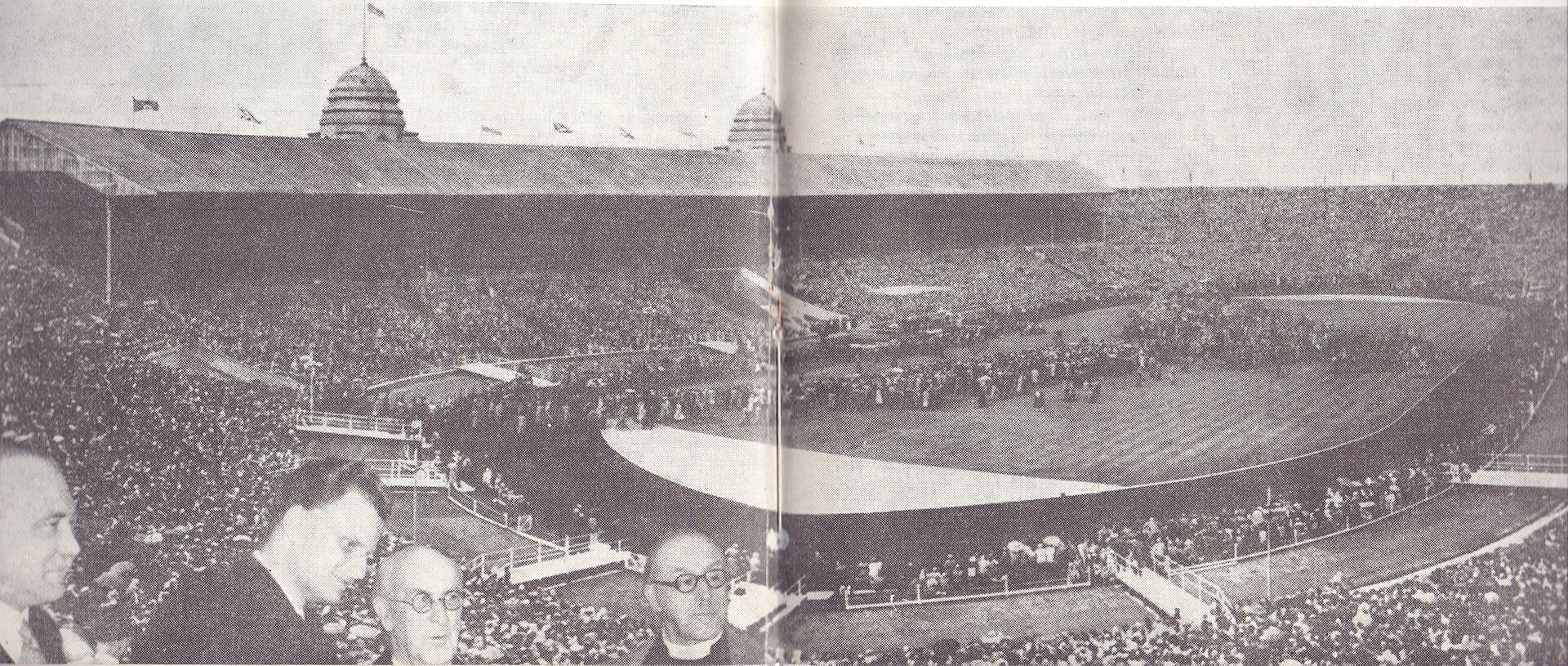

Why the change? The explanations scholars give
The mainline decline is one of the most studied facts in American religion. The explanations fall into four groups, and most scholars now combine them. Each is given here as its authors stated it, with the limits of each noted.
Dean Kelley: strict churches grow (1972)
Dean M. Kelley, then a staff executive of the National Council of Churches, published Why Conservative Churches Are Growing: A Study in Sociology of Religion (Harper and Row, 1972) just as the mainline bodies began to report losses.48 His argument, in summary: religion's main business is to make life meaningful in ultimate terms. Groups that do this convincingly ask a great deal of their members (time, money, belief, behavior, discipline) and members value what costs them. Groups that ask little, tolerate wide disagreement and put dialogue ahead of mission lose the commitment that keeps members. Kelley called the demanding quality "strictness" or "seriousness." He described it as a trait of organizations, and he applied it to bodies of very different doctrine, including the Mormons and Jehovah's Witnesses, so his thesis is about how a church holds its people more than about which doctrines are true.
The economist Laurence Iannaccone restated the argument in "Why Strict Churches Are Strong," American Journal of Sociology 99, no. 5 (1994), pages 1180 to 1211: demanding rules screen out "free riders," people who would enjoy the benefits of a congregation without contributing, so the members who remain give more and the group as a whole is stronger.49
Roger Finke and Rodney Stark: winners and losers in a religious market (1992)
In The Churching of America, 1776 to 1990: Winners and Losers in Our Religious Economy (Rutgers University Press, 1992; revised to 2005 in a second edition), the sociologists Roger Finke and Rodney Stark treated American religion as a free market, open to competition since disestablishment.50 They argued that the mainline decline began long before the 1960s: the colonial establishment churches (Congregationalists, Episcopalians, Presbyterians) were already losing their share of church members in the early nineteenth century to the Methodists and Baptists, and later the Methodists lost ground in turn as they grew respectable and their clergy professional. In their account bodies grow while they keep a high "tension" with the surrounding culture and decline as they lower it.
Hout, Greeley and Wilde: the birth rate (2001)
The strongest challenge to the strictness thesis came from the sociologists Michael Hout, Andrew Greeley and Melissa Wilde, "The Demographic Imperative in Religious Change in the United States," American Journal of Sociology 107, no. 2 (2001), pages 468 to 500. Using the General Social Survey for Americans born from 1903 to 1973, they began from the observation that "U.S. Protestants are less likely to belong to 'mainline' denominations and more likely to belong to 'conservative' ones," and found that "higher fertility and earlier childbearing among women from conservative denominations explains 76% of the observed trend." In their summary, "conservative denominations have grown their own." They added that "a drop-off in conversions from conservative to mainline denominations prolonged the decline," that "A recent rise in apostasy added a few percentage points to mainline decline," and that "Conversions from mainline to conservative denominations have not changed, so they played no role in the restructuring."6 In other words, by their reading the mainline did not lose most of its share because its members moved to stricter churches. It lost it because conservative Protestant families had more children, earlier, and because fewer people moved the other way than in the past.
The study measures the share of Protestants in each tradition across birth cohorts, not the membership rolls of particular bodies. It does not explain why the ELCA lost half its baptized members after 1988, a period when the birth gap between the two traditions had narrowed. It does explain why the two traditions' shares shifted for so long before any single denomination's rolls fell.
Roof and McKinney, and Hoge, Johnson and Luidens: the children who left
Two studies looked at where mainline-raised people went. Wade Clark Roof and William McKinney, American Mainline Religion: Its Changing Shape and Future (Rutgers University Press, 1987), found that the mainline churches lost more of their young adults to no religion at all than to conservative churches, and described a "new voluntarism" in which Americans treated church membership as a personal choice rather than an inheritance.51 Dean R. Hoge, Benton Johnson and Donald A. Luidens, Vanishing Boundaries: The Religion of Mainline Protestant Baby Boomers (Westminster John Knox, 1994), traced a sample of people confirmed as teenagers in Presbyterian churches in the 1950s and 1960s. They found that many had drifted out of church life, that belief in the distinctive claims of Christianity was the strongest predictor of who stayed, and that many who left held what the authors called "lay liberalism," a view that Christianity is one good path among several.52 Both books are read by both sides: as evidence that mainline churches failed to pass on their faith, and as evidence that the loss was to secularity rather than to the evangelical churches.
Wuthnow and Hunter: the dividing line runs inside the churches
The sociologist Robert Wuthnow argued in The Restructuring of American Religion: Society and Faith since World War II (Princeton University Press, 1988) that the most important division in American religion after about 1960 was no longer between denominations (Methodist against Presbyterian, Protestant against Catholic) but between theological conservatives and liberals inside each denomination, organized through special-purpose groups that crossed denominational lines.53 James Davison Hunter's Culture Wars: The Struggle to Define America (Basic Books, 1991) described the same division as one between an "orthodox" impulse, which locates moral authority in a transcendent and fixed source, and a "progressive" impulse, which reinterprets tradition in light of present experience.54 Both books help explain the departures listed below: the bodies divided along a line that already ran through their congregations.
What the bodies themselves say
The churches' own researchers have written about the decline in plain terms. C. Kirk Hadaway, the author of the Episcopal Church's research report, wrote in the church's FACTs on Episcopal Church Growth (data from 2005): "It is well known that most conservative, evangelical and sectarian religious bodies are growing and mainline denominations have been in decline since the mid-1960s." He added that the Episcopal Church "was something of a mainline anomaly from the early 1990s through 2001 when consistent growth in average Sunday worship attendance was recorded," and that after 2001 "membership and attendance decline have returned to our churches."55 The UCC's Statistical Profile ties its losses of 2005 to 2007 to a General Synod resolution, as quoted above.3 Jim Cargal, presenting the PC(USA)'s 2024 statistics, said that "net losses do not tell the whole story."38 On the evangelical side, Lifeway's report places the SBC's falling rolls beside its rising attendance and baptisms.4 No body's official reports claim to know the single cause.
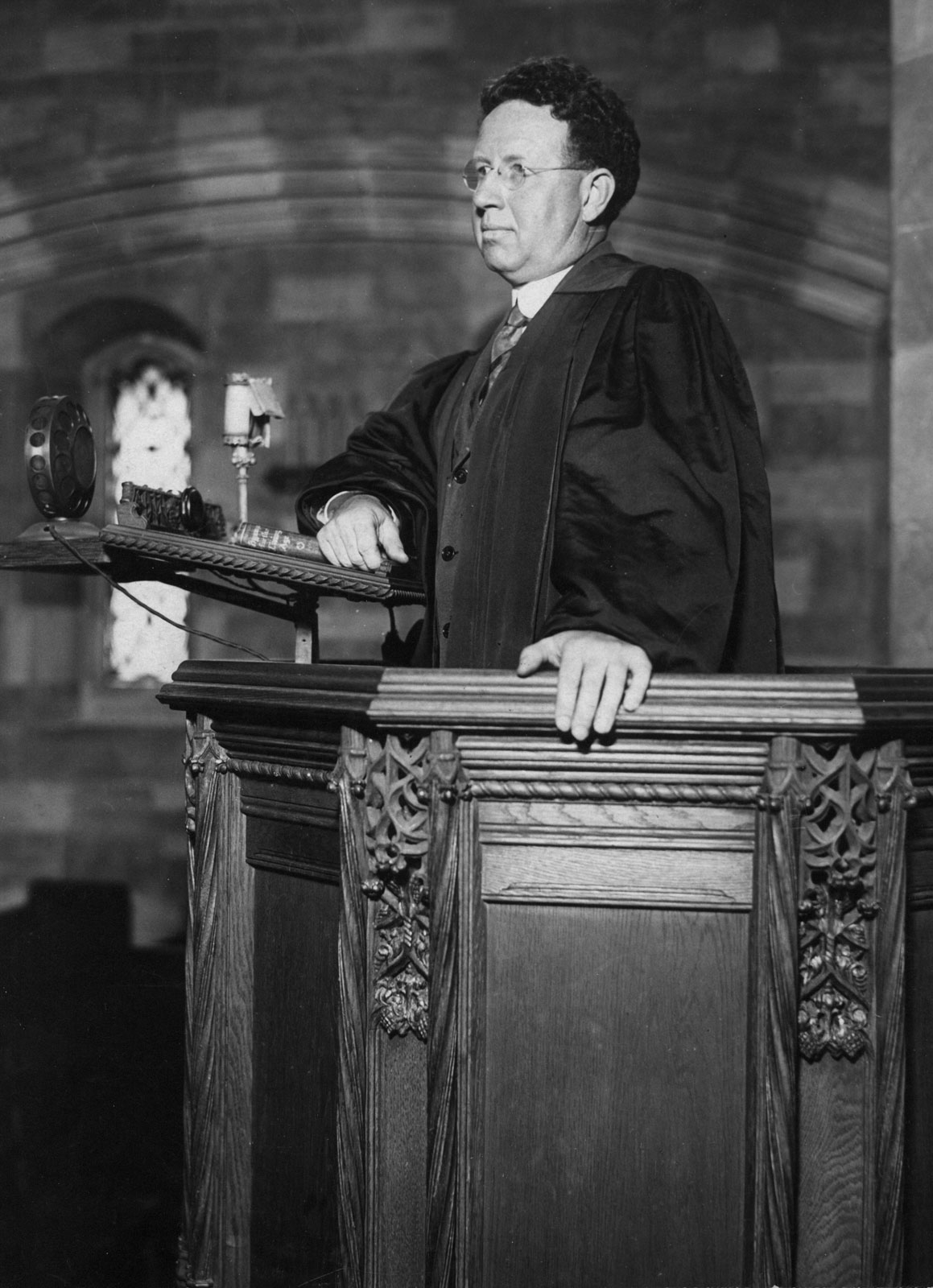

How the two sides state their differences
The 1920s roots, briefly
The modern division goes back to the fundamentalist and modernist controversy of the 1910s and 1920s in the northern Presbyterian and Baptist churches, told in Module 77, lesson 03 and, for the Presbyterians and J. Gresham Machen, in lesson 02. The liberal theology that the modernists drew on, and Karl Barth's reaction against it, is the subject of Liberty 58, lesson 14. Fosdick's sermon of 1922, published in Christian Work on June 10, 1922, cost him his pulpit at New York's First Presbyterian Church.56 The conservatives who lost the battles in the northern denominations in the 1920s and 1930s built the separate schools, missions and denominations that became the evangelical side of this lesson.
Scripture, in their own words
The clearest difference is in how each side's official documents describe the Bible. The Southern Baptist Convention's Baptist Faith and Message (2000), Article I, says: "The Holy Bible was written by men divinely inspired and is God's revelation of Himself to man. It is a perfect treasure of divine instruction. It has God for its author, salvation for its end, and truth, without any mixture of error, for its matter."57 The NAE's statement calls the Bible "the inspired, the only infallible, authoritative Word of God."11
The PC(USA) asks every minister, elder and deacon at ordination: "Do you accept the Scriptures of the Old and New Testaments to be, by the Holy Spirit, the unique and authoritative witness to Jesus Christ in the Church universal, and God's Word to you?" (Book of Order 2023 to 2025, W-4.0404b).58 The question affirms Scripture's authority, ties it to its witness to Christ and calls it "God's Word to you." It does not use the word "inerrant" or a phrase like the Baptist Faith and Message's "without any mixture of error." The Presbyterian bodies that separated from the mainline church (the PCA, the EPC and ECO) give their own reasons for leaving, set out in lesson 02. The ELCA has handled disagreement over Scripture's teaching on sexuality by a different device: its 2009 social statement Human Sexuality: Gift and Trust described four positions held in conscience within the one church, which the ELCA's own page now calls "the church's current concept of the four positions of bound conscience." In 2022 its Churchwide Assembly ordered two reconsiderations of the statement, and in 2025 the Assembly adopted revisions to one section "by a two-thirds vote (724-46)."59
Ordination and marriage: the votes, with dates
Since 1970 the questions that have divided the bodies most visibly are the ordination of women and, after 2000, the ordination of gay and lesbian clergy and the blessing or celebration of same-sex marriages. The table gives each body's current rule in its own documents where this lesson opened them, and points to the family lesson for the others.
| Body | Current rule (in the body's words where quoted) | Key decision |
|---|---|---|
| Southern Baptist Convention | Baptist Faith and Message, Article VI, as posted on the SBC's site in October 2026: "the office of pastor/elder/overseer is limited to men as qualified by Scripture." Article XVIII: "Marriage is the uniting of one man and one woman in covenant commitment for a lifetime."57 | The confession was adopted in 1925 and revised in 1963 and 2000; messengers amended its article on the church in June 2023 so that it reads "pastor/elder/overseer" (lesson 06).64 |
| United Methodist Church | The 2024 General Conference removed the ban on "self-avowed practicing homosexual" clergy and the chargeable offense for performing same-sex weddings, and approved new Social Principles.29 | Charlotte, April 23 to May 3, 2024. The 2019 special session had instead tightened the rules and opened the exit process (lesson 07).28 |
| Presbyterian Church (U.S.A.) | Book of Order G-2.0104b: "Standards for ordained service reflect the church's desire to submit joyfully to the Lordship of Jesus Christ in all aspects of life," with councils to "be guided by Scripture and the confessions in applying standards to individual candidates." W-4.0601: "Marriage involves a unique commitment between two people, traditionally a man and a woman."58 | The ordination wording replaced an older "fidelity and chastity" clause in 2011, and the marriage wording took effect in 2015 (lesson 02). |
| Evangelical Lutheran Church in America | Human Sexuality: Gift and Trust (2009), with its "four positions of bound conscience"; revisions adopted 2025 by 724 to 46.59 | 2009 Churchwide Assembly; ministry policy changes the same year (lesson 01). |
| United Church of Christ | The UCC's own Profile ties its loss of "nearly three congregations per week" in 2005 to 2007 to "General Synod's resolution regarding same-sex marriage."3 | General Synod, 2005 (lesson 05). |
| Episcopal Church | Women ordained priests since the authorization of 1976, and marriage rites for same-sex couples since 2015 (lesson 04). | General Conventions of 1976 and 2015 (lesson 04). |
| Missouri Synod | Ordains only men as pastors and teaches marriage as between a man and a woman (lesson 01). | No change. Its positions are set out in lesson 01. |
| Assemblies of God | Credentials women as ministers: 29.7 percent of U.S. credential holders in 2024, up from 13.9 percent in 1985.45 | Women have held AG credentials since the body's early decades (lesson 13). |
The table shows that the line between the families is not simply "women's ordination." The Assemblies of God, an evangelical and Pentecostal body, credentials women, while the Missouri Synod and the SBC do not ordain women as pastors. The sharper and more recent line concerns marriage and the ordination of people in same-sex relationships: most of the seven mainline bodies have opened one or both since 2003 (the American Baptist Churches USA, whose congregations decide many such questions for themselves, is the main exception at the national level), and none of the evangelical bodies named here has.
The departures that made new bodies
Each change listed above was followed by the departure of congregations that disagreed, and several departures formed new bodies, which survey researchers count on the evangelical side. Each is told in its family lesson, in each side's own words:
- From the southern Presbyterian church: the Presbyterian Church in America (first General Assembly, 1973). From the PC(USA): the Evangelical Presbyterian Church (1981, which later received many PC(USA) congregations) and ECO: A Covenant Order of Evangelical Presbyterians (2012). See lesson 02.
- From the ELCA: Lutheran Congregations in Mission for Christ (2001) and the North American Lutheran Church (2010). See lesson 01.
- From the Episcopal Church: the Anglican Church in North America (2009). See lesson 04.
- From the United Methodist Church: the Global Methodist Church (2022) and thousands of independent congregations. See lesson 07.
- From the UCC's forerunners: the National Association of Congregational Christian Churches (1955), formed by churches that declined the 1957 union, and the Conservative Congregational Christian Conference. See lesson 05.
The movement has not gone only one way. In the SBC, congregations and pastors who opposed the conservative resurgence after 1979 formed the Cooperative Baptist Fellowship in 1991 (see lesson 06 and Module 77, lesson 03). Hout, Greeley and Wilde found, at the level of whole cohorts, that "Conversions from mainline to conservative denominations have not changed," which is a reminder that the departures of whole congregations are a recent and special case.6


What the record shows and what it does not
- Documented fact. By their own reports, the ELCA lost 50.7 percent of its baptized members from 1988 to 2025, the UCC about 70 percent of its members from 1960 to 2024, and the PC(USA) about 66 percent from 1983 to 2024. The SBC's own profile shows nineteen straight years of membership decline to 2025. The Assemblies of God's adherents grew from about 0.5 million in 1960 to about 3 million by 2010 and have held near that level. Pew's surveys show the mainline share of adults falling from 18 to 11 percent and the evangelical share from 26 to 23 percent between 2007 and 2023 to 2024.
- Definitions that change the numbers. Baptized, confirmed, professing, active and adherent counts are not the same thing, and the Yearbook's "inclusive" figures differ from some bodies' own. Surveys count self-identification; rolls count names.
- The bodies' own explanations. The UCC attributes its 2005 to 2007 losses mostly to a General Synod resolution; the Episcopal Church's researcher calls mainline decline since the mid-1960s "well known"; the PC(USA) says net losses "do not tell the whole story."
- Scholarly readings. Kelley and Iannaccone stress strictness; Finke and Stark stress competition and tension with the culture; Hout, Greeley and Wilde credit birth rates with 76 percent of the cohort shift; Roof and McKinney, and Hoge, Johnson and Luidens, stress the loss of mainline children to no religion.
- Open questions. How much of the mainline loss since 2000 is due to the votes on sexuality and how much to the older trends already under way; whether the evangelical bodies' recent losses are the same trend arriving later; whether Pew's finding of a plateau since 2019 will hold.
Claims checked
"The mainline churches are dying because they abandoned the Bible." Unresolved
The decline is documented: every mainline body in this lesson reports far fewer members than at its peak. The cause is disputed. Kelley and Iannaccone tied growth to strictness, which includes doctrinal demands, and Hoge, Johnson and Luidens found that belief predicted who stayed in the Presbyterian sample they followed.484952 Hout, Greeley and Wilde found that birth rates explain 76 percent of the shift in the two traditions' shares across cohorts, and that switching from mainline to conservative churches "played no role in the restructuring."6 Both kinds of evidence are real, and neither settles the question for a particular body in a particular decade. "Dying" is also too strong: the ELCA still reported 2,588,700 baptized members and 8,208 congregations at the end of 2025.2
"Evangelical churches are growing while mainline churches shrink." Partly supported
True for decades and for some bodies: the SBC grew every decade from 1960 to 2006, and the Assemblies of God's reported figure grew about sixfold from 1960 to 2010 (in part because the series changed from members to adherents).1044 Untrue for the SBC since 2006: its 2025 membership of 12,331,954 was its nineteenth straight annual decline.4 In Pew's surveys the evangelical share of adults also fell, from 26 to 23 percent, though much less than the mainline share.5
"Mainline decline is just about birth rates." Partly supported
Hout, Greeley and Wilde's figure of 76 percent applies to the change in the mainline share of Protestants across birth cohorts from 1903 to 1973. They themselves name two more factors: fewer conversions from conservative to mainline churches and a recent rise in "apostasy," people leaving religion.6 The birth-rate explanation does not cover the steep losses after 2000 in the ELCA, PC(USA), UMC and Episcopal Church, which coincide with the departures described above.
"A quarter of United Methodist churches left." Supported
UM News counted 7,659 congregations that left from 2019 to 2023, which Christianity Today described as "nearly 1 out of 4" of the denomination's congregations.28 The Lewis Center's final count was 7,631, which it reckoned as 25 percent of United States churches.61
"The ELCA has lost half its members since its founding." Supported
The ELCA's own reports give 5,251,534 baptized members at the end of 1988 and 2,588,700 at the end of 2025, a fall of 50.7 percent.12
"The PC(USA) has fallen below one million members." Refuted, for 2025
Jim Cargal, who oversaw the 2024 report, said that at the current rate of decline 2025 would likely be the year membership dropped below one million.38 The church's own report for 2025 gave 1,019,003.63 It may cross the line in a later year.
"'Mainline' is named after the Philadelphia Main Line." Unresolved
The story is often repeated, and so is the rival account that dates the term to the fundamentalist and modernist debates of the 1920s. This lesson found no first use that settles it.
"Kelley showed that conservative doctrine makes churches grow." Partly supported
Kelley's title speaks of "conservative churches," but his argument concerned strictness: demands for commitment, discipline and missionary zeal, which he found in groups of very different beliefs.48 Doctrinal conservatism is one form strictness takes in his account, not the whole of it.
"Most American Protestants are evangelicals." Supported, by survey self-identification
In Pew's 2023 to 2024 survey, 23 percent of adults were in the evangelical tradition, 11 percent in the mainline and 5 percent in the historically Black Protestant tradition, so the evangelical tradition is a majority of Protestants in that survey.5 Over a third of all Protestants in the survey were sorted into a tradition by race or by the born-again question because they gave no specific denomination.8
Hard questions and answers
Can the numbers of different churches be compared at all?
Only with care. A baptized-member count (ELCA, Episcopal) includes children, a professing-member count (UMC) does not, and an SBC membership roll includes many people who no longer attend, as its own attendance figure of 4,460,910 against 12,331,954 members shows.4 Comparing a body with itself over time is safer than comparing two bodies, and this lesson's percent changes are of that kind. Even then a body may change its definition, as the jumps in ARDA's PC(USA) and Assemblies of God series suggest.2344
Is "mainline" a fair label, or a boast or an insult?
It began as a description of social standing, the "Protestant establishment" of Hutchison's book.7 Today the bodies are no longer the main line by numbers: the SBC alone reports more members (12,331,954 in 2025) than the United Methodist Church, the ELCA, the Episcopal Church, the PC(USA) and the UCC together, about 11.3 million by the latest counts in this lesson. Researchers keep the word because it names a historical family that shares councils, full communion agreements and a history, and because surveys need a name for it.
How would a Catholic or Orthodox reader see this division?
Both churches would observe that the Protestant split over Scripture, ordination and marriage is a dispute about authority: who decides what the Bible teaches. The Catholic Church answers with the magisterium and the Orthodox churches with the councils and tradition (see lesson 13 and Module 79, lesson 08). Several Orthodox churches are members of the National Council of Churches while holding the traditional view on marriage, which shows that council membership and doctrine on these questions do not line up neatly.14
Did the votes on sexuality cause the losses after 2003?
The bodies' own records show losses that rise sharply in the years of the departures: the ELCA's 5.95 percent loss in 2010, the UCC's "nearly three congregations per week" in 2005 to 2007, the UMC's 7,659 departing congregations by 2023.20328 The UCC links its losses to the General Synod vote in its own words, and Christianity Today described the Methodist departures as congregations that "decided to split over issues of sexuality and authority."28 The same records show that the decline began in the mid-1960s, decades before the votes, as the Episcopal research report says.55 The votes accelerated an existing decline and produced new bodies. They did not begin it.
Will the evangelical denominations follow the mainline's path?
No one knows. The SBC's membership has fallen for nineteen years while its baptisms and attendance rose in 2025.4 The Assemblies of God's adherents have been roughly flat for a decade while its immigrant congregations have grown.1845 Pew's 2025 report finds the Christian share of adults "relatively stable since 2019."47 Hout, Greeley and Wilde's demographic argument implies that as the birth-rate gap between the traditions narrows, so does the evangelical advantage.6
What should a reporter check before using a membership number?
Four things: the year the figure describes (often a year or two before publication), what is counted (baptized, confirmed, professing, active or adherents), whose figure it is (the body's own report, the Yearbook, ARDA, or a survey estimate) and whether the body changed its method (as the Episcopal Church did when it published no total for 2024).34 The notes to this lesson give those facts for each figure wherever the source states them.
Learn more
- Module 77, lesson 03: Evangelicalism Defined: The definition of evangelical, Bebbington's four marks, the NAE and the SBC's conservative resurgence.
- Module 77, lesson 04: Non-Denominational Churches: The congregations that surveys count as evangelical but no yearbook counts.
- Liberty 58, lesson 14: The New Theology, Barth and the Liberal Church: The ideas behind the mainline churches' theology.
- ARDA US Religion group profiles: Membership series from 1925 to 2010 for hundreds of bodies, with the Yearbook definitions.
- Pew 2023-24 RLS, Appendix B: The full list of which denominations Pew places in each tradition.
- ELCA year-end congregational statistics, 2025: A model of a body publishing its full statistics, synod by synod.
- Hout, Greeley and Wilde (2001), abstract: The demographic explanation in its authors' words.
Still being checked (14 items)
These points could not be confirmed against a primary source when this lesson was written and fact checked in October 2026. The text above states each one as uncertain.
- The origin of the word "mainline" (1920s debates or the Philadelphia Main Line) and the first use of "Seven Sisters"; reference works attribute the latter to William Hutchison's circle, but no first use was opened.
- Pew's 2014 mainline share in percent (often given as 14.7 percent) was not shown on the pages opened; only the estimate of about 36 million mainline adults was confirmed.
- The NCC's founding place and date (Cleveland, late November 1950) were not confirmed; the NCC's own page says only "since 1950."
- The Assemblies of God's membership in the NAE since the 1940s was not confirmed from the NAE's current member list.
- Dean Kelley's position as an NCC staff executive is from general reference, not from a page opened.
- The ARDA jumps (PC(USA) 1989 to 1990, Assemblies of God 1970 to 1980, Disciples 1967 to 1968) are interpreted as changes in reporting; ARDA does not explain them.
- Dates given by reference to other lessons and not re-opened here: PC(USA) ordination standard 2011 and marriage amendment 2015; Episcopal women's ordination authorized 1976 and marriage rites 2015; UCC General Synod resolution 2005 (year from the UCC profile's 2005 to 2007 context); UMC 2019 Traditional Plan; founding years of the PCA (1973), EPC (1981), ECO (2012), LCMC (2001), NALC (2010), ACNA (2009), GMC (2022), NACCC (1955) and CBF (1991).
- The American Baptist Churches USA's national position on same-sex marriage and ordination is described only as an exception, without a document opened.
- Scholarly books (Kelley, Finke and Stark, Roof and McKinney, Hoge, Johnson and Luidens, Wuthnow, Hunter, Hutchison, Iannaccone, Steensland et al.) are summarized from general knowledge of their arguments; no text of them was opened, and they are not quoted.
- Caption details from general knowledge, not from a page opened: that the Interchurch Center held national offices of mainline bodies and the NCC, that Fosdick was Riverside Church's first minister, and the place of the 1954 Graham photograph (the Commons file names both Wembley and Wimbledon). The "Seven Sisters" link to the women's colleges is also unconfirmed.
- The statement that the UMC counts professing members and excludes baptized children is from general knowledge of the Book of Discipline, not from a page opened.
- Latest own counts for the American Baptist Churches USA, the Disciples of Christ and the Missouri Synod after 2014 were not opened; ARDA's 2010 figures and the LCMS 2014 figure are used instead.
- The UMData.org figure of 3,814,781 US members does not name the statistical year it describes.
- The 2024 General Conference dates (Charlotte, April 23 to May 3, 2024) are not stated on the ResourceUMC recap page cited; they are well documented elsewhere but were not reopened here.
Notes
- Evangelical Lutheran Church in America, Office of the Secretary, Rosters and Statistics, ELCA Congregation Statistics and Information, 1988 Summary, "Summary of Congregational Statistics as of 12/31/88" (distributed June 1989), page 1: baptized members 5,251,534, confirmed members 3,931,878, congregations 11,120 (retrieved Oct. 28, 2026). Read it online. ↩
- Evangelical Lutheran Church in America, CD170 Report, "Form A - Summary of Congregation Statistics as of 12/31/2025" (run date Aug. 14, 2026), section "ELCA Congregation Totals": baptized members 2,677,239 (2024) and 2,588,700 (2025); congregations 8,386 and 8,208; on-site average weekly worship attendance 525,792 and 531,436 (retrieved Oct. 28, 2026). Read it online. ↩
- United Church of Christ, Center for Analytics, Research and Development, and Data (CARDD), 2024 United Church of Christ Statistical Profile (published January 2026; data as of the end of 2023), "Quick Summary," "Congregations and Members" and "Growth and Decline" with the chart "UCC Congregation and Membership Changes by Decade (1955 to 2023)"; decade values read from the chart labels (retrieved Oct. 28, 2026). Read it online. ↩
- Aaron Earls, Lifeway Research, "Southern Baptists see attendance and baptism gains amid membership declines," Lifeway Newsroom, May 5, 2026, reporting the 2025 Annual Church Profile (retrieved Oct. 28, 2026). Read it online. ↩
- Pew Research Center, report on its 2023 to 2024 religion survey (the RLS), chapter "Religious identity," Feb. 26, 2025: shares of US adults who are Christian, evangelical Protestant, mainline Protestant, historically Black Protestant, Catholic and unaffiliated in 2007, 2014 and 2023 to 2024 (retrieved Oct. 28, 2026). Linked by the page's short link, which opens the same chapter. Read it online. ↩
- Michael Hout, Andrew Greeley and Melissa J. Wilde, "The Demographic Imperative in Religious Change in the United States," American Journal of Sociology 107, no. 2 (2001): 468 to 500, doi 10.1086/324189; abstract as posted by the University of Pennsylvania repository (retrieved Oct. 28, 2026). Read it online. ↩
- William R. Hutchison, ed., Between the Times: The Travail of the Protestant Establishment in America, 1900 to 1960 (Cambridge: Cambridge University Press, 1989). Book; cited for its subject and framing, not quoted. Read it online. ↩
- Pew Research Center, 2023 to 2024 RLS, "Appendix B: Classification of Protestant denominations," Feb. 26, 2025 (retrieved Oct. 28, 2026). Read it online. ↩
- Brian Steensland, Jerry Z. Park, Mark D. Regnerus, Lynn D. Robinson, W. Bradford Wilcox and Robert D. Woodberry, "The Measure of American Religion: Toward Improving the State of the Art," Social Forces 79, no. 1 (2000): 291 to 318. Article; cited for its classification scheme, not quoted. Read it online. ↩
- Association of Religion Data Archives (ARDA), US Religion, Religious Group Profiles, "Southern Baptist Convention (1845 - Present)," section "Members (1925 - 2010)," figures from the National Council of Churches' Yearbook of American and Canadian Churches (inclusive membership); the profile's note on data sources and "Religious Tradition: Evangelical Protestant" (retrieved Oct. 28, 2026). Read it online. ↩
- National Association of Evangelicals, "Statement of Faith" (as adopted by the National Association of Evangelicals), article 1 (retrieved Oct. 28, 2026). Read it online. ↩
- National Council of the Churches of Christ in the USA, "History" page: the Federal Council's founding in May 1908 at the Academy of Music, Philadelphia, by 32 communions; the NCC's mission statement (retrieved Oct. 28, 2026). Read it online. ↩
- National Council of the Churches of Christ in the USA, "About Us" page: "since 1950"; 37 member communions, more than 30 million Christians, about 100,000 congregations (retrieved Oct. 28, 2026). Read it online. ↩
- National Council of the Churches of Christ in the USA, "Member Communions" page, listing 37 member communions (among them the United Methodist Church, the Presbyterian Church (U.S.A.), the Episcopal Church, the United Church of Christ, the ELCA, the American Baptist Churches in the USA and the Christian Church (Disciples of Christ)) (retrieved Oct. 28, 2026). Read it online. ↩
- National Association of Evangelicals, "Denominations" page (retrieved Oct. 28, 2026). Read it online. ↩
- National Association of Evangelicals, "Membership" page (retrieved Oct. 28, 2026). Read it online. ↩
- The Episcopal Church, Office of the General Convention, "Fast Facts from Parochial Report Data 2023" (USA congregations only): active baptized members 1,432,082 (2022) and 1,394,769 (2023); total average Sunday attendance 349,157 and 386,468; parishes and missions 6,249 and 6,223 (retrieved Oct. 28, 2026). Read it online. ↩
- Assemblies of God, General Secretary's Office, Statistics, "AG ACMR and Related U.S. Statistics, 2013-2023" (2023 Summary Statistical Report, dated April 29, 2024): adherents, membership, churches and attendance (retrieved Oct. 28, 2026). Read it online. ↩
- Pew Research Center, report on the 2014 RLS (title not given here because it contains a word this site's style rules exclude), May 12, 2015: sample of 35,071 adults; mainline adults about 41 million (2007) and about 36 million (2014); evangelical share 26.3 and 25.4 percent (retrieved Oct. 28, 2026). Read it online. ↩
- Evangelical Lutheran Church in America, "Summary of Congregational Statistics as of 12/31/2010," churchwide totals: baptized members 4,543,037 (2009) and 4,272,688 (2010), change -270,349 (-5.95 percent) (retrieved Oct. 28, 2026). Read it online. ↩
- Association of Religion Data Archives (ARDA), US Religion, Religious Group Profiles, "Evangelical Lutheran Church in America," section "Members (1925 - 2010)," figures from the National Council of Churches' Yearbook of American and Canadian Churches (inclusive membership), 1987 to 2010 (retrieved Oct. 28, 2026). Read it online. ↩
- Association of Religion Data Archives (ARDA), US Religion, Religious Group Profiles, "United Church of Christ," section "Members (1925 - 2010)," figures from the National Council of Churches' Yearbook of American and Canadian Churches (inclusive membership), 1962 to 2010 (retrieved Oct. 28, 2026). Read it online. ↩
- Association of Religion Data Archives (ARDA), US Religion, Religious Group Profiles, "Presbyterian Church (U.S.A.)," section "Members (1925 - 2010)," figures from the National Council of Churches' Yearbook of American and Canadian Churches (inclusive membership), 1983 to 2010 (note the rise from 2,886,482 in 1989 to 3,788,009 in 1990) (retrieved Oct. 28, 2026). Read it online. ↩
- Association of Religion Data Archives (ARDA), US Religion, Religious Group Profiles, "Methodist Church (1939-1968)," section "Members (1925 - 2010)," figures from the National Council of Churches' Yearbook of American and Canadian Churches (inclusive membership), 1940 to 1967 (retrieved Oct. 28, 2026). Read it online. ↩
- Association of Religion Data Archives (ARDA), US Religion, Religious Group Profiles, "United Methodist Church," section "Members (1925 - 2010)," figures from the National Council of Churches' Yearbook of American and Canadian Churches (inclusive membership), 1967 to 2009 (retrieved Oct. 28, 2026). Read it online. ↩
- Heather Hahn, "U.S. dips below majority of membership," UM News, Nov. 25, 2019, reporting GCFA data for 2018 (retrieved Oct. 28, 2026). Read it online. ↩
- The United Methodist Church, "United Methodists At-A-Glance": U.S. membership 5,424,043 and 29,746 active churches (2022 reporting); global membership about 11,299,000 (GCFA report, November 2025) (retrieved Oct. 28, 2026). Read it online. ↩
- Christianity Today, report on the total of United Methodist disaffiliations, December 2023, citing the UM News tally: 7,659 churches from 2019 to 2023, 5,642 in 2023 (retrieved Oct. 28, 2026). Read it online. ↩
- ResourceUMC (United Methodist Communications), "General Conference legislative recap" (2024): dates and place of the 2024 General Conference and its actions on clergy, weddings, Social Principles and regionalization (retrieved Oct. 28, 2026). Read it online. ↩
- Evangelical Lutheran Church in America, "Summary of Congregational Statistics as of 12/31/00" (run date July 9, 2001), churchwide totals: baptized members 5,149,668 (1999) and 5,125,919 (2000) (retrieved Oct. 28, 2026). Read it online. ↩
- Evangelical Lutheran Church in America, "Summary of Congregational Statistics as of 12/31/2020," churchwide totals: baptized members 3,265,581 (2019) and 3,142,777 (2020) (retrieved Oct. 28, 2026). Read it online. ↩
- Association of Religion Data Archives (ARDA), US Religion, Religious Group Profiles, "Episcopal Church (1789 - Present)," section "Members (1925 - 2010)," figures from the National Council of Churches' Yearbook of American and Canadian Churches (inclusive membership), 1925 to 2010 (retrieved Oct. 28, 2026). Read it online. ↩
- The Episcopal Church, Office of the General Convention, "The Episcopal Church: Baptized Members by Province and Diocese 2014-2023": The Episcopal Church total 1,956,042 (2014) and 1,547,779 (2023), change -20.9 percent; Diocese of Haiti 98,403 (2023) (retrieved Oct. 28, 2026). Read it online. ↩
- Christian Post, "Episcopal Church omits membership total in annual report; baptisms fell considerably in the past decade," Oct. 30, 2025, quoting the Episcopal Church's Office of Public Affairs on the 2024 parochial report (retrieved Oct. 28, 2026). Read it online. ↩
- Association of Religion Data Archives (ARDA), US Religion, Religious Group Profiles, "United Presbyterian Church in the U.S.A.," section "Members (1925 - 2010)," figures from the National Council of Churches' Yearbook of American and Canadian Churches (inclusive membership), 1958 to 1982 (retrieved Oct. 28, 2026). Read it online. ↩
- Association of Religion Data Archives (ARDA), US Religion, Religious Group Profiles, "Presbyterian Church in the United States," section "Members (1925 - 2010)," figures from the National Council of Churches' Yearbook of American and Canadian Churches (inclusive membership), 1925 to 1982 (retrieved Oct. 28, 2026). Read it online. ↩
- Presbyterian Church (U.S.A.), Office of the General Assembly, "2024 IV-B1 Comparative Summaries Statistics" (May 2025): total membership 1,193,770 (2021), 1,140,665 (2022), 1,094,733 (2023), 1,045,848 (2024); churches 8,813, 8,705, 8,572, 8,432 (retrieved Oct. 28, 2026). Read it online. ↩
- Presbyterian Church (U.S.A.), Presbyterian News Service, "Even as membership declines, 2024 church statistics report shows an increase in financial contributions, adult baptisms," May 21, 2025 (retrieved Oct. 28, 2026). Read it online. ↩
- Christian Post, "PCUSA sees membership drop by nearly 27,000, loss of 128 churches: report," 2026, reporting the PC(USA) narrative summary of the 2025 annual statistical report, sent June 29, 2026: 1,019,003 members and 8,304 congregations at the end of 2025 (retrieved Oct. 28, 2026). Read it online. ↩
- Association of Religion Data Archives (ARDA), US Religion, Religious Group Profiles, "American Baptist Churches in the U.S.A.," section "Members (1925 - 2010)," figures from the National Council of Churches' Yearbook of American and Canadian Churches (inclusive membership), 1971 to 2010 (retrieved Oct. 28, 2026). Read it online. ↩
- Association of Religion Data Archives (ARDA), US Religion, Religious Group Profiles, "Christian Church (Disciples of Christ)," section "Members (1925 - 2010)," figures from the National Council of Churches' Yearbook of American and Canadian Churches (inclusive membership), 1925 to 2010 (retrieved Oct. 28, 2026). Read it online. ↩
- Association of Religion Data Archives (ARDA), US Religion, Religious Group Profiles, "Lutheran Church-Missouri Synod (LCMS)," section "Members (1925 - 2010)," figures from the National Council of Churches' Yearbook of American and Canadian Churches (inclusive membership), 1925 to 2010 (retrieved Oct. 28, 2026). Read it online. ↩
- Joe Isenhower Jr., "LCMS congregations report statistics for 2014," Reporter (Lutheran Church Missouri Synod), Oct. 27, 2015 (retrieved Oct. 28, 2026). Read it online. ↩
- Association of Religion Data Archives (ARDA), US Religion, Religious Group Profiles, "Assemblies of God, General Council of the," section "Members (1925 - 2010)," figures from the National Council of Churches' Yearbook of American and Canadian Churches (inclusive membership), 1925 to 2010 (retrieved Oct. 28, 2026). Read it online. ↩
- Daniel D. Isgrigg, "Good News You Can Use: Statistics and Trends Worth Celebrating," Influence magazine, Feb. 16, 2026; reprinted by AG News in March 2026 (retrieved Oct. 28, 2026). Read it online. ↩
- Pew Research Center, methodology of the 2023 to 2024 RLS, Feb. 26, 2025: 36,908 adults, July 17, 2023, to March 4, 2024 (retrieved Oct. 28, 2026). Read it online. ↩
- Pew Research Center, "Decline of Christianity in the U.S. Has Slowed, May Have Leveled Off," executive summary of the 2023 to 2024 RLS, Feb. 26, 2025 (retrieved Oct. 28, 2026). Read it online. ↩
- Dean M. Kelley, Why Conservative Churches Are Growing: A Study in Sociology of Religion (New York: Harper and Row, 1972). Book; summarized, not quoted. Read it online. ↩
- Laurence R. Iannaccone, "Why Strict Churches Are Strong," American Journal of Sociology 99, no. 5 (1994): 1180 to 1211. Article; summarized, not quoted. Read it online. ↩
- Roger Finke and Rodney Stark, The Churching of America, 1776 to 1990: Winners and Losers in Our Religious Economy (New Brunswick: Rutgers University Press, 1992); second edition, 1776 to 2005 (2005). Book; summarized, not quoted. Read it online. ↩
- Wade Clark Roof and William McKinney, American Mainline Religion: Its Changing Shape and Future (New Brunswick: Rutgers University Press, 1987). Book; summarized, not quoted. Read it online. ↩
- Dean R. Hoge, Benton Johnson and Donald A. Luidens, Vanishing Boundaries: The Religion of Mainline Protestant Baby Boomers (Louisville: Westminster John Knox Press, 1994). Book; summarized, not quoted. Read it online. ↩
- Robert Wuthnow, The Restructuring of American Religion: Society and Faith since World War II (Princeton: Princeton University Press, 1988). Book; summarized, not quoted. Read it online. ↩
- James Davison Hunter, Culture Wars: The Struggle to Define America (New York: Basic Books, 1991). Book; summarized, not quoted. Read it online. ↩
- C. Kirk Hadaway, FACTs on Episcopal Church Growth (New York: The Episcopal Church, report on 2005 data; PDF created April 2007), page 4, "Congregational Identity and Orientation" (retrieved Oct. 28, 2026). Read it online. ↩
- Harry Emerson Fosdick, "Shall the Fundamentalists Win?" Christian Work 102 (June 10, 1922): 716 to 722, as posted by Teaching American History (Ashland University) (retrieved Oct. 28, 2026). Read it online. ↩
- Southern Baptist Convention, The Baptist Faith and Message 2000, Articles I, VI and XVIII, as posted at bfm.sbc.net (retrieved Oct. 28, 2026). Read it online. ↩
- Presbyterian Church (U.S.A.), Book of Order 2023-2025 (text-only print edition posted by Maumee Valley Presbytery), G-2.0104b, W-4.0404b and W-4.0601 (retrieved Oct. 28, 2026). Read it online. ↩
- Evangelical Lutheran Church in America, "Human Sexuality 2009" (social teachings page on the reconsideration of Human Sexuality: Gift and Trust, with the 2022 and 2025 Churchwide Assembly actions) (retrieved Oct. 28, 2026). Read it online. ↩
- General Council on Finance and Administration of the United Methodist Church, UMData.org home page, conference summary: US Regional Conference 3,814,781 total church membership and 20,158 total active churches, "Data from latest reported statistical year" (year not named on the page) (retrieved Oct. 28, 2026). Read it online. ↩
- Lovett H. Weems Jr., Lewis Center for Church Leadership, final report on disaffiliating churches, Jan. 16, 2024, as published in UM Insight, "Twenty-five percent of churches disaffiliated from The United Methodist Church" (retrieved Oct. 28, 2026). Read it online. ↩
- United Church of Christ, Center for Analytics, Research and Development, and Data (CARDD), "Summary Statistics 1955 - 2024" (PDF posted May 2026): 2,246,610 members (1960), 683,936 (2023), 666,073 members and 4,431 congregations (2024), with notes on the pre-1961 combined figures and the 1960 to 1965 losses (retrieved Oct. 28, 2026). Read it online. ↩
- Mike Ferguson, "PC(USA) still home to more than 1 million members," Presbyterian News Service, June 29, 2026: 1,019,003 members for 2025, a loss of 26,845, and 8,304 congregations (retrieved Oct. 28, 2026). Read it online. ↩
- Baptist Standard, "SBC amends Baptist Faith & Message, OKs task force," June 16, 2023, on the messengers' amendment of the article on the church to "pastor/elder/overseer" (retrieved Oct. 28, 2026). Read it online. ↩
Check yourself
1. By the ELCA's own year-end reports, about how much did its baptized membership fall from 1988 to 2025?
The ELCA reported 5,251,534 baptized members at the end of 1988 and 2,588,700 at the end of 2025, a fall of 50.7 percent.
2. How does the Pew Research Center place Protestants into the evangelical, mainline or historically Black tradition?
Pew's Appendix B says it groups Protestants by the specific denomination they name, and places vague answers by race and/or the born-again or evangelical question.
3. According to Hout, Greeley and Wilde (2001), what explains 76 percent of the shift from mainline to conservative Protestantism across birth cohorts?
Their abstract says higher fertility and earlier childbearing among conservative women explains 76 percent of the trend, and that mainline-to-conservative conversions played no role.
4. What did Lifeway report about Southern Baptist membership for 2025?
Lifeway's May 2026 report gave 12,331,954 members, the 19th consecutive year of decline, to levels last seen in 1973, while baptisms rose.
5. Why do ARDA's figures for the PC(USA) after 1989 need caution?
The jump does not match the PC(USA)'s own reports of steady loss, so the lesson uses the church's own figures for recent years.
6. Which body in this lesson credentials women as ministers while being classified on the evangelical side?
The Assemblies of God reported that 29.7 percent of its U.S. credential holders in 2024 were women.
7. What did the UCC's own Statistical Profile give as the main cause of its loss of nearly three congregations per week in 2005 to 2007?
The Profile says the losses were "mostly as a result of General Synod's resolution regarding same-sex marriage."
8. What was Dean Kelley's main argument in Why Conservative Churches Are Growing (1972)?
Kelley argued that strictness and seriousness, demands for commitment and discipline, explain why some groups grow; he applied it to groups of very different beliefs.
Terms in this lesson
- Mainline Protestant
- A researchers' label for the older American Protestant bodies, most of them members of the National Council of Churches, such as the United Methodist Church, ELCA, PC(USA), Episcopal Church, American Baptist Churches USA, UCC and Disciples of Christ.
- Seven Sisters
- An informal name for the seven largest mainline bodies listed above. The first use has not been confirmed; reference works attribute it to William Hutchison's circle in the late 1980s.
- Evangelical Protestant tradition
- In surveys, the Protestants who belong to bodies such as the SBC, Missouri Synod, PCA or Assemblies of God, or who give a vague denomination and call themselves born-again or evangelical. The theological definition is in Module 77, lesson 03.
- Historically Black Protestant tradition
- Pew's and ARDA's third Protestant tradition, including the AME, AME Zion, CME and National Baptist churches, counted separately because of their distinct history.
- National Council of Churches (NCC)
- The council of mainline Protestant, historically Black and Orthodox churches formed in 1950 from the Federal Council of Churches (1908) and other agencies; it reports 37 member communions.
- National Association of Evangelicals (NAE)
- The evangelical association organized in 1942 and 1943; it says it represents 40 denominations. Its statement of faith calls the Bible "the only infallible, authoritative Word of God."
- Inclusive membership
- The Yearbook of American and Canadian Churches' measure used by ARDA: full communicant or confirmed members plus other baptized, non-confirmed or non-communicant members.
- Baptized member
- A count used by churches that baptize infants (the ELCA, the Episcopal Church), which includes children.
- Adherents
- A broader count that includes children and regular attenders who are not formal members; the Assemblies of God reports adherents alongside members.
- Annual Church Profile
- The Southern Baptist Convention's yearly statistical report from its congregations, compiled by Lifeway Christian Resources.
- Strictness thesis
- Dean Kelley's 1972 argument, restated by Laurence Iannaccone in 1994, that churches making serious demands on members hold them better than lenient churches.
- Disaffiliation
- The process, open from 2019 to the end of 2023, by which United Methodist congregations could leave with their property; UM News counted 7,659 departures.
- Bound conscience
- The ELCA's term, from its 2009 social statement on human sexuality, for the several positions on same-sex relationships it recognizes as held in conscience within the church.
Sources
- ELCA Summary of Congregational Statistics, 1988 (1989) checked 2026-10
- ELCA Summary of Congregation Statistics, 2025 (2026-08-14) checked 2026-10
- ELCA Summary of Congregational Statistics, 2000 (2001) checked 2026-10
- ELCA Summary of Congregational Statistics, 2010 (2011) checked 2026-10
- ELCA Summary of Congregational Statistics, 2020 (2021) checked 2026-10
- UCC 2024 Statistical Profile (2026-01) checked 2026-10
- Lifeway: 2025 Annual Church Profile report (2026-05-05) checked 2026-10
- Pew 2023-24 RLS: religious identity (2025-02-26) checked 2026-10
- Pew 2023-24 RLS: executive summary (2025-02-26) checked 2026-10
- Pew 2023-24 RLS: methodology (2025-02-26) checked 2026-10
- Pew 2023-24 RLS: Appendix B, classification of Protestant denominations (2025-02-26) checked 2026-10
- Pew report on the 2014 RLS (2015-05-12) checked 2026-10
- Hout, Greeley and Wilde, The Demographic Imperative (2001) (2001) checked 2026-10
- Hutchison, ed., Between the Times (1989) (1989) checked 2026-10
- Steensland et al., The Measure of American Religion (2000) (2000) checked 2026-10
- ARDA group profile: Southern Baptist Convention (1845 - Present) (1925 to 2010 data) checked 2026-10
- ARDA group profile: United Methodist Church (1925 to 2010 data) checked 2026-10
- ARDA group profile: Methodist Church (1939-1968) (1925 to 2010 data) checked 2026-10
- ARDA group profile: Episcopal Church (1789 - Present) (1925 to 2010 data) checked 2026-10
- ARDA group profile: United Presbyterian Church in the U.S.A. (1925 to 2010 data) checked 2026-10
- ARDA group profile: Presbyterian Church in the United States (1925 to 2010 data) checked 2026-10
- ARDA group profile: Presbyterian Church (U.S.A.) (1925 to 2010 data) checked 2026-10
- ARDA group profile: United Church of Christ (1925 to 2010 data) checked 2026-10
- ARDA group profile: American Baptist Churches in the U.S.A. (1925 to 2010 data) checked 2026-10
- ARDA group profile: Christian Church (Disciples of Christ) (1925 to 2010 data) checked 2026-10
- ARDA group profile: Evangelical Lutheran Church in America (1925 to 2010 data) checked 2026-10
- ARDA group profile: Lutheran Church-Missouri Synod (LCMS) (1925 to 2010 data) checked 2026-10
- ARDA group profile: Assemblies of God (1925 to 2010 data) checked 2026-10
- NAE Statement of Faith (current) checked 2026-10
- NAE: Denominations (current) checked 2026-10
- NAE: Membership (current) checked 2026-10
- NCC: History (current) checked 2026-10
- NCC: About Us (current) checked 2026-10
- NCC: Member Communions (current) checked 2026-10
- Episcopal Church Fast Facts 2023 (2024) checked 2026-10
- Episcopal Church Baptized Members by Province and Diocese 2014-2023 (2024) checked 2026-10
- Christian Post on the Episcopal 2024 parochial report (2025-10-30) checked 2026-10
- Hadaway, FACTs on Episcopal Church Growth (2007) checked 2026-10
- PC(USA) 2024 Comparative Summaries Statistics (2025-05) checked 2026-10
- PC(USA) News: 2024 statistics (2025-05-21) checked 2026-10
- Christian Post on PC(USA) 2025 statistics (2026) checked 2026-10
- United Methodists At-A-Glance (current) checked 2026-10
- UM News: U.S. dips below majority of membership (2019) (2019-11-25) checked 2026-10
- Christianity Today: UMC disaffiliation total (2023) (2023-12) checked 2026-10
- ResourceUMC: 2024 General Conference legislative recap (2024) checked 2026-10
- LCMS Reporter: statistics for 2014 (2015-10-27) checked 2026-10
- Assemblies of God 2023 Summary Statistical Report (2024-04-29) checked 2026-10
- AG News: Statistics and trends worth celebrating (2026) (2026-03) checked 2026-10
- Kelley, Why Conservative Churches Are Growing (1972) (1972) checked 2026-10
- Iannaccone, Why Strict Churches Are Strong (1994) (1994) checked 2026-10
- Finke and Stark, The Churching of America (1992) (1992) checked 2026-10
- Roof and McKinney, American Mainline Religion (1987) (1987) checked 2026-10
- Hoge, Johnson and Luidens, Vanishing Boundaries (1994) (1994) checked 2026-10
- Wuthnow, The Restructuring of American Religion (1988) (1988) checked 2026-10
- Hunter, Culture Wars (1991) (1991) checked 2026-10
- Baptist Faith and Message 2000 (2000) checked 2026-10
- PC(USA) Book of Order 2023-2025 (2023) checked 2026-10
- ELCA: Human Sexuality 2009 social teaching page (current) checked 2026-10
- Fosdick, Shall the Fundamentalists Win? (1922) (1922) checked 2026-10
- UMData.org (GCFA), conference summary (2026-10) checked 2026-10
- Lewis Center for Church Leadership, Twenty-five percent of churches disaffiliated (UM Insight) (2024-01-16) checked 2026-10
- UCC Summary Statistics 1955 - 2024 (2026-05) checked 2026-10
- Presbyterian News Service, PC(USA) still home to more than 1 million members (2026-06-29) checked 2026-10
- Baptist Standard, SBC amends Baptist Faith & Message (2023-06-16) checked 2026-10