Lesson 13 of 14 · about 35 minutes · Updated October 28, 2026
Pentecostal, Orthodox and Catholic Bodies: An Orientation
You'll be able to
- Name the main American Pentecostal bodies, when each began, and what each teaches about Spirit baptism and tongues in its own words.
- Explain the 1916 Oneness division and what the UPCI teaches about God.
- Describe how the Orthodox in America came to live in overlapping jurisdictions, and what the Assembly of Canonical Orthodox Bishops and the 1970 OCA autocephaly are.
- Explain the structure of the Catholic Church in the United States, including the Eastern Catholic churches and eparchies.
- Read and compare membership figures correctly, telling adherents, constituents, parish-connected counts and survey estimates apart.
Start here: the short version
Most of this module follows the Protestant families that came out of the sixteenth century Reformation. This lesson steps sideways to give a short orientation to three large Christian families that the other lessons keep meeting: the Pentecostal bodies (born in the twentieth century), the Orthodox churches (the Christian East, separated from Rome in the long estrangement that the year 1054 stands for) and the Catholic Church in the United States. Each body is described first in its own words, from its own statement of faith, constitution, history page or council document, then by the record (dates, votes, numbers), and only then by how others read it.
The quick facts: the Assemblies of God organized at Hot Springs, Arkansas, in April 1914 and adopted its Statement of Fundamental Truths at St. Louis in 1916, the year the Oneness ministers left; it reports about 2.9 million U.S. adherents in its June 2024 media kit and 3.05 million in its 2024 report. The Church of God in Christ (Memphis) and the Church of God (Cleveland, Tennessee) are older bodies that became Pentecostal after 1906. The Foursquare Church grew from Aimee Semple McPherson's Angelus Temple (opened January 1923), and the United Pentecostal Church International (1945) is the largest Oneness body. The Orthodox in America live in overlapping jurisdictions (14 are listed by the Assembly of Canonical Orthodox Bishops), the Orthodox Church in America received autocephaly from Moscow on April 10, 1970, and a 2013 study counted about 800,000 people in some 1,900 parishes. The Catholic Church counts 195 U.S. dioceses and eparchies, 66.3 million parish-connected Catholics in the Official Catholic Directory (CARA's 2025 column) and 73.7 million self-identified Catholics by survey estimate, with 18 Eastern Catholic eparchies serving about 575,000 people.
Why one lesson for three families
The other lessons in this module trace the Protestant denominations one family at a time: Lutherans (lesson 01), the Reformed and Presbyterians (lesson 02), Anglicans (lesson 04), Baptists (lesson 06), Methodists and the Holiness bodies (lesson 07) and the rest. Three other families come up again and again in those stories. The Pentecostal churches grew out of the Holiness movement that lesson 07 describes. The Orthodox and Catholic churches are the two ancient communions that the Reformers either argued with (Rome) or appealed to as witnesses (the Greek East). A reader of a denominational chart needs to know where these three families sit, what they say about themselves and how many people they count.
This lesson is deliberately an orientation. The history of the Pentecostal revival itself (Charles Fox Parham, William J. Seymour, Azusa Street and the charismatic renewal) is taught in Church History, Part C, lesson 02, "Pentecostal and Charismatic". The split between East and West, the councils and the events of 1054 are taught in Church History, Part A, lesson 08, "Rome and the East". Trent and the Catholic response to the Reformation are in Part A lesson 12. What follows assumes those lessons and adds the denominational picture: the bodies, their founding documents, their structures in the United States and their current numbers, with the year and source of every count.
A word on numbers before starting. The three families count people in different ways. Pentecostal bodies often report "adherents" (everyone attending, including children) or "constituents," which are larger than the number of formal members. The Orthodox jurisdictions have no single register, so the best figures come from parish-by-parish surveys. The Catholic Church publishes two different national figures every year: the count of Catholics connected to parishes, gathered diocese by diocese for the Official Catholic Directory, and a survey estimate of everyone who calls himself or herself Catholic. Each number below is given as the body or researcher states it, with what it measures, and where two figures conflict both are given.
Pentecostal bodies
What Pentecostals say about themselves
Pentecostal churches take their name from the day of Pentecost in Acts 2, when the disciples "were all filled with the Holy Ghost, and began to speak with other tongues, as the Spirit gave them utterance" (Acts 2:4, King James Version). Their distinctive claim is that the same experience, a baptism in the Holy Spirit distinct from conversion, is promised to every believer now. The Assemblies of God, the largest Pentecostal body in the United States, states it in paragraphs 7 and 8 of its Statement of Fundamental Truths, which is Article V of its constitution. Paragraph 7 says: "All believers are entitled to and should ardently expect and earnestly seek the promise of the Father, the baptism in the Holy Ghost and fire, according to the command of our Lord Jesus Christ." It adds: "This was the normal experience of all in the early Christian church." Paragraph 8 makes speaking in tongues the outward sign: "The baptism of believers in the Holy Ghost is witnessed by the initial physical sign of speaking with other tongues as the Spirit of God gives them utterance."1
That teaching, called "initial evidence," is the classical Pentecostal mark, and the other bodies in this section state it in their own documents in nearly the same words. The Church of God (Cleveland, Tennessee) says in its Declaration of Faith that it believes "in speaking with other tongues as the Spirit gives utterance and that it is the initial evidence of the baptism in the Holy Ghost."2 The United Pentecostal Church International lists "the baptism of the Holy Spirit with the initial sign of speaking in tongues" as part of the gospel response.3 Alongside tongues, most Pentecostal statements also teach divine healing as a benefit of Christ's atonement, the gifts of the Spirit in 1 Corinthians 12 and the premillennial return of Christ, and they read the Bible as the inspired rule of faith in the manner of other evangelical Protestants. (What "evangelical" means is taken up in Part C lesson 03 and lesson 11 of this module.)
The bodies differ over two questions that split the movement within its first decade. The first is how many crises the Christian life has. Pentecostals who came out of the Wesleyan Holiness churches kept three stages: conversion, entire sanctification as a second definite work of grace, and then the baptism in the Spirit. The Church of God (Cleveland) still says so in its Declaration of Faith: it believes "in sanctification subsequent to the new birth" and "in the baptism with the Holy Ghost subsequent to a clean heart."2 Others, influenced by the Chicago preacher William Durham's "finished work" teaching from 1910, held that sanctification begins at conversion and grows over a lifetime, leaving two stages. The Assemblies of God took that second view. The other question is the doctrine of God itself, which produced the Oneness Pentecostal bodies described below.
The roots in a paragraph
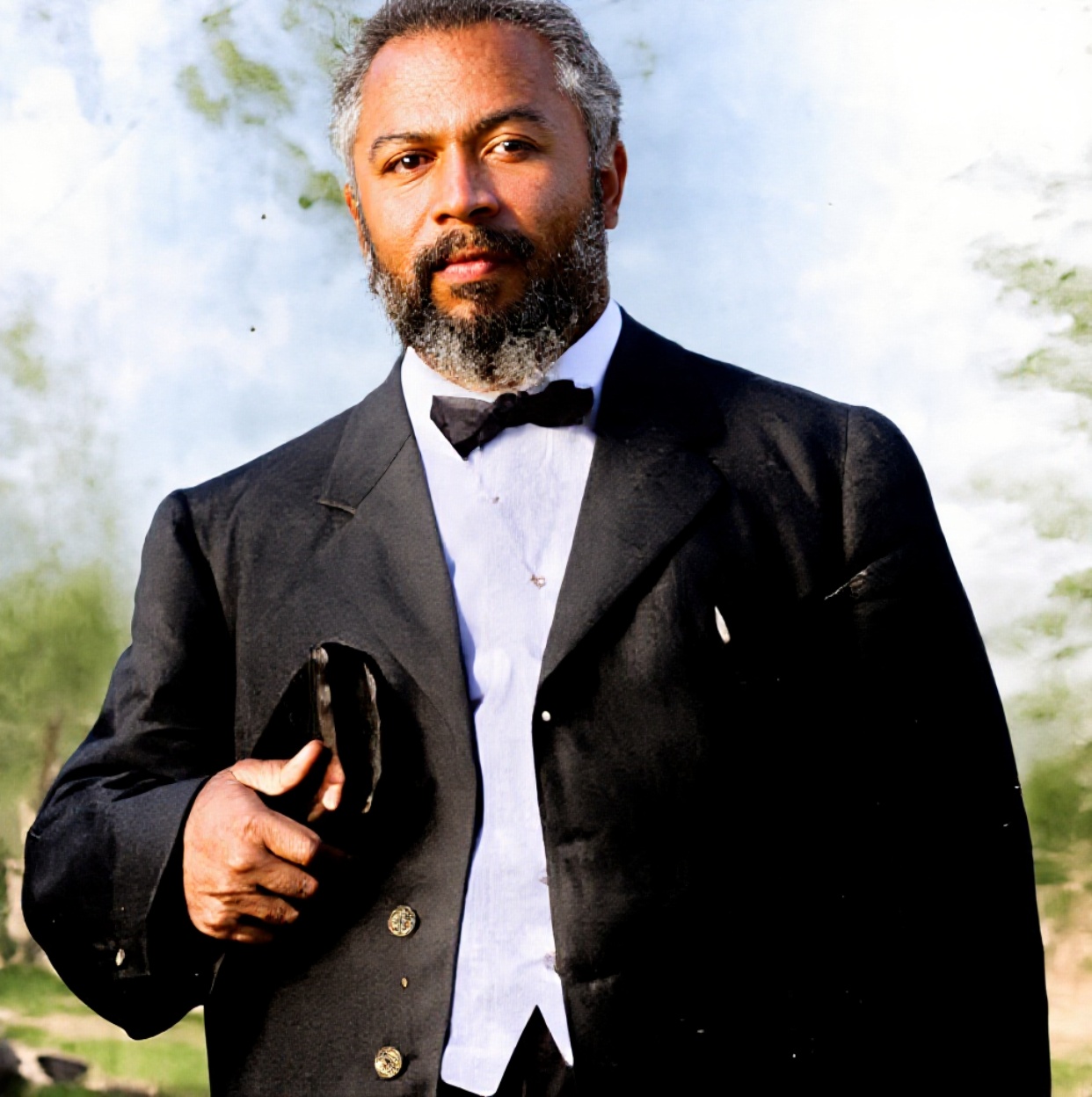
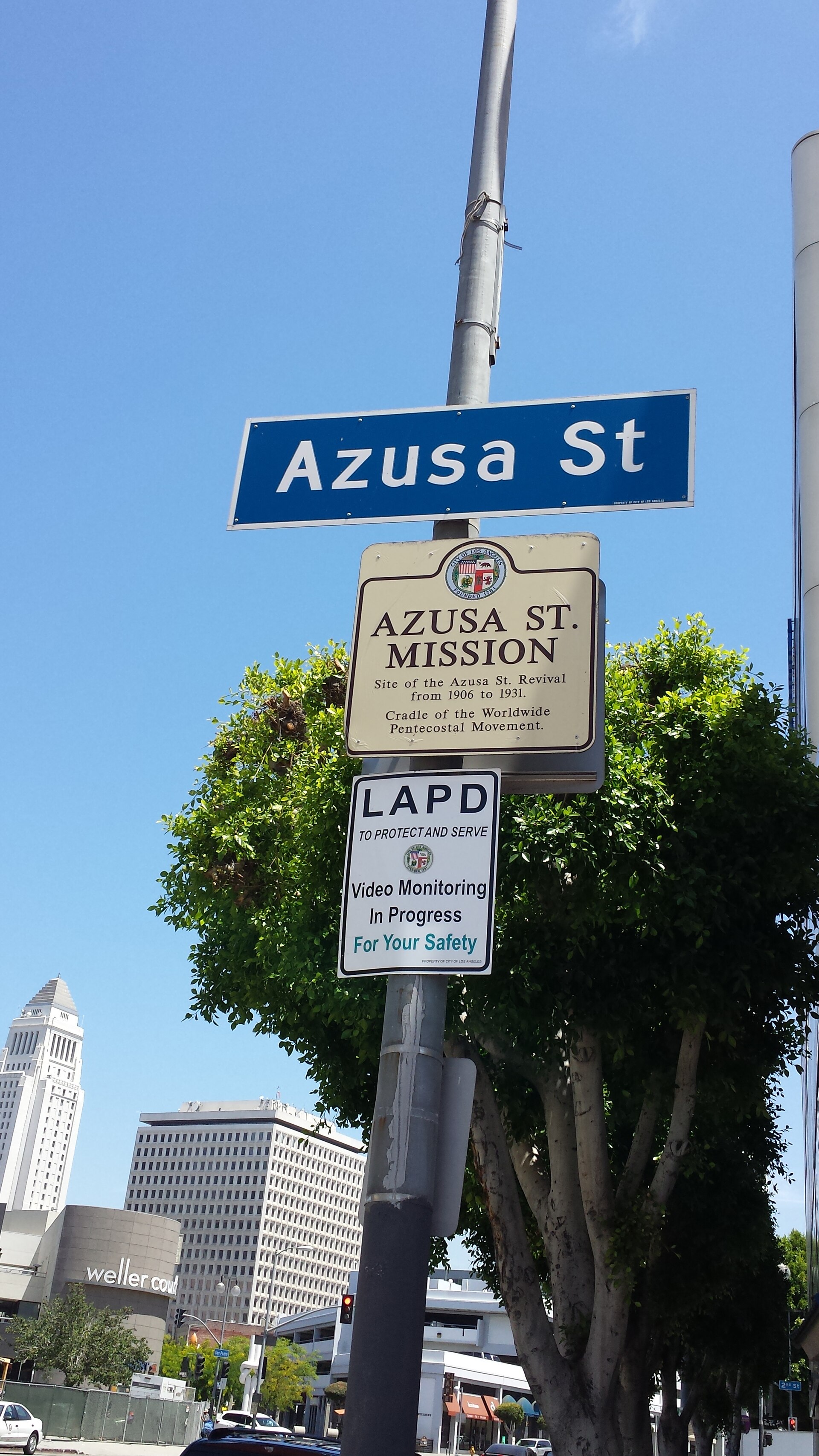
The longer story is in Part C lesson 02. In outline: Charles Fox Parham's Bethel Bible School in Topeka, Kansas, began teaching tongues as the evidence of Spirit baptism at the start of 1901; William J. Seymour, a Black Holiness preacher who had heard Parham in Houston, led the meetings in Los Angeles that moved in April 1906 to a former Methodist building on Azusa Street; and from Azusa visitors carried the experience across the country and abroad. The mission's own paper, The Apostolic Faith, opened its first issue in September 1906 with the words "The power of God now has this city agitated as never before." and "Pentecost has surely come and with it the Bible evidences are following."4 Within a few years the people touched by those meetings either carried the new teaching into existing Holiness bodies (the Church of God in Christ, the Church of God in Cleveland, the Pentecostal Holiness Church) or formed new fellowships (the Assemblies of God, and later the Oneness bodies and the Foursquare Church).


The Assemblies of God (1914)
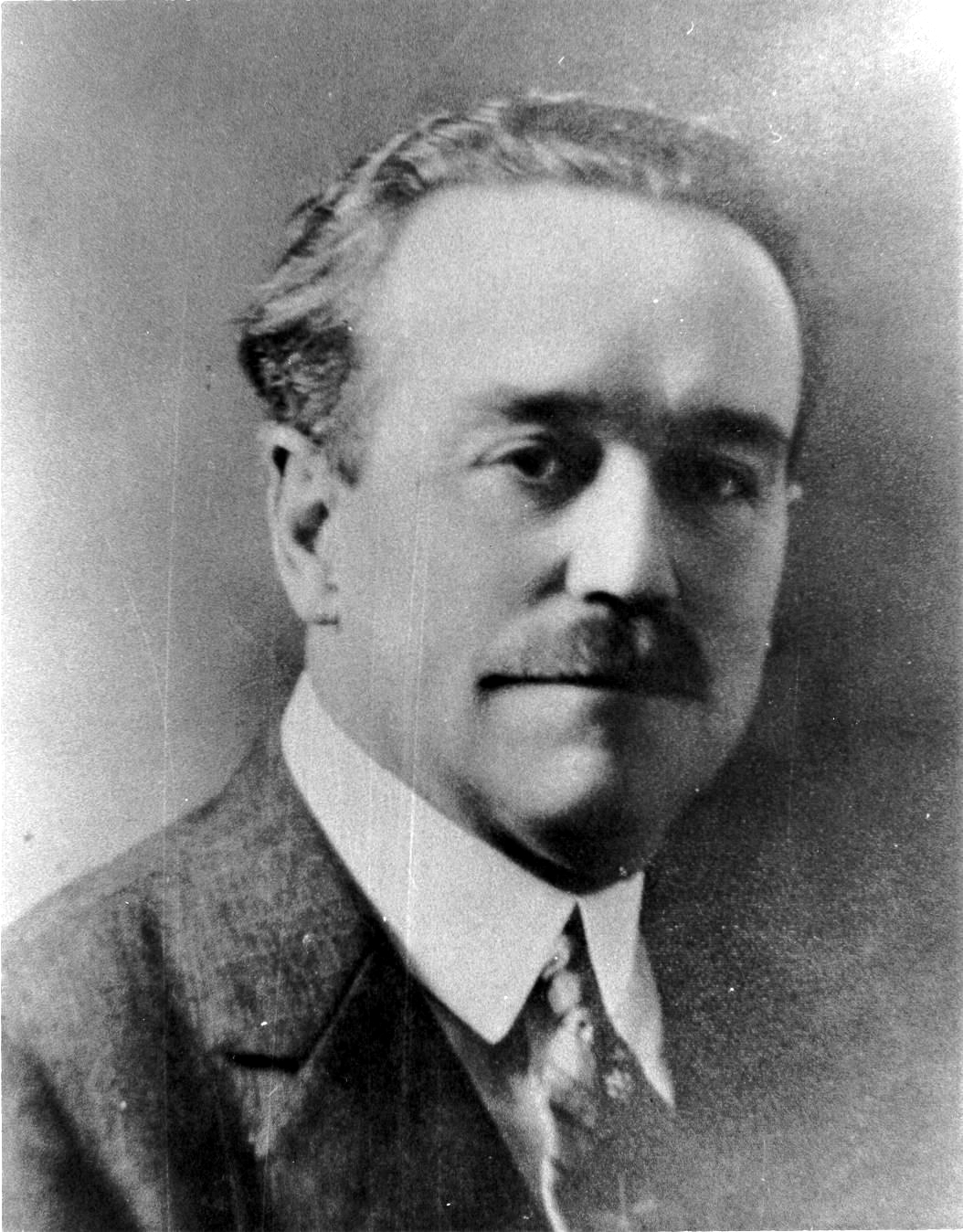
In its own words. The Assemblies of God describes its origin simply: it was "founded as a result of a religious revival that swept around the world in the early 1900s," and it "was organized in a constitutional convention in Hot Springs, Arkansas, in 1914."5 Its beliefs are the sixteen paragraphs of the Statement of Fundamental Truths quoted above, with the Bible as "the inspired Word of God" and the rule for faith and practice, salvation through Christ, water baptism by immersion, Spirit baptism with tongues, divine healing and the premillennial return of Christ.5
The record. The founding meeting was the General Council held at Hot Springs on April 2 to 12, 1914, called by a printed invitation known as "The Call to Hot Springs." It gathered independent Pentecostal preachers and congregations and created a cooperative fellowship with a central office. The founders were wary of creeds, and the fellowship at first adopted no formal statement of faith. That changed two years later. When the "new issue" (the Oneness teaching described below) divided the ministers, the General Council meeting in St. Louis in 1916 adopted the Statement of Fundamental Truths, which, in the words of David Ringer's history of the Flower family in the fellowship's Heritage magazine, "affirmed the Trinitarian view of the godhead."6 The Oneness ministers left. Glenn W. Gohr, in the same volume of Heritage, writes that those departing "included both Oneness advocates and those who opposed the statement" for other reasons, and that "The ministerial roll dropped from 585 to 429," a loss of 156 ministers (he cites a typed history by J. Roswell Flower; the 1916 minutes themselves were not opened for this lesson).34 Its national office is in Springfield, Missouri.5
The numbers. The Assemblies of God publishes an annual statistical report through the office of its general secretary. Its June 2024 media kit, which says its figures are "based on most current records available" (the kit does not say which year the figures describe), gave 12,681 U.S. churches, 2,928,352 adherents and 37,885 ministers, with 44 percent of adherents from ethnic minorities, 23 percent Hispanic and 10 percent Black, and 29 percent of ministers women. Worldwide, counting the national churches of the World Assemblies of God Fellowship, it gave 86,143,293 adherents in 450,106 churches.5 Ed Stetzer and Todd Korpi, writing for ChurchLeaders on June 24, 2025, reported from the 2024 report that U.S. adherents "climbed 2.5% to 3.05 million" and that attendance rose 6.2 percent.7 Daniel D. Isgrigg, writing in the fellowship's Influence magazine in winter 2026, gave the U.S. growth from 1.2 million adherents in 1975 to "more than 3 million" now, the rise of ethnic minority and immigrant churches from 2,260 in 1989 to 5,081 in 2024 (40 percent of U.S. congregations), women at a record 29.7 percent of credential holders in 2024, and World Assemblies of God Fellowship adherents of "just under 89 million" in 2022.8 The Assemblies of God is one of the few large U.S. bodies that has grown in every recent decade, a point lesson 11 takes up.
The Church of God in Christ (1897, Pentecostal from 1907)
In its own words. The Church of God in Christ (COGIC), headquartered in Memphis, calls itself a "Pentecostal-Holiness Christian denomination" and "the fourth-largest Protestant group in the United States," with "more than 13,000 churches in 105 countries."9 Its history page names Elder Charles Harrison Mason as "the founder and organizer of the Church of God in Christ," born "September 8,1864, on the Prior Farm near Memphis, Tennessee," and says the church's name was "revealed to Bishop mason while walking along a certain street in Little Rock, Arkansas," with 1 Thessalonians 2:14 as its text.10
The record. Mason, licensed by a Missionary Baptist church in Arkansas in 1893, joined Elder C. P. Jones of Jackson, Mississippi, in Holiness revivals from 1895 and 1896, and their churches took the name Church of God in Christ in 1897. In March 1907 Mason traveled to Los Angeles "to attend a great Pentecostal revival" (the Azusa Street meetings) and returned teaching that speaking in tongues belonged to the Holy Ghost baptism. Jones and J. A. Jeter, in the COGIC history's words, "regarded the new Holy Ghost experience of speaking in tongues as a delusion," and the general assembly withdrew fellowship from Mason. Mason then "called a conference in Memphis, Tennessee" of ministers who accepted the Pentecostal baptism; they "organized the first Pentecostal General Assembly" and chose Mason as "General Overseer and Chief Apostle."10 The non-Pentecostal side, led by Jones, continued as the Church of Christ (Holiness) U.S.A. (its own account of the split was not consulted for this lesson). Historians of the movement report that Mason also credentialed white Pentecostal ministers in these years, some of whom later joined the Assemblies of God; that account was not checked against a primary source for this lesson. Mason Temple in Memphis, dedicated in 1945, became the church's national meeting place.10
The numbers. COGIC's history page reports growth "from ten congregations in 1907" and from "three million in 1973 to an estimated 5.2 million in 1997."10 Its current home page gives the 13,000 churches figure and speaks of millions of adherents without a dated count.9 The church's own word "estimated" should be kept: no audited, dated national membership total was found for this lesson, and the figures sometimes printed in reference books (5 to 6.5 million) trace back to the church's own estimates.
The Church of God, Cleveland, Tennessee (1886)
In its own words. The Church of God dates itself to "August 19, 1886, in Monroe County, Tennessee," when "Former Baptist Richard Green Spurling preached in a millhouse" on Barney Creek and "eight persons formed a Christian Union" to take the New Testament as their guide.11 It calls itself "distinctively Pentecostal" and reports "more than 8 million members and 15 million constituents" in 189 countries on its home page, while its brief history page gives "more than 7 million members in 178 nations and territories."1211 Both are the church's own figures, apparently from different years; neither page dates its number.
The record. In the church's account, a revival "at the Shearer Schoolhouse in nearby Camp Creek, North Carolina," ten years after the first meeting (1896), brought the teaching of sanctification; the movement held "an inclusive International General Assembly (1906)," adopted a centralized government, and "Twenty-one years later the growing movement formally adopted the name Church of God" (1907). A. J. Tomlinson was "our first General Overseer."11 The Pentecostal experience reached the church after 1906 through preachers who had been at Azusa Street or its daughter meetings. Tomlinson's removal as general overseer in 1923 produced a separate body that became the Church of God of Prophecy (the Cleveland church's history page does not discuss 1923, and the date is listed as unverified here). The Declaration of Faith quoted above keeps the three-stage Holiness order: new birth, sanctification, then Spirit baptism with tongues.2
The International Church of the Foursquare Gospel (1923, incorporated 1927)
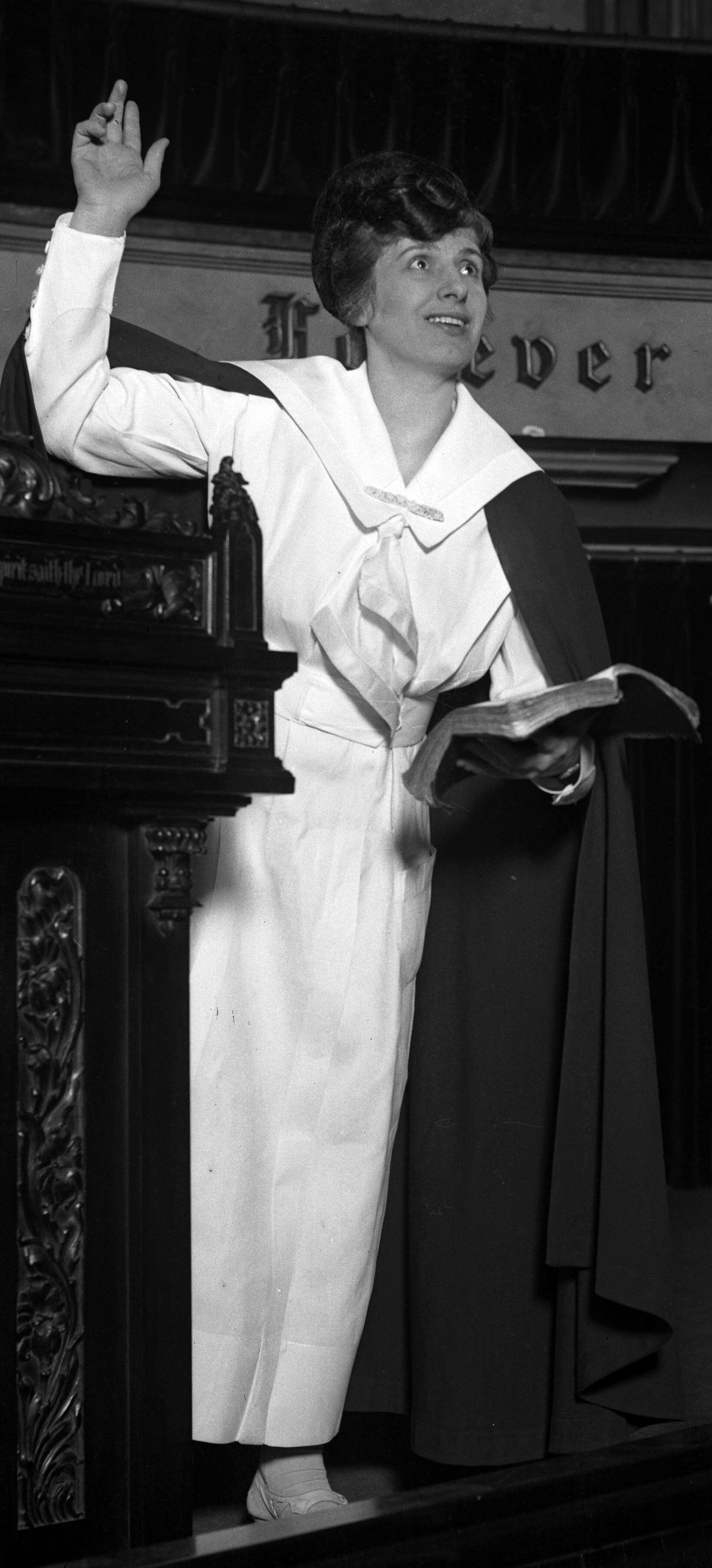
In its own words. The Foursquare Church explains its name: "The four squares represent the four scriptural roles of Jesus as Savior, Baptizer with the Holy Spirit, Healer and Soon-Coming King," and it points to "22 tenets of faith" in its Declaration of Faith.13 Its timeline says that Aimee Semple McPherson returned from China in November 1910 as a 20-year-old widow and single mother, began traveling as an evangelist by car in October 1918, and in December 1918 made Los Angeles her home base. In January 1923 the "First Foursquare church, Angelus Temple, opens its doors in Los Angeles"; a Bible institute opened in February 1923 ("known today as Life Pacific University"); and in December 1927, with 100 churches, "steps are taken to incorporate what would become the International Church of the Foursquare Gospel (ICFG)."14
The numbers. The same page says the ICFG "has over 8.8 million members in over 100,000 churches across more than 150 nations," without a year.14 A dated U.S. count was not found on the church's pages for this lesson. McPherson's career as a preacher and broadcaster belongs to the history lessons; here the point is that the Foursquare Church is one of the few large American denominations founded by a woman.

The United Pentecostal Church International and the Oneness bodies (1945)
In its own words. The United Pentecostal Church International (UPCI), with its world headquarters at Weldon Spring, Missouri, describes itself as an "Apostolic, Pentecostal, Oneness organization."15 Its statement of belief on God reads: "There is one God, who has revealed Himself as Father; through His Son, in redemption; and as the Holy Spirit, by emanation."3 Its identity includes "belief in the Oneness of God" and "the new birth experience as described in Acts 2:38," and its gospel statement lists repentance, water baptism "in the name of Jesus Christ" and the Spirit baptism with tongues.163
The record. The UPCI was formed in 1945 by the merger of the Pentecostal Church, Incorporated, and the Pentecostal Assemblies of Jesus Christ.16 Both descended from the ministers who adopted the "new issue" between about 1913 and 1916: the teaching that baptism should be in the name of Jesus only (Acts 2:38) and that Father, Son and Holy Spirit are three manifestations of one person rather than three persons. The teaching is usually traced to a 1913 camp meeting at Arroyo Seco near Los Angeles (not confirmed in a primary source for this lesson). The Assemblies of God rejected it in 1916, as described above. A largely Black Oneness body, the Pentecostal Assemblies of the World, kept an interracial membership for a time and is older than the UPCI; its history was not checked in its own documents for this lesson.
How others see it. Trinitarian churches, Pentecostal and otherwise, regard the Oneness doctrine as a form of the ancient teaching called modalism, which the fourth century councils rejected (see Part A on Nicaea and Constantinople). The 1916 Statement of Fundamental Truths was written partly to answer it. Oneness writers reply that they reject the word "persons" because it is not in Scripture and hold that they teach the full deity of Jesus as the Bible states it. This lesson reports the disagreement and takes no side.
The numbers. The UPCI home page lists an article headed "The UPCI Now Has One Million Constituents in the US and Canada."15 Its "About" page says that "From 521 churches in 1945, the UPCI has grown to more than 49,000 churches (including preaching points), 51,000 credentialed ministers, and more than six million constituents worldwide," without a year.16 Its statistics page links year-by-year reports of ministers and churches from 1945 to 2026, but its counters did not load when the page was opened for this lesson, so no exact dated figure is given here.17
The Pentecostal bodies at a glance
| Body | Began | Headquarters | Distinctive teaching (own words) | Count reported by the body |
|---|---|---|---|---|
| Assemblies of God (USA) | Hot Springs, Ark., April 2 to 12, 1914 | Springfield, Mo. | Spirit baptism "witnessed by the initial physical sign of speaking with other tongues" | 2,928,352 U.S. adherents, 12,681 churches (media kit, June 2024); 3.05 million adherents (2024 report)57 |
| Church of God in Christ | 1897 (Holiness); Pentecostal assembly 1907 | Memphis, Tenn. | "Pentecostal-Holiness" | "more than 13,000 churches in 105 countries" (undated); "an estimated 5.2 million" (1997)910 |
| Church of God (Cleveland, Tenn.) | Aug. 19, 1886; name adopted 1907 | Cleveland, Tenn. | Sanctification and Spirit baptism as separate works; tongues the "initial evidence" | "more than 8 million members and 15 million constituents" worldwide (undated)12 |
| International Church of the Foursquare Gospel | Angelus Temple, Jan. 1923; incorporation begun Dec. 1927 | Los Angeles | Jesus "Savior, Baptizer with the Holy Spirit, Healer and Soon-Coming King" | "over 8.8 million members in over 100,000 churches" worldwide (undated)14 |
| United Pentecostal Church International | 1945 merger | Weldon Spring, Mo. | "the Oneness of God"; baptism "in the name of Jesus Christ" | about one million constituents in the U.S. and Canada (headline, undated)15 |
Two wider numbers set these bodies in context. Isgrigg, citing the Center for the Study of Global Christianity at Gordon-Conwell Theological Seminary, gives the world's Pentecostal and charismatic Christians as 57.6 million in 1970 (1.6 percent of the world's people) and "nearly 664 million" in 2025 (more than 8 percent).8 That figure is a scholarly estimate that counts charismatic Catholics and Protestants and independent churches as well as the denominations above, and it should not be read as a membership count.

Orthodox churches in America
What the Orthodox Church says about itself
The Orthodox Church does not regard itself as a denomination, and an honest orientation has to start there. It identifies itself with the Church confessed in the Nicene Creed, "one, holy, catholic and apostolic," and it holds that the Church cannot be divided into parts. The Orthodox Church in America's catechetical series The Orthodox Faith (Volume I, on the Creed) puts it plainly: "There can only be one Church and not many." The same text names the papacy as the chief obstacle to reunion with Rome, listing it as an example of a teaching that breaks the Church's unity "(e.g., the papacy in the Roman Church)."18 Orthodox Christians speak of their church as a single communion of self-governing ("autocephalous") churches that share one faith, one set of sacraments and the seven ecumenical councils, with the Patriarch of Constantinople holding a primacy of honor among the patriarchs.
The break with Rome is taught in Part A lesson 08: the disputes over the papal claims and the Filioque (the Western addition "and the Son" to the Creed's article on the Holy Spirit), the mutual excommunications of July 1054 and the hardening of the division after the sack of Constantinople in 1204. One modern document belongs here because it changed how the two churches speak of each other. On December 7, 1965, Pope Paul VI and Ecumenical Patriarch Athenagoras I issued a joint declaration in which they "regret and remove both from memory and from the midst of the Church the sentences of excommunication" of 1054, and "commit these excommunications to oblivion."19 The declaration did not restore communion between the churches; it removed one historical obstacle and opened the dialogue that continues.
From Alaska to many jurisdictions
Orthodoxy reached what is now the United States from the west. The Orthodox Church in America dates itself to the Russian mission to Alaska "established in 1794."20 In the nineteenth and early twentieth centuries the Russian diocese, moved to San Francisco and then New York, served Orthodox immigrants of many nations. After the Russian Revolution of 1917 broke the links with Moscow, the immigrant communities organized separately under their mother churches: Greeks under the Ecumenical Patriarchate, Arabic-speaking Christians under Antioch, Serbs, Romanians, Bulgarians, Albanians, Ukrainians and Carpatho-Russians under their own bishops, and Russians in several rival groups. The result was something the canons do not foresee: several bishops of the same church in the same city, each answering to a different mother church.
The Orthodox churches themselves describe this as a problem. When the Fourth Pre-Conciliar Pan-Orthodox Conference met at Chambesy, Switzerland, on June 6 to 12, 2009, the delegates of the autocephalous churches agreed to form regional assemblies of bishops in the lands of the diaspora to deal with canonical irregularities that, in the words quoted by the American assembly, "give an appearance of disunity in the one holy Church."21
The Orthodox Church in America and autocephaly (1970)
The largest group of former Russian parishes, known as the "Metropolia" and incorporated as the Russian Orthodox Greek Catholic Church in America, lived for decades without communion with the Moscow Patriarchate. In 1970 the two were reconciled on new terms. The Holy Synod of the Russian Orthodox Church, "under the Presidency of His Holiness Patriarch Alexis I," signed a Tomos (decree) of autocephaly on April 10, 1970, and "communicated to His Beatitude Metropolitan Ireney via telegram three days later on April 13, 1970"; the Tomos itself was handed to the American delegation about five weeks later. The Metropolia became the Orthodox Church in America (OCA).2022
Not every Orthodox church accepted the grant. The OCA's own retrospective, "The Tomos of Autocephaly: Forty-Six Years Later," records that the Ecumenical Patriarchate called the 1970 act a "rash claim to exclusive jurisdiction" and held that "only an Ecumenical Council, or at the very least the Patriarch of Constantinople himself" may grant autocephaly; it adds that "Eucharistic communion has been preserved" in spite of the disagreement.22 In practice the OCA is in full communion with the other Orthodox churches and sits in the Assembly of Bishops as its own jurisdiction, while the question of its status remains open between Moscow and Constantinople. Which other churches formally recognize the autocephaly is listed as unverified here, because the OCA pages opened for this lesson do not list them.
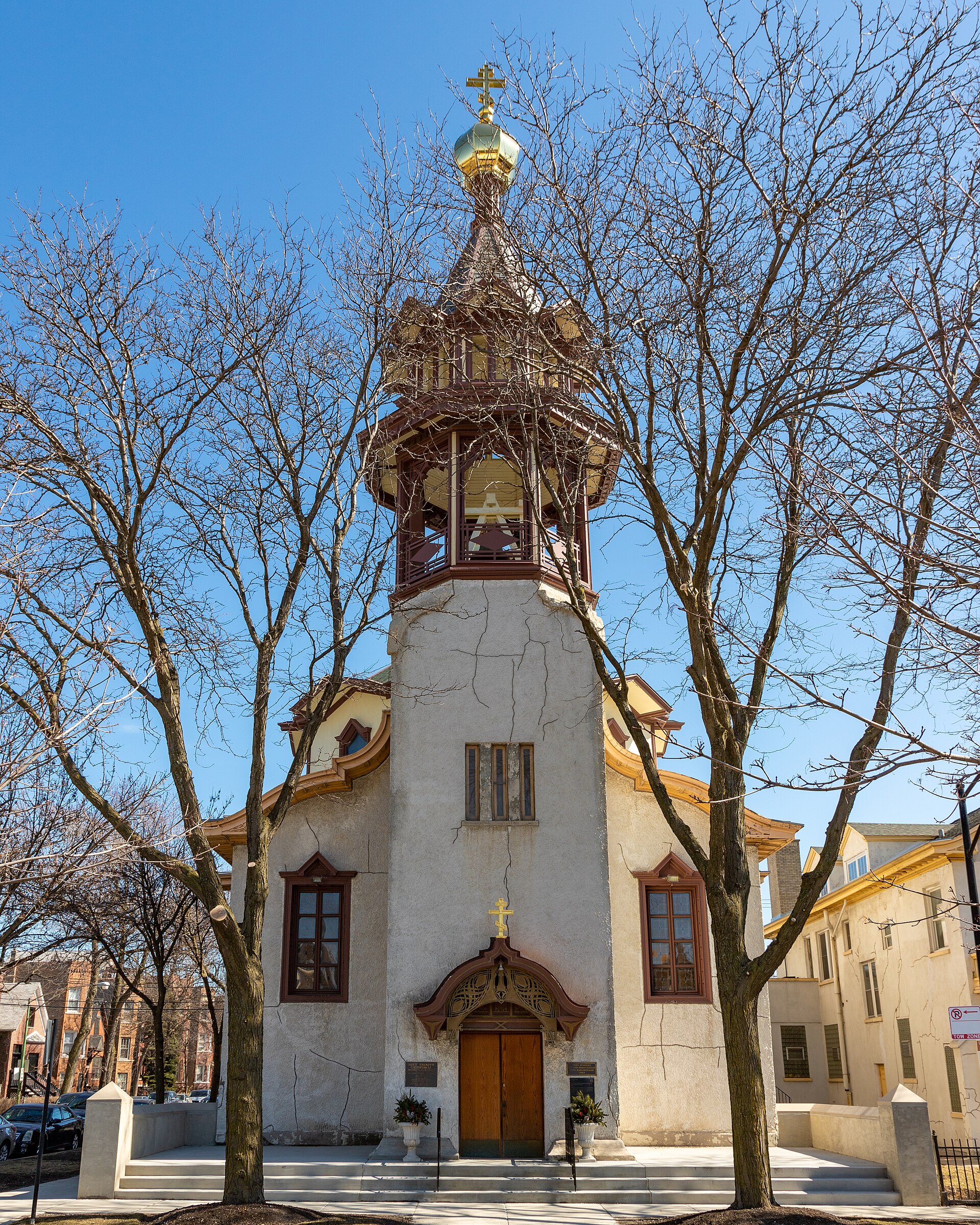

The Assembly of Canonical Orthodox Bishops of the United States
The Assembly of Canonical Orthodox Bishops of the United States of America is the body created under the 2009 Chambesy decision. It includes all active canonical Orthodox bishops in the country, regards itself as the successor of the older Standing Conference of Canonical Orthodox Bishops in the Americas (SCOBA) and has taken over SCOBA's agencies and dialogues. Its stated purpose is to bring clergy, monastics and laity "closer to Christ and each other."21 It met for its fifteenth assembly in October 2026, approving an American Sign Language lexicon and continuing work on a common catechism.23
Its directory lists fourteen jurisdictions. Under the Ecumenical Patriarchate: the Greek Orthodox Archdiocese of America, the American Carpatho-Russian Orthodox Diocese of the USA, the Ukrainian Orthodox Church of the USA and the Albanian Orthodox Diocese. Under the Patriarchate of Antioch: the Antiochian Orthodox Christian Archdiocese of North America. Under the Patriarchate of Moscow: the Moscow Patriarchal Parishes in the USA and the Russian Orthodox Church Outside of Russia (ROCOR). Under the Patriarchate of Serbia: the Diocese of New Gracanica-Midwestern America, the Diocese of Western America and the Diocese of Eastern America. Under Romania: the Romanian Orthodox Metropolia of the Americas. Under Bulgaria: the Bulgarian Eastern Orthodox Diocese of the USA, Canada, and Australia. Under Georgia: the Georgian Apostolic Orthodox Church in North America. And the Orthodox Church in America, listed as its own mother church.24
The Assembly reflects the strains of world Orthodoxy. After the Ecumenical Patriarchate moved in 2018 to grant independence to a church in Ukraine, which the Moscow Patriarchate rejected, the bishops of the Moscow Patriarchate did not attend the ninth assembly in Cleveland in October 2018. The Assembly's own report says the chairman, Archbishop Demetrios, "went on to express his sorrow at the absence of the Brothers of the Moscow Patriarchate," and that ROCOR had notified him that its hierarchs "have suspended their participation in the Assembly in light of events currently ongoing in Ukraine."25 Both Russian jurisdictions are still listed in the directory; whether and how far they have resumed participation since 2018 was not confirmed for this lesson.
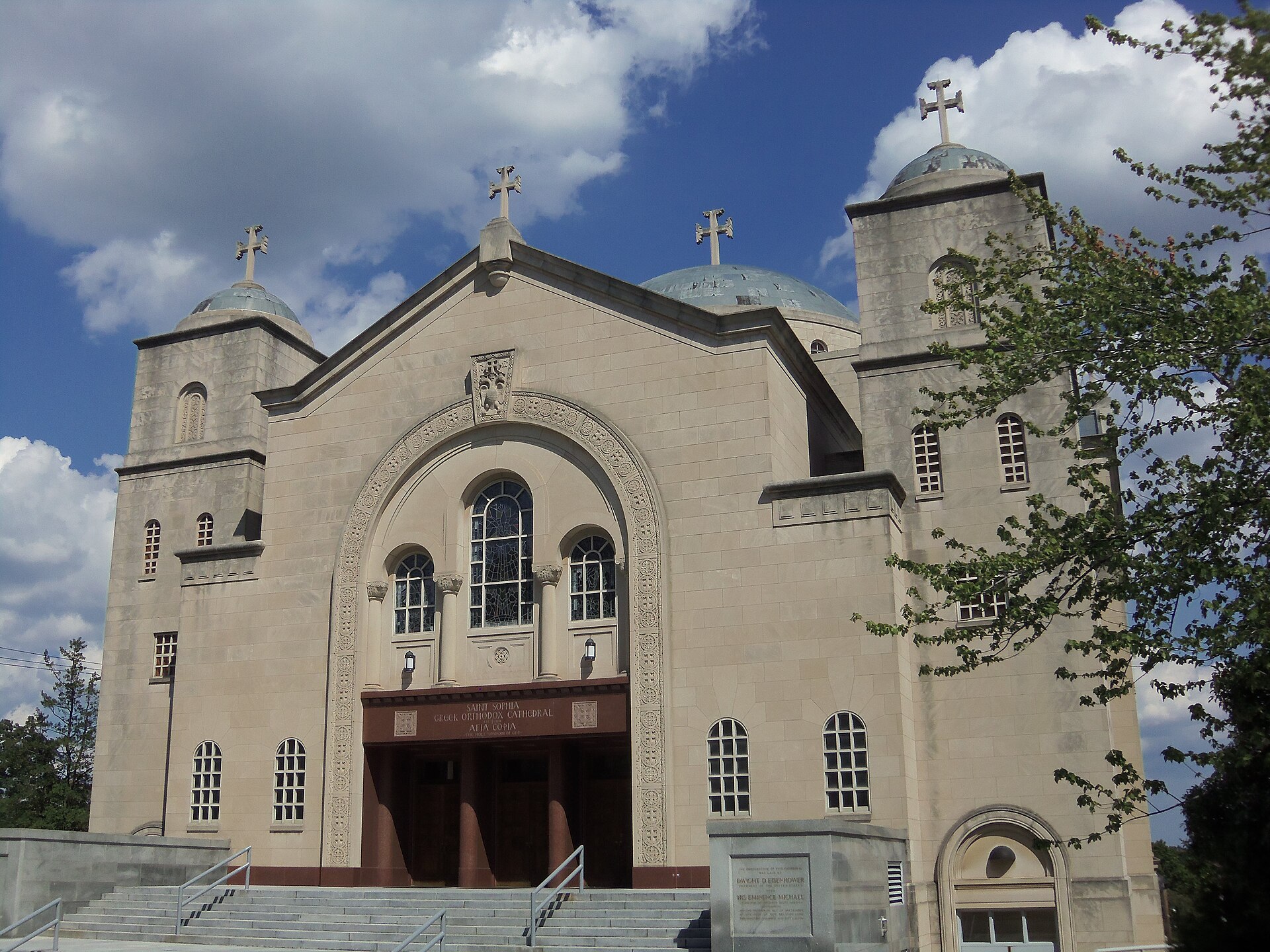
How many Orthodox Christians
No Orthodox jurisdiction in America publishes a national membership register comparable to a Protestant yearbook, and the jurisdictions count members differently (some count all baptized persons connected to a parish, some only those who contribute). The most careful counts are the parish surveys made by Alexei Krindatch, research coordinator for the Assembly of Bishops. His report "Ten Facts about Geographic Patterns of the Orthodox Church Life in the United States" (2013), using 2010 data, states that "for all jurisdictions of the Assembly of Canonical Orthodox Bishops combined, the total number of persons (including children) participating in the local parishes is about 800,000," in "1,900 parishes and mission communities," with 73 monastic communities besides. The average parish counted 421 persons. Forty-five percent of members lived in five states: New York (14 percent), California (10), Illinois (8), Pennsylvania (7) and Massachusetts (6).26 The same report notes that Idaho's Orthodox parishes were among the smallest in the country, 96 persons per parish on average, and that Idaho was one of the states with less than one parish per 10,000 square miles.26 A companion report from the same series found that only 26 percent of those adherents attended church weekly.27
Survey figures run higher, because they count everyone who calls himself or herself Orthodox, including people with no parish tie. The Pew Research Center's 2023 to 2024 national religion study (the RLS) puts Orthodox Christians at about 1 percent of U.S. adults.28 Even 1 percent of American adults is far more than 800,000 people, so the parish count and the survey estimate measure different things, and both are given here. The Assembly's own figures are more than a decade old; a newer national parish census was not found on its research page.

The Oriental Orthodox family, briefly
A second Eastern family is often confused with the first. The Coptic, Armenian Apostolic, Syriac, Ethiopian, Eritrean and Malankara (Indian) Orthodox churches did not accept the Council of Chalcedon (451) and its definition of Christ in two natures, and they have been out of communion with both Rome and the Eastern Orthodox since the fifth and sixth centuries (the background is in Part A). They are not members of the Assembly of Canonical Orthodox Bishops, whose directory lists only the fourteen jurisdictions above.24 Their American dioceses were not separately counted for this lesson.
The Catholic Church in the United States
How the Catholic Church describes itself
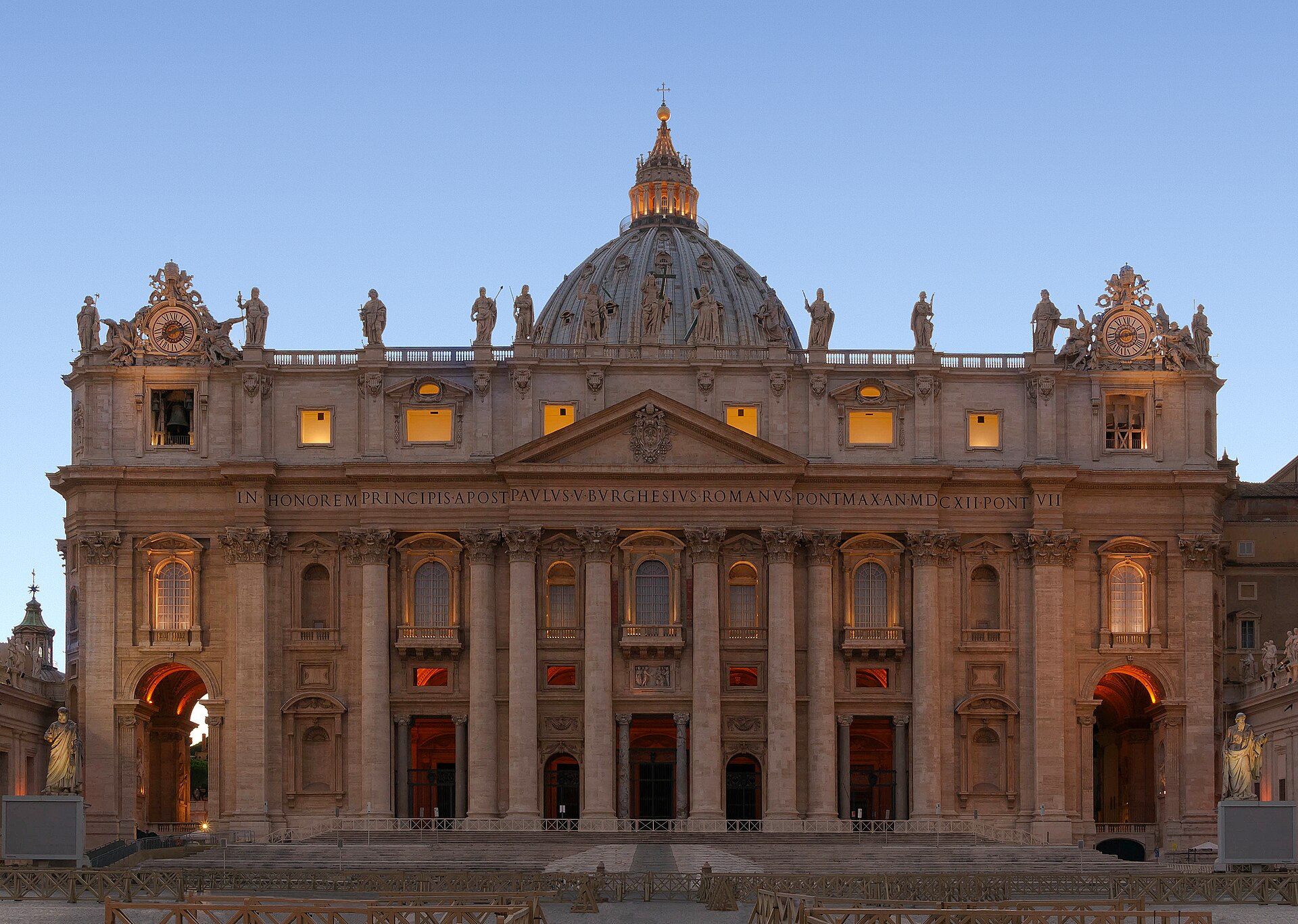
Like the Orthodox Church, the Catholic Church does not count itself among the denominations. The Second Vatican Council's Dogmatic Constitution on the Church, Lumen Gentium (November 21, 1964), paragraph 8, says that the one Church of Christ, "constituted and organized in the world as a society," "subsists in the Catholic Church, which is governed by the successor of Peter and by the Bishops in communion with him, although many elements of sanctification and of truth are found outside of its visible structure."29 The two halves of that sentence are both part of the Catholic self-description: a claim that the Church founded by Christ is found in the communion governed by the pope and the bishops, and an acknowledgment that real gifts of grace and truth exist in the other churches and communities. Catholic teaching on the papacy, the seven sacraments and the Council of Trent's answer to the Reformers is taught in Part A lesson 12; this section gives the American structure and the numbers.
Dioceses and how the Church is organized
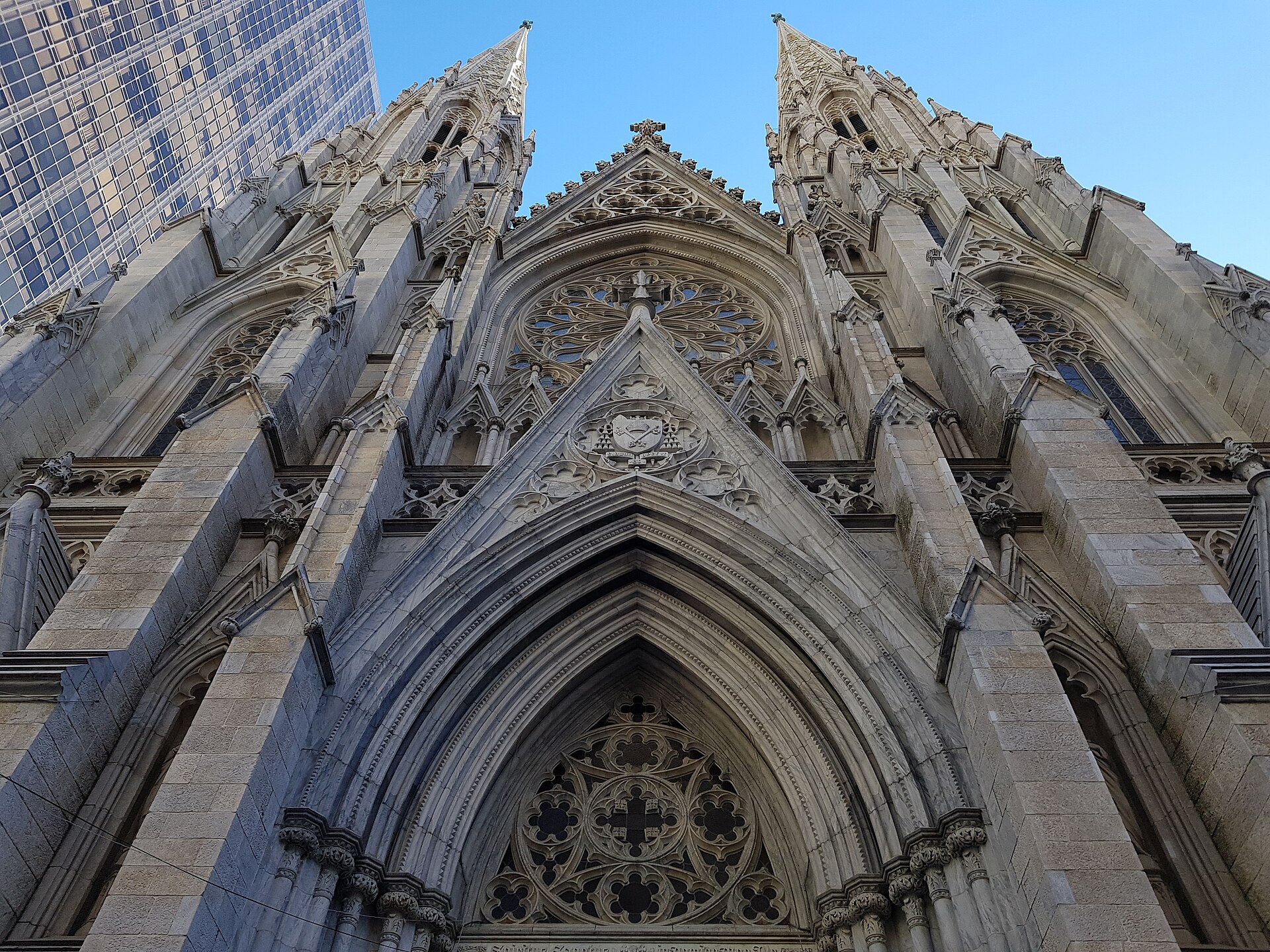
The Catholic Church in the United States is organized in dioceses, each led by a bishop, grouped into provinces under metropolitan archbishops. The bishops together form the United States Conference of Catholic Bishops (USCCB). The research center CARA (the Center for Applied Research in the Apostolate at Georgetown University) reports national statistics for "195 dioceses or eparchies" in the USCCB, covering the 50 states, the District of Columbia and the U.S. Virgin Islands.30 An eparchy is the Eastern Catholic word for a diocese. Baltimore, which its archdiocese calls "the nation's oldest Catholic see," was the first diocese, founded in 1789 for John Carroll.31 Besides the territorial dioceses there are non-territorial jurisdictions, such as the Archdiocese for the Military Services and the Personal Ordinariate of the Chair of Saint Peter for former Anglicans (the latter is connected to lesson 04); how CARA treats them in its count of 195 was not confirmed.

Eastern Catholic churches
The Catholic Church is a communion of churches, and the Latin (Roman) Church is the largest of them. There are 23 Eastern Catholic churches "sui iuris" (self-governing, with their own law and liturgy) in full communion with the pope. Most descend from groups of Eastern Christians who entered communion with Rome from the sixteenth century onward and kept their Byzantine, Syriac, Armenian, Chaldean or Coptic forms of worship; the Maronite Church says it never broke communion with Rome. The Second Vatican Council's Decree on the Catholic Eastern Churches, Orientalium Ecclesiarum (November 21, 1964), paragraph 3, says of these churches and the Latin Church: "They are consequently of equal dignity, so that none of them is superior to the others as regards rite."32
Ten Eastern Catholic churches have their own eparchies in the United States. A Catholic World Report article of late 2025, using the 2025 Official Catholic Directory, gives the following eparchy figures, a total of 575,218 Eastern Catholics:33
| Church | U.S. eparchies (Catholics, 2025 Official Catholic Directory) | Total |
|---|---|---|
| Chaldean | St. Thomas the Apostle (180,000); St. Peter the Apostle (46,800) | 226,800 |
| Ukrainian | Archeparchy of Philadelphia (11,646); Stamford (16,833); St. Josaphat (10,950); St. Nicholas (25,000, disputed) | 64,429 |
| Maronite | Saint Maron of Brooklyn (26,965); Our Lady of Lebanon of Los Angeles (51,592) | 78,557 |
| Syro-Malabar | St. Thomas, Chicago (56,784) | 56,784 |
| Armenian | Our Lady of Nareg (51,000) | 51,000 |
| Melkite | Newton (35,000) | 35,000 |
| Ruthenian (Byzantine Catholic) | Archeparchy of Pittsburgh (19,090); Parma (3,543); Passaic (8,302); Phoenix (2,637) | 33,572 |
| Syriac | Our Lady of Deliverance (13,076) | 13,076 |
| Syro-Malankara | St. Mary, Queen of Peace (11,000) | 11,000 |
| Romanian | St. George in Canton (5,000) | 5,000 |
The same article reports that the St. Nicholas eparchy's figure rose from 15,000 in the 2024 directory to 25,000 in 2025 and that the eparchy's own protosyncellus (vicar general) believes about 15,000 is closer to the truth, attributing the jump to a reporting error.33 That is a useful reminder that directory figures are reports sent in by each diocese, not a census. Eastern Catholics are an important bridge in Catholic and Orthodox relations, and also a point of friction: Orthodox writers have long objected to the union of Eastern churches with Rome (often called "uniatism"), while Eastern Catholics defend their communion with Rome as legitimate and their own traditions as fully Eastern.
The Catholic numbers
CARA's "Frequently Requested Church Statistics" workbook, drawn from the Official Catholic Directory and the Vatican's statistical yearbook, gives two national population lines. The directory figure counts "parish-connected Catholics" as reported by the dioceses; the survey figure estimates all "self-identified" Catholics. CARA notes that the directory reflects the state of the Church as of January 1 of the year it is published, with sacramental totals from the year before.30 The table gives CARA's figures for selected years (the most recent column is labeled 2025).
| Measure | 1965 | 1990 | 2010 | 2025 |
|---|---|---|---|---|
| Catholic population (Official Catholic Directory, parish-connected) | 44.3 million | 55.7 million | 65.6 million | 66.3 million |
| Catholic population (self-identified, survey estimate) | not given | 61.4 million | 78.3 million | 73.7 million |
| Parishes | 17,763 | 19,620 | 17,958 | 16,125 |
| Parishes without a resident priest pastor | 530 | 1,812 | 3,353 | 3,674 |
| Priests (diocesan and religious) | 59,426 | 52,124 | 39,993 | 33,462 |
| Permanent deacons | not given | 9,356 | 16,649 | 18,425 |
| Religious sisters | 178,740 | 102,504 | 57,544 | 33,135 |
| Infant baptisms in the previous year | 1,237,000 | 986,308 | 806,138 | 471,717 |
| Catholic marriages in the previous year | 347,179 | 326,079 | 168,400 | 107,271 |
| Catholics attending Mass weekly (survey estimate) | not given | 32.5 percent | 24.2 percent | 17.6 percent |
All figures are CARA's.30 CARA's earliest survey estimate of the Catholic population is in its 1970 column (54.1 million) and its earliest weekly Mass figure is also for 1970 (54.9 percent). The Pew Research Center's 2023 to 2024 study puts Catholics at 19 percent of U.S. adults, down from 24 percent in 2007 and 21 percent in 2014.28 Read together, the figures show a church that is still the largest single religious body in the country, whose parish-connected population has held roughly steady since about 2010 (with a peak of 68.1 million in CARA's 2015 column) while its priests, sisters, parishes, baptisms and marriages have declined sharply since the 1960s and 1990s, and whose survey-identified population has fallen from a 2005 peak of 81.2 million. CARA's workbook also lists 33,135 sisters, 3,290 brothers, 4,606 elementary schools, 1,178 secondary schools, 213 colleges and universities and 521 hospitals in its 2025 column.30 Immigration matters to the totals: CARA estimates 16.1 million foreign-born adult Catholics in the 2025 column.30

How the three families compare
The table sets the three families side by side on the questions that the module's other lessons ask of every Protestant body. It summarizes the documents quoted above; where a family is internally divided, the table says so.
| Question | Pentecostal bodies | Orthodox churches | Catholic Church |
|---|---|---|---|
| Final authority | The Bible as the inspired Word of God and rule of faith (Assemblies of God and others) | Scripture within Holy Tradition, the Creed and the seven ecumenical councils | Scripture and Tradition, interpreted by the teaching office of the pope and bishops |
| Self-understanding | Denominations or fellowships within the wider Church, restoring the gifts of Acts 2 | "There can only be one Church and not many": the Orthodox Church is that Church | The Church of Christ "subsists in the Catholic Church," with elements of truth outside it |
| Distinctive mark | Spirit baptism with tongues as "initial evidence"; healing; Oneness bodies reject the three-person Trinity | Autocephalous churches in one communion; Byzantine liturgy; no Filioque | Communion with the bishop of Rome; Latin and 23 Eastern churches |
| Baptism | Believers' baptism by immersion (Trinitarian formula, or "in the name of Jesus" for Oneness bodies) | Infants and adults, by triple immersion, followed at once by chrismation and communion | Infants and adults; in the Latin Church confirmation and first communion usually come later |
| Government | Mixed: cooperative fellowship (Assemblies of God), episcopal with presiding bishop (COGIC), centralized general assembly (Church of God) | Bishops in synods under patriarchs or metropolitans | Bishops in communion with the pope; dioceses grouped in provinces |
| Women in ordained ministry | Most Pentecostal bodies credential women as ministers (29.7 percent of Assemblies of God credential holders in 2024) | Priesthood and episcopate restricted to men | Priesthood and episcopate restricted to men |
| U.S. count, with year | Assemblies of God 3.05 million adherents (2024); others give undated or worldwide figures | About 800,000 in parishes (2010 data, 2013 report); about 1 percent of adults by survey (2023 to 2024) | 66.3 million parish-connected, 73.7 million self-identified (CARA, 2025 column); 19 percent of adults by survey (2023 to 2024) |
The rows on authority, baptism and government summarize each family's general teaching for orientation; they are not quotations, and individual bodies differ in detail. The baptism and ordination rows for the Orthodox and Catholic churches describe long-standing practice that this lesson did not footnote to a canon, and they are listed among the unverified items in the lesson's notes. The count row draws on notes 7, 26, 28 and 30.7262830 For the same comparison across every Protestant family, see the chart in lesson 14.
What the record shows and what it does not
- Documented fact: The Assemblies of God organized at Hot Springs on April 2 to 12, 1914, and adopted its Statement of Fundamental Truths at St. Louis in 1916; the Tomos of autocephaly for the Orthodox Church in America was signed in Moscow on April 10, 1970; the Catholic-Orthodox declaration lifting the 1054 excommunications is dated December 7, 1965; Lumen Gentium and Orientalium Ecclesiarum are dated November 21, 1964; the UPCI was formed by a merger in 1945.
- A church's own claim or tradition: COGIC's account that its name was revealed to Mason on a Little Rock street; the Church of God's dating of its origin to the Christian Union of August 19, 1886; the worldwide membership totals of the Church of God (8 million) and the Foursquare Church (8.8 million), which their pages do not date; COGIC's description of itself as the fourth largest Protestant group.
- Scholarly reading or estimate: The Gordon-Conwell estimate of nearly 664 million Pentecostal and charismatic Christians worldwide in 2025; Krindatch's count of about 800,000 Orthodox parish participants; the survey estimates of the Catholic and Orthodox populations.
- Open question: current dated U.S. counts for COGIC, the Church of God (Cleveland), the Foursquare Church and the UPCI; which Orthodox churches recognize the OCA's autocephaly; whether the Russian jurisdictions have resumed full participation in the Assembly of Bishops; a current national Orthodox parish census.
Claims checked
| Claim | Rating | Evidence |
|---|---|---|
| "All Pentecostals teach that you must speak in tongues to be saved." | Partly supported | Trinitarian Pentecostal bodies such as the Assemblies of God and the Church of God (Cleveland) teach tongues as the "initial evidence" of Spirit baptism, an experience after conversion, so a believer who has not spoken in tongues is still a Christian in their teaching.12 The UPCI includes the Spirit baptism with tongues in its account of the gospel response alongside repentance and baptism in Jesus' name, which comes closer to the claim for Oneness bodies.3 |
| "The Assemblies of God started at Azusa Street." | Partly supported | Azusa Street (1906) was the most influential early revival, and many Assemblies of God founders had been touched by it, but the fellowship itself was organized eight years later at Hot Springs, Arkansas, in April 1914.65 |
| "The Church of God in Christ began as a Pentecostal church." | Refuted | COGIC's own history dates its name to 1897 and its Holiness revivals to 1895 and 1896; it became Pentecostal after Mason's 1907 visit to Los Angeles and the split with C. P. Jones.10 |
| "The Orthodox Church in America is just the Russian church in America." | Partly supported | The OCA descends from the Russian mission of 1794 and received its autocephaly from the Moscow Patriarchate in 1970, but it has been self-governing since then, and Moscow keeps its own separate Patriarchal Parishes and ROCOR in the United States.2024 |
| "The Catholic and Orthodox churches reunited in 1965." | Refuted | The December 7, 1965 declaration removed the 1054 excommunications "from memory," but it did not restore communion; the two churches remain separate.19 |
| "Eastern Catholics are Orthodox Christians." | Refuted | Eastern Catholic churches are in full communion with the pope and are counted in the Official Catholic Directory; Orientalium Ecclesiarum treats them as churches of the Catholic communion "of equal dignity" with the Latin Church.3233 They share liturgical traditions with the Orthodox, which explains the confusion. |
| "There are about 70 million Catholics in the United States." | Supported, with care | CARA's 2025 column gives 66.3 million parish-connected and 73.7 million self-identified Catholics; either figure rounds near 70 million, and the speaker should say which one is meant.30 |
| "The Catholic Church in America is shrinking." | Partly supported | The parish-connected population (66.3 million) is above its 1990 level and slightly below its 2015 peak; parishes, priests, sisters, infant baptisms, marriages and weekly Mass attendance have fallen steeply; Pew's survey share fell from 24 percent (2007) to 19 percent (2023 to 2024).3028 |
| "Pentecostals are the fastest-growing Christians in the world." | Unresolved | The Gordon-Conwell figures cited by Isgrigg show growth from 57.6 million (1970) to nearly 664 million (2025) for Pentecostals and charismatics together, a much faster rise than world population.8 "Fastest" depends on how the category is defined and what it is compared with, so the claim cannot be settled by the figures opened here. |
Hard questions and answers
Why are Pentecostal membership numbers so hard to compare?
Because the bodies count different things and many publish only worldwide totals. The Assemblies of God reports "adherents," which includes children and regular attenders who are not formal members, and its count is the most carefully published of the group (12,681 churches and 2,928,352 adherents in its June 2024 media kit, 3.05 million adherents in its 2024 report).57 COGIC's last dated figure on its history page is "an estimated 5.2 million" for 1997; the Church of God and the Foursquare Church give undated worldwide figures; the UPCI reports "constituents" for the U.S. and Canada together.10121415 A reader comparing these numbers with a Lutheran synod's baptized membership is comparing unlike measures.
Is the Orthodox Church in America autocephalous or not?
It depends on which church is asked. The Moscow Patriarchate granted autocephaly by the Tomos of April 10, 1970, and the OCA has governed itself as an autocephalous church ever since.20 The Ecumenical Patriarchate has held that only an ecumenical council or Constantinople may grant autocephaly and has not recognized the grant, yet it remains in Eucharistic communion with the OCA, and both sit in the same Assembly of Bishops.2224 The dispute is about who holds the authority to create a new autocephalous church, a question that the Orthodox churches have not settled among themselves and that also lay behind the 2018 Ukrainian dispute.
Why do the two Catholic population figures differ by more than seven million?
The Official Catholic Directory total (66.3 million) is the sum of what each diocese reports for the people connected to its parishes; the survey estimate (73.7 million) is a projection from national polls of everyone who says he or she is Catholic, including people with no parish tie.30 Neither is wrong; they answer different questions. Pew's 19 percent of adults is a third measure, a share of the adult population rather than a head count.28
Do Oneness Pentecostals deny the Trinity?
The UPCI's own statement describes one God "who has revealed Himself as Father; through His Son, in redemption; and as the Holy Spirit, by emanation," and it does not use the language of three persons.3 Trinitarian churches, including the Assemblies of God in its 1916 statement, read that as a rejection of the doctrine of the Trinity as the councils defined it.6 Oneness believers say they affirm what the Bible says about Father, Son and Spirit and reject only a later vocabulary. The question is real, and each side's answer can be read in its own documents; this lesson does not decide it.
Why does a module on Protestant denominations include the Catholic and Orthodox churches at all?
Because the Protestant families define themselves partly against them, and because readers meet them constantly. The Reformers wrote their confessions as answers to Rome; Anglicans and Lutherans have conducted dialogues with both Rome and the Orthodox; converts move in every direction among the three families, as the Catholic Personal Ordinariate for former Anglicans shows. Both the Catholic Church (in Lumen Gentium 8) and the Orthodox Church (in the OCA's catechism) say that they are not one denomination among many.2918 Including them on the same chart does not decide that question; it reports where the bodies stand.
Where to read each body's own documents
- Assemblies of God: Statement of Fundamental Truths (Constitution, Article V) and annual statistics, ag.org; history at the Flower Pentecostal Heritage Center (ifphc.org).16
- Church of God in Christ: history and statement of faith, cogic.org.10
- Church of God (Cleveland, Tennessee): Declaration of Faith and brief history, churchofgod.org.211
- Foursquare Church: history timeline and Declaration of Faith, foursquare.org.1314
- United Pentecostal Church International: beliefs and statistics reports, upci.org.317
- Orthodox: the Assembly of Canonical Orthodox Bishops (assemblyofbishops.org) for the jurisdictions and Krindatch's research; the OCA's The Orthodox Faith series and history pages (oca.org).2418
- Catholic: the Vatican II documents at vatican.va; CARA's Frequently Requested Church Statistics (cara.georgetown.edu).2930
Learn more
- Church History, Part C, lesson 02: Pentecostal and Charismatic: The full story of Topeka, Azusa Street and the charismatic renewal.
- Church History, Part A, lesson 08: Rome and the East: The councils, the Filioque and the events of 1054.
- Assembly of Canonical Orthodox Bishops: research and statistics: Krindatch's parish studies of American Orthodoxy.
- CARA Frequently Requested Church Statistics: The standard national Catholic figures, updated yearly.
- Flower Pentecostal Heritage Center: Archives of the Assemblies of God, including General Council minutes and Heritage magazine.
- Lumen Gentium (vatican.va): The Catholic Church's own account of what the Church is.
Still being checked (19 items)
These points could not be confirmed against a primary source when this lesson was written and fact checked in October 2026. The text above states each one as uncertain.
- The 1913 Arroyo Seco camp meeting as the starting point of the Oneness teaching was not confirmed in a primary source.
- William Durham's "finished work" teaching dated to about 1910, and the life dates and Houston meeting of Seymour and Parham, are given from general knowledge and Part C lesson 02, not from a source opened for this lesson.
- The Assemblies of God media kit (June 2024) does not state the year its figures describe; they are presumed to be the 2023 reports.
- No current dated U.S. membership count was found for COGIC, the Church of God (Cleveland), the Foursquare Church or the UPCI; their worldwide figures are undated.
- The 1923 removal of A. J. Tomlinson and the founding of the Church of God of Prophecy are not on the Cleveland church's history page and were not checked in the Prophecy church's documents.
- The account that Mason credentialed white ministers who later joined the Assemblies of God was not checked against a primary source.
- The history of the Pentecostal Assemblies of the World was not checked in its own documents.
- Which Orthodox churches formally recognize the OCA's autocephaly is not listed on the OCA pages opened.
- Whether the Moscow Patriarchal Parishes and ROCOR have resumed full participation in the Assembly of Bishops since 2018 was not confirmed.
- The summary of Orthodox history in America between 1794 and 1970 (the Russian diocese's moves to San Francisco and New York, the post-1917 divisions) and the 2018 Ukrainian dispute are given from general knowledge, not a source opened for this lesson.
- Baltimore's founding as a diocese in 1789 for John Carroll is standard history but was not confirmed on a page opened for this lesson (the archdiocese page confirms only "the nation's oldest Catholic see").
- How CARA's count of 195 dioceses and eparchies treats the Military Archdiocese and the Personal Ordinariate was not confirmed.
- The Maronite Church's claim of unbroken communion with Rome was not checked in a Maronite document.
- The author of the Catholic World Report article on Eastern Catholics (possibly John M. Grondelski) and its exact date were not confirmed.
- The baptism and ordination rows of the comparison table for the Orthodox and Catholic churches summarize standard practice and were not footnoted to canons.
- Pew's study title could not be written in full because of the site's banned-word list; it is cited by its URL.
- The 585 to 429 drop in the Assemblies of God ministerial roll after the 1916 General Council comes from Gohr (Heritage, 2012), citing J. Roswell Flower's typed history; the 1916 General Council minutes were not opened.
- Alexei Krindatch's title as research coordinator for the Assembly of Bishops is not stated on the report or research page opened.
- The Assemblies of God Statement of Fundamental Truths page on ag.org refused automated access; paragraphs 7 and 8 were checked against the Assemblies of God PDF by A. Reuben Hartwick, with a partial second copy.
Notes
- General Council of the Assemblies of God, Constitution and Bylaws, Article V, Statement of Fundamental Truths, paragraphs 7 and 8, as printed in A. Reuben Hartwick, "Speaking in Tongues: The Initial Physical Evidence of the Baptism in the Holy Spirit," Assemblies of God resource (PDF, ag.org; undated) (retrieved Oct. 28, 2026). Read it online. ↩
- Church of God (Cleveland, Tennessee), "Declaration of Faith" ("We Believe"), articles on sanctification, the baptism with the Holy Ghost and speaking with other tongues, churchofgod.org (retrieved Oct. 28, 2026). Read it online. ↩
- United Pentecostal Church International, "Our Beliefs" (statements on God and on the gospel), upci.org (retrieved Oct. 28, 2026). Read it online. ↩
- The Apostolic Faith (Los Angeles), vol. 1, no. 1, September 1906, lead article "Pentecost Has Come," as reprinted from Fred T. Corum, comp., Like as of Fire (1981) on the Apostolic Bible Institute site (retrieved Oct. 28, 2026). Read it online. ↩
- Assemblies of God (USA), media kit, file dated June 5, 2024 ("AG_media-kit_060524.pdf"): founding, beliefs and U.S. and worldwide statistics "based on most current records available" (retrieved Oct. 28, 2026). Read it online. ↩
- David Ringer, article on J. Roswell Flower and the Flower family, Assemblies of God Heritage vol. 32 (2012), Flower Pentecostal Heritage Center, on "The Call to Hot Springs," the General Council of April 2 to 12, 1914 (citing its minutes) and the 1916 General Council at St. Louis (retrieved Oct. 28, 2026). Read it online. ↩
- Ed Stetzer and Todd Korpi, "Pentecostals Keep Growing: What the Assemblies of God's 2024 Report Shows About the Spirit-Filled Movement," ChurchLeaders, June 24, 2025 (retrieved Oct. 28, 2026). Read it online. ↩
- Daniel D. Isgrigg, "Good News You Can Use: Statistics and Trends Worth Celebrating," Influence magazine, Winter 2026 issue, posted online Feb. 16, 2026 (also reposted by AG News, March 2026), citing the 2024 Annual Church Ministries Report and the Center for the Study of Global Christianity, Gordon-Conwell Theological Seminary (retrieved Oct. 28, 2026). Read it online. ↩
- Church of God in Christ, home page, cogic.org (retrieved Oct. 28, 2026). Read it online. ↩
- Church of God in Christ, "Our History," cogic.org (retrieved Oct. 28, 2026). Read it online. ↩
- Church of God (Cleveland, Tennessee), "A Brief History of the Church of God," churchofgod.org (retrieved Oct. 28, 2026). Read it online. ↩
- Church of God (Cleveland, Tennessee), home page, churchofgod.org (retrieved Oct. 28, 2026). Read it online. ↩
- International Church of the Foursquare Gospel, "What We Believe," foursquare.org (retrieved Oct. 28, 2026). Read it online. ↩
- International Church of the Foursquare Gospel, "History" (timeline), foursquare.org (retrieved Oct. 28, 2026). Read it online. ↩
- United Pentecostal Church International, home page, upci.org (self-description, headquarters, constituents headline) (retrieved Oct. 28, 2026). Read it online. ↩
- United Pentecostal Church International, "About the UPCI," upci.org (retrieved Oct. 28, 2026). Read it online. ↩
- United Pentecostal Church International, "Stats" page with links to minister and church counts 1945 to 2026 (counters not loaded when opened) (retrieved Oct. 28, 2026). Read it online. ↩
- Orthodox Church in America, The Orthodox Faith, vol. I, Doctrine and Scripture, "The Symbol of Faith: Church," oca.org (retrieved Oct. 28, 2026). Read it online. ↩
- Pope Paul VI and Ecumenical Patriarch Athenagoras I, Common Declaration, December 7, 1965, para. 4, vatican.va (retrieved Oct. 28, 2026). Read it online. ↩
- Orthodox Church in America, "50th Anniversary of the Signing of the Tomos of Autocephaly," oca.org news, 2020 (retrieved Oct. 28, 2026). Read it online. ↩
- Assembly of Canonical Orthodox Bishops of the United States of America, "About" (origins at the Fourth Pre-Conciliar Pan-Orthodox Conference, Chambesy, June 6 to 12, 2009; succession to SCOBA; statement of purpose) (retrieved Oct. 28, 2026). Read it online. ↩
- Orthodox Church in America, "The Tomos of Autocephaly: Forty-Six Years Later," oca.org news, 2016 (retrieved Oct. 28, 2026). Read it online. ↩
- Assembly of Canonical Orthodox Bishops of the USA, home page news items on Assembly XV, October 5 to 6, 2026 (retrieved Oct. 28, 2026). Read it online. ↩
- Assembly of Canonical Orthodox Bishops of the USA, directory of jurisdictions (retrieved Oct. 28, 2026). Read it online. ↩
- Assembly of Canonical Orthodox Bishops of the USA, "Ninth Annual Assembly Convenes in Cleveland," October 3, 2018 (retrieved Oct. 28, 2026). Read it online. ↩
- Alexei Krindatch, "Ten Facts about Geographic Patterns of the Orthodox Church Life in the United States," Assembly of Canonical Orthodox Bishops, 2013 (2010 data), Facts 1, 2, 4 and 5 (retrieved Oct. 28, 2026). Read it online. ↩
- Assembly of Canonical Orthodox Bishops of the USA, "Research and Statistics" page, summary of "Eight Facts About Church Attendance in US Orthodox Christian Churches" (2013) (retrieved Oct. 28, 2026). Read it online. ↩
- Pew Research Center, 2023 to 2024 national religion study (the RLS), report on religious identity, February 26, 2025 cited by its Pew shortlink, which opens the chapter on religious identity (retrieved Oct. 28, 2026). Read it online. ↩
- Second Vatican Council, Lumen Gentium (Dogmatic Constitution on the Church), November 21, 1964, para. 8, vatican.va English translation (retrieved Oct. 28, 2026). Read it online. ↩
- CARA (Center for Applied Research in the Apostolate, Georgetown University), "Frequently Requested Church Statistics," FAQ page and workbook CARAFrequentlyRequested.xlsx, U.S. sheet, columns 1965 to 2025, from the Official Catholic Directory and the Annuarium Statisticum Ecclesiae (retrieved Oct. 28, 2026). Read it online. ↩
- Archdiocese of Baltimore, home page ("the nation's oldest Catholic see") (retrieved Oct. 28, 2026). Read it online. ↩
- Second Vatican Council, Orientalium Ecclesiarum (Decree on the Catholic Churches of the Eastern Rite), November 21, 1964, para. 3, vatican.va (retrieved Oct. 28, 2026). Read it online. ↩
- "Eastern Catholics in the United States: A Look at the Numbers," Catholic World Report, late 2025 (author not confirmed), from the 2025 Official Catholic Directory (retrieved Oct. 28, 2026). Read it online. ↩
- Glenn W. Gohr, "The Historical Development of the Statement of Fundamental Truths," Assemblies of God Heritage vol. 32 (2012), Flower Pentecostal Heritage Center, with note 39 citing J. Roswell Flower, "History of the Assemblies of God" (typed manuscript, [1949?]), p. 28 (retrieved Oct. 28, 2026). Read it online. ↩
Check yourself
1. Where and when did the Assemblies of God organize?
The General Council met at Hot Springs in April 1914; St. Louis (1916) is where it adopted the Statement of Fundamental Truths.
2. What did the 1916 General Council of the Assemblies of God do?
The Statement of Fundamental Truths answered the "new issue," and the Oneness ministers left.
3. Which body keeps the three-stage Holiness order of new birth, sanctification and then Spirit baptism in its Declaration of Faith?
Its Declaration of Faith speaks of sanctification "subsequent to the new birth" and Spirit baptism "subsequent to a clean heart."
4. The four squares of the Foursquare Church stand for Jesus as:
That is the church's own explanation of its name.
5. Who signed the Tomos of autocephaly for the Orthodox Church in America, and when?
Moscow granted autocephaly in 1970; Constantinople did not recognize the grant.
6. About how many people did Krindatch's 2013 report (2010 data) count in the parishes of the Assembly's jurisdictions?
About 800,000 persons including children, in 1,900 parishes and missions.
7. What did the December 7, 1965 Catholic-Orthodox declaration do?
It committed the excommunications "to oblivion" but the churches remain separate.
8. In CARA's 2025 column, what is the Official Catholic Directory's count of parish-connected U.S. Catholics?
66.3 million parish-connected; 73.7 million is the self-identified survey estimate.
Terms in this lesson
- Initial evidence
- The classical Pentecostal teaching that speaking in tongues is the first outward sign of the baptism in the Holy Spirit.
- Baptism in the Holy Spirit
- In Pentecostal teaching, an experience of empowerment after conversion, promised to all believers, modeled on Acts 2.
- Finished work
- The teaching, associated with William Durham, that sanctification begins at conversion, leaving two stages (conversion and Spirit baptism) instead of three.
- Oneness Pentecostalism
- Pentecostal bodies, such as the UPCI, that baptize in the name of Jesus and teach one God revealed as Father, Son and Holy Spirit without the language of three persons.
- Autocephaly
- The status of an Orthodox church that governs itself and chooses its own head while remaining in communion with the other Orthodox churches.
- Tomos
- A formal decree of an Orthodox synod or patriarch, such as the 1970 Tomos of autocephaly for the OCA.
- Jurisdiction
- In American Orthodoxy, a diocese or group of dioceses under a particular mother church; several overlap in the same territory.
- Assembly of Canonical Orthodox Bishops
- The body of all canonical Orthodox bishops in the United States, formed after the 2009 Chambesy decision, successor to SCOBA.
- Oriental Orthodox
- The Coptic, Armenian, Syriac, Ethiopian, Eritrean and Malankara churches, which did not accept the Council of Chalcedon (451) and are separate from the Eastern Orthodox.
- Eparchy
- The Eastern Catholic (and Orthodox) term for a diocese.
- Sui iuris church
- A self-governing church within the Catholic communion with its own law and liturgy; there are 23 Eastern Catholic churches besides the Latin Church.
- Official Catholic Directory
- The annual directory of U.S. Catholic dioceses, whose diocesan reports give the count of parish-connected Catholics.
- CARA
- The Center for Applied Research in the Apostolate at Georgetown University, which publishes national Catholic statistics.
Sources
- General Council of the Assemblies of God, Constitution and Bylaws, Article V, Statement of Fundamental Truths, paragraphs 7 and 8, as printed in the Assemblies of God resource "Speaking in Tongues" (P (undated) checked 2026-10
- Church of God (Cleveland, Tennessee), "Declaration of Faith" ("We Believe"), articles on sanctification, the baptism with the Holy Ghost and speaking with other tongues, churchofgod.org (current) checked 2026-10
- United Pentecostal Church International, "Our Beliefs" (statements on God and on the gospel), upci.org (current) checked 2026-10
- The Apostolic Faith (Los Angeles), vol. 1, no. 1, September 1906, lead article "Pentecost Has Come," as reprinted from Fred T. Corum, comp., Like as of Fire (1981) on the Apostolic Bible Institute sit (September 1906) checked 2026-10
- Assemblies of God (USA), media kit, file dated June 5, 2024 ("AG_media-kit_060524.pdf"): founding, beliefs and U.S. and worldwide statistics "based on most current records available" (June 2024) checked 2026-10
- David Ringer, article on J. Roswell Flower and the Flower family, Assemblies of God Heritage vol. 32 (2012), Flower Pentecostal Heritage Center, on "The Call to Hot Springs," the General Council of Ap (2012) checked 2026-10
- Ed Stetzer and Todd Korpi, "Pentecostals Keep Growing: What the Assemblies of God's 2024 Report Shows About the Spirit-Filled Movement," ChurchLeaders, June 24, 2025 (June 24, 2025) checked 2026-10
- Daniel D. Isgrigg, "Good News You Can Use: Statistics and Trends Worth Celebrating," Influence magazine, Winter 2026, reposted by AG News (March 2026), citing the 2024 Annual Church Ministries Report (Winter 2026) checked 2026-10
- Church of God in Christ, home page, cogic.org (current (web page)) checked 2026-10
- Church of God in Christ, "Our History," cogic.org (current (web page)) checked 2026-10
- Church of God (Cleveland, Tennessee), "A Brief History of the Church of God," churchofgod.org (current (web page)) checked 2026-10
- Church of God (Cleveland, Tennessee), home page, churchofgod.org (current (web page)) checked 2026-10
- International Church of the Foursquare Gospel, "What We Believe," foursquare.org (current (web page)) checked 2026-10
- International Church of the Foursquare Gospel, "History" (timeline), foursquare.org (current (web page)) checked 2026-10
- United Pentecostal Church International, home page, upci.org (self-description, headquarters, constituents headline) (current (web page)) checked 2026-10
- United Pentecostal Church International, "About the UPCI," upci.org (current (web page)) checked 2026-10
- United Pentecostal Church International, "Stats" page with links to minister and church counts 1945 to 2026 (counters not loaded when opened) (current (web page)) checked 2026-10
- Orthodox Church in America, The Orthodox Faith, vol. I, Doctrine and Scripture, "The Symbol of Faith: Church," oca.org (current (web page)) checked 2026-10
- Pope Paul VI and Ecumenical Patriarch Athenagoras I, Common Declaration, December 7, 1965, para. 4, vatican.va (December 7, 1965) checked 2026-10
- Orthodox Church in America, "50th Anniversary of the Signing of the Tomos of Autocephaly," oca.org news, 2020 (2020) checked 2026-10
- Assembly of Canonical Orthodox Bishops of the United States of America, "About" (origins at the Fourth Pre-Conciliar Pan-Orthodox Conference, Chambesy, June 6 to 12, 2009; succession to SCOBA; stateme (current (web page)) checked 2026-10
- Orthodox Church in America, "The Tomos of Autocephaly: Forty-Six Years Later," oca.org news, 2016 (2016) checked 2026-10
- Assembly of Canonical Orthodox Bishops of the USA, home page news items on Assembly XV, October 5 to 6, 2026 (October 2026) checked 2026-10
- Assembly of Canonical Orthodox Bishops of the USA, directory of jurisdictions (current (web page)) checked 2026-10
- Assembly of Canonical Orthodox Bishops of the USA, "Ninth Annual Assembly Convenes in Cleveland," October 3, 2018 (October 3, 2018) checked 2026-10
- Alexei Krindatch, "Ten Facts about Geographic Patterns of the Orthodox Church Life in the United States," Assembly of Canonical Orthodox Bishops, 2013 (2010 data), Facts 1, 2, 4 and 5 (2013) checked 2026-10
- Assembly of Canonical Orthodox Bishops of the USA, "Research and Statistics" page, summary of "Eight Facts About Church Attendance in US Orthodox Christian Churches" (2013) (2013) checked 2026-10
- Pew Research Center, 2023 to 2024 national religion study (the RLS), report on religious identity, February 26, 2025 (February 26, 2025) checked 2026-10
- Second Vatican Council, Lumen Gentium (Dogmatic Constitution on the Church), November 21, 1964, para. 8, vatican.va English translation (November 21, 1964) checked 2026-10
- CARA (Center for Applied Research in the Apostolate, Georgetown University), "Frequently Requested Church Statistics," FAQ page and workbook CARAFrequentlyRequested.xlsx, U.S. sheet, columns 1965 to 2 (2025) checked 2026-10
- Archdiocese of Baltimore, home page ("the nation's oldest Catholic see") (current (web page)) checked 2026-10
- Second Vatican Council, Orientalium Ecclesiarum (Decree on the Catholic Churches of the Eastern Rite), November 21, 1964, para. 3, vatican.va (November 21, 1964) checked 2026-10
- "Eastern Catholics in the United States: A Look at the Numbers," Catholic World Report, late 2025 (author not confirmed), from the 2025 Official Catholic Directory (2025) checked 2026-10