Lesson 10 of 14 · about 55 minutes · Updated October 28, 2026
The Restoration Movement: Churches of Christ, Disciples and Christian Churches
You'll be able to
- Explain where the movement began: the Kentucky revivals and Stone's Springfield Presbytery (1801 to 1804) and Thomas Campbell's Declaration and Address (1809), quoting their own words.
- Describe the shared practices of the movement: immersion of believers, the weekly Lord's Supper, congregational self-government and the refusal of creeds as tests of fellowship.
- Lay out each side's own case in the instrumental music and missionary society disputes, and date the separation recorded by the 1906 census.
- Explain the 1968 Disciples restructure and why thousands of congregations withdrew to form the independent Christian Churches and Churches of Christ.
- Give the current size of each stream with the year, the source and the kind of figure (adherents, members, congregations), and say why these counts are uncertain.
- Separate documented fact from later tradition, such as the slogan "Where the Scriptures speak, we speak."
Start here: the short version
The Restoration Movement (also called the Stone-Campbell Movement) is one of the largest Christian families born in the United States. It grew from two separate efforts on the American frontier. In Kentucky, Barton W. Stone and five other Presbyterian ministers left their synod after the revivals of 1801 and in June 1804 dissolved their own presbytery so that it could "sink into union with the Body of Christ at large." In western Pennsylvania, Thomas Campbell, a Seceder Presbyterian from Ireland, published the Declaration and Address in September 1809, arguing that the church of Christ on earth is "essentially, intentionally, and constitutionally one" and that nothing should be required of Christians that the New Testament does not expressly teach. His son Alexander became the movement's best known writer and debater.
Stone's "Christians" and the Campbells' "Disciples" (or "Reformers") joined in Kentucky beginning January 1, 1832. They held to immersion of believers, the Lord's Supper every Sunday, the self-government of each congregation and the hope that Christians could unite on the Bible alone without creeds. Within seventy years they had divided over two questions that each side treated as a test of loyalty to Scripture: whether organs and other instruments could be used in worship, and whether churches could work through missionary societies. The federal Census of Religious Bodies of 1906 listed the "Churches of Christ" separately from the "Disciples of Christ." A second separation came during the twentieth century, when many congregations that used instruments but rejected denominational structures stayed out of the Disciples' 1968 restructure.
Today there are three main streams, each with its own self-description: the a cappella Churches of Christ (about 11,875 congregations and 1,423,295 adherents in 2021, by the count of the publisher 21st Century Christian), the Christian Churches and Churches of Christ (4,921 churches and 1,228,573 members in the self-reported 2018 Directory of the Ministry), and the Christian Church (Disciples of Christ) (2,887 listed congregations in March 2024 and about 278,000 members in 2022 from its own database). The International Churches of Christ, a later offshoot of the Churches of Christ, receives a short section. Every number below is given with its year and source.
Where this lesson begins
The Reformation churches of the sixteenth century are taught in module 79: Luther and the Augsburg Confession in lesson 11, and Zwingli, Calvin, the first Anabaptists and their practice of baptizing believers in lesson 12. The Restoration Movement came much later and on another continent, but its founders inherited that world. Stone and both Campbells were Presbyterian ministers trained in the Westminster Confession (see lesson 02 of this module), and the debates over predestination that troubled them are laid out in lesson 03. The Campbells spent seventeen years inside Baptist associations (lesson 06). The camp meetings of the Kentucky frontier were shared with Methodists, whose denominations are covered in lesson 07, while the story of Wesley and the wider revival tradition is in module 77, lesson 01.
What set this movement apart from the older Protestant families is that it did not begin with a new confession of faith. It began with a refusal to make one. Its leaders believed that the creeds and confessions of the Reformation churches, however sound, had become walls between Christians. They proposed to go behind all of them to the New Testament and to "restore" the church of the apostles, in the hope that a church built only on what all Christians already accepted as Scripture would allow all Christians to unite. The Disciples of Christ Historical Society, which serves all three modern streams, describes the movement's founders and its present division into "Churches of Christ," "Christian Churches/Churches of Christ" and the "Christian Church (Disciples of Christ)."1 The irony, noticed by friends and opponents alike, is that a movement founded to end division divided twice. This lesson tells how that happened in each side's own words.
The Kentucky revivals and Barton W. Stone
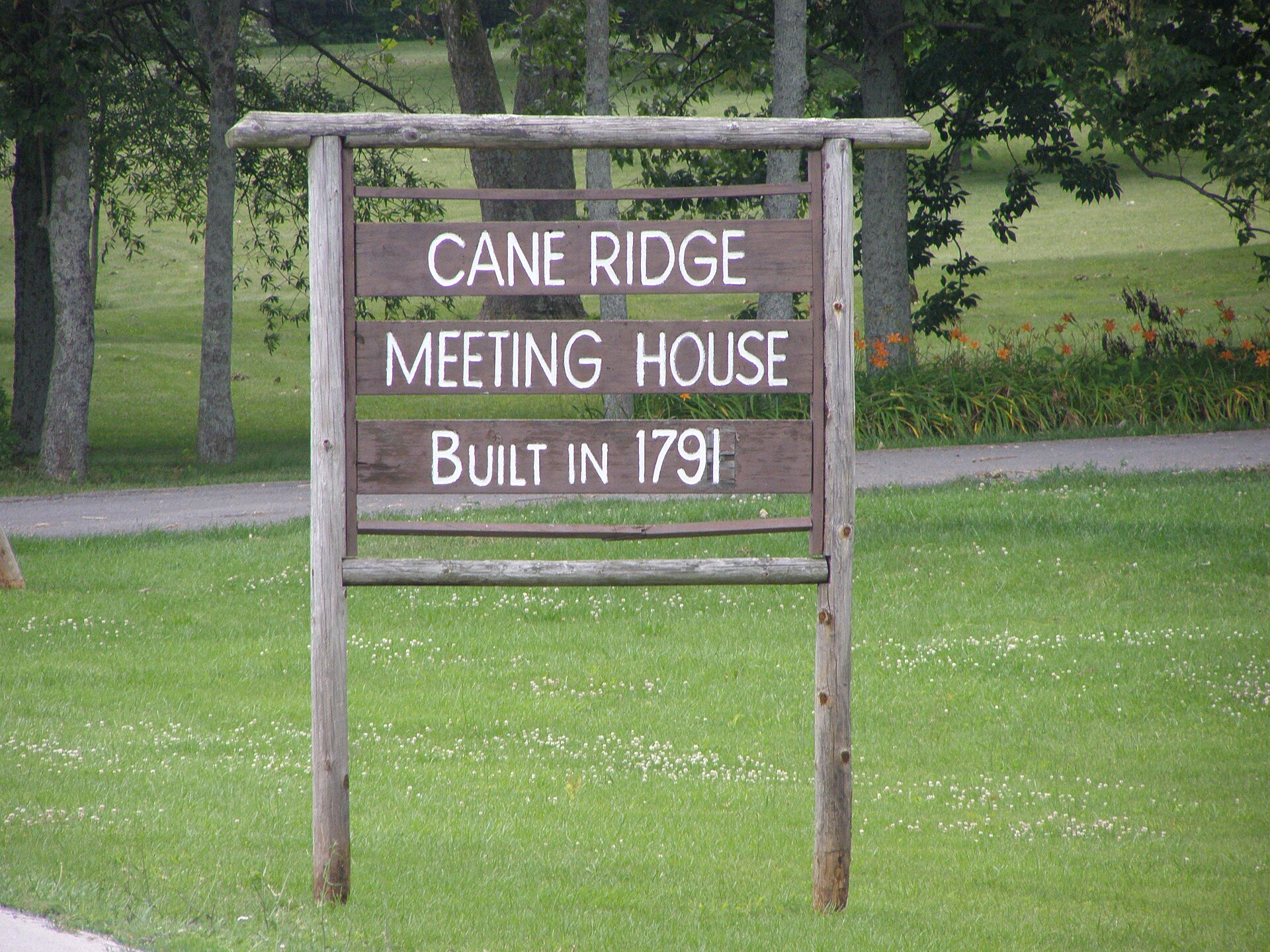
Cane Ridge, August 1801
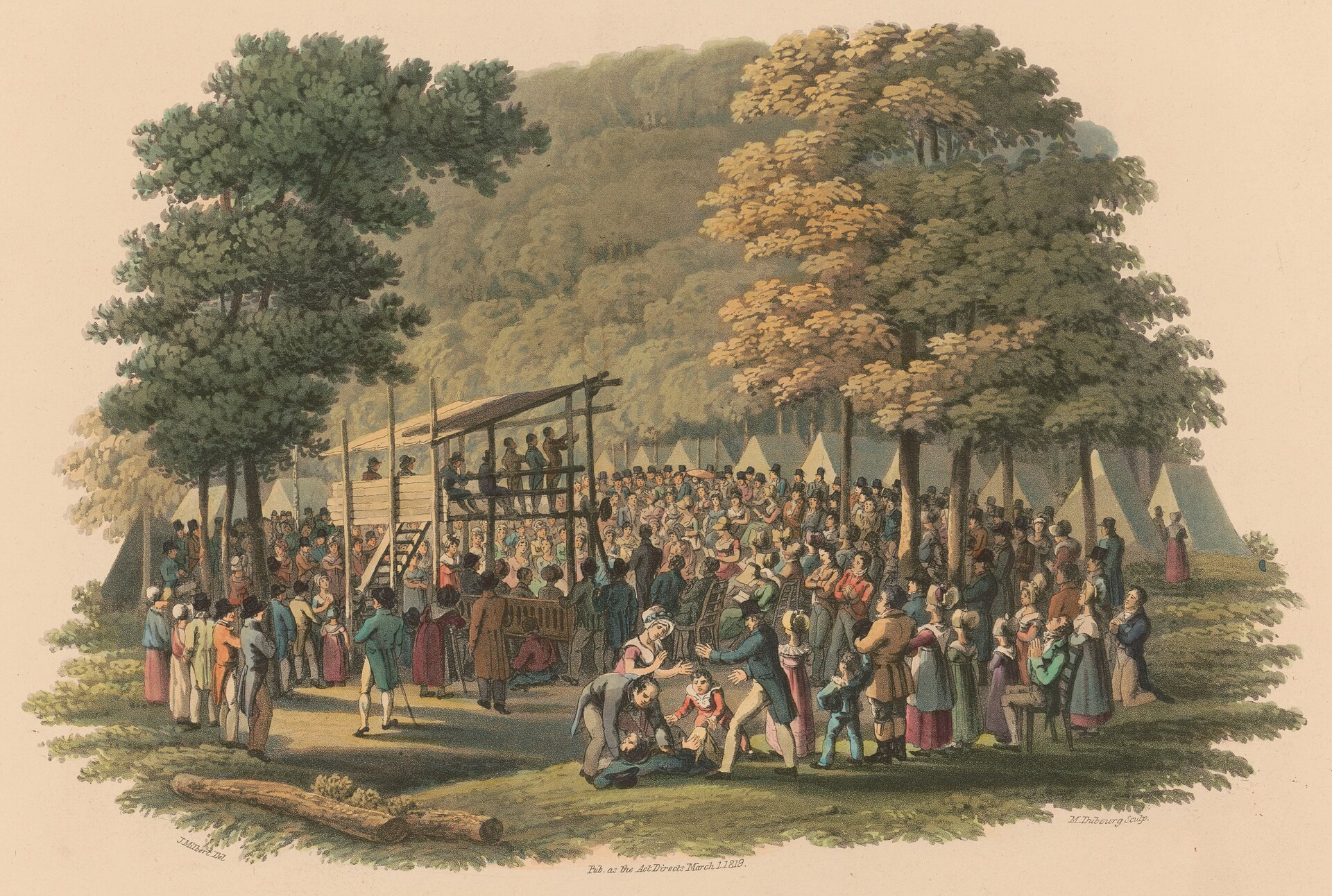
Barton Warren Stone (1772 to 1844) was the Presbyterian minister of two congregations in Bourbon County, Kentucky, Cane Ridge and Concord, when the revivals that had begun in Logan County in southern Kentucky spread north. In his autobiography, published in 1847 after his death, Stone says he attended the Logan County camp meeting in the spring of 1801 and then returned home. He dates the meeting at his own church this way: "This memorable meeting came on Thursday or Friday before the third Lord's-day in August, 1801." He does not claim to have counted the crowd himself. He writes: "It was judged, by military men on the ground, that there were between twenty and thirty thousand collected."2 W. E. Garrison, a Disciples historian writing in 1945, gives the dates as August 7 to 12, 1801, and puts the estimate at 20,000. He notes that Stone was host but did not direct the meeting, which Presbyterian, Methodist and Baptist preachers addressed from several stands at once.3
Stone devoted a whole chapter to the physical effects that drew attention to the revival. It opens: "The bodily agitations or exercises, attending the excitement in the beginning of this century, were various, and called by various names." He then lists "the falling exercise--the jerks--the dancing exercise--the barking exercise--the laughing and singing exercise, &c.," and treats a "running exercise" separately.2 Stone did not dismiss these effects, but neither did he treat them as proof of conversion. The Presbyterian synods were more doubtful. Several of the revival preachers had begun to teach that anyone could respond to the gospel at once, which their critics took as a departure from the Westminster Confession's doctrine of election.


The Springfield Presbytery and its Last Will and Testament
In September 1803 the Synod of Kentucky censured the presbytery that had allowed two revival preachers, Richard McNemar and John Thompson, to keep preaching. Stone, McNemar, Thompson, Robert Marshall and John Dunlavy then withdrew from the synod and formed their own body, the Springfield Presbytery.3 It lasted nine months. On June 28, 1804, meeting at Cane Ridge, its members (with David Purviance, who had joined them) signed a short, half-humorous document called "The Last Will and Testament of the Springfield Presbytery." It was printed in Elias Smith's Herald of Gospel Liberty in 1808. Its first item reads: "We will that this body die, be dissolved, and sink into union with the Body of Christ at large." Another item wills "that our power of making laws for the government of the church, and executing them by delegated authority, forever cease," and another asks that "the people henceforth take the Bible as the only sure guide to heaven." The names printed beside the word "Witnesses" are Robert Marshall, John Dunlavy, Richard M'Nemar, B. W. Stone, John Thompson and David Purviance.4
The six men took the name "Christian" for their congregations. Stone explained it, in his autobiography, as "the name given to the disciples by divine appointment first at Antioch" (Acts 11:26). He also records that after a few years many of them came to doubt infant baptism, and that because "there were no elders among us who had been immersed," the preachers "baptized one another," with members free to act "according to their conviction of right."2 The group did not hold together easily. McNemar and Dunlavy joined the Shakers (see lesson 09), and Marshall and Thompson returned to the Presbyterians, a story Stone tells at length. Stone remained, and his "Christians" spread through Kentucky, Ohio, Tennessee and Indiana.
Stone's group was one of three bodies of "Christians" that appeared within a decade of each other. Garrison describes a movement in Virginia and North Carolina that formed in 1794 (led by James O'Kelly, who had left the Methodists over the power of bishops to assign preachers) and another in New England from 1801 (associated with Abner Jones and Elias Smith). All three rejected denominational names and creeds.3 The eastern "Christian Connection" did not join the Campbells and has a separate history that runs into the Congregational story in lesson 05. In 1828 Stone reported that "the sect called Christians" had risen to 1,500 congregations with 150,000 members, a figure Garrison says evidently included all three bodies of "Christians" and calls "doubtless much too large in any case."3
The Campbells in western Pennsylvania
Thomas Campbell and the Seceders
Thomas Campbell (1763 to 1854) was born in the north of Ireland, studied at the University of Glasgow and served the Seceder Presbyterian congregation at Ahorey, County Armagh, from 1798 to 1807. The Seceders were a Scottish body that had left the Church of Scotland in the 1730s and had then split again among themselves over oaths required of town officials, so that Campbell belonged to one small fragment of an already divided church. He landed at Philadelphia on May 13, 1807, joined the Associate Synod of North America and was assigned within days to the Presbytery of Chartiers in western Pennsylvania.3 There he gave the Lord's Supper to Presbyterians who were not Seceders, and charges followed. The presbytery found him deserving of censure. The synod, on appeal, found him guilty on several counts and sentenced him to be "rebuked and admonished."3 Robert Richardson's Memoirs of Alexander Campbell (volume 1, 1868), written by a close associate, says that Campbell submitted to the decision and later renounced his connection with the synod himself.5
The Declaration and Address, September 1809
Campbell continued to preach in homes and groves to anyone who would come. On August 17, 1809, at a meeting "held on the head-waters of Buffalo," his hearers formed "The Christian Association of Washington" (Washington County, Pennsylvania), according to Richardson.5 The association asked Campbell to write out its aims, and the result was printed at Washington, Pennsylvania, as the Declaration and Address of the Christian Association of Washington, its preface dated "September 7, 1809."6 Garrison describes four parts: a short Declaration, an Address of about eighteen pages signed by Thomas Campbell and Thomas Acheson, an Appendix of thirty-one pages and a Postscript added after the association's committee of twenty-one met on December 14, 1809. The Declaration states the goal of restoring "unity, peace, and purity" to the church.7
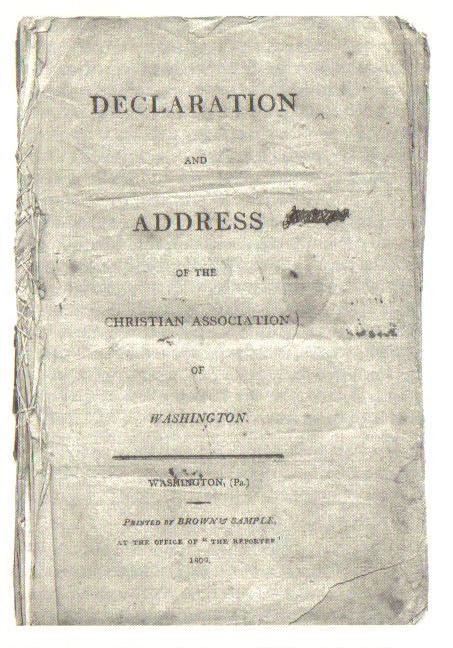

The Address sets out thirteen propositions. The first three carry the argument. Quoted from the 1809 first edition as transcribed by the Memorial University of Newfoundland Restoration Movement texts project:6
"PROP. 1. THAT the church of Christ upon earth is essentially, intentionally, and constitutionally one; consisting of all those in every place that profess their faith in Christ and obedience to him in all things according to the scriptures, and that manifest the same by their tempers and conduct, and of none else as none else can be truly and properly called christians."
"2. That although the church of Christ upon earth must necessarily exist in particular and distinct societies, locally separate one from another; ..."
"3. That in order to this, nothing ought to be inculcated upon christians as articles of faith; nor required of them as terms of communion; but what is expressly taught, and enjoined upon them, in the word of God. Nor ought any thing be admitted, as of divine obligation, in their church constitution and managements, but what is expressly enjoined by the authority of our Lord Jesus Christ and his Apostles upon the New Testament church; either in express terms, or by approven precedent."
The sixth proposition draws the line that later divided the movement. It grants that "inferences and deductions from scripture premises, when fairly inferred, may be truly called the doctrine of God's holy word," but goes on to argue that such inferences cannot be made binding on the consciences of others. The fifth proposition allows that "where the scriptures are silent, as to the express time or manner of performance," the church may arrange such matters, so long as nothing is made a term of communion. One of the association's resolutions refuses to teach anything "as matter of christian faith, or duty, for which there cannot be expressly produced a thus saith the Lord."6 Two later readings were possible from the same pages. One stressed the call for unity and the freedom left where Scripture is silent. The other stressed the requirement of an express command or "approven precedent" for everything in worship. The nineteenth-century disputes over organs and societies were, in large part, a quarrel between these two readings of one document.
"Where the Scriptures speak, we speak"
The best known slogan of the movement does not appear in the Declaration and Address. Richardson places it at an earlier meeting in 1809 at the house of Abraham Altars, between Mount Pleasant and Washington, where Thomas Campbell proposed a rule for the group. In Richardson's printing, the rule reads: "WHERE THE SCRIPTURES SPEAK, WE SPEAK; AND WHERE THE SCRIPTURES ARE SILENT, WE ARE SILENT." Richardson reports that a Seceder named Andrew Munro, a bookseller and postmaster at Canonsburg, answered: "Mr. Campbell, if we adopt that as a basis, then there is an end of infant baptism."5 Richardson wrote nearly sixty years after the event, from family memory and the recollections of participants, so the exact words are a tradition recorded in 1868, not a contemporary transcript. Munro's point turned out to be accurate.
Alexander Campbell, Brush Run and immersion
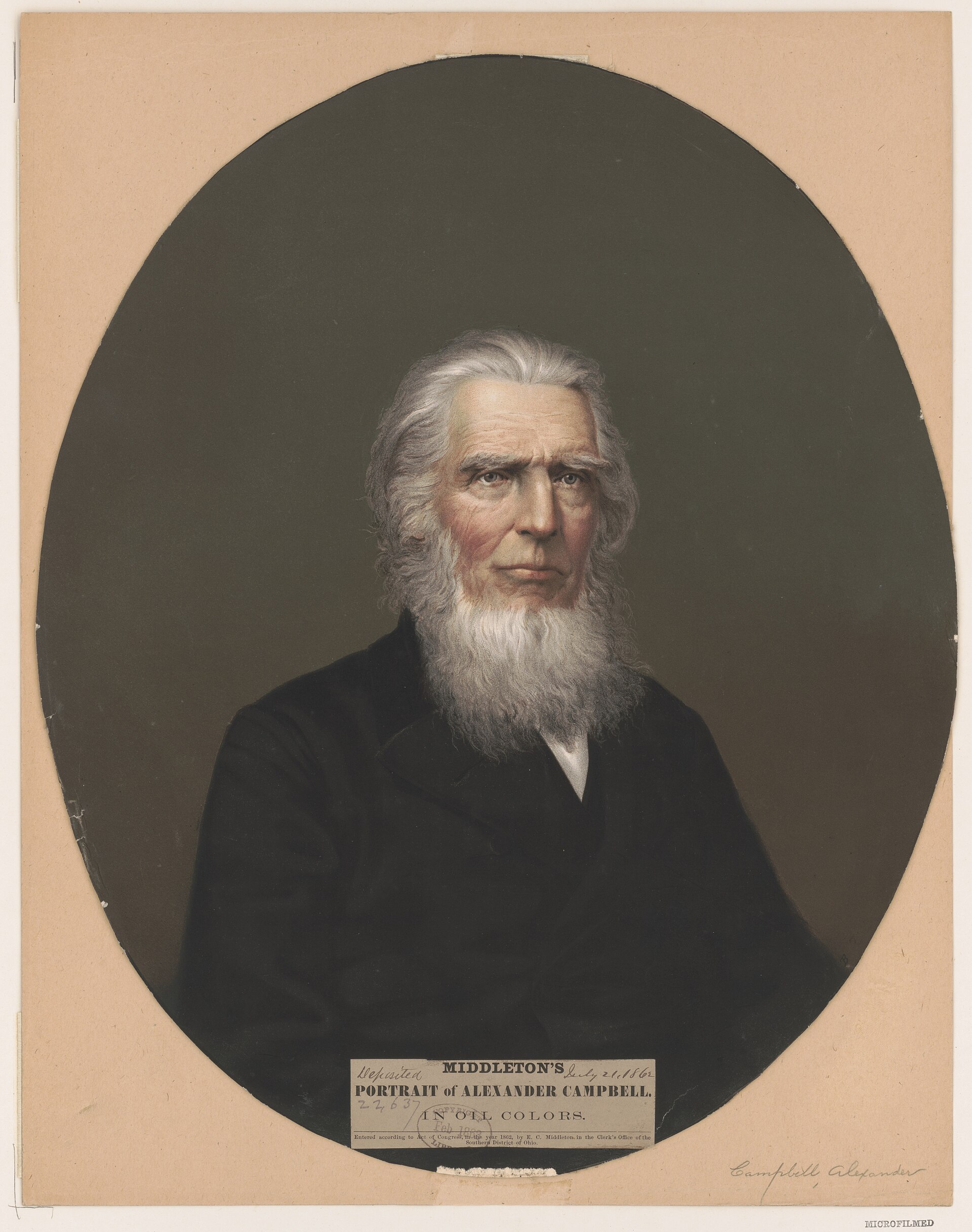
Alexander Campbell (1788 to 1866) followed his father to America after a shipwreck delayed his family's voyage and a year of study at Glasgow, where Richardson says he came under the influence of the Haldane brothers' independent evangelical movement in Scotland.8 He preached his first sermon on July 15, 1810. The Christian Association, which had meant to be a society of members of many churches rather than a church, constituted itself a congregation on May 4, 1811, and held its first service at Brush Run on June 16, 1811.9 Alexander studied the question of infant baptism and concluded that the New Testament knew only the immersion of believers. On June 12, 1812, Thomas and Alexander Campbell, their wives and three other members were immersed in Buffalo Creek "by a Baptist preacher" (Garrison does not give his name).9

Among the Baptists, 1813 to 1830
Because they now practiced immersion, the Brush Run church applied in the autumn of 1813 to join the Redstone Baptist Association and was accepted. Walter Scott later described them as being "in the bosom of the Regular Baptist churches."9 The fit was uneasy. In August 1816 Alexander Campbell, called on at the last moment, preached his "Sermon on the Law" to the association, arguing that Christians live under a new covenant and that the law of Moses does not settle questions of Christian practice. Garrison records that some hearers welcomed its rejection of the analogy between infant baptism and circumcision, and many others thought the whole argument dangerous.10
Campbell's influence spread mainly through print and public debate. His monthly Christian Baptist "began in 1823 and continued for seven years," attacking clerical titles, missionary and Bible societies run by boards, and creeds. Garrison notes that the Mahoning Baptist Association of eastern Ohio "became thoroughly permeated by the idea of restoring primitive practice," and that in April 1830 it "formally adopted the principles of the Reformers, but did not at that time dissolve."11 Garrison notes that in Kentucky the Reformers were "still nominally Baptists" in 1830, but Baptist associations and Reformer congregations soon parted, and by the early 1830s the "Reformers" were a separate people with their own congregations. Campbell then replaced the Christian Baptist with the Millennial Harbinger.
Walter Scott and the five steps
The movement's most effective evangelist was Walter Scott, a Scottish-born schoolteacher who had helped Campbell name the Christian Baptist. In 1827 the Mahoning Association asked Scott, who was neither a Baptist minister nor ordained, to "travel and teach among the churches." His first convert, William Amend, was baptized on November 18, 1827. Scott taught the plan of salvation in five steps that could be counted on the fingers: faith, repentance, baptism, remission of sins and the gift of the Holy Spirit. The first three were the human response and the last two God's promise. Garrison reports that the association's 1827 meeting had recorded only twenty-one additions, and that in Scott's first year the Mahoning churches gained more than a thousand members, more than doubling.12 Scott's order (baptism for the remission of sins, in the words of Acts 2:38) became the standard preaching of the whole movement and remains the teaching of the Churches of Christ and the independent Christian Churches.

The union of 1832
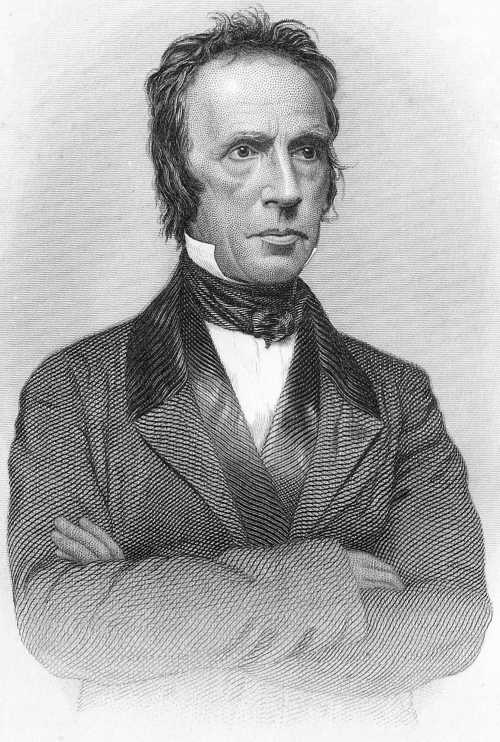
Stone and Alexander Campbell first met in 1824. In 1826 Stone began a monthly paper of his own, the Christian Messenger, at Georgetown, Kentucky. Readers of the two editors' papers could see that the "Christians" and the "Reformers" taught nearly the same things, and in 1828 Stone wrote of the Reformers: "If there is a difference between us, we know it not."13 There were real differences. Stone was less sure than Campbell that immersion was required before a person could take the Lord's Supper, he gave more room to the emotional experience of the revivals, and his views on the Trinity and the atonement were less traditional than Campbell's. The two men also preferred different names. Stone held to "Christian," which he regarded as given by divine authority, while Campbell preferred "disciple" as "a more humble appellation," in the summary of William J. Nottingham, a Disciples writer, in a 2013 paper on the church's name.14
Garrison dates the union of the two groups in Kentucky and the neighboring states "as of 1832," beginning with a consultation of leaders on January 1, 1832.15 In the account of D. Newell Williams and Douglas A. Foster in Christian History (issue 106, 2013), Stone and John Smith (known as "Raccoon" John Smith, a former Baptist preacher who had joined the Reformers) called meetings of church leaders in late 1831 at Georgetown and Lexington, and "On the first Sunday of 1832, the two Lexington groups shared communion together as one fellowship." The union created no central organization.16 The speech usually quoted from that meeting, in which Smith urged his hearers to be "no longer Campbellites or Stoneites," comes from John Augustus Williams's Life of Elder John Smith (1870). The wording given in later books could not be checked against a copy of Williams's text for this lesson, so it is reported here as a later account rather than quoted.
Garrison estimates the combined movement at "twenty or thirty thousand by the time of this union in 1832."3 Both names stayed in use. Nottingham notes that "Christian Churches" was the usual name in Kentucky, Tennessee, Indiana and Illinois, while "Disciples of Christ" was more common in the Virginia panhandle, around Pittsburgh and in Ohio, and he calls the union "a difficult compromise" that many of Stone's churches rejected.14 Garrison observes that the use of the two names "and of 'Churches of Christ' as well" confused the public but was no barrier to union.13 All three names would later be claimed by separate bodies.
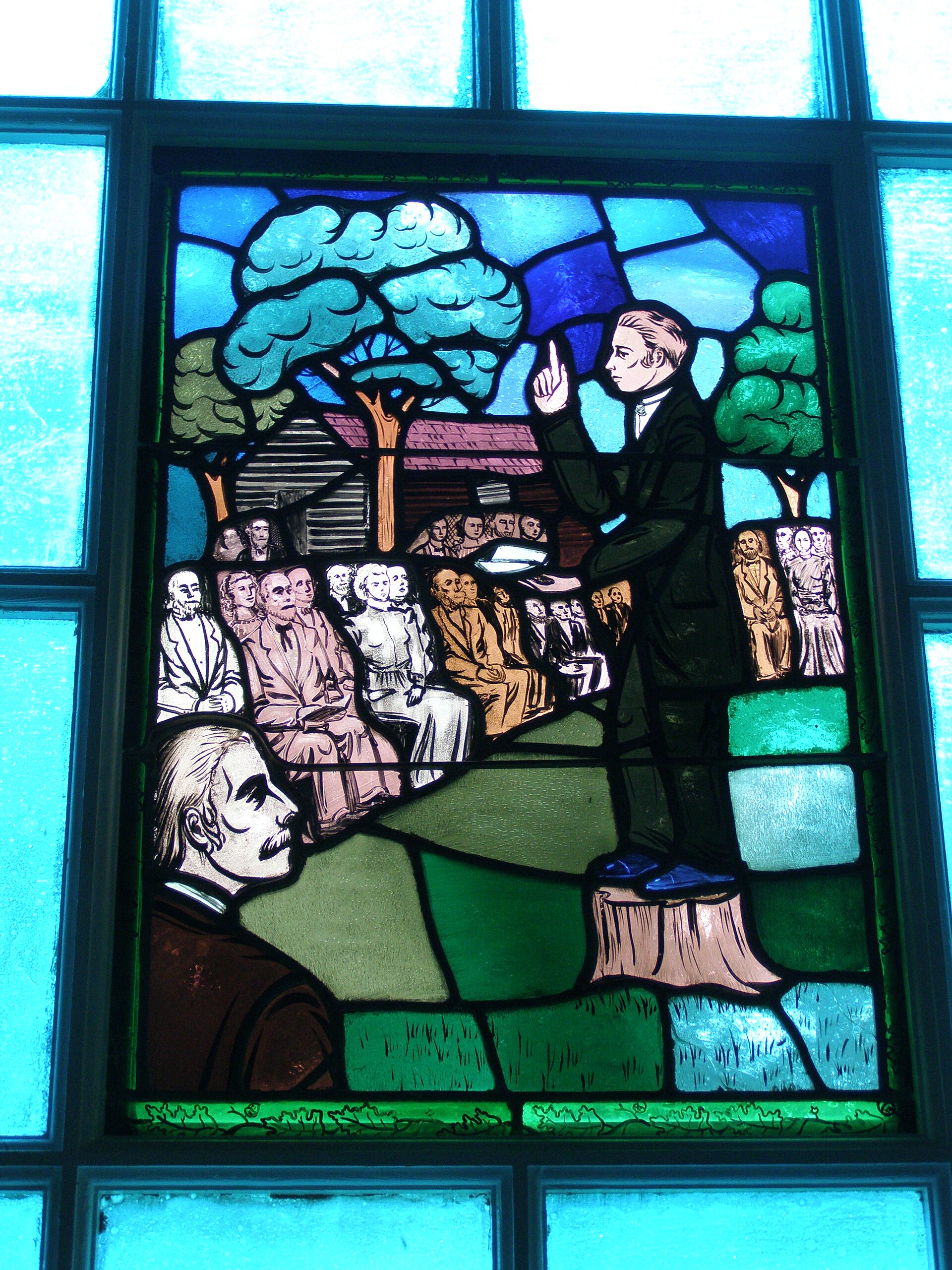

What the movement taught
The early Stone-Campbell churches agreed on a short list of practices that they believed the New Testament required, and these practices still mark all three modern streams in some form. Thomas H. Olbricht, in the Encyclopedia of the Stone-Campbell Movement (2004), lists the early principles that the Churches of Christ kept: "baptism as immersion for the remission of sins," the "weekly observation of the Lord's Supper," "congregational independence," and "leadership by elders and deacons rather than settled ministers."17
Baptism
The movement taught that baptism is the immersion in water of a person old enough to believe and repent, and that it is connected with the forgiveness of sins, following Acts 2:38 ("Repent, and be baptized every one of you in the name of Jesus Christ for the remission of sins, and ye shall receive the gift of the Holy Ghost," KJV). Most Baptists also immerse believers, but they treat baptism as a public sign of a salvation already received. The Campbells and Scott taught that baptism is the point at which God's promise of forgiveness is given to the believer, though Alexander Campbell, in an 1837 exchange known as the Lunenburg Letter, declined to say that unimmersed believers in other churches were not Christians. (That letter is mentioned here from the secondary literature and was not opened for this lesson.) The Disciples today state that "Those who founded the Disciples movement taught baptism by immersion as the accepted form," and describe baptism as "the human individual's response in faith."18
The Lord's Supper every Sunday
From the Brush Run church onward, the Lord's Supper was taken every first day of the week, on the precedent of Acts 20:7 ("upon the first day of the week, when the disciples came together to break bread," KJV). Elders or other members, not only ordained ministers, could preside. The question that troubled the early churches was who should be invited. Garrison reports that Isaac Errett wrote in 1862 that probably two-thirds of the churches welcomed all who considered themselves qualified, and that the usual formula became "We neither invite nor debar."19 The Disciples today say that the Lord's Supper "is celebrated in weekly worship" and that "It is open to all who are followers of Jesus Christ," and use a red chalice as the church's symbol.1821
No creed but the Bible
The movement refused to make any written confession a test of fellowship. That did not mean its members had no beliefs. Each stream confesses that Jesus is the Christ, the Son of God (Matthew 16:16), and that confession was the only one asked of a person before baptism. The Disciples' governing document, the Design, opens with a preamble that begins "As members of the Christian Church, We confess that Jesus is the Christ, the Son of the living God, and proclaim him Lord and Savior of the world." The church describes this preamble as an affirmation of faith used in worship, not as a test of fellowship.20 Garrison records that when Errett published a "Synopsis" of the movement's beliefs, Moses E. Lard attacked it as a "creed," though Lard had himself published "sixteen specifications of fundamental principles."19
Congregational self-government
Each local congregation governs itself under its own elders. There is no bishop, presbytery or conference with authority over it. This principle was the heart of the Last Will and Testament's renunciation of "power of making laws for the government of the church." It also explains why there is no single body that can speak for the Churches of Christ or for the independent Christian Churches, and why counting their members depends on private directories rather than official reports. The Disciples are the exception. Since 1968 they have described the relations among their congregational, regional and general levels as a covenant.21
Growth and organization, 1832 to 1875
The united movement grew quickly in the Ohio valley and the upper South. Garrison gives about 118,000 members by the middle of the century, about 225,000 in the 1850s, 350,000 in 1870 and probably close to 400,000 by 1875. These are historians' estimates from the movement's periodicals, not counts from a central register, since the movement had none.22 After a tour of Indiana in 1850 Campbell reported that "our people" there were second only to the Methodists in numbers, resources and influence.22 By 1860, in the summary of Williams and Foster, the movement was among the ten largest Christian groups in the United States, with about 200,000 members.16 The two estimates differ, which is a fair warning about all nineteenth-century figures for this movement.
The American Christian Missionary Society, 1849
Congregational independence left a practical problem: how could hundreds of self-governing churches send missionaries, train preachers or publish Bibles together? Garrison records that a conference at Steubenville, Ohio, in 1844 resolved that such meetings were "voluntary expedients," and that Campbell urged "a more general and efficient cooperation" in mission and education. Campbell argued that in such matters of method the church is "left free and unshackled by any apostolic authority."23 The first national convention met in Cincinnati from October 24 to 28, 1849, with 156 representatives from one hundred churches in eleven states. Its main business was the founding of the American Christian Missionary Society, and "Alexander Campbell was elected its first president," an office he held until he died on March 4, 1866.2324
Opposition began at once. Garrison names Jacob Creath Jr., who wanted a further meeting to debate "the legitimacy of conventions and societies," and records the argument of others that "the church is the only missionary society and can admit no rivals." He adds that these objections later became divisive.23 The society's first foreign missions, to Jerusalem (from 1851), Liberia and Jamaica (1858), were counted failures.
The Civil War
The movement had members on both sides of the war and no central body that could split, as the Methodists and Baptists had split in 1844 and 1845 (lessons 07 and 06). Garrison credits the editor Benjamin Franklin, who taught that the church's sole business is preaching the gospel, with helping the Disciples avoid division over slavery and the war.22 The missionary society, though, did take a side. At its October 1861 convention in Cincinnati the delegates took a ten-minute recess so that members could pass a resolution of loyalty to the Union as a mass meeting rather than as the society. In 1863 the convention itself adopted a stronger resolution that deplored "attempts of armed traitors to overthrow our government." Southern members took this as proof that a society could do what a congregation never would: speak for all the churches on a political question. In 1861 J. W. McGarvey and thirteen other Missouri ministers published what Garrison calls a "pacifist manifesto" urging Disciples not to fight. Moses E. Lard declared, "We can never divide!"25
The organ and the society: the first division
Two questions divided the movement after the war. Each side believed it was being faithful to the principle of the Declaration and Address, and each side's case can be stated in its own words.
Instrumental music in worship
The early churches sang without instruments, as did most frontier Presbyterians and Baptists. In 1851 Alexander Campbell, answering a correspondent in the Millennial Harbinger, wrote: "But I presume, to all spiritually-minded Christians, such aids would be as a cow bell in a concert." (This is the text of the 1851 article as reprinted on a Restoration Movement history site, citing series 4, volume 1, pages 581 to 582. It was not compared against a scan of the original volume.)26 Garrison reports that around 1860 L. L. Pinkerton said he was "the only preacher in Kentucky who favored the use of the organ," and that his church at Midway, Kentucky, was the only one there that had one. J. W. McGarvey argued against the organ in the Millennial Harbinger in November 1864.24
The case against the instrument rested on the third proposition of the Declaration and Address: nothing should be admitted in worship "but what is expressly enjoined" by Christ and the apostles "either in express terms, or by approven precedent." The New Testament speaks of singing (Ephesians 5:19, Colossians 3:16) and never of playing in Christian assemblies, so its opponents held that the instrument was an addition to worship that Scripture's silence forbade. The case for it rested on the fifth proposition: where Scripture is silent about "the express time or manner of performance," the church may use its judgment. Supporters argued that an organ was an aid to the singing commanded, like a hymnal or a tuning fork, and that forbidding it was making a human inference into a test of fellowship, the very thing the sixth proposition warned against.
Missionary societies
The society question followed the same pattern. Opponents held that the New Testament shows congregations sending and supporting evangelists directly (Philippians 4:15 to 16) and shows no organization above or beside the local church. In 1869 the convention tried to meet the objection with the "Louisville Plan," adopted almost unanimously, which replaced the society with a system of general, state and district conventions. Benjamin Franklin, who had turned against the society, called the plan "a simple and scriptural plan." The plan did not end the dispute, since the strictest opponents objected to any body beyond the congregation.24 Supporters founded the Christian Woman's Board of Missions in 1874, led by Mrs. C. N. Pearre, and the Foreign Christian Missionary Society in 1875.27 Isaac Errett's Christian Standard, founded in Cleveland in 1866 and moved to Cincinnati in 1869, supported the societies.24 In Nashville, Tolbert Fanning and David Lipscomb's Gospel Advocate opposed them. The objectors also raised the hiring of a single full-time "pastor" for a congregation, the use of the title "Reverend" and the growth of colleges for ministers, which Garrison treats as lesser issues that did not cause a lasting break.19
Sand Creek, 1889
The clearest statement from the side that withdrew came from a meeting in a grove on Sand Creek in Shelby County, Illinois. Daniel Sommer (1850 to 1940), editor of the Octographic Review, spoke there, and in his own report he said that "not fewer than five thousand persons were present."28 The document read to the crowd, the "Address and Declaration," is dated "AT SAND CREEK, SHELBY CO., ILL., AUG. 17th, A. D. 1889," and was printed in the Octographic Review on September 5, 1889. It names the practices it rejects, among them "the church holding festivals of various kinds in the house of the Lord or elsewhere," "the select choir to the virtual, if not the real, abandonment of congregational singing," "the manmade society for missionary work," and "the one man, imported preacher-pastor to take the oversight of the church." It ends by saying of those who persist in such practices that "we can not and will not regard them as brethren." It was signed by the officers of the Sand Creek church (beginning with P. P. Warren) and of several neighboring congregations.29 In his speech Sommer added that no one could believe "that it is the Lord's will to play on an instrument in the worship."28
The 1906 census
The separation had happened congregation by congregation for decades before it was recorded. Garrison writes that it "had become an accomplished fact, for all practical purposes, years before it was registered" by the separate listing of the "Churches of Christ" in the religious census of 1906.30 The registration came about through the Census Bureau itself. Douglas A. Foster, director of the Center for Restoration Studies at Abilene Christian University, writing in Christian Standard in 2006, explains that census officials, who followed the movement's papers, saw signs of a division. S. N. D. North, the director of the census, wrote to David Lipscomb, and his letter appeared in the Gospel Advocate on July 18, 1907, asking whether there was a religious body "Church of Christ" not identified with the Disciples of Christ. Lipscomb answered that "There is a distinct people taking the word of God as their only and sufficient rule of faith," and that they were separate from churches that sought "a general organization" under a missionary society and used "instrumental music" in worship. James H. Garrison, a leading Disciples editor in St. Louis, disagreed that the bodies should be counted apart.31
The figures were published in a bulletin in 1909 and in two volumes in 1910. Foster gives 2,642 congregations and 159,123 members for the Churches of Christ and 7,799 congregations and 923,698 members for the Disciples of Christ.31 Other writers give 159,658 members for the Churches of Christ, the figure used by the Encyclopaedia Britannica, by Kent E. Fillinger in Christian Standard (2021, who adds 2,649 congregations) and by Olbricht in the Encyclopedia of the Stone-Campbell Movement, who gives 1,142,359 members for the whole Stone-Campbell Movement that year.323317 The difference may reflect the preliminary bulletin and the final report, but that could not be confirmed against the census volumes for this lesson, so both figures are given. Britannica adds that the reported number "apparently did not include all who accepted the general position" of the Churches of Christ.32

The second separation: the Disciples and the independent Christian Churches
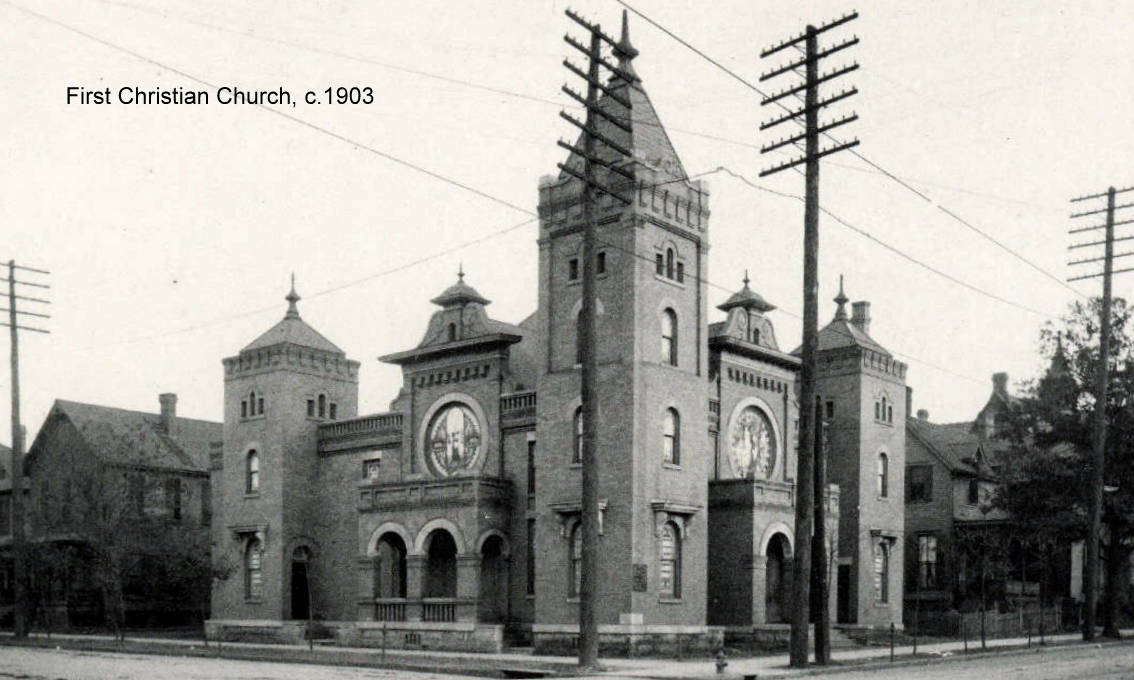
The churches that kept their organs and societies after 1906 were themselves far from united. Henry E. Webb, writing in the Encyclopedia of the Stone-Campbell Movement, says the independent Christian Churches became distinct through "a long process of separation" from the body now called the Christian Church (Disciples of Christ), driven in the early twentieth century by three controversies: modernism (the acceptance of higher criticism of the Bible in Disciples colleges and seminaries), cooperation with the Federal Council of Churches, and "open membership."34 Open membership meant receiving into a congregation Christians from other churches who had been baptized as infants or by sprinkling, without asking them to be immersed. The Disciples' own historical encyclopedia records that controversy over admitting Christians who had not received believers' immersion surfaced soon after the United Christian Missionary Society was formed in 1919 and stayed heated for more than a decade.21 For the wider fight between theological modernists and their opponents in the same decades, see module 58, lesson 14, and lessons 02 and 06 of this module.
Congregations that objected began to hold their own gatherings. The North American Christian Convention held its first sessions in Indianapolis in 1927 and, in Webb's words, "met sporadically until 1950." Its attendance, Webb writes, "often exceeds 25,000." An annual Directory of the Ministry, first published in 1955, listed the ministers and congregations of these churches separately from the Disciples' Year Book.34 For decades many congregations appeared in both lists.
Restructure, 1968
The Disciples' leaders had concluded by the 1950s that a church of independent congregations held loosely together by voluntary agencies and an annual convention could not act as a church. Richard L. Hamm, a former general minister and president, writes that a design for a new structure was approved in 1968 by the International Convention of the Christian Churches (Disciples of Christ), and the first General Assembly met under it in 1969. The body changed its name to "Christian Church (Disciples of Christ) in the United States and Canada." The singular "Church," in place of the plural "Christian Churches," was the point: the Disciples now recognized themselves, in the words of their historical encyclopedia, as "one of the denominations in America."3521
Christianity Today reported from the 119th annual assembly in Kansas City that the vote to restructure was taken on September 28, 1968, with only "a few scattered 'no' votes," and that the churches were "reconstituted as the Christian Church" in a ceremony on October 1. The magazine reported that 2,113 of the 8,047 congregations previously listed "have now served notice that they will not participate in the restructured denomination," and that A. Dale Fiers, the executive secretary, estimated that "about 500,000 of the church's nearly two million members will no longer be part of the church."36 An earlier Christianity Today report, from August 30, 1968, by David E. Kucharsky, was headlined "Disciples Turn Corner, Lose 1,124 Churches" and reported that Disciples officials had "publicly admitted this month that 1,124 names of congregations had been dropped from the rolls in the past ten months."37 The Disciples' historical encyclopedia gives the final result as about 750,000 Christians in about 3,500 congregations withdrawing to form the Christian Churches and Churches of Christ.21 The numbers grew over several years as congregations asked to be removed from the Year Book, which is why counts from 1968 and later differ.
Each side described the event differently. For the Disciples' leaders, restructure brought the church's organization into line with what it already was: a body with shared mission, colleges, pension funds and ministers who served across congregations. For the congregations that withdrew, it was a surrender of the founders' principle that no body above the congregation has authority, a step toward the very denominationalism that the Last Will and Testament had renounced, and a confirmation of their earlier objections to open membership and modernism. The site does not decide between these readings.
The Christian Church (Disciples of Christ) today
The Disciples describe themselves as "a movement for wholeness in a fragmented world" and say that "As part of the one body of Christ, we welcome all to the Lord's Table as God has welcomed us." Their stated vision is "To be a faithful, growing church, that demonstrates true community, deep Christian spirituality and a passion for justice."20 On Scripture, the church's own page says that members study it for themselves and "Rather than having tests of faith and creedal statements," read it critically in its historical setting.38 The Disciples have ordained women since the late 1880s, and women serve about a quarter of recognized congregations. In 1985 they entered an "ecumenical partnership" with the United Church of Christ (lesson 05) that became "full communion" by 1989, and the two churches have run their overseas mission through a Common Global Ministries Board since 1996. A 1987 "Word to the Church on Baptism" recognized infant baptism as a legitimate form while holding that baptism is given only once.21 The Disciples are counted among the mainline Protestant churches discussed in lesson 11.
The church's own data system, called ALEX, gives the most recent counts. When the reporting period closed on March 31, 2024, the Congregation Directory "listed 2,887 congregations." For 2023, 1,647 congregations (57 percent) reported their statistics, and 2,032 were counted as "connected."39 Among the 1,650 that reported for 2023, "the median number of reported participants was 66" and the median worship attendance was 40.40 The church's identity page speaks of "more than 3,000 congregations in the United States and Canada," without a year.38 Total membership is not given on these pages. Jeffrey Walton of the Institute on Religion and Democracy, using ALEX data as reported by Michael Gryboski in The Christian Post (September 19, 2023), gives about 350,500 members in 2019 and nearly 278,000 in 2022, with average worship attendance falling from about 126,000 to a little below 90,000.41 For comparison, the Disciples' historical encyclopedia gives just over 807,000 members in about 3,743 congregations in 2001, and James Hansee in Christian Standard (2024) puts the peak at "just under 2 million" in 1958.2142
The Christian Churches and Churches of Christ today
The independent Christian Churches (often called "independent Christian Churches" or by the plural name "Christian Churches and Churches of Christ") have no headquarters, no general assembly and no official spokesman. Webb describes them as practicing the immersion of believers as "the only valid baptism," linking baptism with the forgiveness of sins, observing the Lord's Supper "every Sunday in every congregation," and holding to "a polity fiercely protective of congregational autonomy." He counts thirty-two Bible colleges associated with these churches and three accredited graduate seminaries (Emmanuel School of Religion, Cincinnati Bible Seminary and Lincoln Christian Seminary), with Milligan College as a liberal arts college. The Christian Standard, published in Cincinnati and "widely circulated since its founding in 1866," became the main paper of this stream.34 They use instruments in worship, the practice that separated their ancestors from the Churches of Christ in the nineteenth century. Some of the largest congregations in the United States belong to this stream.
Their numbers come from the privately published Directory of the Ministry, which depends on what congregations choose to report. Webb, writing for the 2004 encyclopedia, gives "1,333,000 members in 5,554 congregations in the United States and Canada." Kent E. Fillinger, a researcher who writes for Christian Standard, gives 4,921 churches and 1,228,573 members from the 2018 Directory and warns that because it "relies on self-reporting," the numbers "are questionable." From a 2019 survey of 439 churches he estimated total weekly attendance for the whole stream at about 1,393,280, a figure he describes as "lots of guesswork and assumptions." By his count, 42 percent of the churches were in five states: Indiana, Illinois, Ohio, Kentucky and Missouri.33
The Churches of Christ
The Churches of Christ are the a cappella stream. They sing without instruments, take the Lord's Supper every Sunday, baptize by immersion for the remission of sins, are led in each congregation by elders and deacons, and support no missionary society or denominational agency above the congregation. Olbricht notes that leaders "vehemently opposed" instruments in worship and that opposition to the societies and instruments were the immediate causes of the separation.17 They do not consider themselves a denomination. Most members would describe their churches as simply the New Testament church restored, and congregations commonly use "church of Christ" with a lowercase "c" as a description rather than a proper name. Their strength has always been in the South. Britannica says that "In 1906 the membership and leadership of the Churches of Christ were located mainly in the South."32 Fillinger counts 46 percent of congregations in five states: Texas (1,901), Tennessee (1,406), Alabama (838), Arkansas (694) and Kentucky (570).33
Olbricht traces their growth from 159,658 members in 1906 to 317,937 in about 1926 and 433,714 in 1936 (census figures).17 Colleges associated with these churches include Lipscomb University (founded as the Nashville Bible School in 1891), Abilene Christian (1906), Harding (1922) and Pepperdine (1937). The national radio and television program "Herald of Truth" was run by the Fifth and Highland Church of Christ in Abilene, Texas, with support from other congregations, a model of cooperation that kept each congregation independent.17
Divisions within the Churches of Christ
The principle that every practice needs a command, an example or a necessary inference (the hermeneutic these churches call "command, example and necessary inference," a phrase mentioned here from the secondary literature) produced further separations. Olbricht describes three. In the 1910s to 1930s, Foy E. Wallace Jr. and others "pushed premillennial advocates such as Robert Henry Boll into a separate fellowship." In the 1950s "a significant group opposed the creation of extra-congregational institutions," such as children's homes and parachurch organizations. These "noninstitutional" churches have Florida College as a center for training preachers. And "About 550 congregations oppose use of multiple communion cups," some of which also oppose Bible classes divided by age.17 The dates for the premillennial dispute are an approximation not given in Olbricht's article.
Counting the Churches of Christ
Because there is no central office, the standard count is a directory published every few years by 21st Century Christian of Nashville, Churches of Christ in the United States. It counts "adherents," meaning baptized members plus the unbaptized children and spouses associated with a congregation, as Bobby Ross Jr. of The Christian Chronicle explains in reporting the 2012 edition's total of 1,554,301 adherents.43 Jay F. Guin, summarizing the 2015 edition, gives 13,155 congregations and 1,656,717 adherents in 2003, 12,629 and 1,578,281 in 2009, and 12,297 and 1,519,251 in 2015.44 Fillinger, citing 21st Century Christian for 2021, gives 11,875 congregations and 1,423,295 adherents, with a second figure (1,092,182, which his article labels "attendance" in one place and gives as 1,092,082 in another).33 The Pew Research Center's Religious Landscape Study for 2023 to 2024 found that "1% of U.S. adults identify as members of the Churches of Christ."45 The Pew figure is a survey estimate of self-identification, not a count, and it may include people who attend independent Christian Churches or other congregations with "Church of Christ" in their names.
The International Churches of Christ
The International Churches of Christ (ICOC) began inside the a cappella Churches of Christ and is now a separate fellowship. Its roots lie in the "Crossroads" campus ministry associated with the Crossroads Church of Christ in Gainesville, Florida, where Kip McKean was baptized while a student at the University of Florida. In 1979 McKean became minister of the Lexington Church of Christ in Massachusetts, later called the Boston Church of Christ, which grew rapidly through an intensive system of one-on-one "discipling." The World Religions and Spirituality Project, a scholarly reference site, dates the adoption of the name International Churches of Christ to 1992. The movement claimed 146 churches with over 75,000 attending services in 1994.46
The movement's methods separated it even from its own origins: the Crossroads movement disassociated itself from the Boston Movement in 1988. The ICOC's leaders changed course after 2001. McKean was asked to resign as lead evangelist of the Los Angeles church in 2001, resigned as World Missions Evangelist in 2002 and apologized publicly. In 2003 Henry Kriete, an ICOC leader, circulated a long letter titled "Honest to God: Revolution through Repentance and Freedom in Christ," criticizing the movement's practices, and in 2003 to 2004 the regional leaders dissolved the central structure and reorganized as a loose "family of churches." McKean founded a separate body, the International Christian Church, beginning with a church in Los Angeles in 2006 to 2007. In 2016 the ICOC's cooperation of churches reported 657 congregations in 32 regional families in more than 153 nations.46 No United States membership count from the ICOC's own reports was found for this lesson. For other independent and nondenominational movements of the same period, see module 77, lesson 04.
The family tree
The three streams side by side

Why a unity movement divided
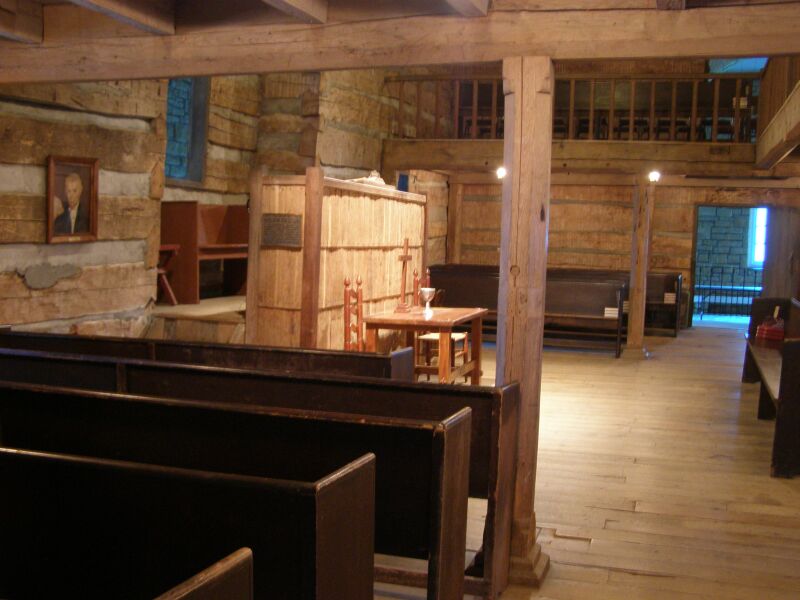
Historians inside the movement have given several explanations, and each stream tends to prefer its own. The first is theological and is the one the participants themselves gave. The Declaration and Address joined two aims, the unity of all Christians and the restoration of New Testament practice, and assumed that the second would produce the first. When Christians who accepted the same Bible disagreed about what it required, the movement had to choose between its two aims. Those who became the Churches of Christ chose fidelity to the pattern as they read it, even at the cost of fellowship. Those who became the Disciples chose unity and freedom of judgment, even at the cost, in their opponents' view, of the pattern. The independent Christian Churches tried to hold both, keeping the pattern of baptism and weekly communion while accepting the instrument and cooperative work outside the congregation.
The second explanation is regional and social. The 1906 division ran largely along the line of the Civil War, with the Churches of Christ strongest in Tennessee, Texas, Alabama and Arkansas and the Disciples strongest in the Midwest and in towns and cities. Garrison noted that the Disciples were "93 per cent rural in 1890," which meant that the move to organs, full-time ministers and colleges came first in the more prosperous town churches.47 David Edwin Harrell Jr. developed this social reading at length in his two volumes on the social history of the Disciples (1966 and 1973), titles mentioned here from the secondary literature and not opened for this lesson. The third explanation, which members of all three streams sometimes give, is that the movement's refusal of any authority above the congregation left it no way to settle a dispute except by separation. The site does not choose among these readings.
What the record shows and what it does not
- Documented fact: the Last Will and Testament of the Springfield Presbytery is dated June 28, 1804, at Cane Ridge, and was printed in 1808. The Declaration and Address is dated September 7, 1809, and its thirteen propositions survive in the first edition. The American Christian Missionary Society was organized in Cincinnati in October 1849. The Sand Creek "Address and Declaration" is dated August 17, 1889. The Census of Religious Bodies of 1906 listed the Churches of Christ separately. The Disciples' International Convention voted to restructure in Kansas City on September 28, 1968.
- Testimony and estimate: the size of the Cane Ridge crowd (20,000 to 30,000) is an estimate Stone attributes to "military men on the ground." All nineteenth-century membership figures for the movement are estimates by editors and historians.
- Tradition recorded later: the slogan "Where the Scriptures speak, we speak; and where the Scriptures are silent, we are silent," and Andrew Munro's reply, come from Richardson's Memoirs of 1868, not from a document of 1809. The words of "Raccoon" John Smith at the 1832 union come from a biography of 1870.
- Self-description: the Churches of Christ and the independent Christian Churches describe themselves as undenominational restorations of the New Testament church, not as denominations. The Disciples describe themselves as a denomination within the one church of Christ.
- Scholarly reading: whether the 1906 division was mainly about Scripture, mainly about region and class, or about both, is a question of interpretation on which historians of the movement differ.
- Open question: current membership. None of the three streams publishes a single audited count. The Churches of Christ and the Christian Churches are counted by private directories that rely on self-reporting, and the Disciples' public pages give congregations and medians, not a total membership.
Claims checked
"The Restoration Movement began at Cane Ridge in 1801."
Partly supported. Cane Ridge was the setting for Stone's break with the Presbyterians, and the Springfield Presbytery dissolved itself there in 1804. But the 1801 meeting was a union revival led by Presbyterian, Methodist and Baptist preachers, not the founding of a church, and the Campbell side of the movement began separately in Pennsylvania in 1809 with no connection to Cane Ridge.23
"Alexander Campbell founded the Churches of Christ" (or "the Campbellite church").
Partly supported, and disputed by the churches themselves. Campbell was the movement's most influential writer, but Stone's Christians were organized before the Campbells arrived, Thomas Campbell wrote the founding document, and Walter Scott shaped its preaching. All three streams reject the name "Campbellite" as a label that implies a human founder, and the Churches of Christ teach that their church was founded by Christ and restored rather than started in the nineteenth century. The name "Campbellite" was in common use by opponents in the nineteenth century, and the 1832 union speech attributed to John Smith rejected both "Campbellites" and "Stoneites" (as later reported).1
"'Where the Scriptures speak, we speak' is from the Declaration and Address."
Refuted as to the document, supported as tradition. The words do not appear in the 1809 first edition. Richardson (1868) places them in an address by Thomas Campbell at Abraham Altars's house in 1809. The Declaration and Address does contain the related phrase "where the scriptures are silent, as to the express time or manner of performance."65
"Alexander Campbell opposed instrumental music in worship."
Supported, with a caution about the text. His 1851 remark that such aids "would be as a cow bell in a concert" to "spiritually-minded Christians" is widely reprinted, and the reprint consulted here cites the Millennial Harbinger, 1851, pages 581 to 582. The remark was a personal judgment in an editorial reply, not a rule he imposed on churches, and the organ question did not become divisive until after his death in 1866.2624
"The Churches of Christ split off only because of the organ."
Partly supported. The instrument was the most visible issue, but the Sand Creek declaration lists the missionary society, the hired "preacher-pastor," church festivals and choirs, and Lipscomb's reply to the census director names both the society and "instrumental music." Regional and social differences after the Civil War are also part of most historians' accounts.2931
"The 1906 census created the division."
Refuted. The census recorded a separation that already existed. Garrison calls it "an accomplished fact, for all practical purposes, years before it was registered," and the Sand Creek declaration had refused fellowship seventeen years earlier. What the census did was give the separation an official public form, after the census director asked Lipscomb whether a separate body existed.3031
"The Churches of Christ teach that water saves without faith."
Refuted as stated. The movement's teaching, from Scott's five steps onward, places baptism after faith and repentance and as the believer's response to the gospel. Opponents have called this "baptismal regeneration" or "water salvation," and members reply that the forgiveness is God's act in response to faith, following Acts 2:38. Whether baptism is necessary for salvation is a real difference between these churches and most other Protestants. The claim that faith is not required misstates their teaching.1217
"It is the largest Christian movement born in the United States."
Unresolved, depending on the definition. The claim is common in the movement's own histories. Whether it holds depends on what is counted. The three streams together come to roughly 2.9 million in the most recent figures used in this lesson (1,423,295 adherents in 2021, 1,228,573 members in 2018 and about 278,000 members in 2022, three different measures), and the answer also depends on whether other American-born bodies, such as the Latter-day Saints (organized in 1830), belong in the same comparison, a question each side answers differently. No neutral count settles it, so this lesson describes the movement as one of the largest Christian families born in the United States.3341
"The Disciples lost a third of their churches in 1968."
Partly supported. Christianity Today reported 2,113 of 8,047 congregations (about 26 percent) declining to take part at the time of the vote, and the Disciples' own encyclopedia gives about 3,500 congregations in the end. Many of these congregations had already stopped cooperating with the Disciples' agencies years before, so 1968 recorded a separation as much as it caused one.362134
Hard questions and answers
Is "no creed but the Bible" not itself a creed?
A Lutheran or Presbyterian would say yes: any church that teaches immersion for the remission of sins, weekly communion and congregational government holds a confession, whether or not it writes one down, and a written confession at least lets outsiders and members test what is taught. The movement's founders answered that the difference is one of authority, not content. Thomas Campbell's sixth proposition grants that "inferences and deductions from scripture premises, when fairly inferred, may be truly called the doctrine of God's holy word," but denies that such inferences may be imposed as terms of communion.6 The later history shows the force of both sides of the argument. The Sand Creek declaration and the arguments over Errett's "Synopsis" show that unwritten standards could divide as sharply as written ones.2919 The Disciples' choice to use the Design's preamble as an affirmation in worship, "not as a test of fellowship," is one modern answer.20
Did the movement simply reject eighteen centuries of church history?
A Catholic or Orthodox reader would see restorationism as the claim that the church failed and had to be started again, contrary to Christ's promise in Matthew 16:18. The founders did not say that no Christians existed between the apostles and 1809. Campbell's first proposition defines the church as "all those in every place that profess their faith in Christ and obedience to him in all things according to the scriptures."6 What they rejected was the authority of later councils, confessions and clergy to bind conscience. In that respect they stood in a line with the Anabaptists and Baptists (module 79, lesson 12, and lesson 06 here), while differing from them on the meaning of baptism. The Catholic and Orthodox churches regard the councils and the apostolic succession of bishops as part of what Christ gave the church (see module 79 and lesson 13), so the disagreement is about the nature of the church itself and cannot be settled by history alone.
What is wrong with an organ if Scripture does not forbid it?
The Churches of Christ answer that silence is not permission. Their argument, in the language of the Declaration and Address, is that only what is "expressly enjoined" or shown "by approven precedent" belongs in worship, and the New Testament commands singing.6 They point out that this was also the position of the Reformed churches and of many early Baptists and Methodists, who sang without instruments for long periods (see lessons 02 and 06). The independent Christian Churches and the Disciples answer that the same document's fifth proposition leaves "the express time or manner of performance" to the church's judgment where Scripture is silent, and that making the instrument a test of fellowship turns an inference into a creed. Each side reads itself as faithful to the founders. The site does not pick a winner.
Are these churches evangelical?
It depends on the stream and on the definition, which is set out in module 77, lesson 03. The independent Christian Churches commonly describe themselves in evangelical terms and many cooperate with evangelical bodies. The Churches of Christ share most evangelical beliefs about Scripture and the cross but have generally kept apart from evangelical organizations, partly because of their teaching on baptism and partly because they do not see themselves as one denomination among others. The Disciples belong to the National Council of Churches tradition and are counted in the mainline (lesson 11). Pew's survey groups each body according to its own methods, which is one reason survey estimates and directory counts differ.
Why are the membership numbers so uncertain?
Because of the movement's own principle. A body that has no authority above the congregation also has no registrar. The Churches of Christ are counted by a private publisher in Nashville, the independent Christian Churches by a privately published directory that "relies on self-reporting," and the Disciples by a database to which only 57 percent of listed congregations reported in 2023.3339 The measures also differ: "adherents" includes unbaptized children, "members" may include inactive people still on the rolls, and attendance is lower than either. Readers comparing these bodies should compare like with like and always note the year.
What did Stone and Campbell actually disagree about?
Less than their followers sometimes did. Stone said in 1828 that if there was a difference, "we know it not."13 The disagreements commonly listed by historians are the name ("Christian" or "disciple"), the place of emotional revival experience, whether the unimmersed might commune, and Stone's doubts about traditional language on the Trinity and the atonement, which Campbell did not share. Nottingham calls the union "a difficult compromise" that many of Stone's churches rejected, so the union of 1832 was a union of many congregations rather than of every congregation in either group.14
Related lessons
- Module 79, lesson 11, Luther and the Reformation, and lesson 12, Zwingli, Calvin and the wider Reformation (the first believers' baptism).
- Module 77, lesson 01, Holiness and Pietism (the revival tradition), lesson 03, Evangelicalism defined, and lesson 04, Non-denominational churches.
- This module: 02, Presbyterians (the Campbells' and Stone's first church), 03, Calvinism and Arminianism, 05, Congregationalists (the eastern Christian Connection and the UCC partnership), 06, Baptists, 07, Methodists, 11, Mainline and evangelical and 14, the review chart.
- Module 58, lesson 14, the new theology and the liberal church (background to the modernist controversy among the Disciples).
Learn more
- Thomas Campbell, Declaration and Address (1809): The founding document in full; read the thirteen propositions and compare propositions 3, 5 and 6.
- Barton W. Stone, autobiography (1847): Stone's own account of Cane Ridge, the bodily exercises and the Springfield Presbytery.
- W. E. Garrison, An American Religious Movement (1945): A short narrative history by a Disciples historian, readable online chapter by chapter.
- Breakup of a Movement: Documents from Sand Creek: The 1889 declaration and related documents from the side that withdrew.
- Disciples of Christ Historical Society: Encyclopedia entries on all three streams by scholars from each.
Still being checked (10 items)
These points could not be confirmed against a primary source when this lesson was written and fact checked in October 2026. The text above states each one as uncertain.
- The exact wording of "Raccoon" John Smith's speech at the 1832 Lexington meeting ("no longer Campbellites or Stoneites") could not be checked against John Augustus Williams, Life of Elder John Smith (1870); it is reported, not quoted.
- The 1906 census figures for the Churches of Christ conflict: 2,642 congregations and 159,123 members (Foster, Christian Standard 2006) versus 2,649 and 159,658 (Britannica, Fillinger, Olbricht). Both are given; the census volumes themselves were not opened. Britannica gives the 159,658 membership figure only; the 2,649 congregation figure is Fillinger's. Olbricht's total of 1,142,359 for the whole movement implies about 982,701 for the Disciples, against Foster's 923,698 (used in the membership chart).
- Campbell's 1851 "cow bell in a concert" sentence was taken from a web reprint and not compared with a scan of the Millennial Harbinger.
- The 1791 building date of the Cane Ridge Meeting House comes from the Commons photographer's description, not from an independent source.
- Stone's differences from Campbell on the Trinity, the atonement and communion with the unimmersed are stated from general secondary knowledge, not from a source opened for this lesson.
- The Lunenburg Letter (1837), David Edwin Harrell Jr.'s social history volumes, and the phrase "command, example and necessary inference" are mentioned from the secondary literature and were not opened.
- The approximate dating (1910s to 1930s) of the premillennial dispute in the Churches of Christ is not given in Olbricht's article.
- The statement that independent Christian Churches commonly describe themselves in evangelical terms was not checked against a source opened for this lesson. (Fanning's role with the Gospel Advocate is confirmed by Foster, Christian Standard, 2006.)
- No total membership figure for the Christian Church (Disciples of Christ) appears on the church's public pages; the 2019 and 2022 totals come from an outside analysis of its ALEX data. No United States count for the International Churches of Christ from its own reports was found.
- Whether the Restoration Movement is the largest Christian movement born in the United States is left unresolved; no neutral comparison was found.
Notes
- Disciples of Christ Historical Society, "Stone-Campbell Movement History" (founders and the three streams), discipleshistory.org (retrieved Oct. 28, 2026). Read it online. ↩
- Barton W. Stone, The Biography of Eld. Barton Warren Stone, Written by Himself (Cincinnati, 1847), chapters 5 to 7, as transcribed by the Memorial University of Newfoundland Restoration Movement texts project (Abilene Christian University mirror) (retrieved Oct. 28, 2026). Read it online. ↩
- W. E. Garrison, An American Religious Movement: A Brief History of the Disciples of Christ (St. Louis: Christian Board of Publication, Bethany Press, 1945), chapters IV ("The 'Christians'") and V ("The Coming of the Campbells"), plain-text edition at the Christian Classics Ethereal Library (retrieved Oct. 28, 2026). Read it online. ↩
- "The Last Will and Testament of the Springfield Presbytery," Caneridge, Bourbon County, Kentucky, June 28, 1804, as printed in the Herald of Gospel Liberty (1808), Memorial University Restoration Movement texts (ACU mirror) (retrieved Oct. 28, 2026). Read it online. ↩
- Robert Richardson, Memoirs of Alexander Campbell, vol. 1 (Philadelphia: J. B. Lippincott, 1868), chapter XIII, "Spirit of Party, Failure to comprehend Christian Liberty, Persecutions, Principle of Reformation, Overtures for Christian Union," Memorial University texts (ACU mirror) (retrieved Oct. 28, 2026). Read it online. ↩
- Thomas Campbell, Declaration and Address of the Christian Association of Washington (Washington, Pa.: Brown and Sample, 1809), first edition as transcribed by the Memorial University Restoration Movement texts project (ACU mirror): Declaration, Resolutions, Address and Propositions 1 to 13 (retrieved Oct. 28, 2026). Read it online. ↩
- W. E. Garrison, An American Religious Movement: A Brief History of the Disciples of Christ (St. Louis: Christian Board of Publication, Bethany Press, 1945), chapter V, section on the Declaration and Address, CCEL (retrieved Oct. 28, 2026). Read it online. ↩
- Richardson, Memoirs of Alexander Campbell, vol. 1 (1868), chapter X, "Religious Movement of the Haldanes, State of Religious Society in Scotland, Effects upon Alexander Campbell," Memorial University texts (ACU mirror) (retrieved Oct. 28, 2026). Read it online. ↩
- W. E. Garrison, An American Religious Movement: A Brief History of the Disciples of Christ (St. Louis: Christian Board of Publication, Bethany Press, 1945), chapter V, section "The Brush Run Church," CCEL (retrieved Oct. 28, 2026). Read it online. ↩
- W. E. Garrison, An American Religious Movement: A Brief History of the Disciples of Christ (St. Louis: Christian Board of Publication, Bethany Press, 1945), chapter VI, "With the Baptists, 1813-30," opening section (Sermon on the Law, 1816), CCEL (retrieved Oct. 28, 2026). Read it online. ↩
- W. E. Garrison, An American Religious Movement: A Brief History of the Disciples of Christ (St. Louis: Christian Board of Publication, Bethany Press, 1945), chapter VI, section "Reforming Baptists," CCEL (retrieved Oct. 28, 2026). Read it online. ↩
- W. E. Garrison, An American Religious Movement: A Brief History of the Disciples of Christ (St. Louis: Christian Board of Publication, Bethany Press, 1945), chapter VI, section "Walter Scott, the 'Gospel Restored'," CCEL (retrieved Oct. 28, 2026). Read it online. ↩
- W. E. Garrison, An American Religious Movement: A Brief History of the Disciples of Christ (St. Louis: Christian Board of Publication, Bethany Press, 1945), chapter VII, section "Likenesses and Differences" (quoting the Christian Messenger, vol. IV, pp. 200, 275), CCEL (retrieved Oct. 28, 2026). Read it online. ↩
- William J. Nottingham, "What's In A Name?" (Christian Church (Disciples of Christ), dated Aug. 28, 2013), PDF on disciples.org (retrieved Oct. 28, 2026). Read it online. ↩
- W. E. Garrison, An American Religious Movement: A Brief History of the Disciples of Christ (St. Louis: Christian Board of Publication, Bethany Press, 1945), chapter VII, "First Years of Independence, 1830-49," section "Disciples and Christians," pp. 92 to 94, CCEL (retrieved Oct. 28, 2026). Read it online. ↩
- D. Newell Williams and Douglas A. Foster, "No name but the name of Christ," Christian History, issue 106 (2013), "The Stone-Campbell Movement" (retrieved Oct. 28, 2026). Read it online. ↩
- Thomas H. Olbricht, "Churches of Christ," in The Encyclopedia of the Stone-Campbell Movement (2004), as posted by the Disciples of Christ Historical Society (retrieved Oct. 28, 2026). Read it online. ↩
- Christian Church (Disciples of Christ), "Communion and Baptism" (retrieved Oct. 28, 2026). Read it online. ↩
- W. E. Garrison, An American Religious Movement: A Brief History of the Disciples of Christ (St. Louis: Christian Board of Publication, Bethany Press, 1945), chapter VIII, "Organization and Tensions, 1849-74," section iv (Errett, open communion, Lard), CCEL (retrieved Oct. 28, 2026). Read it online. ↩
- Christian Church (Disciples of Christ), "Our Mission, Vision and Confession" (identity statement, vision and the Preamble to the Design) (retrieved Oct. 28, 2026). Read it online. ↩
- Mark G. Toulouse, "Christian Church (Disciples of Christ)," in The Encyclopedia of the Stone-Campbell Movement (Grand Rapids: Eerdmans, 2004), as posted by the Disciples of Christ Historical Society (retrieved Oct. 28, 2026). Read it online. ↩
- W. E. Garrison, An American Religious Movement: A Brief History of the Disciples of Christ (St. Louis: Christian Board of Publication, Bethany Press, 1945), chapter VIII, section ii (membership estimates, Benjamin Franklin, colleges), CCEL (retrieved Oct. 28, 2026). Read it online. ↩
- W. E. Garrison, An American Religious Movement: A Brief History of the Disciples of Christ (St. Louis: Christian Board of Publication, Bethany Press, 1945), chapter VIII, opening and section i (Steubenville 1844, the 1849 convention and the American Christian Missionary Society), CCEL (retrieved Oct. 28, 2026). Read it online. ↩
- W. E. Garrison, An American Religious Movement: A Brief History of the Disciples of Christ (St. Louis: Christian Board of Publication, Bethany Press, 1945), chapter VIII, section v (the organ, the Louisville Plan, the Christian Standard, Campbell's death), CCEL (retrieved Oct. 28, 2026). Read it online. ↩
- W. E. Garrison, An American Religious Movement: A Brief History of the Disciples of Christ (St. Louis: Christian Board of Publication, Bethany Press, 1945), chapter VIII, section iii (the Civil War resolutions of 1861 and 1863, McGarvey, Lard), CCEL (retrieved Oct. 28, 2026). Read it online. ↩
- Alexander Campbell, reply on instrumental music, Millennial Harbinger, 1851, series IV, vol. 1, pp. 581 to 582, as reprinted at therestorationmovement.com (not compared with a scan of the original) (retrieved Oct. 28, 2026). Read it online. ↩
- W. E. Garrison, An American Religious Movement: A Brief History of the Disciples of Christ (St. Louis: Christian Board of Publication, Bethany Press, 1945), chapter IX, section i (Christian Woman's Board of Missions, Foreign Christian Missionary Society), CCEL (retrieved Oct. 28, 2026). Read it online. ↩
- Daniel Sommer, "An Address," delivered at Sand Creek, Octographic Review, Sept. 5, 1889, Memorial University texts (ACU mirror); the transcription prints the meeting date as "August 18th, 1899," an evident misprint for 1889 (retrieved Oct. 28, 2026). Read it online. ↩
- "Address and Declaration," Sand Creek, Shelby County, Illinois, Aug. 17, 1889, Octographic Review, Sept. 5, 1889, version I, in Kenny Guthrie, ed., Breakup of a Movement: Documents from Sand Creek, Memorial University texts (ACU mirror) (retrieved Oct. 28, 2026). Read it online. ↩
- W. E. Garrison, An American Religious Movement: A Brief History of the Disciples of Christ (St. Louis: Christian Board of Publication, Bethany Press, 1945), chapter IX, "Renaissance, 1874-1909," section "Higher Criticism," CCEL (retrieved Oct. 28, 2026). Read it online. ↩
- Douglas A. Foster, "1906: The True Story," Christian Standard, June 25, 2006 (quoting S. N. D. North's letter and David Lipscomb's reply, Gospel Advocate, July 18, 1907) (retrieved Oct. 28, 2026). Read it online. ↩
- Encyclopaedia Britannica, "Disciples of Christ: Churches of Christ in the 20th century" (retrieved Oct. 28, 2026). Read it online. ↩
- Kent E. Fillinger, "Noninstrumental Churches of Christ Facing Uncertain Future," Christian Standard, Oct. 13, 2021 (figures from 21st Century Christian for 2021 and from the 2018 Directory of the Ministry) (retrieved Oct. 28, 2026). Read it online. ↩
- Henry E. Webb, "Christian Churches/Churches of Christ," in The Encyclopedia of the Stone-Campbell Movement (2004), pp. 186 to 189, as posted by the Disciples of Christ Historical Society (retrieved Oct. 28, 2026). Read it online. ↩
- Richard L. Hamm, "Restructure," in The Encyclopedia of the Stone-Campbell Movement (2004), pp. 645 to 647, as posted by the Disciples of Christ Historical Society (retrieved Oct. 28, 2026). Read it online. ↩
- "The 'Christian Churches' Become a 'Church'," Christianity Today, October 1968 (report on the Kansas City assembly) (retrieved Oct. 28, 2026). Read it online. ↩
- David E. Kucharsky, "Disciples Turn Corner, Lose 1,124 Churches," Christianity Today, Aug. 30, 1968 (retrieved Oct. 28, 2026). Read it online. ↩
- Christian Church (Disciples of Christ), "Our Identity" (retrieved Oct. 28, 2026). Read it online. ↩
- Dean Phelps, "Listed, Reported, and Connected Congregations," Disciples by the Numbers, Christian Church (Disciples of Christ), May 7, 2024 (retrieved Oct. 28, 2026). Read it online. ↩
- Dean Phelps, "A Fellowship of Smaller Congregations," Christian Church (Disciples of Christ), July 17, 2024 (retrieved Oct. 28, 2026). Read it online. ↩
- Michael Gryboski, "Disciples of Christ lost one-fifth of its membership from 2019-2022: report," The Christian Post, Sept. 19, 2023 (reporting Jeffrey Walton's analysis of ALEX data for the Institute on Religion and Democracy) (retrieved Oct. 28, 2026). Read it online. ↩
- James Hansee, "Understanding the Disciples' Decline," Christian Standard, March 1, 2024 (retrieved Oct. 28, 2026). Read it online. ↩
- Bobby Ross Jr., The Christian Chronicle, Nov. 8, 2012 (state-by-state adherent data from the 2012 edition of Churches of Christ in the United States, 21st Century Christian) (retrieved Oct. 28, 2026). Read it online. ↩
- Jay F. Guin, "The 2015 Churches of Christ in the United States, Part 1," One In Jesus, Feb. 28, 2015 (summarizing the 21st Century Christian directory) (retrieved Oct. 28, 2026). Read it online. ↩
- Pew Research Center, Religious Landscape Study 2023 to 2024, "Churches of Christ" (retrieved Oct. 28, 2026). Read it online. ↩
- Kathleen E. Jenkins, "International Churches of Christ Timeline," World Religions and Spirituality Project, posted March 15, 2016 (retrieved Oct. 28, 2026). Read it online. ↩
- W. E. Garrison, An American Religious Movement: A Brief History of the Disciples of Christ (St. Louis: Christian Board of Publication, Bethany Press, 1945), chapter IX, section "Renaissance in Education," CCEL (retrieved Oct. 28, 2026). Read it online. ↩
Check yourself
1. What did the Last Will and Testament of the Springfield Presbytery (June 28, 1804) will for that body?
The first item of the 1804 document reads: "We will that this body die, be dissolved, and sink into union with the Body of Christ at large."
2. Which statement is the first proposition of Thomas Campbell's Declaration and Address (1809)?
Proposition 1 begins "THAT the church of Christ upon earth is essentially, intentionally, and constitutionally one." The slogan in option A is not in the document; Richardson (1868) places it at an earlier meeting.
3. Where does the slogan "Where the Scriptures speak, we speak; and where the Scriptures are silent, we are silent" first appear in the record used here?
Richardson places it in an address by Thomas Campbell at Abraham Altars's house in 1809. It does not appear in the 1809 Declaration and Address.
4. What were Walter Scott's five steps, taught from 1827?
Garrison gives Scott's five steps as faith, repentance, baptism, remission of sins and the gift of the Holy Spirit, the first three human and the last two God's part.
5. Which two questions most clearly divided the movement after the Civil War?
The organ and the society were the main issues named at Sand Creek (1889) and in Lipscomb's reply to the census director (1907).
6. What did the 1906 Census of Religious Bodies do?
Garrison calls the separation "an accomplished fact, for all practical purposes, years before it was registered" in the 1906 census.
7. What happened at the Disciples' assembly in Kansas City on September 28, 1968?
Christianity Today reported the restructure vote on Sept. 28 and the reconstitution as "the Christian Church" on Oct. 1, 1968.
8. Which figure for the a cappella Churches of Christ is correctly matched with its source and year?
Fillinger (Christian Standard, 2021) gives 11,875 congregations and 1,423,295 adherents from 21st Century Christian for 2021. The other figures belong to the Disciples (A), the independent Christian Churches (C) and Pew's 2023 to 2024 survey (D).
Terms in this lesson
- Restoration Movement (Stone-Campbell Movement)
- The American movement, begun by Barton W. Stone and Thomas and Alexander Campbell, that sought to unite Christians by restoring the faith and practice of the New Testament church without creeds.
- Springfield Presbytery
- The body formed in 1803 by Stone and four other ministers who left the Synod of Kentucky; it dissolved itself on June 28, 1804, in its Last Will and Testament.
- Declaration and Address
- Thomas Campbell's 1809 statement of the aims of the Christian Association of Washington, Pennsylvania, with thirteen propositions on Christian unity and the authority of the New Testament.
- Reformers
- The name often used for the Campbells' followers while they were within Baptist associations, from 1813 to about 1830; they preferred "Disciples of Christ."
- Five steps (Walter Scott)
- Scott's plan of salvation from 1827: faith, repentance, baptism, remission of sins and the gift of the Holy Spirit.
- Weekly communion
- The practice, common to all three streams, of taking the Lord's Supper every Sunday, following Acts 20:7.
- A cappella
- Singing without instruments; the practice of the Churches of Christ, who hold that the New Testament commands singing and does not authorize instruments in worship.
- American Christian Missionary Society
- The first national missionary society of the movement, organized in Cincinnati in October 1849 with Alexander Campbell as president; opposition to it helped divide the movement.
- Sand Creek Address and Declaration
- A statement read in Shelby County, Illinois, on Aug. 17, 1889, rejecting societies, hired preacher-pastors, choirs and festivals and refusing to regard those who used them "as brethren."
- Open membership
- Receiving into a congregation Christians baptized as infants or by sprinkling without immersing them; a central dispute among the Disciples after 1919.
- Restructure
- The Disciples' reorganization approved in 1968, which made the Christian Church (Disciples of Christ) a denomination with congregational, regional and general levels related by covenant.
- Directory of the Ministry
- The privately published annual list, first issued in 1955, of the ministers and congregations of the independent Christian Churches and Churches of Christ.
- Noninstitutional churches
- Churches of Christ that from the 1950s opposed supporting children's homes and other institutions beyond the congregation from church treasuries.
- Adherents
- In the Churches of Christ directory, baptized members plus unbaptized children and spouses associated with a congregation, a larger figure than membership.
Sources
- Thomas Campbell, Declaration and Address (1809), first edition transcription (1809-09-07) checked 2026-10
- The Last Will and Testament of the Springfield Presbytery (1804), Herald of Gospel Liberty printing (1804-06-28) checked 2026-10
- Barton W. Stone, Biography of Eld. Barton Warren Stone, Written by Himself (1847) (1847) checked 2026-10
- Robert Richardson, Memoirs of Alexander Campbell, vol. 1, ch. XIII (1868) (1868) checked 2026-10
- Robert Richardson, Memoirs of Alexander Campbell, vol. 1, ch. X (1868) (1868) checked 2026-10
- Sand Creek Address and Declaration (1889), version I (1889-08-17) checked 2026-10
- Daniel Sommer, An Address at Sand Creek (1889) (1889-09-05) checked 2026-10
- Alexander Campbell, Millennial Harbinger 1851 on instrumental music (reprint) (1851) checked 2026-10
- W. E. Garrison, An American Religious Movement (1945), CCEL (1945) checked 2026-10
- Disciples of Christ Historical Society, Stone-Campbell history and encyclopedia entries (Olbricht, Webb, Hamm, Disciples) (2004 encyclopedia entries) checked 2026-10
- Christian Church (Disciples of Christ): Our Identity; Mission, Vision and Confession; Communion and Baptism (accessed 2026-10-28) checked 2026-10
- Disciples by the Numbers: Listed, Reported, and Connected Congregations (2024-05-07) checked 2026-10
- A Fellowship of Smaller Congregations (Disciples ALEX) (2024-07-17) checked 2026-10
- William J. Nottingham, What's In A Name? (2013-08-28) checked 2026-10
- Christian History issue 106, No name but the name of Christ (2013) checked 2026-10
- Christian Standard, 1906: The True Story (2006-06-25) checked 2026-10
- Christian Standard, Noninstrumental Churches of Christ Facing Uncertain Future (2021-10-13) checked 2026-10
- Christian Standard, Understanding the Disciples' Decline (2024-03-01) checked 2026-10
- Christianity Today, The 'Christian Churches' Become a 'Church' (1968-10) checked 2026-10
- Christianity Today, Disciples Turn Corner, Lose 1,124 Churches (headline only) (1968-08-30) checked 2026-10
- The Christian Post, Disciples of Christ lost one-fifth of its membership from 2019-2022 (2023-09-19) checked 2026-10
- The Christian Chronicle (Bobby Ross Jr.), 2012 directory adherents (2012-11-08) checked 2026-10
- Jay F. Guin, The 2015 Churches of Christ in the United States, Part 1 (2015-02-28) checked 2026-10
- Encyclopaedia Britannica, Churches of Christ in the 20th century (accessed 2026-10-28) checked 2026-10
- Pew Research Center, Religious Landscape Study: Churches of Christ (2023-2024 survey) checked 2026-10
- World Religions and Spirituality Project, International Churches of Christ Timeline (2016-03-15) checked 2026-10