Lesson 3 of 14 · about 50 minutes · Updated October 28, 2026
Calvinism in Detail: The Five Points, the Synod of Dort, Arminius and the Westminster Confession
You'll be able to
- State each of the five disputed points in the words of the Remonstrance and of the Canons of Dort.
- Tell the story of Arminius, the Remonstrance, the Synod of Dort and its political setting with verified dates.
- Explain where the TULIP acronym came from and why some Reformed historians object to it.
- Describe the Westminster Confession's chapter III, Amyraldianism, the Lutheran position of Formula of Concord Article XI and Wesley's prevenient grace.
- Identify where Presbyterian, Reformed, Baptist, Methodist and Lutheran bodies stand today, from their own confessions.
- Rate common claims about Calvinists and Arminians against the documents.
Start here: the short version
The words "Calvinist" and "Arminian" name two answers to one old question: when a sinner comes to faith in Christ, is the decisive cause God's choice alone, or God's grace together with a human response that could have gone the other way? In 1610 a group of Dutch ministers who followed the late Leiden professor Jacobus Arminius (died October 19, 1609) laid five articles before the States of Holland, a document called the Remonstrance. The national Synod of Dort (Dordrecht), which met from November 13, 1618, answered them point by point in five "heads of doctrine," the Canons of Dort, published May 6, 1619. Those five answers are what later English speakers called "the five points of Calvinism," and much later still packed into the memory word TULIP: Total depravity, Unconditional election, Limited atonement, Irresistible grace, Perseverance of the saints. The acronym is modern: the earliest documented use is a 1913 magazine article recalling a lecture of about 1905, and Loraine Boettner's 1932 book made it widely known. The Westminster Confession (1646 to 1647), chapter III, gave the English-speaking Reformed churches their standard statement on predestination. Lutherans reject both systems: the Formula of Concord (1577), Article XI, teaches an election of grace to salvation but denies any decree of reprobation and holds that God earnestly wills all people to be saved. John Wesley's Methodists carried an evangelical Arminianism around the world. Today Presbyterian and Reformed churches confess the Dort and Westminster positions, Methodist, Wesleyan, Holiness and most Pentecostal bodies hold Arminian positions, and Baptists are divided, with roughly equal shares of Southern Baptist pastors calling their churches Calvinist or Arminian in a 2012 LifeWay survey. This lesson sets out each side in its own documents, then the history, then the claims made about both.
Where this lesson begins
The sixteenth century background is taught in Part A. Luther's protest, the Augsburg Confession and his debate with Erasmus over the bondage of the will are in Part A, lesson 11. Zwingli, Calvin's Geneva and the spread of the Reformed churches are in Part A, lesson 12. In brief: every major Reformer, Lutheran and Reformed, held that fallen people cannot save themselves and that salvation is by grace. They differed on how far God's eternal decree reaches. John Calvin's Institutes, in the final 1559 edition, defined predestination in words that later Calvinists defended and later Arminians attacked. In Henry Beveridge's 1845 translation: "By predestination we mean the eternal decree of God, by which he determined with himself whatever he wished to happen with regard to every man. All are not created on equal terms, but some are preordained to eternal life, others to eternal damnation."1
Calvin died in 1564. The generation after him, led at Geneva by Theodore Beza, set his teaching in tighter logical order. The argument that broke into the open in the Netherlands around 1600 was an argument inside that Reformed world: among ministers who had all subscribed the Belgic Confession and the Heidelberg Catechism, about what those documents meant and whether they should be revised. Philip Schaff, the nineteenth century church historian whose Creeds of Christendom (1877) remains the standard public domain collection of the texts, called it "the most important which took place within the Reformed Church," and compared it to the Pelagian controversy in the ancient church and the Jansenist controversy in the Catholic Church.2
The question, in Schaff's words, is "the relation of divine sovereignty and human responsibility."2 Both sides agreed that God is sovereign, that people are responsible, that salvation is by grace and that Christ's death is the ground of forgiveness. They disagreed on five connected matters: whether election rests on God's foresight of faith; for whom Christ died; how deep the fall goes; whether saving grace can be finally resisted; and whether a true believer can fall away and perish. The Remonstrants put their five articles in that order, and the Synod of Dort answered in the same order. The later TULIP acronym rearranges them.
Jacobus Arminius, the man
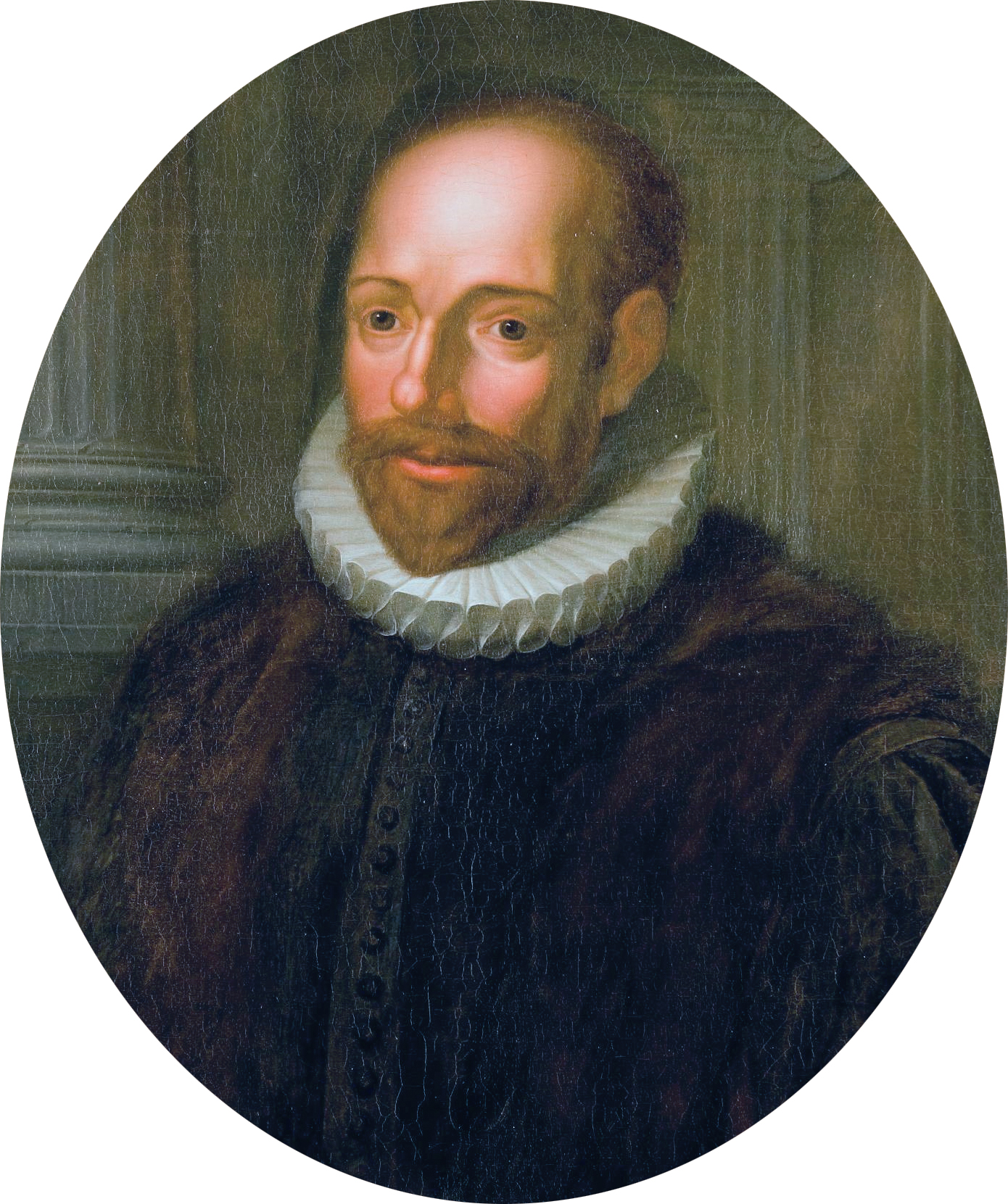

Jacob Harmenszoon, who Latinized his name as Jacobus Arminius (English writers say James Arminius), was born at Oudewater, near Utrecht. The 1853 American edition of his Works, translated by James Nichols and W. R. Bagnall, opens with a life that says he was born "in the year 1560"; Schaff gives the same year.32 Many modern reference works give October 10, 1559, so the year is stated here as 1559 or 1560. His father, a cutler, died when he was an infant. In 1575, while he was studying at Marburg, Spanish troops sacked Oudewater, and the same life records that his mother, brother and sister were among those killed.3
He was among the first students of the new University of Leiden (founded 1575), and the municipal authorities of Amsterdam paid for his further studies on condition that he serve their church. He studied at Geneva under Beza and at Basel, visited Padua and Rome, was licensed to preach at Amsterdam in 1588 and ordained there on August 11, 1588.3 He married Elizabeth Reael, daughter of the Amsterdam judge and magistrate Laurens Jacobsz. Reael, on September 16, 1590.3
The turning point, according to both the 1853 life and Schaff, came when Arminius was asked to refute the Haarlem humanist Dirck Volckertszoon Coornhert, who had attacked Calvin's and Beza's teaching on predestination, and to answer two Delft ministers who had defended a milder view. Schaff writes that "he found the arguments of the opponent stronger than his own convictions, and became a convert to the doctrine of universal grace and of the freedom of will."2 Modern scholars such as Carl Bangs (Arminius: A Study in the Dutch Reformation, 1971) have argued that the story of a sudden conversion is too simple and that Arminius may never have held Beza's view; that reading is reported here as Bangs's, not checked against his book for this lesson. His sermons on Romans 7 (1591) and Romans 9 (1593) at Amsterdam drew complaints from fellow ministers.3
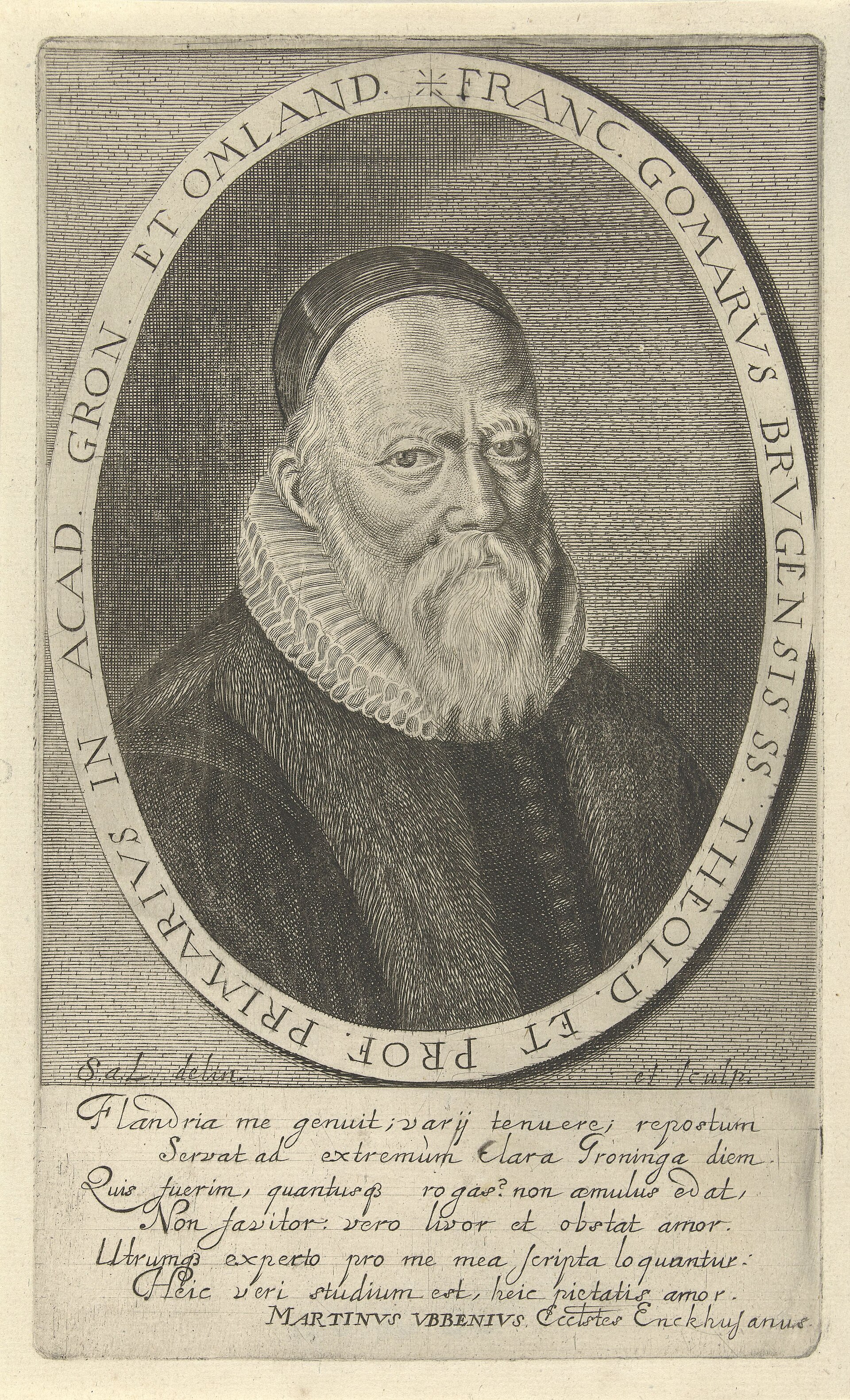
In 1603 the curators of Leiden called him to the chair of theology left vacant by the death of Franciscus Junius. He received his doctorate on July 11, 1603.3 His colleague Franciscus Gomarus (1563 to 1641; Schaff gives his death as 1645) held the strict "supralapsarian" view, that God's decree to elect and reprobate is logically prior even to his decree to permit the fall. Schaff calls Gomarus Arminius's "chief antagonist," and the strict party came to be called Gomarists.2

On October 30, 1608, Arminius delivered his Declaration of Sentiments before the States of Holland at The Hague. It is the fullest statement in his own words of what he believed, and it is the place to read him before reading anyone's summary of him. He set out four decrees. In the Nichols translation:
"I. The First absolute decree of God concerning the salvation of sinful man, is that by which he decreed to appoint his Son, Jesus Christ, for a Mediator, Redeemer, Savior, Priest and King, who might destroy sin by his own death, might by his obedience obtain the salvation which had been lost, and might communicate it by his own virtue." ... "IV. To these succeeds the fourth decree, by which God decreed to save and damn certain particular persons. This decree has its foundation in the foreknowledge of God, by which he knew from all eternity those individuals who would, through his preventing grace, believe, and, through his subsequent grace would persevere."4
On grace he insisted that he gave it everything: "I ascribe to grace the commencement, the continuance and the consummation of all good," so that a regenerate man "can neither conceive, will, nor do any good at all, nor resist any evil temptation" without it. The whole dispute, he said, came down to one question, "is the grace of God a certain irresistible force?" and his answer was that "many persons resist the Holy Spirit and reject the grace that is offered."4 On perseverance he was cautious. He wrote: "I never taught that a true believer can either totally or finally fall away from the faith, and perish," but added that some passages of Scripture "seem to me to wear this aspect" and asked that a synod study the question.4
Early in 1609 he fell seriously ill. He held his last public disputation on July 25, 1609, and died at Leiden on October 19, 1609, at about noon, according to the account of his friend Petrus Bertius printed in the 1853 Works.3 Schaff, who was no Arminian, wrote that "during the controversy which embittered his life he showed a meek, Christian spirit," and quoted Hugo Grotius: "Condemned by others, he condemned none."2
The Remonstrance of 1610
After Arminius died, his students and friends carried on. The leaders were Simon Episcopius (1583 to 1643), who later held Arminius's chair, and Johannes Wtenbogaert (Uytenbogaert, 1557 to 1644), court preacher at The Hague. In 1610 forty-six ministers signed a petition to the States of Holland and West Friesland setting out their position in five articles. Schaff says the articles were drawn up by Wtenbogaert. Because the document "remonstrated" with the authorities, its signers were called Remonstrants, and the reply drafted by their opponents, the Counter-Remonstrance (1611), gave the strict party the name Counter-Remonstrants.2 The petition is commonly dated January 14, 1610; that day is given in many modern accounts but was not confirmed in the sources opened for this lesson.
The full Remonstrance first rejected five propositions it attributed to its opponents (the supralapsarian and sublapsarian forms of predestination, a death of Christ for the elect only, irresistible grace given to the elect alone, and the impossibility of losing that grace), and then stated five positive articles.5 Schaff printed the five positive articles in Dutch, in the Latin of Petrus Bertius, and in his own English translation "made for this edition" from the first Dutch printing of 1612.6 Because these five sentences are the text Dort answered, they are quoted here, in short extracts from Schaff's English.
Article I: election in Christ of those who will believe
"That God, by an eternal, unchangeable purpose in Jesus Christ his Son, before the foundation of the world, hath determined, out of the fallen, sinful race of men, to save in Christ, for Christ's sake, and through Christ, those who, through the grace of the Holy Ghost, shall believe on this his Son Jesus, and shall persevere in this faith and obedience of faith, through this grace, even to the end; and, on the other hand, to leave the incorrigible and unbelieving in sin and under wrath."6 The Remonstrants called this election; their opponents called it "conditional" election, election on the foreseen condition of faith.
Article II: Christ died for all
"That, agreeably thereto, Jesus Christ, the Saviour of the world, died for all men and for every man, so that he has obtained for them all, by his death on the cross, redemption and the forgiveness of sins; yet that no one actually enjoys this forgiveness of sins except the believer."6 The proof texts were John 3:16 and 1 John 2:2.
Article III: no saving faith without regeneration
"That man has not saving grace of himself, nor of the energy of his free will, inasmuch as he, in the state of apostasy and sin, can of and by himself neither think, will, nor do any thing that is truly good (such as saving Faith eminently is); but that it is needful that he be born again of God in Christ, through his Holy Spirit."6 This article matters for every later argument. The Remonstrants affirmed human inability as plainly as their opponents. The popular charge that Arminians deny the fall or teach that people can turn to God unaided is answered by their own third article (see "Claims checked" below).
Article IV: grace is necessary but not irresistible
"That this grace of God is the beginning, continuance, and accomplishment of all good, even to this extent, that the regenerate man himself, without prevenient or assisting, awakening, following and cooperative grace, can neither think, will, nor do good, nor withstand any temptations to evil ... But as respects the mode of the operation of this grace, it is not irresistible, inasmuch as it is written concerning many, that they have resisted the Holy Ghost."6 The text cited was Acts 7.
Article V: perseverance, with the last question left open
Those "incorporated into Christ by a true faith" have "full power to strive against Satan, sin, the world, and their own flesh, and to win the victory," and Christ "keeps them from falling." But whether they can, "through negligence," forsake "the first beginnings of their life in Christ" and become "devoid of grace," "that must be more particularly determined out of the Holy Scripture, before we ourselves can teach it with the full persuasion of our minds."6 The fifth article left open the very point Arminius had left open. Schaff notes that Arminius's followers soon went further and taught that a true believer can finally fall away.5
The Remonstrance closed by saying that these articles, "thus set forth and taught, the Remonstrants deem agreeable to the Word of God, tending to edification, and, as regards this argument, sufficient for salvation, so that it is not necessary or edifying to rise higher or to descend deeper."6 The phrase "rise higher" was aimed at speculation about the order of God's eternal decrees.
Church, state and the road to Dort
The argument was theological, and it was also tied to the politics of a young republic still at war with Spain. Schaff writes that "owing to the intimate connection of Church and State it became inevitably entangled in political issues, and shook the whole country."2 The Remonstrants looked for protection to the States of Holland and to its leading statesman, the Land's Advocate Johan van Oldenbarnevelt (1547 to 1619; Schaff gives his birth year as 1549), and to the young jurist Hugo Grotius (1583 to 1645). They held that the civil authority could keep the peace in the church by limiting what ministers preached on disputed points. Their opponents wanted a national synod to settle doctrine, and they found an ally in Maurice of Nassau, Prince of Orange, the stadtholder and army commander, who was in political conflict with Oldenbarnevelt over the Twelve Years' Truce with Spain (1609) and over the powers of the provinces.2
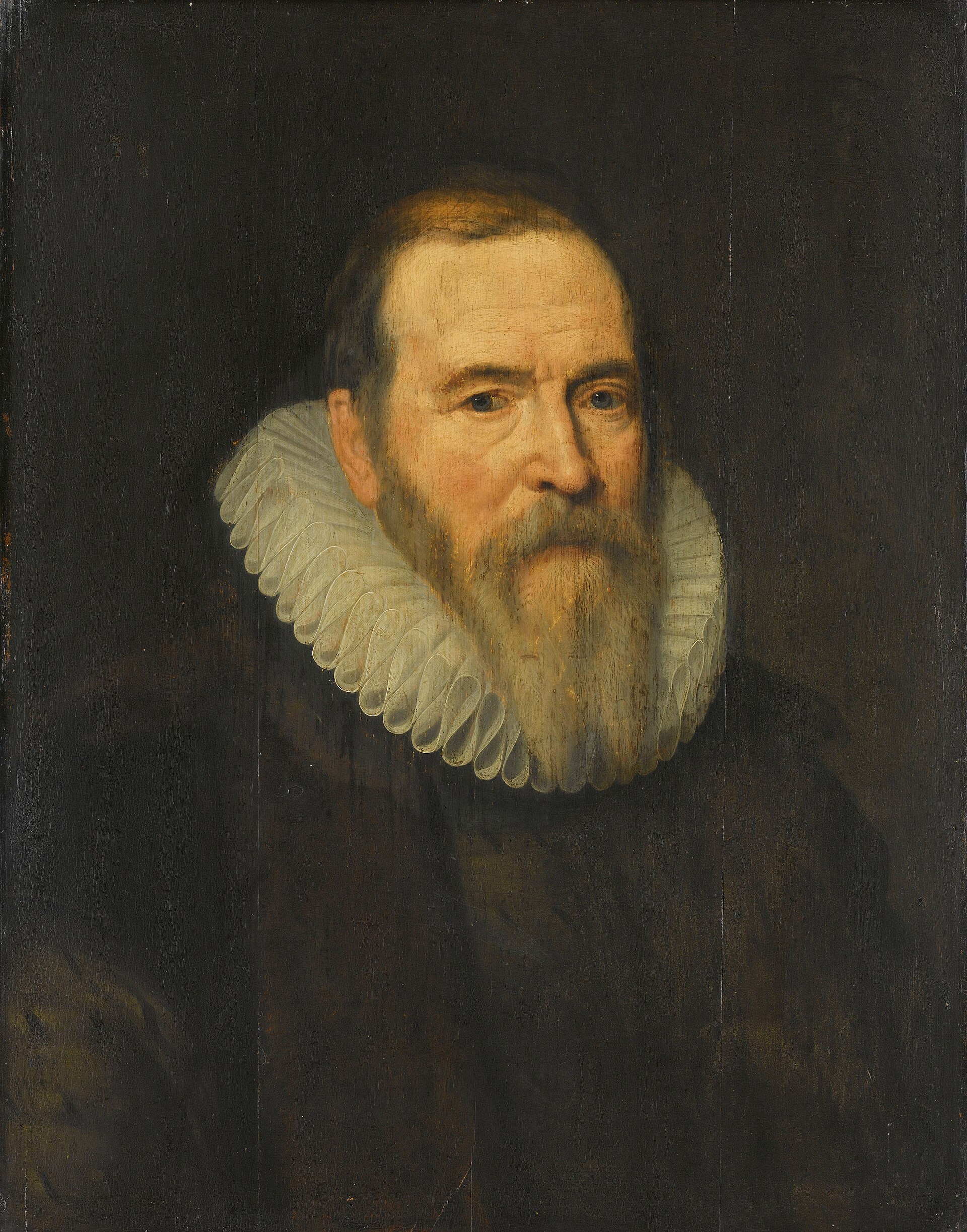

A conference between six ministers from each side was held at The Hague in 1611 (the Collatio Hagiensis) without agreement. A discussion at Delft in 1613 and an edict of the States of Holland in 1614, drafted by Grotius, that urged both sides to keep the peace, did not end the quarrel.2 Towns and congregations divided. In 1617 and 1618 the conflict came to a head: Maurice backed the call for a national synod, and in August 1618 Oldenbarnevelt, Grotius and the Leiden pensionary Rombout Hogerbeets were arrested. Schaff calls the arrest "preceding though independent" of the synod.2 The month of the arrests (August 1618) is the standard date in modern accounts and was not checked in a primary record for this lesson.
The Synod of Dort, 1618 to 1619
The States General convened the national synod at Dordrecht, a fortified river town where the independence of the provinces had been declared in 1572. It opened on November 13, 1618.2 Schaff counts eighty-four members and eighteen secular commissioners, fifty-eight of the members Dutch and the rest foreign. Reformed churches abroad were invited to send delegates with a vote. James I of England sent George Carleton, bishop of Llandaff, John Davenant, Samuel Ward, Joseph Hall (who left early and was replaced by Thomas Goad) and the Scot Walter Balcanquall. Delegates came from the Palatinate, Hesse, the Swiss cities, Geneva, Bremen and other territories. The French Reformed elected delegates, among them Pierre du Moulin, but King Louis XIII forbade them to leave France.2
Schaff reports that King James instructed his delegates to "mitigate the heat on both sides" and to advise the Dutch ministers "not to deliver in the pulpit to the people those things for ordinary doctrines which are the highest points of schools and not fit for vulgar capacity, but disputable on both sides."2 The president was Johannes Bogerman of Leeuwarden; the first secretary was Festus Hommius of Leiden, "both strict Calvinists," in Schaff's words.2
The Remonstrants came as a summoned party. Schaff writes that only three delegates from the provincial synod of Utrecht were Remonstrants, and that they had to yield their seats to orthodox members; "Episcopius and his friends, thirteen in all, were summoned before the Synod simply as defendants, and protested against unconditional submission." His judgment, from a historian who accepted the synod's doctrine, is blunt: "Thus the fate of the Arminians was decided beforehand."2 The Remonstrants wanted to begin by refuting the strict doctrine of reprobation and to debate as equals; the synod insisted on examining them. After weeks of procedural dispute the president dismissed them from the synod in January 1619, and the synod went on to judge their teaching from their writings. A famous Latin dismissal speech is attributed to Bogerman; its wording is reported in later histories and was not checked in the synod's acts for this lesson.
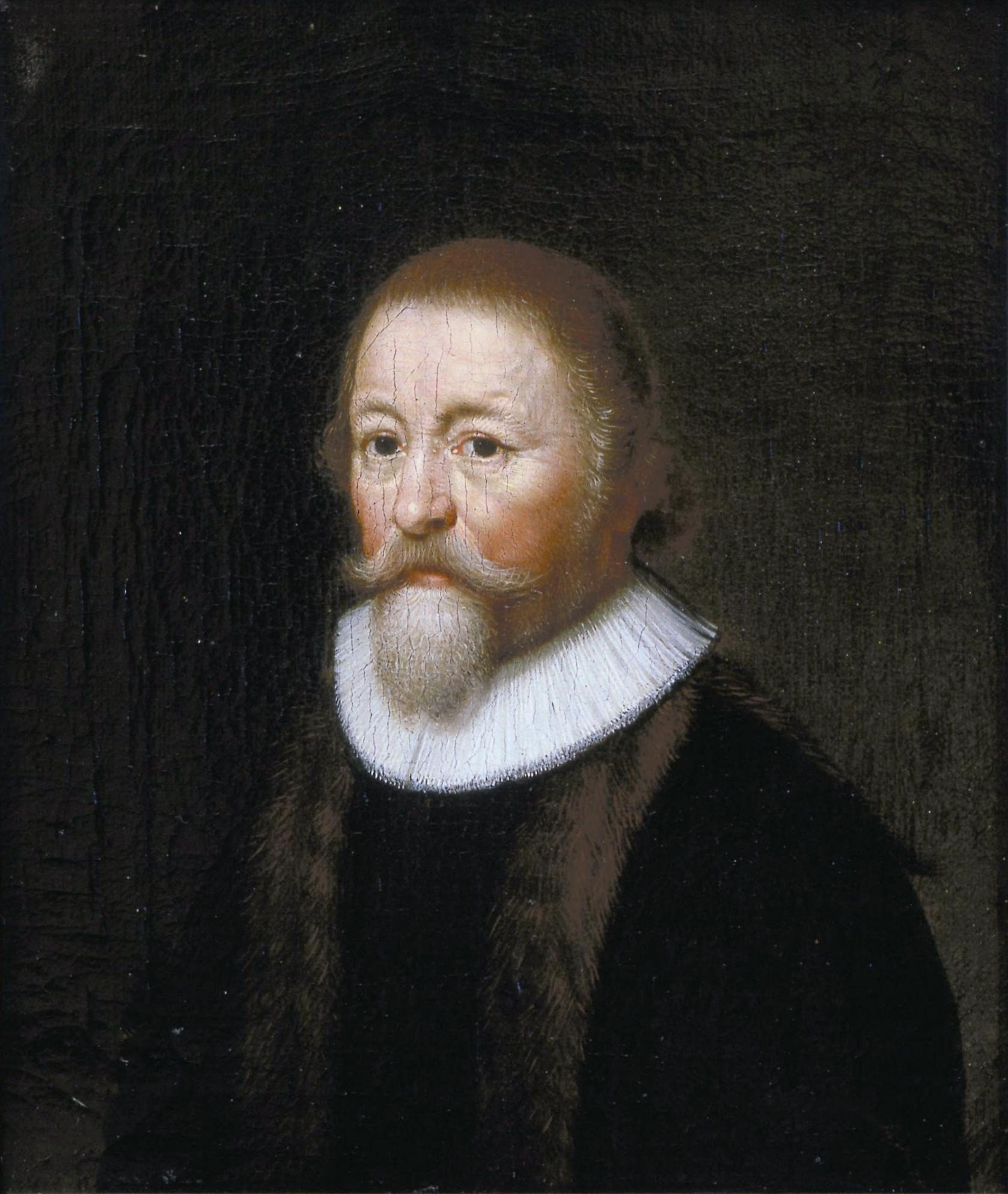

Schaff counts one hundred fifty-four formal sessions, plus many conferences, and notes that the Dutch delegates alone held additional sessions on church government. He gives the closing date as May 9, 1619.2 The Encyclopaedia Britannica's article gives November 13, 1618, to May 9, 1619, in its text and a different closing day in its summary box.7 Many modern accounts date the end of the synod to May 29, 1619, counting the post-acta sessions in which the Dutch members alone dealt with church order and other business. The best reading of the sources opened here: the international synod finished its doctrinal work with the 154th session in early May 1619; the Canons were promulgated on May 6, 1619;8 the Dutch sessions continued later in May. The exact final day is listed as unverified.
The States General paid the costs, which Schaff puts above 100,000 guilders.2 The synod also ordered a new translation of the Bible from the Hebrew and Greek, which appeared in 1637 as the Statenvertaling (States Translation); Schaff mentions the order but not the date of completion, which is the standard date in Dutch reference works.
The Canons of Dort, head by head
The synod's judgment, officially titled in Latin as the judgment of the national synod "on the five heads of doctrine controverted in the Belgic churches," was published on May 6, 1619. It has a preface, then for each head a positive statement in numbered articles and a "rejection of errors," then a conclusion, the signatures, the sentence against the Remonstrants and the approval of the States General.8 The third and fourth heads were treated together, so there are four sections for five points. Schaff prints the full Latin and, after it, the English abridgment used by the Reformed (Dutch) Church in America, which keeps the positive articles and the conclusion. The quotations below are from that English text as Schaff printed it.8
First head: divine predestination (the "U")
The first head starts with the fall and the gospel before it reaches the decree. Article I: "As all men have sinned in Adam, lie under the curse, and are obnoxious to eternal death, God would have done no injustice by leaving them all to perish." Article III: God "mercifully sends the messengers of these most joyful tidings to whom he will." Article V: "The cause or guilt of this unbelief, as well as of all other sins, is nowise in God, but in man himself: whereas faith in Jesus Christ, and salvation through him is the free gift of God."8
Then the decree. Article VI: "That some receive the gift of faith from God, and others do not receive it, proceeds from God's eternal decree." Article VII defines election as "the unchangeable purpose of God, whereby, before the foundation of the world, he hath, out of mere grace, according to the sovereign good pleasure of his own will, chosen, from the whole human race, which had fallen through their own fault, from their primitive state of rectitude, into sin and destruction, a certain number of persons to redemption in Christ." Article IX answers Remonstrance Article I directly: "This election was not founded upon foreseen faith, and the obedience of faith, holiness, or any other good quality or disposition in man, as the prerequisite, cause, or condition on which it depended; but men are chosen to faith and to the obedience of faith, holiness, etc."8
Article XV states reprobation: "not all, but some only, are elected, while others are passed by in the eternal decree," and God "hath decreed to leave in the common misery into which they have willfully plunged themselves," and "for the declaration of his justice, to condemn and punish them forever, not only on account of their unbelief, but also for all their other sins. And this is the decree of reprobation which by no means makes God the author of sin (the very thought of which is blasphemy)."8 The phrase "passed by" places Dort among the infralapsarians, for whom God's decree regards people as already fallen. Schaff notes that "Gomarus represented supralapsarian Calvinism, but the great majority were infralapsarians or sublapsarians."2
The first head also warns pastors. Article XIV says election is to be taught "with reverence, in the spirit of discretion and piety ... without vainly attempting to investigate the secret ways of the Most High," and Article XII says believers gain assurance "not by inquisitively prying into the secret and deep things of God, but by observing in themselves" the "infallible fruits of election" such as "a true faith in Christ, filial fear, a godly sorrow for sin."8
Second head: the death of Christ (the "L")
The second head, which later writers call "limited atonement" or "particular redemption," begins with the worth of Christ's death. Article III: "The death of the Son of God is the only and most perfect sacrifice and satisfaction for sin; is of infinite worth and value, abundantly sufficient to expiate the sins of the whole world." Article V binds the church to preach to everyone: the promise of the gospel "together with the command to repent and believe, ought to be declared and published to all nations, and to all persons promiscuously and without distinction."8
Then Article VIII states the purpose: "it was the will of God, that Christ by the blood of the cross, whereby he confirmed the new covenant, should effectually redeem out of every people, tribe, nation, and language, all those, and those only, who were from eternity chosen to salvation, and given to him by the Father."8 The canon does not use the words "limited atonement." It distinguishes the sufficiency of Christ's death (infinite, enough for all) from its saving intention and effect (the elect). Schaff, who was himself critical of the doctrine, observed that the advocates of a limited atonement "can give no satisfactory explanation" of passages such as John 3:16 and 1 John 2:2, while also noting that all parties at Dort admitted the infinite sufficiency of the sacrifice, so that "the difference of the two theories is of little practical account."9 That is Schaff's opinion; Reformed theologians who hold the doctrine answer that the passages speak of the whole world as the field of the gospel, or of all kinds of people.
Third and fourth heads: corruption and conversion (the "T" and the "I")
The combined third and fourth heads cover the fall and the way God converts sinners. Article III: "all men are conceived in sin, and are by nature children of wrath, incapable of any saving good, prone to evil, dead in sin, and in bondage thereto; and, without the regenerating grace of the Holy Spirit, they are neither able nor willing to return to God." Article IV allows "glimmerings of natural light," some knowledge of God and of the difference between good and evil, but says this light is not "sufficient to bring him to a saving knowledge of God, and to true conversion."8 This is the doctrine later called "total depravity." The canons do not say that fallen people are as bad as they could be; they say the corruption reaches every part of the person and leaves no power to turn to God.
Article X answers Remonstrance Articles III and IV: that some obey the gospel call "is not to be ascribed to the proper exercise of free-will, whereby one distinguishes himself above others equally furnished with grace sufficient for faith and conversion (as the proud heresy of Pelagius maintains); but it must be wholly ascribed to God." Article XII describes regeneration as "a supernatural work, most powerful, and at the same time most delightful, astonishing, mysterious, and ineffable," so "that all in whose hearts God works in this marvelous manner are certainly, infallibly, and effectually regenerated, and do actually believe."8
The phrase "irresistible grace" is not in the canons. Article XVI explains how Dort meant that grace prevails: it "does not treat men as senseless stocks and blocks, nor take away their will and its properties, neither does violence thereto; but spiritually quickens, heals, corrects, and at the same time sweetly and powerfully bends it."8 Reformed writers since have preferred "effectual calling" (the Westminster term) for this reason.
Fifth head: the perseverance of the saints (the "P")
The fifth head grants much of what the Remonstrants said about the weakness of believers. Article III: "those who are converted could not persevere in a state of grace if left to their own strength. But God is faithful, who having conferred grace, mercifully confirms and powerfully preserves them therein, even to the end." Article IV names "the lamentable fall of David, Peter, and other saints." Article VIII then states the doctrine: "it is not in consequence of their own merits or strength, but of God's free mercy, that they do not totally fall from faith and grace, nor continue and perish finally in their backslidings; which, with respect to themselves is not only possible, but would undoubtedly happen; but with respect to God, it is utterly impossible."8
The conclusion: what Dort said it did not teach
The conclusion of the canons is the passage most often skipped by both admirers and critics. The synod listed the charges made against Reformed teaching, in order to deny them. It complained that some had tried to persuade the public that the Reformed doctrine "makes God the author of sin, unjust, tyrannical, hypocritical," and that it "teaches that God, by a mere arbitrary act of his will, without the least respect or view to any sin, has predestinated the greatest part of the world to eternal damnation, and has created them for this very purpose," and that "many children of the faithful are torn, guiltless, from their mothers' breasts, and tyrannically plunged into hell." These, said the synod, are things "which the Reformed Churches not only do not acknowledge, but even detest with their whole soul." It asked readers to judge Reformed faith from "the public confessions of the Churches themselves," and it exhorted teachers to "abstain from all those phrases which exceed the limits necessary to be observed in ascertaining the genuine sense of the Holy Scriptures."8
After the synod: the sentence, the scaffold and the return
The sentence against the Remonstrants deposed their ministers. Schaff writes that "the victory of orthodoxy was obscured by the succeeding deposition of about two hundred Arminian clergymen."2 Many who would not promise to stop preaching were banished. In 1619 exiled Remonstrant leaders organized at Antwerp the body that became the Remonstrant Brotherhood; that founding detail is the brotherhood's own tradition and was not checked in a primary record for this lesson.
Oldenbarnevelt was tried by a special court on charges that Schaff calls "alleged high-treason," condemned and beheaded at The Hague. Schaff gives the date as May 14, 1619; most modern accounts give May 13, 1619, so the date is listed as unverified.2 Schaff calls the sentence unjust. Grotius was sentenced to life imprisonment and held in Loevestein castle; Schaff says he "escaped through the ingenuity of his wife (1621)."2 The standard account says Maria van Reigersberch had him carried out in a chest used to bring him books; the chest detail is told in every Dutch history but is reported here from that tradition, not from a document opened for this lesson. Grotius went on to write On the Law of War and Peace (1625) in exile.
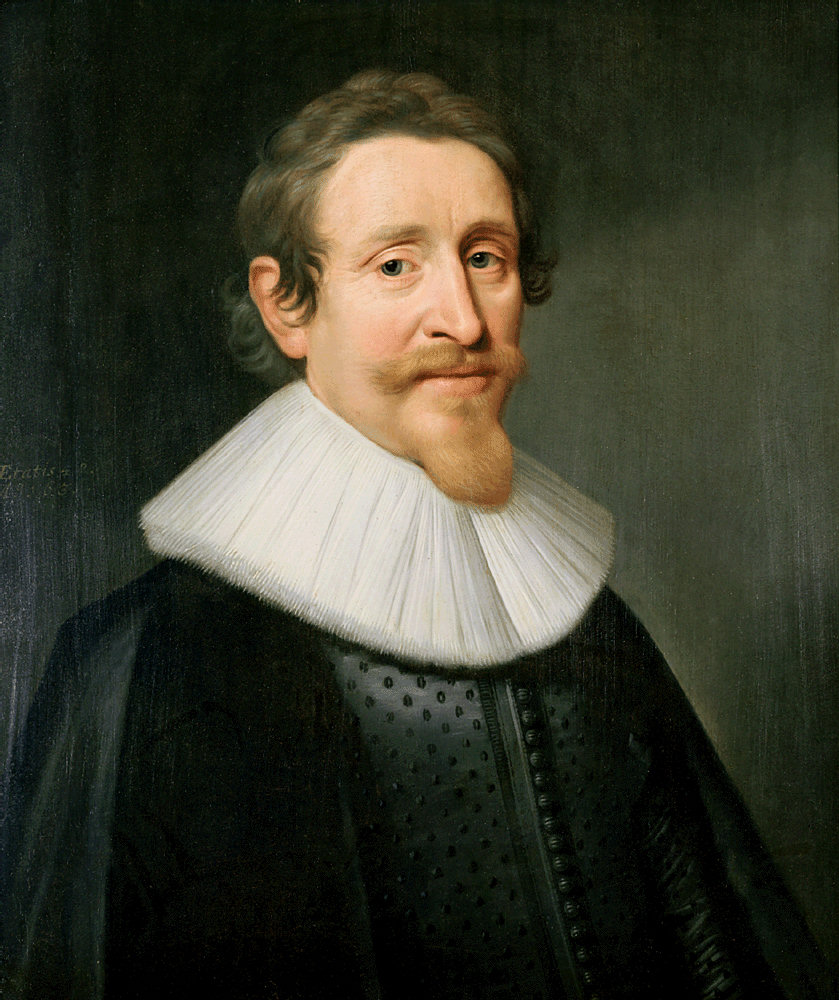

The exile was short. Schaff writes that after the death of Maurice in 1625, under his brother Frederick Henry, the Remonstrants "were allowed to return and to establish churches and schools in every town of Holland," and that they founded a theological college at Amsterdam (1630, in Schaff's account; some sources give 1634 for the opening of the seminary where Episcopius taught).2 The Remonstrant Brotherhood (Remonstrantse Broederschap) still exists. Its website in October 2026 described it as an open and hospitable faith community of 44 congregations ("De Remonstranten vormen met 44 gemeenten een open en gastvrije geloofsgemeenschap").10 Over four centuries the brotherhood moved far from the Remonstrance of 1610 toward a broad and undogmatic liberal Protestantism; its current site says that faith "begins with you" ("Geloof begint bij jou") and that members may "even take the freedom not to believe everything."10 The people called "Arminians" in the English-speaking world today mostly descend from Wesley, not from this Dutch body.
Abroad, the canons were received unevenly. Schaff records that the French Reformed national synod at Alais adopted them on October 1, 1620, and bound ministers by oath to defend them, and the synod of Charenton reaffirmed them in September 1623. "In other Reformed Churches they were received with respect, but not clothed with proper symbolical authority. In England there arose considerable opposition."2 In the Netherlands and in the churches founded by Dutch emigrants, the Canons of Dort became, with the Belgic Confession and the Heidelberg Catechism, the "Three Forms of Unity." They remain confessional standards today of the Reformed Church in America, the Christian Reformed Church in North America, the United Reformed Churches in North America and other Dutch Reformed bodies (see lesson 02).
Schaff's own summary compares Dort to Lutheranism's Formula of Concord: "Both betray a very high order of theological ability and care ... Both consolidated orthodoxy at the expense of freedom, sanctioned a narrow confessionalism, and widened the breach between the two branches of the Reformation."2 He also quotes the praise of delegates who attended: the Swiss delegate Breitinger said "that if ever the Holy Spirit were present in a Council, he was present at Dort," and the later Dutch theologian Campegius Vitringa wrote, "So much learning was never before assembled in one place, not even at Trent." Against that he sets the Remonstrants, "who had no fair hearing," and the American historian John Lothrop Motley, whose Life and Death of John of Barneveld (1874) Schaff says "caricatures the Synod of Dort in a manner unworthy of an impartial historian."2
The Westminster Confession, chapter III
The English-speaking Reformed world received its standard statement a generation after Dort. The Westminster Assembly of Divines, called by the Long Parliament, opened on July 1, 1643, and Schaff counts 1,163 regular sessions to February 22, 1649, after which it lingered as a committee until about March 25, 1652.11 The Confession of Faith was completed and presented to both Houses of Parliament on December 4, 1646; the edition with Scripture proofs was ordered printed on April 29, 1647.12 The story of the Assembly, the Scots and the later Presbyterian churches is in lesson 02. Here the concern is chapter III, "Of God's Eternal Decree," in the 1647 text as Schaff printed it, with the American edition's variants in brackets.13
Section I is wider than salvation: "God from all eternity did, by the most wise and holy counsel of his own will, freely and unchangeably ordain whatsoever comes to pass; yet so as thereby neither is God the author of sin, nor is violence offered to the will of the creatures, nor is the liberty or contingency of second causes taken away, but rather established." Section II rules out the Remonstrant ground of election: although God knows whatever could happen under any conditions, "yet hath he not decreed any thing because he foresaw it as future, or as that which would come to pass upon such conditions."13
Section III: "By the decree of God, for the manifestation of his glory, some men and angels are predestinated unto everlasting life, and others foreordained to everlasting death." Section V describes the elect as chosen in Christ "out of his mere free grace and love, without any foresight of faith or good works, or perseverance in either of them, or any other thing in the creature, as conditions, or causes moving him thereunto." Section VI ties election to the whole order of salvation and ends: "Neither are any other redeemed by Christ, effectually called, justified, adopted, sanctified, and saved, but the elect only."13
Section VII is the Westminster statement of reprobation: "The rest of mankind God was pleased, according to the unsearchable counsel of his own will, whereby he extendeth or withholdeth mercy as he pleaseth, for the glory of his sovereign power over his creatures, to pass by, and to ordain them to dishonor and wrath for their sin, to the praise of his glorious justice." Two verbs carry the weight: to "pass by," and to "ordain them to dishonor and wrath for their sin." Section VIII, like Dort, warns that "the doctrine of this high mystery of predestination is to be handled with special prudence and care," so that believers "may, from the certainty of their effectual vocation, be assured of their eternal election."13
The rest of the system appears in later chapters. Chapter IX, section III: "Man, by his fall into a state of sin, hath wholly lost all ability of will to any spiritual good accompanying salvation." Chapter X, "Of Effectual Calling," says God calls the elect "by his Word and Spirit," "renewing their wills, and by his almighty power determining them to that which is good, and effectually drawing them to Jesus Christ; yet so as they come most freely, being made willing by his grace." Chapter XVII, section I: those "effectually called and sanctified by his Spirit, can neither totally nor finally fall away from the state of grace; but shall certainly persevere therein to the end, and be eternally saved."13
The Westminster Confession, with modifications, passed to Congregationalists in New England (the Cambridge Synod of 1648 adopted it "for substance of doctrine") and to the Particular Baptists, whose 1689 London Confession follows its chapter on the decree closely (see lesson 05 and lesson 06).14 In America the Synod of Philadelphia adopted it in 1729 with a statement that it did not claim authority to impose faith on consciences.14
Amyraut and the school of Saumur
Within the Reformed churches a third position grew up that is neither Dort's particular redemption in its strict form nor Arminianism. It is called Amyraldianism, or "hypothetical universalism," after Moïse Amyraut (Moses Amyraldus, 1596 to 1664), professor at the French Reformed academy of Saumur, whose Brief Traitté de la Prédestination appeared in 1634. Schaff describes it as an attempt "not to set aside, but to moderate and liberalize Calvinism," prepared by the Scottish teacher John Cameron (1580 to 1625).15
In Schaff's summary, Amyraut kept "the double decree of election and reprobation," but taught that God first decreed "a universal salvation through the universal sacrifice of Christ offered to all alike" on condition of faith, and then, since no fallen person will meet that condition unaided, decreed to give faith to the elect. "The universal redemption scheme precedes the particular election scheme, and not vice versa." Amyraut also distinguished "natural ability" from "moral ability": people have the faculties to believe but lack the willingness.15 Schaff adds that "his system is an approach, not so much to Arminianism, which he decidedly rejected, as to Lutheranism, which likewise teaches a universal atonement and a limited election."15
The French national synods of Alençon (1637) and Charenton (1645) dealt with the case, and Jean Daillé later published a long defense of both synods against Amyraut's critics. His defenders, among them Jean Daillé and David Blondel, said his teaching was consistent with Dort, "where German Reformed and Anglican delegates professed similar views against the supralapsarianism of Gomarus." His opponents, among them Pierre du Moulin, Friedrich Spanheim, André Rivet and the Genevan theologians, called it "a compromise between Calvinism and Arminianism."15 In Switzerland the Helvetic Consensus Formula of 1675, written by Johann Heinrich Heidegger of Zurich with Lucas Gernler of Basel and Francis Turretin of Geneva, was drawn up against the Saumur theology. Schaff notes it "never extended its authority beyond Switzerland."15 The Saumur ideas lived on: Schaff traces the natural and moral ability distinction to Jonathan Edwards and the New England theology, and many modern Baptists and evangelicals who call themselves "four-point Calvinists" (holding every point except limited atonement) stand near Amyraut whether or not they use his name.
Where TULIP came from
None of the seventeenth century documents use the word TULIP. The tulip mania that swept the Dutch Republic in the 1630s has nothing to do with it; the acronym is an English language teaching device from the twentieth century, and its letters follow English words that do not appear in the canons. The order is also changed: Dort's heads run election, atonement, corruption and conversion, perseverance (U, L, T and I, P), while the acronym puts depravity first to spell a word.
For a long time the earliest known printed use was Loraine Boettner's The Reformed Doctrine of Predestination (1932). The Covenant College historian Kenneth J. Stewart, investigating the question in an essay published in 2008 ("The Points of Calvinism: Retrospect and Prospect," Scottish Bulletin of Evangelical Theology 26.2), which Taylor reported would be revised for his book Ten Myths About Calvinism, found Boettner to be the source used by the popular 1963 book of David Steele and Curtis Thomas, but noted that "Boettner claims no originality in introducing [the acronym]."1617 In 2009 readers of the evangelical writer Justin Taylor's blog traced it back to 1913.17 In that year William H. Vail published "The Five Points of Calvinism Historically Considered" in The Outlook (New York), vol. 104, page 394, and wrote:
"Some eight years ago I had the privilege of hearing a popular lecture by Dr. McAfee, of Brooklyn, upon the Five Points of Calvinism, given before the Presbyterian Union of Newark, New Jersey, which was most interesting as well as instructive. To aid the mind in remembering the Five Points, Dr. McAfee made use of the word Tulip, which, possessing five letters, lends itself nicely to the subject in hand, especially as it ends with the letter P, as will be seen later."16
Cleland Boyd McAfee (1866 to 1944) was then pastor of the Lafayette Avenue Presbyterian Church in Brooklyn; he later taught theology at McCormick Seminary, was moderator of the Presbyterian Church in the U.S.A. General Assembly in 1929 (the Confessional Presbyterian post gives 1929; the PCA Historical Center post gives 1930), and wrote the hymn "Near to the Heart of God."1618 The lecture is therefore dated "about 1905" from Vail's "some eight years ago"; 1913 is the earliest printed record found so far. The quotation above is taken from the PCA Historical Center's transcription; the 1913 magazine page itself was not opened for this lesson. Boettner's 1932 wording, as quoted by the Confessional Presbyterian blog, reads: "T, Total Inability; U, Unconditional Election; L, Limited Atonement; I, Irresistable (Effacious) Grace; and P, Perseverance of the Saints" (the misspellings are in the quotation as given).18 The same writer reports that McAfee's letters differed slightly from Boettner's in the meaning of the U; McAfee's exact five words were not confirmed for this lesson.
Several Reformed historians object to the acronym. The Confessional Presbyterian blog cites Richard A. Muller's "negative assessment" in Calvin and the Reformed Tradition (2012), and Boettner himself cautioned readers "against a too close identification of the Five Points and the Calvinistic system," since "the system really includes much more."18 Their point: the five points were Dort's answer to five Remonstrant articles, a response to a particular dispute, not a summary of the Reformed faith, which also includes covenant theology, the sacraments, church order and worship.
The Lutheran answer: Formula of Concord, Article XI
Lutherans are sometimes placed on one side or the other. They place themselves on neither. The Formula of Concord (1577), which entered the Book of Concord in 1580 (see lesson 01), treats "the eternal predestination and election of God" in Article XI. Its Epitome says there had been no public controversy on the point "among the divines of the Augsburg Confession," but that the article was included so that disputes would not arise later. The quotations here are from the English translation printed by Schaff.19
The Formula begins with a distinction: "there is a distinction between the foreknowledge and the predestination or eternal election of God." Foreknowledge "extends both to good and evil men; but nevertheless it is not the cause of evil." Predestination "extends only to the good and beloved children of God, and this is the cause of their salvation." It is "not to be searched out in the hidden counsel of God, but is to be sought in the Word of God," which "leads us to Christ, he is that book of life in which all are inscribed and elected who attain eternal salvation."19
Two moves separate this from Dort. First, election is real and is the cause of salvation, but there is no matching decree of reprobation: "Neither God nor his election, but their own wickedness, is to blame if they perish." Second, God's call is universal and earnest: "Christ calls all sinners to him, and promises to give them rest. And he earnestly wishes that all men may come to him." The Gospel teaches "that 'God hath concluded all under unbelief, that he might have mercy upon all;' and that 'he is not willing that any should perish.'" Matthew 22:14, "many are called, but few are chosen," is "not to be so understood as if God were unwilling that all should be saved."19
The negative section rejects, among others, the teaching "that God is not willing that all men should be saved, but that some men are destined to destruction, not on account of their sins, but by the mere counsel, purpose, and will of God," and also the teaching "that the mercy of God and the most holy merit of Christ is not the sole cause of the divine election, but that there is also some cause in us, on account of which cause God has chosen us to eternal life." It calls these dogmas "false, horrid, and blasphemous."19 The first rejection strikes at the Reformed doctrine of reprobation; the second at any election based on foreseen faith, the Remonstrant view that would come a generation later.
So the Lutheran position, in its own terms, holds together what the two Reformed parties separated: conversion is entirely God's work (against the Remonstrants), and grace is universal and can be resisted, Christ died for all, and a believer can fall away (against Dort). The Epitome's article on good works rejects the teaching "that faith in Christ is not lost, and that the Holy Spirit, even though a man sin wittingly and willingly, nevertheless dwells in him."19 Why some are saved and others not is left unexplained. Lutheran theologians since have called this a refusal to go beyond Scripture; Reformed and Arminian critics have called it an inconsistency. When the Missouri Synod's C. F. W. Walther and the Ohio Synod's theologians fought the Election Controversy of the 1880s, the issue was whether election is "in view of faith" (intuitu fidei); that fight belongs to lesson 01. The Lutheran Church Missouri Synod's own summary of belief today says that Jesus "became man to suffer and die for the sins of all humanity," and that its congregations hold the 1580 Book of Concord to be "a correct interpretation and presentation of biblical doctrine."20
Schaff observed that at the time of Dort "the Lutheran Church sympathized to some extent with the Arminian," and that Lutherans were "averse" to the synod "under the false impression that the condemnation of Arminianism was aimed at their own creed."2 That was his reading; Lutheran writers then and since have rejected the Remonstrant view of election as firmly as the Reformed one.
The Catholic and Orthodox frame, briefly
The Protestant quarrel had Catholic parallels. The Council of Trent, in its sixth session (January 13, 1547), had already condemned propositions close to both strict Calvinism and strict Lutheranism on free will. In J. Waterworth's 1848 translation, Canon IV anathematizes anyone who says "that man's free will moved and excited by God, by assenting to God exciting and calling, nowise co-operates towards disposing and preparing itself for obtaining the grace of Justification; that it cannot refuse its consent, if it would." Canon XVII anathematizes anyone who says "that the grace of Justification is only attained to by those who are predestined unto life; but that all others who are called, are called indeed, but receive not grace, as being, by the divine power, predestined unto evil." Canon XV rejects the claim that a justified man "is bound of faith to believe that he is assuredly in the number of the predestinate."21 Within Catholicism the Dominican and Jesuit schools fought their own long dispute on grace and free will around 1600, and the Jansenist controversy followed in the 1640s; Schaff draws the comparison but those debates lie outside this lesson.2 The Orthodox churches speak of salvation as synergy, the cooperation of human freedom with divine grace, and have never adopted any form of the Reformed decree; the Orthodox churches are introduced in lesson 13.
Wesleyan Arminianism
In the English-speaking world, the word "Arminian" came to mean, more than anything else, the theology of John Wesley (1703 to 1791). His life, his Aldersgate experience of May 24, 1738, and the Holiness revival that grew from his teaching are in Part C, lesson 01, and the Methodist denominations are in lesson 07. This section covers only his side of the five points.
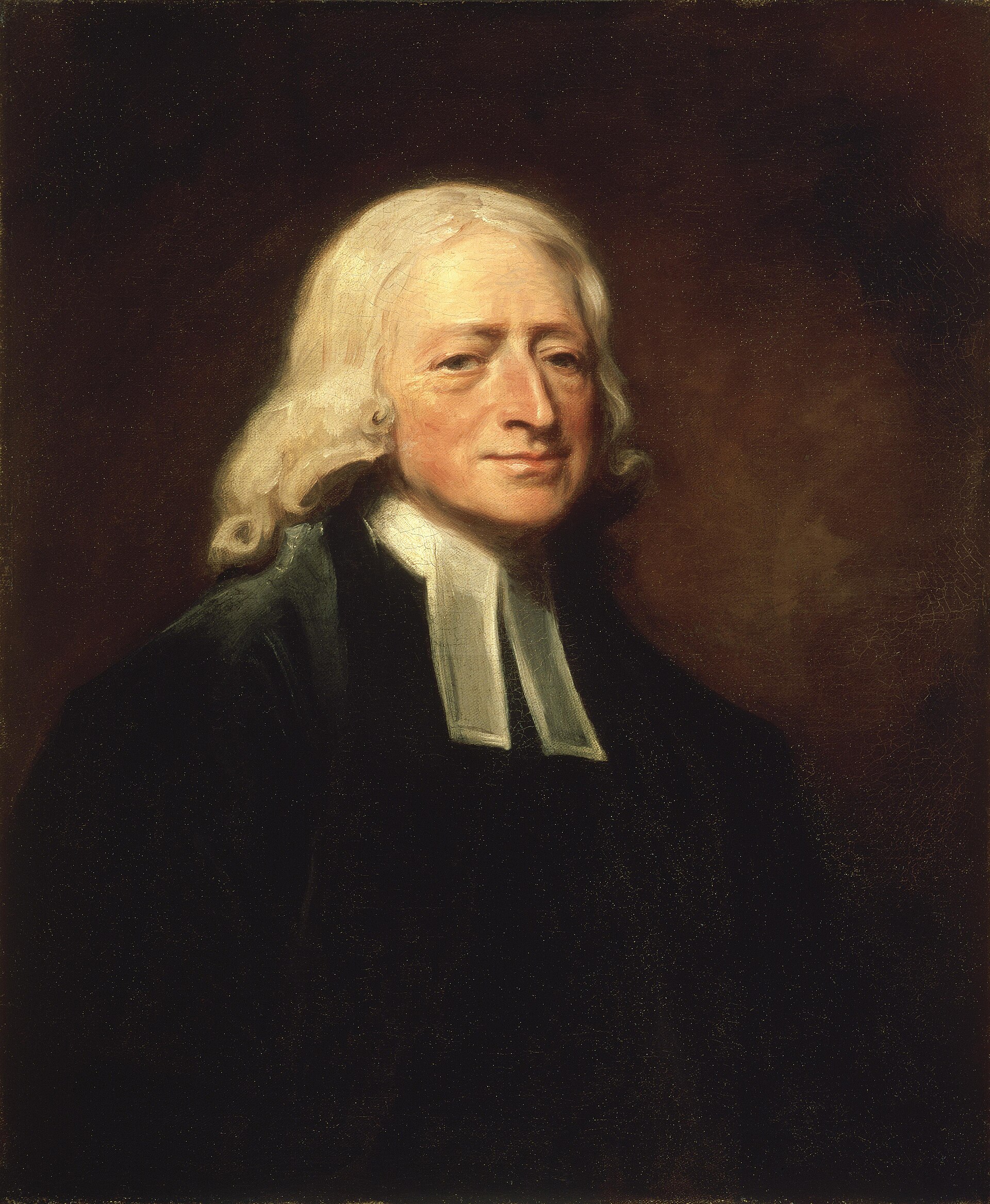

The break within the early revival came over predestination. George Whitefield, Wesley's partner in field preaching, was a Calvinist. Wesley preached and published his sermon "Free Grace" on Romans 8:32 (the Wesley Center Online edition is headed "Preached at Bristol, in the year 1740"; many historians date the preaching and first printing to 1739).22 Its thesis: "The grace or love of God, whence cometh our salvation, is FREE IN ALL, and FREE FOR ALL." Against unconditional reprobation it argued that the doctrine "represents our blessed Lord ... as an hypocrite, a deceiver of the people, a man void of common sincerity. For it cannot be denied, that he everywhere speaks as if he was willing that all men should be saved." It went further, saying the doctrine "destroys all his attributes at once: It overturns both his justice, mercy, and truth."22 Wesley's preface asked anyone who answered him to do it "in love, and in the spirit of meekness."22 Whitefield replied in print, and the revival divided into Wesleyan and Calvinistic Methodist wings; the Calvinistic wing became, in Wales, the Calvinistic Methodist (later Presbyterian) Church of Wales. The two men were reconciled in later years. Schaff notes that Wesley's sermon on Whitefield's death (1770) was "eulogistic," and that Charles Wesley wrote the polemical hymn on "The Horrible Decree," with lines such as "To limit Thee they dare, / Blaspheme Thee to Thy face, / Deny their fellow-worms a share / In Thy redeeming grace."23
Wesley's distinctive contribution was prevenient grace: the grace that "goes before" any human response. In Schaff's quotation, Wesley wrote that "No man living ... is without some preventing grace, and every degree of grace is a degree of life. There is a measure of free will supernaturally restored to every man."23 This answers the Reformed charge that Arminianism makes fallen human nature the source of faith. In Wesley's account the fall left people unable, as Dort said; God's grace in Christ, given to all, restores enough freedom that the gospel can be accepted or refused. A person who believes has been enabled by grace; a person who refuses has resisted it.
When Wesley sent the American Methodists their doctrinal standard in 1784, he abridged the Church of England's Thirty-nine Articles to twenty-five. Schaff writes that Wesley omitted the articles "which are strongly Augustinian, especially Article 17, of Predestination (which teaches unconditional election to salvation and the perseverance of the elect)."23 The United Methodist Church still prints those Articles of Religion. Article VIII, "Of Free Will," reads: "The condition of man after the fall of Adam is such that he cannot turn and prepare himself, by his own natural strength and works, to faith, and calling upon God; wherefore we have no power to do good works, pleasant and acceptable to God, without the grace of God by Christ preventing us, that we may have a good will, and working with us, when we have that good will." Article XII, "Of Sin After Justification," says: "After we have received the Holy Ghost, we may depart from grace given, and fall into sin, and, by the grace of God, rise again and amend our lives."24 The word "preventing" is the old English sense of "going before." Article VIII is taken almost word for word from Article X of the Thirty-nine Articles, which Wesley kept; it is the Article of Predestination (XVII) that he removed.
Schaff's description of the result: Methodism "holds to the essential doctrines of the Reformation, but also to the five points of Arminianism, with some important evangelical modifications."2 The Holiness churches (the Church of the Nazarene, the Wesleyan Church, the Free Methodists, the Salvation Army) and most Pentecostal bodies inherited this Wesleyan framework; see lesson 07 and lesson 13.
Where the churches line up today
Each family's position is best read in its own confession, so this section quotes the current or standard text where one was opened, and points to the denominational lessons for history and membership figures.
Presbyterian and Reformed churches
The Presbyterian Church in America and the Orthodox Presbyterian Church require officers to receive the Westminster Confession and Catechisms as containing the system of doctrine taught in Scripture; the Dutch Reformed bodies (the Christian Reformed Church, the Reformed Church in America, the United Reformed Churches) keep the Canons of Dort among the Three Forms of Unity. These are the churches that teach the five points as confessional doctrine (lesson 02).
American Presbyterianism also produced the first large confessional revision on the subject. In 1810 a group of Kentucky and Tennessee ministers, who had been licensed during the revival while declaring their dissent from what they called the doctrine of "fatality," organized the independent Cumberland Presbytery on February 4, 1810. Schaff explains that "fatality" meant "the doctrine of absolute decrees."25 The Cumberland Presbyterian Church's own Confession (adopted after the Cumberland Synod was formed in 1818 and revised in 1829) kept much of Westminster but dropped unconditional reprobation, while keeping the perseverance of believers. In 1903 the Presbyterian Church in the U.S.A. (the "Northern" church) adopted a Declaratory Statement. Its first section reads: "concerning those who are saved in Christ, the doctrine of God's eternal decree is held in harmony with the doctrine of His love to all mankind, His gift of His Son to be the propitiation for the sins of the whole world, and His readiness to bestow His saving grace on all who seek it," and "concerning those who perish ... that God desires not the death of any sinner ... that His decree hinders no man from accepting that offer; and that no man is condemned except on the ground of his sin." The second section declared that chapter X, section 3 "is not to be regarded as teaching that any who die in infancy are lost."26 That revision, in the words of the 1931 edition of Schaff, "opened the way for the return of the Cumberland Presbyterian Church," and the union was declared "in full force and effect" in 1906, though part of the Cumberland church stayed separate and continues today.27
Baptists
Baptists have been divided on this question from their beginnings in the 1600s. The General Baptists (Thomas Helwys's line, 1612) were Arminian; the Particular Baptists (1630s onward, the 1689 London Confession) were Calvinist; the full story is in lesson 06. Schaff describes the General or Arminian Baptists as differing from the Particular Baptists "in rejecting unconditional election and the perseverance of saints, and in maintaining the freedom of will and the possibility of falling from grace." In America, Benjamin Randall organized a Baptist church at New Durham, New Hampshire, in 1780, "which became the nucleus of a new denomination, holding the doctrines of conditional election, free will, and open communion": the Free Will Baptists.28
The Southern Baptist Convention's confession, the Baptist Faith and Message (2000), Article V, "God's Purpose of Grace," is written to hold both groups: "Election is the gracious purpose of God, according to which He regenerates, justifies, sanctifies, and glorifies sinners. It is consistent with the free agency of man, and comprehends all the means in connection with the end." The same article affirms perseverance: "All true believers endure to the end. Those whom God has accepted in Christ, and sanctified by His Spirit, will never fall away from the state of grace, but shall persevere to the end."29 Many Southern Baptists who reject unconditional election still hold "once saved, always saved," so their position matches neither Dort nor the Remonstrance point for point. A LifeWay Research survey released June 19, 2012, as reported by Christianity Today, found that 30 percent of Southern Baptist pastors described their churches as Calvinist or Reformed and 30 percent as Arminian or Wesleyan; 16 percent called themselves "five-point Calvinists," up from 10 percent in 2006 and 2011; and more than 60 percent were concerned about Calvinism's influence in the convention.30
Methodists, Holiness churches and Pentecostals
The United Methodist Church, the Global Methodist Church, the African Methodist Episcopal churches and the Holiness bodies teach Wesleyan Arminianism through the Articles of Religion or their own articles of faith (lesson 07). The Assemblies of God and most other Pentecostal bodies, which grew out of the Holiness movement, also reject unconditional election and teach that a believer can fall away (lesson 13). The position statements of the Global Methodist Church and the Assemblies of God were not opened for this lesson, so these two descriptions rest on the denominational lessons.
Anglicans, Lutherans and others
The Church of England's Article XVII teaches predestination to life in cautious terms and says nothing of reprobation; English churchmen have read it in both Calvinist and Arminian ways since the reign of Charles I, when Archbishop William Laud's party was called "Arminian" by its opponents (lesson 04). Schaff wrote that the Arminian doctrines "have been extensively adopted in the Episcopal Church since the reign of Charles I."2 Lutherans hold Formula of Concord Article XI, described above. Anabaptists, Mennonites and Quakers have generally taught human freedom to respond to grace and never adopted the Reformed decree (lesson 08, lesson 09). The Restoration churches of Stone and Campbell taught that faith comes by hearing the word and that baptism is the response to it, positions that reject the Westminster decree (lesson 10).
The five questions side by side
The chart below sets the five disputed points against five documents, each in the wording of the document itself as quoted in this lesson. Section numbers are given in parentheses. The chart reduces long texts to a few words, so read the quotations above before relying on any cell.
What the record shows and what it does not
- Documented fact: Arminius delivered his Declaration of Sentiments on October 30, 1608, and died at Leiden on October 19, 1609. Forty-six ministers signed the Remonstrance in 1610. The Synod of Dort opened November 13, 1618, held 154 formal sessions and published its canons on May 6, 1619. The Westminster Confession was presented to Parliament on December 4, 1646. Wesley's Articles of Religion (1784) omit the Anglican article on predestination.
- Documented fact: The Canons of Dort do not use the phrases "limited atonement" or "irresistible grace," and TULIP is a twentieth century English device first recorded in 1913.
- A church's own claim: The Synod of Dort claimed its doctrine was "drawn from the Word of God" and agreeable to the Reformed confessions; the Remonstrants claimed their articles were "agreeable to the Word of God" and sufficient for salvation; the Formula of Concord claims its article gives God "his own proper honor" while giving no handle to despair. Each claims Scripture; the site does not decide between them.
- Scholarly reading: Schaff judged that the Remonstrants "had no fair hearing" and that the outcome was "decided beforehand," while also praising the learning of the synod. Whether Calvin himself taught a limited atonement is disputed among historians of doctrine.
- Open questions: Arminius's birth year (1559 or 1560); the exact closing date of the synod (May 9 or May 29, 1619, depending on what is counted); the day of Oldenbarnevelt's execution (May 13 or May 14, 1619, by source); the exact words McAfee used for each letter of TULIP about 1905.
Claims checked
Claims about Calvinism and Arminianism circulate in sermons, study Bibles, websites and popular histories on every side. Each is rated Supported, Partly supported, Unsupported, Refuted or Unresolved against the documents quoted above.
"John Calvin wrote the five points (TULIP)." Refuted.
Calvin died in 1564. The five points are the Synod of Dort's answers (1619) to the Remonstrance (1610), and the TULIP acronym is first recorded in 1913, recalling a lecture of about 1905.816 Calvin did teach unconditional election and a double predestination in the Institutes, so the doctrines are related to his teaching, but the formulation is not his.1
"The Synod of Dort set out to summarize Calvinism in five points." Partly supported.
The synod did produce the five heads that came to stand for Calvinism, but it chose five because the Remonstrance had five articles, and its own title speaks of "five heads of doctrine controverted in the Belgic churches."8 The Reformed churches' fuller statements of faith were the Belgic Confession, the Heidelberg Catechism and later Westminster, and Boettner himself warned against "a too close identification of the Five Points and the Calvinistic system."18
"Arminians deny original sin and teach that people can choose God by their own power." Refuted, as a statement of the Remonstrance and of Wesley.
Remonstrance Article III says that man "can of and by himself neither think, will, nor do any thing that is truly good (such as saving Faith eminently is)," and Article IV says that without grace even "the regenerate man himself" can do no good.6 Arminius said he ascribed to grace "the commencement, the continuance and the consummation of all good."4 The Methodist Article VIII says fallen man "cannot turn and prepare himself, by his own natural strength and works, to faith."24 Individual later writers who called themselves Arminian did move toward a weaker doctrine of sin (Schaff says some Remonstrants leaned toward Socinianism and rationalism), but the founding documents do not teach it.2
"Arminius was a Pelagian, or a semi-Pelagian." Unsupported for Arminius; disputed for some followers.
Pelagianism, condemned in the fifth century, denied that Adam's sin corrupted his descendants and held that people can obey God without inward grace. Arminius's Declaration affirms the need of "preventing and exciting" grace for every good act.4 Dort's canons do accuse the Remonstrant position of following "the proud heresy of Pelagius" on the point of what distinguishes one person who believes from another who does not (III/IV.10).8 Schaff himself described later Arminianism as "a moderated semi-Pelagianism."2 The label is the opponents' interpretation; the Remonstrants rejected it.
"Calvinists teach that God created most people simply in order to damn them, regardless of sin." Refuted as a statement of Dort; the underlying objection is Unresolved.
The Canons' conclusion names this very charge, that God "without the least respect or view to any sin, has predestinated the greatest part of the world to eternal damnation, and has created them for this very purpose," among the things the Reformed churches "detest with their whole soul." Dort I.15 says the non-elect are condemned "not only on account of their unbelief, but also for all their other sins," and Westminster III.7 says God ordains them "to dishonor and wrath for their sin."813 Arminian, Wesleyan and Lutheran critics reply that if God decreed to pass some by and to withhold the grace without which they cannot believe, the result for them is the same; Wesley's "Free Grace" is the classic statement of that reply.22 That argument is theological and the site does not settle it.
"Calvin taught limited atonement exactly as Dort later did." Unresolved.
Historians of doctrine disagree. Schaff states that Calvin "says that Christ died sufficienter pro omnibus, efficaciter pro electis" (sufficiently for all, effectively for the elect), a formula older than Calvin that Dort also used in substance.5 Some scholars argue that Calvin held a universal atonement and that his successors changed his teaching; others, such as Richard Muller, argue that the "Calvin against the Calvinists" picture is mistaken and that the question was not posed in Calvin's day in Dort's terms. Those scholarly positions are reported here from secondary summaries and were not checked in the original books.
"Dort was a free debate between equals." Refuted. "Dort was a political show trial and nothing more." Partly supported.
The Remonstrants were summoned as defendants, without votes, and dismissed in January 1619; Schaff, who accepted the synod's doctrine, wrote that "the fate of the Arminians was decided beforehand."2 The arrests of Oldenbarnevelt and Grotius and the execution of Oldenbarnevelt tie the synod's setting to Maurice's political victory. But the doctrinal work was real: foreign delegates from Britain, Germany and Switzerland took part, debated among themselves (Schaff notes that German Reformed and Anglican delegates held views milder than Gomarus's) and signed, and the canons' wording shows compromises between infralapsarian and supralapsarian members.215
"Lutherans are basically Arminians" (or "basically Calvinists"). Refuted.
The Formula of Concord rejects the teaching that there is "some cause in us" for election and also the teaching that some are "destined to destruction" by God's mere will.19 It denies both the Remonstrant ground of election and the Reformed decree of reprobation, as shown above.
"Wesley and Whitefield broke over predestination and stayed enemies." Partly supported.
They did divide the revival over predestination around 1740, and Wesley's "Free Grace" was a public attack on the Calvinist doctrine.22 But Schaff notes that the sermon on Whitefield's death (1770) was "eulogistic."23 The quarrel over doctrine continued; the personal break was healed.
"Southern Baptists are a Calvinist denomination" (or "an Arminian one"). Unsupported either way.
The Baptist Faith and Message (2000) affirms election and perseverance in terms both sides accept, and the 2012 LifeWay survey found 30 percent of pastors calling their churches Calvinist or Reformed and 30 percent Arminian or Wesleyan, with the rest in between or unsure.2930
"Grotius escaped from prison in a chest of books." Supported in substance.
Schaff confirms the escape in 1621 "through the ingenuity of his wife."2 The chest is the detail of the standard Dutch account; a chest said to be the one is shown at Loevestein castle and the Rijksmuseum, and the claim to be the original object is museum tradition not checked for this lesson.
Hard questions and answers
If God's election is unconditional and certain, why should a Calvinist preach to everyone or pray for conversions?
Dort answers in its own text. The second head says the gospel promise and command "ought to be declared and published to all nations, and to all persons promiscuously and without distinction," and the third and fourth heads say the supernatural work of regeneration "in nowise excludes or subverts the use of the gospel," because God works through means, as he sustains natural life through food (III/IV.17).8 Westminster III.6 says God "foreordained all the means" along with the end.13 Historically, Calvinists such as Whitefield, the Particular Baptist William Carey and the Princeton and Dutch Reformed missions were among the leading evangelists and missionaries. Arminian critics answer that the sincerity of an offer to people for whom Christ did not intend to die is the real difficulty, which is Wesley's argument in "Free Grace."22
If a person's response decides whether grace saves him, can he boast that he chose better than his neighbor?
This is Dort's sharpest objection (III/IV.10: grace is not to be ascribed to a free will "whereby one distinguishes himself above others equally furnished with grace").8 Arminius answered that every good desire is itself the fruit of "preventing and exciting" grace, so that nothing in the believer's response is his own apart from grace.4 The Methodist Article IX, "Of the Justification of Man," says believers are accounted righteous "only for the merit of our Lord and Saviour Jesus Christ, by faith, and not for our own works or deservings."24 Whether that answer works is the core of the disagreement.
Is the Lutheran position consistent, or does it simply refuse to answer?
Reformed theologians object that if conversion is God's work alone and God wills all to be saved, either all would be saved or God's will fails; so the Formula must choose. The Formula's reply, in its own words, is that predestination "is not to be searched out in the hidden counsel of God, but is to be sought in the Word of God," and that "Other surmisings should be wholly dismissed from the minds of the godly."19 Lutheran theologians call this keeping to what is revealed: the Word reveals that salvation is all of grace and that damnation is all of human fault, and does not reveal why some resist. Whether a theology may leave such a question unresolved is a judgment readers will make for themselves.
A Catholic reader asks: is this just the old Augustine and Pelagius debate again, and where does Rome stand?
Schaff himself draws the parallel to the Pelagian and Jansenist controversies.2 Both Protestant parties claimed Augustine for their doctrine of grace. Trent's sixth session (1547) taught that the human will, moved by God, cooperates with grace and can refuse it (Canon IV), and condemned the view that only the predestined receive the grace of justification while others are "predestined unto evil" (Canon XVII).21 On those points Trent stands nearer the Remonstrants than Dort. On others (the merit of good works, the sacraments, assurance) the Remonstrants and Wesley remained Protestant and rejected Trent; Trent's Canon XV, against the claim that a justified man must believe he is assuredly among the predestined, was aimed at Protestant teaching on assurance generally.21
A skeptic asks: is this simply the philosophers' free will problem in church dress?
Partly. Westminster III.1 says God ordains "whatsoever comes to pass" yet "the liberty or contingency of second causes" is "not taken away, but rather established," which is a form of what philosophers call compatibilism, the view that freedom and determination can both be true.13 Arminians hold that grace restores a power of contrary choice. But the church debate is narrower and more specific than the philosophical one. It concerns the fallen will's ability to respond to the gospel, the intention of Christ's death and the security of believers, and both sides argued from exegesis of the same texts (Romans 9, John 6, Ephesians 1, 1 Timothy 2:4, 2 Peter 3:9, Acts 7:51). That is why the documents are thick with Scripture references.
Why did this dispute divide some denominations but live inside others?
Where a church had a detailed confession on the point and enforced it (the Dutch church after 1619, American Presbyterians in 1810), the dispute produced separate bodies: the Remonstrant Brotherhood, the Cumberland Presbyterians. Where the confession left room (the Church of England's Article XVII, the Baptist Faith and Message), both views lived together, sometimes uneasily. The 1903 Presbyterian revision and the 1906 Cumberland reunion show the reverse movement: a confessional change ended a separation, while a minority who thought the change went too far or not far enough stayed outside.2627 The denominational lessons trace these patterns body by body, beginning with lesson 01 and lesson 02, and the review chart is in lesson 14.
Learn more
- The Canons of Dort, full Latin and English (Schaff): Read the conclusion of the canons, where the synod lists what it says it does not teach.
- Arminius, Declaration of Sentiments (Works, vol. 1): Arminius in his own words, including his four decrees and his statement on perseverance.
- Wesley, Free Grace: The classic Wesleyan case against unconditional reprobation.
- Formula of Concord, Article XI (Schaff): The Lutheran alternative to both systems.
- Part A, lesson 12: Zwingli, Calvin and the wider Reformation: Calvin's Geneva and the sixteenth century background.
- Part C, lesson 01: Holiness and Pietism: Wesley's life and the Holiness revival.
Still being checked (18 items)
These points could not be confirmed against a primary source when this lesson was written and fact checked in October 2026. The text above states each one as uncertain.
- Arminius's birth year: the 1853 Works and Schaff give 1560; many modern works give Oct. 10, 1559. Stated as 1559 or 1560.
- The exact date of the Remonstrance (commonly Jan. 14, 1610) was not confirmed in a source opened; only the year 1610 and the 46 signers (Schaff).
- The closing date of the Synod of Dort: Schaff and Britannica's article text give May 9, 1619; Britannica's Quick Facts box gives May 19, 1619 (checked Oct. 28, 2026); many modern accounts give May 29, 1619, counting post-acta sessions. Not resolved from the synod's acts.
- Oldenbarnevelt's execution: Schaff gives May 14, 1619; most modern accounts give May 13, 1619. His birth year: Schaff gives 1549, modern accounts 1547.
- Gomarus's death year: modern accounts give 1641; Schaff gives 1645.
- The August 1618 date of the arrests of Oldenbarnevelt, Grotius and Hogerbeets, and the dismissal of the Remonstrants from the synod in January 1619 (with Bogerman's attributed Latin speech), were not checked in a primary record.
- The founding of the Remonstrant Brotherhood at Antwerp in 1619 and the opening date of the Amsterdam seminary (Schaff says 1630; others 1634) were not confirmed.
- Grotius's escape in a book chest (Schaff confirms only the 1621 escape 'through the ingenuity of his wife'), the name Maria van Reigersberch, and the authenticity of the chests shown at Loevestein and the Rijksmuseum.
- The completion of the Statenvertaling in 1637 is from general Dutch reference knowledge, not a source opened here.
- Vail's 1913 article was read only in the PCA Historical Center transcription, not in the original Outlook page; McAfee's exact five words for TULIP were not confirmed.
- Kenneth Stewart's book Ten Myths About Calvinism: publication year not confirmed (Taylor in 2009 called it forthcoming).
- Carl Bangs's reading of Arminius's development and Richard Muller's critique of TULIP and of the 'Calvin against the Calvinists' thesis are reported from secondary summaries, not from the books.
- Wesley's 'Free Grace': the Wesley Center edition says preached 1740; many historians date the preaching and first printing to 1739. The Arminian Magazine's founding year (1778) was not checked.
- The positions of the Global Methodist Church, the AME churches and the Assemblies of God on these points, and the confessional status of the Three Forms of Unity in the RCA, CRC and URCNA, rest on the denominational lessons, not documents opened here.
- Archbishop Laud's party being called 'Arminian' and the Welsh Calvinistic Methodist line are stated from general knowledge; Schaff confirms only that Arminian doctrines spread in the Episcopal Church from the reign of Charles I.
- The Cumberland Presbyterian Confession's adoption date (after 1818, revised 1829 per Schaff) and its exact treatment of perseverance were summarized from Schaff, not from the Confession itself.
- Membership figures are not given in this lesson except the Remonstrant Brotherhood's 44 congregations (its website, 2026); counts for the Reformed, Baptist and Methodist bodies are in lessons 02, 06 and 07.
- McAfee's year as moderator: the Confessional Presbyterian post says 1929, the PCA Historical Center post says 1930; the General Assembly minutes were not opened.
Notes
- John Calvin, Institutes of the Christian Religion (1559), book III, chapter 21, section 5, trans. Henry Beveridge (Edinburgh: Calvin Translation Society, 1845), Christian Classics Ethereal Library (retrieved Oct. 28, 2026). Read it online. ↩
- Philip Schaff, The Creeds of Christendom, vol. 1, The History of Creeds (New York: Harper, 1877; 6th ed. rev. by David S. Schaff, 1931), Christian Classics Ethereal Library, section 65, "The Arminian Controversy and the Synod of Dort, A.D. 1604 to 1619," pp. 508 to 516 (retrieved Oct. 28, 2026). Read it online. ↩
- "A Sketch of the Life of James Arminius," in The Works of James Arminius, D.D., vol. 1, trans. James Nichols, with a life by W. R. Bagnall (Auburn and Buffalo: Derby, Miller and Orton, 1853), pp. 9 to 16, Internet Archive (retrieved Oct. 28, 2026). Read it online. ↩
- James Arminius, Declaration of Sentiments, delivered before the States of Holland at The Hague, Oct. 30, 1608, in The Works of James Arminius, vol. 1 (1853), section 5, "My own Sentiments on Predestination," and the sections on grace and on the perseverance of the saints, pp. 247 to 254, Internet Archive (retrieved Oct. 28, 2026). Read it online. ↩
- Philip Schaff, The Creeds of Christendom, vol. 1, The History of Creeds (New York: Harper, 1877; 6th ed. rev. by David S. Schaff, 1931), Christian Classics Ethereal Library, section 66, "The Remonstrance," pp. 516 to 519 (retrieved Oct. 28, 2026). Read it online. ↩
- Philip Schaff, The Creeds of Christendom, vol. 3, The Evangelical Protestant Creeds (6th ed., 1931), Christian Classics Ethereal Library, "Articuli Arminiani sive Remonstrantia. The Five Arminian Articles, A.D. 1610," pp. 545 to 549, Dutch text of 1612, Latin of Petrus Bertius, English translation by Schaff (retrieved Oct. 28, 2026). Read it online. ↩
- Encyclopaedia Britannica, "Synod of Dort," online edition (retrieved Oct. 28, 2026). The article text gives Nov. 13, 1618, to May 9, 1619; its summary box gives a different closing day. Read it online. ↩
- Philip Schaff, The Creeds of Christendom, vol. 3, The Evangelical Protestant Creeds (6th ed., 1931), Christian Classics Ethereal Library, "Canones Synodi Dordrechtanae. The Canons of the Synod of Dort, A.D. 1618 and 1619," pp. 550 to 597, Latin text and the English translation of the Reformed (Dutch) Church in America (retrieved Oct. 28, 2026). Read it online. ↩
- Philip Schaff, The Creeds of Christendom, vol. 1, The History of Creeds (New York: Harper, 1877; 6th ed. rev. by David S. Schaff, 1931), Christian Classics Ethereal Library, section 67, "The Canons of Dort," pp. 519 to 523, including Schaff's note on limited atonement (retrieved Oct. 28, 2026). Read it online. ↩
- Remonstrantse Broederschap (Remonstrant Brotherhood), home page, remonstranten.nl, statement "De Remonstranten vormen met 44 gemeenten een open en gastvrije geloofsgemeenschap" and "Geloof begint bij jou" (retrieved Oct. 28, 2026). Read it online. ↩
- Philip Schaff, The Creeds of Christendom, vol. 1, The History of Creeds (New York: Harper, 1877; 6th ed. rev. by David S. Schaff, 1931), Christian Classics Ethereal Library, section 93, "The Westminster Assembly" (retrieved Oct. 28, 2026). Read it online. ↩
- Philip Schaff, The Creeds of Christendom, vol. 1, The History of Creeds (New York: Harper, 1877; 6th ed. rev. by David S. Schaff, 1931), Christian Classics Ethereal Library, section 94, "The Westminster Confession" (retrieved Oct. 28, 2026). Read it online. ↩
- Philip Schaff, The Creeds of Christendom, vol. 3, The Evangelical Protestant Creeds (6th ed., 1931), Christian Classics Ethereal Library, "The Westminster Confession of Faith, A.D. 1647," chapters III, IX, X and XVII, English and Latin with American edition variants, pp. 600 to 673 (retrieved Oct. 28, 2026). Read it online. ↩
- Philip Schaff, The Creeds of Christendom, vol. 1, The History of Creeds (New York: Harper, 1877; 6th ed. rev. by David S. Schaff, 1931), Christian Classics Ethereal Library, section 98, "The Westminster Standards in America" (the Cambridge Synod of 1648 and the Adopting Act of Sept. 19, 1729) (retrieved Oct. 28, 2026). Read it online. ↩
- Philip Schaff, The Creeds of Christendom, vol. 1, The History of Creeds (New York: Harper, 1877; 6th ed. rev. by David S. Schaff, 1931), Christian Classics Ethereal Library, section 61, "The Helvetic Consensus Formula, A.D. 1675," on Amyraut and the school of Saumur, pp. 477 to 485 (retrieved Oct. 28, 2026). Read it online. ↩
- Wayne Sparkman, "September 25: Originator of the T.U.L.I.P. Acrostic?" This Day in Presbyterian History, PCA Historical Center, Sept. 25, 2013, quoting William H. Vail, "The Five Points of Calvinism Historically Considered," The Outlook 104 (1913): 394, and Kenneth J. Stewart (2008) (retrieved Oct. 28, 2026). Read it online. ↩
- Justin Taylor, "The Origin of TULIP? (Updated!)," Between Two Worlds blog, The Gospel Coalition, July 7, 2009, citing Kenneth J. Stewart, "The Points of Calvinism: Retrospect and Prospect," Scottish Bulletin of Evangelical Theology 26.2 (2008): 187 to 203 (retrieved Oct. 28, 2026). Read it online. ↩
- R. Andrew Myers, "Cleland Boyd McAfee: The Man Who Coined the TULIP Acrostic," Confessional Presbyterian (formerly Log College Press) blog, updated edition of a 2018 post, quoting Loraine Boettner, The Reformed Doctrine of Predestination (1932), p. 60 (retrieved Oct. 28, 2026). Read it online. ↩
- Philip Schaff, The Creeds of Christendom, vol. 3, The Evangelical Protestant Creeds (6th ed., 1931), Christian Classics Ethereal Library, "The Formula of Concord, A.D. 1576 (1584)," Epitome, Article IV (negative III) and Article XI, "Of the Eternal Predestination and Election of God," pp. 125 to 173, Latin with English translation (retrieved Oct. 28, 2026). Read it online. ↩
- The Lutheran Church Missouri Synod, "What We Believe" and doctrinal statements page, lcms.org (retrieved Oct. 28, 2026). Read it online. ↩
- Council of Trent, Sixth Session, celebrated Jan. 13, 1547, Decree on Justification, Canons IV, XV and XVII, trans. J. Waterworth (London: Dolman, 1848), Papal Encyclicals Online (retrieved Oct. 28, 2026). Read it online. ↩
- John Wesley, Sermon 128, "Free Grace" (Romans 8:32), headed "Preached at Bristol, in the year 1740," in The Sermons of John Wesley, 1872 edition, ed. Thomas Jackson, Wesley Center Online, Northwest Nazarene University (retrieved Oct. 28, 2026). Read it online. ↩
- Philip Schaff, The Creeds of Christendom, vol. 1, The History of Creeds (New York: Harper, 1877; 6th ed. rev. by David S. Schaff, 1931), Christian Classics Ethereal Library, section 111, "Analysis of Arminian Methodism" (retrieved Oct. 28, 2026). Read it online. ↩
- The United Methodist Church, "Articles of Religion," Articles VIII, IX and XII, umc.org (from The Book of Discipline, para. 104) (retrieved Oct. 28, 2026). Read it online. ↩
- Philip Schaff, The Creeds of Christendom, vol. 1, The History of Creeds (New York: Harper, 1877; 6th ed. rev. by David S. Schaff, 1931), Christian Classics Ethereal Library, section 99, "The Westminster Standards in the Cumberland Presbyterian Church" (retrieved Oct. 28, 2026). Read it online. ↩
- Philip Schaff, The Creeds of Christendom, vol. 3, The Evangelical Protestant Creeds (6th ed., 1931), Christian Classics Ethereal Library, "The Presbyterian Church in the United States of America," Revision of 1903 and Declaratory Statement (added in the 1931 edition by David S. Schaff) (retrieved Oct. 28, 2026). Read it online. ↩
- Philip Schaff, The Creeds of Christendom, vol. 3, The Evangelical Protestant Creeds (6th ed., 1931), Christian Classics Ethereal Library, "The Reunion of the Cumberland Presbyterian Church with the Presbyterian Church, U.S.A., 1906" (1931 edition) (retrieved Oct. 28, 2026). Read it online. ↩
- Philip Schaff, The Creeds of Christendom, vol. 1, The History of Creeds (New York: Harper, 1877; 6th ed. rev. by David S. Schaff, 1931), Christian Classics Ethereal Library, section 106, "Arminian or Free-will Baptists" (retrieved Oct. 28, 2026). Read it online. ↩
- Southern Baptist Convention, The Baptist Faith and Message (2000), Article V, "God's Purpose of Grace," bfm.sbc.net (retrieved Oct. 28, 2026). Read it online. ↩
- Jeremy Weber, "New Research Suggests Calvinists Tied With Arminians in SBC," Christianity Today, June 19, 2012, reporting a LifeWay Research survey of Southern Baptist pastors (retrieved Oct. 28, 2026). Read it online. ↩
Check yourself
1. Which document did the Canons of Dort answer point by point?
The five heads of doctrine at Dort answered the five articles of the Remonstrance, which forty-six ministers laid before the States of Holland in 1610.
2. What is the earliest documented use of the TULIP acronym found so far?
Vail's 1913 article in The Outlook recalls McAfee using the word Tulip in a lecture 'some eight years ago'; Boettner's 1932 book popularized it.
3. What did Remonstrance Article III teach about fallen human beings?
Article III says man 'can of and by himself neither think, will, nor do any thing that is truly good (such as saving Faith eminently is)' without regeneration.
4. According to Dort's second head, what is the worth of Christ's death?
Article III calls it 'of infinite worth and value, abundantly sufficient to expiate the sins of the whole world'; Article VIII states its saving purpose for the elect.
5. How does the Formula of Concord (Article XI) differ from the Canons of Dort?
The Formula teaches that predestination 'extends only to the good and beloved children of God' and rejects the teaching that some are destined to destruction by God's mere will.
6. Which article did John Wesley remove when he abridged the Thirty-nine Articles for American Methodists in 1784?
Schaff notes Wesley omitted the strongly Augustinian articles, 'especially Article 17, of Predestination.' The free will article survives as Methodist Article VIII.
7. What was the Amyraldian or Saumur position?
Moise Amyraut kept election and reprobation but placed a universal redemption decree before the particular election decree; the Helvetic Consensus Formula of 1675 opposed it.
8. What did the 2012 LifeWay Research survey find about Southern Baptist pastors?
As reported by Christianity Today on June 19, 2012, the split was 30 percent each, with 16 percent calling themselves five-point Calvinists.
Terms in this lesson
- Remonstrance
- The petition of 1610 in which forty-six followers of Arminius set out five articles on election, the atonement, inability, grace and perseverance; its signers were called Remonstrants.
- Counter-Remonstrants
- The strict Reformed party that answered the Remonstrance in 1611; also called Gomarists after Franciscus Gomarus.
- Synod of Dort
- The national synod of the Dutch Reformed Church with foreign Reformed delegates, opened at Dordrecht on Nov. 13, 1618; its canons were published May 6, 1619.
- Canons of Dort
- The synod's judgment on the five disputed heads of doctrine, each in positive articles and a rejection of errors; one of the Three Forms of Unity.
- Unconditional election
- The teaching that God's choice of those to be saved does not rest on foreseen faith or any quality in them (Dort I.9; Westminster III.5).
- Conditional election
- The Remonstrant and Arminian teaching that God elects in Christ those whom he foresees will believe and persevere through grace.
- Particular redemption (limited atonement)
- The teaching that Christ's death, sufficient for all, was intended to redeem effectually the elect only (Dort II.8).
- Effectual calling (irresistible grace)
- The Reformed teaching that God's call infallibly brings the elect to faith, renewing the will without violence (Dort III/IV.12 and 16; Westminster X).
- Prevenient grace
- Grace that goes before any human response; in Wesley's teaching, given to all and restoring 'a measure of free will.' Old English 'preventing.'
- Perseverance of the saints
- The teaching that true believers cannot totally or finally fall away (Westminster XVII.1); the Remonstrance left the question open, and Methodists deny it.
- Infralapsarian and supralapsarian
- Two Reformed views of the logical order of God's decrees: whether election regards people as already fallen (infra) or is logically prior to the decree to permit the fall (supra).
- Amyraldianism
- Hypothetical universalism taught by Moise Amyraut at Saumur (1634): a universal provision in Christ on condition of faith, followed by the election of those to whom faith is given.
- TULIP
- A twentieth century English acronym for the five points: Total depravity, Unconditional election, Limited atonement, Irresistible grace, Perseverance of the saints; first recorded 1913.
Sources
- Schaff, Creeds of Christendom, vol. 3: The Five Arminian Articles (1610) (1610 (text); 1877 (edition)) checked 2026-10
- Schaff, Creeds of Christendom, vol. 3: The Canons of the Synod of Dort (1619) checked 2026-10
- Schaff, Creeds of Christendom, vol. 3: The Westminster Confession of Faith (1647) checked 2026-10
- Schaff, Creeds of Christendom, vol. 3: The Formula of Concord (1577) checked 2026-10
- Schaff, Creeds of Christendom, vol. 1, sections 65 to 67 (Arminian controversy, Remonstrance, Canons) (1877) checked 2026-10
- Schaff, Creeds of Christendom, vol. 1, section 61 (Helvetic Consensus and Amyraut) (1877) checked 2026-10
- Schaff, Creeds of Christendom, vol. 1, sections 93, 94, 98, 99 (Westminster and its American history) (1877) checked 2026-10
- Schaff, Creeds of Christendom, vol. 1, sections 106 and 111 (Free-will Baptists; Arminian Methodism) (1877) checked 2026-10
- Schaff, Creeds, vol. 3 (1931 ed.): PCUSA 1903 revision and Declaratory Statement (1903) checked 2026-10
- Schaff, Creeds, vol. 3 (1931 ed.): Cumberland reunion, 1906 (1906) checked 2026-10
- The Works of James Arminius, vol. 1 (Nichols and Bagnall, 1853) (1608 (Declaration); 1853 (edition)) checked 2026-10
- Calvin, Institutes III.21 (Beveridge translation) (1559; trans. 1845) checked 2026-10
- John Wesley, Sermon 128, Free Grace (1739 or 1740) checked 2026-10
- United Methodist Church, Articles of Religion (1784 (text)) checked 2026-10
- Southern Baptist Convention, Baptist Faith and Message 2000 (2000) checked 2026-10
- LCMS, What We Believe and doctrinal statements (retrieved 2026) checked 2026-10
- Council of Trent, Sixth Session (Waterworth translation) (Jan. 13, 1547) checked 2026-10
- Remonstrantse Broederschap home page (retrieved Oct. 28, 2026) checked 2026-10
- Sparkman, Originator of the TULIP Acrostic? (PCA Historical Center) (Sept. 25, 2013) checked 2026-10
- Myers, Cleland Boyd McAfee: The Man Who Coined the TULIP Acrostic (2022, updated) checked 2026-10
- Taylor, The Origin of TULIP? (The Gospel Coalition) (July 7, 2009) checked 2026-10
- Christianity Today, New Research Suggests Calvinists Tied With Arminians in SBC (June 19, 2012) checked 2026-10
- Encyclopaedia Britannica, Synod of Dort (retrieved Oct. 28, 2026) checked 2026-10