Lesson 5 of 9 · about 24 minutes
Schaeffer on Law and Resistance: The 1979 and 1981 Books
You'll be able to
- Describe Whatever Happened to the Human Race? and why Schaeffer and Koop made it
- Explain Schaeffer's contrast between law grounded in God and 'sociological' law made by human will
- Say what Schaeffer took from Rutherford's Lex, Rex and how he connected it to Witherspoon and the founding, and where historians disagree
- State Schaeffer's teaching on civil disobedience and force, including the limits he put on it and the criticisms it drew
- Summarize Frank Schaeffer's later account of his father and the movement, fairly and alongside the replies to it
On September 7, 1979, in Philadelphia, a pediatric surgeon and a Presbyterian evangelist opened a tour that was meant to wake up American churches. The surgeon was C. Everett Koop, surgeon-in-chief of the Children's Hospital of Philadelphia since 1946, the man who had set up the nation's first neonatal surgical intensive care unit there in 1956.1 The evangelist was Francis Schaeffer. They had made a five-part film series, each episode fifty minutes long, called Whatever Happened to the Human Race?, with a companion book from Fleming H. Revell. Franky Schaeffer directed. The premiere in Philadelphia was to be followed by showings and seminars in nineteen other cities.2
The response surprised them. "We really were not quite prepared for the cold response that we got from the evangelical churches," Koop said later. The churches, he said, were "cold to us just because we mentioned the social issues of abortion, infanticide and euthanasia."3 Two years later Schaeffer published a short book that tried to explain why that silence was a betrayal and what Christians should do instead. He called it A Christian Manifesto. It became one of the founding documents of a political movement, and its argument about law is the subject of this lesson.
Whatever Happened to the Human Race?
The films and the 1979 book argued that the West's loss of its Christian base had reached medicine. If human beings were only the product of matter and chance, Schaeffer and Koop wrote, then nothing made a human life valuable in itself, and the line between abortion, the killing of handicapped newborns and the killing of the old and sick would not hold. Koop, speaking at the seminars, put the change in medicine in one contrast. When he graduated, he said, the question was "how can I save this life?" For many medical students now, it was "Should I save this life?"4
The project made both men targets. In 1981 President Ronald Reagan nominated Koop as surgeon general of the United States, and abortion dominated his confirmation fight.5 The Senate confirmed him on November 16, 1981, by a vote of 60 to 24, and he served from January 1982 to October 1989.1 Schaeffer complained in 1982 that the press had covered the attacks on Koop at length and his confirmation in "about one inch on the third page."4 Koop, for his part, proved more independent than either his admirers or his critics expected. In 1989 he declined to produce the report on the health effects of abortion that the administration wanted, saying the evidence was insufficient.1
A Christian Manifesto, 1981
A Christian Manifesto came out from Crossway Books in Westchester, Illinois, in 1981: 157 pages in paperback, $5.95.6 The title was a deliberate echo. Karl Marx and Friedrich Engels had written a manifesto, and so had the American humanists, whose Humanist Manifestos I and II Schaeffer discussed in his fourth chapter.6 His claim was that Christians needed one too, a statement of first principles for public life.
The book opens with a complaint about Christians, whom Schaeffer charged with tunnel vision.6 They see "things as bits and pieces," Schaeffer said in the 1982 address based on the book: pornography, the breakdown of the family, abortion, the public schools. They miss that these are "only symptoms of the deeper problem," a change in the West "from a Judeo-Christian consensus to a Humanistic one."4 That diagnosis is the culture-first argument of Lesson 1 in its sharpest form. Law, morals and medicine were downstream. The worldview was the source.
Two kinds of law
The center of the book is a contrast between two foundations for law. Under the first, law rests on a God who is really there and who has given human beings rights. Under the second, law rests on nothing but the decisions of whoever holds power.
Schaeffer tied the first to the American founding. The founders, he said, "founded the country on the base that there is a God who is the Creator" who "gave the inalienable rights."4 And he stated the logic plainly: "If the states give the rights, they can change them and manipulate them."4 Rights that come from the state are only privileges the state has not yet withdrawn.
The second foundation he called sociological law. Once the final reality is only matter and energy shaped by chance, he argued, "any basis of law then becomes arbitrary," and each ruling becomes "an arbitrary choice by a group of people as to what they may honestly think is for the sociological good of the community, of the country, for the given moment."4 His chief example was the Supreme Court's 1973 abortion ruling, which, he said, "in one ruling overthrew the abortion laws of all 50 states." Worse, he thought, many Americans who had no fixed ethic of their own simply took the Court's word: once it was legal, "in the intervening years, it has become ethical."4 That last sentence is Moynihan's second truth from Lesson 1, seen from the other side. Law teaches. Schaeffer feared what it was teaching.
Schaeffer had made the same point thirteen years earlier with a painting. In Switzerland's old Supreme Court building in Lausanne, the Swiss painter Paul Robert had painted, in a stairway mural finished in 1905,7 a scene of the people quarreling below, "the wife against the husband, the architect against the builder," and above them Justice pointing her sword at a book labeled "The Law of God." "This is the way we judge in a Reformation country, says Paul Robert," Schaeffer wrote. "Modern man has not only thrown away Christian theology, he has thrown away the possibility of what our forefathers had as a basis for morality and law."8
Samuel Rutherford and Lex, Rex
To show where the founders' idea came from, Schaeffer reached back to seventeenth-century Scotland. Samuel Rutherford, a Presbyterian minister who lived from 1600 to 1661, published Lex, Rex in 1644, during the civil wars that divided Charles I from his Parliaments.9 Lesson 6 tells the story of the book and of the authorities who burned it after 1660 (see Roots of Western Culture). Schaeffer's summary of its title is the key to his whole argument:
"Prior to that it had been rex lex, the king is law. In Lex Rex he wrote that the law, and no one else, is king. Therefore, the heads of government are under the law, not a law unto themselves."
Francis A. Schaeffer, A Christian Manifesto (1981), chapter 2, as adapted by Crossway. 9
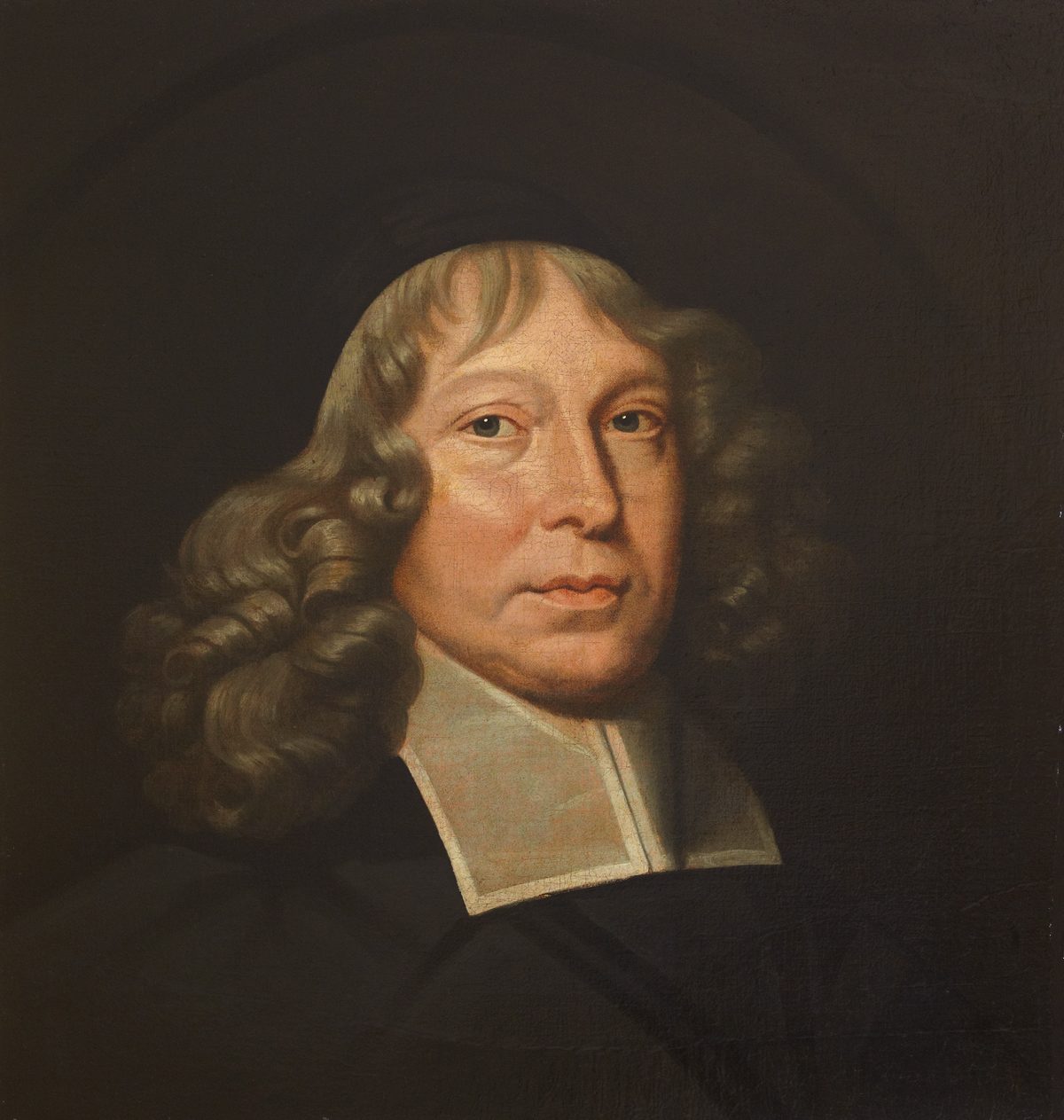
From Rutherford Schaeffer drew a doctrine of resistance. A ruler's power is granted conditionally, so the people may withdraw their sanction from a ruler who becomes a tyrant.6 And the people's response comes in stages. Schaeffer summarized Rutherford's teaching for the private citizen this way: "First, he must defend himself by protest (in contemporary society this would most often be by legal action); second, he must flee if at all possible; and, third, he may use force, if necessary, to defend himself."10 He added Rutherford's rule of proportion: "One should not employ force if he may save himself by flight; nor should one employ flight if he can save himself" by lawful means.10 For a whole community, as opposed to one person, flight was rarely possible, which left protest first and force only as a last resort.6
John Witherspoon and the founding
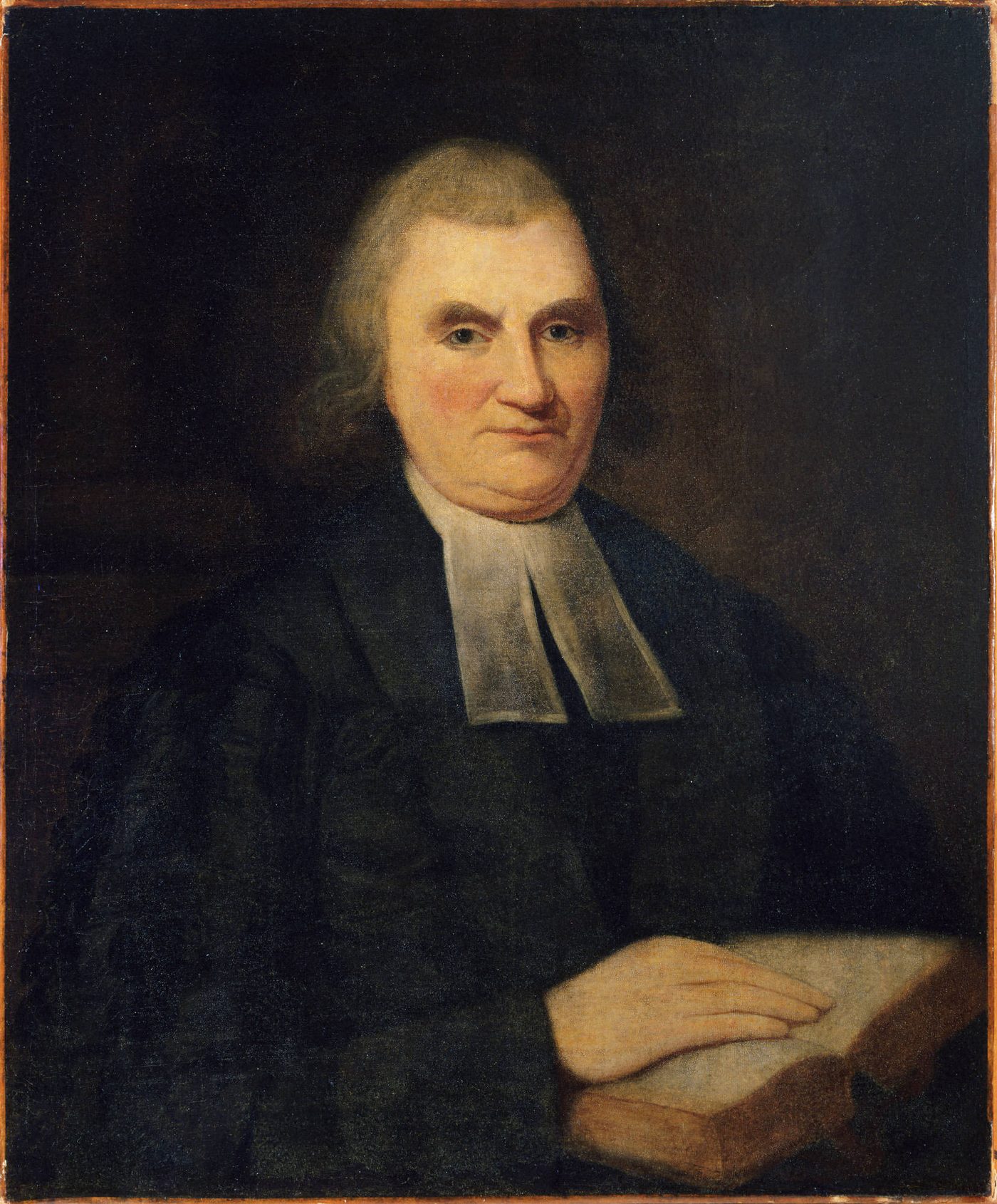
The bridge from Rutherford to America, in Schaeffer's account, was John Witherspoon. Born in Scotland on February 5, 1723, Witherspoon came to New Jersey in 1768 as the sixth president of the College of New Jersey, now Princeton University, and served until his death in 1794. He signed the Declaration of Independence, the only active clergyman and the only college president to do so.11 His students included James Madison and Aaron Burr, and among them were 37 future judges, 10 cabinet officers, 28 United States senators and 49 congressmen.11
Schaeffer wrote that "John Witherspoon knew and stood consciously in the stream of Samuel Rutherford," and that the linkage of Christian thinking and the concepts of government in Witherspoon's work "were not incidental."9 He quoted Witherspoon's sermon on the first national Thanksgiving after the war, with its warning that a republic must keep its virtue or lose its liberty, and an earlier Witherspoon claim about religion and freedom.9 The second line comes from Witherspoon's sermon "The Dominion of Providence over the Passions of Men," preached at Princeton on May 17, 1776, seven weeks before independence:
"He is the best friend to American liberty who is most sincere and active in promoting true and undefiled religion."
John Witherspoon, "The Dominion of Providence over the Passions of Men," Princeton, May 17, 1776. 12
Notice one small thing. Crossway's adaptation of Schaeffer gives the line as "the best friend of American liberty" and "pure and undefiled religion."9 The sermon as reprinted elsewhere reads "to" and "true." The meaning is the same. But it is a reminder that even friendly sources drift, and that a quotation is only as good as the last person who checked it against the original.
Where historians disagree
Here Schaeffer met his strongest critics, and many of them were fellow evangelicals. Witherspoon did argue for a right of resistance against unjust government, and his views stood near those of Calvin, Knox and Rutherford on resisting tyranny. But his moral philosophy lectures, required of Princeton's juniors and seniors, drew chiefly on the Scottish common sense philosophy of Thomas Reid and his followers, which the legal historian Herbert Hovenkamp credits Witherspoon with bringing to America.11 Schaeffer's own book admitted that Jefferson was a deist who stood in the stream of John Locke, and claimed that Locke "had secularized Lex Rex" while drawing "heavily from it."9 Robert Arnold of Southern Baptist Theological Seminary tested that claim in 2009 by comparing Locke's Two Treatises of Government with Lex, Rex, and concluded that Schaeffer's assertion does not meet the burden of proof.13
The historians George Marsden and Mark Noll, both evangelical Christians, argued with Schaeffer about the founding in private letters. In the historian John Fea's summary of the correspondence, they "tried to convince Schaeffer that his view of the founding was utterly wrong," while Schaeffer "chided Marsden and Noll for showing too much respect for secular scholarship."14 That exchange stands behind their 1983 book with Nathan Hatch, The Search for Christian America.14
W. Merwin Forbes, reviewing the book in the Grace Theological Journal in 1983, called Schaeffer's case that the founders "clearly knew what they were doing" a "rather strained" one built on "excessive dependence upon Samuel Rutherford." Forbes asked: "Are we really prepared to say that the god of Jefferson and the governmental theories of John Locke were Christian?"6 Lesson 6 gives Donald Lutz's count of what the founders actually cited, which is a better guide than either side's generalizations.
Civil disobedience and its limits
The book's last chapters, on civil disobedience and force, are the ones people remember and the ones most often misquoted. Schaeffer began from a principle he took to be the teaching of the whole Christian church: "When the government negates the law of God, it abrogates its authority."4 God gives rulers their office to restrain chaos in a fallen world, he said, "but it does not mean that these offices are autonomous."4 A government that cannot be disobeyed under any circumstances has been put in the place of God.
Lesson 9 quotes his 1982 address on "the final bottom line" and his rejection of theocracy at length (see What Culture First Asks of Citizens). The book itself said more about force than the address did. Its chapter on the subject opens: "There does come a time when force, even physical force, is appropriate. The Christian is not to take the law into his own hands and become a law unto himself."6 His example was the hiding of Jews in Nazi Germany, with the deception it required.6
The limits he set
Schaeffer put real brakes on the doctrine, and fair readers should name them. Disobedience comes only after every lawful means has failed: "Every appropriate legal and political governmental means must be used."4 Reconstruction comes before resistance: "Always before protest or force is used, we must work for reconstruction," and "we should attempt to correct and rebuild society before we advocate tearing it down or disrupting it."10 The trigger for resistance to the state as a whole was a high one, the case where "the state deliberately is committed to destroying its ethical commitments to God."10 And he said in 1982, "We have lots of room to move yet with our court cases, with the people we elect."4 His examples of possible future disobedience were specific: withholding taxes that paid for abortions, or refusing a ban on teaching creation in public schools.6
The criticisms
Forbes thought the brakes were too weak. He wrote that Schaeffer "jumps to the unsupported conclusion that governments can and must be disobeyed, depending upon the situation," and "makes a gigantic leap to assert that even armed rebellion might be appropriate and acceptable!" He faulted the book for barely engaging Romans 13 and 1 Peter 2, which command submission to rulers, and for ignoring Christ's own submission to unjust treatment. His verdict: "What Schaeffer appears to have written is an American manifesto."6
Critics from the opposite direction said the book did not go far enough. The Christian Reconstructionist writers Gary North and David Chilton complained that it offered no program for what a Christian society should look like.15 Writers who studied the Religious Right from outside, including Sara Diamond and Frederick Clarkson, traced its activism to Schaeffer's influence, while the scholar Irving Hexham argued that Schaeffer's views had been misread.15
Ordered liberty, as this course uses the term, includes both of Schaeffer's halves: the duty to support legitimate government and the duty to hold it accountable when it betrays the law it rests on. His Rutherford sequence of protest, then flight, then force only as a last resort is a long way from either blind obedience or a hair trigger. The danger, as Lesson 9 says, is in skipping the first steps.
Influence on American Christians in the 1980s
It is hard to overstate how widely A Christian Manifesto was read in the decade after 1981. Schaeffer had already reached millions through the films. Now he gave them a political argument. In chapter 4 he praised the new Moral Majority for having "drawn a line between the total view of reality and the other total view of reality and the results this brings forth in government and law."6 Randall Terry, founder of the antiabortion group Operation Rescue, said, "You have to read Schaeffer's Christian Manifesto if you want to understand Operation Rescue."15 The historian Daniel K. Williams, in God's Own Party (Oxford, 2010), credits Schaeffer with giving evangelicals a way to understand the country's secular drift and with turning their attention to abortion.16
Schaeffer himself did not live to see most of it. He gave the address version of the book in 1982 and died in May 1984. The movement that claimed him grew through the rest of the decade.
- 1644 Samuel Rutherford publishes Lex, Rex.
- 1768 John Witherspoon arrives to lead the College of New Jersey.
- 1776 Witherspoon preaches "The Dominion of Providence," May 17; signs the Declaration.
- 1979 Whatever Happened to the Human Race?; seminar tour opens in Philadelphia, September 7.
- 1981 A Christian Manifesto published; Koop confirmed as surgeon general, November 16.
- 1982 Schaeffer's Christian Manifesto address at Coral Ridge, Fort Lauderdale.
- 1983 Noll, Hatch and Marsden publish The Search for Christian America.
- 1984 Schaeffer dies in Rochester, Minnesota, May 15.
- 2007 Frank Schaeffer publishes Crazy for God.
Frank Schaeffer's account
The sharpest later account came from inside the family. Frank Schaeffer, born at Champery in 1952, produced How Should We Then Live? and directed Whatever Happened to the Human Race?.17 In the early 1980s he was a full partner in his father's political turn. He later left it. He joined the Eastern Orthodox Church in 1990, left the Republican Party, and in 2007 published a memoir with a title that told its story: Crazy for God: How I Grew Up as One of the Elect, Helped Found the Religious Right, and Lived to Take All (or Almost All) of It Back.1715
What Frank says
Frank's argument has two parts. The first is about the movement. He told NPR's Terry Gross that through the films and books "the religious right found a catalyst that energized a political movement," and that over time "we were increasingly telling people how to vote and not really appealing so much to conscience." He blamed himself: "I stirred up this pot and helped contribute to this level of division and antipathy."18 In 2008 he said the central mistake was "trying to get Christians to vote along theological lines instead of what's good for the country," and that he was "trying to rescue my dad's reputation from a very narrow group of people who have very much misused him."19 He also recalled that his father privately thought poorly of some of the leaders he had allied with.18
The second part is about his father as a man. Frank described his parents to NPR as "authentically compassionate, decent people," and he insisted that his father never treated homosexuality as a central political issue: "you'll never find him talking about homosexuality at all as an issue that ought to be stood against."18 But Crazy for God also portrays a father who suffered from depression, who "sometimes talked about committing suicide," and whose marriage, Frank wrote, included verbal and physical violence.1815 And he wrote that his father was moved less by doctrine than by art: "And what moved him was not theology but beauty."15
The replies
Many who knew the family answered him. The writer Os Guinness, long associated with L'Abri, called the book a "scurrilous caricature" in a 2008 essay in Books and Culture.15 Two cautions apply. Much of Frank's account of his father's private life cannot be checked, since most of the people who could confirm or deny it are dead. And his own politics changed sharply between the two halves of his career. Readers can still hold two things at once. Frank is a firsthand witness to his family, with the strengths and the biases of one. And his account of the movement's shift from conscience to party politics is supported by other evidence, including Schaeffer's own 1982 warnings against theocracy and his call to use "every appropriate legal and political governmental means" before anything else.4
What admirers and critics agree on is the size of the shadow. A missionary who spent twenty years answering students' questions in a Swiss chalet ended his life as one of the people most responsible for the political mobilization of American evangelicals. Whether that was the fulfillment of his work or a detour from it is a question this module leaves to its readers, with one observation. Schaeffer's political books still put politics downstream. The law had changed because the culture had changed, and the culture had changed because belief had. Even A Christian Manifesto, his most political book, is a culture-first book.
Learn more
- Schaeffer's 1982 Christian Manifesto address: the argument in his own spoken words, about an hour of reading.
- "Faith, Freedom, and the Founding Fathers" (Crossway): the publisher's adaptation of chapter 2, on Rutherford and Witherspoon.
- W. Merwin Forbes's 1983 review: a careful evangelical critique, chapter by chapter, with page references.
- David Schrock on chapter 8: a sympathetic reading that stresses the limits Schaeffer set.
- John Fea on Schaeffer, Marsden and Noll: the historians' private argument about whether America was founded as a Christian nation.
- Frank Schaeffer on Fresh Air: the son's account, in his own words.
- National Library of Medicine on Koop: how the Schaeffer collaboration shaped Koop's confirmation and tenure.
- John Witherspoon on Wikipedia: his life, his students and his moral philosophy lectures.
Notes
- "C. Everett Koop," Wikipedia: surgeon-in-chief at Children's Hospital of Philadelphia, 1946 to 1981; first neonatal surgical intensive care unit, 1956; confirmed November 16, 1981, by 60 to 24; served January 21, 1982, to October 1, 1989; 1989 abortion report. Read it online. ↩
- "Refiner's Fire: 'Whatever Happened to the Human Race?': A Film Preview," Christianity Today, August 17, 1979. Read it online. ↩
- C. Everett Koop, "Dr. C. Everett Koop Speech at the White House," undated transcript (about 1983 to 1984), C. Everett Koop Papers, National Library of Medicine. Read it online. ↩
- Francis A. Schaeffer, "A Christian Manifesto," address at Coral Ridge Presbyterian Church, Fort Lauderdale, Florida, 1982, transcript, pages 1 to 8. Read it online. ↩
- "Reproduction and Family Health," C. Everett Koop Papers, Profiles in Science, National Library of Medicine. Read it online. ↩
- W. Merwin Forbes, review article, "A Christian Manifesto," Grace Theological Journal 4, no. 2 (1983): 303 to 309, reviewing Francis A. Schaeffer, A Christian Manifesto (Westchester, IL: Crossway, 1981), with quotations from the book at pages 61 to 62, 103 and 117. Read it online. ↩
- "Léo-Paul Robert," Wikipedia (French): Paul Robert, born March 19, 1851, at Biel, died 1923; decoration of the stairway of the former Federal Tribunal in Lausanne, completed in 1905. Read it online. ↩
- Francis A. Schaeffer, Escape from Reason, IVP Classics ed. (Downers Grove, IL: InterVarsity Press, 2006; first published 1968), chapter 7, on Paul Robert's Justice Instructing the Judges. About the book. ↩
- Francis Schaeffer, "Faith, Freedom, and the Founding Fathers," Crossway, July 4, 2018, adapted from A Christian Manifesto (1981). Read it online. ↩
- David Schrock, "Chapter 8: The Use of Civil Disobedience," Christ Over All, October 24, 2022, quoting Schaeffer, A Christian Manifesto (Crossway), 103, 104 and 106. Read it online. ↩
- "John Witherspoon," Wikipedia: born February 5, 1723, Yester, Scotland; died November 15, 1794; president of the College of New Jersey, 1768 to 1794; signer of the Declaration; students; Lectures on Moral Philosophy; Scottish common sense philosophy and Herbert Hovenkamp; Calvin, Knox and Rutherford on resisting tyranny. Read it online. ↩
- "The American Revolution: The Dominion of Providence over the Affairs of Men," The Aquila Report, quoting John Witherspoon, "The Dominion of Providence over the Passions of Men," sermon preached at Princeton, May 17, 1776. Read it online. ↩
- Robert Arnold, "Was Samuel Rutherford a Source for John Locke's Political Theories?," Global Journal of Classical Theology 7, no. 1 (February 2009), abstract. Read it online. ↩
- John Fea, "Hankins, Marsden, Noll and Schaeffer," The Way of Improvement Leads Home, August 18, 2009, discussing Barry Hankins, Francis Schaeffer and the Shaping of Evangelical America (Eerdmans, 2008). Read it online. ↩
- "Francis Schaeffer," Wikipedia, sections on political activism and criticism: Randall Terry; Gary North and David Chilton; Sara Diamond, Frederick Clarkson and Irving Hexham; Frank Schaeffer, Crazy for God (2007); Os Guinness, "Fathers and Sons," Books and Culture, March to April 2008. Read it online. ↩
- "How Should We Then Live?," Wikipedia, section on reception, citing Daniel K. Williams, God's Own Party: The Making of the Christian Right (New York: Oxford University Press, 2010). Read it online. ↩
- "Frank Schaeffer," Wikipedia: born August 3, 1952, Champery; producer of the film series; Eastern Orthodox, 1990; political change; Crazy for God (New York: Carroll and Graf, 2007). Read it online. ↩
- Frank Schaeffer, interview by Terry Gross, Fresh Air, NPR, 2008, transcript. Read it online. ↩
- Charles Honey, "Francis Schaeffer's son says his father wouldn't recognize the movement he birthed," Religion News Service, October 29, 2008. Read it online. ↩
Terms in this lesson
- Lex, Rex
- Latin for 'the law is king.' Samuel Rutherford's 1644 book arguing that rulers are under the law and that the people may resist a tyrant.
- Sociological law
- Schaeffer's term for law with no fixed base, made by a few people deciding what seems good for society at a given moment.
- Inalienable rights
- Rights that cannot be given away or taken away because they come from the Creator, not from the state, as the Declaration of Independence says.
- The final bottom line
- Schaeffer's phrase for the point at which a government so contradicts God's law that a Christian must disobey it.
- Civil disobedience
- Open refusal to obey a law one believes unjust. Schaeffer, following Rutherford, put protest and legal action first, flight second and force last.
- Humanist Manifestos
- Statements issued by American humanists in 1933 and 1973 setting out a nonreligious view of life. Schaeffer's title answered them.
- Religious Right
- A name, used by supporters and opponents alike, for the movement of evangelical and other religious Americans into organized political action from the late 1970s.
Sources
- Francis A. Schaeffer, A Christian Manifesto, address at Coral Ridge Presbyterian Church, 1982 (Internet Archive transcript) checked 2026-10
- Francis Schaeffer, Faith, Freedom, and the Founding Fathers, adapted from A Christian Manifesto (Crossway, July 4, 2018) checked 2026-10
- W. Merwin Forbes, review of A Christian Manifesto, Grace Theological Journal 4, no. 2 (1983): 303 to 309 checked 2026-10
- David Schrock, Chapter 8: The Use of Civil Disobedience, Christ Over All, October 24, 2022 checked 2026-10
- Refiner's Fire: Whatever Happened to the Human Race? A Film Preview, Christianity Today, August 17, 1979 checked 2026-10
- C. Everett Koop, Speech at the White House (National Library of Medicine) checked 2026-10
- Frank Schaeffer interviewed by Terry Gross, Fresh Air, NPR, 2008 checked 2026-10
- Charles Honey, Francis Schaeffer's son says his father wouldn't recognize the movement he birthed (2008) checked 2026-10
- John Fea, Hankins, Marsden, Noll and Schaeffer, The Way of Improvement Leads Home, August 18, 2009 checked 2026-10
- John Witherspoon (Wikipedia) checked 2026-10
- Francis Schaeffer (Wikipedia), sections on political activism and criticism checked 2026-10