Lesson 3 of 9 · about 22 minutes
Schaeffer Reads the West: The 1976 Book and Film Series
You'll be able to
- Describe the book and film series: when, by whom, how they were shown and how many people saw them
- Follow Schaeffer's argument from Rome through the Renaissance, Reformation and Enlightenment to the twentieth century
- Explain the line of despair, fragmentation, and the values of personal peace and affluence in his own words
- Summarize the main criticisms historians and philosophers have made of the book, and what survives them
In 1977 a film crew's work became a road show. Francis Schaeffer, by then 65, took a ten-part film series and a set of live seminars to eighteen cities across North America. Churches that screened the films drew crowds of up to 5,000. The book behind the films had come out the year before from Fleming H. Revell and sold 40,000 copies in its first three months.1 Its title borrowed the King James wording of the despairing question of the house of Israel in Ezekiel 33:10: How Should We Then Live?2 Its subtitle named the scale of the ambition: The Rise and Decline of Western Thought and Culture.
The idea for the films came from Billy Zeoli of Gospel Films, who urged Schaeffer to put the book on screen and proposed that his son, Franky, then in his twenties, produce it.3 The model was Kenneth Clark's Civilisation, the BBC's celebrated 1969 tour of Western art. Schaeffer wanted a Christian answer to it. He wrote and narrated the series himself. Hans Rookmaaker served as consultant on the history of art and the opera singer Jane Stuart Smith, who had joined L'Abri in 1956, on music.1
The book and the films
The argument begins with a sentence of method. Schaeffer believed that the way a people thinks in its inner life determines how it acts, and that the history of a civilization can be read in its philosophy, science, art, music and law. Every chapter applies that rule to one period. The ten films, each just under half an hour, follow the book closely.1
| Episode | Film title | Matching book chapters |
|---|---|---|
| 1 | The Roman Age | 1. Ancient Rome |
| 2 | The Middle Ages | 2. The Middle Ages |
| 3 | The Renaissance | 3. The Renaissance |
| 4 | The Reformation | 4 and 5. The Reformation |
| 5 | The Revolutionary Age | 6. The Enlightenment |
| 6 | The Scientific Age | 7 and 8. The rise of modern science; the breakdown in philosophy and science |
| 7 | The Age of Non-Reason | 9. Modern philosophy and modern theology |
| 8 | The Age of Fragmentation | 10. Modern art, music, literature and films |
| 9 | The Age of Personal Peace and Affluence | 11 and 12. Our society; manipulation and the new elite |
| 10 | Final Choices | 13. The alternatives |
Episode titles from the 1977 Gospel Films series and chapter subjects from the book; the matching of the two is this course's.1
Rome: a civilization without a sufficient base
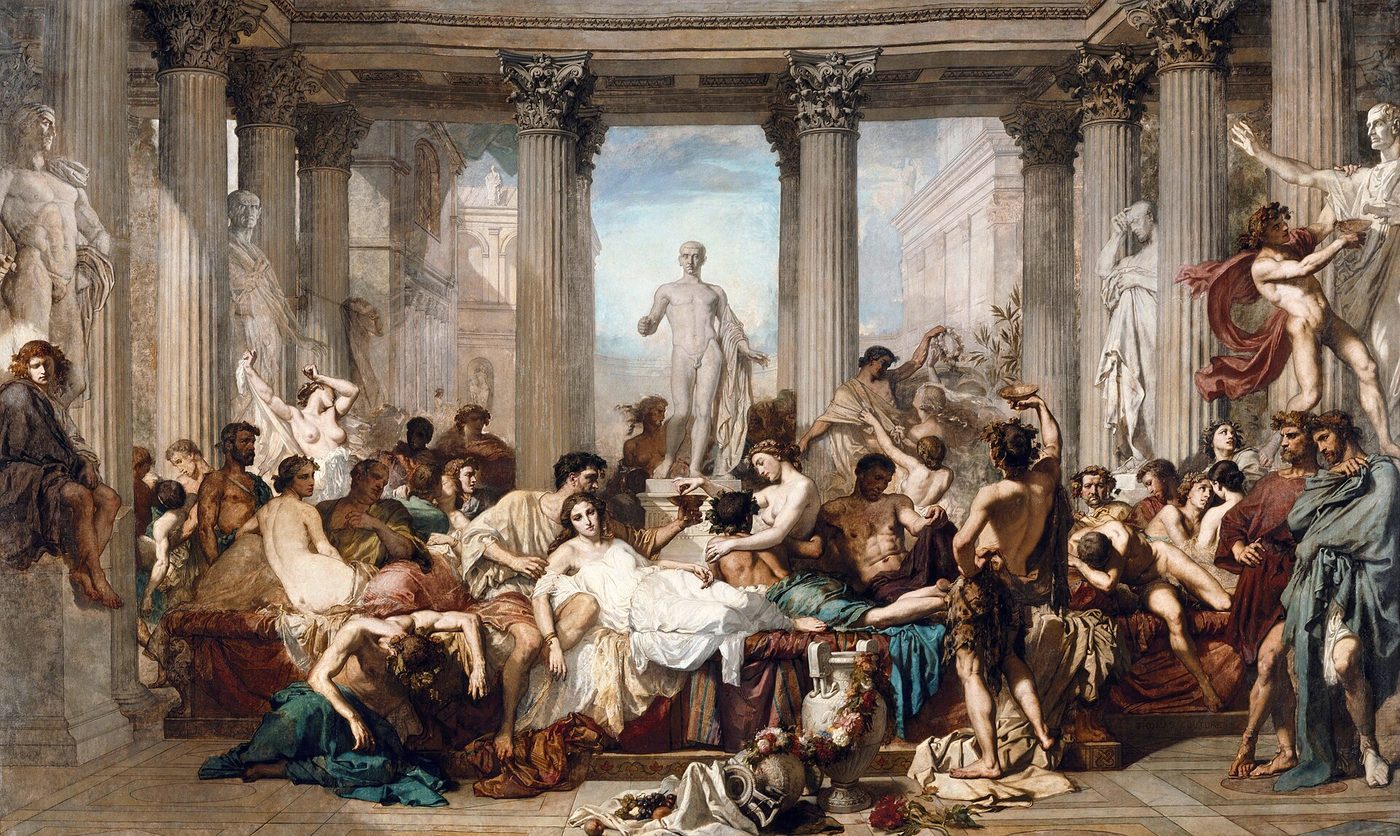
Schaeffer started with Rome because Rome was the West's first great failure. Its gods, he argued, were not big enough to bear the weight. They could not give the Roman people an inward base strong enough to judge their own society or hold it together. So Rome rotted from within, and the barbarian invasions only finished what was already happening.1 In his reading the early Christians were persecuted because they would not also worship Caesar. Rome could tolerate another god. It could not tolerate a refusal of the emperor. Their refusal made them rebels in the eyes of a state whose last remaining bond was the emperor cult, a theme he returned to in his 1982 address on civil disobedience.4
The Middle Ages and the Renaissance
The Middle Ages get a mixed verdict. Schaeffer found much that was good in medieval Christian culture, but also, he argued, a slow blending of humanistic ideas into Bible-based Christianity.1 In his earlier book Escape from Reason he had blamed Thomas Aquinas for setting up a realm of nature and human reason that seemed independent of God. Lesson 4 follows that argument and the objections to it.
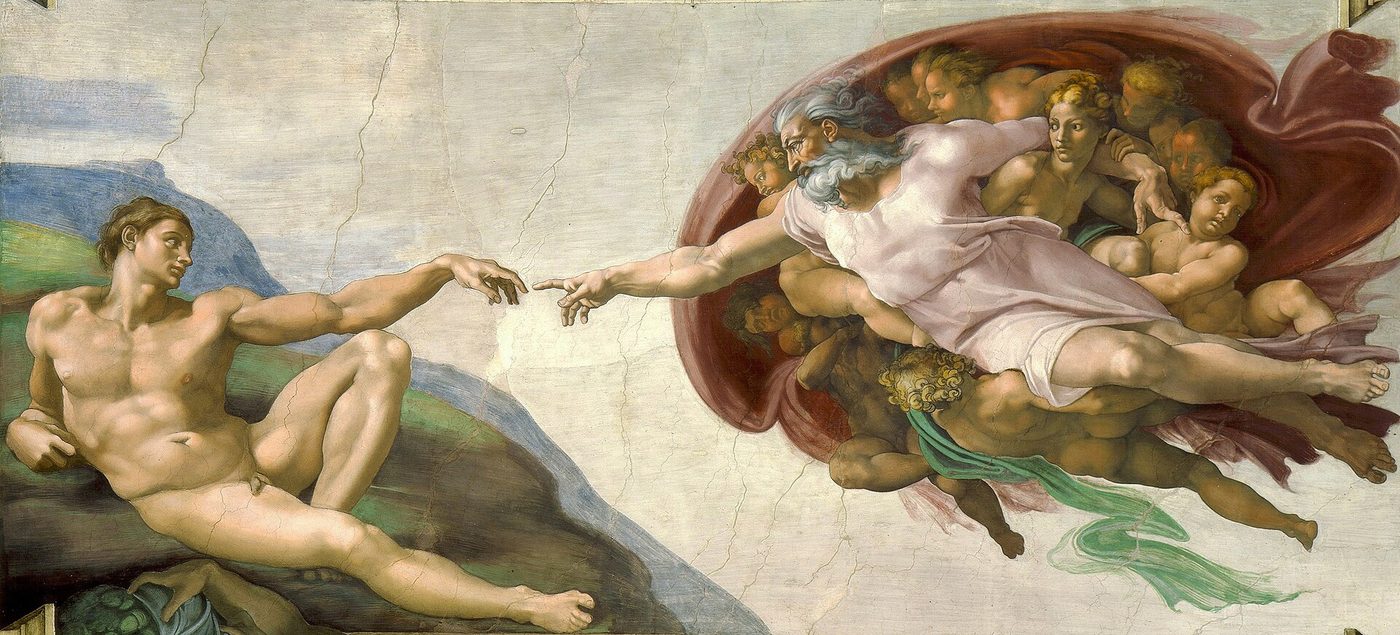
The Renaissance chapter turns on one statue. Michelangelo's David became in Schaeffer's hands an emblem of what the age believed about man. He pointed out that Michelangelo, who "knew his Judaism," carved a figure that is not circumcised. "We are not to think of this as the Biblical David but as the humanist ideal," he wrote. And then: "In this statue we have man waiting with confidence in his own strength for the future. Even the disproportionate size of the hands says man is powerful."5 His verdict was that humanism in the David was "standing in its proud self."5
His definition of the humanism he meant comes earlier in the book: "a value system rooted in the belief that man is his own measure, that man is autonomous, totally independent."6 He was careful, here and elsewhere, to separate that belief from the humanities, which he loved, and from humanitarian care for people, which he said Christians "should be in favor of."4
The Reformation and the north
The Reformation chapters are the warmest in the book. Schaeffer believed the reformers restored what the Renaissance had lost: a single source of truth in the Bible, a fallen but dignified human being, and a God who was Lord of the ordinary as well as the holy. From that base, he argued, came a culture that could hold "freedom without chaos," a balance he elsewhere called "the form/freedom balance of government."14
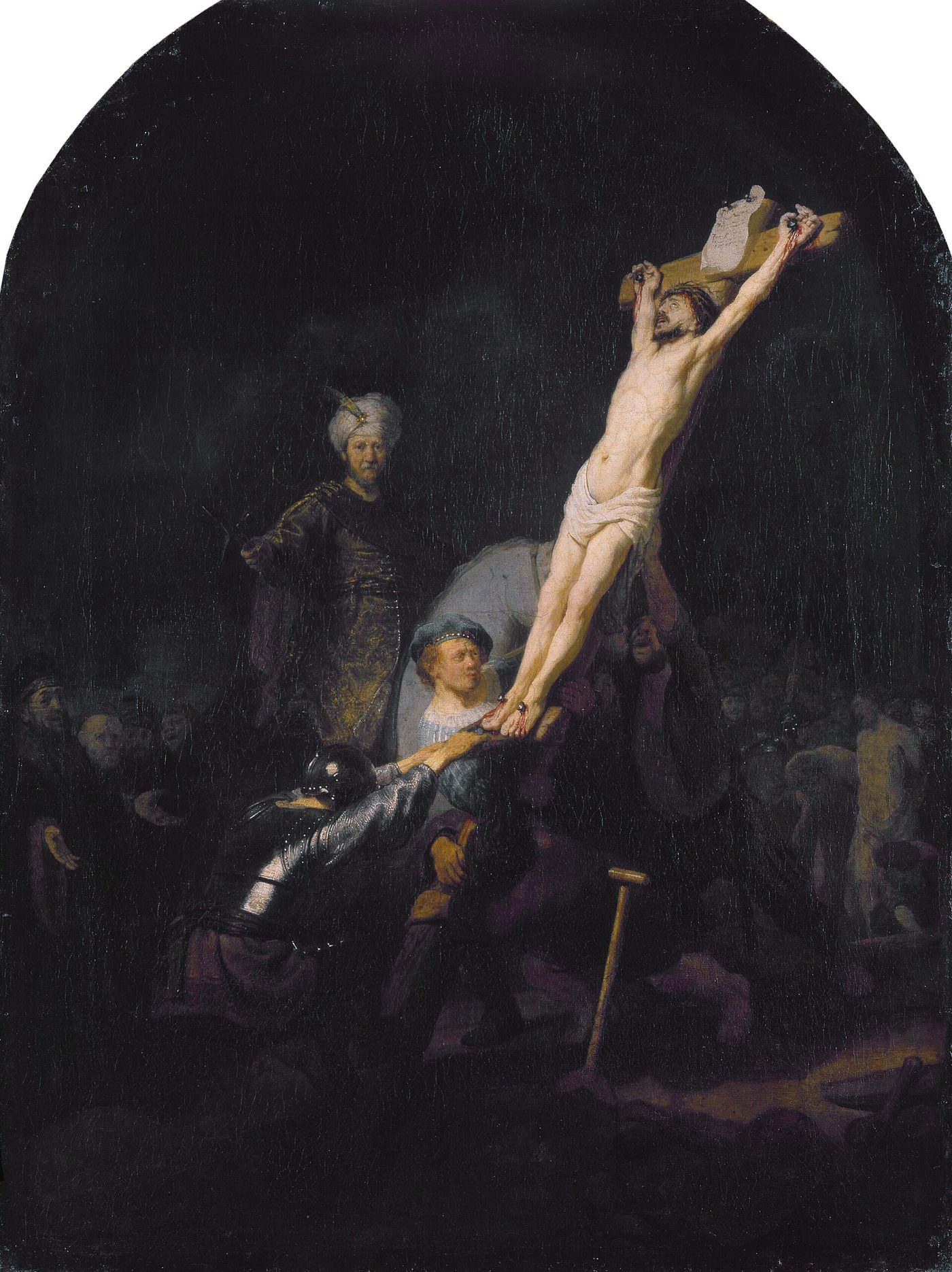
His painter of the Reformation was Rembrandt. "Rembrandt shows in all his work that he was a man of the Reformation," Schaeffer wrote, and he described Rembrandt as a believer who trusted in "the death of Christ for him personally."7 Rembrandt painted ordinary Dutch people as they were, without idealizing them, and painted biblical scenes as if they had happened to real people in real places, which, for a Reformation Christian, they had.
The Enlightenment and the breakdown
The Enlightenment, in Schaeffer's account, kept the Renaissance's confidence in man and threw away the Reformation's foundation. Its optimism about human reason, cut loose from God, found its logical result in the French Revolution.1
Modern science, he argued, had been born among people who believed a rational God made an orderly world that human minds could study. Then the assumption changed. Scientists and philosophers began to treat the universe as a closed system of natural causes, with no room for God or for human freedom, and the logic of that view pushed toward seeing human beings as machines.1 Schaeffer quoted the physicist J. Robert Oppenheimer, no Christian, as saying Christianity had been needed to give birth to modern science.8
In philosophy, the turning point for Schaeffer was Hegel. Where earlier thinkers had reasoned in terms of antithesis, of true and false, Hegel, he said, "hoped for a synthesis which somehow would have some relationship to reasonableness."9 After Hegel, Schaeffer wrote elsewhere, "truth, as people had always thought of truth, has died."9 Hold on to that reading. It is one of the places historians have pushed back hardest.
The line of despair
The phrase Schaeffer is best known for came from his earlier books and runs through the films. He drew it as a literal line on a chart. Above it, people still believed that reason could give a unified answer for all of life, even if they disagreed about the answer. Below it, they had given that hope up.
"What is this despair? It arises from the abandonment of the hope of a unified answer for knowledge and life. Modern man continues to hang on to his rationalism and his autonomous revolt even though to do so he has had to abandon any rational hope of a unified answer."
Francis A. Schaeffer, Escape from Reason (1968), chapter 3, "Kierkegaard and the Line of Despair." 10
The line did not fall everywhere at once. Schaeffer said the new way of thinking spread in three ways. Geographically, from Germany outward, so that Holland and Switzerland knew it before England, "and America continued thinking in the old way much longer." By class, from intellectuals first, then through mass media to workers, leaving the middle class, often including the churches, thinking in the old way out of habit without knowing why. And by discipline, in a set order: "philosophy, then art, then music, then general culture," with theology last.10 In art he placed the door at Van Gogh, Gauguin and Cézanne. In music, Debussy. In general culture, the early T. S. Eliot. In theology, Karl Barth.10
Fragmentation
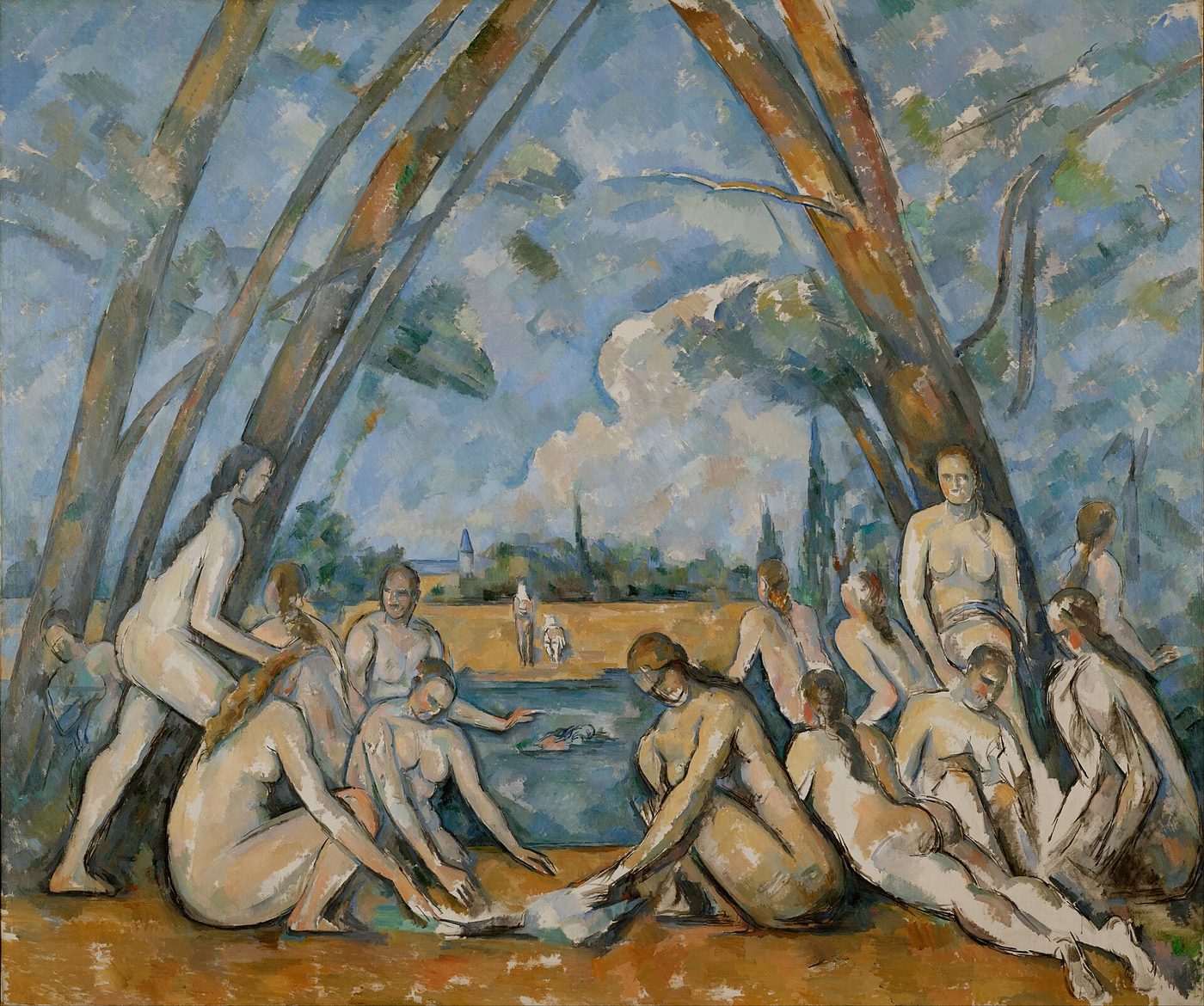
The film's eighth episode, "The Age of Fragmentation," carried the line of despair into the twentieth century's art, music, literature and cinema. Schaeffer treated Picasso's Les Demoiselles d'Avignon of 1907 as the start of modern art, and he read the broken planes of Cubism, the chance compositions of John Cage and the Theater of the Absurd as honest pictures of a fragmented view of reality.11110 One of his comments on the Dutch painter Piet Mondrian's abstract interiors put it in a sentence: "It is a room for abstract balance, but not for man."11
He did not sneer at these artists. That set him apart from many religious critics of modern art. He believed they were telling the truth about the world as their philosophy described it, and that Christians should listen to them as witnesses, not dismiss them as frauds. The art was fragmented because the worldview was fragmented. The fault, if there was one, lay upstream.
Personal peace and affluence
The ninth episode moved from galleries to living rooms. Most people, Schaeffer argued, do not read philosophy or hang abstract paintings. When the old Christian consensus faded, ordinary Westerners were left with two values. He defined the first this way: "Personal peace means just to be let alone, not to be troubled by the troubles of other people."12 The trouble could be across the world or across the street, it did not matter, so long as one's own life pattern was not disturbed for the length of one's own life. The second was affluence, which one study outline of the series summarizes as "an overwhelming and ever-increasing prosperity, a life made up of material possessions and convenience."13
Then came the political warning, and it is the part of the book that bears most directly on this module:
"With such values, will men stand for their liberties? Will they not give up their liberties step by step, inch by inch, as long as their own personal peace and prosperity is sustained and not challenged, and as long as the goods are delivered?"
Francis A. Schaeffer, How Should We Then Live? (1976), page 227. 14
He went on to say that young and old, for all their quarrels over hair and drugs, "support each other sociologically, for both embrace the values of personal peace and affluence." He believed most of the silent majority "will sustain the loss of liberties without raising their voices as long as their own life-styles are not threatened." And he drew the conclusion for politics: "since personal peace and affluence are so often the only values that count with the majority, politicians know that to be elected they must promise these things."14
Read that passage next to Lesson 1. It is the downstream argument with the river running in a direction most people who quote Breitbart do not intend. If a people's deepest values are comfort and safety, its politics will sell comfort and safety, and it will trade away liberty to keep them. The elections will reflect the culture faithfully. That is the problem.
Manipulation and the final choices
The last chapters looked ahead. Schaeffer worried that a people who wanted only personal peace and affluence would accept an authoritarian government, one that managed people through control of information, psychology and, eventually, genetic engineering, so long as the goods kept coming.1 The alternatives he offered in the final chapter were stark: a return to Christian foundations, or a slide into economic breakdown, violence and an imposed order.1 Five years later, in A Christian Manifesto, he turned that warning into a political program. Lesson 5 takes it up.
What historians have said
The book has been criticized hard, and some of the criticism is deserved. A fair reader should know it before quoting Schaeffer as a historian.
Thin and selective history
David Sessions, then a doctoral student in history at Boston College, summarized the scholarly reception in 2014: evangelical scholars and historians "have not been kind" to Schaeffer's readings, which "often featured unusual chronologies, glaring omissions, and idiosyncratic readings."9 Sessions argued that "the largely self-taught Schaeffer understood Hegel as poorly as he understood many other thinkers," that Hegel was trying to reconcile reason and reality much as Schaeffer was, and that Schaeffer often collapsed Hegel and Kierkegaard into a single moment. He noted that the historian Barry Hankins, author of the standard scholarly biography, pointed out that Schaeffer's original genealogy of modern thought left out Romanticism altogether.9
Aquinas and the Catholic objection
Catholic readers have long objected that Schaeffer repeated old Protestant charges against medieval Christianity as if they were settled fact. His claim that Aquinas taught an intellect untouched by the Fall is the sorest point; Catholic scholars answer that Aquinas taught reason was wounded too.1 Even an admirer agreed. J. P. Moreland, who calls Schaeffer an intellectual father to his generation, wrote in 2006 that critics "argue, sometimes correctly, that Schaeffer paints with too broad a brush and, as a result, somewhat misrepresents certain thinkers. I, for one, do not think his treatment of Thomas Aquinas is entirely fair or accurate."15
The founding
American historians who shared Schaeffer's faith also disagreed with him about the American founding, which he read as resting on a Reformation consensus. That dispute became sharp after A Christian Manifesto and is covered in Lesson 5.
What survives the criticism
Two things, at least. First, the central method. Schaeffer's claim that a civilization's art, philosophy and law grow from what it believes about God and man is not his invention, and it does not depend on his reading of Hegel being right. Christopher Dawson, Richard Weaver and others in Lesson 7 made the same claim with more scholarship. Second, the warning about personal peace and affluence has aged better than almost anything else in the book. A democracy whose citizens want chiefly to be left alone and kept comfortable is a democracy that will be governed, sooner or later, by people who promise exactly that. The civic duty in ordered liberty, to hold government accountable and to support it when it is legitimate, asks for more than comfort. It asks people to be troubled by the troubles of others.
The Christian Coalition's Ralph Reed later claimed that abortion "only became a central issue for Evangelicals as a result of a book and ten-part film series in 1976."1 He was describing this series, though its successor, Whatever Happened to the Human Race?, did more of the work on abortion. Either way the effect was real. A book about paintings and philosophers helped move millions of American churchgoers into politics.
Learn more
- How Should We Then Live? on Wikipedia: chapter summaries, the episode list and a guide to criticism, with page references to the book.
- The film series on Tubi: the 1977 episodes streaming online. Start with "The Age of Personal Peace and Affluence."
- David Sessions on the line of despair: the sharpest short scholarly critique, with a lively comment thread.
- Wineskins on peace and affluence: the page 227 passage in full, with commentary.
- Evangelicals Now on Michelangelo's David: Schaeffer's chapter 3 reading of the statue, quoted at length.
- Credo Magazine on Rembrandt's Raising of the Cross: a meditation on the painting that draws on Schaeffer.
- Lesson 7: Writers Who Put Culture First: Dawson, Weaver, Kirk and others who argued the same thesis with different tools.
Notes
- "How Should We Then Live?," Wikipedia: Fleming H. Revell, 1976; Gospel Films, 1977, ten episodes; Rookmaaker and Jane Stuart Smith as consultants; intended as a Christian version of Kenneth Clark's Civilisation; 1977 tour of eighteen North American cities and audiences up to 5,000, citing Colin Duriez, Francis Schaeffer: An Authentic Life (2008), 184 and 186; 40,000 copies in three months; chapter summaries with page references; Catholic criticism on Aquinas; Ralph Reed quotation. Read it online. ↩
- Ezekiel 33:10, King James Version (1611): "Thus ye speak, saying, If our transgressions and our sins be upon us, and we pine away in them, how should we then live?" Read it online. ↩
- "Francis Schaeffer," Wikipedia, section on film projects: Billy Zeoli of Gospel Films encouraged the adaptation and proposed Frank Schaeffer as producer. Read it online. ↩
- Francis A. Schaeffer, "A Christian Manifesto," address at Coral Ridge Presbyterian Church, Fort Lauderdale, Florida, 1982, transcript, pages 1 and 8. Read it online. ↩
- Letter, "Michelangelo's David," Evangelicals Now, June 2026, quoting Francis A. Schaeffer, How Should We Then Live?, chapter 3. Read it online. ↩
- Francis A. Schaeffer, How Should We Then Live? (Old Tappan, NJ: Fleming H. Revell, 1976), 60, as quoted in "How Should We Then Live?," Wikipedia. Read it online. ↩
- Schaeffer, How Should We Then Live?, 98, as quoted in "Raising the Cross," Credo Magazine, September 2011. Read it online. ↩
- Francis A. Schaeffer, Escape from Reason, IVP Classics ed. (Downers Grove, IL: InterVarsity Press, 2006), chapter 3, "Early Modern Science," citing Oppenheimer, "On Science and Culture," Encounter, October 1962. Publisher's IVP Classics series page. ↩
- David Sessions, "Plotting Hegel on Francis Schaeffer's Line of Despair," Society for U.S. Intellectual History blog, November 21, 2014, quoting Schaeffer, How Should We Then Live?, 162 to 163, and citing Barry Hankins, Francis Schaeffer and the Shaping of Evangelical America (Grand Rapids: Eerdmans, 2008). Read it online. ↩
- Schaeffer, Escape from Reason, IVP Classics ed. (2006), chapter 3, "Kierkegaard and the Line of Despair." Schaeffer's own note there says he traced the steps in more detail in The God Who Is There (InterVarsity Press, 1968). Publisher's IVP Classics series page. ↩
- "Francis Schaeffer Analyzes Art and Culture, Part 198: How Should We Then Live? Part 9, The Age of Personal Peace and Affluence," The Daily Hatch, January 18, 2018, quoting Schaeffer's The God Who Is There on Mondrian and Cage. Read it online. ↩
- Schaeffer, How Should We Then Live?, chapter 11, "Our Society," as quoted on Bible Portal. Read it online. ↩
- Tony Bartolucci, outline of How Should We Then Live? episode 9, as reproduced in The Daily Hatch, January 18, 2018. Read it online. ↩
- Schaeffer, How Should We Then Live?, 227, as quoted in "Francis Schaeffer on the Politics of Peace and Affluence," Wineskins, March 29, 2016. Read it online. ↩
- J. P. Moreland, foreword to Schaeffer, Escape from Reason, IVP Classics ed. (2006), 9 to 10. Publisher's IVP Classics series page. ↩
Terms in this lesson
- Humanism (Schaeffer's sense)
- Not the study of the humanities, which he praised, but the belief that man is his own measure and the source of all truth and value, with no knowledge from God.
- Line of despair
- Schaeffer's name for the point at which a field of thought gave up the hope of a unified, rational answer to life. He said it came first in philosophy, then art, music, general culture and last theology.
- Fragmentation
- His word for the breaking apart of form and meaning in modern art, music and thought, which he read as an expression of a fragmented view of reality.
- Personal peace
- In Schaeffer's usage, the wish to be let alone and not troubled by other people's troubles, at home or abroad, for the length of one's own life.
- Affluence
- In his usage, an ever-increasing prosperity, a life measured by things and conveniences.
- Form and freedom
- Schaeffer's phrase for the balance in Reformation-shaped governments between order and liberty, which he believed rested on a shared belief in God's law.
- Civilisation
- Kenneth Clark's 1969 BBC television series on Western art and culture, which How Should We Then Live? was meant to answer from a Christian point of view.
Sources
- How Should We Then Live? (Wikipedia), book and film series checked 2026-10
- Francis A. Schaeffer, Escape from Reason (1968; IVP Classics, 2006) checked 2026-10
- David Sessions, Plotting Hegel on Francis Schaeffer's Line of Despair, Society for U.S. Intellectual History, November 21, 2014 checked 2026-10
- Francis Schaeffer on the Politics of Peace and Affluence, Wineskins, March 29, 2016 checked 2026-10
- Michelangelo's David, letter quoting How Should We Then Live? chapter 3, Evangelicals Now, June 2026 checked 2026-10
- Raising the Cross, Credo Magazine, September 2011, quoting How Should We Then Live? p. 98 checked 2026-10
- Christianity Today obituary and tribute, June 15, 1984 checked 2026-10
- Personal peace definition, Bible Portal quotation page checked 2026-10
- The Age of Personal Peace and Affluence, episode outline, The Daily Hatch, January 18, 2018 checked 2026-10