Lesson 7 of 9 · about 26 minutes
Writers Who Put Culture First
You'll be able to
- State in plain words what Burke, Tocqueville and Kuyper each meant by putting culture, manners or social spheres ahead of the state
- Describe the arguments of Eliot, Dawson, Weaver and Lewis about religion, ideas and education as the roots of culture
- Explain Gramsci's idea of hegemony and the Frankfurt School's critique of mass culture without caricature
- Say what is known and what is uncertain about the phrase 'long march through the institutions'
In November 1790 the London bookseller James Dodsley put out a long pamphlet by a member of Parliament, written as a letter to a young Frenchman who had asked his opinion of the revolution across the Channel.1 Edmund Burke's Reflections on the Revolution in France argued with nearly every claim the revolutionaries made. Buried in its middle is a sentence that has outlived most of the argument:
"To be attached to the subdivision, to love the little platoon we belong to in society, is the first principle (the germ as it were) of public affections. It is the first link in the series by which we proceed towards a love to our country, and to mankind."
Edmund Burke, Reflections on the Revolution in France, 1790. 2
Love of country, in Burke's account, grows out of the family, the parish, the trade and the town. Destroy those and you cannot decree patriotism back into being. That is the claim every writer in this lesson makes in some form: what people love, believe and practice together comes before the laws they make, and shapes them. Some of these writers were Christians defending an inheritance. Others, later in the lesson, wanted to overturn the inheritance and reached the same conclusion about where the real power lies.
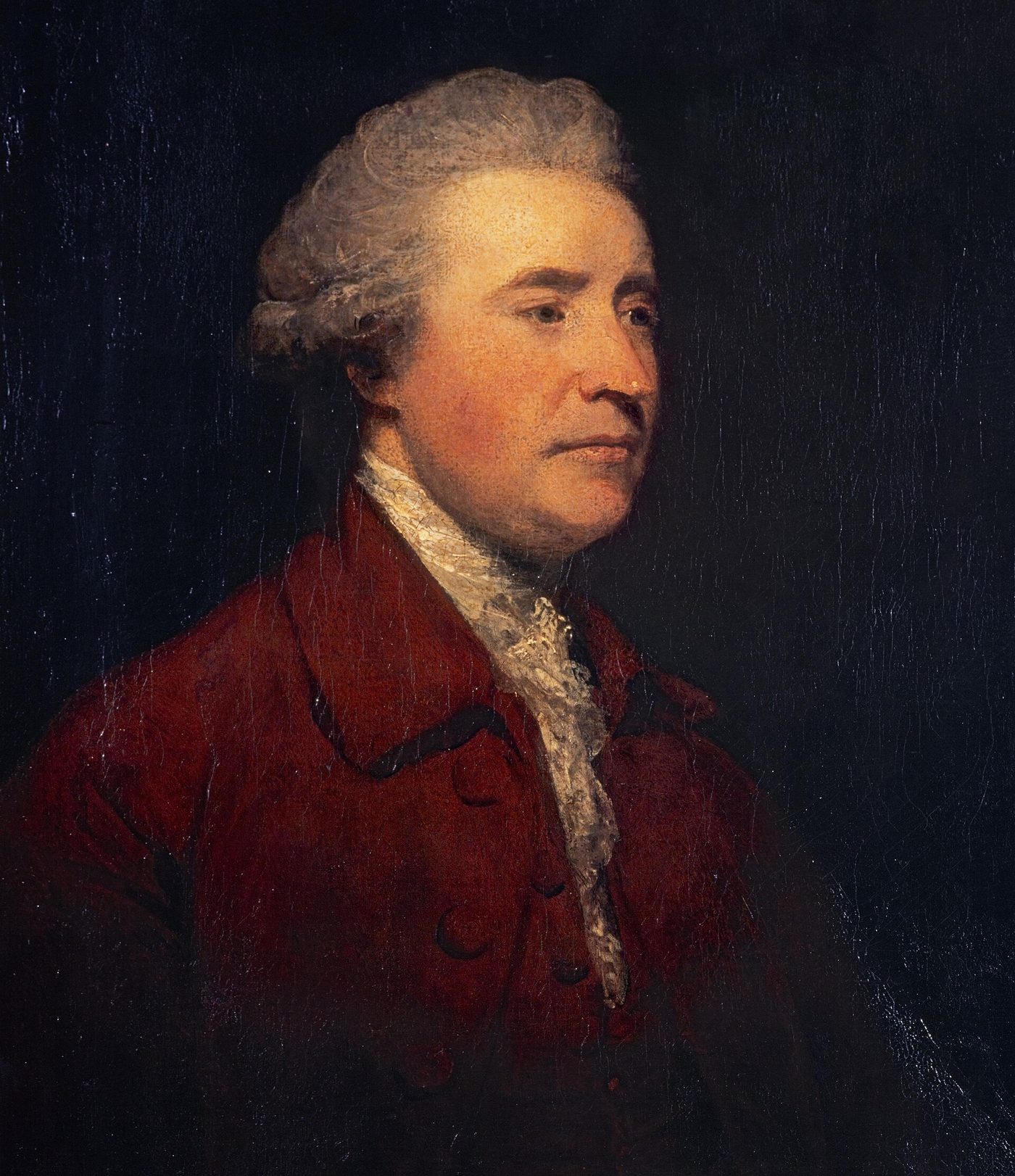
Edmund Burke: platoons, manners and the partnership of generations
Burke, born in Dublin and dead by 1797, was a Whig member of Parliament who had argued for conciliation with the American colonies in 1775.3 His quarrel with the French Revolution was that it tried to rebuild a whole society from abstract principles in a few months. A society, he wrote, is a contract of a special kind. The state "ought not to be considered as nothing better than a partnership agreement in a trade of pepper and coffee, calico or tobacco." Because its ends take many generations to reach, "it becomes a partnership not only between those who are living, but between those who are living, those who are dead, and those who are to be born."4
Six years later, in the first of his Letters on a Regicide Peace (1796), Burke said it more bluntly:
"Manners are of more importance than laws. Upon them, in a great measure, the laws depend. The law touches us but here and there, and now and then. Manners are what vex or soothe, corrupt or purify, exalt or debase, barbarize or refine us, by a constant, steady, uniform, insensible operation, like that of the air we breathe in."
Edmund Burke, Letters on a Regicide Peace, Letter I, 1796. 5
By manners Burke meant much more than politeness. He meant the daily habits of a people, how they treat strangers, keep promises and raise children. The law is a fence. Manners are the field.
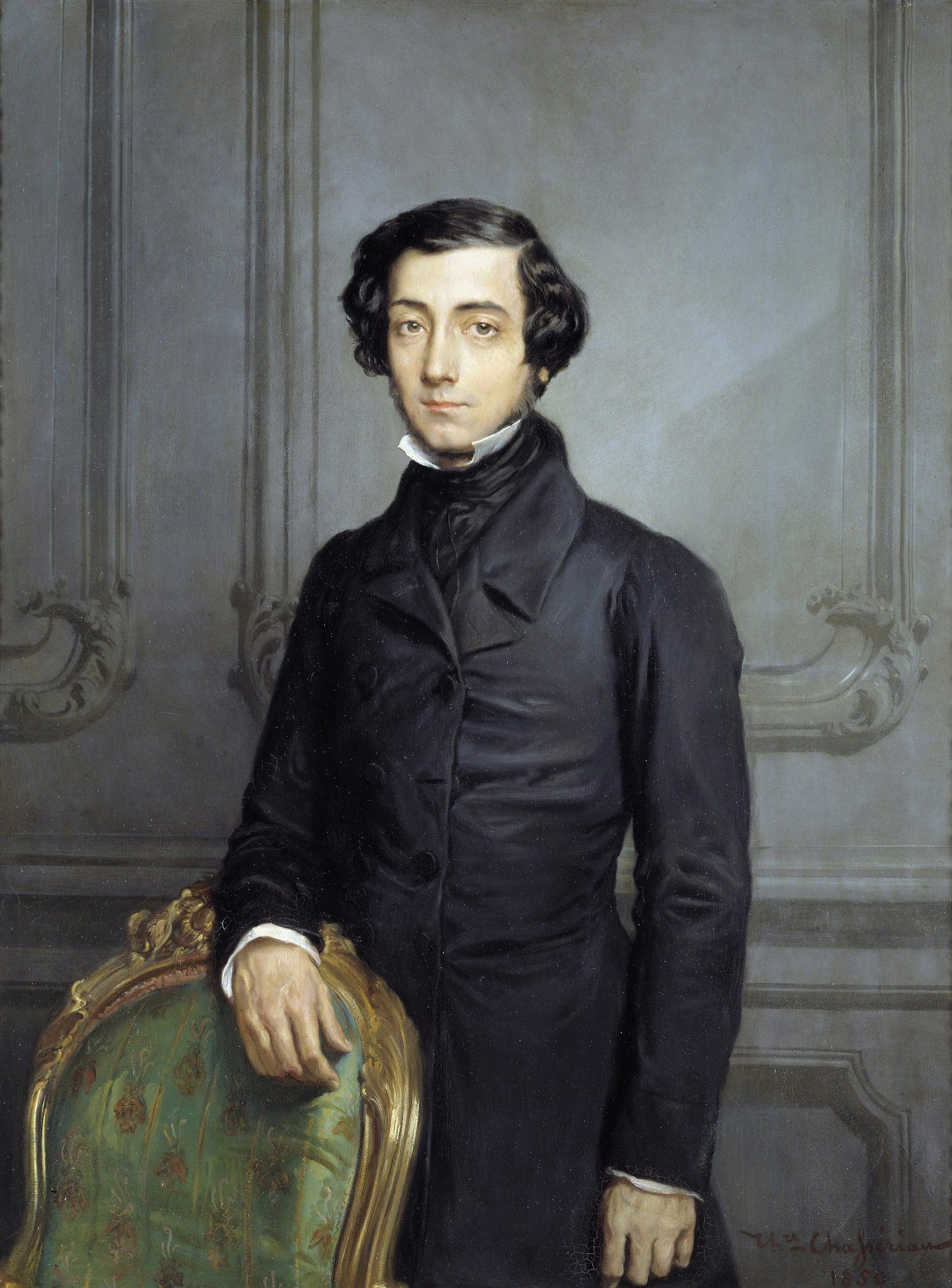
Tocqueville: religion and mores in America
Alexis de Tocqueville came to the United States in 1831 with his friend Gustave de Beaumont, on a French government mission to study American prisons. The more famous result of the trip was Democracy in America, whose first volume appeared in 1835.6 The question that drove him was why democracy worked here and failed elsewhere. Mexico, he noted, had copied the federal constitution of the United States and still could not keep a stable republic.7
His answer ranked three causes. Geography helped. Laws helped more. But mores helped most. "If they were to be classed in their proper order," he wrote, "I should say that the physical circumstances are less efficient than the laws, and the laws very subordinate to the manners of the people." And he gave his conclusion in a sentence that could serve as a motto for this whole module: "the most advantageous situation and the best possible laws cannot maintain a constitution in spite of the manners of a country."7
Tocqueville used the word manners (in French, moeurs) "with the meaning which the ancients attached to the word mores." It took in "the various notions and opinions current among men" and, in his words, "the whole moral and intellectual condition of a people."8 At the center of American mores he found religion:
"Religion in America takes no direct part in the government of society, but it must nevertheless be regarded as the foremost of the political institutions of that country; for if it does not impart a taste for freedom, it facilitates the use of free institutions."
Alexis de Tocqueville, Democracy in America, vol. 1 (1835), chapter 17, trans. Henry Reeve. 9
Notice the first clause. Tocqueville praised American religion because it stayed out of government. The churches had no official power, and he thought that made their moral power greater. He also found the habits of self-rule in the township. "Town-meetings are to liberty what primary schools are to science," he wrote. "They bring it within the people's reach, they teach men how to use and how to enjoy it."10
Abraham Kuyper: sphere sovereignty
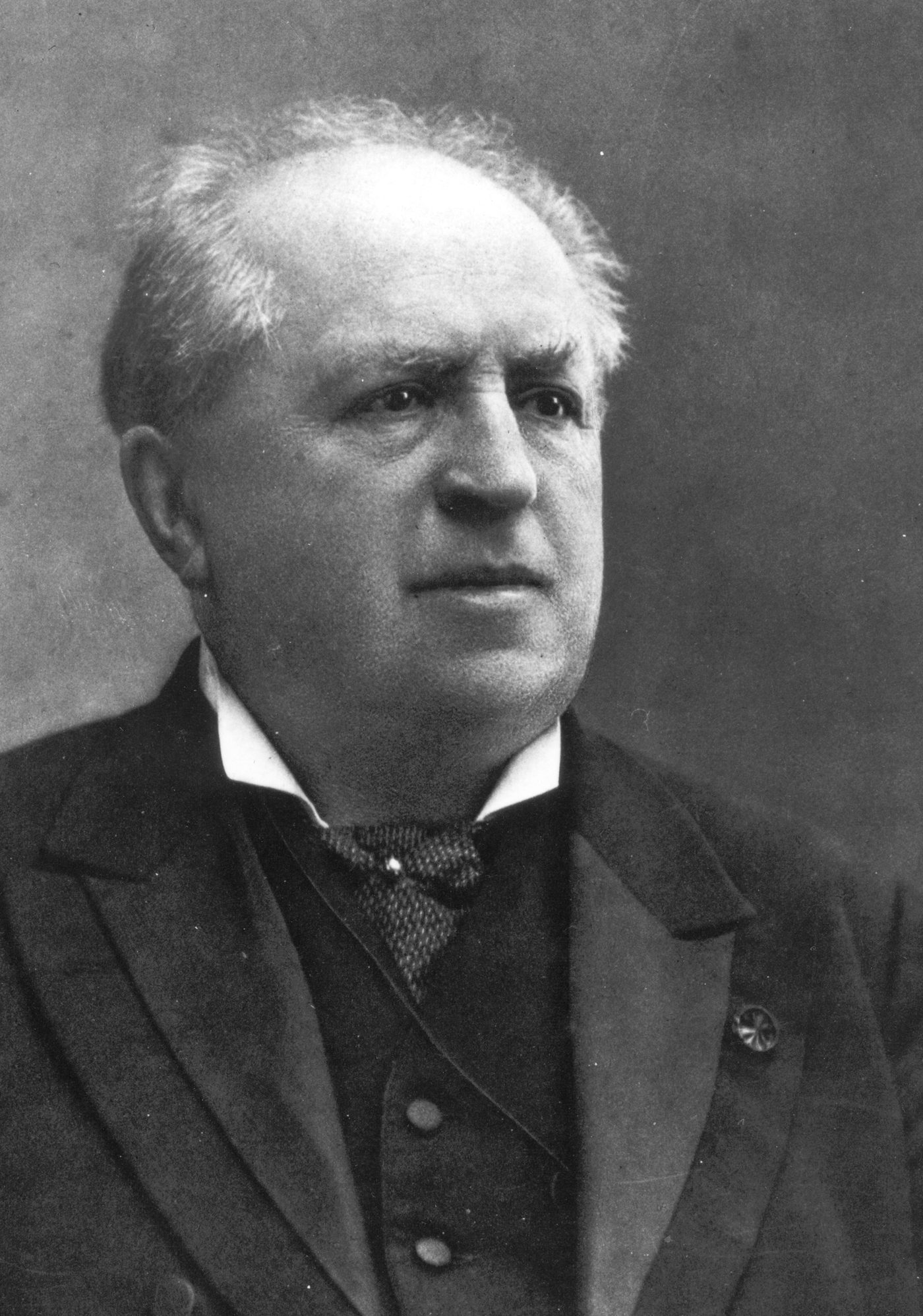
The Dutch theologian, newspaper editor and politician Abraham Kuyper built his argument on a different foundation. Kuyper founded the Free University of Amsterdam in 1880 and later served as prime minister of the Netherlands from 1901 to 1905.11 At the university's opening on October 20, 1880, he gave an address called "Sphere Sovereignty" that contains his most famous sentence: "there is not a square inch in the whole domain of our human existence over which Christ, who is Sovereign over all, does not cry: 'Mine!'"12
That sounds like a claim for church power. Kuyper meant the reverse. If Christ is sovereign over everything, then no human institution, the state included, is sovereign over everything. In the Stone Lectures he gave at Princeton in 1898, he spelled the idea out for an American audience:
"The family, the business, science, art and so forth are all social spheres, which do not owe their existence to the state, and which do not derive the law of their life from the superiority of the state, but obey a high authority within their own bosom; an authority which rules, by the grace of God, just as the sovereignty of the State does."
Abraham Kuyper, Lectures on Calvinism, Lecture 3, "Calvinism and Politics," Princeton, 1898. 13
These spheres, he went on, "have nothing above themselves but God," and "the State cannot intrude here, and has nothing to command in their domain."13 The state still has a real job. Kuyper gave it a "threefold right and duty": "Whenever different spheres clash, to compel mutual regard for the boundary-lines of each," to defend "individuals and the weak ones, in those spheres, against the abuse of power of the rest," and to make everyone carry the common burdens of the nation.13 A family, a congregation or a school is not a branch office of the government. Neither is it a law unto itself when it abuses the people inside it.
T. S. Eliot and Christopher Dawson: culture and religion
Just after the Second World War, two writers in England asked what Europe would rebuild on.
T. S. Eliot, the St. Louis-born poet who had taken British citizenship in 1927,14 published Notes Towards the Definition of Culture with Faber and Faber in October 1948.15 His first claim was historical: "no culture has appeared or developed except together with a religion."15 His second was harder to pin down. He refused to say that culture and religion are the same thing, or that they are two separate things that merely touch. He reached instead for a theological word: "I spoke at one point of the culture of a people as an incarnation of its religion."16
And he insisted that culture means ordinary life, not only museums. In the English case it "includes all the characteristic activities and interests of a people: Derby Day, Henley Regatta, Cowes, the twelfth of August, a cup final, the dog races, the pin table, the dart board, Wensleydale cheese, boiled cabbage cut into sections, beetroot in vinegar, nineteenth-century Gothic churches and the music of Elgar. The reader can make his own list."16 An American list might start with the county fair, Friday night football and the church potluck.
The Catholic historian Christopher Dawson gave two series of Gifford Lectures at the University of Edinburgh and published the second as Religion and the Rise of Western Culture.17 His chapters run from "The Church and the Barbarians" through "The Monks of the West and the Formation of the Western Tradition" to the medieval universities and towns. His argument was that the West's distinctive energy grew out of the monasteries and the church's long work of converting and educating the barbarian kingdoms. Religion, in his view, was the driving force of cultures, including the ones that later forgot it.
Myth: Dawson said "Religion is the key of history"
The line is often attributed to Dawson, and he did use it. But he was quoting someone else. In the introduction to Religion and the Rise of Western Culture he writes: "'Religion is the key of history,' said Lord Acton," and adds that the saying "has acquired a wider meaning than he realized."18 The words belong to the nineteenth-century English historian Lord Acton. Dawson's contribution was to build a whole history on them.
Richard Weaver: ideas have consequences
The same year as Eliot's book, the University of Chicago Press published a short, combative work by Richard M. Weaver, born in Asheville, North Carolina, in 1910, who taught English at the University of Chicago. Ideas Have Consequences (1948) sold out its first printing of 7,500 copies, to its author's surprise, and its title has become a proverb.1920
Weaver's thesis was that the West's troubles began with a philosophical turn in the fourteenth century. William of Ockham and the nominalists taught that universals, words like justice or man, are only names we give to groups of particular things. Weaver argued that once a culture stops believing in real, transcendent truths, it slowly loses its sense of distinction, hierarchy and duty, and then its ability to reason together at all. His remedies were concrete: restore respect for language, protect private property, which he called a "metaphysical right," as a place where a person can stand against the state, and restore the virtue of piety.20 Readers who doubt that a medieval logic dispute can explain modern politics have a fair point. Weaver's answer was that bad ideas take centuries to work their way down to the street.
Russell Kirk: the permanent order
Russell Kirk, whose The Roots of American Order anchored the last lesson, made his reputation in 1953 with The Conservative Mind, a book that traced a line of Anglo-American thinkers beginning with Burke.21 Its argument fits this lesson: a just political order rests on moral order in the soul and in the community, and that moral order is passed down through custom, religion, literature and local life before any statute is written. Kirk made his home in the small village of Mecosta, Michigan, and wrote ghost stories as well as political books. He practiced what he preached about local roots.21
C. S. Lewis: The Abolition of Man
In 1943, with Britain still at war, C. S. Lewis gave the Riddell Memorial Lectures at the University of Durham. They were published as The Abolition of Man, with a subtitle that sounds harmless: Reflections on Education with Special Reference to the Teaching of English in the Upper Forms of Schools.22
Lewis started with a real English textbook, which he called The Green Book and whose authors he called Gaius and Titius to spare them embarrassment. "I promise you there is such a book and I have it on my shelves," he wrote.22 The authors taught schoolchildren that when a man calls a waterfall sublime, he is only reporting his own feelings. Lewis saw that the lesson was really about values. If no statement about value can be true, then courage, honor and justice are only feelings too. The textbook was quietly teaching children to disbelieve the moral law that every great tradition shares, which Lewis called the Tao. He gave the consequence in one of the most quoted passages of the century:
"In a sort of ghastly simplicity we remove the organ and demand the function. We make men without chests and expect of them virtue and enterprise. We laugh at honour and are shocked to find traitors in our midst. We castrate and bid the geldings be fruitful."
C. S. Lewis, The Abolition of Man, 1943, chapter 1, "Men Without Chests." 23
The chest, for Lewis, was the seat of trained emotion, the place where reason and appetite are joined by habits of feeling rightly. Schools build it or starve it. A society that starves it will not get it back by passing laws.
The same idea from the other direction
Christians and defenders of tradition were not the only ones to notice that culture comes first. Some of the sharpest statements of the idea came from Marxists who wanted to explain why the revolution Marx predicted had not happened in Western Europe.
Antonio Gramsci and hegemony
Antonio Gramsci was a leader of the Italian Communist Party. Mussolini's government arrested him in 1926. In May 1928 a special tribunal sentenced him to 20 years, 4 months and 5 days, and the prosecutor said, "We must stop this brain from functioning for twenty years." Gramsci filled notebooks in prison until his health collapsed, and he died in 1937.24
His central question was why the workers of Italy, Germany and Britain had not followed Russia in 1917. His answer was that in the West the ruling class held power through more than police and armies. It held power through consent, won and kept in schools, churches, newspapers, clubs and common sense itself. He called this hegemony. Part of it, he wrote, is "the 'spontaneous' consent given by the great masses of the population to the general direction imposed on social life by the dominant fundamental group."25 He compared Russia and the West in military language:
"In Russia the State was everything, civil society was primordial and gelatinous; in the West, there was a proper relation between State and civil society, and when the State trembled a sturdy structure of civil society was at once revealed. The State was only an outer ditch, behind which there stood a powerful system of fortresses and earthworks."
Antonio Gramsci, Selections from the Prison Notebooks, ed. and trans. Quintin Hoare and Geoffrey Nowell Smith (1971), p. 238. 26
Seize the outer ditch and the fortresses remain. So a revolutionary party in the West would have to fight a long "war of position" in culture and civil society before it could win power. "Every relationship of 'hegemony' is necessarily an educational relationship," he wrote.27 Kuyper and Gramsci would have agreed on almost nothing about God or property. They agreed that the institutions between the citizen and the state are where a society's real loyalties are formed.
The Frankfurt School
The Institute for Social Research was founded in Frankfurt, Germany, in 1923. Max Horkheimer became its director in 1931 and laid out a program that joined philosophy and social theory with psychology, economics and the study of culture. When the Nazis closed the institute, Horkheimer re-established it at Columbia University in New York in 1934, where Herbert Marcuse and others joined him.28
The group's best-known work on culture is the chapter on the "culture industry" in Horkheimer and Theodor Adorno's Dialectic of Enlightenment, first circulated in 1944 and published in 1947. They argued that films, radio and popular music, produced and marketed on an industrial scale, train people to accept the world as it is. In their words, cultural products "are no longer also commodities, they are commodities through and through."28
Marcuse went further in a 1965 essay, "Repressive Tolerance." He argued that in an unjust society, evenhanded tolerance protects the powerful, and he proposed a remedy in his own political vocabulary: "Liberating tolerance, then, would mean intolerance against movements from the Right and toleration of movements from the Left."29 That is a plain call to deny equal freedom of speech to one side. It deserves to be quoted exactly, because it is often paraphrased into something milder or something worse.
The "long march through the institutions"
The phrase most often attached to this whole tradition is "the long march through the institutions," in German der lange Marsch durch die Institutionen. It is usually credited to Rudi Dutschke, a leader of the West German student movement, who used it around 1967 for a strategy of changing society by entering its institutions and working inside them over many years. The name borrows from the Long March of the Chinese Communist army.30
How solid is the attribution? Solid on the main point, loose on the details. Marcuse credited the strategy to Dutschke by name in Counterrevolution and Revolt (1972), describing it as "working against the established institutions while working in them."31 In a 1971 letter to Dutschke he called "your notion of the 'long march through the institutions'" the only effective way forward.30 And the sociologist Helmut Schelsky put the phrase in a Frankfurter Allgemeine Zeitung headline in December 1971.30 So by the early 1970s it was Dutschke's phrase in the eyes of friends and opponents alike. What is not well documented is the exact first occasion, a dated speech or article in which Dutschke said it first. The sources available here place it only "around 1967."
Myth: Gramsci called for a "long march through the institutions"
The phrase is often put in Gramsci's mouth, especially online. It does not appear in his prison writings, and the evidence that Dutschke had even read Gramsci is lacking; Gramsci does not come up in Dutschke's diaries or biography. The two ideas are close cousins. Gramsci's "war of position" and Dutschke's long march both describe winning culture and civil society before winning the state. But the words are Dutschke's, spoken more than thirty years after Gramsci filled his notebooks.30
Where the two traditions agree and where they part
| Writer | Year | What shapes law and politics | What the writer wanted from it |
|---|---|---|---|
| Edmund Burke | 1790, 1796 | Manners, family and the "little platoon" | To conserve an inherited order and reform it slowly |
| Alexis de Tocqueville | 1835 | Mores, religion and township habits | To keep democracy free and keep it from tyranny of the majority |
| Abraham Kuyper | 1880, 1898 | Sovereign spheres of family, church, school and work under God | To keep the state from absorbing the rest of life |
| T. S. Eliot | 1948 | Religion, embodied in a people's whole way of life | To rebuild Christian culture in postwar Europe |
| Christopher Dawson | 1950 | Religion as the driving force of civilizations | To recover the Christian roots of the West |
| Richard Weaver | 1948 | Ideas, beginning with belief in transcendent truth | To restore language, property and piety |
| C. S. Lewis | 1943 | Education of the moral emotions under the Tao | To keep schools from producing "men without chests" |
| Antonio Gramsci | 1926-1937 | Hegemony won by consent in civil society | To win that consent for a workers' revolution |
| Horkheimer and Adorno | 1944 | The culture industry | To expose mass culture as a tool of domination |
| Rudi Dutschke | c. 1967 | Institutions entered and changed from inside | A socialist transformation of West Germany |
The table shows something that labels hide. Both groups saw that families, churches, schools, newspapers and entertainment shape citizens before any election does. They differed on what those institutions were for. Burke, Tocqueville and Kuyper wanted them free of the state because they believed each answered to a moral order above politics. Gramsci and Marcuse saw the same institutions as instruments of class power and wanted to capture them for a different power. Both groups were right that the institutions matter. The disagreement is about truth, and about whether anything stands above the struggle for power. That question cannot be settled by counting who controls more institutions.
Learn more
- Burke, Reflections on the Revolution in France: read the pages around the "little platoon" and the "partnership" passages in this 1907 World's Classics volume.
- Tocqueville, Democracy in America, vol. 1: chapter 17 on the causes that maintain the democratic republic is the heart of his case for mores.
- Kuyper, Lectures on Calvinism: the third lecture, on politics, explains sphere sovereignty to an American audience.
- Eliot, Notes Towards the Definition of Culture: short, dense and more readable than its reputation.
- Lewis, The Abolition of Man: three lectures and an appendix of moral teachings from across the world's traditions.
- Dawson, Religion and the Rise of Western Culture: the monasteries, the barbarian kingdoms and the making of Christendom.
- Stanford Encyclopedia of Philosophy, "Antonio Gramsci": a careful scholarly account of his life and the concept of hegemony.
- Stanford Encyclopedia of Philosophy, "Critical Theory": the history and arguments of the Frankfurt School.
- "Long march through the institutions": a starting point with references on Dutschke, Marcuse and Schelsky.
Notes
- "Reflections on the Revolution in France," Wikipedia, on publication by James Dodsley, Pall Mall, London, November 1790. Read it online. ↩
- Edmund Burke, Reflections on the Revolution in France (1790), in The Works of the Right Honourable Edmund Burke, vol. 4, World's Classics (London: Henry Frowde, Oxford University Press, 1907), p. 50. Read it online. ↩
- Edmund Burke, Speech on Conciliation with America, March 22, 1775 (Project Gutenberg); the World's Classics edition of his Works, vol. 4, gives his birthplace as Dublin and his death as July 8, 1797. Read it online. ↩
- Burke, Reflections, in Works, vol. 4 (1907), pp. 105-106. Read it online. ↩
- Edmund Burke, Letters on a Regicide Peace, Letter I (1796), in The Works of the Right Honourable Edmund Burke, vol. 6, World's Classics (London: Henry Frowde, Oxford University Press, 1906), pp. 129-130. Read it online. ↩
- "Alexis de Tocqueville," Wikipedia, section "Travels: North America." Read it online. ↩
- Alexis de Tocqueville, Democracy in America, vol. 1, trans. Henry Reeve, chapter 17, part 4, "The Laws Contribute More to the Maintenance of the Democratic Republic in the United States than the Physical Circumstances of the Country, and the Manners More than the Laws." Read it online. ↩
- Tocqueville, Democracy in America, vol. 1, chapter 17, "Influence of Manners upon the Maintenance of the Democratic Republic in the United States." Read it online. ↩
- Tocqueville, Democracy in America, vol. 1, chapter 17, section on religion considered as a political institution. Read it online. ↩
- Tocqueville, Democracy in America, vol. 1, chapter 5, on the township system. Read it online. ↩
- "Abraham Kuyper," Wikipedia, on the Free University (1880) and his term as chairman of the Council of Ministers, August 1, 1901, to August 17, 1905. Read it online. ↩
- Abraham Kuyper, "Sphere Sovereignty," address at the opening of the Free University, October 20, 1880, in James D. Bratt, ed., Abraham Kuyper: A Centennial Reader (Grand Rapids: Eerdmans, 1998); quoted in Wes Bredenhof, "Quotable Church History: 'Not a square inch...'" March 20, 2018. Read it online. ↩
- Abraham Kuyper, Lectures on Calvinism: Six Lectures Delivered at Princeton University, 1898, under the Auspices of the L. P. Stone Foundation (Grand Rapids: Eerdmans, 1931 printing), Lecture 3, "Calvinism and Politics." Read it online. ↩
- "T. S. Eliot," Wikipedia, on his birth in St. Louis in 1888 and his British citizenship from 1927. Read it online. ↩
- T. S. Eliot, Notes Towards the Definition of Culture (London: Faber and Faber, first published October 1948), Introduction. Read it online. ↩
- Eliot, Notes Towards the Definition of Culture, chapter 1, "The Three Senses of 'Culture.'" Read it online. ↩
- Christopher Dawson, Religion and the Rise of Western Culture, Gifford Lectures delivered in the University of Edinburgh (New York: Image Books edition), contents and chapter 1. Read it online. ↩
- Dawson, Religion and the Rise of Western Culture (Image Books edition), Introduction, p. 15. Read it online. ↩
- Richard M. Weaver, Ideas Have Consequences (Chicago: University of Chicago Press, 1948); summary of the argument from "Ideas Have Consequences," Wikipedia. Read it online. ↩
- Will Schultz, "Richard Weaver's 'Ideas Have Consequences,'" North Carolina History Project. Read it online. ↩
- "Russell Kirk," Wikipedia, on The Conservative Mind (1953), his home at Mecosta, Michigan, and his ghost stories. Read it online. ↩
- C. S. Lewis, The Abolition of Man, or Reflections on Education with Special Reference to the Teaching of English in the Upper Forms of Schools, University of Durham Riddell Memorial Lectures, Fifteenth Series (1943; New York: Macmillan, 1947), chapter 1. Read it online. ↩
- Lewis, The Abolition of Man, end of chapter 1, "Men Without Chests"; the same passage is quoted in Hillsdale College, "Men without Chests." Read it online. ↩
- "Antonio Gramsci," Stanford Encyclopedia of Philosophy (first published January 13, 2023), section 1.5, "Prison (1926-1937)." Read it online. ↩
- Antonio Gramsci, Selections from the Prison Notebooks, ed. and trans. Quintin Hoare and Geoffrey Nowell Smith (New York: International Publishers, 1971), p. 12. Read it online. ↩
- Gramsci, Selections from the Prison Notebooks, p. 238, in the section "The Transition from the War of Manoeuvre (Frontal Attack) to the War of Position." Read it online. ↩
- Gramsci, Selections from the Prison Notebooks, p. 350. Read it online. ↩
- James Bohman and Robin Celikates, "Critical Theory," Stanford Encyclopedia of Philosophy, sections on Horkheimer's 1931 program, the move to Columbia in 1934 and Dialectic of Enlightenment, quoting Horkheimer and Adorno. Read it online. ↩
- Herbert Marcuse, "Repressive Tolerance," in Robert Paul Wolff, Barrington Moore Jr. and Herbert Marcuse, A Critique of Pure Tolerance (Boston: Beacon Press, 1965), full text at marcuse.org. Read it online. ↩
- "Long march through the institutions," Wikipedia, citing Ulrich Chaussy, Rudi Dutschke (Munich: Droemer, 2018); Herbert Marcuse, Marxism, Revolution and Utopia: Collected Papers, vol. 6 (Routledge, 2014), p. 336; and Helmut Schelsky, "Die Strategie der 'Systemueberwindung': Der lange Marsch durch die Institutionen," Frankfurter Allgemeine Zeitung, December 10, 1971. Read it online. ↩
- Herbert Marcuse, Counterrevolution and Revolt (Boston: Beacon Press, 1972), pp. 55-56. Read it online. ↩
Terms in this lesson
- Little platoon
- Burke's 1790 phrase for the small groups a person first belongs to, such as family, parish and rank, from which love of country grows.
- Mores
- The Latin word Tocqueville used for a people's habits, opinions and moral character taken together. His translator rendered it 'manners.'
- Sphere sovereignty
- Abraham Kuyper's teaching that family, church, school, business, science and art each have their own God-given authority, which the state may not absorb.
- Nominalism
- The medieval teaching, linked to William of Ockham, that universal terms are only names. Richard Weaver blamed it for the West's loss of belief in real, transcendent truths.
- The Tao
- C. S. Lewis's name in The Abolition of Man for the shared moral law found across the world's traditions.
- Hegemony
- In Antonio Gramsci's prison writings, the leadership a ruling group exercises through consent won in culture, schools, churches and the press, as well as through force.
- Culture industry
- Horkheimer and Adorno's 1944 term for mass entertainment produced and sold like any other commodity.
- Long march through the institutions
- A strategy credited to the German student leader Rudi Dutschke around 1967: change society by working inside its institutions over many years.
Sources
- Edmund Burke, Works, vol. 4 (World's Classics, 1907), Reflections on the Revolution in France (Internet Archive) checked 2026-10
- Edmund Burke, Works, vol. 6 (World's Classics), Letters on a Regicide Peace (Internet Archive) checked 2026-10
- Alexis de Tocqueville, Democracy in America, vol. 1, trans. Henry Reeve (Project Gutenberg) checked 2026-10
- Abraham Kuyper, Lectures on Calvinism (Stone Lectures, Princeton, 1898) (Internet Archive) checked 2026-10
- T. S. Eliot, Notes Towards the Definition of Culture (Faber, 1948) (Internet Archive) checked 2026-10
- Christopher Dawson, Religion and the Rise of Western Culture (Internet Archive) checked 2026-10
- C. S. Lewis, The Abolition of Man (Internet Archive) checked 2026-10
- Antonio Gramsci, Selections from the Prison Notebooks, ed. Hoare and Nowell Smith (Internet Archive) checked 2026-10
- Critical Theory (Stanford Encyclopedia of Philosophy) checked 2026-10
- Antonio Gramsci (Stanford Encyclopedia of Philosophy) checked 2026-10
- Herbert Marcuse, Counterrevolution and Revolt (1972) (Internet Archive) checked 2026-10
- Long march through the institutions (Wikipedia) checked 2026-10