Lesson 14 of 14 · about 55 minutes · Updated November 12, 2026
Review, Reading List, Timeline and Glossary
You'll be able to
- Place the main events of Christian missions from Pentecost to 2026 in order, with their dates and sources.
- Name the missionaries and leaders of the module with their sending bodies and fields.
- Find and read the public domain texts in which the missionaries speak for themselves, and name the modern historians on each side.
- Define the key terms of mission history, from the American Board to the 10/40 window.
- Use Form 990 filings, ECFA's standards and the Standard of Excellence to ask sound questions of a mission organization.
- State the main disputes about missions fairly, with the documents each side relies on.
Start here: the short version
This last lesson gathers the whole module into one place. It gives a single timeline from Pentecost to 2026, a who-is-who table of the missionaries and leaders met in lessons 01 to 13, a world diagram placing each of them on the field where they worked, a reading list of the public domain texts in which the missionaries speak for themselves, a glossary of more than forty terms, a set of questions for judging a mission organization today, the main disputes laid out with each side in its own words, and the module's big numbers in one table. Every date and figure carries a footnote. Where a fact was checked in an earlier lesson and not rechecked here, the lesson says so and lists it under "unverified" in the record for this page.
Three things to carry away. First, the missionaries left a large written record of their own (Carey's Enquiry, Brainerd's diary, the Judson memoirs, Hudson Taylor's appeals, Livingstone's travels), and that record often differs from the sermons and films made about them later. Second, the people the missionaries came to left records too (petitions, tribal histories, trial accounts, oral tradition written down by their descendants), and a fair history reads both. Third, the center of Christianity has moved: in 1900 about 17.6 percent of the world's Christians lived in the Global South, and by 2025 the figure was about 68.9 percent, according to the Center for the Study of Global Christianity.1
How to use this review
The module ran in roughly chronological order. Lesson 01 (What Missions Are) covered the words, the Great Commission, Paul, Patrick, the Church of the East and the Moravians. Lessons 02 and 03 (Early America and the first mission societies) covered New England, the Great Awakening and the birth of the voluntary societies. Lessons 04 to 07 followed the famous names of the 19th century: William Carey, Adoniram and Ann Judson, Hudson Taylor and Lottie Moon, and Livingstone, Slessor and Mackay. Lesson 08 (the Whitmans, the Spaldings and the Nez Perce) brought the story to the Pacific Northwest and Idaho. Lesson 09 (Women and Missions) treated the women who made up most of the missionary force by 1900. Lessons 10 to 13 covered the 20th and 21st centuries: Townsend, Wycliffe and the Ecuador five, Youth With A Mission, the large agencies and their money, and missions today and the Global South.
Each section below can be read alone. A reader preparing for the quiz should study the timeline, the who-is-who table and the glossary. A reader deciding whether to give to, join or trust a mission agency should go to the section on evaluating an organization. A reader whose family history runs through a mission station, as a missionary's descendant or as a member of a people missionaries came to, may want to start with the disputes and the hard questions.
Neighbouring modules treat parts of this story at length, and this review links to them instead of repeating them: Module 79 on the first century and the medieval church, Module 80 on the Baptists and the Congregationalists and Puritans, Module 77 on Pietism and the Moravians, Module 102 on the missionary martyrs, Module 103 on Bible translation and dynamic equivalence, and Module 105 on the First Great Awakening.
The long timeline: from Pentecost to 2026
The diagram below compresses two thousand years into thirty-two entries. The scale is uneven by design: the first column covers about 1,780 years and the second about 210, because the module's weight falls on the modern missionary movement and on America. Dates for the ancient and early medieval entries are estimates given by historians, and the text that follows says where scholars disagree.
The apostles and the first churches
The word "mission" comes from the Latin mittere, "to send," and "apostle" from the Greek apostolos, "one who is sent." The text most often quoted by the missionaries in this module is the Great Commission as the King James Version gives it: "Go ye therefore, and teach all nations, baptizing them in the name of the Father, and of the Son, and of the Holy Ghost" (Matthew 28:19, KJV).2 The second is Acts 1:8: "But ye shall receive power, after that the Holy Ghost is come upon you: and ye shall be witnesses unto me both in Jerusalem, and in all Judaea, and in Samaria, and unto the uttermost part of the earth" (KJV).3 Acts 2 places the first public preaching at the feast of Pentecost in Jerusalem and reports that "the same day there were added unto them about three thousand souls" (Acts 2:41, KJV).4 The year is not given in the text; historians usually place it about AD 30 or 33.
Paul's three journeys and his voyage to Rome, told in Acts 13 to 28, are dated by scholars only approximately, roughly the late 40s to about 60. In 1912 the Anglican missionary Roland Allen published Missionary Methods: St. Paul's or Ours?, which argued that Paul founded churches that governed and supported themselves within a few years, and that modern missions kept their converts dependent far too long. Allen's book, now public domain, became one of the most cited works in 20th-century mission thinking.5 Module 79 treats the first century in detail.
Ireland, Britain, Germany and the Church of the East
Patrick's own Confessio and Letter to Coroticus are the only texts scholars accept as his. Neither gives a year. One school of historians places his mission in the middle of the 5th century, from the traditional date of 432; another places it later in that century. Gregory the Great sent Augustine to Kent, where he arrived in 597, according to Bede's Ecclesiastical History. Boniface's felling of the oak of Jupiter at Geismar (usually dated about 723) is told by his biographer Willibald, who wrote that "the oak burst asunder into four parts, each part having a trunk of equal length" and that Boniface built an oratory from the timber.6 Stephen Neill's A History of Christian Missions (1964) remains the standard one-volume survey of these centuries.7
Far to the east, the Church of the East (often called "Nestorian" by its opponents) carried the faith across Central Asia. The stone stele set up at Chang'an (present Xi'an) in 781 records the arrival of a monk named Alopen in 635. The tradition that the apostle Thomas founded the churches of southern India is old and loved by the Thomas Christians of Kerala, but no first-century document confirms it; lesson 01 rates it "Unresolved."7
Catholic missions after 1492
Between Columbus and the Protestant societies lay three centuries of Catholic missions carried by the Franciscans, Dominicans, Augustinians and, after 1540, the Jesuits. William Carey's own summary in 1792 shows how a Protestant of his day saw them: "The Spaniards forced popery upon the inhabitants of South-America, and the Portuguese in Asia. The Jesuits were sent into China in 1552. Xavier, whom they call the apostle of the Indians, laboured in the East-Indies and Japan, from 1541 to 1552."8 In the same book Carey cited the Catholic missionaries as proof that distance and danger could be overcome: "Have not the popish missionaries surmounted all those difficulties which we have generally thought to be insuperable?"8 Matteo Ricci reached Beijing in 1601; Bartolome de las Casas spent decades protesting the treatment of Native peoples in the Spanish Americas. Those stories belong to the wider history of the church and are told in outline in lesson 01.
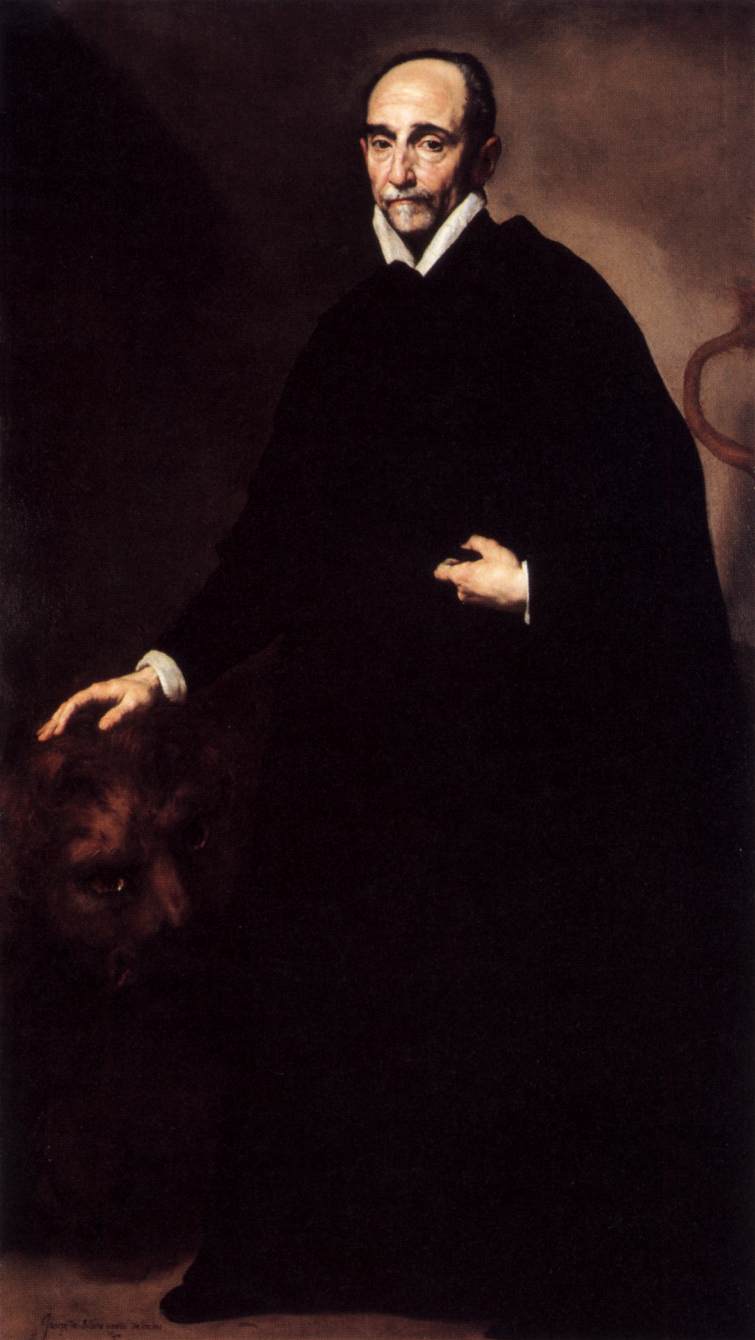

The Moravians
Protestant churches were slow to send missionaries. The first Protestant body to treat mission as the work of the whole church was the Renewed Unity of the Brethren, the Moravians, gathered at Herrnhut on Count Nikolaus von Zinzendorf's estate in Saxony from 1722. In 1732 two of them, Leonard Dober and David Nitschmann, sailed for the Danish island of St. Thomas to preach to enslaved Africans. Carey knew their record and asked in 1792: "Have not the missionaries of the Unitas Fratrum, or Moravian Brethren, encountered the scorching heat of Abyssinia, and the frozen climes of Greenland, and Labrador, their difficult languages, and savage manners?"8 The popular claim that the two men offered to sell themselves into slavery is rated in lesson 01. Module 77 covers Pietism and the Moravians.
Early America
John Eliot (1604 to 1690) left England in 1631 as a Puritan pastor and stayed at Roxbury, Massachusetts, until his death; he helped organize fourteen Indian villages and translated the Bible into the Massachusett language (1663), according to Sidney Rooy's entry in the Biographical Dictionary of Christian Missions.9 Daniel Gookin, the colony's superintendent of the "praying Indians," gave his own count of their towns in his Historical Collections of the Indians in New England (written 1674, printed 1792).10 Carey, writing a century later, dated Eliot's start wrongly: "In 1632, Mr. Elliot, of New-England, a very pious and zealous minister, began to preach to the Indians."8 The record places Eliot's first sermon to Native listeners at Nonantum on October 28, 1646,63 a reminder that even the founders of the modern movement passed on dates they had not checked. King Philip's War (1675 to 1676) wrecked most of the praying towns, and Christian Native people were interned on Deer Island in Boston Harbor in the winter of 1675 to 1676, as lesson 02 sets out with its sources.9
David Brainerd (1718 to 1747), sent by the Scottish Society for Propagating Christian Knowledge, worked among the Delaware at the Forks of the Delaware and at Crossweeksung, New Jersey, and died on October 9, 1747. Carey's summary: "About the year 1743, Mr. David Brainerd was sent a missionary to some more Indians, where he preached, and prayed, and after some time an extraordinary work of conversion was wrought."8 Jonathan Edwards edited Brainerd's diary for publication in 1749; a 19th-century American edition of Edwards's text carries entries such as this one for June 29, 1746: "Preached both parts of the day, from John, 14:19. God was pleased to assist me, to afford me both freedom and power."11 The book shaped Carey, Henry Martyn, the Judsons and, two centuries later, Jim Elliot. Module 105 covers Edwards and the First Great Awakening.
The societies and William Carey
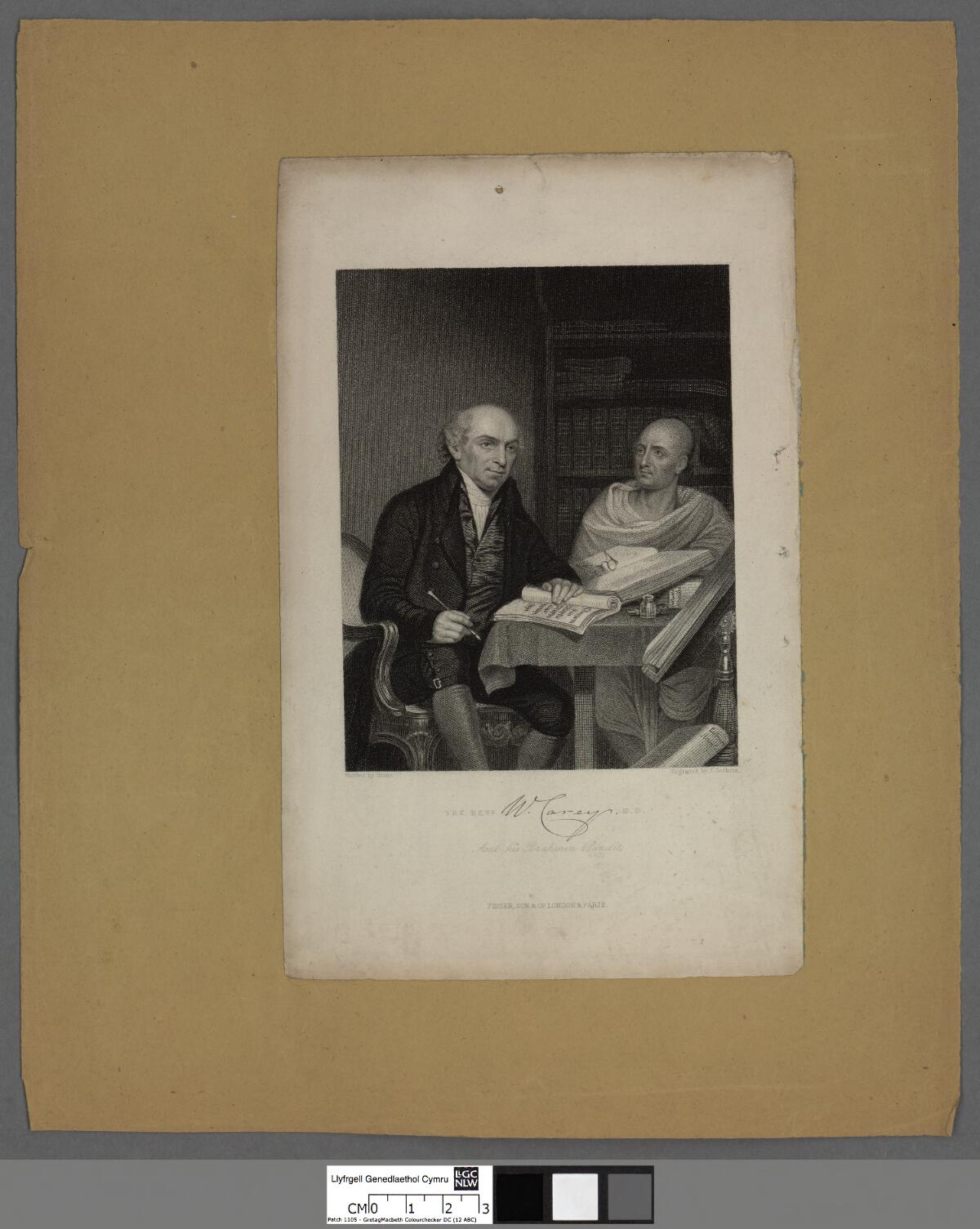
The modern missionary society was a voluntary body of subscribers, usually from one church tradition, that chose, sent and paid missionaries. William Carey (1761 to 1834), a Northamptonshire shoemaker turned Baptist pastor at Leicester, published An Enquiry into the Obligations of Christians to Use Means for the Conversion of the Heathens in 1792.8 Its five sections ask whether the Great Commission still binds Christians, review earlier missions, survey "the present State of the World," argue that more can be done, and set out the duty of Christians "and what Means ought to be used." Carey's world survey ended with these totals: "the inhabitants of the world according to this calculation, amount to about seven hundred and thirty-one millions; four hundred and twenty millions of whom are still in pagan darkness; an hundred and thirty millions the followers of Mahomet; an hundred millions catholics; forty-four millions protestants; thirty millions of the greek and armenian churches, and perhaps seven millions of jews."8
The Particular Baptist society formed in 1792 became the Baptist Missionary Society; Carey reached Calcutta in November 1793 without the East India Company's permission and later moved to the Danish enclave of Serampore, about 13 miles up the Hooghly, where he, Joshua Marshman and William Ward worked as the "Serampore Trio."12 Other societies followed: the London Missionary Society (1795), the Church Missionary Society (1799), the British and Foreign Bible Society (1804) and, in America, the American Board of Commissioners for Foreign Missions (1810). Brian Stanley's History of the Baptist Missionary Society (1992) is the standard account of Carey's society.13

The Judsons and the American Board
The American Board grew out of a student prayer meeting at Williams College in 1806 (the Haystack meeting) and a petition by Andover seminarians in 1810. Its first appointees sailed for India in 1812. Adoniram Judson (1788 to 1850) was licensed to preach in 1810, sailed with the Newells for India in 1812, was baptized by immersion at Calcutta after changing his views on baptism, and slipped into Rangoon, Burma, in 1813, according to William Brackney's entry in the Biographical Dictionary of Christian Missions.14 He was imprisoned in June 1824 during the first Anglo-Burmese War, completed the Burmese Bible in 1834, and died at sea in 1850.14 Ann Hasseltine Judson (1789 to 1826) pressed the Burmese court for his release over the next two years and died in 1826, as Dana Robert's entry records.15 Their change to Baptist views led American Baptists to form their own society, the Triennial Convention, in 1814. Francis Wayland's Memoir of the Life and Labors of the Rev. Adoniram Judson (1853) and James D. Knowles's Memoir of Mrs. Ann H. Judson (1829) print their letters.1617 Wayland's second volume carries Judson's own letter after the death of his second wife, Sarah Boardman Judson, at St. Helena in 1845, in which he wrote of "the rock of the ocean, where reposes all that is mortal of my dear, dear wife."16
China
Robert Morrison of the London Missionary Society reached Canton in 1807, and the treaties that ended the Opium Wars (1842, 1858 to 1860) opened ports and then the interior to missionaries; lesson 06 quotes what the treaties said about them. James Hudson Taylor (1832 to 1905) founded the China Inland Mission in 1865, asked no one for money publicly, wore Chinese dress and directed the work from China. His appeal China's Spiritual Need and Claims went through many editions. The 1887 printing (the seventh edition), read for this lesson, puts the death toll in these words: "Every day tens of thousands, every three months 2,000,000 subjects of the Chinese Emperor pass into eternity, very few of them ever having heard the gospel."18 The "million a month" form comes from the 1918 biography by Dr. and Mrs. Howard Taylor, which quotes Taylor looking back on 1865: "Meanwhile, a million a month were dying in that land, dying without God."64 The early text already has the figure: the third edition of 1868, whose statistics were prepared "to represent matters as they were in March 1865," reads "Every day 33,000, every month 1,000,000 subjects of the Chinese Emperor pass into eternity, without ever having heard the Gospel."67 The short sentence "a million a month in China are dying without God" is the later summary, as lesson 06 explains.
Charlotte Digges "Lottie" Moon (1840 to 1912), born in Albemarle County, Virginia, joined her sister Edmonia at Tengchow (Dengzhou) in 1873. Her letters urged Southern Baptist women to organize, and in December 1888 their first Christmas offering raised $3,315.26 against a goal of $2,000, according to Baptist Press,65 enough, the IMB says, "to send three new missionaries to China"; in 1918 the Woman's Missionary Union named the annual Christmas offering for her, according to the International Mission Board.19 The IMB says she died at 72, "ill and in declining health"; the popular claim that she starved herself to death by giving her food away is rated in lesson 06.19
Africa
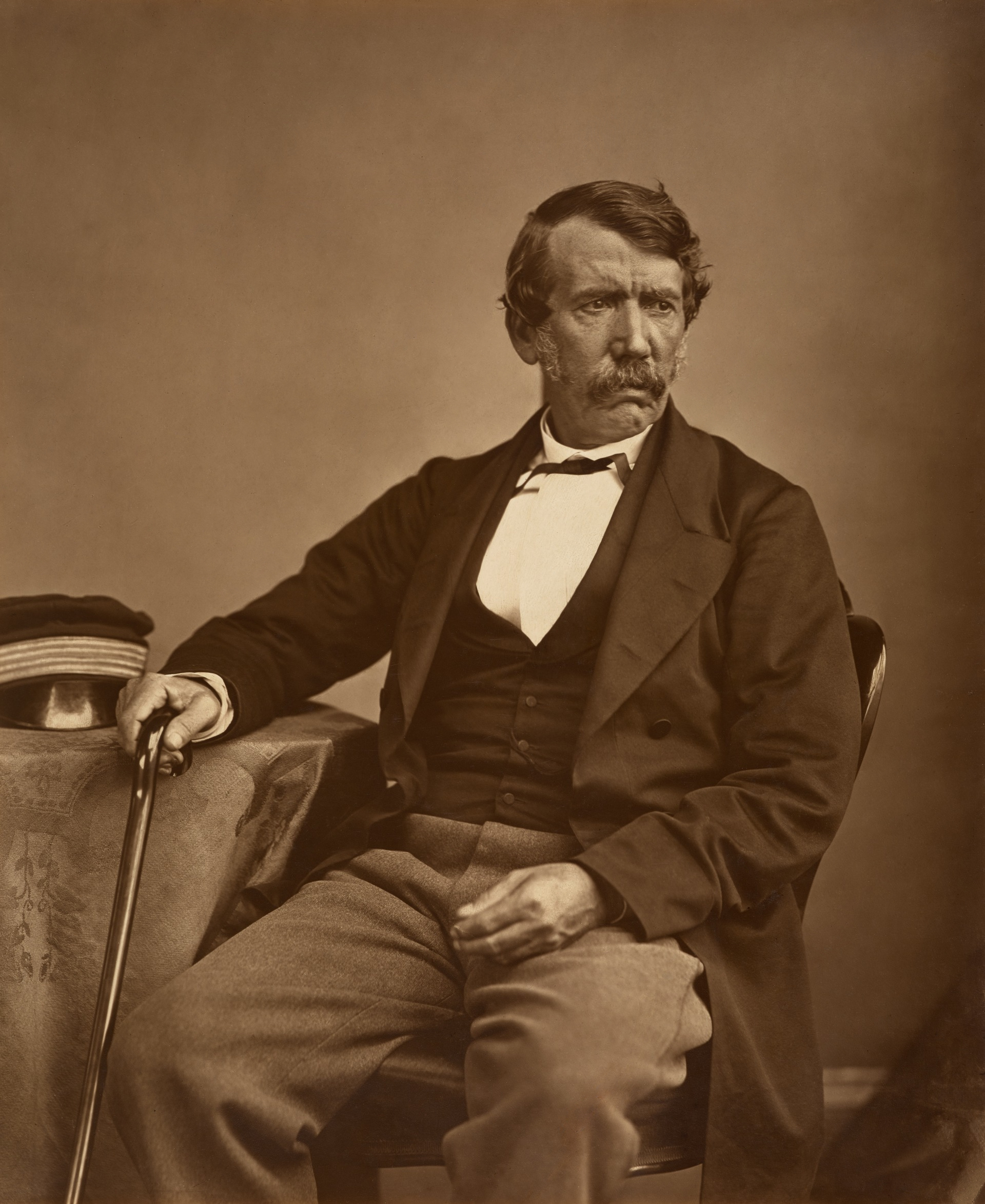
David Livingstone (1813 to 1873), accepted by the London Missionary Society, arrived at the Cape in March 1841, crossed the continent from Luanda to the Mozambique coast in the 1850s, and published Missionary Travels and Researches in South Africa in 1857.2021 Henry Morton Stanley of the New York Herald found him at Ujiji in November 1871. Stanley's own book gives the line: "walked deliberately to him, took off my hat, and said: 'Dr. Livingstone, I presume?'"22 Livingstone died at Chitambo's village on May 1, 1873. His companions Susi and Chuma buried his heart there and carried his body to the coast, and he was buried in Westminster Abbey on April 18, 1874; the brass on the grave begins "Brought by faithful hands over land and sea here rests David Livingstone."23
Mary Slessor (1848 to 1915), a Dundee mill worker, served the United Presbyterian mission at Calabar in present Nigeria from 1876, lived alone among the Okoyong, and became a British vice-consul. Alexander Mackay (1849 to 1890) of the Church Missionary Society reached Buganda in 1878 and worked there through the reigns of Mutesa I and Mwanga II and the killings of the Uganda martyrs (1885 to 1887), told in Module 102. Samuel Ajayi Crowther (about 1807 to 1891), taken as a slave at about 13 and freed in Sierra Leone, was ordained in 1843 and appointed in 1864 "Bishop of the countries of Western Africa beyond the Queen's dominions," as Andrew Walls records.24 Walls and the Gambian-born historian Lamin Sanneh both argued that African catechists, evangelists and translators did most of the work of spreading the faith in Africa, a point the famous European names tend to hide.2526

The Pacific Northwest and Idaho
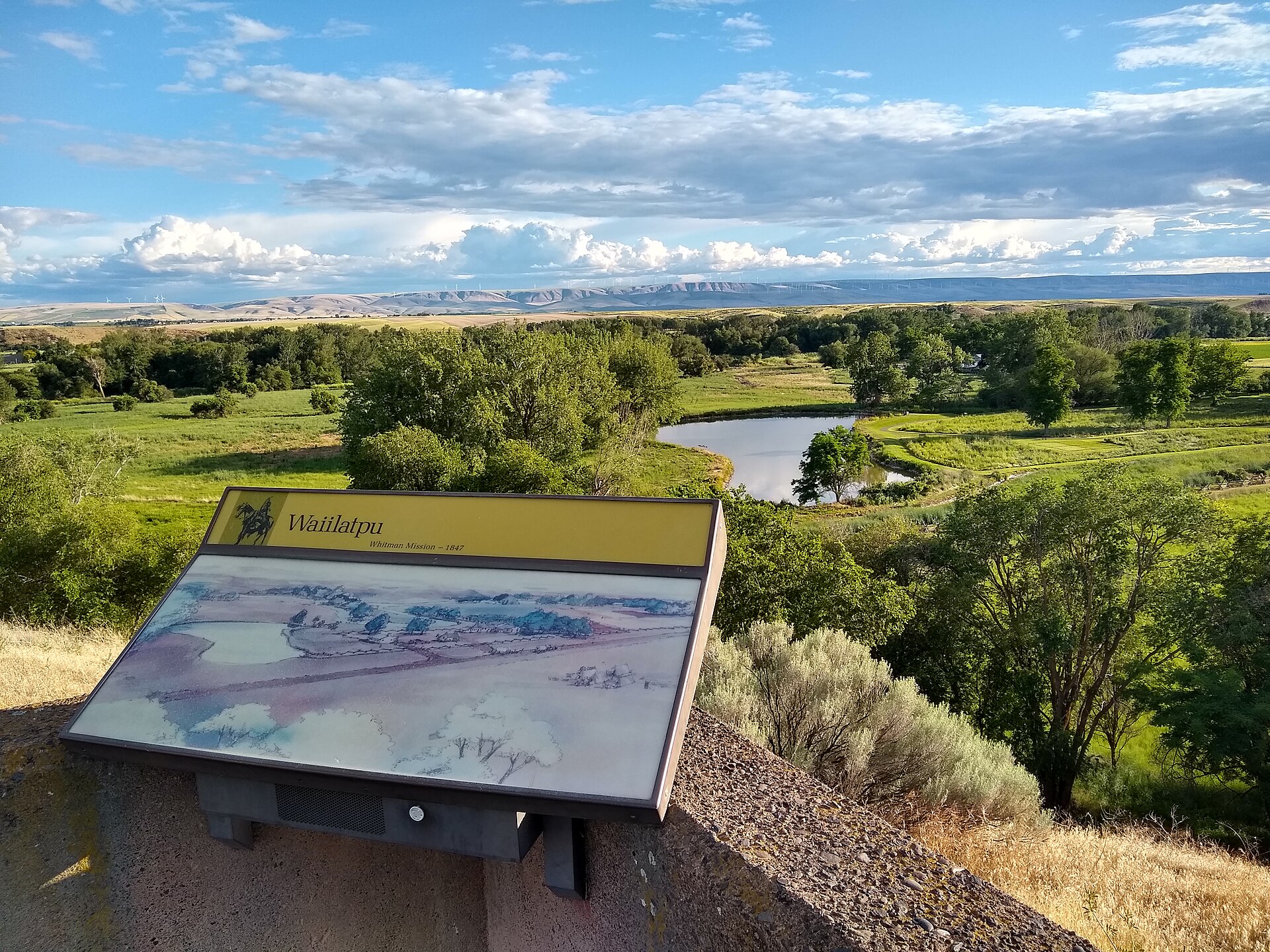
The American Board's Oregon mission began after a story printed in 1833 in The Christian Advocate about Native visitors to William Clark at St. Louis; the paper called them Flatheads, and the National Park Service notes that they were "actually Nez Perce."27 Marcus and Narcissa Whitman, Henry and Eliza Spalding and William Gray crossed the continent in 1836. The Whitmans settled at Waiilatpu among the Cayuse (Liksiyu) near present Walla Walla, Washington; the Spaldings settled at Lapwai, on Lapwai Creek about two miles from the Clearwater, among the Nez Perce (Nimiipuu), near present Lapwai, Idaho.66 The NPS observes that when the Whitmans made the trip in 1836 "it wasn't one country at all."27 In the autumn of 1847 a measles epidemic spread from that year's wagon train to the Cayuse villages, and within two months about half the tribe died, by the estimate of the National Park Service's 1964 handbook;66 on November 29, 1847, Cayuse men killed the Whitmans and others at Waiilatpu; Hudson's Bay Company officer Peter Skene Ogden ransomed the captives.28 Five Cayuse men were tried at Oregon City and hanged on June 3, 1850. Lesson 08 gives the count of the dead, the names, and the Cayuse and Umatilla accounts of the trial.
The story that Whitman's winter ride east in 1842 to 1843 "saved Oregon" for the United States was refuted by the Yale historian Edward Gaylord Bourne in 1901: "In both the essentials and the explanatory details the story of how Marcus Whitman saved Oregon is fictitious."29 Bourne traced the story's first publication to "a series of articles in The Pacific, a religious paper in San Francisco, in the fall of 1865, contributed by the Rev. H. H. Spalding," and credited William I. Marshall of Chicago with the research, which Marshall published at length in Acquisition of Oregon (1911).2930 In 2021 the Washington Legislature asked that the statue of Marcus Whitman in the National Statuary Hall collection be "replaced with a statue of Billy Frank Jr.," the Nisqually treaty-rights leader; the governor approved the act on April 14, 2021 (Laws of 2021, chapter 20).31 Alvin Josephy's The Nez Perce Indians and the Opening of the Northwest (1965) and Clifford Drury's studies of the Whitmans and Spaldings remain the long treatments.3233

Women and the women's boards
Married women went out as unpaid partners from the start; single women went out in numbers only after women formed their own boards. Sarah Doremus became founding president in 1861 of the Woman's Union Missionary Society, described in her Biographical Dictionary entry as "the first American non-denominational women's missionary society."34 Denominational women's boards followed in the 1860s to 1880s, among them the Southern Baptist Woman's Missionary Union (1888). Dana Robert's American Women in Mission (1997) documents that women were the majority of American Protestant missionaries by about 1900 and that the separate women's boards were folded into the general boards in the early 20th century.35 Helen Barrett Montgomery's Western Women in Eastern Lands (1910), written for the women's boards' jubilee, is the movement's own summary.36
Amy Carmichael (1867 to 1951) sailed first for Japan in 1893, reached South India in November 1895, settled at Dohnavur in 1901 with the Walkers and their Indian colleagues, registered the Dohnavur Fellowship in 1927, published nearly 40 books and died at Dohnavur in 1951, according to Jocelyn Murray's entry.37 Her first book on India, Things as They Are (1903), is public domain.38 Gladys Aylward, Pandita Ramabai, Ida Scudder and Mary Slessor are treated in lesson 09.
The 20th century
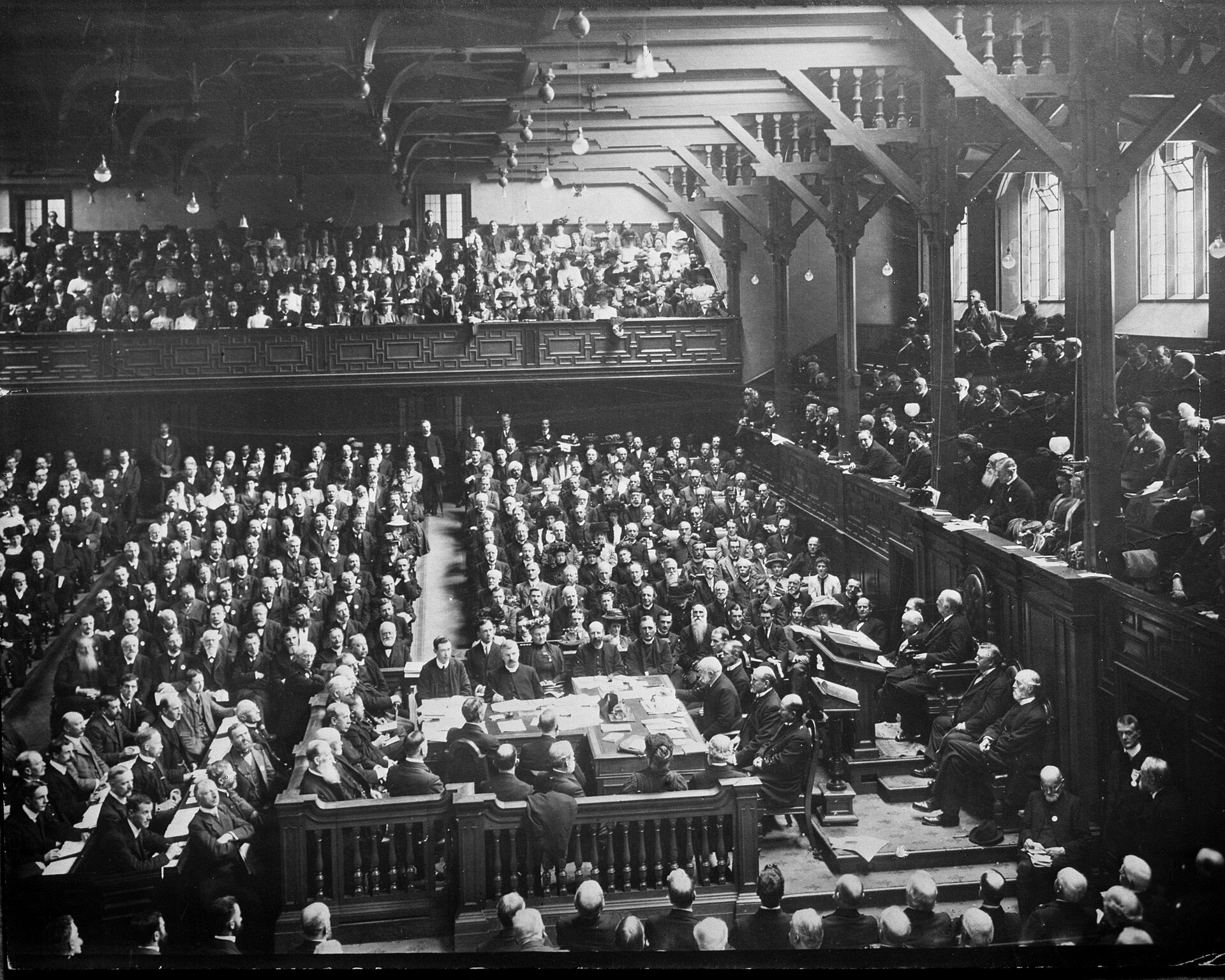
The World Missionary Conference at Edinburgh in June 1910 gathered about 1,200 delegates, nearly all from Western sending bodies, and is often taken as the high point of the Protestant missionary movement from Europe and North America. William Cameron Townsend went to Guatemala in 1917 selling Spanish Bibles, concluded that the Kaqchikel (Cakchiquel) people needed Scripture in their own language, and founded the summer training course called Camp Wycliffe (1934), from which grew the Summer Institute of Linguistics and Wycliffe Bible Translators (1942). The work of SIL in Latin America was criticized in the 1970s and 1980s by anthropologists and governments; David Stoll's Fishers of Men or Founders of Empire? (1982) is the best known critical study, and SIL answered that its linguists served language communities and governments openly.39 Lesson 10 gives the dates, the expulsions and the replies.
On January 8, 1956, Jim Elliot, Pete Fleming, Ed McCully, Nate Saint and Roger Youderian were killed by Waorani men on the Curaray River in Ecuador. Life magazine and Elisabeth Elliot's Through Gates of Splendor (1957) made the deaths known worldwide, and in 1958 Elisabeth Elliot and Rachel Saint went to live among the Waorani. The deaths are told in Module 102, lesson 09; lesson 10 of this module covers what followed, including the later debate among anthropologists, missionaries and Waorani speakers about the mission's effects.
YWAM and the large agencies
Bill and Vonette Bright founded Campus Crusade for Christ on the UCLA campus in 1951; the change of name to Cru was announced in 2011, and Cru's historical fact sheet dates the U.S. organization's renaming to 2012.40 Youth With A Mission dates its beginning to 1960 and describes itself as "a family of ministries rather than a centralized agency," with "over 20,000 workers" and work in "180+ countries," according to its own pages read in November 2026.41 The same YWAM page also says "We currently have tens of thousands of staff," so the figures should be cited with care. Mercy Ships, begun in 1978 by Don Stephens with the purchase of the Anastasis, now operates the Africa Mercy and the Global Mercy.42 Lesson 11 tells YWAM's story and records the controversies reported in named sources, and lesson 12 compares the large agencies and their money.
Bible translation has changed most since 1950. The Wycliffe Global Alliance reported, from ProgressBible data as of August 1, 2025, that 544 of the world's 7,396 living languages, spoken by 36.8 million people, remained "on the waiting list for Bible translation to begin," down from 985 a year before, and that translation was in progress in 4,457 languages.43 Module 103 covers the translation theory that came out of this work.
The Global South
The Lausanne Congress on World Evangelization met at Lausanne, Switzerland, in July 1974. Its Covenant says: "World evangelization requires the whole Church to take the whole gospel to the whole world," and admits in section 10 that "Missions have, all too frequently, exported with the gospel an alien culture."44 The figures behind the shift to the Global South come from two main sources. The Center for the Study of Global Christianity at Gordon-Conwell estimates that the Global South held 17.6 percent of the world's Christians in 1900, 43.0 percent in 1970, 58.9 percent in 2000 and 68.9 percent in 2025, and projects 78.0 percent for 2050.1 The Pew Research Center, using a different method, found that about two-thirds of the world's Christians lived in Europe in 1910 and about a quarter (26 percent) in 2010, when 61 percent lived in the Global South.45 Philip Jenkins's The Next Christendom (2002) brought the shift to a general readership.46
The same CSGC table counts foreign missionaries sent from all countries: 62,000 in 1900, 240,000 in 1970, 420,000 in 2000 and 450,000 in 2025, with 600,000 projected for 2050. It counts far more "home" Christian workers serving in their own countries: 13.6 million in 2025.1 The ratio says something the famous names do not: by 2025, about 30 Christian workers served in their own countries for every one sent abroad.

Who is who: the missionaries and leaders of the module
The table lists every missionary, convert, leader and historian named across the module, with life dates, sending body and field. Life dates in this table were taken from the sources cited in the lesson where each person is treated; those checked again for this review carry a footnote here. The rest are listed under "unverified" in this lesson's record as not rechecked in this task.
| Person | Dates | Sending body or church | Field | Lesson |
|---|---|---|---|---|
| Paul of Tarsus | died about 64 to 67 (estimate) | Church of Antioch | Asia Minor, Greece, Rome | 01 |
| Patrick | 5th century (disputed) | British church | Ireland | 01 |
| Augustine of Canterbury | died about 604 | Gregory the Great, Rome | Kent, England | 01 |
| Boniface (Wynfrith) | about 675 to 754 | English church; papacy | Frisia and Germany | 01 |
| Alopen | arrived 635 | Church of the East | Tang China | 01 |
| Francis Xavier | 1506 to 1552; in Asia 1541 to 15528 | Society of Jesus | India, Japan | 01 |
| Matteo Ricci | 1552 to 1610 | Society of Jesus | China | 01 |
| Nikolaus von Zinzendorf | 1700 to 1760 | Moravian Church (Herrnhut) | Saxony; sending base | 01 |
| Leonard Dober and David Nitschmann | sailed 1732 | Moravian Church | St. Thomas, Danish West Indies | 01 |
| David Zeisberger | 1721 to 1808 | Moravian Church | Delaware (Lenape) in Pennsylvania and Ohio | 01 |
| John Eliot | 1604 to 16909 | Roxbury church; Society for the Propagation of the Gospel in New England | Massachusett people, Massachusetts | 02 |
| Thomas Mayhew Jr. and Experience Mayhew | about 1620 to 1657; 1673 to 1758 | Martha's Vineyard church; New England Company | Wampanoag of Martha's Vineyard | 02 |
| Hiacoomes | 17th century | Wampanoag convert and preacher | Martha's Vineyard | 02 |
| Daniel Gookin | about 1612 to 1687 | Massachusetts Bay Colony magistrate | Superintendent of the praying towns | 02 |
| David Brainerd | 1718 to 174711 | Scottish SPCK | Delaware (Lenape), New Jersey and Pennsylvania | 02 |
| Jonathan Edwards | 1703 to 1758 | Congregational; Stockbridge mission | Mohican at Stockbridge, Massachusetts | 03 |
| Samson Occom | 1723 to 1792 | Mohegan; Presbyterian minister | Montauk, Oneida, Brothertown | 03 |
| Eleazar Wheelock | 1711 to 1779 | Congregational; founder of Dartmouth | Indian charity school, Connecticut | 03 |
| William Carey | 1761 to 183412 | Baptist Missionary Society | Bengal, India | 04 |
| Joshua Marshman and William Ward | 1768 to 1837; 1769 to 1823 | Baptist Missionary Society | Serampore, India | 04 |
| Krishna Pal | baptized 1800 | first Bengali Baptist convert | Serampore | 04 |
| Adoniram Judson | 1788 to 185014 | American Board, then American Baptists | Burma | 05 |
| Ann Hasseltine Judson | 1789 to 182615 | American Board, then American Baptists | Burma | 05 |
| Luther Rice | 1783 to 1836 | American Baptists (Triennial Convention) | Fundraiser in the United States | 05 |
| Ko Tha Byu | about 1778 to 1840 | Karen convert and evangelist | Karen of Burma | 05 |
| Robert Morrison | 1782 to 1834 | London Missionary Society | Canton and Macau | 06 |
| James Hudson Taylor | 1832 to 1905 | China Inland Mission (founder) | Inland China | 06 |
| Lottie Moon | 1840 to 191219 | Southern Baptist Foreign Mission Board | Shandong, China | 06 |
| David Livingstone | 1813 to 187323 | London Missionary Society, later British government | Southern and central Africa | 07 |
| Robert Moffat | 1795 to 1883 | London Missionary Society | Kuruman, southern Africa | 07 |
| Sechele | about 1812 to 1892 | Kgosi of the Bakwena; baptized 1848 | Present Botswana | 07 |
| Mary Slessor | 1848 to 1915 | United Presbyterian Church of Scotland | Calabar and Okoyong, Nigeria | 07, 09 |
| Alexander Mackay | 1849 to 1890 | Church Missionary Society | Buganda (Uganda) | 07 |
| Samuel Ajayi Crowther | about 1807 to 189124 | Church Missionary Society; bishop 1864 | Niger, West Africa | 07 |
| Marcus and Narcissa Whitman | 1802 to 1847; 1808 to 1847 | American Board | Cayuse (Liksiyu) at Waiilatpu | 08 |
| Henry and Eliza Spalding | 1803 to 1874; 1807 to 1851 | American Board; later Presbyterian | Nez Perce (Nimiipuu) at Lapwai | 08 |
| Tuekakas (Old Joseph) | about 1785 to 1871 | Nez Perce leader; baptized 1839 | Wallowa band | 08 |
| Sue and Kate McBeth | 1830 to 1893; 1832 to 1915 | Presbyterian Board | Nez Perce at Kamiah and Lapwai | 08 |
| Sarah Doremus | 1802 to 187734 | Woman's Union Missionary Society (founder) | Home base, New York | 09 |
| Amy Carmichael | 1867 to 195137 | Keswick Convention; Church of England Zenana society; Dohnavur Fellowship | Tamil Nadu, India | 09 |
| Gladys Aylward | 1902 to 1970 | Independent (rejected by the CIM school) | Shanxi, China; later Taiwan | 09 |
| Pandita Ramabai | 1858 to 1922 | Indian founder, Mukti Mission | Kedgaon, India | 09 |
| Ida Scudder | 1870 to 1960 | Reformed Church in America | Vellore, India | 09 |
| Helen Barrett Montgomery | 1861 to 1934 | American Baptist women's boards | Home base; author | 09 |
| William Cameron Townsend | 1896 to 1982 | Central American Mission, then Wycliffe and SIL (founder) | Guatemala, Mexico, Peru | 10 |
| Jim Elliot | 1927 to 1956 | Plymouth Brethren assemblies | Quichua and Waorani, Ecuador | 10 |
| Nate Saint | 1923 to 1956 | Mission Aviation Fellowship | Ecuador | 10 |
| Elisabeth Elliot | 1926 to 2015 | Plymouth Brethren; independent | Ecuador; later author | 10 |
| Rachel Saint | 1914 to 1994 | Wycliffe and SIL | Waorani, Ecuador | 10 |
| Bill and Vonette Bright | 1921 to 2003; 1926 to 2015 | Campus Crusade for Christ (Cru), founders 195140 | UCLA, then worldwide | 12 |
| Loren and Darlene Cunningham | 1935 to 2023; living | Youth With A Mission (founders)41 | Worldwide; Kona, Hawaii | 11 |
| Don Stephens | living | Mercy Ships (founder, 1978)42 | West Africa and elsewhere | 11 |
| George Verwer | 1938 to 2023 | Operation Mobilisation (founder) | Europe, India, the ships | 12 |
| Bob Pierce and Franklin Graham | 1914 to 1978; born 1952 | World Vision; Samaritan's Purse | Relief worldwide | 12 |
| Ralph Winter | 1924 to 2009 | U.S. Center for World Mission | Mission research | 13 |
| Luis Bush | born 1946 | AD2000 and Beyond Movement | "10/40 window" (about 1990) | 13 |
Where they worked: a world diagram
The diagram places each missionary of the module on the field where the main work was done. Continents are drawn as rough outlines only, to show relative position; numbered dots stand for fields, and the key below the map names the people at each. Most sending bases (London, Kettering, Boston, Richmond) are left off where they would crowd the field markers; Herrnhut and Kona are shown because they were also places of work.

Reading list
The missionaries in their own words (public domain)
Each of these books is free to read online. They are listed in the order of the events they describe. Where a modern reprint has changed the text, the earliest scan is the one to trust.
- Daniel Gookin, Historical Collections of the Indians in New England (written 1674, first printed 1792). A magistrate's census of the praying towns and their people.10
- Jonathan Edwards, The Life of Rev. David Brainerd, Chiefly Extracted from His Diary (first edition 1749; this is a later American printing). The diary that shaped two centuries of missionaries.11
- William Carey, An Enquiry into the Obligations of Christians to Use Means for the Conversion of the Heathens (Leicester, 1792). The founding argument of the Baptist Missionary Society, with Carey's world tables.8
- James D. Knowles, Memoir of Mrs. Ann H. Judson, Late Missionary to Burmah (1829). Ann Judson's letters and journal, including the prison years at Ava.17
- Francis Wayland, A Memoir of the Life and Labors of the Rev. Adoniram Judson, D.D. (1853, two volumes). Judson's letters, edited by the president of Brown University.16
- J. Hudson Taylor, China's Spiritual Need and Claims (first edition 1865; the linked scan is the 1887 seventh edition). The appeal that launched the China Inland Mission.18
- David Livingstone, Missionary Travels and Researches in South Africa (1857). Sixteen years in southern Africa, in Livingstone's own words.21
- Henry M. Stanley, How I Found Livingstone (1872). The meeting at Ujiji as Stanley chose to tell it.22
- Edward Gaylord Bourne, Essays in Historical Criticism (1901). The first essay, "The Legend of Marcus Whitman," takes the "Whitman saved Oregon" story apart.29
- Amy Carmichael, Things as They Are: Mission Work in Southern India (1903). Carmichael's blunt early account of mission work in Tamil country.38
- Helen Barrett Montgomery, Western Women in Eastern Lands (1910). Fifty years of the women's boards, written for their jubilee.36
- William I. Marshall, Acquisition of Oregon and the Long Suppressed Evidence about Marcus Whitman (1911). The documentary case against the Whitman legend.30
- Roland Allen, Missionary Methods: St. Paul's or Ours? (1912; the linked scan is a 1913 printing). The case for self-governing churches from the start.5
Modern books (in copyright: quoted only in short phrases)
- Stephen Neill, A History of Christian Missions (1964; second edition 1986). The standard one-volume survey by an Anglican bishop who served in India.7
- Ruth A. Tucker, From Jerusalem to Irian Jaya: A Biographical History of Christian Missions (1983; second edition 2004). Short lives of the famous and the forgotten, many of them women.47
- Andrew F. Walls, The Missionary Movement in Christian History (1996). Essays arguing that Christianity grows by crossing cultures and being translated into them.25
- Lamin Sanneh, Translating the Message: The Missionary Impact on Culture (1989). Argues that Bible translation strengthened the languages and identities of the peoples evangelized.26
- Dana L. Robert, American Women in Mission: A Social History of Their Thought and Practice (1997). The standard history of the women who made up most of the missionary force.35
- Philip Jenkins, The Next Christendom: The Coming of Global Christianity (2002). The shift of Christianity's center to Africa, Asia and Latin America.46
- Alvin M. Josephy Jr., The Nez Perce Indians and the Opening of the Northwest (1965). The Nimiipuu story from Lewis and Clark to the war of 1877.32
- Clifford M. Drury, Henry Harmon Spalding (1936) and Marcus and Narcissa Whitman and the Opening of Old Oregon (1973). Close studies from the missionaries' letters by a Presbyterian historian.33
- Lisa Brooks, Our Beloved Kin: A New History of King Philip's War (2018). An Abenaki scholar's history of the war that ended Eliot's praying towns.48
- David Stoll, Fishers of Men or Founders of Empire? The Wycliffe Bible Translators in Latin America (1982). An anthropologist's critical study of SIL.39
- Brian Stanley, The History of the Baptist Missionary Society, 1792 to 1992 (1992). The bicentenary history of Carey's society.13
- Tim Jeal, Livingstone (1973; revised 2013) and Stanley: The Impossible Life of Africa's Greatest Explorer (2007). Biographies that test the famous stories against the diaries.49
Glossary recap
These are the terms used across the module, in alphabetical order, with the lesson where each is treated most fully. Fourteen of them also appear in this lesson's term cards.
- 10/40 window
- The band of countries between 10 and 40 degrees north latitude, from West Africa to East Asia, a name Luis Bush made widely known (usually dated to 1989 or 1990) for the region with the fewest Christians and most unreached peoples (lesson 13).
- ABCFM (American Board)
- The American Board of Commissioners for Foreign Missions, formed in 1810 by New England Congregationalists, later joined by Presbyterians; it sent the Judsons in 1812 and the Whitmans and Spaldings in 1836 (lessons 03, 05, 08).
- Apostle
- From the Greek apostolos, "one who is sent"; in the New Testament the Twelve and Paul, and loosely any pioneer missionary, as in "apostle of the Indians" (lesson 01).
- Auxiliary
- A local society, often of women or young people, that raised money for a national mission society and sent it on, the main fundraising unit of the 19th century (lesson 03).
- Boarding school (federal Indian)
- A residential school for Native children supported by the United States, some run by churches and mission boards (the 2024 report's death count covers 1871 to 1969); the Interior Department's 2022 and 2024 reports are the official record (lesson 02 and this lesson).
- Catechist
- A local Christian, usually unordained, paid or unpaid, who taught the faith to inquirers; in Africa and Asia catechists did most of the daily teaching (lesson 07).
- Christian Advocate story (1833)
- William Walker's article on the Nez Perce and Flathead visitors to St. Louis, which prompted the Oregon missions; its "Book of Heaven" details grew in later retellings (lesson 08).
- Church of the East
- The Syriac-speaking church of Persia and Central Asia, called "Nestorian" by its opponents, which reached Tang China in 635 (lesson 01).
- Comity
- Agreements among Protestant missions in the 19th and early 20th centuries to divide a field by region so as not to compete (lessons 12 and 13).
- Concert of Prayer
- A plan for Christians in many places to pray at set times for revival and the spread of the gospel, promoted by Jonathan Edwards's Humble Attempt (1747) and revived by Carey's circle (lesson 03).
- Contextualization
- Expressing the faith in the forms of a local culture, as Hudson Taylor did by wearing Chinese dress; the Lausanne Covenant's section on culture is a standard text on it (lessons 06 and 13).
- Cooperative Program
- The Southern Baptist system, begun in 1925, by which churches send a share of their offerings to the state and national conventions to fund missionaries, so that missionaries need not raise their own support (lesson 12).
- Deputation
- The period in which a missionary travels among supporting churches to raise personal support before going to the field (lesson 12).
- Discipleship Training School (DTS)
- YWAM's entry course, a lecture phase followed by an outreach phase, required before joining YWAM staff (lesson 11).
- ECFA
- The Evangelical Council for Financial Accountability, founded in 1979 after a 1977 meeting called by Senator Mark Hatfield, which accredits Christian ministries that meet its Seven Standards of Responsible Stewardship (lesson 12 and this lesson).
- Edinburgh 1910
- The World Missionary Conference in Edinburgh, June 1910, the high point of the Western Protestant missionary movement and a starting point of the ecumenical movement (lesson 13).
- Enquiry, the
- Carey's 1792 pamphlet An Enquiry into the Obligations of Christians to Use Means for the Conversion of the Heathens, the founding text of the modern Protestant society (lesson 04).
- Faith mission
- A mission, on Hudson Taylor's China Inland Mission model, that guarantees no salary and makes no public appeals for money, trusting prayer for funds (lessons 06 and 12).
- Form 990
- The annual information return most U.S. tax-exempt organizations file with the IRS; churches are not required to file it, so some mission bodies classed as churches publish no 990 (lesson 12 and this lesson).
- Global South
- Africa, Asia, Latin America and Oceania taken together, used by the Center for the Study of Global Christianity and Pew to describe where most Christians now live (lesson 13).
- Great Commission
- Jesus's command in Matthew 28:18 to 20 to "teach all nations," the text most cited by missionaries (lesson 01).
- Haystack Prayer Meeting
- The 1806 meeting of Williams College students, led by Samuel J. Mills, sheltered from rain by a haystack, from which the American Board grew (lesson 05).
- Indigenous church principle (three-self)
- The aim, stated by Henry Venn and Rufus Anderson in the 19th century and by Roland Allen in 1912, that mission churches become self-governing, self-supporting and self-propagating (lessons 01 and 13).
- Indigenous missionary
- A missionary from the same country or region as the people served, often supported partly from abroad; the model of Gospel for Asia and many Indian and Nigerian agencies (lesson 13).
- Liksiyu
- The Cayuse people's own name, used beside "Cayuse" in this module; the Cayuse are now part of the Confederated Tribes of the Umatilla Indian Reservation (lesson 08).
- Lausanne Covenant
- The statement adopted at the International Congress on World Evangelization, Lausanne, July 1974, on evangelism, social responsibility and culture (lesson 13).
- Mission station
- A compound with house, school, church and often clinic, farm or mill, where missionaries lived and worked, as at Waiilatpu, Lapwai, Kuruman and Serampore (lessons 07 and 08).
- Missionary society
- A voluntary association of subscribers that selected, sent and paid missionaries, such as the BMS (1792), LMS (1795) and CMS (1799) (lesson 03).
- Moravians
- The Renewed Unity of the Brethren (Unitas Fratrum), gathered at Herrnhut from 1722, the first Protestant church to make mission the work of the whole body (lesson 01).
- Nimiipuu
- The Nez Perce people's own name, meaning "the people"; Lapwai is in the Nez Perce Reservation in Idaho (lesson 08).
- Praying town
- A town of Christian Native people organized under John Eliot and the Massachusetts government, beginning with Natick in 1651 (lesson 02).
- Proselytism
- Seeking converts from another faith; many states now restrict it by law, including several Indian states and Nepal (lesson 13).
- Short-term mission
- A mission trip of days to a year, often by young people or church teams, a model YWAM helped spread after 1960; measured by the Standard of Excellence in Short-Term Mission (lessons 11 and 13).
- SIL
- The Summer Institute of Linguistics (now SIL Global), the linguistic arm founded with Wycliffe by Cameron Townsend, which works under agreements with governments and universities (lesson 10).
- Standard of Excellence (SOE)
- Seven standards for short-term missions, beginning with God-centeredness and ending with thorough follow-through, used to accredit sending groups (this lesson).
- Support raising
- The model in which each missionary raises a personal budget from churches and individuals, used by Cru, YWAM, Wycliffe and many others (lesson 12).
- Tentmaking
- Supporting oneself by secular work while doing mission, named after Paul's trade in Acts 18:3; it can raise legal questions when a visa is for business only (lesson 13).
- Treaty ports
- The Chinese ports opened to foreign residence and trade by the treaties of 1842 and 1858 to 1860, which also protected missionaries (lesson 06).
- Triennial Convention
- The General Missionary Convention of the Baptist Denomination, formed in 1814 to support the Judsons, meeting every three years (lesson 05).
- Unreached people group
- An ethnic group with too few Christians to evangelize its own members; Joshua Project's working line is no more than 5 percent Christian adherents and no more than 2 percent evangelicals (lesson 13).
- Voluntourism
- Short trips that combine tourism with volunteer work, criticized when they harm the people served, as in orphanage visits (lesson 13).
- Waiilatpu
- "Place of the rye grass" in Cayuse, the site of the Whitman mission near Walla Walla, now Whitman Mission National Historic Site (lesson 08).
- Zenana mission
- Work by women missionaries among women secluded in the women's quarters (zenana) of Indian homes, which only women could enter (lesson 09).
How to evaluate a mission organization
The module's history gives a practical lesson: mission bodies have differed widely in how openly they handled money, how they treated the people they served, and how they told their own story. A donor, a church committee, a student thinking about a short-term trip or a family member of a missionary can ask the same questions of any organization. The tools below are public and free.
Questions about money
Does the organization file a Form 990, and what does it show? Most U.S. tax-exempt organizations must file an annual Form 990 with the IRS, listing revenue, spending, assets and the pay of the highest-paid officers. IRS Publication 1828 lists among the organizations "not required to file Form 990, 990-EZ, or 990-N" the entry "Churches (as opposed to 'religious organizations,' defined earlier)."50 The same list includes "Mission societies sponsored by or affiliated with one or more churches or church denomination, if more than half of the activities are conducted in, or directed at, persons in foreign countries."50 A mission agency that is classed as a church, or as an integrated part of a denomination, or that meets that test, may therefore publish no 990. That is lawful; it means the reader must look for an audited financial statement on the organization's own site instead. ProPublica's Nonprofit Explorer lets anyone "Browse millions of annual returns filed by tax-exempt organizations" and search by name or by person.51
Is the organization accredited by a financial accountability body? The Evangelical Council for Financial Accountability grew out of a meeting in the fall of 1977, when, in ECFA's words, "Senator Mark Hatfield called in friends from World Vision" and other ministries; it began with 150 charter members in 1979 and lists "over 2,700 accredited members today."52 Its Seven Standards of Responsible Stewardship are: (1) Doctrinal Issues, (2) Governance, (3) Financial Oversight, (4) Use of Resources and Compliance with Laws, (5) Transparency, (6) Compensation-Setting and Related-Party Transactions, and (7) Stewardship of Charitable Gifts. Standard 3 begins: "Every organization shall prepare complete and accurate financial statements."53 Membership can be lost: the Gospel for Asia case in lesson 13 began with ECFA's removal of that agency in 2015, followed by a class action that Gospel for Asia settled in 2019 for $37 million without admitting wrongdoing, according to Christianity Today.54
How is each missionary paid? Lesson 12 sets out three models: personal support raising, pooled denominational giving (such as the Southern Baptist Cooperative Program and the Lottie Moon offering), and the faith mission. Each has its own risks. In support raising, a missionary's income depends on personal networks; in pooled giving, a budget shortfall can bring sudden recalls, as the International Mission Board's reductions of 2015 to 2016 showed; in a faith mission, the absence of appeals can hide real need.
Questions about the people served
Who decides what the work will be? The Lausanne Covenant of 1974 states that "Missions have, all too frequently, exported with the gospel an alien culture."44 Good practice today asks whether local churches and community leaders invited the work, share in planning it and can end it. The Standard of Excellence in Short-Term Mission, a set of seven standards used to accredit short-term sending groups, puts it as its second standard: "An excellent short-term mission establishes healthy, interdependent, ongoing relationships between sending and receiving partners." Its seven standards are God-centeredness, Empowering Partnerships, Mutual Design, Administration (standard 4, shortened here), Qualified Leadership, Appropriate Training and Thorough Follow-Through.55
What does the organization say about child protection and complaints? Lesson 11 records the published reports and the YWAM statements on safeguarding. A reader can ask any agency for its written safeguarding policy, how a complaint is reported, and whether outside bodies review it. Orphanage visits and "voluntourism" have drawn particular scrutiny, as lesson 13 shows.
Questions about claims and numbers
Where do the numbers come from? Agencies report "people reached," "decisions," "churches planted," or "languages," and each word can be counted many ways. Joshua Project, for example, counts 16,419 people groups by country and 7,163 of them unreached (10,421 and 4,484 when a people spread across countries is counted once), and defines "unreached" as "Less than or equal to 5% Christian Adherent AND less than or equal to 2% Evangelical."5657 A different line would give a different total. A careful reader asks for the definition, the year and the source before repeating any figure.
Does the story told match the record? The module's claims-checked sections show how often a missionary's story improves in the retelling. An organization that corrects its own legends in print, as the American Board's own historians eventually did with the Whitman story, gives a reader more reason to trust its current reports.
Questions about law and safety
Is the work lawful where it is done? Lesson 13 covers the state anti-conversion laws in India, Nepal's 2017 criminal code, visa rules and the U.S. International Religious Freedom Act of 1998. Does the agency have a security and crisis plan? On October 16, 2021, the 400 Mawozo gang kidnapped 17 people of a Christian Aid Ministries group in Haiti (16 Americans and one Canadian, five of them children) and demanded $1 million per person; two were freed on November 21, three on December 6, and the remaining 12 by December 16, 2021, NPR reported.58
A short checklist
- Find the Form 990 on ProPublica's Nonprofit Explorer; if there is none, ask for an audited financial statement and ask why no 990 is filed.
- Check for ECFA accreditation or a similar body, and read the standards it promises to meet.
- For short-term trips, ask whether the sender follows the Standard of Excellence and how the receiving church shaped the plan.
- Ask how missionaries are funded, what share of a gift reaches the field, and what happens when a designated project is overfunded.
- Ask for the safeguarding policy, the complaints process and any outside review.
- Ask for the source and definition behind every number in the appeal.
- Read what the people served, and their own churches and leaders, say about the work.
The main disputes set out fairly
Did missions serve empire?
The charge, made by many historians and by national governments after independence, is that missionaries traveled under the protection of empires, depended on treaties won by force (the China treaties of 1842 and 1858 to 1860), and taught colonized peoples to accept foreign rule. The missionaries' own words show the tie plainly at times: Livingstone hoped for "commerce and Christianity" together in Africa, as lesson 07 quotes from his 1857 Cambridge lecture. The answer, given by Andrew Walls, Lamin Sanneh and Brian Stanley among others, is that missionaries often opposed colonial governments (Carey worked for years without the East India Company's permission, and the Company barred missionaries until 1813), that Bible translation strengthened local languages, and that African and Asian Christians took the faith in directions the missionaries did not control.122526 Brian Stanley's The Bible and the Flag (1990) is a balanced study of the question for British missions.13
Harm to Native peoples in North America
The record includes the internment of Christian Native people on Deer Island in 1675 to 1676 (lesson 02), the loss of land around the praying towns, the 1847 measles epidemic and the killings at Waiilatpu (lesson 08), and the federal Indian boarding schools, some of them run by churches and mission boards. On July 30, 2024, the Department of the Interior reported that its investigation had identified "417 institutions across 37 states or then-territories" and that "at least 973 American Indian, Alaska Native, and Native Hawaiian children died" in the system between 1871 and 1969, with "at least 74 marked and unmarked burial sites at 65 different school sites."59 Volume I of the investigative report was released in May 2022 and Volume II in July 2024.60 The same record also includes Native Christians who led their own churches (Samson Occom, Hiacoomes, the Nez Perce elders at Lapwai and Kamiah), and modern Native language revivals that draw on mission-era translations. Tribal histories, such as those of the Nez Perce Tribe and the Confederated Tribes of the Umatilla Indian Reservation, tell both parts in their own words; Lisa Brooks's Our Beloved Kin retells King Philip's War from Native sources.48
Legend and record
Mission biography has often been written to inspire, and the inspiring version has outlasted the documents. Bourne's 1901 essay on Whitman is the classic exposure, and the claims-checked table below lists others. The opposite error also occurs: a missionary's private failures (Carey's treatment of his ill wife Dorothy, Livingstone's leadership of the Zambezi expedition, Spalding's quarrels with his colleagues) are sometimes made to stand for the whole. Tim Jeal's biographies of Livingstone and Stanley are examples of books that test both the praise and the blame against the diaries.49
Counting converts and missionaries
Figures for missionaries sent, converts made and people "reached" are estimates built on definitions. The CSGC counts 450,000 foreign missionaries in 2025 and 13.6 million home workers; other counts differ because they include or exclude short-term workers, Catholic religious, or missionaries sent within a country.1 Carey's own world table of 1792, for all its care, rested on travelers' guesses.8
Evangelism and the law today
Some states see proselytism as a threat to public order and community; mission agencies and religious freedom bodies see the freedom to change and share one's faith as a basic right, written in Article 18 of the Universal Declaration of Human Rights (1948), which includes the "freedom to change his religion or belief."61 The 2018 death of John Allen Chau on North Sentinel Island, where Indian law forbids visits to protect the Sentinelese, turned this dispute into a public argument among missionaries themselves; lesson 13 gives the record and the replies.
What the record shows and what it does not
- Documented fact: the dates of the societies' founding, the treaties and statutes (the 1813 Charter Act, the 1842 and 1858 China treaties, Laws of Washington 2021, chapter 20), court records such as the 1850 Oregon City trial and the Gospel for Asia settlement, and government reports such as the Interior Department's boarding school findings of 2022 and 2024.
- The missionaries' own words: Carey's Enquiry, Brainerd's diary as Edwards printed it, the Judson letters in Knowles and Wayland, Taylor's China's Spiritual Need and Claims, Livingstone's Missionary Travels, Carmichael's Things as They Are, the Whitman and Spalding letters. These show what the missionaries believed and hoped, and sometimes what they feared or regretted.
- What the people evangelized and their descendants record: Samson Occom's 1768 narrative and letters, Native petitions from the praying towns, Cayuse and Nez Perce oral histories as published by the CTUIR and the Nez Perce Tribe, Waorani accounts in later books and films, and the voices of African and Asian church leaders such as Crowther and Pandita Ramabai.
- Later biography, sermon and film legend: Whitman's ride "saving Oregon," the "Book of Heaven" speech, many famous one-line sayings, and the screen versions of Gladys Aylward and the Ecuador five. These often differ from the documents in date, wording or meaning.
- Scholarly reading: Neill, Walls, Sanneh, Robert, Stanley, Jenkins, Josephy, Drury, Brooks, Stoll and Jeal disagree on the weight of the harm and the good; each is cited by name.
- Open questions: the exact dates of Patrick and of Paul's journeys; the full count of deaths at Deer Island and in the 1847 epidemic; the earliest wording of several famous sayings; the reliability of present-day missionary and "unreached" counts.
Pictures, Numbers and Infographics
The table gathers the module's big numbers in one place. Each row carries its source and year. Where an organization reports more than one figure for the same thing, both are given.
| What | Figure | Year | Source |
|---|---|---|---|
| Pentecost converts in Jerusalem | "about three thousand souls" | about AD 30 (estimate) | Acts 2:41, KJV4 |
| World population in Carey's table | about 731 million | 1792 | Carey, Enquiry8 |
| Protestants in Carey's table | 44 million | 1792 | Carey, Enquiry8 |
| Indian villages organized under Eliot | 14 | by 1674 | Rooy, BDCM; Gookin910 |
| Deaths in China, as Taylor's appeal put it | 2,000,000 "every three months" | 1887 printing | Taylor, China's Spiritual Need and Claims18 |
| First Southern Baptist women's offering for China | $3,315.26 (goal $2,000) | 1888 | Baptist Press65 |
| Livingstone's burial, Westminster Abbey | April 18, 1874 | 1874 | Westminster Abbey23 |
| Federal Indian boarding schools identified | 417 in 37 states or territories | report of 2024 | U.S. Department of the Interior59 |
| Child deaths identified in those schools | at least 973 | 1871 to 1969 | U.S. Department of the Interior59 |
| Global South share of all Christians | 17.6% / 43.0% / 58.9% / 68.9% | 1900 / 1970 / 2000 / 2025 | Zurlo, Johnson and Crossing, CSGC1 |
| Christians in the world | 558 million / 2.645 billion | 1900 / 2025 | CSGC1 |
| Christians as share of world population | 34.5% / 32.3% | 1900 / 2025 | CSGC1 |
| Foreign missionaries sent, all countries | 62,000 / 450,000 | 1900 / 2025 | CSGC1 |
| Home (national) Christian workers | 2.1 million / 13.6 million | 1900 / 2025 | CSGC1 |
| Giving to Christian causes, per year | $8 billion / $1,383 billion | 1900 / 2025 | CSGC1 |
| Christians living in Europe | about two-thirds / 26% | 1910 / 2010 | Pew Research Center45 |
| Living languages | 7,396 | Aug. 1, 2025 | Wycliffe Global Alliance (ProgressBible)43 |
| Languages where translation has not begun | 544 (36.8 million speakers); 985 a year earlier | 2025 | Wycliffe Global Alliance43 |
| Languages with translation in progress | 4,457 | 2025 | Wycliffe Global Alliance43 |
| People groups (by country) / unreached | 16,419 / 7,163 | 2026 listing | Joshua Project56 |
| YWAM workers and countries | "over 20,000 workers"; "180+ countries" | 2026 web page | YWAM41 |
| ECFA accredited members | more than 2,700 | 2026 web page | ECFA52 |
| Gospel for Asia class action settlement | $37 million | 2019 | Christianity Today54 |
| Christian Aid Ministries group kidnapped in Haiti | 17 (all freed by Dec. 16) | 2021 | NPR58 |
Claims checked
These are the claims most often repeated about the missionaries of the module, with the rating each earned in its own lesson or in the checks for this review.
| Claim | Rating | Evidence |
|---|---|---|
| "Marcus Whitman saved Oregon" by his 1842 to 1843 ride east. | Refuted | Bourne (1901) found the story "fictitious" in "both the essentials and the explanatory details," first published by Spalding in The Pacific in the fall of 1865; Marshall (1911) set out the documents.2930 |
| Stanley greeted Livingstone with "Dr. Livingstone, I presume?" | Unresolved | The words are in Stanley's own book of 1872.22 No independent witness recorded them, and Tim Jeal reported that the pages of Stanley's diary for the meeting were torn out, so the line may have been composed afterward.49 |
| Hudson Taylor wrote that a million Chinese died each month without the gospel. | Supported, with a qualification | The 1868 third edition of China's Spiritual Need and Claims, with figures "as they were in March 1865," reads "every month 1,000,000";67 the 1887 printing reads "every three months 2,000,000," the same rate in different words.18 The short sentence with "dying without God" comes from Taylor's own recollection in the 1918 biography by Dr. and Mrs. Howard Taylor; no copy of the October 1865 first printing was opened.64 |
| Lottie Moon starved herself to death by giving away her food. | Partly supported | The IMB says she died at 72, "ill and in declining health" after decades of work; the starvation version is a later simplification, as lesson 06 shows.19 |
| Carey's Enquiry gives an accurate start date for John Eliot's mission. | Refuted | Carey wrote "In 1632, Mr. Elliot ... began to preach to the Indians"; Eliot's first sermon to Native listeners at Nonantum was on October 28, 1646.863 |
| Livingstone was buried whole in Westminster Abbey. | Partly supported | His body lies in the Abbey; his heart was buried at Chitambo's village by Susi and Chuma.2023 |
| The Moravians were the first Protestants to cross cultures in mission. | Partly supported | Eliot (1646) and the Mayhews preceded them in New England, and the Danish-Halle mission reached India in 1706; the Moravians were the first church to treat mission as the task of the whole community.79 |
| The apostle Thomas founded the church in India. | Unresolved | An old and living tradition of the Thomas Christians, without first-century documentary proof; see lesson 01.7 |
| Christianity is now mainly a Western religion. | Refuted | By 2025 about 68.9 percent of Christians lived in the Global South (CSGC), and by 2010 only 26 percent lived in Europe (Pew).145 |
| Bible translation is nearly finished. | Partly supported | More than 99 percent of the world's people have some Scripture, but in 2025 translation had not begun in 544 languages and was in progress in 4,457.43 |
Other claims rated in their own lessons include the "Book of Heaven" speech (lesson 08), "Expect great things from God" and John Ryland's rebuke of Carey (lesson 04), Judson's "bright as the promises of God" (lesson 05), Sechele as Livingstone's only convert (lesson 07), Mary Slessor and the twins (lessons 07 and 09), Narcissa Whitman and Eliza Spalding as the first white women over the Continental Divide (lesson 08), Gladys Aylward and The Inn of the Sixth Happiness (lesson 09), Townsend's Cakchiquel question and Jim Elliot's journal line (lesson 10), and Loren Cunningham's vision of the waves (lesson 11).
Hard questions and answers
Did the missionaries do more harm than good?
The evidence will not settle the question by a single total, because harm and good were often done by the same people in the same place. In New England, Eliot's translation produced the first complete Bible printed in British America, in the Massachusett language, and the same decades saw the praying towns lose land and their people interned on Deer Island.9 At Waiilatpu, the overland emigration of 1847, which the Whitmans aided, brought the measles that killed about half the Cayuse, and Cayuse men then killed the Whitmans.6628 Historians who stress the harm (for example in the boarding school record) and those who stress local agency and translation (Walls, Sanneh) work from the same documents.592526 A reader can judge case by case, and the module has tried to give the documents for each case.
Why should a Catholic or Orthodox reader care about Carey and Taylor?
Because the Protestant founders learned from Catholic and Orthodox precedent and said so. Carey's Enquiry cites the Jesuits in China and Xavier in Asia, and asks whether "the popish missionaries" had not overcome every difficulty Protestants feared.8 Taylor's use of Chinese dress followed a path the Jesuits had taken in China two centuries earlier. The Church of the East reached China nearly 1,200 years before Morrison. Mission history is shared history, and the present Global South churches include very large Catholic, Orthodox, Anglican and Pentecostal bodies.1
Can a Nez Perce or Cayuse reader trust a story told mostly from missionary letters?
Only if the letters are read beside the tribes' own records. The National Park Service now presents Waiilatpu as marking "a pivotal moment for Cayuse and other Native people living on the Columbia Plateau," names its partnership with the Confederated Tribes of the Umatilla Indian Reservation, points to the Tamastslikt Cultural Institute, and uses the Cayuse place name on site.6228 In 2021 Washington chose a Nisqually leader, Billy Frank Jr., to replace Whitman in the Capitol.31 Lesson 08 quotes Nez Perce and Umatilla sources directly. The missionary letters remain essential because they record dates, names and the missionaries' own fears and failures, including some the missionaries' admirers later left out.
Are short-term trips worth the money?
The answer depends on design, and the field's own standard says so. The Standard of Excellence asks for "healthy, interdependent, ongoing relationships between sending and receiving partners," shared planning and follow-through.55 Lesson 13 gives the research on cost and effect and the published critiques of trips that serve the visitors more than the hosts. A church can apply the checklist above to any trip before it sends anyone.
Why do the numbers disagree so much?
Because they count different things. CSGC and Pew estimate religious affiliation with different methods and years (the Pew page itself notes that a 2025 Pew report revised its 2010 estimates).45 Joshua Project's "unreached" line is a working definition, and moving the line changes the total.57 YWAM's own page gives both "tens of thousands of staff" and "over 20,000 workers."41 Carey's 731 million was a 1792 guess.8 The safe habit is to quote each figure with its source, year and definition, as this module has tried to do.
What connects Paul to a Nigerian or Korean missionary today?
The texts and the method. The Great Commission and Acts 1:8 are quoted by both.23 Roland Allen argued in 1912 that Paul left self-governing churches behind him within a few years;5 the CSGC count of 13.6 million home workers against 450,000 foreign missionaries in 2025 suggests that most churches of the Global South now do their own evangelism, much as Allen hoped.1 The difference is direction: a missionary today is as likely to travel from Lagos, Seoul or Sao Paulo as from London or Boston, and the Lausanne Covenant's warning about exporting "an alien culture" now applies to every sending country.44
Learn more
- Carey's Enquiry (1792), full text: The founding argument of the Protestant missionary society, short enough to read in an evening; Section III's world table is worth comparing with today's figures.
- Bourne, The Legend of Marcus Whitman (1901): A model of how a historian tests a popular story against contemporary documents.
- Biographical Dictionary of Christian Missions online: Signed short biographies of missionaries and church leaders by named scholars.
- Status of Global Christianity, 2025 (IBMR article): The standard table of Christian numbers, missionaries and giving from 1900 to 2050.
- ProPublica Nonprofit Explorer: Free access to Form 990 filings for checking any U.S. mission agency that files one.
- ECFA Seven Standards: The standards an accredited Christian ministry promises to meet.
- Whitman Mission National Historic Site: The NPS presentation of Waiilatpu, with links to the Tamastslikt Cultural Institute and the CTUIR history.
Still being checked (10 items)
These points could not be confirmed against a primary source when this lesson was written and fact checked in October 2026. The text above states each one as uncertain.
- Life dates in the who-is-who table that carry no footnote in this lesson were taken from the module's other lessons and agree with them; they were not each rechecked in a primary source for this review: Paul, Augustine of Canterbury, Boniface, Ricci, Zinzendorf, Zeisberger, the Mayhews, Hiacoomes, Gookin, Edwards, Occom, Wheelock, Marshman, Ward, Krishna Pal, Luther Rice, Ko Tha Byu, Morrison, Moffat, Sechele, Tuekakas, the McBeths, Aylward, Ramabai, Scudder, Montgomery, Jim Elliot, Nate Saint, Elisabeth Elliot, the Brights, Darlene Cunningham, Verwer, Pierce, Franklin Graham, Winter and Bush (born 1946).
- Timeline and text dates not independently rechecked in a primary source here: Augustine's arrival in Kent (597), Alopen (635) and the Xi'an Stele (781), Boniface at Geismar (about 723), Ricci in Beijing (1601), Herrnhut (1722), Natick (1651), the Haystack meeting (1806), the Triennial Convention (1814), Morrison (1807), the China Inland Mission (1865), Camp Wycliffe (1934), Wycliffe and SIL (1942), the Ecuador deaths (January 8, 1956), the Cooperative Program (1925), the IMB reductions of 2015 to 2016, and the Danish-Halle mission's arrival in India (1706).
- The first use of the term "10/40 window" (Luis Bush, 1989 or 1990) was not confirmed from a primary document; lesson 13 lists it as unverified too.
- Eliot's Bible as the first complete Bible printed in British America is from lesson 02's sources; the BDCM entry read here says only that Eliot translated the Bible (1663).
- Tim Jeal's report that Stanley's diary pages for the Ujiji meeting were torn out is attributed to Jeal and was not rechecked in his book for this lesson.
- Livingstone's 'commerce and Christianity' (Cambridge, 1857), the East India Company's ban on missionaries until 1813, the John Allen Chau death (2018) and the Indian rules on North Sentinel Island are referred to lessons 04, 07 and 13 and were not rechecked here.
- The CSGC 2025 figures were checked against two reproductions of the published table (the journal page itself could not be opened); all figures used here match lines 10, 22, 36, 41, 44, 45 and 53.
- Willibald's account of the Geismar oak was checked in one copy of Talbot's translation (Fordham) only.
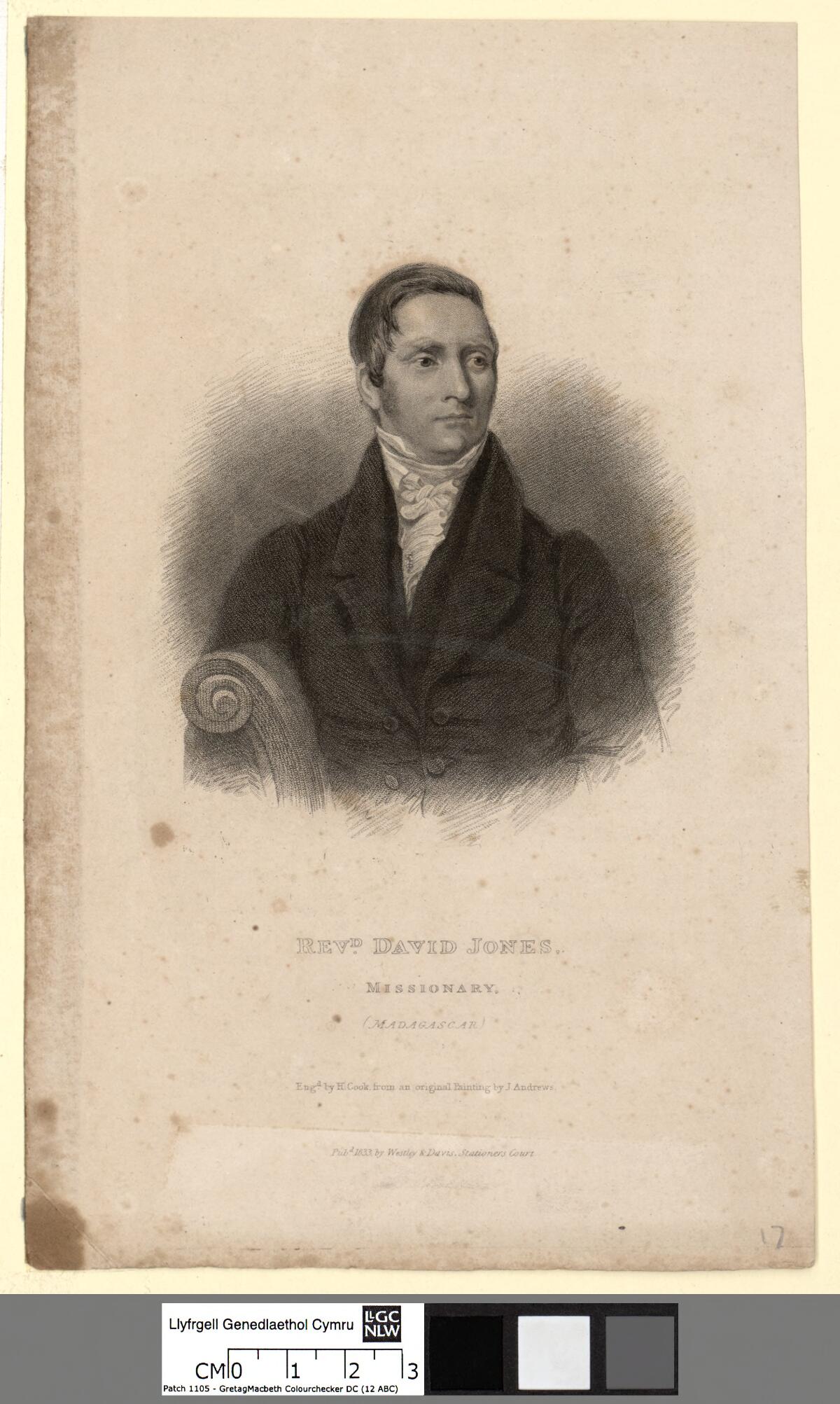
- David Jones (1796 to 1841) is described here as a London Missionary Society missionary to Madagascar from general knowledge and the Commons portrait record; the LMS link was not rechecked in a primary source for this lesson.
- The October 1865 first printing of China's Spiritual Need and Claims itself was not opened; the 1868 third edition (figures as of March 1865) was.
Notes
- Gina A. Zurlo, Todd M. Johnson and Peter F. Crossing, "World Christianity 2025: Regional Perspectives," International Bulletin of Mission Research 49, no. 1 (2025): 62 to 74, table "Status of Global Christianity, 2025, in the Context of 1900 to 2050," lines 10, 22, 36, 41, 44, 45 and 53 (Center for the Study of Global Christianity, Gordon-Conwell Theological Seminary; World Christian Database). Read from a reproduction of the table; DOI link given. Read it online. ↩
- Matthew 28:19, King James Version (1611), as given by King James Bible Online (retrieved Nov. 12, 2026). Read it online. ↩
- Acts 1:8, King James Version (1611), Project Gutenberg ebook 10, The King James Version of the Bible (retrieved Nov. 12, 2026). Read it online. ↩
- Acts 2:41, King James Version (1611), Project Gutenberg ebook 10 (retrieved Nov. 12, 2026). Read it online. ↩
- Roland Allen, Missionary Methods: St. Paul's or Ours? (London: Robert Scott, 1912); scan of a 1913 printing at the Internet Archive (retrieved Nov. 12, 2026). Read it online. ↩
- Willibald, The Life of Saint Boniface, trans. C. H. Talbot, in The Anglo-Saxon Missionaries in Germany (London and New York: Sheed and Ward, 1954), as given in the Internet Medieval Sourcebook, Fordham University (retrieved Nov. 12, 2026). Read it online. ↩
- Stephen Neill, A History of Christian Missions (Harmondsworth: Penguin, 1964; 2nd ed. revised by Owen Chadwick, 1986), the standard survey for the early, medieval and Catholic missions summarized here. Library record via Open Library. Read it online. ↩
- William Carey, An Enquiry into the Obligations of Christians to Use Means for the Conversion of the Heathens (Leicester: Ann Ireland, 1792), Introduction and Sections I to V; Section II for the Jesuits, Xavier, Eliot and Brainerd; Section III for the world totals; Section IV for the Moravians. Project Gutenberg ebook 11449 (retrieved Nov. 12, 2026). Read it online. ↩
- Sidney H. Rooy, "Eliot, John (1604-1690)," in Biographical Dictionary of Christian Missions, ed. Gerald H. Anderson (New York: Macmillan Reference USA, 1998), online at Boston University School of Theology (retrieved Nov. 12, 2026). Read it online. ↩
- Daniel Gookin, Historical Collections of the Indians in New England (written 1674; first printed in Collections of the Massachusetts Historical Society, 1792), Internet Archive scan of the 1792 printing (retrieved Nov. 12, 2026). Read it online. ↩
- Jonathan Edwards, The Life of Rev. David Brainerd, Chiefly Extracted from His Diary (first published Boston, 1749, as An Account of the Life of the Late Reverend Mr. David Brainerd; this American printing is Project Gutenberg ebook 65066), chapter headings for June 19, 1746 to October 9, 1747, and entry for Lord's day, June 29, 1746 (retrieved Nov. 12, 2026). Read it online. ↩
- A. Christopher Smith, "Carey, William (1761-1834)," in Biographical Dictionary of Christian Missions, ed. Gerald H. Anderson (New York: Macmillan Reference USA, 1998), 115, online at Boston University (retrieved Nov. 12, 2026). Read it online. ↩
- Brian Stanley, The History of the Baptist Missionary Society, 1792 to 1992 (Edinburgh: T. and T. Clark, 1992), and The Bible and the Flag: Protestant Missions and British Imperialism in the Nineteenth and Twentieth Centuries (Leicester: Apollos, 1990). Library records via Open Library. Read it online. ↩
- William H. Brackney, "Judson, Adoniram (1788-1850)," in Biographical Dictionary of Christian Missions, ed. Gerald H. Anderson (1998), 345-46, online at Boston University (retrieved Nov. 12, 2026). Read it online. ↩
- Dana L. Robert, "Judson, Ann (Nancy) Hasseltine (1789-1826)," in Biographical Dictionary of Christian Missions, ed. Gerald H. Anderson (1998), online at Boston University (retrieved Nov. 12, 2026). Read it online. ↩
- Francis Wayland, A Memoir of the Life and Labors of the Rev. Adoniram Judson, D.D., 2 vols. (Boston: Phillips, Sampson, 1853), vol. 2, letters of 1845 on the death of Sarah Boardman Judson; Internet Archive scan (retrieved Nov. 12, 2026). Read it online. ↩
- James D. Knowles, Memoir of Mrs. Ann H. Judson, Late Missionary to Burmah (Boston: Lincoln and Edmands, 1829), Internet Archive scan (retrieved Nov. 12, 2026). Read it online. ↩
- J. Hudson Taylor, China's Spiritual Need and Claims (first ed. London, 1865; this is the 1887 printing, the seventh edition, London: Morgan and Scott / China Inland Mission), Internet Archive scan cu31924023067972, full text (retrieved Nov. 12, 2026). Read it online. ↩
- International Mission Board, "Who Is Lottie Moon?" (retrieved Nov. 12, 2026). Read it online. ↩
- Andrew C. Ross, "Livingstone, David (1813-1873)," in Biographical Dictionary of Christian Missions, ed. Gerald H. Anderson (1998), 405, online at Boston University (retrieved Nov. 12, 2026). Read it online. ↩
- David Livingstone, Missionary Travels and Researches in South Africa (London: John Murray, 1857), Project Gutenberg ebook 1039 (retrieved Nov. 12, 2026). Read it online. ↩
- Henry M. Stanley, How I Found Livingstone (London: Sampson Low, 1872), chapter on the meeting at Ujiji, Project Gutenberg ebook 5157 (retrieved Nov. 12, 2026). Read it online. ↩
- Westminster Abbey, "David Livingstone" (commemoration page with burial date and gravestone text) (retrieved Nov. 12, 2026). Read it online. ↩
- Andrew F. Walls, "Crowther, Samuel Adjai (or Ajayi) (c. 1807-1891)," in Biographical Dictionary of Christian Missions, ed. Gerald H. Anderson (1998), 160-61, online at Boston University (retrieved Nov. 12, 2026). Read it online. ↩
- Andrew F. Walls, The Missionary Movement in Christian History: Studies in the Transmission of Faith (Maryknoll, N.Y.: Orbis, 1996). Library record via Open Library. Read it online. ↩
- Lamin Sanneh, Translating the Message: The Missionary Impact on Culture (Maryknoll, N.Y.: Orbis, 1989). Library record via Open Library. Read it online. ↩
- National Park Service, Whitman Mission National Historic Site, "ABCFM Missionaries" (retrieved Nov. 12, 2026). Read it online. ↩
- National Park Service, Whitman Mission National Historic Site, "People" (on Peter Skene Ogden's ransom of the hostages and the emigrants' detour to the mission) (retrieved Nov. 12, 2026). Read it online. ↩
- Edward Gaylord Bourne, "The Legend of Marcus Whitman," in Essays in Historical Criticism (New York: Scribner's, 1901), first printed in the American Historical Review 6 (1901); Internet Archive scan (retrieved Nov. 12, 2026). Read it online. ↩
- William I. Marshall, Acquisition of Oregon and the Long Suppressed Evidence about Marcus Whitman, 2 vols. (Seattle: Lowman and Hanford, 1911), Internet Archive scan (retrieved Nov. 12, 2026). Read it online. ↩
- State of Washington, Engrossed Substitute House Bill 1372, Laws of 2021, chapter 20, approved by the governor April 14, 2021, effective July 25, 2021, section 2 (retrieved Nov. 12, 2026). Read it online. ↩
- Alvin M. Josephy Jr., The Nez Perce Indians and the Opening of the Northwest (New Haven: Yale University Press, 1965). Library record via Open Library. Read it online. ↩
- Clifford M. Drury, Henry Harmon Spalding (Caldwell, Idaho: Caxton, 1936), and Marcus and Narcissa Whitman and the Opening of Old Oregon, 2 vols. (Glendale, Calif.: Arthur H. Clark, 1973). Library records via Open Library. Read it online. ↩
- "Doremus, Sarah Platt Haines (1802-1877)," in Biographical Dictionary of Christian Missions, ed. Gerald H. Anderson (1998), online at Boston University (retrieved Nov. 12, 2026). Read it online. ↩
- Dana L. Robert, American Women in Mission: A Social History of Their Thought and Practice (Macon, Ga.: Mercer University Press, 1997). Library record via Open Library. Read it online. ↩
- Helen Barrett Montgomery, Western Women in Eastern Lands: An Outline Study of Fifty Years of Woman's Work in Foreign Missions (New York: Macmillan, 1910), Internet Archive scan (retrieved Nov. 12, 2026). Read it online. ↩
- Jocelyn Murray, "Carmichael, Amy Beatrice (1867-1951)," in Biographical Dictionary of Christian Missions, ed. Gerald H. Anderson (1998), online at Boston University (retrieved Nov. 12, 2026). Read it online. ↩
- Amy Wilson-Carmichael, Things as They Are: Mission Work in Southern India (London: Morgan and Scott, 1903), Project Gutenberg ebook 29426 (retrieved Nov. 12, 2026). Read it online. ↩
- David Stoll, Fishers of Men or Founders of Empire? The Wycliffe Bible Translators in Latin America (London: Zed Press, 1982). Library record via Open Library. Read it online. ↩
- Cru, "Cru Historical Fact Sheet" (entries for 1951, the founding by Bill and Vonette Bright on the UCLA campus, and 2012, "The U.S. organization renames itself Cru"); the renaming was announced in 2011 (retrieved Nov. 12, 2026). The "Milestones" page (https://www.cru.org/us/en/about/what-we-do/milestones.html) also gives the 1951 founding. Read it online. ↩
- Youth With A Mission, "About Us" (retrieved Nov. 12, 2026). Read it online. ↩
- Mercy Ships, "About Us" (retrieved Nov. 12, 2026). Read it online. ↩
- Wycliffe Global Alliance, "Scripture Access Statistics" (2025 Global Scripture Access, data from ProgressBible as of August 1, 2025, with the 2024 report) (retrieved Nov. 12, 2026). Read it online. ↩
- The Lausanne Covenant (International Congress on World Evangelization, Lausanne, Switzerland, July 1974), sections 6 and 10, Lausanne Movement (retrieved Nov. 12, 2026). Read it online. ↩
- Pew Research Center, "Global Christianity: A Report on the Size and Distribution of the World's Christian Population," executive summary, December 19, 2011 (with the page's note on 2025 revisions) (retrieved Nov. 12, 2026). Read it online. ↩
- Philip Jenkins, The Next Christendom: The Coming of Global Christianity (New York: Oxford University Press, 2002). Library record via Open Library. Read it online. ↩
- Ruth A. Tucker, From Jerusalem to Irian Jaya: A Biographical History of Christian Missions (Grand Rapids: Zondervan, 1983; 2nd ed. 2004). Library record via Open Library. Read it online. ↩
- Lisa Brooks, Our Beloved Kin: A New History of King Philip's War (New Haven: Yale University Press, 2018). Library record via Open Library. Read it online. ↩
- Tim Jeal, Stanley: The Impossible Life of Africa's Greatest Explorer (London: Faber and Faber, 2007), and Livingstone (1973; revised ed. New Haven: Yale University Press, 2013). The report about the missing diary pages is attributed to Jeal and was not rechecked in the book for this lesson. Library record via Open Library. Read it online. ↩
- Internal Revenue Service, Publication 1828, Tax Guide for Churches and Religious Organizations (Rev. 8-2015), section "Exceptions to file Form 990, 990-EZ and 990-N" (churches; mission societies) (retrieved Nov. 12, 2026). Read it online. ↩
- ProPublica, Nonprofit Explorer (retrieved Nov. 12, 2026). Read it online. ↩
- Evangelical Council for Financial Accountability, "About ECFA" (fall 1977 meeting called by Senator Mark Hatfield; 150 charter members in 1979; over 2,700 accredited members) (Internet Archive copy of July 14, 2026; the ecfa.org page has moved) (retrieved Nov. 12, 2026). Read it online. ↩
- Evangelical Council for Financial Accountability, "ECFA Seven Standards of Responsible Stewardship" (PDF, undated); the PDF no longer loads at ecfa.org, so the link is the Internet Archive copy (retrieved Nov. 12, 2026). Read it online. ↩
- Christianity Today, "Gospel for Asia Settles Class Action, Will Refund Donors $37 Million," March 1, 2019 (retrieved Nov. 12, 2026). Read it online. ↩
- MissionExcellence (Standard of Excellence in Short-Term Mission), "7 Standards" (retrieved Nov. 12, 2026). Read it online. ↩
- Joshua Project, "People Group Counts" (retrieved Nov. 12, 2026). Read it online. ↩
- Joshua Project, "Definitions" (unreached / least-reached) (retrieved Nov. 12, 2026). Read it online. ↩
- NPR (as carried by WUNC), "All of the kidnapped missionaries in Haiti have now been released," December 16, 2021 (retrieved Nov. 12, 2026). Read it online. ↩
- U.S. Department of the Interior, press release "Secretary Haaland Announces Major Milestones for Federal Indian Boarding School Initiative," July 30, 2024 (retrieved Nov. 12, 2026). Read it online. ↩
- Bureau of Indian Affairs, "Federal Indian Boarding School Initiative" (Volume I released May 2022; Volume II July 2024) (retrieved Nov. 12, 2026). Read it online. ↩
- United Nations, Universal Declaration of Human Rights, proclaimed by the General Assembly in Paris on December 10, 1948, Article 18 (retrieved Nov. 12, 2026). Read it online. ↩
- National Park Service, Whitman Mission National Historic Site, "History and Culture" (retrieved Nov. 12, 2026). Read it online. ↩
- [Anonymous, from reports of John Eliot's party], The Day-Breaking, if not the Sun-Rising of the Gospell with the Indians in New-England (London, 1647), opening account: "Upon October 28, 1646. four of us (having sought God) went unto the Indians inhabiting within our bounds"; EarlyPrint/EEBO-TCP text A59662 (retrieved Nov. 12, 2026). Read it online. ↩
- Dr. and Mrs. Howard Taylor, Hudson Taylor and the China Inland Mission: The Growth of a Work of God (London: China Inland Mission, 1918), Taylor's recollection of 1865 ("Meanwhile, a million a month were dying in that land, dying without God") and the authors' summary of the 1865 appeal ("A million a month in China are dying without God"); Internet Archive scan (retrieved Nov. 12, 2026). Read it online. ↩
- Jesse Lyautey, "Lottie Moon legacy: decades of missions to a lost world," Baptist Press (undated on the page; internal references point to 2005): "In the first national offering in 1888, the Women's Missionary Union raised $3,315.26 for overseas missionaries," against a goal of $2,000; the IMB's "175 Years" timeline dates the first Christmas offering to December 1888 (retrieved Nov. 12, 2026). Read it online. ↩
- Erwin N. Thompson, Whitman Mission National Historic Site, Washington, National Park Service Historical Handbook Series No. 37 (Washington, D.C.: Government Printing Office, 1964): the Lapwai site "on Lapwai Creek, 2 miles from its confluence with the Clearwater"; Waiilatpu, "the place of the rye grass"; the 1847 measles that "spread from that year's wagon train to Cayuse villages" and "Within 2 months about half the Cayuse tribe died"; Project Gutenberg ebook 60756 (retrieved Nov. 12, 2026). Read it online. ↩
- J. Hudson Taylor, China: Its Spiritual Need and Claims (first published 1865), third edition (London: James Nisbet and S. W. Partridge, 1868), preface to the third edition and p. 35 ("Every day 33,000, every month 1,000,000"); Internet Archive b29353518, Wellcome Collection copy (retrieved Nov. 12, 2026). Read it online. ↩
Check yourself
1. According to William Carey's Enquiry of 1792, about how many people lived in the world?
Carey's Section III totals the world at "about seven hundred and thirty-one millions," of whom he counted 420 million as pagan and 44 million as Protestant.
2. Which historian wrote in 1901 that the story of how Marcus Whitman saved Oregon was "fictitious"?
Bourne's essay "The Legend of Marcus Whitman" (1901) traced the story to Spalding's articles of 1865 and found it unsupported by contemporary evidence.
3. By the Center for the Study of Global Christianity's 2025 figures, about what share of the world's Christians lived in the Global South in 2025?
The CSGC table gives 17.6 percent for 1900, 43.0 for 1970, 58.9 for 2000 and 68.9 for 2025.
4. Which document do most U.S. tax-exempt organizations file each year, but churches are not required to file?
IRS Publication 1828 lists churches among the organizations not required to file Form 990, 990-EZ or 990-N, so some mission bodies classed as churches publish no 990.
5. What is Joshua Project's working definition of an unreached people group?
Joshua Project defines unreached as "Less than or equal to 5% Christian Adherent AND less than or equal to 2% Evangelical."
6. Where was David Livingstone's heart buried?
Susi and Chuma buried his heart at Chitambo's village and carried his body to the coast; the body was buried in Westminster Abbey on April 18, 1874.
7. Which 1974 statement admits that "Missions have, all too frequently, exported with the gospel an alien culture"?
Section 10 of the Lausanne Covenant, on evangelism and culture, contains the sentence.
8. According to the Wycliffe Global Alliance's 2025 figures, in how many languages had Bible translation not yet begun?
As of August 1, 2025, 544 of 7,396 living languages were still waiting for translation to begin, down from 985 a year earlier; 4,457 had work in progress.
Terms in this lesson
- ABCFM (American Board)
- The American Board of Commissioners for Foreign Missions, formed in 1810 by New England Congregationalists; it sent the Judsons (1812) and the Whitmans and Spaldings (1836).
- Apostle
- From the Greek apostolos, "one who is sent"; the root idea of mission, used of the Twelve and Paul and loosely of pioneer missionaries.
- Great Commission
- Matthew 28:18 to 20, where Jesus tells the disciples to "teach all nations"; the text most quoted by missionaries.
- Missionary society
- A voluntary association of subscribers that chose, sent and paid missionaries, such as the Baptist Missionary Society (1792).
- Faith mission
- A mission on Hudson Taylor's model that guarantees no salary and makes no public appeals for money.
- Support raising (deputation)
- The model in which each missionary raises a personal budget from churches and individuals before and during service.
- Cooperative Program
- The Southern Baptist system of pooled church giving that funds missionaries through the convention instead of personal support raising.
- Form 990
- The IRS annual return most tax-exempt organizations file; churches are not required to file it.
- ECFA
- The Evangelical Council for Financial Accountability, founded in 1979 after a 1977 meeting called by Senator Mark Hatfield, which accredits ministries that meet its Seven Standards of Responsible Stewardship.
- Standard of Excellence (SOE)
- Seven standards for short-term missions, from God-centeredness to thorough follow-through, stressing partnership with the receiving church.
- Global South
- Africa, Asia, Latin America and Oceania, where about 68.9 percent of the world's Christians lived in 2025 by the CSGC estimate.
- Unreached people group
- In Joshua Project's working definition, a group no more than 5 percent Christian adherents and no more than 2 percent evangelical.
- Nimiipuu
- The Nez Perce people's own name; the Spaldings' mission at Lapwai, Idaho, was among them.
- Liksiyu
- The Cayuse people's own name; the Whitman mission at Waiilatpu was among them.
Sources
- King James Version (Project Gutenberg ebook 10) (1611) checked 2026-10
- Matthew 28:19, King James Bible Online (1611) checked 2026-10
- Carey, An Enquiry into the Obligations of Christians (Project Gutenberg 11449) (1792) checked 2026-10
- Edwards, The Life of Rev. David Brainerd (Project Gutenberg 65066) (1749 (later printing)) checked 2026-10
- Gookin, Historical Collections of the Indians in New England (1792 printing) (1674 (printed 1792)) checked 2026-10
- Knowles, Memoir of Mrs. Ann H. Judson (1829) checked 2026-10
- Wayland, A Memoir of the Life and Labors of the Rev. Adoniram Judson, vol. 2 (1853) checked 2026-10
- Taylor, China's Spiritual Need and Claims (1887 printing) (1887) checked 2026-10
- Livingstone, Missionary Travels and Researches in South Africa (Project Gutenberg 1039) (1857) checked 2026-10
- Stanley, How I Found Livingstone (Project Gutenberg 5157) (1872) checked 2026-10
- Bourne, Essays in Historical Criticism (The Legend of Marcus Whitman) (1901) checked 2026-10
- Marshall, Acquisition of Oregon (1911) checked 2026-10
- Carmichael, Things as They Are (Project Gutenberg 29426) (1903) checked 2026-10
- Montgomery, Western Women in Eastern Lands (1910) checked 2026-10
- Allen, Missionary Methods: St. Paul's or Ours? (1913 printing) (1912) checked 2026-10
- Willibald, Life of Saint Boniface (Talbot trans.), Internet Medieval Sourcebook (8th century; trans. 1954) checked 2026-10
- Biographical Dictionary of Christian Missions entries (Eliot, Carey, Adoniram Judson, Ann Judson, Livingstone, Crowther, Doremus, Carmichael), Boston University (1998) checked 2026-10
- Westminster Abbey, David Livingstone (undated web page) checked 2026-10
- National Park Service, Whitman Mission NHS, History and Culture, People, ABCFM Missionaries (undated web pages) checked 2026-10
- Washington Laws of 2021, chapter 20 (ESHB 1372) (2021-04-14) checked 2026-10
- International Mission Board, Who Is Lottie Moon? (undated web page) checked 2026-10
- Cru, Historical Fact Sheet (undated web page) checked 2026-10
- YWAM, About Us (web page read 2026) checked 2026-10
- Mercy Ships, About Us (web page read 2026) checked 2026-10
- Wycliffe Global Alliance, Scripture Access Statistics (2025) checked 2026-10
- The Lausanne Covenant (1974) checked 2026-10
- Zurlo, Johnson and Crossing, World Christianity 2025: Regional Perspectives (IBMR) (2025) checked 2026-10
- Pew Research Center, Global Christianity (executive summary) (2011-12-19) checked 2026-10
- Joshua Project, People Group Counts (2026 listing) checked 2026-10
- Joshua Project, Definitions (undated web page) checked 2026-10
- Christianity Today, Gospel for Asia settles class action (2019-03-01) checked 2026-10
- NPR via WUNC, All of the kidnapped missionaries in Haiti have now been released (2021-12-16) checked 2026-10
- U.S. Department of the Interior, Federal Indian Boarding School Initiative milestones press release (2024-07-30) checked 2026-10
- Bureau of Indian Affairs, Federal Indian Boarding School Initiative (2022 and 2024) checked 2026-10
- IRS Publication 1828, Tax Guide for Churches and Religious Organizations (2015-08) checked 2026-10
- ProPublica Nonprofit Explorer (database) checked 2026-10
- ECFA Seven Standards of Responsible Stewardship (PDF) (undated) checked 2026-10
- ECFA, About (undated web page) checked 2026-10
- Standard of Excellence in Short-Term Mission, 7 Standards (web page modified 2024) checked 2026-10
- Universal Declaration of Human Rights (1948-12-10) checked 2026-10
- Stephen Neill, A History of Christian Missions (1964; 2nd ed. 1986) checked 2026-10
- Ruth A. Tucker, From Jerusalem to Irian Jaya (1983; 2nd ed. 2004) checked 2026-10
- Andrew F. Walls, The Missionary Movement in Christian History (1996) checked 2026-10
- Lamin Sanneh, Translating the Message (1989) checked 2026-10
- Dana L. Robert, American Women in Mission (1997) checked 2026-10
- Philip Jenkins, The Next Christendom (2002) checked 2026-10
- Alvin M. Josephy Jr., The Nez Perce Indians and the Opening of the Northwest (1965) checked 2026-10
- Clifford M. Drury, Henry Harmon Spalding; Marcus and Narcissa Whitman and the Opening of Old Oregon (1936; 1973) checked 2026-10
- Lisa Brooks, Our Beloved Kin (2018) checked 2026-10
- David Stoll, Fishers of Men or Founders of Empire? (1982) checked 2026-10
- Brian Stanley, The History of the Baptist Missionary Society; The Bible and the Flag (1992; 1990) checked 2026-10
- Tim Jeal, Stanley; Livingstone (2007; 1973 and 2013) checked 2026-10
- The Day-Breaking, if not the Sun-Rising of the Gospell with the Indians in New-England (1647) (1647) checked 2026-10
- Howard Taylor, Hudson Taylor and the China Inland Mission (1918) (1918) checked 2026-10
- Baptist Press, Lottie Moon legacy (2005 (inferred)) checked 2026-10
- Thompson, Whitman Mission National Historic Site (NPS Handbook 37, Project Gutenberg 60756) (1964) checked 2026-10