Lesson 6 of 14 · about 50 minutes · Updated November 12, 2026
Hudson Taylor, the China Inland Mission and Lottie Moon
You'll be able to
- Quote what the treaties of 1842, 1844 and 1858 said about residence, churches, toleration and inland travel, and explain why Chinese critics tied missions to the Opium Wars.
- Describe Hudson Taylor's career from Shanghai (1854) to Changsha (1905) and the principles of the China Inland Mission in his own words.
- Trace the phrase 'a million a month' to its printed sources and explain the arithmetic behind it.
- Summarize the CIM's losses in 1900, its policy on compensation, and its move from China to OMF International after 1951.
- Outline Lottie Moon's life and her 1887 letter, and explain how the first Christmas offering of 1888 became the Lottie Moon Christmas Offering.
- Weigh the evidence on how Lottie Moon died against the starvation story told in sermons and fund-raising.
Start here: the short version
Protestant missions in China began with one man, Robert Morrison, who reached the Canton coast in 1807 and spent most of his life translating the Bible and compiling a dictionary. The doors that later let hundreds of missionaries into the interior were opened by war: the treaties that ended the two Opium Wars (1842 and 1858 to 1860) gave foreigners residence in coastal ports and then the right to travel inland, and the 1858 treaties named the Christian religion and promised its teachers protection. James Hudson Taylor, a Yorkshire chemist's son who landed at Shanghai on March 1, 1854, took the next step. He dressed and lived as a Chinese man, wrote a book of statistics called China's Spiritual Need and Claims (1865), and on a Brighton beach on June 25, 1865 asked God in writing for "twenty-four willing, skilful labourers."1 The China Inland Mission (CIM) that grew from that prayer took no collections, guaranteed no salaries, and sent its people into every province. It lost 58 missionaries and 21 children in the Boxer violence of 1900 and refused to claim compensation for them.2
Charlotte "Lottie" Moon, a Virginia Baptist with a master's degree, went to the Shandong coast in 1873 and stayed almost forty years.3 Her letter of September 15, 1887, asked Southern Baptist women to copy the Methodist women's "week of prayer and self-denial" before Christmas.4 The first offering, in 1888, raised $3,315.26 against a goal of $2,000.5 She died aboard ship at Kobe on December 24, 1912, and a story grew that she had starved herself for the Chinese; the historian Regina Sullivan found that the documents do not support it.6 The offering named for her brought in $207.2 million in the 2024 to 2025 year.7 This lesson sets out what the treaties said, what Taylor and Moon wrote in their own words, what later biographers and fund-raisers added, and how Chinese Christians and the Chinese state came to judge the missionary century.
China before Hudson Taylor
Christianity had reached China long before any Protestant. The Church of the East monk Alopen arrived at the Tang capital in 635, a story told on the Xi'an stele of 781, and the Jesuit Matteo Ricci reached Beijing in 1601; both are covered in lesson 01. The Protestant story starts in the early nineteenth century, when the London Missionary Society (founded 1795, see lesson 03) sent a young Northumbrian named Robert Morrison (1782 to 1834).
Robert Morrison, 1807 to 1834
Morrison was ordained in London in January 1807 and sailed by way of New York, because, as the memoir his widow compiled explains, permission to settle in the East "could not be obtained" and the missionaries had to travel "by an indirect course." The same memoir dates his voyage "From Jan. 31, to Sept. 8, 1807."8 Foreigners at Canton could live only in the waterfront "factories" (trading houses) outside the city walls. Morrison lived at first in the American factory, adopted Chinese habits for a time, and by 1809 had been appointed translator to the East India Company's factory, which gave him a recognized reason to stay.8 His published output was mostly linguistic: a Chinese grammar, a Chinese and English dictionary described in the memoir as "three quarto volumes," and the Bible.9
Converts were few. Morrison's own journal for July 16, 1814 records the first Protestant baptism of a Chinese person, a man named Tsae A-ko:
"At a spring of water issuing from the foot of a lofty hill by the sea side, away from human observation, I baptized, in the name of the Father, Son, and Holy Spirit, the person whose character and profession has been given above. O that the Lord may cleanse him from all sin in the blood of Jesus, and purify his heart by the influences of the Holy Spirit. May he be the first fruits of a great harvest; one of millions who shall believe and be saved from the wrath to come."8
The phrase "away from human observation" tells the condition of the work: it was illegal and done in hiding. With his colleague William Milne, Morrison finished a translation of the whole Bible into Chinese on November 25, 1819; a letter of congratulation printed in the memoir calls the completion "worth the toil of a life."9 He died at Canton on August 1, 1834.9 In twenty-seven years he baptized only a handful of Chinese believers; his importance lay in the tools he left for those who came after.
Chinese writers have long read this period differently. Linlin Victoria Lu, writing in 2016 for the China Research Center's journal China Currents, puts it this way: Protestant missions arrived "Coinciding with the most violent period of expansion into Asia by all the Western imperialist nations," and "Gunboats indirectly enabled the missionaries to penetrate all levels of Chinese society, but the message of their barking cannons deafened many Chinese to the serene sound of the Gospel."10 The treaties that follow show why that reading took hold.
The Opium Wars and the treaty ports
British merchants sold opium grown in British India into China against Chinese law. When the imperial commissioner Lin Zexu destroyed the foreign opium stocks at Canton in 1839, Britain went to war. The First Opium War (1839 to 1842) ended with the Treaty of Nanking, signed on August 29, 1842. It ceded Hong Kong and opened five ports. Its Article II reads:
"His Majesty the Emperor of China agrees that British Subjects, with their families and establishments, shall be allowed to reside, for the purpose of carrying on their Mercantile pursuits, without molestation or restraint, at the Cities and Towns of Canton, Amoy, Foochow-fu, Ningpo, and Shanghai."11
The Nanking treaty says nothing about religion. The American treaty that followed two years later, the Treaty of Wanghia (Wangxia) of July 3, 1844, went one step further. Its Article XVII let Americans in the open ports obtain sites "on which to construct houses and places of business, and also hospitals, churches and cemeteries."12 Missionaries could now build chapels in five coastal cities, legally, for the first time. They still could not live inland.
The Tientsin treaties of 1858
The Second Opium War (1856 to 1860) ended with a new set of treaties signed at Tientsin (Tianjin) in June 1858 and confirmed by the Conventions of Peking in 1860. The British treaty of June 26, 1858 is the first to name Christianity. Article VIII reads, in full:
"The Christian religion, as professed by Protestants or Roman Catholics, inculcates the practice of virtue, and teaches man to do as he would be done by. Persons teaching or professing it, therefore, shall alike be entitled to the protection of the Chinese authorities, nor shall any such, peaceably pursuing their calling, and not offending against the law, be persecuted or interfered with."13
Article IX opened the interior: "British subjects are hereby authorized to travel, for their pleasure or for purposes of trade, to all parts of the interior, under passports which will be issued by their Consuls, and countersigned by the local authorities."13 The American treaty, signed at Tientsin on June 18, 1858, has a parallel toleration clause in Article XXIX. It says the principles of Christianity "are recognized as teaching men to do good, and to do to others as they would have others do to them. Hereafter those who quietly profess and teach these doctrines shall not be harassed or persecuted on account of their faith." It then extends the protection to "Any persons, whether citizens of the United States or Chinese converts."14 The same treaty's Article XII repeated the right to build "hospitals, churches and cemeteries" in the open ports, and Article XIV added Swatow, Taiwan and other ports to the list.14 The U.S. State Department's Office of the Historian sums up the result: foreigners "were free to travel and conduct business or missions anywhere in China."15
Two features of these clauses matter for everything that followed. First, they covered Chinese converts as well as foreign teachers, so a local dispute involving a Chinese Christian could become a matter for a foreign consul. Second, the rights were won by war and enforced by gunboats. Lu quotes the German sinologist Wolfgang Franke: "The Christian missionaries had to pay a particularly heavy price for the mistakes of their predecessors, and reaped the hatred that had been sown in the past."10 Hudson Taylor's later biographers stress that he himself tried not to lean on the treaties. Writing of his 1865 book, they say "there is not a word about Government protection or dependence upon treaty rights," and that Taylor, "Unarmed, in native dress, and claiming no aid from Consular authorities," had found God "a refuge better than foreign flag or gunboat."2 The record shows both things at once: Taylor's mission was built to need the treaties as little as possible, and it could not have gone inland without them. When his own house at Yangzhou was attacked in 1868, British gunboats were sent, against his wishes, as told below.
Hudson Taylor: the early years, 1832 to 1865
James Hudson Taylor was born in Barnsley, Yorkshire, the son of James Taylor, a chemist (pharmacist) on the Market Place and a Methodist preacher, whom Hudson Taylor called "an earnest and successful evangelist."1 His son and daughter-in-law, Howard and Geraldine Taylor, wrote the family biography in two volumes, Hudson Taylor in Early Years: The Growth of a Soul (1911) and Hudson Taylor and the China Inland Mission: The Growth of a Work of God (1918). The first records: "on May 21, 1832, this child of many prayers was born, and named after both parents, James Hudson Taylor."16 These two books are the main printed source for his life; they quote his letters and journals at length, and they are also written by family members who revered him. Readers should take the quoted letters as his own words and the connecting narrative as the family's interpretation.
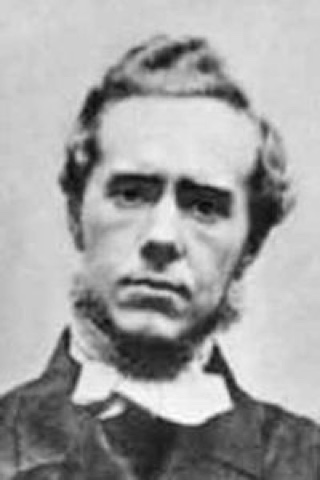

Taylor studied medicine in Hull and London and was accepted by a small London body, the Chinese Evangelisation Society. In his own memoir, A Retrospect (first edition 1894), he describes the farewell at Liverpool: "on the 19th of September 1853 a little service was held in the stern cabin of the Dumfries, which had been secured for me by the Committee of the Chinese Evangelisation Society, under whose auspices I was going to China."1 The voyage took nearly six months. "On landing in Shanghai on 1st March 1854," he wrote, "I found myself surrounded with difficulties that were wholly unexpected": the Red Turbans held the walled Chinese city and an imperial army of "from forty to fifty thousand men" was camped against it.1 His salary was eighty pounds a year, and rent in the foreign settlement took one hundred and twenty.1
Chinese dress
In August 1855 Taylor took the step that marked his whole career. The 1911 biography describes how, after finding a house in the Chinese city, he "called in a barber, and had himself so transformed in appearance that his own mother could hardly have known him," shaving his head except for enough hair to grow into the queue, which he dyed black.16 He was not the first missionary to do this: the same biography notes that the Prussian missionary Karl Gutzlaff, "wearing Chinese dress, made seven journeys during the years 1831-35 along the Chinese coast."16 What set Taylor apart was that he kept it up and later required it of his mission.
The Scottish Presbyterian evangelist William Chalmers Burns travelled with Taylor by boat for several months in 1855 and 1856. A letter Burns wrote to his mother on January 26, 1856, printed in A Retrospect, explains why he followed:
"I must once more tell the story I have had to tell already more than once, how four weeks ago, on December 29th, I put on the Chinese dress, which I am now wearing. Mr. Taylor had made this change a few months before, and I found that he was, in consequence, so much less incommoded in preaching, etc., by the crowd, that I concluded it was my duty to follow his example."1
Taylor's own explanation is practical: "I, and most of those associated with me, have continued to use native dress."1 Many foreign residents mocked the practice, and some missionaries thought it a pretense. Its defenders, then and now, call it the first serious attempt by a Protestant mission to adapt to Chinese life; its critics point out that a foreigner in a queue was still a foreigner, and that dress did nothing to change the treaty system that protected him.
Ningpo, Maria Dyer and the break with the society
Taylor settled at Ningpo (Ningbo), one of the treaty ports. There he met Maria Dyer, the orphaned daughter of the London Missionary Society printer Samuel Dyer, who, Taylor wrote, "reached the Straits as early as 1827, and for sixteen years laboured assiduously amongst the Chinese in Penang and Singapore."1 Her guardians opposed the match; the couple married on January 20, 1858.16 Taylor called her "a precious gift to me" and wrote that "God blessed her to many others during the twelve eventful years through which she was spared."1 By then he had already resigned from the Chinese Evangelisation Society, which was often in debt; OMF International's history page dates the resignation to 1857 and says he served "six years in China with the Chinese Evangelization Society."17 His income after that came from private gifts, chiefly through the English businessman William Berger. Ill health sent the family back to England in 1860, where Taylor finished his medical qualifications (his books list him as M.R.C.S.) and worked "with the late Rev. F. F. Gough of the C. M. S., in the revision of a version of the New Testament in the colloquial of Ningpo for the British and Foreign Bible Society."1
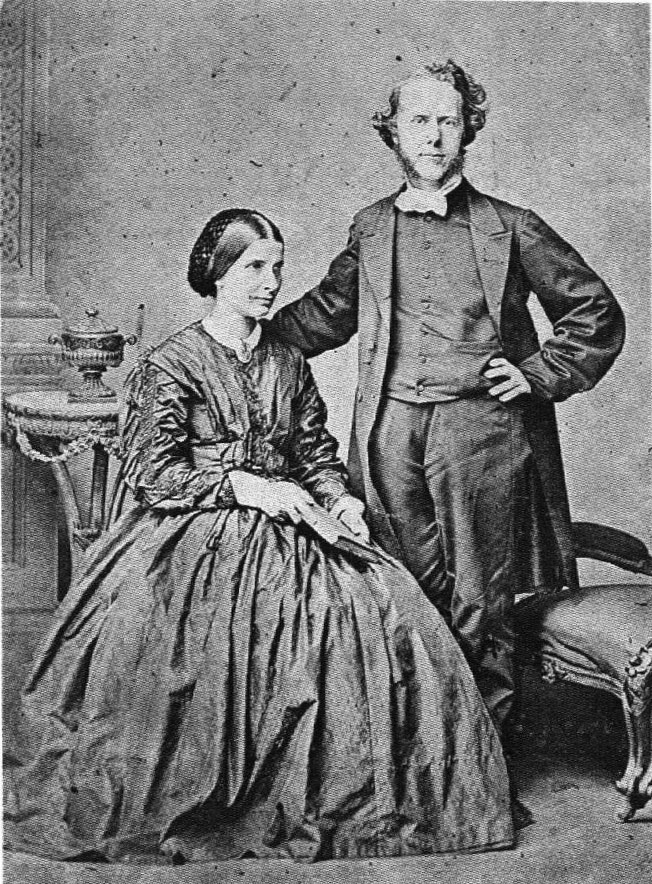

China's Spiritual Need and Claims (1865)
In England Taylor compiled the book that became the CIM's manifesto. It was first published in October 1865 by James Nisbet in London as China: Its Spiritual Need and Claims, with Brief Notices of Missionary Effort, Past and Present; a second edition followed in 1866, a third in 1868, a fourth in 1872 and a revised and enlarged edition in 1884, as the prefatory note to the seventh edition (1887) records, and a scan of the 1868 third edition survives.18 The book is mostly arithmetic and maps. Province by province it gives area, population and the number of mission stations. The 1887 edition, for example, lists "KIANG-SU. Area 40,140 square miles. Pop. 20 millions. 5 Stations" and "YUN-NAN. Area 122,461 square miles. Pop. 6 millions. 2 Stations."19
The purpose of the numbers was to make readers feel the scale. The 1887 text asks the reader to imagine the population marching past:
"Were they to march past the spectator at the rate of thirty miles a day, they would move on and on, day after day, week after week, month after month; and over seventeen years and a quarter would elapse before the last individual passed by. Of this vast multitude, it is estimated that 22,000 are communicants in connection with Protestant missions in China."19
Then it turns to death. "Among so vast a population the number of deaths continually occurring is necessarily very great. At a very moderate computation it cannot be under 22,800 per diem, or nearly 1,000 per hour."19 A later page adds: "Every day tens of thousands, every three months 2,000,000 subjects of the Chinese Emperor pass into eternity, very few of them ever having heard the gospel."19 The 1887 edition based these figures on a population of 250 million, which it calls "a recent, well-supported estimate," after noting that older reckonings had put the number "at 400 millions."19
"A million a month"
The most quoted sentence connected with the book, "A million a month in China are dying without God," does not appear in the 1887 edition examined for this lesson, which speaks of two million every three months. The earlier text carried the same figure in other words. The third edition (Nisbet, 1868), whose preface says its statistics were prepared "to represent matters as they were in March 1865," states that "the daily mortality of China is 33,000" and later that "Every day 33,000, every month 1,000,000 subjects of the Chinese Emperor pass into eternity, without ever having heard the Gospel."18 The familiar sentence appears in the 1918 biography in two places. In one, the biographers summarize the 1865 book in their own voice: "It is profoundly, unutterably real. 'A million a month in China are dying without God,' and we who have received in trust the Word of Life, we are responsible."2 In the other, they quote Taylor himself looking back on the months before Brighton: "Meanwhile, a million a month were dying in that land, dying without God. This was burned into my very soul. For two or three months the conflict was intense. I scarcely slept night or day more than an hour at a time, and feared I should lose my reason."2
The arithmetic behind the phrase is simple. With China's population reckoned at about 400 million and a death rate of roughly 30 per thousand a year, deaths come to about 12 million a year, or one million a month. On the 250 million estimate used in the 1887 edition, the same book's figure of 22,800 deaths a day comes to about 690,000 a month. The 1868 third edition used that reckoning: about four hundred million people ("Four hundred millions of souls") and 33,000 deaths a day.18 The figure of a million a month is therefore Taylor's own from the book's early editions; the sentence "A million a month in China are dying without God" is the wording of his later recollection and of his biographers. The October 1865 first printing itself was not opened for this lesson.
The book closes its survey of each region with the same appeal, built on Proverbs 24:11 and 12 in the King James Version, which Taylor quoted again and again: "If thou forbear to deliver them that are drawn unto death, and those that are ready to be slain; If thou sayest, Behold, we knew it not; doth not He that pondereth the heart consider it?"19
Brighton, June 25, 1865
By 1865 Taylor believed that a new agency was needed to send workers to the eleven inland provinces that had no Protestant missionary at all. He hesitated because he did not want to be responsible for sending people inland with no guaranteed support. His own account in A Retrospect is the primary record of what happened next:
"At the invitation of my beloved and honoured friend, Mr. George Pearse (then of the Stock Exchange), I went to spend a few days with him in Brighton. On Sunday, June 25th, 1865, unable to bear the sight of a congregation of a thousand or more Christian people rejoicing in their own security, while millions were perishing for lack of knowledge, I wandered out on the sands alone, in great spiritual agony; and there the Lord conquered my unbelief, and I surrendered myself to God for this service. I told Him that all the responsibility as to issues and consequences must rest with Him; that as His servant, it was mine to obey and to follow Him, His, to direct, to care for, and to guide me and those who might labour with me."1
He continues: "There and then I asked Him for twenty-four fellow-workers, two for each of eleven inland provinces which were without a missionary, and two for Mongolia; and writing the petition on the margin of the Bible I had with me, I returned home with a heart enjoying rest such as it had been a stranger to for months."1 The 1918 biography gives the words he wrote in the margin: "Prayed for twenty-four willing, skilful labourers at Brighton, June 25, 1865."2 It also gives the thought that settled him, in his words: "if God gives us a band of men for inland China, and they go, and all die of starvation even, they will only be taken straight to heaven; and if one heathen soul is saved, would it not be well worth while?"2 Within days, the biography records from his journal, he "Went with Mr. Pearse to the London & County Bank, and opened an account for the China Inland Mission," paying in ten pounds; the biographers call it "the first appearance of the new name."2 OMF International, the CIM's successor, treats June 25, 1865 as its founding date.17
How the China Inland Mission worked
The CIM differed from the denominational boards of its day in several ways. Taylor described them himself, and his descriptions are the best evidence of what he intended.
No appeals for money
Taylor wrote of the first Occasional Paper (1866): "I expected that God would incline the hearts of some of the readers to send contributions: I had determined never to use personal solicitation, or to make collections, or to issue collecting-books. Missionary-boxes were thought unobjectionable, and we had a few prepared for those who might ask for them."1 When he lectured on China he did so "on condition that there should be no collection, and that this should be announced on the bills."1 The paper itself reported the receipts: "for 1864 were £51:14s.; for 1865, from January to June, £221:12:6, besides two free passages; from June to December, £923:12:8."1 This is what later writers call the "faith mission" model; lesson 12 compares it with denominational pooled giving and personal support raising.
The best-known summary of the principle is Taylor's own. In an address quoted in the 1918 biography he said: "Let us see that we keep God before our eyes; that we walk in His ways and seek to please and glorify Him in everything, great and small. Depend upon it, God's work done in God's way will never lack God's supplies."2
No guarantee and no denomination
The CIM accepted members from any Protestant church who held, in Taylor's words, "the inspiration of God's Word," and who were "willing to prove their faith by going to inland China with only the guarantee they carried within the covers of their pocket Bibles."2 He added: "We might indeed have had a guarantee fund if we had wished it; but we felt it was unneeded and would do harm. Money wrongly placed and money given from wrong motives are both to be greatly dreaded."2 Missionaries shared whatever funds arrived; there was no fixed salary.
Chinese dress, direction from the field, and single women
Members were expected to wear Chinese clothes and live as nearly as possible in Chinese style. Direction came from Taylor on the field; William Berger ran the home office in England, and as the mission grew a China Council was set up "to assist the Director or his Deputy, as the London Council had long helped Mr. Taylor at home."2 The CIM also sent unmarried women inland, which was unusual. The 1918 biography notes that when the first large party sailed in 1866 "there was not one unmarried lady" missionary anywhere in the interior, and that "The presence of unmarried ladies" in inland stations met "stronger opposition" than anything else the mission did.2 Women missionaries are the subject of lesson 09.
The Lammermuir party, 1866
Taylor's account of the sailing is short: "On the 26th of May we sailed for China in the Lammermuir, a missionary party of 16 (besides my four children and their nurse, and Miss Bausum (afterwards Mrs. Barchet)); in all 22 passengers. Mr. Berger took charge of the home department, and thus the C. I. M. was fully inaugurated."1 The ship reached Shanghai at the end of September 1866 after a typhoon in the China Sea.2 OMF's history says that "By the end of 1866, 24 workers are active in four stations across inland China."17
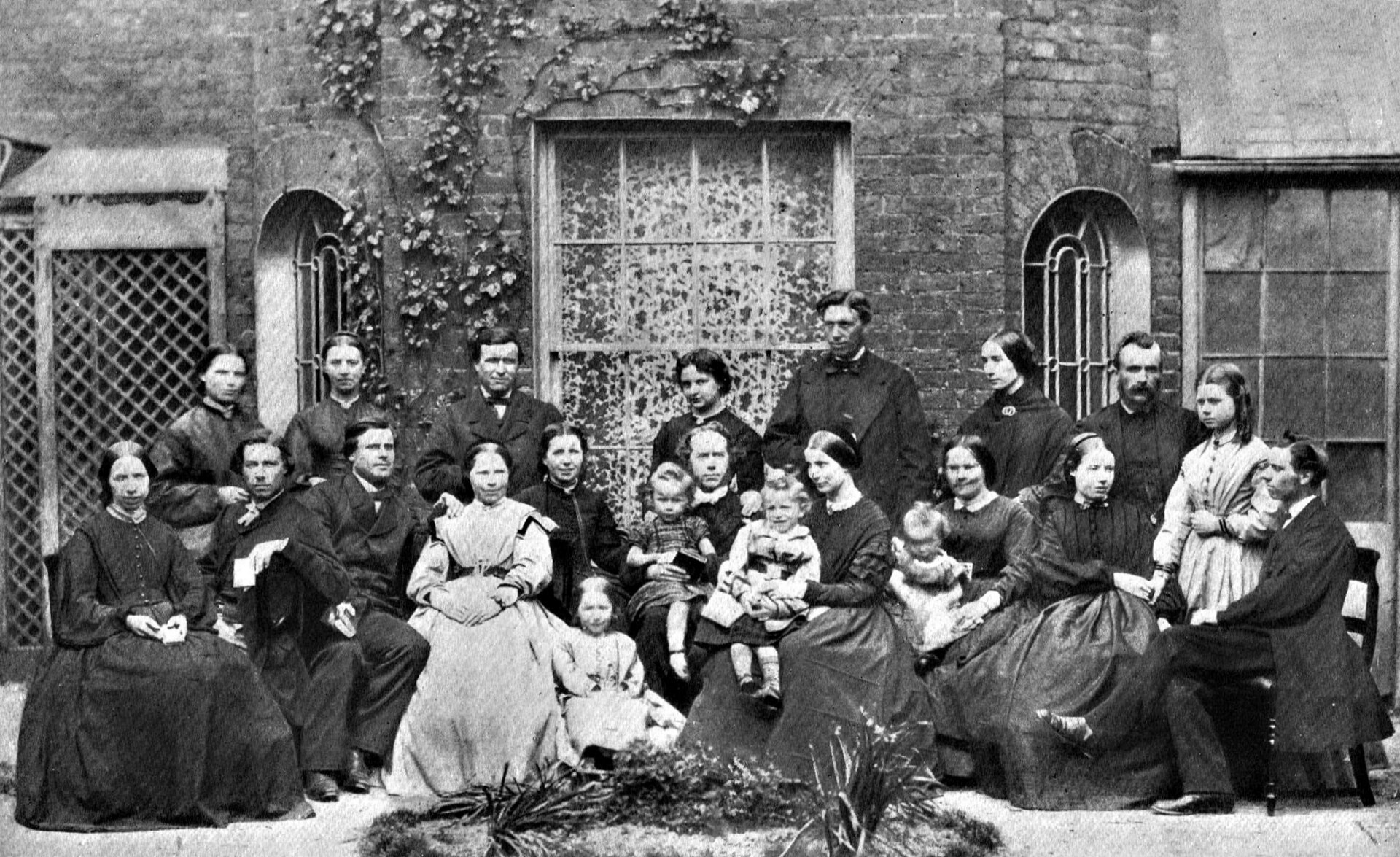

The party did not stay united. The 1918 biography says the voyage brought efforts "first to wreck the unity and spiritual power of the missionary party," and that within two years "A little group of five, having gone back from its principles" left or was dismissed; one man was dismissed for conduct "utterly inconsistent with the position of a Christian missionary."2 The quarrels centred on Chinese dress, on Taylor's authority, and on money. They are recorded in the family biography from Taylor's side; the dismissed members' own accounts are not quoted there.
The Yangzhou riot, 1868
In 1868 Taylor opened a house in Yangzhou (Yang-chow), a large city on the Grand Canal. In August a crowd attacked and looted the house; several members of the party were wounded. Rumours about foreigners and children lay behind it: Taylor wrote that when he reached the prefect he was asked "what we really did with the babies; whether it was true we had bought them, and how many."2 The biography quotes Maria's letter written soon after: "I do not know whether I shall be able to give you much idea, by this opportunity, of the perils through which we have passed within the last forty-eight hours. Our God has brought us through."2
The aftermath shows the treaty system at work. A resident of Zhenjiang (Chin-kiang) wrote to the Shanghai papers, and "public feeling demanded that action, prompt and decisive, should be taken by the British authorities." The consul-general, Medhurst, and the British minister, Sir Rutherford Alcock, took up the case, and "it was not until a flotilla of gunboats anchored off Nanking, and war seemed imminent, that the Viceroy gave way."2 The biographers state that "These proceedings, it need hardly be said, caused grave concern to Mr. Taylor," who would rather "have gone back at his own risk."2 In Britain the affair was debated in Parliament; Taylor wrote on March 11, 1869, "The Yang-chow matter is before the House of Lords," and newspapers blamed missionaries for provoking a crisis.2 For Chinese observers the lesson was plain: an attack on a missionary house had brought foreign warships. For the CIM the lesson was the opposite one: the mission later refused compensation, as in 1900.
The following years were hard for the Taylors. Maria died at Zhenjiang on July 23, 1870, at the age of thirty-three; the biography records that she died "At daybreak on Saturday the 23rd of July."2 The same year an anti-foreign riot at Tientsin killed, in the biographers' words, "twenty-one foreigners," including "the French Consul and Sisters of Mercy."2 Taylor later married Jennie Faulding, who had worked with the mission since its first weeks in 1865 and sailed on the Lammermuir.2
Growth: the Seventy, the Hundred and the Cambridge Seven
The CIM grew by public calls for a set number of new workers, each framed as a prayer request. OMF's history summarizes: "With the total number of missionaries at barely 100, a call to pray for 70 new workers goes out. In response, God provides 73 new workers within three years. The Cambridge Seven follow close behind. God's provision continues when the call for 100 goes out in 1886 and 102 workers sail for China within the year."17 These are the mission's own figures. In an address on the Hundred, Taylor said: "It is a great joy to know that thirty-one of the Hundred are already in China, but it is a greater joy to know that more than a hundred of our workers in China are banded together in daily pleading with God to send out the whole Hundred."2 He hoped other churches would be stirred too: "Whether He will give His 'exceeding abundantly' by sending us more than a literal hundred, or whether by stirring up other branches of the Church to send many hundreds, which I should greatly prefer."2
The most famous recruits were seven graduates of Cambridge University who sailed in 1885. The 1918 biography lists them: D. E. Hoste, Stanley P. Smith ("stroke of the Cambridge Eight"), W. W. Cassels ("now Bishop in Western China"), C. T. Studd ("ex-captain of the Cambridge Eleven"), Montagu Beauchamp, and the brothers C. P. and A. T. Polhill.2 A newspaper correspondent quoted there described their farewell meeting at Exeter Hall in London as "a sight to stir the blood."2 Their going drew wide attention in British universities and helped the student missionary movements of the next decades. Hoste later succeeded Taylor as head of the mission.2
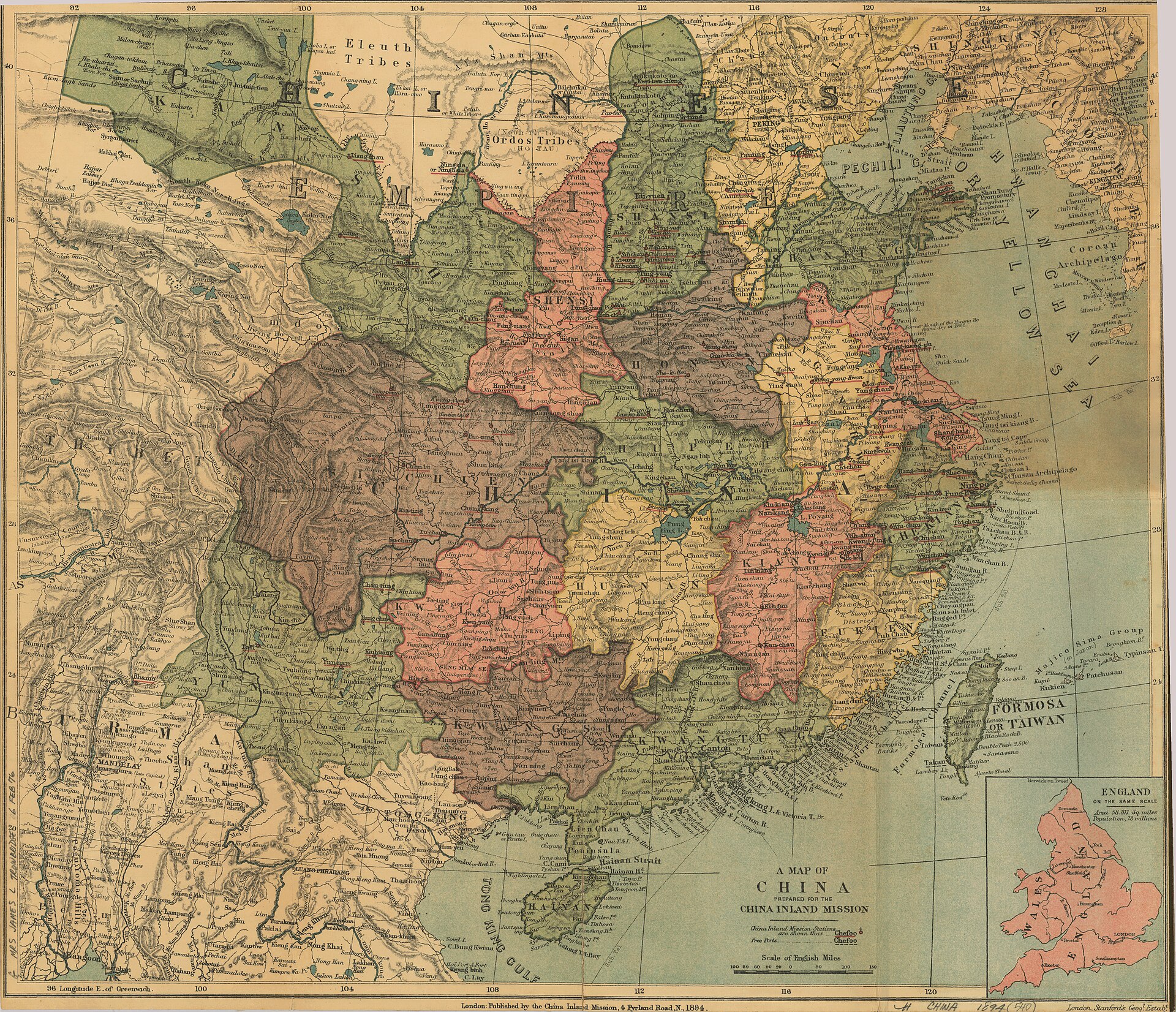

The Boxer year, 1900
The Boxer movement of 1899 and 1900 killed foreign missionaries and, in far larger numbers, Chinese Christians, especially in Shanxi and Zhili provinces. The individual deaths, including the CIM's, are told in module 102, lesson 09 and are not retold here. The CIM's total is given in the 1918 biography: "Fifty-eight in the C.I.M. alone perished in that terrible crisis, besides twenty-one children of the Mission, martyred with their parents or dying under sufferings the latter were enabled to survive."2 OMF's present history gives the same figure, "58 missionaries and 21 children," and adds that "During this period the CIM increases to 933 people."17
Taylor, then in Switzerland and in poor health, was kept from the full news for weeks. The biography reports his policy on compensation in detail:
"As to the difficult question of compensation, Mr. Taylor had from the first advised that no claim should be made by the Mission, and that even if offered none should be accepted for injury to life or person. Later on when, besides a heavy indemnity and other punitive measures, retribution of a fearful character was inflicted by certain of the Powers, he went further, fully agreeing with the Councils that indemnification for Mission property also should be declined, though individuals were left free to accept compensation for personal losses if they so desired."2
The same passage says the decision was "criticised in certain quarters" but "warmly approved at the British Foreign Office," whose minister in Peking sent a private gift of a hundred pounds.2 The phrase "retribution of a fearful character" refers to the punitive expeditions of the foreign armies after the relief of the Beijing legations in August 1900. In a letter of December 1900 to the surviving members, Taylor wrote: "It is a wonderful honour He has put upon us as a mission to be trusted with so great a trial, and to have among us so many counted worthy of a martyr's crown. Some who have been spared have perhaps suffered more than some of those taken, and our Lord will not forget."2
Taylor's death, 1905
Taylor had handed the full direction of the mission to D. E. Hoste after Hoste came from China in November 1902, as the biography records, and he made a last visit to China in 1905. He reached Changsha, the capital of Hunan, a province that had long refused missionaries, on "Thursday afternoon the first of June," according to his daughter-in-law Geraldine's account.2 On the Saturday evening, after a quiet day, he died suddenly in his room while she sat beside him; she wrote that "in less than one half-hour our loved one would be with the Lord."2 OMF's summary: "After 50 years of active service for China, Hudson Taylor dies on June 3 in Changsha and is buried in Zhenjiang next to his first wife, Maria."17
After Taylor: the CIM to 1951 and OMF International
The mission kept growing for three decades after his death. OMF's figures: "By 1915, 1,063 workers are located at 227 work stations throughout China. The mission's peak is in 1934 with 1,368 missionaries serving 364 stations," and "The CIM has more than 1,300 missionaries and almost 200,000 Chinese and minority people are baptized by 1939."17 These are the mission's own counts; no independent tally of CIM baptisms was found for this lesson.
The Communist victory of 1949 ended it. OMF's account: "In 1950 the CIM General Director deems further work in China is impossible and orders all missionaries to leave." In 1951 the mission decided "that, rather than dissolve, the mission will continue and expand to new fields: Thailand, Malaysia, Japan, Philippines, Indonesia and Taiwan," with headquarters in Singapore. "The China Inland Mission changes its name to Overseas Missionary Fellowship (OMF) in 1964 (and then to OMF International in 1993)."17 OMF's British site says it now has "1400 workers from 40 countries, working with 100 different people groups," and that in 2006 Patrick Fung became "the first Asian" General Director.17
The Christian Manifesto and the Three-Self movement
Chinese Protestants judged the missionary century in their own terms after 1949. In 1950 a group of Protestant leaders, under pressure from Premier Zhou Enlai, issued the statement usually called "The Christian Manifesto." Lu quotes its call to "Recognize clearly the evils that have been wrought in China by imperialism; recognize that in the past imperialism has made use of Christianity itself." She reports that forty leaders signed first and "eventually a total of 400,000 signatures" followed, and that the movement became the Three-Self Patriotic Movement (self-government, self-support, self-propagation) in July 1954, with Wu Yaozong (Y. T. Wu) elected chairman.10 She also records that "All 130 foreign missionary institutions and organizations, including schools and universities, were shut down," that "By 1951 not a single Protestant missionary remained in mainland China," and that "Left behind were 700,000 Chinese Protestants facing an uncertain future."10
The manifesto's charge and the CIM's self-understanding are two readings of the same record. The CIM tried to keep apart from consuls and gunboats and refused indemnities; it also worked under treaty rights won by war, sent foreigners who directed the work for most of its history, and left when the state turned against it. Not every Chinese Protestant signed; congregations that stayed outside the Three-Self movement, and the leaders of some of them who suffered for it, are part of this history as much as those who signed out of conviction that Chinese churches had to stand free of foreign control.
The size of Chinese Christianity today is disputed because surveys and official counts differ. Pew Research Center's 2023 report on religion in China found that "about 7% of Chinese adults say they believe in Jesus Christ and/or" Tianzhu, the Catholic term for God, while only 2% hold that belief and reject all other deities and spiritual forces.20 Whatever the exact figure, it is many times the 700,000 Protestants of 1949, and the growth came after the missionaries were gone.
Lottie Moon, 1840 to 1912
Charlotte Digges Moon was born on December 12, 1840 at Viewmont, her family's farm in Albemarle County, Virginia. Leila Christenbury's entry in the Library of Virginia's Dictionary of Virginia Biography describes her father, Edward Harris Moon, as "a wealthy merchant and enslaver."3 She graduated from Valley Union Seminary (later Hollins) in 1858 and received an M.A. from the Albemarle Female Institute in Charlottesville three years later; she read Greek and Latin.3 The International Mission Board (IMB), the Southern Baptist agency formerly called the Foreign Mission Board, says she "rebelled against Christianity until she was in college" and that in December 1858 "she dedicated her life to Christ and was baptized at First Baptist Church, Charlottesville."21 After the Civil War she taught school in Kentucky and Georgia.3 The Southern Baptist Convention itself had been formed in 1845, and its Foreign Mission Board chose China as its first field, sending its first missionaries there in 1846.3 Baptist history is covered in module 80, lesson 06.
The Foreign Mission Board's practice was to send married couples. Moon argued in print for single women. In 1871 she wrote in the Religious Herald: "Let the churches but make the experiment of appointing women to this work, and we believe that these would be the nuclei around which many women would be found willing to gather."3 Her sister Edmonia was appointed to Tengchow in 1872, and Lottie was appointed in July 1873 and joined her there that fall.3
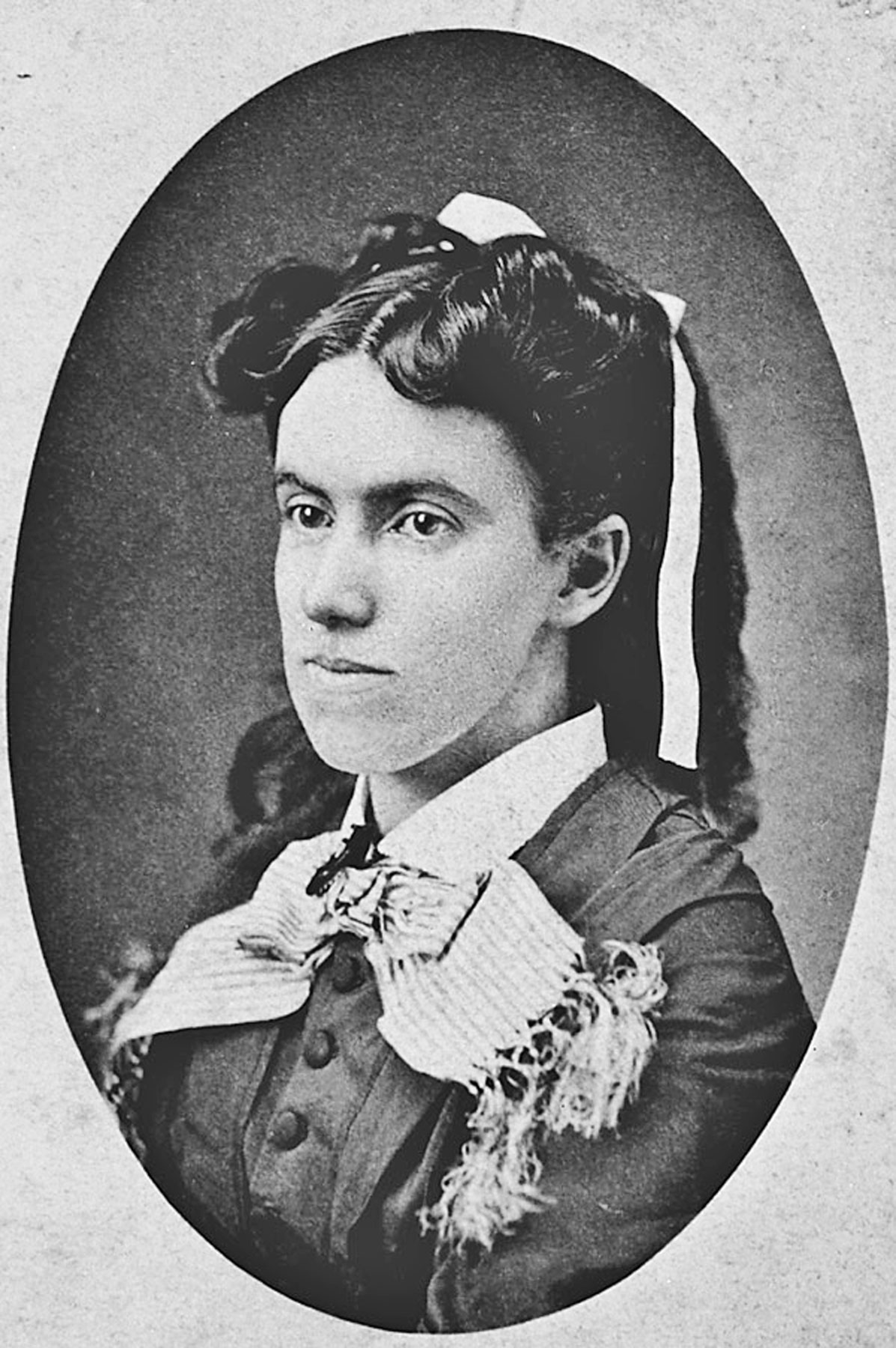

Tengchow and P'ingtu
Tengchow (Dengzhou, the present Penglai) is a port on the north coast of Shandong. Moon taught in mission schools at first and found it frustrating; she turned to visiting women in the villages, which in Chinese society only a woman could do. Christenbury records that "In 1876 she reported visits to eighty-eight villages."3 Her early letters were harsh: she complained of "heathen" hostility and wrote of the people's "narrow minds and degraded morals," but, Christenbury writes, "these negative impressions faded, and Moon soon championed the Chinese with whom she worked and lived. She eventually wore Chinese clothes, regularly spoke the language, and lived as a Chinese in her home."3 The IMB adds that she "adopted traditional Chinese dress" and that "The aroma of fresh-baked cookies drew people to her house."21
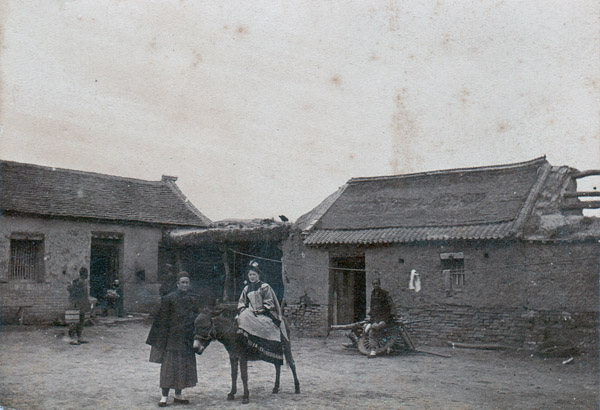

By 1882 Moon was engaged to Crawford H. Toy, whom she had first met as a student at the Albemarle Female Institute; Christenbury writes that Toy, a theology professor, "deviated from Baptist doctrinal views on the Bible." She broke off the engagement and never married. The reasons are not fully known. Christenbury suggests she may not have shared his beliefs and "may also have been disturbed that Toy's views would bar him from acceptance by the Foreign Mission Board and perhaps end her own missionary work."3
Moon also argued for women's rights inside the mission. In an 1883 article in Woman's Work in China she wrote: "What women have a right to demand is perfect equality in mission meetings with men." When the Board's China committee ruled in 1885 that unmarried women could not vote in mission meetings, she threatened to resign, and the board reversed its decision.3 In 1886 she moved inland to P'ingtu (Pingdu), where, against Board regulations, "she lived alone as she continued her work and founded a church there."3 She wrote to the Board about new recruits: "Please say to the [new] missionaries they are coming to a life of hardship, responsibility, and constant self-denial."21
The letter of September 15, 1887
The IMB prints the letter in full under the heading "The Letter That Started It All," and explains that it was "written by Lottie Moon on Sept. 15, 1887" and "printed in the Foreign Mission Journal in December of that year."4 The IMB's own page gives the place of writing as Tungchow (the same city as Tengchow).21 It opens with figures from the Methodists:
"In a former letter I called attention to the work of Southern Methodists women, endeavoring to use it as an incentive to stir up the women of our Southern Baptist churches to a greater zeal in the cause of missions. I have lately been reading the minutes of the ninth annual meeting of the Woman's Board of Missions, M. E. South, and find that in the year ending in June, they raised over sixty-six thousand dollars."4
After listing what the Methodist women paid for and how little their administration cost ("The expenses for all purposes are less than seventeen hundred dollars"), she turns on her own denomination:
"In a word, Southern Methodist women, in one year, have contributed to missions, clear of all expenses, nearly sixty-five thousand dollars! Doesn't this put us Baptist women to shame? For one, I confess I am heartily ashamed. I am convinced that one of the chief reasons our Southern Baptist women do so little is the lack of organization. Why should we not learn from these noble Methodist women, and instead of the paltry offerings we make, do something that will prove that we are really in earnest in claiming to be followers of him who, though he was rich, for our sake became poor? How do these Methodist women raise so much money? By prayer and self-denial."4
She quotes the Methodist board's resolution "to observe the week preceding Christmas as a week of prayer and self-denial," and asks: "Need it be said, why the week before Christmas is chosen? Is not the festive season when families and friends exchange gifts in memory of The Gift laid on the altar of the world for the redemption of the human race, the most appropriate time to consecrate a portion from abounding riches and scant poverty to send forth the good tidings of great joy into all the earth?"4
The letter was careful about authority. "What we want is not power, but simply combination in order to elicit the largest possible giving. Power of appointment and of disbursing funds should be left, as heretofore, in the hands of the Foreign Mission Board. Separate organization is undesirable, and would do harm; but organization in subordination to the Board is the imperative need of the hour."4 And it named the cost of doing nothing: "until the women of the Southern Baptist churches are thoroughly aroused, we shall continue to go on in our present 'hand to mouth' system. We shall continue to see mission stations so poorly manned that missionaries break down from overwork, loneliness, and isolation."4 The Methodist example she cites is a reminder that the Southern Baptist offering was copied from another denomination's women; the Methodist side of the story is in module 80, lesson 07.
The Woman's Missionary Union and the first offering, 1888
The IMB's anniversary timeline records: "The Woman's Missionary Union (an auxiliary to the Southern Baptist Convention) was organized in Richmond" on May 11, 1888, and in "December 1888 Annie Armstrong and the Woman's Missionary Union solicited funds for the first Christmas offering for foreign missions."22 (Other accounts give May 14 for the founding meeting; the difference has not been resolved here.) Annie Armstrong led the appeal; the IMB reported in 2025 that "In 1888, Annie Armstrong risked $72.82 on promotional materials to ask women to raise $2,000 to send two women to help Lottie Moon in China."7
Baptist Press reported in 2005 that the women raised "$3,315.26 for overseas missionaries," against the goal of "$2,000."5 The IMB says the first offering was "enough to send three new missionaries to China."21 Christenbury writes that the offering began as "a Christmas fundraising effort to support her work in Pingdu" and "became a highly successful venture, subsidizing mission work and additional women missionaries who joined Moon in China."3
Last years and death, 1900 to 1912
Moon's service, Christenbury notes, was interrupted only "to accompany her sister home in 1876, furloughs in 1892 and 1903, and an absence in 1900 during the Boxer Rebellion."3 Shandong suffered war with Japan (1894 to 1895), the Boxer year, famine and plague. One of her letters on the IMB page, dated April 2, 1895, is headed "Japanese Bombings"; another, of June 28, 1900, "Boxer Murmurings"; another, of July 1, 1911, "School Work After the Plague."4 Christenbury: "Her challenges included periodic droughts and floods, civil wars, and epidemics of plague, cholera and smallpox. Moon used her mission salary to aid famine victims."3
Her end is documented in some detail. Christenbury's account:
"By the autumn of 1912 Moon's physical and mental health faltered. Delirious, frail, and showing signs of dementia, she agreed to return home for care. Attended by a missionary nurse, she boarded the steamship Manchuria to sail back to the United States. While the ship was moored in Kobe, Japan, Charlotte 'Lottie' Digges Moon died on 24 December 1912. An official report of her death listed the causes as a carbuncle on the back of her ear, debility, and old age."3
The IMB's own summary is short: "Lottie Moon died at 72," and was "ill and in declining health after decades ministering to her beloved Chinese."21 A letter of December 5, 1912 on the IMB's letters page, written by a mission official named Smith, reports a cable saying that "her mind was seriously impaired."4 Her remains were cremated and buried at Crewe, Virginia.3
How the starvation story grew
For decades Southern Baptists were told that Lottie Moon starved herself to death, giving her food and money to famine victims because the Foreign Mission Board had no money to send. The historian Regina D. Sullivan examined the sources in Lottie Moon: A Southern Baptist Missionary to China in History and Legend (Louisiana State University Press, 2011). As reported by Bob Allen of Associated Baptist Press on August 16, 2011, Sullivan found that the romanticized account of the death "isn't supported by primary documents."6 According to that report:
- Sullivan traced the starvation story to the missionary nurse Cynthia Miller, who was with Moon in her last days and spoke to a former classmate, who wrote a remembrance in the Virginia Baptist paper Religious Herald on March 6, 1913, titled "Lottie Moon: She Being Dead, Yet Speaketh."6
- She found that "Una Roberts Lawrence's 1927 biography first put the story into wide circulation, but it did not become a standard part of the official 'Lottie Moon story' until the 1960s and 1970s."6
- Baptist Press used the story in fund-raising. A 1973 article said: "If the people were starving, Miss Moon felt she should not eat either." A 1988 article began: "Almost 76 years ago, Southern Baptist foreign missionary Lottie Moon literally starved to death." The slogan "Lottie Moon is starving again" was used during the WMU's centennial year.6
- The medical record, as Sullivan summarized it, is different. A missionary doctor who saw Moon in September 1912 found her physically well; two months later he found her "delusional with paranoia fixed on money." A large boil was "eating the flesh on Moon's neck behind her ear," and the doctor thought it had caused her dementia. She had "refused solid food for some time," and the doctor put her on a liquid diet. When a colleague checked her account after she said she was overdrawn, he "found she had funds to her credit."6
Sullivan's conclusion, quoted in the report: "Symbolically, Moon has been remade into a female Christ-figure, giving of herself so that others might live. That this story of sacrifice is not true has not prevented it from achieving a deep resonance for Southern Baptists over nearly a century."6 She argued that the remembered Moon left out the real one: "An actually remembered Moon would be a female activist who preached, argued for female equality and helped bring the WMU into existence."6 Christenbury's encyclopedia entry agrees on the facts, calling it "the false contention that Moon had stopped eating in solidarity with the starving Chinese or had stopped eating in protest against the Foreign Mission Board's failure to send famine relief funds."3 What the record does support is that Moon was weak, very thin and eating little in her last months, that she had given money to famine relief, and that she died of illness and old age on the way home.
The Lottie Moon Christmas Offering since 1918
Christenbury records that the WMU "continued the Christmas offering and in 1918 officially named the fund after Moon."3 The IMB's figures trace its growth. "Lottie Moon Christmas Offering annual receipts surpassed $1 million for the first time in 1945 as the Foreign Mission Board marked its 100th anniversary."23 The WMU's executive director Sandy Wisdom-Martin told the IMB in 2021 that "When the offering became a churchwide emphasis in the 1960s, the legacy of Lottie Moon beckoned all Southern Baptists to generosity."23 The IMB's 175th-anniversary timeline marks two later thresholds: cumulative receipts "surpassed $1 billion" by Christmas 1988, and in 1997 "Annual receipts for the Lottie Moon Christmas Offering surpassed $100 million for the first time."24 The same timeline says that from 1945 to 1979 "the number of Foreign Mission Board missionaries increased from 504 to 3,010."24
Annual totals since then, as reported by Baptist Press and the IMB:
- 2007: $150.4 million, the record until 2013.25
- 2013: $154,057,852.36, then the record "for the offering's 125-year history," though short of a $175 million goal.25
- 2017 to 2018: "$158.9 million," described as "the second-highest Lottie Moon Christmas Offering for International Missions ever received." The IMB treasurer said the offering "accounts for more than half of the total IMB budget ($264.4 million in 2018-19)," and that Southern Baptists had given "more than $4.5 billion" since 1888.26
- March 31, 2021: cumulative gifts "surpassed $5 billion total gifts since collection to send missionaries to China began in 1888."23
- 2024 to 2025 (year ending September 30, 2025): "the Lottie offering totaled $207.2 million," above the goal of $205 million; the 2025 to 2026 goal is $210 million.7
One change in method matters when comparing years. The IMB said in October 2025 that "beginning with the 2024-25 year, IMB is reporting offering totals to include all estate gift amounts."7 The jump past $200 million therefore reflects, at least in part, a new way of counting; the earlier figures are not strictly comparable.
The offering is one of two main sources of IMB money. The IMB's financial page says: "IMB's primary support comes through gifts to the Cooperative Program and Lottie Moon Christmas Offering," and that it "complies with the standards of the Evangelical Council for Financial Accountability."27 The IMB also says that "100% of your gifts" to the offering go to the field and that since 1845 it has sent "more than 25,000 missionaries to serve in 189 countries."2123 How the Cooperative Program, the offering and the IMB's reductions of missionary staff in 2015 and 2016 fit together is covered in lesson 12.
What the record shows and what it does not
- Documented fact. The treaty texts of 1842, 1844 and 1858 say what they say: residence in five ports, the right to build churches there, toleration of Christianity, protection for Chinese converts, and travel inland on passports.11121314 Taylor landed at Shanghai on March 1, 1854, prayed at Brighton on June 25, 1865, sailed on the Lammermuir on May 26, 1866, and died at Changsha on June 3, 1905.117 Moon died at Kobe on December 24, 1912, of causes officially listed as a carbuncle, debility and old age.3
- The missionaries' own words. Taylor's Retrospect, his 1865 book, and the letters quoted in the family biographies; Moon's letters printed by the IMB and quoted in the Dictionary of Virginia Biography.1194
- What Chinese Christians and the Chinese state recorded. The 1950 "Christian Manifesto" charged that "imperialism has made use of Christianity itself"; hundreds of thousands signed it, and the Three-Self Patriotic Movement grew from it.10 The prefect's question at Yangzhou about "the babies" records what many Chinese believed about foreigners in 1868.2
- Later biography, sermon and fund-raising. The familiar sentence "A million a month in China are dying without God" is the wording of Taylor's recollections and his biographers (the 1868 edition says "every month 1,000,000"); Moon's starvation was a fund-raising story that grew after 1927.26
- Scholarly reading. Sullivan on Moon as an advocate for women's equality remade into a martyr; Lu and Franke on missions and imperialism.610
- Open questions. Whether the October 1865 first printing of China's Spiritual Need and Claims words the death figures exactly as the 1868 third edition does; the CIM's baptism figures, which come only from the mission; the size of Chinese Christianity today.
Pictures, Numbers and Infographics
| Item | Figure | Source |
|---|---|---|
| Morrison's voyage to China | Jan. 31 to Sept. 8, 1807 | Memoirs (1839)8 |
| Chinese Bible completed by Morrison and Milne | Nov. 25, 1819 | Memoirs (1839)9 |
| Treaty ports opened in 1842 | 5 (Canton, Amoy, Foochow, Ningpo, Shanghai) | Treaty of Nanking, Art. II11 |
| Taylor's salary on arrival | 80 pounds a year (rent 120 pounds) | A Retrospect1 |
| China's population used in the 1887 edition | 250 million (older estimate 400 million) | China's Spiritual Need, 7th ed.19 |
| Deaths per day in the 1887 edition | 22,800 ("nearly 1,000 per hour") | Same19 |
| Protestant communicants in China, 1887 edition | about 22,000 | Same19 |
| Workers prayed for at Brighton | 24 | A Retrospect1 |
| CIM receipts, June to Dec. 1865 | 923 pounds 12s. 8d. | A Retrospect1 |
| Lammermuir passengers, 1866 | 22 (16 in the missionary party) | A Retrospect1 |
| CIM dead in the Boxer year, 1900 | 58 missionaries and 21 children | Taylor biography (1918); OMF217 |
| CIM at its peak, 1934 | 1,368 missionaries, 364 stations | OMF17 |
| Chinese Protestants left in 1951 | about 700,000 | Lu (2016)10 |
| Signatures for the Christian Manifesto | about 400,000 | Lu (2016)10 |
| OMF International today | 1,400 workers from 40 countries | OMF UK17 |
| Methodist women's giving cited by Moon, 1887 | "nearly sixty-five thousand dollars" net | Moon's letter4 |
| First Christmas offering, 1888 | $3,315.26 (goal $2,000) | Baptist Press (2005)5 |
| Offering first over $1 million | 1945 | IMB (2021)23 |
| Offering first over $100 million | 1997 | IMB timeline24 |
| Offering, 2024 to 2025 | $207.2 million (estate gifts now included) | IMB and NAMB (2025)7 |
| Cumulative offering | over $5 billion by March 31, 2021 | IMB (2021)23 |
| IMB missionaries sent since 1845 | more than 25,000, to 189 countries | IMB (2021)23 |
Claims checked
"Hudson Taylor wrote that a million a month in China were dying without God."
Supported, with a qualification. The words appear in the 1918 biography, once in the biographers' summary of the 1865 book and once in Taylor's own recollection: "Meanwhile, a million a month were dying in that land, dying without God."2 The 1887 seventh edition of China's Spiritual Need and Claims uses different figures: 22,800 deaths a day and "every three months 2,000,000."19 The third edition of 1868, which keeps the statistics of March 1865, says: "Every day 33,000, every month 1,000,000 subjects of the Chinese Emperor pass into eternity, without ever having heard the Gospel."18 The figure is Taylor's own from the book's early editions; the sentence as usually quoted is the wording of his later recollection and of his biographers.
"Taylor said: God's work done in God's way will never lack God's supplies."
Supported. The sentence appears in Taylor's own words in addresses quoted in the 1918 biography: "Depend upon it, God's work done in God's way will never lack God's supplies."2 The date of the first time he said it was not established here.
"The China Inland Mission was founded on Brighton beach on June 25, 1865."
Supported, with a qualification. Taylor's own account and his Bible-margin note date his decision and his prayer for twenty-four workers to that day, and OMF uses it as the founding date.1217 The name first appears a few days later, when the bank account was opened.2
"Hudson Taylor was the first missionary to wear Chinese dress."
Refuted. Taylor's own family biography notes that Karl Gutzlaff, "wearing Chinese dress, made seven journeys during the years 1831-35."16 Jesuits such as Matteo Ricci had adopted Chinese scholars' dress centuries earlier (see lesson 01). Taylor was the first to make it the rule of a large Protestant mission.
"After the Boxer killings the CIM refused all compensation."
Partly supported. The mission made no claim for "injury to life or person" and declined indemnity for mission property, but "individuals were left free to accept compensation for personal losses if they so desired."2
"Missionaries came to China behind gunboats."
Partly supported. The rights to live in the ports, build churches, preach and travel inland were all written into treaties that ended wars.111314 British gunboats were sent after the 1868 Yangzhou riot.2 On the other hand Morrison worked in China from 1807 until his death in 1834, before any of the treaties, and Taylor's mission made a point of claiming no consular aid and of declining indemnities.82 The statement describes the system; it does not describe every missionary's intent.
"Lottie Moon starved herself to death so the Chinese could eat."
Refuted. The official report listed "a carbuncle on the back of her ear, debility, and old age"; she was delirious and showing signs of dementia, and she had money to her credit when she believed she was overdrawn.36 The story was spread by a 1913 remembrance, a 1927 biography and later fund-raising articles, as Regina Sullivan documented.6 It is true that she gave money to famine relief and was very thin and eating little at the end.36
"Lottie Moon started the Christmas offering."
Partly supported. Her 1887 letter proposed the week of prayer and giving before Christmas, copied from the Southern Methodist women.4 The Woman's Missionary Union, led in the appeal by Annie Armstrong, organized and collected it in December 1888, and the WMU named it for Moon in 1918, six years after her death.223
"The first offering raised $3,315."
Supported. Baptist Press gives $3,315.26 against a goal of $2,000; the IMB gives $3,315.521
"Lottie Moon was the first single woman the Southern Baptists sent to China."
Refuted. Her sister Edmonia Moon was appointed to Tengchow in 1872, a year before Lottie, and Christenbury calls Edmonia "one of the first unmarried women to be sent to China as a Baptist missionary."3
"The CIM had baptized almost 200,000 Chinese by 1939."
Unresolved. The figure is OMF's own.17 No independent count was found.
Hard questions and answers
Can the China missions be separated from the Opium Wars, or were the missionaries part of the empire?
The treaties are the plainest evidence. Before 1842 Protestant work was confined to a few men at Canton and Macao working in secret, as Morrison's baptism "away from human observation" shows.8 After 1858 missionaries could live and preach anywhere with a passport, and Chinese converts were placed under treaty protection.1314 No missionary could change that fact by personal choice. What the record also shows is variation in conduct. Taylor's mission asked for no consular help, regretted the gunboats at Nanking, and turned down indemnities in 1900; other missions and many individual missionaries did press claims.2 A Chinese reader in 1950 could see the whole system and sign the Manifesto's charge; a Chinese Christian in the same year could see the same missionaries as the people who brought the faith he held. Both responses are on record.10
Was "a million a month" an honest argument or emotional manipulation?
The arithmetic was honest by the standards of the time: Taylor used the population estimates then current and an ordinary death rate, and the 1887 edition revised the population down to 250 million and gave the lower figure.19 The argument rested on a theological premise, that people who die without hearing the gospel are lost, which Taylor stated openly and which the reader can accept or reject. Evangelical readers will see the premise as the reason for the urgency. Others will note that the same numbers could be read as a case for medicine, famine relief or education, which the CIM also provided, though it treated preaching as primary.
If the starvation story is false, why did Southern Baptists tell it for so long?
Sullivan's answer, quoted above, is that the story worked: it gave the offering a martyr, and it fit expectations about women as self-sacrificing saints better than the record of a woman who argued for "perfect equality in mission meetings with men."63 The Baptist Press articles of 1973 and 1988 show it being used to raise money.6 The IMB's present pages describe her death more carefully, as "ill and in declining health."21 A Southern Baptist reader may also note that the real story, a woman who stayed through war, famine and plague for nearly forty years and gave away her salary, does not need the legend.
What did Chinese Christians themselves think of these missionaries?
The sources opened for this lesson record Chinese voices mostly through missionary pens, which is a real limit. The biographies name Chinese colleagues, such as Pastor Hsi (Xi Shengmo) of Shanxi, whose life the CIM published, and they record Chinese hostility, such as the Yangzhou prefect's question about babies.2 The 1950 Manifesto is a Chinese Protestant document, though written under political pressure.10 The growth of Chinese Christianity after 1951, without foreign missionaries, is the strongest evidence that the faith had become Chinese. Readers who want Chinese Christian accounts in their own words should look to the histories of the Three-Self churches and of the independent churches, which this lesson did not reach.
Which funding model worked better: Taylor's "faith mission" or the Southern Baptist offering?
They answered different problems. Taylor's model let a small, interdenominational mission grow without a church behind it; it depended on publicity, prayer letters and the trust of donors who read the Occasional Paper and China's Millions, and its members lived with no fixed salary.12 The Southern Baptist model pools money from tens of thousands of churches through the Cooperative Program and the annual offering, which gives missionaries steady support but ties them to one denomination's decisions and budget.27 Both raised large sums. Lesson 12 sets the models side by side, and lesson 05 tells how the Baptist foreign mission effort began in America.
Did women get credit for what they did in China?
Moon fought for a vote in mission meetings and won it by threatening to resign; she lived alone in P'ingtu against Board rules.3 The CIM sent unmarried women inland at a time when, its biographers say, "there was not one unmarried lady" in the interior.2 Yet the remembered Moon became, in Sullivan's phrase, "a female saint" rather than "a female activist."6 Lesson 09 follows the women's boards and their later absorption into the general boards.
Learn more
- Hudson Taylor, A Retrospect (Project Gutenberg): Taylor's own short account of his call, his early years in China and the founding of the CIM, free to read.
- China's Spiritual Need and Claims, 7th ed. (1887), Internet Archive: The book itself, with its maps, tables and the arguments that recruited the CIM's first generations.
- The Growth of a Work of God (1918), Internet Archive: The family biography, valuable for the letters and journals it quotes; read the connecting narrative as the family's interpretation.
- Lottie's Letters (IMB): Lottie Moon's 1887 letter in full and a sampling of her letters from 1877 to 1911.
- Dictionary of Virginia Biography: Lottie Moon: A careful short biography with a list of the primary sources, including the official cause of death.
- Lu, Protestant Christianity in the People's Republic: A short survey from 1949 to the present, including the Christian Manifesto and the Three-Self movement.
Still being checked (11 items)
These points could not be confirmed against a primary source when this lesson was written and fact checked in October 2026. The text above states each one as uncertain.
- The October 1865 first printing of China's Spiritual Need and Claims was not opened; the 1868 third edition (statistics as of March 1865) gives 33,000 deaths a day and 'every month 1,000,000.' The month of first publication (October 1865) was not confirmed from a title page or preface.
- The date of the founding meeting of the Woman's Missionary Union is given by the IMB timeline as May 11, 1888; other accounts give May 14, 1888. Not resolved.
- No complete year-by-year or decade-by-decade series of Lottie Moon Christmas Offering totals was found in IMB or WMU public pages; the chart shows only milestone years with published figures. The 1945 and 1997 values are thresholds ('surpassed $1 million', 'surpassed $100 million'), not exact totals.
- The 2024 to 2025 offering total ($207.2 million) includes all estate gifts for the first time, so it is not strictly comparable with earlier years.
- The day Taylor opened the CIM bank account is unclear in the scanned 1918 biography (the date is partly illegible, 'June 2_'); the lesson says 'within days' of June 25, 1865.
- The photograph titled 'J Hudson Taylor 1865' on Wikimedia Commons has no recorded photographer or verified date.
- The CIM figures for workers and baptisms (for example 'almost 200,000' baptized by 1939) are the mission's own; no independent count was found.
- The year of Hudson Taylor's marriage to Jennie Faulding is not stated in the lesson because it was not confirmed from the sources opened.
- The imprisonment of Chinese Protestant leaders who refused to join the Three-Self movement is mentioned only in general terms; no named case was confirmed from the sources opened.
- The Baptist Press articles on the 2013 offering and Jesse Lyautey's article carry no publication date on the page.
- Moon's article demanding 'perfect equality' is dated 1883 (Woman's Work in China 7, Nov. 1883) by the Dictionary of Virginia Biography; some secondary accounts date the quotation to 1893.
Notes
- J. Hudson Taylor, A Retrospect, 3rd ed. (Toronto: China Inland Mission, n.d.; first edition 1894), chapters VIII to XX, including the letter of William C. Burns to his mother, Jan. 26, 1856; Project Gutenberg EBook #26744, 2008 (retrieved Nov. 12, 2026). Read it online. ↩
- Dr. and Mrs. Howard Taylor, Hudson Taylor and the China Inland Mission: The Growth of a Work of God (London: China Inland Mission, 1918), chapters III to XI (1865 to 1870), the chapters on the Hundred and the Cambridge party (pp. 381 to 387, 429 to 430), the Boxer crisis (pp. 590 to 594) and Taylor's death (pp. 613 to 615); Internet Archive scan hudsontaylorchin00tayl (retrieved Nov. 12, 2026). Read it online. ↩
- Leila Christenbury, 'Charlotte Lottie Digges Moon (12 December 1840 to 24 December 1912),' Dictionary of Virginia Biography, Library of Virginia, published 2026, with its list of sources consulted (retrieved Nov. 12, 2026). Read it online. ↩
- International Mission Board (Southern Baptist Convention), 'Lottie's Letters,' including 'The Letter That Started It All' (Lottie Moon, Sept. 15, 1887, printed in the Foreign Mission Journal, December 1887), letter headings of 1877 to 1911, and a letter of Dec. 5, 1912 (retrieved Nov. 12, 2026). Read it online. ↩
- Jesse Lyautey, 'Lottie Moon legacy: decades of missions to a lost world,' Baptist Press, Richmond, Va. (undated on the page; internal references point to 2005) (retrieved Nov. 12, 2026). Read it online. ↩
- Bob Allen, 'Lottie Moon's death story a myth, new book contends,' Associated Baptist Press, Aug. 16, 2011, reporting and quoting Regina D. Sullivan, Lottie Moon: A Southern Baptist Missionary to China in History and Legend (Baton Rouge: Louisiana State University Press, 2011); Baptist News Global (retrieved Nov. 12, 2026). Read it online. ↩
- IMB and NAMB Staff, 'Southern Baptist giving to Lottie Moon, Annie Armstrong offerings surpass $278 million,' International Mission Board, Oct. 13, 2025 (retrieved Nov. 12, 2026). Read it online. ↩
- [Eliza A. Morrison, comp.], Memoirs of the Life and Labours of Robert Morrison, D.D., vol. 1 (London, 1839), table of contents for 1803 to 1809, pp. 93 to 97 (departure by way of New York) and pp. 408 to 410 (journal of July 16, 1814, baptism of Tsae A-ko); Internet Archive memoirsoflifelab01morr (retrieved Nov. 12, 2026). Read it online. ↩
- [Eliza A. Morrison, comp.], Memoirs of the Life and Labours of Robert Morrison, D.D., vol. 2 (London, 1839), pp. 1 to 2 (dictionary and Bible), p. 127 (letter on the completion of Nov. 25, 1819) and the closing inscription ('died at Canton, August 1st, 1834'); Internet Archive memoirsoflifelab02morr (retrieved Nov. 12, 2026). Read it online. ↩
- Linlin Victoria Lu, 'Protestant Christianity in the People's Republic,' China Currents 15, no. 1 (China Research Center, Atlanta, Jan. 29, 2016), quoting Wolfgang Franke and the 1950 'Christian Manifesto' (retrieved Nov. 12, 2026). Read it online. ↩
- Treaty of Nanking (Treaty of Peace, Friendship, and Commerce between Great Britain and China), Aug. 29, 1842, Article II; English text in 'The World and Japan' Database (project leader Tanaka Akihiko), National Graduate Institute for Policy Studies, Tokyo (retrieved Nov. 12, 2026). Read it online. ↩
- Treaty of Wang-Hea (Wanghia) between the United States and China, July 3, 1844, Articles III and XVII; English text in 'The World and Japan' Database (retrieved Nov. 12, 2026). Read it online. ↩
- Treaty of Tien-Tsin between Great Britain and China, June 26, 1858, Articles VIII and IX; Wikisource transcription of the treaty text (retrieved Nov. 12, 2026). The same text is in 'The World and Japan' Database, document 18580626.T1E. Read it online. ↩
- Treaty of Tien-Tsin between the United States of America and the Empire of China, June 18, 1858, Articles XII, XIV and XXIX; English text in 'The World and Japan' Database (retrieved Nov. 12, 2026). Read it online. ↩
- Office of the Historian, U.S. Department of State, 'The Opening to China Part II: the Second Opium War, the United States, and the Treaty of Tianjin, 1857 to 1859,' Milestones in the History of U.S. Foreign Relations (retrieved Nov. 12, 2026). Read it online. ↩
- Dr. and Mrs. Howard Taylor, Hudson Taylor in Early Years: The Growth of a Soul (London: China Inland Mission and Religious Tract Society, 1911; 1912 printing), chapters on 1832 (birth), 1855 (Chinese dress, with the note on Gutzlaff) and 1857 to 1858 (marriage); Internet Archive hudsontaylorinea00tayl (retrieved Nov. 12, 2026). Read it online. ↩
- OMF UK, 'About us' and 'Our Story: The History of CIM and OMF' timeline, OMF International (retrieved Nov. 12, 2026). Read it online. ↩
- J. Hudson Taylor, China: Its Spiritual Need and Claims, with Brief Notices of Missionary Effort, Past and Present (London: James Nisbet, first published 1865), third edition (London: James Nisbet and S. W. Partridge, 1868), preface to the third edition and pp. 12 and 35 ("the daily mortality of China is 33,000"; "Every day 33,000, every month 1,000,000"); Internet Archive b29353518, Wellcome Collection copy, text read from the item's server copy on Nov. 12, 2026. Edition dates (1866, 1868, 1872, 1884) from the prefatory note to the seventh edition (1887). Read it online. ↩
- J. Hudson Taylor, China's Spiritual Need and Claims, 7th ed. (London: Morgan and Scott, 1887), provincial tables and pp. 11 to 12 (population and deaths), 35 and 38 (deaths every three months), with Proverbs 24:11 to 12 (KJV) as quoted; Internet Archive cu31924023067972, Cornell University Library copy (retrieved Nov. 12, 2026). Read it online. ↩
- Pew Research Center, 'Measuring Religion in China,' Aug. 30, 2023, overview (retrieved Nov. 12, 2026). Read it online. ↩
- International Mission Board, 'Lottie Moon' (biography and offering page) (retrieved Nov. 12, 2026). Read it online. ↩
- International Mission Board, '175 Years' anniversary timeline, 1880s page: 'Woman's Missionary Union Formed May 11, 1888' and 'First Christmas Offering Collected December 1888' (retrieved Nov. 12, 2026). Read it online. ↩
- Myriah Snyder, 'Lottie Moon Christmas Offering hits cumulative $5 billion,' International Mission Board, April 12, 2021 (retrieved Nov. 12, 2026). Read it online. ↩
- International Mission Board, '175 Years' anniversary timeline, pages for the 1970s (missionaries 1945 to 1979), 1980s (cumulative $1 billion, Christmas 1988) and 1990s (annual receipts over $100 million, 1997) (retrieved Nov. 12, 2026). Read it online. ↩
- Baptist Press, 'Lottie Moon offering hits record $154 million' (undated on the page; reports the 2013 offering, finalized June 5, and the previous record of 2007) (retrieved Nov. 12, 2026). Read it online. ↩
- Julie McGowan, '2017-18 LMCO totals nearly $159 million,' International Mission Board, Oct. 5, 2018 (retrieved Nov. 12, 2026). Read it online. ↩
- International Mission Board, 'Financial Transparency' (ECFA accreditation and sources of support) (retrieved Nov. 12, 2026). Read it online. ↩
Check yourself
1. Which treaty clause first named the Christian religion in a treaty between Britain and China and promised protection to those who taught it?
Article VIII of the June 26, 1858 treaty says the Christian religion 'inculcates the practice of virtue' and that its teachers 'shall alike be entitled to the protection of the Chinese authorities.' Article IX covers inland travel; the Nanking and Wanghia articles concern residence and building sites.
2. According to Taylor's own Retrospect, what did he ask for on the sands at Brighton on June 25, 1865?
He wrote: 'There and then I asked Him for twenty-four fellow-workers, two for each of eleven inland provinces which were without a missionary, and two for Mongolia,' and wrote the request in the margin of his Bible.
3. How many deaths a day in China did the 1887 seventh edition of China's Spiritual Need and Claims give?
The 1887 edition says the number 'cannot be under 22,800 per diem, or nearly 1,000 per hour,' based on a population of 250 million. The 1868 third edition, reckoning 400 million people, had given 33,000 a day and 'every month 1,000,000'; the sentence 'A million a month in China are dying without God' is the wording of Taylor's recollection and his biographers.
4. What were the China Inland Mission's losses in the Boxer violence of 1900, according to the 1918 biography and OMF?
The 1918 biography says 'Fifty-eight in the C.I.M. alone perished,' besides 'twenty-one children of the Mission'; OMF gives the same figures.
5. Whose example did Lottie Moon hold up in her letter of September 15, 1887?
She cited the minutes of the Woman's Board of Missions, M. E. South, and its resolution 'to observe the week preceding Christmas as a week of prayer and self-denial.'
6. How much did the first Southern Baptist Christmas offering raise in 1888, and against what goal?
Baptist Press reports $3,315.26 against a goal of $2,000; the IMB says it was enough to send three new missionaries. Annie Armstrong spent $72.82 on promotional materials.
7. What causes of death did the official report give for Lottie Moon at Kobe on December 24, 1912?
The Dictionary of Virginia Biography records those official causes and calls the starvation story a 'false contention'; Regina Sullivan found it unsupported by primary documents.
8. When did the China Inland Mission take the name Overseas Missionary Fellowship?
OMF's history says the CIM decided in 1951 to continue in new fields, changed its name to Overseas Missionary Fellowship in 1964, and became OMF International in 1993.
Terms in this lesson
- Treaty port
- A Chinese city opened by treaty to foreign residence and trade. The Treaty of Nanking (1842) opened Canton, Amoy, Foochow, Ningpo and Shanghai; later treaties added more.
- Toleration clause
- The articles of the 1858 Tientsin treaties (British Article VIII, American Article XXIX) that recognized Christianity as teaching virtue and promised protection to its teachers and to Chinese converts.
- Opium Wars
- Two wars (1839 to 1842 and 1856 to 1860) between China and Britain (with France in the second) arising from the opium trade; the treaties that ended them opened China to foreign residence, travel and missions.
- China Inland Mission (CIM)
- The interdenominational mission Hudson Taylor founded in 1865 to send workers to China's inland provinces; renamed Overseas Missionary Fellowship in 1964 and OMF International in 1993.
- Faith mission
- A mission whose members receive no guaranteed salary and which makes no direct appeals for money, relying on prayer and unsolicited gifts, as Taylor's CIM did.
- Chinese dress and the queue
- Chinese clothing and the long braid worn by Qing-era men. Taylor adopted both in August 1855 and made Chinese dress the rule of his mission.
- Occasional Paper
- The CIM's first published reports to donors, begun in 1866, which stated needs and receipts without asking for money directly.
- Cambridge Seven
- Seven Cambridge graduates, including C. T. Studd and D. E. Hoste, who joined the CIM and sailed for China in 1885.
- Boxer Uprising
- The anti-foreign and anti-Christian movement of 1899 to 1900 in north China, in which thousands of Chinese Christians and many missionaries, including 58 CIM missionaries and 21 of their children, were killed.
- Indemnity
- Compensation paid by a government for losses. After 1900 the foreign powers imposed a heavy indemnity on China; the CIM declined to claim for lives or mission property.
- Three-Self Patriotic Movement
- The state-recognized Protestant organization in the People's Republic of China, grown from the 1950 Christian Manifesto, named for self-government, self-support and self-propagation.
- Woman's Missionary Union (WMU)
- The Southern Baptist women's auxiliary organized in Richmond in May 1888, which collected the first Christmas offering for foreign missions that December.
- Lottie Moon Christmas Offering
- The annual Southern Baptist offering for international missions, begun in 1888 and named for Lottie Moon in 1918; $207.2 million in the 2024 to 2025 year.
- Foreign Mission Board
- The Southern Baptist Convention's mission agency, founded in 1845 and now called the International Mission Board (IMB).
Sources
- J. Hudson Taylor, A Retrospect (3rd ed.) (1894 (first edition)) checked 2026-10
- J. Hudson Taylor, China's Spiritual Need and Claims, 7th ed. (1887) checked 2026-10
- J. Hudson Taylor, China: Its Spiritual Need and Claims (1868 printing, catalogue record) (1865 (first edition); 1868 printing) checked 2026-10
- Howard and Geraldine Taylor, Hudson Taylor and the China Inland Mission: The Growth of a Work of God (1918) checked 2026-10
- Howard and Geraldine Taylor, Hudson Taylor in Early Years: The Growth of a Soul (1911) checked 2026-10
- Memoirs of the Life and Labours of Robert Morrison, vol. 1 (1839) checked 2026-10
- Memoirs of the Life and Labours of Robert Morrison, vol. 2 (1839) checked 2026-10
- Treaty of Nanking (English text) (1842-08-29) checked 2026-10
- Treaty of Wanghia (English text) (1844-07-03) checked 2026-10
- British Treaty of Tien-Tsin (Wikisource) (1858-06-26) checked 2026-10
- American Treaty of Tien-Tsin (English text) (1858-06-18) checked 2026-10
- Office of the Historian, The Opening to China Part II (undated web page) checked 2026-10
- IMB, Lottie's Letters (including the letter of Sept. 15, 1887) (1887 letter; page retrieved 2026) checked 2026-10
- IMB, Lottie Moon (retrieved 2026) checked 2026-10
- Leila Christenbury, Charlotte Lottie Digges Moon, Dictionary of Virginia Biography (2026) checked 2026-10
- Bob Allen, Lottie Moon's death story a myth, new book contends (ABP) (2011-08-16) checked 2026-10
- Jesse Lyautey, Lottie Moon legacy (Baptist Press) (about 2005) checked 2026-10
- IMB 175 Years timeline, 1880s (retrieved 2026) checked 2026-10
- IMB 175 Years timeline, 1990s (with the 1970s and 1980s pages) (retrieved 2026) checked 2026-10
- Myriah Snyder, Lottie Moon Christmas Offering hits cumulative $5 billion (IMB) (2021-04-12) checked 2026-10
- Baptist Press, Lottie Moon offering hits record $154 million (undated (2013 offering)) checked 2026-10
- Julie McGowan, 2017-18 LMCO totals nearly $159 million (IMB) (2018-10-05) checked 2026-10
- IMB and NAMB Staff, Southern Baptist giving to Lottie Moon, Annie Armstrong offerings surpass $278 million (2025-10-13) checked 2026-10
- IMB, Financial Transparency (retrieved 2026) checked 2026-10
- OMF UK, About us and Our Story (retrieved 2026) checked 2026-10
- Linlin Victoria Lu, Protestant Christianity in the People's Republic (China Currents) (2016-01-29) checked 2026-10
- Pew Research Center, Measuring Religion in China (2023-08-30) checked 2026-10