Lesson 11 of 14 · about 50 minutes · Updated November 12, 2026
Youth With A Mission: Loren Cunningham, Short-Term Missions, Mercy Ships and the Record
You'll be able to
- Tell the story of Loren and Darlene Cunningham and the founding of YWAM from 1956 to 1966, using Cunningham's own words and dated sources.
- Describe the Discipleship Training School: its two phases, typical length, credit and published costs.
- Explain how YWAM is organized and funded without a headquarters or salaries, in YWAM's own words, and what that means for accountability.
- Trace Mercy Ships from the Anastasis in 1978 to its separation from YWAM and its present fleet, with its own published figures.
- Set out YWAM's documented controversies from named sources (court records, news reports and YWAM statements) together with YWAM's responses.
- Weigh the short-term mission model YWAM helped make normal, using Priest's and Wuthnow's estimates.
Start here: the short version
Youth With A Mission (YWAM, said "WHY-wham") is a Christian mission movement that a young Assemblies of God preacher's son, Loren Cunningham (1935 to 2023), began in 1960 after what he described as a vision, in Nassau in the Bahamas in June 1956, of waves of young people covering the continents.1 With his wife Darlene, whom YWAM counts as co-founder, he built it into one of the largest mission-sending bodies in the world: YWAM's own pages now speak of "over 20,000 workers" and of work in "180+ countries."114 Its entry course, the Discipleship Training School (DTS), is a five to six month program of classroom teaching followed by a team outreach, and it has sent millions of young people on short trips; YWAM stopped counting in 2010, when the total stood at about 4.5 million, according to Christianity Today.2 Cunningham died at his home in Kona, Hawaii, on October 6, 2023.3
YWAM is unusual in structure. It says it has no headquarters and no central legal owner: it describes itself as "a global volunteer movement" that does "not have a centralized structure," held together by shared beliefs, values and relationships, and its staff receive no salary but raise their own support.4 The same looseness that let it grow fast is at the center of the disputes about it. This lesson sets out the founding story in Cunningham's own words, the DTS, the University of the Nations and Mercy Ships, the "seven spheres" idea, and the published record of hard events: the December 9, 2007 shooting at the YWAM training center in Arvada, Colorado,5 a federal fraud case at the University of the Nations, deaths on outreach roads, and the 2025 Observer investigation into spiritual abuse, each with YWAM's published response.67 Only named, published sources are used for those events.
The earlier lessons of this module followed missionaries who sailed for life, such as William Carey and the Judsons, and the twentieth century boards and translators of lesson 10. YWAM represents a different idea: send young, untrained or lightly trained volunteers for weeks or months, train them in community, and let a share of them stay on as long-term workers. To its supporters that idea opened mission work to ordinary young Christians from every country. To its detractors it put immature leaders in charge of other young people with too little oversight. Both readings appear below, in their holders' own words.
Loren Cunningham before YWAM
A Pentecostal household in an oil town
Loren Cunningham was born on June 30, 1935, in Taft, California, an oil town in Kern County.28 His parents, Tom and Jewell Cunningham, were both ordained ministers of the Assemblies of God, the largest Pentecostal denomination in the United States, and Christianity Today's obituary describes them as "second-generation Pentecostal evangelists"; his father later served as an Assemblies of God assistant superintendent in Southern California.2 His earliest memories, the same obituary records, were of living in a tent in Arizona while the family made adobe bricks by hand for a small Pentecostal church.2 Sean Lambert, a long-time YWAM leader, wrote in a 2020 tribute that Loren "watched his parents give 30% of their income to foreign missions."8 The family's denomination and its place among the Pentecostal bodies are covered in module 80, lesson 13, and the Pentecostal and charismatic movements more broadly in module 77, lesson 02.
The call of 1948 and his schooling
The obituary published on Cunningham's own website by Dawn Gauslin, assistant to Darlene Cunningham, dates his personal call to 1948, when at 13 he knelt "at the altar during a brush arbor revival meeting" and, in the website's words, "God spoke to him through Mark 16:15."9 In the King James Version that verse reads: "And he said unto them, Go ye into all the world, and preach the gospel to every creature."10 The phrase "all the world" became YWAM's recurring text. Lambert's tribute states that Cunningham "graduated from Central Bible College," the Assemblies of God school in Springfield, Missouri, and later earned a master's degree in education from the University of Southern California; the website obituary lists "three Bachelor's degrees, a Master of Science in Administration of Education, and three Honorary Doctorates."89
The 1956 vision in Nassau
What Cunningham said he saw
In June 1956, Cunningham, then 20, was touring the Bahamas with a singing group during a summer break from college.1 His account, first published in his book Is That Really You, God? (1984, written with Janice Rogers), is reproduced on YWAM's history page. After a busy day, he wrote, he opened his Bible and asked God to speak. Then: "Suddenly, I was looking up at a map of the world. Only the map was alive, moving!"1 He saw "Waves were crashing onto the shores," and each wave rolled further onto a continent until it was covered. Then "The waves became young people," who "were talking to people on the street corners and outside bars. They were going house to house. They were preaching."1 His own question, as YWAM prints it, became the title of the book: "Was that really you, Lord? I wondered."1
YWAM treats this event as the first of what it calls its "Four Legacy Words," listed in its foundational documents as "The Covenantal Vision of the Waves, which Loren received in June of 1956 in the Bahamas."4 The other three are the call to disciple nations through seven spheres of society (1975), the Christian Magna Carta (1981) and the commitment to end "Bible poverty" (1967 and 2014).4
Two printed versions of the same account
The account exists in more than one printed form, and the differences are small but worth recording for anyone who quotes it. YWAM's history page has Cunningham lying down: "I lay down on the bed," he recalled, "doubled the pillow under my head and opened my Bible."1 The obituary on his own website, which says it quotes an "Excerpt from Is That Really You, God?," describes him as "kneeling beside the bed, praying in preparation to speak that night," and gives the opening line as "Suddenly I was looking at a map of the world, only the map was alive and moving!"9 The core of the story, the moving map, the waves and the waves turning into young people, is the same in both. The earliest printed source available to this lesson is the 1984 book, as quoted by these two YWAM-related pages; the book itself is under copyright and is quoted here only in short phrases through those pages. The vision is a religious experience reported by one person, and history can record only that he reported it, when and in what words.
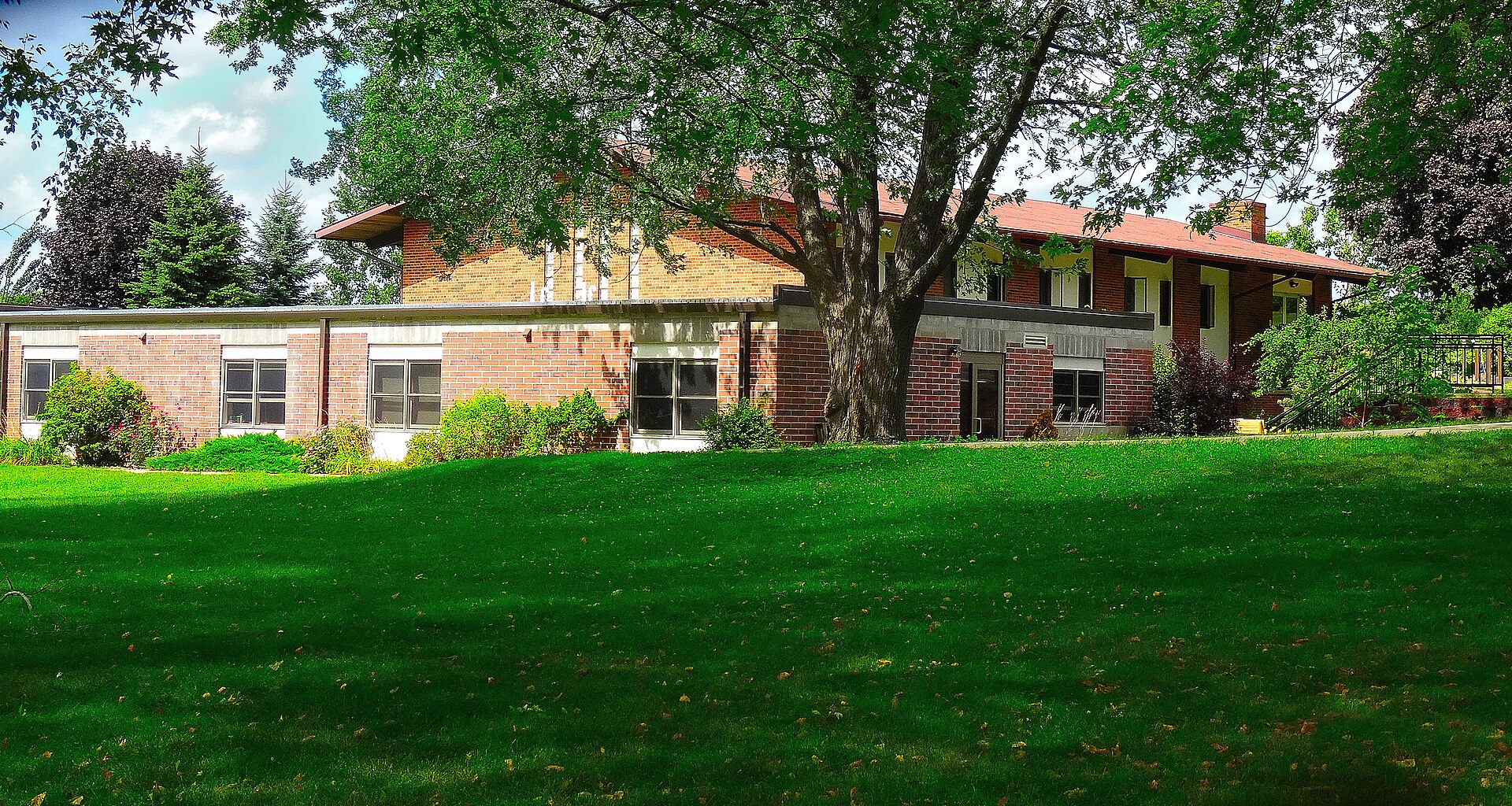

Founding Youth With A Mission, 1960 to 1966
Hawaii in 1960 and the first incorporation
In the summer of 1960, YWAM's history says, Cunningham "graduated from college" (Christianity Today's obituary dates his graduation from Central Bible College to 1957, after which he studied for a master's degree in education at the University of Southern California; YWAM's page does not say which degree it means), and he led a youth mission trip to Hawaii, where, according to YWAM's history, "he developed more of the vision for a new organization." The ministry "would send young people out after high school to gain a sense of purpose" and "would welcome all Christians no matter what their denomination." YWAM's page says he "started that organization, Youth With A Mission, by the end of the year."1 Christianity Today's obituary gives a legal date: Cunningham "incorporated YWAM in California in February 1961."2 Both dates can be true at once: the movement counts its start from 1960, and the first legal corporation followed early the next year. Christianity Today's 2010 profile adds that the work began "in his parents' garage."11
The Assemblies of God and the break of 1964
At first Cunningham worked inside his own denomination. Christianity Today's 2023 obituary states that the Assemblies of God offered to put him on salary to start a youth missions program, but wanted to start small, around 10 to 20 young people a year; Cunningham said his vision was "much, much bigger than 20 people a year."2 John W. Kennedy's 2010 profile in the same magazine dates the break to 1964 and gives more detail: denominational officials offered him a good salary, a desk job at headquarters in Missouri and a small staff, but "they told him he had to limit mission trips to once a month and involve only teens from the Pentecostal fellowship." He resigned.11 Kennedy also quoted George O. Wood, later general superintendent of the Assemblies of God, looking back on the parting: "That was a good move."11 The 1964 date rests on Kennedy's article. Christianity Today's 2023 obituary tells the story in a different order: it places the denomination's offer and Cunningham's decision to leave before YWAM's incorporation in February 1961.2 The denomination's own records of the resignation were not available to this lesson, and neither source gives a month.
After the break, Kennedy reported, Loren and Darlene were driving across the Arizona desert when a tire blew and their van rolled three times. Darlene appeared to have no pulse; Cunningham prayed, she began breathing, and she recovered fully. Cunningham later said he prayed, "Okay, God. Whatever it takes. I give you my life."11 This story, like the vision, comes from the Cunninghams' own telling.
Darlene Cunningham, co-founder
Darlene Scratch came from a ministry family of her own. YWAM's history says "Two years later," that is in 1962, "Loren married Darlene Scratch. Together, they are viewed as co-founders of YWAM today."1 Christianity Today's obituary says they met in 1962 and married the following year, and the website obituary says "He married Darlene Scratch in 1963," describing him as "the apostolic visionary" and her as "the people/team developer and implementer."29 The marriage year is therefore given as 1962 by one YWAM page and 1963 by two other sources. Cunningham himself, according to Christianity Today, said: "There never would have been anything lasting without Darlene."2 Darlene Cunningham also began, in 1985, the process of writing down YWAM's foundational values, which the movement's International Council approved in 1991.4
The first staff and short-term teams
Growth was slow at first. YWAM's history records that by 1966 "YWAM had grown to 10 full-time staff and now attracted hundreds of summer short-term volunteers," with teams sent to "the West Indies, Samoa, Hawaii, Mexico, and Central America."1 Christianity Today's obituary gives a 1968 figure of 30 full-time staff and 1,200 short-term missionaries.2 Kennedy's profile quotes Cunningham's answer to older church leaders who doubted that teenagers could be missionaries: "Joseph, Daniel, David, and John Mark were all teenagers."11
Switzerland, Munich and the Jesus movement years
The first school and the first permanent center
YWAM's first long training course met in Switzerland. Its history page states: "Twenty-one students gathered in Chateau-d'Oex, Switzerland in 1969 for YWAM's first in-depth training program, the School of Evangelism." It continues: "In 1970, YWAM bought the hotel in which it held its first school, and made Lausanne, Switzerland YWAM's first permanent location. The building offered classroom space and housing for YWAM students."1 The page names two places, Chateau-d'Oex and Lausanne, and the sources opened for this lesson do not settle whether the school moved or whether the page compresses two steps, and they do not name the building. Lambert's tribute says Cunningham sold a small house he owned and "gave the money to help purchase YWAM's first property in Lausanne, Switzerland."8 Christianity Today's obituary quotes Cunningham's description of what the school was meant to be: "It is not a Bible school," Cunningham explained, "but a laboratory for evangelism."2
In 1971 YWAM began "Mission Builders," a program for "individuals and groups to assist YWAM centers in practical ways," that is, construction and maintenance volunteers.1 Europe remained a center of YWAM training: the movement's later publishing house began in Hurlach, Germany, and moved to Seattle in 1987.1
The Munich Olympics outreach, 1972
The event that made YWAM known beyond Pentecostal circles was an outreach to the Summer Olympics in Munich. YWAM's history records: "By 1972, YWAM had a total of 40 full-time staff. That year, nearly 1,000 YWAM volunteers participated in an outreach to the 1972 Munich Olympics. This was the first of many YWAM Olympic outreaches."1 The figure of about 1,000 is YWAM's own; no independent count was found. The ratio it implies, 40 staff leading about 1,000 short-term volunteers, shows the model at work from the start: a small permanent core and a large, changing body of young people on short assignments.
Not every early venture succeeded. Kennedy's 2010 profile reports that in 1973 YWAM forfeited $100,000 it had put down as a deposit on a ship, the start of what Darlene Cunningham called the most difficult period in YWAM's history; Cunningham described it as a costly lesson in the importance of integrity and honesty.11
YWAM and the Jesus movement
YWAM grew in the same years as the Jesus movement, the wave of young converts out of the counterculture in California and elsewhere in the late 1960s and 1970s that module 77 describes in lesson 05, The Jesus People and Costa Mesa. YWAM's own history ties its central course to that setting. "In the midst of the Jesus Movement in the 1970s," the page says, YWAM leader Leland Paris "asked a student about his religious background. 'Drugs,' the young man replied." After consulting Cunningham and other leaders, "Leland began a school that would focus on biblical foundations and character development as well as missions. It was called Discipleship Training School."1 The page dates the planning of that school to 1974.1 The anecdote explains why the DTS mixed basic Christian teaching with mission training: many recruits were new believers who had never had the first.
The Discipleship Training School
What the DTS is
The DTS is the door into YWAM. YWAM's foundational document defines a member this way: "A YWAMer is someone who has completed a YWAM Discipleship Training School" and who embraces the movement's purpose, beliefs and values.4 The University of the Nations treats it as the prerequisite for every other course; the obituary on Cunningham's website says all students "begin with the Discipleship Training School (DTS), which serves as the entry-level course and pre-requisite for all other UofN courses and for becoming YWAM staff."9
YWAM's main DTS page describes it as "a six month program blending classroom learning, small group activities, personal reflection, practical service, and community living," adding that "Most often, the training comes in two parts: lecture phase and outreach phase."12 In the lecture phase, the page says, "your focus will be on knowing God, His Word and His world," while in the outreach phase "your class will break up into teams to serve God out in the world."12 YWAM's own pages do not agree on the length: its frequently asked questions call the DTS "YWAM's five-month introductory training program," its "Who We Are" page speaks of "six-month Discipleship Training Schools," and YWAM Kona describes "a 5-6 month experience."131415 The difference is real: each location sets its own schedule. The DTS, according to the same FAQ, "is offered in over 600 locations around the world."13
Phases, weeks and credit
Published schedules from individual locations show how the general pattern is filled in:
- YWAM Montana (Lakeside), Endurance DTS: "21 Weeks," made up of "Lecture: Twelve Weeks," "Outreach: Eight Weeks" and "Debrief: One Week."16
- YWAM Kona, Hawaii, Asia Pacific DTS (starting April 14, 2027): "Training Phase (3 months)" and "Outreach Phase (3 months)."15
- YWAM Harpenden, England, Catalyst DTS: an "OUTREACH PHASE (2-3 MONTHS)" followed by a "DEBRIEF (2 WEEKS)."17
The University of the Nations gives academic credit for the course. YWAM's FAQ states: "Students receive 12 credit hours for the DTS lecture phase and 8 credit hours for the outreach phase," credits that "can be applied to U of N degrees (Associate's, Bachelor's, and Master's)." It adds that some students have received transfer credit elsewhere and that "This credit has been granted by other higher educational institutions rather than by accrediting agencies."13
What a DTS costs
YWAM publishes no single price. Its DTS page says: "Prices for the DTS vary by location. The fees usually include housing, food, and the training itself."12 The FAQ adds that "Usually transportation to the training program is not included" and points students to scholarships and "special rates" for "people from the Two-Thirds World."13 Two published examples from late 2026 show the range:
- YWAM Montana's Endurance DTS: "Cost: $10,700USD," which the page says "covers your full Endurance DTS training. This means training, housing, meals, outdoor trips, outreach, and international flights."16
- YWAM Harpenden's Catalyst DTS: "Training Phase Cost: £3200 + £195 activity fee" and "Outreach Phase Cost: £2500 to £3000 (food, housing, and on-location costs)," with "The cost of flights and visas" extra.17 (The page writes the outreach range with a dash; it is given here with "to".)
Students pay these fees themselves, usually by raising gifts from family and churches, which is one reason the DTS is described by YWAM as a step in learning "dependence on God for financial provision."4 The fees go to the location that runs the school; there is no central YWAM fund that receives them.
Safety on outreach, in YWAM's words
YWAM's FAQ answers the question "What does YWAM do to guard the safety of participants?" by pointing first to its structure: "YWAM's decentralized structure allows local ministries the flexibility to put safety guidelines in place that are relevant and effective in the local context." It then lists principles it says "would be true across all YWAM ministries: team-based outreach (participants are not sent alone); experienced leaders traveling with the team; risk assessments and local partnerships; supervision of male/female interactions; and background checks for staff in many locations." It ends by advising prospective students to "ask the leaders there to explain their safety practices."13 The phrase "in many locations" is YWAM's own: background checks are not described as universal. The later section on the record returns to this point.
Kona and the University of the Nations
The Pacific Empress Hotel
The second great base of YWAM was built on the Big Island of Hawaii. YWAM's history records that it "leased the Pacific Empress Hotel in Kona, Hawaii in 1977 and began the cleaning process and renovations in order to turn it into a campus," and that "YWAM called the training center Pacific and Asia Christian University."1 Lambert's tribute says that "When the mission purchased a rundown, abandoned hotel in Kona, Hawaii, in 1978, the Cunninghams moved into a rat and cockroach-infested building with the rest of the Kona staff."8 The two YWAM-related sources differ on lease or purchase and on 1977 or 1978; the obituary on Cunningham's website gives 1978 as the year the University of the Nations "was established."9 The same obituary names its co-founders: Loren and Darlene Cunningham "and Dr. Howard Malmstadt."9 In 1989 YWAM "changed the name of Pacific and Asia Christian University to University of the Nations (U of N)."1
Kennedy's 2010 profile describes the Kona campus on 110 acres with 50 flagpoles for the nationalities of students present, and reports that about 1,100 short-term missionaries left Kona each year and about 60 became long-term missionaries.11 That ratio, about one in eighteen, is a rare published figure for how many short-term participants stay on.
A university without accreditation
The University of the Nations describes itself in global numbers: "Approximately 17,500 students a year take one or more registered courses in over 97 languages at more than 600 locations on all continents," with "school locations in 160 nations."18 It offers associate's, bachelor's and master's degrees through seven colleges, according to YWAM's FAQ.13 It states its accreditation position plainly: "Because national accrediting agencies have major differences in their systems, the UofN has not, at present, applied for any one nation's accreditation."18 YWAM Kona's web page carries this notice: "THE UNIVERSITY OF THE NATIONS IS NOT ACCREDITED BY AN ACCREDITING AGENCY RECOGNIZED BY THE UNITED STATES SECRETARY OF EDUCATION."15 Readers weighing a University of the Nations degree should read it in that light: the institution itself says its credits transfer only where another school chooses to accept them.13
The university was also the victim of a documented fraud. On May 15, 2017, the U.S. Attorney's Office for the District of Hawaii announced that Pablo M. Rivera, 41, "the Chief Financial Officer of the University of the Nations," had "pled guilty today in federal court to one count of wire fraud." According to the release, he "defrauded UOFN of $3,096,241 through a scheme that involved Rivera submitting false invoices" for contractor work on the Kailua-Kona campus between July 2014 and January 2017, inflating the invoices and drawing the overpayments from an account he controlled with the contractor. He agreed to repay the full amount, and sentencing was set for August 28, 2017, before U.S. District Judge Susan Oki Mollway.19 The FBI investigated the case.19 On January 8, 2018, Judge Mollway sentenced Rivera to 115 months in prison, followed by 36 months of supervised release, and ordered him to pay the university $3,128,194 in restitution, citing the need to protect the public from his future crimes.37
Mercy Ships
The Anastasis, 1978
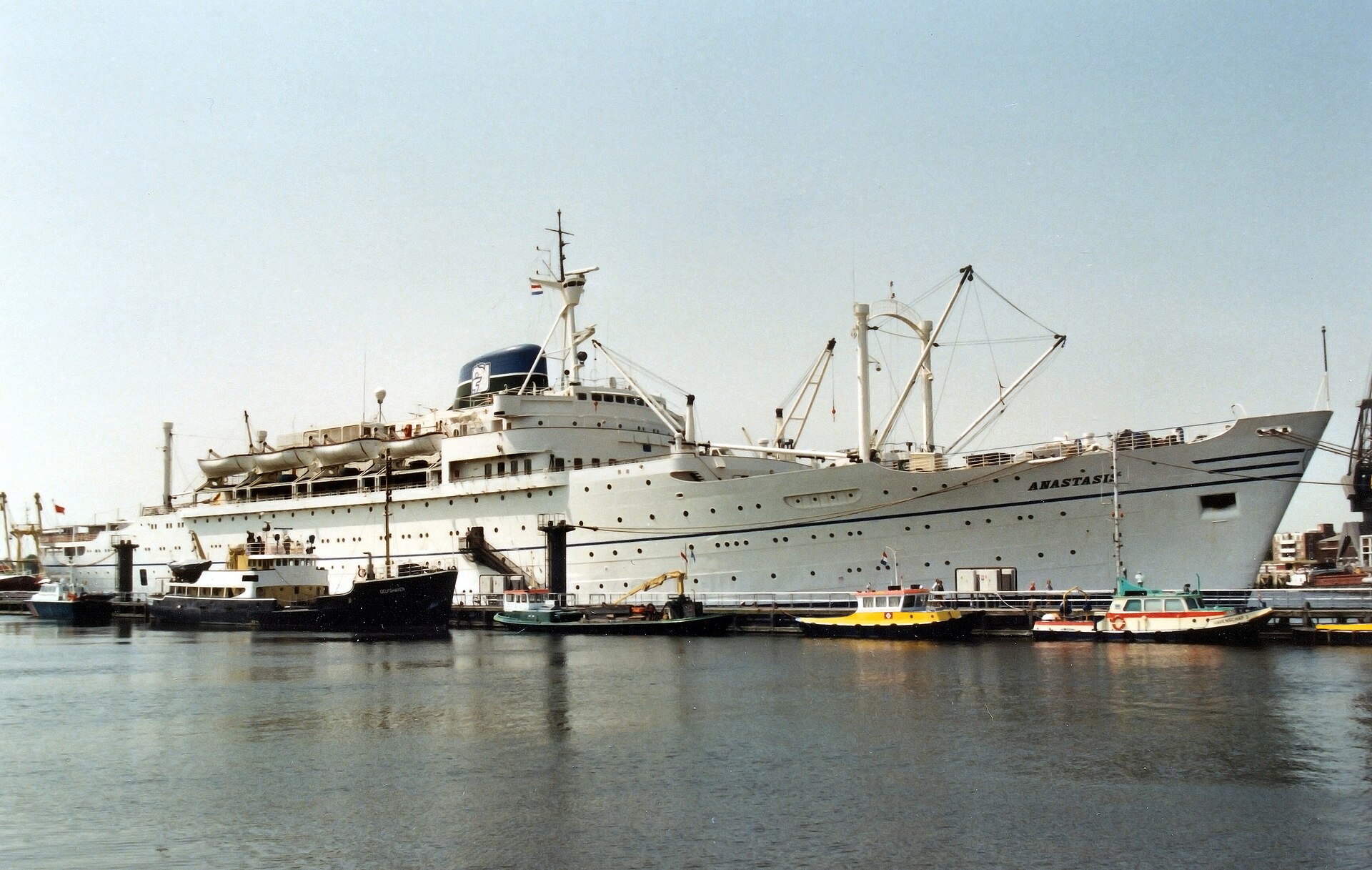
Cunningham had wanted a ship ministry since the early years. YWAM's history says the idea "was finally realized in 1979" with a first ship "named 'Anastasis' (the Greek word for Resurrection)," which "became the first in a fleet to be known as Mercy Ships, a ministry which would provide hope and healthcare to the needy in port cities around the world."1 (YWAM's page joins the last two phrases with a dash, replaced here by a comma.) Mercy Ships' own pages date the beginning a year earlier: "Don Stephens founded Mercy Ships in 1978 with the purchase of the Anastasis, where he and his family lived for ten years."20 Both dates appear in this lesson because the two organizations use different ones: 1978 for the purchase, 1979 in YWAM's history for the start of the ministry.
Mercy Ships describes the Anastasis as a "1953-built Italian cruise liner" that was "originally named the Victoria" and was "purchased to become the first Mercy Ship" in 1978. "The ship and her crew sailed the high seas for 29 years, during which time over 14,900 life-changing surgeries were performed on board."21 The fleet later included the Caribbean Mercy (a former Norwegian ferry acquired in 1994) and the Island Mercy, which focused on eye and dental work and served in the South Pacific until 2001.21

Separation from YWAM
Mercy Ships grew into a medical charity with its own board and donors, and the two bodies parted formally. YWAM's history states that in 2003 "Leaders of YWAM and Mercy Ships agreed to release Mercy Ships to become a separate ministry," and that "After the departure of Mercy Ships, YWAM's ship ministry continued," naming the vessels YWAM PNG, Pacific Link, Next Wave, YWAM Liberty and Pacific Hope.1 Kennedy's 2010 profile in Christianity Today gives the year as 2002.11 The obituary on Cunningham's website counted "28 vessels" then serving under YWAM Ships.9 Today Mercy Ships describes itself without reference to YWAM and lists Don Stephens as its founder.20
The Africa Mercy and the Global Mercy
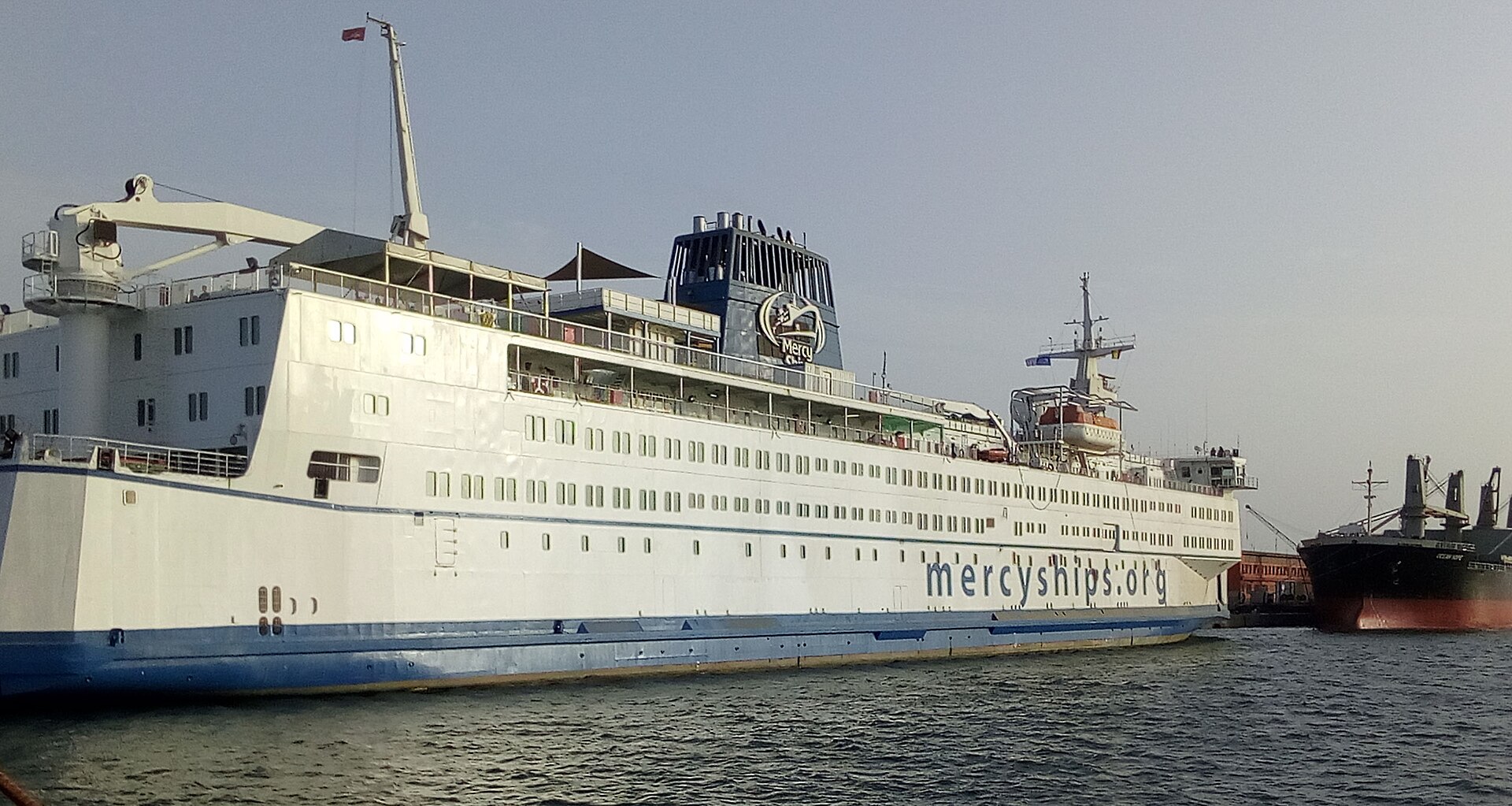
Mercy Ships now works along the coast of Africa with two ships. Its 2025 Annual Report lists the Global Mercy with "6 operating theaters," "199 patient beds," "640 crew capacity" and "37,856 gross tonnage," and the Africa Mercy with "5 operating theaters," "85 patient beds," "470 crew capacity" and "16,572 gross tonnage," calling them "THE WORLD'S LARGEST CIVILIAN HOSPITAL SHIPS."22 The Africa Mercy has served since 2007; the Global Mercy, in service since 2022, is described by Mercy Ships as "our first purpose-built hospital ship."21
The same report gives cumulative figures "SINCE 1978": "128,800+ LIFE-CHANGING SURGICAL PROCEDURES," "588,800+ DENTAL PROCEDURES," "56,500+ PROFESSIONALS TRAINED IN THEIR AREA OF EXPERTISE," and "2.92 million+ DIRECT BENEFICIARIES." For the year 2025 alone it reports 4,554 unique surgical patients, 5,019 surgeries and 6,860 surgical procedures, with ophthalmic surgery (2,129) the largest specialty, and 1,061 healthcare professionals trained from 18 African nations.22 These are the organization's own figures; the report notes that "A patient often has multiple procedures as part of a single surgery," which is why procedures outnumber surgeries.22 Mercy Ships states that it is a member of the Evangelical Council for Financial Accountability and posts its annual reports, audits and Form 990 filings on its website.20 Lesson 12 explains what those filings show.

The seven spheres, or "seven mountains"
Cunningham's account of 1975
The second of YWAM's "Four Legacy Words" is "The Call to Disciple Nations through the Seven Spheres of Society (1975)."4 The obituary on Cunningham's website states the YWAM version of its origin: "In 1975, God gave insights about these spheres simultaneously to Loren and Dr. Bill Bright, the founder of Campus Crusade for Christ (CRU)."9 Christianity Today's obituary tells the story in more detail: Cunningham said he received a revelation of seven classrooms tied to seven spheres of society, and when he went to share it with Bright in 1975, Bright had already drawn up a nearly identical list; the magazine adds that Francis Schaeffer made a similar argument in the same period.2 The University of the Nations was, in the website obituary's words, "designed around the 'Seven Spheres' that influence every society," which is why its colleges cover subjects from education to science and the arts.9
YWAM's foundational values express the idea without the word "mountains." Value 2 says YWAM is called "to make God known throughout the whole world, and into every arena of society through evangelism, training and mercy ministries," and "that salvation of souls should result in transformation of societies." Value 9 speaks of "equipping and mobilizing men and women of God to take roles of service and influence in every arena of society."4
From "spheres" to "mountains"
The same list later took on a second life under another name. Christianity Today's obituary reports that the California pastor Bill Johnson later popularized it as the "Seven Mountain Mandate," and that in that form it became a basis for many American charismatics' political support of Donald Trump; the magazine adds that Cunningham himself stayed out of politics and treated the spheres as a framework for evangelism.2 The two readings are worth keeping apart. In YWAM's foundational documents the spheres are places where Christians serve and witness. In the "mountain" teaching of some later charismatic writers, the language moves toward Christians gaining influence or control over those areas. Which reading a given YWAM location teaches varies, as the movement's decentralized structure would predict. The claim, repeated online, that Cunningham, Bright and Schaeffer jointly "co-founded" a "Seven Mountain Mandate" in 1975 goes beyond the sources: what is documented is Cunningham's account of a 1975 meeting with Bright and the magazine's note that Schaeffer argued along similar lines (see "Claims checked").
How YWAM is organized and funded
"We do not have a headquarters"
Most mission agencies in this module had a board, a home office and a treasurer: the American Board of Commissioners in Boston, the Baptist Missionary Society in England, the China Inland Mission in London. YWAM says it has none of these at the top. Its leadership page states: "As YWAM has grown over the years, it has developed as a family of ministries. Although we have global networks of leaders and elders, we do not have a headquarters. Our decentralized structure gives room for leaders to emerge from many different cultures."23 On law and property it says: "Wherever possible YWAM ministry centers are legally incorporated according to the laws of the land in which they live."23 In practice each location answers to the law of its own country. YWAM England, for example, described itself in April 2025 as "a UK charity since 1972 now with eight partner charities."7
Foundational value 7, "Be decentralized," reads in full: "YWAM is a Christ-centered, faith-based global volunteer movement, united by shared vision, core beliefs, foundational values and relationships. We do not have a centralized structure. Every YWAM ministry has the privilege and spiritual responsibility to develop and maintain healthy relationships with appropriate authorities and circles of elders."4 The FAQ adds a practical consequence: "YWAM does not have an international administrative office that maintains a database of every YWAM staff person and all YWAM alumni."13 Christianity Today's 2010 profile quoted Cunningham's own image for it: "YWAM is like a bridge: easy to get on and easy to get off."11
Elders, circles and the Founders' Circle
Leadership above the local level is spiritual and advisory, YWAM says, rather than corporate. The movement's notes to its foundational document trace the changes: the global eldership was first the International Council, then the Global Leadership Team, then the Global Leadership Forum, which "was disbanded in Singapore 2014 in order to put in place a flatter, movement framework at the trans-local level in the place of what was becoming an increasingly hierarchical organizational structure." Since then, "there are many circles of spiritual eldership around the mission, many of them known as Area Circle Teams (ACTs)," and "A senior group of elders has been convened by Loren and Darlene Cunningham and is known as the Founders' Circle (FC)," which "does not have the governmental oversight of earlier leadership frameworks" but protects the foundational documents.4 (Two dashes in YWAM's text are given here as a comma.) YWAM's history dates the move to an eldership model to a 2013 meeting in Tijuana, Mexico, and records that the conveners of Area Circle Teams "would not keep their role for more than two or three years."1
Some international ministries do have structure of their own. The leadership page names those serving "a specialized vision such as church planting among unreached peoples" or "Oral Bible Translation," and says the University of the Nations "requires a structure of educational oversight."23
No salaries: staff raise their own support
The financial rule is old and firm. Foundational value 16, "Practice dependence on God," states: "YWAM is called to practice a life of dependence upon God for financial provision. For individuals and for any YWAM team or community, this comes primarily through His people," and its members give "with no expectation of remuneration."4 YWAM's FAQ puts it in one line: "Since YWAM staff do not get paid, they rely on the generosity of people like you."13 Kennedy's profile states that no one at YWAM, Cunningham included, received a salary, and that staff raise their own support.11 Lambert's 2020 tribute applies the rule to the founders: their support "does not come from student fees or general donations to the work of YWAM. It comes from donors who give to a specific YWAM missionary."8 Kennedy also reported that Cunningham signed the royalties of Is That Really You, God? over to the mission.11
This is the "personal support raising" model that lesson 12 compares with denominational pooled giving and the older faith-mission model of Hudson Taylor (lesson 06). It keeps central costs low and lets a location open wherever a team can raise its own money. It also means that YWAM as a whole publishes no single budget, no single annual report and no combined financial statement: each incorporated location reports, or does not, under the law of its own country.
The statement of purpose and the beliefs
YWAM never wrote a formal creed. Its historical note explains: "The YWAM Statement of Purpose was written in the early 1960s. We purposefully never wrote a 'Statement of Faith' because we are 'an international movement of Christians from many denominations.'"4 The statement of purpose describes "an international movement of Christians from many denominations dedicated to presenting Jesus personally to this and future generations, to mobilizing as many as possible to help in this task, and to the training and equipping of believers for their part in fulfilling the Great Commission."4 Its core beliefs affirm "the Bible as the inspired and authoritative Word of God and the absolute reference point for every aspect of life and ministry," and the foundational values, approved by the International Council in 1991 and revised in 2003, 2011, 2014, 2017, 2018, 2020 and 2022, number 18, from "Know God" to "Communicate with integrity."4 Value 6, "Champion young people," states: "We believe God has gifted and called young people to spearhead vision and ministry," and "They are not only the Church of the future; they are the Church of today."4 Among the verses it cites is 1 Timothy 4:12, which the King James Version renders: "Let no man despise thy youth; but be thou an example of the believers, in word, in conversation, in charity, in spirit, in faith, in purity."24 Value 14 commits YWAM "to honoring God-given leadership and ministry gifts in both men and women," and value 15, on the family, states that "God's intent for holy matrimony is between one man and one woman."4
Size and growth
Counting a movement without a center
Because there is no central office and no combined database, every YWAM size figure is an estimate published by YWAM or by Cunningham's associates, and the categories ("staff," "workers," "locations," "countries," "people trained") shift from one statement to the next. Read in order, the published figures are:
- 1966: "10 full-time staff" and "hundreds of summer short-term volunteers."1
- 1968: 30 full-time staff and 1,200 short-term missionaries (Christianity Today).2
- 1972: "a total of 40 full-time staff" and "nearly 1,000" volunteers at Munich.1
- 1980: "1,800 full-time staff."1
- 1985: more than 15,000 young people sent a year, across 1,100 locations in 170 nations (Christianity Today's obituary).2
- 2000: "over 11,000 staff of all ages, from over 130 countries," with the mission "over 50 percent Non-Western."1
- 2010: "more than 18,000 staff and over 1,200 ministry locations."1 In the same year Christianity Today reported that YWAM had sent more than four million people to 240 countries since its founding, and its 2023 obituary says YWAM stopped counting in 2010, at around 4.5 million.112
- 2018: "over 3,900" YWAM members "from 100 nations and 77 languages" met in Pattaya, Thailand, where, the history page says, "the great majority of YWAMers are no longer from Western nations."1
- 2023: "Tens of thousands of full-time staff" serving "at over 2,000 YWAM locations in nearly 200 nations" (the obituary on Cunningham's website).9
- 2025: YWAM England described YWAM as operating in 180 countries and training "between 15,000 to 20,000 people in missions every year," in Christian Daily International's summary of its statement.7
- 2026: "over 20,000 workers" and "180+ countries" (YWAM's current pages).114
No independent audit of these numbers exists, and none could exist without a central register. The figures are useful for scale and direction: a movement that had 40 staff in 1972 and around 18,000 to 20,000 four decades later, and whose members are now mostly from Asia, Africa, Latin America and the Pacific. That shift fits the larger change in world Christianity traced in lesson 13.


Ministries inside YWAM
YWAM's history names the main ministries it has started, each with a date:
- King's Kids (1976, Kona), "a YWAM ministry to involve children and teenagers in missions."1
- Thailand refugee work (1980), when two staff members, Steve and Marie Goode, went to help Cambodian refugees and "ended up directing YWAM's refugee camp ministry."1
- Frontier Missions (1981), aimed at peoples with no Christian witness, which YWAM says now has "over 2,000 workers worldwide."1
- The Christian Magna Carta (1981), a list of things Cunningham wrote that every person should have, including "the basic necessities of life: food, water, clothing, shelter, and health care."9
- 30 Days of Prayer for the Muslim World (1993), timed to Ramadan, which YWAM describes as a call to "learn about, pray for and reach out to Muslim neighbors."1
- The Reconciliation Walk (1996 to 1999), on the 900th anniversary of the First Crusade, in which, YWAM says, more than 2,500 people walked parts of the 1,500 mile Crusade route and "proclaimed verbally and on printed leaflets their regret for the way the Crusades misrepresented Christ."1
- Table 71 (2000), a partnership with other agencies aimed at "unreached and unengaged" peoples, from which YWAM says the International Orality Network, OneStory, Finishing the Task and Call2All grew.1
- Bible translation and "Bible poverty": in his last years Cunningham pressed for oral Bible translation in every "mother tongue," in the words of the website obituary.9 That work connects YWAM to the translation movement of lesson 10.
YWAM also reports results of its evangelistic campaigns, such as the claim that a 2004 Impact World Tour in New Zealand saw "More than 23,000 people" make "the decision to follow Jesus."1 Such counts of decisions are YWAM's own and were not independently checked.
Short-term missions as a model
YWAM's part in the short-term boom
Before the 1960s, a Protestant missionary was usually someone who went for life or for terms of several years after college or seminary and appointment by a board. Short summer teams existed, but they were rare: Robert Priest's count, given below, is 540 American short-term missionaries in 1965.25 The obituary on Cunningham's website makes a strong claim for his role: "Loren is often called the 'de-regulator of missions' because he broke the 1960s missionary paradigm by creating opportunities for Youth to serve short-term, globally and unsalaried."9 Christianity Today's obituary headline described him as the man "Who Launched Millions on Short-Term Missions."2 YWAM was not alone: other agencies covered in lesson 12 and many church youth programs sent short-term teams in the same decades. YWAM's distinctive contribution was to make the short-term trip the normal entry point and to build a training school around it.
How many Americans go
Researchers outside YWAM have measured the growth of short-term missions in the United States as a whole. Robert Priest, then a professor of mission at Trinity Evangelical Divinity School, reported in the journal Missiology in January 2008 that the number of U.S. Christians on trips of a year or less "has grown from 540 in 1965 to more than 1.5 million annually," "with an estimated $2 billion per year spent on the effort," as summarized by the Baptist paper Word&Way in 2011.25 The Princeton sociologist Robert Wuthnow, working from a national survey, estimated that "Short-term trips, lasting two weeks or less, drew about 1.6 million Americans to foreign mission fields" in 2005, as reported by The Christian Science Monitor in May 2006.26 The two estimates use different definitions (a year or less, and two weeks or less), so they are not the same measure, but both place the number of Americans going each year in the range of one and a half million. YWAM's share of these totals is not published.
The debate over short-term trips
The short-term model has its own debate, set out in lesson 13: whether brief trips help the people visited or mainly benefit the visitors, what they cost compared with funding local workers, and how they affect orphanages and poor communities. The Christian Science Monitor's 2006 report quoted Dana Robert of Boston University's Center for Global Christianity and Mission on the scale of youth participation, and reported Todd Johnson of Gordon-Conwell's Center for the Study of Global Christianity as dating the start of short-term trips to the 1960s.26 Kennedy's 2010 figures from Kona, about 1,100 short-term missionaries a year and about 60 who became long-term missionaries, show YWAM's own answer to the cost question: the short trip is meant to be the first step for a minority who will stay.11
The record: documented controversies and YWAM's responses
How this section is built
A movement of tens of thousands of young people in nearly every country will have accidents, crimes committed against it, crimes committed by individuals inside it, and complaints about how it is led. Many accusations against YWAM circulate online without names, dates or sources. This section repeats none of them. It reports only events and allegations that appear in court records, government releases, major news outlets or YWAM's own statements, gives the date and the source for each, and sets YWAM's published response beside it. Where a source gives one side only, the text says so. Missionary deaths by violence in earlier generations are covered in module 102, lesson 10, and are not retold here.
Complaints about leadership in the 1980s
The earliest named complaint in a major Christian publication comes from a former staff member. Christianity Today's 2010 profile reported that Gregory Robertson, who served on YWAM staff from 1973 to 1979, described abusive and manipulative "shepherding" tactics in the movement.11 The magazine's 2023 obituary repeats that in the 1980s Robertson said the ministry was abusive and manipulative and that dissenters were labeled as rebelling against God or as demon-possessed.2 The same obituary notes that "More recently, former members posted videos alleging spiritual abuse," quoting one woman: "Their ability to 'hear God's voice' always trumps your own connection to the Holy Spirit."2 On YWAM's side, Christianity Today reports that a UK leader acknowledged that some young leaders probably acted inappropriately, that YWAM did not formally respond to the online accusations, and that the decentralized model left oversight to local leaders while Cunningham concentrated on the larger vision.2
The "moral government" theology dispute
A doctrinal complaint ran alongside. Kennedy's 2010 profile reported that Cal Beisner, an evangelical writer, criticized YWAM for promoting "moral government theology," which the magazine defined as "the belief that God doesn't know what choices humans will make." Cunningham answered in the same article: "We have never denied the infinite knowledge of God."11 Kennedy also reported the view of the parachurch ministry watchdog Rick A. Ross that YWAM's decentralized structure lacks accountability for finances and theology.11 Both criticisms are reported here as the magazine reported them; YWAM's foundational document, quoted above, affirms the Bible as "the inspired and authoritative Word of God" and says nothing about the disputed doctrine.4
The Arvada shooting, December 9, 2007
The most widely reported violent attack on a YWAM location took place at the YWAM training center in Arvada, a suburb of Denver, Colorado. CNN reported on December 9, 2007, that at about 12:30 a.m. on Sunday a gunman entered a building at the "live-in training center for young Christian missionaries" where members were cleaning up after a Christmas banquet, and asked for a place to stay the night. Peter Warren, whom CNN identified as the center's co-founder, told CNN that Tiffany Johnson refused: "She said, 'We really can't do that right now,'" Warren said. "And then he opened fire."5 Tiffany Johnson, 26, of Minnesota, and Philip Crouse, 24, of Alaska, were killed; two YWAM staff members, Dan Griebenow and Charlie Blanch, were wounded, one in the neck and one in the legs, according to CNN.5 About 80 other residents were moved to YWAM's mountain campus near Golden.5
About 12 hours later the same gunman attacked New Life Church in Colorado Springs, killing two sisters, Stephanie Works, 18, and Rachael Works, 16, and wounding their father, David Works, and others, NPR reported. Police identified the gunman as Matthew Murray, 24, of a Denver suburb, and said a handgun found at the church was forensically linked to shell casings from Arvada. A church member who served as a volunteer security guard, Jeanne Assam, shot him inside the church.27 Christianity Today later reported that the coroner ruled Murray's death a suicide.28
Murray's connection to YWAM was as a former trainee. NPR reported that he had been with the organization in 2002, "appears to have been kicked out of the program," and had sent hate mail to the program or its director in the weeks before the shootings.27 In an interview with Christianity Today, Warren said Murray had been through YWAM about five years earlier and had not been allowed to go on to the outreach phase because of health issues that were not physical, declining to say more for legal reasons.28 Warren explained that YWAM sometimes keeps people who seem unstable from overseas assignments because, in his words, "they could do greater damage than good." Asked about security, he said: "I don't think this could have prevented what took place," and added: "It would be like putting metal detectors at church. It would scare people away."28
YWAM's public response was religious. Warren told CNN: "We're just going to be honest, and pray for one another, and cry with one another."5 He told Christianity Today: "God is the only one who has the right to judge. Our place is to forgive."28 A year later, at a midnight service on the anniversary reported by Christian Today on December 10, 2008, he said: "It is Philip and Tiffany's first birthday in heaven with Jesus."29 The shooting was a crime against YWAM by a man it had removed from training; the sources do not suggest any fault by the staff who were attacked. The debate it raised, reported by Christianity Today, was whether YWAM's screening and dismissal of an unstable trainee in 2002 had been handled well, and the sources do not settle that question.28
Deaths on the road and in captivity
Travel is the most common danger on outreach, and the published record includes two mass-casualty road accidents. In December 2005 The Christian Post reported that eight YWAM staff and students died, and seven others were critically injured, when a van carrying a health team to a church service crashed outside Port Harcourt, Nigeria; two of the dead were from YWAM Perth, Australia, and six served with YWAM Nigeria, and the team was on the outreach phase of a "Birth Attendant School" run by YWAM Perth.30 On February 24, 2024, in the Ngaramtoni area near Arusha, Tanzania, a construction truck that authorities said had lost its brakes struck one of two minibuses carrying YWAM missionaries. Christianity Today reported 25 people killed, 11 of them YWAM members, and 21 injured, including 8 from YWAM. Darlene Cunningham wrote: "We have not seen a tragedy of this magnitude in all of YWAM's history and we are all devastated." YWAM's website added: "All of those that died were leaders of projects, training centers and ministries."31
One YWAM worker was held hostage for more than six years. ABC News reported in October 2023 that Jeff Woodke, who worked with YWAM Relief and Development, was kidnapped from his home in Abalak, Niger, on October 14, 2016, held by al-Qaeda-linked militants, and recovered in March 2023 by French security forces. The White House stated: "The United States did not pay ransom or make any other concessions." Woodke described his captivity: "They broke my hope."32
The Swedish investment fraud case, 2010
Kennedy's 2010 profile also reported a criminal case in Sweden: Kristian Westergard, described in the article as the founder of YWAM Sweden, was convicted on October 28, 2010, of gross criminal fraud in a case involving the investment firm Nordic Capital Investments, which allegedly ran a Ponzi scheme against Christian investors, and was sentenced to four years. The article reported that he was appealing and denied defrauding investors.11 The magazine treated the case as one of individual conduct; it did not report any finding against YWAM as a body. The outcome of the appeal was not found in a source opened for this lesson.
Brazil: JOCUM and Survival International
YWAM's Brazilian branch, Jovens com uma Missão (JOCUM), has been in a public dispute with Survival International, a London-based organization that campaigns for the rights of tribal peoples. In a release of June 22, 2011, Survival stated that two missionaries working with JOCUM, which it called an "American fundamentalist missionary organization," "searched unsuccessfully for the uncontacted Hi Merimã Indians in 1995," and quoted missionary diaries that spoke of "invading enemy territory, entering into a region that had always been dominated by the devil." Survival called JOCUM's film Hakani, about a child "supposedly buried alive by her tribe, the Suruwaha," "a faked film," and opposed the "Muwaji law" that JOCUM campaigned for, describing it as "a dangerous initiative opposed by many Indigenous people."33 Survival is an advocacy body and its release states its own side. No JOCUM statement answering Survival's specific charges was opened for this lesson, so the dispute is recorded here as unresolved. It belongs with the older debates in this module, from the Praying Towns of lesson 02 to the Waorani contact of lesson 10, about whether outsiders should seek out isolated peoples at all.
The Observer investigation, April 2025
The largest published investigation of YWAM's internal culture appeared in Britain in April 2025. Under the headline "Christian missionary group accused of public shaming and rituals to 'cure' sexual sin," Shanti Das reported for The Observer and The Guardian on April 5, 2025, on accounts from former volunteers spanning two decades and, in the report's words, 18 countries.6 Christian Daily International quoted the Guardian report: "Young British adults who signed up for training schools and overseas mission trips, many during their gap years, described regular confession sessions where they were pressured to admit their 'sins' in a group." (The original sets "many during their gap years" off with dashes.) The "perceived moral transgressions" listed were "homosexual thoughts, sexual activity, abortions and watching pornography, as well as other 'sins' such as disobeying a leader or having 'rebellious thoughts.'" Those who confessed "could be questioned and made to give public apologies, according to former missionaries," and "Former YWAM volunteers described the use of rituals similar to exorcisms to banish demons from people who acknowledged having sex outside marriage."7
The report named two former volunteers. Felicity Davies, 34, described her time at a base in South Africa, where she said she felt "suffocated" and "not good enough"; Lena Stary, 26, who served at a base in Switzerland, described later panic attacks and difficulty trusting others. Unnamed sources included a former British worship leader, who said leaders in Australia chanted to "banish the spirit of homosexuality" over a man who had disclosed sex with men, and a former missionary who said leaders presented their own wishes as God's instructions. The report also stated that at the Perth base in 2021 alleged victims of sexual assault were told to apologize to the alleged attackers for "leading them on."6 These are allegations by the people quoted, reported by a national newspaper; they are not findings of a court or regulator.
YWAM's response in 2025
YWAM answered at three levels. A YWAM spokesperson told The Observer that the organization was "heartbroken" by the claims and "deeply committed to the safety and wellbeing" of everyone in its care. YWAM Perth said the comments that an alleged victim had "led on" an attacker "did not reflect the views of leadership." Lynn Green, a senior YWAM leader and founder of YWAM England, stood by his 2020 comments on abortion and homosexuality, saying he approached them "with both grace and faithfulness," and condemned any form of spiritual abuse.6
YWAM England issued a full statement on Sunday, April 6, 2025, printed at length by Christian Daily International. It said: "Although most young people have had a very positive experience in YWAM, we are aware and deeply regret that some have had harmful experiences of spiritual abuse and manipulation. We recognise that abuse can occur in large and small organisations of all types."7 It confirmed that reports of spiritual abuse at one of its locations in England had led YWAM England to shut that location down.7 On confession it said: "While confession of sin may occur, the person should never be publicly shamed or pressured to confess something or to apologise." On deliverance prayer: "We are deeply grieved to hear reports that spiritual practices intended for healing were instead used in coercive or shaming ways. We condemn any practice, past or present, that traumatises individuals or associates their identity with demonic influence." (The statement sets "past or present" off with dashes.) On sexual ethics it reaffirmed traditional Christian teaching on sexuality and marriage, adding: "These beliefs should not, however, be used to shame others."7
The statement described YWAM England's safeguarding arrangements: "We have designated safeguarding leads who ensure that safeguarding remains a top priority. In addition, each YWAM location is responsible for upholding the safeguarding standards required in its country of operation." It said: "Our policy is to report allegations to the LADO (local authority designated safeguarding lead), Action Fraud, and the Charity Commission," and that it had "strengthened our safeguarding policy and training, in partnership with the Independent Safeguarding Service CIC and continued our membership with Thirtyone:eight," a Christian safeguarding charity. It closed: "We are especially grateful to the former YWAM members who have spoken up, even when it has been painful to do so."7 Worthy News, which also reported the statement on April 8, 2025, quoted it as saying: "YWAM England took action and shut down this location."34
The Charity Commission and the debate that followed
Because YWAM's English branches are registered charities, the reports went to the regulator. Premier Christian News quoted a Charity Commission spokeswoman: "In line with our guidance, several branches of YWAM have reported a serious incident to the Commission, following adverse media coverage about its work and the experiences of those involved. We are assessing the matter to determine what, if any, role there might be for the Commission as regulator."35 No published outcome of that assessment was found for this lesson.
Christian commentators divided over the reporting. Writing in Premier Christianity on April 14, 2025, the journalist Tim Wyatt argued that "Christians should be grateful whenever abusive practices within the Church are brought into the light," and that some allegations, such as attempts to cast out "demons" from someone struggling with sexual identity, were plainly indefensible; but he argued that holding conservative evangelical beliefs "is not by itself evidence of abuse or harm," and that "a lack of religious literacy within our national newspapers leads to inaccurate reporting."36 His article is opinion, and is cited here as one Christian reading of the coverage. Former members quoted in the investigation, on the other side, described practices they said harmed them whatever the beliefs behind them.6
What the structure means for accountability
Every item in this section bears on the same point. YWAM's own FAQ says that its "decentralized structure allows local ministries the flexibility to put safety guidelines in place," and YWAM England's 2025 statement says that "each YWAM location is responsible for upholding the safeguarding standards required in its country of operation."137 Supporters read that as local responsibility under local law, which is how YWAM England could close a location and report to its regulator. Detractors, such as those Christianity Today reported in 2010 and 2023, read the same structure as a gap in accountability; Rick A. Ross, as Christianity Today reported, said it lacks accountability for finances and theology.112 Both readings describe the same documented structure; they differ on whether it protects or exposes the young people in it.
After Cunningham
In March 2023 Cunningham was diagnosed with stage 4 cancer, according to his wife Darlene as reported by The Christian Post. He "died in his sleep" at his home in Kona "in the early morning hours local time" on Friday, October 6, 2023, aged 88.3 The obituary on his website says he had become "the first person in history to travel for the sake of Christ and the Great Commission to every sovereign nation on earth, all dependent countries, and more than 100 territories."9 Christianity Today dated the completion of that journey to 1999, when he traveled to Libya.2 He was survived by Darlene, their daughter Karen and son David, and three grandchildren.9 The same obituary insists that the movement does not depend on its founder: "The largest number of leaders and volunteers in YWAM are young."9 YWAM's elders' structure, set up in 2013 and 2014 while the Cunninghams were alive, was designed for the years without them.14
What the record shows and what it does not
- Documented fact: Loren Cunningham was born June 30, 1935, in Taft, California, and died October 6, 2023, in Kona, Hawaii.23 A federal court in Hawaii took the guilty plea of the University of the Nations' finance officer for a $3,096,241 fraud against the university in May 2017.19 Two YWAM members were killed and two wounded at Arvada on December 9, 2007, by a former trainee.5
- The founder's own words: the 1956 vision of waves of young people, quoted from Is That Really You, God? (1984) through YWAM's pages, in two slightly different printed versions.19 The 1975 "seven spheres" insight and the meeting with Bill Bright come from Cunningham's own telling.2
- YWAM's own statements: no headquarters, no salaries, 18 foundational values, "over 20,000 workers," DTS at over 600 locations, and the April 2025 apology for "harmful experiences of spiritual abuse and manipulation."23417
- What former members and the people served record: the 1980s complaints of Gregory Robertson, the 2025 accounts given to The Observer, and, from Survival International, objections on behalf of Amazonian peoples to JOCUM's contact efforts and film.11633
- Later telling and legend: "seven mountains" teaching that attaches the 1975 idea to political goals Cunningham did not take up, and online claims of a joint founding by Cunningham, Bright and Schaeffer.2
- Open questions: the exact month of the Assemblies of God break, the outcome of the Charity Commission's 2025 assessment, and the true size of a movement that keeps no central register.
Pictures, Numbers and Infographics
The key numbers of this lesson, each with its source. Figures published by YWAM or Mercy Ships about themselves are marked as such; none has been independently audited.
| Item | Figure | Source |
|---|---|---|
| Cunningham's birth | June 30, 1935, Taft, California | Christianity Today2 |
| The vision in Nassau, Bahamas | June 1956, at age 20 | YWAM history1 |
| YWAM begun / first incorporation | 1960 / February 1961, California | YWAM; Christianity Today12 |
| Break with the Assemblies of God post | 1964 | Christianity Today, 201011 |
| First school, Switzerland | 1969, 21 students | YWAM history1 |
| Munich Olympics outreach | 1972: 40 staff, nearly 1,000 volunteers (YWAM figure) | YWAM history1 |
| Full-time staff | 10 (1966); 1,800 (1980); 11,000+ (2000); 18,000+ (2010); "over 20,000 workers" (2026) (YWAM figures) | YWAM history1 |
| People sent since 1960 | About 4.5 million when counting stopped in 2010 | Christianity Today, 20232 |
| DTS locations | Over 600 | YWAM FAQ13 |
| DTS credit at the University of the Nations | 12 credit hours lecture, 8 outreach | YWAM FAQ13 |
| DTS price, YWAM Montana Endurance DTS | $10,700, all included, 21 weeks | YWAM Montana16 |
| DTS price, YWAM Harpenden Catalyst DTS | £3,200 + £195 training; £2,500 to £3,000 outreach; flights extra | YWAM Harpenden17 |
| University of the Nations | About 17,500 students a year; 600+ locations; 160 nations; not accredited | University of the Nations18 |
| University of the Nations fraud | $3,096,241, July 2014 to January 2017; plea May 15, 2017; sentence of 115 months, January 8, 2018 | U.S. Attorney, District of Hawaii1937 |
| Anastasis | Built 1953; Mercy Ship 1978 to 2007; 14,900+ surgeries | Mercy Ships21 |
| Mercy Ships separate from YWAM | 2003 (YWAM) or 2002 (Christianity Today) | YWAM; Christianity Today111 |
| Mercy Ships since 1978 | 128,800+ surgical procedures; 588,800+ dental procedures; 2.92 million+ direct beneficiaries (own figures) | Mercy Ships 2025 Annual Report22 |
| Mercy Ships in 2025 | 5,019 surgeries on 4,554 patients; 1,061 professionals trained | Mercy Ships 2025 Annual Report22 |
| U.S. short-term mission participants | 540 (1965) to 1.5 million+ a year (Priest, 2008); about 1.6 million in 2005 (Wuthnow) | Word&Way; Christian Science Monitor2526 |
| Arvada shooting | December 9, 2007: 2 killed, 2 wounded at YWAM | CNN5 |
| Nigeria road accident | December 2005: 8 YWAM staff and students killed | The Christian Post30 |
| Tanzania road accident | February 24, 2024: 25 killed, 11 of them YWAM; 21 injured | Christianity Today31 |
| Jeff Woodke held hostage | October 14, 2016 to March 2023 | ABC News32 |
| Observer investigation | April 5, 2025; accounts from 18 countries over two decades | The Observer and The Guardian6 |
| Cunningham's death | October 6, 2023, Kona, aged 88 | The Christian Post; lorencunningham.com39 |
Claims checked
"YWAM began with a vision of waves" (Cunningham, Bahamas, 1956)
Rating: Supported (as Cunningham's own report). YWAM's history page and the obituary on Cunningham's website both quote his account from Is That Really You, God? (1984) of a vision in June 1956 in Nassau in which waves covering the continents "became young people."19 The two printed versions differ in small details (lying on the bed, or kneeling beside it; "looking up at a map" or "looking at a map"). That Cunningham reported the vision, and that he dated it to 1956 in the Bahamas, is documented; whether it came from God is a matter of faith on which history cannot rule.
"YWAM was founded in 1960"
Rating: Supported, with a qualification. YWAM dates its founding to 1960, when Cunningham began the organization after a youth trip to Hawaii; Christianity Today reports that he incorporated it in California in February 1961.12 Both dates are correct for what they measure.
"The Assemblies of God pushed Cunningham out"
Rating: Refuted as stated. Christianity Today's 2010 and 2023 accounts both show that the denomination offered him a salaried post to run youth missions, on the condition that the program be small, run once a month and limited to Pentecostal teens, and that he resigned because he wanted a larger, interdenominational work.112 The Assemblies of God's later general superintendent, George O. Wood, called the parting "a good move."11
"Cunningham was the first person to visit every nation for the gospel"
Rating: Unresolved. The obituary on his website says he was "the first person in history to travel for the sake of Christ and the Great Commission to every sovereign nation on earth," and Christianity Today reports that he completed the list in 1999 with a trip to Libya.92 That he visited every sovereign country is reported by these sources; whether he was the first person to do so with that purpose cannot be checked, since no register of such journeys exists.
"Cunningham, Bill Bright and Francis Schaeffer co-founded the Seven Mountain Mandate in 1975"
Rating: Partly supported. Cunningham's account, as reported by Christianity Today and his website, is that in 1975 he and Bill Bright each had the same insight about seven spheres of society, and the magazine adds that Schaeffer argued along similar lines.29 No source opened for this lesson shows the three men acting together to found anything. The name "Seven Mountain Mandate" and its political use came later, through Bill Johnson and others, according to Christianity Today, and Cunningham did not take up the political use.2
"Mercy Ships is part of YWAM"
Rating: Refuted for the present. Mercy Ships began within YWAM with the Anastasis in 1978, but YWAM's history says the two "agreed to release Mercy Ships to become a separate ministry" in 2003 (Christianity Today says 2002), and Mercy Ships today presents Don Stephens as its founder and does not describe itself as part of YWAM.11120 YWAM runs a separate fleet of its own, YWAM Ships.9
"Nobody in YWAM is paid, not even the founder"
Rating: Supported (as YWAM's stated policy). YWAM's FAQ says "YWAM staff do not get paid," its value 16 calls for giving "with no expectation of remuneration," and Christianity Today reported in 2010 that no one at YWAM, Cunningham included, drew a salary.13411 Staff are supported by gifts to them personally. Since YWAM publishes no combined accounts, the policy can be confirmed only from its own statements and from individual locations' filings.
"The Arvada gunman was a YWAM missionary"
Rating: Refuted. NPR reported that Matthew Murray had been with YWAM in 2002 and "appears to have been kicked out of the program," and the director of YWAM's Arvada center told Christianity Today that Murray was not allowed to go on to outreach.2728 He was a former trainee who never completed the school, not a YWAM missionary.
"The University of the Nations is an accredited university"
Rating: Refuted. The university itself says it "has not, at present, applied for any one nation's accreditation," and YWAM Kona's page states that it is "NOT ACCREDITED BY AN ACCREDITING AGENCY RECOGNIZED BY THE UNITED STATES SECRETARY OF EDUCATION."1815
"YWAM is run from its headquarters in Kona"
Rating: Refuted (by YWAM's own description). Kona is the largest and best-known campus and was the Cunninghams' home, but YWAM states: "we do not have a headquarters."23 Oversight is by circles of elders without governing power over other locations.4
"YWAM admitted spiritual abuse in 2025"
Rating: Partly supported. YWAM England said it was "aware and deeply regret that some have had harmful experiences of spiritual abuse and manipulation," and that it had closed one location in England after reports of spiritual abuse there.7 It did not accept every allegation in the reports: YWAM Perth, for example, said the comments about a victim having "led on" an attacker "did not reflect the views of leadership."6 The statement acknowledges harm in general and at one location; it is not a finding about every location named in the press.
Hard questions and answers
An older missionary asks: is a five-month course with a two or three month trip really "missions"?
By the standard of Carey, the Judsons or Hudson Taylor, who went for life, it is a different thing. YWAM's own documents treat the DTS as training and the outreach as practice, and they measure success partly by how many go on to longer service. Kennedy's 2010 figures from Kona, about 1,100 short-term missionaries a year and about 60 becoming long-term missionaries, suggest that most participants do not stay.11 YWAM's answer, stated in its value "Champion young people," is that young people "are not only the Church of the future; they are the Church of today," and that the short trip is where long callings begin.4 The evidence supports both sides: the short-term model sent millions abroad and also produced thousands of long-term workers, among them YWAM's own 18,000 to 20,000 staff.1
A parent asks: if something goes wrong at a YWAM location, who is responsible?
The location itself. YWAM says that "Wherever possible YWAM ministry centers are legally incorporated according to the laws of the land in which they live," that "each YWAM location is responsible for upholding the safeguarding standards required in its country of operation," and that it has no headquarters.237 In England that meant the registered charities reported to the Charity Commission in 2025.35 YWAM's FAQ itself tells prospective students to "ask the leaders there to explain their safety practices," and notes that background checks are run "in many locations," which is YWAM's own wording.13 A family can ask which legal entity runs a given school, which country's law governs it, what its safeguarding policy says, and whom to contact if there is a complaint.
A skeptic asks: is YWAM a cult?
The published sources do not support that label for the movement as a whole, and they do record serious complaints about particular leaders and locations. YWAM affirms the Trinity and the authority of the Bible in its foundational document, is interdenominational, and lets members leave freely in principle, in Cunningham's image "easy to get on and easy to get off."411 Christianity Today reported that the ministry watchdog Rick A. Ross criticized its lack of central accountability; former members in the 1980s and in 2025 described controlling leadership and pressure, including being told that leaving was against God's will.117 YWAM England's 2025 statement acknowledged "harmful experiences of spiritual abuse and manipulation" and closed one location.7 The record supports describing a decentralized movement with varied local practice and documented problems in some places; the word "cult" asserts more than the sources show.
A reader from a people that missionaries came to asks: what has YWAM done among peoples who did not ask for missionaries?
This module has followed that question from the Praying Towns to the Waorani. In YWAM's case the clearest published dispute is in Brazil, where Survival International has accused JOCUM of seeking contact with the uncontacted Hi Merimã and of making a "faked film" about the Suruwaha.33 YWAM's Frontier Missions describes its own aim as going "to places where no Christian witness exists."1 The two statements show the disagreement plainly: the mission sees a duty to bring the gospel to every people, and Survival, speaking for tribal rights, sees a danger to isolated peoples' health and self-determination. No JOCUM reply to Survival's specific charges was found for this lesson. The Reconciliation Walk of 1996 to 1999, when YWAM participants apologized for the Crusades, shows that YWAM itself has acknowledged that Christian mission has done historic harm.1
A Catholic or mainline reader asks: is YWAM a Pentecostal body?
It grew from Pentecostal roots and keeps charismatic practices such as listening prayer ("Hear God's voice" is its value 3) and intercession, but it describes itself as "an international movement of Christians from many denominations" and refused to write a denominational "Statement of Faith" for that reason.4 Its founder left his Pentecostal denomination's post in 1964 precisely in order to open the work to all denominations.11 Its members come from many churches; its teaching style remains closest to evangelical and charismatic Protestantism, described in module 77, lesson 03.
A historian asks: what did YWAM change in the history of missions?
Three things, on the evidence of this lesson. It made the short-term trip the normal entry to mission work, at a time when, by Robert Priest's count, American short-term missionaries numbered in the hundreds a year.25 It built a training system, the DTS and the University of the Nations, that runs in about a hundred languages at hundreds of locations.18 And it tested how far a mission can grow without a center: by its own account it went from 40 staff in 1972 to around 20,000, most of them now from outside the West.1 Whether the third change was a strength or a weakness is the question that the record of the last two decades has kept open.
Related lessons
For the Jesus movement in which the DTS was born, see module 77, lesson 05. For the Pentecostal bodies from which Cunningham came, module 80, lesson 13, and module 77, lesson 02. For missionary deaths since 1950, module 102, lesson 10. In this module: Bible translation and the twentieth century faith missions in lesson 10; how the large agencies, Mercy Ships among them, are funded and audited in lesson 12; and short-term trips, the Global South and the law in lesson 13. The review and glossary are in lesson 14.
Learn more
- YWAM History (Our Story): YWAM's own dated timeline from 1956 to 2020, with Cunningham's account of the vision.
- The Statement of Purpose, Core Beliefs and Foundational Values of YWAM: The full text of the 18 values and the historical note on YWAM's leadership bodies.
- John W. Kennedy, Youth With a Passion (Christianity Today, 2010): A fifty-year profile with the Assemblies of God break, Kona figures and the criticisms of the time.
- Christianity Today obituary of Loren Cunningham (2023): The fullest press obituary, including the seven spheres story and later complaints.
- Mercy Ships, 2025 Annual Report: The charity's own surgical and training figures and fleet data.
- YWAM England statement of April 2025, as printed by Christian Daily International: YWAM England's full response to the Observer investigation, with its safeguarding policy.
- U.S. Attorney, District of Hawaii, release of May 15, 2017: The official account of the University of the Nations fraud case.
Still being checked (14 items)
These points could not be confirmed against a primary source when this lesson was written and fact checked in October 2026. The text above states each one as uncertain.
- Marriage of Loren and Darlene Cunningham: 1962 in YWAM's history; 1963 in Christianity Today (2023) and lorencunningham.com.
- Kona: YWAM's history says the Pacific Empress Hotel was leased in 1977; Lambert (2020) says it was purchased in 1978; the University of the Nations is dated to 1977 or 1978 accordingly.
- DTS length is given as five months (YWAM FAQ), six months (YWAM DTS page and Who We Are page) and 5 to 6 months (YWAM Kona).
- The outcome of Kristian Westergard's appeal in the 2010 Swedish fraud case was not found; the only source is Christianity Today (2010).
- The outcome of the Charity Commission's 2025 assessment of YWAM branches was not found; the Premier Christian News article's exact date was not shown.
- The Guardian's own page could not be opened (blocked); the April 5, 2025 Observer report was read through the inkl republication and quotations in Christian Daily International. The number of former members interviewed is not stated in the copy read.
- No JOCUM statement answering Survival International's 2011 charges (Hi Merimã search, the film Hakani) was found.
- The claim that Cunningham was the first person to visit every sovereign nation for the gospel (lorencunningham.com; Christianity Today dates it to 1999, Libya) cannot be independently checked.
- All YWAM size figures (staff, workers, locations, countries, 4.5 million sent by 2010) and decision counts are YWAM's or its associates' own estimates; YWAM keeps no central register. Translation counts for Is That Really You, God? also differ (115 languages in Christianity Today 2010; more than 150 on lorencunningham.com).
- The coroner's ruling that Matthew Murray's death was a suicide is known from a related-link line on the Christianity Today interview page, not from a coroner's document.
- The Christianity Today Peter Warren interview page did not show its headline or exact date.
- The break with the Assemblies of God: John W. Kennedy (Christianity Today, 2010) dates it to 1964, while Christianity Today's 2023 obituary places the denomination's offer and Cunningham's decision before YWAM's incorporation in February 1961; the month and the denomination's own record were not found.
- Mercy Ships: founded 1978 according to Mercy Ships, ministry begun 1979 according to YWAM's history; separation from YWAM 2003 according to YWAM, 2002 according to Christianity Today (2010). (Christianity Today 2010 names Don Stephens, as Mercy Ships does.)
- YWAM's history says Cunningham graduated from college in 1960; Christianity Today (2023) dates his Central Bible College graduation to 1957, followed by a master's degree at the University of Southern California; which degree YWAM's 1960 date refers to is not stated.
Notes
- Youth With A Mission, "YWAM History" (Our Story timeline page, 1956 to 2020), ywam.org, undated web page (retrieved Nov. 12, 2026). Read it online. ↩
- "Died: Loren Cunningham, Who Launched Millions on Short-Term Missions," Christianity Today, October 9, 2023 (retrieved Nov. 12, 2026). Read it online. ↩
- Michael Gryboski, "Loren Cunningham, Youth With a Mission founder, dies at 88," The Christian Post, October 6, 2023 (retrieved Nov. 12, 2026). Read it online. ↩
- Youth With A Mission, "The Statement of Purpose, Core Beliefs and Foundational Values of YWAM," with historical note (values first presented 1985, approved by the International Council 1991, revised 2003, 2011, 2014, 2017, 2018, approved by the Founders' Circle May 2020, edited January 2022), ywam.org (retrieved Nov. 12, 2026). Read it online. ↩
- "Gunman kills 2 at missionary training center," CNN, December 9, 2007 (retrieved Nov. 12, 2026). Read it online. ↩
- Shanti Das, "Christian missionary group accused of public shaming and rituals to 'cure' sexual sin," The Observer and The Guardian, April 5, 2025 (amended April 7, 2025); read in the inkl republication because the Guardian site could not be opened (retrieved Nov. 12, 2026). Read it online. ↩
- Chris Eyte, "YWAM England responds to spiritual abuse allegations in news reports: 'deeply regret harmful experiences'," Christian Daily International, April 8, 2025, quoting The Guardian (April 5, 2025) and printing YWAM England's statement of April 6, 2025 (retrieved Nov. 12, 2026). Read it online. ↩
- Sean Lambert, "60 Years of Faith and Finances," lorencunningham.com, 2020 (retrieved Nov. 12, 2026). Read it online. ↩
- Dawn Gauslin, "Loren Cunningham is with Jesus" (obituary), lorencunningham.com, October 2023, including an excerpt from Loren Cunningham with Janice Rogers, Is That Really You, God? (YWAM Publishing, 1984) (retrieved Nov. 12, 2026). Read it online. ↩
- Mark 16:15, King James Version (1611, public domain), text from bible-api.com (retrieved Nov. 12, 2026). Read it online. ↩
- John W. Kennedy, "Youth With a Passion," Christianity Today, December 2010 (editors' note: updated December 12, 2010) (retrieved Nov. 12, 2026). Read it online. ↩
- Youth With A Mission, "Discipleship Training School (YWAM DTS)," ywam.org (retrieved Nov. 12, 2026). Read it online. ↩
- Youth With A Mission, "Frequently Asked Questions," ywam.org (retrieved Nov. 12, 2026). Read it online. ↩
- Youth With A Mission, "Who We Are," ywam.org (retrieved Nov. 12, 2026). Read it online. ↩
- YWAM Kona (University of the Nations, Kona), "DTS" page and the "Asia Pacific DTS" course page (start date April 14, 2027, at https://ywamkona.org/courses/asia-pacific-dts/), ywamkona.org (retrieved Nov. 12, 2026). Read it online. ↩
- YWAM Montana (Lakeside), "Endurance Discipleship Training School," ywammontana.org (retrieved Nov. 12, 2026). Read it online. ↩
- YWAM Harpenden, "Catalyst DTS," ywamharpenden.org (retrieved Nov. 12, 2026). Read it online. ↩
- University of the Nations, "About," uofn.edu (retrieved Nov. 12, 2026). Read it online. ↩
- U.S. Attorney's Office, District of Hawaii, "University of the Nations CFO Pleads Guilty to Wire Fraud," press release, May 15, 2017 (updated May 16, 2017) (retrieved Nov. 12, 2026). Read it online. ↩
- Mercy Ships, "About Us" (founder Don Stephens; ECFA membership; financial reports), mercyships.org (retrieved Nov. 12, 2026). Read it online. ↩
- Mercy Ships, "Our Mission," with the fleet history (Anastasis 1978 to 2007, Caribbean Mercy, Island Mercy, Africa Mercy 2007 to present, Global Mercy), mercyships.org (retrieved Nov. 12, 2026). Read it online. ↩
- Mercy Ships, 2025 Annual Report (PDF, published 2026), pp. 3 to 11 ("Impact since 1978", fleet table, "Direct Medical Services", "Education and Training") (retrieved Nov. 12, 2026). Read it online. ↩
- Youth With A Mission, "Our Leadership," ywam.org (retrieved Nov. 12, 2026). Read it online. ↩
- 1 Timothy 4:12, King James Version (1611, public domain), text from bible-api.com (retrieved Nov. 12, 2026). Read it online. ↩
- "Researchers study return-on-investment for short-term missions," Word&Way, April 29, 2011, summarizing Robert J. Priest's article in Missiology, January 2008 (retrieved Nov. 12, 2026). Read it online. ↩
- G. Jeffrey MacDonald, "Rise of sunshine Samaritans: on a mission or holiday?" The Christian Science Monitor, May 25, 2006, reporting Robert Wuthnow's survey estimate for 2005 (retrieved Nov. 12, 2026). Read it online. ↩
- "Colorado Police Identify 24-Year-Old Church Shooter," NPR, December 10, 2007 (retrieved Nov. 12, 2026). Read it online. ↩
- Christianity Today, web-only interview with Peter Warren, director of YWAM's Arvada center, December 2007, with related links reporting the coroner's ruling (retrieved Nov. 12, 2026). Read it online. ↩
- Anne Thomas, "YWAM remembers Colorado shooting victims," Christian Today, December 10, 2008 (retrieved Nov. 12, 2026). Read it online. ↩
- "Tragic accident in Nigeria kills eight YWAM staff, students," The Christian Post, December 13, 2005 (retrieved Nov. 12, 2026). Read it online. ↩
- "YWAM Rallies After 11 Missionaries Killed, 8 Wounded in Tanzania Bus Accident," Christianity Today, February 29, 2024 (retrieved Nov. 12, 2026). Read it online. ↩
- Allie Weintraub, Tommy Brooksbank, Jim Vojtech, Jon Schlosberg and Alyssa Starr, report on Jeff Woodke, "American missionary held hostage for years in Niger speaks for 1st time," ABC News, October 5, 2023 (retrieved Nov. 12, 2026). Read it online. ↩
- Survival International, "Diaries expose missionaries' 'spiritual war' on uncontacted Indians," news release, June 22, 2011 (retrieved Nov. 12, 2026). Read it online. ↩
- Stefan J. Bos, "Youth With A Mission 'Regrets Spiritual Abuse, Manipulation' Closes Location (Worthy News Investigation)," Worthy News, April 8, 2025 (retrieved Nov. 12, 2026). Read it online. ↩
- Kelly Valencia, "Charity Commission evaluates potential investigation into YWAM," Premier Christian News, 2025 (exact date not shown on the page as retrieved) (retrieved Nov. 12, 2026). Read it online. ↩
- Tim Wyatt, "Why the mainstream media's reporting on alleged abuse at YWAM falls short" (opinion), Premier Christianity, April 14, 2025 (retrieved Nov. 12, 2026). Read it online. ↩
- U.S. Attorney's Office, District of Hawaii, "Former University of the Nations CFO Sentenced to 115 Months in Prison for Wire Fraud," press release, January 8, 2018 (updated January 9, 2018) (retrieved Nov. 12, 2026). Read it online. ↩
Check yourself
1. Where and when did Loren Cunningham say he saw the vision of waves of young people covering the continents?
YWAM's history page and the obituary on Cunningham's website both quote his account of a vision in June 1956 while he was touring the Bahamas with a singing group. The 1948 date is his call at a revival meeting at age 13.
2. According to Christianity Today's 2010 profile, why did Cunningham leave his Assemblies of God post in 1964?
Kennedy reported that officials offered a salary and desk job but required trips once a month with only Pentecostal teens; Cunningham resigned. George O. Wood later called it "a good move."
3. What are the two main parts of a YWAM Discipleship Training School?
YWAM's DTS page says "Most often, the training comes in two parts: lecture phase and outreach phase." The University of the Nations gives 12 credit hours for the first and 8 for the second.
4. How does YWAM describe its leadership structure?
YWAM's leadership page says "we do not have a headquarters," and that centers are legally incorporated "according to the laws of the land in which they live." Area Circle Teams and the Founders' Circle give counsel without governing power.
5. What was the Anastasis?
Mercy Ships says the 1953-built liner, originally the Victoria, was bought in 1978 and served until 2007, with over 14,900 surgeries performed on board.
6. What happened at YWAM's Arvada, Colorado, training center on December 9, 2007?
CNN and NPR reported that Matthew Murray, removed from YWAM training in 2002, killed two and wounded two at Arvada, then attacked New Life Church in Colorado Springs.
7. In the 2017 federal case in Hawaii, who pled guilty and to what?
The U.S. Attorney for the District of Hawaii announced on May 15, 2017, that CFO Pablo M. Rivera pled guilty to one count of wire fraud for a false invoice scheme from July 2014 to January 2017.
8. How did YWAM England respond to the April 2025 Observer investigation?
YWAM England's statement of April 6, 2025, printed by Christian Daily International, said it was "aware and deeply regret" harmful experiences, opposed pressured public confession, and confirmed one English location had been shut down.
Terms in this lesson
- Youth With A Mission (YWAM)
- An interdenominational Christian mission movement begun by Loren Cunningham in 1960, with Darlene Cunningham as co-founder. It describes itself as a decentralized "family of ministries" with no headquarters.
- Discipleship Training School (DTS)
- YWAM's entry course, about five to six months long, with a lecture (training) phase and an outreach phase. Completing it is the requirement for becoming YWAM staff.
- Lecture phase
- The first part of a DTS, usually about 12 weeks or three months at a YWAM location, given to teaching, worship, prayer and community life.
- Outreach phase
- The second part of a DTS, usually two to three months, when the class splits into teams that travel, often abroad, for evangelism and service.
- University of the Nations
- YWAM's training network, begun at Kona, Hawaii, in 1977 or 1978 as Pacific and Asia Christian University and renamed in 1989. It offers degrees but is not accredited.
- Mercy Ships
- A hospital ship charity begun within YWAM in 1978 with the Anastasis under Don Stephens and released as a separate organization in 2002 or 2003. It now runs the Africa Mercy and the Global Mercy.
- Anastasis
- Greek for "resurrection"; the name of the first Mercy Ship, a 1953-built Italian liner that served from 1978 to 2007.
- Seven spheres
- YWAM's teaching, dated by Cunningham to 1975, that Christians should serve in every area of society. Later charismatic writers renamed a similar list the "Seven Mountain Mandate" and gave it political uses Cunningham did not take up.
- Foundational values
- YWAM's 18 statements of identity, first gathered by Darlene Cunningham from 1985 and approved in 1991, including "Champion young people," "Be decentralized" and "Practice dependence on God."
- Area Circle Team
- A regional circle of YWAM elders that gives counsel and support to locations without governing them; conveners serve no more than two or three years.
- Founders' Circle
- A senior group of elders convened by Loren and Darlene Cunningham to guard YWAM's foundational documents, without the governing role of earlier international councils.
- Personal support raising
- The funding model in which each YWAM staff member, receiving no salary, raises gifts from churches and individuals who give to that person.
- Short-term mission
- A mission trip of a year or less, often of a few weeks. Robert Priest estimated that U.S. participants grew from 540 in 1965 to more than 1.5 million a year by the 2000s.
- JOCUM
- Jovens com uma Missão, YWAM's Brazilian branch, criticized by Survival International over contact efforts with isolated Amazonian peoples and the film Hakani.
Sources
- YWAM History (Our Story) (web page, retrieved Nov. 12, 2026) checked 2026-10
- The Statement of Purpose, Core Beliefs and Foundational Values of YWAM (2020, edited January 2022) checked 2026-10
- YWAM, Our Leadership (web page, retrieved Nov. 12, 2026) checked 2026-10
- YWAM, Frequently Asked Questions (web page, retrieved Nov. 12, 2026) checked 2026-10
- YWAM, Who We Are (web page, retrieved Nov. 12, 2026) checked 2026-10
- YWAM, Discipleship Training School (web page, retrieved Nov. 12, 2026) checked 2026-10
- YWAM Kona, DTS (web page, retrieved Nov. 12, 2026) checked 2026-10
- YWAM Montana, Endurance Discipleship Training School (web page, retrieved Nov. 12, 2026) checked 2026-10
- YWAM Harpenden, Catalyst DTS (web page, retrieved Nov. 12, 2026) checked 2026-10
- University of the Nations, About (web page, retrieved Nov. 12, 2026) checked 2026-10
- Dawn Gauslin, Loren Cunningham is with Jesus (October 2023) checked 2026-10
- Sean Lambert, 60 Years of Faith and Finances (2020) checked 2026-10
- Christianity Today, Died: Loren Cunningham, Who Launched Millions on Short-Term Missions (2023-10-09) checked 2026-10
- John W. Kennedy, Youth With a Passion, Christianity Today (2010-12) checked 2026-10
- Michael Gryboski, Loren Cunningham, Youth With a Mission founder, dies at 88, The Christian Post (2023-10-06) checked 2026-10
- Mercy Ships, About Us (web page, retrieved Nov. 12, 2026) checked 2026-10
- Mercy Ships, Our Mission (fleet history) (web page, retrieved Nov. 12, 2026) checked 2026-10
- Mercy Ships, 2025 Annual Report (2026) checked 2026-10
- U.S. Attorney, District of Hawaii, University of the Nations CFO Pleads Guilty to Wire Fraud (2017-05-15) checked 2026-10
- CNN, Gunman kills 2 at missionary training center (2007-12-09) checked 2026-10
- NPR, Colorado Police Identify 24-Year-Old Church Shooter (2007-12-10) checked 2026-10
- Christianity Today, interview with Peter Warren of YWAM Arvada (2007-12) checked 2026-10
- Anne Thomas, YWAM remembers Colorado shooting victims, Christian Today (2008-12-10) checked 2026-10
- Shanti Das, Christian missionary group accused of public shaming and rituals to 'cure' sexual sin (The Observer / The Guardian, via inkl) (2025-04-05) checked 2026-10
- Chris Eyte, YWAM England responds to spiritual abuse allegations, Christian Daily International (2025-04-08) checked 2026-10
- Stefan J. Bos, Worthy News investigation (2025-04-08) checked 2026-10
- Kelly Valencia, Charity Commission evaluates potential investigation into YWAM, Premier Christian News (2025) checked 2026-10
- Tim Wyatt, Why the mainstream media's reporting on alleged abuse at YWAM falls short, Premier Christianity (2025-04-14) checked 2026-10
- The Christian Post, Tragic accident in Nigeria kills eight YWAM staff, students (2005-12-13) checked 2026-10
- Christianity Today, YWAM Rallies After 11 Missionaries Killed, 8 Wounded in Tanzania Bus Accident (2024-02-29) checked 2026-10
- ABC News, report on Jeff Woodke (2023-10-05) checked 2026-10
- Survival International, Diaries expose missionaries' 'spiritual war' on uncontacted Indians (2011-06-22) checked 2026-10
- G. Jeffrey MacDonald, Rise of sunshine Samaritans, The Christian Science Monitor (2006-05-25) checked 2026-10
- Word&Way, Researchers study return-on-investment for short-term missions (Priest) (2011-04-29) checked 2026-10
- Mark 16:15 and 1 Timothy 4:12, King James Version (1611) checked 2026-10
- U.S. Attorney, District of Hawaii, Former University of the Nations CFO Sentenced to 115 Months (2018-01-08) checked 2026-10