Lesson 7 of 14 · about 55 minutes · Updated November 12, 2026
Africa: David Livingstone, Mary Slessor and Alexander Mackay of Uganda
You'll be able to
- Trace Livingstone's career from the Blantyre mill and Kuruman to Chitambo's village, with dates from his own books and journals.
- Explain who Sechele was, why his baptism divided his people, and what he did after Livingstone left.
- Describe Mary Slessor's work at Calabar and Okoyong and separate the documented record on twins from later legend.
- Outline the CMS mission to Buganda from Stanley's 1875 appeal to Mackay's death in 1890, and link the Uganda martyrs to module 102.
- Identify Samuel Ajayi Crowther and explain why historians such as Andrew Walls put African Christians at the centre of the story.
- Quote Article 6 of the Berlin General Act and state, in their own words, the case of Nosipho Majeke and the case of Lamin Sanneh on missions and colonial rule.
Start here: the short version
This lesson follows three British missionaries in nineteenth-century Africa and the Africans who worked beside them. David Livingstone (1813 to 1873), a Scottish mill boy turned doctor, went out with the London Missionary Society in 1840, baptized the Kwena chief Sechele in 1848, crossed the continent from Luanda to Quelimane between 1853 and 1856, and spent his last years fighting the East African slave trade before dying at Chitambo's village on May 1, 1873.1 Mary Slessor (1848 to 1915), a Dundee weaver, served the Calabar mission of the United Presbyterian Church in what is now southeastern Nigeria from 1876 until her death, living alone among the Okoyong from 1888 and rescuing twin babies whom local custom condemned.2 Alexander Mackay (1849 to 1890), an engineer, answered Henry Morton Stanley's 1875 newspaper appeal, reached the court of the Ganda king Mutesa I in 1878, and lived through the killings of Bishop James Hannington and of young Ganda Christians under King Mwanga II.3 Beside them stand African Christians whose work the record often hides: Samuel Ajayi Crowther, consecrated in 1864 as the first African bishop of the Church of England, Sechele, who evangelized his neighbours after Livingstone left, and James Chuma and Abdullah Susi, who carried Livingstone's body to the coast.4 The lesson closes with the hard question of missions and colonial rule, setting the General Act of the Berlin Conference (1885), a South African critic of the missions and an African historian of the missions side by side.
The missionaries are quoted from their own books and letters, all in the public domain: Livingstone's Missionary Travels (1857), his Cambridge lecture (1857, printed 1858) and his Last Journals (1874), Stanley's How I Found Livingstone (1872), W. P. Livingstone's Mary Slessor of Calabar (London, 1915 or 1916; catalogues differ) and A. M. Mackay by his sister (1890). The deaths of the Uganda martyrs and of Hannington are treated at length in module 102, lesson 09, The Missionary Martyrs, and are only outlined here.
Africa in the mission story, 1792 to 1915
The Protestant mission societies founded in the 1790s looked to Africa almost from the start. The London Missionary Society (1795) and the Church Missionary Society (1799), whose founding is told in lesson 03, both sent workers to the African coast within a generation. William Carey's Enquiry of 1792, covered in lesson 04, had already counted Africa among the lands where the Gospel was unknown. Two settings shaped what followed. In the south, the London Missionary Society worked north from the Cape among the Tswana peoples, with Robert Moffat at Kuruman as its senior man. In the west, the British colony of Sierra Leone received Africans freed by the Royal Navy from slave ships, and its Christian community became, in the words of the historian Andrew F. Walls, "one of the few early successes of the missionary movement."4
The years from 1840 to 1915 changed Africa's relation to Europe. When Livingstone landed at the Cape, European rule in Africa south of the Sahara was limited to coastal colonies and the British and Dutch settlements in the south. By the time Mary Slessor died in 1915, almost the whole continent had been divided among European powers, a process given rules at the Berlin Conference of 1884 to 1885.5 The missionaries in this lesson lived inside that change. Some welcomed British power as a shield against the slave trade, some feared it, and all of them depended on Africans to survive, to learn languages and to carry their message. Walls described Crowther's lifetime as one in which there was "a transformation of relations between Africa and the rest of the world and a parallel transformation in the Christian situation in Africa."4
David Livingstone, 1813 to 1873

From the Blantyre mill to the London Missionary Society
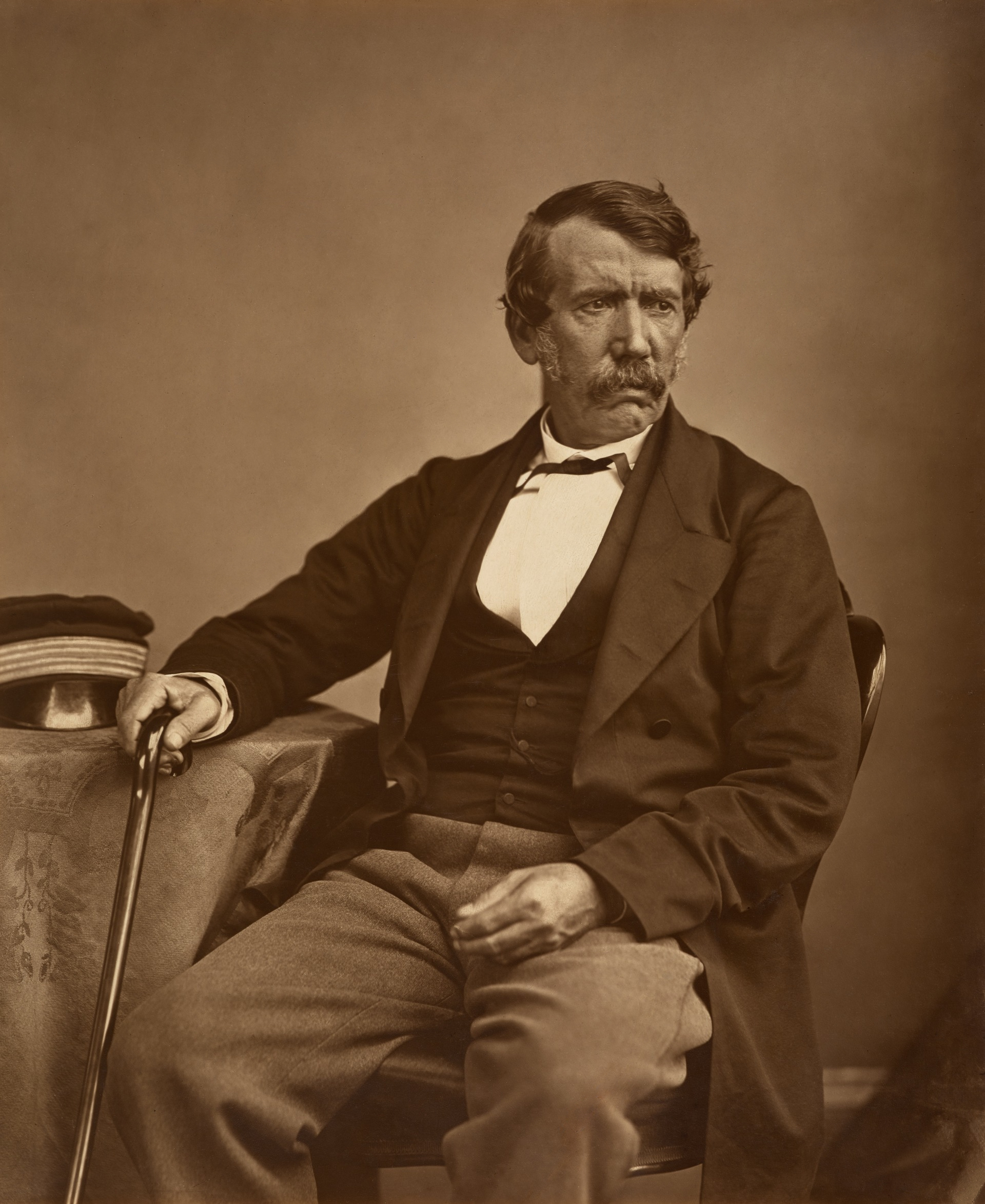
David Livingstone was born on March 19, 1813, at Blantyre in Lanarkshire, Scotland, the son of Neil Livingstone and Agnes Hunter.1 His own account of his childhood opens Missionary Travels and Researches in South Africa (1857). "At the age of ten I was put into the factory as a 'piecer'," he wrote of the Blantyre cotton works, and he described how he studied while working: "My reading while at work was carried on by placing the book on a portion of the spinning-jenny, so that I could catch sentence after sentence as I passed at my work."6 He was promoted to cotton-spinning "in my nineteenth year," and the summer wages paid for winter classes in medicine and Greek at Glasgow and for "the divinity lectures of Dr. Wardlaw."6
He meant to go to China as a medical missionary. Friends advised him to join the London Missionary Society "on account of its perfectly unsectarian character," and he quoted the society's own description of itself: it "sends neither Episcopacy, nor Presbyterianism, nor Independency, but the Gospel of Christ to the heathen."6 China closed to him when "the opium war was then raging," and he turned instead to South Africa, where "another inviting field was opening out through the labors of Mr. Moffat." He sailed in 1840 and reached Cape Town after "a voyage of three months."6 William Garden Blaikie's Personal Life of David Livingstone (1880), built on his letters and journals, dates his arrival at Kuruman, the society's farthest inland station, to July 31, 1841.7
Livingstone described his conversion in the same introduction. His parents had taught him the doctrine of "our free salvation by the atonement of our Savior," but only as a young man did he "feel the necessity and value of a personal application of the provisions of that atonement to my own case." He compared the change to the cure of "color blindness" and stated his aim for the book: it would "speak, not so much of what has been done, as of what still remains to be performed, before the Gospel can be said to be preached to all nations."6
Kuruman, Mabotsa and the lion
The directors' instructions, Livingstone wrote, led him "as soon as I reached Kuruman or Lattakoo, then, as it is now, their farthest inland station from the Cape, to turn my attention to the north."8 He moved first to Mabotsa among the Kgatla. There, in 1844, a lion he had shot sprang on him while he reloaded. His account names the man who saved him, an African teacher of the mission: "Being down below on the plain with a native schoolmaster, named Mebalwe, a most excellent man, I saw one of the lions sitting on a piece of rock." When the lion seized Livingstone, "his eyes directed to Mebalwe, who was trying to shoot him at a distance of ten or fifteen yards. His gun, a flint one, missed fire in both barrels; the lion immediately left me, and, attacking Mebalwe, bit his thigh." Livingstone was left with "eleven teeth wounds on the upper part of my arm."8 The broken arm healed badly, and the Westminster Abbey record notes that it was this "badly set broken arm which had been crushed by a lion" that identified his body in London thirty years later.1
The story is usually told as a tale about Livingstone's courage. His own text makes Mebalwe the man who drew the lion away at the cost of his own wound. Mebalwe is one of many African Christians in Livingstone's books who appear in a sentence and then vanish from later retellings. Blaikie's chapter headings for these years also mention a "proposed institution for training native agents," a plan Livingstone urged on the society.7
In 1845 Livingstone married Mary Moffat, the daughter of Robert and Mary Moffat of Kuruman.1 Robert Moffat's long labour on the Setswana Bible is described in Missionary Travels: Moffat was "busily engaged in carrying through the press, with which his station is furnished, the Bible in the language of the Bechuanas, which is called Sichuana," and Livingstone added that Moffat "was the first to reduce their speech to a written form."9
Sechele: the chief who asked questions
Sechele (Sechéle in Blaikie's spelling) was kgosi, or chief, of the Kwena (Bakwena, written "Bakwains" by Livingstone) in what is now Botswana, from 1831 until his death in 1892. The archivists of SOAS Library in London, which holds the London Missionary Society papers, describe him as "a visionary leader, warrior and modernizer who laid the foundations of the nation of Botswana," and record that he first met Livingstone in 1843, "when one of his children needed medical treatment."10 Livingstone moved to the Kwena, first at Chonuane and then at Kolobeng, and Sechele became the most important person in his missionary life.
At the first public service Livingstone held, Sechele asked to put questions, "the custom of his nation, when any new subject was brought before them." He asked whether Livingstone's forefathers knew of a future judgment. When Livingstone described the "great white throne," Sechele answered: "You startle me: these words make all my bones to shake; I have no more strength in me; but my forefathers were living at the same time yours were, and how is it that they did not send them word about these terrible things sooner? They all passed away into darkness without knowing whither they were going."8 Livingstone wrote that he "got out of the difficulty by explaining the geographical barriers in the North." Sechele told him the Kalahari could never be crossed, and Livingstone noted that the chief later "himself assisted me in crossing that desert."8
Sechele learned the alphabet "on the first day of my residence at Chonuane," became a steady reader, and loved Isaiah: "He was a fine man, that Isaiah; he knew how to speak."8 He also offered to convert his people by force: "I can make them do nothing except by thrashing them; and if you like, I shall call my head men, and with our litupa (whips of rhinoceros hide) we will soon make them all believe together." Livingstone declined, and reported Sechele's later lament: "In former times," said he, "when a chief was fond of hunting, all his people got dogs, and became fond of hunting too.... But in this case it is different. I love the Word of God, and not one of my brethren will join me."8
The obstacle to baptism was marriage. Sechele had married the daughters of three under-chiefs as part of securing his rule, and he said to Livingstone: "Oh, I wish you had come to this country before I became entangled in the meshes of our customs!"8 When he asked for baptism, Livingstone "simply asked him how he, having the Bible in his hand, and able to read it, thought he ought to act." Sechele sent his other wives home to their parents with new clothing and the goods they had kept for him, "with an intimation that he had no fault to find with them, but that in parting with them he wished to follow the will of God."8 Livingstone's journal, printed by Blaikie, records the day briefly. The entry for October 1 reads: "Sechéle baptized; also Setefano."7 The SOAS archivists date the baptism to 1848 and quote Livingstone's letter of November 1, 1848, to the directors: "On the morning after it was known that Sechele had renounced his wives on account of the gospel, a general consternation seemed to have seized both young & old."10
The cost fell on the women and on the congregation. Livingstone admitted he had felt "compassion for the poor women, who were by far the best of our scholars," and that after the baptism "all the friends of the divorced wives became the opponents of our religion. The attendance at school and church diminished to very few besides the chief's own family."8 Old men wept, and Livingstone compared their grief to the Scots saying over a suicide, that a man had been "left to himself"; they "seemed to think that I had thrown the glamour over him, and that he had become mine."8 A drought made things worse. Before baptism Sechele had to give up his office as rainmaker, which the SOAS archivists call "a deeply unpopular decision at a time of severe drought."10 Livingstone's journal for November 1848 reads: "successive droughts having only occurred since the Gospel came to the Bakwains, I fear the effect will be detrimental."7
What happened next is told in Livingstone's letters and by later writers, and Missionary Travels leaves it out. The church historian Stephen Tomkins, author of David Livingstone: The Unexplored Story (2013), summarizes: "The following year, however, one of his exes became pregnant, and it turned out that Sechele had fallen." Their last contact, Tomkins writes, "was in 1852."11 Tomkins also reports what Sechele did afterward: he led church services for his own people, travelled "hundreds of miles as a missionary to other tribes," and at his death in 1892 "ruled 30,000 people." Tomkins quotes the Botswana historian Neil Parsons that Sechele "did more to propagate Christianity in nineteenth-century southern Africa than virtually any single European missionary."11 The SOAS archivists add that when Robert Moffat reached the Ndebele in 1859, "he discovered that Sechele had preceded him and that the people were already holding Christian prayers."10 To other missionaries Sechele was, in Tomkins's phrase, "a frustrating puzzle, 'a half Christian and a half heathen'."11
Kolobeng, Lake Ngami and the Boers
From Kolobeng Livingstone travelled north with two English companions, Mr. Oswell and Mr. Murray, as Blaikie names them, and reached Lake Ngami on August 1, 1849.7 The journey made his name in the Royal Geographical Society and pointed him toward the Makololo under their chief Sebituane on the Chobe and Zambezi rivers. He wrote that he wanted a healthy site for a mission and a route to the sea that would let the people of the interior trade in goods other than slaves.
Relations with the Boer settlers of the Transvaal were bad. Livingstone accused them of seizing African children as servants, and they accused him of arming Sechele. Blaikie's journal extracts record a meeting in December 1848 with the Boer leader he spells "Hendrick Potgeiter," who was "opposed to building a school," and Livingstone's reply: "Told him if he hindered the Gospel the blood of these people would be required at his hand."7 In 1852, while Livingstone was on his way north from the Cape, a Boer commando attacked Sechele's town. Livingstone's letter to his wife from Kuruman, dated September 20, 1852, reported that "the Boers gutted our house at Kolobeng," "tore out the leaves of all the books," and fired on the town with cannon, killing "sixty (60) Bakwains," among them "women and children." The same letter records that on the Sunday before the attack the Boers "went to church morning and afternoon, and heard Mebalwe preach!"7 (Blaikie elsewhere heads a lost journal "destruction of Kolobeng (September, 1853)," a date that does not match the letter.) Sechele travelled toward the Cape intending to sail for England and ask Queen Victoria for protection.11
Crossing Africa, 1853 to 1856
Mary Livingstone and the four children sailed for Britain from the Cape on April 23, 1852, and Livingstone left the Cape for the north on June 8, 1852.7 With a party of Makololo men lent by the young chief Sekeletu, he set out from Linyanti on November 11, 1853, travelled up the Zambezi and across the watershed, and reached the Portuguese town of St. Paul de Loanda (Luanda) on the Atlantic on May 31, 1854, "with his twenty-seven followers," as Blaikie puts it.7 He refused a passage home because he had promised to bring the Makololo back. He left Luanda on September 24, 1854, returned to Linyanti on September 11, 1855, set out eastward on November 3, 1855, and reached Quelimane on the Indian Ocean on May 20, 1856, "within a few days of four years" after leaving the Cape.7
On the eastward journey that began in November 1855, the party reached the great falls of the Zambezi. Livingstone recorded the local name: the falls were "called by the natives Mosioatunya, or more anciently Shongwe," and Sebituane had once asked him, "Have you smoke that sounds in your country?" He called them the falls of Victoria and wrote that this was "the only English name I have affixed to any part of the country."12 The book that described the journey, with its measured latitudes and longitudes, made Livingstone famous in Britain.
His own summary of his purpose closes the book. "As far as I am myself concerned, the opening of the new central country is a matter for congratulation only in so far as it opens up a prospect for the elevation of the inhabitants. As I have elsewhere remarked, I view the end of the geographical feat as the beginning of the missionary enterprise. I take the latter term in its most extended signification, and include every effort made for the amelioration of our race."12
Missionary Travels and the Cambridge speech of 1857
Livingstone reached England in December 1856.7 Missionary Travels and Researches in South Africa appeared in 1857, and its preface admits that writing came hard to him: "I think I would rather cross the African continent again than undertake to write another book. It is far easier to travel than to write about it."6 He toured Britain to speak. On Friday, December 4, 1857, he addressed the University of Cambridge in the Senate-House, with the Vice-Chancellor, Dr. Philpott, in the chair; the printed report says "the building was crowded to excess with all ranks of the University and their friends."13
The lecture was printed in 1858 as Dr Livingstone's Cambridge Lectures, with a prefatory letter by the Rev. Professor Sedgwick of Cambridge. In it Livingstone set out his plan for the Zambezi: "In going back to that country my object is to open up traffic along the banks of the Zambesi, and also to preach the Gospel." He argued that legitimate trade would undercut the slave trade, and he joined the two aims in a phrase that later critics would quote against him: "Those two pioneers of civilization, Christianity and commerce, should ever be inseparable."13 (In the printed text the two words are set off by dashes, rendered here with commas.) He told the students that missions needed "men of education, standing, enterprise, zeal, and piety," and rejected the idea that he had made a sacrifice: "It is emphatically no sacrifice. Say rather it is a privilege."13
The speech ended with the words most often quoted from it. The printed report reads: "I beg to direct your attention to Africa; I know that in a few years I shall be cut off in that country, which is now open; do not let it be shut again! I go back to Africa to try to make an open path for commerce and Christianity; do you carry out the work which I have begun. I leave it with you!"13 (The original sets a dash after "Africa"; Blaikie prints the last sentence in capitals, "I LEAVE IT WITH YOU!") The appeal was followed by the founding of the Universities' Mission to Central Africa, whose first bishop, Mackenzie, began work beside Livingstone's expedition in 1861.7
Livingstone left the London Missionary Society in 1857. Blaikie records that by November of that year he "had resigned his connection with the London Missionary Society, and was preparing to return to Africa as H.M. Consul and head of the Zambesi Expedition."7 The change is one of the points on which his reputation divides. Admirers read it as a widening of his mission, in line with his own definition of "the missionary enterprise" as "every effort made for the amelioration of our race."12 Critics read it as the moment he became an explorer and an agent of the British government.
The Zambezi expedition, 1858 to 1864
The government-funded Zambezi expedition sailed from Simon's Bay on May 1, 1858.7 Blaikie's summary of the years is plain: 1858 was spent on the Zambezi up to Tete and "the Kebrabasa Rapids, a few miles beyond"; 1859 on the Shire River and the discovery of Lake Nyasa (Lake Malawi); 1860 in returning the Makololo to Sekeletu; 1861 in exploring the Rovuma and "assisting Bishop Mackenzie to begin the Universities' Mission"; 1862 brought "the death of the Bishop and other missionaries, and also, during a detention at Shupanga, the death of Mrs. Livingstone"; and in 1863 "an order came from Her Majesty's Government, recalling the Expedition."7
Mary Livingstone had rejoined her husband in 1862. She fell ill on April 21 and died on the evening of Sunday, April 27, 1862, at Shupanga on the lower Zambezi; Livingstone asked Dr. Stewart to commend her spirit to God, and "along with Dr. Kirk they kneeled in prayer beside her."7 Livingstone's journal reads: "It is the first heavy stroke I have suffered, and quite takes away my strength. I wept over her who well deserved many tears. I loved her when I married her, and the longer I lived with her I loved her the more." He added that "she rests by the large baobab-tree at Shupanga."7 Blaikie admits that "unfavorable representations of his conduct had been made" by members of the expedition and in the press, and that "a prosecution at law had been threatened"; Livingstone concluded that "if he had been by himself he would have accomplished more."7 With the deaths of the Universities' Mission party and the recall, his standing in 1864 was lower than in 1857.
The last journey and the Nyangwe massacre, 1866 to 1871
Livingstone's last journey began at Zanzibar, where his journal opens on January 28, 1866.14 Its public aims were geographical, to settle the sources of the Nile, and humanitarian, to expose the East African slave trade run from Zanzibar into the interior by Swahili and Arab traders. For years he was cut off from Europe, ill, without his medicine chest after its loss, and dependent on the caravans of the very traders he condemned.7
On July 15, 1871, at Nyangwe on the Lualaba River in Manyema country (in the present Democratic Republic of the Congo), he saw a massacre in the market. His entry in the Last Journals reads in part: "Before I had got thirty yards out, the discharge of two guns in the middle of the crowd told me that slaughter had begun: crowds dashed off from the place, and threw down their wares in confusion, and ran."15 Women fled to the canoes jammed in a creek; "shot after shot continued to be fired on the helpless and perishing. Some of the long line of heads disappeared quietly; whilst other poor creatures threw their arms high, as if appealing to the great Father above, and sank."15 He gave the traders' own estimate of the dead: "the Arabs themselves estimated the loss of life at between 330 and 400 souls." He named the leader of the shooting party, Tagamoio, a follower of the trader Dugumbé, and wrote: "My first impulse was to pistol the murderers, but Dugumbé protested against my getting into a blood-feud." The day, he wrote, "gave me the impression of being in Hell."15
The published entry was edited from a later journal. In 2011 a team led by Adrian Wisnicki used spectral imaging to read Livingstone's faded field diary of 1871, "improvised from bank checks and aging pieces of newsprint and written in ink made from seeds and berries," in the words of the Associated Press report, and Wisnicki argued from differences between the field diary and the published journal that "Livingstone's party might have been involved in the massacre." The biographer Tim Jeal, asked by the Associated Press, praised the work but said: "Nobody can know for sure, but I don't think the proof is there."16 The question is listed in the claims below as unresolved.
Stanley at Ujiji, 1871
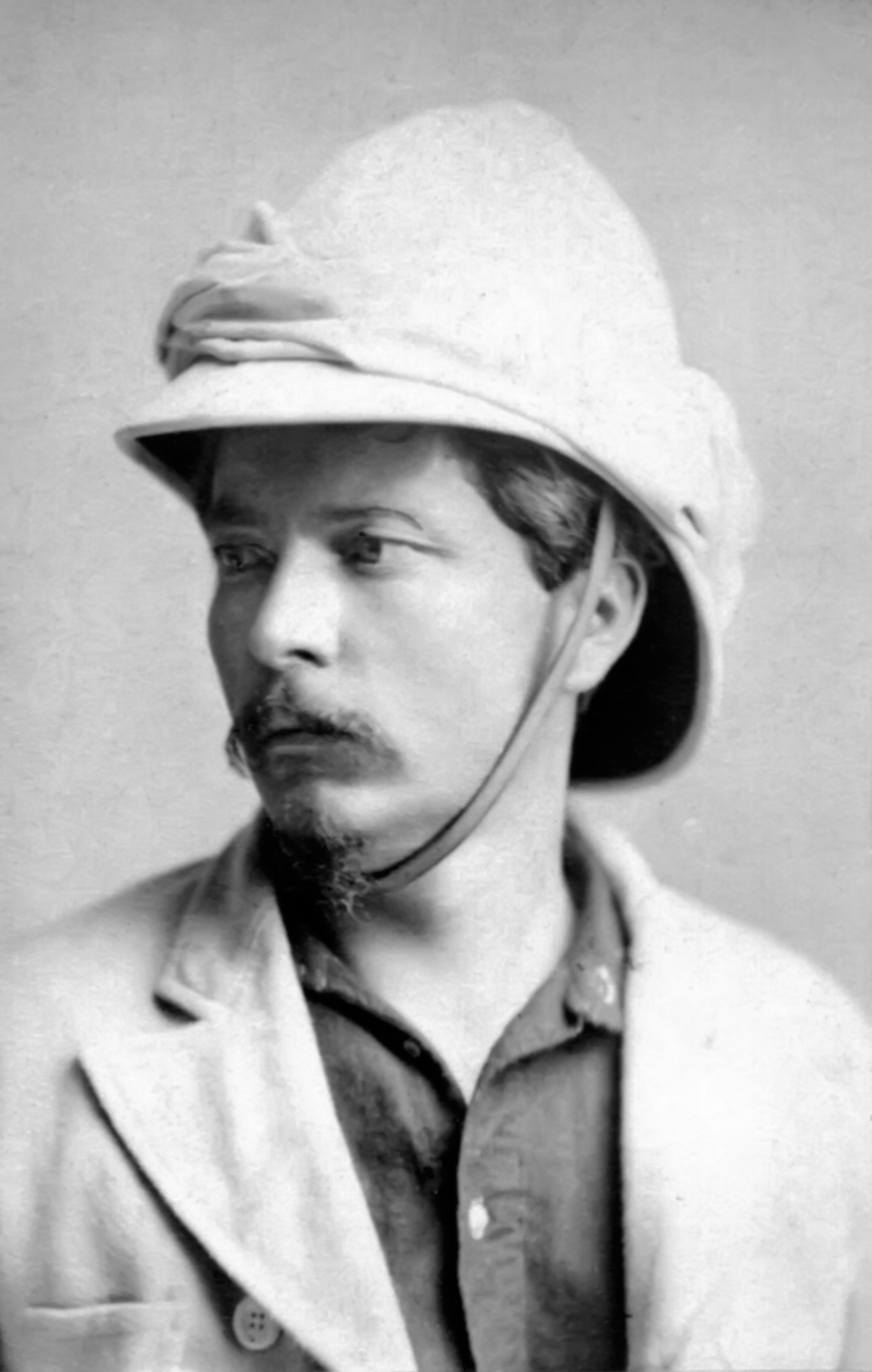

Back at Ujiji on Lake Tanganyika after Nyangwe, Livingstone found his stores sold. His journal compares himself to "the man who went down from Jerusalem to Jericho, and fell among thieves" (Luke 10:30, as he quotes it), and then records the arrival of help: "one morning Susi came running at the top of his speed and gasped out, 'An Englishman! I see him!' and off he darted to meet him. The American flag at the head of a caravan told of the nationality of the stranger." The editor of the journals dates the entry to "28th October, 1871." The stranger was Henry Morton Stanley, "the travelling correspondent of the New York Herald, sent by James Gordon Bennett, junior," and Livingstone wrote: "this disinterested kindness of Mr. Bennett, so nobly carried into effect by Mr. Stanley, was simply overwhelming."15 A few weeks earlier, on October 3, he had written: "I read the whole Bible through four times whilst I was in Manyuema."15
Stanley's own book, How I Found Livingstone (1872), dates the meeting to "November 10th. Friday," "the 236th day from Bagamoyo." His account of the moment is the source of the most famous greeting in the history of exploration: "I would have run to him, only I was a coward in the presence of such a mob, would have embraced him, only, he being an Englishman, I did not know how he would receive me; so I did what cowardice and false pride suggested was the best thing, walked deliberately to him, took off my hat, and said: 'Dr. Livingstone, I presume?' 'Yes,' said he, with a kind smile, lifting his cap slightly."17 (That is the wording of the 1872 edition, where the clauses are joined by dashes and the reply "YES" is printed in capitals. A later abridged edition, issued after Stanley's knighthood in 1899 and reproduced by Project Gutenberg, revises the passage to "but that I did not know how he would receive me," "moral cowardice and false pride" and "a kind, cordial smile," and prints the greeting itself in capitals.)
Two problems surround the scene. The first is the date: Livingstone's journal, as published, places Stanley's arrival on October 28, and Stanley's book on November 10, so one of the two reckonings is wrong. The second is the greeting itself. In 2007 Tim Jeal, writing a new life of Stanley, reported that the diary Stanley kept at the time describes "a pale-looking white man in a faded blue cap" and that "the following two pages have been ripped from the book," as The Observer summarized. Jeal's judgment was blunt: "Stanley told lies, that is the problem. And a liar can never subsequently tell the truth."18 Livingstone's journal, in the passage quoted above, does not record the words of greeting at all.
Stanley wrote that he "lived with him from the 10th November, 1871, to the 14th March, 1872."17 The two went together to examine the north end of Lake Tanganyika, then travelled to Unyanyembe, where Stanley left Livingstone with supplies and sent back from the coast a party of fifty-seven porters and Nassick pupils from Bombay.15 On May 1, 1872, Livingstone finished a letter for the New York Herald against the East African slave trade. Its closing words became his best-known sentence: "All I can add in my loneliness is, may Heaven's rich blessing come down on everyone, American, English, or Turk, who will help to heal the open sore of the world." The editor of the Last Journals noted that the words were inscribed on his memorial in Westminster Abbey and that they were written "exactly one year before his death."15 The brass letters on the Abbey stone give the words slightly differently, "all I can add in my solitude" and "this open sore of the world."1
Death at Chitambo and the journey to the coast, 1873 to 1874
Livingstone's last journey south and west of Lake Bangweulu ended in the swamps of Ilala. The last words he wrote, on April 27, 1873, were: "Knocked up quite, and remain, recover, sent to buy milch goats. We are on the banks of the Molilamo."15 (The original separates the phrases with dashes.) He was carried to the village of the chief Chitambo. The account of his death in the Last Journals was given, the editor explains, "as nearly as possible in the words of the two men who attended him constantly," Susi and Chuma.15 About four in the morning a boy named Majwara called Susi, and six men went to the hut: "Dr. Livingstone was kneeling by the side of his bed, his body stretched forward, his head buried in his hands upon the pillow." One of them, Matthew, touched his cheeks: "life had been extinct some time, and the body was almost cold." The editor concluded that "he expired early on the 1st of May," 1873.15
What his African companions did next has no parallel in the missionary literature of the century. They held a council, removed the heart and internal organs, placed them in "a tin box, which had formerly contained flour," and buried them "in a hole dug some four feet deep" at Chitambo's village. Jacob Wainwright, one of the Nassick pupils from Bombay who had joined the party in 1872, read the burial service and carved an inscription on "the large Mvula tree which stands by the place where the body rested." The body was left "to be fully exposed to the sun," then wrapped in bark and sailcloth, "lashed securely to a pole, so as to be carried by two men," and carried with Livingstone's papers and instruments to the coast.15 Susi and Chuma had been with him since 1864, when they joined him on the Zambezi.15 They reached Bagamoyo in February 1874, and the editor notes that of the men who had left Zanzibar with Livingstone in 1866, "five only could answer to the roll-call as they handed over the dead body of their leader to his countrymen on the shore whither they had returned, and this after eight years' desperate service."15
The body reached London, was identified by the badly set arm, and was buried in the nave of Westminster Abbey on April 18, 1874. The Abbey's own record states that "Jacob Wainwright, who had escorted the body from Africa, threw a palm branch into the grave," that the British Treasury paid for the funeral, and that the stone reads in part: "Brought by faithful hands over land and sea here rests David Livingstone, missionary, traveller, philanthropist." The north side of the stone carries John 10:16 from the Authorized Version: "Other sheep I have, which are not of this fold: them also I must bring, and they shall hear my voice."1 The Abbey notes that the stone spells the place of death "Ulala" where it "should actually be Ilala."1
Mary Slessor of Calabar, 1848 to 1915

Aberdeen and the Dundee mills
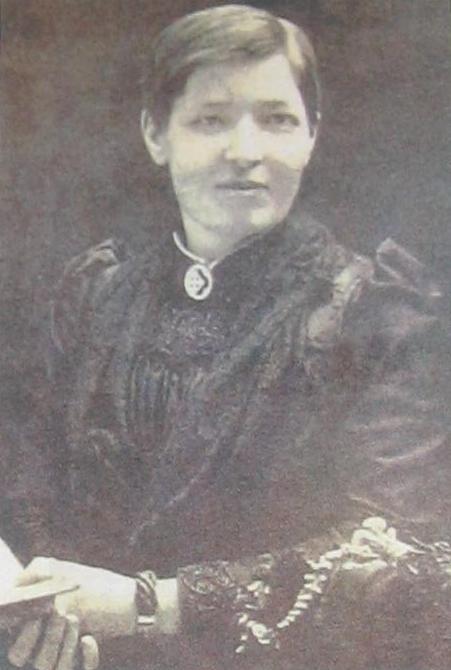
The fullest early source for Mary Slessor is Mary Slessor of Calabar: Pioneer Missionary by W. P. Livingstone (no relation to David), published by Hodder and Stoughton soon after her death (library catalogues give 1915 or 1916), and drawn from her letters and from people who knew her. It records that "on December 2, 1848, Mary Mitchell Slessor was born in Gilcomston, a suburb of" Aberdeen, the second of seven children of Robert Slessor, a shoemaker, and his wife, a member of Belmont Street United Presbyterian Church who followed the church's mission at Calabar with great interest. Her biographer quotes her: "I had," said Mary, "my missionary enthusiasm for Calabar in particular from her."2
The family moved to Dundee, where her father's drinking left her mother to support the home. "At eleven she, too, was sent out to begin to earn a livelihood. In the textile works of Messrs. Baxter Brothers & Company she became what was known as a half-timer, one who wrought half the day and went to the school in connection with the works the other half." She later learned weaving at the Rashiewell factory.2 She taught in the mission work of Wishart Church, which "stood in the midst of slums." Her biographer writes that "early in 1874 the news of the death of Dr. Livingstone stirred the land" and "thrilled Mary Slessor into action," and she offered herself to the Foreign Mission Board of her church. She sailed from Liverpool on the steamer Ethiopia on August 5, 1876. Watching the cargo loaded, she exclaimed, "Scores of casks!... and only one missionary!" The casks were spirits for the West African trade.2
The Calabar mission
The Calabar mission was begun by Scottish Presbyterians in Jamaica, the Jamaica Presbytery of the Scottish Missionary Society and the United Secession Church, and was adopted by the Secession Church in Scotland. According to W. P. Livingstone, the Rev. Hope M. Waddell was chosen as "the first agent," and he and several assistants sailed in 1846, after "a memorial from the local king and seven chiefs" at Calabar had offered "ground and a welcome to any missionaries who might care to come."2 The mission centred on Duke Town, Old Town and Creek Town on the Calabar River, in what is now Cross River State, Nigeria. Its records describe a society of Efik trading houses, slavery, secret societies such as Egbo (Ekpe), poison ordeals, human sacrifice at the funerals of chiefs, and the killing of twins. W. P. Livingstone notes that the British consul had pressed the chiefs on "twin-murder, human sacrifice, the stripping and flogging of women by Egbo-runners, and other offences, and an agreement had been reached; but no treaty, no Egbo proclamation could root out the customs of centuries, and they continued to be followed, in secret in the towns and openly in the country districts."2
Slessor taught at Duke Town and then at Old Town, where she lived simply on local food and learned Efik so well that the deputation from Scotland that inspected the mission in 1881 to 1882 credited her influence partly to "the singular ease with which she spoke the language."2 She also began, as other missionaries had before her, to take in twin babies.
Twins: the belief and the record
W. P. Livingstone describes the belief in these words: "A woman who gave birth to twins was regarded with horror. The belief was that the father of one of the infants was an evil spirit, and that the mother had been guilty of a great sin; one at least of the children was believed to be a monster, and as they were never seen by outsiders or allowed to live, no one could disprove the fact." The infants were killed and left in the bush, and the mother "was driven outside the bounds of decent society and compelled to live alone in the bush." The missionaries' response, he wrote, was that "as soon as twins were born they sought to obtain possession of them, and gave them the security and care of the Mission House. Some of the Mission compounds were alive with babies."2
The record shows three things that later retellings often merge. First, the rescue of twins was mission policy at Calabar before Slessor arrived, and other missionaries and Efik Christians did it too. Second, Slessor rescued and raised many twins herself, and adopted several children; late in 1898, interviewed by "a special representative of Reuter's Agency" as she left Liverpool to return to Calabar after a home leave, she "stated that up to that time she had saved fifty-one twins from destruction."2 Third, the practice did not end at once even under British rule. Her biographer writes of her later years: "In spite of British laws and gunboats twin-murder continued in secret."2 The change in attitude that she and others worked for came gradually, mother by mother and chief by chief.
Okoyong, 1888
In 1888 Slessor asked to go inland to the Okoyong, a people between the Calabar and Cross rivers whom other missionaries considered dangerous. "By Friday evening, August 3, 1888, all was ready," her biographer writes; King Eyo of Creek Town "again offered his canoe and paddlers and a number of bearers for her baggage."2 She lived among the Okoyong for some fifteen years, at first alone, with her adopted children, in a mud house she largely built herself. She opposed the poison ordeal, the killing of slaves at chiefs' funerals, and the abandonment of twins, and she settled disputes in palaver. Her report to the mission on Okoyong, printed by her biographer, is cautious in tone: "With regard to infanticide and twin-murder we can speak hopefully. It will doubtless take some time to develop in them the spirit of self-sacrifice to the extent of nursing the vital spark for the mere love of God and humanity among the body of the people."2 She told of a chief who had once insisted "that we must draw the line at twins," and who later brought his own sick child and laid it on her knee beside a rescued twin, saying, "There! they are all yours, living or dying, they are all yours. Do what you like with mine."2
When the British government organized the Niger Coast Protectorate, Sir Claude Macdonald, who "in 1891" was "appointed Consul-General," named vice-consuls for the districts. W. P. Livingstone writes that Slessor feared an outside official would impose new laws too quickly, and that MacDonald, "recognising her unique position and influence, empowered her to do all that was necessary, and to organise and supervise a native court." He describes her position as "akin to that of a consular agent": "She presided at the native court. Cases would be referred to her from Duke Town, and she would travel over Okoyong to try these."2 Her biographer adds that "it was a work she did not like, and she only accepted it because she thought it in line with her allegiance to Christ."2 A woman missionary who served as the British government's judge for a district is a rare figure in the record of the period, and the arrangement shows how closely mission and colonial administration could be bound together even when the missionary saw herself as the people's protector.
Itu, Use and the last years
From about 1903 Slessor moved farther up the Cross River into Ibibio country, to Itu, Ikotobong and Use, planting teachers and opening stations ahead of the mission and urging the church to follow. She was ill much of the time and kept writing long letters home. In August 1914 news of the war in Europe reached her, and soon after reading of the invasion of Belgium she collapsed with fever.2
The account of her death was written by Miss Peacock, a fellow missionary who nursed her at Use. In her last days she prayed in Efik, "O Abasi, sana mi yok" ("O God release me"). After a night watch with her adopted daughters, Peacock wrote, "at 3.30 God took her to Himself. There was no great struggle at the end; just a gradual diminishing of the forces of nature, and Ma Akamba, 'The Great Mother,' entered into the presence of the King."2 The account puts her last day of consciousness on "the 12th," which places her death early on January 13, 1915. The Nigerian government's notice, as her biographer prints it, announced "the death at Itu, on 18th January, of Miss Mary Mitchell Slessor," a date that differs from the eyewitness account. The same notice said that "for thirty-nine years, with brief and infrequent visits to England, Miss Slessor has laboured among the people of the Eastern Provinces in the south of Nigeria."2 Her story as a woman alone in the field is taken up again in lesson 09, Women and Missions.
Alexander Mackay of Uganda, 1849 to 1890

Stanley's appeal of 1875
The Church Missionary Society's mission to Buganda, the kingdom on the north shore of Lake Victoria Nyanza, began with a newspaper letter. In April 1875 Stanley, on his second African expedition, stayed at the court of the kabaka (king) Mutesa I, whom he spelled Mtesa. His letters dated April 14, 1875, sent to the Daily Telegraph and the New York Herald, included an appeal later reprinted in Through the Dark Continent (1878): "But oh! that some pious, practical missionary would come here! What a field and harvest ripe for the sickle of civilisation!... It is not the mere preacher, however, that is wanted here.... It is the practical Christian tutor, who can teach people how to become Christians, cure their diseases, construct dwellings, understand and exemplify agriculture, and turn his hand to anything, like a sailor, this is the man who is wanted."19 Stanley added a promise that later readers found troubling: Mutesa, he wrote, "will repay its cost tenfold with ivory, coffee, otter skins of a very fine quality, or even in cattle."19
Stanley reported the result: "the appeal was almost immediately responded to by the Church Missionary Society, and a sum of £24,000 was collected," but "the missionaries did not leave England until April, 1876, and it was the 30th June, 1877, before two of the band landed in Uganda."19 He also recorded that by early 1878 "two out of the three missionaries had been massacred," leaving one survivor in Uganda.19
An engineer for the Nyanza, 1876 to 1878
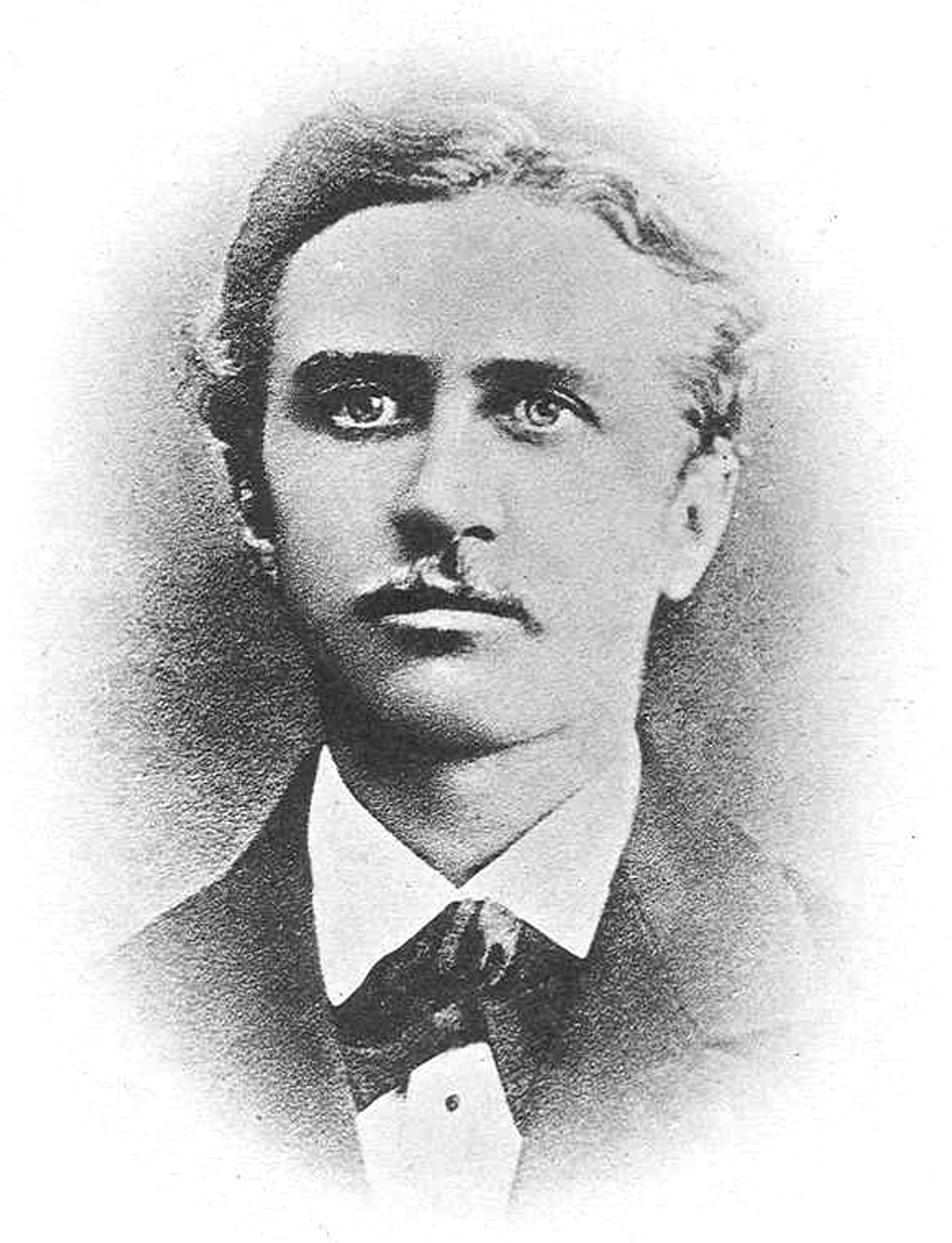
Alexander Murdoch Mackay was born "in the little village of Rhynie," Aberdeenshire, "on the 13th of October, 1849," according to the life published by his sister in 1890; "his father was Free Church minister of the parish."3 He trained in engineering in Edinburgh and worked as a draughtsman and engineer in Berlin, where in 1874 he wrote: "I am not a doctor, and therefore cannot go as such; but I am an engineer, and propose, if the Lord will, to go as an engineering missionary."3 The CMS accepted him for the Nyanza party. At the committee's farewell on April 25, 1876, according to Eugene Stock, the society's editorial secretary, Mackay, the youngest of the group, said "in substance": "I want to remind the Committee that within six months they will probably hear that one of us is dead.... But what I want to say is this: when that news comes, do not be cast down, but send some one else immediately to take the vacant place."3 Stock's recollection was printed in 1890, fourteen years after the meeting.
The prediction came true. Of the original party of eight, Mackay was within three years "the only representative in Africa," as his sister wrote. Lieutenant Shergold Smith and Mr. O'Neill were killed at Ukerewe in Lake Victoria, "where Lieut. Smith and O'Neill were murdered," in his words, and others died of fever or went home.3 Mackay, delayed by illness and by the labour of moving stores and boat sections inland, reached Buganda "in November, 1878."3
At the court of Mutesa
Mackay's letters from Mutesa's court describe a ruler who welcomed teachers from every quarter and played them against each other. Mackay held Sunday services at court, and his sister summarizes the early months as a time when Mutesa "for a time abolishes slavery and forbids all Sunday labour."3 Muslim traders from the coast were already at court, and Stanley had noted that "Mtesa can read Arabic."19 French Catholic missionaries arrived next: his sister records that "on 22nd February, 1879, two arrived at the capital," men "trained at Algiers, and sent by the 'Notre Dame d'Afrique' Society" (the Missionaries of Africa, often called the White Fathers). Mackay's letters record debates before the king among Muslim teachers, Catholic priests and himself, including Mutesa asking "what would be the lot of the heathen."3 An epigraph in his sister's book, taken from Two Kings of Uganda (1889) by his CMS colleague Robert P. Ashe, describes Mutesa as "kindly, but formal, fearful of his dignity, crafty, suspicious."3
Mackay was the mission's builder, smith, printer and translator. He set up a printing press, spent days "carving wooden types" for large reading sheets in Luganda, and, in the words of the CMS committee's minute after his death, "utilized his knowledge of both classical and modern languages in reducing the vernacular of Uganda to writing, and rendering into it portions of Scripture, prayers, etc."3 Ganda readers learned from these sheets, and the readers, Catholic and Protestant, formed the first Christian communities in Buganda.
Mwanga, Hannington and the martyrs, 1884 to 1887
"In October of 1884 Mtesa died," his sister wrote, "and his son Mwanga" came to the throne.3 The new king feared invasion from the east, the "back-door of Uganda," and the CMS bishop James Hannington was approaching by exactly that route through Busoga. His sister's book records the missionaries' view that "it was this fear of coming danger, and not hatred to the Christian religion, that led the chiefs of Uganda with Mwanga at their head, to demand the death of the bishop."3 Hannington and his porters were killed in Busoga in late October 1885. E. C. Dawson's life of Hannington (1887) weighs conflicting reports, including one giving October 31, and concludes that "it is now almost certain that the 29th was the day of his death."20 Dawson records the words said to have been Hannington's last: "I am about to die for the Ba-ganda, and have purchased the road to them with my life." Dawson does not claim a written source; he writes that "his words are passed from mouth to mouth."20
Mackay had already seen the first killings of Ganda Christians. His letter of June 6, 1885, reported: "On January 30th three Christian lads were burnt alive, after being terribly mutilated, for their reception of and adherence to the faith of Jesus Christ."3 Worse followed in 1886, when many young Catholic and Protestant Christians at Mwanga's court were put to death. Their story is told in module 102, lesson 09 and is not retold here. His sister notes that Mackay "was afraid lest too much might be made of these so-called martyrdoms, yet he did not doubt the real piety of many of the sufferers."3
Usambiro and Mackay's death, 1887 to 1890
Driven out of Buganda, Mackay, in his sister's words, "succeeds in establishing himself at Usambiro, on the south coast of the Victoria Nyanza, and in the territory of a friendly chief." Bishop Parker and Mr. Blackburn died of fever there within a fortnight of each other.3 Stanley, returning from the Emin Pasha relief expedition, stayed at the mission and described it in In Darkest Africa, a passage the sister's book reprints.3 Mackay fell ill in early February 1890. His colleague David Deekes wrote to his father that "he passed away on Feb. 8th," at night, "during a severe attack of fever, having been four days and nights delirious (malaria fever)."3 The CMS committee's minute of April 22, 1890, noted that "Mr. Mackay was the last survivor in Africa of the original missionary party sent out in 1876, in consequence of Mr. H. M. Stanley's challenge to Christian England to plant a Mission in Uganda," and that "during the whole period of nearly fourteen years he never once left the shores of Africa."3
African agency: the people who did most of the work
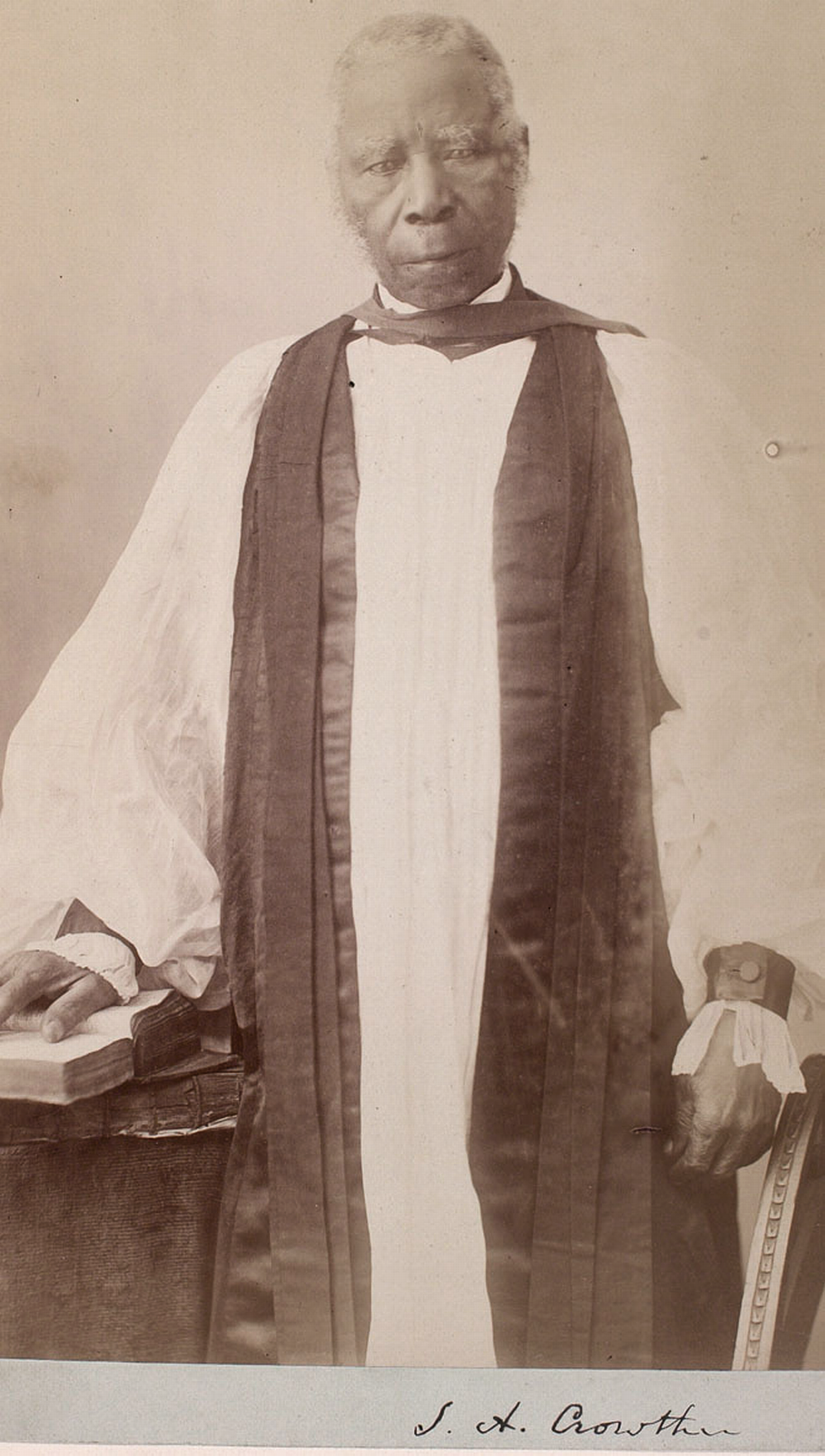

Samuel Ajayi Crowther, about 1807 to 1891
The most important African Christian of the century in this story never appears in the popular lives of Livingstone. Andrew F. Walls, in his study "The Legacy of Samuel Ajayi Crowther" (1992), tells the story from Crowther's own two accounts of his capture. Ajayi was born "in the town of Osogun in Yorubaland in what is now Western Nigeria, in or about the year 1807." About the age of thirteen he was captured in a raid, "changed hands six times, before being sold to Portuguese traders for the transatlantic market," and in April 1822 the ship carrying him was "intercepted by the British naval squadron," and he was landed at Freetown, Sierra Leone.4 He was baptized by the CMS missionary John Raban, "taking the name Samuel Crowther, after a member of that society's home committee," and was among the first students of the Christian Institution that became Fourah Bay College.4 Walls quotes Crowther's own words about his conversion: "about the third year of my liberation from the slavery of man, I was convinced of another worse state of slavery, namely, that of sin and Satan."4
Crowther was a linguist and translator. Walls credits him with Yoruba Vocabulary, "surely the first such work by a native speaker of an African language," with leading the Yoruba Bible translation, "the first by a native speaker," and with writing "the first book on Igbo."4 He went on the government's Niger Expedition of 1841, was ordained in England (there was, Walls notes, "no bishop nearer than London"), worked at Abeokuta among the Yoruba, and then led the CMS Niger Mission, staffed by African missionaries from Sierra Leone. The CMS secretary Henry Venn, whose "three-self" principle held that a mission should give way to a self-governing, self-supporting and self-propagating church, pressed for an African bishop. Walls sums up Venn's view in one line: "The birth of the church brought the euthanasia of the mission." On June 29, 1864, Crowther was consecrated in Canterbury Cathedral as bishop of "the countries of Western Africa beyond the limits of the Queen's dominions."214
His last years were bitter. In Walls's summary, "questions arose about the lives of some of the missionaries; that European missionaries were brought into the mission, and then took it over, brushing aside the old bishop (he was over eighty) and suspending or dismissing his staff." "In 1891 Crowther, a desolate, broken man, suffered a stroke; on the last day of the year, he died. A European bishop was appointed to succeed him."4 Walls notes that the same critics who called Crowther "a weak bishop" drew the moral that "the African race" lacked the capacity to rule, and that "the refusal to appoint an African successor to Crowther, despite the manifest availability of outstanding African clergy, marks an important point in the history of African Independent churches."4 The Niger Delta churches, led by Crowther's son Archdeacon Dandeson Crowther, kept their independence from the CMS and, Walls writes, grew "at a phenomenal rate."4
Sechele, Mebalwe, Susi, Chuma and the many unnamed
The missionaries' own pages, read closely, are full of African Christians doing the work. Mebalwe was a teacher at Mabotsa and later preached in Sechele's town, where Livingstone's letter of 1852 records Boer raiders hearing him on the Sunday before their attack.87 Sechele, after his break with Livingstone, led worship for the Kwena and, by the account Tomkins draws from Neil Parsons, carried Christianity to his neighbours.11 Susi and Chuma nursed Livingstone, recorded his last hours, and brought his body and papers to the coast; Jacob Wainwright wrote the first account of the last eighteen months.15 In Buganda, the first Christians taught each other to read from Mackay's printed sheets and died for the faith while the European missionaries were helpless to protect them.3 In Calabar, Slessor's household of rescued children, her adopted daughters Janie, Annie, Maggie and Alice among them, kept her stations running and sat with her as she died.2
Historians of world Christianity have made this the centre of the story. Walls argued that the faith Crowther embodied "was essentially African and essentially missionary," and that his legacy "has passed to the whole vast church of Africa."4 The Gambian-born Yale historian Lamin Sanneh, in Translating the Message (1989), argued that Christian missions, by translating the Bible into African languages, put the faith into African hands. The Christian Century's obituary of Sanneh (2019) quotes his summary: "It is not so much that the West transmitted the gospel to world but that the cultures of the world discovered the gospel when they heard the Bible in their mother tongues."22 How the African churches grew after the missionaries is the subject of lesson 13, Missions Today.
Missions and colonial rule
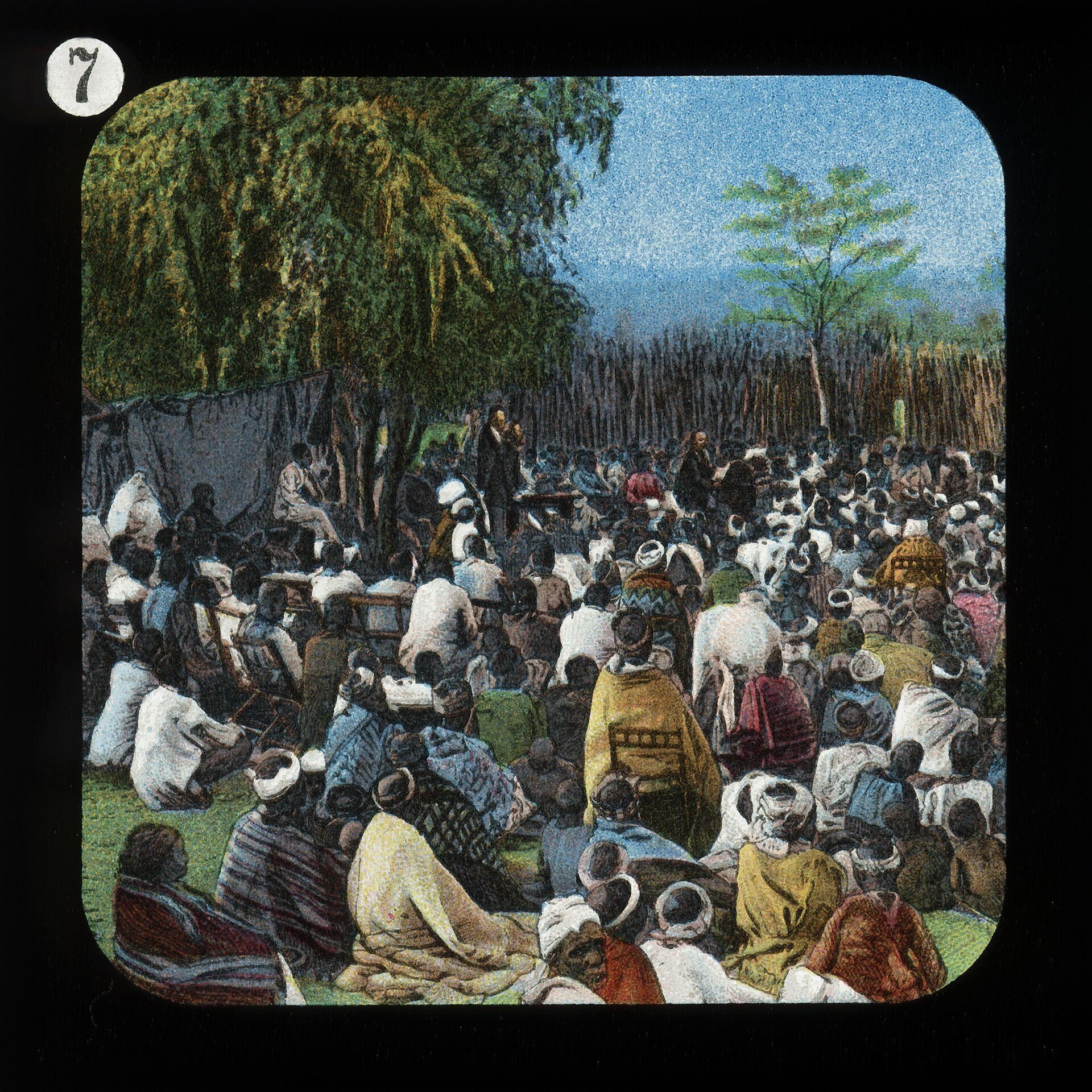

What the Berlin Act said about missionaries
The General Act of the Berlin Conference, signed on February 26, 1885, by fourteen powers including Great Britain, France, Germany, Portugal, Belgium and the United States, set rules for free trade in the Congo basin and, in Articles 34 and 35, required any power taking "possession of a tract of land on the coasts of the African Continent" to notify the others and to establish "authority in the regions occupied by them." Its Article 6 placed missionaries under the powers' protection:
"All the Powers exercising sovereign rights or influence in the aforesaid territories bind themselves to watch over the preservation of the native tribes, and to care for the improvement of the conditions of their moral and material well-being, and to help in suppressing slavery, and especially the Slave Trade. They shall, without distinction of creed or nation, protect and favour all religious, scientific or charitable institutions and undertakings created and organized for the above ends, or which aim at instructing the natives and bringing home to them the blessings of civilization. Christian missionaries, scientists and explorers, with their followers, property and collections, shall likewise be the objects of especial protection. Freedom of conscience and religious toleration are expressly guaranteed to the natives, no less than to subjects and to foreigners."5
Article 6 applied to the territories of the Congo basin named in Article 1. Read with Articles 34 and 35, it shows how the treaty that set the rules for occupying Africa also named missionaries, with scientists and explorers, as people the occupying powers would protect.5 What the powers did in practice under that promise, above all in the Congo Free State, belongs to later history.
The case against: missionaries as agents of conquest
The sharpest early statement of the case came from South Africa. Dora Taylor, writing as Nosipho Majeke, published The Role of the Missionaries in Conquest, which South African History Online now hosts in full. Her biographical note there says she wrote it because "she saw more clearly than most the significance of the role of the missionaries in imperial colonial conquest in Southern Africa."23 Majeke set out her method in plain terms: her history would show "a developing British strategy which made use of the missionary as an important agent to achieve its aims."24 She wrote that "the Bible and the bale of Lancashire cotton became the twin agents of a revolutionary change," and, of the nineteenth century as a whole, that "Christianity itself was an ideological weapon of what was called 'Western Civilization.'"2425 She named Livingstone directly, as one who, "though he wore the sober black cloth of a Scots minister of the gospel, carried on something of the tradition of the Elizabethan adventurers," and quoted his own words linking mission and trade.25
The record gives her case real material. Livingstone told Cambridge that "Christianity and commerce" should be "inseparable."13 Stanley promised that a mission to Buganda would be repaid "tenfold with ivory."19 Slessor held court for the British protectorate.2 The Berlin Act wrote missionaries into the treaty that organized the division of Africa.5
The other case: translation and African ownership
Lamin Sanneh read the same history differently. The Georgetown Berkley Center's tribute to him summarizes his argument in Translating the Message: Christianity "has not historically insisted that divine revelation can only be adequately understood through its initial language," and "the corresponding importance placed on the work of translation has allowed Christianity to become a preserver of indigenous languages worldwide."26 The Christian Century obituary quotes his conclusion about the vernacular Scriptures and the national pride they awoke: "I am convinced that this paradox decisively undercuts the alleged connection often drawn between missions and colonialism."22
The record gives this case real material too. Livingstone opposed the Boer raids and the Arab and Swahili slave caravans, and according to the Associated Press report of 2011 his account of Nyangwe "galvanized British authorities to shut the slave market in Zanzibar"; the same report dates the closing: "By 1873, the British consul had pressured the sultan of Zanzibar to close the island's large slave market."16 Sechele turned the faith into his own and spread it on his own authority. Crowther, a freed slave, became a bishop and the first author of grammars in his own language, and the treatment of him by younger Europeans is itself part of the case that mission and empire were different things that sometimes ran together.4 Both Majeke and Sanneh are quoted here in their own words; the lesson does not decide between them.
What the record shows and what it does not
- Documented fact: Livingstone's birth (March 19, 1813), death (May 1, 1873, at Chitambo's village) and burial in Westminster Abbey (April 18, 1874); Crowther's consecration (June 29, 1864); the General Act of Berlin (February 26, 1885) and its Article 6; Mackay's death at Usambiro (February 8, 1890).12153
- The missionaries' own words: Livingstone's Missionary Travels, Cambridge lecture and journals; Mackay's letters; Slessor's reports and letters as printed by her biographer. These were edited before printing: the Last Journals were based on a journal Livingstone wrote up in 1872, and the 2011 field-diary study found differences on Nyangwe.16
- What the people evangelized and their descendants record: Sechele's questions and laments survive only in Livingstone's report of them; Botswana historians (Neil Parsons, as quoted by Tomkins) treat Sechele as a founder and evangelist in his own right; Susi and Chuma's account of Livingstone's death survives through the editor of the Last Journals; Crowther's account of his capture survives in his own writings, cited by Walls.11154
- Later biography, sermon and film: the "I presume" greeting; the image of Slessor alone ending the killing of twins; Hannington's last words; Mackay's six-months prophecy as recalled fourteen years later.18203
- Scholarly reading: Walls and Sanneh on African agency and translation; Majeke on missions as agents of conquest; Jeal on Stanley's honesty and on Nyangwe.422241816
- Open questions: whether any of Livingstone's own men took part at Nyangwe; the exact date of the meeting at Ujiji; the exact day of Slessor's death; how many twins were saved and by whom.
Pictures, Numbers and Infographics
The table gathers the lesson's key dates and figures with their sources. Where two sources disagree, both are given.
| Item | Figure or date | Source |
|---|---|---|
| Livingstone born, Blantyre | March 19, 1813 | Westminster Abbey1 |
| Livingstone's age on entering the Blantyre cotton factory | 10 | Missionary Travels6 |
| Arrival at Kuruman | July 31, 1841 | Blaikie7 |
| Sechele baptized | October 1 (1848) | Livingstone's journal in Blaikie; SOAS710 |
| Kwena dead in the Boer attack of 1852 | "sixty (60)," with Boer dead put at 35 | Livingstone's letter of September 20, 18527 |
| Crossing of Africa | Linyanti, Nov. 11, 1853; Luanda, May 31, 1854, with 27 followers; Quelimane, May 20, 1856 | Blaikie; Missionary Travels712 |
| Cambridge lecture, Senate-House | December 4, 1857 | Cambridge Lectures13 |
| Death of Mary Livingstone, Shupanga | April 27, 1862 | Blaikie7 |
| Nyangwe massacre | July 15, 1871; about 1,500 at market; traders' estimate 330 to 400 dead; 21 saved by Dugumbé | Last Journals15 |
| Stanley meets Livingstone, Ujiji | October 28, 1871 (Livingstone's journal) or November 10, 1871 (Stanley) | Last Journals; How I Found Livingstone1517 |
| Stanley's days from Bagamoyo to Ujiji | 236 | How I Found Livingstone17 |
| Livingstone's death and burial | Died May 1, 1873, Chitambo's village; buried April 18, 1874, Westminster Abbey | Last Journals; Westminster Abbey151 |
| Original followers of 1866 at the coast in 1874 | 5 | Last Journals15 |
| Money raised after Stanley's 1875 appeal | £24,000 | Through the Dark Continent19 |
| Stanley's estimate of Mutesa's subjects | 2,000,000 | Through the Dark Continent19 |
| First CMS Nyanza party | 8 men, 1876; first two reach Buganda June 30, 1877 | Mackay's sister; Stanley319 |
| Alexander Mackay | Born October 13, 1849; reached Buganda November 1878; died February 8, 1890; "nearly fourteen years" in Africa | Mackay's sister; CMS minute3 |
| Bishop Hannington killed, Busoga | October 29, 1885 (Dawson's conclusion; one report gave October 31) | Dawson20 |
| Samuel Ajayi Crowther | Born about 1807; freed April 1822; consecrated June 29, 1864; died December 31, 1891 | Walls; DACB chronology421 |
| General Act of Berlin | Signed February 26, 1885, by 14 powers; missionaries in Article 6 | Text of the Act5 |
| Mary Slessor | Born December 2, 1848; half-timer at 11; sailed August 5, 1876; to Okoyong August 1888 | W. P. Livingstone2 |
| Twins Slessor said she had saved, by 1898 | 51 | W. P. Livingstone2 |
| Slessor's death | Early January 13, 1915 (eyewitness account); "18th January" (government notice as printed); 39 years in Nigeria | W. P. Livingstone2 |
Claims checked
"Livingstone made only one convert, and he lapsed."
Rating: Partly supported. The SOAS archivists call Sechele Livingstone's "'only convert'," in quotation marks, as the phrase is commonly used.10 Livingstone's own journal, however, records on the day of Sechele's baptism "also Setefano," so at least two people were baptized that day.7 Sechele did fall back in the eyes of the mission, by the account Tomkins gives, when a former wife became pregnant the year after his baptism; he also went on to lead Christian worship and to spread the faith among neighbouring peoples for decades.11 "Only one convert, who lapsed" counts baptisms at one station and stops the story in 1849.
"Stanley greeted him with 'Dr. Livingstone, I presume?'"
Rating: Unresolved. The words appear in Stanley's book of 1872.17 Tim Jeal found that the pages of Stanley's diary covering the meeting were torn out and considers Stanley an unreliable witness.18 Livingstone's journal does not record the greeting, and it dates the meeting about two weeks earlier than Stanley does.15 No independent witness wrote the words down.
"Livingstone said: I go back to Africa to try to make an open path for commerce and Christianity."
Rating: Supported. The sentence is in the printed report of the Cambridge lecture of December 4, 1857, word for word, followed by "do you carry out the work which I have begun. I leave it with you!"13 Versions that drop "try to," or that reverse the order to "Christianity and commerce," do not match the printed report; that order belongs to a different sentence in the same lecture.13
"Livingstone's heart is buried in Africa."
Rating: Supported. The Last Journals, based on Susi and Chuma's account and Jacob Wainwright's, state that the heart and other organs were placed in a tin box and buried at Chitambo's village before the body was carried to the coast.15 Westminster Abbey's record describes the body, wrapped in bark and sailcloth, carried to the coast, shipped to London and buried in the nave.1
"Mary Slessor stopped the killing of twins in Calabar."
Rating: Partly supported. Slessor rescued many twins, said in 1898 that she had saved fifty-one, and changed the attitude of some Okoyong chiefs.2 The rescue of twins was mission practice before she arrived, the consul had pressed the chiefs against the custom, and her own biographer writes that "in spite of British laws and gunboats twin-murder continued in secret."2 The end of the practice was the work of many people, Efik and Okoyong mothers and chiefs among them, over many years.
"Mary Slessor was the first woman vice-consul in the British Empire."
Rating: Partly supported. Her first biographer says Sir Claude Macdonald "empowered her to do all that was necessary, and to organise and supervise a native court," and that "her position was akin to that of a consular agent."2 That is a judicial office in the protectorate. The exact title, the year usually given (1892), and the claim to be the first woman anywhere in the Empire to hold it are not stated in the sources opened for this lesson.
"Mackay told the CMS: within six months you will hear that one of us is dead."
Rating: Partly supported. The words come from Eugene Stock's recollection, printed in 1890, fourteen years after the meeting of April 25, 1876, and Stock himself says they were Mackay's words "in substance."3 Two of the party were killed within two years, and Mackay outlived all the rest in Africa.3
"Hannington's last words were: I have purchased the road to Uganda with my life."
Rating: Unresolved. His biographer E. C. Dawson (1887) gives the words as "I am about to die for the Ba-ganda, and have purchased the road to them with my life," and says only that they "are passed from mouth to mouth."20 No European witness was present. Dawson himself weighed conflicting reports even on the date of death.20
"Livingstone's own men took part in the Nyangwe massacre."
Rating: Unresolved. Adrian Wisnicki's 2011 reading of the field diary led him to say Livingstone's party "might have been involved." Tim Jeal answered, "I don't think the proof is there."16 The published journal names Tagamoio and Dugumbé's men as the killers.15
"The missionaries were agents of colonial conquest."
Rating: Unresolved (a matter of interpretation). Majeke argued that British strategy "made use of the missionary as an important agent."24 Sanneh argued that vernacular translation "decisively undercuts the alleged connection often drawn between missions and colonialism."22 The documents show both: Livingstone joined commerce to Christianity in his own words, the Berlin Act protected missionaries by treaty, and Slessor served the protectorate as a judge; Sechele, Crowther and the Ganda readers also made the faith their own, and the CMS removed Crowther against the wishes of his African clergy.13524
Hard questions and answers
Was Livingstone a failed missionary who became an explorer?
By the measure of baptisms at his own stations, his missionary results were small, and he left the London Missionary Society in 1857 to lead a government expedition.7 By his own definition, "the end of the geographical feat" was "the beginning of the missionary enterprise," taken "in its most extended signification."12 His journals show him reading the Bible and praying to the end, and the Universities' Mission was founded in answer to his Cambridge appeal.157 Whether that counts as missionary success depends on the reader's definition of mission, which is the very question this module keeps asking.
What did Sechele gain and lose by becoming a Christian?
He gained literacy, the Bible he loved to read, and in time a role as a Christian leader of his people. He lost his place as rainmaker during a drought, the support of the families of the wives he sent away, and for years the good will of his own people, who blamed the new faith for the lack of rain.8710 The women he divorced, whom Livingstone called "the best of our scholars," paid a price that the missionary sources record only in passing.8 A reader whose family stands on the receiving side of missions may see Sechele's story as a warning about how mission rules on marriage fell on women; a Christian reader may see a chief who chose costly obedience. Both readings rest on the same pages.
Did Mary Slessor respect the people she served, or try to remake them?
Both, by the evidence. She learned Efik deeply, lived in local houses on local food, adopted children and was called "Ma" by the people around her.2 She also called many customs "heathen," worked to end them, and held a court for the British administration.2 The government's notice at her death spoke of "the devotion of thousands of the natives among whom she worked."2 No account by the Okoyong themselves from her lifetime was found for this lesson, so their view survives mostly through her biographer.
Why was Crowther replaced by a European, and does it matter now?
Walls describes the change in missionary thinking between the 1860s and the 1890s: "Missionary thought about Africa had changed since the days of Henry Venn; there were plenty of keen, young Englishmen to extend the mission and order the church; a self-governing church now seemed to matter much less." He also records the racial conclusions drawn by some critics, that "the African race" lacked the capacity to rule.4 It matters because, as Walls writes, the refusal to appoint an African successor became "an important point in the history of African Independent churches," and because Africa is now home to many of the world's Christians, a theme of lesson 13.4
Were the killings in Buganda religious persecution or politics?
Mackay's sister's book, written from the missionaries' side, says the chiefs demanded Hannington's death from "fear of coming danger, and not hatred to the Christian religion," while Mackay's own letter of June 6, 1885, says that the three young Christians burned that January, nine months before Hannington's death, were killed for "their reception of and adherence to the faith of Jesus Christ."3 The two explanations are not exclusive: a king who feared conquest from the east also faced converts who, in Dawson's phrase, served "another King, Jesus."20 The full account and the later commemoration are in module 102, lesson 09.
What should a skeptical reader take from these lives?
That the famous scenes are the least secure parts of the record. The "I presume" greeting, Mackay's prophecy and Hannington's last words all reach us through later writers, while the plainest evidence, the Nyangwe entry, the letter on the Boer raid, the Shupanga journal, Peacock's account of Slessor's death, is often the least quoted.183201572 The same rule the module applies to the saints applies to the critics: quote the document, give its date, and say who wrote it.
Related lessons
- Lesson 03: The Great Awakening and the First Mission Societies (the London Missionary Society and the Church Missionary Society).
- Lesson 06: Hudson Taylor, the China Inland Mission and Lottie Moon (the China that Livingstone first hoped to reach).
- Lesson 09: Women and Missions (Mary Slessor and the single women missionaries).
- Lesson 13: Missions Today and the Global South.
- Module 102, lesson 09: The Missionary Martyrs (the Uganda martyrs and Hannington).
Learn more
- Livingstone, Missionary Travels (1857), full text: Read chapter 1 for Sechele and the lion, and the closing pages for Livingstone's own statement of purpose.
- The Last Journals of David Livingstone, vol. 2: The Nyangwe entry of July 15, 1871, and Susi and Chuma's account of his death.
- Livingstone Online: The digital archive of Livingstone's manuscripts, including the spectral imaging of the 1871 field diary.
- Mary Slessor of Calabar, full text: The fullest early life, built on her letters, with the account of her death by a fellow missionary.
- A. M. Mackay, by his sister (1890), full text: Mackay's letters from Buganda, including the first martyrdoms of 1885.
- Andrew F. Walls on Samuel Ajayi Crowther: A short, sourced study of the first African Anglican bishop and of how the missionary movement changed.
- Nosipho Majeke, The Role of the Missionaries in Conquest: The classic South African statement of the case against the missions, to read beside Sanneh.
Still being checked (19 items)
These points could not be confirmed against a primary source when this lesson was written and fact checked in October 2026. The text above states each one as uncertain.
- Sechele's lapse (a former wife's pregnancy in 1849) is reported from Stephen Tomkins's article; Livingstone's own letters on it were not opened for this lesson.
- Neil Parsons's assessment of Sechele is quoted as Tomkins quotes it; Parsons's own text was not opened.
- The original publication (BBC News Magazine, March 2013) of the Tomkins article reprinted by Global Ministries was not checked.
- The year of the Mabotsa lion attack (1844) rests on Blaikie's letter dates; the exact day was not checked.
- Blaikie heads a lost journal 'destruction of Kolobeng (September, 1853)', but Livingstone's letter of September 20, 1852, describes the raid; the lesson follows the letter.
- The day Livingstone reached the Victoria Falls in November 1855 was not confirmed.
- The founding of the Universities' Mission to Central Africa is linked to the Cambridge appeal on Blaikie's account; the founding universities and dates were not checked.
- The date of the meeting at Ujiji: Livingstone's journal gives October 28, 1871, Stanley November 10, 1871.
- Whether Stanley said 'Dr. Livingstone, I presume?' cannot be confirmed; the claim that his diary pages were torn out rests on Tim Jeal as reported by The Observer.
- The publication year of W. P. Livingstone's Mary Slessor of Calabar is given as 1915 in some library records and 1916 in others.
- Mary Slessor's date of death: the eyewitness account places it early on January 13, 1915; the government notice as printed by her biographer says '18th January'.
- The title 'vice-consul', the year 1892 and the claim that Slessor was the first woman to hold such an office in the British Empire were not confirmed in the sources opened; her biographer says her position was 'akin to that of a consular agent'.
- The exact date of the killing of Shergold Smith and O'Neill at Ukerewe (commonly given as December 1877) was not confirmed.
- The publication year of Majeke's The Role of the Missionaries in Conquest (about 1952) was not confirmed from the SAHO pages.
- The Commons identification of the Crowther photograph as taken at the 1867 Lambeth Conference was not checked against Lambeth Palace Library.
- No account by Okoyong, Efik or Ganda writers from the missionaries' own lifetimes was located for this lesson; their views appear only as reported by missionaries and later historians.
- Whether members of Livingstone's party took part at Nyangwe is disputed (Wisnicki and Jeal). The AP report dates the closing of the Zanzibar slave market 'by 1873'; the treaty text with the sultan was not opened.
- The quotations from A. M. Mackay by his sister were checked against the Internet Archive OCR text of the 1890 New York edition only; a second copy was not compared.
- Mary Slessor's 1898 Reuter's interview: her biographer places it as she left Liverpool late in 1898; the published newspaper report was not found.
Notes
- Westminster Abbey, "David Livingstone," commemoration page (birth, death, burial on April 18, 1874, gravestone inscription, John 10:16 in the Authorized Version, funeral details) (retrieved Nov. 12, 2026). Read it online. ↩
- W. P. Livingstone, Mary Slessor of Calabar: Pioneer Missionary (London: Hodder and Stoughton, 1915 or 1916; catalogues differ), Project Gutenberg eBook 8906: chapters on Aberdeen and Dundee, the founding of the Calabar mission, twins, Okoyong (August 3, 1888), the consular court, the 1898 interview, and Miss Peacock's account of her death and the Government Gazette notice (retrieved Nov. 12, 2026). Read it online. ↩
- [J. W. Harrison], A. M. Mackay, Pioneer Missionary of the Church Missionary Society to Uganda, by his sister (New York: A. C. Armstrong, 1890), Internet Archive full text: birth at Rhynie, Berlin letter of 1874, Eugene Stock's recollection of April 25, 1876, arrival in November 1878, Mutesa's death (October 1884), letter of June 6, 1885, Usambiro, David Deekes's letter and the CMS minute of April 22, 1890 (retrieved Nov. 12, 2026). Read it online. ↩
- Andrew F. Walls, "The Legacy of Samuel Ajayi Crowther," International Bulletin of Missionary Research 16, no. 1 (January 1992): 15 to 21, reproduced in the Dictionary of African Christian Biography (retrieved Nov. 12, 2026). Read it online. ↩
- General Act of the Conference at Berlin, signed February 26, 1885, Articles 1, 6, 9, 34 and 35, English text from Modern International Relations: Basic Documents, vol. 1 (Kajima Institute of International Peace), pp. 881 to 884, as given in "The World and Japan" Database, GRIPS and University of Tokyo (retrieved Nov. 12, 2026). Read it online. ↩
- David Livingstone, Missionary Travels and Researches in South Africa (London: John Murray, 1857; American edition New York: Harper, 1858), Introduction, Project Gutenberg eBook 1039 (retrieved Nov. 12, 2026). Read it online. ↩
- William Garden Blaikie, The Personal Life of David Livingstone (London: John Murray, 1880), Project Gutenberg eBook 13262: arrival at Kuruman, the Mabotsa chapter, journal of 1848 to 1849 (Sechele's baptism, Potgieter), letter from Kuruman of September 20, 1852, dates of the crossing, the Cambridge visit, resignation from the LMS (footnote 52), the Zambezi expedition and Mary Livingstone's death (retrieved Nov. 12, 2026). Read it online. ↩
- Livingstone, Missionary Travels (1857), chapter 1 (Mabotsa and the lion, Mebalwe, Sechele's questions, reading, polygamy and baptism), Project Gutenberg eBook 1039 (retrieved Nov. 12, 2026). Read it online. ↩
- Livingstone, Missionary Travels (1857), chapter 6 (Kuruman and Robert Moffat's Setswana Bible), Project Gutenberg eBook 1039 (retrieved Nov. 12, 2026). Read it online. ↩
- SOAS Library Special Collections, "The Life and Afterlife of David Livingstone: Sechele," blog post, March 26, 2014, quoting Livingstone's letter to the LMS directors, Kolobeng, November 1, 1848 (Council for World Mission archive) (retrieved Nov. 12, 2026). Read it online. ↩
- Stephen Tomkins, "The African chief converted to Christianity by Dr Livingstone," article reprinted by Global Ministries (Christian Church (Disciples of Christ) and United Church of Christ), quoting Neil Parsons and Elizabeth Price (retrieved Nov. 12, 2026). Read it online. ↩
- Livingstone, Missionary Travels (1857), chapter 26 (the falls, "Mosioatunya") and the closing chapters (arrival at Kilimane, May 20, 1856; "the end of the geographical feat"), Project Gutenberg eBook 1039 (retrieved Nov. 12, 2026). Read it online. ↩
- Dr Livingstone's Cambridge Lectures, together with a Prefatory Letter by the Rev. Professor Sedgwick, ed. William Monk (Cambridge: Deighton, Bell, 1858), Lecture I, delivered in the Senate-House, December 4, 1857, pp. 21 to 24, Internet Archive (retrieved Nov. 12, 2026). Read it online. ↩
- The Last Journals of David Livingstone, in Central Africa, from 1865 to His Death, ed. Horace Waller, vol. 1 (London: John Murray, 1874), entry of January 28, 1866, Project Gutenberg eBook 16672 (retrieved Nov. 12, 2026). Read it online. ↩
- The Last Journals of David Livingstone, ed. Horace Waller, vol. 2 (London: John Murray, 1874), entries of July 15, 1871 (Nyangwe), October 3 and 28, 1871 (Ujiji), May 1, 1872, April 27, 1873, and the editor's narrative of the death, the burial of the heart, the journey to Bagamoyo (February 1874) and the Nassick pupils, Project Gutenberg eBook 17024 (retrieved Nov. 12, 2026). Read it online. ↩
- Associated Press, "Newly deciphered diary muddles Livingstone legend," as published by R&D World, November 2, 2011 (Adrian Wisnicki and Tim Jeal quoted) (retrieved Nov. 12, 2026). Read it online. ↩
- Henry M. Stanley, How I Found Livingstone: Travels, Adventures and Discoveries in Central Africa (New York: Scribner, Armstrong and Co., 1872; London: Sampson Low, 1872), entry of November 10, 1871 and the meeting at Ujiji (pp. 411 to 412 of the New York edition), and the character sketch ("I lived with him from the 10th November, 1871, to the 14th March, 1872"), Internet Archive scan of the 1872 New York edition; compared with the later abridged edition (after 1899) at Project Gutenberg eBook 5157, which revises the wording of the meeting (retrieved Nov. 12, 2026). Read it online. ↩
- "'Dr. Livingstone, I presume' presumed false," History News Network, February 4, 2007, excerpting The Observer (London) on Tim Jeal's Stanley: The Impossible Life of Africa's Greatest Explorer (2007) (retrieved Nov. 12, 2026). Read it online. ↩
- Henry M. Stanley, Through the Dark Continent, vol. 1 (first published London: Sampson Low, 1878; re-issue with a new preface by the author, London: George Newnes, 1899), the letters of April 14, 1875 from Mtesa's court, and, in the 1899 preface, the account of the CMS response (the sum of £24,000, the departure in April 1876 and the arrival on June 30, 1877), Project Gutenberg eBook 75926, which reproduces the 1899 re-issue (retrieved Nov. 12, 2026). Read it online. ↩
- E. C. Dawson, James Hannington, D.D., First Bishop of Eastern Equatorial Africa: A History of His Life and Work, 1847 to 1885 (1887), pp. 436 to 437 and 467 to 469, Internet Archive (retrieved Nov. 12, 2026). Read it online. ↩
- "Crowther, Samuel Adjai," chronology, Dictionary of African Christian Biography, Classic DACB Collection ("1864, June 29, consecrated Missionary Bishop of the Niger Territory by Archbishop of Canterbury, in Canterbury Cathedral") (retrieved Nov. 12, 2026). Read it online. ↩
- "Lamin Sanneh, scholar of Christian missions, dies at age 76," The Christian Century, January 2019, quoting Sanneh's Translating the Message (retrieved Nov. 12, 2026). Read it online. ↩
- South African History Online, "The Role of the Missionaries in Conquest: Nosipho Majeke, A Biographical Note" (Dora Taylor), updated June 18, 2019 (retrieved Nov. 12, 2026). Read it online. ↩
- Nosipho Majeke (Dora Taylor), The Role of the Missionaries in Conquest, chapter II, "The Functions of the Missionary," South African History Online (retrieved Nov. 12, 2026). Read it online. ↩
- Nosipho Majeke (Dora Taylor), The Role of the Missionaries in Conquest, chapter VIII, "Christianity and Civilization," South African History Online (retrieved Nov. 12, 2026). Read it online. ↩
- Berkley Center for Religion, Peace and World Affairs, Georgetown University, "Remembering Lamin Sanneh" (2019) (retrieved Nov. 12, 2026). Read it online. ↩
Check yourself
1. According to the printed report of his Cambridge lecture of December 4, 1857, what did Livingstone say he was going back to Africa to do?
The report reads: "I go back to Africa to try to make an open path for commerce and Christianity; do you carry out the work which I have begun."
2. What happened when Sechele, chief of the Kwena, was baptized in 1848?
Livingstone wrote that "all the friends of the divorced wives became the opponents of our religion" and that attendance fell to "very few besides the chief's own family."
3. Who, by Livingstone's own account, drew the lion away from him at Mabotsa in 1844?
Livingstone wrote that the lion left him and attacked Mebalwe, "a native schoolmaster," biting his thigh.
4. On what point do Livingstone's journal and Stanley's book disagree about their meeting at Ujiji?
The Last Journals date the arrival to October 28, 1871; Stanley's How I Found Livingstone gives November 10, 1871. The journal also does not record the words "I presume."
5. How many twins did Mary Slessor say in 1898 that she had saved?
Her biographer reports that in a 1898 interview she "stated that up to that time she had saved fifty-one twins from destruction."
6. What prompted the Church Missionary Society to send a party to Buganda in 1876?
Stanley's appeal for "some pious, practical missionary" was answered by the CMS, which raised £24,000; the CMS minute on Mackay's death also cites "Mr. H. M. Stanley's challenge."
7. What did Article 6 of the General Act of the Berlin Conference (1885) say about missionaries?
Article 6 says: "Christian missionaries, scientists and explorers, with their followers, property and collections, shall likewise be the objects of especial protection."
8. Which statement about Samuel Ajayi Crowther is supported by Andrew Walls's study?
Walls records Crowther's capture and liberation in 1822, his consecration in 1864, his death at the end of 1891, and that "a European bishop was appointed to succeed him."
Terms in this lesson
- London Missionary Society (LMS)
- A nondenominational Protestant mission society founded in 1795 that sent Robert Moffat and David Livingstone to southern Africa. Livingstone praised its "perfectly unsectarian character."
- Church Missionary Society (CMS)
- The evangelical Anglican mission society founded in 1799. It sent the Nyanza party, including Alexander Mackay, to Buganda in 1876 and ran the Niger Mission under Samuel Ajayi Crowther.
- Kgosi
- The Setswana word for a chief or king, used of Sechele of the Kwena (Bakwena).
- Kwena (Bakwena)
- A Tswana people in what is now Botswana, ruled by Sechele from 1831 to 1892, among whom Livingstone lived at Chonuane and Kolobeng.
- Nyangwe massacre
- The shooting of market-goers at Nyangwe on the Lualaba River on July 15, 1871, by followers of slave traders, which Livingstone witnessed and described; the traders estimated 330 to 400 dead.
- Nassick pupils
- Young Africans educated at a mission school at Nasik near Bombay, some of whom, including Jacob Wainwright, joined Livingstone's last journey.
- Calabar mission
- The Scottish Presbyterian mission begun in 1846 by Hope Waddell at Calabar in what is now southeastern Nigeria, which Mary Slessor joined in 1876.
- Okoyong
- A people inland from Calabar among whom Mary Slessor lived from August 1888, settling disputes and rescuing twins.
- Egbo (Ekpe)
- A powerful men's society among the Efik of Calabar that enforced laws and punishments; Slessor's biographer mentions "Egbo-runners" and "Egbo proclamation."
- Kabaka
- The title of the king of Buganda, held by Mutesa I (died 1884) and Mwanga II in this lesson.
- Three-self principle
- Henry Venn's policy that a mission should produce a self-governing, self-supporting and self-propagating church; Walls quotes the summary, "The birth of the church brought the euthanasia of the mission."
- General Act of Berlin
- The treaty signed by fourteen powers on February 26, 1885, which set rules for the Congo basin and for new claims on the African coasts and in Article 6 promised protection to missionaries.
- Vernacular translation
- Putting the Bible and other texts into local languages, the work Lamin Sanneh argued gave African Christians ownership of the faith.
Sources
- David Livingstone, Missionary Travels and Researches in South Africa (1857) (1857) checked 2026-10
- Dr Livingstone's Cambridge Lectures (1858) (1858) checked 2026-10
- The Last Journals of David Livingstone, vol. 1 (1874) (1874) checked 2026-10
- The Last Journals of David Livingstone, vol. 2 (1874) (1874) checked 2026-10
- William Garden Blaikie, The Personal Life of David Livingstone (1880) (1880) checked 2026-10
- Henry M. Stanley, How I Found Livingstone (1872), New York edition scan (Internet Archive) (1872) checked 2026-10
- Henry M. Stanley, Through the Dark Continent, vol. 1 (1878; 1899 re-issue with new preface) (1878) checked 2026-10
- W. P. Livingstone, Mary Slessor of Calabar: Pioneer Missionary (1915 or 1916) checked 2026-10
- A. M. Mackay, Pioneer Missionary of the Church Missionary Society to Uganda, by his sister (1890) (1890) checked 2026-10
- E. C. Dawson, James Hannington (1887) (1887) checked 2026-10
- General Act of the Conference at Berlin (February 26, 1885), English text (1885-02-26) checked 2026-10
- Westminster Abbey, David Livingstone commemoration (retrieved 2026-11-12) checked 2026-10
- SOAS Library Special Collections, The Life and Afterlife of David Livingstone: Sechele (2014-03-26) checked 2026-10
- Stephen Tomkins, The African chief converted to Christianity by Dr Livingstone (reprint, Global Ministries) (2013 (reprinted 2014)) checked 2026-10
- Associated Press via R&D World, Newly deciphered diary muddles Livingstone legend (2011-11-02) checked 2026-10
- History News Network / The Observer, Dr. Livingstone, I presume presumed false (2007-02-04) checked 2026-10
- Andrew F. Walls, The Legacy of Samuel Ajayi Crowther (1992), DACB (1992) checked 2026-10
- Dictionary of African Christian Biography, Crowther chronology (retrieved 2026-11-12) checked 2026-10
- The Christian Century, Lamin Sanneh obituary (2019-01) checked 2026-10
- Berkley Center, Georgetown University, Remembering Lamin Sanneh (2019) checked 2026-10
- Nosipho Majeke (Dora Taylor), The Role of the Missionaries in Conquest, South African History Online (biographical note, chapters II and VIII) (book about 1952; web edition 2012) checked 2026-10