Lesson 9 of 10 · about 55 minutes · Updated October 28, 2026
Missionary Martyrs and the World Wars: Judson, the Boxer Year, Bonhoeffer, Kolbe, Stein and the Five in Ecuador
You'll be able to
- Give the dates, places and earliest records for each death profiled, and say which person in the lesson survived.
- Name the charge or reason given by those who held each person, and explain why it matters for the word martyr.
- Separate documented facts from reported last words, such as Bonhoeffer's words as reported by Payne Best, and rate them.
- Explain the main disputes: the Taiyuan eyewitness reports, Kolbe's title of martyr, Edith Stein's Jewish and Catholic identity, and Bonhoeffer's part in the conspiracy.
- Compare mission estimates of the Boxer death toll with the named rolls, and explain why they differ.
Start here: the short version
Between 1824 and 1956 Christians died far from the old centres of the faith: in a Burmese death prison, in front of a governor's office in north China, on a hillside in Anhui, in German and Polish concentration camps, and on a sandbar of the Curaray River in Ecuador. This lesson profiles eight of them, or groups of them, and one man who did not die. Adoniram Judson spent about twenty-one months as a prisoner at Ava and Oung-pen-la and lived until 1850. The Boxer year of 1900 killed missionaries, Catholic and Protestant, and many thousands of Chinese Christians, among them the forty-six foreigners beheaded at Taiyuan on July 9. John and Betty Stam were killed by a Red Army unit in December 1934. Paul Schneider, Maximilian Kolbe, Edith Stein and Dietrich Bonhoeffer died under the Nazi state, each on a different charge, and the charge matters for the word "martyr." Five American missionaries were speared by Waorani men on January 8, 1956. The records for all of these deaths are strong, many written within weeks. What later writers added is mostly the last words, and those are rated here as reported, not as fact.
This lesson follows the brief format set out in lesson 01: each profile opens with a fact strip and a Record strength rating (Documented, Strong tradition, Late tradition or Legend; the key is in lesson 01), then three parts: what the record shows, what tradition and legend add, and what the sources dispute. The earlier missionary deaths of the sixteenth and seventeenth centuries in Japan are told in lesson 07. The deaths after 1956, including the Soviet and Chinese prisons and the counts of modern martyrs, are in lesson 10.
Why Christians died in this era: war, treaty, revolution and the camps
The nineteenth century sent more Christian missionaries across the world than any earlier age, and the deaths in this lesson come out of that movement and out of the two world wars that followed it. In almost none of these cases did a court charge a person simply with being a Christian. The charges, stated or unstated, were of four kinds, and naming them keeps the record honest.
Suspicion in wartime. When the first Anglo-Burmese War broke out in 1824, the court at Ava treated every white foreigner in the capital as a possible spy for the British. Judson, an American Baptist, and his colleague Jonathan Price were arrested with three Englishmen, an American and a Greek. Judson himself wrote that he was seized "in consequence of the war with Bengal."1 His faith brought him to Ava, but the charge was political.
Anger at foreign power and at the converts tied to it. The Boxer movement of 1899 to 1901 in north China targeted foreigners, Chinese Christians and things foreign. Historians such as Joseph Esherick (The Origins of the Boxer Uprising, 1987) and Paul Cohen (History in Three Keys, 1997) read it against drought and hunger in Shandong and Zhili, the treaty rights won by Western powers after 1842 and 1860, and missionary protection of converts in local lawsuits, which made Chinese Christians look like clients of foreign governments to their neighbours.2 In Shanxi the provincial governor, Yuxian, took the Boxers' side. The missionaries who wrote the first histories of 1900 saw the killings as hatred of the gospel. The Chinese Christians killed were often given the choice of renouncing the faith, which makes their deaths the clearest case of martyrdom in the old sense, a death that could have been avoided by denial.
Revolution and ransom. In China's civil war of the 1920s and 1930s, missionaries were seized by both bandits and Communist units, held for ransom and sometimes killed. John and Betty Stam were taken for a ransom of twenty thousand dollars.3
The total state. The National Socialist state did not outlaw Christianity. It imprisoned clergy who resisted its control of the churches, it killed Polish priests in large numbers as part of its war on the Polish nation, it murdered Jews whether or not they had been baptized, and it hanged conspirators against Hitler. Paul Schneider was sent to Buchenwald for defying an order banning him from his parish. Maximilian Kolbe was a Polish priest-prisoner who offered his life for another man. Edith Stein was deported as a Jew. Bonhoeffer was hanged as a member of the conspiracy. Each of the four is now called a martyr by some church, and each is called one for a different reason.
First contact. The five men killed in Ecuador in 1956 were not tried or charged at all. The Waorani men who speared them later said they acted out of fear of outsiders and in the heat of a family quarrel, a point the son of one of the dead men set down after he went to live among them.4
Underneath all of this sits the old Latin test used by the Catholic Church in martyr causes, death in odium fidei (out of hatred of the faith). Protestant usage is looser, and lists such as the ten twentieth-century statues placed over the west door of Westminster Abbey in 1998 (which include Kolbe and Bonhoeffer) count those who died for Christian witness in a wide sense. Where a church's judgment rests on a definition, this lesson says so.
Adoniram Judson (1788 to 1850), the prisoner who lived
Died: April 12, 1850, at sea, of illness (he survived prison, 1824 to 1826) · Place: imprisoned at Ava and Oung-pen-la, Burma (Myanmar) · Earliest source: Ann Hasseltine Judson's letters and Adoniram Judson's own statement, 1826; printed in Edward Judson, The Life of Adoniram Judson, 1883 · Record strength: Documented (as an imprisonment, not a martyrdom)
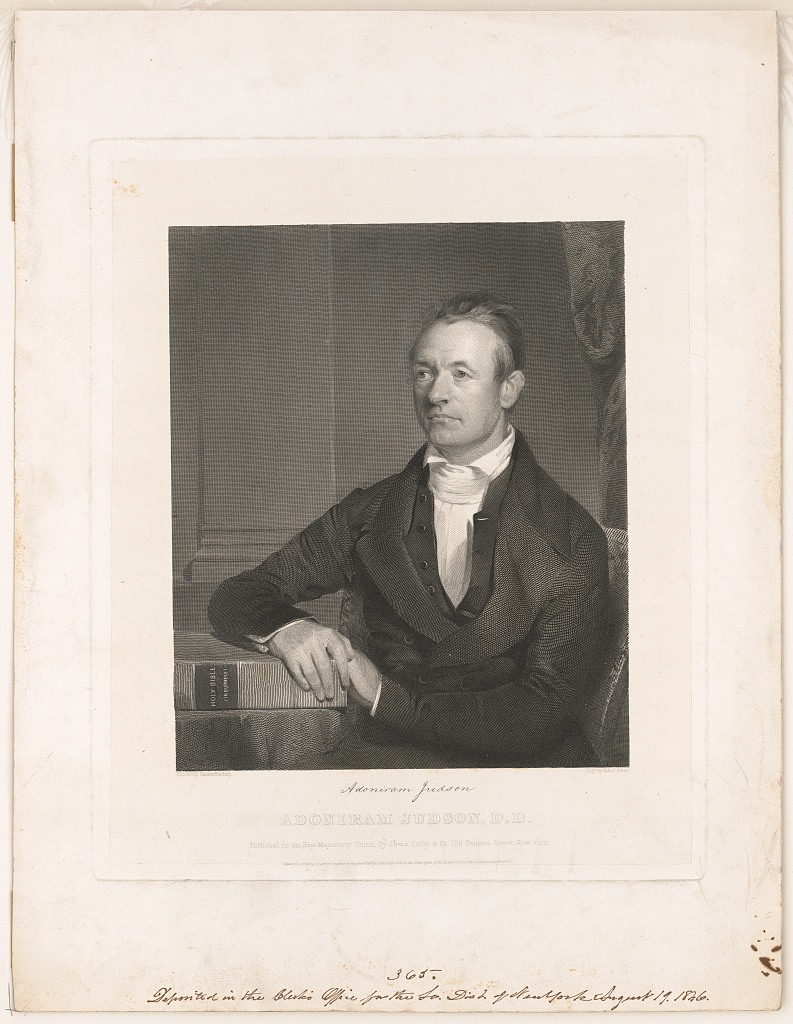

Judson belongs in a lesson on martyrs because popular lists often put him there, and because his imprisonment set the pattern for how missionary suffering would be told for a century. He did not die for the faith. He was released in 1826, kept working in Burma for more than twenty years, finished a Burmese Bible and died of illness on a ship in 1850. The record of his prison months is one of the best in this lesson, because three people who lived through it wrote it down.
What the record shows
Adoniram Judson, born in Massachusetts in 1788, sailed for Asia in 1812 under the American Board, became a Baptist on the voyage, and settled in Rangoon in 1813 with his wife Ann Hasseltine Judson. In 1823 the couple moved up the Irrawaddy to Ava, the royal capital. When war broke out between Burma and British India in 1824, the court suspected all white foreigners. Judson's own short statement, written after his release and printed by his son Edward in 1883, reads:
"I was seized ... on the 8th of June, 1824, in consequence of the war with Bengal, and in company with Dr. Price, three Englishmen, one American, and one Greek, was thrown into the death-prison at Ava, where we lay eleven months, nine months in three pairs, and two months in five pairs of fetters."1
(The printed text sets off the last clause with a dash, given here as a comma.) The same statement says the prisoners were then marched to "a country prison at Oung-pen-la, ten miles distant," that "the Greek, expired on the road," and that the government meant to have them "sacrificed in order to insure victory over the foreigners," a plan stopped only by "the sudden disgrace and death of the adviser of that measure." Judson spent six months at Oung-pen-la "in one pair of fetters," was then taken out of irons and sent to the Burmese camp at Maloun as an interpreter, and was finally released when the British army neared the capital.1 Edward Judson added up the time: nine months in three pairs of fetters, two in five, six in one, and in all "nearly to the end of twenty-one long months."1
Ann Judson's long letter to Judson's brother, written after the release, describes the arrest itself. On June 8, she wrote, an officer came with a dozen men and "one, whom, from his spotted face, we knew to be an executioner"; he threw Judson to the floor and bound him with a cord.5 For the next year and more she lived near the prison, bribed jailers, petitioned officials and carried food to her husband, while giving birth to a daughter, Maria, in January 1825. Her letter, together with the narrative of Jonathan Price and the recollections that Judson's third wife, Emily Chubbuck Judson, wrote down from his conversations, gives a picture of the inner prison, the Let-ma-yoon: a room about forty feet by thirty, with nearly a hundred prisoners and no ventilation but the chinks in the boards. At night the fettered men were strung on a bamboo pole.6
The release came through the war, not through any change of mind at court. Ann Judson's letter describes the couple's arrival at the British camp at Yandabo, where General Sir Archibald Campbell received them, and the signing of "the treaty of peace."5 Edward Judson dates the signing of the treaty at Yandabo to February 24, 1826.7 Ann Judson herself died of fever at Amherst on October 24, 1826, while Judson was away at Ava on government business; a letter from the British assistant superintendent dated October 26 told him that "Mrs. Judson is no more."7 Judson remarried twice, finished the Burmese Bible in the 1830s, and died at sea on April 12, 1850, on a voyage taken for his health; he was buried in the sea the same day.8
Tradition and legend
Two stories have grown in retelling. The first is the pillow. Emily Judson's recollections say that Judson's manuscript of his Burmese translation was hidden in a hard cotton pillow, that a jailer took the pillow, that a guard threw away its cotton roll when the prisoners were driven to Oung-pen-la, and that the Burmese convert Moung Ing picked it up and carried it home, where "several months from that time, the manuscript which now makes a part of the Burmese Bible was found within, uninjured."6 That is a family account written down years later from Judson's memory, approved by him (Emily Judson wrote that he "read and approved it"), and it is specific about which part survived. Popular versions say the whole Burmese Bible, or the whole New Testament, was saved in the pillow. The earliest account does not say that. This is family tradition, first printed in the 1850s, and the inflated version is legend.
The second is the description of Judson as a martyr. Sermons and children's books sometimes list him beside those who died. He did not die in prison, and he did not die for the faith. Ann Judson, worn down by the prison year, died eight months after the release, and some writers call her a martyr in a looser sense. The records support "she died of fever after a year of great hardship," and nothing more.
What the sources dispute
The open questions are small. Accounts differ on the number of fetters at given times (Judson's own summary and Emily Judson's recollections use slightly different periods). Burmese sources for the arrest are not in the English record used here, so the court's own view of the foreign prisoners comes only through what the prisoners were told. The larger argument is about framing. Mission historians of the nineteenth century read Ava as a test of faith. Later historians of Burma read it as the treatment any foreign subject could expect when a kingdom went to war with a neighbour that those foreigners appeared to represent. Both readings fit the documents: Judson was jailed as a suspected foreigner and kept his faith and his translation through it.
The Boxer year, 1900: Taiyuan and the Chinese Christians
Died: July 9, 1900 (Taiyuan); killings across north China from spring 1900 into 1901 · Place: Taiyuan, Shanxi province, and many towns of Shanxi, Zhili (Hebei), Inner Mongolia and elsewhere · Earliest source: missionary and Chinese Christian reports, 1900 to 1901; E. H. Edwards, Fire and Sword in Shansi, 1903; Robert Coventry Forsyth, ed., The China Martyrs of 1900, 1904 · Record strength: Documented (the deaths); the details of the Taiyuan scene are disputed
The Boxer year produced the largest number of Christian deaths in a single season in this lesson, and most of the dead were Chinese. The foreign dead are named one by one in the mission rolls. The Chinese dead are mostly counted, not named, except where a church later took up their causes.
What the record shows
The Boxers (the Yihequan, "Fists of Righteousness and Harmony") rose in Shandong in 1899 and spread into Zhili in the spring of 1900. In June the court in Beijing, under the Empress Dowager Cixi, sided with them and declared war on the treaty powers. The foreign legations in Beijing and the Catholic cathedral of the Beitang were besieged until an international army entered the city on August 14, 1900. In Shanxi the new governor, Yuxian, gathered the province's missionaries in the capital, Taiyuan.
The fullest early account of what happened there on July 9 is the one printed by Robert Coventry Forsyth in 1904, compiled from mission reports and the statements of Chinese who were in the city. It says the foreigners were told they were to be sent under escort to the coast, were brought to the governor's yamen (office compound), lined up outside it, and then killed on the governor's order: first the men of the English Baptist Mission and the other Protestant missions, then the women and children, then the Catholic bishops, priests and sisters, then a party brought from the county jail. Forsyth's text gives the total:
"Forty-six Europeans, thirty-four Protestants and twelve Roman Catholics, suffered martyrdom at this time, besides Miss E. Coombs, who died on June 27."9
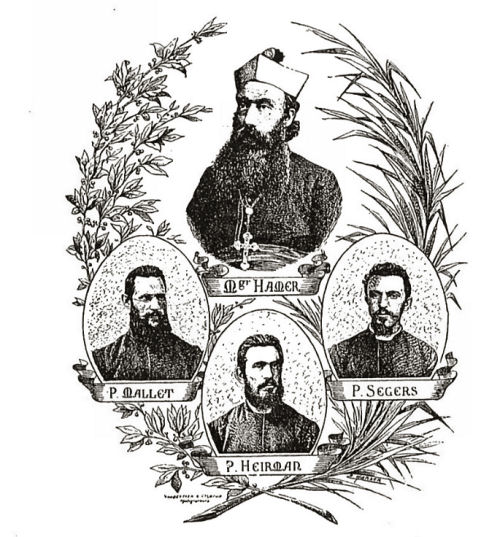
(Forsyth's dash after "Europeans" is given here as a comma.) Edith Coombs had died when a mob burned the Taiyuan mission hospital on June 27. Forsyth records the words of one of the women, Mrs. Lovitt, as she was led out: "We all came to China to bring you the good news of salvation by Jesus Christ. We have done you no harm, but only sought your good; why do you treat us so?"9 The Catholic dead included two Italian Franciscan bishops, Gregorio Grassi and Francesco Fogolla, with priests, seven Franciscan Missionaries of Mary and Chinese seminarians and lay helpers.
A second account, written a year later, agrees on the main facts. When eight Protestant missionaries returned to Taiyuan in July 1901 at the invitation of the new governor for a memorial service, a report printed by the English Baptist doctor E. H. Edwards in 1903 said that "in July 1900 forty-six foreigners were killed in T'ai Yüan Fu, including several Protestant missionaries, their wives and children, two Roman Catholic bishops, three priests, and seven Sisters of Charity," adding that "many Chinese Christians perished at the same time. The massacre occurred on 9th July."10 Edwards also printed a letter written in February 1901 by a Chinese Christian photographer named Chu, giving the same figure of forty-six for the city ("twelve French, and of English, old and young, men and women, thirty-four") and listing deaths in other Shanxi towns: eight at Xinzhou, six at Taigu, ten at Fenzhou, two at Xiaoyi and eighteen around Pingyang.11 Chu's word "French" reflects the French protectorate over Catholic missions; the bishops were Italian.
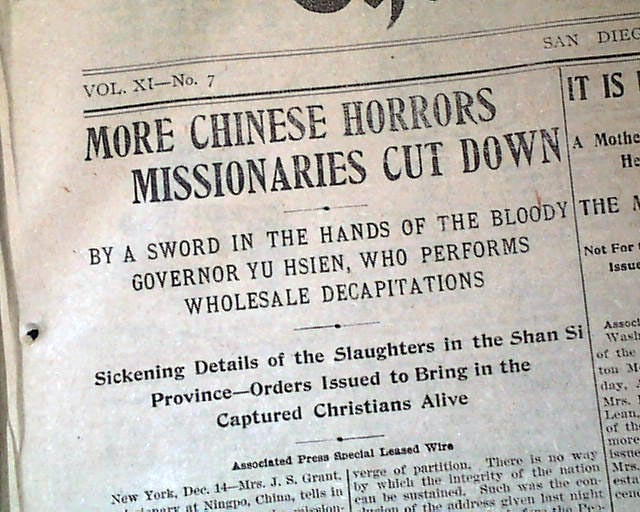

Beyond Taiyuan the numbers rise quickly. Forsyth's 1904 summary says that "one hundred and two adults and forty-one children were killed in the province of Shan-si alone, besides about four hundred Protestant Christian converts and thousands of Catholic Christians," and that outside Shanxi, apart from Baoding in Zhili and Quzhou in Zhejiang, "the missionaries in nearly all cases escaped with their lives."12 Across China the figure most often given for Protestants is about 189 missionaries and their children; the China Inland Mission lost more than any other society. Catholic losses among missionaries were smaller in number (several bishops, about forty priests, brothers and sisters are commonly listed) and far larger among Chinese Catholics, for whom a figure of about 30,000 is often repeated. These whole-country figures are estimates by mission bodies and later historians, not counts from a single register, and they are given here as estimates.
The Catholic Church took up 120 of the Chinese martyrs' causes together. On October 1, 2000, Pope John Paul II canonized "Augustine Zhao Rong and his 119 companions," martyrs who died between 1648 and 1930.13 The homily named "the 33 missionaries who left their land" and "85 Chinese men and women of every age and state, priests, religious and lay people," along with two named young martyrs: "Young Ann Wang, a 14-year-old, withstood the threats of the torturers who invited her to apostatize," and "18-year-old Chi Zhuzi ... cried out fearlessly to those who had just cut off his right arm."14 The homily said that the day was "not the appropriate time to pass judgement on those historical periods," and it did not name the Boxers, though most of the 120 died in 1900 (the Grassi and Fogolla group of Taiyuan among them).1435

Tradition and legend
The mission books of 1901 to 1904 were written to honour the dead and to move readers at home, and they borrowed the shape of older martyr stories: the calm prisoner, the last speech, the cruel governor. Forsyth's account has Yuxian laughing at the foreigners and drawing his own sword across the face of the Catholic bishop. That scene rests on reports from Chinese who said they had seen it; the passage as printed names no witness. When Edwards met the senior statesman Li Hongzhang in Beijing in 1901, Li asked whether the missionaries were killed in front of the yamen and whether Yuxian was present; Edwards answered that this was "the statement of men who say they were eye-witnesses."15 The fact of the killings is not in doubt. The details of the scene, and especially Yuxian's personal part in it, are best treated as strong report, not settled fact.
A later tradition among Chinese Protestants and Catholics alike holds that the blood of 1900 was the seed of the Chinese church that grew after 1949. That is a reading of the past, not a claim the 1900 records can prove or disprove.
What the sources dispute
Three questions remain open. First, the Taiyuan scene. The historian Roger R. Thompson, in a 2007 chapter titled "Reporting the Taiyuan Massacre," argued that the most widely printed accounts came from people who could not have seen the events and that they followed patterns from earlier martyr literature; he questioned the picture of Yuxian presiding over a formal execution. Other scholars, among them Anthony E. Clark, who has written on the Franciscans of Shanxi in the Boxer year, reply that the accounts of 1900 and 1901 agree on the skeleton of the story, even if the speeches and gestures are uncertain.16 Second, the numbers, which differ by source and by what is counted (missionaries only, missionaries with children, Chinese converts, Catholic catechumens). Third, the cause. Mission writers stressed hatred of the gospel; Chinese historians of the twentieth century often presented the Boxers as patriots resisting foreign power; Esherick and Cohen describe a mixture of hunger, popular religion, anti-foreign feeling and court politics.2 The canonization of 2000 drew a public protest from the government of the People's Republic. Its Foreign Ministry, as quoted by the state news agency Xinhua, called those canonized "evil-doing sinners," and the ceremony fell on October 1, China's National Day.34
John and Betty Stam (killed 1934)
Died: December 8, 1934 · Place: Miaoshou (Miaosheo), near Jingde (Tsingteh), Anhui province, China · Earliest source: John Stam's letter of December 6, 1934, to the China Inland Mission; mission and press reports of December 1934; Geraldine (Mrs. Howard) Taylor, The Triumph of John and Betty Stam, 1935 · Record strength: Documented
The Stams were young American missionaries of the China Inland Mission, killed by soldiers of a Communist army during the civil war, and their story became one of the most widely told missionary deaths of the twentieth century, largely because their infant daughter survived.
What the record shows
Elisabeth Alden Scott, called Betty, was the daughter of Presbyterian missionaries in China. She graduated from Wilson College in Pennsylvania in 1928 and studied at Moody Bible Institute in Chicago, where she met John Stam, the son of a family that ran a rescue mission in Paterson, New Jersey.3 Both went to China with the China Inland Mission, married there in 1933, and in 1934 were posted to Jingde (then spelled Tsingteh) in southern Anhui. Their daughter, Helen Priscilla, was born in September 1934.
On December 6, 1934, soldiers of a Red Army unit moving through the region took the town and seized the Stams. That night John Stam wrote to the mission's officials. Wilson College's exhibit on Betty Stam quotes the letter: "Their demand is twenty thousand dollars for our release," and, near its close, "may God be glorified, whether by life or by death, (Phil.I:20)."3 The verse he paraphrased reads in the King James Version: "so now also Christ shall be magnified in my body, whether it be by life, or by death" (Philippians 1:20).17 The letter was never delivered in time; it was found later. The next day the soldiers marched the couple and the baby about twelve miles to Miaoshou. On the morning of December 8 John and Betty Stam were taken out and killed with a sword on a hill outside the town, after local people who protested were threatened. The baby was left in an empty house. About a day and a half later a Chinese evangelist, Mr. Lo, found her alive and carried her, hidden in a rice basket by most accounts, to her Scott grandparents.3 Helen Stam grew up in the United States and graduated from her mother's college, Wilson, in 1956.3
Tradition and legend
Two pieces of the story come from the mission's own retellings. The first is a poem often attributed to Betty Stam, "Afraid? Of what?", in fact written by E. H. Hamilton, a missionary colleague, after the death of another missionary, and reprinted in the Stam memorial pamphlets; later books sometimes print it as hers. The second is the scene of the execution, which the mission books describe in detail from Chinese witnesses, including a Christian medicine seller who was killed for pleading for them. Those details are reported, not documented by a named eyewitness in the sources opened for this lesson. The core (capture, ransom letter, killing, the infant's rescue) is documented.
Betty Stam's prayer of consecration, written as a student ("Lord, I give up all my own plans and purposes..."), is widely printed in devotional books. It comes from her papers as published by her family and the mission after 1934, and its exact wording varies between printings; it is quoted here only in its opening words and treated as tradition until checked against the original.
What the sources dispute
The sources agree on the dates and the place. They differ on the distance from Jingde to Miaoshou (about twelve miles by road in most mission accounts, less in a straight line), on the name of the army unit (often given as the 19th Division), and on whether the deaths were planned or a reaction to the failure of the ransom. Whether the Stams were killed for their faith or as foreigners in a war is the question the whole lesson keeps meeting. The Red Army of 1934 regarded missionaries as agents of imperialism and targeted them as such; the missionaries regarded themselves as servants of Christ. Both statements describe the same event from opposite sides, and neither is a fabrication.
Paul Schneider (1897 to 1939), "the preacher of Buchenwald"
Died: July 18, 1939 · Place: Buchenwald concentration camp, near Weimar, Germany · Earliest source: camp and Gestapo records; the testimony of fellow prisoners after 1945; his letters, published by his widow Margarete Schneider · Record strength: Documented
Schneider was a Protestant pastor of the Rhineland, a member of the Confessing Church, and the first Protestant minister to die in a Nazi concentration camp. He is named here because his case shows the most common form of Christian resistance under the regime: a pastor who would not let the state or the party decide what happened inside his parish.
What the record shows
Paul Robert Schneider was born in Pferdsfeld in the Hunsrück on August 28, 1897 (the date given by the Neue Deutsche Biographie; the plaque at Buchenwald gives August 29).18 He served as a soldier in the First World War, studied theology, and in 1926 succeeded his father as pastor at Hochelheim and Dornholzhausen near Wetzlar. After clashes with local party members the church authorities moved him in 1934 to the small Hunsrück parishes of Dickenschied and Womrath. There, in February 1937, he used church discipline against a party member and teacher who had been agitating against the congregation. The Gestapo held him in Koblenz, released him on July 24, 1937, and expelled him from the Rhine Province. He went back to his parish. He was arrested again on October 3, 1937, for breaking the residence ban, and on November 28, 1937, he was committed to Buchenwald.18
In the camp he was held for long periods in the punishment bunker, beaten and abused. The historian Wolfgang Benz, in the Neue Deutsche Biographie (2007), records that a sermon he called out from the bunker window to prisoners standing at roll call brought further punishment. He died on July 18, 1939. Benz describes the end as "murder by means of an injection" (Ermordung mittels einer Injektion). About two hundred pastors from across Germany, most in their gowns, attended his burial at Dickenschied on July 21, 1939, under Gestapo watch.18
Tradition and legend
Former prisoners remembered Schneider as the man who refused to bare his head to the swastika flag at a camp ceremony in April 1938 and who preached to the roll-call square from his cell window, calling out words of Scripture and naming the camp's murderers. These memories, collected after 1945, gave him the title "the preacher of Buchenwald." The refusal to salute the flag and the exact words of his window sermons come from survivors' recollections rather than camp records. They are strong report; the substance (repeated punishment for speaking out) is documented.
What the sources dispute
The open points are the exact means of death (an injection of a heart drug is the usual account; the source used here names no substance) and his birth date. A wider question concerns the church. His regional church authorities had moved him, and much of the German Protestant leadership kept quiet during his imprisonment, a point later German church leaders have acknowledged in public remembrance. Whether a pastor jailed for a quarrel over church discipline is a martyr is a question of definition. The state's charge was defiance of a police order; the reason he defied it, by his own letters, was that he could not abandon his congregation.
Maximilian Kolbe (1894 to 1941)
Died: August 14, 1941 · Place: Auschwitz concentration camp, Block 11, Oswiecim, German-occupied Poland · Earliest source: the camp death record; the testimony of Franciszek Gajowniczek and other survivors, given after 1945 and in the beatification process · Record strength: Documented
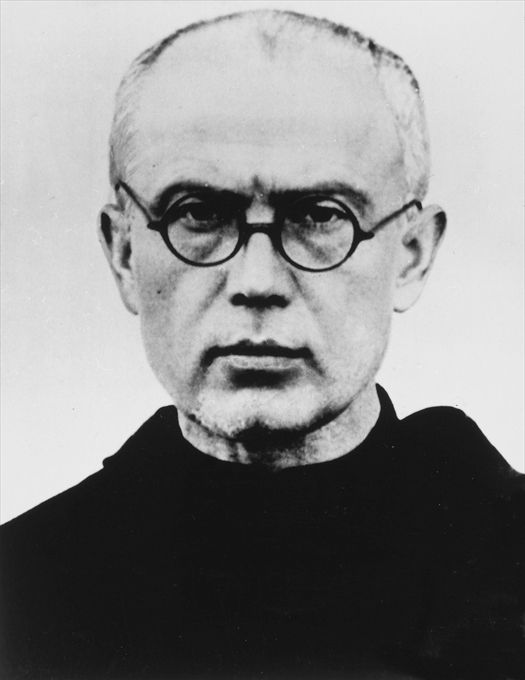

Kolbe was a Polish Conventual Franciscan friar who offered to die in place of another prisoner. His death is the best known act of self-sacrifice in the history of the camps, and the record for its core is unusually good, because the man whose place he took lived until 1995 and told the story many times.
What the record shows
The Auschwitz Memorial gives his birth as "Rajmund Kolbe on 8 January 1894 in Zdunska Wola, near Lodz." He entered the Franciscans, took the name Maximilian, founded the friary and publishing house of Niepokalanow near Warsaw in 1927, and also worked as a missionary in Japan in the early 1930s. He was arrested at Niepokalanow on February 17, 1941, held in Warsaw's Pawiak prison, and deported to Auschwitz in late May 1941.19 The Memorial's educational podcast gives his camp number as 16670.20
At the end of July 1941 a prisoner from Kolbe's block escaped. Under the camp's rule of collective punishment the camp leader (Lagerfuhrer) Karl Fritzsch chose ten men from the same block to die by starvation. One of them, Franciszek Gajowniczek, cried out for his wife and children. In the Memorial's words, "Maximilian Kolbe, camp number 16670, stepped out and asked the camp commander to take him instead."20 The exchange was accepted. The ten men were locked in the starvation cell in the cellar of Block 11. After about two weeks the few still alive, Kolbe among them, were killed by a lethal injection of phenol given by a prisoner functionary from the camp hospital. The death certificate issued by the camp administration gives the date of death as August 14, 1941, though the Memorial's historian notes that the exact day is not fully certain.20 Gajowniczek survived Auschwitz and Sachsenhausen and died in 1995.20
Pope Paul VI beatified Kolbe in 1971. On October 10, 1982, Pope John Paul II canonized him, and in the homily declared that he "shall from now on be venerated also as a Martyr" (venga d'ora in poi venerato "anche come Martire").21 The words of John 15:13, "Greater love hath no man than this, that a man lay down his life for his friends" (KJV), have been tied to his memory from the start.22
Tradition and legend
Survivors and the friars who gathered testimony after the war reported that Kolbe led the men in the starvation cell in prayer and hymns, that he was among the last alive, and that he offered his arm for the injection. These details come from the testimony of prisoners who worked near the bunker, especially the interpreter Bruno Borgowiec, given years later. They are strong report and are consistent with one another, but no camp document records them. The words Kolbe is said to have spoken to Fritzsch ("I am a Catholic priest") vary between accounts and should be treated as reported speech.
What the sources dispute
The exact date of the selection is uncertain (the Memorial says only "the end of July 1941"), and even the Memorial's own pages differ on which block the prisoners came from.20 Two larger debates surround him. First, was he a martyr in the Catholic sense? He was not killed for refusing to deny the faith; he chose death out of charity. He was beatified in 1971 as a confessor; the 1982 homily itself says that he "was venerated as Confessor" (era venerato come Confessore) before adding the title of martyr,21 a decision some canon lawyers questioned at the time. Second, in the early 1980s journalists and historians drew attention to anti-Jewish material in the popular Catholic papers his Niepokalanow press published in the 1920s and 1930s. His defenders replied that he wrote little of it himself and that his conduct at Auschwitz should be judged on its own terms; his critics replied that a publisher answers for what he prints. Both sides agree on what he did in July 1941.
Edith Stein, Teresa Benedicta of the Cross (1891 to 1942)
Died: August 9, 1942 (the date given by the Vatican, which says she was "probably" gassed that day) · Place: Auschwitz-Birkenau · Earliest source: Dutch transport and Westerbork records; letters and notes from Westerbork; Red Cross records after 1945; the Carmelite community at Echt · Record strength: Documented (the deportation and death); the meaning of her death is disputed
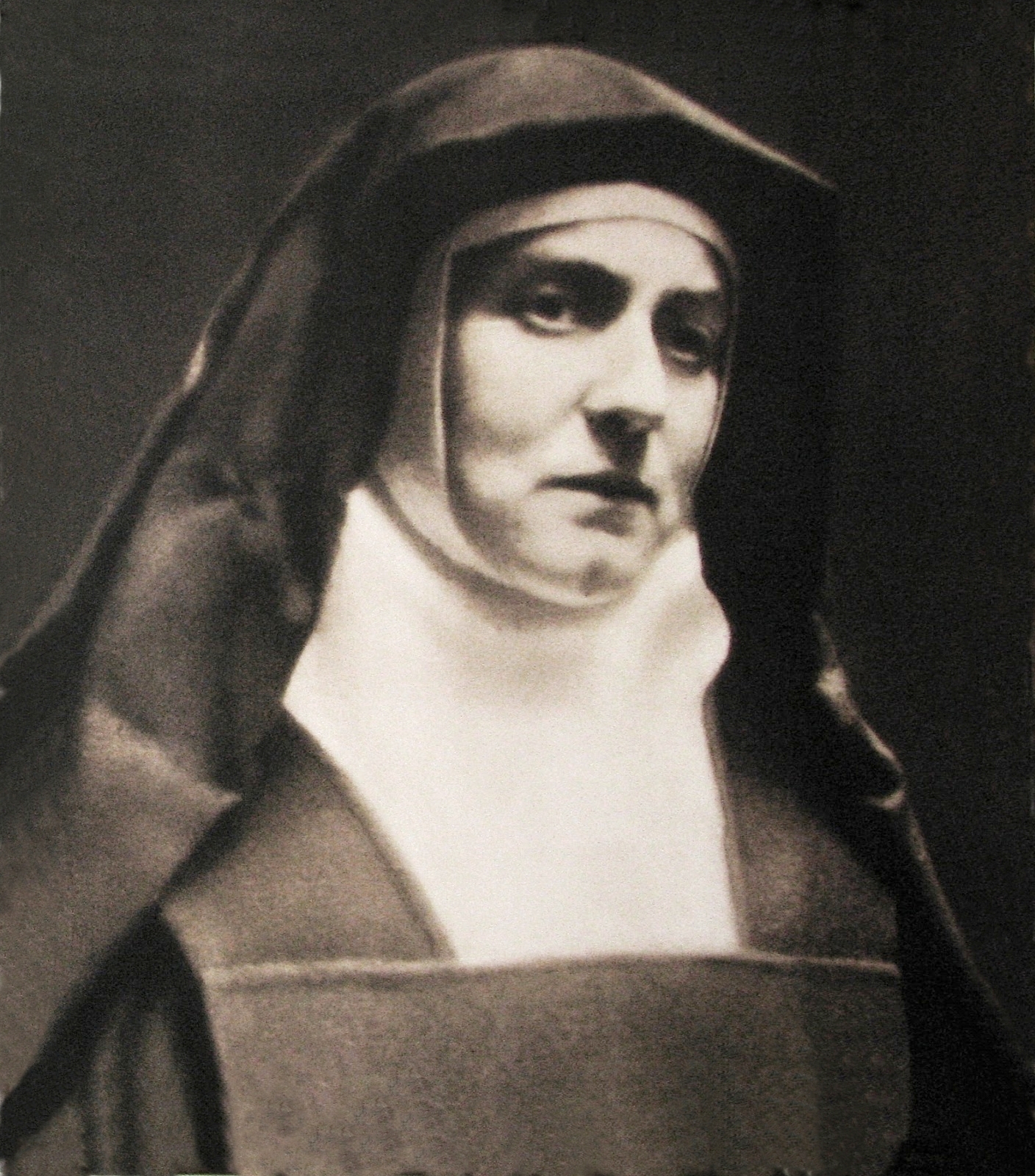

Edith Stein was a Jewish-born German philosopher who became a Catholic and a Carmelite nun and was murdered at Auschwitz with her sister Rosa. Her canonization in 1998 made her the most debated figure in this lesson, because the Nazi state killed her as a Jew and the Catholic Church honours her as a martyr of the Church.
What the record shows
The Vatican's biography gives her birth at Breslau on October 12, 1891, into an observant Jewish family. She studied philosophy under Edmund Husserl, earned a doctorate, and became one of the leading phenomenologists of her generation. After reading the autobiography of Teresa of Avila she was baptized on January 1, 1922. Barred from teaching by the 1933 race laws, she entered the Carmelite convent at Cologne in October 1933 and took the name Teresa Benedicta of the Cross. On New Year's Eve 1938, after the November pogrom, she was moved to the Carmel at Echt in the Netherlands for safety; her sister Rosa, also a convert, later joined her.23
In July 1942 the Catholic bishops of the Netherlands had a pastoral letter read in their churches protesting the deportation of the Jews. In reprisal the occupation authorities arrested Catholics of Jewish descent. The Vatican biography says she was arrested by the Gestapo on August 2, 1942, while she was in the chapel, and records the words she is said to have spoken to her sister: "Come, we are going for our people." She was taken to the transit camp at Amersfoort and then to Westerbork, and from there deported east. The Vatican says she was "probably" gassed on August 9, 1942.23 Pope John Paul II beatified her in Cologne on May 1, 1987, and canonized her on October 11, 1998.
In the canonization homily the pope called her an "eminent daughter of Israel and faithful daughter of the Church," quoted her own wish "to be a daughter of the chosen people and to belong to Christ not only spiritually, but also through blood," and said that in celebrating her memory "we must also remember the Shoah, that cruel plan to exterminate a people."24 In 1999 he named her one of the patron saints of Europe.
Tradition and legend
The sentence "Come, we are going for our people" is reported speech, remembered by witnesses at Echt and printed in the earliest Carmelite biographies. It is likely genuine in substance and is given here as reported. Stories of her calm care for children at Westerbork come from the testimony of a few survivors and officials who met her there, written after the war; they are strong report. Her own writings, especially the unfinished Science of the Cross and her letters, show that she had offered her life in prayer for her people and for peace well before her arrest; that is documented in her own hand.
What the sources dispute
Did Edith Stein die as a Christian or as a Jew? Both, say her church and her biographers: she was arrested in a reprisal aimed at Catholic converts after the bishops' protest, and she was killed in a program of murder aimed at Jews. Jewish organizations and many Jewish scholars objected when she was beatified and canonized, arguing that calling her a martyr of the Church claims for Christianity a death the Nazis inflicted because she was Jewish, and could blur the meaning of the Shoah. Some also worried that her canonization might be read as approval of converting Jews. Catholic defenders answered that the Church does not deny that she died as a Jew, that the homily itself said so, and that her arrest was triggered by the Church's public protest. The dispute is a real one, and both sides state facts correctly; they differ on which fact gives the death its meaning.
Dietrich Bonhoeffer (1906 to 1945)
Died: April 9, 1945 · Place: Flossenburg (Flossenbürg) concentration camp, Bavaria · Earliest source: his own letters from Tegel prison, 1943 to 1944; Sigismund Payne Best, The Venlo Incident, 1950; Eberhard Bethge, Dietrich Bonhoeffer (German edition 1967) · Record strength: Documented
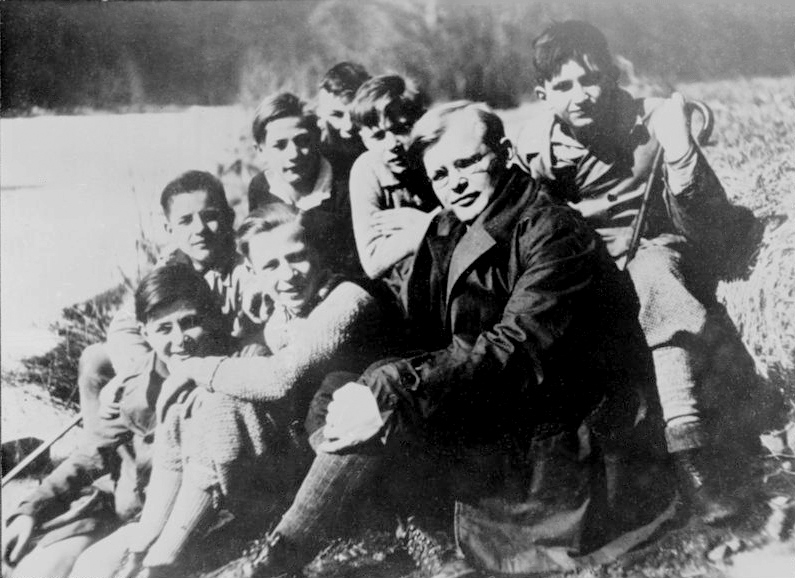

Bonhoeffer was a Lutheran theologian and pastor of the Confessing Church who joined the conspiracy against Hitler through the military intelligence office and was hanged in the last month of the war. His books, especially Discipleship (1937) and the prison letters, made him the most widely read Christian writer of the resistance, and his death raises plainly the question whether a man executed for conspiracy can be a martyr.
What the record shows
Born in Breslau on February 4, 1906, Bonhoeffer was the son of a leading Berlin psychiatrist. He took his doctorate at twenty-one, studied a year at Union Theological Seminary in New York (1930 to 1931), and from 1933 opposed the German Christian movement and the attempt to apply the race laws in the church. The German Resistance Memorial Center records that he directed a Confessing Church seminary "first located in Zingst, Pommerania, and later in Finkenwalde near Stettin" from 1935 to 1937, until the Reich church minister Hans Kerrl banned such seminaries.25 In 1940 he was taken into the Abwehr, the counter-intelligence office of the armed forces high command, where his brother-in-law Hans von Dohnanyi worked with Hans Oster and Admiral Wilhelm Canaris in the circle that plotted against Hitler. Using Abwehr cover he travelled to Switzerland and Sweden, and in Sigtuna in 1942 he met the English bishop George Bell to pass word of the conspiracy to the British government.
He was arrested in early April 1943 (April 5 by the usual dating) and, in the Memorial Center's words, "held without trial in Berlin's Tegel prison."25 Bethge's biography records that the first investigation concerned Abwehr matters, among them the operation that smuggled a group of Jews to Switzerland under cover of intelligence work and his exemption from military service, not the plot. After the failed attempt on Hitler's life on July 20, 1944, and the discovery of Abwehr files at Zossen in September 1944, the conspiracy was exposed. Bonhoeffer was moved to the Gestapo prison on Prinz-Albrecht-Strasse, then in February 1945 to Buchenwald, and in April to Flossenburg.25
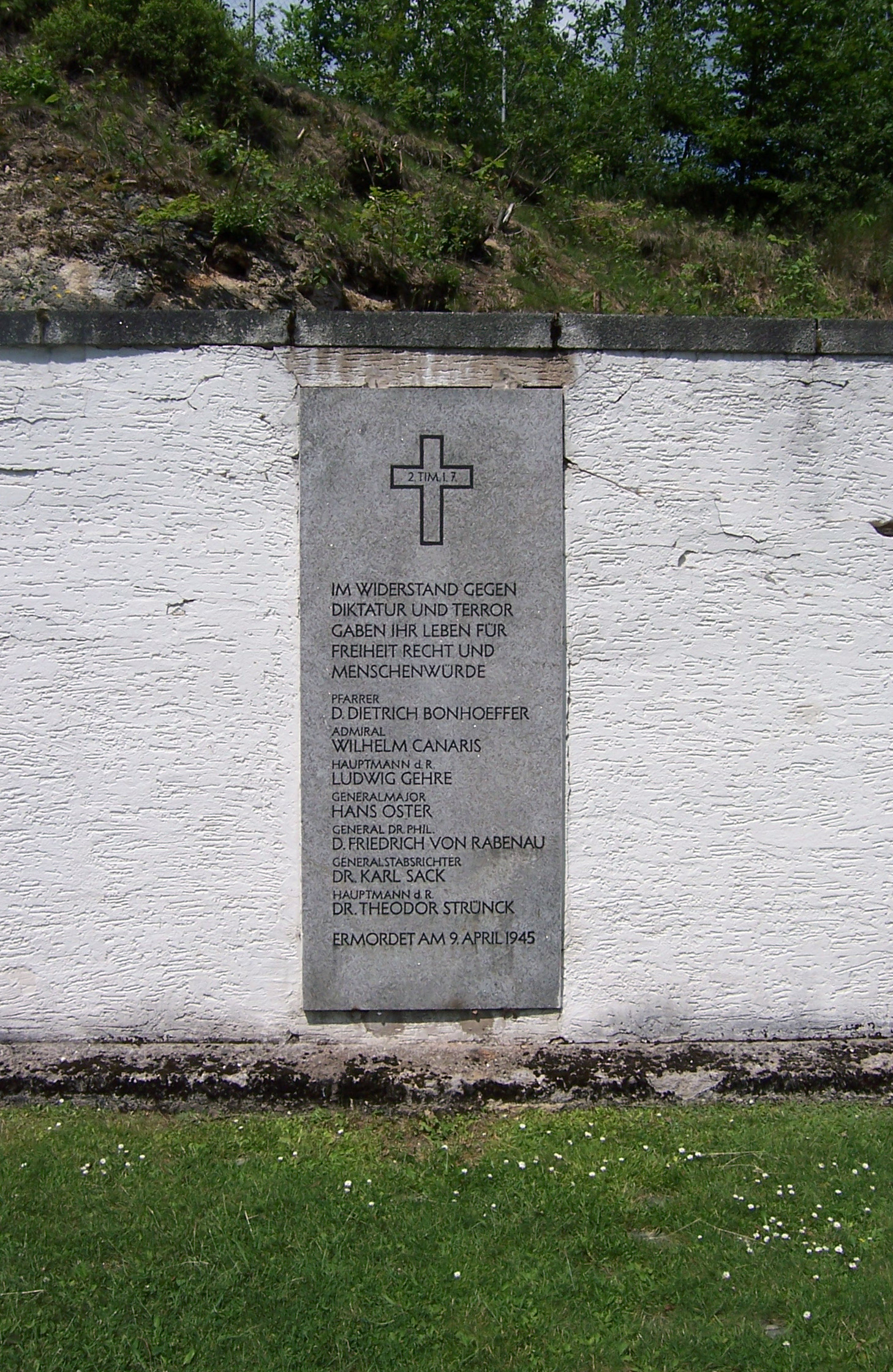
On April 8, 1945, an SS summary court at Flossenburg, sent at the order of Ernst Kaltenbrunner and presided over by the SS judge Otto Thorbeck, condemned Bonhoeffer with Canaris, Oster, Karl Sack and Ludwig Gehre. It kept no record and allowed no defence. The memorial at Flossenburg states that "the Protestant theologian was hanged on the morning of 9 April 1945 in the detention yard of the Flossenburg concentration camp" (Der evangelische Theologe wurde am Morgen des 9. April 1945 im Arresthof des KZ Flossenburg erhängt), after a sham trial the day before, together with Canaris, Gehre and Oster.26 The Memorial Center calls it murder "after being sentenced by an SS summary court-martial."25 The camp was liberated by the United States Army two weeks later.

Tradition and legend
Two reports of Bonhoeffer's last hours shape his memory. The first comes from Sigismund Payne Best, a British intelligence officer captured in 1939, who travelled with Bonhoeffer in the prisoner transport of early April 1945. In The Venlo Incident (1950) and in letters to Bonhoeffer's family and to Bishop Bell, Best said that when guards came for Bonhoeffer at the village school in Schonberg on Sunday, April 8, after he had led a short service, Bonhoeffer took him aside and gave him a message for Bell. The words are given in English, in the form Bethge and later biographers print, as "This is the end, for me the beginning of life."27 The message to Bell is usually rendered as "for me this is the end but also the beginning." Best wrote these words down years after the event, from memory, and he was reporting German in English. They are given here as reported, with a rating of strong report from a named witness, not as a verbatim record.
The second is a statement by the Flossenburg camp doctor, H. Fischer-Hullstrung, written years after the war, that he saw a prisoner kneel in prayer before the execution and "hardly ever seen a man die so entirely submissive to the will of God." Bethge printed it, and it is now part of nearly every life of Bonhoeffer. Historians have questioned it: the doctor was an SS officer writing to put his own conduct in a good light, the hangings at Flossenburg were brutal, and it is not certain that he could identify which prisoner he saw. It is a late report of uncertain value.
A third tradition, common in sermons, says Bonhoeffer was hanged "for his faith." The court's charge was high treason as part of the conspiracy. His friends and his church say that his faith led him into the conspiracy; that is a reading of his motives, supported by his own writings, not the charge on which he died.
What the sources dispute
The main dispute is the word "martyr." In the first years after the war many German Protestants did not regard him as one. Bethge records that some church leaders and congregations saw the conspirators as traitors who had broken their oath, and that public honour for him came slowly. West German courts dealt with the men who condemned him: Thorbeck was convicted of aiding murder in 1955, but in 1956 the Federal Court of Justice set the conviction aside, reasoning that the regime had a right to try traitors; that ruling was widely condemned.28 In 1996 the Berlin Regional Court (Landgericht Berlin) annulled the death sentence of April 8, 1945, and rehabilitated Bonhoeffer.36 Today Lutheran and Anglican calendars remember him on April 9, Westminster Abbey placed his statue among its ten twentieth-century martyrs in 1998 (see lesson 10), and the Evangelical Church in Germany honours him as a witness of faith. Scholars still debate how far he endorsed killing Hitler and how his pacifist writings of the 1930s fit his later choices. A second, smaller dispute concerns the popular image of Bonhoeffer as a theologically conservative evangelical, or as a forerunner of "religionless Christianity" in the 1960s sense; both groups quote him selectively, and his own writings support neither picture alone.
The five in Ecuador: Jim Elliot, Nate Saint, Ed McCully, Pete Fleming and Roger Youderian (1956)
Died: January 8, 1956 · Place: a sandbar the men called "Palm Beach" on the Curaray River, eastern Ecuador · Earliest source: the men's diaries and radio logs; the search party's reports, January 1956; Life magazine, January 30, 1956; Elisabeth Elliot, Through Gates of Splendor, 1957; later accounts by the Waorani participants recorded by Steve Saint (1996) · Record strength: Documented
Five young American Protestant missionaries were speared to death by Waorani men a few days after making peaceful contact. The story became the most famous missionary death of the century in the United States, and decades later the killers themselves told how and why it happened.
What the record shows
The Billy Graham Center Archives at Wheaton College, which hold the papers of the men and their families, give the sequence. Jim Elliot, Pete Fleming and Ed McCully worked with the Plymouth Brethren mission in Ecuador; Roger Youderian with the Gospel Missionary Union; and Nate Saint was the pilot of Mission Aviation Fellowship.29 The Waorani (then called "Auca," a Quichua word meaning "savage") were a small forest people known for killing outsiders and one another. In September 1955 Saint and McCully spotted a Waorani clearing from the air. Over the next months Saint, with McCully, Elliot or Fleming, made a series of flights to lower gifts to the clearing in a bucket on a line, and the Waorani sent gifts back, including a parrot. The men learned a few phrases of the language from Dayuma, a Waorani woman who had fled her people and lived at a hacienda, though her command of the language had faded.30
On January 3, 1956, Saint flew Elliot, McCully and Youderian with supplies to a sandbar on the Curaray; Fleming came the next day. On January 6 three Waorani visited the camp: a young man, Naenkiwi (whom the missionaries called "George"), and two women, Gimari ("Delilah") and an older woman, Mintaka. The visit was friendly, and Saint took Naenkiwi up in the plane. On January 8, in the afternoon, a larger party of Waorani men came to the sandbar and speared all five. Saint's watch stopped at 3:12 p.m. The men had guns and fired at least one, wounding one of the attackers, but did not shoot to kill. On January 9 a Mission Aviation Fellowship pilot, Johnny Keenan, saw the stripped plane on the beach. A search party of missionaries, Quichua men, Ecuadorian soldiers and United States military personnel reached the site between January 11 and 13, found four bodies (McCully's had been carried off by the river), and buried them on January 14 in a storm.30
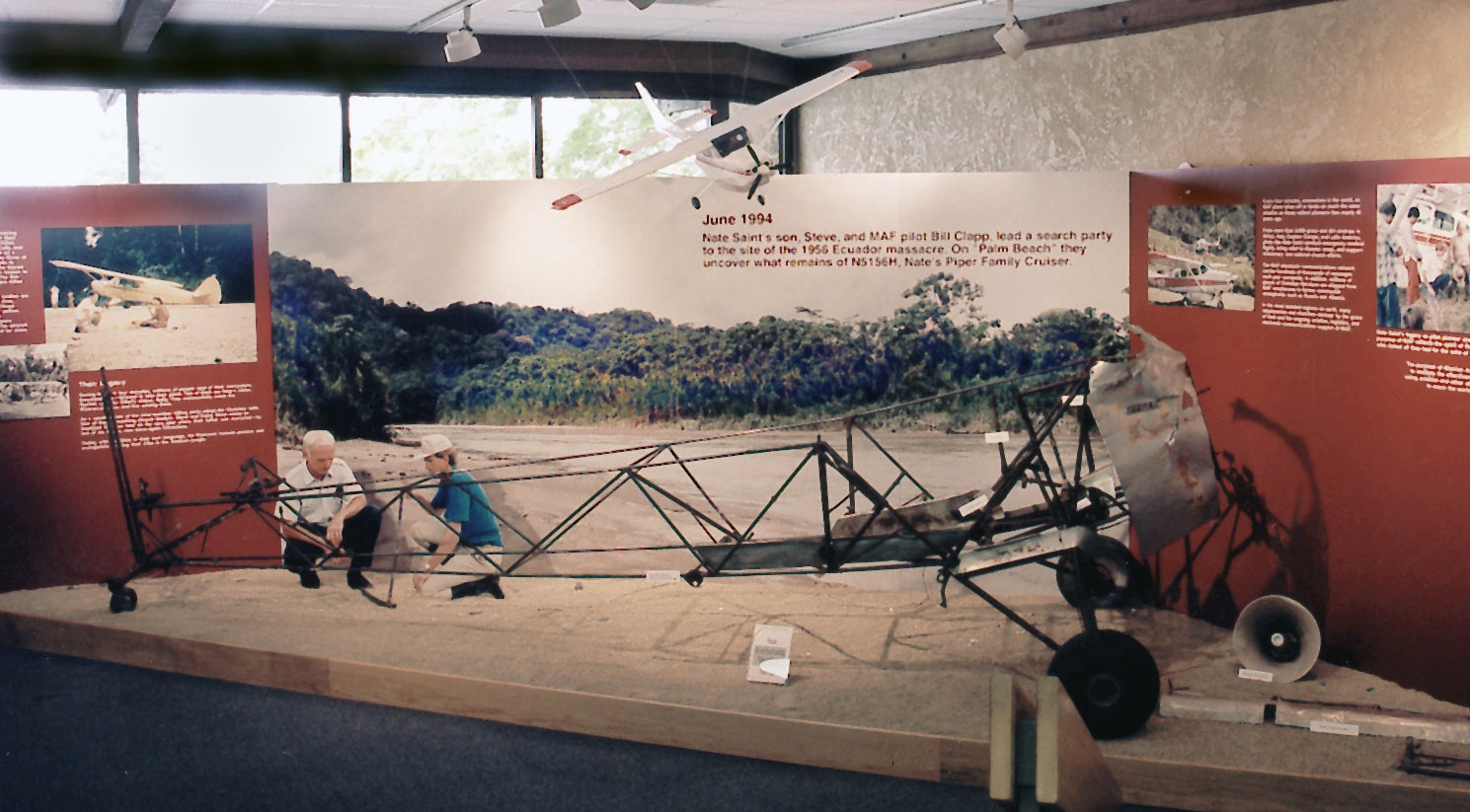

The widows' response is part of the record. Elisabeth Elliot published Through Gates of Splendor in 1957, a narrative built on the men's journals and letters, and it became one of the most widely read missionary books of the century.31 The Wheaton archives record that Elisabeth Elliot, with her small daughter Valerie, went to live among the Waorani 33 months after the killings, with Rachel Saint, Nate Saint's sister, who worked with Wycliffe Bible Translators; Marilou McCully visited them from time to time. Their work, with Dayuma's return to her people, led to a Christian community among the Waorani and in time a translation of Scripture into their language.32
The fullest account of why the killing happened comes from the killers. Nate Saint's son Steve, who grew up partly among the Waorani, recorded their memories and published them in Christianity Today in 1996. He reported that Naenkiwi had wanted to take as a wife a girl (a sister of Dayuma) whose family opposed the match, and that, caught with her after the visit to the beach, he told the others that "the cowodi had attacked them and they were fleeing." The oldest man, Gikita, decided that the foreigners should be killed, though an older woman reported they had been friendly. Saint names Gikita, Nampa, Kimo, Nimonga, Dyuwi and Mincaye among the men who took part.4 Several of them later became Christians. Saint calls one of them "the evangelist Dyuwi," and writes that another Waorani Christian, Tona, became the first Waorani martyr when he was speared while trying to reach relatives downriver with the gospel.4
Tradition and legend
The best-known sentence connected with the five is Jim Elliot's "He is no fool who gives what he cannot keep to gain that which he cannot lose." It is genuine: it is written in his own journal, which is held at the Billy Graham Center Archives, and was published by Elisabeth Elliot; the archives note that an underline and an asterisk beside it were probably added after his death.33 It was a private note written in 1949, years before Ecuador, not last words.
Two other stories are later. Some Waorani participants told Steve Saint and others that during or just after the killing they heard singing and saw lights or figures above the trees; Steve Saint's 1996 article records that one woman, Dawa, said such an experience drew her to God.4 This is the participants' own testimony given decades later. It is reported faithfully here and cannot be checked. A second, popular claim is that the men "chose not to defend themselves." The record is more mixed: the men had agreed beforehand not to shoot the Waorani, they fired at least warning shots, and one attacker was wounded. "They did not kill to save themselves" is supported; "they did not resist at all" is not.
What the sources dispute
Disagreement centres on three matters. The first is the wisdom of the method. Critics from inside and outside mission circles, and some of the families later, asked whether a secret, quick, airplane-based contact with a people known to kill outsiders was rash. Elisabeth Elliot herself, in later writing, refused to present the men as flawless and allowed that their choices could be questioned. The second is the role of Rachel Saint, whose decades among the Waorani drew criticism from anthropologists and some Ecuadorian officials, who argued that missionary settlement and the oil roads that followed changed Waorani life too fast; her defenders pointed to the end of the cycle of revenge killings that had nearly destroyed the group. The third is the word "martyr." The men were killed in a moment of fear and internal feud, not for refusing to deny Christ. They went to the Waorani because of their faith, and their churches call them martyrs in that sense. The killers themselves later spoke of the men as people who had come to help them.
The era in one view: what joins these deaths
Set side by side, the profiles in this lesson show how the shape of martyrdom changed between 1824 and 1956. In the ancient church a Christian was usually brought before a magistrate, asked to sacrifice, and executed for refusing; lesson 03 tells those stories. In this lesson almost no one was asked to deny Christ. The exceptions are the Chinese Christians of 1900, many of whom were offered their lives for recantation and refused, and whose deaths most nearly match the ancient pattern; the Catholic Church's canonization of 120 Chinese martyrs rests largely on that ground. Everyone else died, or suffered, because a state or a group saw them as something besides a Christian: a foreign spy, an agent of imperial powers, a class enemy, a disobedient pastor, a Polish priest, a Jew, a conspirator, an intruder.
The records are also different. For the ancient martyrs a single passion text, often edited, is usually all there is. For these deaths there are prison letters, camp registers, transport lists, court files, newspaper reports within weeks, and in two cases (the Waorani and Gajowniczek) the testimony of people on the other side of the event. That richness cuts both ways. It makes the core facts secure, and it shows how quickly last words, gestures and scenes were shaped for readers at home. The mission books of 1901 to 1904, the Carmelite and Franciscan biographies of the 1950s, and the evangelical bestsellers of 1957 all did what earlier martyr writers did: they told true deaths in a form meant to move readers.
| Person or group | Charge or reason given by those who held them | Earliest record and gap | Rating |
|---|---|---|---|
| Adoniram Judson | Suspected British spy in wartime | His own statement and Ann Judson's letter, 1826 (months) | Documented (survived) |
| Taiyuan missionaries and Chinese Christians | Foreigners and their converts; Boxer and provincial hostility | Chinese Christian letter, Feb. 1901; mission reports, 1901 to 1904 (months to four years) | Documented; scene disputed |
| John and Betty Stam | Foreign missionaries held for ransom | John Stam's letter, Dec. 6, 1934 (two days before) | Documented |
| Paul Schneider | Defiance of a residence ban | Gestapo and camp records, 1937 to 1939 | Documented |
| Maximilian Kolbe | Collective punishment after an escape; he volunteered | Camp death record, 1941; survivor testimony after 1945 | Documented |
| Edith Stein | Jewish descent; arrest as reprisal for the bishops' protest | Deportation records, 1942 | Documented |
| Dietrich Bonhoeffer | High treason (the conspiracy) | Prison letters 1943 to 1945; Best, 1950 | Documented |
| The five in Ecuador | None; killed as feared outsiders | Search party reports, Jan. 1956 (days) | Documented |
Readers who want the church history behind these figures (the missionary movement, the German church struggle, the Catholic Church in Poland) will find the wider story in Church History, Part A. The earlier missionary deaths in Japan are in lesson 07, and the deaths after 1956, including Westminster Abbey's ten twentieth-century martyrs, are in lesson 10.
What the record shows and what it does not
- Documented fact: Judson was jailed at Ava and Oung-pen-la from June 8, 1824, for about twenty-one months, and survived; he died at sea on April 12, 1850. Forty-six foreigners were killed at Taiyuan in July 1900 (dated July 9 in the 1901 memorial account). The Stams were captured on December 6 and killed on December 8, 1934, and their baby survived. Schneider died at Buchenwald on July 18, 1939. Kolbe took Gajowniczek's place in the starvation cell and died on August 14, 1941. Stein was arrested at Echt on August 2, 1942, and died at Auschwitz, probably on August 9. Bonhoeffer was condemned by an SS summary court and hanged at Flossenburg on April 9, 1945. Five missionaries were speared on the Curaray on January 8, 1956.
- A church's own claim: The Catholic Church declared Kolbe a martyr in 1982, Stein a saint and martyr in 1998, and 120 Chinese martyrs saints in 2000. Protestant churches and Westminster Abbey honour Bonhoeffer, the Stams and the five in Ecuador as martyrs in the wider sense of those who died for Christian witness.
- Reported, not verified: Last words: Bonhoeffer's "the beginning of life" (Payne Best, from memory), Stein's "we are going for our people," Mrs. Lovitt's speech at Taiyuan, Kolbe's words to Fritzsch. The camp doctor's description of Bonhoeffer at prayer. Yuxian's personal role at Taiyuan.
- Scholarly reading: Esherick and Cohen on the causes of the Boxer rising; Thompson on the Taiyuan reports; Benz on Schneider; Bethge on Bonhoeffer.
- Open questions: the whole-country death tolls of 1900; whether a man executed for conspiracy or a woman killed for her descent should be called a martyr of the Church; how far mission retellings shaped the scenes.
Claims checked
"Adoniram Judson was martyred in a Burmese prison"
Refuted. Judson was imprisoned and abused for about twenty-one months and was released in 1826. He worked in Burma for more than twenty more years and died of illness at sea on April 12, 1850.18 He belongs among confessors, those who suffered and lived, in the older vocabulary explained in lesson 01.
"Judson's Burmese Bible was saved by being hidden in a pillow"
Partly supported. Emily Judson's recollections, approved by Judson, say a manuscript of part of his translation was hidden in a pillow, thrown away by a guard, picked up by Moung Ing, and later found inside, "uninjured."6 The claim that the whole Bible or the whole New Testament was in the pillow goes beyond that account.
"Governor Yuxian personally presided over the Taiyuan executions and struck the Catholic bishop"
Unresolved. The 1904 account says so, and Edwards told Li Hongzhang in 1901 that this was "the statement of men who say they were eye-witnesses."915 Roger Thompson questioned whether the widely printed versions came from real eyewitnesses.16 That the killings took place on the governor's authority is well supported; the details of his conduct are not settled.
"About 30,000 Chinese Catholics and 2,000 Protestants were killed in 1900"
Unresolved. These are the figures most often repeated. They are estimates made by mission bodies and repeated by later writers, not counts from any single register. For Shanxi alone, Forsyth's 1904 roll gives 102 Protestant missionary adults and 41 children, "about four hundred Protestant Christian converts and thousands of Catholic Christians."12
"Betty Stam wrote the poem 'Afraid? Of what?'"
Unsupported. The poem appears in the Stam memorial literature, but mission sources credit it to E. H. Hamilton, a fellow China missionary, who wrote it after the death of another missionary. Nothing in the record ties its authorship to Betty Stam.
"Kolbe starved to death in the bunker"
Partly supported. He was condemned to death by starvation and spent about two weeks without food, but according to the Auschwitz Memorial he and the other survivors were killed by a lethal phenol injection, with August 14, 1941 recorded as the date of death.20
"Edith Stein was killed for being a Catholic"
Partly supported. Her arrest came in the reprisal against Catholics of Jewish descent that followed the Dutch bishops' public protest, so her church's action set the timing. She was killed in the murder of the Jews, because the regime counted her a Jew. The 1998 homily acknowledged that she was deported because of her Jewish origins.24
"Bonhoeffer's last words were 'This is the end, for me the beginning of life'"
Partly supported. These are the words Payne Best reported, from memory and in English, as Bonhoeffer's farewell to him when guards took him from the school at Schonberg on April 8, 1945.27 They were not spoken at the gallows, and no one recorded his actual last words at Flossenburg.
"Bonhoeffer was executed for his Christian faith"
Partly supported. The regime condemned him as a member of the conspiracy against Hitler, a charge of high treason.25 His own writings show that he understood his part in the resistance as a matter of Christian responsibility. "Executed for resisting the regime, as he believed his faith required" fits the record better.
"'He is no fool who gives what he cannot keep...' were Jim Elliot's last words"
Refuted. The sentence is in Elliot's journal from 1949, years before the trip to the Curaray, and was published by Elisabeth Elliot.33 His last words are not known.
"The five missionaries did not defend themselves"
Partly supported. The men had guns and did not kill any of the attackers. The Wheaton archives record that a gun went off in a struggle and wounded one of the Waorani, and Steve Saint reported that two Waorani were wounded.304 They did not kill to save themselves; they did not stand entirely still.
Hard questions and answers
A Catholic or Anabaptist reader asks: how can a man who joined a plot to kill Hitler be a martyr?
By the old definition, he cannot be one in the strict sense: he was condemned for conspiracy, not for confessing Christ. That is why some German church leaders refused the title after 1945 and why the Catholic Church, which has its own process, has never considered his case. Lutheran and Anglican churches use a wider sense, a person who died because of a Christian witness, and on that sense they point to his own writings, which describe his resistance as a duty of faith, and to the court's refusal to give him any defence. Anabaptists, who reject violence, have their own objection: honouring a plotter can seem to bless killing. Those who honour him reply that he never claimed his choice was guiltless and said so in his writings. The evidence settles what happened; the title depends on which definition a church uses.
A Jewish or skeptical reader asks: isn't calling Edith Stein a Christian martyr a claim on a Jewish death?
That objection was raised by Jewish groups in 1987 and 1998 and it rests on a true fact: the regime murdered her because it counted her a Jew. The Catholic answer rests on other true facts: she was a baptized nun, her arrest was a reprisal for her church's protest, and she had offered her life for her people in prayer. The 1998 homily tried to hold both, calling her a "daughter of Israel" and urging remembrance of the Shoah.24 A reader can accept every documented fact on both sides and still disagree about the title.
A Protestant reader asks: Kolbe was not asked to deny Christ, so why is he a martyr?
Because the Catholic Church decided in 1982 to widen its usage for him. He was beatified in 1971 without the title of martyr, and John Paul II declared that he should be venerated "also as a Martyr," a martyr of charity.21 Protestant lists such as Westminster Abbey's also include him, on the ground that a priest who gave his life for another prisoner in a camp built to destroy human dignity bore Christian witness to the death. Readers who prefer the narrow definition will call him a hero of charity; the facts of his act are not in dispute.
A skeptic asks: weren't these missionaries agents of empire, so their deaths were political, not religious?
Some were protected by treaties won at gunpoint, and the Boxers and the Red Army saw them as agents of foreign power; Esherick and Cohen show how treaty privilege and lawsuits fed local anger.2 But the political frame does not fit every case. The Chinese Christians of 1900 were killed by their own neighbours, often after being offered life for recantation. Judson was an American with no British connection beyond language. The five in Ecuador represented no government. And the Allied powers' punitive expedition of 1900 to 1901, with its own looting and killing, shows that missionaries and soldiers were not the same thing, even if the Boxers did not distinguish them. The honest answer is that religion and politics were mixed in most of these deaths, in different proportions in each.
An Orthodox reader asks: were there no Orthodox martyrs in this era?
There were. The Russian Orthodox mission in Beijing lost members in 1900, and the Russian Church later commemorated a group of Chinese Orthodox martyrs of the Boxer year, led by the priest Mitrophan Ji; the number usually given is 222. The vast Orthodox losses of the Soviet period began in 1917 and belong to lesson 10, which treats the New Martyrs and Confessors of Russia. The Armenian genocide of 1915, in which many Armenian Christians died, is also part of this era; the Armenian Apostolic Church canonized its victims in 2015.
An Anabaptist reader asks: in the wars of this era, Christians killed Christians too. Why does this lesson only count Christians killed by others?
It does not claim that. Most of the guards at Auschwitz and Buchenwald had been baptized, and the SS judges who condemned Bonhoeffer were members of a nominally Christian society; Schneider's own church authorities transferred him under party pressure. The earlier lessons of this module (05 to 08) profile Christians killed by Christian courts. This lesson's subjects are counted because each died for, or in the course of, Christian witness, not because those who killed them were outside the churches.
Learn more
- Edward Judson, The Life of Adoniram Judson (1883): Chapter VII prints Judson's own statement, Ann Judson's letter and the Price narrative of the Ava prison.
- Forsyth, The China Martyrs of 1900 (1904): The mission roll of 1900 with portraits and survivors' narratives; read it alongside the scholarly cautions in this lesson.
- E. H. Edwards, Fire and Sword in Shansi (1903): A medical missionary's account of Shanxi in 1900 and the return in 1901, including letters from Chinese Christians.
- Auschwitz Memorial podcast on Maximilian Kolbe: The Memorial's historians on what the camp records show and what remains uncertain.
- Wheaton College Archives and Special Collections, To Carry the Light Further (the Ecuador 1956 exhibit at its current address): Documents and photographs from the archive that holds the five men's papers.
- Steve Saint, Did They Have to Die? (1996): The Waorani participants' own account, recorded by Nate Saint's son.
Still being checked (10 items)
These points could not be confirmed against a primary source when this lesson was written and fact checked in October 2026. The text above states each one as uncertain.
- Whole-country Boxer figures (about 189 Protestant missionaries and children, about 2,000 Chinese Protestants, about 30,000 Chinese Catholics, the number of Catholic missionaries killed) are commonly repeated estimates not checked against a primary register; only Forsyth's Shanxi figures and the Taiyuan total were verified.
- Roger Thompson's 2007 chapter and Anthony E. Clark's reply are known only from summaries; neither was opened.
- Stam details not confirmed in sources opened: their 1933 marriage, Helen's September 1934 birth, the 19th Division as the unit, the rice basket, the Chinese medicine seller killed for pleading for them, and the attribution of the poem Afraid? Of what? to E. H. Hamilton; John Stam's family's rescue mission in Paterson, New Jersey, and the December 8 date of death are not stated on the Wilson College page (the date is standard in mission accounts).
- Paul Schneider: the flag-salute refusal of April 1938 and the window sermons come from survivors' memories not opened here; his birth date is August 28 (NDB) or August 29 (Buchenwald plaque); the claim that he was the first Protestant pastor to die in a camp was not checked; Margarete Schneider's edition of his letters was not opened.
- Kolbe: the testimony of Bruno Borgowiec, the words I am a Catholic priest, and the early 1980s debate over anti-Jewish material in Niepokalanow publications are given from general knowledge, not from sources opened. (His beatification as a confessor is now confirmed from the 1982 homily.)
- Edith Stein: the exact date of the Dutch bishops' pastoral letter (July 26, 1942), her naming as co-patron of Europe in 1999, and the Westerbork testimonies were not checked in sources opened.
- Bonhoeffer: Payne Best's wording was not checked against The Venlo Incident; the April 5, 1943 arrest date, Operation 7 and the Zossen files follow Bethge, not opened; the camp doctor's statement was taken from a secondary web page, and its date was not confirmed; the 1955 Augsburg conviction of Thorbeck and the June 19, 1956 date of the Federal Court of Justice ruling are from a reference summary (taz, 1996, confirms the acquittal; DHM LeMO confirms the 1996 Berlin annulment); German church leaders' early refusal of the title martyr follows Bethge and was not checked.
- Ecuador: the men's prior agreement not to shoot, criticism of Rachel Saint by anthropologists and officials, Elisabeth Elliot's later reflections, and the date of Elliot's journal entry (October 28, 1949, as usually given) were not checked against primary documents; the gloss of "Auca" as a Quichua word meaning "savage" is not in the Wheaton pages opened; the claim that an older woman told the men the foreigners had been friendly was not rechecked.
- Orthodox Boxer martyrs (Mitrophan Ji and the figure of 222) and the Armenian Church's 2015 canonization of genocide victims are stated from general knowledge; no source was opened for them.
- Kolbe: the Auschwitz Memorial gives his deportation as 29 May 1941 (the transport left Warsaw on May 27 and prisoners were registered on May 29); the lesson's "late May 1941" stands.
Notes
- Edward Judson, The Life of Adoniram Judson (New York: Anson D. F. Randolph and Company, 1883), ch. VII, "Life in Ava and Oung-pen-la", Adoniram Judson's own statement of his imprisonment and Edward Judson's summary; Project Gutenberg ebook 70894 (retrieved Oct. 28, 2026). Read it online. ↩
- Joseph W. Esherick, The Origins of the Boxer Uprising (Berkeley: University of California Press, 1987); Paul A. Cohen, History in Three Keys: The Boxers as Event, Experience, and Myth (New York: Columbia University Press, 1997). Their interpretation is summarized, not quoted; the books were not opened for this lesson. ↩
- Wilson College, "Elisabeth Scott Stam: Martyred Christian Missionary", online exhibit, quoting John Stam's letter of December 6, 1934, to the China Inland Mission, archived copy at the Internet Archive, captured Mar. 31, 2023 (retrieved Oct. 28, 2026). Read it online. ↩
- Steve Saint, "Did They Have to Die?", Christianity Today, cover story, 1996 (retrieved Oct. 28, 2026). Read it online. ↩
- Edward Judson, The Life of Adoniram Judson (New York: Anson D. F. Randolph and Company, 1883), ch. VII, letter of Ann Hasseltine Judson to Adoniram Judson's brother, written after the release in 1826; Project Gutenberg ebook 70894 (retrieved Oct. 28, 2026). Read it online. ↩
- Edward Judson, The Life of Adoniram Judson (New York: Anson D. F. Randolph and Company, 1883), ch. VII, the narrative of Jonathan Price and the reminiscences gathered by Emily C. Judson from conversations with Adoniram Judson (including the pillow and the manuscript); Project Gutenberg ebook 70894 (retrieved Oct. 28, 2026). Read it online. ↩
- Edward Judson, The Life of Adoniram Judson (New York: Anson D. F. Randolph and Company, 1883), ch. VIII, "Life in Amherst", Adoniram Judson's letter quoting the letter of October 26, 1826, on Ann Judson's death on October 24, and the date of the treaty of peace, February 24, 1826 (retrieved Oct. 28, 2026). Read it online. ↩
- Edward Judson, The Life of Adoniram Judson (New York: Anson D. F. Randolph and Company, 1883), chapter on the years 1846 to 1850: his death at sea on April 12, 1850, and burial at sea the same day (retrieved Oct. 28, 2026). Read it online. ↩
- Robert Coventry Forsyth, ed., The China Martyrs of 1900: A Complete Roll of the Christian Heroes Martyred in China in 1900 (London: Religious Tract Society, 1904), ch. "The T'ai-yuen-fu Tragedy", pp. 36 to 40; Internet Archive copy chinamartyrsof1900forsuoft (retrieved Oct. 28, 2026). Read it online. ↩
- E. H. Edwards, Fire and Sword in Shansi: The Story of the Martyrdom of Foreigners and Chinese Christians (New York: Fleming H. Revell, 1903), pp. 135 to 136, account written at the time of the memorial service at Taiyuan, July 1901; Internet Archive copy fireswordinshans00edwa_0 (retrieved Oct. 28, 2026). Read it online. ↩
- E. H. Edwards, Fire and Sword in Shansi: The Story of the Martyrdom of Foreigners and Chinese Christians (New York: Fleming H. Revell, 1903), pp. 112 to 113, letter of the Chinese Christian photographer Chu of Taiyuan, February 1901, in translation (retrieved Oct. 28, 2026). Read it online. ↩
- Robert Coventry Forsyth, ed., The China Martyrs of 1900: A Complete Roll of the Christian Heroes Martyred in China in 1900 (London: Religious Tract Society, 1904), p. 485, summary of Protestant losses in Shanxi (retrieved Oct. 28, 2026). Read it online. ↩
- Holy See, liturgical notification for the canonization of Augustine Zhao Rong and 119 companions, martyrs in China (died 1648 to 1930), September 14, 2000 (retrieved Oct. 28, 2026). Read it online. ↩
- John Paul II, homily at the canonization of 123 blessed, including Augustine Zhao Rong and 119 companions, St. Peter's Square, October 1, 2000 (retrieved Oct. 28, 2026). Read it online. ↩
- E. H. Edwards, Fire and Sword in Shansi: The Story of the Martyrdom of Foreigners and Chinese Christians (New York: Fleming H. Revell, 1903), pp. 125 to 126, Edwards's interview with Li Hongzhang in Beijing, 1901 (retrieved Oct. 28, 2026). Read it online. ↩
- Roger R. Thompson, "Reporting the Taiyuan Massacre: Culture and Politics in the China War of 1900", in Robert Bickers and R. G. Tiedemann, eds., The Boxers, China, and the World (Lanham, Md.: Rowman and Littlefield, 2007), pp. 65 to 92. The argument is given as summarized in later reference works; the chapter itself was not opened for this lesson. The reply by Anthony E. Clark is likewise reported from a summary. ↩
- Philippians 1:20, King James Version; Project Gutenberg ebook 10 (retrieved Oct. 28, 2026). Read it online. ↩
- Wolfgang Benz, "Schneider, Paul", Neue Deutsche Biographie 23 (2007), pp. 304 to 305, online at Deutsche Biographie (retrieved Oct. 28, 2026). Read it online. ↩
- Auschwitz-Birkenau State Museum (Auschwitz Memorial), "82nd anniversary of the death of Father Maximilian Kolbe", news item, August 2023 (retrieved Oct. 28, 2026). Read it online. ↩
- Auschwitz-Birkenau State Museum (Auschwitz Memorial), "The sacrifice and death of Father Maximilian Kolbe", educational podcast page (retrieved Oct. 28, 2026). Read it online. ↩
- John Paul II, homily at the canonization of Maximilian Maria Kolbe, St. Peter's Square, October 10, 1982 (Italian text) (retrieved Oct. 28, 2026). Read it online. ↩
- John 15:13, King James Version; Project Gutenberg ebook 10 (retrieved Oct. 28, 2026). Read it online. ↩
- Holy See, "Teresa Benedicta of the Cross, Edith Stein (1891-1942), nun, Discalced Carmelite, martyr", biography issued for the canonization of October 11, 1998 (retrieved Oct. 28, 2026). Read it online. ↩
- John Paul II, homily at the canonization of Edith Stein, October 11, 1998 (retrieved Oct. 28, 2026). Read it online. ↩
- German Resistance Memorial Center (Gedenkstaette Deutscher Widerstand), Berlin, biography of Dietrich Bonhoeffer; the account of the investigation and charges follows Eberhard Bethge, Dietrich Bonhoeffer: A Biography (German edition 1967; revised English edition, Minneapolis: Fortress, 2000), not opened for this lesson (retrieved Oct. 28, 2026). Read it online. ↩
- KZ-Gedenkstaette Flossenbuerg (Flossenburg Concentration Camp Memorial), Presseinformation 1/2021, "Stilles Gedenken" for Dietrich Bonhoeffer, April 7, 2021 (retrieved Oct. 28, 2026). Read it online. ↩
- Sigismund Payne Best, The Venlo Incident (London: Hutchinson, 1950); the English wording is given as printed in Bethge's biography and later accounts. Best's book was not opened for this lesson, so the wording is reported, not checked against his text. Read it online. ↩
- Peter Hoffmann, The History of the German Resistance, 1933-1945, 3rd English ed. (Montreal: McGill-Queen's University Press, 1996), on the postwar trials of Otto Thorbeck (Augsburg, 1955; Federal Court of Justice, June 19, 1956); summarized from reference works, not opened for this lesson. The Federal Court of Justice's acquittal of Thorbeck in 1956 is also described in Die Tageszeitung (taz), "Der Praezedenzfall Bonhoeffer," July 18, 1996. ↩
- Billy Graham Center Archives, Wheaton College, online exhibit "Ecuador 1956", "Who's Who", archived copy at the Internet Archive, captured Feb. 11, 2026 (retrieved Oct. 28, 2026). Read it online. ↩
- Billy Graham Center Archives, Wheaton College, online exhibit "Ecuador 1956", "The Event", archived copy at the Internet Archive, captured Feb. 13, 2026 (retrieved Oct. 28, 2026). Read it online. ↩
- Elisabeth Elliot, Through Gates of Splendor (New York: Harper and Brothers, 1957). Cited for its publication only; not quoted. ↩
- Billy Graham Center Archives, Wheaton College, online exhibit "Ecuador 1956", "Introduction", archived copy at the Internet Archive, captured Feb. 7, 2026 (retrieved Oct. 28, 2026). Read it online. ↩
- Justin Taylor, "He Was No Fool", The Gospel Coalition blog, reproducing the page of Jim Elliot's journal held at the Billy Graham Center Archives, Wheaton College (retrieved Oct. 28, 2026). Read it online. ↩
- The Washington Times, report of October 2, 2000, on China's reaction to the canonizations, quoting China's Foreign Ministry and Bishop Fu Tieshan as carried by the Xinhua News Agency (retrieved Oct. 28, 2026). Read it online. ↩
- Catholic News Agency (now EWTN News), "Catholic faithful to celebrate witness of 120 Chinese martyrs," July 4, 2010: 87 Chinese and 33 foreign missionaries, who died between 1648 and 1930, the majority during the Boxer rising of 1900 (retrieved Oct. 28, 2026). Read it online. ↩
- Deutsches Historisches Museum, LeMO (Lebendiges Museum Online), biography of Dietrich Bonhoeffer, chronology for 1996: "Das Landgericht Berlin hebt das Todesurteil vom 8. April 1945 auf und rehabilitiert Bonhoeffer" (retrieved Oct. 28, 2026). Read it online. ↩
Check yourself
1. What happened to Adoniram Judson after his imprisonment at Ava and Oung-pen-la?
Judson survived about twenty-one months of imprisonment and died of illness at sea on April 12, 1850 (Edward Judson, 1883).
2. According to the 1901 memorial account printed by E. H. Edwards, how many foreigners were killed at Taiyuan in July 1900?
Edwards and Forsyth both give forty-six: thirty-four Protestants and twelve Catholics, besides Edith Coombs, who died on June 27.
3. What did John Stam write in his letter of December 6, 1934?
The letter, quoted by Wilson College, gives the ransom demand and cites Philippians 1:20.
4. Why was Paul Schneider sent to Buchenwald in 1937?
Benz (NDB, 2007) records his arrest on October 3, 1937, for breaking the residence ban, and his committal to Buchenwald on November 28, 1937.
5. How did Maximilian Kolbe die, according to the Auschwitz Memorial?
The Memorial says the survivors of the starvation cell, Kolbe among them, were killed with a lethal phenol injection; the camp record dates his death August 14, 1941.
6. What set off Edith Stein's arrest at Echt on August 2, 1942?
The Vatican biography connects her arrest to the Dutch bishops' letter of protest against the deportation of Jews.
7. On what charge was Dietrich Bonhoeffer condemned by the SS summary court at Flossenburg?
He was condemned with Canaris, Oster, Sack and Gehre as a member of the conspiracy and hanged on April 9, 1945.
8. Who gave the fullest account of why the Waorani killed the five missionaries in 1956?
Steve Saint's 1996 Christianity Today article records the participants' account of Naenkiwi's lie and Gikita's decision.
Terms in this lesson
- Confessor
- In older Christian usage, a person who suffered for the faith (prison, torture, exile) but did not die for it. Judson fits this term, not martyr.
- In odium fidei
- Latin for "out of hatred of the faith": the test used in Catholic martyr causes for a death inflicted because of the victim's Christian faith.
- Let-ma-yoon
- The inner "death prison" at Ava where Judson and other foreigners were held in 1824 to 1825; the name was explained to Judson as "hand, shrink not."
- Boxers (Yihequan)
- A popular movement in north China in 1899 to 1901 that attacked foreigners and Chinese Christians and was backed by the Qing court from June 1900.
- Yamen
- The office compound of a Chinese official; the Taiyuan killings of July 9, 1900, are reported to have taken place outside the governor's yamen.
- China Inland Mission
- A Protestant mission founded by Hudson Taylor in 1865; it lost more workers than any other society in 1900 and sent John and Betty Stam to China.
- Confessing Church
- The movement of German Protestants, formed in 1934, that resisted state and party control of the church; Schneider and Bonhoeffer belonged to it.
- Abwehr
- The counter-intelligence office of the German armed forces high command, where Canaris, Oster and Dohnanyi sheltered the conspiracy that Bonhoeffer joined.
- SS summary court (Standgericht)
- A drumhead court convened by the SS; the one at Flossenburg on April 8, 1945, kept no record and allowed no defence.
- Block 11
- The punishment block at Auschwitz I, in whose cellar Kolbe and nine other men were locked in the starvation cell in 1941.
- Waorani
- An Amazonian people of eastern Ecuador, formerly called "Auca" by their neighbours; Waorani men killed the five missionaries in 1956 and many later became Christians.
- Canonization
- The Catholic Church's formal declaration that a person is a saint; Kolbe (1982), Stein (1998) and 120 Chinese martyrs (2000) were canonized.
Sources
- Edward Judson, The Life of Adoniram Judson (1883), Project Gutenberg (1883) checked 2026-10
- Robert Coventry Forsyth, ed., The China Martyrs of 1900 (1904), Internet Archive (1904) checked 2026-10
- E. H. Edwards, Fire and Sword in Shansi (1903), Internet Archive (1903) checked 2026-10
- Holy See, notification on Augustine Zhao Rong and 119 companions (2000-09-14) checked 2026-10
- John Paul II, canonization homily, October 1, 2000 (2000-10-01) checked 2026-10
- Wilson College exhibit on Elisabeth Scott Stam (Internet Archive copy) (undated web exhibit) checked 2026-10
- King James Bible, Project Gutenberg ebook 10 (1611) checked 2026-10
- Wolfgang Benz, Schneider, Paul, Neue Deutsche Biographie 23 (2007) checked 2026-10
- Auschwitz Memorial, The sacrifice and death of Father Maximilian Kolbe (undated) checked 2026-10
- Auschwitz Memorial, 82nd anniversary of the death of Father Maximilian Kolbe (2023-08) checked 2026-10
- John Paul II, homily for the canonization of Maximilian Kolbe (Italian) (1982-10-10) checked 2026-10
- Holy See, biography of Teresa Benedicta of the Cross (Edith Stein) (1998-10-11) checked 2026-10
- John Paul II, homily for the canonization of Edith Stein (1998-10-11) checked 2026-10
- German Resistance Memorial Center, biography of Dietrich Bonhoeffer (undated) checked 2026-10
- Flossenburg Concentration Camp Memorial, press release 1/2021 on Bonhoeffer (2021-04-07) checked 2026-10
- Sigismund Payne Best, The Venlo Incident (1950), Internet Archive lending copy (1950) checked 2026-10
- Billy Graham Center Archives, Ecuador 1956 exhibit: The Event (Internet Archive copy) (undated) checked 2026-10
- Billy Graham Center Archives, Ecuador 1956 exhibit: Introduction (Internet Archive copy) (undated) checked 2026-10
- Billy Graham Center Archives, Ecuador 1956 exhibit: Who's Who (Internet Archive copy) (undated) checked 2026-10
- Steve Saint, Did They Have to Die?, Christianity Today (1996-09) checked 2026-10
- Justin Taylor, He Was No Fool (image of Jim Elliot's journal page) (undated) checked 2026-10
- Joseph W. Esherick, The Origins of the Boxer Uprising (1987) checked 2026-10
- Paul A. Cohen, History in Three Keys (1997) checked 2026-10
- Roger R. Thompson, Reporting the Taiyuan Massacre, in Bickers and Tiedemann, eds., The Boxers, China, and the World (2007) checked 2026-10
- Peter Hoffmann, The History of the German Resistance, 1933-1945 (1996) checked 2026-10
- Elisabeth Elliot, Through Gates of Splendor (1957) checked 2026-10
- The Washington Times, China's protest at the canonization of October 1, 2000 (2000-10-02) checked 2026-10
- Catholic News Agency, Catholic faithful to celebrate witness of 120 Chinese martyrs (2010-07-04) checked 2026-10
- Deutsches Historisches Museum, LeMO biography of Dietrich Bonhoeffer (accessed October 2026) checked 2026-10