Lesson 7 of 10 · about 55 minutes · Updated October 28, 2026
The Reformation, Catholic Martyrs: More, Fisher, the English Catholic Martyrs and Nagasaki
You'll be able to
- Explain how the English laws of 1534, 1559 and 1585 turned refusal of the royal supremacy, and later the Catholic priesthood, into treason.
- Set the government's stated grounds and the martyrs' stated grounds side by side, in their own recorded words, for Fisher, More, Campion and Clitherow.
- Separate documented fact from tradition in the stories of the London Carthusians, More's last words and the Nagasaki martyrs.
- Weigh the counts of English and Japanese martyrs and explain why the figures differ.
- Assess More's own record against heresy and the dispute over it, fairly and from the sources.
- Describe the Japanese ban on Christianity from 1587 to 1873 and the survival of the hidden Christians.
Start here: the short version
Between 1535 and 1681 the English Crown put to death about three hundred Catholics, most of them priests and the lay people who sheltered them. The Crown said it was punishing treason: denying the king's headship of the Church, obeying a pope who had declared the queen deposed, or entering the realm as a priest ordained abroad. The people it executed said they were dying for the Catholic faith and that they were loyal subjects in every temporal thing. Both claims are on the record in the words of the people who made them, and this lesson gives both. The best known are John Fisher and Thomas More (1535), the Carthusian monks of London (1535 to 1540), the Jesuit Edmund Campion (1581), the York housewife Margaret Clitherow (1586) and the Irish archbishop Oliver Plunkett (1681). In Japan, a non-Christian government had its own stated reasons: in 1587 Toyotomi Hideyoshi ordered the missionaries out, and on February 5, 1597, twenty-six Christians were crucified at Nagasaki. Persecution there lasted until 1873, produced thousands of known martyrs, and left communities of "hidden Christians" who kept their faith in secret for more than two centuries. The same standard of proof used for Protestant martyrs in lesson 06 applies here: the earliest source first, then later tradition, then the open questions.
The era: treason or faith?
The English laws that killed Catholics began with Henry VIII's break with Rome. In November 1534 Parliament declared that the king "shall be taken, accepted, and reputed the only supreme head in earth of the Church of England."1 A Treason Act passed in the same session made it high treason to "maliciously wish, will or desire, by words or writing" to deprive the king of his titles, or to publish that he was a "heretic, schismatic, tyrant, infidel or usurper of the crown."2 The earlier Act of Succession (1534) required an oath to bear "faith, truth, and obedience alonely to the king's majesty" and to the heirs of his marriage to Anne Boleyn, against "any other within this realm, for foreign authority or potentate."2 Under these laws, refusing to accept the royal supremacy could be prosecuted as treason, and the penalty for treason was death.
Mary I (1553 to 1558) restored papal authority and burned Protestants, the subject of lesson 06. Elizabeth I (1558 to 1603) restored the royal supremacy in 1559. Her Act of Supremacy required officials to swear that "the queen's highness is the only supreme governor of this realm" and that no foreign prince or prelate "has, or ought to have, any jurisdiction, power, superiority, preeminence, or authority ecclesiastical or spiritual, within this realm." Refusal cost a man his office. Maintaining foreign spiritual authority three times was to be "deemed and adjudged high treason."3 For the first twelve years of her reign no Catholic was executed for religion.4
Then came the papal bull Regnans in Excelsis, dated February 25, 1570. Pope Pius V declared Elizabeth "to be a heretic and favourer of heretics," "deprived of her pretended title to the aforesaid crown," and declared her subjects "to be forever absolved from such an oath," ordering them "that they do not dare obey her orders, mandates and laws."5 From the government's side, the bull turned every Catholic who accepted papal authority into a possible rebel. From the Catholic side, most English Catholics went on obeying the queen in civil matters, and the priests who came from the new seminaries abroad (Douai from 1568, the English College in Rome from 1579) said they came only to keep the sacraments alive.
The decisive law was the act of 1585, "An Act against Jesuits, seminary priests, and such other like disobedient persons" (27 Elizabeth c. 2). Its preamble said these priests came into the realm "to stir up and move sedition, rebellion, and open hostility." It ordered every priest ordained abroad by papal authority to leave within forty days, and it declared that any such priest who came into or stayed in the realm afterward committed an offence that "shall be taken and adjudged to be high treason." Anyone who knowingly sheltered or helped such a priest was to be "adjudged a felon, without benefit of clergy, and suffer death."6 After 1585, as the Catholic historian J. H. Pollen put it in the 1909 Catholic Encyclopedia, almost all the priests "suffered under law of 27 Elizabeth, merely for their priestly character."7
The government defended its record in print. William Cecil, Lord Burghley, published in 1583 a tract whose title states the case: The execution of iustice in England for maintenaunce of publique and Christian peace, against certeine stirrers of sedition, and adherents to the traytors and enemies of the realme, without any persecution of them for questions of religion, as is falsely reported and published.8 The Catholic reply came from William Allen, founder of the Douai seminary, in A True, Sincere and Modest Defence of English Catholics (1584), which argued that the men were condemned for priesthood and the Mass. Both sides wrote within one shared rule, stated by Augustine in 406: men "are made martyrs not by the amount of their suffering, but by the cause in which they suffer."9 The question that divided Burghley and Allen was which cause these deaths served.
After 1606, Catholics who refused the new oath of allegiance of James I were also liable to the law, and Pollen notes that from then on many of those executed "might have saved their lives had they taken the condemned oath of allegiance."7 The last cluster of executions came in 1678 to 1681, when Titus Oates's invented "Popish Plot" led to the trials of priests and lay Catholics on charges of conspiracy that historians now regard as fabricated.10
How many died? The Catholic Church's own process gives a starting point. From those who suffered between 1535 and 1681, 360 names were submitted to Rome; in 1886, 316 were approved for further study and 44 were postponed (the dilati). Fifty-four were beatified in 1886, nine more in 1895 (63 in all) and 136 more in 1929, a total of 199 by that year, as Geoffrey Nuttall set out in the Journal of Ecclesiastical History in 1971.11 John Fisher and Thomas More were canonized on May 19, 1935, Forty Martyrs of England and Wales on October 25, 1970, and 85 more were beatified on November 22, 1987.412 A tally by reign from the New Catholic Encyclopedia's list of beatified and canonized martyrs gives roughly 50 under Henry VIII, none under Edward VI or Mary, about 189 under Elizabeth, about 25 under James I, about 24 under Charles I, 2 under the Commonwealth and about 24 in the Popish Plot years under Charles II.4 These are approximate figures for people the Church has named. They do not count Catholics who died in prison uncounted, or those executed after the risings of 1536 and 1569, who were tried as rebels in arms.
For the policy history of these reigns, see Module 79's lesson 12 on Zwingli, Calvin and the wider Reformation (Henry VIII, Cranmer as reformer, Trent) and Module 80's lesson 04 on the Anglicans and Episcopalians. This lesson tells the deaths and the trials.
The record strength key used in every brief below is defined in lesson 01: Documented, Strong tradition, Late tradition, Legend.
John Fisher
Died: June 22, 1535 · Place: Tower Hill, London · Earliest source: Crown trial record, June 17, 1535, and reports of the trial and execution written that summer · Record strength: Documented
What the record shows
John Fisher was bishop of Rochester from 1504 and chancellor of the University of Cambridge, a scholar who had preached and written against Luther in the 1520s. When Henry VIII sought to end his marriage to Catherine of Aragon, Fisher defended the marriage in public and in print. The 1910 Catholic Encyclopedia, which draws on the state papers, records that he was arrested with two other bishops in 1530 and again in March 1533, about a week after Thomas Cranmer's consecration as archbishop of Canterbury. A bill of attainder in March 1534 condemned him to lose his property and be imprisoned at the king's pleasure. He refused the oath required by the Act of Succession, was sent to the Tower on April 26, 1534, and was attainted again in November 1534 for misprision of treason.13
In May 1535 Pope Paul III named him a cardinal, priest of the title of St. Vitalis.13 The appointment, meant as an honor, made his position worse. On June 17, 1535, he was tried in Westminster Hall on a charge of treason, in that he "denied the king to be supreme head of the Church." A jury found him guilty. The sentence for treason (hanging, drawing and quartering) was changed to beheading, and he was beheaded on Tower Hill. He was buried at All Hallows, Barking, and his body was later moved to the chapel of St. Peter ad Vincula in the Tower.13 The Encyclopedia says only that he "met death with a calm dignified courage which profoundly impressed all present."13 He was beatified by Leo XIII in 1886 and canonized by Pius XI on May 19, 1935, together with Thomas More.4
The government's stated ground was treason under the Act of 1534: Fisher had denied, by words, a title Parliament had given the king. Fisher's stated ground, in his refusal of the oaths, was that he could not swear against his conscience to a royal headship of the Church that the universal Church had never recognized. Both are matters of record. Neither side disputed what he had said; they disputed whether saying it could be a crime.
Tradition and legend
Two stories cling to Fisher's death. The first has Henry VIII answer the news of the cardinal's hat by saying that the pope might send the hat, but Fisher would have no head to put it on. This is tradition. Its wording varies, and it was not found in a contemporary record for this lesson. The second is that Fisher's head, set on London Bridge, stayed fresh for days until it was thrown into the river. This is legend, found in Catholic accounts of his life written decades later, and it is the kind of sign that hagiography of every age attaches to a holy death. Neither belongs in a list of facts.
What the sources dispute
The main evidence at Fisher's trial is said in later accounts to have been words he spoke in private to the king's solicitor general, Richard Rich, who visited him in the Tower; the same Rich would testify against Thomas More two weeks later. How far Fisher was trapped into speaking, and whether a private answer to a royal officer could lawfully count as "malicious" speech under the statute, has been argued since the sixteenth century. A second dispute concerns Fisher's contacts with the emperor Charles V's ambassador, Eustace Chapuys, whose dispatches report that the bishop wished the emperor would act against Henry. Historians who read those dispatches as an appeal for foreign intervention see in them a political offence the Crown could have prosecuted openly; others read them as the private grief of an old man and note that the indictment did not rest on them. The Church canonized Fisher as a martyr for the unity of the Church, and that judgment rests on the charge actually brought: denial of the supremacy.
Thomas More
Died: July 6, 1535 · Place: Tower Hill, London · Earliest source: a French newsletter from Paris dated August 4, 1535; the trial report; More's own letters from the Tower (1534 to 1535) · Record strength: Documented

What the record shows
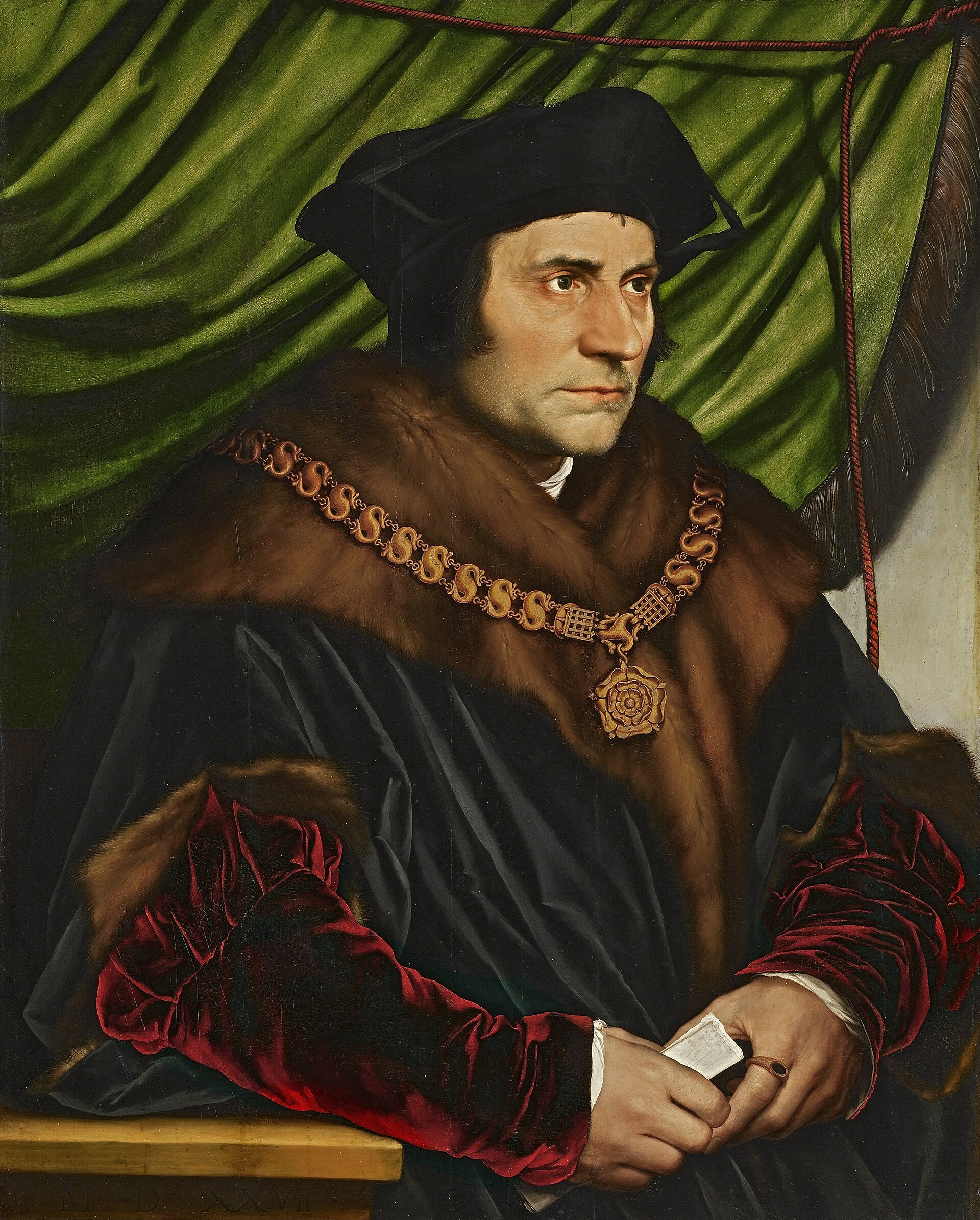
Thomas More, lawyer, author of Utopia (1516) and lord chancellor of England from 1529 until he resigned in 1532, refused in April 1534 to swear the oath attached to the Act of Succession. He was imprisoned in the Tower and, once the Treason Act of 1534 was in force, he kept silent on the king's supremacy. The printed report of his trial, which was held in Westminster Hall in July 1535, comes from the eighteenth century collection of State Trials (1719). It summarizes the indictment as charging that More had refused to say whether the king was supreme head of the Church, that his silence was malicious and traitorous, and that he had written letters to Fisher encouraging resistance to the same law.14
More's defence on silence rested on the legal maxim "Qui tacet consentire videtur," that silence is taken as consent. The decisive evidence came from Richard Rich, who swore that during a conversation in the Tower More had denied Parliament's power to make the king head of the Church. According to the report, More answered: "In good Faith, Mr. Rich, I am more concerned for your Perjury, than my own Danger." He argued that the words, if spoken at all, were spoken privately and without malice. The jury convicted. He was sentenced to be drawn to Tyburn and executed as a traitor, and the report notes that the king later changed the sentence to beheading.14
After the verdict, by the account of a newsletter written in Paris and dated August 4, 1535, More spoke openly. In the English translation printed in A Thomas More Sourcebook (2004) he said that "your Statute is ill made, because you have sworn never to do anything against the Church," that Parliament had "no authority, without the common consent of all Christians, to make a law or Act of Parliament or Council against the union of Christendom," and that he had "not read in any approved doctor of the Church that a temporal lord could or ought to be head of the spirituality." He closed: "I pray God to protect the King and give him good counsel."15
On the scaffold, the same newsletter reports in the third person that More asked the people to pray for him and "besought them earnestly to pray to God to give the King good counsel, protesting that he died his good servant, and God's first."15 The French reads "qu'il mouroit son bon serviteur et de Dieu premierement."16 More had used the same order of loyalties in his letters: to Thomas Cromwell in March 1534 he recalled the king's own instruction that he should "first look unto God and after God unto him."16 He was beheaded on Tower Hill on July 6, 1535, and canonized with Fisher in 1935.4
The government's stated ground was the same as for Fisher: denial of the supremacy, proven by Rich's testimony and inferred from malicious silence. More's stated ground, given in his own words after the verdict, was that no single realm could make a law against the common faith of Christendom. Each side named the other's act in its own terms.
Tradition and legend
Much of the familiar More comes from the life written by his son-in-law William Roper in the reign of Mary I and printed in 1626: the joke to the lieutenant of the Tower about being seen safe up the scaffold steps, the request that his beard be spared because it had committed no treason. These are tradition from a family witness writing some twenty years later. They may be true, but they are told by a loving relative with a cause, and they are not in the 1535 newsletter. The popular wording "I die the King's good servant, but God's first" is a modern tightening of the newsletter's reported speech: the order of loyalties is documented, and the exact sentence as quoted on posters and in films is not.
What the sources dispute
The sharpest dispute about More concerns his own record against heresy. As lord chancellor he arrested and examined evangelical suspects, and several were burned during or just after his chancellorship. Leland Miles, writing in the Journal of British Studies in 1965, set out the counts: one older study listed four burnings (John Tewkesbury, Thomas Bilney, Richard Bayfield and James Bainham), while a reading of the Greyfriars Chronicle could raise it to six.17 John Foxe accused More of having heretics whipped and racked in his house. More denied those charges in print in his Apology of 1533, and Miles concluded that on the Bainham story "it seems safest to discount the whole report," while accepting More's share of responsibility for the burnings.17 Richard Rex, in The Cambridge Companion to Thomas More (2011), describes the debate as one between More the humanist of Utopia and More the "inquisitorial magistrate," and notes that one recent writer inflated the burnings from "half a dozen" to "a few hundred," a figure no record supports.18 The fair statement is that the man the Catholic Church honors as a martyr for conscience had himself enforced the death penalty against Christians whose consciences differed from his. His defenders note that he did so under laws he believed just and did not invent; his critics, from Foxe to modern novelists, see a contradiction. The deaths of Tewkesbury, Bilney, Bayfield and Bainham belong to the story of the Protestant martyrs in lesson 06.
The London Carthusians and their companions
Died: May 4, 1535 (the first group) to August 4, 1540 · Place: Tyburn, York and Newgate prison, London · Earliest source: Maurice Chauncy, a monk of the house, in his account printed in 1550; Crown records of the 1535 trial · Record strength: Documented
What the record shows
The Carthusians were the strictest order in England, monks who lived in separate cells under a rule of silence. John Houghton had been prior of the London Charterhouse since 1531. In 1534, according to the Catholic Encyclopedia's account drawn from the records, he spent about a month in the Tower for refusing to say that the king's marriage to Catherine was invalid, then took the oath of succession on May 29, 1534, with some of his monks, on the condition "quatenus licitum esset," "so far as it is lawful."19
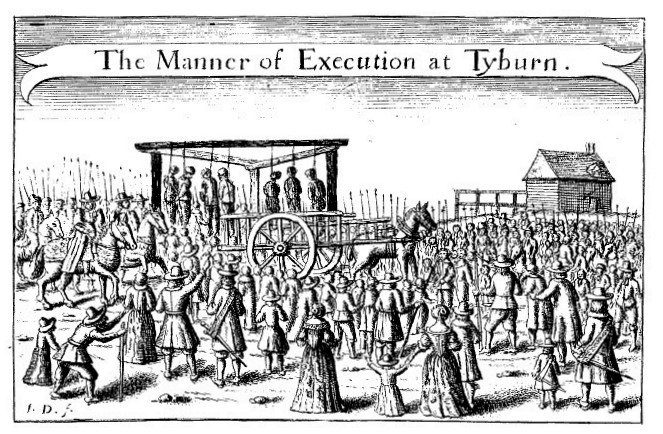
The oath of supremacy was another matter. About April 13, 1535, Houghton was sent back to the Tower with two other Carthusian priors who had come to London, Robert Lawrence of Beauvale and Augustine Webster of Axholme. They refused the oath and were indicted on April 28, 1535. The same account says the jury at first would not convict and was brought to a guilty verdict the next day under pressure from Thomas Cromwell.19 On May 4, 1535, Houghton, Lawrence and Webster were hanged at Tyburn in their monastic habits, with Richard Reynolds, a Bridgettine monk of Syon Abbey, and John Hale, a secular priest; Houghton was the first of them to die.197 The manner was the full penalty for treason: hanging, cutting down while alive, and disembowelling.
The house held out. Three more monks of the London Charterhouse, Humphrey Middlemore, William Exmew and Sebastian Newdigate, were executed at Tyburn on June 19, 1535. Two, John Rochester and James Walworth, were executed at York on May 11, 1537. In May 1537 ten more who would not take the oath were taken to Newgate prison; nine of them, Thomas Johnson, William Greenwood, John Davye, Robert Salt, Walter Pierson, Thomas Green, Thomas Scryven, Thomas Redyng and Richard Bere, died there between June and September 1537.7 The survivor, the lay brother William Horne, was executed at Tyburn on August 4, 1540. The Charterhouse itself was surrendered to the Crown in 1537.20 The Carthusians who died were beatified in 1886, and Houghton, Lawrence and Webster were among the Forty Martyrs canonized on October 25, 1970.12
The government's stated ground was the statute: the monks refused an oath the law required and so denied the king's lawful title. The monks' stated ground was that the headship of the Church belonged to the successor of Peter and that they could not swear otherwise. The condition Houghton had attached to his first oath, "so far as it is lawful," shows the line he tried to hold: obedience to the king in all that conscience allowed, and no further.
Tradition and legend
Two stories are told about the Carthusians that the earliest records used here do not confirm. One says that one of Houghton's arms was nailed over the gate of the Charterhouse as a warning to the remaining monks. The other says that Margaret Clement, who had grown up in Thomas More's household, bribed the Newgate jailer and came in disguised as a milkmaid to feed the chained monks, until the king's suspicion stopped her. Both are tradition from Catholic accounts of the London Charterhouse. They fit what is known, and both may be true, but they were not verified from a contemporary source for this lesson.
What the sources dispute
The account of a hesitant jury pressed by Cromwell comes from Catholic writers, beginning with Chauncy, who survived because he and others eventually took the oath; Chauncy wrote in exile in the 1540s and had every reason both to honor his brothers and to explain his own choice. The deaths in Newgate raise a different question. Nine men were not executed; they died of disease and neglect in chains. The Catholic Church counts them as martyrs on the ground that they were held, and left to die, for the same refusal. Accounts differ on how many died of sickness and how many of hunger. The Catholic Encyclopedia's list gives the last of them as "Robert Horne" on August 4, 1540, where other lists give William Horne; the name of the lay brother executed that day is one of the small inconsistencies such lists contain.7
Henry VIII's government did not kill only Catholics. On July 30, 1540, three Catholic priests, Thomas Abel, Edward Powell and Richard Fetherstone, were hanged, drawn and quartered as traitors for their loyalty to Catherine's marriage and to Rome, on the same day that three evangelical preachers, among them Robert Barnes, were burned at Smithfield as heretics.7 Margaret Pole, countess of Salisbury and mother of Cardinal Reginald Pole, was beheaded in the Tower in May 1541 (the Catholic Encyclopedia gives May 28, other sources May 27) and was beatified in 1886.7
Edmund Campion
Died: December 1, 1581 · Place: Tyburn, London · Earliest source: his own Challenge to the Privy Council (1580); government and Catholic pamphlets and ballads of 1581 to 1582 · Record strength: Documented

What the record shows
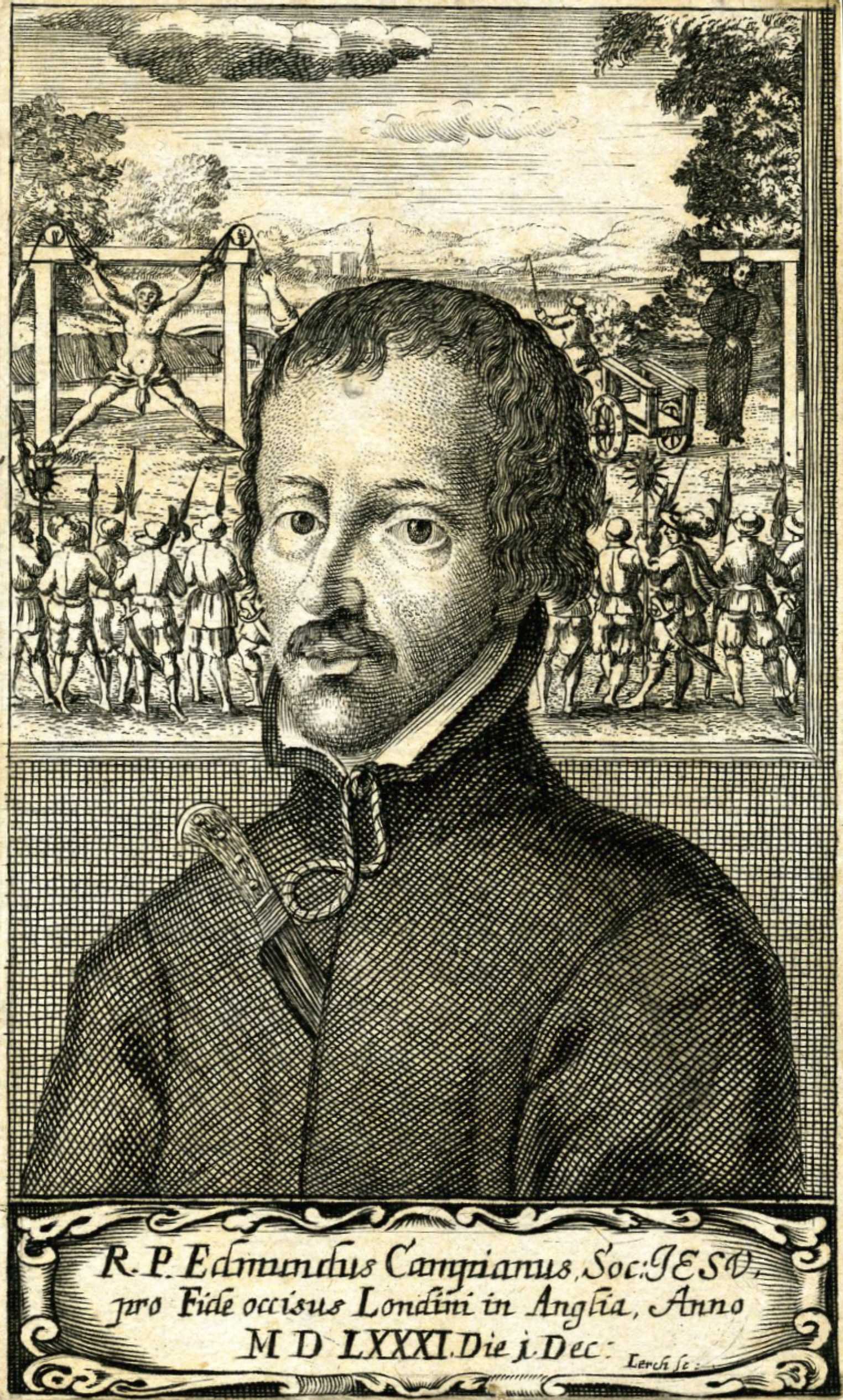
Edmund Campion was an Oxford scholar who left England, became a Catholic and joined the Society of Jesus. In June 1580 he and Robert Persons began the first Jesuit mission to England, entering by way of Dover.21 He wrote a short statement to be published if he were taken, addressed to the Privy Council. Its enemies called it "Campion's Brag." In it he wrote: "My charge is, of free cost to preach the Gospel, to minister the Sacraments, to instruct the simple," and said that he had "never had mind, and am strictly forbidden by our Father that sent me, to deal in any respect" with matters of state. It closes with a sentence that has been quoted ever since: "The expense is reckoned, the enterprise is begun; it is of God; it cannot be withstood. So the faith was planted: So it must be restored."22
In June 1581 his Latin book Decem Rationes (Ten Reasons) appeared at Oxford, where the audience at the university church of St. Mary's "found the benches strewn with the books." He was captured at Lyford in Berkshire on July 17, 1581. The Dictionary of National Biography (1886) records that he was racked on July 30 and August 6, and on October 31 "for the third time."21 The government held public disputations in which Campion, still weak from the rack, debated Protestant divines.
The charge at his trial was not that he was a priest. Under the old treason law, the indictment alleged that he and others had "conspired together at Rome and Rheims to raise a sedition in the realm and dethrone the queen." He was tried on November 20, 1581, before Lord Chief Justice Wray, and convicted.21 After the verdict he answered for himself and his companions, in words recorded in the Catholic accounts and reprinted in the Dictionary of National Biography: "The only thing that we have now to say is that if our religion do make us traitors we are worthy to be condemned; but otherwise are and have been true subjects as ever the queen had." He went on: "In condemning us you condemn all your own ancestors, all the ancient priests, bishops, and kings, all that was once the glory of England." And: "For what have we taught, however you may qualify it with the odious name of treason, that they did not uniformly teach?"21 On December 1, 1581, Campion, Ralph Sherwin and Alexander Briant were hanged, drawn and quartered at Tyburn.217 All three were among the Forty Martyrs canonized in 1970.1223
Government supporters celebrated the execution. A broadside ballad printed that winter, A Triumph for true Subiects, and a Terrour vnto al Traitours, presented the deaths as the just end of traitors.24 Burghley's tract of 1583 made the same argument at length.8 Here the two stated grounds meet head on, in the words of the people who made them: the Crown called the mission sedition; Campion called it the Gospel and declared himself a true subject.

Tradition and legend
Catholic accounts printed soon after his death describe Campion praying for the queen at the gallows and declaring himself a Catholic and a priest. These are reports by sympathetic witnesses within months of the event, which makes them strong tradition close to the record; their exact wording was not verified for this lesson. Later Catholic devotion added stories of conversions in the crowd, among them the claim that a young man splashed with Campion's blood became a Jesuit. That story has a name attached, Henry Walpole, who was himself executed in 1595, and it is told in Jesuit histories; it was not confirmed from a contemporary source here.
What the sources dispute
The dispute is the one Burghley and Allen argued in print. Historians from the Catholic biographer Richard Simpson (1867) onward have judged the conspiracy charge against Campion weak, since the evidence that he plotted at Rome and Rheims to depose the queen was thin and the jury convicted on it in a single day. The government's case had a real basis in the wider situation: the 1570 bull was still in force, and Catholic exiles, Robert Persons among them, later backed Spanish plans to invade England. Campion was asked under interrogation the so-called "bloody question," what he would do if the pope's forces invaded; the government treated hesitant answers as proof of divided loyalty. Some historians, such as the authors of the study by Peter Lake and Michael Questier on the gallows as a stage (1996), stress that executions were contests over meaning in which both sides staged the deaths for an audience. The facts not in dispute are that Campion denied any political purpose, in writing, before his arrest; that he was tried on a charge of treasonous conspiracy; and that no one has produced the conspiracy.
Margaret Clitherow
Died: March 25, 1586 · Place: the tollbooth on Ouse Bridge, York · Earliest source: John Mush, her confessor, A True Report of the Life and Martyrdom of Mrs. Margaret Clitherow, written soon after 1586 (printed by John Morris, 1877) · Record strength: Documented
What the record shows
Margaret Clitherow was the wife of John Clitherow, a butcher of York, and a convert to Catholicism who hid priests in her house and had Mass said there. Her husband did not share her faith; at her trial she said, in her confessor's report, "God knoweth I could never yet get my husband in that good case that he were worthy to know or come in place where they were to serve God."25 In March 1586 her house was searched, a child of the household was made to show where the priests' vestments and books were kept, and she was arrested.
The fullest record is the account by John Mush, a seminary priest who had been her confessor. On Monday, March 14, 1586, she was brought to the Common Hall at York before the judges Clinch and Rhodes. "Her indictment was read, that she had harboured and maintained Jesuit and Seminary priests, traitors to the Queen's Majesty and her laws, and that she had [heard] Mass." Asked if she was guilty, she answered: "I know no offence whereof I should confess myself guilty." Asked how she would be tried, she said: "Having made no offence, I need no trial." Pressed again, she said: "If you say I have offended, and that I must be tried, I will be tried by none but by God and your own consciences."25
By refusing to plead she prevented a jury trial, and English law had a fixed penalty for a prisoner who would not plead: pressing under weights. Mush records that Judge Clinch urged her more than once to accept a jury, saying "I think the country cannot find you guilty upon this slender evidence of a child," and later: "There is no evidence but a boy against you, and whatsoever they do, yet we may show mercy afterward." A Puritan preacher named Giles Wiggington stood up in the hall and protested that the court ought not "either by God's laws or man's, to judge her to die upon the slender witness of a boy." When the judge answered that he could do it by the queen's law, Wiggington replied, "but you cannot do it by God's law."25 The same report records a hostile councillor's accusation from the bench: "It is not for religion that thou harbourest priests, but for harlotry."25 She still refused, and the judge pronounced the sentence for refusing to plead, that she be pressed to death. She answered, "If this judgment be according to your own conscience, I pray God send you better judgment before Him," and, when reminded of her husband and children, "I would to God my husband and children might suffer with me for so good a cause."25
On March 25, 1586, she was taken to the tollbooth a few yards from the prison. Mush gives the exchange that sets the two stated grounds side by side. She prayed for the Catholic Church, the pope, Christian princes, "and especially for Elizabeth, Queen of England, that God turn her to the Catholic faith." Then: "said Fawcet, 'Mrs. Clitherow, you must remember and confess that you die for treason.' The martyr answered, 'No, no, Mr. Sheriff, I die for the love of my Lord Jesu.'"25 She was laid on the ground, a door was placed on her, and weights were added until she died. She was canonized among the Forty Martyrs in 1970.12

Tradition and legend
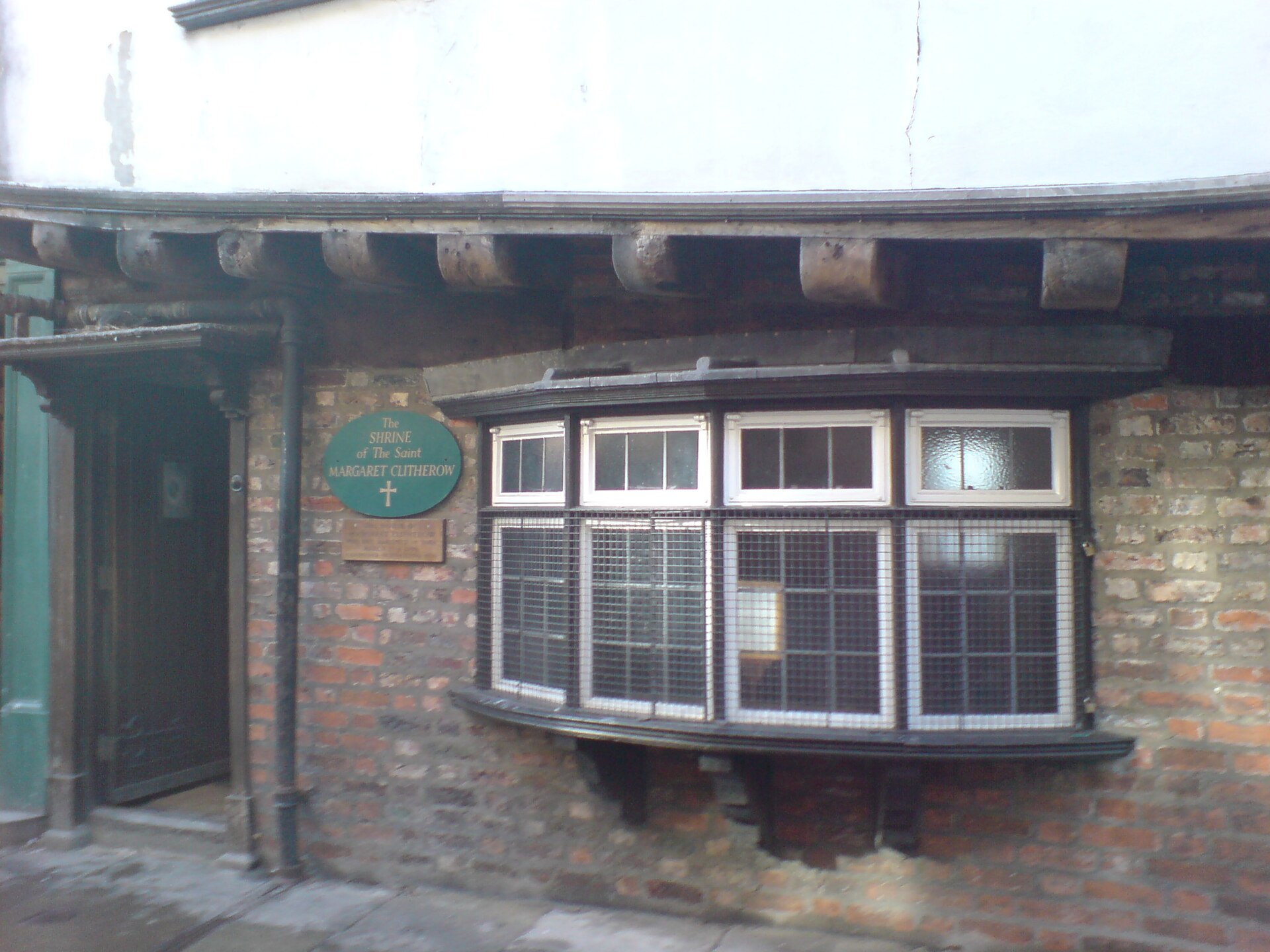
Catholic tradition explains her refusal to plead as an act of protection: a trial would have forced her children and servants to testify against her and made the jurors guilty of her death. That reading fits her words in Mush's report, but it is an interpretation; her recorded words appeal only to God and the judges' consciences. Later tradition also holds that one of her hands was kept as a relic, and that the shrine house in the Shambles was her home. Both are tradition, the second openly questioned.
What the sources dispute
Almost everything known about her trial comes from one writer, her confessor, who wrote to present her as a saint and who was himself a hunted priest. Historians accept the outline because it agrees with the legal process and because Mush reports details that do not flatter his side, such as the judge's repeated offers of mercy and the Puritan preacher's protest on her behalf. Peter Lake and Michael Questier, in The Trials of Margaret Clitherow (2011), read the account as a text shaped by quarrels among English Catholics over how far a Catholic could conform outwardly to the established Church, and they show Mush answering Catholic critics who thought her refusal to plead amounted to suicide. That criticism came from her own side and was answered by her own side. The government's position was that she had broken a statute that made sheltering priests a capital felony and then refused the lawful trial offered to her.
Oliver Plunkett
Died: July 1, 1681 (Old Style) · Place: Tyburn, London · Earliest source: the printed report of his trial and his own letters and dying speech, 1681 · Record strength: Documented
What the record shows
Oliver Plunkett, born at Loughcrew in County Meath, was chosen archbishop of Armagh by Pope Clement IX in 1669 and consecrated at Ghent on November 30, 1669. During the panic of the "Popish Plot" he was arrested on December 6, 1679, and held in Dublin Castle. A trial at Dundalk in July 1680 did not go forward; the government, fearing it could not obtain a conviction in Ireland, moved the case to London over his objections. A grand jury there at first refused to find a true bill. New charges were drawn up with the help of informers, among them an agent of the earl of Shaftesbury, and at his trial in June 1681 he was found guilty of high treason after a deliberation of about fifteen minutes. He was not able to bring all his witnesses from Ireland. He was hanged, drawn and quartered at Tyburn on July 1, 1681.26
The government's stated ground was treason: a conspiracy, sworn to by informers, to bring a foreign force into Ireland and raise the Catholics there. Plunkett's stated ground was his innocence of any plot and his faith. Before his death he wrote: "And being the first among the Irish, I will teach others, with the grace of God, by example, not to fear death."26 He was beatified by Benedict XV on May 23, 1920, and canonized by Paul VI on October 12, 1975. His head is kept at St. Peter's Church in Drogheda.26
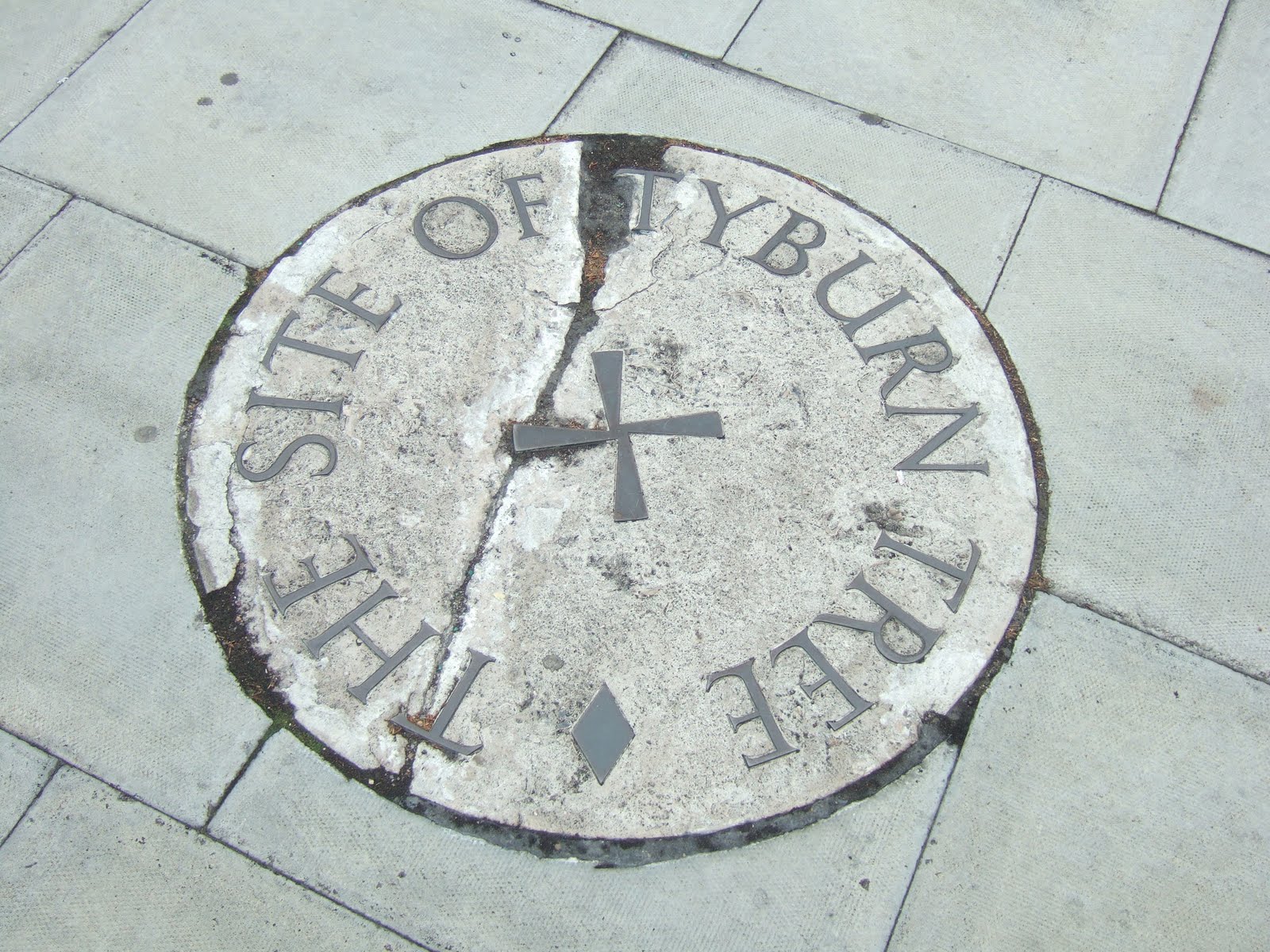

Tradition and legend
Plunkett is often called the last Catholic martyr executed at Tyburn, and that is how the Catholic Church in England and Ireland remembers him. The claim holds for those the Church has beatified or canonized; it does not mean no Catholic died in prison afterward, and the Catholic Encyclopedia's list includes confessors who died in custody as late as 1729.7 The identification of the head venerated at Drogheda as Plunkett's rests on the Church's custody of the relic; its history between 1681 and its arrival in Drogheda is told by Catholic sources and was not checked for this lesson, so it is treated here as tradition.
What the sources dispute
Plunkett's birth year is given as 1625 in some sources and 1629 in the New Catholic Encyclopedia.26 His guilt is not seriously argued today. The Popish Plot of 1678 was the invention of Titus Oates and a group of informers, and the historian J. P. Kenyon, in The Popish Plot (1972), traced how panic in Parliament and the courts turned perjured testimony into convictions.10 The harder question is the one this whole lesson asks: whether men like Plunkett died for their faith or because they were caught in a political panic. The answer can be both. He was charged with a political crime he did not commit, and he was a target because he was a Catholic archbishop.
Japan: a different state, different grounds
The Japanese martyrs were killed by a government that was not Christian, and so the question of Christians killing Christians does not arise. The question of stated grounds does. Christianity had grown fast in Japan after the Jesuit Francis Xavier arrived in 1549; the 1910 Catholic Encyclopedia put the number of Christians at about 200,000 by 1587, and a 2024 Smithsonian article gives "some 500,000 adherents" at the peak.2728 In 1587 the regent Toyotomi Hideyoshi issued an edict expelling the missionaries. In David Lu's translation it begins: "Japan is the country of gods, but has been receiving false teachings from Christian countries. This cannot be tolerated any further," and orders the priests to "prepare to leave the country within twenty days." A companion order of the same year said that "whether one desires to become a follower of the padre is up to that person's own conscience," while limiting conversions among the lords.29 The edict was not fully enforced at first. Rumors of foreign conquest, which interpretive texts published by Japan's tourism agency tie to the shipwreck of the Spanish ship San Felipe off Shikoku in October 1596, hardened Hideyoshi's position.3036 (One of those texts dates the wreck to February 1596; the agency's text for the monument to the twenty-six martyrs and the historical accounts give October 1596.) The Tokugawa shoguns who followed him banned the faith in the lands they controlled in 1612 and throughout Japan in 1614.30 The stated grounds were the protection of the land of the gods and of political order against a foreign religion tied to foreign powers.
Paul Miki and the Twenty-Six Martyrs of Nagasaki
Died: February 5, 1597 · Place: Nishizaka hill, Nagasaki · Earliest source: an account by a contemporary writer, 1597, printed in the Acta Sanctorum (February, vol. 1) · Record strength: Documented
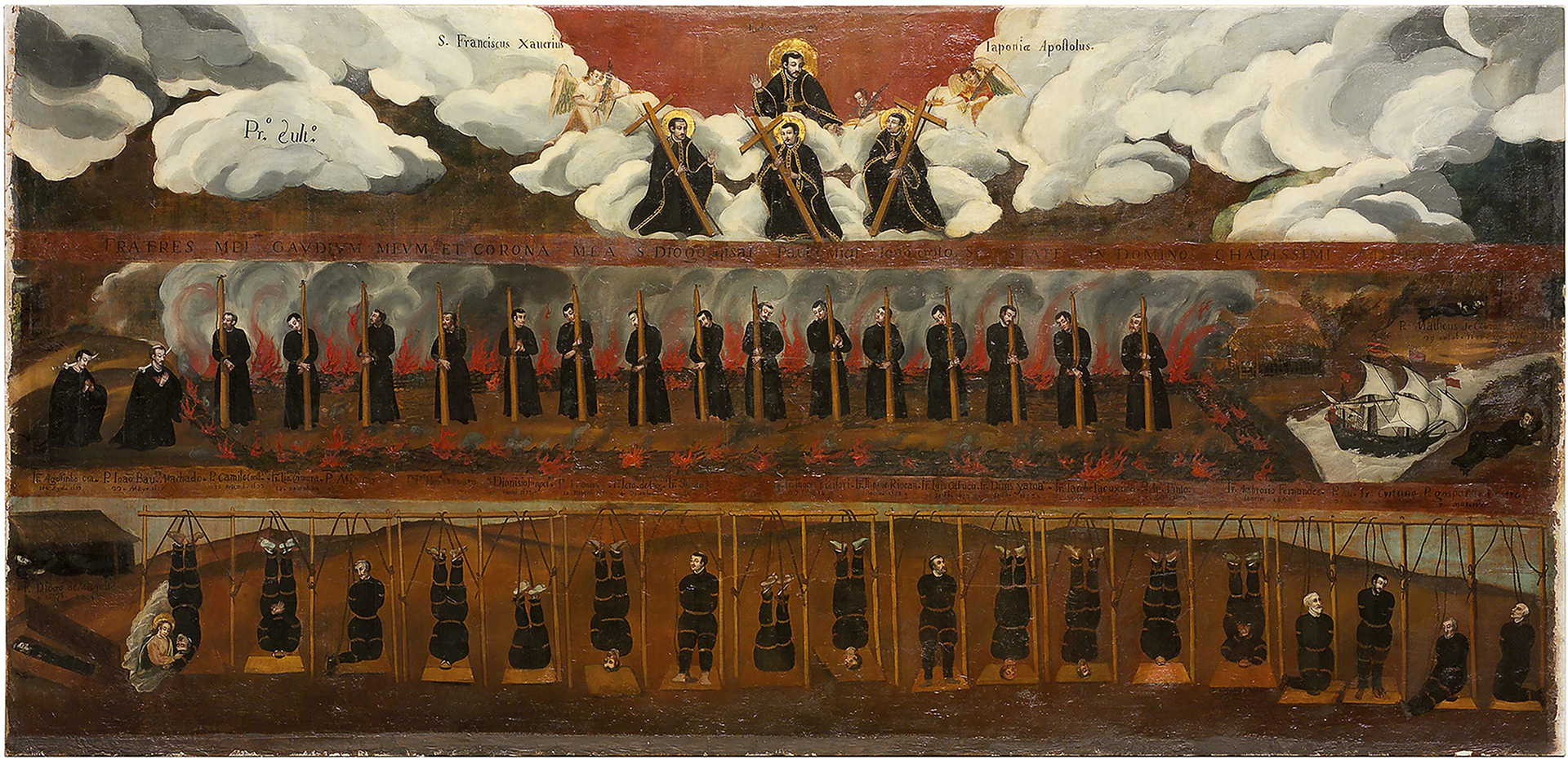

What the record shows
In December 1596 Hideyoshi's officers arrested Franciscan friars and Japanese Christians in the Kyoto and Osaka region. With them were three Japanese members of the Jesuits, among them Paul Miki, a Jesuit brother and preacher. They were taken to Nagasaki, the most Christian city in Japan, and crucified there on February 5, 1597. The 1910 Catholic Encyclopedia counts six Franciscan missionaries and twenty Japanese, among them "a child of 13, and another of 12 years."27 The Japanese tourism agency's text states that Hideyoshi "crucified 26 Catholics at Nishizaka in Nagasaki in February 1597," who were later called "the Twenty-Six Martyrs of Japan."30
The account read in the Catholic Church's Office of Readings on February 6 comes from "an account of the martyrdom of Saint Paul Miki and his companions, by a contemporary writer," printed in the Acta Sanctorum. It reports that "The crosses were set in place," and that Miki, from his cross, began his last sermon to the crowd "by proclaiming himself a Japanese and a Jesuit." He said that "there is no way to be saved except the Christian way," and: "I do gladly pardon the Emperor and all who have sought my death." The writer adds that "He was dying for the Gospel he preached," and names two of the boys, Anthony and Louis, as singing and speaking from their crosses.31 The twenty-six were canonized by Pius IX in 1862.32
The government's stated grounds were in the 1587 edict: a foreign teaching harmful to the land of the gods, spread in defiance of an order to leave. The martyrs' stated ground, in Miki's words from the cross, was the Christian way of salvation, with forgiveness for the ruler who killed them. Here the two grounds do not overlap. Hideyoshi did not accuse them of treason against a Christian prince; he banned their faith and killed them for practicing and preaching it.
Tradition and legend
Accounts written in Catholic Europe in the following years added much: that the prisoners had part of an ear cut off in Kyoto and were paraded through towns on the long road to Nagasaki in winter; that the youngest boy, Louis Ibaraki, asked which cross was his and ran to it; that Philip of Jesus, a Franciscan born in Mexico City, was the first to die. Some of this is close to the event and may come from witnesses; some is the shaping of devotional writing. These details are tradition, and the earliest accounts used for this lesson confirm only the core: the arrests, the crucifixions on February 5, 1597, the children among the dead and Miki's sermon of forgiveness.
What the sources dispute
The open questions concern cause. Jesuit writers, who had worked in Japan since 1549 and tried to keep a low profile after 1587, blamed the newly arrived Spanish Franciscans for preaching openly in defiance of the edict. Franciscan writers blamed Jesuit politics. The best known story, that the pilot of the wrecked San Felipe boasted to Japanese officials that missionaries prepared the way for Spanish conquest, comes from these quarrelling sources; the historian C. R. Boxer, in The Christian Century in Japan, 1549 to 1650 (1951), treated it as plausible but shaped by order rivalry.33 The count of twenty-six is firm. The grouping varies: some lists count the three Jesuits among the twenty Japanese, others list them separately, which is why one source reads "six and twenty" and another "six Franciscans, three Jesuits and seventeen laymen."
The later Japanese martyrs and the hidden Christians
Died: 1603 to 1639 for most beatified groups; executions continued to 1858 and exiles to 1873 · Place: Nagasaki, Kyoto, Edo, Unzen and across Japan · Earliest source: letters of the missionaries and a contemporary pamphlet on the executions of 1622; Japanese government records · Record strength: Documented for the named groups; the totals are estimates
What the record shows
After the ban of 1614 the missionaries were ordered out, churches were destroyed and Japanese Christians were required to renounce their faith. The largest single execution took place on Nishizaka hill on September 10, 1622, under the shogun Tokugawa Hidetada, and is known as the Great Genna Martyrdom after the name of the era. Fifty-five Christians died. A contemporary pamphlet, as reported by the Smithsonian in 2024, says officials beheaded thirty and then burned the other twenty-five at stakes; the remains were burned and scattered at sea.28 The 1910 Catholic Encyclopedia lists those put to death at the stake as nine Jesuits, six Dominicans, four Franciscans and six lay Christians, "after witnessing the beheading of about 30 of the faithful."27 In 1867 Pius IX beatified 205 martyrs of Japan, and on November 24, 2008, at Nagasaki, the Church beatified 188 more, "Fr. Peter Kibe and 187 companions," who died between 1603 and 1639: five priests and 183 lay people, "including children and entire families," among them John Hashimoto Tahyoe, his wife Thecla and their children, killed on October 6, 1619. Agenzia Fides called it "the first Cause for Beatification initiated by the Japanese Bishops themselves."32
Persecution did not end Christianity in Japan. The UNESCO World Heritage listing for the Hidden Christian Sites in the Nagasaki Region records that these communities "secretly transmitted their faith in Christianity during the time of prohibition spanning more than two centuries in Japan, from the 17th to the 19th century," in coastal and island villages, and lists among its twelve components the remains of Hara Castle and Oura Cathedral.34 Hara Castle was the stronghold of the Shimabara rising of 1637 to 1638, a revolt of peasants, many of them Christian, against heavy taxation and persecution. In 1865, after Japan reopened to foreigners, French missionaries at the new church at Oura met villagers who revealed that they were Christians; the Catholic Encyclopedia says priests of the Foreign Missions found 20,000 Christians practicing in secret in Kyushu. The Meiji government at first continued the ban. The same source records that before religious liberty came in 1873, 3,404 Christians "had suffered for the faith in exile or in prison" across twenty provinces, of whom 660 died and 1,981 returned home. It also records twelve Christians put to death by torture as late as 1858.27 UNESCO dates the official lifting of the prohibition to 1873.34
Tradition and legend
Japanese and Catholic accounts describe Christians tortured in the boiling volcanic springs of Mount Unzen from the late 1620s, and the forced trampling of Christian images (fumie) as a test of faith. Both practices are attested in many sources and are the setting of Shusaku Endo's novel Silence (1966). The individual scenes in the martyr narratives of Unzen, written by missionaries for European readers, are tradition close to the events; they were not checked against Japanese records for this lesson. Stories of hidden Christians handing down Latin prayers whose meaning they had lost are told by modern scholars and are well attested in the twentieth century; how faithfully any one prayer reproduces its sixteenth century original is a matter for each case.
What the sources dispute
The counts differ by a factor of a hundred. The 1910 Catholic Encyclopedia gives a list of 1,648 known martyrs' names, rising to 3,125 with later groups, cites one missionary who calculated 1,200 deaths for the faith, and then, after citing the testimony of the Japanese official Arai Hakuseki (about 1710) on the close of the shogun Iemitsu's reign, says that "an immense number, from 200,000 to 300,000, perished."27 The Smithsonian article of 2024 says "more than 400 people" were killed for their beliefs between 1597 and 1637.28 The differences come from definitions. A list of named martyrs is a floor, limited by surviving records. Estimates that count deaths in prison, in exile and at Shimabara, where most of the dead fell in an armed revolt, are far higher, and the Catholic Church has not treated the Shimabara rebels as martyrs. No source used here supports a figure in the hundreds of thousands. Historians also note that many Japanese Christians renounced their faith under torture or threat, including some missionaries, and that apostasy and martyrdom were two outcomes of the same pressure.
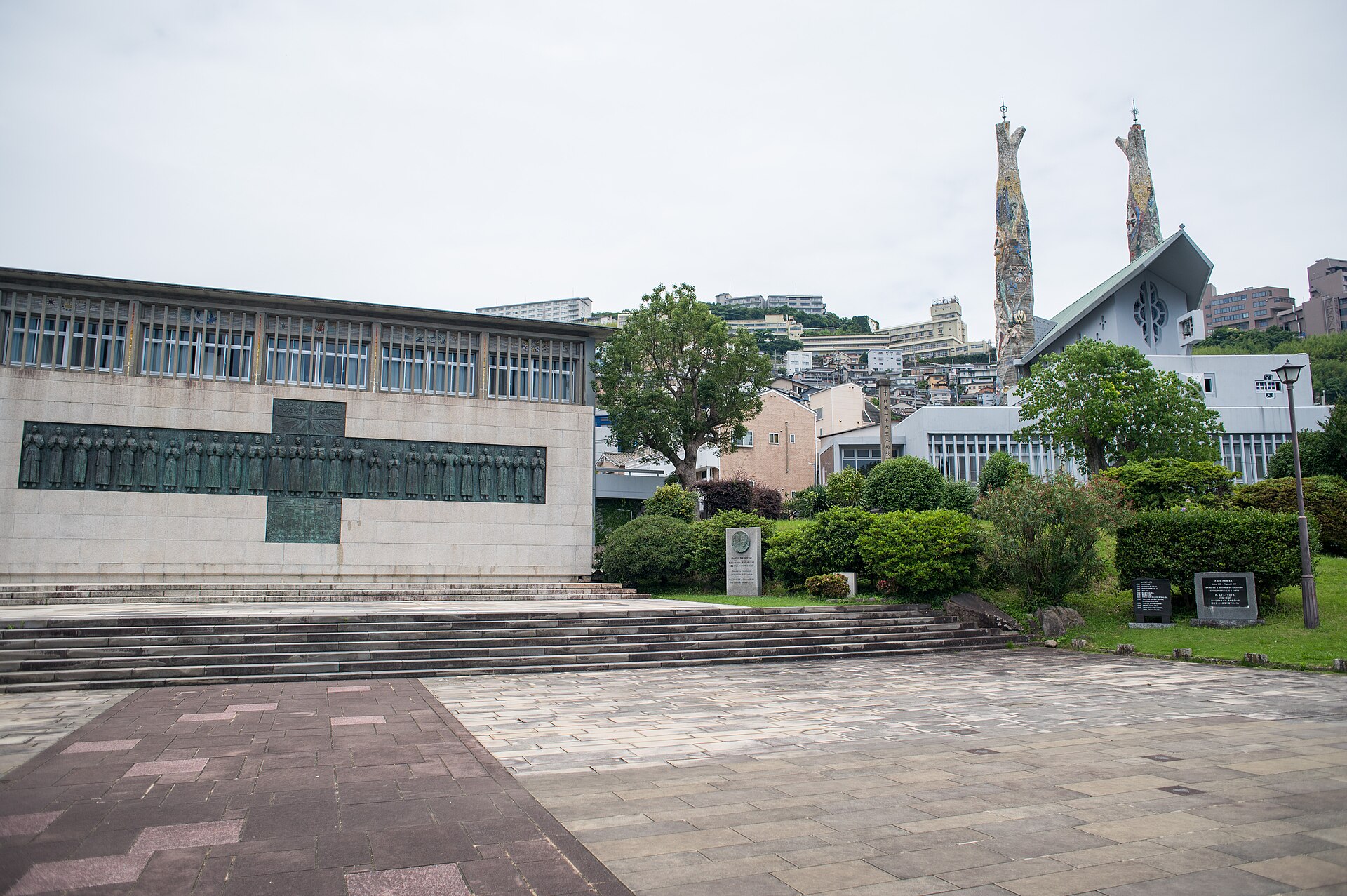

The era together
Read side by side, the English and Japanese martyrdoms show two kinds of state power at work on the same faith. In England, a Christian state that had broken with Rome wrote laws in the language of treason and applied them to fellow Christians. The laws grew step by step: in 1534 denial of the king's title by words became treason; in 1559 a third refusal to abandon papal authority became treason; after the papal bull of 1570, the priesthood conferred abroad became treason in 1585, and sheltering a priest a felony. Each step had a political reason that the government stated openly, and each step brought the line of the law closer to the practice of the Catholic faith itself. By the time Margaret Clitherow was tried, a sheriff could ask her to "confess that you die for treason" for having had Mass said in her house, and she could answer that she died "for the love of my Lord Jesu."25 Both sentences were spoken at the same tollbooth on the same morning.
The English record is strong. For nearly every person in this lesson there are court records, the government's own published defence, and Catholic accounts written by people who knew the dead. The hostile and friendly sources agree on the facts of arrest, charge, trial and death; they disagree on what those facts meant. That is the opposite of the problem in the early lessons of this module, where the meaning is clear and the facts are thin.
In Japan, a non-Christian government banned the faith outright. The edict of 1587 named the reason in religious terms, Japan as "the country of gods," and the Tokugawa bans of 1612 and 1614 made the practice of Christianity itself the crime.2930 Political fear of the Spanish and Portuguese played its part, as the English government's fear of Spain did, but the Japanese martyrs were asked to renounce the faith and were killed when they would not. The survival of hidden Christian communities for more than two centuries, without priests, is one of the most remarkable facts in the history of the Church, and it is the reason UNESCO placed the Hidden Christian Sites in the Nagasaki Region on its World Heritage list.34
Brad Gregory, in Salvation at Stake: Christian Martyrdom in Early Modern Europe (1999), argued that Protestant, Catholic and Anabaptist martyrs of this age should be understood in the same terms: each died for what they held to be the truth necessary for salvation, each tradition honored its own dead and denied the title to the others, and each read its martyrs through the old rule that the cause makes the martyr.35 This lesson and lesson 06 are written to be read together. The next lesson, lesson 08, turns to France, Scotland and New England, where the same patterns of law, charge and conscience appear among the Huguenots, the Covenanters and the Quakers. For the deaths of Hus and Tyndale, which framed the English story, see lesson 05.
What the record shows and what it does not
- Documented fact: Fisher was beheaded on June 22, 1535, and More on July 6, 1535, after trials for denying the royal supremacy; Houghton, Lawrence, Webster, Reynolds and Hale were executed at Tyburn on May 4, 1535; nine Carthusians died in Newgate in 1537; Campion, Sherwin and Briant were executed at Tyburn on December 1, 1581; Clitherow was pressed to death at York on March 25, 1586, after refusing to plead to a charge of harbouring priests; Plunkett was executed at Tyburn on July 1, 1681; twenty-six Christians were crucified at Nagasaki on February 5, 1597, and fifty-five killed there on September 10, 1622.
- Documented words on both sides: the statutes' language of treason; Burghley's title denying "any persecution of them for questions of religion"; Campion's "if our religion do make us traitors we are worthy to be condemned"; the sheriff's "you die for treason" and Clitherow's "I die for the love of my Lord Jesu"; Hideyoshi's "Japan is the country of gods"; Miki's "I do gladly pardon the Emperor."
- A church's own claim: that these men and women died in odium fidei, in hatred of the faith, as the Catholic Church declared in its beatifications (1886 to 2008) and canonizations (1862, 1935, 1970, 1975).
- Tradition: Henry's remark about the cardinal's hat; Fisher's head on London Bridge; Houghton's arm on the Charterhouse gate; Margaret Clement's visits to Newgate; More's jokes on the scaffold (Roper); the details of the road to Nagasaki and of the Unzen tortures.
- Scholarly reading: that the conspiracy evidence against Campion was thin (Simpson and later biographers); that the Popish Plot was a fabrication (Kenyon); that More shared responsibility for several heresy burnings (Miles, Rex); that martyr narratives on every side were shaped for an audience (Lake and Questier; Gregory).
- Open questions: the exact counts by reign; the evidence used against Fisher; the name of the Carthusian executed in 1540 (William or Robert Horne); Plunkett's birth year; the total number of Japanese martyrs, which ranges from about 400 to over 3,000 in the sources used here, with one old estimate in the hundreds of thousands that no record supports.
Claims checked
"Elizabeth's government executed no one for religion, only for treason."
Partly supported. This was the government's own case, set out in Burghley's tract of 1583, whose title denies "any persecution of them for questions of religion."8 It is accurate that the charges were treason or felony. It does not hold as a description of what the laws punished after 1585, when being a priest ordained abroad and remaining in England was itself "adjudged to be high treason," and sheltering such a priest was a capital felony.6 Pollen's summary, that priests then suffered "merely for their priestly character," is a Catholic historian's reading, and the statute's own text supports it.7
"Thomas More's last words were 'I die the King's good servant, but God's first.'"
Partly supported. The earliest report, a Paris newsletter of August 4, 1535, says in the third person that he died "his good servant, and God's first" (in French, "son bon serviteur et de Dieu premierement").1516 The order of loyalties is documented, and More used it in his own letters. The neat quoted sentence with "but" is a later shaping.
"Thomas More, the martyr for conscience, never persecuted anyone."
Refuted. As lord chancellor More pursued evangelical heretics, and between four and six were burned during or just after his chancellorship, as Leland Miles summarized in 1965.17 More himself denied Foxe's charges of whipping and racking prisoners, and Miles found the Bainham story unreliable.
"Thomas More burned hundreds of Protestants."
Refuted. Richard Rex (2011) notes that one writer inflated the figure from "half a dozen" to "a few hundred"; the records support the smaller number.18
"Elizabeth killed more Catholics than Mary killed Protestants."
Refuted. About 189 Catholics are counted as martyrs under Elizabeth, across forty-five years.4 Modern counts of Protestants burned under Mary in under four years are about 280 to 290, as lesson 06 sets out. If the several hundred rebels executed after the Northern Rising of 1569 are added, Elizabeth's total rises, but those men were executed for armed rebellion, and neither church counts them as martyrs.
"Henry VIII killed Catholics" (or "Henry VIII killed Protestants").
Supported, both ways. On July 30, 1540, three Catholic priests were executed as traitors and three evangelical preachers were burned as heretics on the same day.7 Henry's church punished both denial of his supremacy and Protestant teaching on the Mass.
"Margaret Clitherow was crushed to death for hiding priests."
Partly supported. She was indicted for harbouring priests, but she was never tried on that charge. The sentence of pressing was the legal penalty for refusing to plead, as her confessor's report shows in detail.25 Without the harbouring charge she would not have been in court; without the refusal to plead she would have faced a jury that the judge himself thought might acquit.
"Campion came to England to stir up rebellion."
Unsupported. This was the charge at his trial. His own Challenge, written before his arrest, says he was "strictly forbidden by our Father that sent me, to deal in any respect" with matters of state, and no evidence of a plot was produced beyond the testimony at a one-day trial.2221 Other exiles did support Spanish invasion plans, which is why the government suspected the whole mission.
"Oliver Plunkett plotted a French invasion of Ireland."
Refuted. The charges rested on informers in the Popish Plot panic, which historians, J. P. Kenyon among them, regard as fabricated; the grand jury first refused to indict, and the defence could not bring its witnesses.2610
"Paul Miki preached and forgave his executioners from the cross."
Supported. A contemporary account printed in the Acta Sanctorum gives his words: "I do gladly pardon the Emperor and all who have sought my death."31 The exact wording passes through translation, but the sermon itself is in the earliest record.
"The Nagasaki martyrs died because Spain was preparing to conquer Japan."
Unresolved. Fear of conquest is documented as a factor, linked to the San Felipe wreck of 1596.30 The story of the pilot's boast comes from rival missionary sources, and no Spanish invasion of Japan was ever attempted. Hideyoshi's own edict of 1587 gives a religious reason first.29
"Hundreds of thousands of Japanese Christians were martyred."
Unsupported. The figure appears in the 1910 Catholic Encyclopedia, drawn from the later testimony of a Japanese official, Arai Hakuseki (about 1710), in an article that also lists 1,648 named martyrs and cites a missionary's count of 1,200.27 Lists of named martyrs run to a few thousand at most. Very high totals count the dead of the Shimabara revolt, deaths in exile, or simply guess.
Hard questions and answers
If the law called it treason, why call them martyrs?
Because every Christian tradition of the age, Catholic and Protestant alike, judged martyrdom by the cause and not by the label the court put on the crime. Augustine wrote in 406 that men "are made martyrs not by the amount of their suffering, but by the cause in which they suffer."9 Mary I's courts burned Protestants as heretics, and Protestants called them martyrs; Elizabeth's courts hanged priests as traitors, and Catholics called them martyrs. A careful reader can hold both facts: the law's charge and the cause the dying person named. For most of the English Catholics in this lesson the record shows that what the law punished, after 1585, was the priesthood, the Mass and the papal headship of the Church, matters of faith in the Catholic understanding. The Church's formal judgment is its own claim; the documents let a reader test it.
Is it not inconsistent to honor Thomas More as a martyr for conscience, when he sent heretics to the fire?
More did not hold a modern idea of freedom of conscience. He held that a conscience formed by the common faith of Christendom was bound to that faith, and that heresy was a crime against God and the realm. By his own lights he was consistent: he died for refusing to put one king's law above the faith of the whole Church, and he had enforced laws against those who, in his view, broke from that faith. Readers who believe conscience should be free for everyone will see a contradiction, and the evidence for his part in the burnings is real.1718 The Catholic Church's canonization of More honors the manner and cause of his death; it does not declare that every act of his public life was right, and historians such as Rex discuss the burnings openly.
Did the 1570 bull not make English Catholics a real security threat?
It gave the government a real reason for fear. Regnans in Excelsis declared the queen deposed and told her subjects not to obey her laws.5 Plots against Elizabeth's life followed in the 1570s and 1580s, and in 1588 Spain sent the Armada. A government that read the bull literally could see every priest as an agent of a foreign power that had declared war on the queen. The weakness of the case lay in its application: Campion denied any political mission in writing before his arrest, Clitherow prayed publicly for the queen at her death, and most of the priests executed after 1585 were charged with nothing but being priests in England.62225 Paul VI, canonizing the Forty in 1970, praised them for combining "spiritual faith and loyal respect for the sovereignty of civil society."12 The Church's claim is that they were loyal subjects; the government's claim was that loyalty to the pope made that impossible. The two claims are both on record.
Was Margaret Clitherow's refusal to plead a kind of suicide?
Some Catholics of her own time thought so, and her confessor John Mush wrote partly to answer them. The judge told her in court that by refusing "you make yourself guilty and accessory to your own death."25 Her defenders answer that she did not choose the penalty; the court did, and the court could have stopped. Her refusal kept her household, including children, from being forced to give evidence before a jury, and she said she would be judged only by God and the judges' consciences. Historians such as Lake and Questier treat the question as one that divided English Catholics themselves, not one settled by the government.
Were the Japanese martyrs victims of European colonial politics rather than martyrs for faith?
Both factors are in the record. Hideyoshi and the Tokugawa feared the Spanish and Portuguese, and the missionaries came on the ships of those powers.30 Yet the Japanese Christians who died, most of them lay people with no link to European politics, were offered their lives if they would renounce the faith. The 188 beatified in 2008 included "children and entire families."32 A state may have political reasons for banning a religion; the people who die rather than abandon it are still dying for it. Christians can admit the European entanglement without reducing the Japanese martyrs to pawns of it.
How should a Protestant reader take this lesson, or a Catholic reader take lesson 06?
By the same standard. The Marian burnings and the Elizabethan hangings are both on the record, with charges, courts and the dying words of the condemned. Neither side's martyrs are diminished by the other's. Protestants who honor Latimer and Ridley can recognize Campion and Clitherow as people who died for what they believed; Catholics who honor More and Fisher can recognize Tyndale and Anne Askew in the same way. Paul VI, in the 1970 canonization, spoke of the hope that the Catholic Church might one day "embrace her ever beloved sister in the one authentic Communion of the family of Christ," meaning the Church of England.12 In 1998 Westminster Abbey, an Anglican church, placed statues of twentieth century martyrs of several traditions on its west front, including the Catholic Maximilian Kolbe and Oscar Romero (see lesson 10). The early modern churches did not recognize each other's martyrs; their successors increasingly do.
Related lessons and modules
- Lesson 01: What a martyr is, and how to weigh the sources (the record strength key; Challoner's Memoirs of Missionary Priests and Foxe as martyrologies)
- Lesson 05: Before the Reformation (Hus, the Lollards and Tyndale)
- Lesson 06: The Reformation, Protestant martyrs (the Marian fires and the Anabaptists)
- Lesson 08: Covenanters, Huguenots and early America
- Module 79, Luther and the Reformation and Zwingli, Calvin and the wider Reformation (Henry VIII's break with Rome and the Council of Trent)
- Module 80, Anglicans and Episcopalians (the Church of England after the settlement of 1559)
Learn more
- Famous Trials: The Trial of Sir Thomas More: Douglas Linder's collection of the statutes, trial report, letters and the Paris newsletter, in one place.
- Mush's True Report, in Morris, Troubles of Our Catholic Forefathers, vol. 3 (1877): The primary account of Margaret Clitherow's trial and death, pages 333 to 432.
- Hanover Historical Texts: English Reformation documents: Gee and Hardy's texts of the Elizabethan statutes, including the acts of 1559 and 1585.
- UNESCO: Hidden Christian Sites in the Nagasaki Region: The official description of the villages, Hara Castle and Oura Cathedral.
- Columbia Asia for Educators: Hideyoshi's edicts on Christianity: The 1587 edicts in translation, with teaching notes.
Still being checked (20 items)
These points could not be confirmed against a primary source when this lesson was written and fact checked in October 2026. The text above states each one as uncertain.
- Counts of Catholic martyrs by reign (about 50, 189, 25, 24, 2, 24) are approximate tallies from the New Catholic Encyclopedia list made for this lesson, not figures stated by that source; the totals are not an official count.
- Henry VIII's remark that Fisher would have no head for the cardinal's hat, and the story of Fisher's head on London Bridge, were not found in a contemporary source.
- That Richard Rich's private conversation supplied the main evidence against Fisher is reported in later accounts; the Catholic Encyclopedia article used does not mention it. Chapuys's dispatches on Fisher were not opened.
- William Roper's Life of More was not opened; the scaffold anecdotes attributed to it are given as tradition. Roper's dating (written in Mary's reign, printed 1626) is from standard reference knowledge.
- Maurice Chauncy's account (1550) was not opened; the date the Charterhouse was surrendered (1537), Chauncy's own oath-taking, Houghton's arm on the gate and Margaret Clement's visits to Newgate are unverified tradition or standard summary.
- The name of the Carthusian lay brother executed August 4, 1540 is William Horne in most lists and Robert Horne in the 1909 Catholic Encyclopedia list.
- The three evangelicals burned on July 30, 1540 (Robert Barnes and two others) are from standard accounts and Foxe, not opened for this lesson.
- Margaret Pole's execution date: May 28, 1541 in the Catholic Encyclopedia list, May 27 in other sources.
- Campion's scaffold words and the Henry Walpole conversion story were not verified from a contemporary source. The details of Campion's early life (Oxford, conversion, Jesuit entry) rest on the DNB summary and standard knowledge.
- The 'bloody question' as put to Campion, Persons's later support for Spanish invasion plans, Richard Simpson's 1867 judgment, and Lake and Questier's readings are given from standard secondary summaries; the works were not opened.
- The first name of the Puritan preacher Wiggington (Giles) is from standard reference knowledge; Mush gives only the surname.
- Mush's explanation of Clitherow's motive for refusing to plead (to spare her household) was not read; it is presented as tradition. The house identification of the Shambles shrine is disputed locally.
- Plunkett: the content of the London indictment was not verified from the trial report; the New Catholic Encyclopedia says the earlier charges included conspiring to bring a French army into Ireland. His birth year (1625 or 1629) differs among sources.
- The rebels executed after the Northern Rising of 1569 ('several hundred') were not counted from a source.
- Japan: the ear-cropping, the road to Nagasaki, Louis Ibaraki's words, Philip of Jesus as first to die, the San Felipe pilot's boast (Boxer), the Unzen tortures, fumie, the Shimabara revolt's causes and the Church's non-recognition of the Shimabara dead as martyrs are from standard secondary knowledge or tradition, not opened sources. The San Felipe's wreck is dated October 1596 by one Japan Tourism Agency text and February 1596 by another; October follows the historical accounts.
- Only the year 1865 for the Oura 'discovery' is used (from the 1909 Catholic Encyclopedia); the exact day was not verified. UNESCO's inscription year (2018, given in the sources list) was not stated on the page opened.
- Francis Xavier's arrival in Japan in 1549 is standard knowledge, not footnoted.
- Image captions: the Commons pages for the c. 1635 Nagasaki painting and for the Tyburn plaque could not be opened; captions rely on IMAGES.md and on viewing the images.
- The Office of Readings account is attributed only to 'a contemporary writer'; it is often credited to Luis Frois, which was not verified.
- The Latin inscription on the Lerch engraving of Campion ('pro Fide occisus', London, December 1, 1581) was read by the writer from the image; the checker did not view the image file.
Notes
- Act of Supremacy, 26 Henry VIII c. 1 (November 1534), from Statutes of the Realm iii. 492, as printed in Henry Gee and William John Hardy, eds., Documents Illustrative of English Church History (London: Macmillan, 1896), reproduced by Douglas O. Linder, Famous Trials, "Acts of Parliament Relating to the Trial of Sir Thomas More" (retrieved Oct. 28, 2026). Read it online. ↩
- Treason Act (26 Henry VIII c. 13) and Oath of Succession (1534), from Gee and Hardy, Documents Illustrative of English Church History (1914 edition), excerpted at Famous Trials, "Oath of Succession (1534) and Treason Act (1535)" (retrieved Oct. 28, 2026). Read it online. ↩
- Elizabeth's Act of Supremacy, 1 Elizabeth c. 1 (1559), in Gee and Hardy, Documents Illustrative of English Church History, no. 79, Hanover Historical Texts Project (retrieved Oct. 28, 2026). Read it online. ↩
- P. Caraman and eds., "England, Scotland, and Wales, Martyrs of," New Catholic Encyclopedia, at Encyclopedia.com: list of martyrs by date, "no martyrs in the first 12 years" of Elizabeth, beatifications of 1886, 1895, 1929 and 1987, canonizations of 1935 and 1970. Counts by reign in this lesson are approximate tallies from its list (retrieved Oct. 28, 2026). Read it online. ↩
- Pius V, bull Regnans in Excelsis, February 25, 1570, English translation at Papal Encyclicals Online (retrieved Oct. 28, 2026). Read it online. ↩
- "An Act against Jesuits, seminary priests, and such other like disobedient persons," 27 Elizabeth c. 2 (1585), in Gee and Hardy, Documents Illustrative of English Church History (New York: Macmillan, 1896), pp. 485 to 492, Hanover Historical Texts Project (retrieved Oct. 28, 2026). Read it online. ↩
- J. H. Pollen, "English Confessors and Martyrs (1534 to 1729)," Catholic Encyclopedia, vol. 5 (New York: Robert Appleton, 1909), a 1910s Catholic source, at New Advent (lists with dates; "law of 27 Elizabeth"; the oath of allegiance from 1606) (retrieved Oct. 28, 2026). Read it online. ↩
- William Cecil, Lord Burghley, The execution of iustice in England for maintenaunce of publique and Christian peace... (London, 1583), full title and text in the Oxford Text Archive, EEBO-TCP edition A18320 (retrieved Oct. 28, 2026). Read it online. ↩
- Augustine, Letter 89 (to Festus, A.D. 406), sec. 2, trans. J. G. Cunningham, Nicene and Post-Nicene Fathers, first series, vol. 1, ed. Philip Schaff (1887), at New Advent (retrieved Oct. 28, 2026). Read it online. ↩
- J. P. Kenyon, The Popish Plot (London: Heinemann, 1972). Cited for its general conclusion that the plot was fabricated; page references not checked for this lesson. ↩
- Geoffrey F. Nuttall, "The English Martyrs 1535 to 1680: a statistical review," Journal of Ecclesiastical History 22, no. 3 (July 1971): 191 to 197 (abstract and opening page) (retrieved Oct. 28, 2026). Read it online. ↩
- Paul VI, address at the canonization of the Forty Martyrs of England and Wales, St. Peter's Basilica, October 25, 1970, English text at the Anglican Centre/IARCCUM documents site (retrieved Oct. 28, 2026). Read it online. ↩
- "St. John Fisher," Catholic Encyclopedia, vol. 8 (1910), a 1910s Catholic source, at New Advent (retrieved Oct. 28, 2026). Read it online. ↩
- "The Trial of Sir Thomas More, Knight, Lord Chancellor of England, for High Treason," from A Complete Collection of State Trials (London, 1719), at Famous Trials (retrieved Oct. 28, 2026). Read it online. ↩
- "The Trial and Execution of Sir Thomas More: Account in a Paris Newsletter," dated August 4, 1535, English translation from Gerald Wegemer and Stephen Smith, eds., A Thomas More Sourcebook (Washington: Catholic University of America Press, 2004), pp. 352 to 355, at Famous Trials (retrieved Oct. 28, 2026). Read it online. ↩
- Center for Thomas More Studies, "I die the king's good servant and God's first" (PDF): the French text of the Paris newsletter and More's letters to Cromwell (March 5, 1534) and to Margaret Roper (June 3, 1535) (retrieved Oct. 28, 2026). Read it online. ↩
- Leland Miles, "Persecution and the Dialogue of Comfort: A Fresh Look at the Charges against Thomas More," Journal of British Studies 5, no. 1 (November 1965): 19 to 30 (retrieved Oct. 28, 2026). Read it online. ↩
- Richard Rex, "Thomas More and the heretics: statesman or fanatic?" in George M. Logan, ed., The Cambridge Companion to Thomas More (Cambridge University Press, 2011), pp. 93 to 115 (chapter abstract) (retrieved Oct. 28, 2026). Read it online. ↩
- "Blessed John Houghton," Catholic Encyclopedia, vol. 8 (1910), a 1910s Catholic source, at New Advent (retrieved Oct. 28, 2026). Read it online. ↩
- Maurice Chauncy, account of the sufferings of the London Carthusians (Latin, first printed 1550), English translation digitized at the Internet Archive. Cited for the existence and authorship of the earliest account; its text was not opened for this lesson (retrieved Oct. 28, 2026). Read it online. ↩
- T. C., "Campion, Edmund," Dictionary of National Biography, vol. 8 (London: Smith, Elder, 1886), as transcribed from Wikisource (landing 1580; Decem Rationes; capture at Lyford; rackings; indictment; trial of November 20, 1581; speech after the verdict; execution) (retrieved Oct. 28, 2026). Read it online. ↩
- Edmund Campion, "Challenge to the Privy Council" ("Campion's Brag"), 1580, text as printed in This Rock (September 1994), at EWTN Library (retrieved Oct. 28, 2026). Read it online. ↩
- Encyclopaedia Britannica, "Forty Martyrs of England and Wales" (canonized by Paul VI in 1970; executed mostly under Elizabeth I) (retrieved Oct. 28, 2026). Read it online. ↩
- A Triumph for true Subiects, and a Terrour vnto al Traitours (broadside ballad on the execution of Campion and his companions, London, 1581), catalogued in the University of Melbourne's Execution Ballads collection (retrieved Oct. 28, 2026). Read it online. ↩
- John Mush, "A True Report of the Life and Martyrdom of Mrs. Margaret Clitherow," chapters 19 and 20, in John Morris, ed., The Troubles of Our Catholic Forefathers Related by Themselves, third series (London: Burns and Oates, 1877), pp. 412 to 432, Internet Archive full text (retrieved Oct. 28, 2026). Read it online. ↩
- P. S. McGarry, "Plunket, Oliver, St.," New Catholic Encyclopedia, at Encyclopedia.com (birth, appointment 1669, arrest December 6, 1679, Dundalk 1680, London trial June 1681, execution July 1, 1681, beatification 1920, canonization 1975, relic at Drogheda, his written words) (retrieved Oct. 28, 2026). Read it online. ↩
- "Japanese Martyrs," Catholic Encyclopedia (1910), a 1910s Catholic source, at Catholic Answers Encyclopedia by Louis Delplace (1597; 1622; 1858; 1865; 1873 exile figures; estimates of numbers, including the figure of 200,000 to 300,000 reported from Arai Hakuseki) (retrieved Oct. 28, 2026). Read it online. ↩
- Meilan Solly, "Why Japan's Shogun Executed Dozens of Christians in the Great Genna Martyrdom of 1622," Smithsonian Magazine, September 10, 2024 (retrieved Oct. 28, 2026). Read it online. ↩
- Toyotomi Hideyoshi, edicts of 1587 (Expulsion of Missionaries; Limitation on the Propagation of Christianity), trans. in David J. Lu, ed., Japan: A Documentary History (Armonk, NY: M. E. Sharpe, 1997), pp. 196 to 197, at Columbia University, Asia for Educators (retrieved Oct. 28, 2026). Read it online. ↩
- Japan Tourism Agency, Multilingual Explanation Text Database, "The Beginning of Christian Suffering: From Toyotomi Hideyoshi to the Early Days of the Tokugawa Shogunate" (San Felipe, 1596; Nishizaka, 1597; bans of 1612 and 1614) (retrieved Oct. 28, 2026). Read it online. ↩
- "From an account of the martyrdom of Saint Paul Miki and his companions, by a contemporary writer" (cap. 14, 109 to 110; Acta Sanctorum Febr. 1, 769), second reading of the Office of Readings for February 6, at Liturgies.net (retrieved Oct. 28, 2026). Read it online. ↩
- Agenzia Fides, "ASIA/JAPAN: November 24th beatification of Japanese martyrs: 5 priests and 183 lay faithful including children and entire families," November 21, 2008 (retrieved Oct. 28, 2026). Read it online. ↩
- C. R. Boxer, The Christian Century in Japan, 1549 to 1650 (Berkeley: University of California Press, 1951). Cited for its general reading of the San Felipe affair; page references not checked for this lesson. ↩
- UNESCO World Heritage Centre, "Hidden Christian Sites in the Nagasaki Region" (list no. 1495) (retrieved Oct. 28, 2026). Read it online. ↩
- Brad S. Gregory, Salvation at Stake: Christian Martyrdom in Early Modern Europe (Cambridge, MA: Harvard University Press, 1999). Cited for its general argument; page references not checked for this lesson. ↩
- Japan Tourism Agency, Multilingual Explanation Text Database, "Monument of the Coming Ashore of the 26 Martyrs" (the San Felipe wrecked off Shikoku in October 1596; the march to Nagasaki, February 1597) (retrieved Oct. 28, 2026). Read it online. ↩
Check yourself
1. Which law of November 1534 declared Henry VIII "the only supreme head in earth of the Church of England"?
The Act of Supremacy (26 Henry VIII c. 1) gave the king the title; the Treason Act of the same session made denying it by words a capital crime.
2. Under the act of 1585 (27 Elizabeth c. 2), what was adjudged high treason?
The statute gave such priests forty days to leave; afterward their presence was "adjudged to be high treason," and sheltering them was a capital felony.
3. What did Burghley's tract of 1583 claim about the Catholics executed under Elizabeth?
Its title says they were executed as stirrers of sedition "without any persecution of them for questions of religion."
4. According to the Paris newsletter of August 4, 1535, how did Thomas More describe his loyalty on the scaffold?
The newsletter reports in the third person that he died the king's "good servant, and God's first"; the familiar sentence with "but" is a later tightening.
5. What did Sheriff Fawcet tell Margaret Clitherow at her execution, and how did she answer, according to John Mush?
Mush records: "you must remember and confess that you die for treason" and her reply, "No, no, Mr. Sheriff, I die for the love of my Lord Jesu."
6. On what charge was Edmund Campion convicted in November 1581?
The indictment charged conspiracy at Rome and Rheims; Campion answered that if their religion made them traitors they were worthy to be condemned, but otherwise they were true subjects.
7. When and where were the Twenty-Six Martyrs of Japan crucified?
Hideyoshi had them crucified at Nishizaka in Nagasaki on February 5, 1597; Pius IX canonized them in 1862.
8. Why do counts of Japanese martyrs range from a few hundred to hundreds of thousands?
The 1910 Catholic Encyclopedia lists 1,648 named martyrs (3,125 with later groups) and cites one missionary's count of 1,200; the Smithsonian gives more than 400 for 1597 to 1637; the 200,000 to 300,000 the Encyclopedia reports from a Japanese official writing about 1710 is not backed by any list of names.
Terms in this lesson
- Act of Supremacy
- The statute of 1534 that declared Henry VIII supreme head on earth of the Church of England; Elizabeth's act of 1559 made the monarch "supreme governor" and required an oath.
- Treason Act of 1534
- The law that made it high treason to wish or attempt, by words or writing, to deprive the king of his titles, including the supremacy; the charge against Fisher and More.
- Regnans in Excelsis
- Pius V's bull of February 25, 1570, declaring Elizabeth I a heretic, deprived of her crown, and her subjects released from obedience.
- Act against Jesuits (1585)
- 27 Elizabeth c. 2, which made it high treason for a priest ordained abroad by papal authority to stay in England and a capital felony to shelter one.
- Seminary priest
- An English Catholic priest trained at one of the colleges abroad, such as Douai or the English College in Rome, and sent back to England.
- Recusant
- A Catholic (or other dissenter) who refused to attend the services of the established Church of England, and was fined for it.
- Hanged, drawn and quartered
- The English penalty for male traitors: hanging, cutting down alive, disembowelling and division of the body. Fisher's and More's sentences were changed to beheading.
- Peine forte et dure
- The English legal penalty for a prisoner who refused to plead: pressing under weights. Margaret Clitherow died under it in 1586.
- Bloody question
- The hypothetical question put to captured priests: whose side would you take if the pope's forces invaded? The government treated hesitant answers as proof of disloyalty.
- Popish Plot
- An alleged Catholic conspiracy to kill Charles II, invented by Titus Oates in 1678, which led to trials and executions of Catholics until 1681.
- Dilati
- In the Catholic process for the English martyrs, the causes postponed in 1886 for further evidence.
- In odium fidei
- Latin, "in hatred of the faith": the Catholic Church's test for recognizing a death as martyrdom.
- Japanese Christians who kept their faith in secret during the ban of the 17th to 19th centuries; some made themselves known at Oura in 1865.
- Fumie
- Images of Christ or Mary that suspected Christians in Tokugawa Japan were made to step on as a test of renunciation.
Sources
- Act of Supremacy 1534 (Gee and Hardy) at Famous Trials (1534) checked 2026-10
- Oath of Succession and Treason Act 1534 (Gee and Hardy) at Famous Trials (1534) checked 2026-10
- Elizabeth's Act of Supremacy 1559, Hanover Historical Texts (1559) checked 2026-10
- New Catholic Encyclopedia, England, Scotland, and Wales, Martyrs of (2003) checked 2026-10
- Regnans in Excelsis, Papal Encyclicals Online (1570-02-25) checked 2026-10
- Act against Jesuits and Seminarists 1585, Hanover Historical Texts (1585) checked 2026-10
- Catholic Encyclopedia, English Confessors and Martyrs (Pollen) (1909) checked 2026-10
- Burghley, The Execution of Justice in England (EEBO-TCP A18320) (1583) checked 2026-10
- Augustine, Letter 89 (NPNF) (406) checked 2026-10
- J. P. Kenyon, The Popish Plot (1972) (1972) checked 2026-10
- Nuttall, The English Martyrs 1535 to 1680: a statistical review (JEH 1971) (1971) checked 2026-10
- Paul VI, address at the canonization of the Forty Martyrs (1970-10-25) checked 2026-10
- Catholic Encyclopedia, St. John Fisher (1910) checked 2026-10
- State Trials report of More's trial, at Famous Trials (1719) checked 2026-10
- Paris Newsletter on More's trial and execution, at Famous Trials (1535-08-04) checked 2026-10
- Center for Thomas More Studies, I die the king's good servant and God's first (1535) checked 2026-10
- Miles, Persecution and the Dialogue of Comfort (JBS 1965) (1965) checked 2026-10
- Rex, Thomas More and the heretics (Cambridge Companion, 2011) (2011) checked 2026-10
- Catholic Encyclopedia, Blessed John Houghton (1910) checked 2026-10
- Chauncy, Sufferings of the London Carthusians (Internet Archive) (1550) checked 2026-10
- Dictionary of National Biography, Campion, Edmund (1886) checked 2026-10
- Campion, Challenge to the Privy Council (EWTN) (1580) checked 2026-10
- Britannica, Forty Martyrs of England and Wales checked 2026-10
- A Triumph for true Subiects (ballad, 1581), Melbourne Execution Ballads (1581) checked 2026-10
- Mush, True Report of Margaret Clitherow, in Morris, Troubles of Our Catholic Forefathers, vol. 3 (1877) checked 2026-10
- New Catholic Encyclopedia, Plunket, Oliver, St. (2003) checked 2026-10
- Catholic Encyclopedia, Japanese Martyrs (1910) checked 2026-10
- Smithsonian, the Great Genna Martyrdom of 1622 (2024-09-10) checked 2026-10
- Hideyoshi's edicts of 1587 (Lu translation), Columbia Asia for Educators (1587) checked 2026-10
- Japan Tourism Agency, The Beginning of Christian Suffering checked 2026-10
- Office of Readings, account of the martyrdom of Paul Miki (Acta Sanctorum) (1597) checked 2026-10
- Agenzia Fides, beatification of 188 Japanese martyrs (2008-11-21) checked 2026-10
- C. R. Boxer, The Christian Century in Japan (1951) (1951) checked 2026-10
- UNESCO, Hidden Christian Sites in the Nagasaki Region (2018) checked 2026-10
- Brad S. Gregory, Salvation at Stake (1999) (1999) checked 2026-10
- Japan Tourism Agency, Monument of the Coming Ashore of the 26 Martyrs checked 2026-10