Lesson 2 of 10 · about 60 minutes · Updated October 28, 2026
The New Testament Witnesses: John the Baptist, Stephen, the Two Jameses, Peter, Paul and Antipas
You'll be able to
- Name the earliest source for each New Testament martyrdom, its approximate date and its distance from the event.
- Explain how Josephus independently confirms the deaths of John the Baptist and James the brother of Jesus, and where he differs from the Christian sources.
- Trace how the record of Peter's and Paul's deaths at Rome grew from 1 Clement (about 96) to Origen (third century), and mark which details are tradition or legend.
- Rate the traditions about the other apostles (Andrew, Thomas, Bartholomew, Philip, Matthew and the rest) by record strength, including the early evidence that John and several others did not die as martyrs.
- Describe the three kinds of authority (Herodian kings, the Jerusalem council and Rome under Nero) that killed the first witnesses, and the scholarly debate over Nero's persecution.
- Weigh popular claims, such as Peter's upside-down cross and John's boiling oil, against the sources.
Start here: the short version
The first Christian martyrs appear inside the New Testament itself, and a few of them also appear in non-Christian writers. John the Baptist was beheaded by Herod Antipas, and both the Gospels and the Jewish historian Josephus say so. Stephen was stoned in Jerusalem (Acts 7). James the son of Zebedee was killed "with the sword" by Herod Agrippa I about 44 (Acts 12:2). James the brother of Jesus was condemned by the high priest Ananus and stoned in 62, a death Josephus records by name. Peter and Paul died at Rome, probably under Nero in the 60s: the evidence for the fact of their deaths there is early and steady, while the details (Peter crucified upside down, Paul beheaded at the Three Fountains) come later and are rated here as tradition or legend. Antipas of Pergamum is known from one verse, Revelation 2:13. For the other apostles, the records are thin, late or silent, and the table in this lesson rates each one by record strength. The Record strength key is set out in lesson 01.
This lesson profiles the witnesses whose deaths are told in, or tied to, the New Testament. Each brief follows the same plan: a fact strip, then what the record shows, then what tradition and legend later added, then what the sources dispute. The New Testament books are themselves the earliest sources for most of these deaths, so the lesson treats them the way a historian treats any ancient source: it gives the date each was most likely written, the distance from the event, and where a second, independent source agrees or disagrees. For the church history of the apostolic age in outline, see Module 79, Church History, Part A, lesson 01: The First Century. For the Greek word martys ("witness") and how it came to mean a person who dies for the faith, see lesson 01 and the Introduction to Classical Greek module.
Why the first witnesses died: kings, councils and an emperor
The deaths in this lesson were not the work of one persecutor or one law. Three different kinds of authority killed the first generation of Christian leaders, and each acted for its own reasons.
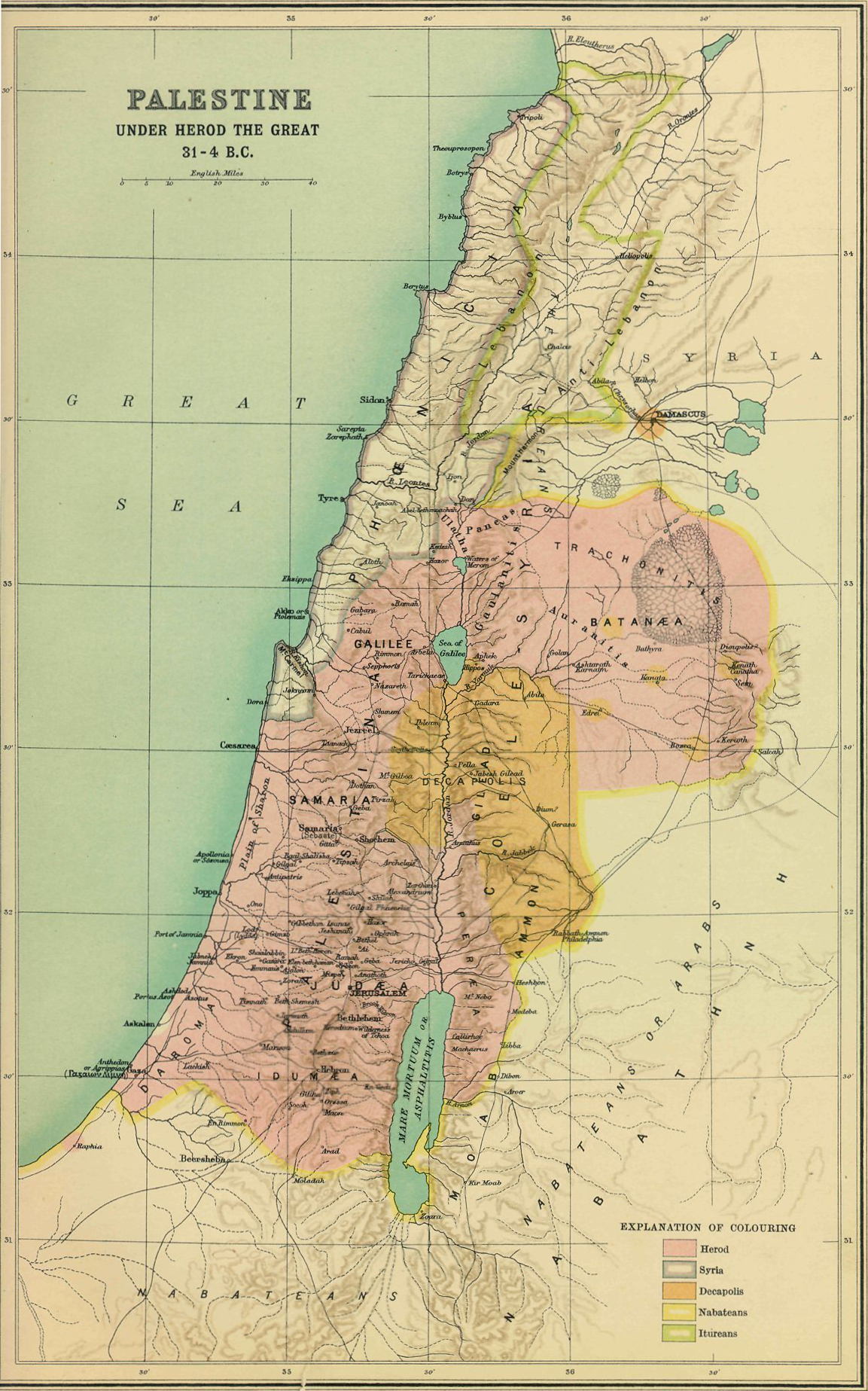
The first was the Herodian family, the client kings Rome allowed to rule parts of Palestine. Herod Antipas, tetrarch of Galilee and Perea (4 BC to AD 39), imprisoned and beheaded John the Baptist. The Gospels say John had condemned Antipas's marriage to Herodias, his brother's wife; Josephus says Antipas feared John's hold on the crowds might turn into a revolt.12 Antipas's nephew Herod Agrippa I, king of Judea from 41 to 44, killed James the son of Zebedee, and Acts says he did it because "he saw it pleased the Jews."3 Neither king needed a Roman law against Christians. A client king could imprison or execute a subject he judged dangerous.
The second was the Jewish leadership in Jerusalem: the high priests and the council called the Sanhedrin. Under Roman rule the council's power to put a man to death was limited, and how far it was limited is still argued (John 18:31 has the council tell Pilate, "It is not lawful for us to put any man to death"). Acts presents the death of Stephen as a hearing before the council that ended in a stoning outside the city, and Josephus presents the death of James the brother of Jesus as an illegal act by a high priest who called the Sanhedrin together while there was no Roman governor in the province.45 The charges named in these sources are religious ones: speaking against the Temple and the Law of Moses in Stephen's case, being among "breakers of the law" in James's.
The third was Rome itself. Paul was a Roman citizen who appealed to Caesar, and Acts ends with him under guard in Rome, "no man forbidding him" to preach.6 The earliest Roman evidence for a killing of Christians as Christians is the Roman historian Tacitus, writing about 115 to 117, some fifty years after the event. He says that after the great fire of Rome in July 64, Nero "fastened the guilt and inflicted the most exquisite tortures on a class hated for their abominations, called Christians by the populace." He adds that "an immense multitude was convicted, not so much of the crime of firing the city, as of hatred against mankind," and that some were put to death by crucifixion, some by dogs, and some by burning at night in Nero's gardens.7 The biographer Suetonius, writing about 121, lists among Nero's acts that "Punishment was inflicted on the Christians, a class of men given to a new and mischievous superstition," without tying it to the fire.8 Christian writers from the 90s on remember Nero as the first emperor to kill Christians, and they place the deaths of Peter and Paul in his reign. The outline of Nero's persecution is told in Module 79, lesson 01, and the later persecutions to 313 in Module 79, lesson 03, and in lesson 03 of this module.
Historians do not all read Tacitus the same way. Brent D. Shaw, in "The Myth of the Neronian Persecution" (Journal of Roman Studies 105, 2015), accepted the passage as probably genuine but argued that its picture of Christians as a named group singled out after the fire "reflects ideas and connections prevalent at the time the historian was writing and not the realities of the 60s."9 Christopher P. Jones answered in New Testament Studies (2017) that the passage fits what is known of Rome in the 60s and that the Neronian killings are historical; Shaw replied in the same journal.10 Most historians still accept that Christians were executed at Rome under Nero, while debating how many, on what charge, and whether Peter and Paul died in that same wave.
One more point frames the whole lesson. The New Testament uses the Greek word martys in its old sense of "witness," someone who testifies to what he has seen. Only in a few places does it come close to the later sense of a witness who is killed: Paul's words about "the blood of thy martyr Stephen" (Acts 22:20), the risen Christ's words about "Antipas ... my faithful martyr, who was slain among you" (Revelation 2:13), and the vision of a woman "drunken with the blood of the saints, and with the blood of the martyrs of Jesus" (Revelation 17:6).111251 The people in this lesson are called martyrs because later Christians called them so. The sources nearest to them mostly describe what happened and leave the title for later.
John the Baptist
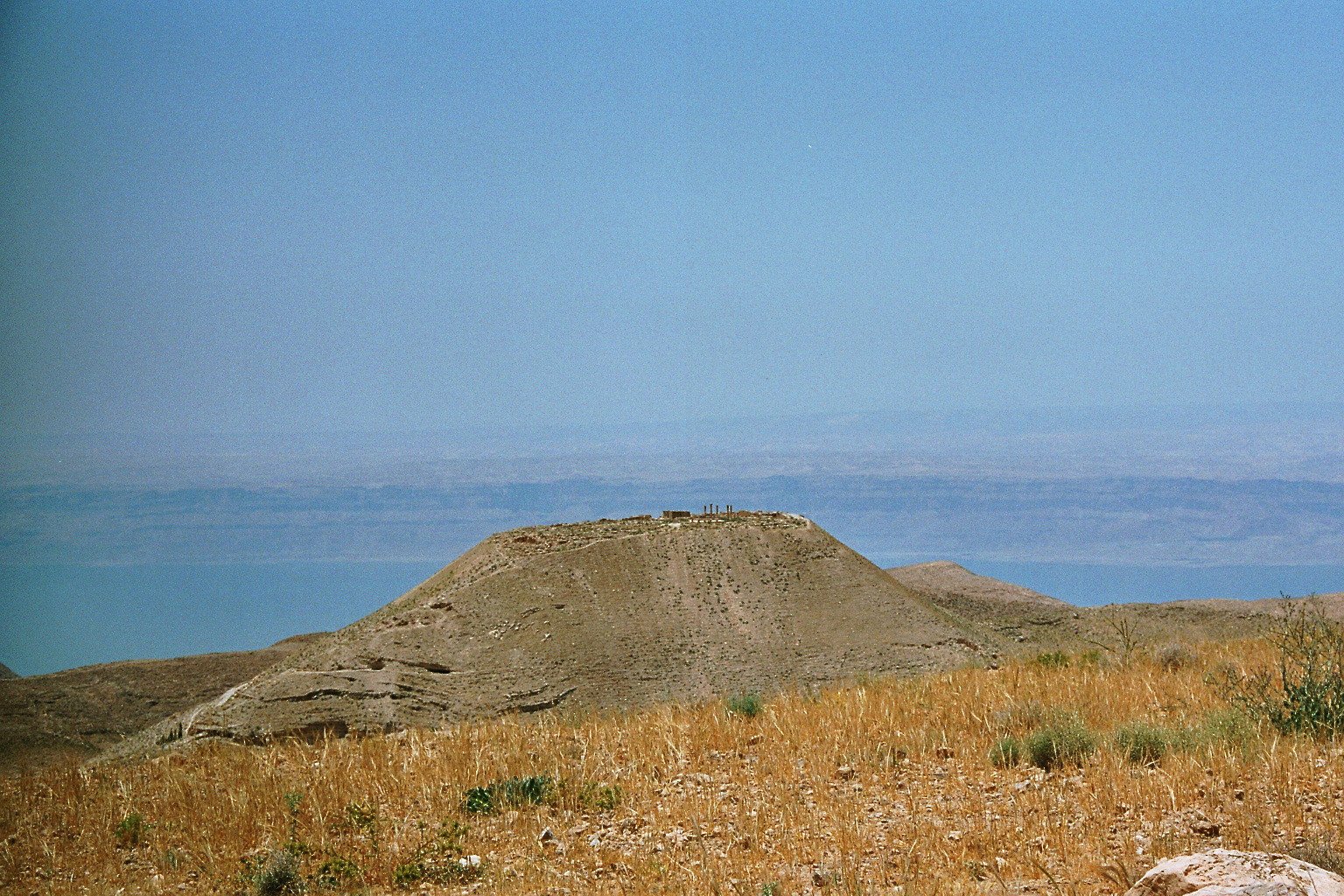
Died: about 28 to 36 (most often placed about 29 to 30) · Place: Machaerus, the Herodian fortress east of the Dead Sea (per Josephus) · Earliest source: Gospel of Mark 6:17 to 29, written about 65 to 75; Josephus, Antiquities of the Jews 18.5.2, written about 93 to 94 · Record strength: Documented
What the record shows
John the Baptist is the one figure in this lesson whose death is told both by Christian writers and by a Jewish historian with no Christian motive. That makes his death the best attested of all the deaths in the lesson.
The Gospel of Mark, usually dated to the late 60s or early 70s, gives the fullest Christian account. Herod Antipas "had sent forth and laid hold upon John, and bound him in prison for Herodias' sake, his brother Philip's wife: for he had married her. For John had said unto Herod, It is not lawful for thee to have thy brother's wife." Herodias "would have killed him; but she could not: For Herod feared John, knowing that he was a just man and an holy." At a birthday supper for his officials, "the daughter of the said Herodias came in, and danced," Antipas swore to give her whatever she asked, and at her mother's urging she asked for "the head of John the Baptist." The king "was exceeding sorry," but kept his oath: he "sent an executioner ... and he went and beheaded him in the prison." John's disciples "took up his corpse, and laid it in a tomb."1 Matthew repeats the story in shorter form and adds that Antipas had wanted to kill John but "feared the multitude, because they counted him as a prophet."13 Luke gives only the arrest, saying Antipas, "being reproved by him for Herodias ... and for all the evils which Herod had done, Added yet this above all, that he shut up John in prison."14
Josephus, writing in Rome about 93 to 94, mentions John while explaining why Antipas's army was destroyed by the Nabatean king Aretas IV in 36. In William Whiston's translation (1737): "Now some of the Jews thought that the destruction of Herod's army came from God, and that very justly, as a punishment of what he did against John, that was called the Baptist: for Herod slew him, who was a good man, and commanded the Jews to exercise virtue." Antipas, he says, "feared lest the great influence John had over the people might put it into his power and inclination to raise a rebellion," and so John "was sent a prisoner, out of Herod's suspicious temper, to Macherus, the castle I before mentioned, and was there put to death."2
The two accounts agree on the essentials: the same ruler, the same victim, imprisonment followed by execution, and a death that the public remembered as unjust. They differ on the motive. Mark and Matthew give a personal motive (John's rebuke of the marriage and Herodias's grudge). Josephus gives a political one (fear of an uprising). The two can both be true: a preacher who publicly condemns a ruler's marriage is also a preacher who might stir up a crowd. Josephus also names the place, which the Gospels do not. He does not name the girl who danced, and the Gospels do not name her either. Josephus, in a separate passage on Herod's family, says Herodias had a daughter named Salome, and that name has been attached to the dancer ever since.15

Tradition and legend
Later Christians added a great deal to the story of John's remains. This is tradition, and it is late. By the fourth century, Christians at Sebaste in Samaria showed a tomb said to be John's, and church historians of the fifth century (Rufinus, writing about 402, and Theodoret, writing about 450) tell that pagans broke open the tomb and burned the bones in the reign of the emperor Julian (361 to 363). Theodoret says that at Sebaste "the coffin of John the Baptist was opened, his bones burnt, and the ashes scattered abroad."16 Rufinus adds that some bones were rescued and sent to Alexandria. The head became the subject of several separate "finding" stories, and more than one church has claimed it: the church of San Silvestro in Capite in Rome, the cathedral of Amiens in France, and the Umayyad Mosque in Damascus, which stands on the site of a church of John the Baptist, all hold relics shown as the head or part of it. These claims cannot all be true, and none rests on evidence from John's own century. The feast of the Beheading of John the Baptist on August 29 is kept in both the Catholic and Orthodox calendars; the date is a liturgical tradition, not a record of the day he died.
The picture of Salome's "dance of the seven veils" comes from Oscar Wilde's play Salome (1891) and Richard Strauss's opera based on it (1905). It is a modern invention. Mark says only that the girl "danced, and pleased Herod."
What the sources dispute
The first dispute is the date. Luke 3:1 dates the start of John's preaching to the fifteenth year of Tiberius, which works out to about 28 or 29. The Gospels place John's death before the death of Jesus, which most scholars date to 30 or 33. Josephus, though, ties John's death to Antipas's defeat by Aretas in 36, and his wording ("some of the Jews thought") suggests people linked the two events because they were close in time. A minority of historians, Nikos Kokkinos among them, have used Josephus to argue for a later death, about 35. Most keep the Gospel order and date the death about 29 to 30, reading the defeat of 36 as a judgment people connected with a killing some years earlier.
The second is the place. Josephus names Machaerus, but in the same chapter he also says that Antipas's first wife, the daughter of Aretas, fled by way of "Macherus, which was subject to her father," which seems to put the fortress under Nabatean control at that time.17 Scholars have explained the conflict in different ways (a scribal slip, a border area that changed hands, or a fortress that served both sides). Mark's story of a birthday banquet with the "chief estates of Galilee" has struck some readers as fitting a palace in Galilee better than a desert fortress in Perea.
Archaeology has entered the argument. The Hungarian archaeologist Gyozo Voros, who directs the Machaerus excavations, has argued that a courtyard first uncovered in 1980 was a royal hall and that a semicircular niche in it was the throne of Antipas, so that the banquet in Mark could have taken place there. Jodi Magness of the University of North Carolina has doubted the throne identification, noting that the niche is small and that similar niches at Herodium were never read as thrones; Eric Meyers of Duke University called it possible but wanted to see the final reports.18 The courtyard is real. Whether it is the room in Mark's story is an open question.
The third concerns the passage in Josephus itself. Some have asked whether a Christian copyist wrote it. Nearly all scholars treat it as genuine: it is found in all the manuscripts, its account of John's baptism differs from the Gospels' (Josephus says the washing was "for the purification of the body," the soul having been "thoroughly purified beforehand by righteousness"), and it says nothing about Jesus, which a Christian forger would hardly have left out.2
Stephen
Died: about 34 to 36 (not dated in the source) · Place: outside the walls of Jerusalem · Earliest source: Acts of the Apostles 6:8 to 8:2, written about 80 to 90 (some date it as early as the early 60s or as late as about 110) · Record strength: Documented (a borderline case: a single source, written some 45 to 55 years after the event, that reports the words of Paul, a witness of the stoning)
What the record shows
Everything known about Stephen comes from the Book of Acts. He is one of the seven men chosen by the Jerusalem church to oversee the daily distribution of food to its widows (Acts 6:1 to 6), and all seven have Greek names, which suggests they came from the Greek-speaking Jewish believers in the city. Acts describes him as "full of faith and power" and a worker of "great wonders and miracles among the people."
The conflict began in the synagogues of Greek-speaking Jews in Jerusalem. "Then there arose certain of the synagogue, which is called the synagogue of the Libertines, and Cyrenians, and Alexandrians, and of them of Cilicia and of Asia, disputing with Stephen." Unable to answer him, they "suborned men, which said, We have heard him speak blasphemous words against Moses, and against God," brought him to the council, and "set up false witnesses, which said, This man ceaseth not to speak blasphemous words against this holy place, and the law: For we have heard him say, that this Jesus of Nazareth shall destroy this place, and shall change the customs which Moses delivered us."19 The charge, as Acts states it, is blasphemy against the Temple and the Law.
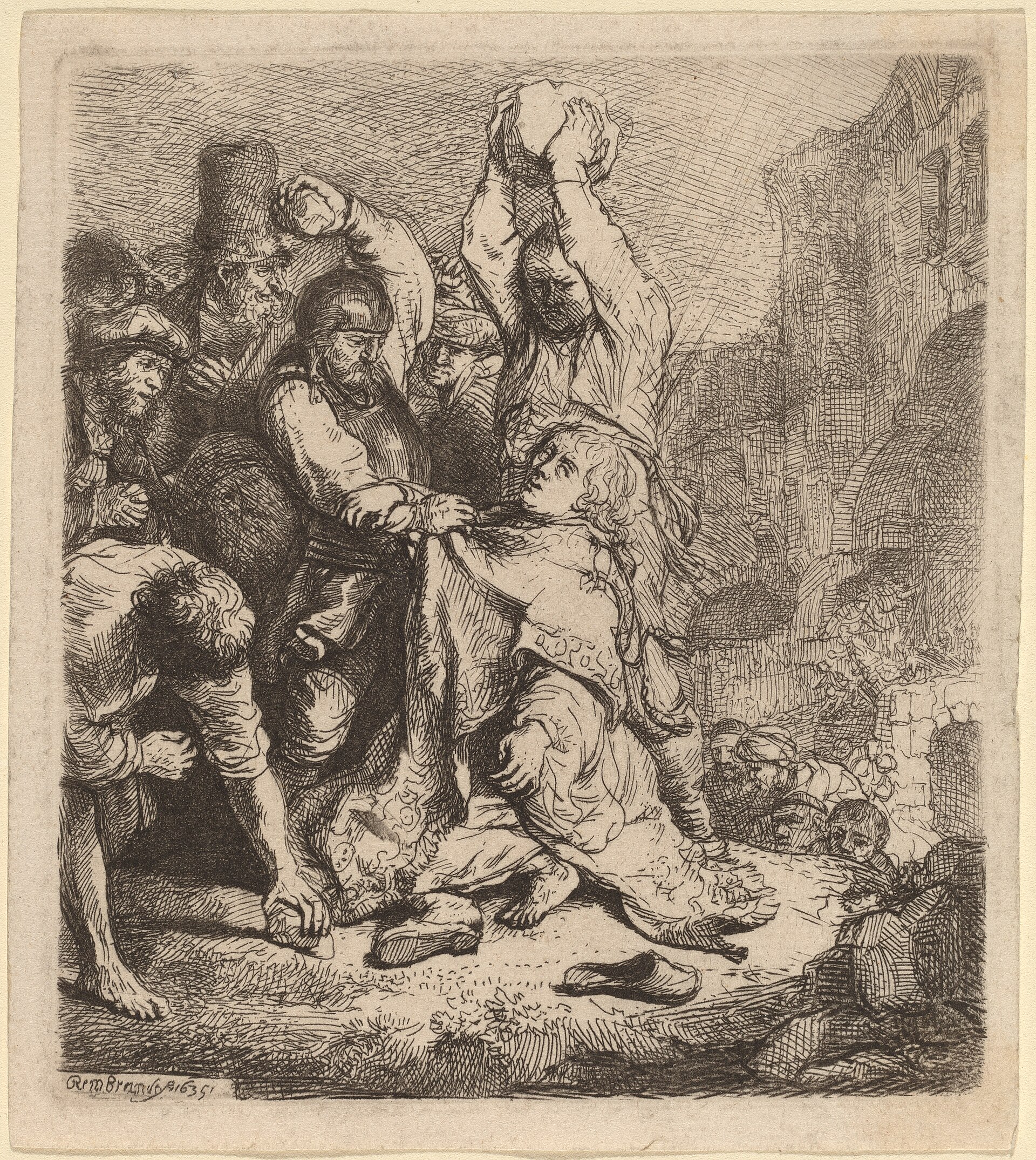
Stephen answers with the longest speech in Acts (7:2 to 53), a survey of Israel's history from Abraham to Solomon that ends by accusing his hearers of resisting the Holy Spirit as their fathers had. Then, in the King James Version: "But he, being full of the Holy Ghost, looked up stedfastly into heaven, and saw the glory of God, and Jesus standing on the right hand of God, And said, Behold, I see the heavens opened, and the Son of man standing on the right hand of God. Then they cried out with a loud voice, and stopped their ears, and ran upon him with one accord, And cast him out of the city, and stoned him: and the witnesses laid down their clothes at a young man's feet, whose name was Saul. And they stoned Stephen, calling upon God, and saying, Lord Jesus, receive my spirit. And he kneeled down, and cried with a loud voice, Lord, lay not this sin to their charge. And when he had said this, he fell asleep."4
Acts then reports that "Saul was consenting unto his death," that "at that time there was a great persecution against the church which was at Jerusalem," that the believers "were all scattered abroad throughout the regions of Judaea and Samaria, except the apostles," and that "devout men carried Stephen to his burial, and made great lamentation over him."20 Later in Acts, Paul himself recalls the day: "when the blood of thy martyr Stephen was shed, I also was standing by, and consenting unto his death, and kept the raiment of them that slew him."11 He also tells King Agrippa II that when believers "were put to death, I gave my voice against them," which implies Stephen was not the only one.21
Stephen's dying words echo the words of Jesus on the cross in Luke's Gospel ("Father, into thy hands I commend my spirit" and "Father, forgive them"), and the author of Luke and Acts appears to have shaped the scene to show the disciple dying as his master died. Christians have called Stephen the "protomartyr," the first martyr, since at least the fourth century.

Tradition and legend
The story of Stephen's relics is tradition, and it begins almost four centuries after his death. In December 415, a priest named Lucian of Caphar Gamala, a village near Jerusalem, wrote that the rabbi Gamaliel had appeared to him in dreams and shown him where Stephen was buried, together with Gamaliel himself and others. Lucian's letter describing the discovery was translated into Latin and spread widely, and relics said to be Stephen's were carried to North Africa, Spain and elsewhere. Augustine of Hippo, in The City of God (book 22, chapter 8, written in the 420s), reports healings in North Africa credited to these relics, among them a blind woman who "immediately saw" after touching flowers carried with them.22 Modern historians treat the discovery as a fifth century event worth studying in its own right; it is not evidence of where Stephen was buried in the first century.
The place of the stoning is also tradition. In the fifth century the empress Eudocia built a basilica of Saint Stephen north of the Damascus Gate, where the French Dominican house of the Ecole Biblique stands today. Since the Middle Ages, another tradition has placed the stoning on the east side of the city, and the gate there (also called the Lions' Gate) is known to Christians as Saint Stephen's Gate. Acts says only that he was cast "out of the city."
The feast of Saint Stephen is December 26 in the Western churches and December 27 in the Eastern churches. The date is liturgical and does not record the day he died.
What the sources dispute
The main historical question is legal. Under Roman rule, did the Jewish council have the right to put anyone to death? John 18:31 has the council say it did not, and many historians accept that the Roman governor reserved capital cases. If so, the stoning of Stephen was either a lynching that broke out in the middle of a hearing, or an act carried out at a moment when Roman control was weak. Some scholars have pointed to the years around 36, when the governor Pontius Pilate was recalled to Rome, as a possible window. Others read the Acts account as a mix of formal trial (witnesses, a speech of defense, the witnesses casting the first stones as the Law of Moses required in Deuteronomy 17:7) and mob action (the hearers "ran upon him with one accord"). Acts itself does not say whether a verdict was given.
The second question is the speech. Ancient historians, including Thucydides, wrote speeches for their characters that gave the sense of what was said rather than a transcript. Many scholars think the speech in Acts 7 is Luke's composition, drawing perhaps on traditions from the Greek-speaking believers. Others, including scholars who defend a high view of Acts as history, note that its outlook on the Temple differs from Luke's own elsewhere and argue that it preserves early material.
The third is the date. Acts gives none. Since Paul's conversion followed soon after, and Paul's own letters (Galatians 1 and 2) allow a date for his conversion in the early to middle 30s, Stephen's death is usually placed about 34 to 36. A few scholars put it as early as 31 or 32.
James the son of Zebedee
Died: about 44 (between 41 and 44, during the reign of Herod Agrippa I) · Place: Jerusalem · Earliest source: Acts of the Apostles 12:1 to 2, written about 80 to 90 · Record strength: Documented
What the record shows
James the son of Zebedee, brother of John, was one of the first four disciples Jesus called and one of the three (with Peter and John) present at the Transfiguration and in Gethsemane. Apart from Judas, he is the first of the Twelve whose death is recorded, and the only one of the Twelve other than Judas whose death the New Testament narrates.
The record is one sentence long. In the King James Version: "Now about that time Herod the king stretched forth his hands to vex certain of the church. And he killed James the brother of John with the sword. And because he saw it pleased the Jews, he proceeded further to take Peter also. (Then were the days of unleavened bread.)"3 "Herod the king" here is Herod Agrippa I, grandson of Herod the Great, whom the emperors Caligula and Claudius made king over all of Judea from 41. "With the sword" most naturally means beheading, the method used for executions ordered by a ruler. Acts gives no charge and no trial.
The date comes from the end of the same chapter of Acts, which tells of Agrippa's sudden death at Caesarea (Acts 12:20 to 23). Josephus describes the same death and says Agrippa died "in the fifty-fourth year of his age, and in the seventh year of his reign," which places it in 44.23 James's death therefore fell between 41, when Agrippa gained Judea, and 44. The mention of "the days of unleavened bread" puts the arrest of Peter at Passover, so James is often dated to the spring of 42, 43 or 44.
The Gospels also preserve a saying of Jesus to James and John that later readers took as a prophecy of martyrdom. When the brothers asked for seats of honor, Jesus asked whether they could drink his cup, and when they said they could, he answered: "Ye shall indeed drink of the cup that I drink of; and with the baptism that I am baptized withal shall ye be baptized."24 For James, the saying was fulfilled under Agrippa. For John, the question of what it meant is taken up below.
Around 200, Clement of Alexandria told a story about James's death in the seventh book of his Hypotyposes, a work now lost except in quotations. Eusebius quotes it: "the one who led James to the judgment-seat, when he saw him bearing his testimony, was moved, and confessed that he was himself also a Christian. They were both therefore, he says, led away together; and on the way he begged James to forgive him. And he, after considering a little, said, Peace be with you, and kissed him. And thus they were both beheaded at the same time."25 Clement says he was telling the story "as he received it from those who had lived before him." It is about 155 years after the event, so it is rated here as tradition, though an early one.

Tradition and legend
The most famous tradition about James is that he preached in Spain and that his body lies at Santiago de Compostela in Galicia. This is late tradition. No writer of the first six centuries says James went to Spain, and Acts places his death in Jerusalem about a decade after the resurrection, which leaves little room for a mission to the far west. The claim first appears in Latin lists of the apostles' mission fields in the late sixth or seventh century (a short text called the Breviarium apostolorum), and writers of the late seventh and eighth centuries, among them Aldhelm in England and a hymn attributed to Beatus of Liebana in Spain, repeated it. The discovery of a tomb identified as James's is placed in the time of Bishop Theodemir of Iria Flavia and King Alfonso II of Asturias, in the early ninth century (usually about 820 to 830). A further legend, set down later, explains how James's body came to Spain: his disciples carried it by sea from Jaffa in a boat without sails or rudder. Santiago de Compostela became, with Rome and Jerusalem, one of the three great pilgrimage goals of medieval Christendom, and the Camino de Santiago is walked by hundreds of thousands of people each year. The pilgrimage is a historical fact of the Middle Ages and today. The identification of the tomb is a claim of the ninth century.
The figure of "Santiago Matamoros" (Saint James the Moor-slayer), who appears on a white horse to lead Christian armies at the battle of Clavijo, is legend. The battle, dated in the legend to 844, is not mentioned in the chronicles of its own time, and the story is first written down in the twelfth century.
What the sources dispute
There is little dispute about the fact of James's death: Acts reports it briefly, without the miracles or speeches that would suggest legend, and the ruler and timing fit what Josephus says of Agrippa I. The open questions are the reason and the year. Acts says the killing "pleased the Jews," a phrase that in Acts often means the Jerusalem leadership. Historians have connected Agrippa's action to his policy of courting the priestly leaders and showing himself a loyal Jew, which Josephus also describes. The exact year (42, 43 or 44) cannot be fixed from the sources.
A second question arises from a fragment attributed to Papias of Hierapolis (writing about 110 to 130), preserved only in summaries made in the fifth century and later. In Roger Pearse's English rendering of the fragment as edited by Carl de Boor (1888), it reads: "Papias in the second volume says that John the divine and James his brother were killed by Jews."50 If accurate, it would mean John also died as a martyr. Most historians doubt the fragment's accuracy or its wording, since the much earlier Irenaeus, who knew Papias's work, says John lived on at Ephesus into the reign of Trajan (see "The other apostles" below). The fragment has been used by some scholars to argue that the saying in Mark 10:39 was written after both brothers had been killed. The question is unresolved.
Finally, the Gospels name more than one James, and later writers sometimes confused them. James the son of Zebedee, James the son of Alphaeus (another of the Twelve), and James the brother of Jesus (who was not one of the Twelve during Jesus's lifetime, according to John 7:5) are three people in the New Testament, though Western tradition from the late fourth century often merged the second and third. The next brief concerns James the brother of Jesus.
James the brother of Jesus ("James the Just")
Died: 62 (between the death of the governor Festus and the arrival of Albinus) · Place: Jerusalem · Earliest source: Josephus, Antiquities of the Jews 20.9.1, written about 93 to 94 · Record strength: Documented
What the record shows
James, whom Paul calls "the Lord's brother" (Galatians 1:19), led the church in Jerusalem after Peter left the city. Paul names him first among the "pillars" of that church (Galatians 2:9), and Acts shows him presiding at the meeting of apostles and elders in Acts 15. The New Testament does not tell of his death. The earliest account comes from Josephus, a Jewish priest and historian who was living in Jerusalem in 62 and was about 25 years old at the time.
Josephus, in Whiston's translation, writes that the high priest Ananus the younger "was a bold man in his temper, and very insolent; he was also of the sect of the Sadducees, who are very rigid in judging offenders, above all the rest of the Jews." The Roman governor Porcius Festus had died in office, and his successor was still traveling. "Festus was now dead, and Albinus was but upon the road; so he assembled the sanhedrim of judges, and brought before them the brother of Jesus, who was called Christ, whose name was James, and some others, [or, some of his companions]; and when he had formed an accusation against them as breakers of the law, he delivered them to be stoned." Josephus goes on: "those who seemed the most equitable of the citizens, and such as were the most uneasy at the breach of the laws, they disliked what was done." They complained to King Agrippa II and to Albinus, arguing "that it was not lawful for Ananus to assemble a sanhedrim without his consent." Albinus "wrote in anger to Ananus," and Agrippa removed him from the high priesthood "when he had ruled but three months."5
This short passage is among the most valuable in this lesson. It comes from a writer who was not a Christian, who was an adult in Jerusalem at the time, and who names James by his relation to Jesus. It gives the charge ("breakers of the law"), the method (stoning), the court (a Sanhedrin called by the high priest), and the legal problem (that the high priest acted without the governor). It also shows that some respected Jews in Jerusalem objected to the killing. The death can be dated with unusual precision. Festus's death and Albinus's arrival fall in 62, so James died that year, probably shortly before the Feast of Tabernacles that autumn.
Tradition and legend
A longer and very different account comes from Hegesippus, a Christian writer of about 170 to 180 whose five books of Memoirs are lost but are quoted by Eusebius. Hegesippus wrote about a century after the event. His James "drank no wine nor strong drink, nor did he eat flesh," prayed in the Temple so often "that his knees became hard like those of a camel," and was called "the Just." In his account, the scribes and Pharisees set James on "the pinnacle of the temple" at Passover and asked him to turn the crowd away from Jesus. James instead answered, "Why do you ask me concerning Jesus, the Son of Man? He himself sits in heaven at the right hand of the great Power, and is about to come upon the clouds of heaven." His opponents "threw down the just man," and when the fall did not kill him they began to stone him while he knelt and prayed, "I entreat you, Lord God our Father, forgive them, for they know not what they do." Then "one of them, who was a fuller, took the club with which he beat out clothes and struck the just man on the head. And thus he suffered martyrdom." Hegesippus adds that James was buried "on the spot, by the temple," and that "immediately Vespasian besieged them."26 Eusebius says that Clement of Alexandria, writing about 200, gave the same outline: that James was "thrown from the pinnacle of the temple, and was beaten to death with a club."26
This account is tradition, and parts of it are legend. Some details conflict with what is known of the Temple (only the high priest entered the holy of holies, and only once a year, while Hegesippus says James "alone was permitted to enter into the holy place"). The scene repeats the words of Stephen and of Jesus. And Hegesippus places the death just before the siege of Jerusalem, which began in 67 to 70, while Josephus places it in 62. The core shared with Josephus is that James was condemned by the Jerusalem leadership and stoned. The fall from the pinnacle, the fuller's club, the camel's knees and the burial by the Temple first appear in Hegesippus, about a century later.
Eusebius also quotes Josephus as saying that the fall of Jerusalem happened "to avenge James the Just, who was a brother of Jesus, that is called the Christ."26 Origen, writing in the third century, also refers to such a statement. No surviving manuscript of Josephus contains these words. They are either from a lost or altered copy of Josephus or a Christian addition that Origen and Eusebius believed to be his. They are not counted here as evidence.
What the sources dispute
Was the passage in Antiquities 20.9.1 written by Josephus? A small number of scholars have argued that the words "who was called Christ" were added by a Christian copyist, as Christian hands certainly reworked the longer passage about Jesus in Antiquities 18.3.3 (the "Testimonium Flavianum"). Most specialists, including Louis H. Feldman and John P. Meier, accept the James passage as genuine. The phrase "who was called Christ" is neutral, the passage is mainly about the misconduct of Ananus, and it is found in all manuscripts.
How the two accounts relate is also debated. Some scholars, such as Robert Eisenman (James the Brother of Jesus, 1997), build large theories on Hegesippus's picture of James as a Temple-centered ascetic. Others, such as John Painter (Just James, 1997), weigh Hegesippus more cautiously and treat Josephus as the anchor. Both accounts agree on stoning by the authorities. The fall from the Temple may be a later attempt to harmonize stoning (which in Jewish law could begin by pushing the condemned man down from a height, according to the Mishnah, tractate Sanhedrin 6.4, compiled about 200) with the memory of a death "by the temple."
A limestone ossuary with the Aramaic inscription "James, son of Joseph, brother of Jesus" was announced in 2002. The Israel Antiquities Authority declared the inscription a forgery in 2003 and brought charges against its owner. After a long trial, the owner was acquitted of forgery in 2012, the judge ruling that the prosecution had not proved the inscription forged, while stating that the ruling did not prove it authentic. Scholars remain divided, and the ossuary is not evidence for James's death in any case.
Peter
Died: probably between 64 and 68, traditionally 64 to 67 · Place: Rome · Earliest source: John 21:18 to 19, written about 90 to 100 (manner of death implied); 1 Clement 5, written at Rome about 96 · Record strength: Strong tradition for death by martyrdom at Rome; Legend for the upside-down crucifixion as fact
What the record shows
No source written by an eyewitness describes Peter's death. What exists instead is a chain of early references, starting about thirty years after the event, that agree on two points: Peter died a martyr's death, and he died at Rome. The chain is unusually steady for the first century, and the timeline below shows how the details grew over the next 170 years.
The earliest hint is in the Gospel of John, usually dated about 90 to 100. The risen Jesus tells Peter: "When thou wast young, thou girdedst thyself, and walkedst whither thou wouldest: but when thou shalt be old, thou shalt stretch forth thy hands, and another shall gird thee, and carry thee whither thou wouldest not." The writer then explains: "This spake he, signifying by what death he should glorify God."27 The comment shows that by the time the Gospel was written, its readers knew Peter had died a death that "glorified God," a phrase that meant martyrdom. Many readers since Tertullian have taken "stretch forth thy hands" as a reference to crucifixion, but the passage does not say so plainly, and it names no place.
The first text to name Peter's death outright is the letter of the church of Rome to the church of Corinth known as 1 Clement, usually dated about 96 (some date it in the 70s). Writing from the city where Peter died, the author calls Peter and Paul "the greatest and most righteous pillars" who "have been persecuted and put to death" through "envy and jealousy," and says: "Peter, through unrighteous envy, endured not one or two, but numerous labours; and when he had at length suffered martyrdom, departed to the place of glory due to him." He presents them as examples "furnished in our own generation."28 The letter does not say how Peter died, and it does not explicitly say where, though it groups Peter and Paul with "a great multitude of the elect" who suffered "many indignities and tortures," which most readers connect with the Neronian killings at Rome.
About 110, Ignatius of Antioch, on his way to his own death in Rome, wrote to the Roman church: "I do not, as Peter and Paul, issue commandments unto you. They were apostles; I am but a condemned man."29 The remark assumes that Peter and Paul had both been known to the Roman church as teachers. About 170, Dionysius, bishop of Corinth, wrote to the Romans that Peter and Paul "taught together in like manner in Italy, and suffered martyrdom at the same time."30 About 180, Irenaeus of Lyon wrote that Matthew issued his Gospel "while Peter and Paul were preaching at Rome, and laying the foundations of the Church."31 About 200, a Roman churchman named Gaius, in a debate with a leader of the Montanist movement, pointed to the apostles' monuments: "I can show the trophies of the apostles. For if you will go to the Vatican or to the Ostian way, you will find the trophies of those who laid the foundations of this church."30 The Greek word translated "trophies" (tropaia) means monuments of victory, and it was used for the graves or memorials of martyrs.
The first writer to say plainly that Peter was crucified is Tertullian of Carthage, about 200. In The Prescription Against Heretics he praises the church of Rome: "How happy is its church, on which apostles poured forth all their doctrine along with their blood! Where Peter endures a passion like his Lord's! Where Paul wins his crown in a death like John's."32 In Scorpiace (about 203 to 213) he adds: "At Rome Nero was the first who stained with blood the rising faith. Then is Peter girt by another, when he is made fast to the cross."33 By about 200, then, the Roman church's own tradition was crucifixion under Nero.
Tradition and legend
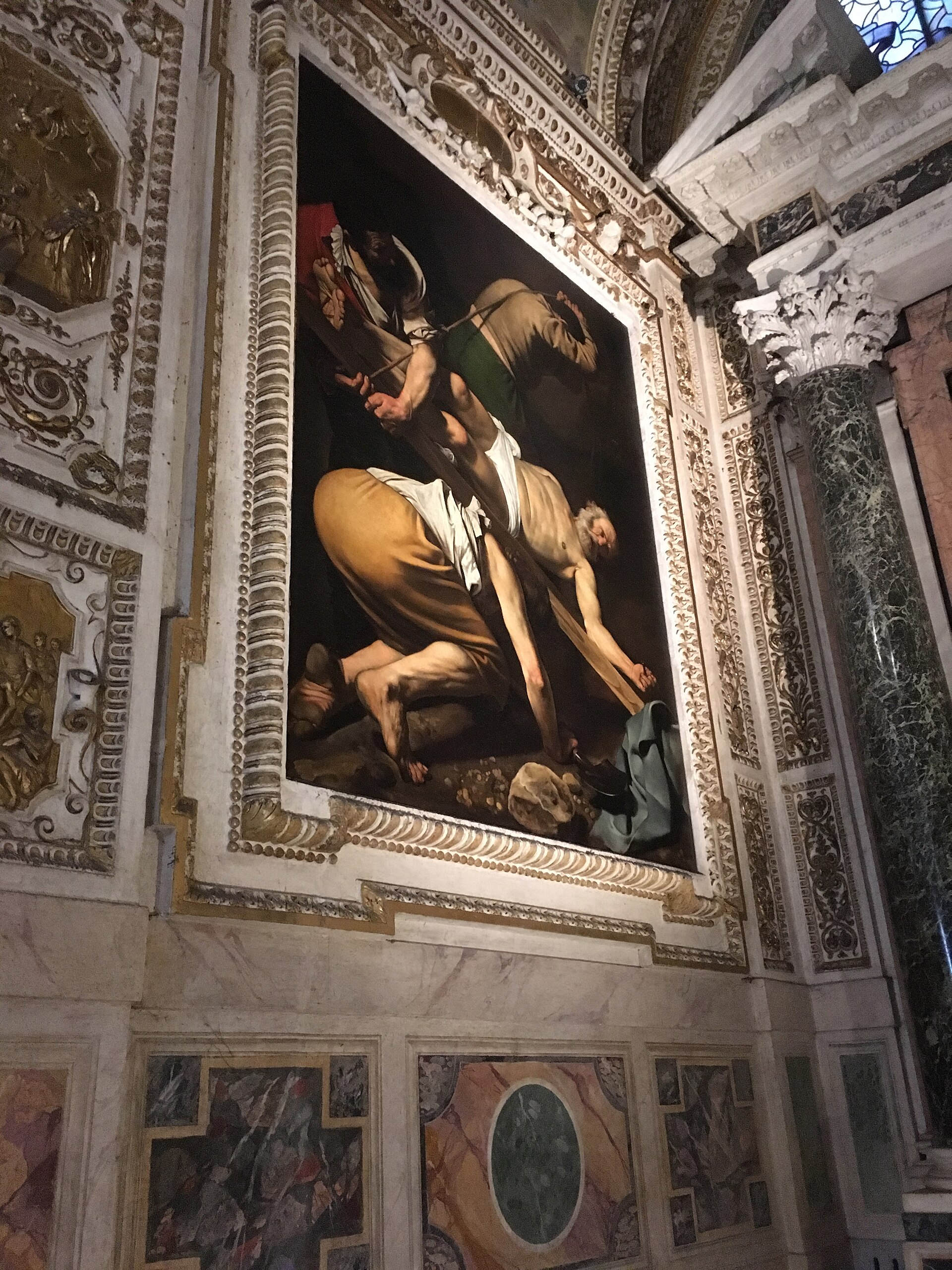
The best-known details of Peter's death come from the Acts of Peter, a Christian novel written in Greek about 180 to 190, probably in Asia Minor, and preserved mostly in a Latin manuscript at Vercelli and in a separate Greek account of the martyrdom. It is the source of two famous scenes. In the first, Peter is fleeing Rome when he meets Jesus and asks, "Lord, whither goest thou thus (or here)?" Jesus answers, "I go into Rome to be crucified," and Peter turns back. In the second, Peter asks his executioners: "I beseech you the executioners, crucify me thus, with the head downward and not otherwise," and then gives a long speech explaining the meaning of the inverted cross.34 (The Latin form of Peter's question, Quo vadis?, gave its name to Henryk Sienkiewicz's novel of 1896.) The Acts of Peter also tells of Peter's contests with Simon Magus, a talking dog and a smoked fish restored to life. It is fiction with a religious purpose, written more than a century after Peter died.
The upside-down crucifixion entered the historical tradition through Origen (died about 253), in a passage Eusebius quotes from Origen's lost Commentary on Genesis: Peter, "having come to Rome, he was crucified head-downwards; for he had requested that he might suffer in this way."35 Origen does not name his source, and he wrote at least 160 years after the event. This is tradition, and the detail itself first appears in a novel. It is rated here as legend: its only witness before Origen is a novel, no independent early source supports it, and it may have entered Christian memory from the Acts of Peter. Romans did sometimes crucify people in unusual positions; the Roman philosopher Seneca, writing about 40, says in his Consolation to Marcia (6.20.3) that some executioners crucified their victims "with head down to the ground," as one English translation renders it.36 So the manner of death was possible. Whether it happened to Peter cannot be shown.
The tradition that Peter was buried on the Vatican hill rests on Gaius (about 200) and on the basilica that Constantine built over the spot in the 320s, at great cost, by leveling a hillside and a cemetery. Excavations under Saint Peter's Basilica from 1939 to 1949 found a pagan and Christian cemetery and a small monument (an aedicula) set against a red-plastered wall, which the excavators dated to about 160. Most archaeologists accept that this monument is the "trophy" Gaius saw. In 1968 Pope Paul VI announced that bones found in a niche of a nearby wall had been identified as Peter's in a way he called convincing, following the work of the epigrapher Margherita Guarducci. Many archaeologists, including some of the original excavators, did not accept her identification. The monument of about 160 shows that Roman Christians honored this spot as Peter's within a century of his death. It does not prove that his body lay there.
The Mamertine Prison by the Roman Forum, where tradition says Peter and Paul were held before execution, is a late tradition: the prison is ancient, but its link to the apostles is first found in medieval sources.

What the sources dispute
Did Peter go to Rome at all? The New Testament never says so directly. 1 Peter closes with greetings from "the church that is at Babylon" (1 Peter 5:13), which many scholars read as a code name for Rome, as in Revelation 17 and 18. Protestant writers from the sixteenth century on sometimes doubted the Roman stay, partly because the claim supported the authority of the papacy. Most modern Protestant and Catholic historians accept it, chiefly on the strength of 1 Clement, Ignatius and the monument on the Vatican hill. The German classicist Otto Zwierlein (Petrus in Rom, 2009) argued that the whole tradition grew out of literary sources and that Peter probably never reached Rome. His case was widely reviewed and rejected by most specialists; Markus Bockmuehl (The Remembered Peter, 2010, and Simon Peter in Scripture and Memory, 2012) set out the counter case from the early sources.
Did Peter die in 64, after the fire? Tertullian places his death under Nero, and many date it to the killings after the fire, in 64 or 65. Eusebius's Chronicle, as it survives in later versions, places the deaths of Peter and Paul late in Nero's reign, about 67 to 68. Dionysius of Corinth's claim that the two died "at the same time" may mean the same persecution and not the same day; the shared feast of Peter and Paul on June 29, kept since at least the mid third century, is a liturgical date and not evidence of a day of death.
What does "suffered martyrdom" mean in 1 Clement? The Greek word Clement uses (martyresas) can mean "bore witness" as well as "was martyred," since the technical sense was not yet fixed (see lesson 01). Most scholars still read the passage as a report of a violent death, because Clement frames it as an account of how envy brought the "pillars" to their death.
Paul
Died: probably between 62 and 68, traditionally 64 to 67 · Place: Rome · Earliest source: 1 Clement 5, written at Rome about 96 · Record strength: Strong tradition for martyrdom at Rome; Strong tradition for beheading (Tertullian, about 200); Legend for the Three Fountains
What the record shows
Paul is the best documented person of the first Christian generation. His own letters (seven of them accepted by nearly all scholars as his, written about 50 to 58) and the Book of Acts give a detailed account of his life. Neither tells of his death.
Acts follows Paul from his arrest in Jerusalem (about 57), through two years in custody at Caesarea under the governors Felix and Festus, to his appeal to Caesar as a Roman citizen and his voyage to Rome. It ends with Paul under house arrest: "And Paul dwelt two whole years in his own hired house, and received all that came in unto him, Preaching the kingdom of God, and teaching those things which concern the Lord Jesus Christ, with all confidence, no man forbidding him."6 That brings the story to about 62. Acts says nothing of the outcome of his appeal. Earlier in the book, though, Paul tells the elders of Ephesus that they "shall see my face no more" (Acts 20:25, 38), which suggests the author knew Paul did not return.
The Second Letter to Timothy, written in Paul's name from prison in Rome, has him say: "For I am now ready to be offered, and the time of my departure is at hand. I have fought a good fight, I have finished my course, I have kept the faith."37 Whether Paul wrote this letter is disputed (see below), but either way it shows that by the time it was written, Christians remembered Paul as having faced death in Rome.
The first explicit statement is 1 Clement, about 96, in the same passage quoted above for Peter: "Owing to envy, Paul also obtained the reward of patient endurance, after being seven times thrown into captivity, compelled to flee, and stoned. After preaching both in the east and west, he gained the illustrious reputation due to his faith, having taught righteousness to the whole world, and come to the extreme limit of the west, and suffered martyrdom under the prefects. Thus was he removed from the world, and went into the holy place."28 "Under the prefects" probably refers to the prefects of the Praetorian Guard or of the city, who handled cases for the emperor. Ignatius (about 110) and Dionysius of Corinth (about 170) pair Paul with Peter as the Roman church's apostles and martyrs.2930 Gaius (about 200) points to Paul's "trophy" on the road to Ostia.30
The manner of death first appears in Tertullian, about 200: Paul "wins his crown in a death like John's," that is, like John the Baptist, by beheading, and "Paul is beheaded" and "obtain[s] a birth suited to Roman citizenship."3233 Beheading with a sword was the usual form of execution for a Roman citizen, while crucifixion was considered a punishment for slaves and non-citizens. Eusebius, early in the fourth century, writes simply that "Paul was beheaded in Rome itself."30 This is tradition, but it is early, consistent and fits Roman law, so it is rated here as strong tradition.
Tradition and legend
The Acts of Paul, a Christian novel written in Asia Minor in the second half of the second century, includes a "Martyrdom of Paul" in which Nero orders him beheaded and milk, not blood, spurts onto the executioner's clothing, after which Paul appears alive to Nero. This is legend. Tertullian, in On Baptism 17 (about 200), objecting to the use of the Thecla story in these writings, says that "in Asia, the presbyter who composed that writing, as if he were augmenting Paul's fame from his own store, after being convicted, and confessing that he had done it from love of Paul, was removed from his office."38 Scholars debate whether Tertullian meant the whole Acts of Paul or only the Thecla section.
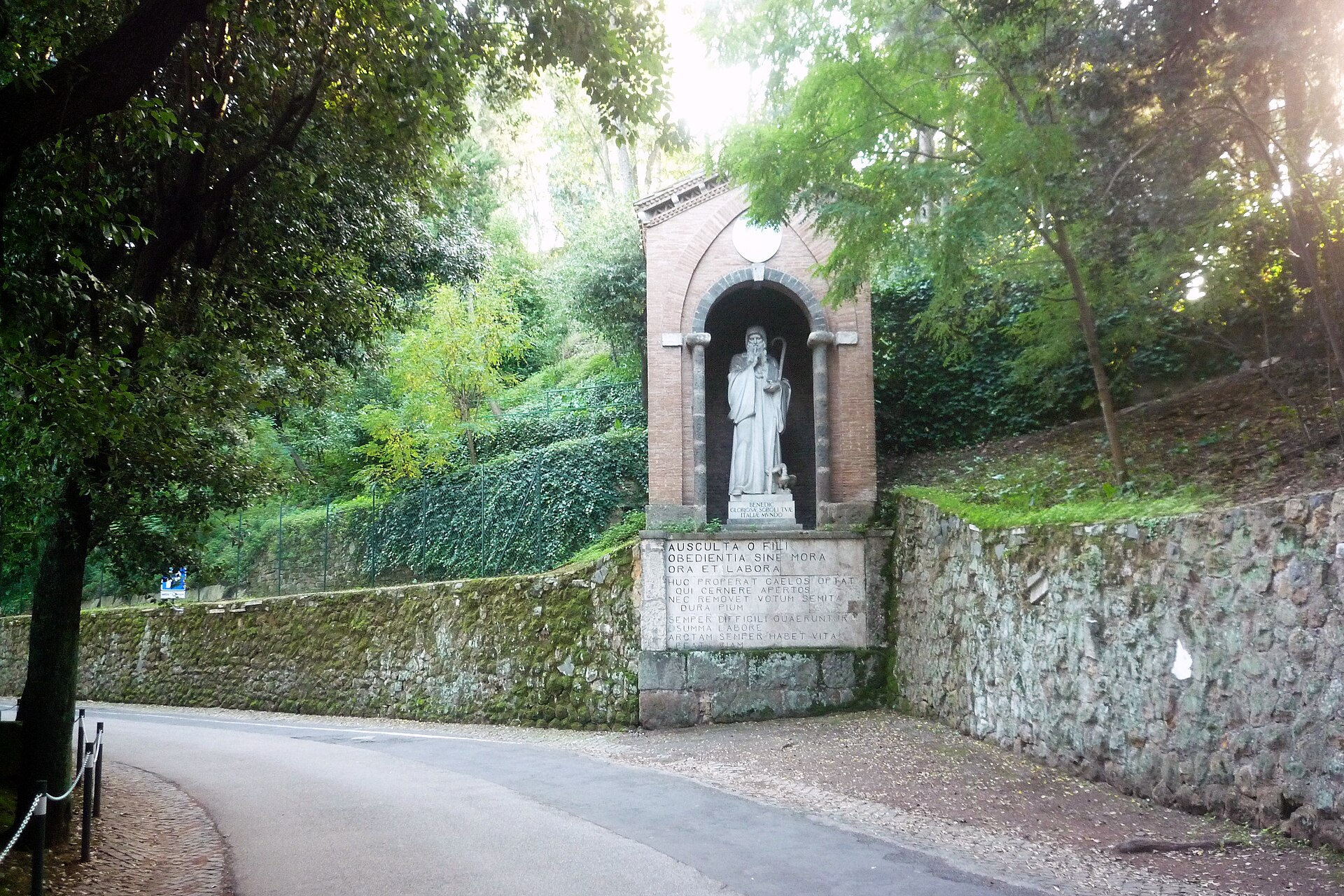
The traditional site of the execution is the place called Aquae Salviae on the Via Laurentina, south of Rome, where the Abbey of the Three Fountains (Tre Fontane) now stands. The story that Paul's severed head struck the ground three times and that a spring rose at each spot is legend and appears in medieval sources; the name Tre Fontane itself is first recorded in the Middle Ages. The site's link with Paul's death is a late tradition, attested from about the sixth century.
The traditional burial place is the Basilica of Saint Paul Outside the Walls on the Via Ostiense, built over the "trophy" Gaius mentioned and enlarged in the 380s. In the early 2000s, Vatican archaeologists uncovered a marble sarcophagus beneath the altar, inscribed with Paul's name on a slab above it. On June 28, 2009, Pope Benedict XVI announced that carbon tests on bone fragments taken through a small hole in the sarcophagus dated them to the first or second century, and said the result "seems to confirm the unanimous and uncontested tradition" that the remains are Paul's. The sarcophagus also held incense, purple linen with gold sequins, and blue fabric.39 The test shows the bones are old enough to be Paul's. It cannot show whose they are.

What the sources dispute
Was Paul released after the two years of Acts 28 and then arrested again? Eusebius thought so: "after he had made his defense it is said that the apostle was sent again upon the ministry of preaching, and that upon coming to the same city a second time he suffered martyrdom. In this imprisonment he wrote his second epistle to Timothy."40 Support for a release comes from 1 Clement's phrase "the extreme limit of the west," which some read as Spain (Paul planned a mission there in Romans 15:24 and 28), and from the Pastoral Letters (1 and 2 Timothy and Titus), which mention travels that do not fit the story in Acts. Against it, many scholars hold that the Pastoral Letters were written by a follower of Paul after his death, which would remove the evidence for a second imprisonment, and that "the extreme limit of the west" may mean Rome itself, seen from the eastern Mediterranean. If there was no release, Paul died about 62 to 64. If there was, he died about 64 to 67.
Did Paul die in the persecution after the fire of 64? Tertullian and Eusebius both place his death under Nero, and Dionysius of Corinth says Peter and Paul died "at the same time." Brent Shaw's argument (see the era introduction) would cut the link between the apostles' deaths and the fire, while leaving their deaths under Nero in place. Christopher Jones and most historians keep the traditional link as likely, though not proven.
What did "under the prefects" mean? Some scholars read it as a reference to a hearing before the Praetorian prefects (for example, Tigellinus and Faenius Rufus, who held the office from 62), others as a general phrase for Roman officials. The phrase is the closest thing to a legal detail the early sources preserve about the death of any apostle.
Antipas of Pergamum
Died: before about 95 (date unknown) · Place: Pergamum, in the Roman province of Asia (near modern Bergama, Turkey) · Earliest source: Revelation 2:13, written about 95 (some date it about 68 to 70) · Record strength: Documented (by a near-contemporary source that names him and his death; nothing else is known)
What the record shows
Antipas is known from one verse. In the Book of Revelation, the risen Christ dictates letters to seven churches in Asia Minor. The letter to the church at Pergamum says: "I know thy works, and where thou dwellest, even where Satan's seat is: and thou holdest fast my name, and hast not denied my faith, even in those days wherein Antipas was my faithful martyr, who was slain among you, where Satan dwelleth."12
The verse gives four facts and no more: a man named Antipas belonged to the church at Pergamum, he was killed there, the killing happened at a time of pressure on the church to deny its faith, and the church had held firm. It does not say who killed him, how, when, or on what charge. The Greek words translated "my faithful martyr" (ho martys mou ho pistos) echo the title given to Christ himself in Revelation 1:5 ("the faithful witness"). The verse is one of the few places in the New Testament where martys comes closest to its later meaning of a witness who dies (see lesson 01).
Revelation is usually dated to about 95, near the end of the reign of the emperor Domitian. Irenaeus, writing about 180, said the vision was seen "towards the end of Domitian's reign,"41 and most scholars follow him, though some date the book to the late 60s, soon after Nero's death. Either way, Antipas died some time before the book was written, and the readers of the letter remembered his death.
"Satan's seat" (or "Satan's throne") at Pergamum is not explained in the text. Pergamum was a center of the Roman imperial cult: in 29 BC the city received permission to build a temple to the goddess Roma and to Augustus, one of the first such temples in the empire, and the emperor Tiberius later recalled that "Augustus did not forbid the founding of a temple at Pergamos to himself and to the city of Rome."42 It also had the great Altar of Zeus (now reconstructed in the Pergamon Museum in Berlin) and a famous healing shrine of Asclepius, whose symbol was a serpent. Scholars have proposed each of these as the "throne." If the imperial cult is meant, Antipas may have died for refusing to honor the emperor, but the text does not say so.
Tradition and legend
Later Orthodox tradition made Antipas the bishop of Pergamum, ordained by the apostle John, and said that he was put to death by being shut inside a heated bronze bull. This is legend. The story appears in Byzantine collections of saints' lives (synaxaria and menologia), compiled many centuries after Revelation, and the bronze bull is a stock torture of ancient legend, first told of the tyrant Phalaris of Akragas in Sicily in the sixth century BC. No early source supports it. The Orthodox Church keeps his feast on April 11.
What the sources dispute
Scholars disagree on how far Revelation reflects an actual persecution. Older scholarship pictured a broad persecution of Christians under Domitian. Since the 1980s, many historians (Leonard Thompson, The Book of Revelation: Apocalypse and Empire, 1990, for example) have argued that there is little evidence of an empire-wide persecution under Domitian, and that the book reflects local hostility and the pressure of the imperial cult. On this reading, the death of Antipas was a local event, perhaps a mob killing or a sentence by a city or provincial official. Some scholars have suggested that the name Antipas, a short form of Antipater, might be symbolic, but most take him as a real person because the letter names him in passing, as a figure its readers knew. Antipas is the only Christian in Revelation whose death is named; the book speaks of others only as a group, such as "the souls of them that were slain for the word of God" (Revelation 6:9).
The other apostles: what is known, and how well
Popular books and sermons often say that every apostle but John died a martyr. The sources do not allow that claim to be stated as fact. For most of the Twelve, the New Testament says nothing after the first chapters of Acts, and the stories of their missions and deaths come from apocryphal acts (Christian novels of the second to sixth centuries), from lists of apostles and their mission fields compiled from the fourth century on, and from the traditions of churches that trace their founding to a particular apostle. Several stories conflict with each other, and some apostles have two or three different deaths assigned to them in different regions.
One early writer even says that several apostles did not die as martyrs. About 170, the Valentinian teacher Heracleon, quoted by Clement of Alexandria in the Stromata (book 4, chapter 9), distinguished confession "with the voice ... before the authorities" from confession by faith and conduct, and named "Matthew, Philip, Thomas, Levi, and many others" in connection with those who were saved without the spoken confession before a court that leads to death.43 (The printed English translation of this sentence at newadvent.org reads awkwardly; scholars read the Greek as saying that not all the saved made the spoken confession and departed, and that these apostles were among those who did not.) Clement, a writer of the main church, quotes Heracleon without contradicting this point. It is the earliest statement on the deaths of these apostles, and it is a statement that they did not die as martyrs.
The table below gives each of the Twelve not profiled above (and Matthias, chosen to replace Judas in Acts 1), with the death tradition, its earliest known source, and a rating on the scale from lesson 01. Dates of the sources are approximate.
| Apostle | Death as told in tradition | Earliest source for the death | Record strength |
|---|---|---|---|
| John, son of Zebedee | Died a natural death of old age at Ephesus, in the reign of Trajan (98 to 117). Survived being plunged into boiling oil at Rome. | Natural death: Irenaeus, Against Heresies 2.22.5 and 3.3.4, about 180; Polycrates of Ephesus, about 190, in Eusebius 3.31.444546 Oil: Tertullian, about 200.32 | Strong tradition (natural death); Legend (oil) |
| Andrew | Crucified at Patras in Achaia (Greece), bound to the cross with ropes so that he would suffer longer. The X-shaped cross appears in art much later. | Acts of Andrew, a novel of about 150 to 210; a Latin account of his passion in later centuries.47 Origen (in Eusebius 3.1) names Scythia as his field, without a death.35 | Late tradition (death at Patras); Legend (the X-shaped cross) |
| Thomas | Killed with spears in India on a king's order; the Christians of Kerala and the shrine at Mylapore (Chennai) hold that he is buried there. | Acts of Thomas, written in Syriac at Edessa, early third century.48 Origen (in Eusebius 3.1) names Parthia. Heracleon (about 170) lists Thomas among those not martyred.43 | Late tradition; disputed by the earliest witness |
| Philip | Buried at Hierapolis in Asia Minor. Later: crucified (some versions upside down) at Hierapolis. | Burial: Polycrates of Ephesus, about 190: Philip "sleeps in Hierapolis," with no mention of martyrdom.46 Crucifixion: Acts of Philip, fourth century. Heracleon lists Philip among those not martyred.43 | Strong tradition (burial at Hierapolis); Late tradition (martyrdom) |
| Bartholomew | Flayed alive and beheaded (or crucified) in Armenia; some accounts place his mission in India. | Eusebius 5.10 (about 300) says Pantaenus found in India a Gospel left by Bartholomew, with no death.49 Death stories: from the sixth century on. | Late tradition (Armenian death); Legend (flaying details) |
| Matthew (Levi) | Martyred in Ethiopia, or in Persia, or Parthia, depending on the source. | Heracleon (about 170) lists Matthew and Levi among those not martyred.43 The martyrdom accounts are of the fourth century or later and conflict. | Late tradition; disputed by the earliest witness |
| James son of Alphaeus | Stoned or crucified in Egypt, or in Persia, in different traditions; often merged with James the brother of Jesus. | No early source. The Western merger with James the Just dates from the late fourth century. | Late tradition |
| Simon the Zealot (the Canaanite) | Sawn in two, or crucified, in Persia, or died in Britain or at Edessa, in different traditions. | Western Passion of Simon and Jude in the Latin collection attributed to "Abdias," about the sixth century. | Late tradition; Legend (details) |
| Jude (Thaddaeus, Judas son of James) | Killed with Simon in Persia (Western tradition), or died at Edessa or in Armenia (Eastern traditions). | Same sixth century Latin collection; Armenian traditions also late. | Late tradition |
| Matthias | Stoned and beheaded in Jerusalem, or martyred in Colchis (Georgia), or in Ethiopia. | No early source; the traditions date from the fourth century or later and contradict each other. | Late tradition |
John the apostle: the one who was not killed
The early sources are firmer on John's natural death than on almost any apostle's martyrdom. Irenaeus of Lyon, writing about 180, had as a young man heard Polycarp of Smyrna, who had known John. He wrote that the elders in Asia who associated with John testified that "he remained among them up to the times of Trajan,"44 and that "the Church in Ephesus, founded by Paul, and having John remaining among them permanently until the times of Trajan, is a true witness of the tradition of the apostles."45 About 190, Polycrates, bishop of Ephesus, wrote to Bishop Victor of Rome that John, "who reclined upon the bosom of the Lord," "sleeps at Ephesus," in a list of great Christians of Asia who had died and been buried there.46 Neither calls him a martyr.
The boiling oil story comes from Tertullian, about 200, who in the same sentence about Rome quoted above adds that it was the place "where the Apostle John was first plunged, unhurt, into boiling oil, and thence remitted to his island-exile."32 Even in Tertullian's telling, John survives. The story is not found in any earlier writer, and later tradition placed it at the Latin Gate of Rome, where the church of San Giovanni a Porta Latina now stands. It is legend: there is no early support for it, and the earlier and better placed witnesses (Irenaeus and Polycrates) say nothing of it. Because Jesus told James and John they would "drink of the cup" (Mark 10:39), some later Christians counted John's sufferings (exile on Patmos and the oil) as a martyrdom in intention. The early church called a Christian who suffered for the faith and survived a "confessor," a distinction set out in lesson 01. By that measure John is a confessor in tradition, not a martyr.
Some scholars argue that the John of Ephesus remembered by Irenaeus was a different John (the "elder John" mentioned by Papias) from John the son of Zebedee, and they point to the late Papias fragment that says John was killed with his brother James. That question belongs to the study of the Gospel of John's authorship. On the evidence, the oldest sources that speak of John's death say he died in old age at Ephesus.
The first generation of witnesses in review
Seen together, the deaths in this lesson share several features that set them apart from the martyrdoms of later centuries.
First, they were not the result of a Roman law against Christianity. John the Baptist died before there was a Christian church, on the order of a client king. Stephen and James the brother of Jesus died at the hands of Jerusalem's religious leadership, on charges framed in terms of the Law of Moses and the Temple. James the son of Zebedee died at the order of Herod Agrippa I, as an act of royal policy. Only Peter and Paul died at Rome, and even there the earliest Roman sources (Tacitus and Suetonius) describe the punishment of Christians as an action of Nero, not as the enforcement of a standing law. The legal framework that later governed trials of Christians, visible in Pliny's letter to Trajan about 112, belongs to the next era (see Module 79, lesson 03, and lesson 03 of this module).
Second, the records are short. Acts gives James the son of Zebedee one sentence. Revelation gives Antipas one verse. 1 Clement gives Peter and Paul a paragraph that does not say how either died. Josephus gives James the brother of Jesus a few lines in a passage about something else. The long, detailed martyr stories with trial dialogues and last words, the genre called acts and passions of the martyrs, begin with the Martyrdom of Polycarp in the second century. The New Testament's own martyr story, Stephen's, is the one exception, and it is written in the manner of a history, with a speech, not as a trial record.
Third, the gap between record and tradition is wide and can be measured. For each person in this lesson, the bare fact of death is known from a source written within a lifetime of the event. The details that fill sermons, paintings and pilgrim routes (the upside-down cross, the three fountains, the fuller's club, the bronze bull, the tomb in Galicia, the boiling oil) appear between about 100 and 800 years later. The table and chart above show that pattern apostle by apostle.
Fourth, the first Christian writers already treated these deaths as models. 1 Clement uses Peter and Paul as examples of patient endurance. Ignatius, on his way to the beasts at Rome about 110, wrote that he hoped to become "the wheat of God ... ground by the teeth of the wild beasts, that I may be found the pure bread of Christ," and set himself beside Peter and Paul.29 The way later martyrs understood their own deaths was shaped by these first examples, and lesson 03 follows that story from Ignatius to the Great Persecution.
What the record shows and what it does not
- Documented fact: John the Baptist was imprisoned and executed by Herod Antipas (Mark 6; Josephus, Antiquities 18.5.2). James the son of Zebedee was killed with the sword by Herod Agrippa I, between 41 and 44 (Acts 12:2). James the brother of Jesus was condemned by the high priest Ananus and stoned in 62 (Josephus, Antiquities 20.9.1). Stephen was stoned in Jerusalem in the 30s (Acts 7, the single source). Antipas was killed at Pergamum before about 95 (Revelation 2:13). Christians were executed at Rome under Nero (Tacitus, Annals 15.44; Suetonius, Nero 16).
- Strong early tradition: Peter and Paul died as martyrs at Rome under Nero (1 Clement 5, about 96; Ignatius; Dionysius of Corinth; Irenaeus). Peter was crucified and Paul beheaded (Tertullian, about 200). Roman Christians honored monuments to them on the Vatican hill and the Ostian Way by about 200 (Gaius), and the Vatican monument dates to about 160. John the apostle died naturally at Ephesus (Irenaeus; Polycrates).
- A church's own claim or tradition: James's body lies at Santiago de Compostela (claim of the ninth century). Thomas is buried at Mylapore (tradition of the Indian churches and the Acts of Thomas). Andrew died at Patras. The bones beneath Saint Peter's are Peter's (Paul VI, 1968). The bones in the sarcophagus beneath Saint Paul Outside the Walls are Paul's (Benedict XVI, 2009).
- Scholarly reading: Brent Shaw doubts that Nero's killings were aimed at Christians as such; Christopher Jones and most historians defend Tacitus. Otto Zwierlein doubts Peter was ever in Rome; most specialists, including Markus Bockmuehl, disagree.
- Open questions: the year of John the Baptist's death; whether the council could legally execute Stephen; whether Paul was released and rearrested; the exact year of Peter's death; how Antipas died; how most of the Twelve died.
Claims checked
"Every apostle except John died a martyr's death."
Rating: Partly supported. This claim is common in sermons and in popular books of Christian evidences. The deaths of James the son of Zebedee (Acts 12:2), Peter and Paul (1 Clement 5 and the sources after it) rest on early evidence. For the others, the stories come from novels and lists written from the late second to the sixth century, and some conflict. The earliest statement on several of them, Heracleon's about 170 as quoted by Clement of Alexandria, says Matthew, Philip, Thomas and Levi did not die by public confession.43 Sean McDowell's doctoral study The Fate of the Apostles (2015), written in support of the traditional view, rates the evidence apostle by apostle and finds it strong for some and weak for others.
"Peter asked to be crucified upside down because he was unworthy to die as Jesus died."
Rating: Unsupported. The request first appears in the Acts of Peter, a novel of about 180 to 190, where Peter gives a long mystical reason for it, not the reason of unworthiness.34 Origen, a generation or two later, says Peter "requested that he might suffer in this way" without giving a reason.35 The explanation that he felt unworthy to die as his Lord had died is found in later writers of the fourth century and after. Crucifixion itself is strong tradition (Tertullian, and possibly John 21:18 to 19). The inverted position cannot be confirmed.
"John the apostle survived a cauldron of boiling oil."
Rating: Unsupported. The only early source is a single clause in Tertullian, about 200, a century after John's death.32 Irenaeus and Polycrates, both better placed to know (Polycrates was bishop of Ephesus, where John lived), say nothing of it. It is rated legend in this lesson.
"Nero burned Christians as torches to light his gardens."
Rating: Supported (by one source). Tacitus says some of those condemned "were doomed to the flames and burnt" to give light by night, and that "Nero offered his gardens for the spectacle."7 Tacitus wrote about fifty years later, and Brent Shaw has questioned how much of his account reflects his own time; most historians accept the core of the report.910
"John the Baptist was killed because of Salome's dance of the seven veils."
Rating: Partly supported. Mark and Matthew say Herodias's daughter danced at Antipas's birthday feast and asked for John's head at her mother's urging.113 Neither names her; the name Salome comes from Josephus's list of Herod's family.15 The "seven veils" come from Oscar Wilde's play of 1891. Josephus gives a political motive (fear of revolt) and says nothing of the feast.2
"Stephen was the first Christian martyr."
Rating: Supported. Stephen is the first follower of Jesus whose death for the faith is recorded (Acts 7), and Paul's words in Acts 22:20 call him "thy martyr Stephen."11 John the Baptist died earlier, but he is honored in the churches as the forerunner of Christ, not usually counted as the first Christian martyr. Acts 26:10 implies other believers were also put to death in Jerusalem in those years, but none is named.21
"James the son of Zebedee preached in Spain and is buried at Santiago de Compostela."
Rating: Unsupported. Acts places his death in Jerusalem about 44. No writer before the late sixth or seventh century connects him with Spain, and the tomb was identified in the early ninth century. The pilgrimage is real and ancient; the historical basis of the claim about the tomb is not established.
"Carbon dating proved that the bones in Paul's tomb are his."
Rating: Partly supported. In 2009 Pope Benedict XVI announced that bone fragments from the sarcophagus beneath the Basilica of Saint Paul Outside the Walls dated to the first or second century, and said the result "seems to confirm" the tradition.39 The test fits the tradition, but a date range of two centuries cannot identify a person.
"Peter's bones have been found beneath Saint Peter's Basilica."
Rating: Unresolved. The monument of about 160 found in the excavations of 1939 to 1949 is widely accepted as the "trophy" Gaius described about 200.30 The identification of specific bones as Peter's, announced by Paul VI in 1968 on the basis of Margherita Guarducci's work, has not won general agreement among archaeologists.
"James the brother of Jesus was thrown from the pinnacle of the Temple."
Rating: Unresolved. Josephus, the earliest source, says only that he was condemned and handed over to be stoned.5 The fall from the pinnacle appears a century later in Hegesippus and in Clement of Alexandria.26 It may preserve a memory of how a stoning began, or it may be a later addition.
Hard questions and answers
A skeptic asks: if the New Testament was written by believers, why rate its accounts as "documented"?
The rating describes the distance between the event and the record, not the belief of the writer. By the standard used throughout this module (a contemporary or near-contemporary record that names the person and the death), Acts and Revelation qualify for the deaths they describe. Believing authors can be wrong, and the briefs flag where the authors appear to have shaped a scene, as with the echo of Jesus's words in Stephen's last words. Where an outside source exists, it has been weighed beside the Christian one: Josephus confirms the deaths of John the Baptist and James the brother of Jesus independently, and agrees with the Christian sources on the main facts while differing on motive and detail. The same rule applies to Catholic, Orthodox and Protestant records in later lessons.
A Protestant asks: does accepting that Peter died in Rome concede the claims of the papacy?
No historical conclusion about Peter's death decides a question of church authority. The evidence that Peter died at Rome is early and accepted by most Protestant, Catholic, Orthodox and secular historians. Whether Peter was a bishop of Rome in the later sense, and whether authority passed from him to the bishops of Rome, are separate questions about church order, which Module 79 treats in its history of the early church. Writers of the sixteenth century who denied Peter's presence in Rome did so partly to answer the papacy's claims; modern Protestant scholars such as Oscar Cullmann (Peter: Disciple, Apostle, Martyr, 1952) accepted the Roman martyrdom while rejecting the papal conclusion.
A Catholic or Orthodox reader asks: why rate long-held traditions, such as Andrew at Patras or Thomas in India, as "late"? Does the church's memory count for nothing?
A church's memory counts as evidence that a tradition existed and was believed from a certain date. It is cited here as such, with the date when it first appears in writing. The rating measures only the distance between the event and the first surviving written record. A late tradition may still be true: the Christians of Kerala have held the Thomas tradition for many centuries, and the existence of a Christian community in South India from an early date is well attested, even if the first written account of Thomas's death is a third century novel. The same standard is applied to Protestant claims in later lessons, including stories in Foxe's Actes and Monuments.
A Jewish reader asks: do these accounts blame "the Jews" as a people for these deaths?
The sources name particular people: Herod Antipas, Herod Agrippa I, the high priest Ananus, members of certain Jerusalem synagogues, and the council. Acts sometimes uses the phrase "the Jews" for the Jerusalem leadership, and Hegesippus and later Christian writers sometimes spoke of the Jewish people as a whole in hostile terms, a habit that fed centuries of Christian hostility toward Jews. The record itself is more specific. Stephen, James and their accusers were all Jews. Josephus, a Jewish priest, reports that "the most equitable of the citizens" of Jerusalem objected to the killing of James, and that their protest cost Ananus the high priesthood.5 The Gamaliel of Acts 5:34 to 39 urged the council to leave the apostles alone. The deaths in this lesson were the acts of particular rulers and officials.
A skeptic asks: do the apostles' deaths prove Christianity true?
History can show what people did and what they said they believed. It cannot settle whether their beliefs were true. People of many faiths, and of none, have died for their convictions. The argument made by Christian apologists is narrower: that a few of the first witnesses (Peter, Paul, the two Jameses) claimed to have seen the risen Jesus and accepted death without recanting, which shows they were sincere. How strong that argument is depends on the evidence for each death, which is what the briefs rate. For Peter, Paul and the two Jameses the evidence for a violent death is early. Evidence that any of them was offered release in exchange for denying the resurrection does not survive from the first century.
An Anabaptist or Protestant reader asks: did the first martyrs seek death?
The New Testament martyrs did not. Stephen was seized while arguing in Jerusalem, James the son of Zebedee was arrested by a king, and Paul used every legal means available to a citizen, including an appeal to Caesar, to defend himself. Acts records Paul's escapes from Damascus and other cities. The eagerness for death seen in Ignatius's letter to the Romans, about 110, belongs to the next generation, and the church soon taught against volunteering for martyrdom (as in the Martyrdom of Polycarp, chapter 4). Lesson 03 follows that debate.
Learn more
- Module 79, Church History Part A, lesson 01: The First Century: The apostolic church and Nero's persecution in outline.
- Module 79, Church History Part A, lesson 03: Persecution and the Apologists: The Roman policy history from Pliny and Trajan to Diocletian.
- Lesson 01: What a Martyr Is, and How to Weigh the Sources: The record strength key and the word martys.
- Lesson 03: The Persecutions to 313: Ignatius, Polycarp, Perpetua and the martyrs of the second and third centuries.
- Eusebius, Church History, book 2 (New Advent): The fullest early collection of sources on the two Jameses, Peter and Paul, quoted at length.
- Brent D. Shaw, The Myth of the Neronian Persecution (2015): The strongest skeptical case on Tacitus, to read with Jones's reply.
- M. R. James, The Apocryphal New Testament: Acts of Peter: Read the source of the Quo vadis and upside-down cross stories for yourself.
Still being checked (16 items)
These points could not be confirmed against a primary source when this lesson was written and fact checked in October 2026. The text above states each one as uncertain.
- The date of John the Baptist's death: the Gospels imply about 29 to 30, while Josephus's link to Antipas's defeat in 36 has led some (Nikos Kokkinos named from memory) to argue for about 35; the attribution to Kokkinos was not checked in this task.
- Rufinus's report that some of John the Baptist's bones were rescued at Sebaste and sent to Alexandria was stated from general knowledge; only Theodoret's account was opened.
- The claims for the head of John the Baptist at San Silvestro in Capite, Amiens and the Umayyad Mosque were stated from general knowledge, not from a source opened in this task.
- Lucian of Caphar Gamala's discovery of Stephen's relics (December 415) and Eudocia's basilica north of the Damascus Gate were stated from general knowledge; only Augustine's City of God 22.8 was opened.
- The earliest Spanish mission sources for James (the Breviarium apostolorum, Aldhelm, the hymn attributed to Beatus of Liebana) and the dating of the tomb's discovery to about 820 to 830 were not checked against primary texts; the Clavijo legend's first written form (twelfth century) likewise.
- Louis Feldman and John P. Meier as defenders of Antiquities 20.9.1, Robert Eisenman (1997) and John Painter (1997) on James, Oscar Cullmann (1952) on Peter, Otto Zwierlein (2009) and Markus Bockmuehl (2010, 2012) on Peter in Rome, Leonard Thompson (1990) on Domitian, and Sean McDowell (2015) on the apostles' fates are cited from general knowledge of the scholarship; their works were not opened.
- The James ossuary facts (announced 2002, declared a forgery by the Israel Antiquities Authority 2003, owner acquitted of forgery 2012) were stated from general knowledge.
- The Vatican excavations (1939 to 1949), the dating of the aedicula to about 160 and Paul VI's 1968 announcement were stated from general knowledge (the announcement is paraphrased, not quoted); check against vatican.va.
- Christopher P. Jones's article (New Testament Studies 63, 2017) was not opened; Shaw's reply is confirmed on the Cambridge page as New Testament Studies 64, no. 2 (April 2018), 231 to 242.
- Eusebius's Chronicle dating of the deaths of Peter and Paul to about 67 to 68 is stated from general knowledge.
- The Heracleon passage in Clement, Stromata 4.9: the online ANF English reads 'for all the saved have confessed'; the reading 'not all' follows the usual understanding of the Greek, which was not opened here.
- The Tre Fontane three-springs legend's medieval origin and the sixth century attestation of Aquae Salviae as Paul's execution site were stated from general knowledge; the Mamertine Prison tradition likewise.
- The tradition of Antipas in the bronze bull is stated as Byzantine; the exact first text was not identified.
- The mission and death traditions for Bartholomew, Matthew, James son of Alphaeus, Simon, Jude and Matthias in the summary table were stated from general knowledge of the apocryphal and later sources; only the Acts of Andrew and the Consummation of Thomas were opened.
- Caravaggio's Crucifixion of Saint Peter (1601, Cerasi Chapel) date is from general knowledge; the Commons page was not opened. (The Rembrandt image was checked by the fact checker: Commons lists it as a 1635 etching in the National Gallery of Art, Rosenwald Collection, CC0.)
- The statement that the 'unworthy to die as his Lord' explanation of Peter's inverted cross appears in writers of the fourth century and after was made from general knowledge; the specific first writer was not identified.
Notes
- Mark 6:17 to 29, King James Version (1611), as served by bible-api.com (retrieved Oct. 28, 2026). Read it online. ↩
- Flavius Josephus, Antiquities of the Jews, trans. William Whiston (1737), Project Gutenberg ebook 2848, book 18, chapter 5, section 2 (written about 93 to 94) (retrieved Oct. 28, 2026). Read it online. ↩
- Acts 12:1 to 3, King James Version (1611), as served by bible-api.com (retrieved Oct. 28, 2026). Read it online. ↩
- Acts 7:54 to 60, King James Version (1611), as served by bible-api.com (retrieved Oct. 28, 2026). Read it online. ↩
- Flavius Josephus, Antiquities of the Jews, trans. William Whiston (1737), Project Gutenberg ebook 2848, book 20, chapter 9, section 1 (death of James, 62) (retrieved Oct. 28, 2026). Read it online. ↩
- Acts 28:30 to 31, King James Version (1611), as served by bible-api.com (retrieved Oct. 28, 2026). Read it online. ↩
- Tacitus, Annals 15.44, trans. Alfred John Church and William Jackson Brodribb (1876; reprinted 1942), Perseus Digital Library, Tufts University (written about 115 to 117) (retrieved Oct. 28, 2026). Read it online. ↩
- Suetonius, Life of Nero 16.2, trans. J. C. Rolfe, Loeb Classical Library (1914), on Bill Thayer's LacusCurtius site, University of Chicago (written about 121) (retrieved Oct. 28, 2026). Read it online. ↩
- Brent D. Shaw, "The Myth of the Neronian Persecution," Journal of Roman Studies 105 (2015): 73 to 100, doi:10.1017/S0075435815000982 (retrieved Oct. 28, 2026). Read it online. ↩
- Christopher P. Jones, "The Historicity of the Neronian Persecution: A Response to Brent Shaw," New Testament Studies 63 (2017); and Brent D. Shaw, "Response to Christopher Jones: The Historicity of the Neronian Persecution," New Testament Studies 64, no. 2 (April 2018): 231 to 242, Cambridge University Press (retrieved Oct. 28, 2026). Read it online. ↩
- Acts 22:20, King James Version (1611), as served by bible-api.com (retrieved Oct. 28, 2026). Read it online. ↩
- Revelation 2:13, King James Version (1611), as served by bible-api.com (retrieved Oct. 28, 2026). Read it online. ↩
- Matthew 14:3 to 12, King James Version (1611), as served by bible-api.com (retrieved Oct. 28, 2026). Read it online. ↩
- Luke 3:19 to 20, King James Version (1611), as served by bible-api.com (retrieved Oct. 28, 2026). Read it online. ↩
- Flavius Josephus, Antiquities of the Jews, trans. William Whiston (1737), Project Gutenberg ebook 2848, book 18, chapter 5, section 4 (Herodias and her daughter Salome) (retrieved Oct. 28, 2026). Read it online. ↩
- Theodoret, Ecclesiastical History 3.3 (written about 449 to 450), trans. Blomfield Jackson, Nicene and Post-Nicene Fathers, Second Series, vol. 3 (1892), New Advent edition (retrieved Oct. 28, 2026). Read it online. ↩
- Flavius Josephus, Antiquities of the Jews, trans. William Whiston (1737), Project Gutenberg ebook 2848, book 18, chapter 5, section 1 (Antipas's first wife and Macherus) (retrieved Oct. 28, 2026). Read it online. ↩
- "Dance floor where John the Baptist was condemned to death discovered, archaeologist says," Live Science, 2021, reporting the work of Gyozo Voros (Machaerus Excavations and Surveys) with comments by Jodi Magness, Eric Meyers and Morten Horning Jensen (retrieved Oct. 28, 2026). Read it online. ↩
- Acts 6:9 to 14, King James Version (1611), as served by bible-api.com (retrieved Oct. 28, 2026). Read it online. ↩
- Acts 8:1 to 2, King James Version (1611), as served by bible-api.com (retrieved Oct. 28, 2026). Read it online. ↩
- Acts 26:10, King James Version (1611), as served by bible-api.com (retrieved Oct. 28, 2026). Read it online. ↩
- Augustine of Hippo, The City of God 22.8 (written in the 420s), trans. Marcus Dods, Nicene and Post-Nicene Fathers, First Series, vol. 2 (1887), New Advent edition (retrieved Oct. 28, 2026). Read it online. ↩
- Flavius Josephus, Antiquities of the Jews, trans. William Whiston (1737), Project Gutenberg ebook 2848, book 19, chapter 8, section 2 (death of Agrippa I) (retrieved Oct. 28, 2026). Read it online. ↩
- Mark 10:39, King James Version (1611), as served by bible-api.com (retrieved Oct. 28, 2026). Read it online. ↩
- Eusebius, Church History, trans. Arthur Cushman McGiffert, Nicene and Post-Nicene Fathers, Second Series, vol. 1, ed. Philip Schaff and Henry Wace (Buffalo: Christian Literature Publishing Co., 1890), New Advent edition, book 2, chapter 9 (quoting Clement of Alexandria, Hypotyposes book 7, about 200) (retrieved Oct. 28, 2026). Read it online. ↩
- Eusebius, Church History, trans. Arthur Cushman McGiffert, Nicene and Post-Nicene Fathers, Second Series, vol. 1, ed. Philip Schaff and Henry Wace (Buffalo: Christian Literature Publishing Co., 1890), New Advent edition, book 2, chapter 23 (quoting Hegesippus, Memoirs book 5, about 170 to 180, and summarizing Clement of Alexandria) (retrieved Oct. 28, 2026). Read it online. ↩
- John 21:18 to 19, King James Version (1611), as served by bible-api.com (retrieved Oct. 28, 2026). Read it online. ↩
- 1 Clement (the Letter of the Romans to the Corinthians), chapters 5 to 6 (about 96), trans. John Keith, Ante-Nicene Fathers, vol. 9 (1896), New Advent edition (retrieved Oct. 28, 2026). Read it online. ↩
- Ignatius of Antioch, Letter to the Romans 4 (about 107 to 117), trans. Alexander Roberts and James Donaldson, Ante-Nicene Fathers, vol. 1 (1885), New Advent edition (retrieved Oct. 28, 2026). Read it online. ↩
- Eusebius, Church History, trans. Arthur Cushman McGiffert, Nicene and Post-Nicene Fathers, Second Series, vol. 1, ed. Philip Schaff and Henry Wace (Buffalo: Christian Literature Publishing Co., 1890), New Advent edition, book 2, chapter 25 (quoting Gaius, about 200, and Dionysius of Corinth, about 170) (retrieved Oct. 28, 2026). Read it online. ↩
- Irenaeus of Lyon, Against Heresies 3.1.1 (about 180), trans. Alexander Roberts and William Rambaut, Ante-Nicene Fathers, vol. 1 (1885), New Advent edition (retrieved Oct. 28, 2026). Read it online. ↩
- Tertullian, The Prescription Against Heretics 36 (about 200), trans. Peter Holmes, Ante-Nicene Fathers, vol. 3 (1885), New Advent edition (retrieved Oct. 28, 2026). Read it online. ↩
- Tertullian, Scorpiace 15 (about 203 to 213), trans. S. Thelwall, Ante-Nicene Fathers, vol. 3 (1885), New Advent edition (retrieved Oct. 28, 2026). Read it online. ↩
- Acts of Peter (Vercelli Acts), chapters 35 and 37 (written about 180 to 190), in M. R. James, The Apocryphal New Testament (Oxford: Clarendon Press, 1924), as given at earlychristianwritings.com (retrieved Oct. 28, 2026). Read it online. ↩
- Eusebius, Church History, trans. Arthur Cushman McGiffert, Nicene and Post-Nicene Fathers, Second Series, vol. 1, ed. Philip Schaff and Henry Wace (Buffalo: Christian Literature Publishing Co., 1890), New Advent edition, book 3, chapter 1 (summarizing Origen, Commentary on Genesis book 3, before 254) (retrieved Oct. 28, 2026). Read it online. ↩
- Seneca, Consolation to Marcia (Dialogues 6) 20.3 (written about 40), English excerpt as quoted at imperiumromanum.pl (retrieved Oct. 28, 2026). Read it online. ↩
- 2 Timothy 4:6 to 7, King James Version (1611), as served by bible-api.com (retrieved Oct. 28, 2026). Read it online. ↩
- Tertullian, On Baptism 17 (about 200), trans. S. Thelwall, Ante-Nicene Fathers, vol. 3 (1885), New Advent edition (retrieved Oct. 28, 2026). Read it online. ↩
- Associated Press, "Pope says tests support saga of St. Paul's bones," NBC News, June 28 to 29, 2009 (retrieved Oct. 28, 2026). Read it online. ↩
- Eusebius, Church History, trans. Arthur Cushman McGiffert, Nicene and Post-Nicene Fathers, Second Series, vol. 1, ed. Philip Schaff and Henry Wace (Buffalo: Christian Literature Publishing Co., 1890), New Advent edition, book 2, chapter 22 (retrieved Oct. 28, 2026). Read it online. ↩
- Irenaeus of Lyon, Against Heresies 5.30.3 (about 180), trans. Roberts and Rambaut, Ante-Nicene Fathers, vol. 1, New Advent edition (retrieved Oct. 28, 2026). Read it online. ↩
- Tacitus, Annals 4.37 (speech of Tiberius on the temple at Pergamum), trans. Church and Brodribb, Perseus Digital Library (retrieved Oct. 28, 2026). Read it online. ↩
- Clement of Alexandria, Stromata 4.9 (about 200 to 210, quoting Heracleon, about 170), trans. William Wilson, Ante-Nicene Fathers, vol. 2 (1885), New Advent edition (retrieved Oct. 28, 2026). Read it online. ↩
- Irenaeus of Lyon, Against Heresies 2.22.5 (about 180), trans. Roberts and Rambaut, Ante-Nicene Fathers, vol. 1, New Advent edition (retrieved Oct. 28, 2026). Read it online. ↩
- Irenaeus of Lyon, Against Heresies 3.3.4 (about 180), trans. Roberts and Rambaut, Ante-Nicene Fathers, vol. 1, New Advent edition (retrieved Oct. 28, 2026). Read it online. ↩
- Eusebius, Church History, trans. Arthur Cushman McGiffert, Nicene and Post-Nicene Fathers, Second Series, vol. 1, ed. Philip Schaff and Henry Wace (Buffalo: Christian Literature Publishing Co., 1890), New Advent edition, book 3, chapter 31 (quoting Polycrates of Ephesus to Victor of Rome, about 190) (retrieved Oct. 28, 2026). Read it online. ↩
- The Acts of Andrew (a later Latin and Greek passion tradition of Andrew at Patras), trans. Alexander Walker, Ante-Nicene Fathers, vol. 8 (1886), New Advent edition (retrieved Oct. 28, 2026). Read it online. ↩
- Acts of Thomas and Consummation of Thomas the Apostle (early third century, Edessa), trans. Alexander Walker, Ante-Nicene Fathers, vol. 8 (1886), New Advent edition (retrieved Oct. 28, 2026). Read it online. ↩
- Eusebius, Church History, trans. Arthur Cushman McGiffert, Nicene and Post-Nicene Fathers, Second Series, vol. 1, ed. Philip Schaff and Henry Wace (Buffalo: Christian Literature Publishing Co., 1890), New Advent edition, book 5, chapter 10 (Pantaenus and the Gospel left by Bartholomew) (retrieved Oct. 28, 2026). Read it online. ↩
- Philip of Side (epitome, Codex Baroccianus 142), fragment on Papias, ed. Carl de Boor, Texte und Untersuchungen 5.2 (1888), English trans. Roger Pearse, quoted in Stephen C. Carlson, "Some bits of Philip of Side, now in English," Hypotyposeis weblog, archived copy at the Internet Archive, captured Aug. 13, 2024 (retrieved Oct. 28, 2026). Read it online. ↩
- Revelation 17:6, King James Version (1611), as served by bible-api.com (retrieved Oct. 28, 2026). Read it online. ↩
Check yourself
1. Which non-Christian writer records both the execution of John the Baptist and the stoning of James the brother of Jesus?
Josephus, Antiquities of the Jews 18.5.2 and 20.9.1, written about 93 to 94, mentions both deaths.
2. According to Josephus, where was John the Baptist put to death?
Josephus says John was sent a prisoner "to Macherus, the castle I before mentioned, and was there put to death." The Gospels do not name the place.
3. Who killed James the son of Zebedee, according to Acts 12:2?
Acts 12:1 to 2: "Herod the king ... killed James the brother of John with the sword." Agrippa I died in 44, so James died between 41 and 44.
4. What does Josephus say happened to the high priest Ananus after he had James the brother of Jesus stoned in 62?
Citizens complained to Agrippa II and to Albinus; Agrippa removed Ananus "when he had ruled but three months."
5. What is the earliest text that clearly says Peter and Paul died as martyrs?
1 Clement 5 calls Peter and Paul pillars who were "persecuted and put to death" in "our own generation." Acts ends before Paul's trial and does not tell of either death.
6. Where does the story of Peter asking to be crucified head downward first appear?
The request appears in the Acts of Peter, chapter 37. Origen repeats it in the third century. It is rated legend as a fact about Peter's death.
7. What did Gaius, a Roman churchman of about 200, point to as evidence for Peter and Paul at Rome?
Gaius wrote: "if you will go to the Vatican or to the Ostian way, you will find the trophies of those who laid the foundations of this church."
8. What do Irenaeus (about 180) and Polycrates of Ephesus (about 190) say about the death of John the apostle?
Irenaeus says John remained at Ephesus "until the times of Trajan"; Polycrates says John "sleeps at Ephesus." Neither calls him a martyr. The boiling oil story appears first in Tertullian, and even there John survives.
Terms in this lesson
- Martys
- Greek for "witness." In the New Testament it usually means one who testifies; Acts 22:20 and Revelation 2:13 come closest to the later sense of a witness who dies for the faith.
- Protomartyr
- "First martyr," the title the churches give to Stephen, the first follower of Jesus whose death for the faith is recorded (Acts 7).
- Machaerus
- A Herodian hilltop fortress east of the Dead Sea in modern Jordan, named by Josephus as the place where John the Baptist was held and executed.
- Sanhedrin
- The council of Jewish leaders in Jerusalem presided over by the high priest. How far it could carry out death sentences under Roman rule is debated.
- Herod Antipas
- Son of Herod the Great, tetrarch of Galilee and Perea from 4 BC to AD 39, who imprisoned and executed John the Baptist.
- Herod Agrippa I
- Grandson of Herod the Great, king of Judea from 41 to 44, who killed James the son of Zebedee (Acts 12:2).
- Hegesippus
- A Christian writer of about 170 to 180 whose lost Memoirs, quoted by Eusebius, give a long and partly legendary account of the death of James the brother of Jesus.
- 1 Clement
- A letter from the church of Rome to the church of Corinth, usually dated about 96, the earliest text that clearly says Peter and Paul were put to death.
- Trophy (tropaion)
- A monument of victory; used by Gaius about 200 for the memorials of Peter and Paul at the Vatican and on the Ostian Way.
- Apocryphal acts
- Christian novels of the second to sixth centuries about the apostles (the Acts of Peter, Paul, Andrew, Thomas and others), the main source for many later martyrdom traditions.
- Confessor
- In early church usage, a Christian who suffered for the faith (prison, torture, exile) but was not killed. John the apostle is a confessor in tradition.
- Aquae Salviae (Tre Fontane)
- The place south of Rome that later tradition names as the site of Paul's beheading, now the Abbey of the Three Fountains.
- Satan's seat
- The phrase in Revelation 2:13 for something at Pergamum, where Antipas was killed; proposed meanings include the imperial cult temple, the Altar of Zeus and the shrine of Asclepius.
Sources
- The Holy Bible, King James Version (Mark 6, Matthew 14, Luke 3, John 21, Acts 6 to 8, 12, 22, 26, 28, 2 Timothy 4, Revelation 2) (1611) checked 2026-10
- Josephus, Antiquities of the Jews, trans. William Whiston (about 93 to 94 (translation 1737)) checked 2026-10
- Eusebius, Church History, books 2, 3 and 5, trans. A. C. McGiffert (NPNF 2.1) (about 313 to 325 (translation 1890)) checked 2026-10
- 1 Clement, trans. John Keith (ANF 9) (about 96) checked 2026-10
- Ignatius of Antioch, Letter to the Romans (ANF 1) (about 107 to 117) checked 2026-10
- Irenaeus, Against Heresies 2.22, 3.1, 3.3, 5.30 (ANF 1) (about 180) checked 2026-10
- Tertullian, The Prescription Against Heretics (ANF 3) (about 200) checked 2026-10
- Tertullian, Scorpiace (ANF 3) (about 203 to 213) checked 2026-10
- Tertullian, On Baptism (ANF 3) (about 200) checked 2026-10
- Clement of Alexandria, Stromata book 4 (ANF 2) (about 200 to 210) checked 2026-10
- Acts of Peter, trans. M. R. James, The Apocryphal New Testament (1924) (about 180 to 190 (translation 1924)) checked 2026-10
- Acts of Andrew; Acts of Thomas; Consummation of Thomas (ANF 8) (late second to third century (translation 1886)) checked 2026-10
- Theodoret, Ecclesiastical History 3.3 (NPNF 2.3) (about 449 to 450) checked 2026-10
- Augustine, The City of God 22.8 (NPNF 1.2) (about 426) checked 2026-10
- Tacitus, Annals 15.44 and 4.37, trans. Church and Brodribb (Perseus) (about 115 to 117) checked 2026-10
- Suetonius, Life of Nero, trans. J. C. Rolfe (LacusCurtius) (about 121 (translation 1914)) checked 2026-10
- Seneca, Consolation to Marcia 20.3 (English excerpt) (about 40) checked 2026-10
- Brent D. Shaw, The Myth of the Neronian Persecution, Journal of Roman Studies 105 (2015) checked 2026-10
- Brent D. Shaw, Response to Christopher Jones: The Historicity of the Neronian Persecution, New Testament Studies (2018) checked 2026-10
- Live Science report on the Machaerus courtyard and throne niche (Gyozo Voros) (2021) checked 2026-10
- Associated Press via NBC News, Pope says tests support saga of St. Paul's bones (2009-06-28) checked 2026-10
- Philip of Side, fragment on Papias (de Boor 1888), trans. Roger Pearse, at Hypotyposeis (Internet Archive copy) (fifth century epitome; trans. 2009) checked 2026-10