Lesson 1 of 12 · about 55 minutes · Updated October 28, 2026
The First Century: Jerusalem, Paul and the Spread of the Church
You'll be able to
- Explain why scholars date the crucifixion to AD 30 or AD 33 and what evidence each date rests on.
- Describe the first Jerusalem community, the Hellenists and the Seven, Stephen's death and the roles of Peter and James.
- Tell the difference between Paul's undisputed and disputed letters and give approximate dates for the undisputed seven.
- Compare the accounts of the Jerusalem council in Acts 15 and Galatians 2 and explain what the Gentile question was.
- Quote and assess what Josephus, Tacitus and Suetonius say about Jesus and the Christians.
- Describe baptism, the Lord's Supper and house churches from the earliest sources, and explain why estimates of Christian numbers by AD 100 are only models.
Start here: the short version
The Christian church began as a small group of Jews in Jerusalem who said that Jesus of Nazareth, crucified under the Roman governor Pontius Pilate (most scholars put the date in AD 30 or AD 33), had been raised from the dead and was Israel's Messiah. Within about twenty years the movement had groups in Damascus, Antioch, Cyprus, the cities of Asia Minor, Macedonia, Greece and Rome. Its most active missionary, Paul of Tarsus, wrote letters in the 50s that are the oldest Christian writings to survive. The biggest early question was whether non-Jews (Gentiles) who believed in Jesus had to be circumcised and keep the Law of Moses; a meeting in Jerusalem around AD 48 to 50 said they did not have to be circumcised, though the arguments went on. In AD 64 Nero punished Christians in Rome after the great fire, and in AD 70 the Roman army destroyed Jerusalem and its Temple. By the year 100 the churches met in private houses in cities all around the eastern Mediterranean, baptized new members, gathered on the first day of the week and shared a meal of bread and cup in memory of Jesus. Nobody counted them. One well known modern estimate (by the sociologist Rodney Stark) puts the number at about 7,500 in AD 100, and other scholars give different figures.
This lesson covers roughly AD 30 to 100: from the death of Jesus to the end of the generation that knew the apostles. It follows the order of the evidence. First the sources and the problem of dates, then the first community in Jerusalem, then Paul, the debate over Gentiles, the cities and roads, the outside witnesses (Josephus, Tacitus, Suetonius), the war of AD 66 to 73, and last what the earliest Christians actually did when they met. The next lesson, The Apostolic Fathers and the Early Heresies, picks up with the writers of about 95 to 150, and Persecution and the Apologists tells the longer story of Roman persecution that begins here with Nero. The older world the church grew up in (Jerusalem, Athens and Rome, and what each gave the West) is taught in Liberty module 56, lesson 06, Roots of Western Culture, and is not repeated here.
How the first century is known
Almost everything known about the first Christian generation comes from a short shelf of writings. Most of them are Christian, and most of them ended up in the New Testament. Each kind of source has its own strengths and limits, and the rest of this lesson keeps them apart.
The letters of Paul
The oldest Christian documents are letters written by Paul to churches he had founded or hoped to visit. Seven of them are accepted as Paul's own by nearly all scholars, including those who doubt the rest: Romans, 1 and 2 Corinthians, Galatians, Philippians, 1 Thessalonians and Philemon.1 They were written in Greek during the 50s (some scholars allow the early 60s for Philippians and Philemon), within about twenty to thirty years of the crucifixion.12 They are real letters, written to answer questions and quarrels in particular congregations, and so they describe church life without meaning to. Paul dictated at least some of them: Romans closes with a greeting from "I Tertius, who wrote this epistle," and in other letters Paul adds a line "with mine own hand."3 The New Testament was written in Koine, the common Greek of the eastern Roman world; the language itself is taught in the site's Introduction to Classical Greek (module 78).
The Acts of the Apostles
The Acts of the Apostles is the only connected narrative of the first thirty years. It is the second volume of a work whose first volume is the Gospel of Luke, and church tradition names its author as Luke, a companion of Paul. It runs from the resurrection appearances in Jerusalem to Paul's house arrest in Rome, where it ends with Paul preaching "two whole years in his own hired house."4 Acts gives names, places and speeches, and at several points its details can be checked against Roman inscriptions and Josephus (the death of Herod Agrippa I and the proconsul Gallio, both discussed below). Where Acts and Paul's letters overlap they sometimes agree closely and sometimes differ, above all in counting Paul's visits to Jerusalem. Historians of every school treat the letters as the first witness and Acts as the second when the two cannot be fitted together. Conservative scholars usually find that they can be fitted. Others do not. The lesson notes each case.
Later Christian writers
A letter from the church of Rome to the church of Corinth, called 1 Clement and usually dated to the 90s, mentions the deaths of Peter and Paul. Eusebius of Caesarea, writing his Church History in the early 300s, quoted older writers whose books are now lost, among them Hegesippus (second century), Dionysius of Corinth and a Roman named Gaius. Eusebius is indispensable and also late: he wrote about two and a half centuries after the events, and where he quotes an older source the value depends on that source.5
Non-Christian writers
Three outsiders mention Christians or Jesus before about 120. Flavius Josephus, a Jewish priest and general who went over to the Romans during the war of 66 to 73, wrote The Jewish War (in the 70s) and the Antiquities of the Jews (about 93 to 94). The Roman historian Tacitus wrote his Annals around 115 to 120, and the biographer Suetonius his Lives of the Caesars around 120. To these can be added the governor Pliny the Younger, whose letter to the emperor Trajan of about 112 describes what Christians in his province said they did when they met. Each of these writers is quoted below in a public domain translation.
Physical remains of first-century Christianity are almost nonexistent. Christians had no buildings of their own. They met in houses. The oldest Christian meeting place that archaeologists have identified, at Dura-Europos on the Euphrates, dates from the 230s, more than a century after the period of this lesson, and it appears here only as a later example of what a house used for worship could look like.
Jerusalem: the death of Jesus and the first community
The date of the crucifixion: AD 30 or 33
All four Gospels say that Jesus was crucified under Pontius Pilate, on a Friday, at the time of Passover. Luke dates the start of John the Baptist's preaching to "the fifteenth year of the reign of Tiberius Caesar, Pontius Pilate being governor of Judaea," which most chronologists place in AD 28 or 29.6 Josephus places Pilate and the high priest Caiaphas in office together from about AD 26 to 36. Within that window, astronomical tables of the new moon show that the day before or the day of Passover (14 or 15 Nisan in the Jewish calendar) fell on a Friday in only a few years, and the two most often defended dates are Friday, April 7, AD 30 and Friday, April 3, AD 33.7
Each date has its defenders. Philip Schaff, in the first volume of his History of the Christian Church (revised edition 1882 onward), built his whole chronology on the assumption that Jesus "was crucified in April a.d. 30," and dated the first Christian Pentecost to "May a.d. 30."8 In 1983 the Cambridge physicist Colin Humphreys and the astronomer W. Graeme Waddington argued in the journal Nature that 14 Nisan fell on April 3, AD 33, and that a partial eclipse of the moon was visible from Jerusalem that evening. The Faraday Institute's summary of Humphreys's later book says that "the only date that met all four" of his criteria "was Friday 3rd April AD 33."9 The astronomer Bradley Schaefer, in a 1990 paper, also allowed "either April 7, A.D. 30, or April 3, A.D. 33," and disputed that the eclipse of 33 could have been seen from the city.7 Those who prefer 33 also point to the Gospel of John, which mentions several Passovers and so suggests a ministry of more than two years after an AD 28 or 29 start.7 The question is open. This lesson writes "AD 30 or 33" and does not pick one.
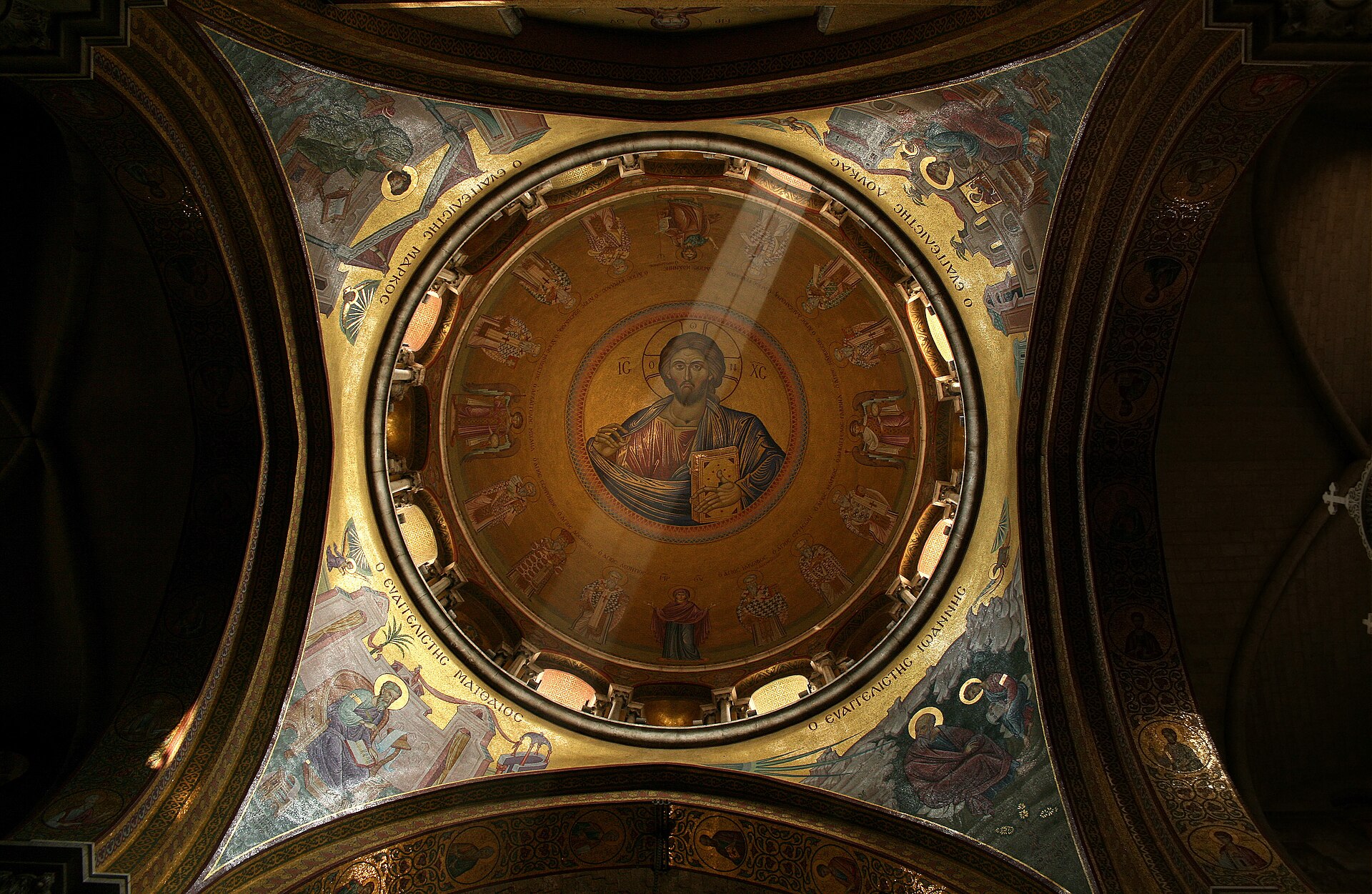

The earliest confession
The oldest written statement of what the first Christians proclaimed is in Paul's first letter to the Corinthians, written around AD 53 to 54, one of the oldest Christian texts that survive.2 Paul says he is repeating what he had himself been taught: "For I delivered unto you first of all that which I also received, how that Christ died for our sins according to the scriptures; And that he was buried, and that he rose again the third day according to the scriptures: And that he was seen of Cephas, then of the twelve." He goes on to list appearances "of above five hundred brethren at once," then "of James; then of all the apostles," and "last of all" to himself.11 "Cephas" is the Aramaic form of Peter's name. Because Paul says he "received" this summary, and because he visited Peter in Jerusalem about three years after his conversion, most historians of every view date the formula itself to the first few years after the crucifixion. Historians cannot test the claim that Jesus rose from the dead. They can say that his followers were proclaiming it, in a fixed form, within a few years of his death.
Pentecost and the apostles in Jerusalem
Acts says that Jesus "shewed himself alive after his passion by many infallible proofs, being seen of them forty days," and that the followers who stayed in Jerusalem included the eleven remaining disciples, "the women, and Mary the mother of Jesus, and with his brethren," about "an hundred and twenty" people in all.12 At the Jewish harvest feast of Pentecost, fifty days after Passover, Jews "out of every nation under heaven" were in the city. Acts lists them from "Parthians, and Medes, and Elamites" to "strangers of Rome, Jews and proselytes, Cretes and Arabians."13 Peter preached that the crucified Jesus was Lord and Messiah, and told the crowd, "Repent, and be baptized every one of you in the name of Jesus Christ for the remission of sins, and ye shall receive the gift of the Holy Ghost."13
Acts then sums up the life of the new community in a passage that later churches read as a pattern: "Then they that gladly received his word were baptized: and the same day there were added unto them about three thousand souls. And they continued stedfastly in the apostles' doctrine and fellowship, and in breaking of bread, and in prayers." They went "daily with one accord in the temple, and breaking bread from house to house," and "had all things common."13 Acts later gives "about five thousand" men, then says the number "multiplied in Jerusalem greatly; and a great company of the priests were obedient to the faith."14 These are the figures Acts gives. No other source counts the Jerusalem church, and the number "three thousand" in a single day is a claim of the narrative that historians can neither confirm nor refute.
Two features of this first community need stating plainly. First, it was entirely Jewish. Its members kept going to the Temple: Acts shows "Peter and John" going up "into the temple at the hour of prayer, being the ninth hour," and, twenty-five years later, Paul himself purifying himself in the Temple at James's request.15 Nobody in Jerusalem thought of himself as having left Judaism. They were a group within it, called by Acts "this way," with a claim about the Messiah that other Jews rejected.16 Second, the sharing of goods was voluntary. When Ananias held back part of the price of a field, Peter's rebuke in Acts begins: "Whiles it remained, was it not thine own? and after it was sold, was it not in thine own power?"17 The account describes generosity and a common fund for the poor; it lays down no rule that members must give up property.
The Hellenists and the Seven
Jerusalem in the first century held Jews from two language worlds. Many spoke Aramaic and read the Scriptures in Hebrew. Others had come from the Greek-speaking cities of the Diaspora and spoke Greek. Acts calls the two groups "the Hebrews" and "the Grecians" (Hellenists). The first recorded quarrel in the church followed that line: "there arose a murmuring of the Grecians against the Hebrews, because their widows were neglected in the daily ministration."18 The twelve asked the community to choose "seven men of honest report," and those chosen all have Greek names: "Stephen, a man full of faith and of the Holy Ghost, and Philip, and Prochorus, and Nicanor, and Timon, and Parmenas, and Nicolas a proselyte of Antioch."18 The apostles "laid their hands on them." Later churches looked back to the Seven as the first deacons, though Acts itself does not use that title for them.
Stephen, the first martyr
Stephen argued in the Greek-speaking synagogues of the city, among them "the synagogue of the Libertines, and Cyrenians, and Alexandrians, and of them of Cilicia and of Asia." He was charged before the council with saying "that this Jesus of Nazareth shall destroy this place, and shall change the customs which Moses delivered us."19 After a long speech (Acts 7) he was taken outside the city and stoned. Acts says that "the witnesses laid down their clothes at a young man's feet, whose name was Saul," and that Stephen died praying, "Lord, lay not this sin to their charge."20 Acts gives no date. Schaff placed it about 37. Many modern chronologies put it earlier, about 33 to 36, counting back from the intervals Paul himself gives in Galatians 1 and 2.821
The death of Stephen marks a turn in the story. "At that time there was a great persecution against the church which was at Jerusalem; and they were all scattered abroad throughout the regions of Judaea and Samaria, except the apostles."22 The phrase "except the apostles" has led many historians to suspect that the persecution fell hardest on the Greek-speaking believers around Stephen, while the Aramaic-speaking leaders stayed. Whatever the reason, the scattering spread the movement: "they that were scattered abroad went every where preaching the word." Philip went "down to the city of Samaria, and preached Christ unto them."22
Antioch and the name "Christian"
Some of the scattered believers reached Antioch on the Orontes, the capital of the Roman province of Syria and one of the great cities of the eastern empire. At first they preached "to none but unto the Jews only." Then "men of Cyprus and Cyrene" began to speak "unto the Grecians, preaching the Lord Jesus," and "a great number believed."23 The Jerusalem church sent Barnabas, who fetched Saul from Tarsus, and the two taught there a whole year. Acts adds a short line that has been quoted ever since: "And the disciples were called Christians first in Antioch."23 The word, Christianoi in Greek, is formed the way Latin speakers named a party after its leader, and the outsiders who used it took "Christus" as a personal name. In the New Testament believers rarely use it of themselves. Acts puts it in the mouth of King Agrippa II, "Almost thou persuadest me to be a Christian."24
Antioch became the second center of the movement. Its church included "prophets and teachers; as Barnabas, and Simeon that was called Niger, and Lucius of Cyrene, and Manaen, which had been brought up with Herod the tetrarch, and Saul," a list that runs from a Cypriot Levite to a man raised at a royal court and a man from North Africa.25 It was from Antioch, not Jerusalem, that the first planned missionary journey set out, and when a famine was foretold "in the days of Claudius Caesar," the Antioch disciples sent relief "to the elders" in Judea "by the hands of Barnabas and Saul."26
The leaders: Peter, James and John
Peter
In the first chapters of Acts, Simon Peter is the spokesman of the twelve: he preaches at Pentecost, heals in the Temple, answers the council and brings the first Gentile household, the Roman centurion Cornelius at Caesarea, into the church. Cornelius's story (Acts 10 to 11) turns on Peter's words to the household: "Ye know how that it is an unlawful thing for a man that is a Jew to keep company, or come unto one of another nation; but God hath shewed me that I should not call any man common or unclean."27 Paul's letters confirm Peter's standing. Three years after his conversion Paul "went up to Jerusalem to see Peter, and abode with him fifteen days," and Paul lists Peter (Cephas) first among the witnesses of the resurrection.2111 Paul also mentions in passing that "Cephas" travelled with a wife, as "the brethren of the Lord" did.28
Around AD 44 the Jerusalem church was attacked by Herod Agrippa I, grandson of Herod the Great, whom the emperor Claudius had made king over Judea. Acts says "he killed James the brother of John with the sword" and imprisoned Peter. After an escape that Acts describes as a miracle, Peter went to "the house of Mary the mother of John, whose surname was Mark; where many were gathered together praying," told them to "shew these things unto James, and to the brethren," and "departed, and went into another place."29 The death of Agrippa soon afterward is one of the fixed points of first-century chronology. Acts (12:21 to 23) describes him struck down at Caesarea while the crowd hailed him as a god. Josephus tells a parallel story: at games in Caesarea, wearing "a garment made wholly of silver," Agrippa was hailed as a god, was seized with pain (in Whiston's words, "a severe pain also arose in his belly"), and died after five days "in the fifty-fourth year of his age, and in the seventh year of his reign."30 Counting from his appointments by Caligula and Claudius, historians date his death to AD 44, and Schaff used it to date the death of James son of Zebedee and Peter's departure.8
After Acts 15 Peter disappears from Acts. Paul places him at Antioch, and the letter called 1 Peter places him in "Babylon" ("The church that is at Babylon, elected together with you, saluteth you"), which many readers take as a name for Rome.31 The earliest outside text about his death is 1 Clement, written from Rome probably in the 90s: "Peter, through unrighteous envy, endured not one or two, but numerous labours; and when he had at length suffered martyrdom, departed to the place of glory due to him."32 Eusebius, writing in the early fourth century, reports that "Paul was beheaded in Rome itself, and that Peter likewise was crucified under Nero," and quotes the Roman writer Gaius (about 200) on their burial places: "if you will go to the Vatican or to the Ostian way, you will find the trophies of those who laid the foundations of this church."5 Eusebius also passes on, from Origen's lost commentary on Genesis, the report that Peter "was crucified head-downwards; for he had requested that he might suffer in this way."33 What these sources establish, and what Catholic, Orthodox and Protestant churches have drawn from them about the office of the bishop of Rome, is taken up in lesson 02 and in lesson 08, Rome and the East.
James the brother of the Lord
The second James in Acts is the one Paul calls "James the Lord's brother."21 Mark's Gospel names four brothers of Jesus, "James, and Joses, and of Juda, and Simon," and also mentions sisters.28 (Churches read "brother" differently. Schaff, writing in the 1880s, set out three explanations: that the brothers were younger children of Joseph and Mary, that they were sons of Joseph by an earlier marriage, and that they were cousins of Jesus. "The first is now confined to Protestants, the second is the Greek, the third the Roman view," he wrote; he himself favored the first.34 The Greek word, adelphos, is the ordinary word for brother; the dispute is about who his parents were, and the first-century sources do not settle it.) Paul lists an appearance of the risen Jesus to James, and by the time of Paul's second visit James stands first in the list of those "who seemed to be pillars": "James, Cephas, and John."21 At the Jerusalem meeting of Acts 15 it is James who gives the decision ("my sentence is"), and when Paul came to Jerusalem for the last time, about AD 57 or 58, "Paul went in with us unto James; and all the elders were present." The elders told Paul, "Thou seest, brother, how many thousands of Jews there are which believe; and they are all zealous of the law."3536
James's death is the one event of the Jerusalem church that Josephus records. In AD 62 the Roman governor Festus died in office, and before his successor Albinus arrived, the high priest Ananus (son of the Annas of the Gospels) acted. In Whiston's translation: "he assembled the sanhedrim of judges, and brought before them the brother of Jesus, who was called Christ, whose name was James, and some others, [or, some of his companions]; and when he had formed an accusation against them as breakers of the law, he delivered them to be stoned." Josephus adds that the citizens "who seemed the most equitable" protested, and that King Agrippa II removed Ananus after "but three months."37 Most historians, including many who doubt the longer passage about Jesus discussed below, accept this sentence as written by Josephus. A minority (Schaff names Lardner and Credner) have suspected the words about Jesus as a Christian addition.38
A second, more colorful account comes from Hegesippus, a second-century Christian quoted by Eusebius. He says James drank no wine, ate no meat, used no razor and prayed in the Temple so often that "his knees became hard like those of a camel," and that "because of his exceeding great justice he was called the Just." In the same chapters Eusebius passes on the report (from Hegesippus and from Clement of Alexandria) that James was "thrown from the pinnacle of the temple and was beaten to death with a club by a fuller."39 The two accounts can be partly fitted together (both have a death by stoning around 62), but the details of Hegesippus belong to the realm of later report and cannot be checked.
John
John the son of Zebedee is the third "pillar" in Galatians, and he appears beside Peter in the early chapters of Acts. Later tradition places him in Ephesus at the end of the century. Eusebius, giving what "tradition" said about where the apostles went, writes that "Asia" fell "to John, who, after he had lived some time there, died at Ephesus," and says the same tradition allotted Parthia to Thomas and Scythia to Andrew.33 These assignments come from the third and fourth centuries and are reports, not documents. The questions of who wrote the Gospel, letters and Revelation that bear John's name belong to lesson 02 and are not settled here.
Paul of Tarsus
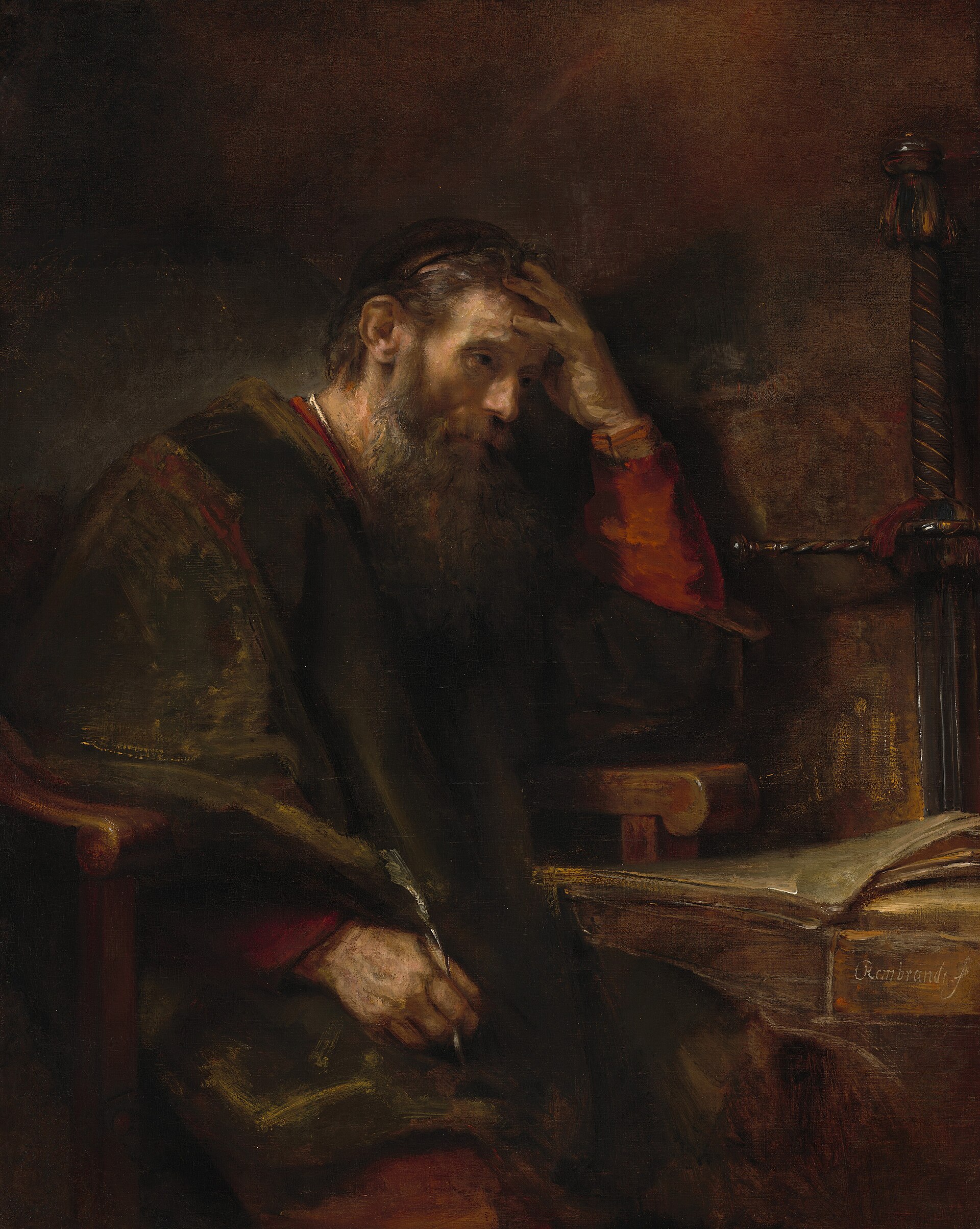

Paul before his conversion
Paul describes himself as "Circumcised the eighth day, of the stock of Israel, of the tribe of Benjamin, an Hebrew of the Hebrews; as touching the law, a Pharisee," and adds, "Concerning zeal, persecuting the church."40 Acts adds that he was born in Tarsus in Cilicia ("a citizen of no mean city"), "brought up in this city at the feet of Gamaliel," the leading Pharisee teacher in Jerusalem, and a Roman citizen by birth.40 He worked with his hands as a tentmaker (or leatherworker).41 He carried two names, the Hebrew Saul and the Roman Paul. Acts switches from one to the other in a single verse, "Then Saul, (who also is called Paul,)," on the first missionary journey, years after his conversion.42
The conversion
Acts tells the conversion three times (chapters 9, 22 and 26). In the first telling Saul, "yet breathing out threatenings and slaughter against the disciples of the Lord," asks the high priest for letters to the synagogues of Damascus so that "if he found any of this way, whether they were men or women, he might bring them bound unto Jerusalem." Near Damascus "suddenly there shined round about him a light from heaven: And he fell to the earth, and heard a voice saying unto him, Saul, Saul, why persecutest thou me?" To his question "Who art thou, Lord?" the answer comes: "I am Jesus whom thou persecutest."16 In his own letters Paul says only that God "called me by his grace, To reveal his Son in me, that I might preach him among the heathen," and that the risen Christ "was seen of me also, as of one born out of due time."2111
Paul's own account of the next years is exact about intervals and silent about years: he went "into Arabia, and returned again unto Damascus. Then after three years I went up to Jerusalem to see Peter." He escaped Damascus by being let down "through a window in a basket" when "the governor under Aretas the king kept the city of the Damascenes with a garrison." "Then fourteen years after I went up again to Jerusalem with Barnabas, and took Titus with me also."2143 Whether the "fourteen years" count from the conversion or from the first visit, and whether ancient inclusive counting (part of a year counted as a year) applies, changes the result by several years. Schaff put the conversion "probably" in 37, and noted that "chronologists differ on the year of Paul's conversion, between 31 and 40."8 Most recent chronologies give about 33 to 36.
The fixed points
Two outside facts anchor the chronology of Paul's travels. The first is the expulsion of Jews from Rome by Claudius, which Acts mentions when Paul meets Aquila and Priscilla at Corinth, "lately come from Italy ... (because that Claudius had commanded all Jews to depart from Rome:)."41 Its date is discussed below with Suetonius. The second and firmer anchor is Gallio. Acts says that "when Gallio was the deputy of Achaia," the Jews of Corinth "brought him to the judgment seat."41 Lucius Junius Gallio, brother of the philosopher Seneca, is named in a letter of Claudius inscribed at Delphi, found in fragments from 1905 onward. The letter is dated by Claudius's twenty-sixth acclamation as imperator, which places it between January and August of AD 52. Since proconsuls normally took office about May 1 and served one year (as Andrew Steinmann notes), Gallio's term is usually put in 51 to 52 (some prefer 52 to 53).44 Acts says Paul stayed in Corinth "a year and six months," so most chronologies place Paul in Corinth from about 50 to 52.41 Schaff, who wrote before the Delphi inscription was published, put the Corinth stay in "52-53."8 The difference is a good example of how a single stone can move a chronology by a year or two.
The letters, undisputed and disputed
Thirteen letters in the New Testament carry Paul's name. Scholars sort them into three groups. The infographic below sets out the groups and the date ranges given by two modern reference sources, beside Schaff's nineteenth-century dates.
The seven undisputed letters (Romans, 1 and 2 Corinthians, Galatians, Philippians, 1 Thessalonians, Philemon) are accepted as Paul's across nearly the whole field. Three more (Ephesians, Colossians, 2 Thessalonians) are disputed: Bart Ehrman writes that "the vast majority of scholars" think Paul did not write them, while Britannica's list calls the authorship of Colossians "debated" and notes that some scholars place it in Paul's Roman imprisonment, about 62.12 The three Pastoral Letters (1 and 2 Timothy, Titus) are the ones most widely judged to be later, written in Paul's name by a follower. Britannica dates the letters to Timothy "between 80 and 100 CE."2 This is the majority view in university scholarship, and it is not the only one. Many Catholic, Orthodox and evangelical Protestant scholars defend Paul's authorship of all thirteen, often by placing the Pastoral Letters after a release from the Roman imprisonment of Acts 28 and a second imprisonment. Schaff took that view and dated the four "Epistles of the Roman captivity, Philippians, Ephesians, Colossians, and Philemon" to "a.d. 61-63."8 The letter to the Hebrews, attributed to Paul by many in the ancient East, does not name its author, and few scholars of any school now hold that Paul wrote it.2
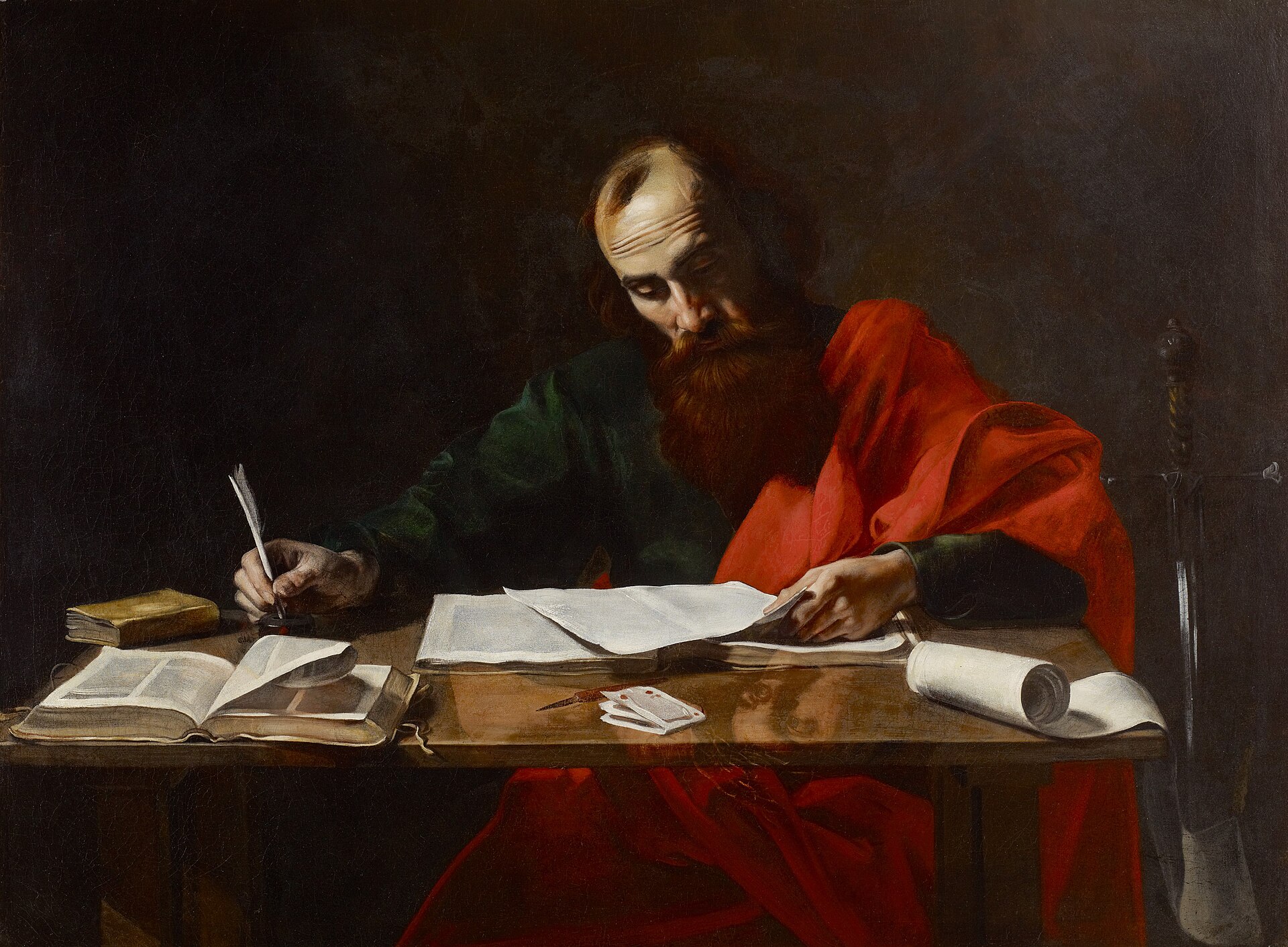

The missionary journeys
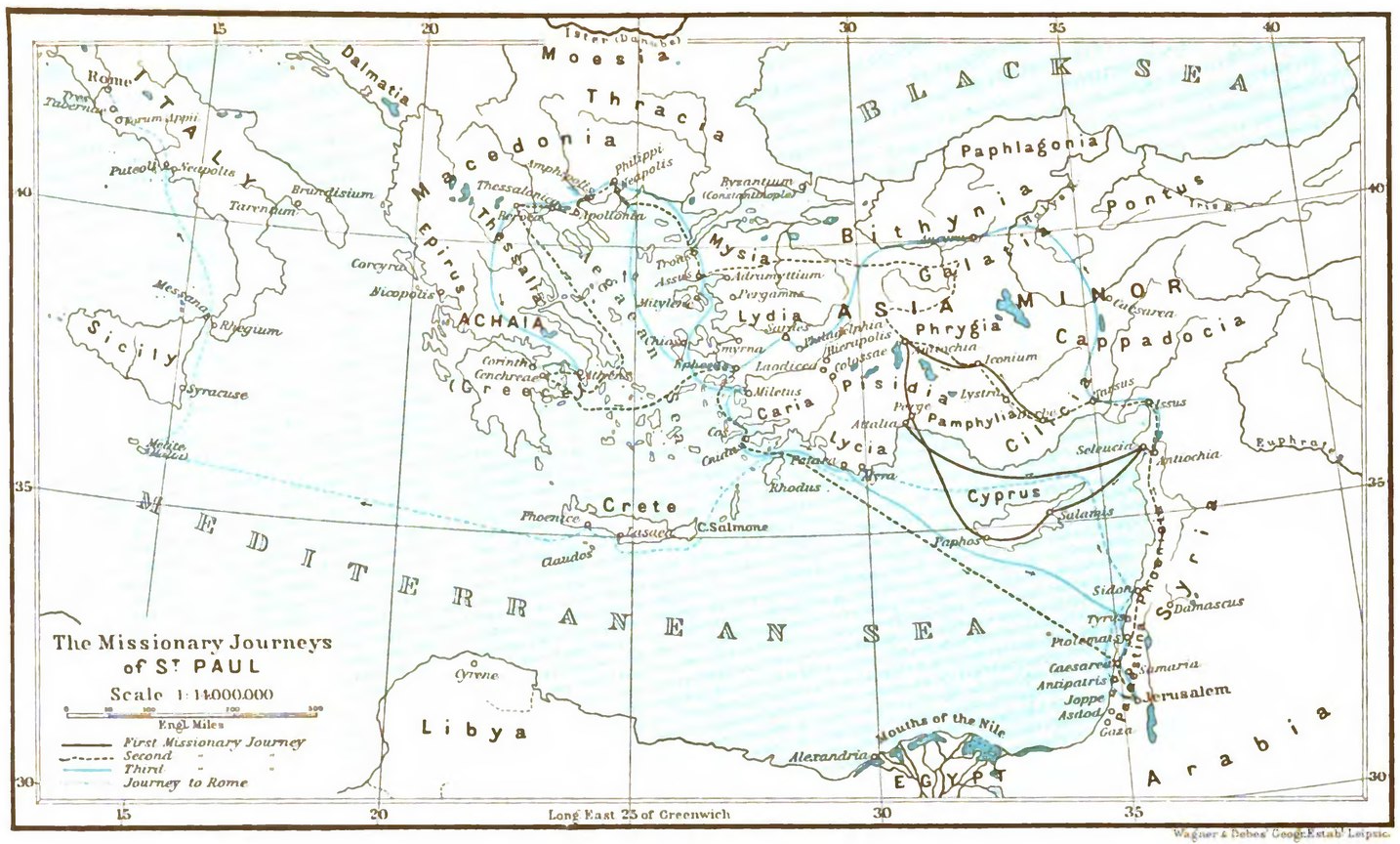
Acts arranges Paul's travels into three journeys out from Antioch and a final voyage to Rome as a prisoner. The numbering is a modern convenience. Acts does not number them, and Paul's letters mention trips (to Arabia, to Illyricum) that Acts leaves out. The dates below are approximate and follow the fixed points above.
The first journey (about 46 to 48)
The church at Antioch, while its leaders "ministered to the Lord, and fasted," set apart Barnabas and Saul, "and when they had fasted and prayed, and laid their hands on them, they sent them away."25 They sailed to Cyprus, Barnabas's home island, and then to the southern part of Asia Minor: Perga, Antioch in Pisidia, Iconium, Lystra and Derbe. Their pattern, according to Acts, was to begin in the synagogue on the Sabbath. At Pisidian Antioch they "went into the synagogue on the sabbath day, and sat down," and at Iconium they spoke there "so ... that a great multitude both of the Jews and also of the Greeks believed."45 When the synagogue turned against them they spoke to Gentiles directly ("lo, we turn to the Gentiles"), and before leaving they "ordained them elders in every church."4546
The "Greeks" in these synagogues were in many cases Gentiles who already attended, sometimes called "God-fearers" in modern writing: people drawn to the one God of Israel and the Jewish Scriptures who had not been circumcised. They had heard the Scriptures read in Greek (the Septuagint), and many historians think they were the most likely first hearers for a message about Israel's Messiah offered to all nations.
The second journey (about 49 to 52)
After the Jerusalem meeting (below) Paul and Barnabas parted in a quarrel over Mark: "the contention was so sharp between them, that they departed asunder one from the other." Barnabas sailed with Mark to Cyprus, and "Paul chose Silas."47 They revisited the churches of Asia Minor and went on to Troas, where Acts says Paul saw in a vision "a man of Macedonia" who "prayed him, saying, Come over into Macedonia, and help us."25 The crossing into Europe led to churches in Philippi, Thessalonica and Berea, a visit to Athens, and the long stay in Corinth (about 50 to 52) during which 1 Thessalonians was written.2 The Thessalonian accusation against the missionaries, "These that have turned the world upside down are come hither also," is preserved in Acts.25 Writing to the Thessalonians, Paul reminds them how they "turned to God from idols to serve the living and true God," which shows that the church there was largely Gentile, and says they had suffered "of your own countrymen, even as they have of the Jews."48
The third journey (about 53 to 57)
The third journey centered on Ephesus, where Paul stayed longer than anywhere else. When the synagogue rejected him he moved to "the school of one Tyrannus," and "this continued by the space of two years; so that all they which dwelt in Asia heard the word of the Lord Jesus, both Jews and Greeks." Later he tells the Ephesian elders "by the space of three years I ceased not to warn every one night and day with tears."49 Acts reports a riot led by the silversmith Demetrius, who complained that "not alone at Ephesus, but almost throughout all Asia, this Paul hath persuaded and turned away much people, saying that they be no gods, which are made with hands," and feared for "the temple of the great goddess Diana" (Artemis).49 From Ephesus Paul wrote 1 Corinthians, and from Macedonia and Corinth the letters that followed, ending with Romans.2
Throughout this journey Paul was raising a collection among his Gentile churches for the believers in Jerusalem. He tells the Romans: "it hath pleased them of Macedonia and Achaia to make a certain contribution for the poor saints which are at Jerusalem." He planned to deliver it and then go west by way of Rome: "Whensoever I take my journey into Spain, I will come to you." By then he could write that "from Jerusalem, and round about unto Illyricum, I have fully preached the gospel of Christ."50 The collection mattered to Paul as a sign that the Gentile churches and the Jewish mother church were one body. At the Jerusalem meeting, he says, the pillars had asked only "that we should remember the poor; the same which I also was forward to do."21
Arrest, Caesarea and Rome (about 57 to 62)
In Jerusalem Paul was seized in the Temple after a riot, taken into Roman custody and held at Caesarea under the governors Felix and Festus: "after two years Porcius Festus came into Felix' room: and Felix, willing to shew the Jews a pleasure, left Paul bound."51 As a Roman citizen he appealed to the emperor, was shipped to Rome (Acts 27 to 28 tells of a shipwreck on Malta) and was held under a guard: "Paul was suffered to dwell by himself with a soldier that kept him."51 Acts closes with Paul in Rome "two whole years," preaching "with all confidence, no man forbidding him."4 Schaff dated the Caesarea imprisonment to 58 to 60 and the first Roman captivity to 61 to 63.8 What happened next is not in Acts.
The earliest outside witness, 1 Clement 5, says of Paul that "after being seven times thrown into captivity, compelled to flee, and stoned," and "after preaching both in the east and west," he "come to the extreme limit of the west, and suffered martyrdom under the prefects."32 Whether "the extreme limit of the west" means Spain (which would require a release and a second journey) or simply Rome, as seen from Corinth, is one of the old debates of the period. Schaff, who defended the Pastoral Letters as Paul's, accepted a release and "second Roman captivity," and noted that "the best scholars are still divided on the subject."52 Eusebius records the tradition that Paul "was beheaded in Rome itself," and the Roman Gaius pointed to his "trophy" on "the Ostian way."5 The tradition dates his death under Nero, between 64 and 68.

The Jerusalem council and the Gentile question
The problem
By the late 40s there were Gentile believers in Antioch, Cyprus and the cities of Asia Minor who had not been circumcised and did not keep the Jewish food laws. To many Jewish believers this was a scandal. God's covenant with Abraham had included circumcision, and the Law of Moses had been given to Israel for ever. A Gentile who wanted to belong to Israel's Messiah, they reasoned, should join Israel. Acts states the position in one sentence: "certain men which came down from Judaea taught the brethren, and said, Except ye be circumcised after the manner of Moses, ye cannot be saved."35 Paul and Barnabas had "no small dissension and disputation with them," and the church at Antioch sent them "up to Jerusalem unto the apostles and elders about this question."35
What Acts 15 says
At the meeting Peter recalled Cornelius, Paul and Barnabas reported what had happened among the Gentiles, and James gave the decision: "Wherefore my sentence is, that we trouble not them, which from among the Gentiles are turned to God: But that we write unto them, that they abstain from pollutions of idols, and from fornication, and from things strangled, and from blood."35 The letter sent to the churches of Antioch, Syria and Cilicia put it in the name of the whole meeting: "For it seemed good to the Holy Ghost, and to us, to lay upon you no greater burden than these necessary things; That ye abstain from meats offered to idols, and from blood, and from things strangled, and from fornication."35 Circumcision was not required. The four rules (often called the "apostolic decree") resemble the laws that Leviticus 17 to 18 applies to "the strangers which sojourn among you,"54 and many scholars read them as the minimum that would let Jewish and Gentile believers eat together.
Schaff dated the meeting to AD 50 and called it "the apostolic council of Jerusalem."8 Most modern chronologies put it between 48 and 50. Later councils of the church (Nicaea and after, lessons 04 and 05) looked back on it as the first of their kind, and the Catholic, Orthodox and Anglican churches have often cited it as the pattern for settling a dispute by a meeting of church leaders.
What Galatians 2 says
Paul's own account in Galatians 2 is earlier than Acts and more personal. He went up "by revelation, and communicated unto them that gospel which I preach among the Gentiles, but privately to them which were of reputation." He took Titus, an uncircumcised Greek, and says Titus was not compelled to be circumcised. The result, in Paul's words: "when James, Cephas, and John, who seemed to be pillars, perceived the grace that was given unto me, they gave to me and Barnabas the right hands of fellowship; that we should go unto the heathen, and they unto the circumcision. Only they would that we should remember the poor."21 Paul does not mention the four rules of Acts 15, and his own later advice about food offered to idols (1 Corinthians 8 to 10) does not cite them.
Whether Galatians 2 and Acts 15 describe the same meeting is one of the oldest questions in New Testament study. Most scholars, Schaff among them (he cites "Acts 15:1 sqq.; Gal. 2:1-10" together), take them as two accounts of one event.8 Others identify Galatians 2 with the famine-relief visit of Acts 11:30, which would make Galatians one of Paul's earliest letters, written before the council. The Ehrman and Britannica date ranges for Galatians, from the "late 40s" to "c. 53 to 54," reflect this split.12
The quarrel at Antioch
The agreement did not settle everything. Paul reports that when Peter came to Antioch he ate with Gentile believers, until "certain came from James," and then "he withdrew and separated himself, fearing them which were of the circumcision. And the other Jews dissembled likewise with him; insomuch that Barnabas also was carried away with their dissimulation." Paul says, "I withstood him to the face, because he was to be blamed."21 Paul's letter does not say how the quarrel ended. Later Christian writers were embarrassed by it and offered many explanations, and modern readers of every school treat it as clear evidence that the leaders of the first generation disagreed openly about how Jewish law applied to a mixed church.
Jews and Gentiles in one church
Paul's own summary is in Galatians: "There is neither Jew nor Greek, there is neither bond nor free, there is neither male nor female: for ye are all one in Christ Jesus." In Romans he puts it with an order of priority: the gospel "is the power of God unto salvation to every one that believeth; to the Jew first, and also to the Greek."55 For the first generation the Gentile question was the hardest practical question: who could eat with whom, whether a Gentile convert was a member of Israel, and what the Law of Moses meant for a believer. By the end of the century Gentiles were the majority in most churches outside Judea, and the question had begun to change into a different one, about the relation between the church and the synagogue. Stark's growth model, discussed below, assumes that the Gentile share of believers rose steadily over the century.56 The Jewish believers in Jesus who kept the Law continued for centuries in Syria and east of the Jordan. Their later history is part of lesson 02.
Roads, cities and the Roman world
The early missionaries moved through a world that Rome had made unusually easy to cross. One emperor ruled from Syria to Spain, Greek was spoken in every city of the East and by many in Rome itself. The Roman roads that linked the provinces were built for armies and officials, and travellers used them too. The Greek geographer Strabo, writing under Augustus and Tiberius, describes the road Paul followed across Macedonia: "From Apollonia to Macedonia one travels the Egnatian Road, towards the east; it has been measured by Roman miles and marked by pillars as far as Cypsela and the Hebrus River," a distance he gives as "five hundred and thirty-five miles."53 Philippi and Thessalonica, two of Paul's churches, both lay on this road. Ships took passengers on the sea lanes from spring to autumn. Acts shows Paul sailing between Caesarea, Antioch's port of Seleucia, Cyprus, Ephesus, Troas and Corinth's ports, and the voyage to Rome ended in shipwreck because it was attempted late in the season, "when sailing was now dangerous."57
Antioch
Antioch on the Orontes, the capital of Roman Syria, was the base of the first Gentile mission, the place where believers were first called Christians and the scene of the quarrel between Peter and Paul.23 Its church later produced Ignatius, the bishop martyred in Rome in the early second century, whose letters begin lesson 02.
Ephesus
Ephesus was the chief city of the province of Asia, a harbor city and the home of the great temple of Artemis. Paul's two to three years there, his letter-writing from the city and the riot of the silversmiths come from Acts and 1 Corinthians.49 Tradition later placed John there at the end of the century.33
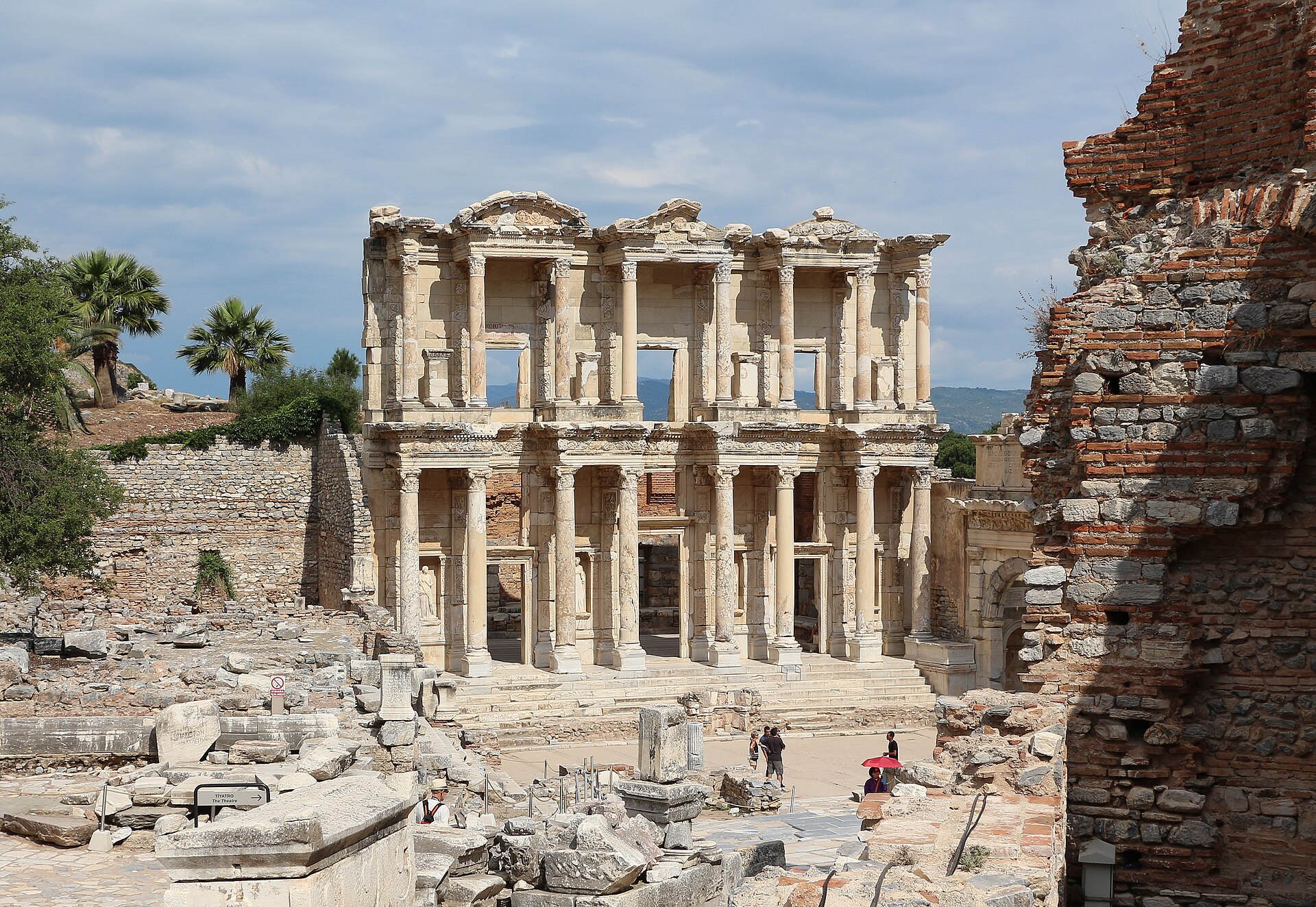

Corinth
Corinth had been sacked by the Roman general Mummius in 146 BC. Strabo, writing in Paul's century, says that "after Corinth had remained deserted for a long time, it was restored again, because of its favorable position, by the deified Caesar, who colonised it with people that belonged for the most part to the freedmen class."59 In Paul's day it was the capital of the province of Achaia, a city of two harbors on the isthmus between the Aegean and Adriatic sides of Greece. Paul's letters to the Corinthians show a church of mixed rank, divided into factions, arguing about food offered to idols, marriage, spiritual gifts and the Lord's Supper. The church in the nearby port of Cenchrea was served by a woman, "Phebe our sister, which is a servant of the church which is at Cenchrea," who carried the letter to the Romans.60 The Greek word translated "servant" here is diakonos, the word later used for deacons.
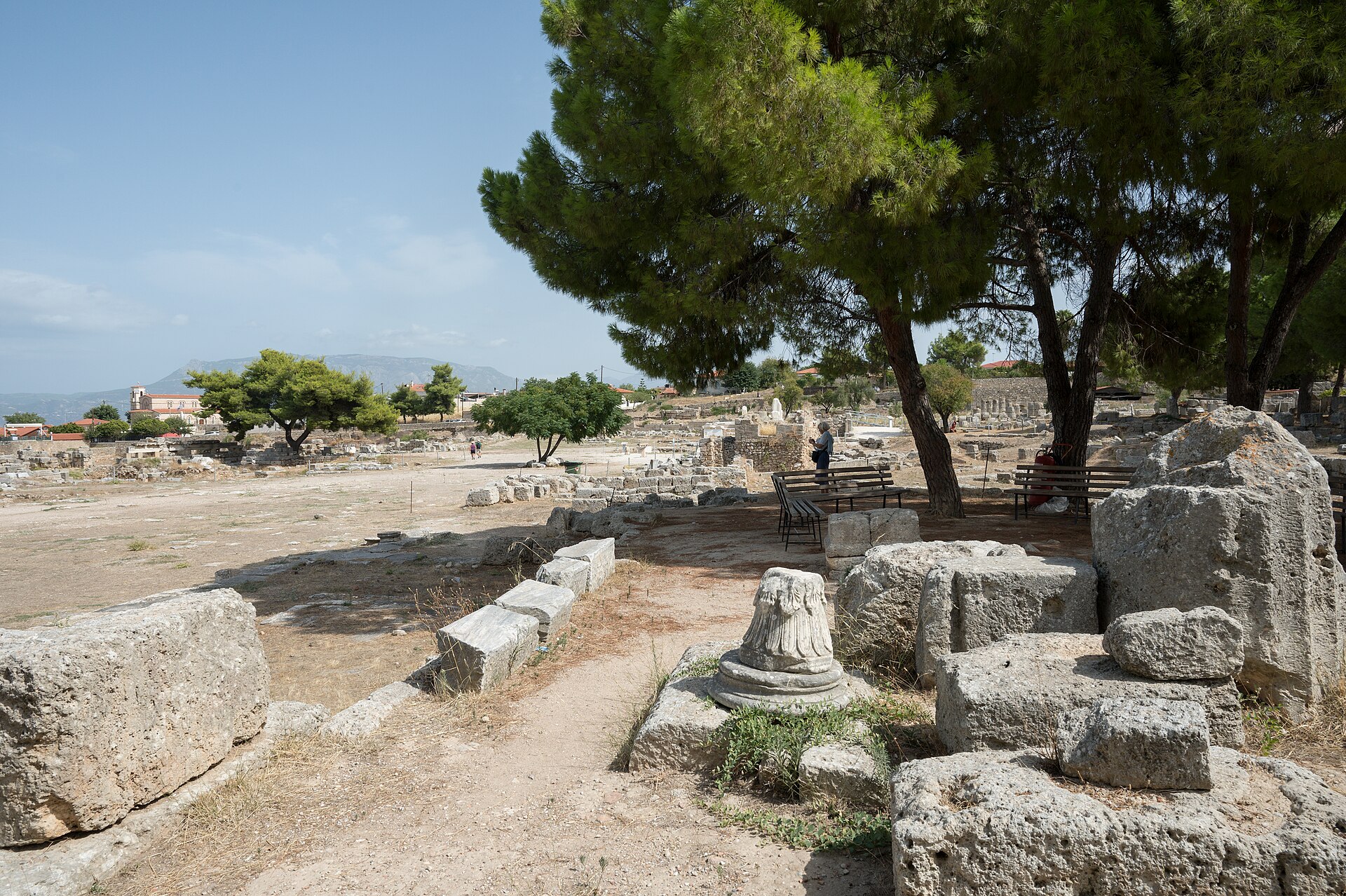

Rome
There were believers in Rome before any apostle arrived. Paul's letter to the Romans, written about 57 before he had visited the city, greets about two dozen people by name, including Prisca (Priscilla) and Aquila and "the church that is in their house," and "Andronicus and Junia, my kinsmen, and my fellow-prisoners, who are of note among the apostles, who also were in Christ before me."60 The founders of the Roman church are unknown. The most common view is that Jewish believers from Jerusalem (Acts 2 lists "strangers of Rome" at Pentecost) brought the message to the large Jewish community of the capital. Within a decade of Paul's letter, the Roman Christians were numerous enough for Nero to single them out.
What outsiders wrote: Suetonius, Tacitus and Josephus
Roman writers took little notice of the Christians in the first century, and what they wrote was hostile. Their value for history lies partly in that hostility: they had no reason to invent a founder or a following.
Suetonius and "Chrestus"
In his Life of Claudius, Suetonius lists among the emperor's acts this sentence, in J. C. Rolfe's Loeb translation of 1914: "Since the Jews constantly made disturbances at the instigation of Chrestus, he expelled them from Rome."61 Suetonius gives no date. "Chrestus" was a common slave name in Rome, and some scholars think Suetonius meant a Jewish troublemaker of that name. Most historians, Schaff among them, take it as a garbled form of "Christus," and read the passage as evidence of disputes inside Rome's synagogues over the preaching of Jesus as Messiah; Schaff passed on Tertullian's report that "Christus was almost invariably mispronounced Chrestus by the heathen" and wrote that the commotion "in all probability refers to Messianic controversies between Jews and Christians who were not yet clearly distinguished at that time."62 Acts 18:2 ties the expulsion to Aquila and Priscilla's arrival in Corinth, which fits a date in the late 40s.41 The fifth-century Christian writer Orosius dated the expulsion to the ninth year of Claudius (AD 49), citing Josephus for the date and Suetonius for the cause (History against the Pagans 7.6.15), a date many modern historians accept;86 Schaff gave "about a.d. 52."62 The Roman historian Cassius Dio, writing in the early third century, describes a different measure early in the reign (AD 41): the Jews had "again increased so greatly that by reason of their multitude it would have been hard without raising a tumult to bar them from the city," so Claudius "did not drive them out, but ordered them, while continuing their traditional mode of life, not to hold meetings."63 Whether Dio and Suetonius describe one event or two is unresolved.
Tacitus on Nero and the Christians
In AD 64 a great fire burned much of Rome. Rumor said Nero had ordered it. Tacitus, writing about fifty years later in the Annals (book 15, chapter 44), describes what the emperor did next. In the translation of Alfred John Church and William Jackson Brodribb (1876):
"Consequently, to get rid of the report, Nero fastened the guilt and inflicted the most exquisite tortures on a class hated for their abominations, called Christians by the populace. Christus, from whom the name had its origin, suffered the extreme penalty during the reign of Tiberius at the hands of one of our procurators, Pontius Pilatus, and a most mischievous superstition, thus checked for the moment, again broke out not only in Judaea, the first source of the evil, but even in Rome, where all things hideous and shameful from every part of the world find their centre and become popular. Accordingly, an arrest was first made of all who pleaded guilty; then, upon their information, an immense multitude was convicted, not so much of the crime of firing the city, as of hatred against mankind."64
Tacitus goes on to say that some were dressed in the skins of beasts and "torn by dogs," others "nailed to crosses" or burned as torches after dark, and that "Nero offered his gardens for the spectacle." He ends with a remark that tells as much about Roman opinion as about Nero: "even for criminals who deserved extreme and exemplary punishment, there arose a feeling of compassion; for it was not, as it seemed, for the public good, but to glut one man's cruelty, that they were being destroyed."64
Several things in the passage can be stated plainly. Tacitus did not like Christians. He calls their faith "a most mischievous superstition" and accepts that they were guilty of "hatred against mankind." He does not say that they started the fire. He says the charge was a way to "get rid of the report" against Nero. He confirms from a Roman source that Christus was executed in Judea under Tiberius by Pontius Pilate, and that by 64 there was "an immense multitude" (a vague phrase, not a count) of Christians in Rome. Very few historians doubt that the passage is genuine.
Suetonius, in his Life of Nero, lists among Nero's acts, without connecting it to the fire: "Punishment was inflicted on the Christians, a class of men given to a new and mischievous superstition."65 Christian writers later counted Nero as the first persecutor. Eusebius quotes Tertullian: "Examine your records. There you will find that Nero was the first that persecuted this doctrine."5 The longer history of the persecutions, from Nero to Diocletian, is the subject of lesson 03.
Josephus on Jesus
Josephus mentions Jesus twice. The shorter mention, in the account of the death of James in AD 62, calls James "the brother of Jesus, who was called Christ" and is accepted as genuine by most scholars.37 The longer passage, in book 18 of the Antiquities and known as the Testimonium Flavianum, reads in Whiston's translation:
"Now there was about this time Jesus, a wise man, if it be lawful to call him a man; for he was a doer of wonderful works, a teacher of such men as receive the truth with pleasure. He drew over to him both many of the Jews and many of the Gentiles. He was [the] Christ. And when Pilate, at the suggestion of the principal men amongst us, had condemned him to the cross, those that loved him at the first did not forsake him; for he appeared to them alive again the third day; as the divine prophets had foretold these and ten thousand other wonderful things concerning him. And the tribe of Christians, so named from him, are not extinct at this day."66
Josephus was not a Christian, and phrases such as "He was [the] Christ" and "he appeared to them alive again the third day" are hard to credit to him. Schaff set out the four positions of his day: that the passage "is entirely genuine" (Whiston, the translator, was one who held this); that it "is wholly interpolated by a Christian hand"; that it "is partly genuine, partly interpolated," with the Christian sentences "added by a transcriber before Eusebius"; and that a hostile original was "radically changed" into its present form.67 Schaff himself noted that no Christian writer before Eusebius quotes the passage, though Origen refers to Josephus's passages on John the Baptist and James.67 The third view, a genuine core with Christian additions, is the one most widely held by historians today. On that view Josephus wrote that Jesus was a wise man and a doer of remarkable deeds who won a following among Jews and Gentiles, was condemned to the cross by Pilate on the accusation of the leading men, and whose followers had not disappeared. The question is open. What can be said is that the James passage and Tacitus, independently of each other and of the Gospels, place an executed Jesus called Christ in Judea under Pilate.
The Jewish War and the fall of Jerusalem
In AD 66 a revolt against Roman rule broke out in Judea. Nero sent the general Vespasian, who reduced Galilee and much of the country before leaving in 69 to become emperor. His son Titus besieged Jerusalem in the spring of 70. Josephus, who had commanded rebel forces in Galilee, surrendered to the Romans early in the war and was with the Roman army during the siege, so his Jewish War is an eyewitness account written by a man with reasons to flatter the Flavian emperors.
According to Josephus, the Temple burned on "the tenth day of the month Lous, [Ab,] upon which it was formerly burnt by the king of Babylon," that is, in late summer of AD 70.68 He insists that Titus tried to save it: when told of the fire Titus "ran to the holy house, in order to have a stop put to the fire," but the legions "made as if they did not so much as hear Caesar's orders to the contrary."68 The upper city fell a month later, and "that eighth day of the month Gorpieus [Elul]" came "upon Jerusalem."68 Titus then "gave orders that they should now demolish the entire city and temple," leaving three towers standing "to demonstrate to posterity what kind of city it was, and how well fortified, which the Roman valor had subdued," and part of the western wall as a camp for the garrison.69
A later Christian account disagrees about Titus. Sulpicius Severus, writing around 400 and thought by many scholars to be using a lost part of Tacitus's Histories, says that Titus held a council of war and that "others and Titus himself thought that the temple ought specially to be overthrown, in order that the religion of the Jews and of the Christians might more thoroughly be subverted; for that these religions, although contrary to each other, had nevertheless proceeded from the same authors."70 Which account is right about Titus's intent is not settled.
The numbers
Josephus gives very large figures: "the number of those that were carried captive during this whole war was collected to be ninety-seven thousand; as was the number of those that perished during the whole siege eleven hundred thousand," explaining that crowds had come up "to the feast of unleavened bread" and were "on a sudden shut up by an army."68 Tacitus, writing independently, says, "I have heard that the total number of the besieged, of every age and both sexes, amounted to six hundred thousand."71 Sulpicius Severus repeats eleven hundred thousand dead and "one hundred thousand" captives.70 The ancient figures disagree with each other, and modern estimates of how many people the city could hold are far smaller. No count survives. The figures should be given as what each writer said.
What the war meant for the church
Eusebius reports that before the war "the people of the church in Jerusalem had been commanded by a revelation, vouchsafed to approved men there before the war, to leave the city and to dwell in a certain town of Perea called Pella."72 Pella lay east of the Jordan in the Decapolis. The report appears first in Eusebius (and later in Epiphanius), more than two centuries after the event, and historians are divided on how much to trust it. With or without a flight to Pella, the war ended the role of Jerusalem as the mother church. James was dead, the Temple was gone, and the Jewish believers who kept the Law lost their center. Within Judaism, the Pharisaic teachers who regrouped after 70 became the leaders of what grew into rabbinic Judaism, and the separation of church and synagogue, already visible in Paul's letters, became sharper over the following decades. Schaff, writing from a nineteenth-century Protestant view, called the destruction "the greatest calamity of Judaism and a great benefit to Christianity" and said that "It separated them forever," the moment when the church "burst forth forever from the chrysalis of Judaism."73 Jewish historians, and many Christian scholars since Schaff's time, read the same events first as a catastrophe for the Jewish people, who rebuilt their life around the study of the Law.
How the first Christians met
House churches
For the whole of the first century, and long after, Christians had no church buildings. They met in the homes of members who had room. Paul's letters name several such households: Prisca and Aquila had "the church that is in their house" first in Ephesus and later in Rome; Philemon's letter is addressed "to the church in thy house"; and Colossians sends greetings to "Nymphas, and the church which is in his house."7460 Acts shows the Jerusalem believers "breaking bread from house to house" and gathered for prayer at "the house of Mary the mother of John."1329 A large house in a Roman city might hold a few dozen people in its dining room and courtyard, so a city's believers often formed several house groups. This is one reason Paul's greetings in Romans 16 seem to address more than one gathering.
The house setting shaped early Christian practice. Meals were eaten in a dining room, with the host in charge. The poor and slaves came into the homes of the better off; and women who owned or ran households, such as Lydia at Philippi ("she was baptized, and her household") and Nymphas's household at Laodicea, appear as hosts.7574 The disorders Paul rebukes at the Lord's Supper in Corinth (1 Corinthians 11, where "one is hungry, and another is drunken")76 fit a meal in a private house where the host's friends ate first.
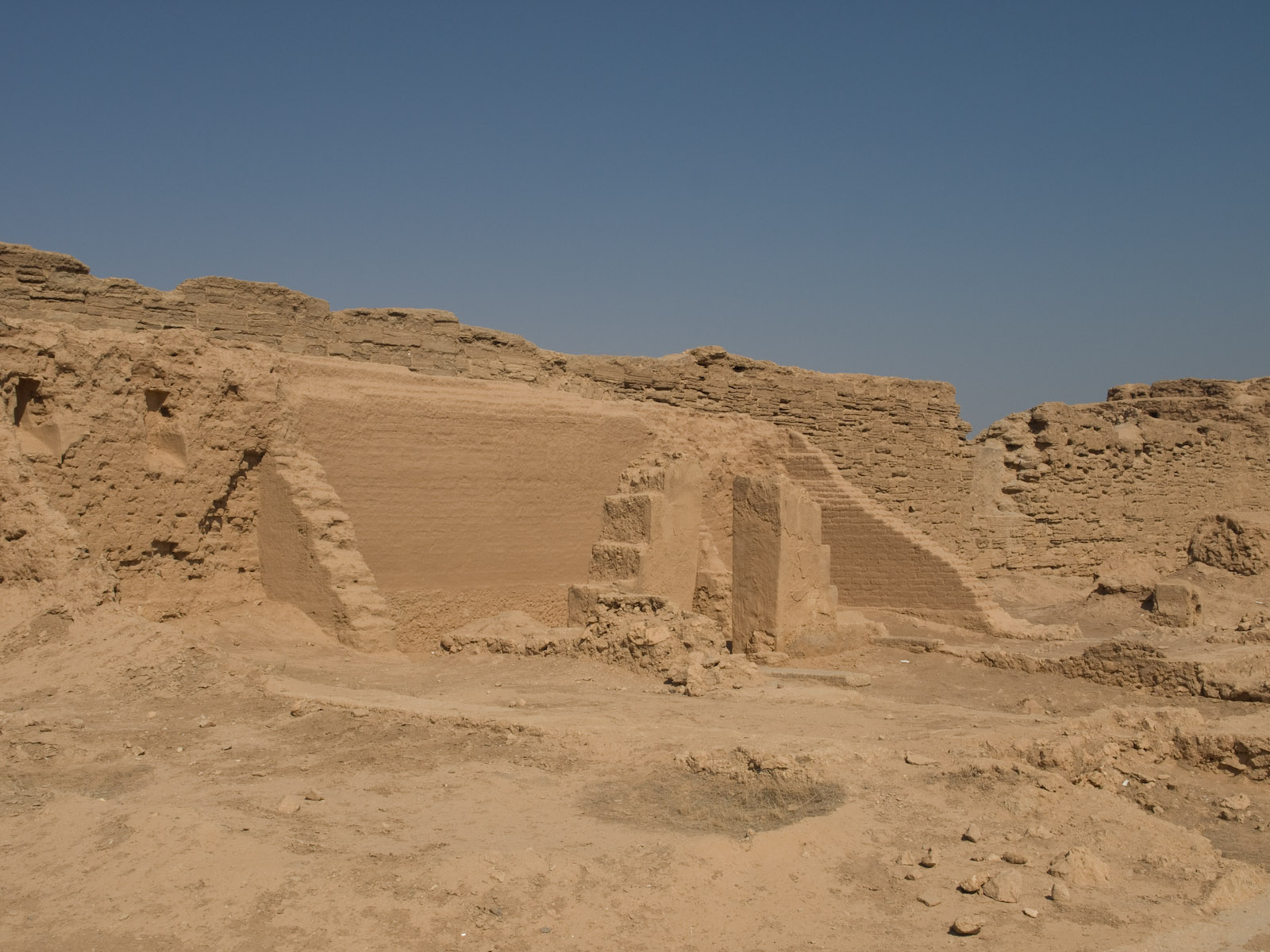

Dura-Europos: a later example
The oldest Christian meeting place that archaeologists have identified with confidence was excavated at Dura-Europos, a Roman garrison town on the Euphrates, by a Yale University and French Academy team in the 1920s and 1930s. According to Yale's 2024 summary, the building was "constructed around 232 C.E." and "renovated around 234 C.E. to make it suitable for Christian worship," then used until about 254 to 256, when Sasanian Persian forces besieged the city and the Romans buried it under an earthen bank. One room was fitted as a baptistery. Its wall paintings, among them a scene of Christ walking on the water, were taken down after the excavation and moved to the Yale University Art Gallery, which also keeps the excavation records.7785 The building has usually been called a "house church" (domus ecclesiae). In 2024 Camille Leon Angelo and Joshua Silver argued in the Journal of Roman Archaeology that the remodeled building "was almost certainly not domestic in form or function," with a large hall, a staircase in the courtyard, figural paintings and no water cistern, and that the "house church" category itself needs rethinking.77 Either way, Dura shows what the first century did not have: a space set apart for Christian worship. In Paul's generation, the meeting was simply in someone's home.
Baptism
Every early source treats baptism in water as the way a person joined the church. At Pentecost, Peter's call is "Repent, and be baptized every one of you in the name of Jesus Christ for the remission of sins."13 Acts reports whole households baptized: Lydia "and her household" at Philippi, and the Philippian jailer, who "was baptized, he and all his, straightway."75 Whether those households included infants is not stated, and churches that baptize infants and churches that baptize only believers have read these verses in opposite ways since the sixteenth century.
The oldest description of how to baptize is in the Didache ("Teaching of the Twelve Apostles"), a short church manual usually dated to the late first or early second century. In M. B. Riddle's translation (Ante-Nicene Fathers, vol. 7, 1886): "baptize into the name of the Father, and of the Son, and of the Holy Spirit, in living water. But if you have not living water, baptize into other water; and if you can not in cold, in warm. But if you have not either, pour out water thrice upon the head into the name of Father and Son and Holy Spirit. But before the baptism let the baptizer fast, and the baptized, and whatever others can."78 "Living water" means running water, as in a river or spring. The text assumes immersion where possible and allows pouring when water is short. Schaff, who did not himself think the amount of water mattered, wrote that the usual form of baptism "was immersion," and that sprinkling or pouring "was practised at an early day with sick and dying persons, and in all such cases where total or partial immersion was impracticable."79
The Lord's Supper
The oldest written account of the Last Supper is Paul's, in 1 Corinthians, written about 53 to 54, earlier than any Gospel: "For I have received of the Lord that which also I delivered unto you, That the Lord Jesus the same night in which he was betrayed took bread: And when he had given thanks, he brake it, and said, Take, eat: this is my body, which is broken for you: this do in remembrance of me. After the same manner also he took the cup, when he had supped, saying, This cup is the new testament in my blood: this do ye, as oft as ye drink it, in remembrance of me. For as often as ye eat this bread, and drink this cup, ye do shew the Lord's death till he come."76 In Corinth this was part of a full evening meal. Acts calls the gathering "breaking of bread" and once describes it on "the first day of the week, when the disciples came together to break bread."80
The Didache gives prayers for the meal, which it calls the Eucharist ("Thanksgiving"). Over the cup: "We thank you, our Father, for the holy vine of David Your servant, which You made known to us through Jesus Your Servant." Over the bread: "Even as this broken bread was scattered over the hills, and was gathered together and became one, so let Your Church be gathered together from the ends of the earth into Your kingdom." It adds, "let no one eat or drink of your Thanksgiving (Eucharist), but they who have been baptized into the name of the Lord."78 It also directs: "every Lord's day gather yourselves together, and break bread, and give thanksgiving after having confessed your transgressions, that your sacrifice may be pure."78
What the bread and cup were understood to be is the question on which Catholic, Orthodox, Lutheran, Reformed and Baptist teaching later divided (the subject returns in lessons 11 and 12). The first-century texts use the words "body," "blood," "remembrance," "thanksgiving" and "sacrifice," and each tradition reads its own doctrine in them. About AD 150, Justin Martyr, writing in Rome, said that "not as common bread and common drink do we receive these," and described a Sunday service of readings from "the memoirs of the apostles or the writings of the prophets," a sermon by "the president," common prayer, and "bread and wine and water" over which the president offered "prayers and thanksgivings," with portions taken by the deacons to the absent.81 Justin is fifty years past the end of this lesson, but his account is the first full description of a Christian service, and it grows out of what the first-century texts show.
The Lord's day, prayer and hymns
Jewish believers kept the Sabbath, and the early missionaries preached in synagogues on the Sabbath. Christians also met on the first day of the week, the day of the resurrection. Paul tells the Corinthians, "Upon the first day of the week let every one of you lay by him in store," for the Jerusalem collection; Acts describes a meeting "upon the first day of the week"; the Didache calls it "the Lord's day."8078 The Didache also tells its readers to pray the Lord's Prayer "thrice in the day" and to fast on Wednesdays and Fridays.78 Paul preserves one Aramaic prayer, Maranatha ("Our Lord, come"), at the end of 1 Corinthians ("let him be Anathema Maranatha").82
The first outside description of a Christian meeting comes from Pliny the Younger, governor of Bithynia and Pontus, writing to Trajan about 112. Christians he questioned said, in William Melmoth's translation (revised by F. C. T. Bosanquet), "that they met on a stated day before it was light, and addressed a form of prayer to Christ, as to a divinity, binding themselves by a solemn oath, not for the purposes of any wicked design, but never to commit any fraud, theft, or adultery," and afterward met again "to eat in common a harmless meal."83 Pliny's letter belongs to the persecutions of lesson 03, and it is quoted here for what it says about worship: prayer or song to Christ "as to a divinity," a moral oath and a shared meal.
Leaders and offices
The first-century churches had several kinds of leader, and their names were not yet fixed. Paul lists "apostles," "prophets" and "teachers" among the gifts in the church ("first apostles, secondarily prophets, thirdly teachers"),84 and Antioch had "prophets and teachers."25 Paul and Barnabas "ordained them elders in every church."46 Philippians is addressed "to all the saints in Christ Jesus which are at Philippi, with the bishops and deacons."84 The Didache tells its readers to "appoint for yourselves bishops and deacons worthy of the Lord," who "also render to you the service of prophets and teachers."78 In these texts "elder" (presbyteros) and "overseer" (episkopos, bishop) seem to name the same group in a local church. A single bishop over each city's churches, with elders and deacons under him, is first clearly described by Ignatius of Antioch in the early second century. Catholic and Orthodox churches read the change as the apostles' own arrangement unfolding. Many Protestant churches read it as a later development. That debate belongs to lesson 02.
How far, and how many, by AD 100
By the end of the first century there were churches in Judea, Samaria and Galilee; in Damascus and Antioch and elsewhere in Syria; in Cyprus; across Asia Minor (the seven churches of Revelation 2 to 3, the Galatian cities, Bithynia and Pontus by Pliny's time); in Macedonia and Greece; in Rome and probably elsewhere in Italy. Christian tradition, recorded by Eusebius, sends Thomas to Parthia and others farther, and later tradition credits Mark with founding the church of Alexandria. These are traditions from the third and fourth centuries and are not documented for the first.33 Nothing reliable survives about Christianity in Egypt, North Africa or Gaul in the first century.
No ancient writer counted Christians. Acts gives the round figures of three thousand and five thousand for Jerusalem in the first months, and Tacitus speaks of "an immense multitude" in Rome in 64; neither is a census.1364 Modern figures are estimates built on assumptions. The best known is that of the sociologist Rodney Stark in The Rise of Christianity (1996). Stark assumed about 1,000 believers in AD 40 and a steady growth rate of 40 percent per decade (about 3.4 percent a year). His projection gives:56
| Year (AD) | Christians (Stark's projection) |
|---|---|
| 40 | 1,000 |
| 50 | 1,400 |
| 70 | 2,744 |
| 100 | 7,530 |
| 150 | 40,496 |
| 200 | 217,795 |
| 250 | 1,171,356 |
| 300 | 6,299,832 |
The exact figures in the table are the output of a formula; nobody counted, and Stark presented them as a model. On his estimate, Christians were about 10 percent of the empire by 300.56 The model has been widely discussed. Its starting point (1,000 in 40) is far below the numbers Acts gives for Jerusalem. Other historians have proposed higher or lower starting figures and rates, and the evidence for the first century is too thin for precision. The safe statement is that by AD 100 Christians were a small minority, probably numbered in the thousands or low tens of thousands across the empire, living mostly in cities and meeting in houses.
What the record shows and what it does not
- Documented fact: Jesus was executed under Pontius Pilate in the reign of Tiberius (Tacitus, Josephus, the Gospels). Within a few years his followers were proclaiming that he had risen, in a set formula Paul says he received (1 Corinthians 15). James the brother of Jesus was stoned in Jerusalem in AD 62 on the order of the high priest Ananus (Josephus). Gallio was proconsul of Achaia about 51 to 52 (Delphi inscription). Nero punished Christians after the fire of 64 (Tacitus, Suetonius). The Temple was burned and Jerusalem taken by Titus in 70 (Josephus, Tacitus).
- The churches' own record and tradition: The details of Pentecost, the numbers converted, the Jerusalem council's letter and Paul's journeys come from Acts, a Christian source written to tell the story of the church. The deaths of Peter and Paul in Rome under Nero rest on 1 Clement, on Gaius and Dionysius of Corinth as quoted by Eusebius, and on later tradition; Peter's crucifixion upside down comes from Origen via Eusebius. The flight to Pella comes from Eusebius. Where each apostle went comes from third and fourth century tradition.
- Scholarly reading: The year of the crucifixion (30 or 33), the year of Paul's conversion (about 33 to 37), the date of the Jerusalem council (about 48 to 50), which of Paul's letters he wrote and when, whether Galatians 2 and Acts 15 are the same meeting, how much of Josephus's passage on Jesus is his, and how many Christians there were by 100.
- Open questions: Whether Paul was released after Acts 28 and travelled to Spain; whether "Chrestus" in Suetonius means Christ and when Claudius expelled the Jews; whether Titus meant to destroy the Temple; how the first Christians reached Rome, Alexandria and the East.
Claims checked
"Jesus was crucified on April 3, AD 33." Unresolved
The date is one of two strong candidates. Humphreys and Waddington argued for April 3, 33, in 1983. Schaff and many others preferred AD 30, and the astronomer Bradley Schaefer allowed either April 7, 30 or April 3, 33.798 No ancient source gives the year directly. Any statement of a single year as fact goes beyond the evidence.
"Paul was knocked off his horse on the road to Damascus." Unsupported
None of the three accounts in Acts mentions a horse. Acts says that "he fell to the earth," and in Paul's own retelling, "when we were all fallen to the earth, I heard a voice."16 The horse comes from later painting and preaching. Paul may have ridden. The text does not say.
"Saul changed his name to Paul when he was converted." Refuted
Acts calls him Saul for years after his conversion, through the Antioch period and the start of the first journey, and then says "Saul, (who also is called Paul,)" in Cyprus.42 The natural reading is that, like many Jews of the Diaspora, he had a Hebrew name and a Roman one, and that Acts switches to the Roman name once the story moves into the Gentile world. Paul's letters always use "Paul."
"The disciples were first called Christians at Antioch." Supported (as Acts' report)
Acts 11:26 says so, and no earlier use of the word is known. Tacitus confirms that by 64 the populace of Rome called them "Christians."2364 The only source for Antioch as the place is Acts.
"The first church abolished private property." Partly supported
Acts 2 and 4 say the believers "had all things common" and sold possessions for those in need, but Peter's words to Ananias ("Whiles it remained, was it not thine own?") treat the giving as voluntary, and the house churches of Paul's letters met in privately owned homes.131774 The Jerusalem community shared goods on a large scale. It did not forbid ownership.
"Paul invented Christianity and the other apostles opposed him." Unsupported
Paul disagreed sharply with Peter at Antioch and with "certain ... from James" over table fellowship.21 Against the larger claim stand Paul's own statements that he "received" the creed of 1 Corinthians 15 from those before him, that he stayed fifteen days with Peter, and that James, Cephas and John "gave to me and Barnabas the right hands of fellowship."1121 The earliest Christian confession (Jesus died, was buried, was raised and appeared to Cephas and James) is older than Paul's letters and names Jerusalem leaders, not Paul, as its first witnesses.
"Nero blamed the Christians for the great fire of Rome." Supported
This rests on Tacitus, Annals 15.44, who says that Nero, "to get rid of the report," fastened the guilt on the Christians.64 Suetonius records the punishment of Christians under Nero but does not connect it to the fire.65 Neither gives a number of victims. Tacitus's "immense multitude" is not a count.
"The passage in Josephus about Jesus is a complete forgery" (or "completely genuine"). Unresolved; most scholars hold a middle view
Schaff listed scholars on all four sides in the nineteenth century, and the debate continues.67 The middle position, that Josephus wrote a shorter, neutral paragraph that a Christian copyist expanded, is the most common today. The separate mention of "the brother of Jesus, who was called Christ" in Antiquities 20 is widely accepted.37
"1.1 million Jews died in the siege of Jerusalem." Unresolved: one ancient writer's figure
The number is Josephus's, repeated by Sulpicius Severus. Tacitus gives 600,000 as the number besieged.687170 The sources disagree and none was a count. The figure should be attributed to Josephus, not stated as fact.
"The Jerusalem Christians escaped to Pella before the siege." Unresolved
The report is in Eusebius (and later Epiphanius), more than two centuries afterward, and Eusebius attributes the warning to a revelation.72 Schaff accepted it; others doubt it.73 No first-century source mentions it.
"Dura-Europos was the world's oldest house church." Partly supported
It is the oldest building identified with confidence as a Christian meeting place, remodeled around 234 and buried about 256. Whether it should be called a "house church" was challenged in 2024 by Angelo and Silver, who argue it was not domestic after remodeling.77 It is also more than a century after the house churches of Paul's letters, which have left no remains.
"There were already hundreds of thousands of Christians by AD 100." Unsupported
No ancient source counts them. The best known modern model, Stark's, projects about 7,500 in AD 100 and passes 200,000 only around 200.56 Other estimates differ, but none built on the evidence reaches the hundreds of thousands for the year 100.
Hard questions and answers
Were the first Christians a Jewish sect, a new religion, or both?
For the first twenty years or so, by every source, the movement was a group within Judaism: its members were Jews, worshipped in the Temple, read the Jewish Scriptures and argued about the Messiah in synagogues.15 Outsiders saw it that way too. Suetonius's "Chrestus" story describes a dispute among Jews.61 The admission of uncircumcised Gentiles, decided in principle around 48 to 50, made it something new: a community claiming Israel's heritage that Gentiles could enter without becoming Jews. By 64 Roman officials could tell Christians from Jews, since Nero punished one group and not the other.64 After 70 the two communities moved further apart. The honest answer is that it began as a Jewish movement and became, over two or three generations, a separate body, and both Jewish and Christian historians describe this as a gradual "parting of the ways" over several decades.
Who led the first church: Peter or James?
The sources show both. Peter is the spokesman in Acts 1 to 12, the first named witness of the resurrection, and the apostle Paul went to Jerusalem to see.2111 After Peter left Jerusalem around 44, James appears as the leading figure there: he gives the decision in Acts 15, Paul names him first among the "pillars" in Galatians 2, and Paul reports to him and the elders on his last visit.3536 Catholic teaching sees in Peter's place among the twelve the root of a lasting office continued in the bishops of Rome; Orthodox teaching honors Peter as first among the apostles and sees each bishop as sharing in that apostolic office; most Protestant readers stress that the New Testament shows leadership held jointly and shifting with circumstances. The first-century documents show Peter first among the twelve and James at the head of the Jerusalem church in the 40s to 60s. They say nothing about a successor of Peter in Rome. That question belongs to lesson 02.
If Acts and Paul's letters disagree, which should be believed?
Historians of every school give priority to Paul's letters, because they are first-hand and earlier. Where they differ (the number of Paul's visits to Jerusalem, the apostolic decree), the disagreement is a real one and the lesson reports both. Where they agree (Paul's persecution of the church, his call, the importance of Peter and James, the dispute over Gentiles, his collection for Jerusalem, the names of cities and companions), the agreement between a narrative and a set of independent letters is strong evidence. Acts also matches outside sources at several points: Gallio as proconsul of Achaia, the expulsion of Jews by Claudius and the death of Agrippa I at Caesarea.446130
Do the Roman and Jewish sources prove that Jesus existed?
Tacitus, a hostile Roman senator, states that Christus "suffered the extreme penalty during the reign of Tiberius at the hands of one of our procurators, Pontius Pilatus."64 Josephus, a Jewish priest who was not a Christian, identifies James as "the brother of Jesus, who was called Christ."37 These two passages, written independently and by men with no reason to help the Christians, are the main reason that nearly all historians, believers and unbelievers alike, accept that Jesus was a real person executed under Pilate. They do not, and could not, confirm the Christian claims about who Jesus was or that he rose from the dead. Those claims rest on the testimony of his followers, beginning with the formula Paul "received."11
Why did such a small movement spread so widely in one generation?
The sources give several reasons, and each tradition weights them differently. The Christians themselves gave the reason as the resurrection and the work of the Holy Spirit (Acts 2; Galatians 1).1321 Historians add the network of Diaspora synagogues and God-fearers in every city, the common Greek language, the Roman roads and sea lanes, the willingness to accept Gentiles without circumcision, and the practical care of the community for its widows and poor, which even Pliny's Christians and Justin's describe.538381 Stark's sociological reading adds that growth through family and friendship networks at a steady rate, without mass conversions, is enough to explain the later numbers.56 None of these explanations rules out the others.
Do the disputed letters matter for church history?
Yes, but in a limited way. If Paul wrote Ephesians, Colossians and the Pastoral Letters, they show his own thinking about church order in the 60s; if followers wrote them later, as most university scholars think, they show how the Pauline churches developed in the generation after his death, with more settled offices and concern for sound teaching.12 Either way they are evidence for the first century. This lesson has drawn its picture of Paul's churches mainly from the seven undisputed letters, which all sides accept, and has used Acts with care where it adds detail.
Learn more
- Schaff, History of the Christian Church, vol. 1: Apostolic Christianity: The full public domain history of AD 1 to 100, with its chronology, sections on Peter, James, Paul, the council and worship; a nineteenth-century Protestant reading with full references.
- Eusebius, Church History, books 2 and 3: The earliest history of the church, quoting lost older writers on James, Peter, Paul and the flight to Pella.
- Tacitus, Annals 15.44 (Perseus): Read the whole chapter on the fire of Rome and Nero's punishment of the Christians, in English with the Latin available.
- The Didache (New Advent): A short early church manual: baptism, fasting, prayer, the Eucharist and leaders, in a few pages.
- Yale News on the Dura-Europos Christian building: A readable account of the 2024 study questioning whether the oldest known church was a house church.
- Liberty 56, lesson 06: Roots of Western Culture: Jerusalem, Athens and Rome: the older world the first churches grew up in.
- Introduction to Classical Greek (module 78): Learn the alphabet and grammar needed to read the Greek of the New Testament and the early Fathers.
Still being checked (8 items)
These points could not be confirmed against a primary source when this lesson was written and fact checked in October 2026. The text above states each one as uncertain.
- The exact year of the crucifixion (AD 30 or 33) is unresolved; the lesson states both and does not choose.
- The dates for the first, second and third missionary journeys (about 46 to 48, 49 to 52, 53 to 57) and for Paul's conversion (about 33 to 36 in most recent chronologies) are approximate modern reconstructions; Schaff's dates (conversion 37, council 50) are cited where used.
- The Didache's usual date (late first or early second century) and the statement that Ignatius of Antioch is the first to describe a single bishop over a city's churches are standard scholarly positions not checked against a named modern source for this lesson (lesson 02 treats Ignatius).
- The dates on the timeline for Masada (73 or 74) and 1 Clement (about 95 to 97) are standard modern estimates not separately verified in a source opened for this lesson.
- The writing dates for Tacitus's Annals (about 115 to 120), Suetonius (about 120) and Josephus's Antiquities (about 93 to 94) are standard estimates; Schaff gives Josephus's dates of birth and death (37 to 103).
- The statement that Sulpicius Severus drew on a lost part of Tacitus's Histories is a widely held scholarly view, not confirmed in a named source opened for this lesson.
- The location of the Corinth bema photo: the Commons file is labeled 'Stadio (race course), Bema'; whether it is the platform of Acts 18:12 is not claimed.
- The Valentin de Boulogne painting's present collection (the Commons title says Museum of Fine Arts, accession BF.1991.4) was not confirmed with the museum.
Notes
- Bart D. Ehrman, "The Epistles in the Bible: Definition, Authorship, and Summary," bartehrman.com (retrieved Oct. 28, 2026). Lists the seven undisputed letters with dates and the disputed and Pastoral letters. Read it online. ↩
- Encyclopaedia Britannica, "St. Paul's Contributions to the New Testament" (list), britannica.com (retrieved Oct. 28, 2026). Gives authorship judgments and approximate dates for each letter. Read it online. ↩
- The Holy Bible, King James Version (1611), Project Gutenberg edition, eBook no. 10 (retrieved Oct. 28, 2026): Romans 16:22; 1 Corinthians 16:21; Galatians 6:11; 2 Thessalonians 3:17. Read it online. ↩
- The Holy Bible, King James Version (1611), Project Gutenberg edition, eBook no. 10 (retrieved Oct. 28, 2026): Acts 28:30 to 31. Read it online. ↩
- Eusebius, Church History, trans. Arthur Cushman McGiffert, Nicene and Post-Nicene Fathers, second series, vol. 1 (1890), New Advent edition (retrieved Oct. 28, 2026), book 2, chapter 25 (Tertullian, Gaius and Dionysius of Corinth on Nero and on Peter and Paul). Read it online. ↩
- The Holy Bible, King James Version (1611), Project Gutenberg edition, eBook no. 10 (retrieved Oct. 28, 2026): Luke 3:1. Read it online. ↩
- Gigi Duncan, "Did Jesus Really Die on April 3, A.D. 33?," National Catholic Register (retrieved Oct. 28, 2026). Summarizes C. J. Humphreys and W. G. Waddington, "Dating the Crucifixion," Nature 306 (1983), Bradley Schaefer's 1990 paper in the Quarterly Journal of the Royal Astronomical Society, and Jimmy Akin's arguments. Read it online. ↩
- Philip Schaff, History of the Christian Church, vol. 1, Apostolic Christianity, A.D. 1-100 (Scribner, rev. ed. 1882 and later), Christian Classics Ethereal Library text (retrieved Oct. 28, 2026), section 23, "Chronology of the Apostolic Age," with its chronological table. Read it online. ↩
- The Faraday Institute for Science and Religion, "The mystery of the Last Supper" (on Colin Humphreys, The Mystery of the Last Supper, Cambridge University Press, 2011) (retrieved Oct. 28, 2026). Read it online. ↩
- Eusebius, Life of Constantine, book 3, chapters 25 to 40, trans. Ernest Cushing Richardson, Nicene and Post-Nicene Fathers, second series, vol. 1 (1890), New Advent edition (retrieved Oct. 28, 2026). Read it online. ↩
- The Holy Bible, King James Version (1611), Project Gutenberg edition, eBook no. 10 (retrieved Oct. 28, 2026): 1 Corinthians 15:3 to 8. Read it online. ↩
- The Holy Bible, King James Version (1611), Project Gutenberg edition, eBook no. 10 (retrieved Oct. 28, 2026): Acts 1:3, 14 to 15. Read it online. ↩
- The Holy Bible, King James Version (1611), Project Gutenberg edition, eBook no. 10 (retrieved Oct. 28, 2026): Acts 2:1, 5, 9 to 11, 38, 41 to 47. Read it online. ↩
- The Holy Bible, King James Version (1611), Project Gutenberg edition, eBook no. 10 (retrieved Oct. 28, 2026): Acts 4:4; 6:7. Read it online. ↩
- The Holy Bible, King James Version (1611), Project Gutenberg edition, eBook no. 10 (retrieved Oct. 28, 2026): Acts 3:1; 21:26. Read it online. ↩
- The Holy Bible, King James Version (1611), Project Gutenberg edition, eBook no. 10 (retrieved Oct. 28, 2026): Acts 9:1 to 5; 26:14. Read it online. ↩
- The Holy Bible, King James Version (1611), Project Gutenberg edition, eBook no. 10 (retrieved Oct. 28, 2026): Acts 5:4. Read it online. ↩
- The Holy Bible, King James Version (1611), Project Gutenberg edition, eBook no. 10 (retrieved Oct. 28, 2026): Acts 6:1 to 6. Read it online. ↩
- The Holy Bible, King James Version (1611), Project Gutenberg edition, eBook no. 10 (retrieved Oct. 28, 2026): Acts 6:9, 13 to 14. Read it online. ↩
- The Holy Bible, King James Version (1611), Project Gutenberg edition, eBook no. 10 (retrieved Oct. 28, 2026): Acts 7:58 to 60. Read it online. ↩
- The Holy Bible, King James Version (1611), Project Gutenberg edition, eBook no. 10 (retrieved Oct. 28, 2026): Galatians 1:15 to 19; 2:1 to 3, 9 to 13. Read it online. ↩
- The Holy Bible, King James Version (1611), Project Gutenberg edition, eBook no. 10 (retrieved Oct. 28, 2026): Acts 8:1 to 5. Read it online. ↩
- The Holy Bible, King James Version (1611), Project Gutenberg edition, eBook no. 10 (retrieved Oct. 28, 2026): Acts 11:19 to 26. Read it online. ↩
- The Holy Bible, King James Version (1611), Project Gutenberg edition, eBook no. 10 (retrieved Oct. 28, 2026): Acts 26:28. Read it online. ↩
- The Holy Bible, King James Version (1611), Project Gutenberg edition, eBook no. 10 (retrieved Oct. 28, 2026): Acts 4:36 (Barnabas a Levite of Cyprus); 13:1 to 3; 16:9; 17:6. Read it online. ↩
- The Holy Bible, King James Version (1611), Project Gutenberg edition, eBook no. 10 (retrieved Oct. 28, 2026): Acts 11:28 to 30. Read it online. ↩
- The Holy Bible, King James Version (1611), Project Gutenberg edition, eBook no. 10 (retrieved Oct. 28, 2026): Acts 10:28. Read it online. ↩
- The Holy Bible, King James Version (1611), Project Gutenberg edition, eBook no. 10 (retrieved Oct. 28, 2026): 1 Corinthians 9:5; Mark 6:3. Read it online. ↩
- The Holy Bible, King James Version (1611), Project Gutenberg edition, eBook no. 10 (retrieved Oct. 28, 2026): Acts 12:1 to 2, 12, 17, 19, 21 to 23. Read it online. ↩
- Flavius Josephus, Antiquities of the Jews, trans. William Whiston (1737), Project Gutenberg eBook no. 2848 (retrieved Oct. 28, 2026), book 19, chapter 8, section 2. Read it online. ↩
- The Holy Bible, King James Version (1611), Project Gutenberg edition, eBook no. 10 (retrieved Oct. 28, 2026): 1 Peter 5:13. Read it online. ↩
- Clement of Rome, First Epistle to the Corinthians (1 Clement), chapter 5, trans. John Keith, Ante-Nicene Fathers, vol. 9 (1896), New Advent edition (retrieved Oct. 28, 2026). Read it online. ↩
- Eusebius, Church History, trans. Arthur Cushman McGiffert, Nicene and Post-Nicene Fathers, second series, vol. 1 (1890), New Advent edition (retrieved Oct. 28, 2026), book 3, chapter 1 (quoting Origen, Commentary on Genesis, book 3). Read it online. ↩
- Philip Schaff, History of the Christian Church, vol. 1, Apostolic Christianity, A.D. 1-100 (Scribner, rev. ed. 1882 and later), Christian Classics Ethereal Library text (retrieved Oct. 28, 2026), section 27, "James the Brother of the Lord," on the three explanations of the brothers of Jesus. Read it online. ↩
- The Holy Bible, King James Version (1611), Project Gutenberg edition, eBook no. 10 (retrieved Oct. 28, 2026): Acts 15:1 to 2, 13 to 14, 19 to 20, 28 to 29. Read it online. ↩
- The Holy Bible, King James Version (1611), Project Gutenberg edition, eBook no. 10 (retrieved Oct. 28, 2026): Acts 21:18 to 20. Read it online. ↩
- Flavius Josephus, Antiquities of the Jews, trans. William Whiston (1737), Project Gutenberg eBook no. 2848 (retrieved Oct. 28, 2026), book 20, chapter 9, section 1. Read it online. ↩
- Philip Schaff, History of the Christian Church, vol. 1, Apostolic Christianity, A.D. 1-100 (Scribner, rev. ed. 1882 and later), Christian Classics Ethereal Library text (retrieved Oct. 28, 2026), section 27, "James the Brother of the Lord," note on Josephus, Antiquities 20.9.1. Read it online. ↩
- Eusebius, Church History, trans. Arthur Cushman McGiffert, Nicene and Post-Nicene Fathers, second series, vol. 1 (1890), New Advent edition (retrieved Oct. 28, 2026), book 2, chapter 23 (quoting Hegesippus) and chapter 1 (quoting Clement of Alexandria). Read it online. ↩
- The Holy Bible, King James Version (1611), Project Gutenberg edition, eBook no. 10 (retrieved Oct. 28, 2026): Philippians 3:5 to 6; Acts 21:39; 22:3; 16:37. Read it online. ↩
- The Holy Bible, King James Version (1611), Project Gutenberg edition, eBook no. 10 (retrieved Oct. 28, 2026): Acts 18:1 to 3, 11 to 12. Read it online. ↩
- The Holy Bible, King James Version (1611), Project Gutenberg edition, eBook no. 10 (retrieved Oct. 28, 2026): Acts 13:9. Read it online. ↩
- The Holy Bible, King James Version (1611), Project Gutenberg edition, eBook no. 10 (retrieved Oct. 28, 2026): 2 Corinthians 11:32 to 33. Read it online. ↩
- Bryan Windle, "Gallio: An Archaeological Biography," Bible Archaeology Report, Oct. 31, 2019 (retrieved Oct. 28, 2026). On the Delphi inscription (fragments found from 1905), Claudius's 26th acclamation (January to August, AD 52) and Gallio's term, citing Andrew E. Steinmann, From Abraham to Paul (2011). Read it online. ↩
- The Holy Bible, King James Version (1611), Project Gutenberg edition, eBook no. 10 (retrieved Oct. 28, 2026): Acts 13:14, 46; 14:1; 17:2; 18:6. Read it online. ↩
- The Holy Bible, King James Version (1611), Project Gutenberg edition, eBook no. 10 (retrieved Oct. 28, 2026): Acts 14:23. Read it online. ↩
- The Holy Bible, King James Version (1611), Project Gutenberg edition, eBook no. 10 (retrieved Oct. 28, 2026): Acts 15:39 to 40. Read it online. ↩
- The Holy Bible, King James Version (1611), Project Gutenberg edition, eBook no. 10 (retrieved Oct. 28, 2026): 1 Thessalonians 1:9; 2:14. Read it online. ↩
- The Holy Bible, King James Version (1611), Project Gutenberg edition, eBook no. 10 (retrieved Oct. 28, 2026): Acts 19:9 to 10, 26 to 27; 20:31. Read it online. ↩
- The Holy Bible, King James Version (1611), Project Gutenberg edition, eBook no. 10 (retrieved Oct. 28, 2026): Romans 15:19, 24 to 26. Read it online. ↩
- The Holy Bible, King James Version (1611), Project Gutenberg edition, eBook no. 10 (retrieved Oct. 28, 2026): Acts 24:27; 28:16. Read it online. ↩
- Philip Schaff, History of the Christian Church, vol. 1, Apostolic Christianity, A.D. 1-100 (Scribner, rev. ed. 1882 and later), Christian Classics Ethereal Library text (retrieved Oct. 28, 2026), section 33, "Note on the Second Roman Captivity of Paul," and the preface to the revised edition. Read it online. ↩
- Strabo, Geography, book 7, chapter 7, section 4, trans. Horace Leonard Jones, Loeb Classical Library (1924), LacusCurtius edition (retrieved Oct. 28, 2026). Read it online. ↩
- The Holy Bible, King James Version (1611), Project Gutenberg edition, eBook no. 10 (retrieved Oct. 28, 2026): Leviticus 17:8, 10, 13; 18:26. Read it online. ↩
- The Holy Bible, King James Version (1611), Project Gutenberg edition, eBook no. 10 (retrieved Oct. 28, 2026): Galatians 3:28; Romans 1:16. Read it online. ↩
- Rodney Stark, The Rise of Christianity: A Sociologist Reconsiders History (Princeton University Press, 1996), table of projected growth at 40 percent per decade and the estimate of about 10 percent of the empire by 300 (pp. 6 to 7, 10), as tabulated in "Christians in the Roman World," The First Christians, bibarch.com (retrieved Oct. 28, 2026). Read it online. ↩
- The Holy Bible, King James Version (1611), Project Gutenberg edition, eBook no. 10 (retrieved Oct. 28, 2026): Acts 27:9. Read it online. ↩
- "Library of Celsus (Ephesus, Turkey)," Ancient and Modern Libraries collection, omeka.net (retrieved Oct. 28, 2026), citing the dedicatory inscription and Duke University's library site. Read it online. ↩
- Strabo, Geography, book 8, chapter 6, section 23, trans. Horace Leonard Jones, Loeb Classical Library (1927), LacusCurtius edition (retrieved Oct. 28, 2026); the LacusCurtius editor's note dates the desertion of the city "From 146 to 44 B.C." Read it online. ↩
- The Holy Bible, King James Version (1611), Project Gutenberg edition, eBook no. 10 (retrieved Oct. 28, 2026): Romans 16:1, 3 to 5, 7. Read it online. ↩
- Suetonius, Life of Claudius, chapter 25, section 4, trans. J. C. Rolfe, Loeb Classical Library (1914), LacusCurtius edition (retrieved Oct. 28, 2026). Read it online. ↩
- Philip Schaff, History of the Christian Church, vol. 1, Apostolic Christianity, A.D. 1-100 (Scribner, rev. ed. 1882 and later), Christian Classics Ethereal Library text (retrieved Oct. 28, 2026), section 36, "Christianity in Rome" (the edict of Claudius). Read it online. ↩
- Cassius Dio, Roman History, book 60, chapter 6, section 6, trans. Earnest Cary, Loeb Classical Library (1924), LacusCurtius edition (retrieved Oct. 28, 2026). Read it online. ↩
- Tacitus, Annals, book 15, chapter 44, trans. Alfred John Church and William Jackson Brodribb (1876), Perseus Digital Library (retrieved Oct. 28, 2026). Read it online. ↩
- Suetonius, Life of Nero, chapter 16, section 2, trans. J. C. Rolfe, Loeb Classical Library (1914), LacusCurtius edition (retrieved Oct. 28, 2026). Read it online. ↩
- Flavius Josephus, Antiquities of the Jews, trans. William Whiston (1737), Project Gutenberg eBook no. 2848 (retrieved Oct. 28, 2026), book 18, chapter 3, section 3 (Whiston's own footnote numbers omitted). Read it online. ↩
- Philip Schaff, History of the Christian Church, vol. 1, Apostolic Christianity, A.D. 1-100 (Scribner, rev. ed. 1882 and later), Christian Classics Ethereal Library text (retrieved Oct. 28, 2026), section 14, "Sources and Literature," note on Josephus, Antiquities 18.3.3. Read it online. ↩
- Flavius Josephus, The Wars of the Jews, trans. William Whiston (1737), Project Gutenberg eBook no. 2850 (retrieved Oct. 28, 2026), book 6, chapter 4, sections 5 to 6; chapter 8, section 5; chapter 9, section 3. Read it online. ↩
- Flavius Josephus, The Wars of the Jews, trans. William Whiston (1737), Project Gutenberg eBook no. 2850 (retrieved Oct. 28, 2026), book 7, chapter 1, section 1. Read it online. ↩
- Sulpicius Severus, Sacred History (Chronicle), book 2, chapter 30, trans. Alexander Roberts, Nicene and Post-Nicene Fathers, second series, vol. 11 (1894), New Advent edition (retrieved Oct. 28, 2026). Read it online. ↩
- Tacitus, Histories, book 5, chapter 13, trans. Alfred John Church and William Jackson Brodribb, Perseus Digital Library (retrieved Oct. 28, 2026). Read it online. ↩
- Eusebius, Church History, trans. Arthur Cushman McGiffert, Nicene and Post-Nicene Fathers, second series, vol. 1 (1890), New Advent edition (retrieved Oct. 28, 2026), book 3, chapter 5, section 3. Read it online. ↩
- Philip Schaff, History of the Christian Church, vol. 1, Apostolic Christianity, A.D. 1-100 (Scribner, rev. ed. 1882 and later), Christian Classics Ethereal Library text (retrieved Oct. 28, 2026), section 39, "Effects of the Destruction of Jerusalem on the Christian Church." Read it online. ↩
- The Holy Bible, King James Version (1611), Project Gutenberg edition, eBook no. 10 (retrieved Oct. 28, 2026): 1 Corinthians 16:19; Philemon 2; Colossians 4:15. Read it online. ↩
- The Holy Bible, King James Version (1611), Project Gutenberg edition, eBook no. 10 (retrieved Oct. 28, 2026): Acts 16:15, 33. Read it online. ↩
- The Holy Bible, King James Version (1611), Project Gutenberg edition, eBook no. 10 (retrieved Oct. 28, 2026): 1 Corinthians 11:21, 23 to 26. Read it online. ↩
- Yale University, "House call: New study rethinks early Christian landmark," Yale News, Aug. 12, 2024, on Camille Leon Angelo and Joshua Silver, "Debating the domus ecclesiae at Dura-Europos: the Christian Building in context," Journal of Roman Archaeology (2024); also the EurekAlert release of the same date (retrieved Oct. 28, 2026). Excavation report: Carl H. Kraeling, The Christian Building, The Excavations at Dura-Europos, Final Report VIII, Part II (1967). Read it online. ↩
- The Didache (Teaching of the Twelve Apostles), chapters 7 to 9, 14 and 15, trans. M. B. Riddle in Ante-Nicene Fathers, vol. 7 (1886), as edited by Roberts and Donaldson, New Advent edition (retrieved Oct. 28, 2026). Read it online. ↩
- Philip Schaff, History of the Christian Church, vol. 1, Apostolic Christianity, A.D. 1-100 (Scribner, rev. ed. 1882 and later), Christian Classics Ethereal Library text (retrieved Oct. 28, 2026), section 54, "Baptism." Read it online. ↩
- The Holy Bible, King James Version (1611), Project Gutenberg edition, eBook no. 10 (retrieved Oct. 28, 2026): Acts 20:7; 1 Corinthians 16:2. Read it online. ↩
- Justin Martyr, First Apology, chapters 66 to 67, trans. Marcus Dods and George Reith, Ante-Nicene Fathers, vol. 1 (1885), New Advent edition (retrieved Oct. 28, 2026). Read it online. ↩
- The Holy Bible, King James Version (1611), Project Gutenberg edition, eBook no. 10 (retrieved Oct. 28, 2026): 1 Corinthians 16:22. Read it online. ↩
- Pliny the Younger, Letters, book 10, letter 96, to Trajan, trans. William Melmoth, revised by F. C. T. Bosanquet, Project Gutenberg eBook no. 2811 (retrieved Oct. 28, 2026). Read it online. ↩
- The Holy Bible, King James Version (1611), Project Gutenberg edition, eBook no. 10 (retrieved Oct. 28, 2026): 1 Corinthians 12:28; Philippians 1:1. Read it online. ↩
- Yale University Art Gallery, "Christian Building" (Dura-Europos excavation site), duraeuropos.artgallery.yale.edu (retrieved Oct. 28, 2026): the baptistery scenes, including Christ walking on the water, and the removal of the wall paintings to Yale. Read it online. ↩
- Orosius, Historiae adversus paganos (History against the Pagans), book 7, chapter 6, section 15, Latin text, The Latin Library (retrieved Oct. 28, 2026): "Anno eiusdem nono expulsos per Claudium urbe Iudaeos Iosephus refert" (in his ninth year, Josephus reports, the Jews were expelled from the city by Claudius), followed by the Suetonius sentence on "Christo." Read it online. ↩
Check yourself
1. Which two dates do scholars most often defend for the crucifixion?
Within Pilate's term (about 26 to 36), the Friday Passover dates most often argued for are April 7, 30 (Schaff and many others) and April 3, 33 (Humphreys and Waddington, 1983).
2. Which of these letters is among the seven that nearly all scholars accept as written by Paul?
The undisputed seven are Romans, 1 and 2 Corinthians, Galatians, Philippians, 1 Thessalonians and Philemon. Ephesians is disputed, 1 Timothy is a Pastoral Letter, and Hebrews does not name its author.
3. What outside evidence fixes Paul's stay in Corinth to about AD 50 to 52?
The Delphi inscription names Gallio and is dated by Claudius's 26th acclamation to January to August 52, putting Gallio's year in Achaia about 51 to 52 (Acts 18:12).
4. According to Acts 15, what did James propose that Gentile believers be asked to do?
James's "sentence" (Acts 15:19 to 20) was that Gentiles not be troubled with circumcision, but abstain from those four things.
5. What does Tacitus (Annals 15.44) say about the Christians and the fire of 64?
Tacitus says Nero, "to get rid of the report," fastened the guilt on the Christians and punished them cruelly; he also says Christus was executed under Tiberius by Pontius Pilatus.
6. In what year was James the brother of Jesus stoned, according to the setting Josephus gives?
Josephus (Antiquities 20.9.1) places it between the death of the governor Festus and the arrival of Albinus, AD 62, on the order of the high priest Ananus.
7. How does the Didache tell Christians to baptize?
Didache 7 prefers living (running) water and allows other water, and pouring three times when there is not enough for immersion.
8. What is Rodney Stark's projection of the number of Christians in AD 100?
Stark's model (1,000 in AD 40, growing 40 percent per decade) gives 7,530 in AD 100. It is a projection, not a count.
Terms in this lesson
- Hellenists
- Greek-speaking Jews ("Grecians" in the KJV of Acts 6), many from the Diaspora, as distinct from Aramaic-speaking "Hebrews." Stephen and the Seven came from this group.
- The Seven
- Seven men chosen in Acts 6 to oversee the daily distribution to widows, including Stephen and Philip. Later churches saw them as the first deacons.
- Gentile
- A non-Jew. Whether Gentile believers had to be circumcised and keep the Law of Moses was the chief dispute of the first Christian generation.
- God-fearers
- Modern name for Gentiles who attended synagogues and worshipped the God of Israel without being circumcised; many were among the first Gentile converts.
- Jerusalem council
- The meeting of apostles and elders described in Acts 15 (about AD 48 to 50) that decided Gentile believers need not be circumcised. Paul's account of a Jerusalem meeting is in Galatians 2.
- Apostolic decree
- The four rules in the letter of Acts 15: abstain from food offered to idols, from blood, from things strangled and from fornication.
- Undisputed letters
- The seven letters accepted as Paul's by nearly all scholars: Romans, 1 and 2 Corinthians, Galatians, Philippians, 1 Thessalonians and Philemon.
- Pastoral Letters
- 1 and 2 Timothy and Titus, addressed to Paul's co-workers on church order. Most university scholars date them after Paul; many others defend them as his.
- Testimonium Flavianum
- The paragraph about Jesus in Josephus, Antiquities 18.3.3. Most scholars think Josephus wrote a shorter core that Christian copyists expanded.
- Chrestus
- The name in Suetonius, Claudius 25.4, whose "instigation" led to the expulsion of Jews from Rome. Most historians read it as a garbled form of Christus.
- House church
- A Christian group meeting in a private home, as in "the church that is in their house" (Romans 16:5). First-century Christians had no church buildings.
- Eucharist
- Greek for "thanksgiving": the name used in the Didache and by Justin for the Lord's Supper, the shared bread and cup in memory of Jesus.
- Didache
- "Teaching of the Twelve Apostles," a short early church manual on baptism, fasting, prayer, the Eucharist and leaders, usually dated to the late first or early second century.
- Koine
- The common Greek of the eastern Roman world, the language of the New Testament and of Paul's letters.
Sources
- The Holy Bible, King James Version (Project Gutenberg eBook 10) (1611) checked 2026-10
- Josephus, Antiquities of the Jews, trans. William Whiston (Project Gutenberg eBook 2848) (about 93 to 94; trans. 1737) checked 2026-10
- Josephus, The Wars of the Jews, trans. William Whiston (Project Gutenberg eBook 2850) (about 75 to 79; trans. 1737) checked 2026-10
- Tacitus, Annals 15.44, trans. Church and Brodribb (Perseus) (about 115 to 120; trans. 1876) checked 2026-10
- Tacitus, Histories 5.13, trans. Church and Brodribb (Perseus) (about 100 to 110) checked 2026-10
- Suetonius, Life of Claudius, trans. J. C. Rolfe (LacusCurtius) (about 120; trans. 1914) checked 2026-10
- Suetonius, Life of Nero, trans. J. C. Rolfe (LacusCurtius) (about 120; trans. 1914) checked 2026-10
- Cassius Dio, Roman History, book 60, trans. Earnest Cary (LacusCurtius) (early 3rd century; trans. 1924) checked 2026-10
- Strabo, Geography, book 7, trans. H. L. Jones (LacusCurtius) (about AD 20; trans. 1924) checked 2026-10
- Strabo, Geography, book 8, trans. H. L. Jones (LacusCurtius) (about AD 20; trans. 1927) checked 2026-10
- Eusebius, Church History, book 2, trans. McGiffert (New Advent) (early 4th century; trans. 1890) checked 2026-10
- Eusebius, Church History, book 3, trans. McGiffert (New Advent) (early 4th century; trans. 1890) checked 2026-10
- Eusebius, Life of Constantine, book 3, trans. Richardson (New Advent) (about 337 to 339; trans. 1890) checked 2026-10
- 1 Clement, trans. John Keith, Ante-Nicene Fathers vol. 9 (New Advent) (about 95 to 97; trans. 1896) checked 2026-10
- The Didache, trans. M. B. Riddle, Ante-Nicene Fathers vol. 7 (New Advent) (late 1st or early 2nd century; trans. 1886) checked 2026-10
- Justin Martyr, First Apology, trans. Dods and Reith, Ante-Nicene Fathers vol. 1 (New Advent) (about 150 to 155; trans. 1885) checked 2026-10
- Sulpicius Severus, Sacred History, book 2, trans. Alexander Roberts (New Advent) (about 400; trans. 1894) checked 2026-10
- Letters of Pliny, trans. Melmoth, rev. Bosanquet (Project Gutenberg eBook 2811) (about 112) checked 2026-10
- Philip Schaff, History of the Christian Church, vol. 1 (CCEL) (1858 to 1910 (vol. 1 rev. 1882 and later)) checked 2026-10
- Bart D. Ehrman, The Epistles in the Bible (accessed Oct. 28, 2026) checked 2026-10
- Encyclopaedia Britannica, St. Paul's Contributions to the New Testament (accessed Oct. 28, 2026) checked 2026-10
- Gigi Duncan, Did Jesus Really Die on April 3, A.D. 33? (National Catholic Register) (accessed Oct. 28, 2026) checked 2026-10
- Faraday Institute, The mystery of the Last Supper (accessed Oct. 28, 2026) checked 2026-10
- Bryan Windle, Gallio: An Archaeological Biography (Bible Archaeology Report) (Oct. 31, 2019) checked 2026-10
- The First Christians: Christians in the Roman World (Stark's growth table) (accessed Oct. 28, 2026) checked 2026-10
- Yale News, House call: New study rethinks early Christian landmark (Aug. 12, 2024) checked 2026-10
- EurekAlert, news release on the Dura-Europos Christian building (Aug. 12, 2024) checked 2026-10
- Ancient and Modern Libraries: Library of Celsus (Ephesus) (accessed Oct. 28, 2026) checked 2026-10
- Wikimedia Commons: Catholicon, Church of the Holy Sepulchre (Diego Delso) (2011) checked 2026-10
- Wikimedia Commons: Rembrandt, The Apostle Paul (about 1657) checked 2026-10
- Wikimedia Commons: Valentin de Boulogne, Saint Paul Writing His Epistles (about 1618 to 1620) checked 2026-10
- Wikimedia Commons: Ancient Corinth, Bema (Zde) (2020) checked 2026-10
- Wikimedia Commons: Ephesus, Celsus Library (Bernard Gagnon) (2014) checked 2026-10
- Wikimedia Commons: Map of the missionary journeys of St. Paul (Knecht; Wagner and Debes) (by 1910) checked 2026-10
- Wikimedia Commons: Dura-Europos Christian building facade (Marsyas) (undated photo) checked 2026-10
- Yale University Art Gallery, Dura-Europos: Christian Building (accessed Oct. 28, 2026) checked 2026-10
- Orosius, Historiae adversus paganos, book 7 (Latin, The Latin Library) (about 417) checked 2026-10