Lesson 5 of 12 · about 70 minutes · Updated October 28, 2026
The Later Councils: Constantinople, Ephesus and Chalcedon
You'll be able to
- You'll be able to explain what the Cappadocian Fathers taught about the Holy Spirit and the formula one ousia, three hypostases.
- You'll be able to quote the Niceno-Constantinopolitan Creed, say what it added to Nicaea, and explain why its text is first attested at Chalcedon in 451.
- You'll be able to describe the dispute between Nestorius and Cyril over Theotokos in both men's own words, and tell what happened at the rival councils of Ephesus in 431.
- You'll be able to read the Chalcedonian definition, name its four adverbs, and explain the dispute over canon 28.
- You'll be able to identify the Oriental Orthodox churches and the Church of the East in their own terms, and summarize the 1973, 1990 and 1994 agreements.
- You'll be able to say which churches count seven, three or two ecumenical councils, and why.
Start here: the short version
Nicaea (325) said the Son is "of one substance" with the Father, but it left two large questions open. What is the Holy Spirit? And if Jesus is fully God, how is he also a real man? Between 360 and 451 those questions split the churches of the Roman Empire and beyond, and three councils tried to settle them.
The Council of Constantinople (381), called by the emperor Theodosius I a year after his edict Cunctos populos (Feb. 27, 380), confirmed Nicaea and taught that the Holy Spirit is "the Lord and Giver-of-Life, who proceedeth from the Father, who with the Father and the Son together is worshipped and glorified." The creed most churches still recite on Sundays, often loosely called "the Nicene Creed", is this Niceno-Constantinopolitan Creed, though its text is first found in the records of Chalcedon seventy years later. The Council of Ephesus (431) deposed Nestorius, bishop of Constantinople, and approved the title Theotokos ("God-bearer", "Mother of God") for Mary, in a meeting so disputed that a rival council in the same city deposed Cyril of Alexandria in turn. The Council of Chalcedon (451) defined Christ as one person "in two natures", the four famous adverbs usually rendered "without confusion, without change, without division, without separation."
Chalcedon did not bring peace. The Coptic, Syriac, Armenian, Ethiopian, Eritrean and Malankara (Indian) Orthodox churches, the "Oriental Orthodox", rejected it and speak of "one nature of God the Word incarnate" in Cyril's phrase; they call themselves miaphysite and reject the old label "monophysite." The Church of the East, which spread across Persia to India and China, never accepted Ephesus either, and rejects the name "Nestorian." Since 1971 these churches and the Catholic and Eastern Orthodox churches have signed statements saying that much of the old quarrel was about words. This lesson gives each side in its own words, then the record, then the scholars' readings.
Where lesson 04 left off
Lesson 04, Constantine and Nicaea, followed the fight over Arius and the word homoousios ("of one substance") from 318 to the death of Constantine in 337 and the long return of Arian and half-Arian parties under his son Constantius II. By 360 the eastern churches were divided into at least four camps: those who held to Nicaea (Athanasius of Alexandria and his allies); the "Homoiousians", who said the Son is "of like substance" with the Father; the "Homoians", the court party, who said only that the Son is "like" the Father "according to the Scriptures"; and the "Anomoeans" or Eunomians, followers of Aetius and Eunomius, who said the Son is "unlike" the Father in substance. The council of Constantinople's first canon names several of these groups when it condemns them.1
Nicaea's creed of 325 had ended its main section with one short line about the third person of the Trinity: "And [we believe] in the Holy Ghost." It said nothing about who or what the Spirit is. In the 360s a party arose, led by men such as Eustathius of Sebaste and associated by its opponents with Macedonius, a former bishop of Constantinople, that accepted the Son as divine but denied that the Spirit is God in the same sense. Their opponents called them Pneumatomachi, "fighters against the Spirit", or Macedonians. Their own writings are almost entirely lost, so their views are known mainly from the men who argued against them, which is a limit the reader should keep in mind. The argument with them produced the most important Christian writing on the Holy Spirit in the ancient church, and it came from three men in the rough uplands of Cappadocia in central Asia Minor (modern central Turkey).
The Cappadocians and the Holy Spirit
Historians group Basil of Caesarea (about 330 to 378 or 379; the year of his death is disputed between Jan. 1, 379 and late 378), his younger brother Gregory of Nyssa (about 335 to about 395), and their friend Gregory of Nazianzus (about 329 to about 390) as "the Cappadocian Fathers." Their sister Macrina the Younger, whom Gregory of Nyssa called his teacher, is sometimes added as a fourth. All three men had studied the Greek classics (Basil and Gregory of Nazianzus at Athens), all three became bishops, and all three spent years living as monks before they did. The Eastern Orthodox Church honors Basil, Gregory of Nazianzus and John Chrysostom together as the "Three Holy Hierarchs", and calls Gregory of Nazianzus "the Theologian."
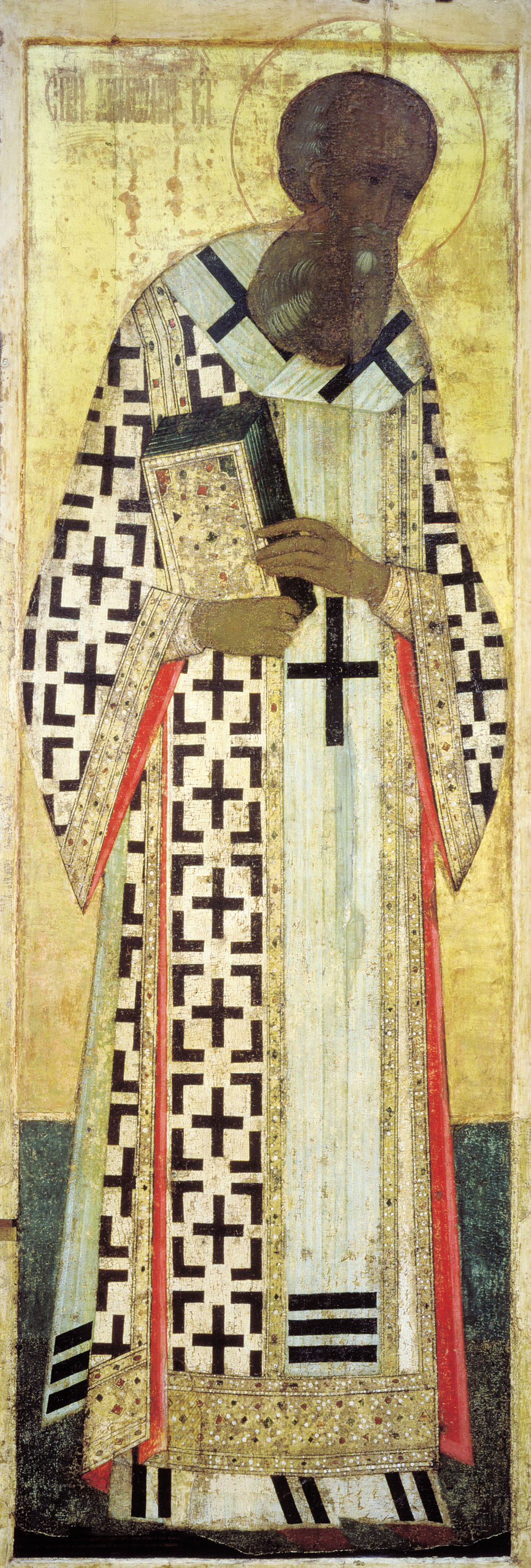

Basil of Caesarea
Basil became bishop (metropolitan) of Caesarea in Cappadocia in 370. About 375 he wrote On the Holy Spirit for his friend Amphilochius, bishop of Iconium. He explains why he wrote it: at a public service he had used two forms of the closing prayer of praise, and some people objected. In the Blomfield Jackson translation in the Nicene and Post-Nicene Fathers (NPNF), Basil says he gave glory "to God the Father in both forms, at one time with the Son together with the Holy Ghost, and at another through the Son in the Holy Ghost," and "was attacked by some of those present on the ground that I was introducing novel and at the same time mutually contradictory terms."2 The older form, "through the Son in the Spirit", could be read as ranking the Spirit lower. Basil's form, "with the Son together with the Spirit", puts the three on one level. The book argues from Scripture, from the baptismal formula of Matthew 28:19 ("in the name of the Father, and of the Son, and of the Holy Ghost"), and from church practice that the Spirit shares the honor of the Father and the Son. Basil links faith and baptism tightly: "as we believe in the Father and the Son and the Holy Ghost, so are we also baptized in the name of the Father and of the Son and of the Holy Ghost."2
Basil was careful. In the book he never flatly calls the Spirit "God" or uses homoousios of the Spirit, which Gregory of Nazianzus later defended as a pastoral reserve and which some of Basil's own monks criticized. Scholars such as Jaroslav Pelikan, in The Emergence of the Catholic Tradition, volume 1 of The Christian Tradition (1971), treat this reserve as a deliberate choice to win over the hesitant middle party rather than any doubt on Basil's part.3
Basil also did the most to fix the vocabulary that the later councils used. Greek had two words that both could mean "being" or "reality": ousia and hypostasis. Nicaea's anathemas in 325 had used them almost as synonyms. Basil separated them. In his Letter 236, to Amphilochius, he writes: "The distinction between ousia and hypostasis is the same as that between the general and the particular; as, for instance, between the animal and the particular man. Wherefore, in the case of the Godhead, we confess one essence or substance so as not to give a variant definition of existence, but we confess a particular hypostasis, in order that our conception of Father, Son and Holy Spirit may be without confusion and clear."4 That is the root of the formula "one ousia, three hypostases" (in Latin, one substantia or essentia, three personae), which is still the standard Trinitarian language of Catholic, Orthodox and most Protestant churches.
Gregory of Nazianzus
Gregory of Nazianzus went where Basil would not. In 379 the small Nicene congregation of Constantinople, which met in a house chapel Gregory named the Anastasia ("Resurrection"), invited him to lead it, at a time when the city's churches were held by the Homoian party. There, in 380, he preached five sermons now called the Theological Orations (Orations 27 to 31). The fifth, Oration 31, is on the Holy Spirit. In the NPNF translation of Charles Gordon Browne and James Edward Swallow he asks and answers the question directly: "What then? Is the Spirit God? Most certainly. Well then, is He Consubstantial? Yes, if He is God."5
Gregory also faced the objection that Scripture says little in plain words about the Spirit's divinity. His answer is a theory of gradual revelation: "The Old Testament proclaimed the Father openly, and the Son more obscurely. The New manifested the Son, and suggested the Deity of the Spirit. Now the Spirit Himself dwells among us, and supplies us with a clearer demonstration of Himself."5 Protestant readers have sometimes seen this as an appeal beyond Scripture; Orthodox and Catholic readers see it as the church reading Scripture whole. Both readings can cite Gregory, since in the same oration he works through the biblical texts at length.
Gregory of Nyssa
Basil's brother Gregory, bishop of the small town of Nyssa from 372, was the most philosophical of the three. In a short treatise to a man named Ablabius, On "Not Three Gods", he takes up the objection that if Peter, James and John are three men sharing one human nature, then Father, Son and Spirit sharing one divine nature must be three gods. His reply, in H. A. Wilson's NPNF translation, is that the divine persons never act apart: "every operation which extends from God to the Creation, and is named according to our variable conceptions of it, has its origin from the Father, and proceeds through the Son, and is perfected in the Holy Spirit."6 Three human workers do three jobs; the three divine persons do one work. Gregory of Nyssa attended the council of 381, and the emperor's law of July 30, 381 names him as one of the bishops whose communion marked a Catholic church in the civil diocese of Pontus (in pontica dioecesi).7
The formula: one ousia, three hypostases
The Cappadocian solution, in summary: God is one in ousia (essence, substance); the Father, Son and Holy Spirit are three hypostases (persons), distinguished only by their relations of origin. The Father is unbegotten, the Son is begotten of the Father, the Spirit proceeds from the Father. Everything else (power, glory, will, action) is common to all three. Henry Chadwick, in The Early Church (1967), and J. N. D. Kelly, in Early Christian Doctrines (1958), both describe this as the theology that the council of 381 adopted in substance, even though the council's own short documents say little about it.8 The Latin West had reached a similar position by another road, through Tertullian's "one substance, three persons" (lesson 03) and later Augustine's On the Trinity (lesson 06).
Theodosius and Cunctos populos
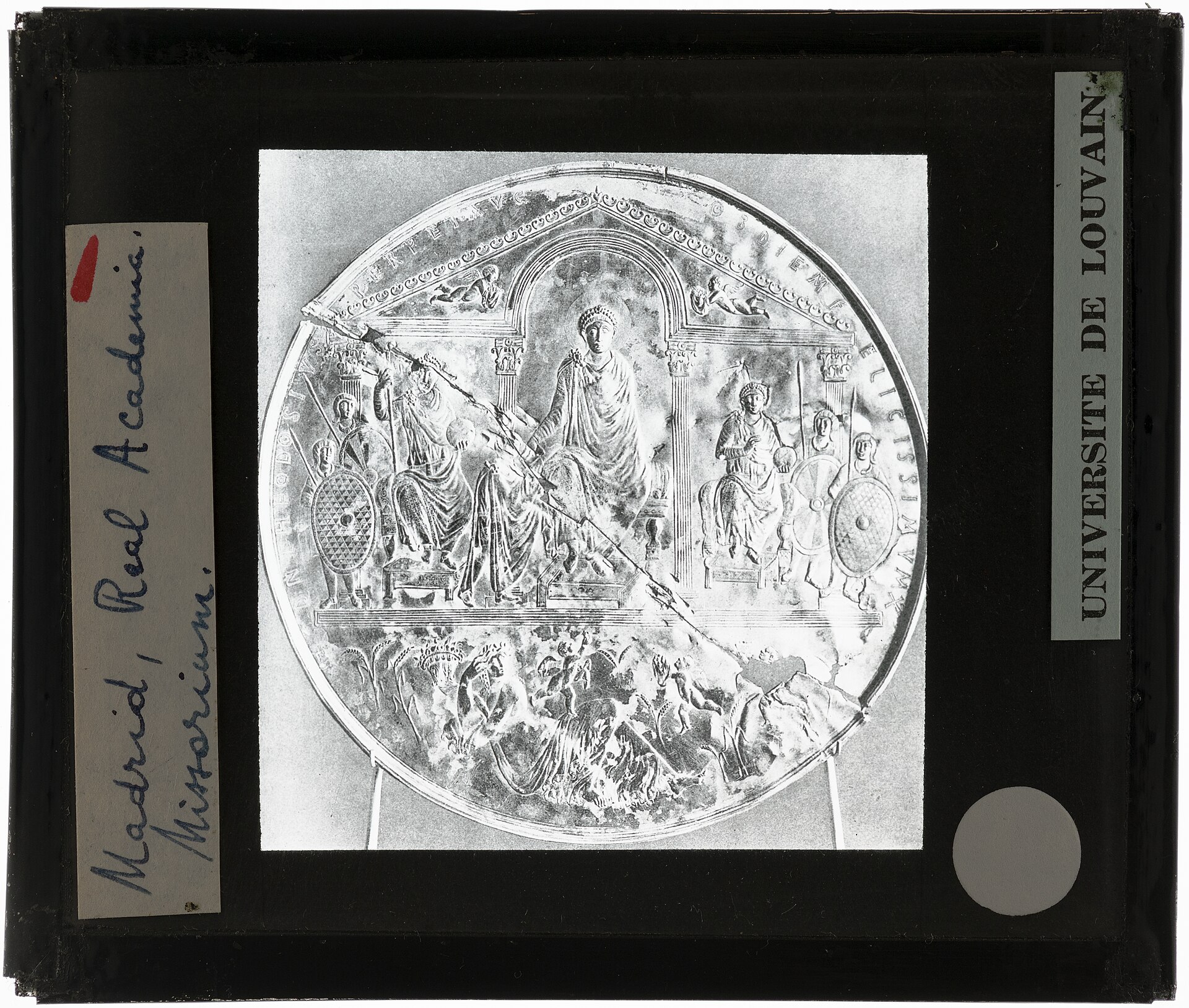
Church councils did not happen in a vacuum. On Aug. 9, 378, the eastern emperor Valens, a Homoian, died with much of his army at the battle of Adrianople against the Goths. The western emperor Gratian named a Spanish general, Theodosius, as emperor in the East in January 379. Theodosius came from a Nicene family in the West.
On Feb. 27, 380, at Thessalonica, an edict went out in the names of the three emperors Gratian, Valentinian II and Theodosius, addressed "to the people of the city of Constantinople." It is preserved in the Codex Theodosianus, the law code of 438, as book 16, title 1, law 2, and is known from its opening words as Cunctos populos ("all peoples"). The Latin text dates it "III Kal. Mar." at Thessalonica in the consulship of Gratian (his fifth) and Theodosius (his first), that is, Feb. 27, 380.9 In the translation of Henry Bettenson (1943), given in the Internet Medieval Sourcebook, it begins: "It is our desire that all the various nation which are subject to our clemency and moderation, should continue to the profession of that religion which was delivered to the Romans by the divine Apostle Peter" (the Sourcebook's text reads "nation" for "nations").10 The religion is defined by two living bishops: the faith "now professed by the Pontiff Damasus" of Rome "and by Peter, Bishop of Alexandria", and its content is belief in "the one diety of the father, Son and Holy Spirit, in equal majesty and in a holy Trinity" (Latin: patris et filii et spiritus sancti unam deitatem sub parili maiestate et sub pia trinitate).9
The second half of the law is the part modern readers remember. Those who follow it may "assume the title Catholic Christians"; the rest, judged "foolish madmen", are to bear "the ignominious name of heretics" and may not call their meeting places churches. They are to suffer "the chastisement of divine condemnation" first and then the punishment that imperial authority decides to inflict.10
Two points about this famous law are often missed. First, it is addressed to one city, Constantinople, and concerns which Christians count as Catholic. It does not ban paganism or make Christianity the state religion of the empire in a single act. The laws against public pagan sacrifice came later, especially in 391 and 392 (Codex Theodosianus 16.10.10 to 16.10.12).9 Second, it was enforced. In November 380 Theodosius entered Constantinople, expelled the Homoian bishop Demophilus, and installed Gregory of Nazianzus in the great church. A law of Jan. 10, 381 (Codex Theodosianus 16.5.6) ordered all churches handed to the Nicene party9, and the law of July 30, 381 (16.1.3), issued at Heraclea after the council, named the bishops in each region whose communion defined orthodoxy: the bishop of Constantinople (then Nectarius, though the law names the see and not the man), Timothy of Alexandria, Pelagius of Laodicea, Diodore of Tarsus, Amphilochius of Iconium, Optimus of Antioch in Pisidia, Helladius of Caesarea, Otreius of Melitene, Gregory of Nyssa, Terennius of Scythia and Marmarius of Marcianopolis. Those outside that communion were to be expelled "as manifest heretics" (ut manifestos haereticos).7
Readers differ on what this means. Catholic and Orthodox historians generally see Theodosius as a believer giving legal backing to a theology the bishops had already worked out. Others, from Edward Gibbon in the eighteenth century to Diarmaid MacCulloch in Christianity: The First Three Thousand Years (2009), stress that the Nicene victory in the East owed a great deal to imperial force and that the new laws began the long practice of punishing Christians for doctrine.11 The documents support both statements: the theology was in place before 380, and the laws used the state's power against dissenters.

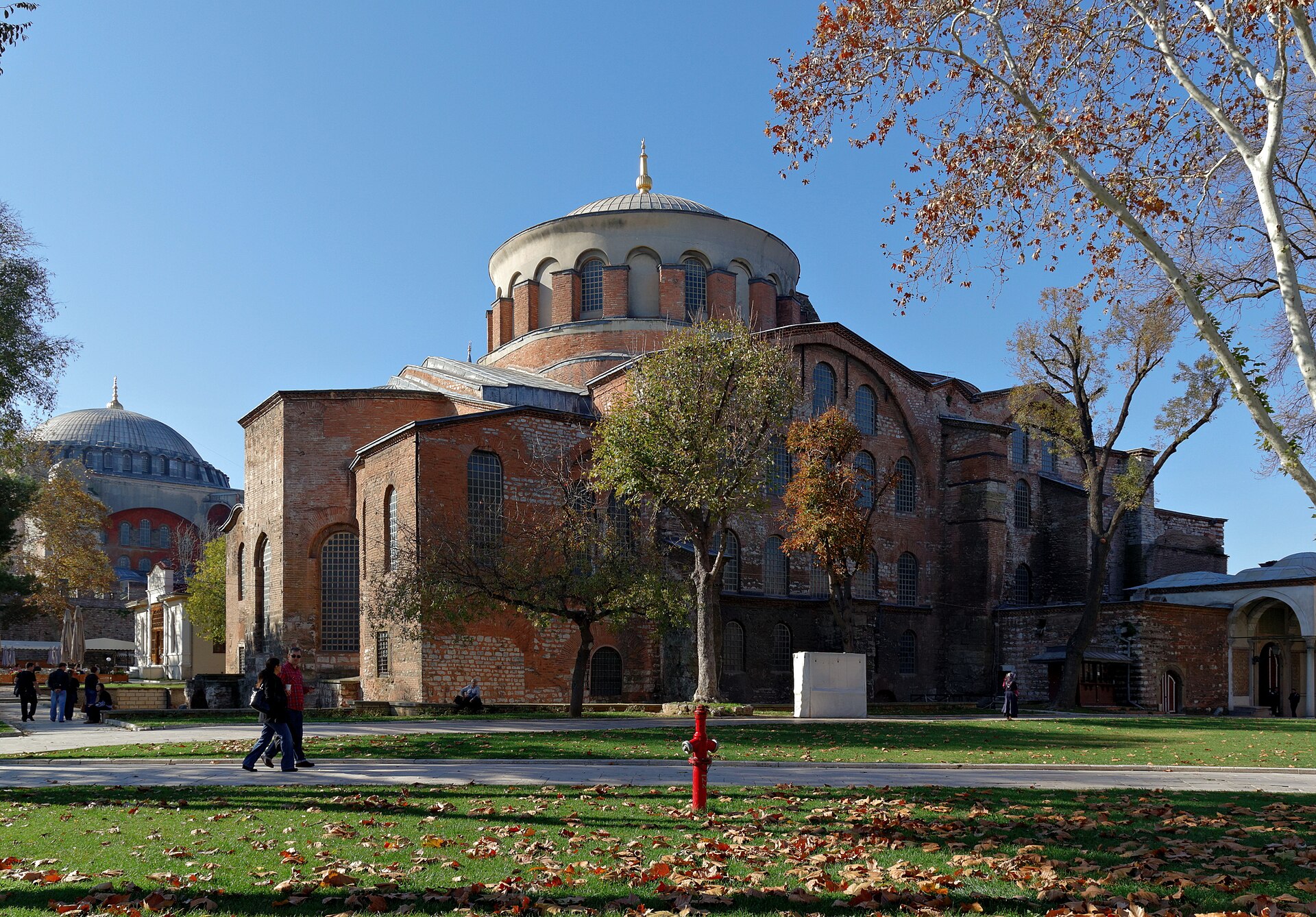
The Council of Constantinople, 381
Who came and what happened
Theodosius summoned the bishops of the eastern empire to his capital in May 381. The church historian Socrates Scholasticus, writing about 439, gives the numbers that tradition kept: on the Nicene side "one hundred and fifty", including Timothy of Alexandria, Cyril of Jerusalem and Meletius of Antioch, and on the Macedonian side, led by Eleusius of Cyzicus and Marcian of Lampsacus, "thirty-six in number." Socrates says the emperor tried hard to bring the Macedonians over, but they refused the homoousios and "departed from Constantinople."12 No bishop came from the West, and Rome sent no legates. The council became "ecumenical" (world-wide) by later reception, especially at Chalcedon in 451, when its creed was read alongside that of Nicaea.
The council had a stormy course. Meletius of Antioch presided at first and died during the sessions. Gregory of Nazianzus, whom the council had confirmed as bishop of Constantinople, then presided. He urged the bishops to end the long schism at Antioch by accepting Paulinus, the rival bishop there whom Rome and Alexandria recognized, as Meletius's successor. The eastern bishops refused and chose Flavian. When the Egyptian bishops arrived late and objected that Gregory's move from another see broke the canons of Nicaea, Gregory resigned. His farewell sermon, Oration 42, is titled in the NPNF "The Last Farewell in the Presence of the One Hundred and Fifty Bishops," and he ends it: "So do you prepare for me your addresses of dismissal: I will now bid you farewell."13 The council elected in his place Nectarius, a senator and city official who was not yet baptized. Socrates says he "was seized upon by the people, and elected to the episcopate, and was ordained accordingly by one hundred and fifty bishops then present."12
Gregory never warmed to councils again. Declining to attend a provincial synod a few years later, he wrote: "Synods and Conventions I salute from afar, since I have experienced that most of them (to speak moderately) are but sorry affairs" (Letter 124, NPNF translation).14 His long autobiographical poem On His Own Life gives his side of the council at length.

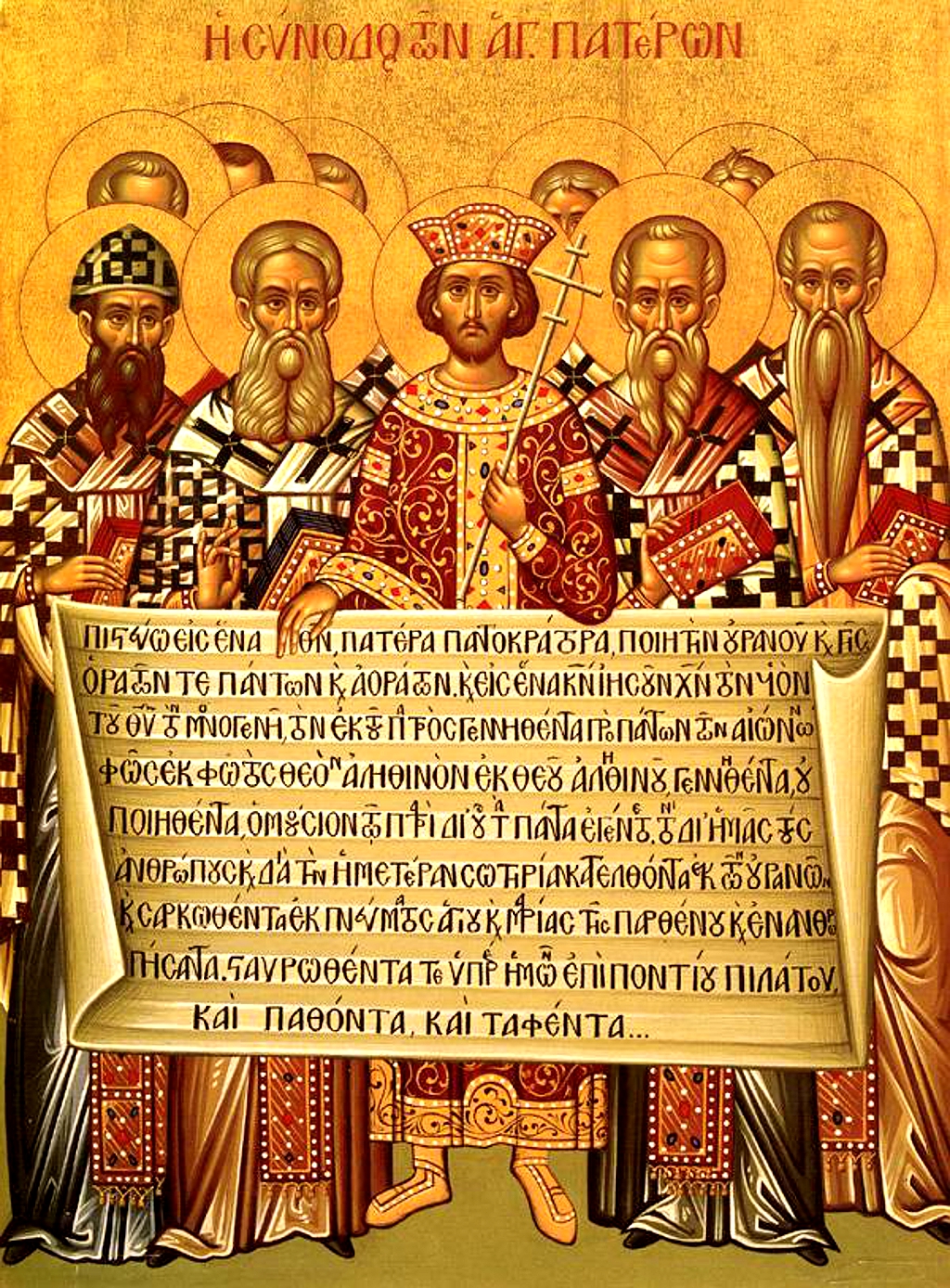
The creed, word for word
The council's letter to Theodosius says the bishops "pronounced some concise definitions, ratifying the Faith of the Nicene Fathers, and anathematizing the heresies which have sprung up, contrary thereto," and asks the emperor to "set your seal" to their decisions.15 The creed attributed to them reads as follows in Henry Percival's translation in Schaff and Wace's The Seven Ecumenical Councils (NPNF second series, vol. 14, 1900), a public domain text. The square brackets are Percival's.
We believe in one God, the Father Almighty, maker of heaven and earth and of all things visible and invisible. And in one Lord Jesus Christ, the only begotten Son of God, begotten of his Father before all worlds, Light of Light, very God of very God, begotten not made, being of one substance with the Father, by whom all things were made. Who for us men and for our salvation came down from heaven and was incarnate by the Holy Ghost and the Virgin Mary, and was made man, and was crucified also for us under Pontius Pilate. He suffered and was buried, and the third day he rose again according to the Scriptures, and ascended into heaven, and sitteth at the Right Hand of the Father. And he shall come again with glory to judge both the quick and the dead. Whose kingdom shall have no end.
And [we believe] in the Holy Ghost, the Lord and Giver-of-Life, who proceedeth from the Father, who with the Father and the Son together is worshipped and glorified, who spake by the prophets. And [we believe] in one, holy, Catholic and Apostolic Church. We acknowledge one Baptism for the remission of sins, [and] we look for the resurrection of the dead and the life of the world to come. Amen.15
Three notes on this text. "Catholic" here is the Greek katholikos, "universal" or "whole", and in 381 it named no separate denomination; Orthodox, Catholic and many Protestant churches all recite the word. "Who proceedeth from the Father" has no further phrase in the Greek of 381. The Latin words filioque ("and from the Son") were added in the West later, first in Spain (the third council of Toledo, 589, is usually cited) and in Rome only in the eleventh century; that addition is one cause of the 1054 schism and belongs to lesson 08. And the creed ends without the anathemas that closed the creed of 325.

What changed from 325
Set beside the creed of Nicaea, the creed of 381 adds some phrases and drops others. The table compares the two in Percival's translations (lesson 04 gives the 325 text in full).
| Point | Creed of Nicaea, 325 | Creed of Constantinople, 381 |
|---|---|---|
| The Father | "maker of all things visible and invisible" | adds "maker of heaven and earth" |
| The Son's origin | "the only-begotten of his Father, of the substance of the Father, God of God" | "begotten of his Father before all worlds"; drops "of the substance of the Father" and "God of God" |
| Homoousios | "being of one substance (homoousion, consubstantialem) with the Father" | kept: "being of one substance with the Father" |
| The incarnation | "was incarnate and was made man" | "was incarnate by the Holy Ghost and the Virgin Mary, and was made man" |
| Crucifixion and burial | "He suffered and the third day he rose again" | "was crucified also for us under Pontius Pilate. He suffered and was buried, and the third day he rose again according to the Scriptures" |
| The kingdom | not mentioned | "Whose kingdom shall have no end" (aimed at Marcellus of Ancyra, who was accused of teaching that the Son's reign would end) |
| The Holy Spirit | "And [we believe] in the Holy Ghost." | "the Lord and Giver-of-Life, who proceedeth from the Father, who with the Father and the Son together is worshipped and glorified, who spake by the prophets" |
| Church, baptism, resurrection | not mentioned | one, holy, Catholic and Apostolic Church; one baptism; resurrection; life to come |
| Anathemas | against "there was a time when he was not" and similar phrases | none in the creed (canon 1 condemns the heresies by name) |
Notice what the article on the Spirit avoids. It never calls the Spirit "God" or homoousios. It uses biblical titles ("Lord", "Giver of life", see 2 Corinthians 3:17 and John 6:63) and says the Spirit is worshipped "together with" the Father and the Son, which is Basil's argument from worship. Adolf von Harnack, in his History of Dogma, concluded that a Macedonian "could have subscribed this formula at a pinch." Percival, quoting him, objected that Harnack's "certainty" about the council's behavior was only reached "in the foot-note."16 Most scholars now read the wording as a deliberate attempt to keep the door open to moderate Macedonians without giving up the Spirit's equal honor.
When the text first appears
This is the point most popular accounts skip. No copy of the creed survives from 381 itself. The council's surviving documents are its letter to Theodosius and its canons. The text above first appears in the acts of the Council of Chalcedon in 451, where it was read out as the creed "of the one hundred and fifty holy Fathers who were assembled at Constantinople." Percival's edition prints the creed with the source note "(Found in all the Collections in the Acts of the Council of Chalcedon.)" and lists among the weak points of the council's standing that "Its Creed was not read nor mentioned, so far as the acts record, at the Council of Ephesus, fifty years afterwards."16
Scholars have offered three main explanations. One, held by Louis-Sebastien Le Nain de Tillemont and Karl Joseph von Hefele and noted by Percival, is that the council adopted an existing baptismal creed rather than writing a new one; a nearly identical creed stands at the end of the Ancoratus of Epiphanius of Salamis, which he dated to 374, although some modern scholars think copyists later brought the Ancoratus text into line with the 381 creed. A second, argued by F. J. A. Hort in 1876, is that the council never issued a creed at all. A third, now the most common, set out by J. N. D. Kelly in Early Christian Creeds (1950), is that the council did approve this text, probably revised from a local creed, but that it circulated little outside Constantinople until the imperial church brought it forward in 451.16 The fact that matters for readers is plain: the creed is called "Niceno-Constantinopolitan" because tradition joins it to both councils, and the earliest evidence for its exact wording is from 451.
Canon 1 and canon 3
The council's first canon reads (Percival): "The Faith of the Three Hundred and Eighteen Fathers assembled at Nice in Bithynia shall not be set aside, but shall remain firm. And every heresy shall be anathematized, particularly that of the Eunomians or [Anomoeans, the Arians or] Eudoxians, and that of the Semi-Arians or Pneumatomachi, and that of the Sabellians, and that of the Marcellians, and that of the Photinians, and that of the Apollinarians."1 The canons are headed as decreed "on the VII of the Ides of July" in the consulship of Eucherius and Evagrius, that is, July 9, 381.1
Canon 3 is short and had a long future. In Schaff's edition it reads: "The Bishop of Constantinople, however, shall have the prerogative of honour after the Bishop of Rome; because Constantinople is New Rome."17 (The New Advent web version of the same translation omits this canon and renumbers the rest, so readers comparing sites should use the CCEL text of the volume, where the canon on Maximus the Cynic is canon 4.) The canon did not touch Rome's rank, but it moved Constantinople ahead of Alexandria and Antioch, which Nicaea's sixth canon had treated as the leading sees after Rome. Its reason is political: the city ranks second because it is the new capital. Rome did not accept the canon for centuries; the papal legate Lucentius said so openly at Chalcedon, and the Fourth Lateran Council of 1215 granted Constantinople second place only while a Latin patriarch held it after the crusaders' capture of the city.17 The same quarrel returned in sharper form at Chalcedon with canon 28.
Apollinaris and the human mind of Christ
The last name in canon 1's list opens the second great debate of this lesson. If the Son is fully God, what kind of man was Jesus? Apollinaris (or Apollinarius), bishop of Laodicea in Syria (about 310 to about 390), was a strong Nicene, a friend of Athanasius and a learned defender of the faith against the pagan philosopher Porphyry and the emperor Julian. Philip Schaff, in his History of the Christian Church (vol. 3, 1867, public domain), says Apollinaris "attributed to Christ a human body, and a human (animal) soul, but not a human spirit or reason; putting the divine Logos in the place of the human spirit."18 His purpose was to secure a real unity: if God the Word replaced the human mind, there could be no second, human "self" in Christ, and no changeable human will that might sin.
Apollinaris's books were condemned and mostly destroyed; what survives are fragments quoted by his opponents (Gregory of Nyssa, Theodoret, Leontius of Byzantium) and several works that circulated under the names of orthodox writers such as Athanasius and Pope Julius. Schaff notes that "His writings, except numerous fragments in the works of his opponents, are lost."18 So his teaching is known mainly through hostile witnesses, with the important exception of those disguised works, which were read as orthodox for generations. One of them, a letter to the emperor Jovian, contains the phrase "one nature of God the Word incarnate" (mia physis tou theou logou sesarkomene). Cyril of Alexandria later quoted the phrase believing it came from Athanasius. It became the watchword of the churches that rejected Chalcedon, which is why their critics have sometimes charged them with Apollinarianism, a charge those churches reject, since they confess that Christ had a full human soul and mind.
A council at Alexandria in 362 had already said that Christ had a human soul, without naming Apollinaris. The decisive reply came from Gregory of Nazianzus in his first letter to the priest Cledonius (Letter 101), in a sentence that became a rule for all later debate: "For that which He has not assumed He has not healed; but that which is united to His Godhead is also saved. If only half Adam fell, then that which Christ assumes and saves may be half also; but if the whole of his nature fell, it must be united to the whole nature of Him that was begotten, and so be saved as a whole."19 If Christ lacked a human mind, the human mind is not redeemed. Roman synods under Pope Damasus in the late 370s, a synod at Antioch in 379 and then Constantinople (381) condemned the teaching. The Apollinarians formed their own congregations for a time and then faded.
Nestorius, Cyril and the word Theotokos
Two schools: Alexandria and Antioch
After 381 the question was no longer whether Christ is fully God and fully man; nearly everyone in the imperial church said both. The question was how the two are one. Two traditions of teaching, usually called the schools of Alexandria and Antioch, answered with different emphases. Historians warn that "school" is a loose word here: these were habits of reading Scripture and speaking about Christ, held by bishops and monks in two regions, rather than institutions with a fixed program.
- Alexandria (Athanasius, then Cyril) started from the eternal Word who "became flesh" (John 1:14). The subject of everything Jesus did is the one Word, now living a human life. So it is right to say that God was born, God suffered "in the flesh", God died on the cross. The danger its critics saw was a mixing of God and man in which the human side is swallowed up.
- Antioch (Diodore of Tarsus, Theodore of Mopsuestia, then Nestorius and Theodoret of Cyrus) started from the gospel portrait of a real man who grew, learned, was tempted and prayed. It insisted that the divine nature cannot suffer or change, and so it spoke of the Word dwelling in the man as in a temple, and kept the human and divine acts apart in speech. The danger its critics saw was a Christ made of two subjects, "two sons", joined by grace or will.
Both schools could quote the creed of Nicaea, and both condemned Arius and Apollinaris. The fight that broke out in 428 was in part a fight between the two great sees of Alexandria and Constantinople, and in part a real disagreement about how to speak of one Christ.
Nestorius in his own words
Nestorius, a monk and celebrated preacher from Antioch, was made bishop of Constantinople in April 428 by the emperor Theodosius II. The trouble began with a title for Mary already widely used in prayer: Theotokos, "the one who gave birth to God", usually translated "Mother of God." When Nestorius and his chaplain Anastasius preached against the title as liable to make the Godhead appear to have a beginning in a woman, a storm broke.
Nestorius's own account survives because a Greek defense he wrote in exile, condemned and burned in the empire, was translated into Syriac by the Church of the East about 535. A single damaged manuscript was found in the library of the Church of the East's patriarch in Kurdistan, copied in 1889 for the American mission at Urmia, published in Syriac by Paul Bedjan in 1910, and translated into English by G. R. Driver and Leonard Hodgson as The Bazaar of Heracleides (Oxford, 1925).20 In it Nestorius says that when he arrived in Constantinople two factions came to him, one calling Mary "mother of God" and the other "mother of a man," and that he found neither heretical: "they confessed them both alike, while they were distinct only in name." He says he proposed a middle term: "When you call her the Mother of Christ, [Christ] by union and inseparate, you speak of the one and of the other in the sonship. But make use of that against which there is no accusation in the Gospel."20 Elsewhere in the same book he insists: "I have confessed in one Christ two natures without confusion."20
His second letter to Cyril (430), which survives in Greek and was read at Ephesus, puts the point in one line. The Greek in Migne's Patrologia Graeca 77, col. 49 ff., says that Scripture always assigns birth and suffering to Christ's humanity and not to his divinity, "so that the holy Virgin is called, by the more accurate title, Christotokos, not Theotokos" (a literal rendering of hos kaleisthai kata akribesteran prosegorian ten hagian Parthenon Christotokon, ou Theotokon).21 In the same letter he says that the body is the "temple" of the Son's Godhead, joined to it by a "highest and divine conjunction" (synapheia), and that to attribute the flesh's birth, suffering and death to the Godhead is the error of pagans, Apollinaris or Arius.21
Nestorius also answered Cyril's twelve anathemas with twelve of his own, preserved in Latin by Marius Mercator and translated in the NPNF. His first reads: "If anyone says that the Emmanuel is true God, and not rather God with us, that is, that he has united himself to a like nature with ours, which he assumed from the Virgin Mary, and dwelt in it; and if anyone calls Mary the mother of God the Word, and not rather mother of him who is Emmanuel ... let him be anathema."22
Cyril in his own words
Cyril, bishop of Alexandria from 412 to 444, is honored as a saint and "Doctor of the Church" by Catholics and Orthodox and as "the Pillar of Faith" by the Coptic Church. He was also a forceful church politician, and his record in Alexandria (the expulsion of the city's Jews about 414 or 415 and the murder of the philosopher Hypatia by a Christian mob in 415, in which his role is disputed) is part of the reason historians judge him so differently. He wrote to Nestorius three times. His third letter (November 430), sent with a Roman council's judgment, ended with twelve anathemas. The first, in Percival's translation, is the heart of the matter: "If anyone will not confess that the Emmanuel is very God, and that therefore the Holy Virgin is the Mother of God (Theotokos), inasmuch as in the flesh she bore the Word of God made flesh [as it is written, 'The Word was made flesh'] let him be anathema."22
Cyril's point is about who Jesus is. Mary did not give birth to the divine nature, which has no beginning; she gave birth to a person, and that person is the eternal Son, now living as a man. To call her mother only of "Christ" or of "the man" sounded to Cyril like a claim that the one born of her was someone other than God the Word. Nestorius heard Cyril's language as mixing the natures and making God passible. Each read the other in the worst light. Many modern historians, including Henry Chadwick and the Catholic scholar Aloys Grillmeier, have concluded that the two men were closer than either admitted, while still differing about whether the Word himself is the single subject of the human acts.8
Before the council, Cyril wrote to Pope Celestine I, and a Roman synod in August 430 told Nestorius to recant within ten days of receiving the sentence or be deposed, entrusting Cyril with carrying it out. The Catholic reading, as the French bishop Jacques-Benigne Bossuet put it in the passage Percival prints as his historical introduction to Ephesus, is that "the Apostolic See" was "manifestly consulted" and judged a question of faith before any council met.23 The Orthodox and Protestant readings stress that the matter was then referred to an ecumenical council called by the emperor, and that the council examined Nestorius's writings itself.
The Council of Ephesus, 431
Two councils in one city
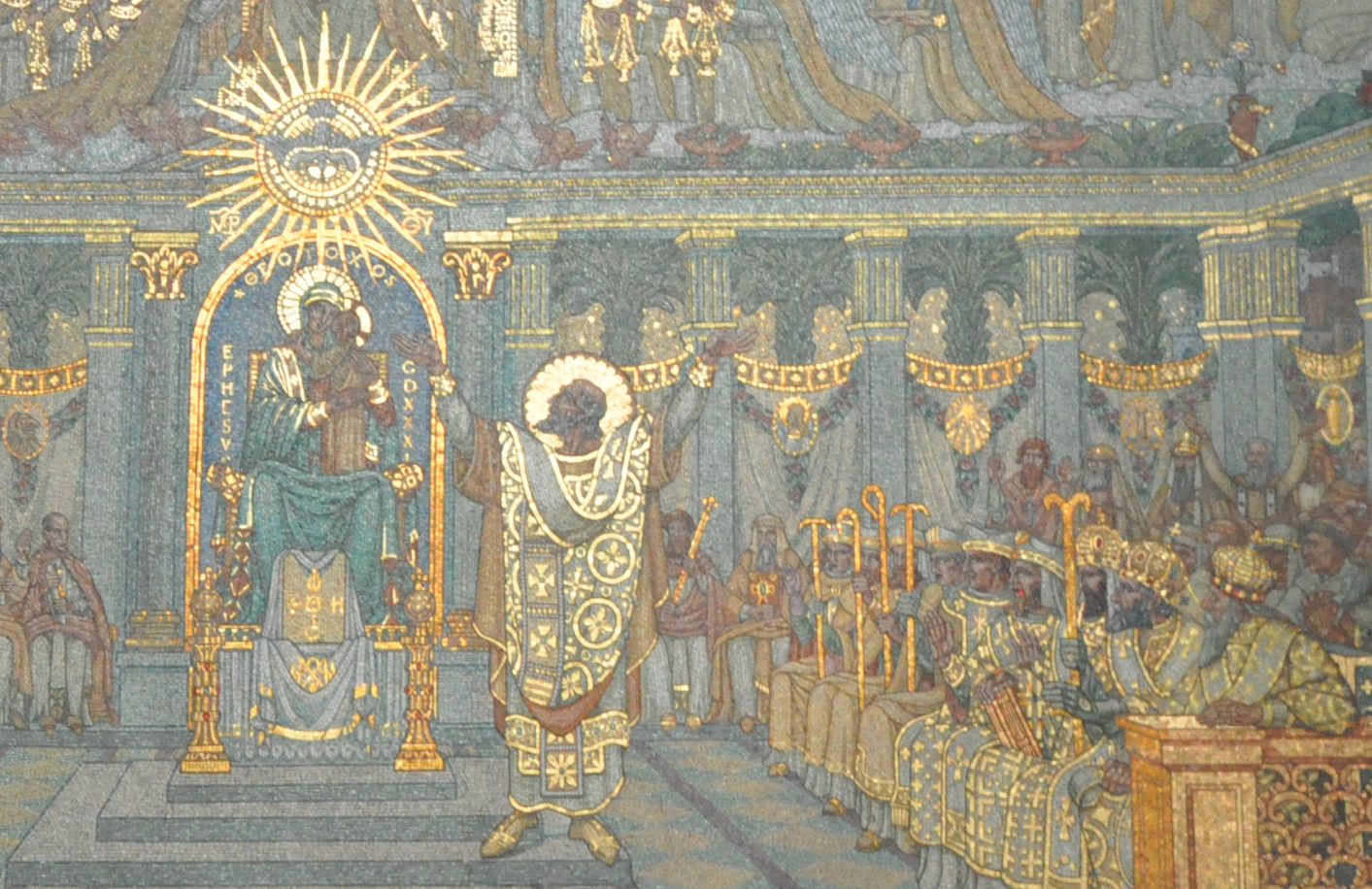
Theodosius II called a council to Ephesus for Pentecost, June 7, 431. Cyril arrived with about fifty Egyptian bishops; Memnon, bishop of Ephesus, backed him. John, bishop of Antioch, Nestorius's friend, was delayed on the road with the Syrian bishops. After waiting about two weeks, and over the protest of the emperor's representative, Count Candidian, and of some sixty-eight bishops who signed a request to wait, Cyril opened the council on June 22, 431, in the church of Mary in Ephesus. Nestorius, summoned three times, refused to come. In one day the council read the creed of Nicaea, Cyril's second letter to Nestorius (approved), Nestorius's reply (condemned), passages from earlier Fathers and from Nestorius's sermons, and a letter from Capreolus, bishop of Carthage, excusing the African bishops' absence (Augustine of Hippo had died the previous August; see lesson 06).24
Its sentence, in Percival's translation, reads: "As, in addition to other things, the impious Nestorius has not obeyed our citation, and did not receive the holy bishops who were sent by us to him, we were compelled to examine his ungodly doctrines ... Compelled thereto by the canons and by the letter of our most holy father and fellow-servant Coelestine, the Roman bishop, we have come, with many tears, to this sorrowful sentence against him, namely, that our Lord Jesus Christ, whom he has blasphemed, decrees by the holy Synod that Nestorius be excluded from the episcopal dignity, and from all priestly communion."24 The people of Ephesus are reported to have escorted the bishops home with torches. The number of bishops who signed is given differently in different lists, from about 150 at the first session to about 200 later.
John of Antioch arrived on June 26 or 27. Within hours, in his lodging, he held his own council with the Syrian bishops and Count Candidian. Karl Joseph von Hefele, the Catholic historian of the councils, whose account Percival reproduces, says that this meeting "numbered only forty-three members, including himself, while on the other side there were more than two hundred." It deposed Cyril and Memnon, charging that Cyril's anathemas contained "Apollinarian, Arian, and Eunomian heresies," and that they had acted "in opposition to the commands of the Emperors."25 Hefele, a partisan of Cyril, calls John's assembly a conciliabulum ("little council") and its charges "impudent and false"; readers sympathetic to Antioch note that Cyril's side had refused to wait for John and for the Roman legates. Both councils claimed to be the council of Ephesus.
The Roman legates, the bishops Arcadius and Projectus and the priest Philip, arrived about July 10 and joined Cyril's council, which then excommunicated John and his supporters. The emperor at first confirmed all the depositions, Nestorius, Cyril and Memnon alike, and put the bishops under guard. Cyril's friends at court and the monks of Constantinople changed his mind. Cyril was allowed to return to Alexandria in the autumn of 431. Nestorius went back to his monastery near Antioch, and in 435 or 436 was exiled to the Great Oasis in Upper Egypt, where he died about 450. A law of Aug. 3, 435, preserved in the Theodosian Code (16.5.66), ordered that his followers be called "Simonians" and that his books be sought out "and publicly burned" (publice conburi).9

What Ephesus decreed
The council of 431 wrote no new creed. Its doctrinal work was the approval of Cyril's second letter to Nestorius as agreeing with Nicaea and the condemnation of Nestorius. Whether it formally adopted Cyril's twelve anathemas is disputed; they were read, but the acts of the first session do not record a vote on them, a point Percival's notes discuss. Its seventh canon forbade any new creed: "it is unlawful for any man to bring forward, or to write, or to compose a different (heteran) Faith as a rival to that established by the holy Fathers assembled with the Holy Ghost in Nicaea," on pain of deposition for clergy and anathema for laymen.26 That canon became important twice: in 451, when Chalcedon's opponents argued that a new definition broke it, and in the long Orthodox objection to the Western filioque (lesson 08).
The Formula of Reunion, 433
For two years Alexandria and Antioch were out of communion. Under pressure from the emperor, John of Antioch sent Paul of Emesa to Cyril with a statement of faith, probably drafted by Theodoret of Cyrus. Cyril accepted it and quoted it word for word in his letter to John of spring 433, which begins with Psalm 96:11, "Let the heavens rejoice, and let the earth be glad." The statement, known as the Formula of Reunion, reads in part (Percival):
We confess, therefore, our Lord Jesus Christ, the Only Begotten Son of God, perfect God, and perfect Man of a reasonable soul and flesh consisting; begotten before the ages of the Father according to his Divinity, and in the last days, for us and for our salvation, of Mary the Virgin according to his humanity, of the same substance with his Father according to his Divinity, and of the same substance with us according to his humanity; for there became a union of two natures. Wherefore we confess one Christ, one Son, one Lord. According to this understanding of this unmixed union, we confess the holy Virgin to be Mother of God; because God the Word was incarnate and became Man, and from this conception he united the temple taken from her with himself.27
Both sides gave something. The Antiochenes accepted Theotokos and the deposition of Nestorius. Cyril accepted "a union of two natures" and the Antiochene image of "the temple taken from her," and did not insist on his twelve anathemas. Much of this language passed into the definition of Chalcedon eighteen years later. Some on both sides felt betrayed: strict Cyrillians thought "two natures" a surrender, and some Antiochenes, among them bishops who would not condemn Nestorius, refused the peace and were removed. Schaff's verdict, in volume 3 of his History, is that "the subsequent union of the Alexandrians and the Antiochians was only a superficial peace, to which each party had sacrificed somewhat of its convictions."28
Eutyches and the "Robber Synod" of 449
Cyril died in 444. His successor at Alexandria, Dioscorus (444 to 451), held strictly to Cyril's "one nature" language. In Constantinople an elderly archimandrite (head of a monastery) named Eutyches, a supporter of Cyril at Ephesus with friends at court, taught that after the union there is only one nature in Christ and would not say that Christ's body is "of one substance with us." At a local synod under Flavian, bishop of Constantinople, in November 448, Eusebius of Dorylaeum accused him. Asked to confess two natures after the union, Eutyches answered, as Leo later quoted him, "I confess that our Lord had two natures before the union but after the union I confess but one."29 The synod deposed him. It confessed that Christ "after the incarnation, consisted of two natures in one hypostasis and in one person, one Christ, one Son, one Lord," in Schaff's summary of the acts.28
Eutyches is known almost entirely from the acts of the councils that tried him, written by his opponents' side, though those acts quote his answers. What he meant is still debated. Leo called him "very unwary and exceedingly ignorant."29 The Oriental Orthodox churches today condemn Eutyches too; the 1990 agreed statement with the Eastern Orthodox opens: "Both families agree in condemning the Eutychian heresy."30
Eutyches appealed to Rome and to Dioscorus. Theodosius II called a second council at Ephesus, which met in August 449 with Dioscorus presiding. Schaff counts about 135 bishops. The council restored Eutyches, deposed Flavian, Eusebius of Dorylaeum, Theodoret of Cyrus, Domnus of Antioch and others, and refused to read the letter Pope Leo had sent. Schaff's account, drawn from the acts read at Chalcedon, reports monks and soldiers in the church and cries of "Let Eusebius be burnt; let him be burnt alive. As he has cut Christ in two, so let him be cut in two." Flavian was so roughly handled that he died days later on the way to exile.28 The papal deacon Hilary escaped and brought the news to Rome. In a letter to the empress Pulcheria dated July 20, 451, Leo called the gathering "that meeting, not of judges but of robbers, at Ephesus" (Feltoe's translation of non iudicio sed latrocinio).31 The name "Robber Synod" (Latrocinium) comes from that phrase.
The council of 449 was called by the emperor as an ecumenical council, and its decisions were enforced for two years. The churches that later rejected Chalcedon do not count it among the ecumenical councils either, though they honor Dioscorus as a saint and confessor and regard the charges against him at Chalcedon as unjust. Their reading is that Chalcedon deposed Dioscorus on disciplinary grounds, for refusing to answer three summonses, and not for heresy. Percival's volume gives the sentence against Dioscorus, which does rest on his refusal to appear and on his conduct at Ephesus.32
Leo's Tome
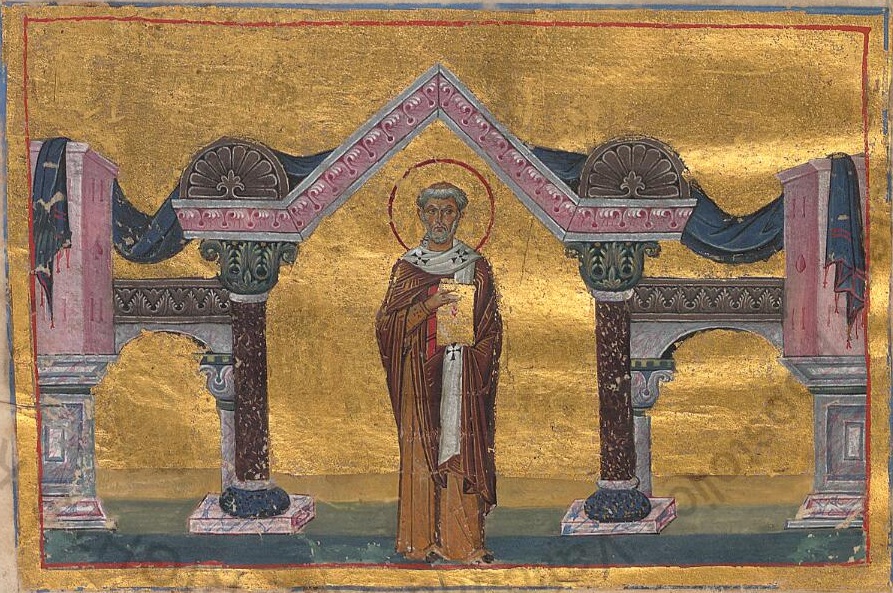
Leo I, bishop of Rome from 440 to 461, the first pope later called "the Great," had written to Flavian on June 13, 449, in a letter known as the Tome. In Charles Lett Feltoe's NPNF translation its central passage says: "Without detriment therefore to the properties of either nature and substance which then came together in one person, majesty took on humility, strength weakness, eternity mortality ... For both natures retain their own proper character without loss: and as the form of God did not do away with the form of a slave, so the form of a slave did not impair the form of God."29 Its most disputed sentence, for later Cyrillians, is this: "For each form does what is proper to it with the co-operation of the other; that is the Word performing what appertains to the Word, and the flesh carrying out what appertains to the flesh. One of them sparkles with miracles, the other succumbs to injuries."29 To Leo's supporters this is plain gospel: Christ wept as a man and raised Lazarus as God. To Dioscorus's supporters it sounded like two acting subjects, the very thing condemned in Nestorius. Leo also wrote that "one and the same" is both Son of God and Son of Man, and that "the Son of God is said to have been crucified and buried" because of "this unity of person which is to be understood in both natures."29

The Council of Chalcedon, 451
In July 450 Theodosius II died after a fall from his horse. His sister Pulcheria married the general Marcian, who became emperor and favored Leo's position. Marcian called a new council, first to Nicaea and then, so the court could keep close watch, to Chalcedon, across the Bosporus from Constantinople. It opened on Oct. 8, 451, in the church of the martyr Euphemia and met until about Nov. 1. Schaff notes that the lists of signatures are incomplete and the numbers given "vary from 520 to 630"; tradition says 630. Apart from the papal legates (the bishops Paschasinus and Lucentius and the priest Boniface) and two African bishops, all were Greeks and easterners. Imperial officials sat in the middle of the church and ran the proceedings.33
At the first session the acts of 449 were read and the council undid them. At the third session (Oct. 13) Dioscorus, who refused to attend after three summonses, was deposed.32 At the second session (Oct. 10) the creeds of Nicaea and Constantinople, two letters of Cyril and Leo's Tome were read. The acts record the bishops' reply to the Tome (Percival): "This is the faith of the fathers, this is the faith of the Apostles. So we all believe, thus the orthodox believe. Anathema to him who does not thus believe. Peter has spoken thus through Leo. So taught the Apostles. Piously and truly did Leo teach, so taught Cyril. Everlasting be the memory of Cyril. Leo and Cyril taught the same thing."34 Catholic readers point to "Peter has spoken thus through Leo" as recognition of papal authority. Orthodox and Protestant readers point out that the bishops accepted the Tome after testing it against Cyril, and that some bishops from Illyricum and Palestine asked for time to compare it before agreeing. Both facts are in the acts.
The definition, word for word
The emperor wanted a written definition, though many bishops at first said the creeds and letters were enough. A committee produced one, and it was adopted at the fifth session on Oct. 22, 451, and read in the emperor's presence at the sixth. After restating the creeds of 325 and 381 and receiving Cyril's synodical letters and Leo's Tome, it says (Percival's translation, NPNF second series, vol. 14; brackets his):
Following the holy Fathers we teach with one voice that the Son [of God] and our Lord Jesus Christ is to be confessed as one and the same [Person], that he is perfect in Godhead and perfect in manhood, very God and very man, of a reasonable soul and [human] body consisting, consubstantial with the Father as touching his Godhead, and consubstantial with us as touching his manhood; made in all things like unto us, sin only excepted; begotten of his Father before the worlds according to his Godhead; but in these last days for us men and for our salvation born [into the world] of the Virgin Mary, the Mother of God according to his manhood. This one and the same Jesus Christ, the only-begotten Son [of God] must be confessed to be in two natures, unconfusedly, immutably, indivisibly, inseparably [united], and that without the distinction of natures being taken away by such union, but rather the peculiar property of each nature being preserved and being united in one Person and subsistence, not separated or divided into two persons, but one and the same Son and only-begotten, God the Word, our Lord Jesus Christ, as the Prophets of old time have spoken concerning him, and as the Lord Jesus Christ hath taught us, and as the Creed of the Fathers hath delivered to us.35
Philip Schaff's own translation of the central clause, in volume 3 of his History of the Christian Church, reads: "one and the same Christ, Son, Lord, Only-begotten, known in (of) two natures, without confusion, without conversion, without severance, and without division; the distinction of the natures being in no wise abolished by their union, but the peculiarity of each nature being maintained, and both concurring in one person and hypostasis."33 The four Greek adverbs are asynchytos, atreptos, adiairetos, achoristos. Modern church statements usually render them "without confusion, without change, without division, without separation." Schaff notes that the first two were aimed at Eutyches and the last two at Nestorius.33 The definition closes by forbidding anyone "to bring forward a different faith," on pain of deposition for clergy and anathema for monks and laymen, after which, the acts record, "all the most religious Bishops cried out: This is the faith of the fathers."35
Several details deserve attention. The definition calls Mary "Mother of God" (Theotokos), keeping the decision of 431. It uses Cyril's words "one and the same" again and again, and Leo's "two natures." It says "one Person and subsistence" (prosopon and hypostasis), the Cappadocian word for what is three in God now used for what is one in Christ. And it does not explain how the union works. Jaroslav Pelikan observed that the definition is a set of boundaries, marking the errors on either side, rather than a theory.3
"In" or "from" two natures
One preposition carried the whole quarrel. The surviving Greek manuscripts of the definition read "from two natures" (ek dyo physeon), while the Latin version and early witnesses read "in two natures" (en dyo physesin, in duabus naturis). Dioscorus had said he could accept "from two natures," meaning two before the union and one after. The acts show that the first draft of the definition, now lost, was rejected after the Roman legates and the eastern bishops protested, and the committee's new text was accepted. Schaff, following Gieseler, Neander and Hefele, held that "in two natures" was the original reading and that the Greek was later altered; he notes that Severus of Antioch, the leading opponent of Chalcedon (patriarch 512 to 518), charged the council with teaching that Christ is known en dyo physesin, "in two natures."33 Most scholars now agree that "in" is what the council meant, since its opponents objected to exactly that word.
Canon 28 and Rome's objection
After the doctrinal sessions, at a session the papal legates refused to attend because, they said, they had "received no instructions on the subject," the council passed a canon on the rank of Constantinople. Canon 28 reads in part (Percival): "the One Hundred and Fifty most religious Bishops, actuated by the same consideration, gave equal privileges (isa presbeia) to the most holy throne of New Rome, justly judging that the city which is honoured with the Sovereignty and the Senate, and enjoys equal privileges with the old imperial Rome, should in ecclesiastical matters also be magnified as she is, and rank next after her." It also gave the bishop of Constantinople the right to ordain the metropolitans of the Pontic, Asian and Thracian dioceses. Its stated reason for Rome's own rank is political as well: "the Fathers rightly granted privileges to the throne of old Rome, because it was the royal city."36
At the next session the legate Paschasinus protested that "yesterday after your excellencies and our humility had left, it is said that certain decrees were made, which we esteem to have been done contrary to the canons."37 The officials let the canon stand. Leo refused to accept it. To Pulcheria he wrote on May 22, 452 (Feltoe): "the bishops' assents, which are opposed to the regulations of the holy canons composed at Nicaea ... we do not recognize, and by the blessed Apostle Peter's authority we absolutely dis-annul ..."38 To Anatolius of Constantinople he wrote the same day that the See of Alexandria "may not lose any of that dignity which it merited through S. Mark," and that the earlier canon of 381 had been "never brought to the knowledge of the Apostolic See by your predecessors."38
The readings divide along church lines. The Catholic position holds that Rome's primacy rests on Peter, so a canon basing it on Rome's being "the royal city" was wrong in principle, and that the papal confirmation of Chalcedon covered its faith and not this canon. The Orthodox churches count canon 28 as valid; it was renewed by the council in Trullo (692, canon 36), and the order Rome, Constantinople, Alexandria, Antioch, Jerusalem became the Byzantine "pentarchy." Percival, an Anglican, argued that Rome's objection was more about jurisdiction than principle and noted that the Council of Florence in 1439 gave the Greek patriarch second place.17 The record shows a canon passed in the legates' absence, protested by them, rejected by Leo, and enforced in the East. This dispute is one root of the 1054 break discussed in lesson 08.
The churches that did not accept Chalcedon
Chalcedon divided the eastern churches for good. In Egypt and much of Syria, most monks and people held that the council had betrayed Cyril and brought back Nestorius under another name, by saying "two natures" after the union and by receiving Theodoret and Ibas of Edessa, who had attacked Cyril. Emperors tried force, compromise and new formulas: the Henotikon ("act of union") of the emperor Zeno in 482, which avoided the word "nature" and led to a schism between Rome and Constantinople (the Acacian schism, 484 to 519); Justinian's fifth council in 553; and the "one will" formula of the 630s. None restored unity. By the time the Arab armies took Syria and Egypt (630s and 640s), separate hierarchies existed. Jacob Baradaeus, bishop of Edessa from about 543, ordained so many clergy for the anti-Chalcedonian Syrians that they were long called "Jacobites," a name they themselves now set aside for "Syriac Orthodox."
The Oriental Orthodox in their own words
The family of churches that rejected Chalcedon today includes the Coptic Orthodox Church of Alexandria, the Syriac Orthodox Church of Antioch, the Armenian Apostolic Church, the Ethiopian Orthodox Tewahedo Church, the Eritrean Orthodox Tewahedo Church and the Malankara Orthodox Syrian Church of India. They are in communion with one another and number tens of millions of members; estimates vary widely and no church census is reliable for some of these countries. They accept the first three councils (Nicaea, Constantinople, Ephesus) and no later ones as ecumenical.
They reject the old Greek and Latin label "monophysite" ("single-nature"), because it suggests Eutyches's view that Christ's humanity was absorbed. They call their teaching miaphysite, from mia physis, "one nature," meaning one united divine-human nature formed from two without mixture. Pope Shenouda III, patriarch of the Coptic Orthodox Church from 1971 to 2012, wrote in his book The Nature of Christ: "As a result of the unity of both natures-the Divine and the human-inside the Virgin's womb, one nature was formed out of both: 'The One Nature of God the Incarnate Logos' as St. Cyril called it." He adds that after 451 the Copts "were called 'Monophysites'," and that the term "has been intentionally or unintentionally misinterpreted throughout certain periods of history ... as though we believed in one nature of Christ and denied the other nature."39
The Ethiopian and Eritrean churches' own name, Tewahedo, is a Ge'ez word meaning "made one" or "united," a confession of the union. The Armenian Church did not attend Chalcedon, which met while Armenia was fighting the Persians (the battle of Avarayr, 451), and formally rejected it at councils at Dvin in the sixth century (506 and 554 are the usual dates).
The Eastern Orthodox churches, which accept Chalcedon, and the Oriental Orthodox churches held a long official dialogue. Its Second Agreed Statement, adopted at Chambesy near Geneva on Sept. 23 to 28, 1990, says that the natures "are united hypostatically and naturally without confusion, without change, without division and without separation, and that they are distinguished in thought alone." It agrees that "the Oriental Orthodox will continue to maintain their traditional Cyrillian terminology of 'one nature of the incarnate Logos'," that "the Orthodox are justified in their use of the two-natures formula," and that "both families have always loyally maintained the same authentic Orthodox Christological faith ... though they have used Christological terms in different ways." It recommends that all past anathemas between the two families be lifted.30 The churches have not yet restored full communion; the statement leaves the method of lifting anathemas to each church.
The Catholic Church reached a similar understanding. On May 10, 1973, Pope Paul VI and Pope Shenouda III signed a common declaration in Rome that confesses that Christ "is perfect God with respect to His divinity, perfect man with respect to His humanity. In Him His divinity is united with His humanity in a real, perfect union without mingling, without commixtion, without confusion, without alteration, without division, without separation." It also confesses Mary as "the God-bearer" and "the Theotokos."40 The words "in two natures" and "one nature" are both absent, which is how both churches could sign it. A first step had been an unofficial consultation of Catholic and Oriental Orthodox theologians organized by the Pro Oriente foundation in Vienna in September 1971, in which Shenouda, then a bishop, took part.39
The Church of the East
East of the Roman frontier, in the Persian (Sasanian) Empire, lay a church with its own history. It traced its origins to the apostle Thomas and to Addai (Thaddaeus) of Edessa, spoke Syriac, and had its patriarch, the Catholicos, at Seleucia-Ctesiphon on the Tigris. At a synod in Seleucia-Ctesiphon in 410 it accepted the creed of Nicaea. It took no part in Ephesus or Chalcedon. Its teachers followed the Antiochene school, above all Theodore of Mopsuestia, whom it honors as "the Interpreter," and Diodore of Tarsus; after the school of Edessa was closed by the emperor Zeno in 489, its teachers moved to Nisibis inside Persia. Synods of the 480s confirmed its Antiochene Christology, and the theologian Babai the Great (died about 628) gave it its classic form: two natures (kyane) and two qnome (a Syriac term for the concrete, individual reality of a nature, often wrongly rendered "two persons") in the one parsopa (person) of Christ.
This church does honor Nestorius as a saint and teacher, and it never accepted his deposition. But it rejects the name "Nestorian Church," which outsiders gave it, because it did not derive its faith from him, and because the label implies the "two sons" doctrine Cyril attributed to him, which the church denies. Sebastian Brock, the Oxford Syriac scholar, titled a well-known 1996 article "The 'Nestorian' Church: A Lamentable Misnomer."41 The church spread along trade routes to India, Central Asia and China; a stone set up in 781 at Chang'an (Xi'an) records the arrival of its missionaries in 635. Its main modern successors are the Assyrian Church of the East and the Ancient Church of the East, with a large part of its old community now in the Chaldean Catholic Church (in union with Rome since 1552) and the Syro-Malabar Church of India.
On Nov. 11, 1994, Pope John Paul II and Mar Dinkha IV, Catholicos-Patriarch of the Assyrian Church of the East, signed in Rome a Common Christological Declaration. It says that Christ's "divinity and his humanity are united in one person, without confusion or change, without division or separation," that he is "not an 'ordinary man' whom God adopted," and then settles the old quarrel over Mary's title: "the Assyrian Church of the East is praying the Virgin Mary as 'the Mother of Christ our God and Saviour'. In the light of this same faith the Catholic tradition addresses the Virgin Mary as 'the Mother of God' and also as 'the Mother of Christ'. We both recognize the legitimacy and rightness of these expressions of the same faith." It adds: "The controversies of the past led to anathemas, bearing on persons and on formulas. The Lord's Spirit permits us to understand better today that the divisions brought about in this way were due in large part to misunderstandings."42
Fifteen centuries after Ephesus, then, the Catholic Church has signed one declaration with the Church of the East that uses Chalcedon's four adverbs (1994) and another with the Coptic Orthodox Church that also uses those adverbs but omits "in two natures" (1973). Neither declaration restored full communion, and neither said that the councils of 431 and 451 were wrong. What they say is that the churches now judge each other's faith about Christ to be the same faith in different words. Some theologians in each church have objected that the agreements pass too lightly over real differences.
The later councils and who counts them
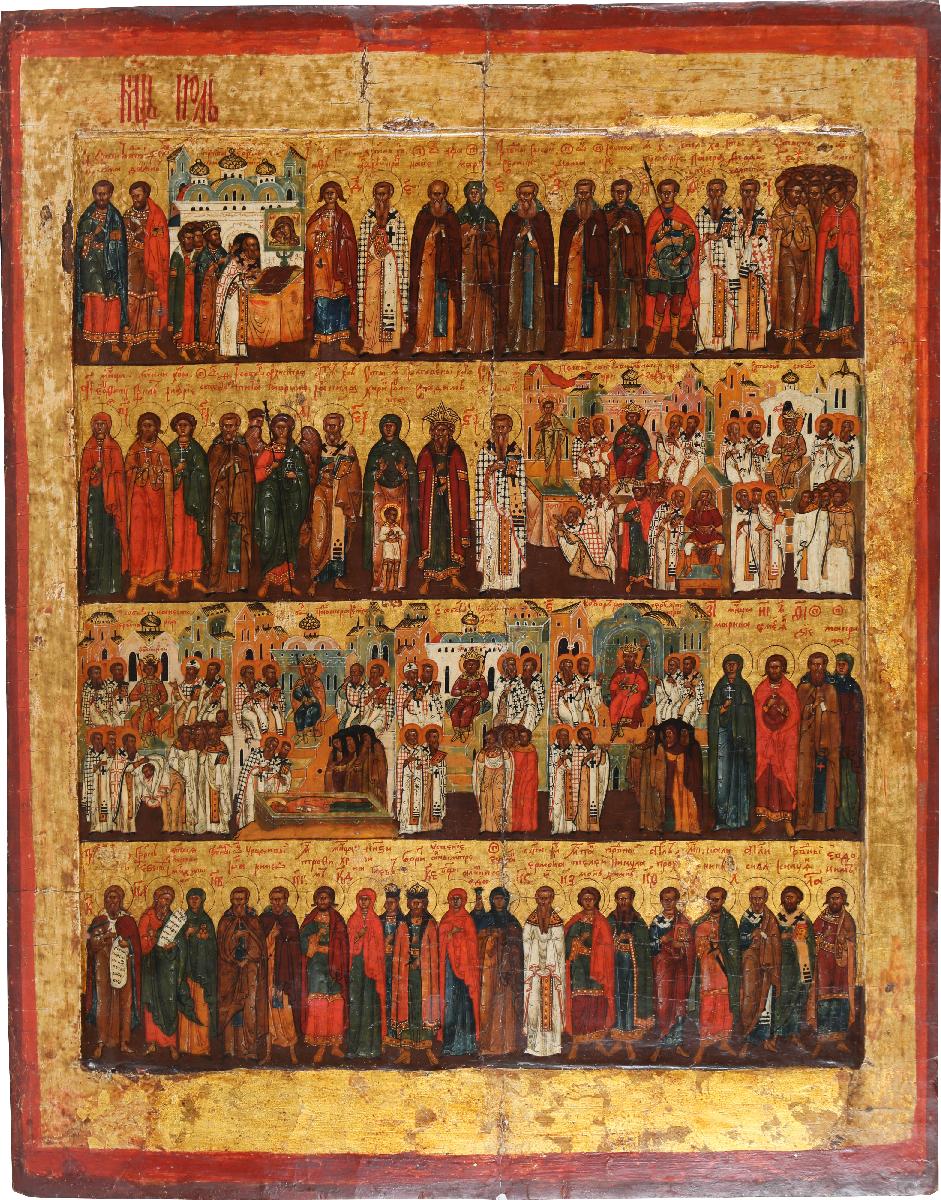
Three more councils in the East completed the list that the Eastern Orthodox churches call the Seven Ecumenical Councils. Each returned to the questions of this lesson.
| Council | Date | Called by | Main decision |
|---|---|---|---|
| Constantinople II (fifth ecumenical) | May to June 553 | Justinian I | Condemned the "Three Chapters": the person and works of Theodore of Mopsuestia, and certain writings of Theodoret of Cyrus and of Ibas of Edessa against Cyril, in an attempt to win back the anti-Chalcedonians. Read Chalcedon in Cyril's sense. Pope Vigilius, held in Constantinople, at first refused and later accepted the decisions. |
| Constantinople III (sixth ecumenical) | Nov. 680 to Sept. 681 | Constantine IV | Against the "one will" (monothelete) teaching of the 630s, taught "two natural wills and two natural operations" in Christ. Anathematized Sergius of Constantinople and others, "and with these ... Honorius who was some time Pope of Old Rome, because of what we found written by him to Sergius."43 |
| Nicaea II (seventh ecumenical) | Sept. to Oct. 787 | Empress Irene and Constantine VI | Restored icons after the first period of iconoclasm. Images are to be given "due salutation and honourable reverence (aspasmon kai timetiken proskunesin), not indeed that true worship of faith (latreian) which pertains alone to the divine nature," because "the honour which is paid to the image passes on to that which the image represents."43 |
The phrase "ecumenical council" means different things in different churches, and the count is part of each church's identity:
- The Church of the East accepts the first two councils, Nicaea (325) and Constantinople (381), and not Ephesus. It is often called the church of "two councils"; the Assyrian Church of the East's acceptance of Constantinople's creed is clear, though its historical relation to the council of 381 itself was indirect.
- The Oriental Orthodox accept three: Nicaea, Constantinople and Ephesus (431). They reject Chalcedon and the councils after it, while saying (1990) that Nicaea II's teaching on icons agrees with their own practice.30
- The Eastern Orthodox accept seven, from Nicaea I to Nicaea II. Some Orthodox theologians also give ecumenical standing to the councils of 879 to 880 and of 1341 to 1351 in Constantinople, but there is no official agreement on an eighth or ninth.
- The Catholic Church counts twenty-one, the seven plus fourteen held in the West, from Constantinople IV (869 to 870) to Vatican II (1962 to 1965), including Lateran IV, Florence and Trent.
- Protestant churches generally receive the doctrine of the first four councils as faithful to Scripture, and many Lutheran and Anglican bodies receive the first six in their Christology. The Lutheran Book of Concord (1580) opens with the Apostles', Nicene and Athanasian creeds. Article 21 of the Church of England's Thirty-Nine Articles (1571) teaches that general councils can err and that what they decree as necessary to salvation has authority only when it can be shown from Scripture. Many Reformed and Lutheran churches reject Nicaea II's teaching on images. Lesson 11 and lesson 12 take up the Reformers' use of the councils.

What the record shows and what it does not
- Documented fact: Cunctos populos is dated Feb. 27, 380, at Thessalonica and addressed to the people of Constantinople (Codex Theodosianus 16.1.2). The canons of Constantinople are dated July 9, 381. Cyril's council at Ephesus met on June 22, 431, before John of Antioch arrived, and John's council of forty-three bishops deposed Cyril days later. Leo's Tome is dated June 13, 449. Chalcedon adopted its definition on Oct. 22, 451. The papal legates protested canon 28, and Leo rejected it in letters of May 22, 452.
- Documented, with a gap: the text of the Niceno-Constantinopolitan Creed is first found in the acts of Chalcedon (451), not in any document from 381. Whether the council of 381 composed it, adopted an older creed, or only approved it is debated.
- A church's own claim or tradition: that the 381 council met in Hagia Irene; that 630 bishops attended Chalcedon; that Leo's Tome was recognized as Peter speaking (Catholic reading of the acclamation); that canon 28 is binding (Orthodox reading); that Dioscorus was deposed only for discipline, not heresy (Oriental Orthodox reading, which the wording of his sentence supports).
- Scholarly reading: that Nestorius and Cyril were closer in substance than either admitted (Chadwick, Grillmeier and others); that imperial force decided much of the outcome (MacCulloch and others); that the Chalcedonian definition sets boundaries rather than explaining the union (Pelikan); that the 1973, 1990 and 1994 statements show the old divisions were in large part about terms (the churches' own statements).
- Known mainly from opponents: the Macedonians (Pneumatomachi); Apollinaris (fragments, plus works passed under orthodox names); Eutyches (his answers in his accusers' acts). Nestorius is the exception: his own Bazaar of Heracleides survives in Syriac.
- Open questions: what Eutyches actually believed; whether the Greek "from two natures" or the Latin "in two natures" is the original wording of the definition (most scholars favor "in"); how many bishops attended Ephesus and Chalcedon (the lists are incomplete).
Claims checked
"Theodosius made Christianity the state religion in 380."
Partly supported. Cunctos populos (Feb. 27, 380) declared which Christians were "Catholic" and branded others heretics, and it was addressed to the people of Constantinople. It does not mention pagans. The laws that banned pagan sacrifice and temple worship came in 391 and 392 (Codex Theodosianus 16.10.10 to 16.10.12), and pagan worship continued in many places for generations after that.9 The 380 edict is best described as the law that made Nicene Christianity the standard of orthodoxy within the empire's church.
"The Nicene Creed said in churches today was written at Nicaea in 325."
Refuted, as stated. The creed most churches recite is the Niceno-Constantinopolitan Creed, attributed to the council of 381, with a long article on the Holy Spirit and none of the 325 anathemas. Its text is first attested in the acts of Chalcedon (451). Western churches add the filioque, which neither council wrote.16
"The Council of Ephesus turned Mary into a goddess."
Refuted. The title Theotokos at Ephesus is a statement about Christ: that the one born of Mary is God the Word. Cyril's first anathema gives the reason, "inasmuch as in the flesh she bore the Word of God made flesh," and the Formula of Reunion says Mary is Mother of God "because God the Word was incarnate and became Man."27 Nicaea II (787) later distinguished the "honourable reverence" given to images of saints and of Mary from the worship (latreia) due "alone to the divine nature."43 Whether later devotion to Mary went beyond the councils is a separate question that Protestants and Catholics answer differently.
"Nestorius taught that Christ was two persons."
Unresolved. The council of 431 understood him so, and Cyril accused him of teaching "two sons." Nestorius denied it in his own surviving writings, saying he confessed "in one Christ two natures without confusion" and "one ... in the sonship."20 Historians since the publication of the Bazaar of Heracleides (1910 Syriac, 1925 English) have been divided, many concluding that his language was inadequate to show a single subject but that he did not hold the "two sons" doctrine in the crude form condemned.
"The Coptic, Armenian and Ethiopian churches are monophysites who deny that Christ was fully human."
Refuted. These churches condemn Eutyches, confess Christ "fully consubstantial with us, perfect man with soul, body and mind" (1990 statement with the Eastern Orthodox), and reject the label "monophysite." Their formula "one nature of God the Word incarnate" means one united nature formed from two, not a humanity absorbed.30 39
"The Church of the East is the Nestorian Church, founded by Nestorius."
Refuted. The church existed in Persia long before Nestorius, accepted Nicaea in 410, and drew its theology mainly from Theodore of Mopsuestia and Diodore. It honors Nestorius but rejects the name, and in 1994 it signed with the Catholic Church a declaration affirming one person "without confusion or change, without division or separation."42 41
"The emperors decided doctrine, and the bishops only signed."
Partly supported. Emperors called all three councils, set their places and dates, sent officials to run them (Count Candidian at Ephesus, six imperial commissioners at Chalcedon), enforced their results by law and, in 449, enforced a council later rejected. Marcian pressed the bishops of 451 to write a definition many did not want. But the doctrines themselves came from long theological work by bishops and monks (Basil, the Gregories, Cyril, Leo), councils repeatedly defied emperors' wishes, and in 431 Theodosius II changed his position to follow the majority of bishops.33
"'Peter has spoken through Leo' shows that Chalcedon accepted papal infallibility."
Partly supported. The acclamation is in the acts, and the Roman legates' sentence on Dioscorus speaks of Leo acting "together with the thrice blessed and all-glorious Peter the Apostle, who is the rock and foundation of the Catholic Church."32 34 But the same acts show the bishops examining the Tome against Cyril before agreeing, and the same council passing canon 28 over the legates' protest. The doctrine of papal infallibility was defined in 1870 (Vatican I); the acts of 451 can be read as early support or as a council judging a papal letter, and both churches read them so.
"The 'Robber Synod' got its name from Leo the Great."
Supported. The phrase comes from Leo's letter to Pulcheria of July 20, 451, which calls the council of 449 "that meeting, not of judges but of robbers, at Ephesus."31
"Chalcedon settled the question of Christ's nature once and for all."
Refuted. It settled it for the churches that accepted it. In the East it began two centuries of conflict, led to councils in 553 and 680 to 681 that reinterpreted it, and left separate churches that still exist. Even within the Chalcedonian churches, the question of Christ's will reopened it in the 630s.43
Hard questions and answers
If emperors called and ran these councils, why should their decisions bind any church?
The churches that accept them give different answers. The Orthodox and Catholic answer is that a council's authority comes from its faithfulness to the apostolic faith and its reception by the whole church, not from the emperor; the evidence they cite is that the "Robber Synod" of 449 was called by an emperor as ecumenical and was rejected, while Constantinople (381), with no western bishops, was later received. Catholics add that papal confirmation is required. Protestants answer that councils bind only where they agree with Scripture, which is the position of the Thirty-Nine Articles and of Luther at Leipzig (1519, lesson 11). The historical record supports the point that reception, not the summons, decided which councils lasted.
Did Cyril play fair at Ephesus?
Not by the procedural standards of his own day, in the judgment of many historians. He opened the council before John of Antioch and the Roman legates arrived, over the protest of the emperor's official and some sixty-eight bishops, and he had Nestorius deposed in one day. His defenders reply that Nestorius refused three summonses, that Rome had already condemned him, that the legates confirmed the sentence on arrival, and that John's rival council was no fairer. Both councils deposed their opponents unheard. The lasting judgment of the churches turned on doctrine: Cyril's teaching was received, and Nestorius's language was not.
Is the whole Chalcedon dispute only about words?
The churches' own recent statements say that it was "in large part" about words (1994) and that both families "have used Christological terms in different ways" while holding "the same authentic Orthodox Christological faith" (1990).30 42 Words carried real fears: one side feared that "two natures" meant two sons, the other that "one nature" meant a swallowed humanity. Once both sides confess a full humanity and a single subject, much of the conflict reduces to whether "nature" means a concrete reality (Cyril's usage) or a set of properties (Leo's). But the councils' anathemas against persons honored as saints by the other side (Leo, Dioscorus, Severus, Theodore, Nestorius) remain a real obstacle, and the 1990 statement treats their lifting as unfinished work.
Why does the creed of 381 never call the Holy Spirit "God"?
Because it was written to win agreement as well as to teach. Gregory of Nazianzus said plainly in 380 that the Spirit is God and "Consubstantial."5 The creed instead gives the Spirit the biblical titles "Lord" and "Giver of life" and says he is "worshipped and glorified" with the Father and the Son. In ancient Christian thought only God may be worshipped, so the creed asserts the Spirit's divinity by the act of worship rather than the word. Most historians think the council hoped to bring moderate Macedonians along; the thirty-six Macedonian bishops left anyway.12
Does it matter that the earliest copy of the creed of 381 is from 451?
For the content, little: the teaching on the Spirit in the creed matches what Gregory, Basil and the council's own canons say in 380 and 381, and the council's letter to Theodosius says it issued "concise definitions."15 For the history of the text, it matters a great deal. It means the creed's exact wording reached the wider church through Chalcedon, so that the churches that reject Chalcedon still recite a creed whose text Chalcedon preserved. The Oriental Orthodox churches use it as the creed of the 150 Fathers; the Church of the East uses a related form.
Was the Church of the East condemned for what it actually believed?
No council of the Roman empire tried the Church of the East, which lay outside the empire and sent no bishops to Ephesus. What the councils condemned were Nestorius (431) and Theodore of Mopsuestia (553), both of whom that church honors. The 1994 declaration says the past divisions "were due in large part to misunderstandings," and it describes the Assyrian church's prayer to Mary as "Mother of Christ our God and Saviour" as a legitimate expression of the same faith.42 So the Catholic Church now holds that this church's actual faith about Christ is orthodox, while still accepting the council of 431.
Where to go next
For the council of 325, Arius and Athanasius, go back to lesson 04, Constantine and Nicaea. Augustine, who died while Ephesus was being summoned, and the Pelagian controversy that Ephesus also touched (its canons condemned the followers of Celestius) are in lesson 06. Eutyches and the monks who rioted at Ephesus and Chalcedon belong to the world described in lesson 07, Monks and the Desert Fathers. The rank of Constantinople, the filioque and the slow parting of Rome and the Greek East continue in lesson 08, Rome and the East: The Great Schism of 1054 and Orthodoxy in Plain Terms.
Learn more
- The Seven Ecumenical Councils (NPNF2-14) at CCEL: Every council text quoted in this lesson, with Percival's notes and the older commentators (Zonaras, Hefele, Bright).
- Nestorius, The Bazaar of Heracleides (1925): The condemned bishop's own defense, rediscovered in Syriac; read Book 1 part 3 for his account of the Theotokos dispute.
- Leo's Tome (Letter 28): Short and readable; the letter Chalcedon acclaimed.
- Second Agreed Statement, Chambesy 1990: How the Eastern and Oriental Orthodox now describe the old dispute, in ten numbered points.
- Common Christological Declaration (1994): The Catholic and Assyrian churches on Mary's titles and the one person of Christ.
- Gregory of Nazianzus, Fifth Theological Oration: The classic ancient case for the full divinity of the Holy Spirit.
Still being checked (15 items)
These points could not be confirmed against a primary source when this lesson was written and fact checked in October 2026. The text above states each one as uncertain.
- The exact date of Basil's death (Jan. 1, 379, by tradition, or late 378) is disputed; the lesson gives both.
- That the council of 381 met in the church of Holy Peace (Hagia Irene) is tradition, not confirmed by the council's own documents.
- The opening date of Ephesus as called by the emperor (Pentecost, June 7, 431), the number of Egyptian bishops with Cyril (about fifty), the petition of about sixty-eight bishops to wait for John, the arrival of the Roman legates about July 10, and the torchlight procession are given from standard histories and were not checked against a primary text in this task.
- The number of bishops at Ephesus (about 150 to more than 200) and at Chalcedon (520 to 630, per Schaff) varies by source; the subscription lists are incomplete.
- Nestorius's exile to the Great Oasis (435 or 436) and death (about 450) are standard dates, not checked against a primary source here.
- Cyril's role in the expulsion of Alexandria's Jews and in the murder of Hypatia (414 to 415) is disputed; the dates follow standard histories (Socrates, Church History 7.13 to 7.15), which were not reopened for this lesson.
- The interpretations attributed to Pelikan, Chadwick, Kelly, Grillmeier and MacCulloch are summaries from their well-known books, not quotations, and were not reopened page by page for this lesson.
- Brock's 1996 article is cited by title; the article itself was not opened, and its DOI link was not tested.
- The statement that some modern scholars think the Ancoratus creed was later conformed by copyists to the 381 text summarizes a scholarly debate; it was not verified from a specific page.
- Dates for the Armenian councils of Dvin (506 and 554), the Chaldean union with Rome (1552 to 1553), the Xi'an stele (781, recording 635), the Henotikon (482) and the Acacian schism (484 to 519) are from standard references, not reopened here.
- The Church of the East's formal relation to the council of 381 is stated cautiously; its liturgical creed was not checked word for word.
- The Missorium of Theodosius is commonly dated to 388 from its inscription; the caption gives no year because the Commons record says only '4th century'.
- Article 21 of the Thirty-Nine Articles is paraphrased, not quoted, because its text was not opened in this task.
- The month of Nestorius's second letter to Cyril within 430 was not confirmed; the lesson now gives the year only.
- Eutyches's date of death is unknown; Schaff (note 1626) says he probably died soon after 451, so the chart gives 'd. after 451'.
Notes
- First Council of Constantinople (381), canons 1 to 5, with their heading dated 'on the VII of the Ides of July' in the consulship of Eucherius and Evagrius, in Henry R. Percival, tr. and ed., The Seven Ecumenical Councils, Nicene and Post-Nicene Fathers, Second Series, vol. 14, ed. Philip Schaff and Henry Wace (New York: Charles Scribner's Sons; Edinburgh: T&T Clark, 1900); New Advent edition, revised by Kevin Knight (retrieved Oct. 28, 2026). Read it online. ↩
- Basil of Caesarea, On the Holy Spirit (De Spiritu Sancto) 1.3 and 12.28, tr. Blomfield Jackson, NPNF Second Series, vol. 8 (1895); New Advent edition (retrieved Oct. 28, 2026). Read it online. ↩
- Jaroslav Pelikan, The Christian Tradition: A History of the Development of Doctrine, vol. 1, The Emergence of the Catholic Tradition (100-600) (Chicago: University of Chicago Press, 1971), chapters on the Trinity and on Christ. Interpretation summarized, not quoted. Read it online. ↩
- Basil of Caesarea, Letter 236 (to Amphilochius), section 6, tr. Blomfield Jackson, NPNF Second Series, vol. 8 (1895); New Advent edition (retrieved Oct. 28, 2026). Read it online. ↩
- Gregory of Nazianzus, Oration 31 (Fifth Theological Oration, On the Holy Spirit), sections 10 and 26, tr. Charles Gordon Browne and James Edward Swallow, NPNF Second Series, vol. 7 (1894); New Advent edition (retrieved Oct. 28, 2026). Read it online. ↩
- Gregory of Nyssa, On 'Not Three Gods', to Ablabius, tr. H. A. Wilson, NPNF Second Series, vol. 5 (1893); New Advent edition (retrieved Oct. 28, 2026). Read it online. ↩
- Codex Theodosianus 16.1.3 (issued at Heraclea, 'dat. iii kal. aug.', July 30, 381), Latin text from the Mommsen edition as given by The Latin Library (retrieved Oct. 28, 2026). Read it online. ↩
- Henry Chadwick, The Early Church (Harmondsworth: Penguin, 1967; rev. 1993), chapters on the Trinity and on the Christological councils; J. N. D. Kelly, Early Christian Doctrines (London: A. & C. Black, 1958); Aloys Grillmeier, Christ in Christian Tradition, vol. 1 (2nd ed., 1975). Interpretations summarized, not quoted. Read it online. ↩
- Codex Theodosianus, book 16 (Mommsen edition), Latin text at The Latin Library: 16.1.2 (Cunctos populos, 'dat. iii kal. mar. thessalonicae', Feb. 27, 380), 16.5.6 (Jan. 10, 381), 16.10.10 to 16.10.12 (Feb. 24, 391; June 16, 391; Nov. 8, 392), 16.5.66 (Aug. 3, 435, against the followers and books of Nestorius) (retrieved Oct. 28, 2026). Read it online. ↩
- Theodosian Code 16.1.2, tr. Henry Bettenson, Documents of the Christian Church (London: Oxford University Press, 1943), p. 31, as given in the Internet Medieval Sourcebook, ed. Paul Halsall, Fordham University (short extract) (retrieved Oct. 28, 2026). Read it online. ↩
- Diarmaid MacCulloch, Christianity: The First Three Thousand Years (New York: Viking, 2010; UK title A History of Christianity, 2009), chapters on the imperial church and the Christological councils. Interpretation summarized, not quoted. Read it online. ↩
- Socrates Scholasticus, Church History 5.8, tr. A. C. Zenos, NPNF Second Series, vol. 2 (1890); New Advent edition (retrieved Oct. 28, 2026). Read it online. ↩
- Gregory of Nazianzus, Oration 42, The Last Farewell in the Presence of the One Hundred and Fifty Bishops, tr. Browne and Swallow, NPNF Second Series, vol. 7 (1894); New Advent edition (retrieved Oct. 28, 2026). Read it online. ↩
- Gregory of Nazianzus, Letter 124, with the editors' notes on his resignation in 381 and refusal to attend later synods, tr. Browne and Swallow, NPNF Second Series, vol. 7 (1894); New Advent edition, Letters, Division III (retrieved Oct. 28, 2026). Read it online. ↩
- First Council of Constantinople (381), the Creed and the Letter of the Synod to the Emperor Theodosius, in Henry R. Percival, tr. and ed., The Seven Ecumenical Councils, Nicene and Post-Nicene Fathers, Second Series, vol. 14, ed. Philip Schaff and Henry Wace (New York: Charles Scribner's Sons; Edinburgh: T&T Clark, 1900); New Advent edition, checked against the 1900 printing in the CCEL full text (https://ccel.org/ccel/schaff/npnf214), whose wording ("sitteth", "proceedeth", "spake") is quoted here; the New Advent revision modernizes those three verbs (retrieved Oct. 28, 2026). Read it online. ↩
- Henry R. Percival, tr. and ed., The Seven Ecumenical Councils, Nicene and Post-Nicene Fathers, Second Series, vol. 14, ed. Philip Schaff and Henry Wace (New York: Charles Scribner's Sons; Edinburgh: T&T Clark, 1900), introduction to the First Council of Constantinople (points 1 to 11 and note 205, quoting Hort and Harnack) and 'The Holy Creed Which the 150 Holy Fathers Set Forth' with its source note '(Found in all the Collections in the Acts of the Council of Chalcedon)' and the introductory note on Tillemont, Hefele, Lipsius and the Ancoratus of Epiphanius; CCEL full text (retrieved Oct. 28, 2026). Read it online. ↩
- Henry R. Percival, tr. and ed., The Seven Ecumenical Councils, Nicene and Post-Nicene Fathers, Second Series, vol. 14, ed. Philip Schaff and Henry Wace (New York: Charles Scribner's Sons; Edinburgh: T&T Clark, 1900), Constantinople canon 3 ('The Bishop of Constantinople, however, shall have the prerogative of honour after the Bishop of Rome; because Constantinople is New Rome') with the notes of Zonaras and Hefele, and the Excursus on the Later History of Canon XXVIII of Chalcedon; CCEL full text (retrieved Oct. 28, 2026). Read it online. ↩
- Philip Schaff, History of the Christian Church, vol. 3, Nicene and Post-Nicene Christianity, A.D. 311-600 (1867; rev. 1884), Christian Classics Ethereal Library edition, section 136, The Apollinarian Heresy, a.d. 362-381 (retrieved Oct. 28, 2026). Read it online. ↩
- Gregory of Nazianzus, Letter 101, To Cledonius the Priest Against Apollinarius, tr. Browne and Swallow, NPNF Second Series, vol. 7 (1894); New Advent edition, Letters, Division I (retrieved Oct. 28, 2026). Read it online. ↩
- Nestorius, The Bazaar of Heracleides, newly translated from the Syriac by G. R. Driver and Leonard Hodgson (Oxford: Clarendon Press, 1925), introduction pp. ix to xi (history of the manuscript: Syriac translation about 535, copy of 1889 for the American mission at Urmia, Bedjan's edition 1910), Book 1 part 3 pp. 99 to 100, and Book 2 part 1 p. 296; online at tertullian.org (Roger Pearse) (retrieved Oct. 28, 2026). Read it online. ↩
- Nestorius, Second Letter to Cyril of Alexandria (430), Greek text from Migne, Patrologia Graeca 77, cols. 49 ff., as given at Early Church Texts; English rendering of the quoted clause made for this lesson (retrieved Oct. 28, 2026). Read it online. ↩
- Cyril of Alexandria, Twelve Anathematisms (Third Letter to Nestorius, Nov. 430), anathema 1, and Nestorius, Counter-Anathematisms (Latin of Marius Mercator), anathema 1, tr. Percival, in Henry R. Percival, tr. and ed., The Seven Ecumenical Councils, Nicene and Post-Nicene Fathers, Second Series, vol. 14, ed. Philip Schaff and Henry Wace (New York: Charles Scribner's Sons; Edinburgh: T&T Clark, 1900); CCEL full text (retrieved Oct. 28, 2026). Read it online. ↩
- Jacques-Benigne Bossuet, Defensio Declarationis Cleri Gallicani, book 7, ch. 9 ff., abridged, tr. T. W. Allies, printed as the Historical Introduction to the Council of Ephesus in Henry R. Percival, tr. and ed., The Seven Ecumenical Councils, Nicene and Post-Nicene Fathers, Second Series, vol. 14, ed. Philip Schaff and Henry Wace (New York: Charles Scribner's Sons; Edinburgh: T&T Clark, 1900); CCEL full text (retrieved Oct. 28, 2026). Read it online. ↩
- Council of Ephesus (431), Extracts from the Acts, Session I (letter of Capreolus of Carthage) and Decree of the Council Against Nestorius, tr. Percival, in Henry R. Percival, tr. and ed., The Seven Ecumenical Councils, Nicene and Post-Nicene Fathers, Second Series, vol. 14, ed. Philip Schaff and Henry Wace (New York: Charles Scribner's Sons; Edinburgh: T&T Clark, 1900); CCEL full text (retrieved Oct. 28, 2026). Read it online. ↩
- Karl Joseph von Hefele, History of the Councils, vol. 3, p. 55 ff., as reproduced in the Excursus on the Conciliabulum of John of Antioch, in Henry R. Percival, tr. and ed., The Seven Ecumenical Councils, Nicene and Post-Nicene Fathers, Second Series, vol. 14, ed. Philip Schaff and Henry Wace (New York: Charles Scribner's Sons; Edinburgh: T&T Clark, 1900); CCEL full text (retrieved Oct. 28, 2026). Read it online. ↩
- Council of Ephesus (431), canon 7, tr. Percival, in Henry R. Percival, tr. and ed., The Seven Ecumenical Councils, Nicene and Post-Nicene Fathers, Second Series, vol. 14, ed. Philip Schaff and Henry Wace (New York: Charles Scribner's Sons; Edinburgh: T&T Clark, 1900); CCEL full text (retrieved Oct. 28, 2026). Read it online. ↩
- Cyril of Alexandria, Letter to John of Antioch (433, 'Let the heavens rejoice'), quoting the Formula of Reunion, tr. Percival, in Henry R. Percival, tr. and ed., The Seven Ecumenical Councils, Nicene and Post-Nicene Fathers, Second Series, vol. 14, ed. Philip Schaff and Henry Wace (New York: Charles Scribner's Sons; Edinburgh: T&T Clark, 1900); CCEL full text (retrieved Oct. 28, 2026). Read it online. ↩
- Philip Schaff, History of the Christian Church, vol. 3, Nicene and Post-Nicene Christianity, A.D. 311-600 (1867; rev. 1884), Christian Classics Ethereal Library edition, sections 138 and 140 (the compromise of 433; Eutyches, the synod of 448 and the council of 449) (retrieved Oct. 28, 2026). Read it online. ↩
- Leo the Great, Letter 28, to Flavian, 'commonly called the Tome', dated June 13, 449, chapters 1, 3, 4, 5 and 6, tr. Charles Lett Feltoe, NPNF Second Series, vol. 12 (1895); New Advent edition (retrieved Oct. 28, 2026). Read it online. ↩
- Joint Commission of the Theological Dialogue between the Orthodox Church and the Oriental Orthodox Churches, Second Agreed Statement, Chambesy, Geneva, Sept. 23 to 28, 1990, points 1, 4, 7, 8, 9 and 10, as published by the Syriac Orthodox Patriarchate (retrieved Oct. 28, 2026). Read it online. ↩
- Leo the Great, Letter 95, to Pulcheria Augusta, chapter 2, dated July 20, 451, tr. Feltoe, NPNF Second Series, vol. 12 (1895); New Advent edition (retrieved Oct. 28, 2026). Read it online. ↩
- Council of Chalcedon (451), Session III: the Roman legates' sentence on Dioscorus and the Condemnation Sent to Dioscorus (deposed on the thirteenth day of October for refusing three summonses and other charges), tr. Percival, in Henry R. Percival, tr. and ed., The Seven Ecumenical Councils, Nicene and Post-Nicene Fathers, Second Series, vol. 14, ed. Philip Schaff and Henry Wace (New York: Charles Scribner's Sons; Edinburgh: T&T Clark, 1900); CCEL full text (retrieved Oct. 28, 2026). Read it online. ↩
- Philip Schaff, History of the Christian Church, vol. 3, Nicene and Post-Nicene Christianity, A.D. 311-600 (1867; rev. 1884), Christian Classics Ethereal Library edition, section 141, The Ecumenical Council of Chalcedon, A.D. 451, with notes 1612, 1613, 1621 and 1622 (retrieved Oct. 28, 2026). Read it online. ↩
- Council of Chalcedon (451), Extracts from the Acts, Session II (acclamations after the reading of Leo's Tome), tr. Percival, in Henry R. Percival, tr. and ed., The Seven Ecumenical Councils, Nicene and Post-Nicene Fathers, Second Series, vol. 14, ed. Philip Schaff and Henry Wace (New York: Charles Scribner's Sons; Edinburgh: T&T Clark, 1900); CCEL full text (retrieved Oct. 28, 2026). Read it online. ↩
- Council of Chalcedon (451), The Definition of Faith (Labbe and Cossart, Concilia, vol. 4, col. 562), tr. Percival, in Henry R. Percival, tr. and ed., The Seven Ecumenical Councils, Nicene and Post-Nicene Fathers, Second Series, vol. 14, ed. Philip Schaff and Henry Wace (New York: Charles Scribner's Sons; Edinburgh: T&T Clark, 1900); CCEL full text (retrieved Oct. 28, 2026). Read it online. ↩
- Council of Chalcedon (451), canon 28, tr. Percival, in Henry R. Percival, tr. and ed., The Seven Ecumenical Councils, Nicene and Post-Nicene Fathers, Second Series, vol. 14, ed. Philip Schaff and Henry Wace (New York: Charles Scribner's Sons; Edinburgh: T&T Clark, 1900); CCEL full text (retrieved Oct. 28, 2026). Read it online. ↩
- Council of Chalcedon (451), Extracts from the Acts, Session XVI (protest of Paschasinus and reply of Aetius), tr. Percival, in Henry R. Percival, tr. and ed., The Seven Ecumenical Councils, Nicene and Post-Nicene Fathers, Second Series, vol. 14, ed. Philip Schaff and Henry Wace (New York: Charles Scribner's Sons; Edinburgh: T&T Clark, 1900); CCEL full text (retrieved Oct. 28, 2026). Read it online. ↩
- Leo the Great, Letter 105, to Pulcheria, and Letter 106, to Anatolius, both dated May 22, 452, tr. Feltoe, NPNF Second Series, vol. 12 (1895); New Advent editions (Letter 106 at https://www.newadvent.org/fathers/3604106.htm) (retrieved Oct. 28, 2026). Read it online. ↩
- Pope Shenouda III, The Nature of Christ, chapter 'The Orthodox Concept', online at St-Takla.org (Coptic Orthodox) (retrieved Oct. 28, 2026). Read it online. ↩
- Common Declaration of Pope Paul VI and of the Pope of Alexandria Shenouda III, May 10, 1973, Holy See (retrieved Oct. 28, 2026). Read it online. ↩
- Sebastian P. Brock, 'The "Nestorian" Church: A Lamentable Misnomer,' Bulletin of the John Rylands University Library of Manchester 78, no. 3 (1996): 23-35. Cited by title for the scholarly reading; not opened for this lesson. Read it online. ↩
- Common Christological Declaration between the Catholic Church and the Assyrian Church of the East, signed by Pope John Paul II and Mar Dinkha IV, Nov. 11, 1994, Holy See (retrieved Oct. 28, 2026). Read it online. ↩
- Third Council of Constantinople (680 to 681), Definition of Faith and Sentence against the Monothelites (anathema of Honorius), and Second Council of Nicaea (787), Decree, tr. Percival, in Henry R. Percival, tr. and ed., The Seven Ecumenical Councils, Nicene and Post-Nicene Fathers, Second Series, vol. 14, ed. Philip Schaff and Henry Wace (New York: Charles Scribner's Sons; Edinburgh: T&T Clark, 1900); CCEL full text (retrieved Oct. 28, 2026). Read it online. ↩
Check yourself
1. What is the date of the edict Cunctos populos (Codex Theodosianus 16.1.2)?
The Latin text dates it 'III Kal. Mar.' at Thessalonica in the consulship of Gratian (5th) and Theodosius (1st), that is Feb. 27, 380. July 9, 381 is the date of the canons of Constantinople.
2. Where is the exact text of the Niceno-Constantinopolitan Creed first found?
No document from 381 preserves the creed; it first appears in the acts of Chalcedon, and Percival notes it was not read or mentioned at Ephesus, so far as the acts record.
3. How does the creed of 381 describe the Holy Spirit?
The creed uses biblical titles and the language of worship; it does not use homoousios of the Spirit, and the filioque was added later in the West.
4. What did canon 3 of Constantinople (381) decree?
Canon 3 gives the bishop of Constantinople 'the prerogative of honour after the Bishop of Rome; because Constantinople is New Rome', moving it ahead of Alexandria and Antioch.
5. Which title did Nestorius propose for Mary as 'more accurate' than Theotokos?
In his second letter to Cyril he wrote that by the more accurate title the Virgin should be called Christotokos, not Theotokos.
6. What happened at Ephesus in June 431 when John of Antioch arrived?
Cyril's council had met on June 22; John arrived on June 26 or 27 and his assembly deposed Cyril and Memnon. Peace came only with the Formula of Reunion of 433.
7. Who called the council of 449 a meeting 'not of judges but of robbers'?
Leo used the phrase in his letter to Pulcheria of July 20, 451, which is the origin of the name 'Robber Synod' (Latrocinium).
8. Which churches accept only the first three ecumenical councils?
The Oriental Orthodox accept Nicaea, Constantinople and Ephesus and reject Chalcedon; the Eastern Orthodox count seven and the Catholic Church twenty-one.
Terms in this lesson
- Cappadocian Fathers
- Basil of Caesarea, Gregory of Nazianzus and Gregory of Nyssa, fourth-century bishops from Cappadocia whose writings shaped the doctrine of the Trinity and of the Holy Spirit.
- Ousia and hypostasis
- Greek terms that Basil distinguished as 'the general and the particular': God is one ousia (essence) in three hypostases (persons).
- Pneumatomachi
- 'Fighters against the Spirit', also called Macedonians: fourth-century Christians who accepted the Son's divinity but denied the Spirit's equal divinity; known mainly from their opponents.
- Cunctos populos
- The edict of Feb. 27, 380 (Codex Theodosianus 16.1.2) defining Catholic Christians as those holding the faith of Damasus of Rome and Peter of Alexandria in the one deity of Father, Son and Holy Spirit.
- Niceno-Constantinopolitan Creed
- The creed attributed to the council of 381, recited today in most churches as 'the Nicene Creed'; its text is first attested at Chalcedon in 451.
- Apollinarianism
- The teaching of Apollinaris of Laodicea that the divine Word took the place of the human mind in Christ; condemned in 381.
- Theotokos
- 'God-bearer' or 'Mother of God', a title for Mary affirmed at Ephesus (431) and Chalcedon (451) as a statement that the one born of her is God the Word.
- Christotokos
- 'Christ-bearer', the title Nestorius proposed as more accurate than Theotokos.
- Formula of Reunion
- The statement of 433, accepted by Cyril and John of Antioch, confessing 'a union of two natures' and Mary as Mother of God; it ended the schism after Ephesus.
- Tome of Leo
- Pope Leo I's letter to Flavian of June 13, 449, teaching two natures in one person; read and acclaimed at Chalcedon.
- Latrocinium (Robber Synod)
- The second council of Ephesus (449), presided over by Dioscorus, which restored Eutyches; named from Leo's phrase 'not of judges but of robbers'.
- Chalcedonian definition
- The statement of Oct. 22, 451 that Christ is one person 'in two natures, unconfusedly, immutably, indivisibly, inseparably' (Percival's translation).
- Miaphysite
- The Oriental Orthodox self-description, from Cyril's 'one nature (mia physis) of God the Word incarnate': one united divine-human nature, without mixture; distinct from the Eutychian view called monophysite.
- Church of the East
- The Syriac church of the Persian Empire, which accepted Nicaea in 410 but not Ephesus, honors Theodore and Nestorius, and rejects the name 'Nestorian'; today chiefly the Assyrian Church of the East.
Sources
- The Seven Ecumenical Councils (NPNF Second Series, vol. 14), ed. Henry R. Percival, full text (1900) checked 2026-10
- First Council of Constantinople (381): creed, letter and canons (New Advent) (381; tr. 1900) checked 2026-10
- Codex Theodosianus, book 16 (Latin text, The Latin Library) (438 (laws of 380 to 435)) checked 2026-10
- Theodosian Code 16.1.2, tr. Bettenson, Internet Medieval Sourcebook (380; tr. 1943) checked 2026-10
- Basil, On the Holy Spirit (NPNF2-8) (about 375) checked 2026-10
- Basil, Letter 236 (NPNF2-8) (about 376) checked 2026-10
- Gregory of Nazianzus, Oration 31 (NPNF2-7) (380) checked 2026-10
- Gregory of Nazianzus, Oration 42 (NPNF2-7) (381) checked 2026-10
- Gregory of Nazianzus, Letters, Division I (Letter 101 to Cledonius) (about 382) checked 2026-10
- Gregory of Nazianzus, Letters, Division III (Letter 124) (after 381) checked 2026-10
- Gregory of Nyssa, On 'Not Three Gods' (NPNF2-5) (about 375 to 390) checked 2026-10
- Socrates Scholasticus, Church History, Book V (NPNF2-2) (about 439) checked 2026-10
- Nestorius, Second Letter to Cyril (Greek, PG 77) (430) checked 2026-10
- Nestorius, The Bazaar of Heracleides, tr. Driver and Hodgson (1925) (about 450; tr. 1925) checked 2026-10
- Leo the Great, Letter 28 (the Tome) (NPNF2-12) (June 13, 449) checked 2026-10
- Leo the Great, Letter 95 to Pulcheria (NPNF2-12) (July 20, 451) checked 2026-10
- Leo the Great, Letter 105 to Pulcheria (NPNF2-12) (May 22, 452) checked 2026-10
- Leo the Great, Letter 106 to Anatolius (NPNF2-12) (May 22, 452) checked 2026-10
- Philip Schaff, History of the Christian Church, vol. 3 (1867; rev. 1884) checked 2026-10
- Common Declaration of Paul VI and Shenouda III (May 10, 1973) checked 2026-10
- Common Christological Declaration, Catholic Church and Assyrian Church of the East (Nov. 11, 1994) checked 2026-10
- Second Agreed Statement, Orthodox and Oriental Orthodox Joint Commission (Chambesy) (Sept. 23 to 28, 1990) checked 2026-10
- Pope Shenouda III, The Nature of Christ (St-Takla.org) (undated online edition) checked 2026-10
- Jaroslav Pelikan, The Emergence of the Catholic Tradition (100-600) (1971) checked 2026-10
- Henry Chadwick, The Early Church (1967) checked 2026-10
- Diarmaid MacCulloch, Christianity: The First Three Thousand Years (2009) checked 2026-10
- Sebastian Brock, 'The Nestorian Church: A Lamentable Misnomer' (1996) checked 2026-10