Lesson 1 of 14 · about 55 minutes · Updated November 12, 2026
What Missions Are: Paul, Patrick, the Church of the East and the Moravians
You'll be able to
- Explain where the words mission, missionary and apostle come from, and quote Matthew 28:18 to 20 and Acts 1:8 in the King James Version.
- Trace Paul's three journeys and the voyage to Rome on a map, give the estimated dates with their sources, and state Roland Allen's three rules about money.
- Separate what Patrick wrote in his Confession and Letter from the later legends (snakes, shamrock) and give both schools of his dates.
- Describe the Church of the East's mission to Tang China from the Xi'an stele and explain how Gregory's letter of 601 and Ricci's Chinese rites raised the same question of accommodation.
- Tell the story of the first Moravian missionaries to St. Thomas from their own letters, including the mission's ownership of enslaved people and the Gnadenhutten massacre of 1782, with the differing death counts.
- Rate common claims about early missions (Thomas in India, the Moravians selling themselves as slaves, Carey and the Moravian magazine) using the evidence.
Start here: the short version
The word "mission" comes from the Latin missio, "a sending," and "apostle" comes from the Greek apostolos, "messenger" or "envoy."12 Christians trace the practice to the command at the end of Matthew's Gospel, "Go ye therefore, and teach all nations" (Matthew 28:19, King James Version), and to the promise in Acts 1:8 that the disciples would be witnesses "unto the uttermost part of the earth."34 This lesson follows that idea for its first eighteen centuries: Paul's journeys around the eastern Mediterranean (about 45 to 57); Patrick in Ireland in the fifth century, known from his own two short writings; the Irish monks Columba and Columbanus; Gregory the Great's mission to the English in 597 and his famous letter about pagan temples; Boniface and the oak at Geismar; Cyril and Methodius among the Slavs; the Church of the East, whose monk Alopen reached the Chinese capital in 635 and whose stone monument of 781 still stands; the Catholic missions after 1492 in outline; and the Moravians of Herrnhut, who in 1732 sent two craftsmen to preach to enslaved Africans on St. Thomas and whose Native American converts in Ohio, about ninety of them by the Moravian count, were killed in the Gnadenhutten massacre of March 8, 1782.567 Each section separates what the sources say from what later legend added, and the "Claims checked" section rates the popular stories, from Thomas in India to Patrick and the snakes.
The words: mission, missionary and apostle
The Latin noun missio meant "a letting go, sending away, a sending, despatching" in classical usage, and it could also mean the discharge of a soldier or the release of a captive.1 The Greek apostolos, from the verb "to send away," meant a "messenger, ambassador, envoy" in Herodotus, and in the Greek Old Testament and the New Testament a "messenger from God," "esp. of the Apostles."2 The English words "mission" and "missionary," and "apostle" from the Greek, therefore carry the same root idea: someone is sent by someone else for a purpose.
The New Testament gives the sending in several forms. The King James Version (1611, public domain) renders the end of Matthew's Gospel this way:
"And Jesus came and spake unto them, saying, All power is given unto me in heaven and in earth. Go ye therefore, and teach all nations, baptizing them in the name of the Father, and of the Son, and of the Holy Ghost: Teaching them to observe all things whatsoever I have commanded you: and, lo, I am with you alway, even unto the end of the world. Amen." (Matthew 28:18 to 20, KJV)3
The same promise in Acts names a geography that moves outward from the city: "But ye shall receive power, after that the Holy Ghost is come upon you: and ye shall be witnesses unto me both in Jerusalem, and in all Judaea, and in Samaria, and unto the uttermost part of the earth" (Acts 1:8, KJV).4 John's Gospel puts the sending in the language of the Father sending the Son: "as my Father hath sent me, even so send I you" (John 20:21, KJV).8 Paul makes the argument from the hearer's side: "And how shall they preach, except they be sent?" (Romans 10:15, KJV).9 Later Protestant writers named Matthew 28:18 to 20 "the Great Commission"; the phrase is a label and does not appear in the text itself.
For most of church history these passages were read without the word "mission" being used the way it is used today. The specialist vocabulary grew up in the Catholic Church of the sixteenth and seventeenth centuries. In 1622 Pope Gregory XV, by the bull Inscrutabili Divinae of June 22, made a standing body of cardinals into the Sacred Congregation de propaganda fide, "for the propagation of the faith," which then directed Catholic work in lands without a settled Catholic hierarchy.10 The South African missiologist David Bosch, in Transforming Mission (1991), argued that the word "mission" in its modern sense first came into use among the Jesuits in the sixteenth century, after long use as a term for the sending of the Son and the Spirit within the Trinity; that reading is his, and it is given here as his.11
The modern Protestant use, with "missionary societies" and "foreign missions," dates from the 1790s and is the subject of lessons 03 and 04 of this module (The Great Awakening and the First Mission Societies; William Carey, the Enquiry of 1792 and the Modern Missions Era). This lesson covers what came before.
Paul and the first journeys
Module 79 tells the story of the first-century church in outline (Church History, Part A, lesson 01: The First Century). Here the question is narrower: what did Paul do that later missionaries looked to as a model, and what does the record of Acts and the letters actually say?
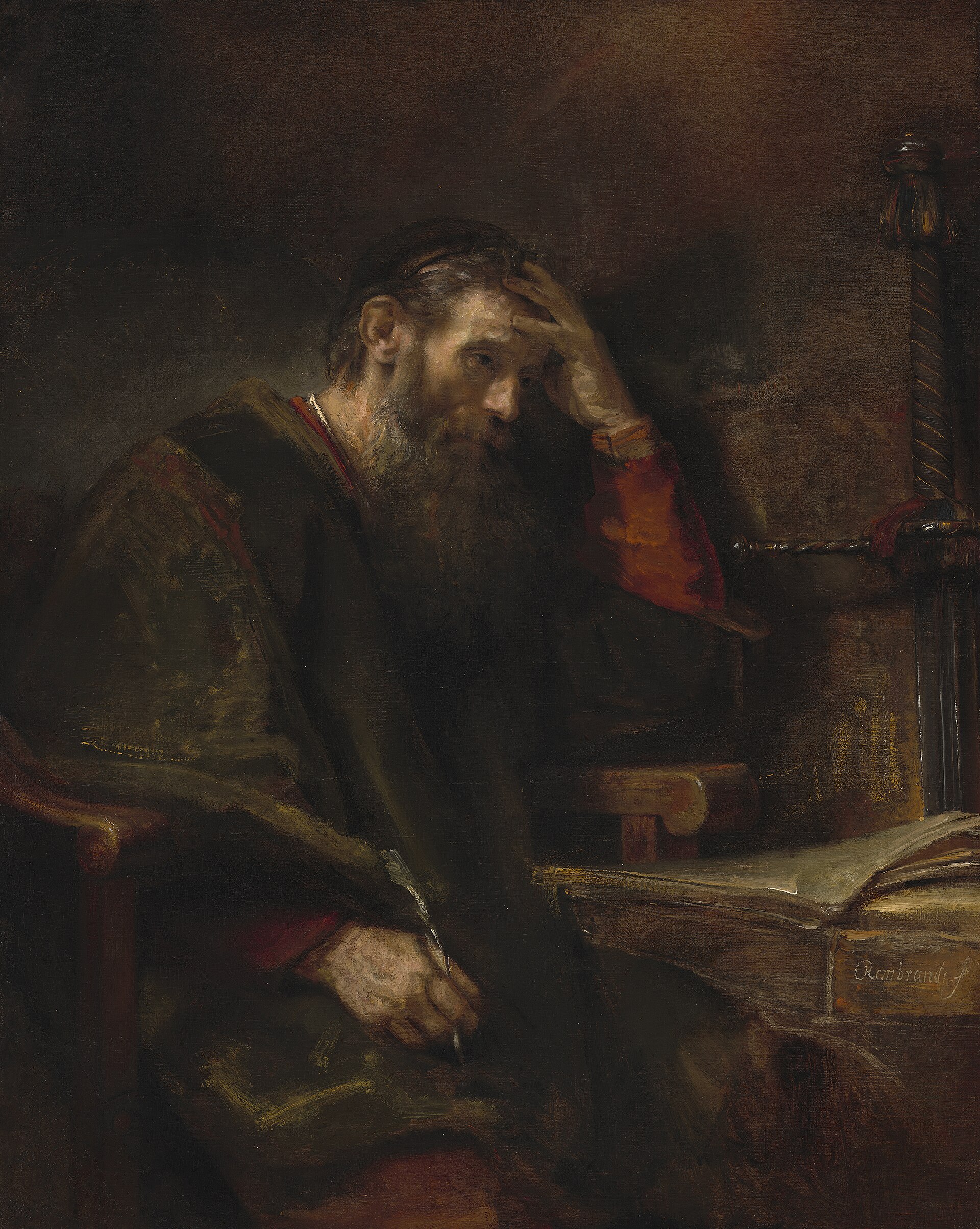

Antioch, the sending church
Acts places the start of the outward movement at Antioch in Syria, the city where "the disciples were called Christians first" (Acts 11:26, KJV).12 There, according to Acts 13, the church's leaders were fasting when "the Holy Ghost said, Separate me Barnabas and Saul for the work whereunto I have called them. And when they had fasted and prayed, and laid their hands on them, they sent them away. So they, being sent forth by the Holy Ghost, departed unto Seleucia; and from thence they sailed to Cyprus" (Acts 13:2 to 4, KJV).13 The passage gives the pattern later missions copied: a local church, a call understood as coming from God, a laying on of hands and a sending.
The three journeys and the voyage to Rome
Acts does not number Paul's travels. The familiar division into "three missionary journeys" and a voyage to Rome is a convenience of later readers, built from the narrative of Acts 13 to 28. The dates are estimates. The Catholic Encyclopedia article on Paul by Ferdinand Prat (1911), using the reign of Nero and the proconsulship of Gallio in Achaia "about 53," gave this scheme: conversion about 35; "first mission, 45-49"; "second mission, 50-53"; "third mission, 53-57"; arrest in Jerusalem 57; departure for Rome 59; captivity at Rome 60 to 62; martyrdom 67.5 Roland Allen, following the archaeologist William Ramsay, put the founding work between 47 and 57: "Before 47 a.d. there were no Churches in these provinces; in 57 a.d. St. Paul could speak as if his work there was done."14 Modern scholars move each date by a year or two in either direction; none of them is fixed by an ancient record that names the year.
- First journey (Acts 13 to 14; about 45 to 49 in Prat's scheme): Antioch, Seleucia, Cyprus (Salamis and Paphos), then the cities of southern Galatia (Pisidian Antioch, Iconium, Lystra, Derbe), and back. On the return, "when they had ordained them elders in every church, and had prayed with fasting, they commended them to the Lord" (Acts 14:23, KJV).15
- Second journey (Acts 15:36 to 18:22; about 50 to 53): Paul and Silas revisit Galatia; at Troas comes the night vision in which "There stood a man of Macedonia, and prayed him, saying, Come over into Macedonia, and help us" (Acts 16:9, KJV).16 Philippi, Thessalonica and Berea follow; at Athens Paul tells the council that he found "an altar with this inscription, TO THE UNKNOWN GOD" (Acts 17:23, KJV); at Corinth "he continued there a year and six months" (Acts 18:11, KJV).1718
- Third journey (Acts 18:23 to 21:26; about 53 to 57): Galatia and Phrygia again, then Ephesus, where "this continued by the space of two years; so that all they which dwelt in Asia heard the word of the Lord Jesus, both Jews and Greeks" (Acts 19:10, KJV), then Macedonia and Greece, and the last trip to Jerusalem with a collection of money from the Gentile churches.19
- The voyage to Rome (Acts 27 to 28; about 59 to 60): a prisoner's voyage by way of Crete and the shipwreck on Malta. Acts ends with Paul in Rome: "And Paul dwelt two whole years in his own hired house, and received all that came in unto him, Preaching the kingdom of God, and teaching those things which concern the Lord Jesus Christ, with all confidence, no man forbidding him" (Acts 28:30 to 31, KJV).20
Paul's own summary of the work, written to the church in Rome before he had been there, adds a principle later missionaries quoted often: "from Jerusalem, and round about unto Illyricum, I have fully preached the gospel of Christ. Yea, so have I strived to preach the gospel, not where Christ was named, lest I should build upon another man's foundation" (Romans 15:19 to 20, KJV).21 The aim of preaching where no church yet existed became, eighteen centuries later, the basis of the "unreached peoples" idea discussed in lesson 13 (Missions Today).
Paul's method as Roland Allen read him (1912)
The most influential modern book on Paul as a missionary model was written by an Anglican who had served in north China. Roland Allen's Missionary Methods: St. Paul's or Ours? appeared in London in 1912 in the "Library of Historic Theology."14 It opens: "In little more than ten years St. Paul established the Church in four provinces of the Empire, Galatia, Macedonia, Achaia and Asia."14 Allen's question was why churches founded in a few months by Paul could stand on their own, while the missions of his own day, as he saw them, produced congregations that stayed dependent on foreign missionaries for generations.
His answer had three parts. The first was time. Allen wrote: "St. Paul preached in a place for five or six months and then left behind him a Church, not indeed free from the need of guidance, but capable of growth and expansion." For Lystra, citing Ramsay, he counted about six months of preaching, then the ordination of elders, then an absence of about eighteen months.22 The second was authority. Paul, in Allen's words, "founded 'Churches' whilst we found 'Missions,'" and he described the difficulty of his own era bluntly: "We can gather in converts, we often gather in large numbers; but we cannot train them to maintain their own spiritual life."22
The third part was money, and Allen's chapter on finance is the passage most often cited by later mission strategists. He wrote that "financial arrangements very seriously affect the relations between the missionary and those whom he approaches," and summed up Paul's practice in three rules:
"There seem to have been three rules which guided his practice: (I) that he did not seek financial help for himself; (II) that he took no financial help to those to whom he preached; (III) that he did not administer church funds."23
Allen set Paul's practice against his own: "St. Paul treated the subject as though he had nothing to do with it: we treat it as if our converts had nothing to do with it."23 He also reconstructed Paul's preaching from 1 Thessalonians, written, he said, about a year after a stay at Thessalonica that Ramsay calculated at "only five months."24 Its argument for self-supporting, self-governing churches fed into the twentieth-century debates covered in lessons 12 and 13 (The Large Mission Agencies and How They Are Funded). Allen took up the obvious objection, that Paul's world was too different to copy, and rejected it: "it is impossible to argue that St. Paul's converts had any exceptional advantages in the moral character of the society in which they were brought up, which are not given to our converts to-day."25 Whether he was right is a matter of interpretation; what he quoted from Acts and the letters can be checked by any reader.
Patrick in his own words
Patrick is the best documented missionary of the early Middle Ages for a simple reason: two of his own writings survive. They are the Confession, his defense of his life and work, and the Letter to the Soldiers of Coroticus, a protest against a British chieftain whose men killed and enslaved newly baptized Irish Christians. Newport J. D. White, Canon of St. Patrick's in Dublin, whose English translation of 1918 is used here, wrote in his introduction: "St. Patrick's Confession and Letter are the two oldest writings connected with Christianity in Ireland," and "There can be no reasonable doubt as to the authenticity of these writings."26 The Royal Irish Academy's online Saint Patrick's Confessio Hypertext Stack (confessio.ie) presents these same two texts, with the manuscripts, as the works of Patrick; the later lives, hymns and the "Breastplate" prayer are a different matter, taken up below.27
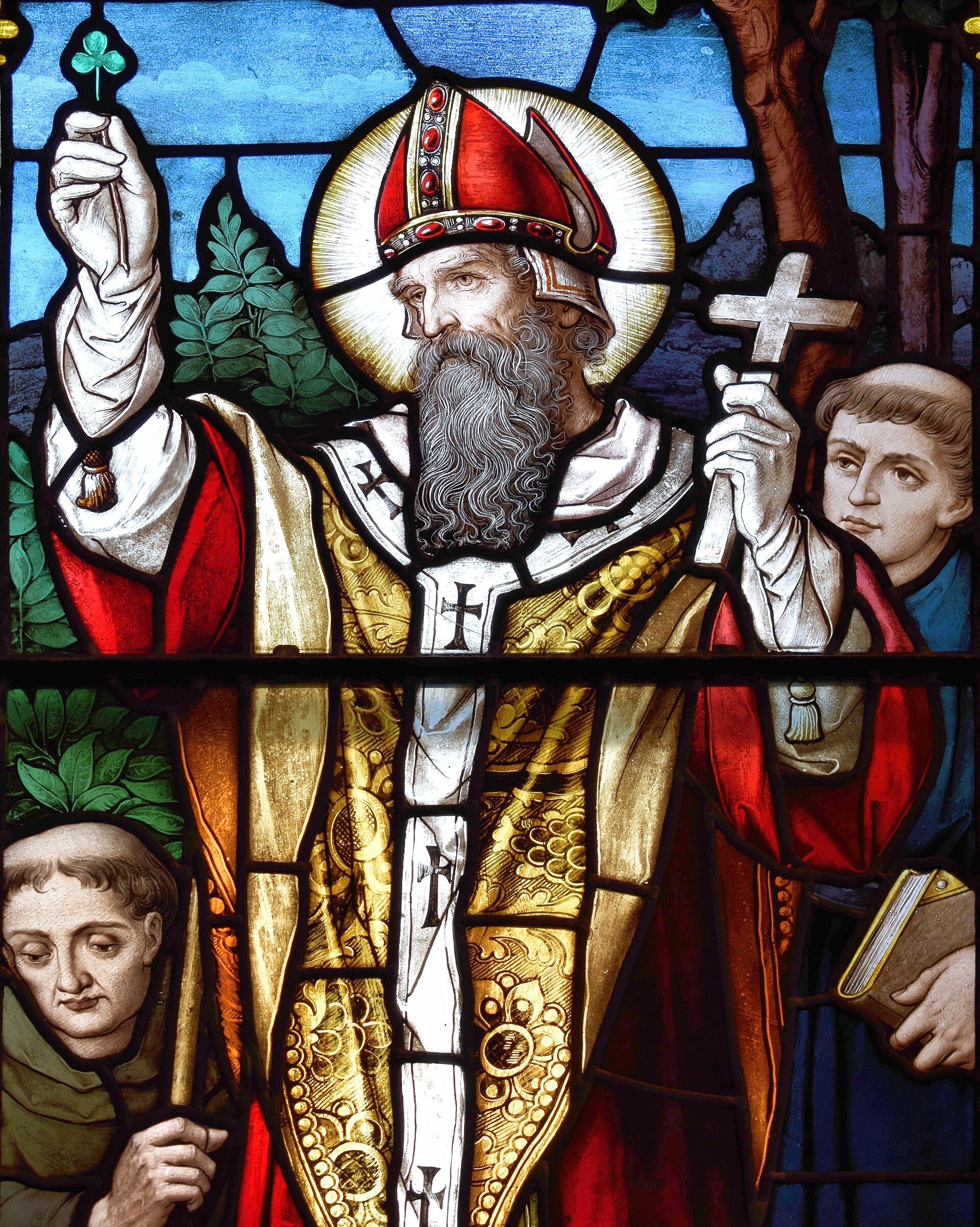

Captive, shepherd and "the Voice of the Irish"
The Confession begins: "I, Patrick the sinner, am the most clownish and the least of all the faithful, and contemptible in the eyes of very many." Patrick names his father Calpornus, a deacon, and his grandfather Potitus, a presbyter, and says he was taken captive from his father's small farm: "I was then about sixteen years of age. I knew not the true God; and I went into captivity to Ireland with many thousands of persons."28 The first Irish mission, in other words, began with a British Christian boy carried off in a slave raid.
In Ireland, he writes, "tending flocks was my daily occupation; and constantly I used to pray in the day time," until "in one day [I would say] as many as a hundred prayers, and at night nearly as many," and "before daybreak I used to be roused to prayer, in snow, in frost, in rain."29 After six years a voice in his sleep told him, "Lo, thy ship is ready," and he fled to a ship "perhaps distant two hundred miles."29
Back in Britain with his family, who begged him not to leave again, he had the dream that turned the escaped slave into a missionary:
"And there verily I saw in the night visions a man whose name was Victoricus coming as it were from Ireland with countless letters. And he gave me one of them, and I read the beginning of the letter, which was entitled, 'The Voice of the Irish'; and while I was reading aloud the beginning of the letter, I thought that at that very moment I heard the voice of them who lived beside the wood of Foclut, which is nigh unto the western sea; And thus they cried, as with one mouth, 'We beseech thee, holy youth, to come and walk among us once more.'" (Confession, chapter 23, White's translation)30
The echo of Paul's "man of Macedonia" (Acts 16:9) is plain, and White's notes point readers to the biblical passages Patrick was drawing on.30 The Confession says little about places, dates or methods. It does report results in Patrick's own terms: "Sons and daughters of Scottic chieftains are seen to become monks and virgins of Christ" (chapter 41; "Scotti" was the Latin name for the Irish), and, defending himself against a charge of profiting from his work, "when I baptized so many thousands of men, I hoped from any one of them even as much as the half of a scruple. Tell me and I shall restore it to you" (chapter 50).3132 The second passage is a denial: Patrick says he took nothing, and dares his accusers to name a case.
The Letter to Coroticus
The Letter shows the dangers of the work and Patrick's view of slavery. He addresses the soldiers of Coroticus as men who are "fellow-citizens of demons because of their evil deeds," "allies of the Scots and apostate Picts," who shed "the blood of innocent Christians, whom I in countless numbers begot to God and confirmed in Christ." He describes the raid: "On the day following that on which the newly baptized, in white array, were anointed, it was still fragrant on their foreheads, while they were cruelly butchered and slaughtered with the sword."33 He had sent a priest asking for the return of the captives and was laughed at. Patrick's protest is against Christians who killed and enslaved other Christians, newly baptized.
Patrick's dates: two schools
Patrick gives no dates. Two schools of reckoning have come down from the medieval annals and the later lives. White's 1918 introduction gives the traditional scheme: Patrick "went there as missionary bishop in a.d. 432, and died in A.D. 461," and the Confession "seems to have been composed towards the close of his career, perhaps about a.d. 450."26 The Catholic Encyclopedia article by Cardinal Patrick Francis Moran (1911) gives a long life: "born at Kilpatrick, near Dumbarton, in Scotland, in the year 387; died at Saul, Downpatrick, Ireland, 17 March, 493," and the online editor adds: "Some sources say 460 or 461."34 The same article says that Pope Celestine I "entrusted St. Patrick with the mission," after an earlier envoy, Palladius, had given up.34 That account of Palladius and Celestine comes from chronicles and later lives; Patrick's own writings never mention Rome or a pope. Modern historians remain divided between an earlier fifth-century Patrick and a later one, and the village Patrick names as his father's home has never been located with certainty.
The Irish monks: Columba and Columbanus
Within a century of Patrick, Irish monks were sailing out of Ireland as missionaries. Bede, the Northumbrian monk who finished his Ecclesiastical History of the English People in 731, recorded the first of them (quoted here from A. M. Sellar's revised translation, 1907):
"In the year of our Lord 565, when Justin, the younger, the successor of Justinian, obtained the government of the Roman empire, there came into Britain from Ireland a famous priest and abbot, marked as a monk by habit and manner of life, whose name was Columba, to preach the word of God to the provinces of the northern Picts." (Bede, Ecclesiastical History, book III, chapter 4)35
Bede adds that the southern Picts "had, it is said, long before forsaken the errors of idolatry, and received the true faith by the preaching of Bishop Ninias," whose stone church was called "the White House" (Whithorn), and that the Pictish king gave Columba "the gift of the aforesaid island whereon to found a monastery," the island of Iona.35 The Catholic Encyclopedia article (1908) gives Columba's dates as born December 7, 521, died June 9, 597, and puts his crossing to Scotland in 563, not Bede's 565; it notes, quoting the Latin, that Bede gives the motive simply as coming to preach the word of God (praedicaturus verbum Dei), while his biographer Adomnan says he sailed wishing to be a pilgrim for Christ (pro Christo perigrinari volens).36 The idea of peregrinatio, voluntary exile for Christ, drove much of the Irish missionary movement: monks left home as an act of devotion and preached where they settled.
Columbanus (born in Leinster in 543, died at Bobbio in northern Italy on November 21, 615, according to the Catholic Encyclopedia) carried the same pattern to the continent.37 With companions he settled first in the ruined Roman fort of Annegray in the Vosges Mountains and in 590 founded the abbey of Luxeuil, followed by a third house at Fontaines; his life was written about 643 by Jonas, a monk of his community at Bobbio.37 The Irish houses on the continent became centers of copying, teaching and preaching, and the later English missionaries, including Boniface, worked in country that Irish monks had already touched. Medieval monastic missions are treated more fully in Church History, Part A, lesson 09: The Medieval Church and the monastic background in lesson 07.
Gregory, Augustine and the English (597 and 601)
Columba died in 597, the year a mission sent from Rome landed in Kent. Bede tells the story in book I. Pope Gregory I sent Augustine, prior of a Roman monastery, with a company of monks; after a crisis of nerve on the road through Gaul, Gregory sent them on with letters of encouragement. Bede's chapter 25 describes the landing:
"On this island landed the servant of the Lord, Augustine, and his companions, being, as is reported, nearly forty men. They had obtained, by order of the blessed Pope Gregory, interpreters of the nation of the Franks, and sending to Ethelbert, signified that they were come from Rome, and brought a joyful message." (Bede, book I, chapter 25)38
The island was Thanet, then cut off from Kent by the river Wantsum. Ethelbert, king of Kent, had a Christian Frankish wife, Bertha, who had been allowed to keep her religion and a Frankish bishop, Liudhard; the king, Bede says, "had before heard of the Christian religion," and some days later he met the missionaries on the island, "sitting in the open air."38
The letter to Mellitus: temples, feasts and "steps"
Four years later, in 601, Gregory sent more monks under the abbot Mellitus, and then sent after him a letter that Bede copied into his history. It is the clearest early statement of a policy that would be argued over for the next fourteen centuries: how much of a people's old religious life should a mission keep, change or destroy?
"Tell him what I have long been considering in my own mind concerning the matter of the English people; to wit, that the temples of the idols in that nation ought not to be destroyed; but let the idols that are in them be destroyed; let water be consecrated and sprinkled in the said temples, let altars be erected, and relics placed there. For if those temples are well built, it is requisite that they be converted from the worship of devils to the service of the true God; that the nation, seeing that their temples are not destroyed, may remove error from their hearts, and knowing and adoring the true God, may the more freely resort to the places to which they have been accustomed. And because they are used to slaughter many oxen in sacrifice to devils, some solemnity must be given them in exchange for this ... For there is no doubt that it is impossible to cut off every thing at once from their rude natures; because he who endeavours to ascend to the highest place rises by degrees or steps, and not by leaps." (Bede, book I, chapter 30, Sellar's translation)39
Gregory proposed that the English, on church festivals, "build themselves huts of the boughs of trees about those churches which have been turned to that use from being temples, and celebrate the solemnity with religious feasting," and he justified the plan from the Old Testament, where God "allowed them the use, in His own worship, of the sacrifices which they were wont to offer to the Devil."39 Readers have taken the letter in very different ways. It can be read as an early statement of what mission writers later called accommodation or contextualization: keep what can be kept and change its meaning. It can also be read as a plan for replacing a people's religion by occupying its sacred places. The letter itself uses the language of both: its tone toward the English is patient, and its words for their religion ("idols," "devils," "rude natures") are harsh. The same tension returns in the Jesuit debates over Chinese rites, below, and in every later lesson of this module.
Boniface and the oak at Geismar
The English, once converted, sent missionaries of their own back to the continent. The best known is Winfrid of Wessex, renamed Boniface. The Catholic Encyclopedia (Francis Mershman, 1907) gives the main dates from his letters and his life: Pope Gregory II, on May 15, 719, gave him "full authority to preach the Gospel to the heathens in Germany"; he worked for three years in Frisia under Willibrord; on November 30, 722 (or 723) the pope consecrated him a regional bishop; and he was "martyred 5 June, 755 (754)."40
The best known story about him comes from his biographer Willibald. In Hesse, Boniface set out to fell a great oak sacred to the god of thunder at Gaesmere (Geismar, near Fritzlar). In C. H. Talbot's translation (1954), as the first cuts were made, "the oak's vast bulk, shaken by a mighty blast of wind from above crashed to the ground," splitting into four parts; then "the holy bishop took counsel with the brethren, built an oratory from the timber of the oak and dedicated it to Saint Peter the Apostle."41 The usual date, about 723, comes from its place in the narrative after his consecration; Willibald gives no year.40 Mershman's 1907 summary added a sentence of its own: "The fall of this oak marked the fall of heathenism."40 That is a historian's verdict, not Willibald's, and Boniface's own letters show that the work in Hesse and Thuringia took decades. In 754 he resigned his see of Mainz, returned to the Frisian mission, and was killed the following year at Dokkum ("Dorkum" in the encyclopedia), where he had ordered new converts to assemble for confirmation.40 The Gregory letter and the Geismar oak are often set side by side as two missionary approaches to pagan holy places: one converted the temples, the other cut down the tree and built a chapel from it.
Cyril and Methodius among the Slavs (863)
In the Greek-speaking East the great missionary pair of the ninth century were two brothers from Thessalonica, Constantine (who took the monastic name Cyril) and Methodius. According to the Catholic Encyclopedia article by Ladislas Abraham (1908), after a mission to the Khazars they answered a request from Moravia, whose people "wished a teacher who could instruct them and conduct Divine service in the Slavonic tongue." "In preparation for it Cyril invented an alphabet and, with the help of Methodius, translated the Gospels and the necessary liturgical books into Slavonic. They went to Moravia in 863."42
The German clergy already working in the region objected to a liturgy in Slavonic. The brothers took their case to Rome, where Pope Adrian II, the same article says, "sanctioned the Slavonic Liturgy," ordained them, and made Methodius archbishop of Moravia and Pannonia; Cyril died in Rome in February 869, and Methodius, after years of opposition including imprisonment by the German bishops, died on April 6, 885.42 Cyril's alphabet and the brothers' translations set a precedent that later Bible translators in this module (lessons 04, 05 and 10) followed: put the Scriptures and the worship into the language people speak. The region's name also returns at the end of this lesson. The refugees who founded Herrnhut in 1722 came from Moravia and were, in J. E. Hutton's words, "descendants of the old Bohemian Brethren"; their missionaries were known as "Moravians."43
Francis and the friars
In the thirteenth century the new orders of friars carried preaching into the Muslim world and Asia. At the Franciscan general chapter of May 1219, according to the Catholic Encyclopedia (Paschal Robinson, 1909), Francis of Assisi "assigned a separate mission to each of his foremost disciples," sailed for Acre, joined the crusading army at the siege of Damietta, and crossed to the camp of the sultan al-Kamil; according to the testimony of Jacques de Vitry, who was there, "the sultan received Francis with courtesy"; the encyclopedia adds its own judgment that, beyond a promise of better treatment for Christian captives, "the saint's preaching seems to have effected little."44 Module 106 tells the Damietta story in full (Summa Germanica, lesson 12: Francis of Assisi).
The Church of the East: Persia, India and China
While Latin and Greek missionaries worked in Europe, the largest missionary church of the first millennium lay east of the Roman Empire. Its members called it the Church of the East; Western writers called it "Nestorian," after Nestorius, the patriarch of Constantinople condemned at the Council of Ephesus in 431. The Catholic Encyclopedia article by John Chapman (1911) explains the history from the Western side: the church in Persia "was autonomous, having renounced all subjection to Antioch and the 'Western' bishops at the Council of Seleucia in 410," under the bishop of Seleucia-Ctesiphon, "who had assumed the rank of catholicos," and after 431 teachers expelled from the school of Edessa found a welcome in Persia; "the school at Edessa was finally closed in 489."45 This lesson uses the church's own name and keeps the older label only where a source uses it.
Alopen and the Xi'an stele (635 and 781)
The church's most famous record is a stone. In 1625, as James Legge recounted in his 1888 study of the stone, "some workmen, digging the ground in a suburb of Ch'ang-an, for a grave or for some other purpose (for there are different accounts of the matter), came on a stone monument of large size, and with a remarkable inscription on it, written mostly in Chinese characters," with other characters "evidently belonging to some other language," which proved to be Syriac.46 The inscription told how Christianity, called in the inscription "the Illustrious Teaching," came to China. In Legge's translation:
"When the Accomplished Emperor T'ai Tsung (a. d. 627-649) commenced his glorious reign over the (recently) established dynasty (of T'ang), presiding over men with intelligence and sagehood, in the kingdom of Ta Ts'in there was a man of the highest virtue called Olopun. Guiding himself by the azure clouds, he carried with him the True Scriptures ... In the ninth year of the period Chang-kwan (a. d. 635), he arrived at Ch'ang-an. The emperor sent his minister, duke Fang Hsuan-ling, bearing the staff of office, to the western suburb, there to receive the visitor, and conduct him to the palace. The Scriptures were translated in the Library."6
Legge noted that "Olopun is a Syriac name" (most modern writers spell it Alopen) and that the translation in the imperial library "can only mean that portions of the Scriptures were translated."6 Three years later, according to the stone, the emperor issued a proclamation:
"Systems have not always the same name; sages have not always the same personality. Every region has its appropriate doctrines, which by their imperceptible influence benefit the inhabitants. The greatly virtuous Olopun of the kingdom of Ta Ts'in, bringing his scriptures and images from afar, has come and presented them at our High Capital ... let it have free course throughout the empire." (inscription, year 638, Legge's translation)6
The officials then built a monastery in the capital "to accommodate twenty-one priests."6 The stone itself was raised much later, as its closing lines state: "Erected in the second year of the period Chien-chung (a. d. 781) of the great T'ang dynasty," with a Syriac line naming the catholicos Hanan-Yeshu' as patriarch.47
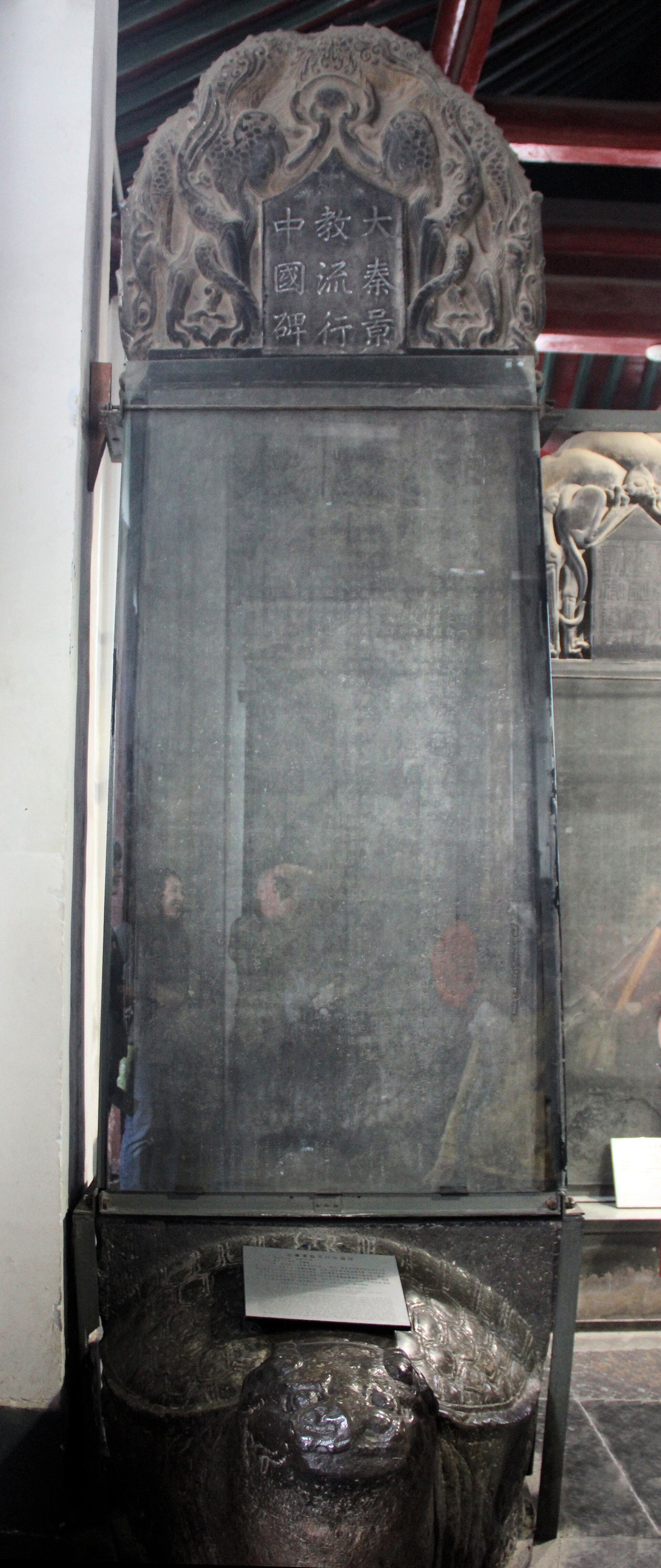



The stone's language is worth reading slowly. The inscription describes Christian teaching in words borrowed from Taoist and Buddhist writing; Legge pointed out that its opening was "moulded" on the Tao Teh King.6 This is accommodation of the kind Gregory proposed for the English, carried much further, and it is one reason later readers have argued over how Christian the Tang church's teaching was. The stone does not answer that question by itself.
The Tang church did not last. Legge traced its end to the great proscription of 845 under the emperor Wu Tsung, aimed chiefly at Buddhism. He quoted the edict, preserved in a later imperial collection: "As to the religions of foreign nations, let the men who teach them, as well those of Ta Ts'in as of Mu-hu-pi, amounting to more than 3,000 persons, be required to resume the ways of ordinary life, and their unsubstantial talkings no more be heard."48 Legge added that only ignorance of this document could lead anyone to deny "that there was ever any mission of Nestorian Christianity in China."48 Chapman's encyclopedia article notes that the church's missionaries "also penetrated into China and Mongolia"; its later history in Central Asia lies outside this lesson.45
The Thomas Christians of India
On the Malabar coast of southwest India there are churches that trace their founding to the apostle Thomas; in 1912 Herbert Thurston wrote that on that coast "a body of Christians still exists using a form of Syriac for its liturgical language."49 What can be said of the tradition?
The earliest written witnesses disagree on the field. Eusebius of Caesarea, writing in the early fourth century, recorded: "Parthia, according to tradition, was allotted to Thomas as his field of labor, Scythia to Andrew, and Asia to John" (Church History III.1, McGiffert's translation).50 The Acts of Thomas, a long work in Syriac and Greek usually dated to the early third century, tells the story of India instead. In Alexander Walker's translation in the Ante-Nicene Fathers (1886), the apostles divide the world by lot: "By lot, then, India fell to Judas Thomas, also called Didymus. And he did not wish to go." In the story, the risen Jesus sells the unwilling Thomas as a slave carpenter to "a certain merchant come from India, by name Abbanes, sent from the king Gundaphoros."51
Herbert Thurston's Catholic Encyclopedia article (1912) set out what supports and what weakens the tradition. In its favor, coins and an inscription show that a king named Gondophernes or Guduphara ruled the region of present Afghanistan, Pakistan and the Punjab around A.D. 46, and "the identity of the name with the Gundafor of the 'Acta Thomae' is unmistakable and is hardly disputed."49 A bishop John "from India and Persia" attended the Council of Nicaea in 325. Against it, Thurston called the Acts "utterly extravagant" in many particulars and of Gnostic origin, and found it "difficult to discover any adequate support" for the belief that Thomas reached Mylapore near Madras, though "the tradition that it was here that St. Thomas laid down his life is locally very strong."49 On the Malabar church itself he left three possibilities open: founding by Thomas; a first preaching in 345 by Christians fleeing persecution in Persia; or the arrival of Syrian missionaries with "a certain Thomas Cana" about 745; "in the sixth century Cosmas Indicopleustes speaks of the existence of Christians at Male (? Malabar) under a bishop who had been consecrated in Persia."49 The tradition is rated in "Claims checked" below.
Catholic missions after 1492, in outline
The voyages of Spain and Portugal opened a new age of missions tied closely to the new empires. The following four paragraphs give only an outline; each figure deserves a lesson of its own.
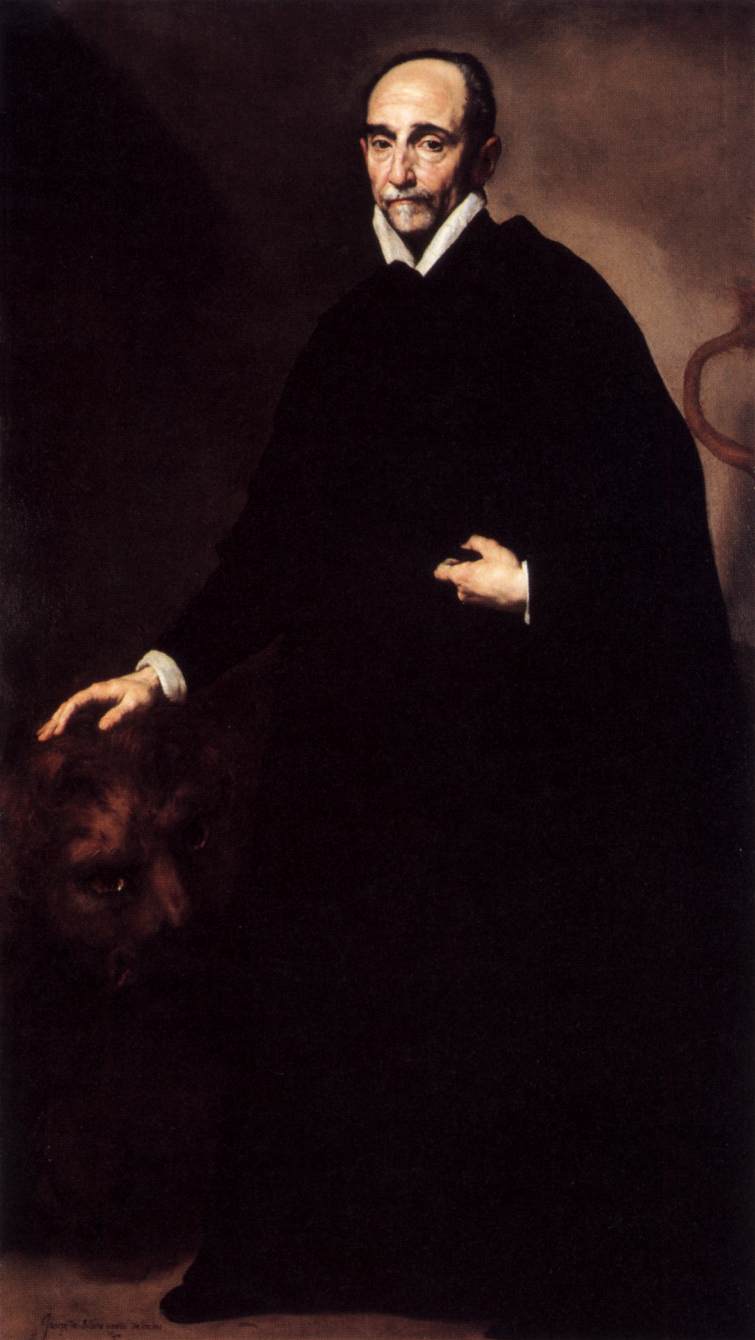

Bartolome de las Casas (born probably 1474 at Seville, died at Madrid in 1566, according to the Catholic Encyclopedia article by Adolph Bandelier, 1908) went to Hispaniola in 1502 as a colonist, became a priest about 1510, later joined the Dominicans, and spent the rest of his life campaigning against the treatment of the native peoples of the Americas; he accepted the bishopric of Chiapas in southern Mexico.52 His Brevisima relacion de la destruccion de las Indias was printed in Seville in 1552. A 1689 English translation, issued under the Protestant title Popery Truly Display'd in its Bloody Colours, describes the native people as "very apt to receive the instill'd principles of Catholick Religion" and accuses the Spanish of massacres beyond counting.53 Assessments of the book have always divided. Bandelier, writing for the Catholic Encyclopedia in 1908, called it "a most injudicious book, glaringly partial, based upon testimony often very impeachable and always highly coloured," and recorded that Las Casas, in his earlier years, had been an advocate of importing enslaved Africans to the Antilles and took "seven negroes as his own personal slaves" to Venezuela.52 The 1689 English title shows how Protestant writers also used the book against Spain and Rome. The book can be read in full at the link in the sources.
Francis Xavier (born April 7, 1506, in Navarre; died December 2, 1552, on the island of Sancian off the China coast), one of the first companions of Ignatius of Loyola, sailed for India in 1541 and "landed at Goa, 6 May, 1542," according to the Catholic Encyclopedia (Antonio Astrain, 1909); he went on to the Moluccas and landed at Kagoshima in Japan on August 15, 1549, spending "the entire first year" learning Japanese and translating.54
Matteo Ricci (born at Macerata on October 6, 1552; died in Peking on May 11, 1610) reached Macao in 1582 and, after years in southern China, entered Peking on January 24, 1601, "summoned by Emperor Wan-li," according to Joseph Brucker's Catholic Encyclopedia article (1912).55 Brucker wrote that Ricci drew in his teaching on "the writings of the ancient sages of China," and that "the most difficult problem in the evangelization of China had to do with the rites or ceremonies, in use from time immemorial, to do honour to ancestors or deceased relatives" and to Confucius. Ricci permitted Chinese Christians to keep them and used the classical terms T'ien (heaven) and Shang-ti (Sovereign Lord) for God; in Brucker's words, "Ricci's solution of this problem caused a long and heated controversy in which the Holy See finally decided against him."55 It was Gregory's letter to Mellitus argued out again on a larger scale.
The Jesuits in New France. Jean de Brebeuf (born March 25, 1593; died March 16, 1649) arrived at Quebec on June 19, 1625, and lived for years among the Wendat (Huron) near Georgian Bay; the details of his work "may be found in the 'Jesuit Relations,'" the yearly reports the Jesuits of New France published in Paris.56 Brebeuf was seized and killed on March 16, 1649, when Iroquois (Haudenosaunee) warriors, at war with the Hurons, attacked the mission village of St. Louis;56 module 102 covers missionary deaths (Martyrs Briefs, lesson 09). In 1622, three years before Brebeuf reached Quebec, Rome had created the Congregation for the Propagation of the Faith to direct this worldwide work.10
The Moravians: Herrnhut and the first Protestant missions
For two centuries after the Reformation, the Protestant churches sent few missionaries outside Europe and its colonies (the Puritan missions in New England, the subject of lesson 02, are one exception: Early America: John Eliot and the Praying Towns). The Moravian historian J. E. Hutton, in A History of Moravian Missions (London, 1922), quoted a Lutheran preacher named Neumeister who closed an Ascension Day sermon in 1722 with the lines: "In former times 'twas rightly said, Go forth to every land; But now, where God hath cast your lot, There shall you ever stand."43 The first Protestant body to make sending missionaries the work of a whole church was a small community on an estate in Saxony. The Pietist movement behind it is the subject of Church History, Part C, lesson 01: Holiness and Pietism.
Zinzendorf and the refugees (1722 to 1731)
Nikolaus Ludwig, Count von Zinzendorf (1700 to 1760), studied at Wittenberg, served as a court official at Dresden, and in 1722 married and bought the estate of Berthelsdorf, "ten miles from the Bohemian frontier." Almost at once, Hutton wrote, "he was informed by his steward that some persecuted Protestants from Moravia, led by Christian David, a carpenter, desired to settle on his estate. Without a thought of the future, Zinzendorf gave his consent." The refugees were, in Hutton's words, "descendants of the old Bohemian Brethren," and their settlement became Herrnhut.43 The early community quarreled, and Zinzendorf organized it through a "Brotherly Agreement" (July 4, 1727) and a communion service at Berthelsdorf on August 13, 1727, which Moravians regard as "the spiritual birthday of the renewed Moravian Church"; he added "Bands, Classes, Hourly Intercessions, Singing Meetings, and the Daily Watchword," and a monthly missionary prayer day.43 In 1727 he wrote to the Danish court offering missionaries for Greenland, and on February 11, 1728, "led by one Leonard Dober, twenty-six young men made a League and Covenant" to go wherever they were sent.43
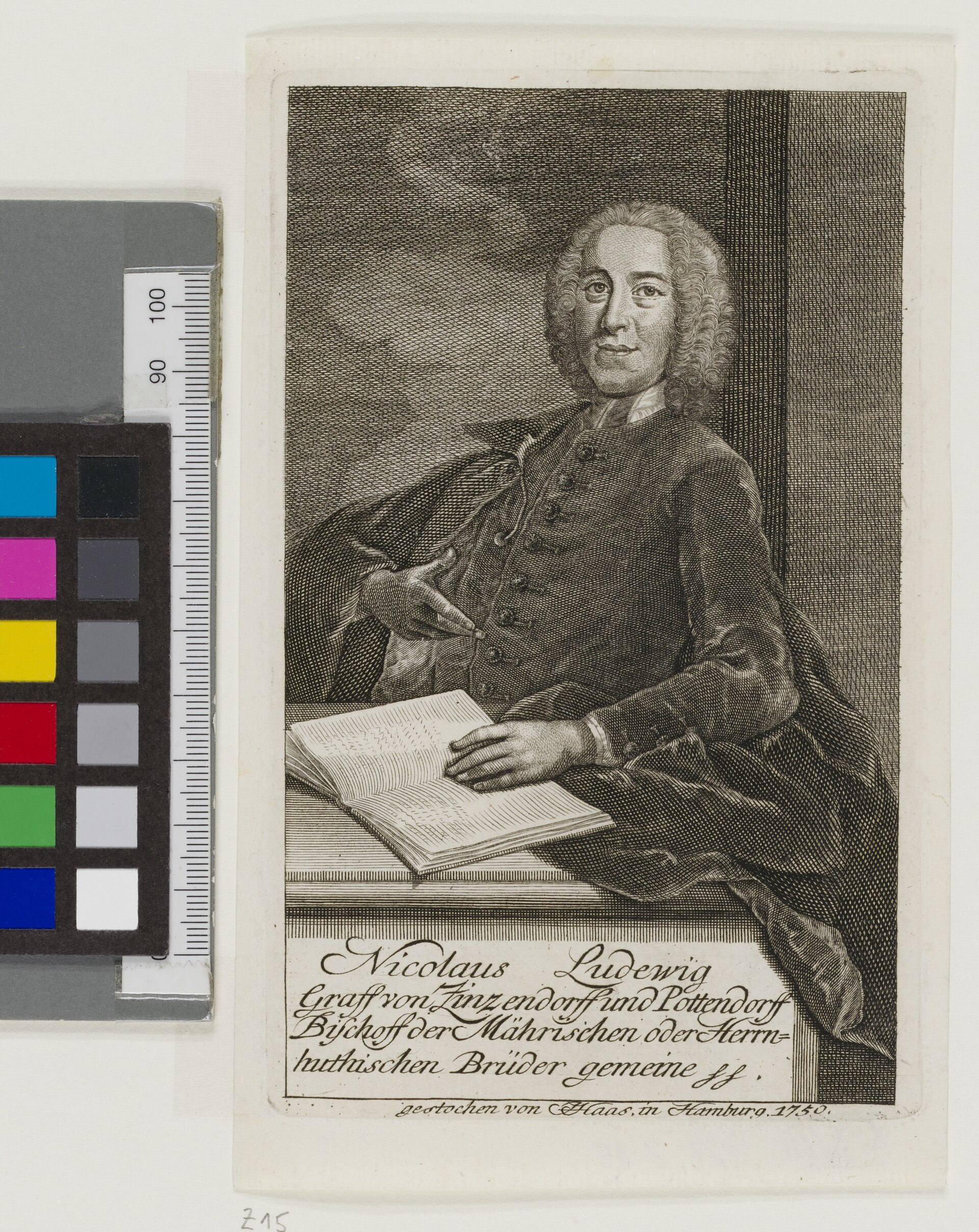
Dober and Nitschmann: St. Thomas, 1732
The call came by way of Copenhagen. At Copenhagen in 1731 Zinzendorf met Anthony Ulrich, an enslaved man from the Danish island of St. Thomas in the West Indies, who spoke of his brother and sister, Abraham and Anna, and their wish to hear the Gospel. Hutton quoted him: "If only some missionaries would come, they would certainly be heartily welcomed."57 When Zinzendorf repeated the story at Herrnhut on July 23, 1731, Leonard Dober, a young potter from Wurttemberg, believed he heard a voice say, "Thou art the chosen man for St. Thomas." Others at Herrnhut objected, and Dober wrote again to the community on June 16, 1732:
"I know the grace of Christ myself, and I know that in St. Thomas there are slaves who cannot believe because they have not heard. If another Brother will go with me, I am ready to become a slave myself." (Leonard Dober, letter of June 16, 1732, as printed by Hutton)57
The community decided the matter by the Lot, a Moravian practice of drawing a Scripture slip; Dober drew "Let the lad go, for the Lord is with him."57 His companion was David Nitschmann, a carpenter. Hutton stressed the point: "Leonard Dober was only a potter; David Nitschmann was only a carpenter." They set sail from Copenhagen on October 8, 1732, on a Dutch ship, and "on Saturday, December 13th, 1732, the ship cast anchor in St. Thomas harbour." The daily text that day was "The Lord of Hosts mustereth the host of the battle," and the two men wrote, "We suffered all the pangs of childbirth."5758
What happened next is documented in their letters and diaries. They did not become slaves. A planter named Lorenzen, to whom they carried a letter of introduction, gave them a half-built house and promised them work; they found Abraham and Anna, read them Anthony's letter, and preached their first sermon to the enslaved. "They felt the truth," Dober said, "rather than understood it."57 Nitschmann had gone only to "spy out the land, and bring back a report," and he sailed for home on April 17, 1733. Dober, a potter on an island with no work for potters, "nearly died of starvation," until the governor offered him the post of house-steward; Dober accepted on condition that he have fixed hours for visiting the slaves.59 After "fifteen months" alone on the island he was called home in 1734.


Frederick Martin and the Brethren's plantation
The work grew under Frederick Martin (in St. Thomas from 1736 to 1750), whom Zinzendorf called "The Apostle to the Negroes." The Moravian mission paid no salaries: "For over one hundred years no missionary in the West Indies received from the Moravian Church one penny of salary for his services; each man, during all that period, had first to earn his own living."60 Martin solved the problem by buying a small plantation about four miles from the town with money advanced by a friendly planter. Hutton, the Moravian historian, recorded the result plainly: "In due time the Herrnhut authorities sent the money, and thus the Moravian Church became the owner, not only of a plot of land, but also of the slaves who worked upon it."60 The estate, at first called "The Brethren's Plantation," was later named New Herrnhut.
Hutton defended the purchase: "For that conduct the Church was not in the least to be blamed. In those days no other course was possible. According to the law of the land, the slaves on any estate were simply an integral part of the property." He also asked the obvious question, why Martin "did not set the slaves at liberty," and gave three answers, the first of which was: "On the slavery question Martin was a child of his age. There is no proof, so far as I know, that he regarded slavery itself as wicked."60 When Princess Sophia of Denmark asked David Nitschmann whether "the slaves be more easily converted, if all who confessed Christ were at once set at liberty," he answered, "No, that would be the way to make hypocrites."60 Readers can weigh Hutton's defense for themselves. The documented facts are these: the first Protestant mission to enslaved Africans in the Caribbean was carried out by men who lived and worked among the enslaved, and whose church, from the 1730s, owned enslaved people on its own estate.
Greenland and "the slaughtered Lamb"
The second Moravian field was Greenland, where the Lutheran missionary Hans Egede had worked among the Inuit since 1721. Hutton wrote that "for ten years (1721-31) he had ploughed on a rock."61 The Moravian party, led by Matthew Stach and including Christian David, sailed on the Caritas on April 10, 1733, under the day's text, "Faith is the substance of things hoped for."58 For years they reported little response. The change came, in Hutton's telling, when they began preaching the sufferings of Christ directly; the Inuit, "gazing at the crucified Redeemer, they confessed their sins, repented, and asked to be baptized," and John Beck wrote to Zinzendorf: "Henceforth, we shall preach nothing but the love of the slaughtered Lamb."61 The Lamb (from Revelation 5) became the Moravians' central image.
By the time Zinzendorf died on May 9, 1760 (at Herrnhut, according to Britannica; Hutton placed his deathbed at neighboring Berthelsdorf), Hutton counted, "He had sent out no fewer than 226 missionaries," to the West Indies, Greenland, Surinam, South Africa, Labrador, North America and elsewhere. Zinzendorf's last words on the subject, as Hutton gave them: "I only asked for first fruits among the heathen, and thousands have been granted me."58
Zeisberger, the Delaware and Gnadenhutten (1782)
In North America the Moravians worked among the Mohican, the Delaware (Lenape) and the Iroquois from the 1740s. Their best known missionary was David Zeisberger, whom Hutton called "the great apostle to the Indians."43 The missions moved west under pressure from settlers and war. In the Ohio country the Christian Delaware and Mohican lived in mission towns governed by written rules: Schonbrunn first, then "Gnadenhutten, on the Tuscarawas (1772), Lichtenau ... (1776), on the Muskingum, and Salem (1780)."7 The rules show the shape of a Moravian town: no one to go hunting or on a journey without informing the minister, no marriage without the consent of the minister and parents, every person to "help freely in building fences or doing any other work for the public good."7
The Moravian Christians were pacifists caught between the British and the American revolutionaries. In 1781 the British, who accused the missionaries and their converts of aiding the Americans, had them removed to the Upper Sandusky area.62 Early in 1782 a party of the converts returned to the abandoned towns to search for food. Pennsylvania militiamen under David Williamson, blaming them for raids on settlers that, the History.com account states, they had no part in, took them prisoner at Gnadenhutten.62 The militia voted to kill them. Hutton, using the testimony collected by the Moravians afterward, recorded the prisoners' answer when they were told they would die: "We have committed our souls to God, and trust to Him to give us the needful courage." On the morning of March 8, 1782, the killing began; "the total number slain that day was ninety; among these was Glikkikan, Zeisberger's friend; and the list included six native assistants, twenty-four women, and twenty-two little children."7
The count differs by source: Hutton's ninety (1922); "some 90" in the History.com account; ninety-six in A True History of the Massacre of Ninety-six Christian Indians, at Gnadenhuetten, Ohio, published by the Gnadenhutten Monument Society in 1870 and cited by the State Library of Ohio; and "about 99" in the history published by the Munsee of Kansas, many of whom, the tribe states, "descend from the children of Israel Welapachtshechen," who was killed there.7626364 The Kansas Munsee page states that the militia lured the Christian Indians to Gnadenhutten with the false promise of escorting them to safety at Fort Pitt.64 The survivors' descendants, known as the Christian Munsee, were moved several times and settled in Franklin County, Kansas, in 1859; the tribe's own history describes the Moravian Church as the church many of its ancestors belonged to and in which some of its own members were ordained.64
Hutton's 1922 history shows another side of the record: how Moravian writers of his time described the peoples they served. Introducing the Native nations of the northeast, he wrote that they could "run like deer, scent like blood-hounds, shoot like Boers, speak like Demosthenes, and lie like Ananias."7 The same book that carefully lists the names and numbers of the Gnadenhutten dead uses that language. Both belong to the record.
"See what these Moravians have done"
Hutton opened his book at Kettering, England, on October 2, 1792, the night the Baptist Missionary Society was founded, where, he wrote, William Carey "flung down on the parlour table some numbers of a missionary magazine entitled Periodical Accounts, and, addressing twelve other Baptist ministers, exclaimed: 'See what these Moravians have done.'"65 Hutton called it an "oft-quoted remark"; he gave no earlier source for it, and its status is rated below. Lesson 04 follows Carey from that meeting (William Carey, the Enquiry of 1792 and the Modern Missions Era).
What the record shows and what it does not
- Documented fact: the texts of Acts and Paul's letters; Patrick's Confession and Letter; Bede's copies of Gregory's letters (601); the Xi'an stele of 781 and its inscription; Wu Tsung's edict of 845; Willibald's life of Boniface; the Moravian diaries and letters printed by Hutton; the Gnadenhutten killings of March 8, 1782.3947487
- The missionaries' own words: Paul in Romans 15 on preaching "not where Christ was named"; Patrick on his captivity, his dream of "The Voice of the Irish" and his refusal of gifts; Dober's "I am ready to become a slave myself"; John Beck's "the love of the slaughtered Lamb."21305761
- What the people evangelized and their descendants record: the Tang emperor's own proclamation on the stele (638) and the later edict (845); Anthony Ulrich's request for teachers for his brother and sister; the Kansas Munsee tribe's history of Gnadenhutten and of their Moravian ancestors.65764
- Later biography and legend: Patrick and the snakes, the shamrock, the conversion of the high king at Tara; Thomas's journey to India and death at Mylapore; Moravians "selling themselves into slavery"; the cry "May the Lamb that was slain receive the reward of His suffering."3449
- Scholarly reading: the dates of Paul's journeys (Prat, Allen, Ramsay); the two schools of Patrick's dates; whether Gregory's letter was wise accommodation or religious replacement; how Christian the Tang church's teaching was; whether Las Casas's book is reliable (Bandelier against its later admirers).52652
- Open questions: where Patrick was born and when he died; whether any apostle reached India; how many died at Gnadenhutten (90, 96 or about 99 in the sources).64
Pictures, Numbers and Infographics
The table gathers the lesson's main dates and numbers with their sources. Where two sources disagree, both figures are shown.
| Item | Figure | Source |
|---|---|---|
| Paul's three journeys (estimate) | 45 to 49, 50 to 53, 53 to 57 | Prat, Catholic Encyclopedia (1911)5 |
| Paul's founding work in four provinces | "little more than ten years," 47 to 57 | Allen (1912)14 |
| Paul's stay at Corinth / Ephesus | "a year and six months" / "two years" | Acts 18:11; 19:10 (KJV)1819 |
| Patrick's age when captured; years in captivity | about 16; six years | Confession 1, 17 (White, 1918)2829 |
| Patrick's mission and death (traditional) | 432 to 461 | White (1918)26 |
| Patrick's birth and death (long scheme) | 387 to 493 | Moran, Catholic Encyclopedia (1911)34 |
| Columba to the Picts | 565 (Bede) or 563 (Catholic Encyclopedia) | Bede III.4; Edmonds (1908)3536 |
| Columbanus founds Luxeuil | 590 | Catholic Encyclopedia (1908)37 |
| Augustine's party lands on Thanet | 597; "nearly forty men" | Bede I.2538 |
| Gregory's letter to Mellitus | 601 | Bede I.3039 |
| Alopen reaches Chang'an; edict of toleration | 635; 638; monastery for 21 priests | Xi'an stele, Legge (1888)6 |
| Boniface's commission; consecration; death | 719; 722 or 723; 755 (or 754) | Mershman, Catholic Encyclopedia (1907)40 |
| Xi'an stele erected; unearthed | 781; 1625 | Legge (1888)4746 |
| Foreign religious teachers ordered back to lay life | "more than 3,000," 845 | Wu Tsung's edict, in Legge (1888)48 |
| Cyril and Methodius go to Moravia | 863 | Abraham, Catholic Encyclopedia (1908)42 |
| Francis sails for the East | 1219 | Robinson, Catholic Encyclopedia (1909)44 |
| Xavier lands at Goa; in Japan | May 6, 1542; August 15, 1549 | Astrain, Catholic Encyclopedia (1909)54 |
| Ricci enters Peking | January 24, 1601 | Brucker, Catholic Encyclopedia (1912)55 |
| Congregation for the Propagation of the Faith | June 22, 1622; 13 cardinals and 2 prelates | Benigni, Catholic Encyclopedia (1911)10 |
| Herrnhut covenant of young men | 26 men, February 11, 1728 | Hutton (1922)43 |
| Dober and Nitschmann land on St. Thomas | December 13, 1732 | Hutton (1922)57 |
| Moravian missionaries sent by Zinzendorf's death | 226 (by May 9, 1760) | Hutton (1922)58 |
| Gnadenhutten dead, March 8, 1782 | 90; 96; about 99 | Hutton; Gnadenhutten Monument Society (1870); Kansas Munsee76364 |
Claims checked
"Paul made three missionary journeys." Rating: Partly supported
Acts narrates the travels in a way that falls naturally into three loops starting from Antioch, and Prat's Catholic Encyclopedia article uses the headings "First mission," "Second mission" and "Third mission."5 But Acts itself never numbers them, and Paul's letters mention travels Acts does not record (Romans 15:19 speaks of Illyricum, which Acts never mentions).21 The three-journey scheme is a sound teaching outline, not a statement of the text.
"The apostle Thomas went to India and founded the churches of Kerala." Rating: Unresolved
The tradition is old and strong. The Acts of Thomas (early third century) sends Thomas to India and names a king Gundaphoros, whose real existence about A.D. 46 is shown by coins and an inscription; a bishop "from India and Persia" attended Nicaea in 325.5149 Against it: Eusebius recorded the tradition that Thomas was allotted Parthia, the Acts of Thomas is a legendary work, and Thurston found no "adequate support" for the journey to Mylapore. The Malabar churches' founding may date from Thomas, from Persian refugees in the fourth century, or from Syrian settlers about 745.5049 No document settles it.
"Patrick drove the snakes out of Ireland." Rating: Refuted (as history)
Patrick's own Confession and Letter say nothing about snakes.26 Nigel Monaghan, keeper of natural history at the National Museum of Ireland, who searched the fossil and other records of Irish animals, was quoted in a National Geographic article by James Owen (dated August 16, 2018 on the magazine's site): "At no time has there ever been any suggestion of snakes in Ireland."66 The story belongs to later medieval lives and is often read as a picture of Patrick defeating paganism.
"Patrick explained the Trinity with a shamrock." Rating: Unsupported
The story is not in Patrick's writings. Moran's 1911 Catholic Encyclopedia article repeats it with a careful verb: Patrick "is said to have plucked a shamrock from the sward."34 No early source for it was found for this lesson.
"The first Moravian missionaries sold themselves into slavery to reach the slaves." Rating: Refuted
Dober wrote that he was "ready to become a slave myself" if another brother would go with him.57 The record of what followed shows that he and Nitschmann did not become slaves: they lodged in a planter's half-built house, Nitschmann worked as a carpenter and went home in April 1733, and Dober later served as the governor's house-steward.5759 The offer was real; the sale is legend. The historical irony runs the other way: the mission itself came to own enslaved people on its plantation from the 1730s.60
"As their ship left, the two Moravians cried: May the Lamb that was slain receive the reward of His suffering." Rating: Unresolved
The words are widely repeated in sermons and on mission websites as the departing cry of Dober and Nitschmann. Hutton's detailed 1922 account of the departure, the voyage and the landing, built on their letters and diaries, does not contain them.57 The Lamb was the central Moravian image (Beck's "slaughtered Lamb" in Greenland; Zinzendorf's "grand caravan ... before the throne of the Lamb"), so the sentence fits Moravian piety, but no eighteenth-century source for it as a quayside cry was found for this lesson.6158
"Carey threw down a Moravian magazine and said, See what these Moravians have done." Rating: Partly supported
Hutton (1922) tells the story and calls it an "oft-quoted remark," placing it at Kettering on October 2, 1792.65 The exact scene and words rest on later retelling; Hutton gives no contemporary source.
"The Xi'an 'Nestorian Monument' is a later forgery." Rating: Refuted
The stone came to light in 1625, more than eight centuries after it was raised, and Legge acknowledged that "this long silence about it has often been used as an argument against its genuineness." Legge, who studied the inscription and its Chinese and Syriac text in 1888, answered, crediting the French scholar Pauthier with the discovery, that the long silence about it was explained by the Tang edict of 845 preserved in an imperial collection, and that only ignorance of that document could lead anyone to deny that there was "ever any mission of Nestorian Christianity in China."48 Legge himself wrote that the monument "purports to have been erected, as we shall see beyond a doubt that it was, in 781."46
"Boniface felled Thor's oak and the pagans converted on the spot." Rating: Partly supported
Willibald's life records the felling of what it calls "the Oak of Jupiter," the fall of the oak in four parts and the building of an oratory from its timber, and says that the pagans who had been cursing "began, on the contrary, to believe and bless the Lord."41 The Catholic Encyclopedia names the god as Thor and adds that "many were converted."40 The longer claim that the fall of the oak "marked the fall of heathenism" is Mershman's 1907 judgment; Boniface's letters show decades of further work in the region.
Hard questions and answers
Is mission before 1800 just the religious side of conquest?
The record in this lesson points both ways. Paul, Patrick, the Irish monks and the monks of the Church of the East traveled without armies: Patrick went to Ireland as a former slave of the Irish, and Alopen came to a powerful empire as a guest whose teaching was tolerated by imperial decree and then suppressed by another.28648 After 1492 the picture changes: Catholic missionaries sailed with the Spanish and Portuguese empires, and the sharpest Catholic critic of Spanish conquest, Las Casas, was himself a Spanish priest whose own early record included owning enslaved Africans.52 The Moravians worked among enslaved Africans on Danish plantations and owned an estate with enslaved workers, and their Delaware converts were killed by American militiamen in a war between empires.607 Any general answer has to account for all of these cases.
What did the people who received the missionaries say?
For the early period, little survives in their own voices. The Tang emperor's proclamation of 638 is a rare exception: an outsider's written verdict that the teaching "is helpful to (all) creatures, and profitable for men."6 Anthony Ulrich, an enslaved man, asked for missionaries for his family.57 The Christian Delaware at Gnadenhutten, as recorded by the Moravians, met death with prayer.7 Today the Kansas Munsee, descendants of those converts, tell the history of the massacre and of their Moravian church in their own published account.64 For most of the peoples in this lesson (the Irish, the Picts, the English, the Saxons, the Slavs) what survives was written by the missionaries or their churches.
Did Gregory and Ricci water down the faith to win converts?
Both men faced the same charge. Gregory argued that people rise "by degrees or steps, and not by leaps," and kept the temples while destroying the idols.39 Ricci kept the ancestral rites; Rome, after a long controversy, decided against him.55 Defenders of both say they changed the form and kept the substance; their opponents in each case said that keeping the old forms kept the old religion alive. The Xi'an stele, written in Taoist and Buddhist vocabulary, shows how far such adaptation could go.6
Why did Protestants send so few missionaries before the Moravians?
Hutton, a Moravian, quoted a Lutheran sermon of 1722 that held the command to go "to every land" was for "former times."43 He also noted that Bishop John Amos Comenius had argued in 1644, as reported by the Moravian historian J. T. Hamilton, that the church had a duty to evangelize non-Christians.43 The Moravians, a community organized around prayer and the Lot, and financing missionaries who earned their own living, found a way around both limits.60
What in this lesson can a skeptical reader accept as history?
A great deal. The existence and travels of Paul in the cities named in his letters; Patrick's authorship of the Confession and Letter; Gregory's letters; the Xi'an stele and its dates; the Tang edict; the Moravian letters and the Gnadenhutten killings all rest on documents of their own time or close to it.26477 The miracles in Willibald's life, the Acts of Thomas and the later lives of Patrick are a different kind of source. A careful reader of any faith or none can separate the two, as this lesson's ratings try to do.
Related lessons
- Church History, Part A, lesson 01: The First Century (Paul and the first churches)
- Church History, Part A, lesson 09: The Medieval Church (Boniface and the medieval missions)
- Church History, Part C, lesson 01: Holiness and Pietism (the Moravians and Pietism)
- Summa Germanica, lesson 12: Francis of Assisi (Damietta, 1219)
- Lesson 02: Early America, lesson 04: William Carey and lesson 14: Review, Reading List, Timeline and Glossary
Learn more
- Saint Patrick's Confessio Hypertext Stack (Royal Irish Academy): Patrick's two genuine writings with the manuscripts, the Latin text and several translations.
- Roland Allen, Missionary Methods: St. Paul's or Ours? (1912): The book that made Paul's method a model for modern missions; the chapter on finance is short and still argued over.
- James Legge, The Nestorian Monument of Hsi-an Fu (1888): The full inscription with the Chinese text, Legge's translation and notes, and his lecture on the stone's discovery and the edict of 845.
- Bede, Ecclesiastical History, Sellar translation (1907): Book I, chapters 23 to 33, tells the Roman mission to the English and copies Gregory's letters.
- J. E. Hutton, A History of Moravian Missions (1922): A Moravian historian's detailed account built on the missionaries' letters and diaries, with his own defense of the mission's slave-holding.
- Kansas Munsee: Religion: The history of the Moravian Munsee and of Gnadenhutten as told by descendants of the converts.
Still being checked (11 items)
These points could not be confirmed against a primary source when this lesson was written and fact checked in October 2026. The text above states each one as uncertain.
- David Bosch's view (Transforming Mission, 1991, p. 1) that the word mission was used for the sending within the Trinity until the sixteenth century and was first applied by the Jesuits to the spread of the faith is summarized from the checker's knowledge of the book; the page was not opened online during this check.
- The date of Boniface's felling of the Geismar oak (about 723) is inferred from its place in Willibald's narrative after Boniface's consecration of November 30, 722 or 723; Willibald gives no year.
- The New Advent transcription of the Catholic Encyclopedia gives Cyril's death as "4 Feb., 869"; many references give February 14, 869. The lesson says only February 869.
- Columba's crossing is dated 565 by Bede and 563 by the Catholic Encyclopedia; both are given.
- Patrick's birthplace and dates (432 to 461 in White; 387 to 493 in Moran) remain unresolved; the earliest medieval source of the snake story was not identified in this research.
- No eighteenth-century source was found for the saying "May the Lamb that was slain receive the reward of His suffering" as the cry of Dober and Nitschmann.
- No source earlier than Hutton (1922) was found in this research for Carey's "See what these Moravians have done."
- The Gnadenhutten death toll differs by source (90 in Hutton; 96 in the Gnadenhutten Monument Society's 1870 True History, known here only through the State Library of Ohio's summary; about 99 in the Kansas Munsee history). The 1870 pamphlet was not opened.
- The exact year in which Frederick Martin bought the Brethren's plantation on St. Thomas is not given by Hutton; Hutton shows it existed by Zinzendorf's visit of January 1739, when he renamed it Posaunenberg (pp. 39, 46 to 47), so "the 1730s" in the text stands.
- Zinzendorf's place of death: Hutton (1922) says Berthelsdorf; Britannica says Herrnhut. The text now gives both.
- The National Geographic article quoting Nigel Monaghan carries the date August 16, 2018 on the site; it may first have been published earlier (2008) and later updated.
Notes
- Charlton T. Lewis and Charles Short, A Latin Dictionary (Oxford, 1879), s.v. "missio," Perseus Digital Library, Tufts University (retrieved Nov. 12, 2026) Read it online. ↩
- Henry George Liddell and Robert Scott, A Greek-English Lexicon, rev. Henry Stuart Jones (Oxford, 1940), s.v. "apostolos," Perseus Digital Library (retrieved Nov. 12, 2026) Read it online. ↩
- The Holy Bible, King James Version (1611), Matthew 28:18 to 20; text from Project Gutenberg eBook #10 (retrieved Nov. 12, 2026) Read it online. ↩
- The Holy Bible, King James Version (1611), Acts 1:8. Read it online. ↩
- Ferdinand Prat, "St. Paul," The Catholic Encyclopedia, vol. 11 (New York: Robert Appleton Company, 1911), section "Chronology" and the account of the three missions, New Advent (retrieved Nov. 12, 2026) Read it online. ↩
- James Legge, The Nestorian Monument of Hsi-an Fu in Shen-hsi, China (London, 1888), translation of the inscription, sections II.7 to 8, pp. 9 to 13, with Legge's notes. Read it online. ↩
- J. E. Hutton, A History of Moravian Missions (London: Moravian Publication Office, 1922), chapter 6, "The North American Indians, 1734 to 1808," pp. 78 to 116 (Schonbrunn and its rules; Gnadenhutten, March 8, 1782). Read it online. ↩
- The Holy Bible, King James Version (1611), John 20:21. Read it online. ↩
- The Holy Bible, King James Version (1611), Romans 10:15. Read it online. ↩
- Umberto Benigni, "Sacred Congregation of Propaganda," The Catholic Encyclopedia, vol. 12 (New York: Robert Appleton Company, 1911), New Advent (retrieved Nov. 12, 2026) Read it online. ↩
- David J. Bosch, Transforming Mission: Paradigm Shifts in Theology of Mission (Maryknoll, NY: Orbis Books, 1991), p. 1 (the history of the term "mission"). Bosch's argument is summarized, not quoted; the page was not opened online for this lesson (see the unverified list). ↩
- The Holy Bible, King James Version (1611), Acts 11:26. Read it online. ↩
- The Holy Bible, King James Version (1611), Acts 13:2 to 4. Read it online. ↩
- Roland Allen, Missionary Methods: St. Paul's or Ours? (London, 1912; Library of Historic Theology, ed. W. C. Piercy), chapter I, "Introductory," p. 3; Internet Archive scan (retrieved Nov. 12, 2026) Read it online. ↩
- The Holy Bible, King James Version (1611), Acts 14:23. Read it online. ↩
- The Holy Bible, King James Version (1611), Acts 16:9. Read it online. ↩
- The Holy Bible, King James Version (1611), Acts 17:23. Read it online. ↩
- The Holy Bible, King James Version (1611), Acts 18:11. Read it online. ↩
- The Holy Bible, King James Version (1611), Acts 19:10. Read it online. ↩
- The Holy Bible, King James Version (1611), Acts 28:30 to 31. Read it online. ↩
- The Holy Bible, King James Version (1611), Romans 15:19 to 20. Read it online. ↩
- Roland Allen, Missionary Methods: St. Paul's or Ours? (London, 1912; Library of Historic Theology, ed. W. C. Piercy), the chapter on St. Paul's training of his converts, pp. 111 to 114. Read it online. ↩
- Roland Allen, Missionary Methods: St. Paul's or Ours? (London, 1912; Library of Historic Theology, ed. W. C. Piercy), chapter VI, "Finance," pp. 70 to 72. Read it online. ↩
- Roland Allen, Missionary Methods: St. Paul's or Ours? (London, 1912; Library of Historic Theology, ed. W. C. Piercy), chapter VII, on St. Paul's preaching (the summary of 1 Thessalonians, citing Ramsay). Read it online. ↩
- Roland Allen, Missionary Methods: St. Paul's or Ours? (London, 1912; Library of Historic Theology, ed. W. C. Piercy), end of Part I (the chapters on the conditions of the four provinces), just before Part II, "The Presentation of the Gospel." Read it online. ↩
- Newport J. D. White, trans., A Translation of the Latin Writings of St. Patrick (London: Society for Promoting Christian Knowledge, 1918), Introduction, pp. 3 to 4; Internet Archive scan (retrieved Nov. 12, 2026) Read it online. ↩
- Royal Irish Academy, Saint Patrick's Confessio Hypertext Stack, with the Confessio and the Epistola, their manuscripts and translations (retrieved Nov. 12, 2026) Read it online. ↩
- Newport J. D. White, trans., A Translation of the Latin Writings of St. Patrick (London: Society for Promoting Christian Knowledge, 1918), Confession, chapter 1, p. 5. Read it online. ↩
- Newport J. D. White, trans., A Translation of the Latin Writings of St. Patrick (London: Society for Promoting Christian Knowledge, 1918), Confession, chapters 16 to 17, pp. 10 to 11. Read it online. ↩
- Newport J. D. White, trans., A Translation of the Latin Writings of St. Patrick (London: Society for Promoting Christian Knowledge, 1918), Confession, chapter 23, p. 13, with White's marginal references. Read it online. ↩
- Newport J. D. White, trans., A Translation of the Latin Writings of St. Patrick (London: Society for Promoting Christian Knowledge, 1918), Confession, chapter 41, pp. 19 to 20. Read it online. ↩
- Newport J. D. White, trans., A Translation of the Latin Writings of St. Patrick (London: Society for Promoting Christian Knowledge, 1918), Confession, chapter 50, p. 22. Read it online. ↩
- Newport J. D. White, trans., A Translation of the Latin Writings of St. Patrick (London: Society for Promoting Christian Knowledge, 1918), Letter (Epistle to the Soldiers of Coroticus), chapters 2 to 3, pp. 26 to 27. Read it online. ↩
- Patrick Francis Moran, "St. Patrick," The Catholic Encyclopedia, vol. 11 (New York: Robert Appleton Company, 1911), with the New Advent editor's note on the dates (retrieved Nov. 12, 2026) Read it online. ↩
- Bede, Ecclesiastical History of England, trans. A. M. Sellar (London: George Bell and Sons, 1907), book III, chapter 4; Project Gutenberg eBook #38326 (retrieved Nov. 12, 2026) Read it online. ↩
- Columba Edmonds, "St. Columba," The Catholic Encyclopedia, vol. 4 (New York: Robert Appleton Company, 1908), New Advent (retrieved Nov. 12, 2026) Read it online. ↩
- Columba Edmonds, "St. Columbanus," The Catholic Encyclopedia, vol. 4 (1908), New Advent (retrieved Nov. 12, 2026) Read it online. ↩
- Bede, Ecclesiastical History of England, trans. A. M. Sellar (London: George Bell and Sons, 1907), book I, chapter 25. Read it online. ↩
- Bede, Ecclesiastical History of England, trans. A. M. Sellar (London: George Bell and Sons, 1907), book I, chapter 30 (Gregory to the abbot Mellitus, 601). Read it online. ↩
- Francis Mershman, "St. Boniface," The Catholic Encyclopedia, vol. 2 (New York: Robert Appleton Company, 1907), New Advent (retrieved Nov. 12, 2026) Read it online. ↩
- Willibald, The Life of Saint Boniface, trans. C. H. Talbot, in The Anglo-Saxon Missionaries in Germany (London and New York: Sheed and Ward, 1954), as given in the Internet Medieval Sourcebook, Fordham University; a modern translation, quoted only briefly (retrieved Nov. 12, 2026) Read it online. ↩
- Ladislas Abraham, "Sts. Cyril and Methodius," The Catholic Encyclopedia, vol. 4 (New York: Robert Appleton Company, 1908), New Advent (retrieved Nov. 12, 2026) Read it online. ↩
- J. E. Hutton, A History of Moravian Missions (London: Moravian Publication Office, 1922), chapter 1, "The Dreamer, 1700 to 31," pp. 3 to 14; Internet Archive scan (retrieved Nov. 12, 2026) Read it online. ↩
- Paschal Robinson, "St. Francis of Assisi," The Catholic Encyclopedia, vol. 6 (New York: Robert Appleton Company, 1909) (Francis sailed from Ancona on June 21, 1219, for Acre; the testimony of Jacques de Vitry); New Advent (retrieved Nov. 12, 2026) Read it online. ↩
- John Chapman, "Nestorius and Nestorianism," The Catholic Encyclopedia, vol. 10 (New York: Robert Appleton Company, 1911), New Advent (retrieved Nov. 12, 2026) Read it online. ↩
- James Legge, The Nestorian Monument of Hsi-an Fu in Shen-hsi, China (London, 1888), "A Lecture on the Monument," pp. 34 to 35; Internet Archive scan (retrieved Nov. 12, 2026) Read it online. ↩
- James Legge, The Nestorian Monument of Hsi-an Fu in Shen-hsi, China (London, 1888), translation of the inscription, closing lines (date of erection and Syriac subscription). Read it online. ↩
- James Legge, The Nestorian Monument of Hsi-an Fu in Shen-hsi, China (London, 1888), "A Lecture on the Monument," pp. 47 to 50 (the edict of Wu Tsung, 845). Read it online. ↩
- Herbert Thurston, "St. Thomas the Apostle," The Catholic Encyclopedia, vol. 14 (New York: Robert Appleton Company, 1912), New Advent (retrieved Nov. 12, 2026) Read it online. ↩
- Eusebius, Church History III.1, trans. Arthur Cushman McGiffert, Nicene and Post-Nicene Fathers, second series, vol. 1 (Buffalo: Christian Literature Publishing Co., 1890), New Advent (retrieved Nov. 12, 2026) Read it online. ↩
- Acts of the Holy Apostle Thomas, trans. Alexander Walker, Ante-Nicene Fathers, vol. 8 (Buffalo: Christian Literature Publishing Co., 1886), opening section, New Advent (retrieved Nov. 12, 2026) Read it online. ↩
- Adolph F. Bandelier, "Bartolome de las Casas," The Catholic Encyclopedia, vol. 3 (New York: Robert Appleton Company, 1908), New Advent (retrieved Nov. 12, 2026) Read it online. ↩
- Bartolome de las Casas, Brevisima relacion de la destruccion de las Indias (Seville, 1552), English translation published as Popery Truly Display'd in its Bloody Colours (London: R. Hewson, 1689), Project Gutenberg eBook #20321 (retrieved Nov. 12, 2026) Read it online. ↩
- Antonio Astrain, "St. Francis Xavier," The Catholic Encyclopedia, vol. 6 (New York: Robert Appleton Company, 1909), New Advent (retrieved Nov. 12, 2026) Read it online. ↩
- Joseph Brucker, "Matteo Ricci," The Catholic Encyclopedia, vol. 13 (New York: Robert Appleton Company, 1912), New Advent (retrieved Nov. 12, 2026) Read it online. ↩
- Thomas Campbell, "Jean de Brebeuf," The Catholic Encyclopedia, vol. 2 (New York: Robert Appleton Company, 1907), New Advent (retrieved Nov. 12, 2026) Read it online. ↩
- J. E. Hutton, A History of Moravian Missions (London: Moravian Publication Office, 1922), chapter 2, "The Voice in the Night, 1731 to 2," pp. 15 to 23, and chapter 3, "The Danish West Indies," pp. 27 to 30. Read it online. ↩
- J. E. Hutton, A History of Moravian Missions (London: Moravian Publication Office, 1922), chapter 13, "Zinzendorf as Missionary Leader, 1731 to 60" (the daily texts; the 226 missionaries; his last words), pp. 167 to 186. Read it online. ↩
- J. E. Hutton, A History of Moravian Missions (London: Moravian Publication Office, 1922), chapter 3, "The Danish West Indies, 1736 to 82," pp. 30 to 37 (Dober alone on St. Thomas). Read it online. ↩
- J. E. Hutton, A History of Moravian Missions (London: Moravian Publication Office, 1922), chapter 3, pp. 37 to 40 (Frederick Martin and the Brethren's plantation). Read it online. ↩
- J. E. Hutton, A History of Moravian Missions (London: Moravian Publication Office, 1922), chapter 5, "Greenland, 1733 to 74," pp. 57 to 77. Read it online. ↩
- History.com Editors, "Gnadenhutten Massacre," History.com (retrieved Nov. 12, 2026) Read it online. ↩
- State Library of Ohio, "'The Poor Defenseless Ones Together Bowed in Prayer': The Gnadenhutten Massacre," Ohio Memory (post contributed by Shannon Kupfer), citing A True History of the Massacre of Ninety-six Christian Indians, at Gnadenhuetten, Ohio (Gnadenhutten Monument Society, 1870) (retrieved Nov. 12, 2026) Read it online. ↩
- Kansas Munsee (tribal website), "Religion" (retrieved Nov. 12, 2026) Read it online. ↩
- J. E. Hutton, A History of Moravian Missions (London: Moravian Publication Office, 1922), chapter 1, p. 3 (Kettering, October 2, 1792). Read it online. ↩
- James Owen, "Snakeless in Ireland: Blame Ice Age, Not St. Patrick," National Geographic, dated Aug. 16, 2018 on the site, quoting Nigel Monaghan of the National Museum of Ireland (retrieved Nov. 12, 2026) Read it online. ↩
Check yourself
1. The Latin noun missio, from which "mission" comes, meant first of all:
Lewis and Short define missio as "a letting go, sending away, a sending, despatching"; the Greek apostolos likewise means a messenger or envoy.
2. According to Newport J. D. White (1918), which writings are the two oldest connected with Christianity in Ireland and accepted as Patrick's own?
White wrote that "St. Patrick's Confession and Letter are the two oldest writings connected with Christianity in Ireland" and that there could be no reasonable doubt of their authenticity.
3. What did Pope Gregory I advise in his letter of 601 to the abbot Mellitus?
Bede, book I, chapter 30: the temples "ought not to be destroyed; but let the idols that are in them be destroyed," with holy water, altars, relics and festival huts "of the boughs of trees."
4. The Xi'an stele, erected in 781, records the arrival at the Tang capital in 635 of:
In Legge's translation, "In the ninth year of the period Chang-kwan (a. d. 635), he arrived at Ch'ang-an," referring to Olopun of Ta Ts'in.
5. Which of these was NOT one of Roland Allen's three rules describing Paul's handling of money?
Allen (1912) gave three rules: Paul did not seek financial help for himself, took no financial help to those he preached to, and did not administer church funds.
6. What does the record show about Leonard Dober and David Nitschmann on St. Thomas (1732 to 1734)?
Dober wrote that he was "ready to become a slave myself"; Hutton's account from their letters shows they worked for a living and did not become slaves.
7. Who carried out the killings at Gnadenhutten on March 8, 1782?
History.com and Hutton both record that Pennsylvania militiamen under David Williamson killed the Christian Indians who had returned to Gnadenhutten; the counts range from 90 to about 99.
8. According to Eusebius (Church History III.1), which region did tradition allot to the apostle Thomas?
Eusebius wrote: "Parthia, according to tradition, was allotted to Thomas as his field of labor." The India tradition comes from the Acts of Thomas.
Terms in this lesson
- Mission, missionary
- From the Latin missio, "a sending": a person or group sent by a church or society to preach and found churches among people who are not Christians, and the work itself.
- Apostle (apostolos)
- Greek for a messenger or envoy; in the New Testament the Twelve and Paul, sent by Christ.
- Great Commission
- A later Protestant name for Matthew 28:18 to 20, "Go ye therefore, and teach all nations"; the phrase is not in the text.
- Peregrinatio
- Voluntary exile for Christ, the ideal that sent Irish monks such as Columba and Columbanus out of Ireland to preach where they settled.
- Accommodation
- Keeping parts of a people's existing customs and places and giving them Christian meaning, as in Gregory's letter of 601 and Ricci's handling of Chinese rites; the opposite approach replaces them outright.
- Church of the East
- The church of Persia and Asia, independent of the Roman bishops from the Council of Seleucia (410), called "Nestorian" by Western writers; it reached Tang China in 635.
- Xi'an stele (Nestorian Monument)
- A stone inscribed in Chinese and Syriac and erected in 781, unearthed in 1625, recording the arrival of the monk Alopen at Chang'an in 635 and the edict of 638.
- Thomas Christians
- The churches of the Malabar coast of India that trace their founding to the apostle Thomas and used a form of Syriac in their liturgy; their origin is unresolved.
- Chinese rites controversy
- The long dispute over whether Chinese Christians could keep ceremonies honoring ancestors and Confucius; Rome finally decided against Ricci's permissive practice.
- Propaganda Fide
- The Sacred Congregation for the Propagation of the Faith, created by Pope Gregory XV's bull Inscrutabili Divinae on June 22, 1622, to direct Catholic missions.
- Herrnhut
- The settlement on Count Zinzendorf's estate in Saxony, founded in 1722 by refugees from Moravia, from which the Moravian missions went out from 1732.
- The Lot
- The Moravian practice of seeking guidance by drawing a slip with a Scripture text, used to decide whether Dober should go to St. Thomas.
- Gnadenhutten massacre
- The killing of about 90 to 99 Christian Delaware and other Native converts of the Moravian mission by Pennsylvania militia at Gnadenhutten, Ohio, on March 8, 1782.
Sources
- The Holy Bible, King James Version (Project Gutenberg eBook #10) (1611) checked 2026-10
- Roland Allen, Missionary Methods: St. Paul's or Ours? (1912) checked 2026-10
- Newport J. D. White, A Translation of the Latin Writings of St. Patrick (1918) checked 2026-10
- Royal Irish Academy, Saint Patrick's Confessio Hypertext Stack (accessed 2026) checked 2026-10
- Bede, Ecclesiastical History of England, trans. A. M. Sellar (Project Gutenberg eBook #38326) (731; translation 1907) checked 2026-10
- Willibald, Life of Saint Boniface, trans. C. H. Talbot (Internet Medieval Sourcebook) (8th century; translation 1954) checked 2026-10
- James Legge, The Nestorian Monument of Hsi-an Fu (1888 (inscription 781)) checked 2026-10
- Eusebius, Church History, book III (NPNF, New Advent) (early 4th century; translation 1890) checked 2026-10
- Acts of the Holy Apostle Thomas (ANF vol. 8, New Advent) (early 3rd century; translation 1886) checked 2026-10
- Bartolome de las Casas, A Brief Account of the Destruction of the Indies (1689 English translation, Project Gutenberg #20321) (1552; translation 1689) checked 2026-10
- J. E. Hutton, A History of Moravian Missions (1922) checked 2026-10
- Catholic Encyclopedia: St. Paul (Prat) (1911) checked 2026-10
- Catholic Encyclopedia: St. Patrick (Moran) (1911) checked 2026-10
- Catholic Encyclopedia: St. Columba; St. Columbanus (Edmonds) (1908) checked 2026-10
- Catholic Encyclopedia: St. Boniface (Mershman) (1907) checked 2026-10
- Catholic Encyclopedia: Sts. Cyril and Methodius (Abraham) (1908) checked 2026-10
- Catholic Encyclopedia: Nestorius and Nestorianism (Chapman) (1911) checked 2026-10
- Catholic Encyclopedia: St. Thomas the Apostle (Thurston) (1912) checked 2026-10
- Catholic Encyclopedia: St. Francis of Assisi (Robinson) (1909) checked 2026-10
- Catholic Encyclopedia: Bartolome de las Casas (Bandelier) (1908) checked 2026-10
- Catholic Encyclopedia: St. Francis Xavier (Astrain) (1909) checked 2026-10
- Catholic Encyclopedia: Matteo Ricci (Brucker) (1912) checked 2026-10
- Catholic Encyclopedia: Jean de Brebeuf (Campbell) (1907) checked 2026-10
- Catholic Encyclopedia: Sacred Congregation of Propaganda (Benigni) (1911) checked 2026-10
- Lewis and Short, A Latin Dictionary: missio (Perseus) (1879) checked 2026-10
- Liddell, Scott and Jones, Greek-English Lexicon: apostolos (Perseus) (1940) checked 2026-10
- David J. Bosch, Transforming Mission (Orbis Books) (1991) checked 2026-10
- James Owen, Snakeless in Ireland: Blame Ice Age, Not St. Patrick (National Geographic) (2018-08-16) checked 2026-10
- History.com, Gnadenhutten Massacre (accessed 2026) checked 2026-10
- State Library of Ohio, Ohio Memory: The Gnadenhutten Massacre (accessed 2026) checked 2026-10
- Kansas Munsee, Religion (tribal history page) (accessed 2026) checked 2026-10