Lesson 4 of 14 · about 60 minutes · Updated November 12, 2026
William Carey, the Enquiry of 1792 and the Modern Missions Era
You'll be able to
- Summarize the argument and the five sections of Carey's Enquiry (1792) and quote its world totals accurately.
- Explain how the Particular Baptist Society was formed at Kettering in 1792 and how it raised its first money.
- Trace Carey's path from Northamptonshire to Mudnabati and Serampore, including the East India Company's licensing ban and the Charter Act of 1813.
- Describe the work of the Serampore Trio (translations, printing, Fort William College, Serampore College) and the costs borne by Dorothy Carey and the first Bengali converts.
- Weigh the roles of Carey, Rammohun Roy and Lord Bentinck in the 1829 prohibition of sati.
- Rate the famous Carey sayings and claims ("Expect great things," "Sit down, young man," "hold the rope," forty languages) against their earliest printed sources.
Start here: the short version
William Carey (1761 to 1834) was a Northamptonshire shoemaker and Particular Baptist preacher who, in 1792, published an argument that Christians were still bound by Christ's command to "teach all nations," and then helped found a small society to act on it.12 That society, the Particular Baptist Society for Propagating the Gospel among the Heathen, was formed at Kettering on October 2, 1792, with a first collection of 13 pounds, 2 shillings and 6 pence.1 Carey sailed for Bengal in June 1793 on a Danish ship, because the East India Company did not license missionaries.3 He spent six hard years in rural Bengal, then moved in January 1800 to the Danish town of Serampore, where he, Joshua Marshman and William Ward built a mission, a press, schools and, in 1818, a college.45 The record shows real achievements (Bible translations, grammars and dictionaries, Bengali textbooks, a long campaign against widow burning) alongside real costs (the death of a child, the long mental illness of his wife Dorothy, quarrels with the society at home) and real disputes over how much credit Carey deserves and how he described the peoples he came to.678 This lesson quotes Carey's own Enquiry at length, separates his letters from the later stories told about him, and sets his words beside those of Bengali contemporaries such as Rammohun Roy.
Carey's story is often told as the start of "the modern missions era." The phrase points to something real: after 1792 a wave of voluntary mission societies formed in Britain and America, many of them citing Carey's example (see lesson 03, The Great Awakening and the First Mission Societies). But Carey himself knew he was not the first Protestant missionary. In the Enquiry he praised the Moravians, the Danish-Halle missionaries at Tranquebar, John Eliot and David Brainerd by name, as earlier lessons in this module describe (lesson 01 on the Moravians and lesson 02 on Eliot and Brainerd).9 What changed with Carey was the shape of the effort: a society of ordinary subscribers, a published plan, and a missionary who stayed in India for more than forty years and treated language study, printing and schooling as part of the work. For the Baptist side of the story (the Particular Baptists, the later Baptist Missionary Society, and the American Baptists who followed Carey's lead), see module 80, Baptists. The next lesson, Adoniram and Ann Judson, picks up the American thread: the Judsons became Baptists in Calcutta in 1812, in the circle of the Serampore mission.
A shoemaker in Northamptonshire, 1761 to 1789
Birth, trade and family
William Carey was born on August 17, 1761, in the village of Paulerspury, Northamptonshire, the son of a weaver who became the parish clerk.10 A skin disease that flared in the sun kept him from field work, so at sixteen his father apprenticed him to a shoemaker, Clarke Nichols, at Hackleton, about nine miles away.10 Carey later described his master as "a strict churchman and, what I thought, a very moral man," and admitted of himself that lying was "a vice to which I was awfully addicted."10 His biographer George Smith counted him a shoemaker "during the twelve years of his life from sixteen to twenty-eight."10
A fellow apprentice who was a Dissenter drew Carey into the small Nonconformist meetings around Hackleton. When his second master died, Carey took over the business, took charge of the widow, and married her sister, Dorothy (Dolly) Plackett, at the parish church of Piddington. He was twenty.10 Later biographers state that Dorothy could not read or write when they married. The documents opened for this lesson do not settle that point, and it is listed below as unverified.
Carey moved toward Baptist convictions in his early twenties. He recalled that he asked the elder John Ryland of Northampton to baptize him, and that Ryland "lent me a pamphlet, and turned me over to his son."10 The son, John Ryland Jr., later told the first public meeting of the society in London: "October 5th, 1783: I baptised in the river Nen, a little beyond Dr. Doddridge's meeting-house at Northampton, a poor journeyman shoemaker, little thinking that before nine years had elapsed, he would prove the first instrument of forming a society for sending missionaries from England."10
Moulton, Captain Cook and the leather globe
On Lady Day (March 25) 1785 Carey became preacher to the small Baptist congregation at Moulton, near Northampton, where he also kept a village school and went on making shoes to feed his family.1 The church book of the Baptist congregation at Olney, which had received him as a member in July 1785, records that on August 10, 1786, "our Brother William Carey was called to the work of the Ministry, and sent out by the Church to preach the Gospel, wherever God in His providence might call him," and that on April 29, 1787, he was "dismissed to the Church of Christ at Moulton in Northamptonshire with a view to his Ordination there."10 Smith names John Ryland Jr., John Sutcliff and Andrew Fuller as the ministers asked to ordain him, the same three men who would later be the core of the society at home. The exact ordination date differs between accounts and is listed below as unverified.1
Carey's own account of how the idea of missions first took hold is short and specific. In an autobiographical letter printed by his nephew Eustace Carey in 1836, he wrote: "I may only observe, that reading Cook's voyages was the first thing that engaged my mind to think of missions."11 Captain James Cook's published accounts of his Pacific voyages described Tahiti, Hawaii, New Zealand and other islands to English readers. George Smith added that Carey taught the village children geography from a hand-made map and "a leather globe which also he is said to have made"; Smith's own wording, "is said to have," marks the globe as tradition.3 Carey's first hope, Smith wrote, was "to go first to Tahiti or Western Africa."3
The Northampton meeting of 1786 and the rebuke
English Particular Baptists of the 1780s were Calvinists, and many of their ministers held what opponents called "hyper-Calvinism": the view that ministers should not press the gospel's invitation on the unconverted as a duty, because God would call the elect in his own time. Andrew Fuller's book The Gospel Worthy of All Acceptation (1785) attacked that view, and Fuller's friend and biographer John Webster Morris wrote that Fuller "in effect admits, that no mission could have been called into existence on hyper-calvinistic principles."12
Morris was present at a ministers' meeting at Northampton "before the end of 1786" when the elder John Ryland asked the two youngest ministers in the room, Carey and Morris himself, to propose a question for discussion. Morris's account, first published in his Memoirs of Andrew Fuller (London, 1816) and reprinted in Boston in 1830, is the earliest printed version of the incident found for this lesson:
At length he submitted, "Whether the command given to the apostles to 'teach all nations,' was not obligatory on all succeeding ministers, to the end of the world, seeing that the accompanying the promise was of equal extent." Without waiting for the judgment of the company, the same person said, he ought certainly to have known, that nothing could be done before another Pentecost, when an effusion of miraculous gifts, including the gift of tongues, would give effect to the commission of Christ as at first; and that he was a most miserable enthusiast for asking such a question.12
Morris added that Carey "was greatly abashed and mortified; but he still pondered these things in his heart," and that Fuller "sympathized with him, as soon as Mr. Ryland senior had withdrawn."12 The better-known wording, "Young man, sit down. When God pleases to convert the heathen, He will do it without your aid or mine," appears in John Clark Marshman's Life and Times of Carey, Marshman, and Ward (1859), more than seventy years after the meeting.13 George Smith (1885) noted that "Old Mr. Ryland always failed to recall the story."1 The famous line is examined in "Claims checked" below.
The Enquiry of 1792
How the book came to be printed
Carey moved in 1789 to the Baptist chapel in Harvey Lane, Leicester.1 He had written a manuscript on missions while still at Moulton. According to Smith, a Birmingham merchant, Thomas Potts, "who had made a fortune in trade with America, discovering that he had prepared the manuscript, gave him £10 to publish it."1 The pamphlet appeared at Leicester in 1792 at "price one shilling and sixpence," with the profits pledged to the proposed mission. Smith wrote in 1885 that "only four copies of the original edition are known to be in existence."1 Its full title is An Enquiry into the Obligations of Christians, to Use Means for the Conversion of the Heathens. In which the Religious State of the Different Nations of the World, the Success of Former Undertakings, and the Practicability of Further Undertakings, are Considered.2
The title page carries Paul's words from Romans 10:12 to 15, ending: "How then shall they call on him, in whom they have not believed? and how shall they believe in him of whom they have not heard? and how shall they hear without a Preacher? and how shall they preach except they be sent?"2 The key word in the title is "means." Carey's opponents did not deny that God would one day convert the nations. They doubted that ordinary Christians were authorized to organize for it. Carey's answer was that Christians used means (ships, money, committees, study) for trade, so they could and should use them for the gospel.
The five sections
The Enquiry has a short introduction and five numbered sections. Their titles, as printed, are:29141516
- Section I: "An Enquiry whether the Commission given by our Lord to his Disciples be not still binding on us."
- Section II: "Containing a short Review of former Undertakings for the Conversion of the Heathen."
- Section III: "Containing a Survey of the present State of the World."
- Section IV: "The Practicability of something being done, more than what is done, for the Conversion of the Heathen."
- Section V: "An Enquiry into the Duty of Christians in general, and what Means ought to be used, in order to promote this Work."
Section I: the commission still binds
Carey opened with the command in Matthew 28:19, which the King James Version gives as: "Go ye therefore, and teach all nations, baptizing them in the name of the Father, and of the Son, and of the Holy Ghost."17 He described the common view of his day plainly:
It seems as if many thought the commission was sufficiently put in execution by what the apostles and others have done; that we have enough to do to attend to the salvation of our own countrymen; and that, if God intends the salvation of the heathen, he will some way or other bring them to the gospel, or the gospel to them. It is thus that multitudes sit at ease, and give themselves no concern about the far greater part of their fellow-sinners, who to this day, are lost in ignorance and idolatry.2
His first argument was from consistency: "If the command of Christ to teach all nations be restricted to the apostles, or those under the immediate inspiration of the Holy Ghost, then that of baptizing should be so too; and every denomination of Christians, except the Quakers, do wrong in baptizing with water at all."2 His third was from the promise attached to the command: "Lo, I am with you always, to the end of the world."2 He then answered the claim that Christians should wait for "openings" of providence: "We can neither expect to be transported into the heathen world without ordinary means, nor to be endowed with the gift of tongues, &c. when we arrive there. These would not be providential interpositions, but miraculous ones."2 And he pointed to traders as proof that distance and danger could be overcome: "Witness the trade to Persia, the East-Indies, China, and Greenland, yea even the accursed Slave-Trade on the coasts of Africa."2
Section II: a short history of missions
Section II surveys the spread of Christianity from the apostles to 1792. Carey repeated older traditions about the apostles' travels without testing them: "Thomas in India, as far as the coast of Coromandel" is among them (lesson 01 rates that tradition).9 His view of Catholic missions was hostile, in the language of an English Dissenter of the time: "The Spaniards forced popery upon the inhabitants of South-America, and the Portuguese in Asia," and the period showed "blind zeal, gross superstition, and infamous cruelties."9
He gave generous space to Protestant predecessors. He named Eliot ("In 1632, Mr. Elliot, of New-England, a very pious and zealous minister, began to preach to the Indians"; Eliot's first recorded sermon in Massachusett was in 1646, as lesson 02 shows), Brainerd ("About the year 1743"), and the living missionaries Samuel Kirkland and John Sergeant.9 He noted Ziegenbalg: "In 1706, the king of Denmark sent a Mr. Ziegenbalg, and some others, to Tranquebar, on the Coromandel coast in the East-Indies."9 And he wrote: "But none of the moderns have equalled the Moravian Brethren in this good work; they have sent missions to Greenland, Labrador, and several of the West-Indian Islands, which have been blessed for good."9 He also mentioned that "The late Mr. Wesley lately made an effort in the West-Indies."9
Section III: the world in tables
Section III is the part of the Enquiry most often reproduced. Carey divided the world "into four parts, EUROPE, ASIA, AFRICA, and AMERICA," and for each country or island group gave its length and breadth in miles, its "Number of Inhabitants," and its "Religion," which he divided "into Christian, Jewish, Mahometan, and Pagan."14 The tables run for many pages, from "Great-Britain ... 12,000,000 ... Protestants, of many denominations" to "Oonalashka Isle ... 3,000" in the North Pacific.14 Some sample rows, copied from the printed tables:14
- Indostan: 2000 by 1500 miles, 110,000,000 inhabitants, "Mahometans and Pagans" (printed as "Ditto" under the row above).
- China: 1400 by 1260 miles, 60,000,000, Pagans (printed as "Ditto").
- Abyssinia: 900 by 800 miles, 5,800,000, "Armenian Christians" (a mistake: the Ethiopian church is an ancient church of its own, not Armenian).
- Brazil: 2900 by 900 miles, 14,000,000, "Pagans and Papists."
- "The States of America": 1000 by 600 miles, 3,700,000, "Christians, of various denominations."
- New Holland (Australia): 2500 by 2000 miles, 12,000,000, "Pagans; 1 or 2 Ministers are there."
Carey was candid about how rough the numbers were: "in many countries, as Turkey, Arabia, Great Tartary, Africa, and America, except the United States, and most of the Asiatic Islands, we have no accounts of the number of inhabitants, that can be relied on. I have therefore only calculated the extent, and counted a certain number on an average upon a square mile."14 His totals followed:
FIRST, the inhabitants of the world according to this calculation, amount to about seven hundred and thirty-one millions; four hundred and twenty millions of whom are still in pagan darkness; an hundred and thirty millions the followers of Mahomet; an hundred millions catholics; forty-four millions protestants; thirty millions of the greek and armenian churches, and perhaps seven millions of jews.14
The chart below redraws those totals and a few country rows. By Carey's own count, Protestants were 44 million of 731 million, about 6 percent of the world, and the people he classed as "pagan" were about 57 percent.14
How Carey described the peoples he wanted to reach
Section III also contains the passages that modern readers, including readers from the peoples Carey listed, find hardest. After the totals, Carey described large regions as places where people "have no written language, consequently no Bible, and are only led by the most childish customs and traditions," and wrote that in some of them "they are cannibals, feeding upon the flesh of their slain enemies," citing Captain Cook (spelled "Cooke" in the Enquiry) as his authority for the New Zealanders and "some of the inhabitants of the western coast of America."14 He summed them up as "poor, barbarous, naked pagans, as destitute of civilization, as they are of true religion."14 In Section IV he asked whether Christians could "hear that they are without the gospel, without government, without laws, and without arts, and sciences," and spoke of peoples "who at present seem to be scarcely human."15
The same pages contain claims that cut the other way. His second remark on the tables reads: "barbarous as these poor heathens are, they appear to be as capable of knowledge as we are; and in many places, at least, have discovered uncommon genius and tractableness; and I greatly question whether most of the barbarities practiced by them, have not originated in some real or supposed affront, and are therefore, more properly, acts of self-defence, than proofs of inhuman and blood-thirsty dispositions."14 His third remark turned the charge on Europe: "It is also a melancholy fact, that the vices of Europeans have been communicated wherever they themselves have been; so that the religious state of even heathens has been rendered worse by intercourse with them!"14 And his fifth remark spared no Christian body, his own included: "Papists also are in general ignorant of divine things, and very vicious. Nor do the bulk of the church of England much exceed them, either in knowledge or holiness; and many errors, and much looseness of conduct, are to be found amongst dissenters of all denominations."14
Readers weigh these passages differently. Some read the Enquiry chiefly as a record of the European assumption that non-Christian peoples lacked civilization, an assumption that later helped justify colonial rule. Others read it as an unusually self-critical text for 1792, one that called non-European peoples as capable as Europeans and blamed European traders for much of the harm. The text supports both readings, and both sets of quotations are given here in full so that readers can judge.
Section IV: five impediments answered
Section IV names the obstacles: "either their distance from us, their barbarous and savage manner of living, the danger of being killed by them, the difficulty of procuring the necessaries of life, or the unintelligibleness of their languages."15 Carey answered each one. On distance, he pointed to the mariner's compass and to "trading companies, whose commerce lies in many of the places where, these barbarians dwell."15 On the way missionaries should live, he proposed small self-supporting teams:
It might be necessary, however, for two, at least, to go together, and in general I should think it best that they should be married men, and to prevent their time from being employed in procuring necessaries, two, or more, other persons, with their wives and families, might also accompany them, who should be wholly employed in providing for them. In most countries it would be necessary for them to cultivate a little spot of ground just for their support, which would be a resource to them, whenever their supplies failed.15
On language, he was optimistic: "It is well known to require no very extraordinary talents to learn, in the space of a year, or two at most, the language of any people upon earth, so much of it at least, as to be able to convey any sentiments we wish to their understandings."15 He described the missionary's life in severe terms: "The flights, and hatred of men, and even pretended friends, gloomy prisons, and tortures, the society of barbarians of uncouth speech, miserable accommodations in wretched wildernesses, hunger, and thirst, nakedness, weariness, and painfulness, hard work, and but little worldly encouragement, should rather be the objects of their expectation."15
Section V: prayer, a society and a penny a week
The last section asks what ordinary Christians should do. First came prayer. Carey pointed to the monthly prayer meetings that the Northamptonshire Baptist churches had held since their association proposed them at Nottingham in 1784:1 "I trust our monthly prayer-meetings for the success of the gospel have not been in vain."16 (Those meetings drew on Jonathan Edwards's Humble Attempt; see lesson 03 and module 105, Jonathan Edwards the Thinker.) But prayer alone was not enough: "We must not be contented however with praying, without exerting ourselves in the use of means for the obtaining of those things we pray for."16
His model for the means was the trading company, which, once it had "obtained their charter," would "cross the widest and most tempestuous seas" in hope of profit.16 He then proposed the structure that the Kettering meeting adopted five months later:
Suppose a company of serious Christians, ministers and private persons, were to form themselves into a society, and make a number of rules respecting the regulation of the plan, and the persons who are to be employed as missionaries, the means of defraying the expence, &c. &c. ... From such a society a committee might be appointed, whose business it should be to procure all the information they could upon the subject, to receive contributions, to enquire into the characters, tempers, abilities and religious views of the missionaries, and also to provide them with necessaries for their undertakings.16
He proposed that the society be formed "amongst the particular baptist denomination," while wishing "with all my heart, that every one who loves our Lord Jesus Christ in sincerity, would in some way or other engage in it," because "in the present divided state of Christendom, it would be more likely for good to be done by each denomination engaging separately in the work."16 For money he suggested a tithe ("suppose a tenth, of their annual increase to the Lord") and congregational subscriptions "of one penny, or more per week."16 He tied the plan to the anti-slavery sugar boycott of the early 1790s:
Many persons have of late left off the use of West-India sugar on account of the iniquitous manner in which it is obtained. Those families who have done so, and have not substituted any thing else in its place, have not only cleansed their hands of blood, but have made a saving to their families, some of six pence, and some of a shilling a week. If this, or a part of this were appropriated to the uses before-mentioned, it would abundantly suffice.16
The Enquiry closes with the names that later missionaries would also invoke: "what a treasure, what an harvest must await such characters as PAUL, and ELLIOT, and BRAINERD, and others, who have given themselves wholly to the work of the Lord."16
Nottingham and Kettering, 1792
The sermon at Nottingham
The Northamptonshire Baptist Association met at Nottingham at the end of May 1792, and Carey preached. His text was Isaiah 54:2 and 3, which reads in the King James Version: "Enlarge the place of thy tent, and let them stretch forth the curtains of thine habitations: spare not, lengthen thy cords, and strengthen thy stakes; For thou shalt break forth on the right hand and on the left; and thy seed shall inherit the Gentiles, and make the desolate cities to be inhabited."18 No manuscript or printed text of the sermon was found for this lesson. What survives is the summary written by John Ryland Jr., who heard it, in his life of Andrew Fuller (first published in London in 1816; the 1818 American edition printed at Charlestown, Massachusetts, was opened for this lesson):
The next Association was at Nottingham, May 30, 1792, when Brother Carey delivered a most impressive discourse, from Isai. liv. 2, 3 chiefly endeavouring to enforce our obligations to expect great things from God, and to attempt great things for God. If all the people had lifted up their voice and wept, as the children of Israel did at Bochim, (Judges ii.) I should not have wondered at the effect, it would have only seemed proportionate to the cause; so clearly did he prove the criminality of our supineness in the cause of God.19
Two details matter here. Ryland dates the sermon May 30, 1792, while Smith (1885) gives May 31, the date most later accounts use. The difference is unresolved in the sources opened.191 And Ryland's words are a summary in his own sentence ("to expect great things from God, and to attempt great things for God"), not a quotation of two slogans. The two-part form appeared early. J. W. Morris, in his own life of Fuller of the same year (1816), wrote that Carey "took up what he conceived to be the spirit of the passage in two exhortations," which he printed in capitals as "expect great things" and "attempt great things," without "from God" and "for God."12 F. A. Cox's History of the Baptist Missionary Society (1842), citing Ryland, numbered the sermon's "hortatory divisions" as "1, 'Expect great things from God; 2, Attempt great things for God.'"42 The same numbered form appears in Marshman's 1859 history ("1. Expect great things from God. 2. Attempt great things for God."), and Smith in 1885 printed it in capitals as "two great maxims written ever since on the banners of the missionary host."131
Even after the sermon, the ministers hesitated. Marshman and Smith both report that Carey seized Fuller by the hand or arm. Smith gives his words as "And are you, after all, going again to do nothing?"113 The minutes recorded a resolution "That a plan be prepared against the next ministers' meeting at Kettering for forming a Baptist Society for propagating the Gospel among the Heathen."1 Ryland adds that "Brother Carey generously engaged to devote all the profits that might arise from his late publication on this interesting subject, to the use of such a Society."19
The society at Kettering, October 2, 1792
The society was formed on October 2, 1792, at Kettering, where Andrew Fuller was pastor, in the back parlour of the house of the widow of Beeby Wallis, a deacon of the Kettering church who had died on April 2 of that year.19121 The minutes, as Smith printed them, begin:
1. Desirous of making an effort for the propagation of the gospel among the heathen, agreeably to what is recommended in brother Carey's late publication on that subject, we, whose names appear to the subsequent subscription, do solemnly agree to act in society together for that purpose.
2. As in the present divided state of Christendom, it seems that each denomination, by exerting itself separately, is most likely to accomplish the great ends of a mission, it is agreed that this society be called The Particular Baptist Society for Propagating the Gospel among the Heathen.1
(In Smith's printing the society's name reads "The Particular [Calvinistic] Baptist Society," the bracketed word being Smith's explanation; it is left out above.)
Membership cost "ten pounds at once, or ten shillings and sixpence annually." The committee was John Ryland, Reynold Hogg, William Carey, John Sutcliff and Andrew Fuller, with Hogg as treasurer and Fuller as secretary.1 Twelve men signed, "whose subscriptions in all amounted to £13:2:6."1 Ryland's own account confirms the sum and adds the turn that made the society viable: "we began with a subscription of £13. 2s. 6d. but at a second meeting, at Northampton, Oct. 31, Brother Pearce brought the surprising sum of £70. from his friends at Birmingham, which put new spirits into us all."19 Smith called it "The first purely English Missionary Society, which sent forth its own English founder."1 Older English bodies such as the Society for the Propagation of the Gospel in Foreign Parts (1701) belonged to the Church of England and worked mainly among colonists. Lesson 03 describes them. The society later took the name Baptist Missionary Society. Lesson 12, The Large Mission Agencies and How They Are Funded, compares its subscription model with later ones.
"Holding the rope"
The society's most famous image comes from Andrew Fuller, as Ryland reported it. Fuller, Ryland wrote, "once remarked" while "on a journey with a confidential friend":
Our undertaking to India really appeared to me, on its commencement, to be somewhat like a few men, who were deliberating about the importance of penetrating into a deep mine, which had never before been explored. We had no one to guide us, and while we were thus deliberating, Carey, as it were, said, 'Well, I will go down if you will hold the rope.' But before he went down, (continued Mr. Fuller,) he, as it seemed to me, took an oath from each of us, at the mouth of the pit, to this effect, that 'while we lived, we should never let go the rope.'20
The words "as it were" and "as it seemed to me" show that Fuller, in this telling, was describing the bargain with a picture. A second account printed the same year gives the words as direct speech. J. W. Morris, who was present at the Kettering committee meeting of January 1793 where Carey and Thomas were accepted, quoted Fuller: "From Mr. Thomas's account we saw ... there was a gold mine in India, but it seemed almost as deep as the centre of the earth. Who will venture to explore it? 'I will venture to go down,' said Carey to his brethren; 'but remember that you must hold the ropes.' We solemnly engaged to do so, nor while we live shall we desert him."12 Cox repeated that version in 1842.42 Smith (1885) gives the same words with an added stage direction: "'I will venture to go down,' said Carey, 'but remember that you (addressing Fuller, Sutcliff, and Ryland) must hold the ropes.'"3 The differences are rated below.
The voyage to Bengal, 1793
John Thomas and the choice of Bengal
The new society had no field. Samuel Pearce of Birmingham had been reading about the Pelew (Palau) Islands and was inclined to start there, Ryland recalled, "But just at this time, Mr John Thomas returned from Bengal."19 Thomas was a ship's surgeon who had made two voyages to Calcutta on East India Company ships, had preached to Bengalis, and had been supported for a time by the Company official Charles Grant, until, in Smith's words, "his eccentricities and debts outraged his friends."3 Smith called him "the first medical missionary."3 At the committee meeting at Kettering on January 10, 1793, Carey offered to go with Thomas, and the two were appointed missionaries to "the East Indies for preaching the gospel to the heathen," on "£100 or £150 a year between them all," until they could support themselves "like the Moravians."3 Smith calculated that "they received just £200 in all for the first three years."3 On March 20, 1793, the Harvey Lane church at Leicester set them apart in a day of prayer and preaching. The church book recorded that "Mr. Carey, our minister, left Leicester to go on a mission to the East Indies."3
On a fundraising tour at Hull, Carey met a printer and newspaper editor, William Ward, and told him, as Smith reports: "If the Lord bless us, we shall want a person of your business to enable us to print the Scriptures; I hope you will come after us." Ward came six years later.3
The East India Company's ban
The legal obstacle was serious. The East India Company held a monopoly of British trade with India, and British subjects needed the Company's licence to go there or live there. Smith summarized the law: "By Act of Parliament not ten years old, every subject of the King going to or found in the East Indies without a licence from the Company, was guilty of a high crime and misdemeanour, and liable to fine and imprisonment."3 The historian E. Daniel Potts, in a 1964 article in the Journal of Ecclesiastical History, traced how the Serampore Baptists dealt with this licensing system between 1792 and 1813.21 Ryland recorded that Pearce went to London to ask whether the directors would give leave and "found that we should in all probability meet with a refusal," which would make it "more offensive to the Company, should they get out in defiance of them, than if they went without leave and without prohibition"; a captain who had known Thomas "offered to take them out without leave."19
That first plan failed. The commander of the Company ship Oxford had agreed to take the party without a licence, but, Smith wrote, "The debts of Thomas caused him and Carey to be excluded from the Oxford," after they had waited for weeks at Ryde on the Isle of Wight.3
Dorothy Carey and the departure
The record on Dorothy Carey's departure is plain and uncomfortable. When Carey first planned to sail, his wife was late in pregnancy and would not go. He meant to take only his eldest son Felix and send for the family later. Carey's father, Smith reported, asked, "Is William mad?"3 While waiting at Ryde in May 1793, Carey wrote to Dorothy after hearing of the birth:
You wish to know in what state my mind is. I answer, it is much as when I left you. If I had all the world, I would freely give it all to have you and my dear children with me; but the sense of duty is so strong as to overpower all other considerations; I could not turn back without guilt on my soul.3
When the Oxford sailed without them, Thomas found places on a Danish ship and urged Dorothy to come. Smith wrote that "she stipulated that her sister should accompany her," and Dorothy's sister Catherine (Kitty) Plackett went too.3 Smith wrote that "Sunrise on the 13th June saw them on board" the Danish East Indiaman Kron Princessa Maria, "bound from Copenhagen to Serampore," which picked them up off Dover. He calls the waiting family group "the eight," a group that included Carey, Dorothy, Kitty and the children, among them the newborn baby.3 Thomas and his family sailed with them. They landed at Calcutta on November 11, 1793, "after a five months' voyage."3
Carey's first impression, as he wrote it, borrowed the words of Acts 17:16 about Paul at Athens: "I feel something of what Paul felt when he beheld Athens, and 'his spirit was stirred within him.' I see one of the finest countries in the world, full of industrious inhabitants; yet three-fifths of it are an uncultivated jungle, abandoned to wild beasts and serpents."3
Six years in the interior, 1793 to 1799
Money gone, and the Sundarbans
The money ran out almost at once, and Thomas's debts swallowed much of what there was. With "a sum of £16 borrowed from a native at twelve per cent. by Mr. Thomas," the family went by boat to the edge of the Sundarbans, the tidal forest southeast of Calcutta, where an official of the Company's salt works, Charles Short, took them in. At Hasnabad Carey "took a few acres" and "built him a bamboo house, forty miles east of Calcutta."6 Short later married Dorothy's sister Kitty.6 Carey's letters "up to 15th February 1794 from the Soondarbans" appeared in the first number of the society's Periodical Accounts, printed in England in 1794.6
The indigo works at Mudnabati
A friend of Thomas, George Udny, a Company official at Malda in northern Bengal, offered Carey and Thomas posts as managers of new indigo factories. Carey took charge of the works at Mudnabati, in northern Bengal not far from Malda, in 1794.6 Indigo was a blue dye grown by peasants under contract and processed in factory vats. Smith, writing in 1885, described the system in which the peasant "was required to sow indigo on land which he held."6 As a manager Carey could hold the Company's licence to reside in the interior, which solved the legal problem for the moment.6 He used the factory as a base to study Bengali and Sanskrit, translate the New Testament, start a school and preach in the villages. The factory never prospered: "Success in the indigo culture was indeed never possible in Mudnabati," Smith concluded.6 Smith also recorded that the small Baptist church gathered there was "duly formed of Europeans and Eurasians," and that "No native convert was made in this Dinapoor mission till 1806, after Carey had removed to Serampore" (Dinapoor is Smith's spelling for the Dinajpur district).6
The death of Peter and the illness of Dorothy
Carey and his family fell ill with fever soon after reaching Mudnabati. Carey's son Peter, a boy of five, died of dysentery, and, Smith wrote, "caste made it long difficult to find any native to dig his grave."6 Dorothy Carey's mental health broke down in the same period. Smith called her condition "monomania" that "became chronic," and he printed a letter from John Thomas to Carey after Dorothy had sent written accusations against her husband by special messenger: "You must endeavour to consider it a disease. The eyes and ears of many are upon you, to whom your conduct is unimpeachable with respect to all her charges."6
Dorothy Carey lived for more than twelve more years, mostly at Serampore, under care. Carey wrote to Felix after her death: "Your poor mother grew worse and worse from the time you left us, and died on the 7th December about seven o'clock in the evening." She died in December 1807 and was buried "the next day in the missionary burying-ground."7 Smith's 1885 portrait of her is harsh by present standards: he wrote that "she never learned to share his aspirations or to understand his ideals," that she did "remain to the last a peasant woman, with a reproachful tongue," and that the hardships of Calcutta and Mudnabati "clouded the last twelve years of her life with madness."7 Modern writers have read the same facts as a story about Dorothy herself: a woman who did not choose the mission, gave birth weeks before sailing, buried a child in a strange country, and fell ill. James R. Beck's Dorothy Carey: The Tragic and Untold Story of Mrs. William Carey (1992) takes that view.22 What the documents opened here show is limited to the letters above and the dates. No writing by Dorothy herself was found for this lesson.
Carey married again on May 9, 1808: Charlotte Emilia Rumohr, a Danish noblewoman living at Serampore who had been baptized by the missionaries. She died in May 1821.7 Carey married a third time: Smith mentions "the partner of his third marriage," who "survived him by a year."27 Her name, Grace Hughes, a widow, and the year 1823 come from later reference works and are listed as unverified here.
The first sati Carey saw, 1799
Sati (often spelled "suttee" in English texts of the period) was the burning of a Hindu widow on her husband's funeral pyre. On April 1, 1799, Carey wrote to Ryland from Mudnabati describing the first he had seen, at a village on the Hooghly river on his way back from Calcutta. The letter is long. Its central passage reads:
I asked them if this was the woman's choice, or if she were brought to it by any improper influence? They answered that it was perfectly voluntary. I talked till reasoning was of no use, and then began to exclaim with all my might against what they were doing, telling them that it was a shocking murder. They told me it was a great act of holiness, and added in a very surly manner, that if I did not like to see it I might go farther off, and desired me to go. I told them that I would not go, that I was determined to stay and see the murder, and that I should certainly bear witness of it at the tribunal of God.6
Carey described the widow walking round the pyre, scattering sweets, and lying down beside the body, and two bamboo poles "held fast down" over her. "We made much objection to their using these bamboos, and insisted that it was using force to prevent the woman from getting up when the fire burned her. But they declared that it was only done to keep the pile from falling down."6 The letter is a missionary's eyewitness report. The people at the pyre left no account of the encounter, and their reply ("a great act of holiness") reaches us only through Carey.
Serampore and the Serampore Trio
Why Serampore
Late in 1799 four new missionaries arrived from England on an American ship, the Criterion: Grant and Brunsdon, two young men from Ryland's church at Bristol; Joshua Marshman, a schoolmaster, with his wife Hannah; and William Ward, the printer from Hull.4 To avoid being sent home by the British authorities, they settled at Serampore (officially Frederiksnagore), a small Danish trading town on the Hooghly above Calcutta, where the Danish governor, Colonel Bie, protected them.4 Carey left Mudnabati to join them. Smith records: "On the 10th January 1800 Carey took up his residence at Serampore, on the 11th he was presented to the Governor, and 'he went out and preached to the natives.'"4 Carey lived there until his death thirty-four years later. Danish rule over the town lasted until a treaty of October 6, 1845, by which Denmark sold Serampore and its other Indian posts to Britain for £125,000.5
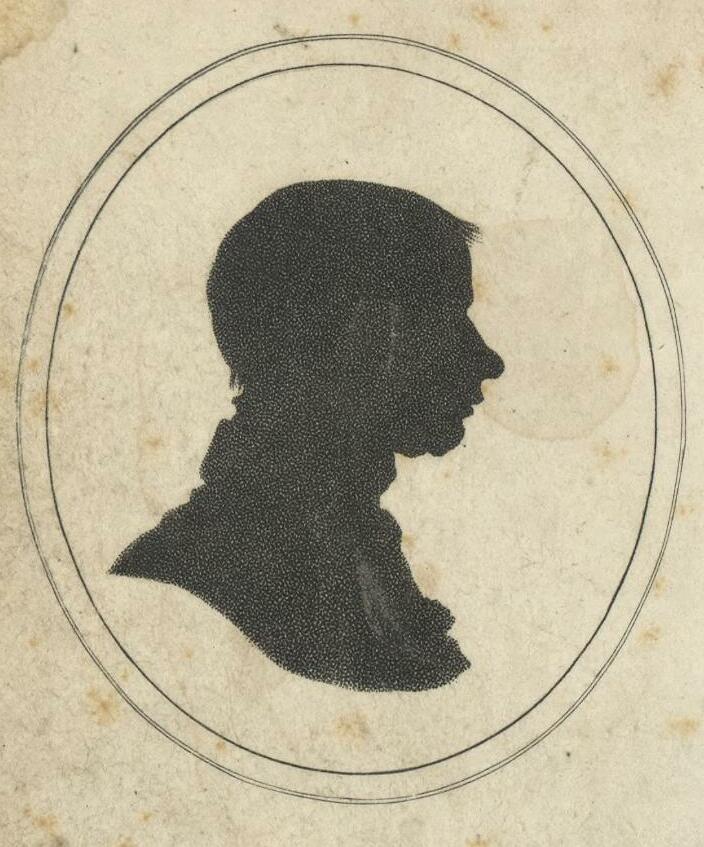

Three men and a common purse
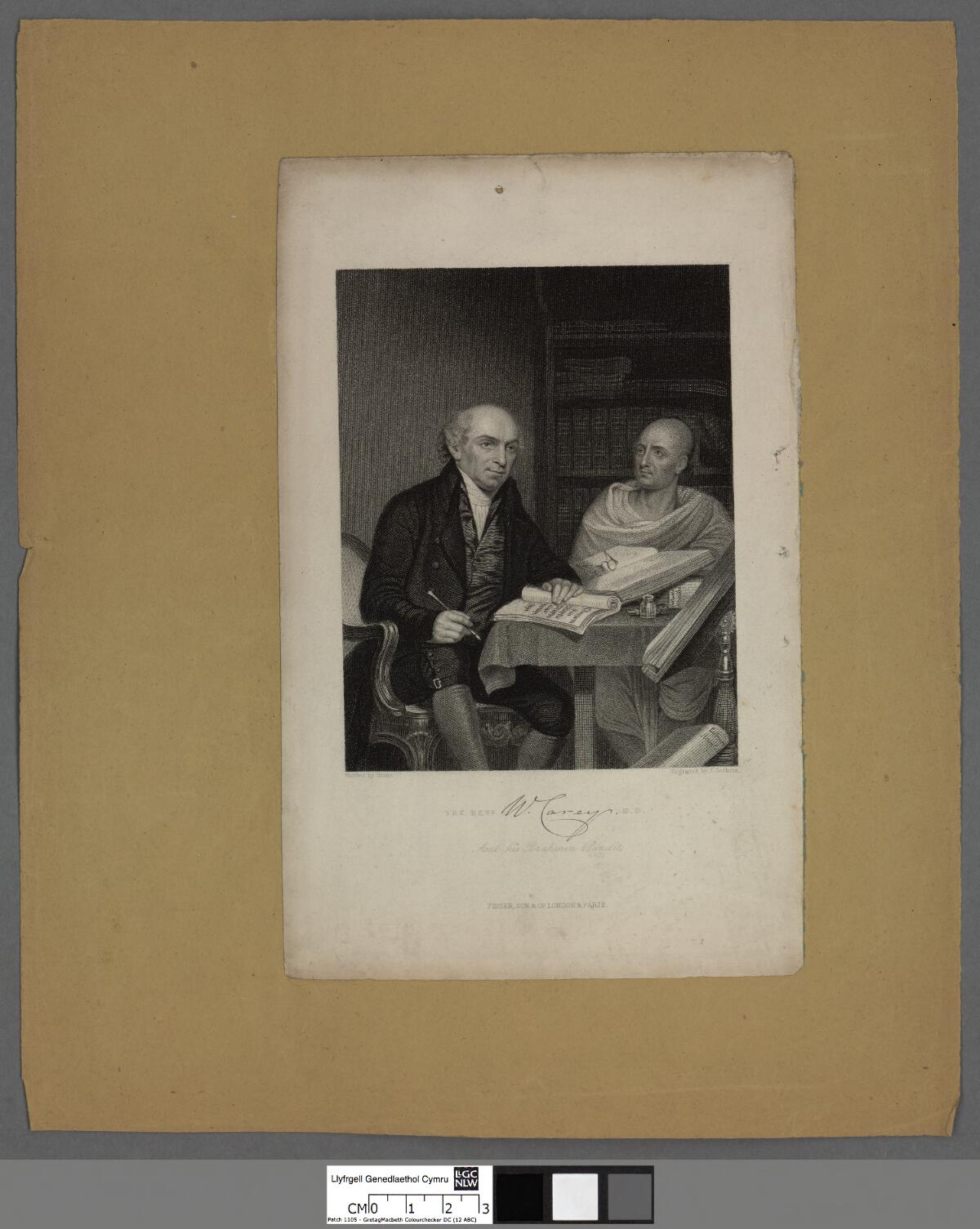
The "Serampore Trio" were Carey (the linguist and translator), Marshman (the schoolmaster, whose boarding schools earned much of the mission's early income) and Ward (the printer and pastor). Carey's first description of his new colleagues, in a letter to Fuller, reads: "Brother Ward is the very man we wanted: he enters into the work with his whole soul. ... Brother Marshman is a prodigy of diligence and prudence, as is also his wife in the latter: learning the language is mere play to him."4 Hannah Marshman ran schools and the shared household for decades. Smith called her "the first woman missionary to India." Lesson 09, Women and Missions, takes up the place of missionary wives.4
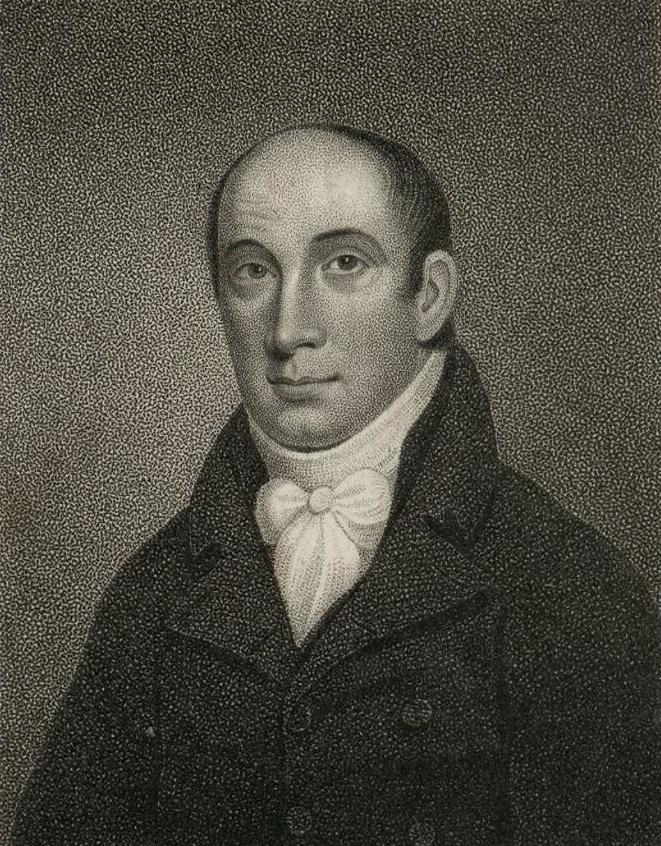

The three families lived as one household under a written agreement. When Grant died soon after arrival, the five missionaries then at Serampore agreed, in Smith's summary, "that no one should trade on his own private account, and that the product of their labour should form a common fund to be applied at the will of the majority."4 Carey's salary from the government college, Marshman's school fees and Ward's printing income all went into that fund. The arrangement was expanded in 1805 into a "Form of Agreement," which the three drew up "to be read publicly at all their stations thrice every year, on the Lord's Day."4 One line in it sends readers back to lesson 02: "Let us often look at Brainerd in the woods of America, pouring out his very soul before God for the perishing heathen, without whose salvation nothing could make you happy."4 The same document stated a principle about language that guided the whole mission: "A competent knowledge of the languages current where a missionary lives, a mild and winning temper, and a heart given up to God in closet religion; these, these are the attainments which more than all knowledge or all other gifts, will fit us to become the instruments of God in the great work of human redemption."4
Krishna Pal, December 28, 1800
Seven years passed before a Bengali Hindu was baptized by the Baptists. The first was Krishna Pal, a carpenter born in the neighboring French settlement of Chandernagore and living near Serampore. He had joined the Kartabhaja (Smith writes "Kharta-bhojas"), a Bengali devotional movement that professed to set caste aside. He came to the missionaries for treatment of an injured arm, and they talked with him in the weeks that followed.23 On December 22, 1800, he and a friend named Gokul ate a meal with the missionaries, which broke caste. The servants spread word that the two had "become Europeans," and the two men "were assaulted on their way home."23 Carey's journal entry for December 29, 1800, describes the baptism the day before:
Yesterday was a day of great joy. I had the happiness to desecrate the Gunga, by baptising the first Hindoo, viz. Krishna, and my son Felix: some circumstances turned up to delay the baptism of Gokool and the two women. Krishna's coming forward alone, however, gave us very great pleasure, and his joy at both ordinances was very great.23
Carey's word "desecrate," used with satisfaction about baptizing in the Ganges, a river Hindus hold sacred, shows how he saw the event: as a break with Hindu religious law. Hindu readers then and now can read the same word as contempt for their faith. Ward preached that day in English on John 5:39, "Search the Scriptures," and the Danish governor and "a good number of Europeans" watched.23 Krishna Pal's wife's sister, whom Smith calls Jeymooni, was the first Bengali woman baptized, and his wife, Rasoo in Smith's spelling, soon followed.23 Krishna Pal later preached in Calcutta and wrote Bengali hymns. Smith called him "the first Bengali hymn-writer."23 By the end of 1804, Smith counted, "the number of baptised converts was forty-eight, of whom forty were native men and women."23
The converts paid costs the missionaries did not. Gokul's wife, Komal, at first "fled to her father's," Smith recorded, and the early converts lost standing in their castes and, often, their families' support.23 The British authorities' fear of religious disturbance, which grew after the mutiny of Indian soldiers at Vellore in 1806, led to new limits on the missionaries' preaching and printing in Calcutta in 1806 and 1807. Smith's account of those years gives the missionaries' side of that dispute.2324
Fort William College and Bengali prose
A Baptist in a government college
In 1800 the Governor-General, Lord Wellesley, founded the College of Fort William in Calcutta to train the East India Company's young British officials in Indian languages, law and history.25 The Company government had restricted the press and was suspicious of missionaries, and an advertisement for the Serampore Bengali Bible in the official Calcutta Gazette first alarmed Wellesley. After the chaplain David Brown assured him that the Serampore press "had refused to print a political attack on the English Government," Wellesley, as Smith tells it, withdrew his objection and "made Carey first teacher of Bengali."26 Carey's own salary record, printed by Smith, shows the terms: "From May 1801 to June 1807, inclusive, as Teacher of Bengali and Sanskrit, 74 months at 500 rupees monthly," then "From 1st July 1807 to 31st May 1830, as Professor of ditto, at 1000 rupees monthly," later with Marathi added and a post as government translator.27 Smith totaled Carey's income from the government over his years at Serampore at £45,000, and wrote that this money went into the common mission fund, while the society in England had paid Carey and his family about £600 in all.27
At the college Carey worked with Bengali scholars (pandits and munshis) hired to teach and to write textbooks. The Bengali scholar Sushil Kumar De, in his History of Bengali Literature in the Nineteenth Century, 1800 to 1825 (University of Calcutta, 1919), listed the college's early Bengali books. They include Ram Ram Basu's Raja Pratapaditya Charitra (1801), described in an older catalogue as "the first prose work and the first historical one" printed in Bengali, Mrityunjay Vidyalankar's Rajabali (1808) and Prabodh Chandrika, and Carey's own Itihasmala (1812).28 De listed Carey's own Bengali works: "A Grammar of the Bengalee Language" (Serampore, 1801, with later editions to 1845), "Kathopakathan, or Colloquies or Dialogues intended to facilitate the acquiring of the Bengalee Language" (Serampore, August 1801), and his dictionary.28

Who made modern Bengali prose?
Many missionary biographies give Carey the credit for creating modern Bengali prose. S. K. De, who knew the books firsthand, disagreed in 1919:
It is not in the least degree correct to say, as it has been often enthusiastically said, that it is the missionary, especially Dr. Carey, who created modern Bengali Literature. The creation of modern literary Bengali covers a period of more than half a century from Carey's time and literary style, in the strict sense of the term, was not attained until a generation later when a band of youthful Bengali writers had come into the field, equipped in all the wealth of the new knowledge.8
De granted that the missionaries "gave an impetus to vernacular writing when it was generally neglected," and he credited Carey with a sound judgment: "even Carey himself had realised very early that, in spite of the efforts of the foreigners, the best way of building up such a literature would be inducing the children of the soil themselves to take to earnest literary work." His conclusion: "the literature of to-day is work not of Carey, Halhed, or Forster but of the people of the soil, of Mrtyunjay, of Ram-mohan, of Bankim-chandra, of Michael Madhusudan."8 Carey's own grammar, De noted, acknowledged help from Nathaniel Halhed's earlier Bengali grammar (1778).28
The translations and the fire of 1812
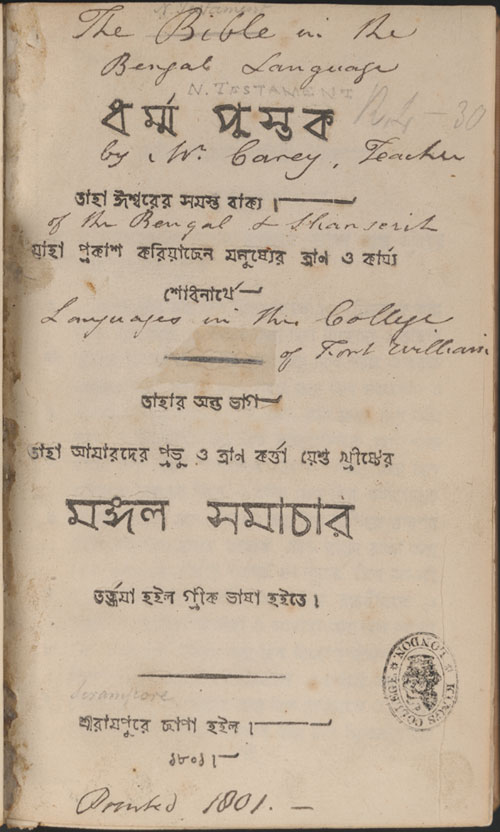
The Bengali New Testament of 1801
Carey had started translating at Mudnabati. At Serampore, Ward's journal for March 18, 1800, records: "Brother Carey took an impression at the press of the first page in Matthew."26 The Bengali New Testament appeared in February 1801, "in the first edition of 2000 copies, costing £612"; Smith wrote that "The type was set up by Ward and Carey's son Felix with their own hands," and that the last corrected sheet reached Carey on February 7, 1801.26 A bound copy was placed on the communion table of the chapel, and the missionaries and the new converts gathered round it to give thanks, with Krishna Pal leading.26 Carey finished translating the whole Bible into Bengali on June 24, 1809. Asked what he meant to do next, he answered: "The work I have allotted to myself, in translating, will take me about twenty years." That evening he fell seriously ill with fever.7

How many languages?
The count of Carey's translations depends on what is counted. Smith gave the narrow number: "The whole number of completely translated and published versions of the sacred Scriptures which Carey sent forth was twenty-eight. Of these seven included the whole Bible, and twenty-one contained the books of the New Testament."26 He also wrote that Carey "more than once deprecated the talk of his having translated the Bible into forty languages and dialects," and that the larger number fits only if one counts together what Carey translated himself, what his colleagues and pandits translated, what he revised, and what the Serampore press printed for others.26 According to Smith, "The Bengali, Hindi, Marathi, and Sanskrit translations were his own. The Chinese was similarly the work of Marshman."26 The linguist George A. Grierson, head of the Linguistic Survey of India, wrote in 1904 that "The great-hearted band of Serampore missionaries issued translations of the Bible or of the New Testament in more than forty languages."26 Many of the early versions in smaller languages were rough first drafts that later translators replaced. Carey himself insisted that he was a forerunner whose work would be superseded by Indian translators.26
The fire of March 11, 1812
On the evening of March 11, 1812, fire broke out in the Serampore printing office, a building that Thomas Thomason, a Calcutta chaplain who saw the ruins, described as "two hundred feet long and fifty broad."26 Ward and Marshman fought it for hours. It burned the paper stock, type and many manuscripts. Smith listed the losses: "The Sikh and Telugoo grammars and ten Bible versions in the press were gone," along with the translation of the Ramayana and the manuscript of Carey's "polyglot dictionary of all the languages derived from the Sanskrit."26 Thomason recalled walking over the ruins with Carey: "The tears stood in his eyes. 'In one short evening,' said he, 'the labours of years are consumed. How unsearchable are the ways of God!'"26 The steel punches for the Indian type faces survived, and the five presses were saved, so printing resumed quickly in a warehouse nearer the river.26
The Company, the ban and the Charter Act of 1813
For twenty years Carey's mission worked under the Company's tolerance, protected in Serampore by Denmark. The question of missionaries in British India came before Parliament in 1813, when the Company's charter was renewed. Evangelicals, among them William Wilberforce in the Commons and Charles Grant (by then a Company director), pressed the question, and churches across Britain sent petitions. John Clark Marshman, son of Joshua Marshman, printed the resolution that the government's spokesman, Lord Castlereagh, brought to the House of Commons on May 31, 1813, after the petitions:
It is the opinion of this Committee that it is the duty of this country to promote the interests and happiness of the native inhabitants of the British dominions in India, and that such measures ought to be adopted as may tend to the introduction among them of useful knowledge, and of religious and moral improvement. That, in furtherance of the above objects, sufficient facilities shall be afforded by law to persons desirous of going to and remaining in India for the purpose of accomplishing these benevolent designs: Provided always, that the authority of the local governments respecting the intercourse of Europeans with the interior of the country be preserved, and that the principles of the British Government, on which the natives of India have hitherto relied for the free exercise of their religion, be inviolably maintained.29
Marshman called it "the 13th Resolution." Its substance was carried into the Charter Act of 1813, which ended the Company's monopoly of trade with India and allowed missionaries, under licence, to go there.2921 This lesson opened Marshman's printing of the resolution, not the printed statute itself. The Act's exact wording and section number are therefore listed as unverified. The resolution's proviso matters as much as its promise: the government kept power over where Europeans could go and promised Indians "the free exercise of their religion."
Sati: Carey, Rammohun Roy and Bentinck
Carey's campaign
After the 1799 burning, Carey gathered evidence. Smith wrote that he "employed trustworthy natives to collect statistics proving that in the small district around Calcutta 275 widow murders thus took place in six months of 1803."30 In a letter of April 27, 1808, Carey told Ryland that he had "presented three petitions or representations to Government for the purpose of having the burning of women and other modes of murder abolished, and have succeeded in the case of infanticide and voluntary drowning in the river. Laws were made to prevent these, which have been successful."30 (The infanticide he meant was the giving of children to the sea at Sagar Island, where the Ganges meets the Bay of Bengal, in payment of vows; the government's regulation called it "a criminal and inhuman practice" and declared it murder.)30
Rammohun Roy
The most important Indian voice against sati was Rammohun Roy (born 1772 or 1774, sources differ; died 1833), a Bengali Brahmin scholar and reformer who argued from Hindu scripture itself. In 1818 he published in Bengali and then in English A Conference between an Advocate for, and an Opponent of, the Practice of Burning Widows Alive. His English preface says the tract "has been for several weeks past in extensive circulation in those parts of the country where the practice of widows burning themselves on the pile of their husbands is most prevalent."31 In an autobiographical sketch he described the cost: "My continued controversies with the Brahmins on the subject of their idolatry and superstition, and my interference with their custom of burning widows, and other pernicious practices, revived and increased their animosity against me." He stated his ground plainly: "The ground which I took in all my controversies was, not that of opposition to Brahmmism, but to a perversion of it."32
Rammohun Roy also clashed with the Serampore missionaries. In 1820 he published The Precepts of Jesus, a selection of Jesus's moral teaching without the miracles and doctrines, which offended Marshman and the other Trinitarian missionaries and started a long printed controversy.33 He knew Carey, Ward and Marshman personally from at least 1816, according to his editor, Jogendra Chunder Ghose.33 His career shows a Hindu reformer and the missionaries opposing sati on different grounds and disagreeing sharply on religion.
Bentinck's minute and Regulation XVII of December 4, 1829
Lord William Bentinck, Governor-General from 1828, wrote a long minute on November 8, 1829, recommending abolition. He wrote that "our interference has hitherto done more harm than good, by lending a sort of sanction to the ceremony," and that "my opinion is decidedly in favour of an open, avowed and general prohibition."34 The minute as printed in the source used here does not mention missionaries.34 Bengal Regulation XVII of 1829, dated December 4, 1829, begins:
The practice of sati or of burning or burying alive the widows of Hindus is revolting to the feelings of human nature; it is nowhere enjoined by the religion of the Hindus as an imperative duty; on the contrary, a life of purity and retirement on the part of the widow is more especially and preferably inculcated, and by a vast majority of that people throughout India the practice is not kept up nor observed.35
Its second section declared the practice "illegal and punishable by the Criminal Courts."35 The preamble's argument (that the rite was not required by Hindu religion) is the argument Rammohun Roy had made from the texts. Smith tells that when the regulation reached Carey "on a Sunday morning," he "sent for another to do the preaching, and taking his pen in his hand, at once wrote the official translation," so that it could appear in Bengali without delay.30 Smith gives no contemporary source for that story, and it is rated below. Supporters of sati appealed to the Privy Council in London. Rammohun Roy traveled to England in 1830 and 1831 partly to oppose that appeal, and the Privy Council dismissed it on June 24, 1832.3230
Serampore College, the split with the Society and the last years
Serampore College, 1818
In 1818 Carey, Marshman and Ward founded Serampore College, to teach Indian students, Christian and Hindu, in Sanskrit, Bengali, English and Western learning, and to train Indian ministers. Smith reports that "The Serampore College began with thirty-seven students, of whom nineteen were native Christians and the rest Hindoos."36 The King of Denmark, Frederick VI, "has written letters signed with his own hand to Brothers Ward, Marshman, and myself," Carey wrote to his son, "and has sent each of us a gold medal."36 By a royal charter of February 23, 1827, the king empowered the college to grant degrees, and the 1845 treaty that transferred Serampore to Britain promised that "the rights and immunities granted to the Serampore College by Royal Charter, of date 23rd of February, 1827, shall not be interfered with."5 Smith noted that for lack of endowment the college "has never been fully developed on University lines" in his day and was used from 1883 to train preachers and teachers.5
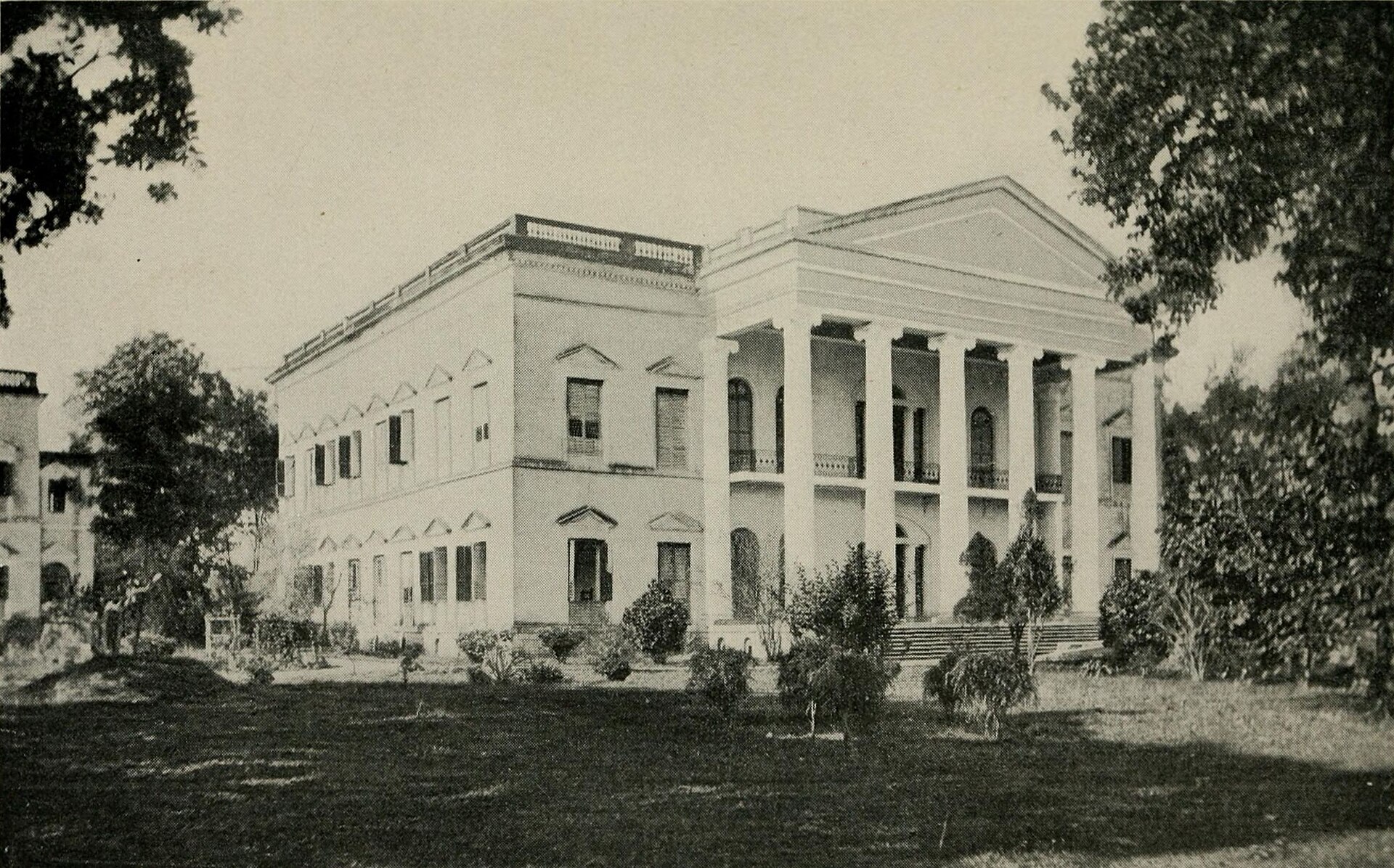

The separation of 1827
After Fuller's death in 1815, a younger generation took over the society's committee in England, and younger missionaries in Calcutta formed their own union. The disputes were over who owned the Serampore property the Trio had bought with their own earnings, and who directed the mission: the men in India or the committee at home. In 1827 the Serampore mission and the Baptist Missionary Society separated.36 Carey wrote angrily to his son Jabez on April 17, 1828, about "the separation which has taken place between them and us," and refused to let anyone exempt him from blame shared with Marshman: "I was a party in all public acts and writings."36 A Serampore statement printed by Smith said that "During the last ten years of entire independence the missionary cause has received from the product of our labour ... much more than £23,000."36 The two bodies were reunited after Marshman's death in 1837, according to later histories. Brian Stanley's History of the Baptist Missionary Society, 1792 to 1992 (1992) is the standard account of the dispute.37
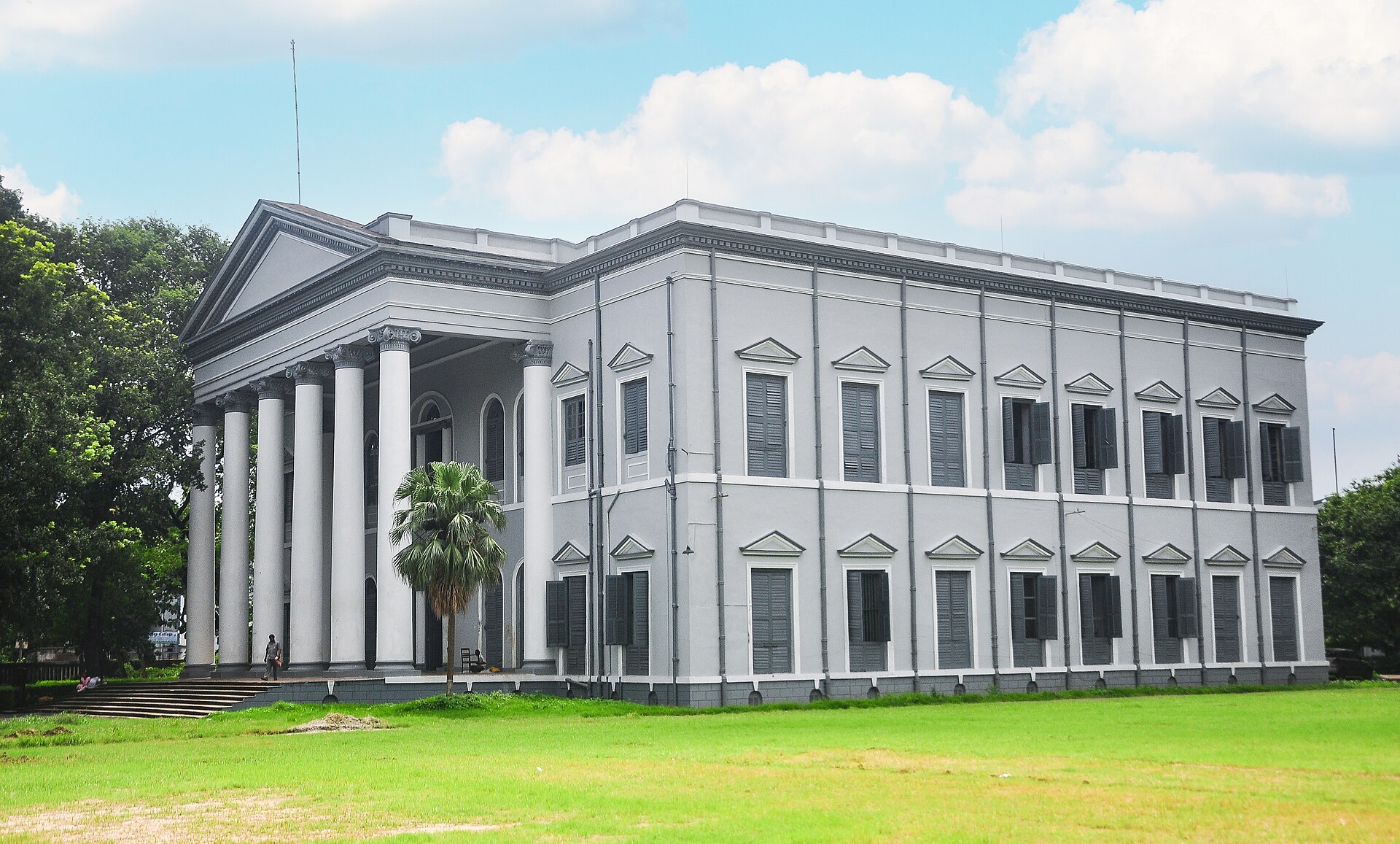

The botanist
Carey kept a large botanic garden at Serampore, and on April 15, 1820, he issued the prospectus that founded the Agricultural and Horticultural Society of India.38 Smith reports that Carey spent £7,500 on his garden over the years and that in 1823 he was elected a corresponding member of the Horticultural Society of London and a Fellow of the Linnean Society.2738 Vishal and Ruth Mangalwadi, Indian Christian writers, list Carey's roles as industrialist, economist, medical humanitarian, media pioneer, educator, moral reformer, botanist and Christian missionary, and their publisher's description claims that he "did more for the transformation of the Indian subcontinent in the nineteenth and twentieth centuries" than any other individual.39 That claim is a judgment by admirers, and other historians, Indian and British, give much larger roles to Indian reformers and to the colonial state.
Death, June 9, 1834
Ward died of cholera in 1823.36 Carey, in his seventies, finished his last revision of the Bengali Bible and grew weak. A few days before his death he told Marshman: "I have no fears; I have no doubts; I have not a wish left unsatisfied."27 He died at Serampore on Monday, June 9, 1834, early in the morning.27 Smith reports that "William Carey had died so poor that his books had to be sold to provide £187 10s. for one of his sons."27 Marshman claimed for him "Twenty-six Gospel Churches planted in India within a surface of about eight hundred miles, and above Forty labouring brethren raised up on the spot amidst them."27 Marshman himself died in 1837.4 Carey once told his nephew Eustace how to judge any biography of him: "If he give me credit for being a plodder he will describe me justly. Anything beyond this will be too much. I can plod. I can persevere in any definite pursuit. To this I owe everything."40
How historians read Carey
The earliest accounts were written by his colleagues and friends: Ryland (1816 and 1818), Morris (1816), Eustace Carey's Memoir (1836, which Smith dismissed as "little better than a selection of mutilated letters and journals"), and John Clark Marshman's two-volume Life and Times of Carey, Marshman, and Ward (1859), which Smith called "rather a biography of his father than of Carey."40 George Smith's Life of William Carey (1885; the online text quoted in this lesson is a later revised edition that mentions 1909) set the heroic portrait that most popular accounts still follow. Its tone toward Hinduism ("the darkness of the pit of Hindooism") and toward Dorothy Carey belongs to its age.237
Later historians drew more mixed pictures. E. Daniel Potts (1964 and later) studied the Serampore missionaries' relations with the Company government.21 Brian Stanley's history of the Baptist Missionary Society (1992) set the Serampore Trio within the society's long institutional story, including the 1827 separation.37 Bengali scholars such as S. K. De weighed the missionaries' place in Bengali letters and gave the larger share to Bengali writers.8 Indian Christian writers such as the Mangalwadis credit Carey with wide social reform.39 Hindu reformers of Carey's own time, Rammohun Roy above all, admired Jesus's ethics and opposed sati but rejected the missionaries' doctrines and their attacks on Hindu belief.3332 Each of these readings rests on part of the same record.
What the record shows and what it does not
- Documented fact: Carey's birth (August 17, 1761), baptism (October 5, 1783), the Enquiry (Leicester, 1792), the founding of the society at Kettering (October 2, 1792) with £13 2s 6d, the sailing (June 13, 1793) and landing (November 11, 1793), the move to Serampore (January 10, 1800), Krishna Pal's baptism (December 28, 1800), the Serampore fire (March 11, 1812), the college's Danish charter (February 23, 1827), Regulation XVII (December 4, 1829) and Carey's death (June 9, 1834) all rest on contemporary records or on accounts by people who were there.101934232653527
- The missionary's own words: the Enquiry, Carey's autobiographical letter (Cook's voyages), his 1793 letter to Dorothy, his 1799 sati letter, his December 29, 1800 journal entry and his letters on the separation are quoted above from printed editions.211362336
- What the people the missionaries came to recorded: Bengali voices from the period reach us mostly through missionary writers (Krishna Pal's confession, the replies at the pyre). Rammohun Roy's own writings and S. K. De's 1919 history are direct Bengali sources used here.31328 Dorothy Carey left no writings found for this lesson.
- Later biography and sermon tradition: the "Young man, sit down" speech (1859 wording), the two-line "Expect great things ... Attempt great things" slogan, Carey's spoken "hold the ropes" (Fuller's recollection as Morris printed it in 1816, with Smith's 1885 addition), the leather globe, and the story of the Sunday translation of the sati regulation.131330
- Scholarly reading: how much credit Carey deserves for Bengali prose (De), for the end of sati (Bengali reformers, Bentinck and the missionaries all had parts), and how to read the Enquiry's language about non-Christian peoples remain matters of judgment.834
- Open questions: the exact date of the Nottingham sermon (May 30 or 31), the exact date of Carey's ordination, the nature of Dorothy Carey's illness, and the full wording of the 1813 Act's clause as enacted.191
Pictures, Numbers and Infographics
The table gathers the lesson's main numbers, each with its source. Money is given in the pounds, shillings and pence (or rupees) of the time. No conversion to present values is attempted.
| Item | Number | Source |
|---|---|---|
| Carey's estimate of world population, 1792 | about 731 million | Enquiry, Section III14 |
| "in pagan darkness" / Muslims / Catholics / Protestants / Greek and Armenian / Jews | 420 / 130 / 100 / 44 / 30 / 7 million | Enquiry, Section III14 |
| Price of the Enquiry, 1792 | 1 shilling and 6 pence | Smith, ch. 21 |
| Gift from Thomas Potts toward printing it | £10 | Smith, ch. 21 |
| First subscription at Kettering, October 2, 1792 | £13 2s 6d, from 12 signers | Smith, ch. 2; Ryland (1818)119 |
| Brought by Samuel Pearce, October 31, 1792 | £70 | Ryland (1818)19 |
| Membership fee | £10 at once or 10s 6d a year | Kettering minutes, in Smith1 |
| Allowance voted for the first two missionaries, 1793 | £100 or £150 a year "between them all" | Smith, ch. 33 |
| Received from the society in the first three years | £200 in all | Smith, ch. 33 |
| Length of the voyage, 1793 | about five months (June 13 to November 11) | Smith, ch. 33 |
| Bengali New Testament, first edition, 1801 | 2,000 copies, cost £612 | Smith, ch. 1026 |
| Baptized converts at Serampore by end of 1804 | 48, of whom 40 Indian | Smith, ch. 623 |
| Widows burned near Calcutta, six months of 1803 (Carey's survey) | 275 | Smith, ch. 1130 |
| Serampore printing office destroyed by fire, March 11, 1812 | 200 by 50 feet; ten Bible versions in press lost | Thomason and Smith, ch. 1026 |
| Scripture versions Carey "sent forth" (Smith's count) | 28 (7 whole Bibles, 21 New Testaments) | Smith, ch. 1026 |
| Languages of Serampore Bible or New Testament translations (Grierson, 1904) | "more than forty" | Grierson, quoted by Smith26 |
| Serampore College students at opening, 1818 | 37 (19 Christian, 18 Hindu) | Smith, ch. 1436 |
| Carey's government salary as teacher, then professor | 500, then 1,000 rupees a month | Salary record in Smith27 |
| Carey's total government income while at Serampore | about £45,000; about £600 from the society | Smith, ch. 1627 |
| Spent on the botanic garden | £7,500 | Smith, ch. 1627 |
| Churches and Indian workers at Carey's death (Marshman's claim) | 26 churches; "above Forty" workers | Marshman, quoted by Smith27 |
| Price paid by Britain for Serampore and other Danish posts, 1845 | £125,000 | Treaty, in Smith, ch. 155 |
| Years Carey lived in India | about 40 (1793 to 1834), 34 of them at Serampore | Smith327 |
Claims checked
"Carey preached: Expect great things from God; attempt great things for God."
Rating: Partly supported. The earliest printed accounts found, both of 1816, come from men who knew Carey. John Ryland Jr., who heard the sermon, says Carey was "chiefly endeavouring to enforce our obligations to expect great things from God, and to attempt great things for God."19 J. W. Morris says Carey put the spirit of his text "in two exhortations," printed as "expect great things" and "attempt great things."12 That supports the substance and the two-part shape. The numbered slogan with "from God" and "for God" is printed by Cox in 1842 and by Marshman in 1859, and Smith's 1885 capital-letter version made it a motto.42131 Carey's own wording in the pulpit is not recorded in any source found. Ryland's account is a summary in his sentence, and the date he gives (May 30) differs from the usual May 31.
"The elder John Ryland told Carey: Sit down, young man; when God pleases to convert the heathen, he will do it without your aid or mine."
Rating: Partly supported. An eyewitness, John Webster Morris, printed in 1816 that the elder Ryland called Carey "a most miserable enthusiast for asking such a question" and said nothing could be done "before another Pentecost."12 The famous sentence with "Young man, sit down" and "without your aid or mine" is in Marshman's 1859 book, about seventy-three years after the meeting. No earlier printing was found for this lesson.13 Smith reported that "Old Mr. Ryland always failed to recall the story."1 The rebuke rests on one eyewitness account. The exact famous words have no early source.
"Carey said: I will go down, if you will hold the rope."
Rating: Partly supported. The source is Andrew Fuller, and his recollection survives in two printed forms of 1816. Ryland quotes him describing the society's start as a mine: "Carey, as it were, said, 'Well, I will go down if you will hold the rope.'"20 Morris quotes him giving direct speech: "'I will venture to go down,' said Carey to his brethren; 'but remember that you must hold the ropes.'"12 Fuller's picture of the bargain is well documented, and Morris's version gives Carey a spoken sentence, but both come through Fuller's memory, and the wording differs between them. Smith's 1885 version, with Carey "addressing Fuller, Sutcliff, and Ryland," adds a detail that neither 1816 source gives.3
"Carey was the first Protestant missionary" or "the father of modern missions."
Rating: Partly supported. Carey was not the first Protestant missionary. He himself named Eliot, Brainerd, the Moravians and Ziegenbalg (sent to Tranquebar in 1706) as predecessors.9 In Bengal itself, J. Z. Kiernander had run a "Mission Church" in Calcutta whose work, Charles Grant wrote, had "been confined to the descendants of Europeans," and the Moravians "in 1777 had sent two brethren to Serampore, Calcutta, and Patna" but soon withdrew them.3 Smith's narrower claim, that Carey was "the first ordained Englishman who was sent to it as a missionary," fits the record better.3 "Father of modern missions" is a title of honor, not a statement of fact. It reflects the many British and American societies that formed after 1792 and cited his example.
"Carey translated the Bible into forty (or forty-four) languages."
Rating: Partly supported. Grierson credited the Serampore missionaries as a group with translations "in more than forty languages."26 Smith wrote that Carey "more than once deprecated the talk of his having translated the Bible into forty languages and dialects," and counted 28 versions that Carey sent forth, 7 of them whole Bibles.26 Carey's own translations were the Bengali, Hindi, Marathi and Sanskrit, according to Smith. Colleagues and Indian pandits did much of the rest.26
"Carey abolished sati."
Rating: Partly supported. Carey witnessed sati, gathered figures, and petitioned the government for years.630 But the regulation was the act of the Governor-General in Council under Bentinck, whose minute does not mention missionaries in the source used here, and its preamble used the argument from Hindu scripture that the Bengali reformer Rammohun Roy had pressed since 1818.343531 The end of legal sati in Bengal had several causes, and Carey was one of them.
"Carey received the sati regulation on a Sunday morning, skipped preaching and translated it at once."
Rating: Unresolved. The story is told by Smith in 1885.30 No contemporary letter or journal entry confirming it was found for this lesson. It fits Carey's role as government translator, but it is unconfirmed.
"Krishna Pal was Carey's first Bengali convert."
Rating: Supported, with a qualification. Carey's journal of December 29, 1800, records baptizing "the first Hindoo, viz. Krishna."23 Smith adds that Krishna Pal was "the first native Christian of North India of whom we have a reliable account," which leaves room for earlier converts of other missions (Smith himself mentions a man baptized by Kiernander in Calcutta in the 1770s).233 He was the Serampore Baptists' first Hindu convert.
"Carey created modern Bengali prose."
Rating: Partly supported. Carey wrote and printed some of the earliest Bengali prose textbooks and grammars, and the Bengali department of Fort William College, where he taught, published the first Bengali prose books, many written by Bengali pandits such as Ram Ram Basu and Mrityunjay Vidyalankar.28 The Bengali historian S. K. De called the claim that Carey "created modern Bengali Literature" not "in the least degree correct."8
"Carey went to India illegally."
Rating: Supported. Carey had no licence from the East India Company. The society knowingly planned to send him "without leave," and he reached Bengal on a Danish ship.193 He later held a licence to reside as an indigo manager, and from 1800 lived under Danish protection.64
Hard questions and answers
Did Carey sacrifice his wife and children to his mission?
The record supports a hard answer in part. Carey planned at first to leave without Dorothy and the younger children, and wrote that "the sense of duty is so strong as to overpower all other considerations."3 Dorothy went only when her sister could go too. Their son Peter died in Bengal, and Dorothy suffered a long mental illness and died there.67 The same sources show that Carey cared for her at home for years rather than sending her away, and that his colleagues helped. Whether his choice was a faithful sacrifice or a wrong done to his family depends on the reader's view of a call that overrides family wishes. James Beck's book argues the case from Dorothy's side.22
Was Carey an agent of British empire?
The evidence points both ways. Carey went to India against the East India Company's rules and lived for thirty-four years under Danish protection.34 The Company feared that missionaries would provoke unrest, and restricted them after the 1806 Vellore mutiny.24 Yet Carey also took a government salary for three decades, worked in a college built to train colonial officials, and pressed the government to use its power against sati.2730 His Enquiry looked to trading companies as a model and called large parts of the world "destitute of civilization."1416 Brian Stanley's The Bible and the Flag (1990) argued that Protestant missions and British imperialism were linked in more complicated ways than either their defenders or their critics usually allow. This lesson gives the record and leaves the verdict to the reader.41
What did Bengalis of his time think of Carey's work?
Few Bengali writings about Carey himself were found for this lesson. Krishna Pal and other converts embraced the faith at real cost. Their neighbors attacked them in the street.23 Brahmin scholars worked with Carey for pay and taught him. One Brahmin, offered a Hindi Gospel, said "The knowledge of God contained in them is to us as milk in a vessel of dog's skin, utterly polluted," according to Smith.26 Rammohun Roy worked with the missionaries against sati but argued against their doctrines in print.33 S. K. De, a century later, credited the missionaries with an impetus to Bengali writing while giving the literature itself to Bengali authors.8
Why did Carey's model last when earlier efforts faded?
The sources point to several features: a society of ordinary subscribers instead of a single patron (Kettering's penny-a-week and ten-shillings-and-sixpence plan), a team that pooled its earnings, a long stay (over forty years), and heavy investment in language, printing and schools.1614 Carey's own principle, written into the 1805 agreement, put "A competent knowledge of the languages current where a missionary lives" first among a missionary's qualifications.4 The same model also had weaknesses: the dispute of 1827 showed what happened when the men in the field and the committee at home disagreed about property and control.36
Why is a pamphlet from 1792 still read by mission agencies?
The Enquiry made three arguments that later mission movements repeated: the Great Commission binds every generation, the state of the world can be measured and should be known, and ordinary Christians should organize and give regularly to send workers.21416 Its tables are an early form of the population and religion statistics that mission researchers still compile (see lesson 13, Missions Today). Its language about "barbarous" peoples is also a reason later readers, including Christians from the Global South, read it critically.
Learn more
- Carey's Enquiry, full text: Read the five sections and the world tables in Carey's own words; it is short.
- George Smith, The Life of William Carey (1885): The classic full biography, with many of Carey's letters and journals; read it alongside its 1885 attitudes.
- S. K. De, History of Bengali Literature in the Nineteenth Century (1919): A Bengali scholar's account of Fort William College, the pandits and the missionaries' place in Bengali letters.
- The English Works of Raja Rammohun Roy, vol. 2: Rammohun Roy's own arguments against sati and his replies to the Serampore missionaries.
- Module 80, Baptists: The Baptist family that sent Carey, and the American Baptists who followed his lead.
- Lesson 05: Adoniram and Ann Judson: The Americans who became Baptists in Calcutta in 1812 and went on to Burma.
Still being checked (14 items)
These points could not be confirmed against a primary source when this lesson was written and fact checked in October 2026. The text above states each one as uncertain.
- The exact date of the Nottingham sermon: Ryland (1816; 1818 edition) gives May 30, 1792; Smith (1885) gives May 31.
- The exact date of Carey's ordination at Moulton (the Olney church book dismissed him for ordination on April 29, 1787; Smith elsewhere gives August 10, 1786 as the date the ministers were asked to ordain him).
- That Dorothy Carey could not read or write when she married (stated by later biographers; not confirmed in the sources opened).
- The exact wording and section number of the missionary clause in the Charter Act of 1813 as enacted; only Lord Castlereagh's 13th Resolution as printed by J. C. Marshman (1859) was opened.
- Whether any printing of "Young man, sit down ... without your aid or mine" exists before J. C. Marshman (1859). Not found in Morris (1816; 1830 edition), Ryland (1816; 1818 edition), Eustace Carey's Memoir (1836) or Cox (1842), which says only that the elder Ryland "called him an enthusiast."
- The story that Carey translated the sati regulation on a Sunday morning instead of preaching (told by Smith, 1885; no contemporary source found).
- The date and London publisher of the first editions of Ryland's and Morris's lives of Fuller (both given as 1816; the American editions of 1818 and 1830 were opened).
- The reunion of the Serampore mission with the Baptist Missionary Society in 1837 (from later histories; not opened).
- The identity of the pandit in the 1836 engraving of Carey (not named in the Commons record).
- Brian Stanley's two books and James R. Beck's book were cited for their general arguments only and were not opened for this lesson.
- The Project Gutenberg text of George Smith's Life of William Carey is a later revised edition (it mentions 1909); passages quoted as Smith's may date from that revision rather than the 1885 first edition.
- The name (Grace Hughes) and year (1823) of Carey's third wife: Smith confirms a third marriage and that she survived Carey by a year, but gives neither name nor date in the passages found.
- The date of the Bengali New Testament copy in the Commons image: the King's College London description says it is one of the 2,000 copies of the 1801 first edition, while the Commons date field says 1805; the copy itself was not examined.
- Whether Fuller's "hold the ropes" words in Morris (1816) come from an earlier printed source (Morris gives none in the 1830 edition opened).
Notes
- George Smith, The Life of William Carey, Shoemaker and Missionary (first published London, 1885; the Project Gutenberg text, ebook no. 2056, follows a later revised edition that mentions 1909; retrieved Nov. 12, 2026), chapter 2 (Moulton from Lady Day 1785; the 1784 prayer call; the 1786 meeting; Potts's £10 and the 1792 printing; the Nottingham sermon; the Kettering minutes of October 2, 1792, and the £13 2s 6d subscription). Read it online. ↩
- William Carey, An Enquiry into the Obligations of Christians, to Use Means for the Conversion of the Heathens (Leicester, 1792), title page, Introduction and Section I. Project Gutenberg ebook no. 11449, retrieved Nov. 12, 2026. Read it online. ↩
- George Smith, The Life of William Carey, Shoemaker and Missionary (first published London, 1885; the Project Gutenberg text, ebook no. 2056, follows a later revised edition that mentions 1909; retrieved Nov. 12, 2026), chapter 3 (Cook's voyages and the globe; John Thomas; the January 10, 1793 appointment and allowance; the licence law; the Oxford; Carey's letter from Ryde; the Kron Princessa Maria, June 13, 1793; landing November 11, 1793; Kiernander and the Moravians in Bengal). Read it online. ↩
- George Smith, The Life of William Carey, Shoemaker and Missionary (first published London, 1885; the Project Gutenberg text, ebook no. 2056, follows a later revised edition that mentions 1909; retrieved Nov. 12, 2026), chapter 5 (the 1799 arrivals on the Criterion; Serampore, January 10, 1800; Colonel Bie; Ward and the Marshmans; the common fund and the Form of Agreement of 1805). Read it online. ↩
- George Smith, The Life of William Carey, Shoemaker and Missionary (first published London, 1885; the Project Gutenberg text, ebook no. 2056, follows a later revised edition that mentions 1909; retrieved Nov. 12, 2026), chapter 15 (the royal charter of February 23, 1827; the treaty of October 6, 1845, and the sale of Serampore for £125,000; the college after 1883). Read it online. ↩
- George Smith, The Life of William Carey, Shoemaker and Missionary (first published London, 1885; the Project Gutenberg text, ebook no. 2056, follows a later revised edition that mentions 1909; retrieved Nov. 12, 2026), chapter 4 (the Sundarbans and Hasnabad; Mudnabati and the indigo works; Peter's death; Dorothy Carey's illness and John Thomas's letter; Carey's letter of April 1, 1799 on sati). Read it online. ↩
- George Smith, The Life of William Carey, Shoemaker and Missionary (first published London, 1885; the Project Gutenberg text, ebook no. 2056, follows a later revised edition that mentions 1909; retrieved Nov. 12, 2026), chapter 8 (Dorothy Carey's death, December 1807; Smith's judgment of her; marriage to Charlotte Rumohr, May 9, 1808, and her death in 1821; completion of the Bengali Bible, June 24, 1809). Read it online. ↩
- Sushil Kumar De, History of Bengali Literature in the Nineteenth Century, 1800 to 1825 (Calcutta: University of Calcutta, 1919), pp. 61 to 62. Internet Archive scan, retrieved Nov. 12, 2026. Read it online. ↩
- William Carey, An Enquiry (Leicester, 1792), Section II, "Containing a short Review of former Undertakings." Project Gutenberg ebook no. 11449, retrieved Nov. 12, 2026. Read it online. ↩
- George Smith, The Life of William Carey, Shoemaker and Missionary (first published London, 1885; the Project Gutenberg text, ebook no. 2056, follows a later revised edition that mentions 1909; retrieved Nov. 12, 2026), chapter 1 (birth August 17, 1761; apprenticeship at Hackleton; marriage; Ryland Jr.'s account of the baptism of October 5, 1783; Olney church book entries of 1785 to 1787). Read it online. ↩
- Eustace Carey, Memoir of William Carey, D.D., Late Missionary to Bengal (London, 1836; American edition with an introductory essay by Francis Wayland, Boston: Gould, Kendall and Lincoln, 1836), pp. 12 to 13, Carey's autobiographical letter. Internet Archive scan, retrieved Nov. 12, 2026. Read it online. ↩
- J. W. Morris, Memoirs of the Life and Writings of the Rev. Andrew Fuller (first London edition 1816; first American edition, ed. Rufus Babcock, Boston: Lincoln and Edmands, 1830), pp. 84 to 85 (the 1786 meeting), pp. 86 to 87 (the Nottingham sermon's "two exhortations"), pp. 87 to 88 (the Kettering meeting of January 1793 and Fuller's "gold mine" and "hold the ropes"), and the account of Beeby Wallis's death on April 2, 1792. Internet Archive scan, retrieved Nov. 12, 2026. Read it online. ↩
- John Clark Marshman, The Life and Times of Carey, Marshman, and Ward, Embracing the History of the Serampore Mission (London: Longman, Brown, Green, Longmans and Roberts, 1859), vol. 1, chapter 1 (the elder Ryland's rebuke; the Nottingham sermon's "two principles"; Carey seizing Fuller's hand). Internet Archive scan, retrieved Nov. 12, 2026. Read it online. ↩
- William Carey, An Enquiry (Leicester, 1792), Section III, "Containing a Survey of the present State of the World," tables and five remarks. Project Gutenberg ebook no. 11449, retrieved Nov. 12, 2026. Read it online. ↩
- William Carey, An Enquiry (Leicester, 1792), Section IV, "The Practicability of something being done." Project Gutenberg ebook no. 11449, retrieved Nov. 12, 2026. Read it online. ↩
- William Carey, An Enquiry (Leicester, 1792), Section V, "An Enquiry into the Duty of Christians in general." Project Gutenberg ebook no. 11449, retrieved Nov. 12, 2026. Read it online. ↩
- The Holy Bible, King James Version (1611), Matthew 28:19 to 20. Project Gutenberg ebook no. 10, retrieved Nov. 12, 2026. Read it online. ↩
- The Holy Bible, King James Version (1611), Isaiah 54:2 to 3. Project Gutenberg ebook no. 10, retrieved Nov. 12, 2026. Read it online. ↩
- John Ryland, The Work of Faith, the Labour of Love, and the Patience of Hope, Illustrated; in the Life and Death of the Rev. Andrew Fuller (first published London, 1816; American edition, Charlestown, Massachusetts: Samuel Etheridge, 1818), pp. 138 to 140 (the Clipstone meeting, the Nottingham sermon of May 30, 1792, the Kettering society of October 2, 1792, the £13 2s 6d and Pearce's £70, John Thomas, and the plan to sail without leave). Internet Archive scan, retrieved Nov. 12, 2026. Read it online. ↩
- John Ryland, The Work of Faith, the Labour of Love, and the Patience of Hope (Charlestown, Massachusetts: Samuel Etheridge, 1818), pp. 144 to 145 (Fuller's image of the mine and the rope). Internet Archive scan, retrieved Nov. 12, 2026. Read it online. ↩
- E. Daniel Potts, "The Baptist Missionaries of Serampore and the Government of India, 1792 to 1813," Journal of Ecclesiastical History 15, no. 2 (October 1964): 229 to 246, doi 10.1017/S0022046900059911 (abstract read, retrieved Nov. 12, 2026). Read it online. ↩
- James R. Beck, Dorothy Carey: The Tragic and Untold Story of Mrs. William Carey (Grand Rapids: Baker Book House, 1992). Cited for its argument only; not quoted. ↩
- George Smith, The Life of William Carey, Shoemaker and Missionary (first published London, 1885; the Project Gutenberg text, ebook no. 2056, follows a later revised edition that mentions 1909; retrieved Nov. 12, 2026), chapter 6 (Krishna Pal; Carey's journal for December 29, 1800; the first women baptized; Gokul and Komal; converts by the end of 1804). Read it online. ↩
- George Smith, The Life of William Carey, Shoemaker and Missionary (first published London, 1885; the Project Gutenberg text, ebook no. 2056, follows a later revised edition that mentions 1909; retrieved Nov. 12, 2026), chapter 7 (the Vellore mutiny of 1806 and the government's restrictions on the missionaries). Read it online. ↩
- George Smith, The Life of William Carey, Shoemaker and Missionary (first published London, 1885; the Project Gutenberg text, ebook no. 2056, follows a later revised edition that mentions 1909; retrieved Nov. 12, 2026), chapter 9 (Lord Wellesley and the College of Fort William, 1800). Read it online. ↩
- George Smith, The Life of William Carey, Shoemaker and Missionary (first published London, 1885; the Project Gutenberg text, ebook no. 2056, follows a later revised edition that mentions 1909; retrieved Nov. 12, 2026), chapter 10 (Ward's journal, March 18, 1800; the Bengali New Testament of February 1801; the count of 28 versions; Grierson's 1904 statement; the Brahmin's reply; the fire of March 11, 1812, and Thomason's account). Read it online. ↩
- George Smith, The Life of William Carey, Shoemaker and Missionary (first published London, 1885; the Project Gutenberg text, ebook no. 2056, follows a later revised edition that mentions 1909; retrieved Nov. 12, 2026), chapter 16 and note 35 (Carey's last words to Marshman; death on June 9, 1834; Marshman's statement of Carey's income and expenditure; Carey's salary record). Read it online. ↩
- Sushil Kumar De, History of Bengali Literature in the Nineteenth Century, 1800 to 1825 (Calcutta, 1919), chapter on Carey and Fort William College, pp. 131 to 132 (list of Fort William Bengali books) and 161 to 162 (Ram Ram Basu), and the notes on Halhed's grammar of 1778 and Carey's Grammar (1801) and Kathopakathan (1801). Internet Archive scan, retrieved Nov. 12, 2026. Read it online. ↩
- John Clark Marshman, The Life and Times of Carey, Marshman, and Ward (London, 1859), vol. 2, chapter 10, pp. 21 to 22 (Lord Castlereagh's 13th Resolution of May 31, 1813, and the charter debate). Internet Archive scan, retrieved Nov. 12, 2026. Read it online. ↩
- George Smith, The Life of William Carey, Shoemaker and Missionary (first published London, 1885; the Project Gutenberg text, ebook no. 2056, follows a later revised edition that mentions 1909; retrieved Nov. 12, 2026), chapter 11 (Carey's sati statistics of 1803; his letter of April 27, 1808; the Sagar regulation; Regulation XVII of December 4, 1829; the Sunday translation story; the Privy Council decision of June 24, 1832). Read it online. ↩
- Rammohun Roy, Translation of a Conference between an Advocate for, and an Opponent of, the Practice of Burning Widows Alive (Calcutta, 1818), Advertisement dated November 30, 1818, in The English Works of Raja Rammohun Roy, ed. Jogendra Chunder Ghose, vol. 2 (Calcutta, 1901). Internet Archive scan, retrieved Nov. 12, 2026. Read it online. ↩
- Rammohun Roy, autobiographical sketch, in The English Works of Raja Rammohun Roy, ed. Jogendra Chunder Ghose, vol. 1 (Calcutta, 1901), pp. 319 to 320. Internet Archive scan, retrieved Nov. 12, 2026. Read it online. ↩
- Jogendra Chunder Ghose, introduction to The English Works of Raja Rammohun Roy, vol. 1 (Calcutta, 1901), pp. x to xi (Roy's acquaintance with Carey, Ward and Marshman from 1816; The Precepts of Jesus, 1820, and the controversy with the Serampore missionaries). Internet Archive scan, retrieved Nov. 12, 2026. Read it online. ↩
- Lord William Bentinck, Minute on Sati, November 8, 1829, as printed from C. H. Philips, ed., The Correspondence of Lord William Cavendish Bentinck (Oxford University Press, 1977), on Women in World History: Primary Sources, Roy Rosenzweig Center for History and New Media, George Mason University (retrieved Nov. 12, 2026). Read it online. ↩
- Bengal Regulation XVII of 1829 (the Sati Regulation), December 4, 1829, preamble and section 2, official text as kept in force in Bangladesh, Laws of Bangladesh, Ministry of Law, Justice and Parliamentary Affairs (retrieved Nov. 12, 2026). Read it online. ↩
- George Smith, The Life of William Carey, Shoemaker and Missionary (first published London, 1885; the Project Gutenberg text, ebook no. 2056, follows a later revised edition that mentions 1909; retrieved Nov. 12, 2026), chapter 14 (Serampore College's opening with 37 students; the King of Denmark's letters and medals; Ward's death in 1823; Carey's letter to Jabez of April 17, 1828; the Serampore statement on ten years of independence). Read it online. ↩
- Brian Stanley, The History of the Baptist Missionary Society, 1792 to 1992 (Edinburgh: T. and T. Clark, 1992). Cited as the standard history; not quoted. ↩
- George Smith, The Life of William Carey, Shoemaker and Missionary (first published London, 1885; the Project Gutenberg text, ebook no. 2056, follows a later revised edition that mentions 1909; retrieved Nov. 12, 2026), chapter 12 (the Agricultural and Horticultural Society prospectus of April 15, 1820; Brown University's D.D., 1807; the 1823 honors). Read it online. ↩
- Vishal and Ruth Mangalwadi, The Legacy of William Carey: A Model for the Transformation of a Culture, publisher's description on the EAEC bookstore page (retrieved Nov. 12, 2026). Read it online. ↩
- George Smith, The Life of William Carey, Shoemaker and Missionary (first published London, 1885; the Project Gutenberg text, ebook no. 2056, follows a later revised edition that mentions 1909; retrieved Nov. 12, 2026), Preface (Carey's words to Eustace Carey; Smith on Eustace Carey's 1836 Memoir and J. C. Marshman's 1859 Life and Times). Read it online. ↩
- Brian Stanley, The Bible and the Flag: Protestant Missions and British Imperialism in the Nineteenth and Twentieth Centuries (Leicester: Apollos, 1990). Cited for its general argument; not quoted. ↩
- F. A. Cox, History of the Baptist Missionary Society, from 1792 to 1842, vol. 1 (London, 1842), pp. 17 to 18 (the Nottingham sermon's two "hortatory divisions," citing Ryland's Life of Fuller) and pp. 20 to 21 (Fuller's "gold mine" and "hold the ropes," citing Morris's Memoirs of Fuller). Internet Archive scan, retrieved Nov. 12, 2026. Read it online. ↩
Check yourself
1. What did Carey estimate the world's population to be in his 1792 Enquiry?
Section III gives "about seven hundred and thirty-one millions," of whom he counted 420 million as "in pagan darkness" and 44 million as Protestants.
2. Where and when was the Particular Baptist Society for Propagating the Gospel among the Heathen formed?
The minutes printed by Smith and Ryland's account both place the founding at Kettering on October 2, 1792, with a first subscription of £13 2s 6d.
3. What is the earliest printed source found for the substance of the "Expect great things" sermon?
Ryland, who heard the sermon, summarized it in 1816 as enforcing "our obligations to expect great things from God, and to attempt great things for God." J. W. Morris's life of Fuller of the same year gives the two exhortations without "from God" and "for God." No printed text of the sermon itself was found.
4. Why did Carey sail to India on a Danish ship in 1793?
British subjects needed the Company's licence; the society planned to send him without leave, and Thomas's debts got the party excluded from the Oxford. The Danish Kron Princessa Maria took them.
5. Who was the first Hindu baptized by the Serampore Baptists, on December 28, 1800?
Carey's journal for December 29, 1800 records baptizing "the first Hindoo, viz. Krishna" and his own son Felix in the Hooghly.
6. According to George Smith's count, how many complete Scripture versions did Carey send forth?
Smith counted 28 versions (7 whole Bibles, 21 New Testaments) and noted that Carey disliked the talk of his translating into forty languages; Grierson credited the Serampore group with more than forty.
7. Which Bengali reformer argued from Hindu scripture against sati and published a Conference on it in 1818?
Rammohun Roy published his Conference between an Advocate for, and an Opponent of, the Practice of Burning Widows Alive in 1818; the 1829 Regulation's preamble used the same argument that the rite was not required by Hindu religion.
8. What did the Bengali historian S. K. De write in 1919 about Carey and Bengali literature?
De wrote that it was "not in the least degree correct" to say Carey created modern Bengali literature, while granting that the missionaries gave an impetus to vernacular writing.
Terms in this lesson
- Enquiry (1792)
- Carey's pamphlet An Enquiry into the Obligations of Christians, to Use Means for the Conversion of the Heathens, printed at Leicester; it argued that the Great Commission still binds Christians and proposed a mission society funded by regular giving.
- Particular Baptists
- English Baptists of Calvinist belief (believing Christ died for a particular people, the elect), as distinct from General Baptists; Carey, Fuller, Ryland and Sutcliff were Particular Baptists.
- Hyper-Calvinism
- The view, common among some 18th-century English Calvinists, that ministers should not urge the unconverted to believe as a duty; Andrew Fuller's Gospel Worthy of All Acceptation (1785) argued against it.
- Baptist Missionary Society
- The later name of the Particular Baptist Society for Propagating the Gospel among the Heathen, founded at Kettering on October 2, 1792.
- "Holding the rope"
- Andrew Fuller's picture of the society's role: Carey went down into the mine, and the friends at home promised never to let go of the rope (reported by Ryland, 1818).
- East India Company licence
- The permission British subjects needed from the Company to go to or live in its Indian territories before 1813; Carey had none when he sailed.
- Charter Act of 1813
- The act of Parliament renewing the East India Company's charter, ending its monopoly of trade with India and allowing licensed missionaries to go there.
- Serampore
- A Danish trading town (Frederiksnagore) on the Hooghly river above Calcutta, home of Carey's mission from January 10, 1800; sold to Britain in 1845.
- Serampore Trio
- William Carey, Joshua Marshman and William Ward, who led the Serampore mission and shared a common fund.
- Form of Agreement (1805)
- The Serampore missionaries' written rule of life and mission principles, read publicly three times a year at their stations.
- Fort William College
- The college founded by Lord Wellesley at Calcutta in 1800 to train East India Company officials in Indian languages; Carey taught Bengali, Sanskrit and Marathi there from 1801 to 1830.
- Sati (suttee)
- The burning of a Hindu widow on her husband's funeral pyre; prohibited in the Bengal Presidency by Regulation XVII of December 4, 1829.
- Pandit (pundit)
- A learned Brahmin scholar; Carey's translations and textbooks depended on pandits such as Ram Ram Basu and Mrityunjay Vidyalankar.
- Kathopakathan
- Carey's Bengali book of Colloquies or Dialogues (Serampore, 1801), written to teach Bengali through everyday conversation.
Sources
- William Carey, An Enquiry into the Obligations of Christians, to Use Means for the Conversion of the Heathens (Project Gutenberg 11449) (1792) checked 2026-10
- George Smith, The Life of William Carey, Shoemaker and Missionary (Project Gutenberg 2056) (1885) checked 2026-10
- John Ryland, The Work of Faith, the Labour of Love, and the Patience of Hope ... Life and Death of the Rev. Andrew Fuller (Charlestown edition) (1816; edition of 1818) checked 2026-10
- J. W. Morris, Memoirs of the Life and Writings of the Rev. Andrew Fuller (Boston edition) (1816; edition of 1830) checked 2026-10
- Eustace Carey, Memoir of William Carey, D.D. (Boston edition) (1836) checked 2026-10
- John Clark Marshman, The Life and Times of Carey, Marshman, and Ward, vol. 1 (1859) checked 2026-10
- John Clark Marshman, The Life and Times of Carey, Marshman, and Ward, vol. 2 (1859) checked 2026-10
- Sushil Kumar De, History of Bengali Literature in the Nineteenth Century, 1800 to 1825 (1919) checked 2026-10
- The English Works of Raja Rammohun Roy, ed. Jogendra Chunder Ghose, vol. 1 (1901) checked 2026-10
- The English Works of Raja Rammohun Roy, ed. Jogendra Chunder Ghose, vol. 2 (includes the 1818 Conference on burning widows) (1818; edition of 1901) checked 2026-10
- Bengal Regulation XVII of 1829 (Sati Regulation), Laws of Bangladesh (December 4, 1829) checked 2026-10
- Lord William Bentinck, Minute on Sati, November 8, 1829 (Women in World History, CHNM) (November 8, 1829) checked 2026-10
- The Holy Bible, King James Version (Project Gutenberg 10) (1611) checked 2026-10
- E. Daniel Potts, "The Baptist Missionaries of Serampore and the Government of India, 1792 to 1813," Journal of Ecclesiastical History 15 (1964) (1964) checked 2026-10
- Vishal and Ruth Mangalwadi, The Legacy of William Carey (publisher's page) (undated page) checked 2026-10
- Wikimedia Commons: Portrait of The Rev.d W. Carey D.D. and his Brahmin Pundit (1836) checked 2026-10
- Wikimedia Commons: First Bengali New Testament (1805 (per Commons)) checked 2026-10
- Wikimedia Commons: Serampore College 1901 (1901) checked 2026-10
- Wikimedia Commons: Serampore College, Serampore, Hooghly, West Bengal (2011-09-10) checked 2026-10
- Wikimedia Commons: Portrait of J. Marshman, D.D. (19th century) checked 2026-10
- Wikimedia Commons: Portrait of William Ward (about 1810) checked 2026-10
- F. A. Cox, History of the Baptist Missionary Society, from 1792 to 1842, vol. 1 (London, 1842) (1842) checked 2026-10