Lesson 8 of 14 · about 55 minutes · Updated November 12, 2026
The Pacific Northwest and Idaho: the Whitmans, the Spaldings at Lapwai and the Nez Perce
You'll be able to
- You'll be able to describe the Nimiipuu and Cayuse homelands and the fur trade contacts that came before the missions.
- You'll be able to tell what the early records show about the 1831 St. Louis delegation and how the Book of Heaven story grew after 1866.
- You'll be able to explain the work at Lapwai and Waiilatpu, including the 1839 press, the first Nez Perce church members and the quarrels that led to Whitman's 1842 ride.
- You'll be able to set out the causes, events and aftermath of November 29, 1847, including the 1850 trial, from both missionary and Cayuse sources.
- You'll be able to explain how the treaties of 1855 and 1863 divided the Nez Perce and led toward 1877.
- You'll be able to rate the claims that Whitman saved Oregon, that the two wives were the first white women across the divide, and that Spalding grew Idaho's first potatoes.
Start here: the short version
In 1836 two missionary couples sent by the American Board of Commissioners for Foreign Missions, Marcus and Narcissa Whitman and Henry and Eliza Spalding, crossed the continent with a lay helper, William H. Gray. The Whitmans built a station called Waiilatpu among the Cayuse near present Walla Walla, Washington. The Spaldings built theirs at Lapwai among the Nez Perce, who call themselves Nimiipuu, on the Clearwater River in what is now Idaho.1 At Lapwai the Spaldings ran a school, dug a mill race, planted fields and printed, in 1839, the first book produced in the Pacific Northwest, an eight-page primer in the Nez Perce language.1 Spalding received his first Nez Perce members, among them Timothy and Joseph (the father of the later Chief Joseph), into the church on November 17, 1839.2
The missions were troubled from the start by quarrels among the missionaries, by the steady growth of the wagon trains that passed Waiilatpu after 1843, and by disease. In the autumn of 1847 a measles epidemic carried by that year's emigrants killed a large share of the Cayuse; a National Park Service history puts it at about half the tribe.1 On November 29, 1847, a group of Cayuse men killed Marcus Whitman, Narcissa Whitman and others at Waiilatpu; the National Park Service counts thirteen dead, and the survivors were held captive for a month until the Hudson's Bay Company ransomed them.3 Five Cayuse men were tried at Oregon City and hanged on June 3, 1850. Their descendants in the Confederated Tribes of the Umatilla Indian Reservation say they gave themselves up to stop a war and were sentenced "whether guilty or not."4 From 1865 on, Spalding and others spread the story that Whitman's winter ride east in 1842 to 1843 "saved Oregon" for the United States; historians from 1900 on have shown the ride was made on mission business.5 This lesson sets out what the missionaries wrote, what the Nimiipuu and Cayuse record, what the government documents show, and where the legends came from. It is the Idaho lesson of the module.
The people who were already here
The Nez Perce Tribe states its own history plainly: "Originally, the Nimiipuu people occupied an area that included parts of present-day Idaho, Oregon, and Washington. They moved throughout this region and parts of what are now Montana and Wyoming to fish, hunt, and trade."6 The Tribe describes a government with "a leader for many aspects of their traditional lifeways, such as fishing, hunting, warfare, and religion," guided by councils, with leaders chosen "based on their knowledge and skill sets."6 The Nez Perce Tribal Executive Committee, quoted by Nez Perce National Historical Park, puts the relation to the land in one sentence: "We did not travel here; we are of this land. We did not declare our independence; we have always been free."7
The Cayuse lived to the southwest of the Nimiipuu, in the valleys of the upper Walla Walla and Umatilla rivers and the foothills of the Blue Mountains. The Confederated Tribes of the Umatilla Indian Reservation (CTUIR), the union of the Cayuse, Umatilla and Walla Walla tribes today, write that "The Cayuse lived along the tributary river valleys in the Blue Mountains" and that the Cayuse, Palouse and Nimiipuu bred Appaloosas "for speed and ceremony."4 The CTUIR history adds that the Cayuse "grazed horses on the abundant grasses of southeast Washington" and were "known for their large horse herds."4 The 1964 National Park Service handbook on the Whitman mission, written by the historian Erwin N. Thompson, estimated that the Cayuse "numbered little more than 400 when the Whitmans settled among them," described a society of autonomous bands with no single head chief, and noted that their horse wealth "gave it power that far exceeded its small size."1 In the same handbook Thompson explained the name Nez Perce: "The Nez Percé Indians called themselves the Nimipu, 'The People,'" while Lewis and Clark called them "the Chopunnish and the Pierced Nose Indians," though "very few, if any, of these Indians pierced their noses."1 The Cayuse name for the place where the Whitmans settled is given by the National Park Service and the CTUIR as Weyíilet, and the people of that place as Weyíiletpuu; the missionaries wrote it Waiilatpu and translated it "the place of the rye grass."891 Some reference works also give Liksiyu as a Cayuse name for the people; this lesson could not confirm that form in a tribal publication and lists it as unverified.
Lewis and Clark at Weippe Prairie, September 1805
The first recorded meeting between Americans and the Nimiipuu came when the Lewis and Clark expedition came down off the Lolo Trail, starving, onto Weippe Prairie in September 1805. William Clark, riding ahead of the main party, wrote on September 20 that he "proceeded on through a butifull Countrey for three miles to a Small Plain in which I found maney Indian lodges," and that "They call themselves Cho pun-nish or Pierced Noses."10 Kate McBeth, a Presbyterian missionary who later lived at Kamiah, based her account of Nez Perce history and traditions, including the coming of Lewis and Clark, on the elder Billy Williams, whom she called "the most reliable historian of the tribe."11
The fur trade and the first word of Christianity
Fur traders followed. The CTUIR history records that "Fort Nez Perce was established sometime around 1817-1818 as a trading outpost at the confluence of the Walla Walla and Columbia River. In 1835 it was renamed Fort Walla Walla."4 The same history describes trade on terms the tribes set: "Tariffs were levied against the trading post for incoming and outgoing goods by the leaders of the bands whose forts occupied their lands."4 Christianity came first through the traders. The CTUIR writes that "Contacts with the trading posts had initially introduced the Indian Nations to Christianity," through "British Protestants, and French-Canadian trappers who were for the most part of the Catholic faith," and that "The trappers were much impressed by the native religion in the area and found no conflict between Christianity and Native religion."4 Thompson's handbook adds that the Hudson's Bay Company "sent a few Indian boys to an Anglican mission school at the Red River Settlement in Canada."1 One of them, the Spokane leader known as Spokane Garry, came home with a Bible, taught a school and raised potatoes near Spokane Falls; Henry Spalding later got seed potatoes from him.2
The 1831 delegation to St. Louis and the "Book of Heaven"
In 1831 four men from west of the Rocky Mountains traveled to St. Louis and called on William Clark, by then the government's superintendent of Indian affairs. The delegation is the most famous and most embroidered event in the history of the Oregon missions. What can be shown from early records is limited.
The Catholic records of St. Louis show two of the visitors died there. As William I. Marshall summarized the cathedral register in 1911, "one of these Indians, Narcisse, was buried October 31, 1831," and "the second, Paul, was buried November 17, 1831."12 Marcus Whitman, traveling with the fur caravan in 1835, wrote down what the trader who had escorted the delegation told him: "their object was to gain religious knowledge. For this purpose the Flat Head tribe delegated one of their principal chiefs, and two of their principal men, and the Nez Perces tribe a like delegation, it being a joint delegation of both tribes." According to the same journal, two of the delegates died at St. Louis, a third "died on his return at the mouth of the Yellowstone, so that there was no one left to return but the young man."12 Whitman's journal, as Marshall printed it from the manuscript, says nothing about a book. Marshall pointed this out: "There is not a word in this about their 'having come in search of the white man's Bible,' or anything whatever about the Bible or about any book."12 The National Park Service handbook calls it a delegation of "the Nez Percé and the Flathead."1
William Walker's letter of 1833
The story became famous through a letter. William Walker, a Wyandot agent traveling west in late 1832, heard of the visitors from Clark and wrote to G. P. Disoway of New York. Disoway sent the letter, with comments, to the Methodist paper the Christian Advocate and Journal and Zion's Herald, which printed it on March 1, 1833.12 As Marshall reprinted it, Walker wrote that a white man had told the people in their own country "that their mode of worshiping the Supreme Being was radically wrong," and that the whites "had a book containing directions how to conduct themselves in order to enjoy his favor and hold converse with him; and with this guide no one need go astray."12 Walker went on: "They accordingly deputed four of their chiefs to proceed to St. Louis to see their great father, Gen. Clark, to inquire of him, having no doubt but what he would tell them the whole truth about it." He ended: "Two died in St. Louis and the remaining two, though somewhat indisposed, set out for their native land. Whether they reached home or not is not known."12
Thompson's National Park Service handbook calls Walker's account "a rather unusual version of the facts." Walker described a theological discussion although "they could not speak English and no interpreter could be found," claimed to have seen the visitors although "the remaining pair had apparently departed 8 months before Walker's arrival," and described them as having flattened heads, a custom neither the Nez Perce nor the Flathead practiced. Thompson added that George Catlin painted two of the survivors, and "these likenesses indicate the Indians were normally developed."1 Thompson still judged that "it seems probable that they sought the white man's 'Book of Heaven' and teachers to show them how to read and write," while warning that "Myths and legends surround this visit to St. Louis, and the complete story will probably never be known."1
Marshall, who wanted to show that Catholic influence explained the trip, cited the Jesuit historian Lawrence Palladino: a band of Catholic Iroquois from the Caughnawaga mission near Montreal had settled among the Flatheads between about 1812 and 1820, and their leader, known as Old Ignace, "excited among them so strong a desire for 'Black Robes' (i.e., priests)" that in 1831 a delegation of "two Flat Heads and two Nez Perces started to St. Louis to obtain priests."12 Marshall also printed an unpublished passage from Spalding's own 1836 letter to the American Board, written at Fort Vancouver, showing the missionaries knew the Flatheads might choose Catholic missionaries: "We were credibly informed that the Governor of Missouri, as a Catholic, was then sending a message to the Flat Heads if they wished for missionaries they should have them. We know they want missionaries."12
How the story grew after 1866
The Walker letter set Methodist and Congregational readers on fire, and both the Methodists (Jason Lee, 1834) and the American Board answered it.1 A second layer was added thirty-five years later. Marshall searched for any record of a speech by the delegates and found none before February 16, 1866, when Henry Spalding, in a series in the Walla Walla Statesman titled "Early Oregon Missions, Their Importance in Securing the Country to the Americans," printed a farewell lament he said he had heard from the surviving delegate: "I came to you for the Book of God. You have not led me to it. You have taken me to your big house where multitudes of your children assemble and where your young women dance as we do not allow our women to dance, and you have taken me to many other big houses where the people bow down to each other and light tapers to worship pictures. The Book of God was not there."13 A fuller form appeared in an interview with Spalding in the Chicago Advance of December 1, 1870, and a still longer one in William Barrows's Oregon: The Struggle for Possession. Marshall wrote that "Whether this speech originated in Spalding's imagination or was a combined effort of Spalding and Humphrey can never be known with certainty."13 The speech, with its jab at the Catholic Clark and his churches, matches the Protestant and Catholic rivalry of the 1860s better than anything recorded in 1831 or 1832. The lesson rates it in "Claims checked" below.
Samuel Parker, Marcus Whitman and the American Board
The American Board of Commissioners for Foreign Missions, founded in 1810 and described in lesson 05 (Adoniram and Ann Judson) and lesson 03 (the first mission societies), was in the 1830s "supported by the Presbyterian, Congregational, and Dutch Reformed Churches," in Thompson's words.1 Its theology was Reformed; module 80 explains that family of churches in Reformed and Presbyterian. The Methodists moved first: in 1834 Jason Lee and four associates went west with Nathaniel Wyeth's expedition, passed through the Nez Perce and Flathead country, and settled in the Willamette Valley near present Salem.1
The Reverend Samuel Parker, a Congregational pastor from Middlefield, Massachusetts, volunteered to go to the Flathead country. He reached St. Louis too late for the 1834 fur caravan and went home to recruit. In December 1834 Marcus Whitman, a country doctor in Wheeler, New York, wrote: "I have had an interview with the Rev. Samuel Parker upon the subject of Missions and have determined to offer myself to the A. M. Board to accompany him on his mission or beyond the Rocky Mountains."1 In 1835 the two went west with the American Fur Company caravan. At the Green River rendezvous of August 1835 Whitman cut a three-inch iron arrowhead from the back of the mountain man Jim Bridger, in front of traders and Indians, and he and Parker met Nez Perce and Flathead leaders who, Thompson writes, "were indeed anxious to have missions."1 Parker went on with the Nez Perce to the Clearwater country and then to Fort Vancouver; Whitman turned back east to raise a party for the next year, taking Indian boys from the Northwest, among them two whom the missionaries called Richard and John, with him to New York.114
The Board wanted a party of five: a doctor, an ordained minister, their wives and a layman. When the Board's secretary, David Greene, objected that the Spaldings had a child, Whitman answered that their baby had died. Whitman found Henry Spalding on the road to a post among the Osage and, by the traditional account, called out, "We want you for Oregon."1 On February 18, 1836, Marcus Whitman married Narcissa Prentiss in her home church; the next day the couple left for the West.1
The five who went in 1836
- Marcus Whitman (born September 4, 1802, Rushville, New York), a physician trained by apprenticeship and at the medical college in Fairfield, New York; appointed by the Board as a medical missionary after Parker's interview.51
- Narcissa Prentiss Whitman (born 1808, Prattsburg, New York), a teacher and singer educated at Emma Willard's seminary in Troy and at Franklin Academy. The Board had refused her as a single woman and accepted her as a wife.1
- Henry Harmon Spalding (born November 26, 1803, in what was then Bath and is now Wheeler, Steuben County, New York2), educated at Western Reserve College and Lane Theological Seminary and ordained a Presbyterian minister; originally appointed to the Osage.81
- Eliza Hart Spalding (born 1807, Kensington, Connecticut), whom Thompson judged "best fitted by temperament to work among the Indians" of the four.1
- William H. Gray (born 1810, Fairfield, New York), a cabinetmaker appointed as mechanic and carpenter.1
The personal history among them mattered later. A National Park Service biography of Spalding notes evidence "that Henry Spalding may have proposed marriage to Narcissa earlier in their lives and that Narcissa refused his offer," that Spalding had said he "would not go into the same mission with her," and that Narcissa later wrote that Henry "never ought to have come."8
The overland journey of 1836
Spalding and Gray left Liberty, Missouri, with the livestock on April 28, 1836. The Whitmans caught up, and the missionaries joined the American Fur Company caravan near the Loup Fork of the Platte on May 26. At Fort Laramie they left their heavy wagon and repacked on animals, but kept Spalding's light wagon.1 Narcissa wrote long letters home that served as her diary. They were printed by the Oregon Pioneer Association in 1893 from a copy obtained by the Reverend Myron Eells, "now for the first time given to the public, with some unimportant omissions."14 On the Platte she wrote of meeting the Pawnee: "They seemed to be very much surprised and pleased to see white females; many of them had never seen any before."14 She found the travel easy: "It is astonishing how well we get along with our wagons where there are no roads. I think I may say it is easier traveling here than on any turnpike in the States."14
On July 4, 1836, the caravan crossed the Continental Divide at South Pass, and two days later it reached the trappers' rendezvous on the Green River.1 There a party of Nez Perce and Flathead people was waiting. Narcissa wrote on July 16: "As soon as I alighted from my horse I was met by a company of matron native women, one after another shaking hands and saluting me with a most hearty kiss. This was unexpected and affected me very much. They gave Sister Spaulding the same salutation." She added that the boy Richard, coming home from New York, "was affected to tears" on meeting his people.14 Parker did not return to meet them as planned, and the party went west under the protection of two Hudson's Bay Company men, John McLeod and Thomas McKay.1
They stopped overnight at Nathaniel Wyeth's Fort Hall on the Snake River; farther on the wagon broke down and was cut down into a two-wheeled cart, and they reached the Hudson's Bay Company post of Fort Boise on August 19. Thompson writes that "No wagon or cart had ever come this far west before," and there the cart was left behind.1 On the morning of September 1, 1836, the Whitmans rode into Fort Walla Walla, where the trader Pierre Pambrun received them; the Spaldings came two days later with the stock. The party then went down the Columbia by boat to the company's headquarters at Fort Vancouver, arriving September 12, "207 days after their departure from Angelica, N. Y."1 Narcissa called the fort "the New York of the Pacific Ocean," and Dr. John McLoughlin, the chief factor, supplied the missions from its stores.1
Thompson's handbook says that in reaching Fort Vancouver "Narcissa Whitman and Eliza Spalding had crossed the North American Continent, the first white women to do so."1 The qualifier matters, and Narcissa's own letter shows why: the Nez Perce and Flathead women who greeted the two missionary wives at the rendezvous had made the crossing of those mountains all their lives.14 The claim is rated in "Claims checked."
Two stations: Waiilatpu among the Cayuse, Lapwai among the Nimiipuu
While the wives stayed at Fort Vancouver, the men went back up the Columbia to choose sites. Narcissa wrote on September 21, 1836, that "it was decided best" to make two stations: "The Cayuses as well as the Nez Perces are very anxious to have teachers among them."14 Whitman chose a place on the north bank of the Walla Walla River, 22 miles above its mouth, on Cayuse land; Spalding chose a place 110 miles to the east on Lapwai Creek, two miles from where it meets the Clearwater, among the Nez Perce.1 Thompson's handbook observes that Whitman "must have realized, too, that its location was on the line of march between South Pass in the Rockies and the Columbia, the trail that Americans would surely follow."1 The Spalding party reached Lapwai on Tuesday, November 29, 1836, and lived in a buffalo-hide lodge while a log house was built.2 Spalding wrote to Greene in February 1837: "Now we are to camp for life and when our lodge of buffalo hides was pitched we welcomed it as our home."2 Narcissa reached Waiilatpu on December 10, 1836.1
The Nez Perce and Cayuse used one language for teaching. Thompson writes that "Since the Nez Percé tongue was understood by both tribes, it was used as the language of instruction at both stations," and that "Henry and Eliza Spalding made the most progress in mastering the difficult Indian tongue."1
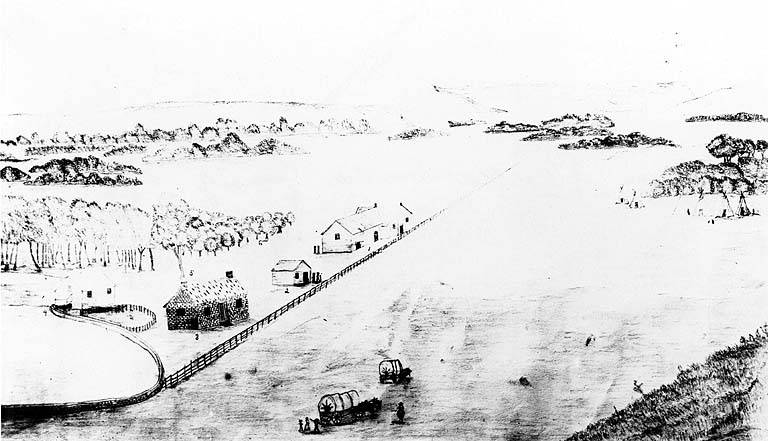

Waiilatpu: the Whitmans among the Cayuse
The first Waiilatpu house was built of sun-dried adobe brick with a roof of poles, earth and rye grass; floods drove the Whitmans to build again on higher ground in 1838, and the T-shaped mission house that stood in 1847 was built with the help of a carpenter, Asahel Munger.1 The Whitmans bought food from the Hudson's Bay posts the first year. Whitman wrote, as Thompson quotes him, "we have killed and eaten twenty-three or four horses since we have been here, not that we suffered which causes us to eat them, but if we had not eaten them, we would have suffered."1 Both missionaries urged the Cayuse and Nez Perce to farm, hoping, in Whitman's words, that "When they have plenty of food they will be little disposed to wander."1
The Whitmans' only child, Alice Clarissa, was born on March 14, 1837.14 Narcissa wrote that a Cayuse man named Fee-low-ki-ke came the next day and "Said she was a Cayuse te-mi (Cayuse girl), because she was born on Cayuse wai-tis (Cayuse land)," and that "The whole tribe are highly pleased because we allow her to be called a Cayuse girl."14 On Sunday, June 23, 1839, the two-year-old went to the river with two cups and drowned. Narcissa wrote two days later of "my precious child, Alice Clarissa, now laying by me a lifeless lump of clay," and: "Mysterious event! we can in no way account for the circumstances connected with it, otherwise than that the Lord meant it should be so."15 The Whitmans later took in children of mountain men, including Mary Ann Bridger and Helen Mar Meek, and in 1844 the seven Sager children whose parents had died on the trail.116
The record of the Whitmans' religious work among the Cayuse is thin. The National Park Service biography of Spalding states that "Rev. Spalding admitted new converts to the church while the Whitmans admitted none."8 Narcissa's own letters show her strain. In March 1843, with her husband in the East, she wrote from The Dalles: "It is the Kaiuses that cause all trouble. There are no tribes in all the country but what are more quiet and peaceable to live with than they are." She went on: "They are rich, especially in horses, and consequently haughty and insolent."15 In November 1846 she told her mother that her work was "not so much for the Indians directly, as my own family. When my health failed, I was obliged to withhold my efforts for the natives."15 Thompson's handbook gives a friend's verdict after her death "that the Indians considered Mrs. Whitman to be remote and haughty," adding that "this was not her fault; it was her misfortune."1 The CTUIR history, from the other side, counts among the grievances "non-payment for property taken by the mission" and "Whitman's encroachment on Indian trade," and says that "Whitman was living on their lands by their customs" and "had not converted many Indians as a missionary."4
Lapwai: the Spaldings among the Nimiipuu
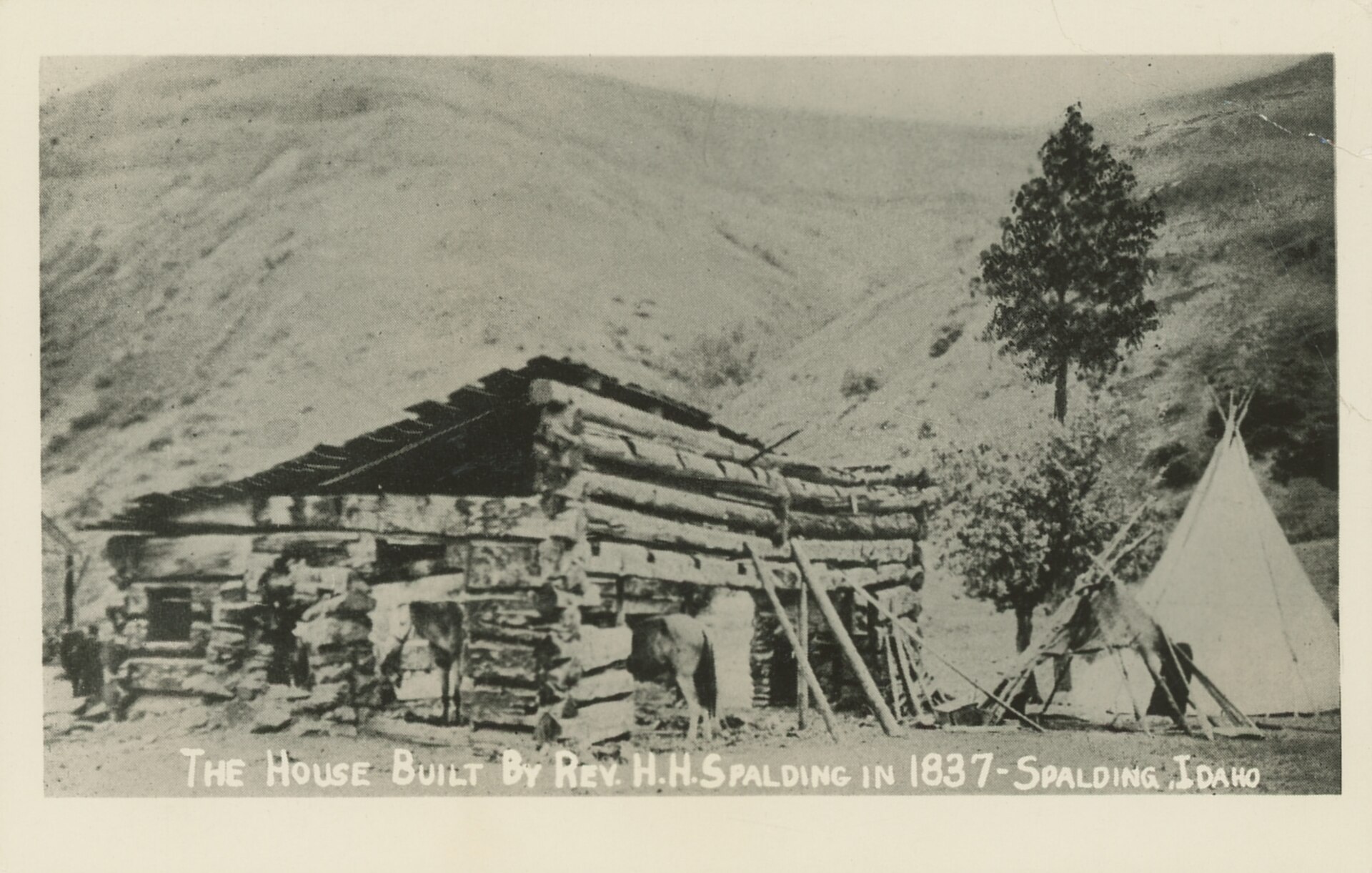
The National Park Service history of the Lapwai mission quotes Eliza Spalding's description of the first site: "3 springs of excellent water near, one enclosed in our door yard," with "a rude fence around the house, made by the Indians who appear to be delighted to be employed about something that will benefit us. I think I can truly say that we are satisfied and happy with our employment and situation."17 "At the beginning of January 1837, Eliza began to teach and Henry began to preach among the Nez Perce."17 In the summer of 1838 the Spaldings moved the mission to the mouth of Lapwai Creek, where the Clearwater runs, because the first site was hot and full of mosquitoes. There, the Park Service writes, "With help from the Nez Perce, Spalding collected logs and built a home that measured thirty-two feet by twenty-two feet," enlarged in 1838, 1841 and 1844 "to incorporate a school, printing house, and living space for Nez Perce who worked at the mission and school."18 The precise location of the first site is no longer known; a highway marker on U.S. 95 south of Lewiston stands near it.19

A government history excerpted by the University of Idaho Library's Kate and Sue McBeth collection describes the early years as warm on both sides. The Nez Perce leader Tackensuatis (whom Spalding renamed Samuel) guided the Spaldings to the site; "the people willingly supplied food and labor"; and "They came in large numbers to Henry Spalding's morning and evening prayers and Sunday services," learning hymns and Bible stories that Spalding illustrated "by holding up pictures he had painted."20 Eliza "printed her own alphabet books" and taught a school "attended principally by women, children, and a few of the important older men," and the Nez Perce women "showed their affection for Mrs. Spalding when she gave birth to a baby girl," Eliza, in November 1837.20 Kate McBeth, writing seventy years later from Nez Perce memory, said that "Mr. Spalding was a faithful, earnest, strong man, but for all that, Mrs. Spalding had, and has, the warmest place in the people's hearts."11
The same sources record the friction. The University of Idaho excerpt says Spalding "had little tolerance for the Nez Perces' cultural beliefs and habits," that headmen objected to field work "which they regarded as women's work," that "Others viewed agriculture as abhorrent and a desecration of their mother, the Earth," and that when offenders resisted, Spalding carried out threats of whipping, "sometimes doing the whipping himself and sometimes persuading leading men to do so."20 It says he used "threats and the whip to force Nez Perce males to help him relocate the mission" in 1838.20 The National Park Service biography is blunter: Spalding "struggled to learn the Nez Perce language, and he often directed his fiery temper and the end of a lash at the Nez Perce people to whom he was ministering."8 The mountain man William Craig, married to a daughter of the Lapwai headman Hin-mah-tute-ke-kaikt (Thunder Eyes, whom Spalding called James), took the Nez Perce side in these quarrels.20
Mills, fields and potatoes
Spalding wanted the Nez Perce to settle at the mission year round. The Park Service writes that he "enlisted the help of his Nez Perce supporters to build a mill race and canals to irrigate his fields and operate the grist mill," a race running half a mile from Lapwai Creek, and that he began grinding his own flour in the late spring of 1840; a sawmill worked off and on until it was taken down in 1846.18 The fellow missionary Asa Bowen Smith wrote to the Board in 1840 that Spalding's sawmill "is yet without a roof and the foundation is such that unless much more is expended on it, the next high water will probably ruin it."18 The Park Service adds the other view, that "some fans of Spalding say that the missionary's enthusiasm and optimistic development projects helped many Nez Perce gain the skills required to adapt to a changing world."18
Potatoes were central to the program. Clifford Drury, Spalding's biographer, found that "H. H. Spalding got some potatoes from Garry in the spring of 1837," the Spokane leader having "been raising potatoes with some success" before then.2 In October 1838 the newly arrived missionary Elkanah Walker wrote in his diary at Lapwai: "Mr. S. has a fine lot of potatoes; and I think he will have at least 1500 bushels, 500 to the acre. I never saw any that turned out so well."2 Drury concluded in 1936: "This was the beginning of the potato industry of the present state of Idaho."2 Kate McBeth preserved the Nez Perce side of the story: Spalding pared a potato, handed a raw piece to Billy Williams on the point of a pocketknife, and "Billy tasted it and pronounced it 'taats' (good). Billy's potatoes and garden the next year were the talk of the tribe."11

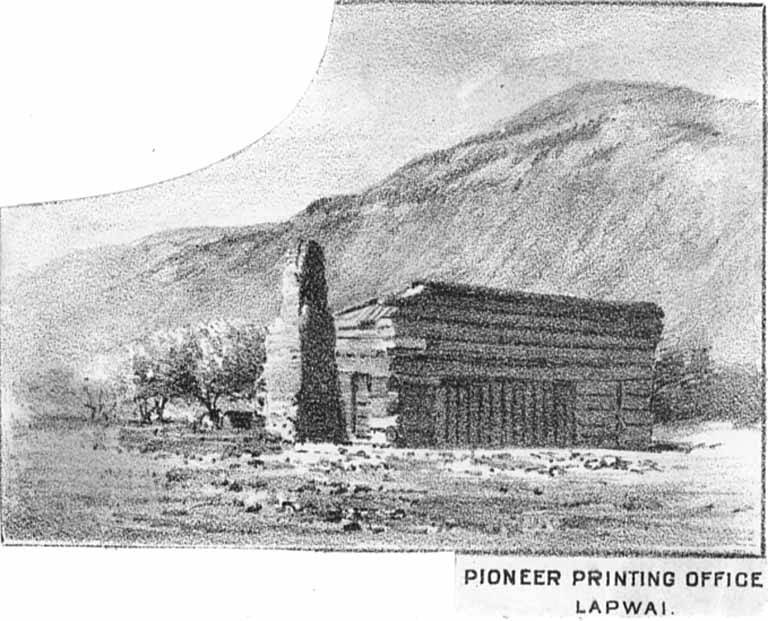
The Lapwai press and the primer of 1839
The American Board's mission in Hawaii (then the Sandwich Islands) had a new press and sent its old one to the Oregon mission. Thompson's handbook records: "This, the first printing press in the Pacific Northwest, arrived at Lapwai in May 1839. With it came Edwin Hall who was to assist in starting the operation."1 "Eight days after setting up the press, the missionaries had proudly produced 400 copies of the first book printed in old Oregon," an eight-page reader whose authors, "using an adaption of the alphabet employed in Hawaii, were Henry and Eliza Spalding and Cornelius Rogers."1 The Newberry Library's copy, digitized by the Internet Archive, is catalogued as Nez-Perces First Book: Designed for Children and New Beginners, Mission Press, 1839, with Spalding as author.21 Spalding's earlier attempt, a 72-page primer written in 1837 in an alphabet of his own, was never printed because the alphabet did not fit the language.1
Between 1839 and 1845 the mission printed nine books. "The most elaborate of these was the Gospel according to St. Matthew turned out in Nez Percé by Spalding," and all but one were in Nez Perce; the exception was a 16-page Spokane primer by Elkanah Walker, stitched and bound by his wife, Mary. The rarest is the Nez Percé Laws drawn up by the Indian agent Elijah White in 1842, known in a single copy.1 Asa Bowen Smith, the mission's best linguist, wrote of the language: "Every word is limited & definite in its meaning & the great difficulty is to find terms sufficiently general. Again the power of compounding words is beyond description."1 In 1846 the press went to The Dalles, and after 1847 it was used in the Willamette Valley; it is now in the Oregon Historical Society's museum.1 Spalding's Gospel of Matthew had a long afterlife: the Park Service records that in 1863 the Wallowa leader Joseph tore up both his copy of the 1855 treaty "and his Gospel of Matthew (which Henry Spalding had given him years previously)."22

Timothy and Joseph: the first members, November 17, 1839
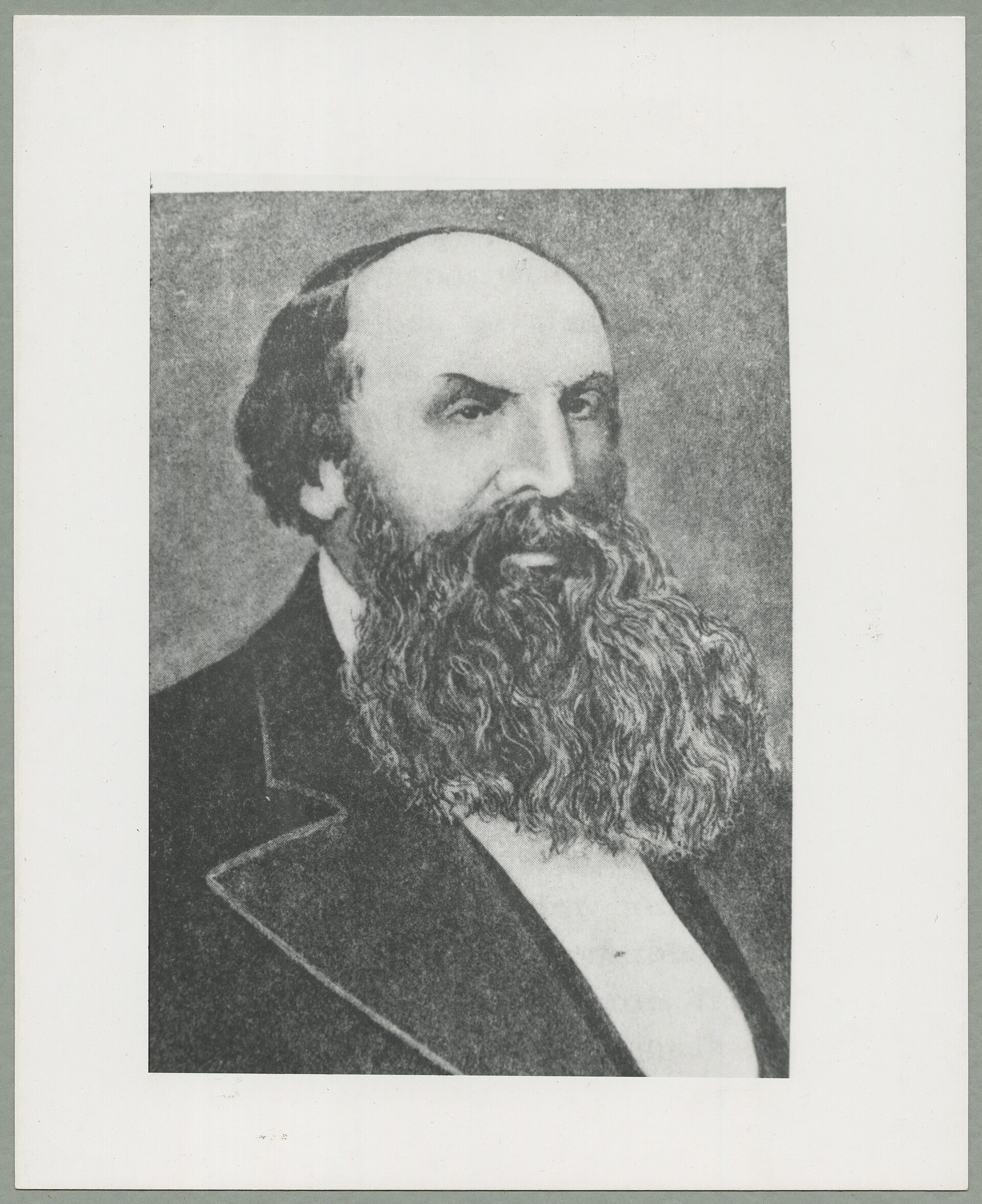
Spalding received his first Nez Perce church members in November 1839. The University of Idaho excerpt describes them as "two leading headmen who frequented the Lapwai mission though they came from other regions." One was Tamootsin "from Alpowa," on the Snake River, "Spalding called him Timothy. A devout Christian, he would also be a loyal, lifelong friend of the whites." The other was Tuekakas, "the leader of the Nez Perce band in the present-day Wallowa Valley of northeastern Oregon and whom Spalding named Joseph."20 Drury dates the service to Sunday, November 17, 1839, with Whitman present, when "Joseph, Timothy, and Conner were welcomed into the church." Spalding's diary records that he first married each man to his wife and then baptized the three.2 Spalding noted the women were not yet admitted: "Their wives," he wrote, "do not give evidence of being born again."2 Spalding later baptized Joseph's son born early in 1840 and named him Ephraim; the University of Idaho excerpt says "This was probably the future Chief Joseph."20 The younger Joseph, whose Nez Perce name the Curtis photograph below records as Hin-mah-too-yah-lat-kekt, led the Wallowa band in 1877.
Quarrels, the Board's order of 1842 and Whitman's ride
In 1838 the Board sent the only reinforcement it ever sent to Oregon: Elkanah and Mary Walker, Cushing and Myra Eells, Asa Bowen and Sarah Smith, the Grays (William Gray had gone east and married Mary Augusta Dix), and a single man, Cornelius Rogers.1 Thompson writes that "One thing the new missionaries agreed upon, however, was that none of them wished to be assigned to the same station as William Gray." The Walkers and Eellses opened Tshimakain, "the place of springs," among the Spokane; the Smiths went to Kamiah, fifty miles up the Clearwater from Lapwai, in 1839. "By the summer of 1839 there were four American Board stations in Oregon."1
The winter of 1838 to 1839 was crowded and bitter. "The diaries and the letters home show that hurt feelings were an all too common occurrence," Thompson writes, "and feuds began to gnaw at the unity of the Oregon mission."1 Smith, Gray, Rogers and others wrote to Boston about "Spalding's bitterness toward the Whitmans, about the feud between Spalding and Gray, and about Smith's constant faultfinding."1 In September 1842 the Board's answer reached Waiilatpu. "It ordered the closing of Waiilatpu and Lapwai and directed Whitman to move to Tshimakain. Spalding, Gray, and Smith were told to return home."1
By then Smith and Gray had already left, and the others had patched up their quarrels. The missionaries met and agreed to delay obeying the order; Whitman decided to go to Boston himself to argue the case before the Board's Prudential Committee. He left on October 3, 1842, with a new emigrant, Asa Lovejoy. Warned of fighting on the usual route, they went south from Fort Hall through the Uinta country, Fort Uncompahgre, Taos and Bent's Fort, in deep snow. Whitman reached Westport, Missouri, on February 15, 1843, St. Louis by March 9, Washington about March 23, and Boston on March 30.1 "In the office of the American Board Whitman was greeted with coldness," but the Board "rescinded the unfavorable orders and agreed to send reinforcements to Oregon if suitable persons could be found."1
The Board's own magazine, the Missionary Herald, stated the purpose of the trip in its obituary of Whitman in July 1848: "He made a visit to the Atlantic States in the spring of 1843, being called hither by the business of the mission."5 Later testimony pulls the other way, and it belongs in the record. Cushing Eells, who had opposed the trip, wrote to the Missionary Herald in 1866 and made further statements in 1878 and in an 1883 affidavit, at the age of 73, saying the 1842 meeting was called "to approve of a purpose formed by Dr. Whitman, that he go East on behalf of Oregon as related to the United States," and that "In the judgment of Mr. Walker and myself that object was foreign to our assigned work."23 In 1866 the editor of the Missionary Herald judged that Whitman "had certain missionary objects in view" but "would not have come at that time, and probably he would not have come at all, had it not been for his desire to save the disputed territory to the United States." Whitman himself wrote in April 1847 that in the autumn of 1842 he had warned the mission of "the arrangements of the papists to settle in our vicinity."23 Marshall printed all of this in order to contest it, setting it against the record of the mission meeting of September 26 and 27, 1842, the letters Eells and Walker wrote on October 3, 1842, and the one-paragraph "Resolve" of September 28, 1842, "which was the only document Whitman took with him to the American Board from the three men who remained associated with him in the mission."23
The emigration of 1843
Whitman went back west with the emigration of 1843, "almost 1,000 people," the largest train to that time.1 The CTUIR history gives a similar figure: "In 1843 nearly 900 immigrants crossed the plains to the Pacific Northwest."4 At Fort Hall the Hudson's Bay trader Richard Grant advised the emigrants to leave their wagons, but Whitman insisted the wagons could reach the Columbia, and the emigrants hired him to guide them. Before the Blue Mountains he was called to Lapwai, where both Spaldings were ill, and he persuaded the emigrants to take as guide "an outstanding Cayuse leader named Stickus," who "faithfully and carefully guided the wagons across the timber-covered range and on to the mission station."1 Whitman reached home on September 28, 1843.1
From then on Waiilatpu served the trail. The Park Service says that "the Whitmans' mission transformed from a mission to the Cayuse into an aid station for the immigrants on the Oregon Trail."16 Thompson writes that Whitman "felt it was his special responsibility to care for the destitute and the sick," and that "He turned no one away."1 Whitman himself, in a letter of 1847 that Marshall quoted, called emigration the thing on which "the existence of this Mission hung"; Marshall answered that it would have been "much more nearly correct for him to have written that 'one of the results of emigration to this country will speedily be the destruction of this Mission.'"23
The road to November 1847
Every account of 1847 lists several causes, and the lists overlap more than the tone of the writers would suggest. Thompson's National Park Service handbook names the fear of the emigrant tide: "The Cayuse were quick to identify the Whitmans with the tide of settlers." Tom Hill, a Delaware living among the Nez Perce, "told the Cayuse that before long the emigrants would be taking their lands. This, after all, was what had happened to his own people."1 As Whitman turned to the emigrants, "there was naturally a decrease in the time and effort he could devote to the Indians," and "When they did, they lost their faith in the purpose of the mission and in the missionaries themselves."1
The CTUIR history lists its own causes: "non-payment for property taken by the mission; increasing immigrations; Whitman's encroachment on Indian trade; fear of Whitman himself, whom the Indians believed had poisoned them; and the constant outbreaks of diseases introduced by Whitman and other non-Indians which had reduced the Tribe's population by half."4 Marshall, writing in 1905 to 1911 from the mission's own letters, gave nine causes, among them the killing of Elijah Hedding, son of the Walla Walla leader Peopeo Moxmox, at Sutter's Fort in California; "The failure of the Indians to get property from the missionaries in payment for the use of the land"; "The belief of the Indians that the missionaries were growing rich from the produce of their lands"; the careless use of strychnine as a wolf poison at the stations, which fed the poisoning rumor; the severe winter of 1846 to 1847 that killed horse herds; and "The deadly epidemic of measles, complicated with dysentery, which was communicated to the Indians by the migration of 1847."23
The Catholic missions of 1847
In September 1847 Bishop A. M. A. Blanchet arrived at Fort Walla Walla with the vicar general J. B. A. Brouillet and other priests and opened St. Anne's mission on the Umatilla, in a cabin the CTUIR history says was "donated by Chief Taawitoy."14 Whitman was alarmed by their arrival. After the killing, Spalding blamed "foreign influences, which we have felt coming in upon us like a devastating flood for the last three or four years," and the charge that the priests had incited the Cayuse ran for decades.15 Thompson's 1964 handbook rejects it: "The troubles at Waiilatpu, however, were not the result of religious rivalry, and the Catholic missionaries could in no way be rightfully blamed. The tragedy at the Whitman station would have occurred had there been no Catholics in eastern Oregon."1
The measles epidemic and the tewat
Measles came with the wagon train of 1847. Thompson writes: "This was a new disease for the Cayuse, and their bodies had little resistance to it. The effect of the disease in the lodges was disastrous. Within 2 months about half the Cayuse tribe died from measles or from the accompanying dysentery, though the Whitmans tried desperately to relieve the suffering."1 Marshall, citing Hubert Howe Bancroft's History of Oregon, wrote that it swept off "nearly one-half their number."23 The CTUIR history speaks of diseases that "reduced the Tribe's population by half."4 No count was taken at the time; these are estimates, and they apply to a tribe Thompson put at a little over 400 in 1836.1 Spalding, who was at Waiilatpu the week before the attack, wrote that "The doctor's hands were more than full among the Indians: three and sometimes five died in a day."15 In a newspaper letter of 1848 he described lodges where one could "count twenty or twenty-five, some in the midst of measles, others in the last stages of dysentery," "with perhaps one well person to look after the wants of two sick ones."23 Thompson explains the conclusion many Cayuse drew: "Since measles was a white man's disease and since Whitman, a white doctor, surely knew the cure, they believed that he was deliberately withholding that cure from them."1
A man named Joe Lewis, who had come with the 1847 wagons, told the Cayuse, in Thompson's words, "that Whitman was spreading poison in the air to kill off the tribe," and that "when all the Indians were dead, Whitman was going to take their lands for himself."1 Both the Park Service handbook and the CTUIR history explain the custom that made a failed healer liable to death. Thompson: "if a patient of a medicine man, or tewat, should die, the sick person's relative could seek revenge by killing the tewat."1 The CTUIR: "In the Tribes tradition the failure of a medicine man was sometimes death, especially, when peoples lives were believed taken by that medicine man."4 Thompson summed up the clash: "The Whitmans believed they were fulfilling a destiny that God had determined for them. The Cayuse believed they were doing what was necessary to defend and preserve their land and their way of life."1
November 29, 1847, and the month of captivity
Module 102's lesson The Missionary Martyrs covers missionary deaths as a class; this lesson keeps to the record of this one event. On Monday, November 29, 1847, Thompson counts 74 people at Waiilatpu, most of them emigrants wintering there: 23 in the mission house, 8 in the blacksmith shop, 29 in the emigrant house and 12 at the sawmill 20 miles up Mill Creek, plus the lodges of Joe Lewis and Nicholas Finley.1 That morning Whitman buried a Cayuse child. In the afternoon two Cayuse men, Tiloukaikt and Tomahas, came to the kitchen asking for medicine, and Tomahas struck Whitman from behind with a tomahawk. A shot signaled an attack on the men in the yard.1 Narcissa Whitman was shot while looking out a window, later carried out on a settee with the teacher Andrew Rodgers, and both were shot outside.1 Spalding's letter to Narcissa's parents, written on April 6, 1848, from what he had heard from survivors including his ten-year-old daughter Eliza, gives a fuller and harsher account; he wrote that his hand "refuses to write" the Whitmans' names again.15 The two accounts differ on details (Spalding says Narcissa was shot in the right breast, Thompson the left), as eyewitness accounts of violence usually do.
The National Park Service's present position is stated in its answers to visitors: "The word 'massacre' gives an inaccurate impression of this tragic event. Thirteen people were killed in the initial attack. Except for Mrs. Whitman, women and children were not killed. The majority of the people at the mission were taken hostage and held captive for a month."3 Thompson's handbook names the thirteen. Killed on November 29: Marcus Whitman, Narcissa Whitman, John Sager (17), Francis Sager (15), the schoolteacher L. W. Saunders, Jacob Hoffman, the tailor Isaac Gilliland, the miller Walter Marsh and Andrew Rodgers. Killed on November 30: Nathan Kimball, who had hidden upstairs and went for water, and James Young, who drove in from the sawmill with lumber. Killed about a week later: Crockett Bewley and Amos Sales, two sick young men. "These two young men brought the death total to 13."1 Spalding counted fourteen, because he included Peter Hall, the carpenter, who escaped to Fort Walla Walla, crossed the Columbia and was never seen again.151
The captives numbered about fifty. Thompson writes that the Cayuse "held all 49 survivors captive"; Spalding gave 47 after the deaths of three children; Drury, citing Myron Eells, gives forty-six women and children.1152 Two girls who had been very sick with measles, Louise Sager and Helen Mar Meek, died during the captivity.1 Several young women were taken as "wives" by Cayuse men; Spalding names Lorinda Bewley, taken to the Umatilla, and the daughter of Nathan Kimball.15 Thompson adds that "most of the captives were not treated severely," while Lorinda Bewley was "Especially maltreated."1 On the Tuesday after the attack Father Brouillet reached Waiilatpu and, with a mission worker named Joe Stanfield, buried the dead in a shallow common grave; wolves later disturbed it, and in March 1848 the Oregon Volunteers reburied the remains.1
Spalding's escape and the Nez Perce response
Spalding had come to Waiilatpu on November 22 and was on the Umatilla visiting the sick when the attack came.15 Riding back on December 1, he met Father Brouillet about three miles out, heard what had happened and fled. Drury quotes his reply to the priest: "Is it possible! Is it possible! They will certainly kill me."2 His horse got away on the second night, and he walked the rest, his feet wrapped in leggings, hiding by day. At the Nez Perce village at Alpowa he crept up to a lodge where people were at evening worship and heard the man leading prayer "name Doct. and Mrs. Whitman as killed, and myself as probably."2 He reached Lapwai on the evening of Monday, December 6, to find that Nez Perce friends had moved his family to the home of William Craig.2 The Park Service biography records that "Henry and his family were quickly taken to the home of William Craig by some trusted Nez Perce individuals."8 Eliza Spalding sent two Nez Perce men to Waiilatpu to try to bring back her daughter; the Cayuse refused to release the girl until they knew whether the Americans would come for revenge.15 The Nez Perce escorted the Spaldings to Fort Walla Walla, where they arrived on January 1, 1848. The other American Board stations were not attacked.1
Peter Skene Ogden's ransom
The rescue was the work of the Hudson's Bay Company, which the Americans in Oregon often distrusted. Victor's 1894 history, drawn from the Oregon archives and the published accounts of Brouillet and others, gives Ogden's words at the council of December 23 as reported: "We have been among you for thirty years without the shedding of blood; we are traders, and of a different nation from the Americans." He told the Cayuse leaders, "It was not Dr. Whitman who poisoned them; but God who has commanded that they should die," and closed, "I give you only advice, and promise you nothing should war be declared against you. ... Deliver me the prisoners to return to their friends, and I will pay you a ransom; that is all."24 Tiloukaikt answered, in the same report, "your words are weighty, your hairs are gray. We have known you a long time. ... I cannot therefore keep the families back. I make them over to you."24
The ransom figures differ by source. Thompson, following the Oregon Spectator, lists "62 blankets, 63 shirts, 12 guns, 600 loads of ammunition, 37 pounds of tobacco, and 12 flints."1 Victor gives Brouillet's lower figure, "fifty-three point blankets, fifty shirts, ten guns, ten fathoms of tobacco, ten handkerchiefs, and one hundred balls and powder," plus a smaller payment to the Nez Perce for bringing the Spalding party down.24 Spalding put the value at "some five hundred dollars."15 The boats left Fort Walla Walla at noon on January 2, 1848, with fifty-seven ransomed people aboard, and reached Oregon City about January 10.24 Spalding, whose daughter came out "a mere skeleton," wrote of Ogden that "too much praise cannot be awarded."15
The Cayuse War and the trial at Oregon City
When Governor George Abernethy of the provisional government heard the news, a volunteer force was raised, soon five hundred men, who reached the Walla Walla Valley at the end of February 1848.1 The CTUIR history describes the so-called "Cayuse War" of 1847 to 1850 as "minor skirmishes with Cayuse-led war parties against the territorial militia and responses by the Oregon Territorial Malitia massacring any unfortunate Indian they stumbled across."4 The Park Service FAQ records that "A few months after the release of the hostages the Cayuse returned and burned down the buildings. They destroyed the mission in retaliation for lodges which had been destroyed by the Oregon Volunteers."3 The news also moved Congress: "in August 1848 a bill was passed creating the Territory of Oregon."1
In the spring of 1850 five Cayuse men came to The Dalles and were taken into custody by Governor Joseph Lane's troops. The CTUIR gives their names as "Ti'ílaka'aykt, Tamáhas, 'Iceyéeye Cilúukiis, K'oy'am'á Šuumkíin, Łókomus"; the English records spell them Tiloukaikt, Tomahas, Isaiachalkis, Kimasumpkin and Klokamas.924 Victor wrote that "By what arguments they had been persuaded to give themselves up has never been revealed," and reported Tiloukaikt's answer when asked why he came: "Did not your missionaries teach us that Christ died to save his people? Thus die we, if we must, to save our people."24
The trial opened at Oregon City on May 22, 1850, before Judge Orville C. Pratt. The United States attorney Amory Holbrook prosecuted; the defense was led by the territorial secretary, Kintzing Pritchett, with R. B. Reynolds and Captain Thomas Claiborne Jr.24 The defense argued that United States law had not reached Oregon when the killings happened; Pratt ruled that the 1834 Indian intercourse act applied through the 1846 boundary treaty. A change of venue was refused. Victor states that the witnesses "did not always identify the murderers" and that "Kiamasumpkin was not named by them," though she held that he "confessed his guilt by giving himself up."24 The defense also argued that "the death of wives and children among the Cayuses was provocation." The jury returned "guilty as charged," and the five were hanged at Oregon City on June 3, 1850. A Catholic priest, Father Veyret, went with them to the scaffold.24 Thompson notes that "one of them probably took no part in the massacre," and that the hangman was Joe Meek, "the father of Helen Mar," the girl who had died in captivity.1
The Cayuse descendants tell the story differently. The CTUIR history says: "The war ended in 1850 when five Cayuses sacrificed themselves to stop the violence and injustice toward their people. They were convicted of killing Whitman and were hanged in Oregon City. They were essentially sentenced whether guilty or not to appease non-Indian concerns and fears."4 A 2022 report in the Confederated Umatilla Journal adds that "In their statements, the Cayuse Five asserted their innocence and only came to federal officials to recount what they knew of the deaths at Whitman Mission," and that the five "were indicted only for the murder of Marcus Whitman."9 Bobbie Conner, director of the Tamástslikt Cultural Institute, said: "we must remember their names and the importance of each of their lives to their families and our Tribes, then and now."9 The burial place of the five is not known; in 2022 University of Oregon students working with Tamástslikt narrowed the search to two possible sites in Oregon City.9
After 1847: the Spaldings, the treaties and 1877
The American Board closed its Oregon mission. The Walkers and Eellses left Tshimakain for the Willamette in the spring of 1848.1 The Spaldings settled in the Calapooya country near present Brownsville, Oregon. Eliza Spalding, weakened since the flight, died there on January 7, 1851; Drury quotes Spalding's letter that "Her spirit was released ... on the 7th inst at a quarter past eleven A. M.," and Myra Eells's report that Spalding thought "the fear, anxiety, fatigue consequent upon breaking up of the Mission were the original cause of her death."2 On May 16, 1853, Spalding married Rachel Smith at Tualatin Plains.2
Spalding went back to the Nez Perce country in 1862, when gold had brought miners onto the reservation, as a government teacher at the Lapwai agency, and returned again as a Presbyterian missionary in 1871.811 His last years brought the largest response of his career. In a notebook entry dated November 26, 1873, his seventieth birthday, he recorded 655 adults received among the Nez Perce and 253 among the Spokane, and he noted that he had baptized "adults 914, Infants 293," a total of 1,207, which Drury says may include converts received by his colleague H. T. Cowley.2 He died at Lapwai on Monday, August 3, 1874. Sue McBeth, who had come the year before as a government teacher, asked him at the end whether he felt that Jesus was with him, and he answered, "Jesus only, oh how I love him." Drury gives these as his last words, from her letter of August 6, 1874.2 Henry and Eliza Spalding are buried in the Lapwai Mission Cemetery at the Spalding site, "where Henry and Eliza Spalding and many Nez Perce people are buried."25
Sue and Kate McBeth at Kamiah
Kate McBeth recorded the succession of Presbyterian workers: "Mr. Spalding returned in '71, died in '74. Miss S. L. McBeth came among the Nez Perces as a teacher in the government school, in 1873, but soon after was taken under the Foreign Board," and "Kate C. McBeth arrived in the fall of 1879."11 The sisters taught at Kamiah and Lapwai. Kate wrote that Robert Williams, the Kamiah pastor and son of the elder Billy Williams, was "the first native ordained (ordained in 1879)," and the introduction to her book calls him Sue's "pupil and coworker."11 Sue McBeth died on May 26, 1893; Kate dedicated her 1908 book to "my sainted sister, Miss S. L. McBeth, who had so much to do with the success of the Gospel among the Nez Perces."11 The First Presbyterian Church at Kamiah, which Drury in 1936 called "The oldest Protestant church building in continuous use in the State of Idaho," was erected, by his caption, in 1873; Drury's text adds that the government-built church "was dedicated in the summer of 1873." The McBeth sisters and the Nez Perce leader Lawyer are buried behind it.2 The Idaho Heritage Trust also gives 1873 for the building, while the 1976 National Register of Historic Places listing gives 1874 as a significant year.31
The treaties of 1855 and 1863
At the Walla Walla council of 1855, the Nez Perce Tribe writes, "Tribal leaders negotiated retention of approximately 7.5 million acres to be protected as the Tribe's exclusive reservation."6 The Cayuse, Umatilla and Walla Walla signed their own treaty that year, in which, the CTUIR says, they "ceded over 6.4 million acres to the United States," reserving "rights to fish, hunt, and gather foods and medicines."4 The Umatilla Indian Reservation today is "about 172,000 acres."4
Gold drew miners onto the Nez Perce reservation; by 1863, the Park Service writes, "mining was well established in the Orofino area."22 The Nez Perce Tribe states: "Once gold was discovered, mass trespass and theft took place within the Tribe's reservation. Instead of protecting the reservation from encroachment, the federal government forced the Tribe into a second treaty in 1863, which reduced the reservation to about 750,000 acres."6 Article 1 of the 1863 treaty reads: "The said Nez Percé tribe agree to relinquish, and do hereby relinquish, to the United States the lands heretofore reserved for the use and occupation of the said tribe, saving and excepting so much thereof as is described in Article II for a new reservation."26 The Park Service writes that "The 1863 Treaty became known amongst nimíipuu as the 'Thief Treaty' or 'Steal Treaty.'"32
The 1863 treaty divided the Nimiipuu, and the division ran partly along the lines the missions had drawn. The Park Service explains that the bands had always been autonomous, that the negotiators looked for one "head chief," and that Hallalhotsoot, called Lawyer, "assumed the position of 'head chief'" though "he was not recognized as having the authority to speak on anyone's behalf."22 Lawyer had been one of the Nez Perce who welcomed the missionaries in 1836.20 The Park Service continues: "Thunder Eyes declared the Nez Perce Nation dissolved. They would be separate people; the 'treaty' group and the 'non-treaty' group." Old Joseph, Spalding's convert of 1839, "was so incensed he tore up his copy of the 1855 treaty and his Gospel of Matthew." Lawyer and other headmen signed on June 9, 1863; the non-treaty leaders "thought they would not be held to any agreement that they did not actually agree to. In this way, the 1863 treaty planted the seeds of conflict that would eventually grow to the 1877 Nez Perce War."22 Greene's history of the 1877 war, published online by the National Park Service, draws the religious line plainly: the treaty period "intensified the intratribal estrangement between the Christian and more sedentary Nez Perce bands, mostly situated along the Clearwater River, and the non-Christian bands," and the 1863 treaty "exacerbated the long-standing political and religious divisions simmering among the tribesmen," its new boundaries taking in the lands of "the Christianized Nez Perces," about three-fourths of the tribe, and leaving out the Wallowa and Salmon River bands.33 The line was not exact: Greene also notes that Old Joseph, after the mission closed, "returned to Wallowa but continued his Christian ways."33 The Park Service page on the treaty quoted above does not draw the religious line.
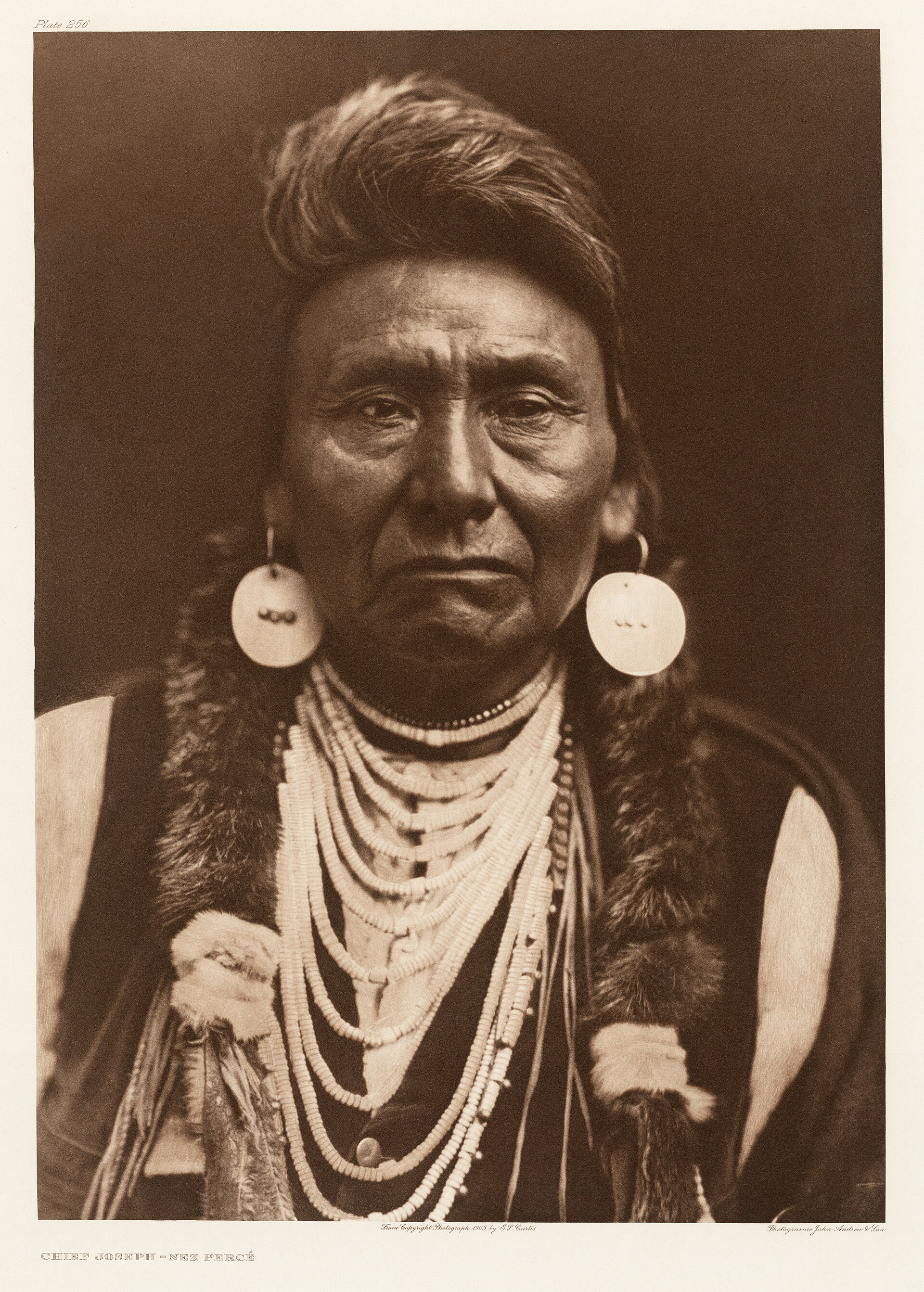

The flight of 1877 in outline
Old Joseph refused to sell the Wallowa and died in 1871; his remains were reburied at the Old Chief Joseph Gravesite in 1926.272 In 1877 the government ordered the non-treaty bands onto the reduced reservation. The Park Service records that the Wallowa band crossed the Snake on May 31, 1877; that at Tolo Lake on June 2 "three Nez Perce warriors raided homesteads"; that the first battle came at White Bird on June 17; and that the non-treaty Nez Perce were forced "on a 126-day journey that spanned over 1,170 miles and through four different states," ending at Bear Paw, "just 40 miles south of the Canadian border," from September 30 to October 5, 1877.27 At Big Hole on August 9, U.S. troops killed "60 to 90 Nez Perce men, women, and children." After Bear Paw some were sent to Indian Territory and others escaped to Canada.27 The Park Service quotes a Nez Perce elder who calls the events "our people's painful and tragic encounter with 'Manifest Destiny.'"27
The legend: "Whitman saved Oregon"
The story that Marcus Whitman rode east in 1842 to stop the government from trading Oregon to Britain was first published, as Edward Gaylord Bourne of Yale showed, "in a series of articles in The Pacific, a religious paper in San Francisco, in the fall of 1865, contributed by the Rev. H. H. Spalding."5 Spalding wrote that Whitman went "to Washington, just in time to save this now so valuable country from being traded off by Webster to the shrewd Englishman for a 'cod fishery' down east."5 William Gray printed "a strikingly similar narrative" in the Astoria Marine Gazette in 1866, and Spalding put his version into a memorial to Congress printed as Senate Executive Document 37 of the 41st Congress.5 The story spread through sermons, schoolbooks and William Barrows's Oregon. By 1900, when New York University held the first election to its Hall of Fame for Great Americans, Whitman received nineteen of ninety-eight votes and ranked fourth among missionaries and explorers, behind Adoniram Judson (35 votes), Daniel Boone (34) and Elisha Kent Kane (21).5
Bourne set the story against the documents of the 1840s: the Board's own correspondence, the Missionary Herald, and the silence of every account before 1865. He noted that in 1865 the home missionary George H. Atkinson referred the American Board's secretaries to Cushing Eells for confirmation of Spalding's narrative, although when Atkinson had talked with Spalding in Oregon City in June 1848, "neither from Spalding nor Eells nor Lovejoy did the young home missionary hear a word in 1848 of the saving of Oregon by Marcus Whitman."5 He concluded: "That Marcus Whitman was a devoted and heroic missionary who braved every hardship and imperilled his life for the cause of Christian missions and Christian civilization in the far Northwest and finally died at his post, a sacrifice to the cause, will not be gainsaid. That he deserves grateful commemoration in Oregon and Washington is beyond dispute. But that he is a national figure in American history, or that he 'saved' Oregon, must be rejected as a fiction."5 Bourne credited William I. Marshall of Chicago, "who has made most painstaking and elaborate investigations into the history of the Whitman Legend."5 Marshall's two-volume Acquisition of Oregon and the Long Suppressed Evidence about Marcus Whitman (copyright 1905, published 1911) printed the mission letters at length.12
The defenders of the story, chiefly Myron Eells and other writers in the 1880s and 1900s, relied on later recollections like Cushing Eells's affidavit and on Whitman's own later letters about the Catholic and British danger.23 The Park Service handbook of 1964 states the consensus: the claim that Whitman rode east "to persuade the government to save Oregon from the British" is "an argument not widely accepted today. Most historians agree that Whitman's ride was to save the missions and that the trip through Washington was secondary." It adds that the theory "failed to distinguish between the reasons for the trip and the results that came of it," since Whitman did help bring the 1843 wagons through.1
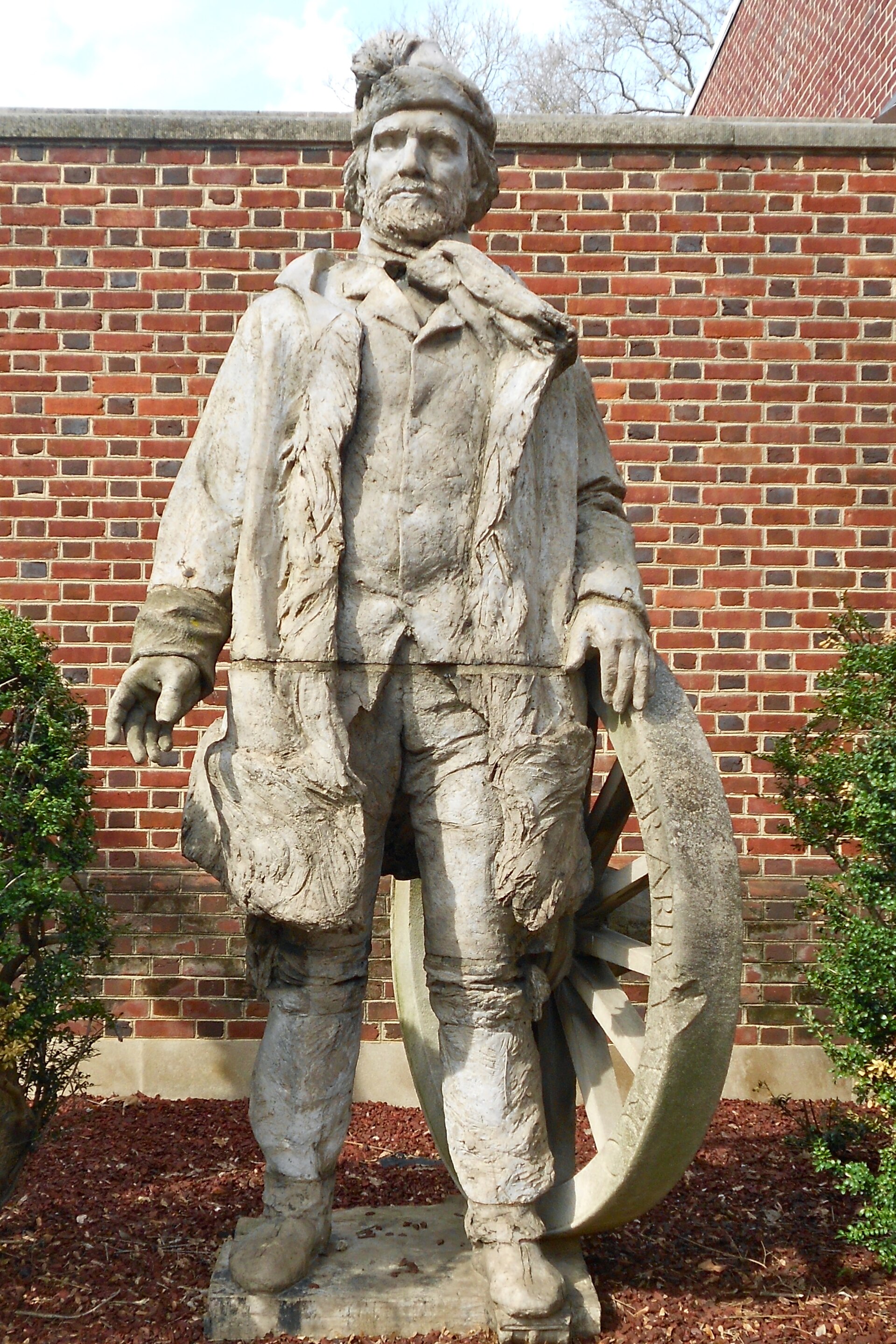

The statue in the Capitol
Thompson's handbook warns that "no known likenesses of the Whitmans have ever been found," so "the few sketches that have been made of Marcus and his wife are conjectural drawings."1 Washington placed a statue of Whitman in National Statuary Hall in 1953. In 2021 the legislature passed Engrossed Substitute House Bill 1372, Chapter 20, Laws of 2021, signed by Governor Jay Inslee on April 14, 2021, declaring the "intent and request of the legislature that the statue of Marcus Whitman be removed from the national statuary hall collection at the United States capitol and replaced with a statue of Billy Frank Jr."28 The law's findings say "Whitman's contributions to the creation of Washington were profound and important" and that it is "appropriate to replace his statue with one of a more contemporary Washingtonian"; Billy Frank Jr., a Nisqually tribal member, "was arrested more than 50 times for exercising his treaty-protected right to fish for salmon."28 The House passed it 92 to 5 and the Senate 44 to 5.28 The act directs the state's selection committee to arrange "for the removal and transportation of the Marcus Whitman statue to Washington."28 The state arts commission's project sheet of October 2025 said the Billy Frank Jr. statue was "currently slated for installation in 2026," with casting in early 2026 and installation in Washington, D.C., and Olympia in 2026 or 2027.29 In July 2026 the Washington State Standard reported that workers were scheduled to place the Frank statue in the U.S. Capitol that week and keep it covered "until a formal unveiling ceremony, possibly in late September," that "the Whitman statue it replaces will be returned to Washington," and that the Whitman replica in the state Capitol at Olympia would be moved down a corridor to make room for the Frank replica, late in 2026 or early in 2027.34 Whether the unveiling in Washington, D.C., had taken place by November 2026 was not confirmed for this lesson.
The places today
Whitman Mission National Historic Site, west of Walla Walla, preserves the mission ground. In 1897, on the fiftieth anniversary, Mr. and Mrs. Marion Willard Swegle gave about eight acres including the "Great Grave," where the remains of the dead were reburied that year; in 1936 the Whitman Centennial Company bought 37 and a half more acres; Whitman National Monument was established on January 20, 1940, and in 1962 Congress renamed it Whitman Mission National Historic Site, the new name taking effect on January 1, 1963.135 The building sites are marked by concrete outlines on the foundations found by archaeologists.3 The Park Service now writes that the mission's history "marks a pivotal moment for Cayuse and other Native people living on the Columbia Plateau," and that "Through partnering with the Confederated Tribes of the Umatilla Indian Reservation, the National Park Service seeks to present the continuing story of the Cayuse Nation."30
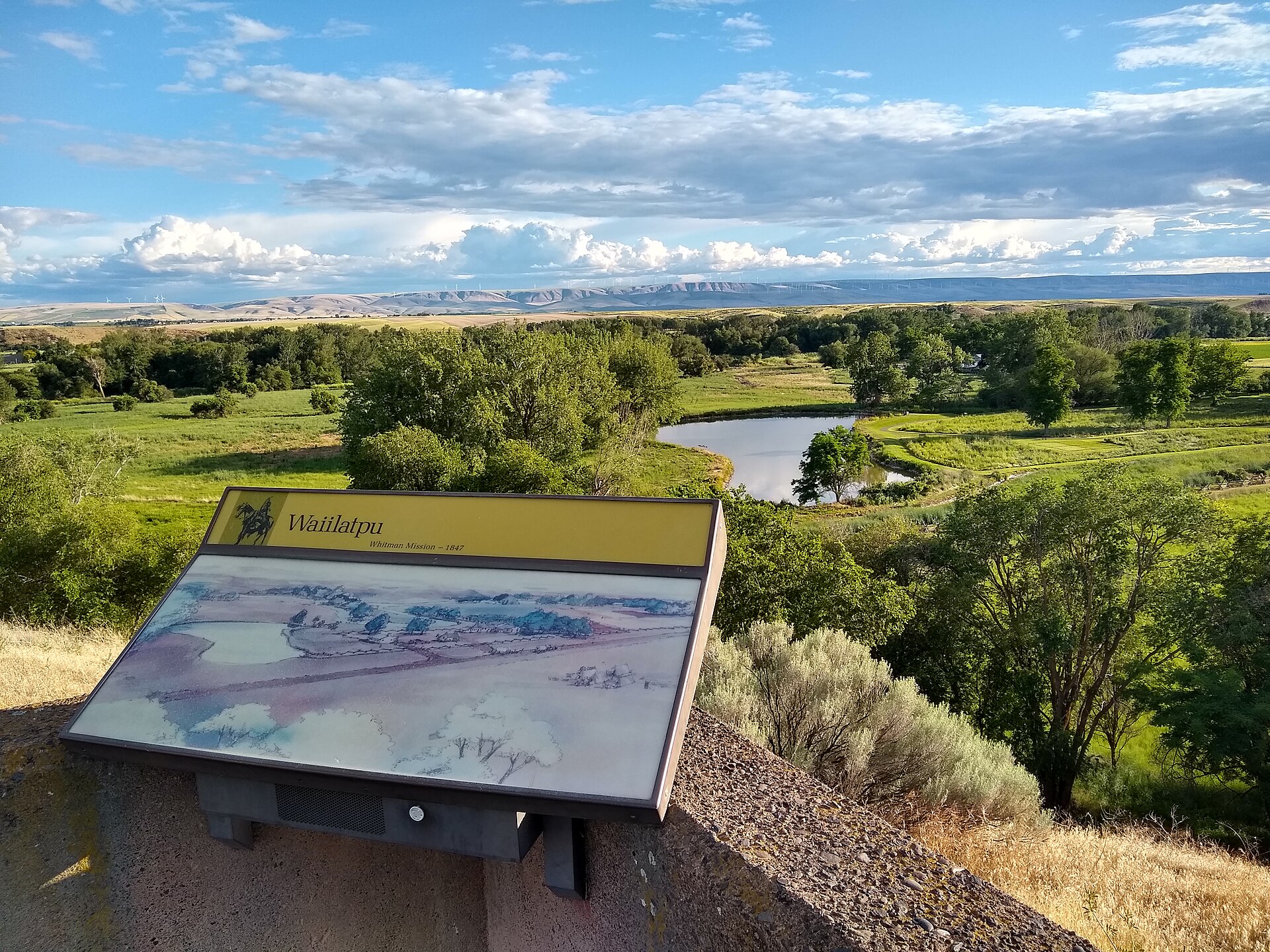

The Spalding site of Nez Perce National Historical Park, on U.S. Highway 95 near Lapwai, Idaho, holds the park's visitor center and headquarters, "the Watson's Store, the Spalding Presbyterian Church, the Northern Idaho Indian Agency's cabin and agent's residence, remnants of the Spalding Mission, the Lapwai Mission cemetery where Henry and Eliza Spalding are buried, and archeological remains of the gristmill, sawmill, and associated millraces."25 The Daughters of the American Revolution placed a tablet at the mission site in 1923 and fenced the foundations in 1935; the state made the site a park in 1936; University of Idaho archaeologists excavated the house in 1974.18 The Park Service's page on the Spalding Presbyterian Church says that "The first services were held in the Spalding Presbyterian Church building in 1876" and that "In 1905, the building was given a brick facing."36 The park's own description of its people begins with the Tribal Executive Committee's words quoted at the top of this lesson.7
Kamiah, up the Clearwater, has the First Presbyterian Church, which Drury described in 1936 as Idaho's oldest Protestant church building in continuous use.2 The first Lapwai site, two miles up Lapwai Creek, is marked by a highway sign whose text, the Park Service says, is about "the impact that missionaries such as Henry Spalding had upon the Nez Perce."19
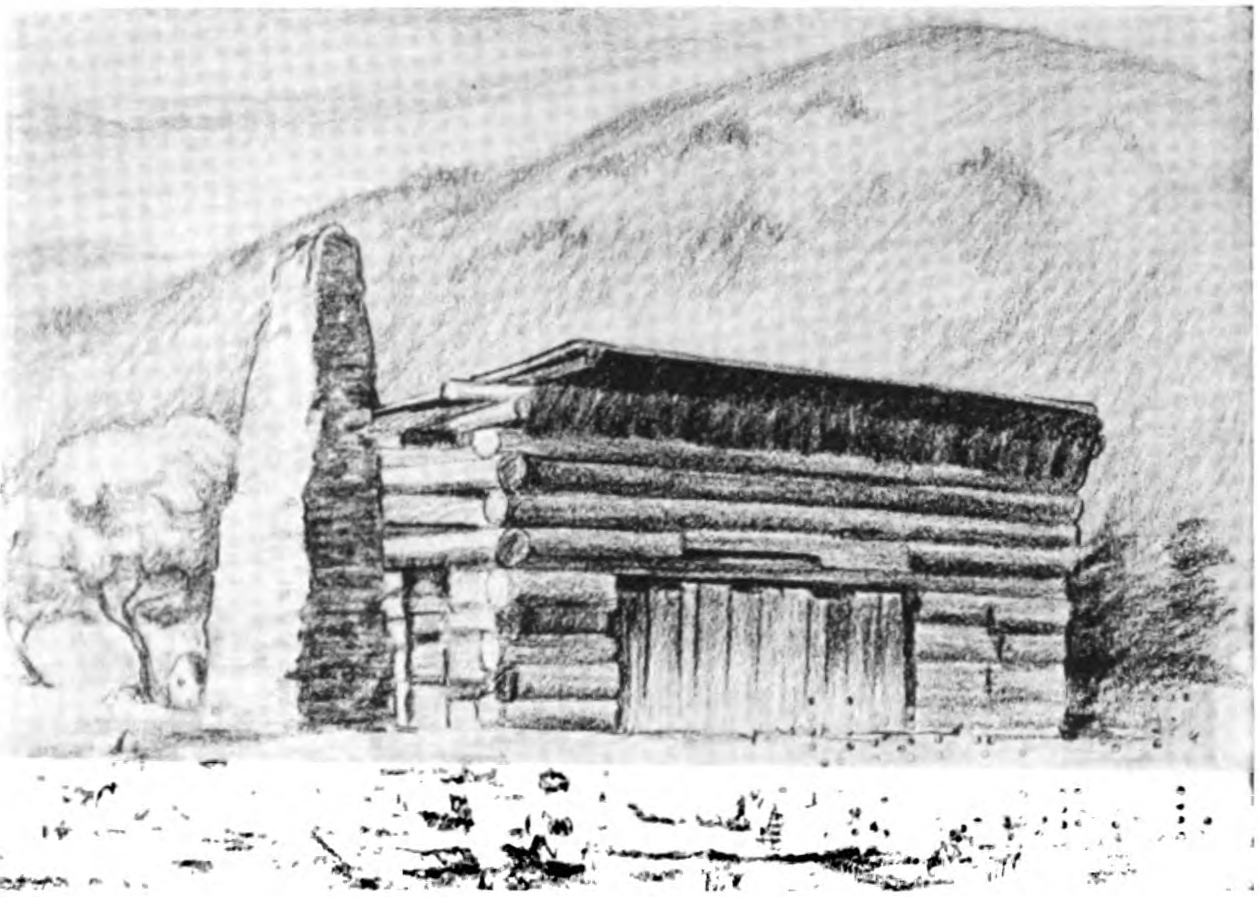

What the record shows and what it does not
- Documented fact: the 1836 journey and its dates; the founding of Waiilatpu and Lapwai; the arrival of the Hawaiian press in May 1839 and the eight-page Nez Perce primer of 1839; the reception of Timothy, Joseph and Conner on November 17, 1839; the Board's order of 1842 and Whitman's departure on October 3, 1842; the killing of thirteen people between November 29 and early December 1847; the ransom of the captives on December 29, 1847; the hanging of five Cayuse men on June 3, 1850; the treaties of 1855 and 1863 and their acreage; Washington's 2021 statue law.12628
- The missionaries' own words: Narcissa Whitman's letters and journal (printed 1893 and 1894), Spalding's letters and diary (in Drury), Spalding's April 1848 letter on the killing, Whitman's 1835 journal on the St. Louis delegation (in Marshall).1415212
- The words of the people the missionaries came to: the Nez Perce Tribe's history; the CTUIR's history of the mission era and the trial; the statements of the five Cayuse men as summarized by the Confederated Umatilla Journal; Nez Perce memories recorded by Kate McBeth from Billy Williams; the Nez Perce elder and Tribal Executive Committee words quoted by the Park Service.64911
- Later legend: the farewell speech of the 1831 delegates (first printed by Spalding in 1866); the story that Whitman's ride saved Oregon (first printed by Spalding in 1865); unqualified "first women across the continent" claims; the Calder statue's frontiersman image.135
- Scholarly reading: Bourne (1901) and Marshall (1911) against the legend; Drury (1936) for Spalding's life from his papers; Thompson (1964) for the Park Service; Josephy (1965) for the Nez Perce story; the CTUIR and Tamástslikt for the Cayuse.51221
- Open questions: how many Cayuse died of measles in 1847 (no count was made; "about half" is an estimate); whether all five men hanged in 1850 took part in the killing; the exact makeup and purpose of the 1831 delegation; where the five were buried.19
Pictures, Numbers and Infographics
| What | Number or date | Source |
|---|---|---|
| Cayuse population when the Whitmans arrived | "little more than 400" (estimate) | 1 |
| Days from Angelica, New York, to Fort Vancouver, 1836 | 207 days, more than 3,000 miles | 1 |
| South Pass crossing | July 4, 1836 | 1 |
| Distance Waiilatpu to Lapwai | 110 miles | 1 |
| Lapwai mission house, 1838 | 32 by 22 feet; additions 1838, 1841, 1844 | 18 |
| Spalding's potato crop, October 1838 (Walker's estimate) | at least 1,500 bushels, 500 to the acre | 2 |
| First book printed in the Pacific Northwest, 1839 | 8 pages, 400 copies | 121 |
| Books printed on the mission press, 1839 to 1845 | 9 | 1 |
| First Nez Perce church members | 3 men, November 17, 1839 | 2 |
| Whitman's ride east | October 3, 1842, to Boston March 30, 1843 | 1 |
| Emigration of 1843 | "almost 1,000" (NPS); "nearly 900" (CTUIR) | 14 |
| People at Waiilatpu on November 29, 1847 | 74 | 1 |
| Cayuse deaths in the 1847 epidemic | "about half the Cayuse tribe" (estimate; no count made) | 14 |
| Killed at Waiilatpu, November 29 to early December 1847 | 13 (NPS); Spalding counted 14 with Peter Hall | 315 |
| Captives held | 46 to 49, by source | 1152 |
| Ransom paid by the Hudson's Bay Company | 62 blankets, 63 shirts, 12 guns, 600 loads of ammunition, 37 pounds of tobacco, 12 flints; about $500 | 115 |
| Ransomed people leaving Fort Walla Walla, January 2, 1848 | 57 | 24 |
| Jurymen called at Oregon City, 1850 | 38 (12 sworn) | 24 |
| Cayuse men hanged | 5, June 3, 1850 | 249 |
| Nez Perce reservation, 1855 and 1863 | about 7.5 million acres; about 750,000 acres | 6 |
| Land ceded by the Cayuse, Umatilla and Walla Walla, 1855 | over 6.4 million acres | 4 |
| Umatilla Indian Reservation today; CTUIR members | about 172,000 acres; over 3,100 members | 4 |
| Baptisms Spalding recorded by November 26, 1873 | 1,207 (914 adults, 293 infants) | 2 |
| Nez Perce flight of 1877 | 126 days, over 1,170 miles, four states | 27 |
| Hall of Fame vote for Whitman, 1900 | 19 of 98 votes | 5 |
| Washington statue law, 2021 (ESHB 1372) | House 92 to 5; Senate 44 to 5; signed April 14, 2021 | 28 |
Claims checked
"The Nez Perce came to St. Louis asking for the white man's Book of Heaven." Partly supported.
The delegation is real: two of its members were buried in St. Louis in October and November 1831, and Whitman's 1835 journal records that "their object was to gain religious knowledge."12 The "book" first appears in William Walker's secondhand letter printed March 1, 1833, which the Park Service handbook calls "a rather unusual version of the facts."1 The moving farewell speech ("I came to you for the Book of God") is unsupported: Marshall found no trace of it before Spalding printed it on February 16, 1866, thirty-four years later.13 Catholic sources and Marshall argue the delegates wanted priests; Thompson thinks a book and teachers "probable." What the four men wanted in their own words was never recorded.
"Marcus Whitman saved Oregon for the United States." Refuted.
The story was first printed by Spalding in The Pacific in 1865, twenty-three years after the ride.5 The American Board's obituary of 1848 says Whitman went east "being called hither by the business of the mission"; the Board had ordered two stations closed, and the Board rescinded that order when he reached Boston.51 Edward Gaylord Bourne (1901) and William I. Marshall (1911) traced the story to Spalding and Gray and concluded it "must be rejected as a fiction"; the Park Service in 1964 called it "an argument not widely accepted today."51 The true part: Whitman visited Washington, cared about Oregon becoming American, and helped guide the 1843 wagons to the Columbia. The boundary was settled by the 1846 treaty with Britain at the 49th parallel, a line, Marshall noted, the government had named as its "ultimatum" as early as 1826.23
"Narcissa Whitman and Eliza Spalding were the first white women to cross the Rocky Mountains (the Continental Divide)." Partly supported.
The exact documented claim is that the two crossed the Continental Divide at South Pass on July 4, 1836, and reached Fort Vancouver on September 12, the first Euro-American women known to have made the overland crossing to the Pacific Northwest. The Park Service handbook says they "crossed the North American Continent, the first white women to do so."1 The word "white" carries the claim. Native women had always crossed those mountains, as Narcissa's own letter about the Nez Perce and Flathead women at the rendezvous shows.14 Popular versions that drop "white" or say "first women" are wrong.
"Spalding grew the first potatoes in Idaho." Partly supported.
Spalding's 1837 and 1838 crops at Lapwai are the earliest documented potato planting in present Idaho in the sources used here, and Drury called them "the beginning of the potato industry of the present state of Idaho."2 But the seed came from Spokane Garry, who had already been raising potatoes near Spokane Falls, and the Hudson's Bay posts already supplied potatoes to the missionaries in 1836 to 1837.21 Whether anyone grew them earlier inside the later Idaho boundaries is not documented either way.
"Spalding printed the first book in the Pacific Northwest." Supported, with a correction.
The Hawaiian mission's press, "the first printing press in the Pacific Northwest," arrived at Lapwai in May 1839, and an eight-page Nez Perce reader, catalogued as Nez-Perces First Book, was printed in 400 copies within days.121 The correction: the press was set up and worked by Edwin Hall from Hawaii, and the authors were Henry and Eliza Spalding and Cornelius Rogers.1
"Catholic priests stirred up the Cayuse to kill the Whitmans." Refuted.
Spalding made the charge in 1848, blaming "foreign influences."15 The Park Service handbook answers that "the Catholic missionaries could in no way be rightfully blamed."1 The record shows Father Brouillet burying the dead and then warning Spalding, which saved Spalding's life.2
"Whitman was poisoning the Cayuse." Unsupported, though the belief was real.
That many Cayuse believed it is supported by every account, including the CTUIR's.4 No evidence shows Whitman poisoned anyone. Thompson attributes the rumor to Joe Lewis; Marshall pointed to the careless use of strychnine against wolves at the stations, which gave the rumor something to work on.123 The Park Service handbook notes that measles "was a new disease for the Cayuse, and their bodies had little resistance to it."
"Everyone at the mission was massacred." Refuted.
Thirteen of about 74 people were killed; the Park Service states that "Except for Mrs. Whitman, women and children were not killed," and that it now regards the word "massacre" as giving "an inaccurate impression."31 Two children died of illness in captivity, and young women were abused.1
"The five Cayuse men hanged in 1850 were the killers." Unresolved.
Tiloukaikt and Tomahas are named as attackers in the survivors' accounts.1 Victor, who judged the five guilty, wrote that "Kiamasumpkin was not named by" the witnesses, and the Park Service handbook says one of the five "probably took no part."241 The five asserted their innocence, and the CTUIR holds that they were "sentenced whether guilty or not."94
"Pictures and statues show what Marcus and Narcissa Whitman looked like." Unsupported.
"No known likenesses of the Whitmans have ever been found"; all portraits are "conjectural drawings."1 The Calder statue of 1899 and the 1953 Capitol statue are works of imagination.
Hard questions and answers
A Nimiipuu or Cayuse reader asks: did the missions open the door to the loss of the land?
The missionaries did not make the treaties, but they were bound up with the emigration that led to them. Thompson writes that Whitman "foresaw that the Indians' mode of living would not be able to withstand the encroachments of the aggressive settlers," and that it "seemed obvious to him that the future of Oregon belonged to the whites."1 Whitman guided the 1843 wagons and turned Waiilatpu into a trail station.16 The Nez Perce Tribe places the decisive loss in 1863, after gold brought "mass trespass and theft."6 The CTUIR history counts the missions within a wider push by the fur trade, emigration and the government. The record supports both a direct and an indirect link, and it does not support the missionaries planning the land loss.
An evangelical reader asks: were the Whitmans martyrs?
Spalding wrote of their "unending song of Moses and the Lamb," and the American Board honored them as fallen missionaries.15 The causes the sources name, though, are disease, the healer's custom, land and the emigrant tide, and no source says the Cayuse demanded they renounce their faith.14 Whether that fits a given church's meaning of "martyr" is a theological question. Module 102's missionary martyrs lesson sets out the definitions.
A skeptic asks: did the Nez Perce gain anything from the missions?
The documented gains are a written form of the language, a primer and a Gospel of Matthew in Nez Perce, schools, new crops and irrigation, and later a Presbyterian church led by Nez Perce ministers from 1879.111 The documented costs include coercion with the whip, contempt for Nez Perce religion, and a religious split that hardened in 1863.20822 The sources record both the gains and the costs; how to weigh them is left to the reader.
A Catholic reader asks: why were Catholics blamed, and what did the priests do?
The years 1830 to 1850 were, in Thompson's words, "years of strong antagonisms between the Protestant and Catholic churches," and the priests opened St. Anne's weeks before the killing.1 Spalding blamed "foreign influences" in 1848 and later added the anti-Catholic speech to the 1831 story.1513 The record shows Brouillet burying the victims, warning Spalding, and Father Veyret attending the five Cayuse men on the scaffold.224 The Park Service rejects the charge.1
A Cayuse descendant asks: was the 1850 trial fair?
Victor, writing in 1894, judged that "It could not therefore be said that a fair trial was not accorded the Cayuses," citing the exclusion of old settlers from the jury and a defense that raised jurisdiction.24 Against that stand facts in her own account: the witnesses did not name one defendant, the defense's request for a change of venue was refused, and the acting governor's plan to reprieve the men for an appeal was blocked.24 The CTUIR holds that the men gave themselves up to end the war and were sentenced "to appease non-Indian concerns and fears."4 The two readings rest on the same trial record.
A reader asks: why did Washington replace the Whitman statue?
The 2021 law does not condemn Whitman. Its findings call his contributions "profound and important" and say the state wanted "a more contemporary Washingtonian," naming Billy Frank Jr.'s work for treaty fishing rights and salmon recovery.28 The vote was 92 to 5 in the House and 44 to 5 in the Senate.28
Related lessons and modules
- Module 80: Reformed and Presbyterian (the churches behind the American Board).
- Module 102: The Missionary Martyrs.
- This module: The Great Awakening and the First Mission Societies; Adoniram and Ann Judson and the American Board; Women and Missions (Narcissa Whitman, Eliza Spalding, the McBeth sisters); Review, Reading List, Timeline and Glossary.
Learn more
- Whitman Mission National Historic Site: The Park Service site, now presented in partnership with the Confederated Tribes of the Umatilla Indian Reservation.
- Nez Perce National Historical Park: The Flight of 1877: Site-by-site account of the war that grew from the 1863 treaty, with links to the park's special studies.
- Nez Perce Tribe: History: The Tribe's own short account of its government, the treaties and allotment.
- CTUIR: A Brief History: The Cayuse, Umatilla and Walla Walla account of the fur trade, the missions, the Whitman killing and the 1850 hanging.
- Erwin N. Thompson, Whitman Mission National Historic Site (1964): The Park Service handbook, free and short, with maps, the press story and a careful narrative of 1847.
- Narcissa Whitman's 1836 journal and letters: Her own account of the journey and the first year at Waiilatpu, in the 1891 Transactions.
- Edward Gaylord Bourne, The Legend of Marcus Whitman (1901): The essay that took the Whitman saved Oregon story apart, with Spalding's 1865 text reprinted.
- Kate C. McBeth, The Nez Perces Since Lewis and Clark (1908): A Presbyterian missionary's history built on Nez Perce elders' memories, including the Spalding years and Kamiah.
Still being checked (9 items)
These points could not be confirmed against a primary source when this lesson was written and fact checked in October 2026. The text above states each one as uncertain.
- Liksiyu as a Cayuse name for the people appears in reference works but was not confirmed in a tribal publication; the lesson uses Cayuse and the NPS form Weyíiletpuu.
- The names and exact tribal makeup of the 1831 delegates were not established from sources opened here; Whitman's 1835 journal and Palladino (via Marshall) differ.
- Cayuse deaths in the 1847 epidemic are estimates ('about half'); no count was made at the time.
- Dates in December 1847 differ by source: Ogden reached Fort Walla Walla Dec. 19 (Victor) or Dec. 12 (Spalding); captives delivered Dec. 29 (Thompson, Victor) or Dec. 30 (Spalding); Bewley and Sales were killed on the Tuesday after Dec. 5 by Victor's account (Dec. 7), while other accounts give Dec. 8.
- The Spalding portrait's catalog date (about 1880) is impossible for a sitting; the original date is unknown. The relation of Nancy A. Osborn Jacobs to the Osborn family at Waiilatpu and the date of her drawing were not confirmed.
- The image 08-narcissa-whitman.jpeg was not used, because the NPS handbook states that no likeness of the Whitmans made in their lifetimes is known.
- The Kamiah church date: Drury (1936) and the Idaho Heritage Trust give 1873, the 1976 National Register listing gives 1874 as a significant year, and a University of Idaho excerpt says the building was completed the year after the church was organized in 1871.
- The author of the University of Idaho excerpt (note 20) is inferred (Josephy, NPS Handbook 121, 1983), not stated on the page.
- Whether the Billy Frank Jr. statue was unveiled in National Statuary Hall in late September 2026, as the Washington State Standard expected in July 2026, was not confirmed.
Notes
- Erwin N. Thompson, Whitman Mission National Historic Site, Washington, National Park Service Historical Handbook Series No. 37 (Washington, D.C.: Government Printing Office, 1964), public domain; Project Gutenberg ebook 60756 (retrieved Nov. 12, 2026). Read it online. ↩
- Clifford Merrill Drury, Henry Harmon Spalding: Pioneer of Old Oregon (Caldwell, Idaho: Caxton Printers, 1936), pp. 17 to 19 (birth), 162, 168 and note 21, 202, 233 to 234, 336 to 341, 359 to 361, 407, 411, 416 to 417, the plate caption of the Kamiah church and the text on its dedication in the summer of 1873; quoting Spalding's diary and letters and Elkanah Walker's diary. Quoted briefly; Internet Archive microform copy. Read it online. ↩
- National Park Service, Whitman Mission National Historic Site, "Frequently Asked Questions," last updated Aug. 1, 2017 (retrieved Nov. 12, 2026). Read it online. ↩
- Confederated Tribes of the Umatilla Indian Reservation, "A Brief History of CTUIR" and "About" (CTUIR membership, reservation size and the 1855 cession), ctuir.org (retrieved Nov. 12, 2026). Read it online. ↩
- Edward Gaylord Bourne, "The Legend of Marcus Whitman," in Essays in Historical Criticism (New York: Charles Scribner's Sons, 1901), pp. 3 to 109, especially pp. 3 to 4, 8 to 13, 16 to 21, 100 (first published in the American Historical Review 6, January 1901; quoting the Missionary Herald, July 1848, p. 237, and Spalding's articles in The Pacific, Sept. 28, Oct. 19 and Nov. 9, 1865). Public domain; Internet Archive. Read it online. ↩
- Nez Perce Tribe, "History," official website of the Nez Perce Tribe, Lapwai, Idaho (retrieved Nov. 12, 2026). Read it online. ↩
- National Park Service, Nez Perce National Historical Park, "History & Culture," quoting the Nez Perce Tribal Executive Committee; last updated Dec. 29, 2022 (retrieved Nov. 12, 2026). Read it online. ↩
- National Park Service, "Henry Spalding" (person page, Nez Perce National Historical Park and Whitman Mission National Historic Site), last updated Jan. 18, 2023, citing Spalding's diary, July 9, 1840, and Narcissa Whitman to her parents, Oct. 14, 1840 (retrieved Nov. 12, 2026). Read it online. ↩
- Wil Phinney, "Search underway for burial sites of Cayuse Five," Confederated Umatilla Journal, July 13, 2022, quoting Bobbie Conner, director of the Tamástslikt Cultural Institute (retrieved Nov. 12, 2026). Read it online. ↩
- William Clark, journal entry for Friday, September 20, 1805 (elkskin-bound journal; chapter "Lolo Trail to Canoe Camp at the Junction of the North Fork Clearwater and Clearwater Rivers, Idaho, September 20 to October 7, 1805"), in Gary E. Moulton, ed., The Journals of the Lewis and Clark Expedition, University of Nebraska Press, online edition; wording checked against the page (retrieved Nov. 12, 2026). Read it online. ↩
- Kate C. McBeth, The Nez Perces Since Lewis and Clark (New York: Fleming H. Revell, 1908), preface and introduction, pp. 45 to 46, 253 to 254, and the chapters on Kamiah. Public domain; Internet Archive. Read it online. ↩
- William I. Marshall, Acquisition of Oregon and the Long Suppressed Evidence about Marcus Whitman, Part II (Seattle: Lowman and Hanford, 1911; copyright 1905), pp. 8 to 12 (reprinting William Walker's letter in the Christian Advocate and Journal and Zion's Herald, March 1, 1833, p. 105; Marcus Whitman's 1835 journal; Spalding to David Greene, Sept. 20, 1836; the St. Louis cathedral burial register; L. B. Palladino, Indian and White in the North West, 1894). Public domain; Internet Archive. Read it online. ↩
- Marshall, Acquisition of Oregon, Part II (1911), pp. 18 to 20 (Spalding in the Walla Walla Statesman, Feb. 16, 1866; the Chicago Advance, Dec. 1, 1870). Read it online. ↩
- Narcissa Whitman, "A Journey Across the Plains in 1836: Journal of Mrs. Marcus Whitman," and letters of 1836 and 1837, in Transactions of the Nineteenth Annual Reunion of the Oregon Pioneer Association for 1891 (Portland, 1893), pp. 40 to 44, 67, 91 to 92, 105. Public domain; Internet Archive. Read it online. ↩
- Transactions of the Twenty-First Annual Reunion of the Oregon Pioneer Association for 1893 (Portland, 1894): Narcissa Whitman to Clarissa Prentiss, Nov. 3, 1846, pp. 90 to 93; Henry H. Spalding to Stephen and Clarissa Prentiss, Oregon City, April 6, 1848, pp. 93 to 102; Narcissa Whitman letters of June 25, 1839, pp. 123 to 124, and March 31, 1843, pp. 159 to 160. Public domain; Internet Archive. Read it online. ↩
- National Park Service, Whitman Mission National Historic Site, "People," last updated Jan. 25, 2023 (retrieved Nov. 12, 2026). Read it online. ↩
- National Park Service, Nez Perce National Historical Park, "Henry and Eliza Spalding and their Missions," last updated April 29, 2023, quoting Eliza Spalding's letter (retrieved Nov. 12, 2026). Read it online. ↩
- National Park Service, Nez Perce National Historical Park, "The Spaldings Mission," last updated April 29, 2023, quoting Asa B. Smith to David Greene, 1840, from C. M. Drury, ed., The Diaries and Letters of Henry H. Spalding and Asa Bowen Smith (1958), pp. 277 to 282 (retrieved Nov. 12, 2026). Read it online. ↩
- National Park Service, "Lapwai Mission" (place page, Nez Perce National Historical Park), last updated July 28, 2022 (retrieved Nov. 12, 2026). Read it online. ↩
- "The Spaldings and the Nez Perce, 1836-42" (excerpt marked pp. 63 to 71 of a published history; author not named on the page), in Kate and Sue McBeth, Missionary Teachers to the Nez Perce, University of Idaho Library digital collection (retrieved Nov. 12, 2026). The page range falls within Alvin M. Josephy Jr., "People of the Plateau," pp. 14 to 181 of the National Park Service handbook Nez Perce Country (Handbook 121, 1983), the general history listed in the same collection's government-documents bibliography; this attribution is inferred, not stated on the page. Read it online. ↩
- [Henry H. Spalding and others], Nez-Perces First Book: Designed for Children and New Beginners (Mission Press, 1839), 8 pp.; Newberry Library, Ayer PM2019.Z7 S6 1839; digitized by the Internet Archive (catalog record retrieved Nov. 12, 2026). Read it online. ↩
- National Park Service, Nez Perce National Historical Park, "Treaty of 1863" (retrieved Nov. 12, 2026). Read it online. ↩
- Marshall, Acquisition of Oregon, Part II (1911), pp. 91 to 94 (Cushing Eells's statements of 1866, 1878 and 1883; Missionary Herald, December 1866), pp. 189 and 192 to 194 (Whitman's letter of 1847; the 1826 instruction to Gallatin), pp. 245 to 247 and 259 to 260 (causes of the 1847 killing; Spalding in the Oregon American and Evangelical Unionist, July 19, 1848). Read it online. ↩
- Frances Fuller Victor, The Early Indian Wars of Oregon (Salem: Frank C. Baker, State Printer, 1894), pp. 94 to 95, 108 to 120, 153, 248 to 251. Public domain; Internet Archive. Read it online. ↩
- National Park Service, "Spalding" (place page, Nez Perce National Historical Park), last updated July 28, 2022 (retrieved Nov. 12, 2026). Read it online. ↩
- Treaty with the Nez Perces, June 9, 1863 (14 Stat. 647), Article 1, in Charles J. Kappler, ed., Indian Affairs: Laws and Treaties, vol. 2, Treaties (Washington: GPO, 1904), Oklahoma State University digital edition (retrieved Nov. 12, 2026). Read it online. ↩
- National Park Service, Nez Perce National Historical Park, "The Flight of 1877" (retrieved Nov. 12, 2026). Read it online. ↩
- Washington State Legislature, Engrossed Substitute House Bill 1372, Chapter 20, Laws of 2021 (67th Legislature, Regular Session), passed House March 8, 2021 (92 to 5) and Senate April 5, 2021 (44 to 5), approved April 14, 2021, effective July 25, 2021. Read it online. ↩
- Washington State Arts Commission (ArtsWA), "Billy Frank Jr. Statue Project," project sheet, October 2025 (retrieved Nov. 12, 2026). Read it online. ↩
- National Park Service, Whitman Mission National Historic Site, "History & Culture," last updated March 14, 2024 (retrieved Nov. 12, 2026). Read it online. ↩
- Idaho Heritage Trust, "Kamiah First Indian Presbyterian Church" (built 1873), project page (retrieved Nov. 12, 2026); National Park Service, National Register of Historic Places, First Presbyterian Church, Kamiah, Idaho, NRIS 76000674, listed 1976, significant years 1874 and 1890 (npgallery.nps.gov). Read it online. ↩
- National Park Service, Nez Perce National Historical Park, "The Treaty Period," last updated Dec. 29, 2022 (retrieved Nov. 12, 2026). Read it online. ↩
- Greene, Nez Perce Summer, 1877: The U.S. Army and the Nee-Me-Poo Crisis (Helena: Montana Historical Society Press, 2000), chapter 1, "Reasons," National Park Service online edition, npshistory.com (retrieved Nov. 12, 2026). Read it online. ↩
- Jerry Cornfield, "Marcus Whitman statue will soon have a new home in WA Capitol," Washington State Standard, July 23, 2026, republished by KNKX Public Radio, July 26, 2026 (retrieved Nov. 12, 2026). Read it online. ↩
- 16 U.S.C. 433n, "Change in name of Whitman National Monument" (Pub. L. 87-471, May 31, 1962, 76 Stat. 90): effective January 1, 1963, the monument "shall be known as the Whitman Mission National Historic Site" (retrieved Nov. 12, 2026). Read it online. ↩
- National Park Service, Nez Perce National Historical Park, "The Spalding Presbyterian Church," last updated July 14, 2020 (retrieved Nov. 12, 2026). Read it online. ↩
Check yourself
1. Where did Henry and Eliza Spalding build their mission among the Nez Perce in November 1836?
The Spaldings settled about two miles up Lapwai Creek in November 1836 and moved to the creek's mouth on the Clearwater in 1838; Waiilatpu was the Whitmans' station among the Cayuse.
2. Which early document first says the 1831 delegation wanted the white man's book?
Walker's secondhand letter of 1833 introduced the book; Whitman's 1835 journal says only that the delegates sought religious knowledge, and the farewell speech first appeared in 1866.
3. How many people does the National Park Service count as killed at Waiilatpu in November and December 1847?
Nine died on November 29, two on November 30 and two about a week later. Spalding counted 14 by including Peter Hall, who escaped and disappeared.
4. Who obtained the release of the Waiilatpu captives in December 1847?
Ogden met the Cayuse leaders on December 23 and ransomed the captives with blankets, shirts, guns, ammunition and tobacco; they were delivered on December 29.
5. According to the American Board's 1848 obituary and most historians, why did Whitman ride east in 1842 to 1843?
The Missionary Herald said he was 'called hither by the business of the mission'; the Board rescinded its closing order. The Webster story was first printed by Spalding in 1865.
6. The 1863 treaty reduced the Nez Perce reservation from about 7.5 million acres to about:
The Nez Perce Tribe gives about 750,000 acres, one-tenth of the 1855 reservation; 172,000 acres is the Umatilla Reservation today and 6.4 million acres the land the Cayuse, Umatilla and Walla Walla ceded in 1855.
7. What was the first book printed in the Pacific Northwest, in 1839?
The Hawaiian mission press arrived at Lapwai in May 1839, and within days 400 copies of an eight-page Nez Perce reader were printed.
8. How does the CTUIR describe the five Cayuse men hanged at Oregon City in 1850?
The CTUIR history says the five gave themselves up to end the war and were sentenced to appease settlers' fears; the Confederated Umatilla Journal reports that they asserted their innocence.
Terms in this lesson
- Nimiipuu
- The Nez Perce people's name for themselves, often rendered 'The People.' The Nez Perce Tribe's homeland took in parts of present Idaho, Oregon and Washington.
- Cayuse (Weyíiletpuu)
- A Columbia Plateau people of the Blue Mountain valleys, famous for horses, now part of the Confederated Tribes of the Umatilla Indian Reservation with the Umatilla and Walla Walla.
- Waiilatpu
- The missionaries' spelling of the Cayuse place name for the Whitman station on the Walla Walla River, translated 'the place of the rye grass.'
- Lapwai
- The creek and valley in present Idaho where the Spaldings built their mission in 1836; the later mission site at the creek's mouth is now the Spalding site of Nez Perce National Historical Park.
- American Board (ABCFM)
- The American Board of Commissioners for Foreign Missions, founded in 1810 and supported in the 1830s by Congregational, Presbyterian and Dutch Reformed churches; it sent the Whitmans and Spaldings.
- Rendezvous
- The yearly summer trade fair of the Rocky Mountain fur trade; in 1835 and 1836 the missionaries met Nez Perce and Flathead people at the Green River rendezvous.
- Hudson's Bay Company
- The British fur company that ran Fort Vancouver, Fort Walla Walla and Fort Boise, supplied the missions, and ransomed the Waiilatpu captives in December 1847.
- Tewat
- A Cayuse medicine man or healer. By custom, if a tewat's patient died, relatives might seek his life, which shaped how Whitman was seen during the 1847 epidemic.
- Lapwai mission press
- The printing press sent from the American Board's Hawaiian mission, set up at Lapwai in May 1839; it printed nine books by 1845, almost all in Nez Perce.
- Treaty of 1863
- The treaty, signed June 9, 1863, by Lawyer and other headmen, that cut the Nez Perce reservation to about 750,000 acres; the bands that refused it became the non-treaty Nez Perce.
- Non-treaty Nez Perce
- The bands, including Joseph's Wallowa band and White Bird's, that did not sign the 1863 treaty and were forced in 1877 on a 126-day flight ending at Bear Paw.
- Cayuse Five
- The five Cayuse men, Tiloukaikt, Tomahas, Isaiachalkis, Kimasumpkin and Klokamas, hanged at Oregon City on June 3, 1850, for the killing of Marcus Whitman.
- Whitman saved Oregon legend
- The story, first printed by Spalding in 1865, that Whitman's 1842 ride kept Oregon from being traded to Britain; refuted by Bourne (1901) and Marshall (1911).
Sources
- Erwin N. Thompson, Whitman Mission National Historic Site (NPS Historical Handbook 37) (1964) checked 2026-10
- Transactions of the Oregon Pioneer Association, 19th reunion for 1891 (Narcissa Whitman's 1836 journal and letters) (1893) checked 2026-10
- Transactions of the Oregon Pioneer Association, 21st reunion for 1893 (Whitman letters; Spalding letter of April 6, 1848) (1894) checked 2026-10
- Edward Gaylord Bourne, Essays in Historical Criticism (The Legend of Marcus Whitman) (1901) checked 2026-10
- William I. Marshall, Acquisition of Oregon and the Long Suppressed Evidence about Marcus Whitman, Part II (1911) checked 2026-10
- Frances Fuller Victor, The Early Indian Wars of Oregon (1894) checked 2026-10
- Kate C. McBeth, The Nez Perces Since Lewis and Clark (1908) checked 2026-10
- Nez-Perces First Book: Designed for Children and New Beginners (Newberry Library copy) (1839) checked 2026-10
- Clifford M. Drury, Henry Harmon Spalding: Pioneer of Old Oregon (1936) checked 2026-10
- William Clark, journal, September 20, 1805 (Moulton edition online) (1805) checked 2026-10
- Nez Perce Tribe, History (current) checked 2026-10
- CTUIR, A Brief History of CTUIR (current) checked 2026-10
- CTUIR, About (current) checked 2026-10
- Confederated Umatilla Journal, Search underway for burial sites of Cayuse Five (2022-07-13) checked 2026-10
- NPS Whitman Mission NHS, Frequently Asked Questions (2017-08-01) checked 2026-10
- NPS Whitman Mission NHS, People (2023-01-25) checked 2026-10
- NPS Whitman Mission NHS, History & Culture (2024-03-14) checked 2026-10
- NPS Nez Perce NHP, History & Culture (2022-12-29) checked 2026-10
- NPS, Henry and Eliza Spalding and their Missions (2023-04-29) checked 2026-10
- NPS, The Spaldings Mission (2023-04-29) checked 2026-10
- NPS, Henry Spalding (person page) (2023-01-18) checked 2026-10
- NPS, Spalding (place page) (2022-07-28) checked 2026-10
- NPS, Lapwai Mission (place page) (2022-07-28) checked 2026-10
- NPS, Treaty of 1863 (current) checked 2026-10
- NPS, The Flight of 1877 (current) checked 2026-10
- Treaty with the Nez Perces, 1863 (Kappler, vol. 2) (1863-06-09) checked 2026-10
- University of Idaho Library, The Spaldings and the Nez Perce, 1836-42 (McBeth collection excerpt) (undated) checked 2026-10
- Washington ESHB 1372, Chapter 20, Laws of 2021 (2021-04-14) checked 2026-10
- ArtsWA, Billy Frank Jr. Statue Project sheet (2025-10) checked 2026-10
- Idaho Heritage Trust, "Kamiah First Indian Presbyterian Church" (built 1873), project page (see note) checked 2026-10
- National Park Service, Nez Perce National Historical Park, "The Treaty Period," last updated Dec. 29, 2022 (see note) checked 2026-10
- Greene, Nez Perce Summer, 1877: The U.S. Army and the Nee-Me-Poo Crisis (Helena: Montana Historical Society Press, 2000), chapter 1, "Reasons," National Park Service online edition, npshistory.com (see note) checked 2026-10
- Jerry Cornfield, "Marcus Whitman statue will soon have a new home in WA Capitol," Washington State Standard, July 23, 2026, republished by KNKX Public Radio, July 26, 2026 (see note) checked 2026-10
- 16 U.S.C. 433n, "Change in name of Whitman National Monument" (Pub. L. 87-471, May 31, 1962, 76 Stat. 90): effective January 1, 1963, the monument "shall be known as the Whitman Mission National Historic Site" (see note) checked 2026-10
- National Park Service, Nez Perce National Historical Park, "The Spalding Presbyterian Church," last updated July 14, 2020 (see note) checked 2026-10