Lesson 1 of 12 · about 50 minutes · Updated November 21, 2026
Who Touches a New House: The Permit Map
You'll be able to
- Trace the permit path for a new Idaho house from raw land to certificate of occupancy and name the office at each step
- Explain why a building permit exists only where a city or county has elected a program under Idaho Code 39-4116
- Describe how DOPL's electrical, plumbing and HVAC permits apply statewide unless a local program replaces them
- Identify the seven public health districts and what South Central Public Health District requires for a septic permit
- Explain the 2025 completeness and inspection deadlines in Idaho Code 39-4117 and 39-4118
- Name the federal permits that can reach a home site and when they apply
Start here: the short version
- A building permit exists only where a city or county chose to run a program. Idaho Code 39-4116 says a local government that had no program "may elect" to start one by ordinance, and that cities and counties that do issue permits must adopt the International Building Code, the Idaho residential code and the 2018 Idaho energy conservation code. The state's own building permit under Idaho Code 39-4111(1) covers only work "coming under the purview of the division," which Idaho Code 39-4103 defines around state-owned and state-occupied buildings.123
- Electrical, plumbing and HVAC permits are statewide. The Division of Occupational and Professional Licenses (DOPL) issues and inspects them everywhere a city or county has not taken over that trade by ordinance (Idaho Code 54-1001B, 54-2620 and 54-5016). A city building permit does not by itself cover the wiring, as DOPL's own electrical FAQ warns.4567
- Seven health districts handle septic systems. Idaho Code 39-408 draws the seven districts; District 5, South Central Public Health District, covers Blaine, Camas, Cassia, Gooding, Jerome, Lincoln, Minidoka and Twin Falls counties. Its March 2026 septic application lists a 1-acre minimum lot for a standard system, 6 to 8 feet of soil and 100 feet from a well to any drainfield.89
- State law now sets clocks for local permit offices. Since 2025, a city or county must tell a residential applicant within 10 business days whether an application is incomplete (Idaho Code 39-4117), and if a requested inspection is not done within 48 business hours the permit holder may hire a qualified third-party inspector and get that inspection fee back (Idaho Code 39-4118).1011
- Federal rules reach some home sites. Disturbing one acre or more requires coverage under Idaho DEQ's construction stormwater general permit IDR100000, which expires Feb. 9, 2027; fill in wetlands or other waters needs an Army Corps of Engineers permit under 33 U.S.C. 1344; and a community in the National Flood Insurance Program must require permits for development in its floodplains under 44 CFR 60.3.121314
- School districts get no impact fee. The Idaho Development Impact Fee Act lists water, sewer, roads, stormwater, parks and public safety as "public facilities" (Idaho Code 67-8203(24)); schools are not on the list, so a school district may only comment on a subdivision under Idaho Code 67-6513.1516
- The people who decide are named in statute. The 10-member Idaho Building Code Board (Idaho Code 39-4106), county commissioners for areas of city impact (Idaho Code 67-6526), highway district commissioners for local road approaches (Idaho Code 40-1310) and the Idaho Transportation Department for state highway access (IDAPA 39.03.42).17181920
Law: Idaho Code and IDAPA rules as amended through the 2026 regular session and as posted by the Legislature and the Office of the Administrative Rules Coordinator on Nov. 20 and 21, 2026; federal law as posted by the Legal Information Institute; agency forms, fee tables and pages as read Nov. 20 and 21, 2026 (dates of each form given in the notes). Fees and forms change; check the issuing office.
A new house in Idaho passes through many hands before anyone sleeps in it. The land may need a city council vote to annex it, a planning and zoning commission hearing to rezone it, a county recorder to file a plat, a health district to approve a septic system, a highway district to approve a driveway, a fire district to approve a turnaround, a building department to check the plans and a string of inspectors to look at the footings, framing, wiring, pipes, ducts and insulation. Which of those offices applies depends on the address: inside a city or out, in a county with a building program or without one, on a sewer line or off it, near a state highway or a county road, on dry ground or in a mapped floodplain.
This lesson is the map. It names every office that can touch a new single-family house from raw land to the certificate of occupancy, the law that gives each one its power, and the fees where an office publishes them. It does not walk through a single permit start to finish; lesson 03, Getting a Residential Permit: City vs. County, does that with Jerome and Jerome County as the worked example. The codes themselves (which editions Idaho adopts and who decides) are lesson 02, The Codes. Septic systems and wells are lesson 04, Septic, Wells and Water, and fire access, hydrants and the wildland-urban interface are lesson 05, Fire Inspections and the Wildland-Urban Interface.
Two earlier parts of this series cover the land side in depth and are linked rather than repeated: how a parcel becomes lots is in Subdivisions and Plats, Step by Step, and how impact fees work and who pays them is in Impact Fees, Urban Renewal and Who Pays. How city and county governments are organized in general is in the local government module.
A few terms first. A building permit is written permission from a government office to build, issued after the office checks the plans. Plan review is that check: an examiner compares the drawings with the adopted codes. A model code is a code written by a private standards body, mostly the International Code Council, that a government adopts by law; the IRC (International Residential Code) covers one- and two-family houses and townhouses, the IBC (International Building Code) covers most other buildings, and the IECC (International Energy Conservation Code) covers insulation, windows and air sealing. A local amendment is a change a city or county makes to a model code when it adopts it. A certificate of occupancy, or C of O, is the document a building department issues after the final inspection saying the building may be lived in. An authority having jurisdiction is whichever office enforces a code at a given address.
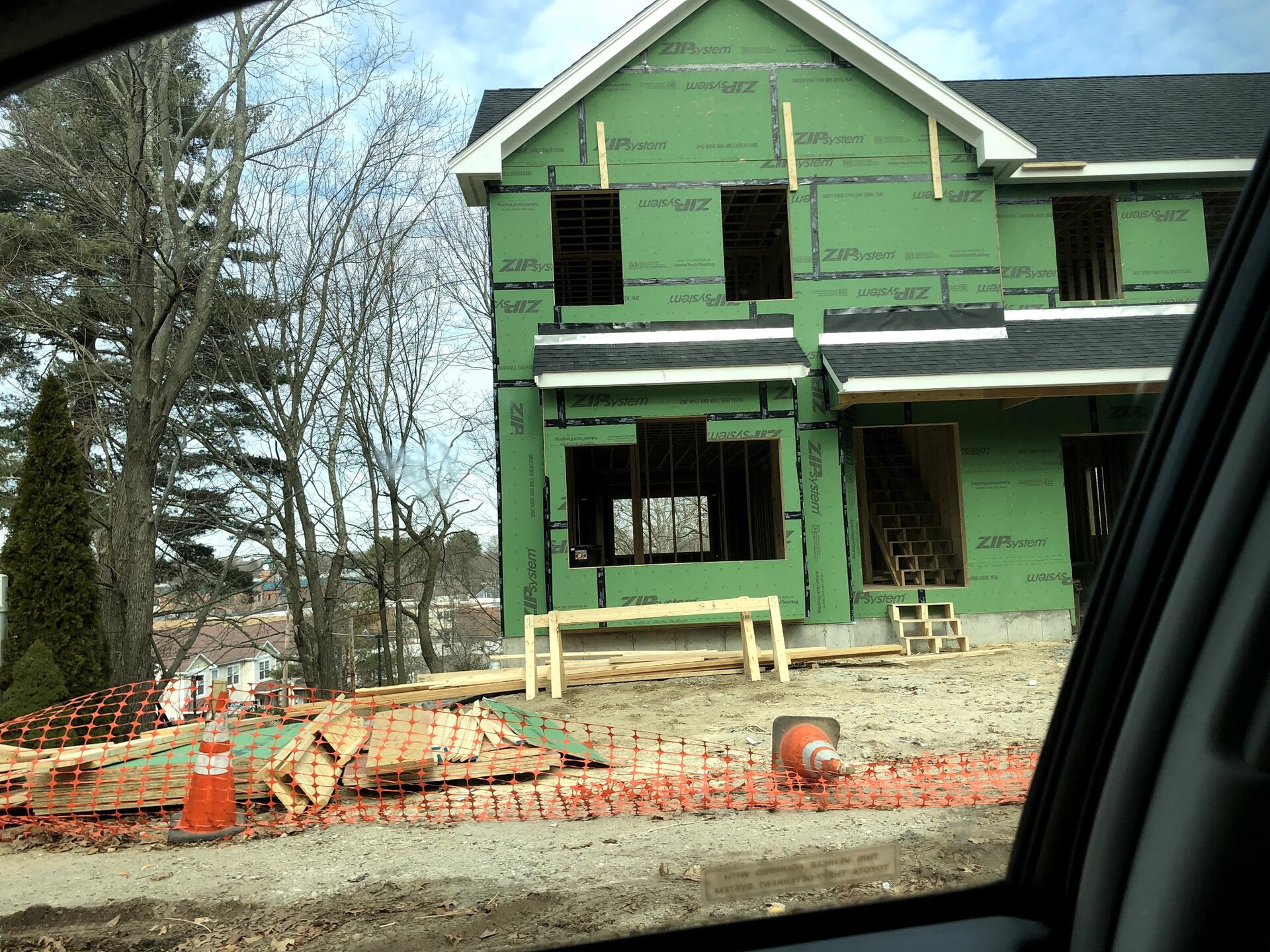

The permit path from raw land to occupancy
Most new houses in Idaho are built on lots that already exist in a recorded subdivision, so most buyers and many builders never see the first half of the path. When the land is raw, though, the order is roughly the same everywhere: decide which government has land use jurisdiction, settle the zoning, divide the land, record the plat, clear the sanitary restriction, secure water, sewer, road access and fire access, then apply for the building permit and pass the inspections. The flowchart below shows that order with the office responsible at each step.
Step one: which government has the land
Every other answer depends on this one. Land inside city limits is governed by the city's zoning and subdivision ordinances. Land outside city limits is governed by the county, including land inside an area of city impact, the ring around a city where growth is expected. Idaho Code 67-6526, rewritten in recent years, now says so in plain words: "areas of impact are properly under the jurisdiction of the county because the elected representatives of citizens in areas of impact are county officials, not city officials," and "cities do not govern or control decisions on those applications," although cities get notice and may comment. Counties and cities must review area of impact boundaries at least every five years.18
A landowner who wants city water and sewer may need to be annexed. Annexation is a city council decision under Idaho Code 50-222, which the Legislature replaced in 2024 (2024 Session Laws ch. 321) and amended again in 2026 (ch. 97). Its stated intent is "to honor the right of private landowners to have a voice in their own governance" and to provide for "the orderly development of Idaho cities." How annexation fights play out is in Part B, Annexation Fights.21
Step two: zoning and the planning and zoning commission
Under Idaho's Local Land Use Planning Act, each city council and board of county commissioners must establish zoning districts by ordinance, after notice and hearing, "in accordance with the policies set forth in the adopted" long-range plan (Idaho Code 67-6511).22 Most cities and counties use a planning and zoning commission of appointed citizens to hold the first hearing and recommend; the elected board makes the final decision on rezones. Planning staff are the day-to-day contact: they tell an owner what zone a parcel is in, what setbacks apply, and whether a house is allowed by right or needs a special use or conditional use permit. Since July 1, 2026, cities over 10,000 people must also follow two 2026 housing laws on starter homes and accessory dwelling units, covered in The 2026 Housing Laws.
Step three: dividing the land and recording the plat
Each governing board must adopt a subdivision ordinance setting standards and procedures for "subdivision permits under sections 50-1301 through 50-1329, Idaho Code" (Idaho Code 67-6513). The same section lets the ordinance provide for mitigation of a subdivision's effects on "political subdivisions of the state, including school districts," but any fee charged to mitigate financial impacts must comply with the Development Impact Fee Act.16 The plat, the surveyed map of the new lots, streets and easements, is checked by a surveyor and recorded by the county clerk and recorder. The full sequence, from preliminary plat to final plat, is in Subdivisions and Plats, Step by Step.
A rule that surprises many lot buyers: under Idaho Code 50-1326, every plat filed in Idaho carries a sanitary restriction on its face unless, at the time of filing or later, the water and sewage arrangements have been approved. Until the restriction is satisfied, the lots carry a recorded limit on building. The approval comes from DEQ or, under delegation, a health district; South Central Public Health District says its environmental health specialists "review applications, provide consultations and site review services to help remove sanitary restrictions on subdivisions."2324
When a subdivision is in the service area or area of city impact of a city water provider and uses a shared well or public water system, Idaho Code 31-3805 now requires the system to be designed to the city provider's requirements so it can connect later, and the water rights to pass to the city when it does. The same section deals with surface irrigation water in subdivisions; applications filed by June 30, 2025, are governed by the earlier law.25
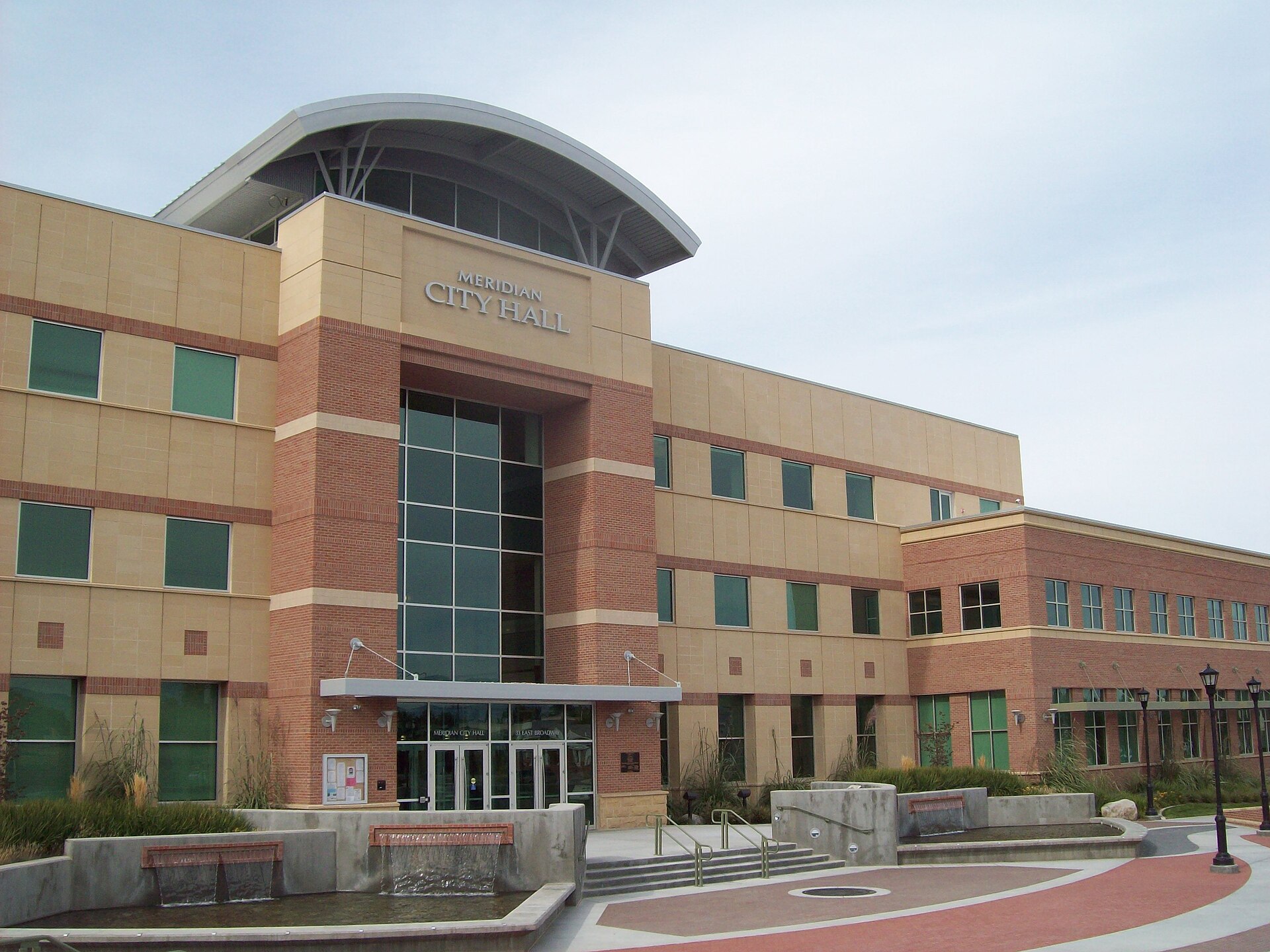

The city offices
Inside city limits, a new house usually deals with five or six city offices. The names differ from city to city; the functions do not.
Planning and zoning staff, commission and council
Planning staff check a building permit application against the zoning code: use, setbacks, height, lot coverage, parking and any conditions attached when the subdivision was approved. The planning and zoning commission and the city council act only when the land needs a legislative or quasi-judicial decision (annexation, rezone, plat, variance, conditional use). For a house on an existing lot in a zone that allows it, the planning review is usually a staff signature on the building permit.
The building department
The building department, sometimes called building safety or community development, does plan review, issues the building permit, inspects and issues the certificate of occupancy. Idaho Code 39-4111(2) makes it unlawful to build "any building, residence or structure in a local government jurisdiction enforcing building codes, without first procuring a permit in accordance with the applicable ordinance" of that local government.2 Under Idaho Code 39-4116, a city that issues building permits must adopt by ordinance the International Building Code, the Idaho residential code (parts I to III and IX) and the 2018 Idaho energy conservation code, effective January 1 of the year after the Idaho Building Code Board adopts them. It may amend them "to reflect local concerns, provided such amendments establish at least an equivalent level of protection," but it may not amend accessibility provisions and may not adopt residential code or residential energy code provisions the state board has not adopted or has rejected. The same section exempts one- and two-family dwellings from any code provision that would require automatic fire sprinklers, and says "permits shall be governed by the laws in effect at the time the permit application is received." A city may "contract with a public or private entity to administer" its program.1 Lesson 02 explains the editions and the board's process.
A 2025 law put clocks on the front end of the process. Idaho Code 39-4117 requires every local government that issues building permits to publish "a document that describes in detail the requirements of its building permit process," on its website and on paper. If a residential application is incomplete, the local government must say so in writing within 10 business days and list what is missing; it gets another 10 business days to review a resubmittal. A finding that an application is complete "shall not constitute approval but shall authorize the application to proceed to formal plan review." The applicant and the city may agree in writing to extend those deadlines. The section was added by Senate Bill 1164, 2025 Session Laws ch. 272.10
A second 2025 law, now Idaho Code 39-4118 (House Bill 266, 2025 Session Laws ch. 221), deals with inspections. If an inspection the permit holder requested "is not performed within forty-eight (48) business hours," the permit holder may hire a third-party inspector, who must meet the qualifications in Idaho Code 39-4108, and must be refunded the fee for that inspection. If an inspector fails work and does not give the reason within three business days, the city or county must refund 10 percent of the inspection fee.11 A companion section, renumbered in 2026 as Idaho Code 39-4119, lets building departments do "live virtual re-inspections" by video after an inspector has been on site in person, but not for structural inspections of buildings three stories or taller.26
What a city inspection sequence looks like
The City of Twin Falls Building Safety Department publishes its residential inspection list. In order: footing and setback (with property pins located and string lines up), foundation (including hold-downs for shear walls), shear (before house wrap covers the wall), mechanical, electrical and plumbing rough-ins ("separate permits and inspections required"), framing (with truss engineering on site, and only after the trade rough-ins pass), insulation (no wall or ceiling covering until it is approved), gypsum (drywall) only for fire-rated assemblies, the three trade finals, and then the final building inspection, which "can be scheduled once mechanical, electrical and plumbing final inspections are approved."27 Lesson 03 compares this sequence with Jerome, the county and Meridian.
Public works, engineering and utility billing
Public works or city engineering reviews anything that touches the street or city utilities: the driveway cut and sidewalk, grading and drainage, the sewer and water service lines, and in a new subdivision the streets, mains and storm drains the developer builds and later dedicates to the city. Utility billing or the finance office collects sewer and water connection or capacity fees and sets up the account; many cities collect those fees at building permit issuance. Plumbing inside the house and the building sewer are inspected by whoever runs the plumbing program (the city or DOPL, explained below); Idaho Code 54-2620(1)(b) also lets a city that elects it exercise plumbing jurisdiction within five miles of its limits over building drains and sewers on houses converting from septic to city sewer.5
Fees collected for the city
Cities charge for building permits and plan review under their own fee resolutions. The City of Twin Falls' permit fees page links a citywide master fee schedule (the posted file is dated 2020), says "permit fees are due upon commencement of work and must be paid prior to inspections being performed," and says its impact fee amounts are "automatically adjusted" for inflation every January 1.28 Impact fees may pay only for the facility types listed in the Development Impact Fee Act: water, wastewater, roads, stormwater and flood control, parks and open space, and public safety (police, fire, emergency medical and street lighting) (Idaho Code 67-8203(24)). School buildings are not on the list.15 How the act works, and who adopts fees in the Treasure Valley and Magic Valley, is in Impact Fees, Urban Renewal and Who Pays; lesson 09, Land, Labor, Fees and Money, compares the dollar amounts.
The fire marshal or fire department
The house itself is built to the residential code. What the fire code reaches for a single house is mostly outside it: the fire apparatus access road, gates and turnarounds, the water supply and hydrants, and the address sign. Idaho Code 41-253 has the State Fire Marshal adopt the International Fire Code by rule, with the stated purpose "to protect human life from fire, and to prevent fires."29 City fire departments and fire protection districts enforce it locally. Canyon County's building permit checklist shows how this reaches a rural lot: it requires "access turn-around approval from the servicing Fire District for any residence that has the back of the residence 150' or greater from a public road."30 Lesson 05 covers fire flow, hydrant spacing and the wildland-urban interface.
The county offices
Outside city limits, the county takes over most of the land use and recording roles, and the question of who issues a building permit gets harder.
County planning and zoning and the commissioners
The board of county commissioners adopts the county's zoning and subdivision ordinances under the same Local Land Use Planning Act sections that bind cities (Idaho Code 67-6511 and 67-6513), and makes final decisions on rezones, plats and areas of city impact (Idaho Code 67-6526).221618 A county planning and zoning commission or hearing examiner usually holds the first hearing. For a house on an existing rural parcel, the county zoning permit or zoning compliance check is often the first stop: is the parcel a legal lot, is a dwelling allowed, and does it meet the setbacks?
County building departments, where they exist
No Idaho statute requires a county to issue building permits. Idaho Code 39-4116(1) says a local government without a program "may elect to implement a building code enforcement program by passing an ordinance evidencing the intent to do so," and may contract the work out.1 Some counties do. Canyon County's building permit checklist for "New Built Homes, Remodels/Additions, Move-on Homes" in unincorporated areas asks for a site plan showing property lines, septic, well and setbacks; a deed or sales agreement; one set of plans; a preliminary septic approval from Southwest District Health (or city approval to connect to city services); "an individual approach approval from the servicing Highway District for each new residence"; fire district turnaround approval for houses set back 150 feet or more; a road users maintenance agreement for private roads; and a floodplain development permit where the parcel is in a mapped floodplain.30
Where a county does not run a building program, Idaho law does not substitute a state building permit for a private house. The state's own permit requirement, Idaho Code 39-4111(1), applies to work "coming under the purview of the division," and Idaho Code 39-4103 puts under the division's jurisdiction buildings owned by state agencies and buildings built or renovated "specifically for use or occupancy by any state agency."23 DOPL's building program FAQ describes its plan review role in those terms (state-owned buildings, buildings on state land and buildings occupied by a state agency) and tells people asking about a modular building's site work to "contact the city or county."31 The practical result: in an unincorporated area with no county program, a new house still needs zoning approval, a septic permit if off sewer, an approach permit, and DOPL electrical, plumbing and HVAC permits and inspections, but no one does a structural plan review or a framing inspection, and no certificate of occupancy is issued unless the county has a program. Which Magic Valley counties run building programs, and for which areas, is checked town by town in lesson 03, which found building department pages posted by Jerome, Twin Falls and Gooding counties; we did not find a statewide list published by DOPL or the Building Code Board.
Surveyor, recorder and assessor
The county clerk also serves as recorder, and records plats, deeds, easements, road maintenance agreements and liens. Idaho Code 50-1326 directs the clerk and recorder to place or clear the sanitary restriction on every plat.23 The county surveyor or a surveyor working for the county checks plats before recording. The assessor values the new house for property tax once it exists (Part B, Reading Your Assessment and Levy, explains how new construction enters the roll). Many counties also assign rural addresses through the assessor, planning office or a 911 addressing office; the address matters because building permits, septic permits, fire response and utility accounts all key on it.
Weed control and floodplain administration
Each county must run "a coordinated program for control of noxious weeds in the county" and employ a county weed superintendent (Idaho Code 22-2405). Ground disturbed for a new house is where noxious weeds start, and the county weed program can require control on the property.32 Idaho Code 46-1022 encourages each local government to adopt a floodplain map and a floodplain management ordinance requiring development in a floodplain to be built "at a flood protection elevation and/or have adequate floodproofing," and lets local governments adopt stricter standards.33 Communities that join the National Flood Insurance Program must "require permits for all proposed construction or other development in the community" in flood hazard areas, and in mapped zones A1-30, AE and AH must require the lowest floor of a house, including any basement, to sit at or above the base flood level (44 CFR 60.3(c)(2)).14 The local floodplain administrator, usually a city or county planner or building official, issues the floodplain development permit and keeps the elevation certificates.
Highway districts and county road departments
Local roads in much of Idaho belong to highway districts, separate taxing districts with elected commissioners. Idaho Code 40-1310 gives highway district commissioners "exclusive general supervision and jurisdiction over all highways and public rights-of-way within their highway system."19 That is why a new driveway onto a district road needs an approach permit from the district. Where no highway district exists, the county road department or the city street department plays that role.
A driveway onto a state highway is different. The Idaho Transportation Department regulates access to the state highway system under IDAPA 39.03.42, "Rules Governing Highway Right-of-Way Encroachments on State Rights-of-Way," which the rule's own summary says applies to "individual property owners," developers and business owners "seeking direct access to state highways," so that access "matches the intended traffic function designation of each highway and corridor."20
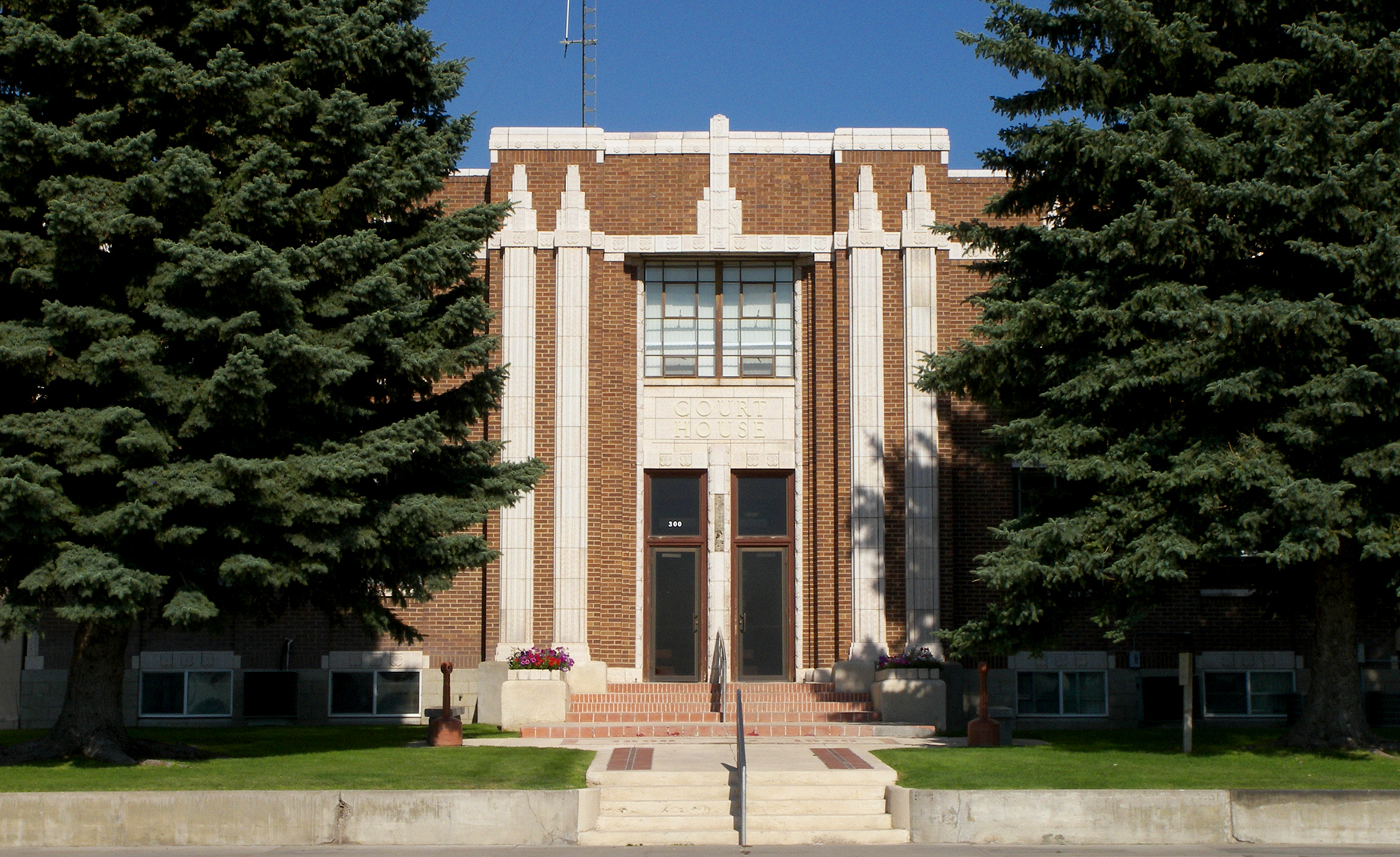

Special districts and private water entities
Idaho has many special-purpose districts, each with its own board and its own statute. Five kinds can touch a new house.
Fire protection districts
Outside cities, fire service usually comes from a fire protection district organized under Idaho Code Title 31, Chapter 14. Idaho Code 31-1401 declares "the protection of property against fire and the preservation of life, and enforcement of any of the fire codes and other rules that are adopted by the state fire marshal" a public purpose, and lets any part of a county not already in a district be organized into one.34 The district's fire chief or fire marshal typically reviews rural access, turnarounds and water supply for new houses, as in Canyon County's checklist.30
Irrigation districts, canal companies and drainage districts
In the Magic Valley and the Treasure Valley, almost every subdivision sits among canals, laterals and drains built for farming. Irrigation districts and canal companies own those ditches and their easements, and a builder who needs to cross, pipe or relocate one deals with the ditch owner, usually through a written crossing or encroachment agreement. South Central Public Health District's septic application requires the site plan to show irrigation ditches and sets a 50-foot minimum between a drainfield and an irrigation ditch.9 Idaho Code 31-3805 governs delivery of surface irrigation water within new subdivisions.25 Lesson 04 and Part C's Buying a Home in a Growing Area cover irrigation water from the buyer's side.
Sewer and water districts
Some areas get sewer or water from a district or a nonprofit association instead of a city. They set their own connection fees, and their plans for new mains or treatment go through DEQ: Idaho Code 39-118 requires that plans and specifications for new sewage systems and public water supply systems "be submitted to and approved by" DEQ before construction, a rule South Central Public Health District quotes on its septic application.359
School districts
School districts have no permit role. Idaho Code 67-6513 lets a subdivision ordinance provide for mitigation of a subdivision's effects on "political subdivisions of the state, including school districts," but requires any mitigation fee to follow the Development Impact Fee Act, and that act's list of public facilities does not include schools (Idaho Code 67-8203(24)).1615 In practice, school districts send comment letters on large subdivisions about capacity and bus routes. Part A's Water, Schools and Roads covers the enrollment pressure.
The seven public health districts
Idaho's public health districts were created in 1970. Idaho Code 39-408 divides the 44 counties among seven districts, and Idaho Code 39-409 creates a district health department in each, headed by a district board of health, providing "public health education, physical health, environmental health, and public health administration."836 For a new house, the environmental health side is the one that matters. Under IDAPA 58.01.03, DEQ's Individual/Subsurface Sewage Disposal Rules, every owner of real property is responsible for "obtaining necessary permits and approvals for installing individual or subsurface blackwaste and wastewater" systems, and the health districts issue those permits.37
South Central Public Health District (District 5) describes its land development work this way: environmental health specialists "review applications and issue permits for new installations, enlargements, and replacement subsurface sewage disposal systems," help remove sanitary restrictions on subdivisions, and on request inspect an existing well and septic system for a buyer or lender, reporting "as is."24 It also runs a planning and zoning proposal review: a form (revised March 2026) for adding a dwelling or outbuilding, adding to a dwelling, putting a house or manufactured home on an existing septic system, or dividing land into four lots or fewer, in a city, a city impact area or the county. A specialist rules the proposal approved, approved with conditions, or not approved; fees are on the district's fee schedule and are non-refundable.38
The district's March 2026 septic permit application lists the basic requirements for a standard subsurface system: a 1-acre minimum lot, 6 to 8 feet of soil depth shown by test holes near the drainfield and replacement areas, and minimum distances of 100 feet from a well to any drainfield, 50 feet from a well to any septic tank, 50 feet from a drainfield to an irrigation ditch, 25 feet from a drainfield to any water line, 10 feet from the house to the drainfield (20 feet with a basement), 5 feet from a drainfield to a property line and 5 feet from the foundation to the septic tank. The site plan must be drawn at no more than 20 feet per inch. "Acceptance of this application DOES NOT constitute a permit."9 Lesson 04 explains soil types, alternative systems and nitrate priority areas.
The Treasure Valley is split between two districts: Ada County is in District 4, Central District Health, and Canyon County is in District 3, Southwest District Health, which is why Canyon County's building checklist asks for "a preliminary approval from Southwest District Health" for an individual septic system.830
The state offices
DOPL and the trade permits
The Division of Occupational and Professional Licenses runs the state building, electrical, plumbing, HVAC, contractor and manufactured housing programs named in the statutes cited here. For a new house, DOPL matters in four ways: trade permits and inspections, trade licensing, contractor registration and manufactured home installation.39
Each trade has its own statute, and each follows the same pattern: a state permit is required unless a city or county runs an equivalent program.
- Electrical. The state inspection provisions do not apply within cities or counties that prescribe electrical installation by ordinance using the Idaho electrical code "and provided that actual inspections are made," or that receive inspections from another city or county that does. A city or county starting or ending its own program must give DOPL written notice, at least 30 days before starting (Idaho Code 54-1001B). DOPL can also inspect inside a city on the written request of the mayor or manager, "furnished at cost" (Idaho Code 54-1001C).440
- Plumbing. No one may install or alter a plumbing system "without first procuring a permit from the division," except within counties or cities where plumbing "is regulated and enforced by an ordinance or code equivalent" to the state law (Idaho Code 54-2620). Cities and counties keep their permit and inspection fees, but may not charge occupational license fees to state-certified plumbers unless they have qualified plumbing inspectors (Idaho Code 54-2619).541
- HVAC. Since Jan. 1, 2005, any HVAC installation or alteration requires "a permit from the authority having jurisdiction," with no permit needed for repair or maintenance of an existing system. If a DOPL plumbing or electrical permit covers part of an HVAC installation, or the reverse, one permit and inspection satisfies both (Idaho Code 54-5016).6
DOPL's electrical FAQ answers the most common question directly. Asked whether a city or county building permit removes the need for DOPL permits, it says "it may still be necessary for you to obtain permits from DOPL for electrical work." Homeowners may buy electrical permits only when they do the work themselves on their own primary or secondary residence and related outbuildings; the FAQ lists a $65 re-inspection fee and a $65 permit renewal fee, and says other fees are "based on the value of the work performed."7 To find out who inspects a given address, the FAQ links DOPL's list of inspectors by city, which also gives ZIP codes and inspection days. The copy linked in November 2026 is dated Jan. 19, 2023. It names a DOPL electrical, HVAC, plumbing and manufactured housing inspector for each ZIP code, with notes such as "Inside City Limits," "County Only" or "No City or County" that mark where DOPL's coverage stops; for the Twin Falls ZIP codes 83301 and 83303, for example, the electrical and plumbing entries read "County Only," while Jerome (83338), Kimberly (83341) and Buhl (83316) show a DOPL HVAC entry marked "Inside City Limits."42 Because the chart is nearly four years old and its notes are not explained on the chart itself, lesson 03 checks each Magic Valley town against city records.
Contractor registration and trade licensing
Two different state systems sort out who may do the work. The Idaho Contractor Registration Act makes it unlawful, since Jan. 1, 2006, "for any person to engage in the business of, or hold himself out as, a contractor within this state without being registered," and unlawful for a contractor to hire another contractor who is not registered (Idaho Code 54-5204, added by 2005 Session Laws ch. 153).43 Registration is a listing with the state; licensing, as Idaho uses it for the trades, means passing an examination for a certificate of competency. The plumbing and HVAC statutes are built around examinations and certificates of competency (Idaho Code 54-2609 to 54-2615; 54-5007 to 54-5011), and the electrical statute around licenses issued by the state, with licensure authority "exclusive to the state" (Idaho Code 54-1002).444546 Whether registration should become licensing for general contractors is one of the arguments in lesson 07, Why Quality Can Fall as Code Grows.
Manufactured and modular homes
A manufactured home is built in a factory to the federal HUD code. Under 42 U.S.C. 5403, HUD "shall establish, by order, appropriate Federal manufactured home construction and safety standards," and once one is in effect a state or local government may not set a different standard for the same aspect of construction.47 Idaho law handles the set-up on site. New homes must be installed according to the manufacturer's instructions and used homes according to the Idaho manufactured home installation standard (Idaho Code 44-2201). The owner or installer must get an installation permit, and for a new home an installation tag from DOPL, before installing a home that will be used as a residence; permits come from DOPL or from a city or county "whose installation inspection programs have been approved by the division," and every installation is inspected by the authority having jurisdiction (Idaho Code 44-2202).4849 DOPL keeps jurisdiction over in-plant inspections of manufactured and modular buildings under Idaho Code 39-4116(7).1 A modular building is different: it is built to the state-adopted codes, carries a DOPL insignia, and the site work belongs to the city or county.31 Manufactured homes as affordable ownership are covered in Part D, Manufactured Homes as Affordable Ownership.
The Idaho Building Code Board
The board that picks the codes every local building department must use is a 10-member body inside DOPL, appointed by the governor for four-year terms: one member of the public, one local fire official, one licensed engineer, one licensed architect, two local building officials (one county, one city), two contractors (one residential contractor who is an active member of the Idaho Building Contractors Association and one commercial contractor from Associated Builders and Contractors or Associated General Contractors), one modular building industry representative and one individual with a disability from an organization representing people with all types of disabilities (Idaho Code 39-4106).17 The board adopts codes by rule, serves as the board of appeals for the division and "shall have no authority to waive any requirements of the codes" (Idaho Code 39-4107).39 Lesson 02 follows its rulemaking and the legislative fights over code editions.
DEQ, IDWR and the State Fire Marshal
The Department of Environmental Quality writes the septic rules the health districts apply (IDAPA 58.01.03), reviews plans for public water and sewer systems (Idaho Code 39-118) and issues the construction stormwater permit described below.3735 The Idaho Department of Water Resources issues well drilling permits. Idaho Code 42-235 requires a permit from the IDWR director before anyone begins constructing or changing a well, at $75 for a domestic or monitoring well and $200 for other uses.50 A domestic well is defined in Idaho Code 42-111: water for homes and related purposes, including irrigation of up to one-half acre, if total use does not exceed 13,000 gallons per day, or any other use up to 2.8 acre-feet a year.51 That definition decides whether a house's well needs a water right permit, a subject for lesson 04. The State Fire Marshal, in the Idaho Department of Insurance, adopts the fire code that local fire officials enforce (Idaho Code 41-253).29
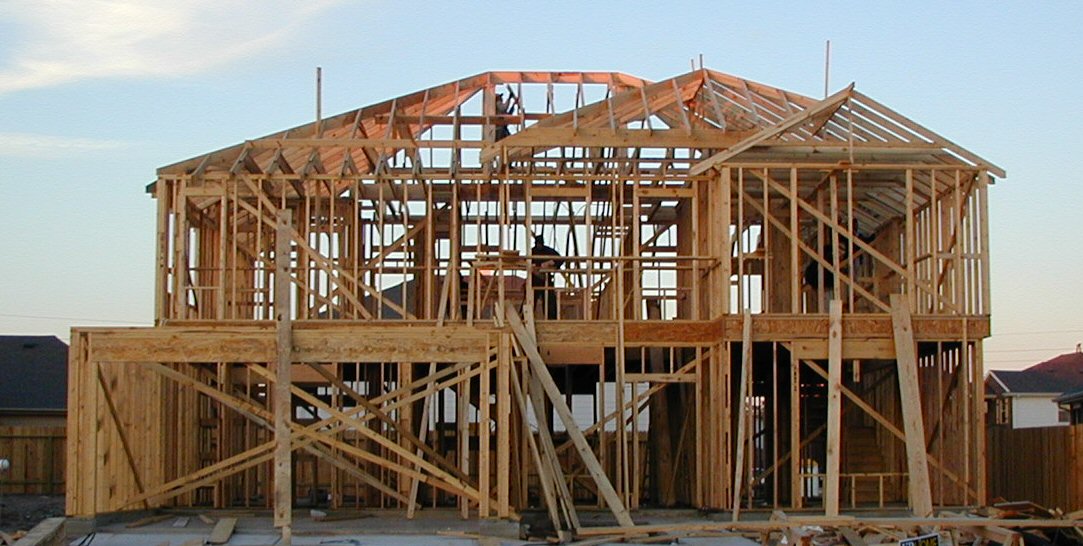

The federal layer
Most houses never touch a federal permit. Four federal programs can.
- Construction stormwater (one acre or more). Idaho DEQ, which now runs the federal Clean Water Act discharge permit program in Idaho as the Idaho Pollutant Discharge Elimination System (IPDES), says sites that "disturb one or more acres and discharge stormwater must be permitted" under its Construction General Permit, IDR100000, and so must "sites under one acre that are part of a larger common plan of development or sale." The operator writes a Stormwater Pollution Prevention Plan first, then submits a Notice of Intent "before earth disturbance begins"; a 14-day external agency review starts when the notice is complete. The permit expires Feb. 9, 2027, with a renewal window from Dec. 11, 2026, to April 10, 2027. DEQ does not issue IPDES permits on tribal lands; EPA Region 10 does.12
- Wetlands and waters (Section 404). Under 33 U.S.C. 1344, the Secretary of the Army, acting through the Corps of Engineers, "may issue permits, after notice and opportunity for public hearings for the discharge of dredged or fill material into the navigable waters at specified disposal sites." Normal farming, ranching and silviculture discharges are exempt under subsection (f).13 A house site that fills a wetland, a creek channel or some irrigation-connected waters may need one.
- Floodplains. FEMA maps flood hazard areas; the city or county enforces the National Flood Insurance Program rules in 44 CFR 60.3 through its floodplain permit.14
- Manufactured homes. HUD sets the construction standard (42 U.S.C. 5403); Idaho and its local governments handle installation.47
Who does what: the full grid
The table brings the offices together. "Where" means where the office has the role; "law" is the main statute or rule; "what it costs" lists a fee only where we read it in a published source.
| Office | What it does for a new house | Where | Main law | Published fee we read |
|---|---|---|---|---|
| City council; P&Z commission | Annexation, rezones, plats, conditional uses | Inside city limits | Idaho Code 50-222, 67-6511, 67-6513212216 | City fee resolution |
| County commissioners; county P&Z | Same decisions outside cities, including areas of city impact | Unincorporated land | Idaho Code 67-6511, 67-6513, 67-652618 | County fee resolution |
| City or county building department | Plan review, building permit, inspections, certificate of occupancy | Only where a program was elected | Idaho Code 39-4111, 39-4116, 39-4117, 39-411811011 | Local schedule; Twin Falls master fee schedule posted (2020 file)28 |
| City public works and utility billing | Sewer and water taps, street and drainage review, connection fees | City service area | City code; impact fees under Idaho Code 67-8201 onward15 | Local schedule |
| Fire department or fire protection district | Access, turnarounds, water supply, addressing | City or district boundaries | Idaho Code 41-253, 31-14012934 | Not read |
| County clerk and recorder; surveyor | Record plats, deeds, easements; sanitary restriction | Countywide | Idaho Code 50-132623 | Not read |
| County weed superintendent | Noxious weed control on disturbed ground | Countywide | Idaho Code 22-240532 | Not applicable |
| Floodplain administrator | Floodplain development permit, elevation certificate | Mapped flood zones | Idaho Code 46-1022; 44 CFR 60.33314 | Not read |
| Highway district or road department | Approach (driveway) permit on local roads | District's road system | Idaho Code 40-131019 | Not read |
| Idaho Transportation Department | Encroachment permit for access to a state highway | State highways | IDAPA 39.03.4220 | Not read |
| Irrigation district or canal company | Crossing or relocation agreements for ditches | Ditch easements | Idaho Code 31-3805 (subdivision water)25 | Set by entity |
| Public health district | Septic permits, P&Z proposal review, sanitary restriction release | Its counties (7 districts) | Idaho Code 39-408, 39-409; IDAPA 58.01.03837 | District fee schedule (SCPHD: non-refundable)38 |
| DOPL electrical, plumbing, HVAC | Trade permits and inspections; trade licenses | Statewide unless local program | Idaho Code 54-1001B, 54-2620, 54-5016456 | Electrical re-inspection $65; renewal $657 |
| DOPL contractor registration | Registers contractors; no exam | Statewide | Idaho Code 54-520443 | Not read |
| DOPL manufactured housing | Installation permit and tag; in-plant inspections | Statewide unless approved local program | Idaho Code 44-2201, 44-220249 | Set by rule |
| Idaho Building Code Board | Adopts codes; hears appeals | Statewide | Idaho Code 39-4106, 39-41071739 | Not applicable |
| DEQ | Septic rules; water and sewer plan review; stormwater permit | Statewide | IDAPA 58.01.03; Idaho Code 39-1183512 | Stormwater fees due before review |
| IDWR | Well drilling permits; water rights | Statewide | Idaho Code 42-235, 42-1115051 | $75 domestic well; $200 other |
| Army Corps of Engineers | Section 404 permits for fill in waters | Waters of the U.S. | 33 U.S.C. 134413 | Not read |
| HUD | Manufactured home construction standard | Nationwide | 42 U.S.C. 540347 | Not applicable |
How the map was drawn: a timeline
The offices did not arrive together. Each line in the table is drawn from the history notes the Legislature prints under each section of Idaho Code, or from the federal statute itself.
| Year | Law or event | What changed | Source |
|---|---|---|---|
| 1899 | Domestic water use defined | Origin of today's Idaho Code 42-111 (amended 1990, 1995, 2025 and 2026) | Idaho Code 42-111 history51 |
| 1943 | Fire protection district law | Counties may form fire protection districts (Idaho Code 31-1401) | Idaho Code 31-1401 history34 |
| 1957 | Plumbing law | Origin of the local fee rule now in Idaho Code 54-2619 | Idaho Code 54-2619 history41 |
| 1961 | Electrical inspections in cities | State may inspect inside a city on request, at cost (Idaho Code 54-1001C) | Idaho Code 54-1001C history40 |
| 1970 | Seven public health districts | Counties grouped into seven districts with district boards of health | Idaho Code 39-408, 39-409836 |
| 1970 | State fire code law | Origin of the State Fire Marshal's fire code section (now 41-253) | Idaho Code 41-253 history29 |
| 1971 | Sanitary restriction on plats | Every plat carries a sanitary restriction until water and sewer are approved | Idaho Code 50-1326 history23 |
| 1973 | Plan review for sewage and water systems | Plans must be approved by the state before construction (Idaho Code 39-118) | Idaho Code 39-118 history35 |
| 1975 | Idaho Building Code Act; Local Land Use Planning Act | State building permits for state buildings (39-4111); zoning and subdivision ordinances (67-6511, 67-6513) | History notes22216 |
| 1988 | Manufactured home installation standard | State installation rules for mobile and manufactured homes (Idaho Code 44-2201) | Idaho Code 44-2201 history48 |
| 1998 | Floodplain ordinances | Local governments encouraged to adopt floodplain maps and ordinances (Idaho Code 46-1022) | Idaho Code 46-1022 history33 |
| 2002 | Local adoption section | Idaho Code 39-4116 sets the rules for cities and counties that enforce building codes | Idaho Code 39-4116 history1 |
| 2005 | HVAC permits; contractor registration | HVAC permits required from Jan. 1, 2005 (54-5016, enacted 2003, ch. 276); registration required from Jan. 1, 2006 (54-5204, enacted 2005) | Idaho Code 54-5016, 54-5204643 |
| 2024 | New annexation law | Idaho Code 50-222 replaced (2024 ch. 321); amended 2026 (ch. 97) | Idaho Code 50-222 history21 |
| 2025 | Permit and inspection clocks | 10-business-day completeness review (39-4117, ch. 272); 48-business-hour inspection rule and refunds (39-4118, ch. 221) | History notes1011 |
| 2026 | Virtual re-inspections renumbered; 39-4116 amended | Video re-inspection section becomes 39-4119 (ch. 251); 39-4116 amended (ch. 320, House Bill 706, single-stairway building exceptions) | History notes261 |
Fees: what an office can charge
Few offices publish a single price for a new house. Building permit fees in Idaho have long been tied to the value of the work: Idaho Code 39-4112 says DOPL's building permit fees are set by Building Code Board rule and, until such rules exist, "shall not exceed those given in table 3-A, Uniform Building Code, 1985," a valuation table.52 DOPL's own current table, which applies to the buildings under its jurisdiction (not to private houses), shows how such a table works. Its notice of fee changes effective Jan. 1, 2025, lists the old and new amounts for each valuation band; for work valued between $100,001 and $500,000 the permit fee went from "$993.75 for the first $100,000, $5.60 for each additional $1,000" to "$695.63 for the first $100,000, $3.92 for each additional $1,000."53 Many cities use valuation-based tables of the same shape, with their own numbers; lesson 03 gives Jerome's and lesson 09 compares cities.
How we figured it: a valuation fee table at work, a hypothetical example
Hypothetical project. A made-up building with a construction valuation of $300,000, permitted under DOPL's building permit fee table. DOPL does not permit private houses; we use its table only because it is published and shows both the old and new amounts. The $300,000 figure is for illustration only.
Rule. For $100,001 to $500,000: the amount for the first $100,000 plus a per-$1,000 amount for each additional $1,000 (DOPL, "January 1, 2025, Fee Changes").
Before Jan. 1, 2025. $993.75 + (200 x $5.60) = $993.75 + $1,120.00 = $2,113.75.
From Jan. 1, 2025. $695.63 + (200 x $3.92) = $695.63 + $784.00 = $1,479.63.
Change. $1,479.63 / $2,113.75 = 0.700, a 30 percent cut. Checking other bands gives the same ratio (for example $16.45 / $23.50 = 0.700 for the smallest band), so the new table appears to be 70 percent of the old one across the board. This is our calculation from DOPL's notice; DOPL's notice does not state a percentage. Plan review fees are a separate charge on a separate table.
Treasure Valley and Magic Valley compared
The same laws produce different maps in different places. In the Treasure Valley, Ada County is in Central District Health and Canyon County in Southwest District Health; Canyon County runs a building permit program for unincorporated land whose checklist ties together the health district, the highway district, the fire district and the floodplain permit.830 The larger cities there run their own building departments; lesson 03 compares Boise or Meridian with Jerome.
In the Magic Valley, every county is in South Central Public Health District, so septic permits and P&Z proposal reviews for Jerome, Twin Falls, Gooding, Lincoln, Minidoka and Cassia counties all go through one district's forms.838 The City of Twin Falls runs its own building safety department and requires separate mechanical, electrical and plumbing permits and inspections.27 DOPL's 2023 inspector chart lists its own electrical, HVAC, plumbing and manufactured housing inspectors for every Magic Valley ZIP code, with coverage notes that differ from town to town: for example, it marks the Twin Falls electrical and plumbing entries "County Only" and the Jerome, Kimberly and Buhl HVAC entries "Inside City Limits," and it shows Gooding (83330) and Hagerman (83332) with no qualifier on any trade.42 Smaller towns are less likely to post permit guides online, even though Idaho Code 39-4117 now requires every local government that issues building permits to publish its requirements "on its website."10 Part A's Magic Valley Case Study shows how fast these towns are adding houses.
Idaho and the rest of the country
Three features of Idaho's map stand out when compared with federal law and the general pattern in other states. First, Idaho's building code law is a local-option system for houses: the state picks the editions every enforcing city and county must use and limits how they amend them, but the decision to enforce at all belongs to each city and county (Idaho Code 39-4116).1 States differ widely on this; how Utah, Washington, Oregon and Montana adopt and apply their codes is compared in lesson 02, and we did not complete that comparison for this lesson. Second, Idaho splits the trades from the building: electrical, plumbing and HVAC permits default to a state agency statewide, so even a house in a county with no building program gets trade inspections (Idaho Code 54-1001B, 54-2620, 54-5016).456 Third, the federal floor is the same everywhere: the HUD code for manufactured homes (42 U.S.C. 5403), Section 404 for fill in waters (33 U.S.C. 1344), the NFIP floodplain rules (44 CFR 60.3) and construction stormwater permits for an acre or more, which DEQ issues in Idaho.47131412 How states license contractors compared with Idaho's registration system is in lesson 07.
Pictures, Numbers and Infographics
The numbers, deadlines and thresholds in this lesson, each with its source.
| Measure | Idaho | U.S. or other states | Place or year | Source |
|---|---|---|---|---|
| Public health districts | 7, covering all 44 counties | Not compared | Since 1970 | Idaho Code 39-4088 |
| Counties in South Central Public Health District | 8 (Blaine, Camas, Cassia, Gooding, Jerome, Lincoln, Minidoka, Twin Falls) | Not compared | 2026 | Idaho Code 39-4088 |
| Idaho Building Code Board members | 10, four-year terms | Not compared | 2026 | Idaho Code 39-410617 |
| Completeness notice, residential building permit | 10 business days | Commercial: 20 business days | Since 2025 | Idaho Code 39-411710 |
| Inspection wait before third-party option | 48 business hours | Not compared | Since 2025 | Idaho Code 39-411811 |
| Refund if failure reason not given in 3 business days | 10 percent of inspection fee | Not compared | Since 2025 | Idaho Code 39-411811 |
| Notice before a city or county starts its own electrical program | 30 days, in writing to DOPL | Not compared | 2026 | Idaho Code 54-1001B4 |
| DOPL electrical re-inspection fee | $65 | Not compared | Read Nov. 2026 | DOPL electrical FAQ7 |
| Well drilling permit | $75 domestic or monitoring; $200 other | Not compared | 2026 | Idaho Code 42-23550 |
| Domestic use limit | 13,000 gallons per day (or 2.8 acre-feet a year for other uses); up to 1/2 acre irrigated | Not compared | 2026 | Idaho Code 42-11151 |
| Standard septic system minimum lot | 1 acre; 6 to 8 feet of soil | Not compared | SCPHD form, March 2026 | SCPHD septic application9 |
| Well to drainfield; well to septic tank | 100 feet; 50 feet | Not compared | SCPHD form, March 2026 | SCPHD septic application9 |
| Rural fire turnaround review trigger | Back of house 150 feet or more from a public road | Not compared | Canyon County, 2025 checklist | Canyon County checklist30 |
| Construction stormwater permit threshold | 1 acre (or part of a larger plan) | Same federal threshold; EPA issues on tribal land | Permit IDR100000, expires Feb. 9, 2027 | Idaho DEQ12 |
| Floodplain lowest floor, zones A1-30, AE, AH | At or above base flood level | Same national NFIP rule | 44 CFR 60.3(c)(2) | 44 CFR 60.314 |
| DOPL building permit fee change | New table about 70 percent of old (our calculation) | Not compared | Effective Jan. 1, 2025 | DOPL fee notice53 |
Common mistakes
- Assuming the city building permit covers the electrical work. DOPL's own FAQ says a city or county building permit holder may "still" need DOPL electrical permits, and the Twin Falls inspection list says mechanical, electrical and plumbing work need "separate permits and inspections."727
- Assuming the state issues a building permit where the county does not. DOPL's building permit requirement covers buildings within its purview, which Idaho Code 39-4103 ties to state-owned and state-occupied buildings. A rural house in a county without a program has trade permits but no building permit or certificate of occupancy.32
- Treating contractor registration as a skills test. Idaho Code 54-5204 requires registration; the trades, by contrast, have examinations and certificates of competency in their own chapters.4344
- Reading a passed final inspection as a quality guarantee. The Building Code Board "shall have no authority to waive any requirements of the codes," but the codes set minimums, and an inspection checks what is visible at that stage; lessons 06 and 07 take up what that means for quality.39
- Thinking the city controls an area of city impact. Idaho Code 67-6526 says those areas are "under the jurisdiction of the county."18
- Assuming a recorded lot is buildable. A plat can carry a sanitary restriction until water and sewer arrangements are approved (Idaho Code 50-1326), and a parcel off sewer still needs a septic permit that depends on soil depth and setbacks.239
- Assuming a domestic well needs no permit. A domestic well may be exempt from the water right permit process, but Idaho Code 42-235 requires a drilling permit from IDWR before any well is built.50
- Expecting the school district to collect impact fees. Schools are not a "public facility" under Idaho Code 67-8203(24).15
What we know, what we don't, and what the data can show
What we know
- Idaho's building permit system for houses is local option: a city or county "may elect" a program, and those that do must use the state-adopted codes with limited amendments (Idaho Code 39-4116).1
- Electrical, plumbing and HVAC permits default to DOPL statewide and shift to a city or county only when it adopts its own program (Idaho Code 54-1001B, 54-2620, 54-5016).456
- Septic permits come from the seven health districts under DEQ's rules (Idaho Code 39-408; IDAPA 58.01.03).837
- Since 2025, state law sets 10-business-day completeness reviews and a 48-business-hour inspection standard (Idaho Code 39-4117, 39-4118).1011
What we don't know
- A current statewide list of which cities and counties run building, electrical, plumbing and HVAC programs. We did not find one published by DOPL or the Building Code Board; DOPL's ZIP code inspector chart is dated Jan. 19, 2023.42
- How often local governments miss the 10-day and 48-hour deadlines, and how many third-party inspections or refunds have been claimed since 2025. No published report we found tracks this.
- Typical total permit and fee costs for a new house in each Magic Valley town; most small towns do not post a full schedule online (lesson 03 and lesson 09 work through what is posted).
What the data can show
- Local permit records (city and county permit files, inspection logs and certificates of occupancy) can show how many inspections each house needed and how long each step took, which tests the 2025 deadlines.
- DOPL's permit and inspection records for electrical, plumbing and HVAC can show trade inspection counts by ZIP code, and a records request can produce an updated version of the inspector jurisdiction chart.42
- Health district septic permit files and P&Z proposal reviews can show how many new houses in rural areas go on septic, and South Central Public Health District's approve, condition or deny outcomes can be counted.38
- IDWR well drilling permits, recorded at $75 each for domestic wells, can show how many new rural houses rely on private wells.50
- DEQ's construction stormwater notices of intent under IDR100000 can show which subdivisions disturbed an acre or more and when.12
Questions people ask
Is a building permit required for a house in the county?
Only if the county has adopted a building code enforcement program by ordinance (Idaho Code 39-4116). Where it has, the county building department issues the permit, as Canyon County does. Where it has not, there is no building permit for a private house, but zoning approval, a septic permit if off sewer, a road approach permit and DOPL electrical, plumbing and HVAC permits still apply.1304
Who inspects the wiring in a new house?
DOPL, unless the city or county has its own electrical program that uses the Idaho electrical code and makes actual inspections (Idaho Code 54-1001B). DOPL's FAQ links its list of inspectors by city, which also gives each ZIP code, to find out which applies.47
What happens if the city does not show up for an inspection?
Under Idaho Code 39-4118, if a requested inspection is not done within 48 business hours, the permit holder may hire a third-party inspector meeting the qualifications in Idaho Code 39-4108, must notify the city or county and give it the results, and is refunded the fee for that inspection.11
Why does the health district review a house on city sewer?
Usually it does not; the health district's role is septic systems and, through P&Z proposal review, new dwellings and land divisions that rely on septic or private wells. South Central Public Health District's review form asks whether the property is in a city, city impact area or county, and what the water source and sewage system will be.38
Who approves a new driveway?
The owner of the road: a highway district for roads in its system (Idaho Code 40-1310), a city or county road department where there is no district, or ITD for a state highway (IDAPA 39.03.42). Canyon County will not take a building permit application without "an individual approach approval from the servicing Highway District."192030
Can a city change the building code?
It can amend the adopted codes for local concerns if the amendment gives "at least an equivalent level of protection," but it cannot amend accessibility rules, cannot adopt residential code or residential energy code provisions the state board has not adopted, and cannot require sprinklers in one- and two-family houses (Idaho Code 39-4116). Lesson 02 has the detail.1
What does the Idaho Building Code Board do?
It adopts the codes and rules, hears appeals of DOPL building decisions, and cannot waive code requirements (Idaho Code 39-4107). Its 10 members come from the public, fire service, engineering, architecture, local building departments, residential and commercial contracting, the modular industry and the disability community (Idaho Code 39-4106).3917
Hard questions
Should every Idaho county be required to run a building program?
For a requirement: a buyer of a rural house built where no one did plan review or a framing inspection has no public record that the structure met any code, and the 2025 laws show the Legislature is willing to set statewide rules for local permit offices. Against: a building department costs money that small rural counties may not have, the trades are inspected statewide anyway, and Idaho Code 39-4116 deliberately leaves the decision to each county's elected board. What the evidence shows: the statute makes local programs optional; we found no Idaho study comparing defects or insurance losses in houses built with and without local building inspection.1
Do the 2025 permit and inspection deadlines help or hurt?
Supporters' case: delays cost builders and buyers money, and a 10-day completeness rule and a 48-hour inspection standard with refunds give applicants a remedy they lacked. Concern: a short window pushes small departments to rush or hand inspections to third parties paid by the permit holder. What the evidence shows: the law requires third-party inspectors to meet the state's inspector qualifications and to inspect "in substantial accord with the applicable jurisdiction's standards"; no data on how often the option has been used has been published that we found.1011
Who should control land on a city's edge?
The county's case: residents of an area of city impact elect county commissioners, not city councils, which is the reason Idaho Code 67-6526 now gives counties the final say. The city's case: cities will build the roads, sewer and water that serve those lots after annexation and want growth there built to city standards. What the evidence shows: the statute gives cities notice and comment, county control, and a five-year review of boundaries.18
Should schools be able to charge impact fees?
For: new subdivisions add students and school districts must pass bonds that all property owners pay. Against: impact fees raise the price of new houses and the Development Impact Fee Act limits them to listed facility types. What the evidence shows: Idaho Code 67-8203(24) does not list schools; Part B's lesson on impact fees covers the bills and debates.15
For reporters and advocates
Records that exist. City and county building permit files, plan review comment letters, inspection logs and certificates of occupancy; the permit process document each local government must post under Idaho Code 39-4117; written incomplete notices and any third-party inspection reports and refunds under Idaho Code 39-4118; DOPL electrical, plumbing and HVAC permits and inspections and its inspector jurisdiction chart; DOPL contractor registrations and trade licenses; Idaho Building Code Board agendas and minutes; health district septic permits and P&Z proposal reviews; IDWR well drilling permits; highway district approach permits and ITD encroachment permits; DEQ stormwater notices of intent; recorded plats and sanitary restriction releases; floodplain permits and elevation certificates.101142173850122314
Questions to ask.
- To a city or county building official: is the permit process document required by Idaho Code 39-4117 posted, and how many residential applications got an incomplete notice in the last year, and how fast?
- To the same office: how many inspections took longer than 48 business hours, how many third-party inspections were reported and how many refunds were paid under Idaho Code 39-4118?
- To DOPL: what is the current list of cities and counties running their own electrical, plumbing, HVAC and manufactured home installation programs, and when did each start or stop?
- To a county commission without a building program: has the county considered one, and what would it cost?
- To the health district: how many septic permits and P&Z proposal reviews did it issue this year in each county, and how many were denied or conditioned?
How to get them. All of these are public records under the Idaho Public Records Act, Idaho Code Title 74, Chapter 1; the request steps are in the public records requests module. Board meetings that adopt fees and codes are open under the open meeting law, covered in the open meetings module, and public hearings are where comment counts (testifying and public comment). Lesson 12, How to Report on Building Quality and Permitting, has request wording.
The Magic Valley angle. Every Magic Valley county shares one health district, so one records request to South Central Public Health District covers septic activity across the region. DOPL's chart shows its own inspectors covering much of the region's electrical, plumbing and HVAC work, with notes that differ by town; whether a small town runs a building program, contracts it out or has none is the first question for any local permit story.842
Where to go next
- Idaho Statutes search (Idaho Legislature): Free official text of Idaho Code with history notes under each section. Useful for checking any statute named in this lesson and the session law that last changed it.
- Idaho Administrative Rules (current rules): Free official text of IDAPA rules, including DEQ's septic rules and ITD's encroachment rules. Search by IDAPA number.
- DOPL Electrical Program FAQs: Free state page answering who needs electrical permits, homeowner permits and fees, with a link to the inspector inspector list by city and ZIP code.
- DOPL Building Program: plan review and permits: Free state page with DOPL's plan review and permit forms, fee tables and manufactured home installation permit forms.
- South Central Public Health District: land development: Free page from the Magic Valley's health district describing septic permits, subdivision review, P&Z proposal review and well and septic inspections, with links to forms and the fee schedule.
- Idaho DEQ: stormwater permits: Free state page explaining who needs construction stormwater coverage, the notice of intent and the 2026 to 2027 renewal window.
- FEMA Flood Map Service Center: Free federal tool to look up the flood map for an address and see whether a lot is in a mapped flood hazard area.
- City of Twin Falls Building Safety: inspections: Free city page with the Twin Falls residential inspection list and scheduling information; an example of a Magic Valley city building department.
Still being checked (6 items)
These points could not be fully confirmed against a primary source when this lesson was written and fact checked in November 2026. The text above states each one as uncertain.
- We did not find a current statewide list of which Idaho cities and counties run building, electrical, plumbing, HVAC or manufactured home installation programs; DOPL's linked inspector chart is dated Jan. 19, 2023, and its coverage notes ("Inside City Limits," "County Only," "No City or County") are not defined on the chart. Our reading of those notes needs confirmation from DOPL.
- What 2025 Session Laws ch. 40 changed in Idaho Code 39-4116 was not confirmed for this lesson. (Confirmed from the bill pages: ch. 272 is SB 1164, ch. 221 is HB 266, and 2026 ch. 320 is HB 706, the single-stairway bill.)
- The Twin Falls master fee schedule linked from the city's fee page is a file named for 2020; we did not confirm whether a newer schedule is in force.
- We did not read the statutes of other states (Utah, Washington, Oregon, Montana) for this lesson; the state comparisons are left to lessons 02 and 07.
- Which Army Corps of Engineers district handles Section 404 permits for each part of Idaho was not confirmed.
- We did not read Boise, Meridian, Nampa or Caldwell building department pages for this lesson; lesson 03 covers a Treasure Valley comparison.
Last verified November 21, 2026. General education, not legal, tax, financial or real estate advice; every figure names its source and year in the Notes and Sources below. Data is revised: check the newest release before relying on any number.
Notes
- Idaho Code section 39-4116, "Local government adoption and enforcement of building codes," as posted by the Idaho Legislature (history: added 2002, ch. 345; last amended 2026, ch. 320, House Bill 706) (read Nov. 20, 2026). Read it online. ↩
- Idaho Code section 39-4111, "Permits required," as posted by the Idaho Legislature (read Nov. 20, 2026). Read it online. ↩
- Idaho Code section 39-4103, "Scope, exemptions," as posted by the Idaho Legislature (read Nov. 20, 2026). Read it online. ↩
- Idaho Code section 54-1001B, "State inspection provisions inapplicable when installation covered by municipal ordinance," as posted by the Idaho Legislature (read Nov. 20, 2026). Read it online. ↩
- Idaho Code section 54-2620, "Permits required, exceptions," as posted by the Idaho Legislature (read Nov. 20, 2026). Read it online. ↩
- Idaho Code section 54-5016, "Permits required, exception, local government fees allowed," as posted by the Idaho Legislature (read Nov. 20, 2026). Read it online. ↩
- Idaho Division of Occupational and Professional Licenses, Electrical Program, "FAQs" (read Nov. 20, 2026). Read it online. ↩
- Idaho Code section 39-408, "Establishment of districts," as posted by the Idaho Legislature (added 1970, ch. 90) (read Nov. 20, 2026). Read it online. ↩
- South Central Public Health District, "Septic Application Instructions and Permit Application," form revised March 2026 (read Nov. 20, 2026). Read it online. ↩
- Idaho Code section 39-4117, "Processing building permits, timely review," as posted by the Idaho Legislature (added 2025, ch. 272, Senate Bill 1164) (read Nov. 20, 2026). Read it online. ↩
- Idaho Code section 39-4118, "Inspections, timeliness, refunds," as posted by the Idaho Legislature (added 2025, ch. 221, House Bill 266) (read Nov. 20, 2026). Read it online. ↩
- Idaho Department of Environmental Quality, "Stormwater Permits" (IPDES Construction General Permit IDR100000) (read Nov. 20, 2026). Read it online. ↩
- 33 U.S.C. 1344, "Permits for dredged or fill material," Legal Information Institute, Cornell Law School (read Nov. 20, 2026). Read it online. ↩
- 44 CFR 60.3, "Flood plain management criteria for flood-prone areas," Legal Information Institute (read Nov. 20, 2026). Read it online. ↩
- Idaho Code section 67-8203, "Definitions (Idaho Development Impact Fee Act)," as posted by the Idaho Legislature (read Nov. 20, 2026). Read it online. ↩
- Idaho Code section 67-6513, "Subdivision ordinance," as posted by the Idaho Legislature (read Nov. 20, 2026). Read it online. ↩
- Idaho Code section 39-4106, "Idaho building code board created, membership, appointment, terms, quorum, compensation, meetings," as posted by the Idaho Legislature (read Nov. 20, 2026). Read it online. ↩
- Idaho Code section 67-6526, "Areas of impact," as posted by the Idaho Legislature (read Nov. 20, 2026). Read it online. ↩
- Idaho Code section 40-1310, "Powers and duties of highway district commissioners," as posted by the Idaho Legislature (read Nov. 20, 2026). Read it online. ↩
- IDAPA 39.03.42, "Rules Governing Highway Right-of-Way Encroachments on State Rights-of-Way," Idaho Transportation Department, current rule as posted by the Office of the Administrative Rules Coordinator (read Nov. 20, 2026). Read it online. ↩
- Idaho Code section 50-222, "Annexation by cities," as posted by the Idaho Legislature (added 2024, ch. 321; amended 2026, ch. 97) (read Nov. 20, 2026). Read it online. ↩
- Idaho Code section 67-6511, "Zoning ordinance," as posted by the Idaho Legislature (read Nov. 20, 2026). Read it online. ↩
- Idaho Code section 50-1326, "All plats to bear a sanitary restriction," as posted by the Idaho Legislature (added 1971, ch. 329) (read Nov. 20, 2026). Read it online. ↩
- South Central Public Health District, "Land Development," environmental health services page (read Nov. 20, 2026). Read it online. ↩
- Idaho Code section 31-3805, "Delivery of water within subdivisions," as posted by the Idaho Legislature (read Nov. 20, 2026). Read it online. ↩
- Idaho Code section 39-4119, "Live virtual re-inspections," as posted by the Idaho Legislature (added 2025, ch. 221, as 39-4117; amended and redesignated 2026, ch. 251) (read Nov. 20, 2026). Read it online. ↩
- City of Twin Falls Building Safety Department, "Inspection Scheduling for Residential Projects" (undated handout) (read Nov. 20, 2026). Read it online. ↩
- City of Twin Falls, "Permit Fees" page and linked "2020 Master City Wide Fee Schedule" (read Nov. 20, 2026). Read it online. ↩
- Idaho Code section 41-253, "Statement of purpose, adoption of international fire code," as posted by the Idaho Legislature (read Nov. 20, 2026). Read it online. ↩
- Canyon County Development Services, "Building Permit Checklist" (posted May 2025) (read Nov. 20, 2026). Read it online. ↩
- Idaho Division of Occupational and Professional Licenses, Building Program, "FAQ" (read Nov. 20, 2026). Read it online. ↩
- Idaho Code section 22-2405, "County duties (noxious weeds)," as posted by the Idaho Legislature (read Nov. 20, 2026). Read it online. ↩
- Idaho Code section 46-1022, "Local governments may adopt floodplain zoning ordinances," as posted by the Idaho Legislature (read Nov. 20, 2026). Read it online. ↩
- Idaho Code section 31-1401, "Purpose and policy of law, short title (fire protection districts)," as posted by the Idaho Legislature (read Nov. 20, 2026). Read it online. ↩
- Idaho Code section 39-118, "Review of plans," as posted by the Idaho Legislature (read Nov. 20, 2026). Read it online. ↩
- Idaho Code section 39-409, "District health departments, establishment, services," as posted by the Idaho Legislature (read Nov. 20, 2026). Read it online. ↩
- IDAPA 58.01.03, "Individual/Subsurface Sewage Disposal Rules and Rules for Cleaning of Septic Tanks," Department of Environmental Quality, current rule (read Nov. 20, 2026). Read it online. ↩
- South Central Public Health District, "Instructions for Planning and Zoning Proposal Review" and application, form revised March 2026 (read Nov. 20, 2026). Read it online. ↩
- Idaho Code section 39-4107, "Powers and duties," as posted by the Idaho Legislature (read Nov. 20, 2026). Read it online. ↩
- Idaho Code section 54-1001C, "Inspections within municipalities, when authorized," as posted by the Idaho Legislature (added 1961, ch. 311) (read Nov. 20, 2026). Read it online. ↩
- Idaho Code section 54-2619, "Municipal fees for permits, inspections, exceptions," as posted by the Idaho Legislature (read Nov. 20, 2026). Read it online. ↩
- Idaho Division of Occupational and Professional Licenses, "Inspector List with Schedules," report generated Jan. 19, 2023, linked from the DOPL electrical FAQ (read Nov. 20, 2026). Read it online. ↩
- Idaho Code section 54-5204, "Registration required," as posted by the Idaho Legislature (added 2005, ch. 153) (read Nov. 20, 2026). Read it online. ↩
- Idaho Code Title 54, Chapter 26, "Plumbing and Plumbers," chapter table of sections (54-2609 character of examination; 54-2615 certificate of competency) (read Nov. 20, 2026). Read it online. ↩
- Idaho Code Title 54, Chapter 50, "Installation of Heating, Ventilation and Air Conditioning Systems," chapter table of sections (54-5007 to 54-5011) (read Nov. 20, 2026). Read it online. ↩
- Idaho Code Title 54, Chapter 10, "Electrical Contractors and Journeymen," chapter table of sections (54-1002 "License essential to engage in business, licensure authority exclusive to the state") (read Nov. 20, 2026). Read it online. ↩
- 42 U.S.C. 5403, "Construction and safety standards," Legal Information Institute (read Nov. 20, 2026). Read it online. ↩
- Idaho Code section 44-2201, "Mobile and manufactured homes installation," as posted by the Idaho Legislature (added 1988, ch. 264) (read Nov. 20, 2026). Read it online. ↩
- Idaho Code section 44-2202, "Installation permits and inspections required," as posted by the Idaho Legislature (read Nov. 20, 2026). Read it online. ↩
- Idaho Code section 42-235, "Drilling permits," as posted by the Idaho Legislature (read Nov. 20, 2026). Read it online. ↩
- Idaho Code section 42-111, "Domestic purposes defined," as posted by the Idaho Legislature (read Nov. 20, 2026). Read it online. ↩
- Idaho Code section 39-4112, "Maximum permit fees to be assessed by the division," as posted by the Idaho Legislature (read Nov. 20, 2026). Read it online. ↩
- Idaho Division of Occupational and Professional Licenses, "January 1, 2025, Fee Changes: Building Code and Factory Built Structures" (fee notice) (read Nov. 20, 2026). Read it online. ↩
Check yourself
1. Under Idaho Code 39-4116(1), what must a city or county that has never had a building code program do to start one?
Idaho Code 39-4116(1): a local government without a program "may elect to implement a building code enforcement program by passing an ordinance evidencing the intent to do so."
2. Who issues electrical permits for a new house in a city that has no electrical program of its own?
Idaho Code 54-1001B: state inspection provisions apply except within cities or counties that enforce the Idaho electrical code by ordinance and make actual inspections.
3. Which public health district covers Jerome, Twin Falls and Gooding counties?
Idaho Code 39-408 places Camas, Blaine, Gooding, Lincoln, Jerome, Minidoka, Twin Falls and Cassia counties in District No. 5.
4. Within how many business days must a local government tell a residential building permit applicant that the application is incomplete?
Idaho Code 39-4117(2), added by 2025 Session Laws ch. 272: 10 business days for residential and 20 for commercial.
5. If a requested inspection is not done within 48 business hours, what does Idaho Code 39-4118 allow?
Idaho Code 39-4118(1) (2025 ch. 221) allows a third-party inspector meeting 39-4108 qualifications and requires a refund of the fee for that inspection.
6. What minimum lot size does South Central Public Health District's March 2026 septic application list for a standard subsurface system?
The SCPHD septic application (rev. 3.2026) lists "1-acre minimum lot size" and 6 to 8 feet of soil depth for a standard system.
7. Which of these is NOT a "public facility" for impact fees under Idaho Code 67-8203(24)?
Idaho Code 67-8203(24) lists water, wastewater, roads, stormwater, parks and public safety facilities; schools are not listed.
8. Under Idaho Code 67-6526, who governs land use applications in an area of city impact?
Idaho Code 67-6526(1)(a): areas of impact "are properly under the jurisdiction of the county"; cities get notice and may comment.
9. When does a home site need coverage under Idaho DEQ's construction general permit IDR100000?
Idaho DEQ's stormwater permits page: sites that "disturb one or more acres and discharge stormwater must be permitted," including smaller sites in a larger common plan of development.
10. What does Idaho Code 42-235 require before a domestic well is drilled?
Idaho Code 42-235 requires a permit from the director of the Department of Water Resources before constructing any well, with a $75 charge for domestic or monitoring wells.
Terms in this lesson
- The office that enforces a given code or issues a given permit at a particular address, such as a city building department or DOPL.
- Building permit
- Written permission from a city or county building department to build, issued after plan review, where the local government has elected a building code program under Idaho Code 39-4116.
- Certificate of occupancy
- The document a building department issues after the final inspection stating the building may be occupied.
- Plan review
- An examiner's check of construction drawings against the adopted codes before a permit is issued.
- Area of city impact
- Land outside a city where growth is expected; under Idaho Code 67-6526 it is under county jurisdiction, with city notice and comment.
- Sanitary restriction
- A restriction placed on the face of every Idaho plat under Idaho Code 50-1326 until water and sewage arrangements are approved.
- Public health district
- One of seven regional health departments created by Idaho Code 39-408 and 39-409; their environmental health staff issue septic permits.
- Trade permit
- An electrical, plumbing or HVAC permit, issued by DOPL unless a city or county runs its own program for that trade.
- Contractor registration
- Listing with the state required of contractors by Idaho Code 54-5204 since Jan. 1, 2006; it involves no skills examination.
- Certificate of competency
- The license a plumber or HVAC worker earns by examination under Idaho Code Title 54, Chapters 26 and 50.
- Approach permit
- Permission from a highway district, road department or ITD to connect a driveway to a public road.
- Third-party inspector
- A qualified private inspector a permit holder may hire under Idaho Code 39-4118 when a requested inspection is not done within 48 business hours.
- Idaho Building Code Board
- The 10-member board in DOPL that adopts building codes by rule and hears appeals (Idaho Code 39-4106, 39-4107).
- Construction General Permit
- Idaho DEQ's stormwater permit IDR100000, required for sites that disturb one acre or more.
Sources
- Idaho Code Title 39, Chapter 41, Idaho Building Code Act (2026-11-20) checked 2026-11
- Idaho Code 39-408, establishment of public health districts (2026-11-20) checked 2026-11
- Idaho Code Title 54, Chapter 10, electrical contractors and journeymen (2026-11-20) checked 2026-11
- Idaho Code Title 54, Chapter 26, plumbing and plumbers (2026-11-20) checked 2026-11
- Idaho Code Title 54, Chapter 50, HVAC systems (2026-11-20) checked 2026-11
- Idaho Code 67-6526, areas of impact (2026-11-20) checked 2026-11
- IDAPA 58.01.03, Individual/Subsurface Sewage Disposal Rules (2026-11-20) checked 2026-11
- IDAPA 39.03.42, highway right-of-way encroachments on state rights-of-way (2026-11-20) checked 2026-11
- South Central Public Health District, septic permit application (rev. March 2026) (2026-11-20) checked 2026-11
- DOPL, Inspector List with Schedules (Jan. 19, 2023) (2026-11-20) checked 2026-11
- Idaho DEQ, stormwater permits (Construction General Permit IDR100000) (2026-11-20) checked 2026-11
- 44 CFR 60.3, floodplain management criteria (2026-11-20) checked 2026-11
- Canyon County, Building Permit Checklist (2025) (2026-11-20) checked 2026-11