Lesson 11 of 12 · about 55 minutes · Updated November 20, 2026
Manufactured Homes as Affordable Ownership
You'll be able to
- Distinguish a manufactured home, a mobile home and a modular home under Idaho Code 39-4105 and the HUD code
- Describe the steps to declare a manufactured home real property under Idaho Code 63-304 and to reverse it under 63-305
- Compare chattel loans and real-property mortgages using Idaho's 2025 HMDA records and the CFPB's national findings
- Explain the home and land rules of FHA Title I and Title II, USDA Section 502, Fannie Mae MH Advantage, Freddie Mac CHOICEHome and IHFA HOME assistance
- Explain what House Bill 800 (2026) and Public Law 119-101 changed and what Idaho must do by July 11, 2027
- Find and read the public records and data that show how manufactured homes are titled, taxed and financed in an Idaho county
Start here: the short version
- A manufactured home starts life as titled personal property. Idaho Code 49-501 puts manufactured homes under the motor vehicle titling chapter. An owner who removes the running gear, fixes the home to a foundation on land the owner owns or is buying, and records a statement of intent under Idaho Code 63-304 turns it into real property; reversing that takes 30 days' notice and every landowner's consent under 63-305.123
- About one Idaho manufactured home purchase loan in four is a chattel loan. In 2025 HMDA records, lenders made 697 Idaho home-purchase loans secured by a manufactured home and its land and 249 secured by the home alone. The median interest rate was 6.375 percent on the first kind and 8.85 percent on the second, and 42.7 percent of applications for home-only loans were denied, against 16.9 percent for home-and-land loans (our calculation).4
- New homes cost about half as much per square foot. The Census Bureau put the 2024 average new manufactured home at $84.45 a square foot, against $168.86 for the structure of a new site-built home sold with its land. Idaho's 2025 average new manufactured home sold for $125,300; 507 new homes were shipped to Idaho dealers in 2025, down from 3,712 in 1994.567
- Congress dropped the permanent chassis rule on July 11, 2026. The 21st Century ROAD to Housing Act (Public Law 119-101), which became law without the President's signature, says a manufactured home may be built "with or without a permanent chassis." Idaho, whose Legislature meets every year, has until July 11, 2027, to certify that it treats both kinds alike; Idaho Code 39-4105 still says "built on a permanent chassis."8910
- Idaho loosened its own siting rules in 2026. House Bill 800 (2026 Session Laws ch. 171), signed March 26, 2026, and effective July 1, 2026, lowered the size standard a city or county may set for a manufactured home outside a park in a single-family zone from 1,000 square feet to 400 for a single section and 800 for a multisection home; a city may still apply any minimum size it requires of a site-built house on the same lot. An earlier version that would also have barred covenants against manufactured homes, HB 647, never left committee.111213
- Boise holds a $6.77 million federal grant for manufactured home communities. HUD's December 2024 PRICE awards gave the City of Boise $6,773,702.72; its plan, approved July 1, 2025, puts $3,411,400 into the city-owned Sage Mobile Home Park and $1,500,000 toward buying parks at risk of redevelopment.1415
Law and programs: Idaho Code as amended through the 2026 regular session, read on the Legislature's statute pages; federal law through Public Law 119-101 (July 11, 2026); HUD, USDA, FHA, Fannie Mae and Freddie Mac rules as posted; Idaho State Tax Commission guidance EBR00165 (rev. April 15, 2019). Data: Census Bureau Manufactured Housing Survey (shipments through August 2026; prices through 2025), American Community Survey 2020 to 2024 5-year estimates, and HMDA loan records for 2024 and 2025 from the FFIEC data browser. Checked Nov. 20, 2026. Rules, loan limits and data change; check the newest release.
For a household that cannot afford a new site-built house, a manufactured home is the main way to own a home without a subsidy. It is also the form of ownership where the paperwork matters most. Whether the home is a vehicle-style title or a piece of real estate decides what kind of loan a buyer can get, what interest rate the buyer pays, which consumer protections apply, how the home is taxed, and what happens when it is sold or the owner dies. Those choices are made in Idaho statutes that most owners never read, in federal loan rules, and, since July 2026, in a new federal law that requires Idaho's Legislature to act within a year.
This lesson covers ownership and money: what counts as a manufactured home, how many Idaho buys and what they cost, Idaho's titling and real property rules, chattel loans and mortgages compared with Idaho loan records, the federal and state loan programs, the 2026 changes, resident ownership of the land, value over time, and safety and installation. It explains rules for general education; it does not tell anyone whether to buy, finance or sell a home.
The law of renting a lot in a park, including lot rent notices, evictions and park closures, is covered in Part C's Mobile and Manufactured Home Parks, which also has the county-by-county Census counts this lesson builds on. Homeownership trends are in lesson 01, Homeownership in Idaho, 1900 to 2026; first-time buyer programs in lesson 09, First-Time Buyer Assistance; the trouble with second liens and price caps in lesson 10, The Problems With Buyer Assistance; and the shortage of low-cost housing, including parks, in lesson 03, Low-Income Housing Issues in Idaho. The 2026 zoning laws, including HB 800, are set out in Part B's The 2026 Housing Laws.

What counts as a manufactured home
The June 15, 1976, line
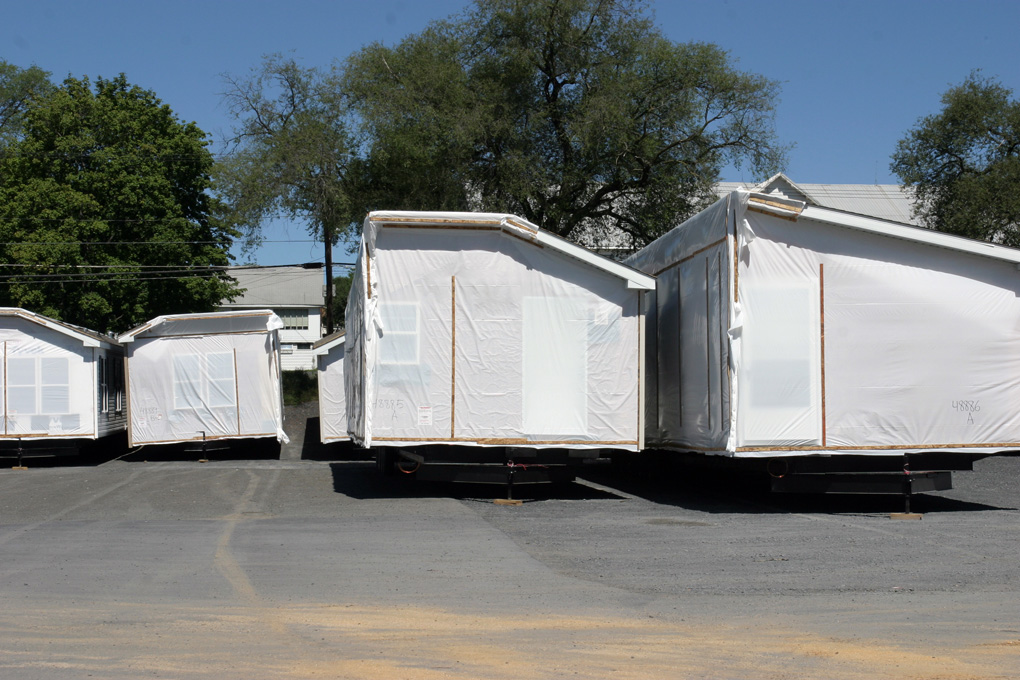
A manufactured home is a house built in a factory to a single national code written by the U.S. Department of Housing and Urban Development (HUD) and moved to its site in one or more sections. Congress ordered the code in the National Manufactured Housing Construction and Safety Standards Act of 1974, now 42 U.S.C. 5401 and following, and the standards took effect in 1976. They sit in 24 CFR Part 3280 and are usually called the HUD code. Every home built to it carries a HUD certification label and a HUD data plate, which lenders and assessors use to identify it.816
Idaho's definition follows the federal one. Idaho Code 39-4105(8) defines a manufactured home as a structure "constructed after June 15, 1976, in accordance with the HUD manufactured home construction and safety standards," transportable in one or more sections, at least 8 body feet wide or 40 body feet long in traveling mode or at least 320 square feet when set up, "built on a permanent chassis," and designed as a dwelling with or without a permanent foundation. A mobile home under 39-4105(9) is the older thing: a factory-assembled structure "generally constructed prior to June 15, 1976," movable on its own running gear. The difference matters for loans: FHA's Title II mortgage rule and USDA's home loan rules require a HUD certification label, and Idaho's HOME down payment program requires new manufactured homes to meet the HUD standards in 24 CFR Part 3280.101718
The federal definition changed on July 11, 2026. Section 301 of Public Law 119-101 replaced "on a permanent chassis" in 42 U.S.C. 5402(6) with "with or without a permanent chassis," so the federal definition now reads "built with or without a permanent chassis." Idaho's definition has not caught up; that gap is explained below under the ROAD to Housing Act.98
Manufactured, modular and park models
Three kinds of factory-built housing are easy to confuse. A modular home is built in a factory in sections, but to the state and local building codes that govern site-built houses, not to the HUD code; once set on its foundation it is treated like any other house. A park model recreational vehicle is an RV built to an RV standard, titled under Idaho Code 49-501(2)(c) when not registered, and is not a manufactured home. A manufactured home is the HUD-code house in between: built to a federal standard, titled like a vehicle in Idaho until converted, and financed by its own set of loan rules.8116
How the rules changed, 1974 to 2027
The table lists the federal and Idaho actions that shape ownership of a manufactured home today. Park tenancy laws (Idaho Code Title 55, Chapter 20, and the 2024 park-sale notice bill) are in Part C and are left out here.
| Year | Law or event | What changed | Source |
|---|---|---|---|
| 1974 | National Manufactured Housing Construction and Safety Standards Act | Congress orders HUD to write a national construction code (42 U.S.C. 5401 and following) | CRS R493548 |
| 1976 | HUD code takes effect | Homes built after June 15, 1976, are "manufactured homes"; older units are "mobile homes" | Idaho Code 39-410510 |
| 1993 | Idaho Code Title 44, Chapter 21 | Idaho requires manufacturers, retailers and installers to be licensed | Idaho Code 44-210119 |
| 1994 | Idaho Code 67-6509A (1994 ch. 212) | Cities and counties must allow manufactured homes on land zoned for single-family homes, with optional placement standards | Idaho Code 67-6509A12 |
| 1996 | Idaho Code 63-304 and 63-305 (1996 ch. 98) | An owner may declare a home real property and later reverse it; amended 2002 (ch. 61) | Idaho Code 63-304, 63-30523 |
| 2000 | Manufactured Housing Improvement Act (P.L. 106-569) | Adds paragraphs 14 to 21 to the definitions in 42 U.S.C. 5402 and changes "dealer" to "retailer" | 42 U.S.C. 5402 history9 |
| 2014 | CFPB HOEPA rule (effective Jan. 10, 2014) | High-cost loan protections reach purchase loans, with a higher trigger for small loans secured by personal property | CFPB (2021)16 |
| 2018 | New HMDA fields | Lenders report whether a manufactured home loan is secured by land and what interest the borrower holds in the land | CFPB (2021)16 |
| 2024 | HUD final rule, 89 FR 75704 (Sept. 16, 2024) | HUD code updated; homes may hold one to four dwelling units; the industry's trade group counted 74 updated reference standards and 16 new ones | Federal Register; MHI2021 |
| 2025 | HUD notice, Feb. 25, 2025; DOE rule, July 2, 2025 | HUD code update delayed to Sept. 15, 2025; DOE Tier 2 energy standards (multisection homes) delayed until 180 days after DOE issues final enforcement procedures | Federal Register2223 |
| 2026 | HB 800 (Idaho), signed March 26 | Manufactured-home size standard capped at 400 square feet (single section) or 800 (multisection), though site-built minimum sizes may still apply; manufactured duplexes treated as multifamily | Bill page11 |
| 2026 | HUD proposed rule, June 12 | Only lowest-floor sections would need a chassis | HUD FR-6537-P-0124 |
| 2026 | Public Law 119-101, July 11 | Chassis requirement dropped; Title I loans modernized; PRICE program authorized | CRS R493548 |
| 2027 | July 11 deadline | States with annual sessions, including Idaho, must certify equal treatment of homes with and without a chassis; HUD must adopt energy standards | CRS R493548 |
How many Idaho buys and what they cost
New homes shipped to Idaho since 1994
The Census Bureau's Manufactured Housing Survey, sponsored by HUD, counts new manufactured homes shipped from factories to dealers in each state. Its Idaho series starts in 1994 at 3,712 homes. Shipments peaked nationally in 1998 at 373,143, when Idaho took 2,980, and fell through the 2000s; the national count hit 49,717 in 2009 and Idaho's bottomed at 217 in 2012. Idaho took 635 homes in 2022, 353 in 2023, 433 in 2024 and 507 in 2025, and 368 in the first eight months of 2026. Idaho's share of national shipments was 0.80 percent in 1998 and 0.49 percent in 2025 (our calculation).7
Shipments are not sales and not placements: a home shipped to a dealer in Idaho can be sold to a buyer in another state, and a home bought in Idaho can come from a dealer elsewhere. They are the only state series that runs back to 1994, and the trend is clear: Idaho buys a fraction of the new manufactured homes it bought in the 1990s, even as its population grew. How Idaho's population and housing stock grew over the same years is in Part A's Prices and Rents vs. Inflation.7
Prices of new homes, Idaho and the United States
The same survey reports the average sales price of new homes sold or intended for sale, by state, for single-section and double-section homes. The price is for the home; it does not include land. Idaho's samples are small, so its relative standard errors run from about 5 to 11 percent in most recent years (6.7 percent in 2025); a year-to-year change of a few thousand dollars may be noise.6
| Year | Idaho, all new homes | Idaho, single-section | Idaho, double-section | United States, all | West region, all |
|---|---|---|---|---|---|
| 2014 | $72,500 | $45,600 | $86,300 | $65,300 | $80,700 |
| 2016 | $88,600 | $48,600 | $97,500 | $70,600 | $88,500 |
| 2018 | $98,100 | $59,900 | $103,200 | $78,500 | $99,000 |
| 2020 | $108,900 | withheld | $122,300 | $87,000 | $106,000 |
| 2022 | $168,500 | $74,600 | $182,000 | $127,300 | $148,500 |
| 2023 | $144,900 | $82,600 | $172,000 | $124,300 | $143,600 |
| 2024 | $142,200 | $108,000 | $166,200 | $123,300 | $142,600 |
| 2025 | $125,300 | $94,000 | $160,200 | $127,200 | $145,100 |
Source: U.S. Census Bureau, Manufactured Housing Survey, Average Sales Price of New Manufactured Homes by Size of Home by State, 2014 to 2025. "Withheld" marks a figure the Census did not publish (shown as D in its table).6
Idaho's average rose 132 percent from 2014 to its 2022 peak and was 73 percent higher in 2025 than in 2014 (our calculation from the table). The 2022 peak came during the post-2020 surge in housing prices generally. From 2024 to 2025 both Idaho averages fell: single-section homes from $108,000 to $94,000 and double-section homes from $166,200 to $160,200.6
Cost per square foot against site-built homes
The Census compares new manufactured homes with new single-family site-built homes sold with their land. In 2024 the average new manufactured home sold for $123,300 with 1,460 square feet, or $84.45 a square foot. The average new site-built home sold for $514,500 with 2,404 square feet; after the Census subtracts a derived average land price of $108,561, the structure cost $168.86 a square foot. The manufactured home cost almost exactly half as much per square foot (our ratio: 84.45 / 168.86 = 0.50).5
The comparison is national and leaves out real costs a manufactured home buyer pays: land or lot rent, the foundation, utility hookups, transport and installation beyond what the dealer includes, permits, and any garage or porch. It also compares a smaller average home with a larger one. The Congressional Research Service, citing a 2023 report by the Joint Center for Housing Studies of Harvard University, says manufactured housing typically costs less "due in part to smaller home sizes and in part to efficiencies that can reduce construction costs."58
Where new homes go: parks or private land
For 2024, the Census reports that 45 percent of new manufactured homes placed for residential use went inside communities (23 percent into land-leased manufactured home communities and 23 percent onto private lots in subdivisions or planned developments) and 55 percent went outside communities, nearly all on other private property. In 2021 the shares were 51 percent inside and 49 percent outside. These are national shares; the Census does not publish them by state.5
That split is the first fork in ownership finance. A home on land the buyer owns can become real property and qualify for a mortgage. A home on a rented lot usually stays personal property and is financed, if at all, with a chattel loan.
The existing stock in Idaho counties
Part C's park lesson has the full county and city table from the American Community Survey (ACS); its main figures, which come from ACS tables B25024 and B25032 (2020 to 2024 5-year estimates), are repeated here for reference. Idaho has 55,245 mobile and manufactured homes (margin of error 1,405), 6.9 percent of its housing units; the U.S. share is 5.6 percent. Of Idaho's occupied mobile homes, 72.6 percent are lived in by their owners. In the Magic Valley, they are 15.7 percent of all housing units in Gooding County, 18.3 percent in Lincoln County, 9.9 percent in Minidoka County, 9.5 percent in Jerome County, 7.5 percent in Cassia County and 7.1 percent in Twin Falls County, against 2.7 percent in Ada County and 6.7 percent in Canyon County.2526
The ACS counts "mobile homes" by units in structure and does not separate pre-1976 mobile homes from HUD-code homes, or homes on owned land from homes in parks. Owner-occupied means the household owns the home; the survey does not ask who owns the land under it.2526
Personal property or real property: Idaho titling
Every ownership question about a manufactured home in Idaho starts with one fact: is it titled personal property or has it been declared real property? The answer decides which office holds the ownership record, how a buyer finances the home, how the county taxes it and what a seller must do to move it.
A title from the motor vehicle office
Idaho Code 49-501(2)(b) applies the motor vehicle titling chapter to "manufactured homes as defined in section 39-4105," even though they are not registered to drive. A new home comes with a manufacturer's statement or certificate of origin, and the Idaho Transportation Department issues the certificate of title. A lender on a home-only loan is listed as lienholder; the Tax Commission's declaration form has a line for "Lien Holder (if any)" and a block for the lienholder's consent.27128
A deed to land does not carry the home with it. The Jefferson County Assessor's Office in Rigby puts it plainly: "Deeding a property from one owner to another does not transfer title of the manufactured home," and a home that has not been declared real property "must be titled in the current owner's name." A buyer who receives a deed but not the home's title can own the lot without clearly owning the house. A missing title can be replaced with a duplicate from the motor vehicle office, and a free VIN inspection is required when no record shows the owner.29
Declaring a home real property, step by step
Idaho Code 63-304, enacted in 1996, lets a manufactured home "constitute real property" if the running gear is removed, the home is permanently affixed to a foundation on land the owner owns or is buying, and the owner records with the county recorder "a statement of intent to declare the manufactured home as real property." Once declared, county assessors must treat the home "as any other site-built residence," and lenders may treat it as real property. The State Tax Commission prescribes the form, Form EFO00312, and the original title or certificate of origin must be attached so the step can be reversed.227
The Tax Commission's guide for owners lists the steps in order. Paraphrased:28
- Remove the running gear (wheels, axles and hitch) and permanently affix the home to the land, meeting the Idaho manufactured home installation standard. A new home's foundation plan must be stamped by an Idaho-registered engineer or architect; where no local building department handles it, the Division of Occupational and Professional Licenses sells a $65 permanent foundation permit.30
- Complete the Statement of Intent to Declare form. Assessors, the Tax Commission and some dealers, title companies and lenders have it.
- Have an authorized official, usually the building or zoning department, sign that the running gear is gone and the home is permanently affixed.
- Have the county assessor verify that sales or use tax was paid on a new home (a used home is not subject to Idaho sales or use tax).
- Get the signature of any lienholder consenting to the change.
- Record the completed form with the county recorder.
- Give the assessor the title, or the manufacturer's statement or certificate of origin, and a copy of the recorded form. The assessor sends them to the Idaho Transportation Department, which cancels the title.
Timing matters for taxes. The Jefferson County Assessor's Office says a declaration must be completed and submitted by the fourth Monday in June to count for that year's property tax roll; later filings go on the next year's roll. Other counties may set their own office procedures; check the county assessor's posted instructions.29
The leased-land exception
A home on rented land can be declared real property in one situation. Idaho Code 63-304(1)(a)(ii) allows it when the land is leased and the home "is being financed in accordance with the guidelines of" Freddie Mac, Fannie Mae, the U.S. Department of Agriculture, or another agency with "similar restrictions on ownership and actions affecting title and possession." If the county later takes a tax deed to such a home, the county is not liable for the lease or back rent. In practice that requires a long recorded lease and a lender whose program accepts leasehold, which most park leases do not provide; Idaho's HOME down payment program, for example, requires land "owned fee simple or a 99-year leasehold."218
Reversing the declaration
Under Idaho Code 63-305, a converted home "shall be deemed a fixture and an improvement to the real property." Moving it requires the consent of everyone with an interest in the land, identified by a title report from a title insurance company; written notice to the assessor at least 30 days before removal; and the tax collector's written certification that all property taxes due are paid. Within five days of removal the owner must apply for a new certificate of title, and the home becomes personal property again. A person who removes a converted home without following the section is liable for legal costs and the cost of restoring the land, and the judgment can become a lien on the home. The Tax Commission adds that a declared home cannot be moved until the reversal is complete, even if it has been destroyed.328
Property tax either way
Idaho taxes manufactured homes whether or not they are declared real property. The Tax Commission's guide says they "are assessed the same as other residential housing" at market value and taxed at the same levy rate as other property in the area. A home with a recorded statement of intent "is taxed as real property"; a home without one "is taxed as personal property." The state's tax definitions in Idaho Code 63-201 list manufactured homes among "improvements" whether or not they are "owned separately from the ownership of the land," which is why a park resident's home appears on the assessor's roll even though the resident owns no land.2831
The difference between the two shows up in collection and in one tax break:
- Homeowner's exemption. Idaho Code 63-602G exempts the lesser of $125,000 or 50 percent of the assessed value of an owner-occupied primary home, and the definition of homestead it uses, in Idaho Code 63-701, says "a manufactured home may be a homestead." The Tax Commission guide confirms that an owner who lives in the home may qualify either way. How a tax bill is built from the assessment and the levy is explained in Part B's Reading Your Assessment and Levy.323328
- Collection. Unless a home is declared real property, the guide says the treasurer collects its taxes "in the same manner as all other personal property," and personal property taxes are "due and payable on demand." For a declared home, the guide says the treasurer "will not begin the procedure to take tax deed to the property if the property taxes are paid within three years," the same as other real property.28
- Moving a home. Idaho Code 63-1014 requires property taxes, including the current year's, to be paid before personal property is removed from the county. County offices apply it to undeclared manufactured homes; the Jefferson County Assessor's Office says the current year's taxes "must be prepaid in full before any personal property or manufactured home is moved off of a parcel."3429
- One bill. A declared home on owned land gets one tax bill with the land, the guide says.28
The guide notes it was written for laws in effect July 1, 2002, and revised April 15, 2019; the homeowner's exemption has been amended since, most recently in 2026 (2026 Session Laws ch. 236), and the $125,000 figure is from the statute's current text. Seniors and people with disabilities who own a manufactured home may also qualify for Idaho's property tax reduction program under Idaho Code 63-701 and following, which uses the same homestead definition.3233

Chattel loans and mortgages
What the words mean
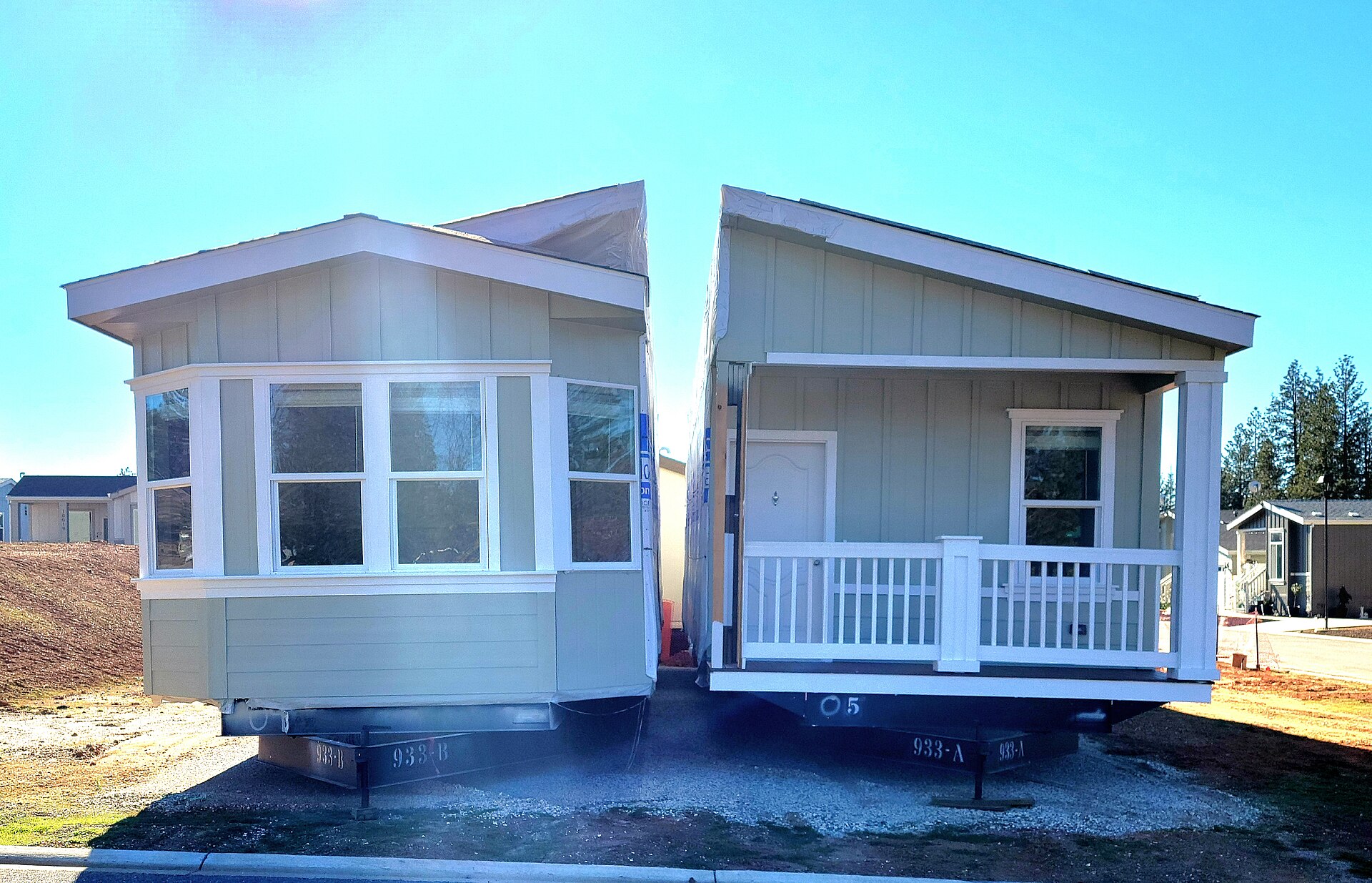
A chattel loan is a loan secured by personal property. For a manufactured home, it is a loan secured by the home alone and not by land; the lender's security is its lien on the home's title. A real-property mortgage (in Idaho, usually a deed of trust) is secured by the home and the land together, with the home declared real property. Federal mortgage data have tracked the difference since 2018, when lenders began reporting whether a manufactured home loan is secured by the home and land or the home only, and what interest the borrower holds in the land (direct ownership, a paid or unpaid leasehold, and so on).16
What Idaho lenders made in 2025
We pulled every 2025 Home Mortgage Disclosure Act (HMDA) record for Idaho properties built by the manufactured construction method from the federal FFIEC data browser and applied the filters the Consumer Financial Protection Bureau (CFPB) used in its 2021 national study: home-purchase loans, first liens, principal residences, one to four units, no open-end lines of credit, and no loans the lender merely bought. The 2024 records, run the same way, are shown for comparison.43516
| Idaho manufactured home purchase loans | Home and land (mortgage), 2025 | Home only (chattel), 2025 | Home and land, 2024 | Home only, 2024 |
|---|---|---|---|---|
| Applications | 1,248 | 1,041 | 1,169 | 1,001 |
| Loans made (originated) | 697 (55.8%) | 249 (23.9%) | 650 (55.6%) | 221 (22.1%) |
| Applications denied | 211 (16.9%) | 444 (42.7%) | 179 (15.3%) | 440 (44.0%) |
| Median interest rate on loans made | 6.375% | 8.85% | 6.625% | 9.05% |
| Median loan amount | $305,000 | $85,000 | $305,000 | $85,000 |
| Median term | 360 months | 300 months | 360 months | 300 months |
| Median rate spread over the prime offer rate | 0.28 points | 3.27 points | 0.43 points | 3.09 points |
| Median borrower income | $87,000 | $61,000 | $90,000 | $62,000 |
| Loan types | 362 conventional, 237 FHA, 98 VA | 248 conventional, 1 FHA | 331 conventional, 221 FHA, 97 VA, 1 USDA | 219 conventional, 1 FHA, 1 VA |
Source: FFIEC HMDA data browser, Idaho, construction method "manufactured," 2024 and 2025; our calculation. Percentages are of applications. HMDA reports loan amounts rounded to the midpoint of $10,000 bands, so the medians are band midpoints. Another 45 loans in 2025 and 35 in 2024 came from lenders with a partial HMDA exemption that do not report the security type.435
Three facts stand out. First, a home-only loan in Idaho cost about 2.5 percentage points more in interest at the median in 2025 (8.85 against 6.375 percent). Second, more than four in ten home-only applications were denied; among denied manufactured home purchase applications in 2025, lenders listed credit history as the first reason on 251, debt-to-income ratio on 221 and collateral on 54. Third, home-only borrowers had lower incomes: a median of $61,000 against $87,000.4
The land column explains most chattel lending. Of the 249 home-only loans made in 2025, 223 were for homes on a paid leasehold (a rented lot), 15 on an unpaid leasehold and 11 on land the borrower owned directly. Chattel loans were 26.3 percent of Idaho manufactured home purchase loans with a known security type in 2025 (249 of 946) and 25.4 percent in 2024 (221 of 871) (our calculation).435
How we figured it: Idaho HMDA manufactured home loans
Data. The FFIEC HMDA data browser's loan-level file for Idaho, years 2024 and 2025, filtered to construction method 2 (manufactured home): 4,160 records for 2024 and 4,718 for 2025, downloaded Nov. 20, 2026.
Filters (following CFPB, May 2021, footnote 29): loan purpose 1 (home purchase); lien status 1 (first lien); occupancy 1 (principal residence); total units 1 to 4; open-end line of credit not 1; action taken not 6 (purchased loans). That leaves 2,344 applications in 2025 and 2,216 in 2024.
Groups. "Home and land" is manufactured home secured property type 1; "home only" is type 2. Denied counts action taken 3 (denied) and 7 (preapproval denied); originated counts action 1. Shares are of all applications in the group, as in the CFPB report. Medians use originated loans with a reported value. Chattel share of loans made: 249 / (697 + 249) = 26.3 percent.
Limits. HMDA covers lenders above reporting thresholds; small lenders and some partially exempt lenders do not report the manufactured home fields. A loan made by a retailer that is not a reporting lender, or a cash or seller-financed purchase, is not in the data. Interest rates are as reported at origination.
The Treasure Valley and the Magic Valley
County counts are small, but the pattern is consistent across both years. In Ada County, 42 of the 71 manufactured home purchase loans made in 2025 were home-only loans, about 59 percent; the median loan was $145,000. In Canyon County, 37 of 119 were home-only. In the three Magic Valley counties of Twin Falls, Jerome and Gooding, lenders made 57 such loans in 2025 and 9 were home-only (Twin Falls 7 of 31, Jerome 2 of 9, Gooding 0 of 17), with a median rate of 6.375 percent across all 57. Bannock County stood out in the other direction from Gooding: 27 of its 42 loans were home-only, with a median loan of $75,000 (our calculation).4
Statewide, almost all home-only loans were for homes on rented lots (223 of 249 in 2025), so a county where more buyers set homes on land they own shows fewer home-only loans. HMDA does not report a property's park or subdivision, so the county pattern is a lead for reporting, not a finding.
How Idaho compares with the nation
The CFPB's May 2021 study of 2019 HMDA records is the most recent national analysis of this kind. Nationally it found that "around 42 percent of manufactured housing loans are chattel loans," that only 27 percent of manufactured home loan applications ended in a loan (against 74 percent for site-built homes), and that 42 percent of manufactured home purchase applications were denied, "including 50 percent of chattel applications and 33 percent of mortgage applications," against 7 percent for site-built homes. The median interest rate in 2019 was 8.6 percent on chattel loans, 4.9 percent on manufactured home mortgages and 4.1 percent on site-built mortgages, and 93.8 percent of chattel loans were higher-priced mortgage loans.16
| Measure | Idaho, 2025 | United States, 2019 (CFPB) |
|---|---|---|
| Share of manufactured home loans that are chattel | 26.3% of purchase loans | about 42% of all manufactured home loans |
| Purchase applications denied, all manufactured | 28.0% | 42% |
| Denied, chattel applications | 42.7% | 50% |
| Denied, mortgage applications | 16.9% | 33% |
| Median rate, chattel | 8.85% | 8.6% |
| Median rate, manufactured home mortgage | 6.375% | 4.9% |
| Median term, chattel | 25 years (300 months) | 23 years |
| Median chattel loan | $85,000 | $58,672 |
Sources: FFIEC HMDA data, Idaho 2025 (our calculation); CFPB, Manufactured Housing Finance: New Insights from the Home Mortgage Disclosure Act Data (May 2021), tables 4 to 6 and key findings. The years differ, interest rates were far lower in 2019, and the national chattel share counts all loan purposes, so the comparison shows direction, not a precise gap.416
The CFPB also found that over 60 percent of manufactured housing borrowers directly own their land, yet 17 percent of those landowners took a chattel loan anyway. It listed possible reasons: not wanting to encumber the land, lower property taxes, the default personal-property status of homes in many states, not knowing the downsides, or being steered by a lender, dealer or retailer. And it found the market concentrated: the top five lenders made nearly 75 percent of chattel loans in 2019. The CFPB's 2014 report added that the median income of households living in manufactured homes was roughly half that of families in other homes, and their median net worth about one-quarter.1636
What the rate gap costs: a hypothetical example
To show what Idaho's 2025 medians mean in dollars, take a hypothetical $85,000 loan, the median home-only loan amount. At the median home-only rate and term (8.85 percent for 25 years), the monthly principal and interest payment is about $704.61 and the borrower pays about $126,382 in interest over the life of the loan. The same $85,000 at the median mortgage rate (6.375 percent) over the same 25 years costs about $567.30 a month and $85,191 in interest. Over 30 years at 6.375 percent the payment is about $530.29 and the interest about $105,904. This is an illustration of arithmetic, not a quote, and real loans differ in rate, fees, taxes, insurance and lot rent.
How we figured it: monthly payments on a hypothetical $85,000 loan
Inputs. Principal $85,000 (Idaho 2025 median home-only loan amount, HMDA). Rates 8.85 percent (Idaho 2025 median home-only rate) and 6.375 percent (Idaho 2025 median home-and-land rate). Terms 300 and 360 months.
Formula. Monthly payment = P x r x (1 + r)^n / ((1 + r)^n - 1), where P is principal, r the annual rate divided by 12, and n the number of months. Total interest = payment x n - P.
Results. 8.85 percent, 300 months: $704.61 a month; total paid $211,382; interest $126,382. 6.375 percent, 300 months: $567.30; total $170,191; interest $85,191. 6.375 percent, 360 months: $530.29; total $190,904; interest $105,904. The difference at the same 25-year term is $137.31 a month and $41,191 in interest.
Not included. Fees, points, mortgage insurance, property taxes, homeowner's insurance, lot rent and any change in rates over time.
Consumer protections that differ
Federal high-cost loan rules treat small personal-property loans differently. Under the Home Ownership and Equity Protection Act (HOEPA) rule that took effect Jan. 10, 2014, a first-lien loan becomes a "high-cost" loan with extra disclosures and limits when its rate spread over the average prime offer rate reaches 6.5 percentage points; for a first-lien loan under $50,000 secured by personal property, including a manufactured home, the trigger is 8.5 points. In Idaho's 2025 records, 6 of the 249 home-only loans had a rate spread of 6.5 points or more.164
Default works differently too. A home-only loan is a security interest in personal property, so a lender's remedy is repossession of the home; Idaho Code 63-1014 even sets out how a holder of "a purchase money security interest" who "desires to repossess and sell" personal property worth more than $20,000 must ask the tax collector to separate it from the owner's other personal property for tax purposes. A declared home on owned land is, under Idaho Code 63-305, a fixture and part of the real estate, so a lender's security is the land and home together. The purchase side of buying any home is covered in Part C's Buying a Home in a Growing Area.343
Federal and state loan programs for manufactured homes
Several public and quasi-public programs finance manufactured homes. Each has rules about the home (HUD label, age, foundation, whether it was ever moved) and about the land (owned, leased or rented). The table summarizes the rules as posted; it is a description, not a recommendation of any program. Income and price limits for Idaho buyers are in lesson 09, First-Time Buyer Assistance.
| Program | What it covers | Home and land rules | Limits and terms | Source |
|---|---|---|---|---|
| FHA Title I manufactured home loans (24 CFR Part 201) | Home only, lot only, or home and lot; the home need not be real property | Home on a lot the buyer owns or leases under lease terms HUD sets; P.L. 119-101 gives HUD more flexibility on leases in communities | HUD's March 2024 national limits: $105,532 single-section home; $193,719 multisection; $148,909 and $237,096 with a lot; $43,377 lot only; terms up to 20 years plus 32 days for a home, 25 years plus 32 days for what HUD calls a "multi-unit" home and lot. P.L. 119-101 raises baseline limits and lets HUD set one maximum term up to 30 years | HUD; 24 CFR 201.10; CRS37388 |
| FHA Title II mortgages (24 CFR 203.43f) | Home and site together | Property "classified and taxed as real estate"; at least 400 square feet; HUD label; a home not on site more than a year must sit on a permanent foundation meeting HUD's Minimum Property Standards, running gear removed | Term up to 30 years | 24 CFR 203.43f17 |
| USDA Section 502 direct (7 CFR 3550.73) | Purchase of an eligible unit, transport, setup and the site, under a real estate mortgage | An existing home only if already 502-financed, a USDA-owned property, or built after a date USDA sets, on a permanent foundation and never installed on another site | Term up to 30 years; income and area limits apply | 7 CFR 3550.7339 |
| USDA Section 502 guaranteed (7 CFR 3555.208) | New home, transport, foundation, installation and site; some existing homes | Existing home must carry the HUD label and data plate, sit on a permanent foundation and never have been installed on a different site | Lender loan with a USDA guarantee | 7 CFR 3555.20840 |
| Fannie Mae MH Advantage | Conventional mortgage on a multisection home with site-built features | Land owned by the borrower; dormers, porch or garage combinations, minimum roof pitch, engineered foundation, MH Advantage sticker | Up to 97 percent loan-to-value for a one-unit owner-occupied home | Fannie Mae41 |
| Freddie Mac CHOICEHome | Conventional mortgage on a HUD-code home with site-built features | Appraised with site-built comparable sales; community land trust and resale-restricted homes eligible | Up to 95 percent loan-to-value, or 97 percent with an affordable second loan | Freddie Mac42 |
| IHFA HOME down payment assistance | Down payment help for income-eligible buyers | Permanent foundation; land owned in fee simple or on a 99-year leasehold; engineer's certification; not moved from its original site; proof of conversion to real property before purchase | Program rules in the April 1, 2026, administrative plan | IHFA18 |
Two programs are mentioned in loan data more than in this table. VA-guaranteed loans financed 98 Idaho manufactured home-and-land purchases in 2025, and FHA-insured loans 237; the HMDA data do not say which FHA title applied.4
Duty to Serve and chattel loans
Under the Duty to Serve rule of the Federal Housing Finance Agency (FHFA), Fannie Mae and Freddie Mac must file plans to serve manufactured housing, one of three underserved markets. Freddie Mac's 2025 to 2027 plan sets targets for buying loans on manufactured homes titled as real property (6,550 loans in 2025, 6,800 in 2026 and 7,100 in 2027) but "has not included a regulatory activity related to Support Manufactured Homes Titled as Personal Property" in this cycle, saying it continues to evaluate "the safety, soundness, and viability" of such an initiative. In the CFPB's 2019 data, 80.9 percent of chattel loans were not sold at all and only 0.2 percent went to Fannie Mae.4316
The 2026 changes
Idaho House Bill 800: smaller homes in single-family zones
Since 1994, Idaho Code 67-6509A has required every city and county to allow manufactured homes on land zoned for single-family homes, outside historic districts, while letting local governments adopt listed placement standards "or any less restrictive standards." Before 2026, one of those standards let a city require a home outside a park to be multisectional and enclose at least 1,000 square feet. House Bill 800, from the House Ways and Means Committee, rewrote that standard: a home "may be either a single section or multisectional" and may be required to enclose "at least four hundred (400) square feet for a single section or eight hundred (800) square feet for a multisectional manufactured home." The other optional standards remain: a foundation that puts the home no more than 12 inches above grade (except on a basement), a pitched roof (though no city may require a slope steeper than a nominal 3 in 12), siding and roofing like the neighborhood's, a garage or carport if a site-built home would need one, and any development standard, architectural requirement or (since HB 800) minimum size requirement that applies to a conventional single-family house on the same lot. Any standard must be "clear and objective" and may not discourage needed housing "through unreasonable cost or delay."1211
HB 800 also added multidwelling manufactured homes to the definition in Idaho Code 39-4105 and, in 67-6509A, limits a multidwelling home to areas where multifamily housing is allowed. The statement of purpose, listing Rep. Jordan Redman and Sen. Ben Toews, says the bill "allows manufactured duplexes to be treated as multifamily homes in zoning ordinances." The House passed it 60 to 6 with 4 absent on March 9, 2026; the Senate passed it 28 to 5 with 2 absent on March 24; Gov. Brad Little signed it March 26, 2026; it is 2026 Session Laws chapter 171, effective July 1, 2026. HB 800 did not touch covenants: 67-6509A(3) still says the section "shall not be construed as abrogating a recorded restrictive covenant."11441012
House Bill 647: the covenant bill that stopped
An earlier version, House Bill 647, introduced by the House Business Committee on Feb. 12, 2026, would have made the same two changes and a third: its statement of purpose says it "prohibits covenants from unreasonably restricting manufactured homes." It was referred to the House Business Committee on Feb. 13, and the Legislature's bill page shows no later action. A subdivision's private covenants can therefore still bar manufactured homes in Idaho even where the zoning must allow them. Part C's park lesson takes up the policy argument over such covenants.13
The ROAD to Housing Act: the chassis comes off
H.R. 6644, the 21st Century ROAD to Housing Act, passed the Senate 85 to 5 on June 22, 2026, and the House on June 23. It was presented to the President on June 29 and became Public Law 119-101 without his signature on July 11, 2026, after the 10-day period (Sundays excepted) ran out. Its Title III, "Manufactured Housing for America," has four sections:8
- Section 301, Housing Supply Expansion Act. Amends 42 U.S.C. 5402(6) so a manufactured home may be built "with or without a permanent chassis"; directs HUD to issue revised standards with a distinct label for each kind; requires states to certify to HUD by July 11, 2027 (or July 11, 2028, for states whose legislatures meet every other year) that they have amended their laws and regulations to treat homes with and without a permanent chassis the same; and requires HUD to adopt minimum energy efficiency standards by July 11, 2027, with any other agency's manufactured housing energy standards having legal effect only if HUD adopts them through the HUD code process.89
- Section 302, Modular Housing Production Act. Orders HUD to review FHA construction financing for barriers to modular building and, after a report due July 11, 2027, to start rulemaking on draw schedules for modular and manufactured home developers.8
- Section 303, Property Improvement and Manufactured Housing Loan Modernization Act. Raises Title I baseline loan limits, indexes them annually by notice, sets one maximum Title I term chosen by HUD but no more than 30 years, and gives HUD more flexibility on lease terms for Title I homes placed in manufactured home communities.8
- Section 304, PRICE Act. Formally authorizes the Preservation and Reinvestment Initiative for Community Enhancement grant program for manufactured home communities, first funded in the fiscal 2023 HUD appropriations law but never formally authorized, through July 11, 2033.8
What it means for Idaho. The Idaho Legislature meets every year, so Idaho's certification is due July 11, 2027, after the 2027 regular session. Idaho's own definition in Idaho Code 39-4105(8) still requires a home "built on a permanent chassis," and Idaho's siting statute (67-6509A) and its building code act rely on that definition. Which Idaho agency will certify to HUD, and whether the 2027 Legislature will amend 39-4105 and related titling and tax provisions, had not been announced by Nov. 20, 2026. The Pew Charitable Trusts, a research and advocacy organization that backed the change, reported that as of Oct. 1, 2026, only California, Indiana, North Carolina, Minnesota, Tennessee and Texas had taken steps to update their definitions, and wrote that if a state misses the deadline, "builders in that state will be ineligible to build, sell, or install manufactured homes without a chassis." That consequence is Pew's reading; the CRS summary does not describe one.10458
HUD's 2026 chassis proposal
Separately, HUD proposed on June 12, 2026, a rule titled "Revising the Definition of 'Manufactured Home' to Lower Housing Costs" (FR-6537-P-01) that would require a permanent chassis only under the transportable sections forming the lowest floor, so upper-floor sections could be built without one. HUD estimated it would cut production, transportation and installation costs by about $6,000 per multistory home and classified it as deregulatory; the Manufactured Housing Consensus Committee generally supported the idea at a June 24, 2025, meeting. The proposal predates the July law, which goes further by allowing no chassis at all.24
The HUD code update of 2024 and 2025
HUD's final rule of Sept. 16, 2024 (89 FR 75704), adopted most of the Manufactured Housing Consensus Committee's fourth and fifth sets of recommendations. It allows a manufactured home to contain one to four dwelling units separated by fire-rated walls and floors, sets design standards for fire sprinkler systems a manufacturer chooses to install (without requiring them), requires at least one exterior door with a 32 by 74 inch clear opening, and updates many reference standards; it kept the 1988 wind standard and sent that question back to the committee. HUD's analysis, using an average price of $111,900 and production of 105,400 homes, estimated the added cost would reduce purchases by 77 to 130 homes a year. The rule was to take effect March 17, 2025; on Feb. 25, 2025, citing the President's regulatory freeze memo and industry requests for time to redesign floor plans, HUD delayed it to Sept. 15, 2025. The Manufactured Housing Institute, the industry's trade group, reported that the updates took effect that day.202221
Energy standards: delayed, then moved to HUD
The Energy Independence and Security Act of 2007 told the Department of Energy (DOE) to set energy standards for manufactured homes. DOE issued them on May 31, 2022 (87 FR 32728), with a Tier 1 for single-section homes and a Tier 2 for multisection homes. On July 2, 2025 (90 FR 28873), DOE delayed Tier 2 compliance from July 1, 2025, to 180 days after it publishes final enforcement procedures, which it had not done. Public Law 119-101 now says any federal energy standard for manufactured homes has legal effect only if HUD adopts it through the HUD code process, and HUD must adopt minimum energy standards by July 11, 2027. Energy costs matter to owners: Freddie Mac's CHOICEHome and Fannie Mae's MH Advantage both require insulation or energy performance above the HUD minimum.2384241
The land under the home
Owning the home and owning the land are separate questions, and most of the finance differences above follow from the second. A household can own the home and its land; own the home and rent a lot in a park; own the home and lease land long-term; or own a share of a cooperative that owns the park. The lot lease law for the second group, including rent notices, closures and sale notices, is in Part C's Mobile and Manufactured Home Parks. This section covers ownership of the land itself.

Resident-owned communities
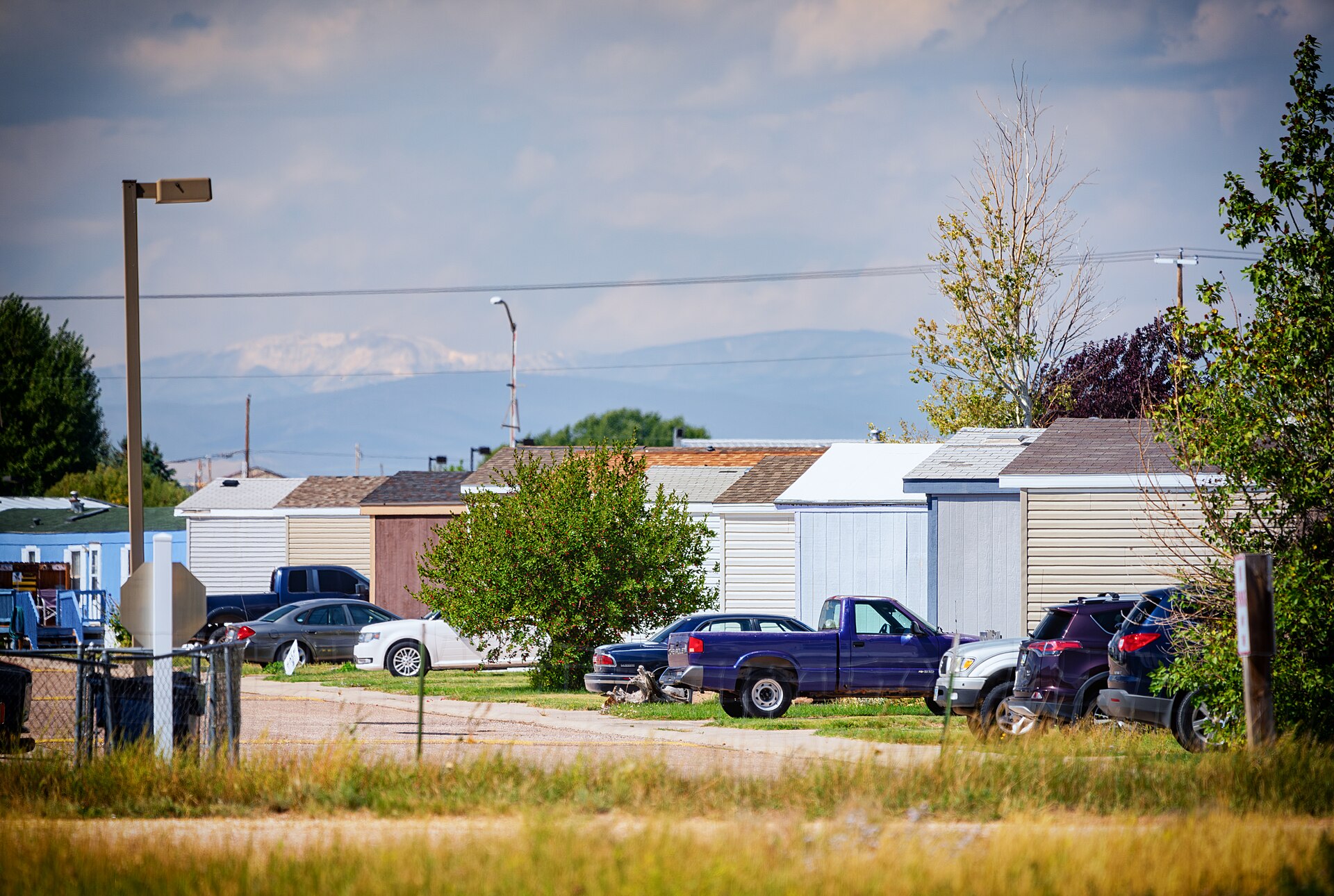
A resident-owned community (ROC) is a park whose land is owned by a cooperative or nonprofit of the homeowners who live there. Each household still owns its home, but the residents collectively own the land and set the lot rent to cover the community's mortgage, taxes and upkeep. ROC USA, a national nonprofit network and lender (an advocacy and lending organization), and its Idaho technical assistance partner, LEAP Housing of Boise, work with Idaho parks. Three Idaho resident purchases are on record: Pleasant View Homeowners Cooperative in Caldwell (joined the ROC USA network Sept. 23, 2019), Buddy Dancer in Garden City (2020), and Hamilton Place near Mountain Home (bought July 12, 2024, for $1.13 million, with 33 spaces), which ROC USA called the third community it had worked on with LEAP Housing. Part C's park lesson has the details of each purchase.464748
Freddie Mac's Duty to Serve plan counts "just over 1,000" resident-owned communities nationwide and reports that Freddie had bought only three loans on such communities since creating its product; its 2025 to 2027 objective is to design an offering that encourages park owners who borrow from Freddie to grant residents a right to buy. The City of Boise's 2025 PRICE plan says "there are at least two resident-owned communities" in Idaho and none in Boise; ROC USA's July 2024 account of Hamilton Place calls it the third with LEAP Housing, so the city's count is low.434947
PRICE grants in Idaho
On Dec. 19, 2024, HUD announced $225 million in PRICE grants to 17 recipients with projects in 26 states. Two touch Idaho. The City of Boise received $6,773,702.72. ROC USA LLC received $38,125,875 for projects in several HUD regions; HUD's list of its project states includes Idaho. Whether any of ROC USA's award has been spent on an Idaho park was not confirmed for this lesson.1450
Boise's PRICE action plan, approved by HUD July 1, 2025, budgets the money this way:1549
| Activity | Budget | What it pays for |
|---|---|---|
| Sage Mobile Home Park revitalization | $3,411,400 | Utility relocation, new meters and temporary resident relocation during outages at the 26-space park the city bought after it was listed for sale in 2022 |
| New homes on empty sites | $780,000 | Purchase and installation of 6 new manufactured homes |
| Home repairs for existing residents | $1,007,302.72 | Accessibility, safety and weatherization |
| Eviction prevention and housing counseling | $75,000 | Subgrant to Jesse Tree |
| Preserving manufactured housing communities | $1,500,000 | Acquisition to keep communities affordable and prevent displacement by redevelopment |
| Total | $6,773,702.72 |
The plan's background is a snapshot of Boise's stock. It cites a 2007 Boise State University study that counted 2,706 manufactured homes housing 5,412 residents in 50 parks, with 63 percent of residents renting their lots, and an Ada County Assessor parcel analysis identifying 50 manufactured housing sites with 3,271 spaces. It also reports that a May 14, 2024, search of homes for sale in Boise under $330,000 found no single-family homes and six condominiums, and 34 manufactured homes. Sage sits in Census tract 17.02, where the plan reports a 20.3 percent poverty rate.49
How other states handle titling
Oregon offers a contrast with Idaho's 63-304. Under ORS 446.626, an Oregon owner may have a manufactured structure recorded in the county deed records if the owner owns the land, holds a recorded leasehold of 20 years or more that permits recording, or is a member of a park nonprofit cooperative that owns the land. Idaho's statute reaches leased land only through the financing condition in 63-304(1)(a)(ii) and does not mention cooperatives. Whether an Idaho resident-owned community's members can declare their homes real property therefore depends on the lease and the lender, not on cooperative membership alone.512
Nationally, every state titles site-built homes as real estate, but most title manufactured homes as personal property at first, and conversion laws vary, according to Pew's October 2026 review.45
Do manufactured homes gain value?
A common belief is that manufactured homes always lose value like cars. The best federal evidence is narrower than that belief and narrower than its opposite. In its second-quarter 2018 house price report, FHFA built experimental repeat-sales price indexes for manufactured homes using loans bought by Fannie Mae and Freddie Mac. It stressed that the data "include information for homes titled as real estate and not chattel." By its purchase-only index, prices since 1995 had risen "roughly 120 percent for manufactured homes vs. 140 percent for other homes," but in the housing bust manufactured homes fell about 37 percent against about 22 percent for other homes, before converging. About 67 percent of the manufactured home transactions were in metropolitan areas, against about 90 percent for other homes, so part of the gap reflects location.52
No comparable index exists for homes on rented lots financed with chattel loans, which are most of the homes at the center of the depreciation debate. For tax purposes, Idaho assessors value every manufactured home from reported sales of comparable homes in the county, and the Tax Commission says the value "may reflect depreciation or appreciation based on these reported prices," affected by "location, size, condition, issues relating to relocation."28
The evidence suggests that a home on owned land, financed and titled like a house, can behave like a house in price, with bigger swings; for a home on rented land, the value of the home is tied to the lot's rent and security, which the owner does not control. Idaho's long-run ownership trend, for all kinds of homes, is in lesson 01, Homeownership in Idaho, 1900 to 2026.
Safety, installation and energy
HUD code homes are designed for the loads where they will be placed, and the data plate shows the zones. Under 24 CFR 3280.305, every Idaho county is in the Middle Roof Load Zone, designed for a 30 pound per square foot roof live load (the North zone is 40 and the South 20), and the rule tells designers to consider local snow records in mountainous areas. Idaho is not listed in Wind Zones II or III, so it falls in Wind Zone I.53
Installation is regulated by the state. Idaho Code 44-2101 makes it unlawful to manufacture, sell or install manufactured homes without a license from the Division of Occupational and Professional Licenses (DOPL), the division Idaho Code 39-4105 now names; the Tax Commission's 2019 guide still refers to the Division of Building Safety. Under Idaho Code 44-2201, a new home must be installed by the manufacturer's approved instructions and a used home by the Idaho manufactured home installation standard. A home set on piers and footings (a "standard set") is inspected under the installation permit; a permanent foundation needs its own $65 DOPL permit where no local building program covers it, with an engineer- or architect-stamped plan for a new home.195430
Homes built before June 15, 1976, are "mobile homes" under Idaho Code 39-4105(9) and were never built to the HUD code. They are excluded from FHA Title II and USDA loans, which require the HUD label. Boise's PRICE plan budgets more than $1 million for accessibility, safety and weatherization repairs to existing homes, an indication of the repair need in the city's older stock.10173915

Pictures, Numbers and Infographics
The lesson's key numbers in one place. Each row names its year and source; the computed shares are our calculations from the cited tables.
| Measure | Idaho | U.S. or other | Place or year | Source |
|---|---|---|---|---|
| Mobile and manufactured homes, share of housing units | 6.9% (55,245) | U.S. 5.6% | ACS 2020 to 2024 | B2502425 |
| Share in Gooding County / Jerome County / Twin Falls County | 15.7% / 9.5% / 7.1% | Ada County 2.7% | ACS 2020 to 2024 | B2502425 |
| Owner-occupied share of occupied mobile homes | 72.6% | U.S. 73.4% | ACS 2020 to 2024 | B2503226 |
| New homes shipped | 507 | U.S. 102,738 | 2025 | Census MHS7 |
| New homes shipped, peak year in series | 3,712 (1994) | U.S. 373,143 (1998) | 1994 to 2025 | Census MHS7 |
| Average price, new manufactured home | $125,300 | U.S. $127,200; West $145,100 | 2025 | Census MHS6 |
| Cost per square foot, new manufactured vs. site-built structure | not published by state | $84.45 vs. $168.86 | U.S. 2024 | Census MHS5 |
| Chattel share of manufactured home purchase loans | 26.3% | U.S. about 42% (all purposes) | Idaho 2025; U.S. 2019 | HMDA; CFPB416 |
| Median rate, chattel / mortgage | 8.85% / 6.375% | U.S. 8.6% / 4.9% | Idaho 2025; U.S. 2019 | HMDA; CFPB416 |
| Applications denied, chattel / mortgage | 42.7% / 16.9% | U.S. 50% / 33% | Idaho 2025; U.S. 2019 | HMDA; CFPB416 |
| Largest manufactured-home size standard a city may adopt outside parks (site-built minimums may still apply) | 400 sq ft single section; 800 multisection | 1,000 sq ft before July 1, 2026 | Idaho Code 67-6509A | HB 800 (2026)11 |
| State certification deadline, chassis-free homes | July 11, 2027 | July 11, 2028, for biennial legislatures | P.L. 119-101, sec. 301 | CRS8 |
| Title I limit, multisection home only | national limit | $193,719 | HUD, March 2024 | HUD37 |
| PRICE grants | Boise $6,773,702.72 | U.S. $225 million, 17 awards | Dec. 19, 2024 | HUD14 |
| Price change since 1995, real-estate-titled manufactured homes vs. other homes | no state index | about 120% vs. 140% | U.S., through 2018 | FHFA52 |
Common mistakes
Calling every factory-built home a mobile home
In Idaho law a "mobile home" is a unit generally built before June 15, 1976; a "manufactured home" is built after that date to the HUD code (Idaho Code 39-4105). Modular homes are a third category built to the state building code. The difference decides loan eligibility: FHA Title II and USDA require the HUD label that pre-1976 units lack.101739
Assuming a deed transfers the home
For an undeclared home, the land and the home are separate property. "Deeding a property from one owner to another does not transfer title of the manufactured home," one Idaho assessor's office warns; the title has to be transferred through the motor vehicle system.291
Assuming a home on leased land can never be real property
Idaho Code 63-304(1)(a)(ii) allows a declaration on leased land when the home is financed under Fannie Mae, Freddie Mac, USDA or similar guidelines. It is uncommon because ordinary park leases rarely meet those programs' terms, but the statute does not forbid it.2
Thinking the 2026 federal law already lets chassis-free homes into Idaho
Public Law 119-101 changed the federal definition on July 11, 2026, but HUD must still issue revised standards with a distinct label, and Idaho's statutory definition still says "built on a permanent chassis." Idaho's certification is due July 11, 2027.810
Assuming HB 800 overrides subdivision covenants
HB 800 changed what zoning may require. Idaho Code 67-6509A(3) still says the section does not abrogate "a recorded restrictive covenant," and the bill that would have limited covenants, HB 647, never left committee.1213
Reading the Census average price as the full cost, or a small-sample change as a trend
The Census average sales price is for the home, without land, foundation work beyond the dealer's package, lot rent or financing. Idaho's annual average rests on a small sample (relative standard error 8.8 percent in 2024 and 6.7 percent in 2025), so a one-year drop such as $142,200 to $125,300 from 2024 to 2025 should be reported with that caution.6
Treating the HMDA chattel share as the share of owners with chattel loans
HMDA counts new loan applications by reporting lenders in a year. It does not count cash purchases, seller financing, homes owned free and clear, loans made by non-reporting lenders, or older loans still being paid. The 26.3 percent figure describes 2025 purchase lending, not the stock of Idaho homes.416
Moving a home before settling taxes
Idaho Code 63-1014 requires taxes on personal property, including the current year's, to be paid before it leaves the county, and a declared home cannot be moved until the 63-305 reversal is finished, with 30 days' notice and the tax collector's sign-off.343
What we know, what we don't, and what the data can show
What we know
- Idaho titles manufactured homes as personal property under Idaho Code 49-501 until an owner records a statement of intent under 63-304; reversal is governed by 63-305.123
- In 2025 Idaho HMDA records, home-only loans carried a median rate of 8.85 percent against 6.375 percent for home-and-land loans, and 42.7 percent of home-only applications were denied.4
- Shipments of new homes to Idaho fell from 3,712 in 1994 to 507 in 2025.7
- Federal law dropped the permanent chassis requirement on July 11, 2026, and Idaho's certification is due July 11, 2027.8
- HB 800 (2026) lowered the manufactured-home size standard cities may adopt outside parks to 400 and 800 square feet, effective July 1, 2026, while letting cities apply the minimum size they require of site-built houses.11
What we don't know
- How many Idaho manufactured homes have been declared real property. Statements of intent are recorded county by county, and no statewide count is published.
- How many Idaho homes sit on owned land rather than in parks. The ACS does not ask, and no state agency counts park lots.
- The Idaho share of homes owned free and clear, or financed by retailers and individuals who do not report to HMDA.
- Whether ROC USA's 2024 PRICE award has been spent on any Idaho park, and whether LEAP Housing's 2024 request for help buying five more parks was funded.
- Which Idaho agency will make the 2027 chassis certification to HUD, and what bill, if any, the 2027 Legislature will consider.
- Insurance costs and terms for Idaho manufactured homes; no public Idaho data set was found.
What the data can show
- The HMDA data browser can show, for any Idaho county and year since 2018, how many manufactured home loans were home-only or home-and-land, the rates, denial reasons and borrower incomes.4
- The Census Manufactured Housing Survey shows annual shipments to Idaho since 1994 and Idaho's average new-home price since 2014, with standard errors.76
- ACS tables B25024 and B25032 show the stock and owner occupancy of mobile homes by county and town, with margins of error.2526
- County recorder indexes, searched for "statement of intent," can show conversions to real property in a county, and assessor rolls show how each home is listed.27
- Boise's PRICE reports in HUD's grant reporting system will show what the $6.77 million buys.49
Questions people ask
How can an owner tell whether a home is real property or personal property?
If a statement of intent was recorded, it is in the county recorder's records, and the home's title was cancelled by the Idaho Transportation Department; the assessor's roll will list the home with the land. If there is an Idaho certificate of title in someone's name, the home is personal property. The Tax Commission's guide says a home is taxed as real property if "you or a previous owner" recorded a statement of intent.28
Can a home in a park be declared real property?
Only if it is permanently affixed and the home is financed under Fannie Mae, Freddie Mac, USDA or similar guidelines that accept the lease, under Idaho Code 63-304(1)(a)(ii). Otherwise a park home stays titled personal property.2
Does a home on a rented lot get the homeowner's exemption?
It can. Idaho Code 63-701 says "a manufactured home may be a homestead," and the exemption in 63-602G applies to an owner-occupied primary home. The owner applies to the county assessor. The land under a park home belongs to the park and is not part of the resident's exemption.333228
Can FHA insure a loan on a home on a rented lot?
FHA's Title I program can insure a home-only loan, subject to HUD's lease terms; FHA's Title II program cannot, because it requires a mortgage on "a property classified and taxed as real estate." In Idaho's 2025 HMDA records, only one home-only purchase loan was FHA-insured.38174
Can USDA finance a used manufactured home?
Sometimes. USDA's guaranteed program accepts an existing home with the HUD label and data plate, on a permanent foundation, never installed on another site and built after a date USDA sets; the direct program is narrower. Both require a real estate mortgage covering the home and the site.4039
Does the 2026 federal law change anything for current owners?
Not immediately. It changes what can be built and sold in the future, how Title I loans work once HUD issues notices, and how PRICE grants are authorized. Existing homes keep their HUD labels and their current title status.8
Must a city now allow a 400-square-foot manufactured home in a single-family zone?
Not in every case. A city must allow manufactured homes on single-family lots, and after HB 800 the size standard it may set for manufactured homes as such can be no more than 400 square feet for a single section and 800 for a multisection home. But 67-6509A(4)(f), as HB 800 rewrote it, also lets a city apply any minimum size requirement it imposes on a conventional single-family house on the same lot, so a city with a larger minimum for all houses can apply it to manufactured homes too. The city may still apply its other placement standards, and private covenants still apply.1211
Hard questions
Should real property be the default for homes on owned land?
For: Owners and consumer groups point to the rate gap (8.85 against 6.375 percent in Idaho in 2025), stronger mortgage protections, and FHFA's finding that real-estate-titled homes have gained value over time. Oregon lets owners record a home in the deed records with fewer conditions. Against: Some owners choose personal property on purpose; the CFPB listed reasons such as not wanting to encumber their land and lower property taxes, and chattel lenders say they serve buyers mortgage lenders turn away. Counties would bear the work of converting records. What the evidence shows: The CFPB found landowners who took chattel loans had credit similar to or stronger than those who took mortgages, which suggests many could have qualified for a mortgage; it could not measure upfront costs.4521651
Is chattel lending a trap or a lifeline?
Lifeline: For a buyer on a rented lot, a home-only loan is often the only financing available, and without it the home could be sold only for cash. Lenders price in the risk of a home whose site they do not control. Trap: Rates are higher, terms shorter, refinancing is rare, and the CFPB found the market highly concentrated, with the top five lenders making nearly 75 percent of chattel loans in 2019. What the evidence shows: In Idaho, home-only borrowers had a median income of $61,000 and paid a median 3.27 points over the prime offer rate in 2025; few loans reached the HOEPA high-cost threshold (6 of 249). Freddie Mac has no chattel program in its 2025 to 2027 plan.41643
Should cities spend public money to buy parks?
For: Boise says it bought the 26-space Sage park after it was listed for sale in 2022 because residents were likely to be displaced, and its PRICE plan sets aside $1.5 million to buy more at-risk communities. A park, once redeveloped, does not come back. Against: Public ownership puts a city in the landlord business, takes property off the tax rolls when a public entity holds it, and may pay redevelopment-level prices for land; resident cooperatives and private owners can preserve parks without public title. What the evidence shows: Boise's plan quotes a 2016 report that the city had lost only two parks (52 units) since 2007, while warning of renewed pressure, and three Idaho parks have become resident-owned without city ownership. The full cost and outcomes of the Sage project will be in Boise's federal grant reports.491547
Should neighborhoods have to accept smaller, chassis-free homes?
For: HB 800's sponsors wrote that it lets single-section homes of at least 400 square feet be placed on lots zoned for single-family homes, where a city could previously demand 1,000 square feet; the bill passed 60 to 6 in the House and 28 to 5 in the Senate. The U.S. Senate voted 85 to 5 for the law that dropped the chassis rule. Against: Neighbors and some local officials want control over what is built next door, and HB 647's limit on covenants did not advance. What the evidence shows: The cost gap per square foot is about half nationally; how many Idaho cities had a 1,000-square-foot rule before 2026, and how many small homes the change will add, has not been measured. Part B covers the broader debate over local control in The 2026 Housing Laws.118513
For reporters and advocates
Records that exist. County recorder records of statements of intent and reversals (Tax Commission forms); county assessor rolls listing manufactured homes as real or personal property and homeowner's exemption applications; Idaho Transportation Department title records (access to personal information in motor vehicle records may be limited); DOPL installation and foundation permits and inspection results; HMDA loan records by county; Census MHS shipments and prices; HUD's PRICE award list and Boise's PRICE action plan and quarterly reports; IHFA's HOME administrative plan; the Legislature's pages, minutes and statements of purpose for HB 800 and HB 647; and, after July 2026, HUD notices on the chassis label, Title I limits and state certifications under Public Law 119-101.27474918118
Questions to ask.
- To the county assessor: how many manufactured homes are on the roll as personal property and how many as real property, and how many statements of intent were recorded last year?
- To the governor's office, DOPL and legislative leaders: which agency will certify to HUD under Public Law 119-101 by July 11, 2027, and what changes to Idaho Code 39-4105, 63-304 and 49-501 are planned?
- To city planners: did the city's code require 1,000 square feet before HB 800, and has it been amended since July 1, 2026?
- To lenders and dealers: what share of their Idaho manufactured home loans are home-only, and what do they require of a park lease?
- To the City of Boise: what has been spent from the PRICE grant, on what, and has any park been acquired with the $1.5 million line?
- To ROC USA and LEAP Housing: has any part of ROC USA's PRICE award or other federal money gone to an Idaho park since 2024?
Public records requests. Idaho's Public Records Act, Idaho Code Title 74, Chapter 1, covers counties, cities and state agencies; how to write and follow a request is in the site's Idaho Public Records Requests course. Property tax records are explained in the site's Idaho Property Taxes course, and working with HMDA and Census data in Data and Statistics.
The Magic Valley angle. Gooding County has the highest manufactured home share of the core counties (15.7 percent) and, in 2025 HMDA records, 17 manufactured home purchase loans, none of them home-only. Twin Falls County had 31 (7 home-only) and Jerome County 9 (2 home-only). Ask county assessors in Gooding, Jerome and Twin Falls counties how many homes have been declared real property, ask lenders in Twin Falls and Jerome which programs rural buyers use, and check USDA eligibility maps for towns such as Gooding, Hagerman, Buhl and Kimberly before reporting that a buyer there could use Section 502. Lesson 12, How to Report on Affordable Housing, has the full reporting workflow, and Part C's How to Report on Housing covers park closures and eviction records.254
Where to go next
- FFIEC HMDA Data Browser: Free federal tool. Choose a year and Idaho or a county, filter by construction method (manufactured), and download loan records showing home-only vs. home-and-land loans, rates and denial reasons.
- Census Bureau Manufactured Housing Survey: Free monthly and annual tables of shipments to each state and average new-home prices by state; check the relative standard errors for small states like Idaho.
- Idaho State Tax Commission, Manufactured Housing guide: Free state guide to how manufactured homes are assessed and the steps to declare or reverse real property status; county assessors have the forms.
- HUD Office of Manufactured Housing Programs: HUD's pages on the construction code, the Manufactured Housing Consensus Committee and consumer complaints about construction defects. Free.
- City of Boise PRICE Program: Describes the city's federally funded home repair, new home and community preservation activities for Boise manufactured home residents and how residents and groups apply.
- ROC USA: National nonprofit network and lender (an advocacy and lending organization) that helps residents buy their parks; lists Idaho communities and its Idaho partner. Its services are not a government program.
- Idaho Legal Aid Services: Nonprofit that provides free civil legal information and some representation for low-income Idahoans, with housing materials including manufactured homes. Eligibility limits apply.
Still being checked (10 items)
These points could not be fully confirmed against a primary source when this lesson was written and fact checked in November 2026. The text above states each one as uncertain.
- The House vote on the final version of H.R. 6644 (P.L. 119-101) on June 23, 2026: CRS Report R49354 gives 358-32 in its summary and 358-42 in its legislative history; the lesson does not state a House count.
- HUD's current Title I manufactured home loan limits: the lesson uses HUD's March 2024 national limits; newer limits under HUD's annual indexing or the higher baseline set by section 303 of P.L. 119-101 were not found.
- Whether any of ROC USA LLC's $38,125,875 PRICE award has been spent on an Idaho park, and whether LEAP Housing's July 2024 federal request to help residents buy five Idaho parks was funded.
- Whether the fourth-Monday-in-June deadline for statements of intent described by the Jefferson County Assessor applies in the same way in every Idaho county, including Jerome, Gooding and Twin Falls counties.
- The consequence for a state that misses the July 11, 2027, certification (Pew says builders there would be ineligible to build, sell or install chassis-free homes); CRS does not describe a consequence.
- That the 2024 HUD code update took effect Sept. 15, 2025, rests on HUD's Feb. 25, 2025, postponement notice and the Manufactured Housing Institute's report; no later HUD notice changing the date was found.
- Fannie Mae MH Advantage terms come from a 2021 retailer guide; current terms were not retrieved because Fannie Mae's product page blocked automated access.
- Insurance costs and terms for manufactured homes in Idaho were not found in any public Idaho data set.
- HMDA 2025 figures come from the FFIEC data browser as read Nov. 20, 2026; later resubmissions by lenders can change counts slightly.
- Pew's Oct. 29, 2026 article (list of six states updating definitions as of Oct. 1, 2026, and the consequence of missing the deadline) could not be re-read by the fact checker on Nov. 20, 2026 (site error); the lesson attributes both points to Pew.
Last verified November 20, 2026. General education, not legal, tax, financial or real estate advice; every figure names its source and year in the Notes and Sources below. Data is revised: check the newest release before relying on any number.
Notes
- Idaho Code 49-501, Titling requirements; exemptions, subsection (2)(b) (manufactured homes as defined in 39-4105 are titled under the motor vehicle titling chapter) (read Nov. 20, 2026). Read it online. ↩
- Idaho Code 63-304, Manufactured homes to constitute real property (added 1996, ch. 98; amended 2002, ch. 61): running gear removed, foundation, owned land or leased land with Freddie Mac, Fannie Mae, USDA or similar financing, recorded statement of intent, Tax Commission form (read Nov. 20, 2026). Read it online. ↩
- Idaho Code 63-305, Reversal of declaration which treats a manufactured home as real property: fixture status, consent identified by title report, 30 days' notice, taxes certified paid, title application within 5 days, liability (read Nov. 20, 2026). Read it online. ↩
- Federal Financial Institutions Examination Council and Consumer Financial Protection Bureau, HMDA Data Browser, loan-level file for Idaho, 2025, construction method 2 (manufactured), 4,718 records; filters and counts are our calculation as described in the methods box (applications 2,344; home and land 1,248 applications, 697 originated, 211 denied; home only 1,041 applications, 249 originated, 444 denied; county counts) (read Nov. 20, 2026). Read it online. ↩
- U.S. Census Bureau, Manufactured Housing Survey, Cost and Size Comparisons: New Manufactured Homes and New Single-Family Site-Built Homes, 2014 to 2024 (2024: manufactured $123,300, 1,460 sq ft, $84.45 per sq ft; site-built $514,500, 2,404 sq ft, derived land $108,561, $168.86 per sq ft excluding land; placements inside and outside communities, 2021 to 2024) (read Nov. 20, 2026). Read it online. ↩
- U.S. Census Bureau, Manufactured Housing Survey, Average Sales Price of New Manufactured Homes Sold or Intended for Sale by Size of Home by State: 2014 to 2025, with relative standard errors (Idaho 2025: $125,300, RSE 6.7 percent) (read Nov. 20, 2026). Read it online. ↩
- U.S. Census Bureau, Manufactured Housing Survey, Annual Shipments to States, 1994 to 2026 (2026 through August); Idaho shares of U.S. totals are our calculation (read Nov. 20, 2026). Read it online. ↩
- Congressional Research Service, The 21st Century ROAD to Housing Act (P.L. 119-101), Report R49354: legislative history (Senate 85-5 on June 22, 2026; House agreement June 23, 2026; presented June 29; law without signature July 11, 2026) and Title III, sections 301 to 304 (read Nov. 20, 2026). Read it online. ↩
- 42 U.S.C. 5402, definitions, paragraph (6), as amended by Pub. L. 119-101, title III, sec. 301(a), July 11, 2026, 140 Stat. 888 ("with or without a permanent chassis"), with amendment notes for 1980, 1998 and 2000 (read Nov. 20, 2026). Read it online. ↩
- Idaho Code 39-4105, Definitions (Idaho Building Code Act), subsections (8) manufactured home and (9) mobile home, as amended through 2026 (read Nov. 20, 2026). Read it online. ↩
- Idaho Legislature, House Bill 800 (2026), Ways and Means Committee, Manufactured homes: bill status (House passed 60-6-4 March 9, 2026; Senate passed 28-5-2 March 24; signed by the Governor March 26, 2026; Session Law Chapter 171; effective July 1, 2026) and bill text amending 39-4105 and 67-6509A (read Nov. 20, 2026). Read it online. ↩
- Idaho Code 67-6509A, Siting of manufactured homes in residential areas; plan to be amended (added 1994, ch. 212; amended through 2026, ch. 171), subsections (1) to (5), including (4)(a) (400 and 800 square feet) and (4)(f) (minimum size requirements that apply to a conventional single-family dwelling on the same lot, wording added by HB 800) (read Nov. 20, 2026). Read it online. ↩
- Idaho Legislature, House Bill 647 (2026), Business Committee, Manufactured homes: introduced Feb. 12, 2026, referred to Business Feb. 13, 2026, no later action listed; statement of purpose RS33065 ("prohibits covenants from unreasonably restricting manufactured homes") (read Nov. 20, 2026). Read it online. ↩
- U.S. Department of Housing and Urban Development, press release HUD No. 24-322, Dec. 19, 2024, PRICE awards: $225 million to 17 awardees with projects in 26 states, including Boise City, ID, $6,773,702.72, and ROC USA LLC, $38,125,875.00 (project states include ID) (read Nov. 20, 2026). Read it online. ↩
- City of Boise, Housing and Community Development, PRICE Program page: award $6,773,702.72; Action Plan approved by HUD July 1, 2025; activity budgets (read Nov. 20, 2026). Read it online. ↩
- Consumer Financial Protection Bureau, Manufactured Housing Finance: New Insights from the Home Mortgage Disclosure Act Data, May 2021: key findings, section 3.1 definitions, Figure 2 and text on denials, Tables 2 to 6 (loan amounts, terms, median rates, HPML and HOEPA), footnote 29 filters, HOEPA rule description (read Nov. 20, 2026). Read it online. ↩
- 24 CFR 203.43f, Eligibility of mortgages covering manufactured homes (FHA Title II): 400 square feet, HUD certification label, home and site classified and taxed as real estate, 30-year term, permanent foundation (read Nov. 20, 2026). Read it online. ↩
- Idaho Housing and Finance Association, HOME, HTF and NSP Annual Administrative Plan, Chapter 2-B, Down Payment Assistance and Homebuyer Qualification, April 1, 2026, section "Manufactured/Modular Housing" (read Nov. 20, 2026). Read it online. ↩
- Idaho Code 44-2101, Purpose; license required; reinstatement (added 1993, ch. 372), Title 44, Chapter 21, Manufactured Home Dealer and Installer Licensing (read Nov. 20, 2026). Read it online. ↩
- U.S. Department of Housing and Urban Development, Manufactured Home Construction and Safety Standards, final rule, Docket FR-6233-F-02, 89 Fed. Reg. 75704 (Sept. 16, 2024): multi-unit homes, sprinkler design standards, egress door, wind standard retained, regulatory impact estimate (read Nov. 20, 2026). Read it online. ↩
- Manufactured Housing Institute (industry trade association), "HUD Code Updates Take Effect," Sept. 23, 2025: updates enforceable Sept. 15, 2025; 74 updated reference standards, 16 new standards (read Nov. 20, 2026). Read it online. ↩
- U.S. Department of Housing and Urban Development, Manufactured Home Construction and Safety Standards; Postponing Effective Date, 90 Fed. Reg. 10593 (Feb. 25, 2025): effective date moved from March 17, 2025, to Sept. 15, 2025 (read Nov. 20, 2026). Read it online. ↩
- U.S. Department of Energy, Energy Conservation Standards for Manufactured Housing, final rule, 90 Fed. Reg. 28873 (July 2, 2025): Tier 2 compliance delayed to 180 days after final enforcement procedures; references the May 31, 2022, rule at 87 Fed. Reg. 32728 (read Nov. 20, 2026). Read it online. ↩
- U.S. Department of Housing and Urban Development, Revising the Definition of "Manufactured Home" to Lower Housing Costs, proposed rule, FR-6537-P-01, RIN 2502-AJ80, scheduled for publication June 12, 2026 (public inspection copy): chassis only under lowest-floor sections; about $6,000 savings per multistory home; MHCC meeting June 24, 2025 (read Nov. 20, 2026). Read it online. ↩
- U.S. Census Bureau, American Community Survey 2020 to 2024 5-year estimates, table B25024, Units in Structure, summary file (lines 1 and 10); county shares as computed and fact-checked in Part C lesson 06 (read Nov. 20, 2026). Read it online. ↩
- U.S. Census Bureau, American Community Survey 2020 to 2024 5-year estimates, table B25032, Tenure by Units in Structure (owner-occupied and renter-occupied mobile homes); shares our calculation (read Nov. 20, 2026). Read it online. ↩
- Idaho State Tax Commission, Form EFO00312, Statement of Intent to Declare a Manufactured Home as Real Property (08-22-2002), with signature blocks for the building official, county assessor and lienholder (read Nov. 20, 2026). Read it online. ↩
- Idaho State Tax Commission, Manufactured Housing: An Educational Guide to Property Tax in the State of Idaho, EBR00165 (04-15-2019; "based on laws in effect on July 1, 2002"): assessment, real vs personal property, steps to declare and reverse, tax collection (read Nov. 20, 2026). Read it online. ↩
- Jefferson County, Idaho (Rigby), Assessor's Office, Manufactured and Mobile Homes: titling, deeds, 63-1014 prepayment, statement of intent deadline of the fourth Monday in June (read Nov. 20, 2026). Read it online. ↩
- Idaho Division of Occupational and Professional Licenses, Application for Manufactured Home Permanent Foundation Permit, revised May 21, 2026: $65 fee, plan review, engineer or architect stamp for new homes, standard set on piers inspected under the installation permit (read Nov. 20, 2026). Read it online. ↩
- Idaho Code 63-201, Definitions (property tax), "Improvements" (manufactured homes "whether or not such improvements are owned separately from the ownership of the land") and "Real property" (read Nov. 20, 2026). Read it online. ↩
- Idaho Code 63-602G, Property exempt from taxation; homestead: lesser of $125,000 or 50 percent; history through 2026 Session Laws ch. 236 (read Nov. 20, 2026). Read it online. ↩
- Idaho Code 63-701, Definitions (property tax reduction), "Homestead": "a manufactured home may be a homestead" (read Nov. 20, 2026). Read it online. ↩
- Idaho Code 63-1014, Removal or sale or repossession of personal property before payment of property taxes on property rolls, including subsection (1)(a) on purchase money security interests over $20,000 (read Nov. 20, 2026). Read it online. ↩
- Federal Financial Institutions Examination Council and Consumer Financial Protection Bureau, HMDA Data Browser, loan-level file for Idaho, 2024, construction method 2 (manufactured), 4,160 records; our calculation with the same filters (home and land 1,169 applications, 650 originated; home only 1,001 applications, 221 originated) (read Nov. 20, 2026). Read it online. ↩
- Consumer Financial Protection Bureau, Manufactured-Housing Consumer Finance in the United States, September 2014, key findings (income roughly half, net worth about one-quarter) (read Nov. 20, 2026). Read it online. ↩
- U.S. Department of Housing and Urban Development, Office of Single Family Housing, Title I Manufactured Home Loan Limits (March 2024): single-section $105,532, multi-section $193,719, combination $148,909 and $237,096, lot $43,377; maximum terms (read Nov. 20, 2026). Read it online. ↩
- 24 CFR 201.10, Loan amounts (FHA Title I), including manufactured home purchase loans indexed by HUD notice (read Nov. 20, 2026). Read it online. ↩
- 7 CFR 3550.73, Manufactured homes (USDA Section 502 direct): eligible costs under a real estate mortgage, existing unit restrictions, 30-year term (read Nov. 20, 2026). Read it online. ↩
- 7 CFR 3555.208, Special requirements for manufactured homes (USDA guaranteed): new and existing units, HUD label and data plate, permanent foundation, not previously installed on another site (read Nov. 20, 2026). Read it online. ↩
- Fannie Mae, MH Advantage retailer guide (copyright 2021; manufacturer list as of Sept. 18, 2020): multisection homes, required features, land owned by the borrower, up to 97 percent LTV (read Nov. 20, 2026). Read it online. ↩
- Freddie Mac, CHOICEHome Mortgage: Conventional Financing for Premium Factory-Built Homes: HUD-code homes with site-built features, insulation minimums, site-built comparables, 95 percent LTV or 97 percent with affordable second (read Nov. 20, 2026). Read it online. ↩
- Freddie Mac, 2025-2027 Underserved Markets Plan (Duty to Serve), filed with the Federal Housing Finance Agency: manufactured housing real property loan targets, no personal property activity, resident-owned community objective (read Nov. 20, 2026). Read it online. ↩
- Idaho Legislature, House Bill 800 (2026), revised statement of purpose RS33501 (March 4, 2026), contacts Rep. Jordan Redman and Sen. Ben Toews; no fiscal impact (read Nov. 20, 2026). Read it online. ↩
- The Pew Charitable Trusts (research and advocacy organization), "A New ROAD for Factory-Built Homes: States Must Act in Coming Year," Oct. 29, 2026: state certification deadlines, states updating definitions as of Oct. 1, 2026, titling as personal property (read Nov. 20, 2026). Read it online. ↩
- ROC USA (national nonprofit lender and technical assistance network for resident-owned communities), community page, Pleasant View Homeowners Cooperative, Caldwell, Idaho, joined Sept. 23, 2019 (read Nov. 20, 2026). Read it online. ↩
- ROC USA, April Myers, "Idaho community purchase 'relieved so much pressure'," July 25, 2024: Hamilton Place, purchased July 12, 2024, for $1.13 million; 33 spaces; third with LEAP Housing (read Nov. 20, 2026). Read it online. ↩
- Nick Rosenberger, "Five Boise-area mobile-home parks may be sold. Can their residents save them?" Idaho Statesman, July 30, 2024 (as republished by Yahoo News): Buddy Dancer (2020), LEAP Housing's federal grant application (read Nov. 20, 2026). Read it online. ↩
- City of Boise, PRICE Action Plan (HUD approved; DRGR), pages 4 to 6: Sage Mobile Home Park (26 spaces, listed for sale 2022, bought by the city), Census tract 17.02 poverty rate, 2007 Boise State study, Ada County Assessor count of 50 sites and 3,271 spaces, May 14, 2024, listing search, "at least two resident-owned communities" (read Nov. 20, 2026). Read it online. ↩
- U.S. Department of Housing and Urban Development, Office of Community Planning and Development, PRICE Awardees Fact Sheet: 17 awards totaling $225,000,000, with HUD regions; City of Boise and ROC USA LLC descriptions (read Nov. 20, 2026). Read it online. ↩
- Oregon Revised Statutes 446.626, Recording manufactured structures in county deed records (owner of land, recorded leasehold of 20 years or more, or member of a park nonprofit cooperative), as posted by OregonLaws (read Nov. 20, 2026). Read it online. ↩
- Federal Housing Finance Agency, HPI Focus, 2018Q2: Manufactured House Price Indexes (experimental indexes from Fannie Mae and Freddie Mac loans on homes titled as real estate; about 120 vs 140 percent since 1995; bust declines about 37 vs 22 percent; 67 vs 90 percent metropolitan) (read Nov. 20, 2026). Read it online. ↩
- 24 CFR 3280.305, Structural design requirements: wind zones (Idaho not listed in Zones II or III) and roof load zones (Idaho, all counties, Middle Roof Load Zone, 30 psf) (read Nov. 20, 2026). Read it online. ↩
- Idaho Code 44-2201, Mobile and manufactured homes installation: manufacturer's instructions for new homes; Idaho installation standard for used homes (read Nov. 20, 2026). Read it online. ↩
Check yourself
1. Under Idaho Code 39-4105, what date separates a "mobile home" from a "manufactured home"?
Idaho Code 39-4105(8) defines a manufactured home as a structure constructed after June 15, 1976, to the HUD standards; 39-4105(9) defines a mobile home as one generally constructed before that date.
2. Which Idaho statute lets an owner declare a manufactured home to be real property?
Idaho Code 63-304 allows a home to constitute real property when the running gear is removed, it is affixed to a foundation on qualifying land, and a statement of intent is recorded with the county recorder.
3. Before a declared home can be moved, how much written notice must the owner give the county assessor under Idaho Code 63-305?
Idaho Code 63-305(3) requires written notice to the assessor at least thirty days before removal, plus landowner consents and the tax collector's certification that taxes are paid.
4. In 2025 Idaho HMDA records, what was the median interest rate on home-only (chattel) manufactured home purchase loans?
Our calculation from the FFIEC HMDA data browser for Idaho, 2025, found a median 8.85 percent on 249 home-only loans, against 6.375 percent on 697 home-and-land loans.
5. What did Public Law 119-101, the 21st Century ROAD to Housing Act, change in the federal definition of a manufactured home?
Section 301 amended 42 U.S.C. 5402(6) to substitute "with or without a permanent chassis" for "on a permanent chassis," effective July 11, 2026, according to the U.S. Code notes and CRS Report R49354.
6. By what date must Idaho certify to HUD that it treats homes with and without a permanent chassis the same?
CRS Report R49354 says states must certify within one year of enactment (July 11, 2027), or two years for states whose legislatures meet biennially; Idaho's Legislature meets every year.
7. After House Bill 800 (2026), what is the largest size a city may set in its manufactured-home placement standard for a single-section home outside a park in a single-family zone?
Idaho Code 67-6509A(4)(a), as amended by HB 800 (2026 Session Laws ch. 171), allows a standard of at least 400 square feet for a single section or 800 for a multisectional home, replacing the 1,000-square-foot standard. Under 67-6509A(4)(f) a city may still apply any minimum size it requires of a conventional single-family house on the same lot.
8. Which FHA program can insure a loan on a manufactured home that is not real property?
FHA Title I (24 CFR Part 201) insures home-only, lot-only and combination loans; Title II under 24 CFR 203.43f requires a mortgage on a property classified and taxed as real estate.
9. What did FHFA's 2018 experimental index find for manufactured homes titled as real estate?
FHFA's HPI Focus for 2018Q2 reported purchase-only price gains of roughly 120 percent for manufactured homes vs. 140 percent for other homes since 1995, using Fannie Mae and Freddie Mac loans on homes titled as real estate.
10. How much did HUD's December 2024 PRICE awards give the City of Boise?
HUD press release 24-322 (Dec. 19, 2024) and the City of Boise's PRICE page list Boise's award as $6,773,702.72 of the $225 million national total.
Terms in this lesson
- Manufactured home
- A home built in a factory after June 15, 1976, to HUD's national construction code and moved to its site in one or more sections (Idaho Code 39-4105(8); 42 U.S.C. 5402).
- Mobile home
- In Idaho law, a factory-assembled home generally built before June 15, 1976, movable on its own running gear and not built to the HUD code (Idaho Code 39-4105(9)).
- Modular home
- A factory-built home made in sections to the state and local building codes that govern site-built houses, rather than to the HUD code.
- HUD code
- The Manufactured Home Construction and Safety Standards in 24 CFR Part 3280, required by the 1974 federal act and in effect since 1976.
- Chassis and running gear
- The steel frame under a manufactured home (chassis) and the wheels, axles, brakes and hitch used only in transport (running gear). Idaho's real property declaration requires removing the running gear.
- Chattel loan
- A loan secured by personal property; for a manufactured home, a loan secured by the home alone and not by land.
- Real-property mortgage
- A loan secured by a manufactured home and its land together, after the home is declared real property; in Idaho usually documented as a deed of trust.
- Statement of intent
- The recorded Tax Commission form (EFO00312) that declares a manufactured home real property under Idaho Code 63-304.
- Certificate of title
- The ownership document the Idaho Transportation Department issues for a manufactured home that has not been declared real property (Idaho Code 49-501).
- Land-lease community
- A park or community where homeowners own their homes but rent the lots under them; lot leases are governed by Idaho's Manufactured Home Residency Act.
- Resident-owned community (ROC)
- A manufactured home community whose land is owned by a cooperative or nonprofit of the homeowners who live there.
- Rate spread
- The difference between a loan's annual percentage rate and the average prime offer rate for a comparable loan, reported in HMDA data.
- HOEPA high-cost loan
- A loan whose rate spread or fees exceed federal thresholds, triggering extra protections; for a first lien the rate trigger is 6.5 points, or 8.5 points for a first lien under $50,000 secured by personal property.
- PRICE program
- HUD's Preservation and Reinvestment Initiative for Community Enhancement, competitive grants for manufactured home communities, formally authorized by Public Law 119-101 through July 11, 2033.
- Duty to Serve
- The Federal Housing Finance Agency rule requiring Fannie Mae and Freddie Mac to file plans to serve underserved markets, including manufactured housing.
Sources
- Idaho Code 63-304, Manufactured homes to constitute real property (2026-11-20) checked 2026-11
- Idaho Code 63-305, Reversal of declaration (2026-11-20) checked 2026-11
- Idaho Code 49-501, Titling requirements (2026-11-20) checked 2026-11
- Idaho Code 67-6509A, Siting of manufactured homes in residential areas (2026-11-20) checked 2026-11
- House Bill 800 (2026), Idaho Legislature (2026-11-20) checked 2026-11
- CRS Report R49354, The 21st Century ROAD to Housing Act (P.L. 119-101) (2026-11-20) checked 2026-11
- Census Bureau, Manufactured Housing Survey tables (2026-11-20) checked 2026-11
- FFIEC HMDA Data Browser (2026-11-20) checked 2026-11
- CFPB, Manufactured Housing Finance: New Insights from the HMDA Data (May 2021) (2026-11-20) checked 2026-11
- Idaho State Tax Commission, Manufactured Housing property tax guide (EBR00165) (2026-11-20) checked 2026-11
- HUD, Manufactured Home Construction and Safety Standards final rule, 89 FR 75704 (2026-11-20) checked 2026-11
- 24 CFR 203.43f, FHA mortgages covering manufactured homes (2026-11-20) checked 2026-11
- 7 CFR 3550.73, USDA Section 502 direct, manufactured homes (2026-11-20) checked 2026-11
- City of Boise, PRICE Action Plan (HUD approved) (2026-11-20) checked 2026-11
- FHFA, HPI Focus 2018Q2: Manufactured House Price Indexes (2026-11-20) checked 2026-11