Lesson 9 of 11 · about 50 minutes · Updated November 18, 2026
Reading Your Assessment Notice and Tax Bill
You'll be able to
- Read every required part of an Idaho valuation assessment notice under Idaho Code 63-308 and of a tax bill under 63-902.
- Tell market value from taxable value and compute a homeowner's taxable value and tax from a county levy sheet.
- Apply the current homeowner exemption, state homeowner credit and circuit breaker rules, including the 2025 and 2026 changes and income limits.
- File a timely appeal with the county board of equalization and explain the later steps to the Board of Tax Appeals and district court.
- Explain how taxing districts set levies under the 3 percent budget cap, the new construction roll and the 8 and 15 percent ceilings.
- Find the public records that let anyone check a bill, a levy or a district budget.
Start here: the short version
- Two documents, five months apart. The county assessor must mail your valuation assessment notice by the first Monday in June (June 1, 2026), and the county treasurer must mail your tax bill before the fourth Monday in November (Nov. 23, 2026). You can appeal the value only in the window after the first one, never after the second.12
- The appeal deadline is the fourth Monday in June: June 22, 2026, at the close of county business hours, in writing, to the county board of equalization. The board may hear an appeal "only if it is timely filed."3
- The homeowner exemption is still $125,000 or half the value, whichever is less, for tax years 2025 and 2026. House Bill 843 (2026) ended proration of the exemption, retroactive to Jan. 1, 2026, and House Bill 316 (2025) made an Idaho driver's license or ID number a required part of the application.456
- The circuit breaker cuts $250 to $1,500 off the tax on a home and up to one acre. The income limit was $37,810 (2024 income) for the 2025 program, $39,130 (2025 income) for the 2026 program, and is $40,030 (2026 income) for the 2027 program. Applications run Jan. 1 to April 15 every year.78910
- The state's homeowner credit paid $112.8 million in 2025. It shows on the bill as a line credit labeled "tax relief appropriated by the Legislature," and it never touches school levies or bonds.11122
- Our worked example: a $350,000 owner-occupied home inside Twin Falls city limits, taxed at Twin Falls County's certified 2025 levy for tax code area 1 (1.0736139 percent), owed $2,415.63 before the state's homeowner credit. Without the exemption it would have owed $3,757.65 (our calculation).13
- Jerome County had the highest average urban levy rate in the Magic Valley in 2025, 1.314 percent, against 1.059 percent in Twin Falls County, 0.652 percent in Ada County and 0.680 percent statewide, according to the Idaho State Tax Commission.14
Law: Idaho Code as amended through the 2026 regular session (the last 2026 property tax bill in this lesson, House Bill 959, was signed April 10, 2026); Idaho Supreme Court and Board of Tax Appeals decisions through Nov. 18, 2026; Idaho State Tax Commission data for tax year 2025 (Market Values and Property Taxes for 2025, published Dec. 22, 2025; 2025 Average Property Tax Rates; 2025 Certificates of County Levies); circuit breaker figures for the 2025, 2026 and 2027 programs. Checked Nov. 18, 2026. Laws and data change; check the current statute and the newest release before relying on a number.
Every Idaho homeowner gets two pieces of paper a year that decide what the house costs to own. The first comes from the county assessor in late May or early June and says what the county thinks the property was worth on January 1. The second comes from the county treasurer in November and says what you owe. Most people read the second one closely and throw the first one away. That is backward. The first notice is the only one you can still change.
This lesson walks through both documents line by line, then through the three kinds of homeowner help (the exemption, the state's homeowner credit and the circuit breaker), the appeal ladder, how each line of levy on your bill was set, and four worked example bills built from the counties' own certified 2025 levies: Twin Falls, Kimberly, Jerome and Boise. It is written for homeowners, renters who want to know what their landlord pays, county commissioners and assessors' staff who answer the phone in June, city council members and school trustees who set the budgets behind the levies, legislators and their staff, and reporters.
It builds on the module Idaho Property Taxes in Depth and does not repeat it. How assessors set values by mass appraisal and how the state checks them with ratio studies is in How Idaho Assesses Property. How to build a comparable-sales case is in Appealing a Value. The history of the exemption cap since 1980 and the veterans' benefit are in Homeowner Relief. The long history of Idaho property tax, from territorial days to the 2006 special session and House Bill 389 (2021), is in this module's Property Tax History. How the 3 percent budget cap and new construction pay for growth, and how urban renewal captures part of the levy, is in Impact Fees, Urban Renewal and Who Pays. What has changed here is newer law (the 2025 and 2026 sessions), the current dollar figures, and real 2025 levies from Magic Valley and Treasure Valley counties.
Two documents and the calendar that connects them
Idaho property tax runs on a fixed annual clock written into Idaho Code Title 63. Each step has a statutory date, and most of them are "the first Monday" or "the fourth Monday" of a month, so the calendar date moves a little every year. Miss a date and the law usually gives you nothing until the next year.
The 2026 property tax calendar, date by date
| Statutory rule | Date in tax year 2026 | What happens | Idaho Code |
|---|---|---|---|
| 12:01 a.m., January 1 | Jan. 1, 2026 | Property is valued as it stood at that moment | 63-20515 |
| January 1 through April 15 | Jan. 1 to April 15, 2026 | Circuit breaker applications taken by the county assessor | 63-701 to 63-710; Tax Commission Pub. 1358 |
| First Monday in June | June 1, 2026 | Last day to mail or send valuation assessment notices; new construction roll certified to the county auditor | 63-308(2); 63-301A(2)116 |
| Fourth Monday in June, close of business | June 22, 2026 | Last day to file a value or exemption appeal with the board of equalization | 63-501A(1); 63-501(1)317 |
| Second Monday in July | July 13, 2026 | Board of equalization must finish and adjourn; homeowner exemption applications approved after this date become tax cancellations instead of roll changes | 63-501(1); 63-602G(5)174 |
| August 1 | Aug. 1, 2026 | The Tax Commission divides the money in the homeowner relief account by the statewide total of eligible taxes | 63-724(6)12 |
| First and second Mondays in September | Sept. 7 and Sept. 14, 2026 | Assessor, then auditor, certify the homeowner relief roll | 63-724(4), (5)12 |
| Thursday before the second Monday in September | Sept. 10, 2026 | Taxing districts certify the dollars they need from property tax to the county commissioners | 63-803(3)18 |
| Third Monday in September | Sept. 21, 2026 | Tax Commission certifies each county's share of homeowner relief money | 63-724(6)12 |
| October (set by each county) | Twin Falls County certified its 2025 levies Oct. 28, 2025 | County commissioners set each district's levy as a percent of taxable value | 63-803(3)13 |
| Before the fourth Monday in November | By Nov. 23, 2026 | Treasurer mails or sends the tax notice | 63-902(1)2 |
| Fourth Monday in November | Nov. 23, 2026 | Board of equalization meets on the subsequent roll; appeals of subsequent roll values due | 63-501(2); 63-501A(1)17 |
| December 20 | Dec. 20, 2026 is a Sunday; Jerome County, for one, takes payment through the next business day | First half (or the whole tax) due without late charges | 63-903(1)1920 |
| Last business day of the year | Dec. 31, 2026 | Last day to file a homeowner exemption application for 2026 | 63-602G(5)4 |
| June 20 of the next year | June 20, 2027 is a Sunday | Second half due without late charges | 63-903(1), (4)19 |
Dates computed by us from the statutory rules. Weekend rule for December 20 and June 20 from the Jerome County Treasurer's published guidance; check your own county.
Who sends what, and who answers for it
Three county offices and dozens of taxing districts touch one bill, and each answers a different question.
- County assessor
- An elected county officer who values every taxable parcel as of January 1, decides homeowner exemption applications, takes circuit breaker applications for the Tax Commission, and mails the valuation assessment notice. The assessor does not set your tax rate.
- Board of equalization
- The county commissioners, sitting in a different role. As the board of equalization they hear appeals of values and exemption decisions, and they must meet at least once a month up to the fourth Monday in June.17
- Taxing districts
- Every government that levies property tax: the county, the city, the school district, the highway district, a community college district, and special districts for fire, ambulance, library, cemetery, recreation, mosquito or weed abatement and more. Each one adopts its own budget at its own public hearing and decides how many property tax dollars it needs.
- County commissioners (again)
- After districts certify their dollar needs in September, the commissioners convert each request into a levy rate, "a tax levy as a percent of taxable value of all property in the taxing district."18
- County treasurer
- Prints and mails the tax notice, collects the money, and passes it to each district. The treasurer cannot change your value, your exemption or anybody's levy.
- Idaho State Tax Commission
- Prescribes the forms, checks county values with ratio studies, runs the circuit breaker and homeowner relief programs, compiles every county's certified levies, and publishes the statewide reports cited throughout this lesson.121
A practical rule falls out of that list. A question about value goes to the assessor (and, if needed, the board of equalization by the June deadline). A question about a rate goes to the taxing district that set it, at its budget hearing in late summer. A question about a payment goes to the treasurer. People who call the treasurer in December to argue about their value have already lost the year.
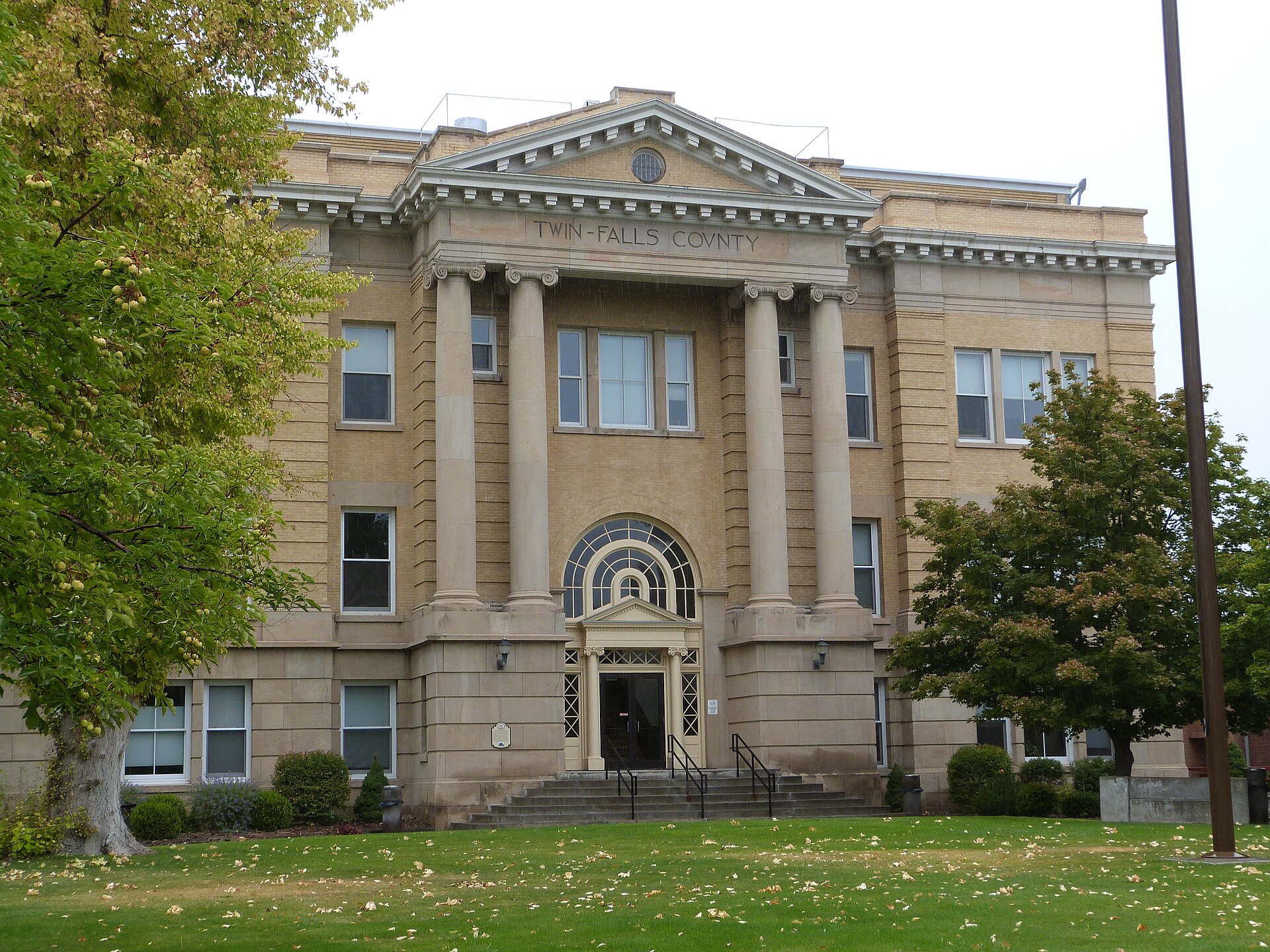

Reading the valuation assessment notice line by line
The notice that arrives by the first Monday in June has a legal name, the "valuation assessment notice," and a legal job: to tell you what the county thinks your property was worth and how to object. Since Jan. 1, 2024, every county must use one standard form prepared by the Tax Commission, so a notice from Jerome County and one from Ada County carry the same required parts, even if the layout and colors differ.1
What Idaho Code 63-308 requires on the notice
Idaho Code 63-308 was added in 1996 and amended in 2013, 2021 and 2023. The 2023 amendment (Idaho Session Laws 2023, chapter 35, effective Jan. 1, 2024) added the standard form and a list of items every notice must state.1 In plain words, the notice must show:
- The market value for assessment purposes for the current year, "in clear terms."
- Your right to appeal to the county board of equalization, with notice of the board's meetings.
- The market value for the previous two years.
- The property taxes by each taxing district for the previous two years.
- The percentage increase or decrease in each district's tax over those two years.
- The date of each district's budget hearing, or, if it is not yet scheduled, the date by which it must be held.
- A telephone number for each district.
- Anything else the Tax Commission requires.
Items 3 through 7 matter more than most people realize. Before 2024 a notice told you your value and little else, so a homeowner who saw a 15 percent jump in value assumed a 15 percent jump in taxes. The two-year tax history by district lets you see which governments actually raised your bill, and the hearing dates and phone numbers tell you where to say so before the levy is set in the fall. That is the one place in the system where a resident can argue about the rate instead of the value.
If the assessor changes anything after mailing, a corrected notice must be sent "immediately." If a lender, escrow company or trustee receives the notice instead of the owner, it must forward a copy to the owner by the second Monday in June. Property added to the rolls later in the year gets its own notice: by the third Monday in November for the subsequent roll, and by the first Monday of January for the missed property roll.1
Market value, taxable value and the number the levy actually hits
Three values appear on Idaho tax paperwork, and confusing them is the root of most bad arguments about property tax.
- Market value for assessment purposes
- The assessor's estimate of what the property would sell for at 12:01 a.m. on January 1, under Idaho Code 63-205. For homes, shops and vacant lots this is the ordinary market price standard. Farmland, timberland and some other property are valued by different rules.15
- Exemptions
- Amounts of value the law removes from the tax base. For a homeowner the big one is the homeowner (homestead) exemption under Idaho Code 63-602G.4
- Taxable value (net taxable value)
- Market value minus exemptions. Every levy rate on the bill is multiplied by this number. A $350,000 home with the full $125,000 exemption has a taxable value of $225,000.
A levy rate is the share of taxable value a district takes, written on Idaho levy sheets as a decimal carried to nine places. Twin Falls County's certified 2025 levy for tax code area 1 (inside the city of Twin Falls) is .010736139, which is 1.0736139 percent, or about $10.74 for every $1,000 of taxable value.13 The county's own explainer puts it plainly: taxes depend on local budgets, "not just assessed value."22
That last point is the key to reading the notice. Under Idaho's budget law, a district's property tax revenue is limited in dollars, not in rate (the next sections explain how). When every home in a district rises 10 percent in value and the district's budget rises 3 percent, the levy rate falls to keep the dollars at the budgeted amount. Your bill moves with your value only to the extent your value rose faster or slower than everyone else's in the same districts, plus whatever growth in budgets the districts adopted. A value increase is a warning, not a bill.
Why did my value change when I did nothing to the house?
Idaho Code 63-314 requires every parcel to be physically appraised at least once every five years, and parcels not visited in a given year are adjusted ("indexed") from sales of similar property.23 Lesson 1 of the property tax module walks through mass appraisal, indexing and the Tax Commission's 90 to 110 percent ratio standard; see How Idaho Assesses Property. The Twin Falls County Assessor's June 2025 newsletter to owners answered the same question this way: Idaho law requires assessment at 100 percent of market value, and "values can rise when similar properties nearby sell for more."22
The statewide numbers for 2025 show how uneven the movement is. The Tax Commission reported that total taxable value in Idaho rose 8.4 percent from 2024 to 2025. Existing primary residential property (owner-occupied homes with the exemption, excluding new construction) rose about 5.3 percent in taxable value, existing other residential property (rentals and second homes) rose 8.7 percent, and existing commercial property rose 8.1 percent. Because homes rose less than the other classes, taxes on existing primary residences rose about 1.9 percent, against 4.9 percent for other residential and 3.5 percent for commercial.11
Checking your notice, step by step
- Find the deadline first. Write the board of equalization deadline on your calendar the day the notice arrives: the fourth Monday in June at the close of county business hours (June 22, 2026; June 28, 2027).3
- Confirm the property description. Parcel number, address, acreage and tax code area. A wrong tax code area puts you in the wrong districts.
- Look up the assessor's record. Most counties post the property record card online (square footage, year built, bedrooms, baths, basement, garage, outbuildings). Errors in the record are the easiest appeals to win; see Appealing a Value.
- Confirm the homeowner exemption line. If you live there as your primary home and the exemption is missing, apply now. An approved application filed by the last business day of the year still counts for this year.4
- Compare the three years of value. A change much larger or smaller than your neighbors' is worth a question.
- Read the tax-by-district columns. Divide each district's tax this year by last year's to see which district's share of your bill grew.
- Note each district's hearing date. City, county, school, highway and special district budget hearings usually run in July and August. That is where rates are argued.
- Call the assessor's office. Ask how your value was set and which sales were used. Many disagreements end here.
- If you still disagree, file the written appeal on the county's form before the deadline. The form must identify you, the property and the reason.3
- Keep the notice. You will need it to check the November bill, and next year's notice will show this year's taxes in its two-year history.
The homeowner exemption in 2025 and 2026
The homeowner exemption (Idaho Code calls it the homestead exemption) removes value from the tax base before any levy is applied. For each tax year, the first $125,000 of the market value of an owner-occupied primary home, or 50 percent of that value, "whichever is the lesser," is exempt.4 The $125,000 figure has been in the statute since House Bill 389 (2021), Idaho Session Laws 2021, chapter 360, and it was unchanged for tax years 2025 and 2026.424 The history of the cap, which was $50,000 from 1983 to 2005, indexed to home prices from 2007 to 2016 and $100,000 from 2017 to 2020, is in Homeowner Relief and Property Tax History.
"Homestead" here borrows the definition in Idaho Code 63-701: the owner-occupied dwelling and as much of the surrounding land, up to one acre, as is reasonably needed for the home. A manufactured home can be a homestead.25 The exemption may cover part of a building (one unit of a duplex the owner lives in), and a home office used for both business and personal purposes does not disqualify the home.4
How much of your home the exemption covers
Because the cap is fixed in dollars, the share of a home it covers shrinks as values rise. The arithmetic below is ours, from the statute.
| Market value of the home | Exemption (lesser of $125,000 or 50%) | Taxable value | Share of value exempt |
|---|---|---|---|
| $200,000 | $100,000 | $100,000 | 50.0% |
| $250,000 | $125,000 | $125,000 | 50.0% |
| $300,000 | $125,000 | $175,000 | 41.7% |
| $350,000 | $125,000 | $225,000 | 35.7% |
| $450,000 | $125,000 | $325,000 | 27.8% |
| $550,000 | $125,000 | $425,000 | 22.7% |
| $750,000 | $125,000 | $625,000 | 16.7% |
The break-even point is $250,000. Below it, the exemption is exactly half the value. Above it, every additional dollar of value is fully taxable. In a county where most owner-occupied homes are worth well over $250,000, as in Ada County and increasingly in Twin Falls and Jerome counties, the exemption works more and more like a flat $125,000 deduction.
What changed in 2025 and 2026
House Bill 316 (2025): an Idaho ID number is required. HB 316, from the House Revenue and Taxation Committee, amended Idaho Code 63-602G "to clarify that an Idaho state-issued driver's license or identification card is required to apply" for the exemption. It passed the House 70-0 and the Senate 35-0, was signed March 25, 2025, became Idaho Session Laws 2025, chapter 167, and took effect retroactive to Jan. 1, 2025.6 The statute now says an applicant must give an Idaho driver's license or ID card number; a newcomer domiciled in Idaho fewer than 90 days has 90 days after applying to supply it, and active-duty military members are excused from the requirement for the initial application.4 The Twin Falls County Assessor told owners about the change in its June 2025 newsletter.22
House Bill 843 (2026): no more proration. HB 843, also a House Revenue and Taxation Committee bill carried on the floor by Rep. Dustin Manwaring, "removes provisions requiring the exemption to be prorated when the eligibility status of a property changes during the tax year," in the words of its statement of purpose, which said proration "has been inconsistently applied and has been difficult to administer."26 It passed the House 68-0 (two absent) and the Senate 32-0 (three absent), was signed by Gov. Brad Little on March 31, 2026, and became Idaho Session Laws 2026, chapter 236, retroactive to Jan. 1, 2026.5 The Tax Commission's April 7, 2026 guidance to counties summarizes the result: "There is to be no proration of the exemption, regardless of when the application is filed during the calendar year."27
Under the statute as amended, the full exemption "shall be in effect as of January 1 of the tax year in which a complete application is submitted and approved." An application filed by the close of business on the last business day of the year counts for that year. One filed and approved after the second Monday in July does not change the property roll; instead, the county cancels tax equal to what the exemption would have saved.427 If you held an exemption on a different home the year before, that old exemption is removed the following year.4
The 2026 bills that did not pass. Several other 2026 homestead bills died in committee or on the floor, including House Bill 885 (homestead exemption), House Bill 961 (listed in the legislative index as "Homestead exemption, sales tax"), House Bill 610 (an exemption tied to religious missions, which failed in the Senate) and House Bill 760 (a low-income property tax exemption, which also failed in the Senate). House Bill 842, on taxing district budget limits, failed in the House.28 None of these changed a 2026 tax bill.
The rules that trip people up
- One home per person. You must certify that you have not applied in another county or on another home in the same county. A first instance of claiming two exemptions brings a recovery of the tax plus a penalty equal to it; a second instance within seven years is a misdemeanor. Recoveries can reach back seven years and become a lien.4
- Apply once, then keep qualifying. You need not reapply each year while you own and occupy the same home as your primary dwelling.4
- A neighboring lot does not ride along. In Weaver v. Adams County, Appeal No. 25-A-1212 (decided Jan. 12, 2026), the Idaho Board of Tax Appeals upheld the removal of the exemption and the state homeowner credit from a 0.34-acre vacant lot in New Meadows that the owners held next to their home. The lot was "a distinct legal parcel," the adjacent home already carried the owners' one exemption, and the lot "has no dwelling nor any other residential improvements." The county told the board that, of more than 500 exempt parcels under one acre, 73 owners also owned an adjoining non-exempt parcel.29
- Refusals have their own 30-day clock. If the assessor refuses your exemption, or assesses a recovery or penalty, you have 30 days from the notice to appeal to the board of equalization, separate from the June deadline.4
- Military absence and death do not end it at once. An exempt home keeps qualifying during active military service (with an annual application), and through the year of the owner's death and the following tax year while it stays in the estate.4
- Districts may shrink new construction to offset raises in the exemption. Idaho Code 63-602G(10) lets a district's governing board deduct the amount by which exemptions exceed $100,000 from the next year's new construction roll, a choice few residents know exists.4
Applying for the homeowner exemption, step by step
- Get the application from your county assessor (each county prescribes its own form under 63-602G(3)). Most post it online.
- Have ready: full name, date of birth, the home's address, your most recent previous address, and your Idaho driver's license or ID card number.4
- If the home is held in a trust, LLC, partnership or corporation, ask the assessor for the affidavit form that shows you are a beneficiary, member, partner or shareholder.4
- Sign the certification that this is your primary dwelling and that you have not claimed an exemption anywhere else.
- File by the second Monday in July to have it on the property roll, and in every case by the last business day of the year (Dec. 31, 2026 for this year).4
- Check the next assessment notice and the November bill to confirm the exemption line appears.

The state's homeowner credit: what it is and where it shows
Since 2023 Idaho has paid part of each exempt homeowner's tax bill with state money. The program, called Homeowner Property Tax Relief (HTR) in Tax Commission reports, is in Idaho Code 63-724. It was created by House Bill 292 (2023), which also created the School District Facilities Fund. Gov. Brad Little vetoed HB 292 on March 27, 2023; the House overrode the veto 58-12 and the Senate 28-7, and it became Idaho Session Laws 2023, chapter 200.30
How the credit is figured
- Who gets it: every property receiving the homeowner exemption as of the second Monday in July.12
- Which taxes it covers: "eligible property taxes," meaning all levies on the home "except for bonds, school district levies, plant facility levies, and any voter-approved temporary levy for a specific duration." Only one acre counts.12
- The roll: the assessor certifies an HTR roll to the county auditor by the first Monday in September; the auditor adds each home's estimated eligible tax (last year's eligible levy times this year's market value) and certifies it to the Tax Commission by the second Monday in September.12
- The percentage: the Tax Commission divides the money in the homeowner property tax relief account on August 1 by the statewide total of estimated eligible taxes. Every county gets that same share of its homes' eligible taxes, certified by the third Monday in September.12
- On the bill: the treasurer applies the money as "a line item credit against the total of all eligible property taxes," after the exemption and before any other relief such as the circuit breaker. It cannot exceed the eligible tax actually due, and it cannot pay delinquent taxes or penalties.12
Idaho Code 63-902(1)(l) requires the bill to show the combined savings from this credit and from the School District Facilities Fund, "labeled on the notice as 'tax relief appropriated by the Legislature.'"2 The Ada County Assessor tells owners to look for "a line item denoting a credit for the Homeowner's Tax Relief (HTR) program" on the November bill.31
How much the credit has paid, 2023 to 2025
The money comes from sales tax. Idaho Code 63-3638(15) sends 2.25 percent of sales tax revenue (after certain earlier distributions) to the account each year.32 House Bill 304 (2025), whose statement of purpose lists Reps. Jason Monks and Mike Moyle and Sens. C. Scott Grow and Doug Ricks as contacts, added $50 million a year to the homeowner account and $50 million a year to the School District Facilities Fund, "starting in 2025 and every year there after," according to its statement of purpose. It passed the House 68-0 and the Senate 35-0 and was signed March 26, 2025 (Idaho Session Laws 2025, chapter 175).33
| Statewide relief, Idaho ($ millions) | 2023 | 2024 | 2025 |
|---|---|---|---|
| School District Facilities Fund levy reductions | 97.7 | 128.4 | 215.2 |
| Homeowner Tax Relief (HTR) credit | 191.8 | 117.8 | 112.8 |
| Additional tax relief | 24.6 | 0 | 0 |
| Total | 314.1 | 246.2 | 328.0 |
Source: Idaho State Tax Commission, Market Values and Property Taxes for 2025, Table 1.11
For 2025, the Tax Commission put property tax budgets before any relief at $2.502 billion, the school facilities reductions at $215.2 million, taxes as levied at $2.286 billion, the homeowner credit at $112.8 million, and the "final cost to taxpayers" at $2.174 billion.11
Two features of the credit decide how much you see. It is a percentage of eligible (non-school) taxes, so a home in a city with a high city levy gets more dollars than an identical home outside town. And it varies with sales tax collections and the Legislature's choices, so the percentage is not fixed from year to year. We did not find the 2025 percentage published by the Tax Commission as of Nov. 18, 2026; it can be computed from your own bill by dividing the credit line by your eligible taxes.
The circuit breaker: 2025, 2026 and 2027 figures
The property tax reduction program, nicknamed the circuit breaker, pays part of the tax on the home and up to one acre for owners with limited income who are 65 or older or fit another listed status. The Tax Commission runs it; you apply through the county assessor.34
Who qualifies
Under Idaho Code 63-701, a claimant must own the home, have the homeowner exemption on it, live in it as a primary dwelling, have lawful presence in the United States, and on January 1 of the program year be at least one of these:25
- 65 or older;
- a widow or widower;
- blind;
- disabled as recognized by the Social Security Administration, the Railroad Retirement Board, the federal Office of Management and Budget, or, for people outside those systems, a public employee retirement or disability plan;
- a veteran with a service-connected disability of 10 percent or more, or a VA pension for a nonservice-connected disability;
- a former prisoner of war or hostage; or
- a child under 18 who is fatherless or motherless, or abandoned by a surviving parent.
"Income" is broad. It starts with federal adjusted gross income and adds alimony, support money, the nontaxable part of pensions, annuities and IRA distributions, all Social Security payments (except the death benefit), unemployment, nontaxable interest from governments, workers' compensation and loss-of-earnings insurance. It does not count gifts, inheritances, or VA disability pensions for veterans rated 40 percent or more. Unreimbursed medical costs (as defined in section 213(d) of the Internal Revenue Code) come off the total, and so do personal funeral expenses up to $5,000 a year.25 Income is household income: the claimant's and, if married, the spouse's.
Income limits and benefits by program year
Idaho Code 63-705 sets the income limit at the greater of $37,000 per household or 185 percent of the federal poverty guideline for a household of two, adjusted each year when Social Security announces a cost-of-living change, and published by the Tax Commission by October 1 for claims filed the following year. The lowest-income bracket gets a reduction of up to $1,500; the highest qualifying bracket gets $250; benefits never exceed the actual tax.10
| Program year (bill it reduces) | Income year | Income limit (after medical expenses) | Maximum benefit (lowest bracket) | Benefit at the top bracket | Apply |
|---|---|---|---|---|---|
| 2025 (December 2025 bill) | 2024 | $37,810 | $1,500 | $250 | Jan. 1 to April 15, 2025 |
| 2026 (December 2026 bill) | 2025 | $39,130 | $1,500 (income to $15,750) | $250 ($38,451 to $39,130) | Jan. 1 to April 15, 2026 |
| 2027 (December 2027 bill) | 2026 | $40,030 | $1,500 (income to $16,110) | $250 ($39,331 to $40,030) | Jan. 1 to April 15, 2027 |
Sources: Tax Commission Pub. 135 for 2025 (as reprinted by the Bingham County Assessor) and 2026; 2026 and 2027 income bracket tables (EPB00168); the Tax Commission's Property Tax Reduction page.7835934
Between the top and bottom, the benefit steps down in 36 brackets. A few rows from the official tables:
| 2026 program: 2025 income | Maximum 2026 benefit | 2027 program: 2026 income | Maximum 2027 benefit |
|---|---|---|---|
| $0 to $15,750 | $1,500 | $0 to $16,110 | $1,500 |
| $19,721 to $20,400 | $1,260 | $20,181 to $20,870 | $1,260 |
| $25,761 to $26,420 | $940 | $25,681 to $26,350 | $970 |
| $26,421 to $27,090 | $910 | $27,031 to $27,710 | $910 |
| $32,431 to $33,100 | $590 | $33,181 to $33,860 | $590 |
| $38,451 to $39,130 | $250 | $39,331 to $40,030 | $250 |
Selected rows from EPB00168 (2026 brackets, dated July 15, 2025) and EPB00168 (2027 brackets, dated September 2026).359
The home's value also matters. If the home's assessed value on the current notice exceeds the greater of $400,000 or 200 percent of the county's median assessed value of exempt homes, the applicant is referred to the property tax deferral program instead (veterans rated 100 percent disabled are excepted). Each county reports its median to the Tax Commission by the first Monday in June, which is why the 2026 program guide says the limit "will be calculated in June 2026."108 The deferral program, the 100 percent disabled veterans' benefit (up to $1,500 with no income test) and statewide claim counts are covered in Homeowner Relief.
Applying for the circuit breaker, step by step
- Between Jan. 1 and April 15, contact the county assessor or apply online through the Tax Commission's taxpayer portal.34
- Bring proof of income for you and your spouse for the prior year (tax return, Social Security and pension statements), proof of your qualifying status, proof of ownership, and receipts for medical and funeral costs. The Tax Commission's medical expense statement form lists what counts.8
- If you do not yet have every income document, file as much as you can by April 15; the guide says to complete what you can and file by the deadline.8
- Subtract unreimbursed medical costs. Keeping receipts can move you several brackets.
- Watch for the December bill: an approved reduction appears there, after the exemption and the homeowner credit.812
- Apply again next year. The circuit breaker is never automatic.34
Appealing your value: the ladder and the clock
An Idaho value appeal has four rungs, and each has its own deadline. None of them pauses your obligation to pay. Idaho Code 63-511 says, "Nothing in this section shall be construed so as to suspend the payment of property taxes pending said appeal."36
The board of equalization step
Under Idaho Code 63-501A, "Taxpayers may file an appeal of an assessment or exemption decision with the county board of equalization." The appeal must be in writing, on the board's or assessor's form, and must "identify the taxpayer, the property which is the subject of the appeal and the reason for the appeal." For the regular property roll it is due by the end of the county's normal business hours on the fourth Monday of June. "The board of equalization may consider an appeal only if it is timely filed."3
Idaho Code 63-501 has the commissioners meet as a board of equalization at least once every month up to the fourth Monday of June, hear appeals filed by that day, and "complete such business and adjourn" by the second Monday of July. The assessor or a deputy attends and may present evidence and question witnesses.17 A second session on the fourth Monday of November handles the subsequent roll (mostly new construction finished after January 1), and appeals of missed-roll property are heard in January.173
What wins and what does not
Under Idaho Code 63-511(4), the party seeking relief must show the value is "erroneous" by a preponderance of the evidence. The burden flips to the side seeking a higher value only when the increase exceeded 10 percent over the prior year and came partly from the assessor "failing to use the equalization methods required pursuant to section 63-208."36 Evidence that persuades boards is the evidence of market value: recent sales of similar homes near January 1, an appraisal dated January 1, or a factual error in the assessor's record. "My taxes went up" and "I can't afford it" are not evidence of value. The second is a real problem with real remedies (the circuit breaker and deferral above), but a board of equalization cannot use it to change a value. Building a comparable-sales case is covered in detail in Appealing a Value.
What the board of equalization cannot hear matters as much. It cannot change a levy rate, a district budget or the homeowner credit percentage. Those were decided by elected boards at public budget hearings in July, August and September, which are the right place to argue them.
The Board of Tax Appeals and district court
The Idaho Board of Tax Appeals was established in 1969 as "an independent body which shall not in any way be subject to the supervision or control of the state tax commission."37 A board of equalization decision can be appealed to it, or instead to the district court in the county where the property sits, within 30 days after notice of the decision is mailed or the decision is announced at a hearing. The property owner, the assessor, the Tax Commission or "a person aggrieved when he deems such action illegal or prejudicial to the public interest" may appeal.36 A Board of Tax Appeals decision can then go to district court, which hears it "in a trial de novo" without a jury, under Rule 84 of the Idaho Rules of Civil Procedure.38 The Board of Tax Appeals also hears appeals of Tax Commission decisions on the circuit breaker and on the homeowner credit; a homeowner whose credit is disapproved by the Tax Commission has 30 days to appeal to the Board of Tax Appeals or district court.12

How each levy on your bill was set
A levy rate is not chosen first. It is the result of a division. Each taxing district adopts a budget, subtracts its other revenue, and certifies to the county commissioners, in dollars, how much it needs from property tax. The deadline is the Thursday before the second Monday in September (Sept. 10, 2026).18 The commissioners then divide each district's dollars by the district's taxable value and set the levy: "a tax levy as a percent of taxable value of all property in the taxing district which, when applied to the tax rolls, will meet the budget requirements certified by such taxing districts."18
So the formula is simple: levy = property tax dollars certified by the district / taxable value of the district. Taxable value for this purpose excludes exemptions and, where an urban renewal revenue allocation area exists, the increment value above the area's base, which goes to the urban renewal agency instead (see Impact Fees, Urban Renewal and Who Pays and Who Pays the Increment).18
The 3 percent cap, new construction and the 8 percent ceiling
Idaho Code 63-802 limits how fast a non-school district's property tax budget can grow. The starting point is "the highest dollar amount of property taxes certified for its annual budget for any one (1) of the three (3) tax years preceding the current tax year." A district may add a growth factor "not to exceed three percent (3%)," plus revenue from growth: a preliminary levy rate multiplied by the value on the new construction roll and by 90 percent of the value annexed during the previous calendar year. The total increase figured this way "must not exceed eight percent (8%)," or 15 percent for fire protection and ambulance service districts.39
The new construction roll, compiled by the assessor under Idaho Code 63-301A, lists 90 percent of the taxable value added by new structures, nonresidential additions and new manufactured homes, among other items, and must be certified by the first Monday in June.16 The 90 percent rules and the 8 percent ceiling date from House Bill 389 (2021), Idaho Session Laws 2021, chapter 360, which the House passed 48-20 and the Senate 19-16 and Gov. Little signed May 12, 2021.2439 The history and the argument over whether growth pays its way are in Impact Fees, Urban Renewal and Who Pays and Property Tax History.
School district levies are outside this cap: "This section does not apply to school district levies imposed in section 33-802."39 School property taxes are mostly voter-approved bonds, supplemental levies and plant facilities levies, decided at elections, which School Boards, Budgets, Bonds and Levies covers.
A district that takes less than the full allowed increase builds a "forgone" balance it may recover later after notice, a public hearing and a resolution; maintenance and operation recovery is limited to 1 percent of the budget a year and capital recovery to 3 percent.39 The Tax Commission reported $132.7 million of forgone amounts available statewide after 2025.11
How we figured it: a sample budget cap calculation
Inputs (invented to show the steps): a city whose highest property tax budget in the last three years was $10,000,000; taxable value of $2,000,000,000; a new construction roll of $60,000,000; and $10,000,000 of value annexed last year.
Steps under Idaho Code 63-802(1)(a): 3 percent growth = $300,000. Preliminary levy = ($10,000,000 + $300,000) / $2,000,000,000 = .00515. New construction revenue = $60,000,000 x .00515 = $309,000. Annexation revenue = 90% x $10,000,000 x .00515 = $46,350. Maximum budget = $10,000,000 + $300,000 + $309,000 + $46,350 = $10,655,350, an increase of 6.55 percent, under the 8 percent ceiling.
What this shows: about half of the allowed increase in this example comes from growth. In a fast-growing city the growth term can be larger than the 3 percent term; the Tax Commission's statewide figures for 2025 were $51.6 million of potential increase from the 3 percent cap and $30.6 million from new construction.11
Limits: real calculations use the Tax Commission's certified values, district-specific exceptions (urban renewal terminations, voter-approved overrides, judgments) and any forgone amounts. Districts can always levy less than the maximum.
The 2026 changes to budget limits
The 2026 session changed the budget rules for some districts but not for cities, counties or schools generally. The Tax Commission's April 14, 2026 bill tracking report summarizes them:40
- House Bill 959 (House Ways and Means Committee; floor sponsors House Speaker Mike Moyle and Sen. Doug Okuniewicz) raised the growth ceiling for fire protection and ambulance service districts from 8 percent to 15 percent, let them use the previous year's levy rate in the growth calculation, stopped the growth of new forgone balances for them (existing balances remain), and created an initiative petition process for voters to raise or lower those districts' budgets. It passed the House 67-0 and the Senate 33-0, was signed April 10, 2026 (Idaho Session Laws 2026, chapter 316), and took effect partly retroactive to Jan. 1, 2026 and partly July 1, 2026.4140
- House Bill 765 lets fire and library districts that annex areas de-annexed by other fire and library districts exceed the 8 percent limit for that territory. It passed the House 59-9 and the Senate 34-0 and was signed March 27, 2026 (chapter 197), retroactive to Jan. 1, 2026.4240
- House Bill 551 lets fire and ambulance districts that are not subject to urban renewal allocation count new construction inside newly formed revenue allocation areas toward their budget growth. It passed the House 68-0 and the Senate 31-0 and was signed March 11, 2026 (chapter 19), retroactive to Jan. 1, 2026.4340
For a homeowner, the practical result is that fire and ambulance lines on a bill may grow faster from 2026 on than city or county lines, and that voters in those districts gained a petition tool to push their budgets back.
Why your bill can rise when your levy falls
The levy is the same for every parcel in a tax code area, but the tax base underneath it is shared among classes of property: owner-occupied homes, rentals and second homes, commercial, industrial, agricultural, and utility operating property. When one class rises in value faster than the others, it carries more of each district's fixed dollar budget. The Tax Commission reported that owner-occupied primary residences were 44 percent of statewide taxable value in 2025 and, after all relief, paid 44.3 percent of all property taxes, down from 51 percent in 2022. All residential property together was 75.4 percent of value in 2025.11 The long-run version of this story, including the 2006 special session that moved most school operating costs off the property tax, is in Property Tax History.
Reading the tax bill line by line
The November tax notice is prepared on forms prescribed by the Tax Commission and must contain at least the items in Idaho Code 63-902(1).2 In order:
- The year the tax was levied, the owner's name and address, a legal description or tax number, and the parcel number.
- The "full market value for assessment purposes."
- The total tax due, broken out by state, county, city, school district (maintenance and operation, bond, supplemental and other, each shown separately) and every other tax shown separately.
- All property tax levies in the tax code area.
- The expiration dates of all voter-approved bonds and levies (this may be an annual insert or a link or QR code to the county website, archived there).
- The delinquency date, any delinquencies against the property, and whether an interim (prepayment) account exists.
- The combined savings from the homeowner credit and the School District Facilities Fund, labeled "tax relief appropriated by the Legislature."
- Payment options, printed in boldface in a contrasting color or highlighted.
- The total property tax for the previous tax year.
Bills printed in tax code area format must also state that levy sheets are available to the public.2 A tax code area is a patch of the county where one particular combination of districts overlaps; every parcel in it pays the same total levy. Twin Falls County's 2025 levy sheet lists more than 50 lines of code areas, from .004494816 (code area 13, rural, served by the Twin Falls Highway District and West End Cemetery) to .012261914 (code area 6, inside Murtaugh).13
Due dates, late charges and a 2026 fix
Under Idaho Code 63-903, the full tax is due by December 20, or you may pay half by December 20 and the second half by June 20 of the next year, as long as the first half is paid in full on time. Miss the first half and late charges and interest apply to it; miss the second and they apply to the rest.19 Jerome County's treasurer tells taxpayers that when December 20 or June 20 falls on a weekend, payments are accepted in the Tax Collector's office through the next business day, until 4:30 p.m.20
House Bill 594 (2026), a House Revenue and Taxation Committee bill carried by Rep. Richard Cheatum, rewrote 63-903(6) so that late charges and interest collected by the county are apportioned among the taxing districts in the same proportion as the taxes. Its statement of purpose says it "codifies the 2025 Supreme Court decision" on the question.44 That decision is East Side Highway District v. Kootenai County, Idaho Supreme Court Docket No. 51332 (opinion filed July 9, 2025), which affirmed a district court judgment that Kootenai County must share late charges and interest with the taxing districts rather than keep them.45 HB 594 passed the House 69-0 and the Senate 31-0, was signed March 12, 2026, and took effect July 1, 2026 (Idaho Session Laws 2026, chapter 20).4419
Worked example bills for tax year 2025
The examples below apply each county's own certified 2025 levies to a home of a stated value. The home values are round numbers we chose to show the arithmetic, not official medians; the levies are the counties' certified figures. All results are our calculations. The homeowner credit line is left out of the totals because the 2025 percentage was not published in a source we could find; the methods box shows how to add it from your own bill.
Twin Falls: a $350,000 home inside the city
Twin Falls County's 2025 levy sheet, certified by the Board of County Commissioners on Oct. 28, 2025, gives a total of .010736139 for tax code area 1 (inside the city of Twin Falls, Twin Falls School District 411 and the Twin Falls Highway District). The sheet notes that every code area total includes the county levy (.002731623), the College of Southern Idaho levy (.000740088), the ambulance district levy (.000117152) and the abatement district levy (.000056692).13 We checked that the parts add to the total: .005060063 (city) + .002731623 + .000740088 + .000117152 + .000056692 + .001298048 (school district 411) + .000732473 (highway district) = .010736139.
| District | 2025 levy | Tax on $225,000 taxable value | Share of bill |
|---|---|---|---|
| City of Twin Falls | .005060063 | $1,138.51 | 47.1% |
| Twin Falls County | .002731623 | $614.62 | 25.4% |
| Twin Falls School District 411 | .001298048 | $292.06 | 12.1% |
| College of Southern Idaho | .000740088 | $166.52 | 6.9% |
| Twin Falls Highway District | .000732473 | $164.81 | 6.8% |
| Twin Falls County Ambulance District | .000117152 | $26.36 | 1.1% |
| Twin Falls County Abatement District | .000056692 | $12.76 | 0.5% |
| Total | .010736139 | $2,415.63 | 100% |
Without the exemption, the same home would have owed $350,000 x .010736139 = $3,757.65, so the exemption saved $1,342.02 (our calculation). The school district's share is small because most school operating costs left the property tax in 2006 and because the School District Facilities Fund reduced school levies again in 2025. The Tax Commission's 2025 report shows Twin Falls School District 411 levied $10,891,277 in 2025, down 9.5 percent from $12,030,552 in 2024.11
Kimberly: a $300,000 home inside the city
Kimberly, east of Twin Falls, sits in Twin Falls County tax code area 4: the city, Kimberly School District 414, the Twin Falls Highway District and the Rock Creek Fire District, plus the countywide levies. Its 2025 total was .010762582.13 For a $300,000 home, taxable value is $175,000 and the tax is $1,883.45 before the state credit.
| District | 2025 levy | Tax on $175,000 |
|---|---|---|
| City of Kimberly | .004093626 | $716.38 |
| Twin Falls County | .002731623 | $478.03 |
| Rock Creek Fire District | .001535763 | $268.76 |
| Kimberly School District 414 | .000755165 | $132.15 |
| College of Southern Idaho | .000740088 | $129.52 |
| Twin Falls Highway District | .000732473 | $128.18 |
| Ambulance and abatement districts | .000173844 | $30.42 |
| Total | .010762582 | $1,883.45 |
The fire line is the one to watch. The Tax Commission's 2025 report lists a temporary override for the Rock Creek Fire District (Cassia and Twin Falls counties) that added about $643,000 to its 2025 budget, and House Bill 959 (2026) raised the growth ceiling for fire districts from 8 to 15 percent starting in 2026.1141 Kimberly School District 414's levy fell to $955,372 in 2025 from $1,242,830 in 2024 (down 23.1 percent), largely because of school facilities relief.11
Jerome: a $300,000 home inside the city
Jerome County does not post a tax-code-area levy sheet on its website as of Nov. 18, 2026, so we built the Jerome example from the county's 2025 Certificate of County Levies as compiled by the Tax Commission.21 The four levies certain to apply inside the city of Jerome are Jerome County (.003431478), the City of Jerome (.005832216), Jerome School District 261 (.001531365) and the College of Southern Idaho (.000740088), which sum to .011535147. On a $300,000 home with a $175,000 taxable value, those four alone come to $2,018.65.
| District | 2025 levy | Tax on $175,000 |
|---|---|---|
| City of Jerome | .005832216 | $1,020.64 |
| Jerome County | .003431478 | $600.51 |
| Jerome School District 261 | .001531365 | $267.99 |
| College of Southern Idaho | .000740088 | $129.52 |
| Subtotal, four main levies | .011535147 | $2,018.65 |
| At the Tax Commission's 2025 average urban rate for Jerome County (1.314%) | .01314 | $2,299.50 |
The Jerome County certificate also lists levies for the Lifeline Ambulance Service District, the Jerome County Cemetery District, Jerome Recreation, two highway districts and several fire districts. The Tax Commission's 2025 operating property summary for Jerome County lists the Lifeline Ambulance, Jerome County Cemetery, Jerome Recreation and Jerome Highway districts with the same urban renewal increment values as the countywide districts, a hint that they overlap the city, but which combination applies to a given address is set by its tax code area, which the assessor can confirm.46 The Tax Commission's 2025 average urban rate for the county, 1.314 percent, is a fair cross-check: a city parcel's total probably lands near it.14 City of Jerome's own levy includes lines for streets, the library, recreation and firemen's retirement, and the school district's levy is made of bond levies labeled 2005, 2014, 2021 and 2022 plus another bond levy, a judgment levy, a plant facilities levy and a temporary supplemental levy.21 Jerome School District 261 levied $4,437,416 in 2025, down 18.7 percent from $5,459,999 in 2024.11
Jerome's high county rate is not a sign of high spending by itself. Rates depend on the dollars levied and on the value they are spread over. By our rough check in the methods box below, Jerome School District's taxable value (about $2.90 billion) is about a third of Twin Falls School District's (about $8.39 billion). The comparison chart in the next section shows how Magic Valley counties line up.
Boise: a $550,000 home inside the city
Ada County's 2025 Certificate of County Levies lists, among others: Ada County (.001482616), the City of Boise (.003945701), Boise School District 1 (.003131359, of which .002903006 is maintenance and operation and .000214382 a permanent supplemental levy), the Ada County Highway District (.000479281) and the College of Western Idaho (.000081939).21 Those five sum to .009120896. On a $550,000 home (taxable value $425,000 after the exemption), they come to $3,876.38. Small countywide special district levies (ambulance, pest control and others) would add a little; we did not include them because the certificate does not say which code areas they cover.
Boise is unusual in one way: its school district still levies a large maintenance and operation levy. The Tax Commission's 2025 report shows Boise School District 1 property taxes up $30.4 million (24.1 percent) to $156.4 million in 2025, while West Ada School District 2, which serves most of Meridian, levied $857,450, down 95.4 percent, after school facilities relief.11 Two neighbors in Boise and Meridian with identical homes can have very different school lines.
Ada County's average urban rate in 2025 was 0.652 percent, well below this Boise figure, because Meridian, Eagle, Kuna and Star have lower city and school levies.14
How we figured it: the example bills
Inputs: 2025 levies from the Twin Falls County 2025 Tax Levies sheet (code areas 1 and 4) and from the 2025 Certificates of County Levies for Jerome and Ada counties as compiled by the Tax Commission (EPB00705, Dec. 4, 2025); Jerome County average urban rate from the Tax Commission's 2025 Average Property Tax Rates (EPB00129). Home values are round numbers chosen by us.
Formula: exemption = the lesser of $125,000 or 50% of market value (Idaho Code 63-602G(1)); taxable value = market value minus exemption; tax = taxable value x total levy. Example, Twin Falls: $350,000 - $125,000 = $225,000; $225,000 x .010736139 = $2,415.63. District lines are taxable value x each district levy, rounded to the cent, so they can sum to a cent more or less than the total.
Adding the state credit from your own bill: eligible taxes = total tax minus school district levies, bonds, plant facility levies and voter-approved temporary levies (63-724(2)). Credit percentage = credit line / eligible taxes. Example, if your Twin Falls bill showed eligible taxes of about $2,123.57 (every line except the school district) and a credit of $212.36, the percentage would be 10.0 percent. That 10 percent is illustrative only. Any bond or temporary levy inside a city or other district would also come out of eligible taxes.
Checking a levy: district dollars / levy = implied taxable value. Jerome School District 261: $4,437,416 / .001531365 = about $2.90 billion. Twin Falls School District 411: $10,891,277 / .001298048 = about $8.39 billion. These are approximations; urban renewal increments and rounding move them slightly.
Limits: not every parcel in a city is in the same code area; irrigation, solid waste and other fees on the bill are not property tax and are not included; the Jerome and Boise examples leave out small levies.
A circuit breaker example in Twin Falls
Take a 72-year-old widow in Twin Falls tax code area 1 whose home is assessed at $250,000. Her exemption is $125,000 (exactly half), her taxable value $125,000, and her 2025-levy tax $1,342.02 before credits (our calculation). Her 2025 income was $29,800, including Social Security, and she paid $3,800 in unreimbursed medical bills, so her income for the 2026 program is $26,000. That falls in the $25,761 to $26,420 bracket on the Tax Commission's 2026 table: a maximum benefit of $940.35 If she applied by April 15, 2026, her December 2026 bill would show the exemption, then the state homeowner credit, then a circuit breaker reduction of up to $940, which by itself covers about 70 percent of her pre-credit tax. Without the medical deduction, $29,800 would land in the $29,761 to $30,420 bracket, worth $730. Keeping receipts was worth $210 to her.
Her home's value matters too. At $250,000 it is under the $400,000 floor of the home value limit, so she is not referred to deferral instead.10
How Idaho compares with other states
Idaho limits property tax growth mainly through district budgets (63-802) and a dollar-capped homeowner exemption, and gives targeted relief through the circuit breaker and the sales-tax-funded homeowner credit. Other states use different levers.
| State | Main limit or relief for homeowners | Source |
|---|---|---|
| Idaho | Non-school district budgets may grow 3% plus growth from new construction and annexation, capped at 8% (15% for fire and ambulance districts from 2026); homeowner exemption of the lesser of $125,000 or 50%; state credit on non-school levies | Idaho Code 63-802, 63-602G, 63-72439412 |
| Oregon | Since the tax year beginning July 1, 1997 (Measure 50), each property's maximum assessed value may not rise more than 3 percent a year, regardless of market value | Oregon Constitution Article XI, section 1147 |
| Texas | School district residence homestead exemption raised from $100,000 to $140,000 by Senate Bill 4 (2025), applying to tax years beginning Jan. 1, 2025, and made contingent on voter approval of the constitutional amendment proposed by Senate Joint Resolution 2 (2025) | Texas Tax Code 11.13(b); SB 4 bill analysis48 |
| California | Proposition 13 (1978) limits the rate and the growth of assessed value; covered in Property Tax History | California Constitution Article XIII A |
The tradeoffs differ. An assessment cap such as Oregon's protects each owner from a sudden jump in value but lets two identical neighboring homes carry very different tax bills depending on when they were bought or built. Idaho's approach taxes identical homes alike under one levy but lets the share of the total shift between classes of property as values move, which is how owner-occupied homes went from 51 percent of taxes in 2022 to 44.3 percent in 2025.11 Texas exempts more value than Idaho for school taxes but has no statewide exemption of that size for city or county taxes; Idaho's exemption applies to every levy. How Idaho's overall burden compares with the nation's is in Comparing Property Tax Burdens Honestly and Part A's Idaho vs. the United States.
Pictures, Numbers and Infographics
| Measure or rule | Idaho | U.S. or other states | Place or year | Source |
|---|---|---|---|---|
| Assessment notice deadline | First Monday in June (June 1, 2026) | Varies by state | Statewide | 63-3081 |
| Board of equalization appeal deadline | Fourth Monday in June (June 22, 2026) | Varies by state | Statewide | 63-501A3 |
| Homeowner exemption | Lesser of $125,000 or 50% of value, every levy | Texas: $140,000 for school taxes only | Tax years 2025 and 2026; Texas 2025 | 63-602G; Texas SB 4448 |
| Circuit breaker income limit | $37,810 (2025 program); $39,130 (2026); $40,030 (2027) | Statewide | Tax Commission789 | |
| Circuit breaker benefit range | $250 to $1,500 | Statewide | 63-70510 | |
| State homeowner credit paid | $191.8 million (2023); $117.8 million (2024); $112.8 million (2025) | Statewide | EPB0013211 | |
| Budget growth limit, non-school districts | 3% plus new construction and 90% of annexation, total capped at 8% (15% fire and ambulance) | Oregon: 3% cap on each property's assessed value growth | Idaho 2026; Oregon since 1997 | 63-802; Or. Const. XI s. 113947 |
| Owner-occupied homes' share of taxable value | 44% | Idaho, 2025 | EPB0013211 | |
| Owner-occupied homes' share of taxes after relief | 44.3% (51% in 2022) | Idaho, 2025 | EPB0013211 | |
| Average urban levy rate | Jerome County 1.314%; Twin Falls County 1.059%; Ada County 0.652% | Idaho statewide 0.680% | 2025 | EPB0012914 |
| Total levy, Twin Falls city (code area 1) | 1.0736139% | 2025 | Twin Falls County13 | |
| Tax on a $350,000 Twin Falls home before the state credit | $2,415.63 (our calculation) | 2025 | Twin Falls County13 | |
| Highest and lowest tax rates in Idaho | 1.670% (Craigmont City, Lewis County); 0.145% (rural Idaho County) | 2025 | EPB0013211 |

Common mistakes
- Treating the assessment notice as a bill, or the bill as an appeal notice. The value can be appealed only by the fourth Monday in June; the board "may consider an appeal only if it is timely filed." A December complaint about value cannot be heard that year.3
- Assuming a 10 percent value increase means a 10 percent tax increase. Non-school district budgets are capped in dollars, so levies fall as values rise. In 2025 the Tax Commission found existing owner-occupied homes rose about 5.3 percent in taxable value, but their taxes rose about 1.9 percent.1139
- Assuming the 3 percent cap limits your own bill. It limits each non-school district's budget growth, plus growth from new construction and annexation, and it does not apply to school levies. Your bill can rise more than 3 percent if your value rose faster than other property in your districts, or if voters approved a bond or override.39
- Reading an outdated example. Jerome County's "Calculating Property Taxes" web page, as posted on Nov. 18, 2026, still illustrates a bill with a school levy of .008137568 and a $41,000 exemption on a $102,000 home, figures from before the 2006 shift of school operating costs and before today's $125,000 exemption.49 Use the current levy sheet and the statute instead.
- Claiming the exemption on more than one parcel. A vacant lot next to your house is a separate parcel and does not qualify, as the Board of Tax Appeals held in Weaver v. Adams County (2026).29 Two exemptions bring recovery of the tax plus an equal penalty.4
- Thinking the circuit breaker renews itself. It must be applied for every year between Jan. 1 and April 15.8
- Thinking the homeowner credit cuts school taxes. It applies only to non-school levies and excludes bonds and voter-approved temporary levies. School relief comes through the School District Facilities Fund, which lowers the school levy itself.1211
- Skipping a payment while appealing. Payment is not suspended at any level of appeal.36
- Expecting proration. Since HB 843 (2026), the exemption is not prorated, whether you bought in February or November.527
What we know, what we don't, and what the data can show
What we know
- The calendar: notices by the first Monday in June, appeals by the fourth Monday in June, bills before the fourth Monday in November, payments December 20 and June 20.13219
- The exemption was $125,000 or 50 percent in 2025 and 2026, with no proration from 2026 on.45
- Circuit breaker income limits: $37,810, $39,130 and $40,030 for the 2025, 2026 and 2027 programs.789
- Statewide relief totals for 2023 to 2025 and the 2025 shares of value and tax by class.11
- Each county's certified 2025 levies and average urban and rural rates.2114
What we don't know
- The 2025 and 2026 homeowner credit percentages, which we did not find published as a single statewide figure.
- How many homeowners in each county appealed in 2025 or 2026 and how many won. Boards of equalization keep minutes, but no statewide tally was found.
- How many eligible homeowners do not apply for the circuit breaker.
- Which special district levies apply to each Jerome city and Boise city parcel without the county's tax code area sheet.
- How the 2026 changes for fire and ambulance districts (HB 959) will show up in 2026 bills, which were being mailed as this lesson was checked.
What the data can show
- Levy trends for a typical home in each core town: each county's annual levy sheet, or the Tax Commission's yearly Certificates of County Levies (EPB00705), applied to a fixed home value.21
- Who carries the load: the Tax Commission's Market Values and Property Taxes report (EPB00132), by class and year.11
- Which districts grew: the two-year tax-by-district columns now required on every assessment notice (63-308(3)).1
- Circuit breaker use by county: the Tax Commission's property tax reduction statistics (EPB00089), compared with Census counts of residents 65 and older.
- School levy relief by district: Table 5 of EPB00132, school district by school district.11
Questions people ask
My value went up 12 percent. Will my taxes go up 12 percent?
Probably not. Non-school district budgets can grow by at most 3 percent plus growth from new construction and annexation (8 percent total for most districts), so levies drop when values rise faster than budgets.39 Your bill rises faster than average only if your value rose faster than other property in the same districts, or if voters approved new school or other levies. The two-year tax history on your notice shows which districts raised your bill.1
I bought my home in October. Can I still get the exemption this year?
Yes. File by the last business day of the year. Since HB 843 (2026), the full exemption applies for the year; because your application comes after the second Monday in July, it is given as a tax cancellation rather than a change to the roll.427
The bill came and it's too high. Can I appeal now?
Not the value on the regular roll. That deadline was the fourth Monday in June.3 You can still check the bill for errors (a missing exemption, a wrong code area) with the assessor and treasurer, attend next summer's budget hearings, and appeal next year's value in June. If the value was for new construction on the subsequent roll, the deadline is the fourth Monday in November.3
I rent. Does any of this help me?
Not directly. The exemption, the homeowner credit and the circuit breaker all require owner-occupancy. Landlords pay tax on the full value of rental homes, and the Tax Commission reported that taxes on existing "other residential" property rose about 4.9 percent in 2025, against 1.9 percent for owner-occupied homes.114 Part C of this series, coming later, covers owning, renting and HOAs.
Who gets most of my money?
Usually the city, if you live in one. In our Twin Falls example the city took 47.1 percent and the county 25.4 percent; in our Boise example the city took 43.3 percent and the school district 34.3 percent (our calculations).1321 The levy sheet for your tax code area shows the split for your parcel; Where the Money Goes explains what each kind of district does.
Does the circuit breaker cover a manufactured home on a rented lot?
A manufactured home can be a homestead, and the Tax Commission's program page says mobile homes are allowed.2534 The reduction applies to the tax on the home you own, not to fees or to land you rent.
Does it cost anything to appeal?
Idaho Code 63-501A requires a written appeal on the county's form and sets no filing fee.3 Costs come from evidence you choose to buy, such as an appraisal.
Hard questions
Should the Legislature raise or index the $125,000 exemption?
For raising or indexing: with most homes above $250,000, the exemption now covers a shrinking share of value (22.7 percent of a $550,000 home), and owner-occupants vote where they live and cannot pass taxes on to anyone. Against: an exemption does not reduce any district's budget; it moves the same dollars onto rentals, businesses and farms. Renters pay part of that through rent. What the evidence shows: owner-occupied homes' share of taxes fell from 51 percent in 2022 to 44.3 percent in 2025 without a higher exemption, because of the state credit and school facilities relief.11 The 2026 session considered and did not pass several homestead bills, including HB 885 and HB 961.28
Is sales-tax-funded relief better than budget restraint?
For the credit: it delivers visible, direct help to every exempt homeowner and does not cut local services. Against: it spends state money without slowing local budgets, helps owners and not renters, and depends on sales tax and legislative choices. What the evidence shows: legislated relief totaled $328.0 million in 2025, while property tax budgets before relief rose to $2.502 billion.11
Should fire and ambulance districts get a higher growth ceiling?
For HB 959: response costs rise fastest where houses are being built, and these districts depend almost entirely on property tax. Against: a 15 percent ceiling lets those lines climb faster than others on the same bill. What the evidence shows: HB 959 paired the higher ceiling with a voter petition to raise or lower these budgets and an end to new forgone balances; 2026 bills will be the first test.4140
Should Idaho cap assessments the way Oregon does?
For: an assessment cap shields long-time owners from sudden spikes. Against: it creates large differences between neighbors with similar homes and can push new buyers' tax far above old owners'. What the evidence shows: Oregon has limited each property's assessed value growth to 3 percent a year since 1997; Idaho instead caps district budgets and keeps every parcel at market value.473915
For reporters and advocates
Records that exist and how to get them.
- Assessment rolls and property record cards from the county assessor, often online.
- Board of equalization minutes and decisions from the county clerk, June and July each year; ask for the list of appeals, values asked and values granted.17
- Board of Tax Appeals decisions, posted on the board's website (example: Weaver v. Adams County).29
- Each taxing district's budget, budget hearing notice and certification of property tax dollars, filed with the county by mid-September.18
- The county's levy sheet by tax code area (Twin Falls County posts one) and the Tax Commission's statewide Certificates of County Levies (EPB00705).1321
- New construction rolls, certified by the first Monday in June.16
- Homeowner credit rolls and payments by county (63-724), and Tax Commission reports EPB00132, EPB00129 and EPB00110.12111440
- Voter-approved bond and levy trackers; Twin Falls, Ada and Canyon counties post them online.
All of these are public records. Use an Idaho public records request under Idaho Code Title 74 for anything not posted; see Idaho Public Records Requests. Budget hearings are open meetings; see Idaho Open Meetings.
Questions to ask officials.
- To the assessor: How many notices went out this year, how many owners called, how many appeals were filed, and how many values changed? How many homes have the exemption, and how many circuit breaker claims were filed by April 15?
- To each district: How much of this year's increase came from the 3 percent factor, how much from new construction and annexation, and how much from forgone amounts? Is the district reserving forgone amounts, and for what?
- To fire and ambulance districts: Will the district use the 15 percent ceiling allowed by HB 959?
- To the county treasurer: What was the homeowner credit percentage this year, and how many bills carried it?
- To legislators: What would a higher exemption shift onto rentals, businesses and farms in our county, by the Tax Commission's estimate?
The Magic Valley angle. Jerome County's average urban rate (1.314 percent) was the highest of the Magic Valley counties in 2025 and far above Ada County's (0.652 percent).14 Jerome County does not post a code-area levy sheet online; ask for one. Twin Falls County does, and its sheet lets any reader check every number in this lesson's Twin Falls and Kimberly examples.13 Watch fire district lines in Kimberly, Hansen and Murtaugh, where a temporary override added about $643,000 to the Rock Creek Fire District's 2025 budget.11 For growth and price context, see Part A's The Magic Valley Case Study and Prices and Rents vs. Inflation. For how residents can shape local rules that drive values, see Shaping Your City's Code Rewrite and The 2026 Housing Laws.
Where to go next
- Idaho State Tax Commission: Property Tax Reduction: Free official page for the circuit breaker: current income limit, brackets, forms and the online application. Use it each January before the April 15 deadline.
- Idaho State Tax Commission: Reports and Statistics: Free. The yearly Market Values and Property Taxes report, average rates by county, levy certificates and legislative tracking reports. Start here to check any statewide claim.
- Twin Falls County: 2025 Tax Levies: Free two-page levy sheet with every district levy and every code area total. A model of what to ask your own county for.
- Idaho Statutes, Title 63, Chapter 5 (Board of Equalization): Free official text of the appeal statutes. Read 63-501, 63-501A and 63-511 before you file.
- Idaho Board of Tax Appeals: Free. Forms, procedures and past decisions (such as Weaver v. Adams County) for appeals beyond the county board.
- Idaho Legislature: 2026 legislation: Free. Bill text, statements of purpose, votes and signing dates for every 2026 property tax bill, including HB 843, HB 594 and HB 959.
Still being checked (5 items)
These points could not be fully confirmed against a primary source when this lesson was written and fact checked in November 2026. The text above states each one as uncertain.
- The 2025 and 2026 statewide homeowner property tax relief (HTR) credit percentages were not found in a published source; the 10 percent figure in the methods box is illustrative only.
- The full tax code area totals for the city of Jerome and the city of Boise were not available from the counties; the examples use the main certified district levies only, and which ambulance, cemetery, recreation, highway, pest control or flood control levies apply to a given city parcel is not confirmed.
- The 2025 Jerome County certificate page listing special district levies was read from a scanned PDF whose columns were scrambled in text extraction; individual special district levy amounts for Jerome County were therefore not used.
- The weekend rule for December 20 and June 20 is stated from the Jerome County Treasurer's guidance; other counties were not checked.
- Texas voters' approval of SJR 2 (2025), on which SB 4's homestead increase was contingent, was not confirmed from a primary election source in this check; the lesson states the contingency only.
Last verified November 18, 2026. General education, not legal, tax, financial or real estate advice; every figure names its source and year in the Notes and Sources below. Data is revised: check the newest release before relying on any number.
Notes
- Idaho Code section 63-308, "Valuation assessment notice to be furnished to the taxpayer," version effective Jan. 1, 2024 (history: added 1996, ch. 98; amended 2013, ch. 191; 2021, ch. 26; 2023, ch. 35) (read Nov. 18, 2026). Read it online. ↩
- Idaho Code section 63-902, "Property tax notice and receipts: duty of tax collector" (history through 2023, ch. 200) (read Nov. 18, 2026). Read it online. ↩
- Idaho Code section 63-501A, "Taxpayer's right to appeal" (history: added 1996, ch. 98; amended 1997, ch. 117; 2012, ch. 4) (read Nov. 18, 2026). Read it online. ↩
- Idaho Code section 63-602G, "Property exempt from taxation: homestead," as amended through Idaho Session Laws 2026, ch. 236 (history includes 2021, ch. 360; 2024, ch. 168; 2025, ch. 167; 2025, ch. 202; 2026, ch. 236) (read Nov. 18, 2026). Read it online. ↩
- Idaho Legislature, House Bill 843 (2026), "Homestead exemption, proration," bill page: by the House Revenue and Taxation Committee; passed House 68-0-2 and Senate 32-0-3; signed by the governor March 31, 2026; Idaho Session Laws 2026, ch. 236; effective retroactive to Jan. 1, 2026 (read Nov. 18, 2026). Read it online. ↩
- Idaho Legislature, House Bill 316 (2025), "Homestead exemption," bill page: amends 63-602G to require an Idaho driver's license or ID card number; passed House 70-0-0 and Senate 35-0-0; signed March 25, 2025; Idaho Session Laws 2025, ch. 167; effective retroactive to Jan. 1, 2025 (read Nov. 18, 2026). Read it online. ↩
- Idaho State Tax Commission, Property Tax Reduction Program 2025 (Pub. 135), income limit $37,810 of 2024 income after medical expenses, application period Jan. 1 to April 15, 2025; copy posted by the Bingham County Assessor (read Nov. 18, 2026). Read it online. ↩
- Idaho State Tax Commission, Property Tax Reduction Program 2026 (Pub. 135, EBR00135, Sept. 2, 2025): income limit $39,130 of 2025 income after medical expenses; up to $1,500; apply Jan. 1 through April 15, 2026; home value limit "will be calculated in June 2026" (read Nov. 18, 2026). Read it online. ↩
- Idaho State Tax Commission, 2027 Property Tax Reduction Income Brackets (EPB00168, dated Sept. 3, 2026 on the table), 36 brackets from $0 to $16,110 ($1,500) to $39,331 to $40,030 ($250) (read Nov. 18, 2026). Read it online. ↩
- Idaho Code section 63-705, "Publication of changes in income limitations and property tax or occupancy tax reduction amounts" (history through 2023, ch. 200) (read Nov. 18, 2026). Read it online. ↩
- Idaho State Tax Commission, Alan S. Dornfest and Ben Seloske, Market Values and Property Taxes for 2025 (EPB00132, Dec. 22, 2025), Tables 1 to 8 and narrative (read Nov. 18, 2026). Read it online. ↩
- Idaho Code section 63-724, "Homeowner property tax relief" (added 2023, ch. 200; amended 2024, ch. 237) (read Nov. 18, 2026). Read it online. ↩
- Twin Falls County, 2025 Twin Falls County Tax Levies, Expressed as a Percentage of Market Value, certified by the Board of County Commissioners Oct. 28, 2025 (updated 10-28-2025), with code area totals (read Nov. 18, 2026). Read it online. ↩
- Idaho State Tax Commission, 2025 Average Property Tax Rates by county, urban, rural and overall, "based on levied amounts," 11/25/2025 (EPB00129, Dec. 4, 2025) (read Nov. 18, 2026). Read it online. ↩
- Idaho Code section 63-205, assessment of property at market value as of 12:01 a.m. January 1 (read Nov. 18, 2026). Read it online. ↩
- Idaho Code section 63-301A, "New construction roll" (history through 2026, ch. 19 and ch. 197) (read Nov. 18, 2026). Read it online. ↩
- Idaho Code section 63-501, "Meeting of commissioners as a board of equalization" (read Nov. 18, 2026). Read it online. ↩
- Idaho Code section 63-803, "Certification of budgets in dollars" (read Nov. 18, 2026). Read it online. ↩
- Idaho Code section 63-903, "When payable" (history: 2018, ch. 69; 2025, ch. 202; 2026, ch. 20) (read Nov. 18, 2026). Read it online. ↩
- Jerome County Treasurer, web page, "Dates to Remember" (December 20 and June 20; weekend payments accepted through the next business day) (read Nov. 18, 2026). Read it online. ↩
- Idaho State Tax Commission, compilation of 2025 Certificates of County Levies (Form L-1) for all 44 counties, including Ada County and Jerome County (EPB00705, Dec. 4, 2025) (read Nov. 18, 2026). Read it online. ↩
- Twin Falls County Assessor Bradford Wills, office newsletter, June 2025 (read Nov. 18, 2026). Read it online. ↩
- Idaho Code section 63-314, county valuation program (appraisal at least once every five years; annual appraisal or indexing) (read Nov. 18, 2026). Read it online. ↩
- Idaho Legislature, House Bill 389 (2021), property taxes: homeowner exemption, circuit breaker and budget limits; passed House 48-20-1 and Senate 19-16-0; signed May 12, 2021; Idaho Session Laws 2021, ch. 360 (read Nov. 18, 2026). Read it online. ↩
- Idaho Code section 63-701, "Definitions" (claimant, homestead, household, income) (read Nov. 18, 2026). Read it online. ↩
- Idaho Legislature, House Bill 843 (2026), Statement of Purpose and Fiscal Note (RS33557), contact Rep. Dustin Manwaring (read Nov. 18, 2026). Read it online. ↩
- Idaho State Tax Commission, Property Tax Division, guidance memo on 2026 House Bill 843, April 7, 2026 (read Nov. 18, 2026). Read it online. ↩
- Idaho Legislature, 2026 Regular Session legislation index (status of H0610 and H0760, failed in the Senate; H0842, failed in the House; H0885 and H0886, held in House Revenue and Taxation; H0961, "Homestead exemption, sales tax," held in House Ways and Means) (read Nov. 18, 2026). Read it online. ↩
- Idaho Board of Tax Appeals, Weaver v. Adams County, Appeal No. 25-A-1212, final decision and order, Jan. 12, 2026 (read Nov. 18, 2026). Read it online. ↩
- Idaho Legislature, House Bill 292 (2023), property taxes (School District Facilities Fund and Homeowner Property Tax Relief Account): vetoed March 27, 2023; veto overridden House 58-12-0 and Senate 28-7-0; Idaho Session Laws 2023, ch. 200 (read Nov. 18, 2026). Read it online. ↩
- Ada County Assessor, homeowner property tax relief (HB 292) information page (read Nov. 18, 2026). Read it online. ↩
- Idaho Code section 63-3638(15), distribution of 2.25 percent of sales tax revenue to the homeowner property tax relief account (read Nov. 18, 2026). Read it online. ↩
- Idaho Legislature, House Bill 304 (2025), Statement of Purpose (RS32441) and bill page: additional $50 million a year each to the Homeowner Property Tax Relief account and the School District Facilities Fund; passed House 68-0-2 and Senate 35-0-0; signed March 26, 2025; Idaho Session Laws 2025, ch. 175 (read Nov. 18, 2026). Read it online. ↩
- Idaho State Tax Commission, "Property Tax Reduction" web page (2027 program: 2026 income of $40,030 or less; $250 to $1,500; apply Jan. 1 to April 15, 2027; must apply every year; mobile homes allowed) (read Nov. 18, 2026). Read it online. ↩
- Idaho State Tax Commission, 2026 Property Tax Reduction Income Brackets (EPB00168, July 15, 2025), 36 brackets from $0 to $15,750 ($1,500) to $38,451 to $39,130 ($250) (read Nov. 18, 2026). Read it online. ↩
- Idaho Code section 63-511, "Appeals from county board of equalization" (amended 2025, ch. 202) (read Nov. 18, 2026). Read it online. ↩
- Idaho Code section 63-3801, establishment of the Board of Tax Appeals (added 1969, ch. 453; amended 1974, ch. 19) (read Nov. 18, 2026). Read it online. ↩
- Idaho Code section 63-3812, appeal from the Board of Tax Appeals to district court (Rule 84, Idaho Rules of Civil Procedure; trial de novo without a jury) (read Nov. 18, 2026). Read it online. ↩
- Idaho Code section 63-802, "Limitation on budget requests: limitation on tax charges: exceptions," as amended through Idaho Session Laws 2026, ch. 197 and ch. 316 (read Nov. 18, 2026). Read it online. ↩
- Idaho State Tax Commission, 2026 Legislative Session Property Tax: House and Senate Bill Tracking Report (EPB00110, April 14, 2026) (read Nov. 18, 2026). Read it online. ↩
- Idaho Legislature, House Bill 959 (2026), fire protection and ambulance service district budgets and initiative petitions: by the House Ways and Means Committee; passed House 67-0-3 and Senate 33-0-2; signed April 10, 2026; Idaho Session Laws 2026, ch. 316; section 2 retroactive to Jan. 1, 2026, sections 1 and 3 effective July 1, 2026 (read Nov. 18, 2026). Read it online. ↩
- Idaho Legislature, House Bill 765 (2026), taxing districts, boundaries and budgets: passed House 59-9-2 and Senate 34-0-1; signed March 27, 2026; Idaho Session Laws 2026, ch. 197; retroactive to Jan. 1, 2026 (read Nov. 18, 2026). Read it online. ↩
- Idaho Legislature, House Bill 551 (2026), property tax assessment, fire and ambulance districts: passed House 68-0-2 and Senate 31-0-4; signed March 11, 2026; Idaho Session Laws 2026, ch. 19; retroactive to Jan. 1, 2026 (read Nov. 18, 2026). Read it online. ↩
- Idaho Legislature, House Bill 594 (2026), late charges and interest, bill page and Statement of Purpose (RS32981C1, contact Rep. Richard W. Cheatum): passed House 69-0-1 and Senate 31-0-4; signed March 12, 2026; Idaho Session Laws 2026, ch. 20; effective July 1, 2026 (read Nov. 18, 2026). Read it online. ↩
- East Side Highway District v. Kootenai County, Idaho Supreme Court Docket No. 51332, opinion filed July 9, 2025 (Bevan, C.J.), judgment of the district court affirmed; court staff summary at this link, full opinion at isc.idaho.gov/opinions/51332.pdf (read Nov. 18, 2026). Read it online. ↩
- Idaho State Tax Commission, Summary of Taxing Districts (ID_yr040), operating property, Jerome County, filing period 12/31/2025 (read Nov. 18, 2026). Read it online. ↩
- Oregon Constitution, Article XI, section 11 (Measure 50, 1997): maximum assessed value may not increase more than 3 percent from the previous tax year (read Nov. 18, 2026). Read it online. ↩
- Texas Legislature, 89th Legislature, Senate Bill 4 (2025), enrolled bill analysis: raises the school district residence homestead exemption in Tax Code section 11.13(b) from $100,000 to $140,000, applying to tax years beginning Jan. 1, 2025, contingent on approval of SJR 2 (read Nov. 18, 2026). Read it online. ↩
- Jerome County, "Calculating Property Taxes" web page, example with county levy .002743664, school levy .008137568 and a $41,000 exemption (read Nov. 18, 2026). Read it online. ↩
Check yourself
1. By what date must an Idaho county mail or send valuation assessment notices for the regular property roll?
Idaho Code 63-308(2) requires delivery or mailing no later than the first Monday in June (June 1, 2026).
2. What is the deadline to file a value appeal for the regular property roll with the county board of equalization?
Idaho Code 63-501A(1) sets the fourth Monday of June (June 22, 2026) and says the board may consider an appeal only if it is timely filed.
3. A homeowner's primary home has a market value of $350,000 for tax year 2026. What is the homeowner exemption?
Idaho Code 63-602G(1) exempts the lesser of $125,000 or 50 percent of market value; 50 percent of $350,000 is $175,000, so the exemption is $125,000.
4. What did House Bill 843 (2026) change?
HB 843, Idaho Session Laws 2026, ch. 236, removed proration from 63-602G; the Tax Commission's April 7, 2026 guidance says there is no proration regardless of when the application is filed.
5. What was the circuit breaker income limit for the 2026 program (2025 income, after medical expenses)?
Tax Commission Pub. 135 for 2026 (EBR00135, Sept. 2, 2025) and the 2026 brackets table (EPB00168) set the limit at $39,130.
6. Which levies does the state homeowner property tax relief credit under Idaho Code 63-724 NOT cover?
63-724(2)(a) defines eligible property taxes as all levies on exempt homes except bonds, school district levies, plant facility levies and voter-approved temporary levies.
7. Under Idaho Code 63-802, how much may a non-school taxing district's property tax budget grow before counting new construction and annexation?
63-802(1)(a)(i) allows a growth factor not to exceed 3 percent, plus revenue from the new construction roll and 90 percent of annexed value, with the total capped at 8 percent (15 percent for fire and ambulance districts).
8. Using Twin Falls County's certified 2025 levy for tax code area 1 (.010736139), what is the tax on a $350,000 owner-occupied home before the state credit?
Taxable value is $350,000 - $125,000 = $225,000; $225,000 x .010736139 = $2,415.63 (our calculation from the Twin Falls County 2025 Tax Levies sheet).
9. Which county had the highest 2025 average urban property tax rate among Jerome, Twin Falls, Ada and Kootenai, according to the Tax Commission?
The Tax Commission's 2025 Average Property Tax Rates (EPB00129) lists Jerome County's average urban rate at 1.314 percent.
10. Does filing an appeal to the Board of Tax Appeals delay the date your property tax is due?
Idaho Code 63-511(1) says nothing in the section suspends the payment of property taxes pending the appeal; 63-3812 says the same for district court appeals.
Terms in this lesson
- Valuation assessment notice
- The notice the county assessor must send by the first Monday in June stating the property's market value, the two prior years' values and taxes by district, budget hearing dates and the right to appeal (Idaho Code 63-308).
- Market value for assessment purposes
- The assessor's estimate of what a property would sell for as of 12:01 a.m. January 1 (Idaho Code 63-205).
- Taxable value
- Market value minus exemptions; the number every levy rate is multiplied by.
- Homeowner (homestead) exemption
- The exemption of the lesser of $125,000 or 50 percent of the value of an owner-occupied primary home and up to one acre (Idaho Code 63-602G).
- Homeowner property tax relief (HTR) credit
- A state-funded line credit on the tax bill of every exempt home, equal to a statewide percentage of its non-school, non-bond taxes (Idaho Code 63-724).
- Circuit breaker
- The property tax reduction program that cuts $250 to $1,500 from the tax on a qualifying owner's home, based on income and status (Idaho Code 63-701 to 63-710).
- Levy rate
- A taxing district's property tax dollars divided by its taxable value, written as a decimal (for example .010736139, or 1.0736139 percent).
- Tax code area
- An area of a county where the same set of taxing districts overlaps, so every parcel in it pays the same total levy.
- Board of equalization
- The county commissioners sitting to hear appeals of values and exemption decisions; appeals are due the fourth Monday in June (Idaho Code 63-501, 63-501A).
- Board of Tax Appeals
- An independent three-member state board that hears appeals from county boards of equalization and certain Tax Commission decisions (Idaho Code 63-3801, 63-511).
- New construction roll
- The assessor's list of taxable value added by new construction (90 percent of the increase for most items), used to let district budgets grow with growth (Idaho Code 63-301A).
- Forgone amount
- Budget growth a district was allowed but did not take, which it may recover later after a hearing (Idaho Code 63-802(1)(e)).
- Tax cancellation
- A reduction of tax already on the roll; homeowner exemptions approved after the second Monday in July are granted this way (Idaho Code 63-602G(5)).
- Property tax deferral
- A state program that lets certain qualifying owners postpone property tax on the home until it is sold or no longer qualifies (Idaho Code 63-712 to 63-721).
Sources
- Idaho Code 63-308, valuation assessment notice (2026-11-18) checked 2026-11
- Idaho Code 63-602G, homestead exemption (as amended through 2026, ch. 236) (2026-11-18) checked 2026-11
- Idaho Code 63-501A and 63-511, appeals (2026-11-18) checked 2026-11
- Idaho Code 63-724, homeowner property tax relief (2026-11-18) checked 2026-11
- Idaho Code 63-802, budget limits (2026-11-18) checked 2026-11
- Idaho Code 63-902, property tax notice (2026-11-18) checked 2026-11
- House Bill 843 (2026), homestead exemption proration (2026-03-31) checked 2026-11
- Idaho State Tax Commission, Market Values and Property Taxes for 2025 (EPB00132) (2025-12-22) checked 2026-11
- Idaho State Tax Commission, 2025 Average Property Tax Rates (EPB00129) (2025-12-04) checked 2026-11
- Idaho State Tax Commission, 2025 Certificates of County Levies (EPB00705) (2025-12-04) checked 2026-11
- Twin Falls County, 2025 Tax Levies (2025-10-28) checked 2026-11
- Idaho State Tax Commission, 2026 Property Tax Reduction Program (Pub. 135) (2025-09-02) checked 2026-11
- Idaho State Tax Commission, 2027 Property Tax Reduction Income Brackets (EPB00168) (2026-09-22) checked 2026-11
- Idaho State Tax Commission, 2026 Legislative Session Property Tax Bill Tracking Report (EPB00110) (2026-04-14) checked 2026-11