Lesson 11 of 11 · about 50 minutes · Updated November 18, 2026
How to Shape Your City's Code Rewrite
You'll be able to
- Explain what Idaho Code 67-6541 and 67-6542 require of cities over 10,000 people by Feb. 1, 2027, and what House Bill 583 requires of every city and county.
- Lay out the legal steps for adopting a zoning code and plan amendment in an Idaho city, from 15-day notice to publication, under Idaho Code 67-6509, 67-6511, 50-902 and 50-901A.
- Find a city's draft, hearing schedule and adopted ordinances using agenda packets, legal notices, code publishers and public records requests.
- Read a redline against the state statutes and identify the choices the city still controls.
- Write a comment letter and three-minute testimony that cite a draft section, a statute and a local fact and propose specific wording.
- Describe what can happen when a city does not comply, and track a city's progress with the records that show it.
Start here: the short version
- The deadline is Monday, Feb. 1, 2027. By that date every Idaho city with "a population greater than ten thousand (10,000)" must amend its long-range plan and land use rules to allow accessory dwelling units (Idaho Code 67-6541, from Senate Bill 1354) and starter home subdivisions (Idaho Code 67-6542, from Senate Bill 1352). Both laws took effect July 1, 2026.12
- The rewrite must follow the hearing law. Both statutes say the changes must be adopted "in accordance with the notice and hearing procedures" of Idaho Code 67-6509: at least 15 days' published notice before a planning commission hearing, a public hearing, a recommendation, and council action.34
- 27 Idaho cities were above 10,000 people in the Census Bureau's Vintage 2025 estimates (July 1, 2025), including Jerome (13,731), Twin Falls (56,216) and Burley (12,409). Kimberly (5,798), Buhl (4,801), Gooding (3,855) and Hagerman (994) were below. Four cities (Rathdrum, Middleton, Sandpoint and Hailey) crossed 10,000 only after 2020, and the statutes do not say which count to use.5
- The short-term rental law has no threshold and no deadline. House Bill 583 (2026) applies to every city and county and bars any license, permit or registration "to operate a short-term rental."67
- Cities are at very different stages. Twin Falls rewrote its ADU rules in Ordinance 2026-006; Hailey adopted Ordinance 1364 on Aug. 24, 2026; Pocatello's council reviewed drafts July 9 and Aug. 13; Coeur d'Alene's planning commission held a two-hour workshop Oct. 13. Many cities had posted nothing we could find as of Nov. 18, 2026.891011
- Neither housing law contains a penalty. Both say "No city shall enact or enforce" a ban. A citywide code change is a legislative act that cannot be appealed under the land use appeal statute, Idaho Code 67-6521, so a challenge after Feb. 1 would most likely come through a denied application or a declaratory judgment suit; no court had ruled on either law as of Nov. 18, 2026.1213
- Testimony that changes a code names a section and offers words. A rewrite is legislative, so officials may meet with you, and your best tool is a short written comment that cites the draft's section number, the state law, a local fact and the exact change you want.14
Law: Idaho Code as amended through the 2026 regular session (the last 2026 session law is chapter 344); Senate Bills 1352 and 1354, House Bills 583, 707 and 800 (2026); city records, codes and agendas checked Nov. 17 and 18, 2026; U.S. Census Bureau Vintage 2025 city population estimates (released May 2026). Status of each city's rewrite is as of Nov. 18, 2026. Laws, drafts and hearing dates change weekly in this period: check the city's agenda page and the current statute before relying on anything here.
Between now and Feb. 1, 2027, planning commissions and city councils in more than two dozen Idaho cities have to rewrite parts of their zoning codes to match two new state laws. Most of that work happens in ordinary meeting rooms on weeknights, under notice rules that give the public a minimum of 15 days to see what is coming. The rewrites will decide how big a backyard cottage can be in Twin Falls, whether a builder in Jerome can plat 30-foot-wide lots, and how much say neighbors have over either one.
This lesson is the field guide for that work. It explains how a zoning code amendment becomes law in an Idaho city, how to find your city's draft and its schedule, how to read a redline, what kind of testimony and written comment changes a code, how the open meeting and public records laws help you, and what happens if a city misses the deadline. It ends with a city-by-city tracker built from city websites and records, with the status as of Nov. 18, 2026.
The lesson does not repeat material covered elsewhere. What the 2026 laws require, line by line, and how they compare with other states is in The 2026 Housing Laws. How Idaho's planning act came to be is in How Zoning Came to Idaho. Why the Legislature took these decisions away from cities, and the arguments on both sides, are in State Preemption and Local Control. The property rights side, including takings and standing, is in Property Rights and Land Use Law. General skills for testifying at any public body are in the module Testifying and Public Comment, and the basics of land use hearings are in Hearings, Due Process and Being Heard.
What the state told cities to do, and by when
Three bills from the 2026 session drive almost every Idaho code rewrite now under way. Two set a deadline. One does not. A fourth and fifth change smaller pieces of city codes.
The two deadline laws: ADUs and starter homes
Senate Bill 1354 (2026), accessory dwelling units. Introduced by the Senate State Affairs Committee on March 2, 2026, it passed the Senate 25 to 10 on March 20 and the House 47 to 23 on March 26. Gov. Brad Little signed it on March 31. It is Idaho Session Laws 2026, chapter 265, effective July 1, 2026.1516 It added Idaho Code 67-6541 and amended Idaho Code 55-3212, the section of the Homeowner's Association Act on accessory dwelling units.117
An accessory dwelling unit (ADU) is, in the statute's words, "a self-contained living unit that includes its own cooking, sleeping, and sanitation facilities and that is located on the same lot as a single-family primary dwelling." It can be inside the house, attached to it or detached, but it cannot be a motorhome, camper, recreational vehicle or tiny home on wheels.1 By Feb. 1, 2027, each covered city must amend its long-range plan and land use rules for all land zoned for single-family homes (except historic districts and designated historic properties) to:
- allow one internal ADU or one detached ADU per lot, in the rear yard or within the setbacks required of the house;
- stop requiring off-street or guest parking for the ADU, unless the house has no off-street parking, the street is unpaved and not built for parking, or the house is within a quarter mile of "transit, an employment area, or commercial services";
- stop charging ADUs impact fees or utility connection fees higher than those for other single-family homes;
- not cap an ADU's size below 1,000 square feet or 75 percent of the primary dwelling;
- drop any owner-occupancy requirement for the house or the ADU;
- not limit the ADU's height below the height of the existing house; and
- not make ADUs meet stricter setback, lot size, coverage or frontage rules than single-family homes in the same zone.
ADU projects that meet the city's rules "shall be approved administratively and as a matter of right, without the need for discretionary approval," and the city's standards must be "clear and objective."1 That last phrase matters for anyone who testifies on a rewrite: once the code is adopted, there is no hearing on an individual ADU. The public's chance to shape ADU rules is the code rewrite itself.
Senate Bill 1352 (2026), starter home subdivisions. Also introduced by Senate State Affairs on March 2, it passed the Senate 25 to 10 on March 19 and the House 36 to 34 on March 26, one of the closest housing votes of the session. The governor signed it March 31. It is chapter 264, effective July 1, 2026.1816 The bill numbered its new section 67-6541, the same number SB 1354 used, so the Idaho Code now prints it as section 67-6542, with the bill's number in parentheses in the history note.2
A "starter home subdivision" is a residential subdivision on at least four acres with single-family detached homes on lots "no greater than one thousand five hundred (1,500) square feet per lot." For those subdivisions, covered cities must amend their plans and rules by Feb. 1, 2027 to stop requiring minimum lot sizes above 1,500 square feet, front or rear setbacks above 15 feet, side setbacks above 5 feet, lot widths above 30 feet for narrow lots, and lot depths above 70 feet, with exceptions for infrastructure, lot shape, topography and environmental limits. Fees for starter home subdivisions cannot exceed those for other single-family subdivisions.2 A city may still "condition or deny approval" where infrastructure "is inadequate," using the same standards it applies to other subdivisions.2
The sponsors' statements of purpose list three contacts for both bills: Sen. Ben Toews, Rep. Jordan Redman and Sen. Tammy Nichols. The starter home statement cites "the national median age of first-time home buyers having recently reached 40." Both fiscal notes say the bills are "not expected to impose any fiscal costs on the State of Idaho."1920 Neither note estimates costs for cities.
The law without a deadline: short-term rentals
House Bill 583 (2026), from the House Business Committee, passed the House 54 to 16 on Feb. 12 and the Senate 23 to 12 on March 9. The governor signed it March 16, 2026. It is chapter 22, effective July 1, 2026, and it amended Idaho Code 67-6539 and 63-1804.67 The short-term rental section has been in the Idaho Code since House Bill 216 (2017); HB 583 tightened it.7
Under the amended law, no city or county may adopt an ordinance with "the express or practical effect of prohibiting" short-term rentals, impose different restrictions on them than on comparable single-family homes, or "require a license, fee, permit, certification, or registration to operate a short-term rental." Cities and counties may still require, by ordinance, smoke alarms in sleeping areas, a fire extinguisher and carbon monoxide detector on each floor, escape ladders in upper sleeping rooms, occupancy within building code limits, and a handout of exits and emergency contacts, and may apply their ordinary noise, parking and nuisance rules.21 HB 583 has no population threshold and no compliance date. The Idaho Association of Counties, which opposed the bill, told its members that counties must review their short-term rental ordinances and may need to repeal them.22
For a code rewrite, HB 583 matters in two ways. A city cannot write new short-term rental limits into its ADU rules, because the ADU law separately bars owner-occupancy requirements and HB 583 bars rules aimed at short-term rentals. And any existing short-term rental permit or registration program in a city or county code is already unenforceable under the statute, whether or not the code text has been cleaned up.
Other 2026 bills that show up in rewrites
- House Bill 800 (2026), manufactured homes, chapter 171, effective July 1, 2026, lowered the minimum size a city or county may require for a manufactured home in residential areas to 400 square feet for a single-section home and 800 square feet for a multisection home, in Idaho Code 67-6509A. It passed the House 60 to 6 and the Senate 28 to 5.23 It applies to every city and county, regardless of size. Jerome adopted Ordinance 1254 on July 7, 2026, to conform its code to HB 800.24
- House Bill 707 (2026), land divisions, chapter 170, added Idaho Code 50-1335. Cities and counties "may establish an administrative process for land division" so a lot with an existing or approved ADU can be split "solely for mortgage or financing purposes," without creating new building rights.25 It is optional, so a city's rewrite may or may not include it.
- House Bill 706 (single-stair buildings, chapter 320), House Bill 585 (third-party electrical, plumbing and HVAC inspections, chapter 232) and Senate Bill 1222 (water rights and plats, chapter 2) also passed in 2026 and may touch building or subdivision codes.1622 Part E of this series, coming later, covers permits and inspections.
What changed between introduction and law
The starter home bill was rewritten on the Senate floor, and the changes matter to anyone reading an early summary. The printed bill of March 3 applied to cities "with a population greater than five thousand (5,000)," set an Oct. 1, 2026 deadline, capped minimum lot sizes at 1,400 square feet, and required cities to allow at least 12 dwelling units per acre.26 The Senate's Committee of the Whole amended it on March 17. The engrossed bill that became law raised the threshold to 10,000, moved the deadline to Feb. 1, 2027, raised the lot figure to 1,500 square feet, dropped the 12-unit density floor, and added the infrastructure and "less restrictive" clauses.2718
| Provision | SB 1352 as printed (March 3, 2026) | SB 1352 as enacted (Idaho Code 67-6542) |
|---|---|---|
| Cities covered | Population greater than 5,000 | Population greater than 10,000 |
| Deadline to amend plan and rules | Oct. 1, 2026 | Feb. 1, 2027 |
| Cap on required minimum lot size | 1,400 square feet | 1,500 square feet |
| Density | Allow at least 12 units per lot acre | No density floor |
| Infrastructure | Health and safety laws not superseded | Same, plus cities "may condition or deny approval" where infrastructure is inadequate |
| Historic areas excluded | Historic districts (67-4607) | Historic districts and designated historic properties (67-4607, 67-4614) |
Early descriptions that used the printed bill have stayed in circulation. A June 2, 2026 staff presentation to the Meridian City Council, "2026 Legislation Impacting Idaho Cities," described the starter home law as removing minimum lot sizes above 1,400 and allowing 12 units per acre, and listed the ADU deadline as "2/1/2024."28 When you read a staff memo or news story about the rewrite, check its numbers against the statute.
Which cities must rewrite, and the population question
Both deadline laws "shall apply only to cities with a population greater than ten thousand (10,000)."12 They do not apply to counties, even in a city's area of impact, and they do not say which population figure counts: the 2020 Census, the Census Bureau's annual estimate, a state estimate, or a city's own count. That gap matters for a handful of fast-growing towns.
The Census Bureau's Vintage 2025 estimates, released in May 2026, put 27 Idaho cities above 10,000 on July 1, 2025. Using the April 1, 2020 estimates base instead, 23 cities were above 10,000. The four that cross the line only on the newer figures are Rathdrum (9,212 in the 2020 base; 13,227 in 2025), Middleton (9,451; 12,600), Sandpoint (8,654; 10,645) and Hailey (9,164; 10,053).5 At least one has acted as if covered: Hailey's council adopted ADU changes that track the state law's parking wording on Aug. 24, 2026.9 A housing advocacy group, the Gem State Housing Alliance, reviewed 28 cities and listed Sandpoint as below the threshold, without saying what population figure it used.29
| Area | Cities above 10,000 (Vintage 2025, July 1, 2025) |
|---|---|
| Treasure Valley | Boise (238,429), Meridian (142,988), Nampa (120,384), Caldwell (76,629), Eagle (34,658), Kuna (31,525), Star (20,874), Garden City (13,047), Middleton (12,600) |
| Eastern Idaho | Idaho Falls (71,785), Pocatello (58,771), Rexburg (40,334), Ammon (20,119), Chubbuck (16,823), Blackfoot (13,361) |
| Magic Valley and south central | Twin Falls (56,216), Jerome (13,731), Burley (12,409), Hailey (10,053) |
| North and north central Idaho | Coeur d'Alene (58,179), Post Falls (46,715), Lewiston (34,717), Moscow (26,721), Hayden (17,363), Rathdrum (13,227), Sandpoint (10,645) |
| Southwest, outside the Treasure Valley | Mountain Home (16,779) |
In the Magic Valley's six core towns, the line splits cleanly. Twin Falls and Jerome are covered on any measure. Kimberly (5,798 in 2025), Buhl (4,801), Gooding (3,855) and Hagerman (994, in Gooding County) are not.5 Kimberly grew 25.4 percent from the 2020 base to 2025 (our calculation), the fastest of the six, but at that rate it would not reach 10,000 for many years. The growth data behind those numbers is in Part A, The Magic Valley Case Study. Smaller towns can still adopt ADU or small-lot rules on their own; the statutes set a floor for large cities, not a ceiling for small ones.
How a zoning code amendment becomes law in an Idaho city
A code rewrite is a change to the text of the city's zoning ordinance (and usually its subdivision ordinance), plus, for these two laws, an amendment to the long-range plan required by Idaho Code 67-6508. Idaho's Local Land Use Planning Act (LLUPA, Idaho Code Title 67, Chapter 65) and the city ordinance statutes in Title 50, Chapter 9 set the minimum steps. Your city's own hearing procedures, which Idaho Code 67-6534 requires every governing board to adopt by ordinance or resolution, add detail and must "provide an opportunity for all affected persons to present and rebut evidence."14
The legal steps, in order
- Staff drafts the amendment. The planning department writes a draft (sometimes with a consultant), usually after a work session with the council or commission. Pocatello's council held two such work sessions, July 9 and Aug. 13, 2026, and gave staff direction without a vote.10
- Notice of the planning commission hearing. At least 15 days before the hearing, the city must publish notice of the time and place and "a summary of the plan to be discussed" in the official newspaper or a paper of general circulation. Notice of an intent to amend the plan must also go, at least 15 days ahead, to "all political subdivisions providing services within the planning jurisdiction, including school districts" and the manager of any public airport.3 A zoning ordinance amendment follows the same 67-6509 notice and hearing procedures. The extra notice in Idaho Code 67-6511 (mail to owners within 300 feet, posting on the site, and, where 200 or more owners would get mail and the city has no local alternative, a display ad of at least four inches by two columns) applies only to "a zoning district boundary change," not to a citywide text change.4
- The planning and zoning commission holds a public hearing and makes a recommendation. The city must keep "a record of the hearings, findings made, and actions taken."3 If the commission recommends a "material change" after its hearing, it must give new notice and hold another hearing, unless the council will hold one later.3
- Notice of the council hearing. The council "shall not hold a public hearing, give notice of a proposed hearing, nor take action" on a plan amendment until it receives the commission's recommendation. Its hearing uses the same 15-day notice.3
- The council holds its hearing and votes. Zoning changes must be "in accordance with the policies set forth in the adopted" plan, which is why both state laws require plan and code amendments together.4
- Three readings, or a waiver. A city ordinance must be "read on three (3) different days," two by title only and one in full, unless "one half (1/2) plus one (1)" of the full council votes to dispense with the rule. Every ordinance passes by roll call, with each member's vote recorded, and amendments must show added words underlined and deleted words struck through.30 Many councils suspend the rule at the hearing and adopt the ordinance the same night.
- Publication. The ordinance (or a summary approved by the council, with a signed statement from the city's legal advisor that the summary is accurate) is published in the newspaper. The summary must state that the "full text is available at the city hall."31 Hailey's Ordinance 1364, adopted Aug. 24, 2026, was published in the Idaho Mountain Express on Sept. 2, 2026.9
- Codification. The city's code publisher adds the ordinance to the online code. This can take weeks or months, so the online code may lag the law. Twin Falls' posted Title 10 is labeled "Amended June 27, 2026" and cites "Ord. 2026-006" beside each changed rule.8
The calendar math before Feb. 1
From Nov. 18, 2026 to Monday, Feb. 1, 2027 is 75 days. The notice rules alone take about a month for a city that has not yet scheduled its first hearing, and holiday meeting schedules stretch that. Twin Falls, for example, scheduled its last two 2026 planning commission hearings for Nov. 17 and Dec. 15, so only one remained after Nov. 18.32 A city whose draft is not ready by mid-December will be adopting in January, with little room for a second commission hearing if the draft changes.
How we figured it: the shortest legal schedule
Inputs: the 15-day notice rule for the commission hearing and the council hearing (Idaho Code 67-6509(1) and (2)); the rule that the council may not give notice until it receives the commission's recommendation (67-6509(2)); a council vote to waive the three readings (50-902). Dates counted on the calendar.
Example: notice published Thursday, Nov. 19, 2026; commission hearing no earlier than Friday, Dec. 4 (15 days later); recommendation the same night; council notice published Saturday, Dec. 5; council hearing no earlier than Sunday, Dec. 20 (in practice the next regular meeting); ordinance adopted that night with readings waived; publication within days. Shortest elapsed time: about 31 days from first notice to adoption.
Days left: Nov. 18 to Nov. 30 is 12 days, plus 31 in December and 31 in January, plus Feb. 1: 75 days. July 1, 2026 (effective date) to Feb. 1, 2027 is 215 days.
Limits: this ignores newspaper publishing schedules, local rules that require longer notice or a separate notice for each body, regular meeting calendars, and any need to rehear a materially changed draft. Most cities need longer. It is our calculation, not a legal opinion about any city's schedule.
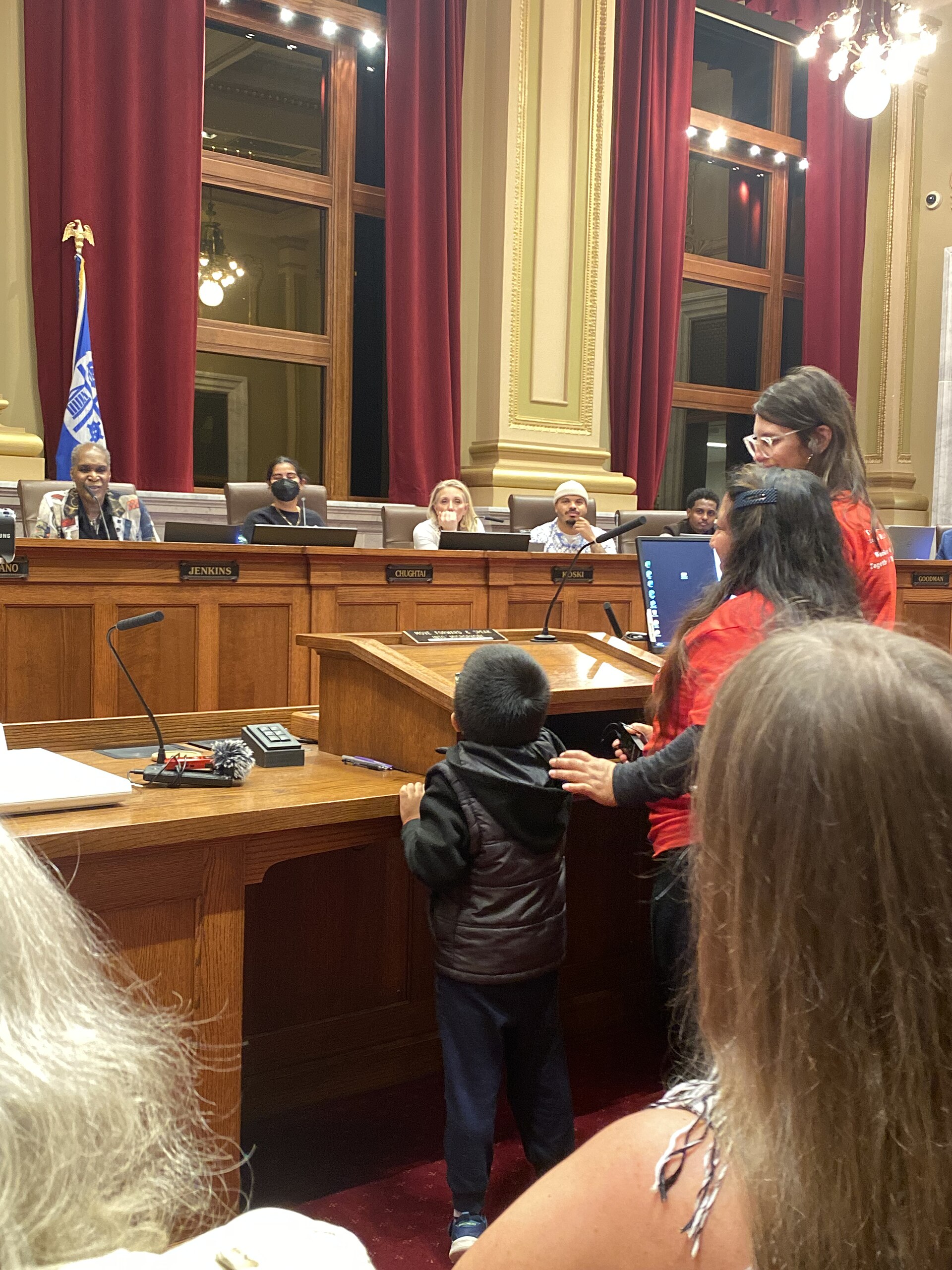

A code rewrite is legislative, and that changes the rules for you
Idaho courts divide land use decisions into two kinds. When a board applies the code to one owner's property (a site-specific rezone, a subdivision, a variance), it acts like a judge, and due process rules apply: decide on the record, disclose outside contacts, explain the decision in writing. When it writes rules for everyone, it acts as a legislature. The test and the cases (Cooper v. Board of County Commissioners of Ada County, 1980, and Burt v. City of Idaho Falls, 1983) are explained in Planning and Zoning Hearings.
A citywide rewrite for the 2026 laws is legislative. Three practical consequences follow.
- You may talk with officials outside the hearing. The ex parte rule that bars private contacts in quasi-judicial cases does not apply to legislative work. A meeting with your council member, an email to a commissioner, or a call to the planner is ordinary advocacy. (If the same body later hears a specific subdivision under the new code, that hearing is quasi-judicial again.)
- Policy arguments count. Values, neighborhood character, housing costs and fairness are all proper subjects, though for these two laws the state has already decided the core policy. Your best arguments are about the choices the state left to the city (see the next section).
- The judicial review statute does not reach it. Idaho Code 67-6521 lets an "affected person" seek judicial review of decisions on subdivisions, variances, special use permits, zoning on annexation and site-specific rezones, within 28 days after local remedies are exhausted. A citywide text amendment is not on that list.12 A challenge to the ordinance itself would be a separate civil suit, typically for a declaratory judgment under Idaho Code 10-1201, which lets courts "declare rights, status, and other legal relations."13
What the city still decides
The two laws are written as floors. Each says a city may adopt rules "less restrictive" than the state's, and each preserves health and safety laws.12 Between those limits, a council has real choices. These are the questions where testimony can still change the outcome.
| Question left to the city | What the statute says | What a city might decide |
|---|---|---|
| Internal or detached ADU, or both | Allow "either" one internal ADU "or" one detached ADU per lot (67-6541(2)(a)) | Coeur d'Alene staff listed four arrangements to choose among, from internal only to all three types11 |
| Maximum ADU size | No cap below 1,000 sq. ft. or 75 percent of the house (67-6541(2)(d)) | Any cap at or above the floor, or none. Twin Falls set 75 percent or 1,000 sq. ft., "whichever is greater"8 |
| ADU parking | No required parking, except three listed situations (67-6541(2)(b)) | Use the exceptions, or drop ADU parking entirely |
| ADU height | No limit below the existing house (67-6541(2)(f)) | A rear-yard cap tied to the house, or a higher fixed figure |
| Design standards | Standards must be "clear and objective" and not discourage ADUs "through unreasonable cost or delay" (67-6541(4)) | Matching roof pitch or siding (Twin Falls), or none (Hailey removed ADUs from design review)9 |
| Which zones get starter home subdivisions | "Residential zoning districts," except historic areas (67-6542(2)) | How to treat estate and rural residential zones; Pocatello deferred lot-size changes in its two lowest-density zones for separate discussion10 |
| Infrastructure standards for small lots | City may "condition or deny" where infrastructure is inadequate, by the same standards used for other subdivisions (67-6542(5)) | Street widths, garbage service, utility frontage, drainage. Pocatello's public works director said 30-foot lots leave too little frontage for individual garbage carts10 |
| Fee incentives | Fees may not exceed other subdivisions; cities may reduce or waive fees (67-6542(2)(e)) | Whether to offer reductions for smaller lots |
| Administrative land division for ADU financing | Optional under HB 707 (Idaho Code 50-1335) | Whether to adopt the process at all25 |

Finding your city's draft and schedule
No state agency tracks city compliance with the 2026 laws. The record is scattered across city agenda pages, newspaper legal notices, code publishers and meeting minutes. These steps find it in about an hour.
- Confirm your city is covered. Look up the city's Vintage 2025 estimate in the Census Bureau's city file, or in the table above. If the city is between about 9,000 and 11,000, ask the planning department which population figure it is using and write down the answer.5
- Find the agenda pages. Every city must post meeting notices at least five calendar days before regular meetings and agendas at least 48 hours before, and must post them online if it has a website or social media presence (Idaho Code 74-204).33 Bookmark the agenda pages for both the planning and zoning commission and the council. Many Idaho cities post the full packet, including the staff report and the redline, with the agenda.
- Search the packets, not just the agendas. Agenda titles are often vague ("Title 17 text amendments," "UDC amendments"). Open the packets for the last six months of work sessions and search for "accessory dwelling," "starter home," "67-6541," "67-6542," "SB 1352" and "SB 1354." Pocatello's July 9 and Aug. 13 work session minutes, for example, are in a council packet under "Title 17," not under "housing."10
- Check the legal notices. The hearing notice must run in the official newspaper at least 15 days ahead.3 Search the paper's legal notices section for the city's name and "zoning" or "text amendment."
- Read the online code and its ordinance list. Most Idaho cities publish their codes through a code publisher (American Legal, Municode, Sterling Codifiers or Code Publishing) or as PDFs. The ordinance list shows recent adoptions with dates. Jerome's online code, for example, lists Ordinance 1253 (April 7, 2026), which set a 50-foot minimum front lot width for residential lots, and Ordinance 1254 (July 7, 2026), the HB 800 manufactured home change.3424
- Call or email the planner assigned to the project. Ask four questions: Is there a draft? When is the first hearing? Will there be a separate long-range plan amendment? How do I get on the notice list? Write down the name and date.
- If anything is missing, ask for it in writing. A public records request for the current draft, staff memos and any consultant scope of work is covered under Idaho Code Title 74 (see the records section below).
Reading a draft code and a redline
A redline (also called a strike-and-underline or "legislative format" draft) shows the current code with deletions struck through and new words underlined. Idaho Code 50-902 requires ordinances that amend existing sections to show changes that way.30 Online PDFs and text extraction often lose the formatting, so ask for the original document if the marks are unclear. Read in this order:
- Definitions first. Check whether the draft copies the state definitions. Hailey's Ordinance 1364 replaced its ADU definition with one "based on Idaho Code."9 A city definition narrower than the statute (for example, one that excludes ADUs above garages) can quietly shrink what the law allows.
- The use table. Find where ADUs and starter home subdivisions appear in the table of uses by zone, and what letter each zone gets (permitted, administrative, conditional). The ADU law requires administrative approval "as a matter of right."1 Twin Falls' use table marks ADUs with a "Z" in six districts, and its parking table sends readers to the code's zoning use permit criteria for ADUs.8
- Dimensional tables. Lot size, width, depth, setbacks, height and coverage. Compare each number with the state caps: 1,500 square feet, 30 feet wide, 70 feet deep, 15-foot front and rear and 5-foot side setbacks for starter home lots.2
- Special standards. Parking, design, utilities and fees. Look for new conditions that were not in the old code. Twin Falls, for instance, requires that an ADU take water, sewer and sanitation service from the primary dwelling, with no separate meters.8
- Cross-references. Subdivision ordinances, fee resolutions and engineering standards may sit outside the zoning title. A starter home section is only as usable as the street width and utility standards it points to.
- The plan amendment. Both laws require a long-range plan amendment as well as code changes. Pocatello's staff told the council the changes "will require an addendum" to its plan.10
- The staff report. Read the staff analysis of how the draft meets the statute and what alternatives were rejected. It is the city's own explanation and the best guide to what is still open.
Testimony and written comments that work
Public comment on a code rewrite is different from comment on a single subdivision. Nobody's specific house is on the agenda, the policy core is already set by state law, and the people deciding are looking for workable wording. Comments that propose wording get used. Comments that oppose the state law in general cannot change it at the city level.
The general skills (how to sign up, how hearings run, how to handle a three-minute timer) are in Preparing and Delivering Testimony and County Commissions and City Councils. What follows is specific to a code rewrite.
Written comments: the most useful tool
- Send it early. Submit to the planning staff before the commission hearing so it goes into the packet. Ask the planner for the packet deadline; many cities close packets about a week before the meeting. Comments that arrive after the packet closes are usually handed out at the hearing, when commissioners have the least time to read them.
- Put the file name or number and the hearing date in the subject line. Boise uses record numbers such as ZOA25-00013; Meridian used ZOA-2025-0001 for its 2025 rewrite.3536 Staff file comments by those numbers.
- Lead with your ask, by section number. "In draft section [number], change the rear-yard ADU height limit from 18 feet to the height of the primary dwelling, as Idaho Code 67-6541(2)(f) requires." (Coeur d'Alene's current code caps rear-yard ADUs at 18 feet, according to the Coeur d'Alene Press.)11
- Give one or two facts with sources. Local numbers carry weight: how many ADU permits the city issued last year (from the building department), how many lots of 4 acres or more are zoned residential, the city's growth from Census data. Part A's Build Your Own Growth Profile walks through assembling those numbers for any Idaho city.
- Explain who is affected and how. A homeowner who wants to house a parent, a builder who has priced a 30-foot lot, a neighbor on a street with no on-street parking, a firefighter who knows the access problem. Specific, first-hand experience is evidence.
- Offer the alternative wording. If you oppose a draft provision, propose one that still meets the statute. A council that must adopt something by Feb. 1 is more likely to take a ready-made fix than to redraft from scratch.
- Keep it to two pages and attach supporting documents separately, labeled.
Three minutes at the podium
Oral testimony at the commission and council hearings goes into the minutes and the recording. Under Idaho Code 74-205, minutes must at least list the members present, every motion and ordinance with its disposition, and the results of votes.37 They rarely capture testimony word for word, so a written copy of your remarks, handed to the clerk, preserves what you said.
Working with planning staff
Planners write the draft, answer the commission's questions and often draft the final motion. In a legislative rewrite, a conversation with staff before the hearing is proper and often the most productive thing you can do.
- Ask what is still open. Staff usually know which provisions the commission is debating and which are settled. In Coeur d'Alene, for instance, the community planning director said the ADU bill "probably has the most questions."11
- Bring a specific problem and a specific fix. "Your draft keeps the 18-foot rear-yard height. The statute bars a limit below the house height. Would wording like this work?"
- Ask for data. ADU permits by year, starter-home-eligible parcels, utility capacity studies, past variance requests for small lots.
- Respect the timeline. Staff are writing against a hard state deadline, often with a broader rewrite under way at the same time. Pocatello's council took up a proposal and contract award on Aug. 20, 2026 for a consulting firm to rewrite its whole zoning title, work a city official estimated in July could take about 18 months, separate from the state-law changes due Feb. 1.10
- Follow up in writing. A short email confirming what you discussed puts it in the public record and in the file.

Open meetings and public records during a rewrite
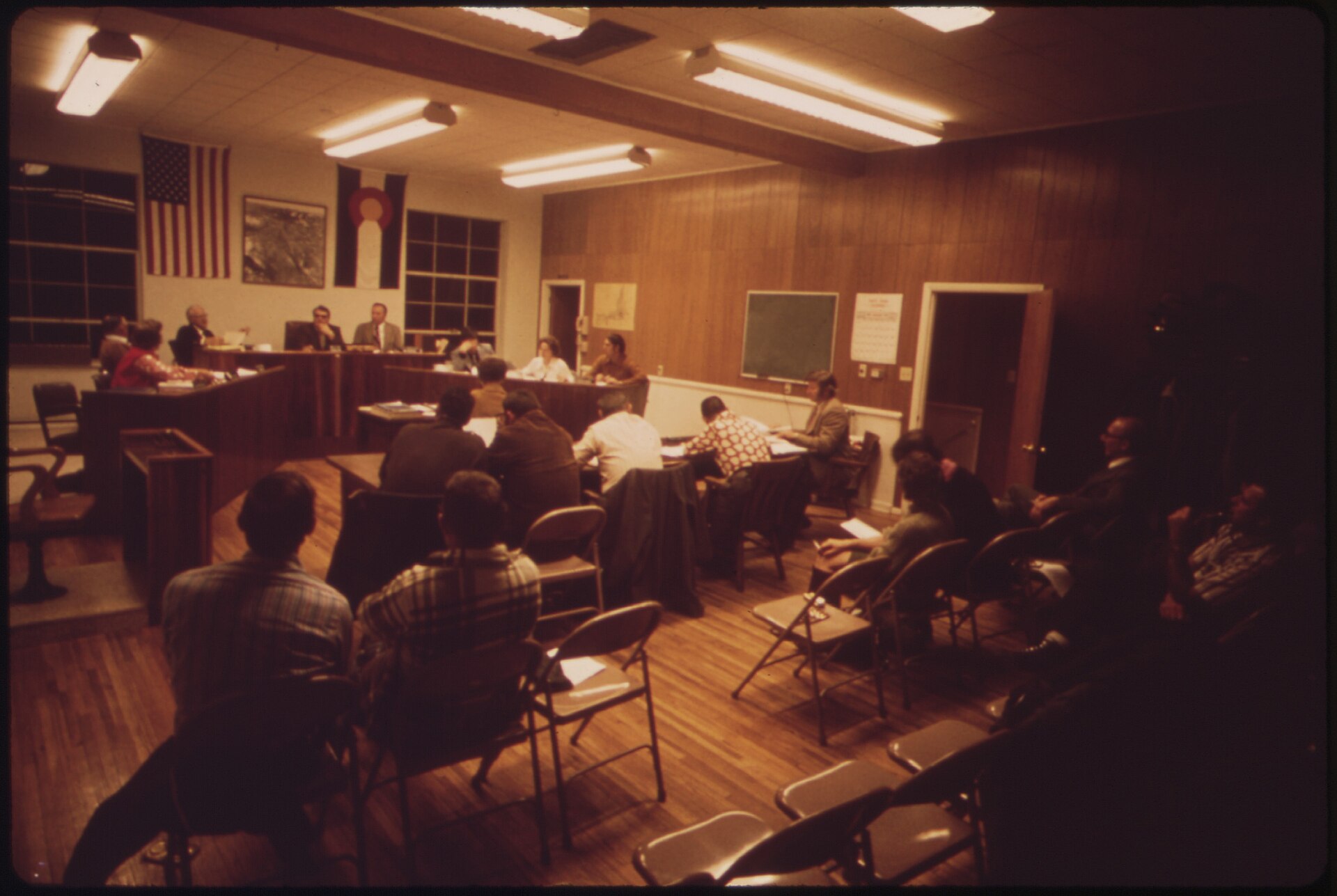
Two Idaho transparency laws do much of the work of keeping a rewrite in public view. The full treatment is in Idaho Open Meetings and Idaho Public Records Requests.
The open meeting law
- Notice and agendas. Regular meetings need at least five calendar days' notice and a 48-hour agenda, posted at the city's office and online if the city has a website or social media presence. Special meetings need at least 24 hours' notice.33 See Notice and Agendas.
- Work sessions are meetings. When a quorum of the council or commission meets to discuss the draft, the open meeting law applies even if no vote is planned. Pocatello's July 9 and Aug. 13 sessions were noticed, open and minuted.10
- Minutes. Written minutes must record members present, every motion and ordinance and its disposition, and vote results, and must be available "within a reasonable time after the meeting."37 See Minutes and Recordings.
Public records worth requesting
A city must grant or deny a resident's request "within three (3) working days" of receiving it, or notify the requester in writing that it needs more time to locate the records. The request must "clearly indicate that it is a public records request."38 How to write one is in Writing a Request That Works. Useful records for a rewrite:
- the current draft and every earlier draft circulated to the commission or council;
- staff memos and legal memos the city has released, and the consultant's scope of work and contract;
- ADU and accessory building permits by year, and any ADU applications denied;
- a list of residentially zoned parcels of four acres or more (the starter home trigger);
- written public comments received so far;
- correspondence with the Association of Idaho Cities or other cities about model language.
The 2027 compliance tracker: status as of Nov. 18, 2026
We built this table from city websites, posted codes, council and commission packets and minutes, and one newspaper report, checked Nov. 17 and 18, 2026. "Not found" means we did not find a draft, hearing notice or adopted ordinance on the city's website or code publisher, not that none exists. Drafts are posted and hearings scheduled every week in this period. Use the table as a starting point and confirm with the city.
| City | Population (Vintage 2025) | SB 1354 ADUs and SB 1352 starter homes (over 10,000) | HB 583 rentals | Status of draft or adoption, Nov. 18, 2026 | Next step we could confirm |
|---|---|---|---|---|---|
| Boise | 238,429 | Covered | Covered | Updated zoning code "in effect as of April 2026" (Ordinance 25-25, ZOA25-00013). No state-law amendment for ADUs or starter homes posted on the zoning code page.35 | None posted |
| Meridian | 142,988 | Covered | Covered | Staff briefed council June 2, 2026 on 2026 bills. A 2025 ADU rewrite (ZOA-2025-0001) proposed a cap of 900 sq. ft. or 50 percent of the house, below the new state floor. State-law draft not found.2836 | None posted |
| Nampa | 120,384 | Covered | Covered | Not confirmed on city website | Unknown |
| Caldwell | 76,629 | Covered | Covered | Not checked | Unknown |
| Idaho Falls | 71,785 | Covered | Covered | Not confirmed on city website | Unknown |
| Pocatello | 58,771 | Covered | Covered | Council work sessions July 9 and Aug. 13, 2026; council consensus to proceed with subdivision amendments; plan addendum needed; staff projected a commission hearing Sept. 9 and council hearing Oct. 1, 2026. Adoption not confirmed.1039 | Confirm with city whether Oct. 1 hearing was held |
| Coeur d'Alene | 58,179 | Covered | Covered | Planning commission workshop Oct. 13, 2026 on all three laws; options under discussion.11 | Hearings not yet posted |
| Twin Falls | 56,216 | Covered | Covered | New Title 10 effective Jan. 1, 2026; ADU size, height and parking amended by Ordinance 2026-006 (posted code amended June 27, 2026). No starter home subdivision section in the posted code.8 | Commission meets Dec. 15, 202632 |
| Post Falls | 46,715 | Covered | Covered | Not checked | Unknown |
| Rexburg | 40,334 | Covered | Covered | Not checked | Unknown |
| Lewiston | 34,717 | Covered | Covered | Not checked | Unknown |
| Eagle | 34,658 | Covered | Covered | Not checked | Unknown |
| Kuna | 31,525 | Covered | Covered | Not checked | Unknown |
| Moscow | 26,721 | Covered | Covered | Not checked | Unknown |
| Star | 20,874 | Covered | Covered | Not checked | Unknown |
| Ammon, Hayden, Chubbuck, Mountain Home, Blackfoot, Garden City, Burley | 12,409 to 20,119 | Covered | Covered | Not checked | Unknown |
| Jerome | 13,731 | Covered | Covered | HB 800 manufactured home change adopted (Ordinance 1254, July 7, 2026). Ordinance 1253 (April 7, 2026) set a 50-foot minimum front lot width, wider than the 30 feet the starter home law allows for narrow lots. No ADU or starter home ordinance found in the online code.2434 | None posted |
| Rathdrum, Middleton, Sandpoint | 10,645 to 13,227 | Over 10,000 in 2025 estimate, under in 2020 base | Covered | Not checked | Unknown |
| Hailey | 10,053 | Over 10,000 in 2025 estimate, under in 2020 base | Covered | Ordinance 1364 adopted Aug. 24, 2026, published Sept. 2: new ADU definition, size and occupancy limits removed, parking rule matching state wording, ADUs out of design review.940 | Adopted |
| Kimberly, Buhl, Gooding, Hagerman | 994 to 5,798 | Not covered | Covered | No state deadline | Optional local action |
Two patterns stand out. Cities that had recently rewritten their codes (Twin Falls effective Jan. 1, 2026; Boise in late 2023 with updates through April 2026) started closer to the state floor on some items, and Twin Falls' posted code, labeled amended June 27, 2026, already carried ADU changes that meet the state size and height floors. And the small-lot law asks more of cities than the ADU law: no city we checked had a posted, adopted starter home subdivision section as of Nov. 18, 2026.
What happens if a city does not comply
Neither SB 1352 nor SB 1354 names a penalty, an enforcing agency, a private right to sue or a "deemed approved" rule. Three things are true anyway.
- The ban on bans already applies. Subsection (1) of each law says "No city shall enact or enforce" an ordinance that bans ADUs or starter home subdivisions in residential zones.12 That language took effect July 1, 2026, not Feb. 1, 2027. A city code provision that conflicts with it is open to challenge whether or not the city has finished its rewrite.
- Individual decisions can be appealed. If a city denies a starter home subdivision or another permit under rules that conflict with the statute, the applicant or an affected person can ask for reconsideration and then seek judicial review within 28 days after exhausting local remedies (Idaho Code 67-6521(1)(d)). Every final decision must also tell the applicant of the right to request a regulatory taking analysis under Idaho Code 67-8003.1241 ADU approvals are administrative, so a city's local appeal procedure would apply first.
- The ordinance itself can be challenged in court. A suit for a declaratory judgment under Idaho Code 10-1201 is the usual way to ask a court whether a local ordinance conflicts with state law.13 The Legislature can also amend the statutes in the 2027 session, which convenes in January.
As of Nov. 18, 2026, we found no lawsuit over either law and no Idaho Attorney General opinion interpreting them. How courts will read phrases like "unless infrastructure limitations, lot configuration, or environmental constraints make it unfeasible" is unsettled.2 The short-term rental law (HB 583) works the same way: no penalty in the statute, but conflicting ordinances cannot be enforced. The arguments about whether the state should be making these decisions at all are in State Preemption and Local Control; the standing and takings rules are in Property Rights and Land Use Law and Reconsideration, Judicial Review and Takings.
How Idaho's approach compares
Idaho is not the first Western state to order cities to allow ADUs. Washington's House Bill 1337 (2023), "Expanding housing options by easing barriers to the construction and use of accessory dwelling units," passed the Washington House 81 to 15 (and 85 to 11 on final concurrence) and took effect July 23, 2023.42 Idaho chose a single statewide date for compliance, Feb. 1, 2027, seven months after its laws took effect. Idaho also chose a population threshold (cities over 10,000) rather than a planning-status test, and left counties out entirely. Other states' ADU, starter home and lot size laws, including Montana, Texas, California and Oregon, are compared in The 2026 Housing Laws.
Idaho's procedure for adopting the changes is also distinctive. The state requires only one hearing before the planning commission, a 15-day published notice, and council action after the commission's recommendation.3 There is no state review of the result: no agency approves a city's ADU ordinance, and no statewide list of compliant cities exists. That puts residents, reporters and builders in the role that a state housing agency plays in some other states.
Following up after adoption
- Get the final ordinance, not the draft. Ask the clerk for the adopted ordinance with its number and publication date, and compare it with the last draft you saw. Changes made at the council hearing appear only there.
- Check the long-range plan amendment. Both laws require one. If the code changed and the plan did not, ask why.
- Watch the online code. Note when the code publisher posts the change. Until then, applicants and staff may be working from an outdated version.
- Track the first applications. Ask the building department each quarter for ADU permits issued and denied, and the planning department for starter home subdivision applications. Those numbers will show whether the rewrite produced homes. Part A's The Big Cities Since 2020 shows how to read permit data.
- Look for fixes. Rushed rewrites often need cleanup ordinances in their first year. Stay on the notice list.
- Follow the 2027 session. Bills to amend 67-6541, 67-6542 or 67-6539 will appear on the Legislature's 2027 legislation page; testimony there follows the rules in Testifying at Idaho Legislative Committees.
Pictures, Numbers and Infographics
| Measure or rule | Idaho | U.S. or other states | Place or year | Source |
|---|---|---|---|---|
| Deadline for city plan and code amendments | Feb. 1, 2027 | No single national deadline; each state sets its own | Cities over 10,000 | 142 |
| Effective date of SB 1352, SB 1354, HB 583 | July 1, 2026 | Washington HB 1337: July 23, 2023 | Statewide | 16 |
| Population threshold, ADU and starter home laws | Greater than 10,000 | Printed SB 1352 used 5,000 | 2026 session | 226 |
| Idaho cities over 10,000 | 27 (Vintage 2025); 23 (2020 base) | July 1, 2025 | 5 | |
| Minimum ADU size cap a city may set | 1,000 sq. ft. or 75% of house | Covered cities | 1 | |
| Largest minimum lot a city may require in a starter home subdivision | 1,500 sq. ft. | Printed bill: 1,400 sq. ft. | Subdivisions of 4 acres or more | 226 |
| Published notice before each hearing | At least 15 days | All cities | 3 | |
| Time to answer a resident's records request | 3 working days, or written notice of delay | All public agencies | 38 | |
| Senate and House votes, SB 1352 | 25 to 10; 36 to 34 | March 19 and 26, 2026 | 18 | |
| Senate and House votes, SB 1354 | 25 to 10; 47 to 23 | March 20 and 26, 2026 | 15 | |
| House and Senate votes, HB 583 | 54 to 16; 23 to 12 | Feb. 12 and March 9, 2026 | 6 | |
| Days from Nov. 18, 2026 to the deadline | 75 | Our calculation | 1 |


Common mistakes
- Quoting the introduced bill instead of the law. Summaries written from the March 3 printed version of SB 1352 describe a 5,000-person threshold, an Oct. 1, 2026 deadline, a 1,400-square-foot lot figure and 12 units per acre. None of those survived the Senate amendments. Meridian's June 2, 2026 staff presentation repeated the 1,400 and 12-unit figures and labeled the bills "HB 1352" and "HB 1354."282627 Always read the current Idaho Code section.
- Citing the bill's section number. SB 1352 created a section it numbered 67-6541; the code now prints it as 67-6542, because SB 1354 also used 67-6541. A comment letter that cites "67-6541" for starter homes points to the ADU law.2
- Reading 1,500 square feet as a minimum lot size. The figure is the most a city may require as a minimum lot size, and the statute's definition describes starter home lots as "no greater than" 1,500 square feet. Pocatello's staff told the council that, "Based on legal counsel's clarification, 1,500 square feet is a maximum lot size" for a starter home lot.210 Nothing stops a builder from platting larger lots in an ordinary subdivision.
- Assuming "10,000 or more." The statutes say "greater than ten thousand." A city of exactly 10,000 is not covered. More important in practice, the statutes do not say which population count to use.1
- Applying the ADU and starter home laws to counties or small towns. Both apply only to cities over 10,000. HB 583 (short-term rentals) and HB 800 (manufactured homes) apply to every city and county.723
- Expecting mailed notice for a citywide rewrite. Idaho Code 67-6511 requires mailed notice to owners within 300 feet only for "a zoning district boundary change." A text amendment requires published notice. If you want to hear about the rewrite, sign up for the city's notice list or watch the legal notices.4
- Treating a rewrite hearing like a permit hearing. The ex parte disclosure rules and the "affected person" appeal route in Idaho Code 67-6521 apply to site-specific decisions. A legislative rewrite cannot be appealed under that section.12
- Believing an owner-occupancy rule can survive as a short-term rental rule. Pocatello council members raised short-term rentals when they discussed dropping the owner-occupancy requirement; staff said that issue would need to be addressed at the state level.10 HB 583 bars rules aimed specifically at short-term rentals, and 67-6541 bars owner occupancy for ADUs.71
- Reading the online code as current. Codification lags adoption. Check the ordinance list and the clerk's records for ordinances adopted after the online code's last update.
What we know, what we don't, and what the data can show
What we know
- The ADU and starter home laws took effect July 1, 2026, and require cities with more than 10,000 people to amend plans and land use rules by Feb. 1, 2027, under the notice and hearing procedures of Idaho Code 67-6509.12
- 27 Idaho cities were above 10,000 in the Vintage 2025 estimates; 23 were above it in the 2020 base.5
- At least two cities had changed ADU rules in ways that track the statute by Nov. 18, 2026 (Twin Falls by Ordinance 2026-006 and Hailey by Ordinance 1364), and Pocatello and Coeur d'Alene had held public work sessions.891011
- The statutes contain no penalty, enforcing agency or deemed-approval rule.12
What we don't know
- How many covered cities will adopt on time. No agency keeps count.
- Which population figure governs cities near 10,000, and whether any city will take the position that it is not covered.
- How courts will read the infrastructure and "unfeasible" exceptions in the starter home law, which could let cities deny many small-lot plats.
- Whether the 2027 Legislature will amend either law.
- Whether the laws will produce many homes. ADU construction depends on owners' finances, and starter home subdivisions need four acres of residentially zoned land plus builders willing to use small lots.
What the data can show
- Compliance by city: adopted ordinances and their dates, from each city's ordinance list, clerk records and code publisher.
- ADU production: building permits for ADUs by year, from city building departments (Meridian staff said in 2025 that the city now tracks ADU permits separately).36
- Starter home use: preliminary and final plats with lots of 1,500 square feet or less, from planning department application logs and county recorder plat books.
- Housing totals: units permitted by city in the Census Building Permits Survey, used in The Big Cities Since 2020, will show whether permits rise after 2027.
- Population thresholds: each new Census Vintage release (the next in May 2027) will move cities across the 10,000 line.5
Questions people ask
Can my city refuse to change its code?
Not lawfully, if it has more than 10,000 people. The statutes say each city "shall amend" its plan and rules by Feb. 1, 2027.12 A city that does nothing still cannot enforce a ban on ADUs or starter home subdivisions in residential zones, and its denials of individual applications can be challenged. There is no state penalty, so the practical enforcers are applicants, residents and courts.
Does this apply to land outside city limits, in my county or the area of city impact?
The ADU and starter home laws apply only to cities. County land, including land in an area of city impact governed by county ordinance, is not covered unless the county chooses to act. The short-term rental law does apply to counties.7 How impact areas work is in Areas of City Impact and Annexation, and how cities annex land in Annexation Fights.
Can my homeowners association stop an ADU?
Largely no. SB 1354 amended Idaho Code 55-3212 so that no homeowners association may "add, amend, or enforce any covenant, condition, or restriction in such a way that limits or prohibits accessory dwelling units," with exceptions, including where the affected owner "expressly agrees in writing." Associations may still adopt reasonable rules on design, size, height, setbacks, open space, parking and bedrooms for ADUs.1743 HOA law is covered in Part C of this series, coming later.
Will the ADU next door become a short-term rental?
It can be. The ADU law bars owner-occupancy requirements, and HB 583 bars cities from banning short-term rentals or requiring a permit to operate one. Cities can still enforce noise, parking, occupancy and nuisance rules that apply to all homes.121 An HOA is a different matter: the 2026 HOA protections for ADUs "do not apply to any rentals defined in section 63-1803(4)," the short-term rental definition, so an HOA may be able to restrict short-term use of an ADU under its own rules.17
Can I comment if I live outside the city?
Yes. A legislative hearing is open to anyone, and written comments are accepted from anyone. Commissioners may give more weight to residents, but nothing in Idaho Code 67-6509 limits who may speak.3 Builders, lenders and nearby county residents often testify on code rewrites.
Where do I get the redline, and what if the city will not give it to me?
Ask the planner, check the meeting packet, and if neither works, file a written public records request that says it is a public records request. The city must respond within three working days or tell you in writing it needs more time.38
What if my city adopts rules stricter than the state allows?
The stricter rule is vulnerable. Raise it in writing before adoption, citing the subsection. After adoption, the issue usually comes up when an application is denied. The route for challenging a denial is in Property Rights and Land Use Law.
Hard questions
Should the state set lot sizes and ADU rules for cities?
For statewide rules: sponsors argued that local rules kept homes out of reach; the starter home statement of purpose points to a national median first-time buyer age of 40, and a housing advocacy group, the Gem State Housing Alliance, found typical Treasure Valley suburban minimum lots of 4,000 square feet or more with 20-foot front and rear setbacks.1929 For local control: cities know their streets, utilities and neighborhoods; Coeur d'Alene's planning director said, "We really have no discretion," adding, "We literally have to comply with the law," and a commissioner said a parking change was not "protecting the neighborhoods at all."11 What the evidence shows: the Legislature narrowed the starter home bill on the Senate floor (threshold, deadline and density) and kept infrastructure exceptions, so the final law leaves cities more room than the first draft. The House vote of 36 to 34 shows how divided legislators were.1827 Lesson 04 lays out both sides in full: State Preemption and Local Control.
Is 10,000 the right line, and which count should decide?
For a newer estimate: fast-growing towns such as Middleton and Rathdrum have the housing pressure the laws target, and the 2025 estimates show it. For the 2020 Census count: a decennial count is a fixed, official number; annual estimates are models that the Census Bureau revises each year. What the evidence shows: the statutes are silent, Hailey chose to act, and the printed bill's 5,000 line would have covered dozens more towns, including Kimberly.5269
Will the infrastructure exception swallow the starter home rule?
For a broad reading: cities must protect water, sewer, streets and fire access, and the statute says cities may deny where infrastructure "is inadequate." Pocatello's public works director warned that 30-foot lots leave too little frontage for individual garbage carts.10 For a narrow reading: the same subsection limits denials to "the same extent and under the same standards" used for other subdivisions, so a city cannot invent small-lot-only standards.2 What the evidence shows: no court had ruled as of Nov. 18, 2026. The answer will come from the first denied plats.
Should a city adopt only the minimum, or go further?
For the minimum: a tight deadline, uncertain effects and neighborhood concerns argue for doing what the law requires and watching results. For going further: the laws explicitly allow "less restrictive" rules, and a city that writes clear, simple standards now avoids a second rewrite. What the evidence shows: Twin Falls set an ADU size cap at "75% ... or 1,000 sq. ft.; whichever is greater," matching the floor, while Hailey removed ADU size limits entirely, going past it.89
For reporters and advocates
Records that exist and how to get them.
- Drafts, redlines and staff reports in commission and council packets, and earlier drafts by records request under Idaho Code 74-103.38
- Hearing notices in the official newspaper (at least 15 days ahead) and the city's 48-hour agendas.333
- Minutes and recordings of work sessions and hearings; minutes must record motions and votes.37
- Adopted ordinances and published summaries from the city clerk, with the legal advisor's statement on any summary.31
- Bill files for SB 1352, SB 1354, HB 583, HB 707 and HB 800 on the Legislature's site: printed and engrossed text, amendments, statements of purpose and votes.18156
- Census population estimates by city, to check who is covered.5
- Court files on iCourt for any challenge; see Court Records Research.
Public records requests follow Idaho Code Title 74: Idaho Public Records Requests.
Questions to ask officials.
- Which population figure is the city using, and why?
- When is the first hearing, and will there be a separate long-range plan amendment?
- Which provisions go beyond the state minimum, and which stop at it?
- How many residentially zoned parcels of four acres or more does the city have?
- How many ADU permits did the city issue in 2024, 2025 and 2026, and how many were denied?
- What infrastructure standards will apply to 1,500-square-foot lots, and are they the same standards applied to other subdivisions?
- What did the city do with its short-term rental permit or registration program after July 1, 2026?
The Idaho and Magic Valley angle. Twin Falls and Jerome are the two core Magic Valley cities covered. Twin Falls moved early on ADUs but had no starter home section posted; Jerome set a 50-foot minimum lot width in April 2026 that conflicts with the 30-foot narrow-lot rule for starter home subdivisions, and had no ADU or starter home ordinance posted as of Nov. 18, 2026.834 Burley (12,409) is also covered. Kimberly, Buhl, Gooding and Hagerman are not, but all must follow the short-term rental and manufactured home laws. In the Treasure Valley, we could not confirm a posted state-law draft for Boise, Meridian or Nampa. A city-by-city story comparing drafts against the statute, done in January, will show who met the deadline. Part C of this series, coming later, covers owning, renting and HOAs.
Where to go next
- Idaho Legislature, 2026 legislation: Free. Official bill pages with printed and engrossed text, statements of purpose and votes. Use it to read the final version of any housing bill, not the introduced one.
- Idaho Statutes, Title 67, Chapter 65 (Local Land Use Planning Act): Free. The current text of every planning and zoning section, including 67-6541 and 67-6542, updated each July 1. Cite the subsection in your comment letter.
- U.S. Census Bureau, city and town population totals, 2020 to 2025: Free. Download the Idaho file to check whether a city is above 10,000 on the newest estimate.
- Idaho Attorney General, open meetings and public records manuals: Free. The Attorney General's guides to Idaho's open meeting and public records laws, useful before you file a records request or question a meeting notice.
- City of Twin Falls Planning and Zoning: Free. Meeting calendar, the current Title 10 zoning code and contact for planning staff; a model of what to look for on any city's planning page.
- Module 49: Testifying and Public Comment: Free. Ten lessons on testifying at Idaho councils, commissions and legislative committees, including planning and zoning hearings and the record.
Still being checked (7 items)
These points could not be fully confirmed against a primary source when this lesson was written and fact checked in November 2026. The text above states each one as uncertain.
- Which population figure (2020 Census count, 2020 estimates base or the newest annual estimate) governs the 10,000 thresholds in Idaho Code 67-6541 and 67-6542. The statutes are silent, and we did not find a general Idaho Code definition that settles it for these sections.
- Whether Pocatello's planning commission (projected Sept. 9, 2026) and council (projected Oct. 1, 2026) hearings on the Title 17 amendments were held and whether the ordinance was adopted; we found the projection in approved work session minutes but not the outcome.
- Whether the Pocatello council approved the Aug. 20, 2026 Title 17 rewrite contract; the minutes excerpt we read shows the item was before the council.
- Status of drafts in Nampa, Idaho Falls and Middleton, reported by meeting-summary services but not confirmed on the cities' own websites; and the status of the covered cities marked "Not checked" in the tracker.
- Coeur d'Alene's current ADU size limit (800 square feet) and starter-lot minimum (3,500 square feet) are as reported by the Coeur d'Alene Press, not read from the city code.
- The date Twin Falls adopted Ordinance 2026-006; the posted Title 10 is labeled amended June 27, 2026.
- Whether any lawsuit or Idaho Attorney General opinion addresses SB 1352, SB 1354 or HB 583; we found none as of Nov. 18, 2026.
Last verified November 18, 2026. General education, not legal, tax, financial or real estate advice; every figure names its source and year in the Notes and Sources below. Data is revised: check the newest release before relying on any number.
Notes
- Idaho Code section 67-6541, Accessory dwelling units, added by Senate Bill 1354 (2026), Idaho Session Laws 2026, ch. 265, sec. 2, p. 1118; effective July 1, 2026 (read Nov. 18, 2026). Read it online. ↩
- Idaho Code section 67-6542, Starter home subdivisions, added as section 67-6541 by Senate Bill 1352 (2026), Idaho Session Laws 2026, ch. 264, sec. 1, p. 1115, and printed by the code as 67-6542; effective July 1, 2026 (read Nov. 18, 2026). Read it online. ↩
- Idaho Code section 67-6509, Recommendation and adoption, amendment, and repeal of the plan, subsections (1) and (2); last amended 2024, ch. 227, sec. 1, p. 795 (read Nov. 18, 2026). Read it online. ↩
- Idaho Code section 67-6511, Zoning ordinance, subsections (1) and (2)(a) to (c) (notice, 300-foot mailed notice for boundary changes, consistency with the plan); last amended 2023, ch. 140, sec. 3, p. 386 (read Nov. 18, 2026). Read it online. ↩
- U.S. Census Bureau, Vintage 2025 Population Estimates, Annual Estimates of the Resident Population for Incorporated Places, Idaho file sub-est2025_16.csv (fields ESTIMATESBASE2020 and POPESTIMATE2025), released May 2026. City counts above 10,000 and the Kimberly growth rate are our tabulations (read Nov. 18, 2026). Read it online. ↩
- Idaho Legislature, House Bill 583 (2026), short-term rentals, by the House Business Committee: bill history (House passed 54-16-0 Feb. 12; Senate passed 23-12-0 March 9; signed March 16, 2026; Session Law chapter 22; effective July 1, 2026) (read Nov. 18, 2026). Read it online. ↩
- Idaho Code section 67-6539, Limitations on regulation of short-term rentals; added 2017, ch. 239, sec. 2, p. 592 (House Bill 216); amended 2018, ch. 79, and 2026, ch. 22, sec. 1, p. 109 (House Bill 583) (read Nov. 18, 2026). Read it online. ↩
- City of Twin Falls, Uniform Development Code, Title 10 (Zoning), effective Jan. 1, 2026, posted version labeled amended June 27, 2026; section 10-6 accessory dwelling unit standards citing Ord. 2026-006, and Table 1 land use matrix (read Nov. 18, 2026). Read it online. ↩
- City of Hailey, Summary of Ordinance No. 1364, amending Title 17 (ADU definition, Townsite Overlay, design review, supplementary regulations, parking), adopted Aug. 24, 2026, published in the Idaho Mountain Express Sept. 2, 2026, via American Legal Publishing (read Nov. 18, 2026). Read it online. ↩
- City of Pocatello, City Council meeting packet containing approved minutes of the July 9, 2026 and Aug. 13, 2026 council work sessions (Title 17 amendments for Senate Bills 1352 and 1354, remarks of planning staff and Public Works Director Tom Kirkman) and the July 16 and Aug. 20, 2026 regular meetings (Title 17 rewrite) (read Nov. 18, 2026). Read it online. ↩
- Ray Erku, "City unpacks 'ambiguous' state housing regulation," Coeur d'Alene Press, Oct. 14, 2026, on the Coeur d'Alene Planning and Zoning Commission workshop held the previous Tuesday (Oct. 13, 2026), with quotes from Community Planning Director Hillary Patterson, City Attorney Randy Adams, Chair Tom Messina, Commissioner Sarah McCracken and Senior Planner Sean Holm (read Nov. 18, 2026). Read it online. ↩
- Idaho Code section 67-6521, Actions by affected persons, subsection (1)(a) (decisions covered) and (1)(d) (judicial review within 28 days; notice of right to a regulatory taking analysis); last amended 2010, ch. 175, sec. 3, p. 361 (read Nov. 18, 2026). Read it online. ↩
- Idaho Code section 10-1201, Declaratory judgments authorized, form and effect; added 1933, ch. 70, sec. 1, p. 113 (read Nov. 18, 2026). Read it online. ↩
- Idaho Code section 67-6534, Adoption of hearing procedures; added 1982, ch. 129; amended 1999, ch. 396, sec. 16, p. 1111 (read Nov. 18, 2026). Read it online. ↩
- Idaho Legislature, Senate Bill 1354 (2026), accessory dwelling units, by the Senate State Affairs Committee: bill history (Senate passed 25-10-0 March 20, floor sponsor Toews; House passed 47-23-0 March 26, floor sponsor Bingham; signed March 31, 2026; Session Law chapter 265; effective July 1, 2026), with printed bill, amendment S1354A2 and engrossment S1354E1 (read Nov. 18, 2026). Read it online. ↩
- Idaho Legislature, 2026 Session Laws list of chapters (S1352 ch. 264; S1354 ch. 265; H0583 ch. 22; H0800 ch. 171; H0707 ch. 170; H0706 ch. 320; H0585 ch. 232; S1222 ch. 2; highest chapter 344) (read Nov. 18, 2026). Read it online. ↩
- Idaho Code section 55-3212, Prohibited conduct, restrictions on accessory dwelling units (Homeowner's Association Act), as amended by Senate Bill 1354 (2026), ch. 265, sec. 1 (read Nov. 18, 2026). Read it online. ↩
- Idaho Legislature, Senate Bill 1352 (2026), starter home subdivisions, by the Senate State Affairs Committee: bill history (introduced March 2; amended in Committee of the Whole March 17; Senate passed 25-10-0 March 19, floor sponsor Toews; House passed 36-34-0 March 26, floor sponsor Redman; signed March 31, 2026; Session Law chapter 264; effective July 1, 2026) (read Nov. 18, 2026). Read it online. ↩
- Statement of Purpose and Fiscal Note, Senate Bill 1352 (2026), contacts Sen. Ben Toews, Rep. Jordan Redman and Sen. Tammy Nichols (read Nov. 18, 2026). Read it online. ↩
- Statement of Purpose and Fiscal Note, Senate Bill 1354 (2026), contacts Sen. Ben Toews, Rep. Jordan Redman and Sen. Tammy Nichols (read Nov. 18, 2026). Read it online. ↩
- House Bill 583 (2026), bill text amending Idaho Code 67-6539 (prohibited local restrictions, the list of safety requirements a city or county may impose by ordinance, and the bar on licenses, fees, permits, certification or registration) and 63-1804 (read Nov. 18, 2026). Read it online. ↩
- Idaho Association of Counties (an association of county officials), 2026 Legislative Review, June 2026, Infrastructure, Land Use and Transportation section (H 583, H 706, H 707, H 800, H 585, S 1222) (read Nov. 18, 2026). Read it online. ↩
- Idaho Legislature, House Bill 800 (2026), manufactured homes, by the House Ways and Means Committee: House passed 60-6-4 March 9, Senate passed 28-5-2 March 24, signed March 26, 2026, Session Law chapter 171, effective July 1, 2026; bill text amends Idaho Code 67-6509A (read Nov. 18, 2026). Read it online. ↩
- City of Jerome, Ordinance No. 1254, amending Jerome Municipal Code 17.14.010(B) on siting of manufactured homes to conform to House Bill 800 (2026), passed and signed July 7, 2026, via American Legal Publishing (read Nov. 18, 2026). Read it online. ↩
- Idaho Legislature, House Bill 707 (2026), land divisions, by the House Business Committee: House passed 64-0-6 March 9, Senate passed 32-2-1 March 24, signed March 26, 2026, Session Law chapter 170, effective July 1, 2026; bill text adds Idaho Code 50-1335 (read Nov. 18, 2026). Read it online. ↩
- Senate Bill 1352 (2026) as printed March 3, 2026 (applicability to cities over 5,000; Oct. 1, 2026 deadline; 1,400 square feet; 12 units per lot acre) (read Nov. 18, 2026). Read it online. ↩
- Senate Bill 1352 (2026), Engrossment 1 (as amended in the Senate), the text that became law (read Nov. 18, 2026). Read it online. ↩
- City of Meridian, staff presentation to the City Council, "2026 Legislation Impacting Idaho Cities," June 2, 2026 (slides dated May 27, 2026), meeting attachment (read Nov. 18, 2026). Read it online. ↩
- Gem State Housing Alliance (a housing advocacy group), Statewide Zoning Code Analysis 2026, review of 28 Idaho communities, as posted by KBOI/idahonews.com (read Nov. 18, 2026). Read it online. ↩
- Idaho Code section 50-902, Passage of ordinances (roll call, three readings, waiver by one half plus one of the full council, underline and strikeout); added 1967, ch. 429, sec. 153; amended 1972, ch. 18, sec. 1, p. 24 (read Nov. 18, 2026). Read it online. ↩
- Idaho Code section 50-901A, Publication of ordinance summaries; added 1979, ch. 19, sec. 2; amended 1981, ch. 145, sec. 2, p. 250 (read Nov. 18, 2026). Read it online. ↩
- City of Twin Falls, Planning and Zoning page: commission meetings generally the 2nd and 4th Tuesday at 6 p.m., 203 Main Ave. E., with the 2026 meeting list (read Nov. 18, 2026). Read it online. ↩
- Idaho Code section 74-204, Notice of meetings, agendas (five calendar days' meeting notice and 48-hour agenda for regular meetings; 24 hours for special meetings; electronic posting) (read Nov. 18, 2026). Read it online. ↩
- City of Jerome, Ordinance No. 1253 (Bill No. 738), amending Jerome Municipal Code 17.03.005 and 17.14.020 (including a 50-foot minimum front lot width for residential lots), passed and signed April 7, 2026, via American Legal Publishing (read Nov. 18, 2026). Read it online. ↩
- City of Boise, Planning and Development Services, "Boise's Zoning Code" page: updated code in effect as of April 2026, reflecting Ordinance 25-25 (ZOA25-00013) (read Nov. 18, 2026). Read it online. ↩
- City of Meridian, "Proposed UDC Text Amendments" table dated Oct. 3, 2025, and Planning and Zoning Commission hearing transcript on ZOA-2025-0001 (ADU section 11-4-3-12: one ADU, up to 900 square feet or 50 percent of the primary dwelling, owner-residency requirement removed; staff remarks on tracking ADU permits) (read Nov. 18, 2026). Read it online. ↩
- Idaho Code section 74-205, Written minutes of meetings (read Nov. 18, 2026). Read it online. ↩
- Idaho Code section 74-103, Request and response to request for examination of public records, subsections (1) and (2) (read Nov. 18, 2026). Read it online. ↩
- City of Pocatello, Planning and Development Services, Council work session agenda item 6, Aug. 13, 2026: city-initiated Title 17 text amendments (current ADU limit 750 square feet or 75 percent, whichever is less; owner-occupancy deed restriction; proposed starter home section 17.06.700) (read Nov. 18, 2026). Read it online. ↩
- City of Hailey, draft ordinance "ADU Revisions from State," council packet item dated July 27, 2026 (ADU definition, removal of size and occupancy limits, parking exceptions matching state wording) (read Nov. 18, 2026). Read it online. ↩
- Idaho Code section 67-8003, Protection of private property (Attorney General's checklist; owner's written request for a regulatory taking analysis) (read Nov. 18, 2026). Read it online. ↩
- Washington State Legislature, House Bill 1337 (2023-24), "Expanding housing options by easing barriers to the construction and use of accessory dwelling units": bill history (House passed 81 to 15, March 2, 2023; Senate 39 to 7 as amended; House concurred 85 to 11; Laws of 2023, ch. 334; effective date July 23, 2023) (read Nov. 18, 2026). Read it online. ↩
- Senate Bill 1354 (2026), Engrossment 1 (as amended in the Senate), sections 1 (Idaho Code 55-3212) and 2 (Idaho Code 67-6541) (read Nov. 18, 2026). Read it online. ↩
Check yourself
1. By what date must an Idaho city with more than 10,000 people amend its plan and land use rules to allow accessory dwelling units and starter home subdivisions?
Idaho Code 67-6541(2) and 67-6542(2) both say "By February 1, 2027." July 1, 2026 is the effective date; Oct. 1, 2026 was the deadline in the printed version of SB 1352 that the Senate amended.
2. Which of these Magic Valley cities is covered by the ADU and starter home laws, based on the Census Bureau's Vintage 2025 estimates?
Jerome's July 1, 2025 estimate is 13,731, above the "greater than ten thousand" threshold in 67-6541(6) and 67-6542(4). Kimberly (5,798), Buhl (4,801) and Gooding (3,855) are below it (Census file sub-est2025_16.csv).
3. How many days of published newspaper notice does Idaho Code 67-6509 require before the planning commission hearing on a plan amendment?
Idaho Code 67-6509(1) requires notice "At least fifteen (15) days prior to the hearing." Five calendar days is the open meeting law's notice for regular meetings (74-204).
4. A city council wants to adopt its code rewrite ordinance on the night of its hearing. Under Idaho Code 50-902, what does it need?
Idaho Code 50-902 requires three readings on different days unless "one half (1/2) plus one (1) of the members of the full council" dispense with the rule.
5. Does a citywide zoning text amendment require mailed notice to every owner within 300 feet?
Idaho Code 67-6511(2)(b) requires mailed notice to owners within 300 feet "in the case of a zoning district boundary change"; a text amendment requires published notice.
6. Under Idaho Code 67-6542 as enacted, what is the largest minimum lot size a covered city may require in a starter home subdivision?
Idaho Code 67-6542(2)(a) bars requiring minimum lot sizes "exceeding one thousand five hundred (1,500) square feet." The 1,400 figure was in the printed bill, not the law.
7. Which statement about House Bill 583 (2026) is correct?
HB 583 amended Idaho Code 67-6539 with no population threshold or deadline; the amended section says no county or city shall require "a license, fee, permit, certification, or registration to operate a short-term rental."
8. Why can't a resident appeal a citywide code rewrite under Idaho Code 67-6521?
Idaho Code 67-6521(1)(a) defines the decisions covered; a citywide text amendment is legislative and is not listed. A challenge would be a separate suit, such as a declaratory judgment under Idaho Code 10-1201.
9. Under Idaho Code 67-6541(3), how must a covered city approve an ADU project that meets its rules?
Idaho Code 67-6541(3): ADU projects that meet the city's requirements "shall be approved administratively and as a matter of right, without the need for discretionary approval."
10. Within how many working days must a city grant or deny an Idaho resident's public records request, unless it notifies the requester in writing that it needs more time?
Idaho Code 74-103(2): a public agency shall grant or deny a resident's request "within three (3) working days"; 21 days applies to nonresidents.
Terms in this lesson
- Text amendment
- A change to the words of a zoning or subdivision ordinance that applies across the city, as opposed to a rezone that changes the zoning district of specific parcels on the map.
- Redline
- A draft that shows the current code with deleted words struck through and new words underlined. Idaho Code 50-902 requires amending ordinances to show changes this way.
- Legislative decision
- A decision that makes rules for everyone, such as a citywide code rewrite. Officials may discuss it privately and weigh policy, and it cannot be appealed under Idaho Code 67-6521.
- Quasi-judicial decision
- A decision applying the code to one owner's property, such as a subdivision or site-specific rezone. Due process rules apply: decide on the record and disclose outside contacts.
- Starter home subdivision
- Under Idaho Code 67-6542, a residential subdivision on at least four acres with single-family detached homes on lots no greater than 1,500 square feet.
- Administrative approval as a matter of right
- Approval by staff, without a public hearing or discretionary judgment, when a project meets written standards. Idaho Code 67-6541(3) requires it for ADUs in covered cities.
- Material change
- A significant change a planning commission recommends after its hearing. Under Idaho Code 67-6509(1) it requires new notice and another hearing unless the council will hold one.
- Three readings rule
- Idaho Code 50-902's requirement that a city ordinance be read on three different days, which one half plus one of the full council can waive.
- Ordinance summary
- A council-approved summary published in the newspaper in place of a full ordinance under Idaho Code 50-901A, with a legal advisor's statement that it is accurate.
- Codification
- Adding an adopted ordinance to the city's published code, often by a private code publisher. The online code can lag the law.
- Meeting packet
- The documents distributed with an agenda, often including the staff report, the draft ordinance and written public comments.
- Declaratory judgment
- A court ruling that declares the parties' rights, such as whether a local ordinance conflicts with state law, authorized by Idaho Code 10-1201.
- Vintage estimate
- The Census Bureau's annual population estimates series, named for its release year. Vintage 2025, released May 2026, estimates city populations on July 1, 2025.
- Work session
- A noticed public meeting where a council or commission discusses a draft without taking final action. The open meeting law applies.
Sources
- Idaho Code 67-6541, Accessory dwelling units (2026-11-18) checked 2026-11
- Idaho Code 67-6542, Starter home subdivisions (2026-11-18) checked 2026-11
- Idaho Code 67-6539, Limitations on regulation of short-term rentals (2026-11-18) checked 2026-11
- Idaho Code 67-6509, plan adoption and amendment: notice and hearings (2026-11-18) checked 2026-11
- Idaho Code 67-6511, Zoning ordinance (2026-11-18) checked 2026-11
- Idaho Code 50-902, Passage of ordinances (2026-11-18) checked 2026-11
- Senate Bill 1352 (2026) bill page (2026-11-18) checked 2026-11
- Senate Bill 1354 (2026) bill page (2026-11-18) checked 2026-11
- House Bill 583 (2026) bill page (2026-11-18) checked 2026-11
- U.S. Census Bureau, Vintage 2025 city population estimates for Idaho (sub-est2025_16.csv) (2026-05) checked 2026-11
- City of Twin Falls, Zoning Code Title 10 (2026-06-27) checked 2026-11
- City of Pocatello, council packet with July 9 and Aug. 13, 2026 work session minutes (2026) checked 2026-11
- City of Hailey, Ordinance No. 1364 summary (2026-08-24) checked 2026-11
- Idaho Code 74-204, Notice of meetings, agendas (2026-11-18) checked 2026-11