Lesson 8 of 11 · about 60 minutes · Updated November 18, 2026
Property Tax History, as Far Back as the Record Goes
You'll be able to
- Explain what Article VII of the 1889 Idaho Constitution requires (uniformity, exemptions, the state levy limit) and how Idaho Telephone Co. v. Baird (1967) and Simmons v. Idaho State Tax Commission (1986) applied it.
- Trace Idaho's budget limits from the 1978 One Percent Initiative and the 1979 freeze through HB 156 (1995) and HB 389 (2021), with bill numbers and years.
- Describe the homeowner's exemption's history from $10,000 in 1980 to $125,000 since 2021, including indexing from 2007 to 2016.
- Explain what the 2006 special session's House Bill 1 did and how school property taxes changed afterward.
- Compute and read the residential, commercial and agricultural shares of taxable value from Tax Commission data, statewide and by county.
- Compare Idaho's levy limits with California's assessment limits and Massachusetts's levy limit, and explain why the 3 percent cap does not limit an individual bill.
Start here: the short version
- The rule at the bottom of everything is from 1889. Article VII, Section 5 of the Idaho Constitution says "All taxes shall be uniform upon the same class of subjects" and lets the Legislature grant exemptions. Every Idaho property tax fight since, from utility assessments in 1967 to the homeowner's exemption in 1986, has been argued under that clause.1
- Idaho voters passed a California-style One Percent Initiative on Nov. 7, 1978, 164,817 to 118,102 (58.3 percent). The Legislature never put the 1 percent rate limit into effect. House Bill 166 (1979) replaced it with a freeze on local budgets, and a long series of budget caps followed.23
- The homeowner's exemption began in 1980 at a maximum of $10,000, became 50 percent or $50,000 after a 1982 initiative, was indexed to home prices from 2007 to 2016 (peak $104,471 in 2009), was fixed at $100,000 by HB 431 (2016) and has been $125,000 since HB 389 (2021).456
- The 3 percent budget cap dates from House Bill 156 (1995). It limits each taxing district's budget, not anyone's tax bill. HB 389 (2021) added an 8 percent overall limit and cut the new construction allowance to 90 percent of added value.37
- On Aug. 25, 2006, a special session passed House Bill 1, ending most school maintenance and operation levies (a $260 million property tax cut) and raising the sales tax from 5 to 6 percent (about $210 million a year). Statewide property taxes fell 11.4 percent from 2005 to 2006.89
- Homes now carry three-quarters of the tax base. Residential property was 63.5 percent of Idaho's net taxable value in 2013, 78.0 percent at the 2022 peak and 75.4 percent in 2025 ($296.7 billion of $393.5 billion, our calculation from Tax Commission data).1011
- Since 2023 the state has bought down property taxes with sales tax money: $314.1 million of relief in 2023, $246.2 million in 2024 and $328.0 million in 2025 under HB 292 (2023), HB 521 (2024) and HB 304 (2025), the Tax Commission reports.912
Law: Idaho Constitution and Idaho Code as amended through the 2026 regular session (the last bills were signed in April 2026, including HB 959 on April 10); Idaho Supreme Court opinions cited through 1986 (no later opinion changes the history told here, as far as our search found); Idaho State Tax Commission data for tax year 2025 (Market Values and Property Taxes for 2025, Dec. 22, 2025; Values by Major Category, Nov. 18, 2025) and the 2025 circuit breaker report (Aug. 19, 2026). Older figures come from the Tax Commission's own historical tables, the Secretary of State's election records and session laws. Checked Nov. 18, 2026. Laws and data change; check the current statute and the newest release.
Ask Idahoans why their property tax went up and you will hear about assessors, school bonds and newcomers. Ask how the system got this way and you will usually get silence. The answer is a 160-year chain of decisions: a territorial legislature that taxed land and cattle to pay for roads and courts, an 1889 constitution that demanded uniform taxes, a state that stopped taxing property for its own budget once it had a sales tax, a 1978 voter revolt, and a Legislature that has rewritten the rules almost every session since. Most of what appears on a December tax bill, including the homeowner's exemption, the 3 percent cap, the state credit and the small school line, is the leftover of one of those decisions.
This lesson tells that story in order, as far back as the public record goes, and then measures what it did: who carries the property tax now (homes, businesses, farms, utilities), how much Idaho collects, and how Idaho's limits compare with California's Proposition 13 and Massachusetts's Proposition 2 1/2. It is written for homeowners, renters, county commissioners, school board members, legislators and their staff, reporters and advocates who want to argue about property tax with the history in hand.
It does not repeat the existing module Idaho Property Taxes in Depth. How the homeowner's exemption, the state credit, the circuit breaker and the veterans benefit work today, with worked examples, is in Homeowner Relief. Where the money goes and how the school facilities funds reduce levies is in Where the Money Goes. How Idaho ranks against other states on effective rates is in Comparing Property Tax Burdens Honestly. In this module, how the budget cap and new construction roll interact with growth, impact fees and urban renewal is in Impact Fees, Urban Renewal and Who Pays for Growth; reading your own assessment notice and bill line by line is in Reading Your Own Assessment and Levy; and the larger fight over what the Legislature decides for cities and counties is in State Preemption and Local Control. For Idaho's growth set against the nation, see Part A's Idaho vs. the United States.
The record, and how far back it goes
Property tax history in Idaho rests on four kinds of records, and each has a different reach.
- The constitution and statutes
- The Idaho Constitution has governed property tax since statehood in 1890. Each statute on the Legislature's website ends with a history line listing every session law that added or changed it, so the history of a single section can be traced back to its last recodification. Title 63, the tax code, was recodified in 1996 and 1997, so most history lines start then even when the rule is older.1314
- Bill pages and session laws
- The Legislature's site has bill pages with votes, signing dates, statements of purpose and fiscal notes for sessions from 1998 on, plus the 2006 special session. Earlier bills appear in printed session laws, journals and the Tax Commission's own summaries.
- Tax Commission reports
- The Idaho State Tax Commission's annual Market Values and Property Taxes report (publication EPB00132) gives each year's values, levies and relief, plus a historical table of property tax changes by period back to 1973. Its Values by Major Category file (EIS00095) splits net taxable value by type of property for every county; the editions online cover 2013 through 2025. A separate Tax Commission table (EPB00107) lists every budget limit law from 1978 on, and the circuit breaker report (EPB00089) traces that program to 1974.15316
- Election records
- The Secretary of State keeps vote totals for every statewide initiative and referendum, including the 1936 and 1966 sales tax votes and the 1978, 1982, 1992 and 1996 property tax initiatives.2
Before the 1970s the record thins out. There is no statewide series of taxable value by category before 2013 in the files the Tax Commission posts, and statewide totals by year before 2008 come mostly from the Tax Commission's period-by-period summaries. Where this lesson relies on a participant's account (a chronology by Ken Robison of Boise, a Democratic former state legislator; the chronology itself calls him a former state senator as of 1982), it says so and checks the dates against Tax Commission and Secretary of State records.17 Where neither could be confirmed, the claim is listed as unverified.
Territory and statehood, 1863 to 1890
The territorial property tax
Congress created Idaho Territory by an act approved March 3, 1863. Section 6 of that organic act gave the territorial legislature power over "all rightful subjects of legislation" with limits, two of which were about taxes: "no tax shall be imposed upon the property of the United States," and "nor shall the lands or other property of non-residents be taxed higher than the lands or other property of residents."18 Those two lines still describe Idaho practice. Federal land, which covers most of the state, pays no property tax, and an out-of-state owner's cabin is taxed at the same rate as a resident's house (though only the resident's primary home gets the homeowner's exemption).
The first territorial legislature met in Lewiston in December 1863.19 The Lincoln Institute of Land Policy, a research institute, summarizes the starting point plainly: "Property tax has been part of government finance in Idaho since the territory was created in 1863."20 What the first territorial revenue acts taxed, and at what rates, is set out in the printed territorial session laws, which are not online in a form this lesson could check, so we do not state them. The constitution written 26 years later shows what the territory handed on: its section on exemptions says "all existing exemptions provided by the laws of the territory, shall continue until changed by the legislature of the state."1
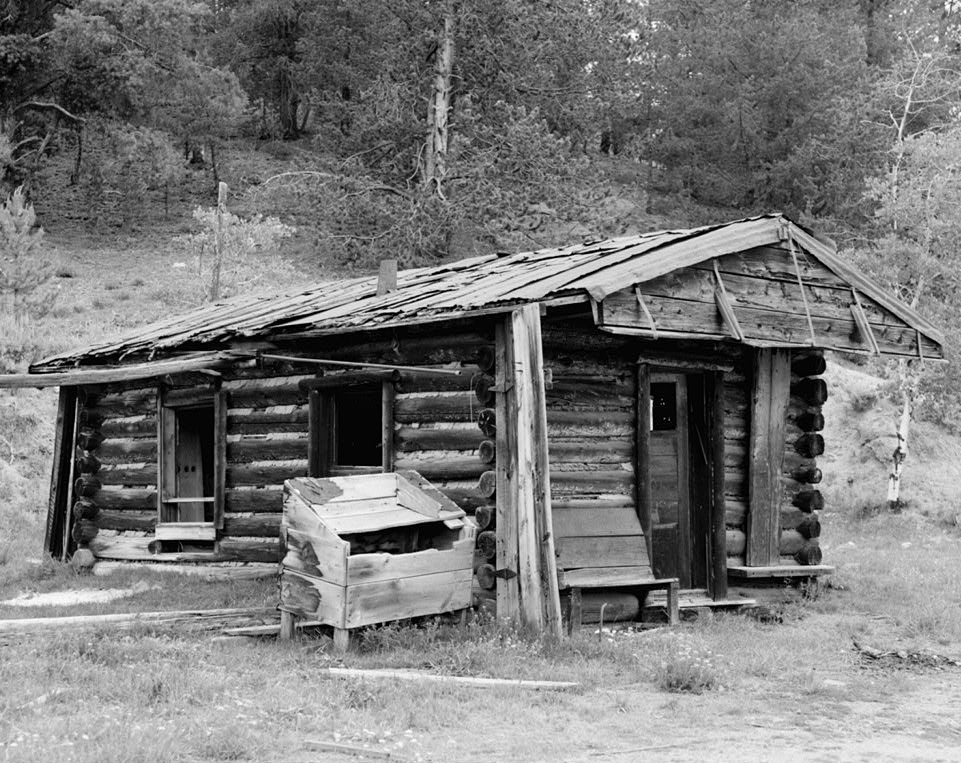

The 1889 constitution: Article VII
Delegates wrote Idaho's constitution in the summer of 1889; voters ratified it on Nov. 5, 1889, and Idaho became a state on July 3, 1890.21 Article VII, "Finance and Revenue," still governs property tax. Five sections matter most:
| Section | What it says (paraphrased unless quoted) | Why it still matters |
|---|---|---|
| Section 2 | "The legislature shall provide such revenue as may be needful, by levying a tax by valuation, so that every person or corporation shall pay a tax in proportion to the value of his, her, or its property," except as the article provides; also allows license and per capita taxes.22 | Tax follows value. Idaho cannot tax homes at one ratio and businesses at another. |
| Section 5 | "All taxes shall be uniform upon the same class of subjects within the territorial limits, of the authority levying the tax"; the Legislature "may allow such exemptions from taxation from time to time as shall seem necessary and just"; duplicate taxation for the same purpose in the same year is prohibited.1 | The uniformity rule and the exemption power. Every homeowner, farm and business exemption rests on the second clause. |
| Section 9 | The state's own property tax rate for state purposes "shall never exceed ten mills on each dollar of assessed valuation" unless voters approve a higher rate at a general election.23 | A cap on the state levy, which the state no longer uses at all (see below). |
| Section 6 | "The legislature shall not impose taxes for the purpose of any county, city, town, or other municipal corporation," but may give their officials "the power to assess and collect taxes for all purposes of such corporation."24 | Property tax became the local tax: counties, cities, schools, highway, fire and other districts each set their own levy. |
| Section 12 | Creates a four-member State Tax Commission, which took over "the duties heretofore imposed upon the state board of equalization," and makes county commissioners the county boards of equalization.25 | Who supervises assessors and hears appeals. Added by a 1944 amendment.26 |
A mill is one-tenth of a cent, or $1 of tax per $1,000 of value. Ten mills is 1 percent. Section 9 meant the state could take no more than 1 percent of assessed value for its own budget, and assessed value in those years was usually a fraction of market value.
The uniformity clause is narrower than it sounds. It requires the same treatment within a "class of subjects" and within the boundaries of the district levying the tax. Two neighbors in the same city must face the same levy rate. A house in Jerome and a house in Boise need not, because they sit in different taxing districts. And the exemption clause lets the Legislature take whole kinds of property, or part of their value, off the rolls entirely. Those two features, uniform rates and broad exemptions, explain most of what came later: when Idaho wanted to tax homes more lightly than businesses, it could not set a lower rate or a lower assessment ratio for homes, so it exempted part of their value instead.
From state levy to local levy, 1890 to 1967
When property tax paid for the state
For Idaho's first four decades, property tax was the main tax for every level of government, including the state. The Lincoln Institute's profile describes the shift that followed: property tax stopped being a state tax as the state added an income tax in 1931 and a sales tax in 1965, and before the sales tax arrived "property tax constituted nearly 60 percent of all state and local tax revenue in the state."20 The state levy under Article VII, Section 9 shrank as other taxes grew. Today Idaho Code 63-216 forbids it outright: "In any period during which a sales tax is in force in this state, there shall be no levy of the general state property tax permitted in section 9, article VII."13 The section's history line starts with the 1996 recodification of Title 63, so the website does not show the year the rule was first written; this lesson could not confirm the last year the state actually levied a general property tax and lists it as unverified.

Who supervised the assessors
Uniformity depends on assessors valuing property consistently, and Idaho spent decades building a state office to check them. The Tax Commission's own history: the Legislature created a first tax commission in 1913 from the members of the Public Utilities Commission and repealed the law in 1915; a 1944 constitutional amendment abolished the State Board of Equalization and created the commission that now has four members appointed by the governor.2625 That commission values operating property (railroads, utilities and pipelines that cross county lines), supervises county assessors through ratio studies, and writes the reports this lesson relies on. Lesson 1 of the property tax module explains ratio studies: How Idaho Assesses Property.
The sales tax votes, 1936 and 1966
Idaho voters said no to a sales tax before they said yes. In 1936 a referendum on a 2 percent sales tax passed by the 1935 Legislature (House Bill 76) failed, 68,728 for and 75,468 against (52.3 percent no). Thirty years later, the 1965 Legislature passed a 3 percent sales tax, opponents forced a referendum, and in the November 1966 election voters kept the tax, 156,109 to 99,048 (61.2 percent yes).2 The sales tax is the reason property tax in Idaho is almost entirely local today, and most state-paid property tax relief since, from the 1979 school levy money to the 2025 relief funds, has come from sales or income tax revenue.
The 20-20-40 law and Idaho Telephone v. Baird (1967)
The same 1965 session tried to fix uneven assessments by ordering every county to assess property at fixed percentages of full cash value: 20 percent for real property, 20 percent for personal property and 40 percent for "operating" property, which meant utilities. Idaho Telephone Company sued. On Feb. 2, 1967, the Idaho Supreme Court held that the higher ratio for operating property in Idaho Code 63-101B (1965 Idaho Session Laws, ch. 312, sec. 4) "violates that constitutional requirement of uniformity" in Article VII, Sections 2 and 5, and that the state had no authority to assess utilities at a higher ratio than other taxable property.27
The case drew a line Idaho still lives with. The Legislature may exempt property or part of its value, but it may not tax one class of taxable property at a higher assessment ratio or rate than another inside the same district. Ken Robison's chronology records that Gov. Cecil Andrus asked the Legislature in 1971 and again in 1972 for a constitutional amendment to let homes and farms be assessed at a lower ratio, and that lawmakers refused both times.17 A "three-class" amendment (Senate Joint Resolution 112) won an 18 to 17 Senate vote in 1978, short of the two-thirds a constitutional amendment needs, by the same account. Idaho never adopted a classified property tax. Today assessors value all taxable property at 100 percent of market value, as the Lincoln profile notes, and differences in tax by type of property come from exemptions, not ratios.20
The tax revolt years, 1974 to 1982
The circuit breaker, 1974
Idaho's first targeted property tax relief was for older and disabled homeowners. The Tax Commission's history says the property tax reduction program, nicknamed the circuit breaker, began in 1974, "evolving from a previously existing widow's exemption." In its first year 15,932 claims were filed and 15,924 approved, for benefits of $1.87 million, of which the state paid $1.5 million and counties the rest.16 A circuit breaker is a reduction in property tax tied to the owner's income, named for the electrical device that cuts power when the load gets too high: when the tax becomes too large a share of income, the state pays part of it.
The program has been rewritten many times since. Disabled people became eligible in 1981; maximum benefits jumped in 1993 to 1995 and again in 2006, when House Bill 422 raised the income limit to $28,000 (from $22,500, its statement of purpose says; the Tax Commission's table lists $22,040 for 2005) and the maximum benefit from $1,200 to $1,320; benefits and the income ceiling were frozen for several years after 2007; disabled veterans' benefits were added in 2019; HB 389 (2021) raised the maximum to $1,500; and in 2022 claimants with higher-value homes were eliminated, according to the Tax Commission.162829 In 2025, 22,753 claims in the original program received $16.68 million, an average of $733, and 6,525 disabled veterans received $7.88 million. Benefits covered about 68 percent of approved claimants' property taxes, the report says, "well below" the 86 percent of 2006.16 Today's rules (age 65, widowed, blind, disabled or certain veterans; an income limit; one acre) are in Idaho Code 63-701 and are explained in Homeowner Relief.30
Reappraisal and the road to 1978
Through the 1970s Idaho's system was "levy (rate) driven," in the Tax Commission's words: districts kept their levy rates and "taxes tended to expand at the rate of growth in assessed value."31 The Commission's historical table shows statewide property taxes rose $100.0 million from 1973 to 1978, an 84.0 percent increase, an average of 13.0 percent a year.9 Robison's chronology says reappraisals in Ada and Kootenai counties in 1977 sharply raised home values, that the 1978 Legislature put $14 million of state money toward school levies and raised the circuit breaker income limit from $5,500 to $7,500, and that this did not head off the initiative.17
California's voters approved Proposition 13 on June 6, 1978. It limited the property tax rate to 1 percent of value plus voter-approved debt, rolled most assessments back to 1975 market values, held increases to 2 percent a year, and reassessed property to market value only when it sold or was newly built.32 Idaho's initiative came five months later and copied the core of it.
The One Percent Initiative, Nov. 7, 1978
Initiative 1 of 1978, which the Secretary of State lists as "Restricting governmental ability to change property valuations or taxes," passed 164,817 to 118,102, or 58.3 percent.2 As the Tax Commission summarizes it, the initiative would have limited property taxes to 1 percent of market value, set assessed values at December 1978 market value and limited assessed value increases to 2 percent a year.3 It was codified as Idaho Code 63-923 (later renumbered; see below).
An Idaho initiative is a statute, not a constitutional amendment, and the Legislature can amend or repeal it. That is what happened. The Attorney General's Opinion 95-3, issued Aug. 10, 1995, tells the story from the statute books: in 1979 the Legislature considered House Bills 166, 280, 306 and 308 to amend the initiative or soften its effect on particular taxing districts, and its main response was a new section, 63-2220, which capped property taxes by limiting each district's budget request (in the opinion's words, "The one percent (1%) limitation codified in Idaho Code § 63-923 was not, however, referred to in Idaho Code § 63-2220"); in 1980 it inserted the words "Except as provided in Section 63-2220" at the start of the initiative statute, which effectively nullified the 1 percent limit; and the 1 percent figure was removed from 63-2220 in 1981.33 The Tax Commission's table adds that the market value and 2 percent assessment limits were put in place in 1979 (effective for 1980) and repealed effective 1982, and that the 1 percent limit was "superseded by alternate budget caps" and "never implemented."3
So the 1978 vote did change Idaho property tax, but through a different door. Instead of a rate limit and an assessment limit like California's, Idaho got limits on how much each district's property tax budget may grow. The table below follows those limits from 1979 to today.
The freeze and the first caps, 1979 to 1981
| Year | Law | Budget limit (Tax Commission summary) |
|---|---|---|
| 1979 | HB 166, modified by HB 308 (created 63-923 and 63-2220) | Each district's operating budget from property tax limited to its 1978 amount |
| 1980 | HB 795 | Operating budgets frozen, with a possible 4 percent increase if the total levy stayed under 1 percent |
| 1981 | HB 389 (1981) | School maintenance and operation exempted; other districts allowed 5 percent a year plus half the value growth times the levy rate |
| 1983 | HB 306 | Growth allowance raised from one-half to 80 percent of value increase |
| 1986 | HB 754 | Growth factor of 105 percent applied to the levy rate; homeowner's exemption values no longer counted |
| 1988, 1989 | HB 448, HB 541; HB 123 | Highway district and three-year-highest-budget rules; two-thirds of forgone amounts could be recaptured |
| 1991 | HB 366 (effective 1992) | 63-2220 repealed; "truth in taxation" ads required for rate increases |
| 1992, 1993 | HB 504; HB 455 | Ads required for budget increases over 5 percent; direct notice to taxpayers allowed instead |
| 1995 | HB 156 | Truth in taxation repealed; 3 percent budget cap (63-2220A, now 63-802), excluding voter-approved levies and school M&O, plus allowances for new construction and annexation; unused increases saved as forgone balances |
Source for every row: Tax Commission EPB00107.3 The state also paid for part of the relief. Robison's chronology says the 1979 Legislature added $19 million of state money to replace part of the school levy, and that nonresidential taxes fell 13 percent that year while residential taxes fell only $1.1 million.17 The Tax Commission's period table shows statewide property taxes rose just $2.7 million, or 0.8 percent in total, from 1978 to 1981.9
Notice the 1981 bill number. House Bill 389 of 1981 and House Bill 389 of 2021 are different laws, 40 years apart, that both rewrote Idaho's budget limit. Always cite a bill with its year.
The homeowner's exemption, 1980 to 1983
The other half of the revolt was about who paid. Because the constitution forbids a lower assessment ratio for homes, the tool was an exemption. Robison's chronology records a 1974 bill for a $10,000 homeowner exemption that died in committee, and a temporary exemption of 20 percent up to $10,000 that passed in 1980 for one year and was renewed in 1981 and 1982.17 The Tax Commission's table lists the maximum as $10,000 for 1980 through 1982.4
In November 1982, voters approved Initiative 1, which the Secretary of State lists as "Initiative providing 50% or $50,000 residential tax exemption," 168,895 to 130,062 (56.5 percent).2 From 1983 through 2005 the maximum was $50,000.4 Robison's account says the 1983 Legislature first tried to cut the cap to $15,000 (House Bill 269), which Gov. John Evans vetoed, and then limited the exemption to owner-occupied homes, which he accepted.17 That choice, owner-occupied only, is why rentals and second homes pay the full rate today and why the "primary residential" category in Tax Commission reports exists.
A group of taxpayers, the Idaho Association for Equitable Property Taxation, challenged the exemption as a violation of uniformity. On July 23, 1986, the Idaho Supreme Court rejected the challenge in Simmons v. Idaho State Tax Commission, holding that because the constitution lets the Legislature grant exemptions, legislatively exempt property need not meet the uniformity rules, and that the "50-50 homeowners' exemption" (then Idaho Code 63-105DD) "does not violate Idaho Const, art. VII, §§ 2 or 5." The court also rejected equal protection and contract clause claims.34 Baird (1967) and Simmons (1986) together mark the boundary: no different ratios or rates for taxable property, but exemptions are allowed.
Caps and truth in taxation, 1983 to 2005
Five percent a year, and then no cap
From 1982 until the early 1990s, the Tax Commission says, "budgets (and, towards the end of that period, levy rates) were permitted to grow by 5% each year."9 Its period table shows what that allowed: statewide property taxes grew $408.9 million from 1981 to 1994, an average of 8.6 percent a year.9 In 1991 House Bill 366 repealed the 5 percent cap and replaced it, starting in 1992, with "truth in taxation": districts could raise taxes but had to buy special newspaper ads telling the public about rate increases. From 1992 to 1994, in the Commission's words, "schools used a levy-based system while other districts had no budget caps in place, but had special advertising requirements."39
The 1 percent idea returns, and loses
Supporters of a hard rate limit tried twice more at the ballot box. In 1992 Initiative 1, which would have limited property tax rates to 1 percent of market value, lost 163,690 to 311,159 (65.5 percent no). A 1994 version did not gather enough signatures. In 1996 Initiative 1, a 1 percent limit "with exceptions," lost 180,678 to 306,818 (62.9 percent no).23 The 1978 vote was the high-water mark; once the Legislature had its own caps in place, voters turned down a rate limit twice by wide margins.
House Bill 156 (1995) and the 3 percent cap
The cap Idahoans know as "the 3 percent cap" came from House Bill 156 in 1995, the first year of Gov. Phil Batt's term. The Tax Commission summarizes what it did: it repealed truth in taxation and "Capped annual budget increase at 3% (excluding voter approved and school M&O), with allowance for annexation and new construction based on occupancy tax roll or value of building permits. Districts not using all of 3% increase could accrue foregone balances."3 The state also used sales tax money to replace "approximately ¼" of school maintenance and operation property taxes.9 Robison's chronology describes the package as the Batt plan: $40 million of sales tax revenue replacing $1 of the $4 per $1,000 school levy, and a 3 percent limit on annual increases for most districts.17 Attorney General Opinion 95-3, written that August, concluded that the long-dormant initiative statute, 63-923, "imposes no impediment to the full implementation of House Bill 156."33
The cap was refined almost every year after. The Tax Commission's table lists: a new construction roll in 1996, so growth allowances were based on the taxable value actually added rather than building permits; recodification in 1997, when the cap became Idaho Code 63-802 and the new construction roll 63-301A; permanent overrides for library and fire districts with a two-thirds vote in 1999; replacement money for newly exempt farm equipment in 2001; and in 2005 a permanent override with two-thirds voter approval for every taxing district.3 Two of those changes matter on every tax bill today. The new construction roll is the reason growth adds to a district's budget, and the forgone balance (the unused part of the 3 percent a district may save for later) is the reason a district's tax can jump more than 3 percent in a year without a vote.
How much the caps held down
The Tax Commission's long table puts numbers on each period. These are statewide property taxes budgeted by all districts; as the Commission's notes say, the 2022 to 2023 row is after all HB 292 relief and the last two rows are after facilities fund reductions and homeowner relief:
| Period | Increase (decrease), $ millions | Total change | Average per year | What was in place |
|---|---|---|---|---|
| 1973 to 1978 | 100.0 | 84.0% | +13.0% | Levy-driven system |
| 1978 to 1981 | 2.7 | 0.8% | +0.3% | Freeze, state school relief |
| 1981 to 1994 | 408.9 | 268.5% | +8.6% | 5% caps, then truth in taxation |
| 1994 to 1995 | 12.6 | 1.9% | +1.9% | HB 156 and school relief |
| 1995 to 2000 | 250.0 | 37.6% | +6.6% | 3% cap plus growth |
| 2000 to 2001 | 34.4 | 3.8% | +3.8% | Farm equipment exemption |
| 2001 to 2005 | 290.7 | 30.6% | +6.9% | 3% cap plus growth |
| 2005 to 2006 | (141.4) | (11.4%) | -11.4% | HB 1 special session |
| 2006 to 2008 | 218.1 | 19.9% | +9.5% | New school voter levies |
| 2008 to 2011 | 64.7 | 4.9% | +1.6% | Recession; districts below maximums |
| 2011 to 2019 | 654.6 | 47.4% | +5.0% | Recovery and growth |
| 2019 to 2020 | (104.5) | (5.1%) | -5.1% | Federal pandemic grant money used for relief |
| 2020 to 2021 | 182.1 | 9.4% | +9.4% | Values rose fastest ever; HB 389 |
| 2021 to 2022 | 69.0 | 3.3% | +3.3% | 8% cap; personal property exemption |
| 2022 to 2023 | (236.1) | (10.8%) | -10.8% | HB 292 relief |
| 2023 to 2024 | 134.0 | 6.9% | +6.9% | HB 521 facilities money |
| 2024 to 2025 | 93.1 | 4.5% | +4.5% | HB 304 adds $100 million |
Source: Tax Commission, Table 6 of the 2025 report, with its notes (2023 after HB 292 relief; 2024 and 2025 after facilities fund reductions and homeowner relief). The "What was in place" column is our summary of the Commission's narrative.9 One caution: the 1981 to 1994 row's percentage (268.5) does not match its dollar change and the 1981 base implied by the earlier rows; the table is printed that way in every edition we checked, and we report it as printed.31
The 2006 tax shift
The regular session: a bigger, indexed exemption
By the mid-2000s the $50,000 exemption cap had not moved in 23 years while home values had. An interim legislative committee met in 2005 and proposed a larger, indexed exemption.17 In the 2006 regular session, House Bill 421 raised the exemption to the lesser of 50 percent or $75,000. A Senate amendment moved on March 17, 2006 by Sen. Langhorst and seconded by Sen. Werk, according to the bill history, tied future increases to the Idaho housing price index published by the federal Office of Federal Housing Enterprise Oversight, instead of a cost-of-living index. The House concurred and passed it 60-8-2 on April 11, and the governor signed it April 12, 2006 (2006 Idaho Session Laws, ch. 429), retroactive to Jan. 1, 2006.35 House Bill 422, signed April 7, raised the circuit breaker's income limit to $28,000.28
The special session: House Bill 1, Aug. 25, 2006
Gov. Jim Risch called the Legislature back for a one-day special session in August. House Bill 1, the Property Tax Relief Act of 2006, passed the House 47-23 and the Senate 24-11, both on Aug. 25, 2006, under suspension of the rules, and Risch signed it Aug. 31 (2006 Idaho Session Laws, First Extraordinary Session, ch. 1).8 Its statement of purpose and text did three things:
- Eliminated the "3 mil education maintenance and operation levy on Idaho real property" (three-tenths of 1 percent of market value), cutting property taxes by about $260 million.
- Raised the sales tax rate from 5 to 6 percent effective Oct. 1, 2006, which the statement of purpose said would "generate approximately $210 million annually," for a net tax cut of about $50 million.
- Appropriated $250,645,700 from the general fund to the public school income fund for July 2006 to June 2007 and moved $100 million into a Public Education Stabilization Fund by Feb. 1, 2007.8
The Tax Commission records the result: school M&O levies eliminated "except for Boise School District," budget stabilization levies set up for four other districts, and an 11.4 percent drop ($141.4 million) in statewide property taxes from 2005 to 2006.39 Idaho Code 33-802 still carries the budget stabilization rule for districts that received no state equalization money in fiscal 2006, and the voter-approved supplemental levy rules that school districts now lean on.36 Boise School District's property tax in 2025 was $156.4 million, the largest of any district, up 24.1 percent from 2024 in the Tax Commission's table.9

What happened next
The shift did what it promised for one year. Then school districts asked voters for more. The Tax Commission's narrative: "2007 and 2008 saw many new or increased voter approved property taxes for school districts and, therefore, higher than typical overall increases in property taxes"; statewide taxes rose 19.9 percent from 2006 to 2008.9 By 2012 school supplemental levies had reached "an all-time high of $168.1 million," up 20.4 percent in a year, led by new levies in the Meridian and Boise districts.31 School districts' share of all property taxes was 30.8 percent in 2008 and still 30.5 percent in 2019 (our calculation from the Commission's five-year tables).3137
The 2006 law still divides the people who made it. Sen. Jim Risch, the governor who pushed it, said a decade later: "I had always felt the wrath of the Idaho taxpayer against property taxes."38 The case for the shift: it cut the most visible tax on homes and businesses, moved school operations to the state where funding could be equalized, and gave voters a direct say over any local school tax above the state amount. The case against it, as Boise State Public Radio summarized critics' arguments: it left school operations exposed to the economic downturn that followed, when falling state revenue cut state funding for schools.38 The statement of purpose itself put the net tax cut at about $50 million after the sales tax increase.8 The record supports parts of both. The $260 million cut and the $210 million sales tax increase are both in the statement of purpose; and the Tax Commission's own numbers show voter-approved school taxes grew quickly afterward.
Indexing, recession and the 2016 reset, 2007 to 2020
An exemption that moved with home prices
With indexing, the maximum exemption rose with the housing index and fell with it. The Tax Commission's history table: $89,325 in 2007, $100,938 in 2008, a peak of $104,471 in 2009, then down to $101,153 (2010), $92,040 (2011), $83,974 (2012) and a low of $81,000 (2013), back up to $83,920 (2014), $89,580 (2015) and $94,745 (2016).4
The recession turned the cap's logic upside down. Districts' budgets could still grow, but taxable values fell four years in a row, so levy rates rose. In 2012 taxable value dropped 2.3 percent, residential value fell 4.6 percent, farmland value rose 11.3 percent, and the statewide average levy rate of 1.38 percent was "the highest since 2005, the last year school general levies were permitted," the Tax Commission reported. Commercial taxes rose 6.4 percent and farm taxes 15.2 percent while homeowners' taxes rose 2.5 percent, a modest shift away from homes.31 Many districts did not levy all they could from 2009 to 2011, and some hit their maximum levy rates.9
The 2013 personal property exemption
Business equipment and other personal property got their own exemption in 2013: the first $100,000 of a taxpayer's personal property in each county, plus items worth $3,000 or less, according to the Lincoln profile, with state money replacing what local districts lost. The Tax Commission counted an $18.9 million reduction in business personal property taxes from the new exemption in 2013.209 HB 389 (2021) raised the per-county amount to $250,000 starting in 2022.29 Farm equipment had been exempted earlier, in 2001, with state replacement money.3 Each of these exemptions shifts part of the levy from businesses to everyone else unless the state replaces the money; the replacement amounts are frozen or set by law, so the shift grows as values rise. Farmland, Timber, Business Equipment and Nonprofits explains the rules.
House Bill 431 (2016) ends indexing
In 2016 the House Revenue and Taxation Committee's House Bill 431 fixed the cap at $100,000 and ended indexing. It passed the House 55-15 on Feb. 9 and the Senate 23-11-1 on March 8, and Gov. C.L. "Butch" Otter signed it March 17, 2016 (2016 Idaho Session Laws, ch. 94), effective July 1, 2016.5 The amendment appears in the history line of Idaho Code 63-602G as "am. 2016, ch. 94."14 The cap stayed at $100,000 from 2017 through 2020, while home prices climbed. A fixed dollar cap in a rising market covers a smaller share of each home every year, which moves more of each levy onto homeowners. Homeowner Relief works that arithmetic.
2020: federal pandemic money as property tax relief
In 2020, statewide property taxes fell 5.1 percent ($104.5 million). The Tax Commission explains why: counties and cities received $128.3 million of federal pandemic grant money through the state, "with $117.6 million of that used for property tax relief."9 It was a one-year event. In 2021, the Commission notes, "taxable values rose at the fastest pace ever" and that relief "was no longer available."
The boom and the new rules, 2021 to 2026
Values explode, 2021 and 2022
Idaho's net taxable value rose from $192.0 billion in 2020 to $230.7 billion in 2021 and $332.1 billion in 2022 in the Tax Commission's category files. Residential value alone rose 52.9 percent from 2021 to 2022, against 22.5 percent for commercial and industrial property (our calculation).3940 The Commission's 2025 report calls the overall 2021 to 2022 jump "the 43.7% unprecedented increase" and says primary residential taxable value rose "the unprecedented 54.4% in 2022."9 Because each district's budget is capped and the levy rate is the budget divided by value, rates fell. But a home whose value rose faster than the average still saw a bigger bill, because its share of the levy grew. In 2022, primary residential property paid 51 percent of all property taxes, the highest share in the Commission's chart, which runs from 2000.9
House Bill 389 (2021)
The 2021 Legislature's answer was House Bill 389, a Ways and Means Committee bill introduced on May 3, 2021, late in that year's session. It passed the House 48-20-1 on May 4 and the Senate 19-16 on May 5, and Gov. Brad Little signed it May 12, 2021 (2021 Idaho Session Laws, ch. 360). Most sections were retroactive to Jan. 1, 2021; the personal property sections took effect Jan. 1, 2022.6 Its statement of purpose lists what it did:29
- Raised the homeowner's exemption to $125,000 (still the cap in Idaho Code 63-602G for 2026).14
- Raised the circuit breaker and the disabled veterans benefit to up to $1,500, and in 2022 added a test aimed at "income-poor but asset-rich applicants."
- Reduced the value of new construction and annexation counted toward each district's budget growth. The new construction roll now includes "ninety percent (90%) of the taxable market value increase," and annexation counts at 90 percent.417
- Created "a total cap of 8% in any budget year" on overall budget growth, and limited how forgone amounts could be used.7
- Raised the personal property exemption to $250,000 per county in 2022 and exempted transient personal property.
The fiscal note warned that local budget growth could be curbed "by as much as 23% in some cases." The 19 to 16 Senate vote shows how close the fight was. Cities, counties and fire districts in fast-growing places argued that growth itself brings new costs; the bill's supporters argued that local budgets were growing faster than residents' ability to pay. Five years later the Legislature loosened one piece: House Bill 959 (2026) raised the overall cap for fire and ambulance districts from 8 to 15 percent when enough new construction and annexation covers it. Its statement of purpose says it "addresses the limitations HB 389 (2021) places on the growth of property taxes for fire protection districts and ambulance service districts."42 How these limits shape who pays for growth is the subject of lesson 7.
House Bill 292 (2023): veto and override
House Bill 292 changed the method of relief. Instead of exempting more value, the state began paying part of the bill. The bill created a School District Facilities Fund, paid to school districts by average daily attendance and required to be used to pay down bonds and levies, and a Homeowner Property Tax Relief account that pays a credit on each homestead's bill.4344 Its fiscal note promised "at least $205 million of property tax relief and as much as $355 million" in the first year.43 It also ended March school elections and relaxed circuit breaker rules.
The bill's path was unusual. It passed the House 63-7 on March 14 and the Senate 32-3 on March 20, 2023. Gov. Little vetoed it on March 27. The House overrode the veto 58-12 on March 28 and the Senate 28-7 on March 29 (2023 Idaho Session Laws, ch. 200).12 The Idaho Statesman reported that Little objected to the bill's effect on state bonding and to "the provision prohibiting school districts from holding bond and levy elections in March," and that lawmakers also passed a trailer bill, House Bill 376, to protect road bond payments.45 The homeowner credit under Idaho Code 63-724 is figured each Aug. 1 by dividing the account balance by the statewide total of eligible taxes, and applies to all levies on the home except bonds, school levies, plant facility levies and voter-approved temporary levies.44

House Bill 521 (2024) and the 2025 bills
House Bill 521 (2024) cut the individual income tax rate from 5.8 to 5.695 percent, sent $125 million a year of sales tax to a new School Modernization Facilities Fund, raised the facilities fund's share of sales tax from 2.25 to 3.25 percent and redirected lottery dividends to it, by its statement of purpose.46 It passed the House 61-6-3 and the Senate 23-11-1, and Little signed it March 29, 2024 (2024 Idaho Session Laws, ch. 237).47
In 2025 House Bill 304 added $100 million a year of general fund money, $50 million to the facilities fund and $50 million to homeowner relief, "starting in 2025 and every year thereafter," per its statement of purpose.48 It passed both chambers without a no vote (68-0-2 and 35-0-0) and was signed March 26, 2025 (ch. 175).49 Little called it "another $100 million in property tax relief to Idahoans."50 The Senate sponsor, Sen. Scott Grow, estimated the average homeowner's property taxes would drop 14.6 percent, the Idaho Capital Sun reported.51 A trailer bill, HB 479, fixed its dates.52
The same session passed House Bill 329, which from Jan. 1, 2026 replaces the property tax on rate-regulated electric utilities with a tax on kilowatt hours sold, and on gas companies with a tax on therms sold; its fiscal note says the replacement revenue to local taxing districts "should be revenue neutral."53 House Bill 722 (2026) adjusted its reporting and payment schedules.54 The Tax Commission's Property Tax Division reported in April 2026 that seven companies had moved from property tax to the kilowatt-hour and therm taxes.55 That is a structural change: much of Idaho's utility property is leaving the property tax rolls.
The Tax Commission totals the relief: $314.1 million in 2023, $246.2 million in 2024 and $328.0 million in 2025. In 2025, $2.502 billion of budgets before relief, minus $215.2 million of facilities fund levy reductions, left $2.286 billion levied; minus $112.8 million of homeowner relief, taxpayers paid $2.174 billion.9 Where the Money Goes shows how the facilities money moves through a school district's levy.
The 2026 session
The Tax Commission's tracking report (dated April 14, 2026) lists these among the property tax bills that became law in 2026; it also lists smaller bills on forest land fees, license plates, late charges, cemetery districts and polling places:56
| Bill | Sponsor (per report) | What it does | Effective |
|---|---|---|---|
| HB 843 | Rep. Dustin Manwaring | Ends proration of the homeowner's exemption: the full exemption applies from Jan. 1 of the year a complete application is approved. Applications still due by the last business day of the year. House 68-0-2, Senate 32-0-3; signed March 31, 2026 (ch. 236).5758 | Retroactive to Jan. 1, 2026 |
| HB 959 | Rep. Mike Moyle, Rep. David Cannon | Fire and ambulance districts may grow up to 15 percent (not 8) when new construction and annexation cover it; uses the prior year's levy rate for growth; no new forgone balances; new voter petition to raise or cut their budgets. House 67-0-3, Senate 33-0-2; signed April 10, 2026 (ch. 316).5942 | July 1, 2026; one section retroactive to Jan. 1 |
| HB 765 | Rep. Moyle, Rep. Sauter | Fire and library districts not held to the 8 percent limit when annexing areas de-annexed by other fire and library districts | Retroactive to Jan. 1, 2026 |
| HB 722 | Rep. Jeff Ehlers, Sen. Doug Ricks | Kilowatt-hour and therm tax reporting and distribution, to match property tax payments54 | Retroactive to Jan. 1, 2026 |
| HB 551 | Rep. Cheatum, Sen. Bernt | Fire and ambulance districts not subject to urban renewal allocation may capture budget growth from new construction inside new revenue allocation areas | Retroactive to Jan. 1, 2026 |
| HB 734 | Rep. Fuhriman, Sen. VanOrden | How the Tax Commission figures a school district's share of wind, solar and geothermal energy tax money when it had no supplemental levy | Retroactive to Jan. 1, 2026 |
| HB 926 | Rep. Cannon | Community infrastructure districts available to counties as well as cities | July 1, 2026 |
The 2026 session did not change the $125,000 exemption cap, the 3 percent growth factor or the homeowner relief formula. The Idaho Code 63-802 history line now ends with two 2026 amendments (chapters 197 and 316).7
Who carries the load: homes, businesses, farms and utilities
Market value, taxable value and the categories
Two values appear in every Tax Commission table. Market value is what the assessor estimates a property would sell for. Net taxable value is market value minus exemptions, chiefly the homeowner's exemption; levies are applied to taxable value. In 2025, Idaho's property had $452.3 billion of market value counting the homeowner's exemption and $393.5 billion of net taxable value after it; the exemption removed $58.9 billion, about a quarter (24.8 percent) of the market value of owner-occupied homes (our calculation from Chart II and Chart I-A).9
The Commission sorts property into categories: primary residential (homes receiving the homeowner's exemption), other residential (rentals, second homes and vacant residential lots), commercial and industrial, agricultural, timber, mining and operating property (utilities, railroads and pipelines valued by the state). The Values by Major Category file reports residential as one figure; the annual report splits it.609
The statewide shift, 2013 to 2025
| Year | Net taxable value ($ billions) | Residential | Commercial and industrial | Agriculture | Operating | Timber and mining |
|---|---|---|---|---|---|---|
| 2013 | 108.2 | 63.5% | 26.9% | 3.4% | 5.1% | 1.1% |
| 2015 | 121.3 | 65.7% | 25.3% | 3.4% | 4.6% | 1.0% |
| 2017 | 138.5 | 66.5% | 24.9% | 3.3% | 4.4% | 0.9% |
| 2019 | 175.0 | 69.9% | 22.8% | 2.8% | 3.7% | 0.8% |
| 2020 | 192.0 | 70.8% | 22.2% | 2.6% | 3.7% | 0.7% |
| 2021 | 230.7 | 73.4% | 20.5% | 2.2% | 3.3% | 0.6% |
| 2022 | 332.1 | 78.0% | 17.4% | 1.7% | 2.5% | 0.5% |
| 2023 | 343.0 | 76.2% | 19.6% | 1.7% | 2.1% | 0.5% |
| 2024 | 363.0 | 75.6% | 20.1% | 1.6% | 2.2% | 0.5% |
| 2025 | 393.5 | 75.4% | 20.4% | 1.5% | 2.2% | 0.5% |
Source: Tax Commission EIS00095 for each year; shares are our calculation.601011 The 2025 shares match the Commission's own Chart I-A, which puts residential at 75.4 percent and primary residential alone at 45.4 percent of taxable value.9 For an older reference point, the Commission's 2012 report put residential at 63.1 percent and commercial at 27.4 percent of taxable value.31
How we figured it: shares of taxable value
Inputs: statewide totals for each category from the Tax Commission's Values by Major Category file (EIS00095) for each year 2013 to 2025. The file reports value "Excludes the Homeowner's Exemption," meaning the exempt value has been removed; its 2025 residential total ($296,695,407,070) equals the Commission's 2025 Chart I-A residential taxable value exactly, which confirms the figures are net taxable value.
Formula: share = category value / grand total. Example, 2025 residential: $296,695,407,070 / $393,456,410,524 = 75.4 percent. "Timber and mining" adds the two columns. Each year's six categories sum exactly to the file's grand total.
Limits: the file does not split owner-occupied from other residential, and the Commission warns that its method for separating them changed over time, so long-term comparisons of that split "may not be accurate." Values exclude urban renewal increment value. Category changes reflect both new construction and changes in value of existing property.
Share of taxes actually paid
Value shares and tax shares differ, because levy rates differ between cities and rural areas and because relief is targeted. The Tax Commission's Chart IV-B, "Property Taxes Paid by Major Categories Over Time," shows the primary residential share of all property taxes rising from about 30 percent in 2000 to about 40 percent by 2004 (read from the chart), dipping in the recession years, reaching 51 percent in 2022 and falling to 44.3 percent in 2025 after the state relief programs.9 For 2025 the Commission's Chart I-A, before homeowner relief, assigns 47.1 percent of taxes to primary residential, 25.6 percent to other residential, 23.6 percent to commercial, 1.4 percent to agriculture and 2.0 percent to operating property; residential as a whole paid 71.2 percent after all relief.9
Chart II of the same report shows what the homeowner's exemption is worth to homeowners as a group: without it, primary residential taxes in 2025 would have been 17.4 percent ($167.3 million) higher, and commercial taxes 15.1 percent lower.9 The exemption does not reduce the levy; it moves part of it from homes to everything else.
County by county, including the Magic Valley
| County | Net taxable value 2013 ($ billions) | 2025 ($ billions) | Residential share 2013 | 2025 | Agriculture share 2013 | 2025 |
|---|---|---|---|---|---|---|
| Ada | 27.08 | 114.89 | 64.6% | 73.6% | 0.3% | 0.1% |
| Canyon | 7.29 | 41.62 | 54.8% | 71.1% | 3.4% | 0.9% |
| Twin Falls | 4.26 | 11.93 | 54.7% | 67.5% | 7.8% | 3.6% |
| Jerome | 1.25 | 3.12 | 45.2% | 56.3% | 15.3% | 9.5% |
| Gooding | 0.92 | 2.41 | 42.1% | 48.9% | 11.3% | 10.3% |
| Lincoln | 0.30 | 0.75 | 27.5% | 42.3% | 11.5% | 14.2% |
| Minidoka | 1.11 | 2.87 | 44.8% | 61.6% | 16.6% | 9.5% |
| Cassia | 1.20 | 3.75 | 45.0% | 43.6% | 15.1% | 11.9% |
| Idaho | 108.20 | 393.46 | 63.5% | 75.4% | 3.4% | 1.5% |
Source: our calculation from Tax Commission EIS00095 for 2013 and 2025.1011 Three patterns stand out. Canyon County's taxable value grew 5.7 times in 12 years, the fastest of these counties, and its residential share rose 16 points. In the Magic Valley, Twin Falls, Jerome and Minidoka counties followed the state pattern, with homes taking a larger share as farmland's share shrank; Jerome County's agricultural share fell from 15.3 to 9.5 percent. Cassia County went the other way: its commercial and industrial share rose from 34.9 to 41.8 percent, so homes carry a slightly smaller share than in 2013. Lincoln County's agricultural share rose. A statewide statement such as "homeowners pay more of the tax than they used to" is true for Idaho as a whole and for most counties, but not for every one.
The value of farmland in these tables is its value for farming, not its sale price, because land actively devoted to agriculture is valued at its use value and not at its speculative value as development property (Idaho Code 63-205C, formerly 63-602K; see lesson 4 of the property tax module). When a field is platted and sold for houses, it moves from the agricultural column to the residential column at a much higher value, which is part of how growth shifts the tax base. Part A's Farmland to Rooftops measures that conversion.
How much Idaho collects, then and now
Property taxes levied, 2008 to 2025
The Tax Commission's five-year tables give statewide property taxes levied by all districts. 2008 to 2012 come from the 2012 report, 2012 to 2016 from the 2016 report, 2015 to 2019 from the 2019 report and 2021 to 2025 from the 2025 report; 2020 comes from Table 1 of the 2021 report ($1,930,646,203 levied).643161379
| Year | All districts ($ millions) | School districts ($ millions) | School share |
|---|---|---|---|
| 2008 | 1,315.8 | 404.9 | 30.8% |
| 2010 | 1,368.0 | 397.9 | 29.1% |
| 2012 | 1,433.6 | 421.1 | 29.4% |
| 2014 | 1,552.1 | 466.7 | 30.1% |
| 2016 | 1,696.7 | 505.4 | 29.8% |
| 2018 | 1,910.1 | 571.9 | 29.9% |
| 2019 | 2,035.2 | 619.8 | 30.5% |
| 2020 | 1,930.6 | not in reports used | |
| 2021 | 2,112.7 | 593.3 | 28.1% |
| 2022 | 2,181.7 | 596.1 | 27.3% |
| 2023 | 2,162.1 | 487.5 | 22.5% |
| 2024 | 2,198.2 | 439.4 | 20.0% |
| 2025 | 2,286.4 | 404.4 | 17.7% |
How we figured it: growth in dollars and after inflation
Inputs: statewide property taxes levied, $1,315.8 million in 2008 and $2,286.4 million in 2025 (Tax Commission); BLS CPI-U, U.S. city average, annual averages 215.303 for 2008 and 321.943 for 2025 (2025 is the average of the 11 months published, since no October 2025 index was released).62
Formula: nominal change = 2,286.4 / 1,315.8 - 1 = 73.8 percent. 2008 taxes in 2025 dollars = 1,315.8 x 321.943 / 215.303 = $1,967.5 million. Real change = 2,286.4 / 1,967.5 - 1 = 16.2 percent. School share = school taxes / all taxes (example 2025: 404.4 / 2,286.4 = 17.7 percent).
Limits: the totals are amounts levied after facilities fund reductions (from 2023) but before the homeowner credit, so they overstate what taxpayers paid in 2023 to 2025 ($2.174 billion paid in 2025). They are not adjusted for population: Idaho added several hundred thousand residents over these years (see Idaho Since 1979), and new construction added to the tax base.
Property tax in the whole tax mix
The Lincoln Institute's figures show how far Idaho moved from its property tax past: from "nearly 60 percent of all state and local tax revenue" in 1962, before the sales tax, to "about 35 percent" by 1982.20 Its most recent Idaho profile (2017 data) puts property tax at 2.4 percent of personal income (U.S. average 3.1 percent), $1,018 per person (U.S. $1,618), and 14.4 percent of state and local revenue (U.S. 16.2 percent).20 Newer comparisons, including effective rates on median homes in Boise and a rural Idaho town, are in Comparing Property Tax Burdens Honestly. How Idaho's overall growth compares with the nation is in Idaho vs. the United States.
Idaho compared with California, Massachusetts and other states
Idaho's 1978 initiative was modeled on California's, but the system Idaho ended up with works differently. There are three basic ways to limit property tax, and the three states show one each.
- California, Proposition 13 (June 6, 1978). Limits the rate to 1 percent of assessed value plus voter-approved debt, set assessments at 1975 levels, limits increases to 2 percent a year, and reassesses to market value only on a sale or new construction.32 Two identical houses on one street can pay very different taxes depending on when each was bought. Idaho could not adopt this system without changing its constitution: assessing one house below market and its neighbor at market would break the Article VII uniformity rule that Baird enforced.27
- Massachusetts, Proposition 2 1/2 (1980). Limits a city or town's total levy to 2 1/2 percent of the full and fair cash value of its property, and its growth to 2 1/2 percent a year (the levy limit may be "one hundred and two and one-half per cent" of the prior year's), and voters can approve an override by majority vote.63 It is closest to Idaho's model: both cap the total levy rather than individual assessments.
- Idaho. Limits each taxing district's property tax budget to 3 percent growth plus 90 percent of new construction and annexation value times the levy rate, with an 8 percent overall limit and voter-approved levies outside the cap. There is no limit on how fast an individual home's assessed value may rise, and no general limit on levy rates beyond each district's statutory maximum rate.73
The trade-offs follow from the design. Assessment limits like California's protect long-time owners from rising values, but shift tax toward newer buyers and can make taxes unequal between neighbors. Levy limits like Idaho's and Massachusetts's keep total collections predictable and keep neighbors' rates equal, but an individual owner whose value rises faster than the area average still sees a larger bill. That is why Idahoans who hear "there's a 3 percent cap" are often surprised by a 15 percent increase on their own bill: the cap is on the district, not the parcel. Lesson 4 of this module, State Preemption and Local Control, takes up the separate question of how much the Legislature should decide for local governments.
Pictures, Numbers and Infographics
The key numbers and dates of this lesson, with the source for each. Shares and changes marked "our calculation" are explained in the methods boxes above.
| Measure or rule | Idaho | U.S. or other states | Place or year | Source |
|---|---|---|---|---|
| Uniformity and exemptions clause | Article VII, Section 5 | California: Article XIII A (Prop. 13) limits rate and assessments | Ratified Nov. 5, 1889 | 132 |
| State levy limit | 10 mills (1 percent) for state purposes; no state levy while a sales tax is in force | 1889; Idaho Code 63-216 | 2313 | |
| Sales tax adopted | 3 percent, kept by voters 61.2 percent | 1965 law, 1966 vote | 2 | |
| Circuit breaker begins | 15,924 claims approved, $1.87 million | 1974 | 16 | |
| Rate-limit initiative | One Percent Initiative, 58.3 percent yes; never implemented | California Prop. 13 passed June 6, 1978 | Nov. 7, 1978 | 2332 |
| Homeowner exemption maximum | $10,000 (1980); $50,000 (1983); $125,000 (2021 to 2026) | 1980 to 2026 | 414 | |
| Budget growth limit | 3 percent plus new construction and annexation; 8 percent overall (2021) | Massachusetts: levy limit grows 2 1/2 percent a year | HB 156 (1995); HB 389 (2021) | 3763 |
| 2006 tax shift | $260 million property tax cut; sales tax 5 to 6 percent (about $210 million) | Aug. 25, 2006 | 8 | |
| Residential share of net taxable value | 63.5% (2013); 78.0% (2022); 75.4% (2025) | Statewide | 1011 | |
| Primary residential share of taxes paid | 51% (2022); 44.3% (2025, after relief) | Statewide | 9 | |
| Property taxes levied | $1,315.8 million (2008); $2,286.4 million (2025); paid after relief $2.174 billion | Statewide | 319 | |
| State-funded relief | $314.1 million (2023); $246.2 million (2024); $328.0 million (2025) | HB 292, HB 521, HB 304 | 9 | |
| Property tax as share of personal income | 2.4% | U.S. 3.1% | 2017 | 20 |
| Property tax per person | $1,018 | U.S. $1,618 | 2017 | 20 |
Common mistakes
"The 3 percent cap limits my tax bill"
It limits each taxing district's property tax budget. Idaho Code 63-802 caps the growth of "the highest dollar amount of property taxes certified for its annual budget," not any one property's tax.7 Your bill depends on your share of the total taxable value in each district. If your home's value rises faster than the average, your share of the levy rises, and your bill can go up far more than 3 percent while the district stays within its cap. New construction, annexation, forgone amounts and voter-approved levies can also add more than 3 percent to a district's total.9
"Idaho has a 1 percent limit, like California"
Idaho voters approved one in 1978, but it was never put into effect. The Legislature replaced it with budget limits in 1979 and 1980, and the Attorney General concluded in 1995 that the initiative statute was "incapable of implementation" and likely to be struck down if tested.333 Voters rejected new 1 percent initiatives in 1992 and 1996.2 We could not find the initiative statute (63-923) on the Legislature's current website; when and how it was finally removed is listed as unverified below.
Confusing market value with taxable value
Market value counts the exempt half of a homestead; taxable value does not. In 2025 the difference statewide was $58.9 billion ($452.3 billion vs. $393.5 billion).9 A residential share computed from market value will differ from one computed from taxable value. Say which one you used. Lesson 9 of this module, Reading Your Own Assessment and Levy, shows both on a real notice.
Citing "HB 389" without a year
House Bill 389 of 1981 exempted school M&O from the budget limit and allowed 5 percent growth; House Bill 389 of 2021 set the $125,000 exemption and the 8 percent cap.36 Bill numbers restart every session. Always add the year, and the session law chapter when you can (2021 Idaho Session Laws, ch. 360).
"The 2006 shift ended school property taxes"
It ended most school maintenance and operation levies, except Boise's. School districts still levy for bonds, supplemental levies, plant facilities and emergencies with voter approval or by statute, and school districts levied $404.4 million in 2025.39
"The homeowner relief credit is an exemption"
The homeowner's exemption (63-602G) reduces taxable value and shifts levy to other property. The homeowner property tax relief credit (63-724, created by HB 292 in 2023) is a state payment applied to the bill after the exemption, and it does not apply to school levies or bonds.1444 They show up on different lines of the bill.
Citing old statute numbers
Title 63 was recodified in 1996 and 1997. The 1995 cap enacted as 63-2220A is now 63-802; the new construction rule enacted as 63-2220B is now 63-301A; the 1986 court case discussed the exemption as 63-105DD, now 63-602G.334 The farmland use-value rule once at 63-602K is now at 63-205C, as the property tax module's lesson 4 notes. Old reports and court opinions use the old numbers.
What we know, what we don't, and what the data can show
What we know
- The constitutional rules (uniformity within a class and district, legislative exemptions, the 10-mill state levy limit) have been in place since 1889, and the Idaho Supreme Court enforced them in Baird (1967) and read the exemption power broadly in Simmons (1986).12734
- Every major change in the budget limits since 1978 is listed by bill number in the Tax Commission's EPB00107 table, and every change since 2021 is on the Legislature's bill pages with votes and signing dates.36
- Residential property's share of net taxable value rose from 63.5 percent (2013) to 75.4 percent (2025), and the primary residential share of taxes paid was 44.3 percent in 2025 after relief.10119
- State-funded relief since 2023 has come from sales tax and general fund money and is set by statute each year, not by local voters.948
What we don't know
- The rates and contents of the territorial revenue acts of 1863 to 1889 and the year the state last levied a general state property tax: the printed session laws exist but were not checked for this lesson.
- A consistent statewide series of taxable value by category before 2013 in machine-readable form. The Commission's older annual reports exist on paper and in a few posted editions; its long chart of tax shares begins in 2000.
- How much of the shift toward homes since 2013 came from rising home values versus new houses versus exemptions for business property. The Commission estimates new construction by category each year, but no published series separates all three causes.
- How the move of utilities to a kilowatt-hour tax (HB 329, 2025) will change the tax base in counties with large power plants or transmission lines; the first full year is 2026.53
- Whether the $100 million a year in HB 304 and the facilities funds will continue at current levels; each depends on future Legislatures and sales tax collections.
What the data can show
- Tax Commission EIS00095 (Values by Major Category): each county's residential, commercial, agricultural, timber, mining and operating value by year from 2013, so you can compute your county's shift.60
- Tax Commission EPB00132 (Market Values and Property Taxes): statewide taxes by type of district, school district taxes by district, relief amounts, average levy rates by county and the period table back to 1973.9
- Tax Commission EPB00089 (Circuit Breaker Statistics): claims, benefits and claimant income by year since 1974.16
- Tax Commission EPB00107 and EPB00110: every budget limit law since 1978, and each session's property tax bills with effective dates.356
- Secretary of State initiative history: statewide votes on every tax initiative and referendum since 1936.2
- County levy certifications (Form L-2) and budget hearing notices: a district's budget before and after relief, its forgone balance and its new construction value, year by year, from the county auditor or clerk.
Questions people ask
Why can't Idaho just tax homes at a lower rate than businesses?
Article VII, Sections 2 and 5 require taxes to be uniform on the same class of subjects and in proportion to value, and the Supreme Court in Baird (1967) struck down a law that assessed utilities at a higher ratio than other property.127 A classified system would take a constitutional amendment, which needs two-thirds of each house and a majority of voters; a three-class amendment fell short in the Senate in 1978, by Robison's account.17 Exemptions, which Simmons upheld, are the tool Idaho uses instead.34
Did the Legislature overturn the voters in 1979?
It amended a voter-approved statute, which it has the power to do. It kept the purpose (limiting property tax growth) and replaced the method: a freeze at 1978 budgets in 1979 and 1980 instead of a 1 percent rate limit and 2 percent assessment limit. Statewide property taxes grew 0.8 percent in total from 1978 to 1981.339 Whether that honored the vote is a judgment readers can make; the record shows both the vote and the change.
Why did my bill go up when the levy rate went down?
Because your taxable value rose faster than the levy rate fell. In 2025 the statewide average rate fell 4.1 percent, but existing primary residential property's taxable value rose 5.3 percent, so the Commission estimates taxes on existing homes rose about 1.9 percent on average.9 Lesson 9 walks through a bill line by line.
Do renters get any of this relief?
Not directly. The homeowner's exemption, the homeowner relief credit and the circuit breaker all require an owner-occupied homestead. Rentals are in the "other residential" category, which paid 25.6 percent of property taxes in 2025 before homeowner relief.944 Part C of this series, coming later, covers owning and renting.
Is Idaho's property tax high or low?
By national measures it is low: in 2017 it was 2.4 percent of personal income against 3.1 percent nationally, and $1,018 per person against $1,618.20 A main reason is history: since 2006 the state, not local property tax, pays most school operating costs. Newer comparisons are in Comparing Property Tax Burdens Honestly.
What happened to property tax on power companies?
Starting Jan. 1, 2026, HB 329 (2025) replaced property tax on rate-regulated electric utilities with a tax on kilowatt hours sold, and on gas companies with a tax on therms sold, and HB 722 (2026) set up reporting and payment so local districts receive the money much as they did property tax.5354 Operating property was 2.2 percent of statewide taxable value in 2025, before the change.11
Hard questions
Should Idaho limit how fast a home's assessed value can rise?
For: owners on fixed incomes face bills driven by neighbors' sale prices, and California's 2 percent limit gives them predictability.32 Against: an assessment limit makes identical homes pay different taxes based on when they were bought, which Idaho's uniformity clause forbids without an amendment, and it shifts tax to newer buyers and businesses.127 What the evidence shows: Idaho has chosen targeted relief instead (the circuit breaker since 1974, the exemption since 1980, the credit since 2023); the circuit breaker covered about 68 percent of approved claimants' taxes in 2025.16
Is state-funded relief better than tighter local limits?
For state relief: it cuts bills immediately without cutting local services; Gov. Little called HB 304 "a win-win for all."50 Against: the money comes from sales tax paid by renters and visitors, it depends on future Legislatures, and it does nothing by itself to slow local budgets. What the evidence shows: taxes levied still rose 4.0 percent from 2024 to 2025, and what taxpayers paid after relief rose 4.5 percent, to $2.174 billion of $2.502 billion budgeted.9
Did HB 389 (2021) squeeze fast-growing districts too hard?
Yes, say fire and ambulance districts, whose case the Legislature accepted in part in HB 959 (2026), which says the 2021 limits "have prevented these districts in a small number of fast-growing areas from being able to keep up with the public safety service demands."42 No, say supporters of the 2021 law, who point to budgets that grew with values in 2021 and 2022. What the evidence shows: statewide property taxes grew 3.3 percent from 2021 to 2022 while taxable value rose 43.7 percent, so the caps held; the Legislature has since loosened them only for fire, ambulance and library districts.956
Was the 2006 shift worth it?
For: a $260 million immediate cut in property tax and a state promise to fund school operations.8 Against: a net cut of only about $50 million after the sales tax increase, school funding exposed to the recession, and a return of local school levies by voter approval.3831 What the evidence shows: school districts' share of property taxes stayed near 30 percent from 2008 to 2019 and fell only after the post-2023 facilities funds, to 17.7 percent in 2025 (our calculation).31379
For reporters and advocates
Records that exist and how to get them.
- Tax Commission reports (EPB00132, EIS00095, EPB00089, EPB00107, EPB00110), free on the Reports and Statistics page; ask the Property Tax Division for older editions not posted online.15
- Bill files: bill text, statements of purpose, fiscal notes, committee minutes and roll calls on the Legislature's website for 1998 on; older session laws at the State Law Library and the Idaho State Archives.
- County records: each district's levy certification (Form L-2), budget hearing notices, forgone balance resolutions, new construction rolls and Board of Equalization decisions, from the county clerk and assessor.
- Election results: the Secretary of State's initiative and referendum history and county canvass reports.2
- Attorney General opinions on tax statutes, such as Opinion 95-3.33
Requests for records not posted online can be made under the Idaho Public Records Act, Idaho Code Title 74; see Idaho Public Records Requests.
Questions to ask. Ask your county commissioners, city council or district board: How much did your property tax budget grow this year, and how much of that came from the 3 percent factor, new construction, annexation and forgone amounts? What forgone balance do you hold? How much homeowner relief and facilities money reached your district, and what did it replace? Which levies are outside the cap? Ask legislators: what does a bill do to the share paid by homes, businesses and farms, and has the Tax Commission estimated it?
The Magic Valley angle. The Tax Commission's 2025 school table shows most Magic Valley school districts' property taxes fell from 2024 to 2025 as state facilities money paid down levies: Twin Falls ($12.03 million to $10.89 million), Jerome ($5.46 million to $4.44 million), Kimberly ($1.24 million to $0.96 million), Gooding ($1.09 million to $0.71 million), Hagerman ($235,143 to $150,319) and Wendell (down 80.6 percent). Buhl's rose from $10,984 to $35,232, a small amount but a 220.8 percent increase.9 In Jerome County, homes rose from 45.2 to 56.3 percent of taxable value from 2013 to 2025, and in Twin Falls County from 54.7 to 67.5 percent, while farmland's share fell (our calculation).1011 Ask the Twin Falls and Jerome county assessors how much new residential construction and how much farmland converted to residential use each year; the answers explain most of the shift.
Where to go next
- Idaho State Tax Commission: Reports and Statistics: Free. The Tax Commission's property tax reports, including Market Values and Property Taxes (EPB00132), Values by Major Category (EIS00095), circuit breaker statistics and session tracking reports. Pick a report, then a year; most are PDFs.
- Idaho Legislature: Idaho Statutes and Constitution: Free. Current text of the Idaho Constitution and Idaho Code. Scroll to the bottom of any statute for its history line, which lists the session laws that changed it.
- Idaho Legislature: Legislation by session: Free. Bill pages with votes, signing dates, statements of purpose and fiscal notes; change the year in the menu for earlier sessions back to 1998.
- Idaho Secretary of State: Initiative and referendum history: Free. Statewide vote totals for every initiative and referendum, including the 1978 One Percent Initiative and the 1982 homeowner exemption initiative.
- Idaho State Tax Commission: Homeowner's exemption: Free. Current rules and the year-by-year history of the maximum exemption since 1980. Apply through your county assessor.
- Lincoln Institute of Land Policy: Significant Features of the Property Tax (Idaho profile): Free. A research institute's state profile with history, limits, relief programs and comparisons with U.S. averages (2017 data). Useful for national context; check Idaho details against the statute.
Still being checked (8 items)
These points could not be fully confirmed against a primary source when this lesson was written and fact checked in November 2026. The text above states each one as uncertain.
- The rates and contents of Idaho's territorial revenue acts (1863 to 1889) were not checked; the printed territorial session laws were not available online in a usable form.
- The last year the state levied a general state property tax under Article VII, Section 9 is not confirmed. Idaho Code 63-216 now bars it while a sales tax is in force, but its history line begins with the 1996 recodification.
- When and how Idaho Code 63-923 (the 1978 One Percent Initiative statute) was repealed or renumbered could not be confirmed; the section does not appear on the Legislature's current website, and AG Opinion 95-3 (1995) treats it as still on the books then.
- Session law chapter numbers for the 1965 sales tax act, the 1974 circuit breaker law, HB 166 (1979) and HB 156 (1995) were not checked; bill numbers for 1979 to 1995 come from the Tax Commission's EPB00107 table.
- Several 1970s and 1980s details (the 1977 Ada and Kootenai reappraisals, Gov. Andrus's 1971 and 1972 requests, SJR 112's 18 to 17 Senate vote in 1978, the 1978 $14 million school relief, the 1979 $19 million, HB 269 and Gov. Evans's 1983 veto, the 1980 to 1982 20 percent temporary exemption) rest on former Rep. Ken Robison's chronology and were not confirmed in journals or session laws.
- The Tax Commission's period table shows a 268.5 percent increase for 1981 to 1994 alongside a $408.9 million dollar increase; the two figures do not reconcile with the 1981 base implied by earlier rows. We report the table as printed.
- The primary residential share of taxes in 2000 (about 30 percent) and 2004 (about 40 percent) is read from the Tax Commission's Chart IV-B, not from a published table.
- 2020 school district property taxes were not found in the Tax Commission reports used (the 2021 report gives 2020 totals by district type only for county, city, fire and other districts); the 2020 statewide total ($1,930.6 million) is from that report's Table 1.
Last verified November 18, 2026. General education, not legal, tax, financial or real estate advice; every figure names its source and year in the Notes and Sources below. Data is revised: check the newest release before relying on any number.
Notes
- Idaho Constitution, Article VII, Section 5 (Taxes to be uniform; exemptions), Idaho Legislature website (read Nov. 18, 2026). Read it online. ↩
- Idaho Secretary of State, history of Idaho initiatives and referenda, vote totals for 1936 Referendum 1, 1966 Referendum 1, 1978 Initiative 1, 1982 Initiative 1, 1992 Initiative 1 and 1996 Initiative 1 (read Nov. 18, 2026). Read it online. ↩
- Idaho State Tax Commission, Property Tax Budget Limitations and 1% Initiatives, 1978 to present, EPB00107, Alan Dornfest, Feb. 2, 2006, updated Sept. 28, 2022 (read Nov. 18, 2026). Read it online. ↩
- Idaho State Tax Commission, Property Tax Homeowner's Exemption page, "History of maximum homeowner's exemption" table, 1980 to 2025 (read Nov. 18, 2026). Read it online. ↩
- House Bill 431 (2016), Revenue and Taxation Committee: House 55-15-0 on Feb. 9, Senate 23-11-1 on March 8, signed March 17, 2016; 2016 Idaho Sess. Laws ch. 94; effective July 1, 2016 (read Nov. 18, 2026). Read it online. ↩
- House Bill 389 (2021), Ways and Means Committee: bill history (House 48-20-1 on May 4, 2021; Senate 19-16-0 on May 5, 2021; signed May 12, 2021; 2021 Idaho Sess. Laws ch. 360) (read Nov. 18, 2026). Read it online. ↩
- Idaho Code section 63-802 (Limitation on budget requests; 3 percent growth factor, 90 percent of annexation value, 8 percent overall limit); history line lists amendments through 2026, ch. 197 and ch. 316 (read Nov. 18, 2026). Read it online. ↩
- House Bill 1, 2006 First Extraordinary Session (Property Tax Relief Act of 2006): bill history (House 47-23-0 and Senate 24-11-0 on Aug. 25, 2006; signed Aug. 31, 2006; 2006 Idaho Sess. Laws, 1st Ex. Sess., ch. 1), bill text and statement of purpose (read Nov. 18, 2026). Read it online. ↩
- Idaho State Tax Commission, Market Values and Property Taxes for 2025, EPB00132, Dec. 22, 2025, by Alan S. Dornfest and Ben Seloske: Tables 1 to 8, Chart I-A, Chart II and Chart IV-B (read Nov. 18, 2026). Read it online. ↩
- Idaho State Tax Commission, 2013 Values by Major Category, EIS00095, July 10, 2014 (read Nov. 18, 2026). Read it online. ↩
- Idaho State Tax Commission, 2025 Values by Major Category (net taxable value after the homeowner's exemption, by county), EIS00095, Nov. 18, 2025 (read Nov. 18, 2026). Read it online. ↩
- House Bill 292 (2023), Revenue and Taxation Committee: bill history (House 63-7-0 on March 14; Senate 32-3-0 on March 20; vetoed March 27; veto overridden, House 58-12-0 on March 28 and Senate 28-7-0 on March 29, 2023; 2023 Idaho Sess. Laws ch. 200) (read Nov. 18, 2026). Read it online. ↩
- Idaho Code section 63-216, "No state property tax when sales tax is in force" (history: added 1996, ch. 98, sec. 3) (read Nov. 18, 2026). Read it online. ↩
- Idaho Code section 63-602G (Property exempt from taxation: homestead), subsection (1) and history line, which lists amendments including 2006 ch. 429, 2016 ch. 94, 2021 ch. 360 and 2026 ch. 236 (read Nov. 18, 2026). Read it online. ↩
- Idaho State Tax Commission, Reports and Statistics page (property tax policy, budget and levy, relief and circuit breaker reports) (read Nov. 18, 2026). Read it online. ↩
- Idaho State Tax Commission, Property Tax Reduction (Circuit Breaker) Statistics 2025, EPB00089, Aug. 19, 2026: history (program began 1974; 15,932 claims filed and 15,924 approved in the first year; $1.87 million in benefits, $1.5 million paid by the state) and 2024 to 2025 statistics (read Nov. 18, 2026). Read it online. ↩
- Ken Robison, "Idaho property tax history" chronology, 1965 to 2006 (undated; written after August 2006; posted by The Spokesman-Review's Eye on Boise in February 2016). Robison, a Boise Democrat, is a former state legislator (the chronology calls him a former state senator as of 1982); treat as a participant's chronology, checked here against Tax Commission records where possible (read Nov. 18, 2026). Read it online. ↩
- An Act to provide a temporary Government for the Territory of Idaho, ch. 117, approved March 3, 1863, 12 Stat. 808, section 6 (U.S. Government Publishing Office) (read Nov. 18, 2026). Read it online. ↩
- Idaho State Historical Society, Reference Series No. 344, "Location of Idaho's Territorial Capital" (first territorial legislature summoned to Lewiston, December 1863) (read Nov. 18, 2026). Read it online. ↩
- Lincoln Institute of Land Policy and George Washington Institute of Public Policy (research institutes), Significant Features of the Property Tax: Idaho, July 2019, data updated July 2020: history narrative and Table ID-1 (2017 data) (read Nov. 18, 2026). Read it online. ↩
- Idaho State Historical Society, Reference Series No. 476, "Constitutional Convention and Ratification" (ratified Nov. 5, 1889; statehood July 3, 1890) (read Nov. 18, 2026). Read it online. ↩
- Idaho Constitution, Article VII, Section 2 (Revenue to be provided by taxation) (read Nov. 18, 2026). Read it online. ↩
- Idaho Constitution, Article VII, Section 9 (Maximum rate of taxation: state levy for state purposes may not exceed ten mills on each dollar of assessed valuation without voter approval at a general election) (read Nov. 18, 2026). Read it online. ↩
- Idaho Constitution, Article VII, Section 6 (Municipal corporations to impose their own taxes) (read Nov. 18, 2026). Read it online. ↩
- Idaho Constitution, Article VII, Section 12 (State tax commission; county boards of equalization) (read Nov. 18, 2026). Read it online. ↩
- Idaho State Tax Commission, About Us, History section (first commission 1913, repealed 1915; 1944 constitutional amendment abolished the State Board of Equalization) (read Nov. 18, 2026). Read it online. ↩
- Idaho Telephone Co. v. Baird, 91 Idaho 425, 423 P.2d 337 (Idaho Supreme Court, Feb. 2, 1967), holding the 40 percent assessment ratio for operating property in Idaho Code 63-101B (1965 Idaho Sess. Laws ch. 312, sec. 4) violated Article VII, Sections 2 and 5 (read Nov. 18, 2026). Read it online. ↩
- House Bill 422 (2006): circuit breaker income limit raised from $22,500 to $28,000 and maximum benefit from $1,200 to $1,320 (statement of purpose); signed April 7, 2006; 2006 Idaho Sess. Laws ch. 350 (read Nov. 18, 2026). Read it online. ↩
- House Bill 389 (2021), statement of purpose and fiscal note (prepared by proponents; not a statement of legislative intent) (read Nov. 18, 2026). Read it online. ↩
- Idaho Code section 63-701 (Property tax relief: definitions of claimant and homestead) (read Nov. 18, 2026). Read it online. ↩
- Idaho State Tax Commission, 2012 Market Values and Property Taxes and the Effects of the Homeowner's Exemption, EPB00132, Nov. 26, 2012, revised Jan. 3, 2013 (posted July 19, 2013): Tables 3 to 5 and Charts I, II and IV (read Nov. 18, 2026). Read it online. ↩
- San Luis Obispo County Assessor (California), "History and Impact of Proposition 13" (approved June 6, 1978; 1 percent rate limit plus voter-approved debt; 1975 values; 2 percent annual limit; reassessment on change of ownership or new construction) (read Nov. 18, 2026). Read it online. ↩
- Idaho Attorney General Opinion No. 95-3, Aug. 10, 1995, to R. Michael Southcombe, chairman, Idaho State Tax Commission, on Idaho Code 63-923 (the One Percent Initiative) and House Bill 156 (1995) (read Nov. 18, 2026). Read it online. ↩
- Simmons v. Idaho State Tax Commission, 111 Idaho 343, 723 P.2d 887 (Idaho Supreme Court, July 23, 1986, No. 15936), upholding the 50 percent / $50,000 homeowner's exemption (then Idaho Code 63-105DD) against a challenge under Article VII, Sections 2 and 5 (read Nov. 18, 2026). Read it online. ↩
- House Bill 421 (2006), Revenue and Taxation Committee: homestead exemption raised to the lesser of 50 percent or $75,000 and indexed to the Idaho housing price index (Senate amendment of March 17, 2006 replaced the cost-of-living index); House 69-1-0, Senate 28-7-0 as amended, House concurred and passed 60-8-2 on April 11; signed April 12, 2006; 2006 Idaho Sess. Laws ch. 429; retroactive to Jan. 1, 2006 (read Nov. 18, 2026). Read it online. ↩
- Idaho Code section 33-802 (School district levies; budget stabilization levy for districts that received no state equalization funds in fiscal year 2006; supplemental levies) (read Nov. 18, 2026). Read it online. ↩
- Idaho State Tax Commission, Market Values and Property Taxes report for 2019, EPB00132, Dec. 11, 2019: five-year distribution of budgeted property tax, 2015 to 2019 (read Nov. 18, 2026). Read it online. ↩
- Boise State Public Radio, "The 2006 Tax Shift Still Divides Idaho Leaders," Aug. 25, 2016, summarizing an Idaho Education News report (quote from Sen. Jim Risch) (read Nov. 18, 2026). Read it online. ↩
- Idaho State Tax Commission, 2021 Values by Major Category, EIS00095, March 9, 2022 (read Nov. 18, 2026). Read it online. ↩
- Idaho State Tax Commission, 2022 Values by Major Category, EIS00095, April 3, 2023 (read Nov. 18, 2026). Read it online. ↩
- Idaho Code section 63-301A (New construction roll: "ninety percent (90%) of the taxable market value increase"; history lists 2021 ch. 360) (read Nov. 18, 2026). Read it online. ↩
- House Bill 959 (2026), revised statement of purpose and fiscal note (proponents' document) (read Nov. 18, 2026). Read it online. ↩
- House Bill 292 (2023), statement of purpose and fiscal note (proponents' document) (read Nov. 18, 2026). Read it online. ↩
- Idaho Code section 63-724 (Homeowner property tax relief account; credit computed from the Aug. 1 balance; excludes bonds, school district levies, plant facility levies and voter-approved temporary levies; history: added 2023, ch. 200; amended 2024, ch. 237) (read Nov. 18, 2026). Read it online. ↩
- Ryan Suppe, Idaho Statesman, "Property tax relief is coming after Idaho lawmakers override veto. How the bill changed," March 30, 2023 (Gov. Little's objections; trailer bill HB 376) (read Nov. 18, 2026). Read it online. ↩
- House Bill 521 (2024), statement of purpose and fiscal note (proponents' document) (read Nov. 18, 2026). Read it online. ↩
- House Bill 521 (2024), Revenue and Taxation Committee: House 61-6-3 on Feb. 23, Senate 23-11-1 on March 21, signed March 29, 2024; 2024 Idaho Sess. Laws ch. 237 (read Nov. 18, 2026). Read it online. ↩
- House Bill 304 (2025), statement of purpose and fiscal note (proponents' document) (read Nov. 18, 2026). Read it online. ↩
- House Bill 304 (2025), Revenue and Taxation Committee: House 68-0-2 on March 4, Senate 35-0-0 on March 17, signed March 26, 2025; 2025 Idaho Sess. Laws ch. 175 (read Nov. 18, 2026). Read it online. ↩
- Office of the Governor, "Gov. Little signs $100 million property tax relief, public school funding bill," news release, March 26, 2025 (read Nov. 18, 2026). Read it online. ↩
- Kyle Pfannenstiel, Idaho Capital Sun, "Gov. Little signs Idaho property tax cut bill, raising total cuts this year to over $400M," republished by Idaho Education News, March 27, 2025 (Sen. Scott Grow's estimate of a 14.6 percent drop for the average homeowner) (read Nov. 18, 2026). Read it online. ↩
- Idaho State Tax Commission, 2025 Legislative Session, Property Tax: House and Senate Bill Tracking Report, EPB00110, dated May 5, 2025 (posted Oct. 20, 2025) (read Nov. 18, 2026). Read it online. ↩
- House Bill 329 (2025), Revenue and Taxation Committee: House 61-7-2 on March 6, Senate 31-3-1 on March 18, signed March 27, 2025; 2025 Idaho Sess. Laws ch. 188; effective Jan. 1, 2026; statement of purpose: replaces property tax on electric utilities with a tax on kilowatt hours sold and on gas companies with a tax on therms sold (read Nov. 18, 2026). Read it online. ↩
- House Bill 722 (2026), Revenue and Taxation Committee: House 65-0-5 on March 12, Senate 34-0-1 on March 24, signed March 26, 2026 per the bill page; 2026 Idaho Sess. Laws ch. 187; retroactive to Jan. 1, 2026; statement of purpose: adjusts reporting and payment schedules under HB 329 (read Nov. 18, 2026). Read it online. ↩
- Idaho State Tax Commission, minutes of the commissioners' quarterly business meeting, April 28, 2026 (Property Tax Division report: seven companies moved from property tax to kilowatt-hour and thermal tax), EPB00687, July 22, 2026 (read Nov. 18, 2026). Read it online. ↩
- Idaho State Tax Commission, 2026 Legislative Session, Property Tax: House and Senate Bill Tracking Report, EPB00110, April 14, 2026 (read Nov. 18, 2026). Read it online. ↩
- House Bill 843 (2026), House Revenue and Taxation Committee: House 68-0-2 on March 16, Senate 32-0-3 on March 26, signed March 31, 2026; 2026 Idaho Sess. Laws ch. 236; retroactive to Jan. 1, 2026 (read Nov. 18, 2026). Read it online. ↩
- House Bill 843 (2026), statement of purpose and fiscal note (proponents' document) (read Nov. 18, 2026). Read it online. ↩
- House Bill 959 (2026), Ways and Means Committee: House 67-0-3 on March 30, Senate 33-0-2 on April 2, signed April 10, 2026; 2026 Idaho Sess. Laws ch. 316 (read Nov. 18, 2026). Read it online. ↩
- Idaho State Tax Commission, Net Taxable Values by Major Category, EIS00095, all releases (values for 2013 through 2025; releases dated July 10, 2014 through Nov. 18, 2025), Reports and Statistics page (read Nov. 18, 2026). Read it online. ↩
- Idaho State Tax Commission, Market Values and Property Taxes report for 2016, EPB00132, Nov. 16, 2016: five-year distribution of budgeted property tax, 2012 to 2016 (read Nov. 18, 2026). Read it online. ↩
- U.S. Bureau of Labor Statistics, Consumer Price Index for All Urban Consumers (CPI-U), U.S. city average, all items, series CUUR0000SA0: annual averages 2008 = 215.303 and 2025 = 321.943 (2025 average of the 11 months published; no October 2025 index was released) (read Nov. 18, 2026). Read it online. ↩
- Massachusetts General Laws, Chapter 59, Section 21C (Proposition 2 1/2): levy may not exceed 2 1/2 percent of full and fair cash valuation; levy limit may grow 2 1/2 percent a year (read Nov. 18, 2026). Read it online. ↩
- Idaho State Tax Commission, 2021 Market Values and Property Taxes, EPB00132, posted March 11, 2022: Table 1 (2020 amount levied $1,930,646,203, after $117.6 million of GPSGI relief) (read Nov. 18, 2026). Read it online. ↩
Check yourself
1. Which part of the Idaho Constitution requires that "All taxes shall be uniform upon the same class of subjects" and lets the Legislature grant exemptions?
Article VII, Section 5 (Taxes to be uniform; exemptions), part of the 1889 constitution, contains both the uniformity rule and the exemption power.
2. What happened to the One Percent Initiative Idaho voters approved on Nov. 7, 1978?
Tax Commission EPB00107 says the 1 percent limit was superseded by alternate budget caps and never implemented; AG Opinion 95-3 describes HB 166 (1979) and the 1980 amendment that nullified it.
3. What was the maximum homeowner's exemption from 1983 through 2005?
The Tax Commission's history table lists $50,000 for 1983 to 2005, following the 1982 initiative for a 50 percent or $50,000 exemption.
4. Which 1995 bill created the 3 percent budget cap?
Tax Commission EPB00107: HB 156 (1995) repealed truth in taxation and capped annual budget increases at 3 percent, excluding voter-approved levies and school M&O.
5. What does Idaho's 3 percent cap limit?
Idaho Code 63-802 limits growth in the property tax budget a district certifies; individual bills depend on each property's share of taxable value.
6. What did House Bill 1 of the Aug. 25, 2006 special session do?
The HB 1 statement of purpose: eliminate the 3 mill school M&O levy (about $260 million) and raise the sales tax to 6 percent (about $210 million a year).
7. In Idaho Telephone Co. v. Baird (1967), the Idaho Supreme Court struck down what?
The court held the higher ratio for operating property in Idaho Code 63-101B (1965) violated the uniformity requirement of Article VII, Sections 2 and 5.
8. According to our calculation from Tax Commission EIS00095, residential property's share of Idaho's net taxable value in 2025 was about:
$296.7 billion of $393.5 billion = 75.4 percent, matching the Tax Commission's 2025 Chart I-A; it was 63.5 percent in 2013 and peaked at 78.0 percent in 2022.
9. Which 2023 bill created the Homeowner Property Tax Relief account and became law over Gov. Little's veto?
The HB 292 (2023) bill page shows the March 27 veto and overrides of 58-12 in the House and 28-7 in the Senate; Idaho Code 63-724 was added by 2023 ch. 200.
10. How does California's Proposition 13 differ most from Idaho's system?
The San Luis Obispo County Assessor describes Prop 13's 1 percent rate, 1975 base values and 2 percent annual limit with reassessment on sale; Idaho Code 63-802 limits district budgets.
Terms in this lesson
- Uniformity clause
- Article VII, Section 5 of the Idaho Constitution: taxes must be uniform on the same class of subjects within the district levying them. It bars different assessment ratios or rates for different kinds of taxable property.
- Mill
- One-tenth of a cent; a levy of 1 mill is $1 of tax per $1,000 of value. Ten mills equals 1 percent.
- Assessment ratio
- The percentage of market value at which property is assessed. Idaho once used 20 and 40 percent ratios; today taxable property is assessed at 100 percent of market value.
- Classified property tax
- A system that taxes different classes of property (homes, businesses, farms) at different ratios or rates. Idaho's constitution does not allow it.
- One Percent Initiative
- Idaho's 1978 voter-approved statute, modeled on California's Proposition 13, that would have limited property tax to 1 percent of market value. The Legislature replaced it with budget limits and it was never implemented.
- Truth in taxation
- Idaho's 1992 to 1995 system in which districts could raise taxes without a cap but had to publish notices of increases. Repealed by HB 156 (1995).
- Growth factor
- The percentage by which a district may increase its property tax budget each year; 3 percent since 1995 under Idaho Code 63-802.
- Forgone amount
- The part of the allowed annual budget increase a district chooses not to levy and may save to levy in a later year, within limits.
- Tax shift
- A change that moves the burden of a tax from one group to another, such as the 2006 move of school operating costs from property tax to sales tax, or an exemption that moves part of a levy from homes to other property.
- School maintenance and operation (M&O) levy
- A property tax for a school district's day-to-day operating costs. Eliminated in 2006 except in the Boise School District; replaced by state funds.
- Homeowner property tax relief credit
- A state payment applied to a homestead's tax bill since 2023 under Idaho Code 63-724, covering a share of non-school, non-bond levies.
- Operating property
- Property of utilities, railroads and pipelines that operate across county lines, valued by the Tax Commission. Electric and gas utilities moved to a kilowatt-hour and therm tax in 2026.
- Assessment limit
- A cap on how fast a property's assessed value may rise, such as California's 2 percent a year under Proposition 13. Idaho has none.
- Levy limit
- A cap on how much total property tax a government may raise, such as Massachusetts's Proposition 2 1/2 or Idaho's district budget cap.
Sources
- Idaho Constitution, Article VII (Finance and Revenue) (2026-11-18) checked 2026-11
- Idaho State Tax Commission, Market Values and Property Taxes for 2025 (EPB00132) (2025-12-22) checked 2026-11
- Idaho State Tax Commission, Values by Major Category 2025 (EIS00095) (2025-11-18) checked 2026-11
- Idaho State Tax Commission, Property Tax Budget Limitations and 1% Initiatives (EPB00107) (2022-09-28) checked 2026-11
- Idaho State Tax Commission, Property Tax Reduction (Circuit Breaker) Statistics 2025 (EPB00089) (2026-08-19) checked 2026-11
- Idaho Secretary of State, history of initiatives and referenda (2026-11-18) checked 2026-11
- House Bill 1, 2006 First Extraordinary Session (Property Tax Relief Act of 2006) (2006-08-31) checked 2026-11
- House Bill 389 (2021) (2021-05-12) checked 2026-11
- House Bill 292 (2023) (2023-03-29) checked 2026-11
- Idaho Attorney General Opinion 95-3 (Idaho Code 63-923 and HB 156) (1995-08-10) checked 2026-11
- Idaho Telephone Co. v. Baird, 91 Idaho 425 (1967) (1967-02-02) checked 2026-11
- Simmons v. Idaho State Tax Commission, 111 Idaho 343 (1986) (1986-07-23) checked 2026-11
- Idaho Code 63-802 (budget limits) (2026-11-18) checked 2026-11
- Idaho State Tax Commission, 2026 Legislative Session Property Tax Bill Tracking Report (EPB00110) (2026-04-14) checked 2026-11