Lesson 3 of 11 · about 60 minutes · Updated November 18, 2026
The 2026 Housing Laws: Starter Homes, ADUs and Short-Term Rentals
You'll be able to
- State what Idaho Code 67-6542 (starter home subdivisions) and 67-6541 (accessory dwelling units) require covered cities to allow, and what cities may still regulate.
- Determine whether a given Idaho city, county or HOA is covered by each 2026 law, using the 10,000 population threshold and Census Vintage 2025 estimates.
- Explain how HB 583 changed Idaho Code 67-6539 on short-term rentals, including the 17 forbidden requirements, the five allowed safety rules and the license ban.
- Compare SB 1352 and SB 1354 as printed with the laws as signed, and avoid citing provisions that were amended out.
- Identify the drafting questions cities are reading differently, such as the ADU size rule and the parking exception.
- Compare Idaho's approach with ADU and small-lot laws in Montana, Washington, Oregon, Arizona and Texas.
Start here: the short version
- Three bills, three different reaches. Senate Bill 1352 (2026) makes cities over 10,000 people allow "starter home subdivisions" with lots of no more than 1,500 square feet. Senate Bill 1354 (2026) makes the same cities allow an accessory dwelling unit (ADU) on single-family lots. House Bill 583 (2026) tightens the 2017 short-term rental law for every city and county in Idaho, whatever its size.123
- The deadline is Feb. 1, 2027. By that date each covered city must amend its long-range plan and land use rules for starter homes (now Idaho Code 67-6542) and ADUs (Idaho Code 67-6541). All three laws took effect July 1, 2026.45
- The votes were close on starter homes. SB 1352 passed the Senate 25-10 and the House 36-34. SB 1354 passed 25-10 and 47-23. HB 583 passed 54-16 and 23-12. Gov. Brad Little signed HB 583 on March 16, 2026, and both Senate bills on March 31, 2026.123
- 27 of Idaho's 198 cities are over 10,000 by the Census Bureau's Vintage 2025 estimates, holding about 60.6 percent of Idahoans. In the Magic Valley that means Twin Falls (56,216), Jerome (13,731) and Burley (12,409). Kimberly (5,798), Buhl (4,801), Gooding (3,855) and Hagerman (994) are below the line, and counties are not covered at all.6
- HOAs got their own rule. The amended Idaho Code 55-3212 bars any homeowner's association, statewide and with no population limit, from adding, amending or enforcing a covenant that limits or prohibits ADUs unless the affected owner agrees in writing.7
- Short-term rentals: no licenses, no special rules. As amended, Idaho Code 67-6539 lists 17 "different restrictions or obligations" cities and counties may not impose on short-term rentals, allows five safety rules, and bars any license, fee, permit or registration to operate one.8
- The laws carry no penalty clause. Neither starter-home nor ADU section says what happens if a city misses the deadline. Several drafting questions, including how big an ADU a city must allow, are already being read differently by different cities.45
Law: Idaho Code as amended through the 2026 regular session of the 68th Idaho Legislature (convened Jan. 12, 2026; adjourned sine die April 2, 2026), read on the Legislature's statute pages Nov. 18, 2026; bill histories, votes, session law chapters and committee minutes from legislature.idaho.gov; Idaho Supreme Court opinions through Nov. 18, 2026; population from the U.S. Census Bureau's Vintage 2025 city estimates (released May 2026). City code status checked on official city sites Nov. 18, 2026. Laws, codes and estimates change; check the current statute and your city's current code before relying on any detail here.
In the spring of 2026 the Idaho Legislature did something it had argued about for years without finishing: it told the state's larger cities, in specific numbers, what their zoning codes must allow. One law sets the smallest lot a city may demand in a new "starter home" subdivision. Another tells cities they must allow a small second home, an accessory dwelling unit, on most single-family lots, and tells homeowner's associations they may not ban one without the owner's written consent. A third rewrote the state's short-term rental law so that cities and counties may not license vacation rentals or treat them differently from ordinary houses.
This lesson explains what each law says, word by word where the words matter; how the bills changed between introduction and signing; which Idaho cities are covered and which are not; what cities may still regulate; how cities from Boise to Twin Falls to Pocatello have started to respond; and how Idaho's approach compares with Montana, Washington, Oregon, Arizona, Texas and other states. It is written for city council members and planning and zoning commissioners who have to rewrite codes before Feb. 1, 2027, for county officials who want to know why counties were left out, for legislators and their staff, and for builders, homeowners, renters, HOA boards and reporters.
It builds on other lessons and does not repeat them. How a zoning map and rezone work in Idaho is in Zoning Ordinances, Maps and Rezones. Why the Legislature can tell cities what to do at all, and the long fight over local control, is in State Preemption and Local Control. How house and lot sizes shrank and grew from 1979 to 2026 is in How Houses Changed, 1979 to 2026. How to take part in your city's code rewrite, step by step, is in Shaping Your City's Code Rewrite. What homes and rents cost, adjusted for inflation, is in Part A's Prices and Rents vs. Inflation.
The 2026 package at a glance
Three bills carry the weight of this lesson. Four smaller 2026 laws touch the same ground: manufactured homes, lot splits for ADU financing, single-stair apartment buildings, and inspection deadlines. The table gives the record for each, taken from the Legislature's bill pages and the session law history lines on the statute pages.
| Bill | Subject | Sponsor (floor sponsors) | Final votes | Signed | Session law | Idaho Code | Who it covers |
|---|---|---|---|---|---|---|---|
| SB 1352, as amended | Starter home subdivisions | Senate State Affairs Committee (Sen. Ben Toews; Rep. Jordan Redman) | Senate 25-10-0 (March 19); House 36-34-0 (March 26) | March 31, 2026 | 2026 ch. 264 | 67-6542 (new) | Cities over 10,000 |
| SB 1354, as amended | Accessory dwelling units | Senate State Affairs Committee (Sen. Toews; Rep. Bingham) | Senate 25-10-0 (March 20); House 47-23-0 (March 26) | March 31, 2026 | 2026 ch. 265 | 67-6541 (new); 55-3212 (amended) | Cities over 10,000; HOAs statewide |
| HB 583 | Short-term rentals | House Business Committee (Rep. Redman; Sen. Todd Lakey) | House 54-16-0 (Feb. 12); Senate 23-12-0 (March 9) | March 16, 2026 | 2026 ch. 22 | 67-6539, 63-1804 (amended) | All cities and counties |
| HB 800 | Manufactured homes in residential zones | House Ways and Means Committee (Rep. Redman; Sen. Toews) | House 60-6-4; Senate 28-5-2 | March 26, 2026 | 2026 ch. 171 | 67-6509A, 39-4105 (amended) | All cities and counties |
| HB 707 | Administrative land division for ADU financing | House Business Committee (Rep. Josh Wheeler; Sen. Toews) | House 64-0-6; Senate 32-2-1 | March 26, 2026 | 2026 ch. 170 | 50-1335 (new) | Optional for cities and counties |
| HB 706 | Single-stairway apartment buildings | House Business Committee (Rep. Redman) | House 63-7-0; Senate 18-17-0 | April 10, 2026 | 2026 ch. 320 | 39-4109C (new); 39-4116 (amended) | Optional for local governments |
| HB 585 | Electrical, plumbing and HVAC inspection deadlines | House Business Committee (Rep. Wheeler; Sen. Galloway) | House 69-0-1; Senate 33-0-2 | March 31, 2026 | 2026 ch. 232 | 54-1004A, 54-2626A, 54-5020A (new) | State and local inspectors |
Every bill in the table carried an emergency clause and took effect July 1, 2026. Votes are ayes-nays-absent on final passage. Sources: Idaho Legislature bill pages and statute history lines.1239
A note on numbering: both Senate bills were drafted to create a "new section 67-6541." The ADU bill kept that number. The code editors printed the starter-home section as 67-6542, and the Legislature's statute page shows its history as "[(67-6542) 67-6541, added 2026, ch. 264, sec. 1]." Anyone citing the starter-home rule should use 67-6542 and say it was enacted as 67-6541 in SB 1352. Older news stories and city staff reports from spring 2026 sometimes cite both laws as 67-6541.45
How the bills got here
From a study committee to a bill package
The 2026 bills grew out of a 2025 resolution. Senate Concurrent Resolution 103 (2025), from the Senate Local Government and Taxation Committee, said that "rising housing costs and limited housing supply create challenges for many Idahoans" and that "current land use regulations play a significant role in shaping housing development." It authorized the Legislative Council to appoint a six-member study committee (three senators and three representatives, two from the majority party and one from the minority in each chamber), with nonvoting advisers from the Association of Idaho Cities, the Idaho Association of Counties, home builders, Realtors, contractors, architects, planners and the Department of Environmental Quality. The Senate adopted it 23-10-2 on Feb. 10, 2025, and the House 51-16-3 on March 6, 2025.10
The resulting Land Use and Housing Study Committee, co-chaired by Sen. Jim Woodward and Rep. Jordan Redman, met in Boise, Idaho Falls and Sandpoint from May to October 2025. At its first meeting, May 14, 2025, Max Pond of the Idaho REALTORS told members Idaho had an average of three months of housing inventory on the market against a national average of four, and that 17 of Idaho's 44 counties had less than four months.11 At its final meeting, Oct. 24, 2025, each member named priorities. The minutes record Sen. Ben Toews supporting "the allowance of ADUs 'by right' for multi-generational residences, the idea of capping minimum lot sizes and reducing setbacks, and horizontal density with smaller homes and smaller lots," and Rep. Redman supporting ADUs, "density options" and deregulating permits. Star Mayor Trevor Chadwick, speaking for the Association of Idaho Cities, "cautioned not to create more problems when trying to create solutions" and stressed infrastructure funding. Valley County Commissioner Sherry Maupin, for the Idaho Association of Counties, "proposed that short-term rental control be returned to local communities."12
Those positions map almost exactly onto what followed. Toews carried the starter-home, ADU and manufactured home bills on the Senate floor, and Redman carried the starter-home and manufactured home bills in the House (Rep. Bingham carried the ADU bill there); Redman and Sen. Todd Lakey carried the short-term rental bill; and short-term rental control moved further from local governments, the opposite of what the counties asked. The Legislature's own 2026 Sine Die Report says that "while several pieces of legislation were introduced, only one bill passed" from the study committee's work, HB 800 on manufactured homes, which suggests the larger bills were drafted outside the committee's formal recommendations.9
The first starter-home bill and its rewrite
A starter-home bill first appeared as Senate Bill 1279 (2026), printed by the Senate Local Government and Taxation Committee and referred to the Commerce and Human Resources Committee on Feb. 12, 2026. The bill page shows no later action.13 The version that became law, SB 1352, was introduced March 2 by the Senate State Affairs Committee. Its statement of purpose says, "With the national median age of first-time home buyers having recently reached 40, the need to reduce barriers of entry in the face of increasing cost of living and artificial scarcity is apparent." It lists Sen. Toews, Rep. Redman and Sen. Tammy Nichols as contacts.14 (The statement does not name its source, and the figure is a national one, not an Idaho number.)
The bill had a rough first hearing. On March 10, 2026, the Senate Local Government and Taxation Committee heard it, with testimony on both sides. Toews told the committee land "comprised about 35 percent of the cost of a home." Asked to define "starter home," he said the bill defined a starter home subdivision but "there was no definition of 'starter home'." Hilary Patterson, president of the Idaho Chapter of the American Planning Association, testified against it and asked the committee to raise the population threshold to 10,000 and allow two or more years to comply. Kelley Packer, executive director of the Association of Idaho Cities, opposed it as taking away local control and suggested defining a starter home as a percentage of local median income. Star Mayor Trevor Chadwick, also for the cities' association, said the bill "did not require housing to meet a certain median income level" and did not stop large companies from building high-priced rentals. Hayden Homes, the Idaho Home Builders Association, an architect, a Caldwell Realtor and the Mountain States Policy Center testified in favor. Sandpoint Mayor Jeremy Grimm backed relaxing rules but said cities had to be able to consider infrastructure.15
A motion to send the bill to the floor with a do-pass recommendation failed 4-5 on a roll call: Senators Den Hartog, Toews, Rabe and Taylor voted aye; Chairman Ricks, Vice Chairman Adams and Senators Grow, Anthon and Bernt voted nay. The committee then sent it to the "14th Order," the Senate's amending order, by voice vote.15 The amendment Toews moved on the floor, seconded by Sen. Den Hartog, adopted part of what the planners and cities asked for: it raised the population threshold to the 10,000 the planners proposed, moved the deadline back four months, and added an infrastructure escape hatch. The next section lays out each change.16
The ADU bill in committee
SB 1354 followed the same path a day later. On March 11, 2026, Toews described it as preventing cities over 5,000 from banning ADUs, allowing "one internal ADU with the primary dwelling and one detached ADU per lot," and blocking HOA restrictions unless the owner consented in writing. He asked that it go to the amending order "to allow an exemption for communities that were over 85 percent capacity on water and sewer infrastructure." Lance Sayers of the Association of Idaho Cities testified that land use decisions "were best made at the local level" and that the by-right provision conflicted with other parts of the bill. Lisa Anderson of AARP Idaho supported it as a way for older adults to stay near family. Britaney Bones, chair of the Idaho Community Association Institute's legislative action committee, which represents HOAs and their managers, opposed it: she said it would raise density beyond what developments were planned for, would not stop ADUs from being rented, and that recent Idaho Supreme Court reasoning in docket 51990 meant covenants in place at purchase might not save HOAs. A motion to hold the bill failed for lack of a second, and it went to the amending order by voice vote.17
In the House Business Committee on March 25, 2026, the ADU bill passed to the floor 10-6 on a roll call, and the starter-home bill by voice vote. The minutes list Kelley Packer and Stephanie Gifford of the Association of Idaho Cities testifying against SB 1352, and HOA groups testifying against SB 1354; Rep. Kyle Harris, who made both motions, said the ADU bill "is about property rights."18 The 85 percent water-and-sewer exemption Toews mentioned in March does not appear in the final law; the amendment instead added a general list of health, safety and infrastructure laws the ADU section does not override.195
The short-term rental bill and the Lava Hot Springs case
HB 583 moved on its own, earlier track. Its statement of purpose lists Speaker Mike Moyle, Rep. Redman, Sen. Kelly Anthon and Sen. Lakey as contacts and says the bill "protects property owners by allowing local governments to regulate short-term rentals only in cases where it is in the interest of public health and safety."20 It followed a unanimous Idaho Supreme Court opinion, Idaho Association of Realtors, Inc. v. City of Lava Hot Springs, Docket No. 50888, filed May 21, 2025, written by Chief Justice G. Richard Bevan. The court held that a Lava Hot Springs ordinance barring non-owner-occupied vacation rentals from the city's residential zone, while allowing owner-occupied bed and breakfasts, violated the 2017 law: "We thus hold that Ordinance 2006-5 violates the Short-term Rental and Vacation Rental Act."21 The Idaho REALTORS, which brought the case, describe HB 583 in their own session review as the end of a three-year effort that followed "a unanimous Idaho Supreme Court decision over the summer."22 A broader 2025 rewrite, Senate Bill 1163 (2025), which would have repealed 67-6539 and allowed a capped $50 annual permit, was referred to committee and went no further.23
Starter home subdivisions: SB 1352 and Idaho Code 67-6542
What a starter home subdivision is
Idaho Code 67-6542(1) opens with a flat ban: "No city shall enact or enforce any ordinance within its jurisdiction that bans starter home subdivisions in any residential zoning area." It then defines the term. A "starter home subdivision" is "a residential subdivision on at least four (4) acres of land that is designed to provide attainable homeownership opportunities with single-family detached dwellings on smaller lots that are no greater than one thousand five hundred (1,500) square feet per lot, have compact home sizes, and have efficient site design that reduces development costs while maintaining compatibility with surrounding neighborhoods."4
Read closely, the definition has hard parts and soft parts. The hard parts are numbers: at least four acres, single-family detached homes (not townhouses or duplexes), and lots of no more than 1,500 square feet. The soft parts are goals: "attainable homeownership," "compact home sizes," "efficient site design" and "compatibility with surrounding neighborhoods." None of those goals is defined, and the law sets no price, income limit, home size cap or ownership requirement. A subdivision of 1,500-square-foot lots could be sold to first-time buyers or built and rented, and nothing in the section says otherwise. That gap is what Mayor Chadwick and Kelley Packer pointed to in committee.15
What city codes must allow
Section 67-6542(2) says that "By February 1, 2027," using the notice and hearing procedures of Idaho Code 67-6509, each covered city "shall amend" its long-range plan and land use regulations "to allow starter home subdivisions in residential zoning districts," except in historic districts defined under Idaho Code 67-4607 and on property designated historic under 67-4614. For starter home subdivisions, the city's rules must be amended to do five things:424
| Paragraph | A city may not require | Exceptions written into the paragraph |
|---|---|---|
| 67-6542(2)(a) | A minimum lot size over 1,500 square feet | Unless infrastructure limitations, lot configuration or environmental constraints make it unfeasible |
| 67-6542(2)(b) | Front or rear setbacks over 15 feet, or side setbacks over 5 feet, for the main house | Setbacks along the outer edge of the project may be required to match the abutting zoning district |
| 67-6542(2)(c) | Lot front widths over 30 feet for narrow lots | None stated |
| 67-6542(2)(d) | Lot depths over 70 feet | Unless overall lot shape, topography, or environmental or infrastructure constraints require it |
| 67-6542(2)(e) | Permit fees, development impact fees or utility connection fees higher than for other single-family subdivisions | Cities may offer fee reductions or waivers as incentives |
A setback is the minimum distance a building must sit from a property line. An impact fee is a one-time charge on new development to pay for roads, water, sewer, parks or public safety capacity under the Idaho Development Impact Fee Act; how those fees work, and who pays for growth, is in Impact Fees, Urban Renewal and Who Pays.
What cities may still regulate
The law leaves cities several tools. Subsection (3) says the section does not "supersede state or local laws that protect public health, safety, and welfare," and lists four groups: building codes, fire safety standards and floodplain rules; laws on water, sewer, storm drainage, road access, "roadway classifications or conditions, infrastructure capacity constraints," and utility services; laws on environmental hazards, aquifer recharge zones, steep slopes and critical habitat; and setbacks for rights-of-way and easements. Subsection (5) adds that cities "may condition or deny approval of a starter home subdivision where the city determines that existing or planned infrastructure is inadequate to support the subdivision, to the same extent and under the same standards the city applies to other residential subdivisions." Subsection (6) lets a city be "less restrictive" than the state minimums.4
In plain terms: a city must let a builder apply for a starter home subdivision in any residential district, and its code cannot use lot size, setbacks, width, depth or fees to kill the project. The city keeps its normal subdivision review, its engineering standards, its street and utility requirements, and its power to say no when infrastructure falls short, so long as it applies the same infrastructure test it uses for every other subdivision. Whether a starter home subdivision is a "permitted" use that skips a hearing, or still needs a preliminary plat hearing like any other subdivision, the section does not say. Most Idaho cities hear preliminary plats in public, and the section does not change Title 50, Chapter 13, the state platting law covered in Subdivisions and Plats Step by Step.4
How SB 1352 changed between introduction and signing
The printed bill and the Senate amendment are both on the Legislature's site. Comparing them line by line shows how much the bill moved.2516
| Provision | SB 1352 as printed (March 2026) | SB 1352 as amended and signed |
|---|---|---|
| Cities covered | Population greater than 5,000 | Population greater than 10,000 |
| Deadline | Oct. 1, 2026 | Feb. 1, 2027 |
| Definition | "a proposed new subdivision for single-family dwellings located on land that is at least four (4) acres in size" | Adds "attainable homeownership," lots no greater than 1,500 square feet, "compact home sizes," efficient design and neighborhood compatibility |
| Where it applies | "all land zoned for single-family residential use" | "residential zoning districts"; adds designated historic properties to the historic-district exemption |
| Maximum minimum lot size | 1,400 square feet, no exception | 1,500 square feet, unless infrastructure, lot configuration or environmental constraints make it unfeasible |
| Density | Cities must allow at least 12 dwelling units per lot acre, with exceptions | Deleted |
| Perimeter setbacks | Not addressed | May match the abutting zoning district |
| Infrastructure | Health and safety savings clause only | Adds roadway classification and capacity to the savings clause; adds subsection (5) letting cities condition or deny for inadequate infrastructure |
| Less restrictive local rules | Not addressed | Expressly allowed |
Two common errors trace to the printed bill. National coverage in April 2026 reported lots "as small as 1,400 square feet," the printed number. And some summaries, including one by the Sightline Institute, a housing advocacy group, described a 12-homes-per-acre density cap, a provision the amendment deleted. The law as signed sets a 1,500-square-foot ceiling on required lot minimums and contains no density number at all.1626
The math of a 1,500-square-foot lot
Numbers in a statute are easier to judge when drawn. A lot that is 30 feet wide, the most a city may require for a narrow lot, and 50 feet deep holds exactly 1,500 square feet. Apply the largest setbacks a city may require (15 feet front, 15 feet rear, 5 feet each side) and the space left for the house is 20 feet by 20 feet, a 400-square-foot footprint. Two stories give about 800 square feet of floor area; three give about 1,200, if the city's height limit allows. A 70-foot-deep lot, the most a city may require, would be 2,100 square feet at a 30-foot width, which is larger than the 1,500-square-foot ceiling in the definition, so a 30-foot-wide starter lot that stays inside the definition can be no more than 50 feet deep.
How we figured it: footprint and lots per acre
Footprint. Lot 30 feet wide by 50 feet deep = 1,500 square feet. Width left after two 5-foot side setbacks: 30 minus 10 = 20 feet. Depth left after 15-foot front and rear setbacks: 50 minus 30 = 20 feet. Footprint: 20 times 20 = 400 square feet. Floor area at two stories: 800 square feet; at three stories: 1,200 square feet (before stairs and walls).
Lots on four acres. One acre is 43,560 square feet, so the four-acre minimum is 174,240 square feet. If every square foot were 1,500-square-foot lots, that would be 116 lots (174,240 divided by 1,500 = 116.2). Real subdivisions give land to streets, sidewalks, drainage and open space. Assuming 30 percent of the land goes to those uses (our assumption for illustration, not a number in the law), 121,968 square feet remain, enough for about 81 lots, or about 20 homes per gross acre. A city's street-width and stormwater rules, which the law leaves in place, will set the real number.
Inputs: Idaho Code 67-6542(1) and (2)(a) to (d); 43,560 square feet per acre.
Lot minimums compared
How big a change is a 1,500-square-foot ceiling? Twin Falls rewrote its zoning code in 2025, with the new Uniform Development Code adopted Dec. 8, 2025, and in effect Jan. 1, 2026. Its three "Town Neighborhood" districts set minimum lot areas of 7,000 square feet (TN-1), 4,000 square feet (TN-2) and 3,500 square feet (TN-3) for a single-household dwelling, and its rural residential district requires one acre.27 The Gem State Housing Alliance, a housing advocacy group that reviewed codes in 28 Idaho cities in 2026, reported that Treasure Valley suburbs "typically" require 4,000 square feet or more in single-family zones, with 20-foot front and rear setbacks and 5-foot side setbacks.28 Texas, in Senate Bill 15 (2025), set its limit at 3,000 square feet for new subdivisions of five acres or more in its largest cities.29

Accessory dwelling units: SB 1354 and Idaho Code 67-6541
What counts as an ADU
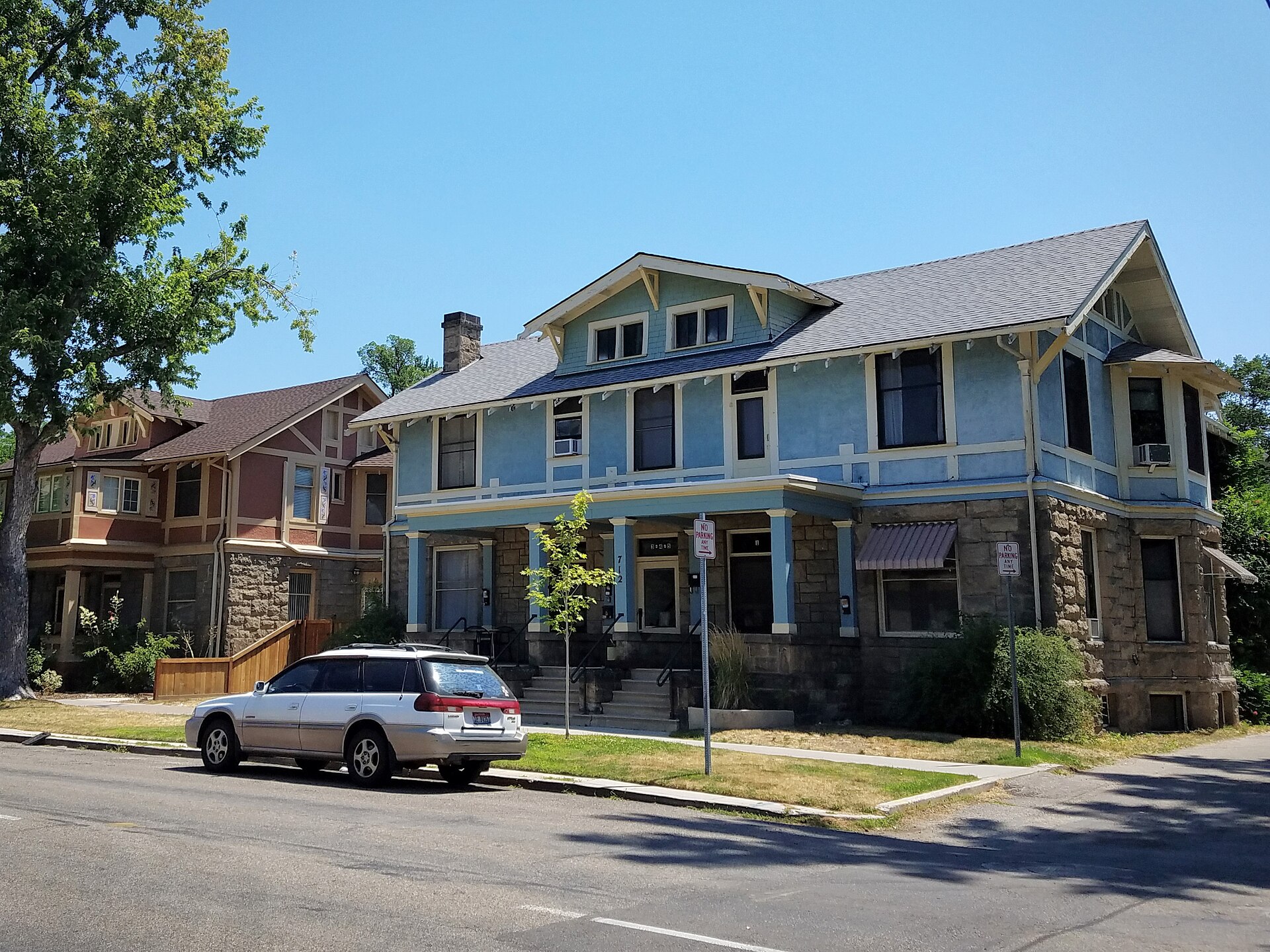
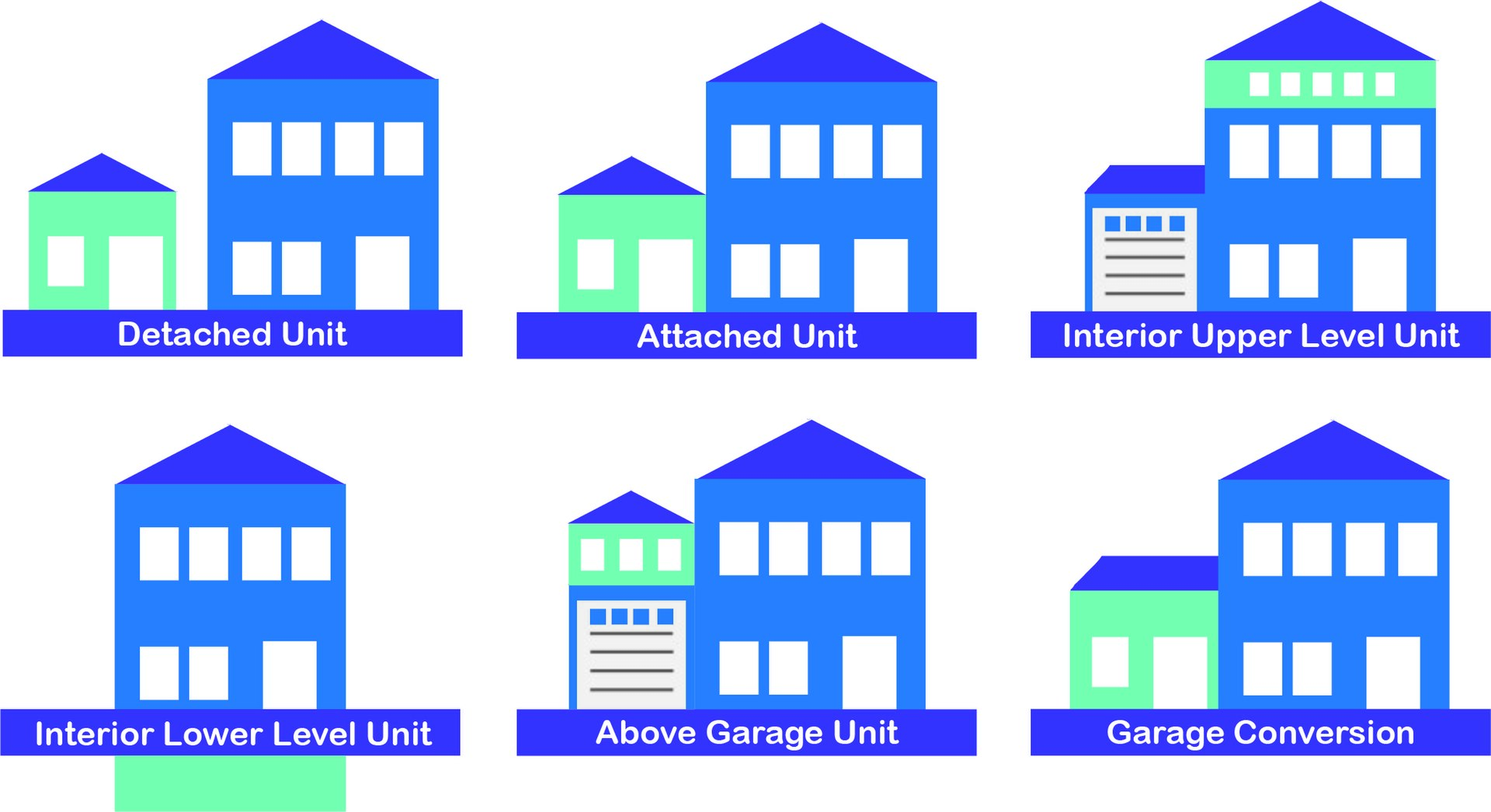
An accessory dwelling unit is a second, smaller home on the same lot as a house: a basement apartment, a unit over a garage, a converted garage, or a cottage in the back yard. Idaho Code 67-6541(1) defines it as "a self-contained living unit that includes its own cooking, sleeping, and sanitation facilities and that is located on the same lot as a single-family primary dwelling." It "may be internal, attached, or detached but does not include a motorhome, camper, recreational vehicle, tiny home on wheels, or other such similar dwellings on wheels." The same subsection says no city may enact or enforce "any ordinance, rule, regulation, or policy that bans accessory dwelling units in any residential zoning area," and that an ADU "shall be classified as a residential land use for zoning purposes subject to all applicable zoning requirements."5

The seven rules city codes must follow
Section 67-6541(2) gives covered cities until Feb. 1, 2027, to amend their long-range plan and land use regulations "for all land zoned for single-family residential uses," again except historic districts and designated historic properties. Note the difference from the starter-home law: ADUs are required on land zoned for single-family uses, while starter home subdivisions must be allowed in all "residential zoning districts." The city's rules must:5
| Paragraph | What the city code must do | Plain meaning |
|---|---|---|
| (2)(a) | Allow "either one (1) internal accessory dwelling unit within the single-family dwelling or one (1) detached accessory dwelling unit per lot in the rear yard or subject to setbacks required of the primary dwelling" | One ADU per lot, inside the house or out back. Not both. |
| (2)(b) | Prohibit requiring off-street or guest parking for an ADU, unless the main house has no off-street parking, the street is unpaved and not built for on-street parking, or the main house is within a quarter mile of "transit, an employment area, or commercial services" | No parking mandate in most cases, with three exceptions |
| (2)(c) | Prohibit impact fees or utility connection fees on ADUs greater than those on other single-family dwellings | ADU fees cannot exceed house fees |
| (2)(d) | Prohibit "limiting the size of an accessory dwelling unit to less than one thousand (1000) square feet or seventy-five percent (75%) of the size of the primary dwelling" | A floor on the size cap a city may set (see the ambiguity below) |
| (2)(e) | Prohibit an owner-occupancy requirement for the main house or the ADU | The owner does not have to live on the lot |
| (2)(f) | Prohibit a height limit lower than the height of the existing main house | An ADU may be as tall as the house |
| (2)(g) | Prohibit ADU rules "more restrictive than restrictions for single-family dwellings within the same zoning district with regard to setbacks, lot size, or coverage or building frontage" | No extra-large setbacks or lot sizes just for ADUs |
The parking exception in (2)(b) is worded oddly. It lets a city require ADU parking when the main house is near "transit, an employment area, or commercial services," which is the reverse of the usual planning logic, where parking requirements are dropped near transit. Washington's 2023 ADU law, for example, bars parking requirements within half a mile of a major transit stop.30 Whether Idaho's drafters meant to reverse that logic is not explained in the statement of purpose, and "employment area" and "commercial services" are not defined. In a city like Boise, where much of the older housing is within a quarter mile of a bus route or a corner store, the exception could swallow much of the rule. Cities are reading it differently, and it is a likely subject of future amendment.
By-right approval and clear standards
Two more subsections change how ADUs are approved. Subsection (3) says ADU projects "that meet the jurisdiction's established land use requirements shall be approved administratively and as a matter of right, without the need for discretionary approval." That means a staff sign-off, not a public hearing, a conditional use permit or a vote of the planning commission. Subsection (4) requires any approval standards to be "clear and objective" and bars standards that, "either singularly or cumulatively," discourage ADUs "through unreasonable cost or delay." Subsection (5) lets a city be less restrictive, subsection (6) limits the section to cities over 10,000, and subsection (7) preserves building codes, fire and floodplain rules, water, sewer, drainage, road access and utility laws, environmental protections and right-of-way setbacks.5
"Clear and objective" is language Idaho already used for manufactured homes in Idaho Code 67-6509A(5) and for overlay districts in 67-6511. A conditional use permit, by contrast, lets a commission weigh vague factors like neighborhood compatibility after a hearing; the conditional use process is explained in Conditional Uses, Variances, PUDs and Development Agreements.31
The ADU size rule: two readings
Paragraph (2)(d) bars a city from "limiting the size of an accessory dwelling unit to less than one thousand (1000) square feet or seventy-five percent (75%) of the size of the primary dwelling." It does not say "whichever is greater" or "whichever is less," and Idaho cities have already read it both ways.
- Twin Falls amended its code by Ordinance 2026-006. Its ADU size standard now reads that ADUs "shall not exceed seventy-five percent (75%) of the square footage of the living space for the principal residence or 1,000 sq. ft.; whichever is greater."27
- Pocatello planning staff, in an Aug. 13, 2026, executive summary asking the City Council for direction on "City-initiated text amendments to Title 17: Zoning Regulations, in response to State preemption legislation," proposed an ADU maximum of 1,000 square feet or 75 percent of the main house, "whichever is less."32
How we figured it: what the two readings allow
Take a 1,200-square-foot house. Seventy-five percent is 900 square feet. Under the "whichever is greater" reading, the city must allow at least 1,000 square feet. Under the "whichever is less" reading, a 900-square-foot cap is allowed.
Take a 2,000-square-foot house. Seventy-five percent is 1,500 square feet. "Greater" means the city must allow up to 1,500 square feet; "less" means a 1,000-square-foot cap is allowed.
The readings agree only when the house is exactly 1,333 square feet (1,000 divided by 0.75). Arizona's statute, by comparison, says plainly that a city may cap an ADU at 75 percent of the main house or 1,000 square feet, "whichever is less."33 Inputs: Idaho Code 67-6541(2)(d); Twin Falls Ord. 2026-006; Pocatello Aug. 13, 2026, executive summary.
Until a court or the Legislature settles the question, a homeowner in Twin Falls and a homeowner in Pocatello with identical 2,000-square-foot houses may face different limits under the same state law. That is not a sign either city is defying the law; it is a sign the sentence can be read two ways.
How SB 1354 changed between introduction and signing
| Provision | SB 1354 as printed | As amended and signed |
|---|---|---|
| Cities covered | Population greater than 5,000 | Population greater than 10,000 |
| Deadline | Oct. 1, 2026 | Feb. 1, 2027 |
| How many ADUs | One internal "and" one detached ADU per lot | "Either" one internal "or" one detached, the detached unit in the rear yard or within the main house's setbacks |
| Parking | No off-street or guest parking may be required | Same, with three exceptions (no off-street parking at the house, unpaved street, within a quarter mile of transit, employment or commercial services) |
| Setbacks | No side or rear setback over 4 feet for new ADUs | Deleted; ADUs follow the setbacks for single-family homes in the district |
| Height in "same zoning area" rule | Setbacks, lot size, height, coverage, frontage | "Height" removed from (2)(g); "area" changed to "district" |
| Historic properties | Historic districts only | Adds designated historic properties |
| Health and safety savings clause | None | New subsection (7) |
| HOA rules | HOA may adopt reasonable rules on size, height, setbacks, open space, parking, bedrooms | Adds "architectural design consistent with the primary dwelling" |
Sources: SB 1354 as printed; Senate amendment S1354A2 moved by Sen. Toews and seconded by Sen. Den Hartog; Idaho Code 67-6541 as enacted.34195
The change from "and" to "either ... or" matters. As introduced, the bill would have required room for two ADUs on most lots, a main house plus three homes in all. The HOA lobby's testimony that the bill allowed "a minimum of two ADUs per lot" described the printed version. The final law requires a city to allow one.1719

HOAs and ADUs: Idaho Code 55-3212
The first section of SB 1354 rewrote a 2023 law on homeowner's associations. A homeowner's association (HOA) is a private group, usually created when a subdivision is platted, that enforces covenants, conditions and restrictions (CC&Rs) recorded against every lot. CC&Rs are private rules, separate from city zoning, and Part C of this series, coming later, covers HOA law in depth.
The 2023 version came from House Bill 166 (2023), sponsored by the House State Affairs Committee with Rep. Nash and Sen. Ruchti as floor sponsors. It passed the Senate 32-3-0 and the House 56-13-1 and was signed April 3, 2023 (2023 ch. 265). It barred HOAs from adding, amending or enforcing covenants that "strictly prohibit" internal ADUs, protected only one internal unit per owner-occupied homestead, and required the unit to house relatives or long-term tenants.3534
As amended in 2026, Idaho Code 55-3212(1) is much broader. It now reads: "No homeowner's association shall add, amend, or enforce any covenant, condition, or restriction in such a way that limits or prohibits accessory dwelling units, as defined in section 67-6541, Idaho Code, on any property, land, or structure thereon within the jurisdiction of a homeowner's association, unless the owner of the affected property expressly agrees in writing to such addition or amendment of a covenant, condition, or restriction." Subsection (2) still lets an HOA adopt "reasonable rules governing the use of accessory dwelling units otherwise allowed by law, including but not limited to architectural design consistent with the primary dwelling, size limits, height limits, setback requirements, open space requirements, parking controls, and bedroom requirements." Subsection (4) excludes short-term rentals as defined in 63-1803(4).7
Three points stand out. First, this section has no population limit: it applies to HOAs in Kimberly and Hagerman as much as in Meridian, even though those small cities are not required to change their own zoning. Second, it now covers detached ADUs, not only internal ones, and drops the owner-occupancy and relatives-or-tenants limits of the 2023 version. Third, the section still contains a sentence that protects "valid covenants, conditions, or restrictions limiting or prohibiting a property owner's right to transfer an interest in land" that applied when the owner bought. Whether that sentence protects older CC&Rs that ban ADUs outright is unsettled. The HOA lobby told the Senate committee that the Idaho Supreme Court's reasoning in docket 51990 suggested courts would not read it that way.717
Docket 51990 is North Henry's Lake Homeowners Association, Inc. v. Norton, filed Jan. 6, 2026. Justice Brody wrote the opinion, and Chief Justice Bevan and Justices Moeller, Zahn and Meyer concurred. It involved the parallel HOA rental statute, Idaho Code 55-3211, and held that the statute "unambiguously prohibits a homeowner's association from adding a rental restriction" without the written agreement of the owner at the time, so a 2016 short-term rental ban did not bind a lot whose owner never agreed, or later owners of that lot.3637 The ADU section was written in the same pattern, so the same reasoning is likely to be argued in ADU disputes. No Idaho appellate court had ruled on the 2026 ADU language as of Nov. 18, 2026.
Short-term rentals: HB 583 and Idaho Code 67-6539
The 2017 and 2018 laws
A short-term rental, in Idaho law, is a house, unit or room "offered for a fee and for thirty (30) days or less," the definition in Idaho Code 63-1803(4). Idaho first limited local regulation of short-term rentals in House Bill 216 (2017), sponsored by the House Revenue and Taxation Committee with Rep. Trujillo and Sen. Rice as floor sponsors. It passed the House 63-5-2 and the Senate 35-0-0, was signed April 4, 2017 (2017 ch. 239), and took effect Jan. 1, 2018. It created Idaho Code 67-6539, which said no city or county "may enact or enforce any ordinance that has the express or practical effect of prohibiting short-term rentals or vacation rentals," and the tax-collection rules for rental platforms in Idaho Code Title 63, Chapter 18.383921 House Bill 452 (2018), passed 64-5-1 and 30-4-1 and signed March 14, 2018 (2018 ch. 79), revised the section and let local governments adopt "reasonable regulations" to safeguard "the public health, safety and general welfare in order to protect the integrity of residential neighborhoods in which short-term rentals or vacation rentals operate."4041
Between 2018 and 2025, cities and counties used that "integrity of residential neighborhoods" language to license rentals, cap their numbers, require owner occupancy or limit them to certain zones. Lava Hot Springs allowed non-owner-occupied rentals only in its commercial zone. The Supreme Court's 2025 ruling struck that down because it "expressly prohibits" vacation rentals in the residential zone.21
What HB 583 changed
As amended by HB 583 (2026 ch. 22), Idaho Code 67-6539 now does the following:841
- Narrows the purpose. Local rules must be "necessary to safeguard the public health and safety." The "general welfare" and "integrity of residential neighborhoods" language is gone.
- Bans different treatment. Rules may not "impose different restrictions or obligations on short-term rentals than are imposed on single-family dwellings or similar structures not used as short-term rentals," unless the section itself permits them. A short-term rental is a "non-transient residential use" for zoning and building codes, subject only to codes adopted by the Idaho Building Code Board.
- Lists 17 forbidden requirements. Subsection (2)(a) defines "different restrictions or obligations" to include, among others: requiring owner occupation "for any amount of time," professional management, extra insurance, use reporting, extra fire protection or sprinklers, extra parking, inspections, signs or notices, a cap on rental days, notices to neighbors, a conditional use permit in a residential zone, limits on how close rentals may be to one another, and caps on the number of rentals in a city or county.
- Allows five safety rules only. Subsection (3) lets a city or county require working smoke alarms in sleeping areas; a working fire extinguisher and carbon monoxide detector on each floor; removable escape ladders in upper-floor sleeping rooms with windows; occupancy limits no stricter than the building code's non-transient residential limits; and a handout showing exits, extinguishers, any first aid kits and an emergency phone number.
- Bans licenses. Subsection (5): "No county or city shall require a license, fee, permit, certification, or registration to operate a short-term rental."
- Bars local enforcement of private restrictions. Subsection (4) says no county or city shall enact or enforce "any covenant, condition, restriction, or contract that regulates a short-term rental except as allowed in this section."
- Keeps general ordinances. Subsection (6): rentals, owners and guests remain subject to the same noise, parking, nuisance, curfew and traffic rules as other homes.
HB 583 also amended Idaho Code 63-1804 so that an owner who rents directly to guests, without a platform such as Airbnb or Vrbo, must meet the same tax collection, reporting and payment duties as a platform.42 That matters to resort cities and counties that levy local option taxes on lodging.
Unlike the starter-home and ADU laws, HB 583 covers every city and county in Idaho, with no population threshold and no compliance deadline. It took effect July 1, 2026, and any local license, registration, cap or owner-occupancy rule for short-term rentals became unenforceable on that date to the extent it conflicts. The statute governs cities and counties; private HOA rental rules are governed separately by Idaho Code 55-3211, the statute interpreted in the North Henry's Lake case.37
Who supported and who opposed HB 583
The Idaho REALTORS, a trade association, list HB 583 first among the bills they sponsored in 2026.22 Counties, through the Idaho Association of Counties' representative on the study committee, had asked for the opposite: that "short-term rental control be returned to local communities."12 At the study committee's first meeting, Ketchum City Administrator Jade Riley, speaking for the Idaho Resort Cities Coalition of 23 tourism-dependent communities, reported a large rise in short-term rental housing in Ketchum, and McCall's community and economic development director, Michelle Groenevelt, cited a regional study finding about 1,200 units were needed for full-time residents. Both resort towns are far below 10,000 people, and both are covered by HB 583 because it has no threshold.11 The House vote (54-16) and Senate vote (23-12) split differently from the zoning bills; several senators who backed the ADU bill voted against HB 583, and several who opposed the ADU bill voted for HB 583.32
The other 2026 housing and land use laws
Four smaller bills round out the 2026 session. Two are mandates for all local governments; two are options.
HB 800: manufactured homes
Idaho Code 67-6509A has required every city and county since 1994 to allow manufactured homes on land zoned for single-family homes, while letting them adopt placement standards. Before 2026, one allowed standard was a 1,000-square-foot minimum. HB 800 (2026 ch. 171) changed the allowed standard to "at least four hundred (400) square feet for a single section or eight hundred (800) square feet for a multisectional manufactured home," added that a manufactured home with a single dwelling unit may be sited wherever single-family homes are allowed, and said "multidwelling unit manufactured homes" (such as a factory-built duplex) may be sited only where multifamily homes are allowed. It also amended the definition in Idaho Code 39-4105. It applies to all cities and counties, with no population threshold. The section still does not override "a recorded restrictive covenant."31 Manufactured homes, built to the federal HUD code since June 15, 1976, are covered in How Houses Changed.
HB 707: lot splits for ADU financing
HB 707 (2026 ch. 170) created Idaho Code 50-1335. It lets cities or counties, at their option, set up an administrative process, outside the platting law, to divide a lot containing an existing or approved ADU so the owner can get a mortgage on each part. A lender's letter must show the split is needed for financing; the split cannot add dwelling units, increase density or allow further division; each parcel needs legal access and utilities; and the split must be recorded with a declaration barring further division. The bill's intent section says, "It is not the intent of the Legislature to facilitate outward development, subdivisions by another name, or agricultural land fragmentation."43
HB 706: single-stair apartment buildings
HB 706 (2026 ch. 320), the closest vote of the session at 18-17 in the Senate, created Idaho Code 39-4109C. It lets local governments, at their option, allow apartment buildings of up to six stories (five with an occupiable roof) to be served by one stairway instead of two, if each floor has no more than four units and 6,000 square feet and the building meets a list of fire protections, including full NFPA 13 sprinklers, a two-hour fire-rated stair and elevator shaft, a 48-inch-wide stair, and no more than 20 feet of travel from any unit door to the stair.44 Single-stair buildings fit on narrower lots. Building codes are the subject of Part E of this series, coming later.
HB 585: inspection deadlines
HB 585 (2026 ch. 232), passed without a no vote, says that if a requested electrical, plumbing or HVAC inspection is not performed within 48 business hours, the permit holder may hire a qualified third-party inspector and get the inspection fee refunded, and that inspectors who fail work must give the reason within three business days or refund 10 percent of the fee.45
Bills that did not pass, and one that did elsewhere
SB 1279 (2026), the first starter-home bill, got no hearing after referral on Feb. 12, 2026.13 SB 1163 (2025), a broader short-term rental rewrite, died in committee in 2025.23 HB 749 (2026 ch. 97), signed March 20, 2026, protects owners whose land a city annexes without consent: they cannot be forced onto city water and sewer, may keep and replace compliant wells and septic systems, and the city pays if its construction damages them; it is covered in Annexation Fights.46 No 2026 bill extended the starter-home or ADU mandates to counties.
Which cities are covered
The 10,000 line
Both Idaho Code 67-6541(6) and 67-6542(4) say the section "shall apply only to cities with a population greater than ten thousand (10,000)." Neither says which population figure counts: the 2020 Census, the Census Bureau's annual estimate, a state estimate, or a city's own count. For most cities it does not matter. For four cities near the line it does, because they were under 10,000 in the 2020 base and over it in the newest estimate.
By the Census Bureau's Vintage 2025 estimates for July 1, 2025, released in May 2026, 27 of Idaho's 198 incorporated cities had more than 10,000 residents. Together they held 1,229,082 people, about 60.6 percent of the state's 2,029,733.6
| City | County | April 1, 2020 estimates base | July 1, 2025 estimate | Over 10,000 in 2020 base? |
|---|---|---|---|---|
| Boise | Ada | 235,722 | 238,429 | Yes |
| Meridian | Ada | 117,810 | 142,988 | Yes |
| Nampa | Canyon | 100,414 | 120,384 | Yes |
| Caldwell | Canyon | 60,138 | 76,629 | Yes |
| Idaho Falls | Bonneville | 65,605 | 71,785 | Yes |
| Pocatello | Bannock | 56,745 | 58,771 | Yes |
| Coeur d'Alene | Kootenai | 54,649 | 58,179 | Yes |
| Twin Falls | Twin Falls | 51,846 | 56,216 | Yes |
| Post Falls | Kootenai | 38,620 | 46,715 | Yes |
| Rexburg | Madison | 39,787 | 40,334 | Yes |
| Lewiston | Nez Perce | 34,211 | 34,717 | Yes |
| Eagle | Ada | 31,169 | 34,658 | Yes |
| Kuna | Ada | 24,096 | 31,525 | Yes |
| Moscow | Latah | 25,466 | 26,721 | Yes |
| Star | Ada, Canyon | 11,305 | 20,874 | Yes |
| Ammon | Bonneville | 17,722 | 20,119 | Yes |
| Hayden | Kootenai | 15,565 | 17,363 | Yes |
| Chubbuck | Bannock | 15,585 | 16,823 | Yes |
| Mountain Home | Elmore | 16,041 | 16,779 | Yes |
| Jerome | Jerome | 12,348 | 13,731 | Yes |
| Blackfoot | Bingham | 12,405 | 13,361 | Yes |
| Rathdrum | Kootenai | 9,212 | 13,227 | No |
| Garden City | Ada | 12,298 | 13,047 | Yes |
| Middleton | Canyon | 9,451 | 12,600 | No |
| Burley | Cassia, Minidoka | 11,721 | 12,409 | Yes |
| Sandpoint | Bonner | 8,654 | 10,645 | No |
| Hailey | Blaine | 9,164 | 10,053 | No |
Source: U.S. Census Bureau, Vintage 2025 subcounty population estimates for Idaho (file sub-est2025_16.csv), incorporated place totals. The estimates base is the Census Bureau's recomputed April 1, 2020 population inside Jan. 1, 2025 city limits; it is close to, but not the same as, the 2020 Census count.6
Rathdrum, Middleton, Sandpoint and Hailey are the edge cases. A housing advocacy group's 2026 statewide review listed Sandpoint among cities "below the population threshold," apparently using an older figure.28 Hailey, at 10,053 in the 2025 estimate, did not wait to find out: its City Council adopted Ordinance 1364 on Aug. 24, 2026, revising its ADU definition to match the state's, removing ADU occupancy restrictions and size limits, exempting ADUs from design review, and adopting the state's three parking exceptions word for word, with recitals saying the city wanted "to align with regulations as set forth in Idaho Code."47 Star, which nearly doubled after 2020, is well over the line on any count.
The Magic Valley
Of the six core Magic Valley towns in this series, only Twin Falls and Jerome are covered by the starter-home and ADU mandates. Kimberly, Buhl, Gooding and Hagerman (in Gooding County) are not. In the wider region, Burley is covered; Rupert, Heyburn, Wendell, Filer and Shoshone are not. No county in the region (Jerome, Twin Falls, Gooding, Lincoln, Minidoka or Cassia) is covered, because both laws apply only to cities. All of them, cities and counties alike, are covered by HB 583 on short-term rentals and HB 800 on manufactured homes, and every HOA in every one of them is covered by the ADU rule in Idaho Code 55-3212. Part A of this series profiles the six towns in The Magic Valley Case Study.6
One detail shows how much the amendments changed the map. Kimberly, at 5,798 in the 2025 estimate, would have been covered by both bills as printed, with their 5,000-person threshold. So would Emmett, Fruitland, Payette, Preston, Rigby, Rupert, Shelley and Weiser. Raising the line to 10,000 took nine cities out, including two in the Magic Valley (our count from the Vintage 2025 file).62534
Decision tree: does each law apply here?
Two more limits are easy to miss. The ADU mandate reaches only land "zoned for single-family residential uses," so a city's multifamily or mixed-use zones are not covered by it (though most cities already allow more than one unit there). And the starter-home mandate reaches "residential zoning districts," which in most codes includes multifamily districts, but only for single-family detached homes on four or more acres.54
The February 2027 deadline and what happens if a city misses it
How a city must amend its code
Both laws say cities must amend their plans and land use regulations "by resolution or ordinance adopted, amended, or repealed in accordance with the notice and hearing procedures" of Idaho Code 67-6509. That section requires at least one public hearing before the planning and zoning commission, with notice published in the official newspaper and sent to other local governments, including school districts, at least 15 days before the hearing. The city council acts only after the commission recommends, and may hold its own hearing using the same notice rules; the plan change takes effect only when the council adopts it by resolution.24 A plan amendment and a zoning text amendment are legislative acts, so the council's decision is generally not open to the "affected person" judicial review described in Zoning Ordinances, Maps and Rezones. The step-by-step process for residents who want to take part is in Shaping Your City's Code Rewrite.
Working backward from Feb. 1, 2027: a city that needs a commission hearing, council action and a published ordinance, with 15 days' notice before each hearing, needed to start by about November 2026 to finish on time without special meetings. A city that wants to change its long-range plan first, then its code, needs longer.
No penalty clause
Neither 67-6541 nor 67-6542 says what happens if a city misses the deadline. There is no fine, no loss of state money, no state agency charged with enforcement, and no automatic fallback rule. Compare Arizona, whose 2024 ADU statute provides that if a city fails to adopt its rules by Jan. 1, 2025, ADUs are allowed on residential lots without the city's limits.33 Idaho's sections do, however, take effect on their own terms. Subsection (1) of each already says no city "shall enact or enforce" an ordinance that "bans" starter home subdivisions or ADUs in residential areas, and that sentence has been law since July 1, 2026. A builder or homeowner whose application is denied under an older, stricter rule could argue in court that the city enforced a ban the statute forbids. Whether courts would also enforce the numeric limits in subsection (2) against a city that has not yet amended its code is an open question the statutes do not answer.
For short-term rentals, there is no deadline at all. HB 583 changed 67-6539 directly, effective July 1, 2026, so any conflicting local license, permit or cap has been unenforceable since then. The Lava Hot Springs case shows the enforcement path the Legislature expects: a property owner or association sues the city, and the court voids the ordinance.21
Early city responses
As of Nov. 18, 2026, cities were at very different stages. The examples below are drawn from official city documents found online; where only news coverage was found, that is said. A full city-by-city deadline tracker is in Shaping Your City's Code Rewrite.
Boise
Boise had already rewritten its zoning code before the Legislature acted. The City Council unanimously approved the "Modern Zoning Code" on June 15, 2023, and it took full effect Dec. 1, 2023, after a rewrite that began in fall 2020.48 The city's code page says the current version reflects changes approved by Ordinance 25-25 and was in effect as of April 2026.49 On March 17, 2026, two weeks before the governor signed SB 1354, the city announced eight free, pre-approved ADU plans ranging from 280 to 695 square feet, and published its ADU counts: an average of 61 ADUs a year built from 2019 to 2023, 130 built or approved in 2024, and 82 in 2025. Planning and Development Services Director Maureen Brewer called ADUs "not the entire solution" but a meaningful addition to supply.50 At the study committee's final meeting, Jason Blais, representing the City of Boise and the Idaho Association of Building Officials, told legislators Boise's changes had included new ADU rules and tiered impact and sewer connection fees "based on square footage of the unit."12
Two cautions on that chart. The city's release counts ADUs "built or approved," which mixes permits and finished units, and the 2019 to 2023 figure is an average, not a single year. Interest rates, construction costs and the new code all changed at once, so the chart cannot show how much of the 2024 jump the code caused.
Meridian
Meridian's debate over ADUs began before the state acted. At its Aug. 26, 2025, meeting the City Council discussed a citywide text amendment to its Unified Development Code (file ZOA-2025-0001) that included ADU rules. City staff described the code then in effect: the owner had to live on the property "at least six months" a year, ADUs were capped at 900 square feet and two bedrooms, and parking was tied to bedroom count. Council members split on dropping the owner-occupancy rule, and the council continued the item to a later date by a unanimous vote.51 Under Idaho Code 67-6541(2)(e), owner-occupancy requirements must now go, and a 900-square-foot cap is below the 1,000-square-foot floor under either reading of (2)(d). Meridian's 2026 amendment status was not confirmed from city records for this lesson.
Twin Falls
Twin Falls adopted a new Uniform Development Code on Dec. 8, 2025, effective Jan. 1, 2026, and amended it by Ordinance 2026-006 (the city's code page labels the current text "Amended June 27, 2026"). The ADU section as amended allows one ADU per legal lot, sets the size limit at 75 percent of the main home's living space or 1,000 square feet "whichever is greater," ties ADU height to the main house's district limit, and requires an extra parking space only if the main home has no off-street parking or the street has no on-street parking. It also requires ADUs to take water, sewer and sanitation service through the main home's lines, with no added meters.27 The amended code reviewed for this lesson contains no "starter home" provision; minimum lot areas in its town neighborhood districts remained 3,500 to 7,000 square feet. Whether the city plans a separate starter-home amendment before Feb. 1, 2027, was not confirmed.
Pocatello
On Aug. 13, 2026, Pocatello's Planning and Development Services staff asked the mayor and council for direction on "City-initiated text amendments to Title 17: Zoning Regulations, in response to State preemption legislation," naming SB 1352, SB 1354 and HB 800. Staff proposed a new section for starter home subdivisions "as defined by State Code" in all residential districts (four-acre minimum; lots of no more than 1,500 square feet; front and rear setbacks of 15 feet or the zone's minimum, whichever is less; 5-foot side setbacks) and ADU changes (1,000 square feet or 75 percent of the main home, whichever is less; no added parking if the main home meets standards; removal of the owner-occupancy deed restriction).32
Jerome and others
Jerome, at 13,731 people, is covered by both laws. A search of the city's posted code and agendas for this lesson found no adopted starter-home or ADU amendment as of Nov. 18, 2026; that does not mean none is in progress. Coeur d'Alene, Middleton and Meridian were also reported in local news to be working on amendments, but their records were not confirmed for this lesson; see "What we don't know," below.
How Idaho compares with other states
Idaho joined a wave. From 2017 to 2025, a run of states passed laws overriding local ADU bans and lot-size minimums. The table compares the main features, each taken from the state's statute or legislative staff summary.
| State and law | Who is covered | ADUs required | Owner occupancy | Parking | Small lots |
|---|---|---|---|---|---|
| Idaho, SB 1354 and SB 1352 (2026) | Cities over 10,000; counties not covered | One per single-family lot (internal or detached) | Cannot be required | Cannot be required, with three exceptions | Starter home lots up to 1,500 sq ft on 4+ acres |
| Montana, SB 528 (2023, effective Jan. 1, 2024) | Cities and towns with zoning | At least one per single-family lot | Cannot be required | No extra parking may be required | SB 382 (2023) lists reducing minimum lot sizes as one optional strategy |
| Washington, HB 1337 (2023) | Fully planning cities and counties, inside urban growth areas | At least two per lot | Cannot be required | None within half a mile of major transit; otherwise capped | Lots of 2,000 sq ft or less may be limited to two ADUs |
| Oregon, ORS 197A.425 | Cities over 2,500 and counties over 15,000, inside urban growth boundaries | At least one per detached house | Cannot be required | Cannot require additional off-street parking | Not in this section |
| Arizona, HB 2720 (2024), ARS 9-461.18 | Cities over 75,000 | One attached and one detached per lot | No relationship or occupancy tie may be required | No additional parking | Not in this section |
| Texas, SB 15 (2025) | Cities over 150,000 in counties over 300,000 | Not in this law | Not addressed | No more than one space per small-lot unit | Lots up to 3,000 sq ft, 30 ft wide, 75 ft deep on 5+ acres; HOA rules exempt |
Sources: Idaho Code 67-6541 and 67-6542; Montana Legislative Services 2023 land use legislation summary; Washington House final bill report on E HB 1337 (Laws of 2023, ch. 334); Oregon Revised Statutes 197A.425 (2025 edition); Arizona Revised Statutes 9-461.18; Texas SB 15, 89th Legislature, enrolled text.5230533329
Several contrasts stand out. Idaho's ADU law requires one unit per lot, where Washington requires two and Arizona one of each kind. Idaho's HOA rule goes further than most: Texas's small-lot law expressly leaves private HOA rules and deed restrictions alone, while Idaho Code 55-3212 reaches every HOA in the state.297 Idaho's population threshold is higher than Oregon's (2,500) and lower than Arizona's (75,000) or Texas's (150,000). And unlike Washington and Oregon, whose ADU rules reach counties, Idaho left counties out entirely, which matters in fast-growing counties that approve subdivisions outside city limits. Utah took a narrower step in 2021: House Bill 82 (2021), signed March 16, 2021, and effective May 5, 2021, required cities and counties to allow internal ADUs in single-family homes, with some exceptions.54 California took a small-lot approach in Senate Bill 684 (2023), requiring cities to approve small subdivisions of up to 10 homes on qualifying lots without a discretionary hearing.55

Pictures, Numbers and Infographics
The key numbers and dates in this lesson, with a comparison where one exists.
| Measure or rule | Idaho | U.S. or other states | Place or year | Source |
|---|---|---|---|---|
| Population threshold for ADU mandate | Greater than 10,000 (cities only) | Oregon: cities over 2,500, counties over 15,000; Arizona: cities over 75,000 | Idaho 2026; Oregon current; Arizona 2024 | 55333 |
| Largest minimum lot size a covered city may require (small-lot projects) | 1,500 sq ft (starter home subdivision, 4+ acres) | Texas: 3,000 sq ft (5+ acres, cities over 150,000) | Idaho 2026; Texas 2025 | 429 |
| Maximum required lot width and depth | 30 ft wide; 70 ft deep | Texas: 30 ft wide; 75 ft deep | 2026; 2025 | 429 |
| Maximum required setbacks, starter lots | 15 ft front and rear; 5 ft side | Texas small lots: 15 ft front, 10 ft rear, 5 ft side | 2026; 2025 | 429 |
| ADUs a city must allow per lot | One (internal or detached) | Washington: two; Arizona: one attached and one detached | 2026; 2023; 2024 | 53033 |
| Smallest ADU size cap a city may set | 1,000 sq ft or 75% of main house (reading disputed) | Washington: no cap below 1,000 sq ft; Montana: a detached ADU is defined as no more than 75% of the house or 1,000 sq ft | 2026; 2023 | 53052 |
| Cities over 10,000 (Vintage 2025) | 27 of 198 cities; 1,229,082 people; 60.6% of Idaho | n/a | July 1, 2025 | 6 |
| Code deadline | Feb. 1, 2027 (no penalty stated) | Arizona: Jan. 1, 2025, with an automatic fallback | 433 | |
| Short-term rental rules local governments may impose | Five safety rules; no license, fee, permit or registration | n/a | All Idaho cities and counties, from July 1, 2026 | 8 |
| Manufactured home size standard a local government may adopt | At least 400 sq ft (single section); 800 sq ft (multisection); was 1,000 sq ft | n/a | All Idaho cities and counties, 2026 | 31 |
| Boise ADUs built or approved | 61 a year (2019 to 2023 average); 130 (2024); 82 (2025) | n/a | Boise | 50 |
How we figured it: share of Idahoans in covered cities
From the Census Bureau's Vintage 2025 Idaho subcounty file, we kept the 198 incorporated place totals (summary level 162), selected the 27 with a July 1, 2025 estimate above 10,000, and summed them: 1,229,082. Divided by the state estimate of 2,029,733, that is 60.6 percent. Using the April 1, 2020 estimates base instead, 23 cities were over 10,000. Using a 5,000 threshold (the bills as printed), 36 cities with 1,289,752 people would have been covered. Inputs: sub-est2025_16.csv, fields POPESTIMATE2025 and ESTIMATESBASE2020.6
Common mistakes
- Citing the printed bill instead of the law. "Lots as small as 1,400 square feet," "12 homes per acre," "cities over 5,000," "Oct. 1, 2026," "two ADUs per lot" and "4-foot ADU setbacks" all come from SB 1352 or SB 1354 as introduced. The amendments changed every one of them.25163419
- Citing the starter-home law as 67-6541. Both bills were drafted with that number. The ADU law is 67-6541; the starter-home law was printed as 67-6542.4
- Assuming counties are covered. The starter-home and ADU mandates apply to cities only. Counties remain subject to the short-term rental and manufactured home laws.458
- Assuming small towns are untouched. A town under 10,000 need not change its zoning for starter homes or ADUs, but its HOAs are bound by 55-3212, and the town itself is bound by HB 583 and HB 800.7831
- Reading "starter home" as "affordable home." The law sets no price, income limit, home size cap or owner-occupancy rule. The bill's own sponsor told the Senate committee there was "no definition of 'starter home'."15
- Treating the ADU mandate as a by-right second and third home. The law requires one ADU per lot, internal or detached, not both. A city may allow more.5
- Assuming a city may still license vacation rentals. Since July 1, 2026, 67-6539(5) bars any license, fee, permit, certification or registration to operate one.8
- Assuming a city ordinance can enforce an HOA's rental ban. Subsection 67-6539(4) bars cities and counties from enforcing covenants or contracts that regulate short-term rentals beyond the section. HOA rental rules are a private matter under 55-3211.837
- Thinking the infrastructure clause is a blanket veto. Section 67-6542(5) lets a city deny a starter home subdivision for inadequate infrastructure only "to the same extent and under the same standards" it applies to other subdivisions.4
What we know, what we don't, and what the data can show
What we know
- The bill numbers, sponsors, votes, signing dates, session law chapters and July 1, 2026 effective dates of SB 1352, SB 1354, HB 583, HB 800, HB 707, HB 706 and HB 585, from the Legislature's bill pages.123
- The current text of Idaho Code 67-6541, 67-6542, 55-3212, 67-6539, 63-1804, 67-6509A and 50-1335, and the Feb. 1, 2027 deadline in the two city mandates.
- That 27 cities exceed 10,000 by the Vintage 2025 estimates, including Twin Falls, Jerome and Burley in the Magic Valley, and that Kimberly, Buhl, Gooding and Hagerman do not.6
- That the Association of Idaho Cities, the Idaho Chapter of the American Planning Association and HOA groups opposed the zoning bills in committee, and builders, Realtors, AARP and the Mountain States Policy Center supported them.151718
What we don't know
- Which population figure governs the 10,000 threshold, and so whether Rathdrum, Middleton, Sandpoint and Hailey are bound.
- Whether the ADU size floor means "whichever is greater" or "whichever is less," and what "employment area" and "commercial services" mean in the parking exception.
- Whether older HOA covenants that bar ADUs survive the 2026 rewrite of 55-3212.
- How many covered cities will meet the Feb. 1, 2027 deadline, what happens to those that do not, and whether any city will challenge the laws.
- Whether starter home subdivisions will actually be built, at what prices, and whether they will be sold or rented; and how many ADUs will be built in cities that had few before.
What the data can show
- ADU and lot-size trends by city: city building permit logs and annual development reports (Boise publishes ADU counts; COMPASS publishes Ada and Canyon permit data) can show ADU permits before and after July 1, 2026.
- Starter home subdivisions: preliminary and final plat applications in city planning files and county recorder plat records will show any subdivision with lots of 1,500 square feet or less.
- New home size and lot size nationally: the Census Bureau's Survey of Construction (Characteristics of New Housing) tracks median lot size and floor area for new single-family homes, by region; see How Houses Changed.
- Who is covered each year: the Census Bureau's annual Vintage city estimates (next, Vintage 2026, expected in May 2027) will show which cities cross 10,000.
- Short-term rental supply: Idaho State Tax Commission travel and convention tax collections by county, and local option tax receipts in resort cities, can show changes after the license ban.
Questions people ask
Can my neighbor build an ADU without a public hearing?
In a covered city, after the city's code is amended, yes, if the ADU meets the city's clear and objective standards. Idaho Code 67-6541(3) says qualifying ADUs "shall be approved administratively and as a matter of right, without the need for discretionary approval." The neighbor still needs a building permit, and the ADU must meet the setbacks, lot coverage and height rules that apply to houses in that district.5
Can my HOA stop me from building an ADU?
Under Idaho Code 55-3212(1) as amended in 2026, an HOA may not add, amend or enforce a covenant that limits or prohibits ADUs unless you agreed in writing. It may adopt "reasonable rules" on design, size, height, setbacks, open space, parking and bedrooms. Whether a ban recorded before you bought is still enforceable is unsettled; the Idaho Supreme Court read the parallel rental statute in North Henry's Lake to protect owners who never consented.736 This rule applies in every Idaho city and county, including towns under 10,000.
Can I rent my ADU as a short-term rental?
The ADU law does not forbid it, and 67-6539 bars cities and counties from treating short-term rentals differently from other homes. But 55-3212(4) says the HOA protections for ADUs "do not apply to any rentals defined in section 63-1803(4)," which is the short-term rental definition, so an HOA may be able to restrict short-term use of an ADU under its own rules and Idaho Code 55-3211.737
Does my city have to allow tiny homes on wheels or RVs as ADUs?
No. The definition in 67-6541(1) excludes "a motorhome, camper, recreational vehicle, tiny home on wheels, or other such similar dwellings on wheels." A city may still choose to allow them; Hailey's code, for example, addresses tiny homes on wheels separately.547
Will starter homes be cheap?
The law does not set a price. Its supporters argue smaller lots cut land cost, which Sen. Toews put at "about 35 percent of the cost of a home." Its critics, including the Association of Idaho Cities, argue nothing stops a builder from selling small-lot homes at market prices or renting them. Prices will depend on land, construction, interest rates and demand. Part A's Prices and Rents vs. Inflation shows how far Idaho prices rose after 2020.15
Can a town under 10,000 adopt these rules anyway?
Yes. Nothing in the laws stops a city below the threshold from allowing ADUs or small lots on its own, and both sections let cities be "less restrictive" than the state minimums. Hailey did so in August 2026. Kimberly, Buhl, Gooding and Hagerman may decide for themselves.4745
Can my county still license vacation rentals?
No. Since July 1, 2026, Idaho Code 67-6539(5) bars every county and city from requiring "a license, fee, permit, certification, or registration to operate a short-term rental." Counties and cities can still enforce noise, parking, nuisance, curfew and traffic ordinances that apply to all homes, and the five listed safety rules.8
What if my city's water or sewer system is near capacity?
Both laws keep water, sewer, storm drainage and utility laws in force. The starter-home law also lets a city deny or condition a subdivision for inadequate infrastructure under the same standards it uses for other subdivisions. The ADU law has no equivalent of subsection 67-6542(5), though its subsection (7) preserves utility laws "necessary to support the required density." The 85 percent capacity exemption Sen. Toews proposed in committee was not adopted.4517 How cities pay for capacity is in Impact Fees, Urban Renewal and Who Pays, and water limits in Part A's Water, Schools and Roads.
Hard questions
Should the state set lot sizes and ADU rules, or should each city decide?
The case for state rules: Housing markets are regional. A city that blocks small lots or ADUs pushes demand to its neighbors, and buyers and renters bear the cost. Sponsors and supporters, including builders, Realtors, AARP and the Mountain States Policy Center, argued that uniform minimums cut delay, let owners use their own land, and help young buyers and older adults. Rep. Harris called the ADU bill "about property rights."18
The case for local choice: Cities run the water, sewer, streets, police and fire service that new homes need, and residents elect the councils that answer for them. The Association of Idaho Cities and the planners' association argued that land use decisions "were best made at the local level," that the bills did nothing to ensure affordability, and that infrastructure, not zoning, is the binding constraint in many cities.1715
What the evidence shows: Idaho has no track record yet under these laws. Boise's experience after its 2023 code rewrite shows ADU numbers can rise when rules loosen (from an average of 61 a year to 130 in 2024) but also fall back (82 in 2025), so local rules are one factor among several.50 The broader history of state preemption in Idaho is in State Preemption and Local Control.
Why cover cities over 10,000 but not counties?
For the line as drawn: Larger cities have sewer and water systems that can serve small lots and ADUs; rural counties often rely on wells and septic systems, where small lots are not practical. The planners' association itself asked for a 10,000 threshold.15
Against it: Counties approve many subdivisions on the edges of growing cities, and Canyon and Kootenai counties face the same pressures as their cities. Leaving them out means a builder may face the new rules on one side of a city boundary and not the other, and creates a reason to stay outside city limits, which affects annexation (see Annexation Fights).
What the evidence shows: The statutes and minutes do not explain why counties were excluded. How much new housing is built in unincorporated areas could be measured with Census Building Permits Survey data for county permit offices, but that analysis is outside this lesson.
Do short-term rentals hurt neighborhoods, or are they a property right?
The owners' case: HB 583's statement of purpose calls it a protection for "the private property rights of Idaho homeowners by ensuring the right to rent their property is maintained." Rental owners argue that noise and parking problems can be handled with the same ordinances that apply to every house.20
The local governments' case: Resort towns told the study committee that rentals have taken homes out of the long-term market; Ketchum's city administrator reported a large rise in short-term rental housing, and counties asked for local control back.1112
What the evidence shows: The Legislature chose the owners' side in 2017, 2018 and again, more firmly, in 2026, and the Supreme Court applied the statute as written in 2025. Whether the 2026 license ban reduces long-term housing in resort towns is an open question that tax collection and housing data can test over time.
Should the state override private HOA covenants?
For: Covenants written by a developer decades ago bind owners who never negotiated them, and the 2023 and 2026 laws let owners add a unit for family or a tenant. Against: Buyers chose HOA neighborhoods knowing the rules, and the Idaho Community Association Institute told legislators that ADUs raise density beyond what developments were planned for. What the evidence shows: Idaho has moved steadily toward limiting HOA power over rentals (2022) and ADUs (2023 and 2026), and the Supreme Court has enforced those statutes as written. Part C of this series, coming later, covers HOA law in depth.173735
For reporters and advocates
Records that exist. Each covered city's draft code amendment, staff report, planning and zoning commission agenda, minutes and video, and the adopting ordinance and its published summary. The Legislature's bill pages, statements of purpose, amendments, journals and committee minutes for every 2026 bill. The Land Use and Housing Study Committee's minutes and presentations on the Legislature's 2025 interim page. Building permit logs and ADU counts kept by city building departments. Plat applications in city planning files and recorded plats at the county recorder. Court files on iCourt for any lawsuit challenging a denial under the new laws.
Questions to ask your city.
- Is the city over 10,000, and which population figure did the city use to decide?
- Has staff drafted amendments for 67-6541 and 67-6542? When are the commission and council hearings?
- How does the draft read the ADU size rule: "whichever is greater" or "whichever is less"?
- Which streets or areas does the city consider within a quarter mile of "transit, an employment area, or commercial services" for ADU parking?
- What infrastructure standard will the city use to condition or deny a starter home subdivision, and is it the same one used for other subdivisions?
- Has the city stopped enforcing any short-term rental license, registration or cap since July 1, 2026? Has it refunded fees?
- How many ADU permits did the city issue each year from 2019 through 2026?
Getting records. Staff reports, drafts, emails about the rewrite and permit logs are public records under Idaho Code Title 74, Chapter 1; see Idaho Public Records Requests. Hearings must follow the Idaho Open Meeting Law; see Idaho Open Meetings. How to testify is in Testifying and Public Comment.
The Magic Valley angle. Twin Falls has already amended its ADU rules and is the region's test of the starter-home law. Jerome, over 10,000 by any count, and Burley face the same deadline with smaller planning staffs. Kimberly, Buhl, Gooding and Hagerman are exempt from the zoning mandates but not from HB 583, HB 800 or the HOA rule, and their councils may choose to follow the state's lead. Watch whether builders bring starter home subdivisions to Twin Falls or Jerome, and whether county commissions in Twin Falls, Jerome and Gooding counties face pressure to adopt similar rules for land outside city limits.
Where to go next
- Idaho Legislature: 2026 legislation search: Free. Every 2026 bill with its text, amendments, statement of purpose, votes and status. Search a bill number (for example S1352) and open the engrossed version, which shows the bill as amended.
- Idaho Statutes: Title 67, Chapter 65 (Local Land Use Planning Act): Free official text of the planning act, including 67-6539, 67-6541 and 67-6542. Read the history line at the bottom of each section to see which session law changed it.
- Idaho Legislature: committee minutes and agendas: Free. Minutes record who testified for and against each bill and how members voted in committee; recordings are linked from committee pages.
- Idaho Supreme Court opinions: Free. Search by docket number (50888, 51990) or keyword such as 'short-term rental' to find opinions applying these statutes.
- U.S. Census Bureau: city and town population estimates: Free. The annual estimates used to check the 10,000 threshold; download the Idaho file and read the newest July 1 column.
- City of Boise: Modern Zoning Code and free ADU plans: Free. Idaho's largest city's current code, a model many cities compare against, with links to pre-approved ADU plans.
- Washington House final bill report on HB 1337 (ADUs): Free. A plain summary of a neighboring state's ADU law, useful for comparing Idaho's choices on parking, size and the number of units.
Still being checked (9 items)
These points could not be fully confirmed against a primary source when this lesson was written and fact checked in November 2026. The text above states each one as uncertain.
- Which population figure (2020 Census, Census annual estimate or another count) governs the 'greater than ten thousand' thresholds in Idaho Code 67-6541(6) and 67-6542(4); the statutes do not say.
- Whether Meridian, Nampa, Caldwell, Idaho Falls, Coeur d'Alene, Jerome and other covered cities had adopted or scheduled starter-home and ADU amendments as of Nov. 18, 2026; official records were not found or not reviewed for this lesson.
- Coeur d'Alene Press coverage (Aug. 25 and Oct. 14, 2026) of Coeur d'Alene's response could not be retrieved; Middleton's staff discussion of the deadline was seen only in third-party meeting summaries.
- Whether Pocatello's council adopted the staff proposal described in its Aug. 13, 2026 executive summary.
- The Idaho Supreme Court opinion PDFs (dockets 50888 and 51990) and the Pocatello agenda PDF could not be downloaded to the source folder (the servers returned errors to the download tool); their contents were read online.
- The bill number of the 2022 law that created Idaho Code 55-3211 (2022 ch. 323) was not confirmed.
- Final chaptered details of California SB 684 (2023) were not reviewed; the description relies on an Assembly committee analysis of the July 2023 version.
- The year Oregon first enacted its ADU requirement (now ORS 197A.425) was not confirmed.
- The source of the 'median age of 40' first-time buyer figure in the SB 1352 statement of purpose was not confirmed beyond its description as a national survey.
Last verified November 18, 2026. General education, not legal, tax, financial or real estate advice; every figure names its source and year in the Notes and Sources below. Data is revised: check the newest release before relying on any number.
Notes
- Idaho Legislature, bill page for Senate Bill 1352 (2026), Housing (starter home subdivisions), Senate State Affairs Committee; floor sponsors Sen. Toews and Rep. Redman. Passed Senate 25-10-0 on March 19, 2026; House 36-34-0 on March 26, 2026; signed by the governor March 31, 2026; Session Laws 2026, ch. 264; effective July 1, 2026 (read Nov. 18, 2026). Read it online. ↩
- Idaho Legislature, bill page for Senate Bill 1354 (2026), Accessory Dwelling Units, Senate State Affairs Committee; floor sponsors Sen. Toews and Rep. Bingham. Passed Senate 25-10-0 on March 20, 2026; House 47-23-0 on March 26, 2026; signed March 31, 2026; Session Laws 2026, ch. 265; effective July 1, 2026 (read Nov. 18, 2026). Read it online. ↩
- Idaho Legislature, bill page for House Bill 583 (2026), Short-Term Rentals, House Business Committee; floor sponsors Rep. Redman and Sen. Lakey. Passed House 54-16-0 on Feb. 12, 2026; Senate 23-12-0 on March 9, 2026; signed March 16, 2026; Session Laws 2026, ch. 22; effective July 1, 2026 (read Nov. 18, 2026). Read it online. ↩
- Idaho Code section 67-6542, Starter home subdivisions, added by SB 1352 (2026) as section 67-6541 and codified as 67-6542; history: [(67-6542) 67-6541, added 2026, ch. 264, sec. 1, p. 1115] (read Nov. 18, 2026). Read it online. ↩
- Idaho Code section 67-6541, Accessory dwelling units; history: [67-6541, added 2026, ch. 265, sec. 2, p. 1118] (read Nov. 18, 2026). Read it online. ↩
- U.S. Census Bureau, Vintage 2025 Population Estimates, Annual Estimates of the Resident Population for Incorporated Places and Minor Civil Divisions: April 1, 2020 to July 1, 2025, Idaho file sub-est2025_16.csv, summary level 162 (fields ESTIMATESBASE2020, POPESTIMATE2024, POPESTIMATE2025), released May 2026; counts and sums are our calculation (read Nov. 18, 2026). Read it online. ↩
- Idaho Code section 55-3212, Prohibited conduct: restrictions on accessory dwelling units (Homeowner's Association Act); history: [55-3212, added 2023, ch. 265, sec. 1, p. 792; am. 2026, ch. 265, sec. 1, p. 1117] (read Nov. 18, 2026). Read it online. ↩
- Idaho Code section 67-6539, Limitations on regulation of short-term rentals; history: [added 2017, ch. 239, sec. 2; am. 2018, ch. 79, sec. 1; am. 2026, ch. 22, sec. 1, p. 109] (read Nov. 18, 2026). Read it online. ↩
- Idaho Legislative Services Office, The 2026 Sine Die Report: A Summation of the 2026 Legislative Session (session convened Jan. 12, 2026, adjourned April 2, 2026; 350 new laws; Land Use and Housing Study Committee highlights) (read Nov. 18, 2026). Read it online. ↩
- Idaho Legislature, Senate Concurrent Resolution 103 (2025), Local Government and Taxation Committee, text and bill page; adopted by the Senate 23-10-2 on Feb. 10, 2025, and the House 51-16-3 on March 6, 2025; delivered to the Secretary of State March 11, 2025 (read Nov. 18, 2026). Read it online. ↩
- Minutes, Land Use and Housing Study Committee, May 14, 2025, Boise (presentations by Max Pond, Idaho REALTORS; Jade Riley, Ketchum and Idaho Resort Cities Coalition; Michelle Groenevelt, McCall) (read Nov. 18, 2026). Read it online. ↩
- Minutes, Land Use and Housing Study Committee, Oct. 24, 2025, Boise (members' priorities; cochairs Sen. Jim Woodward and Rep. Jordan Redman) (read Nov. 18, 2026). Read it online. ↩
- Idaho Legislature, bill page for Senate Bill 1279 (2026), Housing (starter home subdivisions), Local Government and Taxation Committee; last action Feb. 12, 2026, referred to Commerce and Human Resources (read Nov. 18, 2026). Read it online. ↩
- Statement of Purpose and Fiscal Note, RS33568 / S1352, revised March 13, 2026 (contacts Sen. Ben Toews, Rep. Jordan Redman, Sen. Tammy Nichols); prepared by a proponent, not a statement of legislative intent (Joint Rule 18) (read Nov. 18, 2026). Read it online. ↩
- Minutes, Senate Local Government and Taxation Committee, March 10, 2026 (S 1352 hearing; testimony of Sen. Toews, Hilary Patterson, Kelley Packer, Mayor Trevor Chadwick and others; roll call 4-5 on do-pass motion; sent to 14th Order) (read Nov. 18, 2026). Read it online. ↩
- Senate amendment to S.B. No. 1352 (S1352A2), moved by Sen. Toews, seconded by Sen. Den Hartog, and engrossed bill S1352E1 (read Nov. 18, 2026). Read it online. ↩
- Minutes, Senate Local Government and Taxation Committee, March 11, 2026 (S 1354 hearing; testimony of Sen. Toews, Lance Sayers, Lisa Anderson, Hilary Patterson, Britaney Bones and others; sent to 14th Order) (read Nov. 18, 2026). Read it online. ↩
- Minutes, House Business Committee, March 25, 2026 (S 1354aa sent to floor 10-6 on roll call; S 1352aa sent to floor by voice vote) (read Nov. 18, 2026). Read it online. ↩
- Senate amendment to S.B. No. 1354 (S1354A2), moved by Sen. Toews, seconded by Sen. Den Hartog, and engrossed bill S1354E1 (read Nov. 18, 2026). Read it online. ↩
- Statement of Purpose and Fiscal Note, RS33170 / H0583 (contacts Rep. Mike Moyle, Rep. Jordan Redman, Sen. Kelly Arthur Anthon, Sen. Todd M. Lakey); prepared by a proponent (read Nov. 18, 2026). Read it online. ↩
- Idaho Association of Realtors, Inc. v. City of Lava Hot Springs, Idaho Supreme Court, Docket No. 50888, opinion filed May 21, 2025 (Bevan, C.J.; Brody, Moeller, Zahn and Meyer, JJ., concurring) (read Nov. 18, 2026). Read it online. ↩
- Idaho REALTORS (a trade association), 2026 Idaho REALTORS Legislative Session Review, July 2026 (read Nov. 18, 2026). Read it online. ↩
- Idaho Legislature, Senate Bill 1163 (2025), short-term and vacation rental bill; bill page shows referral to Local Government and Taxation on March 10, 2025, and no later action (read Nov. 18, 2026). Read it online. ↩
- Idaho Code section 67-6509, Recommendation and adoption, amendment, and repeal of the plan (notice and hearing procedures); history through 2024, ch. 227 (read Nov. 18, 2026). Read it online. ↩
- Senate Bill 1352 (2026) as printed, State Affairs Committee (1,400-square-foot lots, 12 units per acre, population over 5,000, Oct. 1, 2026 deadline) (read Nov. 18, 2026). Read it online. ↩
- Sightline Institute (a housing and environmental advocacy group), "Idaho's big housing breakthrough year," April 29, 2026; cited for its description of the bills, which in part reflects provisions removed by amendment (read Nov. 18, 2026). Read it online. ↩
- City of Twin Falls, Uniform Development Code, Title 10, adopted Dec. 8, 2025, effective Jan. 1, 2026, as amended by Ordinance 2026-006 (sections 10-1-1, 10-3-6 to 10-3-9, and the ADU standards in Chapter 6) (read Nov. 18, 2026). Read it online. ↩
- Gem State Housing Alliance (a housing advocacy group), Statewide Zoning Code Analysis 2026 (review of 28 Idaho cities; undated), as posted by Idaho News 6 (read Nov. 18, 2026). Read it online. ↩
- Texas Senate Bill 15, 89th Legislature (2025), enrolled text, adding Local Government Code sections 211.051 to 211.058 (small lots; section 211.057 leaves HOA rules and deed restrictions in place); effective Sept. 1, 2025 (read Nov. 18, 2026). Read it online. ↩
- Washington State Legislature, Final Bill Report, Engrossed House Bill 1337 (Laws of 2023, ch. 334), accessory dwelling units (read Nov. 18, 2026). Read it online. ↩
- House Bill 800 (2026), Manufactured Homes, House Ways and Means Committee; House 60-6-4; Senate 28-5-2; signed March 26, 2026; Session Laws 2026, ch. 171; and Idaho Code section 67-6509A as amended (history: added 1994, ch. 212; am. 2026, ch. 171, sec. 2) (read Nov. 18, 2026). Read it online. ↩
- City of Pocatello, Planning and Development Services, executive summary, Agenda Item 6, "City-initiated text amendments to Title 17: Zoning Regulations, in response to State preemption legislation," City Council meeting of Aug. 13, 2026 (read Nov. 18, 2026). Read it online. ↩
- Arizona Revised Statutes section 9-461.18, Accessory dwelling units; regulation; applicability; definitions (added by HB 2720, 2024) (read Nov. 18, 2026). Read it online. ↩
- Senate Bill 1354 (2026) as printed, State Affairs Committee (one internal and one detached ADU; 4-foot setbacks; population over 5,000; Oct. 1, 2026 deadline; text of Idaho Code 55-3212 as enacted in 2023 shown with amendments) (read Nov. 18, 2026). Read it online. ↩
- Idaho Legislature, bill page for House Bill 166 (2023), Accessory Dwelling Units, House State Affairs Committee; floor sponsors Rep. Nash and Sen. Ruchti; Senate 32-3-0; House 56-13-1; signed April 3, 2023; Session Laws 2023, ch. 265 (read Nov. 18, 2026). Read it online. ↩
- North Henry's Lake Homeowners Association, Inc. v. Norton, Idaho Supreme Court, Docket No. 51990, opinion filed Jan. 6, 2026 (Brody, J.; Bevan, C.J., and Moeller, Zahn and Meyer, JJ., concurring) (read Nov. 18, 2026). Read it online. ↩
- Idaho Code section 55-3211, Prohibited conduct: rental restrictions; history: [55-3211, added 2022, ch. 323, sec. 4, p. 1045] (read Nov. 18, 2026). Read it online. ↩
- Idaho Legislature, bill page for House Bill 216 (2017), Vacation Rentals, Revenue and Taxation Committee; House 63-5-2; Senate 35-0-0; signed April 4, 2017; Session Laws 2017, ch. 239; effective Jan. 1, 2018 (read Nov. 18, 2026). Read it online. ↩
- Idaho Code section 63-1803, Definitions (short-term rental: offered for a fee and for 30 days or less); history: [added 2017, ch. 239, sec. 1] (read Nov. 18, 2026). Read it online. ↩
- Idaho Legislature, bill page for House Bill 452 (2018), Short-Term Rentals and Vacation Rentals; House 64-5-1; Senate 30-4-1; signed March 14, 2018; Session Laws 2018, ch. 79; effective July 1, 2018 (read Nov. 18, 2026). Read it online. ↩
- House Bill 583 (2026), bill text showing amendments to Idaho Code 67-6539 and 63-1804 (read Nov. 18, 2026). Read it online. ↩
- Idaho Code section 63-1804, Limiting tax duties of short-term rental marketplaces and owners: collection of tax; history: [added 2017, ch. 239, sec. 1; am. 2026, ch. 22, sec. 2, p. 111] (read Nov. 18, 2026). Read it online. ↩
- House Bill 707 (2026), Municipal Corporations (administrative land division), House Business Committee; House 64-0-6; Senate 32-2-1; signed March 26, 2026; Session Laws 2026, ch. 170; creating Idaho Code section 50-1335 (read Nov. 18, 2026). Read it online. ↩
- House Bill 706 (2026), Idaho Building Codes (single stairway building exceptions), House Business Committee; House 63-7-0; Senate 18-17-0; signed April 10, 2026; Session Laws 2026, ch. 320; creating Idaho Code section 39-4109C (read Nov. 18, 2026). Read it online. ↩
- House Bill 585 (2026), Electrical, Plumbing, and HVAC Inspections, House Business Committee; House 69-0-1; Senate 33-0-2; signed March 31, 2026; Session Laws 2026, ch. 232 (read Nov. 18, 2026). Read it online. ↩
- Idaho Legislature, bill page for House Bill 749 (2026), Annexation by Cities; House 69-0-1; Senate 34-0-1; signed March 20, 2026; Session Laws 2026, ch. 97 (read Nov. 18, 2026). Read it online. ↩
- City of Hailey, Summary of Ordinance No. 1364, adopted Aug. 24, 2026 (ADU definition, occupancy, size, design review and parking), Hailey City Code on American Legal Publishing (read Nov. 18, 2026). Read it online. ↩
- City of Boise, Planning and Development Services, Zoning Code Rewrite Project Milestones (council approval June 15, 2023; effective Dec. 1, 2023) (read Nov. 18, 2026). Read it online. ↩
- City of Boise, Boise's Zoning Code page (current code reflects Ordinance 25-25, ZOA25-00013; in effect as of April 2026) (read Nov. 18, 2026). Read it online. ↩
- City of Boise, news release, "City Provides Free ADU Plans to Help Increase Housing Options," March 17, 2026 (read Nov. 18, 2026). Read it online. ↩
- City of Meridian, City Council regular meeting record, Aug. 26, 2025, UDC Text Amendment ZOA-2025-0001 (ADU and drive-through standards; continued) (read Nov. 18, 2026). Read it online. ↩
- Montana Legislative Services Division, 2023 Land Use Legislation Summary, prepared for the Local Government Interim Committee, Sept. 7, 2023 (SB 528, SB 323, SB 245, SB 382) (read Nov. 18, 2026). Read it online. ↩
- Oregon Revised Statutes section 197A.425, Accessory dwelling units, 2025 edition (formerly ORS 197.312(5) and (6)) (read Nov. 18, 2026). Read it online. ↩
- Utah Legislature, H.B. 82 (2021 General Session), Single-family Housing Modifications, Rep. Raymond P. Ward; signed March 16, 2021; effective May 5, 2021; Laws of Utah 2021, ch. 102 (read Nov. 18, 2026). Read it online. ↩
- California Assembly Committee on Local Government, bill analysis of SB 684 (Caballero, 2023), July 2023 version; final chaptered details not reviewed for this lesson (read Nov. 18, 2026). Read it online. ↩
Check yourself
1. Under Idaho Code 67-6542, what is the largest minimum lot size a covered city may require in a starter home subdivision, absent infrastructure, lot configuration or environmental constraints?
Idaho Code 67-6542(2)(a), enacted by SB 1352 (2026) as amended, sets 1,500 square feet. The printed bill said 1,400; Texas SB 15 (2025) uses 3,000.
2. Which governments must amend their codes by Feb. 1, 2027, under the starter-home and ADU laws?
Idaho Code 67-6542(4) and 67-6541(6) apply only to cities with a population greater than 10,000. The 5,000 threshold was in the bills as printed, and counties are not covered.
3. Which Magic Valley city is covered by the 2026 starter-home and ADU mandates, by the Census Vintage 2025 estimates?
Census Vintage 2025 (sub-est2025_16.csv): Jerome 13,731; Kimberly 5,798; Buhl 4,801; Gooding 3,855. Only cities over 10,000 are covered.
4. How many ADUs per single-family lot must a covered city allow under Idaho Code 67-6541(2)(a)?
The Senate amendment (S1354A2) changed 'one internal and one detached' to 'either one internal ... or one detached' ADU per lot.
5. Since July 1, 2026, which of these may an Idaho county require of a short-term rental?
Idaho Code 67-6539(3)(b) allows requiring a working fire extinguisher and carbon monoxide detector on each floor; subsection (5) bans licenses, and (2)(a) bars owner-occupancy rules and day caps.
6. What does the amended Idaho Code 55-3212 say about homeowner's associations and ADUs?
Idaho Code 55-3212(1) as amended by SB 1354 (2026 ch. 265) applies to every HOA, with no population limit; subsection (2) still allows reasonable rules on design, size, height, setbacks, parking and bedrooms.
7. What does Idaho Code 67-6542 say happens if a covered city misses the Feb. 1, 2027 deadline?
Neither 67-6542 nor 67-6541 states a penalty or fallback. Arizona's ARS 9-461.18, by contrast, has an automatic fallback for cities that miss its deadline.
8. What did the Idaho Supreme Court decide in Idaho Association of Realtors v. City of Lava Hot Springs (Docket 50888, May 21, 2025)?
The unanimous opinion by Chief Justice Bevan held that Ordinance 2006-5 violated the Short-term Rental and Vacation Rental Act because it expressly prohibited vacation rentals in the residential zone.
9. What was the final House vote on SB 1352, the starter-home bill?
Idaho Legislature bill page for S1352: passed the House 36-34-0 on March 26, 2026. SB 1354 passed 47-23; HB 583 passed the House 54-16.
10. Twin Falls and Pocatello read the ADU size rule in 67-6541(2)(d) differently. For a 2,000-square-foot house, what is the smallest cap each reading permits?
Seventy-five percent of 2,000 is 1,500. Twin Falls Ord. 2026-006 uses 'whichever is greater' (1,500); Pocatello's Aug. 13, 2026 staff proposal uses 'whichever is less' (1,000). Our calculation.
Terms in this lesson
- Starter home subdivision
- Under Idaho Code 67-6542, a residential subdivision on at least four acres designed for single-family detached homes on lots of no more than 1,500 square feet. The law sets no price, income or ownership limit.
- Accessory dwelling unit (ADU)
- A self-contained living unit with its own cooking, sleeping and sanitation facilities on the same lot as a single-family home; it may be internal, attached or detached, but not an RV or tiny home on wheels (Idaho Code 67-6541).
- By right (administrative approval)
- Approval by city staff when a project meets written standards, without a public hearing or discretionary vote. Idaho Code 67-6541(3) requires it for qualifying ADUs.
- Clear and objective standards
- Rules that can be applied by measurement or checklist, such as a height or setback number, rather than judgment calls like neighborhood compatibility.
- Short-term rental
- A house, unit or room offered for a fee for 30 days or less (Idaho Code 63-1803(4)).
- Different restrictions or obligations
- Requirements imposed only because a property is a short-term rental; Idaho Code 67-6539(2) lists 17, all of which cities and counties may not impose.
- Owner-occupancy requirement
- A rule that the property owner live in the main house or the ADU. Idaho Code 67-6541(2)(e) bars covered cities from imposing one on ADUs.
- Population threshold
- The size above which a law applies. The 2026 starter-home and ADU laws apply to cities with a population greater than 10,000, without saying which population count controls.
- Emergency clause
- A provision declaring an emergency so a law takes effect on a set date, here July 1, 2026, rather than the default effective date.
- 14th Order of Business
- The Idaho Senate's amending order, where bills are amended on the floor in the Committee of the Whole.
- Session law chapter
- The number assigned to an enacted bill in the Idaho Session Laws, such as 2026 ch. 264 for SB 1352; statute history lines cite it.
- Manufactured home
- A factory-built home on a permanent chassis built to the federal HUD code after June 15, 1976 (Idaho Code 39-4105); since 2026 it includes multidwelling units.
- Single-stair building
- An apartment building served by one exit stairway instead of two; Idaho Code 39-4109C lets local governments allow them up to six stories with added fire protections.
Sources
- Idaho Code 67-6542, Starter home subdivisions (2026-11-18) checked 2026-11
- Idaho Code 67-6541, Accessory dwelling units (2026-11-18) checked 2026-11
- Idaho Code 67-6539, Limitations on regulation of short-term rentals (2026-11-18) checked 2026-11
- Idaho Code 55-3212, Restrictions on accessory dwelling units (HOAs) (2026-11-18) checked 2026-11
- Senate Bill 1352 (2026) bill page (2026-11-18) checked 2026-11
- Senate Bill 1354 (2026) bill page (2026-11-18) checked 2026-11
- House Bill 583 (2026) bill page (2026-11-18) checked 2026-11
- Senate Local Government and Taxation Committee minutes, March 10, 2026 (2026-11-18) checked 2026-11
- Senate Local Government and Taxation Committee minutes, March 11, 2026 (2026-11-18) checked 2026-11
- Idaho Association of Realtors v. City of Lava Hot Springs, Idaho Supreme Court Docket 50888 (2025) (2026-11-18) checked 2026-11
- North Henry's Lake HOA v. Norton, Idaho Supreme Court Docket 51990 (2026) (2026-11-18) checked 2026-11
- U.S. Census Bureau, Vintage 2025 Idaho city population estimates (sub-est2025_16.csv) (2026-11-18) checked 2026-11
- Idaho Legislature, 2026 Sine Die Report (2026-11-18) checked 2026-11
- City of Twin Falls Uniform Development Code, Title 10 (effective Jan. 1, 2026, as amended) (2026-11-18) checked 2026-11