Lesson 5 of 11 · about 55 minutes · Updated November 18, 2026
How Houses Changed, 1979 to 2026: Size, Lots, Housing Types and Idaho's Building Codes
You'll be able to
- Explain what the Census Survey of Construction measures, why it has no Idaho series, and how to use West region figures honestly.
- Describe how the size, lot, stories, bedrooms, garages and HOA status of new houses changed from 1979 to 2025.
- Compare Idaho's mix of single-family, small multifamily and apartment permits by decade with the nation's, and for Treasure Valley and Magic Valley cities since 2020.
- Distinguish mobile, manufactured and modular homes under Idaho Code 39-4105, the HUD Code and Idaho Code Title 39, Chapter 43, and explain where Idaho Code 67-6509A lets manufactured homes go.
- Trace how Idaho adopts building and energy codes under Idaho Code 39-4109, 39-4116 and 39-9701, and what happened to the 2024 codes in 2025 and 2026.
- Find the public records that show what is being built in your own city or county.
Start here: the short version
- New houses grew by half, then shrank. The median new single-family house completed in the United States had 1,645 square feet of finished floor area in 1979, peaked at 2,467 in 2015 and fell to 2,142 in 2025. In the West census region, which includes Idaho, the median went from 1,625 (1979) to a peak of 2,453 (2014) and 2,090 (2025).1
- Lots got smaller, especially in the West. The median lot under a new single-family house sold in the West was 7,200 square feet in 1992 and 5,969 in 2025, about one-seventh of an acre. Nationally it fell from 9,580 square feet (1979) to 8,307 (2025).2
- Idaho builds mostly houses, but less so than before. Single-family homes were 84.9 percent of the housing units Idaho permitted in the 2000s and 74.3 percent from 2020 through 2025; buildings with five or more units rose from 7.8 percent to 20.5 percent (our calculation from the Census Building Permits Survey).3
- Manufactured homes fell from more than one in five new Idaho homes to about one in 36. Factories shipped 3,712 new manufactured homes to Idaho in 1994 and 507 in 2025, when Idaho also permitted 17,944 site-built units (our comparison).43
- Idaho homes are still built to the 2018 codes. The 2018 International Residential Code and energy code took effect statewide Jan. 1, 2021. The Idaho Building Code Board voted on Oct. 21, 2025, to move to the 2024 editions; the Senate Commerce and Human Resources Committee approved that rule docket on Feb. 5, 2026, but the House Business Committee voted to reject it on Feb. 17, 2026.567
- The 2026 Legislature changed two housing-type rules directly. House Bill 706 lets cities allow apartment buildings of up to six stories with a single stairway, and House Bill 800 rewrote where manufactured homes, including manufactured duplexes, may be placed. Both took effect July 1, 2026.89
Law: Idaho Code as amended through the 2026 regular session (session laws through ch. 320, signed April 10, 2026), and Idaho Building Code Board rules IDAPA 24.39.30 as published in the current Idaho Administrative Code; data: U.S. Census Bureau Survey of Construction annual 2025 characteristics (published July 1, 2026), New Residential Construction quarterly tables (Aug. 18, 2026), Building Permits Survey annual files 1980 to 2025, and Manufactured Housing Survey shipments to states through August 2026. All checked Nov. 18, 2026. Laws, rules and data change; check the current statute and the newest release.
A house finished in Twin Falls or Meridian in 2025 differs from one finished in 1979 in almost every way a buyer can measure: the floor area, the lot, the number of bedrooms, the garage, the windows and insulation, the alarms on the ceiling, whether it sits in a homeowners association, and even whether it was built to be sold or to be rented. Some of those changes came from the market, some from lenders and appraisers, and many from the rules: the building codes the state adopts, the zoning lots cities allow, and the federal standard for factory-built homes.
This lesson follows those changes with the public record. It leans on four federal data series (the Census Bureau's Survey of Construction, its Building Permits Survey, its Manufactured Housing Survey and its quarterly starts by purpose and design), on the Idaho Building Code Act and the rules of the Idaho Building Code Board, and on the bills the Legislature passed from 2022 through 2026. It is written for city council members, planning and zoning commissioners, county commissioners, legislators and their staff, builders, reporters and residents who want to know what changed, when, and who decided.
It does not repeat what other lessons cover. How many homes each Idaho city permitted from 2020 to 2025, and how much land each annexed, is in The Big Cities Since 2020; what those homes cost and rent for is in Prices and Rents vs. Inflation; the long run of Idaho permits since 1980 is in Idaho Since 1979: The Long View. The 2026 starter-home, accessory dwelling unit and short-term rental laws are in The 2026 Housing Laws, how a farm becomes a platted subdivision is in Subdivisions and Plats Step by Step, and who pays for the roads and pipes under new houses is in Impact Fees, Urban Renewal and Who Pays. Permits, inspectors, materials and construction quality get their own course in Part E of this series, coming later.
Where the numbers come from
Three federal surveys and one industry count tell the story of what America builds. Each measures something different, and mixing them up is the most common error in house-size debates.
The Survey of Construction
The Census Bureau's Survey of Construction (SOC), run with the U.S. Department of Housing and Urban Development, samples new homes from permit records and follows them from start to completion and sale. Each year it publishes "Characteristics of New Housing": floor area, lot size, stories, bedrooms, bathrooms, garage, foundation, heating fuel, financing and more, for single-family houses completed, single-family houses sold, and units in new multifamily buildings. The 2025 tables were published July 1, 2026.10
Several definitions matter for everything that follows:
- Floor area
- "All completely finished floor space," including finished basements and attics, measured from exterior dimensions. It "does not include a garage, carport, porch, unfinished attic or utility room, or any unfinished area of the basement."11 A 2,100-square-foot house with a three-car garage covers more ground than the number suggests.
- Lot size
- The square footage of the lot sold with a single-family house, with condominiums excluded.11 One acre is 43,560 square feet.
- Stories
- A basement does not count as a story. Bi-levels and split foyers count as two stories, and a story and a half counts as two. A split-level has "floors on more than one level" where some level differences are less than a full story.11
- Purpose of construction
- Built for sale (house and land sold together), contractor-built (on the owner's land under a general contractor), owner-built (the owner acts as the general contractor), and built for rent (on the builder's land "with the intention of renting the housing unit").11
- Modular
- Factory-built, finished three-dimensional sections trucked to the site and joined on a permanent foundation. Modular homes are counted in the SOC. HUD-code manufactured homes are not; they have their own survey.11
There is no Idaho series, and why the West stands in
The SOC is a national sample. It publishes the nation and four census regions and, for some tables, inside and outside metropolitan areas. It does not publish states. Idaho is one of 13 states in the West region, with Alaska, Arizona, California, Colorado, Hawaii, Montana, Nevada, New Mexico, Oregon, Utah, Washington and Wyoming.11 California, Arizona, Washington and Colorado build far more houses than Idaho, so the West figures describe the region's big markets more than they describe Kuna or Jerome. This lesson uses the West as the nearest published comparison and says so each time.
Every SOC estimate has sampling error. The Bureau prints a relative standard error (RSE) under each table; for the West's 2025 median floor area it is 3 percent, and for the West's 2025 median lot of a house sold it is 4 percent.12 Changes of a few square feet from one year to the next are noise. Changes of hundreds of square feet over a decade are not.
The other sources
- Building Permits Survey (BPS). Counts housing units authorized by local permits each year, by state, county and permit-issuing place, in four building sizes: one unit, two units, three and four units, and five or more. It covers site-built and modular homes, not HUD-code manufactured homes. Idaho state files run back to 1980.3
- Manufactured Housing Survey (MHS). The Census Bureau's survey of new HUD-code homes. Its annual table of shipments to each state starts in 1994 and is compiled from data of the Institute for Building Technology and Safety; the national monthly series starts in 1959.412
- Quarterly starts by purpose and design. The New Residential Construction program's table of homes started each quarter, split into built for sale, contractor-built, owner-built and, by subtraction, built for rent, and into detached and attached single-family homes.13
Permits count plans to build; completions count finished homes; shipments count factory output headed to dealers. They do not line up year to year, and none of them counts homes torn down.
House size: up by half, then down
The median new single-family house completed in the United States grew from 1,645 square feet in 1979 to 2,467 in 2015, a rise of 50.0 percent. It then fell in most years, to 2,142 in 2025, 13.2 percent below the peak and the smallest median since 2009 (2,135). The average, pulled up by large custom homes, went from 1,760 square feet to a 2015 peak of 2,687 and stood at 2,378 in 2025.1
The West followed nearly the same path a year earlier: 1,625 square feet in 1979, a peak of 2,453 in 2014, and 2,090 in 2025, 14.8 percent below its peak. For most of the 1990s the West's median was smaller than the nation's, and it has been smaller every year since 2017.1
| Year | U.S. median sq. ft. | U.S. average sq. ft. | West median sq. ft. | West average sq. ft. | U.S. houses completed (thousands) |
|---|---|---|---|---|---|
| 1979 | 1,645 | 1,760 | 1,625 | 1,730 | 1,301 |
| 1985 | 1,605 | 1,785 | 1,595 | 1,770 | 1,072 |
| 1990 | 1,905 | 2,080 | 1,985 | 2,160 | 966 |
| 1995 | 1,920 | 2,095 | 1,835 | 2,045 | 1,066 |
| 2000 | 2,057 | 2,266 | 2,014 | 2,244 | 1,242 |
| 2007 | 2,277 | 2,521 | 2,286 | 2,524 | 1,218 |
| 2009 | 2,135 | 2,438 | 2,140 | 2,434 | 520 |
| 2015 | 2,467 | 2,687 | 2,435 | 2,615 | 648 |
| 2020 | 2,261 | 2,480 | 2,242 | 2,449 | 912 |
| 2022 | 2,299 | 2,509 | 2,284 | 2,457 | 1,022 |
| 2025 | 2,142 | 2,378 | 2,090 | 2,336 | 1,005 |
Source: Census Survey of Construction, median and average square feet of floor area in new single-family houses completed, by location, 1973 to 2025; completions from the square-feet distribution table (1999 onward) and the stories table of the 2010 annual report (earlier years).114
How we figured it: percent changes in house size
Inputs: Census SOC median square feet of new single-family houses completed, U.S. and West, 1979 to 2025.
Formula: percent change = 100 x (later value / earlier value - 1). U.S. 1979 to 2015: 100 x (2,467 / 1,645 - 1) = 50.0 percent. U.S. 2015 to 2025: 100 x (2,142 / 2,467 - 1) = -13.2 percent. West 1979 to 2014: 100 x (2,453 / 1,625 - 1) = 51.0 percent. West 2014 to 2025: 100 x (2,090 / 2,453 - 1) = -14.8 percent.
Limits: medians from a sample with a relative standard error of 2 to 3 percent; the Bureau rounded medians to the nearest 5 square feet before 1999. The West is a 13-state region, not Idaho.
Why houses grew from 1982 to 2015
The SOC records what was built, not why. Its own tables show two things that moved with size. First, size fell in recessions and rose in recoveries: the U.S. median dropped to 1,520 square feet in 1982 and to 2,135 in 2009, then climbed for years after each low.1 The financing table shows the gap: in 2015 the median FHA-insured new house had 2,194 square feet and the median conventionally financed house 2,573.1 Second, bedrooms and garages grew with floor area, as the next section shows.
Builders, buyers and economists offer other reasons: rising incomes for buyers who could still afford new homes, cheap mortgage credit before 2007, land prices that made a larger house on the same lot pencil out, and appraisal and lending rules that price homes by square foot. Those explanations come from outside the SOC, and this lesson does not try to weigh them; the Census data can show only when size moved and which kinds of homes moved it.
Why the median shrank after 2015
Three changes in the SOC tables line up with the decline. The share of new houses with 4,000 square feet or more fell from 11 percent in 2015 to 7 percent in 2025, while the share under 1,800 square feet rose from 21 percent to 32 percent.1 Houses built for rent, which are smaller, grew as a share of completions (see the build-to-rent section below). And the median house built for sale, the tract-builder product, fell from 2,540 square feet in 2015 to 2,216 in 2025, a drop of 12.8 percent (our calculation).1
Houses built on the owner's own land with a contractor did not shrink much: the U.S. median was 2,510 square feet in 2015 and 2,433 in 2025, and in the West it went from 2,703 to 2,354.1 That category includes many rural and small-town homes on land the family already owns, the pattern common outside city limits in Jerome, Gooding and Twin Falls counties.
Size by who builds it, 2025
| Kind of new single-family house (2025) | U.S. median sq. ft. | U.S. average sq. ft. | West median sq. ft. |
|---|---|---|---|
| All completed | 2,142 | 2,378 | 2,090 |
| Built for sale (house and lot sold together) | 2,216 | 2,427 | 2,224 |
| Contractor-built on the owner's land | 2,433 | 2,773 | 2,354 |
| Owner-built (owner as general contractor) | 1,922 | 2,301 | 1,686 |
| Built for rent | 1,501 | 1,590 | not published |
| FHA-insured | 1,976 | 2,039 | not published |
Source: Census SOC, median and average square feet by location and by type of financing, 2025. The West owner-built median has a relative standard error of 13 percent.1

Lots: smaller and smaller
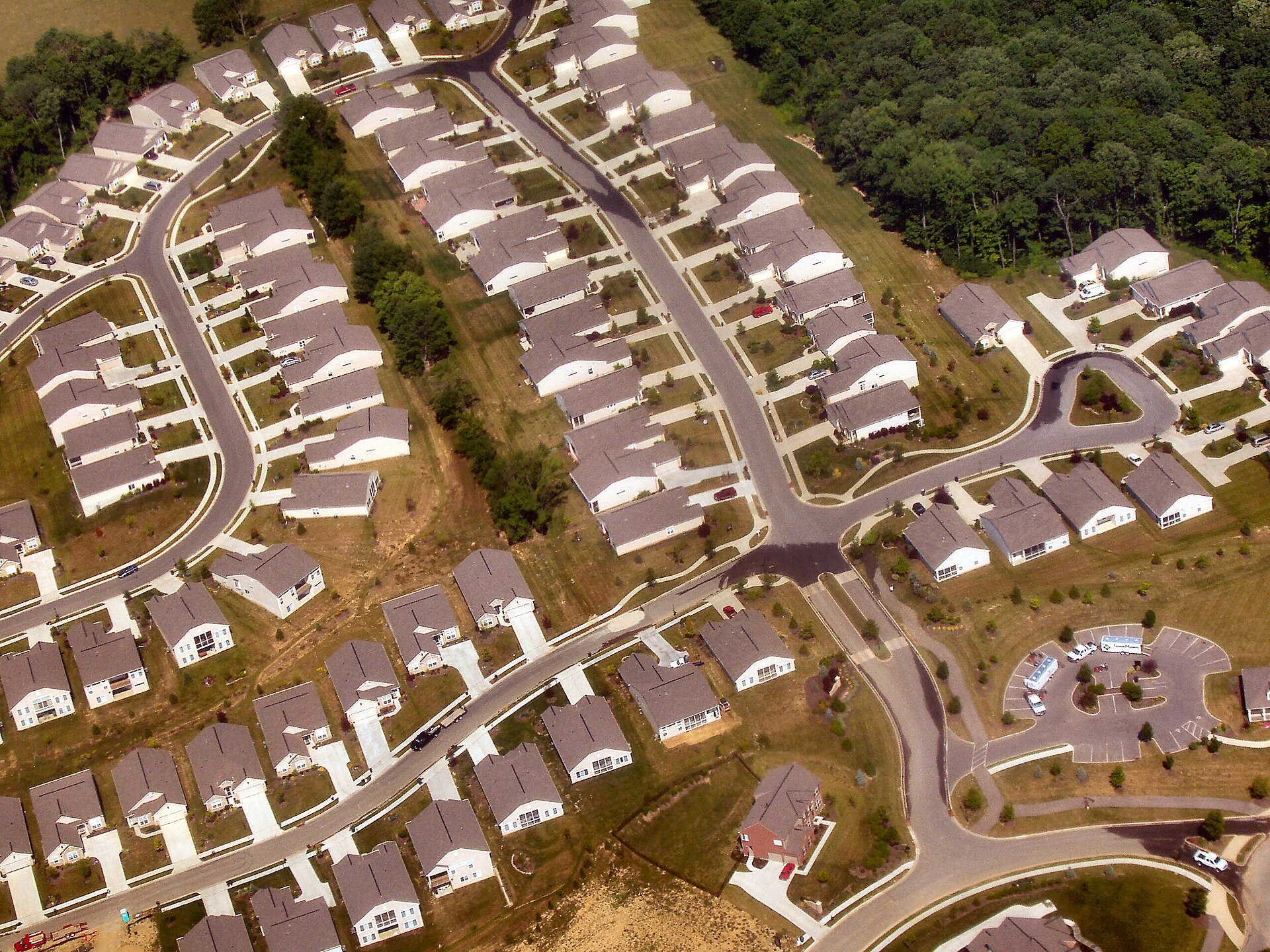
While houses grew, the land under them shrank. The SOC has tracked the lot sold with each new single-family house since 1976. The national median was 9,580 square feet in 1979, rose to 10,000 in 1990, and has drifted down since: 8,930 in 2000, 8,900 in 2010, 7,819 in 2019 (the low), and 8,307 in 2025, 13.3 percent below 1979 (our calculation).214
The West has the smallest lots of any region. Its median, first published for 1992, was 7,200 square feet that year, 6,650 in 2000, 6,648 in 2010, a low of 5,906 in 2023, and 5,969 in 2025: 17.1 percent smaller than in 1992 and about 0.14 acre. The 2025 medians were 8,543 in the South, 8,752 in the Midwest and 11,107 in the Northeast.2
Two other lot series fill in the picture.
- Detached vs. attached. In 2025 the West's median lot was 6,158 square feet for a detached house sold and 2,125 for an attached house (a townhouse or duplex unit on its own lot). Nationally the figures were 8,543 and 2,960.2
- All completions, not just sales. Counting contractor-built and owner-built homes on the owner's land, the West's median completed lot went from 7,439 square feet in 2009 (the first year of this table) to 6,413 in 2025, and the U.S. median from 10,994 to 8,855. The average West lot in 2025 was 26,110 square feet, four times the median, because a minority of rural homes sit on lots of several acres. The Bureau caps each lot at 25 acres when it tabulates.15
Why does this matter for Idaho law? Minimum lot sizes are written into city and county zoning ordinances, not into the building code. A city whose single-family zone requires 8,000 square feet cannot get the West's median 2025 lot without a rezone, a planned unit development or a variance. Idaho's 2026 starter-home law, Senate Bill 1352, is aimed at that gap; its lot-size terms, the cities it covers and the deadline for city codes are in The 2026 Housing Laws. How lots are drawn and recorded is in Subdivisions and Plats Step by Step.
How we figured it: lot size changes
Inputs: Census SOC median lot size of new single-family houses sold (condominiums excluded), U.S. 1979 and 2025, West 1992 and 2025.
Formula: U.S.: 100 x (8,307 / 9,580 - 1) = -13.3 percent. West: 100 x (5,969 / 7,200 - 1) = -17.1 percent. Acres: 5,969 / 43,560 = 0.137 acre.
Limits: before 1992 lots larger than 2.5 acres were tabulated as 2.5 acres, and from 1992 the cap is 25 acres; before 1999 the data included condominiums. The Bureau warns about both breaks. Medians are not affected much by the cap, which is why we use them.14
The shape of the house: stories, bedrooms, garages and HOAs
Ranch, split-level, two-story, and back
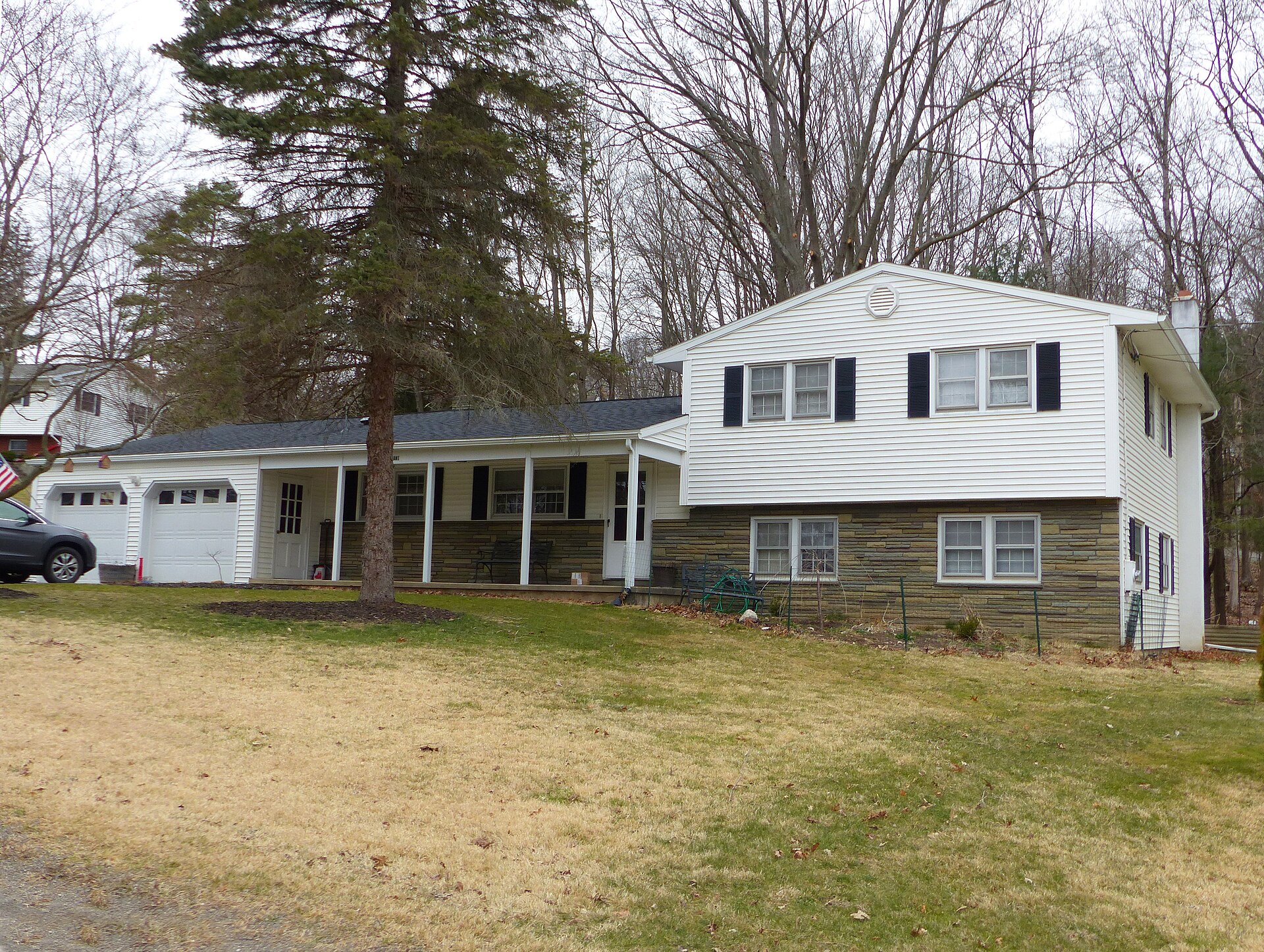
The single-story ranch and the split-level dominated new American houses in the 1970s. In 1979, 59 percent of new single-family houses completed in the U.S. had one story, 31 percent had two or more, and 11 percent were split-levels. In the West the shares were 61, 28 and 11 percent.14
Two-story houses then took over. By 1990 a majority of new houses in the West (52 percent) had two or more stories, and by 2010 the West's share reached 63 percent. Split-levels nearly vanished: under 0.5 percent of U.S. completions every year from 2005 through 2009, and the current tables, which start in 2009, no longer show them separately. A two-story house puts more floor area on a smaller footprint, which is how houses could grow while lots shrank.1416
The trend has partly reversed. In 2025, 48 percent of new U.S. houses had one story, 46 percent two, and 5 percent three or more. In the West, one-story and two-story houses were even at 46 percent each, and 8 percent had three or more stories, the highest three-story share in the current table, which starts in 2009.16

Bedrooms and garages
In 1979, 64 percent of new U.S. houses had three bedrooms and 23 percent had four or more. Four-bedroom houses climbed to 39 percent by 2005 and 47 percent in 2015, then eased to 42 percent in 2025.1417
Garages grew even faster. In 1979, 62 percent of new houses had a garage for two or more cars, 12 percent a one-car garage, 7 percent a carport, and 20 percent no garage or carport. The Bureau began counting three-car garages separately in 1992 (11 percent that year). By 2025, 64 percent of new U.S. houses had a two-car garage and 15 percent three or more; only 9 percent had no garage or carport. In the West, 22 percent of 2025 houses had a garage for three or more cars, down from 35 percent in 2015.1418
Garages are where building code and zoning meet. The state's manufactured-home statute lets a city require a garage or carport on a manufactured home only "if zoning ordinances would require a newly constructed nonmanufactured home to have a garage or carport."19 Inside the house, Idaho's residential code amendments set the fire separation between an attached garage and the living space (not less than 5/8-inch Type X gypsum board or equivalent on the garage side, between the garage and the residence, attics and rooms above).20
Homeowners associations and construction method
Since 2009 the SOC has asked whether each new house is in a homeowners association. The U.S. share rose from 46 percent in 2009 to 64 percent in 2025; in the West it went from 49 to 71 percent.21 That is the clearest single sign of how new neighborhoods are now governed: by recorded covenants (CC&Rs, the declaration of covenants, conditions and restrictions filed with the plat) as well as by city zoning. How CC&Rs are created with a plat is in Subdivisions and Plats Step by Step; Part C of this series, coming later, covers HOA law and disputes.
Almost every new house is still built on site. In 2025, 97 percent of U.S. single-family completions were site-built, 1 percent modular and 2 percent other methods such as panelized or precut kits; in the West, 99 percent were site-built. The modular share was 3 percent in 1999.22
Houses or apartments? Idaho's permits by decade
For Idaho itself, the longest public record of housing type is the Building Permits Survey. It sorts every unit permitted into four building sizes. A "1-unit" building is a single-family house, detached or attached; townhouses on their own lots count here. "2 units" is a duplex, "3 and 4 units" a triplex or fourplex, and "5 units or more" covers apartment and condominium buildings.3
| Period | Idaho units permitted | Idaho single-family | Idaho 2 to 4 units | Idaho 5 or more | U.S. single-family | U.S. 2 to 4 units | U.S. 5 or more |
|---|---|---|---|---|---|---|---|
| 1980 to 1989 | 39,529 | 77.9% | 8.7% | 13.4% | 60.4% | 7.3% | 32.4% |
| 1990 to 1999 | 101,716 | 81.5% | 7.8% | 10.7% | 76.3% | 4.5% | 19.2% |
| 2000 to 2009 | 131,513 | 84.9% | 7.4% | 7.8% | 75.2% | 4.1% | 20.7% |
| 2010 to 2019 | 100,982 | 77.4% | 4.9% | 17.8% | 63.2% | 3.0% | 33.8% |
| 2020 to 2025 (six years) | 113,061 | 74.3% | 5.1% | 20.5% | 63.2% | 3.4% | 33.4% |
Our calculation from Census Building Permits Survey annual state files, st1980a.txt through st2025a.txt (estimated totals including imputation). Shares may not add to 100 because of rounding.3
Four patterns stand out.
- Idaho has always built more houses, proportionally, than the nation. In every decade, Idaho's single-family share was higher than the U.S. share, by 5 to 18 percentage points.
- The 2000s were the single-family peak. Idaho permitted 111,597 single-family units from 2000 through 2009, 84.9 percent of the total, and only 10,248 units in buildings of five or more.
- Apartments came back after 2010. Units in buildings of five or more were 17.8 percent of Idaho's permits in the 2010s and 20.5 percent from 2020 to 2025, peaking at 5,657 units in 2022 (30 percent of that year's total).3
- The "missing middle" stayed missing. Duplexes, triplexes and fourplexes, which were 8.7 percent of Idaho's units in the 1980s, fell to about 5 percent after 2010. In 2025 Idaho permitted 340 units in duplexes and 566 in three- and four-unit buildings, against 14,112 single-family units.3
The mix in the Treasure Valley and the Magic Valley, 2020 to 2025
City by city, the mix varies more than the state average suggests. Boise permitted more apartment units than houses from 2020 to 2025; Eagle, Middleton, Kuna and Star permitted almost nothing but houses; and the Magic Valley towns, apart from Twin Falls, built houses with a scattering of duplexes and fourplexes.
| City | Units permitted, 2020 to 2025 | Single-family | 2 to 4 units | 5 or more | Single-family share | Average permit value per single-family unit, 2025 (our calculation) |
|---|---|---|---|---|---|---|
| Boise | 8,341 | 3,649 | 246 | 4,446 | 43.7% | $255,826 |
| Meridian | 13,587 | 9,174 | 114 | 4,299 | 67.5% | $228,572 |
| Nampa | 10,141 | 6,842 | 1,088 | 2,211 | 67.5% | $181,873 |
| Caldwell | 7,854 | 5,706 | 633 | 1,515 | 72.7% | $182,218 |
| Idaho Falls | 4,728 | 2,348 | 136 | 2,244 | 49.7% | $249,099 |
| Eagle | 2,640 | 2,640 | 0 | 0 | 100.0% | $541,812 |
| Kuna | 4,214 | 3,999 | 71 | 144 | 94.9% | $223,104 |
| Star | 4,847 | 4,567 | 76 | 204 | 94.2% | $326,348 |
| Middleton | 1,555 | 1,551 | 4 | 0 | 99.7% | $374,675 |
| Twin Falls | 2,317 | 1,794 | 256 | 267 | 77.4% | $336,656 |
| Jerome | 487 | 431 | 56 | 0 | 88.5% | $264,569 |
| Kimberly | 502 | 458 | 32 | 12 | 91.2% | $309,815 |
| Buhl | 159 | 145 | 14 | 0 | 91.2% | $295,894 |
| Gooding | 54 | 40 | 14 | 0 | 74.1% | $216,903 |
| Hagerman | 8 | 8 | 0 | 0 | 100.0% | none reported |
Our sums from Census Building Permits Survey annual place files for the West region, 2020 through 2025. "Permit value" is the construction cost the builder declares on the permit, not a sale price, and excludes land. Hagerman reported zero months to the Census Bureau in 2024 and 2025, so its zeros for those years are not a confirmed count; Middleton reported fewer than 12 months from 2020 through 2022.23
The permit values show that Magic Valley houses are not cheap to build. The average declared construction value of a single-family permit in Twin Falls in 2025 was $336,656, more than in Boise ($255,826) or Meridian ($228,572), and Kimberly's ($309,815) was higher than Boise's too. Permit values are self-reported and cities differ in how they check them, so treat the comparison as a lead to ask about, not a finding. In unincorporated Jerome County, the county issued permits for 27 single-family units in 2025.23 The detailed city-by-city permit story, including apartment booms in Boise, Meridian and Idaho Falls, is in The Big Cities Since 2020.
Townhomes: counted as houses
Because the permit survey counts an attached house on its own lot as a single-family unit, townhomes are hidden inside the "single-family" column. The national starts table separates them. Attached single-family homes were 158,000 of the 948,000 single-family homes started in the U.S. in 2023 (16.7 percent), 176,000 of 1,013,000 in 2024 (17.4 percent) and 173,000 of 940,000 in 2025 (18.4 percent).13 Townhouses built as part of multifamily projects (sold or rented as units in one building) are counted with multifamily, and they have almost disappeared there: under 0.5 percent of multifamily units completed from 2022 through 2025, down from 7 to 12 percent each year from 1999 through 2003.24
No public dataset counts townhomes in Idaho. A city's building permit log usually identifies them by permit type or plan; a county assessor's records identify them by property class. Both are public records (see the reporting section).
Apartments got smaller
New apartments have shrunk faster than new houses. The median unit in a new multifamily building completed in the U.S. was 1,197 square feet in 2007 and 1,004 in 2025; for units built for rent the median was 1,000 square feet in 2025, and for units built for sale (condominiums) 1,170.2526 The share of new apartment units with one bedroom was 42 percent in 2025, and 61 percent of new multifamily units were in buildings of four floors or more.26
Build-to-rent: houses that were never for sale
A built-for-rent house is one the builder puts up on its own land intending to rent it out.11 The Census Bureau does not publish a built-for-rent column in its single-family starts table; it shows built for sale, contractor-built and owner-built, and notes that the total "includes single-family units built for rent that are not shown separately." Subtracting gives the built-for-rent figure.13
| Year | U.S. single-family starts (thousands) | Built for sale | Contractor-built | Owner-built | Built for rent (our subtraction) | Built-for-rent share |
|---|---|---|---|---|---|---|
| 2023 | 948 | 680 | 123 | 55 | 90 | 9.5% |
| 2024 | 1,013 | 742 | 127 | 51 | 93 | 9.2% |
| 2025 | 940 | 675 | 131 | 55 | 79 | 8.4% |
Source: Census and HUD, New Residential Construction, Table Q1, "New Privately Owned Housing Units Started in the United States by Purpose and Design," released Aug. 18, 2026. Built for rent is our subtraction; the Bureau's figures are rounded to thousands, so each result could be off by 1 or 2 thousand.13
Completions tell a longer story. Using the same subtraction on the square-footage tables, built-for-rent single-family completions were roughly 26,000 in 2010, 51,000 in 2020, 97,000 in 2023 and 104,000 in 2025, about one in ten new houses finished that year (our calculation).1 Built-for-rent houses are small by new-house standards: the median was 1,406 square feet in 2013, the first year the Bureau published it, and 1,501 in 2025, against 2,142 for all completions.1
How we figured it: built-for-rent houses
Inputs: for starts, Table Q1 annual totals (total, built for sale, contractor-built, owner-built). For completions, the SOC square-footage tables' U.S. totals for all completions and for the built-for-sale, contractor-built and owner-built sheets.
Formula: built for rent = total - built for sale - contractor-built - owner-built. 2025 starts: 940 - 675 - 131 - 55 = 79 thousand; share 79 / 940 = 8.4 percent. 2025 completions: 1,005 - 721 - 130 - 50 = 104 thousand; share 104 / 1,005 = 10.3 percent.
Limits: every input is rounded to thousands and estimated from a sample, so treat the results as approximate. No state or Idaho figure exists.
Idaho has no public count of built-for-rent houses. The Census data cannot isolate the state, and a building permit does not say whether a house will be sold or rented. County assessors can show the pattern after the fact: houses that do not receive the homeowner's exemption and are owned by the same company in the same subdivision are a strong sign of a rental community. How the homeowner's exemption works is in Reading Your Assessment and Levy.
Manufactured and modular homes
What the law calls a manufactured home
Three kinds of factory-built housing are often lumped together, and Idaho law treats them differently.
- Mobile home
- Under Idaho Code 39-4105(9), a factory-assembled structure "generally constructed prior to June 15, 1976," built to be moved on its own running gear and used as a dwelling.27
- Manufactured home
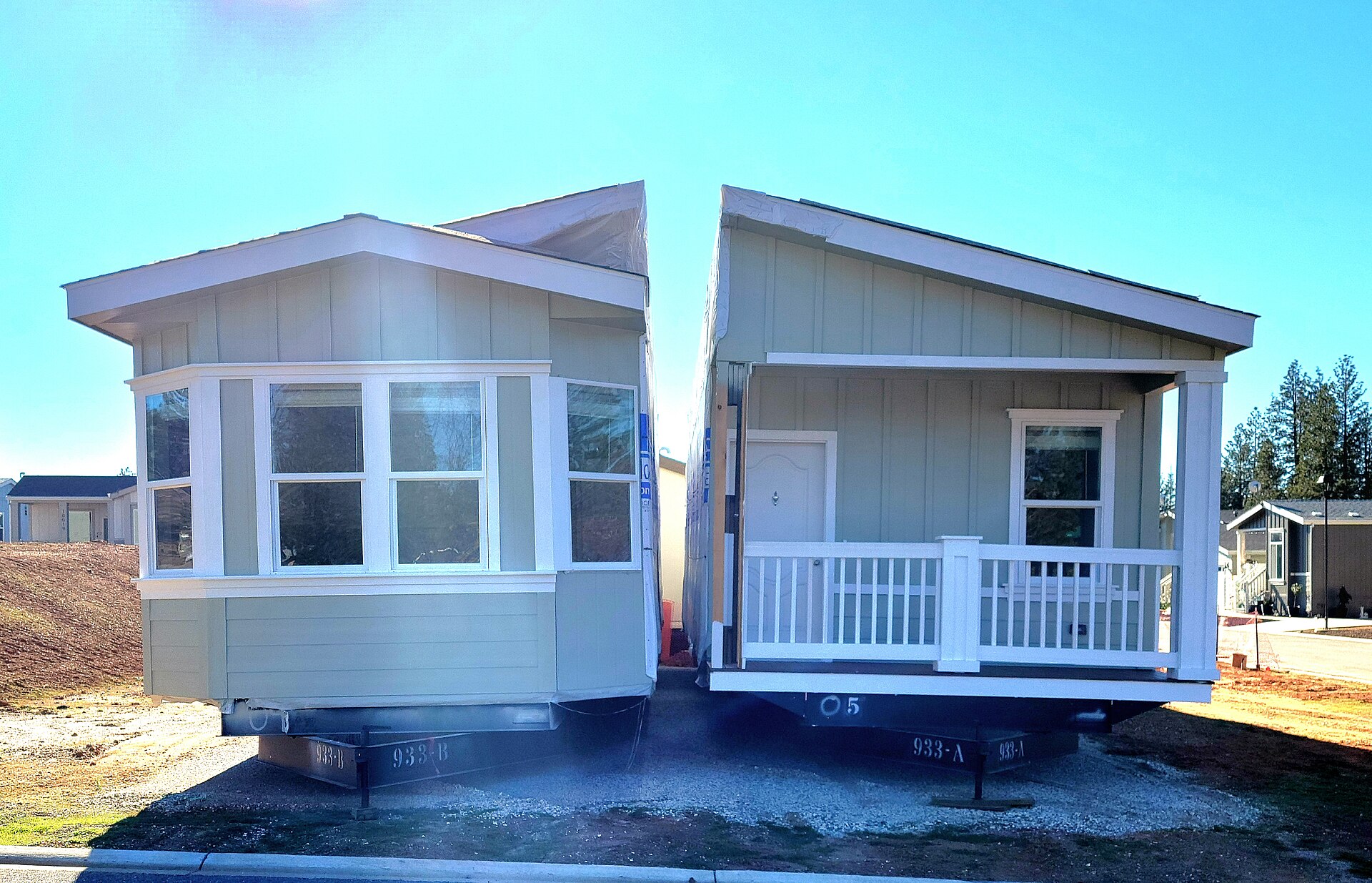
- Under Idaho Code 39-4105(8), a structure "constructed after June 15, 1976, in accordance with the HUD manufactured home construction and safety standards," transportable in one or more sections, at least 8 feet wide or 40 feet long in traveling mode or at least 320 square feet when set up, "built on a permanent chassis," and designed as a dwelling with or without a permanent foundation. Since 2026 the definition says manufactured homes "include multidwelling unit manufactured homes" built to the HUD standards, which covers factory-built duplexes.279
- Modular building
- A factory-built building that is not on a permanent chassis and must meet the same state building codes as a site-built house. Idaho regulates modular buildings under Idaho Code Title 39, Chapter 43, which provides for a state insignia of approval on each unit and reciprocity with other states' programs; the Division of Occupational and Professional Licenses (DOPL) keeps "in-plant inspections and enforcement of construction standards for modular buildings."2829
The date June 15, 1976, is the federal line. Congress passed the Manufactured Home Construction and Safety Standards Act in 1974, and "On June 15, 1976, HUD begins to regulate the construction of all manufactured homes with the HUD Code," in the words of HUD's own history. The Manufactured Housing Improvement Act of 2000 amended the 1974 law, and in 2008 HUD set up its installation program with minimum installation standards.30 Every transportable section built since that date carries a HUD certification label.31 The HUD Code is a national standard written by the federal government; local building codes do not govern how the home is built in the factory, though they still govern the foundation, utility hookups and the lot.
In Idaho, setting up a manufactured home requires an installation permit and inspection under Idaho Code Title 44, Chapter 22, and installers and dealers are licensed under Chapter 21. Residents of manufactured home parks who rent the lot under their home have their own law, the Manufactured Home Residency Act, Idaho Code Title 55, Chapter 20.3233

From one in five to one in 36: shipments to Idaho
Manufactured homes were a large part of Idaho's new housing in the 1990s and are a small part now. The Census Bureau's table of shipments to states shows 3,712 new manufactured homes shipped to Idaho in 1994, 2,980 in 1998 and 2,344 in 1999. Shipments fell by almost half in 2000 (1,317), slid through the 2000s, and bottomed at 217 in 2012. They have recovered only partly: 635 in 2022, 353 in 2023, 433 in 2024 and 507 in 2025. Through August 2026, 368 had been shipped.4
The national story is similar. U.S. shipments were 303,903 in 1994 and 373,143 in 1998, fell to 49,717 in 2009, and were 102,738 in 2025.4 The 1990s were not the all-time high: the Census monthly series, which begins in 1959, shows about 580,000 homes shipped in 1973 and about 277,000 in 1979 (our sums of monthly figures).12
| Year | Manufactured homes shipped to Idaho | Idaho units in building permits | Manufactured share of the two combined (our calculation) | Idaho share of U.S. shipments |
|---|---|---|---|---|
| 1994 | 3,712 | 12,640 | 22.7% | 1.22% |
| 1998 | 2,980 | 11,667 | 20.3% | 0.80% |
| 2000 | 1,317 | 10,915 | 10.8% | 0.53% |
| 2005 | 798 | 21,578 | 3.6% | 0.54% |
| 2010 | 283 | 4,153 | 6.4% | 0.57% |
| 2015 | 293 | 9,954 | 2.9% | 0.42% |
| 2020 | 416 | 19,130 | 2.1% | 0.44% |
| 2025 | 507 | 17,944 | 2.7% | 0.49% |
Sources: Census Manufactured Housing Survey, annual shipments to states, 1994 to 2026; Census Building Permits Survey annual state files. Our calculation.43
How we figured it: the manufactured share of new Idaho homes
Inputs: new manufactured homes shipped to Idaho (MHS) and new housing units authorized by permits in Idaho (BPS), same calendar year.
Formula: share = shipments / (shipments + permitted units). 1994: 3,712 / (3,712 + 12,640) = 22.7 percent. 2025: 507 / (507 + 17,944) = 2.7 percent (2.75 unrounded), about one in 36. Idaho share of U.S. shipments: 507 / 102,738 = 0.49 percent.
Limits: a shipment is a home sent to a dealer or site in Idaho, not a home placed or occupied, and some shipped homes replace older ones. Permits count site-built and modular units authorized, not completed. The two series measure slightly different things, so the share is an approximation.
Price is the main argument for manufactured homes. The average sales price of a new manufactured home placed in Idaho in 2025 was $125,300 ($94,000 for a single-section home and $160,200 for a double), close to the national average of $127,200.34 Nationally in 2024, a new manufactured home averaged $84.45 per square foot without land, while a new site-built house sold with its lot averaged $168.86 per square foot for the structure alone, after the Census Bureau subtracts an estimated land price.35 Land, foundations, utility hookups and setup are extra for a manufactured home, and financing a home on a leased lot in a park works differently from a mortgage on a house and lot.
Where Idaho lets manufactured homes go
Idaho Code 67-6509A, first enacted in 1994, requires every city and county governing board to amend its plan and land use regulations for all land zoned for single-family residential uses "to allow for siting of manufactured homes," except in historic districts. A city may not ban manufactured homes from single-family zones simply because they are manufactured. Recorded restrictive covenants still apply; the statute "shall not be construed as abrogating a recorded restrictive covenant."19
The statute lists the standards a city or county may adopt for manufactured homes outside parks, "or any less restrictive standards":
- A minimum floor area of 400 square feet for a single-section home or 800 square feet for a multisection home.
- A foundation that is excavated and backfilled and enclosed at the perimeter, so the home sits no more than 12 inches above grade (unless it is on a basement).
- A pitched roof, but no rule may require more than a nominal 3 feet of rise for every 12 feet of width.
- Siding and roofing similar in color, material and appearance to nearby houses.
- A garage or carport, only if a new site-built house in the same zone would need one.
- Any other development standard, architectural requirement or minimum size that applies to a conventional house on the same lot.
Any such standard must be "clear and objective" and must not, alone or together, have "the effect ... of discouraging needed housing through unreasonable cost or delay."19
The 2026 change. House Bill 800, from the House Ways and Means Committee, passed the House 60 to 6 on March 9, 2026, and the Senate 28 to 5 on March 24, and was signed by Gov. Brad Little on March 26; it is Idaho Session Laws 2026, chapter 171, effective July 1, 2026.936 Its statement of purpose says it "allows manufactured duplexes to be treated as multifamily homes in zoning ordinances" and lets single-section homes of at least 400 square feet go on lots zoned for single-family homes.37 The amended 67-6509A now says a manufactured home with a single dwelling unit "may be sited on lots where single-family dwellings are allowed," while a multidwelling unit manufactured home "may be sited only in areas where multifamily dwellings are allowed," and the bill replaced the optional size standard: before 2026 a city or county could require a manufactured home to be multisectional and to enclose at least 1,000 square feet; the amended standard is at least 400 square feet for a single-section home or 800 square feet for a multisectional home. The lead-in still lets a city or county adopt the listed standards "or any less restrictive standards."199
Modular homes
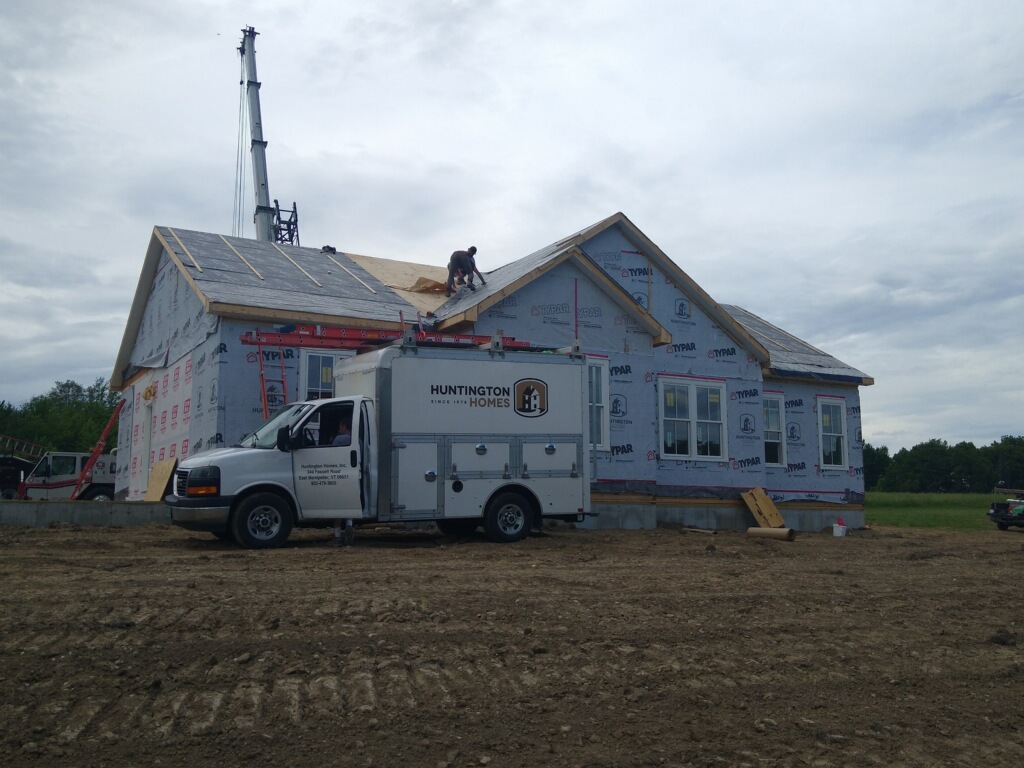
Modular homes look like site-built houses once finished, but they are built in sections in a factory and craned onto a foundation. Nationally they were 3 percent of single-family completions in 1999 and 1 percent in 2025; in the West they were about 1 percent or less in every year we checked (1999, 2005, 2009, 2015, 2020, 2024 and 2025).22 Because modular homes are built to the state building code rather than the HUD Code, Idaho's code adoption choices, described below, apply to them in the factory as well as on the site.2928

Accessory dwelling units and tiny houses
An accessory dwelling unit (ADU) is a second, smaller home on the same lot as a house: a backyard cottage, an apartment over the garage or a converted basement. No federal survey counts ADUs. The permit survey records a detached ADU as a new single-family unit only if the local permit classifies it that way, and conversions inside existing houses usually do not show up at all. The Community Planning Association of Southwest Idaho (COMPASS) does count ADUs in its Ada and Canyon county development reports, as described in The Big Cities Since 2020.
Idaho's 2026 ADU law, Senate Bill 1354 (Idaho Session Laws 2026, chapter 265), sets statewide rules for ADUs in covered cities, including in homeowners associations; what it requires and which cities it covers is in The 2026 Housing Laws.36 On the building code side, cities may adopt the appendices of the residential code: Boise's list of adopted codes includes the 2018 IRC's Appendix Q (Tiny Houses) and Appendix S (Strawbale Construction).38 The Idaho Building Code Board discussed tiny homes again in its 2025 negotiated rulemaking on the 2024 codes.39
Building codes: who decides what goes inside the walls
Zoning decides where a house can go and how big its lot is. The building code decides how it is built: the size of the footings, the spacing of the studs, the fire separation from the garage, the windows a firefighter can climb through, the insulation in the attic. In Idaho the building code for houses is set by the state, applied by cities and counties that choose to issue permits, and, since 2022, partly written into statute by the Legislature itself.
The Idaho Building Code Act
The Idaho Building Code Act dates to 1975 (Idaho Session Laws 1975, chapter 180) and was rewritten in 2002 (chapter 345).40 Its statement of intent, Idaho Code 39-4101, says uniform codes are "matters of statewide concern" because uniformity "would enhance elimination of obsolete, restricting, conflicting, duplicating and unnecessary regulations and requirements which could unnecessarily increase construction costs." It lists among the Legislature's goals minimum standards "in terms of performance, energy efficiency, effect upon construction costs and consistency with nationally accepted standards."41
The model codes come from the International Code Council (ICC), a private standards body that publishes new editions every three years. Idaho adopts them with amendments:
- International Building Code (IBC): for apartments of three or more units, commercial buildings and everything else outside the residential code.
- International Residential Code (IRC): for one- and two-family homes and townhouses. Idaho adopts Parts I, II, III and IX (administration, definitions, building planning and construction, appendices) and calls the result the "Idaho residential code." The parts of the IRC on energy, mechanical, fuel gas, plumbing and electrical work are excluded from the Idaho residential code.42
- International Energy Conservation Code (IECC): insulation, windows, air sealing and duct rules. Since 2022 Idaho's version is the "Idaho energy conservation code" in Idaho Code Title 39, Chapter 97.43
- International Existing Building Code (IEBC): for remodels and changes of use.42
How a new code edition is adopted
Under Idaho Code 39-4109, as amended through 2022, the steps run like this:42
- The Idaho Building Code Board, a board within DOPL, proposes adopting a new ICC edition with Idaho amendments through negotiated rulemaking under Idaho Code 67-5221.
- The board holds at least two public hearings "not less than sixty (60) days apart," with written notice at least five days before each one to a list of groups named in the statute: contractors' associations, the Association of Idaho Cities, the Idaho Association of Counties, building officials, REALTORS, the Idaho Building Contractors Association, architects, fire chiefs, engineers, the State Independent Living Council and building trades unions, plus anyone who asks.
- The board may not lower accessibility standards below the ICC's, and may not amend the Idaho residential code to be "more restrictive than those published by the International Code Council."
- The board adopts a pending rule, which goes to the Legislature for review at its next session along with every other agency rule.
- If the rule survives review, the new edition takes effect "January 1 of the year following its adoption."
- For the energy code, the board's changes must also be "approved by the legislature" under Idaho Code 39-9701.43
What cities and counties may and may not do
Idaho Code 39-4116 governs local building departments. A city or county does not have to run a building code program; if it does, it "shall, by ordinance effective January 1 of the year following the adoption by the Idaho building code board," adopt the IBC, the Idaho residential code and the Idaho energy conservation code.29
- Local amendments are allowed, within limits. Cities and counties may amend the adopted codes "to reflect local concerns" if the amendment gives "at least an equivalent level of protection." For the residential code they may freely amend only Part I (administration), Part II (definitions), the design criteria in Section R301 (snow load, wind and frost depth) and the appendices. They may amend the rest of Part III only on a finding of "good cause for building or life safety," after a public hearing with 30 days' written notice to the local chapters of the groups listed in 39-4109.29
- No newer residential or energy codes than the state's. A city may not adopt any part of a later IRC or IECC residential edition that the state board has not adopted.29
- No stricter energy rules. Idaho Code 39-9701(2) says the energy code chapter preempts, eliminates and prohibits any city, county or special district "from adopting energy code or energy-related requirements through any code, ordinance, process, policy, or guidance that differ from or are more extensive than" the state energy code.43
- No required sprinklers in houses. "All single family homes and multiple family dwellings up to two (2) units are hereby exempted" from fire sprinkler requirements in the fire, building and residential codes; owners may install them voluntarily.29 The state rule deletes the IRC's sprinkler section for one- and two-family homes (R313.2) and rewrites the townhouse exception so sprinklers are not required where units are separated by two one-hour or one two-hour fire-resistance-rated walls.20
- No codes on farm buildings. Local governments must exempt agricultural buildings. House Bill 104 (2025), from the House Local Government Committee, defined the term (barns, livestock shelters, milking barns, grain silos, equipment sheds and similar structures, but not places where people live or where farm products are processed) and barred counties from narrowing the exemption with size limits, exit distances or sprinkler mandates. It passed 70 to 0 and 35 to 0, was signed March 12, 2025, and took effect July 1, 2025 (chapter 40).4429
How this fits Idaho's broader pattern of state limits on local rules, from short-term rentals to impact fees, is in State Preemption and Local Control.
Which code editions Idaho used, and when
| Period | Code or law | What changed | Source |
|---|---|---|---|
| 1975 | Idaho Building Code Act enacted | First statewide building code law (1975 session laws, ch. 180) | Idaho Code 39-4102 history40 |
| 1976 | Federal HUD Code | Every new manufactured home built to a national standard from June 15, 1976 | HUD30 |
| 2002 | Building Code Act rewritten | Section 39-4109, as amended through 2022, keeps the 2006 IBC in effect "until such time as a subsequent version is adopted"; the board adopts newer editions by rule | Idaho Code 39-410942 |
| 2013 and 2014 | 2012 editions | Rules adopt the 2012 IBC and IEBC (rule history dated April 4, 2013) and the 2012 IRC and IECC (March 20, 2014) | IDAPA 07.03.01, 2015 archive45 |
| 2017 | 2015 IBC, IEBC and commercial energy code | Houses stay on the 2012 IRC, and the residential energy rules stay on the 2012 IECC | IDAPA 07.03.01, 2017 archive46 |
| Jan. 1, 2021 | 2018 IBC, IRC, IEBC and IECC | Current codes for Idaho homes; optional use allowed from July 1, 2020 | Division of Building Safety notice5 |
| July 1, 2022 | HB 660 (2022) | 2018 IECC written into statute as the Idaho energy conservation code; changes need legislative approval | Idaho Code 39-970147 |
| March 31, 2023 | HB 287 (2023) | Preemption of local energy rules made explicit and retroactive | Idaho Code 39-970148 |
| 2024 | IDAPA 24.39.30 | Current rule text, with most sections dated July 1, 2024, still adopts the 2018 editions plus the 2021 IBC mass timber provisions | Idaho Administrative Code20 |
| July 1, 2025 | HB 104 (2025) | Agricultural building exemption defined | Bill page44 |
| Oct. 21, 2025 | Building Code Board vote | Board adopts redlines moving the IBC, IRC, IEBC and IECC to the 2024 editions, as a pending rule | Board minutes6 |
| Feb. 17, 2026 | House Business Committee | Votes by voice to reject docket 24-3930-2502, the 2024 code rule | Committee minutes7 |
| July 1, 2026 | HB 706 and HB 800 (2026) | Single-stairway apartment buildings allowed at local option; manufactured home siting rules revised | Bill pages89 |
| 2027 session | Agency bill planned | DOPL drafting legislation to put the 2024 codes into statute | Board minutes, June 9, 202649 |
Idaho's homes have therefore been built to 2018 codes since 2021, while the ICC published 2021 and 2024 editions. The 2012 to 2017 period also shows a pattern that repeats: the state moved commercial codes forward while holding houses back, keeping the 2012 residential code and residential energy rules after it adopted the 2015 IBC.46
The energy code fight, 2022 and 2023
House Bill 660 (2022), from the House State Affairs Committee, passed the House 53 to 15 on Feb. 28, 2022, was amended in the Senate and passed there 23 to 7 on March 25, and passed the House again as amended 50 to 14. Gov. Little signed it March 28, 2022 (chapter 302), effective July 1, 2022.47 It created Idaho Code 39-9701, which makes the 2018 IECC, "as amended, revised, or modified by the Idaho building code board and approved by the legislature," the state energy code.43
A year later, House Bill 287 (2023), also from State Affairs, added the preemption language: no local government may adopt energy requirements that "differ from or are more extensive than" the state code, and the rule applies to local codes adopted "prior to, on, or after July 1, 2022." It passed the House 59 to 10 on March 14, 2023, and the Senate 29 to 6 on March 29, and was signed March 31, 2023 (chapter 236), effective that day.4843
The case for these laws rests on the goals the Legislature wrote into 39-4101, uniformity and attention to construction costs: one energy code everywhere in Idaho, with the Legislature, not a board or a city, deciding when the cost of new requirements is worth it. The case against is that energy rules pay back over the life of a house through lower utility bills, and that cities lost the ability to set stricter rules for their own climate and utility needs. Both points can be true at once. The 2023 law assigned the decision to the Legislature; it did not answer the cost question.
The 2024 codes stall in the House, 2025 and 2026
The Idaho Building Code Board spent much of 2025 in negotiated rulemaking on the 2024 ICC editions. At its Sept. 9, 2025, meeting it reviewed public comments on exterior wall distances, the IRC appendices on tiny homes and hemp-lime construction, and snow-load changes in the 2024 IBC.39 On Oct. 21, 2025, the board voted unanimously to "adopt the amended redlines as pending" for publication, which would have moved the IBC, IRC, IEBC and both parts of the IECC to their 2024 editions.6
The House Business Committee took up the rule, docket 24-3930-2502, on Feb. 17, 2026. DOPL's trades program director, Justin Touchstone, presented it; the Idaho Association of Building Officials and the Idaho Home Builders Association testified in support. Committee members asked about whole-house ventilation, sealing of duct registers, recessed lights, heat detectors in attached garages and how often blower door (air leakage) tests are required. Rep. Thompson moved to reject the docket, citing "many concerns and questions" and the incorporation of the international code by reference. A substitute motion to hold the docket in committee failed, and the motion to reject carried on a voice vote, with Reps. Berch and Cheatum recorded as voting no. The Senate Commerce and Human Resources Committee had heard the same docket on Feb. 5, 2026, with testimony in support from the building officials and the home builders, and approved it by voice vote.7
At its June 9, 2026, meeting the Building Code Board's minutes record that the rulemaking "did not pass the House" and that DOPL, working with the governor's office, is drafting an agency bill to write the 2024 IBC, IRC and IECC into statute instead. The State Fire Marshal is waiting on that process before adopting the 2024 fire code.49 So as of Nov. 18, 2026, the 2018 editions remain the Idaho codes, and the 2024 editions could arrive only through a bill in the 2027 session or a new rulemaking.
The House rejection did not stop all building code changes. House Bill 706 (2026), from the House Business Committee, passed the House 63 to 7 on March 24, 2026, and the Senate 18 to 17 on April 1, and was signed April 10 (chapter 320), effective July 1, 2026.8 It adds Idaho Code 39-4109C, which says "local governments may allow residential group R-2 apartment buildings to be served by one (1) single stairway," up to six stories above grade (five with an occupiable roof), no more than four units per floor and 6,000 square feet per story, with a full NFPA 13 sprinkler system, a 2-hour rated stair, travel distances of no more than 125 feet and a posted sign reading "THIS BUILDING CONTAINS ONLY ONE STAIR."50 The conditions (sprinklers throughout, a rated stair, short travel distances, alarm and detection systems) are the trade-off the statute requires for having one stairway. A separate 2026 bill on heat detectors in attached garages and sprinkler exemptions for some multifamily buildings, House Bill 643, was introduced; its bill page shows no action after it was referred to the House Business Committee on Feb. 13, 2026.51
What the codes changed inside houses
A house completed under Idaho's current codes differs from a 1979 house in ways an owner rarely sees.
- Escape windows. The IRC requires every sleeping room, basement and habitable attic to have an emergency escape and rescue opening, with a net clear opening of at least 5.7 square feet (5 square feet at grade), at least 24 inches high and 20 inches wide, and a sill no more than 44 inches above the floor.52 Turning a basement room into a bedroom brings the same requirement.
- Alarms. Smoke alarms (IRC section R314) and carbon monoxide alarms (section R315) are required in new homes. Idaho's rule deletes an exception in each section for certain alterations, repairs and additions.20
- Fresh air. Idaho replaced IRC section R303.4 with a flat requirement that dwelling units "shall be provided with whole-house mechanical ventilation." Tighter houses need fans to bring in outside air.20
- Insulation and windows. Idaho's amended table for climate zone 5 calls for windows with a U-factor of 0.32, R-38 ceiling insulation, wood-frame walls of R-20 (or R-13 cavity plus R-5 continuous), R-30 floors and R-10 slab edge insulation 2 feet deep; climate zone 6, which covers colder parts of the state, calls for U-0.30 windows, R-49 ceilings and R-22 walls.20 Idaho also lets builders pass the air leakage requirement by a visual inspection instead of a blower door test, and excludes garages heated only for frost protection from "conditioned space."20
- Garage separation and footings. Idaho replaced the IRC's garage-separation table (5/8-inch Type X gypsum board between the garage and the house, attic and rooms above) and its footing tables with its own.20
- Wood and wiring. The rule adopts the 2021 IBC's mass timber provisions, allowing tall wood buildings of Types IV-A, IV-B and IV-C.20 Electrical rules come from the separate state electrical code; Boise's list of adopted codes shows the 2023 National Electrical Code.38
Whether these rules are worth what they cost is the question the Legislature has taken back for itself. Inspection practice, materials and construction quality are the subject of Part E of this series, coming later.
Idaho, the West and the nation
Regional differences in new houses are large, and they run in directions that surprise people. In 2025 the West's median new house (2,090 square feet) was smaller than the South's (2,162) and the Northeast's (2,459) but larger than the Midwest's (1,969), and it sat on by far the smallest lots (a median of 5,969 square feet for houses sold, against 8,543 in the South and 11,107 in the Northeast). The West also had the highest share of new houses in a homeowners association (71 percent) and 22 percent of its new houses had a garage for three or more cars, second to the Midwest (30 percent).122118
Idaho differs from the West average in at least one way the data can show: it builds proportionally more single-family homes than the nation in every decade since 1980, and in the 2020s about three in four units permitted were single-family, against fewer than two in three nationally.3 Whether Idaho's new houses are larger or smaller than the West's median cannot be answered from federal data. Assessor records, which list finished square footage and lot size for each parcel, can answer it county by county.
On codes, Idaho adopts ICC codes statewide and also limits what local governments may add: no stricter energy rules (39-9701), no residential code amendments more restrictive than the ICC's (39-4109), and no sprinkler mandates for one- and two-family homes (39-4116).434229 The federal HUD Code makes manufactured housing the one kind of home built to a single national standard in every state.30
Pictures, Numbers and Infographics
The key numbers from this lesson in one place. Each row names its source; percentages and changes are our calculations where marked.
| Measure or rule | Idaho | U.S. or other region | Place or year | Source |
|---|---|---|---|---|
| Median floor area, new single-family houses completed | No state series; West region 2,090 sq. ft. | U.S. 2,142 sq. ft. | 2025 | Census SOC1 |
| Peak median floor area | West 2,453 sq. ft. | U.S. 2,467 sq. ft. | West 2014; U.S. 2015 | Census SOC1 |
| Median lot, new single-family houses sold | West 5,969 sq. ft. | U.S. 8,307 sq. ft.; Northeast 11,107 | 2025 | Census SOC2 |
| New houses in a homeowners association | West 71% | U.S. 64% | 2025 | Census SOC21 |
| Single-family share of units permitted | 74.3% | U.S. 63.2% | 2020 to 2025 | Census BPS, our calculation3 |
| Share in buildings of 5 or more units | 20.5% | U.S. 33.4% | 2020 to 2025 | Census BPS, our calculation3 |
| New manufactured homes shipped | 507 | U.S. 102,738 | 2025 | Census MHS4 |
| Manufactured homes shipped, peak year in the state table | 3,712 | U.S. 373,143 (1998) | Idaho 1994 | Census MHS4 |
| Average price, new manufactured home | $125,300 | U.S. $127,200 | 2025 | Census MHS34 |
| Built-for-rent share of single-family starts | No data | U.S. about 8.4% | 2025 | Census NRC, our subtraction13 |
| Residential code in force | 2018 IRC with Idaho amendments | ICC current edition: 2024 | Since Jan. 1, 2021 | IDAPA 24.39.3020 |
| 2024 code rule | Rejected by House Business Committee | n.a. | Feb. 17, 2026 | Committee minutes7 |
| Single-stair apartment option | Up to 6 stories, 4 units per floor, local option | n.a. | July 1, 2026 | HB 706 (2026)50 |
| Manufactured home placement standards a city may set | Minimum 400 sq. ft. (single) or 800 (multisection), or less | Federal HUD Code since June 15, 1976 | Idaho Code 67-6509A | Idaho Code19 |
The comparison grid earlier in this lesson summarizes the 1979 vs. 2025 house; the charts above show house size, lot size, stories, Idaho's permit mix by decade, manufactured shipments and the code timeline. One more view: from 1992 to 2014 the West's median new house grew 29.8 percent while the median lot under a new house sold ended the period about where it began (index 100.5); by 2025 the house was 10.6 percent larger than in 1992 and the lot 17.1 percent smaller (our calculation).
Common mistakes
Reporting West region numbers as Idaho numbers
The Survey of Construction does not publish states. "The median new home in Idaho is 2,090 square feet" is wrong; the correct statement is that the median in the 13-state West region was 2,090 square feet in 2025.111
Comparing finished floor area with total building size
SOC floor area excludes garages, porches and unfinished basements.11 A listing's "total square feet" or an assessor's building area may include space the SOC leaves out. Compare like with like.
Dividing a median house by a median lot
The median house and the median lot are not the same house. Dividing 2,090 by 5,969 does not give a typical floor-area ratio. A true ratio needs house and lot data for the same parcels, which the SOC microdata or a county assessor can supply.10
Assuming permit counts include manufactured homes
The Building Permits Survey does not count HUD-code manufactured homes. In the mid-1990s, when manufactured homes were about a fifth of Idaho's new housing, using permits alone understated new homes substantially.34
Treating shipments as homes placed
A shipment to Idaho is a home sent to a dealer or site in the state in that year. Some sit on dealer lots, some replace older homes, and some move again. The MHS shipment table is the best available count, not a count of new households.4
Assuming a city can adopt the newest residential or energy code on its own
It cannot. Idaho Code 39-4116 bars local governments from adopting any part of a later IRC or IECC residential edition the state board has not adopted, and 39-9701 bars local energy rules that are more extensive than the state code.2943
Assuming a city may keep manufactured homes out of single-family zones
Under Idaho Code 67-6509A, a manufactured home with a single dwelling unit, whether single-section or multisection, may be sited on lots where single-family dwellings are allowed, subject only to the listed standards or less restrictive ones. Private covenants in a subdivision's CC&Rs are a separate matter that the statute leaves in place.19
Calling every factory-built home a mobile home
In Idaho law, a "mobile home" is generally a pre-June 15, 1976 unit; a "manufactured home" is built to the HUD Code after that date; and a modular home is built to the state building code. Each has different placement, inspection and financing rules.2728
What we know, what we don't, and what the data can show
What we know
- New single-family houses in the U.S. and the West grew by about half from 1979 to their peaks in 2014 and 2015, then shrank about 13 to 15 percent by 2025 (Census SOC).1
- Lots under new houses sold have shrunk, most in the West, where the 2025 median was 5,969 square feet (Census SOC).2
- Split-levels disappeared, two-story houses took over, and one-story houses have come back to about half of new U.S. completions; four-bedroom houses and three-car garages rose and have eased since 2015 (Census SOC).14161718
- Idaho permits more single-family housing, proportionally, than the nation, and its apartment share has risen since 2010 (Census BPS).3
- Manufactured home shipments to Idaho fell from 3,712 in 1994 to a low of 217 in 2012 and were 507 in 2025 (Census MHS).4
- Idaho homes are built to the 2018 ICC codes with Idaho amendments; the 2024 codes were rejected by the House Business Committee in February 2026, and local governments cannot adopt newer residential or stricter energy codes on their own (Idaho Code, IDAPA 24.39.30, committee minutes).29437
What we don't know
- The median size and lot of a new house in Idaho, or in any Idaho county or city. No federal series publishes it.
- How many built-for-rent houses and rental townhome communities Idaho has, and where.
- How many accessory dwelling units exist in Idaho outside Ada and Canyon counties, and how many the 2026 law will produce.
- How many manufactured homes shipped to Idaho replaced older homes rather than adding to the housing stock.
- What the 2024 codes would add to the cost of a typical Idaho house, and what they would save owners in energy bills. No Idaho cost study appears in the board or committee record we reviewed.76
- Whether, and in what form, the 2027 Legislature will adopt the 2024 codes by statute.49
What the data can show
- House size and lot size by year built for every parcel in a county, from county assessor parcel records (finished square feet, year built, lot acres), which most Idaho assessors keep in a database and some publish as GIS layers.
- Whether a city's new housing is shifting from houses to townhomes or apartments, year by year (Census BPS place files, and the city's own permit log by permit type).23
- National trends in floor area, lots, stories, bedrooms, garages and HOAs for houses built for sale, for rent or on owners' land (Census SOC annual tables and its public-use microdata).10
- Manufactured home shipments to Idaho by month and by single- or multi-section (MHS monthly shipments to states, 2000 onward).4
- Exactly which code sections Idaho amended, and what the board proposed and the House rejected (IDAPA 24.39.30, the board's redlines and minutes, and the House Business Committee minutes and audio).2067
Questions people ask
Are new homes really getting smaller?
Yes, by the national and Western medians. The U.S. median new single-family house fell from 2,467 square feet in 2015 to 2,142 in 2025, and the West's from 2,453 in 2014 to 2,090 in 2025. Part of the drop comes from more small built-for-rent houses and fewer very large houses; the median house built for sale also shrank, by 12.8 percent from 2015 to 2025.1
Why are so many new Idaho subdivisions two-story houses on small lots?
Nationally, two-story houses outnumbered one-story houses by 1988 and passed half of completions in 1999; in the West they passed half by 1990. Lots have shrunk since about 1990, most in the West. A two-story plan puts more floor area on a smaller footprint, which matters when lots are about 6,000 square feet. The SOC cannot show Idaho alone.142
Can I put a manufactured home on a lot zoned for single-family houses?
Under Idaho Code 67-6509A, a single-unit manufactured home may be sited on lots where single-family dwellings are allowed, outside historic districts, subject to the city or county's placement standards (or less restrictive ones). Subdivision covenants can still prohibit it, and a manufactured duplex may go only where multifamily housing is allowed.19
Why don't new Idaho houses have fire sprinklers?
Idaho Code 39-4116(3) exempts single-family homes and two-unit buildings from any sprinkler requirement in the fire, building or residential codes, and the state rule deletes the IRC's one- and two-family sprinkler section. Owners may install sprinklers voluntarily.2920
Which code applies to my remodel or new house?
The one in effect when your permit application is received: "Permits shall be governed by the laws in effect at the time the permit application is received." Today that is the 2018 Idaho residential code with state and local amendments, or the 2018 IEBC for many remodels.2920
Can my city require more insulation or solar-ready wiring?
Not as a requirement. Idaho Code 39-9701 preempts local "energy code or energy-related requirements through any code, ordinance, process, policy, or guidance" that differ from or exceed the state code. The statute does not apply to chapter 1 of the 2018 IECC as it relates to local administrative processes.43
What is a single-stair apartment building, and will Idaho cities allow them?
Since July 1, 2026, Idaho Code 39-4109C lets a city or county allow apartment buildings of up to six stories (five with a roof deck) served by one stairway, with no more than four units per floor and 6,000 square feet per story, sprinklers throughout and other conditions. It is a local option: nothing changes until a local government chooses to allow it.50
Hard questions
Should Idaho adopt the 2024 codes?
The case for: the building officials' association and the home builders' association both testified for the 2024 rule in February 2026, and the Senate Commerce and Human Resources Committee approved it; newer editions update engineering standards and add options (the board's 2025 discussions covered snow loads, tiny homes and hemp-lime construction).739 The case against: members of the House Business Committee raised "many concerns and questions," objected to incorporating a private body's code by reference, and asked about ventilation, duct sealing and testing requirements that add cost to each house.7 What the evidence shows: the record we reviewed contains no Idaho-specific cost or savings estimate for the 2024 editions. That is the missing piece for anyone who wants to settle the argument on the numbers.
Should cities be allowed to require more efficient homes than the state does?
For local choice: energy bills fall on homeowners and renters for decades; a city with high growth and utility constraints may want stricter rules than a rural county. For one state rule: builders work across city lines, and the Legislature wrote into 39-4101 a concern that rules not "unnecessarily increase construction costs." What the evidence shows: since HB 287 (2023) the question is settled in statute; it can be reopened only by the Legislature.414348
Are manufactured homes the answer to Idaho's housing costs?
One view: at $125,300 on average in Idaho in 2025, a new manufactured home costs a fraction of a new site-built house, and Idaho law already opens single-family zones to them.3419 Another view: the price excludes land, foundation and setup; many buyers place homes on rented lots in parks, where the lot rent and the Manufactured Home Residency Act's rules shape what they actually pay; and covenants exclude manufactured homes from many new subdivisions.33 What the evidence shows: shipments to Idaho stayed between 217 and 635 a year from 2009 through 2025, so manufactured homes have not filled the gap at today's scale.4
Are smaller lots good for Idaho?
For smaller lots: less land per house means lower land cost per home, shorter pipes and streets per household, and less farmland converted for each new resident. Against: residents of existing neighborhoods value yards, parking and space between houses, and small lots in HOA subdivisions can mean more rules, not fewer. What the evidence shows: the West already builds on lots more than a quarter smaller than the national median (5,969 vs. 8,307 square feet in 2025), and the region's houses are not larger to compensate. How much farmland Idaho has converted is in Farmland to Rooftops.21
For reporters and advocates
Records that exist and how to get them.
- Building permit logs from each city and county building department: permit type (single-family detached, townhouse, duplex, ADU, manufactured home installation), finished square feet, valuation, issue date and certificate of occupancy date.
- Assessor parcel records for every county: year built, finished square feet, lot size, property class and whether the homeowner's exemption is claimed. Most assessors will produce a spreadsheet extract.
- Local building code ordinances: each city and county that issues permits must adopt the state codes by ordinance; ask for the ordinance and any local amendments, and for the hearing notices required by Idaho Code 39-4116(4)(d) if the amendments go beyond administration, definitions and design criteria.29
- Manufactured home installation permits issued under Idaho Code Title 44, Chapter 22, and local placement standards adopted under 67-6509A.3219
- Idaho Building Code Board records: agendas, minutes, redlines and public comments on DOPL's website; and the House and Senate committee minutes and audio for rule dockets each January and February.67
- Census files: SOC tables and microdata, BPS place and county files, and MHS shipments to states, all free.10234
Anything not posted can be requested under the Idaho Public Records Act, Idaho Code Title 74; see Idaho Public Records Requests.
Questions to ask officials.
- What share of the single-family permits you issued last year were townhomes, ADUs or built-for-rent houses? Do you track it?
- What is the minimum lot size in each residential zone, and how many new lots in the last five years were smaller than that through planned unit developments or variances?
- Has the city adopted the single-stair option under Idaho Code 39-4109C? If not, is it on a planning or building agenda?
- Which local amendments to the Idaho residential code does the city have, and were they adopted with the notice 39-4116 requires?
- Where may manufactured homes be placed, and which placement standards under 67-6509A has the city adopted?
- For legislators: what would the 2024 codes cost and save for a typical Idaho house, and who has estimated it?
The Magic Valley angle. Twin Falls permitted 2,317 units from 2020 through 2025, 77.4 percent of them single-family, and its 2025 average single-family permit value ($336,656) was higher than Boise's or Meridian's. Jerome, Kimberly and Buhl built almost all houses, with duplexes and fourplexes as the only alternative, and Gooding and Hagerman permitted only a handful of homes; Hagerman reported no months to the Census Bureau in 2024 or 2025.23 County assessors in Twin Falls, Jerome and Gooding counties can show how big those houses are and on what lots, and the county building departments can show how many manufactured homes were installed in rural areas, where the state's agricultural-building exemption and owner-built homes on family land matter most.29
Where to go next
- Census Bureau: Characteristics of New Housing: Free annual tables on new houses and apartments (size, lots, stories, bedrooms, garages, HOAs, financing) for the U.S. and four regions, plus public-use microdata. Download the 'cust' spreadsheets for full time series.
- Census Bureau: Building Permits Survey: Free monthly and annual counts of housing units permitted by state, county, metro area and city, by building size. Use the annual place files to see what your city approved.
- Census Bureau: Manufactured Housing Survey: Free shipments, prices and sizes of new manufactured homes, including shipments to each state since 1994 and average prices by state since 2014.
- Idaho Statutes: Title 39, Chapter 41, Idaho Building Code Act: Free current text of every section of the act, with the session law history at the bottom of each section. Start with 39-4109 and 39-4116.
- Idaho Division of Occupational and Professional Licenses (DOPL): Free agendas, minutes, redlines and rulemaking notices for the Idaho Building Code Board and the factory-built structures programs; use the board pages to follow the next code adoption.
- Idaho Administrative Code: IDAPA 24.39.30: Free PDF of the building code rule in force, listing every Idaho amendment to the IBC, IRC, IEBC and IECC.
- HUD Office of Manufactured Housing Programs: Free information on the federal HUD Code, certification labels, installation standards and consumer complaints for manufactured homes.
Still being checked (4 items)
These points could not be fully confirmed against a primary source when this lesson was written and fact checked in November 2026. The text above states each one as uncertain.
- Exact effective dates of the 2012 code editions in Idaho: the archived rule shows history notes of April 4, 2013 (IBC, IEBC) and March 20, 2014 (IRC, IECC) and says editions take effect January 1 after legislative approval; we did not confirm the specific January 1 dates.
- Which Idaho counties fall in IECC climate zone 5 versus zone 6; the lesson gives the Idaho rule's values for both zones without mapping counties.
- Built-for-rent counts are our subtraction from rounded Census figures and are approximate; there is no Idaho built-for-rent count.
- The Wilder-hosted Division of Building Safety 2018 code adoption notice returned a 404 error when we tried to save a copy; its content was read online and matches the City of Boise's statement that the 2018 codes apply to projects submitted on or after Jan. 1, 2021.
Last verified November 18, 2026. General education, not legal, tax, financial or real estate advice; every figure names its source and year in the Notes and Sources below. Data is revised: check the newest release before relying on any number.
Notes
- U.S. Census Bureau and U.S. Department of Housing and Urban Development, Survey of Construction, annual characteristics table Square Feet of Floor Area in New Single-Family Houses Completed (squarefeet_cust.xls), including the sheets "Median and Average Square Feet of Floor Area in New Single-Family Houses Completed" by location, 1973 to 2025, and by type of financing and purpose of construction (built for sale, contractor-built, owner-built), 2025 data published July 1, 2026 (read Nov. 18, 2026). Read it online. ↩
- U.S. Census Bureau, Survey of Construction, Lot Size of New Single-Family Houses Sold (soldlotsize_cust.xls), sheets "Median and Average Lot Size of New Single-Family Houses Sold," all, attached and detached, by region, 1976 to 2025 (excluding condominiums) (read Nov. 18, 2026). Read it online. ↩
- U.S. Census Bureau, Building Permits Survey, annual state files st1980a.txt through st2025a.txt (new privately owned housing units authorized by building permits, by number of units in structure; estimated totals including imputation), Idaho and United States; decade shares are our calculation (read Nov. 18, 2026). Read it online. ↩
- U.S. Census Bureau, Manufactured Housing Survey, Manufactured Housing Units: Annual Shipments to States, 1994 to 2026 (2026 through August), source line "Institute for Building Technology & Safety"; totals "may include shipments to Canada or Puerto Rico" (read Nov. 18, 2026). Read it online. ↩
- Idaho Division of Building Safety, "2018 Code Adoption Notice," posted by the City of Wilder, Nov. 2019: 2018 IBC, IRC (parts I, II, III and IX) with Idaho amendments, 2018 IECC with amendments and 2018 IEBC "Effective 1 January 2021," with optional use from July 1, 2020 (read Nov. 18, 2026). Read it online. ↩
- Idaho Division of Occupational and Professional Licenses, Idaho Building Code Board, minutes of Oct. 21, 2025 (motion to "adopt the amended redlines as pending for publication in the December bulletin," carried unanimously; redlines refer to the 2024 IBC, IRC, IEBC and IECC) (read Nov. 18, 2026). Read it online. ↩
- Idaho House Business Committee, minutes of Feb. 17, 2026, Docket No. 24-3930-2502, Rules of Building Safety (Building Code Rules): presentation by Justin Touchstone, DOPL; testimony; motion by Rep. Thompson to reject carried by voice vote, substitute motion to hold failed, Reps. Berch and Cheatum recorded as voting nay; and Idaho Senate Commerce and Human Resources Committee, minutes of Feb. 5, 2026, Docket No. 24-3930-2502 presented by Justin Touchstone, testimony in support, approved by voice vote on motion of Sen. Guthrie (https://legislature.idaho.gov/wp-content/uploads/sessioninfo/2026/standingcommittees/260205_schr_0130PM-Minutes.pdf) (read Nov. 18, 2026). Read it online. ↩
- Idaho Legislature, House Bill 706 (2026), "Idaho Building Codes," by the Business Committee: passed House 63 to 7 on March 24, 2026, passed Senate 18 to 17 on April 1, 2026, signed by the governor April 10, 2026, Idaho Session Laws 2026, ch. 320, effective July 1, 2026 (read Nov. 18, 2026). Read it online. ↩
- Idaho Legislature, House Bill 800 (2026), "Manufactured Homes," by the Ways and Means Committee: passed House 60 to 6 on March 9, 2026, passed Senate 28 to 5 on March 24, 2026, signed March 26, 2026, Idaho Session Laws 2026, ch. 171, effective July 1, 2026; amends Idaho Code 39-4105 and 67-6509A; the bill text replaces the former optional standard (multisectional, at least 1,000 square feet) with at least 400 square feet for a single section or 800 for a multisectional home (read Nov. 18, 2026). Read it online. ↩
- U.S. Census Bureau, Characteristics of New Housing, program page and current annual tables ("Annual Characteristics of New Housing for 2025 ... published on July 1, 2026"), with links to microdata and historical tables (read Nov. 18, 2026). Read it online. ↩
- U.S. Census Bureau, Characteristics of New Housing, "Definitions" (square feet of floor area, lot size, stories, split level, built for sale, built for rent, contractor-built, owner-built, modular; states in the West region) (read Nov. 18, 2026). Read it online. ↩
- U.S. Census Bureau, Manufactured Housing Survey, Shipments of New Manufactured Homes: 1959 to 2020 (shiphist.xlsx), monthly, not seasonally adjusted, thousands of units; annual figures are our sums of the 12 months (read Nov. 18, 2026). Read it online. ↩
- U.S. Census Bureau and HUD, New Residential Construction, Table Q1, "New Privately Owned Housing Units Started in the United States by Purpose and Design," annual 2023 to 2025 and quarterly through the second quarter of 2026, release of Aug. 18, 2026 (footnote 1: total "Includes single-family units built for rent that are not shown separately by purpose of construction") (read Nov. 18, 2026). Read it online. ↩
- U.S. Census Bureau, Characteristics of New Housing: 2010 (C25 annual report): "Number of Stories in New Single-Family Houses Completed," United States and regions, 1973 to 2010 (pp. 457 to 463); "Number of Bedrooms," 1973 to 2010 (p. 61); "Type of Parking Facility," 1971 to 2010 (p. 413); "Lot Size of New Single-Family Houses Sold," 1976 to 2010, with notes on the 2.5-acre and 25-acre caps and condominiums (pp. 858 and 874) (read Nov. 18, 2026). Read it online. ↩
- U.S. Census Bureau, Survey of Construction, Lot Size of New Single-Family Houses Completed (lotsize_cust.xls), "Median and Average Lot Size," by region, 2009 to 2025; lots over 25 acres tabulated as 25 acres (read Nov. 18, 2026). Read it online. ↩
- U.S. Census Bureau, Survey of Construction, Number of Stories in New Single-Family Houses Completed (stories_cust.xls), by region, 2009 to 2025 (read Nov. 18, 2026). Read it online. ↩
- U.S. Census Bureau, Survey of Construction, Number of Bedrooms in New Single-Family Houses Completed (bedrooms_cust.xls), by region, 1973 to 2025 (read Nov. 18, 2026). Read it online. ↩
- U.S. Census Bureau, Survey of Construction, Type of Parking Facility of New Single-Family Houses Completed (parking_cust.xls), by region, 1973 to 2025 (read Nov. 18, 2026). Read it online. ↩
- Idaho Code 67-6509A, "Siting of manufactured homes in residential areas, plan to be amended," added 1994, ch. 212, and last amended by HB 800 (2026), Idaho Session Laws 2026, ch. 171 (read Nov. 18, 2026). Read it online. ↩
- IDAPA 24.39.30, Rules of Building Safety (Building Code Rules), Division of Occupational and Professional Licenses, Section 600 (2018 IBC with amendments; 2021 IBC mass timber provisions; 2018 IRC parts I, II, III and IX with amendments including Table R302.6, R303.4, R313.1, R313.2, R314.2.2, R315.2.2 and R403.1; 2018 IEBC; 2018 IECC commercial and residential provisions with amendments including Table R402.1.2 and R402.4.1.2), current Idaho Administrative Code (read Nov. 18, 2026). Read it online. ↩
- U.S. Census Bureau, Survey of Construction, Homeowners' Association for New Single-Family Houses Completed (association_cust.xls), by region, 2009 to 2025 (read Nov. 18, 2026). Read it online. ↩
- U.S. Census Bureau, Survey of Construction, Type of Construction Method of New Single-Family Houses Completed (conmethod_cust.xls): site-built, modular, other, by region, 1992 to 2025 (read Nov. 18, 2026). Read it online. ↩
- U.S. Census Bureau, Building Permits Survey, annual place files for the West region, 2020 through 2025 (units authorized by building size, construction value, and number of months reported, for each permit-issuing place); sums and averages are our calculation (read Nov. 18, 2026). Read it online. ↩
- U.S. Census Bureau, Survey of Construction, Number of Multifamily Units Completed by Design Type (mfu_design_cust.xls): townhouses and conventional apartments, 1999 to 2025 (read Nov. 18, 2026). Read it online. ↩
- U.S. Census Bureau, Survey of Construction, Median and Average Square Feet of Floor Area in Multifamily Units Completed (mfu_squarefeet_cust.xls), all units, built for rent and built for sale, 1999 to 2025 (read Nov. 18, 2026). Read it online. ↩
- U.S. Census Bureau, "Highlights of Annual 2025 Characteristics of New Housing" (1,005,000 single-family homes and 484,000 multifamily units completed in 2025; multifamily median sizes; bedroom and floor shares) (read Nov. 18, 2026). Read it online. ↩
- Idaho Code 39-4105, "Definitions," subsections (8) "Manufactured home" and (9) "Mobile home," added 1975, ch. 180, last amended by HB 800 (2026), Idaho Session Laws 2026, ch. 171 (read Nov. 18, 2026). Read it online. ↩
- Idaho Code Title 39, Chapter 43, "Modular Buildings," sections 39-4301 to 39-4306 (definitions; Factory Built Structures Advisory Board; fees; insignia of approval; modular building inspectors; reciprocity with other states; violations) (read Nov. 18, 2026). Read it online. ↩
- Idaho Code 39-4116, "Local government adoption and enforcement of building codes," added 2002, ch. 345, as amended through 2025, ch. 40 (HB 104) and 2026, ch. 320 (HB 706); subsections (2) adoption by ordinance, (3) sprinkler exemption, (4) local amendments, (5) agricultural buildings, (6) laws in effect at application, (7) division jurisdiction over manufactured and modular buildings (read Nov. 18, 2026). Read it online. ↩
- U.S. Department of Housing and Urban Development, Office of Manufactured Housing Programs, 50th anniversary brochure (2024): the Manufactured Home Construction and Safety Standards Act of 1974; "On June 15, 1976, HUD begins to regulate the construction of all manufactured homes with the HUD Code"; the Manufactured Housing Improvement Act of 2000; the installation program established in 2008 (read Nov. 18, 2026). Read it online. ↩
- U.S. Department of Housing and Urban Development, "The Office of Manufactured Housing Programs" fact sheet ("All transportable sections of manufactured homes built in the U.S. after June 15, 1976 must contain a certification label"; Model Manufactured Home Installation Standards, 24 CFR Part 3285; State Administrative Agencies) (read Nov. 18, 2026). Read it online. ↩
- Idaho Code Title 44, Chapter 22, "Manufactured Home Installation Standard" (44-2201, mobile and manufactured homes installation; 44-2202, installation permits and inspections required), and Chapter 21, "Manufactured Home Dealer and Installer Licensing" (read Nov. 18, 2026). Read it online. ↩
- Idaho Code Title 55, Chapter 20, "Manufactured Home Residency Act," sections 55-2001 onward (rental agreements, rent adjustments, rules, terminations and other rights of residents who rent a lot in a manufactured home community) (read Nov. 18, 2026). Read it online. ↩
- U.S. Census Bureau, Manufactured Housing Survey, Average Sales Price of New Manufactured Homes Sold or Intended for Sale by Size of Home by State: 2014 to 2025 (Annual_AvgPrice.xlsx); Idaho 2025: total $125,300, single $94,000, double $160,200; United States $127,200 (read Nov. 18, 2026). Read it online. ↩
- U.S. Census Bureau, Manufactured Housing Survey, Cost and Size Comparisons: New Manufactured Homes and New Single-Family Site-Built Homes, 2014 to 2024 (sitebuiltvsmh.xlsx): 2024 manufactured homes average $84.45 per square foot; site-built homes sold average price per square foot excluding land $168.86; shipments by single- and multi-section (read Nov. 18, 2026). Read it online. ↩
- Idaho Legislature, 2026 session laws list: chapter 171 (H 800, manufactured home, residential area), chapter 264 (S 1352, starter home subdivisions), chapter 265 (S 1354, accessory dwelling units), chapter 22 (H 583, short-term rentals), chapter 320 (H 706, single stairway buildings) (read Nov. 18, 2026). Read it online. ↩
- Idaho Legislature, House Bill 800 (2026), statement of purpose and fiscal note ("allows manufactured duplexes to be treated as multifamily homes in zoning ordinances"; no fiscal impact) (read Nov. 18, 2026). Read it online. ↩
- City of Boise, Planning and Development Services, "Current Codes" (2018 IBC with 2021 IBC mass timber provisions; 2018 IRC parts I to IV and IX with Appendix Q, Tiny Houses, and Appendix S, Strawbale; 2018 IECC; 2023 National Electrical Code; for projects submitted on or after Jan. 1, 2021, with later updates) (read Nov. 18, 2026). Read it online. ↩
- Idaho Building Code Board, minutes of Sept. 9, 2025 (negotiated rulemaking on the 2024 IBC, IRC and IECC: public comments on exterior wall distances, IRC appendices on tiny homes and hemp-lime construction, IBC Table 504.4, and 2024 IBC snow load changes) (read Nov. 18, 2026). Read it online. ↩
- Idaho Code 39-4102, "Short title" ("The Idaho Building Code Act"), history: added 1975, ch. 180; amended 2002, ch. 345 (read Nov. 18, 2026). Read it online. ↩
- Idaho Code 39-4101, "Legislative finding and intent," added 1975, ch. 180, as amended through 2002, ch. 345 (read Nov. 18, 2026). Read it online. ↩
- Idaho Code 39-4109, "Application of codes," added 2002, ch. 345, as amended through 2022, ch. 302 (HB 660): codes adopted; Idaho residential code parts; 2018 Idaho energy conservation code; no accessibility reductions; no residential amendments more restrictive than the ICC; effective January 1 of the following year; two hearings at least 60 days apart with notice to listed groups (read Nov. 18, 2026). Read it online. ↩
- Idaho Code 39-9701, "Idaho Energy Conservation Code," added 2022, ch. 302 (HB 660), amended 2023, ch. 236 (HB 287) (read Nov. 18, 2026). Read it online. ↩
- Idaho Legislature, House Bill 104 (2025), "Building Code Act," by the Local Government Committee: passed House 70 to 0 on Feb. 11, 2025, passed Senate 35 to 0 on March 6, 2025, signed March 12, 2025, Idaho Session Laws 2025, ch. 40, effective July 1, 2025 (read Nov. 18, 2026). Read it online. ↩
- IDAPA 07.03.01, Rules of Building Safety, Division of Building Safety, Idaho Administrative Code 2015 archive, Section 004 (2012 IBC and IEBC, history notes 4-4-13; 2012 IRC and IECC, history notes 3-20-14; editions effective January 1 of the year following legislative approval) (read Nov. 18, 2026). Read it online. ↩
- IDAPA 07.03.01, Rules of Building Safety, Idaho Administrative Code 2017 archive, Section 004 (2015 IBC, IEBC and IECC with history notes 3-29-17; 2012 IRC retained; 2012 IECC residential provisions retained) (read Nov. 18, 2026). Read it online. ↩
- Idaho Legislature, House Bill 660 (2022), "Building Codes," by the State Affairs Committee: passed House 53 to 15 on Feb. 28, 2022, amended in the Senate and passed 23 to 7 on March 25, 2022, passed House as amended 50 to 14, signed March 28, 2022, Idaho Session Laws 2022, ch. 302, effective July 1, 2022 (read Nov. 18, 2026). Read it online. ↩
- Idaho Legislature, House Bill 287 (2023), "Energy Code," by the State Affairs Committee: passed House 59 to 10 on March 14, 2023, passed Senate 29 to 6 on March 29, 2023, signed March 31, 2023, Idaho Session Laws 2023, ch. 236, effective March 31, 2023 (read Nov. 18, 2026). Read it online. ↩
- Idaho Building Code Board, minutes of June 9, 2026 (building code rulemaking "did not pass the House" in the 2026 session; division drafting Executive Agency Legislation to adopt the 2024 IBC, IRC and IECC into statute; State Fire Marshal awaiting that process for the 2024 fire code) (read Nov. 18, 2026). Read it online. ↩
- House Bill 706 (2026), bill text, adding Idaho Code 39-4109C ("local governments may allow residential group R-2 apartment buildings to be served by one (1) single stairway"; limits on stories, units per floor and floor area; NFPA 13 sprinklers; stair, door, corridor and travel distance requirements; required sign) and amending 39-4116 (read Nov. 18, 2026). Read it online. ↩
- Idaho Legislature, House Bill 643 (2026), "Building Codes" (heat detection devices in certain attached garages; sprinkler exemption for certain multiple-family dwellings with fire walls): introduced Feb. 12, 2026, printed and referred to the Business Committee Feb. 13, 2026; no later action shown (read Nov. 18, 2026). Read it online. ↩
- International Code Council, Building Code Action Committee, "BCAC IRC 3-2/IBC 10-4 Emergency Escape and Rescue Openings," revised Sept. 2018, reproducing IRC sections R310.1 and R310.2 (5.7 square feet net clear opening, 5 square feet at grade floor, 24 inches high, 20 inches wide, sill not more than 44 inches above the floor) (read Nov. 18, 2026). Read it online. ↩
Check yourself
1. What was the median floor area of new single-family houses completed in the United States in 2025, according to the Census Survey of Construction?
The SOC table of median and average square feet by location shows a U.S. median of 2,142 square feet in 2025, down from a 2015 peak of 2,467; 1,645 was the 1979 median and 2,687 the 2015 average.
2. Why does this lesson use West region figures instead of Idaho figures for house size and lot size?
The SOC is a national sample published for the U.S. and four census regions; the Bureau's definitions list Idaho among the 13 West region states.
3. What was the median lot size of new single-family houses sold in the West in 2025?
The SOC median lot size table for houses sold shows 5,969 square feet for the West in 2025; 8,307 is the U.S. median, 11,107 the Northeast's, and 26,110 the West's average lot for all completions.
4. From 2020 through 2025, what share of the housing units Idaho permitted were in buildings of five or more units?
Our calculation from Census Building Permits Survey state files: 23,211 of 113,061 units, or 20.5 percent; 33.4 percent is the U.S. share for the same years and 7.8 percent was Idaho's share in the 2000s.
5. How many new manufactured homes were shipped to Idaho in 2025?
The Census Manufactured Housing Survey table of annual shipments to states shows 507 for Idaho in 2025; 217 was the 2012 low, 3,712 the 1994 figure, and 102,738 the U.S. total for 2025.
6. Under Idaho Code 39-4105, what most clearly separates a manufactured home from a mobile home?
Idaho Code 39-4105(8) defines a manufactured home as constructed after June 15, 1976, under the HUD construction and safety standards; 39-4105(9) describes a mobile home as generally constructed before that date.
7. After House Bill 800 (2026), where may a manufactured duplex (a multidwelling unit manufactured home) be sited under Idaho Code 67-6509A?
As amended by HB 800 (2026, ch. 171), 67-6509A says a single-unit manufactured home may go where single-family dwellings are allowed and a multidwelling unit manufactured home only where multifamily dwellings are allowed.
8. Which code editions govern new Idaho houses as of Nov. 18, 2026?
IDAPA 24.39.30 adopts the 2018 IRC and IECC with amendments, in effect since Jan. 1, 2021; the 2024 code docket was rejected by the House Business Committee on Feb. 17, 2026, and the board's June 9, 2026, minutes say it did not pass the House.
9. What does Idaho Code 39-9701(2) do?
39-9701(2), added by HB 660 (2022) and amended by HB 287 (2023), preempts local energy code or energy-related requirements that differ from or are more extensive than the Idaho energy conservation code.
10. What does House Bill 706 (2026) allow?
HB 706 (2026, ch. 320) adds Idaho Code 39-4109C, letting local governments allow single-stair R-2 apartment buildings up to six stories (five with an occupiable roof), four units per floor and 6,000 square feet per story, with NFPA 13 sprinklers and other conditions.
Terms in this lesson
- Survey of Construction (SOC)
- A Census Bureau and HUD sample survey that follows new homes from start to completion and sale and publishes their characteristics each year for the nation and four census regions.
- Finished floor area
- In the SOC, all completely finished floor space measured from exterior dimensions, including finished basements and attics but not garages, carports, porches or unfinished space.
- West census region
- The Census Bureau's 13-state region that includes Idaho, Alaska, Arizona, California, Colorado, Hawaii, Montana, Nevada, New Mexico, Oregon, Utah, Washington and Wyoming.
- Median
- The middle value: half of the houses are larger and half smaller. Medians are less affected by a few very large homes or lots than averages are.
- Relative standard error (RSE)
- The Census Bureau's measure of sampling error, shown as a percent of the estimate; small year-to-year changes within the RSE are not meaningful.
- Built for rent
- A new house built on the builder's land with the intention of renting it; the Census Bureau includes these in single-family totals without always showing them separately.
- Attached single-family house
- A townhouse or similar unit on its own lot sharing a wall with another unit; the Building Permits Survey counts it as a 1-unit building.
- Manufactured home
- Under Idaho Code 39-4105(8), a home built after June 15, 1976, to the federal HUD construction and safety standards on a permanent chassis, transportable in one or more sections.
- Mobile home
- Under Idaho Code 39-4105(9), a factory-assembled dwelling generally built before June 15, 1976, made to be moved on its own running gear.
- Modular home
- A factory-built home delivered in finished three-dimensional sections and set on a permanent foundation; built to the state building code and regulated in Idaho under Title 39, Chapter 43.
- HUD Code
- The federal manufactured home construction and safety standards (24 CFR Part 3280), in force for every new manufactured home since June 15, 1976.
- Idaho residential code
- The International Residential Code, parts I, II, III and IX, as adopted and amended by the Idaho Building Code Board under Idaho Code 39-4109.
- Idaho energy conservation code
- The 2018 International Energy Conservation Code as amended by the Idaho Building Code Board and approved by the Legislature under Idaho Code 39-9701.
- Emergency escape and rescue opening
- A window or door in a sleeping room, basement or habitable attic large and low enough for escape and firefighter entry, as the IRC requires.
- Single-stair building
- An apartment building served by one exit stairway; Idaho Code 39-4109C (2026) lets local governments allow them up to six stories under set conditions.
Sources
- U.S. Census Bureau, Characteristics of New Housing (Survey of Construction), annual tables, 2025 data (2026-07-01) checked 2026-11
- U.S. Census Bureau, Median and Average Square Feet of Floor Area in New Single-Family Houses Completed, 1973 to 2025 (2026-07-01) checked 2026-11
- U.S. Census Bureau, Lot Size of New Single-Family Houses Sold, 1976 to 2025 (2026-07-01) checked 2026-11
- U.S. Census Bureau, Characteristics of New Housing: 2010 (annual report with series from the 1970s) (2011-06-01) checked 2026-11
- U.S. Census Bureau, Building Permits Survey annual state files, 1980 to 2025 (2026-05-01) checked 2026-11
- U.S. Census Bureau, Manufactured Housing Survey, annual shipments to states, 1994 to 2026 (2026-11-18) checked 2026-11
- U.S. Census Bureau and HUD, Quarterly Starts and Completions by Purpose and Design, Table Q1 (2026-08-18) checked 2026-11
- Idaho Code 39-4109, Application of codes (2026-11-18) checked 2026-11
- Idaho Code 39-4116, Local government adoption and enforcement of building codes (2026-11-18) checked 2026-11
- Idaho Code 39-9701, Idaho Energy Conservation Code (2026-11-18) checked 2026-11
- Idaho Code 67-6509A, Siting of manufactured homes in residential areas (2026-11-18) checked 2026-11
- IDAPA 24.39.30, Rules of Building Safety (Building Code Rules) (2026-11-18) checked 2026-11
- House Bill 706 (2026), single stairway buildings (2026-04-10) checked 2026-11
- House Bill 800 (2026), manufactured homes (2026-03-26) checked 2026-11
- Idaho House Business Committee minutes, Feb. 17, 2026 (Docket 24-3930-2502) (2026-02-17) checked 2026-11