Lesson 4 of 11 · about 50 minutes · Updated November 18, 2026
State Preemption and Local Control: What the Legislature Has Taken from Idaho Cities and Counties
You'll be able to
- Explain the source and limits of Idaho city and county power under Article XII, Section 2 of the Idaho Constitution, Idaho Code 50-302 and 31-714, and Dillon's Rule as applied in Caesar v. State (1980).
- Distinguish express preemption, direct conflict, implied (field) preemption and lack of authority, with an Idaho case or statute for each.
- Identify the housing and land use subjects the Legislature has preempted since 1990, with the current Idaho Code section and the bill and year that changed it.
- Determine whether the 2026 ADU and starter-home laws reach a given city using the 10,000 threshold and Census Vintage 2025 estimates, and name what remains unsettled.
- Summarize the arguments of cities, counties, planners, builders and legislators from the 2026 committee minutes, and what the evidence does and does not show.
- Compare Idaho's 2026 laws with state housing preemption laws in Montana, Washington, Oregon, Texas, Florida and Arizona.
Start here: the short version
- Idaho cities and counties hold only the power the state lets them hold. Article XII, Section 2 of the 1890 Idaho Constitution lets them adopt local rules "not in conflict with" the general laws, and the Idaho Supreme Court applied Dillon's Rule in Caesar v. State (1980): a city has only the powers the constitution or the Legislature grants it.12
- The Legislature has taken whole subjects away from local governments since 1990: rent control (1990), anything that regulates rent, fees, deposits or voucher acceptance (House Bill 545, 2024, now Idaho Code 55-306), bans on short-term rentals (House Bill 216, 2017), most local changes to residential building and energy codes (Idaho Building Code Act, 2002), and impact fees outside the 1992 Development Impact Fee Act.34567
- 2026 was the biggest year yet. Senate Bill 1352 (starter-home subdivisions, where cities may not require lots larger than 1,500 square feet) and Senate Bill 1354 (accessory dwelling units by right) order every city over 10,000 people to change its plan and code by Feb. 1, 2027; House Bill 583 lists 17 short-term rental rules cities and counties may no longer impose and bans local permits and licenses for them.8910
- The 10,000 line splits the Magic Valley. By the Census Bureau's July 1, 2025 estimates, Twin Falls (56,216), Jerome (13,731) and Burley (12,409) are over it; Kimberly (5,798), Buhl (4,801), Gooding (3,855) and Hagerman (994) are not. Statewide, 27 of 198 cities are over it, and they hold 60.6 percent of Idahoans (our calculation).11
- Cities objected on the record. The Association of Idaho Cities (an association of city governments) testified against SB 1352 and SB 1354 in March 2026, and Star Mayor Trevor Chadwick told a Senate committee that city sewer and water lines "were not sized" for added units, in the words of the committee minutes. The final bills raised the population line from 5,000 to 10,000, as the Idaho chapter of the American Planning Association had recommended.121314
- Courts enforce the line both ways. The Idaho Supreme Court struck Lava Hot Springs' ban on non-owner-occupied vacation rentals in residential zones (May 21, 2025) but upheld Gooding County's dairy and feedlot ordinance against a preemption challenge (Feb. 1, 2010).1516
Law: Idaho Constitution and Idaho Code as amended through the 2026 regular session (the last 2026 bills cited here were signed April 10, 2026, and most took effect July 1, 2026); Idaho Supreme Court opinions through Nov. 18, 2026; U.S. Census Bureau Vintage 2025 city population estimates (July 1, 2025); committee minutes posted by the Idaho Legislature for the 2022 to 2026 sessions. Checked Nov. 18, 2026. Laws change; check the current statute and the newest release.
Every fight over housing in Idaho eventually turns into a fight over who gets to decide. A city council votes to cap rental application fees, and the Legislature erases the cap. A resort town limits vacation rentals in its neighborhoods, and the Idaho Supreme Court strikes the limit under a state law. A county writes setbacks for dairies, and the dairy industry sues, saying the state already regulates dairies. In 2026 the Legislature went further than it ever had, writing minimum lot sizes, setbacks and parking rules for accessory dwelling units directly into state law and giving cities a deadline to comply.
This lesson explains the legal ground rules for those fights: where the power of Idaho cities and counties comes from, the three ways a state law can "preempt" (override) a local rule, what the Legislature has taken from local governments since the 1990s, what the courts have said, who objected and why, and how Idaho compares with states that took similar steps from 2016 to 2025. It is written for city council members, county commissioners, planning and zoning commissioners, legislators and their staff, reporters, advocates, builders, landlords, renters and homeowners.
It builds on other lessons and does not repeat them. What the 2026 starter-home, accessory dwelling and short-term rental laws require, line by line, is in The 2026 Housing Laws. How zoning came to Idaho through the 1975 Local Land Use Planning Act is in How Zoning Came to Idaho. Impact fees and the 3 percent budget cap are covered in depth in Impact Fees, Urban Renewal and Who Pays and Property Tax History. The basics of how cities and counties are organized are in Local Government, how ordinances are adopted is in Local Ordinances, and the planning and zoning process is in Idaho Planning and Zoning. The growth numbers behind the debate, including rents and prices, are in Part A of this series, Prices and Rents vs. Inflation.
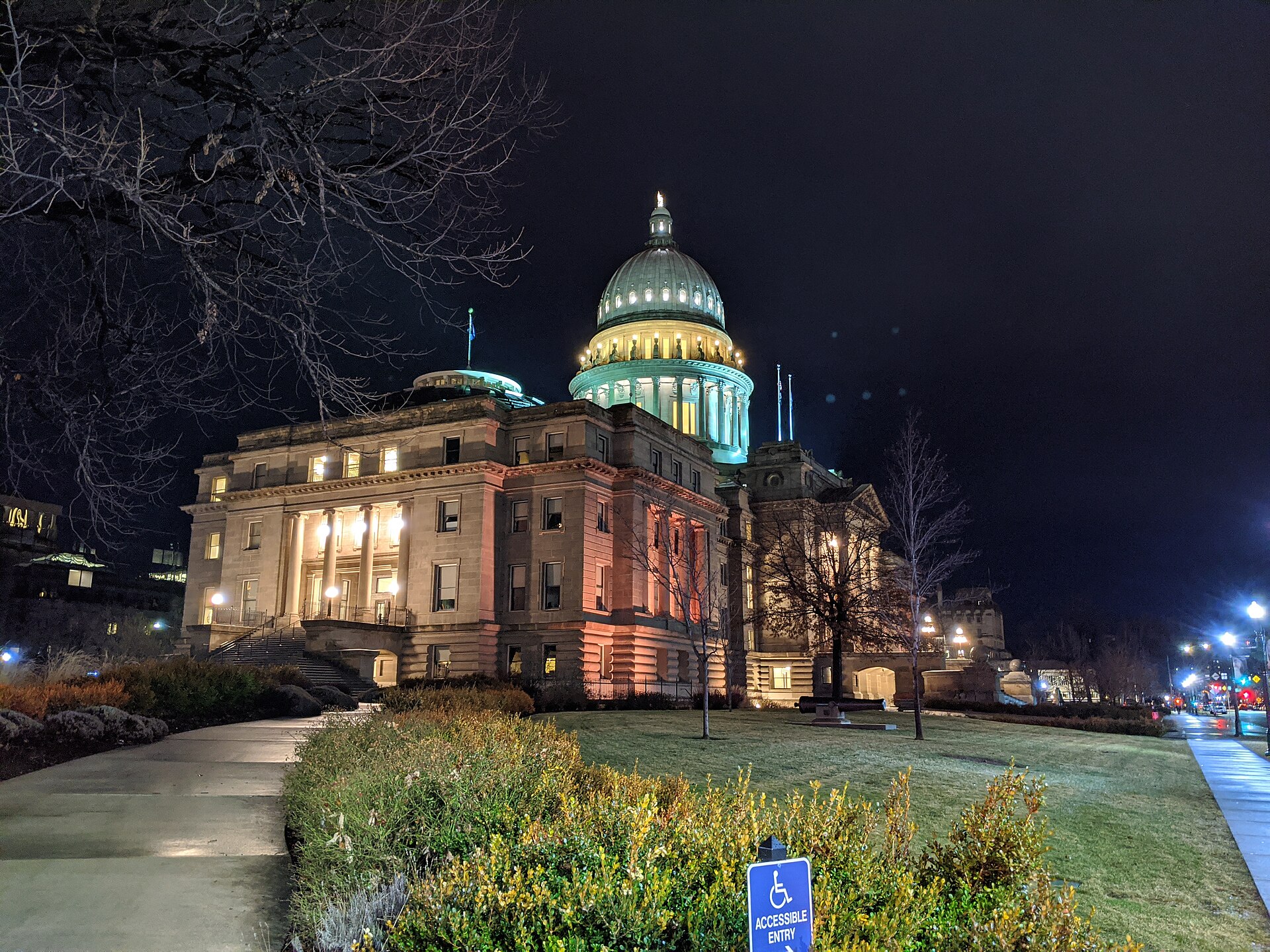

Where local power comes from
Idaho has two kinds of general-purpose local governments that make land use rules: 44 counties and about 200 incorporated cities. (The Census Bureau's 2025 estimates file lists 198 Idaho cities.)11 Neither is sovereign. Both are creations of the state, and their power to regulate land, rents or buildings comes from two places: the Idaho Constitution and statutes passed by the Legislature.
Article XII, Section 2: the police power clause
The constitution adopted in 1890 gives counties and cities a direct grant of what lawyers call the "police power," the power to regulate for health, safety and welfare. Article XII, Section 2 reads in full: "Any county or incorporated city or town may make and enforce, within its limits, all such local police, sanitary and other regulations as are not in conflict with its charter or with the general laws."1
Two phrases do the work. "Within its limits" means a city's rules stop at the city line and a county's rules apply in the unincorporated county. "Not in conflict with ... the general laws" means a state statute wins whenever the two collide. Every preemption fight in this lesson is a fight over what counts as a conflict.
The Legislature repeats the same limit in the statutes that give cities and counties their general ordinance power. Idaho Code 50-302 lets cities adopt ordinances "not inconsistent with the laws of the state of Idaho," and Idaho Code 31-714 lets county commissioners adopt ordinances "not repugnant to law."1718
Dillon's Rule in Idaho
Dillon's Rule is named for John F. Dillon, an Iowa judge whose 1872 treatise on municipal corporations said local governments have only the powers expressly granted to them, the powers fairly implied from those grants, and the powers essential to their purpose. Courts in states that follow the rule read local powers narrowly. States at the other end of the spectrum give cities "home rule," a broad grant of power to act on any local matter unless the state says otherwise.
The Idaho Supreme Court applied Dillon's Rule in Caesar v. State, decided April 2, 1980. A spectator hurt on a stairway at Boise State's Bronco Stadium argued that a Boise building ordinance requiring handrails applied to the stadium. The Court disagreed, holding that the Boise building code could not apply to a state-owned building. Along the way it said that in Idaho a city "possesses and exercises only those powers either expressly or impliedly granted to it."2
Idaho's version is not pure Dillon's Rule, because Article XII, Section 2 is itself a constitutional grant of police power that the Legislature cannot take back except by passing a conflicting general law. In practice the two ideas work together. For regulations, the question is whether a state law conflicts. For taxes and fees, the question is whether the Legislature granted the power at all, and Idaho courts have repeatedly struck local charges the Legislature never authorized (see What the courts have said).
Three kinds of preemption
Idaho courts and the Idaho Attorney General describe three ways a state law can override a local rule. Attorney General Opinion 08-1, written in 2008 for the prosecuting attorneys of Gooding, Lincoln, Jerome, Minidoka and Cassia counties, lays them out clearly.19
- Express preemption. The statute says so. Idaho Code 55-306 says a "local governmental unit shall not enact, maintain, or enforce" a rule that regulates rent, fees or deposits for private residential leases. No interpretation is needed.4
- Direct conflict. The local rule allows what the state forbids, or forbids what the state allows. The Attorney General's opinion traces this test to State v. Musser (1946).1920
- Implied, or field, preemption. The state has regulated a subject so completely that it must have meant to leave no room for local rules, even though the statute does not say so. The Idaho Supreme Court, which said in 1987 that it had "firmly adopted the doctrine of implied preemption" in Caesar (1980), applied it in Envirosafe Services of Idaho v. County of Owyhee (1987): "Where it can be inferred from a state statute that the state has intended to fully occupy or preempt a particular area," a local ordinance in that area conflicts with state law.21
A fourth question sits beside these three: whether the local government had the power in the first place. A rule can avoid every kind of preemption and still fail because no statute authorized it, which is how most Idaho fee cases end.
What cities and counties still control
Preemption covers specific subjects; everything else stays with local boards. The Local Land Use Planning Act of 1975 (Idaho Code Title 67, Chapter 65) requires every city and county to plan and gives each the power to zone, approve subdivisions, issue special use permits and grant variances. Those decisions remain local in every Idaho jurisdiction: whether a farm field is rezoned to houses, how wide a subdivision street must be, where a gravel pit or data center may go, how a hearing is run. The statutes covered below carve specific subjects out of that local power; they do not replace it. The core zoning powers are explained in Zoning and Rezones.
The Supreme Court has also held that the 1975 act limits how local zoning can be adopted. In Gumprecht v. City of Coeur d'Alene (April 6, 1983), it stopped a citizen initiative that would have capped building heights within 150 feet of the Lake Coeur d'Alene shoreline, holding that "the proposed initiative is in conflict with the Local Planning Act of 1975" because zoning must go through the act's notice and hearing steps.22 Zoning in Idaho is made by elected boards after hearings, not by ballot.
A timeline of preemption in Idaho, 1890 to 2027
Idaho's preemption laws did not arrive as one plan. They came one subject at a time, usually after a single city or county did something the Legislature did not like, or after an industry asked for one statewide rule. The table lists the laws and rulings that matter most for land use and housing. Non-housing examples are included only where they show a pattern.
| Year | Law or event | What changed | Source |
|---|---|---|---|
| 1890 | Idaho Constitution, Art. XII, Sec. 2 | Counties and cities may make local police regulations "not in conflict with" general laws | 1 |
| 1946 | State v. Musser | Direct-conflict test for local ordinances | 19 |
| 1967 | Idaho Code 50-302 (municipal code) | City ordinances must be "not inconsistent with the laws of the state" | 17 |
| 1975 | Local Land Use Planning Act | Every city and county must plan and may zone; counties may not deprive owners of full use of agricultural land (67-6529) | 23 |
| 1979 | Idaho Code 67-6531 | A group home for eight or fewer people with disabilities or elderly people counts as a "single family dwelling" in every zoning code | 24 |
| 1980 | Caesar v. State | Supreme Court applies Dillon's Rule; Boise building code cannot reach a state building | 2 |
| 1983 | Gumprecht v. City of Coeur d'Alene | No zoning by citizen initiative | 22 |
| 1987 | Envirosafe v. County of Owyhee | Implied (field) preemption applied; county waste ordinance void | 21 |
| 1990 | Rent control ban (then in Idaho Code 55-307) | Local governments may not control the amount of rent on private residential property | 3 |
| 1992 | Idaho Development Impact Fee Act | Sets the only rules under which cities, counties and some districts may charge impact fees | 25 |
| 1994 | Idaho Code 67-6509A | Manufactured homes must be allowed on lots zoned for single-family homes | 26 |
| 1995 | House Bill 156 (cap now in Idaho Code 63-802); Idaho Building Contractors v. Coeur d'Alene | 3 percent limit on growth of local property tax budgets; city impact fee struck as an unauthorized tax | 277 |
| 1998 | Idaho Code 67-6509B | Manufactured housing communities must be treated like site-built subdivisions | 28 |
| 2002 | Idaho Building Code Act, 39-4116 | Statewide building codes; local governments may not adopt residential or energy code provisions the state board has not adopted | 6 |
| 2008 | Firearms preemption (18-3302J); Attorney General Opinion 08-1 | State "wholly" occupies firearms regulation; AG says counties may still regulate dairy and feedlot siting | 2919 |
| 2010 | Idaho Dairymen's Ass'n v. Gooding County | County CAFO water-quality rules not preempted | 16 |
| 2016 | House Bill 372 (Idaho Code 67-2340) | Only the Legislature may regulate or tax bags, cups and other "auxiliary containers" | 30 |
| 2017 | House Bill 216 (Idaho Code 67-6539) | Cities and counties may not ban short-term or vacation rentals (effective Jan. 1, 2018) | 5 |
| 2021 | House Bill 389 | Total yearly growth in a district's property tax budget capped at 8 percent, including new construction | 31 |
| 2022 | House Bill 442 (failed) | Would have barred local rules on rental fees and deposits; passed House 54-14, died in Senate committee | 32 |
| 2024 | House Bill 545 | No local rules on rent, fees or deposits, or forcing landlords into optional federal housing programs (vouchers) | 33 |
| 2025 | Realtors v. Lava Hot Springs; House Bill 104 | City's vacation rental limit struck; counties may not narrow the farm building exemption from codes | 1534 |
| 2026 | HB 583, SB 1352, SB 1354, HB 800, HB 706, HB 766, SB 1430 | Short-term rental rules tightened; starter homes and ADUs required in cities over 10,000; manufactured duplexes; single-stair option; fire and ambulance impact fees; firearms penalties | 35363738394041 |
| Feb. 1, 2027 | Deadline in 67-6541 and 67-6542 | Cities over 10,000 must have amended their plans and codes | 98 |
What the Legislature has taken, subject by subject
Each housing-related subject below has been removed from local control in whole or in part. For each, the current statute, the bill that changed it, and the local action that prompted it where the record shows one.
Rent, fees, deposits and housing vouchers
The law now. Idaho Code 55-306, titled "Local Government, no rent control," says a local governmental unit "shall not enact, maintain, or enforce an ordinance or resolution" that would force property owners into "an optional federal housing assistance program" or that would "regulate rent, fees, or deposits charged for leasing private residential property." Local governments may still manage housing they own.4 The section number is new: the 2025 Legislature reorganized Title 55, Chapter 3, and moved the text from 55-307 to 55-306 (Session Laws 2025, chapter 65).4
How it got there. The ban began in 1990 with a sentence barring local rules that would control the amount of rent.3 In 2022, Rep. Joe Palmer of Meridian carried House Bill 442, a House Business Committee bill, to add fees and deposits. Boise at the time capped rental application fees at $30, and Rep. Colin Nash of Boise said it was the only such cap he knew of in Idaho. Palmer told the House, "This isn't about Boise." Rep. Scott Syme of Caldwell objected that "Local control has always been paramount." The bill passed the House 54-14 on Feb. 7, 2022, and died in the Senate Commerce and Human Resources Committee.332
In the fall of 2023 the Boise City Council adopted an ordinance barring landlords from rejecting tenants because of their source of income, which covered federal Housing Choice Vouchers (Section 8), child support and other income.42 The 2024 Legislature answered with House Bill 545, written by the House State Affairs Committee and carried by Rep. Brandon Mitchell in the House and Sen. Doug Okuniewicz in the Senate. It passed the House 59-11 on Feb. 26, 2024, and the Senate 26-9 on March 25, was signed by Gov. Brad Little on April 1, and took effect July 1, 2024.33 The bill's statement of purpose said it would stop local governments from "mandating Idaho property owners to be forced to participate in an optional Federal Housing Assistance program."43 Okuniewicz told the Senate the bill made sure "a city or county can't require you to lower your rent at your rental property." Sen. Abby Lee of Fruitland, who voted no, called it "a local issue." Boise council member Jimmy Hallyburton testified that the ordinance was meant to keep voucher holders from facing discrimination.42
The state's own rules for landlords. Preemption does not mean the state leaves landlords unregulated. The Legislature has written statewide tenant protections that cities may not add to: since July 1, 2023, fees charged to residential tenants must be "reasonable" and must appear in the rental agreement (now Idaho Code 55-305, first enacted by Senate Bill 1039 of 2023), and landlords must give 30 days' written notice of a rent increase or nonrenewal (Idaho Code 55-304).4445 A 2025 Senate bill to cap rental application fees statewide, Senate Bill 1042, passed the Senate 23-12 and went no further after it was sent to the House Business Committee.46
Short-term rentals
The 2017 law. House Bill 216, from the House Revenue and Taxation Committee, created Idaho Code 67-6539. It passed the House 63-5 and the Senate 35-0, was signed April 4, 2017, and took effect Jan. 1, 2018. As enacted, it barred any city or county ordinance "that has the express or practical effect of prohibiting short-term rentals or vacation rentals throughout the jurisdiction," but let local governments adopt "such reasonable regulations as it deems necessary to safeguard the public health, safety and general welfare in order to protect the integrity of residential neighborhoods."5 It also barred local regulation of rental platforms such as Airbnb and Vrbo and set up collection of state lodging taxes through those platforms (Idaho Code Title 63, Chapter 18). The Legislature amended the section in 2018 (Session Laws chapter 79).10
The Lava Hot Springs case. Lava Hot Springs, a Bannock County resort town, allowed vacation rentals in residential zones only if an owner or manager lived on site; non-owner-occupied rentals were limited to commercial zones. When the city denied John and Michelle Taylor a license for a non-owner-occupied rental in a residential zone, they and the Idaho Association of Realtors sued. On May 21, 2025, the Idaho Supreme Court, in an opinion by Chief Justice G. Richard Bevan, held that Ordinance 2006-5 "expressly prohibits the operation of vacation rentals, a type of short-term rental," in the city's residential zones, and that allowing owner-occupied bed and breakfasts there did not save it; the ordinance was invalid under 67-6539.15
The 2026 law. House Bill 583, from the House Business Committee, rewrote 67-6539. Its statement of purpose, listing House Speaker Mike Moyle, Rep. Jordan Redman, Senate President Pro Tempore Kelly Anthon and Sen. Todd Lakey as contacts, said it would let local governments regulate short-term rentals "only in cases where it is in the interest of public health and safety."47 It passed the House 54-16 on Feb. 12, 2026, and the Senate 23-12 on March 9, was signed March 16, and took effect July 1, 2026 (Session Laws chapter 22).35 The bill struck the "general welfare" and "integrity of residential neighborhoods" language and added these rules:10
- A local rule may not impose "different restrictions or obligations" on short-term rentals than on other homes. The statute lists 17, including owner occupancy for any amount of time, professional management, extra insurance, use reporting, sprinklers, extra parking, inspections, a cap on rental days, notices to neighbors, a conditional use permit in a residential zone, spacing between rentals and a cap on the number of rentals.
- A local government may require only five things: smoke alarms in sleeping areas, a fire extinguisher and carbon monoxide detector on each floor, escape ladders for upper-floor bedrooms with windows, occupancy no higher than the state building code allows, and an emergency information sheet.
- No county or city may "require a license, fee, permit, certification, or registration to operate a short-term rental."
- Short-term rentals remain subject to the noise, parking, nuisance, curfew and traffic rules that apply to every home.
The section reaches all cities and counties, regardless of size. It matters most where a city or county had short-term rental rules of its own, as Lava Hot Springs did. The line-by-line comparison and the 2026 city responses are in The 2026 Housing Laws.
Manufactured homes and group homes
Some of Idaho's oldest housing preemption laws protect housing types that neighbors have tried to zone out.
- Group homes (1979). Idaho Code 67-6531 says that for every zoning law, a "single family dwelling" includes a group residence of eight or fewer unrelated people with disabilities or elderly people, supervised in connection with their disability or age, with no more than two staff living there. A zoning code must treat such a home as it treats a family's house.24
- Manufactured homes on single-family lots (1994). Idaho Code 67-6509A ordered every city and county to amend its plan and zoning to allow manufactured homes (homes built to the federal HUD code) on land zoned for single-family homes, outside historic districts. Local governments may require standards no stricter than those listed: at least 400 square feet for a single-section home, a perimeter foundation no more than 12 inches above grade, a pitched roof (a city may not demand a slope steeper than 3 in 12), siding and roofing like nearby homes, and a garage if site-built homes need one. Approval standards must be "clear and objective."26
- Manufactured home communities (1998). Idaho Code 67-6509B says a city or county may not reject the plans for a community of ten or more manufactured homes "solely because the housing within the community will be manufactured housing."28
- Manufactured duplexes (2026). House Bill 800, from the House Ways and Means Committee, lets a manufactured duplex be treated as multifamily housing in zoning and, according to its statement of purpose, allows single-section homes of at least 400 square feet on single-family lots and multi-section homes of at least 800 square feet on lots zoned for multifamily homes. It passed the House 60-6 and the Senate 28-5, was signed March 26, 2026, and took effect July 1 (Session Laws chapter 171).38
How manufactured and modular homes changed from 1979 to 2026 is in How Houses Changed.
Building and energy codes
Before 2002, Idaho cities and counties that enforced building codes chose their own editions and amendments. The Idaho Building Code Act, as rewritten in 2002 (Session Laws chapter 345), made the codes adopted by the state's Idaho Building Code Board the statewide standard. Idaho Code 39-4116 now says local governments that issue building permits "shall" adopt, by Jan. 1 of the year after the board acts, the International Building Code, the Idaho residential code and the 2018 Idaho energy conservation code, with the board's amendments.6
The same section limits what a city or county can add. Local governments may amend the adopted codes for "local concerns" if the amendment gives "at least an equivalent level of protection," but they may not adopt any part of the International Residential Code or the residential provisions of the International Energy Conservation Code that the state board has not adopted or has rejected. A city that wanted newer energy rules for houses than the state's, for example, cannot write them into its code. Amendments to most of the residential code require a finding of "good cause for building or life safety," a public hearing and 30 days' written notice to the local chapters of builder, contractor and design groups listed in 39-4109.6
Two more lines in 39-4116 preempt local choices outright. Subsection (3) exempts single-family homes and duplexes from any code provision that would require automatic fire sprinklers. Subsection (5) requires local governments to exempt agricultural buildings from the codes; House Bill 104 of 2025 defined "agricultural buildings" (barns, milking barns, shelters, silos, equipment sheds, greenhouses) and added that counties "shall not alter, amend, deny, limit, or narrow" the exemption, for example by capping building size or requiring sprinklers. HB 104 passed 70-0 and 35-0 and took effect July 1, 2025 (chapter 40).634
The 2026 Legislature also used the building code to open a door rather than close one. House Bill 706 lets local governments allow apartment buildings of up to six stories with a single interior exit stairway, instead of the two the International Building Code normally requires, if they meet listed fire protections such as full sprinkler systems and pressurized stairwells. It passed the House 63-7 and the Senate 18-17 and was signed April 10, 2026 (chapter 320).39 It is permissive: each city decides whether to allow single-stair buildings. How Idaho's codes changed over time is in How Houses Changed.
Impact fees
An impact fee is a one-time charge on new development to pay its share of the roads, water lines, parks, police stations and fire stations it will need. Idaho cities tried them on their own before the state wrote rules. In Idaho Building Contractors Ass'n v. City of Coeur d'Alene (Feb. 22, 1995), the Supreme Court struck Coeur d'Alene's 1993 Development Impact Fee Ordinance, which charged $720 to $882 per single-family home for capital improvements. "We find that the imposition of the impact fee by the City is in reality a tax, not a regulation," the Court wrote, and a city may tax only with legislative authority. As the opinion describes the district court's reading, the state's 1992 impact fee law then applied only to cities in counties of more than 200,000 people, so it did not cover Kootenai County.7
The Idaho Development Impact Fee Act (Idaho Code Title 67, Chapter 82), first passed in 1992 (Session Laws chapter 282), was later broadened. Its stated purpose includes "establishing uniform standards" for impact fees and preventing "duplicate and ad hoc development requirements."25 It lists the governments that may adopt impact fee ordinances: cities, counties, single countywide highway districts and, since House Bill 766 of 2026, fire protection districts and ambulance service districts. HB 766 passed the House 39-27 and the Senate 24-9 and was signed March 27, 2026 (chapter 203).4840 School districts are not on the list, and bills to add them, such as House Bill 41 and Senate Bill 1060 in 2023, did not pass.49
Fees outside the act face the same test as Coeur d'Alene's. In North Idaho Building Contractors Ass'n v. City of Hayden (Feb. 26, 2015), the Court held that Hayden's sewer "capitalization fee," whose city-retained part was raised from $735 to $2,280 per equivalent residence to pay for system expansion, was not authorized by the statute the city relied on.50 SB 1352 and SB 1354 of 2026 added a further limit: cities may not charge accessory dwelling units or starter-home subdivisions higher impact or utility connection fees than other single-family homes, and starter-home subdivisions may not be charged higher permit fees either.89 The full story of impact fees and who pays for growth is in Impact Fees, Urban Renewal and Who Pays and in the older lesson Subdivisions and Impact Fees.
Property tax budget caps
The state also limits how much property tax a city, county or special district may raise, which shapes how a local government can pay for the services growth requires. In 1995 the Legislature passed House Bill 156, which repealed the old "truth in taxation" rules and capped yearly growth in a district's property tax budget at 3 percent; the cap was enacted as Idaho Code 63-2220A and is now in 63-802.73 In the words of a 2005 legislative interim committee report, the law let the property tax portion of a taxing district's budget "increase up to 3% per year, plus an amount for new construction and annexation."27 House Bill 389 (2021) tightened the cap: its statement of purpose says it "reduces the amount of valuation available to tax new construction and annexation, creating a total cap of 8% in any budget year," and it limited the use of "forgone" increases a district skipped in earlier years. HB 389 passed the House 48-20 and the Senate 19-16 and was signed May 12, 2021.31 The current section was amended again twice in 2026 (House Bills 765 and 959, chapters 197 and 316).51 School district levies follow separate rules. The budget cap is the subject of The 3 Percent Cap; its history is in Property Tax History.
Accessory dwelling units and starter homes (2026)
The 2026 laws are the first in Idaho to tell cities what lot sizes and setbacks their zoning codes must allow for ordinary single-family housing. Both apply only to "cities with a population greater than ten thousand (10,000)." Neither applies to counties.98
- Accessory dwelling units, Idaho Code 67-6541 (SB 1354, chapter 265). No city may ban accessory dwelling units (ADUs) in residential zones. By Feb. 1, 2027, each covered city must allow one internal or one detached ADU per single-family lot, and may not require off-street parking (with exceptions), charge higher impact or connection fees, cap ADU size below 1,000 square feet or 75 percent of the main home, require the owner to live on site, or hold ADUs to stricter setbacks than houses. Projects that meet the rules "shall be approved administratively and as a matter of right."9
- Starter-home subdivisions, Idaho Code 67-6542 (SB 1352, chapter 264). No city may ban starter-home subdivisions (at least four acres, single-family detached homes on lots no larger than 1,500 square feet) in residential zones. By Feb. 1, 2027, codes must allow minimum lots of 1,500 square feet, front and rear setbacks of 15 feet, side setbacks of 5 feet, 30-foot lot widths and 70-foot depths, with exceptions for infrastructure and environmental limits. Cities may still deny a starter-home subdivision for inadequate infrastructure "to the same extent and under the same standards" as other subdivisions.8 (The section was enacted as a second 67-6541 and renumbered 67-6542 by the code editors.)
Both bills came from the Senate State Affairs Committee, with Sen. Ben Toews, Rep. Jordan Redman and Sen. Tammy Nichols named on the statements of purpose. SB 1352 passed the Senate 25-10 and the House 36-34. SB 1354 passed the Senate 25-10 and the House 47-23. Gov. Little signed both on March 31, 2026, and both took effect July 1, 2026.36375253 They grew out of the Legislature's 2025 interim Land Use and Housing Study Committee, co-chaired by Sen. Jim Woodward and Rep. Redman, whose members included Star Mayor Trevor Chadwick for the Association of Idaho Cities and Sherry Maupin for the Idaho Association of Counties.54 Details, city by city, are in The 2026 Housing Laws, and how to take part in your city's rewrite is in Shaping Your City's Code Rewrite.
Agriculture and dairies: where counties kept their power
The Magic Valley's biggest preemption fight concerned dairies and feedlots, called confined animal feeding operations (CAFOs), and it shows the other side of the coin: a subject where the Legislature expressly gave counties power and the courts protected it.
The 1975 planning act already told counties they could not use zoning to deprive an owner of "full and complete use of agricultural land for production of any agricultural product." In 2000 and 2003 the Legislature added that a board of county commissioners "shall" adopt ordinances regulating the siting of large CAFOs, with at least one public hearing on each proposed site, and "may reject a site regardless of the approval or rejection of the site by a state agency."23
In 2008, the prosecuting attorneys of Gooding, Lincoln, Jerome, Minidoka and Cassia counties asked the Attorney General whether state CAFO laws preempted county rules. Attorney General Lawrence Wasden's Opinion 08-1, dated Aug. 1, 2008, concluded that county siting rules such as setbacks and limits on livestock density were "likely to be upheld," but county rules that "directly impose water quality or waste management requirements" on an operating CAFO were likely preempted. It added that the "lack of clarity" pitted local governments against the industry and that "Legislative action ... is warranted."19
The Idaho Dairymen's Association and the Idaho Cattle Association sued Gooding County over its CAFO ordinance anyway. On Feb. 1, 2010 (2010 Opinion No. 12, heard in Twin Falls), the Idaho Supreme Court affirmed District Judge R. Barry Wood and held that "state regulation of water quality at CAFOs has not preempted local regulation." It also rejected the associations' due process claim.16 For counties, the case remains the leading Idaho example of a local rule surviving an implied preemption challenge. Water and farmland issues are covered further in Water, Land and Agriculture and in Property Rights and Land Use Law.
Non-housing examples, briefly
Three non-housing laws show how the Legislature writes preemption when it wants no doubt:
- Firearms. Idaho Code 18-3302J (2008, amended 2014) declares the Legislature's intent "to wholly occupy the field of firearms regulation." Senate Bill 1430 (2026) added a $10,000 civil penalty per willful violation by a city, county or agency and a lawsuit right with a 30-day cure period after notice from the Attorney General; it passed 31-3 and 60-8 and took effect April 2, 2026.2941
- Bags and containers. House Bill 372 (2016) created Idaho Code 67-2340: any ban, fee or tax on "auxiliary containers" (bags, cups, boxes, bottles) "shall be imposed only by statute enacted by the legislature." It passed the House 52-17 and the Senate 20-15. A 2026 bill to repeal it, House Bill 812, was printed but never sent to a committee.305556
- Minimum wage. Idaho Code 44-1502(4) bars any city, county or other political subdivision from setting a minimum wage higher than the state's, which tracks the federal $7.25. A 2026 bill to remove that line, House Bill 813, was also printed but never sent to a committee.5756
A 2026 bill from the House Local Government Committee to set uniform rules for local antidiscrimination ordinances, House Bill 557, passed the House 53-16 and stopped in the Senate State Affairs Committee.58
| Subject | Statute | Who it binds | What locals may not do | What locals keep |
|---|---|---|---|---|
| Rent, fees, deposits, vouchers | 55-306 (1990; HB 545, 2024) | All local governments | Regulate rent, fees or deposits on private leases; require voucher acceptance | Manage housing they own |
| Short-term rentals | 67-6539 (HB 216, 2017; HB 583, 2026) | Cities and counties | Ban them; impose 17 listed rules; require permits or licenses | Five safety rules; general noise, parking, nuisance rules |
| Accessory dwelling units | 67-6541 (SB 1354, 2026) | Cities over 10,000 | Ban ADUs; require parking (with exceptions), owner occupancy; cap size below 1,000 sq. ft. or 75 percent | Building, fire, flood, utility and setback-for-easement rules |
| Starter-home subdivisions | 67-6542 (SB 1352, 2026) | Cities over 10,000 | Require lots over 1,500 sq. ft. or larger setbacks in these subdivisions; charge higher fees | Deny for inadequate infrastructure; historic districts exempt |
| Manufactured homes | 67-6509A, 67-6509B (1994, 1998; HB 800, 2026) | Cities and counties | Exclude them from single-family zones; reject communities only because homes are manufactured | Listed placement standards; recorded covenants |
| Group homes | 67-6531 (1979) | All zoning | Treat homes of eight or fewer as something other than single-family | Licensing set by state |
| Building and energy codes | 39-4116 (2002; HB 104, 2025) | Local code enforcers | Adopt residential or energy provisions the state board has not; require home sprinklers; narrow farm building exemption | Local amendments with equal protection and findings |
| Impact fees | Title 67, Ch. 82 (1992; HB 766, 2026) | Cities, counties, some districts | Charge impact fees outside the act, or for school districts, which the act does not list | Fees under an adopted capital improvements plan |
| Property tax budgets | 63-802 (1995; HB 389, 2021) | Nonschool taxing districts | Raise property tax budgets more than the cap allows | Voter-approved overrides and bonds |
| CAFO siting | 67-6529 (2000, 2003) | Counties (required to act) | Impose water-quality rules on operating CAFOs (AG view) | Siting, setbacks, density; may reject sites |
Sources for the table: the statutes and bills cited in this section.41098266485119
Who the 2026 laws reach: the 10,000 line
Because the ADU and starter-home laws apply only to cities over 10,000, the first question for any council is which side of the line it is on. By the Census Bureau's Vintage 2025 estimates for July 1, 2025, 27 of Idaho's 198 cities had more than 10,000 residents. Those 27 cities held 1,229,082 people, 60.6 percent of the state's 2,029,733 residents and 84.5 percent of everyone who lives inside any Idaho city (our calculation).11 The other 171 cities, and every unincorporated area governed by a county, are outside both laws. The short-term rental law, by contrast, applies to every city and county.
In the Magic Valley, three cities are covered: Twin Falls (56,216), Jerome (13,731) and Burley (12,409). Rupert (6,460), Kimberly (5,798), Buhl (4,801), Gooding (3,855), Wendell (3,090), Filer (3,026), Shoshone (1,767) and Hagerman (994, in Gooding County) are not.11 Kimberly grew from 4,625 to 5,798 between the 2020 estimates base and 2025, so it is gaining on the line but remains far from it. The Magic Valley picture is in The Magic Valley Case Study, and the bigger cities' growth is in The Big Cities Since 2020.
Four cities sit close enough that the choice of population number could matter. Middleton (12,600 in 2025), Rathdrum (13,227), Sandpoint (10,645) and Hailey (10,053) were all under 10,000 in the April 1, 2020 estimates base (9,451, 9,212, 8,654 and 9,164) and over it in the 2025 estimates.11 Neither 67-6541 nor 67-6542 says which population figure to use, so a city near the line has a reason to ask before Feb. 1, 2027 (see What we don't know).
How we figured it: which cities are covered
Inputs: the U.S. Census Bureau's Vintage 2025 subcounty population file for Idaho (sub-est2025_16.csv), rows with summary level 162 (incorporated places, 198 rows) and the state row (summary level 040), column POPESTIMATE2025 (July 1, 2025) and column ESTIMATESBASE2020 (April 1, 2020 base, adjusted to Jan. 1, 2025 boundaries).
Method: we counted cities with a 2025 estimate greater than 10,000 (27), summed their estimates (1,229,082), and divided by the state estimate (2,029,733) for 60.6 percent and by the sum of all 198 city estimates (1,455,101) for 84.5 percent. We repeated the count with the 2020 base to find cities that crossed the line between 2020 and 2025.
Limits: the statutes say only "population greater than ten thousand"; a court or the Attorney General could read that to mean the 2020 Census count, a newer estimate, or a city's own figure. Burley lies in both Cassia and Minidoka counties; the file reports the whole city. Estimates are models, not counts; see How to Measure Growth.
The mayors' and counties' objections
Cities and counties do not vote in the Legislature, but they testify, and the committee minutes show what they said. The Association of Idaho Cities (AIC) is a nonprofit association whose members are Idaho's city governments; the Idaho Association of Counties (IAC) plays the same role for counties. Both are associations that lobby for their members, and their positions should be read that way. A 1989 Attorney General opinion, No. 89-7, examined whether the two associations are public or private bodies and whether cities may pay their dues with tax money.59
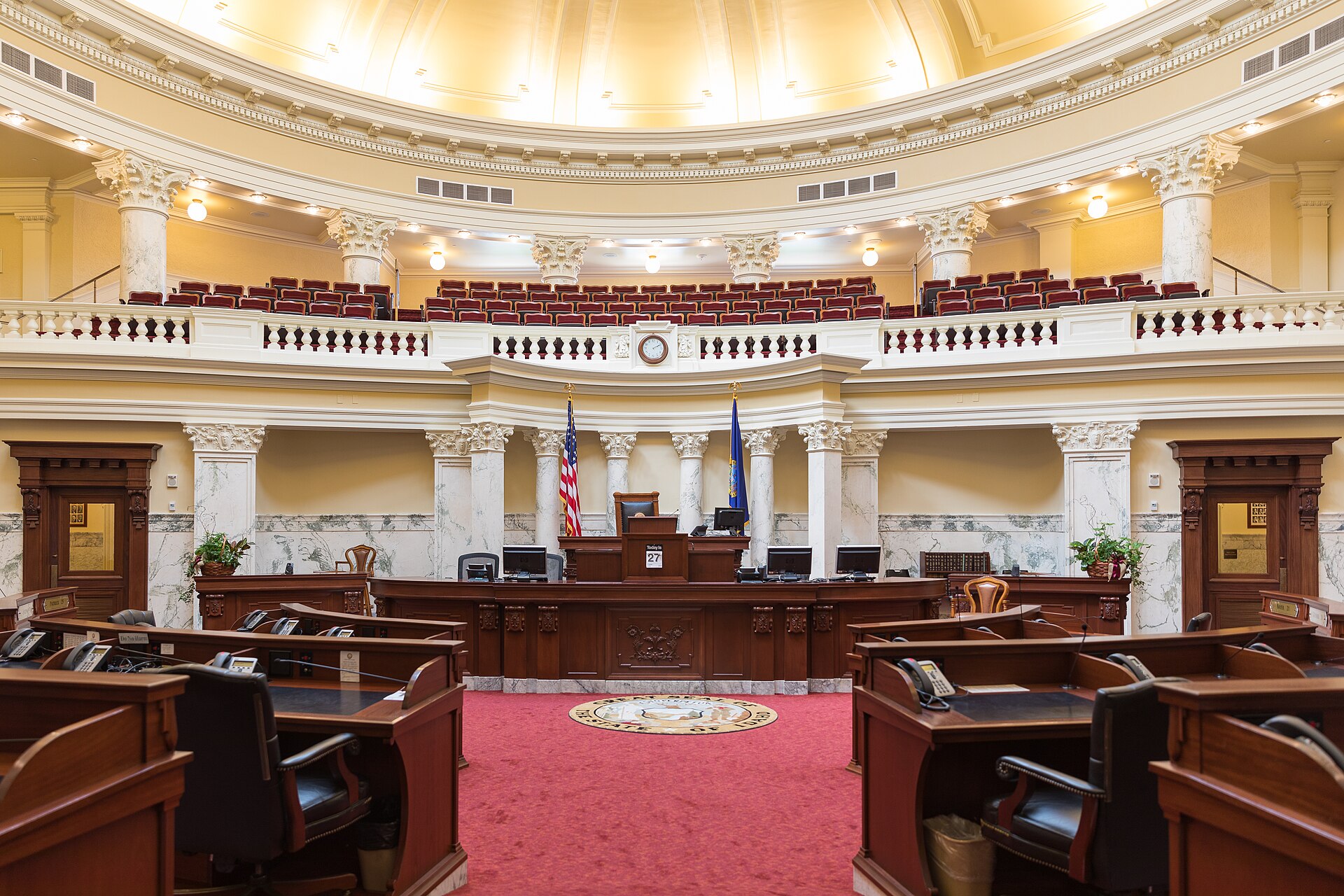

February 2026: the first bills are held
The 2026 housing package started as four Senate bills: S 1277 (accessory dwelling units), S 1278 (development on religious land), S 1279 (starter-home subdivisions) and S 1280 (twin homes and duplexes in single-family zones). On Feb. 17, 2026, the Senate Commerce and Human Resources Committee heard S 1277, S 1279 and S 1280.1460
The committee minutes summarize the testimony. Sen. Ben Toews, the sponsor, cited a median Idaho home price of about $510,000, a typical first-time buyer age of 40 and an average new home over 2,100 square feet, and "claimed that 'local control' should mean control by the homeowner." Coeur d'Alene City Council member Kiki Miller supported ADUs but raised concerns about removing off-street parking requirements. Star Mayor Trevor Chadwick testified against S 1277 "as written," saying lift stations and pipes "were not sized for added ADU flows" and upgrades "could cost millions," that the bill's four-foot setbacks conflicted with five-foot utility easements, that a 45-foot height allowance raised fire-ladder concerns, and that a private right to sue could expose mayors and planning commissioners to lawsuits. On the starter-home bill, he argued it could produce "more market-rate or corporate-owned rentals" without deed restrictions, and that in Star "the market, not city regulations," largely set home sizes and prices.14
From the Magic Valley, Minidoka County Commissioner Jared Orton testified on the duplex bill that in counties that rely on wells and septic systems, higher densities "were often infeasible due to nitrate contamination risks and health regulations," that most county rules limited septic-based development to about one unit per acre, and that applying the bill to existing subdivisions would create "chaos," in the minutes' words.14
Senators who voted to hold the bills gave local-control reasons. According to the minutes, Sen. Treg Bernt praised the starter-home bill's fee-waiver clause but objected to its "shall amend" mandate on local long-range plans and land use rules, "seeing it as State overreach into local planning." Sen. Jim Guthrie said cities could already approve ADUs and that "it was the State that was telling individuals what to do," and worried that 1,000-square-foot lots at 12 units per acre "approximated multifamily projects rather than 'starter homes.'" Acting Sen. Brooks, sitting for Sen. Todd Lakey and himself a county commissioner, called the ADU bill "as written" "untenable." Sens. Tammy Nichols, Christy Zito, Janie Ward-Engelking and James Ruchti voted the other way; Ruchti said he believed in local control but that the Legislature "had not done anything significant to address affordable housing." Each bill was held by a 5-4 vote.14
March 2026: new bills, a new committee, and the Association of Idaho Cities
About two weeks later, on March 2, the Senate State Affairs Committee introduced new versions, SB 1352 and SB 1354, and they were sent to the Senate Local Government and Taxation Committee. As introduced, both applied to cities over 5,000 people, and the starter-home bill allowed 1,400-square-foot lots at 12 or more units per acre.1213
At the March 10 hearing on SB 1352, Hilary Patterson, president of the Idaho chapter of the American Planning Association (a professional association of planners), said the bill "took away local control" and recommended raising the threshold to 10,000, allowing two years or more to comply, and keeping discretionary local approval. Kelley Packer, executive director of the Association of Idaho Cities, "spoke against S 1352. It took away local control," the minutes say, adding that some cities already allowed smaller lots, that smaller lots next to larger ones could reduce property values, that a "starter home" should be defined by a share of local median income, and that councils could already grant lot-size variances. Mayor Chadwick, now speaking for the Association of Idaho Cities, testified that the bill set no income target and did not stop large corporations from buying whole subdivisions. Sabrina Minshall of Hayden Homes, a builder, supported the bill, saying land is a large part of a home's cost.12
At the March 11 hearing on SB 1354, Lance Sayers of the Association of Idaho Cities testified that "decisions regarding land use planning were best made at the local level," that the bill "needed to consider infrastructure," and that by-right approval conflicted with other parts of the bill. Patterson of the planners' chapter also opposed it. Lisa Anderson, advocacy director for AARP, supported it, saying ADUs let older adults "stay in place, remain independent, and be near family caregivers." Builders Brighton Homes and the Idaho Home Builders Association supported it; the Idaho chapter of the Community Associations Institute, which represents homeowners associations, opposed it. Toews asked to amend the bill to address infrastructure.13
Both bills went to the Senate's amending order. The versions that passed raised the population line from 5,000 to 10,000, as the planners' chapter had asked, and raised the largest minimum lot size a city may require in a starter-home subdivision from 1,400 to 1,500 square feet.36378 In the House Business Committee on March 25, Packer again testified against SB 1352 for the Association of Idaho Cities, and the committee sent both bills to the floor.61 The Idaho Association of Counties later listed the defeat of S 1277 to S 1280, which would have reached counties too, among its 2026 wins, saying it had "successfully lobbied against several bills that threatened local control or sought to impose new unfunded mandates on counties."60

The case for statewide rules
Supporters of preemption make four arguments, each stated in the bill records.
- Housing supply. The SB 1352 statement of purpose says the median age of first-time buyers "recently reached 40" and that the bill "removes red tape discouraging first-time home ownership" by allowing small-lot subdivisions.52 Sen. Toews told the Senate Local Government and Taxation Committee that land is about 35 percent of a home's cost, so smaller lots lower prices.12 Builders such as Hayden Homes testified that "rigid maximums" on density and slow local processes held back entry-level housing.14
- Property rights. HB 583's statement of purpose calls itself protection of "the private property rights of Idaho homeowners by ensuring the right to rent their property."47 In the House Business Committee, Rep. Kyle Harris described SB 1354 as "about property rights."61 Toews argued that local control "should mean control by the homeowner."14
- One set of rules. Builders and landlords who work in many cities say a patchwork of local codes raises costs. The impact fee act's purpose clause speaks of "uniform standards," and the 2025 farm building bill's statement of purpose of "a unified and singular definition" across "all local jurisdictions."2534
- Some local rules shift costs to owners. In the 2024 Senate debate, Sen. Doug Okuniewicz said HB 545 made sure "a city or county can't require you to lower your rent," and Senate President Pro Tempore Chuck Winder of Boise, citing his real estate experience, said, "I don't think rent control is one of the answers."42
The evidence on supply is still thin for Idaho itself, because the 2026 laws only took effect July 1, 2026, and cities have until Feb. 1, 2027, to amend their codes. Other states' early results are discussed under How Idaho compares.
The case for local control
Opponents of preemption also make four arguments in the record.
- Infrastructure is local and paid for locally. Cities build and pay for the sewer, water and streets that new units use, under property tax budgets the state caps. Chadwick's testimony about lift stations and pipes, Sayers' testimony that the ADU bill "needed to consider infrastructure," and Orton's testimony about nitrates and septic systems all make this point.1413
- Local plans reflect local hearings. The Local Land Use Planning Act requires every city to adopt a long-range plan after public hearings. Overriding parts of those plans from Boise, opponents argue, removes residents' voice. Rep. Syme's 2022 line, "Local control has always been paramount," and Sen. Lee's 2024 line, "This is a local issue, and this is an issue where communities need to make their decisions," state it most directly.342
- The laws may not produce what they promise. Packer and Chadwick argued that smaller lots and ADUs, with no income limits or owner-occupancy rules, could become market-rate rentals or investor property rather than starter homes; Guthrie and Brooks (Lakey) shared that concern.1214
- Idaho is not one place. A rule that suits Meridian may not suit Jerome or a well-and-septic county subdivision. The 10,000 threshold itself concedes the point for small towns.
Both sides claim the mantle of property rights. The owner who wants to add a backyard cottage or rent a house by the night invokes them against the city; the neighbor who bought into a single-family street invokes them against the owner. How Idaho law sorts those claims is in Property Rights and Land Use Law.
What the courts have said
Idaho's preemption case law is short but consistent. When the Legislature speaks clearly, courts enforce it against cities. When a local government charges money without a statute behind it, courts strike the charge. When the state has left room, as with CAFO siting, courts leave local rules alone. The table lists the cases cited in this lesson; appeals and standing rules for land use cases are in Appeals and Takings.
| Case | Court and date | Local action | Holding | Source |
|---|---|---|---|---|
| State v. Musser, 67 Idaho 214 | Idaho Supreme Court, 1946 | (Cited for the test) | A local rule conflicts with state law when it allows what the state forbids or forbids what it allows | 20 |
| Caesar v. State, 101 Idaho 158 | Idaho Supreme Court, April 2, 1980 | Boise building code applied to a state stadium | Cities have only granted powers (Dillon's Rule); city code does not reach state buildings | 2 |
| Gumprecht v. City of Coeur d'Alene, 104 Idaho 615 | Idaho Supreme Court, April 6, 1983 | Citizen initiative limiting shoreline building heights | Initiative conflicts with the Local Planning Act; election halted | 22 |
| Envirosafe Services of Idaho v. County of Owyhee, 112 Idaho 687 | Idaho Supreme Court, March 24, 1987 | Ordinance 83-02: disclosure rules and a one-cent-per-pound fee on hazardous waste | State fully occupies hazardous waste and PCB disposal; ordinance void | 21 |
| Idaho Building Contractors Ass'n v. City of Coeur d'Alene, 126 Idaho 740 | Idaho Supreme Court, Feb. 22, 1995 | Ordinance 2569 impact fee, $720 to $882 per home | Fee is a tax the city had no authority to impose | 7 |
| Idaho Dairymen's Ass'n v. Gooding County, Docket 35980 | Idaho Supreme Court, Feb. 1, 2010 | County CAFO ordinance with water-quality provisions | Not impliedly preempted; due process claim rejected | 16 |
| North Idaho Building Contractors Ass'n v. City of Hayden, Docket 41316 | Idaho Supreme Court, Feb. 26, 2015 | Sewer capitalization fee raised to $2,280 | Fee not authorized by the statute the city cited (Idaho Code 63-1311) | 50 |
| Idaho Ass'n of Realtors v. City of Lava Hot Springs, Docket 50888 | Idaho Supreme Court, May 21, 2025 | Ordinance 2006-5: non-owner-occupied vacation rentals barred from residential zones | Ordinance violates 67-6539; invalid | 15 |
Two points stand out. First, the Attorney General's 2008 opinion predicted that county water-quality rules for operating CAFOs would likely be preempted, and the Supreme Court two years later held that Gooding County's were not; an Attorney General opinion is advice, not law. Second, no Idaho appellate court has yet ruled on the 2026 ADU and starter-home laws. Whether a city can be sued for missing the Feb. 1, 2027 deadline, and by whom, is not stated in either section; the private right to sue in the first ADU bill, S 1277, was one of the provisions Toews offered to remove.149
How Idaho compares with other states
Idaho was not first. From 2016 to 2025, at least six other Western and Sun Belt states passed laws that override local zoning for housing. The comparison below uses each state's own legislative record.
- Oregon (2019). House Bill 2001 (Oregon Laws 2019, chapter 639) requires cities over 10,000, and cities and counties in the Portland Metro area, to allow duplexes on land zoned for single-family homes inside the urban growth boundary, and requires Metro cities and counties and cities over 25,000 to allow "middle housing" in residential zones. It also bars cities from conditioning ADU approval on off-street parking or owner occupancy.62 Oregon's population line for duplexes is the same 10,000 Idaho chose.
- Montana (2023). SB 528 requires every city and town with zoning to allow at least one ADU on a single-family lot, up to 1,000 square feet or 75 percent of the main home, and bars parking, owner-occupancy and impact-fee requirements; SB 323 requires cities over 5,000 to allow duplexes wherever single-family homes are allowed; SB 245 requires cities over 5,000 to allow apartments and mixed use in commercial zones; and SB 382, the Montana Land Use Planning Act, requires cities of 5,000 or more in counties of 70,000 or more to plan for 20 years of housing need. A homeowners' group sued over SB 323 and SB 528; a district judge blocked them, and in early September 2024 (on Tuesday, Sept. 3, by a news report two days later) the Montana Supreme Court reversed the injunction and sent the case back.6364 Idaho uses Montana's two ADU size figures, 1,000 square feet and 75 percent of the main home; Montana's summary states them as the size limit for a detached ADU, while Idaho's law makes them the smallest size cap a city may set.
- Washington (2023). House Bill 1110 (chapter 332, Laws of 2023) requires fully planning cities of 25,000 to 75,000 to allow at least two units per lot (four near major transit or with an affordable unit) and cities of 75,000 or more to allow four units per lot (six near transit or with two affordable units).65
- Florida (2023). The Live Local Act, Senate Bill 102 (Laws of Florida 2023-17, approved March 29, 2023), requires cities and counties to approve multifamily rental projects in commercial, industrial and mixed-use zones without a rezone when at least 40 percent of units are affordable to households at or below 120 percent of area median income for at least 30 years, at the highest density allowed anywhere in the jurisdiction, and it removed local authority to adopt rent controls. The summary of zoning terms here is from the Florida League of Cities, an association of Florida cities.6667
- Arizona (2016 and 2024). Senate Bill 1350 (Laws 2016, chapter 208) barred Arizona cities from prohibiting vacation and short-term rentals, a year before Idaho's HB 216. House Bill 2721 (2024) requires cities over 75,000 to allow duplexes, triplexes, fourplexes and townhouses on single-family lots within one mile of the central business district and on at least 20 percent of new developments over 10 acres, by Jan. 1, 2026.6869
- Texas (2025). Senate Bill 15, effective Sept. 1, 2025, bars cities of more than 150,000 people in counties of more than 300,000 from requiring lots larger than 3,000 square feet, wider than 30 feet or deeper than 75 feet on unplatted tracts of five acres or more zoned for single-family homes.70 Idaho's starter-home law is smaller on lot size (1,500 square feet) but reaches far smaller cities (over 10,000).
Idaho's 2026 package is unusual in two ways. Its population threshold, 10,000, is lower than Washington's, Arizona's or Texas's, so it reaches mid-size towns such as Jerome and Burley. And it pairs pro-supply mandates with preemption that runs the other way in other states: Idaho bans local rent rules and local short-term rental limits, while it also bans local limits on small lots. Idaho has not adopted a duplex mandate (S 1280 was held) or a Florida-style rule for housing in commercial zones (House Bill 705 was held in the House Business Committee).1471
Pictures, Numbers and Infographics
The key numbers and dates in this lesson, with their sources.
| Measure or rule | Idaho | U.S. or other states | Place or year | Source |
|---|---|---|---|---|
| Population line for ADU and starter-home mandates | Cities over 10,000 | Oregon duplexes: over 10,000; Montana duplexes: over 5,000; Arizona middle housing: over 75,000; Texas small lots: over 150,000 | 2026; 2019; 2023; 2024; 2025 | 962636970 |
| Cities over 10,000 | 27 of 198 | July 1, 2025 estimates | 11 | |
| Share of Idahoans in those cities | 60.6 percent (1,229,082 of 2,029,733) | July 1, 2025; our calculation | 11 | |
| Largest minimum lot a covered city may require (starter homes) | 1,500 sq. ft. | Texas: 3,000 sq. ft. | 2026; 2025 | 870 |
| Smallest ADU size cap a city may set | 1,000 sq. ft. or 75 percent of the home | Montana: same two figures, stated as the limit for a detached ADU | 2026; 2023 | 963 |
| Deadline for city codes | Feb. 1, 2027 | Arizona: Jan. 1, 2026 (middle housing, HB 2721) | Idaho Code 67-6541, 67-6542 | 969 |
| Short-term rental rules a local government may not impose | 17 listed; no permits or licenses | Arizona barred STR bans in 2016 | HB 583, 2026 | 1068 |
| Local rent control banned since | 1990 (fees, deposits, vouchers added 2024) | Florida: local rent control authority removed 2023 | Idaho Code 55-306 | 3466 |
| Yearly cap on growth of property tax budgets | 3 percent plus new construction and annexation; 8 percent total | 1995; HB 389, 2021 | 2731 | |
| Closest 2026 votes | SB 1352: House 36-34; HB 706: Senate 18-17 | March and April 2026 | 3639 |
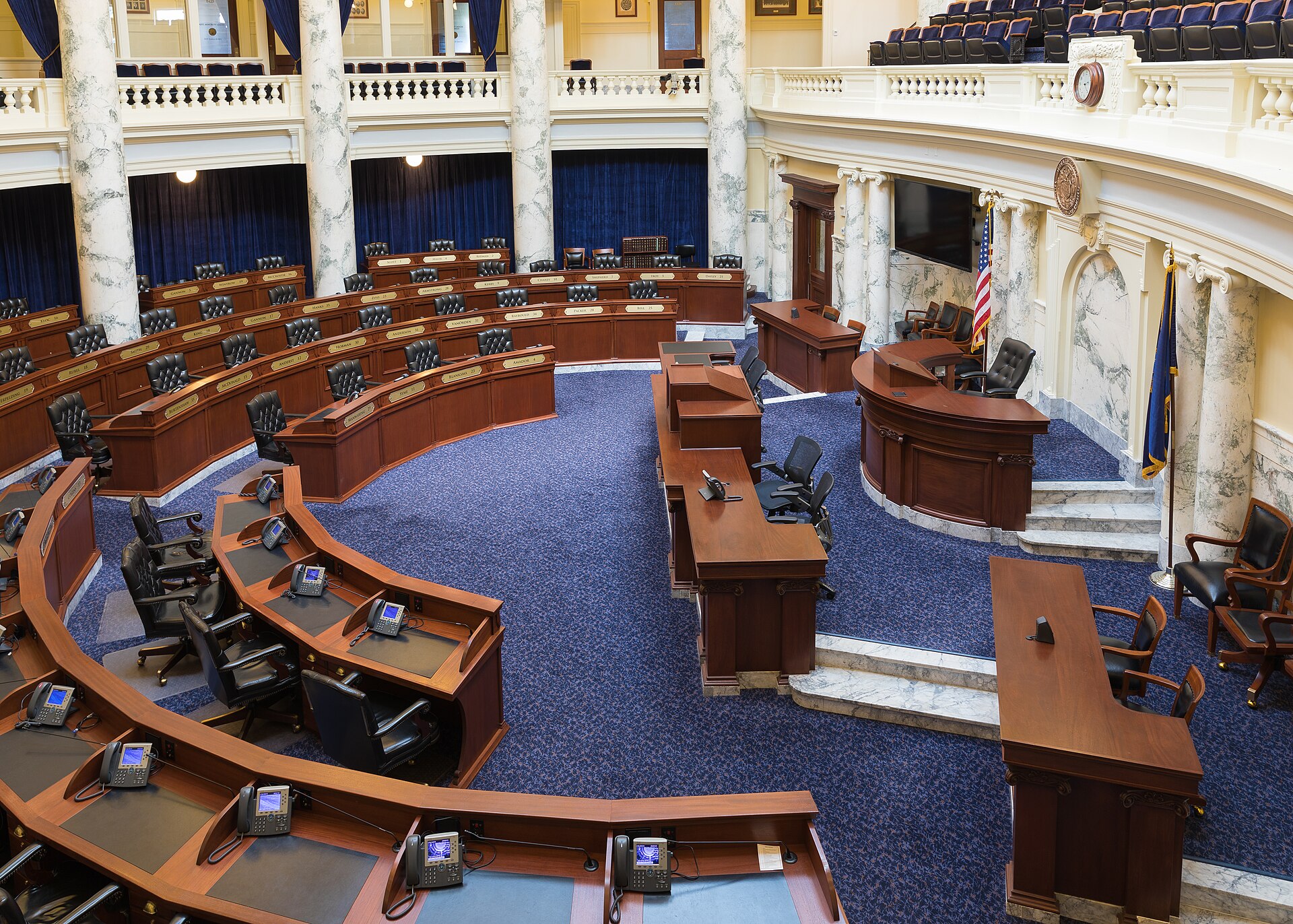

Common mistakes
- Citing the old section number for the rent law. The ban on local rent, fee and deposit rules was in Idaho Code 55-307 until 2025. It is now 55-306, and 55-307 now covers a tenant's right to remove fixtures. Ordinances, staff reports and news stories written before 2025 cite the old number.472
- Assuming the 2026 ADU and starter-home laws apply everywhere. They apply only to cities over 10,000. They do not apply to counties, to the 171 smaller cities, or to land in historic districts. Kimberly, Buhl, Gooding and Hagerman are not covered.9811
- Assuming the short-term rental law applies only to big cities. Idaho Code 67-6539 has no population threshold. It binds every county and city.10
- Treating "preempted" as "unregulated." Short-term rentals still answer to noise, parking and nuisance ordinances; manufactured homes still meet placement standards; ADUs still meet building, fire and utility rules. Preemption removes specific local tools and leaves the rest.10269
- Reading an Attorney General opinion as a ruling. Opinion 08-1 predicted that some county CAFO water rules were likely preempted; the Supreme Court in Idaho Dairymen's Ass'n v. Gooding County (2010) upheld Gooding County's rules. Courts decide.1916
- Calling an unauthorized fee a "preemption" problem. Coeur d'Alene's 1993 impact fee and Hayden's sewer capitalization fee failed because no statute authorized them, not because a statute forbade them. The fix in each case is a statute that grants the power, such as the Development Impact Fee Act.750
- Assuming a city can put zoning on the ballot. Gumprecht (1983) held that zoning by citizen initiative conflicts with the Local Planning Act.22
- Assuming the starter-home law sets a minimum lot size. It sets a maximum on the minimum: a covered city may not require more than 1,500 square feet for lots in a starter-home subdivision. Builders may still choose larger lots.8
What we know, what we don't, and what the data can show
What we know
- Idaho cities and counties have police power under Article XII, Section 2, limited by any conflicting general law, and Idaho courts apply Dillon's Rule to questions of granted power.12
- Since 1990 the Legislature has preempted local rent control, and since 2024 local rules on fees, deposits and voucher acceptance; since 2018 local short-term rental bans; since 2002 most local residential code choices; since 1994 manufactured home exclusion.410626
- The 2026 ADU and starter-home laws apply to cities over 10,000, take effect through local code changes due Feb. 1, 2027, and were opposed on the record by the Association of Idaho Cities and the Idaho chapter of the American Planning Association.981213
- By Vintage 2025 estimates, 27 cities with 60.6 percent of Idahoans are covered.11
What we don't know
- Which population figure decides coverage (2020 Census count, newest Census estimate, or another figure). Neither section says, and four cities (Middleton, Rathdrum, Sandpoint and Hailey) cross the line between the 2020 base and the 2025 estimate.11
- What happens to a city that misses Feb. 1, 2027. Neither 67-6541 nor 67-6542 names a penalty or an enforcer; whether a landowner could sue to force compliance has not been decided by a court.98
- Whether the laws will produce many ADUs or starter homes, and at what prices. No Idaho data exist yet, because the codes are still being rewritten.
- How many Idaho cities had short-term rental permit programs that HB 583 ended, and how many rentals they covered. No state agency collects that list.
What the data can show
- Census Building Permits Survey place files can show, from 2027 on, whether covered cities permit more small single-family homes and two-unit buildings than uncovered ones; ADUs inside existing homes may not appear as new units.
- City permit logs and ADU permit counts (public records) can show how many ADUs each covered city approves before and after Feb. 1, 2027.
- Plats recorded with the county recorder can show the number and size of lots in new subdivisions, and whether any qualify as starter-home subdivisions (four acres or more, lots of 1,500 square feet or less).
- Idaho State Tax Commission travel and convention tax and sales tax data collected from short-term rental platforms under Idaho Code Title 63, Chapter 18, can show the size of the short-term rental market by county.10
- Legislative committee minutes and vote records on legislature.idaho.gov show who testified and how each member voted on every preemption bill since 1998.14
Questions people ask
Can my city decide not to follow the 2026 ADU and starter-home laws?
Not if it has more than 10,000 people. The sections say "each city governing board shall amend" its plan and land use regulations by Feb. 1, 2027, and that no covered city may "enact or enforce" a ban. A city may adopt rules that are less restrictive than the state's, for example allowing ADUs larger than the state minimum.98
Can my county ban ADUs or require large lots?
The 2026 laws do not reach counties. County rules on lot size, ADUs and density remain local, within the Local Land Use Planning Act and health rules for wells and septic systems. The short-term rental law and the manufactured home laws do bind counties.91026
Can my city still require a permit for short-term rentals?
No. Since July 1, 2026, "No county or city shall require a license, fee, permit, certification, or registration to operate a short-term rental." It may require smoke alarms, fire extinguishers, carbon monoxide detectors, escape ladders and an emergency handout, cap occupancy at building code limits, and enforce ordinary noise and parking rules.10
Can a city require landlords to accept housing vouchers or cap application fees?
No. Idaho Code 55-306 bars local rules that force owners into an optional federal housing assistance program or regulate rent, fees or deposits. The state's own rules apply instead: fees must be reasonable and in the lease (55-305), and rent increases need 30 days' written notice (55-304).44445
Can a city adopt a newer energy code for houses than the state's?
No. Idaho Code 39-4116 bars local adoption of residential energy code provisions the Idaho Building Code Board has not adopted. Cities may amend some administrative and design parts of the residential code after a hearing and findings.6
Does preemption override my HOA's covenants?
Mostly no; HOA covenants are private contracts. Idaho Code 67-6509A says it does not override a recorded restrictive covenant for manufactured homes. SB 1354 also amended the state's limits on covenants that ban ADUs; how that works for HOAs is covered in Part C of this series, coming later, which covers owning, renting and HOAs.2637
Who decides whether a local rule is preempted?
A court, usually after someone affected sues, as the Idaho Association of Realtors did in Lava Hot Springs and the dairy and cattle associations did in Gooding County. The Attorney General can issue opinions, and for firearms the Attorney General now has a formal notice and cure role under 18-3302J.151629
Hard questions
Will state rules lower housing costs in Idaho?
For: land is about a third of the cost of a home, by Toews' account to the Senate committee, and smaller lots spread it over more homes; builders testified that local density caps and slow approvals held back entry-level homes.1214 Against: Chadwick and Packer argued that, with no income limits, small lots could become market-rate or investor rentals, and that the market, not city rules, sets home sizes in fast-growing cities like Star.1412 What the evidence shows: none yet for Idaho. The codes are not due until Feb. 1, 2027. Montana's 2023 ADU and duplex laws were tied up in court until September 2024, so their results are also recent.64
Whose property rights win: the owner who wants to build or rent, or the neighbor?
Owner's case: the HB 583 and SB 1354 records frame the laws as protecting owners' rights to rent and to build on their own land.4761 Neighbor's case: people who bought in single-family neighborhoods relied on the zoning in place; the Community Associations Institute and Orton raised retroactive effects on existing subdivisions.1314 What the evidence shows: Idaho's Legislature has chosen the owner's side on rentals and ADUs in cities over 10,000, while leaving recorded private covenants and county rules largely in place. The legal framework is in Property Rights and Land Use Law.
Is the Legislature consistent about local control?
The question: the Legislature has preempted local rules that protect tenants (HB 545, 2024) and local rules that limit building (SB 1352 and SB 1354, 2026). Is that a consistent defense of private property against local regulation, or does "local control" depend on the subject? Supporters' answer: the statements of purpose for HB 583 and SB 1354 describe those laws as protecting homeowners' rights to rent and to build, and HB 545's describes it as keeping owners from being "forced to participate" in optional federal housing programs.475343 Local governments' answer: the Association of Idaho Cities testified that SB 1352 "took away local control," and the Idaho Association of Counties said it fought bills that "threatened local control."1260 What the record shows: legislators split differently by subject. Eight senators who voted for HB 545 in 2024 (Sens. Adams, Burtenshaw, Cook, Foreman, Grow, Guthrie, Lakey and Lenney) voted against SB 1352 in 2026, and in February Guthrie explained his committee vote by saying cities could already approve ADUs if they chose.333614
If the state requires more homes per acre, who pays for the pipes?
Cities' case: they must build sewer and water capacity under a property tax cap the state sets, and new units may arrive faster than fees pay for upgrades.1431 Supporters' case: the laws let cities deny projects where infrastructure is inadequate "under the same standards" used for other subdivisions, and impact fees still apply at the same rate as other homes.89 What the evidence shows: the infrastructure exception is in the statute, but how cities will apply it, and whether courts will accept a city's finding, is not yet known. Impact fees and the budget cap are in Impact Fees, Urban Renewal and Who Pays.
For reporters and advocates
Records that exist and how to get them.
- Bill pages on legislature.idaho.gov for every bill since 1998: text, amendments, engrossed versions, statements of purpose, fiscal notes, and roll-call votes by name.33
- Committee minutes and attachments for each standing committee, with a summary of every witness; sign-in sheets and written testimony are kept in the Legislative Services Library after the session.1413
- Interim committee records, such as the 2025 Land Use and Housing Study Committee's minutes and presentations.54
- City ordinances and code amendments adopted to comply with 67-6541 and 67-6542, with staff reports, planning commission minutes and hearing recordings, from each city clerk.
- Attorney General opinions on preemption, such as 08-1 on CAFOs, posted by the Attorney General's office.19
- Court files in preemption cases on Idaho's iCourt portal, and Supreme Court opinions on isc.idaho.gov; see Court Records Research.
Anything not posted can be requested under the Idaho Public Records Act, Idaho Code Title 74; see Idaho Public Records Requests. Council and commission meetings that decide code changes are open under the Open Meetings Law; see Idaho Open Meetings.
Questions to ask officials.
- Is our city over 10,000 by the figure the city uses, and which figure is that? Has the city received written guidance on which number applies, and from whom?
- What is the city's schedule to amend its plan and code by Feb. 1, 2027? When are the hearings?
- Did the city have short-term rental permits or fees before July 1, 2026? What happened to them, and to the fees collected?
- Which city sewer and water systems are near capacity, and will the city use the infrastructure exception in 67-6542(5)? On what standards?
- Has the city changed any ordinance because of HB 545 (2024), such as a voucher or application fee rule?
- For legislators: what data did the Land Use and Housing Study Committee review on lot sizes, ADUs and prices?
The Idaho and Magic Valley angle. Twin Falls, Jerome and Burley must rewrite their codes; Kimberly, Buhl, Gooding and Hagerman need not, and Kimberly's growth (4,625 to 5,798 from 2020 to 2025) puts it on the list of towns to watch after the 2030 Census. Gooding County's 2010 victory over the dairy associations is still the leading Idaho case on a county rule surviving a preemption challenge, and the 2008 Attorney General opinion was requested by five Magic Valley county prosecutors. Minidoka County's testimony on wells, septic systems and nitrates shows why counties pushed to be left out of the 2026 housing mandates. Testimony tips are in Testifying and Public Comment.11161914
Where to go next
- Idaho Statutes and Constitution search: Free official text of every Idaho Code section and the constitution, with a history line showing each session law that changed it. Search a section number such as 67-6541 and read the History line at the bottom.
- Idaho Legislature, 2026 legislation: Free bill pages with text, amendments, statements of purpose and roll-call votes by name. Change the year in the address for earlier sessions back to 1998.
- Idaho Legislature standing committee minutes, 2026: Free minutes for every House and Senate committee, summarizing each witness. Use them to find who testified for and against a bill and what they said.
- Idaho Supreme Court and Court of Appeals opinions: Free list of civil opinions with PDF links and staff summaries. Search a city or county name to find land use and preemption cases.
- Idaho Attorney General opinions: Free formal opinions to state and local officials, including Opinion 08-1 on county CAFO rules. Opinions are advice, not court rulings.
- Association of Idaho Cities: Website of the association of Idaho city governments (an advocacy association, not a state agency); free legislative updates and city guidance. Read alongside the bill record.
- Census Bureau city and town population estimates: Free annual estimates for every Idaho city; download the Idaho file to check a city against the 10,000 threshold.
Still being checked (8 items)
These points could not be fully confirmed against a primary source when this lesson was written and fact checked in November 2026. The text above states each one as uncertain.
- Which population figure decides whether a city is over 10,000 under Idaho Code 67-6541 and 67-6542 (2020 Census count, newest Census estimate, or another figure); neither section says, and we found no Attorney General opinion or court ruling on it.
- The 1990 origin of the local rent control ban rests on the Idaho Capital Sun's description (Feb. 7, 2022) and the 1990 amendment in the history line of Idaho Code 55-304; we did not read the 1990 session law.
- The exact wording changed by the 2018 amendment to Idaho Code 67-6539 (Session Laws ch. 79) was not reviewed.
- The Montana Supreme Court ruling date (Sept. 3, 2024) is inferred from a news report published Sept. 5, 2024; the opinion itself was not read.
- Arizona HB 2721 (2024) signing date and chapter number were not confirmed; the summary used is the Senate engrossed version.
- Whether Boise formally repealed its 2023 source-of-income ordinance after HB 545 took effect was not checked.
- Idaho Supreme Court PDFs for Dockets 50888, 41316 and 35980 could not be downloaded to the source folder (the court's server returned 404 to scripted downloads); 50888 was read online, and the other opinions were read in copies hosted by Justia, the Environmental Law Reporter and HallApproved.
- North Idaho Building Contractors Ass'n v. City of Hayden: the fee figures ($735 to $2,280 for the city-retained part) come from the case summary on Justia; the full opinion PDF (isc.idaho.gov, Docket 41316) could not be retrieved, so the citation, filing date and disposition were not rechecked against the opinion itself.
Last verified November 18, 2026. General education, not legal, tax, financial or real estate advice; every figure names its source and year in the Notes and Sources below. Data is revised: check the newest release before relying on any number.
Notes
- Idaho Constitution, Article XII, Section 2, "Local police regulations authorized," Idaho Legislature (read Nov. 18, 2026). Read it online. ↩
- Caesar v. State, 101 Idaho 158, 610 P.2d 517 (Idaho Supreme Court, decided April 2, 1980), opinion by Chief Justice Donaldson; text as reproduced by the HallApproved case law database (read Nov. 18, 2026). Read it online. ↩
- Idaho Capital Sun, "Idaho House passes bill banning cities from regulating rental fees and deposits," Feb. 7, 2022 (House Bill 442; describes the 1990 rent control law and Boise's $30 application fee cap; quotes Reps. Palmer and Syme) (read Nov. 18, 2026). Read it online. ↩
- Idaho Code section 55-306, "Local Government: no rent control," added 2025, ch. 65, sec. 6 (text formerly in section 55-307, amended by House Bill 545, 2024, ch. 257) (read Nov. 18, 2026). Read it online. ↩
- Idaho Legislature, House Bill 216 (2017), bill status page and enrolled text: by Revenue and Taxation Committee; passed House 63-5-2 and Senate 35-0-0; signed April 4, 2017; Session Laws ch. 239; effective Jan. 1, 2018 (read Nov. 18, 2026). Read it online. ↩
- Idaho Code section 39-4116, "Local government adoption and enforcement of building codes," added 2002, ch. 345; amended through 2025, ch. 40 (House Bill 104) and 2026, ch. 320 (House Bill 706) (read Nov. 18, 2026). Read it online. ↩
- Idaho Building Contractors Ass'n v. City of Coeur d'Alene, 126 Idaho 740, 890 P.2d 326 (Idaho Supreme Court, decided Feb. 22, 1995), on Coeur d'Alene Ordinance No. 2569 (Nov. 16, 1993); text as reproduced by the HallApproved case law database (read Nov. 18, 2026). Read it online. ↩
- Idaho Code section 67-6542, "Starter home subdivisions," added as 67-6541 by 2026, ch. 264, sec. 1 (Senate Bill 1352), renumbered 67-6542 (read Nov. 18, 2026). Read it online. ↩
- Idaho Code section 67-6541, "Accessory dwelling units," added 2026, ch. 265, sec. 2 (Senate Bill 1354) (read Nov. 18, 2026). Read it online. ↩
- Idaho Code section 67-6539, "Limitations on regulation of short-term rentals," added 2017, ch. 239; am. 2018, ch. 79; am. 2026, ch. 22 (House Bill 583) (read Nov. 18, 2026). Read it online. ↩
- U.S. Census Bureau, Vintage 2025 population estimates for Idaho incorporated places and minor civil divisions, file sub-est2025_16.csv (POPESTIMATE2025 for July 1, 2025; ESTIMATESBASE2020); counts, sums and shares are our calculations (read Nov. 18, 2026). Read it online. ↩
- Idaho Senate Local Government and Taxation Committee, minutes of March 10, 2026 (S 1352; testimony of Sen. Toews, Hilary Patterson, Sabrina Minshall, Kelley Packer, Cade Syvock and Mayor Trevor Chadwick) (read Nov. 18, 2026). Read it online. ↩
- Idaho Senate Local Government and Taxation Committee, minutes of March 11, 2026 (S 1354; testimony of Lance Sayers, Lisa Anderson, Hilary Patterson, Britaney Bones, Jonathan Wardle and Ken Burgess; motion to the amending order) (read Nov. 18, 2026). Read it online. ↩
- Idaho Senate Commerce and Human Resources Committee, minutes of Feb. 17, 2026 (S 1277, S 1279 and S 1280; testimony of Sen. Toews, Kiki Miller, Madilynn Clark, Mayor Trevor Chadwick, Justin Livingston, Sabrina Minshall, Commissioner Jared Orton and David Ferdinand; roll call votes to hold each bill) (read Nov. 18, 2026). Read it online. ↩
- Idaho Association of Realtors, Inc., and John and Michelle Taylor v. City of Lava Hot Springs, Idaho Supreme Court Docket No. 50888, filed May 21, 2025, opinion by Chief Justice Bevan (Ordinance 2006-5 invalid under Idaho Code 67-6539) (read Nov. 18, 2026). Read it online. ↩
- Idaho Dairymen's Association, Inc. v. Gooding County, Idaho Supreme Court Docket No. 35980, 2010 Opinion No. 12, filed Feb. 1, 2010 (Twin Falls, November 2009 term; opinion by Justice W. Jones; appeal from District Judge R. Barry Wood); slip opinion as reproduced by the Environmental Law Reporter (read Nov. 18, 2026). Read it online. ↩
- Idaho Code section 50-302, "Promotion of general welfare: Prescribing penalties," added 1967, ch. 429; last amended 2005, ch. 359 (read Nov. 18, 2026). Read it online. ↩
- Idaho Code section 31-714, "Ordinances: Penalties" (county ordinances), added 1965, ch. 159; last amended 2005, ch. 359 (read Nov. 18, 2026). Read it online. ↩
- Idaho Attorney General Opinion No. 08-1, to Calvin H. Campbell, Gooding County Prosecuting Attorney, also requested by the Lincoln, Jerome, Minidoka and Cassia county prosecuting attorneys, on preemption of county regulation of confined animal feeding operations, dated Aug. 1, 2008 (Attorney General Lawrence G. Wasden) (read Nov. 18, 2026). Read it online. ↩
- State v. Musser, 67 Idaho 214, 176 P.2d 199 (1946), as cited for the direct-conflict test in Idaho Attorney General Opinion No. 08-1 (2008), page 2 (read Nov. 18, 2026). Read it online. ↩
- Envirosafe Services of Idaho, Inc. v. County of Owyhee, 112 Idaho 687, 735 P.2d 998 (Idaho Supreme Court, decided March 24, 1987), on Owyhee County Ordinance No. 83-02 and the Hazardous Waste Management Act of 1983; text as reproduced by the HallApproved case law database (read Nov. 18, 2026). Read it online. ↩
- Gumprecht v. City of Coeur d'Alene, 104 Idaho 615, 661 P.2d 1214 (Idaho Supreme Court, No. 14238, decided April 6, 1983); text as reproduced by the HallApproved case law database (read Nov. 18, 2026). Read it online. ↩
- Idaho Code section 67-6529, "Applicability to agricultural land: Counties may regulate siting of certain animal operations and facilities," added 1975, ch. 188; am. 2000, ch. 217; am. 2003, ch. 297 (read Nov. 18, 2026). Read it online. ↩
- Idaho Code section 67-6531, "Single family dwelling" (group residences), added 1979, ch. 319; last amended 2010, ch. 235 (read Nov. 18, 2026). Read it online. ↩
- Idaho Code section 67-8202, "Purpose," Idaho Development Impact Fee Act, added 1992, ch. 282 (read Nov. 18, 2026). Read it online. ↩
- Idaho Code section 67-6509A, "Siting of manufactured homes in residential areas," added 1994, ch. 212; last amended 2026, ch. 171 (House Bill 800) (read Nov. 18, 2026). Read it online. ↩
- Idaho Legislative Services Office, Property Tax Interim Committee final report (2005), section "Limits on Property Taxes in effect since 1995" (read Nov. 18, 2026). Read it online. ↩
- Idaho Code section 67-6509B, "Manufactured housing community: Equal treatment required," added 1998, ch. 84; am. 1999, ch. 396 (read Nov. 18, 2026). Read it online. ↩
- Idaho Code section 18-3302J, "Preemption of firearms regulation," added 2008, ch. 304; am. 2014, ch. 73; am. 2026, ch. 295 (Senate Bill 1430) (read Nov. 18, 2026). Read it online. ↩
- Idaho Code section 67-2340, "Regulation of auxiliary containers," added 2016, ch. 204 (read Nov. 18, 2026). Read it online. ↩
- Idaho Legislature, House Bill 389 (2021), bill status page and Statement of Purpose RS28965: by Ways and Means Committee; passed House 48-20-1 and Senate 19-16-0; signed May 12, 2021; Session Laws ch. 360 (read Nov. 18, 2026). Read it online. ↩
- Idaho Legislature, House Bill 442 (2022), bill status page: by Business Committee; passed House 54-14-2 on Feb. 7, 2022; referred to Senate Commerce and Human Resources Committee, no further action (read Nov. 18, 2026). Read it online. ↩
- Idaho Legislature, House Bill 545 (2024), bill status page and bill text: by State Affairs Committee; passed House 59-11-0 (Feb. 26, 2024; floor sponsor Mitchell) and Senate 26-9-0 (March 25, 2024; floor sponsor Okuniewicz); signed April 1, 2024; Session Laws ch. 257; effective July 1, 2024 (read Nov. 18, 2026). Read it online. ↩
- Idaho Legislature, House Bill 104 (2025), bill status page and Statement of Purpose RS32006: by Local Government Committee; passed House 70-0-0 and Senate 35-0-0; signed March 12, 2025; Session Laws ch. 40; effective July 1, 2025 (read Nov. 18, 2026). Read it online. ↩
- Idaho Legislature, House Bill 583 (2026), bill status page and text: by Business Committee; passed House 54-16-0 on Feb. 12, 2026 (floor sponsor Redman) and Senate 23-12-0 on March 9, 2026 (floor sponsor Lakey); signed March 16, 2026; Session Laws ch. 22; effective July 1, 2026 (read Nov. 18, 2026). Read it online. ↩
- Idaho Legislature, Senate Bill 1352 (2026), bill status page and engrossed text: by State Affairs Committee; passed Senate 25-10-0 on March 19, 2026 (floor sponsor Toews) and House 36-34-0 on March 26 (floor sponsor Redman); signed March 31, 2026; Session Laws ch. 264; effective July 1, 2026 (read Nov. 18, 2026). Read it online. ↩
- Idaho Legislature, Senate Bill 1354 (2026), bill status page and engrossed text: by State Affairs Committee; passed Senate 25-10-0 on March 20, 2026 (floor sponsor Toews) and House 47-23-0 on March 26 (floor sponsor Bingham); signed March 31, 2026; Session Laws ch. 265; effective July 1, 2026 (read Nov. 18, 2026). Read it online. ↩
- Idaho Legislature, House Bill 800 (2026), bill status page and revised Statement of Purpose RS33501: by Ways and Means Committee; passed House 60-6-4 and Senate 28-5-2; signed March 26, 2026; Session Laws ch. 171; effective July 1, 2026 (read Nov. 18, 2026). Read it online. ↩
- Idaho Legislature, House Bill 706 (2026), single stairway building exceptions, bill status page and revised Statement of Purpose RS33297: by Business Committee; passed House 63-7-0 and Senate 18-17-0; signed April 10, 2026; Session Laws ch. 320; effective July 1, 2026 (read Nov. 18, 2026). Read it online. ↩
- Idaho Legislature, House Bill 766 (2026), bill status page and Statement of Purpose RS33531: by Ways and Means Committee; passed House 39-27-4 and Senate 24-9-2; signed March 27, 2026; Session Laws ch. 203; effective July 1, 2026 (read Nov. 18, 2026). Read it online. ↩
- Idaho Legislature, Senate Bill 1430 (2026), bill status page and Statement of Purpose RS33761: passed Senate 31-3-1 and House 60-8-2; signed April 2, 2026; Session Laws ch. 295; effective April 2, 2026 (read Nov. 18, 2026). Read it online. ↩
- Mia Maldonado, Idaho Capital Sun, "Idaho bill to remove local rent protections sent to governor," March 26, 2024, republished by EastIdahoNews.com (Senate debate on House Bill 545; Boise source-of-income ordinance; quotes Sens. Okuniewicz, Lee, Winder and Rabe and council member Hallyburton) (read Nov. 18, 2026). Read it online. ↩
- Statement of Purpose and Fiscal Note, RS31242 / House Bill 545 (2024), contact Rep. Brandon Mitchell (read Nov. 18, 2026). Read it online. ↩
- Idaho Code section 55-305, "Limitation on fees for tenants of a rental property," added as 55-314 by 2023 Idaho Session Laws, ch. 67 (Senate Bill 1039); redesignated 2025, ch. 65 (read Nov. 18, 2026). Read it online. ↩
- Idaho Code section 55-304, "Change in terms of lease: Notice," with 30-day notice of residential rent increases (am. 2020, ch. 254; am. 2024, ch. 257; redesignated 2025, ch. 65) (read Nov. 18, 2026). Read it online. ↩
- Idaho Legislature, Senate Bill 1042 (2025), rental application fee limits: passed Senate 23-12-0 as amended on Feb. 19, 2025; referred to House Business Committee, no further action (read Nov. 18, 2026). Read it online. ↩
- Statement of Purpose and Fiscal Note, RS33170 / House Bill 583 (2026), contacts Rep. Mike Moyle, Rep. Jordan Redman, Sen. Kelly Arthur Anthon, Sen. Todd M. Lakey (read Nov. 18, 2026). Read it online. ↩
- Idaho Code section 67-8203, "Definitions," Idaho Development Impact Fee Act, subsection (14) "governmental entity"; added 1992, ch. 282; am. 2026, ch. 203 (House Bill 766) (read Nov. 18, 2026). Read it online. ↩
- Idaho Legislature, 2023 legislation index: House Bill 41 (development impact fees, schools; held in House Ways and Means) and Senate Bill 1060 (impact fees, public schools; held in Senate Local Government and Taxation) (read Nov. 18, 2026). Read it online. ↩
- North Idaho Building Contractors Ass'n v. City of Hayden, 158 Idaho 79, 343 P.3d 1086 (Idaho Supreme Court, Docket No. 41316-2013, decided Feb. 26, 2015); case page and summary on Justia (read Nov. 18, 2026). Read it online. ↩
- Idaho Code section 63-802, "Limitation on budget requests," amended through 2021, ch. 360 (House Bill 389), 2026, ch. 197 (House Bill 765) and 2026, ch. 316 (House Bill 959) (read Nov. 18, 2026). Read it online. ↩
- Revised Statement of Purpose and Fiscal Note, RS33568 / Senate Bill 1352 (2026), contacts Sen. Ben Toews, Rep. Jordan Redman, Sen. Tammy Nichols (read Nov. 18, 2026). Read it online. ↩
- Revised Statement of Purpose and Fiscal Note, RS33575 / Senate Bill 1354 (2026), contacts Sen. Ben Toews, Rep. Jordan Redman, Sen. Tammy Nichols (read Nov. 18, 2026). Read it online. ↩
- Idaho Legislature, Land Use and Housing Study Committee, minutes of Oct. 24, 2025 (members and comments, including Trevor Chadwick for the Association of Idaho Cities and Sherry Maupin for the Idaho Association of Counties) (read Nov. 18, 2026). Read it online. ↩
- Idaho Legislature, House Bill 372 (2016), bill status page: passed House 52-17-1 and Senate 20-15-0; signed March 24, 2016; Session Laws ch. 204; effective July 1, 2016 (read Nov. 18, 2026). Read it online. ↩
- Idaho Legislature, House Bills 812 (repeal of auxiliary container preemption) and 813 (local minimum wages) (2026), by Rep. Rubel, bill status pages: printed and filed in the Office of the Chief Clerk (read Nov. 18, 2026). Read it online. ↩
- Idaho Code section 44-1502, "Minimum wages," subsection (4); last amended 2016, ch. 145 (read Nov. 18, 2026). Read it online. ↩
- Idaho Legislature, House Bill 557 (2026), uniformity in local antidiscrimination ordinances: by Local Government Committee; passed House 53-16-1; referred to Senate State Affairs Committee (read Nov. 18, 2026). Read it online. ↩
- Idaho Attorney General Opinion No. 89-7 (Attorney General Jim Jones), on whether the Association of Idaho Cities and the Idaho Association of Counties are public or private and on payment of dues with public funds (read Nov. 18, 2026). Read it online. ↩
- Idaho Association of Counties (an association of county governments), "2026 Legislative Session Wrap-Up: A Look at IAC's Victories and Key Enactments" (read Nov. 18, 2026). Read it online. ↩
- Idaho House Business Committee, minutes of March 25, 2026 (S 1354aa and S 1352aa; testimony including Kelley Packer for the Association of Idaho Cities; remarks of Rep. Harris) (read Nov. 18, 2026). Read it online. ↩
- Oregon Legislature, House Bill 2001 (2019 regular session), measure overview: Oregon Laws 2019, chapter 639 (read Nov. 18, 2026). Read it online. ↩
- Montana Legislative Services Division, "2023 Land Use Legislation Summary" (SB 245, SB 323, SB 382 and SB 528) (read Nov. 18, 2026). Read it online. ↩
- Missoula Current, report on the Montana Supreme Court decision reversing the preliminary injunction against SB 323 and SB 528 in the suit by Montanans Against Irresponsible Densification, published Sept. 5, 2024 (read Nov. 18, 2026). Read it online. ↩
- Washington State Legislature, Final Bill Report, E2SHB 1110 (2023), middle housing; chapter 332, Laws of 2023 (read Nov. 18, 2026). Read it online. ↩
- Florida Senate, CS/SB 102 (2023), the Live Local Act: Laws of Florida chapter 2023-17, approved by the Governor March 29, 2023, effective July 1, 2023 (read Nov. 18, 2026). Read it online. ↩
- Florida League of Cities (an association of Florida city governments), "Live Local Act" FAQ memo, June 26, 2023 (read Nov. 18, 2026). Read it online. ↩
- Arizona Legislature, Senate Bill 1350 (2016), vacation rentals and short-term rentals, Laws 2016, chapter 208 (read Nov. 18, 2026). Read it online. ↩
- Arizona House of Representatives, summary of HB 2721 (2024), municipal zoning and middle housing, as Senate engrossed (read Nov. 18, 2026). Read it online. ↩
- Texas Legislature, bill analysis of S.B. 15 (89th Legislature, regular session, 2025), enrolled version, section-by-section analysis; effective Sept. 1, 2025 (read Nov. 18, 2026). Read it online. ↩
- Idaho Legislature, House Bill 705 (2026), multifamily housing in commercial zones, bill status page: by Business Committee; referred to House Business Committee, no further action; also listed as "Held in Committee" by the Idaho Association of Counties (read Nov. 18, 2026). Read it online. ↩
- Idaho Code section 55-307, "Removal of fixtures by tenant," amended and redesignated by 2025 Idaho Session Laws, ch. 65, sec. 8 (read Nov. 18, 2026). Read it online. ↩
- Idaho State Tax Commission, Alan S. Dornfest, "Property Tax Budget Limitations and 1% Initiatives, 1978 to present" (EPB00107, updated Sept. 28, 2022), entry for 1995 (House Bill 156 repealed truth in taxation, enacted Idaho Code 63-2220A and capped annual budget increases at 3 percent, excluding voter-approved levies and school maintenance and operation levies) (read Nov. 18, 2026). Read it online. ↩
Check yourself
1. What limit does Article XII, Section 2 of the Idaho Constitution place on city and county police regulations?
Article XII, Section 2 lets any county or city make local police, sanitary and other regulations 'as are not in conflict with its charter or with the general laws.'
2. In which case did the Idaho Supreme Court apply Dillon's Rule, saying a city 'possesses and exercises only those powers either expressly or impliedly granted to it'?
Caesar v. State, 101 Idaho 158 (decided April 2, 1980), held that Boise's building code could not apply to a state stadium and stated the Dillon's Rule principle.
3. Where is Idaho's ban on local rules that regulate rent, fees or deposits found today?
The 2025 Legislature redesignated the text as Idaho Code 55-306 (2025 Session Laws ch. 65); 55-307 now covers removal of fixtures by a tenant.
4. Under Idaho Code 67-6539 as amended by HB 583 (2026), which of these may a city still require of a short-term rental?
Subsection (3) allows five safety requirements, including smoke alarms and carbon monoxide detectors; subsections (2) and (5) bar owner-occupancy rules, conditional use permits in residential zones, and any license, fee or permit.
5. Who must amend their codes under the 2026 ADU and starter-home laws (Idaho Code 67-6541 and 67-6542)?
Both sections apply 'only to cities with a population greater than ten thousand (10,000)'; counties are not covered. The bills as introduced used 5,000 (Senate Local Government and Taxation minutes, March 10 and 11, 2026).
6. By the Census Bureau's July 1, 2025 estimates, which Magic Valley city is NOT over the 10,000 line?
Census Vintage 2025 (sub-est2025_16.csv): Twin Falls 56,216, Jerome 13,731, Burley 12,409, Kimberly 5,798.
7. What did the Idaho Supreme Court decide in Idaho Dairymen's Ass'n v. Gooding County (Feb. 1, 2010)?
2010 Opinion No. 12 (Docket 35980) affirmed the district court's holding that 'state regulation of water quality at CAFOs has not preempted local regulation.'
8. Why did the Idaho Supreme Court strike Coeur d'Alene's impact fee in 1995?
Idaho Building Contractors Ass'n v. City of Coeur d'Alene, 126 Idaho 740 (Feb. 22, 1995): 'the imposition of the impact fee by the City is in reality a tax, not a regulation,' and the city lacked taxing authority.
9. How did SB 1352 change between introduction and passage?
The March 10, 2026 Senate Local Government and Taxation minutes describe the introduced bill (cities over 5,000; 1,400-square-foot lots); enacted Idaho Code 67-6542 uses 10,000 and 1,500.
10. Which state barred cities from prohibiting vacation and short-term rentals a year before Idaho's HB 216 (2017)?
Arizona Senate Bill 1350, Laws 2016, chapter 208, barred cities from prohibiting vacation and short-term rentals.
Terms in this lesson
- Police power
- The power of a government to regulate for public health, safety and welfare. Article XII, Section 2 of the Idaho Constitution grants it to counties and cities, limited by the general laws.
- Preemption
- The rule that a state law overrides a conflicting local ordinance or resolution. A preempted local rule is void.
- Express preemption
- Preemption stated in the words of the statute, such as Idaho Code 55-306's statement that a local government 'shall not enact, maintain, or enforce' rules on rent, fees or deposits.
- Implied (field) preemption
- Preemption inferred when the state has regulated a subject so completely that it must have meant to occupy the whole field; the Idaho Supreme Court traced the doctrine to Caesar v. State (1980) and applied it in Envirosafe v. County of Owyhee (1987).
- Dillon's Rule
- The doctrine, applied in Idaho in Caesar v. State (1980), that a local government has only the powers expressly or impliedly granted by the constitution or the Legislature.
- Home rule
- A broad grant of power to local governments to act on local matters unless state law says otherwise; the opposite end of the spectrum from Dillon's Rule.
- General law
- A statute that applies statewide or to all places of a class; under Article XII, Section 2, local rules may not conflict with general laws.
- Starter home subdivision
- Under Idaho Code 67-6542, a residential subdivision of at least four acres with single-family detached homes on lots no larger than 1,500 square feet, designed for attainable ownership.
- Population threshold
- A size line that decides whether a law applies, such as 'cities with a population greater than ten thousand' in the 2026 ADU and starter-home laws.
- Source-of-income rule
- A local ordinance barring landlords from rejecting tenants because of where their income comes from, such as housing vouchers; Boise adopted one in 2023, and HB 545 (2024) barred such rules.
- Statement of purpose
- A short explanation attached to an Idaho bill by its proponent; it is not legislative intent and may not be used in judicial review (Joint Rule 18).
- Amending order (14th Order of Business)
- The Senate or House stage at which a bill can be amended on the floor; SB 1352 and SB 1354 were sent there in March 2026.
- Attorney General opinion
- Formal legal advice from the Idaho Attorney General to officials; persuasive but not binding on courts, as the Gooding County case showed.
- By right (administrative approval)
- Approval by staff when a project meets written standards, without a discretionary hearing; required for qualifying ADUs under Idaho Code 67-6541(3).
Sources
- Idaho Constitution, Article XII, Section 2 (2026-11-18) checked 2026-11
- Idaho Code 55-306, Local Government: no rent control (2026-11-18) checked 2026-11
- Idaho Code 67-6539, Limitations on regulation of short-term rentals (2026-11-18) checked 2026-11
- Idaho Code 67-6541, Accessory dwelling units (2026-11-18) checked 2026-11
- Idaho Code 67-6542, Starter home subdivisions (2026-11-18) checked 2026-11
- Idaho Code 39-4116, Local government adoption and enforcement of building codes (2026-11-18) checked 2026-11
- House Bill 545 (2024), bill status and text (2026-11-18) checked 2026-11
- House Bill 583 (2026), bill status and text (2026-11-18) checked 2026-11
- Senate Bill 1352 (2026), bill status and text (2026-11-18) checked 2026-11
- Senate Commerce and Human Resources Committee minutes, Feb. 17, 2026 (2026-11-18) checked 2026-11
- Senate Local Government and Taxation Committee minutes, March 10, 2026 (2026-11-18) checked 2026-11
- Idaho Attorney General Opinion 08-1 (Aug. 1, 2008), CAFO preemption (2026-11-18) checked 2026-11
- Idaho Ass'n of Realtors v. City of Lava Hot Springs, Idaho Supreme Court Docket 50888 (May 21, 2025) (2026-11-18) checked 2026-11
- U.S. Census Bureau, Vintage 2025 Idaho subcounty population estimates (sub-est2025_16.csv) (2026-11-18) checked 2026-11