Lesson 10 of 11 · about 55 minutes · Updated November 18, 2026
Property Rights and Land Use Law
You'll be able to
- Explain the difference between a taking, a regulatory taking and an ordinary land use restriction, using the U.S. Supreme Court cases from Euclid (1926) to Sheetz (2024).
- Walk through a regulatory taking analysis request under Idaho Code 67-8003, including the 28-day and 42-day deadlines and what happens if none is prepared.
- Apply the 67-6521 affected person test as the Idaho Supreme Court framed it in Crookham v. County of Canyon (2026), and describe what a court can and cannot do on judicial review.
- Describe what the Right to Farm Act protects, what it does not, and how the 2011 and 2025 amendments changed it.
- Compare Jerome County's and Gooding County's livestock siting rules with the state requirements in Idaho Code 67-6529.
- Find the public records, court files and statutes needed to report on a takings claim, nuisance dispute or farmland rezone.
Start here: the short version
- Farmers can be "neighbors" too. On Jan. 16, 2026, in Crookham v. County of Canyon (Docket No. 52514), a unanimous Idaho Supreme Court held that the "affected person" test in Idaho Code 67-6521, not the stricter federal three-part standing test, decides who may ask a judge to review a land use decision. It reversed the dismissal of a challenge by seed and farm businesses to a 145-acre farm-to-light-industrial rezone between Wilder and Greenleaf and sent the case back to district court.12
- Any owner can demand a written takings analysis. Under the Idaho Regulatory Takings Act (Idaho Code 67-8001 to 67-8004, first passed in 1994), a city, county or state agency must prepare one within 28 days after a final decision and deliver it within 42 days of the request, or its action becomes voidable. Since 2016 the request is optional and skipping it waives nothing.34
- The Right to Farm Act shields established farms from nuisance suits once they have operated for more than one year, unless they are run improperly or negligently (Idaho Code 22-4503). Senate Bill 1033 (2025), effective July 1, 2025, added attorney fees for a farm that wins a nuisance suit and fines of $150 and $300 for repeat "meritless" complaints within two years.56
- Impact fees written into an ordinance are no longer exempt from takings tests. In Sheetz v. County of El Dorado (April 12, 2024), the U.S. Supreme Court held that the Takings Clause "does not distinguish between legislative and administrative land-use permit conditions."7
- New in 2026: Senate Bill 1326, the Property Rights Protection Act (Idaho Code 18-7101 to 18-7109, signed March 31, 2026), bars government agents from entering private land not open to the public without a warrant, an emergency or the owner's consent, with a $1,000 civil penalty per knowing violation.8
- In the Magic Valley, counties must regulate where big feedlots and dairies go. Idaho Code 67-6529 requires it; Jerome County caps a livestock confinement operation at 10 animal units per acre and requires animal confinement areas to sit 1,000 feet from its A-2 Agriculture, Commercial General, City Impact Area and Recreation zones.910
Law: Idaho Code and the Idaho Constitution as amended through the 2026 regular session; Idaho Supreme Court opinions through Nov. 18, 2026; U.S. Supreme Court opinions through the October 2025 term; Idaho Attorney General Regulatory Takings Act Guidelines, January 2023 edition; Jerome County Zoning Ordinance as posted Nov. 18, 2026. Checked Nov. 18, 2026. Laws change and cases on remand can change the picture; read the current statute and the newest opinion before relying on any rule here.
Every land use fight in Idaho is a fight between two kinds of property rights. The owner who wants to rezone a field, split a lot or build a dairy is using one kind: the right to use land. The neighbor who objects is using another: the right to enjoy land without being harmed by what happens next door. Idaho law protects both, through different tools, and this lesson is about those tools: the constitutional rule against taking property without paying for it, the state's Regulatory Takings Act, nuisance law, the Right to Farm Act, the "affected person" rule that decides who may go to court, and the narrow way judges review a local decision.
It builds on two earlier lessons in the separate module Idaho Planning and Zoning: Hearings, Due Process and Being Heard (notice, ex parte contacts, the written decision) and Reconsideration, Judicial Review and Takings (the 14-day, 60-day and 28-day clocks and the Attorney General's six-question checklist). Those are not repeated here. This lesson goes further: the history of each law, the session laws that changed it, the 2026 Supreme Court ruling on standing, the newest U.S. Supreme Court takings cases, the 2026 entry law, CAFO siting in Jerome and Gooding counties, and how Idaho compares with other states.
Within this module, the history of zoning and the 1975 planning act is in How Zoning Came to Idaho, annexation (where the Right to Farm Act has its own clause) is in Annexation Fights, the plat process where a nuisance waiver can be recorded is in Subdivisions and Plats Step by Step, impact fees after Sheetz are in Impact Fees, Urban Renewal and Who Pays, and how to take part in a code rewrite is in Shaping Your City's Code Rewrite. How fast farmland is turning into subdivisions, the pressure behind many of these disputes, is measured in Part A's Farmland to Rooftops.
Property rights cut both ways
People on every side of a land use dispute in Idaho say they are defending property rights, and they are usually right. The question is whose right, and which legal tool protects it.
The owner who wants to build
A landowner's strongest protections are constitutional. Article I, Section 14 of the Idaho Constitution says "Private property may be taken for public use, but not until a just compensation, to be ascertained in the manner prescribed by law, shall be paid therefor."11 The Fifth Amendment to the U.S. Constitution says the same thing in fewer words: private property shall not "be taken for public use, without just compensation."12 On top of those, Idaho gives owners a procedural tool (the Regulatory Takings Act), a planning rule (every long-range plan must analyze property rights under Idaho Code 67-6508(a)), and the right to an express standard and a written, reasoned decision on any application (Idaho Code 67-6535).
The neighbor who objects
A neighbor's protections come from different places. Nuisance law, codified in Title 52 of the Idaho Code, lets a person sue over anything "offensive to the senses" or "an obstruction to the free use of property, so as to interfere with the comfortable enjoyment of life or property." The planning act gives an "affected person," someone with a "bona fide interest in real property" that a decision may harm, the right to demand a hearing, to testify, and to seek judicial review.2 And due process requires notice and a fair hearing before a board decides a site-specific application, as lesson 7 of the planning module explains.
The farmer in the middle
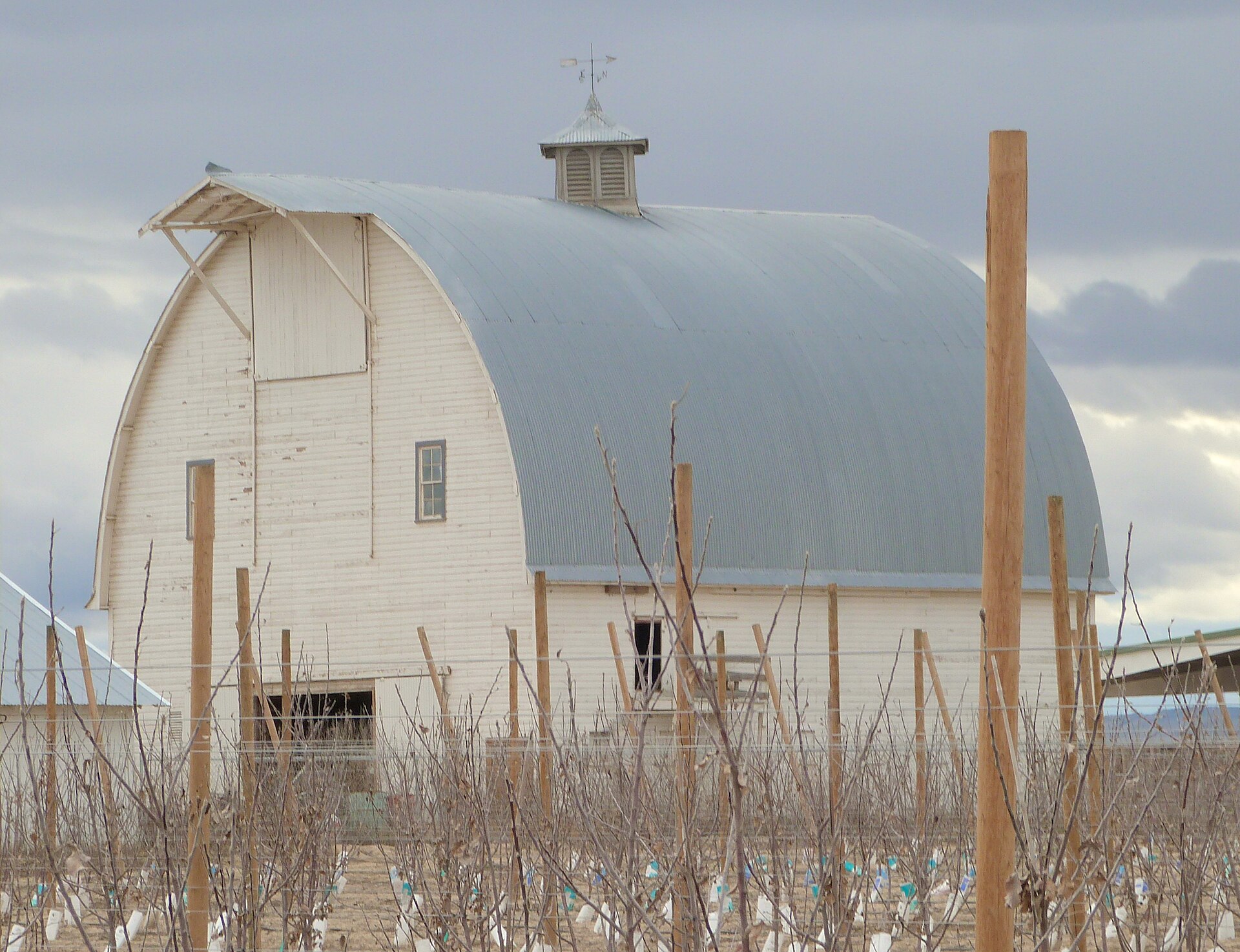
Farmers sit on both sides. When a subdivision moves in next to a feedlot or an onion field, the Right to Farm Act protects the farm from nuisance suits by the newcomers. When a farmer's neighbor asks to rezone a field for warehouses, the farmer becomes the objecting neighbor. That is exactly what happened in Crookham: the Gross family wanted to rezone 145 acres they owned, and seed and farm businesses that depend on isolated fields for seed crops objected.1

The constitutional floor: takings law
A "taking" is government action that takes private property, or so burdens it, that the Constitution requires the government to pay. Most takings are obvious: a highway district condemns a strip of land for a road and pays for it through eminent domain. The hard cases are "regulatory takings," where no land changes hands but a rule or a permit condition goes so far that it works like a seizure. The Idaho Attorney General's guidelines sum up the three situations courts recognize: when government action causes a physical occupancy of property, when it causes a physical invasion, and when a regulation "effectively eliminates all economic value of private property."4
The U.S. Supreme Court cases that set the rules
Idaho courts and the Attorney General follow the U.S. Supreme Court's takings cases. The table lists the ones that matter most for local land use, with what each means for an Idaho city or county.
| Case and year | Citation | What the Court held | What it means for Idaho land use |
|---|---|---|---|
| Village of Euclid v. Ambler Realty Co. (1926) | 272 U.S. 365 | Zoning that separates uses is a valid exercise of the police power. | The constitutional foundation for every Idaho zoning ordinance.13 |
| Penn Central Transportation Co. v. New York City (1978) | 438 U.S. 104 | Most regulatory takings claims are weighed case by case: the economic impact, interference with "investment-backed expectations," and the character of the government action. | The test a court uses when a rezone denial or a moratorium cuts value but leaves some use.14 |
| Loretto v. Teleprompter Manhattan CATV Corp. (1982) | 458 U.S. 419 | A permanent physical occupation, even a small cable box, is a taking. | Question 1 on the Attorney General's checklist.15 |
| Nollan v. California Coastal Commission (1987) | 483 U.S. 825 | A permit condition demanding property needs an "essential nexus" to a legitimate purpose. | Easement and land dedications on plats and permits must connect to the project's impacts.16 |
| Lucas v. South Carolina Coastal Council (1992) | 505 U.S. 1003 | A rule that deprives land of all economically beneficial use is a taking unless background nuisance or property law already barred the use. | Total wipeouts are rare but compensable; nuisance law is the main defense.17 |
| Dolan v. City of Tigard (1994) | 512 U.S. 374 | A condition must also be "roughly proportional" to the project's impact. | Cities must be able to show the size of a dedication fits the size of the impact.18 |
| Tahoe-Sierra Preservation Council v. Tahoe Regional Planning Agency (2002) | 535 U.S. 302 | A temporary building moratorium is not automatically a taking; it is weighed under Penn Central. | Idaho's emergency (182-day) and interim (one-year) moratoriums are judged this way.19 |
| Kelo v. City of New London (2005) | 545 U.S. 469 | Taking homes for a private economic development plan can be a "public use." | Prompted Idaho's 2006 limit on eminent domain (Idaho Code 7-701A).20 |
| Koontz v. St. Johns River Water Management District (2013) | 570 U.S. 595 | Nollan and Dolan apply to demands for money and to permit denials after an owner refuses a demand. | Fee demands in exchange for approval face the same tests as land demands.21 |
| Knick v. Township of Scott (2019) | 588 U.S. 180 | An owner may sue in federal court as soon as the government takes property without paying; no state lawsuit first. | Ended the "ripeness" rule Idaho courts relied on in 2013 cases.22 |
| Cedar Point Nursery v. Hassid (2021) | 594 U.S. 139 | A regulation giving others a right to enter private land is a physical taking. | Rules requiring access to private land need a careful look.23 |
| Tyler v. Hennepin County (2023) | 598 U.S. 631 | A county that sells a home for unpaid taxes and keeps the surplus over the debt commits a taking. | Ties property tax collection (lessons 8 and 9) to takings law.24 |
| Sheetz v. County of El Dorado (2024) | 601 U.S. 267 | Permit conditions set by legislation, such as a fee schedule, are subject to Nollan and Dolan just like case-by-case conditions. | Impact fee and connection fee schedules can be challenged one permit at a time.7 |
Sheetz and Idaho's fee schedules
George Sheetz had to pay El Dorado County, California, a $23,420 traffic impact fee to get a permit to build a house. The fee came from a rate schedule in the county's general plan, not from a study of his project. California courts said Nollan and Dolan did not apply to fees set by legislation. The U.S. Supreme Court disagreed, unanimously, and sent the case back.7 The Court did not decide whether the fee was too high, and it left open whether a fee charged to a whole class of projects must be tailored to each one.
For Idaho, the case matters most for development impact fees under Title 67, Chapter 82, and for city connection and capacity fees. Idaho's impact fee law already requires a capital improvements plan and limits fees to a development's share of new capacity, and lesson 7 covers how those fees are set. What Sheetz adds is that a builder who thinks a fee schedule overcharges a particular project can now raise a takings claim, not only a statutory one. A 2018 Idaho case shows how this plays out: in North Idaho Building Contractors Association v. City of Hayden, builders challenged Hayden's sewer connection and capitalization fee as an unlawful regulatory taking; the Idaho Supreme Court held they did not have to file a notice of claim or a takings analysis request first in order to bring their federal takings claim.25
Idaho's own takings cases
The Attorney General's guidelines summarize the Idaho Supreme Court's major takings decisions. Five stand out for local land use:25
- McCuskey v. Canyon County Commissioners (1996). When a regulation that amounts to a taking is later struck down, the owner is owed compensation for a "temporary" taking: the value of the use of the land while the rule was in force.
- City of Coeur d'Alene v. Simpson (2006). A regulatory takings claim accrues when the burden of an ordinance on a particular property is known. The owners did not have to seek a variance first because the city had no power to grant one that would help them.
- Buckskin Properties, Inc. v. Valley County (2013). A county may enter a voluntary agreement in which a developer pays for road improvements. The court found no taking where the developer itself proposed the capital contribution and did not challenge the condition through judicial review or a takings analysis request.
- Alpine Village Co. v. City of McCall and Hehr v. City of McCall (2013). State inverse condemnation claims failed because the developers did not file a notice of claim with the city within 180 days (Idaho Code 50-219 and 6-906), and their federal claims were dismissed as unripe.
- North Idaho Building Contractors Association v. City of Hayden (2018). Described above.
Two of those holdings no longer work the way they did. The guidelines themselves say the 2013 ripeness reasoning is "likely no longer applicable" after Knick, and that the Legislature's 2016 amendment (Senate Bill 1325) removed the idea that an owner must request a takings analysis before suing.25
Kelo, and Idaho's two answers in 2006
The Kelo decision in June 2005 set off a wave of state laws. Idaho answered twice in 2006, and voters chose the narrower answer.
The Legislature's answer. House Bill 555 (2006), from the House State Affairs Committee, passed the House 67-0-3 on Feb. 24, 2006 and the Senate 34-0-1 on March 9, was signed March 21 and took effect July 1, 2006 (Idaho Session Laws 2006, chapter 96). It added Idaho Code 7-701A, which says "Eminent domain shall not be used to acquire private property" for a public use that is "merely a pretext" for a transfer to a private party, or "for the purpose of promoting or effectuating economic development," with exceptions such as certain urban renewal and housing authority uses that must be proved by clear and convincing evidence.2627
The initiative. Proposition 2 on the Nov. 7, 2006 ballot would have gone much further. Besides limiting eminent domain, it would have required just compensation whenever a land use regulation reduced a property's fair market value, a rule like Oregon's Measure 37 of 2004. Idaho voters rejected it, 336,083 to 105,778: 76.1 percent no. It failed in all five counties we checked, by 81.5 percent in Twin Falls County, 80.4 percent in Jerome County and 81.1 percent in Gooding County (our calculations from the Secretary of State's canvass).28 The chart in the Pictures, Numbers and Infographics section shows the county results.
The Idaho Regulatory Takings Act
The constitution says government must pay when it takes property. The Regulatory Takings Act is Idaho's way of making government check, in writing, whether it is about to do that. Its stated purpose is "to establish an orderly, consistent review process" for state agencies and local governments, and it says plainly that it does not "expand or reduce the scope of private property protections provided in the state and federal constitutions."3
How the Act grew, 1994 to 2016
| Year | Law | What changed | Source |
|---|---|---|---|
| 1994 | Idaho Session Laws 1994, chapter 116 | Created Chapter 80 of Title 67. The Attorney General had to set up a review process and checklist for state agencies by Oct. 1, 1994. | Idaho Code 67-8001 to 67-8004 history lines3 |
| 1994 and 1995 | Session Laws 1994, chapters 212 and 245; 1995, chapters 181, 182 and 305 | The 1995 amendment (chapter 182) extended the Act to cities, counties and other local governments. The planning act's list of long-range plan components, Idaho Code 67-6508, was amended in 1994 and 1995; it now begins with component (a), property rights. | Idaho Code 67-8001 and 67-6508 history lines; AG guidelines3294 |
| 2003 | House Bill 256, Session Laws 2003, chapter 141 | Gave owners the right to file a written request for a takings analysis after a final decision. Passed the House 55-14-1 (March 3) and Senate 26-7-2 (March 14); signed March 27, 2003; effective July 1, 2003. | HB 256 bill page30 |
| 2016 | Senate Bill 1325, Session Laws 2016, chapter 225 | Made the request optional and said not filing one does not bar any legal or equitable remedy, including just compensation. Passed the Senate 34-0-1 (March 2) and House 69-0-1 (March 18); signed March 28, 2016; effective July 1, 2016. | SB 1325 bill page and statement of purpose31 |
No session law since 2016 has changed Chapter 80; the history line of 67-8003 ends with the 2016 amendment as of November 2026.3 A 2006 attempt to turn the Act into a compensation law, House Bill 842, from the House Ways and Means Committee, whose statement of purpose said it was meant "to require compensation be paid with respect to certain takings of private property," was introduced on March 22, 2006, referred to the House State Affairs Committee the next day and went no further, as far as the bill page shows.32
How a takings analysis request works, step by step
- A final decision is made. Every final decision on a site-specific land use request must tell the applicant of the right to request a regulatory taking analysis (Idaho Code 67-6521(1)(d) and 67-6535(3)).233
- The owner files a written request with the clerk of the city or county, or with the agency, whose action is in question. Only "an owner of private property that is the subject of such action" may file. A neighbor cannot. The Attorney General's guidelines include a request form (Appendix B).34
- The government prepares the analysis. The statute says it must be prepared "not more than twenty-eight (28) days after the final decision," using the Attorney General's checklist (Appendix C).3
- The owner gets it within 42 days of filing the request.3
- Deadlines pause. While the analysis is being prepared, "any time limitation relevant to the regulatory or administrative actions shall be tolled," and the tolling ends when the owner receives it. The request and the analysis both become part of the official record.3
- It is public. The finished analysis "shall be considered public information."3
- If none is prepared, the government action is "voidable," and the owner may file a declaratory judgment action in district court in the county where the property lies.3
The checklist's six questions (physical occupation; dedications and easements under Nollan and Dolan; money demands under Koontz; loss of all economic use under Lucas; significant economic impact; denial of a fundamental attribute of ownership) are laid out with the cases behind them in Reconsideration, Judicial Review and Takings. The guidelines stress that a "yes" answer "does not mean that there has been a 'taking.' Rather, it means there could be a constitutional issue."4
The property rights component of every long-range plan
Every Idaho city and county must prepare a long-range plan under Idaho Code 67-6508, and the first listed component is "(a) Property Rights." It calls for "An analysis of provisions which may be necessary to ensure that land use policies, restrictions, conditions and fees do not violate private property rights, adversely impact property values or create unnecessary technical limitations on the use of property and analysis as prescribed under the declarations of purpose in chapter 80, title 67, Idaho Code."29 In practice the component is often a page or two. Reading it in your own city's or county's plan tells you how the local government says it will weigh owners' interests, and it is a standard a board's written decision can be measured against. Gooding County's plan, for example, pairs a property rights discussion with a policy that new development "Comply with the County Ordinance siting standards and regulations for Confined Animal Feeding Operations."34
Standing: who gets into court
"Standing" is the right to bring a case. In Idaho land use, it comes from one sentence of the 1975 planning act, Idaho Code 67-6521. Its current text says an affected person is "one having a bona fide interest in real property which may be adversely affected by" three kinds of decisions:2
- "(i) The approval, denial or failure to act upon an application for a subdivision, variance, special use permit and such other similar applications";
- "(ii) The approval of an ordinance first establishing a zoning district upon annexation or the approval or denial of an application to change the zoning district applicable to specific parcels or sites"; or
- "(iii) An approval or denial of an application for conditional rezoning pursuant to section 67-6511A."
An affected person may petition for a hearing if none has been held (20 petitioners force one), and "may within twenty-eight (28) days after all remedies have been exhausted under local ordinances seek judicial review" under the Idaho Administrative Procedure Act, Chapter 52 of Title 67.2 Decisions not on the list, such as a citywide code rewrite or a long-range plan amendment by itself, are legislative acts and are not reviewable this way, as lesson 8 of the planning module explains.
The 2010 fix: why rezones are on the list
Rezones were not always clearly on the list. Before 2010 the statute spoke of a "permit authorizing the development." According to the statement of purpose for House Bill 605 (2010), "Three recent 3-2 decisions of the Idaho Supreme Court" had caused "much confusion." In Highlands Development Corp. v. City of Boise and Burns Holdings LLC v. Madison County, a majority held that rezone decisions were not subject to judicial review because a rezone was not a permit; in Taylor v. Canyon County, a different majority found a rezone with a development agreement was reviewable.35
The Legislature settled it. House Bill 605, from the House State Affairs Committee, rewrote 67-6521(1)(a) into the three-part list above and made matching changes in 67-6519, 67-6520 and 67-6535. It passed the House 66-2-2 on March 12, 2010 and the Senate 33-1-1 on March 25, was signed March 31, 2010, and took effect that day (Idaho Session Laws 2010, chapter 175).3635 Section 67-6521 has not been amended since.2
Two standing tests collide
Idaho courts have long borrowed a second standing test from federal law. In Lujan v. Defenders of Wildlife (1992), the U.S. Supreme Court held that a plaintiff must show (1) an "injury in fact," (2) that is "fairly traceable" to the challenged action, and (3) that a favorable decision would likely redress it.37 Federal courts must apply that test because Article III of the U.S. Constitution limits them to "cases" and "controversies." The Idaho Constitution has no such clause.
The Idaho Supreme Court's land use cases went back and forth between the two tests, as the court itself described in Crookham:1
- Evans v. Teton County (2003) said the planning act "confers standing" on an affected person, but in the next sentence said "the legislature cannot, by statute, relieve a party from meeting the fundamental constitutional requirements for standing."
- Cowan v. Board of Commissioners of Fremont County (2006) said "in land use decisions, a party's standing depends on whether his or her property will be adversely affected by the land use decision."
- Hawkins v. Bonneville County Board of Commissioners (2011) described standing under the planning act as available to a person aggrieved by a final decision who has exhausted local remedies.
- Coalition for Agriculture's Future v. Canyon County (2016) applied the three-part federal test to a planning act petition, another Canyon County farmland case.
- Citizens Against Linscott/Interstate Asphalt Plant v. Bonner County (2021) held that an association has standing if one of its members is an affected person, and analyzed only the statutory test.38
Outside the planning act, the court kept to the federal test. In Tidwell v. Blaine County (Oct. 4, 2023), neighbors of a Hailey-area subdivision sued to stop the county from giving a parcel dedicated on the plat for "public use" to the Blaine County Housing Authority for community housing. A 3-2 majority held they lacked standing and ordered the case dismissed. Justice Stegner, joined by Justice pro tem Trout, dissented, arguing that "A narrow view of standing limits, in very real ways, the rule of law."39
Crookham v. County of Canyon (2026)
The facts. In September 2022, the Judith A. Gross Trust and Douglas Gross applied to Canyon County for a conditional rezone of 145 acres of their farmland "situated between Wilder and Greenleaf" from agricultural (part of it already light industrial) to light industrial. They called it "the poorest quality of land on [their] farms" and planned to "market the parcels for the development of agricultural processing or compatible light industrial business"; the land was already listed for sale. County staff said it could not assess services or infrastructure impacts without a specific use, but noted that Greenleaf's and Wilder's own plans designate the area for commercial and industrial use. A hearing examiner held a hearing in April 2023 and recommended approval with changes, including removing "Rendering Plant" as a possible use and applying certain Right to Farm Act provisions. The Board of County Commissioners heard the case in August 2023 and voted unanimously to approve, with a development agreement and a ban on mini storage.1
The challengers. Fourteen days later, Ron Amarel and John Hoadley, who had testified against the rezone, and George Crookham moved for reconsideration; the board denied it, and they petitioned for judicial review. Crookham is the chief executive and majority shareholder of Crookham Company, a Canyon County commercial seed grower and processor. He said Canyon County is one of the world's premier seed-crop regions because of its capacity for crop "isolation," and that development "diminishes the ability to isolate seed crops." Amarel runs a farm consulting firm; Hoadley is vice president of Summit Seed Coatings, LLC. Both said the rezone would drive away their customers.1
The district court. Third District Judge Brent L. Whiting dismissed the petition, holding the petitioners lacked "constitutional" standing: their injuries were "speculative at best," a "generalized injury suffered by citizens of Canyon County as a whole," and not redressable. He did not decide whether they were affected persons.1
The Supreme Court. In an opinion by Justice Brody, joined by Chief Justice Bevan and Justices Moeller, Zahn and Meyer, the court reversed on Jan. 16, 2026. It held "that the applicable standing inquiry for a petition for review brought under LLUPA is LLUPA's 'affected person' standard." Its reasoning runs in three steps.1
- Idaho's standing doctrine is a "self-imposed constraint," not a constitutional one, because the Idaho Constitution has no case-or-controversy clause like Article III.
- Article V, Section 20 of the Idaho Constitution lets the Legislature define the appellate jurisdiction of the district courts. In 67-6521 it did so, by defining who may seek review of a land use decision. The court's "traditional test for evaluating a petitioner's standing must yield to the legislature's choice in this regard."
- The court admitted its own cases had been inconsistent: "This inconsistency has produced a doctrinal muddle." It overruled the sentence in Evans stating that a statute cannot relieve a party of constitutional standing requirements: "To the extent that one sentence in Evans might suggest otherwise, it is overruled."
The court did not decide whether Crookham, Amarel and Hoadley are affected persons. Because that question is "a fact-intensive one," it remanded for the district court to decide it first. It also set the standard of review for the next appeal: free review where dismissal rests on the petition or undisputed facts in the record, and "clearly erroneous" review where the district court resolves disputed facts. Neither side got attorney fees; the court said the county's defense was not frivolous because the court itself "has often employed different standards." The petitioners were awarded costs.1
The court called its holding "a narrow one." It applies to petitions under the planning act, not to every lawsuit against a government, which is why Tidwell, a declaratory judgment case about a plat dedication, came out the other way. As of Nov. 18, 2026 we found no published district court ruling on remand.
What Crookham means for owners, neighbors and farmers
- For objecting neighbors and farm businesses: the door is wider. A petitioner no longer has to prove a concrete, particularized, redressable injury under Lujan. The question is the statutory one: does the petitioner have a "bona fide interest in real property" that "may be adversely affected"? The word "may" matters. The court also noted that the petition for review alleged each petitioner "own[s], lease[s] or otherwise control[s] real property interests in Canyon County."1
- The door is not open to everyone. The test still requires an interest in real property. A business with customers nearby but no land interest of its own may still fail it. An organization still needs a member who qualifies, as Citizens Against Linscott held. In Friends of Minidoka v. Jerome County (2012), discussed below, one organization was found to lack standing.3840
- Winning is still harder than getting in. Idaho Code 67-6535(3) says only those whose challenge "demonstrates actual harm or violation of fundamental rights, not the mere possibility thereof, shall be entitled to a remedy or reversal of a decision." Standing opens the courthouse; this rule decides the remedy.33
- For applicants and local governments: expect more petitions from farm interests on farmland rezones, and build records that tie each finding to a written standard. A board that writes a careful reasoned statement is in a better position whoever has standing.
- For the Legislature: because the court grounded the result in the Legislature's power to define district court jurisdiction, the Legislature can narrow or widen the 67-6521 definition by statute. As of Nov. 18, 2026 we found no 2026 bill that did so.
The Idaho Association of Counties, which represents county governments, told its members in an Aug. 13, 2026 article that the decision "may lower bar" for land use challenges, the phrase in its headline.41

Judicial review: what a judge can and cannot do
Once a petitioner has standing, the district court does not hold a new hearing. It reviews the record the local board made, under the Idaho Administrative Procedure Act's scope-of-review section, Idaho Code 67-5279. The court may not substitute its judgment for the board's "as to the weight of the evidence on questions of fact." It sets a decision aside, in whole or in part, and usually sends it back, only if the decision violated the constitution or a statute, exceeded the board's authority, was made upon unlawful procedure, was not supported by substantial evidence on the record as a whole, or was arbitrary, capricious or an abuse of discretion, and only if a substantial right of the appellant was prejudiced.42
The 2024 change: no deference on the meaning of the law
House Bill 626 (2024), from the House State Affairs Committee, added subsection (5) to 67-5279. It tells a reviewing court not to defer to an agency's reading of a statute or rule, to decide the meaning itself, and, if doubt remains after the usual tools of interpretation, to resolve it in favor of a reasonable reading that limits agency power and maximizes individual liberty. It passed the House 58-11-1 on March 11, 2024 and the Senate 32-1-2 on March 25, was signed March 28, 2024 and took effect July 1, 2024 (Idaho Session Laws 2024, chapter 235).4342
Its statement of purpose speaks of courts "reviewing Administrative Rules," and the bill amended the general Administrative Procedure Act. Whether it changes the long-standing presumption that a city or county correctly reads its own zoning ordinance, in a planning act case, was not settled by an Idaho Supreme Court opinion we could find as of Nov. 18, 2026. Watch for it in briefs.43
A Magic Valley example: Renaissance Project Development v. Twin Falls County (2024)
Shoshone Heights is a gated subdivision on the Snake River Canyon rim near the Evel Knievel jump site, inside the City of Twin Falls area of impact, which Twin Falls County administers. Phase one had 18 homes on one-acre lots, built around 2014. In May 2021 Renaissance Project Development, LLC applied for a preliminary plat for phases two through five: 36 lots on 38.91 acres, with one gated entrance. The Twin Falls Fire Department said it could not recommend further phases without a second fire access road or sprinklers in every home; Renaissance chose sprinklers.44
Neighbors testified about traffic, wildfire and the single exit; one said residents had evacuated three times in ten years. The county planning and zoning commission denied the plat in August 2021, finding the lack of a second egress "creates a choke point down at the gates," and the board of county commissioners affirmed. District Judge Benjamin J. Cluff dismissed the developer's petition. On March 5, 2024, the Idaho Supreme Court affirmed in an opinion by Justice Brody. It agreed with the developer that denying the plat because of traffic at the Hankins Road intersection was "without support," but upheld the denial because the second-egress concern was tied to an express standard: Twin Falls City Code 10-12-2-3(H)(2)(e) lets the commission weigh "other health, safety or environmental problems," and 10-1-4(A) requires subdivided land to be usable "without danger to health or peril from fire, flood or other menace." The county's reasoned statement did not cite those sections by number, but it identified the right chapter and explained its reasons, which satisfied Idaho Code 67-6535.4433
The case shows both sides of the property rights question in one plat: an owner seeking to develop land a city had zoned and approved for a planned development years earlier, and neighbors and a fire department worried about getting out in a fire. The written standard decided it.
When the rule itself is void: Citizens Against Linscott (2021)
Bonner County amended its code to allow an asphalt batch plant at Frank and Carol Linscott's gravel mine near Sagle, then issued Interstate Concrete and Asphalt Company a conditional use permit under the amendment. While the neighbors' appeal was pending, the county admitted the amendment had been adopted without proper public notice and stipulated that it was void. In a substitute opinion filed May 12, 2021, the Idaho Supreme Court held the permit invalid because it rested on a void amendment, found the county arbitrary and capricious for refusing to address whether the mine's expansion from about 17 acres in 1981 to as many as 112 acres complied with nonconforming use rules, and awarded the neighbors attorney fees against the county.38 Notice defects are not technicalities: they can unwind a permit years later.
Nuisance law: the neighbor's oldest tool
Long before zoning, neighbors fought over smoke, smells and noise in nuisance suits. Idaho's nuisance statutes, Title 52, Chapter 1 of the Idaho Code (codified in its current form in 1976), still frame those fights.45
| Section | What it says | Why it matters in land use |
|---|---|---|
| 52-101 | A nuisance is anything "injurious to health or morals, or is indecent, or offensive to the senses, or an obstruction to the free use of property, so as to interfere with the comfortable enjoyment of life or property," or that unlawfully obstructs waterways, parks, streets or highways. | Odor, dust, noise and light from a neighbor's use can qualify. |
| 52-102 | A public nuisance "affects at the same time an entire community or neighborhood, or any considerable number of persons." | Usually pursued by a county or city; a private person needs special harm. |
| 52-107 | Every nuisance that is not public or moral is private. | The typical neighbor-against-neighbor claim. |
| 52-108 | "Nothing which is done or maintained under the express authority of a statute can be deemed a nuisance." | A use expressly authorized by statute has a defense. |
| 52-111 | A nuisance "is the subject of an action" by a person whose property is injuriously affected or whose enjoyment is lessened; the court may award damages and order it abated. | The lawsuit itself: damages, an injunction, or both. |
A zoning permit is not a license to create a nuisance, and a nuisance suit is not a way to relitigate a zoning decision; they run on separate tracks. But for farms, the Legislature has put a thumb on the scale, through the Right to Farm Act below. And when a government is the defendant, property law can decide the case before nuisance law is reached. In HMI, Hamilton Manufacturing, Inc. v. City of Twin Falls (July 10, 2026), the owner of an erosion-control products plant on the Rock Creek Canyon rim sued Twin Falls for trespass and nuisance after a city water line under her property broke in 2018 and had to be dug up near and partly under her building. The Supreme Court, in an opinion by Justice Meyer, affirmed the dismissal of both claims: the city held an express or prescriptive easement for the sewer line and a prescriptive easement for the water line, first installed in 1918, so its lines were lawfully there.46
The Right to Farm Act
Idaho's Right to Farm Act, Title 22, Chapter 45 of the Idaho Code, starts with a finding that "agricultural activities conducted on farmland in urbanizing areas are often subjected to nuisance lawsuits, and that such suits encourage and even force the premature removal of the lands from agricultural uses." The Legislature's stated intent is to "reduce the loss to the state of its agricultural resources by limiting the circumstances under which agricultural operations may be deemed to be a nuisance." The same section declares "the right to farm is a natural right and is recognized as a permitted use throughout the state of Idaho." That language dates to the Act's passage in 1981 and has not been amended.5
What the Act does, section by section
| Section | What it does now | History (session laws) |
|---|---|---|
| 22-4501 | Findings and intent; right to farm is "a natural right" and a "permitted use throughout the state." | 1981, ch. 177 |
| 22-4502 | Defines "agricultural facility" and "agricultural operation" broadly: land preparation, pesticides, crops, livestock, dairy animals, processing and packaging, feed manufacturing, hauling, "Noise, odors, dust, fumes, light and other conditions," farm stands, government farm programs, and agricultural aircraft. Defines "improper or negligent operation" as not conforming with laws, rules or permits and adversely affecting public health and safety. | 1981; amended 1997 (ch. 341), 1999 (ch. 377), 2011 (ch. 229), 2022 (ch. 116) |
| 22-4503 | No farm, facility or expansion "shall be or become a nuisance" because of changed nonagricultural conditions around it after it has operated more than one year, if it was not a nuisance when it began; no protection for improper or negligent operation. | 1981; amended 1999, 2011 |
| 22-4504 | Voids any city, county or district ordinance declaring a farm run under "generally recognized agricultural practices" a nuisance or forcing its closure; city zoning and nuisance ordinances do not apply to farms annexed into a city; counties may adopt a recorded nuisance waiver for residential land divisions. | 1994 (ch. 107); amended 1997, 2011 |
| 22-4505 | A farm run under generally recognized practices or a state or federal permit "shall not be found to be a public or private nuisance"; a farm owner or operator who wins a nuisance suit recovers reasonable attorney fees and costs; repeat "meritless" complaints to agencies within two years: second, a $150 infraction; third, a $300 infraction; fourth or more, a misdemeanor. | 2011 (ch. 229); amended 2025 (ch. 147) |
| 22-4506 | Severability. | 2011 (ch. 229) |
Source: Idaho Code 22-4501 to 22-4506 and their history lines, as posted by the Idaho Legislature Nov. 18, 2026.5
The 2011 expansion: House Bill 210
House Bill 210 (2011), from the House Ways and Means Committee with Rep. Mike Moyle as House floor sponsor, rewrote the Act. Its statement of purpose listed four aims: define the protected activities more fully, protect expansions, make void any ordinance that declares properly run farming a nuisance, and provide that a farm is not a nuisance if it meets the Act or follows recognized practices or a government permit. It said the changes were "based upon provisions to Right to Farm Acts of several other states." The House passed it 57-11-2 on March 10, 2011 and the Senate 32-2-1 on March 31; it became Idaho Session Laws 2011, chapter 229, effective July 1, 2011.4748
The 2025 penalties: Senate Bill 1033
Senate Bill 1033 (2025), from the Senate Agricultural Affairs Committee, was carried by Sen. Todd Lakey in the Senate and Rep. Judy Boyle in the House. Its statement of purpose says the Act "lacks the practical protections for meritless lawsuits or complaints." The bill added the attorney fee rule and the fines for repeat meritless complaints. It passed the Senate 33-0-2 on Feb. 21, 2025 and the House 64-2-4 on March 17 (Reps. Harris and Rubel voting no), was signed by the governor March 21, 2025, and took effect July 1, 2025 (Idaho Session Laws 2025, chapter 147).649
A "meritless complaint," as defined, is a complaint to the Idaho Department of Agriculture, the Department of Environmental Quality, the Department of Lands "or any other state or local law enforcement agency" alleging a farm is a nuisance "when that agricultural operation was operating in compliance with this chapter at the time of the complaint." The fines apply to the second and later complaints against the same operation within two years of the first.5
Where the Act meets growth: annexation and subdivisions
- Annexation. Idaho Code 22-4504 says city zoning and nuisance ordinances "shall not apply to agricultural operations and agricultural facilities that were established outside the corporate limits of a municipality and then were incorporated into the municipality by annexation." A city that annexes around a working dairy or feedlot cannot zone it out. How cities annex farmland is in Annexation Fights.5
- Subdivisions. The same section lets a county planning and zoning authority "adopt a nuisance waiver procedure to be recorded with the county recorder" for residential land divisions, so buyers of new lots near farms are on notice. Where that fits in the plat process is in Subdivisions and Plats Step by Step.5
- Rezones. In Crookham, the hearing examiner recommended that certain Right to Farm Act provisions be written into the approval of the light industrial rezone, a sign that boards use the Act to protect farms next to new nonfarm uses, not only to defend farms in court.1
- The one-year rule. The 22-4503 protection runs from a farm's start, not from its neighbor's arrival. A farm that has operated more than one year and was not a nuisance when it began keeps its protection when houses arrive. A brand new feedlot next to existing homes has no "coming to the nuisance" defense under that section, though 22-4505(2) may still protect it if it follows recognized practices or holds a permit.

Feedlots and dairies: CAFO siting in the Magic Valley
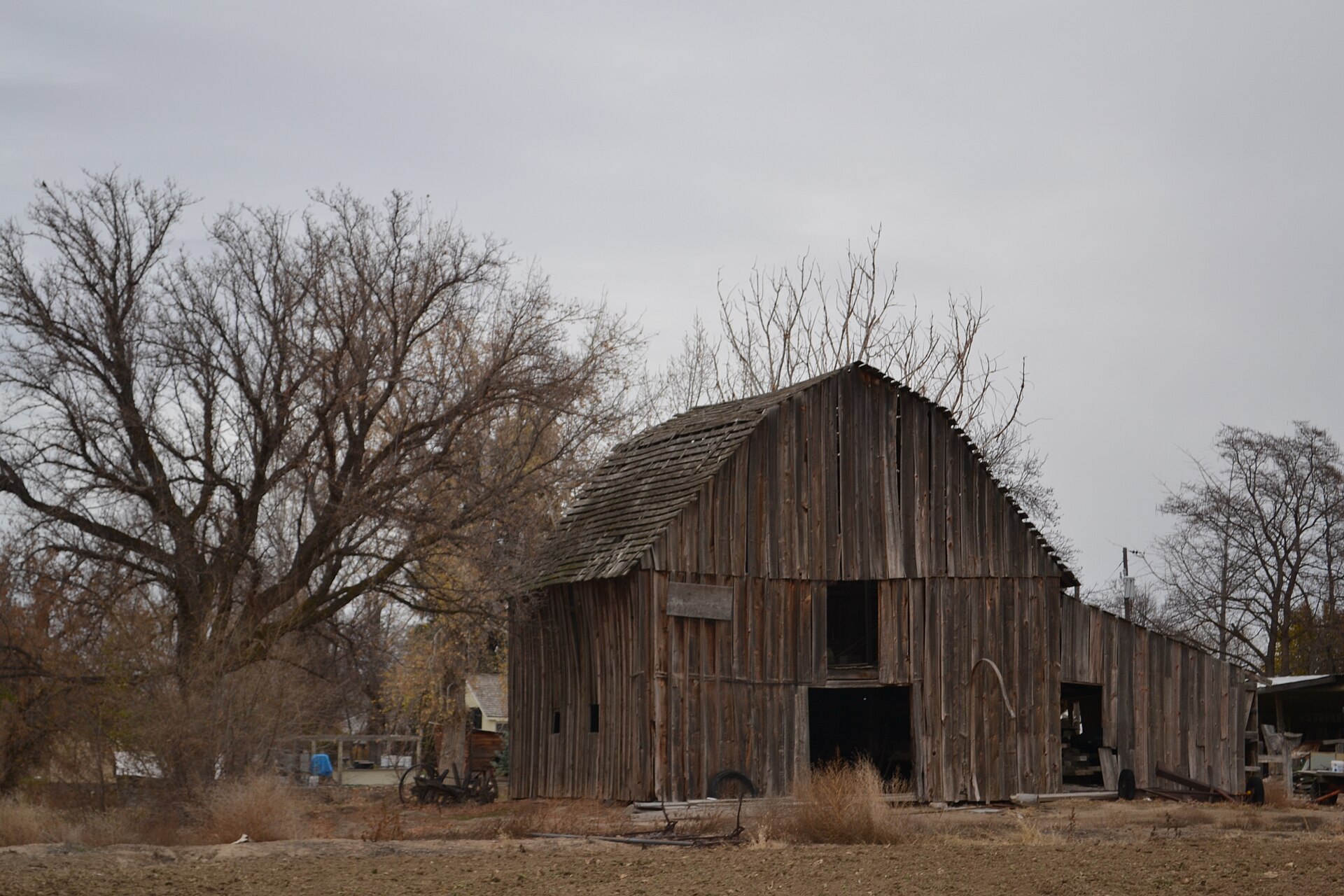
The Right to Farm Act protects farms once they exist. Where large animal operations may be built in the first place is a county zoning question, and the Legislature has made it mandatory. Idaho Code 67-6529(2) says "a board of county commissioners shall enact ordinances and resolutions to regulate the siting of large confined animal feeding operations and facilities." Each county defines what counts, but its definition may not be less restrictive than the state's.10
The state rules
- At least one public hearing on each proposed site. "Only members of the public with their primary residence within a one (1) mile radius of a proposed site may provide comment at the hearing," though a board may widen that distance. The board must keep a record, consider the comments, and "may reject a site regardless of the approval or rejection of the site by a state agency." This siting duty was added in 2000 (Session Laws 2000, chapter 217) and amended in 2003 (chapter 297).10
- The state definition, used when a county requesting a state review has not defined CAFO, covers a lot or facility where animals are confined and fed for 90 consecutive days or more in a 12-month period, where crops are not grown on the lot, and with as many as or more than 700 mature dairy cows, 1,000 veal calves, 1,000 other cattle, 2,500 swine of 55 pounds or more, 10,000 smaller swine, 500 horses or 10,000 sheep or lambs, among other categories (Idaho Code 67-6529C).10
- A state site advisory team. The Site Advisory Team Suitability Determination Act of 2001 (Idaho Code 67-6529A onward) lets a county ask a team of state agencies for an environmental suitability review of a proposed site. Its findings say CAFOs "increase social and environmental impacts in areas where these facilities are located."10
- What counties may not do. Idaho Code 67-6529(1) says no county ordinance may deprive an owner "of full and complete use of agricultural land for production of any agricultural product."10
Where the line falls between county siting rules and state operating rules was the subject of Attorney General Opinion No. 08-1 (Aug. 1, 2008), requested by the prosecuting attorneys of Gooding, Lincoln, Jerome, Minidoka and Cassia counties. Its conclusion: county ordinances that address "the appropriateness of the location" of a CAFO, "such as setbacks or maximum livestock density requirements, are likely to be upheld," but ordinances that "seek to directly impose water quality or waste management requirements on the ongoing operation of CAFOs once sited are likely to be found in conflict with, and therefore preempted by, state law." It called for legislative action to define the line more clearly.50 How state preemption of local rules works more broadly is in State Preemption and Local Control.
Jerome County's livestock confinement rules
Jerome County regulates these operations in Chapter 13 of its zoning ordinance, "Livestock Confinement Operations" (LCOs), with a separate Chapter 13A for "Warehoused Livestock Confinement Operations."951 As posted Nov. 18, 2026:
- Intent. The chapter cites 67-6529 and says nothing in it deprives an owner in the A-1 Agricultural Zone of full use of the land for agriculture; LCOs are "a conditional agricultural use" allowed with a permit in A-1 zones.
- What is an LCO. An animal operation where the ratio of animal units to land "is greater than two (2) units per one (1) acre, or seventy-five (75) units per parcel," with animals confined 45 days or more in 12 months. One animal unit is 1,000 pounds of cattle or other large livestock, 400 pounds of pigs, or 200 pounds of poultry or other small livestock.
- Density cap. "The maximum allowed ratio of animal units to acre shall be 10:1," and acres counted for one LCO cannot be counted for another.
- Setbacks. Animal confinement areas: 50 feet from canals, laterals or ditches that may return to the Snake River, 300 feet from any well, 50 feet from road rights of way and site boundaries, and 1,000 feet from the A-2 Agriculture, Commercial General, City Impact Area and Recreation zones. Waste lagoons: 300 feet from wells, site boundaries and roads. The well setback can drop to 100 feet with a berm, a backflow preventer and an approved annular seal.
- Notice and maps. Applicants file a vicinity map of everything within one mile, including wells, canals, residences and land where waste will be applied; hearing notice is mailed to owners within one mile; the application goes to the state siting team.
Gooding County and the Dairymen's case (2010)
Gooding County adopted its CAFO rules as Ordinance No. 90 around June 12, 2007. As described in the Supreme Court's opinion, the ordinance barred new CAFOs within one mile of the Snake River and Malad River canyon rims and within 2,640 feet of a Zone A flood plain, and capped density at "five (5) animal units per tillable, irrigated acre owned by the CAFO applicant" (seven with a variance). The court pointed to a study finding that "88 per cent of fields examined contained excessive amounts of phosphorus" and to the county's finding that densities of ten animal units per acre had "resulted in over application of animal waste to agricultural land." The Idaho Dairymen's Association challenged the ordinance. In Idaho Dairymen's Association, Inc. v. Gooding County, 2010 Opinion No. 12, filed Feb. 1, 2010 (Docket No. 35980), the Idaho Supreme Court held that state law did not impliedly preempt the county's water quality provisions and that the density limits did not violate substantive due process, and affirmed judgment for the county; Justice pro tem Trout dissented on the due process part only. The Idaho Cattle Association joined the challenge.52 Jerome County's current cap of 10 animal units per acre is the same density Gooding County's court record linked to over-application of waste.
Friends of Minidoka v. Jerome County (2012)
On May 3, 2007, Big Sky Farms applied to Jerome County for a permit for an 8,000 animal unit livestock confinement operation on 1,204.61 acres zoned A-1 near Eden, about 1.25 miles from the Minidoka National Historic Site, the World War II incarceration camp for Japanese Americans. The county board first denied it; after a district court remand, it approved the permit on Sept. 23, 2008, and South View Dairy intervened to defend the approval. Neighbors and groups including Friends of Minidoka, the Idaho Rural Council and Idaho Concerned Area Residents for the Environment appealed. In 2012 Opinion No. 111, filed July 6, 2012, the Supreme Court affirmed: the board properly applied its ordinance, the hearings met due process, and the one-mile comment limit in 67-6529 was not shown to be unconstitutional. On standing, it held that Friends of Minidoka lacked it because the record showed no member with an interest in real property near the site who could suffer harm; the district court had found that the Idaho Rural Council and ICARE had standing through members who lived nearby.40
The case is a reminder that a historic site, a group of farm families and a dairy can all claim property interests in the same decision, and that the "one-mile" rule shapes who gets heard before the courthouse question ever arises.

2026: a new limit on government entry onto private land
Senate Bill 1326 (2026), from the Senate State Affairs Committee, created the Property Rights Protection Act, Idaho Code 18-7101 to 18-7109. Its statement of purpose, which lists Sens. Mark Harris and Jim Guthrie as contacts, says it "codifies historic 4th Amendment protections against government employee entry into privately owned lands." It passed the Senate 30-5 on March 9, 2026 and the House 65-3-2 on March 23, was signed March 31, 2026, and took effect that day as an emergency (Idaho Session Laws 2026, chapter 261).853
- The rule. "Government agents shall not, in the course and scope of their lawful duty, enter private land not open to the public without a valid search warrant, exigent circumstances, or lawful consent of the owner or lessee" (18-7103). "Government agent" includes employees of the state, any political subdivision and the federal government, so it reaches city and county planning, code enforcement and building staff.54
- What it covers. "Private land" means privately owned land where a person knows or should know entry is not permitted under the trespass statute, and it excludes homes and their curtilage, which keep their existing protections.54
- Exceptions. Agents may walk to a home's front door like any visitor and must leave when asked (18-7105). The Act does not stop observation from public vantage points, civil process, welfare checks, water rights administration and watermasters, ditch and canal easement holders, lawful aerial observation, noxious weed control, abatement districts, or entry under certain other listed statutes (18-7108, amended later in the 2026 session by chapter 278).54
- Penalties. A knowing violation carries a $1,000 civil penalty per occurrence, paid to the rangeland improvement account, plus actual damages, injunctions and attorney fees for an aggrieved person. Penalties do not apply to sheriffs and deputies, coroners, city police or the Idaho State Police, and local governments need not indemnify an agent for a penalty (18-7106).54
For land use, the practical effect is on site inspections. A planner who wants to look at a field before a rezone hearing, or a code enforcement officer checking a complaint about an unpermitted building on rural land, now needs the owner's consent, a warrant or an emergency to go beyond what is visible from the road. Board members' site visits already raised due process questions under Eacret v. Bonner County (2004), covered in lesson 7 of the planning module; this law adds a property rights limit. How local governments are adjusting their inspection procedures was not documented in records we found as of Nov. 18, 2026.
How Idaho compares with other states
Every state has takings law under the Fifth Amendment and its own constitution. States differ in whether they go further, by statute, for owners or for farms.
| State | Law and year | What it does | Compared with Idaho |
|---|---|---|---|
| Idaho | Regulatory Takings Act, 1994 (amended 1995, 2003, 2016) | Requires a written takings analysis on the owner's request; no new right to compensation beyond the constitution. | Process only. Voters rejected a compensation rule in 2006 (Proposition 2, 76.1 percent no).328 |
| Oregon | Measure 37 (2004), revised by Measure 49 (2007) | Measure 37 required governments to pay owners when land use rules reduced value, or waive the rules. Measure 49 canceled those waivers and allowed most claimants to develop up to three home sites. | Oregon tried the compensation rule Idaho voters rejected, then scaled it back.55 |
| Arizona | Private Property Rights Protection Act (Proposition 207, 2006), Ariz. Rev. Stat. 12-1134 | Owners may claim just compensation when a land use law enacted after they acquired the property reduces its fair market value, unless the government waives the law. | A compensation statute approved the same year Idaho voters said no.56 |
| Florida | Bert J. Harris, Jr., Private Property Rights Protection Act (1995), Fla. Stat. 70.001 | Relief when a government action "inordinately" burdens an existing use or vested right, short of a constitutional taking. | A statutory claim below the constitutional bar; Idaho has none.57 |
| Texas | Private Real Property Rights Preservation Act (1995), Gov't Code ch. 2007 | Requires takings impact assessments for covered actions and treats a reduction of 25 percent or more in market value from a covered action as a taking under the Act. | Like Idaho's analysis requirement, plus a numeric value test.58 |
| North Carolina | Farm Act of 2018 (Senate Bill 711) | After large hog-farm nuisance verdicts, limited nuisance suits against farms to plaintiffs who possess property within one-half mile, filed within one year of the operation's start or a fundamental change, and limited punitive damages. | Idaho's 2025 law took a different route: fee shifting and fines for repeat complaints.59 |
| Iowa | Garrison v. New Fashion Pork LLP (Iowa Supreme Court, June 30, 2022) | Upheld Iowa's right-to-farm nuisance protections under rational basis review, overruling the three-part test of Gacke v. Pork Xtra (2004), which had limited such protections under Iowa's inalienable rights clause. | No Idaho appellate court has struck down any part of Idaho's Right to Farm Act, as far as we found.60 |
Pictures, Numbers and Infographics
The key numbers, dates and deadlines in this lesson, with Idaho beside the United States or other states where a comparison exists.
| Measure or rule | Idaho | U.S. or other states | Place or year | Source |
|---|---|---|---|---|
| Deadline to prepare a requested takings analysis | Not more than 28 days after the final decision | Texas requires an assessment before covered actions | Idaho Code 67-8003(2), as of 2026 | 358 |
| Deadline to deliver it to the owner | No later than 42 days after the request | No federal equivalent | Idaho Code 67-8003(2) | 3 |
| Time to seek judicial review | 28 days after local remedies are exhausted | Varies by state | Idaho Code 67-6521(1)(d) | 2 |
| Reconsideration request before review | 14 days; board has 60 days to decide | Varies by state | Idaho Code 67-6535(2)(b) | 33 |
| Affected persons needed to force a hearing | 20 | Not applicable | Idaho Code 67-6521(1)(b) | 2 |
| Years a farm must operate before Right to Farm "changed conditions" protection | More than 1 year | North Carolina: suits must be filed within 1 year of start or fundamental change, by owners within one-half mile | Idaho Code 22-4503; N.C. Farm Act of 2018 | 559 |
| Fines for repeat meritless farm complaints | $150 (2nd), $300 (3rd), misdemeanor (4th+) within 2 years | No equivalent found in the other states compared | SB 1033 (2025), effective July 1, 2025 | 56 |
| Civil penalty for knowing warrantless entry by a government agent | $1,000 per occurrence | Fourth Amendment applies everywhere; no statutory penalty in most states | SB 1326 (2026), Idaho Code 18-7106 | 54 |
| Proposition 2 (compensation for value loss), statewide vote | 105,778 yes, 336,083 no (76.1 percent no) | Arizona Prop. 207 passed the same year; Oregon Measure 37 passed in 2004 | Nov. 7, 2006 | 285655 |
| Rezone at issue in Crookham | 145 acres, agricultural to light industrial | Not applicable | Between Wilder and Greenleaf, Canyon County; approved August 2023 | 1 |
| Jerome County maximum livestock density | 10 animal units per acre | Gooding County: 5 (7 with variance) in 2007 | Jerome County Zoning Ordinance ch. 13 | 952 |
| State CAFO threshold for dairies | 700 mature dairy cows | Not compared | Idaho Code 67-6529C | 10 |
| Comment radius at a county CAFO siting hearing | 1 mile (board may widen) | Not compared | Idaho Code 67-6529(2) | 10 |
| Traffic impact fee in the leading 2024 U.S. case | Not applicable | $23,420 (El Dorado County, California) | Sheetz v. County of El Dorado, April 12, 2024 | 7 |
How we figured it
County percentages for Proposition 2 are our calculation: "no" votes divided by "yes" plus "no" votes, from the Secretary of State's canvass. Ada County 88,493 / 117,495 = 75.3 percent; Canyon 30,320 / 41,992 = 72.2 percent; Twin Falls 15,594 / 19,126 = 81.5 percent; Jerome 3,769 / 4,690 = 80.4 percent; Gooding 3,332 / 4,110 = 81.1 percent. The statewide 76.1 percent (336,083 / 441,861) is the figure the canvass itself reports. Bars are drawn at 5 pixels per percentage point.28
The other graphics in this lesson: the diagram of owners' and neighbors' legal tools, the 1926 to 2026 timeline, the takings analysis request flowchart, the Crookham timeline, the standing decision tree, and the livestock density chart.
Common mistakes
"Any loss in value is a taking"
It is not. The Attorney General's guidelines say most land use regulation "does not constitute a 'taking'" and that a regulation is compensable only if it "goes too far." Penn Central weighs economic impact with other factors, and Lucas applies only to a loss of all economically beneficial use. Idaho voters rejected a value-loss compensation rule in 2006.41428
"You must request a takings analysis before you can sue"
That was the reasoning in Buckskin Properties, Alpine Village and Hehr (2013), but Senate Bill 1325 (2016) amended 67-8003(5) to say an owner "is not required to submit a request" and that not doing so does not bar any remedy, including just compensation. The Attorney General's guidelines flag those older holdings as no longer applicable on that point.325
Mixing up the takings request clock and the appeal clock
Idaho Code 67-8003(2) says the government must prepare the analysis "Not more than twenty-eight (28) days after the final decision," and deliver it within 42 days of the request; the statute sets no separate filing deadline for the owner. The Attorney General's guidelines describe the request as one that "must be filed not more than twenty-eight (28) days after the final decision." Separately, the 28-day deadline for judicial review runs from exhaustion of local remedies under 67-6521(1)(d). A cautious owner files any request well within 28 days of the decision, and tracks the judicial review deadline on its own, remembering that a pending analysis tolls "any time limitation relevant to the regulatory or administrative actions."342
"A neighbor can demand a takings analysis"
Only "An owner of private property that is the subject of such action" may file the request. A neighbor harmed by an approval uses the affected person route, nuisance law, or both.3
Applying the federal standing test to a planning act petition
The district court in Crookham did exactly this, and was reversed. Since Jan. 16, 2026, the 67-6521 "affected person" test governs petitions under the planning act. Outside that statute, as in the declaratory judgment case Tidwell v. Blaine County (2023), the federal-style test still applies.139
"The Right to Farm Act protects any farm from any complaint"
It does not protect "improper or negligent operation," defined as operation not in conformity with laws, rules or permits that "adversely affects the public health and safety." The changed-conditions defense in 22-4503 also requires that the farm was not a nuisance when it began and has operated more than a year. And the 2025 fines apply only to repeat complaints against a farm that was in compliance when the complaint was made.5
"A county can ban feedlots outright" or "a county cannot regulate them at all"
Both are wrong. Counties must regulate CAFO siting under 67-6529(2), and the Supreme Court upheld Gooding County's density limits in 2010, but 67-6529(1) bars ordinances that deprive owners of "full and complete use of agricultural land," and the Attorney General has advised that rules on the ongoing operation of a sited CAFO are likely preempted.105250
"Having standing means you win"
Standing only gets a petitioner in the door. The court still reviews the record under 67-5279 without reweighing facts, and 67-6535(3) limits relief to those who show "actual harm or violation of fundamental rights."4233
What we know, what we don't, and what the data can show
What we know
- The Idaho Supreme Court held on Jan. 16, 2026 that the 67-6521 affected person test governs standing in planning act petitions, and remanded the Canyon County rezone case.1
- The Regulatory Takings Act requires an analysis on an owner's request and makes an action voidable if none is prepared; it has not been amended since 2016.3
- The Right to Farm Act was expanded in 2011 and given fee-shifting and fines in 2025.5
- Counties must regulate large CAFO siting; Jerome County caps density at 10 animal units per acre; the Supreme Court upheld Gooding County's 2007 limits in 2010 and Jerome County's 2008 approval of a large LCO near the Minidoka National Historic Site in 2012.95240
- Since March 31, 2026, government agents need a warrant, consent or an emergency to enter private land not open to the public.54
What we don't know
- Whether the Crookham petitioners will be found to be affected persons on remand, and whether the rezone will survive on the merits.
- How many regulatory takings analyses Idaho cities and counties prepare each year. No state agency collects them.
- How often owners who receive a takings analysis go on to sue, and how often they win.
- How many complaints have been fined under the 2025 meritless complaint rule. We found no published count.
- How the 2024 no-deference rule in 67-5279(5) applies to a city's or county's reading of its own zoning code.
- How cities and counties have changed inspection practices after the 2026 Property Rights Protection Act.
What the data can show
- How often planning act petitions are filed and how they end, county by county, from district court case records on iCourt (case type: petition for judicial review).61
- Which land use cases reach the Supreme Court, from its opinion search (filter by "Administrative" case type).62
- How many takings analysis requests a city or county received, from the clerk's records, since the request and analysis are public and part of the record.3
- How many LCO and CAFO permits Jerome and Gooding counties approved or denied, from planning and zoning minutes and permit files.63
- How farmland rezones fared before and after Crookham, from county commission minutes and written decisions; the farmland trend behind them is in Farmland to Rooftops.
Questions people ask
Can a city or county take my land and give it to a developer?
Not for economic development. Idaho Code 7-701A, added by House Bill 555 in 2006, bars eminent domain "For the purpose of promoting or effectuating economic development" and for any public use that is "merely a pretext" for a transfer to a private party. Some urban renewal and housing authority uses remain, but the specific property must be proven by "clear and convincing evidence" to meet listed conditions.2726
My rezone was denied. Is that a taking?
Usually not. A denial that leaves the land in its existing zone with economic uses is judged under Penn Central, which rarely finds a taking. You may request a written takings analysis under 67-8003 and must first seek reconsideration within 14 days if you want judicial review of the decision itself.14333
A big dairy wants to build a mile from my house. What can I do?
Read your county's CAFO or LCO ordinance and watch for the siting hearing. Under 67-6529(2), residents whose primary residence is within one mile may comment, and the board may widen that radius. In Jerome County, owners within one mile get mailed notice. Put facts tied to the ordinance's standards (setbacks, wells, canals, waste application land) in the record. If the permit is approved and you have a property interest that may be harmed, you may be an affected person entitled to seek review.1092
I moved in next to a farm and the smell is terrible. Can I sue?
The Right to Farm Act makes it hard. A farm that has operated more than a year and was not a nuisance when it began cannot become one because of new nonfarm neighbors, and a farm run under generally recognized practices or a permit "shall not be found to be a public or private nuisance." The exception is improper or negligent operation that harms public health and safety. If you sue and the farm prevails under the Act, you pay its attorney fees.5
After Crookham, can anyone challenge any rezone?
No. You still need a "bona fide interest in real property which may be adversely affected," and the decision must be a site-specific one on the 67-6521 list. A citywide code rewrite or plan amendment is legislative and not reviewable by that route.21
Can I challenge my impact fee after Sheetz?
Sheetz held that a fee set by legislation is not exempt from the Nollan and Dolan tests. It did not decide that any fee is too high or how closely a schedule must fit an individual project. Idaho's impact fee act has its own rules and remedies, covered in lesson 7.7
Can a county inspector walk onto my land to check a complaint?
Since March 31, 2026, not onto private land that is not open to the public without a warrant, an emergency, or the consent of the owner or lessee, unless one of the listed exceptions applies. An agent may still come to your front door like any visitor and observe from public vantage points.54
Hard questions
Should farm businesses without nearby land be able to challenge rezones?
For wider standing: seed growers, processors and farm suppliers depend on a critical mass of farmland; each rezone chips at it, and the people with the most at stake may not be adjoining owners. Canyon County's seed industry is a real economic interest. Against: letting anyone whose customers might leave challenge a rezone turns land use review into a contest over the county's economy, adds delay and cost for owners who meet the code, and invites challenges to every farmland conversion. What the evidence shows: the Legislature drew the line at "a bona fide interest in real property," and Crookham applied that line without deciding where these petitioners fall. The remand will show how district courts read "may be adversely affected."12
Should Idaho pay owners when regulation cuts value?
For: when a community downzones land for open space or farmland protection, the public gets the benefit and one owner bears the cost; the Takings Clause exists to stop that. Against: nearly every rule affects value; paying for each would make zoning unaffordable, and rules also raise neighbors' values without any charge. What the evidence shows: Oregon passed such a rule in 2004 and scaled it back in 2007, allowing most claimants up to three home sites instead; Arizona adopted one in 2006; Idaho voters rejected one, 76.1 percent to 23.9 percent, the same year.555628
Does the 2025 Right to Farm law protect farms or silence neighbors?
For the law: its sponsors said farms were spending time and money on lawsuits and complaints against lawful operations, and the fines reach only repeat complaints against farms in compliance. Against: a neighbor may not know whether a farm is in compliance until an agency investigates, and the fee rule makes a homeowner who loses pay the farm's lawyers. What the evidence shows: the Legislature passed it 33-0 and 64-2. We found no published data on how many complaints or suits have been filed against Idaho farms before or after July 1, 2025, so the size of the problem it addresses and its effect cannot yet be measured.649
Should planners need permission to look at land they are deciding about?
For the 2026 law: owners should not have government employees walking their fields without consent or a warrant, and an applicant who wants approval has every reason to consent. Against: code enforcement against unpermitted uses depends on inspection, and the neighbors who complain cannot always show what is happening behind a fence. What the evidence shows: the law exempts police and sheriffs from its civil penalty and lists exceptions for water, weeds and easements, but not for zoning or building inspection. How counties adapt (more warrants, more consent forms, more reliance on aerial and public-road observation) is not yet documented.54
For reporters and advocates
Records that exist.
- Takings analysis requests and analyses. Both are "part of the official record" and the analysis is "public information" under 67-8003. Ask the city or county clerk for every request received since 2016 and each analysis.3
- Written decisions and reconsideration requests on rezones, plats and permits, with the staff report, hearing minutes and recordings.33
- District court petitions for judicial review and their outcomes, through the Idaho courts' iCourt portal and the clerk of the district court.61
- Supreme Court opinions and staff summaries on the court's opinion search, filtered to "Administrative" cases.62
- CAFO and LCO permit files in Jerome, Gooding and Twin Falls counties: applications, one-mile vicinity maps, state siting team responses, nutrient management plans on file, hearing records, and appeals under Jerome County's hearing and appeal chapter.963
- Recorded nuisance waivers on residential land divisions, at the county recorder.5
Anything not posted can be requested under the Idaho Public Records Act, Idaho Code Title 74, Chapter 1; see Idaho Public Records Requests. Court files are covered in Court Records Research.64
Questions to ask officials.
- How many regulatory takings analyses has the city or county prepared since 2016, and did any conclude a taking was likely?
- Does every written decision include the notice of the right to request a takings analysis required by 67-6521(1)(d) and 67-6535(3)?
- Has the county's legal office changed how it handles standing objections since Crookham?
- What does the property rights component of the long-range plan say, and when was it last updated?
- How have inspection and code enforcement procedures changed since the Property Rights Protection Act took effect March 31, 2026?
- For the state agencies: how many meritless complaint fines have been imposed under 22-4505 since July 1, 2025?
The Magic Valley angle. Jerome and Gooding counties both have written livestock siting rules that have been tested in the Supreme Court. Twin Falls County administers the Twin Falls area of impact, where Renaissance showed that a safety standard can sink a plat, and Twin Falls itself won the 2026 HMI trespass and nuisance case over century-old utility lines. Most core Magic Valley towns are small; the state's 2026 housing laws covered in The 2026 Housing Laws apply by population, but the property rights rules in this lesson apply to every city and county in Idaho. Track the next CAFO or farmland rezone hearing in each county, and after a decision, mark the 14-day reconsideration and 28-day review deadlines in your story. How to take part before the decision is in Shaping Your City's Code Rewrite and Testifying and Public Comment.
Where to go next
- Idaho Supreme Court opinion search: Free. Search by party name, year and case type; choose Administrative for most land use appeals, and check Include Archived for older opinions. Each opinion has a court staff summary.
- Idaho Regulatory Takings Act Guidelines (Attorney General): Free. The state's official checklist, request form and case summaries. Owners can use Appendix B to request an analysis; officials must follow the process under Idaho Code 67-8003.
- Idaho Statutes search (Idaho Legislature): Free. Read the current text of 67-6521, 67-8003, 22-4501 to 22-4506 and 18-7101 to 18-7109; the bracketed history line under each section lists every session law that changed it.
- Idaho Legislature bill search: Free. Each bill page shows votes, signing date, session law chapter, statement of purpose and fiscal note. Use it to follow 2027 bills that might change standing, takings or Right to Farm rules.
- iCourt Portal (Idaho courts): Free public case search for district court records, including petitions for judicial review of land use decisions. Search by party name, such as a county or a developer.
- Jerome County Zoning Ordinances: Free. All chapters of the Jerome County code, including livestock confinement (Chapters 13 and 13A), areas of city impact and hearing and appeal procedures.
- Reconsideration, Judicial Review and Takings (module 36, lesson 8): Free lesson on this site with the 14-day, 60-day and 28-day appeal clocks worked out and the Attorney General's six checklist questions explained.
Still being checked (7 items)
These points could not be fully confirmed against a primary source when this lesson was written and fact checked in November 2026. The text above states each one as uncertain.
- Bill numbers for the 1994 Regulatory Takings Act (Session Laws ch. 116), its 1995 amendment (ch. 182), the 1981 Right to Farm Act (ch. 177) and the 2022 Right to Farm amendment (ch. 116); the Legislature's online bill pages do not reach the earlier years and we did not identify the 2022 bill.
- The year printed for Highlands Development Corp. v. City of Boise: the 2010 HB 605 statement of purpose cites it with a 2009 date at 145 Idaho 958, 188 P.3d 900; we did not open the opinion to confirm the decision date.
- Gooding County's current CAFO ordinance text was not located online; its 2007 terms are described from the Supreme Court's 2010 opinion in Idaho Dairymen's Association v. Gooding County, read through a hosted copy of the slip opinion because the court's own online archive starts around 2020.
- Older Idaho takings cases (McCuskey 1996, Simpson 2006, Buckskin, Alpine Village and Hehr 2013, North Idaho Building Contractors 2018) are described from the Attorney General's January 2023 summaries, not from the opinions.
- Whether the Crookham district court has ruled on remand; we found no published ruling as of Nov. 18, 2026.
- The content of the second 2026 amendment to Idaho Code 18-7108 (Session Laws 2026, ch. 278) and its bill number.
- The details of the Oregon, Arizona, Florida, Texas and North Carolina laws in the comparison table are summarized from the cited statutes and official or university pages without reading every section in full.
Last verified November 18, 2026. General education, not legal, tax, financial or real estate advice; every figure names its source and year in the Notes and Sources below. Data is revised: check the newest release before relying on any number.
Notes
- Idaho Supreme Court, Crookham v. County of Canyon, Docket No. 52514, Boise, November 2025 Term, opinion filed Jan. 16, 2026 (Brody, J.; Bevan, C.J., and Moeller, Zahn and Meyer, JJ., concurring), appeal from the Third Judicial District, Canyon County, Judge Brent L. Whiting. Reversed and remanded; one sentence of Evans v. Teton County, 139 Idaho 71 (2003), overruled. The opinion also describes Cowan (2006), Hawkins (2011) and Coalition for Agriculture's Future v. Canyon County, 160 Idaho 142 (2016) (read Nov. 18, 2026). Read it online. ↩
- Idaho Code 67-6521, Actions by affected persons (am. 2010, ch. 175, sec. 3; no later amendment as posted) (read Nov. 18, 2026). Read it online. ↩
- Idaho Code Title 67, Chapter 80, Regulatory Takings, sections 67-8001 to 67-8004 (added 1994, ch. 116; am. 1995, ch. 182; 2003, ch. 141; 2016, ch. 225) (read Nov. 18, 2026). Read it online. ↩
- Idaho Attorney General, Idaho Regulatory Takings Act Guidelines, January 2023 (Raul R. Labrador, Attorney General): advisory memorandum, general background principles, recommended process, checklist (Appendix C), request form (Appendix B) (read Nov. 18, 2026). Read it online. ↩
- Idaho Code Title 22, Chapter 45, Right to Farm, sections 22-4501 to 22-4506, with history lines (1981, ch. 177; 1994, ch. 107; 1997, ch. 341; 1999, ch. 377; 2011, ch. 229; 2022, ch. 116; 2025, ch. 147) (read Nov. 18, 2026). Read it online. ↩
- Idaho Legislature, Senate Bill 1033 (2025), Right to Farm Act, bill status page: Senate 33-0-2 (Feb. 21), House 64-2-4 (March 17), signed March 21, 2025, Session Laws ch. 147, effective July 1, 2025 (read Nov. 18, 2026). Read it online. ↩
- U.S. Supreme Court, Sheetz v. County of El Dorado, No. 22-1074, 601 U.S. 267, decided April 12, 2024, preliminary print (syllabus: $23,420 traffic impact fee; "The Takings Clause does not distinguish between legislative and administrative land-use permit conditions") (read Nov. 18, 2026). Read it online. ↩
- Idaho Legislature, Senate Bill 1326 (2026), Property Rights, bill status page: Senate 30-5-0 (March 9), House 65-3-2 (March 23), signed March 31, 2026, Session Laws ch. 261, effective March 31, 2026 (read Nov. 18, 2026). Read it online. ↩
- Jerome County Zoning Ordinance, Chapter 13, Livestock Confinement Operations (sections 13-1 to 13-18: intent, LCO definition, 10:1 density standard, setbacks, vicinity map and one-mile notice), as posted by Jerome County (read Nov. 18, 2026). Read it online. ↩
- Idaho Code 67-6529 (am. 2000, ch. 217; 2003, ch. 297) and 67-6529A to 67-6529G, Site Advisory Team Suitability Determination Act (added 2001, ch. 381), in Title 67, Chapter 65 (read Nov. 18, 2026). Read it online. ↩
- Idaho Constitution, Article I, Section 14, Right of eminent domain (read Nov. 18, 2026). Read it online. ↩
- U.S. Constitution, Fifth Amendment, Takings Clause, Constitution Annotated, Library of Congress (read Nov. 18, 2026). Read it online. ↩
- Village of Euclid v. Ambler Realty Co., 272 U.S. 365 (1926) (read Nov. 18, 2026). Read it online. ↩
- Penn Central Transportation Co. v. New York City, 438 U.S. 104 (1978) (read Nov. 18, 2026). Read it online. ↩
- Loretto v. Teleprompter Manhattan CATV Corp., 458 U.S. 419 (1982) (read Nov. 18, 2026). Read it online. ↩
- Nollan v. California Coastal Commission, 483 U.S. 825 (1987) (read Nov. 18, 2026). Read it online. ↩
- Lucas v. South Carolina Coastal Council, 505 U.S. 1003 (1992) (read Nov. 18, 2026). Read it online. ↩
- Dolan v. City of Tigard, 512 U.S. 374 (1994) (read Nov. 18, 2026). Read it online. ↩
- Tahoe-Sierra Preservation Council, Inc. v. Tahoe Regional Planning Agency, 535 U.S. 302 (2002); Idaho's moratorium limits are in Idaho Code 67-6523 (182 days) and 67-6524 (one year), reprinted in the AG guidelines (read Nov. 18, 2026). Read it online. ↩
- Kelo v. City of New London, 545 U.S. 469 (2005) (read Nov. 18, 2026). Read it online. ↩
- Koontz v. St. Johns River Water Management District, 570 U.S. 595 (2013) (read Nov. 18, 2026). Read it online. ↩
- U.S. Supreme Court, Knick v. Township of Scott, No. 17-647, 588 U.S. 180, decided June 21, 2019 (read Nov. 18, 2026). Read it online. ↩
- U.S. Supreme Court, Cedar Point Nursery v. Hassid, No. 20-107, 594 U.S. 139, decided June 23, 2021 (read Nov. 18, 2026). Read it online. ↩
- U.S. Supreme Court, Tyler v. Hennepin County, No. 22-166, 598 U.S. 631, decided May 25, 2023 (read Nov. 18, 2026). Read it online. ↩
- Idaho Attorney General, Idaho Regulatory Takings Act Guidelines (January 2023), Appendix A, "Significant Idaho 'Takings' Cases": N. Idaho Bldg. Contractors Ass'n v. City of Hayden, 164 Idaho 530, 432 P.3d 976 (2018); Hehr v. City of McCall, 155 Idaho 92, 305 P.3d 536 (2013); Alpine Vill. Co. v. City of McCall, 154 Idaho 930, 303 P.3d 617 (2013); Buckskin Props., Inc. v. Valley Cty., 154 Idaho 486, 300 P.3d 18 (2013); City of Coeur d'Alene v. Simpson, 142 Idaho 839, 136 P.3d 310 (2006); McCuskey v. Canyon County Comm'rs, 128 Idaho 213, 912 P.2d 100 (1996), with the guidelines' notes on Knick and SB 1325 (read Nov. 18, 2026). Read it online. ↩
- Idaho Legislature, House Bill 555 (2006), Eminent domain, limitation, bill status page: House 67-0-3 (Feb. 24), Senate 34-0-1 (March 9), signed March 21, 2006, Session Laws ch. 96, effective July 1, 2006 (read Nov. 18, 2026). Read it online. ↩
- Idaho Code 7-701A, Limitation on eminent domain for private parties, urban renewal or economic development purposes (read Nov. 18, 2026). Read it online. ↩
- Idaho Secretary of State, election canvass, Nov. 7, 2006, Proposition #2, Eminent Domain: statewide 105,778 yes (23.9 percent), 336,083 no (76.1 percent); county results (county percentages our calculation) (read Nov. 18, 2026). Read it online. ↩
- Idaho Code 67-6508, Planning duties, component (a) Property Rights; history line lists amendments in 1992, 1994 (chs. 212 and 245), 1995 (chs. 181 and 305), 1996, 2007, 2011, 2014 and 2025 (read Nov. 18, 2026). Read it online. ↩
- Idaho Legislature, House Bill 256 (2003), Regulatory takings, bill status page: House 55-14-1 (March 3), Senate 26-7-2 (March 14), signed March 27, 2003, Session Laws ch. 141, effective July 1, 2003 (read Nov. 18, 2026). Read it online. ↩
- Idaho Legislature, Senate Bill 1325 (2016), Regulatory Takings, bill status page and statement of purpose RS24463: Senate 34-0-1 (March 2), House 69-0-1 (March 18), signed March 28, 2016, Session Laws ch. 225, effective July 1, 2016 (read Nov. 18, 2026). Read it online. ↩
- Idaho Legislature, House Bill 842 (2006), Regulatory takings, revised, by the House Ways and Means Committee, bill status page and statement of purpose (introduced March 22, 2006; "Rpt prt - to St Aff" March 23; no later action shown) (read Nov. 18, 2026). Read it online. ↩
- Idaho Code 67-6535, Approval or denial of any application to be based upon express standards and to be in writing (am. 2010, ch. 175; 2013, ch. 216) (read Nov. 18, 2026). Read it online. ↩
- Gooding County, long-range plan (official title includes the word Comprehensive Plan), Gooding County Document Center item 186, land use policy on CAFO siting standards (read Nov. 18, 2026). Read it online. ↩
- Idaho Legislature, House Bill 605 (2010), statement of purpose RS19632C1, citing Highlands Development Corp. v. City of Boise, 145 Idaho 958, 188 P.3d 900; Burns Holdings LLC v. Madison County, 146 Idaho 660, 214 P.3d 646 (2009); and Taylor v. Canyon County, 147 Idaho 424, 210 P.3d 532 (2009) (read Nov. 18, 2026). Read it online. ↩
- Idaho Legislature, House Bill 605 (2010), Local land use planning, bill status page: House 66-2-2 (March 12), Senate 33-1-1 (March 25), signed March 31, 2010, Session Laws ch. 175, effective March 31, 2010; bill text amends 67-6519, 67-6520, 67-6521 and 67-6535 (read Nov. 18, 2026). Read it online. ↩
- Lujan v. Defenders of Wildlife, 504 U.S. 555 (1992) (read Nov. 18, 2026). Read it online. ↩
- Idaho Supreme Court, Citizens Against Linscott/Interstate Asphalt Plant v. Bonner County Board of Commissioners, Docket No. 47909, substitute opinion filed May 12, 2021 (Burdick, J.), 168 Idaho 705, 486 P.3d 515 (read Nov. 18, 2026). Read it online. ↩
- Idaho Supreme Court, Tidwell v. Blaine County, Docket No. 48799, opinion filed Oct. 4, 2023 (Bevan, C.J.; Moeller, J., and Horton, J. pro tem, concurring; Stegner, J., dissenting, joined by Trout, J. pro tem), 172 Idaho 851, 537 P.3d 1212; judgment vacated and remanded for dismissal (read Nov. 18, 2026). Read it online. ↩
- Idaho Supreme Court, Friends of Minidoka v. Jerome County (In re Jerome County Board of Commissioners' decision dated Sept. 23, 2008, approving an LCO permit for Don McFarland, dba Big Sky Farms), Docket No. 38113, 2012 Opinion No. 111, filed July 6, 2012 (Burdick, C.J.); copy of the slip opinion hosted by Justia because the court's online archive does not reach 2012 (read Nov. 18, 2026). Read it online. ↩
- Idaho Association of Counties (an association of county governments), Clay Boeckel, "LLUPA's 'Affected Person' Standard May Lower Bar for Idaho Land Use Challenges," Aug. 13, 2026 (read Nov. 18, 2026). Read it online. ↩
- Idaho Code 67-5279, Scope of review, type of relief (added 1992, ch. 263; am. 2024, ch. 235) (read Nov. 18, 2026). Read it online. ↩
- Idaho Legislature, House Bill 626 (2024), Administrative Procedure Act, bill status page and statement of purpose RS31438: House 58-11-1 (March 11), Senate 32-1-2 (March 25), signed March 28, 2024, Session Laws ch. 235, effective July 1, 2024 (read Nov. 18, 2026). Read it online. ↩
- Idaho Supreme Court, Renaissance Project Development, LLC v. Twin Falls County, Docket No. 50197, December 2023 Term, opinion filed March 5, 2024 (Brody, J.), appeal from the Fifth Judicial District, Twin Falls County, Judge Benjamin J. Cluff; affirmed (read Nov. 18, 2026). Read it online. ↩
- Idaho Code Title 52, Chapter 1, Nuisances in general: 52-101, 52-102, 52-107, 52-108 and 52-111 (added 1976, ch. 82) (read Nov. 18, 2026). Read it online. ↩
- Idaho Supreme Court, HMI, Hamilton Manufacturing, Inc. v. City of Twin Falls, Docket No. 52620, February 2026 Term, opinion filed July 10, 2026 (Meyer, J.), appeal from the Fifth Judicial District, Twin Falls County; affirmed (read Nov. 18, 2026). Read it online. ↩
- Idaho Legislature, House Bill 210 (2011), Right to Farm, bill status page: Ways and Means Committee; House 57-11-2 (March 10), Senate 32-2-1 (March 31), Session Laws ch. 229, effective July 1, 2011 (read Nov. 18, 2026). Read it online. ↩
- Idaho Legislature, House Bill 210 (2011), statement of purpose RS20506 (contacts Rep. Mike Moyle, Roger Batt, Dan Steenson) (read Nov. 18, 2026). Read it online. ↩
- Idaho Legislature, Senate Bill 1033 (2025), statement of purpose RS32027 (contacts Sen. Todd M. Lakey, Rep. Judy Boyle) (read Nov. 18, 2026). Read it online. ↩
- Idaho Attorney General Opinion No. 08-1, to Calvin H. Campbell, Gooding County Prosecuting Attorney, dated Aug. 1, 2008 (Lawrence G. Wasden, Attorney General), on state preemption of county CAFO regulation (read Nov. 18, 2026). Read it online. ↩
- Jerome County Zoning Ordinance, Chapter 13A, Warehoused Livestock Confinement Operation (read Nov. 18, 2026). Read it online. ↩
- Idaho Supreme Court, Idaho Dairymen's Association, Inc. v. Gooding County, Docket No. 35980, 2010 Opinion No. 12, Twin Falls, November 2009 Term, filed Feb. 1, 2010 (W. Jones, J.; Trout, J. pro tem, dissenting as to Part III only), 148 Idaho 653, 227 P.3d 907, on Gooding County Ordinance No. 90 (adopted on or about June 12, 2007); copy of the slip opinion hosted by Justia because the court's online archive does not reach 2010 (read Nov. 18, 2026). Read it online. ↩
- Idaho Legislature, Senate Bill 1326 (2026), statement of purpose RS33382 (contacts Sen. Mark Harris, Sen. Jim Guthrie), and engrossed bill as amended by the State Affairs Committee (read Nov. 18, 2026). Read it online. ↩
- Idaho Code Title 18, Chapter 71, Property Rights Protection Act, sections 18-7101 to 18-7109 (added 2026, ch. 261; 18-7108 am. 2026, ch. 278) (read Nov. 18, 2026). Read it online. ↩
- Oregon Department of Land Conservation and Development, Measure 49 page (Measure 37 of 2004 and Measure 49 of 2007) (read Nov. 18, 2026). Read it online. ↩
- Arizona Revised Statutes 12-1134, Diminution in value; just compensation (Private Property Rights Protection Act, Proposition 207, 2006) (read Nov. 18, 2026). Read it online. ↩
- Florida Statutes 70.001, Private property rights protection (Bert J. Harris, Jr., Private Property Rights Protection Act, 1995) (read Nov. 18, 2026). Read it online. ↩
- Texas Government Code, Chapter 2007, Governmental Action Affecting Private Property (Private Real Property Rights Preservation Act, 1995) (read Nov. 18, 2026). Read it online. ↩
- North Carolina State University Cooperative Extension (a university), "North Carolina's Right to Farm Law after Smithfield Litigation," on the Farm Act of 2018 (Senate Bill 711) and G.S. 106-701 (read Nov. 18, 2026). Read it online. ↩
- Iowa Supreme Court, Garrison v. New Fashion Pork LLP, No. 21-0652, decided June 30, 2022 (read Nov. 18, 2026). Read it online. ↩
- Idaho Supreme Court, iCourt Portal for district court case records (read Nov. 18, 2026). Read it online. ↩
- Idaho Supreme Court, Supreme Court Opinions search (keywords, year and case type, including archived opinions) (read Nov. 18, 2026). Read it online. ↩
- Jerome County Zoning Ordinance, Chapter 23, Hearing and Appeal Procedures (read Nov. 18, 2026). Read it online. ↩
- Idaho Code Title 74, Chapter 1, Public Records Act (read Nov. 18, 2026). Read it online. ↩
Check yourself
1. In Crookham v. County of Canyon (Jan. 16, 2026), what standing test did the Idaho Supreme Court say governs a petition for judicial review under the planning act?
Crookham (Docket 52514) held that the applicable standing inquiry under LLUPA is the 'affected person' standard of Idaho Code 67-6521, because Idaho standing doctrine is a self-imposed constraint the Legislature can displace.
2. What did the Supreme Court do with the Crookham petitioners' claims?
The court said the affected person inquiry is fact-intensive and remanded for the district court to apply 67-6521 in the first instance (Crookham, 2026).
3. Under Idaho Code 67-8003, when must a requested regulatory taking analysis be provided to the owner?
Idaho Code 67-8003(2): the analysis is prepared not more than 28 days after the final decision and provided no longer than 42 days after the request is filed.
4. What did Senate Bill 1325 (2016) change in the Regulatory Takings Act?
SB 1325 (Session Laws 2016, ch. 225) added 67-8003(5): an owner is not required to submit a request, and not doing so does not bar any remedy, including just compensation.
5. Under Idaho Code 22-4503, when is a farm protected from becoming a nuisance because of new nonfarm neighbors?
Idaho Code 22-4503 protects an operation after more than one year if it was not a nuisance when it began, except where the nuisance results from improper or negligent operation.
6. What did Senate Bill 1033 (2025) add to the Right to Farm Act?
SB 1033 (Session Laws 2025, ch. 147) amended 22-4505: fees and costs for a prevailing farm; $150 and $300 infractions and then a misdemeanor for repeat meritless complaints within two years.
7. What did the U.S. Supreme Court hold in Sheetz v. County of El Dorado (2024)?
Sheetz, 601 U.S. 267 (2024): the Takings Clause does not distinguish between legislative and administrative land-use permit conditions.
8. Under Idaho Code 67-6529(2), who may comment at a county hearing on a proposed large CAFO site?
Idaho Code 67-6529(2) limits hearing comment to people with a primary residence within a one-mile radius, though the board may increase the distance; Friends of Minidoka v. Jerome County (2012) upheld the rule.
9. What is the maximum livestock density in Jerome County's livestock confinement operation rules?
Jerome County Zoning Ordinance Chapter 13, density standard: the maximum ratio of animal units to acre is 10:1. Gooding County's 2007 cap was 5 (7 with a variance).
10. Under the 2026 Property Rights Protection Act (SB 1326), when may a government agent enter private land not open to the public?
Idaho Code 18-7103 (Session Laws 2026, ch. 261) allows entry only with a warrant, exigent circumstances or the owner's or lessee's consent, subject to exceptions in 18-7105 and 18-7108.
Terms in this lesson
- Taking
- Government action that takes private property, or burdens it so heavily, that the U.S. and Idaho constitutions require the government to pay just compensation.
- Regulatory taking
- A taking caused by a rule or permit condition rather than by condemnation; Idaho Code 67-8002 defines it as a regulatory or administrative action that deprives an owner of property in violation of the state or federal constitution.
- Just compensation
- Payment for property taken for public use, required by the Fifth Amendment and Article I, Section 14 of the Idaho Constitution.
- Regulatory taking analysis
- A written review, using the Attorney General's checklist, that a city, county or state agency must prepare when the owner of affected property requests it under Idaho Code 67-8003.
- Exaction
- A condition on a permit that requires the owner to give land, an easement or money; under Nollan, Dolan, Koontz and Sheetz it must have a nexus to and be roughly proportional to the project's impact.
- Inverse condemnation
- A lawsuit by an owner claiming the government took property without formally condemning it or paying for it.
- Standing
- The right to bring a case to court. For planning act petitions in Idaho, it is the affected person test in Idaho Code 67-6521.
- Affected person
- Under Idaho Code 67-6521(1)(a), one having a bona fide interest in real property that may be adversely affected by a listed site-specific land use decision.
- Judicial review
- A court's review of a local land use decision on the record the board made, under the Idaho Administrative Procedure Act and Idaho Code 67-5279.
- Private nuisance
- Under Idaho Code 52-107, any nuisance that is not a public or moral nuisance, usually a neighbor's use that interferes with the comfortable enjoyment of property.
- Public nuisance
- Under Idaho Code 52-102, a nuisance that affects an entire community or neighborhood, or a considerable number of people, at the same time.
- Right to Farm Act
- Idaho Code 22-4501 to 22-4506, which limits nuisance claims against established farms run under generally recognized practices and voids local ordinances declaring such farms nuisances.
- CAFO
- Confined (or concentrated) animal feeding operation: a lot or facility where animals are confined and fed, defined for county siting purposes in Idaho Code 67-6529C and county ordinances.
- Animal unit
- A measure of livestock weight used in county rules; in Jerome County one animal unit is 1,000 pounds of cattle, 400 pounds of pigs or 200 pounds of poultry.
- Livestock confinement operation (LCO)
- Jerome County's term for an animal operation above 2 animal units per acre or 75 per parcel with animals confined 45 days or more in a year, allowed by permit in the A-1 zone.
- Nuisance waiver
- A recorded notice, which Idaho Code 22-4504 lets counties require on residential land divisions, that tells buyers of new lots about nearby farming.
Sources
- Idaho Supreme Court, Crookham v. County of Canyon, Docket 52514 (Jan. 16, 2026) (2026-01-16) checked 2026-11
- Idaho Code Title 67, Chapter 80, Regulatory Takings (2026) checked 2026-11
- Idaho Attorney General, Idaho Regulatory Takings Act Guidelines (January 2023) (2023-01) checked 2026-11
- Idaho Code Title 22, Chapter 45, Right to Farm (2026) checked 2026-11
- Idaho Code Title 67, Chapter 65, Local Land Use Planning (67-6508, 67-6521, 67-6529, 67-6535) (2026) checked 2026-11
- Idaho Code 67-5279, Scope of review (2026) checked 2026-11
- Idaho Code Title 52, Chapter 1, Nuisances (2026) checked 2026-11
- Idaho Code Title 18, Chapter 71, Property Rights Protection Act (SB 1326, 2026) (2026-03-31) checked 2026-11
- Idaho Supreme Court, Renaissance Project Development v. Twin Falls County, Docket 50197 (March 5, 2024) (2024-03-05) checked 2026-11
- Idaho Supreme Court, Friends of Minidoka v. Jerome County, 2012 Opinion No. 111 (2012-07-06) checked 2026-11
- Jerome County Zoning Ordinance, Chapter 13, Livestock Confinement Operations (2026) checked 2026-11
- Idaho Attorney General Opinion No. 08-1 (CAFO regulation) (2008-08-01) checked 2026-11
- U.S. Supreme Court, Sheetz v. County of El Dorado, 601 U.S. 267 (2024-04-12) checked 2026-11
- Idaho Secretary of State, Proposition 2 (2006) canvass (2006-11-07) checked 2026-11