Lesson 8 of 12 · about 55 minutes · Updated November 20, 2026
Homelessness and Supportive Housing in Idaho
You'll be able to
- Explain the HUD, education and sheltered or unsheltered definitions of homelessness and why their counts differ
- Read Idaho's point-in-time counts from 2007 to 2025 by continuum of care and population, and compare Idaho with the United States and neighboring states
- Describe how Idaho's two continuums of care, coordinated entry and federal Continuum of Care grants work, including in the Magic Valley
- Summarize the evidence for Housing First and for treatment-first approaches, and the 2025 to 2026 federal policy changes and court rulings
- Explain Martin v. City of Boise, City of Grants Pass v. Johnson, Senate Bill 1141 (2025) and House Bill 603 (2026)
- Find the public records that show counts, beds, awards and outcomes for a homelessness story
Start here: the short version
- 2,697 people on one January night. HUD's point-in-time count found 2,697 people experiencing homelessness in Idaho in January 2025: 1,349 in shelters or transitional housing and 1,348 outside. That is 13 of every 10,000 Idahoans, against 22 of every 10,000 nationally. Idaho's count was down 1.9 percent from 2024 and up 54.2 percent from 2007.12
- Two continuums of care. Boise/Ada County CoC (ID-500): 772 people in 2025, 16 percent unsheltered. Idaho Balance of State CoC (ID-501, the other 43 counties, with IHFA): 1,925 people, 63 percent unsheltered.34
- Idaho leads the nation in one bad measure. In 2025, 52 percent of people in homeless families with children in Idaho were unsheltered, the highest share of any state in HUD's report.1
- Schools count far more. Idaho public schools identified 9,266 students experiencing homelessness in school year 2023-24 (2.9 percent of enrollment) under a wider federal definition that includes families doubled up with others.56
- The law changed twice. Martin v. City of Boise (9th Cir. 2018, amended 2019) barred punishing people for sleeping outside when no shelter bed was available; City of Grants Pass v. Johnson, 603 U.S. 520 (June 28, 2024), overruled that approach. Idaho then passed Senate Bill 1141 (2025), now Idaho Code 67-2341, banning public camping in cities of 100,000 or more, effective July 1, 2025.78910
- Housing First is in court. Executive Order 14321 (July 24, 2025) told HUD to end support for "housing first" policies where the law allows. A federal judge in Rhode Island set aside HUD's 2025 funding notices (June 29, 2026) and the 2026 notice (Aug. 7, 2026); the First Circuit stayed the second ruling Sept. 16, 2026.11121314
- The money is small next to the need. HUD's fiscal year 2024 Continuum of Care awards to Idaho totaled $8,249,035: $2,812,685 to Ada County and $5,436,350 to the rest of the state.15
Data: HUD 2025 AHAR Part 1 (May 2026) and the 2007 to 2025 PIT and Housing Inventory Count files; local January 2026 counts (not yet validated by HUD); school data through SY 2023-24. Law: 24 CFR part 578 as of November 2026; Idaho Code through the 2026 regular session; court rulings through Sept. 16, 2026. Checked Nov. 20, 2026. Counts, rules and funding notices change every year; check the newest release.
Homelessness is the far end of the affordable housing problem this course has traced from the start: rents rising faster than incomes, waitlists for vouchers, a shortage of homes that the lowest-income renters can afford. Most people who lose housing in Idaho move in with relatives, sleep in a car or motel, or stay briefly in a shelter, then find another place. A smaller group stays homeless for years, often with a disability, a serious mental illness or an addiction. Federal programs, Idaho's two continuums of care, city governments, charities and churches all try to reach both groups, and they do not agree on how.
This lesson describes rules and records; it does not tell any reader what to do in a particular situation.
Lesson 03, Low-Income Housing Issues in Idaho, covers the shortage of affordable rental homes that sits upstream of homelessness. Lesson 06, Where the Money Comes From, explains HOME, vouchers and tax credits. Lesson 07, Getting Help, Step by Step, lists the doors a renter facing eviction can knock on. Lesson 12, How to Report on Affordable Housing, has a homeless count story checklist. The Boise shelter siting case, Veterans Park Neighborhood Association v. City of Boise (Idaho Supreme Court, 2025), is told in Part C's Recent Disputes Casebook and is not repeated here. Evictions are in Evictions Step by Step.
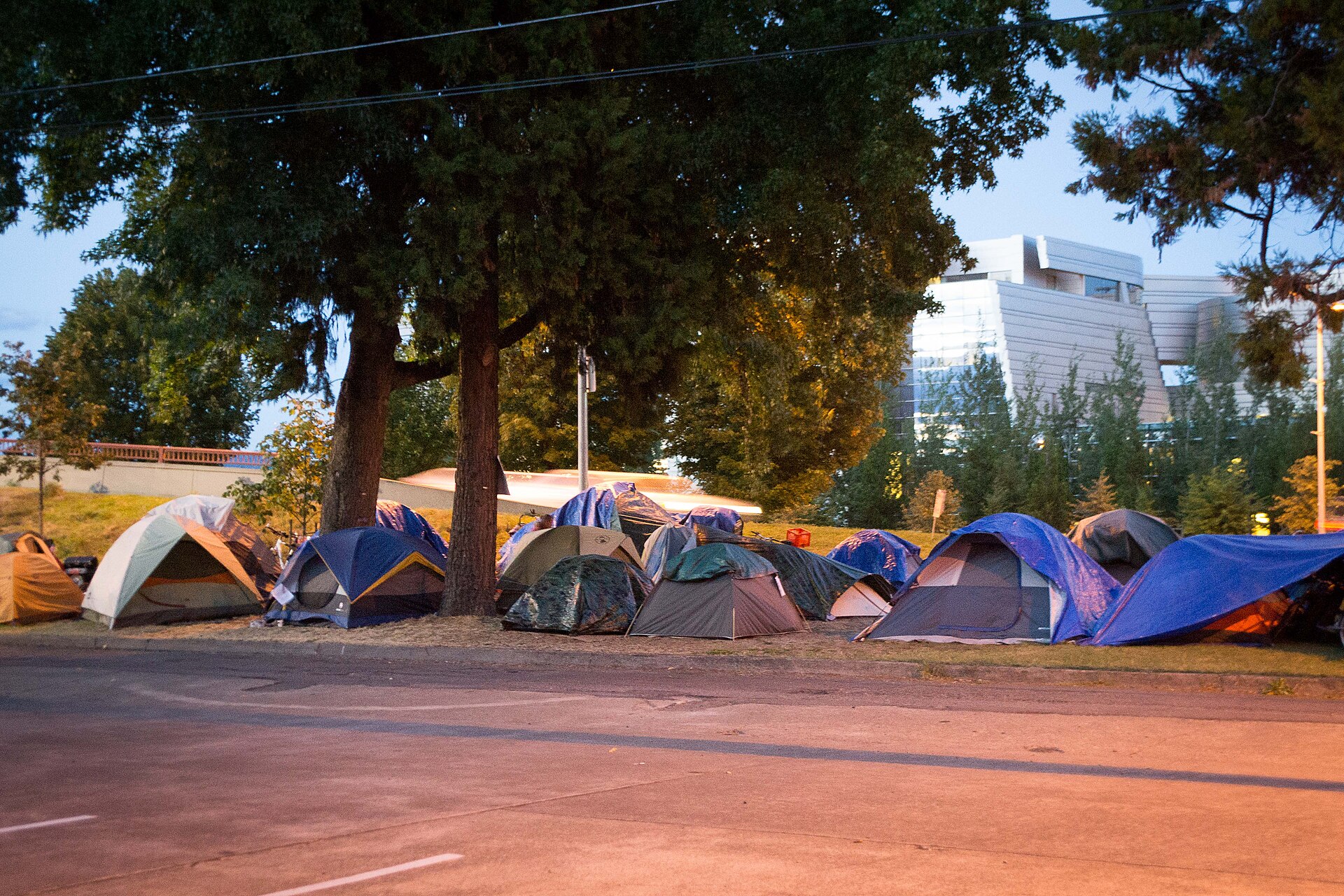

Who counts as homeless: three definitions
A common error is comparing numbers built on different definitions. Three are in use in Idaho.
HUD's definition for the Continuum of Care
HUD's Continuum of Care rule, 24 CFR 578.3, defines homeless in four categories. The one the annual count measures is a person or family whose "primary nighttime residence" is "a public or private place not designed for or ordinarily used as a regular sleeping accommodation for human beings, including a car, park, abandoned building, bus or train station, airport, or camping ground," or who is living in a supervised shelter, including congregate shelters, transitional housing and motel rooms paid for by a charity or government program. The other categories cover people about to lose their housing within 14 days, certain families and youth who are unstably housed under other federal laws, and people fleeing domestic violence.16
The same section defines chronically homeless: a person with a disability who has lived in a place not meant for human habitation, a safe haven or an emergency shelter "continuously for at least 12 months or on at least 4 separate occasions in the last 3 years, as long as the combined occasions equal at least 12 months." Most permanent supportive housing funded by HUD is reserved or prioritized for people who meet this definition.16
The schools' definition
The McKinney-Vento education program uses a wider definition at 42 U.S.C. 11434a(2). It counts children "sharing the housing of other persons due to loss of housing, economic hardship, or a similar reason" (usually called doubled up), and children living in motels, trailer parks or camping grounds because there is no other adequate place. HUD's count leaves out most of those families. A family of five sleeping in a cousin's living room after an eviction is homeless for school purposes and is not counted in HUD's January number.6
Sheltered and unsheltered
In HUD's count, sheltered means a person in an emergency shelter, transitional housing or a safe haven on the night of the count; unsheltered means a person in a place not meant for people to live, such as a car, a tent, a park or a doorway. People already living in permanent supportive housing or rapid rehousing are not counted as homeless at all, because by definition they are housed. So a community that moves 100 people into supportive housing takes them out of the count while still paying for their care.17
The point-in-time count: how it works and what it shows
A point-in-time count (PIT count) is a census of people experiencing homelessness on a single night in the last ten days of January. Every continuum of care must plan and conduct one "at least biennially" under 24 CFR 578.7(c)(2); HUD's data files show both Idaho continuums reporting a count every year since 2007. Volunteers walk routes and interview the people they find; shelters report from their records. The same night, each continuum reports its Housing Inventory Count, a list of every shelter, transitional housing, rapid rehousing and permanent supportive housing bed in its area.171
HUD publishes the results in its Annual Homelessness Assessment Report (AHAR). Part 1 of the 2025 report, released May 29, 2026, counted 745,652 people nationwide, 3 percent fewer than the record 771,480 in 2024; 36 percent were unsheltered.12
Idaho's 2026 count was taken on the night of Jan. 28, 2026. The Idaho Housing and Finance Association and the Ada County continuum published local totals in 2026: 2,411 people statewide, 1,288 sheltered and 1,123 unsheltered. HUD has not yet published its 2026 report, so those totals are preliminary and may change when HUD validates them.4
Idaho, 2007 to 2025
The table gives HUD's validated Idaho totals for every year since counts began. The 2021 count was a sheltered count with only a partial unsheltered count because of the pandemic, in Idaho and in many other states, so the 2021 dip is partly a counting change.23
| Year (January) | Idaho total | Sheltered | Unsheltered | Ada County CoC (ID-500) | Balance of State CoC (ID-501) | U.S. total |
|---|---|---|---|---|---|---|
| 2007 | 1,749 | 1,125 | 624 | 581 | 1,168 | 647,258 |
| 2008 | 1,464 | 1,250 | 214 | 611 | 853 | 639,784 |
| 2009 | 1,939 | 1,477 | 462 | 786 | 1,153 | 630,227 |
| 2010 | 2,346 | 1,564 | 782 | 872 | 1,474 | 637,077 |
| 2011 | 2,199 | 1,585 | 614 | 838 | 1,361 | 623,788 |
| 2012 | 1,968 | 1,482 | 486 | 754 | 1,214 | 621,553 |
| 2013 | 1,781 | 1,404 | 377 | 694 | 1,087 | 590,364 |
| 2014 | 2,104 | 1,468 | 636 | 753 | 1,351 | 576,450 |
| 2015 | 1,966 | 1,497 | 469 | 755 | 1,211 | 564,708 |
| 2016 | 2,247 | 1,509 | 738 | 867 | 1,380 | 549,928 |
| 2017 | 2,037 | 1,398 | 639 | 833 | 1,204 | 550,996 |
| 2018 | 2,012 | 1,289 | 723 | 756 | 1,256 | 552,830 |
| 2019 | 2,315 | 1,330 | 985 | 713 | 1,602 | 567,715 |
| 2020 | 2,315 | 1,272 | 1,043 | 647 | 1,668 | 580,466 |
| 2021 (partial unsheltered) | 1,889 | 1,017 | 872 | 575 | 1,314 | 380,630 |
| 2022 | 1,998 | 1,110 | 888 | 620 | 1,378 | 582,462 |
| 2023 | 2,298 | 1,240 | 1,058 | 687 | 1,611 | 653,104 |
| 2024 | 2,750 | 1,376 | 1,374 | 789 | 1,961 | 771,480 |
| 2025 | 2,697 | 1,349 | 1,348 | 772 | 1,925 | 745,652 |
| 2026 (local, preliminary) | 2,411 | 1,288 | 1,123 | 687 | 1,724 | Not yet released |
Three patterns stand out. First, Idaho's count stayed between about 1,800 and 2,300 from 2009 through 2023, then jumped to 2,750 in 2024. Second, the growth was almost all outside: unsheltered homelessness rose from 377 people in 2013 to 1,374 in 2024, while the sheltered count stayed between about 1,000 and 1,600 the whole time. Third, the growth was almost all outside Ada County. Ada's count in 2025 (772) was about where it was in 2009 (786); the Balance of State count went from 1,153 to 1,925 over the same years.2318
Two very different continuums
Ada County and the rest of Idaho look like two different states in the count. In January 2025 Boise and Ada County counted 772 people, and 646 of them (84 percent) were in an emergency shelter or transitional housing; only 126 were outside, 54 of them in vehicles. The Balance of State continuum, covering 43 counties from Bonners Ferry to Preston, counted 1,925 people, and 1,222 (63 percent) were unsheltered. Many rural counties have no year-round shelter at all.19320
The local 2026 counts show the same split in sharper form. In Region 3, the nine counties around Nampa and Caldwell (Adams, Boise, Canyon, Elmore, Gem, Owyhee, Payette, Valley and Washington), 686 of 754 people counted on Jan. 28, 2026 were unsheltered, about 91 percent. In Region 4, the eight Magic Valley and Wood River counties, 308 of 346 were sheltered.418
HUD classifies ID-500 as an "Other Largely Urban CoC" and ID-501 as a "Largely Rural CoC." Rural counts are harder, and HUD's report warns that unsheltered counts are affected by "weather, local policies, changing methodologies, public health crises, and CoC capacity."31
Who is counted: families, chronic homelessness, veterans, age
The January 2025 count gives this profile of the 2,697 people counted in Idaho:21
- Families with children: 1,004 people were in families with at least one child, 37 percent of Idaho's total, compared with 31 percent nationally. HUD's report found that 52 percent of people in homeless families with children in Idaho were unsheltered, the highest share of any state; Oregon was next at 38 percent. Nearly all of them were outside Ada County: the Boise/Ada continuum counted 98 people in families, the Balance of State 906.13
- Children: 586 people under 18.
- Chronic homelessness: 600 people met HUD's chronic definition, up from 310 in 2022 and 107 in the partial 2021 count. Nationally, chronically homeless individuals reached a record.1
- Veterans: 202, down from 209 in 2024; Ada County counted 104 of them.2119
- Older people: 634 people were 55 or older, 24 percent of the total.
- Hispanic or Latino: 557 people, 21 percent (compare Part A's Who Idahoans Are Now).
How Idaho compares with its neighbors in 2025: Utah counted 4,584 people (1,046 unsheltered), Montana 2,263 (706), Nevada 9,905 (4,914), Oregon 27,202 (16,500), Washington 31,721 (17,033) and Wyoming 535 (98). Idaho's rate (13 per 10,000) is under the national 22.21
The Magic Valley count
Region 4 of the Balance of State continuum covers Twin Falls, Jerome, Gooding, Lincoln, Blaine, Camas, Cassia and Minidoka counties. Its local January counts were 271 in 2022, 414 in 2023, 390 in 2024, 368 in 2025 and 346 in 2026, with 29 to 38 people unsheltered each year. On Jan. 28, 2026, 217 of the 346 were in transitional housing and 91 in emergency shelter; 34 percent were under 18, and families with children made up about 60 percent of households.4
The Magic Valley's high sheltered share reflects its shelter supply. HUD's 2025 Housing Inventory Count lists Valley House (Valley Housing Coalition, Inc.) in Twin Falls with 147 year-round emergency shelter beds and 78 transitional housing beds, the largest homeless facility outside Ada County; Voices Against Violence in Twin Falls with 22 shelter beds for survivors of domestic violence; a four-bed youth shelter in Twin Falls; and transitional housing in Hailey and Ketchum in the Wood River Valley. Permanent supportive housing in Twin Falls includes 25 HUD-VASH beds for veterans administered by IHFA, 8 beds at CLUB Inc.'s Canyon House and 6 at the South Central Community Action Partnership's El Milagro.20
The Region 4 coordinated entry access point, the South Central Community Action Partnership (SCCAP) in Twin Falls, served 665 households in the year ending June 30, 2025, more than any other access point in the Balance of State, and recorded 120 people housed in permanent housing projects. HUD's fiscal year 2024 awards included $452,721 for "Magic Valley Rapid Rehousing Expansion."2215
What the schools count
Idaho public schools identified 8,428 students experiencing homelessness in school year 2021-22, 9,138 in 2022-23 and 9,266 in 2023-24, about 2.9 percent of enrollment, according to federal data compiled by the National Center for Homeless Education. Nationally the count was 1,548,191, or 3.2 percent. The State Department of Education's own page reports 9,144 students for 2022-23 and says 71 percent were doubled up with friends or family, 9 percent were in hotels or motels, 9 percent were unsheltered (cars, campers or substandard housing) and 4 percent were in shelters or transitional housing.523
The school numbers are a count over a full school year under a wider definition; HUD's is a single night under a narrower one. They describe different, overlapping groups. The education data also show what homelessness costs children: in 2023-24, 27.4 percent of Idaho students experiencing homelessness were chronically absent, and the four-year graduation rate for Idaho students who experienced homelessness was 59 percent in 2022-23, against 81.1 percent for all students.5
The Continuum of Care system
A continuum of care (CoC) is the local or regional planning body that HUD requires before it will fund homeless housing in an area. Congress wrote the program into the McKinney-Vento Homeless Assistance Act through the HEARTH Act of 2009 (Public Law 111-22); its purposes, at 42 U.S.C. 11381, include funding efforts "to quickly rehouse homeless individuals and families." Each CoC has a board, a collaborative applicant that submits the area's single application to HUD, a Homeless Management Information System (HMIS) that records who is served, and the duty to run the annual counts and a coordinated entry system.2417
HUD's CoC grants pay for permanent supportive housing, rapid rehousing, transitional housing, supportive services, HMIS and planning. Emergency shelter is funded mainly through other money: HUD's Emergency Solutions Grants, city and county budgets, and private donations.25
Boise and Ada County: Our Path Home
The Boise/Ada County CoC (ID-500) operates as Our Path Home, which describes itself as a public-private partnership of more than 40 agencies working to end homelessness in Ada County. Its stated model is that "permanent housing is the solution to homelessness." People in a housing crisis in Ada County are directed to a Housing Crisis Hotline, 208-336-HOME (4663). The City of Boise coordinates the Ada County count.264
The rest of Idaho: the House Idaho Collaborative
The Idaho Balance of State CoC (ID-501) calls itself the House Idaho Collaborative. The Idaho Housing and Finance Association (IHFA), the state housing finance agency described in lesson 04, Idaho's Housing Authorities, coordinates its point-in-time count, serves as its coordinated entry lead agency, and holds the statewide Shelter Plus Care grant. The collaborative divides its 43 counties into six regions, each with a designated access point: the agency where people are assessed and placed on a priority list.27224
How coordinated entry works
Every CoC must "establish and operate either a centralized or coordinated assessment system," under 24 CFR 578.7(a)(8). In practice that means a household does not apply separately to each program. It is assessed once, given a priority score, and referred from a single queue as openings arise. The steps below describe the Balance of State process as IHFA's October 2025 report presents it; Ada County's process follows the same federal rule through its own hotline and partners.1722
- Contact and assessment. A person reaches the regional access point (for the Magic Valley, SCCAP in Twin Falls), a shelter, an outreach worker or 211; staff complete a housing needs assessment and enter it in HMIS.
- Prioritization. The assessment produces a score; households with the highest vulnerability and longest homelessness are placed highest on the regional priority queue. IHFA reported that access points found "the most vulnerable households were not being sufficiently prioritized" under the old scoring model and planned a new model for late 2025.
- Case conferencing. Providers meet, monthly in Regions 2 and 4, to match people on the queue to openings.
- Referral. When a rapid rehousing or permanent supportive housing slot opens, the program takes the next referral from the queue; it may accept or decline it.
- Diversion. Some households are diverted from the queue to mainstream Housing Choice Vouchers or to HUD's FYI vouchers for youth leaving out-of-home care, through IHFA branch offices and the Department of Health and Welfare.
The numbers show how narrow the funnel is. In the year ending June 2025, Region 4's access point served 665 households, averaged 66 households a month on the queue, recorded 43 rapid rehousing referrals (40 accepted) and 22 permanent supportive housing or other permanent housing referrals (10 accepted). Region 3 averaged 160 households on its queue. IHFA warns that assessment counts are "not comparable across regions" for that year.22
The federal money
HUD's fiscal year 2024 Continuum of Care awards, announced in January 2025, gave Idaho projects $8,249,035, up from $5,954,318 in fiscal 2023.1528
| Continuum | FY2023 award | FY2024 award | Largest FY2024 projects |
|---|---|---|---|
| ID-500 Boise/Ada County | $1,903,386 | $2,812,685 | Coordinated Housing Options and Individualized Services (CHOIS) $1,605,101; CATCH Ada domestic violence rapid rehousing renewal $623,749; CATCH Ada rapid rehousing renewal $283,527; new CATCH domestic violence bonus $209,106; planning $91,202 |
| ID-501 Balance of State | $4,050,932 | $5,436,350 | Home Again Permanent Housing $719,046; coordinated entry improvements for survivors $547,806; Magic Valley Rapid Rehousing Expansion $452,721; Creating Change Rapid Rehousing $368,957; Balance of State Coordinated Entry $347,507; Your Front Door Rapid Rehousing $275,736; Eagle Pointe Permanent Housing (Idaho Falls) $257,100 |
| Idaho total | $5,954,318 | $8,249,035 | 28 award lines in FY2024, including planning grants and UFA costs |
The CoC grants are only part of the money. New Path, for example, uses tax credits, HOME and HOME-ARP funds, pandemic recovery funds passed through the City of Boise, and housing authority vouchers; veterans' housing uses HUD-VASH vouchers. Lesson 06, Where the Money Comes From, explains those streams.2920
How the federal grants for fiscal 2025 and 2026 will be awarded was still being fought in court in November 2026; that story is told below in the section on Housing First.
Permanent supportive housing in Idaho
Permanent supportive housing (PSH) is a lease in an apartment, with rent help so the tenant pays about 30 percent of income, combined with voluntary or required services such as case management, mental health care and addiction treatment. It has no time limit. Rapid rehousing is shorter: a security deposit and a few months of rent help with case management, aimed at people who can pay their own rent once they are back in housing. Transitional housing is a time-limited stay, usually up to two years, often with program rules.25
Idaho's 2025 Housing Inventory Count listed 860 year-round PSH beds, 330 rapid rehousing beds, 241 other permanent housing beds, 1,502 emergency shelter beds and 552 transitional housing beds. In 2007 Idaho had 289 PSH beds.30
New Path Community Housing, Boise
New Path Community Housing in Boise opened in November 2018 as Idaho's first single-site permanent supportive housing project built on a Housing First model. It followed a 2016 study estimating that 100 chronically homeless people in Ada County were associated with more than $5.3 million a year in public costs. The financing, as Boise State University's Idaho Policy Institute reports it: IHFA allocated $500,000 in HOME funds and $5,830,000 in Low-Income Housing Tax Credits; the City of Boise gave $1,000,000 in general funds; the Boise City/Ada County Housing Authorities assigned 40 project-based vouchers, so residents pay 30 percent of income in rent. Terry Reilly Health Services provides the services on site.29
The Idaho Policy Institute has published an evaluation every year. Its sixth-year report (2024) says:29
- 100 people had entered New Path since November 2018, and about 60 heads of household had exited by the end of 2024 (the report's table gives a total of 60, though its yearly figures add to 61), for reasons including death, incarceration, a need for more care, substance use and not following program rules. Of the nine who left in 2024, five went to other stable housing or care, one to jail, one died and two went to less stable housing.
- Residents' use of emergency services fell by 7,986 days over six years, and the evaluators estimate "total savings/cost avoidance of $11,144,242."
- On-site services cost $547,565 in 2024; rental assistance was $219,834 in 2024 and $1,206,835 from 2019 through 2024. The evaluation does not count the building's capital cost or the rent subsidy in its savings calculation, because it measures the services.
The 2022 evaluation put the average community cost per resident at $52,549 in the 12 months before entry and $22,780 in the 12 months after, and reported that about 37 percent of those who left went to more precarious housing.31
Two cautions apply to any cost savings claim like this one. The evaluation compares residents with themselves before and after entry; it has no control group of similar people who were not housed. People are often admitted at a moment of crisis, when their service use is at its peak, so some decline would be expected even without housing. And the National Academies of Sciences, Engineering, and Medicine concluded in 2018 that there was "insufficient evidence to demonstrate that the PSH model saves health care costs or is cost-effective" and that policymakers should not expect net savings. The evaluation's findings on housing stability and well-being stand on firmer ground than its dollar figure.3229
How we figured it: New Path's yearly operating cost per unit
Inputs from the Idaho Policy Institute's 2024 evaluation: on-site supportive services, $547,565 in 2024; rental assistance paid through BCACHA's project-based vouchers, $219,834 in 2024; units, 40.
Method. $547,565 + $219,834 = $767,399 for 2024. Divided by 40 units = about $19,185 per unit per year, or about $1,599 a month. This excludes the tenants' own rent payments, property operating costs paid from rents, and the $1 million city grant, HOME funds and tax credits that built the property.
Comparison. The same evaluation series reports average community costs of $52,549 per resident in the year before entry (2022 report). That figure is a before-and-after estimate without a control group, so the comparison shows scale, not proven savings.
Other calculations in this lesson: shares (1,348 of 2,697 unsheltered is 50.0 percent; 126 of 772 is 16.3; 1,222 of 1,925 is 63.5; 686 of 754 is 91.0); national PSH beds 188,636 (2007) to 408,167 (2025), up 116.4 percent, while the national count rose 15.2 percent (647,258 to 745,652); Idaho's FY2024 CoC awards 38.5 percent above FY2023. Inputs are from the HUD files in the notes.1830215
Valor Pointe, Boise
Valor Pointe, at 4203 W. State St. in Boise, is a 27-unit apartment building for veterans experiencing homelessness: 26 one-bedroom apartments for veterans and one for a live-in manager. Northwest Real Estate Capital Corp. developed and manages it; the main financing was tax credits allocated by IHFA, with the housing authority, the city and private donors. Our Path Home and the Boise VA Medical Center are partners, with VA social workers providing services. It opened in August 2020 and residents' rent is supported by HUD-VASH vouchers. No published outcome evaluation was found for Valor Pointe.3334
Other supportive housing in the inventory
HUD's 2025 inventory lists, in Ada County, the housing authority's CHOIS project (108 beds), the Boise VA's HUD-VASH program (181 beds) and New Path (40). Elsewhere the larger programs are IHFA's statewide Shelter Plus Care grant (56 beds), VASH vouchers in Coeur d'Alene (114) and St. Vincent de Paul's four projects in Coeur d'Alene.20


Shelters in Idaho
Emergency shelter is the part of the system most people picture, and it is mostly run by private charities, many of them faith-based. HUD's 2025 Housing Inventory Count lists these year-round emergency shelter beds in Ada County: Boise Rescue Mission's River of Life (254 beds) and City Light (192); Interfaith Sanctuary Housing Services' main shelter (146) and a second site listed as "Red Lion" (68); the Women's and Children's Alliance's Serena's House for domestic violence survivors (56); a 10-bed VA-funded program run by Supportive Housing and Innovative Partnerships; and a small youth shelter. 20
Outside Ada County the largest shelters on the 2025 list are Valley House in Twin Falls (147 beds), Aid for Friends in Pocatello (67), three Idaho Falls shelters listed under the IFRM prefix (The Haven, City of Refuge and Ruth House, 116 combined), the Salvation Army's family shelter in Nampa (48) and St. Vincent de Paul in Coeur d'Alene (24). In Canyon County, the state's second-largest county, the shelters on the inventory are small and specialized (a women and children's shelter, a recovery program, a family winter shelter, a domestic violence shelter and motel vouchers), which may help explain why Region 3's count is almost entirely unsheltered. Jess Abbott, executive director of the Boise shelter Corpus Commons, told the Idaho Capital Sun in July 2026: "You don't have overnight shelters in Meridian, so all the resources are mostly down in the Boise area."2035
Some shelters require sobriety, curfews or a recovery program; low-barrier shelters do not. That difference became a legal issue: in Martin v. Boise, the Ninth Circuit treated beds that came with a religious requirement as not "practically available," a point the Supreme Court later cited in Grants Pass when it rejected the Ninth Circuit's approach. Where Interfaith Sanctuary's new shelter could be built was decided in a separate land-use case told in Part C's casebook.87
Housing First and treatment-first: the argument and the evidence
Housing First is an approach that offers a person experiencing homelessness a permanent place to live without first requiring sobriety, treatment, employment or completion of a program, and then offers services the person may accept. A treatment-first (sometimes called linear, readiness or recovery-first) approach makes housing, or progress to more independent housing, depend on meeting conditions such as sobriety, treatment participation or work. Most real programs fall somewhere between. For years before 2025, HUD's funding notices put most Continuum of Care money into permanent housing on a Housing First model, as a federal court described in 2026; in 2025 and 2026 the federal government moved to reverse that, and the reversal is in court.12
The case for Housing First
- Randomized trials show people stay housed. In the first major trial, published in 2004, 225 homeless New Yorkers with mental illness were randomly assigned either to immediate housing without treatment conditions or to housing contingent on treatment and sobriety. The Housing First group "obtained housing earlier, remained stably housed," and showed no difference in substance use or psychiatric symptoms. In Canada's At Home/Chez Soi trial, 1,198 homeless adults with mental illness and moderate support needs in four cities (Vancouver, Winnipeg, Toronto and Montreal) were randomized; over 24 months the group given rent supplements and intensive case management spent more days stably housed than the usual-care group.3637
- Vouchers end family homelessness. HUD's own Family Options Study randomly assigned 2,282 families in 12 communities to different offers. Families offered a long-term rent subsidy had less homelessness, fewer child separations and less food insecurity than families given usual care.38
- The National Academies agreed on housing stability. Its 2018 consensus report concluded that "PSH effectively maintains housing stability for most people experiencing chronic homelessness."32
- Local results. Boise's New Path evaluation reports large drops in jail, emergency room and shelter use.29
The case for treatment-first
- Housing alone does not treat addiction or mental illness. HUD Secretary Scott Turner, announcing the 2026 funding notice, said "the 'housing first' experiment failed Americans by warehousing the vulnerable without results" and that "housing alone will not solve a crisis driven by addiction and mental illness." Executive Order 14321 says "the overwhelming majority" of people living on the streets "are addicted to drugs, have a mental health condition, or both."3911
- The trials did not show better health or recovery. The 2004 trial found no difference in substance use; At Home/Chez Soi found no improvement in generic quality of life; and the National Academies found "no substantial published evidence as yet to demonstrate that PSH improves health outcomes," with an exception for people with HIV/AIDS, and "insufficient evidence" that it saves money.363732
- The research base for active addiction is thin. A 2009 review in the Milbank Quarterly by Stefan Kertesz and colleagues found "excellent housing retention" in Housing First reports but limited data on people with active and severe addiction, and warned against generalizing; it also found that some treatment-first programs reduced addiction severity but had weaker long-term housing retention.40
- Beds grew while the count grew. Nationally, permanent supportive housing beds more than doubled, from 188,636 in 2007 to 408,167 in 2025, while the January count rose from 647,258 to 745,652. Idaho's PSH beds nearly tripled (289 to 860) while its count rose 54 percent. Secretary Turner made the same kind of argument in June 2026: spending rose while homelessness reached record levels.3021839
What the evidence shows
Both sides cite real findings, and they are mostly arguing about different outcomes. On keeping a chronically homeless person housed, the randomized evidence favors Housing First and the National Academies agreed. On improving health, sobriety and costs, the evidence for permanent supportive housing is weak or absent, and the most careful Housing First trials found no gain (or no loss) in those areas. The rising count is hard to read: people in supportive housing are excluded by definition, the count reflects rents and evictions as much as any program, and no study cited here isolates one approach's effect on a state's total. Idaho has no randomized study of its own; its main local evidence, the New Path evaluation, is a before-and-after design.3236374029
The federal shift, 2025 to 2026
The federal change came in steps, each with a record:
| Date | Action | What it did | Source |
|---|---|---|---|
| July 24, 2025 | Executive Order 14321 (90 FR 35817) | Directed HHS and HUD, "to the extent permitted by law," to end support for "housing first" policies that "deprioritize accountability and fail to promote treatment, recovery, and self-sufficiency"; told HUD to make treatment a condition of participation "as appropriate"; promoted civil commitment | 11 |
| November 2025 | HUD FY2025 CoC notice of funding opportunity (NOFO) | Put only 30 percent of each community's annual renewal demand in the protected first tier, down from about 90 percent in prior notices; de-emphasized permanent housing and rewarded programs with entry conditions | 4112 |
| December 2025 | HUD withdrew and reissued the notice; the U.S. District Court in Rhode Island preliminarily enjoined HUD from displacing the 2024-2025 notice's criteria | Suits by states led by Washington (No. 25-cv-626) and by the National Alliance to End Homelessness and others (No. 25-cv-636) | 12 |
| Feb. 3, 2026 | Consolidated Appropriations Act, 2026 (P.L. 119-75) | Directed noncompetitive renewal of FY2025 grants and at least 60 percent of renewal demand in the new competition; awards due by Dec. 1, 2026 (Community Solutions) | 4114 |
| June 1, 2026 | HUD FY2026 CoC NOFO, $4.04 billion | Tier 1 at 60 percent of renewal demand; $1.3 billion for new transitional housing and supportive-services-only projects; scoring points for treatment and recovery services and for required service participation | 3941 |
| June 29, 2026 | Judge Mary S. McElroy, D.R.I. | Set aside the 2025 notices as arbitrary and capricious and as issued after the deadline in 42 U.S.C. 11382(b); denied a permanent injunction | 12 |
| Aug. 7, 2026 | Judge McElroy, new cases Nos. 26-cv-436 and 26-cv-439 | Held the June 2026 notice was issued without the notice-and-comment process the McKinney-Vento Act requires, and set it aside | 1341 |
| Sept. 11 to 18, 2026 | HUD published notice and sought comment; U.S. Court of Appeals for the First Circuit granted a stay pending appeal (Sept. 16); HUD reopened the FY2026 competition (Sept. 18) with a Sept. 30 deadline | The 2026 competition proceeded while the appeal continued | 4114 |
As of Nov. 20, 2026, no FY2026 CoC awards had been announced in any source this lesson could find, and the appeal was pending. Each continuum's application and project ranking list is a public record described in the reporting box below.
Sleeping outside and the law: Boise to Grants Pass to the Idaho Code
Martin v. City of Boise (2009 to 2021)
The case began in 2009, when six people who were or had been homeless in Boise sued the city in the U.S. District Court for the District of Idaho (case No. 1:09-cv-00540) over citations under Boise's camping and disorderly conduct ordinances. The ordinance made it a misdemeanor to camp in "streets, sidewalks, parks, or public places."78
A Ninth Circuit panel (Judges Marsha Berzon, Paul Watford and John Owens) ruled on Sept. 4, 2018 (902 F.3d 1031) and issued an amended opinion on April 1, 2019 (920 F.3d 584), when the full court also denied rehearing en banc over dissents. The court held that "the Eighth Amendment prohibits the imposition of criminal penalties for sitting, sleeping, or lying outside on public property for homeless individuals who cannot obtain shelter," and that "as long as there is no option of sleeping indoors, the government cannot criminalize indigent, homeless people for sleeping outdoors, on public property." Shelter was not available, in the court's view, when the number of homeless people exceeded the number of available beds; it treated beds at shelters with a religious program as not practically available to people who objected.78
Boise asked the U.S. Supreme Court to review the decision (No. 19-247); the Court denied the petition on Dec. 16, 2019. On Feb. 8, 2021, the city announced a settlement ending 12 years of litigation: people would not be cited or arrested for sleeping outdoors when no shelter was available; Boise would spend $1,335,000 on homelessness prevention in 2021, at least one-third of it on overnight shelter space; two ordinances would be amended; and police would receive new guidance and training. Idaho Legal Aid Services, the National Homelessness Law Center and the law firm Latham and Watkins represented the plaintiffs.4243

City of Grants Pass v. Johnson (2024)
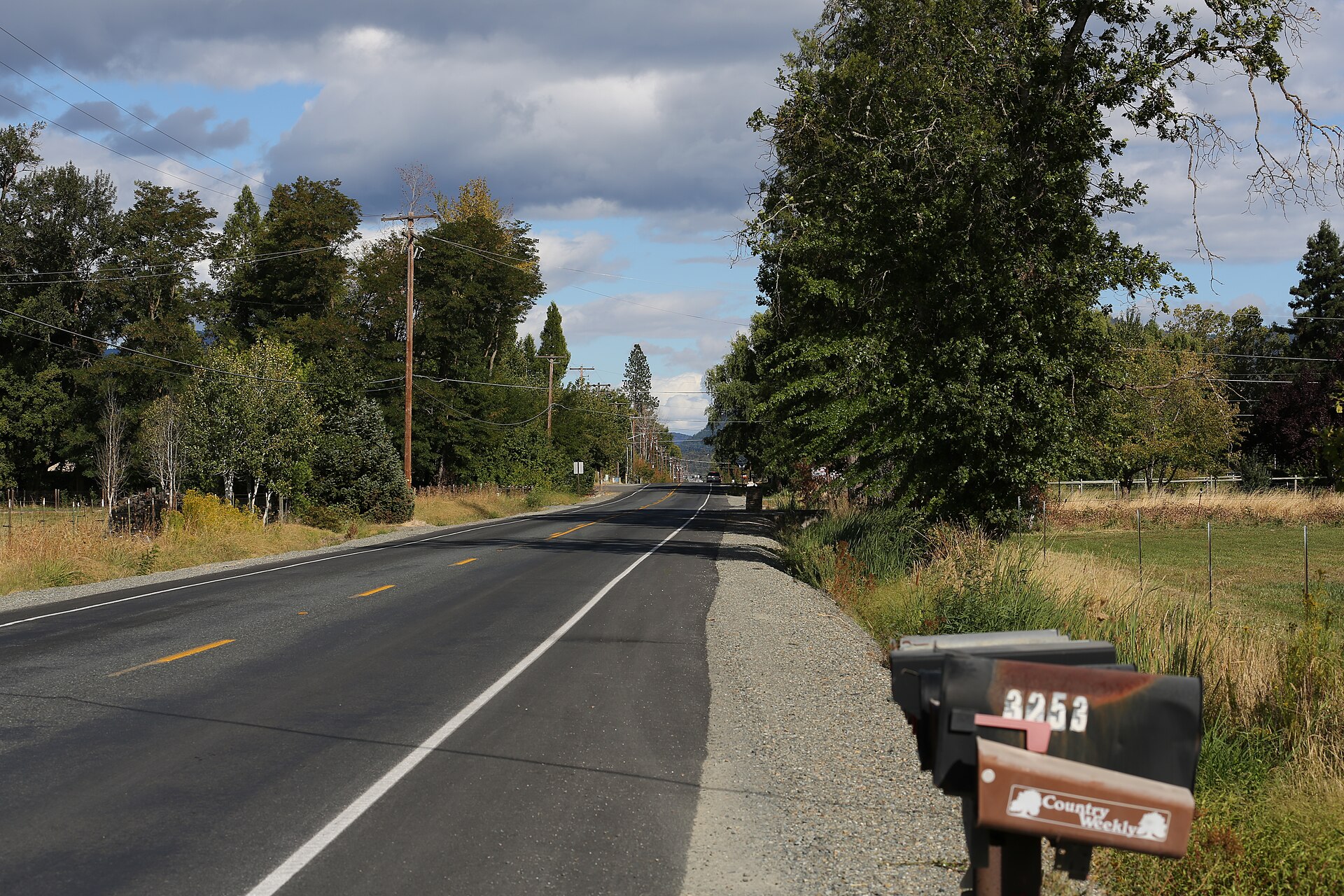
Grants Pass, Oregon (about 38,000 people), fined people for camping on public property, and repeat violations could lead to jail. Applying Martin, a federal court enjoined enforcement, and a divided Ninth Circuit panel largely affirmed (Johnson v. City of Grants Pass, 72 F.4th 868 (9th Cir. 2023)).8
On June 28, 2024, the Supreme Court reversed, 6 to 3, in City of Grants Pass v. Johnson, No. 23-175, 603 U.S. 520. Justice Neil Gorsuch wrote for the Court. The official syllabus states the holding this way: "The enforcement of generally applicable laws regulating camping on public property does not constitute 'cruel and unusual punishment' prohibited by the Eighth Amendment." The majority said the Eighth Amendment limits the kind of punishment, not what conduct may be made a crime, and wrote that "a handful of federal judges" cannot "begin to 'match' the collective wisdom the American people possess in deciding 'how best to handle' a pressing social question like homelessness." Justice Sonia Sotomayor, joined by Justices Elena Kagan and Ketanji Brown Jackson, dissented, quoting Martin and arguing that punishing people for sleeping outside when they have nowhere else to go punishes the status of being homeless.8
The ruling did not require any city to ban camping. It returned the choice to cities and states, subject to state constitutions and other federal law.
Idaho's response: Senate Bill 1141 (2025)
The 2025 Legislature passed Senate Bill 1141, a State Affairs Committee bill carried in the Senate by Sen. Codi Galloway (R-Boise) and in the House by Rep. Bruce Skaug (R-Nampa). Its statement of purpose, listing Galloway, Senate President Pro Tempore Kelly Anthon and Skaug as contacts, says it "bans public camping or sleeping on public property in large Idaho cities" and expects "little to no fiscal impact." It passed the Senate 27 to 8 on March 14, 2025 and the House 59 to 10 (one absent) on March 25; Gov. Brad Little signed it April 1, 2025, as chapter 248 of the 2025 Session Laws, effective July 1, 2025.9
The bill created Idaho Code 67-2341. In plain words:10
- Public camping or sleeping is declared unlawful, and a city (or a single countywide highway district) may not authorize, permit or enable it on public property, public building grounds, or public roads and rights-of-way.
- "Public camping or sleeping" means lodging or residing in a temporary outdoor habitation used as a dwelling or living space; signs include a tent, a vehicle or RV used that way, bedding, cooking appliances and heat sources.
- Recreational or educational camping on designated property, authorized events and permitted overnight parking at rest areas or businesses are excepted, as are state endowment, park and fish and game lands and commercial truck drivers.
- The attorney general may sue a city that knowingly violates the section; a court may assess a civil penalty of up to $10,000 per violation plus fees and costs. The section creates no private lawsuit.
- It applies only within cities of at least 100,000 people. The Idaho Capital Sun reported that this means Boise, Meridian and Nampa.35
How it has worked: Boise Mayor Lauren McLean told the Capital Sun the city "adopted the state's criminal camping ban once it became law and enforced it on day one," and Boise had written more than 100 tickets under its code in about a year, more than 45 on the Greenbelt or nearby parks and almost half to repeat offenders. Meridian reported three warnings, and a public records request to Nampa police and parks found zero citations. House Speaker Mike Moyle (R-Star) and Rep. Skaug tied a July 2026 Greenbelt homicide to a lack of enforcement; shelter operators said people were moving away from services.35
House Bill 603 (2026): the Capitol Mall
The 2026 Legislature passed House Bill 603, a Judiciary, Rules and Administration Committee bill sponsored by Rep. Skaug, which amended Idaho Code 67-1613 on camping on the Capitol Mall and other state property. It defines "camping" (including tents between sunset and sunrise), lists signs of camping such as stored food and bedding, keeps violations an infraction, allows side-free canopies, and widens the kinds of removed property that must be held at least 90 days under 67-1613A; it also amends 67-5709 on management of state facilities. It passed the House 66 to 2 on Feb. 24, 2026 and the Senate 28 to 6 on March 17, and became law with an emergency clause on March 20, 2026 (2026 Session Laws chapter 83). A separate bill, House Bill 523, to let certain people be banned from the Capitol and other state buildings, was referred to committee in January 2026 and went no further.4445
Other states
Florida's HB 1365 (2024), chapter 2024-11, Laws of Florida, effective Oct. 1, 2024, bars counties and cities from allowing public camping or sleeping on public property unless the property is designated and certified under standards set by the state Department of Children and Families. Oregon went the other way in 2021: ORS 195.530 requires any city or county law regulating "sitting, lying, sleeping or keeping warm and dry outdoors on public property" to be "objectively reasonable as to time, place and manner with regards to persons experiencing homelessness," and lets a defendant raise unreasonableness as a defense. Idaho's law differs from both: it covers only its three largest cities and is enforced against the cities by the attorney general.464710

Pictures, Numbers and Infographics
| Measure | Idaho | U.S. or other states | Place or year | Source |
|---|---|---|---|---|
| People homeless on one January night | 2,697 | U.S. 745,652 | January 2025 | 1 |
| Rate per 10,000 residents | 13 | U.S. 22 | 2025 | 1 |
| Share unsheltered | 50.0 percent (1,348) | U.S. 35.7 percent (266,320) | 2025, our calculation | 218 |
| Change since first count | Up 54.2 percent from 1,749 | U.S. up 15.2 percent | 2007 to 2025 | 118 |
| Ada County CoC (ID-500) | 772 (126 unsheltered) | 2025 | 3 | |
| Balance of State CoC (ID-501) | 1,925 (1,222 unsheltered) | 2025 | 3 | |
| People in families unsheltered | 52 percent, highest of any state | Oregon 38 percent | 2025 | 1 |
| Veterans | 202 | U.S. 32,495 | 2025 | 212 |
| Local count (preliminary) | 2,411 (1,123 unsheltered) | HUD 2026 report not yet released | Jan. 28, 2026 | 4 |
| Magic Valley Region 4 count | 346 (38 unsheltered) | Jan. 28, 2026 | 4 | |
| Students experiencing homelessness | 9,266 (2.9 percent) | U.S. 1,548,191 (3.2 percent) | SY 2023-24 | 5 |
| Permanent supportive housing beds | 860 (289 in 2007) | U.S. 408,167 (188,636 in 2007) | 2025 | 30 |
| HUD CoC awards | $8,249,035 | FY2024 | 15 | |
| Public camping ban | Idaho Code 67-2341, cities of 100,000+ | Florida s. 125.0231 (2024); Oregon ORS 195.530 (2021) | Effective July 1, 2025 | 104647 |
| Supreme Court ruling | Grants Pass v. Johnson, 603 U.S. 520 | Applies nationwide | June 28, 2024 | 8 |
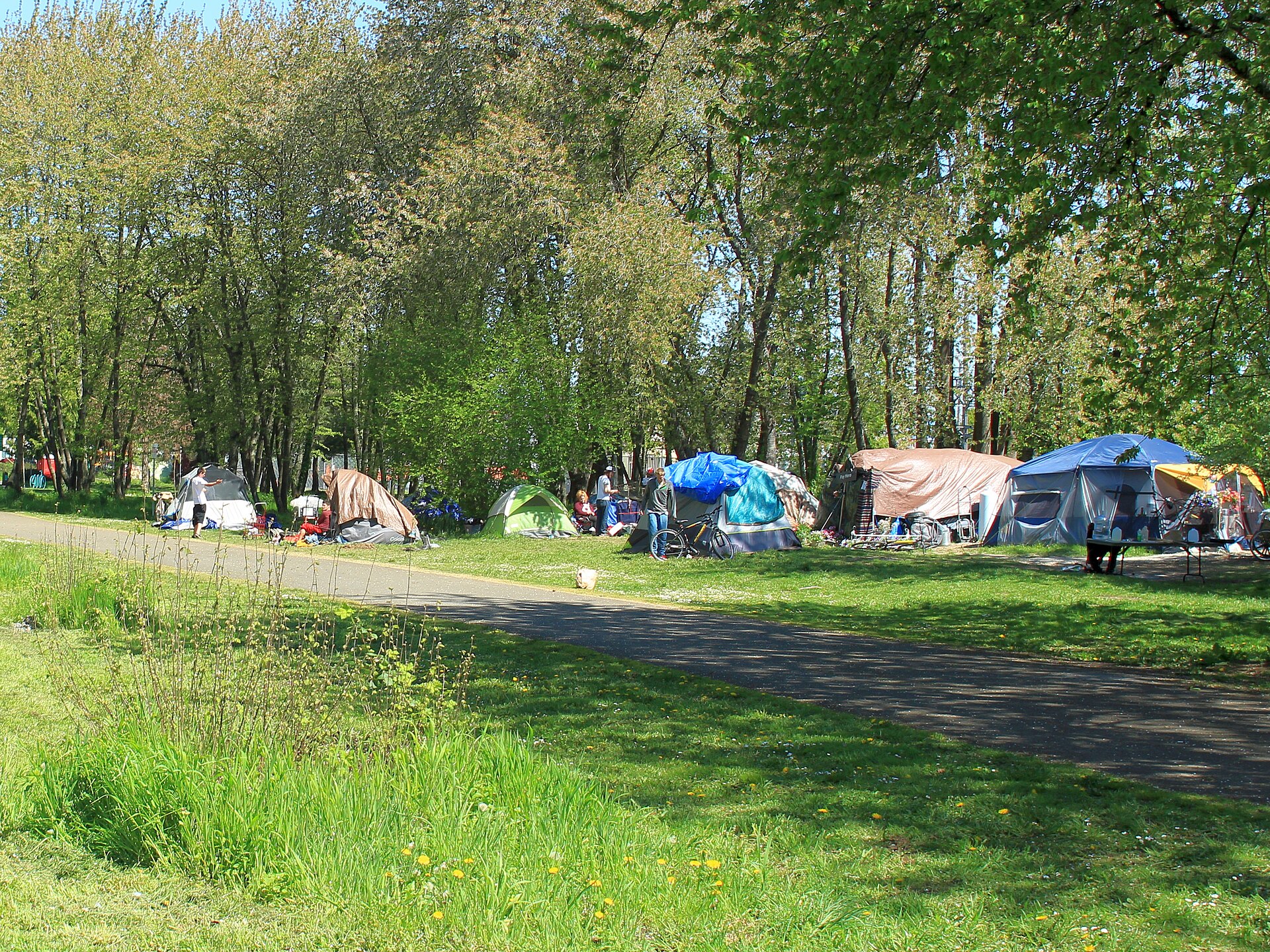
The bed chart shows a fact that surprises many readers: on the 2025 count night Idaho reported 2,054 year-round emergency shelter and transitional beds and 1,349 people using them, while 1,348 people were outside. The HUD data cannot separate the reasons: beds are in different towns from the people, many are reserved for families, survivors, veterans or youth, some have entry rules, transitional beds are filled by application, and some people decline congregate shelter.30202
Common mistakes
- Comparing the school count with HUD's count. The 9,266 students identified in 2023-24 and the 2,697 people counted in January 2025 use different definitions and time frames; the school number mostly reflects families doubled up, whom HUD does not count. Neither number "proves the other wrong."5616
- Reading the 2021 dip as progress. The 2021 count in both Idaho continuums was a sheltered count with only a partial unsheltered count because of the pandemic; HUD labels it that way.3
- Treating local 2026 numbers as HUD's. The 2,411 statewide figure for January 2026 comes from IHFA and the Ada County continuum before HUD validation; HUD's 2026 report may differ.4
- Calling the PIT count the number of homeless Idahoans in a year. It is a one-night snapshot; IHFA's own sheet says it "is not indicative of the true number of homeless persons and families in the state over a given year."4
- Saying Grants Pass requires cities to ban camping, or that Idaho bans camping everywhere. The ruling allows bans; Idaho Code 67-2341 applies only inside cities of 100,000 or more and is enforced by the attorney general against cities.810
- Reading cost-avoidance figures as budget savings. New Path's $11.1 million is estimated avoided public service use, without a control group; it is not money returned to any budget.2932
What we know, what we don't, and what the data can show
What we know
- Idaho's HUD count was 2,697 in January 2025 and 2,750 in January 2024, the highest since counts began in 2007; half were unsheltered.2
- Growth since 2013 has been almost entirely unsheltered and almost entirely outside Ada County.3
- Idaho had the highest share of unsheltered people in families with children of any state in 2025 (52 percent).1
- Idaho Code 67-2341 bans public camping in cities of 100,000 or more since July 1, 2025; Grants Pass allows such laws under the Eighth Amendment.108
What we don't know
- How many Idahoans experience homelessness over a full year; HMIS records only people served.
- County-level counts inside the Balance of State regions, including Jerome, Gooding and Twin Falls counties separately; IHFA publishes regional totals.
- Whether the camping ban has reduced camping in Boise, Meridian and Nampa or moved people elsewhere; the only public figures found are citation counts.35
- How Idaho projects will fare in the FY2026 CoC competition and the outcome of the First Circuit appeal.14
- Outcomes for Valor Pointe residents; no published evaluation was found.
What the data can show
- Trends by continuum and population since 2007 from HUD's PIT Estimates by CoC file.3
- Every bed by project and city from HUD's Housing Inventory Count raw file.20
- Which projects get federal money from HUD's annual CoC award reports for Idaho.15
- Coordinated entry flow by region (assessments, queue size, referrals, placements) from IHFA's annual coordinated entry report.22
- Students by state and year from the NCHE data summary and the Department of Education's EDFacts files, and district counts from Idaho's State Department of Education.523
Questions people ask
Why do I see different homeless numbers for Idaho?
Because they measure different things: HUD's one-night count (2,697 in 2025), local preliminary counts (2,411 in 2026), school counts over a school year (9,266 in 2023-24), and program counts of people served over a year. Each source should be named with its year and definition.145
Is it illegal to sleep outside in Idaho?
It depends on where. Idaho Code 67-2341 bars cities of 100,000 or more from allowing public camping or sleeping on public property; state property is covered by Idaho Code 67-1613 as amended in 2026; other cities and public lands have their own rules. The statutes control.1044
Does Boise still have to have shelter beds before it can cite people?
Not under the federal Constitution after Grants Pass. How Boise's 2021 settlement commitments interact with the 2025 state law was not addressed in the records read for this lesson.843
Where does someone in the Magic Valley go?
The Balance of State's Region 4 access point is the South Central Community Action Partnership in Twin Falls; the largest shelter in the region in HUD's inventory is Valley House in Twin Falls; Idaho 211 lists other services. This describes what exists; it is not a referral.2220
Are most homeless people in Idaho from out of state?
HUD's count does not record where people came from, and no Idaho record read for this lesson measures it statewide. Claims either way need a source.
Hard questions
Should federal money keep favoring Housing First?
For. Randomized trials show it keeps people housed better than treatment-first programs, and the National Academies agreed. Taking money from permanent housing could return people to the street.363732
Against. The administration argues housing without required treatment has not improved addiction or mental illness, and the national count reached records while PSH beds more than doubled.391130
What the evidence shows. Strong evidence on housing stability; weak evidence on health and cost for either approach. The courts so far have ruled on HUD's process (deadlines, reasoning, notice and comment), not on which approach works.321213
Do camping bans help or hurt?
For bans. Cities have a duty to keep parks, paths and sidewalks safe and usable; leaders including Speaker Moyle and Rep. Skaug argue enforcement deters crime and pushes people toward services.35
Against. Shelter operators in Boise told the Capital Sun that people are moving farther from services and are harder to reach, and fines add debt for people with no income; the Grants Pass dissent called such punishment a penalty for being homeless.358
What the evidence shows. Idaho's law is a year old. Citation counts are public, but no study has measured its effect on camping, crime or housing placements in Idaho.
Should Canyon County and Meridian have their own shelters?
For. Region 3 had 686 unsheltered people in January 2026 and only small, specialized shelters; people now travel to Boise for beds.42035
Against. Shelters cost money every year, siting fights are long (see the casebook), and prevention or housing may be a better use of money.
What the evidence shows. The unsheltered share is highest where shelter beds are fewest, but the data show association, not cause.320
For reporters and advocates
Records that exist. HUD's PIT and inventory files and AHAR; HUD's CoC award reports; each CoC's application, project rankings and governance charter; IHFA's regional PIT sheets and coordinated entry report; the New Path evaluations; bill pages and committee minutes for SB 1141 (2025) and HB 603 (2026); city citation data; the Rhode Island and First Circuit dockets; school district McKinney-Vento counts.32015222991213
Questions to ask.
- To IHFA and Our Path Home: what was each project's FY2025 renewal amount, how did the continuum rank projects for FY2026, and which projects are at risk under the new tiers?
- To IHFA: can it release January 2026 counts by county, especially for Twin Falls, Jerome and Gooding counties?
- To Boise, Meridian and Nampa: how many citations and warnings under the camping code each month since July 1, 2025, and how many people were referred to shelter or services at the same time?
- To the attorney general: has the office received complaints or opened any matter under Idaho Code 67-2341(4)?
- To shelters and school districts: how many beds were empty on the count night, and how many students were identified as homeless this year?
Public records. City, county and IHFA records are reachable under the Idaho Public Records Act, Title 74, Chapter 1 (see Idaho Public Records Requests); whether a particular CoC board's meetings fall under the open meetings law is a question for that law, described in Idaho Open Meetings. Never identify a person experiencing homelessness by name or photograph without consent; lesson 12, How to Report on Affordable Housing, and Part C's How to Report on Housing cover privacy and the homeless count story checklist.
The Magic Valley angle. Region 4 counts are mostly sheltered, mostly families and about one-third children; SCCAP served more households through coordinated entry than any other access point in 2024-25; and HUD funded a Magic Valley rapid rehousing expansion. Ask how the 2026 federal changes affect rapid rehousing money in Twin Falls, and whether Jerome and Gooding counties, which have no shelter listed in HUD's inventory, send people to Twin Falls.4221520
Where to go next
- HUD User: AHAR and PIT data downloads: Free federal data files with counts by state and continuum since 2007 and the bed inventory; for reporters, analysts and officials; download the Excel files and filter for ID-500 and ID-501.
- Our Path Home (Boise/Ada County Continuum of Care): The Ada County continuum's site, with PIT infographics, dashboards, New Path evaluations and the Housing Crisis Hotline number; free; for Ada County residents, providers and reporters.
- IHFA House Idaho Collaborative (Balance of State Continuum of Care): IHFA's pages for the 43-county continuum: regional PIT sheets, coordinated entry reports, governance documents and committee information; free; useful for Magic Valley and rural readers.
- Idaho 211 CareLine: The state's free information and referral line run by the Department of Health and Welfare; lists shelters, food and other services by area; dial 211 or search online.
- Idaho Legal Aid Services: A nonprofit that provides free civil legal services to eligible low-income Idahoans and publishes self-help information on housing; it represented the plaintiffs in Martin v. Boise.
- Idaho State Department of Education, Homeless Education (McKinney-Vento): The State Department of Education page on students experiencing homelessness, with statewide counts and nighttime residence data; free; the McKinney-Vento program requires every district to have a homeless liaison.
- Idaho Legislature bill and statute search: Free official source for SB 1141 (2025), HB 603 (2026), statements of purpose, votes and the current text of Idaho Code 67-2341 and 67-1613.
Still being checked (9 items)
These points could not be fully confirmed against a primary source when this lesson was written and fact checked in November 2026. The text above states each one as uncertain.
- Local January 2026 counts (2,411 statewide; 687 Ada County; regional totals) are IHFA and CoC figures published before HUD's 2026 AHAR; HUD's validated figures may differ.
- The Ada County 2025 count date: Our Path Home's infographic says data from Jan. 29, 2025, while its home page text gives Jan. 19, 2025.
- New Path exits: the 2024 evaluation's Table 3 shows 6 exits in 2021 and a grand total of 60, its yearly figures add to 61, and its text gives 7 for 2021 (62 in all); the lesson says about 60.
- The FY2026 appropriations act is the Consolidated Appropriations Act, 2026 (P.L. 119-75, signed Feb. 3, 2026, per CRS Report R48728); its Continuum of Care renewal directive and the Dec. 1, 2026 award deadline were not read in the act itself; the lesson relies on CRS Insight IN12709 and Community Solutions.
- No FY2026 CoC awards or any later ruling in the First Circuit appeal were found as of Nov. 20, 2026; the status may have changed.
- How Boise's 2021 Martin settlement interacts with Idaho Code 67-2341 was not addressed in any record read for this lesson.
- Corpus Commons is named as a Boise shelter only in the Idaho Capital Sun's July 31, 2026 story; its relationship to the earlier Corpus Christi House day shelter was not confirmed.
- The Interfaith Sanctuary project listed as "Red Lion ES" in HUD's 2025 inventory was not checked against the shelter's own description.
- No published outcome evaluation for Valor Pointe was found.
Last verified November 20, 2026. General education, not legal, tax, financial or real estate advice; every figure names its source and year in the Notes and Sources below. Data is revised: check the newest release before relying on any number.
Notes
- U.S. Department of Housing and Urban Development, Office of Community Planning and Development, The 2025 Annual Homelessness Assessment Report (AHAR) to Congress, Part 1: Point-in-Time Estimates of Homelessness, May 2026 (released May 29, 2026): national total 745,652; about 22 of every 10,000 people; Appendix A state page for Idaho (2,697 people; 13 in every 10,000; 1.9 percent decrease from 2024; 54.2 percent increase from 2007); Exhibit 4.8 (share of people in families with children who were unsheltered, Idaho 52 percent) (read Nov. 20, 2026). Read it online. ↩
- HUD Exchange and HUD User, 2007 to 2025 Point-in-Time Estimates by State (2007-2025-PIT-Counts-by-State.xlsb), sheets 2007 through 2025, rows ID and Total, and rows UT, MT, OR, WA, NV and WY; columns Overall Homeless, Sheltered Total Homeless, Unsheltered Homeless, Overall Homeless People in Families, Overall Chronically Homeless, Overall Homeless Veterans, age columns (read and downloaded Nov. 20, 2026). The 2021 count in many places, including both Idaho CoCs, was a sheltered and partial unsheltered count because of the pandemic. Read it online. ↩
- HUD, 2007 to 2025 Point-in-Time Estimates by CoC (2007-2025-PIT-Counts-by-CoC.xlsb), rows ID-500 (Boise/Ada County CoC, category Other Largely Urban CoC) and ID-501 (Idaho Balance of State CoC, category Largely Rural CoC), sheets 2007 to 2025; the 2021 rows are labeled Sheltered and partial unsheltered count (read and downloaded Nov. 20, 2026). Read it online. ↩
- Idaho Housing and Finance Association, 2026 PIT Count, Region 4 data sheet with the statewide table of totals by region (Regions 1 to 6 counted by the Balance of State CoC and coordinated by IHFA; Region 7, Ada County, counted by the Boise City/Ada County CoC), count night Jan. 28, 2026; statewide total 2,411 (1,123 unsheltered, 1,288 sheltered) (read Nov. 20, 2026). These are local counts published before HUD's 2026 AHAR; HUD's validated figures may differ. Read it online. ↩
- National Center for Homeless Education (U.S. Department of Education's technical assistance center), Education of Children and Youth Experiencing Homelessness in the United States: Data Summary for School Years 2021-22 to 2023-24, March 2026, Table 1 (Idaho 8,428, 9,138 and 9,266 students; 2.7, 2.9 and 2.9 percent of enrollment; U.S. 1,548,191 in SY 2023-24, 3.2 percent) Table 9 (Idaho homeless students chronically absent: 2,543, or 27.4 percent, in SY 2023-24) and Table 10 (four-year adjusted cohort graduation rate in Idaho, SY 2022-23: 59 percent for students who experienced homelessness, 81.1 percent for all students) (read and downloaded Nov. 20, 2026). Read it online. ↩
- 42 U.S.C. 11434a(2), definition of homeless children and youths for the McKinney-Vento education program, including children sharing the housing of other persons due to loss of housing, economic hardship or a similar reason, and children living in motels, hotels, trailer parks or camping grounds due to lack of alternative adequate accommodations (read Nov. 20, 2026). Read it online. ↩
- Martin v. City of Boise, No. 15-35845, U.S. Court of Appeals for the Ninth Circuit, Order and Amended Opinion filed April 1, 2019, 920 F.3d 584 (opinion by Judge Marsha S. Berzon; partial concurrence and partial dissent by Judge John B. Owens; dissents from denial of rehearing en banc by Judges Milan D. Smith Jr. and Mark J. Bennett), amending the opinion filed Sept. 4, 2018, 902 F.3d 1031; appeal from D.C. No. 1:09-cv-00540 (D. Idaho) (read and downloaded Nov. 20, 2026). Read it online. ↩
- City of Grants Pass, Oregon v. Johnson, No. 23-175, 603 U.S. 520 (2024), argued April 22, 2024, decided June 28, 2024: syllabus ("Held: The enforcement of generally applicable laws regulating camping on public property does not constitute 'cruel and unusual punishment'"); opinion of the Court by Justice Gorsuch ("Nor can a handful of federal judges begin to 'match'..."), joined by Chief Justice Roberts and Justices Thomas, Alito, Kavanaugh and Barrett; concurrence by Justice Thomas; dissent by Justice Sotomayor, joined by Justices Kagan and Jackson; reverses the Ninth Circuit in Johnson v. City of Grants Pass, 72 F.4th 868 (9th Cir. 2023); discusses Martin v. Boise, 920 F.3d 584 (read and downloaded Nov. 20, 2026). The U.S. Reports page number is confirmed by the Congressional Research Service report R48692 (Sept. 4, 2025). Read it online. ↩
- Idaho Legislature, Senate Bill 1141 (2025), State Affairs Committee; Senate floor sponsor Sen. Codi Galloway, House floor sponsor Rep. Bruce Skaug; passed Senate 27-8-0 on March 14, 2025 and House 59-10-1 on March 25, 2025; signed by Gov. Brad Little April 1, 2025; 2025 Session Laws chapter 248; effective July 1, 2025 (read Nov. 20, 2026). Read it online. ↩
- Idaho Code section 67-2341, Public camping or sleeping, prohibitions: statewide prohibition; cities and single countywide highway districts may not authorize public camping or sleeping on public property, building grounds or rights-of-way; definition; exceptions; attorney general enforcement with civil penalty of not more than $10,000 per violation; applies only within cities of at least 100,000 people; history: added 2025, ch. 248, sec. 1 (read Nov. 20, 2026). Read it online. ↩
- Executive Order 14321 of July 24, 2025, "Ending Crime and Disorder on America's Streets," 90 FR 35817 (July 29, 2025), Federal Register document 2025-14391: section 1 (purpose, citing 274,224 unsheltered people in the 2024 count), section 2 (civil commitment), section 4 (harm reduction and safe consumption), section 5(a) (directs HHS and HUD, to the extent permitted by law, to end support for housing first policies) and 5(b) (treatment as a condition of participation) (read and downloaded Nov. 20, 2026). Read it online. ↩
- State of Washington v. U.S. Department of Housing and Urban Development and National Alliance to End Homelessness v. HUD, U.S. District Court for the District of Rhode Island, C.A. Nos. 25-cv-626-MSM-AEM and 25-cv-636-MSM-AEM, Memorandum and Order (Judge Mary S. McElroy), June 29, 2026: sets aside HUD's November 2025 and December 2025 CoC NOFOs as arbitrary and capricious and, alternatively, as issued after the statutory three-month deadline in 42 U.S.C. 11382(b); denies a permanent injunction; notes the earlier preliminary injunction and the First Circuit's opinion at 171 F.4th 473 (2026) (read and downloaded Nov. 20, 2026). Read it online. ↩
- State of Washington v. HUD and National Alliance to End Homelessness v. HUD, D.R.I., C.A. Nos. 26-cv-436-MSM-AEM and 26-cv-439-MSM-AEM, Memorandum and Order (Judge McElroy), Aug. 7, 2026: holds the June 2026 NOFO was issued without the notice-and-comment process required by the McKinney-Vento Act (5 U.S.C. 706(2)(D)); describes the $1.3 billion set-aside (read and downloaded Nov. 20, 2026). Read it online. ↩
- Community Solutions (a national nonprofit that runs the Built for Zero initiative; advocacy organization), "Federal Appeals Court clears the way for HUD's Continuum of Care changes, jeopardizing $4B of funding," Sept. 21, 2026: HUD published notice and sought comment Sept. 11, 2026; the First Circuit granted a stay Sept. 16, 2026; HUD reopened the FY2026 competition Sept. 18 with a Sept. 30, 2026 deadline; Congress required awards by Dec. 1, 2026 (read Nov. 20, 2026). Read it online. ↩
- HUD, Fiscal Year 2024 Continuum of Care Competition Homeless Assistance Award Report, Idaho, dated Jan. 14, 2025: ID-500 total $2,812,685; ID-501 total $5,436,350; Idaho total $8,249,035, with each project listed (read and downloaded Nov. 20, 2026). Read it online. ↩
- 24 CFR 578.3, Definitions (Continuum of Care Program): Homeless (four categories, including a primary nighttime residence not meant for human habitation and supervised shelters) and Chronically homeless (a homeless individual with a disability who has lived in a place not meant for human habitation, a safe haven or an emergency shelter continuously for at least 12 months or on at least 4 occasions in 3 years totaling 12 months), eCFR current as of Nov. 2026 (read Nov. 20, 2026). Read it online. ↩
- 24 CFR 578.7, Responsibilities of the Continuum of Care: paragraph (c)(2) (plan and conduct, at least biennially, a point-in-time count; unsheltered and sheltered persons defined) and paragraph (a)(8) (establish and operate a centralized or coordinated assessment system) (read Nov. 20, 2026). Read it online. ↩
- Our calculation from the HUD PIT and HIC files and the New Path evaluation cited in this lesson; inputs and method are in the methods box "How we figured it" in this lesson. ↩
- Our Path Home (Boise City/Ada County Continuum of Care), 2025 Ada County Point-in-Time Count infographic: 772 people, 646 sheltered (543 emergency shelter, 103 transitional housing), 126 unsheltered (54 in vehicles, 72 other places not meant for housing); 199 chronically homeless; 104 veterans; count based on data from Jan. 29, 2025 per the infographic (read Nov. 20, 2026). Read it online. ↩
- HUD, 2025 Housing Inventory Count, raw file (2025-HIC-Counts-by-State.csv), project-level rows for CoCs ID-500 and ID-501: organization, project name, project type, city, year-round beds and point-in-time count on the night of the 2025 count (read and downloaded Nov. 20, 2026). Bed totals in the text are sums of year-round beds by project. Read it online. ↩
- HUD, 2011 to 2025 PIT Veteran Counts by State (2011-2025-PIT-Veteran-Counts-by-State.xlsx) and the AHAR 2025 Part 1 state pages; Idaho veterans counted: 202 in 2025, 209 in 2024 (read and downloaded Nov. 20, 2026). Read it online. ↩
- Idaho Housing and Finance Association (Coordinated Entry Lead Agency), House Idaho Collaborative Coordinated Entry System Report, covering July 1, 2024 to June 30, 2025, published October 2025: regional access points (St. Vincent de Paul, Coeur d'Alene; Sojourner's Alliance, Moscow; CATCH, Nampa; SCCAP, Twin Falls; Aid for Friends, Pocatello; CLUB, Inc., Idaho Falls), counties in each region, and Region 4 referral and placement figures (read and downloaded Nov. 20, 2026). Read it online. ↩
- Idaho State Department of Education, Federal Programs, "Nowhere to go: Idaho's Homeless Families and Youth": statewide counts 2018-19 to 2022-23 and the 2022-23 nighttime residence split (doubled up 6,455 or 71 percent; hotels and motels 836; unsheltered 852; shelters or transitional housing 367; unknown 634) (read Nov. 20, 2026). Read it online. ↩
- McKinney-Vento Homeless Assistance Act, 42 U.S.C. 11301 and following, as amended by the Homeless Emergency Assistance and Rapid Transition to Housing (HEARTH) Act of 2009 (Public Law 111-22, Division B); purposes of the Continuum of Care program at 42 U.S.C. 11381 (read Nov. 20, 2026). Read it online. ↩
- HUD, Continuum of Care Program page (program purpose, eligible components: permanent housing including permanent supportive housing and rapid rehousing, transitional housing, supportive services only, HMIS and homelessness prevention in some areas) (read Nov. 20, 2026). Read it online. ↩
- Our Path Home, home page: describes itself as a public-private partnership of more than 40 agencies working to end homelessness in Ada County, lists the Housing Crisis Hotline 208-336-HOME (4663), the 2025 PIT and housing inventory notes, and links to New Path and Valor Pointe (read Nov. 20, 2026). Read it online. ↩
- Idaho Housing and Finance Association, House Idaho Collaborative page (the Balance of State Continuum of Care's name for its collaborative; committees, governance charter and coordinated entry documents) (read Nov. 20, 2026). Read it online. ↩
- HUD, Fiscal Year 2023 Continuum of Care Competition Homeless Assistance Award Report, Idaho, dated Jan. 24, 2024: ID-500 total $1,903,386; ID-501 total $4,050,932; Idaho total $5,954,318 (read and downloaded Nov. 20, 2026). Read it online. ↩
- Idaho Policy Institute, Boise State University, New Path Community Housing Annual Evaluation 2024: Year Six: 40-unit single-site PSH; IHFA $500,000 in HOME funds and $5,830,000 in LIHTC; City of Boise $1,000,000 in general funds; 40 project-based vouchers from BCACHA; rental assistance $219,834 in 2024 and $1,206,835 from 2019 to 2024; on-site services $547,565 in 2024 paid with HOME-ARP and State and Local Fiscal Recovery Funds; 100 people entered since November 2018; Table 3 exits by year (total shown as 60; yearly figures sum to 61; text gives seven exits in 2021 against six in the table); claimed cost avoidance of $11,144,242 over six years; cites a 2016 Ada County study finding 100 chronically homeless people associated with more than $5.3 million a year in community costs (read and downloaded Nov. 20, 2026). Read it online. ↩
- HUD, 2007 to 2025 Housing Inventory Count by State (2007-2025-HIC-Counts-by-State.xlsx), rows ID and Total: year-round beds by program type (emergency shelter, transitional housing, safe haven, rapid rehousing, permanent supportive housing, other permanent housing) for 2007, 2013, 2015, 2024 and 2025 (read and downloaded Nov. 20, 2026). Read it online. ↩
- Idaho Policy Institute, Boise State University, New Path Community Housing Annual Evaluation 2022, Table 1: average community cost per resident $52,549 in the 12 months before entry and $22,780 in the 12 months after; 81 people entered through 2022; exit destinations (about 37 percent to more precarious housing, 35 percent to other stable housing or higher care) (read Nov. 20, 2026). Read it online. ↩
- National Academies of Sciences, Engineering, and Medicine, Permanent Supportive Housing: Evaluating the Evidence for Improving Health Outcomes Among People Experiencing Chronic Homelessness (Consensus Study Report, 2018), Summary: PSH effectively maintains housing stability for most people experiencing chronic homelessness; no substantial published evidence as yet that PSH improves health outcomes (some evidence for people with HIV/AIDS); insufficient evidence that PSH saves health care costs or is cost-effective (read Nov. 20, 2026). Read it online. ↩
- City of Boise, Office of the Mayor, "Valor Pointe Breaks Ground," July 2019: 27 one-bedroom apartments (26 for veterans, one for a live-in manager) at 4203 W. State St.; developer Northwest Real Estate Capital Corp.; primary funding low-income housing tax credits from IHFA; partners Our Path Home and the Boise VA Medical Center (read Nov. 20, 2026). Read it online. ↩
- Idaho Capital Sun, "'I'm home': Valor Pointe serves as housing-first model for Idaho's homeless veterans," Nov. 11, 2021: opened August 2020 and filled over about 60 days; HUD-VASH rental assistance; Boise VA social workers (read Nov. 20, 2026). News source. Read it online. ↩
- Idaho Capital Sun, "An Idaho law penalizes people sleeping in public spaces. Advocates say it harms more than it helps," July 31, 2026 (byline not shown on the page as read): Boise citations since the 2025 law, Meridian warnings, Nampa records request results, local January 2026 counts, and statements by Boise Mayor Lauren McLean, House Speaker Mike Moyle, Rep. Bruce Skaug, Nampa Police Deputy Chief Curt Shankel, Jess Abbott of Corpus Commons (on Meridian having no overnight shelters) and Jodi Peterson-Stigers of Interfaith Sanctuary (read Nov. 20, 2026). News source, used for events and quotes. Read it online. ↩
- Sam Tsemberis, Leyla Gulcur and Maria Nakae, "Housing First, Consumer Choice, and Harm Reduction for Homeless Individuals With a Dual Diagnosis," American Journal of Public Health 94(4):651-656 (April 2004), PMID 15054020: 225 participants randomly assigned; Housing First group housed earlier and remained stably housed; treatment use higher in the control group; no differences in substance use or psychiatric symptoms (read Nov. 20, 2026). Read it online. ↩
- Vicky Stergiopoulos and others (At Home/Chez Soi Investigators), "Effect of Scattered-Site Housing Using Rent Supplements and Intensive Case Management on Housing Stability Among Homeless Adults With Mental Illness: A Randomized Trial," JAMA 313(9):905-915 (March 3, 2015), PMID 25734732: 1,198 participants with moderate support needs in Vancouver, Winnipeg, Toronto and Montreal; more days stably housed over 24 months for the intervention group; no difference in generic quality of life (read Nov. 20, 2026). Read it online. ↩
- HUD Office of Policy Development and Research, Family Options Study page: 2,282 families in 12 communities enrolled September 2010 to January 2012 and followed about 37 months; long-term rent subsidies reduced homelessness, child separations and food insecurity compared with usual care; reports dated 2013, 2015, 2016 and 2020 (read Nov. 20, 2026). Read it online. ↩
- HUD, press release No. 26-038, "HUD Overhauls Federal Homelessness Assistance," June 1, 2026: FY2026 CoC NOFO for $4.04 billion; $1.3 billion for new projects with priority for transitional housing and supportive services; statements by Secretary Scott Turner (read Nov. 20, 2026). Read it online. ↩
- Stefan G. Kertesz and others, "Housing First for Homeless Persons with Active Addiction: Are We Overreaching?" Milbank Quarterly 87(2):495-534 (June 2009), PMID 19523126: Housing First reports show excellent housing retention, but data on clients with active and severe addiction are limited; policymakers should be cautious about generalizing (read Nov. 20, 2026). Read it online. ↩
- Congressional Research Service, HUD's FY2026 Continuum of Care Program Competition, CRS Insight IN12709, updated Sept. 18, 2026: FY2025 NOFO made 30 percent of annual renewal demand available in tier 1 (prior NOFOs about 90 percent); FY2026 appropriations act directed noncompetitive renewal of FY2025 grants (the act is the Consolidated Appropriations Act, 2026, P.L. 119-75, signed Feb. 3, 2026, per CRS Report R48728); FY2026 NOFO released June 1, 2026, modified July 24, 2026, tier 1 at 60 percent of annual renewal demand, $1.3 billion of $4.04 billion for new transitional housing and supportive-services-only projects; scoring points for treatment and recovery and for required service participation; litigation timeline (read Nov. 20, 2026). Read it online. ↩
- Supreme Court of the United States, docket No. 19-247, City of Boise, Idaho v. Robert Martin, et al.: petition filed Aug. 22, 2019; petition denied Dec. 16, 2019 (read Nov. 20, 2026). Read it online. ↩
- City of Boise, Office of the Mayor, "Settlement Reached in Groundbreaking Martin v. Boise Case," Feb. 8, 2021: no citation or arrest for sleeping outdoors when no shelter is available; $1,335,000 for homelessness prevention in 2021, at least one-third for overnight shelter space; two ordinances to be amended; police guidance and training; quotes from Mayor Lauren McLean, the National Homelessness Law Center, Idaho Legal Aid Services and plaintiff Pamela Hawkes Duke (read Nov. 20, 2026). Read it online. ↩
- Idaho Legislature, House Bill 603 (2026), Judiciary, Rules and Administration Committee; House floor sponsor Rep. Bruce Skaug, Senate floor sponsor Sen. Ben Adams; passed House 66-2-2 on Feb. 24, 2026 and Senate 28-6-1 on March 17, 2026; signed March 20, 2026; 2026 Session Laws chapter 83; emergency clause, effective March 20, 2026; bill text and statement of purpose (read and downloaded Nov. 20, 2026). Read it online. ↩
- Idaho Legislature, House Bill 523 (2026), Judiciary, Rules and Administration Committee, Capitol Mall (would allow certain persons to be banned from the Capitol, Supreme Court building, Capitol Mall properties and multiagency facilities): introduced Jan. 26, 2026, referred to committee Jan. 27, 2026; no further action shown (read Nov. 20, 2026). Read it online. ↩
- Florida Legislature, CS/CS/HB 1365 (2024), Unauthorized Public Camping and Public Sleeping, approved by the Governor March 20, 2024, Chapter 2024-11, Laws of Florida, effective Oct. 1, 2024 (with exceptions), creating section 125.0231, Florida Statutes (read Nov. 20, 2026). Read it online. ↩
- Oregon Revised Statutes 195.530, city and county laws regulating sitting, lying, sleeping or keeping warm and dry outdoors on public property must be objectively reasonable as to time, place and manner with regard to persons experiencing homelessness; affirmative defense; source 2021 Oregon Laws chapter 370, section 1 (read Nov. 20, 2026). Read it online. ↩
Check yourself
1. How many people did HUD's point-in-time count find experiencing homelessness in Idaho in January 2025?
HUD's 2025 AHAR Part 1 and the 2007 to 2025 PIT Estimates by State give Idaho 2,697 (1,349 sheltered, 1,348 unsheltered). 9,266 is the school count for SY 2023-24; 2,411 is the preliminary local 2026 count; 745,652 is the national total.
2. What are the HUD codes for Idaho's two continuums of care?
HUD's PIT Estimates by CoC file lists ID-500 Boise/Ada County CoC and ID-501 Idaho Balance of State CoC.
3. In HUD's 2025 report, what share of people in homeless families with children in Idaho were unsheltered?
AHAR 2025 Part 1, Exhibit 4.8: Idaho 52 percent, followed by Oregon 38 percent, Arkansas 25 percent and Tennessee 25 percent.
4. Why is the 2021 Idaho count lower than 2020?
HUD's PIT Estimates by CoC file labels both Idaho continuums' 2021 counts as Sheltered and partial unsheltered count.
5. Which definition counts children who are doubled up with relatives after losing housing?
42 U.S.C. 11434a(2) includes children sharing the housing of other persons due to loss of housing or economic hardship; HUD's count under 24 CFR 578.3 does not.
6. What did the Supreme Court hold in City of Grants Pass v. Johnson, 603 U.S. 520 (June 28, 2024)?
The Court (Gorsuch, J., for a 6 to 3 majority) held that enforcing generally applicable public-camping laws does not violate the Eighth Amendment, rejecting the approach of Martin v. Boise.
7. Where does Idaho Code 67-2341, created by Senate Bill 1141 (2025), apply?
Idaho Code 67-2341(5) limits the section to property within cities with a population of at least 100,000; the Idaho Capital Sun reported that means Boise, Meridian and Nampa.
8. Who enforces Idaho Code 67-2341 against a city that knowingly allows public camping, and what is the maximum civil penalty?
Idaho Code 67-2341(4) authorizes the attorney general to sue and allows a civil penalty of not more than $10,000 for each violation; the section creates no private cause of action.
9. What did the National Academies conclude in 2018 about permanent supportive housing (PSH)?
National Academies of Sciences, Engineering, and Medicine, Permanent Supportive Housing (2018), Summary.
10. What did Judge Mary S. McElroy rule on June 29, 2026, in Washington v. HUD and National Alliance to End Homelessness v. HUD?
D.R.I. Nos. 25-cv-626 and 25-cv-636, Memorandum and Order of June 29, 2026, set aside both 2025 notices under the APA and denied a permanent injunction.
Terms in this lesson
- Point-in-time count
- A count of people experiencing homelessness, sheltered and unsheltered, on one night in the last ten days of January, required of every continuum of care by 24 CFR 578.7(c)(2).
- Sheltered homelessness
- People staying in an emergency shelter, transitional housing or a safe haven on the night of the count.
- Unsheltered homelessness
- People sleeping in a place not meant for human habitation, such as a car, tent, park or abandoned building, on the night of the count.
- Chronically homeless
- Under 24 CFR 578.3, a person with a disability who has been homeless in a shelter or a place not meant for habitation for at least 12 months continuously or on four occasions in three years totaling 12 months.
- Continuum of care (CoC)
- The regional planning body HUD requires to coordinate homeless services, run counts and coordinated entry, and apply for HUD Continuum of Care grants; Idaho has two, ID-500 and ID-501.
- Coordinated entry
- A single assessment and priority queue that a continuum of care uses to refer households to housing programs, required by 24 CFR 578.7(a)(8).
- Access point
- The agency designated to assess and prioritize households for coordinated entry in a Balance of State region, such as SCCAP in Twin Falls for Region 4.
- Housing Inventory Count
- The annual list, taken the same night as the PIT count, of every shelter, transitional, rapid rehousing and permanent supportive housing bed in a continuum.
- Permanent supportive housing (PSH)
- Housing with no time limit, with rent help and supportive services, usually for people with disabilities who have been homeless a long time.
- Rapid rehousing
- Short or medium term rent help and case management to move a household quickly from homelessness into its own lease.
- Housing First
- An approach that offers permanent housing without first requiring sobriety, treatment or program completion, then offers services.
- Treatment-first
- An approach, also called linear or recovery-first, that makes housing depend on sobriety, treatment participation or program progress.
- HMIS
- Homeless Management Information System: the database each continuum uses to record people served and services provided.
- HUD-VASH
- HUD-Veterans Affairs Supportive Housing: housing vouchers paired with VA case management for veterans experiencing homelessness.
Sources
- HUD, 2025 Annual Homelessness Assessment Report to Congress, Part 1 (May 2026) (2026-11-20) checked 2026-11
- HUD, 2007 to 2025 Point-in-Time Estimates by State and by CoC; Housing Inventory Count files (2026-11-20) checked 2026-11
- HUD, FY2024 Continuum of Care Homeless Assistance Award Report, Idaho (2026-11-20) checked 2026-11
- 24 CFR part 578, Continuum of Care Program (sections 578.3 and 578.7) (2026-11-20) checked 2026-11
- Idaho Housing and Finance Association, 2026 PIT Count regional data and 2025 Coordinated Entry System Report (2026-11-20) checked 2026-11
- Martin v. City of Boise, 920 F.3d 584 (9th Cir. 2019), amended opinion (2026-11-20) checked 2026-11
- City of Grants Pass v. Johnson, No. 23-175, 603 U.S. 520 (2024) (2026-11-20) checked 2026-11
- Idaho Code 67-2341 and Senate Bill 1141 (2025) (2026-11-20) checked 2026-11
- Idaho House Bill 603 (2026), Capitol Mall camping (2026-11-20) checked 2026-11
- Executive Order 14321, Ending Crime and Disorder on America's Streets (90 FR 35817) (2026-11-20) checked 2026-11
- Washington v. HUD, D.R.I., Memorandum and Order of June 29, 2026 (2026-11-20) checked 2026-11
- Congressional Research Service, HUD's FY2026 Continuum of Care Program Competition (IN12709) (2026-11-20) checked 2026-11
- National Academies, Permanent Supportive Housing: Evaluating the Evidence (2018) (2026-11-20) checked 2026-11
- Idaho Policy Institute, New Path Community Housing Annual Evaluation 2024 (2026-11-20) checked 2026-11
- National Center for Homeless Education, data summary SY 2021-22 to 2023-24 (2026-11-20) checked 2026-11