Lesson 12 of 12 · about 50 minutes · Updated November 19, 2026
How to Report on Housing: Records, Data and Story Checklists
You'll be able to
- Find eviction cases on iCourt and request compiled eviction counts from the Idaho Supreme Court under I.C.A.R. 32(f)
- Explain how Idaho Code 6-303A shielding changes eviction counts pulled at different times
- Trace HOA liens, CC&Rs and property ownership through county recorder, assessor and Secretary of State records
- Write housing records requests that fit the Idaho Code 74-102 and 74-103 rules on form, deadlines and fees
- Build and check a simple data set of eviction filings by month or HOA liens by association
- Report fairly on tenants, landlords, managers and HOA boards and weigh the harm of naming people
Start here: the short version
- Every Idaho eviction is a court case. An eviction for unpaid rent is an unlawful detainer action in the magistrate division, and Idaho Code 6-310(2) makes the court set a trial "within twelve (12) days from the filing of the complaint." The public register for every case statewide is on the iCourt Portal; the papers are at the courthouse kiosk or the clerk's counter.12
- Some eviction records now disappear on a schedule. For unlawful detainer cases filed on or after Jan. 1, 2025, Idaho Code 6-303A and Idaho Court Administrative Rule 32(j)(2) shield the whole file from the public if the case was dismissed, no appeal is pending, and three years have passed or the parties stipulate. A data set you build today can contain cases the public cannot see next year.34
- No state agency publishes an eviction count. Boise State University's Idaho Policy Institute, a university research center, publishes a yearly statewide infographic from Idaho Supreme Court case data: 3,039 of Idaho's 189,871 renting households had an eviction filing in 2025 and 1,234 received a formal eviction, and its county table lists 1,349 filings in Ada County, 666 in Canyon County and 155 in Twin Falls County.41 Jesse Tree, a Boise nonprofit, publishes a yearly Ada and Canyon report from the same court data as sorted by the institute.5 For other counties, or for months, you build your own count or ask the Supreme Court for compiled data under I.C.A.R. 32(f), which sets a 10-working-day response.4
- HOA liens are recorded at the county. Idaho Code 55-3207 requires an HOA claiming a lien to record a verified claim with the county recorder and to serve the owner a copy within five business days. Recorded documents are open to inspection under Idaho Code 31-2419, though Ada County blocks liens and judgments from online viewing.678
- The public records clock depends on where you live. Idaho Code 74-103 gives agencies three working days to answer an Idaho resident (10 working days with a written extension) and 21 days for a nonresident (35 with notice), after House Bill 253 (2025).910
- Fair housing complaints to the state are few but rising. The Idaho Human Rights Commission counted 32 housing complaints in state fiscal year 2026, up from 10 in fiscal 2023, out of 831 total cases filed. HUD's own case list for Idaho is a separate record.1112
- Short-term rental license lists stopped. As amended by House Bill 583 (2026), Idaho Code 67-6539(5) says no city or county may "require a license, fee, permit, certification, or registration to operate a short-term rental." Counting vacation rentals now takes other records.13
Law and rules: Idaho Code as amended through the 2026 regular session, read on the Legislature's statute pages Nov. 19, 2026; Idaho Court Administrative Rule 32 as posted by the Idaho Supreme Court Nov. 19, 2026. Data: Jesse Tree eviction reports for 2022 to 2025; Idaho Human Rights Commission statistical measures for fiscal years 2025 and 2026 (posted November 2026); HUD's FHEO filed cases file covering Jan. 1, 2006, to June 30, 2020. County office practices checked on official sites Nov. 19, 2026. Laws, rules, websites and data change; check the current statute, rule and release before you publish.
Housing stories in Idaho usually start with one person: a tenant with a three-day notice taped to the door, a landlord who has not been paid in two months, an HOA member with a lien on her house, a neighbor who says the place next door has turned into a hotel. The story gets better, and fairer, when the reporter can put that one person inside a count and a paper trail. This lesson shows where those papers live in Idaho, how to pull them, how to turn them into a small data set, and how to talk with the people on every side without doing harm.
It is written for reporters, editors and student journalists, and for advocates, landlords' associations, HOA boards, city staff and legislative aides who want to check a claim before they repeat it. It does not repeat the court records course. How the iCourt Portal works, field by field, is in Searching Idaho's iCourt Portal and Reading a Docket. How to write a records request that works is in Idaho Public Records Requests. How to clean a spreadsheet and chart it honestly is in the site's Data and Statistics training. The law behind each kind of story is earlier in this course: landlord and tenant law in Landlord and Tenant Law Basics, the eviction process in Evictions Step by Step, HOA disputes in HOA Disputes, and a set of recent cases in the Recent Disputes Casebook.


The records map: who holds what
Housing records in Idaho are spread across at least eight offices, and each keeps a different slice. A reporter who knows which office holds which paper saves days. The table is the map; the sections after it explain each stop.
| Question | Office and record | Public? | How to get it | Law or rule |
|---|---|---|---|---|
| Was this tenant sued for eviction? How many evictions did this landlord file? | Magistrate court: unlawful detainer case register and file | Yes, except sealed, exempt and shielded cases | iCourt Portal for the register; courthouse kiosk or clerk for documents | I.C.A.R. 32; Idaho Code 6-303A |
| How many evictions were filed in a county last year? | Idaho Supreme Court: compiled data | Yes, if the data are not exempt | Compiled data request; Idaho Court Data dashboards | I.C.A.R. 32(e) and (f) |
| Who owns this property, and since when? | County assessor: parcel records; county recorder: deeds | Yes | Assessor's parcel search; recorder's index and copies | Idaho Code 31-2419; 74-120 limits mailing lists |
| What do the CC&Rs say? Has the HOA filed liens? | County recorder: declarations, amendments, lien claims, releases | Yes | Recorder's index by name and document type; copies | Idaho Code 31-2419; 55-3207 |
| Who is behind this LLC landlord or this HOA corporation? | Idaho Secretary of State: entity filings and annual reports | Yes | SOSBiz online search | Idaho Code 30-21-213 |
| Has the city cited this rental for code violations? | City code enforcement and building departments | Usually, with exemptions | Public records request | Idaho Code 74-102 and 74-103 |
| Has anyone filed a housing discrimination complaint? | Idaho Human Rights Commission; HUD | Counts yes; case files limited | Published statistics; HUD data files; records request | Idaho Code 67-5906 to 67-5909; federal FOIA |
| Who testified for and against a housing bill? | Idaho Legislature: bill pages, minutes, audio and video | Yes | legislature.idaho.gov | Legislative rules |
Sources: I.C.A.R. 32; Idaho Code 6-303A, 30-21-213, 31-2419, 55-3207, 74-102, 74-103 and 74-120; Idaho Human Rights Commission; Idaho Legislature.43147615916
Eviction records, step by step
What an eviction file holds
An eviction in Idaho is a lawsuit. The landlord, usually through a lawyer, files a complaint for unlawful detainer in the magistrate division of the district court in the county where the rental sits. When the complaint is filed, Idaho Code 6-310(2) says "the court shall schedule a trial within twelve (12) days from the filing of the complaint," and the summons, complaint and notice of trial setting must be served "not less than five (5) days before the day of trial."1 Lesson 04, Evictions Step by Step, explains the notices, the hearing and the writ of restitution. For a reporter, the point is speed: an Idaho eviction can go from filing to judgment in under two weeks, so a story that waits for the next month's data may arrive after the family has moved.
A typical file holds the complaint (with the lease and the notice attached as exhibits), the summons, proof of service, any answer, the hearing minutes, any stipulation or mediated agreement, the judgment for possession and money, and, if the tenant does not leave, the writ of restitution and the sheriff's return. Money judgments often include rent, late fees, court costs and attorney fees. The register on iCourt lists those events by date; the documents themselves are not on the public website.2
Searching iCourt for evictions
The Idaho Supreme Court's iCourt Portal at mycourts.idaho.gov shows the register of actions for cases in all 44 counties, back to 1995. It does not show filed documents, sealed cases, exempt case types or shielded records. The court records course covers the search screens; this list covers what is different about eviction searches.2
- Search the landlord, not just the tenant. A property management company or LLC is the plaintiff in most cases. Search its exact name and its variations (with and without "LLC," with "Property Management" spelled out and abbreviated). The Secretary of State's SOSBiz search, covered below, gives you the legal name and any assumed business names.
- Use the hearing search for a date range. In nonpayment-of-rent cases, trials are set within 12 days of filing, so a week of hearing calendars in one county is a fair picture of that week's filings. Hearing calendars are public under I.C.A.R. 32(d).4
- Write down the case number, filing date, plaintiff, defendant, court location, case type label, the events and the disposition. Copy the case type label exactly as the portal shows it; do not assume every landlord-tenant case is labeled the same way in every county.
- Open the event list. Look for a judgment, a dismissal, a stipulation, a writ and a sheriff's return. A dismissal can mean the tenant paid, the parties settled in mediation, the landlord made an error, or the tenant moved out first. The register does not say which.
- Get the documents. Use a public terminal at the courthouse or ask the clerk of the district court for copies. Under I.C.A.R. 32(k), the custodian of a magistrate or district court case file is the clerk of the district court.4
- Record the date you searched. Shielding under Idaho Code 6-303A means a case you saw in 2026 may be hidden in 2028. Keep your notes and copies; do not count on finding the record again.3
Shielded eviction records and what they mean for your data
Senate Bill 1327 (2024), from the Senate Judiciary and Rules Committee, added Idaho Code 6-303A. It passed the Senate 31-3-1 on Feb. 27, 2024, was signed April 3, 2024, and became Session Laws 2024, chapter 269.17 The Supreme Court wrote the same rule into I.C.A.R. 32(j)(2): all court records of an unlawful detainer case "shall be shielded from public disclosure" if the case was filed on or after Jan. 1, 2025, was dismissed, has no appeal pending, and either three years have passed since filing or the parties filed a stipulation agreeing to shielding. Parties, judges, clerks and court staff can still see the file.4
Three practical results for reporters follow from that text:
- Counts will shrink after the fact. A tally of 2025 filings pulled from iCourt in 2026 includes dismissed cases. The same search in 2028 will not, because by then some of those dismissed cases are three years old. Any year-over-year comparison built from fresh searches will undercount older years. Save your raw pulls with the date.
- Stipulated shielding can happen fast. A case can be shielded long before three years if both sides file a stipulation. A case that vanishes from the portal may have been shielded, sealed or transferred; the register will not tell you which.
- Judgments are not shielded by this rule. The rule reaches dismissed cases only. A case that ended in a judgment for the landlord stays public unless a court seals it under another part of Rule 32.
By our reading of the dates, the first cases that could be shielded under the three-year clock are dismissed cases filed in early January 2025, which reach three years in early January 2028. Lesson 01 covers the policy debate over shielding; the hard questions section below covers the reporting debate.
Counting evictions: the court data you can get
The Idaho Supreme Court runs Idaho Court Data at courtdata.idaho.gov. Its Case and Charge Data Dashboard, built in Microsoft Power BI, offers "information on criminal and civil filings in Idaho's state courts," and its reporting page posts felony sentencing reports and an evaluation of domestic violence courts. As of Nov. 19, 2026, the reporting page listed no eviction report.18 We could not confirm from outside the dashboard whether its civil filings can be filtered to unlawful detainer cases; open it and check the case type list before relying on it.
When the dashboard does not answer the question, the rule does. Under I.C.A.R. 32(f), "any member of the public may request copies of existing compiled information that consists solely of information that is not exempt from disclosure," and the Supreme Court "may compile and provide the information" if it decides the resources are available and the use is appropriate. A request that would include restricted information must identify what is sought, describe the purpose and the public benefit, and explain how restricted data would be protected. The rule says the Supreme Court will respond "within ten (10) working days following the date of the request." Bulk distribution of electronic court data "is not allowed," but under Rule 32(e) the Supreme Court may grant requests for "scholarly, journalistic, political, governmental, research, evaluation, or statistical purposes where the identification of specific individuals is ancillary to the request."4
A practical compiled-data request for eviction reporting asks for counts, not names: unlawful detainer filings by county and month for a stated period, with dispositions grouped by type (judgment, dismissal, other) and the date the data were pulled. Asking for counts keeps the request clear of the restricted-information rules and gives a data set you can publish.
The Jesse Tree series for Ada and Canyon counties
The most-cited eviction numbers in Idaho come from Jesse Tree, a Boise nonprofit that pays rent arrears and works in Ada County's eviction mediation program. It is an advocacy and service group, and its reports argue for its own model. Its series is the only regular public one with year-by-year Ada and Canyon numbers back to 2021; Boise State's Idaho Policy Institute publishes the statewide yearly count and a table of the six counties with the most filings, described in lesson 04, Evictions Step by Step.41 Its 2025 report says county data "was collected over the course of 2025 through Jesse Tree's Eviction Court Program in collaboration with the Ada County Mediation Program," and labels its county chart "Data collected by the Idaho Supreme Court and sorted by Boise State University's Idaho Policy Institute."5
| Year | Ada County | Canyon County | Two-county total | Word the report used | Report |
|---|---|---|---|---|---|
| 2021 | 566 | 313 | 879 | "evictions filed" | 2022 report19 |
| 2022 | 805 | 367 | 1,172 | "evictions filed" | 2022 report19 |
| 2023 | 1,571 | 500 | 2,071 | "evictions resolved" | 2023 report20 |
| 2024 | 1,615 | 605 | 2,220 | "eviction dispositions" | 2024 report21 |
| 2025 | 1,349 | 666 | 2,015 | "eviction filings" | 2025 report5 |
Totals are our addition. The reports use different words for the counts from year to year; see the methods box and "Common mistakes."
The reports also carry a two-county table of "dispositions" against "final judgments" from 2019 to 2025: 1,248 and 599 in 2019 (48.0 percent), 783 and 375 in 2020, 835 and 368 in 2021, 1,096 and 348 in 2022, 2,067 and 366 in 2023 (17.7 percent), 2,220 and 402 in 2024 (18.1 percent), and 2,015 and 461 in 2025 (22.9 percent). The 2023 report printed the same 2019 to 2023 numbers twice, once under the heading "Filings" and once under "Dispositions"; the 2024 and 2025 reports print them under "Dispositions."20215 The 2025 report says Ada County's final judgment rate was 19 percent and Canyon County's 30 percent, and that Ada County runs a county mediation program in the courthouse while Canyon County does not.5
News outlets have reported the series with their own words. The Idaho Capital Sun, describing the 2024 report in April 2025, called the 1,615 and 605 figures "eviction court filings"; the 2024 report itself calls them "eviction dispositions."2221 Boise State Public Radio reported in July 2024 that filings in the two counties "doubled" from 2022 to 2023, quoting Jesse Tree Executive Director Ali Rabe.23
How we figured it: eviction changes
Ada County, 2024 to 2025: (1,349 minus 1,615) divided by 1,615 = minus 16.5 percent. Canyon County, 2024 to 2025: (666 minus 605) divided by 605 = plus 10.1 percent, which matches the 2025 report's "increased by 10%." Ada County, 2021 to 2025: 1,349 divided by 566 = 2.38 times, an increase of 138 percent. Canyon County, 2021 to 2025: 666 divided by 313 = 2.13 times, up 113 percent. Both counties, 2021 to 2025: 2,015 divided by 879 = 2.29 times, up 129 percent.
Check against the report's own table. Our two-county sums equal the reports' disposition totals for 2024 (2,220) and 2025 (2,015). For 2023 our sum (2,071) is four more than the table's 2,067, and for 2022 our sum of "filed" cases (1,172) is 76 more than the table's 1,096 dispositions, which suggests the early-year county numbers and the table measure slightly different things. The 2025 report says Canyon County filings "more than tripled since 2020"; it does not print a 2020 Canyon number, so we could not check that statement.
Inputs: Jesse Tree 2022, 2023, 2024 and 2025 Treasure Valley Eviction Reports, county counts and the dispositions table. These are counts of court cases, not of households or people; one household can be in more than one case, and one case can name several adults.
Property and HOA records at the courthouse
The county recorder
Every deed, mortgage, plat, declaration of covenants, HOA lien claim and lien release in Idaho is recorded with the county recorder, an office run by the elected county clerk. Idaho Code 31-2419, a law that traces to 1863, says all books of record, maps, surveys and papers on file in the recorder's office "must, during office hours, be open for the inspection of any person who may desire to inspect them, and may be inspected without charge." Recorders may provide public terminals for electronic copies.7 Idaho Code 31-3205 sets the fees recorders charge for recording and copies.24
Online access is a county choice. Ada County's recorder, at 200 W. Front St. in Boise, says that "pursuant to Idaho Code § 31-2419, all recorded documents are open for public inspection and available for purchase online," but lists document types "currently blocked from viewing or downloading online," including judgments, liens, deeds, reconveyances, powers of attorney and several kinds of trust and probate affidavits. Copies of those must be requested from the office. The office's FAQ says a copy costs $1.00 a page and certification adds $1.00.825 Smaller counties, including Jerome, Gooding and Twin Falls in the Magic Valley, keep their own systems and rules; check each county's site or call the recorder before you plan a records day.26
The recorder's index is searched by name (grantor and grantee), by document type and by recording date. For housing stories the useful document types are deeds (who bought what, from whom, when), declarations and amendments of CC&Rs (what rules bind a subdivision, and when they changed), lien claims and releases (who owes an HOA, and whether it was paid), and notices of default and trustee's deeds (foreclosures). Lesson 06 of Part B, Subdivisions and Plats Step by Step, shows how CC&Rs are recorded with a plat.
HOA liens on the record
Idaho Code 55-3207, added in 2022 (Session Laws ch. 323), sets the paper trail for an HOA lien. An association may levy an assessment against a lot "for the reasonable costs incurred in the maintenance of common areas." To claim a lien, it must file a claim in the county where the lot sits. The claim must state the amount due "after deducting all just credits and offsets," the owner's or reputed owner's name, the association's name and a description of the property. It must be "verified by the oath of an individual having knowledge of the facts," recorded and "indexed as other liens are required by law to be indexed." Once recorded, the claim keeps accumulating later unpaid assessments without new filings. Within five business days after recording, the association must serve the owner a copy by personal delivery or certified mail. The board enforces the lien, and the association may also sue for a money judgment or take a deed in lieu of foreclosure.6
What that means for a reporter: every HOA lien claim filed under the section is a public, sworn, recorded document with a dollar amount, an owner's name, an association's name and a date. The release, if one is recorded, closes the loop. A count of lien claims by association and year is a story about how an HOA treats delinquent members; a count of releases tells you how many were paid. Lesson 08, Living in an HOA, covers what HOAs may charge and how liens and foreclosure work.
What the HOA Act opens, and what it does not
An HOA is a private association, usually a nonprofit corporation. The Public Records Act reaches public agencies, so a reporter has no Title 74 right to an HOA's books. Members do have rights. Idaho Code 55-3205 requires an association to give a member a statement of the member's assessment account within five business days of a written request, free; to give an updated financial disclosure within 10 business days of a request; to give all members "an updated and reconciled financial disclosure" within 60 days after the fiscal year closes; and to disclose by Jan. 1 each year the fees it will charge. It also makes each HOA subject to the records and reports rules of the Idaho Nonprofit Corporation Act.27 Members often share those documents with reporters; when they do, the document is the member's to share, and the story should say how it was obtained.
For associations formed after July 1, 2025, Idaho Code 55-3204A (House Bill 361, 2025, Session Laws ch. 204) sets turnover rules: within 180 days after 75 percent of lots are conveyed to owners other than the declarant or builders, at least one-third of board seats must be offered for election by other owners, and once 95 percent of the development is built and occupied, the declarant must begin turning over full control and finish within 12 months.28 Those dates can be checked against recorded deeds (how many lots have sold) and the association's annual report at the Secretary of State (who sits on the board). Lesson 07, How HOAs Are Born and Who Controls Them, explains turnover in full.
The county assessor: ownership and institutional buyers
The assessor values every parcel for property tax and keeps an owner of record, a mailing address, a property class and a sale history for each. Ada County's Property Search and Online Maps tool is free online. Ada County also posts its assessor GIS data "for free download," but "owner names and mailing addresses are not included to comply with the Idaho Public Records Act," citing Idaho Code 74-120.29 That section bars an agency from distributing or selling "for use as a mailing list or a telephone number list any list of persons without first securing the permission of those on the list," but it "does not prevent an individual from compiling a mailing list ... by examination or copying of public records."16 A reporter can look up owners one parcel at a time, or ask for an owner extract in a records request and state that it is not for a mailing list, as 74-102(5)(b) allows the agency to ask.15
Questions the assessor's records answer: How many single-family homes in a subdivision have an owner mailing address outside Idaho, or in the name of an LLC or trust? Which owners hold the most parcels classed as residential in a city? How many homes lost the homeowner's exemption (a sign they became rentals)? Each answer needs care. An LLC can be one retired couple; an out-of-state address can be a second-home owner; a missing exemption can be a missed filing. Part B's lesson Reading Your Assessment and Levy explains the property roll; Part A's Build Your Own Growth Profile shows how to pair it with Census data.
The Secretary of State: who is behind the LLC
Landlords, property managers and HOAs are usually registered entities. The Idaho Secretary of State's SOSBiz site (sosbiz.idaho.gov) shows each entity's filing history, status, registered agent and annual reports. Idaho Code 30-21-213 requires a domestic filing entity, a domestic limited liability partnership or a registered foreign entity to file an annual report each year stating its name and jurisdiction, its registered agent information, its principal office address, and "the name of at least one (1) governor," due by the end of the month in which it was formed or registered.1430
A "governor" in the statute's vocabulary is a director or manager. One name is the legal minimum, and many Idaho LLCs list only a registered agent service and one manager, sometimes another company. Tracing an ownership chain may take several entities and other states' registries. Do not write that a person "owns" a company because he appears as its registered agent or organizer; say what the filing shows.
City and county records
Code enforcement and rental conditions
Cities enforce building, nuisance and housing codes, and their files can show complaints about a rental's condition, inspections, notices of violation, fines and abatement. Those files are public records of a public agency, open under Idaho Code 74-102 unless a specific exemption applies.15 Ask the city for its code enforcement case list for an address or a property owner, the complaint and inspection records, photos, notices and any abatement or court action. Some complainant information may be withheld; ask the city to cite the statute for every redaction. Part B's Property Rights and Land Use Law covers nuisance law, and lesson 03, Renting Safely, covers what a landlord must fix under Idaho Code 6-320.
Short-term rentals after HB 583
Before July 1, 2026, some Idaho resort cities kept registration lists for short-term rentals. House Bill 583 (2026), signed March 16, 2026 (Session Laws ch. 22), rewrote Idaho Code 67-6539. Subsection (5) now says, "No county or city shall require a license, fee, permit, certification, or registration to operate a short-term rental." Subsection (3) lets a city or county require only smoke alarms in sleeping areas, a fire extinguisher and carbon monoxide detector on each floor, escape ladders in upper-floor sleeping areas, occupancy limits no tighter than the building code's, and a handout with exits, extinguisher locations and an emergency phone number.1331 Part B's The 2026 Housing Laws explains the bill; lesson 05, Short-Term Rentals After HB 583, covers what owners, neighbors and HOAs can still do.
For reporters, the change means a city's old registration list is now a historical record: request it as it stood on June 30, 2026, and say so. New counts have to come from other sources: noise, parking and nuisance complaints (which 67-6539(6) still allows cities to enforce like any other residential use), police calls for service, HOA records, county assessor exemption changes, and private scrapes of booking sites, which are estimates and must be labeled as such.13
Minutes, agendas and hearings
City councils, county commissions and planning and zoning commissions are covered by the Idaho Open Meetings Law. Their agendas, minutes, staff reports and recorded votes are the record of every local housing decision: rental registration, code changes after the 2026 housing laws, annexations and subdivision approvals. The site's Idaho Open Meetings course covers how meetings must be noticed and recorded, and Testifying and Public Comment covers how residents take part.

Fair housing records
The Idaho Human Rights Commission
The Idaho Human Rights Commission, part of the Idaho Department of Labor since July 1, 2010, investigates discrimination complaints under the Idaho Human Rights Act. Its housing page says Idaho law bars discrimination in real estate transactions based on race, color, national origin, religion, disability and sex, and covers "most housing, including single rentals, houses and duplexes," with an exemption "for an owner occupied duplex."32 Its fiscal 2026 statistical report (November 2026) says a complaint must be filed with the commission within one year, that the administrative filing is a prerequisite to a court case, that a private court claim must be filed within 90 days of the commission's administrative closure, and that the commission has nine commissioners and a staff of 10.11
| Measure | FY2023 | FY2024 | FY2025 | FY2026 |
|---|---|---|---|---|
| Total cases filed | 386 | 498 | 685 | 831 |
| Housing cases | 10 (2.6%) | 5 (1.0%) | 23 (3.3%) | 32 (3.9%) |
| Employment cases | 368 (95%) | 468 (94%) | 636 (93%) | 776 (93.4%) |
| Cases resolved | 348 | 410 | 489 | 701 |
| Resolved: no probable cause | 77.9% | 80.7% | 80.8% | 78.9% |
| Resolved: mediation, settlement or conciliation | 9.77% | 10.3% | 8.79% | 9.42% |
| Total contacts | 2,535 | 2,642 | 3,249 | 3,352 |
Idaho state fiscal years run July 1 to June 30. Source: Idaho Human Rights Commission, Statistical Measures FY2026, Tables 1, 2, 3 and 5.11 The FY2025 report, dated February 2026, is also posted on the commission's publications page.3334
The commission reports housing cases as a share of all cases, not by county or landlord, and it does not publish its decisions. Individual case files are generally not open; ask the commission what it can release, and ask parties for their own copies of findings. The counts are small enough that one large complex or one advocacy group's testing project could move them, so report changes as counts, not trends, unless several years agree.
HUD's fair housing case files
Federal Fair Housing Act complaints can go to the U.S. Department of Housing and Urban Development's Office of Fair Housing and Equal Opportunity (FHEO). HUD has posted two data files on Data.gov: a case-level list, "FHEO Filed Cases," with case number, filing date, state, county and the bases alleged, and a summary of "Fair Housing Act Cases Filed by Year and State." The case-level file we downloaded covers cases filed Jan. 1, 2006, to June 30, 2020; Data.gov lists its data as last modified June 30, 2020.1235 No newer case-level file was posted there as of Nov. 19, 2026.
In that file, by our count, 852 cases list Idaho as the state. Ada County has 261, Kootenai 111, Canyon 64, Twin Falls 52, Bonneville 43 and Bannock 42. A county field reading "Boise" has 83, and Lincoln County has 26. Jerome County has none, and Gooding County has 5. Two of those numbers need checking before anyone publishes them: Boise County and Lincoln County are small rural counties, and 83 and 26 cases would put them ahead of Bonneville County, which includes Idaho Falls. A reasonable guess is that some records coded "Boise" mean the city, which sits in Ada County, but a guess is not a fact; ask HUD's regional fair housing office for the case records before drawing a county conclusion. The file is a good example of why every data set needs a plausibility check.
How we figured it: HUD cases in Idaho
We opened the Excel file "fheo-filed-cases.xlsx" from the Data.gov listing. Its title row reads "FHEO Filed Title VIII Cases 01/01/2006 - 06/30/2020." We counted every row whose state field reads "Idaho" (852 rows, 852 unique case numbers, no duplicates), then counted rows by the county field. The latest Idaho filing date in the file is June 5, 2020. Ada County's share: 261 divided by 852 = 30.6 percent. We did not adjust for population and did not check individual cases.
Legislative records
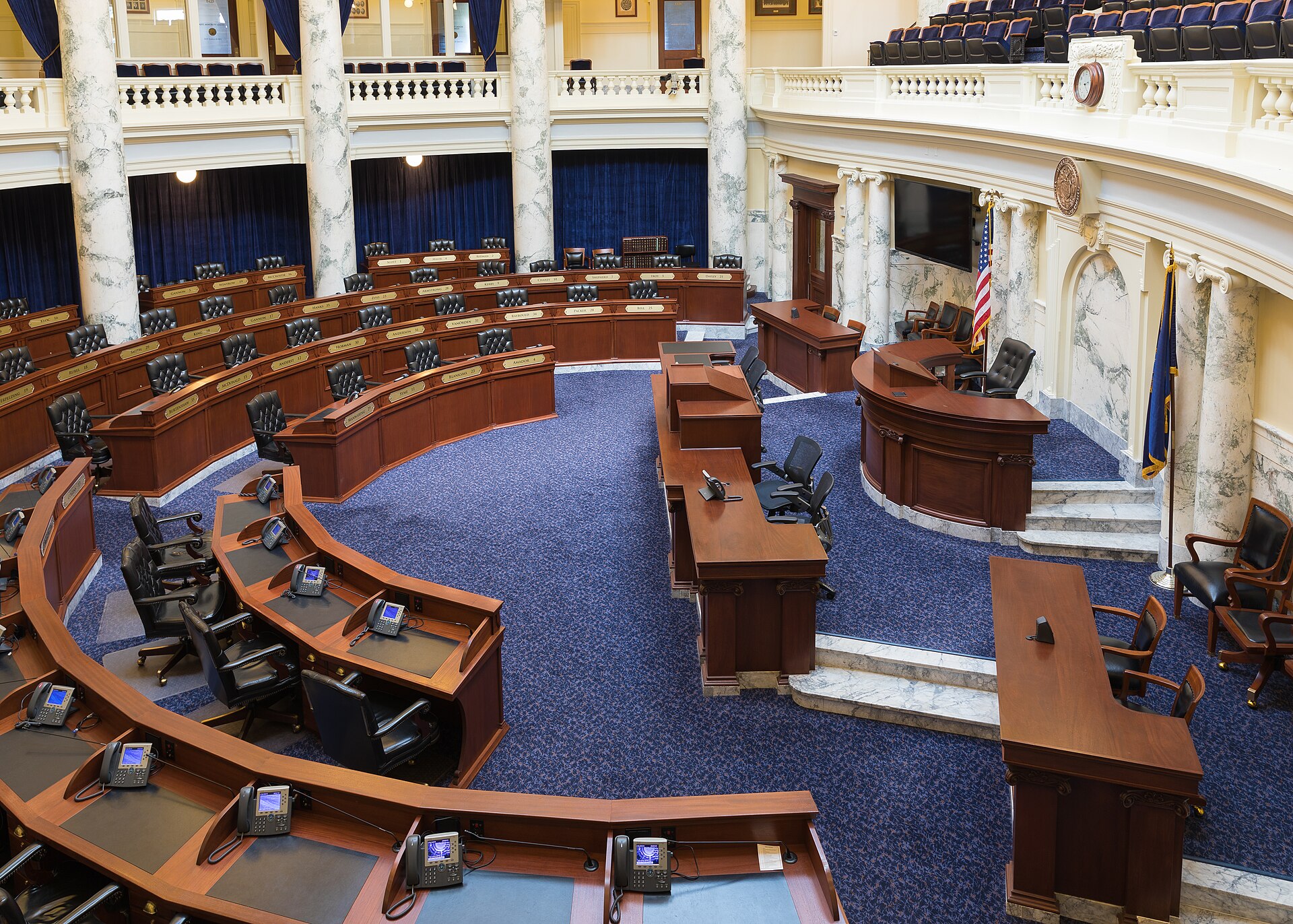
Every housing law in this course began as a bill page on legislature.idaho.gov. Each page lists the sponsor, every action by date, roll call votes with each member's name, the session law chapter and the effective date, with links to the bill text, amendments, the statement of purpose and the fiscal note. Committee minutes for each session are posted on the Legislature's standing committee minutes page, and the site streams and archives audio and video of floor sessions and many committee hearings.36
House Bill 253 (2025), the public records bill discussed below, shows how much a bill page can hold. It passed the House 41-29-0 on March 3, 2025; the Senate amended it and passed it 25-9-1 on April 1; the House concurred and passed the amended bill 45-24-1 on April 3; Gov. Brad Little signed it April 4, 2025; it became Session Laws ch. 298, effective July 1, 2025.10 The statute pages carry a history line (for example, "am. 2025, ch. 298") that leads back to the session law, so you can trace any section to the bill that changed it.9

Good legislative housing stories use the hearing record. Who testified for the landlords' association, the realtors, the HOA management industry, legal aid, tenants or cities? What numbers did the sponsor cite, and where did they come from? Did the bill change between introduction and passage, and who asked for the change? Minutes summarize; the audio is the record of exactly what was said. Quote from the audio or video when you can, and give the date and committee.
Public records requests for housing stories
The site's Idaho Public Records Requests course covers the Public Records Act in detail, including writing a request that works and deadlines and extensions. Four points matter most for housing records.
The request itself
Idaho Code 74-102(1) presumes that "all public records in Idaho are open at all reasonable times for inspection except as otherwise expressly provided by statute." An agency may require a written request that "specifically describes the subject matter and records sought, including a specific date range," and the request must give the requester's name, mailing address, email address, telephone number, and "a written declaration by the requesting party attesting or affirming under oath whether such requester is a resident." Requests and records may be sent by email. Under Idaho Code 74-103(1), a request "must clearly indicate that it is a public records request."159
The clock
Under Idaho Code 74-103(2), an agency must grant or deny a resident's request "within three (3) working days" of receiving it, and a nonresident's request within 21 days. If staff need more time to locate or retrieve records, the agency must say so in writing and provide the records within 10 working days of the request for a resident, or 35 days for a nonresident. If the agency does not respond in time, the request "shall be deemed to be denied." A denial must be in writing, cite the statute relied on, and explain the right to appeal.9 The nonresident deadlines came from House Bill 253 (2025).10 Court records follow a parallel rule: I.C.A.R. 32(k) lets the court custodian ask for the contact information described in 74-102, and compiled court data requests have a 10-working-day response under 32(f).4
Fees
Under Idaho Code 74-102(10)(a), no fee may be charged "for the first two (2) hours of labor in responding to a request submitted by a resident for public records, or for copying the first one hundred (100) pages of paper records." Beyond that, agencies may recover actual labor and copying costs, at the hourly rate of the lowest-paid employee qualified to do the work, and must itemize. Subsection (10)(f) requires a fee waiver for a resident who shows the records are "likely to contribute significantly to the public's understanding of the operations or activities of the government," are not primarily in the requester's own interest, and would not be examined if fees were charged because the requester cannot pay.15 A reporter seeking a city's code enforcement log for all rentals in a neighborhood has a strong waiver argument; an HOA seeking records for its own lawsuit does not.
Housing requests that work
- City code enforcement log. "All code enforcement case records, including complaint date, address, violation type, status and closing date, for residential properties in [city], Jan. 1, 2024, to Oct. 31, 2026, in spreadsheet form if kept electronically." Ask for the field list first if the city uses a case management system.
- Short-term rental registration list as it stood. "The city's short-term rental registration or license list as of June 30, 2026, including address, registration date and status." Then a second request for any record of what the city did with the program after July 1, 2026.
- Sheriff's writ log. "A list of writs of restitution received and served by the [county] Sheriff's Office, with date received, date served and case number, for calendar 2025." Counties keep civil process records differently; ask what exists. The site's Sheriffs, Police and Courts lesson explains which records are court records and which are agency records.
- Assessor owner extract. "Parcel number, property class, owner name, owner mailing address and homeowner's exemption status for residential parcels in [city], as of the 2026 roll. This request is not for use as a mailing or telephone list."
- Compiled court data (to the Idaho Supreme Court). "Counts of unlawful detainer cases filed, by county and month, Jan. 2020 to Oct. 2026, with counts of dispositions by type, and the date the data were extracted."
Building a simple data set
Most housing data stories in Idaho start with a spreadsheet the reporter builds. The site's Data and Statistics training covers the skills: Finding Data, Cleaning Data, Numbers That Matter and Honest Charts. Here is how the method applies to two common housing data sets.
Data set 1: eviction filings by month
Suppose you want monthly eviction numbers for Twin Falls, Jerome or Gooding counties. Boise State's Idaho Policy Institute publishes a yearly Twin Falls County total (155 filings and 88 formal evictions in 2025), but no one we found publishes monthly counts for those counties, or any count for Jerome or Gooding.41 You can build a monthly series two ways: ask the Supreme Court for compiled counts (the cleaner route), or pull case registers yourself from iCourt for a fixed period. If you build it yourself, use one row per case and these columns:
| Column | What goes in it | Why |
|---|---|---|
| case_number | As shown on iCourt, with hyphens | Unique key; catches duplicates |
| county | County of the court | Grouping |
| filed_date | Filing date from the register | Grouping by month |
| case_type_label | Exactly as the portal shows it | Shows whether labels differ by county or year |
| plaintiff | Name as filed | Counting repeat filers; match to SOSBiz |
| plaintiff_standard | Your standardized name | Merges "ABC Mgmt LLC" and "ABC Management" |
| disposition | Judgment, dismissal, other, pending | Outcome rates |
| disposition_date | Date from the register | Time to outcome |
| writ_issued | Yes or no | How many cases end with the sheriff |
| pulled_date | The date you looked | Shielding and corrections change the record |
| notes | Anything odd | Your audit trail |
Do not put defendants' names in any file you publish. Keep them in your private working copy only if you need them to find duplicates or to contact people for interviews, and delete what you do not need when the story is done. A rate is more useful than a count when comparing places: divide cases by renter-occupied households from the Census Bureau's American Community Survey (table B25003 on data.census.gov), and say which ACS year and margin of error you used.37 Lesson 01 gives renter household counts for the core counties.
Data set 2: HOA lien filings
For an HOA lien series, search the recorder's index by document type (lien, claim of lien, notice of lien, release of lien; labels vary by county) and by grantor name (the association). Use one row per recorded document: instrument number, recording date, document type, association name, owner name, parcel or legal description, amount claimed and, for releases, the instrument number of the lien released. Link each release to its lien by instrument number. From that table you can compute liens per association per year, the median amount claimed, and the share released within a year. Divide by the number of lots in the subdivision (from the recorded plat) to compare associations of different sizes. Where liens are blocked from online viewing, as in Ada County, plan a visit or a copy request and budget the per-page fee.825
How we figured it: rates and shares in this lesson
Human Rights Commission. Housing share in FY2026: 32 divided by 831 = 3.85 percent (the commission prints 3.9 percent). Housing cases FY2023 to FY2026: 10 to 32, a 3.2-fold rise. All cases: 386 to 831 = up 115 percent. Final judgment shares are as printed in Jesse Tree's table (for 2025, 461 divided by 2,015 = 22.9 percent). Lien rate example: if an association with 200 lots records 6 lien claims in a year, the rate is 6 divided by 200 = 3 per 100 lots. That example is ours, for illustration only; it is not a real association's figure.
Interviewing tenants, landlords, managers and boards fairly
Housing fights have real interests on every side. A landlord who has carried an unpaid unit for two months may be one missed mortgage payment from losing the property. A tenant facing a judgment for rent plus attorney fees may be looking at losing her children's school. An HOA board is made of unpaid neighbors enforcing rules other neighbors voted for. A short-term rental owner may be a retiree whose rental income pays the property tax. A city code officer is applying an ordinance the council passed. The fairest stories put the same documents in front of each of them.
- Bring the record. Show the landlord the complaint and the judgment, the tenant the lease and the notice, the board the lien claim and the CC&Rs. Ask each to explain the document in their own words.
- Ask the other side every time. If a tenant says the unit had no heat, ask the landlord and check the city's code enforcement file. If a board says an owner ignored five letters, ask for the letters and ask the owner.
- Separate the person from the pattern. One tenant's eviction is a story about one family. A property manager who filed a large share of a county's cases is a story about a business practice. Jesse Tree's 2025 report, for example, says one local law firm handled 42 percent of Ada County eviction cases docketed for hearing in 2025.5 That is a pattern worth reporting, with the firm's response.
- Talk to the repeat players. Property managers, the lawyers who file most evictions, HOA management companies, legal aid staff, mediators and magistrate court clerks see hundreds of cases. They can tell you what the numbers miss.
- Label the groups. The Idaho Apartment Association represents landlords; Idaho Legal Aid Services represents low-income tenants; Jesse Tree runs a rent assistance program; the Community Associations Institute represents HOA managers and boards. Say who each speaks for. Do not label anyone by politics; describe what they want.
- Check numbers people give you. If a source says evictions "doubled," ask: filings or judgments, which county, which years, from what source? Then find the source.

Privacy and harm: naming people in housing stories
An eviction filing is public, and the Legislature decided in 2024 that dismissed cases should not stay public forever. That choice is a signal to reporters. The Society of Professional Journalists' Code of Ethics, as posted Nov. 19, 2026, tells journalists to "balance the public's need for information against potential harm," to "recognize that legal access to information differs from the ethical justification for reporting it," and to "consider the long-term implications of the extended reach and permanence of publication."38 A tenant named in an online story about an eviction may carry that story into every future rental application, long after the court has shielded the file.
Practical rules many newsrooms use for housing stories:
- Name a tenant only with the tenant's informed consent, or when the tenant is a public figure or the eviction is itself the news (for example, an official evicted from public housing). Explain to the tenant, before the interview, that the story will be online and searchable.
- Name landlords and property managers who file large numbers of cases, and give them a full chance to respond. A business that uses the courts as part of its practice is accountable for that practice.
- Name HOAs and their boards for board decisions. Think harder before naming an individual owner over a lien or a fine, and ask whether the story needs the name.
- Do not publish addresses of tenants, domestic violence survivors or minors. Use a block or neighborhood.
- Plan for updates. If a case named in your story is later dismissed or shielded, decide in advance whether and how you will update or anonymize the online story. Write the policy down.
- Never publish a data set with defendants' names. Publish counts and patterns.
Story checklists
An eviction story
- Pull the case register from iCourt and the complaint, notice and judgment from the clerk.
- Check the notice against the statute: which notice, how many days, how served (lesson 04).
- Check the plaintiff in SOSBiz; check the property in the assessor's records.
- Count the plaintiff's other cases in the county over a set period, with the date you pulled them.
- Check the city's code enforcement file for the address.
- Interview the tenant (with consent), the landlord or manager, and the landlord's lawyer; ask the clerk or court administrator about process questions.
- Put the case in context with the best available count for the county, and say whose count it is.
- Decide how to name people, and how you will handle later shielding.
An HOA story
- Get the recorded declaration and every recorded amendment, with recording dates.
- Get the association's SOSBiz record: status, annual reports, officers or governors, registered agent.
- Search the recorder's index for lien claims and releases by the association.
- Ask a member for the annual fee disclosure and the reconciled financial disclosure required by 55-3205, and the minutes of the meeting at issue.
- Check iCourt for suits by or against the association.
- If the HOA was formed after July 1, 2025, check turnover timing under 55-3204A against deed counts.
- Interview the board president or manager, the affected owners, and owners who support the board's decision.
- Read the relevant statute in full (lesson 08 and lesson 09) before writing that an HOA "cannot" do something.
A short-term rental or landlord business story
- Request the city's last registration list (as of June 30, 2026, if it had one) and its complaint logs.
- Map the addresses against assessor records: owner names, mailing addresses, exemption status.
- Trace LLC owners in SOSBiz; note where the chain leaves Idaho.
- Check HOA declarations for rental rules and their recording dates (lesson 05 and lesson 08 explain which rules bind which owners).
- Label any count from a booking-site scrape as a private estimate and name the company.
- Interview owners, neighbors, the HOA, city staff and the tourism or business group that speaks for operators.
The Magic Valley angle
The Magic Valley has the same records as Boise and fewer people mining them. Twin Falls County was the first county on Idaho's Odyssey court system: the iCourt pilot went live there June 22, 2015, so its electronic registers reach back further in the new format than any other county's.2 Boise State's Idaho Policy Institute counted 155 eviction filings and 88 formal evictions in Twin Falls County in 2025, a yearly total in its statewide infographic;41 no regular published series we found covers Jerome, Gooding, Lincoln, Minidoka or Cassia counties, and none gives monthly Magic Valley counts; a compiled-data request to the Supreme Court is the obvious first step. In HUD's 2006 to 2020 case file, Twin Falls County had 52 fair housing cases, Gooding 5 and Jerome none, while Lincoln County's 26 need checking.12
Other Magic Valley stories wait in the records: lien claims by HOAs in the newer subdivisions around Twin Falls and Jerome, assessor records on how many homes in each town have an out-of-state or LLC owner, city minutes on rental and code changes in Twin Falls and Jerome (the only core towns over 10,000 people, and so the only ones covered by the 2026 starter home and ADU laws), and manufactured home park sales recorded at the county. Lesson 06, Mobile and Manufactured Home Parks, explains what park residents are owed when a park changes hands.
Pictures, Numbers and Infographics
| Measure or rule | Idaho | U.S. or comparison | Place or year | Source |
|---|---|---|---|---|
| Trial setting after an eviction complaint (nonpayment of rent and other 6-310(1) cases) | Within 12 days of filing; service at least 5 days before trial | Varies by state | Statewide, current | Idaho Code 6-310(2)1 |
| Shielding of dismissed eviction cases | After 3 years, or sooner on stipulation; cases filed on or after Jan. 1, 2025 | Several states seal some eviction records | Statewide, since 2025 | Idaho Code 6-303A; I.C.A.R. 32(j)(2)34 |
| Eviction cases, Ada County | 1,615 (2024); 1,349 (2025) | No federal count | Ada County | Jesse Tree reports215 |
| Eviction cases, Canyon County | 605 (2024); 666 (2025) | No federal count | Canyon County | Jesse Tree reports215 |
| Final judgments as a share of dispositions | 48.0% (2019); 22.9% (2025) | Not comparable | Ada and Canyon combined | Jesse Tree reports5 |
| Compiled court data response | 10 working days | Not applicable | Idaho Supreme Court | I.C.A.R. 32(f)4 |
| Public records response, resident | 3 working days; 10 with written notice | Not compared here | All Idaho public agencies | Idaho Code 74-1039 |
| Public records response, nonresident | 21 days; 35 with written notice | Not applicable | Since July 1, 2025 | Idaho Code 74-103; HB 253 (2025)10 |
| Free records labor and copies, resident | First 2 hours; first 100 pages | Not applicable | Statewide | Idaho Code 74-102(10)(a)15 |
| HOA lien: serve owner after recording | Within 5 business days | Not applicable | Statewide, since 2022 | Idaho Code 55-3207(2)(d)6 |
| HOA account statement to a member | Within 5 business days, free | Not applicable | Statewide | Idaho Code 55-3205(1)27 |
| Housing cases filed with state commission | 32 of 831 (FY2026) | Not applicable | Idaho | Idaho Human Rights Commission11 |
| HUD fair housing cases with Idaho as state | 852 (Jan. 2006 to June 2020) | All states in the same file | Idaho | HUD FHEO filed cases (our count)12 |
| Short-term rental licenses or registration | Barred for cities and counties | See lesson 05 for other states | Since July 1, 2026 | Idaho Code 67-6539(5)13 |
| Recorder copies, Ada County | $1.00 a page; certification $1.00 more | Not applicable | Ada County | Ada County Clerk FAQ25 |
The seven graphics above are the records map, the eviction case and shielding timeline, the Ada and Canyon eviction chart, the HOA lien paper trail, the Human Rights Commission housing case chart, the records-request clock and the data workflow. The comparison below sets Idaho's main housing data sources side by side by what each can and cannot tell you.
Common mistakes
- Calling every count "filings." Jesse Tree's own reports call their annual counts "filed," "resolved," "dispositions" and "filings" in different years, and one news story called the 2024 "dispositions" "eviction court filings." A filing is a case opened; a disposition is a case closed; a judgment is a case decided. Say which one you have, and use the source's word.202122
- Treating a filing as an eviction. In Ada and Canyon counties in 2025, 461 of 2,015 dispositions were final judgments, by the reports' table. Most cases end in dismissal, often after payment or a mediated agreement. "Eviction filings" and "families evicted" are different numbers.5
- Comparing fresh pulls across years. Because Idaho Code 6-303A shields dismissed cases after three years, a 2028 search of 2025 cases will find fewer than a 2026 search did. Save dated pulls and compare like with like.3
- Reading a blank search as "no case." A name search can miss a case because of spelling, a business name variation, sealing, shielding or transfer. The iCourt lesson in the court records course covers this; a blank result is not proof.2
- Using a registered agent as the owner. Idaho Code 30-21-213 requires only one governor's name in an annual report. A registered agent is the entity's address for legal papers, not necessarily an owner.14
- Assuming an HOA must answer a records request. HOAs are private; members' rights come from Idaho Code 55-3205 and the nonprofit corporation act, and the public's do not come from Title 74.27
- Publishing a surprising number without a plausibility check. HUD's file lists 83 Idaho cases under a "Boise" county code and 26 in Lincoln County, more than in Bonneville County. Before reporting that a small county is a fair housing hot spot, ask HUD what the code means.12
- Forgetting the residency declaration. Since HB 253 (2025), an agency may require a sworn statement of residency, and nonresidents get a longer clock. Leave it out and you may lose days.1510
What we know, what we don't, and what the data can show
What we know
- Every eviction in Idaho is a court case with a public register on iCourt, a trial set within 12 days of filing in nonpayment-of-rent and the other cases 6-310(1) lists, and documents at the clerk's office.12
- Dismissed eviction cases filed on or after Jan. 1, 2025, are shielded from public view after three years or on stipulation.34
- Ada County had 1,349 eviction cases and Canyon County 666 in 2025, by Jesse Tree's count from Idaho Supreme Court data.5
- HOA lien claims must be verified, recorded and served on the owner within five business days.6
- Cities and counties may no longer license or register short-term rentals.13
What we don't know
- How many eviction cases are filed each year in the counties outside the six largest; the Idaho Policy Institute's infographic lists only Ada, Canyon, Kootenai, Bannock, Bonneville and Twin Falls, so Jerome, Gooding and the rest of the Magic Valley outside Twin Falls County have no published count we could find.41
- Whether the Idaho Court Data dashboard can isolate unlawful detainer cases; we could not test the Power BI dashboard from outside.18
- How many households were removed by the sheriff after a writ; writ and return data are not published statewide.
- How many HOA lien claims are recorded each year; no county we checked publishes a count, and Ada County blocks liens from online viewing.8
- How many short-term rentals operate in any Idaho city now that registration is barred.
- What happened to HUD fair housing complaints in Idaho after June 2020; the posted case-level file ends there.12
What the data can show
- Eviction trends by county and month: Idaho Supreme Court compiled data under I.C.A.R. 32(f), or a reporter-built series from iCourt registers.
- Who files most evictions: plaintiff names on iCourt registers, matched to SOSBiz entity records.
- HOA collection practices: lien claims and releases in the county recorder's index, by association and year, divided by lots on the recorded plat.
- Ownership change: county assessor rolls and recorded deeds, by owner type and mailing address.
- Fair housing complaints: Idaho Human Rights Commission statistical measures by fiscal year; HUD's FHEO case file by county for 2006 to 2020.
- Rental conditions: city code enforcement logs by address and violation type, through Title 74 requests.
Questions people ask
Can anyone look up whether someone was evicted?
Anyone can search the iCourt Portal's public register, which shows parties, events and outcomes for cases that are not sealed, exempt or shielded. Documents require a courthouse terminal or a clerk request. Dismissed cases filed on or after Jan. 1, 2025, become hidden from the public after three years or on stipulation. Tenant screening companies are a separate subject covered by federal credit reporting law, explained in lesson 02.23
Why are there no statewide eviction numbers?
The courts have the data but do not publish an eviction series. Boise State's Idaho Policy Institute does, once a year, from Supreme Court case data, with a statewide total and the six counties with the most filings (lesson 04).41 The Supreme Court's annual report site and Idaho Court Data reporting page list no eviction report as of Nov. 19, 2026. Anyone may request compiled information under I.C.A.R. 32(f); the court decides whether it has the resources to compile it.39184
Can I get an HOA's records?
Not under the Public Records Act, which covers public agencies. A member can get an account statement within five business days and a financial disclosure within 10 business days under Idaho Code 55-3205, plus the yearly fee disclosure and reconciled financial disclosure. Recorded CC&Rs, amendments and liens are public at the county recorder.277
Can a city refuse a records request from someone out of state?
No. Nonresidents may request records, but since July 1, 2025, agencies have 21 days (35 with written notice) to respond to them instead of three working days, and may charge nonresidents under a separate fee schedule.91510
How do I find who owns an LLC landlord?
Start with SOSBiz for the LLC's filings, annual reports, registered agent and governors. Annual reports must name at least one governor under Idaho Code 30-21-213. Follow any member or manager that is itself a company, including into other states' registries. Then check deeds at the recorder, where a signer's name may appear, and court cases on iCourt.1430
Should a story name a tenant who was evicted?
The law allows it while the record is public; ethics codes ask reporters to weigh the harm. Many newsrooms name tenants only with consent or when the eviction itself is the news, and name the landlords and managers who file in volume. See the privacy section above and the SPJ code.38
Hard questions
Should the Idaho courts publish eviction counts by county?
For publishing: Legislators debated eviction shielding in 2024 without a statewide count in front of them; landlords, tenants and lawmakers would argue from the same numbers. The data already sit in one statewide case system, and the court publishes criminal sentencing reports. Against, or for caution: Court staff time is limited; counts without context (how many renters, how many dismissals after payment) can mislead; and publication could undercut the privacy goal of shielding if it were case-level. What the evidence shows: The public series come from outside the courts: a university research center's yearly statewide count with six counties broken out, and an advocacy group's two-county report, both using court data.41 A county-month count of filings and dispositions, with no names, would answer the main public questions without exposing anyone.18540
Does eviction record shielding hurt accountability reporting?
For shielding: A dismissed case often means the tenant paid or the landlord erred, yet the filing alone can block a future rental. SB 1327 passed the Senate 31-3-1, showing broad support. Against: Reporters and researchers who want to study landlord filing practices years later will find dismissed cases gone, which hides serial filing used as a collection tool. What the evidence shows: The rule hides dismissed cases only, after three years; reporters who pull and keep dated data can still study patterns, and judgments stay public. Whether serial filing is common in Idaho is not documented outside Jesse Tree's Ada County observations.1735
Should HOA liens and finances be easier for the public to see?
For more openness: HOAs collect mandatory assessments and can lien and foreclose on homes, functions that look like a local government's; buyers and neighbors have an interest in how they use that power. Against: HOAs are private nonprofits run by volunteer neighbors; members already have statutory rights to financial disclosures; publishing owners' delinquencies harms people who may be in hardship. What the evidence shows: Liens are already public at the recorder; finances are open to members. Idaho has no HOA registry or regulator, so no one counts associations, liens or foreclosures statewide. Lesson 07 compares Idaho with states that have HOA offices.627
Did the 2025 nonresident rules make housing records harder to get?
For the change: The bill page describes it as providing "additional time to respond to requests for public records from nonresidents" and allowing "a different fee schedule" for them; agencies with small staffs gain room to answer Idaho residents first. Against: National reporters, researchers and out-of-state owners of Idaho rentals or second homes now wait up to 35 days, and residency declarations add paperwork for everyone. What the evidence shows: The bill's House votes (41-29 and 45-24) show real division. Idaho residents' clocks did not change. We found no published data on how many nonresident requests agencies receive.109
For reporters and advocates
Records that exist. Eviction case registers on iCourt and files at each county clerk; compiled court data from the Idaho Supreme Court on request; recorded deeds, CC&Rs, amendments, HOA lien claims and releases at each county recorder; assessor parcel rolls; SOSBiz entity filings and annual reports; city code enforcement logs, building permits and the last short-term rental registration lists from before July 1, 2026; sheriff's civil process logs for writs of restitution; Idaho Human Rights Commission statistical reports; HUD's FHEO data files; the Attorney General's consumer complaint records; and bill pages, minutes, audio and video at the Legislature.
Questions to ask officials.
- To the Idaho Supreme Court: Can Idaho Court Data show unlawful detainer filings by county and month? If not, will the court compile them under I.C.A.R. 32(f)?
- To a county clerk: Which recorded document types are blocked from online viewing, and why? How are HOA lien claims indexed?
- To a sheriff: How many writs of restitution did the office receive and serve last year, and how long from receipt to service?
- To a city: What happened to the short-term rental registration program after July 1, 2026? How many code enforcement cases involved rental housing last year?
- To the Human Rights Commission: How many housing cases came from each county, and how were they resolved?
- To a legislator: What data did you have on evictions, HOA liens or short-term rentals when you voted?
Public records requests. Use Idaho Code Title 74; include the residency declaration; ask for spreadsheets when records are kept electronically; ask for a fee waiver when the request serves public understanding. The public records course has sample letters.
The Magic Valley angle. Only a yearly Twin Falls County total is published, by Boise State's Idaho Policy Institute; no one publishes counts for Jerome or Gooding counties. Twin Falls County has the longest Odyssey record of any county. HUD's old case file lists 52 Twin Falls County cases and none in Jerome County. Newer subdivisions around Twin Falls and Jerome mean new HOAs, and the turnover rules of 55-3204A apply to those formed after July 1, 2025. Start with a compiled data request, a recorder's index search and a city records request, and the region's first housing data story is yours to build.
Where to go next
- Idaho iCourt: The Idaho courts' gateway to the iCourt Portal public case search, hearing search, FAQs and filing tools. Free; no account needed to search registers. Documents are at courthouse kiosks or from the clerk.
- Idaho Court Data: The Idaho Supreme Court's dashboards of case, charge and financial data and its reporting page. Free. Best viewed on a desktop; check the civil case type filters before relying on any count.
- Idaho Secretary of State SOSBiz: Free online search of Idaho business entities, including LLC landlords, property managers and HOA nonprofit corporations, with filing history and annual reports.
- Idaho Legislature bill and minutes pages: Free committee minutes for the 2026 session; bill pages on the same site carry text, statements of purpose, roll calls and session law chapters.
- Idaho Human Rights Commission publications: Free annual statistical measures, including housing case counts, and the history of Idaho Human Rights Act amendments.
- Jesse Tree eviction reports: Free annual Treasure Valley eviction reports from a Boise rent assistance nonprofit (an advocacy and service group), with Ada and Canyon county counts drawn from Idaho Supreme Court data.
- Idaho Court Assistance Office: The courts' free self-help site with forms and publications, including landlord-tenant materials; useful for reporters learning what forms parties file.
- data.census.gov: The Census Bureau's free data site; American Community Survey table B25003 gives renter-occupied households for computing eviction rates.
Still being checked (7 items)
These points could not be fully confirmed against a primary source when this lesson was written and fact checked in November 2026. The text above states each one as uncertain.
- Whether the Idaho Court Data Case and Charge dashboard can filter civil filings to unlawful detainer cases; the Power BI dashboard could not be tested from outside a browser.
- Recorder fee amounts under Idaho Code 31-3205 could not be read from the statute page's fee column; only Ada County's posted copy fees ($1.00 a page, $1.00 for certification) are stated.
- Jesse Tree's 2025 statement that Canyon County filings 'more than tripled since 2020' could not be checked because the report text does not print a 2020 Canyon County figure.
- The meaning of the 'Boise' county code (83 cases) and the Lincoln County count (26 cases) in HUD's FHEO filed cases file; not checked against individual HUD case records.
- Whether HUD has posted a newer case-level Idaho fair housing file after June 30, 2020, anywhere other than Data.gov.
- Online access rules at the Twin Falls, Jerome and Gooding county recorders were not checked individually (the Twin Falls County site refused an automated request).
- No monthly or Jerome, Gooding or Lincoln county eviction count was found; Boise State's Idaho Policy Institute publishes only yearly statewide numbers and a six-county table (including Twin Falls County). Its statewide table row (3,283 filings, 1,308 formal evictions) differs from its headline household counts (3,039 and 1,234), which IPI does not explain.
Last verified November 19, 2026. General education, not legal, tax, financial or real estate advice; every figure names its source and year in the Notes and Sources below. Data is revised: check the newest release before relying on any number.
Notes
- Idaho Code section 6-310, Action for possession, complaint, summons, subsection (2), Idaho Legislature statute page (read Nov. 19, 2026). Read it online. ↩
- Idaho Supreme Court, iCourt home page and iCourt Portal (mycourts.idaho.gov), public case search of registers of actions for all 44 counties since 1995, with the FAQ on what is and is not shown; Odyssey rollout began with the Twin Falls County pilot on June 22, 2015, per the iCourt Project Overview and FAQs page (icourt.idaho.gov/projfaq), which says the rollout started "first with a pilot county (Twin Falls)" (read Nov. 19, 2026). Read it online. ↩
- Idaho Code section 6-303A, Records shielded from disclosure, Idaho Legislature statute page; history: added 2024, ch. 269, sec. 1 (read Nov. 19, 2026). Read it online. ↩
- Idaho Supreme Court, Idaho Court Administrative Rule 32, Records of the Judicial Department, Examination and Copying, Exemptions from and Limitations on Disclosure, subsections (b)(8) and (10), (d), (e), (f), (j)(2) and (k) (read Nov. 19, 2026). Read it online. ↩
- Jesse Tree (Boise nonprofit rent assistance and eviction prevention organization), 2025 Treasure Valley Eviction Report, 32 pages, county data section, Figures 6 to 8; county chart credited to data collected by the Idaho Supreme Court and sorted by Boise State University's Idaho Policy Institute (read Nov. 19, 2026). Read it online. ↩
- Idaho Code section 55-3207, Homeowner's association liens, Idaho Legislature statute page; history: added 2022, ch. 323, sec. 4 (read Nov. 19, 2026). Read it online. ↩
- Idaho Code section 31-2419, Records open to inspection, Idaho Legislature statute page; history: 1863, p. 475, sec. 80; am. 2005, ch. 243, sec. 8 (read Nov. 19, 2026). Read it online. ↩
- Ada County Clerk, Property Records page (Ada County Recorder's Office, 200 W. Front St., Boise), including the list of document types blocked from online viewing (read Nov. 19, 2026). Read it online. ↩
- Idaho Code section 74-103, Request and response to request for examination of public records, Idaho Legislature statute page; history: added 2015, ch. 140; am. 2022, ch. 306; am. 2024, ch. 107; am. 2025, ch. 298 (read Nov. 19, 2026). Read it online. ↩
- Idaho Legislature, bill page for House Bill 253 (2025), Public Records, House State Affairs Committee (floor sponsors Rep. Furniss and Sen. Bernt); House 41-29-0 (March 3, 2025); Senate as amended 25-9-1 (April 1, 2025); House final passage as amended 45-24-1 (April 3, 2025); signed April 4, 2025; Session Laws 2025, ch. 298; effective July 1, 2025 (read Nov. 19, 2026). Read it online. ↩
- Idaho Human Rights Commission, State Fiscal Year (FY) 2026 statistical measures, November 2026, Tables 1, 2, 3 and 5 (read Nov. 19, 2026). Read it online. ↩
- U.S. Department of Housing and Urban Development, Office of Fair Housing and Equal Opportunity, FHEO Filed Cases data set on Data.gov (Excel file titled "FHEO Filed Title VIII Cases 01/01/2006 - 06/30/2020"; data last modified June 30, 2020); Idaho counts are our own tabulation (read Nov. 19, 2026). Read it online. ↩
- Idaho Code section 67-6539, Limitations on regulation of short-term rentals and vacation rentals, subsections (3) to (7), Idaho Legislature statute page; history: added 2017, ch. 239; am. 2018, ch. 79; am. 2026, ch. 22 (read Nov. 19, 2026). Read it online. ↩
- Idaho Code section 30-21-213, Annual report for secretary of state, Idaho Legislature statute page (read Nov. 19, 2026). Read it online. ↩
- Idaho Code section 74-102, Public records, right to examine, subsections (1), (4), (5) and (10), Idaho Legislature statute page; history: added 2015, ch. 140; am. 2018, ch. 143; am. 2020, ch. 338; am. 2022, ch. 306; am. 2025, ch. 298 (read Nov. 19, 2026). Read it online. ↩
- Idaho Code section 74-120, Prohibition on distribution or sale of mailing or telephone number lists, penalty, subsections (1) and (2), Idaho Legislature statute page (read Nov. 19, 2026). Read it online. ↩
- Idaho Legislature, bill page for Senate Bill 1327 (2024), Unlawful Detainer, Senate Judiciary and Rules Committee; passed Senate 31-3-1 on Feb. 27, 2024; signed April 3, 2024; Session Laws 2024, ch. 269; effective July 1, 2024 (read Nov. 19, 2026). Read it online. ↩
- Idaho Supreme Court, Idaho Court Data (courtdata.idaho.gov): Case and Charge Data Dashboard (Power BI) and Court Data Reporting and Evaluations page listing felony sentencing reports for 2020 to 2024 and a domestic violence court evaluation (read Nov. 19, 2026). Read it online. ↩
- Jesse Tree, 2022 Treasure Valley Eviction Report, 7 pages: 805 evictions filed in Ada County and 367 in Canyon County in 2022, up from 566 and 313 in 2021 (read Nov. 19, 2026). Read it online. ↩
- Jesse Tree, 2023 Treasure Valley Eviction Report, 8 pages: 1,571 evictions resolved in Ada County and 500 in Canyon County in 2023; filings and final judgments table, 2019 to 2023 (read Nov. 19, 2026). Read it online. ↩
- Jesse Tree, 2024 Treasure Valley Eviction Report, 8 pages: 1,615 eviction dispositions in Ada County and 605 in Canyon County in 2024; dispositions and final judgments table, 2019 to 2024 (read Nov. 19, 2026). Read it online. ↩
- Idaho Capital Sun, "Despite federal funding loss, Boise nonprofit Jesse Tree prevents eviction for Idaho families," April 2, 2025 (date from the article URL), reporting the 2024 Jesse Tree figures as eviction court filings (read Nov. 19, 2026). Read it online. ↩
- Sofia Blenkinsop, "Treasure Valley eviction filings doubled in 2023, report finds," Boise State Public Radio News, July 15, 2024 (read Nov. 19, 2026). Read it online. ↩
- Idaho Code section 31-3205, Recorder's fees, Idaho Legislature statute page (read Nov. 19, 2026). Read it online. ↩
- Ada County Clerk, Property Records FAQ: copies $1.00 a page, certification an additional $1.00 (read Nov. 19, 2026). Read it online. ↩
- Jerome County, Idaho, official website (county offices including clerk and recorder) (read Nov. 19, 2026). Read it online. ↩
- Idaho Code section 55-3205, Disclosure of fees and financial disclosures, Idaho Legislature statute page; history: added 2022, ch. 323; am. 2023, ch. 247; am. 2024, ch. 162; am. 2025, ch. 204 (read Nov. 19, 2026). Read it online. ↩
- Idaho Code section 55-3204A, Homeowner's associations, powers, duties, enforcement, Idaho Legislature statute page; history: added 2025, ch. 204, sec. 3 (read Nov. 19, 2026). Read it online. ↩
- Ada County Assessor, Ada County Assessor Data page (free GIS downloads without owner names and mailing addresses, citing Idaho Code 74-120) and Property Search and Online Maps (read Nov. 19, 2026). Read it online. ↩
- Idaho Secretary of State, SOSBiz online business entity search and filing system (read Nov. 19, 2026). Read it online. ↩
- Idaho Legislature, bill page for House Bill 583 (2026), short-term rentals; Session Laws 2026, ch. 22; signed March 16, 2026, per the history line of Idaho Code 67-6539 and Part B of this series (read Nov. 19, 2026). Read it online. ↩
- Idaho Human Rights Commission, Housing page: Idaho fair housing law, covered housing and the owner-occupied duplex exemption (page last updated Dec. 9, 2025; read Nov. 19, 2026). Read it online. ↩
- Idaho Human Rights Commission, State Fiscal Year (FY) 2025 statistical measures, February 2026 (read Nov. 19, 2026). Read it online. ↩
- Idaho Human Rights Commission, Publications page, with statistical measures and the history of Idaho Human Rights Act amendments (read Nov. 19, 2026). Read it online. ↩
- U.S. Department of Housing and Urban Development, FHEO: Fair Housing Act Cases Filed by Year and State, Data.gov data set HUD083 (last updated Oct. 15, 2020) (read Nov. 19, 2026). Read it online. ↩
- Idaho Legislature, 2026 Standing Committee Minutes page; bill pages, roll calls and live and archived audio and video are linked from legislature.idaho.gov (read Nov. 19, 2026). Read it online. ↩
- U.S. Census Bureau, data.census.gov, American Community Survey table B25003, Tenure (read Nov. 19, 2026). Read it online. ↩
- Society of Professional Journalists, SPJ Code of Ethics, "Minimize Harm" section, as posted on spj.org (the society lists a 2026 revision project; read Nov. 19, 2026). Read it online. ↩
- Idaho Supreme Court, Annual Report site (sections on court technology, the Court Assistance Office, treatment courts, guardianships and trial court financing; no eviction report listed) (read Nov. 19, 2026). Read it online. ↩
- Jesse Tree, Eviction Report page listing the 2022 to 2025 reports (read Nov. 19, 2026). Read it online. ↩
- Boise State University, Idaho Policy Institute (McAllister Hall and Lantz McGinnis-Brown), Evictions in Idaho: Statewide Data for 2025, infographic, updated February 2026 (3,039 of 189,871 renting households with a filing; 1,234 formal evictions; county table: Ada 1,349 filings and 260 formal evictions, Canyon 666 and 201, Kootenai 317 and 134, Bannock 218 and 131, Bonneville 202 and 123, Twin Falls 155 and 88; statewide row 3,283 and 1,308), using Idaho Supreme Court eviction case data; a university research center (read Nov. 19, 2026). Read it online. ↩
Check yourself
1. Under Idaho Code 6-310(2), when must the court schedule trial in an unlawful detainer case for nonpayment of rent?
Idaho Code 6-310(2) says the court shall schedule a trial within twelve (12) days from the filing of the complaint, with service at least five days before trial.
2. Which eviction records does Idaho Code 6-303A shield from the public?
Idaho Code 6-303A and I.C.A.R. 32(j)(2) shield dismissed cases filed on or after Jan. 1, 2025, with no appeal pending, once three years pass or the parties stipulate. Judgments are not shielded by this rule.
3. How long does I.C.A.R. 32(f) give the Idaho Supreme Court to respond to a request for compiled information?
I.C.A.R. 32(f) says the response shall be made within ten (10) working days following the date of the request.
4. According to Jesse Tree's 2025 report, how many eviction filings were there in Ada County in 2025?
The 2025 Treasure Valley Eviction Report says there were 1,349 eviction filings in Ada County and 666 in Canyon County in 2025.
5. Under Idaho Code 55-3207, how soon after recording a lien must an HOA serve the owner a copy?
Idaho Code 55-3207(2)(d) requires service by personal delivery or certified mail within five business days after recording.
6. What is the first response deadline for a public records request from an Idaho resident?
Idaho Code 74-103(2) requires an agency to grant or deny a resident's request within three working days, extendable to 10 working days with written notice.
7. Since HB 583 (2026), what may an Idaho city NOT require of a short-term rental?
Idaho Code 67-6539(5) bars cities and counties from requiring a license, fee, permit, certification or registration; subsection (3) still allows smoke alarms and the handout, and (6) keeps noise rules.
8. How many housing cases were filed with the Idaho Human Rights Commission in state fiscal year 2026?
Table 5 of the commission's FY2026 statistical measures lists 32 housing cases (3.9 percent) out of 831 total.
9. Why does Ada County's assessor GIS download leave out owner names and mailing addresses?
Ada County says it omits owner names and mailing addresses to comply with the Public Records Act, citing Idaho Code 74-120, which bars agencies from distributing lists for use as mailing lists without permission.
10. Jesse Tree's reports used different words for their annual counts. Which word did the 2024 report use for Ada County's 1,615?
The 2024 Treasure Valley Eviction Report says there were 1,615 eviction dispositions in Ada County and 605 in Canyon County in 2024; a news article called them court filings.
Terms in this lesson
- Register of actions
- The court's list of a case's parties, events, hearings and outcomes, shown on the iCourt Portal; it is not the documents themselves.
- Disposition
- The court's closing action in a case, such as a dismissal or a judgment. A count of dispositions is not a count of filings.
- Shielded record
- A court record hidden from the public but still visible to the parties and court staff, such as a dismissed eviction case under Idaho Code 6-303A.
- Compiled information
- Data the court derives by selecting or aggregating information from more than one case record; requested under I.C.A.R. 32(f).
- Bulk distribution
- Release of all or a large part of court records in electronic form as is; not allowed in Idaho except at the Supreme Court's discretion under I.C.A.R. 32(e).
- County recorder
- The county office, run by the clerk, that records and indexes deeds, mortgages, plats, CC&Rs, liens and releases.
- Lien claim
- A recorded document stating that a debt is secured by a property; for HOAs, governed by Idaho Code 55-3207.
- Lien release
- A recorded document showing that a lien has been paid or withdrawn.
- Registered agent
- The person or company named to receive legal papers for a business entity; not necessarily an owner.
- Governor (of an entity)
- In Idaho's business entity code, a director, manager or similar person who directs an entity; annual reports must name at least one.
- Residency declaration
- A sworn statement in a public records request saying whether the requester is an Idaho resident, which sets the response clock and fees.
- Deemed denial
- Under Idaho Code 74-103(3), a records request not answered within the allowed time is treated as denied.
- Plausibility check
- Comparing a number with what is known about the place or group, such as its population, before publishing it.
Sources
- Idaho Code 6-310 and 6-303A (Title 6, Chapter 3) (2026-11-19) checked 2026-11
- Idaho Court Administrative Rule 32 (2026-11-19) checked 2026-11
- Idaho Court Data (2026-11-19) checked 2026-11
- Jesse Tree Treasure Valley Eviction Reports, 2022 to 2025 (2026-11-19) checked 2026-11
- Idaho Code Title 74, Chapter 1, Public Records Act (74-102, 74-103, 74-120) (2026-11-19) checked 2026-11
- House Bill 253 (2025), Public Records (2026-11-19) checked 2026-11
- Idaho Code Title 55, Chapter 32, Homeowner's Association Act (2026-11-19) checked 2026-11
- Idaho Code 31-2419, Records open to inspection (2026-11-19) checked 2026-11
- Idaho Code 30-21-213, Annual report for secretary of state (2026-11-19) checked 2026-11
- Idaho Code 67-6539, short-term rentals, as amended by HB 583 (2026) (2026-11-19) checked 2026-11
- Idaho Human Rights Commission, Statistical Measures FY2026 (2026-11-19) checked 2026-11
- HUD FHEO Filed Cases data set (2026-11-19) checked 2026-11
- Ada County Clerk, Property Records (2026-11-19) checked 2026-11