Lesson 1 of 12 · about 50 minutes · Updated November 19, 2026
Landlord and Tenant Law Basics in Idaho
You'll be able to
- Name the statutes that make up Idaho landlord-tenant law and say what each one covers.
- State the main deadlines correctly: three-day notices, the 12-day trial setting, the 15-day and 30-day lease change notices, one month to end a tenancy at will, and the 21-day and 30-day deposit refund limits.
- List the landlord duties in Idaho Code 6-320 and the tenant duties implied by 6-303, and explain why Idaho has no general rent withholding right.
- Trace the history of Idaho rental law from the 1881 territorial code through the 1974, 1977 and 1985 additions to the bills of 2020 to 2026.
- Explain how the federal Fair Housing Act and the Idaho Human Rights Act apply to rentals, including the federal small-landlord exemptions and Idaho's one-year complaint deadline.
- Use American Community Survey tables to compare renter shares and rents for Idaho, its counties and its towns, including the Magic Valley.
Start here: the short version
- Idaho has no single landlord-tenant act. The rules sit in two places: Idaho Code Title 6, Chapter 3 (forcible entry and unlawful detainer, repairs, deposits, attorney fees), much of it dating to the territorial Code of Civil Procedure of 1881, and Title 55, Chapters 2 and 3 (ending a tenancy at will, notice of rent increases, fees and the ban on local rent control).123
- Three days is the most important number. A landlord's written notice to pay rent or fix a lease violation gives the tenant three days, and a tenant's written repair demand gives the landlord three days, before either side can sue (Idaho Code 6-303 and 6-320(d)).45
- Deposits come back in 21 days, 30 at most. Idaho Code 6-321 requires a refund within 21 days after the tenant surrenders the home if the lease is silent and never later than 30 days, with a signed, itemized statement for anything kept. Normal wear and tear may not be charged. Idaho sets no cap on the size of a deposit.67
- 30 days' written notice before a rent increase or nonrenewal has been the rule for residential leases since House Bill 594 (2020); fee changes in written leases need 30 days' notice under Senate Bill 1039 (2023), and all residential fees must be "reasonable."89
- Cities and counties may not regulate rent, fees or deposits on private rentals, or force owners into the optional federal voucher program, under Idaho Code 55-306 (House Bill 545 (2024), reorganized by Senate Bill 1043 (2025)).101112
- About 28 percent of Idaho's occupied homes are rented (27.9 percent in the Census Bureau's 2020 to 2024 American Community Survey), below the U.S. share of 34.8 percent; in Boise, Twin Falls, Pocatello, Idaho Falls and Coeur d'Alene the renter share is 35 to 41 percent.13
- The Idaho Attorney General does not enforce these laws. Its Landlord and Tenant Manual (July 2026 edition) says landlords and tenants enforce them through private court actions; discrimination complaints go to the Idaho Human Rights Commission within one year or to HUD under federal law.714
Law: Idaho Code as amended through the 2026 regular session of the 68th Idaho Legislature, read on the Legislature's statute pages Nov. 19, 2026; bill histories, votes and session law chapters from legislature.idaho.gov; the Idaho Attorney General's Landlord and Tenant Manual, July 2026 edition; federal law from the U.S. Code as published Nov. 19, 2026; renter data from the U.S. Census Bureau's American Community Survey (2025 1-year and 2020 to 2024 5-year summary files); checked Nov. 19, 2026. Laws and data change; check the current statute and the newest release.
Roughly 221,000 Idaho households rent the home they live in, by the Census Bureau's 2025 estimate.15 Every one of those tenancies runs on a short list of statutes that most landlords and tenants never read until something goes wrong: a deposit that does not come back, a furnace that stays broken, a rent notice taped to a door, a guest who will not leave. This lesson lays out that legal frame. It names each statute, says what it does in plain words and when it was written or changed, and compares Idaho with the federal fair housing law and with other Western states.
It is the first of twelve lessons in Part C of the site's Idaho housing series. The details of running a rental (screening, licensing, taxes, insurance) are in Owning a Rental Legally. The tenant's side, including the repair remedy step by step, retaliation and help available, is in Renting Safely: Tenant Rights. The eviction process from notice to sheriff, with court data, is in Evictions Step by Step. How to find and use the records behind a housing story is in How to Report on Housing. What rents cost, adjusted for inflation, is in Part A's Prices and Rents vs. Inflation, and who Idaho's renters are by age and income is in Who Idahoans Are Now. This lesson does not repeat them; it gives the map that the other lessons fill in.
It is written for renters and landlords, for the property managers and small owners who handle most Idaho rentals, for city council members and county commissioners who field complaints they often cannot act on, for legislators and their staff, and for reporters and advocates. It explains the law for general education. It does not tell any reader what to do in a particular case.
Where Idaho's rental law lives
A renter in Twin Falls and a landlord in Meridian live under the same state statutes, and since 2024 cities and counties have been expressly barred from regulating rent, fees or deposits.10 The rules come from six sources, listed here from the most specific to the most general.
- The lease or rental agreement. A contract between landlord and tenant, written or oral. The Attorney General's manual puts it plainly: "Absent a violation of public policy, the lease is the sole contract that will govern the landlord-tenant relationship for the duration of the tenancy."7 Statutes override a lease term that conflicts with them, and some statutes (the deposit and notice rules) apply whatever the lease says.
- Idaho Code Title 6, Chapter 3, "Forcible Entry and Unlawful Detainer." Twenty-eight sections, 6-301 through 6-324. They define when a tenant is unlawfully holding a home (6-303), how notices are served (6-304), which court hears the case (6-305, the district court of the county where the property sits), the fast trial schedule (6-310 and 6-311), the judgment and the sheriff's role (6-316), triple damages (6-317), the tenant's suit for repairs (6-320), security deposits (6-321), and attorney fees (6-324).161718
- Idaho Code Title 55, Chapters 2 and 3. Section 55-208 says how a "tenancy or other estate at will" ends: by one month's written notice from either side.2 Chapter 3, "Rights and Obligations of Owners," was reorganized in 2025 so the sections landlords and tenants use most sit at the top: 55-304 (changing lease terms, rent increase and nonrenewal notice), 55-305 (limits on fees) and 55-306 (no local rent control).12
- Idaho Code Title 9, Chapter 5, the statute of frauds. Leases for more than one year must be in writing to be enforced (9-503 and 9-505).1920
- Fair housing law. The federal Fair Housing Act of 1968, as amended in 1988 (42 U.S.C. 3601 and following), and the Idaho Human Rights Act (Idaho Code Title 67, Chapter 59, with the housing prohibitions in 67-5909(8)).2122
- Codes that touch the building, not the lease. City and county building, fire, health and nuisance codes still apply to rental homes. Manufactured home parks have their own statute, the Manufactured Home Residency Act (Title 55, Chapter 20), covered in Mobile and Manufactured Home Parks.
What the chapter titles tell you
The name of Idaho's main rental chapter, "Forcible Entry and Unlawful Detainer," says something about where the law came from. It was written first as a set of court procedures for getting land back from someone holding it without right, and only later grew rules about repairs and deposits. Its first sections still define two old wrongs. A "forcible entry" is breaking into a house or property by force or "circumstances of terror," or entering peacefully and then turning out the person in possession "by force, threats or menacing conduct" (6-301).1 A "forcible detainer" is holding property by force or threats, or entering a home while the occupant is away and refusing to leave when asked (6-302).23 A forcible entry is a wrong a landlord can commit against a tenant as easily as a stranger can, which is one reason a landlord may not simply change the locks on a tenant.
"Unlawful detainer" is the tenant's version: staying in a rental after the right to be there has ended. Idaho Code 6-303 lists five ways that happens:4
- Staying after the lease term ends, without the landlord's permission. A tenancy at will (month-to-month, with no fixed end) must first be ended by notice under the civil code, which is 55-208.
- Staying after missing rent, once the tenant has been served a written notice giving three days to pay "the amount which is due" or give up possession. The notice must also tell the tenant that after a judgment a residential tenant has 72 hours to remove belongings. It may be served any time within one year after the rent became due.
- Staying after breaking another lease term (including a promise not to assign or sublet), once served a three-day written notice to perform the term or leave. Paying or performing within the three days saves the lease. If the broken term cannot be cured, no cure notice is needed.
- Assigning, subletting or "committing waste" (serious damage) against the lease, which ends the lease; the landlord may then serve a three-day notice to quit.
- Any person engaging in the unlawful delivery, production or use of a controlled substance on the leased premises during the term.
The rest of the chapter is the machinery that follows. Lesson 04, Evictions Step by Step, walks through it; this lesson summarizes it in the section on ending a tenancy below.
How the law got here, 1863 to 2026
Idaho's rental law was not written in one sitting. The history line at the bottom of each statute page on the Legislature's website shows where each section came from: "C.C.P. 1881" for the territorial Code of Civil Procedure, "R.S." for the territorial Revised Statutes of 1887, and session law chapters for every later change.12 Read together, those history lines give the timeline below.
| Year | Law or event | What changed | Source |
|---|---|---|---|
| 1863 | Act of March 3, 1863, ch. 117, 12 Stat. 808 | Congress creates a temporary government for the Territory of Idaho. | 24 |
| 1881 | Code of Civil Procedure of the Territory of Idaho, 11th session | Forcible entry, forcible detainer and unlawful detainer procedures (now 6-301 to 6-305, 6-312 and parts of 6-316 and 6-317); the statute of frauds for leases (now 9-503, 9-505). | 2526 |
| 1887 | Revised Statutes of Idaho Territory, in force June 1, 1887 | A tenancy at will ends on notice of "not less than one (1) month" (now 55-208); change of month-to-month terms on notice (now 55-304(1)). | 272 |
| 1968 | Federal Fair Housing Act (Pub. L. 90-284, title VIII), April 11, 1968 | Bars discrimination in renting because of race, color, religion or national origin; sex added in 1974. | 2128 |
| 1969 | Idaho Human Rights Act, 1969 Session Laws ch. 459 | State ban on discrimination in real estate transactions (now 67-5909(8)). | 22 |
| 1972 | Uniform Residential Landlord and Tenant Act | Uniform Law Commission publishes a model act; later adopted in 21 states. Idaho keeps its own code. | 29 |
| 1974 | 1974 Session Laws ch. 308 | Fast track for nonpayment cases: trial set within 12 days, continuances limited to two days (6-310, 6-311, 6-311A, 6-311C). | 173031 |
| 1977 | 1977 Session Laws ch. 45 | Tenant's suit for repairs and habitability (6-320), security deposit rules (6-321), service on the landlord (6-323); the triple damages section (6-317) amended. | 5632 |
| 1985 | 1985 Session Laws ch. 144 | Prevailing party gets attorney fees in landlord-tenant cases (6-324). | 33 |
| 1988 | Fair Housing Amendments Act (Pub. L. 100-430), Sept. 13, 1988 | Adds disability ("handicap") and familial status to the federal law. | 21 |
| 2020 | HB 594 (ch. 254); HB 461 (ch. 340) | 30 days' written notice before a residential rent increase or nonrenewal; 72 hours for an evicted residential tenant to remove belongings. | 834 |
| 2021 | HB 152 (ch. 197) | Deposits held by third-party managers go in a separate account at a federally insured institution. | 35 |
| 2023 | SB 1039 (ch. 67) | Residential fees, including late fees, must be reasonable and agreed in the rental agreement. | 36 |
| 2024 | HB 545 (ch. 257); SB 1327 (ch. 269) | Local governments barred from regulating rent, fees or deposits or forcing voucher participation; dismissed evictions filed on or after Jan. 1, 2025 shielded after three years. | 1137 |
| 2025 | SB 1043 (ch. 65); HB 321 (ch. 222) | Title 55, Chapter 3 reorganized; sheriff removal of unauthorized occupants (squatters) under 6-310A. | 1238 |
| 2026 | HB 695 (ch. 82); AG manual, July 2026 | One-word fix to 6-310A; the Attorney General issues a new edition of the Landlord and Tenant Manual. | 397 |
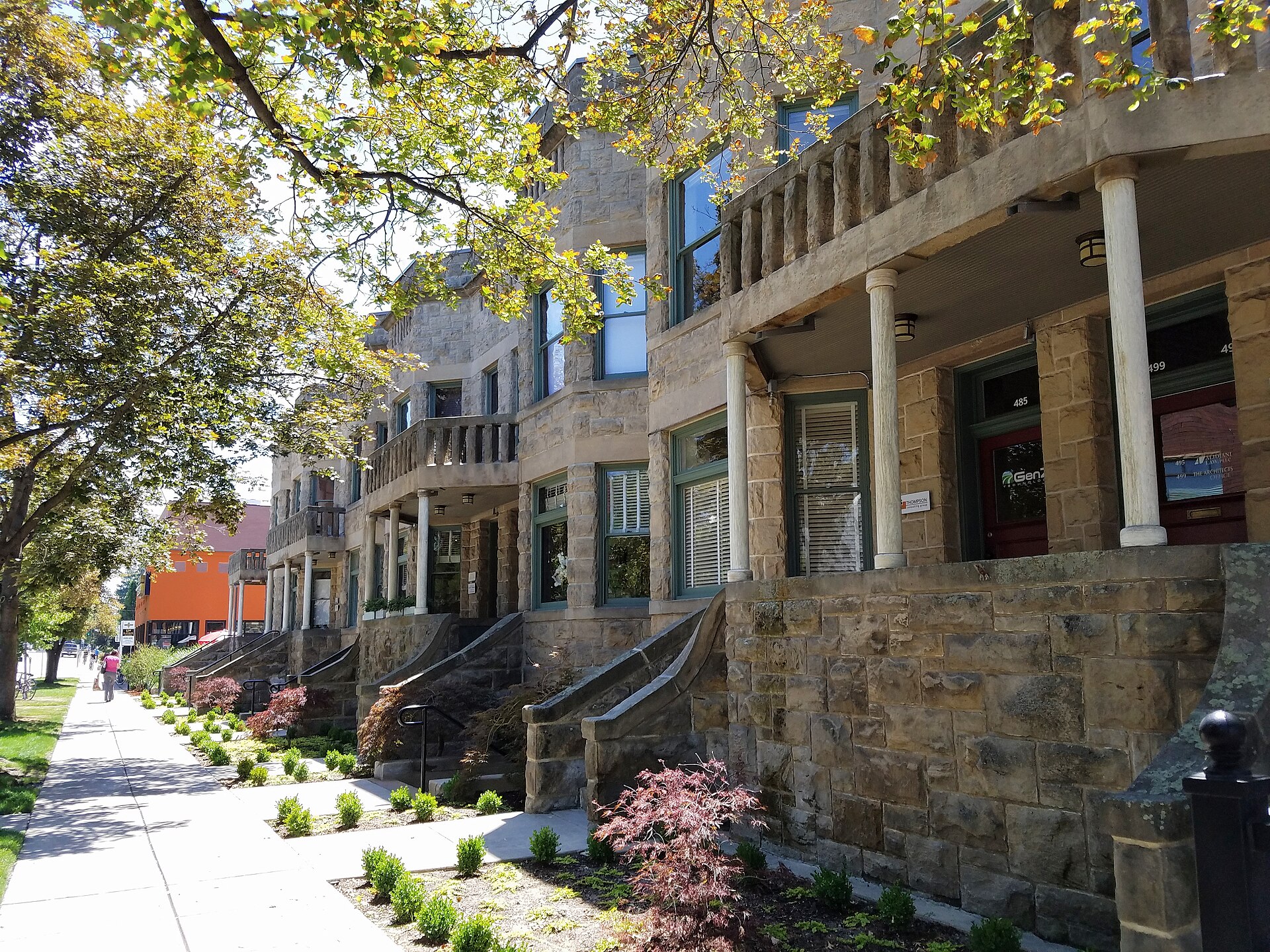

Territorial roots: 1863 to 1887
Congress created the Territory of Idaho on March 3, 1863.24 Its legislature adopted a Code of Civil Procedure at the eleventh session, published in 1881.25 Today's Idaho Code 6-301 through 6-305, 6-312 and 6-316 trace back to sections 795 through 811 of that code: forcible entry (section 795), forcible detainer (796), unlawful detainer (797), service of notice (798), the district court's jurisdiction (799), default judgment (806) and judgment for restitution (811).1234016 The same code put the statute of frauds for leases in sections 935 and 937.1920 The territorial Revised Statutes, in force June 1, 1887, added the rules on ending a tenancy at will (section 2857) and changing the terms of a month-to-month lease (section 2881).2723
That code was written for a frontier with mining claims, ranches and town lots. It assumed a landlord's main need was a fast way to recover possession, and it gave tenants of farmland special treatment: a farm tenant who holds over more than 60 days after the term ends, without any demand from the landlord, is treated as renewed for another full year (still in 6-303(2)).4 It said nothing about repairs, heat or deposits.
The 1970s: fast trials and tenant remedies
Two session laws in the 1970s built most of the modern chapter. Chapter 308 of the 1974 Session Laws added 6-310, which requires a court, in a case "exclusively for possession" of five acres or less for nonpayment of rent, to schedule a trial within 12 days of the complaint, with service at least five days before trial, and 6-311, which limits a continuance in those cases to two days unless the tenant posts security for the rent.1730 Chapter 45 of the 1977 Session Laws gave tenants their own lawsuit: 6-320 lets a tenant sue for damages and "specific performance" (a court order to make the repair) when a landlord fails at listed duties, and 6-321 created the security deposit rules.56 In 1985, chapter 144 added 6-324: the prevailing party in any case under the chapter gets attorney fees, except where triple damages are awarded.33
The Uniform Residential Landlord and Tenant Act, which the Uniform Law Commission first promulgated in 1972, took a different road. It is a model act that a state can adopt in place of its own statutes. The Commission says it was "adopted in 21 states."29 Idaho's Code contains no act by that name: the state kept the 1881 procedure and added the 1974 and 1977 sections to it. One result: some rules found in other states' codes, such as a statutory notice period before a landlord enters, are not in Idaho's statutes at all (see the section on entry below).
The 2020s: a run of short bills
From 2020 to 2026 the Legislature passed a string of narrow changes rather than a new act. The bills came from both directions: some added notice and fee protections that tenant advocates sought, others tightened owners' rights against squatters and against local regulation. Each is listed with its record in the table above and explained in the sections below.
Words you need
Idaho's statutes use older legal terms. These are the ones that come up in every later lesson.
- Lease or rental agreement
- The contract that lets a tenant occupy a landlord's property for rent. Idaho's statutes use both words. A lease may be written or oral; a lease for more than one year must be written to be enforced (9-503, 9-505).1920
- Fixed-term tenancy
- A lease with a set end date, such as six or twelve months. It ends on that date unless the parties agree to extend it. The Attorney General's manual says a fixed-term lease "cannot be extended unless both parties to the lease consent."7
- Tenancy at will; month-to-month tenancy
- A tenancy with no fixed end. Idaho Code 55-208 calls it "a tenancy or other estate at will" and lets either side end it by written notice of at least one month. The Attorney General's manual treats a month-to-month lease the same way.27
- Holdover tenant
- A tenant who stays after a fixed term ends. Unless the landlord agrees to continue the tenancy or signs a new lease, staying is an unlawful detainer under 6-303(1).4
- Security deposit
- Under 6-321(1), any amount a tenant pays a landlord "for any purpose other than the payment of rent." The label on the payment does not matter: if it is not rent, it is a deposit for purposes of the refund rules.6
- Unlawful detainer
- A tenant's staying in possession after the right to stay has ended, and the name of the court case a landlord files to recover the home (6-303).4
- Forcible entry and forcible detainer
- Entering or holding property by force, threats or "circumstances of terror" (6-301, 6-302). A lockout of a tenant can be a forcible entry.123
- Three-day notice
- The written notice a landlord serves before suing over unpaid rent (pay or leave) or another lease violation (cure or leave) under 6-303(2) and (3), and the written notice a tenant serves before suing over repairs under 6-320(d).45
- Writ of restitution
- The court order, issued after a judgment for the landlord, that the sheriff uses to restore possession to the landlord (6-316(2), form in 6-311C).1841
- Habitability
- A general term for a home fit to live in. Idaho's statutes do not use the word; 6-320(a) instead lists specific failures a tenant may sue over, such as broken plumbing or heating and conditions "hazardous to the health or safety of the tenant."5
- Retaliation
- A landlord's punishing a tenant for asserting a legal right. Chapter 3 of Title 6 contains no section on retaliation. The Attorney General's manual says landlords "may not evict a tenant because the tenant requests that repairs be made or because the tenant joins a tenants' association"; lesson 03 examines what supports that statement.7
Leases: written, oral and the one-year line


Oral leases are legal, up to a year
Idaho does not require a written lease for most rentals. The statute of frauds, Idaho Code 9-503, says no interest in real property can be created except in a signed writing, "other than for leases for a term not exceeding one (1) year."19 Section 9-505(4) adds that "an agreement for the leasing, for a longer period than one (1) year" is invalid unless it, or a note or memorandum of it, is in writing and signed by the party being held to it, and that an agent who signs for that party needs written authority.20 The Attorney General's manual sums it up: "Idaho recognizes oral leases for tenancies lasting less than one year as long as the parties agree to all terms," and warns that the terms of an oral agreement "are difficult to prove."7
Some statutes treat oral and written agreements differently. Under 55-305, a landlord may not charge a fee, fine, assessment, interest or other cost that is not in the rental agreement unless the agreement is oral, or it is written and the landlord gives 30 days' written notice of the change.9 The deposit rules in 6-321 and the 30-day rent notice in 55-304(2) apply to oral and written agreements alike.63
What a written lease should say
No Idaho statute lists required terms for an ordinary residential lease. (The Manufactured Home Residency Act does, for park leases; see lesson 06.) The Attorney General's manual recommends twelve items for a written lease:7
- Names, addresses and phone numbers of the landlord or management company, the owner (if a manager runs the property), the tenant and an emergency contact, and maintenance contacts including after hours.
- The address of the rental and the purpose for which it will be used.
- Beginning and ending dates.
- The rent, when it is due and the late fee.
- The deposit amount, the financial institution holding it, and how it will be used at the end of the tenancy.
- Any renter's or liability insurance requirement.
- Who pays each utility and who handles indoor and outdoor maintenance, including garages, carports and storage.
- Policies on occupants, pets, smoking, quiet hours, assignment and subletting.
- How the tenant gives notice to end the lease.
- A move-out inspection the tenant may attend.
- When and how the landlord may enter.
- Signatures and dates of all parties.
The manual also lists lease terms it calls improper because they misstate or conflict with Idaho law, including terms that let the landlord enter without the notice the law or lease requires, charge the deposit for damage the tenant did not cause, make the tenant pay the landlord's attorney fees unless the landlord wins in court, or seize the tenant's belongings for unpaid rent.7 It separately flags "restrictive" terms that are not unlawful but can cost tenants money, such as barring the tenant from the move-out inspection, charging for normal wear and tear such as faded carpet, or requiring large nonrefundable fees up front.7
Changing a lease mid-stream
Two different notice periods apply to changes, and they are easy to mix up.
- 15 days for general terms of a month-to-month lease. Idaho Code 55-304(1), which dates to the territorial Revised Statutes, lets a landlord change the terms of a month-to-month lease by written notice "at least fifteen (15) days before the expiration of the month"; the new terms take effect at the end of the month if the tenant stays.3
- 30 days for rent increases and nonrenewal. Since House Bill 594 (2020), 55-304(2) requires written notice at least 30 days before a residential rent increase takes effect or before the landlord's nonrenewal of the lease. The subsection begins "Notwithstanding subsection (1) of this section," so the 30-day rule controls rent increases even on month-to-month leases.38
- 30 days for new or higher fees in a written agreement. Senate Bill 1039 (2023), now 55-305, requires 30 days' written notice before a landlord charges a fee, fine, assessment, interest or other cost not in a written rental agreement.936
House Bill 594 passed the House 47-21-2 and the Senate 22-12-1 and was signed March 24, 2020, effective July 1, 2020 (Session Laws ch. 254). It was a Ways and Means Committee bill; its Senate floor sponsor was Sen. Janie Ward-Engelking.8 Senate Bill 1039, sponsored by the Senate Judiciary and Rules Committee, passed the Senate 23-10-2 (floor sponsor Sen. Alison Rabe) and the House 44-24-2 (floor sponsor Rep. Hill), and was signed March 20, 2023 (ch. 67). Its statement of purpose says it "requires rental fees to be enumerated in a lease agreement or other written agreement, and that fees be reasonable." It applies to agreements entered into or renewed on or after July 1, 2023.369
Who owes what: the two sets of duties
Idaho's statutes do not contain a single list of landlord duties and tenant duties. They are spread across 6-303 (what a tenant can be evicted for), 6-320 (what a tenant can sue a landlord over), 6-321 (deposits), and Title 55 (notices and fees). Put side by side, they form the grid below.
The landlord's statutory duties: 6-320
Idaho Code 6-320(a) lets a tenant sue a landlord "for damages and specific performance" for six kinds of failure:5
- "Failure to provide reasonable waterproofing and weather protection of the premises."
- "Failure to maintain in good working order electrical, plumbing, heating, ventilating, cooling, or sanitary facilities supplied by the landlord."
- "Maintaining the premises in a manner hazardous to the health or safety of the tenant."
- "Failure to return a security deposit as and when required by law."
- "Breach of any term or provision of the lease or rental agreement materially affecting the health and safety of the tenant, whether explicitly or implicitly a part thereof."
- Failure to install approved smoke detectors in each dwelling unit, including mobile homes, under the landlord's control. The landlord must verify at the start of the rental that they work; the tenant must maintain them.
Before suing, the tenant must give the landlord "three (3) days written notice, listing each failure or breach" with a written demand to fix it (6-320(d)).5 The notice may be delivered to the landlord or agent in person, left with an employee at the landlord's usual place of business, or sent by certified mail, return receipt requested (6-323).32 If the tenant sues only for specific performance, the court must set a trial within 12 days of filing, with service at least five days before trial; a suit that asks for money damages proceeds on the normal civil schedule. The section does not apply to agricultural tracts of five acres or more.5
Idaho law does not give tenants a general right to withhold rent or to make repairs and deduct the cost. The Attorney General's manual says so directly and names the single exception: under 6-320(a)(6), if a landlord fails to install working smoke detectors, the tenant may send a certified letter and, if the detectors are not installed within 72 hours of receipt, install them and deduct the cost from the next month's rent.57 Lesson 03, Renting Safely: Tenant Rights, walks through the repair remedy step by step.
Two points about the list matter for reading it correctly. First, item 2 covers only facilities "supplied by the landlord." A window air conditioner the tenant brought is not the landlord's to fix under this statute. Second, the statute is a remedy, not a building code: whether a particular condition is "hazardous to the health or safety of the tenant" is decided by a judge on the facts. The Attorney General's manual lists examples of conditions that "may violate local or state housing standards," including structural deterioration, defective plumbing, exposed wiring, nonfunctioning heat, insect infestations and leaking roofs.7
The tenant's duties
The tenant's duties come mostly from the grounds for eviction in 6-303: pay rent, keep the lease terms, do not assign or sublet against the lease or commit waste, keep drug activity off the premises, and leave when the right to stay ends.4 Section 6-320(a)(6) adds the duty to maintain smoke detectors.5 The Attorney General's manual describes typical tenant responsibilities in leases: keeping the property clean and sanitary, disposing of garbage, using appliances and plumbing properly, keeping guests from damaging the property, and following the landlord's property rules.7
Security deposits: 6-321
Idaho Code 6-321 has four subsections:6
- (1) What counts and what may be kept. Any amount deposited "for any purpose other than the payment of rent" is a security deposit. At the end of the tenancy all of it must be refunded "except amounts necessary to cover the contingencies specified in the deposit arrangement." The landlord "shall not retain any part of a security deposit to cover normal wear and tear," defined as deterioration from intended use "without negligence, carelessness, accident, or misuse or abuse" by the tenant, household members or guests.
- (2) When. "Refunds shall be made within twenty-one (21) days if no time is fixed by agreement and, in any event, within thirty (30) days after surrender of the premises by the tenant." Any partial refund must come with "a signed statement itemizing the amounts lawfully retained," the purpose, and "a detailed list of expenditures made from the deposit."
- (3) Sale of the property. If the property changes hands during a tenancy, "the new owner shall be liable for refund of the deposits."
- (4) Managers. Added by House Bill 152 (2021): a deposit for a residential rental managed by a third-party manager must be kept in a separate account at a federally insured institution, apart from the manager's operating account. The rule does not apply to the owner, managers with common members or principals with the owner, real estate licensees, or nonprofit corporations.35
Failure to return a deposit "as and when required by law" is one of the grounds for a tenant's suit under 6-320(a)(4), and 6-317 allows a judgment of three times actual damages in an action under 6-320.542 The Attorney General's manual describes the steps a tenant takes, starting with a certified letter, and gives a table of wear and tear (faded curtains, carpet and paint; minor marks or nicks in walls) against damage (cigarette burns in curtains and carpet, broken tiles, pet damage to carpets and curtains).7 Idaho sets no limit on how large a deposit may be: "Idaho does not restrict the amount of rent or deposits that landlords can charge," the manual says.7
How we figured it: the deposit clock
A sample, using the statute's words. A tenant on a lease that says nothing about deposit timing hands back the keys on Tuesday, June 30, 2026. Under 6-321(2) the 21 days run from "surrender of the premises," so day 21 is Tuesday, July 21, 2026. If the lease had fixed 30 days, the deadline would be Thursday, July 30, 2026. A lease that set 45 days would not move the deadline past July 30, because the statute says "in any event, within thirty (30) days."
Inputs: Idaho Code 6-321(2) as amended through 2021 Session Laws ch. 197. Method: count calendar days, starting the day after surrender. The statute does not say how to count (calendar or business days, or which day is day one), so this is our illustration, not a reading by any court.
Fees and the reasonableness rule: 55-305
Idaho Code 55-305(1) says, "Any fees imposed on a residential tenant, including fees for the late payment of rent, shall be reasonable."9 Subsection (2) bars charging any fee, fine, assessment, interest or other cost greater than the amount in the rental agreement, or one not in the agreement at all, unless the agreement is oral or the landlord gives 30 days' written notice of the change. Subsection (4) says nothing in the section limits "the amount that can be charged for rent." The statute does not define "reasonable" or set a dollar cap on late fees; a court would decide in a particular case.
Rental application fees are not limited by statute. Senate Bill 1042 (2025), from the Senate Judiciary and Rules Committee, would have let landlords charge application fees to only two applicant households at a time and required them to actually run the checks they charge for. It passed the Senate 23-12-0 on Feb. 19, 2025, was referred to the House Business Committee, and went no further.43 House Bill 701 (2026), a House Business Committee bill with a similar purpose whose statement of purpose lists Reps. Megan Egbert, Jordan Redman and Josh Wheeler as contacts, was printed and referred to the House Business Committee on Feb. 17, 2026, with no further action recorded.44
Entry and privacy
No section of Idaho Code Title 6, Chapter 3 or Title 55, Chapter 3 sets a notice period before a landlord enters an occupied rental. The Attorney General's manual says tenants "have a right to privacy in their rentals" and that the lease should spell out when the landlord may enter to inspect and repair, respond to an emergency, or show the property. If the lease is silent, the manual says, the landlord "first should notify the tenant why the entry is necessary," and the two can agree on a reasonable time.7 Manufactured home parks are different: the Residency Act, as summarized in the same manual, lets the park landlord enter a lot without consent only in an emergency or when the manager suspects abandonment.7
Attorney fees and triple damages
Two short sections raise the stakes of any landlord-tenant case. Under 6-324, "the prevailing party shall be entitled to an award of attorney fees" in any action under Chapter 3, except where triple damages are awarded. For a nonpayment eviction, fees are available only if the three-day notice was written to "advise the tenant that attorney fees shall be awarded to the prevailing party."33 Under 6-317, a court may enter judgment for three times actual damages when a landlord or tenant recovers for a forcible or unlawful entry or detention, in a tenant's action under 6-320, or when a property owner wrongly uses the forcible detainer fast track against a tenant or in bad faith.42 Because fees shift to the winner, a small deposit dispute can carry costs larger than the deposit.
The clock: Idaho's day counts
Most landlord-tenant disputes in Idaho turn on a deadline. The table collects every one in this lesson, with the statute that sets it. Day counts are as the statutes state them; where a statute says "hours," the table says hours.
| What | Deadline | Who must act | Idaho Code |
|---|---|---|---|
| Notice to pay rent or leave | 3 days after service, in writing, stating the amount due | Tenant pays or leaves | 6-303(2)4 |
| Notice to cure another lease violation or leave | 3 days after service | Tenant cures or leaves | 6-303(3) |
| Time to serve a nonpayment notice | Within 1 year after the rent became due | Landlord | 6-303(2) |
| Tenant's repair demand before suing | 3 days written notice | Landlord repairs | 6-320(d)5 |
| Smoke detectors after certified letter | 72 hours from receipt | Landlord installs, or tenant may install and deduct | 6-320(a)(6) |
| Trial in a nonpayment or drug possession case (5 acres or less) | Set within 12 days of filing; service at least 5 days before trial | Court; landlord serves | 6-310(2)17 |
| Continuance in those cases | No more than 2 days unless tenant posts security for rent | Court | 6-31130 |
| Removing belongings after judgment | 72 hours (residential); 7 days (commercial or 5 acres or more) | Tenant | 6-316(2)18 |
| Sheriff restores possession | After the removal period and 3 days after the court's finding | Sheriff | 6-316(2) |
| Change month-to-month terms (other than rent increase) | Written notice at least 15 days before month's end | Landlord | 55-304(1)3 |
| Rent increase or nonrenewal, residential | Written notice at least 30 days before | Landlord | 55-304(2) |
| New or higher fee, written agreement | Written notice 30 days before | Landlord | 55-305(2)9 |
| End a tenancy at will | Written notice of at least 1 month | Either side | 55-2082 |
| Deposit refund and itemized statement | 21 days if lease is silent; never more than 30 days after surrender | Landlord | 6-321(2)6 |
| Fair housing complaint to the Idaho Human Rights Commission | Within 1 year of the act | Person harmed | 67-5907(1)14 |
| Shielding of a dismissed eviction filed on or after Jan. 1, 2025 | Automatic after 3 years, if no appeal pending | Court system | 6-303A45 |
Ending a tenancy, in brief
Lesson 04 covers evictions step by step, with court data. The outline here is what every landlord and tenant should know before that lesson.
- A notice comes first. A three-day notice for unpaid rent or a lease violation (6-303(2) and (3)), a one-month notice to end a tenancy at will (55-208), or a 30-day notice of nonrenewal of a residential lease (55-304(2)).423 Notices are served by handing a copy to the tenant; if the tenant is away from home and work, by leaving a copy with "some person of suitable age and discretion" and mailing a copy; and if neither works, by posting a copy in a conspicuous place on the property, giving a copy to anyone living there, and mailing a copy to the property address (6-304).40
- Then a court case. If the tenant does not pay, cure or leave, the landlord files an unlawful detainer complaint in the district court of the county where the property is (6-305).16 For nonpayment or drug activity on five acres or less, the court sets trial within 12 days (6-310(2)). If the tenant does not appear, the court "must enter his default" and give judgment as asked (6-312).1726
- A judgment and a writ. If the landlord wins, the judgment restores possession and, in rent and lease-violation cases, declares the lease forfeited. The court also finds the rent due and damages (6-316(1)). A residential tenant has 72 hours to remove belongings; the sheriff then restores possession, and the landlord may remove and dispose of property left behind (6-316(2)).18
- No self-help at any step. The Attorney General's manual lists what a landlord may not do to force a tenant out: fail to give proper notice, fail to allow time to pay or comply, shut off utilities, change the locks, confiscate the tenant's property, "or do anything other than institute lawful eviction proceedings."7
For federally backed rental properties covered by the 2020 CARES Act, a separate federal rule applies: 15 U.S.C. 9058(c) says the lessor "may not require the tenant to vacate the covered dwelling unit before the date that is 30 days after the date on which the lessor provides the tenant with a notice to vacate."46 Which properties are covered, and how Idaho courts apply the rule, is in lesson 04.
Tenants, guests and squatters
Since July 1, 2025, Idaho has had three different legal paths for removing someone from a home, depending on who that person is. Using the wrong path is a common and costly error.
- A tenant (anyone with a written or oral rental agreement with the owner, current or former) is removed only through notice and an unlawful detainer case under 6-303 and following.4
- An unauthorized occupant of a residential dwelling may be removed by the sheriff under Idaho Code 6-310A, added by House Bill 321 (2025). The owner or agent presents a verified "Complaint to Remove Persons Unlawfully Occupying Residential Real Property" to the sheriff. All eight conditions in 6-310A(2) must be met, including that the occupants "are not current or former tenants pursuant to a written or oral rental agreement authorized by the property owner," are not immediate family members, that the property was not open to the public when they entered, that the owner directed them to leave, and that no related litigation is pending. The sheriff verifies the owner, serves a notice to vacate immediately and puts the owner in possession. A person wrongfully removed may sue and recover actual damages plus "statutory damages equal to triple the fair market rent," costs and attorney fees.4738
- A forcible detainer (someone who entered and holds the property by force or while the occupant was away, with no lease or agreement ever made) may be the subject of a verified complaint under 6-310(3), with trial within 72 hours of filing excluding weekends and holidays (6-310(4)). An owner who files that kind of case when a landlord-tenant relationship existed, or in bad faith, is liable for triple damages (6-310(5)).17
House Bill 321 (2025), from the House Ways and Means Committee, passed the House 64-3-3 on March 13, 2025, and the Senate 35-0-0 on March 25, 2025, and was signed March 31, 2025 (Session Laws ch. 222), effective July 1, 2025. Its statement of purpose says it "is commonly referred to as a 'squatters bill' in other states." It also created a misdemeanor for presenting a false lease and a felony for listing or advertising a home for sale or rent without authority.38 House Bill 695 (2026) changed one word in 6-310A, "possession" to "restitution," in the provision on the sheriff's fee; it passed the House 68-0-2 and the Senate 34-0-1 and was signed March 20, 2026 (ch. 82), effective July 1, 2026.39
Eviction records and shielding
An eviction filing is a public court record that can follow a tenant to the next rental application. Senate Bill 1327 (2024), from the Senate Judiciary and Rules Committee (floor sponsors Sen. Alison Rabe and Rep. Clay Handy), added Idaho Code 6-303A. For unlawful detainer cases filed on or after Jan. 1, 2025, all records are shielded from public view "without the filing of a petition" if the entire case was dismissed, no appeal is pending, and at least three years have passed since filing, or sooner if the parties stipulate to shielding and file the stipulation. Parties and court staff can still see the records, and any party may petition to seal under Idaho Supreme Court rules.45 The bill passed the Senate 31-3-1 and the House 67-0-3 and was signed April 3, 2024 (ch. 269), effective July 1, 2024.37 By our reading, because the earliest covered cases were filed in January 2025, the first automatic shielding under the three-year rule would come in January 2028. Lesson 04 and the site's Idaho iCourt Portal lesson cover how eviction records appear online.
Fair housing basics
The federal Fair Housing Act
The Fair Housing Act is Title VIII of the Civil Rights Act of 1968, signed April 11, 1968 (Pub. L. 90-284), codified at 42 U.S.C. 3601 and following.21 As amended, 42 U.S.C. 3604 makes it unlawful to refuse to rent, to set different terms, to make a dwelling "unavailable," to falsely say a unit is not available, or to publish a discriminatory ad, "because of race, color, religion, sex, familial status, or national origin," and separately bars discrimination because of "handicap" (the statute's word for disability).28 Sex was added in 1974 (Pub. L. 93-383). Familial status and handicap were added by the Fair Housing Amendments Act of 1988 (Pub. L. 100-430), signed Sept. 13, 1988, and effective 180 days later.2128 "Familial status" means, in general, a household with children under 18; the Attorney General's manual describes it as the "presence of children under the age of 18."7
The federal law has narrow exemptions. Under 42 U.S.C. 3603(b), the main rental rules (other than the ban on discriminatory ads) do not apply to a single-family house rented by a private owner who owns no more than three such houses and rents without a broker or discriminatory advertising, or to rooms or units in a building with "no more than four families living independently of each other, if the owner actually maintains and occupies one of such living quarters as his residence."48 The U.S. Department of Justice brings pattern-or-practice cases and cases referred by HUD; HUD takes individual complaints.4950
The Idaho Human Rights Act
Idaho's law came a year after the federal one. The Idaho Human Rights Act was enacted in 1969 (Session Laws ch. 459), and its list of prohibited acts is now Idaho Code 67-5909.22 The section bars discrimination "because of, or on a basis of, race, color, religion, sex or national origin" in all of its subsections, and adds disability for real estate transactions in subsection (8). Subsection (8) makes it a prohibited act for an owner, broker or anyone in a real estate transaction to refuse to deal, set different terms, falsely say property is unavailable, publish a discriminatory ad or application form, or refuse a person with a disability reasonable modifications at that person's expense; in a rental, the landlord may condition a modification on the renter's agreeing to restore the interior when reasonable. Subsection (10) bars inserting into a written instrument relating to real property "a provision which purports to forbid or restrict the conveyance, encumbrance, occupancy or lease thereof" on those grounds, and subsection (11) bars "blockbusting," inducing sales by representing that a neighborhood's composition is changing.22
The text of 67-5909 does not list familial status; that protection in Idaho comes from the federal Fair Housing Act. A person who believes they were discriminated against may file a sworn complaint with the Idaho Human Rights Commission "within one (1) year of the alleged unlawful discrimination" (67-5907(1)). The commission first tries to resolve the matter informally, investigates, and may file a civil action if it finds reasonable grounds and conciliation fails.14


Assistance animals, screening and vouchers
Three practical fair housing questions come up early in a tenancy. On animals, the Attorney General's manual says support, service and companion animals "are not legally considered 'pets'" and that tenants are entitled to a support animal regardless of a pet policy, and it refers readers to the Intermountain Fair Housing Council; HUD guidance on the details is covered in lesson 02.7 On screening, the manual says a landlord "may select prospective tenants based on any lawful business criteria," may reject an applicant for inability to pay or for criminal history, and may apply a valid occupancy limit "based on health and safety standards," but may not use any criterion "that serves only as an excuse for discriminating against a protected class."7 On vouchers, Idaho Code 55-306 bars local governments from mandating that owners "participate in an optional federal housing assistance program," so no Idaho city may require landlords to accept Housing Choice Vouchers.10
Who rents in Idaho
The Census Bureau's American Community Survey (ACS) asks every sampled household whether it owns or rents (table B25003, "Tenure"). Idaho rents less than the nation. In the 2025 one-year estimates, 220,973 of Idaho's 765,200 occupied housing units were renter-occupied, 28.9 percent, against 34.7 percent for the United States.15 The 2020 to 2024 five-year estimates, the only ACS series that covers small counties and towns, put Idaho at 27.9 percent and the nation at 34.8 percent.13
| Place | Occupied homes | Renter-occupied | Renter share | Median gross rent |
|---|---|---|---|---|
| United States | 129,227,496 | 45,017,354 | 34.8% | $1,413 |
| Idaho | 713,005 | 198,644 | 27.9% | $1,238 |
| Ada County | 202,543 | 59,144 | 29.2% | $1,577 |
| Canyon County | 86,069 | 21,053 | 24.5% | $1,347 |
| Twin Falls County | 34,754 | 10,266 | 29.5% | $1,089 |
| Jerome County | 8,277 | 2,049 | 24.8% | $966 |
| Gooding County | 5,702 | 1,663 | 29.2% | $880 |
| Boise | 101,178 | 37,268 | 36.8% | $1,446 |
| Meridian | 48,038 | 12,199 | 25.4% | $1,805 |
| Nampa | 39,134 | 11,656 | 29.8% | $1,420 |
| Idaho Falls | 24,728 | 8,855 | 35.8% | $1,075 |
| Pocatello | 22,510 | 7,993 | 35.5% | $948 |
| Coeur d'Alene | 23,963 | 9,713 | 40.5% | $1,468 |
| Twin Falls (city) | 20,828 | 7,475 | 35.9% | $1,082 |
| Jerome (city) | 4,148 | 1,113 | 26.8% | $947 |
| Kimberly | 1,723 | 298 | 17.3% | $1,127 |
| Gooding (city) | 1,305 | 513 | 39.3% | $861 |
| Buhl | 1,816 | 431 | 23.7% | $1,148 |
| Hagerman | 650 | 95 | 14.6% | $991 |
ACS 2020 to 2024 5-year estimates, tables B25003 (tenure) and B25064 (median gross rent, renter-occupied units paying cash rent), from the Census Bureau's table-based summary files. Renter share is our calculation: renter-occupied divided by occupied. Small-town figures carry wide margins of error: Hagerman's 95 renter households have a margin of plus or minus 46, Kimberly's 298 plus or minus 150, and Buhl's median rent of $1,148 plus or minus $393.1351
How we figured it: renter share and median rent
Renter share. From ACS table B25003, renter share = B25003_E003 (renter-occupied) divided by B25003_E001 (all occupied units), times 100. Example, Idaho 2020 to 2024: 198,644 divided by 713,005 = 27.9 percent. Jerome County: 2,049 divided by 8,277 = 24.8 percent. Idaho 2025 one-year: 220,973 divided by 765,200 = 28.9 percent.
Median gross rent. Taken directly from table B25064 (no calculation). Gross rent is contract rent plus the estimated cost of utilities and fuels when the renter pays them. It covers all renters paying cash rent, including long-time tenants, so it runs below the asking rent for a vacant unit.
Data. Census Bureau table-based summary files: acsdt5y2024-b25003.dat, acsdt5y2024-b25064.dat, acsdt1y2025-b25003.dat and acsdt1y2025-b25064.dat, downloaded Nov. 19, 2026. Place codes matched to names using the Census Bureau's 2020 redistricting geography file for Idaho. Five-year estimates describe the whole 2020 to 2024 period, not a single year; one-year estimates exist only for places of 65,000 or more people.
The 2025 one-year figures, which reflect a single recent year for the larger places, show the same pattern with higher rents: a median gross rent of $1,462 for Idaho against $1,557 nationally; $1,765 in Ada County, $1,547 in Canyon County and $1,176 in Twin Falls County; and renter shares of 39.9 percent in Boise, 33.7 percent in Nampa and 28.9 percent in Meridian.1551
Cost is the reason the law matters to so many households. In 2025, 48.8 percent of Idaho renter households for which the measure could be computed paid 30 percent or more of income on rent and utilities, and 23.7 percent (49,071 households) paid half or more; the U.S. figures were 51.8 and 26.2 percent. In Ada County the shares were 47.6 and 26.0 percent; in Canyon County, 47.0 and 20.7 percent.52 Part A's Who Idahoans Are Now breaks these numbers down by county and year, with the method.53

The Magic Valley picture
In the Magic Valley, Twin Falls is a renters' city by Idaho standards: 35.9 percent of its occupied homes were rented in 2020 to 2024, more than Nampa or Meridian, at a median gross rent of $1,082. Jerome (26.8 percent) and Buhl (23.7 percent) rent less, and Kimberly (17.3 percent) and Hagerman (14.6 percent) are mostly owner towns, though their small samples make those shares rough. Gooding stands out at 39.3 percent, with the lowest median gross rent in the table, $861.1351 The same state statutes cover a renter in a Jerome duplex and one in a Boise high-rise. What differs is who enforces them: there is no state rental agency, so enforcement depends on tenants and landlords filing in the county courthouse, and on city building and code enforcement offices for conditions covered by local codes.
How Idaho compares
The uniform act states
The Uniform Law Commission says its 1972 Uniform Residential Landlord and Tenant Act was "adopted in 21 states," and the Commission has since approved a revised version.29 Idaho is not among the adopters: its landlord-tenant law remains the 1881 procedure with the 1974 and 1977 additions and the 2020s amendments described above. Idaho's tenant remedies are therefore narrower in some respects than in states that adopted a fuller act (there is no general rent withholding or repair-and-deduct right, and no entry notice statute), and its eviction procedure for nonpayment sets trial within 12 days of filing.5177
Rent regulation
Idaho has no state limit on rent, and Idaho Code 55-306 bars cities and counties from adopting one.10 Why the Legislature may override cities on such questions is covered in Part B's State Preemption and Local Control. House Bill 545 (2024), a State Affairs Committee bill carried by Rep. Brandon Mitchell in the House and Sen. Okuniewicz in the Senate, widened an older ban on local ordinances "controlling the amount of rent" so that it now covers any ordinance that would "regulate rent, fees, or deposits" or force participation in "an optional federal housing assistance program." It passed the House 59-11-0 on Feb. 26, 2024, and the Senate 26-9-0 on March 25, 2024, and was signed April 1, 2024 (ch. 257), effective July 1, 2024.11 Senate Bill 1043 (2025), sponsored by Sen. Alison Rabe and Rep. Megan Egbert, moved the rule into its own section, 55-306; its statement of purpose says the bill makes "no substantive changes to Title 55, Chapter 3." It passed 35-0-0 and 67-0-3 and was signed March 13, 2025 (ch. 65).12
Oregon went the other way. Its Senate Bill 608 (2019), enacted as Oregon Laws 2019, chapter 1, limits rent increases on most units to one per year and caps the annual increase at "seven percent plus the consumer price index," exempts units whose first certificate of occupancy is less than 15 years old, and bars a landlord from ending a month-to-month tenancy without cause after the first year of occupancy except on 90 days' notice in listed circumstances.54 California adopted a statewide rent cap and just-cause law in 2019, Assembly Bill 1482; this lesson did not re-read its current text.
Deposits elsewhere in the West
Idaho's 21-day default for returning a deposit is shorter than the 30 days allowed in Washington, Montana and Nevada, and Idaho sets no cap on the deposit amount, unlike Nevada and Arizona.67
- Washington: within 30 days after the rental agreement ends and the tenant vacates, a "full and specific statement of the basis for retaining any of the deposit" with any refund (RCW 59.18.280).55
- Montana: within 30 days a written list of damages and any refund; within 10 days if there are no damages, cleaning or unpaid rent or utilities (MCA 70-25-202).56
- Nevada: deposit and surety bond together may not exceed "3 months' periodic rent"; itemized accounting and refund within 30 days after the tenancy ends (NRS 118A.242).57
- Arizona: security "however denominated" may not exceed "one and one-half month's rent"; an itemized list and refund within 14 days, excluding weekends and legal holidays, after the tenancy ends, possession is delivered and the tenant demands it (A.R.S. 33-1321).58
Just cause and other protections
Idaho has no "just cause" rule: a landlord may end a tenancy at will with one month's notice, or decline to renew a lease with 30 days' notice, without stating a reason (55-208, 55-304(2)), subject to fair housing law and any lease term.23 The Attorney General's manual notes one exception that comes from federal program rules: a tenant in government-subsidized or public housing, or receiving government housing assistance, who gets a 30-day notice must be given it "for good cause."7 Oregon's SB 608 is the nearest example of a statewide just-cause rule in the region.54
Pictures, Numbers and Infographics
The key numbers, deadlines and dates in this lesson, with a comparison where one exists.
| Measure or rule | Idaho | U.S. or other states | Place or year | Source |
|---|---|---|---|---|
| Renter share of occupied homes | 27.9% | U.S. 34.8% | ACS 2020 to 2024 | 13 |
| Renter share, one-year estimate | 28.9% (220,973 households) | U.S. 34.7% | ACS 2025 | 15 |
| Median gross rent | $1,462 | U.S. $1,557 | ACS 2025 | 51 |
| Renters paying 30% or more of income | 48.8% | U.S. 51.8% | ACS 2025 | 52 |
| Notice to pay rent or cure a violation | 3 days | Varies by state | Idaho Code 6-303 | 4 |
| Trial setting, nonpayment cases | Within 12 days of filing | Varies by state | Idaho Code 6-310(2), since 1974 | 17 |
| Deposit return deadline | 21 days (up to 30 by agreement) | WA 30; MT 30 (10 if no deductions); NV 30; AZ 14 days excluding weekends and holidays | Current statutes | 655565758 |
| Cap on deposit amount | None | NV 3 months' rent; AZ 1.5 months' rent | Current statutes | 75758 |
| Notice of rent increase or nonrenewal | 30 days, written | OR: 90 days for increases after the first year | Idaho 2020; Oregon 2019 | 354 |
| Statewide limit on rent increases | None; local limits barred | OR: 7% plus CPI a year | Idaho 2024 and 2025; Oregon 2019 | 1054 |
| Time to file a discrimination complaint with the state | 1 year | Federal: HUD complaints (see lesson 02) | Idaho Code 67-5907 | 14 |
| Federal Fair Housing Act; 1988 amendments | Applies in Idaho | April 11, 1968; Sept. 13, 1988 | 42 U.S.C. 3601 | 21 |
| States that adopted the 1972 uniform act | Not adopted | 21 states | Uniform Law Commission | 29 |
Other graphics in this lesson: the map of where the rules live, the 1863 to 2026 timeline, the who-owes-what grid, the deadline chart, the removal decision chart and the renter share chart, each placed with the section it explains.
Common mistakes
- Assuming a landlord can lock out a tenant who stops paying. The Attorney General's manual lists changing the locks, shutting off utilities and confiscating property as unlawful, and says a landlord may not "do anything other than institute lawful eviction proceedings."7 A forcible entry, including turning out a person in possession "by force, threats or menacing conduct," is defined in 6-301, and damages for it can be tripled under 6-317.142
- Using the squatter law on a former tenant. Idaho Code 6-310A applies only if the occupants "are not current or former tenants pursuant to a written or oral rental agreement." A roommate or relative who paid rent under an oral agreement is a tenant, and the unlawful detainer process applies. Wrongful removal under 6-310A carries "triple the fair market rent" in statutory damages.47
- Counting the deposit deadline from the end of the lease instead of surrender. The 21 and 30 days in 6-321(2) run from "surrender of the premises by the tenant," which may be before or after the lease's end date.6
- Thinking a lease can stretch the deposit deadline. A lease may set a period other than 21 days, but "in any event" the refund is due within 30 days.6
- Charging normal wear and tear to the deposit. The statute bars it outright, and the Attorney General's manual gives examples: faded curtains, carpet and paint, and minor marks or nicks in walls are wear and tear; cigarette burns, broken tiles and pet damage are not.67
- Confusing the 15-day and 30-day notices. Fifteen days' notice before month's end (55-304(1)) changes general terms of a month-to-month lease. A residential rent increase or nonrenewal needs 30 days (55-304(2)), and so does a new or higher fee in a written lease (55-305).39
- Withholding rent over repairs. The Attorney General's manual says Idaho law "generally" does not allow rent withholding or repair-and-deduct; the only statutory exception is smoke detectors under 6-320(a)(6). A tenant who withholds rent can receive a three-day notice to pay or quit.75
- Skipping the attorney-fee line in a three-day notice. For a nonpayment case, 6-324 allows the landlord fees only if the notice told the tenant that "attorney fees shall be awarded to the prevailing party."33
- Expecting the Attorney General or the city to act on a deposit or repair dispute. The manual says the office "does not enforce Idaho's landlord-tenant laws"; cities are barred from regulating rent, fees and deposits (55-306), though their building and nuisance codes still apply.710
- Citing old section numbers. Before July 1, 2025, the notice rule was 55-307 and the fee rule 55-314. Senate Bill 1043 (2025) renumbered them 55-304 and 55-305 and moved the rent control ban to 55-306. Older guides and court filings use the old numbers.1239
What we know, what we don't, and what the data can show
What we know
- The full text of every Idaho landlord-tenant statute as amended through the 2026 session, and the session law that made each change, from the Legislature's statute pages.463
- That Idaho's chapter grew from the 1881 territorial code, with the core tenant remedies added in 1974, 1977 and 1985, and a series of narrow amendments from 2020 to 2026.117533
- How many Idaho households rent and what they pay, with margins of error, from the ACS.1351
- What the Attorney General's office tells landlords and tenants, in the July 2026 manual.7
What we don't know
- How many Idaho rentals use oral rather than written leases; no agency collects leases.
- How often landlords keep deposits, or how much, and how often tenants sue over them; deposit suits are filed as small claims or civil cases and are not counted separately in published court statistics.
- How Idaho courts have read the "reasonable" fee standard in 55-305 since 2023; this lesson found no Idaho appellate opinion on it.
- How many owners have used the 6-310A sheriff process since July 1, 2025; sheriffs keep the complaints, but no statewide count is published.
- The source of the Attorney General's statement that retaliatory evictions are barred; Chapter 3 of Title 6 contains no retaliation section (lesson 03 examines the question).
What the data can show
- Renter share, rent and cost burden by county, city and year: ACS tables B25003, B25064 and B25070 (one-year for places of 65,000 or more, five-year for all).1352
- Eviction filings by county and month: case filings searchable on the Idaho courts' iCourt portal (case type for unlawful detainer), keeping in mind that dismissed cases filed since 2025 will drop from public view after three years under 6-303A.45
- Housing discrimination complaints: Idaho Human Rights Commission annual reports and HUD's fair housing complaint data.5950
- Legislative history: bill pages, votes, statements of purpose and committee minutes for every bill in the timeline, on legislature.idaho.gov.811
Questions people ask
Does Idaho require a written lease?
Only for leases longer than one year. Idaho Code 9-503 excepts "leases for a term not exceeding one (1) year" from the writing requirement, and 9-505(4) requires a signed writing for a lease "for a longer period than one (1) year." Oral month-to-month and short leases are legal, though the Attorney General's manual notes their terms "are difficult to prove."19207
How much notice does a landlord need to raise the rent?
Thirty days' written notice before the increase takes effect, for any residential lease (55-304(2)). During a fixed-term lease, the rent stated in the lease governs unless the lease allows changes. Idaho has no limit on the size of an increase.37
How much notice must a tenant give to move out?
For a tenancy at will (month-to-month), written notice of not less than one month (55-208(2)). For a fixed-term lease, the lease governs; the Attorney General's manual says that if a lease sets no notice period, it simply expires at the end of the term.27
Is there a limit on how much a deposit can be?
No. Idaho sets no cap, and 55-306 bars cities and counties from regulating deposits. The refund rules in 6-321 apply to any amount paid "for any purpose other than the payment of rent," whatever it is called.6107
Can a landlord enter without notice?
Idaho has no statute setting an entry notice period for ordinary rentals. The lease controls; if it is silent, the Attorney General's manual says the landlord should first tell the tenant why entry is needed and agree on a reasonable time. Emergencies are treated differently in most leases.7
Who enforces Idaho's landlord-tenant law?
The parties, in court. The Attorney General's office does not enforce these laws. Courts hear unlawful detainer, repair and deposit cases; the Idaho Human Rights Commission and HUD handle discrimination complaints; city building and code enforcement offices enforce local building and nuisance codes.714
Does federal fair housing law cover a small landlord?
Mostly yes, with narrow exemptions under 42 U.S.C. 3603(b): an owner of no more than three single-family houses who rents without a broker or discriminatory ads, and an owner who lives in a building of four or fewer units. Neither exemption allows a discriminatory ad. The Idaho Human Rights Act's text has no matching small-landlord exemption in 67-5909.4822
Hard questions
Should Idaho replace its patchwork with a single landlord-tenant act?
For a single act: Tenants, small landlords and judges must now assemble the rules from at least five chapters of the Code, with older section numbers still cited in forms and guides. A single act, modeled on the uniform act or a neighbor's law, would put duties, notices and remedies in one place, and could fill gaps such as entry notice and retaliation. Against: Idaho's procedure is fast and familiar to the courts, and the Legislature has been able to make targeted fixes (fees in 2023, shielding in 2024, squatters in 2025) without reopening the whole code. A full act would bring a fight over every provision. What the evidence shows: The 2025 reorganization (SB 1043) passed both houses with no votes against, while bills adding substantive tenant rules, such as rental application fee limits in 2025 and 2026, did not become law.124344
Should cities be allowed to regulate rents, fees or deposits?
For local authority: Housing costs and vacancies differ widely between Boise, Ketchum and Hagerman, and local officials hear tenant complaints first. For the state ban: One set of rules statewide lowers costs for owners with properties in several cities, and rent limits can discourage building. What the evidence shows: HB 545 (2024) passed 59-11 in the House and 26-9 in the Senate, so the Legislature's position is clear. Oregon's 2019 law exempts buildings less than 15 years old, a design meant to answer the construction concern; Idaho has no comparable local experience to measure.1154
Is a 12-day trial too fast or too slow?
Landlords' case: Every week of unpaid rent is a loss a small owner may never recover, and the fast track has existed since 1974. Tenants' case: Three days to pay and a trial within 12 days leave little time to find rental assistance or legal help, and a default judgment (6-312) follows if the tenant misses the hearing. What the evidence shows: The statute limits continuances to two days unless the tenant posts security for rent (6-311). Lesson 04 looks at what the court data show about outcomes.173026
Should eviction records be shielded sooner?
For faster shielding: A filing that ended in dismissal can still cost a tenant an apartment; three years is a long time to carry it. Against: A filing, even a dismissed one, can show a pattern of late payment that a landlord may want to see before signing a lease, and open court records are the default in Idaho. What the evidence shows: SB 1327 (2024) chose automatic shielding of dismissed cases after three years, with earlier shielding by stipulation; it passed the Senate 31-3-1 and the House 67-0-3.4537
For reporters and advocates
Records that exist. Unlawful detainer, small claims and civil case files in each county's district court, searchable on the Idaho courts' iCourt portal (see Idaho iCourt Portal and Civil, Small Claims, Family and Probate Records). Sheriff's office logs of writs of restitution served and of 6-310A complaints received. Idaho Human Rights Commission decisions and annual reports. City building and code enforcement complaint logs. Bill pages, votes, statements of purpose, committee minutes and hearing audio on legislature.idaho.gov. The Attorney General's consumer complaint records (the office does not enforce landlord-tenant law but does receive complaints and enforces the Idaho Consumer Protection Act, under which the manual says misrepresenting needed repairs is prohibited).7
Questions to ask officials.
- To the county sheriff: How many writs of restitution did the office serve each year since 2020, and how many 6-310A complaints has it received since July 1, 2025? How many did it act on, and how many did it decline?
- To the trial court administrator: How many unlawful detainer cases were filed in the county each year, and how many ended in default judgments?
- To the city: Which building, housing or nuisance codes apply to rental homes, who enforces them, and how many rental complaints did code enforcement receive last year?
- To legislators: Why did the 2025 and 2026 application fee bills stall, and what would a single landlord-tenant act need to include to pass?
- To the Idaho Human Rights Commission: How many housing complaints were filed in the last five years, from which counties, and on what bases?
Public records. County, city and state records not posted online can be requested under the Idaho Public Records Act, Idaho Code Title 74, Chapter 1; see Idaho Public Records Requests. Court records follow the Idaho Court Administrative Rules, covered in Idaho Court Records Access Rules.
The Magic Valley angle. Twin Falls (35.9 percent renters) and Gooding (39.3 percent) rent at rates close to Boise's, while median gross rents are hundreds of dollars lower; Jerome County's renter share is 24.8 percent.1351 Ask the Twin Falls, Jerome and Gooding county courts how many unlawful detainer cases they hear, ask the Twin Falls and Jerome sheriffs about writs and 6-310A complaints, and compare with Ada and Canyon. How to Report on Housing gives the step-by-step workflow.
Fairness. Most Idaho rentals are run by small owners, and most tenancies end without a court case. A story about a single bad eviction or a single unpaid rent should say how typical it is, and name the record it rests on. Naming tenants in eviction stories raises privacy questions that Using Court Records Fairly addresses.
Where to go next
- Idaho Code, Title 6, Chapter 3 (official text): The Idaho Legislature's free statute pages. Each section shows its current text and a history line naming every session law that changed it. A full-chapter PDF is linked at the top of the page.
- Idaho Attorney General, Consumer Manuals: Free plain-language manuals from the Attorney General's Consumer Protection Division, including the Landlord and Tenant Manual (July 2026) with a pre-rental checklist and a move-in and move-out checklist, and a Spanish edition.
- Idaho Court Assistance Office (court self-help): The Idaho courts' free self-help site, with court forms and instructions for landlord-tenant, small claims and other civil cases. Court staff there explain procedures but do not give legal advice.
- Idaho Human Rights Commission: The state agency that takes housing discrimination complaints under the Idaho Human Rights Act; complaints must be filed within one year. Free.
- HUD: Housing Discrimination Under the Fair Housing Act: The federal agency's overview of the Fair Housing Act and how to file a federal complaint. Free.
- Intermountain Fair Housing Council: A Boise-based nonprofit fair housing organization (an advocacy and education group) that the Attorney General's manual names as a contact for questions about assistance and service animals. Its services are free.
- Idaho Legal Aid Services: A nonprofit legal aid program for low-income Idahoans, with offices around the state and free online guides on renting and evictions. Eligibility rules apply for individual help.
- Census Bureau data.census.gov, table B25003: The free official tool for looking up renter and owner households for any Idaho county, city or town, with margins of error. Choose a geography and the newest year.
Still being checked (6 items)
These points could not be fully confirmed against a primary source when this lesson was written and fact checked in November 2026. The text above states each one as uncertain.
- The year Idaho first barred local rent control (an older ban on ordinances 'controlling the amount of rent' existed in former section 55-307 before House Bill 545 (2024); the session law that first added it, possibly 1990 ch. 185, was not confirmed).
- The list of the 21 states that adopted the 1972 Uniform Residential Landlord and Tenant Act (the Uniform Law Commission's count was confirmed; the state list was not re-read).
- Current text of California Assembly Bill 1482 (2019); the California Legislature's site refused automated access, so the lesson names it without describing its terms.
- The basis for the Attorney General manual's statement that retaliatory evictions are barred; no retaliation section appears in Idaho Code Title 6, Chapter 3.
- Deposit caps for Washington, Montana and Oregon and rent rules for Washington, Montana, Nevada and Arizona were not checked and are marked 'not checked here' in the comparison graphic.
- First names of some floor sponsors are given only as they appear in bill histories (for example 'Hill' and 'Okuniewicz').
Last verified November 19, 2026. General education, not legal, tax, financial or real estate advice; every figure names its source and year in the Notes and Sources below. Data is revised: check the newest release before relying on any number.
Notes
- Idaho Code section 6-301, Forcible entry defined, Idaho Legislature statute page; history: C.C.P. 1881, sec. 795; R.S., R.C. and C.L., sec. 5091; C.S., sec. 7320; I.C.A., sec. 9-301 (read Nov. 19, 2026). Read it online. ↩
- Idaho Code section 55-208, Termination of tenancy at will, Idaho Legislature statute page; history: R.S., sec. 2857; am. 2002, ch. 295 (read Nov. 19, 2026). Read it online. ↩
- Idaho Code section 55-304, Change in terms of lease, notice, Idaho Legislature statute page; history: formerly 55-307, R.S., sec. 2881; am. 1990, ch. 185; am. 2020, ch. 254; am. 2024, ch. 257; am. and redesignated 2025, ch. 65 (read Nov. 19, 2026). Read it online. ↩
- Idaho Code section 6-303, Unlawful detainer defined, Idaho Legislature statute page; history: C.C.P. 1881, sec. 797; am. 2001, ch. 203; am. 2020, ch. 340 (read Nov. 19, 2026). Read it online. ↩
- Idaho Code section 6-320, Action for damages and specific performance by tenant, Idaho Legislature statute page; history: added 1977, ch. 45, sec. 4; am. 1994, ch. 418 (read Nov. 19, 2026). Read it online. ↩
- Idaho Code section 6-321, Security deposits, Idaho Legislature statute page; history: added 1977, ch. 45, sec. 5; am. 2021, ch. 197 (read Nov. 19, 2026). Read it online. ↩
- Idaho Office of the Attorney General, Landlord and Tenant Manual, July 2026 edition (Attorney General Raul R. Labrador), Consumer Protection Division, 33 numbered pages plus Appendices A to C (53 PDF pages in all); sections on before renting, lease agreements, tenant's right to privacy, maintaining the property, withholding rent, security deposits, evictions, retaliatory evictions and unlawful evictions (read Nov. 19, 2026). Read it online. ↩
- Idaho Legislature, bill page for House Bill 594 (2020), Leases, Ways and Means Committee; passed House 47-21-2 on March 5, 2020, and Senate 22-12-1 on March 17, 2020 (Senate floor sponsor Ward-Engelking); signed by the governor March 24, 2020; Session Laws 2020, ch. 254; effective July 1, 2020 (read Nov. 19, 2026). Read it online. ↩
- Idaho Code section 55-305, Limitation on fees for tenants of a rental property, Idaho Legislature statute page; history: formerly 55-314, added 2023, ch. 67; am. and redesignated 2025, ch. 65 (read Nov. 19, 2026). Read it online. ↩
- Idaho Code section 55-306, Local government, no rent control, Idaho Legislature statute page; history: added 2025, ch. 65, sec. 6 (read Nov. 19, 2026). Read it online. ↩
- Idaho Legislature, bill page, bill text and statement of purpose for House Bill 545 (2024), Property, State Affairs Committee (contact Rep. Brandon Mitchell); amended then-section 55-307 and section 55-2006; passed House 59-11-0 on Feb. 26, 2024 (floor sponsor Mitchell) and Senate 26-9-0 on March 25, 2024 (floor sponsor Okuniewicz); signed April 1, 2024; Session Laws 2024, ch. 257; effective July 1, 2024 (read Nov. 19, 2026). Read it online. ↩
- Idaho Legislature, bill page, bill text and revised statement of purpose for Senate Bill 1043 (2025), Landlords and Tenants, Senate Judiciary and Rules Committee (contacts Sen. Alison Rabe and Rep. Megan Egbert); reorganizes Title 55, Chapter 3 and removes the coverture provision from 6-308; passed Senate 35-0-0 on Feb. 19, 2025, and House 67-0-3 on March 10, 2025; signed March 13, 2025; Session Laws 2025, ch. 65; effective July 1, 2025 (read Nov. 19, 2026). Read it online. ↩
- U.S. Census Bureau, American Community Survey 2020 to 2024 5-year estimates, table B25003, Tenure, table-based summary file acsdt5y2024-b25003.dat, all geographies; renter shares are our calculation (read Nov. 19, 2026). Read it online. ↩
- Idaho Code section 67-5907, Complaints, procedure on complaint, Idaho Legislature statute page; history: added 1980, ch. 97; am. 1998, ch. 155; am. 2010, ch. 248 (read Nov. 19, 2026). Read it online. ↩
- U.S. Census Bureau, American Community Survey 2025 1-year estimates, table B25003, Tenure, table-based summary file acsdt1y2025-b25003.dat; Idaho 765,200 occupied units, 220,973 renter-occupied (margin of error 6,953) (read Nov. 19, 2026). Read it online. ↩
- Idaho Code section 6-305, Jurisdiction of district court, Idaho Legislature statute page; history: C.C.P. 1881, sec. 799 (read Nov. 19, 2026). Read it online. ↩
- Idaho Code section 6-310, Action for possession, complaint, summons, Idaho Legislature statute page; history: added 1974, ch. 308, sec. 3; am. 1976, ch. 71; am. 2001, ch. 203; am. 2006, ch. 248; am. 2017, ch. 276; am. 2018, ch. 124 (read Nov. 19, 2026). Read it online. ↩
- Idaho Code section 6-316, Judgment, restitution, Idaho Legislature statute page; history: C.C.P. 1881, sec. 811; am. 1974, ch. 308; am. 1977, ch. 45; am. 2001, ch. 203; am. 2020, ch. 340 (read Nov. 19, 2026). Read it online. ↩
- Idaho Code section 9-503, Transfers of real property to be in writing, Idaho Legislature statute page; history: C.C.P. 1881, sec. 935 (read Nov. 19, 2026). Read it online. ↩
- Idaho Code section 9-505, Certain agreements to be in writing, Idaho Legislature statute page; history: C.C.P. 1881, sec. 937; am. 1919, 1993, 1996 (read Nov. 19, 2026). Read it online. ↩
- 42 U.S.C. 3601, Declaration of policy, with statutory notes: Pub. L. 90-284, title VIII, Apr. 11, 1968, 82 Stat. 81; Fair Housing Amendments Act of 1988, Pub. L. 100-430, Sept. 13, 1988, 102 Stat. 1619, effective on the 180th day after enactment; Legal Information Institute, Cornell Law School, U.S. Code text (read Nov. 19, 2026). Read it online. ↩
- Idaho Code section 67-5909, Acts prohibited, Idaho Legislature statute page; history: added 1969, ch. 459, sec. 9; am. 1982, 1988, 1994, 2005 (read Nov. 19, 2026). Read it online. ↩
- Idaho Code section 6-302, Forcible detainer defined, Idaho Legislature statute page; history: C.C.P. 1881, sec. 796; am. 2017, ch. 276 (read Nov. 19, 2026). Read it online. ↩
- An Act to provide a temporary Government for the Territory of Idaho, ch. 117, approved March 3, 1863, 12 Stat. 808, U.S. Statutes at Large, GovInfo PDF (read Nov. 19, 2026). Read it online. ↩
- The Code of Civil Procedure of the Territory of Idaho, Enacted at the Eleventh Session of the Legislative Assembly (1881), catalog record, University of California, Berkeley, Law Library (read Nov. 19, 2026). Read it online. ↩
- Idaho Code section 6-312, Judgment by default, Idaho Legislature statute page; history: C.C.P. 1881, sec. 806 (read Nov. 19, 2026). Read it online. ↩
- Richard Z. Johnson, The Revised Statutes of Idaho Territory, Enacted at the Fourteenth Session of the Legislative Assembly, In Force June 1, 1887 (1887), citation record, Duke Center for Firearms Law repository of historical laws (read Nov. 19, 2026). Read it online. ↩
- 42 U.S.C. 3604, Discrimination in the sale or rental of housing and other prohibited practices, with amendment notes (1974, Pub. L. 93-383, inserted "sex"; 1988, Pub. L. 100-430, inserted "familial status" and "handicap"), Legal Information Institute (read Nov. 19, 2026). Read it online. ↩
- Uniform Law Commission, Current Acts: R, entry for the Revised Uniform Residential Landlord and Tenant Act, stating the original act was "first promulgated in 1972" and "adopted in 21 states" (read Nov. 19, 2026). Read it online. ↩
- Idaho Code section 6-311, Continuance, Idaho Legislature statute page; history: added 1974, ch. 308, sec. 4; am. 2001, ch. 203; am. 2006, ch. 248 (read Nov. 19, 2026). Read it online. ↩
- Idaho Code section 6-311A, Judgment on trial by court, Idaho Legislature statute page; history: added 1974, ch. 308, sec. 5; am. 1996, 2001, 2006, 2017 (read Nov. 19, 2026). Read it online. ↩
- Idaho Code section 6-323, Service of notice to landlord, Idaho Legislature statute page; history: added 1977, ch. 45, sec. 7 (read Nov. 19, 2026). Read it online. ↩
- Idaho Code section 6-324, Attorney fees, Idaho Legislature statute page; history: added 1985, ch. 144, sec. 1 (read Nov. 19, 2026). Read it online. ↩
- Idaho Legislature, bill page and statement of purpose for House Bill 461 (2020), as amended in the Senate, Forcible Entry and Unlawful Detainer, Judiciary, Rules and Administration Committee (contact Rep. Doug Ricks); passed House 54-14-2 on March 2, 2020, Senate as amended 30-2-3 on March 18, 2020, House concurrence and final passage 54-10-6; signed March 30, 2020; Session Laws 2020, ch. 340; effective July 1, 2020 (read Nov. 19, 2026). Read it online. ↩
- Idaho Legislature, bill page and statement of purpose for House Bill 152 (2021), Security Deposits, Judiciary, Rules and Administration Committee (contacts Rep. Caroline Nilsson Troy and Rep. John Gannon); passed House 37-31-2 on March 3, 2021, and Senate 20-15-0 on April 8, 2021; signed April 13, 2021; Session Laws 2021, ch. 197; effective July 1, 2021 (read Nov. 19, 2026). Read it online. ↩
- Idaho Legislature, bill page and statement of purpose for Senate Bill 1039 (2023), as amended, Property, Senate Judiciary and Rules Committee (contact Sen. Alison Rabe); passed Senate 23-10-2 on Feb. 23, 2023 (floor sponsor Rabe) and House 44-24-2 (floor sponsor Hill); signed March 20, 2023; Session Laws 2023, ch. 67; effective July 1, 2023 (read Nov. 19, 2026). Read it online. ↩
- Idaho Legislature, bill page and statement of purpose for Senate Bill 1327 (2024), Unlawful Detainer, Senate Judiciary and Rules Committee (contacts Sen. Alison Rabe and Rep. Clay Handy); passed Senate 31-3-1 on Feb. 27, 2024, and House 67-0-3 on March 26, 2024; signed April 3, 2024; Session Laws 2024, ch. 269; effective July 1, 2024 (read Nov. 19, 2026). Read it online. ↩
- Idaho Legislature, bill page and statement of purpose for House Bill 321 (2025), Property Rights, Ways and Means Committee (contacts Reps. Brent Crane, Bruce D. Skaug and Mike Moyle); passed House 64-3-3 on March 13, 2025 (floor sponsor Crane) and Senate 35-0-0 on March 25, 2025 (floor sponsor Keyser); signed March 31, 2025; Session Laws 2025, ch. 222; effective July 1, 2025 (read Nov. 19, 2026). Read it online. ↩
- Idaho Legislature, bill page, bill text and statement of purpose for House Bill 695 (2026), Forcible Entry and Unlawful Detainer, Judiciary, Rules and Administration Committee (contacts Reps. Brent Crane and Bruce D. Skaug); passed House 68-0-2 on March 3, 2026, and Senate 34-0-1 on March 17, 2026; signed March 20, 2026; Session Laws 2026, ch. 82; effective July 1, 2026 (read Nov. 19, 2026). Read it online. ↩
- Idaho Code section 6-304, Service of notice, Idaho Legislature statute page; history: C.C.P. 1881, sec. 798 (read Nov. 19, 2026). Read it online. ↩
- Idaho Code section 6-311C, Form of execution, Idaho Legislature statute page; history: added 1974, ch. 308, sec. 7; am. 2020, ch. 340 (read Nov. 19, 2026). Read it online. ↩
- Idaho Code section 6-317, Treble damages, Idaho Legislature statute page; history: C.C.P. 1881, sec. 475; am. 1977, ch. 45; am. 2017, ch. 276 (read Nov. 19, 2026). Read it online. ↩
- Idaho Legislature, bill page and revised statement of purpose for Senate Bill 1042 (2025), as amended, Rental Applications, Senate Judiciary and Rules Committee (contacts Sens. Alison Rabe and Doug Ricks); passed Senate 23-12-0 on Feb. 19, 2025; referred to House Business Committee Feb. 20, 2025; no further action (read Nov. 19, 2026). Read it online. ↩
- Idaho Legislature, bill page and statement of purpose for House Bill 701 (2026), Housing (rental application fees), House Business Committee (contacts Reps. Megan Egbert, Jordan Redman and Josh Wheeler); introduced Feb. 16, 2026, printed and referred to Business Feb. 17, 2026; no further action (read Nov. 19, 2026). Read it online. ↩
- Idaho Code section 6-303A, Records shielded from disclosure, Idaho Legislature statute page; history: added 2024, ch. 269, sec. 1 (read Nov. 19, 2026). Read it online. ↩
- 15 U.S.C. 9058, Temporary moratorium on eviction filings (CARES Act, Pub. L. 116-136, sec. 4024), subsection (c), Legal Information Institute (read Nov. 19, 2026). Read it online. ↩
- Idaho Code section 6-310A, Limited alternative remedy to remove unauthorized persons from residential real property, Idaho Legislature statute page; history: added 2025, ch. 222, sec. 1; am. 2026, ch. 82, sec. 1 (read Nov. 19, 2026). Read it online. ↩
- 42 U.S.C. 3603, Effective dates of certain prohibitions, subsection (b), exemptions, Legal Information Institute (read Nov. 19, 2026). Read it online. ↩
- U.S. Department of Justice, Civil Rights Division, The Fair Housing Act (overview of the act and the department's enforcement role) (read Nov. 19, 2026). Read it online. ↩
- U.S. Department of Housing and Urban Development, Housing Discrimination Under the Fair Housing Act (overview and complaint information) (read Nov. 19, 2026). Read it online. ↩
- U.S. Census Bureau, American Community Survey, table B25064, Median Gross Rent (Dollars), 2025 1-year (acsdt1y2025-b25064.dat) and 2020 to 2024 5-year (acsdt5y2024-b25064.dat) table-based summary files, with margins of error (read Nov. 19, 2026). Read it online. ↩
- U.S. Census Bureau, American Community Survey 2025 1-year estimates, table B25070, Gross Rent as a Percentage of Household Income in the Past 12 Months (acsdt1y2025-b25070.dat); burden shares are our calculation, excluding households for which the measure is not computed (read Nov. 19, 2026). Read it online. ↩
- Jeff A. Pierson, Who Idahoans Are Now, lesson 8 of Idaho Growth by the Numbers (Housing series Part A), jeffapierson.com, cost burden tables and method from ACS tables B25070 and B25091 (read Nov. 19, 2026). Read it online. ↩
- Oregon Legislature, Senate Bill 608 (2019 regular session), overview page (Oregon Laws 2019, chapter 1) and enrolled text: rent increases limited to one per 12 months and to seven percent plus the consumer price index; exemption for units with a first certificate of occupancy less than 15 years old; termination without cause barred after the first year of occupancy except as listed, with 90 days' notice (read Nov. 19, 2026). Read it online. ↩
- Revised Code of Washington 59.18.280, Moneys paid as deposit or security for performance by tenant, Washington State Legislature (read Nov. 19, 2026). Read it online. ↩
- Montana Code Annotated 70-25-202, List of damages and refund, delivery to departing tenant, Montana Legislature (read Nov. 19, 2026). Read it online. ↩
- Nevada Revised Statutes 118A.242, Security deposit: limitation on amount or value, chapter 118A, Nevada Legislature (read Nov. 19, 2026). Read it online. ↩
- Arizona Revised Statutes 33-1321, Security deposits, Arizona State Legislature (read Nov. 19, 2026). Read it online. ↩
- Idaho Human Rights Commission, home page (complaint filing, publications and annual reports) (read Nov. 19, 2026). Read it online. ↩
Check yourself
1. Under Idaho Code 6-321, if a lease says nothing about timing, how long does a landlord have to refund a security deposit after the tenant surrenders the home?
Idaho Code 6-321(2): refunds are due within 21 days if no time is fixed by agreement and, in any event, within 30 days after surrender.
2. A lease says the landlord has 45 days to return the deposit. What does Idaho law allow?
Idaho Code 6-321(2) says refunds must be made "in any event, within thirty (30) days after surrender of the premises by the tenant."
3. How much written notice must an Idaho landlord give before a residential rent increase takes effect?
Idaho Code 55-304(2), added by House Bill 594 (2020), requires written notice at least 30 days before a rent increase or nonrenewal.
4. Which of these does Idaho Code 6-320(a) list as a ground for a tenant's suit against a landlord?
Idaho Code 6-320(a)(2) covers failure to maintain electrical, plumbing, heating, ventilating, cooling or sanitary facilities supplied by the landlord.
5. Before suing over a repair under 6-320, what must an Idaho tenant do?
Idaho Code 6-320(d) requires three days' written notice listing each failure or breach and demanding performance or cure; the Attorney General's manual says Idaho generally does not allow withholding or repair-and-deduct.
6. In an Idaho eviction for nonpayment of rent on five acres or less, when must the court schedule the trial?
Idaho Code 6-310(2), added in 1974, requires a trial within 12 days of filing, with service at least five days before trial.
7. What does Idaho Code 55-306 prohibit?
Idaho Code 55-306, from House Bill 545 (2024) as reorganized by Senate Bill 1043 (2025), bars local governments from those ordinances.
8. Which lease must be in writing to be enforced in Idaho?
Idaho Code 9-503 excepts leases not exceeding one year, and 9-505(4) requires a signed writing for a lease longer than one year.
9. The sheriff removal process in Idaho Code 6-310A (House Bill 321, 2025) may NOT be used against which of these?
Idaho Code 6-310A(2)(f) requires that the occupants not be current or former tenants under a written or oral rental agreement; tenants are removed only through unlawful detainer.
10. In the Census Bureau's 2020 to 2024 American Community Survey, about what share of Idaho's occupied homes were renter-occupied?
ACS table B25003, 2020 to 2024: 198,644 of 713,005 occupied units, 27.9 percent, against 34.8 percent for the United States (our calculation).
Terms in this lesson
- Unlawful detainer
- A tenant's staying in a rental after the right to stay has ended, and the name of the court case to recover possession (Idaho Code 6-303).
- Forcible entry
- Entering property by breaking in, violence or threats, or turning out the person in possession by force, threats or menacing conduct (Idaho Code 6-301).
- Forcible detainer
- Holding property by force or threats, or entering a home while the occupant is away and refusing to leave on demand (Idaho Code 6-302).
- Tenancy at will
- A tenancy with no fixed end, such as month-to-month; either side may end it with written notice of at least one month (Idaho Code 55-208).
- Fixed-term tenancy
- A lease with a set end date that expires on that date unless both parties agree to extend it.
- Holdover tenant
- A tenant who stays after a fixed term ends without the landlord's agreement.
- Security deposit
- Any amount a tenant pays a landlord for a purpose other than rent; it must be refunded under Idaho Code 6-321, less lawful deductions.
- Normal wear and tear
- Deterioration from the intended use of a rental without negligence, carelessness, accident, misuse or abuse; it may not be charged against a deposit (Idaho Code 6-321(1)).
- Three-day notice
- The written notice that must be served before an eviction suit for unpaid rent or a lease violation, or before a tenant's repair suit.
- Writ of restitution
- The court order after a judgment for the landlord that the sheriff uses to restore possession (Idaho Code 6-316, 6-311C).
- Specific performance
- A court order requiring a party to do what the law or contract requires, such as making a repair (Idaho Code 6-320).
- Statute of frauds
- The rule that certain agreements, including leases longer than one year, must be in a signed writing (Idaho Code 9-503, 9-505).
- Familial status
- Under the federal Fair Housing Act, the presence of children under 18 in a household; a protected basis since 1988.
- Uniform Residential Landlord and Tenant Act
- A model law first promulgated by the Uniform Law Commission in 1972 and adopted in 21 states; Idaho did not adopt it.
Sources
- Idaho Code Title 6, Chapter 3, Forcible Entry and Unlawful Detainer (sections 6-301 to 6-324) (2026-11-19) checked 2026-11
- Idaho Code Title 55, Chapter 3, Rights and Obligations of Owners (55-304, 55-305, 55-306) (2026-11-19) checked 2026-11
- Idaho Code 55-208, Termination of tenancy at will (2026-11-19) checked 2026-11
- Idaho Code 9-503 and 9-505, statute of frauds (2026-11-19) checked 2026-11
- Idaho Code 67-5909, Idaho Human Rights Act, acts prohibited (2026-11-19) checked 2026-11
- Idaho Attorney General, Landlord and Tenant Manual, July 2026 (2026-11-19) checked 2026-11
- Senate Bill 1043 (2025), landlord-tenant code reorganization, bill page (2026-11-19) checked 2026-11
- House Bill 545 (2024), no local rent control, bill page (2026-11-19) checked 2026-11
- House Bill 321 (2025), removal of unauthorized persons, bill page (2026-11-19) checked 2026-11
- 42 U.S.C. 3601 to 3604, Fair Housing Act, with notes (2026-11-19) checked 2026-11
- U.S. Census Bureau, ACS table-based summary files (B25003, B25064, B25070) (2026-11-19) checked 2026-11
- Oregon Senate Bill 608 (2019), overview and enrolled text (2026-11-19) checked 2026-11
- Uniform Law Commission, current acts catalog (Residential Landlord and Tenant Act) (2026-11-19) checked 2026-11