Lesson 4 of 12 · about 50 minutes · Updated November 19, 2026
Evictions Step by Step
You'll be able to
- Identify the five grounds for unlawful detainer in Idaho Code 6-303 and the notice each one requires
- Trace an expedited nonpayment eviction step by step with its statutory day counts, from the three-day notice to the sheriff
- Explain which cases qualify for the 12-day trial and why adding a money claim moves a case to the ordinary track
- Describe what Worthington v. Crazy Thunder (2024) held about judge trials and juries in eviction cases
- Explain the federal CARES Act and HUD 30-day notice rules and their status as of November 2026
- Read Idaho's eviction data correctly, telling filings from formal evictions and comparing counties
Start here: the short version
- A written notice comes first. Idaho Code 6-303 gives a tenant three days after service of a written notice to pay overdue rent or fix a lease violation before the tenant is "guilty of an unlawful detainer." A drug-activity case under 6-303(5) and a lease that has run out need no cure period; a month-to-month tenancy ends on one month's written notice (55-208).12
- Nonpayment cases move on a 12-day clock. When a landlord sues only for possession of five acres or less for unpaid rent or drug activity, the court must set trial within 12 days of filing, and the tenant must be served at least 5 days before trial (6-310(2)). A continuance is limited to 2 days unless the tenant posts security for the rent (6-311).34
- After judgment, 72 hours. A residential tenant who loses has 72 hours to remove belongings; the sheriff then restores possession, no sooner than three days after the court's finding (6-316(2)). The court clerk's fee to issue the writ of restitution is $2 under the Idaho courts' own instructions.56
- No lockouts. The Attorney General's Landlord and Tenant Manual (July 2026) says it is unlawful for a landlord to shut off utilities, change the locks, take the tenant's property "or do anything other than institute lawful eviction proceedings."7
- A tenant can get a jury on real factual disputes. In Worthington v. Crazy Thunder (Idaho Supreme Court, Jan. 3, 2024, Docket 49976), the court upheld the judge-only trial in 6-311A but held that a tenant's affirmative defenses that raise issues of fact must go to a jury under 6-313 unless waived.8
- About 1 in 60 Idaho renter households faced a filing in 2025. Boise State University's Idaho Policy Institute counted 3,039 of Idaho's 189,871 renting households (1.6 percent) with an eviction filing in 2025 and 1,234 (0.6 percent) formally evicted, using case data from the Idaho Supreme Court. Twin Falls County had 155 filings and 88 formal evictions.9
- The federal 30-day notice rule is in limbo for HUD properties. HUD's 2024 rule requiring 30 days' notice before filing a nonpayment eviction in public housing and project-based rental assistance took effect Jan. 13, 2025; HUD moved to revoke it Feb. 26, 2026, then delayed the revocation indefinitely on March 13, 2026. The CARES Act 30-day notice in 15 U.S.C. 9058(c) remains in the U.S. Code.10111213
Law: Idaho Code Title 6, Chapter 3, and related sections as amended through the 2026 regular session, read on the Legislature's statute pages Nov. 19, 2026; Idaho Supreme Court opinions through Nov. 19, 2026; court forms and fees from the Idaho Supreme Court's self-help site (forms dated 2016 to 2026); eviction counts from Boise State University's Idaho Policy Institute (2025 data, updated February 2026); federal rules from the Federal Register through Nov. 19, 2026. Laws, forms, fees and data change; check the current statute, the current court form and the newest release.
An eviction in Idaho is a lawsuit. It starts with a piece of paper served on a tenant, moves to a district courthouse in the county where the home sits, and ends, if the landlord wins and the tenant has not left, with a deputy sheriff at the door. Every step has a deadline set by statute, most of them short, and many of them older than statehood: the core of Idaho's unlawful detainer law comes from the territorial Code of Civil Procedure of 1881. The fast schedule for nonpayment cases was added in 1974, the attorney fee rule in 1985, the drug-activity ground in 2001, the 72-hour removal rule in 2020 and automatic shielding of dismissed cases in 2024.13141516
This lesson walks through that process step by step, from the first missed rent payment to the sheriff, with the exact day counts and the forms the Idaho courts publish. It covers the grounds for eviction, the notices, filing and service, the tenant's answer and defenses, the trial, the judgment and writ of restitution, appeals, what a landlord may never do, the federal overlay (the CARES Act, the 2020 to 2021 moratoria and HUD's 30-day rule), what eviction records show and hide, the statewide and county numbers, and how Idaho compares with nearby states. It is written for tenants, landlords, property managers, judges' and clerks' offices, legislators, city officials, reporters and advocates. It explains the law; it does not tell anyone what to do in a particular case.
It builds on lesson 01, Landlord and Tenant Law Basics, which explains where Idaho's rental law lives, its history from 1863, the full table of landlord-tenant deadlines, the three removal paths for tenants, squatters and forcible detainers, and the 2024 shielding law in brief. Leases, deposits and a landlord's duties are in lesson 02, Owning a Rental Legally; repairs, retaliation and tenant help are in lesson 03, Renting Safely; manufactured home lot evictions under a separate act are in lesson 06, Mobile and Manufactured Home Parks; and how to build an eviction data set from court records is in lesson 12, How to Report on Housing. How the Idaho court system and its records work is in the site's court records course, especially The Idaho iCourt Portal and Reading a Docket. Rent trends behind many eviction cases are in Part A, Prices and Rents vs. Inflation.
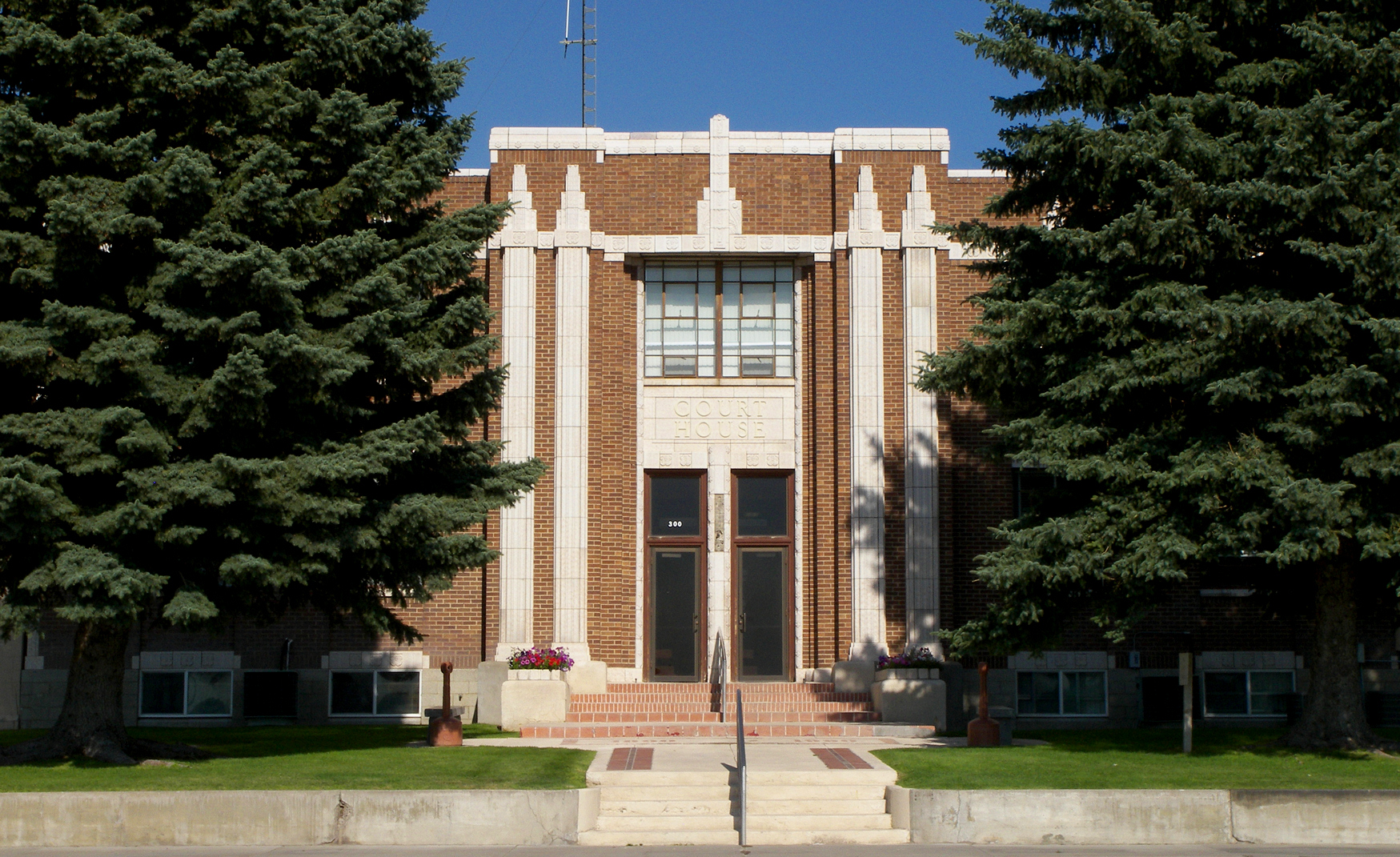

The words and the court
Idaho statutes do not use the word "eviction" for the lawsuit. The case is an action for unlawful detainer: a tenant's staying in possession after the right to stay has ended, as defined in Idaho Code 6-303. The landlord is the plaintiff; the tenant, and any subtenant actually living there when the notice was served, are the defendants (6-308). The court order that ends the case for the landlord is a judgment for restitution of the premises, meaning the return of possession. The paper that tells the sheriff to carry out that judgment is a writ of restitution, sometimes called a writ of possession; its statutory form is in 6-311C.11718
Two cousins of unlawful detainer sit in the same chapter. Forcible entry and forcible detainer cover people who took or hold property by force or while the occupant was away, with no rental agreement ever made; they have their own 72-hour trial track (6-310(3) and (4)). Since July 1, 2025, a sheriff may also remove an unauthorized occupant who was never a tenant without a court case, under 6-310A. Lesson 01 explains when each path applies. This lesson is about tenants: anyone, current or former, who rents under a written or oral agreement.319
Which court? Idaho Code 6-305 gives jurisdiction to "the district court of the county in which the property, or some part of it, is situated." In practice eviction cases are assigned to magistrate judges, who are part of the district court. Worthington v. Crazy Thunder, the Supreme Court's 2024 eviction opinion, began before a magistrate judge in Bingham County, was appealed to the district judge, and then went to the Supreme Court.208
Two tracks: expedited and ordinary
Idaho has two procedural tracks for evicting a tenant, and which one applies controls almost every later deadline.
- The expedited track (6-310 to 6-311D) applies to "an action exclusively for possession of a tract of land of five (5) acres or less" when the ground is nonpayment of rent, the landlord's "reasonable grounds to believe" that someone is or has been engaged in the unlawful delivery, production or use of a controlled substance on the premises, or a person who is a tenant at sufferance after a deed of trust foreclosure sale under Idaho Code 45-1506(11). Trial within 12 days; continuances of no more than 2 days without security; trial by the judge.3421
- The ordinary track applies to everything else: a lease violation other than rent, a holdover after a lease ends or after a month-to-month tenancy is terminated, waste or unauthorized subletting, a tract larger than five acres, and any case where the landlord joins a claim for money damages to the claim for possession. In those cases a summons is issued "returnable as in other cases," and the Attorney General's manual says the tenant "has 21 days to file an answer."227
The money-damages rule is easy to miss. Idaho Code 6-311E says that "the early trial provision of section 6-310, Idaho Code, shall not be applicable when an action for damages is combined with an action for possession." A landlord who wants back rent, late fees or repair costs in the same case gives up the 12-day trial. The court's self-help instructions for its expedited forms say the forms "cannot be used to sue for unpaid rent or damages to the rental property," and the tenant instructions say that in the expedited case the landlord "is entitled to only an order of eviction and the costs of the lawsuit, not a judgment for money damages." The Attorney General's manual adds that a landlord who wants unpaid rent or damages "must file a separate lawsuit in small claims or district court, depending on the amount sought." Small claims procedure is explained in the site's lesson on civil, small claims, family and probate records.226237
One wrinkle: 6-316(1) tells the court, after any unlawful detainer trial, to "find the amount of any rent due" and to render judgment for damages proved and rent found due. Read together with 6-311E, the practical line drawn by the court's own forms is that a case filed on the expedited track asks for possession and costs; a case that asks for money proceeds on the ordinary schedule. How individual judges handle a request for rent in an expedited case is not published in any statewide rule we found, and it is listed under unverified.5
Grounds for eviction under 6-303
Idaho Code 6-303 lists five ways a tenant "for a term less than life" becomes guilty of unlawful detainer. The list has not changed in substance since the drug-activity ground was added in 2001 (Idaho Session Laws 2001, ch. 203); the 2020 amendment (ch. 340, House Bill 461) added the belongings notice to the rent ground.115
- Holding over after the term. Staying "after the expiration of the term for which it is let to him, without the permission of his landlord." A tenancy at will "must first be terminated by notice, as prescribed in the civil code," which is the one-month written notice of Idaho Code 55-208. For a residential lease, 55-304(2) also requires written notice at least 30 days before a nonrenewal.224
- Nonpayment of rent. Staying "after default in the payment of rent" and after "three (3) days' notice, in writing, requiring its payment, stating the amount which is due, or possession of the property." The notice may be served "at any time within one (1) year after the rent becomes due." A farm tenant who holds over more than 60 days after the term with no demand from the landlord is treated as renewed for a full year.
- Breaking another lease term. Staying after failing to perform "other conditions or covenants of the lease," including a covenant not to assign or sublet, and after a three-day written notice "requiring the performance of such conditions or covenants, or the possession of the property." Within those three days the tenant, a subtenant, a mortgagee of the lease "or other person interested in its continuance" may perform the covenant or pay "and thereby save the lease from forfeiture." If the broken covenant "cannot afterward be performed," no cure notice is needed.
- Assigning, subletting or waste. A tenant who assigns, sublets or commits waste "contrary to the covenants of his lease, thereby terminates the lease," and the landlord is entitled to possession after a three-day notice to quit.
- Drug activity. "If any person is, or has been, engaged in the unlawful delivery, production or use of a controlled substance on the premises of the leased property during the term." The terms come from Idaho Code 37-2701. The statute does not require that the tenant personally be the person involved, and the Attorney General's manual says the tenant "has no three-day right to cure the illegal activity."7
A 2024 attempt to change the drug ground did not become law. House Bill 641 (2024), from Rep. Marco Erickson, would have revised 6-303 to give "a landlord of a hotel property or short term rental" a process when it "has reason to believe a tenant is engaging in illegal drug activity," according to its statement of purpose. The Legislature's 2024 subject index lists it with no session law chapter, and its bill page shows a House Ways and Means Committee bill whose last action, on Feb. 26, 2024, was a referral to the House Judiciary, Rules and Administration Committee.2526
Idaho has no statewide "just cause" rule. Outside a lease's own terms, a federal program's rules or the Manufactured Home Residency Act, a landlord may end a month-to-month tenancy with the required written notice and need not state a reason. The Attorney General's manual notes one exception that matters to many Idaho tenants: "If a tenant lives in government subsidized or public housing or receives government housing assistance and receives a 30-day notice, it must be for good cause." The good-cause rules themselves come from federal program regulations and the tenant's lease, not from Idaho Code.7
Retaliation is a defense, not a ground. The Attorney General's manual says, without citing a statute, that "Landlords may not evict a tenant because the tenant requests that repairs be made or because the tenant joins a tenants' association," and the court's printed tenant answer form includes the defense "I am being evicted in retaliation for requesting repairs." Title 6, Chapter 3 has no retaliation section. In Worthington, the tenant served a three-day repair notice on June 25, 2021, and pleaded that the landlords retaliated by delivering a 30-day termination notice on July 16, 2021; the Supreme Court held she was entitled to a jury on that defense but did not decide whether retaliation was proved. Lesson 03 covers the repair notice and retaliation in depth.7278
Step by step: from missed rent to the sheriff
The steps below follow a nonpayment case on the expedited track, the most common kind, using the statute and the Idaho Supreme Court's self-help forms. The forms are published by the courts' Court Assistance Office at courtselfhelp.idaho.gov under "Housing" and are free to download in Word, RTF or PDF format; they carry form numbers beginning "CAO UD."28
Step 1: The three-day notice
The notice must be in writing, must state "the amount which is due," and must give the tenant the choice of paying or giving up possession. The court's instructions put it plainly: the notice "must allow the tenant to pay rent in three days or vacate. It cannot require them to both pay and to vacate in three days." The instructions also say to enter only rent: "Do not include any other fees or costs such as damage to property."16
Two more statements belong in a residential nonpayment notice. Since July 1, 2020, 6-303(2) requires that the notice "also notify the tenant that if a court enters judgment against him, then he will have seventy-two (72) hours, if he is a residential tenant," to remove belongings before the landlord may remove and dispose of them under 6-316. And under 6-324, attorney fees can be awarded in a nonpayment case only if "the three (3) days' notice advise the tenant that attorney fees shall be awarded to the prevailing party." The court's form CAO UD 1, Three-Day Notice to Pay Rent or Vacate (revised May 28, 2020), contains both statements: "You will be required to pay attorney fees, and may also be required to pay all fees and court costs," and the 72-hour notice for residential tenants.11429
A lease may set different notice terms, within limits. The Attorney General's manual says a lease "can provide for an alternative and reasonable notice period but cannot waive the notice requirement."7
Step 2: Serving the notice
Idaho Code 6-304, unchanged since 1881, allows three methods, in order:30
- "By delivering a copy to the tenant personally."
- If the tenant is absent from home and from the usual place of business, by leaving a copy "with some person of suitable age and discretion at either place," and mailing a copy to the tenant's residence.
- If neither place can be found, or no suitable person is there, by "affixing a copy in a conspicuous place on the property, and also delivering a copy to a person there residing, if such person can be found; and also sending a copy through the mail" to the tenant at the property.
A subtenant in actual occupation must be served too (6-303(2) and (3)). The court's form CAO UD 2, Affidavit of Service (Three-Day Eviction Notice), is a sworn, notarized statement of which method was used; the instructions say to attach it to the complaint as an exhibit.6
Step 3: Counting the three days
Idaho's general rule for counting statutory time is Idaho Code 73-109: time "is computed by excluding the first day, and including the last unless the last is a holiday and then it is also excluded." The court's instructions say the same in plain words: "When counting the 3 days do NOT count the day the tenant received the notice." Under Idaho Code 73-108, "Every Sunday" is a holiday, along with New Year's Day, Martin Luther King, Jr.-Idaho Human Rights Day, Washington's Birthday, Memorial Day, Independence Day, Labor Day, Columbus Day, Veterans Day, Thanksgiving and Christmas, and any day appointed by the President or the governor. So a three-day period that would end on a Sunday or one of those holidays runs one more day. Saturdays are not listed, though the section moves a listed holiday that falls on a Saturday to the Friday before, and one that falls on a Sunday to the Monday after.31632
The court's instructions tell landlords that at trial they must show the notice "was served on the Defendant at least 4 days before you filed your Complaint." The tenant answer form lists, as a defense, "The Complaint was filed and Summons issued before the end of the three-day notice period in which to pay rent or move," and "I tried to pay rent before the time period of the three-day notice expired and the Plaintiff(s) refused my payment."627
Step 4: The verified complaint
If the tenant neither pays nor leaves, the landlord files a complaint in the district court of the county where the property is (6-305). Under 6-310(1), in an expedited nonpayment case it is "sufficient to state" five things: a description of the premises "with convenient certainty"; that the defendant is in possession; that the defendant entered, holds the premises and is in default of rent (or that the landlord has reasonable grounds to believe there is drug activity); that "all notices required by law have been served upon the defendant in the required manner"; and that the plaintiff is entitled to possession. Idaho Code 6-318 adds: "The complaint and answer must be verified," meaning signed under oath or penalty of perjury.20333
The court's form CAO UD 1-1, Complaint for Eviction (Expedited Proceedings), tracks those elements and adds a statement about the tenant's military status under the Servicemembers Civil Relief Act: the landlord checks that the defendant is not in the uniformed services and says how the landlord knows, or that the landlord cannot determine it, or that the defendant is a servicemember who waived the act's rights in writing. The written lease, the three-day notice and its proof of service are attached as Exhibits A, B and C.6
Who may sign? The court's instructions say: "The Plaintiff of the action must be the owner of the rental property and must sign the Complaint," and "A property manager or other agent cannot represent a property owner unless the manager/agent is an attorney licensed to practice law in Idaho." The same instructions say the expedited forms cannot be used "to remove a mobile home from a rented space," which is governed by the Manufactured Home Residency Act (lesson 06).6
Filing costs money. The self-help site lists the filing fee for an "Unlawful Detainer (Eviction for non-payment of rent)" as $69, compared with $166 for many other civil filings and $136 for an answer or response. The clerk wants cash or a money order; the instructions say "not by personal check."286
Step 5: Summons, trial date and service
Idaho Code 6-310(2) is the heart of the fast track: "at the time of issuance of the summons, the court shall schedule a trial within twelve (12) days from the filing of the complaint, and the service of the summons, complaint and notice of trial setting on the defendant shall be not less than five (5) days before the day of trial appointed by the court." The Attorney General's manual says the trial "must be held within 12 days after the lawsuit is filed unless the landlord requests a later date."37
The landlord may not serve the papers personally. The court's instructions say service "must be done by a professional process server or other competent person over 18 years old who is not a party to the case," and the instructions for the service affidavit add that the server must not be "employed by the owner." Each defendant must be served personally, and "If service is not done at least five days prior to the trial date, you must have another Summons issued with another trial date."6
Step 6: The tenant's answer
On the expedited track there is no 21-day answer period; the court's tenant page says, "You must file your response with the court before the hearing date set for trial." The court's form CAO UD 3-1, Answer to Complaint for Eviction (Expedited Proceeding), asks the tenant to admit or deny each numbered paragraph of the complaint and lists seven printed defenses that can be checked, plus "Other":2827
- "Plaintiff(s) knew at the time we entered into the rental agreement that the premises were uninhabitable."
- "I/we paid all of my/our rent."
- "A three-day notice was not served upon me/us as required by Idaho Code §§ 6-303 and 6-304."
- "The Complaint was filed and Summons issued before the end of the three-day notice period in which to pay rent or move."
- "The three-day notice fails to state the amount of rent owed."
- "I am being evicted in retaliation for requesting repairs."
- "I tried to pay rent before the time period of the three-day notice expired and the Plaintiff(s) refused my payment."
The answer, like the complaint, must be verified (6-318). An answer filed with the clerk carries a fee ($136 on the self-help fee list), and the instructions point tenants who cannot pay to the court's fee waiver forms, FW 1-9 and FW 1-10. A Spanish version of the tenant answer is posted "for informational purposes only."332823
On the ordinary track, the Attorney General's manual says the tenant "has 21 days to file an answer" after service of the summons and complaint, the same period that applies to most civil cases in Idaho.7
Step 7: Continuances
On the expedited track, Idaho Code 6-311 says "no continuance shall be granted for a longer period than two (2) days unless the defendant applying therefor gives an undertaking to the adverse party with good and sufficient security, to be approved by the court, conditioned for the payment of the rent that may accrue if judgment is rendered against the defendant." The Attorney General's manual describes the security as "the amount of rent money owed" and says "The security is deposited with the court clerk." If evidence at trial shows a different kind of unlawful detainer than the one pleaded, 6-315 says the judge "must order that such complaint be forthwith amended," with no continuance unless the defendant shows good cause by affidavit.4734
Step 8: The trial, and when a jury is required
Idaho Code 6-311A says an expedited case "shall be tried by the court without a jury." If the court finds the complaint untrue, it enters judgment for the tenant for costs and disbursements; if it finds the complaint true, "or if judgment is rendered by default," it renders "a general judgment against the defendant and in favor of the plaintiff, for restitution of the premises and the costs and disbursements of the action." If the complaint is true in part, restitution of that part only.21
That sentence sat uneasily next to Idaho Code 6-313, from 1881: "Whenever an issue of fact is presented by the pleadings it must be tried by a jury, unless such jury be waived as in other cases." The Idaho Supreme Court reconciled the two in Worthington v. Crazy Thunder, Docket 49976, filed Jan. 3, 2024 (August 2023 term), with Chief Justice G. Richard Bevan writing for a unanimous court. The landlords had filed an expedited case in Bingham County on Oct. 12, 2021, after a Sept. 17, 2021, notice to cure or quit; the magistrate denied the tenant's jury demand and ruled for the landlords after a bench trial; the district judge held 6-311A unconstitutional. The Supreme Court held that an action exclusively for possession of five acres or less is equitable, so 6-311A is not unconstitutional on its face, but that the tenant "is entitled to a jury trial on the legal issues presented by her affirmative defenses," which included retaliation, defective notice and waiver by accepting rent. It affirmed the district court on those different grounds, awarded the tenant costs on appeal and denied attorney fees to both sides because the issue was new. The court also wrote: "Unlawful detainer cases are designed to be heard expeditiously," and "in an action for unlawful detainer, the sole question involved is right of possession."358
What a landlord must prove at an expedited trial, according to the court's instructions: the complaint and summons were served; the plaintiff owns the property; there was a rental agreement; the defendant failed to pay rent under it; the three-day notice was served at least four days before filing; and the defendant neither paid nor left in time. The tenant may testify and offer "proof of payment, receipts, or other proof."623
Step 9: If the tenant does not appear
Idaho Code 6-312, from 1881, is short: "If, at any time appointed, the defendant do not appear and defend, the court must enter his default and render judgment in favor of the plaintiff as prayed for in the complaint." The court's form CAO UD 7-1, Motion and Affidavit for Entry of Default, is made "pursuant to Rule 55(a)(1) of the Idaho Rules of Civil Procedure" and again asks the landlord to state the tenant's military status. The court's data do not show how many Idaho evictions end in default, a gap discussed below.366

Step 10: The judgment
Under 6-316(1), a judgment for the landlord restores possession and, when the case is for nonpayment, another lease violation or drug activity, "shall also declare the forfeiture of such lease or agreement." The court's form CAO UD 8-1, Judgment for Eviction, orders that possession "shall be restored to the Plaintiff(s)," orders the defendants "to immediately remove himself/herself/themselves, family and possessions from the premises," awards costs and says a writ of restitution "may issue to the Sheriff of this County." Costs claimed on the form CAO UD 7-7, Memorandum of Costs, under Idaho Rule of Civil Procedure 54(d)(1), are the filing fee, service of process and other listed costs.56
Attorney fees follow 6-324: "In any action brought under the provisions of this chapter, except in those cases where treble damages are awarded, the prevailing party shall be entitled to an award of attorney fees." The rule cuts both ways: a tenant who wins is the prevailing party too. In nonpayment cases, fees require the notice warning described in Step 1. Treble damages under 6-317 are available to "a landlord or a tenant" who recovers damages for forcible or unlawful entry or detention, in a 6-320 repair action, or against an owner who misuses the forcible detainer track.1437
Farm tracts get a grace period. When an unlawful detainer for unpaid rent involves a tract larger than five acres and the lease has not expired, 6-316(1) delays execution for five days after judgment, during which the tenant, a subtenant, a mortgagee or another interested party may pay the rent found due with interest, the damages and the costs, "and thereupon the judgment shall be satisfied and the tenant be restored to his estate." "In all other cases the judgment may be enforced immediately."5
Step 11: The writ of restitution and the sheriff
Idaho Code 6-316(2) sets the final clock. A residential tenant "shall have seventy-two (72) hours to remove his belongings from the premises"; a commercial tenant or a tenant of five acres or more has seven days, and a court may give a commercial tenant longer for good cause. The landlord may deliver the writ or ask the sheriff to deliver it, and "If requested by the landlord or his agents, the sheriff shall deliver a writ of restitution." Then: "After the time required for a tenant to remove his belongings under this subsection and three (3) days after the finding of the court, the sheriff shall restore possession of the premises to the plaintiff by causing immediate removal of the tenant." The landlord may then remove and dispose of property left behind, "subject to any security interests" under the Uniform Commercial Code, including a motor vehicle that may be removed under Idaho Code 49-1806, and the court may award the landlord reasonable removal and restoration costs for good cause.5
The statutory form of the writ in 6-311C commands the sheriff "to cause the defendant to be forthwith removed from the premises." The court's form CAO UD 10-1, Writ of Restitution of Premises, adds checkboxes for the removal period: residential, "three days (72 hours)"; commercial, "no less than seven days"; and a residential tenant with five acres or more, seven days. The court's instructions say the clerk charges "a $2.00 fee for issuance of the Writ," and tell landlords to "Discuss with the Sheriff the options and fees to forcibly move the tenant." Sheriff's fees are set by each board of county commissioners "by a resolution of the board ... in an amount reasonably related to but not exceeding the actual costs of such service," with a default fee schedule in Idaho Code 31-3203 that includes "serving a writ of possession or restitution, putting a person in possession of premises and removing the occupant."1838639
Step 12: Appeals
An appeal does not stop the eviction by itself. Idaho Code 6-319: "An appeal taken by the defendant does not stay proceedings upon the judgment unless the court so directs." And under 6-311D, a tenant who appeals a judgment for restitution must give, in addition to the usual appeal undertaking, a second undertaking "with two (2) sureties" for "the rental value of the real property" from the start of the case until final judgment, if the judgment is affirmed. Appeals from a magistrate's decision go first to a district judge, as in Worthington. Reading appellate opinions is covered in the site's lesson on appellate opinions and legal research.40418
The fastest possible calendar
Put the deadlines together and an uncontested nonpayment eviction on the expedited track can run from notice to sheriff in under three weeks. The example below is our own illustration using a real 2026 calendar; every interval comes from a statute or the court's instructions, and real cases usually take longer because courts set trial on their own calendars within the 12-day window, service can fail, and tenants may pay, move, ask for a continuance or contest the case.
| Date (2026) | Event | Rule |
|---|---|---|
| Sun., March 1 | Rent due and unpaid | Lease |
| Mon., March 2 | Three-day notice handed to tenant | 6-303(2), 6-304 |
| Tue. March 3 to Thu. March 5 | Days 1 to 3 (first day excluded); tenant may pay or leave | 73-109 |
| Fri., March 6 | Earliest filing; clerk issues summons and sets trial | 6-310(2); court instructions (4 days after service) |
| Fri., March 13 | Last day to serve summons, complaint and trial notice | 6-310(2) (5 days before trial) |
| Wed., March 18 | Latest trial date (12 days after filing); judgment | 6-310(2), 6-311A |
| Sat., March 21 | 72 hours end; sheriff may restore possession (also 3 days after finding) | 6-316(2) |
How we figured it: the eviction calendar
Inputs. Notice served in person Monday, March 2, 2026 (March 1, 2026, was a Sunday). Idaho Code 73-109 excludes the first day and includes the last unless it is a holiday; no holiday under 73-108 falls between March 2 and March 21, 2026. Three days after March 2: March 3, 4 and 5. The court's instructions say the notice must be served "at least 4 days before you filed your Complaint," so the earliest filing is March 6.
Court steps. Trial "within twelve (12) days from the filing": March 6 plus 12 days is March 18, the latest trial date if the court used the full window. Service "not less than five (5) days before the day of trial": March 18 minus 5 days is March 13. Removal period: 72 hours from a judgment entered March 18 runs into March 21; "three (3) days after the finding of the court" is also March 21. Total from notice to earliest sheriff removal in this example: 19 days. A court that sets trial sooner shortens the total; a continuance, failed service or a contested case lengthens it.
Not included. Time for the sheriff's office to schedule the removal, which varies by county and is not set by statute.
Other cases take longer
A lease-violation case, a holdover after a month-to-month termination, or a case that seeks back rent runs on the ordinary schedule: a three-day cure notice or the one-month or 30-day termination notice first, then a summons with a 21-day answer period, then whatever trial date the court sets. Idaho Code sets no outside time limit for those cases. A month-to-month termination alone takes at least a month before the tenant is holding over; add the 21-day answer period and the court's calendar, and the minimum is roughly two months, by our arithmetic from 55-208 and the Attorney General's manual.27
What a landlord may never do: self-help
Idaho law gives landlords a fast court remedy, and the other side of that bargain is that the court remedy is the only one. The Attorney General's Landlord and Tenant Manual (July 2026), under "Unlawful Evictions," says: "Landlords may not engage in any form of self-help to force a tenant out of a rental property. It is unlawful for a landlord to: 1. Fail to provide proper notice; 2. Fail to allow time for the tenant to pay the overdue rent or comply with the lease; 3. Shut off the utilities; 4. Change the locks; 5. Confiscate the tenant's property; or 6. Do anything other than institute lawful eviction proceedings."7
The statutes back that up in several places. A landlord who forcibly enters or detains property commits forcible entry or forcible detainer under 6-301 and 6-302, and a tenant who recovers damages for "a forcible or unlawful entry in or upon, or detention of" a building may be awarded "three (3) times the amount at which the actual damages are assessed" under 6-317. The removal of belongings is tied to the court's judgment: the 72-hour period in 6-316(2) starts with a finding for the landlord, and the landlord's right to "remove and dispose of all remaining property" comes only after that period and the sheriff's restoration of possession. The manual adds that "Idaho law does not provide for a landlord's lien on the tenant's property, but a lease may include such a provision."3757
Utilities are a frequent flash point. The manual's section on utility service says that if a utility company has shut off service because the landlord did not pay a bill the landlord was responsible for, the tenant should serve written notice on the landlord that service must be restored, and may ask the utility about placing service in the tenant's own name; it also notes that the Idaho Public Utilities Commission limits winter shutoffs of gas or electric heat by public utilities in homes with children, elderly or ill residents. Lesson 03 covers those rules.7
Property left behind after a tenant moves out without a court case raises a different question. The manual says that "If a tenant leaves property of value behind after vacating the rental, the landlord should file an eviction complaint and obtain a court order allowing the landlord to remove the property," and should ask the court's permission to sell it to cover removal, storage or back rent.7
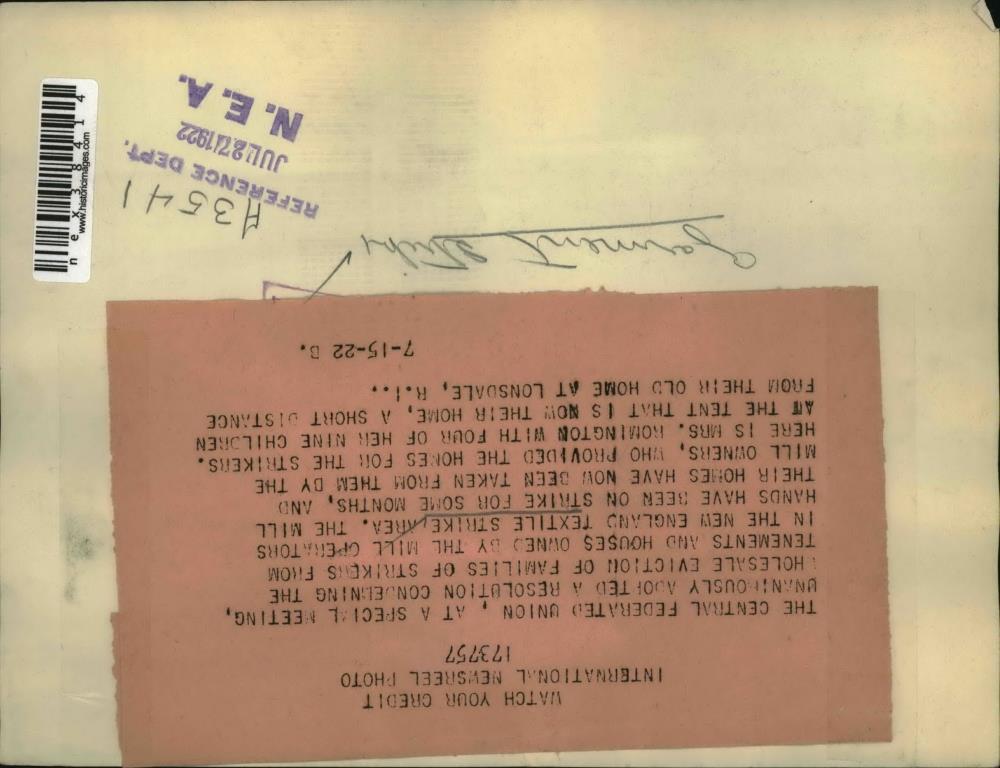

How the eviction statute got here
Lesson 01 tells the full history of Idaho landlord-tenant law from 1863. The table below lists only the changes to the eviction process itself, read from the history lines on each statute page and the bill pages.
| Year | Law | What changed in the eviction process | Source |
|---|---|---|---|
| 1881 | Territorial Code of Civil Procedure, secs. 797 to 813 | Unlawful detainer defined; notice service; district court jurisdiction; default; jury trial; judgment for restitution; verified pleadings; appeal does not stay | 6-303 to 6-319 history lines1 |
| 1974 | Session Laws ch. 308 | Expedited track: trial within 12 days, 2-day continuance limit, judge trial, writ form, appeal undertaking, damages actions (6-310 to 6-311E) | 6-310, 6-311 history3 |
| 1977 | Session Laws ch. 45 | Judgment section revised; treble damages extended to tenants' repair suits | 6-316, 6-317 history5 |
| 1985 | Session Laws ch. 144 | Prevailing party gets attorney fees; nonpayment notice must warn of fees (6-324) | 6-324 history14 |
| 2001 | Session Laws ch. 203 | Drug activity on the premises added as a ground and to the fast track | 6-303, 6-310 history1 |
| 2017 to 2018 | Session Laws 2017 ch. 276; 2018 ch. 124 | Forcible detainer track with 72-hour trial; tenant-at-sufferance after trustee's sale added to fast track | 6-310 history3 |
| 2020 | House Bill 461, ch. 340 | 72 hours (residential) or 7 days to remove belongings after judgment; notice must say so | Bill page15 |
| 2024 | Senate Bill 1327, ch. 269 | Automatic shielding of dismissed eviction cases filed on or after Jan. 1, 2025 (6-303A) | Bill page42 |
| 2025 | Senate Bill 1043, ch. 65; House Bill 321, ch. 222 | 6-308 parties section amended in the landlord-tenant reorganization; sheriff removal of unauthorized occupants (6-310A) | 6-308, 6-310A history1719 |
| 2026 | House Bill 695, ch. 82 | One-word fix to the sheriff's fee provision of 6-310A | Bill page43 |
House Bill 461 (2020), from the House Judiciary, Rules and Administration Committee, was amended in the Senate, signed by Gov. Brad Little on March 30, 2020, and took effect July 1, 2020, as chapter 340. Senate Bill 1327 (2024), from the Senate Judiciary and Rules Committee with Sen. Alison Rabe as floor sponsor, passed the Senate 31-3-1 on Feb. 27, 2024, passed the House with Rep. Clay Handy as floor sponsor and no nays, and was signed April 3, 2024 (chapter 269), effective July 1, 2024. House Bill 695 (2026), from the House Judiciary, Rules and Administration Committee, passed the House 68-0-2 on March 3, 2026, and the Senate 34-0-1 on March 17, and was signed by the governor March 20, 2026 (chapter 82), effective July 1, 2026.154243
The federal layer: CARES Act, moratoria and HUD's 30-day rule
The CARES Act 30-day notice
Section 4024 of the Coronavirus Aid, Relief, and Economic Security (CARES) Act, Public Law 116-136, signed March 27, 2020, is codified at 15 U.S.C. 9058. Subsection (b) barred lessors of "covered dwellings" from filing nonpayment evictions, or charging related fees, "During the 120-day period beginning on March 27, 2020." That period ended in late July 2020 (by our count, July 24, 2020 was the 120th day). Subsection (c) has no end date. It says the lessor of a covered dwelling unit "may not require the tenant to vacate the covered dwelling unit before the date that is 30 days after the date on which the lessor provides the tenant with a notice to vacate."13
"Covered property" is broad. It includes property that participates in a "covered housing program" under the Violence Against Women Act definitions (34 U.S.C. 12491(a), which includes public housing and housing choice vouchers) or the rural housing voucher program, and any property with a "Federally backed mortgage loan" (one to four units) or "Federally backed multifamily mortgage loan" (five or more units). Federally backed includes loans made, insured, guaranteed or assisted by a federal agency or purchased or securitized by Freddie Mac or Fannie Mae.13
Idaho's courts treat the CARES Act notice as live. The self-help site's Housing page lists two "CARES Act Forms" first: "Tenant Answer, CARES Act" and "Statement of Landlord, CARES Act." Whether a given rental is covered depends on its mortgage and program status, which a tenant usually cannot see; federal courts in other states have split on whether 9058(c) still applies after the 120-day moratorium ended, and we found no published Idaho appellate opinion deciding the question. That status is listed under unverified.28
The CDC moratorium, 2020 to 2021
On Sept. 4, 2020, the Centers for Disease Control and Prevention published an order, "Temporary Halt in Residential Evictions To Prevent the Further Spread of COVID-19," at 85 Federal Register 55292, issued under Section 361 of the Public Health Service Act. As first published it was effective "September 4, 2020 through December 31, 2020," and protected tenants who signed a declaration of financial need. It was extended several times. On Aug. 3, 2021, the CDC issued a narrower order covering counties with "substantial or high levels" of COVID-19 transmission (86 Federal Register 43244). On Aug. 26, 2021, in Alabama Association of Realtors v. Department of Health and Human Services, No. 21A23, the U.S. Supreme Court vacated the stay of a district court judgment that had set the moratorium aside, writing that the applicants were "virtually certain to succeed on the merits of their argument that the CDC has exceeded its authority." That ended the federal moratorium.4445
Idaho did not adopt its own statewide eviction moratorium by statute. The Idaho Policy Institute's annual counts show the effect of the federal rules: the fewest filings in its 2019 to 2025 series were in 2020 and 2021, near 2,000 a year, and filings rose to more than 3,300 a year in 2023 to 2025.9
HUD's 30-day notice rule, 2024 to 2026
The Department of Housing and Urban Development published a final rule on Dec. 13, 2024 (89 Federal Register 101270), effective Jan. 13, 2025, requiring public housing agencies and owners of properties with project-based rental assistance (Section 8 project-based, Section 202 and Section 811 and related programs) to give tenants written notice "30 days prior to filing a formal judicial eviction procedure" for nonpayment of rent. The rule amended 24 CFR parts 247, 880, 884, 886, 891 and 966.10
On Feb. 26, 2026, HUD published an interim final rule (91 Federal Register 9449) revoking the 2021 interim rule and the 2024 final rule, effective March 30, 2026. It said notice requirements "will return to pre-2021 requirements, which range from 5 days to 30 days for HUD programs and depend on state and local laws." On March 13, 2026, before that date arrived, HUD delayed the revocation's effective date "indefinitely pending consideration of public comments" and said it "will now treat the interim final rule as a proposed rule" (91 Federal Register 12301). A search of the Federal Register on Nov. 19, 2026, found no later HUD rule on the subject. As of that date, by our reading, the 2024 rule remains in effect for covered HUD properties in Idaho, and an Idaho three-day notice alone does not satisfy it.1112
Eviction records: what is public and what is shielded
An unlawful detainer case is a civil court case, and its register of actions (the docket) appears on the Idaho courts' iCourt portal like other civil cases; the site's lessons on iCourt and reading a docket explain how to search and read one. Tenant screening companies collect those records, which is why a filing can follow a tenant even when the landlord loses or the case is dropped.
Idaho Code 6-303A, added by Senate Bill 1327 (2024), shields records of an unlawful detainer case "without the filing of a petition" if three conditions are met: "(a) The entire case was dismissed; (b) There is no appeal pending for the case; and (c) At least three (3) years have passed from the day on which the eviction was filed or the parties stipulated to shielding and have filed the stipulation with the court." It applies only to cases "filed on or after January 1, 2025." Shielding makes the records "unavailable for public viewing," but parties and court staff can still see them, and the process is "subject to the rules of the Idaho supreme court and the capabilities of its record-keeping system." Any party may petition to seal under the Supreme Court's administrative rules.16
The courts posted a stipulation route in 2026. Form CAO UD 4-1, Stipulation to Shield Records from Public Disclosure I.C. 6-303A, and Instruction 4, both dated May 1, 2026, let a landlord and tenant agree to shield a dismissed case now instead of waiting three years. The instructions call the law the "Eviction Record Shielding Act" and say "Shielding does not result in the destruction of records but instead prevents them from being publicly accessible." The stipulation may be filed at the clerk's office or online through an iCourt account.46
Two limits matter. First, shielding covers only cases in which "The entire case was dismissed." A case the landlord won, or one that ended in a stipulated judgment, does not qualify. Second, the first automatic shielding under the three-year rule cannot happen before January 2028, three years after the earliest covered filings, by our arithmetic.16
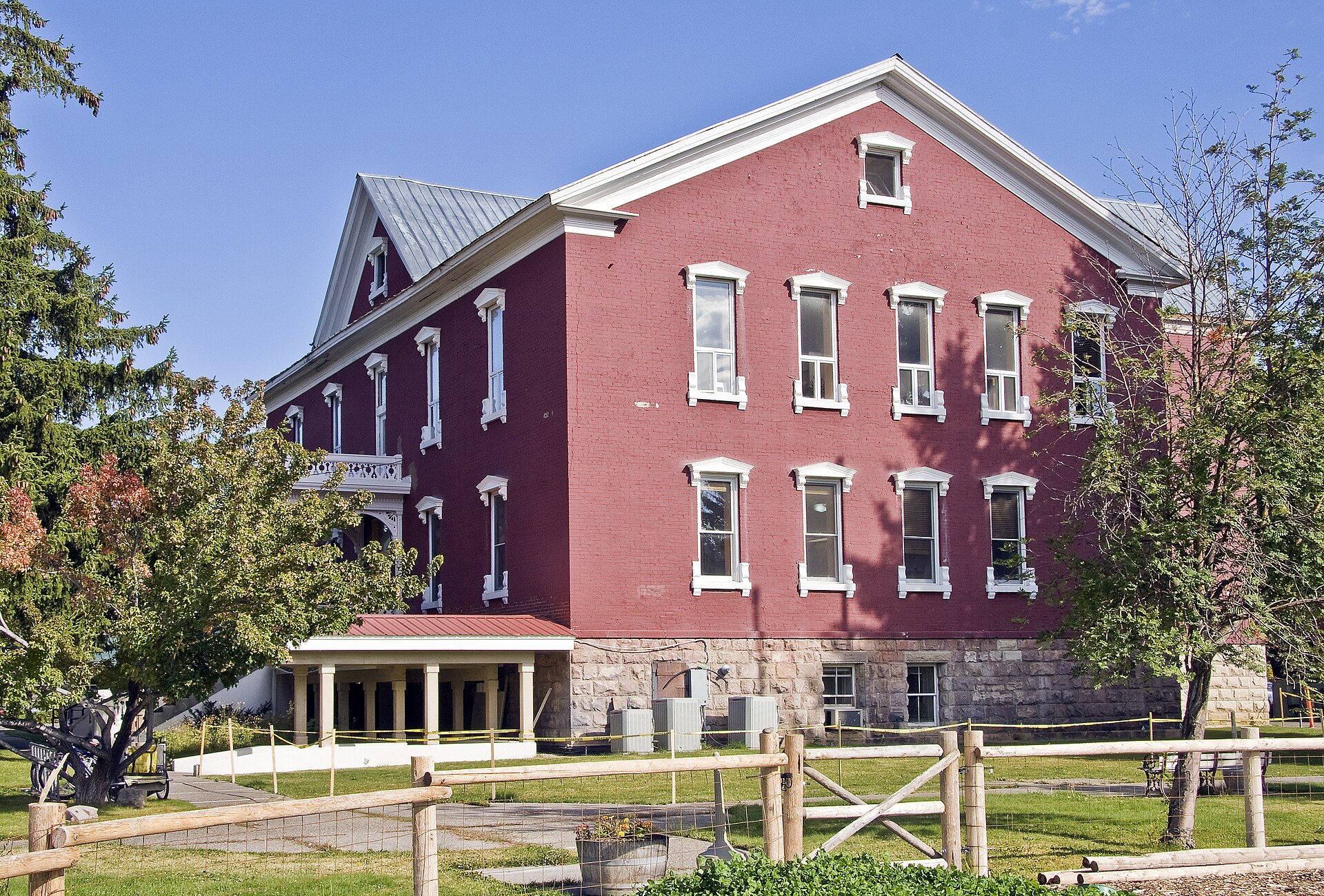

How many evictions does Idaho have?
No state agency publishes an annual eviction count for Idaho. The most complete public series comes from Boise State University's Idaho Policy Institute (IPI), a university research center, which says that "For the seventh year, IPI obtained all court eviction case data in Idaho from the Idaho Supreme Court." Its February 2026 infographic, by research associate McAllister Hall and research scholar Lantz McGinnis-Brown, reports 2025 figures.9
How IPI counts matters. Its methodology page says it removes commercial evictions (defendants with business names), removes "serial evictions" so each household's most recent filing in a calendar year counts once, and treats a case as a "formal eviction" only when it was "awarded in favor of the plaintiff." Filing and eviction rates divide by renter households from the Census Bureau's American Community Survey 5-year estimates. IPI says its study "is adapted from research conducted by The Eviction Lab at Princeton University," and that "The authors determined the data on judgment amounts were insufficient for accurate analysis."47
| Measure, 2025 | Idaho | Note | Source |
|---|---|---|---|
| Renting households with at least one eviction filing | 3,039 of 189,871 (1.6%) | Households, serial filings removed | 9 |
| Renting households formally evicted | 1,234 (0.6%) | Judgment for plaintiff | 9 |
| Share of households with a filing that were formally evicted | 40.6% | 1,234 divided by 3,039 | 9 |
| Change in filings from 2024 | Down 6.2% | IPI chart: 3,641 (2024) to 3,415 (2025) | 9 |
| Change in formal evictions from 2024 | Down 5.7% | IPI chart: 1,308 (2024) to 1,234 (2025) | 9 |
| Share of filings in the largest counties | 81% | IPI's statement | 9 |
| Ada and Canyon share of filings; of formal evictions | 60%; 37% | IPI's statement | 9 |
IPI's county table, titled "2025 County Eviction Rates," gives filings and formal evictions for the six largest counties:
| County | Filings | Formal evictions | Share of filings ending in formal eviction |
|---|---|---|---|
| Ada | 1,349 | 260 | 19.3% |
| Canyon | 666 | 201 | 30.2% |
| Kootenai | 317 | 134 | 42.3% |
| Bannock | 218 | 131 | 60.1% |
| Bonneville | 202 | 123 | 60.9% |
| Twin Falls | 155 | 88 | 56.8% |
| Statewide (as printed in the table) | 3,283 | 1,308 | 36.1% |
The table's statewide row (3,283 filings, 1,308 formal evictions) does not match the headline 2025 numbers on the same page (3,039 households with a filing, 1,234 formally evicted), and 1,308 is the figure IPI's chart shows for 2024. The printed 36.1 percent also does not equal 1,308 divided by 3,283, which is 39.8 percent. IPI does not explain the difference; we report both and list the question under unverified.9
IPI's explanation for the Ada and Canyon pattern is that "This lower rate of formal evictions to filings is likely because of access to mediation and other eviction prevention services." In the Treasure Valley, those include the Boise nonprofit Jesse Tree, an eviction prevention group that offers rental assistance, case management and a tenant resource center. According to the Idaho Capital Sun's report on Jesse Tree's annual report (April 2025), the group said it "successfully prevented eviction for 1,500 families in 2024," and counted 1,615 eviction filings in Ada County and 605 in Canyon County that year;48 those are the group's own counts and use a different method from IPI's. IPI's statement is a likelihood, not a measured effect, and the counties also differ in landlord mix, rents and filing practices.9
The Magic Valley. Twin Falls County had 155 filings and 88 formal evictions in 2025, and 56.8 percent of its filings ended in formal eviction, nearly three times Ada County's 19.3 percent. IPI's published infographic does not list Jerome, Gooding, Lincoln, Minidoka or Cassia counties; IPI says county data are on its interactive eviction web page. For those counties, the iCourt portal and a public records request to the court are the routes to case counts (lesson 12).9
Another national tracker. The Legal Services Corporation, the federally funded nonprofit that funds civil legal aid, runs a Civil Court Data Initiative that tracks eviction filings by month in Idaho, listing "43 of 44 counties/municipalities tracked," and counts as evictions cases filed under the Idaho case type "A12- Unlawful Detainer/Eviction." Its counts are not adjusted the way IPI's are and will not match them.49
How we figured it: rates and changes
Formal eviction share. Twin Falls County: 88 divided by 155 = 56.8 percent (matches IPI). Ada County: 260 divided by 1,349 = 19.3 percent. Ratio: 56.8 divided by 19.3 = 2.9.
Year-to-year change. Filings: (3,415 minus 3,641) divided by 3,641 = minus 6.2 percent. Formal evictions: (1,234 minus 1,308) divided by 1,308 = minus 5.7 percent. Both match IPI's stated changes, which is how we matched the chart's values to 2024 and 2025. Change in filings, 2023 to 2025: (3,415 minus 3,354) divided by 3,354 = plus 1.8 percent.
Caution. IPI's chart prints values for 2019 through 2025, but the PDF's text layer does not tie each value to its year for 2019 to 2022, so we use only 2023 to 2025 (3,354 and 1,246 for 2023, matched by the same layout). The 2019 to 2022 filings in the chart fall between 2,049 and 2,922 a year.
How Idaho compares
Notice to pay in nearby states
Idaho's three-day notice to pay or quit is among the shortest in the West. The table compares the written notice a landlord must give before filing a residential nonpayment eviction, read from each state's official statute site on Nov. 19, 2026.
| State | Nonpayment notice before filing | Statute |
|---|---|---|
| Idaho | 3 days to pay or give up possession, stating the amount due | Idaho Code 6-303(2)1 |
| Montana | 3 days after written notice of nonpayment | MCA 70-24-422(2)50 |
| Arizona | 5 days after written notice | A.R.S. 33-1368(B)51 |
| Nevada | Pay or surrender by the close of business on the seventh judicial day after service (shorter for some weekly tenancies) | NRS 40.253(1)52 |
| Oregon | 10 days (given no sooner than the 8th day of the rental period) or 13 days (no sooner than the 5th day); shorter for week-to-week tenancies | ORS 90.394(2)53 |
| Washington | 14 days after service for residential tenancies under the Residential Landlord-Tenant Act | RCW 59.12.030(3)54 |
Right to counsel and record sealing elsewhere
Some states pay for tenants' lawyers in eviction cases. Washington's RCW 59.18.640 says that, "Subject to the availability of amounts appropriated for this specific purpose, the court must appoint an attorney for an indigent tenant in an unlawful detainer proceeding," with the state's Office of Civil Legal Aid responsible for carrying it out. Idaho has no such statute; tenants in Idaho eviction cases either represent themselves or obtain counsel on their own or through legal aid organizations.55
Nevada has its own sealing law for eviction files (NRS 40.2545, "Sealing of eviction case court file under certain circumstances"), listed in the same chapter as its seven-judicial-day notice. Idaho's 2024 law is narrower in one respect, covering only fully dismissed cases filed since Jan. 1, 2025.5216
Idaho is also different from the 21 states that adopted the 1972 Uniform Residential Landlord and Tenant Act, discussed in lesson 01: many of those states place eviction notices inside a single landlord-tenant code with tenant remedies alongside. Idaho's notice rules sit in the 1881 unlawful detainer chapter, separate from the 1977 tenant-remedy sections.
Pictures, Numbers and Infographics
The key numbers in this lesson, in one place.
| Measure or rule | Idaho | U.S. or other states | Place or year | Source |
|---|---|---|---|---|
| Notice to pay rent or quit | 3 days, written, amount stated | WA 14 days; OR 10 or 13; NV 7 judicial days; AZ 5; MT 3 | Statutes as of 2026 | 154 |
| Notice to cure another lease violation | 3 days | MT 14 days for most noncompliance | 2026 | 150 |
| Trial setting, nonpayment or drugs, 5 acres or less | Within 12 days of filing | Varies by state | Since 1974 | 3 |
| Service before trial | At least 5 days | 6-310(2) | 3 | |
| Continuance without security | 2 days at most | 6-311 | 4 | |
| Answer on the ordinary track | 21 days | AG manual, July 2026 | 7 | |
| Time to remove belongings after judgment | 72 hours residential; 7 days commercial or 5 acres or more | Since July 1, 2020 | 5 | |
| Filing fee, unlawful detainer for nonpayment | $69 | Court fee list, 2026 | 28 | |
| Clerk's fee to issue writ | $2 | Court instructions | 6 | |
| Automatic shielding of dismissed cases | After 3 years, cases filed from Jan. 1, 2025 | NV has a sealing statute (NRS 40.2545) | 6-303A | 16 |
| Federal notice, covered properties | 30 days to vacate (CARES Act); 30 days before filing (HUD rule, public housing and project-based aid) | Same nationwide | 2020; 2025 to 2026 | 1310 |
| Renter households with a filing | 3,039 (1.6%) | Idaho, 2025 | 9 | |
| Formal evictions | 1,234 households (0.6%) | Idaho, 2025 | 9 | |
| Twin Falls County filings and formal evictions | 155 and 88 | Ada County 1,349 and 260 | 2025 | 9 |
Common mistakes
- Counting the day of service. Idaho Code 73-109 excludes the first day, and the court's instructions say "do NOT count the day the tenant received the notice." A complaint filed too early is a printed defense on the court's own answer form.3127
- Ending the notice period on a Sunday or holiday. Under 73-108 every Sunday is a holiday, so a period whose last day is a Sunday runs to Monday (or later, if Monday is also a holiday).32
- Demanding both payment and move-out. The notice must offer payment or possession in the alternative. The court's instructions say a notice "cannot require them to both pay and to vacate in three days."6
- Padding the amount. The notice must state "the amount which is due." The court's instructions say to list rent only, with no damages or other fees, and the answer form lists "The three-day notice fails to state the amount of rent owed" as a defense.16
- Leaving out the attorney fee warning. Without it, 6-324 bars attorney fees in a nonpayment case even if the landlord wins.14
- Asking for back rent and expecting a 12-day trial. Adding a damages claim removes the early trial (6-311E).22
- Serving the summons yourself. The court's instructions say a party "cannot serve the Complaint and Summons on the Defendant," and service must be at least five days before trial or a new summons and trial date are needed.6
- Treating a squatter as a tenant, or a tenant as a squatter. The sheriff's no-court removal in 6-310A is limited to people who "are not current or former tenants pursuant to a written or oral rental agreement." A tenant must be removed through unlawful detainer (lesson 01).19
- Changing the locks or cutting utilities. The Attorney General's manual lists both as unlawful self-help, and 6-317 allows treble damages for unlawful detention or entry.737
- Assuming an appeal stops the sheriff. It does not unless the court so directs (6-319), and a tenant who appeals must post an additional undertaking for rental value (6-311D).4041
- Assuming every filing is an eviction. In 2025, IPI found 40.6 percent of Idaho renter households with a filing were formally evicted; most filings ended some other way, such as payment, dismissal or a move. A filing count is not an eviction count.9
- Using the expedited forms for the wrong case. The court's instructions say they are only for nonpayment, not other lease violations, money claims or removing a mobile home from a rented space.6
- Ignoring the federal notice. For HUD public housing and project-based properties, the 2024 30-day pre-filing rule was in effect on Nov. 19, 2026, after HUD delayed its own revocation; for CARES Act covered properties, 15 U.S.C. 9058(c) requires 30 days before the tenant must vacate.101213
What we know, what we don't, and what the data can show
What we know
- The grounds, notices and court schedule are set by Idaho Code 6-303 to 6-319, with day counts that have been stable since 1974 except the 2020 belongings rule and the 2024 shielding law.13
- The Idaho Supreme Court held in 2024 that the judge-only expedited trial is valid on its face but that tenants get a jury on factual issues raised by their defenses.8
- About 1.6 percent of Idaho renter households faced a filing in 2025 and 0.6 percent were formally evicted, by IPI's count; filings fell 6.2 percent from 2024.9
- Formal eviction shares vary widely by county, from 19.3 percent of filings in Ada County to 60.9 percent in Bonneville County in 2025.9
What we don't know
- How many Idaho evictions end in default, in a stipulated move-out, or after a contested trial: no published statewide breakdown exists.
- How many tenants are removed by the sheriff, as opposed to leaving before the writ is served; county sheriffs' civil units keep their own logs.
- How many Idaho rentals are "covered properties" under the CARES Act, and how often Idaho courts apply the 30-day notice.
- Published counts for Jerome, Gooding, Lincoln, Minidoka and Cassia counties in IPI's 2025 infographic, and the reason its county table's statewide row differs from its headline numbers.
- Whether informal evictions (a tenant leaving after a notice, with no case filed) are rising or falling; no Idaho data set measures them.
What the data can show
- Filings by month and county: the iCourt portal's case search (case type unlawful detainer), or a records request to the Idaho Supreme Court for the statewide data set IPI uses.47
- Monthly trends: the Legal Services Corporation's Civil Court Data Initiative tracker for Idaho counties.49
- Repeat filers: plaintiff names in the court data, which IPI uses to remove serial filings and which can show which landlords file most.47
- Sheriff removals: county sheriff civil process logs and fee receipts, available through public records requests under Idaho Code Title 74.
- Rent burden behind evictions: Census American Community Survey table B25070 on rent as a share of income, used in lesson 01 and Part A.
Questions people ask
How long does an eviction take in Idaho?
For a nonpayment case on the expedited track with no delays, the statutes allow about 19 days from notice to the sheriff (see the calendar above). Lease-violation and holdover cases run on the ordinary track with a 21-day answer period and no statutory trial deadline, so they take longer.37
Can a tenant stop an eviction by paying?
Within the three days after a nonpayment or cure notice, paying the stated rent or curing the violation saves the lease (6-303(3)). After that, the statute gives no right to cure for a residential tenant of five acres or less; whether to accept payment and dismiss is up to the landlord. Accepting rent after a notice was raised as a waiver defense in Worthington, and the Supreme Court said such defenses go to a jury. On farm tracts over five acres with an unexpired lease, 6-316(1) gives five days after judgment to pay rent, interest, damages and costs.185
Does a tenant get a jury?
On the expedited track the judge decides the case (6-311A), but under Worthington v. Crazy Thunder (2024), legal issues of fact raised by the tenant's affirmative defenses must be tried to a jury under 6-313 unless the jury is waived.218
What happens to belongings left behind?
A residential tenant has 72 hours after judgment to remove them. After that period and three days after the court's finding, the sheriff restores possession and the landlord "may ... remove and dispose of all remaining property," subject to any security interests, and may ask the court for removal costs (6-316(2)).5
Will an eviction filing show up on a tenant's record?
Yes, an unlawful detainer case is a public court record unless shielded or sealed. Under 6-303A, cases filed on or after Jan. 1, 2025, that were entirely dismissed are shielded after three years with no appeal pending, or sooner if both parties stipulate and file the stipulation. Judgments for the landlord are not shielded under that section.1646
Can a property manager file the case?
The court's self-help instructions say the plaintiff must be the owner and that a manager or agent "cannot represent a property owner unless the manager/agent is an attorney licensed to practice law in Idaho." The landlord's agent may deliver a writ to the sheriff under 6-316(2).65
Does Idaho give tenants a lawyer?
No Idaho statute provides appointed counsel in eviction cases. Washington's RCW 59.18.640 is an example of a state that does, subject to appropriations.55
Is a manufactured home lot eviction different?
Yes. A home owner renting a lot is covered by the Manufactured Home Residency Act (Idaho Code Title 55, Chapter 20), and the court's expedited forms "cannot be used to remove a mobile home from a rented space." Lesson 06 covers that act.6
Hard questions
Is three days enough time to pay?
The case for keeping it. Landlords, especially small ones, carry mortgages, taxes and insurance whether or not rent arrives; a short notice limits losses, and the tenant can still pay or negotiate before filing. Idaho's three days match Montana's, and a court case still follows before anyone is removed.50
The case for lengthening it. Paychecks, benefit payments and rental assistance often take longer than three days to arrive; Washington gives 14 days and Oregon 10 or 13, and HUD's 2024 rule gives 30 days before filing in federally assisted housing so tenants can seek assistance.545310
What the evidence shows. Idaho has no study comparing outcomes under different notice lengths. IPI's 2025 data show that most filings (59.4 percent of households with a filing, by our subtraction) did not end in formal eviction, which suggests many cases resolve after filing; whether a longer notice would resolve them before filing is not measured.9
Should more eviction cases go to juries?
For. The 1881 rule in 6-313 says fact disputes "must be tried by a jury," and the Supreme Court in Worthington enforced it for legal issues raised by a tenant's defenses. Losing a home is serious, and a jury is the traditional check on fact-finding.358
Against. The 1974 Legislature chose a judge trial within 12 days because possession cases need speed; juries take time to summon, and each delay costs the landlord a month's rent the tenant may never pay. The Supreme Court itself said unlawful detainer cases "are designed to be heard expeditiously."218
What the evidence shows. No published Idaho data show how often juries have been demanded since January 2024 or how much they delay cases.
Should eviction filings be public at all?
For openness. Court records are public so the public can watch how courts work; landlords screening applicants want to know about past cases; reporters use filings to find repeat filers and code problems.
For shielding. A filing is an accusation, and IPI's data show most Idaho filings do not end in formal eviction; a dismissed case can still keep a tenant from renting. The 2024 Legislature passed SB 1327 with no House nays.942
What the evidence shows. Idaho's law covers only dismissed cases filed since 2025 and waits three years; its effect on tenant screening cannot be measured until shielding begins in 2028.16
Why do formal eviction shares differ so much by county?
The prevention explanation. IPI says Ada and Canyon's lower share of filings ending in eviction is "likely because of access to mediation and other eviction prevention services."9
Other explanations. Large professional landlords may file more cases as a collection step and dismiss them after payment, which raises filings without raising evictions; rents, vacancy and court practices also differ.
What the evidence shows. IPI's published data cannot separate those causes. Plaintiff-level data from the court could show whether a few filers drive Ada's numbers.47
For reporters and advocates
Records that exist. Unlawful detainer case files and registers of actions on iCourt (complaints, three-day notices attached as exhibits, affidavits of service, judgments, writs). The Idaho Supreme Court's statewide eviction case data, which IPI obtains each year. County sheriff civil process logs, writ service records and fee resolutions under Idaho Code 31-3203. The Legislature's bill pages, statements of purpose and committee minutes for HB 461 (2020), SB 1327 (2024), HB 641 (2024) and HB 695 (2026). HUD's Federal Register notices and public comments on the 2026 revocation (docket for 91 FR 9449). Court Assistance Office forms and their revision dates.3911
Questions to ask.
- To the court administrator: how many unlawful detainer cases were filed, dismissed, defaulted and tried in each county last year, and how many jury demands followed Worthington?
- To the sheriff: how many writs of restitution did the office serve, how many removals did deputies carry out, and what does the county charge?
- To the court: how will shielding under 6-303A work in iCourt in 2028, and how many stipulated shielding orders have been filed since May 2026?
- To public housing agencies and owners of project-based HUD properties in your area: are they giving 30-day notices under HUD's 2024 rule?
- To the largest filers in your county: what share of filings end in payment and dismissal?
Public records. Sheriff and county records are reachable under the Idaho Public Records Act, Title 74, Chapter 1 (see Idaho Public Records Requests); court records follow the Idaho Court Administrative Rules described in the court records course. Lesson 12 shows how to build a month-by-month filing data set.
The Magic Valley angle. Twin Falls County's 56.8 percent formal eviction share in 2025 is nearly three times Ada County's. Ask the Twin Falls County Court Assistance Office what mediation or rental aid exists locally, and request Jerome and Gooding county counts, which IPI's infographic does not print. When naming tenants in stories, remember that dismissed cases filed since 2025 will be shielded from public view after three years.916
Where to go next
- Idaho Court Assistance Office and Self-Help Center: Housing forms: Free official court forms and instructions for three-day notices, eviction complaints, tenant answers (English and Spanish), writs, CARES Act statements and record shielding, plus county Court Assistance Office contacts. Download in Word, RTF or PDF.
- Idaho Attorney General, Landlord and Tenant Manual (July 2026): Free 53-page plain-language guide from the Consumer Protection Division for landlords and tenants; the eviction chapter is on printed pages 25 to 28.
- Idaho iCourt Portal: Free public search of Idaho court cases, including unlawful detainer cases by name or case number; shielded and sealed cases do not appear. See the site's iCourt lesson for search tips.
- Boise State University Idaho Policy Institute: Evictions in Idaho: Free annual statewide and county eviction filing and formal eviction counts built from Idaho Supreme Court case data, with methodology; a university research center.
- Legal Services Corporation Civil Court Data Initiative: Idaho eviction tracker: Free interactive monthly filing counts by Idaho county from the federally funded legal aid foundation; counts are not adjusted for serial filings.
- Idaho Legal Aid Services: A nonprofit law firm that serves low-income Idahoans in civil matters including housing; it publishes free self-help articles on evictions and runs regional offices. Services depend on income eligibility.
- Idaho State Bar Lawyer Referral Service: A service of the Idaho State Bar that refers members of the public to private lawyers by area of law; the court's 2026 shielding instructions describe an initial half-hour consultation for $35.
- Federal Register: HUD 30-day notification rule documents: Free official text of HUD's March 13, 2026 delay notice, with links to the 2024 rule and the 2026 revocation; check here for any later final rule.
Still being checked (8 items)
These points could not be fully confirmed against a primary source when this lesson was written and fact checked in November 2026. The text above states each one as uncertain.
- Whether Idaho magistrates award back rent in cases filed on the expedited track: Idaho Code 6-316(1) tells the court to find rent due, while 6-311E and the court's self-help instructions say a damages claim removes the early trial and the expedited forms seek possession and costs only. No statewide rule or appellate opinion on the point was found.
- The year-by-year values in the Idaho Policy Institute's 2019 to 2022 chart: the PDF text layer does not tie them to years. The 2023 to 2025 values were matched using IPI's stated percentage changes and the chart layout.
- Why IPI's 2025 county table prints a statewide row of 3,283 filings and 1,308 formal evictions when its headline 2025 figures are 3,039 households with a filing and 1,234 formal evictions; 1,308 matches the chart's 2024 value.
- Which provision of 6-310 the 2018 amendment (Session Laws 2018, ch. 124) added; we attribute the tenant-at-sufferance language to the 2017 and 2018 amendments from the section's history line, without reading those session laws.
- Whether the CARES Act 30-day notice in 15 U.S.C. 9058(c) is applied by Idaho trial courts in cases filed in 2026; the courts still post CARES Act forms, but no Idaho appellate ruling was found.
- Jesse Tree's 2024 figures (1,500 families helped; 1,615 Ada and 605 Canyon filings) come from an Idaho Capital Sun report of the group's annual report, not from the report itself.
- Sheriff eviction fees in Ada, Canyon, Twin Falls and Jerome counties, which are set by county resolution under Idaho Code 31-3203 and were not collected.
- That Idaho adopted no statewide eviction moratorium by statute in 2020 or 2021; no such session law was found, but executive orders and court administrative orders from that period were not reviewed.
Last verified November 19, 2026. General education, not legal, tax, financial or real estate advice; every figure names its source and year in the Notes and Sources below. Data is revised: check the newest release before relying on any number.
Notes
- Idaho Code section 6-303, Unlawful detainer defined, Idaho Legislature statute page; history: C.C.P. 1881, sec. 797; am. 2001, ch. 203; am. 2020, ch. 340 (read Nov. 19, 2026). Read it online. ↩
- Idaho Code section 55-208, Termination of tenancy at will, Idaho Legislature statute page; history: R.S., sec. 2857; am. 2002, ch. 295 (read Nov. 19, 2026). Read it online. ↩
- Idaho Code section 6-310, Action for possession, complaint, summons, Idaho Legislature statute page; history: added 1974, ch. 308, sec. 3; am. 1976, ch. 71; am. 2001, ch. 203; am. 2006, ch. 248; am. 2017, ch. 276; am. 2018, ch. 124 (read Nov. 19, 2026). Read it online. ↩
- Idaho Code section 6-311, Continuance, Idaho Legislature statute page; history: added 1974, ch. 308, sec. 4; am. 2001, ch. 203; am. 2006, ch. 248 (read Nov. 19, 2026). Read it online. ↩
- Idaho Code section 6-316, Judgment, restitution, Idaho Legislature statute page; history: C.C.P. 1881, sec. 811; am. 1974, ch. 308; am. 1977, ch. 45; am. 2001, ch. 203; am. 2020, ch. 340 (read Nov. 19, 2026). Read it online. ↩
- Idaho Court Assistance Office, CAO UD Instruction 1: Expedited Proceedings for Eviction (Unlawful Detainer) (07/01/2017), with forms CAO UD 1-1 Complaint for Eviction (Expedited Proceedings), UD 2 Affidavit of Service (Three-Day Eviction Notice), UD 2-1 Affidavit of Service (Summons and Complaint) and Instruction 2-1, UD 7-1 Motion and Affidavit for Entry of Default, UD 7-7 Memorandum of Costs and UD 8-1 Judgment for Eviction (read Nov. 19, 2026). Read it online. ↩
- Idaho Office of the Attorney General, Consumer Protection Division, Landlord and Tenant Manual, July 2026 edition (Attorney General Raul R. Labrador), 53-page PDF: "Paying and Collecting Rent" and "The Landlord's Remedies When a Tenant Fails to Pay Rent," printed pp. 17 to 19; "Breaking the Lease" and "Holdover Tenancies," p. 20; "Evictions," "Retaliatory Evictions," "The Eviction Process," "Unlawful Evictions" and "Removal of Tenant's Personal Property," pp. 25 to 28; utility service, p. 15 (read Nov. 19, 2026). Read it online. ↩
- Worthington v. Crazy Thunder, Idaho Supreme Court, Docket No. 49976, August 2023 term, filed Jan. 3, 2024 (Chief Justice Bevan; Justices Brody, Stegner, Moeller and Zahn concurring), on appeal from the District Court of the Seventh Judicial District, Bingham County; text via Justia (read Nov. 19, 2026). Read it online. ↩
- Boise State University, Idaho Policy Institute (McAllister Hall and Lantz McGinnis-Brown), Evictions in Idaho: Statewide Data for 2025, infographic, updated February 2026, and web page "2025 Eviction Infographic" (2025 County Eviction Rates table; evictions and filings 2019 to 2025 chart) (read Nov. 19, 2026). Read it online. ↩
- U.S. Department of Housing and Urban Development, final rule, 30-Day Notification Requirement Prior To Termination of Lease for Nonpayment of Rent, 89 Fed. Reg. 101270 (Dec. 13, 2024), FR Doc. 2024-28861, effective Jan. 13, 2025; amends 24 CFR parts 247, 880, 884, 886, 891 and 966 (read Nov. 19, 2026). Read it online. ↩
- U.S. Department of Housing and Urban Development, interim final rule, Revocation of the 30-Day Notification Requirement Prior To Termination of Lease for Nonpayment of Rent, 91 Fed. Reg. 9449 (Feb. 26, 2026), FR Doc. 2026-03921, stated effective date March 30, 2026 (read Nov. 19, 2026). Read it online. ↩
- U.S. Department of Housing and Urban Development, Revocation of the 30-Day Notification Requirement Prior to Termination of Lease for Nonpayment of Rent; Indefinite Delay of Effective Date, 91 Fed. Reg. 12301 (March 13, 2026), FR Doc. 2026-04990; Federal Register search for later HUD documents on the subject, none found (read Nov. 19, 2026). Read it online. ↩
- 15 U.S.C. 9058, Temporary moratorium on eviction filings (CARES Act, Pub. L. 116-136, div. A, title IV, sec. 4024, Mar. 27, 2020, 134 Stat. 492), subsections (a) to (c), Legal Information Institute (read Nov. 19, 2026). Read it online. ↩
- Idaho Code section 6-324, Attorney fees, Idaho Legislature statute page; history: added 1985, ch. 144, sec. 1 (read Nov. 19, 2026). Read it online. ↩
- Idaho Legislature, bill page for House Bill 461 (2020), as amended in the Senate, Forcible Entry and Unlawful Detainer, Judiciary, Rules and Administration Committee; signed by the governor March 30, 2020; Session Law chapter 340; effective July 1, 2020 (read Nov. 19, 2026). Read it online. ↩
- Idaho Code section 6-303A, Records shielded from disclosure, Idaho Legislature statute page; history: added 2024, ch. 269, sec. 1 (read Nov. 19, 2026). Read it online. ↩
- Idaho Code section 6-308, Parties defendant, Idaho Legislature statute page; history: C.C.P. 1881, sec. 802; am. 2025, ch. 65, sec. 1 (read Nov. 19, 2026). Read it online. ↩
- Idaho Code section 6-311C, Form of execution, Idaho Legislature statute page; history: added 1974, ch. 308, sec. 7; am. 2020, ch. 340 (read Nov. 19, 2026). Read it online. ↩
- Idaho Code section 6-310A, Limited alternative remedy to remove unauthorized persons from residential real property, Idaho Legislature statute page; history: added 2025, ch. 222; am. 2026, ch. 82 (read Nov. 19, 2026). Read it online. ↩
- Idaho Code section 6-305, Jurisdiction of district court, Idaho Legislature statute page; history: C.C.P. 1881, sec. 799 (read Nov. 19, 2026). Read it online. ↩
- Idaho Code section 6-311A, Judgment on trial by court, Idaho Legislature statute page; history: added 1974, ch. 308, sec. 5; am. 1996, ch. 169; am. 2001, ch. 203; am. 2006, ch. 248; am. 2017, ch. 276 (read Nov. 19, 2026). Read it online. ↩
- Idaho Code section 6-311E, Action for damages, complaint, summons, Idaho Legislature statute page; history: added 1974, ch. 308, sec. 9; am. 2001, ch. 203 (read Nov. 19, 2026). Read it online. ↩
- Idaho Court Assistance Office, CAO UD Instruction 3-1: Completing Form CAO UD 3-1, Answer to Eviction Complaint (07/01/2017), including "Procedures at Trial" (read Nov. 19, 2026). Read it online. ↩
- Idaho Code section 55-304, Change in terms of lease, notice, Idaho Legislature statute page; history: formerly 55-307; renumbered and amended 2025, ch. 65 (read Nov. 19, 2026). Read it online. ↩
- Idaho Legislature, statement of purpose RS31456 for House Bill 641 (2024), contact Rep. Marco Adam Erickson, introduced Feb. 23, 2024 (read Nov. 19, 2026). Read it online. ↩
- Idaho Legislature, 2024 Legislation subject index, entry "Landlords and Tenants" (H0641 listed with no session law chapter; S1327 listed as Ch. 269); and the bill page for H0641 (2024), last action Feb. 26, 2024, referred to House Judiciary, Rules and Administration (read Nov. 19, 2026). Read it online. ↩
- Idaho Court Assistance Office, form CAO UD 3-1, Answer to Complaint for Eviction (Expedited Proceeding) (07/01/2016), printed defenses 1 to 7 (read Nov. 19, 2026). Read it online. ↩
- Idaho Supreme Court, Court Assistance Office and Self-Help Center, Forms: Housing page (eviction, tenant answer, CARES Act, repair, forcible detainer and shielding forms) and its list of common Idaho filing fees, including "Unlawful Detainer (Eviction for non-payment of rent) $69" and "Answer/Response $136" (read Nov. 19, 2026). Read it online. ↩
- Idaho Court Assistance Office, form CAO UD 1, Three-Day Notice to Pay Rent or Vacate (05/28/2020) (read Nov. 19, 2026). Read it online. ↩
- Idaho Code section 6-304, Service of notice, Idaho Legislature statute page; history: C.C.P. 1881, sec. 798 (read Nov. 19, 2026). Read it online. ↩
- Idaho Code section 73-109, Computation of time, Idaho Legislature statute page; history: C.C.P. 1881, sec. 8 (read Nov. 19, 2026). Read it online. ↩
- Idaho Code section 73-108, Holidays enumerated, Idaho Legislature statute page; history: C.C.P. 1881, sec. 7; amended many times (read Nov. 19, 2026). Read it online. ↩
- Idaho Code section 6-318, Pleadings must be verified, Idaho Legislature statute page; history: C.C.P. 1881, sec. 812 (read Nov. 19, 2026). Read it online. ↩
- Idaho Code section 6-315, Amendment of complaint, Idaho Legislature statute page; history: C.C.P. 1881, sec. 810 (read Nov. 19, 2026). Read it online. ↩
- Idaho Code section 6-313, Trial by jury, Idaho Legislature statute page; history: C.C.P. 1881, sec. 808 (read Nov. 19, 2026). Read it online. ↩
- Idaho Code section 6-312, Judgment by default, Idaho Legislature statute page; history: C.C.P. 1881, sec. 806 (read Nov. 19, 2026). Read it online. ↩
- Idaho Code section 6-317, Treble damages, Idaho Legislature statute page; history: C.C.P. 1881, sec. 475; am. 1977, ch. 45; am. 2017, ch. 276 (read Nov. 19, 2026). Read it online. ↩
- Idaho Court Assistance Office, form CAO UD 10-1, Writ of Restitution of Premises (05/28/2020) (read Nov. 19, 2026). Read it online. ↩
- Idaho Code section 31-3203, Sheriff's fees, Idaho Legislature statute page; history: 1890-1891, p. 174, sec. 2; amended many times (read Nov. 19, 2026). Read it online. ↩
- Idaho Code section 6-319, Appeal as stay, Idaho Legislature statute page; history: C.C.P. 1881, sec. 813 (read Nov. 19, 2026). Read it online. ↩
- Idaho Code section 6-311D, Additional undertaking on appeal, Idaho Legislature statute page; history: added 1974, ch. 308, sec. 8 (read Nov. 19, 2026). Read it online. ↩
- Idaho Legislature, bill page for Senate Bill 1327 (2024), Unlawful Detainer, Senate Judiciary and Rules Committee; passed Senate 31-3-1 on Feb. 27, 2024 (floor sponsor Sen. Rabe); passed House with no nays (floor sponsor Rep. Handy); signed April 3, 2024; Session Law chapter 269; effective July 1, 2024 (read Nov. 19, 2026). Read it online. ↩
- Idaho Legislature, bill page for House Bill 695 (2026), Forcible Entry and Unlawful Detainer, Judiciary, Rules and Administration Committee; passed House 68-0-2 on March 3, 2026; Session Law chapter 82 (read Nov. 19, 2026). Read it online. ↩
- Centers for Disease Control and Prevention, Temporary Halt in Residential Evictions To Prevent the Further Spread of COVID-19, agency order, 85 Fed. Reg. 55292 (Sept. 4, 2020), FR Doc. 2020-19654, effective Sept. 4, 2020, through Dec. 31, 2020 as published (read Nov. 19, 2026). Read it online. ↩
- Alabama Association of Realtors v. Department of Health and Human Services, No. 21A23, 594 U.S. ___ (Aug. 26, 2021) (per curiam), on application to vacate stay, citing 86 Fed. Reg. 43244 (2021), U.S. Supreme Court slip opinion (read Nov. 19, 2026). Read it online. ↩
- Idaho Court Assistance Office, CAO UD Instruction 4: Stipulation to Shield Records from Public Disclosure (Eviction Record Shielding Act) and form CAO UD 4-1, Stipulation to Shield Records from Public Disclosure I.C. 6-303A, both dated 05/01/2026 (read Nov. 19, 2026). Read it online. ↩
- Boise State University, Idaho Policy Institute, Idaho Statewide Eviction Study: Methodology (data from the Idaho Supreme Court; removal of commercial and serial filings; definitions of filing and formal eviction rates) (read Nov. 19, 2026). Read it online. ↩
- Idaho Capital Sun, "Despite federal funding loss, Boise nonprofit prevents eviction for Idaho families" (April 2025), reporting figures from Jesse Tree's annual report for 2024; a news report of an advocacy group's own counts (read Nov. 19, 2026). Read it online. ↩
- Legal Services Corporation, Civil Court Data Initiative, Eviction Tracker: Idaho ("43 of 44 counties/municipalities tracked"; case type "A12- Unlawful Detainer/Eviction") (read Nov. 19, 2026). Read it online. ↩
- Montana Code Annotated 2025, 70-24-422, Noncompliance of tenant generally, subsections (1) and (2), Montana Legislature (read Nov. 19, 2026). Read it online. ↩
- Arizona Revised Statutes 33-1368, Noncompliance with rental agreement by tenant, subsection B, Arizona State Legislature (read Nov. 19, 2026). Read it online. ↩
- Nevada Revised Statutes chapter 40, NRS 40.253 (summary eviction for default in payment of rent, subsection 1) and NRS 40.2545 (sealing of eviction case court file), Nevada Legislature (read Nov. 19, 2026). Read it online. ↩
- Oregon Revised Statutes 90.394, Termination of tenancy for failure to pay rent, subsection (2), text via Oregon Public Law (Oregon Legislature compilation) (read Nov. 19, 2026). Read it online. ↩
- Revised Code of Washington 59.12.030, Unlawful detainer defined, subsection (3), Washington State Legislature (read Nov. 19, 2026). Read it online. ↩
- Revised Code of Washington 59.18.640, Indigent tenants, subsection (1), Washington State Legislature (read Nov. 19, 2026). Read it online. ↩
Check yourself
1. Under Idaho Code 6-303(2), how long does a tenant have after service of a written notice to pay overdue rent before being guilty of unlawful detainer?
Idaho Code 6-303(2) requires "three (3) days' notice, in writing, requiring its payment, stating the amount which is due, or possession of the property."
2. In an expedited nonpayment case for five acres or less, when must the court schedule the trial?
Idaho Code 6-310(2) says the court "shall schedule a trial within twelve (12) days from the filing of the complaint," with service at least five days before trial.
3. What happens to the 12-day trial if the landlord adds a claim for back rent and damages to the claim for possession?
Idaho Code 6-311E says the early trial provision of 6-310 "shall not be applicable when an action for damages is combined with an action for possession."
4. How long may an expedited case be continued if the tenant does not post security for the rent?
Idaho Code 6-311: no continuance longer than two days unless the defendant gives an undertaking with security for rent that may accrue.
5. What did the Idaho Supreme Court hold in Worthington v. Crazy Thunder (Jan. 3, 2024)?
Worthington v. Crazy Thunder, Docket 49976, held 6-311A not facially unconstitutional because possession-only cases are equitable, but under 6-313 the tenant was entitled to a jury on issues raised by her affirmative defenses.
6. After a judgment for the landlord, how long does a residential tenant have to remove belongings before the landlord may remove and dispose of them?
Idaho Code 6-316(2), as amended by HB 461 (2020), gives a residential tenant 72 hours; commercial tenants and tenants of five acres or more get seven days.
7. According to the Attorney General's Landlord and Tenant Manual (July 2026), which of these is lawful for a landlord?
The manual says it is unlawful to shut off utilities, change locks, confiscate property "or do anything other than institute lawful eviction proceedings."
8. Which eviction records are automatically shielded from public view under Idaho Code 6-303A?
Idaho Code 6-303A(1), added by SB 1327 (2024), sets those three conditions; parties may stipulate to earlier shielding.
9. What was the status on Nov. 19, 2026, of HUD's 2024 rule requiring 30 days' notice before filing a nonpayment eviction in public housing and project-based assisted housing?
The rule took effect Jan. 13, 2025 (89 FR 101270); HUD's Feb. 26, 2026 revocation (91 FR 9449) was delayed indefinitely on March 13, 2026 (91 FR 12301), and no later rule was found.
10. In Boise State's Idaho Policy Institute data for 2025, which county had the highest share of eviction filings ending in formal eviction among the six largest?
IPI's 2025 County Eviction Rates table lists Bonneville at 60.9 percent, Bannock 60.1, Twin Falls 56.8, Kootenai 42.3, Canyon 30.2 and Ada 19.3.
Terms in this lesson
- Unlawful detainer
- A tenant's staying in a rental after the right to stay has ended, and the name of the eviction lawsuit under Idaho Code 6-303 and following.
- Three-day notice
- The written notice under 6-303(2) or (3) that gives a tenant three days, not counting the day of service, to pay the stated rent or cure a lease violation, or give up possession.
- Expedited track
- The fast procedure in 6-310 to 6-311D for possession-only cases of five acres or less based on nonpayment, drug activity or a tenant at sufferance after a trustee's sale: trial within 12 days, judge trial, 2-day continuance limit.
- Summons
- The court paper served with the complaint that tells the defendant about the case and, in an expedited eviction, the trial date.
- Verified pleading
- A complaint or answer signed under oath or penalty of perjury; 6-318 requires both in eviction cases.
- Affirmative defense
- A reason the tenant gives for why the landlord should lose even if the complaint's facts are true, such as a defective notice, payment or retaliation.
- Continuance
- A postponement of a trial; limited to 2 days in expedited cases unless the tenant posts security for the rent (6-311).
- Default judgment
- A judgment entered because the defendant did not appear; 6-312 says the court must enter it as asked in the complaint.
- Restitution
- Return of possession of the premises to the landlord, the relief granted in an eviction judgment (6-316).
- Writ of restitution
- The court's order, issued by the clerk, directing the sheriff to remove the tenant and put the landlord in possession (6-311C, 6-316(2)).
- Forfeiture of lease
- The court's declaration under 6-316(1) that a lease is ended because of nonpayment, another breach or drug activity.
- Self-help eviction
- A landlord's attempt to force out a tenant without a court case, such as changing locks or shutting off utilities; unlawful in Idaho according to the Attorney General's manual.
- Shielding
- Removing court records from public view without destroying them; under 6-303A, dismissed eviction cases filed from Jan. 1, 2025, are shielded after three years or by stipulation.
- Covered dwelling (CARES Act)
- A rental in a federal housing program or on a property with a federally backed mortgage, where 15 U.S.C. 9058(c) requires 30 days' notice to vacate.
- Formal eviction
- In the Idaho Policy Institute's data, an eviction case decided in favor of the landlord, as opposed to a filing that ended another way.
Sources
- Idaho Code Title 6, Chapter 3, Forcible Entry and Unlawful Detainer (sections 6-301 to 6-324) (2026-11-19) checked 2026-11
- Idaho Attorney General, Landlord and Tenant Manual, July 2026 (2026-11-19) checked 2026-11
- Idaho Court Assistance Office, Housing forms (eviction, answer, writ, CARES Act, shielding) (2026-11-19) checked 2026-11
- Worthington v. Crazy Thunder, Idaho Supreme Court Docket 49976 (Jan. 3, 2024) (2026-11-19) checked 2026-11
- Boise State University Idaho Policy Institute, 2025 Eviction Infographic (2026-11-19) checked 2026-11
- Senate Bill 1327 (2024), Unlawful Detainer records shielding, bill page (2026-11-19) checked 2026-11
- House Bill 461 (2020), Forcible Entry and Unlawful Detainer, bill page (2026-11-19) checked 2026-11
- 15 U.S.C. 9058, CARES Act eviction moratorium and notice (2026-11-19) checked 2026-11
- HUD, 30-Day Notification Requirement final rule, 89 FR 101270 (Dec. 13, 2024) (2026-11-19) checked 2026-11
- HUD, Indefinite Delay of Effective Date of revocation, 91 FR 12301 (March 13, 2026) (2026-11-19) checked 2026-11
- CDC, Temporary Halt in Residential Evictions, 85 FR 55292 (Sept. 4, 2020) (2026-11-19) checked 2026-11
- Alabama Association of Realtors v. HHS, No. 21A23 (U.S. Aug. 26, 2021) (2026-11-19) checked 2026-11