Lesson 3 of 12 · about 55 minutes · Updated November 20, 2026
Low-Income Housing Issues in Idaho
You'll be able to
- Explain what NLIHC's The Gap and Out of Reach measure and state Idaho's 2026 figures with their data years
- Use HUD CHAS Table 8 to compare cost burden among the lowest-income renters in Idaho counties, including the Magic Valley
- Describe which agency keeps the voucher waiting list for each part of Idaho and why waitlist counts do not measure need
- Explain what House Bill 545 (2024) and Idaho Code 55-306 did to local source-of-income rules and how Washington and Oregon differ
- Identify when tax credit, Section 8 and USDA properties reach affordability decision points, using HUD and USDA data
- Describe rural and farmworker housing in the Magic Valley, including USDA Section 514, 515 and 521 and H-2A housing rules
Start here: the short version
- 33 homes for every 100 of the poorest renter households. The National Low Income Housing Coalition's The Gap (March 2026, from 2024 Census microdata) counts 33 rental homes that are affordable and available for every 100 Idaho renter households at extremely low income, a shortage of 29,751 homes. The U.S. figure is 35 per 100 and 7.2 million homes short. NLIHC is an advocacy group; its numbers come from public Census files.12
- A two-bedroom rental needs $27.12 an hour. NLIHC's Out of Reach 2026 puts Idaho's two-bedroom Fair Market Rent at $1,410 a month, which takes $56,413 a year, or $27.12 an hour full time, to pay at 30 percent of income. The average Idaho renter earns an estimated $20.32 an hour. At the $7.25 minimum wage it takes 150 hours of work a week.3
- Six in ten of the lowest-income renters pay more than half their income for housing. HUD's CHAS data for 2018 to 2022 count 32,360 Idaho renter households at or below 30 percent of HUD area median family income; 20,000 of them (61.8 percent) paid more than 50 percent of income for rent and utilities. Nationally the share was 63.6 percent (our calculation).4
- The main voucher list in Ada County is closed. The Boise City/Ada County Housing Authorities say their Housing Choice Voucher waiting list "is currently closed" and was last opened in May and June 2024. Idaho Housing and Finance Association, which runs vouchers in 34 counties including all of the Magic Valley, says waits run "from a several months to more than two years."56
- Idaho landlords may refuse vouchers. No Idaho statute bars refusing a tenant because of a housing voucher, and since July 1, 2024, state law has barred cities and counties from forcing owners into "an optional federal housing assistance program." House Bill 545 (2024) did that; the language now sits in Idaho Code 55-306. Boise's 2023 source-of-income rule no longer reaches vouchers.789
- Older subsidized homes are aging out. HUD's database shows 2,847 Idaho tax credit units placed in service from 1987 to 1996, now at or past the 30-year minimum affordability period, and 1,278 project-based Section 8 units whose contracts reach their current end date from 2026 through 2030 (our calculations). Most Section 8 contracts are renewed; the dates mark decision points, not losses.1011
- The Magic Valley leans on USDA. USDA's rental search lists 22 Rural Development apartment properties with 640 units in Jerome, Twin Falls, Gooding, Minidoka and Cassia counties, two of them off-farm labor housing (Colonia De Colores in Twin Falls and Project Hope in Heyburn).12
Programs and data as of Nov. 20, 2026: NLIHC The Gap 2026 (2024 ACS microdata) and Out of Reach 2026; HUD CHAS 2018 to 2022 (released Dec. 23, 2025); HUD LIHTC database through 2024 placed-in-service year; HUD Multifamily Assistance and Section 8 Contracts database current as of Nov. 3, 2026; USDA MFH Rentals listings read Nov. 20, 2026; housing authority plans for the fiscal year beginning October 2026; Idaho Code as amended through the 2026 regular session; federal rules from the eCFR. Waitlists open and close without notice, and every data set here is revised each year; check the newest release.
Idaho's low-income housing problem is easiest to see from the bottom of the income ladder. For a household earning the federal poverty line or 30 percent of the local median, whichever is higher, the rent it can pay without spending more than 30 percent of income is low: about $762 a month statewide in 2026, $593 in Jerome County and $602 in Gooding County, by NLIHC's figures. There are not enough homes at those rents, and many of the ones that exist are rented by households with higher incomes. The result, in every data set this lesson uses, is that the poorest renters pay most of their income for housing, wait years for help, and have few places to go when a lease ends.13
This lesson lays out the problems with the numbers behind them: the size of the shortage, the cost of a modest apartment against local wages, how many households are badly cost-burdened, what housing authority waitlists do and do not tell you, why voucher holders struggle to find landlords and what Idaho law says about it, the aging stock of tax credit, Section 8 and USDA apartments, rural and farmworker housing in the Magic Valley, and how seniors and people with disabilities fare. It compares Idaho with the United States and the neighboring states throughout. It explains rules and records; it does not tell anyone what to do in a particular case.
It builds on other lessons. The definitions used here (area median income, the 30, 50 and 80 percent income limits, cost burden and Fair Market Rent) are explained in lesson 02, What "Low Income" and "Affordable" Mean. The housing authorities named here are profiled in lesson 04, Idaho's Housing Authorities. How to apply for a voucher or a subsidized apartment, step by step, is lesson 07, Getting Help Step by Step, and homelessness, the far end of the shortage, is lesson 08, Homelessness and Supportive Housing. The money that pays for all of it is lesson 06, Where the Money Comes From. Rent and price trends against inflation are in Part A, Prices and Rents vs. Inflation, and the law of manufactured home parks is in Part C, Mobile and Manufactured Home Parks.
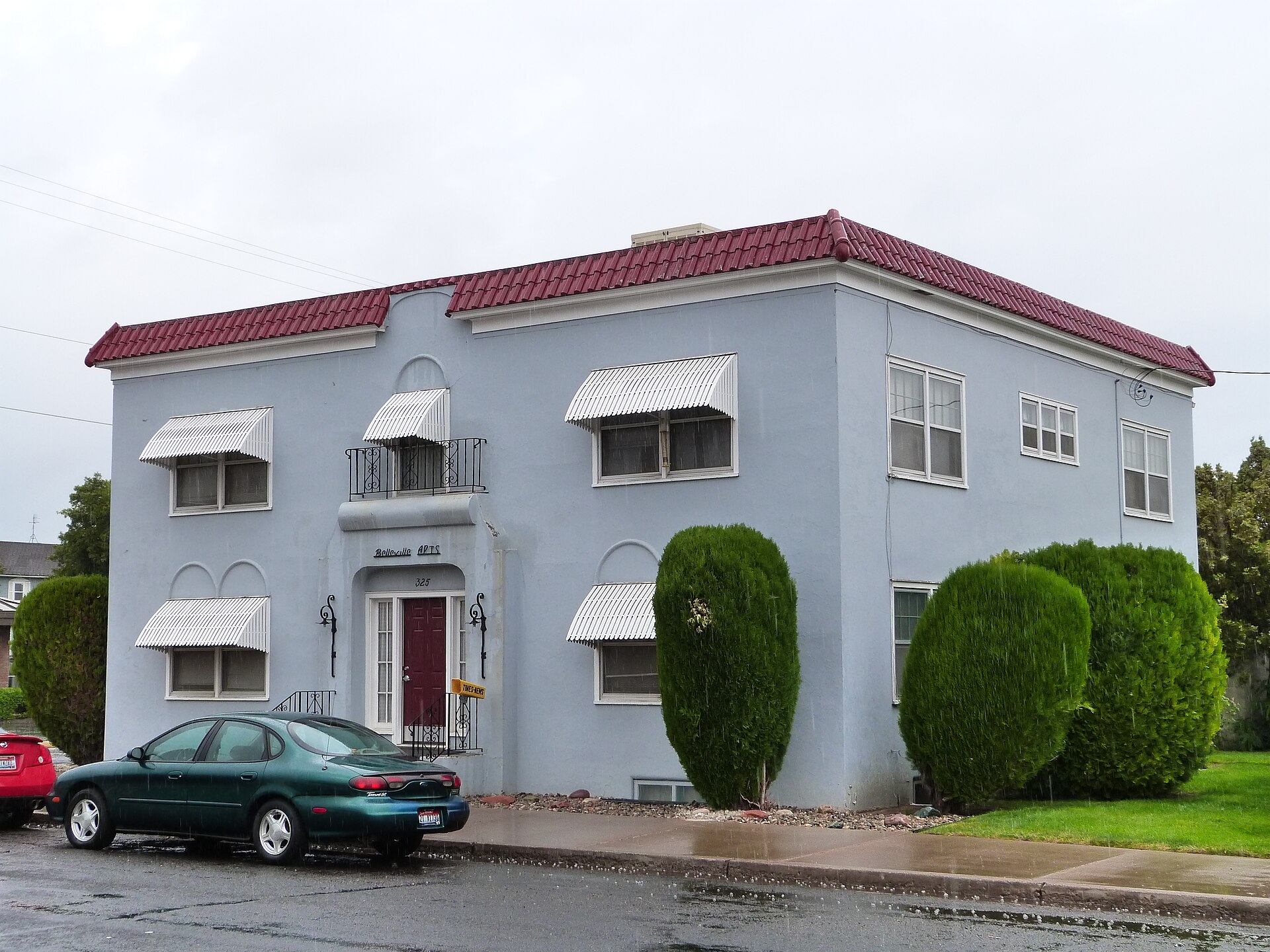

How big is the shortage?
Three public measures answer this question in different ways. NLIHC's The Gap counts homes; HUD's CHAS tables count households by income and cost burden; NLIHC's Out of Reach compares rents with wages. Each uses Census Bureau survey data, each has a different year, and none of them counts people who are homeless or doubled up, because the American Community Survey samples addresses.1
The Gap 2026: 33 homes per 100 households
The Gap is published every March by the National Low Income Housing Coalition, a Washington, D.C., advocacy group for federal housing aid. The 2026 edition, released in March 2026, uses the Census Bureau's 2024 American Community Survey Public Use Microdata Sample (PUMS), the individual household records behind the published tables. NLIHC defines an extremely low-income (ELI) renter household as one with income at or below the federal poverty guideline or 30 percent of the area median income, whichever is higher. A home is affordable to a group if its rent and utilities take no more than 30 percent of the group's income limit, and affordable and available if it is affordable and either vacant or rented by a household in that income group or below. A cheap apartment rented by a household earning twice the limit counts as affordable but not available.1
For Idaho, the 2026 edition reports:21
- 44,363 extremely low-income renter households.
- 33 affordable and available homes for every 100 of them, a shortage of 29,751 homes.
- 55 affordable and available homes per 100 households at or below 50 percent of area median income (a shortage of 34,375), 92 per 100 at or below 80 percent, and 100 per 100 at or below the median.
- 72 percent of extremely low-income renter households severely cost-burdened (paying more than half of income for rent and utilities), compared with 35 percent of those between 31 and 50 percent of median, 9 percent of those between 51 and 80 percent, and 1 percent of those between 81 and 100 percent.
The national figures in the same edition are 35 homes per 100 extremely low-income renter households, a shortage of 7,221,176 homes for about 11 million such households, and 74 percent of them severely cost-burdened. Idaho is a little below the national ratio and a little below the national severe-burden share. NLIHC adds that the shortage "is understated" because the survey misses people experiencing homelessness.1
The pattern is the one that matters most for policy: the shortage is concentrated at the very bottom. At 80 percent of median income, Idaho has 92 affordable and available homes per 100 households, close to enough on paper. At 30 percent, it has a third of what it needs. A program aimed at "workforce" or moderate-income housing, which typically serves households at 60 to 120 percent of median, can add homes without touching the gap at the bottom.2
Idaho and its neighbors
Every state has a shortage at the extremely low-income level; none reaches 100. Among Idaho's neighbors in the 2026 edition, Montana does best and Nevada, which has the lowest ratio in the nation, worst.1
| State | Affordable and available homes per 100 ELI renter households | Shortage (homes) | ELI renters severely cost-burdened |
|---|---|---|---|
| Montana | 46 | 16,668 | 61% |
| United States | 35 | 7,221,176 | 74% |
| Idaho | 33 | 29,751 | 72% |
| Wyoming | 33 | 12,017 | 63% |
| Washington | 28 | 182,692 | 77% |
| Utah | 28 | 44,097 | 79% |
| Oregon | 24 | 110,475 | 81% |
| Nevada | 16 | 78,121 | 88% |
Source: NLIHC, The Gap 2026, Appendix A, from 2024 ACS PUMS. South Dakota (73) and Mississippi (62) had the highest ratios in the nation; Nevada (16), Oregon (24) and California (25) the lowest.1
HUD's CHAS: cost burden by income, county by county
HUD's own tool for this question is a set of special Census tabulations called CHAS. HUD uses them to set aside funds and requires them in local housing plans. The newest release, posted Dec. 23, 2025, covers the 2018 to 2022 ACS five-year period. Its Table 8 splits renter households by income as a share of HUD Area Median Family Income (HAMFI) and by cost burden. Because CHAS uses five years of survey data, it can describe small counties that the single-year survey cannot, at the price of being older.144
Statewide, CHAS counts 189,045 Idaho renter households. Of these:4
- 32,360 (17.1 percent) had incomes at or below 30 percent of HAMFI. 24,865 of them (76.8 percent) paid more than 30 percent of income for housing, and 20,000 (61.8 percent) paid more than 50 percent.
- 110,790 had incomes at or below 80 percent of HAMFI; 69,470 of them (62.7 percent) paid more than 30 percent.
- Across all renters, 75,980 (40.2 percent of all renter households) paid more than 30 percent and 32,840 (17.4 percent) more than 50 percent.
For the United States (50 states and the District of Columbia summed), 24.0 percent of renter households were at or below 30 percent of HAMFI, 75.7 percent of those were cost-burdened and 63.6 percent severely cost-burdened. Idaho has a smaller share of renters at the very bottom than the nation does, and the ones it has are burdened at about the national rate.4
Why does CHAS count 32,360 extremely low-income renter households when The Gap counts 44,363? Three reasons: different years (2018 to 2022 averaged, against 2024 alone, a period in which Idaho added renters), a different income cutoff (CHAS uses 30 percent of HAMFI only; NLIHC also counts households under the poverty guideline when that is higher, which it is for larger households in lower-income areas), and different processing (NLIHC builds its own counts from the microdata). Neither number is wrong. A story or a grant application should name which one it uses and why.114
| Place | Renter households | At or below 30% HAMFI | Those paying over 50% of income | Share severely burdened | All renters paying over 30% |
|---|---|---|---|---|---|
| Ada County | 54,625 | 7,950 | 5,565 | 70.0% | 41.5% |
| Canyon County | 20,120 | 3,560 | 2,075 | 58.3% | 41.9% |
| Kootenai County | 18,545 | 2,505 | 1,690 | 67.5% | 47.2% |
| Bonneville County | 12,295 | 1,970 | 1,425 | 72.3% | 37.9% |
| Bannock County | 10,385 | 2,225 | 1,460 | 65.6% | 38.8% |
| Twin Falls County | 10,205 | 1,990 | 1,005 | 50.5% | 42.8% |
| Nez Perce County | 4,870 | 1,505 | 980 | 65.1% | 43.4% |
| Cassia County | 2,510 | 445 | 225 | 50.6% | 32.1% |
| Blaine County | 2,315 | 255 | 45 | 17.6% | 32.4% |
| Jerome County | 2,180 | 310 | 205 | 66.1% | 24.1% |
| Minidoka County | 2,085 | 460 | 300 | 65.2% | 26.3% |
| Gooding County | 1,510 | 185 | 100 | 54.1% | 39.5% |
| Lincoln County | 490 | 100 | 60 | 60.0% | 26.1% |
| Idaho | 189,045 | 32,360 | 20,000 | 61.8% | 40.2% |
| United States | 44,238,610 | 10,596,135 | 6,744,155 | 63.6% | 44.5% |
Source: HUD CHAS 2018 to 2022, Table 8; shares are our calculations. Counts are rounded by HUD and come from a sample survey: in a county like Gooding, where the bottom group is 185 households, the margin of error is large, and a change of a few dozen households moves the percentage by many points. Do not rank small counties on these numbers.15
How we figured it: CHAS cost-burden shares
Inputs. HUD CHAS 2018 to 2022, Table 8 (tenure by household income as a share of HAMFI by cost burden by kitchen and plumbing facilities), state file (summary level 040) and county file (050). We used the renter subtotals: T8_est68 (all renter households), T8_est69 (renters at or below 30 percent of HAMFI), and within each income group the "greater than 30 percent but less than or equal to 50 percent" and "greater than 50 percent" cost-burden subtotals (for the bottom group, T8_est73 and T8_est76). The cost-burden groups are labeled by HUD as more than 30 percent and more than 50 percent.
Calculation. Severe-burden share for the bottom group = T8_est76 / T8_est69. For Idaho: 20,000 / 32,360 = 61.8 percent. All-renter burden share = the sum of the two burden subtotals in all five income groups, divided by all renter households (including those with burden "not computed" because of zero or negative income). For Idaho: 75,980 / 189,045 = 40.2 percent. The U.S. row sums the 50 states and the District of Columbia, leaving out Puerto Rico.
Why the all-renter share differs from Part A. Lesson 83/08 reports 48.8 percent of Idaho renters burdened in 2025, from the single-year ACS table B25070, with "not computed" households removed from the base and burden defined as 30 percent or more. Different years, base and cutoff produce different shares; neither replaces the other.16
The newest single-year numbers
For a current statewide picture, the Census Bureau's 2025 single-year survey is newer than CHAS. Part A's lesson Who Idahoans Are Now calculated from ACS table B25070 that 48.8 percent of Idaho renter households paid 30 percent or more of income for rent and utilities in 2025, and 23.7 percent paid half or more, compared with 51.8 and 26.2 percent nationally. Idaho renters as a whole are a little less burdened than the national average; its poorest renters are not.16
Rents against wages: Out of Reach 2026
NLIHC's annual Out of Reach report, updated July 22, 2026, compares HUD's Fair Market Rents with what renters earn. A Fair Market Rent (FMR) is HUD's estimate of what a household moving now would pay, including utilities, for a modest rental home in a metro area or nonmetro county; HUD sets FMRs to run the voucher program. The Housing Wage is NLIHC's term for the hourly wage a full-time worker (40 hours a week, 52 weeks a year) would need to pay the FMR without spending more than 30 percent of income.1718
For Idaho as a whole, Out of Reach 2026, which uses HUD's FY2026 Fair Market Rents, reports a two-bedroom FMR of $1,410 and a one-bedroom FMR of $1,160. The Housing Wage is $27.12 for two bedrooms and $22.30 for one. The estimated mean wage of Idaho renters is $20.32 an hour, which covers $1,057 a month in rent. At the $7.25 minimum wage, which Idaho has not raised above the federal floor, a worker would need 150 hours a week for a two-bedroom or 123 for a one-bedroom: 3.7 or 3.1 full-time jobs. Idaho ranks 29th among the states, D.C. and Puerto Rico by two-bedroom Housing Wage. The national two-bedroom Housing Wage is $34.73.317
Two other figures from the same report show who is furthest behind. A household at 30 percent of area median income ($30,497 statewide) can pay $762 a month. A person living on Supplemental Security Income, the federal disability and old-age benefit for people with little income, received $1,047 a month in NLIHC's Idaho figures and can pay $314. No Fair Market Rent in Idaho comes near $314.13
County by county
The county rows in NLIHC's Idaho data file show how rents and renters' pay diverge. In Ada and Canyon counties the FMR is set for the Boise City HUD metro area, so both counties shared a FY2026 two-bedroom FMR of $1,655 (the year Out of Reach 2026 used; HUD's FY2027 figure, in effect since Oct. 1, 2026, is $1,540), but Canyon renters earn much less.13
| County | 2-bedroom FMR | 2-bedroom Housing Wage | Estimated mean renter wage | Rent affordable at mean renter wage (our calculation) | Renter share of households |
|---|---|---|---|---|---|
| Ada | $1,655 | $31.83 | $24.90 | $1,295 | 29% |
| Canyon | $1,655 | $31.83 | $19.18 | $997 | 24% |
| Blaine | $1,600 | $30.77 | $22.36 | $1,163 | 26% |
| Kootenai | $1,547 | $29.75 | $19.24 | $1,000 | 29% |
| Bonneville | $1,305 | $25.10 | $16.77 | $872 | 28% |
| Twin Falls | $1,284 | $24.69 | $14.87 | $773 | 30% |
| Jerome | $1,186 | $22.81 | $19.52 | $1,015 | 25% |
| Bannock | $1,173 | $22.56 | $13.32 | $693 | 30% |
| Cassia | $1,028 | $19.77 | $16.05 | $835 | 31% |
| Gooding | $1,026 | $19.73 | $14.63 | $761 | 29% |
| Minidoka | $1,022 | $19.65 | $19.14 | $995 | 31% |
| Lincoln | $973 | $18.71 | $21.29 | $1,107 | 21% |
| Idaho | $1,410 | $27.12 | $20.32 | $1,057 | 28% |
| Idaho nonmetro areas | $1,109 | $21.32 | $17.52 | $911 | 28% |
Source: NLIHC, Out of Reach 2026, Idaho data file; renter shares from ACS 2020 to 2024. The affordable-rent column is our calculation (mean renter wage x 2,080 hours x 30 percent / 12 months); NLIHC's statewide figure is $1,057, which matches.13
Two patterns stand out. In Twin Falls County the gap between the Housing Wage ($24.69) and the average renter's pay ($14.87) is almost $10 an hour, larger than in Jerome County, where the FMR is lower and the average renter earns more. In Lincoln County the average renter wage exceeds the Housing Wage, which shows the limits of averages: a mean wage of $21.29 across only 390 renter households says little about the lowest-paid of them.13
How we figured it: Housing Wage, hours and affordable rent
NLIHC's Housing Wage = (FMR / 0.30 x 12) / 2,080 hours. Idaho two-bedroom: $1,410 / 0.30 = $4,700 a month; x 12 = $56,400 (NLIHC prints $56,413 because it uses unrounded figures); / 2,080 = $27.12. Hours at minimum wage = Housing Wage x 40 / $7.25: $27.12 x 40 / $7.25 = 149.6, which NLIHC rounds to 150. Rent affordable at the mean renter wage = wage x 2,080 x 0.30 / 12 = wage x 52: Twin Falls County $14.87 x 52 = $773.24, shown as $773. These are NLIHC's methods applied to NLIHC's published inputs; we did not check NLIHC's wage estimates against Bureau of Labor Statistics microdata.1713
The neighbors
Idaho's two-bedroom Housing Wage of $27.12 is below Washington ($39.84), Oregon ($33.43), Nevada ($33.33), Utah ($30.42) and Montana ($29.97), and above Wyoming ($20.76). But Washington's minimum wage in the same report is $17.13, Oregon's $15.55, Nevada's $12.00 and Montana's $10.85; Idaho, Utah and Wyoming use the federal $7.25. Idaho's average renter wage ($20.32) is below Washington's ($32.74), Oregon's ($23.20), Nevada's ($23.03) and Utah's ($21.67) and above Montana's ($19.47) and Wyoming's ($18.95). Lower rents than the coastal states do not translate into easier rent for low-wage Idaho workers.17
Waitlists: what they show and what they hide
Most federal rental help is not an entitlement. A household that qualifies for a Housing Choice Voucher or a public housing unit does not receive one; it applies to the local agency, goes on a waiting list if the list is open, and waits until the agency has a voucher or unit free. Federal law caps the number of vouchers each agency may lease by the money Congress appropriates, so when rents rise, the same dollars cover fewer families.19
Idaho has five agencies running the voucher program for most of the state, plus tribal housing programs. Lesson 04 profiles each one. Who takes applications depends on where you live:6
- Ada County: the Boise City/Ada County Housing Authorities (BCACHA), two legal authorities with one staff. In their 2026 annual plans, the Boise City Housing Authority (HUD code ID013) reported 160 public housing units and 1,406 vouchers, and the Ada County Housing Authority (ID021) 10 public housing units and 804 vouchers.1920
- Adams, Canyon, Elmore, Gem, Owyhee, Payette, Valley and Washington counties: the Southwestern Idaho Cooperative Housing Authority (SWICHA).6
- City of Pocatello: Housing Alliance and Community Partnerships (HACP), which says it assists "over 600 households" with vouchers.21
- The other 34 counties, including Bannock outside Pocatello, Bonneville, Kootenai, Nez Perce and every Magic Valley county (Blaine, Camas, Cassia, Gooding, Jerome, Lincoln, Minidoka and Twin Falls): the Idaho Housing and Finance Association (IHFA), through branch offices in Coeur d'Alene, Idaho Falls, Lewiston and Twin Falls, each keeping its own area list.6
What each agency publishes about its list
| Agency | Area | List status it publishes | Wait it describes | Preferences it lists |
|---|---|---|---|---|
| Boise City/Ada County Housing Authorities | Ada County | Closed: "We do not know when it will open again." Last opened May and June 2024, by online application and random selection | Expects to work through the 2024 list in 2 to 2 1/2 years | Idaho residents; elderly; disabled; families with minor children; people leaving an Idaho transitional housing program for the homeless |
| Idaho Housing and Finance Association | 34 counties, 4 branch lists | Accepts online and paper applications; no open or closed status shown on the page | "from a several months to more than two years" | Families, disabled, elderly; federal disaster victims; Mainstream vouchers; non-elderly disabled; terminal illness |
| Housing Alliance and Community Partnerships | City of Pocatello | Not stated on its voucher page | "approximately 12-24 months" | Not listed; special vouchers (FUP, VASH, Mainstream) bypass the list |
| Southwestern Idaho Cooperative Housing Authority | Canyon and 7 other counties | Not confirmed: the agency's website did not load on Nov. 20, 2026 | Not confirmed | Not confirmed |
Sources: each agency's voucher page as read Nov. 20, 2026. The quoted phrase from IHFA is as printed on its page.5621
A preference moves an applicant ahead of others on the list; it does not create a right to assistance. A preference for local residents, the elderly or families with children is chosen by each agency in its administrative plan and disclosed in its annual plan. That is why two households with the same income can face very different waits in Boise and Twin Falls.5
Reading a waitlist number
Waitlist counts get quoted as if they measured need. They do not, for four reasons:
- Closed lists stop counting. BCACHA's list has been closed since mid-2024. Anyone who became eligible after that is not on it.5
- Lists are built differently. A lottery list (BCACHA draws applicants at random and assigns positions) holds only those drawn; a first-come list holds everyone who applied. The two numbers are not comparable.5
- Households appear more than once, or not at all. A family can be on a voucher list and several property lists at the same time. Many eligible households never apply because they assume the wait is hopeless. IHFA accepts one application per household across its branches, which removes duplicates inside IHFA but not between agencies.6
- Lists go stale. Agencies purge names when mail comes back or a household does not respond. A smaller list after a purge does not mean need fell.
Better measures of unmet need are the CHAS and Gap counts above. A waitlist count is useful for a different question: how long a household on the list can expect to wait, which is what agencies themselves describe.
The funding squeeze behind the lists
Waits lengthen when an agency cannot issue vouchers it is authorized to have. In the annual plan for the fiscal year beginning October 2026, the Boise City Housing Authority wrote that "the Housing Choice Voucher program is currently experiencing a funding shortfall," that it would "work closely with HUD and the Shortfall Prevention Team," and that new project-based voucher commitments "will only be considered when funding levels support the long-term stability of the program." It kept its existing commitment of 95 project-based vouchers at New Path Community Housing II, a 96-unit permanent supportive housing building set to begin leasing in fall 2026.19
The mechanism is simple arithmetic. A voucher pays the gap between the tenant's share (generally 30 percent of adjusted income) and the lesser of the rent or the agency's payment standard, which the agency sets between 90 and 110 percent of the FMR. When rents rise faster than the money Congress provides, each voucher costs more, and an agency stays within budget by not reissuing vouchers when families leave. Deanna Watson, identified in a June 2024 Idaho Statesman story as executive director of the Boise City/Ada County Housing Authorities, told the paper that the agencies were already setting payment standards at the 110 percent maximum and could serve roughly 22 percent of eligible people. Federal funding levels by year are covered in lesson 06.2223
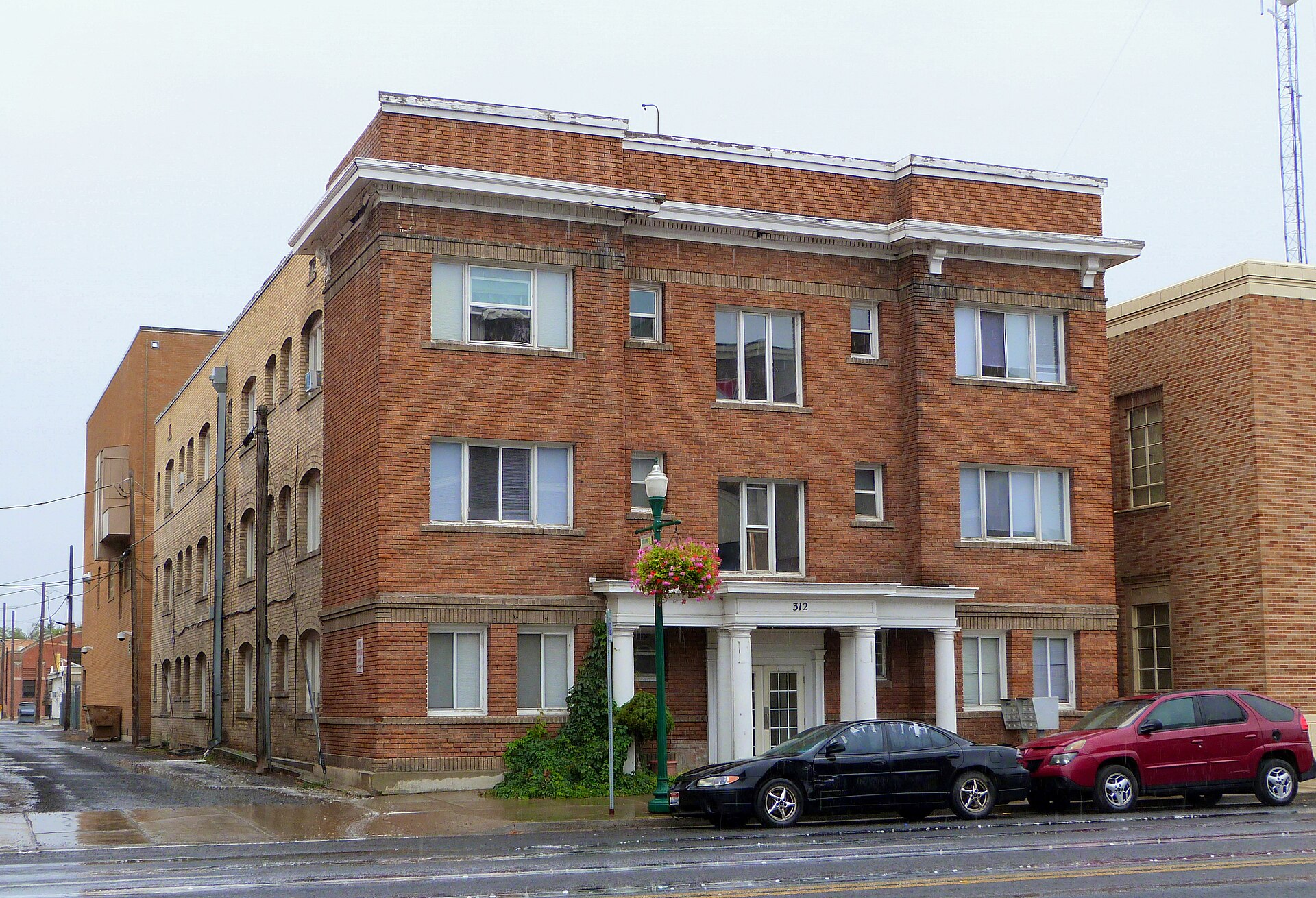

Voucher holders who cannot find a landlord
Reaching the top of the list is not the end. A family issued a voucher must find a private landlord willing to rent to it, at a rent the agency finds reasonable, in a unit that passes inspection, within the search term. Federal rules give at least 60 days for the initial search, and agencies may grant extensions under their own policies. At the first lease, the family's share of rent and utilities may not exceed 40 percent of its adjusted monthly income. A voucher that is not used in time expires and goes to the next family on the list.2425
The share of families who succeed is the success rate. HUD's most cited national study, by Meryl Finkel and Larry Buron of Abt Associates for HUD's Office of Policy Development and Research (November 2001), found that 69 percent of voucher holders at large metropolitan agencies leased a unit in 2000, down from 81 percent in 1993, with agency rates ranging from 37 to 100 percent. Agencies told the researchers that tight rental markets explained most of the drop. We found no Idaho agency that publishes its current success rate on its website, and none of the 2026 plans we read reports one. A records request can ask for the number of vouchers issued and the number that led to a lease in a given year (see the reporting box below).2619
Why do searches fail? Low vacancy and rents above the payment standard are the first reasons. Landlord choice is another. Some owners decline the program because of the inspection, the paperwork, the wait for the first housing assistance payment, or past experience; others screen out applicants whose income comes from a voucher or a benefit. BCACHA's own policy changes for 2026 include adding "owner incentive/retention payments" to its administrative plan under HUD Notice PIH 2022-18, one of the tools HUD allows agencies to use to recruit landlords.19
What Idaho law says about refusing vouchers
Idaho has no state law that bars a landlord from refusing a tenant because the tenant would pay with a Housing Choice Voucher. The Idaho Human Rights Act's real estate section, Idaho Code 67-5909(8), covers race, color, religion, sex, national origin and disability; it does not mention source of income, public assistance or housing vouchers. The federal Fair Housing Act also does not list source of income as a protected class.27
The one local rule that tried to change this was Boise's. In September 2023 the Boise City Council adopted tenant protections that included a ban on rejecting renters because of their source of income, including a housing voucher; Boise State Public Radio reported that Councilmember Luci Willits cast the only no vote and that the source-of-income part would take effect Jan. 1, 2024.28
The Legislature responded in 2024 with House Bill 545, introduced by the House State Affairs Committee and carried on the floor by Rep. Brandon Mitchell of Moscow and Sen. Doug Okuniewicz. It passed the House 59 to 11 on Feb. 26, 2024, and the Senate 26 to 9 on March 25, 2024. Gov. Brad Little signed it April 1, 2024, as 2024 Session Laws chapter 257, effective July 1, 2024. Its statement of purpose says the bill "amends Idaho Code Section 55-307 to prohibit local governments from mandating Idaho property owners to be forced to participate in an optional Federal Housing Assistance program or any program that would have the effect of regulating rent, fees or deposits." In 2025 the Legislature reorganized the landlord-tenant chapter (Senate Bill 1043, 2025 Session Laws chapter 65, effective July 1, 2025), and the same rule now sits in Idaho Code 55-306, titled "Local government, no rent control" ([55-306, added 2025, ch. 65, sec. 6]). It reads in part that "a local governmental unit shall not enact, maintain, or enforce an ordinance or resolution" with that effect, and it does not limit a local government managing property it owns or has an interest in.8297
Boise's ordinance remains on the books for other sources of income. The city's own FAQ says that "as a result of action taken by the Idaho State Legislature during its 2024 session," the ban does not apply to sources of income that "require a landlord to participate in an optional federal housing assistance program." A landlord in Boise may therefore decline a voucher but may not, under the city rule, refuse an applicant because the rent would be paid from Social Security, disability or child support. Lesson 03 of Part C, Renting Safely, covers the rest of Boise's renter rules.9
One federal rule does apply in Idaho regardless: owners of Low-Income Housing Tax Credit properties must sign an extended use agreement that bars refusing to lease to a voucher holder because the applicant holds a voucher. That is a condition of the tax credit under 26 U.S.C. 42(h)(6)(B)(iv), not a general law, so it covers only tax credit properties.30
How other states handle it
Idaho's approach is one of two directions states have taken. Washington bars landlords from refusing to rent, setting different terms, or advertising a preference based on "source of income," which the statute defines to include housing assistance, public assistance, Social Security and Supplemental Security Income; the law, RCW 59.18.255, took effect Sept. 30, 2018, and allows a tenant to recover up to four and one-half times the monthly rent plus costs and fees. Oregon's ORS 659A.421 bars refusing to rent because of source of income and defines it to include "federal rent subsidy payments under 42 U.S.C. 1437f," the voucher statute; the voucher language was added in 2013. We did not survey every state, and this lesson does not count how many have source-of-income laws or preemption laws like Idaho's.3132
Aging stock and expiring affordability
Most subsidized rental housing in Idaho is privately owned and stays affordable because of a contract, a loan or a tax credit agreement with an end date. When the date passes, an owner may renew, refinance into a new affordability agreement, or, depending on the program, convert to market rent. Three federal data sets show where those dates fall: HUD's Low-Income Housing Tax Credit database, HUD's Multifamily Assistance and Section 8 Contracts database, and USDA's rural rental records. A national compilation, the National Housing Preservation Database run by the Public and Affordable Housing Research Corporation and NLIHC, combines them; its site refused automated access when we checked, so this lesson uses the federal files directly.
Tax credit properties
The Low-Income Housing Tax Credit (LIHTC) is the largest federal source of new affordable rental housing. In return for tax credits, an owner agrees to keep rents and incomes within limits for a compliance period of 15 years and an extended use period of at least 15 more, for a minimum of 30 years, recorded as a covenant on the land. After year 14 an owner may ask the state allocating agency (in Idaho, IHFA) to find a buyer at a formula price, called a qualified contract; if none is found, the extended use period can end early, with a three-year wind-down for existing tenants. States may require longer affordability periods in their allocation plans.30
HUD's national LIHTC database holds 55,345 projects and 3.9 million units placed in service from 1987 through 2024. Its Idaho rows show 288 projects with 13,093 units, 11,928 of them income-restricted. By the year placed in service (our calculation):10
| Placed in service | Idaho projects | Low-income units | Where they stand in 2026 (federal minimum) |
|---|---|---|---|
| 1987 to 1996 | 78 | 2,847 | At or past year 30 |
| 1997 to 2010 | 123 | 5,536 | Past year 15, inside the extended use period |
| 2011 to 2015 | 44 | 1,672 | Reaching the end of year 15 between about 2025 and 2030 |
| 2016 to 2020 | 35 | 1,489 | Inside the compliance period |
| 2021 to 2024 | 6 | 340 | Inside the compliance period (recent years are incomplete in HUD's file) |
| Year not reported | 2 | 44 | |
| Total | 288 | 11,928 |
Source: HUD LIHTC database (LIHTCPUB, 1987 to 2024); counts are our calculation.10
The oldest group matters most. Those 2,847 units, many of them small rural complexes, have passed the federal minimum. Whether they are still restricted depends on the covenant each owner signed and on IHFA's rules in the year of the allocation, which this lesson did not check property by property. Sixty of Idaho's LIHTC projects, with 1,553 low-income units, were also financed with USDA Section 515 loans, so for those the USDA loan term is a second date to watch. Two Magic Valley examples in HUD's file: Hagerman Country Homes (12 units, placed in service 1988) and Sawtooth Manor in Buhl (1991), both also listed today as USDA rental properties.1012
A caution on the recent rows: HUD's file shows only six Idaho projects placed in service in 2021 through 2024. HUD collects the data from state agencies in arrears (2025 properties are to be added in spring 2027), and some states' recent records arrive late. Use IHFA's own award lists, covered in lesson 06, for recent production.10
How we figured it: LIHTC affordability dates
Inputs. HUD LIHTCPUB.xlsx, all rows with proj_st = ID (288). We summed li_units (low-income units) by yr_pis (year placed in service); codes 8888 and 9999 mean not reported. Dates. Under 26 U.S.C. 42(i)(1) the 15-year compliance period begins with the first taxable year of the credit period, which is the year placed in service or, at the owner's election, the next year; the extended use period runs at least 15 years after that (42(h)(6)(D)). So a project placed in service in 1996 reached year 30 in about 2025 or 2026. These are federal minimums; the actual end date is in each property's recorded agreement. County counts. 41 Idaho projects (1,407 low-income units), mostly from 1988 to 1993, have no county code in HUD's file, so any county total from this file is a minimum. Jerome County shows 8 projects (272 low-income units), Twin Falls County 14 (632), Cassia 5 (156), Minidoka 4 (110) and Gooding 3 (55), plus ungeocoded projects such as those in Hagerman and Buhl.1030
Project-based Section 8 and senior housing contracts
The second group is privately owned buildings where HUD pays part of the rent for specific units under a contract with the owner: project-based Section 8, Section 202 housing for low-income seniors and Section 811 housing for people with disabilities. HUD's Multifamily Assistance and Section 8 Contracts database, current as of Nov. 3, 2026, lists 131 Idaho properties with 4,380 units and 132 contracts (131 of them listed as active) covering 4,227 assisted units (our calculation). By program, the largest group is HUD's "S8 State Agency" category, contracts at buildings financed through a state housing finance agency (1,789 units), followed by Section 202 (628), Section 202 and 811 rental assistance contracts (464) and Section 8 contracts at USDA-financed properties (378).11
Each contract has an overall expiration date. Units under contracts expiring in each year from 2026 through 2030: 29, 215, 246, 425 and 363, for 1,278 units in five years. Since the Multifamily Assisted Housing Reform and Affordability Act of 1997, most owners renew, often for one to five years at a time, so an expiration date is a point at which the owner decides whether to stay in the program. HUD's database exists, in HUD's words, to measure "the potential impact of expiring project-based subsidy contracts." A building whose contract is not renewed loses its rental assistance; federal law provides enhanced vouchers for many residents in that case, which lesson 06 covers.1133
The Magic Valley list is short. HUD's file shows 14 contracts in the six core counties with 411 assisted units: in Twin Falls County, South Meadow Apartments (41 units, contract through Oct. 31, 2029), Cherrywood Apartments (40, April 17, 2030), Valley Vista Village (60, 2032), Kimberly Sunset Manor (24), Meadowbrook in Buhl (20) and Balanced Rock Townhouse in Castleford (8); in Jerome County, Windwood (30, May 19, 2030) and Syringa Estates in Hazelton (20); in Gooding County, Gracehill Apartments (30); in Lincoln County, Riverside Sawtooth in Shoshone (20); in Minidoka County, C Street Manor in Rupert (38) and Sunset Manor VI (24); and in Cassia County, Syringa Plaza in Burley (40, a Section 202 senior property with a contract through Feb. 28, 2029) and Richlin Townhouses (16).11
Rural gaps and USDA rental housing
Outside the Treasure Valley and the larger cities, the main source of subsidized apartments is not HUD but the U.S. Department of Agriculture. Under Section 515 of the Housing Act of 1949 (42 U.S.C. 1485), USDA's Rural Housing Service made long-term, low-interest loans to build apartments in rural towns for very low-, low- and moderate-income tenants, older people and people with disabilities. Under Section 521 (42 U.S.C. 1490a), USDA pays rental assistance to the owner so that eligible tenants pay about 30 percent of adjusted income. Sections 514 and 516 (42 U.S.C. 1484 and 1486) do the same for farm labor housing, with loans and grants to farmers, associations, nonprofits and public agencies to house domestic farmworkers.3435
What USDA lists in the Magic Valley
USDA's public rental search lists each property it finances, with total units, units with rental assistance (labeled "units with subsidy"), whether it serves families or the elderly, and a labor housing type. On Nov. 20, 2026, it listed 22 properties with 640 units in five Magic Valley counties:12
| County | Properties (town, units, units with rental assistance) | Total units | With rental assistance |
|---|---|---|---|
| Jerome | Clover Creek I (Jerome, 22, 22); Northside Courts (Jerome, 44, 44) | 66 | 66 |
| Twin Falls | Sawtooth Manor (Buhl, 24, 24, elderly); Sunset Manor Buhl (12, 12, elderly); Aspen Grove I and II (Filer, 32 and 32, all assisted); Colonia De Colores (Twin Falls, 24, 11, off-farm labor housing); Washington Park Apt (Twin Falls, 80, 78) | 204 | 189 |
| Gooding | Clover Creek II (Bliss, 17); Evergreen Village (Gooding, 20); Sunrise Court Gooding (25, elderly); Hagerman Co Homes (Hagerman, 12); Briarwood (Wendell, 24); Clover Creek III (Wendell, 8); Wendell Housing Association (28, elderly); all units assisted | 134 | 134 |
| Minidoka | Project Hope (Heyburn, 24, 23, off-farm labor housing); Riverton Apartments (Heyburn, 24); Southwood Apts (Rupert, 24); Valley Park (Rupert, 24) | 96 | 95 |
| Cassia | Goose Creek (Burley, 40); Poplar Grove (Burley, 60, elderly); Sawtooth Village (Burley, 40); all units assisted | 140 | 140 |
| Total | 22 properties | 640 | 624 |
Source: USDA Rural Development, MFH Rentals property listings by county, read Nov. 20, 2026 (snapshot saved with this module's source files). Lincoln County's listing did not load when we checked. Totals are our sums.12
For a town like Wendell or Hagerman, these few dozen units are most of the subsidized rental housing there is. HUD's voucher program reaches rural counties too, through IHFA's Twin Falls branch, but a voucher requires a landlord and a unit at or under the payment standard in the same town. USDA properties with rental assistance are often the only rentals where a tenant's rent follows income.612
Maturing mortgages and the 2026 federal law
Section 515 loans run for decades. When a loan is paid off or reaches maturity, the property's use restrictions end, and under the law as it stood for decades, Section 521 rental assistance ended with the loan. The Government Accountability Office reported in May 2018 (GAO-18-285) that over 90 percent of USDA rental properties and units, about 13,000 properties with 407,000 units, could leave the program between 2028 and 2050, and that about 60 percent of properties with maturing mortgages left the program from 2014 through 2017. GAO suggested that Congress let USDA keep paying rental assistance after a loan ends.36
Congress acted in 2026. The 21st Century ROAD to Housing Act (H.R. 6644, 119th Congress) became law without the President's signature on July 11, 2026, as Public Law 119-101, according to the Congressional Research Service. (LeadingAge, the trade association for nonprofit aging services, reported July 10.) According to the Housing Assistance Council, a national rural housing nonprofit, the act lets USDA continue Section 521 rental assistance at a property whose Section 515 or 514 loan expires within four years when USDA finds the loan cannot be restructured or the owner declines, with renewal for up to 20 years subject to annual appropriations; renames the preservation program the Section 545 Housing Preservation and Revitalization Program; and requires USDA to send yearly notices to owners whose mortgages mature within four years and to tenants whose mortgages mature within two years. HAC notes that several of these provisions depend on Congress appropriating money and that the House's fiscal 2027 USDA spending bill passed without them. This lesson did not read the enrolled text of these USDA provisions; the summary above is HAC's.363738
We could not get a current list of maturing Section 515 loans in Idaho from USDA: its data pages refused automated access on Nov. 20, 2026. Commercial listing sites republish USDA's maturing-mortgage file; they are not cited here. A records request to USDA Rural Development's Idaho state office, or a reporter's call to the owners named above, is the reliable route.
Farmworker housing in the Magic Valley
Farm labor has needed its own housing in southern Idaho since irrigation farming began. In 1941 the federal Farm Security Administration ran migratory labor camps in Canyon County, including mobile camps of tents at Nampa and Wilder, photographed by Russell Lee for the FSA.
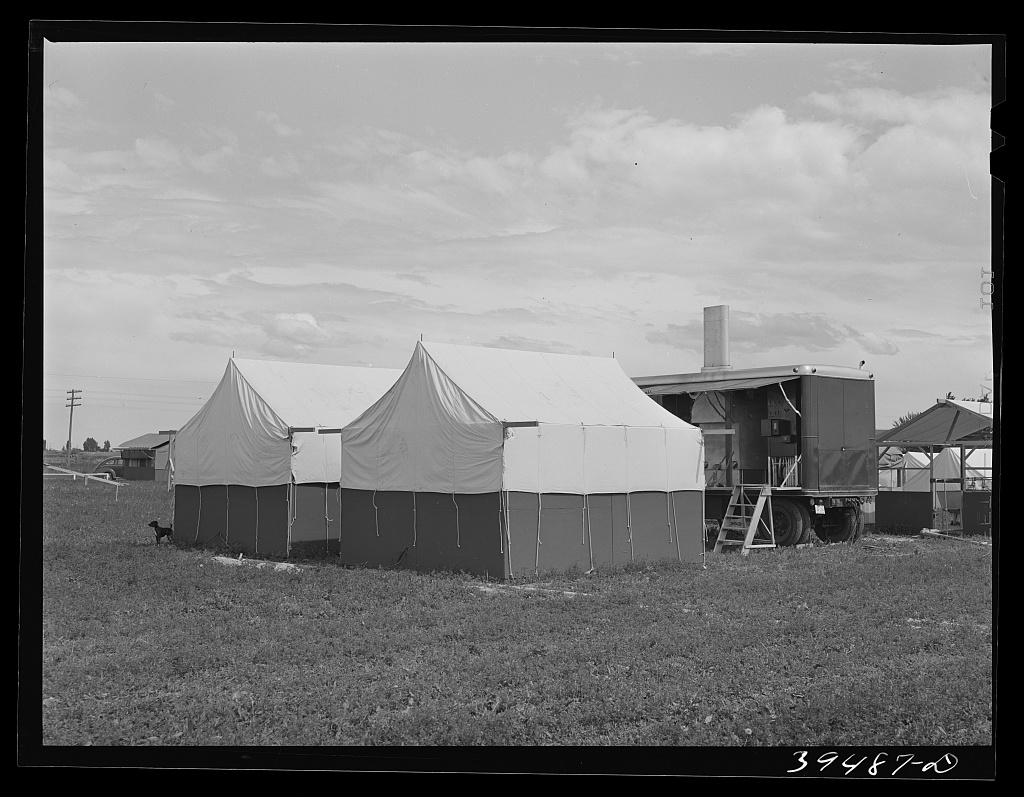

Today the federal tools are the USDA Section 514 and 516 programs and, for guest workers, the housing rules of the H-2A visa program. In USDA's listings, two Magic Valley properties carry the "off farm" labor housing type, meaning they are not on a single farm and serve workers from many employers: Colonia De Colores at 406 Gardner Avenue in Twin Falls (24 units, 11 with rental assistance, two- to four-bedroom units) and Project Hope at 730 14th Street in Heyburn (24 units, 23 with rental assistance). No property in Jerome or Gooding County carried a labor housing type in USDA's listing, though both counties' dairies and processors employ large numbers of farmworkers.12
The H-2A program lets employers hire foreign workers for temporary or seasonal farm jobs when the Department of Labor certifies a shortage of domestic workers. Employers must provide housing at no cost to H-2A workers, and to workers in corresponding employment, who cannot reasonably return to their homes each day, and the housing must pass inspection (20 CFR 655.122(d)). Nationally the Labor Department certified 398,258 H-2A positions in fiscal 2025; Idaho was not among the top ten states. Because the program covers only temporary or seasonal work as defined in 20 CFR 655.103(d), year-round jobs such as most dairy milking work generally fall outside it, and those workers rent on the open market. This lesson did not find a current, official count of H-2A positions certified in Idaho; the Labor Department's state profile file we downloaded is an older edition and is not cited for a current figure.394041
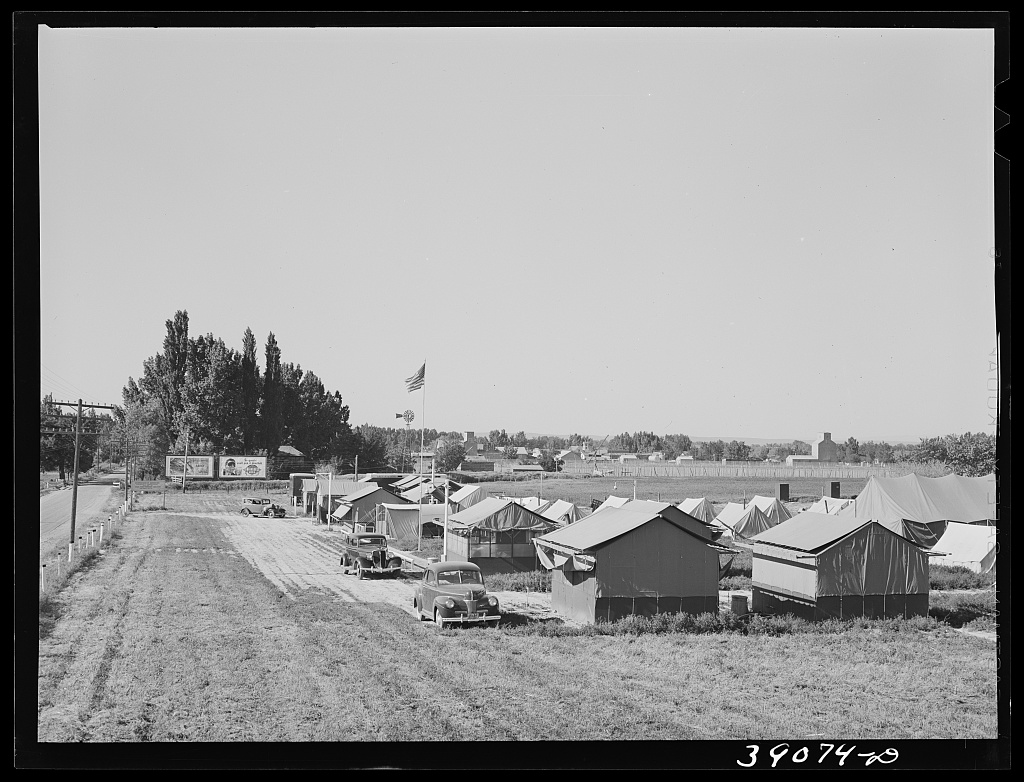

Manufactured home parks
Manufactured homes are among the cheapest housing in Idaho, and many of their owners rent the lot underneath. That arrangement carries a risk renters in apartments do not face: a homeowner who cannot afford a lot rent increase, or whose park closes, must move a home that may be costly or impossible to move. Idaho's Manufactured Home Residency Act requires 90 days' written notice of a lot rent increase (Idaho Code 55-2006) and 180 days' notice before a park closes or changes use (55-2010). Part C's lesson Mobile and Manufactured Home Parks covers those rules, the 2024 sale-notice law and park disputes in detail. Ownership, financing and titling of manufactured homes are lesson 11 of this module, Manufactured Homes as Affordable Ownership.42
Seniors and people with disabilities
NLIHC reports that, nationally, 33 percent of extremely low-income renter households are headed by seniors and 18 percent by people with disabilities who are not seniors; 34 percent are in the labor force. Its Out of Reach figures show why: an Idaho resident living on Supplemental Security Income can pay $314 a month at 30 percent of income, while the cheapest Fair Market Rent for a one-bedroom anywhere in Idaho in NLIHC's file is $742.113
Housing built for these groups is a small part of the stock. HUD's contracts database counts 628 Idaho units under Section 202 contracts and 464 under Section 202 and 811 project rental assistance contracts. In the Magic Valley, USDA's listings include five elderly properties (Sawtooth Manor and Sunset Manor in Buhl, Sunrise Court in Gooding, Wendell Housing Association, and Poplar Grove in Burley) and HUD's include Syringa Plaza in Burley. In Boise, BCACHA's two public housing high-rises, Capitol Plaza (93 homes) and Franklin Plaza (67 homes), serve residents 62 or older and people with disabilities; the 2026 plan says the authority is studying converting both under HUD's Rental Assistance Demonstration (RAD) and may seek to dispose of one or more public housing properties under Section 18 of the U.S. Housing Act. No application had been filed, and the plan lists water and waste line replacement as a priority repair. Lesson 05, Who Is Served, shows HUD's data on the ages and disabilities of Idaho's assisted households.111219
Idaho compared with the United States
Put together, the numbers place Idaho near the national middle on most measures and below it on wages:
- Shortage at the bottom: 33 homes per 100 ELI renter households against 35 nationally (The Gap 2026).1
- Severe burden of the poorest renters: 61.8 percent in Idaho against 63.6 percent nationally (CHAS 2018 to 2022), or 72 against 74 percent (The Gap 2026).41
- Share of renters at the bottom: 17.1 percent of Idaho renter households at or below 30 percent of HAMFI against 24.0 percent nationally (CHAS).4
- Rent against wages: two-bedroom Housing Wage $27.12 against $34.73 nationally, with a $7.25 state minimum wage that is lower than in Washington, Oregon, Nevada and Montana (Out of Reach 2026).17
- Tenant law: no statewide source-of-income protection, and a state ban on local mandates, where Washington and Oregon have statewide protection.73132
The supply side, including the 2026 starter-home and accessory dwelling laws (Senate Bills 1352 and 1354, effective July 1, 2026), is covered in Part B, The 2026 Housing Laws. That lesson explains what they require of cities; this lesson does not repeat it.
Pictures, Numbers and Infographics
The key numbers in this lesson, in one place.
| Measure | Idaho | U.S. or other states | Place or year | Source |
|---|---|---|---|---|
| Affordable and available homes per 100 extremely low-income renter households | 33 | U.S. 35; MT 46; WY 33; WA 28; UT 28; OR 24; NV 16 | 2024 data, The Gap 2026 | 1 |
| Shortage of affordable and available homes, ELI renters | 29,751 | U.S. 7,221,176 | 2024 data | 2 |
| ELI renter households severely cost-burdened | 72% | U.S. 74% | 2024 data | 1 |
| Renters at or below 30% of HAMFI paying over 50% of income | 20,000 of 32,360 (61.8%) | U.S. 63.6% | CHAS 2018 to 2022 | 4 |
| Same, Magic Valley counties | Twin Falls 50.5%; Jerome 66.1%; Gooding 54.1%; Minidoka 65.2%; Cassia 50.6% | Ada 70.0%; Canyon 58.3% | CHAS 2018 to 2022 (small samples) | 15 |
| Two-bedroom Fair Market Rent | $1,410 | Ada and Canyon $1,655; Twin Falls $1,284; Jerome $1,186; Gooding $1,026 | Out of Reach 2026 | 13 |
| Two-bedroom Housing Wage | $27.12 an hour | U.S. $34.73; WA $39.84; OR $33.43; NV $33.33; UT $30.42; MT $29.97; WY $20.76 | 2026 | 317 |
| Estimated mean renter wage | $20.32 an hour | Twin Falls County $14.87; Jerome County $19.52 | 2026 | 13 |
| Hours a week at $7.25 to afford a two-bedroom | 150 | 2026 | 3 | |
| Rent affordable on SSI | $314 a month | 2026 | 13 | |
| Ada County voucher list | Closed; last opened May to June 2024 | Nov. 2026 | 5 | |
| Vouchers in the 2026 annual plans, Boise City and Ada County authorities | 1,406 and 804 | FY beginning Oct. 2026 | 1920 | |
| National voucher success rate, large metro agencies | Not published for Idaho | 69% (2000); 81% (1993) | HUD study, 2001 | 26 |
| State law on local voucher mandates | Banned since July 1, 2024 (HB 545; now 55-306) | WA and OR bar source-of-income refusals statewide | 2024 to 2026 | 83132 |
| LIHTC low-income units placed in service 1987 to 1996 | 2,847 of 11,928 | U.S. database: 3.9 million units, 1987 to 2024 | HUD LIHTC database | 10 |
| HUD project-based assisted units with contracts ending 2026 to 2030 | 1,278 of 4,227 | As of Nov. 3, 2026 | 11 | |
| USDA rural rental units, five Magic Valley counties | 640 in 22 properties (624 with rental assistance) | Nov. 20, 2026 | 12 | |
| USDA rental properties nationally that could leave the program 2028 to 2050 | About 13,000 properties, 407,000 units | GAO, 2018 | 36 |
Common mistakes
- Treating a voucher as an entitlement. Qualifying for a Housing Choice Voucher does not mean getting one. Agencies issue vouchers as funding allows and select from waiting lists by preference and date or lottery; BCACHA's Ada County list has been closed since 2024.5
- Reading a waitlist count as the number of people in need. Closed lists stop counting, lottery lists hold only those drawn, and purges shrink lists without changing need. Use CHAS or The Gap for need.54
- Mixing The Gap and CHAS counts. NLIHC's 44,363 extremely low-income Idaho renter households (2024, poverty line or 30 percent of AMI) and HUD's 32,360 (2018 to 2022, 30 percent of HAMFI) measure different things in different years. A story that subtracts one from the other is wrong.24
- Calling the Housing Wage a minimum wage proposal. NLIHC's Housing Wage is a calculation from HUD's Fair Market Rent. It is not a policy recommendation and not a wage any law requires.17
- Ranking small counties on one survey. CHAS shows 185 extremely low-income renter households in Gooding County. Percentages built on counts that small carry wide margins of error and shift with a few dozen households.15
- Reporting an expiring contract as lost housing. A Section 8 contract's expiration date is a renewal point; most are renewed. A LIHTC property past year 15 is usually still restricted under its extended use agreement. Check the property's recorded agreement and HUD's current contract record before calling units "lost."1130
- Saying Boise's source-of-income law was repealed. The city rule still covers other sources of income such as Social Security; state law took vouchers and other optional federal programs out of its reach.9
- Assuming tax credit properties may refuse vouchers. LIHTC owners agree in their extended use agreements not to refuse an applicant because the applicant holds a voucher.30
What we know, what we don't, and what the data can show
What we know
- Idaho has about one affordable and available rental home for every three extremely low-income renter households (33 per 100 in 2024 data), slightly below the national 35.1
- About six in ten of Idaho's lowest-income renter households paid more than half of income for housing in 2018 to 2022, near the national rate.4
- A two-bedroom Fair Market Rent in Idaho takes $27.12 an hour; the average renter earns about $20.32.3
- Ada County's voucher list is closed; IHFA describes waits from several months to more than two years.56
- Idaho law has barred local voucher mandates since July 1, 2024.7
What we don't know
- How many Idaho voucher holders fail to lease up each year. No agency we checked publishes a success rate.
- How long Idaho households actually wait, by agency, in a form that can be compared, and how many eligible households never apply.
- How many of Idaho's oldest tax credit units remain income-restricted beyond year 30, which requires reading each recorded agreement or IHFA's compliance records.
- Which Idaho Section 515 loans mature in the next ten years; USDA's file was not reachable for this lesson.
- How many farmworkers in the Magic Valley live in employer-provided, USDA-financed or market housing, and in what conditions.
- The Southwestern Idaho Cooperative Housing Authority's current list status, which we could not confirm.
What the data can show
- Change in the shortage over time, Idaho against the U.S. and neighbors: NLIHC The Gap state tables by edition (with the caution that NLIHC revises methods), and HUD CHAS releases compared five-year period to non-overlapping five-year period.114
- Where cost burden is worst by county and city: CHAS county and place files (Table 8 and Table 7).15
- Which tax credit properties near year 15 or 30, by town: HUD's LIHTC database, by yr_pis and address.10
- Which HUD-assisted buildings have contracts ending, by month: HUD's Multifamily Assistance and Section 8 Contracts database.11
- Who lives in subsidized housing and how long they waited: HUD's Picture of Subsidized Households, covered in lesson 05.43
- How rents compare with wages in each county: NLIHC's Out of Reach data file.13
Questions people ask
If Idaho builds so many homes, why is there still a shortage at the bottom?
Because the rent an extremely low-income household can pay ($593 a month in Jerome County, $602 in Gooding County and $830 in Ada County, the rent affordable at 30 percent of area median income in NLIHC's 2026 figures) is below what it costs to build and operate new apartments without subsidy. The Gap makes the same point nationally: absent public subsidy, those rents "are generally too low to support new construction or maintain existing housing." New market-rate housing can ease rents over time as older units filter down, but the Gap figures show the shortage is concentrated in the bottom income group even in states with high construction.131
Can an Idaho landlord turn down a voucher?
Under state law, yes, unless the property is a Low-Income Housing Tax Credit property, whose owner has agreed not to refuse an applicant because of a voucher. Idaho Code 55-306 bars cities and counties from requiring participation. A landlord may not refuse a voucher holder for a reason that is itself a protected class under federal fair housing law or the Idaho Human Rights Act, such as disability or national origin.73027
How long is the wait for a voucher?
It depends on the agency and the household's preferences. IHFA says from several months to more than two years; Pocatello's HACP says about 12 to 24 months; BCACHA's list is closed. Lesson 07 explains how to apply and keep a place on a list.6215
What happens to tenants when a USDA apartment loan is paid off?
Under the law before 2026, rental assistance ended with the loan and the owner could raise rents. The 2026 ROAD to Housing Act lets USDA continue rental assistance in some cases and requires advance notice to tenants, but parts depend on future appropriations. Tenants in a property with a maturing loan can ask USDA's Idaho office or the property manager what notice has been given.3637
Is Idaho's shortage worse than other states'?
Slightly worse than the national average by NLIHC's main measure (33 affordable and available homes per 100 extremely low-income renter households against 35), though a slightly smaller share of those households is severely cost-burdened (72 against 74 percent). Idaho's ratio is better than Washington's, Oregon's, Utah's and Nevada's, the same as Wyoming's and worse than Montana's. On wages, Idaho's low minimum wage leaves minimum-wage workers further behind than in neighboring states with higher minimums.117
Where can I find numbers for my own town?
HUD's CHAS place files cover cities; Out of Reach covers counties and HUD metro areas; HUD's LIHTC and Section 8 databases list properties by address; USDA's rental search lists rural properties by county. The reporting box below lists the records to request locally.14131012
Hard questions
Should Idaho require landlords to accept vouchers?
For a requirement: voucher holders cannot use help they waited years for if owners refuse the program, and a refusal can screen out seniors, people with disabilities and families on benefits as a group. Washington and Oregon have statewide rules, and Boise's council adopted one in 2023 after Council President Jimmy Hallyburton said he had seen people leaving homelessness turned away with valid vouchers. Against: the voucher program is voluntary under federal law, it carries inspections, contracts and payment timing that some small landlords find costly, and the Legislature's 2024 vote (59 to 11 and 26 to 9) reflected a view that local governments should not force private owners into a federal contract. What the evidence shows: HUD's 2001 study found success rates fall in tight markets; it did not test source-of-income laws in Idaho, and no Idaho agency publishes success rates that could show whether Boise's six months of coverage made a difference. Landlord incentive payments, which HUD allows and BCACHA added to its 2026 plan, are the tool available under current Idaho law.2882619
Should scarce subsidy go to the poorest households or to workers just above them?
For targeting the bottom: the shortage is overwhelmingly at or below 30 percent of median income (33 homes per 100 households, against 92 per 100 at 80 percent), and those households are the most likely to be severely burdened and to become homeless. For the middle: moderate-income "workforce" housing serves teachers, nurses and service workers whom employers struggle to house, needs less subsidy per unit, and can pencil out with tax credits alone. What the evidence shows: the Gap tables show far more need per household at the bottom, but deep targeting costs more per unit, usually requiring a voucher or rental assistance on top of a tax credit. How IHFA balances these in its tax credit plan is covered in lessons 04 and 06.2
Preserve old subsidized buildings or build new ones?
For preservation: keeping a 1990 tax credit complex or a USDA property with rental assistance affordable usually costs less than building a replacement, keeps tenants in place, and protects the deepest subsidies (Section 8 and Section 521) that new tax credit properties often lack. For new construction: old buildings may need costly repairs, are often small and scattered, and new units add to the total supply that the Gap says is short. What the evidence shows: GAO found that about 60 percent of USDA properties with maturing mortgages left the program from 2014 through 2017, and Congress wrote preservation tools into the 2026 ROAD to Housing Act, subject to funding. The Idaho data in this lesson show 2,847 tax credit units past year 30 and 1,278 Section 8 units at a renewal point by 2030; neither number is a count of units lost.36371011
Can advocacy numbers be trusted?
The case for caution: NLIHC exists to argue for more federal housing aid, and its reports frame the numbers that way. The case for use: its counts are built from public Census microdata with published methods, they line up closely with HUD's own CHAS data on severe burden (72 against 61.8 percent for Idaho, with different years and definitions), and the Housing Wage is arithmetic from HUD's Fair Market Rents. What the evidence shows: the underlying numbers can be checked against HUD and Census tables, as this lesson does; the framing and policy recommendations are NLIHC's and should be labeled as such.1417
For reporters and advocates
Records that exist. Each housing authority's annual and five-year PHA plans on form HUD-50075 (BCACHA posts its draft plans and public hearing notices; the 2026 drafts were open for comment from May 22 to July 6, 2026), the administrative plan for vouchers and the admissions and continued occupancy policy for public housing, board packets and minutes (how Idaho's open meeting law works is explained in Idaho Open Meetings, and lesson 12 covers how it applies to housing authority boards), and audits filed with the Federal Audit Clearinghouse. HUD's LIHTC database, Multifamily Assistance and Section 8 Contracts database, CHAS and Picture of Subsidized Households. USDA's MFH Rentals listings. IHFA's tax credit award lists and qualified allocation plans (lesson 06). The Legislature's bill pages, statements of purpose and committee minutes for HB 545 (2024). City council minutes and ordinances for Boise's 2023 tenant protections.194410118
Questions to ask.
- To each housing authority: how many vouchers are you authorized to have, how many are leased this month, and how many did you issue last year that expired without a lease (your success rate)? What is your payment standard as a percent of FMR?
- To each housing authority: when did your list last open, how many applied, how many were placed, and how many households on the list are in each preference category? How many did you purge last year and why?
- To IHFA: how many households are on the Twin Falls branch list today, and how does that compare with one and five years ago? How many Magic Valley tax credit properties are past year 15 or year 30, and what do their recorded agreements require?
- To owners and managers of USDA properties in Jerome, Gooding, Minidoka, Cassia and Twin Falls counties: when does your Section 515 or 514 loan mature, and has USDA sent the notice the 2026 law requires?
- To city councils: does the city own land or buildings it could use for deeply affordable housing, which Idaho Code 55-306 leaves to local control?
- To landlords: what would make the voucher program workable for you (faster inspections, damage funds, signing payments)?
Public records. Housing authorities, cities and IHFA respond to requests under the Idaho Public Records Act, Idaho Code Title 74, Chapter 1; the site's course Idaho Public Records Requests explains how. Ask for aggregate counts (list totals, issuances, expirations, average wait) rather than names: applicant and tenant records are private, and stories should never identify a voucher holder or applicant without consent. USDA and HUD records go through the federal Freedom of Information Act.45
The Magic Valley angle. Twin Falls County has the widest gap in this lesson between the Housing Wage ($24.69) and the average renter wage ($14.87). Its renters are served for vouchers by IHFA's Twin Falls branch, which also serves Blaine, Camas, Cassia, Gooding, Jerome, Lincoln and Minidoka. The region's subsidized stock leans on 22 USDA properties, 14 HUD project-based contracts and at least 34 tax credit properties in HUD's geocoded file, several of them past their federal minimum terms. The only USDA farmworker properties listed are in Twin Falls and Heyburn. Any of those facts is the start of a story; how to build it is lesson 12, How to Report on Affordable Housing, and Part C's How to Report on Housing.131211
Where to go next
- HUD CHAS data query tool and downloads: Free HUD data on cost burden by income for states, counties and cities. For reporters, planners and officials; download the county or place file and use Table 8 for renters by income and burden.
- NLIHC Out of Reach, Idaho: Free county-by-county rents, Housing Wages and renter wages from an advocacy group, with a downloadable spreadsheet. Useful for comparing a county's rents with local pay; label it as advocacy research.
- USDA MFH Rentals search: Free federal search of USDA-financed rural apartments by state and county, showing units, rental assistance and contacts. For renters looking in small towns and for reporters checking local stock.
- HUD Multifamily Assistance and Section 8 Contracts database: Free HUD spreadsheets listing every project-based contract with its expiration date. For advocates and reporters tracking renewal dates; filter by state and county.
- Idaho Housing and Finance Association voucher application: The application page for vouchers in IHFA's 34 counties, with branch contacts and preferences. Free; lesson 07 explains the steps.
- Boise City/Ada County Housing Authorities: Waitlist notices, annual plans and board documents for Ada County. Free; plan comment periods are announced on the news page.
- Idaho 211 CareLine: A free statewide referral line run by the Idaho Department of Health and Welfare that lists local rental help, shelters and utility aid; reachable by dialing 211.
Still being checked (7 items)
These points could not be fully confirmed against a primary source when this lesson was written and fact checked in November 2026. The text above states each one as uncertain.
- The Southwestern Idaho Cooperative Housing Authority's current waitlist status, voucher count and website could not be confirmed on Nov. 20, 2026; its site did not load.
- Whether IHFA's four branch voucher lists were open or closed on Nov. 20, 2026; IHFA's page describes how to apply but shows no status.
- Which of Idaho's 2,847 tax credit units placed in service 1987 to 1996 remain income-restricted; IHFA may have required longer affordability periods than the federal 30-year minimum, which we did not check.
- A current list of Idaho Section 515 loans maturing in the next ten years; USDA's data pages refused automated access.
- Lincoln County's USDA rental listing did not load and is not in the Magic Valley totals.
- A current official count of H-2A positions certified in Idaho; the Department of Labor state profile we downloaded is an older, undated edition.
- Whether Deanna Watson remains executive director of the Boise City/Ada County Housing Authorities in November 2026; she is identified as director only in the June 2024 news report cited.
Last verified November 20, 2026. General education, not legal, tax, financial or real estate advice; every figure names its source and year in the Notes and Sources below. Data is revised: check the newest release before relying on any number.
Notes
- National Low Income Housing Coalition (NLIHC, an advocacy organization for federal housing aid), The Gap: A Shortage of Affordable Homes, March 2026, executive summary and Appendix A, State Comparisons (source: 2024 ACS PUMS). Idaho: deficit 29,751 at ELI and 34,375 at 50% AMI; 33, 55, 92 and 100 homes per 100 households at ELI, 50%, 80% and 100% AMI; 72%, 35%, 9% and 1% severely burdened. USA totals: 7,221,176 short; 35 per 100; 74% severely burdened. ELI defined as income at or below the poverty guideline or 30% of AMI, whichever is higher. National ELI renter profile: 33% senior, 18% disabled, 34% in labor force (read Nov. 20, 2026). Read it online. ↩
- NLIHC, The Gap 2026, Idaho state page (44,363 extremely low-income renter households; 33 affordable and available homes per 100; shortage of 29,751) (read Nov. 20, 2026). Read it online. ↩
- NLIHC, Out of Reach 2026, Idaho state page and state report (two-bedroom FMR $1,410; one-bedroom $1,160; Housing Wage $27.12 and $22.30; income needed $56,413; average renter wage $20.32; 150 and 123 hours at minimum wage; 3.7 and 3.1 full-time jobs; 198,644 renter households, 28%; Idaho ranked 29th; FMRs are HUD FY2026 Fair Market Rents per the report's table notes) (read Nov. 20, 2026). Read it online. ↩
- HUD, CHAS 2018 to 2022, state-level file (summary level 040), Table 8, renter households by income as a share of HUD Area Median Family Income and cost burden; Idaho, and the 50 states plus D.C. summed for the U.S.; shares are our calculation (read Nov. 20, 2026). Read it online. ↩
- Boise City/Ada County Housing Authorities, "Housing Choice Voucher (Section 8)" page (list "currently closed"; last opened May and June 2024 by online application and random selection; preferences; serves over 2,000 families in Ada County) (read Nov. 20, 2026). Read it online. ↩
- Idaho Housing and Finance Association, "Apply for Housing Choice Voucher" page (34 of 44 counties; four branch offices and their counties; agencies serving the other counties; preferences; one application only; waits "from a several months to more than two years") (read Nov. 20, 2026). Read it online. ↩
- Idaho Code 55-306, Local government, no rent control ([55-306, added 2025, ch. 65, sec. 6, p. 313]); 2025 Session Laws chapter 65 is Senate Bill 1043 (2025), signed March 13, 2025, effective July 1, 2025 (read Nov. 20, 2026). Read it online. ↩
- Idaho Legislature, House Bill 545 (2024), bill page: by State Affairs Committee; floor sponsors Mitchell (House) and Okuniewicz (Senate); House passed 59-11-0 Feb. 26, 2024; Senate passed 26-9-0 March 25, 2024; signed by the Governor April 1, 2024; Session Law chapter 257; effective July 1, 2024 (read Nov. 20, 2026). Read it online. ↩
- City of Boise, Code Compliance, "Source of Income Discrimination FAQ" (after the 2024 legislative session, the prohibition does not apply to sources of income that require participation in an optional federal housing assistance program) (read Nov. 20, 2026). Read it online. ↩
- HUD, Low-Income Housing Tax Credit Database, property data, LIHTCPUB file covering projects placed in service 1987 to 2024 (55,345 projects and 3.9 million units nationally; 2025 data to be added spring 2027); Idaho rows (288 projects) tabulated by year placed in service, county and USDA Section 515 financing are our calculation (read Nov. 20, 2026). Read it online. ↩
- HUD, Office of Housing, Multifamily Assistance and Section 8 Contracts database (contracts file and properties file, current as of Nov. 3, 2026), created "to provide HUD partners/clients with a way of measuring the potential impact of expiring project-based subsidy contracts"; Idaho properties, contracts, assisted units by program and by overall expiration year are our calculation (read Nov. 20, 2026). Read it online. ↩
- U.S. Department of Agriculture, Rural Development, MFH Rentals property search, county listings and property pages for Jerome, Twin Falls, Gooding, Minidoka and Cassia counties, Idaho (total units, units with subsidy, complex type, labor housing type) (read Nov. 20, 2026; snapshot saved with this module's source files) Read it online. ↩
- NLIHC, Out of Reach 2026, Idaho data file 2026-OOR-ID.xlsx, state, nonmetro, HMFA and county rows: FMRs, Housing Wages, estimated mean renter wage, AMI, 30% of AMI and rent affordable at it, SSI payment ($1,047) and rent affordable on SSI ($314), renter households (ACS 2020 to 2024) (read Nov. 20, 2026). Read it online. ↩
- HUD, Comprehensive Housing Affordability Strategy (CHAS) data page and data dictionary for 2018 to 2022 (updated CHAS based on the 2018 to 2022 ACS 5-year estimates, released Dec. 23, 2025) (read Nov. 20, 2026). Read it online. ↩
- HUD, CHAS 2018 to 2022, county-level file (summary level 050), Table 8, for Ada, Bannock, Blaine, Bonneville, Canyon, Cassia, Gooding, Jerome, Kootenai, Lincoln, Minidoka, Nez Perce and Twin Falls counties; shares are our calculation (read Nov. 20, 2026). Read it online. ↩
- U.S. Census Bureau, ACS 2025 1-year estimates, Table B25070 (Gross Rent as a Percentage of Household Income), U.S. and Idaho; shares as calculated in this site's lesson 83/08, Who Idahoans Are Now (48.8% and 23.7% for Idaho; 51.8% and 26.2% for the U.S.) (read Nov. 20, 2026). Read it online. ↩
- NLIHC, Out of Reach 2026, full report (national two-bedroom Housing Wage $34.73, one-bedroom $29.19; Housing Wage method; state pages for Washington, Oregon, Montana, Utah, Nevada and Wyoming with minimum wages and average renter wages); web page last updated July 22, 2026 (read Nov. 20, 2026). Read it online. ↩
- U.S. Department of Housing and Urban Development (HUD), Office of Policy Development and Research, Fair Market Rents data and documentation page (read Nov. 20, 2026). Read it online. ↩
- Boise City Housing Authority (PHA code ID013), Streamlined Annual PHA Plan, form HUD-50075-SM, fiscal year beginning 10/2026, with Attachment B (Capitol Plaza and Franklin Plaza modernization, possible Section 18 disposition and RAD conversion, New Path Community Housing II project-based vouchers, voucher funding shortfall) and Attachment C (2026 policy revisions, including owner incentive and retention payments under Notice PIH 2022-18); inventory 160 public housing units and 1,406 vouchers; comment period May 22 to July 6, 2026 (read Nov. 20, 2026). Read it online. ↩
- Ada County Housing Authority (PHA code ID021), Streamlined Annual PHA Plan, form HUD-50075-SM, fiscal year beginning 10/2026; inventory 10 public housing units and 804 vouchers (read Nov. 20, 2026). Read it online. ↩
- Housing Alliance and Community Partnerships (Pocatello), Housing Choice Voucher page (assists over 600 households; wait "approximately 12-24 months"; FUP, VASH, VAWA and Mainstream vouchers) (read Nov. 20, 2026). Read it online. ↩
- 24 CFR 982.503, Payment standard amount and schedule (basic range 90 to 110 percent of the Fair Market Rent) (read Nov. 20, 2026). Read it online. ↩
- Rachel Spacek, "Subsidies were meant to cap poor people's rent payments at 30% of income. In Boise, they don't," Idaho Statesman, June 19, 2024, republished by the Spokesman-Review (Deanna Watson on payment standards at 110% of FMR and serving about 22% of eligible people); news report (read Nov. 20, 2026). Read it online. ↩
- 24 CFR 982.303, Term of voucher (initial term at least 60 calendar days; extensions under agency policy) (read Nov. 20, 2026). Read it online. ↩
- 24 CFR 982.508, Maximum family share at initial occupancy (40 percent of adjusted monthly income) (read Nov. 20, 2026). Read it online. ↩
- Meryl Finkel and Larry Buron, Abt Associates, Study on Section 8 Voucher Success Rates, Volume I: Quantitative Study of Success Rates in Metropolitan Areas, final report for HUD Office of Policy Development and Research, November 2001 (69% national success rate in 2000; 81% in 1993; agency range 37% to 100%) (read Nov. 20, 2026). Read it online. ↩
- Idaho Code 67-5909, Acts prohibited (Idaho Human Rights Act), subsection (8), real estate transactions (read Nov. 20, 2026). Read it online. ↩
- Boise State Public Radio, "Boise tenant protection laws," Sept. 28, 2023 (council approval of anti-retaliation and source-of-income protections; Councilmember Luci Willits the only no vote; Council President Jimmy Hallyburton's account; anti-discrimination part effective Jan. 1, 2024); news report (read Nov. 20, 2026). Read it online. ↩
- House Bill 545 (2024), bill text amending Idaho Code 55-307 and 55-2006, and Statement of Purpose RS31242 (contact Rep. Brandon Mitchell) (read Nov. 20, 2026). Read it online. ↩
- 26 U.S.C. 42, Low-income housing credit: (h)(6)(B)(iv) (extended use agreement bars refusal to lease to a voucher holder because of that status), (h)(6)(D) (extended use period), (h)(6)(E) and (F) (qualified contract and three-year tenant protection), (i)(1) (15-year compliance period) (read Nov. 20, 2026). Read it online. ↩
- Revised Code of Washington 59.18.255, Source of income, discrimination prohibited (2018 c 66 s 1; effective Sept. 30, 2018, per 2018 c 66 s 6) (read Nov. 20, 2026). Read it online. ↩
- Oregon Revised Statutes 659A.421, Discrimination in selling, renting or leasing real property prohibited, including source of income defined to include federal rent subsidy payments under 42 U.S.C. 1437f (source note: 2013 c.740 sec. 1 and other session laws) (read Nov. 20, 2026). Read it online. ↩
- 42 U.S.C. 1437f(t), enhanced vouchers for residents of properties leaving project-based assistance (read Nov. 20, 2026). Read it online. ↩
- 42 U.S.C. 1485 (Section 515 rural rental housing loans) and 42 U.S.C. 1490a (Section 521 rental assistance) (read Nov. 20, 2026). Read it online. ↩
- 42 U.S.C. 1484 (Section 514 farm labor housing loans) and 42 U.S.C. 1486 (Section 516 farm labor housing grants) (read Nov. 20, 2026). Read it online. ↩
- U.S. Government Accountability Office, Rural Housing Service: Better Data Controls, Planning, and Additional Options Could Help Preserve Affordable Rental Units, GAO-18-285, May 17, 2018 (about 13,000 properties with 407,000 units could exit from 2028 to 2050; about 60% of properties with maturing mortgages exited from 2014 through 2017) (read Nov. 20, 2026). Read it online. ↩
- Housing Assistance Council (a national rural housing nonprofit), "ROAD to Housing Act" summary of H.R. 6644, 119th Congress, the 21st Century ROAD to Housing Act (Section 521 rental assistance after loan expiration; Section 545 program; notices to owners and tenants; rulemaking deadlines; funding caveat) (read Nov. 20, 2026). Read it online. ↩
- Congressional Research Service, The 21st Century ROAD to Housing Act (P.L. 119-101), Report R49354 (the bill became law without the President's signature on July 11, 2026); LeadingAge (trade association for nonprofit aging services providers), "Landmark housing bill becomes law," reported July 10 (read Nov. 20, 2026). Read it online. ↩
- 20 CFR 655.122(d), H-2A program, housing (employer must provide housing at no cost to H-2A workers and workers in corresponding employment who are not reasonably able to return to their residence the same day) (read Nov. 20, 2026). Read it online. ↩
- 20 CFR 655.103(d), definition of agricultural labor or services of a temporary or seasonal nature (read Nov. 20, 2026). Read it online. ↩
- U.S. Department of Labor, Employment and Training Administration, Office of Foreign Labor Certification, H-2A Temporary Agricultural Program: Selected Statistics, Fiscal Year 2025, data as of Sept. 30, 2025 (398,258 positions certified; top 10 states) (read Nov. 20, 2026). Read it online. ↩
- Idaho Code 55-2006 (90 days' written notice of rent adjustments) and 55-2010 (180 days' notice of closure or change of use), Manufactured Home Residency Act (read Nov. 20, 2026). Read it online. ↩
- HUD, Office of Policy Development and Research, Picture of Subsidized Households (household characteristics by program and agency) (read Nov. 20, 2026). Read it online. ↩
- Federal Audit Clearinghouse (single audits of entities spending federal awards, searchable by name) (read Nov. 20, 2026). Read it online. ↩
- Idaho Code Title 74, Chapter 1, Public Records Act (read Nov. 20, 2026). Read it online. ↩
Check yourself
1. In NLIHC's The Gap 2026, how many affordable and available rental homes does Idaho have for every 100 extremely low-income renter households?
The Gap 2026 (2024 ACS PUMS) reports 33 per 100 for Idaho at the extremely low-income level, a shortage of 29,751 homes; 55 is the figure at 50 percent of AMI and 92 at 80 percent.
2. What is Idaho's two-bedroom Housing Wage in Out of Reach 2026?
Out of Reach 2026 puts the Idaho two-bedroom FMR at $1,410, requiring $27.12 an hour full time. $20.32 is the estimated mean renter wage, $22.30 the one-bedroom Housing Wage, and $34.73 the national two-bedroom figure.
3. Under HUD's CHAS 2018 to 2022 Table 8, about what share of Idaho renter households at or below 30 percent of HAMFI paid more than half of income for housing?
CHAS Table 8 counts 20,000 of 32,360 Idaho renter households at or below 30 percent of HAMFI paying more than 50 percent: 61.8 percent (our calculation). 17.1 percent is the share of all renters in that income group.
4. Which agency takes Housing Choice Voucher applications for Jerome, Twin Falls and Gooding counties?
IHFA's application page lists Blaine, Camas, Cassia, Gooding, Jerome, Lincoln, Minidoka and Twin Falls counties under its Twin Falls branch.
5. What did House Bill 545 (2024), now in Idaho Code 55-306, do?
HB 545 amended 55-307; Senate Bill 1043 (2025) moved the rule to 55-306 so that a local governmental unit may not enact, maintain or enforce an ordinance forcing participation in an optional federal housing assistance program or regulating rent, fees or deposits; Boise's FAQ says its rule still covers other sources of income.
6. Why is a housing authority's waitlist count a poor measure of how many households need help?
BCACHA's list has been closed since its May and June 2024 lottery; list rules differ by agency, so CHAS or The Gap are better measures of need.
7. Which federal rule applies to Low-Income Housing Tax Credit properties in Idaho regardless of state law on vouchers?
26 U.S.C. 42(h)(6)(B)(iv) requires the extended use agreement to bar refusing to lease to a voucher holder because of that status.
8. HUD's LIHTC database shows how many Idaho low-income units placed in service from 1987 to 1996, now at or past the 30-year federal minimum?
Our tabulation of HUD's LIHTC database (1987 to 2024) finds 2,847 low-income units placed in service 1987 to 1996, out of 11,928 statewide.
9. Which two Magic Valley properties does USDA list as off-farm labor housing?
USDA's MFH Rentals listings, read Nov. 20, 2026, show Colonia De Colores (24 units) and Project Hope (24 units) with labor housing type 'Off Farm'.
10. What did GAO report in 2018 about USDA rural rental properties?
GAO-18-285 found about 13,000 properties with 407,000 units could exit between 2028 and 2050 and that about 60 percent of properties with maturing mortgages exited from 2014 through 2017.
Terms in this lesson
- Affordable and available
- NLIHC's measure: a rental home whose rent and utilities take no more than 30 percent of an income group's limit and that is vacant or rented by a household in that group or below.
- Housing Wage
- NLIHC's calculation of the hourly wage a full-time worker needs to pay HUD's Fair Market Rent without spending more than 30 percent of income.
- HAMFI
- HUD Area Median Family Income, the income measure HUD uses in CHAS tables and income limits, adjusted for household size.
- CHAS
- HUD's special Census tabulations of housing problems and cost burden by household income, released in five-year periods; the newest covers 2018 to 2022.
- Waiting list preference
- A category an agency chooses, such as local residents or elderly applicants, that moves an applicant ahead on a waiting list without guaranteeing assistance.
- Success rate
- The share of families issued a Housing Choice Voucher who lease a unit before the voucher expires.
- Source of income
- In fair housing law, the lawful source of a tenant's rent money, such as wages, Social Security or a housing voucher; some states bar refusing tenants because of it, Idaho does not.
- Payment standard
- The maximum subsidy amount a housing agency uses to calculate a voucher's payment, set between 90 and 110 percent of the Fair Market Rent.
- Compliance period
- The first 15 years of a tax credit property's affordability term, during which the IRS can recapture credits for violations.
- Extended use period
- The period of at least 15 more years after the compliance period during which a tax credit property must stay affordable under a recorded agreement.
- Project-based Section 8
- HUD rental assistance tied to specific units in a privately owned building under a contract with the owner, which must be renewed when it expires.
- Section 515 and Section 521
- USDA programs: 515 makes loans for rural rental housing and 521 pays rental assistance so eligible tenants pay about 30 percent of adjusted income.
- Off-farm labor housing
- USDA-financed rental housing (Sections 514 and 516) for farmworkers that is not tied to a single farm and serves workers of many employers.
- H-2A
- The federal visa program for temporary or seasonal agricultural workers; employers must provide inspected housing at no cost to the workers.
Sources
- NLIHC, The Gap: A Shortage of Affordable Homes (March 2026) (2026-11-20) checked 2026-11
- NLIHC, Out of Reach 2026, Idaho data file (2026-11-20) checked 2026-11
- HUD, CHAS data, 2018 to 2022 (2026-11-20) checked 2026-11
- HUD, Low-Income Housing Tax Credit Database (1987 to 2024) (2026-11-20) checked 2026-11
- HUD, Multifamily Assistance and Section 8 Contracts database (Nov. 3, 2026) (2026-11-20) checked 2026-11
- USDA Rural Development, MFH Rentals property search, Idaho (2026-11-20) checked 2026-11
- Boise City Housing Authority, 2026 Streamlined Annual PHA Plan (2026-11-20) checked 2026-11
- Idaho Housing and Finance Association, Apply for Housing Choice Voucher (2026-11-20) checked 2026-11
- Idaho Code 55-306 (2026-11-20) checked 2026-11
- Idaho Legislature, House Bill 545 (2024) (2026-11-20) checked 2026-11
- GAO-18-285, Rural Housing Service (2018) (2026-11-20) checked 2026-11
- HUD PD&R, Study on Section 8 Voucher Success Rates (2001) (2026-11-20) checked 2026-11
- 26 U.S.C. 42, Low-income housing credit (2026-11-20) checked 2026-11
- 20 CFR 655.122, H-2A housing and other requirements (2026-11-20) checked 2026-11