Lesson 7 of 12 · about 55 minutes · Updated November 20, 2026
Getting Help, Step by Step
You'll be able to
- Identify which agency takes voucher and public housing applications for any Idaho county, including the Magic Valley
- Describe how waiting lists open, close, use preferences and remove applicants under 24 CFR 982.204 to 982.207
- Trace the federal voucher steps from briefing to HAP contract, including the 60-day term, inspection, rent reasonableness and the 40 percent cap
- Compare how public housing, tax credit and USDA apartments take applications and set rent
- Explain how LIHEAP, weatherization and the remaining emergency rent programs work in the Magic Valley and Treasure Valley
- Describe fair housing complaint routes, deadlines and the reasonable accommodation process
Start here: the short version
- Where you live decides where you apply. Idaho Housing and Finance Association (IHFA) runs Housing Choice Vouchers in 34 of Idaho's 44 counties through four branch offices; its Twin Falls branch takes applications for Blaine, Camas, Cassia, Gooding, Jerome, Lincoln, Minidoka and Twin Falls counties. Ada County applicants go to the Boise City/Ada County Housing Authorities, eight southwestern counties to the Southwestern Idaho Cooperative Housing Authority, and the city of Pocatello to Housing Alliance and Community Partnerships.1
- Waits are long and lists close. HUD's Picture of Subsidized Households for 2025 shows Idaho voucher households admitted in the prior period had waited 20 months on average; at IHFA the average was 22 months and at the Southwestern Idaho authority 31 months. The Boise City/Ada County voucher list has been closed since a 2024 lottery that picked 2,500 households.23
- A voucher must last at least 60 days. Federal rule 24 CFR 982.303 sets a minimum initial search term of 60 calendar days, lets the authority grant extensions, requires an extension as a reasonable accommodation when a disability calls for it, and stops the clock while a request for tenancy approval is pending.4
- The 40 percent cap applies at move-in. When a family first leases with a voucher and the gross rent is above the payment standard, the family's share may not exceed 40 percent of its monthly adjusted income (24 CFR 982.305(a)(5)).5
- Inspections switch to NSPIRE on Feb. 1, 2027. HUD pushed the voucher program's compliance date for its new National Standards for the Physical Inspection of Real Estate to Feb. 1, 2027 (90 FR 46911, Sept. 30, 2025); until then authorities may keep using the older Housing Quality Standards.6
- Federal pandemic rent money is gone. The Treasury says the ERA2 period of performance has ended and grantees "may no longer use ERA2 award funds to assist renters." In the Magic Valley, South Central Community Action Partnership (SCCAP) in Twin Falls and Burley runs energy aid, weatherization, a homeless Access Point and limited deposit help; in Ada County, Jesse Tree pays rent only for tenants who already have an eviction notice or court summons.789
- Discrimination complaints have deadlines. A complaint to HUD under the federal Fair Housing Act must be filed within one year (42 U.S.C. 3610), and a complaint to the Idaho Human Rights Commission within one year (Idaho Code 67-5907).1011
Programs: HUD rules in 24 CFR parts 5, 960 and 982 and USDA rules in 7 CFR part 3560 as published in the eCFR on Nov. 20, 2026; HUD FY2026 income limits; HUD Picture of Subsidized Households 2025 (data as of Dec. 31, 2025); Idaho Code as amended through the 2026 regular session; housing authority and agency web pages read Nov. 19 and 20, 2026. Waiting lists open and close without much warning and income limits change every year; check the authority's own page and the newest HUD release.
Getting rental help in Idaho is a series of applications, each to a different office with its own rules, and almost every one of them ends on a waiting list. A household that needs help with rent might apply for a Housing Choice Voucher from one agency, for a public housing apartment from a second, for a tax credit or USDA Rural Development apartment from a private property manager, for heating help from a community action agency and for emergency rent from a nonprofit that may require a court summons before it will pay. This lesson lays out those doors in order: who runs which program in which county, how waiting lists open, close and get purged, what happens between the day a name reaches the top of a list and the day a landlord signs a lease, what help exists for an emergency now that the pandemic rent programs have ended, and how fair housing complaints and disability accommodation requests work.
It describes procedures and the rules behind them. It does not tell any reader what to do in a particular situation, and nothing here promises that anyone will qualify. The rules come from HUD and USDA regulations, Idaho statutes and the published policies of the agencies themselves, each cited in a numbered note. Where an agency's web page did not answer a question and we could not confirm the answer elsewhere, the lesson says so and the point is listed under "Still being checked."
The lesson builds on others in this module. What "very low income" and "extremely low income" mean and how HUD sets the dollar limits is in lesson 02, What "Low Income" and "Affordable" Mean. Why there are so few units for the lowest-income renters is in lesson 03, Low-Income Housing Issues in Idaho. How the housing authorities are created, governed and audited is in lesson 04, Idaho's Housing Authorities, and who already lives in subsidized housing is in lesson 05, Who Is Served. Shelters, coordinated entry and supportive housing for people who are already homeless are in lesson 08, Homelessness and Supportive Housing. From Part C of this series, tenant rights, repairs and the history of rental assistance are in Renting Safely: Tenant Rights, and the court process after an eviction notice is in Evictions Step by Step.
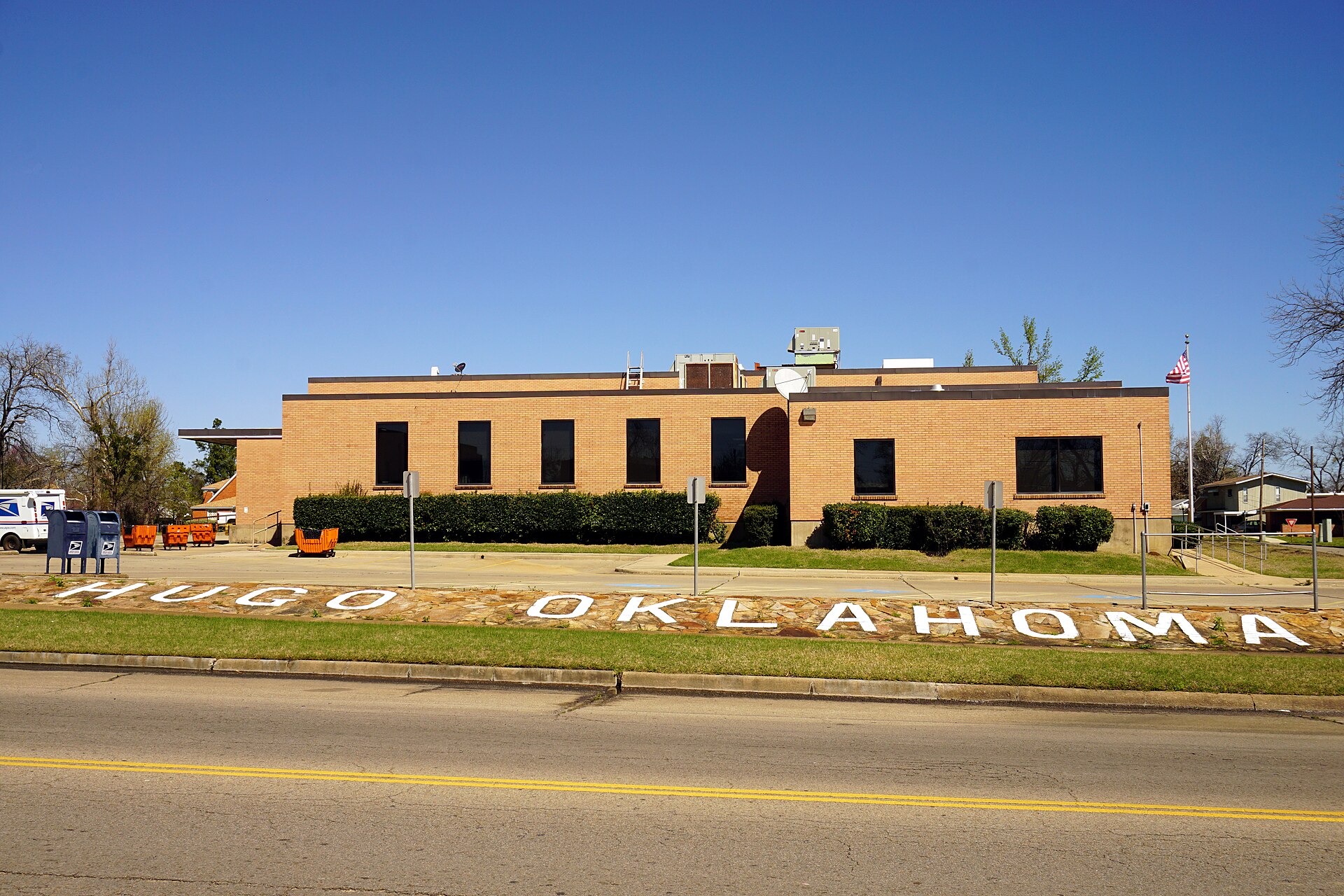

Step 1: Find the authority that serves your county
A public housing agency, or PHA, is the local or state body that holds a contract with HUD to run public housing, vouchers or both. HUD's own contact list for Idaho, drawn from its Inventory Management System, names ten agencies: the Twin Falls Housing Authority (HUD code ID001), Nampa Housing Authority (ID002), Housing Alliance and Community Partnerships in Pocatello (ID005, the former Housing Authority of the City of Pocatello), the Housing Authority of the City of Buhl (ID010), the Housing Authority of the City Jerome (ID011), the Housing Authority of the City of American Falls (ID012), the Boise City Housing Authority (ID013), the Southwestern Idaho Cooperative Housing Authority in Middleton (ID016), the Ada County Housing Authority (ID021) and IHFA (ID901). HUD lists IHFA as a "Section 8" agency (vouchers only), five of the others as "Low-Rent" agencies (public housing only) and four as "Combined."12
The Boise City and Ada County authorities are separate legal agencies with separate HUD codes that share one staff, one office at 1001 S. Orchard Street in Boise and one name for the public, Boise City/Ada County Housing Authorities (BCACHA). The Twin Falls, Jerome, Buhl and American Falls authorities are also separate legal agencies, but they now present themselves together as the Snake River Housing Alliance, with one phone number, one email address at twinfallshousing.com and a separate web portal for each town. Lesson 04 explains how Idaho Code Title 50, Chapter 19, lets a city or county create an authority, and why so many small ones exist.121314
Who runs vouchers where
For Housing Choice Vouchers, the dividing lines are set out on IHFA's application page. IHFA "administers vouchers for 34 of 44 Idaho counties" and tells residents of three areas not to use its online application:
- Ada County: Boise City/Ada County Housing Authorities.
- The city of Pocatello: Housing Alliance and Community Partnerships (HACP).
- Adams, Canyon, Elmore, Gem, Owyhee, Payette, Valley and Washington counties: the Southwestern Idaho Cooperative Housing Authority (SWICHA).
Everyone else applies to IHFA, which keeps a separate waiting list at each of four branch offices. The Coeur d'Alene branch covers Benewah, Bonner, Boundary, Kootenai and Shoshone counties. The Idaho Falls branch covers Bannock (outside the city of Pocatello), Bear Lake, Bingham, Bonneville, Butte, Caribou, Clark, Custer, Franklin, Fremont, Jefferson, Lemhi, Madison, Oneida, Power and Teton counties. The Lewiston branch covers Clearwater, Idaho, Latah, Lewis and Nez Perce counties. The Twin Falls branch, at 841 Meadows Drive, covers the eight Magic Valley counties: Blaine, Camas, Cassia, Gooding, Jerome, Lincoln, Minidoka and Twin Falls. IHFA's page says "only one application will be accepted," and duplicate paper applications to other branches will not be.1
Those lists add up to 34 counties for IHFA, which matches IHFA's own count, plus Ada County and the eight SWICHA counties: 43 of Idaho's 44 counties. The one county named on none of the lists is Boise County, the mountain county northeast of Boise (not Ada County, where the city of Boise sits). IHFA's page does not say which agency takes voucher applications from Boise County residents, and we could not confirm it from another primary source; it is listed under "Still being checked." Bannock County is split: IHFA's Idaho Falls branch lists it, while Pocatello residents are told to apply to HACP. This county count is our own reading of the IHFA page.1
Public housing is a separate door
Public housing is a different program from vouchers. The housing authority owns the apartments, and a household applies to the authority that owns the building it wants to live in. HUD's 2025 Picture of Subsidized Households counted 610 public housing units in Idaho at the end of 2025, spread among eight agencies: 196 at the Twin Falls Housing Authority, 160 at the Boise City Housing Authority, 72 at HACP in Pocatello, 50 at the Jerome authority, 42 at SWICHA, 40 each at the Buhl and American Falls authorities and 10 at the Ada County authority. Idaho had far more households assisted through vouchers (8,065 voucher units) and through privately owned project-based Section 8 buildings (3,807 units) than through public housing.215
That makes the Magic Valley unusual. Its three city authorities (Twin Falls, Jerome and Buhl) together held 286 of Idaho's 610 public housing units, or 47 percent, in a region that has no local voucher agency at all. Our calculation: 196 plus 50 plus 40 equals 286; 286 divided by 610 is 0.469.2
Nampa Housing Authority appears in HUD's contact list as a low-rent agency at 211 19th Avenue North, but it does not appear in HUD's 2025 Picture of Subsidized Households file for Idaho, and its web page offers its own application form alongside SWICHA's 2024 Section 8 pre-application. What programs Nampa's authority now runs, and under what HUD contract, is a question for lesson 04; we list it under "Still being checked."1216
The agencies at a glance
The table below puts each agency's programs, size, average wait and published waiting list status side by side. The size and wait figures come from HUD's Picture of Subsidized Households for 2025, a snapshot as of Dec. 31, 2025. HUD defines the wait figure as the "average months on waiting list using the 'date entered waiting list' and the new admission date," so it describes households that got in, not the people still waiting or those who gave up. The status column quotes each agency's own page as read on Nov. 20, 2026.217
| Agency (HUD code) | Program and area | Units, Dec. 2025 | Average months waited | Published list status, Nov. 2026 |
|---|---|---|---|---|
| IHFA (ID901) | Vouchers, 34 counties incl. all Magic Valley counties | 4,017 vouchers | 22 | Accepting online and paper applications; wait "can vary from several months to more than two years"1 |
| Boise City HA (ID013) | Vouchers and public housing, Boise | 1,406 vouchers; 160 public housing | 17 (vouchers); 13 (public housing) | Vouchers closed, "We do not know when it will open again"; public housing closed318 |
| Ada County HA (ID021) | Vouchers, rest of Ada County | 804 vouchers; 10 public housing | 18 (vouchers) | Same closed list as BCACHA3 |
| SWICHA (ID016) | Vouchers and public housing, 8 counties | 1,086 vouchers; 42 public housing | 31 (vouchers); 4 (public housing) | Not confirmed; agency web site could not be reached16 |
| HACP, Pocatello (ID005) | Vouchers and public housing, city of Pocatello | 752 vouchers; 72 public housing | 9 (vouchers); 3 (public housing) | Waiting list time "approximately 12-24 months"19 |
| Twin Falls HA (ID001) | Public housing, Twin Falls | 196 | 23 | Applications on wait list when eligible; no closure notice posted13 |
| Jerome HA (ID011) | Public housing, Jerome; elderly and disabled | 50 | 12 | No closure notice posted14 |
| Buhl HA (ID010) | Public housing, Buhl | 40 | 9 | Portal through Snake River Housing Alliance; status not posted20 |
| American Falls HA (ID012) | Public housing, American Falls | 40 | 19 | Status not posted20 |
Units for vouchers are the number of vouchers under contract and available, not the number in use; HUD reported 78 percent of IHFA's 4,017 vouchers and 86 percent of the Boise City authority's in use at the snapshot date. Why a voucher agency might leave vouchers unused (money, rents, landlord refusals) is part of lesson 06, Where the Money Comes From.2
Step 2: Applying and getting on a waiting list
Who can apply
Federal rules set the floor for a voucher. Under 24 CFR 982.201, an applicant must be a "family" (which by HUD's definition includes a single person), must be income-eligible and must be a citizen or a noncitizen with eligible immigration status. Income eligibility mostly means being "very low income," at or below 50 percent of area median income, though a few groups of low-income families (up to 80 percent) also qualify. The same rule says that "not less than 75 percent of the families admitted to a PHA's HCV program during the PHA fiscal year from the PHA waiting list shall be extremely low income families," meaning at or below 30 percent of area median income or the federal poverty guideline, whichever is higher. Public housing is open to low-income families up to 80 percent of area median income, but 24 CFR 960.202 requires that at least 40 percent of each year's admissions from the list be extremely low income.2122
BCACHA's voucher page puts the federal rule in plain words: "Currently, 75% of eligible applicants must have income that does not exceed 30% of the median area income. The remaining 25% may have income limits up to 50% of the area median." For its public housing it lists income "under 80% of the area median income," and for its Shoreline Plaza building (Section 8 New Construction) "under 50%."318
The dollar limits are HUD's FY2026 income limits, which HUD planned to release May 1, 2026, a month later than usual because the Census Bureau delayed the 2024 American Community Survey five-year data. For the counties this series follows most closely, the limits for a four-person household are:2324
| County (HUD FY2026) | Median family income | Extremely low, 4 persons | Very low (50%), 4 persons | Low (80%), 4 persons | Low (80%), 1 person |
|---|---|---|---|---|---|
| Ada | $110,700 | $33,200 | $55,350 | $88,550 | $62,000 |
| Canyon | $110,700 | $33,200 | $55,350 | $88,550 | $62,000 |
| Twin Falls | $100,200 | $33,000 | $47,600 | $76,150 | $53,350 |
| Jerome | $79,000 | $33,000 | $44,000 | $70,400 | $49,300 |
| Gooding | $80,300 | $33,000 | $44,000 | $70,400 | $49,300 |
| Lincoln | $83,400 | $33,000 | $44,000 | $70,400 | $49,300 |
Three things in that table trip people up. Ada and Canyon share one set of limits because they are one HUD metropolitan area. Jerome, Gooding and Lincoln counties have different median incomes but identical limits, because HUD does not let limits fall below a floor based on Idaho's statewide nonmetropolitan median income, a floor HUD applies to metropolitan areas such as Jerome County's as well as to rural counties like Gooding and Lincoln. And the extremely low income limit for four people is $33,000 in Twin Falls, Jerome, Gooding and Lincoln counties because for a family of four there the federal poverty guideline is higher than the 30 percent figure and sets the line; in Ada and Canyon the 30 percent figure ($33,200) is slightly higher and is used instead. Lesson 02 explains all three adjustments. The Twin Falls Housing Authority posts the same FY2026 Twin Falls County figures on its eligibility page ($53,350 for one person and $76,150 for four at 80 percent), which is a quick way to check that a local office has the current year's numbers.2313
What an application asks for
A preliminary application is short; the paperwork comes later. HUD requires every voucher waiting list to record five items: the applicant's name, the unit size the family qualifies for, the date and time of application, any local preference the family claims, and the race or ethnicity of the head of household (24 CFR 982.204(b)). The full eligibility check happens when the name nears the top. The Snake River Housing Alliance lists the five requirements for public housing admission in Twin Falls and Jerome: income within the limits, citizenship or eligible immigration status, "documentation of Social Security numbers," signed "consent authorization documents" that let the authority verify income, and qualifying for the bedroom size applied for. It then checks references, because "admission will be denied to any applicant whose habits and practices may be expected to have a detrimental effect on other tenants."2513
IHFA's application page lists the things that may make an applicant ineligible: owing money to IHFA or any other housing authority, having "ever committed fraud while participating in a federal housing program," having "ever been evicted from public housing," lifetime sex offender registration for anyone in the household, and "drug-related or violent criminal acts," which IHFA says it reviews "on a case-by-case basis." For public housing, 24 CFR 960.203 lets an authority look at past rent payment, disturbance of neighbors or property damage, and criminal history.122
The common document set, drawn from the agencies' own lists, looks like this. It is a description of what agencies ask for, not a checklist for any one application:
- Identity for the adults and Social Security numbers for everyone in the household (HUD's rules on Social Security number disclosure are in 24 CFR part 5).
- Proof of all income: pay stubs, Social Security or SSI award letters, unemployment, child support, pensions.
- Information on assets, such as bank accounts.
- Proof of citizenship or eligible immigration status.
- Proof for any preference claimed (disability, age, a referral from a homeless services agency).
- Signed consent forms allowing the authority to verify income with employers and agencies.
- Rental history and landlord references, which the Boise authority checks for three years for public housing applicants.1813
How lists open and close
A waiting list does not have to stay open. Under 24 CFR 982.206, when an authority opens its voucher list it "must give public notice that families may apply," stating "where and when to apply," by "publication in a local newspaper of general circulation, and also by minority media and other suitable means." When the list "contains an adequate pool for use of available program funding," the authority "may stop accepting new applications, or may accept only applications meeting criteria adopted by the PHA."26
Idaho's agencies use both models. IHFA keeps taking applications at all four branches, online or on paper, and lets the list grow; its page warns that the wait "can vary from a several months to more than two years." The Boise City/Ada County authority instead opens its voucher list briefly and fills it by lottery. Its most recent opening was in May and June 2024; pre-applications went into a pool "used to select the list of 2,500 households that will be placed on the waiting" list, and confirmation numbers of the households selected were posted in August 2024. A household not selected had its pre-application "discarded" and "will need to re-apply once the waiting list is opened again." As of Nov. 20, 2026, the page says the list "is currently closed. We do not know when the list will be open again," and that the reopening will be announced on its web site and "shared on the radio, TV, and with the media."13
A lottery is a federal option, not a requirement; the voucher rules require the plan to state how families are selected (24 CFR 982.207 and the agency's administrative plan). BCACHA's page says that within the lottery list, "households that also meet local preferences may be moved to the top of the list and served first."263
Preferences: who moves up
A preference does not make anyone eligible; it changes the order. HUD lets each authority adopt "a system of local preferences" based on "local housing needs and priorities," described in its administrative plan, and requires it to consider public comment on its PHA plan (24 CFR 982.207). Idaho's agencies publish different lists:
- BCACHA (vouchers): "Idaho residents, elderly, disabled, families with minor children, and participants exiting an Idaho transitional housing program for homeless persons."3
- IHFA (vouchers): families with children under 18 or disabled, or an elderly or disabled head or co-head; victims of a federally declared disaster when special funding exists; households with a non-elderly disabled member (several categories for its Mainstream vouchers); a non-elderly disabled head or co-head; and households with a member "in the final stages of a terminal illness."1
IHFA's list means that, on paper, a single adult under 62 with no disability has no preference at IHFA, and a single nondisabled adult under 62 in Ada County would need the Idaho-residency preference alone at BCACHA. How many such applicants are actually reached in a given year is not published by either agency; it is a records question listed in the reporting box at the end of this lesson.13
Keeping a place on the list
The most common way to lose a place on a waiting list is to miss a letter. HUD lets an authority's plan "remove names of applicants who do not respond to PHA requests for information or updates" (24 CFR 982.204(c)(1)). BCACHA tells applicants that "it is your responsibility to maintain your application with current contact information, as well as family composition and income changes," and that changes must be reported "in writing" by its online form, by email or by mail to its Eligibility Department. Its lottery notice asked applicants to "use a reliable mailing address." IHFA tells applicants checking their status to contact the branch where they applied.2531
There is one federal safety valve. If an applicant family that includes a person with a disability did not respond "because of the family member's disability, the PHA must reinstate the applicant in the family's former position on the waiting list" (24 CFR 982.204(c)(2)). That is a reasonable accommodation, explained later in this lesson.25
Agencies may also not reorder a list by family size. The rule says the "order of admission from the waiting list may not be based on family size," and if the agency lacks money for the bedroom size of the family at the top, it "may not skip the top family to admit an applicant with a smaller family unit size" (24 CFR 982.204(d)).25
If an application is denied
An applicant who is found ineligible or denied a preference is entitled to an explanation and an informal review. Under 24 CFR 982.554, the authority "must give an applicant for participation prompt notice of a decision denying assistance," with "a brief statement of the reasons," and must tell the applicant how to ask for an informal review. The review is conducted by someone other than the person who made the decision, and the applicant may present objections; the agency then sends a written decision. Public housing applicants have a parallel right under 24 CFR 960.208. Victims of domestic violence, dating violence, sexual assault or stalking have added protections under the Violence Against Women Act rules in 24 CFR part 5, subpart L, which bar denying admission because an applicant is or has been a victim of those crimes (24 CFR 5.2005).272228
- Identify the program and the agency. Vouchers by county (IHFA, BCACHA, SWICHA or HACP); public housing by the building's owner (for example the Twin Falls, Jerome or Buhl authority); tax credit and USDA apartments by the property manager.1
- Check whether the list is open. The agency's web page or office states it; a closed list takes no applications until the agency gives public notice under 24 CFR 982.206.26
- Submit one preliminary application per list. IHFA accepts only one application across its four branches.1
- Keep the contact information current. Agencies may remove applicants who do not answer requests for updates (24 CFR 982.204(c)).25
- Answer the call from the top of the list. The agency verifies income, household members and eligibility, then schedules a briefing.1
- If denied, the notice explains the informal review. The request deadline is set in the agency's administrative plan (24 CFR 982.554).27
Step 3: From the top of the list to a signed lease
Reaching the top of a voucher list starts a second process with its own clock. The family still has to find a landlord willing to rent under the program, a unit that passes inspection and a rent the agency will approve. The federal steps are the same at every Idaho agency; the details (how many extensions, how long each lasts, what forms) are in each agency's administrative plan.
The briefing
When an agency selects a family, 24 CFR 982.301 requires an "oral briefing" that covers how the program works, family and owner responsibilities, where the family may lease "inside or outside the PHA jurisdiction," how portability works and "the advantages of areas that do not have a high concentration of low-income families." The agency "may not discourage the family from choosing to live anywhere in the PHA jurisdiction." The briefing must "provide information on the reasonable accommodation process," and the agency must also hand over a written packet that explains the term of the voucher, any extension policy and how the agency figures the amount of its assistance payment. BCACHA puts its briefing online as a video followed by a questionnaire, linked from its home page.2930
The search clock: 60 days and extensions
The voucher itself states how long the family has to find a unit. The rule is 24 CFR 982.303: "The initial term of a voucher must be at least 60 calendar days." After that:
- "At its discretion, the PHA may grant a family one or more extensions," following its administrative plan.
- If a family member with a disability needs more time, "the PHA must extend the voucher term up to the term reasonably required for that purpose."
- The clock stops "from the date that the family submits a request for PHA approval of the tenancy until the date the PHA notifies the family in writing whether the request has been approved or denied."
- The agency may require the family to report its progress in looking.4
An Idaho agency's actual term may be longer than 60 days. None of the four voucher agencies' web pages we read states its standard term or extension policy; those are in each agency's administrative plan, a public document. The terms are listed under "Still being checked" and in the reporting box.1319
The request for tenancy approval
When a family finds a willing owner, the family submits "a request for approval of the tenancy and a copy of the lease, including the HUD-prescribed tenancy addendum," during the term of the voucher and "in the form and manner required by the PHA" (24 CFR 982.302). Each agency decides whether a family may have more than one request pending at a time. The tenancy addendum is a HUD form that becomes part of the lease and overrides lease terms that conflict with program rules.31
Inspection: HQS now, NSPIRE from Feb. 1, 2027
Before the agency approves the tenancy it must inspect the unit. Under 24 CFR 982.305(b)(2), an agency with up to 1,250 budgeted voucher units must inspect and notify the family and owner "within fifteen days after the family and the owner submit a request for approval of the tenancy"; a larger agency must do so "within a reasonable time," and "to the extent practicable" within 15 days. The 15-day clock is suspended while the unit is not available for inspection. IHFA, with 4,017 vouchers, is above the 1,250 line; HACP, with 752, is below it.52
The standard the inspector uses is changing. HUD's 2023 final rule replaced the Housing Quality Standards (HQS) with the National Standards for the Physical Inspection of Real Estate (NSPIRE) across HUD programs. For the voucher, project-based voucher and Moderate Rehabilitation programs, HUD has delayed compliance twice; its notice published Sept. 30, 2025, at 90 FR 46911 (docket FR-6086-N-12) set the compliance date at Feb. 1, 2027, and let agencies keep using "HQS as previously defined" until then. The same notice keeps in force the smoke alarm and carbon monoxide requirements that already took effect. The eCFR text of 24 CFR 982.305 read on Nov. 20, 2026, still says a unit must pass "HQS."65
IHFA's page gives the practical version for applicants: units must have "adequate living space," "adequate heating, electrical, water, and sewer systems," be "free from any conditions that might endanger your health and safety," pass the HUD inspection and have "a rent that is reasonable when compared to similar unassisted units."1
Rent reasonableness and the 40 percent cap
Two money tests come next. The first is rent reasonableness. Under 24 CFR 982.507, the agency "may not approve a lease until the PHA determines that the initial rent to owner is a reasonable rent," comparing it with "other comparable unassisted units" and considering "the location, quality, size, unit type, and age of the contract unit" and any amenities, services, maintenance and utilities the owner provides. The rent may never exceed the reasonable rent as most recently determined.32
The second is the affordability cap. Under 24 CFR 982.305(a)(5), "at the time a family initially receives tenant-based assistance" for a unit, and "where the gross rent of the unit exceeds the applicable payment standard for the family, the family share does not exceed 40 percent of the family's monthly adjusted income." Gross rent means rent to the owner plus the agency's utility allowance. The payment standard is the agency's maximum subsidy figure for a unit size in an area, set from HUD's fair market rents (lesson 02 explains both). BCACHA describes the result for applicants: a voucher holder pays "approximately 30% to 40% of your household income (in the first year)." HACP says participants contribute "between 30% to 40% of their monthly adjusted gross income towards rent and utilities."5319
How we figured it: the 40 percent cap, a hypothetical example
Hypothetical household. A made-up family of three with monthly adjusted income of $1,500 (adjusted income is gross income minus HUD's deductions). The agency's payment standard for a two-bedroom unit in this made-up area is $1,250. The utility allowance for the unit is $150. These numbers are for illustration only and are not any Idaho agency's actual figures.
Rule. When gross rent exceeds the payment standard, the family pays 30 percent of adjusted income plus everything above the payment standard, and at initial lease-up that share may not exceed 40 percent of monthly adjusted income (24 CFR 982.305(a)(5)). Thirty percent of $1,500 is $450. Forty percent of $1,500 is $600. The family share can therefore exceed $450 by at most $150, so gross rent can be at most $1,250 plus $150, or $1,400.
Three units. Unit A: rent to owner $1,050, gross rent $1,200, which is under the payment standard; family share $450 (30 percent); agency pays the rest. Unit B: rent $1,200, gross rent $1,350; family share $450 plus $100 above the standard, $550, which is 36.7 percent of income: allowed. Unit C: rent $1,300, gross rent $1,450; family share $450 plus $200, $650, which is 43.3 percent: the agency may not approve it at initial lease-up. The agency's actual calculation also uses HUD's total tenant payment rules (24 CFR 5.628) and subtracts the utility allowance from the family share paid to the owner.
The lease and the HAP contract
Before the lease term begins, three things must be complete under 24 CFR 982.305(b)(1): the agency has inspected the unit and found it meets the standard; the landlord and tenant have signed the lease, "including the HUD-prescribed tenancy addendum, and the lead-based paint disclosure information"; and the agency has approved the lease. The agency then signs a housing assistance payments (HAP) contract with the owner and pays its share directly to the owner each month, while the family pays its share. IHFA's page lists what keeps a family in the program: paying its share of rent and utilities, following the lease, notifying IHFA and the landlord before moving, allowing inspections, reporting changes in household members and income "immediately," and supplying documents on time.51
Moving with a voucher: portability
A voucher can move. The briefing must explain "how portability works," and a family may lease outside the issuing agency's area under 24 CFR 982.353 and the billing and absorption rules in 982.355. There is one Idaho-relevant limit: if neither the head of household nor spouse had a "domicile" (legal residence) in the issuing agency's area when the family applied, the family has no right to portability during the first 12 months after admission, although the agency may approve a move (982.353(c)). That rule matters for someone who applied to IHFA's Twin Falls branch from, say, Boise or out of state. A family moving from Twin Falls County to Ada County, or the reverse, would deal with two agencies whose payment standards and screening differ.3329
Will a landlord take the voucher?
In most of Idaho, a private landlord may decline to rent under the voucher program. Since July 1, 2024, state law has barred local voucher mandates: House Bill 545 (2024) added the rule to Idaho Code 55-307, and Senate Bill 1043 (2025, Session Laws ch. 65) moved it to Idaho Code 55-306, which says a city or county "shall not enact, maintain, or enforce an ordinance or resolution that would have the effect of mandating Idaho property owners to be forced to participate in an optional federal housing assistance program." Boise's 2023 source-of-income ordinance no longer reaches such programs; the city says that after the Legislature's 2024 session its ban does not apply to sources of income that require a landlord to join an optional federal housing assistance program. Lesson 03 of this module tells that history, and lesson 03 of Part C covers Boise's other renter rules in Renting Safely. Idaho's own fair housing statute, Idaho Code 67-5909, lists race, color, religion, sex, national origin and disability, not source of income.3435
The exception is the federal low-income housing tax credit. Under 26 U.S.C. 42(h)(6)(B)(iv), every tax credit project's long-term use agreement must prohibit "the refusal to lease to a holder of a voucher of eligibility under section 8 of the United States Housing Act of 1937 because of the status of the prospective tenant as such a holder." A voucher holder still has to meet the property's other screening and income rules, and the rent must fit the voucher. How tax credit deals are financed is in lesson 06.36
How many Idaho voucher holders fail to lease within their search term is not published by any of the four voucher agencies on their web sites. HUD's 2025 data show what share of each agency's vouchers were in use, which is related but different: 78 percent at IHFA, 83 percent at HACP, 86 percent at the Boise City authority, 84 percent at the Ada County authority and 95 percent at SWICHA. Lesson 03 discusses what is and is not known about voucher success rates.2
Applying directly to subsidized apartments
A voucher is not the only way into assisted housing. Many Idaho households live in apartments where the help is tied to the building, and those apartments have their own applications and their own waiting lists, often one per property. Applying to several at once is allowed; nothing in the federal rules limits a household to one list.
Public housing
Public housing applications go to the authority that owns the apartments. Rent is set by HUD's total tenant payment formula in 24 CFR 5.628: the highest of 30 percent of monthly adjusted income, 10 percent of monthly gross income, a welfare rent where it applies, or the agency's minimum rent, which under 24 CFR 5.630 may be set at up to $50 a month, with hardship exemptions. BCACHA tells public housing applicants that "rent is generally based on 30% of your monthly income" and that "a security deposit is required at the time of leasing."3718
In the Magic Valley, the Snake River Housing Alliance takes applications for four authorities from its office at 200 Elm Street North in Twin Falls, with a Jerome office open Tuesdays from 10 a.m. to 2 p.m. The Twin Falls Housing Authority says it has "a total of 196 units consisting of zero, one, two, three, and four-bedroom units" on "six (6) separate sites throughout the City of Twin Falls"; its history page says Washington Courts has 56 family units and that Pioneer Square, Sunny View, Duvall and Terry courts hold 140 elderly units, and it calls itself "the first Public Housing Authority established in Idaho." The Housing Authority of the City of Jerome "was established in 1968" and its property, built the following year, "consists of 50 units, including a mix of studio and one-bedroom apartments, designated to serve elderly and disabled residents." Each authority posts its application, board members, meeting dates and minutes on its portal page.1314
HUD's 2025 data describe who lives in those buildings. At the Twin Falls authority, 50 percent of households were headed by someone 62 or older and average household income was $19,299; at Jerome, 74 percent were 62 or older and average income was $18,019; at Buhl, 86 percent were 62 or older and average income was $20,679. Lesson 05, Who Is Served, puts those figures next to the general population.2
In Ada County, BCACHA lists four public housing properties (Shoreline Plaza, Scattered Sites, Franklin Plaza and Capitol Plaza) and says both its public housing list (Capitol and Franklin Plazas) and its Shoreline Plaza list are "currently closed." It says all its apartments include a stove and refrigerator, on-site laundry, 24-hour emergency maintenance and allow "a small pet (dog or cat)," and that its complexes are smoke-free, with no smoking "inside and 25 feet away from any public housing building."18
Tax credit apartments
Low-income housing tax credit (LIHTC) apartments are privately owned buildings financed partly with federal tax credits that IHFA allocates under its qualified allocation plan. A household applies to each property's manager. The rules differ from vouchers in a way that matters to applicants: the rent in a tax credit unit is a fixed amount set from the property's income limit (often 60 percent of area median income), not a share of the tenant's income, so a household with very low income may find the rent too high unless it also has a voucher. Tax credit owners may not refuse a voucher holder because of the voucher, under the long-term use agreement required by 26 U.S.C. 42(h)(6)(B)(iv). Lesson 06 covers the credit and IHFA's 2026 awards.36
USDA Rural Development apartments
In smaller towns, many subsidized apartments were built with USDA Rural Development's Section 515 rural rental housing loans or Section 514 farm labor housing loans. Under 7 CFR 3560.152, a tenant must "qualify as a very low-, low-, or moderate-income household" (or qualify through a HUD voucher or tax credit benefit in the same building), and elderly properties require an elderly household. Under 7 CFR 3560.154, the owner, not USDA, takes applications, using forms that record income, household members, any need for an accessible unit and a certification that the unit will be the household's primary residence. Some of these buildings also have USDA Section 521 rental assistance, which pays the gap between the approved rent and the tenant's contribution; USDA's rules give the first priority for rental assistance to very low-income tenants already living in the building who pay the highest share of income for shelter, and the second, when the building has vacant units, to very low-income applicants on the waiting list. USDA publishes a search of its multifamily properties by state and county.383940
Which Magic Valley towns have USDA rental properties, and how many units carry rental assistance, can be checked in that search and in the federal property lists covered in lesson 03; we did not compile a property-by-property list for this lesson.
Finding listings: HousingIdaho.com
IHFA, BCACHA and the Snake River Housing Alliance all point renters to HousingIdaho.com (with a Spanish version, ViviendaIdaho.com), a free statewide rental listing site. The site describes itself as "a fast, free rental housing site that helps renters, landlords, and property managers meet their housing needs throughout Idaho"; it is run by Emphasys Housing Locator as part of its MyHousingSearch network and includes a rent calculator, a housing assistance guide, a resources list and shelter information. IHFA's page says "many of the properties listed on this website receive direct subsidies and are able to offer reduced rents, or rents based on a percentage of household income."4111813

Emergency help with rent and deposits
After the pandemic programs
From 2021 to 2025, the largest source of emergency rent help in Idaho was federal. The Treasury's two Emergency Rental Assistance programs provided "over $46 billion" nationally: $25 billion under the Consolidated Appropriations Act, 2021 (ERA1) and $21.55 billion under the American Rescue Plan Act of 2021 (ERA2). That money is gone. The Treasury's program page now says: "The period of performance for ERA2 awards has ended. ERA2 grantees may no longer use ERA2 award funds to assist renters." Idaho's share and how it was spent are covered in Part C's Renting Safely lesson.7
What is left is a set of smaller programs run by nonprofits, community action agencies and churches, funded by federal block grants, utilities, local governments and donations. Each sets its own rules, and most have limited money that runs out during the year.
Treasure Valley
- Jesse Tree (Boise) says it works to "prevent eviction & homelessness in the Treasure Valley." Its intake page sorts callers into two groups. A tenant who has "an official written eviction notice from your landlord" or "a summons to court" may "apply below to join our waitlist for emergency rental assistance." A tenant who is behind but has not received a notice or summons is told: "we cannot pay your rent but we can provide information." Jesse Tree also publishes an annual eviction report.9
- El-Ada Community Action Partnership (Garden City) lists utility assistance ("LIHEAP and Crisis Assistance for heating and cooling costs"), community services and referrals, a food pantry, weatherization, and veteran services through the federal Supportive Services for Veteran Families program, with offices in Garden City, Boise (a veteran resource center) and Mountain Home, and mobile food service in Owyhee County.42
- Coordinated entry for people already homeless. In Ada County, BCACHA's supportive housing program for homeless people with disabilities takes referrals only through the county's coordinated entry system, Our Path Home Connect, reached at (208) 336-HOME. Lesson 08 explains coordinated entry.43
Magic Valley
The main public front door in the Magic Valley is South Central Community Action Partnership (SCCAP), with offices at 550 Washington Street South in Twin Falls and 314 East 5th Street in Burley. Its stated mission is to provide "a wide range of services" for "people with an economic disadvantage," and its home page says it helps with "rent, utilities, food and heating bills." Its programs, as its own pages describe them:
- Homeless Access Point. "SCCAP serves as the Access Point" for people experiencing homelessness; caseworkers do an initial assessment and can refer to Valley House, the Twin Falls shelter, and other shelters. SCCAP has "grant funds to assist homeless individuals and families obtain safe & affordable housing by assisting with first month's rent or deposit" for those moving from a shelter to permanent housing, and every participant must complete a budget. A Warming Center in Twin Falls opens "when the temperature drops below 29 degrees (November - February)."44
- Domestic violence referrals. SCCAP's page refers survivors in the Twin Falls and Mini-Cassia areas to Voices Against Violence and in Blaine, Camas, Gooding and Lincoln counties to The Advocates in Hailey.44
- Energy assistance and weatherization, described in the next section.4546
- Food. SCCAP reports giving out "over 42,000 food boxes" (790,214 pounds of food) in the last year it reported.8
- Self-help housing. A USDA-funded program in which groups of 4 to 10 families build their own homes, a path to ownership covered in lesson 09.47
For older residents, the College of Southern Idaho Office on Aging "serves as Idaho's Area IV Agency on Aging," covering "the eight rural counties of south central Idaho, commonly referred to as the Magic Valley, including Blaine, Camas, Cassia, Gooding, Jerome, Lincoln, Minidoka and Twin Falls Counties." It lists adult protective services, an Aging and Disability Resource Center, caregiver and homemaker services, a long-term care ombudsman, senior center meals and legal assistance among its programs, and its partner list includes SCCAP. It does not list a rent assistance program.4849
Churches and charities, including St. Vincent de Paul conferences and the Salvation Army, run food pantries and sometimes small rent or utility funds in Idaho towns. Their help varies by parish or corps and by month; we did not confirm any current Magic Valley rent program from either organization's own records, so none is described here as available.


211 Idaho CareLine
The statewide referral line is the 211 Idaho CareLine, "a free, statewide community information and referral service" run by the Idaho Department of Health and Welfare. A caller dials 211 or (800) 926-2588, or texts 898211, to reach a "community resource specialist" Monday through Friday, 8 a.m. to 6 p.m. Mountain time; the department also points to an online directory, findhelpidaho.org. The CareLine does not pay rent itself; it keeps the list of who does.50
Utility help: LIHEAP and weatherization
Heating assistance (LIHEAP)
The federal Low Income Home Energy Assistance Program (LIHEAP) is run in Idaho by the Department of Health and Welfare and delivered by community action agencies, which the department says serve "every county in Idaho." It has two parts:
- Seasonal heating assistance: one payment a year applied to the household's heating bill. "Families with children under the age of six, elderly or disabled members can apply for services beginning in October. All other families can begin applying for services in November." The amount depends on household income, where the household lives, who is in it and what it pays for energy. Funding "is limited and is available on a first-come, first-serve basis," and households "are entitled to one benefit payment per program year," which runs from October through September.
- Crisis heating assistance: one payment to prevent a shutoff or restore service, available year-round while money lasts, for households that have not had a crisis payment in the past 12 months and face disconnection, have a past-due utility bill, or have "less than 48 hours of bulk fuel." The department's stated goal is to "resolve their crisis within 48 hours."5152
Eligibility requires living in Idaho, at least one household member who is a U.S. citizen or lawful permanent resident, proof of identity, proof of heating expense and income under the limits. The department's monthly income limits, "effective October 1, 2025," are $2,736.25 for one person, $3,578.17 for two, $4,420.08 for three and $5,262.08 for four. The department's posted table for seven- and eight-person households shows the eight-person limit below the seven-person limit, which looks like a typing error; we report only the one- to four-person figures.51
SCCAP describes how its office handles it in the Magic Valley: LIHEAP "provides a one-time per season payment to household's primary heat source utility company," the program "is available November 1 through March 31 depending on funding availability," and "crisis funding may be available outside of this time." Applications may be made by phone, "in certain instances," by email or mail, or in person. SCCAP's required documents are verification of lawful presence for applicants, Social Security cards for all household members, proof of the prior month's income for the whole household, and the most recent heating and electric bills showing name, account number and address.45
- Find the community action agency for the county (the department's agency finder, 211, or the agency's own page).52
- Check the opening date: October for households with a child under 6, an elderly or a disabled member; November for others.52
- Gather the documents the agency lists (identity or lawful presence, Social Security cards, income, recent bills).45
- Apply by the methods the agency offers; the department's single Application for Energy Assistance covers both LIHEAP and weatherization.51
- For a shutoff notice or nearly empty fuel tank, ask about crisis assistance, which runs year-round while funds last.51
The federal money. For federal fiscal year 2026, LIHEAP received about $4 billion nationally. The American Public Power Association, a trade group for public utilities, reported that HHS released about $3.6 billion (90 percent) to states on Nov. 28, 2025, after the continuing resolution that ended that fall's government shutdown, and the remaining roughly $421 million on April 20, 2026; it also reported that the administration again proposed eliminating LIHEAP for fiscal 2027. Whether Congress has funded LIHEAP for fiscal 2027, which began Oct. 1, 2026, and how much will reach Idaho this winter, we could not confirm from a primary source as of Nov. 20, 2026; it is listed under "Still being checked."53
Weatherization
The Weatherization Assistance Program pays certified crews to make energy repairs. The department says families "must be able to prove ownership of their housing unit or have signed written permission from a qualifying landlord," that "the cost of doing the work will save the family money," and that "priority is given to families with children, elderly and disabled members or eligible families with emergency heating situations." That landlord-permission rule is the renter's hurdle: a tenant cannot have the work done without the owner's signature.54
SCCAP's weatherization page lists five categories of work: health and safety testing first, heating system tune-ups and repairs, air sealing, insulation (and window or door replacement where it saves energy), and repairs that protect the work. It lists four funding sources: the U.S. Department of Energy, the Department of Health and Human Services, the Bonneville Power Administration for electrically heated homes in Cassia and Minidoka counties, and Idaho Power for electrically heated homes in its south central Idaho service area.46
Programs for specific groups
Several voucher programs bypass the regular waiting list and are filled by referral from another agency. They are small, and they exist only where an Idaho agency has applied for and received them.
Veterans: HUD-VASH
HUD-VASH combines a voucher with case management from the Department of Veterans Affairs. BCACHA explains the division of labor: "The Boise VAMC screens applicants for program eligibility and service needs and refers clients to the Housing Authority for rental assistance." A veteran must be eligible for VA health care and homeless, and must "agree to case management services"; "the Housing Authority does not determine eligibility for VASH." Applications start with the Boise VA Medical Center's Health Care for Homeless Veterans program. HACP in Pocatello also lists VASH among its "emergent vouchers" for which "the normal HCV waitlist does not apply." Which agency holds VASH vouchers for Magic Valley veterans is not stated on IHFA's or the VA's pages we read; it is listed under "Still being checked." El-Ada runs the separate Supportive Services for Veteran Families program.551942
People with disabilities
Mainstream vouchers serve households with a non-elderly disabled member (18 to 61). IHFA lists three related preferences: regular Mainstream; "Disabled Family Non-Elderly" for a household that is homeless, at risk of homelessness, leaving an institution or at risk of institutionalization, "limited to 14 vouchers"; and a category for households now in permanent supportive housing or rapid rehousing. IHFA says those special vouchers come "through direct referrals from Continuum of Care (CoC) Coordinated Entry Access Point Agencies and Idaho Health and Welfare," with people leaving an institution referred through the Department of Health and Welfare. In the Magic Valley, SCCAP is the Access Point. In Ada County, BCACHA's CHOIS program provides rental assistance and case management to people who are "literally homeless" and have a disability, by referral through Our Path Home Connect; participants pay 30 percent of income.14443
Seniors
Seniors use the same voucher lists, with preferences at both BCACHA and IHFA, and several Magic Valley public housing properties are designated for elderly and disabled residents, including Jerome's 50 units and 140 of the Twin Falls authority's 196 units. Referral and support services for seniors in the eight Magic Valley counties run through the CSI Office on Aging.31141348
Youth leaving out-of-home care and families at risk of separation
Two federal voucher programs serve young people leaving out-of-home care (the child welfare system) and families whose housing problems put children at risk of removal. The Family Unification Program (FUP) serves both groups; HACP in Pocatello lists FUP among its referral-based vouchers. A second initiative, renamed by the Consolidated Appropriations Act, 2026 (Pub. L. 119-75, approved Feb. 3, 2026) and governed by HUD Notice PIH 2026-19, issued July 27, 2026, gives targeted vouchers to youth "at least 18 years and not more than 24 years of age" who left care or will leave within 180 days and are homeless or at risk of homelessness. The public child welfare agency identifies and refers eligible youth and must commit to 36 months of supportive services. Assistance is limited by statute to 36 months, with an extension of up to 24 more months for youth who meet the requirements. The notice makes $38.2 million available nationally for new incremental vouchers. Whether any Idaho agency currently holds these youth vouchers is not stated on the agencies' pages we read.1956
Survivors of domestic violence
The Violence Against Women Act rules in 24 CFR part 5, subpart L, cover public housing, vouchers, project-based Section 8 and other HUD programs. They bar denying or ending assistance because a person is a victim of domestic violence, dating violence, sexual assault or stalking (24 CFR 5.2005), and HUD programs must allow emergency transfers under an agency plan. HACP lists a VAWA voucher category, noting it is "not gender exclusive."2819
Fair housing complaints and accommodation requests
What the laws cover
Two sets of laws apply to rentals in Idaho. The federal Fair Housing Act, 42 U.S.C. 3604, bars discrimination in renting or selling housing because of race, color, religion, sex, familial status (households with children under 18), national origin or disability. The Idaho Human Rights Act makes it a prohibited act, in Idaho Code 67-5909(8), for "an owner or any other person engaging in a real estate transaction" to refuse to deal with a person, or to set different terms, because of race, color, religion, sex or national origin, and the section's opening paragraph extends subsection (8) to disability. Familial status is in the federal list but not in the Idaho section.5735
The voucher rules add a duty for housing agencies. Under 24 CFR 982.304, a family that claims illegal discrimination "because of race, color, religion, sex, national origin, age, familial status or disability prevents the family from finding or leasing a suitable unit" must be given "information on how to fill out and file a housing discrimination complaint."58
Where complaints go, and the deadlines
- HUD. An "aggrieved person may, not later than one year after an alleged discriminatory housing practice has occurred or terminated, file a complaint with the Secretary" (42 U.S.C. 3610(a)(1)(A)(i)). HUD takes complaints online, by phone and by mail through its Office of Fair Housing and Equal Opportunity.1059
- Idaho Human Rights Commission. A person "may file a complaint under oath with the commission stating the facts concerning the alleged discrimination within one (1) year of the alleged unlawful discrimination" (Idaho Code 67-5907(1)). The commission first tries "to resolve the matter by informal means," investigates, and either dismisses the complaint or seeks conciliation. Its web site, now part of the Idaho Department of Labor's site, lists housing among the contexts it covers.1160
- Court. A private civil action under the federal act must be filed "not later than 2 years after the occurrence or the termination of an alleged discriminatory housing practice" (42 U.S.C. 3613(a)(1)(A)). The time a HUD complaint is pending does not count against the two years.61
- Intermountain Fair Housing Council (IFHC). A Boise-based nonprofit that takes intake forms, publishes guides on reasonable accommodation requests and self-advocacy, and runs fair housing education. Its home page carried a service notice on Nov. 20, 2026: "We will be prioritizing housing discrimination cases."62
Reasonable accommodation requests
Disability rights in housing include a right to ask for changes. The Fair Housing Act defines discrimination to include "a refusal to make reasonable accommodations in rules, policies, practices, or services, when such accommodations may be necessary to afford such person equal opportunity to use and enjoy a dwelling" (42 U.S.C. 3604(f)(3)(B)); HUD's rule at 24 CFR 100.204 repeats it with examples.57 Section 504 of the Rehabilitation Act, in HUD's rules at 24 CFR part 8, applies the same idea to every federally assisted program, including public housing and vouchers.6364
Inside the voucher program, three accommodations are written into the rules this lesson has already covered: a longer search term when a disability calls for it (982.303(b)(2)), reinstatement on the waiting list when a disability caused a missed response (982.204(c)(2)), and information on the accommodation process at the briefing (982.301(a)(3)). BCACHA's pages tell applicants that a person with a disability who needs "a specific accommodation in order to fully utilize our programs and services" may "submit a request in writing or contact our office."4252930
Federal guidance on these requests changed in 2026. HUD withdrew a set of fair housing guidance documents, including its assistance-animal guidance, by a notice published April 6, 2026, at 91 FR 17291. Withdrawing guidance does not change the statute or the regulations quoted above; it removes HUD's explanatory documents that agencies, landlords and courts had used to apply them. Part C covers the assistance-animal side in Renting Safely.65
The usual sequence, as the agencies and IFHC describe it:
- The person (or someone on the person's behalf) asks the housing provider or agency for a specific change in a rule, policy, practice or service, preferably in writing so there is a record.30
- The request links the change to the disability. What verification a provider may ask for was explained in HUD guidance that HUD withdrew in April 2026; the statute and HUD's rule do not spell it out.6365
- The provider grants, denies or offers an alternative; a denial in a voucher or public housing program can be taken to the agency's informal review or hearing process.27
- A person who believes a refusal was discriminatory can file with HUD or the Idaho Human Rights Commission within one year, or seek help from IFHC.101162
Legal help and court self-help
Idaho Legal Aid Services is a nonprofit that provides free civil legal assistance to low-income Idahoans, seniors and other vulnerable residents and lists housing among the problems it handles; its web site also offers self-help guides and forms. It does not post income limits on its home page. The Twin Falls Housing Authority, SCCAP and other agencies list it among their resources. The Idaho courts publish eviction forms and instructions on their self-help site; how an eviction case moves, with the deadlines, is in Part C's Evictions Step by Step. For seniors in the Magic Valley, the CSI Office on Aging lists a legal assistance program among its services. This lesson describes those resources; it does not assess anyone's case.661348
Pictures, Numbers and Infographics
The lesson's main numbers, limits and dates in one place.
| Measure | Idaho | U.S. or other states | Place or year | Source |
|---|---|---|---|---|
| Counties where IHFA takes voucher applications | 34 of 44 | Nov. 2026 | 1 | |
| Voucher units (all agencies) | 8,065 | MT 7,657; UT 14,134; OR 43,247; WA 68,089 | Dec. 31, 2025 | 15 |
| Average months waited, voucher admissions | 20 | MT 21; UT 25; OR 33; WA 14 | 2025 | 15 |
| Public housing units | 610 | MT 1,418; UT 1,128; OR 2,241; WA 9,848 | Dec. 31, 2025 | 15 |
| Average months waited, public housing admissions | 14 | MT 16; UT 31; OR 26; WA 29 | 2025 | 15 |
| Magic Valley share of Idaho public housing | 286 of 610 units (47%) | Twin Falls, Jerome, Buhl; 2025; our calculation | 2 | |
| Ada County voucher lottery | 2,500 households selected; list closed since | May to June 2024 | 3 | |
| Minimum voucher search term | 60 calendar days | Same nationally | 24 CFR 982.303 | 4 |
| Cap on family share at initial lease-up | 40% of monthly adjusted income | Same nationally | 24 CFR 982.305 | 5 |
| Voucher inspection standard | HQS until NSPIRE on Feb. 1, 2027 | Same nationally | 90 FR 46911 | 6 |
| Very low income limit, 4 persons | Ada $55,350; Twin Falls $47,600; Jerome and Gooding $44,000 | HUD FY2026 | 23 | |
| LIHEAP monthly income limit, 4 persons | $5,262.08 | Effective Oct. 1, 2025 | 51 | |
| LIHEAP federal funding | About $4 billion nationally | FY2026 | 53 | |
| Federal Emergency Rental Assistance | Ended | Over $46 billion nationally, 2021 to 2025 | ERA1 and ERA2 | 7 |
| Fair housing complaint deadline | 1 year (Idaho Human Rights Commission) | 1 year (HUD); 2 years to sue | Current law | 111061 |
| New youth vouchers available | $38.2 million nationally | PIH 2026-19 | 56 |

Common mistakes
- Reading an average wait as a forecast. HUD's "months waiting" figure is calculated from the date households entered the list and the date they were admitted. It describes people who got in, not the people still waiting, those removed for not responding, or anyone applying today. An average of 22 months at IHFA says nothing certain about an application filed in November 2026.17
- Applying to the wrong agency. A Canyon County resident applies to SWICHA, not IHFA; a Pocatello resident applies to HACP, while a rural Bannock County resident is in IHFA's Idaho Falls branch area; a Jerome or Gooding County resident applies to IHFA's Twin Falls branch for a voucher but to the Jerome or Twin Falls authority for public housing. IHFA's page tells residents of the areas it does not serve not to use its application.1
- Treating a voucher as an entitlement. Meeting the income limit makes a household eligible to be on a list, not entitled to a voucher. IHFA says the speed of assistance depends on "the preference for which you qualify, the date of your application, and rental assistance availability," and federal rules let an agency close its list when it has "an adequate pool for use of available program funding."126
- Losing a place over a change of address. Agencies may remove applicants who do not answer requests for updates, and BCACHA puts the duty to report address, household and income changes on the applicant, in writing.253
- Assuming tax credit rent is 30 percent of income. In a tax credit apartment without other subsidy, the rent is a fixed amount tied to the property's income limit; only public housing, vouchers, project-based Section 8 and USDA rental assistance tie the tenant's payment to income.3637
- Using last year's income limits. HUD's FY2026 limits replaced FY2025's in spring 2026 (HUD planned a May 1 release). Comparing an income with the wrong year's table, or with "area median income" instead of the household-size limit, gives the wrong answer. Lesson 02 explains the limits.2423
- Expecting weatherization without the landlord. A renter needs the owner's signed permission before a weatherization crew can work on the home.54
- Assuming a city can require landlords to take vouchers. Idaho Code 55-306 bars local ordinances that would force owners to participate in an optional federal housing assistance program; only tax credit properties are bound by federal law not to refuse voucher holders.3436
- Waiting for a notice before seeking emergency rent help, or the reverse. Rules differ: Jesse Tree in Ada County pays rent only after an eviction notice or summons, while SCCAP's deposit and first-month help in the Magic Valley is aimed at people leaving shelters. Each program's rule is its own.944
What we know, what we don't, and what the data can show
What we know
- IHFA takes voucher applications for 34 counties, including all eight Magic Valley counties, through its Twin Falls branch; BCACHA, SWICHA and HACP cover Ada County, eight southwestern counties and the city of Pocatello.1
- BCACHA's voucher and public housing lists are closed, and its last voucher lottery in 2024 selected 2,500 households.318
- Households admitted to Idaho voucher programs in the year before Dec. 31, 2025, had waited 20 months on average; at SWICHA, 31.152
- The federal steps of the voucher process, including the 60-day minimum term and the 40 percent cap, are fixed by regulation, and the voucher inspection standard changes to NSPIRE on Feb. 1, 2027.456
- The federal Emergency Rental Assistance programs have ended; Magic Valley emergency help runs mainly through SCCAP.78
What we don't know
- How many households are on each Idaho waiting list today. None of the agencies publishes a current count on its web site.
- SWICHA's current list status, which we could not confirm because its web site did not respond; and which agency takes voucher applications for Boise County.
- Each agency's standard voucher term and extension policy, and how many voucher holders lose their voucher without leasing (the voucher success rate).
- How much LIHEAP money Idaho will receive for the 2026 to 2027 heating season, since fiscal 2027 funding was not confirmed as of Nov. 20, 2026.53
- How much emergency rent help charities and churches in the Magic Valley actually pay out each year; no public tally exists.
What the data can show
- HUD Picture of Subsidized Households (PHA, state and project files): units, occupancy, average months on the waiting list, household income and household makeup by agency, comparable across years and states.215
- Each agency's PHA plan and administrative plan: preferences, voucher term and extension policy, list opening and purge rules, and, in many annual plans, the size of the waiting list by income and family type.
- HUD income limits files: whether a given household size and income falls under the limit in each county, year by year.23
- Treasury ERA reporting data: where pandemic rent money went, by grantee, through the end of ERA2.7
- Community action agency reports: LIHEAP households served and payments by county, through the Department of Health and Welfare and each agency's annual report.52
Questions people ask
Can a household be on more than one waiting list?
Yes, across programs and agencies. A household can be on a voucher list and on several public housing, tax credit and USDA property lists at once. Within IHFA, though, only one voucher application is accepted across its four branches.1
Can someone apply in a county where they do not live yet?
IHFA's eligibility list says an applicant must "be a resident of, or move to, one of the 34 counties that Idaho Housing serves." A family that was not a resident of the issuing agency's area when it applied may have no right to move the voucher elsewhere during the first 12 months (24 CFR 982.353(c)).133
What happens if the voucher's search term runs out?
Under 24 CFR 982.303, the agency may grant extensions under its plan and must grant one as a reasonable accommodation when a disability requires it; the clock also pauses while a request for tenancy approval is pending. If the term expires without a lease, the voucher expires; whether and how the family can reapply is set by the agency's plan.4
How much does a voucher holder pay?
Generally about 30 percent of adjusted income toward rent and utilities, more if the family picks a unit above the payment standard, but no more than 40 percent of monthly adjusted income at initial lease-up. The methods box above shows a hypothetical example.537
Can a landlord refuse a voucher?
Outside tax credit properties, Idaho has no state rule requiring acceptance, and Idaho Code 55-306 bars cities and counties from requiring participation in an optional federal housing assistance program. A landlord may not refuse a voucher holder for a reason that is really based on a protected class such as race, disability or family status under the Fair Housing Act.343657
Is there help with a deposit or first month's rent?
Some, with conditions. In the Magic Valley, SCCAP describes grant funds for "first month's rent or deposit" for homeless individuals and families moving into permanent housing who qualify. Other programs change through the year; the 211 Idaho CareLine keeps the current list.4450
Who serves Jerome, Gooding and Hagerman residents?
Vouchers: IHFA's Twin Falls branch. Public housing: the Jerome authority's 50 elderly and disabled units in Jerome and the Twin Falls and Buhl authorities' properties. Energy aid, weatherization and the homeless Access Point: SCCAP. Senior services: the CSI Office on Aging, which lists senior centers in Gooding, Hagerman, Jerome and Wendell. Domestic violence services in Gooding and Lincoln counties: The Advocates, per SCCAP's referral list.11484844
Hard questions
Should waiting lists be lotteries or first come, first served?
For lotteries: BCACHA's approach gives every applicant in a short window the same chance, avoids lines and server crashes on opening day, and keeps the list to a size the agency can serve (2,500 households). For open, continuous lists: IHFA's approach lets anyone apply at any time and preserves a place based on the date of application, so a household is never told to "re-apply once the waiting list is opened again." What the evidence shows: the HUD data show similar average waits for those admitted (17 to 18 months in Ada County, 22 at IHFA), but neither model's data count the people who never get on a list or are purged from one, so the published numbers cannot settle which serves more of the neediest households.312
Who should go first?
For broad preferences (families with children, elderly and disabled households, Idaho residents): they reflect needs agencies identify in their plans and the public comment HUD requires. For narrower or need-based preferences (homelessness, rent burden): federal targeting already requires 75 percent of voucher admissions to be extremely low income, and advocates for homeless people argue that the scarcest help should go to those with no housing at all. What the evidence shows: preference lists differ between Idaho agencies, and a single nondisabled adult under 62 has little or no preference at either IHFA or BCACHA; how many such applicants are housed each year is not published.2113
Should Idaho let cities require landlords to accept vouchers?
The case for the state law (House Bill 545 of 2024, now Idaho Code 55-306): the voucher program is optional under federal law, and an owner who joins it accepts agency inspections, a federal lease addendum and agency rent approval; a local mandate would impose those costs on every owner, including small landlords. For local mandates: voucher holders who cannot find a willing landlord lose vouchers that Congress has already paid for, and Washington (RCW 59.18.255) and Oregon (ORS 659A.421) bar landlords from refusing tenants because of their source of income, including vouchers.7071 What the evidence shows: Idaho's voucher use rates in 2025 ranged from 78 percent at IHFA to 95 percent at SWICHA, but no Idaho agency publishes how many unused vouchers trace to landlord refusals. Lesson 03 discusses the national research.342
Should emergency rent help wait for an eviction notice?
For requiring a notice: with little money, a notice or summons shows the household is at real risk of losing its home, which is the stated purpose of Jesse Tree's program. For earlier help: by the time a three-day notice arrives, the court clock in Idaho Code 6-303 and 6-310 is already short, and Part C's eviction lesson shows how quickly a case moves. What the evidence shows: Boise State's Idaho Policy Institute found that 3,039 Idaho renting households (about 1.6 percent) had at least one eviction filing in 2025 and 1,234 were formally evicted, but there is no public data on how many households sought help before a notice and were turned away.967
For reporters and advocates
Records that exist. Each agency's annual and five-year PHA plan, administrative plan (vouchers) and admissions and continued occupancy policy (public housing), which state preferences, voucher terms, extension policy and list rules; board agendas, packets and minutes (the Twin Falls and Jerome authorities post 2025 and 2026 minutes on their portal pages; BCACHA posts board documents and a May 2026 notice of its draft annual plan); audited financial statements (the Twin Falls authority posts its FY2023 and FY2024 audits) and Federal Audit Clearinghouse filings; HUD's Picture of Subsidized Households; IDHW and community action agency LIHEAP reports; Treasury ERA reports. Lesson 12, How to Report on Affordable Housing, walks through each.1314682
Questions to ask.
- To each voucher agency: how many households are on the list, by preference category and county; how many were reached last year; how many were removed for not responding; what is the standard voucher term and how many extensions were granted?
- To each voucher agency: how many vouchers issued in the last year expired without a lease (the success rate), and how long did successful searches take?
- To IHFA's Twin Falls branch: how many applicants and voucher holders live in Jerome, Gooding, Lincoln and Twin Falls counties, and what are the current payment standards there?
- To SWICHA: is the voucher list open, and how is the 31-month average wait in HUD's 2025 data explained?
- To SCCAP and El-Ada: how many LIHEAP households were served last season, how early did money run out, and what is the plan if fiscal 2027 funding is delayed?
- To the Boise VA and IHFA: which agency administers HUD-VASH vouchers for Magic Valley veterans, and how many are in use?
Public records. Housing authorities are public agencies, and their records (waiting list counts without names, board materials, policies, budgets) can be requested under the Idaho Public Records Act, Idaho Code Title 74, Chapter 1; see Idaho Public Records Requests. IHFA is created by Idaho Code Title 67, Chapter 62; lesson 04 discusses how its records are treated. Applicant names and personal information are private; stories about individual applicants need their consent.69
The Magic Valley angle. The region has no local voucher agency; its vouchers come from IHFA's Twin Falls branch, while three small city authorities in Twin Falls, Jerome and Buhl hold nearly half of Idaho's public housing units and share one management team. That arrangement, the 23-month average wait at the Twin Falls authority, the heavy share of elderly residents in Jerome and Buhl, and the reliance on one community action agency (SCCAP) for energy aid, homeless intake and deposit help are all reportable with public records.2208
Where to go next
- 211 Idaho CareLine: A free statewide information and referral line run by the Idaho Department of Health and Welfare: dial 211 or (800) 926-2588, or text 898211, weekdays 8 a.m. to 6 p.m. Mountain time. It keeps lists of local rent, utility, food and shelter programs; it does not pay bills itself.
- IHFA Rental Assistance (voucher application and branch offices): Free online and paper voucher applications for IHFA's 34 counties, branch office contacts and preference rules. Residents of Ada County, the city of Pocatello and eight southwestern counties apply elsewhere, as the page explains.
- HousingIdaho.com: A free statewide rental listing site linked by IHFA and Idaho housing authorities, with a search by city, county or ZIP code, a rent calculator, a housing assistance guide and shelter information; Spanish version at ViviendaIdaho.com.
- USDA Rural Development Multi-Family Housing Rentals: A free federal search of USDA-financed rental properties by state and county, useful for small towns; applications go to each property's manager.
- South Central Community Action Partnership: The Magic Valley's community action agency, with offices in Twin Falls and Burley: energy assistance, weatherization, the homeless Access Point, food and self-help housing. Services are free to eligible households; rules and documents are on each program page.
- HUD: Report Housing Discrimination: HUD's free online, phone and mail complaint process under the federal Fair Housing Act; complaints must be filed within one year.
- Intermountain Fair Housing Council: A Boise-based nonprofit with a free intake form, guides to reasonable accommodation requests and fair housing education; it said in November 2026 that it is prioritizing housing discrimination cases.
- Idaho Legal Aid Services: A nonprofit that provides free civil legal assistance to low-income Idahoans and seniors, including in housing matters, and posts self-help guides and forms on its site.
Still being checked (10 items)
These points could not be fully confirmed against a primary source when this lesson was written and fact checked in November 2026. The text above states each one as uncertain.
- Southwestern Idaho Cooperative Housing Authority's current voucher and public housing waiting list status: its web site (domain listed by HUD as sicha.org) did not resolve on Nov. 20, 2026, and the only form found was a 2024 SICHA Section 8 pre-application posted by Nampa Housing Authority.
- Which agency takes Housing Choice Voucher applications from Boise County residents: IHFA's branch lists and the other agencies' areas, as published, name 43 of Idaho's 44 counties and omit Boise County.
- Nampa Housing Authority's current programs: HUD lists it (ID002) as a low-rent agency, but it does not appear in HUD's 2025 Picture of Subsidized Households file for Idaho.
- Each Idaho voucher agency's standard voucher term, extension policy and voucher success rate; these are in administrative plans we did not obtain.
- Waiting list open or closed status for the Twin Falls, Jerome, Buhl and American Falls public housing authorities; their pages describe the application process but post no status.
- Which agency administers HUD-VASH vouchers for Magic Valley veterans, and whether any Idaho agency currently holds the youth vouchers described in Notice PIH 2026-19.
- Federal fiscal 2027 LIHEAP funding and Idaho's 2026 to 2027 allocation, not confirmed from a primary source as of Nov. 20, 2026; the FY2026 figures come from a trade association report.
- Current rent or utility assistance from St. Vincent de Paul conferences and the Salvation Army in the Magic Valley; not confirmed from those organizations' own records.
- The CSI Office on Aging's street address: the Department of Health and Welfare lists 315 Falls Ave., while a state aging page and local news report a move to the Twin Falls County West Building at 650 Addison Ave. W.
- The Department of Health and Welfare's LIHEAP income table shows the eight-person limit ($6,768.75) below the seven-person limit ($7,103.75), which appears to be an error; only the one- to four-person limits are used in the lesson.
Last verified November 20, 2026. General education, not legal, tax, financial or real estate advice; every figure names its source and year in the Notes and Sources below. Data is revised: check the newest release before relying on any number.
Notes
- Idaho Housing and Finance Association, Rental Assistance (Housing Choice Voucher application page: 34 of 44 counties, branch office counties, preferences, eligibility, Find A Rental) (read Nov. 20, 2026). Read it online. ↩
- U.S. Department of Housing and Urban Development, Picture of Subsidized Households 2025, PHA-level file (2020 census geography), data as of Dec. 31, 2025: Idaho agencies ID001, ID005, ID010, ID011, ID012, ID013, ID016, ID021, ID901; variables total_units, pct_occupied, months_waiting, hh_income, pct_age62plus. Shares and sums are our calculations (read Nov. 20, 2026). Read it online. ↩
- Boise City/Ada County Housing Authorities, Housing Choice Voucher, Section 8 program page (waiting list status, 2024 lottery, preferences, change reporting) (read Nov. 20, 2026). Read it online. ↩
- 24 CFR 982.303, Term of voucher, eCFR, current as of Nov. 2026; history 60 FR 34695 (1995), last amended 80 FR 50573 (2015) (read Nov. 20, 2026). Read it online. ↩
- 24 CFR 982.305, PHA approval of assisted tenancy (40 percent cap in (a)(5); inspection timeframes in (b)(2)), eCFR (read Nov. 20, 2026). Read it online. ↩
- HUD, Economic Growth Regulatory Relief and Consumer Protection Act: Implementation of NSPIRE; Extension of NSPIRE Compliance Date for Housing Choice Voucher, Project-Based Voucher, and Section 8 Moderate Rehabilitation Programs, 90 FR 46911 (Sept. 30, 2025), Docket FR-6086-N-12 (read Nov. 20, 2026). Read it online. ↩
- U.S. Department of the Treasury, Emergency Rental Assistance Program page (ERA1 $25 billion, ERA2 $21.55 billion; ERA2 period of performance ended) (read Nov. 20, 2026). Read it online. ↩
- South Central Community Action Partnership, home page (offices in Twin Falls and Burley; mission; rent, utilities, food and heating help; food box totals) (read Nov. 20, 2026). Read it online. ↩
- Jesse Tree, home page (intake rules for emergency rental assistance waitlist) (read Nov. 20, 2026). Read it online. ↩
- 42 U.S.C. 3610, Administrative enforcement; preliminary matters (complaint within one year, subsection (a)(1)(A)(i)), Legal Information Institute (read Nov. 20, 2026). Read it online. ↩
- Idaho Code section 67-5907, Complaints, procedure on complaint, Idaho Legislature statute page (read Nov. 20, 2026). Read it online. ↩
- HUD, PHA Contact Information report for Idaho, from the IMS/PIC system (codes, types, addresses) (read Nov. 20, 2026). Read it online. ↩
- Snake River Housing Alliance, Twin Falls portal page (Twin Falls Housing Authority history, 196 units, board, 2026 meetings and minutes, eligibility, FY2026 income limits, documents) (read Nov. 20, 2026). Read it online. ↩
- Snake River Housing Alliance, Jerome portal page (Housing Authority of the City of Jerome, established 1968, 50 units, board, 2026 meetings and minutes) (read Nov. 20, 2026). Read it online. ↩
- HUD, Picture of Subsidized Households 2025, state-level file (2020 census geography), data as of Dec. 31, 2025: Idaho, Montana, Oregon, Utah and Washington rows for Summary of All HUD Programs, Public Housing, Housing Choice Vouchers and Project Based Section 8 (read Nov. 20, 2026). Read it online. ↩
- Nampa Housing Authority, Applications page (NHA application forms; SICHA Section 8 Pre-Application 2024) (read Nov. 20, 2026). Read it online. ↩
- HUD, Picture of Subsidized Households: Data Dictionary 2025 (definitions of months_waiting, total_units, pct_occupied) (read Nov. 20, 2026). Read it online. ↩
- Boise City/Ada County Housing Authorities, Public Housing program page (eligibility, rent, properties, waiting list statuses) (read Nov. 20, 2026). Read it online. ↩
- Housing Alliance and Community Partnerships (Pocatello), Housing Choice Voucher page (over 600 households, 30 to 40 percent share, 12 to 24 month wait, special voucher types) (read Nov. 20, 2026). Read it online. ↩
- Snake River Housing Alliance, home page (Twin Falls, Jerome, American Falls and Buhl portals; public housing eligibility) (read Nov. 20, 2026). Read it online. ↩
- 24 CFR 982.201, Eligibility and targeting (75 percent extremely low income targeting in (b)(2)), eCFR (read Nov. 20, 2026). Read it online. ↩
- 24 CFR part 960, subpart B, Admission: 960.202 (40 percent targeting), 960.203 (screening), 960.208 (notice to applicants), eCFR (read Nov. 20, 2026). Read it online. ↩
- HUD, FY2026 Income Limits, Section 8 income limits file (Section8-FY26.xlsx): Ada, Canyon, Twin Falls, Jerome, Gooding and Lincoln counties, median2026, ELI, l50 and l80 for 1 and 4 persons (read Nov. 20, 2026). Read it online. ↩
- HUD, Statement on FY 2026 Median Family Income Estimates and Income Limits (release moved from April 1 to May 1, 2026, because of the Census Bureau's delay of 2024 ACS five-year data), on HUD USER's income limits page (read Nov. 20, 2026). Read it online. ↩
- 24 CFR 982.204, Waiting list: Administration of waiting list, eCFR (read Nov. 20, 2026). Read it online. ↩
- 24 CFR 982.206, Waiting list: Opening and closing; public notice, and 982.207, Local preferences, eCFR (read Nov. 20, 2026). Read it online. ↩
- 24 CFR 982.554, Informal review for applicant, eCFR (read Nov. 20, 2026). Read it online. ↩
- 24 CFR 5.2005, VAWA protections, part 5, subpart L, eCFR (read Nov. 20, 2026). Read it online. ↩
- 24 CFR 982.301, Information when family is selected (oral briefing and packet), eCFR (read Nov. 20, 2026). Read it online. ↩
- Boise City/Ada County Housing Authorities, home page (voucher briefing video and quiz; accommodation request statement; over 2,600 households served monthly) (read Nov. 20, 2026). Read it online. ↩
- 24 CFR 982.302, Issuance of voucher; Requesting PHA approval of assisted tenancy, eCFR (read Nov. 20, 2026). Read it online. ↩
- 24 CFR 982.507, Rent to owner: Reasonable rent, eCFR (read Nov. 20, 2026). Read it online. ↩
- 24 CFR 982.353, Where family can lease a unit with tenant-based assistance (nonresident applicants, paragraph (c)), and 982.355 (portability administration), eCFR (read Nov. 20, 2026). Read it online. ↩
- Idaho Code section 55-306, Local government, no rent control, added 2025, ch. 65, sec. 6 (Senate Bill 1043 (2025), effective July 1, 2025), Idaho Legislature statute page; the rule was first enacted in 55-307 by House Bill 545 (2024), 2024 Session Laws ch. 257, effective July 1, 2024, per the bill page; City of Boise, Source of Income Discrimination FAQ (2024 legislative change) (read Nov. 20, 2026). Read it online. ↩
- Idaho Code section 67-5909, Acts prohibited (real estate transactions, subsection (8)), Idaho Legislature statute page (read Nov. 20, 2026). Read it online. ↩
- 26 U.S.C. 42, Low-income housing credit, subsection (h)(6)(B)(iv) (no refusal to lease to voucher holders), Legal Information Institute (read Nov. 20, 2026). Read it online. ↩
- 24 CFR 5.628, Total tenant payment, and 5.630, Minimum rent (up to $50), eCFR (read Nov. 20, 2026). Read it online. ↩
- 7 CFR part 3560, subpart D, Multi-Family Housing Occupancy: 3560.152 (tenant eligibility), 3560.153 (income), 3560.154 (tenant selection), eCFR (read Nov. 20, 2026). Read it online. ↩
- 7 CFR part 3560, subpart F, Rental Subsidies (rental assistance eligibility and priorities), eCFR (read Nov. 20, 2026). Read it online. ↩
- USDA Rural Development, Multi-Family Housing Rentals search by state and county (read Nov. 20, 2026). Read it online. ↩
- HousingIdaho.com, home page (free rental listing site; Emphasys Housing Locator, MyHousingSearch network) (read Nov. 20, 2026). Read it online. ↩
- El-Ada Community Action Partnership, home page (programs and offices) (read Nov. 20, 2026). Read it online. ↩
- Boise City/Ada County Housing Authorities, CHOIS program page (referral through Our Path Home Connect) (read Nov. 20, 2026). Read it online. ↩
- South Central Community Action Partnership, Homeless Assistance page (Access Point, Valley House, Warming Center, first month's rent or deposit, domestic violence referrals) (read Nov. 20, 2026). Read it online. ↩
- South Central Community Action Partnership, Low Income Home Energy Assistance Program page (season, application methods, documents) (read Nov. 20, 2026). Read it online. ↩
- South Central Community Action Partnership, Weatherization Assistance page (measures and funding sources) (read Nov. 20, 2026). Read it online. ↩
- South Central Community Action Partnership, Housing: Self Help Housing page (read Nov. 20, 2026). Read it online. ↩
- College of Southern Idaho Office on Aging, About page (Area IV Agency on Aging; eight counties; programs; senior centers) (read Nov. 20, 2026). Read it online. ↩
- Idaho Department of Health and Welfare, Area 4, South Central Idaho Area Agency on Aging office listing (read Nov. 20, 2026). Read it online. ↩
- Idaho Department of Health and Welfare, Welcome to 211, 211 Idaho CareLine page (read Nov. 20, 2026). Read it online. ↩
- Idaho Department of Health and Welfare, Apply for Heating Assistance (seasonal and crisis eligibility; monthly income limits effective Oct. 1, 2025; page updated April 9, 2026) (read Nov. 20, 2026). Read it online. ↩
- Idaho Department of Health and Welfare, About Heating Assistance (community action agencies in every county; October and November application starts; 48-hour crisis goal) (read Nov. 20, 2026). Read it online. ↩
- American Public Power Association (trade association of public utilities), "Remaining FY 2026 LIHEAP funds disbursed to states; LIHEAP again faces elimination in FY 2027," Public Power, April 24, 2026 (read Nov. 20, 2026). Read it online. ↩
- Idaho Department of Health and Welfare, About Weatherization Assistance (read Nov. 20, 2026). Read it online. ↩
- Boise City/Ada County Housing Authorities, HUD-VASH program page (read Nov. 20, 2026). Read it online. ↩
- HUD, Notice PIH 2026-19, The Melania Trump Foster Youth to Independence Initiative, issued July 27, 2026, superseding PIH 2023-04 (renaming under the Consolidated Appropriations Act, 2026, Pub. L. 119-75, approved Feb. 3, 2026; $38.2 million; eligibility; 36-month limit and 24-month extension) (read Nov. 20, 2026). Read it online. ↩
- 42 U.S.C. 3604, Discrimination in the sale or rental of housing, including (f)(3)(B) (reasonable accommodations), Legal Information Institute (read Nov. 20, 2026). Read it online. ↩
- 24 CFR 982.304, Illegal discrimination: PHA assistance to family, eCFR (read Nov. 20, 2026). Read it online. ↩
- HUD, Report Housing Discrimination (file a complaint) page (read Nov. 20, 2026). Read it online. ↩
- Idaho Human Rights Commission, home page (housing among contexts covered; hosted with the Idaho Department of Labor) (read Nov. 20, 2026). Read it online. ↩
- 42 U.S.C. 3613, Enforcement by private persons (two-year limit; time during administrative proceedings excluded), Legal Information Institute (read Nov. 20, 2026). Read it online. ↩
- Intermountain Fair Housing Council, home page (service update; resource library; intake form) (read Nov. 20, 2026). Read it online. ↩
- 24 CFR 100.204, Reasonable accommodations, eCFR (read Nov. 20, 2026). Read it online. ↩
- 24 CFR part 8, Nondiscrimination based on handicap in federally assisted programs and activities of the Department of Housing and Urban Development (Section 504), eCFR (read Nov. 20, 2026). Read it online. ↩
- HUD notice withdrawing fair housing guidance documents, including assistance-animal guidance, 91 FR 17291 (April 6, 2026), as fact checked for Part C of this series (read Nov. 20, 2026). Read it online. ↩
- Idaho Legal Aid Services, home page (free civil legal assistance; housing; legal resources) (read Nov. 20, 2026). Read it online. ↩
- Boise State University, Idaho Policy Institute, 2025 Eviction Infographic (3,039 renting households with a filing; 1,234 formal evictions) (read Nov. 20, 2026). Read it online. ↩
- Boise City/Ada County Housing Authorities, Public Notice: Draft Public Housing Agency (PHA) Annual Plan, May 21, 2026 (read Nov. 20, 2026). Read it online. ↩
- Idaho Code Title 74, Chapter 1, Public Records Act, Idaho Legislature statute pages (read Nov. 20, 2026). Read it online. ↩
- Revised Code of Washington 59.18.255, Source of income, landlords prohibited from certain acts, Washington State Legislature (read Nov. 20, 2026). Read it online. ↩
- Oregon Revised Statutes 659A.421, Discrimination in selling, renting or leasing real property (source of income), Oregon State Legislature, ORS chapter 659A (read Nov. 20, 2026). Read it online. ↩
Check yourself
1. Which agency takes Housing Choice Voucher applications from a household in Jerome County?
IHFA's Rental Assistance page lists Jerome among the eight counties of its Twin Falls branch; the Jerome authority runs public housing only (HUD PHA Contact Report lists it as Low-Rent).
2. Under 24 CFR 982.303, what is the minimum initial term of a voucher?
24 CFR 982.303(a): "The initial term of a voucher must be at least 60 calendar days."
3. What happens to the voucher search clock while a request for tenancy approval is pending?
24 CFR 982.303(c) requires the agency to suspend the term from the date the family submits the request until the agency notifies the family in writing of its decision.
4. At initial lease-up, when gross rent exceeds the payment standard, the family's share may not exceed what share of monthly adjusted income?
24 CFR 982.305(a)(5) sets the 40 percent cap at the time a family initially receives tenant-based assistance for a unit.
5. When does the NSPIRE inspection standard become mandatory for the Housing Choice Voucher program?
HUD's notice at 90 FR 46911 (Sept. 30, 2025) extended the HCV, PBV and Moderate Rehabilitation compliance date to Feb. 1, 2027.
6. According to HUD's 2025 Picture of Subsidized Households, about how many months had Idaho voucher households admitted waited on average?
The 2025 state file shows an average of 20 months on the waiting list for Idaho Housing Choice Voucher admissions (variable months_waiting).
7. What does Idaho Code 55-306 (the rule House Bill 545 added in 2024, moved to 55-306 in 2025) do?
Idaho Code 55-306 says a local governmental unit shall not enact, maintain or enforce an ordinance that would have the effect of mandating owners to participate in an optional federal housing assistance program. House Bill 545 (2024) put the rule in 55-307, effective July 1, 2024; Senate Bill 1043 (2025) moved it to 55-306.
8. Which rentals may not refuse a tenant because the tenant holds a Section 8 voucher, under federal law?
26 U.S.C. 42(h)(6)(B)(iv) requires tax credit projects' long-term use agreements to prohibit refusing to lease to a voucher holder because of that status.
9. Within what time must a fair housing complaint be filed with HUD?
42 U.S.C. 3610(a)(1)(A)(i) allows a complaint not later than one year after an alleged discriminatory housing practice occurred or terminated.
10. Which Magic Valley agency serves as the homeless Access Point and takes LIHEAP applications in Twin Falls and Burley?
SCCAP's Homeless Assistance page says "SCCAP serves as the Access Point," and its LIHEAP page describes its energy assistance program in Twin Falls and Burley.
Terms in this lesson
- Public housing agency (PHA)
- A local or state body with a HUD contract to run public housing, Housing Choice Vouchers or both; Idaho has ten listed by HUD, including IHFA.
- Waiting list
- An agency's list of applicants in selection order; federal rules let agencies open and close it with public notice and remove applicants who do not respond (24 CFR 982.204 and 982.206).
- Local preference
- A rule in an agency's plan that moves certain eligible applicants (for example elderly, disabled or homeless households) ahead on the waiting list; it does not create eligibility.
- Briefing
- The required oral session and packet given to a family selected for a voucher, covering how the program works, portability and the search term (24 CFR 982.301).
- Voucher term
- The time a family has to find a unit and submit a request for tenancy approval; at least 60 calendar days, with possible extensions (24 CFR 982.303).
- Request for tenancy approval
- The form and proposed lease a family and owner submit to the agency for a unit the family wants to rent with a voucher (24 CFR 982.302).
- Housing assistance payments (HAP) contract
- The contract between the agency and the owner under which the agency pays its share of the rent directly to the owner each month.
- Rent reasonableness
- The agency's test that the rent asked is not more than rent for comparable unassisted units (24 CFR 982.507).
- NSPIRE
- HUD's National Standards for the Physical Inspection of Real Estate, replacing the Housing Quality Standards; mandatory for vouchers on Feb. 1, 2027.
- Portability
- A voucher family's ability to move and lease in another agency's area under 24 CFR 982.353 and 982.355.
- Total tenant payment
- HUD's formula for what an assisted household pays: the highest of 30 percent of monthly adjusted income, 10 percent of monthly income, welfare rent or minimum rent (24 CFR 5.628).
- LIHEAP
- The federal Low Income Home Energy Assistance Program, run in Idaho by the Department of Health and Welfare through community action agencies, with seasonal and crisis heating payments.
- Community action agency
- A local nonprofit that delivers federal anti-poverty programs such as LIHEAP and weatherization; SCCAP serves the Magic Valley and El-Ada serves Ada, Elmore and Owyhee counties.
- Reasonable accommodation
- A change in a rule, policy, practice or service needed for a person with a disability to have equal opportunity to use a dwelling (42 U.S.C. 3604(f)(3)(B); 24 CFR 100.204).
- Access Point
- The coordinated entry intake office for people experiencing homelessness in a region; SCCAP fills that role in the Magic Valley.
Sources
- 24 CFR part 982, Housing Choice Voucher program (eCFR) (2026-11-20) checked 2026-11
- HUD, Picture of Subsidized Households 2025 (PHA and state files) (2026-11-20) checked 2026-11
- HUD, FY2026 Income Limits (2026-11-20) checked 2026-11
- HUD, NSPIRE compliance date extension for HCV, PBV and Mod Rehab, 90 FR 46911 (Sept. 30, 2025) (2026-11-20) checked 2026-11
- HUD, PHA Contact Report for Idaho (2026-11-20) checked 2026-11
- IHFA, Rental Assistance (Housing Choice Voucher application) (2026-11-20) checked 2026-11
- BCACHA, Housing Choice Voucher and Public Housing pages (2026-11-20) checked 2026-11
- Snake River Housing Alliance (Twin Falls, Jerome, Buhl, American Falls housing authorities) (2026-11-20) checked 2026-11
- Idaho Department of Health and Welfare, Heating Assistance and Weatherization pages (2026-11-20) checked 2026-11
- U.S. Treasury, Emergency Rental Assistance Program (2026-11-20) checked 2026-11
- HUD Notice PIH 2026-19 (youth vouchers) (2026-11-20) checked 2026-11
- Idaho Code 55-306, 67-5907 and 67-5909 (2026-11-20) checked 2026-11
- 7 CFR part 3560, USDA multifamily housing (eCFR) (2026-11-20) checked 2026-11