Lesson 9 of 12 · about 50 minutes · Updated November 20, 2026
First-Time Buyer Assistance
You'll be able to
- Describe the parts of an assisted purchase: first mortgage, second lien, deferred or forgivable loan, grant, land trust and deed restriction
- Explain IHFA's second mortgage terms, its $170,000 income cap and the federal bond rules behind its tax-exempt county limits
- Compare USDA Section 502 direct and guaranteed loans, including FY2026 income limits, area loan limits, rates and fees
- Summarize the HOME down payment loan rules, periods of affordability and recapture under IHFA's 2026 plan
- Explain Idaho's first-time home buyer savings account under Idaho Code 63-3022V and how HB 589 (2020) created it
- Read a worked hypothetical of a first mortgage plus second loan and identify how each kind of help is repaid
Start here: the short version
- Idaho's biggest buyer-help program is a loan, not a gift. The Idaho Housing and Finance Association (IHFA) offers a second mortgage of up to 8 percent of the price or appraised value (whichever is less) for down payment and closing costs. It is a 15-year fixed-rate loan at the first mortgage rate plus 2.00 percentage points, and the buyer must put in at least $500 of their own money and finish Finally Home! homebuyer education.12
- The income ceiling for most IHFA loans is $170,000, and buyers do not have to be first-time buyers. IHFA's tax-exempt bond loans are tighter: in Twin Falls County, $102,294 for one or two people and $117,639 for three or more, with a $566,354 price cap (chart revised June 3, 2026).34
- USDA Section 502 direct loans need no down payment and can carry an effective rate as low as 1 percent with payment assistance; the posted rate was 6.25 percent effective Nov. 1, 2026. FY2026 low-income limits for a household of one to four are $76,150 in Twin Falls County and $70,400 in Jerome, Gooding and Lincoln counties.56
- Federal HOME money buys a 0 percent, due-on-sale second loan for households at or below 80 percent of area median income, run by IHFA under its April 1, 2026 administrative plan; its community land trust version was listed as "SUSPENDED" in November 2026.78
- Idaho Code 63-3022V lets a first-time buyer deduct up to $15,000 a year ($30,000 married filing jointly) put into a first-time home buyer savings account, with a $100,000 lifetime cap. It came from House Bill 589 (2020), signed March 24, 2020, and still stands unamended.910
- Nonprofit and city paths are small but real. Habitat for Humanity of the Magic Valley serves households at 30 to 60 percent of area median income who put in 300 to 500 hours of sweat equity; Boise's Homeownership Opportunity Program lends up to $45,000 ($65,000 in a land trust or deed-restricted home).1112
Programs: IHFA rate sheet and program sheets as posted Nov. 20, 2026 (income and price chart revised June 3, 2026; down payment program sheet dated Feb. 11, 2026); IHFA HOME administrative plan dated April 1, 2026; USDA Rural Development FY2026 income limits and area loan limits; HUD FY2026 income limits; FHA 2026 loan limits and current mortgage insurance premiums; VA funding fees effective April 7, 2023; Idaho Code as amended through the 2026 regular session; checked Nov. 20, 2026. Rates, limits and program money change often, some of them monthly; check the newest release before relying on any number.
Most first-time buyers in Idaho do not get a grant. They get a loan stacked on top of another loan. The help comes in layers: a first mortgage insured or guaranteed by a federal agency, a second loan that covers the down payment and closing costs, sometimes a third piece from a city or a federal block grant, and in a few places a nonprofit that keeps the land and sells only the house. Each layer has its own income limit, price limit, repayment rule and paperwork. Two buyers in the same county can face different limits depending on which loan their lender uses.
This lesson describes those programs as they stood on Nov. 20, 2026: the Idaho Housing and Finance Association's loans and its second mortgage, the HOME down payment loans IHFA runs with federal money, USDA Rural Development's Section 502 direct and guaranteed loans, FHA and VA loans and the low-down-payment conventional loans from Fannie Mae and Freddie Mac, Habitat for Humanity, community land trusts and deed-restricted homes, the City of Boise's program, and Idaho's first-time home buyer savings account. It lays out the limits for the Magic Valley and Treasure Valley counties, the steps from homebuyer education to closing, and a worked hypothetical that shows how a first mortgage and a second loan fit together. It describes rules. It does not tell any reader whether to buy, when to buy, which loan to take or how much to borrow.
Other lessons carry the rest of the story. How homeownership rose and fell in Idaho since 1900 is in lesson 01, Homeownership in Idaho, 1900 to 2026. The income words used below (area median income, low income, very low income) are defined in lesson 02, What "Low Income" and "Affordable" Mean. The problems with buyer help, from repayment surprises to the argument that down payment aid pushes up prices, are in lesson 10, The Problems With Buyer Assistance. Manufactured homes, which several of these programs finance, have their own lesson 11, Manufactured Homes as Affordable Ownership. The practical side of house hunting in a fast-growing county, from inspections to closing documents, is in Part C, Buying a Home in a Growing Area, and the price history behind all of it is in Part A, Prices and Rents vs. Inflation.
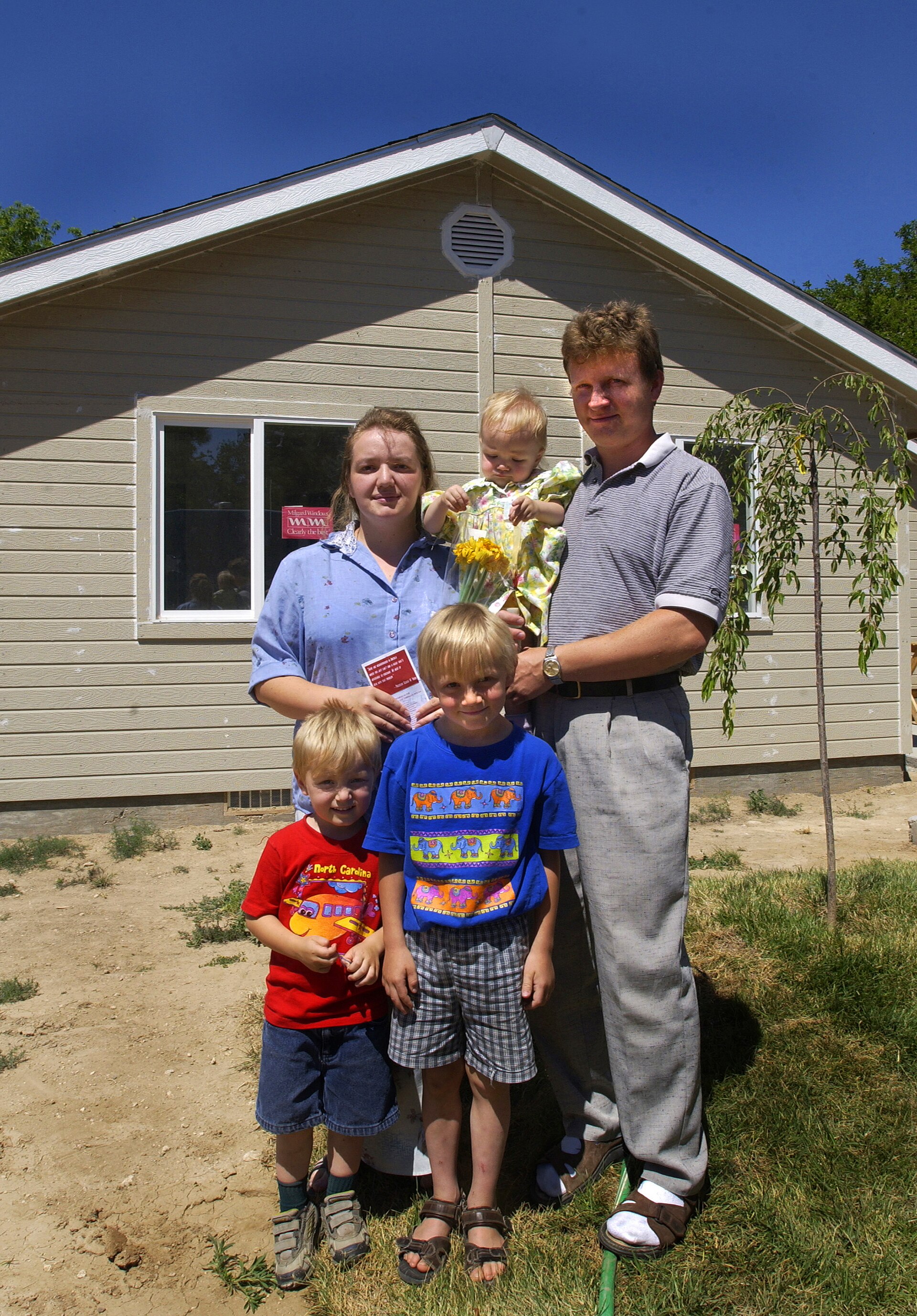

How buyer help is built
Every program in this lesson is some mix of four pieces. Knowing which piece a program offers answers most questions about what it costs and when it must be paid back.
The first mortgage
The first mortgage is the main loan, secured by a deed of trust recorded against the home, and it is paid first if the home is sold or foreclosed. In buyer-help programs the first mortgage is usually backed by someone other than the lender: insured by the Federal Housing Administration (FHA), guaranteed by the Department of Veterans Affairs (VA) or USDA Rural Development, or sold to Fannie Mae or Freddie Mac under a low-down-payment product. IHFA itself makes or buys first mortgages through participating lenders, and some of its first loans are funded with tax-exempt mortgage revenue bonds, which carry their own federal limits.1314
The second lien
A second lien (or second mortgage) is a smaller loan recorded behind the first. Down payment assistance in Idaho is mostly delivered this way. Seconds come in several forms:
- Amortizing second. Paid monthly alongside the first mortgage until it is gone. IHFA's 15-year second mortgage is this kind.1
- Deferred second. No monthly payment; the balance is due when the home is sold, the title is transferred, the first mortgage is refinanced, or the owner stops living there. HOME down payment loans run by IHFA are deferred, at 0 percent interest.7
- Shared-appreciation second. Deferred, but the amount due grows or shrinks with the home's value. The City of Boise's program asks for the original assistance times the ratio of the later sale price to the original purchase price, limited to the seller's net proceeds.12
- Forgivable loan. A deferred loan that is reduced or cancelled over a set period if the owner stays and follows the rules. IHFA's consumer page still mentions forgivable loans in a general answer, but the rate sheet posted Nov. 20, 2026 lists only repayable seconds.152
Grants and sweat equity
True grants, money that never has to be repaid, are rare in Idaho homebuyer programs. The closest things are Habitat for Humanity's model, where hundreds of hours of a family's labor serve as the down payment and the mortgage carries no interest, and lender or agency credits such as Fannie Mae's temporary $2,500 credit for very low-income first-time buyers using HomeReady.1116
Land trusts and deed restrictions
A community land trust (CLT) is a nonprofit that owns the land under a home and leases it to the homeowner, who owns the house. The ground lease limits the resale price so the next buyer also gets a below-market home. A deed restriction does something similar without separating land from house: a recorded covenant limits who can buy the home next and at what price. These tools trade some of the owner's future gain for a lower price today. In Boise's program the resale price is capped at the purchase price plus 1.5 percent for each year of ownership plus approved improvements.1217
A short history of buyer help
Federal help for buyers is older than most Idaho subdivisions. Section 203 of the National Housing Act of 1934 created the FHA's mortgage insurance; the statute, now 12 U.S.C. 1709, still sets the FHA's minimum cash investment. Title V of the Housing Act of 1949 created USDA's rural home loans; Section 502 is codified at 42 U.S.C. 1472. Idaho's Legislature created the agency now called IHFA in 1972 (Idaho Session Laws 1972, chapter 324); the statute as amended calls it "an independent public body corporate and politic," and its purpose section declares that "private enterprise has not been able to provide, without assistance, an adequate supply of safe and sanitary dwellings at prices or rents which persons and families of low income can afford."18192021
Lesson 01 tells the broader story of federal homeownership policy; the table below lists only the events that shaped the programs described in this lesson.
| Year | Law or event | What changed | Source |
|---|---|---|---|
| 1934 | National Housing Act, section 203 | FHA mortgage insurance for home loans | 18 |
| 1949 | Housing Act of 1949, Title V, section 502 | USDA rural homeownership loans | 19 |
| 1972 | Idaho Session Laws ch. 324 | IHFA created; seven commissioners appointed by the governor | 2022 |
| 1990 | National Affordable Housing Act | HOME program; section 215(b) caps assisted home prices at 95 percent of area median purchase price | 23 |
| 2008 | Amendment to National Housing Act section 203(b)(9) | FHA minimum cash investment of 3.5 percent of appraised value | 18 |
| 2020 | House Bill 589, Idaho Session Laws ch. 252 | Idaho first-time home buyer savings accounts, Idaho Code 63-3022V | 10 |
| 2022 | IHFA income limit policy, May 20, 2022 | Method for IHFA's single income cap (now $170,000) for loans without federal limits | 24 |
| 2023 | HUD Mortgagee Letter 2023-05 | FHA annual mortgage insurance cut to 0.55 percent for most 30-year loans, effective March 20, 2023 | 25 |
| 2025 | City of Boise HOP policy revised Feb. 20, 2025 | Boise homebuyer loans up to $45,000; PRICE money for manufactured homes | 12 |
| 2026 | IHFA program sheet, Feb. 11, 2026 | IHFA second mortgage up to 8 percent of price or value | 1 |
| 2026 | IHFA HOME administrative plan, April 1, 2026 | HOME down payment rules; land trust chapter later marked suspended | 78 |
| 2026 | FY2026 agriculture appropriations (H.R. 5371, Division B; Public Law 119-37) | $1 billion for 502 direct loans and $25 billion for 502 guaranteed loans nationwide | 26 |
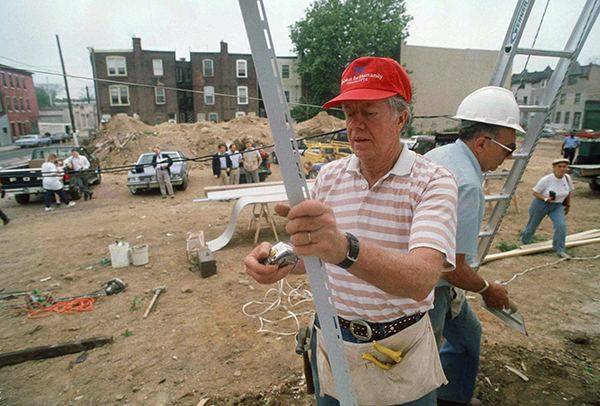

IHFA's homebuyer loans
Who IHFA is
The Idaho Housing and Finance Association is not a state agency funded by the Legislature's general fund. Idaho Code 67-6202 creates it as "an independent public body corporate and politic," and 67-6203 has the governor appoint seven commissioners to four-year terms, with "preference" for people representing persons of low income and people with experience in "mortgage lending, finance, banking, real estate, or home building." It raises money by issuing bonds, earns fees from servicing loans and runs federal programs. Its role as a housing finance agency, its board and its audits are in lesson 04, Idaho's Housing Authorities, and its money is traced in lesson 06, Where the Money Comes From.2022
IHFA does not lend to buyers directly over the counter. A buyer works with one of its participating lenders or brokers, listed on IHFA's "Find a Lender" page, and the lender originates the loan under IHFA's guidelines. IHFA then buys or funds the loan, and many of its loans are serviced by IHFA's own servicing arm, HomeLoanServ. In its 2026 Community Report, IHFA says it serviced 298,995 loans; the report's text also shows 7,888 home loans financed, without a clear period in the extracted text.2728
The first loans
IHFA's lender page lists conventional, Rural Development (USDA), FHA and VA loans for single-family homes, townhouses, condominiums and manufactured housing, under product names including "Fannie Mae's HFA Preferred/Freddie Mac Advantage," "Advantage FHA/VA/RD" and the "FHA 203(k) Streamline Rehabilitation." The rate sheet posted on Nov. 20, 2026 described these purchase products:132
| Product (as named on the rate sheet) | First-time buyer rule | Key terms on the rate sheet | Second mortgage allowed |
|---|---|---|---|
| Fannie Mae HFA Preferred, purchase | None | 97 percent maximum loan-to-value; standard mortgage insurance for borrowers over 80 percent of AMI; lower rates for loans of $350,000 or less | Yes, up to 8.0 percent |
| Freddie Mac HFA Advantage, purchase | None | 97 percent maximum loan-to-value; tax transcripts required | Yes, up to 8.0 percent |
| First Loan Tax Exempt (Fannie, Freddie, FHA/RD, VA versions) | Required "except in Targeted Counties" | Tax-exempt income limits apply; post-closing compliance approval required | Yes (VA version lists credits instead) |
| Conventional, purchase | Not stated | Automated underwriting approval required; manufactured homes allowed per agency rules | Not listed |
| FHA/RD | None | For purchases and rate-and-term refinances | Yes, up to 8.0 percent |
| VA, purchase | None | "1% and 2% credit available"; temporary buydowns not allowed; education encouraged, not required | Not listed |
| FHA 203(k) Limited | None | Purchase with limited repairs; refinances allowed | Yes, up to 8.0 percent |
Older Idaho news stories and websites use the names "Idaho Housing FirstLoan" and "Idaho Housing Second Loan." The rate sheet and program sheet posted in 2026 use "First Loan Tax Exempt" for the bond-funded first mortgages and "Second Mortgage" and "Idaho Heroes Second Mortgage" for the down payment loans. This lesson uses the current names.21
Tax-exempt first loans and the federal bond rules
The "First Loan Tax Exempt" products are funded with qualified mortgage bonds, whose investors pay no federal income tax on the interest. In exchange, Congress attached conditions in 26 U.S.C. 143, and those conditions explain IHFA's county chart:
- First-time buyer rule. At least 95 percent of bond proceeds must go to borrowers who "had no present ownership interest in their principal residences at any time during the 3-year period" before closing. Loans for homes in targeted areas are exempt from this rule. A targeted area is a qualified census tract (where 70 percent or more of families have income at or below 80 percent of the statewide median) or an "area of chronic economic distress."14
- Purchase price limit. The home's acquisition cost may not exceed 90 percent of the "average area purchase price," or 110 percent in a targeted area.14
- Income limit. Family income may not exceed 115 percent of the "applicable median family income," the greater of the area or statewide median. In targeted areas a third of the money can go to any income, and the rest to families up to 140 percent. For families of fewer than three people the statute substitutes 100 percent for 115 percent (and 120 percent for 140 percent in targeted areas), which is why IHFA's chart has a separate, lower column for households of one or two.144
- Recapture tax. A buyer who sells within nine years may owe extra federal income tax: the lesser of a "recapture amount" (built from 6.25 percent of the highest loan balance, a holding-period percentage and an income percentage) or 50 percent of the gain on the sale. It does not apply to a disposition "by reason of death" or one "more than 9 years after the testing date." Lesson 10 works through an example.14
IHFA's chart, revised June 3, 2026, sets these limits county by county. The tax-exempt price limits and the one-or-two-person and three-or-more-person income limits are marked effective May 6, 2026; the $170,000 limit for all other products is marked effective Sept. 3, 2024. The chart labels 26 of Idaho's 44 counties "Targeted" (including Canyon, Jerome, Gooding, Lincoln, Cassia and Kootenai) and 18 "Non-Targeted" (including Ada, Twin Falls, Minidoka, Blaine, Bonneville and Bannock).4
| County | Status | Tax-exempt price limit | Income, 1 or 2 people | Income, 3 or more | 80% AMI column (conventional) | All other IHFA loans |
|---|---|---|---|---|---|---|
| Twin Falls | Non-targeted | $566,354 | $102,294 | $117,639 | $65,920 | $170,000 |
| Jerome | Targeted | $692,211 | $121,920 | $142,240 | $65,920 | $170,000 |
| Gooding | Targeted | $692,211 | $121,920 | $142,240 | $69,280 | $170,000 |
| Lincoln | Targeted | $970,629 | $121,920 | $142,240 | $69,280 | $170,000 |
| Minidoka | Non-targeted | $566,354 | $103,734 | $119,295 | $69,280 | $170,000 |
| Cassia | Targeted | $692,211 | $121,920 | $142,240 | $69,280 | $170,000 |
| Blaine | Non-targeted | $794,151 | $130,200 | $151,900 | $80,320 | $170,000 |
| Ada | Non-targeted | $613,662 | $110,700 | $127,305 | $86,640 | $170,000 |
| Canyon | Targeted | $750,031 | $132,840 | $154,980 | $86,640 | $170,000 |
| Bonneville | Non-targeted | $566,354 | $101,600 | $116,840 | $82,240 | $170,000 |
| Bannock | Non-targeted | $566,354 | $101,600 | $116,840 | $78,480 | $170,000 |
| Kootenai | Targeted | $732,383 | $124,200 | $144,900 | $78,000 | $170,000 |
Three things stand out. Targeted counties get higher price and income limits than their neighbors, so a Jerome County buyer faces a looser bond-loan cap than a Twin Falls County buyer across the Snake River. Lincoln County's $970,629 price limit is the highest in the state on the chart; the figure is exactly what the federal formula gives if Lincoln is priced in the same high-cost area as Blaine County but at the targeted-area rate: Blaine's $794,151 is 90 percent of an average area purchase price of about $882,390, and 110 percent of that average is $970,629. (The same arithmetic links Twin Falls County's $566,354 and Jerome County's $692,211, at 90 and 110 percent of about $629,282.) Lincoln also shares USDA's higher Blaine and Camas tier for area loan limits ($455,400). The chart itself does not explain the Lincoln figure, so we list the reason as unverified. And the "80% AMI" column, used for the lowest-cost conventional pricing and mortgage insurance, is labeled effective "Fannie 5-18-25, Freddie 5-18-25," a date a year older than the rest of the chart.429
The $170,000 income cap
For loans that carry no federal income limit, IHFA sets its own. Its borrower income page says eligibility "is limited to households with income up to $170,000," that the borrower "must be a resident of Idaho," must have "acceptable credit and employment history," and that "some products may require Finally Home! Homebuyer Education."3
The cap comes from a May 20, 2022 IHFA policy. It notes that IHFA's statute defines "persons of low income" by what they can afford, considering factors such as "the cost and condition of housing facilities available" and "the ability of such persons to compete successfully in the normal housing market." IHFA wrote that median home prices had risen 84 percent since 2017 while income limits rose 16 percent, and that federal limits were "so outdated that few borrowers can qualify to purchase a median sales price home." Its method: estimate an Idaho median sales price from Multiple Listing Service data in the largest markets, compute the monthly payment at current rates with taxes and insurance, and set the income needed so the payment is no more than 30 percent of income. IHFA "may adjust this amount downwards," including to keep its "historical eligible market share" of about 75 percent. The policy does not consider household size.2421
The result is a program open to most Idaho households. HUD's FY2026 median family income was $110,700 in the Boise metro area (Ada and Canyon counties) and $100,200 in Twin Falls County, so a $170,000 cap reaches well above median income in both places.30
The second mortgage
IHFA's program sheet "as of 2/11/2026" lists two down payment and closing cost products, both "for purchase transactions only":1
| Term | Second Mortgage | Idaho Heroes Second Mortgage |
|---|---|---|
| Who | Any eligible IHFA borrower | Nurses, teachers, first responders (firefighters, police, paramedics and EMTs), active military and veterans |
| Amount | Up to 8 percent of the lesser of sales price or appraised value | Same |
| Rate | First mortgage rate plus 2.00 percentage points | Same |
| Term | 15-year fixed | 15-year fixed |
| Buyer's own money | At least $500 | $500 requirement waived |
| First mortgage pricing | Rate add-on for using the assistance applies | Add-on "reduced by .125%" on the conventional HFA first mortgage (program sheet); "waived" (rate sheet, Nov. 20, 2026) |
| Education | Finally Home! required; one certificate per loan | Same |
The two IHFA documents disagree on the Heroes pricing break. The February program sheet says the add-on is "reduced by .125%"; the online rate sheet read Nov. 20, 2026 says "The rate add-on to the first mortgage for the DPA is waived," and its Heroes list does not mention military members or veterans. The rate sheet also caps the second at "the maximum LTV / CLTV approved by mortgage insurance guidelines," meaning the combined loans cannot exceed what the first mortgage's insurer allows.12
IHFA's consumer page explains the $500 rule: the buyer's money can go to anything in the "loan transaction," including earnest money, appraisal, inspection or the education course fee. It answers "Does down payment assistance increase my monthly payment?" with "Yes." It also says the help is "available to all eligible Idaho homebuyers, not just first-time homebuyers," and that "3,230 Idahoans bought homes with down payment assistance through Idaho Housing in 2021 alone."15
Finally Home! homebuyer education
Finally Home! is IHFA's homebuyer education and counseling program, offered online and in person. Its course page says it "has a maximum price of $70," that a Homeownership Education Access Grant "is available to households with income below 300% of the federal poverty line," and that it is "provided by a HUD-approved housing counseling agency," Agency ID 81204. The course covers budgeting, credit, readiness, loan types, the transaction, closing and purchase costs, and graduates get a post-purchase "Homeowner's Toolkit." IHFA's rate sheet requires the certificate when a buyer uses IHFA down payment help, when a first-time buyer uses Fannie or Freddie HFA products, or when the automated underwriting findings require it; for VA loans it is "encouraged but not required."312
Education rules are stricter in the HOME program described next: every person on the title must finish an approved course within 24 months of closing and at least one one-on-one counseling session within six months of closing, with a written monthly budget.7
HOME down payment loans through IHFA
The HOME Investment Partnerships Program is a federal block grant from HUD, governed by 24 CFR part 92. IHFA administers Idaho's state allocation. Most HOME money in Idaho goes to rental projects (lesson 06 follows that money), but IHFA's 2026 Annual Administrative Plan, dated April 1, 2026, also provides homebuyer down payment assistance. The plan says the help is made available "through a competitive request for proposal (RFP) as funding allows," or at IHFA's discretion "on the open market for homeowners to apply directly."87
The rules
- Income. "80% AMI or less household income," using HUD's HOME income limits in effect when the purchase and sale agreement is signed. The income of every occupant 18 or older counts, whether or not that person is on the loan, under the federal Part 5 definition in 24 CFR 5.609.732
- The loan. "0% Interest," a second loan, "Due-on-sale, transfer, cash out/equity withdrawal (including reverse mortgage), or default," with a principal residency requirement during the period of affordability and "No deed restrictions or resale requirements."7
- How much. Assistance "is determined by buyers need and evaluated by calculating Housing Expense at 35%." The back-end debt-to-income ratio may not exceed 47 percent after the HOME money is counted. If HOME's contribution is larger than the first lender's, IHFA "reserves the right to negotiate for first lien position."7
- Credit. A minimum score of 640, figured as "average of all three scores - NOT mid-score." No bankruptcies, foreclosures, short sales or evictions in the last three years; open collections, judgments or liens above $2,000 combined disqualify an application, and smaller ones must be paid at or before closing with the buyer's own money.7
- Buyer's stake. A $500 minimum contribution (gifts of $5,000 or less allowed; sweat equity worth $500 or more can count) plus a $100 application or origination fee collected at closing.7
- Payment shock. A new mortgage payment more than 25 percent above current housing costs needs a letter of explanation and approval; zero housing expense or rent under half the new payment "may be considered high risk."7
- Price. The sales price may not exceed HUD's HOME maximum sales price limit, which under section 215(b) of the National Affordable Housing Act may not exceed 95 percent of the area median purchase price. Limits differ for existing homes and new construction.23
Period of affordability and recapture
HUD's current rule at 24 CFR 92.254(a)(4) sets the minimum period a HOME buyer must live in the home by the amount of help, and IHFA's plan follows it:337
| HOME assistance per home | Minimum period of affordability |
|---|---|
| Under $25,000 | 5 years |
| $25,000 to $50,000 | 10 years |
| Over $50,000 | 15 years |
During that period the home "cannot be rented at any point or left vacant unless the unit is listed for sale." When the period ends, the residency rule ends too, but "the loan remains in place as a 0% interest loan which is due on sale, transfer of title, unapproved refinance, or initiation of any type of equity withdrawal." On a sale, IHFA "will attempt to recapture the full amount" from the net proceeds (sale price minus senior loans and the seller's closing costs), "limited to only the amount available"; anything left over "belongs to the homebuyer."7
The 2026 HOME homebuyer RFP and the land trust pause
IHFA published a "Request for Proposal 2026 HOME Homebuyer Assistance" on its website, and a separate notice sought "qualified and experienced, non-profit single family developers" to run deed-restricted homeownership help, with proposals due by 11:59 p.m. March 4, 2026. When we tried to download the 2026 homebuyer RFP on Nov. 20, 2026, IHFA's server returned "not found," so its award amounts, deadlines and the partners chosen are not confirmed here. On the HOME program page, the community land trust chapter of the 2026 plan was labeled "SUSPENDED." That chapter had offered a "Soft second lien - assumed by new qualified household at each resale" with a 620 minimum credit score.34835
USDA Section 502: rural home loans
Section 502 of the Housing Act of 1949 (42 U.S.C. 1472) authorizes two different programs run by USDA Rural Development: direct loans, where USDA itself is the lender, and guaranteed loans, where a private lender makes the loan and USDA guarantees 90 percent of it. For FY2026, Congress set loan levels of "$1,000,000,000 shall be for section 502 direct loans" and "$25,000,000,000 shall be for section 502 unsubsidized guaranteed loans" nationwide in Division B of H.R. 5371, the Continuing Appropriations, Agriculture, Legislative Branch, Military Construction and Veterans Affairs, and Extensions Act, 2026 (Public Law 119-37). These are national loan ceilings; Idaho's share is not set in the act.192636
Which places count as rural
Both programs require a home in an eligible rural area, defined in 42 U.S.C. 1490. In plain terms a place qualifies if it is not part of or associated with an urban area and has up to 2,500 people; 2,500 to 10,000 people and is "rural in character"; or 10,000 to 20,000 people outside a metropolitan area with "a serious lack of mortgage credit for lower and moderate-income families." Places that were rural before 1990, or deemed rural from 2000 through 2020, keep that status until the 2030 census if they have no more than 35,000 people, are "rural in character," and lack mortgage credit.37
For the Magic Valley core towns, the Census Bureau's July 1, 2025 estimates are: Twin Falls 56,216; Jerome 13,731; Kimberly 5,798; Buhl 4,801; Gooding 3,855; and Hagerman 994. Twin Falls is above every population ceiling in the statute. The other five are under 35,000, but population alone does not decide eligibility: USDA also weighs whether a place is "associated with an urban area" and is "rural in character," and it maps the result address by address. We could not run USDA's eligibility map for each town for this lesson, so the status of Jerome, Kimberly, Buhl, Gooding and Hagerman is listed as unverified; the map at eligibility.sc.egov.usda.gov is the only authoritative check.3839
Section 502 direct loans
USDA's program page says applicants must have "an adjusted income that is at or below the applicable low-income limit," be "without decent, safe and sanitary housing," agree to live in the home, and meet citizenship or eligible noncitizen rules. The home must not have a market value "in excess of the applicable area loan limit" and cannot be "designed for income producing activities." Loans can buy, build, repair, renovate or relocate a home.5
- Rate. The page listed "the current interest rate for Single Family Housing Direct home loans" as 6.25 percent, effective Nov. 1, 2026, fixed at the lower of the rate at approval or at closing.5
- Payment assistance. A subsidy that lowers the payment; the "Interest rate when modified by payment assistance, can be as low as 1%." The borrower must repay all or part of the subsidy when the title transfers or the borrower no longer lives in the home (subsidy recapture, under 7 CFR part 3550).540
- Term. Up to 33 years, or 38 years for very low-income applicants who cannot afford the 33-year payment.5
- Down payment. "No down payment is typically required," though applicants with assets above USDA's limits may have to put some in.5
- How to apply. Directly with a Rural Development office, which accepts applications year-round; IHFA's HOME rules also allow a 502 direct loan as the first mortgage under HOME down payment help.57
USDA publishes its FY2026 adjusted income limits for direct loans in two bands, one for households of one to four people and one for five to eight (with 8 percent of the four-person limit added for each person above eight). The Idaho rows for the core and comparison counties, and USDA's area loan limits, are below.629
| County (USDA area) | Very low income, 1 to 4 people | Low income, 1 to 4 people | Low income, 5 to 8 people | Area loan limit (max., eff. Feb. 10, 2026) |
|---|---|---|---|---|
| Twin Falls (Twin Falls County HUD metro area) | $47,600 | $76,150 | $100,550 | $324,700 |
| Jerome (Jerome County HUD metro area) | $44,000 | $70,400 | $92,950 | $324,700 |
| Gooding | $44,000 | $70,400 | $92,950 | $324,700 |
| Lincoln | $44,000 | $70,400 | $92,950 | $455,400 |
| Minidoka | $44,000 | $70,400 | $92,950 | $324,700 |
| Cassia | $44,000 | $70,400 | $92,950 | $324,700 |
| Blaine | $54,250 | $86,800 | $114,600 | $455,400 |
| Ada and Canyon (Boise City HUD metro area) | $55,350 | $88,550 | $116,900 | $351,900 |
| Bonneville (Idaho Falls HUD metro area) | $50,550 | $80,900 | $106,800 | $324,700 |
The USDA one-to-four-person figures match HUD's FY2026 limits for a family of four: in Twin Falls County, HUD's 50 percent (very low income) limit for four people is $47,600 and its 80 percent (low income) limit is $76,150. A one-person household gets the same USDA limit as a four-person household, which makes the program relatively generous to small households.306
How we figured it: what payment assistance can do (hypothetical)
Hypothetical example, not a quote or an offer. A $250,000 Section 502 direct loan over 33 years (396 monthly payments). At the posted 6.25 percent note rate, principal and interest come to about $1,492.90 a month. If payment assistance brought the effective rate to the 1 percent floor, the payment would be about $741.46, a difference of about $751.44 a month.
Method. Standard amortization formula, payment = P times i divided by (1 minus (1 plus i) to the power of minus n), with P = $250,000, n = 396, and i = annual rate divided by 12. Taxes, insurance and any escrow are left out. Actual payment assistance depends on household income and USDA's formula, so most borrowers would land somewhere between these two figures, and the subsidy is subject to recapture when the home is sold or the owner moves out.
Section 502 guaranteed loans
The guaranteed program is the larger of the two by dollar volume. USDA's page says household income "cannot exceed 115% of median household income," the program "provides a 90% loan note guarantee to approved lenders," offers "100% financing," and loans are "offered at a 30year fixed rate only," with rates set by lenders. Buyers apply through an approved lender, not a USDA office.36
The fees are set in USDA's annual notice. Rural Development's "Fiscal Year 2027 Conditional Commitment Notice," sent Sept. 16, 2026, says a 1.00 percent upfront guarantee fee and a 0.35 percent annual fee apply to purchase and refinance loans from Oct. 1, 2026 through Sept. 30, 2027. The same notice says the program "lacks available funds for a short period of time," about a week at the start of each fiscal year, and that USDA issues conditional commitments "subject to the availability of commitment authority" during that gap. A rule published March 19, 2026 (91 FR 13211, effective June 17, 2026) adds a delegated lender option in 7 CFR 3555.55 that lets approved lenders issue guarantees with limited agency involvement; USDA set its implementation date as Sept. 28, 2028.414243
FHA, VA and conventional low-down-payment loans
These are not Idaho programs, but they are the first mortgages most assisted buyers use, and IHFA's second mortgage rides on top of FHA, USDA and conventional HFA loans.2
FHA
Section 203(b)(9) of the National Housing Act, 12 U.S.C. 1709(b)(9), requires an FHA borrower to have "paid, in cash or its equivalent, on account of the property an amount equal to not less than 3.5 percent of the appraised value." FHA charges an upfront mortgage insurance premium of 1.75 percent of the base loan amount. Under Mortgagee Letter 2023-05, effective for case numbers endorsed on or after March 20, 2023, the annual premium for a loan longer than 15 years of $726,200 or less is 0.55 percent when the loan-to-value is above 95 percent, and 0.50 percent at 95 percent or below; it lasts for the life of the loan unless the loan-to-value starts at 90 percent or less, in which case it ends after 11 years.1825
FHA's 2026 loan limits took effect for case numbers assigned on or after Jan. 1, 2026 under Mortgagee Letter 2025-23. HUD announced a one-unit floor of $541,287 and a ceiling of $1,249,125. County limits between those are posted in HUD's online lookup.4445
VA
VA-guaranteed loans for eligible veterans, service members and some surviving spouses require no down payment and no monthly mortgage insurance; the trade-off is a one-time funding fee set by 38 U.S.C. 3729. VA's chart, effective April 7, 2023, sets the fee for a purchase loan at 2.15 percent of the loan on first use with less than 5 percent down, 1.5 percent with 5 percent or more down, and 1.25 percent with 10 percent or more down; after first use, 3.3 percent with less than 5 percent down. Veterans receiving VA compensation for a service-connected disability, eligible surviving spouses receiving Dependency and Indemnity Compensation, and some others pay no fee. Idaho's first-time home buyer savings account statute counts a VA funding fee as an eligible home cost.46479
HomeReady and Home Possible
Fannie Mae's HomeReady and Freddie Mac's Home Possible are conventional loans for lower-income buyers. Freddie Mac says Home Possible "qualifying income is limited to 80% of area median income (AMI)," allows a maximum 97 percent loan-to-value and up to 105 percent total loan-to-value with "Affordable Seconds," and lets mortgage insurance be cancelled once the balance drops below 80 percent of value. Fannie Mae says HomeReady allows "down payments as low as 3%," with "no minimum personal contribution required" and funds from "gifts, grants, and Community Seconds," and offers a "$2,500 borrower credit" for very low-income first-time buyers on loans it buys from March 1, 2025 to Feb. 28, 2027. Fannie Mae put its 2026 area median incomes into use June 13, 2026.4816
IHFA's "HFA Preferred" and "HFA Advantage" products are the housing finance agency versions of these Fannie and Freddie loans, which is why IHFA's chart carries a separate 80 percent of AMI column for mortgage insurance and pricing.24
Nonprofit, land trust and city paths
Habitat for Humanity in Idaho
Habitat for Humanity affiliates build or renovate homes with volunteers and the buying families, then sell the homes with an affordable mortgage. Habitat for Humanity International's directory lists Idaho affiliates including Habitat for Humanity of the Magic Valley at 669 Eastland Dr. S. in Twin Falls, Treasure Valley Habitat for Humanity at 9438 W. Fairview Ave. in Boise, and Habitat for Humanity Idaho Falls Area. Each affiliate sets its own selection rules within Habitat's model.495051
Habitat for Humanity of the Magic Valley says it covers "the seven counties of the Magic Valley" and has "partnered with more than 60 local families." It charges families "only the cost of the home, zero profit, zero interest." Its application page sets out the rules:4911
- Income. Household income between 30 and 60 percent of the area median income for the county.
- Need. Applicants are visited at home; the page says they "must be living in substandard conditions" and asks whether they are "couch surfing or living in housing that isn't safe or adequate."
- Work history. The page asks whether the applicant or spouse has "worked at the same job for at least a year."
- Sweat equity. 300 to 500 hours on the family's own home or another Habitat home, at a minimum of 20 hours a month, "considered sweat equity, as your down payment."
- Education. Partner families "are also required to take educational courses."
- Timing. Applications are handed out only at mandatory meetings during a family selection period. The affiliate held seven meetings for a February selection; the page read Nov. 20, 2026 said "Family Selection is now closed."
How we figured it: Habitat's income band in Twin Falls County
Using the HUD FY2026 four-person figures for Twin Falls County, where the 50 percent limit is $47,600, the affiliate's 30 to 60 percent band runs roughly from the high $20,000s to the high $50,000s for a family of four. That range is our own calculation from HUD's table (30 percent and 60 percent are 0.6 and 1.2 times the 50 percent limit, about $28,560 and $57,120); the affiliate sets its own exact figures.30
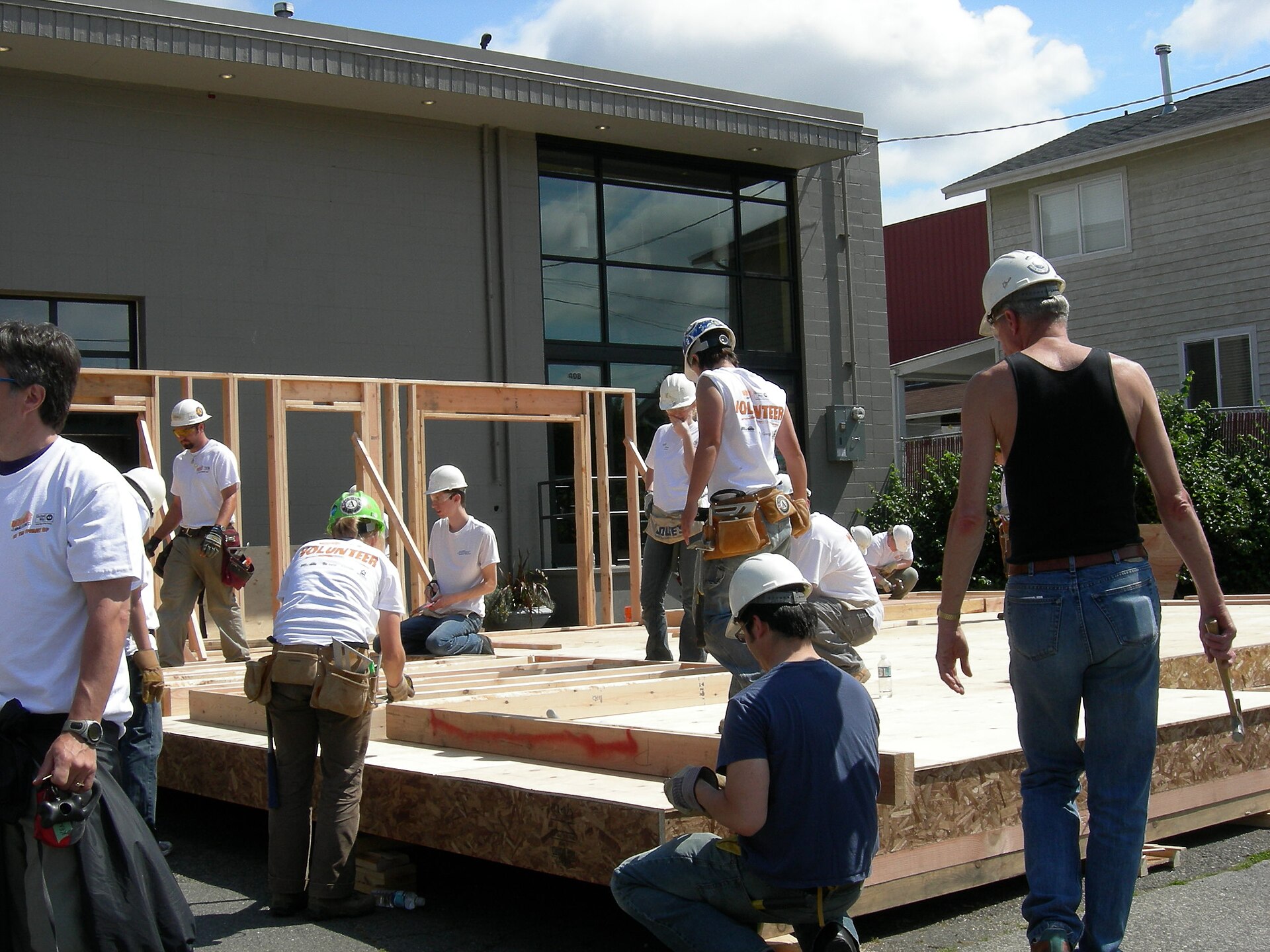

Community land trusts and deed-restricted homes
LEAP Housing Trust (Boise area). LEAP Housing, a Boise nonprofit, runs the LEAP Housing Trust. Its page says LEAP "acquires land through sales or donations and removes the land cost from the home purchase price," holds the land in trust while homeowners own the house, and keeps the home affordable for "99+ years of affordability via a land lease." The first two communities, Caritas Commons and Whitney Commons, "will bring a combined total of 25 homes," backed by "$2.2M of contributions" from partners LEAP names, including Saint Alphonsus, several foundations, First Interstate Bank, the Federal Home Loan Bank of Des Moines and United Way. LEAP is a nonprofit advocate and developer; its descriptions of results are its own.17
Blaine County Housing Authority. In the Wood River Valley, the Blaine County Housing Authority stewards "community housing," keeps a waitlist, and lists deed-restricted homes for purchase alongside rentals, with income and asset limits posted on its site. Its rules differ from the federal programs in this lesson and are set by local policy.52
The state pause. IHFA's 2026 HOME plan had a chapter for down payment help on land trust homes, with a 0 percent "soft second lien" that the next qualified buyer would assume at each resale. In November 2026 that chapter was marked "SUSPENDED," and IHFA was separately seeking a nonprofit partner to run deed-restricted homeownership help.83534
City programs: Boise's Homeownership Opportunity Program
The City of Boise's Homeownership Opportunity Program (HOP), in a policy revised Feb. 20, 2025, lends money to buyers of homes inside Boise city limits. Most of it comes from Boise's Community Development Block Grant (CDBG) entitlement under 24 CFR 570.201(n); the city also won federal PRICE money (HUD announced the award Dec. 19, 2024, and approved the city's plan July 1, 2025) that it may use for manufactured homes. Its main rules:12
- Income. At least 50 percent and no more than 80 percent of area median income; every person on the loan must live in the home.
- First mortgage. A fixed-rate, fully amortizing loan of at least 30 years that is a CFPB "Qualified Mortgage" and not "Higher Priced"; IHFA loans are accepted. Buyers are expected to pay about 30 percent of underwritten income toward the mortgage, with front-end and back-end ratios capped at 39 and 45 percent.
- Buyer's stake. At least 0.5 percent of the price, savings after closing of at least two months' payments, and liquid assets above $35,000 must go into the purchase first.
- Amount. Up to $45,000 for a standard home; up to $65,000 for a home in an established community land trust or under an approved deed restriction.
- Repayment. For a standard home, a deferred loan due at sale or transfer equal to the original assistance times "the cumulative rate of appreciation," limited to net proceeds. For a land trust or deed-restricted home, the resale price is capped at the purchase price plus 1.5 percent a year plus approved improvements (or the appraised value, if lower), and a land trust lease must run at least 50 years.
- How buyers come in. Through partner organizations chosen by request for qualifications; the policy names LEAP Housing and NeighborWorks Boise. A homeowner education certificate (Finally Home! or another HUD-approved course) is required.
Other Idaho cities receive CDBG money and could fund homebuyer help, but in our search we did not find a current, published homebuyer loan program from Twin Falls, Jerome, Nampa, Meridian or Caldwell. That is listed as unverified, not as a finding that none exists.
Housing Choice Voucher homeownership
Federal rules at 24 CFR 982.625 let a public housing agency use a Housing Choice Voucher to help a family pay a mortgage instead of rent. The option is up to each agency, which must say in its plan whether it offers it. IHFA's 2026 Community Report tells the story of a voucher holder who used the federal Family Self-Sufficiency program to pay off debt and save, then bought a home with an IHFA tax-exempt loan. Which Idaho agencies run a voucher homeownership program, and how many families use it, is a question for each agency's annual plan (see lesson 04).5328
Idaho's first-time home buyer savings account
Idaho has a state tax break for saving toward a first home. It is in Idaho Code 63-3022V, "Deduction for first-time home buyers," added by House Bill 589 in 2020 (Idaho Session Laws 2020, chapter 252). The statute's history line shows no amendments since, and the Tax Commission's guidance page cites it as current law.954
What the statute says
- Who. A "first-time home buyer" is an Idaho resident who filed an Idaho income tax return for the most recent year, "does not own, either individually or jointly, a single-family or multifamily residence and who has never owned or purchased, either individually or jointly, a single-family residence in any location." For a married couple filing jointly, both must live in Idaho, and at least one must have filed in Idaho and at least one must be a first-time buyer.9
- Where. An account at a "depository": a state or national bank, savings and loan, credit union, or trust company authorized to act as a fiduciary and to do business in Idaho.9
- The deduction. For tax years starting Jan. 1, 2020 and after, "annual contributions and interest earned" may be deducted, up to $15,000 a year for an individual or $30,000 for a married couple filing jointly. Annual contributions may not exceed the deductible amount, and interest is tax-deferred if used for a qualified purchase. The Tax Commission says the deduction is available "even if you don't itemize."954
- The cap. "Deposits into a first-time home buyer savings account shall not exceed one hundred thousand dollars ($100,000) for the lifetime of the account." The Tax Commission reads this to include "both contributions and interest."954
- What the money can buy. The down payment on a single-family residence in Idaho, costs and fees listed on the closing statement (including the federal closing disclosure under 12 CFR 1026.38), and a VA funding fee. A "single-family residence" includes "a manufactured home, mobile home, condominium unit, or townhome," and a home under contract to be built.9
- Withdrawals. None in the first 30 days. Withdrawals for eligible costs are not taxed; withdrawals for anything else are "subject to taxes otherwise due." Transfers between such accounts, fees, and mistaken deposits or withdrawals reversed within 15 days are not withdrawals. On the account holder's death, the money passes "without penalty" to named beneficiaries, who owe any tax.9
- Reporting. The account holder attests "under the penalty of perjury" to first-time buyer status, lists the account on the tax return, and the bank reports withdrawals within 90 days on Form ID-FTHB. The burden of proving an eligible use "is solely upon the account holder."954
The statute does not limit income, the home's price or how long the money can sit in the account, and it imposes no penalty beyond ordinary tax on a nonqualified withdrawal.9
How House Bill 589 passed
HB 589 was printed as a House Revenue and Taxation Committee bill on March 3, 2020. The House passed it 47 to 23 on March 6 with Rep. Robert Anderst as floor sponsor; the Senate passed it 22 to 10 with 3 absent on March 18 with Sen. Lent as floor sponsor. The governor signed it March 24, 2020, and it took effect retroactive to Jan. 1, 2020. The statement of purpose listed Rep. Anderst and Max Pond of the Idaho Association of REALTORS as contacts, and described the accounts as "similar to existing Idaho tax-advantaged savings accounts for healthcare and educational purposes."1055
The fiscal note estimated the cost at $1,947,528 a year. Its assumptions: IHFA counted "about 13,200 non-repeating first-time homebuyers in Idaho in 2019"; 10 percent (1,320) would open accounts, split 60/40 between married couples and individuals; every account would save the full $30,000 or $15,000; and each deducted dollar would save 6.02 cents in state tax for individuals and 6.19 cents for couples, the effective rates the note assumed. Idaho has cut its income tax rates since 2020, so the dollar value of the deduction per account is different today. The state has not published how many accounts exist or how much has been deducted, as far as we could find.55
How Idaho compares: Minnesota's version
Several states have first-time buyer savings accounts, and the details vary. Minnesota's, in Minnesota Statutes chapter 462D, is a useful contrast:5657
| Feature | Idaho (Idaho Code 63-3022V) | Minnesota (Minn. Stat. 462D) |
|---|---|---|
| What is tax-favored | Contributions and interest deducted | Only interest or dividends subtracted |
| Annual contribution limit | $15,000 individual; $30,000 joint | $14,000; $28,000 married joint |
| Lifetime limit | $100,000 deposits | $50,000 contributions; $100,000 married joint |
| Who benefits | The account holder, who must be the first-time buyer | A designated "qualified beneficiary," who may be someone else |
| Time limit | None in statute | Earnings left after the 10th year are added back to income |
| Penalty on misuse | Ordinary tax | Ordinary tax plus an additional 10 percent tax |
Step by step: from education to closing
The order below follows the documents each program publishes for an IHFA loan with its second mortgage, the most common assisted purchase in Idaho. HOME, USDA direct and Habitat purchases add steps, noted at the end. This describes the process; it is not advice about whether or when to take any step.15231
- Homebuyer education. Finish the Finally Home! course (online or in person; maximum price $70, with a fee grant for households under 300 percent of the federal poverty line) and keep the certificate. HOME buyers also need a one-on-one counseling session within six months of closing.317
- Find a participating lender. IHFA loans are made through lenders and brokers on IHFA's list; USDA guaranteed loans through USDA-approved lenders; USDA direct loans through a Rural Development office; Habitat and city programs through their own intake.27365
- Income and credit review. The lender checks household income against the limit for the product (for example $170,000 for most IHFA loans, the county bond limits for tax-exempt loans, 80 percent of AMI for HOME, 115 percent of median for USDA guaranteed) and runs credit and debt-to-income ratios under the insurer's or investor's rules.34736
- Preapproval and product choice. The lender issues a preapproval naming the first mortgage type and whether the IHFA second mortgage will be used.2
- Offer and purchase contract. The buyer signs a purchase and sale agreement. For HOME, the income and price limits "in effect at the time a household executes a purchase contract are the limits which apply."7
- Reservation, appraisal and inspection. The lender reserves the IHFA loan; an appraisal sets value (the second mortgage is capped at 8 percent of the lesser of price or appraised value). HOME requires the home to meet property standards; Boise's HOP sends city staff to inspect.1712
- Underwriting and approvals. Final approval of the first mortgage and the second; tax-exempt loans need IHFA's post-closing compliance approval; HOME files are reviewed by IHFA's HOME department, which makes its own approval decision.27
- Closing. The buyer brings at least $500 of their own money (unless waived under Idaho Heroes), signs the first and second notes and deeds of trust, and the HOME or city agreement where used.112
- After closing. Payments on the first and, for IHFA's second, monthly payments for 15 years; residency monitoring for HOME and Boise HOP; a federal recapture tax check for a tax-exempt loan if the home is sold within nine years.1714
Program differences. USDA direct applicants apply first to USDA, then find a home within the area loan limit. Habitat applicants apply during a family selection period, then work their sweat equity hours while the house is built. HOME buyers need a first-mortgage approval before IHFA reviews the HOME request. Boise HOP buyers come through LEAP Housing or NeighborWorks Boise.511712
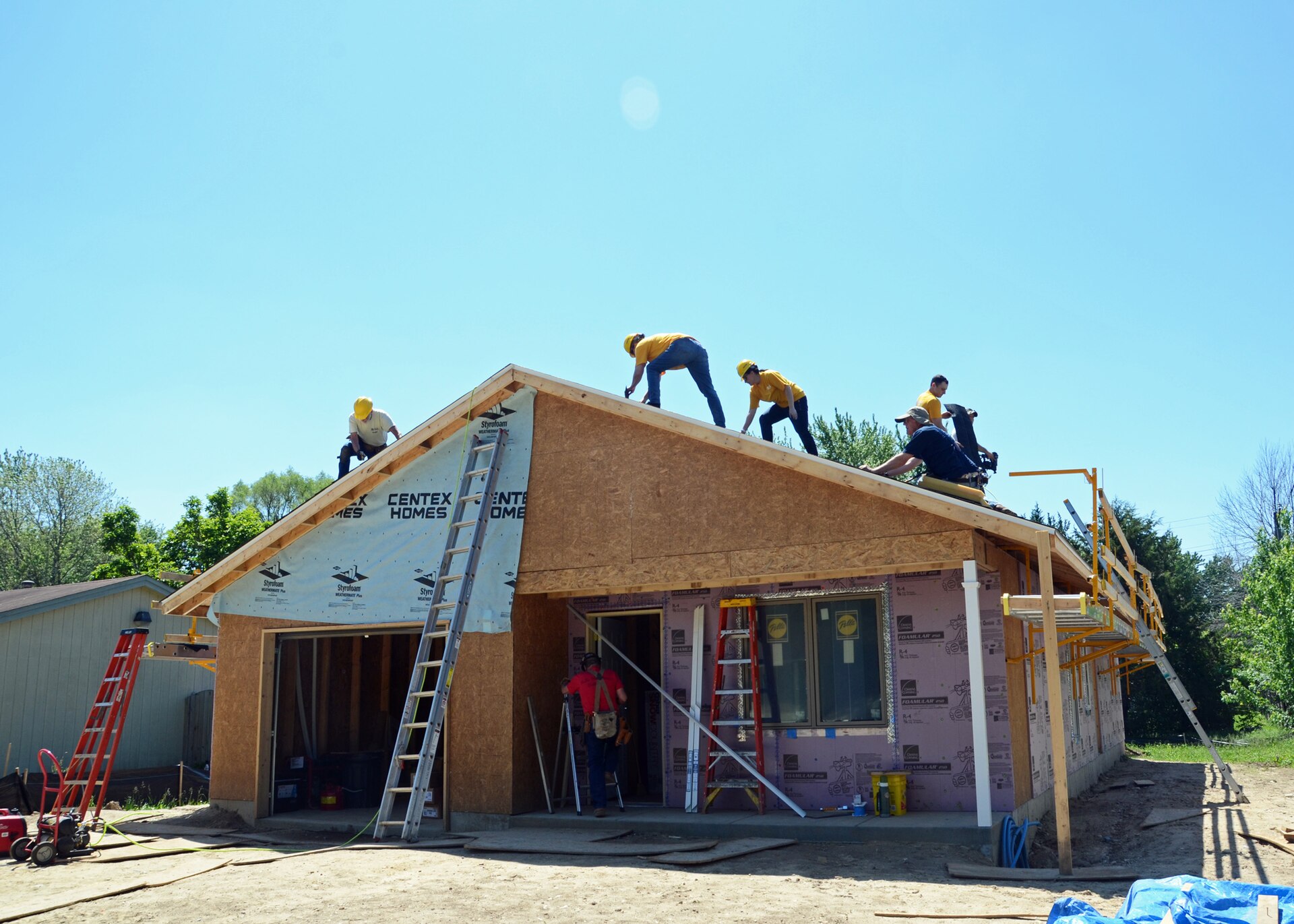

A worked hypothetical: first mortgage plus second loan
The example below is hypothetical. The price, closing costs and interest rates are made up for illustration and are not IHFA's rates on any day; it shows how the pieces fit, not what any buyer should do.
How we figured it: a $350,000 purchase in Twin Falls County (hypothetical)
Inputs (all assumed). Purchase price and appraised value $350,000 (below Twin Falls County's $566,354 tax-exempt price limit; the household is assumed to be under the $170,000 income cap). First mortgage: a conventional HFA loan at the 97 percent maximum loan-to-value, $339,500, 30 years, at an assumed 6.50 percent. Closing costs assumed at $9,000. Cash needed: $10,500 down payment (3 percent) plus $9,000 closing costs = $19,500. The buyer puts in the $500 minimum; an IHFA-style second mortgage covers $19,000. Second mortgage rate: first rate plus 2.00 points = 8.50 percent, 15 years.
Checks. $19,000 is 5.43 percent of $350,000, under the 8 percent cap ($28,000). Combined loans $358,500 equal 102.4 percent of value; that is allowed only if the first mortgage's investor and insurer permit it (Freddie Mac's Home Possible, for example, allows up to 105 percent total loan-to-value with an Affordable Second).148
Monthly principal and interest. First: about $2,145.87. Second: about $187.10. Total: about $2,332.97, before taxes, insurance and mortgage insurance. Without the second, the same buyer would have needed $19,500 in cash at closing.
Over time. Interest paid on the second over its full 15 years: about $14,678. Balance of the second after 5 years: about $15,090; after 7 years: about $13,000; after 10 years: about $9,120. A sale or refinance in those years would pay off the remaining balance from the proceeds.
Method. Standard amortization formula for each loan, payment = P times i divided by (1 minus (1 plus i) to the power of minus n), with i = annual rate divided by 12; remaining balance after k payments = P times (1 plus i) to the k minus payment times ((1 plus i) to the k minus 1) divided by i.
How each kind of help is repaid
Repayment is where programs differ most, and where buyers most often misread them. Lesson 10 covers the problems in depth; here is how each program describes repayment in its own documents.
| Program | Monthly payment? | When the balance is due | Amount due | Source |
|---|---|---|---|---|
| IHFA Second Mortgage | Yes, 15 years | Paid down monthly; any balance is paid from a sale or refinance | Remaining principal | 1 |
| HOME down payment loan (IHFA) | No | Sale, transfer, unapproved refinance, cash-out or reverse mortgage, or default; not forgiven at the end of the affordability period | Full amount, limited to net proceeds | 7 |
| Boise HOP, standard home | No | Sale or transfer | Original assistance times (sale price divided by purchase price), limited to net proceeds | 12 |
| Boise HOP, land trust or deed-restricted | No | Under the city's resale policy | Resale price capped at purchase price plus 1.5% a year plus approved improvements | 12 |
| USDA 502 direct payment assistance | Built into the payment | Title transfer or the owner no longer lives there | All or part of the subsidy received | 540 |
| IHFA tax-exempt first loan | Normal mortgage | Federal recapture tax if sold within 9 years | Lesser of the recapture amount or 50% of the gain | 14 |
| Habitat (Magic Valley) | Yes, mortgage at zero interest | Over the mortgage term | Cost of the home | 49 |
Idaho and other states
Compared with federal programs and with Minnesota's savings account, Idaho's design choices stand out in four ways:
- Income reach. IHFA's $170,000 cap for loans without a federal limit is set by its own 2022 policy and does not vary by household size or county. Federal bond loans, HOME, USDA and HomeReady/Home Possible all vary by county and, except HomeReady and Home Possible, by household size.24448
- Repayable help. IHFA's second is a repayable, interest-bearing loan. HOME seconds are 0 percent and deferred. Lesson 10 discusses the trade-offs between repayable and forgivable designs.17
- State tax break. Idaho's savings account deducts contributions up to $15,000 or $30,000 a year with a $100,000 cap; Minnesota's exempts only the earnings, has lower lifetime caps for individuals, and adds a 10 percent tax and a 10-year clock.95657
- State appropriations. The programs in this lesson run on federal money, bond markets, IHFA's own revenue, city block grants and private donations. We did not find a state general fund appropriation for homebuyer down payment help in Idaho; lesson 06 covers state housing money, including the Workforce Housing Fund for rental projects.
Pictures, Numbers and Infographics
The key numbers in this lesson, in one place. Limits are for the year and effective date shown; do not mix them with other years' limits.
| Measure | Idaho | U.S. or other states | Place, year or date | Source |
|---|---|---|---|---|
| IHFA second mortgage, maximum | 8% of lesser of price or value; 15 years; first rate + 2.00 | Statewide, program sheet Feb. 11, 2026 | 1 | |
| Buyer's minimum own funds, IHFA second | $500 (waived for Idaho Heroes) | 2026 | 1 | |
| IHFA income cap, most loans | $170,000 | Effective Sept. 3, 2024 | 4 | |
| IHFA tax-exempt price limit | Twin Falls $566,354; Jerome and Gooding $692,211; Ada $613,662 | Federal rule: 90% of average area purchase price (110% targeted) | Effective May 6, 2026 | 414 |
| IHFA tax-exempt income limit, 3+ people | Twin Falls $117,639; Jerome $142,240 | Federal rule: 115% of median (140% targeted) | Effective May 6, 2026 | 414 |
| HUD median family income | Boise metro $110,700; Twin Falls County $100,200; Jerome County $79,000 | FY2026 | 30 | |
| USDA 502 low-income limit, 1 to 4 people | Twin Falls $76,150; Jerome, Gooding, Lincoln $70,400; Boise metro $88,550 | FY2026 | 6 | |
| USDA area loan limit | Twin Falls, Jerome, Gooding $324,700; Ada, Canyon $351,900; Blaine, Lincoln $455,400 | Effective Feb. 10, 2026 | 29 | |
| USDA 502 direct rate | 6.25%; as low as 1% with payment assistance | Same nationwide | Effective Nov. 1, 2026 | 5 |
| USDA 502 loan levels | $1 billion direct; $25 billion guaranteed, nationwide | FY2026 | 26 | |
| USDA guaranteed fees | 1.00% upfront; 0.35% annual | FY2027 (from Oct. 1, 2026) | 41 | |
| FHA minimum cash | 3.5% of appraised value | 12 U.S.C. 1709(b)(9) | 18 | |
| FHA mortgage insurance | 1.75% upfront; 0.55% annual (most 30-year loans over 95% LTV) | Since March 20, 2023 | 25 | |
| FHA one-unit loan limits | Floor $541,287; ceiling $1,249,125 | 2026 | 44 | |
| VA funding fee, first use, under 5% down | 2.15% | Since April 7, 2023 | 46 | |
| HOME down payment loans | 80% of AMI; 0%; due on sale; 640 credit score | IHFA plan April 1, 2026 | 7 | |
| First-time buyer savings deduction | $15,000 a year single; $30,000 joint; $100,000 lifetime | Minnesota: interest only; $14,000/$28,000 a year | Idaho since 2020 | 956 |
| Boise HOP maximum | $45,000; $65,000 land trust or deed-restricted | Policy Feb. 20, 2025 | 12 | |
| Habitat, Magic Valley | 30% to 60% of AMI; 300 to 500 hours | 2026 | 11 | |
| IHFA buyers using down payment help | 3,230 | 2021 | 15 |
Common mistakes
- Calling down payment help a grant. IHFA's second mortgage is a 15-year loan with interest above the first mortgage rate, and IHFA's own answer to whether it raises the monthly payment is "Yes." HOME and Boise HOP money is deferred but still owed at sale.115712
- Assuming "first-time buyer" programs require being a first-time buyer. IHFA's down payment help is "not just" for first-time buyers; only its tax-exempt bond loans have the federal three-year rule, and not in targeted counties. Idaho's savings account, by contrast, requires that the account holder never have owned a single-family home anywhere, a stricter test than the federal three-year rule.15149
- Using one county's limits for another. Twin Falls and Jerome counties sit side by side in the same metro area but have different HUD medians, different USDA limits and different IHFA targeted status.3064
- Mixing years or effective dates. IHFA's own chart carries three different effective dates (May 6, 2026; May 18, 2025; Sept. 3, 2024). HUD, USDA, FHA and Fannie Mae update on different schedules. A table that mixes them needs a note saying so.416
- Treating a price cap as a price. A $692,211 bond-loan price limit in Jerome County says nothing about what homes sell for there, or what a given household can afford; lesson 10 compares caps with Census home values.4
- Reading "no down payment" as "no cash." USDA and VA loans can finance the whole price, but buyers still face closing costs, inspections, appraisal and, for VA, a funding fee unless exempt; IHFA requires $500 of the buyer's own money in most cases.5461
- Assuming a USDA town qualifies because it is small. Population is only one part of 42 U.S.C. 1490; USDA's address map decides.3739
- Forgetting the federal recapture tax. A buyer with a tax-exempt bond loan who sells within nine years may owe added federal tax, a rule found in 26 U.S.C. 143(m), not in the loan note.14
What we know, what we don't, and what the data can show
What we know
- IHFA's current down payment product is a repayable second mortgage of up to 8 percent, 15 years, at the first rate plus 2.00 points, with a $500 minimum buyer contribution and required education.1
- IHFA's income cap for most loans is $170,000; its tax-exempt bond loans follow 26 U.S.C. 143 limits set county by county, last revised June 3, 2026.414
- HOME down payment loans through IHFA are 0 percent, deferred and due on sale for households at or below 80 percent of AMI; the land trust version was suspended in 2026.78
- USDA's FY2026 limits and area loan limits for every Idaho county, and Congress's FY2026 national loan levels for Section 502.62926
- Idaho Code 63-3022V's text, history and the votes on HB 589 (2020).910
What we don't know
- How many Idaho buyers used IHFA down payment help in 2024, 2025 or 2026, by county; IHFA's consumer page gives a 2021 figure (3,230), and the 2026 Community Report's text extraction did not show county detail.1528
- How many first-time home buyer savings accounts exist and how much has been deducted; we found no published count from the Tax Commission.
- The 2026 HOME homebuyer RFP's amounts, deadlines and awardees, because the posted file returned "not found" on Nov. 20, 2026.
- Which Magic Valley towns are inside USDA's eligible area today, address by address.
- How many USDA 502 direct and guaranteed loans closed in Jerome, Twin Falls and Gooding counties in FY2026.
- How many assisted buyers later sold, refinanced, repaid or lost the home; lesson 10 explains why that is hard to learn.
What the data can show
- IHFA Income Limits and Sales Price chart (mediaserve q=377): compare each county's bond-loan price and income limits with HUD medians and with sale prices, year over year, if earlier versions are saved.4
- HUD FY2026 income limits file (Section8-FY26): check any program's AMI-based limit by county and household size.30
- USDA FY2026 adjusted income limits and area loan limits: compare rural purchasing power across counties.629
- Home Mortgage Disclosure Act (HMDA) data, through the public HMDA data browser: loan type (FHA, VA, USDA, conventional) and lien status by county and census tract, which shows where government-backed first mortgages and second liens are made. Lesson 10 and lesson 12 use it.58
- IHFA audited financial statements and Community Reports: loan volume and servicing totals over time (lesson 06).28
Questions people ask
Do I have to be a first-time buyer to get help?
It depends on the program. IHFA's second mortgage, its HFA Preferred and HFA Advantage loans, and its FHA/RD loans list no first-time buyer requirement. Its tax-exempt "First Loan" products require first-time buyer status except in targeted counties, under the federal three-year rule. Idaho's savings account requires that the account holder never have owned a single-family home. HOME and Habitat set their own rules.2149
Is IHFA's down payment help forgivable?
Not under the products on the Nov. 20, 2026 rate sheet. The Second Mortgage and Idaho Heroes Second Mortgage are 15-year fixed-rate loans repaid monthly. IHFA's consumer FAQ mentions "a second mortgage or forgivable loan" in a general answer, but no forgivable product is listed.215
Can the help pay closing costs, not just the down payment?
Yes for IHFA's second, which is named a "Down Payment and Closing Cost Assistance" product, and for HOME, which pays "down payment and/or closing costs" (but not realtor commissions, debt payoffs, home warranties or interest rate buydowns). Idaho's savings account can pay closing costs listed on the settlement statement.179
Can the help be used for a manufactured home?
Often, with conditions. IHFA's rate sheet says manufactured homes are "allowed per agency guidelines" on several products; HOME allows them "with restrictions"; Boise's HOP covers manufactured homes on owned land or in resident-owned, land trust, nonprofit or public communities; Idaho's savings account statute names manufactured and mobile homes. Lesson 11 covers titling and financing in depth.27129
What happens to the help if the home is sold early?
Each program has its own rule (see the repayment table above). In short: IHFA's second is paid off from the proceeds; HOME is due in full up to net proceeds; Boise HOP is due with a share of appreciation; USDA direct subsidy is recaptured; and a bond-financed first loan can trigger the federal recapture tax within nine years.1712514
Where are the current limits posted?
IHFA's chart is at mediaserve.ihfa.org (q=377), linked from its borrower income limits page; USDA's are on its eligibility site and its direct loan page; HUD's are on huduser.gov; FHA's in HUD's loan limit lookup. Each changes at least yearly.3393045
Hard questions
Should state-backed buyer help reach households earning up to $170,000?
For a high cap: IHFA's 2022 policy argues that federal limits were "so outdated" that few borrowers could buy a median-priced Idaho home, and its statute defines low income by what households can afford in the market, not by a fixed percentage. Against: a cap well above the HUD medians ($110,700 in the Boise metro, $100,200 in Twin Falls County) means help is not concentrated on lower-income buyers, and down payment loans to higher earners may compete with lower-income buyers for the same homes. The evidence: IHFA's policy says it aims to keep its eligible market share near 75 percent; published data on who actually uses the program by income is thin.2430
Repayable loans or forgivable grants?
For repayable: monthly repayment recycles money to the next buyer and keeps the program from depending on appropriations; IHFA's second works without state budget money. For forgivable or deferred: a buyer with little cash also has little room in the monthly budget, and a second payment adds to the first; HOME's 0 percent deferred loan avoids that. The evidence: lesson 10 reviews research on default and on whether either design raises prices.17
Is a tax deduction the right way to help first-time buyers save?
For: HB 589's sponsors compared it to Idaho's medical and college savings accounts and said it would "encourage individuals to save for their first home." Against: a deduction is worth more to people with more income to save and higher taxable income, and the statute has no income limit; the fiscal note assumed every account would deposit the full $15,000 or $30,000. The evidence: no published count of accounts or deductions, so its reach is unknown.559
Should public money go to homes with resale limits?
For: a land trust or deed restriction keeps one subsidy working for buyer after buyer; Boise's policy caps resale at purchase price plus 1.5 percent a year so the home stays within reach of 50 to 80 percent of AMI buyers, and LEAP describes "99+ years" of affordability. Against: owners give up much of the appreciation that builds wealth in ordinary homeownership, and the model depends on donated land and capital. The evidence: Idaho's land trust inventory is small (LEAP's first two communities total 25 homes), and IHFA suspended its land trust HOME chapter in 2026 without a public explanation we could find.12178
For reporters and advocates
Records that exist. IHFA's rate sheet and program sheets (dated), its income and price chart (save each revision), its HOME Annual Administrative Plan and RFP notices, Community Reports and audited financial statements; HUD's HOME income and sales price limits; USDA's annual income and area loan limit files and fee notices; Boise's HOP policy and its CDBG action plans and annual performance reports (CAPERs); Habitat affiliates' IRS Form 990 filings; the Legislature's bill page, statement of purpose and fiscal note for HB 589 (2020); the Tax Commission's Form ID-FTHB.475554
Questions to ask.
- To IHFA: how many second mortgages, by county and by income band, closed in 2024, 2025 and 2026, and how many of those borrowers were first-time buyers? What share are Idaho Heroes loans?
- To IHFA: why was the community land trust HOME chapter suspended, what happened to the 2026 HOME homebuyer RFP, and which partners were chosen for deed-restricted help?
- To IHFA: which of its two documents on Idaho Heroes pricing (reduced by 0.125 percent or waived) is current, and do veterans and active military qualify?
- To the Idaho State Tax Commission: how many returns claimed the first-time home buyer deduction each year since 2020, and for how much?
- To USDA Rural Development's Idaho office: how many 502 direct and guaranteed loans closed in each Magic Valley county in FY2025 and FY2026, and what is the wait for a direct loan?
- To cities that receive CDBG money: do they fund homebuyer help, and how many buyers did it reach?
Public records. IHFA describes itself as an independent public body; whether a particular IHFA record is reachable under the Idaho Public Records Act, Title 74, Chapter 1, is a question to put to IHFA directly (see Idaho Public Records Requests). City and Tax Commission records are covered by the act, subject to its tax confidentiality exemptions. Lesson 12, How to Report on Affordable Housing, has a buyer-assistance story checklist.20
The Magic Valley angle. Jerome County is "targeted" for IHFA bond loans and Twin Falls County is not, so their limits differ by about $25,000 in income for a family of three or more ($142,240 vs. $117,639). Twin Falls city is too large for USDA's rural definition; smaller towns may or may not be eligible on USDA's map. Habitat for Humanity of the Magic Valley's next family selection period, and IHFA's Twin Falls branch at 841 Meadows Dr., are local starting points for stories about who gets help.438371128
Where to go next
- Finally Home! Homebuyer Education (IHFA): IHFA's online and in-person homebuyer course, required for IHFA down payment help; maximum price $70, with a fee grant for households under 300 percent of the federal poverty line. Also offers one-on-one housing counseling.
- IHFA Find a Lender: Free directory of lenders and brokers that originate IHFA loans and its second mortgage, by area of Idaho.
- USDA property and income eligibility site: Free USDA map and calculator showing whether an address is in an eligible rural area and estimating income eligibility for Section 502 loans.
- CFPB: Find a housing counselor: Free federal search tool listing HUD-approved housing counseling agencies near a ZIP code; many offer free or low-cost homebuyer counseling.
- HUD FHA mortgage limits lookup: Free HUD tool showing the FHA loan limit for any Idaho county for the current year.
- Idaho State Tax Commission: First-time Homebuyers Program and Deduction: Official guidance on who qualifies for a first-time home buyer savings account, contribution limits and eligible uses; free.
- Habitat for Humanity of the Magic Valley: Nonprofit that builds homes with partner families in the seven Magic Valley counties; posts family selection meetings and requirements.
- VA home loan eligibility: Official VA page on service requirements and the Certificate of Eligibility for VA-backed loans; free.
Still being checked (12 items)
These points could not be fully confirmed against a primary source when this lesson was written and fact checked in November 2026. The text above states each one as uncertain.
- The current names of IHFA products: 2026 IHFA documents use First Loan Tax Exempt, Second Mortgage and Idaho Heroes Second Mortgage; older names such as Idaho Housing FirstLoan and Idaho Housing Second Loan were not found in current IHFA documents, and we did not confirm when they were retired.
- Idaho Heroes pricing and eligibility: IHFA's Feb. 11, 2026 program sheet says the first-mortgage rate add-on is reduced by .125% and includes active military and veterans; the online rate sheet read Nov. 20, 2026 says the add-on is waived and lists only nurses, teachers and first responders. Which is current was not confirmed.
- The 2026 IHFA HOME Homebuyer Assistance RFP: the posted PDF returned not found on Nov. 20, 2026, so its amounts, deadlines and awardees are unconfirmed.
- Why IHFA suspended the community land trust chapter (Ch. 2-C) of its 2026 HOME plan, and when.
- Why IHFA's chart lists a $970,629 tax-exempt price limit for Lincoln County: the figure equals 110 percent of the average area purchase price implied by Blaine County's $794,151 (90 percent of about $882,390), which suggests Lincoln is priced in the Blaine high-cost area at the targeted rate, but the chart gives no explanation and IHFA did not confirm it.
- The 80% AMI column in IHFA's chart is labeled effective Fannie 5-18-25 and Freddie 5-18-25, a year older than the rest of the chart; whether this is a typographical error was not confirmed.
- USDA rural-area eligibility of Jerome, Kimberly, Buhl, Gooding and Hagerman: population figures are below 35,000, but USDA's address-level map was not run for this lesson. Twin Falls city (56,216 in 2025) exceeds every population ceiling in 42 U.S.C. 1490.
- IHFA's 2026 Community Report figure of 7,888 home loans financed was read from imperfect PDF text extraction, and the period it covers was not stated in the extracted text.
- Whether any Idaho city other than Boise (for example Twin Falls, Jerome, Nampa, Meridian, Caldwell or Coeur d'Alene) currently runs a homebuyer assistance program; none was found.
- Which Idaho public housing agencies offer the Housing Choice Voucher homeownership option under 24 CFR 982.625, and how many families use it.
- The number of Idaho first-time home buyer savings accounts and the amount deducted each year; no published Tax Commission count was found.
- Whether IHFA records are subject to the Idaho Public Records Act was not confirmed for this lesson.
Last verified November 20, 2026. General education, not legal, tax, financial or real estate advice; every figure names its source and year in the Notes and Sources below. Data is revised: check the newest release before relying on any number.
Notes
- IHFA, Down Payment and Closing Cost Assistance Programs as of 2/11/2026 (Second Mortgage; Idaho Heroes Second Mortgage), (read Nov. 20, 2026). Read it online. ↩
- IHFA, Lender Connection Rate Sheet, product descriptions for purchase, refinance and down payment and closing cost assistance products, (read Nov. 20, 2026). Read it online. ↩
- IHFA, Borrower Income Limits (lenders and Realtors page), (read Nov. 20, 2026). Read it online. ↩
- IHFA, Income Limits for First Loan, Tax-Exempt Only and sales price chart by county, Rev. 6-03-26 (price and income limits effective 5-6-26; 80% AMI column effective Fannie and Freddie 5-18-25; other products effective 9-3-24), (read Nov. 20, 2026). Read it online. ↩
- USDA Rural Development, Single Family Housing Direct Home Loans (Section 502 Direct Loan Program), program page listing the 6.25 percent rate effective Nov. 1, 2026, (read Nov. 20, 2026). Read it online. ↩
- USDA Rural Development, FY 2026 Adjusted Income Limits, Section 502 direct loan income limits by state and area (footer dated 07/13/2026, PN 657), Idaho rows, (read Nov. 20, 2026). Read it online. ↩
- IHFA, HOME, HTF & NSP Annual Administrative Plan, Chapter 2-B, Down Payment Assistance and Homebuyer Qualification (Fee Simple), April 1, 2026, (read Nov. 20, 2026). Read it online. ↩
- IHFA, HOME Program developers page listing the 2026 Annual Administrative Plan chapters, with Chapter 2-C marked "SUSPENDED", (read Nov. 20, 2026). Read it online. ↩
- Idaho Code 63-3022V, Deduction for first-time home buyers; history: added 2020, ch. 252, sec. 1, p. 736, (read Nov. 20, 2026). Read it online. ↩
- Idaho Legislature, House Bill 589 (2020), bill status page: House vote 47-23-0 (March 6, 2020), Senate vote 22-10-3 (March 18, 2020), signed by the governor March 24, 2020, Session Law chapter 252, effective retroactive to Jan. 1, 2020, (read Nov. 20, 2026). Read it online. ↩
- Habitat for Humanity of the Magic Valley, Apply page (income band, sweat equity, selection process), (read Nov. 20, 2026). Read it online. ↩
- City of Boise, Homeownership Opportunity Program Policy, revised Feb. 20, 2025, (read Nov. 20, 2026). Read it online. ↩
- IHFA, Home Loans (lenders and Realtors page listing loan types, property types and products), (read Nov. 20, 2026). Read it online. ↩
- 26 U.S.C. 143, Mortgage revenue bonds: qualified mortgage bond and qualified veterans' mortgage bond, subsections (d) 3-year requirement, (e) purchase price requirement, (f) income requirements, (j) targeted area residences and (m) recapture, (read Nov. 20, 2026). Read it online. ↩
- Idaho Housing and Finance Association, Down Payment Assistance for Idaho Homebuyers (consumer page and FAQ), (read Nov. 20, 2026). Read it online. ↩
- Fannie Mae, HomeReady Mortgage (lender page, including 2026 area median income update and $2,500 borrower credit), (read Nov. 20, 2026). Read it online. ↩
- LEAP Housing (nonprofit), The LEAP Housing Trust, (read Nov. 20, 2026). Read it online. ↩
- 12 U.S.C. 1709 (National Housing Act section 203), including (b)(9), cash investment requirement, (read Nov. 20, 2026). Read it online. ↩
- 42 U.S.C. 1472 (Housing Act of 1949, title V, section 502), Loans for housing and buildings on adequate farms, (read Nov. 20, 2026). Read it online. ↩
- Idaho Code 67-6202, Idaho housing and finance association created; history: added 1972, ch. 324; am. 1974, ch. 104; am. 1996, ch. 253, (read Nov. 20, 2026). Read it online. ↩
- Idaho Code 67-6201, Purpose (Idaho Housing and Finance Association Act), (read Nov. 20, 2026). Read it online. ↩
- Idaho Code 67-6203, Commissioners, chairman, appointments, (read Nov. 20, 2026). Read it online. ↩
- IHFA, 2026 Annual Administrative Plan, Exhibit E, Maximum Homebuyer Sales Price Limits (citing section 215(b) of the National Affordable Housing Act), April 1, 2026, (read Nov. 20, 2026). Read it online. ↩
- IHFA, Statement of Policy and Rules Concerning the Determination of IHFA Borrower Income Limitations for Certain Single Family Mortgage Loans, May 20, 2022, (read Nov. 20, 2026). Read it online. ↩
- HUD, Mortgagee Letter 2023-05, Reduction of Federal Housing Administration (FHA) Annual Mortgage Insurance Premium (MIP) Rates, Feb. 22, 2023, effective for case numbers endorsed on or after March 20, 2023, (read Nov. 20, 2026). Read it online. ↩
- H.R. 5371 (119th Congress), enrolled, enacted as Public Law 119-37 (Continuing Appropriations, Agriculture, Legislative Branch, Military Construction and Veterans Affairs, and Extensions Act, 2026), Division B, Agriculture, Rural Development, Food and Drug Administration, and Related Agency Appropriations Act, 2026, Title III, Rural Housing Insurance Fund Program Account, (read Nov. 20, 2026). Read it online. ↩
- IHFA, Find a Lender, (read Nov. 20, 2026). Read it online. ↩
- IHFA, 2026 Community Report ("Home & Heart"), including branch addresses; figures read from the PDF's extracted text, (read Nov. 20, 2026). Read it online. ↩
- USDA Rural Development, Single Family Housing Area Loan Limits, maximum limit effective 2-10-2026, Idaho rows, (read Nov. 20, 2026). Read it online. ↩
- HUD Office of Policy Development and Research, FY2026 Income Limits, Section 8 income limits file (median family income, 50 percent and 80 percent limits by county), (read Nov. 20, 2026). Read it online. ↩
- Finally Home!, Homebuyer Education (IHFA program; HUD-approved housing counseling agency ID 81204), (read Nov. 20, 2026). Read it online. ↩
- 24 CFR 5.609, Annual income, (read Nov. 20, 2026). Read it online. ↩
- 24 CFR 92.254, Qualification as affordable housing: Homeownership, Table 1 to paragraph (a)(4), periods of affordability, (read Nov. 20, 2026). Read it online. ↩
- IHFA, Request for Proposals: Single Family Deed Restricted Housing Partner, proposals due March 4, 2026; the separate file "Request for Proposal 2026 HOME Homebuyer Assistance" returned not found when requested Nov. 20, 2026, (read Nov. 20, 2026). Read it online. ↩
- IHFA, 2026 Annual Administrative Plan, Chapter 2-C, CLT Down Payment Assistance and Homebuyer Qualification, April 1, 2026, (read Nov. 20, 2026). Read it online. ↩
- USDA Rural Development, Single Family Housing Guaranteed Loan Program, program page, (read Nov. 20, 2026). Read it online. ↩
- 42 U.S.C. 1490 (Housing Act of 1949, section 520), Definition of rural area, (read Nov. 20, 2026). Read it online. ↩
- U.S. Census Bureau, City and Town Population Totals: 2020 to 2025 (Vintage 2025), Idaho file sub-est2025_16, July 1, 2025 estimates, (read Nov. 20, 2026). Read it online. ↩
- USDA, Eligibility site for Single Family Housing property and income eligibility maps, (read Nov. 20, 2026). Read it online. ↩
- 7 CFR part 3550, Direct Single Family Housing Loans and Grants (including payment assistance and recapture), (read Nov. 20, 2026). Read it online. ↩
- USDA Rural Development, SFH Guaranteed Origination bulletin, Fiscal Year 2027 Conditional Commitment Notice, Sept. 16, 2026, (read Nov. 20, 2026). Read it online. ↩
- Rural Housing Service, Single Family Housing Guaranteed Loan Program, final rule, 91 FR 13211 (March 19, 2026), effective June 17, 2026, adding 7 CFR 3555.55, (read Nov. 20, 2026). Read it online. ↩
- 7 CFR part 3555, Guaranteed Rural Housing Program, (read Nov. 20, 2026). Read it online. ↩
- HUD, news release HUD No. 25-145, HUD's Federal Housing Administration Announces 2026 Loan Limits, Dec. 11, 2025, (read Nov. 20, 2026). Read it online. ↩
- HUD, Mortgagee Letter 2025-23, 2026 Nationwide Forward Mortgage Loan Limits, Dec. 11, 2025, effective for case numbers assigned on or after Jan. 1, 2026, (read Nov. 20, 2026). Read it online. ↩
- U.S. Department of Veterans Affairs, VA Funding Fee and Loan Closing Costs, rate charts effective April 7, 2023, (read Nov. 20, 2026). Read it online. ↩
- 38 U.S.C. 3729, Loan fee, (read Nov. 20, 2026). Read it online. ↩
- Freddie Mac, Home Possible (lender page: income limits, maximum LTV and TLTV, mortgage insurance), (read Nov. 20, 2026). Read it online. ↩
- Habitat for Humanity of the Magic Valley, home page (service area and model), (read Nov. 20, 2026). Read it online. ↩
- Habitat for Humanity International, affiliate listing, Treasure Valley Habitat for Humanity, Boise, (read Nov. 20, 2026). Read it online. ↩
- Habitat for Humanity International, affiliate listing, Habitat for Humanity Idaho Falls Area, (read Nov. 20, 2026). Read it online. ↩
- Blaine County Housing Authority, home page and purchase and rental listings, (read Nov. 20, 2026). Read it online. ↩
- 24 CFR 982.625, Homeownership option: General, (read Nov. 20, 2026). Read it online. ↩
- Idaho State Tax Commission, First-time Homebuyers Program and Deduction, (read Nov. 20, 2026). Read it online. ↩
- Idaho Legislature, Statement of Purpose and Fiscal Note, RS27833 / H0589 (2020), (read Nov. 20, 2026). Read it online. ↩
- Minnesota Statutes 462D.03, First-time home buyer savings account: accounts, beneficiaries, contributions, (read Nov. 20, 2026). Read it online. ↩
- Minnesota Statutes 462D.06, Subtraction; addition; additional tax, (read Nov. 20, 2026). Read it online. ↩
- Federal Financial Institutions Examination Council and CFPB, HMDA Data Browser, (read Nov. 20, 2026). Read it online. ↩
Check yourself
1. What is the maximum size of IHFA's Second Mortgage for down payment and closing costs under its Feb. 11, 2026 program sheet?
IHFA's program sheet says the maximum second mortgage is 8% based on the lesser of sales price or appraised value, as a 15-year fixed loan at the first mortgage rate plus 2.00%.
2. What interest rate does IHFA's Second Mortgage carry?
IHFA's program sheet and rate sheet: Interest rate = 1st Mortgage rate plus 2.00%, 15-year fixed.
3. Under 26 U.S.C. 143, which buyers using IHFA's tax-exempt First Loan are exempt from the first-time buyer rule?
26 U.S.C. 143(d) exempts financing for targeted area residences from the 3-year rule, and IHFA's rate sheet says buyers must be first-time buyers except in Targeted Counties.
4. In IHFA's chart revised June 3, 2026, what is the tax-exempt First Loan income limit for a household of three or more in Jerome County, a targeted county?
IHFA's Income Limits and Sales Price chart lists Jerome (Targeted) at $121,920 for 1 or 2 people and $142,240 for 3 or more, effective May 6, 2026.
5. What interest rate does a HOME down payment loan from IHFA carry, and when is it due?
IHFA's 2026 HOME plan, Chapter 2-B, lists 0% interest and Due-on-sale, transfer, cash out/equity withdrawal, or default, and says the loan stays due after the affordability period ends.
6. What is the posted USDA Section 502 direct loan rate effective Nov. 1, 2026, and how low can payment assistance bring it?
USDA Rural Development's direct loan page lists 6.25% effective Nov. 1, 2026 and says the rate when modified by payment assistance can be as low as 1%.
7. What fees apply to USDA Section 502 guaranteed loans in FY2027 (from Oct. 1, 2026)?
USDA Rural Development's FY2027 Conditional Commitment Notice (Sept. 16, 2026) sets a 1.00 percent upfront guarantee fee and a 0.35 percent annual fee.
8. How much can a married couple filing jointly deduct each year for deposits to an Idaho first-time home buyer savings account?
Idaho Code 63-3022V(2) caps annual deductions at $15,000 for an individual and $30,000 for a married couple filing jointly; $100,000 is the lifetime deposit cap.
9. Which bill created Idaho's first-time home buyer savings account, and when was it signed?
The Legislature's bill page for H0589 (2020) shows it was signed by the governor March 24, 2020, Session Law chapter 252, effective retroactive to Jan. 1, 2020; Idaho Code 63-3022V's history line says added 2020, ch. 252.
10. Under Boise's Homeownership Opportunity Program policy (rev. Feb. 20, 2025), how much is repaid on a standard home when it is sold?
Boise's HOP policy says repayment is due at sale or transfer and equals the original assistance times the cumulative rate of appreciation (future sales price divided by original purchase price), limited to net proceeds.
Terms in this lesson
- Down payment assistance (DPA)
- Money that covers some or all of a buyer's down payment and closing costs, usually as a second loan; in Idaho mostly IHFA's 15-year second mortgage or a HOME deferred loan.
- Second lien (second mortgage)
- A loan secured by the home that is recorded behind the first mortgage and paid after it from any sale or foreclosure proceeds.
- Amortizing second
- A second loan repaid in monthly installments until it reaches zero, like IHFA's 15-year Second Mortgage.
- Deferred loan
- A loan with no monthly payment that comes due on a trigger such as sale, transfer, refinance or moving out; HOME down payment loans are deferred.
- Forgivable loan
- A deferred loan reduced or cancelled over time if the owner keeps living in the home and follows program rules.
- A deferred loan whose payoff rises or falls with the home's value; Boise's HOP multiplies the assistance by the sale price divided by the purchase price.
- Mortgage revenue bond
- A tax-exempt bond whose proceeds fund home loans; 26 U.S.C. 143 limits the buyers' income, the home's price and, outside targeted areas, prior homeownership.
- Targeted area
- Under 26 U.S.C. 143(j), a qualified census tract or area of chronic economic distress where bond loans have higher price and income limits and no first-time buyer rule.
- Recapture tax
- Extra federal income tax that can apply when a home financed with a tax-exempt bond loan is sold within nine years, under 26 U.S.C. 143(m).
- Period of affordability
- The years a HOME-assisted buyer must keep the home as a principal residence: 5, 10 or 15 years depending on the amount of help under 24 CFR 92.254.
- Payment assistance (USDA)
- A subsidy on a Section 502 direct loan that lowers the effective interest rate, as low as 1 percent, and is subject to recapture on sale or move-out.
- Guarantee fee
- The upfront and annual fees charged on USDA Section 502 guaranteed loans: 1.00 percent and 0.35 percent for FY2027.
- Funding fee
- The one-time VA charge on a VA-backed loan, 1.25 to 3.3 percent of the loan for purchases, waived for many veterans with service-connected disabilities.
- Sweat equity
- Labor a buyer puts into building a home in place of cash; Habitat for Humanity of the Magic Valley asks for 300 to 500 hours.
- First-time home buyer savings account
- An Idaho account under Idaho Code 63-3022V whose deposits up to $15,000 a year ($30,000 joint) are deductible from state taxable income if used for a first home.
- Resale formula
- A rule in a land trust lease or deed restriction that caps the price an owner can charge the next buyer, such as Boise's purchase price plus 1.5 percent a year.
Sources
- IHFA, Down Payment and Closing Cost Assistance Programs as of 2/11/2026 (2026-11-20) checked 2026-11
- IHFA, Income Limits and Sales Price chart, Rev. 6-03-26 (2026-11-20) checked 2026-11
- IHFA, Lender Connection Rate Sheet (2026-11-20) checked 2026-11
- IHFA, 2026 HOME Annual Administrative Plan, Ch. 2-B, Down Payment Assistance (2026-11-20) checked 2026-11
- USDA Rural Development, Section 502 Direct Home Loans (2026-11-20) checked 2026-11
- USDA Rural Development, FY 2026 Adjusted Income Limits (Section 502 direct) (2026-11-20) checked 2026-11
- USDA Rural Development, Single Family Housing Area Loan Limits (2026-11-20) checked 2026-11
- Idaho Code 63-3022V, Deduction for first-time home buyers (2026-11-20) checked 2026-11
- Idaho Legislature, House Bill 589 (2020) (2026-11-20) checked 2026-11
- 26 U.S.C. 143, Mortgage revenue bonds (2026-11-20) checked 2026-11
- HUD Mortgagee Letter 2023-05, FHA annual MIP rates (2026-11-20) checked 2026-11
- HUD Mortgagee Letter 2025-23, 2026 FHA forward mortgage limits (2026-11-20) checked 2026-11
- City of Boise, Homeownership Opportunity Program Policy (rev. Feb. 20, 2025) (2026-11-20) checked 2026-11
- HUD, FY2026 Income Limits (2026-11-20) checked 2026-11