Lesson 4 of 12 · about 55 minutes · Updated November 21, 2026
Septic, Wells and Water: Building Outside the Sewer Line
You'll be able to
- Trace the septic permit path under IDAPA 58.01.03 from application and test holes to the final inspection and as-built drawing.
- Apply the effective soil depth, loading rate and separation distance tables to a hypothetical lot.
- Compare 2026 septic fees at South Central Public Health District and Central District Health with the state minimums in IDAPA 58.01.14.
- Explain how DEQ draws and ranks nitrate priority areas and when a nutrient-pathogen evaluation is required.
- Describe the drilling permit, start card, licensed driller and construction rules for a domestic well, and how the 2025 and 2026 laws changed exempt wells in new subdivisions.
- Compare Idaho's domestic well exemption with Washington, Montana and Utah.
Start here: the short version
- No septic system goes in without a permit. IDAPA 58.01.03, the Idaho Department of Environmental Quality's (DEQ) septic rules, says no person may install, modify, repair or expand an individual or subsurface sewage disposal system "unless there is a valid installation permit authorizing that activity." Idaho's seven public health districts take the applications and issue the permits.12
- The soil decides most of it. A standard drainfield needs a slope of 20 percent or less and enough suitable soil between the trench bottom and any "limiting layer" (bedrock, very coarse gravel or ground water): for example 6 feet over fractured bedrock in coarse "A" soils and 3 feet in finer "C" soils. The lot must also hold a second, full-size replacement drainfield.3
- Magic Valley prices for 2026. South Central Public Health District (SCPHD) charges $850 for a new individual septic permit and $200 for a speculative site survey (credited toward a permit within two years), effective Jan. 1, 2026. Central District Health (CDH) in Ada County lists $1,070 for a new permit in its July 2026 schedule.45
- Wells need a drilling permit even when the water is exempt. Idaho Code 42-235 requires a permit from the Idaho Department of Water Resources (IDWR) before any well is drilled, $75 for a domestic well, and Idaho Code 42-238 requires a licensed driller. A domestic well must sit at least 100 feet from a septic drainfield and 50 feet from a septic tank under IDAPA 37.03.09.678
- Nitrate maps shape lot sizes and system types. DEQ's 2020 ranking (published August 2021) lists 35 nitrate priority areas, places where at least 25 percent of sampled wells hold nitrate at or above 5 milligrams per liter. Minidoka ranks 3rd, Marsh Creek 5th, Twin Falls 9th and Southwest Jerome County 10th; Northeast Star in Ada County ranks 1st.910
- Subdivision plats carry a "sanitary restriction." Under Idaho Code 50-1326, no one may build a home on a platted lot until the water and sewage plans are approved and the restriction is satisfied; building first is a misdemeanor under 50-1329, each day a separate offense.1112
- New subdivisions over the Eastern Snake Plain Aquifer face a tighter well rule. For subdivisions whose completed application was filed on or after July 1, 2025, inside an IDWR ground water management area, critical ground water area or moratorium area, Idaho Code 42-227(4) allows exempt wells only for in-home use and livestock. IDWR designated the Eastern Snake Plain Aquifer a ground water management area in November 2016.1314
Law: Idaho Code and IDAPA rules as amended through the 2026 regular session (IDAPA 58.01.03 and 58.01.14 as posted with 7-1-25 dates; IDAPA 37.03.09, 37.03.10 and 37.03.11 as posted; IDAPA 58.01.08 with 7-1-26 dates); DEQ Technical Guidance Manual, November 2026 edition; health district fee schedules effective Jan. 1, 2026 (SCPHD) and July 2026 (CDH); DEQ 2020 nitrate priority area ranking (August 2021); checked Nov. 21, 2026. Fees, forms and the guidance manual change; check the issuing office.
A rural Idaho home beyond the last sewer main depends on two pieces of equipment the owner can't see: a septic system buried in the yard and a well drilled into the aquifer below. Building a new house outside a city sewer line adds a second permit track to everything covered in the rest of this course. The building permit (lesson 03) covers the house. The septic permit, issued by a public health district under DEQ rules, covers where the wastewater goes. The well drilling permit, issued by IDWR, covers where the drinking water comes from. And if the lot is in a new subdivision, a "sanitary restriction" printed on the plat blocks construction until a health district or DEQ approves the water and sewage plan for the whole development.
This lesson walks through each of those tracks in order: who decides, under which statute or rule, what the application asks for, how the soil is tested, how far a well must be from a drainfield, what the Magic Valley and Ada County health districts charge, why nitrate in ground water now drives lot sizes and system types in parts of Jerome, Twin Falls, Minidoka and Canyon counties, how the 2025 and 2026 well laws changed water for new subdivisions, and how Idaho compares with Washington, Montana and Utah. It describes rules and procedures for general education. It does not tell any reader what to do with a particular lot.
Several other lessons cover nearby ground, and this one links to them rather than repeating them. Lesson 01, Who Touches a New House: The Permit Map, places the health district and IDWR among all the offices that touch a new house. Lesson 03, Getting a Residential Permit: City vs. County, follows the building permit in Jerome and Jerome County. Lesson 05, Fire Inspections and the Wildland-Urban Interface, covers fire flow, which matters on rural lots served by wells. Lesson 10, Buying New Construction Without Getting Burned, covers the records a buyer can pull. From Part A, Water, Schools and Roads covers the Eastern Snake Plain Aquifer curtailment orders of 2024 to 2026 and the 2024 mitigation plan. From Part C, Buying a Home in a Growing Area covers the seller disclosure form, the votes on the 2025 and 2026 well bills, and the septic tank separation table. The water module covers Domestic Wells and Exempt Uses and Eastern Snake Plain Aquifer, Curtailment and Settlements in depth.
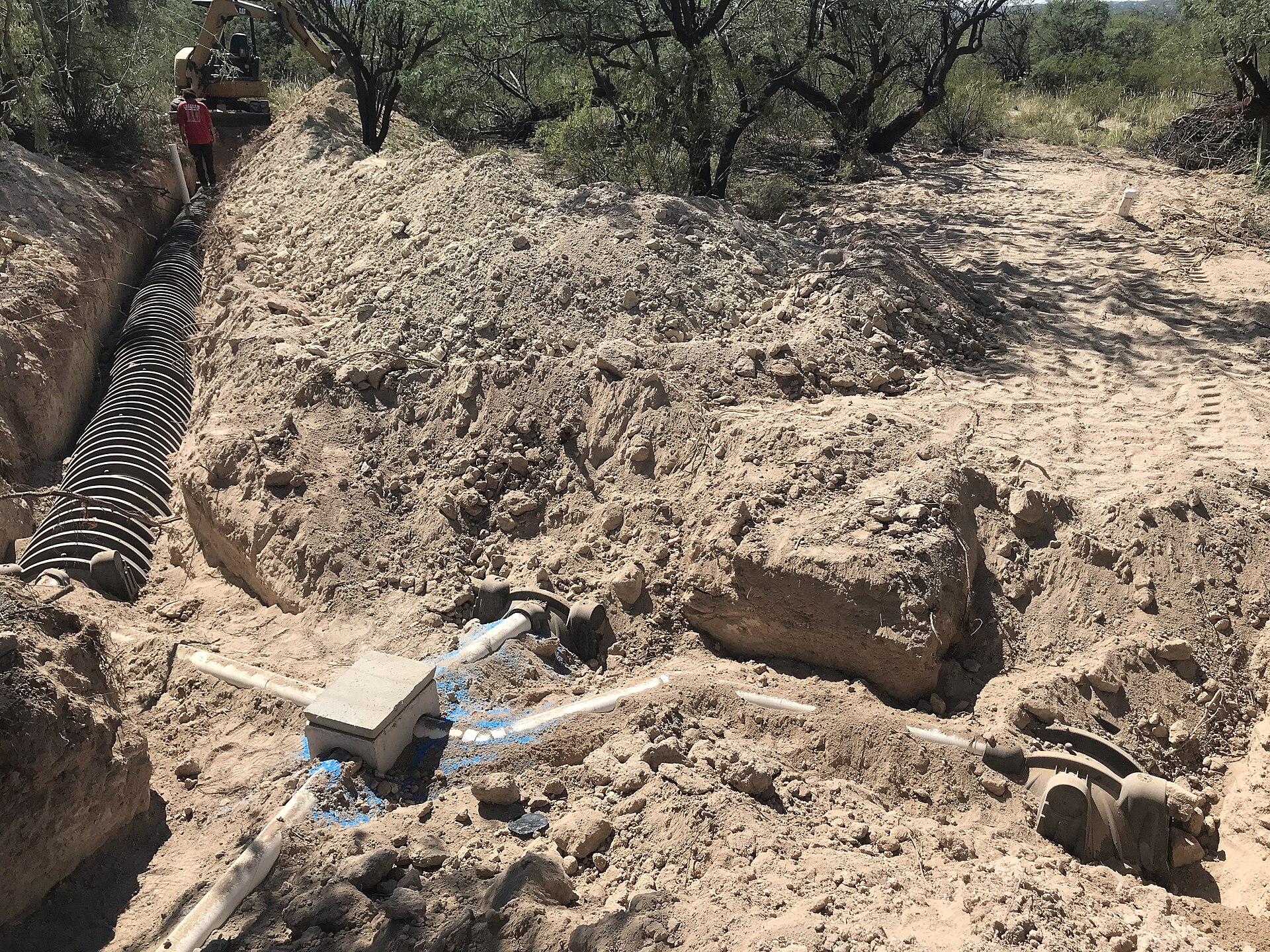

Who handles what outside the sewer line
Four levels of government touch the water and wastewater for a rural house. DEQ writes the septic rules. The Idaho Board of Environmental Quality adopted IDAPA 58.01.03 under Title 39, Chapter 1 (environmental quality) and Chapter 36 (water quality) of the Idaho Code, and the rule names the "Director" of DEQ as the permitting authority.1 In practice the seven public health districts do the work. DEQ's own septic page says "Idaho's seven public health districts" administer the septic rules, and Idaho Code 39-414 lets a district board of health "enter into agreements with ... the director of the department of environmental quality to provide services."215 The rule itself assumes that arrangement: it tells the property owner to send an installation certificate for an advanced treatment unit "to the health district," and says "the health district must not finalize the installation permit" until it arrives.16
IDWR handles the well: the drilling permit, the driller's license, the construction standards and, where a water right is required, the water right permit. DEQ handles public drinking water systems (15 or more connections or 25 or more people), and both IDWR and DEQ may inspect a domestic well under Idaho Code 42-227(2).1317 The city or county comes in at two points: the health district application asks whether a "local planning and zoning certificate or other county documentation" has been submitted, and DEQ's rule lets the application require a "statement from the local zoning or building authority indicating the proposed system would not be contrary to local ordinances."1819
| Office | What it decides for a rural home | Legal basis |
|---|---|---|
| Public health district (SCPHD in the Magic Valley; CDH in Ada, Boise, Elmore and Valley counties; Southwest District Health in Canyon County) | Septic site evaluation, installation permit, inspection, as-built drawing; installer and pumper permits; subdivision review to release sanitary restrictions; optional well and septic survey for a sale or refinance | IDAPA 58.01.03; Idaho Code 39-414; IDAPA 58.01.14 (fees) |
| DEQ | Writes the septic rules and the Technical Guidance Manual; approves commercial treatment units; nutrient-pathogen evaluations for large and central systems; nitrate priority areas; public drinking water systems | Idaho Code Title 39, Ch. 1 and 36; IDAPA 58.01.03, 58.01.08 |
| IDWR | Drilling permit (start card for many domestic wells), driller license, construction standards, driller's report, water right permits where needed, ground water management areas | Idaho Code 42-111, 42-227, 42-233b, 42-235, 42-238; IDAPA 37.03.09, 37.03.10 |
| City or county | Zoning and lot size, building permit, plat approval, irrigation system approval in new subdivisions | Idaho Code Title 67, Ch. 65; 50-1326; 31-3805 |
Sources: notes 1, 2, 5, 13, 15, 16, 18, 20, 21 and 22.202122
The health districts that cover the Magic Valley and Treasure Valley
SCPHD's septic records portal covers Blaine, Camas, Cassia, Jerome, Gooding, Lincoln, Minidoka and Twin Falls counties, the eight counties of the district.23 Its septic application instructions list five offices that take applications: Twin Falls (1020 Washington St. N.), Bellevue, Heyburn, Gooding (255 N. Canyon Dr.) and Jerome (951 E. Ave. H).19 A house in the city of Jerome that sits outside sewer service, a farmhouse near Hagerman and a new home on a rural lot south of Kimberly all go through SCPHD. In the Treasure Valley, CDH serves Ada, Boise, Elmore and Valley counties and takes septic, subdivision and inspection applications through an online Accela portal; Southwest District Health serves Canyon County and runs its own online portal.524 Lesson 01 has a diagram of all seven districts.
SCPHD's records page carries a fact that matters for older rural homes: "Septic permits were not required before 1971. Information may not be available for older systems."23 The sanitary restriction law for subdivision plats, Idaho Code 50-1326, was also added in 1971 (1971 Session Laws chapter 329).11
The septic permit, step by step
A septic system, in Idaho's rules a "standard system," is a watertight tank that settles out solids followed by "one (1) or more aggregate filled trenches" that let the liquid soak into the soil. The rules call the trenches a drainfield and also accept the terms "leachfield" and "soil absorption system." Anything else for which DEQ has issued design guidelines is an "alternative system": a "basic" alternative (capping fill, extra drainrock trench, gravelless trench, steep-slope system) or a "complex" alternative (sand mound, pressure distribution, intermittent sand filter, extended treatment package system and others).16 The path from raw lot to a working system follows the rule's own sequence.
- Check whether sewer is close. The health district may deny a permit if "public or central wastewater treatment facilities are reasonably accessible," and SCPHD's application asks whether a city sewer or central collection line is within 200 feet of the structure.1819
- Get local land use sign-off. The application asks for the planning and zoning certificate or county documentation; SCPHD also sells a planning and zoning review letter ($55 from the office, $200 with an on-site evaluation).194
- Apply and pay. The owner or an authorized representative files the application with the plot plan, bedroom count and water supply. SCPHD's instructions say "Acceptance of this application DOES NOT constitute a permit."1819
- Dig test holes. The owner supplies the excavator; SCPHD asks for 2 to 4 test holes 6 to 12 feet deep near the proposed drainfield, 60 to 80 feet apart. The applicant must give at least 48 hours' notice, excluding weekends and holidays, before an inspection that needs test holes.2526
- Site evaluation. An environmental health specialist logs the soil profile, decides the design soil group and looks for ground water or bedrock. Ground water monitoring may be ordered, sometimes for a season.25
- Permit issued. When the system "as proposed will conform with applicable rules," the district issues an "Individual and Subsurface System Installation Permit." It lapses if the work is not completed and approved within two years.18
- Installation by a permitted installer or the owner. Installers must hold an annual registration permit after passing an exam; owners may install their own standard or basic alternative system.27
- Final inspection before use. "No system may receive wastewater until the Director conducts a final installation inspection and completes as-built drawings," and the owner gets a copy of the as-built drawing within 30 days.26
What the application asks for
IDAPA 58.01.03 section 005.04 lists what an application "may include": the owner's name and address, the legal description, the type of building served, the number of bedrooms or people, the type of system, a scaled or dimensioned plot plan showing every existing and proposed wastewater system and its replacement area, every water supply feature, surface water, cuts and rock outcrops, property lines, easements and buildings; plans and a materials list; a site evaluation report with "a soil description and profile and groundwater data"; and the zoning statement.18 SCPHD's version of the form asks for the parcel number, township, range and section, the number of bedrooms and bathrooms, whether there is a garbage disposal or an RV hookup, the foundation type (basement, crawl space, slab) and whether the water supply is a private well, a shared well, or a public water system. It asks for a drawing at no more than 20 feet to the inch showing the house, well, tank, drainfield and replacement area, irrigation ditches, property lines and "well and septic systems on adjoining properties (if applicable)."19
A bedroom count matters because the rules size the system by it. The rule defines a bedroom as a habitable room that meets building code requirements for a bedroom, including a way in and out, and adds that "the local building authority may designate any additional room as a bedroom." A single-family home is assumed to produce 250 gallons a day for three bedrooms, with 50 gallons a day added or subtracted for each bedroom above or below three.16 A basement "office" with an egress window can therefore change the size of the drainfield, which is one place where the building permit (lesson 03) and the septic permit meet.
Test holes and the site evaluation
SCPHD's speculative site evaluation instructions describe what the health district wants to see. "Test holes are required for all lots and parcels." The owner or agent arranges and pays for the digging; "SCPHD will not be providing any machinery or labor." The district asks for "a minimum of 2-4 test holes" near the proposed drainfield, 6 to 12 feet deep and 60 to 80 feet apart, and recommends a 24-inch or 36-inch excavator bucket so the inspector can read the soil layers in the wall of the hole. Ground water monitoring "may be required for a parcel of property not in an approved subdivision," and "should test holes reveal groundwater or signs of groundwater, the EHS may require temporary monitoring for a specified period."25
A speculative site evaluation is a soil check done before a permit, often before a lot is bought. SCPHD's form says it "only indicates potential suitability of soils for on-site sewage disposal" and "does not guarantee that a septic permit will be issued." SCPHD charges $200 for it and applies the fee toward a permit if the permit application comes within two years; CDH lists $535.2545
CDH adds seasonal timing. Its septic page lists ground water monitoring windows of Feb. 15 to June 30 for seasonal runoff and April 15 to Oct. 31 for irrigation water, and warns that in a "Low Water Year," when snow-water equivalent is under 75 percent of normal, monitoring done that year may have to be repeated.5 Irrigation matters in both valleys: canal seepage and flood irrigation can raise shallow ground water in summer, which is why the rules distinguish a "normal" high ground water level (held for six weeks a year) from a "seasonal" one (held for one week).16
Soil groups and effective soil depth
The rule sorts soils into three design groups by texture. Group A is the coarsest usable soil (medium sand, fine sand, loamy sand); group B covers very fine sand, sandy loam, loam and silt loam; group C covers silt, clay loam, sandy clay loam and silty clay loam. Gravel and coarse sand are "unsuitable" at one end, and sandy clay, silty clay, clay, organic mucks and hardpan layers are unsuitable at the other.3 Coarse soil drains fast but filters little; fine soil filters well but drains slowly. That trade shows up in two numbers: how deep the good soil must go and how big the drainfield must be.
"Effective soil depth" is the suitable soil between the bottom of the drainfield and the first "limiting layer," which the rules define as a layer "that severely limits the capability of the soil to treat or absorb wastewater including, but not limited to, water tables, fractured bedrock, excessively permeable material, and impermeable material."16 The minimums, in feet below the trench bottom, are:
| Limiting layer below the drainfield | Group A soils | Group B soils | Group C soils |
|---|---|---|---|
| Impermeable layer | 4 | 4 | 4 |
| Fractured bedrock or extremely permeable material | 6 | 4 | 3 |
| Normal high ground water level | 6 | 4 | 3 |
| Seasonal high ground water level | 1 | 1 | 1 |
| Maximum loading rate (gallons per square foot per day) | 1.0 | 0.5 | 0.2 |
Source: IDAPA 58.01.03, section 008.01.c and 008.02, as posted with 7-1-25 dates.3 Trenches must be 2 to 4 feet deep and 1 to 6 feet wide, no lateral may exceed 100 feet, trench bottoms must be level, the total trench area of a standard system may not exceed 1,500 square feet, and at least 6 feet of undisturbed earth must separate trenches.3
In the Magic Valley this table decides many lots. SCPHD's instructions summarize it for applicants: a standard system needs a "1-acre minimum lot size" and "6-8 feet soil depth," with test holes "to show soil depth in the vicinity of the drainfield and replacement areas."19 Where the soil over the rock is too thin, the health district turns to alternatives: a capping fill that adds soil over shallow trenches, a sand mound, pressure distribution, or a treatment unit that cleans the effluent before it reaches the soil.1628
How we figured it: drainfield size for a hypothetical three-bedroom house
Hypothetical house. A made-up three-bedroom single-family home on a rural lot. This is an illustration of how the rule's numbers work, not a design for any real lot; the health district and the Technical Guidance Manual set the actual size.
Inputs from the rule. Design flow for a three-bedroom dwelling: 250 gallons per day (IDAPA 58.01.03.007.09). Maximum loading rates: 1.0, 0.5 and 0.2 gallons per square foot per day for groups A, B and C (008.02). Minimum tank: 1,000 gallons for up to four bedrooms (007.08). The site must hold two complete drainfields, each sized for 100 percent of the flow (008.02.c).316
Method. Absorption area equals daily flow divided by the loading rate. Group A: 250 / 1.0 = 250 square feet. Group B: 250 / 0.5 = 500 square feet. Group C: 250 / 0.2 = 1,250 square feet. Doubling for the reserved replacement area gives 500, 1,000 and 2,500 square feet of trench bottom set aside on the lot. A five-bedroom version adds 100 gallons a day (350 gallons) and needs a 1,250-gallon tank (1,000 plus 250 for the fifth bedroom); in group C soil it would need 1,750 square feet, more than the 1,500 square foot cap on a standard system, so it would need another design.
What it leaves out. Trench square footage is only the bottom area; the setbacks below (100 feet to any well, 5 feet to a property line, 10 or 20 feet to the house) take far more ground than the trenches do. The TGM can change the sizing values for particular designs.28
Standard and alternative systems
If a standard system "cannot be installed on a parcel of land, an alternative system may be permitted" if it follows the recommendations of the Technical Guidance Committee and is approved by the director.29 That committee is three health district representatives, one DEQ representative, one Idaho licensed professional engineer and one licensed installer, appointed by the DEQ director for three-year terms; it maintains the Technical Guidance Manual (TGM), the several-hundred-page book of designs, soil methods and approved products that health district staff work from. The rules say the TGM gives "technical guidance on alternative sewage disposal components and systems, soil type determination methodology, and other information pertinent to the best management practices."29 The current edition is dated November 2026.28
The complex systems carry ongoing duties. An extended treatment package system (ETPS), a powered unit that gives septic effluent secondary or tertiary treatment, must be certified by a manufacturer's representative within 30 days of installation before the health district finalizes the permit. Its owner must have the operation, maintenance and monitoring required by the permit done by a certified service provider by June 30 each year, and the service provider must report to DEQ by July 31. Those duties "transfer with ownership changes," and a seller must tell buyers about them.16 For a buyer of a rural home with a treatment unit, that is a recurring cost that does not appear on the county tax bill.
Some designs exist mainly to remove nitrogen. TGM table 5-16 lists systems approved for total nitrogen reduction, from intermittent sand filters (about 15 percent reduction, average effluent 38 mg/L) to recirculating gravel filters and drip distribution (40 percent, 27 mg/L) to package units rated at 55 to 79 percent reduction, with average effluent from 20 down to 9 mg/L. The manual says "areas of concern, such as nitrate priority areas, areas with shallow soils over bedrock, or a shallow depth to groundwater, may be required to use one of these best practical methods."28
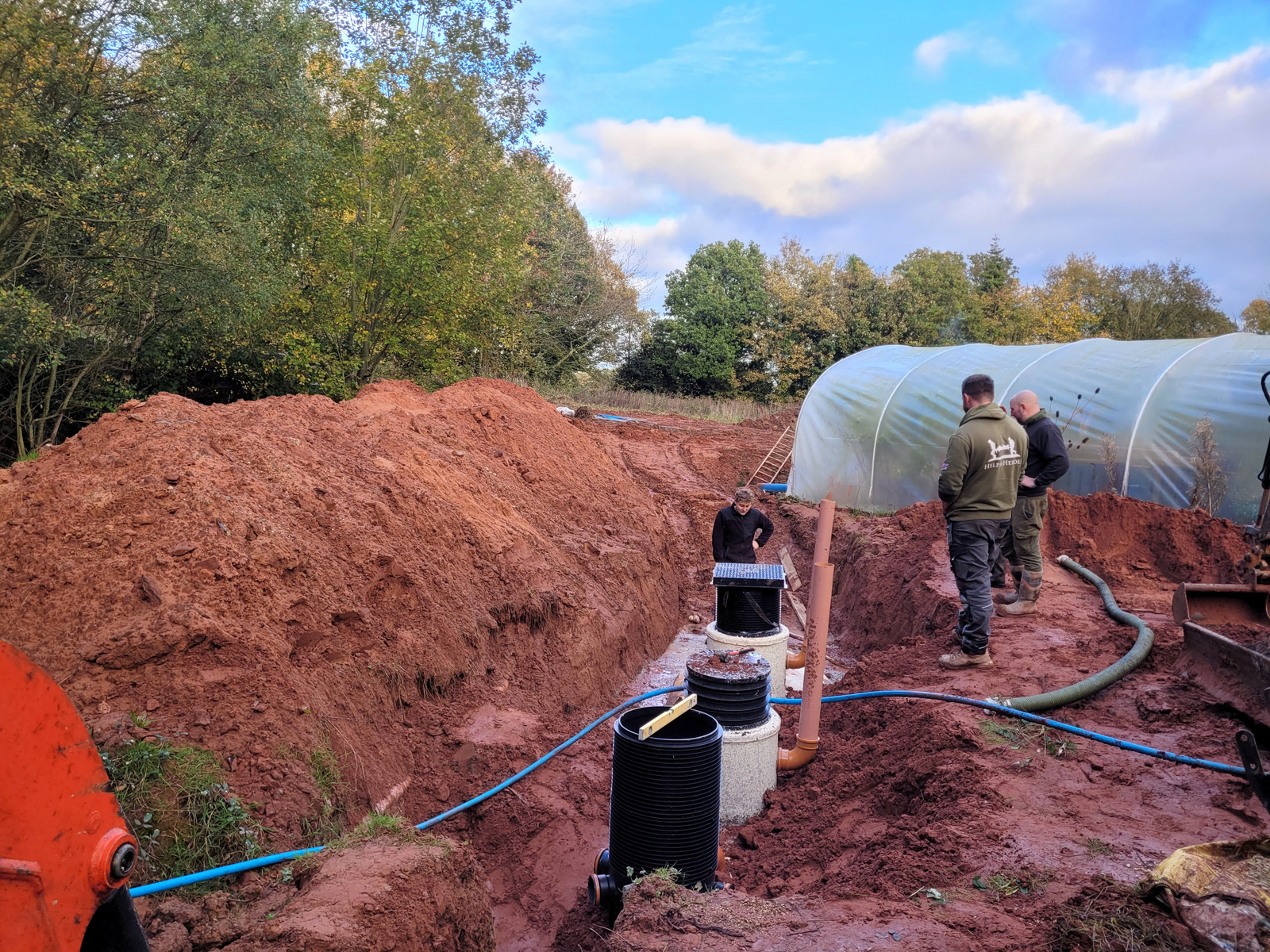

Installers, pumpers and owner installs
Every septic installer and service provider needs a registration permit from the health district. There are two installer permits: a basic permit for standard and basic alternative systems and a complex permit for sand mounds, pressure distribution, treatment units, lagoons, large systems and the other complex designs. The first permit requires passing an exam with a score of 70 percent or more; permits expire every Jan. 1; installers must attend an approved refresher course at least every three years; and each installer posts a surety bond of $10,000 (basic) or $30,000 (complex). Anyone damaged by an installer's negligent or incompetent work has "a right of action on the bond," capped at the bond amount no matter how many claims are filed.27 An owner may install his or her own standard or basic alternative system without an installer's permit, though the permit, inspection and as-built rules still apply.27 SCPHD's 2026 schedule charges installers $110 a year for a basic permit and $200 for a complex permit; the statewide fee rule sets minimums of $50 and $100.420
Pumpers need their own annual permit, renewed before March 1, with a number painted on each truck door, and septage may go only to a public sewer, a treatment plant or a site DEQ approves.30 SCPHD lists installers and pumpers "as a public service" and says it "does not make recommendations or guarantee any of the contractors on the list."31 Septic installer registration comes from the health district under DEQ's rule; it is a different credential from the contractor registration and trade licenses that lesson 07 discusses; lesson 07 explains how Idaho registers general contractors and licenses trades.
Inspections, as-builts and what a failing system means
The rule lets the district require any inspection needed to confirm compliance, makes the permit holder "uncover or make available for inspection any portion or component" that was covered up in violation of the rules, and allows the district to ask for receipts and delivery slips to prove the materials used.26 The district's final inspection produces the as-built drawing, which is the record a future owner, buyer or pumper will need to find the tank and the trenches. Trucks and machinery may not drive on the bottom of an excavation or on top of a finished drainfield, and the drainfield and its replacement area may not be compacted, paved or used for parking.3
A "failing system" is one that does not meet the rules' intent, "fails to accept blackwaste and wastewater," or "discharges blackwaste or wastewater into the waters or onto the ground surface." Its owner must get a permit and repair it as soon as practical after learning of the failure, or when the director gives notice.1629 The rules make "every owner of real property ... jointly and individually responsible" for the sewage generated on it, and make each engineer, building contractor, installer, excavator, plumber and supplier who works on a system "jointly and individually responsible for compliance with all rules relevant to that service or product."1 The department may revoke an installer's permit or a component approval for false information or rule violations after written notice, and the permit holder has 35 days to ask for a hearing.32
Variances and technical allowances
The health district may grant a "minor technical allowance" to a standard system's dimensions of not more than 10 percent (unless the TGM provides otherwise) if it does not affect neighbors or the public. Larger departures need a formal variance petition: the applicant must show that following the rule "would impose an arbitrary or unreasonable hardship," must notify every property owner within 300 feet 15 days before filing, and any person may object in writing within 21 days. The director decides within 60 days.33 The TGM limits one common request, a smaller setback to a river or creek: separation to permanent or intermittent surface water may never drop below 100 feet, the table of allowed reductions applies only to parcels recorded on or before Feb. 24, 2022, and anything closer needs a variance backed by a nutrient-pathogen evaluation and a phosphorus evaluation.28
Separation distances: how far apart things must be
Most rural lot layouts are set by a handful of distances in two rules: DEQ's septic rule, which measures from the tank and drainfield, and IDWR's well construction rule, which measures from the well. They agree on the two that matter most to a house with its own well: 100 feet from a well to a drainfield and 50 feet from a well to a septic tank.38
| Feature | From the septic tank (feet) | From the drainfield (feet) | From a well (feet) |
|---|---|---|---|
| Private domestic well | 50 | 100 | Another well, separate owner: 25 |
| Public water supply well or spring | 100 | 100 | 50 (existing public well, separate owner) |
| Water line (public system / other) | 25 / 10 | 25 (10 if double-encased) | not listed |
| Permanent or intermittent surface water | 50 | 200 (group A), 125 (B), 100 (C) | 50 |
| Irrigation canals, ditches, temporary surface water | 25 (temporary surface water) | 50 | 25 |
| House foundation | 5 | 10 (crawl space or slab), 20 (basement) | 10 (permanent buildings other than a well house) |
| Property line | 5 | 5 | 5 |
| Seasonal high water level | 2 (vertically, from top of tank) | 1 (vertically, effective soil depth) | not applicable |
Sources: IDAPA 58.01.03 sections 007.18 and 008.01 (tank and drainfield) and IDAPA 37.03.09 rule 25, subsection 025.01.d (well), as posted Nov. 21, 2026. The well rule also sets 300 feet from a drainfield taking more than 2,500 gallons a day (less if a site investigation shows the DEQ distances are met), 100 feet from a pressurized multi-source sewer main, 50 feet from a gravity sewer main or an effluent pipe, 25 feet from a pressure-tested single-building sewer line and 20 feet from an above-ground chemical tank.3816
Two consequences follow for small lots. First, the 100-foot circle around a well covers about 31,400 square feet, almost three-quarters of an acre (our calculation: pi times 100 feet squared, divided by 43,560 square feet per acre), and the neighbor's well casts the same circle; SCPHD's form asks for "well and septic systems on adjoining properties" for that reason.19 Second, a lot needs room for a full replacement drainfield that meets every one of those distances, and the replacement area "must be kept vacant, free of vehicular traffic, and free of any soil modification."29 A shop, driveway or pool later placed on the replacement area can leave a home with nowhere to put a new drainfield when the first one fails. Well drillers may ask IDWR for a waiver of a well-to-septic distance; the director may ask DEQ or the health district for comment and must answer within 10 business days.8
What the permits cost
The statewide fee rule, IDAPA 58.01.14, sets minimum septic fees and lets each health district "adopt different fees through their governing board," provided the districts publish their schedules "online in an easy to find and searchable manner." The rule's minimums are $400 for a basic or complex system permit, $1,000 for a large soil absorption or central system, $300 for a tank-only permit and $40 for a renewal. It sets the sanitary restriction review fee at $100 plus $20 per lot for subdivisions using septic systems and $25 for other plats, and $60 for a health district survey of an existing well or septic system done as a condition of a sale.20 Both districts in this lesson charge more than the minimums.
| Service | State minimum (IDAPA 58.01.14) | SCPHD, Magic Valley (effective Jan. 1, 2026) | CDH, Ada County (July 2026) |
|---|---|---|---|
| New individual septic permit | $400 | $850 (basic or complex) | $1,070 ($535 with no test hole or site visit) |
| Speculative site evaluation | not set | $200 (credited toward a permit within 2 years) | $535 |
| Expansion | not set | $500 | $535 (no test hole) |
| Repair or replacement | not set | $500 | $535 (no test hole); $1,070 (with test hole) |
| Tank only | $300 | $300 | $535 |
| Central or large soil absorption system | $1,000 | $1,500 | $2,250 |
| Permit renewal | $40 | $50 (renewal or transfer) | not listed |
| Subdivision review, septic lots | $100 + $20 per lot | $225 per lot (septic and wells) | $387 per lot |
| Subdivision review, municipal sewer | $25 | $60 | $348 per plat |
| Installer permit, basic / complex (annual) | $50 / $100 | $110 / $200 | not listed on fee page |
Sources: IDAPA 58.01.14 sections 110 and 160; SCPHD Environmental Health Fee Schedule, effective Jan. 1, 2026; CDH septic applications, fees and resources page (fees labeled July 2026).2045 Southwest District Health's septic page refers applicants to a fee tab and an online portal and says the cost of a site evaluation can be applied to a full permit if the owner is the same and applies within a year; we did not find its dollar amounts in a form we could read.24
How we figured it: state permit fees for a hypothetical rural home
Hypothetical lot. A made-up rural parcel outside any sewer service where the owner gets a speculative site evaluation, then a new standard septic permit within two years, then drills a domestic well. Same plan in Jerome County (SCPHD) and in unincorporated Ada County (CDH). Health district and IDWR fees only; the building permit, the installer's and driller's charges, test hole digging and any county or city fees are left out.
Jerome County (SCPHD). Speculative site survey $200, which SCPHD applies to the permit if the application comes within two years, plus the balance of the $850 permit ($650), plus the IDWR domestic drilling permit $75 = $925.
Ada County (CDH). Speculative site evaluation $535 plus new permit $1,070 plus IDWR $75 = $1,680, if CDH does not credit the evaluation toward the permit. CDH's fee page lists the two fees separately and we did not find a stated credit, so the true total could be lower; if the evaluation were fully credited, the total would be $1,145.
Sources. SCPHD fee schedule effective Jan. 1, 2026; CDH fee page (July 2026); Idaho Code 42-235.456 These are our own calculations from published schedules, not quotes.
Nitrate priority areas and nutrient-pathogen studies
The TGM puts the problem plainly: "Septic tank effluent contains both nitrogen and phosphorous." DEQ calls nitrate "the most widespread ground water contaminant in Idaho," and nitrate is why some rural subdivisions in southern Idaho face larger lots, fewer septic systems per acre or nitrogen-reducing treatment units.289 The drinking water and ground water standard for nitrate is 10 milligrams per liter (mg/L), the level DEQ cites for public water systems and the Idaho Ground Water Quality Standard.934
How DEQ draws nitrate priority areas
DEQ calls ground water areas degraded by nitrate "nitrate priority areas" (NPAs). Its 2020 delineation report, published in August 2021, states the test: "The criterion for an NPA is at least 25% of sampled wells have nitrate levels at or above 5 milligrams per liter (mg/L)." DEQ and the Idaho Ground Water Monitoring Technical Committee published the first ranking in 2002 with 25 areas, then 32 areas in 2008 and 34 in 2014. The 2020 round drew the boundaries with kriging (a statistical mapping method) at a 25 percent probability of exceeding 5 mg/L, checked against land use and aquifer boundaries, and ranked 35 areas by population, nitrate levels and trend.910 DEQ's ground water quality page, updated Sept. 23, 2026, still links the 2020 ranked list as the current one.34
| 2020 rank | Nitrate priority area (DEQ region) | Square miles | Population | Sites sampled | Share of sites at or above 5 mg/L | Share at or above 10 mg/L | 2007 to 2016 trend |
|---|---|---|---|---|---|---|---|
| 1 | NE Star (Boise region) | 5 | 357 | 47 | 62% | 47% | Increasing |
| 3 | Minidoka (Twin Falls region) | 227 | 18,605 | 347 | 41% | 8% | Increasing |
| 5 | Marsh Creek (Twin Falls region) | 158 | 18,084 | 403 | 60% | 20% | No trend |
| 6 | NE Canyon Co. (Purple Sage) (Boise region) | 29 | 4,847 | 176 | 53% | 10% | Increasing |
| 8 | Ada Canyon (Boise region) | 394 | 205,419 | 1,117 | 41% | 12% | No trend |
| 9 | Twin Falls (Twin Falls region) | 568 | 76,293 | 719 | 44% | 4% | No trend |
| 10 | SW Jerome Co. (Twin Falls region) | 12 | 615 | 30 | 50% | 17% | Increasing |
| 16 | Notus (Boise region) | 7 | 211 | 20 | 80% | 30% | Insufficient data or no trend |
| 32 | Bliss (Twin Falls region) | 10 | 66 | 24 | 38% | 17% | Insufficient data or no trend |
Source: DEQ, 2020 NPA Delineations and Ranking Table, Table 1 (August 2021). Selected Magic Valley and Treasure Valley areas out of 35 ranked; "region" is the DEQ regional office (Boise or Twin Falls). DEQ's nitrate priority area map application shows each boundary; the table does not list counties.10
What a nutrient-pathogen evaluation is
DEQ's septic page defines it: "An NP evaluation is a technical review of a septic system's potential impact on water quality." It helps decide how many septic systems a parcel can support and whether on-site systems could harm ground or surface water. DEQ requires one for every large soil absorption system (2,500 gallons a day or more) and for proposed central systems in nitrate priority areas or "sensitive resource" aquifers. DEQ, a health district or a county may require one where there is existing nutrient or pathogen contamination, shallow soil, mostly gravel or coarse sediment, or ground water or fractured bedrock within 10 feet of the surface. DEQ publishes two Level 1 spreadsheets: a mass-balance model for individual systems or subdivisions and a "Domenico" model for central and large systems.2
The program's guidance document, revised May 6, 2002, was written by DEQ "in coordination with" Central District Health, and says CDH requires NP evaluations in an "area of concern" for "subdivisions involving five or more lots" and for commercial facilities producing 600 gallons or more of wastewater a day. It said CDH would not require one for lot splits of parcels on record as of 1984.35 CDH's current septic page links its own district nutrient-pathogen policy, the Level 1 spreadsheet and DEQ's guidance.5 Its land development standards ask developers to put this note on the first page of a plat when the study calls for it: "Central District Health requires nutrient reducing systems capable of achieving ___mg/L Total Nitrogen on lots ___through___," and asks that the information be disclosed to potential buyers.36 Southwest District Health says it "may also require a Nutrient Pathogen Study" depending on "lot size, and housing density."24 We did not find a written SCPHD policy on when it requires NP evaluations; its subdivision forms include a subdivision evaluation report checklist and a shared well checklist.37
The practical effect for a buyer or builder: in an area of concern, a lot can pass the soil test and still be refused a standard system, or be approved only with a nitrogen-reducing treatment unit that carries the annual service-provider requirement described above. The plat note, the health district letter on file with the county recorder and the NP study in the health district file are where that condition is recorded.
Subdivisions and the sanitary restriction
Idaho Code 50-1326 says "any plat of a subdivision" filed under the platting chapter or under a county subdivision ordinance "shall be subject to the sanitary restriction." The restriction goes "upon the face of every plat" before recording, unless a certificate of approval from the director of DEQ for public or individual water and sewage facilities is recorded with the plat or later. "Until the sanitary restrictions have been satisfied ... no owner shall construct any building or shelter on said premises which necessitates the supplying of water or sewage facilities." DEQ may reimpose the restriction by a "certificate of disapproval," after notice and a chance to appeal, if construction does not follow the approved plans.11 Section 50-1327 bars recording a plat without the restriction or the certificate, but says a noncomplying plat "shall in no way invalidate a title conveyed thereunder."38 Section 50-1328 lets the Board of Environmental Quality set standards for approving plats that "may be related to size of lots, contour of land, porosity of soil, ground water level, pollution of water, type of construction of water and sewage facilities."39 Building before the restriction is satisfied, or installing water and sewer facilities before approval, is a misdemeanor, "each and every day" a separate offense.12
The health districts do the review. SCPHD says its environmental health specialists "review applications, provide consultations, and conduct site review services to help remove sanitary restrictions on subdivisions," and its forms page carries a subdivision and land development application, separate evaluation report checklists for subdivisions on individual systems and on municipal services, a shared well water system checklist and the sanitary restrictions certificate of approval form.3137 CDH's standards say environmental reports for subdivisions must be certified by an Idaho licensed professional engineer, must include soil profiles to at least 6 feet below the bottom of proposed absorption systems, and need at least 10 working days for review; the plat's second sheet must say the sanitary restrictions were satisfied "according to the letter to be read on file with the County Recorder." Its suggested first-sheet notes include: "Lots shall not be reduced in size without prior approval from the Health Authority" and "No additional domestic water supplies shall be installed beyond the water system approved in sanitary restriction release."36 The plat steps themselves (preliminary plat, final plat, recording) are in Part B, Subdivisions and Plats Step by Step.
The well: drilling permit, driller and construction
Water law and well construction are two separate questions in Idaho. The first is whether the owner needs a water right permit to use the water. For most single homes the answer is no: Idaho Code 42-227(1) says wells "for domestic purposes or uses as defined in section 42-111" are not subject to the water right permit requirement, and rights to that water "may be acquired by withdrawal and use."13 Section 42-111 defines domestic use as water for homes, livestock and related purposes, "including irrigation of up to one-half (1/2) acre of land, if the total use does not exceed thirteen thousand (13,000) gallons per day," or any other use up to 2.8 acre-feet a year.40 The water module's Domestic Wells and Exempt Uses lesson covers that definition in depth.
The second question, whether the well itself needs a permit, always has the same answer: yes. Idaho Code 42-235 says that "prior to beginning construction of any well, or changing the construction of any well, the driller or well owner shall obtain a permit from the director of the department of water resources." The fee is $75 for a domestic or monitoring well and $200 for other wells, and drilling without a permit is a misdemeanor.6 IDWR's rules apply to any excavation "more than eighteen (18) feet in vertical depth below land surface."41 IDWR's wells page says domestic wells "do not require other approvals by IDWR before a drilling permit can be approved," while irrigation, commercial, multi-family and municipal wells need an approved water right first.22
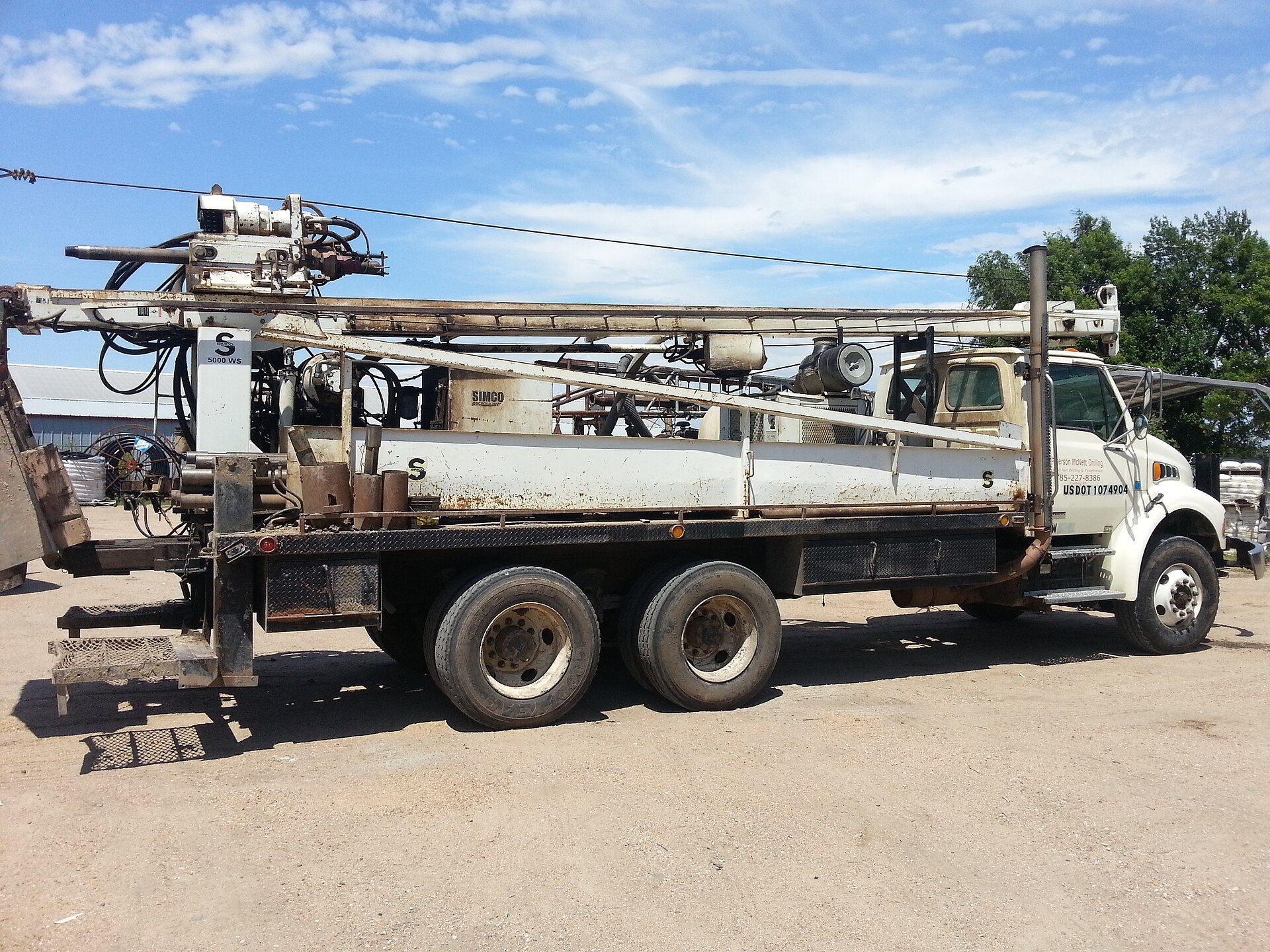

Licensed drillers and start cards
Idaho Code 42-238 makes it "unlawful for any person to drill a well in Idaho, including wells excepted under sections 42-227 and 42-228," without complying with the licensing chapter. A driller's license costs $200 to apply for, requires passing a written or oral exam and submitting references on past drilling experience, and is issued only after the driller files a surety or cash bond of $5,000 to $20,000, set by the director. Licenses and operator permits expire on March 31 of the second year after issue.7 Unlike a general contractor, then, a well driller is tested by the state before working (lesson 07 covers Idaho's contractor registration law; it does not discuss well drillers).
For the most common job, the rules allow a shortcut. IDAPA 37.03.09 rule 45 defines a "start card" as "an expedited drilling permit process for the construction of cold water, single-family residential wells." The director "may allow the use of a start card permit or give verbal approval to a well driller for the construction of cold water single family domestic wells," and a start card "must be received by the Department at least two office hours prior to commencing construction." But start cards and verbal approval are not allowed for wells "in a designated Area of Drilling Concern, Critical Ground Water Area, Ground Water Management Area and Areas of Contamination ... unless otherwise authorized by the Director."41 That matters in the Magic Valley, where the Eastern Snake Plain Aquifer is a ground water management area (below).
How a domestic well is built
IDAPA 37.03.09 sets "minimum standards which must be adhered to in the construction of all new wells." Every well must be cased; casing must extend at least 12 inches above land surface and finished grade; steel casing joints must be welded or threaded and watertight; and plastic casing that extends above ground must be protected by steel casing to at least 18 feet below the surface. Depending on the formation, the casing must be sealed to at least 18 feet, and in some consolidated formations to at least 38 feet. The driller must record the well's location by GPS and give the owner copies of the drilling permit and the driller's report.42 The licensing rules require the driller to submit the driller's report "within thirty (30) days following removal of the drill rig from the drilling site at completion of the well," to keep the daily well log for at least a year, and to attach an IDWR well tag to every permitted well.43
Once the well is finished, the rule shifts responsibility: "After a well is completed the well owner is responsible for water quality testing, properly maintaining the well, and reporting problems with a well to the Director."42 We found no Idaho rule that requires a private well owner to test the water on a schedule; rule 36 leaves testing to the owner. SCPHD offers an "as is" survey of an existing well and septic system, with water samples, for buyers and lenders at the time of a sale or refinance.31
Shared wells and public water systems
A well that serves more than one home can turn into a regulated public water system. DEQ's drinking water rules define a public drinking water system as one that "has at least fifteen (15) service connections" or "regularly serves an average of at least twenty-five (25) individuals daily at least sixty (60) days out of the year," and a "community water system" as one serving 15 connections or 25 year-round residents.17 Below those numbers, a shared well is a private arrangement among neighbors, usually written into a recorded well-sharing agreement, but it still falls under the health district's subdivision review: SCPHD's septic application lists "Shared Well (non-PWS)" as a water supply type, and its forms page includes a shared well water system checklist.1937
Idaho Code 42-111(3), added by the 2025 law, says multiple domestic water rights "may be established and exercised from the same point or points of diversion if the use is limited to residential, in-home use." Section 42-111(2) bars stacking several domestic exemptions to supply a use that would not itself qualify, so a shared well can't be used to irrigate a whole subdivision under the exemption.40 Idaho Code 31-3805, rewritten in 2025 and amended in 2026, adds that in a subdivision inside a city's service area or area of city impact, a shared well or public water system must be designed "to meet requirements of that municipal provider and be planned to integrate with and connect to the municipal provider's system," and its water rights go to the city when the system connects, unless the city agrees otherwise.21
The Eastern Snake Plain Aquifer and new wells
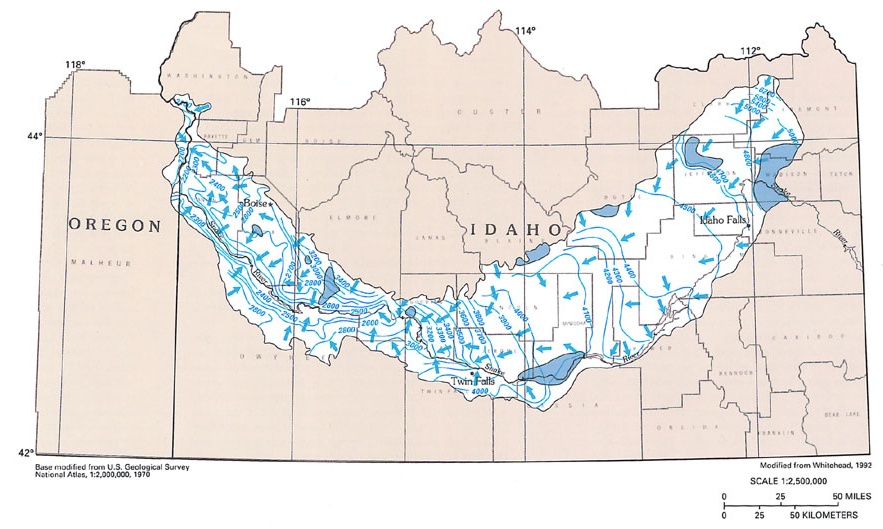
The Eastern Snake Plain Aquifer underlies the plain from the Magic Valley northeast toward Rexburg (the USGS map below shows the aquifer system). On Nov. 4, 2016, the director of IDWR issued an order designating "a ground water management area ... for the Eastern Snake Plain Aquifer," using the boundary of IDWR's aquifer model (version 2.1) minus parts of the Big Lost River Valley and some overlapping management and critical areas.1444 After a contested case, an April 2020 final order confirmed that the Rexburg Bench is inside the boundary.44 Idaho Code 42-233b defines a ground water management area as a basin the director "has determined may be approaching the conditions of a critical ground water area," lets the director approve a management plan, and requires new permit applications there to show "that sufficient water is available and that other prior water rights will not be injured."45
Three rules follow for a new house over the aquifer. First, the start card shortcut is off unless the director allows it, so a driller files a regular drilling permit application.41 Second, for new subdivisions of five or more lots whose completed application was filed on or after July 1, 2025, Idaho Code 42-227(4) requires a water right permit for any new domestic use "other than for in-home uses ... or watering livestock."13 Section 42-111 defines "in-home use" as water used "within a residence or household, including all activities that require water, such as drinking, cooking, bathing, and cleaning within and around the household," and says it does not include irrigation of lawns, gardens, pastures or other open spaces.40 Those changes came from Senate Bill 1083 (2025 Session Laws chapter 129) and Senate Bill 1222 (2026 Session Laws chapter 2), as the statute histories show; the bills' sponsors, votes and signing dates are in Part C, Buying a Home in a Growing Area.1340
Third, a domestic well is protected from curtailment in a water-right "delivery call." IDWR's Conjunctive Management Rules, IDAPA 37.03.11, rule 20.11, say "a delivery call shall not be effective against any ground water right used for domestic purposes regardless of priority date where such domestic use is within the limits of the definition set forth in Section 42-111."46 The curtailment orders of 2024 to 2026 that cut off junior irrigation wells in the Magic Valley are covered in Part A, Water, Schools and Roads, and in Eastern Snake Plain Aquifer, Curtailment and Settlements.

Irrigation water versus drinking water in new subdivisions
Since 2025 the law pushes new subdivisions to irrigate yards with canal water and keep wells for the house. Idaho Code 31-3805(3) says that if surface water for irrigation "is reasonably available to all or any part of a subdivision," no plat will be accepted, approved and recorded "unless the owner or entity has provided for the irrigation of lots within the subdivision using the available surface water." The plat must describe the delivery system, the city or county must approve it with the irrigation entity's advice, and the plat must note that each lot "shall remain subject to all assessments levied by the irrigation entity" and that unpaid assessments "are a lien on the land."21 Applications filed on or before June 30, 2025, follow the old law.21 Where the rule applies, a lot can end up with two water systems: an irrigation line fed from a canal and a well or city line for the house. Lesson 10 and Part C cover irrigation district assessments and liens from a buyer's side.
A timeline of the rules
| Year | Law, rule or event | What changed | Source |
|---|---|---|---|
| 1951 | Idaho Code 42-227 enacted | Domestic wells exempted from the water right permit process | 42-227 history13 |
| 1971 | Sanitary restriction law (Idaho Code 50-1326 to 50-1329), 1971 ch. 329 | Every subdivision plat carries a sanitary restriction until water and sewage plans are approved; SCPHD says septic permits were not required before 1971 | 50-1326 history; SCPHD records page1123 |
| 1982 | Idaho Code 42-233b enacted | Ground water management areas created | 42-233b history45 |
| 1987 | Idaho Code 42-235 enacted | Drilling permit required for every well; fees later set at $75 domestic, $200 other (last amended 1998) | 42-235 history6 |
| 1990, 1995 | Idaho Code 42-111 amended (1990 ch. 319; 1995 ch. 233) | Domestic use definition revised; today's text carries the 13,000 gallons a day and 2.8 acre-foot limits (we did not check which amendment set them) | 42-111 history40 |
| 2002 | DEQ nutrient-pathogen guidance; first nitrate priority area ranking (25 areas) | NP evaluations for large and central systems and, at CDH, subdivisions of 5+ lots in areas of concern | DEQ guidance; DEQ 2020 report359 |
| 2016 | ESPA ground water management area designated (Nov. 4) | Start cards off unless authorized; permit applications must show no injury | IDWR orders1444 |
| 2021 | 2020 nitrate priority area ranking published (August) | 35 areas ranked; Minidoka 3rd, Marsh Creek 5th, Twin Falls 9th, SW Jerome Co. 10th | DEQ10 |
| 2022 | Feb. 24, 2022, cutoff in the TGM | Parcels recorded after this date get no table-based reduction of drainfield distance to surface water | TGM28 |
| 2025 | SB 1083, 2025 ch. 129; most sections of DEQ's septic and fee rules carry 7-1-25 effective dates | In-home-only exemption for new subdivisions in management areas; shared in-home wells allowed; 31-3805 rewritten | 42-111, 42-227, 31-3805 histories; IDAPA 58.01.03, 58.01.1440211 |
| 2026 | SB 1222, 2026 ch. 2; SCPHD fees (Jan. 1); CDH fees (July); TGM November 2026 edition | Limits apply only to subdivisions with completed applications filed on or after July 1, 2025 | Statute histories; fee schedules; TGM134528 |
How other states handle exempt wells
Idaho's domestic exemption is generous by volume but now tighter for new subdivisions in managed areas. Neighboring states draw the line differently.
| State | Exempt from the water right permit? | Limit | Source |
|---|---|---|---|
| Idaho | Yes for domestic use; in new subdivisions (5+ lots, filed on or after July 1, 2025) in management, critical or moratorium areas, only in-home use and livestock | 13,000 gallons a day including up to 1/2 acre irrigated, or 2.8 acre-feet a year for other uses | Idaho Code 42-111, 42-2274013 |
| Washington | Yes for stock watering, a lawn or noncommercial garden up to 1/2 acre, and single or group domestic use | 5,000 gallons a day for domestic use (also 5,000 for industrial) | RCW 90.44.05047 |
| Montana | Yes outside a controlled ground water area | 35 gallons a minute and 10 acre-feet a year outside a stream depletion zone; 20 gallons a minute and 2 acre-feet inside one; combined wells from one source above 10 acre-feet need a permit | Mont. Code Ann. 85-2-30648 |
| Utah | No general exemption: "You must own a water right to divert and use water in the State of Utah" | Division of Water Rights uses 0.45 acre-foot for indoor use of a single-family home in its example; drillers need permission from the State Engineer | Utah Division of Water Rights FAQ49 |
Converted to a common unit, Idaho's 13,000 gallons a day is 2.6 times Washington's 5,000 (our calculation). Idaho's daily limit includes half an acre of irrigation, while Washington lists its half-acre lawn and garden allowance separately from the 5,000-gallon domestic limit. Montana counts by flow rate and annual volume and bars the exemption entirely inside a controlled ground water area, which resembles Idaho's 2025 approach of narrowing the exemption inside managed areas.474840
Pictures, Numbers and Infographics
The key numbers in this lesson, with the place, year and source for each. Comparisons with other states are in the table above.
| Measure | Idaho | U.S. or other states | Place or year | Source |
|---|---|---|---|---|
| Septic design flow, three-bedroom home | 250 gallons a day; plus or minus 50 per bedroom | not compared | Statewide, rule dated 7-1-25 | IDAPA 58.01.03.00716 |
| Minimum septic tank | 1,000 gallons up to 4 bedrooms; plus 250 per added bedroom | not compared | Statewide | IDAPA 58.01.03.00716 |
| Maximum standard trench area | 1,500 square feet | not compared | Statewide | IDAPA 58.01.03.0083 |
| Well to drainfield / to septic tank | 100 feet / 50 feet | not compared | Statewide | IDAPA 37.03.09; 58.01.0383 |
| Minimum lot for a standard system | 1 acre (SCPHD instructions) | not compared | SCPHD, 2026 | SCPHD instructions 3.202619 |
| New septic permit fee | SCPHD $850; CDH $1,070; state minimum $400 | not compared | 2026 | Fee schedules; IDAPA 58.01.144520 |
| Installer bond | $10,000 basic; $30,000 complex | not compared | Statewide | IDAPA 58.01.03.00627 |
| Domestic well drilling permit | $75 (other wells $200) | not compared | Statewide (statute last amended 1998) | Idaho Code 42-2356 |
| Driller's bond | $5,000 to $20,000 | not compared | Statewide | Idaho Code 42-2387 |
| Exempt domestic use | 13,000 gallons a day incl. 1/2 acre; or 2.8 acre-feet a year | Washington 5,000 gallons a day; Montana 35 gal/min and 10 acre-feet; Utah no general exemption | 2025 to 2026 law | 42-111; RCW 90.44.050; MCA 85-2-306; Utah FAQ40474849 |
| Public water system threshold | 15 connections or 25 people for 60 days a year | not compared | Statewide | IDAPA 58.01.0817 |
| Nitrate priority areas | 35 ranked (2020); test is 25% of wells at or above 5 mg/L | Drinking water standard 10 mg/L (state and federal) | Ranking published August 2021 | DEQ910 |
| Twin Falls NPA | 568 sq. mi.; 76,293 people; 719 sites; 44% at or above 5 mg/L; 4% at or above 10 | not compared | Rank 9, 2020 | DEQ table 110 |
| Ada Canyon NPA | 394 sq. mi.; 205,419 people; 1,117 sites; 41% and 12% | not compared | Rank 8, 2020 | DEQ table 110 |
| ESPA ground water management area | Designated Nov. 4, 2016 | not compared | Eastern Snake Plain | IDWR orders1444 |
Common mistakes
"The well is exempt, so no permit is needed"
The domestic exemption in Idaho Code 42-227(1) is an exemption from the water right permit only. Every well still needs an IDWR drilling permit under 42-235 ($75 for a domestic well) and a licensed driller under 42-238, and drilling without a permit is a misdemeanor.1367
"The soil test passed, so the lot has a septic permit"
SCPHD's form says a speculative site evaluation "only indicates potential suitability" and "does not guarantee that a septic permit will be issued." A permit comes only after the full application, plot plan and review, and it lapses if the system is not finished and approved within two years.2518
"The replacement area is spare yard"
The rules require a reserved replacement drainfield area that is "kept vacant, free of vehicular traffic, and free of any soil modification," and bar compacting, paving or parking on any drainfield or replacement area.293 A shop or driveway built there later can leave nowhere to rebuild a failed system.
"An irrigation ditch doesn't count as water"
Canals and ditches are surface water in the septic rules. A drainfield must be 50 feet from an irrigation canal or ditch, and a well must be 25 feet from one.38
"An office isn't a bedroom"
Septic size follows bedrooms. The rule defines a bedroom by building code features and lets "the local building authority ... designate any additional room as a bedroom," so a room with an egress window can raise the design flow by 50 gallons a day.16
"The 2025 well law applies to every lot in a subdivision"
Idaho Code 42-227(4) applies to new diversions in subdivisions of five or more lots whose completed application was filed on or after July 1, 2025, and only in moratorium, critical ground water or ground water management areas. A lot in an older subdivision, or one outside those areas, is not covered by that subsection.1340
"The health district will have the old system's records"
SCPHD says septic permits were not required before 1971 and records may not exist for older systems.23 For a newer system, the as-built drawing from the final inspection is the record to look for.26
"Ada County's septic permit costs more than twice what the Magic Valley's does"
The headline permit fees ($1,070 vs. $850) differ by 26 percent (our calculation). What each fee includes differs: CDH charges $535 for a new permit with no test hole or site visit, and SCPHD credits its $200 site survey toward the permit. Compare the same service, not the same line.45
What we know, what we don't, and what the data can show
What we know
- A septic system needs a health district permit, a site evaluation and a final inspection before use, under IDAPA 58.01.03, and installers must pass an exam and post a bond.12627
- A well needs an IDWR drilling permit and a licensed driller even when the water use is exempt.67
- The 2026 fees at SCPHD and CDH, and the state minimums.4520
- DEQ's 2020 ranking of 35 nitrate priority areas, including Minidoka, Marsh Creek, Twin Falls, SW Jerome County and Bliss in the Twin Falls region.10
- For subdivisions filed on or after July 1, 2025, inside management, critical or moratorium areas, exempt wells cover only in-home use and livestock.13
What we don't know
- How many septic permits and failing-system repair permits each health district issues a year, and how that changed during the 2020 to 2025 building boom; we found no published annual count for SCPHD or CDH.
- How many domestic wells IDWR permitted each year in the Magic Valley counties, and how many were start cards; IDWR's well search holds the records but we did not compile them.
- Whether nitrate in the Magic Valley priority areas has risen since the 2007 to 2016 trend window DEQ used in the 2020 ranking; a newer ranking was not posted as of Nov. 21, 2026.34
- SCPHD's written policy, if any, on when it requires nutrient-pathogen evaluations for subdivisions.
- How many 2025 and 2026 subdivision applications in the Magic Valley fall under the in-home-only rule.
What the data can show
- SCPHD's online septic records portal (permits, as-builts) by county and street can show which rural areas rely on alternative or nitrogen-reducing systems.23
- IDWR's well construction search and driller's reports can show well depths, water levels at drilling and drilling permits by township over time.22
- DEQ's nitrate priority area table and map application can show which subdivisions sit in ranked areas and how the share of high-nitrate wells compares.10
- Recorded plats and the health district letters on file with the county recorder can show which subdivisions carry nitrogen-reduction or lot-size conditions.36
- Health district fee schedules over several years can show how permit costs changed.
Questions people ask
Can an owner install their own septic system?
Yes, for a standard or basic alternative system. IDAPA 58.01.03 section 006.08 exempts "owners installing their own standard or basic alternative system" from the installer's permit. The owner still needs the installation permit and the final inspection, and complex systems require a complex installer.2726
How long is a septic permit good for?
Two years from issuance unless the permit says otherwise; the health district may renew it if asked before it expires. SCPHD charges $50 for a renewal or transfer, though its form also says an application and permit are "non-transferable between property owners and/or project sites."18450
Can a new accessory dwelling be hooked to an existing septic system?
Not without approval if it adds flow beyond the design. The rules make it unlawful "to provide for or connect additional blackwaste or wastewater sources to any system if the resulting flow or volume would exceed the approved design flow." SCPHD's application has a box for ADUs, and a system serving more than two dwelling units is a "central system" with its own rules and a $1,500 SCPHD permit.2950164 Idaho's 2026 accessory dwelling law is covered in Part B, The 2026 Housing Laws.
Will a curtailment order shut off a house well?
IDWR's conjunctive management rules say a delivery call "shall not be effective against any ground water right used for domestic purposes" within the 42-111 limits.46 Part A's water lesson covers what the 2024 to 2026 orders did.
Who decides the minimum lot size for a septic lot?
Several offices can. The county or city sets lot sizes in zoning. The health district applies the separation distances, the replacement-area rule and, where required, a nutrient-pathogen study; SCPHD's instructions list a one-acre minimum for a standard system. Idaho Code 50-1328 lets DEQ standards for plats relate to "size of lots."1939
Does a septic system have to be inspected when a house is sold?
We found no statewide rule requiring it. The state fee rule sets a $60 minimum fee for a health district evaluation of an existing water or sewage system "when such evaluation is a condition for the sale of real property," and SCPHD offers such surveys to buyers and lenders.2031
What is a start card?
An expedited IDWR drilling permit for a cold water, single-family well, filed at least two office hours before drilling starts; it is not allowed in ground water management areas and similar areas unless the director authorizes it.41
Hard questions
Should Idaho require septic and well checks when a home is sold?
The case for: rural buyers inherit the legal duty for the system under IDAPA 58.01.03 and may have no permit record for a pre-1971 system. The case against: a sale-time mandate adds cost and delay to every rural sale and adds work for health district staff, and buyers who want a survey can order one now. What the evidence shows: the state already prices an optional survey ($60 minimum) and SCPHD offers one; we found no Idaho data on how often sale surveys find failing systems.12023
In nitrate priority areas, larger lots or nitrogen-reducing units?
Larger lots dilute nitrogen per acre without moving parts but use more farmland per house and push homes farther out. Treatment units allow more homes per acre but depend on annual service that the rules require and that owners must pay for indefinitely; the TGM rates approved units at 15 to 79 percent nitrogen reduction depending on design.2816 Sewer extension is a third choice. We found no Idaho study comparing long-run nitrate results of the two approaches in the Magic Valley.
Should the domestic well exemption shrink further?
One position holds that exempt wells add up across a basin, especially when yards are watered from them, and should be limited further; the 2025 law answered part of that for new subdivisions in managed areas. The other position holds that one house's use is small, domestic wells are protected from delivery calls by rule, and canal water is not available on every lot. Washington caps domestic use at 5,000 gallons a day and Utah has no general exemption, while Montana bars exempt wells inside controlled ground water areas.1346474849 IDWR's records could measure how much exempt use exists; we did not find a published count for the Eastern Snake Plain.
Should septic fees be uniform statewide?
The fee rule lets each health district board set its own fees above the minimums. Supporters of local fees point to different costs and staffing in Boise and the Magic Valley; supporters of uniform fees point to the 26 percent gap in the headline new-permit fee between CDH and SCPHD for the same state rule (our calculation).2045
For reporters and advocates
Records that exist. Health district septic files (application, test hole logs, site evaluation, permit, as-built drawing, final inspection), online for the eight SCPHD counties through its septic records portal; installer and pumper registration lists; variance petitions with the 300-foot neighbor notice and any written objections; subdivision review files, sanitary restriction certificates of approval and certificates of disapproval; NP evaluations; IDWR drilling permits, start cards, driller's reports and well tags (searchable online); IDWR driller license and bond records and any enforcement under 42-1701B; IDWR ground water management area orders; DEQ nitrate priority area data and map; recorded plats and health district letters at the county recorder.2327331122436
Questions to ask. How many new septic permits, repair permits and failing-system complaints did the district handle each year since 2019? How many required alternative or nitrogen-reducing systems? How long from application to permit? How many variances were granted? For IDWR: how many domestic drilling permits in Jerome, Twin Falls and Gooding counties each year, and how many subdivisions have filed water right applications under 42-227(4)?
How to ask. Health districts, IDWR and DEQ are public agencies subject to the Idaho Public Records Act, Idaho Code Title 74; the steps are in Idaho Public Records Requests. Health district board meetings, where fees are set, are open meetings (Idaho Open Meetings).
The Magic Valley angle. Four of the 35 ranked nitrate priority areas in the Twin Falls region rank in the top ten, the Eastern Snake Plain is a ground water management area, and SCPHD's one-acre standard-system minimum meets county zoning on farmland. A story can follow one subdivision from the plat note through the health district letter to the systems actually installed. Lesson 12, How to Report on Building Quality and Permitting, covers the data workflow.101419
Where to go next
- SCPHD Septic Records Portal: Free online search of septic permits and land development records for Blaine, Camas, Cassia, Jerome, Gooding, Lincoln, Minidoka and Twin Falls counties; browse by county, then city or road. Older systems (before 1971) may have no record.
- SCPHD Forms (Land Development and Sewage): Free downloadable septic, speculative site evaluation, subdivision, shared well and sanitary restriction forms for the Magic Valley health district; fees are on the linked fee schedule.
- IDWR Wells Overview and well search tools: IDWR's well page links the online drilling application, the licensed driller search and the well construction search, where driller's reports and permits can be looked up free by location.
- DEQ Groundwater Quality and nitrate priority areas: DEQ's page on nitrate, arsenic and uranium in Idaho ground water, with the ranked nitrate priority area list, the scoring report and a map application. Free.
- DEQ septic systems and nutrient-pathogen evaluations: DEQ's explanation of septic rules, large soil absorption systems and nutrient-pathogen evaluations, with the Level 1 spreadsheets. Free; written for engineers, developers and owners.
- CDH septic applications, fees and resources: Central District Health's page for Ada, Boise, Elmore and Valley counties: fee schedule, online application portal, ground water monitoring forms and land development checklists.
- Idaho Legislature statute search: Free current text of the Idaho Code, with history lines showing the session laws that changed each section.
Still being checked (7 items)
These points could not be fully confirmed against a primary source when this lesson was written and fact checked in November 2026. The text above states each one as uncertain.
- We did not find Southwest District Health's (Canyon County) septic fee amounts in a readable form; its page refers to a fee tab and an online portal.
- We did not find a written SCPHD policy stating when it requires nutrient-pathogen evaluations for subdivisions.
- Whether CDH credits its $535 speculative site evaluation fee toward a later permit; the CDH page lists the fees separately, so the hypothetical Ada County total ($1,680) may overstate the cost.
- Which amendment to Idaho Code 42-111 (1990 or 1995) first set the 13,000 gallons a day and 2.8 acre-foot limits; the session laws were not checked.
- The designation order's own date line is partly illegible in the scanned PDF (file name dated Nov. 2, 2016); IDWR's April 2020 final order states the order was issued Nov. 4, 2016, which is the date used here.
- Whether DEQ has prepared a nitrate priority area ranking newer than the 2020 ranking; DEQ's page updated Sept. 23, 2026, still links the 2020 list.
- Annual counts of septic permits, failing-system repairs, domestic drilling permits and start cards in the Magic Valley counties were not compiled.
Last verified November 21, 2026. General education, not legal, tax, financial or real estate advice; every figure names its source and year in the Notes and Sources below. Data is revised: check the newest release before relying on any number.
Notes
- Idaho Department of Environmental Quality, IDAPA 58.01.03, Individual/Subsurface Sewage Disposal Rules and Rules for Cleaning of Septic Tanks, sections 000 (legal authority: Title 39, Chapters 1 and 36), 001 (scope and owner responsibilities) and 005.01 (permit required), as posted with 7-1-25 dates (read Nov. 21, 2026). Read it online. ↩
- Idaho Department of Environmental Quality, septic systems and nutrient-pathogen evaluations page (definition of an NP evaluation; when required; Level 1 spreadsheets; "Idaho's seven public health districts" administer the septic rules) (read Nov. 21, 2026). Read it online. ↩
- IDAPA 58.01.03, section 008 (standard drainfield: 20 percent slope limit, design soil groups, effective soil depth table, drainfield separation table, sizing and loading rates, replacement drainfield, trench specifications, no compaction or parking) (read Nov. 21, 2026). Read it online. ↩
- South Central Public Health District, Environmental Health Fee Schedule, effective Jan. 1, 2026 (septic, land development and installer fees), linked as "EH Fee Schedule" from the SCPHD forms page (read Nov. 21, 2026). Read it online. ↩
- Central District Health, Septic Applications, Fees and Resources (sewage program and land development fees labeled July 2026; ground water monitoring windows; Accela portal; nutrient-pathogen policy and spreadsheet links; counties served) (read Nov. 21, 2026). Read it online. ↩
- Idaho Code 42-235, Drilling permits ($75 domestic or monitoring well, $200 other; misdemeanor), as amended through 1998 (read Nov. 21, 2026). Read it online. ↩
- Idaho Code 42-238, Well drillers' licenses and operator permits ($200 application, exam, bond of $5,000 to $20,000, expiration March 31 of the second year) (read Nov. 21, 2026). Read it online. ↩
- Idaho Department of Water Resources, IDAPA 37.03.09, Well Construction Standards Rules, rule 25, subsection 025.01.d (separation distance table) and 025.02 (waivers, 10 business days) (read Nov. 21, 2026). Read it online. ↩
- Idaho Department of Environmental Quality, 2020 Nitrate Priority Area Delineation and Ranking Process (August 2021): NPA criterion of 25 percent of wells at or above 5 mg/L; 10 mg/L standard; 2002, 2008 and 2014 rankings; kriging method; nitrate as the most widespread ground water contaminant (read Nov. 21, 2026). Read it online. ↩
- Idaho Department of Environmental Quality, 2020 NPA Delineations and Ranking Table, Table 1, 2020 ranked nitrate priority areas with score components (August 2021) (read Nov. 21, 2026). Read it online. ↩
- Idaho Code 50-1326, All plats to bear a sanitary restriction (added 1971, ch. 329; amended 1989 and 2001) (read Nov. 21, 2026). Read it online. ↩
- Idaho Code 50-1329, Violation a misdemeanor (read Nov. 21, 2026). Read it online. ↩
- Idaho Code 42-227, Drilling and use of wells for domestic purposes excepted, as amended by 2025 Session Laws ch. 129 (Senate Bill 1083) and 2026 Session Laws ch. 2 (Senate Bill 1222); history line shows enactment in 1951 (read Nov. 21, 2026). Read it online. ↩
- Idaho Department of Water Resources, Order Designating the Eastern Snake Plain Aquifer Ground Water Management Area (November 2016), ordering paragraphs 1 to 3 and Attachments A and B (read Nov. 21, 2026). Read it online. ↩
- Idaho Code 39-414, Powers and duties of district board (subsection (2): agreements with the directors of Health and Welfare and of DEQ) (read Nov. 21, 2026). Read it online. ↩
- IDAPA 58.01.03, sections 003 (definitions: alternative system, bedroom, central system, drainfield, failing system, high ground water levels, limiting layer, standard system), 007 (septic tank design, minimum capacities, wastewater flow table, tank separation table) and 009 (extended treatment package systems: 30-day certification, June 30 service, July 31 report, transfer with ownership) (read Nov. 21, 2026). Read it online. ↩
- Idaho Department of Environmental Quality, IDAPA 58.01.08, Idaho Rules for Public Drinking Water Systems, section 003, definition 56 (public drinking water system; community water system) (read Nov. 21, 2026). Read it online. ↩
- IDAPA 58.01.03, section 005 (permit application, contents, denial where sewer is reasonably accessible, issuance, two-year validity, renewal) (read Nov. 21, 2026). Read it online. ↩
- South Central Public Health District, Subsurface Sewage Disposal (Septic) Permit Application Instructions and application, form SCPHD 3.2026 (one-acre minimum lot size and 6 to 8 feet of soil for a standard system; distances; offices) (read Nov. 21, 2026). Read it online. ↩
- Idaho Department of Environmental Quality, IDAPA 58.01.14, Rules Governing Fees for Environmental Operating Permits, Licenses, and Inspection Services, sections 110 (subsurface sewage disposal minimum fees), 150 (parcel survey, $60) and 160 (sanitary restriction administration) (read Nov. 21, 2026). Read it online. ↩
- Idaho Code 31-3805, Delivery of water within subdivisions (added 2025, ch. 129; amended 2026, ch. 2) (read Nov. 21, 2026). Read it online. ↩
- Idaho Department of Water Resources, Wells Overview (drilling permit before drilling; licensed driller; wells over 18 feet; domestic wells need no other IDWR approval; online well search tools) (read Nov. 21, 2026). Read it online. ↩
- South Central Public Health District, Septic Records (online portal for Blaine, Camas, Cassia, Jerome, Gooding, Lincoln, Minidoka and Twin Falls counties; "Septic permits were not required before 1971") (read Nov. 21, 2026). Read it online. ↩
- Southwest District Health, Septic page (installer bonds, site evaluation credit within one year, nutrient pathogen study depending on lot size and density, Environmental Health portal) (read Nov. 21, 2026). Read it online. ↩
- South Central Public Health District, Speculative Site Evaluation for Subsurface Sewage Disposal, application and instructions, form SCPHD 7.2026 (test holes, ground water monitoring, no guarantee of a permit) (read Nov. 21, 2026). Read it online. ↩
- IDAPA 58.01.03, section 011 (inspections, duty to uncover, 48-hour notice, receipts, final inspection and as-built drawing within 30 days) (read Nov. 21, 2026). Read it online. ↩
- IDAPA 58.01.03, section 006 (installer and service provider registration permits, 70 percent exam, annual expiration, refresher course every three years, $10,000 and $30,000 bonds, owner-installer exemption) (read Nov. 21, 2026). Read it online. ↩
- Idaho Department of Environmental Quality, Technical Guidance Manual: Individual and Subsurface Sewage Disposal Systems, November 2026 edition, including section 2.2.4 (separation to surface water; Feb. 24, 2022, cutoff) and section 5.12, table 5-16 (systems approved for total nitrogen reduction) (read Nov. 21, 2026). Read it online. ↩
- IDAPA 58.01.03, section 004 (general requirements: increased flows, failing systems, reserved replacement area, Technical Guidance Committee and Manual, alternative systems) (read Nov. 21, 2026). Read it online. ↩
- IDAPA 58.01.03, section 050 (septic tank cleaning: pumper permits renewed before March 1, truck numbers, approved disposal) (read Nov. 21, 2026). Read it online. ↩
- South Central Public Health District, Land Development page (septic permits, installer education, installer and pumper lists, subdivision sanitary restriction review, well and septic survey for sale or refinance) (read Nov. 21, 2026). Read it online. ↩
- IDAPA 58.01.03, sections 012 (violations, revocation, 35-day hearing request) and 996 (appeals) (read Nov. 21, 2026). Read it online. ↩
- IDAPA 58.01.03, section 010 (technical allowances up to 10 percent; variance petitions, 300-foot notice, 21-day objections, 60-day decision) (read Nov. 21, 2026). Read it online. ↩
- Idaho Department of Environmental Quality, Groundwater Quality page (nitrate priority areas, ranked list and scoring criteria links, 10 mg/L standard; page updated Sept. 23, 2026) (read Nov. 21, 2026). Read it online. ↩
- Idaho Department of Environmental Quality in coordination with Central District Health Department, Nutrient-Pathogen Evaluation Program for On-Site Wastewater Treatment Systems, revision date May 6, 2002 (read Nov. 21, 2026). Read it online. ↩
- Central District Health, Standards for Land Developments brochure (sanitary restriction plat notes, nutrient-reducing system note, engineer-certified reports, 10 working days for review) (read Nov. 21, 2026). Read it online. ↩
- South Central Public Health District, Forms page, Land Development and Sewage section (subdivision application, evaluation report checklists, shared well water system checklist, sanitary restrictions certificate of approval) (read Nov. 21, 2026). Read it online. ↩
- Idaho Code 50-1327, Filing or recording of noncomplying map or plat prohibited (read Nov. 21, 2026). Read it online. ↩
- Idaho Code 50-1328, Rules for the administration and enforcement of sanitary restriction (read Nov. 21, 2026). Read it online. ↩
- Idaho Code 42-111, Domestic purposes defined, as amended by 1990 ch. 319, 1995 ch. 233, 2025 Session Laws ch. 129 (Senate Bill 1083) and 2026 Session Laws ch. 2 (Senate Bill 1222) (read Nov. 21, 2026). Read it online. ↩
- IDAPA 37.03.09, definitions (start card; wells over 18 feet) and rule 45, drilling permit requirements (start cards and verbal approval; not allowed in areas of drilling concern, critical ground water areas, ground water management areas and areas of contamination unless authorized) (read Nov. 21, 2026). Read it online. ↩
- IDAPA 37.03.09, rule 25 (minimum standards, records and GPS, casing 12 inches above grade, seal depths of 18 and 38 feet) and rule 36 (owner responsible for water quality testing and maintenance) (read Nov. 21, 2026). Read it online. ↩
- Idaho Department of Water Resources, IDAPA 37.03.10, Well Driller Licensing Rules (driller's report within 30 days after removal of the rig; well log kept one year; well tags) (read Nov. 21, 2026). Read it online. ↩
- Idaho Department of Water Resources, Final Order on Fact Issue, Docket AA-GWMA-2016-001 (April 2020) (designation order issued Nov. 4, 2016; Rexburg Bench included) (read Nov. 21, 2026). Read it online. ↩
- Idaho Code 42-233b, Ground water management area (added 1982; amended 2000 and 2016) (read Nov. 21, 2026). Read it online. ↩
- Idaho Department of Water Resources, IDAPA 37.03.11, Rules for Conjunctive Management of Surface and Ground Water Resources, rule 20.11 (domestic and stock watering ground water rights exempt from delivery calls) (read Nov. 21, 2026). Read it online. ↩
- Revised Code of Washington 90.44.050, Permit to withdraw (exemption for stock watering, lawn or noncommercial garden up to one-half acre, and domestic use up to 5,000 gallons a day) (read Nov. 21, 2026). Read it online. ↩
- Montana Code Annotated 2025, 85-2-306, Exceptions to permit requirements (read Nov. 21, 2026). Read it online. ↩
- Utah Division of Water Rights, Frequently Asked Questions (water right required; 0.45 acre-foot indoor domestic example; drillers licensed, permission to drill from the State Engineer) (read Nov. 21, 2026). Read it online. ↩
- South Central Public Health District, Subsurface Sewage Disposal (Septic) Permit Application, form SCPHD 7.2026 (installation types including ADU and central systems; water supply types; two-year expiration; non-transferable) (read Nov. 21, 2026). Read it online. ↩
Check yourself
1. Under IDAPA 58.01.03, what is the minimum distance from a private domestic well to a septic drainfield?
The drainfield separation table in IDAPA 58.01.03 section 008 and IDAPA 37.03.09 rule 25 both set 100 feet from a well to a drainfield; 50 feet applies to the septic tank.
2. What does Idaho Code 42-235 require before a domestic well is drilled?
Idaho Code 42-235 requires a drilling permit from the IDWR director before construction of any well, with a $75 fee for a domestic or monitoring well; the 42-227 exemption covers only the water right permit.
3. What is SCPHD's fee for a new individual septic permit in its schedule effective Jan. 1, 2026?
SCPHD's Environmental Health Fee Schedule effective Jan. 1, 2026, lists $850 for a new basic or complex individual septic permit; $400 is the state minimum in IDAPA 58.01.14 and $1,070 is CDH's July 2026 fee.
4. DEQ's test for a nitrate priority area is:
DEQ's 2020 Nitrate Priority Area Delineation and Ranking Process report (August 2021) states the criterion is at least 25 percent of sampled wells at or above 5 mg/L.
5. Under Idaho Code 50-1326, what may an owner not do until a plat's sanitary restriction is satisfied?
Section 50-1326 says no owner shall construct any building or shelter that necessitates water or sewage facilities until the sanitary restrictions are satisfied; 50-1329 makes it a misdemeanor.
6. For which subdivisions does Idaho Code 42-227(4) limit exempt wells to in-home use and livestock?
Idaho Code 42-227(4), as amended by 2025 ch. 129 and 2026 ch. 2, applies to new diversions in subdivisions filed on or after July 1, 2025, in areas under an IDWR moratorium, critical ground water area or ground water management area.
7. How long is an Idaho septic installation permit valid unless it says otherwise?
IDAPA 58.01.03 section 005.08 says the permit becomes invalid if the work is not completed and approved within two years of issuance.
8. What bond must a complex septic installer post under IDAPA 58.01.03?
Section 006.05 requires a $10,000 bond for a basic installer or service provider and $30,000 for a complex installer.
9. Which state has no general domestic well exemption, according to its water rights agency?
The Utah Division of Water Rights FAQ says 'You must own a water right to divert and use water in the State of Utah'; Washington (RCW 90.44.050) and Montana (MCA 85-2-306) have exemptions.
10. What do IDWR's conjunctive management rules say about domestic wells in a delivery call?
IDAPA 37.03.11 rule 20.11 says a delivery call shall not be effective against any ground water right used for domestic purposes within the 42-111 definition, regardless of priority date.
Terms in this lesson
- Drainfield
- The trenches, chambers or beds that spread septic tank effluent into the soil; IDAPA 58.01.03 also calls it a leachfield or soil absorption system.
- Standard system
- In IDAPA 58.01.03, an effluent sewer, one or more aggregate-filled trenches and a gravity distribution system.
- Alternative system
- Any septic design other than a standard system for which DEQ has issued guidelines, divided into basic (such as capping fill or gravelless trench) and complex (such as sand mound or treatment unit) systems.
- Effective soil depth
- The suitable soil between the bottom of a drainfield and the first limiting layer, with minimums set by soil group in IDAPA 58.01.03 section 008.
- Limiting layer
- A layer that severely limits the soil's ability to treat or absorb wastewater, such as a water table, fractured bedrock, very coarse material or impermeable material.
- Speculative site evaluation
- A health district soil check, usually before a permit or a purchase, that shows potential suitability for septic but does not guarantee a permit.
- As-built drawing
- The health district's drawing of the system as actually installed, completed at the final inspection; a copy goes to the owner within 30 days.
- Nitrate priority area (NPA)
- A DEQ-mapped area where at least 25 percent of sampled wells have nitrate at or above 5 mg/L; DEQ ranked 35 in 2020.
- Nutrient-pathogen (NP) evaluation
- A technical review of a septic system's potential effect on ground or surface water, used to decide how many systems a parcel can support.
- Sanitary restriction
- The restriction printed on every subdivision plat under Idaho Code 50-1326 that bars building until water and sewage plans are approved.
- Domestic well exemption
- Idaho Code 42-227(1): wells for domestic use as defined in 42-111 need no water right permit, though they still need a drilling permit.
- Start card
- An expedited IDWR drilling permit for a cold water, single-family well, filed at least two office hours before drilling; not allowed in ground water management areas unless authorized.
- Driller's report
- The report a licensed driller files with IDWR within 30 days after removing the rig, describing the well's construction.
- Ground water management area
- A basin IDWR's director finds may be approaching critical conditions (Idaho Code 42-233b); the Eastern Snake Plain Aquifer has been one since November 2016.
- Public drinking water system
- Under IDAPA 58.01.08, a system with at least 15 service connections or serving an average of 25 people daily at least 60 days a year.
Sources
- IDAPA 58.01.03, Individual/Subsurface Sewage Disposal Rules (2026-11-21) checked 2026-11
- IDAPA 58.01.14, Fees for Environmental Operating Permits, Licenses, and Inspection Services (2026-11-21) checked 2026-11
- DEQ Technical Guidance Manual for Individual and Subsurface Sewage Disposal Systems (November 2026) (2026-11-21) checked 2026-11
- DEQ 2020 NPA Delineations and Ranking Table (August 2021) (2026-11-21) checked 2026-11
- SCPHD Environmental Health Fee Schedule, effective Jan. 1, 2026 (2026-11-21) checked 2026-11
- CDH Septic Applications, Fees and Resources (July 2026) (2026-11-21) checked 2026-11
- Idaho Code 42-227, domestic wells (2026-11-21) checked 2026-11
- Idaho Code 42-111, domestic purposes defined (2026-11-21) checked 2026-11
- Idaho Code 42-235, drilling permits (2026-11-21) checked 2026-11
- Idaho Code 50-1326, sanitary restriction (2026-11-21) checked 2026-11
- IDAPA 37.03.09, Well Construction Standards Rules (2026-11-21) checked 2026-11
- IDWR Order Designating the ESPA Ground Water Management Area (2016) (2026-11-21) checked 2026-11
- IDAPA 37.03.11, Conjunctive Management Rules (2026-11-21) checked 2026-11