Lesson 3 of 12 · about 50 minutes · Updated November 21, 2026
Step by Step: Getting a Residential Permit in a City vs. in the County
You'll be able to
- Identify which office issues the building permit and which issues the electrical, plumbing and HVAC permits for an address inside Jerome and in unincorporated Jerome County.
- List the documents a residential permit checklist asks for and explain what each one shows.
- Compute a building permit and plan review fee from a published valuation table and ICC Building Valuation Data.
- Describe the residential inspection sequence and the rules that tie city and state inspections together.
- Explain the 10-business-day completeness rule in Idaho Code 39-4117 and the 48-business-hour inspection rule in Idaho Code 39-4118.
- Compare how Magic Valley towns, Boise and Meridian, and Washington and Oregon assign permit authority.
Start here: the short version
- Inside Jerome city limits, the city issues the building permit and the state issues the trade permits. The City of Jerome's Building Safety Department does plan review, permits and inspections, but the city's own web page says it partners with the Idaho Division of Occupational and Professional Licenses (DOPL) "for all Electrical, HVAC and/or Plumbing permits."12
- Outside city limits, Jerome County runs its own building department. It serves the unincorporated county and "those cities that have entered into intergovernmental agreements with the county," and it also sells its own mechanical (HVAC) permits; DOPL's inspector chart lists state electrical and plumbing inspectors for the Jerome ZIP code and limits the state HVAC inspector to "Inside City Limits."345
- Fees follow a valuation table. Jerome's master fee schedule charges $993.75 for the first $100,000 of construction value plus $5.60 for each added $1,000 up to $500,000, a residential plan review fee of 40 percent of the permit fee, a $50 re-inspection fee, an $800 sewer connection permit for a single-family home and $695 for a 3/4-inch water meter and connection.6
- State law now puts clocks on local permit offices. Idaho Code 39-4117 (Senate Bill 1164, 2025) gives a city or county 10 business days to tell a residential applicant whether the application is complete, and Idaho Code 39-4118 (House Bill 266, 2025) lets a permit holder hire a qualified third-party inspector if a requested inspection is not done within 48 business hours. Both took effect July 1, 2025.78910
- The codes are the same statewide editions. DOPL's list of Idaho adopted codes names the 2018 International Residential Code with Idaho amendments (the Idaho Residential Code), the 2018 International Energy Conservation Code with amendments, the 2023 National Electrical Code with amendments and the 2017 Idaho State Plumbing Code based on the 2015 Uniform Plumbing Code.11
- The inspection order is set by the trades. In both Jerome and Twin Falls, the city will not do a framing inspection until the electrical, plumbing and mechanical rough-in inspections have passed, and it will not do the building final until those trades' finals have passed.1213
- The health district signs off when there is no sewer. South Central Public Health District, which serves Blaine, Camas, Cassia, Gooding, Jerome, Lincoln, Minidoka and Twin Falls counties, issues septic permits; Jerome County's residential checklist requires a "Health Department or City Letter" before a building permit.1415
Law: Idaho Code and IDAPA rules as amended through the 2026 regular session; codes as adopted in Idaho on the dates named; city and county web pages, fee schedules, application packets and permit reports read Nov. 20 and 21, 2026; DOPL inspector chart dated Jan. 19, 2023. Fees and forms change, sometimes every fiscal year; check the issuing office before relying on any number here.
This lesson walks one new house through the permit process twice: once on a city lot inside Jerome, once on a parcel in unincorporated Jerome County. The two houses could look identical and sit three miles apart, yet the paperwork goes to different offices, the fees are figured differently, a different agency inspects the furnace, and a different office decides whether the toilet has somewhere legal to drain. After the worked example, a town-by-town table covers Twin Falls, Kimberly, Gooding, Buhl and Hagerman and their counties, and a short comparison shows how Boise and Meridian handle the same steps with larger staffs and online dashboards.
The lesson describes procedures and the rules behind them. It does not tell any reader what to build, where to build or whom to hire, and the made-up house used for the fee example is labeled as hypothetical every time it appears. Every rule, fee and form is taken from a statute, an administrative rule or the issuing office's own published document, each cited in a numbered note. Where a small town or county does not post a document online, the lesson says so instead of guessing.
Other lessons in this module carry the background. The full list of offices that can touch a new house, from planning commissions to the Army Corps of Engineers, is in lesson 01, Who Touches a New House: The Permit Map. How Idaho picks its code editions, and who may amend them, is in lesson 02, The Codes: What Idaho Adopts and Who Decides. Septic systems and private wells get their own lesson, Septic, Wells and Water, and fire access and the wildland-urban interface are in Fire Inspections and the Wildland-Urban Interface. How a buyer of a new house can pull the permit file is in lesson 10, Buying New Construction Without Getting Burned. For why Jerome and its county are growing so fast in the first place, see Part A's Magic Valley Case Study.
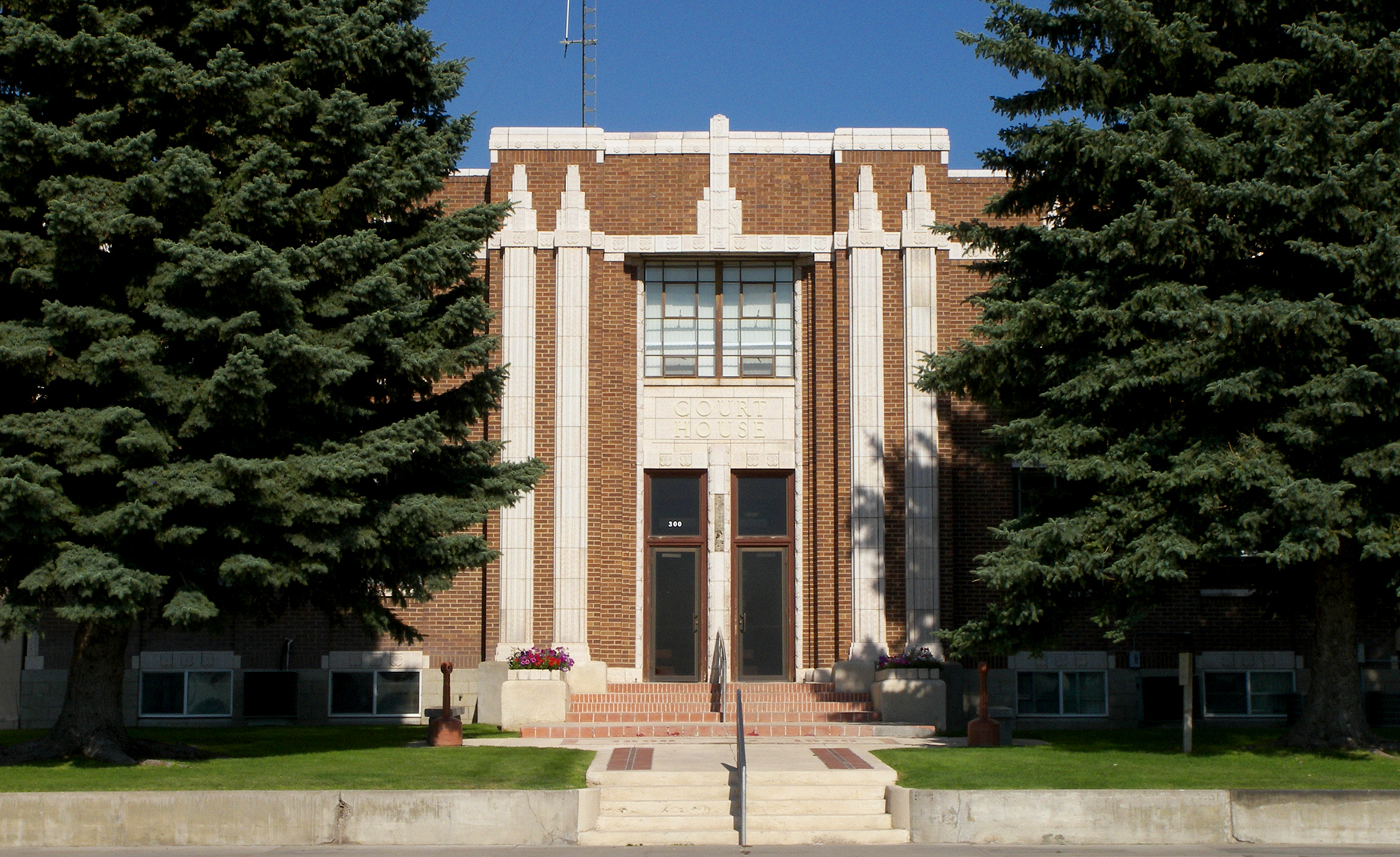

The first question: whose jurisdiction is the lot in?
Every residential permit in Idaho starts with one question that has nothing to do with the house: which government has jurisdiction over that piece of ground? The answer decides which building department reviews the plans, which agency sells the electrical permit, which office checks the zoning and which agency approves the sewage system. A street address does not answer it. Jerome mailing addresses run well outside the city limits, and a lot inside an area of city impact (land outside a city that a city and county have agreed the city will eventually serve) may still be under county building rules until it is annexed. Lesson 01 explains areas of city impact and annexation; Part B's Subdivisions and Plats Step by Step covers how a parcel becomes a buildable lot.
What state law says about who issues permits
The Idaho Building Code Act, chapter 41 of title 39 of the Idaho Code, makes two kinds of permits unlawful to skip. Idaho Code 39-4111(1) makes it unlawful to build anything "coming under the purview of the division" without a permit from DOPL. Idaho Code 39-4111(2) makes it unlawful to build "in a local government jurisdiction enforcing building codes, without first procuring a permit in accordance with the applicable ordinance or ordinances of the local government."16 In plain words: where a city or county runs a building program, the permit comes from the city or county under its ordinance; where the state has authority, it comes from DOPL.
Whether a city or county runs a building program at all is partly its own choice. Idaho Code 39-4116(1) says local governments "that have not previously instituted and implemented a code enforcement program" may start one by passing an ordinance, and that they "may contract with a public or private entity to administer their building code enforcement program."17 That last clause is why the City of Buhl can contract with a private inspector and why Jerome County can serve some cities under intergovernmental agreements. Once a local government does issue permits, 39-4116(2) requires it to adopt, by ordinance effective January 1 of the year after the Idaho Building Code Board adopts them, the International Building Code, the Idaho Residential Code (parts I to III and IX) and the 2018 Idaho Energy Conservation Code.17
The trade permits follow a separate set of laws. Electrical work is governed by title 54, chapter 10 of the Idaho Code and the Idaho Electrical Board's rule, IDAPA 24.39.10; plumbing by chapter 26 and IDAPA 24.39.20; heating, ventilation and air conditioning (HVAC) by chapter 50 and IDAPA 24.39.70.181920 DOPL's electrical questions page explains the result: a local building permit does not always cover electrical work, the Legislature has allowed "several cities and counties to assume jurisdiction within their boundaries," and "permit requirements vary widely throughout the state."21 The practical rule is that each trade has its own permit and its own inspector, and the office that issues the building permit is not always the office that issues the trade permits.
| Permit | Law and rule | Who may issue it | Code applied (Idaho edition) |
|---|---|---|---|
| Building (structure, energy, setbacks on the plan) | Idaho Code 39-4111, 39-4116; IDAPA 24.39.30 | The city or county where a local program exists; DOPL where the state has jurisdiction | 2018 IRC parts I, II, III and IX with Idaho amendments (Idaho Residential Code); 2018 IECC with amendments1122 |
| Electrical | Idaho Code title 54, ch. 10; IDAPA 24.39.10 | DOPL, unless a city or county has assumed jurisdiction | 2023 National Electrical Code with amendments (rule section 600, dated 4-4-25)18 |
| Plumbing | Idaho Code title 54, ch. 26; IDAPA 24.39.20 | DOPL, unless a city or county has assumed jurisdiction | Idaho State Plumbing Code: the 2015 Uniform Plumbing Code with Idaho amendments19 |
| Mechanical (HVAC, gas piping) | Idaho Code title 54, ch. 50; IDAPA 24.39.70 | DOPL, unless a city or county has assumed jurisdiction | 2018 International Mechanical Code, 2018 International Fuel Gas Code, 2018 IRC parts V and VI20 |
| Septic (when no sewer) | IDAPA 58.01.03 (lesson 04) | The public health district | Health district and DEQ rules |
| Sewer and water connection | City ordinance and fee resolution | The city utility | City standards |
How to find out who inspects the trades at an address
DOPL publishes a chart of its inspectors by city, ZIP code and county, with a column for each trade. Where a city or county runs its own program for a trade, the chart says so with a short note: "County Only" means the state inspector covers only the unincorporated part of that ZIP code, "Inside City Limits" means the state covers only the city, and "No City or County" means the state inspector covers neither. The version linked from DOPL's electrical questions page in November 2026 is dated Jan. 19, 2023, so it is a starting point, not the final word.521 For the six Magic Valley core towns, the chart reads this way:
| Town (ZIP) | County | Electrical, per DOPL chart | HVAC, per DOPL chart | Plumbing, per DOPL chart |
|---|---|---|---|---|
| Jerome (83338) | Jerome | State inspector, no limit noted | State inspector, "Inside City Limits" | State inspector, no limit noted |
| Twin Falls (83301) | Twin Falls | State inspector, "County Only" | State inspector, "No City or County" | State inspector, "County Only" |
| Kimberly (83341) | Twin Falls | State inspector, no limit noted | State inspector, "Inside City Limits" | State inspector, no limit noted |
| Buhl (83316) | Twin Falls | State inspector, no limit noted | State inspector, "Inside City Limits" | State inspector, no limit noted |
| Gooding (83330) | Gooding | State inspector, no limit noted | State inspector, no limit noted | State inspector, no limit noted |
| Hagerman (83332) | Gooding | State inspector, no limit noted | State inspector, no limit noted | State inspector, no limit noted |
Read with the cities' and counties' own pages, the chart lines up: the City of Twin Falls sells its own electrical, plumbing and mechanical permits (so the state covers only the county for electrical and plumbing), and Jerome County sells its own mechanical permits (so the state's HVAC inspector in the Jerome ZIP code works only inside the city).234 The chart is three years old and DOPL says to call 208-334-3233 when it does not answer the question.21
Worked example 1: a house inside the City of Jerome
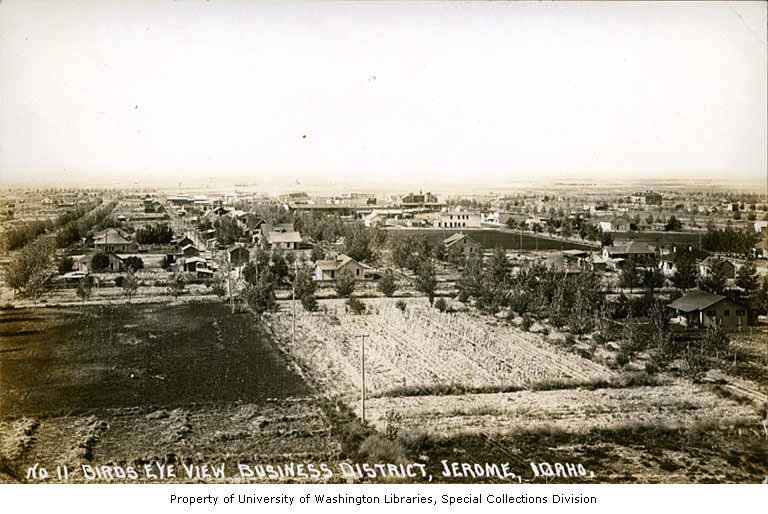
Jerome is the county seat of Jerome County and one of the six Magic Valley core towns used throughout this series. Its Building Safety Department describes its job as "plan review, permit issuance, and inspections for residential, commercial, and industrial projects," working with the city's engineering, fire and planning staff. The department lists its hours as Monday through Thursday, 8 a.m. to 5 p.m., and in November 2026 named Kortnie Kent as building official.1
Step 1: zoning, utilities and the lot
Before a building permit, the lot itself has to be legal to build on: zoned for a house, part of a recorded plat or a legal lot split, and served by streets and utilities. Those are planning and zoning decisions with their own fees. Jerome's planning and zoning fee page, which says new fees took effect Oct. 1, 2026, lists for example a lot split or duplex split at $150, a variance at $200, a rezone at $250, a preliminary plat of ten lots or fewer at $400 and of eleven or more at $600, and an annexation at $600. It also lists an engineering fee of $200 for "County Parcels for City Utility Connection," the charge when a parcel outside the city asks to hook to city water or sewer.24 Where the lot is already platted and zoned for a single-family house, none of these applies; the builder goes straight to the building permit. Impact fees, which some Idaho cities charge to pay for roads, parks, police and fire capacity under the Idaho Development Impact Fee Act, are explained in Part B's Impact Fees, Urban Renewal: Who Pays. Jerome's master fee schedule, as posted in November 2026, lists no development impact fee.6
Step 2: assemble the documents
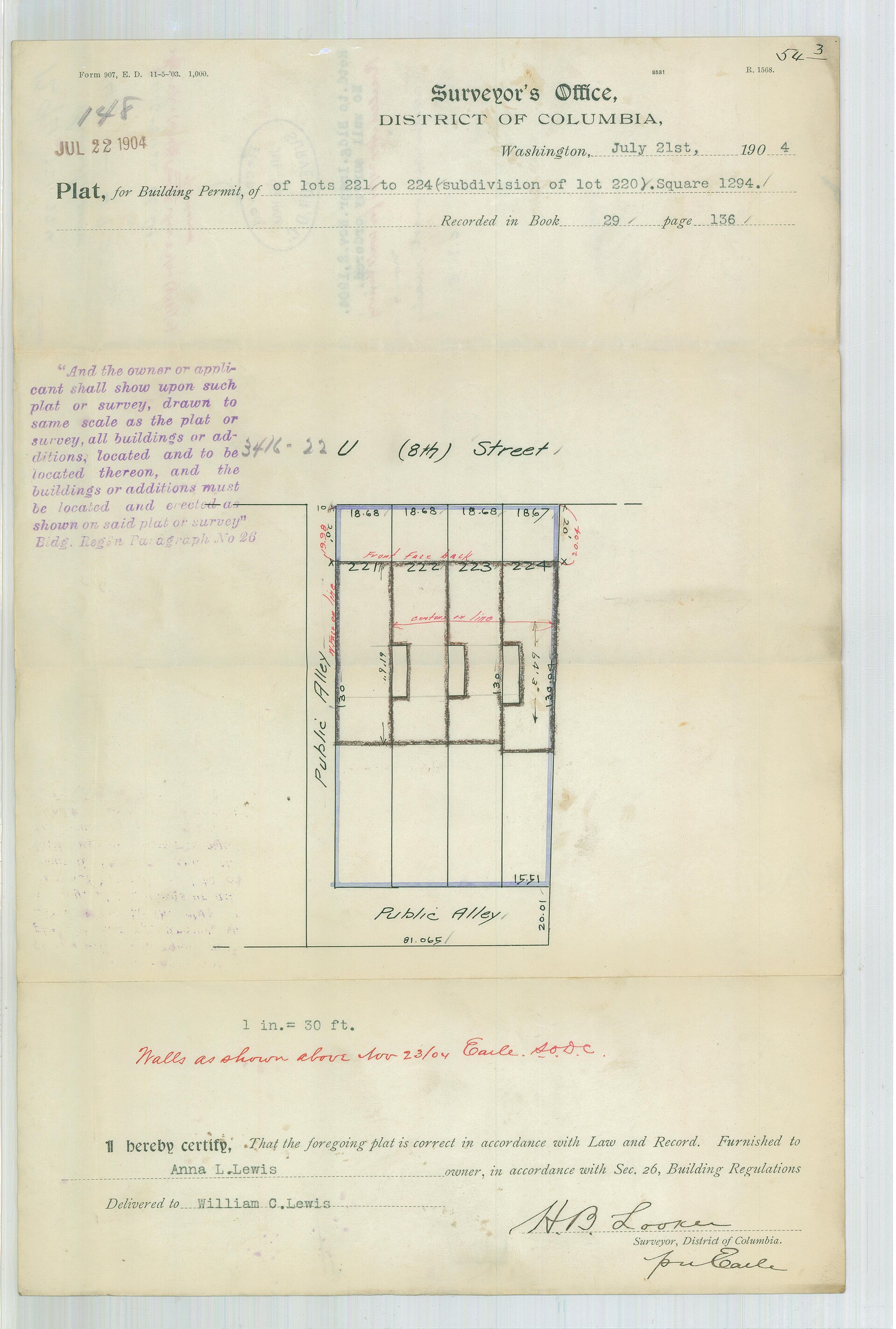
Idaho Code 39-4117(1), added by Senate Bill 1164 in 2025, requires every local government that issues building permits to publish "a document that describes in detail the requirements of its building permit process," on its website and on paper on request.7 Jerome's answer is a "Residential Application and Plan Review Submittal Checklist," which cites that statute on its first page.25 It asks for:
- A site plan showing new and existing structures, "with full dimensioned measurements to property lines, easements, & other structures within 10 feet of the proposed project."
- A foundation plan with reinforcing steel, dimensions and special inspection criteria (special inspections are extra inspections by a qualified third party that the code requires for certain engineered work).
- Floor plans showing egress (emergency escape) locations and door swings, elevations of all four sides, and building sections and details (walls, stairways, floor and ceiling assemblies).
- Room, finish, window and door schedules, including safety glazing.
- Structural plans: roof and floor framing plans, header and beam schedules, strap locations, shear walls and a shear wall schedule. A shear wall is a wall braced (usually with structural sheathing such as OSB, oriented strand board, nailed in a set pattern) to resist wind and earthquake loads.
- Manual J, S and D calculations for the HVAC system: the heating and cooling load (Manual J), the equipment selection (Manual S) and the duct design (Manual D), all three published by the Air Conditioning Contractors of America.
- A civil site plan drawn to a standard scale, with the legal description or record of survey, easements, right-of-way improvements and street cuts, storm drainage designed under Jerome City Code section 16.34, a grading plan, new water, sewer and irrigation services, and new curb, gutter and sidewalk.
- Parking that meets the zoning code.
The same checklist lists the design values the plans must meet: a 115 mph three-second-gust wind speed with exposure category C, a 30 pounds per square foot ground snow load, seismic design category B, a 0 degree design temperature, a "Severe" weathering rating for concrete, a 24-inch frost line, a presumed soil bearing pressure of 1,500 pounds per square foot "unless a soil investigation is provided," engineering for foundation walls over 8 feet tall, and truss design drawings under IRC section R802.10 kept on site. It points applicants to the American Society of Civil Engineers' online hazard tool for the most current values at a specific address.25 The frost line matters because footings must sit below it so that freezing soil cannot heave the house.
One detail in the checklist is out of date. Its "Current Codes" paragraph lists the 2017 National Electrical Code, while the city's own codes page and DOPL's list of adopted codes name the 2023 edition, which the Idaho Electrical Board's rule adopted with amendments dated April 4, 2025.261118 Because DOPL, not the city, permits and inspects electrical work in Jerome, the state's edition is the one an electrician must meet.

Step 3: apply online, and the completeness clock starts
Since April 10, 2025, Jerome has required "all permit applications be submitted online" through Cloudpermit, a commercial permitting portal; fees are calculated in the portal and paid through a separate city payment site.2724 Applying starts a state-law clock. Under Idaho Code 39-4117(2) and (3), a local government has ten business days after it receives a residential application to give written notice of anything missing, and another ten business days after each resubmittal to decide whether the application is complete. A finding that the application is complete "shall not constitute approval but shall authorize the application to proceed to formal plan review." The applicant and the city may agree in writing to extend the timeline, after the city gives written notice that it needs more time.7 Jerome's checklist repeats the promise: "we will respond in writing within 10 business days with our determination as to whether the application is complete or not."25
Senate Bill 1164 was a State Affairs Committee bill. The Senate passed it as amended 33 to 0 with two absent on March 24, 2025; the House passed it 63 to 0 with seven absent on March 28; Gov. Brad Little signed it April 2, 2025, and it became Session Laws chapter 272, effective July 1, 2025.8 The statute sets no deadline for the plan review itself, only for the completeness decision. Jerome publishes its own goal: "Residential plan review turnaround times - 2-4 weeks. (first review)," with plans "reviewed in the order they are received" and times that "may fluctuate based on plans being incomplete and/or incorrect, the size and scope of project, and quantity of workload."28
Step 4: pay the fees
Jerome figures its building permit fee from the project's value. Its building permit fee policy says the fee is based on "the total value of all construction work associated with the permit," including "finish work, painting, electrical, plumbing, heating, air conditioning, fire protection systems, concrete, permanent equipment or improvements, labor, materials, and contractor overhead and profit." For a new house or addition, the value is "the applicant's submitted construction value or the applicable ICC Building Valuation, whichever is greater." ICC Building Valuation Data is a national table of average construction cost per square foot by occupancy and construction type that the International Code Council publishes twice a year.29 An addendum effective Sept. 3, 2025, sets a separate method for manufactured (HUD-code) homes based on the declared value of the home and its installation, and an Oct. 23, 2025, update does the same for solar panels.29
The value then runs through a stepped table in the master fee schedule. The figures below are the schedule as posted in November 2026; the planning fee page says the city's new fees took effect Oct. 1, 2026.624
| Total valuation | City of Jerome building permit fee |
|---|---|
| $1 to $500 | $23.50 |
| $501 to $2,000 | $23.50 for the first $500 plus $3.05 for each added $100 or fraction |
| $2,001 to $25,000 | $69.25 for the first $2,000 plus $14 for each added $1,000 or fraction |
| $25,001 to $50,000 | $391.75 for the first $25,000 plus $10.10 for each added $1,000 or fraction |
| $50,001 to $100,000 | $643.75 for the first $50,000 plus $7 for each added $1,000 or fraction |
| $100,001 to $500,000 | $993.75 for the first $100,000 plus $5.60 for each added $1,000 or fraction |
| $500,001 to $1,000,000 | $3,233.75 for the first $500,000 plus $4.75 for each added $1,000 or fraction |
| Residential plan review | 40 percent of the building permit fee |
| Additional plan review (revisions, deferred submittals, change orders) | $50 |
| Re-inspection | $50 ("when previously identified corrections remain incomplete") |
| Inspection outside business hours; inspections with no set fee | $50 per hour, one-hour minimum |
| Expired permit reinstatement | $50 (when work had started and the permit expired) |
| Work without a permit | "Double the applicable permit fee" |
| Sewer connection permit, single family | $800 |
| Water meter and connection, 3/4 inch | $695 (meter $345.08, connection $200, labor $150) |
| Water meter and connection, 1 inch | $962 |
The city's own monthly permit report confirms the arithmetic. In October 2026 the city issued permit BLD-26-00201 for a 1,118 square foot residential addition valued at $100,000, with total permit fees of $1,391.25.30 At $100,000 the table gives $993.75, and 40 percent of that for plan review is $397.50; the two add to $1,391.25. The same report shows no new single-family house among the eight permits Jerome issued that month, a reminder that small-town permit volume swings month to month.30
The valuation steps in Jerome's table, $23.50 for the first $500 up through $993.75 at $100,000, match the City of Buhl's building permit fee schedule, which is labeled "Based on the 1997 Uniform Code."31 The Uniform Building Code was the model code that Idaho and most Western states used before the International Code Council's codes replaced it (Part B's How Houses Changed, 1979 to 2026 covers that switch), and its fee table has outlived it in small-city fee schedules. DOPL's own fee table in IDAPA 24.39.30, used where the state is the building authority, has the same structure with lower dollar amounts: $695.63 for the first $100,000 plus $3.92 for each added $1,000 to $500,000, in a version dated July 1, 2026.22
Step 5: the trade permits from DOPL
The electrical, plumbing and HVAC permits for a Jerome house are bought from DOPL, not the city. Jerome's page sends applicants to DOPL's site, and its submittal checklist lists DOPL's number "(Electrical/Plumbing/HVAC Permits)" among its contacts and warns that "Additional permits may be REQUIRED by the State of Idaho for Electrical, Plumbing, and HVAC work."225 DOPL sells permits online to licensed contractors and to homeowners who register for a free account.21 The fees are set in each board's rule:
| Trade (rule) | New one-family house, by living space | Other terms |
|---|---|---|
| Electrical (IDAPA 24.39.10, section 500.02) | Up to 1,500 sq. ft. $130; 1,501 to 2,500 $195; 2,501 to 3,500 $260; 3,501 to 4,500 $325; over 4,500, $325 plus $65 per added 1,000 sq. ft. | Permit expires 365 days after purchase; $65 renewal; $45 transfer fee; must be bought before work starts18 |
| Plumbing (IDAPA 24.39.20, section 500.02) | Same five tiers and dollar amounts as electrical | Existing homes: $65 per inspection plus $10 per added fixture; plan check $65 per hour19 |
| HVAC (IDAPA 24.39.70, section 500.02) | Base permit $100, plus $30 for the first appliance and $15 for each added one; $15 for the first exhaust or ventilation duct and $5 for each added one; $5 per fuel gas outlet; $5 per hydronic zone | Permit expires 365 days after purchase or last inspection; homeowners may get their own permit under Idaho Code 54-5002(1)(a)20 |
Who may do the work is a separate question from who sells the permit. Electrical and plumbing work in Idaho is done by licensed trades, and HVAC work by registered installers and contractors, under the chapters above. The licensing chapter for electricians does not apply to a property owner "performing noncommercial electrical work in the owner's primary or secondary residence or associated outbuildings," under Idaho Code 54-1016(2)(a), and DOPL sells such owners a homeowner permit that "is not valid for work on commercial buildings."3221 A general contractor who builds the house must be registered with the Idaho Contractors Board under Idaho Code 54-5204, but registration has exemptions, including for an owner "performing construction on the owner's personal residential real property," unless the owner builds in order to sell promptly and has not lived in the house as a primary residence for at least twelve months before the sale (Idaho Code 54-5205(2)(l)).3334 Lesson 07, Why Quality Can Fall Even as Code Grows, explains why registration is not the same as a license that tests skill.
Step 6: the inspection sequence
Once the permit is issued, work can start, and nothing can be covered until it is inspected. Jerome's inspections page lists the required inspections for a house in this order: "setbacks, footings, foundation wall, floor framing (underfloor), shear wall, electrical rough in, mechanical rough in, plumbing rough in, framing, insulation, final building, final electrical, final mechanical, and final plumbing." It adds that "No work shall be performed and no inspections will be scheduled until permits are issued."12 Some terms:
- Setback and footing inspection
- The footing is the wide concrete base, poured in a trench below the frost line, that carries the house's weight to the soil. The inspector checks its size, depth and reinforcing steel and, at the same visit, confirms the house sits the required distance from each property line. Jerome asks builders to have "property pins identified and string lines provided for front, back, and side setbacks."12
- Foundation wall
- The stem wall or basement wall that rises from the footing, checked for steel, anchor bolts and hold-downs before the concrete is poured.
- Floor framing (underfloor)
- The joists, beams and supports of a raised floor, checked before the subfloor closes off the crawl space.
- Shear wall
- The structural sheathing and its nailing pattern, checked before house wrap covers it.
- Rough-in inspections
- The electrical wiring, plumbing drains and supply lines, and ducts and gas piping inside the open walls, checked before insulation and drywall hide them. In Jerome all three are DOPL inspections.
- Framing
- The full structure: studs, headers, trusses, connectors, fire blocking and draft stopping.
- Insulation
- The energy code inspection of insulation levels and air sealing before the walls are closed.
- Finals
- Each trade's final inspection of the finished system, then the building final.
Two rules tie the city and state inspections together. "Before requesting a framing inspection all rough-in inspections for mechanical, electrical, and plumbing must be completed by the State of Idaho DOPL," with windows and doors sealed and draft stopping done. And "Before requesting a building final inspection all final inspections for mechanical, electrical, plumbing, firewall, and fire sprinklers must be completed and the inspection card onsite must be signed off."12 Approved plans must be on site at every inspection "as required by code." Inspections are requested by phone or in Cloudpermit, are done in the order received except that "concrete inspections are given priority," and run Monday through Thursday, 8 a.m. to 5 p.m., except the 12 holidays the city observes.12

What state law says about inspection timing
House Bill 266 of 2025 added Idaho Code 39-4118, which sets three rules for every building department in the state, DOPL included.9
- The 48-hour rule. If a requested inspection "is not performed within forty-eight (48) business hours," the permit holder may hire a third-party inspector, must notify the division or local government, must send it the results, and gets back any fee paid for that inspection.
- The three-day reason rule. If an inspector fails the work and does not, within three business days, give the permit holder a reason for the failure, the department refunds ten percent of the fees paid for that inspection.
- Who counts as a third-party inspector. The private inspector must meet the qualifications in Idaho Code 39-4108 and inspect "in substantial accord with the applicable jurisdiction's standards provided by law, rule, or ordinance."
The bill's title on the Legislature's site also describes "certain live virtual re-inspections." HB 266 came from the House Ways and Means Committee. The House passed it as amended 64 to 0 with six absent on March 6, 2025; the Senate amended it and passed it 34 to 0 with one absent on March 20; the House passed the Senate version 70 to 0 on March 26; Gov. Little signed it March 31, 2025, as Session Laws chapter 221, effective July 1, 2025.10 Jerome's inspection page, read in November 2026, does not mention the 48-hour rule; it says the inspector "will make efforts to accommodate unusual situations that require a timelier schedule."12
Step 7: the certificate of occupancy
A certificate of occupancy is the building department's written finding that the finished building passed its inspections and may be lived in. Jerome says certificates "will be processed and issued in the order they are received and could take up to 3 business days for return."12 Jerome County's application form states the rule the same way every department applies it: "No building or structure shall be occupied until the building official has issued a certificate of occupancy."15 A certificate of occupancy records that the work met the inspected code minimums on the dates inspected; it is not a warranty of workmanship. Lesson 06, Is Construction Quality Getting Worse?, and lesson 11, When Things Go Wrong: Remedies, take up what happens after the certificate.
A permit can also die before the house is done. Jerome County's form, quoting IRC section R105.5, says work "must commence within 180 days and may not be suspended or abandoned for more than 180 days without written request of applicant and written approval of the building official."15 Buhl's building department page puts its limit at 120 days.35 DOPL's electrical and HVAC permits run 365 days from purchase.1820
Worked example 2: a house in unincorporated Jerome County
Move the same house onto five acres of farm ground north of town, outside any city. The building department changes, the trade split changes, the fee method changes and two new approvals appear: one for the sewage system and one for the road.
Step 1: ask planning and zoning first
Jerome County Planning and Zoning "highly recommend[s]" that anyone starting to develop submit an information request "to ensure your project is allowed in the zone and on the parcel, you intend to develop," and only then apply for a building permit. Requests go by email, fax, mail or in person; the office checks its email twice a day. Land divisions, conditional use permits, variances, plats and livestock confinement operations need an appointment with staff. The county's planning and zoning commission met monthly in 2026 on a published schedule, with no December meeting.36 Whether a rural parcel can legally hold a house (minimum lot sizes, land division rules, agricultural zones) is a county zoning question answered before any building plan is drawn; lesson 01 and Part B's Subdivisions and Plats explain the tools.
Step 2: the county building department
The Jerome County Building Department, at 300 N. Lincoln, Room 200, in Jerome, "provides inspection, plan review, and investigative services to the unincorporated areas of Jerome County and also to those cities that have entered into intergovernmental agreements with the county to provide building code services." In November 2026 its page named Rick Kirsch, certified building official, and an assistant building official. Applications and inspection requests go through iWorQ, a different commercial portal from the city's Cloudpermit; inspections can also be called in to a separate inspection line, where callers "may request morning or afternoon" but the time is not guaranteed.3 The county does not name on that page which cities have such agreements.
The county says a residential permit is needed when a structure is over 200 square feet, when it has utilities "i.e. electricity or plumbing," or when it is "permanently affixed to the ground."3 Its design criteria differ in one notable way from the city's: the county lists seismic design category C where the city lists B, and it amends IRC Table R301.5 to require a 40 pounds per square foot live load in habitable attics and sleeping rooms. It lists wind at 115 mph, exposure C, a 30 psf ground snow load, 1,500 psf presumed soil bearing, a 24-inch frost depth, an elevation of 4,048 feet and climate zone 5B, and names the 2018 editions of the IBC, IRC, IEBC, IECC, IMC and IFGC as adopted codes.3725 The R301.5 change is the kind of local amendment Idaho Code 39-4116(4)(c)(iii) allows: counties and cities may amend "Section R 301, Design Criteria" of the Idaho Residential Code "to reflect local concerns."17
Step 3: the checklist and the agency letters
The county's residential building permit form is a checklist with two columns.15 The required paperwork column asks for:
- the building and zoning permit application;
- a summary sheet from the Assessor's Office;
- one set of plans;
- the property deed ("Deeds must be for individual lot & block") or the subdivision plat;
- Manual S and J HVAC calculations, for new homes only, by email;
- engineered truss drawings from the supplier, by email; and
- a site plan with scale, north arrow, property lines, all structures and the distances between them, setbacks, the location of the well, septic tank and drain field (or a community well), existing and proposed access, the road name, easements, parking, and canals, ditches and irrigation.
The agency letters column is where the county house differs most from the city house. It lists a "Health Department or City Letter" with a permit number (required), a "Highway Department Letter" for an access permit, a "Fire Department" line reading "150' +Fire Dept Approval Required," a canal company letter with "(Name i.e. NSCC)" as the example, and an "Other" line.15 Each letter comes from an agency with its own rules and fees:
- The health district. A rural house without sewer needs a septic permit from South Central Public Health District, whose application asks whether city sewer is within 200 feet of the structure, what the water supply is (private well, shared well or public water system), the number of bedrooms and whether the site is in a city, a city impact area or the county; the application expires two years from purchase.38 The district's environmental health specialists review applications and issue permits for new, enlarged and replacement septic systems.39 Lesson 04, Septic, Wells and Water, covers site evaluations, test holes, separation distances, fees and well permits.
- The road agency. A new driveway onto a public road needs an approach or access permit from the agency that owns the road: a highway district or county road department for a local road, or the Idaho Transportation Department for a state highway. Lesson 01 explains how to tell which.
- The fire department. The form flags fire department approval with a 150-foot note; fire apparatus access and water supply rules are in lesson 05, Fire Inspections and the Wildland-Urban Interface.
- The canal company. The county checklist asks for a canal company letter where a canal, ditch or irrigation easement touches the site, and the site plan must show "Canals Ditches, Irrigation." Part C's Buying a Home in a Growing Area explains irrigation water and easements.
Step 4: fees, and a different value rule
Jerome County's project valuation form defines the number differently from the city. "Project value is the total value of materials and labor. Project Value excludes the value of the land, electrical, mechanical and plumbing."40 The city's policy includes electrical, plumbing and HVAC work in the value.29 The same house can therefore carry a lower building permit value in the county than in the city, before any difference in the fee table. The county did not post its building permit fee table online as of November 2026; its application form has blanks for plan review, building permit and address number fees, and its Building Permit Reports page posts monthly reports for 2026.1541
The county's mechanical permit application does publish its fees. For a new single-family dwelling, "Based on living space only": $130 up to 1,500 square feet, $195 for 1,501 to 2,500, $260 for 2,501 to 3,500, $325 for 3,501 to 4,500, and $325 plus $65 for each added 1,000 square feet above that; $65 for other residential installations such as a furnace replacement; and Manual S and J calculations by email for new homes. The form also states, in capital letters, "UNVENTED FUEL-BURNING RESIDENTIAL APPLIANCES ARE NOT ALLOWED."4 The tiers match the dollar amounts in DOPL's electrical and plumbing rules, though DOPL's own HVAC fee is figured per appliance.1820
Step 5: inspections and occupancy
The county form places the duty on the permit holder: "It shall be the duty of the permit holder or their agent to notify the building official that such work is ready for inspection." It requires the owner to "provide surface drainage to an approved point of collection" and to grade lots so surface water drains away from foundation walls, a minimum of six inches of fall in ten feet.15 Electrical and plumbing inspections in the unincorporated county are done by DOPL's inspectors, according to the state chart; the mechanical inspection is the county's.54 The septic system is inspected by the health district before it is covered (lesson 04). The county issues the certificate of occupancy.
A hypothetical fee example: one house, three fee tables
Fees are easier to compare on one house. The example below is made up for illustration. It uses only published fee schedules and the International Code Council's national Building Valuation Data, and it leaves out every charge that depends on facts the example cannot know: impact fees, health district septic fees, road access permits, survey, utility company line extensions and the county's unpublished building permit table.
How we figured it: permit fees for a hypothetical house
The hypothetical house. A one-story, wood-framed single-family house with 2,000 square feet of living space and a 500 square foot attached garage, on a lot with city water and sewer. Wood light-frame construction is Type VB in the code's construction types; houses are occupancy group R-3 and private garages use group U. This house, lot and its numbers are a hypothetical example, not any real project.
Valuation. ICC's Building Valuation Data for August 2026 lists $177.63 per square foot for group R-3, Type VB, and $71.79 per square foot for group U, Type VB.42 The City of Twin Falls adopts each August table on Oct. 1 of that year, and Jerome uses "the most current ICC Building Valuation Data" or the applicant's figure, whichever is greater.4329 Living space: 2,000 x $177.63 = $355,260. Garage: 500 x $71.79 = $35,895. Total value: $391,155. The $291,155 above $100,000 counts as 292 added thousands, because each fee table charges for each added $1,000 "or fraction thereof."
City of Jerome. Building permit: $993.75 + (292 x $5.60) = $993.75 + $1,635.20 = $2,628.95. Residential plan review at 40 percent: $1,051.58. Sewer connection permit: $800. Water meter and connection, 3/4 inch: $695.6 DOPL trade permits for 2,000 square feet of living space: electrical $195 and plumbing $195; HVAC figured as a base permit of $100, one furnace and air conditioner combination at $30, three exhaust ducts (two bath fans and a dryer vent) at $15 + $5 + $5 = $25, and three gas outlets (furnace, water heater, range) at $5 each, $15, for $170.181920 Total of the items counted: $5,735.53.
City of Twin Falls. Building permit: $895 + (292 x $5) = $2,355. Residential plan review at 30 percent: $706.50. City mechanical, electrical and plumbing permits for a dwelling of 0 to 2,500 square feet, at $120 each because the schedule requires a "Separate permit required for each trade": $360.2343 Total of the items counted: $3,421.50. Twin Falls water and sewer connection fees and its impact fees were not part of the building fee document we read and are not included.
DOPL's state table. For comparison only: where DOPL is the building authority, its Table 1-A gives $695.63 + (292 x $3.92) = $695.63 + $1,144.64 = $1,840.27, with plan review billed at $100 an hour between a minimum of 40 percent ($736.11) and a maximum of 65 percent ($1,196.18) of the permit fee.22 With the minimum plan review and the same $560 in DOPL trade permits, the items counted total $3,136.38.
Limits. Jerome's building permit value includes the electrical, plumbing and HVAC work; a builder's declared value can be higher than the ICC figure and would then control. Jerome County's valuation form excludes electrical, mechanical and plumbing from the value, and the county's fee table was not posted, so no county figure is computed. Hourly charges, re-inspections and plan revisions are excluded. Rounding is to the cent.
Town by town: the rest of the Magic Valley
The other five core towns divide the same jobs in five different ways. The table summarizes what each office publishes; where a town does not post a document online, the cell says so.
| Place | Building permit and inspections | Electrical, plumbing, HVAC | Fees and local rules published online | Health district |
|---|---|---|---|---|
| City of Jerome | City Building Safety Department; Cloudpermit portal; online only since April 10, 202527 | DOPL for all three2 | Master fee schedule with valuation table, 40% residential plan review, $800 sewer, $695 water meter; no impact fee listed6 | South Central Public Health District (Jerome office)14 |
| Unincorporated Jerome County | Jerome County Building Department; iWorQ portal; also serves cities with agreements3 | Mechanical: county; electrical and plumbing: DOPL45 | Mechanical fee tiers published; building fee table not posted; value excludes electrical, mechanical and plumbing40 | South Central Public Health District |
| City of Twin Falls | City Building Safety Department; Cityworks permit portal44 | City permits for all three; flat residential fees ($120 each up to 2,500 sq. ft.)23 | Valuation table ($895 at $100,000 plus $5 per added $1,000), 30% residential plan review, $50 re-inspection, impact fees for police, fire, parks and streets adjusted each Jan. 12343 | South Central Public Health District (main office in Twin Falls) |
| Unincorporated Twin Falls County | Twin Falls County Building Department45 | DOPL electrical and plumbing marked "County Only" on its chart5 | County page lists adopted codes; fee table not found in our search | South Central Public Health District |
| City of Kimberly | City Building and Planning and Zoning Department; paper sets plus digital copies by email, required from Feb. 9, 202646 | DOPL per its chart5 | $150 non-refundable deposit for a house; impact fees of $1,180 per dwelling (police $484, police vehicles $85, administration $50, parks $221, streets $270, library $70) plus a $3,689 residential street fee for the Highway 30 and 3400 intersection under Ordinance 689; sewer connection $2,000; 1-inch water connection $2,80046 | South Central Public Health District |
| City of Buhl | City contracts with a private inspector, Jay Bevercombe, for plan review and inspections35 | DOPL per its chart5 | Valuation set at 75% of ICC data; fee table "Based on the 1997 Uniform Code"; residential review typically 5 to 10 business days; permits expire after 120 days3531 | South Central Public Health District |
| City of Gooding | Building permit applications through the city clerk's office; the planning and zoning secretary issues permits47 | DOPL per its chart5 | No building fee schedule or inspection arrangement found online | South Central Public Health District (Gooding office) |
| Unincorporated Gooding County | Gooding County Building Department; an application is required to "construct, enlarge, alter, repair, move, demolish or change the occupancy" of a building48 | DOPL per its chart5 | No fee table found online | South Central Public Health District |
| City of Hagerman | City code section 9-1-1 (Ordinance 1062, March 5, 2014) adopts the building codes and requires permits; fees set by council resolution49 | DOPL per its chart5 | Code does not say whether the city, county or a contractor inspects; no fee resolution found online | South Central Public Health District |
Three patterns stand out. First, only Twin Falls, the region's largest city, runs its own electrical, plumbing and mechanical programs; the smaller cities rely on DOPL for the trades. Second, the counties are not uniform: Jerome County sells its own mechanical permits, while the state chart shows DOPL covering all three trades across Gooding County's ZIP codes. Third, the paper trail is uneven. Jerome, Twin Falls, Kimberly and Buhl post application packets and fee schedules; Gooding and Hagerman post little; Jerome County posts forms and monthly permit reports but not its building fee table. Idaho Code 39-4117(1) requires every local government that requires building permits to post a document describing its process on its website; the statute does not separately require a posted fee table.7 Fire protection is split as well: Jerome, Twin Falls and Buhl have city fire departments, and Jerome's and Twin Falls' permit pages route fire questions to them, while rural parcels fall to fire protection districts (lesson 05).254435

The Treasure Valley comparison: Boise and Meridian
The largest Idaho cities run all the programs themselves and publish performance numbers that small departments do not. DOPL's chart marks its electrical and plumbing inspectors in Meridian's 83642 ZIP code and in Boise ZIP codes "County Only," meaning the cities handle those trades inside their limits.5 The septic side belongs to a different health district, Central District Health, which serves Ada, Boise, Elmore and Valley counties and permits septic systems there.50
Boise's Planning and Development Services posts a quarterly "Permit Processing Timeframes" report. For May 1 to July 31, 2026, it reported:51
| Boise permit type | Target, first review | Average first review | Average days until ready to issue | Average wait for customer to pick up | Permits issued, May 1 to July 31 | Permits issued, FY 2026 (Oct. 1 to July 31) |
|---|---|---|---|---|---|---|
| Single family, Level 1 | under 10 days | 10 days | 40 days | 8 days | 36 | 142 |
| Single family, Level 2 | under 14 days | 11 days | 82 days | 25 days | 28 | 212 |
| Additions, alterations, repairs, Level 2 | under 10 days | 8 days | 30 days | 4 days | 189 | 534 |
The report counts working business days, and it notes that "Average first review days are City time" while "ready to issue days include both City and applicant time (when resubmittals are required)."51 That distinction matters for anyone comparing permit speed: the first number measures the department, the second measures the department and the applicant together. Meridian posts weekly reports of every building permit it issues, with permit number, address, subdivision, lot, valuation, square footage and contractor; the report for July 6 to 12, 2026, ran 49 pages.52 Jerome's monthly report carries similar fields: permit number, address, work type, owner, square footage, issue date, project value and total permit fees.30
Other states: who must run a building department
Idaho's model is local option with a state backstop for the trades only: a city or county may choose to run a program under Idaho Code 39-4116 and must use the state's adopted editions if it does; DOPL covers electrical, plumbing and HVAC work where locals have not taken over, but its building permit reaches only buildings under its purview (state-owned and state-occupied buildings), so a private house where no city or county runs a program gets no building permit at all (lesson 01).1716 Neighboring states take different approaches.
- Washington. RCW 19.27.050 says "The state building code required by this chapter shall be enforced by the counties and cities," and "Any county or city not having a building department shall contract with another county, city, or inspection agency" for enforcement. Every Washington county and city must provide building code enforcement, by staff or contract.53
- Oregon. ORS 455.040 says "The state building code shall be applicable and uniform throughout this state and in all municipalities." Under ORS 455.148, a county or city that takes on a building inspection program must run it for the listed codes; when a city drops its program, the county runs it inside the city, and when a county drops its program, the state director arranges for administration by contract or by state staff.54
All three states ask the same question this lesson asks about Jerome: which office holds jurisdiction at this address. Washington answers it with a duty on every city and county; Oregon lets local governments choose, with the state filling gaps; Idaho lets them choose and fills gaps only for the trades.
Pictures, Numbers and Infographics
The key numbers, rules and dates from this lesson in one place. Dollar figures for the hypothetical house are our calculation from the published schedules (method in the box above).
| Measure | Idaho (Magic Valley) | Comparison | Place or year | Source |
|---|---|---|---|---|
| Deadline to decide whether a residential application is complete | 10 business days after receipt or resubmittal | 20 business days for commercial | Statewide, since July 1, 2025 | Idaho Code 39-41177 |
| Inspection not performed in time | 48 business hours, then a qualified third-party inspector may be hired | No equivalent in the Washington or Oregon sections cited | Statewide, since July 1, 2025 | Idaho Code 39-41189 |
| First residential plan review, published | Jerome goal: 2 to 4 weeks | Boise single family Level 1: 10 days average (May to July 2026) | 2026 | Jerome; Boise2851 |
| Building permit fee, hypothetical $391,155 house | Jerome $2,628.95; Twin Falls $2,355.00 | DOPL state table $1,840.27 | Schedules posted Nov. 2026; DOPL table dated July 1, 2026 | Our calculation62322 |
| Residential plan review fee | Jerome 40% of permit fee; Twin Falls 30% | DOPL $100 an hour, 40% minimum to 65% maximum | 2026 | Fee schedules; IDAPA 24.39.3062322 |
| Re-inspection fee | Jerome $50; Twin Falls $50 | DOPL trades: $65 per hour for requested inspections | 2026 | Fee schedules; IDAPA 24.39.2062319 |
| Electrical permit, new house of 1,501 to 2,500 sq. ft. | DOPL $195 (Jerome, Kimberly, Buhl, Gooding, Hagerman) | City of Twin Falls $120 per trade up to 2,500 sq. ft. | 2026 | IDAPA 24.39.10; Twin Falls schedule1823 |
| Sewer connection, single family | Jerome $800 | Kimberly $2,000 | 2026 | Jerome schedule; Kimberly application646 |
| Water connection | Jerome $695 (3/4 inch, meter included) | Kimberly $2,800 (1 inch) | 2026 | Jerome schedule; Kimberly application646 |
| Development impact fees, one house | Jerome: none listed | Kimberly $1,180 plus a $3,689 Highway 30 and 3400 street fee | Kimberly Ordinance 689, Feb. 9, 2026 | Fee schedule; Kimberly application646 |
| Permit expiration if work stops | Jerome County 180 days; Buhl 120 days | DOPL electrical and HVAC permits 365 days from purchase | 2026 | Jerome County form; Buhl; IDAPA153518 |
| Residential code edition | 2018 IRC with Idaho amendments (Idaho Residential Code) | Cities may not adopt newer IRC or residential IECC provisions the state board has not adopted | Current Nov. 2026 | DOPL list; Idaho Code 39-41161117 |
| Electrical code edition | 2023 NEC with amendments | Jerome's checklist still lists the 2017 NEC | Rule amendment dated April 4, 2025 | IDAPA 24.39.10; Jerome checklist1825 |
| Who must run a building department | Local option; DOPL covers trades where locals have not taken over | Washington: every county and city must enforce, by staff or contract | Current | Idaho Code 39-4116; RCW 19.27.0501753 |
Common mistakes
- Assuming the building permit covers the wiring. DOPL says plainly that even with a local building permit "it may still be necessary for you to obtain permits from DOPL for electrical work." In Jerome, Kimberly, Buhl, Gooding and Hagerman, the electrical, plumbing and (inside city limits) HVAC permits come from the state, bought separately.2125
- Calling for the framing inspection too early. Jerome and Twin Falls both refuse a framing inspection until the electrical, plumbing and mechanical rough-ins have passed, and both refuse the building final until the trade finals pass. A builder who schedules the city before the state loses the slot, and Jerome charges $50 when "previously identified corrections remain incomplete."12136
- Reading a "complete" notice as an approval. Under Idaho Code 39-4117(3), a finding that an application is complete "shall not constitute approval"; it only moves the application to plan review, which has no statutory deadline.7
- Using one office's value rule at another office. Jerome counts electrical, plumbing and HVAC work in the building permit value and uses the greater of the declared value or ICC's figure; Jerome County's form excludes those trades; Buhl uses 75 percent of ICC's figure.294035
- Trusting an old code list on a form. Jerome's residential checklist still names the 2017 National Electrical Code; the state rule adopted the 2023 edition with amendments dated April 4, 2025. The rule, not the checklist, controls electrical work.2518
- Treating DOPL's inspector chart as current. The chart DOPL links in November 2026 is dated Jan. 19, 2023. Programs and inspectors change; DOPL gives a phone number for questions the chart does not answer.521
- Confusing the owner-builder exemption with a permit exemption. Idaho Code 54-5205(2)(l) exempts an owner building on the owner's own residential property from contractor registration (with limits on building to sell), and 54-1016(2)(a) exempts an owner from electrical licensing for noncommercial work at the owner's residence. Neither excuses the permit: Idaho Code 39-4111 makes building without the required permit unlawful, and DOPL sells homeowner trade permits for that reason.34321621
- Reading the certificate of occupancy as a quality guarantee. It records that the work passed the code's minimum inspections when inspected. Lessons 06 and 11 cover quality evidence and remedies.
- Letting a permit lapse. Jerome County permits become invalid if work is "suspended or abandoned for a period of 180 days"; Buhl's limit is 120 days; DOPL trade permits expire 365 days after purchase unless renewed for $65.153518
What we know, what we don't, and what the data can show
What we know
- Inside Jerome, the city issues and inspects the building permit and DOPL handles all three trades; in unincorporated Jerome County, the county issues the building and mechanical permits and DOPL handles electrical and plumbing.12345
- Jerome's and Twin Falls' published fee tables, plan review percentages, re-inspection fees and trade fees as posted in November 2026, and DOPL's trade and building fees as set in IDAPA rules.62318192022
- Since July 1, 2025, state law sets a 10-business-day completeness clock for residential applications and a 48-business-hour inspection rule with a third-party option.79
- The current statewide residential code is the 2018 IRC with Idaho amendments, and local governments may not adopt newer IRC or residential IECC provisions the state board has not adopted.1117
What we don't know
- Jerome County's building permit fee table, Twin Falls County's fees, and the City of Gooding's and Hagerman's fee resolutions and inspection arrangements; none was posted where we looked in November 2026.
- Which cities have intergovernmental agreements with Jerome County for building services; the county page does not list them.3
- How often Magic Valley departments meet the 10-business-day completeness clock or the 48-business-hour inspection rule, and how often permit holders have used third-party inspectors under Idaho Code 39-4118. No Magic Valley department publishes those counts.
- Whether DOPL's 2023 inspector chart still matches every program boundary in 2026.
What the data can show
- Jerome's monthly permit reports (2023 to 2026) and Jerome County's monthly building permit reports (2026) can show permits by type, value and fee over time, and, because they include fees, whether fees track value as the schedule says.5541
- Boise's quarterly Permit Processing Timeframes can show review speed against target over several years, separating city time from applicant time.51
- Meridian's weekly permit reports can be compiled into counts of new homes by subdivision and contractor.52
- Inspection logs held by each department (not posted online in the Magic Valley) could show pass and fail rates, re-inspection counts and the time from request to inspection, which is the measure Idaho Code 39-4118 uses. They are public records subject to request.
Questions people ask
Can an owner pull the permits and build the house?
Idaho law lets an owner do so in several ways. Contractor registration does not apply to an owner "performing construction on the owner's personal residential real property," with limits on building to sell promptly (Idaho Code 54-5205(2)(l)); electrical licensing does not apply to an owner's noncommercial work at the owner's residence (54-1016(2)(a)); and DOPL rules let homeowners buy HVAC and electrical permits for their own premises. The permits and inspections still apply. Buhl's page says homeowners may pull permits for their own primary residence, "but contractors licensed by the State of Idaho are required for certain types of work."34322035
Does a new house in Idaho need fire sprinklers?
No. Idaho Code 39-4116(3) exempts "All single family homes and multiple family dwellings up to two (2) units" from the provisions of the fire, building and residential codes that would require automatic sprinklers, while allowing anyone to install them voluntarily.17 Jerome's inspection page still lists a fire sprinkler final among the finals that must pass before the building final, which applies where a sprinkler system is installed.12
How long does a residential permit take?
Published figures vary. Jerome's goal for a first residential review is 2 to 4 weeks; Buhl says residential projects typically take 5 to 10 business days; Boise reported a 10-day average first review and 40 days to ready-to-issue for simpler single-family permits in May to July 2026. State law adds only the completeness deadline.2835517
What happens if the inspector does not come?
Under Idaho Code 39-4118, if a requested inspection is not done within 48 business hours, the permit holder may hire a third-party inspector who meets the qualifications in Idaho Code 39-4108, must notify the department and send it the results, and is refunded the fee for that inspection.9
Does a shed or shop need a permit?
Jerome County requires a residential permit when a structure is over 200 square feet, has utilities, or is permanently affixed to the ground; Buhl requires permits for sheds over 200 square feet. Agricultural buildings are a different category: Idaho Code 39-4116(5) requires local governments to exempt them from the building codes, though a county may issue permits to check road setbacks and utility easements at no more than its cost, and Jerome County posts an agricultural building application.3351736
Can a city require a newer energy code than the state?
Not for houses. Idaho Code 39-4116(2) and (4)(b) bar local jurisdictions from adopting provisions of the International Residential Code or the residential provisions of the International Energy Conservation Code that the Idaho Building Code Board has not adopted. Local governments may amend the administrative chapter, definitions, design criteria and appendices, and may amend the rest of Part III only on a finding of "good cause for building or life safety" after a noticed public hearing.17 Lesson 02 explains how the board adopts editions.
Where can I see the permit file for a house?
Building permit files, plans on file, inspection results and certificates of occupancy are public records held by the issuing city or county, and trade permits and inspections are held by DOPL where it issued them. Jerome County's building department and its planning office each post a public records request form.336 Lesson 10 and the reporting box below describe the records.
Hard questions
Should trade inspections be state or local?
The case for the state. DOPL's rules set one fee table and one set of code amendments for electrical, plumbing and HVAC work everywhere it inspects, so a contractor working in Jerome, Kimberly and Hagerman meets the same standard and pays the same fee in each.181920 Small cities avoid hiring licensed trade inspectors they could not keep busy. The case for local programs. One office for every inspection on a house, as in Twin Falls, means one portal, one scheduling call and one file; the city can also set lower flat fees, as Twin Falls does at $120 per trade for a house up to 2,500 square feet against DOPL's $195 for 1,501 to 2,500.2318 What the evidence shows. The published records let a reader compare fees and procedures but not outcomes: no Magic Valley office publishes inspection wait times or pass rates by trade, so whether state or local inspection is faster or stricter cannot be answered from posted data.
Are third-party inspections a fix for slow departments?
For. Idaho Code 39-4118 gives builders a remedy when an inspection does not happen in 48 business hours, and the Legislature passed it without a recorded no vote in either chamber.910 Against. A private inspector hired and paid by the permit holder inspects work for the person paying, and the department that issues the certificate of occupancy did not see the work. The statute answers part of this by requiring the inspector to meet 39-4108's qualifications, to work "in substantial accord with the applicable jurisdiction's standards," and to send results to the department.9 What the evidence shows. No department we reviewed reports how often the option has been used since July 1, 2025.
Should permit fees follow the value of the house or the cost of the review?
For valuation. Value is easy to verify against ICC's national table and scales roughly with the size and complexity of the work; ICC's own guidance shows how to set a multiplier from a department's budget and the prior year's construction value.42 Against. Inspecting a $600,000 house does not take twice the inspector's time of a $300,000 one, and decades-old Uniform Building Code tables, still used by Jerome and Buhl, were not built from current Magic Valley costs. Jerome's own policy says fees "are intended to recover the City's reasonable costs."2931 DOPL's trades use square-footage tiers or per-appliance fees instead of value.1820 What the evidence shows. Whether fee revenue matches department cost can be tested only with each department's budget and permit revenue, which are in city and county budget documents (the module on the Idaho State Budget explains how budget documents are read).
Should small cities run their own building departments?
For. A local official knows the soils, canals and local design criteria, and answers to the city council. Against. A one-inspector department has no backup during vacations or booms. Idaho Code 39-4116(1) lets cities contract the job out, and the Magic Valley shows every model: Jerome staffs its own department, Buhl contracts with a private inspector, and Jerome County offers building services to cities by agreement.171353 What the evidence shows. Monthly permit reports show volume, but no posted record compares review times or inspection waits across these models.
For reporters and advocates
Records that exist. Building permit applications, plan sets and plan review comment letters; the completeness notices Idaho Code 39-4117 requires to be in writing; inspection requests, results and correction notices, including the written reasons for failed inspections that 39-4118 makes subject to a refund if late; any notices from permit holders that a third-party inspector was used; certificates of occupancy; monthly permit reports (Jerome and Jerome County post them; Meridian posts weekly ones); master fee schedules and the resolutions that adopt them; DOPL electrical, plumbing and HVAC permits and inspection records; health district septic permits; road access permits; and intergovernmental agreements for building services.79554152
How to ask. Idaho's Public Records Act (Idaho Code title 74, chapter 1) covers city, county and state records; see Idaho Public Records Requests. Jerome County asks that requests be written, specific and include a name, mailing address and phone number, and says it cannot take them by phone; Jerome's master fee schedule lists charges for police department public records requests.366 Ask for inspection logs as exported data with permit number, inspection type, date requested, date performed, result and inspector, which is what a timeliness story under 39-4118 needs.
Questions for officials. How many residential applications were found incomplete in the last year, and how many completeness notices went out after ten business days? What is the average time from inspection request to inspection? How many re-inspection fees were charged? Has any permit holder used a third-party inspector under 39-4118? How do permit fee revenues compare with the department's budget? For a county, which cities does it serve by agreement, and on what terms?
The Magic Valley angle. Small departments, one or two inspectors, and a split between city, county and DOPL mean that a single house can generate records in three or four offices. A story on permit speed or fees in Jerome or Twin Falls County should collect from each office, and lesson 12, How to Report on Building Quality and Permitting, lays out the workflow. How local government in Idaho is organized is in Local Government, and how to speak at the council or county hearing that sets fees is in Testifying and Public Comment.
Where to go next
- DOPL online permits (eTRAKiT): The state's portal for buying electrical, plumbing and HVAC permits and requesting inspections. Free account; licensed contractors and homeowners doing work on their own residence can register. Permit fees are set in IDAPA rules.
- DOPL Electrical frequently asked questions: Explains when a local building permit does not cover electrical work, links the jurisdiction chart and describes homeowner permits. Free; useful for anyone checking which office inspects the trades at an address.
- City of Jerome Building Safety Department: Official city pages with the residential checklist, fee policy, inspection rules and monthly permit reports. Free; applications go through the Cloudpermit portal.
- Jerome County Building Department: Official county pages with application forms, design criteria, monthly permit reports and a public records request form for unincorporated Jerome County. Free; permits are submitted through iWorQ.
- South Central Public Health District, Land Development: The health district for eight Magic Valley counties: septic permit applications, subdivision review and installer lists. Free to read; permit fees are set by the district.
- Idaho Building Code Act, Idaho Code title 39, chapter 41: The full statute on permits, local adoption, timely review and inspections, kept current by the Legislature. Free; each section shows its amendment history.
- City of Boise Permit Processing Timeframes: Quarterly report of review times by permit type, separating city time from applicant time. Free PDF; a model for what smaller departments could publish.
Still being checked (8 items)
These points could not be fully confirmed against a primary source when this lesson was written and fact checked in November 2026. The text above states each one as uncertain.
- Jerome County's building permit fee table, Twin Falls County's and Gooding County's fee tables, and the City of Gooding's and Hagerman's fee resolutions were not found online; the lesson computes no fee for those places.
- Which cities have intergovernmental agreements with Jerome County for building services is not stated on the county's page.
- The trade split for Kimberly, Buhl, Gooding, Gooding County, Hagerman and Twin Falls County rests on DOPL's inspector chart dated Jan. 19, 2023; current program boundaries were not confirmed with each office.
- Twin Falls' $120 residential mechanical, electrical and plumbing fee is read as a fee per trade permit, based on the schedule's footnote that a separate permit is required for each trade.
- Twin Falls' current impact fee amounts and water and sewer connection fees were not in the building fee document read and are not stated.
- Who performs building inspections for the City of Hagerman and the City of Gooding is not stated in the documents found.
- The meaning of the Jerome County form's fire department line ("150' +Fire Dept Approval Required") and its canal example "NSCC" is quoted, not interpreted; the county did not define them on the form.
- The dates of the City of Twin Falls and City of Jerome master fee schedules are not printed on the documents; they are described as the schedules each city posted as current in November 2026.
Last verified November 21, 2026. General education, not legal, tax, financial or real estate advice; every figure names its source and year in the Notes and Sources below. Data is revised: check the newest release before relying on any number.
Notes
- City of Jerome, Building Safety Department page (mission, services, hours, building official) (read Nov. 21, 2026). Read it online. ↩
- City of Jerome, "HVAC, Electrical & Plumbing Permits" page: the city "partner[s] with The State of Idaho Division of Occupational & Professional Licensing for all Electrical, HVAC and/or Plumbing permits" (read Nov. 21, 2026). Read it online. ↩
- Jerome County, Building Department page (services to unincorporated areas and cities with intergovernmental agreements; iWorQ portal; when a permit is needed; staff; public records form) (read Nov. 21, 2026). Read it online. ↩
- Jerome County Building Department, Mechanical Permit Application (residential fee tiers by living space; Manual S and J for new homes; unvented appliances not allowed) (read Nov. 21, 2026). Read it online. ↩
- Idaho Division of Occupational and Professional Licenses (DOPL), Inspector List with Schedules, generated Jan. 19, 2023, rows for ZIP codes 83301, 83316, 83330, 83332, 83338, 83341, 83642 and Boise (read Nov. 21, 2026). Read it online. ↩
- City of Jerome, Master City-Wide Fee Schedule, linked as the current schedule from the city's Fee Schedule page (Building Safety, Wastewater and PW-Water sections) (read Nov. 21, 2026). Read it online. ↩
- Idaho Code section 39-4117, Processing building permits, timely review (added 2025, ch. 272, sec. 1) (read Nov. 21, 2026). Read it online. ↩
- Idaho Legislature, Senate Bill 1164 (2025), bill history: State Affairs Committee; Senate passed 33-0-2 on March 24, 2025; House passed 63-0-7 on March 28; signed April 2, 2025; Session Law chapter 272; effective July 1, 2025 (read Nov. 21, 2026). Read it online. ↩
- Idaho Code section 39-4118, Inspections, timeliness, refunds (added 2025, ch. 221, sec. 2) (read Nov. 21, 2026). Read it online. ↩
- Idaho Legislature, House Bill 266 (2025), bill history: Ways and Means Committee; House passed as amended 64-0-6 on March 6, 2025; Senate passed as amended 34-0-1 on March 20; House passed the Senate amendments 70-0-0 on March 26; signed March 31, 2025; Session Law chapter 221; effective July 1, 2025 (read Nov. 21, 2026). Read it online. ↩
- DOPL Building Program, Idaho Adopted Codes (2025 update) (read Nov. 21, 2026). Read it online. ↩
- City of Jerome, Building Safety Department, Inspections page (request process, required inspections, DOPL rough-ins before framing, finals before building final, certificate of occupancy timing, holidays) (read Nov. 21, 2026). Read it online. ↩
- City of Twin Falls Building Safety Department, Residential Inspection Scheduling Process (read Nov. 21, 2026). Read it online. ↩
- South Central Public Health District, Contact Us page (offices in Twin Falls, Heyburn, Jerome, Bellevue, Gooding and Shoshone; counties served) (read Nov. 21, 2026). Read it online. ↩
- Jerome County Building Department, Residential Building Permit application and checklist, with the Jerome County Building and Zoning Permit form (read Nov. 21, 2026). Read it online. ↩
- Idaho Code section 39-4111, Permits required (added 1975, ch. 180; last amended 2011, ch. 228) (read Nov. 21, 2026). Read it online. ↩
- Idaho Code section 39-4116, Local government adoption and enforcement of building codes (added 2002, ch. 345; amended through 2026, ch. 320, sec. 2, House Bill 706) (read Nov. 21, 2026). Read it online. ↩
- IDAPA 24.39.10, Rules of the Electrical Board, sections 500 (permits, fees, inspections; fee schedule dated 3-28-23) and 600 (2023 National Electrical Code with amendments, dated 4-4-25) (read Nov. 21, 2026). Read it online. ↩
- IDAPA 24.39.20, Rules Governing Plumbing, sections 500 (permit fee schedule, dated 3-28-23) and 600 (Idaho State Plumbing Code: 2015 Uniform Plumbing Code with amendments) (read Nov. 21, 2026). Read it online. ↩
- IDAPA 24.39.70, Installation of Heating, Ventilation, and Air Conditioning Systems, sections 500 (permits and residential fee schedule) and 600 (2018 International Mechanical Code, 2018 International Fuel Gas Code, 2018 IRC parts V and VI) (read Nov. 21, 2026). Read it online. ↩
- DOPL, Electrical frequently asked questions (local permits and DOPL permits, jurisdiction chart, homeowner permits, online permits) (read Nov. 21, 2026). Read it online. ↩
- IDAPA 24.39.30, Rules of Building Safety (Building Code Rules), section 500.03 (Table 1-A building permit fees, dated 7-1-26; plan review fees) and section 600 (Idaho building codes) (read Nov. 21, 2026). Read it online. ↩
- City of Twin Falls, Master City-Wide Fee Schedule, Exhibit B, linked as "Current Master Fee Schedule with Building Permit Fees Highlighted" (Building section and footnotes) (read Nov. 21, 2026). Read it online. ↩
- City of Jerome, Planning and Zoning Fees page ("New Fees Effective October 1, 2026"; Cloudpermit and Community Connect payment) (read Nov. 21, 2026). Read it online. ↩
- City of Jerome, Residential Application and Plan Review Submittal Checklist (Residential Building Permit Application Packet), citing Idaho Code 39-4117 (read Nov. 21, 2026). Read it online. ↩
- City of Jerome, Building Codes and Design Criteria page (read Nov. 21, 2026). Read it online. ↩
- City of Jerome, Apply Here page ("Effective April 10th, 2025 we require that all permit applications be submitted online") (read Nov. 21, 2026). Read it online. ↩
- City of Jerome, Plan Review Information page (read Nov. 21, 2026). Read it online. ↩
- City of Jerome, Building Permit Fee Policy, with Appendix A addendum effective Sept. 3, 2025 (manufactured homes) and solar update of Oct. 23, 2025 (read Nov. 21, 2026). Read it online. ↩
- City of Jerome, October 2026 Permit Report (read Nov. 21, 2026). Read it online. ↩
- City of Buhl, Building Permit Fee Schedule, Based on the 1997 Uniform Code (read Nov. 21, 2026). Read it online. ↩
- Idaho Code section 54-1016, Exemptions (electrical) (read Nov. 21, 2026). Read it online. ↩
- Idaho Code section 54-5204, Registration required (added 2005, ch. 153) (read Nov. 21, 2026). Read it online. ↩
- Idaho Code section 54-5205, Exemptions from registration (added 2005, ch. 153; amended 2007, ch. 252) (read Nov. 21, 2026). Read it online. ↩
- City of Buhl, Building Department page (contract inspector, 75 percent of ICC valuation, permit FAQ, timelines, expiration) (read Nov. 21, 2026). Read it online. ↩
- Jerome County, Planning and Zoning page (information requests, development permits, public records requests, 2026 commission schedule, agricultural building application) (read Nov. 21, 2026). Read it online. ↩
- Jerome County Building Department, Design Criteria page (read Nov. 21, 2026). Read it online. ↩
- South Central Public Health District, Subsurface Sewage Disposal (Septic) Permit Application, form SCPHD 7.2026 (read Nov. 21, 2026). Read it online. ↩
- South Central Public Health District, Land Development page (read Nov. 21, 2026). Read it online. ↩
- Jerome County Building Department, Project Valuation Form (read Nov. 21, 2026). Read it online. ↩
- Jerome County Building Department, Building Permit Reports page (monthly reports, January to October 2026) (read Nov. 21, 2026). Read it online. ↩
- International Code Council, Building Valuation Data, August 2026 (Square Foot Construction Costs table; permit fee multiplier guidance), as posted by the City of Twin Falls. Industry publication (read Nov. 21, 2026). Read it online. ↩
- City of Twin Falls, Master Fee Schedule page (Building Valuation Data adopted each Oct. 1; MEP permit definitions; impact fee inflation adjustment each Jan. 1) (read Nov. 21, 2026). Read it online. ↩
- City of Twin Falls, Applications, Forms and Fees page (Building Safety Department links and Cityworks permit portal; Fire Department forms) (read Nov. 21, 2026). Read it online. ↩
- Twin Falls County, Building Department permit information page (adopted codes; contact the Building Department) (read Nov. 21, 2026). Read it online. ↩
- City of Kimberly, Residential-Commercial Application for Building Permit (Ordinance 671 effective March 28, 2022, amended by Ordinance 689 effective Feb. 9, 2026; fee table) (read Nov. 21, 2026). Read it online. ↩
- City of Gooding, City Info page (city clerk functions include building permit applications; planning and zoning secretary issues building permits) (read Nov. 21, 2026). Read it online. ↩
- Gooding County, Building Department frequently asked questions (read Nov. 21, 2026). Read it online. ↩
- Hagerman City Code section 9-1-1, Codes adopted; building permits and fees (Ord. 1062, March 5, 2014), American Legal Publishing (read Nov. 21, 2026). Read it online. ↩
- Central District Health, Septic Systems and Septic System Search page (Ada, Boise, Elmore and Valley counties) (read Nov. 21, 2026). Read it online. ↩
- City of Boise Planning and Development Services, Permit Processing Timeframes, May 1, 2026 to July 31, 2026 (read Nov. 21, 2026). Read it online. ↩
- City of Meridian, Building Permits for the Week, July 6 to 12, 2026 (read Nov. 21, 2026). Read it online. ↩
- Revised Code of Washington 19.27.050, Enforcement (read Nov. 21, 2026). Read it online. ↩
- Oregon Revised Statutes chapter 455, sections 455.040 (uniform state building code) and 455.148 (municipal building inspection programs) (read Nov. 21, 2026). Read it online. ↩
- City of Jerome, Building Safety Department, Permit Reports page (monthly reports, December 2023 to October 2026) (read Nov. 21, 2026). Read it online. ↩
Check yourself
1. A house is being built on a lot inside Jerome city limits. Who issues its electrical permit?
The City of Jerome's HVAC, Electrical and Plumbing Permits page says the city partners with DOPL for all electrical, HVAC and plumbing permits.
2. In unincorporated Jerome County, which permit does the county sell that the City of Jerome does not?
Jerome County posts its own Mechanical Permit Application with fee tiers by living space, and DOPL's inspector chart limits the state HVAC inspector in ZIP 83338 to inside city limits.
3. Under Idaho Code 39-4117, how long does a local government have to tell an applicant whether a residential building permit application is complete?
Idaho Code 39-4117(2) and (3), added by Senate Bill 1164 (2025), set 10 business days for residential and 20 for commercial applications.
4. What does a notice that an application is complete mean under Idaho Code 39-4117(3)?
The statute says a completeness determination shall not constitute approval but authorizes the application to proceed to formal plan review.
5. If a requested inspection is not performed within 48 business hours, what does Idaho Code 39-4118 allow?
Idaho Code 39-4118(1), added by House Bill 266 (2025), allows a third-party inspector meeting 39-4108 qualifications and refunds the fee for that inspection.
6. In Jerome, what must happen before the city will do a framing inspection?
Jerome's Inspections page says all rough-in inspections for mechanical, electrical and plumbing must be completed by DOPL before requesting a framing inspection.
7. Jerome's master fee schedule sets the residential plan review fee at what share of the building permit fee?
The City of Jerome master fee schedule lists the residential plan review fee at 40 percent of the building permit fee; Twin Falls uses 30 percent.
8. How does Jerome County's project valuation form differ from Jerome's city fee policy?
The Jerome County Project Valuation Form says project value excludes the value of the land, electrical, mechanical and plumbing; the city policy includes those trades.
9. Under Idaho Code 39-4116(3), are new single-family homes required to have automatic fire sprinklers?
Idaho Code 39-4116(3) exempts all single family homes and multiple family dwellings up to two units from code provisions requiring automatic fire sprinklers.
10. Which Magic Valley city contracts with a private inspector for plan review and building inspections?
The City of Buhl's Building Department page says the city contracts with Jay Bevercombe for plan review and building inspections, as Idaho Code 39-4116(1) allows.
Terms in this lesson
- Building Safety Department
- A city or county office that reviews plans, issues building permits, inspects construction and issues certificates of occupancy under the Idaho Building Code Act.
- Trade permit
- A separate permit for electrical, plumbing or HVAC work, issued by DOPL unless a city or county has assumed jurisdiction for that trade.
- Project valuation
- The dollar value of the work used to set a building permit fee; Jerome includes the trades and uses the greater of the declared value or ICC data, while Jerome County excludes the trades.
- ICC Building Valuation Data
- A national table of average construction cost per square foot by occupancy group and construction type, published by the International Code Council every six months and used by many departments to value permits.
- Plan review fee
- A fee for checking the plans against the code before a permit is issued, often a percentage of the building permit fee (40 percent in Jerome, 30 percent in Twin Falls).
- Completeness determination
- The written notice required by Idaho Code 39-4117 telling an applicant whether a permit application has everything needed to start plan review.
- Third-party inspector
- Under Idaho Code 39-4118, a qualified private inspector a permit holder may hire when a requested inspection is not done within 48 business hours.
- Rough-in inspection
- An inspection of wiring, plumbing, ducts or gas piping inside open walls and floors before insulation and drywall cover them.
- Setback
- The required distance between a building and a property line, checked on the site plan and at the first footing inspection.
- Shear wall
- A wall braced with structural sheathing and a set nailing pattern to resist wind and earthquake forces; Jerome inspects it before house wrap goes on.
- Manual J, S and D
- Air Conditioning Contractors of America methods for the heating and cooling load, equipment selection and duct design; Jerome and Jerome County ask for them with a new house.
- Certificate of occupancy
- The building official's written finding that a finished building passed its required inspections and may be occupied.
- Intergovernmental agreement
- A contract between governments, such as a city paying a county to provide building code services, allowed by Idaho Code 39-4116(1).
- Re-inspection fee
- A charge for a return inspection when corrections are not complete; $50 in Jerome and Twin Falls in 2026.
Sources
- Idaho Code 39-4116, Local government adoption and enforcement of building codes (2026-11-21) checked 2026-11
- Idaho Code 39-4117, Processing building permits, timely review (2026-11-21) checked 2026-11
- Idaho Code 39-4118, Inspections, timeliness, refunds (2026-11-21) checked 2026-11
- IDAPA 24.39.30, Rules of Building Safety (2026-11-21) checked 2026-11
- IDAPA 24.39.10, Rules of the Electrical Board (2026-11-21) checked 2026-11
- DOPL, Inspector List with Schedules (Jan. 19, 2023) (2026-11-21) checked 2026-11
- City of Jerome, Master City-Wide Fee Schedule (2026-11-21) checked 2026-11
- City of Jerome, Residential Application and Plan Review Submittal Checklist (2026-11-21) checked 2026-11
- Jerome County Building Department, Residential Building Permit application (2026-11-21) checked 2026-11
- City of Twin Falls, Master City-Wide Fee Schedule (building fees) (2026-11-21) checked 2026-11
- City of Kimberly, Application for Building Permit (Ordinance 689) (2026-11-21) checked 2026-11
- City of Boise, Permit Processing Timeframes, May 1 to July 31, 2026 (2026-11-21) checked 2026-11
- Idaho Legislature, Senate Bill 1164 (2025) (2026-11-21) checked 2026-11
- Idaho Legislature, House Bill 266 (2025) (2026-11-21) checked 2026-11