Lesson 7 of 12 · about 45 minutes · Updated November 21, 2026
Why Quality Can Fall Even as Code Grows
You'll be able to
- Describe Idaho's permit and construction workforce trends from 2005 to 2025 using Census and BLS data, with their limits.
- Explain the 2025 and 2026 Idaho laws on inspection deadlines, third-party inspections, video re-inspections and permit completeness review.
- Distinguish contractor registration under Idaho Code 54-5201 onward from trade licensing by exam.
- Compare Idaho's contractor law with Washington, Utah, Oregon, Nevada and California.
- Explain why a minimum code can grow while workmanship complaints persist.
- Identify the records that could test each cause in a given Idaho city.
Start here: the short version
- Volume nearly doubled. Idaho issued permits for 9,954 new housing units in 2015 and 17,944 in 2025, an 80 percent rise, while U.S. permits rose about 21 percent (1,182,582 to 1,431,616), according to the Census Bureau's Building Permits Survey annual state files (our sums of the four building-size columns).1
- The workforce fell hard, then came back bigger. Idaho construction employment averaged 52,000 in 2006 and 2007, fell to 30,400 in 2011 (down 41.5 percent) and reached 74,900 in 2025, according to BLS series SMU16000002000000001. The U.S. figure fell 28 percent from its 2006 peak.23
- Inspectors grew faster than permits. BLS occupational estimates count 350 construction and building inspectors in Idaho in May 2015 and 1,000 in May 2025. That is roughly 28 permitted units per inspector in 2015 and 18 in 2025 (our calculation; the count includes private home inspectors, so it is not a measure of city caseloads).4
- Idaho now has inspection deadlines. Since July 1, 2025, if a building inspection is not done within 48 business hours of the request, the permit holder may hire a qualified third-party inspector and get that fee refunded (Idaho Code 39-4118, from House Bill 266 of 2025). House Bill 585 of 2026 copied the rule for electrical, plumbing and HVAC inspections, effective July 1, 2026.567
- General contractors register; they do not test. The Idaho Contractor Registration Act (Idaho Code 54-5201 onward, in force since Jan. 1, 2006) asks for identity, insurance and a fee capped at $150 a year. It sets no exam and no experience requirement. Electricians, plumbers and HVAC workers are licensed by exam under separate chapters.8910
- A 2026 bill to tighten registration stopped in committee. House Bill 768 (2026), which would have added ownership and compliance information to applications and revised the board's discipline powers, was referred to the House Business Committee on Feb. 26, 2026, and the bill page shows no later action.1112
- The code sets a floor. The International Residential Code states its purpose as "minimum requirements," and Idaho's Building Code Act speaks of "minimum performance standards." A passed inspection means the inspector saw the work meet that floor on that day; it says little about finish quality or how long materials will last.1314
Law: Idaho Code as amended through the 2026 regular session (session law chapters named in each note); codes as listed by the Idaho Division of Occupational and Professional Licenses in its 2025 adopted-codes list; data: Census Building Permits Survey annual files 2005 to 2025, BLS Current Employment Statistics annual averages 2000 to 2025, BLS Occupational Employment and Wage Statistics May 2015 and May 2025; checked Nov. 21, 2026. Fees, forms and staffing change; check the issuing office.
Lesson 06 of this course, Is Construction Quality Getting Worse?, asks whether the evidence shows a decline and finds that no Idaho agency measures build quality directly. This lesson takes the next step. It lays out the mechanisms that could make a house built in a boom worse than one built in a slow year, even when the code book on the inspector's truck is thicker than it used to be. Each cause is stated with the evidence we could find for it, the evidence against it, and the counterpoint from the people who build, inspect or regulate.
The causes fall into six groups: speed and volume; labor; what the code does and does not cover; material choices made to save money (value engineering); gaps in Idaho's contractor law; and weak or slow remedies after a sale. A seventh section describes what has clearly improved, because a fair account has to set the gains against the losses. None of these causes is proven to have lowered the quality of any particular house, and none of it is a claim about any named builder. The point is to show how each lever works and what records would test it.
Some ground is covered elsewhere. How Idaho adopts its codes and who can amend them is in lesson 02, The Codes: What Idaho Adopts and Who Decides, and how houses themselves changed from 1979 to 2026 is in Part B, How Houses Changed, 1979 to 2026. Remedies are treated in full in lesson 11, When Things Go Wrong: Remedies. Records and story methods are in lesson 12, How to Report on Building Quality and Permitting. The long-run growth story is in Part A, Idaho Since 1979: The Long View.
Cause 1: Speed and volume
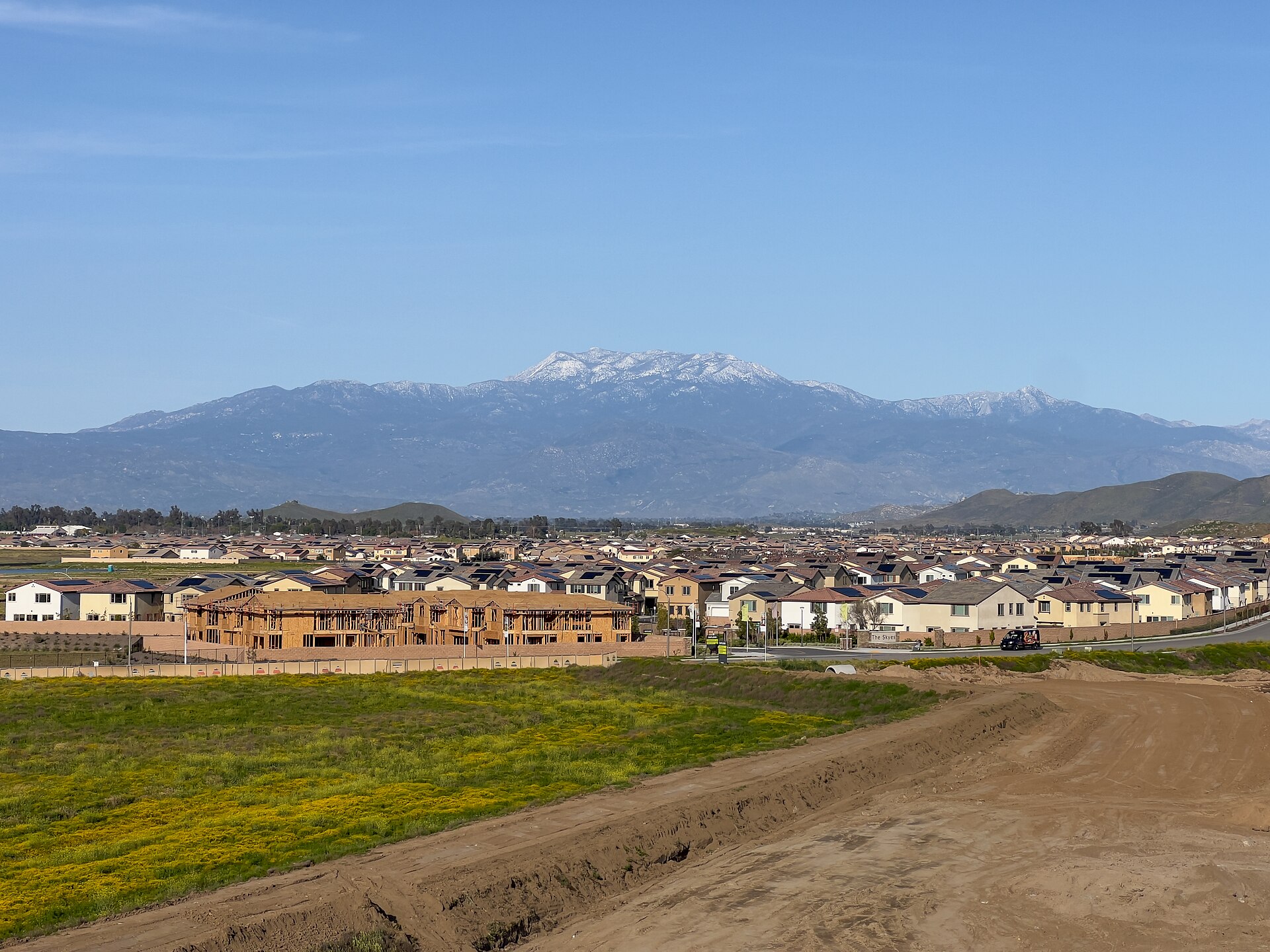
How many homes Idaho permits
The Census Bureau's Building Permits Survey asks every permit-issuing office in the country how many new housing units it authorized, by building size. Its annual state files give Idaho totals back past 2005. Adding the four building-size columns (one unit, two units, three and four units, five or more units) in the "imputed" columns, which fill in estimates for offices that did not report, gives the totals in the table below.1 The files also carry a second set of "reported" columns that count only offices that answered; for Idaho the reported single-family count for 2025 was 13,433 against an imputed 14,112. We use the imputed totals because they are the Bureau's best estimate for the whole state.
The pattern is a boom, a bust and a second, longer boom. Idaho permitted 21,578 units in 2005. By 2011 that had fallen to 3,815, an 82 percent drop. Permits then climbed for a decade, peaked at 21,732 in 2021, and have held between about 17,600 and 18,700 a year since. The 2025 figure, 17,944, is 80 percent above 2015. Over the same decade U.S. permits rose from 1,182,582 to 1,431,616, about 21 percent.1 Part A of this series explains why Idaho grew so fast; see the long view and the big cities since 2020.
| Year | Idaho units permitted | Of which single-family | Idaho construction jobs (annual average, thousands) |
|---|---|---|---|
| 2005 | 21,578 | 19,172 | 45.0 |
| 2006 | 17,075 | 14,789 | 52.0 |
| 2007 | 12,105 | 9,551 | 52.0 |
| 2008 | 6,470 | 5,673 | 44.9 |
| 2009 | 4,863 | 4,274 | 34.3 |
| 2010 | 4,153 | 3,568 | 31.2 |
| 2011 | 3,815 | 3,163 | 30.4 |
| 2012 | 6,265 | 5,036 | 31.4 |
| 2013 | 8,110 | 6,360 | 33.6 |
| 2014 | 8,797 | 6,293 | 35.8 |
| 2015 | 9,954 | 7,784 | 38.2 |
| 2016 | 12,165 | 9,739 | 41.6 |
| 2017 | 14,183 | 11,019 | 44.9 |
| 2018 | 15,824 | 12,176 | 49.1 |
| 2019 | 17,716 | 12,978 | 52.9 |
| 2020 | 19,130 | 14,969 | 55.9 |
| 2021 | 21,732 | 16,154 | 60.7 |
| 2022 | 18,706 | 11,912 | 66.2 |
| 2023 | 17,919 | 12,081 | 68.6 |
| 2024 | 17,630 | 14,821 | 71.5 |
| 2025 | 17,944 | 14,112 | 74.9 |
Sources: Census Bureau Building Permits Survey annual state files, imputed columns, our sums;1 BLS Current Employment Statistics series SMU16000002000000001, all employees in construction, Idaho, not seasonally adjusted, annual averages.2 Construction jobs include commercial, highway and specialty trade work, not only home building.
What speed does to a job site
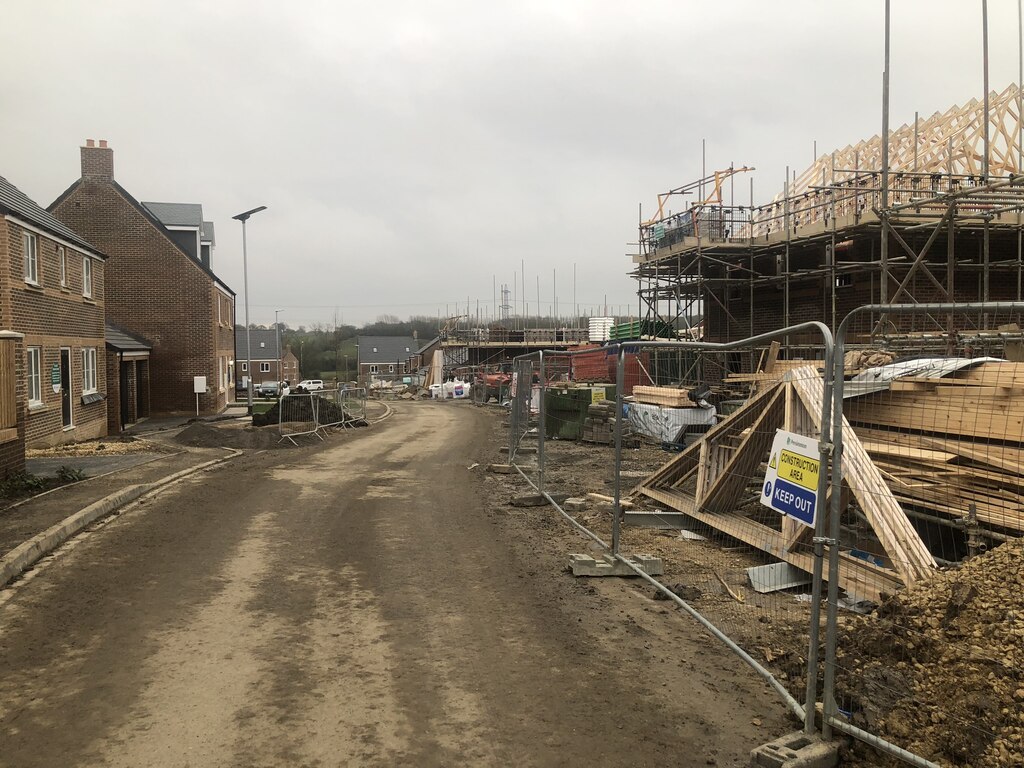
The mechanism is simple to state. A builder carrying 50 houses at once makes money when each house moves from foundation to closing on schedule. Each day a framing crew waits for an inspection, or a drywall crew waits for the framer to fix a failed item, costs money. The pressure runs in one direction: toward covering work up quickly. An inspector who walks a dozen or more sites a day sees each one for minutes, and whatever is hidden behind insulation or drywall after that visit is seen by no one until it fails.
That is a description of incentives, not a measurement. We found no Idaho data set that links inspection time per house to later defects. Idaho cities do not publish a standard statewide record of how many inspections each inspector performs per day or how many items fail on the first visit. Lesson 12 explains how to request those logs from a city building department under the Idaho Public Records Act.
Idaho's new speed rules, 2025 and 2026
In 2025 and 2026 the Legislature passed three laws aimed at the other side of the same problem: builders' complaints that permits and inspections were too slow. All three passed with no recorded no votes.
- Inspection deadline and third-party inspections (House Bill 266, 2025). Sponsored by the House Ways and Means Committee, HB 266 passed the House 64 to 0 on March 6, 2025, passed the Senate as amended 34 to 0 on March 20, and passed the House again 70 to 0 on March 26 after the Senate amendments. Gov. Brad Little signed it March 31, 2025; it is 2025 Session Laws chapter 221, effective July 1, 2025.615 It added Idaho Code 39-4118: if a permit holder requests an inspection and it is not performed within "forty-eight (48) business hours," the permit holder may hire a third-party inspector, must notify the division or local government, must hand over a copy of the results, and gets a refund of the fee for that inspection. If an inspector fails work and does not give the reason within three business days, the division or city must refund 10 percent of the inspection fees. A third-party inspector must hold the qualifications in Idaho Code 39-4108 and work "in substantial accord with the applicable jurisdiction's standards."5
- Live virtual re-inspections (also HB 266, 2025). The same bill let the Division of Occupational and Professional Licenses (DOPL) and local governments do re-inspections by live video at their discretion, after an inspector has been on site in person, and barred video re-inspections for structural inspections on buildings of three or more stories. A 2026 codifier's corrections bill, House Bill 893 (2026 Session Laws chapter 251), renumbered that section as Idaho Code 39-4119.1617
- Permit completeness deadlines (Senate Bill 1164, 2025). Sponsored by the Senate State Affairs Committee, with Sen. Galloway and Rep. Josh Wheeler as floor sponsors, SB 1164 passed the Senate 33 to 0 on March 24, 2025 and the House 63 to 0 on March 28, and was signed April 2, 2025 (2025 Session Laws chapter 272, effective July 1, 2025).18 It added Idaho Code 39-4117: a city or county must tell a residential applicant within 10 business days if an application is incomplete (20 for commercial), must decide completeness of a resubmission in the same time, and must publish a description of its permit process. The section does not set a deadline for the plan review itself and names no penalty for a missed deadline.19
- The same rule for the trades (House Bill 585, 2026). Sponsored by the House Business Committee with Rep. Wheeler and Sen. Galloway as floor sponsors, HB 585 passed the House 69 to 0 on March 5, 2026 and the Senate 33 to 0 on March 25, and was signed March 31, 2026 (2026 Session Laws chapter 232, effective July 1, 2026).7 It added three new sections, Idaho Code 54-1004A (electrical), 54-2626A (plumbing) and 54-5020A (HVAC), each with the same 48 business hour trigger, third-party option, refund and 10 percent late-reason refund, with inspector qualifications tied to Idaho Code 54-1019, 54-2627 and 54-5021.20
The case for these laws. Builders and the bills' sponsors framed them as accountability for government: a city that collects an inspection fee should inspect on time, and a builder should not pay carrying costs for a city's backlog. A third-party inspector must hold the same International Code Council (ICC) certification required of public inspectors under Idaho Code 39-4108, and must work to the city's standards, so in principle the work is checked to the same floor.521
The case for caution. The law lets the permit holder, the person whose work is being inspected, choose and hire the inspector when the deadline is missed. That is a change in who pays the inspector, and in other fields that arrangement has drawn concern about independence. The statute does not say who reviews a third-party inspector's findings, whether the city can re-inspect, or how a dispute over a third-party pass is settled. Video re-inspections save travel time but depend on what the camera is pointed at. These are open questions under the text as written, not documented failures; we found no Idaho report on how often the third-party option has been used since July 1, 2025.
Are there enough inspectors?
The question most often asked about booms is whether inspectors kept up. Idaho has no statewide count of public building inspectors by year. The closest national source is the BLS Occupational Employment and Wage Statistics survey (OEWS), which estimates employment by occupation in each state every May. Its occupation 47-4011, construction and building inspectors, counted 350 in Idaho in May 2015 and 1,000 in May 2025. Over the same decade the survey's count of carpenters rose from 4,430 to 8,380 and of electricians from 3,390 to 5,690.4
Divide permitted units by that inspector count and Idaho had about 28 new units per inspector in 2015 and about 18 in 2025 (our calculation, shown in the methods box). On that crude measure, inspection capacity grew faster than building. The measure has two large weaknesses. The occupation includes private home inspectors and inspectors who work for engineering firms, the state and highway agencies, so it is not a count of city building inspectors. And a ratio of units to inspectors says nothing about how the work is spread: a small city with one inspector during a subdivision boom can be swamped while the statewide average looks fine. To answer the question for a particular city, a reporter or council member needs that city's own staffing history and its inspection log.
How we figured it: units per inspector
Inputs. Idaho permitted housing units: 9,954 in 2015 and 17,944 in 2025, the sum of the one-unit, two-unit, three-and-four-unit and five-or-more-unit "Units" columns (imputed) in the Census Building Permits Survey annual files st2015a.txt and st2025a.txt.1 Construction and building inspectors (SOC 47-4011) in Idaho: 350 (May 2015) and 1,000 (May 2025), from the OEWS state files state_M2015_dl.xlsx and state_M2025_dl.xlsx.4
Method. 9,954 divided by 350 equals 28.4 units per inspector. 17,944 divided by 1,000 equals 17.9. Percent changes: units up 80.3 percent (17,944 divided by 9,954, minus 1); inspectors up 185.7 percent (1,000 divided by 350, minus 1).
Limits. OEWS figures are survey estimates rounded to the nearest 10 with sampling error; 47-4011 includes private home inspectors and inspectors outside home building; permits count units authorized, not inspections performed; one house can need eight or more inspections and an apartment building many more. This is a rough statewide ratio, not a caseload.

Cause 2: Labor
The post-2008 loss of trades
Idaho lost more of its construction workforce in the housing crash than the nation did. BLS data put average Idaho construction employment at 52,000 in both 2006 and 2007 and at 30,400 in 2011, a drop of 21,600 jobs or 41.5 percent.2 Nationally, construction employment fell from an annual average of 7,691,000 in 2006 to 5,518,000 in 2010, a drop of 28.3 percent.3 Workers who left in those years moved to other states, other industries or retirement, and an apprentice who would have started in 2009 or 2010 often did not start at all.
By 2019 Idaho's construction employment (52,900) had passed the old peak. By 2025 it reached 74,900, 44 percent above the 2007 level. The U.S. figure in 2025 was 8,267,000, about 7.5 percent above its 2006 peak.23 Idaho's workforce did not just recover; it grew fast. That growth is a double-edged fact for quality. More workers means more hands to build. It also means many of those hands were new to the trade, or new to Idaho's climate, soils and codes, at the same moment the volume of work was at its highest.
Trades licensed by exam, framers and finishers not
Idaho licenses the three mechanical trades by examination. Idaho Code 54-1007 says the state licenses electricians who "have by examination shown themselves to be fit, competent and qualified." A journeyman electrician takes the exam after a registered apprenticeship or after at least 16,000 hours of installation work, and a residential electrician license requires the residential exam, a two-year related instruction course and 4,000 hours of experience.10 Plumbers and HVAC workers have parallel licensing chapters (Idaho Code Title 54, chapters 26 and 50), and lesson 02 covers the codes those trades work under.
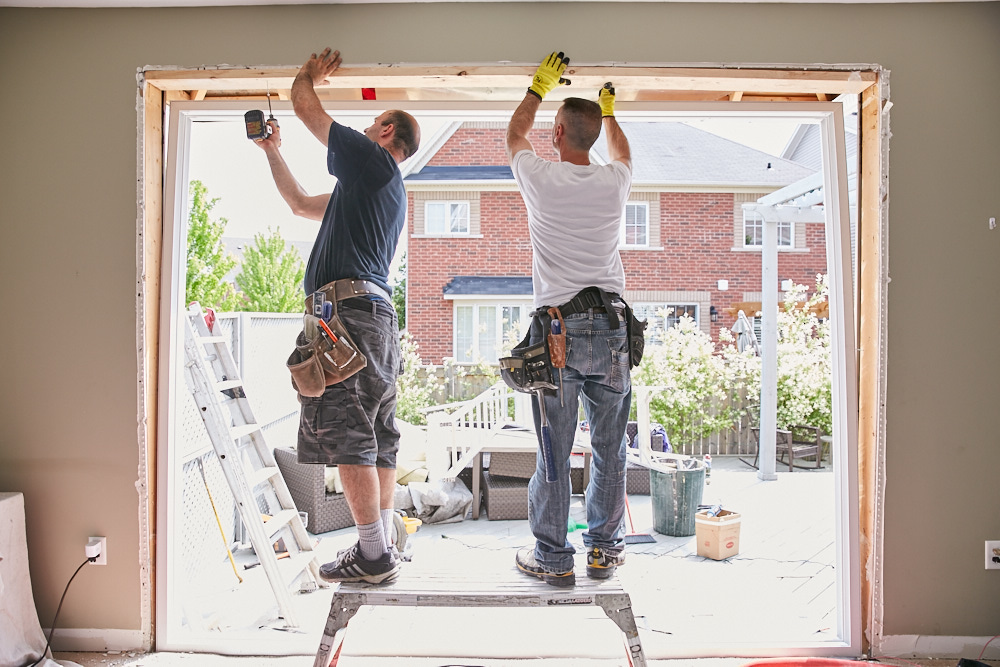
The trades that shape most of what a buyer sees and touches do not hold a state license at all. Framers, concrete and foundation crews, roofers, siding and window installers, insulation installers, drywall hangers and finishers, painters and flooring installers work under the general Contractor Registration Act if they contract directly, and as employees or subcontractors of a registered contractor otherwise. Registration under that act carries no skill test (see Cause 5). The quality of the frame, the flashing at a window, the roof underlayment and the drywall finish therefore rests on the builder's own supervision and on the city's framing and final inspections.

Subcontracting and pay by the piece
Most production builders in the United States do not employ the people who frame, roof or finish their houses. They hire subcontractors, and those subcontractors often pay crews by the piece (per square foot of framing, per sheet of drywall, per square of roofing) rather than by the hour. A piece rate rewards speed. It can also reward good work if the builder holds back payment until an item passes inspection and the punch list is clear. We found no Idaho data on how common piece-rate pay is in residential construction or on how it relates to defect rates, so this lesson describes the mechanism only. Lesson 12 suggests interview questions for trades and builders on how crews are paid and supervised.
Who the workers are
The brief for this course asked for the immigrant share of Idaho's construction workforce and for apprenticeship counts. We did not confirm an Idaho figure for either from a primary table in the time available, and both are listed under "unverified" in this lesson's notes. The American Community Survey's tables on industry by nativity, and the U.S. Department of Labor's registered apprenticeship data, are the places to look; lesson 12 explains how to pull them. Any claim that a particular group of workers builds worse or better houses would need data that does not exist in public form for Idaho.
Cause 3: The code is a floor
What the code says it is for
Idaho's residential building code is the 2018 International Residential Code (IRC) with Idaho amendments, which DOPL calls the Idaho Residential Code, 2020 Edition. The energy code is the 2018 International Energy Conservation Code with Idaho amendments, and the electrical code is the 2023 National Electrical Code (NEC) with amendments, according to DOPL's 2025 list of adopted codes.22 Lesson 02 covers the adoption dates and who may amend what.
The IRC is written by the International Code Council, a private standards organization, and states its own purpose in section R101.3: "to establish minimum requirements to safeguard the public safety, health and general welfare through affordability, structural strength, means of egress facilities, stability, sanitation, light and ventilation, energy conservation and safety to life and property from fire and other hazards attributed to the built environment" (quoted here from the 2012 edition).13 The ICC describes the IRC as a code that "establishes minimum regulations for one- and two-family dwellings and townhouses."23 The Idaho Building Code Act states the Legislature's intent to "require minimum performance standards and requirements for construction and construction materials" and, for jurisdictions that enforce codes, to set minimum standards with attention to "effect upon construction costs."14
What a minimum leaves out
A minimum life-safety code does not regulate much of what owners mean by quality. Whether the drywall seams show under a low light, whether the trim joints are tight, whether the floor squeaks, whether the carpet pad is thick, whether the paint covers in one coat, whether the countertop seams line up: none of these is a code question. Many durability questions are also outside it, or are covered only in general terms that depend on the inspector's eye and the manufacturer's instructions. An inspector looks at what is visible at the stage he or she is called for. A final inspection checks that required items are in place and work; it is not a punch-list walk.
This is why "the code grew" and "quality fell" can both be true. Code growth has been mostly in life safety, energy, structure and fire, the areas the code was built to cover. Owners' complaints are often about workmanship and finish, the areas it was never built to cover. Lesson 06 shows that the complaint records that exist do not separate the two cleanly.
The cost argument
Builders and many legislators argue that each code cycle adds cost, and Idaho's own statute names "effect upon construction costs" as a factor.14 Energy and safety advocates answer that the added cost buys lower energy bills and fewer fires and injuries over the life of the house. Lesson 02 covers the legislative fights over code updates, and lesson 08 and lesson 09 cover materials and the rest of the price. For this lesson the point is narrower: a code that spends its growth on safety and energy does not, by itself, raise workmanship, and money a builder spends meeting new code is money that cannot also go to finish quality at the same sale price.
Cause 4: Value engineering
What value engineering means
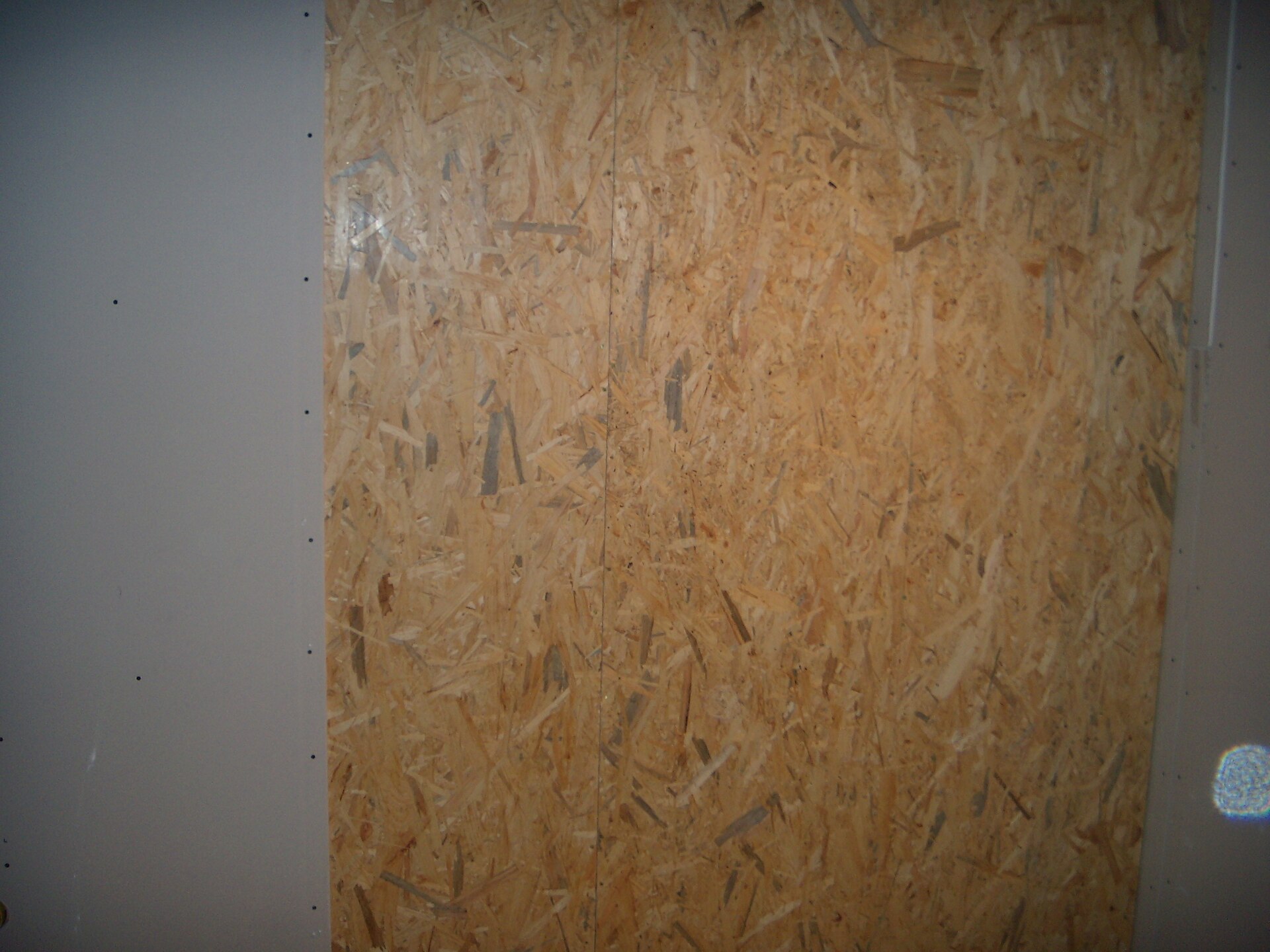
"Value engineering" in home building means changing materials or methods to cut cost while still meeting code and the buyer's expectations. Common examples include oriented strand board (OSB, panels made of wood strands pressed with resin) in place of plywood sheathing; engineered lumber such as I-joists and laminated veneer lumber in place of solid sawn joists and beams; trusses designed by the manufacturer in place of rafters cut on site; vinyl windows and vinyl or fiber-cement siding; laminate and vinyl plank floors; and thinner or lighter-gauge components where the code or the manufacturer allows.
Durability evidence both ways
The honest answer is that "newer material" does not mean "worse material." Manufacturers say engineered lumber is made to tighter tolerances than solid lumber and is less prone to warping and shrinking. OSB and plywood are both in wide use as wall and roof sheathing. The concerns raised are specific: whether some engineered products lose strength faster than solid wood when they get wet or burn, whether some finish products wear out faster than the materials they replaced, and every product's performance depends on being installed to the manufacturer's instructions. Lesson 06 describes earlier product failures that produced class actions and recalls (hardboard and OSB-based siding among them), which shows that new materials can fail at scale, and also that older houses had their own material failures.
We found no Idaho study comparing the durability of houses built with value-engineered packages against houses built with older methods, and we found no public warranty-claim data broken out by material. This lesson therefore does not claim that any material has lowered quality in Idaho. What can be checked is narrower: whether a product was installed to its listing and instructions, which is a question for the permit file, the inspector's notes and the manufacturer's documents.

Cause 5: Gaps in Idaho's contractor law
Registration is not licensing
Idaho's general contractors and most building trades are covered by the Idaho Contractor Registration Act, Idaho Code 54-5201 onward, passed in 2005 (2005 Session Laws chapter 153). Its declaration of policy says the Legislature found it "in the public interest to provide a mechanism to remove from practice incompetent, dishonest, or unprincipled practitioners of construction," and that "to aid in fulfilling these purposes, this chapter provides for the registration of construction contractors."24 Since Jan. 1, 2006, it has been unlawful to work as a contractor in Idaho without registering, and a contractor may not hire another contractor who cannot show proof of registration.8
The application, under Idaho Code 54-5210, asks for a sworn statement with a tax identifier, the business name and address, the owners' names and addresses, proof of workers' compensation coverage (or the reason it is not required), proof of general liability insurance of at least $300,000, the type of construction, and any past denial, surrender or revocation of a license anywhere. The fee is set by the board and may not exceed $150 a year.9 The section does not require an examination, a course, proof of experience or a bond. Registration answers "who is this business and is it insured." It does not answer "can this business build a house well."
The act does give the Idaho Contractors Board power to discipline. Under Idaho Code 54-5215, the board may reprimand, suspend or revoke a registration, or impose a civil penalty of up to $1,000, for grounds that include violating the Idaho Consumer Protection Act, using fraud to obtain a registration or a building permit, conduct that makes the contractor "a threat to the public safety, health or well-being," and "dishonest or dishonorable dealings."25 Poor workmanship as such is not on the list, though some poor-workmanship cases may fit other grounds. Lesson 11 covers the complaint process.
Several groups are exempt from registration under Idaho Code 54-5205, among them licensed trades working in their own field, owners building on their own residential property (unless they build to sell promptly without living there for at least 12 months), and jobs with a total price under $2,000 that are not part of a larger project.26
The 2026 bill that stopped
House Bill 768 (2026), introduced by the House Ways and Means Committee on Feb. 25, 2026, would have amended the Contractor Registration Act. Its statement of purpose, which lists Rep. Josh Wheeler as the contact, says it would clarify registration requirements, strengthen the board's authority to investigate and discipline, require applications to include additional ownership and compliance information, update investigative authority, clarify penalties and corrective options, and set procedures for people seeking a new registration after discipline. The fiscal note projected no General Fund impact.12 The bill was printed and referred to the House Business Committee on Feb. 26, 2026; the legislature's bill page lists no hearing, vote or later action.11 The bill would not have added an examination. Its text would have let the board bar a person whose registration was revoked, or who had three or more formal discipline actions within five years, from registering again under a different name.
We did not find, in the time available, a full list of earlier bills from 2020 to 2025 that would have licensed general contractors by exam; that question is listed under "unverified."
How other states treat general contractors
Neighboring and comparison states split along the same line Idaho sits on: some register, some license with tests.
| State | What a general or residential contractor needs | Exam? | Source |
|---|---|---|---|
| Idaho | Registration: identity, ownership, workers' comp, $300,000 liability insurance, fee up to $150 a year | No | Idaho Code 54-52109 |
| Washington | Registration with a surety bond of $30,000 (general) or $15,000 (specialty) | Not in the bond statute | RCW 18.27.04027 |
| Utah | License: 25-hour prelicensure course with an exam on it, a 5-hour business and law course for some classes, two years of full-time paid construction work for general and residential classes, financial responsibility, workers' comp and liability insurance, background check | Yes (course exam) | Utah Code 58-55-30228 |
| Oregon | License from the Construction Contractors Board after training on business practices and law, and a test on that training | Yes (business and law) | ORS 701.12229 |
| Nevada | License; the State Contractors' Board "may investigate, classify and qualify applicants" by "written or oral examinations," and must find experience, knowledge and financial responsibility | Yes (board may require) | NRS 624.240 and 624.26030 |
| California | License; applicants must show "the degree of knowledge and experience in the classification applied for" and knowledge of building, safety, health and lien laws, as the board's rules set out | Board rules (see unverified) | Cal. Business and Professions Code 706831 |
Two cautions. First, even the licensing states mostly test business and law knowledge, not carpentry or framing skill; Oregon's statute says its test "shall measure the applicant's knowledge regarding business practices and laws."29 Second, we found no study comparing construction-defect rates between registration states and licensing states, so the table shows a difference in law, not a difference in outcomes.
The case each way on licensing
For licensing by exam: supporters argue that a test, an experience requirement and a bond screen out people who should not be selling houses, give the state a clean way to remove bad actors, and give buyers a recovery fund or bond to claim against. Idaho's own policy statement already says the goal is to remove "incompetent" practitioners.24
Against: opponents argue that licensing raises the cost of entry, slows new firms in a state short of builders, and in practice tests business law rather than building skill, as Oregon's statute shows.29 They also point out that the work itself is already inspected by ICC-certified public inspectors under Idaho Code 39-4108, and that the trades with the greatest life-safety risk (electrical, plumbing, HVAC) are already licensed by exam in Idaho.2110
What the evidence shows: we found no Idaho or multistate study that measures whether licensing states have fewer construction defects. The policy debate is real, and the outcome data to settle it does not exist in public form.
Cause 6: Weak or slow remedies
If a builder knows that defects found after closing will be costly to the builder, the builder has a reason to prevent them. If defects are hard for a buyer to pursue, that reason is weaker. Idaho law shapes the buyer's path in four ways. Lesson 11 covers each in full; this section explains how each one bears on quality.
- Notice and Opportunity to Repair. Under Idaho Code 6-2503, part of the Notice and Opportunity to Repair Act passed in 2003 (2003 Session Laws chapter 133), a homeowner must serve a written notice of claim on the construction professional before suing over a construction defect. The builder has 21 days to respond by proposing an inspection, offering money, or disputing the claim. After an inspection, the builder has 14 days to offer a repair, offer payment or decline. A suit filed before the process is followed is dismissed without prejudice. The notice tolls the statute of limitations under the terms of the section.32 Builders describe this as a chance to fix problems without litigation; homeowners' advocates describe it as added delay.
- Statute of repose. Idaho Code 5-241, first enacted in 1965 and amended in 2022 (2022 Session Laws chapter 111), says tort actions arising out of the design or construction of an improvement to real property accrue "six (6) years after the final completion of construction" if they have not accrued earlier, and contract actions accrue "at the time of final completion."33 A defect that shows up years after completion may be outside the window.
- Builder warranties and arbitration clauses. Many new-home contracts include a written builder warranty and an agreement to arbitrate disputes instead of going to court. Lesson 10 describes how to read those documents and lesson 11 how arbitration works.
- Homeowners association declarant control. In a new subdivision the developer (the declarant) controls the homeowners association until a set point, so claims about common areas built by the developer start inside an association the developer runs. Part C, How HOAs Are Born and Who Controls Them, explains the rules.
None of these rules is unusual by national standards; many states have right-to-repair and repose statutes, and lesson 11 compares them. The argument here is about incentives: when the path to a remedy is long, a builder's cost of a defect is lower, and quality control competes with speed on less even terms.
What improved
The argument that houses got worse has to face the long list of ways new houses are safer than old ones. Lesson 06 covers the defects that plagued earlier decades. Here are three examples of code changes that raised the floor, with the record behind each.
- Electrical fire protection. Engineers at the U.S. Consumer Product Safety Commission wrote that "over 40,000 fires are attributed to home electrical distribution systems" each year, causing more than 300 deaths, and described the 1999 National Electrical Code's new requirement for arc-fault circuit interrupters (AFCIs, breakers that detect dangerous arcing) on bedroom circuits in new homes, "effective in the year 2002."34 Idaho now enforces the 2023 NEC with amendments.22
- Energy. Idaho's energy code is the 2018 IECC with Idaho amendments.22 Insulation, air sealing and window requirements in current codes are far above those of homes built before Idaho had a statewide code; Part B's lesson on how houses changed gives the history.
- Inspector qualifications. Since July 1, 2002, state and local building inspectors in Idaho must hold ICC certification, and a new hire without it must get a residential certification within six months and work under supervision until then (Idaho Code 39-4108, amended 2019).21
These gains are measurable in rules and, for fire, in national data. They are about safety and energy. They do not speak to drywall seams or leaky windows, which is why the two arguments keep passing each other.
The Magic Valley and the Treasure Valley
The causes above play out differently by place. In the Treasure Valley, large cities such as Boise and Meridian run their own building departments with staff, online portals and published processes; under Idaho Code 39-4117 every city that requires permits must now publish a description of its process.19 In the Magic Valley, small cities such as Kimberly, Gooding, Buhl and Hagerman have few staff, and lesson 03 (Getting a Residential Permit: City vs. County) shows, town by town, who issues building permits and who inspects electrical and plumbing work there. When a small department has one inspector, a single retirement or vacancy can change inspection times more than a statewide trend ever would, and the new 48-hour rule then lets builders bring in third-party inspectors. We did not find published inspection logs or staffing histories for Jerome, Twin Falls, Kimberly, Gooding, Buhl or Hagerman online; the records exist in city files and can be requested. Part A's Magic Valley case study gives the growth figures for those towns.
Pictures, Numbers and Infographics
| Measure | Idaho | U.S. or other states | Place or year | Source |
|---|---|---|---|---|
| New housing units permitted | 9,954 (2015); 17,944 (2025); up 80 percent | U.S. 1,182,582 (2015); 1,431,616 (2025); up 21 percent | Statewide, 2015 and 2025 | 1 |
| Construction jobs, annual average | 52,000 (2007); 30,400 (2011); 74,900 (2025) | U.S. 7,691,000 (2006); 5,518,000 (2010); 8,267,000 (2025) | Statewide and national | 23 |
| Construction and building inspectors (SOC 47-4011) | 350 (May 2015); 1,000 (May 2025) | Not compared | Statewide, all employers | 4 |
| Permitted units per inspector (our calculation) | 28.4 (2015); 17.9 (2025) | Not compared | Statewide | 14 |
| Inspection deadline before third-party option | 48 business hours | Varies by state | Since July 1, 2025 (building); July 1, 2026 (trades) | 520 |
| Residential permit completeness review | 10 business days | Varies by state | Since July 1, 2025 | 19 |
| General contractor exam | None (registration) | Utah, Oregon, Nevada, California license; Washington registers with bond | 2026 statutes | 92829303127 |
| Contractor registration fee cap | $150 a year | Washington bond $30,000 (general) | 2026 statutes | 927 |
| Maximum civil penalty for a registered contractor | $1,000 | Not compared | Idaho Code 54-5215 | 25 |
| Builder response to a defect notice | 21 days | Lesson 11 compares | Idaho Code 6-2503, since 2003 | 32 |
| Statute of repose for tort claims | 6 years after final completion | Lesson 11 compares | Idaho Code 5-241 | 33 |
| Residential code in force | 2018 IRC with Idaho amendments (Idaho Residential Code, 2020 Edition) | ICC's newest IRC is later | DOPL list, 2025 | 22 |

Common mistakes
- Treating registration as a license. A DOPL contractor registration number shows the business registered and filed insurance information under Idaho Code 54-5210. It does not show that anyone passed a test of building skill, because the statute requires none.9
- Reading a passed final inspection as a quality guarantee. The IRC states its purpose as "minimum requirements," and an inspector checks what is visible at each stage.13 A pass means the work met the code floor when inspected.
- Assuming a third-party inspection under the 2025 law is a private home inspection. The third-party inspector allowed by Idaho Code 39-4118 is hired by the permit holder when the government misses the 48-hour deadline, must meet the qualifications in Idaho Code 39-4108, and inspects to the jurisdiction's standards. It is a code inspection, not a buyer's inspection.5
- Reading the 10-day rule as a 10-day permit. Idaho Code 39-4117 sets 10 business days for a completeness decision on a residential application. It does not set a deadline for plan review or permit issuance.19
- Using the BLS inspector count as a city caseload. Occupation 47-4011 includes private home inspectors and inspectors outside home building; it is a statewide estimate with sampling error.4
- Comparing permits to construction jobs as if both were housing. The BLS construction series covers all construction, including commercial, industrial and road work. A rise in construction jobs is not a rise in home-building crews alone.2
- Missing the notice step. A defect suit filed without the notice required by Idaho Code 6-2503 is dismissed without prejudice until the claimant complies.32
- Assuming the bill passed because it was introduced. House Bill 768 (2026) was introduced and referred to committee, and the bill page shows no further action. Registration law is unchanged by it.11
What we know, what we don't, and what the data can show
What we know
- Idaho's permitted housing units rose 80 percent from 2015 to 2025, nearly four times the U.S. rate, after an 82 percent drop from 2005 to 2011.1
- Idaho lost 41.5 percent of its construction jobs from 2007 to 2011 and by 2025 had 44 percent more than in 2007.2
- General contractors in Idaho register without an exam; electricians, plumbers and HVAC workers are licensed by exam.910
- Since July 1, 2025 (building) and July 1, 2026 (trades), a missed 48 business hour inspection deadline lets the permit holder hire a qualified third-party inspector.520
- The residential code is a minimum by its own terms.13
What we don't know
- Whether average build quality in Idaho has fallen. No agency measures it (lesson 06).
- Inspector caseloads by city over time, and first-time inspection failure rates.
- How often the third-party inspection option has been used since July 1, 2025, and whether third-party passes differ from city passes.
- The share of Idaho residential work paid by the piece, the immigrant share of the residential workforce, and apprenticeship trends, from a primary source we could confirm.
- Whether states that license general contractors by exam have fewer defects.
What the data can show
- Census Building Permits Survey place-level files: permitted units by city and year, the denominator for any caseload measure.1
- City inspection logs (by public records request): inspections per inspector per day, first-time pass rates and re-inspection counts by year, and how those moved during the 2020 to 2022 peak.
- City budgets and staffing tables: building inspector positions by year, set against permits.
- Third-party inspection notices filed with cities and DOPL under Idaho Code 39-4118 and the 2026 trade sections: how often and where the option is used.5
- DOPL Contractors Board discipline records under Idaho Code 54-5215: actions per year per 1,000 permits.25
- BLS series SMU16000002000000001 and OEWS 47-4011: workforce and inspector trends, with their limits.24
Questions people ask
If the code is stricter, why do new houses still have problems?
Because most of the growth in the code has been in safety, structure and energy, and many owner complaints are about workmanship and finish, which the code does not regulate. The IRC's own purpose statement speaks of "minimum requirements."13 A house can meet every code item and still have poor trim, uneven drywall or a squeaky floor.
Does Idaho test general contractors?
No. The Idaho Contractor Registration Act requires registration with identity and insurance information and a fee of up to $150 a year. Idaho Code 54-5210 contains no examination or experience requirement.9 Electricians, plumbers and HVAC workers are tested under their own licensing laws.10
What happens if the city cannot inspect in time?
Since July 1, 2025, if a building inspection is not done within 48 business hours of the request, the permit holder may hire a third-party inspector who meets the qualifications in Idaho Code 39-4108, must notify the city or DOPL and provide the results, and is refunded the fee for that inspection (Idaho Code 39-4118). The same rule applies to electrical, plumbing and HVAC inspections from July 1, 2026, under House Bill 585.520
Who checks that inspectors are qualified?
Idaho Code 39-4108 requires state and local building inspectors to hold ICC certification as a building inspector or plans examiner. A residential-only certification limits the holder to IRC buildings, and a new hire has up to six months to get certified, working under supervision until then.21
Are there fewer inspectors now than before the boom?
Not statewide by the BLS count, which rose from 350 in May 2015 to 1,000 in May 2025, faster than permits.4 That count includes private home inspectors and is not a city staffing number, so it cannot answer the question for a particular city.
Did the Legislature try to tighten rules on contractors in 2026?
A bill to do so, House Bill 768 (2026), was introduced Feb. 25, 2026 and referred to the House Business Committee the next day. It would have revised registration information and the board's discipline powers. The bill page lists no further action.1112
How long after completion can a defect claim be brought?
Idaho Code 5-241 sets accrual rules: contract actions accrue at final completion, and tort actions accrue no later than six years after final completion. Other limitation periods then apply. Lesson 11 explains how courts have read the section.33
Hard questions
Should Idaho license general contractors by exam?
For: Idaho's own statute says the purpose of contractor regulation is to remove "incompetent, dishonest, or unprincipled practitioners," and a registration with no test does little to screen for competence; Utah, Oregon, Nevada and California require more.242829 Against: the tests in neighboring states mostly cover business and law, entry costs would rise in a state with a builder shortage, and the work is already inspected and the riskiest trades already licensed.2910 Evidence: we found no study showing that licensing states have fewer defects.
Does the 48-hour rule help or hurt quality?
Help: faster inspections reduce the pressure to cover work before it is seen, and a third-party inspector must be qualified and follow local standards.5 Hurt: the permit holder chooses and pays the replacement inspector, and the statute does not say how cities review those results. Evidence: no public data yet on use of the option or on results.
Is the labor shortage the main cause?
Yes, say many builders: the 2008 to 2011 collapse removed experienced workers, and the boom refilled the workforce with newer hands.2 No, say others: Idaho's construction workforce in 2025 was 44 percent larger than in 2007, and the BLS counts of licensed-trade occupations grew roughly in line with permits.24 Evidence: the numbers show a large, partly new workforce; they do not measure skill or link it to defects.
Is value engineering cutting corners?
Yes, say some owners and inspectors: lighter and cheaper products may wear out sooner and fail worse when wet. No, say builders and manufacturers: engineered products are code-accepted and often more uniform than what they replaced. Evidence: we found no Idaho durability data comparing the two; the testable question is whether a product was installed to its instructions, which the permit file and the manufacturer's documents can show.
For reporters and advocates
Records that exist. City and county building permit files and inspection logs (inspection type, date requested, date performed, result, inspector, comments); plan review comment letters; certificates of occupancy; third-party inspection notices and results filed under Idaho Code 39-4118 since July 1, 2025 and under the trade sections added by House Bill 585 since July 1, 2026;520 city budgets and position tables for building inspectors; ICC certification records for inspectors required by Idaho Code 39-4108;21 DOPL Contractors Board registration and discipline records under Idaho Code 54-5215;25 legislative bill pages, statements of purpose and committee minutes for HB 266 (2025), SB 1164 (2025), HB 585 (2026) and HB 768 (2026); and court filings in construction defect cases (see Court Records Research).
Questions to ask officials. How many inspections did each inspector perform per day in the busiest month of each of the last five years? What share of inspections failed on the first visit? How many third-party inspections have been filed under the 48-hour law, and does the city review them? How many residential applications missed the 10-business-day completeness deadline in Idaho Code 39-4117? How many inspector positions are budgeted, and how many are filled?19
How to ask. Most of these records are public under the Idaho Public Records Act, Idaho Code Title 74, chapter 1. Our module on Idaho public records requests explains how to write the request, and lesson 12 of this course, How to Report on Building Quality and Permitting, gives sample wording for inspection logs.
Magic Valley angle. Small departments in Kimberly, Gooding, Buhl and Hagerman, and county departments in Jerome, Twin Falls and Gooding counties, may have one or two inspectors, so a single vacancy matters. Ask each how it met the 48-hour deadline in the 2025 and 2026 building seasons, and whether builders used the third-party option there. Compare their permit counts from the Census place files with staffing.1
Fairness. Do not name a builder's work as defective unless a court, agency or the builder's own filing says so, and then quote the record. Give builders, inspectors and trades a chance to answer, and separate measured data from anecdote, as lesson 06 does.
Where to go next
- Idaho Legislature, Idaho Statutes search: Free official text of Idaho Code with history notes showing which session law changed each section; useful for checking the building code act, contractor registration and defect laws named here.
- Idaho Legislature, legislation by session: Free bill pages with sponsors, statements of purpose, fiscal notes, votes and status for each session; used here for HB 266, SB 1164, HB 585 and HB 768.
- Idaho Division of Occupational and Professional Licenses (DOPL): The state agency for contractor registration, trade licensing and the state building program; its site has a free license and registration lookup and complaint forms.
- Census Bureau, Building Permits Survey: Free monthly and annual permit counts by state, metro area, county and place; the place files let anyone compare a city's permit volume over time.
- BLS, Occupational Employment and Wage Statistics: Free state and metro estimates of employment and wages by occupation, including construction and building inspectors (47-4011) and the building trades.
- BLS, State and Metro Area Employment (CES): Free monthly employment by industry for each state and metro area, including construction in Idaho and the Boise and Twin Falls areas.
- International Code Council: Industry standards body that writes the IRC and certifies inspectors; free read-only access to many code editions on its codes site.
Still being checked (8 items)
These points could not be fully confirmed against a primary source when this lesson was written and fact checked in November 2026. The text above states each one as uncertain.
- Immigrant share of Idaho's construction workforce (ACS) and Idaho apprenticeship counts (Idaho Department of Labor, U.S. DOL, DOPL apprentice registrations) were not confirmed from a primary table and are not stated.
- Earlier bills from 2020 to 2025 that would have licensed Idaho general contractors by exam were not searched in full; only HB 768 (2026) is reported.
- What the 2022 amendment to Idaho Code 5-241 (2022 Session Laws ch. 111) changed was not confirmed.
- California's exam and experience details are set in Contractors State License Board rules, which were not read; only Business and Professions Code 7068 was read. Nevada 624.260 text was not read in full; only its title and 624.240 were.
- No Idaho data on piece-rate pay, inspection time per house, third-party inspection use since July 1, 2025, or durability of engineered products was found; those points are described as mechanisms only.
- Manufacturer claims about engineered lumber tolerances and concerns about engineered products under water or fire exposure were not checked against a primary study.
- Inspector staffing histories for Jerome, Twin Falls, Kimberly, Gooding, Buhl, Hagerman and their counties were not found online.
- The IRC purpose text is quoted from the 2012 edition; Idaho enforces the 2018 IRC, whose R101.3 wording was not read directly.
Last verified November 21, 2026. General education, not legal, tax, financial or real estate advice; every figure names its source and year in the Notes and Sources below. Data is revised: check the newest release before relying on any number.
Notes
- U.S. Census Bureau, Building Permits Survey, annual state files st2005a.txt to st2025a.txt, Idaho and United States rows; total units are our sums of the 1-unit, 2-unit, 3-4 unit and 5+ unit "Units" columns (imputed estimates); the files also carry "reported" columns (read Nov. 21, 2026). Read it online. ↩
- U.S. Bureau of Labor Statistics, Current Employment Statistics (State and Metro Area), series SMU16000002000000001, all employees, construction, Idaho, thousands, not seasonally adjusted, annual averages 2000 to 2025, retrieved through the BLS Public Data API (read Nov. 21, 2026). Read it online. ↩
- U.S. Bureau of Labor Statistics, Current Employment Statistics, series CEU2000000001, all employees, construction, United States, thousands, not seasonally adjusted, annual averages 2006 to 2025 (7,691 in 2006; 5,518 in 2010; 8,267 in 2025) (read Nov. 21, 2026). Read it online. ↩
- U.S. Bureau of Labor Statistics, Occupational Employment and Wage Statistics, state files for May 2015 (state_M2015_dl.xlsx) and May 2025 (state_M2025_dl.xlsx), Idaho rows for SOC 47-0000, 47-1011, 47-2031, 47-2111, 47-2152 and 47-4011 (read Nov. 21, 2026). Read it online. ↩
- Idaho Code section 39-4118, Inspections, timeliness, refunds (added 2025, ch. 221, sec. 2) (read Nov. 21, 2026). Read it online. ↩
- Idaho Legislature, House Bill 266 (2025), Building code, inspections: sponsor, action history and votes (House 64-0-6 on March 6; Senate 34-0-1 on March 20; House concurrence 70-0-0 on March 26; signed March 31, 2025; Session Laws ch. 221, effective July 1, 2025) (read Nov. 21, 2026). Read it online. ↩
- Idaho Legislature, House Bill 585 (2026), electrical, plumbing and HVAC inspections: sponsor, action history and votes (House 69-0-1 on March 5; Senate 33-0-2 on March 25; signed March 31, 2026; Session Laws ch. 232, effective July 1, 2026) (read Nov. 21, 2026). Read it online. ↩
- Idaho Code section 54-5204, Registration required (added 2005, ch. 153, sec. 1) (read Nov. 21, 2026). Read it online. ↩
- Idaho Code section 54-5210, Application for registration (added 2005, ch. 153; amended 2009, ch. 89) (read Nov. 21, 2026). Read it online. ↩
- Idaho Code section 54-1007, electrical licenses, qualifications and examinations (added 1947; most recently amended 2025, ch. 77) (read Nov. 21, 2026). Read it online. ↩
- Idaho Legislature, House Bill 768 (2026), Contractor Registration Act: introduced Feb. 25, 2026 by the House Ways and Means Committee; referred to Business Feb. 26, 2026; no later action listed (read Nov. 21, 2026). Read it online. ↩
- Idaho Legislature, Statement of Purpose and Fiscal Note, RS33414 / House Bill 768 (2026), contact Rep. Josh Wheeler (read Nov. 21, 2026). Read it online. ↩
- International Code Council, 2012 International Residential Code, section R101.3 Intent, from the publisher's preview pages distributed by the ANSI Webstore (read Nov. 21, 2026). Read it online. ↩
- Idaho Code section 39-4101, Legislative finding and intent (added 1975, ch. 180; amended 1983, 2000, 2002) (read Nov. 21, 2026). Read it online. ↩
- Idaho Legislature, 2025 Session Laws list by chapter (ch. 221, H 266, building code inspections; ch. 272, S 1164, building permits processing) (read Nov. 21, 2026). Read it online. ↩
- Idaho Code section 39-4119, Live virtual re-inspections (added 2025, ch. 221, sec. 1, as 39-4117; amended and redesignated 2026, ch. 251, sec. 15) (read Nov. 21, 2026). Read it online. ↩
- Idaho Legislature, 2026 Session Laws list by chapter (ch. 232, H 585, electrical, plumbing and HVAC inspections; ch. 251, H 893, codifier's corrections) (read Nov. 21, 2026). Read it online. ↩
- Idaho Legislature, Senate Bill 1164 (2025), building permits: sponsor, floor sponsors, action history and votes (Senate 33-0-2 on March 24; House 63-0-7 on March 28; signed April 2, 2025; Session Laws ch. 272, effective July 1, 2025) (read Nov. 21, 2026). Read it online. ↩
- Idaho Code section 39-4117, Processing building permits, timely review (added 2025, ch. 272, sec. 1) (read Nov. 21, 2026). Read it online. ↩
- Idaho Legislature, House Bill 585 (2026), bill text adding Idaho Code 54-1004A, 54-2626A and 54-5020A (read Nov. 21, 2026). Read it online. ↩
- Idaho Code section 39-4108, Certification (added 2002, ch. 345; amended 2019, ch. 54) (read Nov. 21, 2026). Read it online. ↩
- Idaho Division of Occupational and Professional Licenses, 2025 Updated Idaho Adopted Codes (June 2025) (read Nov. 21, 2026). Read it online. ↩
- International Code Council, International Residential Code overview page (read Nov. 21, 2026). Read it online. ↩
- Idaho Code section 54-5202, Declaration of policy (added 2005, ch. 153, sec. 1) (read Nov. 21, 2026). Read it online. ↩
- Idaho Code section 54-5215, Authority to investigate and discipline (added 2005; amended 2018, ch. 348, and 2020, ch. 320) (read Nov. 21, 2026). Read it online. ↩
- Idaho Code section 54-5205, Exemptions from registration (added 2005; amended 2007, ch. 252) (read Nov. 21, 2026). Read it online. ↩
- Revised Code of Washington 18.27.040, contractor bond requirements (read Nov. 21, 2026). Read it online. ↩
- Utah Code section 58-55-302, Qualifications for licensure (version effective May 7, 2025) (read Nov. 21, 2026). Read it online. ↩
- Oregon Revised Statutes 701.122, training and testing requirements for contractor licensing (text via oregon.public.law) (read Nov. 21, 2026). Read it online. ↩
- Nevada Revised Statutes chapter 624, sections 624.240 (examinations) and 624.260 (experience, knowledge and financial responsibility) (read Nov. 21, 2026). Read it online. ↩
- California Business and Professions Code section 7068, qualifications for contractor license (text via Justia; official text at leginfo.legislature.ca.gov) (read Nov. 21, 2026). Read it online. ↩
- Idaho Code section 6-2503, Notice of claim and response (added 2003, ch. 133, sec. 1) (read Nov. 21, 2026). Read it online. ↩
- Idaho Code section 5-241, accrual of actions arising out of the design or construction of improvements to real property (added 1965, ch. 101; amended 2022, ch. 111) (read Nov. 21, 2026). Read it online. ↩
- Douglas A. Lee, Andrew M. Trotta and William H. King Jr., U.S. Consumer Product Safety Commission, "New Technology for Preventing Residential Electrical Fires: Arc-Fault Circuit Interrupters (AFCIs)," undated (references through 1999) (read Nov. 21, 2026). Read it online. ↩
Check yourself
1. About how many new housing units did Idaho permit in 2025, according to the Census Building Permits Survey?
The Census Building Permits Survey annual state file for 2025 gives Idaho 17,944 units across all building sizes (our sum of the four size columns); 9,954 was 2015, 21,732 was the 2021 peak and 3,815 the 2011 low.
2. Under Idaho Code 39-4118, what may a permit holder do if a requested building inspection is not done within 48 business hours?
Idaho Code 39-4118, added by House Bill 266 (2025), lets the permit holder hire a third-party inspector meeting Idaho Code 39-4108 qualifications, notify the government, supply the results and receive a refund of that fee.
3. What does the Idaho Contractor Registration Act require of a general contractor applicant?
Idaho Code 54-5210 lists the application contents, including proof of workers' compensation and at least $300,000 in liability insurance, and caps the fee at $150 a year; it sets no exam. The $30,000 bond is Washington's rule (RCW 18.27.040).
4. Which Idaho workers must pass a state licensing exam?
Idaho Code 54-1007 licenses electricians who have "by examination shown themselves to be fit, competent and qualified"; framers, drywall finishers and roofers fall under contractor registration with no exam.
5. By how much did Idaho construction employment fall from 2007 to 2011?
BLS series SMU16000002000000001 shows annual averages of 52.0 thousand in 2007 and 30.4 thousand in 2011, a 41.5 percent drop; 28 percent is the U.S. drop from 2006 to 2010 (series CEU2000000001).
6. What did Senate Bill 1164 (2025) add to Idaho law?
SB 1164 created Idaho Code 39-4117, which requires a completeness decision within 10 business days for residential applications (20 for commercial) and does not set a deadline for plan review or issuance.
7. What happened to House Bill 768 (2026) on contractor registration?
The legislature's bill page for H0768 shows introduction Feb. 25, 2026 and referral to Business Feb. 26, 2026, with no later action listed.
8. How does the International Residential Code describe its own purpose in section R101.3?
Section R101.3 of the IRC (2012 edition preview, ICC) says the code establishes "minimum requirements to safeguard the public safety, health and general welfare."
9. Under Idaho Code 6-2503, how long does a construction professional have to respond to a homeowner's notice of claim?
Idaho Code 6-2503 requires a written response within twenty-one (21) days after service of the notice of claim.
10. Why is the BLS count of 1,000 construction and building inspectors in Idaho (May 2025) a weak measure of city caseloads?
BLS Occupational Employment and Wage Statistics occupation 47-4011 covers all employers, including home inspection firms, and is a statewide survey estimate, so it cannot show how any one city's caseload changed.
Terms in this lesson
- Third-party inspection
- Under Idaho Code 39-4118 (since July 1, 2025), a code inspection by a qualified private inspector hired by the permit holder when the city, county or DOPL has not inspected within 48 business hours.
- Live virtual re-inspection
- A follow-up inspection done by real-time video after an inspector has been on site in person; allowed at the agency's discretion by Idaho Code 39-4119, but not for structural inspections of buildings three or more stories tall.
- Completeness review
- A city or county's check that a permit application has all required information before plan review starts; Idaho Code 39-4117 sets 10 business days for residential applications.
- Contractor registration
- Filing with the Idaho Contractors Board under Idaho Code 54-5201 onward to show identity, ownership and insurance; it does not test skill.
- Licensing by examination
- A state permission to work that requires passing a test and usually documented training or experience, as Idaho requires of electricians, plumbers and HVAC workers.
- Value engineering
- Changing materials or methods to cut cost while still meeting code, such as using engineered lumber or OSB in place of solid lumber or plywood.
- Engineered lumber
- Wood products made by gluing veneers, strands or pieces together, such as I-joists and laminated veneer lumber, used in place of solid sawn joists and beams.
- Piece rate
- Paying a crew by the unit of work completed (per sheet, square foot or house) rather than by the hour.
- Building Permits Survey
- A Census Bureau survey of permit-issuing offices that counts new housing units authorized each month and year, by building size and place.
- OEWS
- Occupational Employment and Wage Statistics, a BLS survey that estimates employment and wages by occupation in each state each May.
- ICC certification
- A credential from the International Code Council showing an inspector or plans examiner passed its exam; Idaho Code 39-4108 requires it of state and local building inspectors.
- Minimum code
- A code that sets the lowest acceptable standard for safety, health and energy; the IRC describes itself in these terms.
- Arc-fault circuit interrupter (AFCI)
- A breaker that cuts power when it detects dangerous arcing in wiring; first required on bedroom circuits in new homes by the 1999 National Electrical Code, effective 2002.
Sources
- U.S. Census Bureau, Building Permits Survey, annual state files (2026-11-21) checked 2026-11
- BLS, series SMU16000002000000001, Idaho construction employment (2026-11-21) checked 2026-11
- BLS, Occupational Employment and Wage Statistics tables (2026-11-21) checked 2026-11
- Idaho Code 39-4118, Inspections, timeliness, refunds (2026-11-21) checked 2026-11
- Idaho Code 39-4117, Processing building permits, timely review (2026-11-21) checked 2026-11
- Idaho Legislature, House Bill 266 (2025) (2026-11-21) checked 2026-11
- Idaho Legislature, House Bill 585 (2026) (2026-11-21) checked 2026-11
- Idaho Legislature, House Bill 768 (2026) (2026-11-21) checked 2026-11
- Idaho Contractor Registration Act, Idaho Code Title 54, Chapter 52 (2026-11-21) checked 2026-11
- Idaho Code 6-2503, Notice and Opportunity to Repair (2026-11-21) checked 2026-11
- Idaho Code 5-241, accrual of construction actions (2026-11-21) checked 2026-11
- DOPL, 2025 Updated Idaho Adopted Codes (2026-11-21) checked 2026-11
- Utah Code 58-55-302, contractor qualifications (2026-11-21) checked 2026-11