Lesson 6 of 12 · about 50 minutes · Updated November 21, 2026
Is Construction Quality Getting Worse?
You'll be able to
- Identify the Idaho records that bear on construction quality and what each one actually counts
- Compute complaints per 1,000 registered contractors from DOPL performance reports and explain the limits of the rate
- Recognize counting changes, such as DOPL's fiscal 2022 expansion of trade discipline reporting, before charting a series
- Explain survivorship bias and how it shapes the belief that older houses were built better
- Describe documented defects from earlier decades, including aluminum wiring, polybutylene plumbing, OSB siding and imported drywall
- Sort a quality claim into measured data, official statement, survey or anecdote and name the record that could test it
Start here: the short version
- No agency measures build quality. No Idaho or federal office keeps a count of defects per new house. What exists are complaint counts, discipline counts, inspection counts, court opinions and national housing surveys, and each one measures something narrower than "quality."
- Complaints against registered contractors tripled in four years. The Idaho Division of Occupational and Professional Licenses (DOPL) reports 162 complaints against Contractors Board registrants in fiscal year 2021 and 485 in fiscal 2025, while registrations stayed between about 20,400 and 22,800. That is 7.9 complaints per 1,000 registrations in fiscal 2021 and 23.5 in fiscal 2025 (our calculation).12
- Attorney General complaints rose too, and then the reports stop. The Idaho Attorney General's Consumer Protection Division logged 43 "Construction & Contractors" complaints in fiscal 2016 and 188 in calendar 2022, when the category ranked first of all complaint types. The category also covers remodels and yard work, not only new houses.34
- Counting rules change the numbers. DOPL's own report says its fiscal 2022 figures were "expanded to include trade permit discipline and Notice of Violations." Electrical, plumbing and HVAC complaint counts jumped from near zero in fiscal 2021 to hundreds in fiscal 2022 for that reason, not because work got worse overnight.5
- Older homes had serious defects too. The Consumer Product Safety Commission (CPSC) found that homes built before 1972 and wired with aluminum were 55 times more likely than copper-wired homes to have an outlet connection reach "Fire Hazard Conditions." Plastic pipe, siding and imported drywall each produced national settlements or federal investigations.6
- The newest homes look best in the national survey, for now. An analysis of the 2023 American Housing Survey by the National Association of Home Builders (an industry group) found 3 percent of homes built in 2000 or later were inadequate, against 9 percent of homes built before 1940. Age and upkeep drive much of that gap.7
- Idaho's time limits shape what records exist. A contract claim over a new house starts its five-year clock at "final completion of construction" (Idaho Code 5-241 and 5-216). In Moyer v. Doug Lasher Construction, Inc. (Idaho Supreme Court, Dec. 18, 2024) homeowners' claims over leaks reported from 2015 on were held time-barred.89
Law: Idaho Code as amended through the 2026 regular session, read on the Idaho Legislature's site Nov. 20 and 21, 2026. Data: DOPL performance reports for fiscal years 2021 to 2025 (Idaho's fiscal year runs July 1 to June 30); Idaho Attorney General Consumer Protection annual reports for fiscal 2015 through calendar 2022 (the newest we could retrieve); CPSC publications and SEC filings as dated in each note; American Housing Survey 2023 as analyzed by NAHB. City pages and reports read Nov. 20, 2026. Agencies revise counts and change categories; check the newest report from the issuing office.
People who build or buy a new house in Idaho often say the same thing: the house looks fine at closing and then the problems start. Windows leak, drywall cracks, grading sends water toward the foundation, a furnace was never balanced, siding was nailed wrong. Builders and trades answer that houses today are inspected more often, against longer codes, than at any time in the state's history, and that buyers expect more and complain more. Both claims can be true at once. This lesson sets out what the public record can and cannot say about whether construction quality in Idaho is getting worse.
It puts the evidence first. It starts with the Idaho numbers that exist (complaints to DOPL's Contractors Board and trade boards, complaints to the Attorney General, DOPL's permit and inspection counts, what city inspection departments publish, and appellate court opinions), then turns to national data (the American Housing Survey) and to the history of defects in houses built in earlier decades. It ends with a method for telling a trend from an anecdote. The causes that could make quality fall even as codes grow (speed, labor, minimum codes, value engineering, and gaps in the law) are the subject of the next lesson, Why Quality Can Fall Even as Code Grows. What a buyer can check before closing is in Buying New Construction Without Getting Burned, the legal remedies after a defect appears are in When Things Go Wrong: Remedies, and how to build a story or a records request around these numbers is in How to Report on Building Quality and Permitting. How Idaho houses changed in size, shape and code from 1979 to 2026 is in Part B, How Houses Changed, 1979 to 2026, and is not repeated here.
This lesson describes records and rules for general education. It does not judge any builder's work. Where it names a builder, it names one only because a court opinion does, and it says exactly what the opinion says.

What "quality" means, and why no one measures it
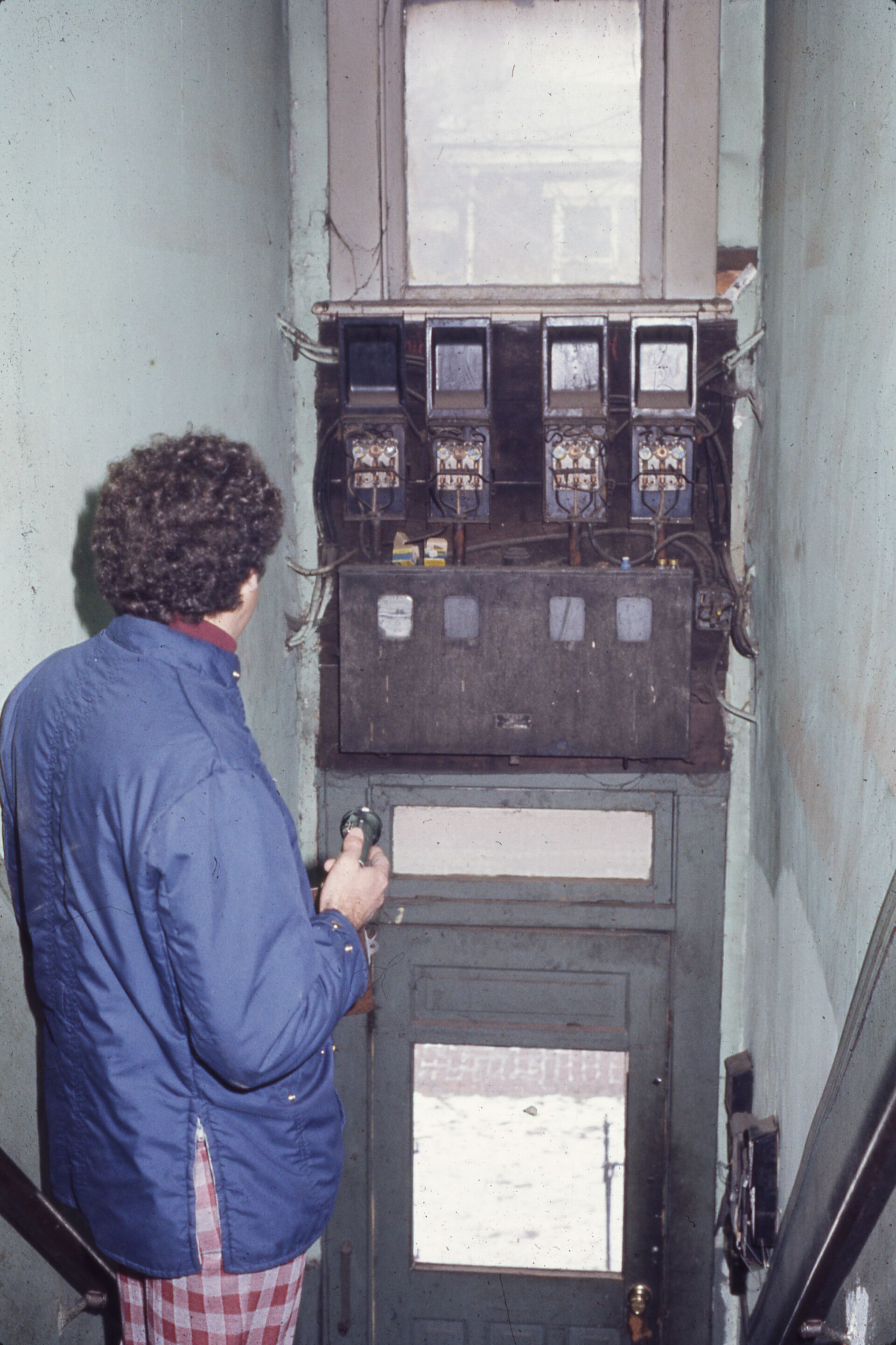
Quality in a house has at least three parts. The first is code compliance: does the work meet the minimum rules adopted by the state and the city on the day it was inspected? The second is workmanship: is the work done neatly and to the manufacturer's instructions, even in places the code does not reach (paint, trim, flooring, cabinet doors, the slope of a yard)? The third is durability: does the house still perform after five, ten or thirty years of weather and use? An inspection program measures only the first, and only at the moments an inspector is on site. No public program measures the second or third.
The Idaho Building Code Act sets the codes but not a quality measure. Idaho Code 39-4109 adopts the International Building Code and, through it, the Idaho residential code, the Idaho energy conservation code and accessibility rules, as adopted and amended by the Idaho Building Code Board through negotiated rulemaking.10 Idaho Code 39-4116 tells local governments that run building programs to adopt those codes by ordinance effective January 1 of the year after the board adopts them, and limits what they may add.11 Neither section requires anyone to count failed inspections, defects found after occupancy, or warranty claims. (The editions in force and the fights over updating them are in lesson 02, The Codes: What Idaho Adopts and Who Decides.)
Because nobody measures quality directly, every claim about a trend rests on a stand-in. A stand-in can move for reasons that have nothing to do with how houses are built: more houses, more buyers who know where to complain, a new complaint form, an agency that starts counting a new kind of case, a lawyer's advertising campaign, or a news story. The sections below take each stand-in in turn and say what moves it.
Four kinds of evidence
This lesson sorts evidence into four kinds and labels each figure so a reader can tell them apart.
- Measured data come from a defined count kept the same way over time: DOPL's complaint counts by board, the Attorney General's complaint categories, DOPL's permit and inspection counts, the American Housing Survey's adequacy measure. Even these depend on who chooses to complain or respond.
- Official statements are what an agency says in a report, a court says in an opinion, or a board says in its minutes. They carry legal weight but may describe one case.
- Surveys by industry groups, insurers or consultants ask a sample of people what they think or what happened to them. They are labeled here with the sponsor and, where given, the sample.
- Anecdotes are single stories in the news, on social media or in a hearing. They can point to a problem worth checking. They cannot show a trend.
What Idaho records show
Complaints against registered contractors
Every person who works as a contractor in Idaho must register with the Idaho Contractors Board, which DOPL staffs. Idaho Code 54-5204 made it unlawful, "on and after January 1, 2006," to engage in the business of a contractor without registering.12 Registration is not a skills license. Under Idaho Code 54-5210 an applicant submits identifying information, proof of workers' compensation coverage (or a statement of why it is not required), a certificate of general liability insurance "including products and completed operations" of at least $300,000, a statement of the type of construction, a statement about any past denial or revocation in any state, and a fee of no more than $150 a year. The statute requires no exam.13 DOPL's own answer to the question "Are contractors required to be licensed in Idaho?" is that the act "requires registration, not licensure."14 Electricians, plumbers and HVAC installers are different: they hold licenses under their own chapters of Title 54, and Idaho Code 54-5205 exempts people licensed under chapters 10, 26 and 50 of Title 54 (among others) from contractor registration for the work their license covers.15
The board may investigate "upon receipt of a written complaint from a person who claims to have been injured or defrauded," and after a hearing may issue informal letters of reprimand, suspend or revoke a registration, impose a civil penalty of up to $1,000, or issue a formal reprimand, for reasons that include failing to keep insurance, violating the Idaho Consumer Protection Act, and fraud in getting a registration or a building permit (Idaho Code 54-5215).16 The listed grounds are about honesty, insurance and paperwork. Poor workmanship is not listed as a ground by itself, which matters for what a complaint count can mean: a homeowner with a leaking roof may complain to the board, but the board's power is tied to the grounds in the statute.
DOPL reports complaint and discipline counts by board each year in its performance report to the Division of Financial Management. The table below combines the report covering fiscal 2021 to 2024 with the report covering fiscal 2022 to 2025.
| Fiscal year (July to June) | Contractors Board registrations (total) | Complaints against registrants | Final disciplinary actions | Complaints per 1,000 registrations (our calculation) |
|---|---|---|---|---|
| 2021 | 20,440 | 162 | 75 | 7.9 |
| 2022 | 20,788 | 206 | 68 | 9.9 |
| 2023 | 21,775 | 217 | 89 | 10.0 |
| 2024 | 22,773 | 419 | 1 | 18.4 |
| 2025 | 20,597 | 485 | 15 | 23.5 |
Sources: fiscal 2021 from DOPL's performance report web page covering fiscal 2021 to 2024; fiscal 2022 to 2025 from DOPL's FY25 performance measurement report. The two reports agree on the overlapping years 2022 to 2024.21
How we figured it: complaints per 1,000 registrations
Inputs. "Number of Complaints Against Licensees" and "Total Number of Licenses" for the Contractors Board, as printed in the two DOPL performance reports cited above.
Method. Complaints divided by registrations, times 1,000, rounded to one decimal. Fiscal 2021: 162 divided by 20,440 is 0.00793, or 7.9 per 1,000. Fiscal 2022: 206 divided by 20,788 is 9.9. Fiscal 2023: 217 divided by 21,775 is 10.0. Fiscal 2024: 419 divided by 22,773 is 18.4. Fiscal 2025: 485 divided by 20,597 is 23.5. The fiscal 2025 rate is about three times the fiscal 2021 rate (23.5 divided by 7.9 is 2.97).
Limits. Registrations count businesses and people allowed to work, not houses built or jobs done. A contractor who builds 200 houses a year and one who replaces a fence are each one registration. The complaint counts cover all kinds of contractor work (remodels, roofs, decks, commercial jobs), not only new houses. A complaint is an allegation, not a finding. We did not have DOPL's counts by type of complaint, so we cannot say how many were about workmanship on new homes.
Three things stand out. Complaints roughly tripled from fiscal 2021 to fiscal 2025 while the number of registrations barely moved, so the rise is not just a larger pool of contractors. The biggest jump came between fiscal 2023 (217) and fiscal 2024 (419). And final disciplinary actions fell from 89 in fiscal 2023 to 1 in fiscal 2024 and 15 in fiscal 2025, at the same time complaints nearly doubled. The reports do not explain either change. Discipline in a given year often comes from complaints filed in an earlier year, and DOPL reports division-wide that it resolved 55 percent of board investigations within 120 days in fiscal 2022, 60 percent in fiscal 2023, 40 percent in fiscal 2024 and 52.03 percent in fiscal 2025, against a goal of 90 percent by June 2027.17 A backlog would push discipline into later years. The report does not break the timeliness measure out by board, so we cannot say whether contractor cases were slower than others.
What the table cannot show is whether houses got worse. A complaint count rises when more people complain, and it can rise because DOPL made complaints easier to file online, because news coverage told people the board exists, or because a few contractors drew many complaints. Without the complaints by type and by respondent, which a public records request can seek (see lesson 12), the count is a signal to check, not a finding.
Complaints against licensed electricians, plumbers and HVAC installers
The same DOPL reports give complaint and discipline counts for the Electrical, Plumbing and HVAC boards. They show how much a counting change can move a series.
| Board | FY2021 | FY2022 | FY2023 | FY2024 | FY2025 |
|---|---|---|---|---|---|
| Electrical: complaints (final actions) | 9 (0) | 211 (183) | 95 (75) | 66 (64) | 47 (16) |
| Plumbing: complaints (final actions) | 10 (0) | 150 (135) | 102 (78) | 73 (72) | 81 (14) |
| HVAC: complaints (final actions) | 0 (0) | 436 (424) | 51 (32) | 39 (36) | 53 (3) |
| Electrical licenses (total) | 16,054 | 18,658 | 12,413 | 17,230 | 19,173 |
| Plumbing licenses (total) | 7,699 | 8,190 | 8,670 | 9,174 | 8,970 |
| HVAC licenses (total) | 7,828 | 9,039 | 8,846 | 7,093 | 6,991 |
Sources: DOPL performance reports, fiscal 2021 to 2024 and fiscal 2022 to 2025.218
The HVAC board went from 0 complaints in fiscal 2021 to 436 in fiscal 2022, with 424 final actions, and then back to 51. The FY25 report explains the jump in a footnote to its division-wide discipline line: "FY22 reporting expanded to include trade permit discipline and Notice of Violations."5 In other words, starting in fiscal 2022 DOPL counted enforcement that flows from its own permit inspections (for example, a notice of violation for work without a permit) alongside complaints filed by the public. The fiscal 2021 trade numbers are not comparable with the later ones, and anyone charting them as a single series would show a false explosion in bad trade work. The licensed trades' complaint counts fell from fiscal 2022 to fiscal 2025 on every board, which is the opposite direction from the Contractors Board.
A reader should not compare the trade boards with the Contractors Board as if they measured the same thing. Licensed trades are tested and inspected on each permit; contractor registrants are not tested, and the work of a general contractor that is not electrical, plumbing or mechanical is inspected by whichever city, county or DOPL program issued the building permit. Lesson 07 compares registration and licensing in Idaho and other states.
Complaints to the Attorney General
The Consumer Protection Division of the Idaho Attorney General's office takes complaints under the Idaho Consumer Protection Act (Idaho Code 48-601 onward), which bars unfair and deceptive practices such as "representing that goods or services are of a particular standard, quality, or grade ... if they are of another" (Idaho Code 48-603(7)).19 Each annual report through 2022 printed a "Top 10 Complaint Categories" table with a two-year comparison. "Construction & Contractors" appears in that table every year from fiscal 2016 on. From 2021 the reports describe the category as new construction, remodels and outdoor yard work.
| Report year | Construction & Contractors complaints | Rank | All complaints received | Construction share (our calculation) |
|---|---|---|---|---|
| Fiscal 2016 | 43 | 5 | 791 | 5.4% |
| Fiscal 2017 | 44 | 3 | 792 | 5.6% |
| Fiscal 2018 | 69 | 4 | 1,223 | 5.6% |
| Calendar 2019 | 86 | 2 | 1,179 | 7.3% |
| Calendar 2020 | 100 | 2 | 1,235 | 8.1% |
| Calendar 2021 | 89 | 2 | 1,165 | 7.6% |
| Calendar 2022 | 188 | 1 | 1,429 | 13.2% |
Sources: Idaho Attorney General Consumer Protection annual reports for fiscal 2017 (fiscal 2016 and 2017 columns), fiscal 2018, 2019, 2020, 2021 and 2022. The fiscal 2016 count and rank also appear in the fiscal 2016 report's own table. Starting with the 2019 report the division compared calendar 2019 with fiscal 2018.4202122233
How we figured it: the construction share of Attorney General complaints
Inputs. The "Construction & Contractors" count and the "Total Complaints Received" line from each report's top 10 table.
Method. Category count divided by total complaints, as a percent, rounded to one decimal: 43 of 791 is 5.4 percent; 44 of 792 is 5.6; 69 of 1,223 is 5.6; 86 of 1,179 is 7.3; 100 of 1,235 is 8.1; 89 of 1,165 is 7.6; 188 of 1,429 is 13.2. From 2021 to 2022 the count rose from 89 to 188, an increase of 111 percent (99 divided by 89).
Limits. The category mixes new houses, remodels and yard work. The fiscal 2018 report's narrative says construction complaints "increased 36%" that year, but its own table shows 69 against 44, which is a 57 percent rise; we use the table numbers. The fiscal 2016 report says construction complaints grew about 50 percent from fiscal 2015, and its table shows 43 against 28 (a 54 percent rise), but the same report gives two different fiscal 2015 totals for all complaints (829 in the table, 869 in its five-year snapshot), so we start the series at fiscal 2016.24 We could not retrieve the Attorney General's reports for 2023, 2024 or 2025 from the office's site in November 2026, so the series stops at 2022.
The Attorney General's reports also say what the complaints are about. The fiscal 2018 report described "unfinished projects, shoddy workmanship, subcontractor liens, and contractors failing to provide consumers with their pre-purchased services," and said the division tries to mediate construction complaints and refers complaints about registered contractors to the Idaho Contractors Board.20 The 2019 report said consumers should file construction complaints with the division if the dispute involves (a) a contractor engaging in unfair, misleading or deceptive acts or practices, (b) a subcontractor filing a lien against the consumer's property because the contractor failed to pay the subcontractor, or (c) a contractor failing to provide the written disclosures Idaho law requires (the report cites "Idaho Code § 48-525"; the general contractor disclosure statute is Idaho Code 45-525).2125 A dispute about workmanship alone, with no deception, lien or missing disclosure, falls outside that list. Disputes like that end in a settlement, an arbitration or a lawsuit, not in a public count.
The rise in the Attorney General's construction count from 2016 to 2022 lines up in time with Idaho's building boom, and the doubling in 2022 lines up with the year after the pandemic surge in prices and demand. A count that rises with the number of jobs done does not, by itself, show that each job got worse. To turn it into a rate one would need the number of construction jobs, which no Idaho agency counts across new homes, remodels and yard work together.
DOPL's own permits and inspections
DOPL's own building permit covers state-owned and state-occupied buildings (Idaho Code 39-4103 and 39-4111), so a private house in a county with no local building program gets no building permit at all. DOPL also handles manufactured home installation and modular building permits, and it issues electrical, plumbing and HVAC permits statewide except where a local government runs its own trade program (lesson 01 maps who does what). DOPL's performance report counts the permits and inspections in its own jurisdiction.
| DOPL measure | FY2022 | FY2023 | FY2024 | FY2025 |
|---|---|---|---|---|
| Permits issued (building, modular, manufactured housing, electrical, plumbing, HVAC) | 73,933 | 66,639 | 65,871 | 65,933 |
| Permit inspections completed | 158,657 | 145,875 | 141,401 | 134,897 |
| Inspections per permit (our calculation) | 2.15 | 2.19 | 2.15 | 2.05 |
| Building and modular plan reviews completed | 2,107 | 1,216 | 1,216 | 1,234 |
| Share of required trade installation, elevator and facility inspections done (goal 100%) | 80% | 80% | 80% | 80% |
Source: DOPL FY25 performance measurement report, key services and performance measure 1.2627
The counts tell a reader how much DOPL inspected, not what the inspectors found. The report does not give pass and fail rates, re-inspections, or corrections ordered. Inspections per permit slipped from 2.19 in fiscal 2023 to 2.05 in fiscal 2025 (our calculation: inspections divided by permits), but the permit mix (a water heater permit needs one inspection; a new house needs many) changes from year to year, so the ratio does not show whether each house got fewer visits. Performance measure 1 reports an actual of 80 percent against a 100 percent target in each of the four years for the goal to "Annually perform inspections for 100% of trade installation code compliance, elevator, drug outlets, infection control, barbers and cosmetology, and mortician inspections"; the measure groups construction trades with unrelated facility inspections, so it cannot be read as a construction figure alone.27
What cities publish about inspections
Most new Idaho houses in cities are inspected by the city's building department. Cities keep inspection results in their permit software, and those results are public records, but few cities publish them as statistics.
- Boise. The city's residential inspection guide lists the inspections "in the general order to be scheduled": an optional conference, public works subgrade approval in hillside zones, footing, foundation, wall bracing, electrical, plumbing and mechanical rough-in, framing and rough-in (after all trade rough-ins pass), energy efficiency and insulation, other fire-rating checks in wildland-urban interface zones or near property lines, trade finals, public works occupancy approval in hillside zones, a planning inspection in historic districts, and the final.28 Boise's monthly construction report counts permits and valuations; the July 2026 report shows 27 new single-family dwelling permits in July 2026 against 39 in July 2025, and 10,913 permits of all kinds in the first seven months of 2026 against 11,096 in the same months of 2025 and 13,189 in 2022. It does not report inspections, failures or re-inspections.29
- Twin Falls. The City of Twin Falls inspection page lists building, plumbing, mechanical, electrical, engineering, fire department, planning and zoning, framing, concrete and building final inspections, says certificates of occupancy can take up to three business days, and says "Re-inspection fees are only charged if an inspection has failed more than (1) time for the same issue. The fee of $50.00 must be paid prior to scheduling a re-inspection." The page publishes no counts of inspections or failures.30 Because the fee applies only on a second failure, a count of re-inspection fees from Twin Falls would undercount first-time failures.
- Jerome, Kimberly, Gooding, Buhl and Hagerman. We found no published inspection statistics for these cities or for Jerome, Twin Falls or Gooding counties. Small departments may keep results on paper or in permit software without a public report; the records still exist and can be requested (lesson 03 covers which office issues permits in each place).
The fair conclusion is that the best Idaho measure of what inspectors find, the share of inspections that fail and why, exists inside each city's permit system and is not published anywhere we could find. A records request for a year of inspection results, with the inspection type, result and correction notes, would let a reader compute a failure rate for one city. Comparing cities would be harder: some inspectors write a correction and pass the work on the spot, others fail it and require a new visit, so a "failure rate" partly measures each department's habits.

What court cases show
Court records hold the most detailed accounts of construction disputes, because a lawsuit forces both sides to put dates, documents and expert reports on file. Only a small share of disputes reach court, and only a small share of those reach the Idaho Supreme Court or Court of Appeals, so appellate opinions are case studies, not a trend line.
One recent opinion shows how Idaho's time limits shape what ends up in the record. In Moyer v. Doug Lasher Construction, Inc., Docket No. 50740 (Idaho Supreme Court, opinion filed Dec. 18, 2024), the court described the facts this way: in April 2014 Casey Moyer agreed with Doug Lasher Construction, Inc. for the construction and purchase of a single-family house in Boise for $732,034; the house was substantially completed in November 2014 and the sale closed Dec. 5, 2014. Starting Feb. 5, 2015, and over the next several years, Moyer told the builder by text message about water leaking through a west-facing window and later about soffit, roof and other leaks, and the builder responded and attempted repairs. The homeowners sent a notice under the Notice and Opportunity to Repair Act on April 8, 2021, and sued in November 2021, alleging breach of the purchase contract, breach of later promises to repair, breach of the builder's written response to the notice, and a Consumer Protection Act violation.8
The court did not decide whether the house was defective. It affirmed summary judgment for the builder because the claims were filed too late: under Idaho Code 5-241(1)(b) a contract action over construction "shall accrue ... at the time of final completion of construction," and under Idaho Code 5-216 an action on a written contract must be brought within five years.931 The opinion recounts, and affirms, the district court's rulings that the deadline for the homeowners to sue on the contract was Dec. 3, 2019 (five years after the Dec. 3, 2014, completion date the district court used), that the notice was sent "nearly sixteen months after" that date, and that the builder's later promises to repair were not a new contract because the homeowners gave nothing in exchange once the time to sue had run. The court also awarded the builder attorney fees on appeal under the purchase contract.8
For this lesson the case matters in two ways. It shows that a defect can be reported within three months of closing and still never become a judgment about quality, because the dispute ends on timing. And it shows why counting lawsuits undercounts defects: the claims that are filed late, settled, sent to arbitration or dropped leave little or no public trace. Lesson 11 covers the remedies, deadlines and other recent cases in detail; how to search Idaho court records is in Court Records Research.
We did not compile a count of Idaho appellate construction-defect opinions by year. Such a count would be small and would move with the court's docket as much as with building practice, so we list it as something a reader could build, not as a result.
What national data show
The American Housing Survey
The American Housing Survey (AHS), run by the Census Bureau for the U.S. Department of Housing and Urban Development (HUD), is the only large federal survey that asks about the physical condition of homes. It asks a national sample of households about plumbing, heating, electrical problems, leaks, holes, cracks, peeling paint and pests, and classifies each occupied home as adequate, moderately inadequate or severely inadequate. A 2013 HUD-commissioned methods report by Frederick J. Eggers and Fouad Moumen of Econometrica, Inc. explains the rules: a home is severely inadequate if, for example, it lacks hot and cold running water, a bathtub or shower, or a flush toilet; if it was cold for 24 hours or more with more than two heating breakdowns of over six hours each; if it has exposed wiring, rooms without working plugs and fuses blown more than twice; or if it has five or six of six listed upkeep problems (outside or inside water leaks in the past 12 months, holes in the floor, open cracks wider than a dime, peeling paint over an area of about 8 by 11 inches, or signs of rats).32
The measure was built to find substandard housing, not to grade new construction. A new house with a leaking window, a cracked slab and a crooked door usually counts as adequate. Still, the AHS lets a reader compare homes of different ages at one moment. The National Association of Home Builders (NAHB), the home building industry's trade group, published an analysis of the 2023 AHS in March 2025. It reported that about 6.45 million homes, around 5 percent of the U.S. stock, were inadequate in 2023 (about 4.8 million moderately and 1.65 million severely), and gave the share inadequate by the decade a home was built.7
| Year the home was built | Share inadequate, 2023 (U.S.) |
|---|---|
| Before 1940 | 9% |
| 1940 to 1959 | 7% |
| 1960 to 1979 | 5% (the largest number: about 1.2 million moderately and 465,000 severely inadequate) |
| 1980 to 1999 | 4% |
| 2000 to 2023 | 3% |
Source: Na Zhao, "Inadequate Shelter: Millions of U.S. Homes Fail to Meet Standards," NAHB Eye on Housing, March 5, 2025 (industry analysis of Census Bureau AHS 2023 data).7
Read plainly, the AHS says the newest homes have the fewest serious physical problems. That is not proof that new homes are built better. A home built in 2018 was five years old when surveyed in 2023; a home built in 1965 had 58 years of freezes, roof replacements, owners who did or did not maintain it, and remodels. The AHS cannot separate how a home was built from what happened to it later. Nor do the figures above say anything about Idaho alone: they are national, and the NAHB analysis does not report Idaho. Whether the AHS has a recent Boise-area sample with adequacy by year built is something we could not confirm, and it is listed under "Still being checked."
The survey could test the "worse lately" claim in one way. Comparing homes built in, say, 2000 to 2009 when they were five years old (the 2013 or 2015 survey) with homes built in 2015 to 2019 at the same age (the 2023 survey) would compare like with like. NAHB's article does not do that comparison, and we have not run it. It is listed below as something the data can show.
Other national sources, and what they are
Several other sources are often quoted about construction quality. None of them is a public, repeatable measure of new-home quality in Idaho, and we did not use any of their figures in this lesson.
- Builder warranty claims. Builders and third-party warranty companies keep claim records under contract. They are private, they use each company's own definitions, and their totals depend on what the warranty covers. They are not public records.
- Insurance claims. What a homeowner policy pays for depends on its wording, and insurers' claim files are private. Research by the Insurance Institute for Business and Home Safety, an insurance industry research group, centers on how buildings stand up to storms and fire rather than on general build quality.
- Better Business Bureau complaints. The BBB is a private nonprofit; its complaint counts depend on which businesses are accredited and which customers file there. They are not a sample of anything.
- Industry and buyer surveys. Builder groups survey their members about labor shortages and costs, and consultants survey buyers about satisfaction. Those surveys are useful for what the sponsor asked, and each figure from one must carry the sponsor and sample.
Defects of earlier decades
A fair test of "they don't build them like they used to" starts with what they used to build. Several of the largest defect problems in American housing came from materials used in houses built in the 1960s through the 2000s. The table and timeline below list four that produced federal investigations or court-approved national settlements. Each one was discovered years after the houses passed inspection.
| Material | Installed | What went wrong | Official record |
|---|---|---|---|
| Aluminum branch-circuit wiring | New homes from 1965 to the mid-1970s; CPSC says homes built before 1965 are unlikely to have it | Connections at outlets can overheat | CPSC Publication 516: homes built before 1972 and wired with aluminum were 55 times more likely than copper-wired homes to have one or more outlet connections reach "Fire Hazard Conditions" (a cover plate screw at 149 degrees C (300 degrees F), sparks, or charring), per a national survey by the Franklin Research Institute for CPSC6 |
| Polybutylene plumbing systems | Systems made with Shell Oil's polybutylene resin and acetal fittings; suits against Shell began in 1984 | Lawsuits over the plumbing systems | Shell Oil's 1995 Form 10-K: Shell and Hoechst Celanese settled a nationwide class action in Tennessee state court, approved in the fourth quarter of 1995, with "a $950 million fund" for claims "which may be made over a period of up to 14 years"; a separate class settlement involving DuPont was certified in an Alabama state court33 |
| Oriented strand board (OSB) siding | Louisiana-Pacific OSB siding installed before Jan. 1, 1996 | Claims for siding replacement | Louisiana-Pacific's 1997 Form 10-K: the U.S. District Court for the District of Oregon gave final approval to a nationwide class settlement; L-P was to pay $275 million in seven annual installments beginning in mid-1996, and claims submitted and inspected exceeded $325 million as calculated under the settlement34 |
| Imported "problem drywall" | Most affected homes built 2006 to 2007 | Hydrogen sulfide and corrosion in affected homes | CPSC: about 4,051 reports from residents of 44 states, the District of Columbia, American Samoa and Puerto Rico, the first received Dec. 22, 2008; Idaho is listed among states with reports. CPSC-funded studies found "a strong association between problem drywall, hydrogen sulfide and corrosion"3536 |
Two lessons follow from this history. First, the inspection system has never been able to catch a defect built into an approved material: aluminum wire, polybutylene pipe, OSB siding and imported drywall were all installed legally and passed inspection. Second, defects can take ten years or more to show up and longer to be counted, so a claim that houses built in 2021 are worse than houses built in 2001 is being made before the 2021 houses have had the time the 2001 houses had to show their problems.
Why "they don't build them like they used to" is partly survivorship bias
Survivorship bias is the error of judging a group by the members that are still around. The houses from 1920 or 1950 that people admire today are the ones that lasted, often after decades of repairs, rewiring and new roofs. Many houses from those years were torn down, burned, or replaced, and they are not in anyone's picture of "how they used to build." The AHS table shows that the older homes still standing in 2023 had higher rates of serious problems than newer ones, which cuts against the idea that the old stock was uniformly better. At the same time, survivorship bias does not prove the opposite: it only means the comparison most people make, between the best of the old and the average of the new, is not fair.
Survivorship bias also runs the other way for builders. A builder who says "we get very few warranty calls" may be counting the buyers who called, not the buyers who gave up, sold the house, or fixed it themselves. Neither side's impression is a measurement.
How to separate anecdote from trend
The table below sorts the claims that come up most often in Idaho conversations about construction quality by the kind of evidence behind them. It is the core of this lesson: before accepting or rejecting a claim, find which row it belongs in.
| Claim | Kind of evidence | What the record says | What it does not show |
|---|---|---|---|
| "Complaints against contractors are way up." | Measured (agency count) | DOPL: 162 Contractors Board complaints in FY2021, 485 in FY2025; registrations about 20,400 to 22,800 | Whether complaints were about new homes, workmanship or honesty; whether they were found valid |
| "Construction is the top consumer complaint." | Measured (agency count) | Attorney General: ranked first in 2022 with 188 complaints, 13.2 percent of all (our calculation) | Years after 2022 (reports not retrieved); split between new homes, remodels and yard work |
| "Inspectors are passing bad work." | Usually anecdote; city records could measure it | No Idaho city we checked publishes failure or re-inspection rates | Anything statewide; comparisons between cities with different inspection habits |
| "New houses fall apart." | Usually anecdote; national survey partly tests it | AHS 2023 (NAHB analysis): 3 percent of homes built 2000 or later inadequate, lowest of any age group | Minor defects; Idaho alone; how new homes will look at age 30 |
| "Old houses were built better." | Impression shaped by survivorship | CPSC and court records document aluminum wiring, polybutylene pipe, OSB siding and drywall defects in earlier decades | The quality of houses that were torn down |
| "Builders never get punished." | Mixed: measured counts plus legal limits | DOPL final actions against registrants: 89 in FY2023, 1 in FY2024, 15 in FY2025; the board's grounds center on insurance, honesty and consumer protection (Idaho Code 54-5215) | Private settlements, arbitration awards and warranty repairs, which are not public counts |
| "Codes keep getting longer, so houses must be better." | Official statements about code content | Idaho adopts model codes through the Building Code Board (Idaho Code 39-4109, 39-4116) | Whether work is done to the code between inspections; durability beyond code minimums |
Steps to test a claim about a trend
- Write the claim as a number. "Quality is worse" becomes "the share of new-home inspections in Meridian that failed rose from 2019 to 2025" or "complaints to DOPL per 1,000 registered contractors rose." If the claim cannot be written as a number from a named record, it is an impression.
- Find the record and its definition. For each number, name the agency, the report, the table and the definition. DOPL counts "complaints against licensees"; the Attorney General counts complaints by category; the AHS counts "inadequate" homes by a fixed list of problems.
- Check for a counting change. Read footnotes and method notes for changes in what is counted. DOPL's fiscal 2022 change to include "trade permit discipline and Notice of Violations" is the example in this lesson.5
- Find a denominator. Divide by the number of houses built, permits issued, inspections done or contractors registered, and say which one you used. A count that rises with volume may not be a rising rate.
- Compare like with like. Compare houses of the same age, the same type of work, the same city's inspection habits, and the same months of the year.
- Look for the other explanations. More houses, an online complaint form, a news story, a lawsuit advertising campaign, a few contractors with many complaints, or a backlog that moves discipline into a later year can each move a count.
- Label what is left. Say which kind of evidence supports the claim (measured, official statement, survey or anecdote) and what the record does not show.
How Idaho law shapes the record
Much of what would show whether construction quality is falling never reaches a public file, because Idaho law sends most disputes to private channels first. The details of each remedy are in lesson 11; this section covers only how the rules affect the data.
- The repair notice is private. Under the Notice and Opportunity to Repair Act, a homeowner or homeowners association must serve a written notice of claim on the "construction professional" before suing over a construction defect in a residence (Idaho Code 6-2503(1)). The act's definitions cover builders, contractors, subcontractors, developers, architects, engineers and inspectors, and residences from single-family houses to condominium units (Idaho Code 6-2502).3738 The professional has 21 days to respond with an offer to inspect, an offer to pay, or a statement disputing the claim, and if a claimant does not accept or reject an offer within 30 days the professional may end it (Idaho Code 6-2503(2) and (3)). Notices and responses are served on the parties, not filed with any agency, so no one counts them.
- Damages are capped when the process is followed. In a suit under the act, recovery is limited to the reasonable cost of repair, temporary housing during repairs, loss of market value from structural failure, and reasonable attorney fees; a homeowner who unreasonably rejects an offer may recover no more than the offer, and total damages may not exceed the greater of the purchase price or the home's value without the defect (Idaho Code 6-2504).39 The limits encourage settlement, and settlements are rarely public.
- The clocks start at completion. Contract claims accrue at final completion of construction; tort claims, if not accrued earlier, accrue six years after final completion (Idaho Code 5-241; its 2022 amendment, ch. 111, came from Senate Bill 1335, which its bill page describes as "codifier's corrections"). The written-contract limit is five years (Idaho Code 5-216), and Idaho Code 5-219 sets two years for personal injury and some other claims.93140 A defect that shows up in year six may never be litigated, and so never counted.
- The contractor disclosure tells buyers what to ask for. Before a residential contract over $2,000, or a sale of a newly built home, a general contractor must give the buyer a disclosure of the right to require lien waivers, the right to proof of general liability insurance including completed operations and workers' compensation, the option of extended title insurance, and the right to require a surety bond at the buyer's expense (Idaho Code 45-525).25 The disclosure is a paper the buyer signs, not a filing.
- The board's grounds are narrow. As noted above, the Contractors Board disciplines for insurance lapses, fraud, consumer protection violations and similar grounds (Idaho Code 54-5215), and its civil penalty is capped at $1,000.16 A board record of "no discipline" is not a record of good work.
Pictures, Numbers and Infographics
The key numbers in this lesson, with the place, year and source of each. Rates and shares marked "our calculation" are explained in the methods boxes above.
| Measure | Idaho | U.S. or other comparison | Place or year | Source |
|---|---|---|---|---|
| Complaints against Contractors Board registrants | 162 (FY2021); 485 (FY2025) | Not compiled nationally | Idaho, fiscal years | DOPL21 |
| Complaints per 1,000 registrations (our calculation) | 7.9 (FY2021); 23.5 (FY2025) | None | Idaho | DOPL1 |
| Final disciplinary actions against registrants | 89 (FY2023); 1 (FY2024); 15 (FY2025) | None | Idaho | DOPL1 |
| DOPL board investigations resolved within 120 days | 52.03% (FY2025); goal 90% by June 2027 | None | Idaho, all boards | DOPL17 |
| Attorney General "Construction & Contractors" complaints | 43 (FY2016); 188 (2022, ranked 1st) | None | Idaho | Idaho Attorney General43 |
| Construction share of all AG complaints (our calculation) | 5.4% (FY2016); 13.2% (2022) | None | Idaho | Idaho Attorney General3 |
| DOPL permits issued; inspections completed | 65,933; 134,897 (FY2025) | None | DOPL jurisdiction only | DOPL26 |
| Contractor registration: exam required? | No; insurance of at least $300,000 and a fee up to $150 a year | Varies by state (see lesson 07) | Idaho Code 54-5210 | Idaho Code13 |
| Re-inspection fee, City of Twin Falls | $50, only after a second failure for the same issue | None | Twin Falls, 2026 | City of Twin Falls30 |
| Homes inadequate, by year built | No Idaho figure | 9% (before 1940) to 3% (2000 or later) | U.S., 2023 | NAHB analysis of AHS7 |
| Aluminum wiring risk | No Idaho figure | 55 times more likely to reach fire hazard conditions (pre-1972 homes) | U.S. survey for CPSC | CPSC6 |
| Problem drywall reports | Idaho listed among states with reports | About 4,051 reports, 44 states plus DC, American Samoa and Puerto Rico | U.S., from Dec. 22, 2008 | CPSC35 |
| Time to sue on a written construction contract | 5 years from final completion | Varies by state (see lesson 11) | Idaho Code 5-216, 5-241 | Idaho Code; Moyer (2024)318 |
How we figured it: index values
DOPL series, base fiscal 2021 = 162 complaints: 206 is 127; 217 is 134; 419 is 259; 485 is 299 (each count divided by 162, times 100, rounded). Attorney General series, base fiscal 2016 = 43 complaints: 44 is 102; 69 is 160; 86 is 200; 100 is 233; 89 is 207; 188 is 437 (each count divided by 43, times 100, rounded). Bar heights in the chart are 0.4 pixels per index point.
Common mistakes
Treating complaint counts as defect counts
A complaint is a person's allegation. DOPL counts complaints "against licensees," and the Contractors Board's grounds for discipline in Idaho Code 54-5215 center on insurance, fraud and consumer protection, not workmanship as such.16 A rising count can reflect more complaining, more contractors, easier filing, or a few heavy offenders. It is a signal to examine, not a measure of how houses are built.
Charting across a counting change
DOPL's fiscal 2022 reporting "expanded to include trade permit discipline and Notice of Violations."5 HVAC complaints went from 0 to 436 between fiscal 2021 and 2022 for that reason. Any chart that starts before fiscal 2022 for the trade boards shows a jump in the counting, not in the work.
Reading contractor registration as a skills license
Idaho registers contractors; it does not test them. DOPL's own answer is that the act "requires registration, not licensure," and Idaho Code 54-5210 requires insurance certificates and a fee, not an exam.1413 A clean registration record says the contractor kept insurance and was not disciplined. It does not certify skill.
Reading a passed final inspection as a quality guarantee
An inspection checks code items visible on the day of the visit. Boise's guide lists the stages an inspector sees, from footing to final; work between visits and finish work the code does not cover are not inspected.28 Aluminum wiring, polybutylene plumbing, OSB siding and imported drywall all passed inspection in their day.6
Reading the AHS age table as a quality ranking
The 2023 AHS figures show 3 percent of homes built since 2000 inadequate and 9 percent of those built before 1940.7 That gap mostly reflects age and upkeep; it is a one-year snapshot of survivors, and it is national, not Idaho.
Assuming a defect can be raised any time
In Moyer v. Doug Lasher Construction, Inc. (2024), contract claims over leaks first reported in February 2015 were time-barred because the five-year period under Idaho Code 5-216 ran from final completion in late 2014, and a repair notice sent in 2021 could not revive them.8 Repeated repair promises did not stop the clock in that case.
Using one city's records for the state
Each city's inspectors have their own habits on when to fail work and when to write a correction, and Twin Falls charges a re-inspection fee only after a second failure for the same issue.30 A failure rate from one city is a fact about that city's records.

What we know, what we don't, and what the data can show
What we know
- Complaints against Idaho Contractors Board registrants rose from 162 in fiscal 2021 to 485 in fiscal 2025, about three times as many per 1,000 registrations (DOPL; our calculation).21
- Final disciplinary actions against registrants fell to 1 in fiscal 2024 and 15 in fiscal 2025 after 89 in fiscal 2023 (DOPL).1
- "Construction & Contractors" complaints to the Attorney General rose from 43 in fiscal 2016 to 188 in 2022 and ranked first that year.43
- DOPL changed what it counts as trade complaints and discipline starting in fiscal 2022.5
- Idaho registers contractors without an exam and licenses electricians, plumbers and HVAC installers separately (Idaho Code 54-5204, 54-5205, 54-5210).121513
- Major defects in materials installed from the 1960s to the 2000s produced federal investigations and national settlements years after the houses were built.6333435
What we don't know
- Whether the average new Idaho house built in the 2020s has more defects than one built in the 2000s. No agency measures it.
- How many DOPL contractor complaints concern new homes, and how many concern workmanship rather than money, insurance or unfinished jobs. The performance reports do not break them out.
- Why final discipline fell in fiscal 2024 and 2025 while complaints rose. The reports do not say.
- The Attorney General's construction complaint counts for 2023 to 2025, which we could not retrieve.
- Inspection failure and re-inspection rates for any Idaho city over time. We found none published.
- How many repair notices under Idaho Code 6-2503 are served each year, and how they end. No one collects them.
What the data can show
- City inspection results (from each city's permit software, by records request): the share of first inspections that fail, by inspection type and year, for new single-family permits. Repeated for the same city over several years, this is the closest thing to a local quality trend.
- DOPL complaint files (by records request): complaints against Contractors Board registrants by type, respondent and outcome, which would show whether the rise is broad or concentrated.
- DOPL performance reports: complaints per 1,000 registrations each year, as computed above, and the gap between complaints and final actions.
- American Housing Survey (Census Bureau and HUD): adequacy for homes of the same age measured in different survey years, for example homes about five years old in 2013 and in 2023.
- Idaho court records (iCourt and Supreme Court opinions): construction-defect filings and opinions by year, read with the time limits in Idaho Code 5-216 and 5-241 in mind.
- Attorney General annual reports: the construction share of all complaints, which removes some of the effect of overall complaint volume.
Questions people ask
So is construction quality in Idaho getting worse?
The public record cannot answer that directly. What it shows is that complaints about contractors have risen faster than the number of registered contractors (DOPL, fiscal 2021 to 2025) and that construction became the Attorney General's most common complaint category in 2022.13 Those are real changes in how often people complain. Whether they reflect worse houses, more houses, higher prices that make buyers less patient with flaws, or easier ways to complain, the counts alone cannot say. The causes people point to are examined in lesson 07.
Who tracks defects in new houses?
No public agency does. Builders and warranty companies track their own claims privately. DOPL counts complaints against registrants and licensees, the Attorney General counts consumer complaints by category, and city building departments record inspection results in their permit systems. None of those is a count of defects per house.
What happens to a complaint filed with the Contractors Board?
Under Idaho Code 54-5215 the board investigates a written complaint from a person who claims to have been "injured or defrauded," and if the facts support a formal action it may file an administrative complaint and, after a hearing, reprimand the registrant, suspend or revoke the registration, or impose a civil penalty of up to $1,000.16 The board does not award damages to the homeowner. DOPL reported resolving 52.03 percent of all board investigations within 120 days in fiscal 2025.17 Lesson 11 describes the process and the other remedies.
Are a house's inspection results public?
Permit and inspection records held by a city, county or DOPL are public records under the Idaho Public Records Act (Idaho Code Title 74, chapter 1), subject to its exemptions. Many cities post permit status and inspection results online in their permit portals; others provide them on request. How to ask is in Idaho Public Records Requests, and what to look for in a file before a purchase is in lesson 10.
Is an older house a safer bet than a new one?
The record does not support a general answer, and this lesson gives no buying advice. National survey data show older homes still standing have higher rates of serious physical problems than newer ones (AHS 2023, NAHB analysis), and several well-documented defects come from houses built in the 1960s through the 2000s.76 New houses may have problems that have not yet appeared. Each house has its own record.
If codes keep getting stricter, why would complaints rise?
Codes set minimum requirements for safety, structure, energy and health, and inspections check selected items at set stages. A longer code adds items to check; it does not add time on site between inspections, and it does not cover finish work and many durability questions. Idaho adopts model codes through the Building Code Board under Idaho Code 39-4109 and 39-4116.1011 Lesson 02 covers which editions are in force and lesson 07 covers why quality can fall even as codes grow.
Is there any Magic Valley data on construction quality?
Not published. The City of Twin Falls publishes its inspection types and its re-inspection fee but no counts.30 We found no published inspection statistics for Jerome, Kimberly, Gooding, Buhl or Hagerman, or for Jerome, Twin Falls or Gooding counties. Where DOPL is the inspecting agency, its statewide counts include Magic Valley permits but are not broken out by county in the performance report.26
Hard questions
Does the rise in complaints show a real decline?
The case that it does: Contractors Board complaints tripled per 1,000 registrations in four years, construction rose to the top of the Attorney General's list in 2022, and both rises came during Idaho's fastest building years, when trades were stretched thin (see lesson 07). Two separate agencies saw the same direction.13
The case that it does not: Neither series counts houses, so a building boom alone would raise both. Complaints are allegations, many are contract and money disputes, and DOPL changed its counting in fiscal 2022. Buyers who paid record prices may complain more readily about the same flaws.
What the evidence shows: The rise in complaining is measured; a decline in quality is not. Splitting the DOPL complaints by type and respondent, and pairing city inspection results with permit counts, would test it.
Would licensing general contractors raise quality?
The case for: Idaho tests electricians, plumbers and HVAC installers but not the general contractor who runs the job and supervises framing, roofing, siding and drainage. An exam and a stronger board could screen out people who lack basic knowledge and give the board grounds tied to workmanship.
The case against: Registration already requires insurance and allows discipline for fraud and consumer protection violations (Idaho Code 54-5210 and 54-5215).1316 Exams test knowledge, not daily habits; licensing adds cost and can limit the supply of builders in a state short of housing.
What the evidence shows: This lesson found no Idaho data that compares outcomes under the two systems. Lesson 07 compares how other states license contractors.
Should cities publish inspection failure rates?
The case for: The records already exist in permit software, and publishing them by year and inspection type would give buyers, councils and the Legislature a local measure where none exists now.
The case against: Inspectors differ in when they fail work and when they write a correction, so rates would not be comparable between cities or even between inspectors; builder-level rates could be misread as verdicts on a company's work; and small departments may lack staff to prepare reports.
What the evidence shows: No Idaho city we checked publishes such rates. Twin Falls' fee rule (charged only after a second failure for the same issue) shows how a city's procedures shape what its records can measure.30
Are Idaho's time limits too short for hidden defects?
The case that they are: A contract claim must be brought within five years of final completion (Idaho Code 5-216 and 5-241), and in Moyer a homeowner who reported leaks within three months of closing and kept reporting them lost on timing.8 Defects in earlier decades took a decade or more to be understood.
The case that they are not: Time limits give builders, subcontractors and their insurers a point after which they can close their books, and the Legislature set a separate rule for tort claims (six years after completion before the limitation period starts) and for injury or death claims against people in possession of the property (Idaho Code 5-241(2)).9 Notice under the repair act tolls the limitation period when served in time (Idaho Code 6-2503(1)).37
What the evidence shows: The limits are a policy choice by the Legislature; the record shows they end some disputes before any finding on the defect. Lesson 11 compares other states' limits and repair laws.
For reporters and advocates
Records that exist. City and county permit files and inspection results (inspection type, date, result, inspector notes); plan review comment letters; certificates of occupancy; DOPL Contractors Board and trade board complaint files, discipline orders and registration histories; DOPL's yearly performance reports; Attorney General annual reports and complaint files; Idaho Building Code Board and DOPL board minutes; court files in iCourt and appellate opinions; legislative hearing minutes on contractor and code bills. Permit and inspection records and agency complaint files are requested under the Idaho Public Records Act, Idaho Code Title 74, chapter 1 (see Idaho Public Records Requests); court files under the court rules (see Court Records Research).
Questions for officials. For a building official: how many inspections did the department do last year, how many failed on the first visit, and does the software record corrections written on site as passes or failures? For DOPL: how many of the 485 fiscal 2025 Contractors Board complaints concerned new residential construction, how many were closed without action, and why did final discipline fall to 1 in fiscal 2024? For the Attorney General: what were the construction complaint counts for 2023, 2024 and 2025, and how many were referred to the Contractors Board?
Working the numbers. Always pair a count with a denominator (permits, inspections, registrations), check footnotes for counting changes (DOPL's fiscal 2022 change), and label each figure as measured, official statement, survey or anecdote. A short course on rates, denominators and comparisons is in Data and Statistics; story ideas and the records map are in lesson 12; how to cover housing more broadly is in Part C, How to Report on Housing.
Fairness. Name a builder only for what a court, agency or the builder's own filing says, and say exactly what the record says. In Moyer, for example, the court ruled on timing and made no finding about whether the house was defective.8 Give builders, trades and inspectors a chance to respond to specific records before publication.
The Magic Valley angle. Small departments in Jerome, Kimberly, Gooding, Buhl and Hagerman may keep inspection records that are complete but unpublished; a records request for one year of new-home inspection results from one city is a manageable first story. Where DOPL inspects electrical and plumbing work in unincorporated areas or small cities, ask DOPL for those results by county. Twin Falls' re-inspection fee records count only second failures, so ask for all inspection results, not fee receipts.
Where to go next
- Idaho Contractors Board (DOPL): The state board that registers contractors. Its pages explain registration, the FAQ on registration versus licensing, and how to look up a registrant and file a complaint. Free; for buyers, owners, contractors and reporters.
- DOPL Performance Report: DOPL's yearly counts of licenses, complaints and discipline by board, plus permits and inspections in its jurisdiction. Free; useful for computing complaint rates over time, with attention to footnotes on counting changes.
- Idaho Attorney General, Consumer Protection news and reports: The Attorney General's consumer protection announcements, alerts and links to annual reports with complaint categories. Free; the Consumer Protection Division also takes and mediates complaints.
- Idaho Statutes: The official online Idaho Code, including the Contractor Registration Act (Title 54, chapter 52), the Notice and Opportunity to Repair Act (Title 6, chapter 25) and the limitation statutes in Title 5, chapter 2. Free; each section shows its amendment history.
- Idaho Courts iCourt Portal: The Idaho courts' online portal for case searches and filings. Free to search; useful for finding construction and lien cases by party name.
- American Housing Survey (U.S. Census Bureau): The federal survey of housing conditions sponsored by HUD, with tables and a table creator. Free; can show adequacy by year built for the nation and for sampled metropolitan areas.
- CPSC Drywall Information Center: The Consumer Product Safety Commission's record of the problem drywall investigation, with reports, studies and remediation guidance. Free; a model of how a federal defect investigation is documented.
Still being checked (9 items)
These points could not be fully confirmed against a primary source when this lesson was written and fact checked in November 2026. The text above states each one as uncertain.
- Idaho Attorney General construction complaint counts for 2023, 2024 and 2025: the annual report pages for those years would not load for us in November 2026, so the series stops at 2022.
- The Attorney General's fiscal 2018 report says construction complaints rose 36 percent, but its own table (69 against 44) implies 57 percent; we used the table numbers and could not resolve the difference.
- Why DOPL's final disciplinary actions against contractor registrants fell to 1 in fiscal 2024 and 15 in fiscal 2025; the reports give no explanation.
- How many DOPL contractor complaints concern new homes or workmanship; the performance reports do not break them out.
- Whether the American Housing Survey has a recent Boise-area sample with adequacy by year built.
- The years polybutylene plumbing was installed in U.S. homes; the Shell Oil 10-K we read gives the 1984 start of suits and the 1995 settlement but not installation years.
- Class actions over hardboard siding (for example against Masonite) are often cited alongside OSB siding; we did not read a primary record for them and left them out.
- The Idaho Supreme Court's own PDF of the Moyer opinion (isc.idaho.gov/opinions/50740.pdf) returned an error when we tried to download it; we read and cite a copy of the slip opinion posted by Justia.
- Published inspection pass and fail statistics for Meridian, Nampa and other cities beyond Boise and Twin Falls; we did not find any but did not check every city.
Last verified November 21, 2026. General education, not legal, tax, financial or real estate advice; every figure names its source and year in the Notes and Sources below. Data is revised: check the newest release before relying on any number.
Notes
- Idaho Division of Occupational and Professional Licenses (DOPL), Performance Measurement Report, FY 2025 (columns FY 2022 to FY 2025), Contractors Board rows: total number of licenses, number of complaints against licensees, number of final disciplinary actions against licensees (read Nov. 20, 2026). Read it online. ↩
- DOPL, Performance Report web page (FY 2021 to FY 2024), Contractors Board, Electrical Board, Plumbing Board and HVAC Board rows (read Nov. 20, 2026). Read it online. ↩
- Idaho Attorney General, Consumer Protection Division, 2022 Annual Report, "Top 10 Complaint Categories" (2022 and 2021 totals) (read Nov. 20, 2026). Read it online. ↩
- Idaho Attorney General, Consumer Protection Division, 2017 Fiscal Year Report, "Top 10 Complaint Categories" (FY 2017 and FY 2016 totals) (read Nov. 20, 2026). Read it online. ↩
- DOPL, Performance Measurement Report, FY 2025, Part I key services table, note 1 to "Disciplinary Actions": "FY22 reporting expanded to include trade permit discipline and Notice of Violations" (read Nov. 20, 2026). Read it online. ↩
- U.S. Consumer Product Safety Commission, Repairing Aluminum Wiring, Publication 516 (read Nov. 20, 2026). Read it online. ↩
- Na Zhao, "Inadequate Shelter: Millions of U.S. Homes Fail to Meet Standards," NAHB Eye on Housing (National Association of Home Builders, an industry group), March 5, 2025, analysis of Census Bureau American Housing Survey 2023 data (read Nov. 20, 2026). Read it online. ↩
- Moyer v. Doug Lasher Construction, Inc., Idaho Supreme Court Docket No. 50740, opinion filed Dec. 18, 2024 (Brody, J.; affirming the Ada County district court). Copy of the court's slip opinion as posted by Justia; the court posts its opinions at isc.idaho.gov (read Nov. 20, 2026). Read it online. ↩
- Idaho Code section 5-241, Accrual of actions arising out of the design or construction of improvement to real property (added 1965, ch. 101; amended 2022, ch. 111) (read Nov. 20, 2026). Read it online. ↩
- Idaho Code section 39-4109, Application of codes (read Nov. 20, 2026). Read it online. ↩
- Idaho Code section 39-4116, Local government adoption and enforcement of building codes (amended most recently 2026, ch. 320) (read Nov. 20, 2026). Read it online. ↩
- Idaho Code section 54-5204, Registration required (added 2005, ch. 153) (read Nov. 20, 2026). Read it online. ↩
- Idaho Code section 54-5210, Application for registration (added 2005, ch. 153; amended 2009, ch. 89) (read Nov. 20, 2026). Read it online. ↩
- DOPL, Idaho Contractors Board, Frequently Asked Questions, "Are contractors required to be licensed in Idaho?" (read Nov. 20, 2026). Read it online. ↩
- Idaho Code section 54-5205, Exemptions from registration (read Nov. 20, 2026). Read it online. ↩
- Idaho Code section 54-5215, Authority to investigate and discipline, suspension or revocation of registration (read Nov. 20, 2026). Read it online. ↩
- DOPL, Performance Measurement Report, FY 2025, Part II performance measure 2 ("By June 2027, 90% of board and commission investigations resolved within 120 days"; actual 55, 60, 40 and 52.03 percent, FY 2022 to FY 2025) (read Nov. 20, 2026). Read it online. ↩
- DOPL, Performance Measurement Report, FY 2025, Electrical Board, Plumbing Board and HVAC Board rows (read Nov. 20, 2026). Read it online. ↩
- Idaho Code section 48-603, Unfair methods and practices (Idaho Consumer Protection Act) (read Nov. 20, 2026). Read it online. ↩
- Idaho Attorney General, Consumer Protection Division, Fiscal Year 2018 Annual Report, "Top 10 Complaint Categories" (FY 2018 and FY 2017 totals) and "Construction & Contractors" discussion (read Nov. 20, 2026). Read it online. ↩
- Idaho Attorney General, Consumer Protection 2019 Annual Report, "Top 10 Complaint Categories" (2019 and FY 2018 totals) and "Construction & Contractors" discussion (read Nov. 20, 2026). Read it online. ↩
- Idaho Attorney General, Consumer Protection 2020 Annual Report, "Top 10 Complaint Categories" (2020 and 2019 totals) (read Nov. 20, 2026). Read it online. ↩
- Idaho Attorney General, Consumer Protection 2021 Annual Report, "Top 10 Complaint Categories" (2021 and 2020 totals) (read Nov. 20, 2026). Read it online. ↩
- Idaho Attorney General, Consumer Protection Division, 2016 Fiscal Year Report, discussion of complaint trends ("Complaints regarding health care and construction represented the most dramatic growth, with each reporting increases of about 50 percent compared to FY 2015 totals"), and "Top 10 Complaint Categories" table (Construction & Contractors 43 in FY 2016, 28 in FY 2015; rank 5) (read Nov. 20, 2026). Read it online. ↩
- Idaho Code section 45-525, General contractors, residential property, disclosures (read Nov. 20, 2026). Read it online. ↩
- DOPL, Performance Measurement Report, FY 2025, Part I key services: building permits issued, building permit inspections completed, building plan reviews completed (note 3: building, modular, manufactured housing, electrical, plumbing and HVAC permits) (read Nov. 20, 2026). Read it online. ↩
- DOPL, Performance Measurement Report, FY 2025, Part II performance measure 1 (annual inspection of trade installation code compliance, elevator and facility inspections; actual 80 percent, target 100 percent) (read Nov. 20, 2026). Read it online. ↩
- City of Boise, Planning and Development Services, Residential Guide to the Building Inspection Process, "Types of Building Inspections" (read Nov. 20, 2026). Read it online. ↩
- City of Boise, Planning and Development Services, monthly building construction report, July 2026 (dwellings table and five-year comparison) (read Nov. 20, 2026). Read it online. ↩
- City of Twin Falls, Building Department, "Inspections" page (scheduling, inspection types, re-inspection fee, certificates of occupancy) (read Nov. 20, 2026). Read it online. ↩
- Idaho Code section 5-216, Action on written contract (five years) (read Nov. 20, 2026). Read it online. ↩
- Frederick J. Eggers and Fouad Moumen (Econometrica, Inc.), Housing Adequacy and Quality as Measured by the AHS, prepared for HUD Office of Policy Development and Research, March 2013 (read Nov. 20, 2026). Read it online. ↩
- Shell Oil Co., Form 10-K for fiscal year 1995, filed with the U.S. Securities and Exchange Commission, litigation discussion of polybutylene plumbing claims (read Nov. 20, 2026). Read it online. ↩
- Louisiana-Pacific Corp., Form 10-K for fiscal year 1997, filed with the U.S. Securities and Exchange Commission, contingencies note on OSB siding litigation and settlement (read Nov. 20, 2026). Read it online. ↩
- U.S. Consumer Product Safety Commission, Drywall Information Center, "Where Has Problem Drywall Been Reported?" (read Nov. 20, 2026). Read it online. ↩
- U.S. Consumer Product Safety Commission, Drywall Information Center, "The Investigation" (interagency drywall investigation) (read Nov. 20, 2026). Read it online. ↩
- Idaho Code section 6-2503, Notice and opportunity to repair (read Nov. 20, 2026). Read it online. ↩
- Idaho Code section 6-2502, Notice and Opportunity to Repair Act, definitions (added 2003, ch. 133) (read Nov. 20, 2026). Read it online. ↩
- Idaho Code section 6-2504, Limitation on damages (read Nov. 20, 2026). Read it online. ↩
- Idaho Code section 5-219, actions within two years, including personal injury and professional malpractice (read Nov. 20, 2026). Read it online. ↩
Check yourself
1. How many complaints against Idaho Contractors Board registrants did DOPL report for fiscal 2025?
DOPL's FY 2025 Performance Measurement Report lists 485 complaints against Contractors Board licensees in FY 2025, up from 162 in FY 2021 on DOPL's FY 2021 to FY 2024 report.
2. Why did HVAC board complaints jump from 0 in fiscal 2021 to 436 in fiscal 2022?
A note in DOPL's FY 2025 Performance Measurement Report says FY22 reporting expanded to include trade permit discipline and Notice of Violations.
3. What does Idaho Code 54-5210 require of an applicant for contractor registration?
Idaho Code 54-5210 lists identifying information, workers' compensation proof or a statement, a general liability certificate of at least $300,000, the type of construction, past license history and a fee up to $150; it requires no exam.
4. In 2022, where did "Construction & Contractors" rank among complaint categories at the Idaho Attorney General's Consumer Protection Division?
The Attorney General's 2022 Annual Report top 10 table ranks Construction & Contractors first with 188 complaints, up from 89 in 2021.
5. In Moyer v. Doug Lasher Construction, Inc. (Idaho Supreme Court, 2024), why did the homeowners lose?
The opinion in Docket No. 50740 affirmed summary judgment because the claims were time-barred under Idaho Code 5-241(1)(b) and 5-216; it made no finding on whether the house was defective.
6. According to an NAHB analysis of the 2023 American Housing Survey, what share of U.S. homes built in 2000 or later were inadequate?
NAHB's Eye on Housing article of March 5, 2025 reports 3 percent for homes built 2000 to present and 9 percent for homes built before 1940.
7. What did CPSC Publication 516 find about homes built before 1972 and wired with aluminum?
CPSC Publication 516, Repairing Aluminum Wiring, reports a Franklin Research Institute survey for CPSC finding such homes 55 times more likely to have one or more connections reach Fire Hazard Conditions.
8. Under the Notice and Opportunity to Repair Act, how long does a construction professional have to respond to a homeowner's notice of claim?
Idaho Code 6-2503(2) requires a written response within 21 days after service of the notice of claim.
9. Which Twin Falls rule shows why re-inspection fee records undercount failed inspections?
The City of Twin Falls inspections page says the $50 re-inspection fee applies only when an inspection has failed more than once for the same issue, so first failures produce no fee.
10. Which statement about "they don't build them like they used to" is best supported by the record in this lesson?
The CPSC, SEC filings by Shell Oil and Louisiana-Pacific, and CPSC drywall records document defects in earlier decades, and the AHS is a snapshot of homes still standing that mixes age and upkeep with how a home was built.
Terms in this lesson
- Construction quality
- How well a house is built, which includes meeting the code when inspected, workmanship beyond the code, and durability over time. No public agency measures it directly.
- Stand-in measure
- A count used in place of something that is not measured, such as complaints in place of defects. It can move for reasons unrelated to the thing it stands in for.
- Contractor registration
- Idaho's requirement under Idaho Code 54-5204 that contractors register with the Idaho Contractors Board, with insurance proof and a fee, but no exam.
- Trade license
- A license for electricians, plumbers or HVAC installers issued by DOPL boards after exams and experience requirements under separate chapters of Idaho Code Title 54.
- Complaint against a licensee
- An allegation filed with a DOPL board about a registrant or licensee. DOPL counts these each year; a complaint is not a finding.
- Final disciplinary action
- A completed board action such as a reprimand, suspension, revocation or civil penalty. Under Idaho Code 54-5215 the Contractors Board's civil penalty is capped at $1,000.
- Notice of violation
- A written notice from DOPL that work or conduct broke a rule, for example work without a permit. DOPL began counting these with discipline in fiscal 2022.
- Re-inspection
- A second visit by an inspector after work failed an inspection. Some cities charge a fee, as Twin Falls does after a second failure for the same issue.
- Housing adequacy
- The American Housing Survey's classification of occupied homes as adequate, moderately inadequate or severely inadequate, based on plumbing, heating, electrical and upkeep problems.
- Survivorship bias
- The error of judging a group by the members still present. Older houses still standing are the ones that lasted, so they are not a fair sample of how all older houses were built.
- Counting change
- A change in what an agency includes in a series, which can create a jump or drop that does not reflect real change.
- Denominator
- The number a count is divided by to make a rate, such as registrations, permits or inspections. Without one, a rising count may only reflect more activity.
- Index value
- A number showing a series relative to a base year set to 100. An index of 299 means three times the base-year count (our calculation in this lesson).
- Accrual
- The point when a claim legally begins and its time limit starts to run. Under Idaho Code 5-241 a construction contract claim accrues at final completion of construction.
Sources
- DOPL Performance Measurement Report, FY 2025 (2026-11-20) checked 2026-11
- DOPL Performance Report, FY 2021 to FY 2024 (2026-11-20) checked 2026-11
- Idaho Attorney General, Consumer Protection 2022 Annual Report (2026-11-20) checked 2026-11
- Idaho Attorney General, Consumer Protection 2019 Annual Report (2026-11-20) checked 2026-11
- Idaho Code 54-5210, Application for registration (2026-11-20) checked 2026-11
- Idaho Code 6-2503, Notice and opportunity to repair (2026-11-20) checked 2026-11
- Idaho Code 5-241, Accrual of construction actions (2026-11-20) checked 2026-11
- Moyer v. Doug Lasher Construction, Inc., Idaho Supreme Court Docket No. 50740 (2024) (2026-11-20) checked 2026-11
- CPSC Publication 516, Repairing Aluminum Wiring (2026-11-20) checked 2026-11
- CPSC Drywall Information Center, Where Has Problem Drywall Been Reported? (2026-11-20) checked 2026-11
- HUD, Housing Adequacy and Quality as Measured by the AHS (2013) (2026-11-20) checked 2026-11
- City of Boise, Residential Guide to the Building Inspection Process (2026-11-20) checked 2026-11
- City of Twin Falls, Inspections (2026-11-20) checked 2026-11