Lesson 2 of 12 · about 50 minutes · Updated November 21, 2026
The Codes: What Idaho Adopts and Who Decides
You'll be able to
- Name the edition of each building, energy, electrical, plumbing, mechanical and fire code in force for a new Idaho house and the statute or rule that adopts it
- Describe the Idaho Building Code Board's membership and the rule path for a new code edition under Idaho Code 39-4109 and 67-5291
- Explain what a city or county may amend, may amend only for good cause, and may not change under Idaho Code 39-4116, 39-9701 and 39-4109B
- Trace the legislative actions on codes from HB 660 (2022) through the House Business Committee's rejection of the 2024 codes on Feb. 17, 2026
- Compare Idaho's code adoption method and DOE energy code rating with Utah, Washington, Oregon and Montana
- Identify the public records that show code amendments, votes and rulemaking
Start here: the short version
- Idaho homes are still built to the 2018 codes. DOPL's list of adopted codes names the 2018 International Building Code, the 2018 International Residential Code (parts I, II, III and IX) with Idaho amendments, the 2018 International Energy Conservation Code with amendments and the 2018 International Existing Building Code. The 2018 building codes took effect statewide Jan. 1, 2021.12
- Five codes, five different deciders. The Idaho Building Code Board adopts the building codes by rule (Idaho Code 39-4109); the Legislature itself adopted the 2023 National Electrical Code in statute (Idaho Code 54-1001, HB 337 of 2023); the Idaho Plumbing Board adopts the Uniform Plumbing Code (54-2601); the HVAC Board adopts the mechanical and fuel gas codes (54-5001); and the State Fire Marshal adopts the International Fire Code (41-253).34567
- The 2024 codes died in the House in 2026. The Senate Commerce and Human Resources Committee approved the board's 2024 code rule (docket 24-3930-2502) by voice vote on Feb. 5, 2026; the House Business Committee voted to reject it on Feb. 17, 2026. A pending rule that is not approved by concurrent resolution of both chambers expires at the end of the session (Idaho Code 67-5291).8910
- The next try is a bill. On Aug. 11, 2026, the board reviewed DOPL's draft agency bill that would put the 2024 IBC, IRC, IECC and IEBC, with the board's amendments, into statute, effective July 1, 2028, if passed.11
- Cities may not go further on energy or houses. Idaho Code 39-9701 bars any city, county or district from energy rules that "differ from or are more extensive than" the state energy code, and 39-4116 bars local adoption of any later residential code provision the state board has not adopted. Since March 11, 2025, no state or local rule may require EV charging equipment or conduit in a building plan (39-4109B, HB 86).121314
- Idaho's energy amendments weaken the model code. The U.S. Department of Energy rates Idaho's residential energy code, the 2018 IECC with state amendments, as equivalent to the 2009 IECC, with an efficiency impact of minus 19.9 percent compared with the model code. Washington's 2021 state energy code rates as equivalent to the 2024 IECC.1516
- No sprinklers required in houses. Idaho Code 39-4116(3) exempts single-family homes and two-unit dwellings from any code requirement for automatic fire sprinklers, and the state rule deletes IRC section R313.2.132
Law: Idaho Code and IDAPA rules as amended through the 2026 regular session; codes as adopted in Idaho on the dates named; legislative and board records as posted through Aug. 11, 2026 (the Building Code Board's Oct. 20, 2026, minutes were not posted when we checked); DOE status pages read Nov. 20, 2026; checked Nov. 21, 2026. Codes, rules and fees change; check the issuing office.
A building code is a set of minimum construction rules: how deep a footing goes, how far apart the studs can be, how a garage is separated from bedrooms, how much insulation goes in the attic, where a smoke alarm hangs. Almost no state writes its own. A private nonprofit, the International Code Council (ICC), publishes a family of model codes every three years, and a separate group, the National Fire Protection Association, publishes the National Electrical Code (NEC) on the same three-year cycle. A plumbing code comes from a third publisher, the International Association of Plumbing and Mechanical Officials (IAPMO), which writes the Uniform Plumbing Code (UPC). A model code has no legal force until a government adopts it, usually with changes called amendments.
This lesson explains how Idaho turns those books into law: which editions are in force for a new house today, who chose them, which offices can change them, what a city or county may add or subtract, and how the fights in the Legislature from 2022 to 2026 left Idaho on the 2018 building and energy codes while three newer editions have been published. It ends with how Idaho compares with Utah, Washington, Oregon and Montana. It explains the rules; it does not tell any reader how to build.
The history of how house sizes, lots and code editions changed from 1979 to 2026 is in Part B, How Houses Changed, 1979 to 2026, which summarizes the Building Code Act and the energy code bills. This lesson goes further into the machinery. Who issues the permit that applies these codes is lesson 01, Who Touches a New House: The Permit Map, and the step-by-step permit process in Jerome and Jerome County is lesson 03, Getting a Residential Permit: City vs. County. Whether quality is getting worse is lesson 06, Is Construction Quality Getting Worse?, and why it can fall even as codes grow is lesson 07, Why Quality Can Fall as Code Grows.
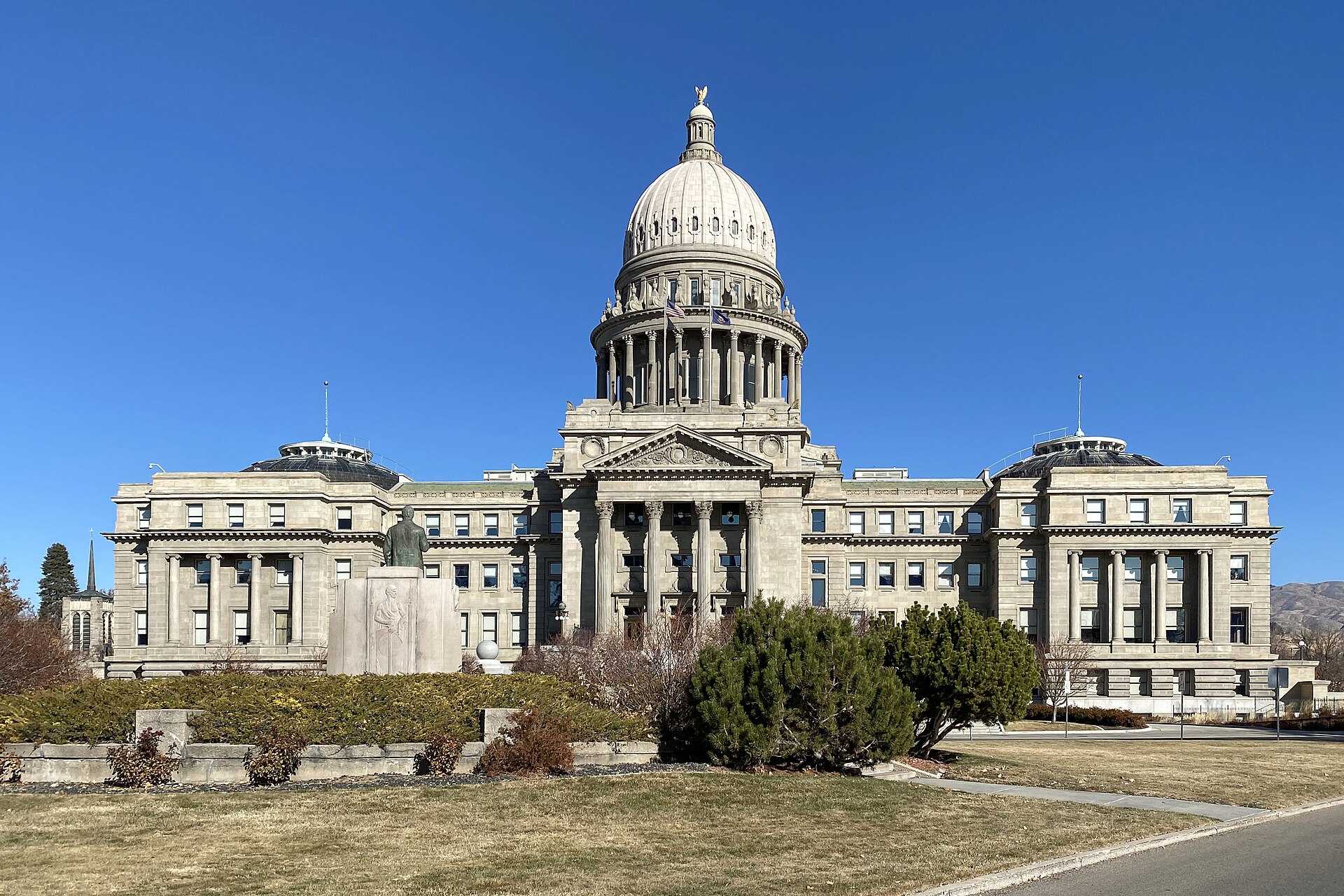

The codes in force for a new Idaho house
A one-family house in Idaho is governed by at least six separate documents, each adopted by a different body under a different statute. DOPL, the Idaho Division of Occupational and Professional Licenses, keeps a one-page list of them. Its 2025 list, posted in June 2025, names the editions below, and the rules and statutes we checked in November 2026 match it.1
| Code | Edition in force in Idaho | What it covers in a house | Who adopts it | Legal source |
|---|---|---|---|---|
| Idaho residential code | 2018 IRC, parts I, II, III and IX, with Idaho amendments | Structure, fire separation, egress, stairs, smoke and CO alarms, foundations, framing, roofs | Idaho Building Code Board, by rule | Idaho Code 39-4109(1)(b); IDAPA 24.39.30.600.0332 |
| International Building Code (IBC) | 2018, with amendments; plus the 2021 IBC mass timber provisions | Apartments of three or more units, commercial buildings; accessibility | Idaho Building Code Board | 39-4109(1)(a), 39-4109A; IDAPA 24.39.30.600.01 and .02172 |
| Idaho energy conservation code | 2018 IECC, residential and commercial, with amendments | Insulation, windows, air sealing, ducts, lighting | Board proposes; Legislature must approve | 39-9701; IDAPA 24.39.30.600.05 and .06122 |
| International Existing Building Code (IEBC) | 2018 | Remodels, additions, changes of use | Idaho Building Code Board | 39-4109(1)(d); IDAPA 24.39.30.600.042 |
| Idaho electrical code | 2023 NEC (NFPA 70), with amendments | All wiring and electrical equipment | Legislature adopted the edition; Electrical Board amends by rule | 54-1001 (HB 337, 2023); IDAPA 24.39.10.600418 |
| Idaho state plumbing code | 2017 ISPC, based on the 2015 UPC, with amendments | Water supply, drains, vents, fixtures, water heaters | Idaho Plumbing Board | 54-2601; IDAPA 24.39.20.600519 |
| Idaho mechanical code | 2018 International Mechanical Code, 2018 International Fuel Gas Code, 2018 IRC parts V and VI | Furnaces, ducts, ventilation, gas piping | Idaho HVAC Board | 54-5001; IDAPA 24.39.70.600620 |
| International Fire Code (IFC) | 2018, with appendices B, C and D adopted | Fire flow, hydrants, access roads, addressing (not the house itself) | State Fire Marshal (Department of Insurance) | 41-253; IDAPA 18.08.01721 |
Three details in that table trip people up. First, the IRC as published by the ICC has nine parts, but Idaho's "residential code" uses only four of them. Part IV (energy) is replaced by the Idaho energy conservation code, parts V and VI (mechanical and fuel gas) are adopted separately by the HVAC Board, part VII (plumbing) is replaced by the Uniform Plumbing Code, and part VIII (electrical) is replaced by the NEC.320 Second, the plumbing code is the only one in the stack that does not come from the ICC or NFPA: Idaho is a UPC state. Third, the "2020 Edition" label DOPL puts on the Idaho residential and energy codes is not a code year. DOPL's list explains that it identifies "the legislative session in which the amendments were adopted"; the base code is still the 2018 ICC book.1
What a model code is, and why Idaho uses them
The Legislature wrote its reason for statewide codes into the first section of the Idaho Building Code Act. Idaho Code 39-4101 finds that uniform building codes are "matters of statewide concern and interest" because uniformity "would enhance elimination of obsolete, restricting, conflicting, duplicating and unnecessary regulations and requirements which could unnecessarily increase construction costs or retard the use of new materials and methods." Its stated goals include protecting occupants, setting "minimum performance standards," weighing "effect upon construction costs," and permitting "modern technical methods, devices and improvements."22 Two ideas sit in that section side by side: safety and cost. Most of the code fights since 2022 have been about how to balance them.
The ICC books are copyrighted. The State Fire Marshal's rule tells readers that copies of the fire code can be seen at the Fire Marshal's office or bought from the ICC.21 DOPL's list points to free read-only access to the Idaho plumbing code on IAPMO's site, and DOPL told the Senate committee in February 2026 that the 2024 IBC, IRC and IECC are available digitally on the ICC website.18 Free read-only access lets a homeowner read the text, though not search or print it in every case.
The house code: the 2018 IRC with Idaho changes
The state rule, IDAPA 24.39.30, section 600.03, adopts parts I, II, III and IX of the 2018 IRC "for one (1)- and two (2)- family dwellings" with a list of amendments. Reading them shows what Idaho chose to change in the model code for houses:2
- Fire sprinklers deleted. Section R313.2, the model code's requirement for automatic sprinklers in new one- and two-family homes, is deleted. The townhouse sprinkler section, R313.1, is rewritten so sprinklers are not required where units are separated by two one-hour fire-rated walls or one common two-hour wall.
- Floor fire protection deleted. Section R302.13 of the model code, titled "Fire protection of floors," is deleted outright.
- Garage and exterior wall tables replaced. Idaho substitutes its own tables for exterior wall fire ratings by distance to the lot line (R302.1(1)) and for the dwelling-garage separation (R302.6), which calls for at least 5/8-inch Type X gypsum board on the garage side of walls separating the garage from the house.
- Whole-house ventilation. Section R303.4 is replaced: "Dwelling units shall be provided with whole-house mechanical ventilation in accordance with Section M1505.4."
- Footings. The model code's four footing tables are deleted and replaced with one Idaho table of minimum footing widths by soil bearing value and number of stories, with spread footings at least six inches thick.
- Wall bracing. Section R602.10 is rewritten to allow the most current APA System Report SR-102 as an alternate bracing method.
- Smaller exemptions. In the list of work exempt from permits (R105.2), item 7 is changed from "24 inches" to "four (4) feet," and flag poles are added; home day cares for 12 or fewer children and care homes for five or fewer may be built to the IRC.
The statute limits the board in one direction only. Idaho Code 39-4109(3) says no amendment to the Idaho residential code may "provide for standards that are more restrictive than those published by the International Code Council." The board may make the house code less strict than the ICC book; it may not make it stricter.3 For accessibility the rule runs the other way: 39-4109(2) bars any amendment that lowers accessibility standards below the ICC's.3
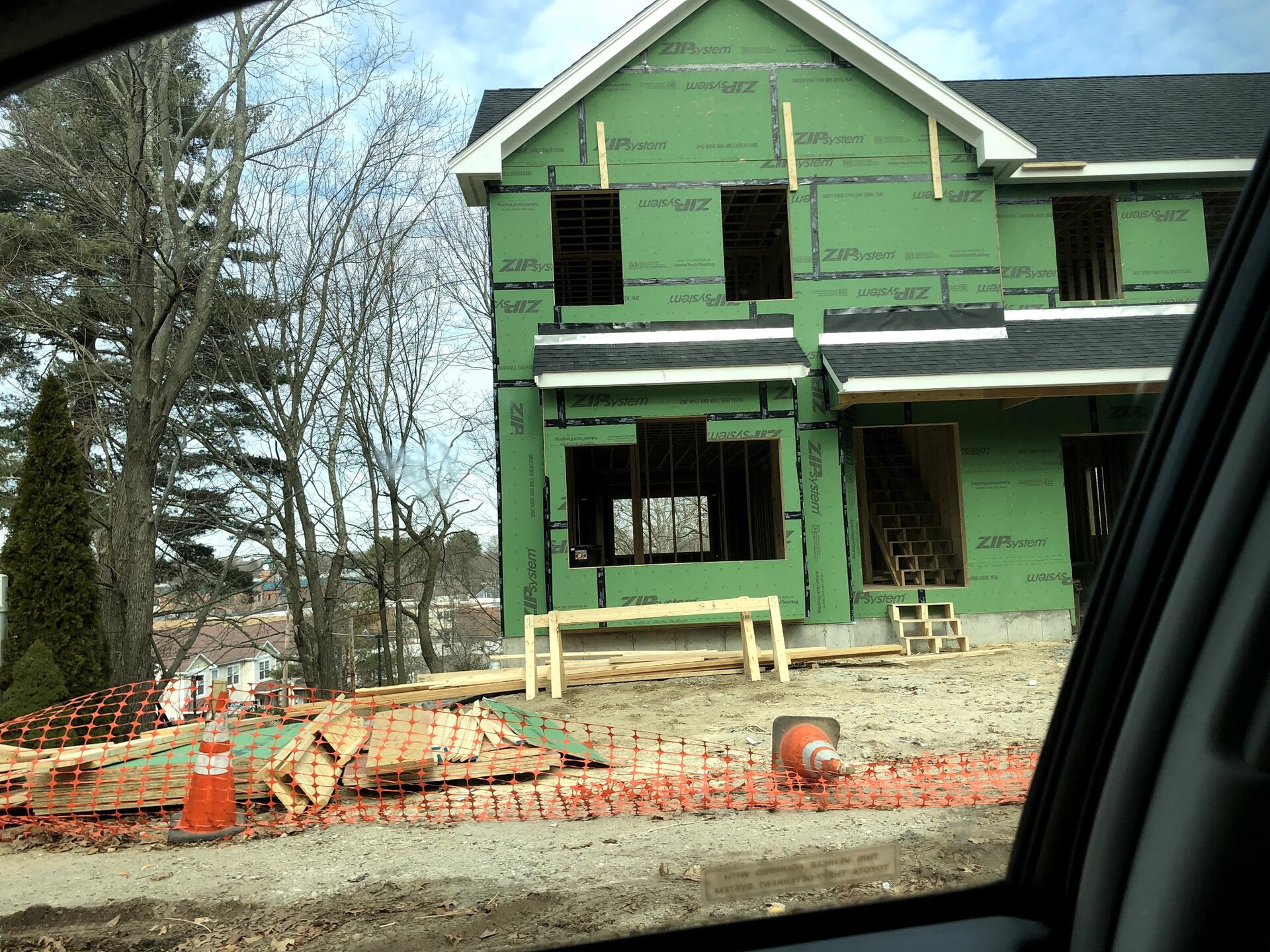

The energy code: the 2018 IECC with Idaho tables
Since July 1, 2022, the Idaho energy conservation code has been set by statute. Idaho Code 39-9701(1) makes the state energy code "the 2018 international energy conservation code, as amended, revised, or modified by the Idaho building code board and approved by the legislature."12 The amendments are in IDAPA 24.39.30, sections 600.05 (commercial) and 600.06 (residential).2 For houses, Idaho:
- replaces the insulation and window table rows for climate zones 5 and 6 with its own: in zone 5, a window U-factor of 0.32, ceiling R-38, wood-frame wall R-20 or R-13 plus R-5 continuous insulation, floor R-30, slab R-10 to 2 feet; in zone 6, window U-factor 0.30, ceiling R-49, wall R-22 or 13 plus 5, slab R-10 to 4 feet;
- adds an exception to the air leakage testing rule (R402.4.1.2) so a "visual inspection shall be considered acceptable in lieu of testing" when the items in the air barrier checklist are field verified, with the permit holder choosing the method at application;
- exempts garages heated only for frost protection from the definition of conditioned space; and
- adds a separate path for log homes.2
The U.S. Department of Energy's Building Energy Codes Program reviews each state's adopted energy code. Its Idaho page, read Nov. 20, 2026, lists the 2018 IECC for homes and the 2018 IECC and ASHRAE 90.1-2016 for commercial buildings, both effective Jan. 1, 2021, with state amendments and "Mandatory Statewide" enforcement. DOE rates the residential code with Idaho's amendments as equivalent to the 2009 IECC and estimates the amendments' efficiency impact at minus 19.90 percent compared with the model code; for commercial buildings, the equivalent is ASHRAE 90.1-2013 and the impact minus 4.50 percent. The page lists "None" for Idaho's most recent certification to DOE.15 These are DOE's own model-based estimates, not measurements of Idaho houses.
Electrical, plumbing, mechanical and fire
Electrical. House Bill 337 (2023), from the House Ways and Means Committee with Rep. Sage Dixon as floor sponsor, created Idaho Code 54-1001: "The 2023 National Electrical Code, NFPA 70, is hereby adopted by the Idaho legislature," and with the Electrical Board's amendments it is "the Idaho electrical code." The bill also created a residential electrician license. It passed the House 70 to 0 on March 20, 2023, and the Senate 35 to 0 on March 30, was signed March 31 (Session Laws ch. 244) and took effect July 1, 2023.23244 DOPL moved its own inspections to the 2023 NEC on April 19, 2024, under temporary rules: permits issued before that date were inspected to the 2017 NEC, and DOPL said full enforcement would begin no later than Jan. 1, 2025.25 The current Electrical Board rule, IDAPA 24.39.10, section 600, lists Idaho's amendments to the 2023 NEC with a rule date of April 4, 2025; for example, it changes which basement areas need GFCI protection under section 210.8(A).18 HB 337 also rewrote the city exception in the electrical chapter: state electrical rules do not apply inside a city that sets its own wiring rules by ordinance, provided the Idaho electrical code is the minimum standard "and provided that actual inspections are made."23
A second electrical bill failed. House Bill 704 (2024), from the House State Affairs Committee, would have repealed and replaced the electrical code section, modified the code and barred local governments from requiring certain installations. It passed the House as amended 46 to 23 on March 19, 2024, and was referred to the Senate Commerce and Human Resources Committee, where the record shows no further action.26
Plumbing. Idaho Code 54-2601 requires plumbing "in substantial accord with the uniform plumbing code" published by IAPMO, as the Idaho Plumbing Board adopts it through negotiated rulemaking after at least two public hearings. IDAPA 24.39.20, section 600, adopts "the 2015 Uniform Plumbing Code, including Appendices A, B, C, D, E, G, I, J, K and L" with amendments, as the Idaho State Plumbing Code; DOPL calls it the 2017 ISPC.5191 A city or county running its own plumbing program must adopt the state code and may amend it only after finding "good cause" at a public hearing, and "no code other than the uniform plumbing code" may be the standard.5
Mechanical. Idaho Code 54-5001, added in 2003, starts from the 2006 International Mechanical Code, International Fuel Gas Code and parts V and VI of the IRC, "including amendments, revisions and later editions" adopted by the HVAC Board. No local government must run a mechanical program, but those that do had to adopt the state codes by ordinance by Jan. 1, 2005.6 The HVAC Board's rule, IDAPA 24.39.70, adopts the 2018 IMC, the 2018 IFGC and the 2018 IRC parts V and VI; one Idaho addition requires a carbon monoxide alarm outside each sleeping area when permitted work is done in an existing home.20
Fire. Idaho Code 41-253 adopted the 2000 International Fire Code "and such later editions as may be so published and adopted by the state fire marshal" as the state's minimum fire standard.7 DOPL's list names the 2018 IFC as the edition administered by the State Fire Marshal.1 The Fire Marshal's rule, IDAPA 18.08.01, adopts IFC appendices B (fire flow), C (hydrant location and distribution) and D (fire apparatus access roads), with amendments.21 The statute also exempts a detached single-family house on five acres or more outside a city and its area of city impact from the fire code's water supply and access requirements, unless a county ordinance requires them, and lets counties lower that five-acre threshold after a hearing.7 Lesson 05, Fire Inspections and the Wildland-Urban Interface, covers what fire authorities inspect. The Building Code Board's June 9, 2026, minutes say the State Fire Marshal "will wait for the adoption process for the updated 2024 codes" before adopting the 2024 IFC.27
Who decides: the Idaho Building Code Board
The Idaho Building Code Board is created by Idaho Code 39-4106 "within the division of occupational and professional licenses as an appeals, code adoption, and rulemaking board." The governor appoints all ten members to four-year terms. The statute fixes the seats: one member of the general public; one local fire official; one licensed engineer; one licensed architect; two local building officials, one from a county and one from a city; two building contractors, one residential contractor who is an active member of the Idaho Building Contractors Association and one commercial contractor who is an active member of Associated Builders and Contractors or the Associated General Contractors; one representative of the modular building industry; and one person with a disability from an organization representing people with all types of disabilities. A majority is a quorum, and the board must meet at least twice a year.28
Under 39-4107 the board studies how adopted codes affect public safety, has "the authority to adopt and enforce the codes specified in section 39-4109, Idaho Code, or later editions of such codes," makes rules under the Idaho Administrative Procedure Act and serves as the board of appeals for DOPL's own building program. It has "no authority to waive any requirements of the codes."29 Its minutes for 2025 and 2026 list Andrew Bick as chair, John Cotner as vice-chair and Justin Touchstone, DOPL's trades program director, as executive officer.3011

How a new edition becomes law: the rule path
For the building codes, the steps come from three statutes read together: 39-4109, the Administrative Procedure Act's negotiated rulemaking section (67-5221) and its legislative review section (67-5291).
- Negotiated rulemaking. The board drafts amendments to a new ICC edition in public meetings with interested groups (39-4109(1)(a)). For the 2024 codes, DOPL told the Senate committee the board held 11 public hearings in Idaho Falls, Rexburg, Twin Falls, Boise, Moscow and Coeur d'Alene, plus seven regular meetings and three negotiated rulemaking sessions, with more than 50 attendees from 16 organizations.38
- Two hearings, 60 days apart. The board must hold "a minimum of two (2) public hearings, not less than sixty (60) days apart," with written notice at least five days ahead to the 13 organizations named in 39-4109(5), from the Associated General Contractors and the Association of Idaho Cities to the Idaho Fire Chiefs Association, the State Independent Living Council and two building trades councils, and to anyone who asked at least 20 days ahead.3
- Pending rule. The board votes to publish a pending rule in the administrative bulletin. On Oct. 21, 2025, the board reviewed redlines moving 24.39.30 to the 2024 IBC and IRC and voted unanimously to adopt them as pending.30
- Legislative review. A germane standing committee in each chamber reviews the rule. Since the 2023 and 2024 amendments to Idaho Code 67-5291, a pending non-fee rule "that is not approved by a concurrent resolution shall expire upon adjournment sine die" of that session, and approved rules take effect July 1 unless the resolution says otherwise.10 So one committee's refusal can be enough to stop a rule, because a concurrent resolution needs both chambers.
- Effective date. Under 39-4109(4), an adopted building code edition takes effect "on January 1 of the year following its adoption," and local governments must adopt it by ordinance effective the same Jan. 1 (39-4116(2)).313
- Energy code extra step. For energy, 39-9701 requires that changes be "approved by the legislature," and 39-4109(1)(c) refers to "the 2018 Idaho energy conservation code" by year. Moving to a newer IECC therefore takes legislative approval in addition to the rule.123
The electrical code now follows a different path. Because HB 337 put "the 2023 National Electrical Code" into statute, a newer NEC needs a bill; the Electrical Board's rules can amend the 2023 edition but cannot move to the 2026 edition on their own.4 DOPL's bureau chief described that history to the Building Code Board in June 2026 as the model for its next step on building codes.27
What cities and counties may and may not do
Idaho does not require any city or county to run a building department. Idaho Code 39-4116(1) says local governments that did not already have a program "may elect to implement a building code enforcement program by passing an ordinance," and may contract with "a public or private entity" to run it. Where no local program exists, no government issues a building permit for a private house: the state permit requirement in 39-4111(1) covers work "coming under the purview of the division," and Idaho Code 39-4103 puts state-owned buildings and buildings built for state agencies under DOPL. DOPL's electrical, plumbing and HVAC permits still apply statewide unless a local program replaces them.1331 Which Magic Valley and Treasure Valley places issue their own permits is laid out in lessons 01 and 03.
A city or county that does issue permits must adopt, by ordinance effective Jan. 1 of the year after the board acts, the IBC, the Idaho residential code (parts I to III and IX) and the 2018 Idaho energy conservation code (39-4116(2)). From there the statute sets a graded set of permissions:13
- Free to amend: IRC Part I (administration, which covers permit and inspection procedures and fees), Part II (definitions), the design criteria in section R301 (snow, wind, frost depth and other local loads), and Part IX (appendices).
- Amend only for good cause: the rest of Part III, if the city or county finds "good cause for building or life safety" and that the change is "reasonably necessary," adopts it by ordinance after a public hearing, and gives 30 days' written notice to the local chapters of the 13 groups in 39-4109(5).
- Other codes, equivalent protection: local amendments to the adopted codes must "establish at least an equivalent level of protection" to the state code.
- Forbidden: any amendment to accessibility provisions; any provision of a later IRC or residential IECC that the board has not adopted or has "expressly rejected or exempted"; any energy rule that differs from or is more extensive than the state energy code (39-9701(2)); any sprinkler requirement for single-family homes and two-unit dwellings (39-4116(3)); any building code requirement on agricultural buildings (39-4116(5)); and, since March 11, 2025, any requirement for EV charging stations, EV parking, upgraded conduit or other charging infrastructure in a building plan (39-4109B).1214
One state law also limits how far a remodel permit can reach. Idaho Code 39-4111(3) says a permit may not require upgrades to "unaffected existing parts" of a building that met the code when built, unless the agency identifies "a specific substantial safety hazard" that the new work would create, and the burden of proof is on the agency.31 Plumbing and mechanical programs are also optional for cities: 54-2601 and 54-5001 let a city or county run one by ordinance, but if it does, it must use the state code.56
A timeline of Idaho code adoption
The legislative histories printed under each statute show how the pieces arrived. Idaho's electrical licensing and inspection law dates to 1961 (the history of 54-1004 begins "added 1961, ch. 311"); the state fire code statute to 1970 (41-253 began as 39-3501, "added 1970, ch. 190"); the Building Code Act to 1975 (chapter 180); the rewrite around the ICC books to 2002 (chapter 345); and the mechanical code act to 2003 (chapter 276).3272836 Part B's lesson on how houses changed traces the earlier editions (the 2012 and 2015 rules); this table starts with the codes now in force.
| Date | Law, rule or event | What changed | Source |
|---|---|---|---|
| 1961 | Electrical contractors and journeymen act | State electrical licensing and inspection (54-1004 history) | 32 |
| 1970 | Fire code statute | Now 41-253; today adopts the 2000 IFC and later editions the Fire Marshal adopts | 7 |
| 1975 | Idaho Building Code Act | Board created (39-4106, 1975 ch. 180) | 28 |
| 2002 | Act rewritten (ch. 345) | 39-4109 and 39-4116: ICC codes, local adoption rules | 3 |
| 2003 | HVAC code act (ch. 276) | 2006 IMC, IFGC and IRC parts V and VI; local programs to adopt by Jan. 1, 2005 | 6 |
| Jan. 1, 2021 | 2018 building and energy codes | Effective date DOE lists for Idaho's 2018 IECC | 15 |
| 2021 | Mass timber law (ch. 244) | Board to add 2021 IBC mass timber types IV-A, IV-B and IV-C by Jan. 1, 2022 (39-4109A) | 17 |
| July 1, 2022 | HB 660 (2022), ch. 302 | 2018 IECC written into statute; changes need legislative approval (39-9701) | 33 |
| March 31, 2023 | HB 287 (2023), ch. 236 | Local energy rules that differ or go further are preempted, retroactively | 34 |
| July 1, 2023 | HB 337 (2023), ch. 244 | 2023 NEC adopted in statute; residential electrician license | 23 |
| April 19, 2024 | DOPL electrical transition | State inspections move to 2023 NEC under temporary rules | 25 |
| 2024 | HB 704 (2024) | Electrical code rewrite passed House 46 to 23; no Senate action recorded | 26 |
| July 1, 2024 | IDAPA 24.39.30 republished | Section 600 dates show the 2018 codes with Idaho amendments | 2 |
| March 11, 2025 | HB 86 (2025), ch. 33 | No EV charging requirements in building plans (39-4109B) | 35 |
| April 4, 2025 | IDAPA 24.39.10 | Final Idaho amendments to the 2023 NEC | 18 |
| July 1, 2025 | HB 104 (2025), ch. 40 | Agricultural buildings defined and exempted | 36 |
| Oct. 21, 2025 | Building Code Board | 2024 IBC and IRC redlines adopted as pending, unanimous | 30 |
| Feb. 5, 2026 | Senate Commerce and Human Resources | Approves docket 24-3930-2502 by voice vote | 8 |
| Feb. 17, 2026 | House Business Committee | Rejects docket 24-3930-2502 by voice vote | 9 |
| July 1, 2026 | HB 706 (2026), ch. 320 | Single-stair apartment buildings at local option (39-4109C) | 37 |
| Aug. 11, 2026 | Building Code Board | Reviews draft agency bill for 2024 codes, effective July 1, 2028, if passed | 11 |
The code fights in the Legislature, 2022 to 2026
For two decades after 2002, code updates were mostly technical rulemaking that rarely drew floor debate. Since 2022 the Legislature has taken a direct hand, in four ways: writing code editions into statute, preempting local rules, carving out specific topics, and, in 2026, refusing a full code update.
Energy code into statute: HB 660 (2022) and HB 287 (2023)
House Bill 660 (2022), from the House State Affairs Committee, was introduced Feb. 17, 2022, and described on its bill page as providing "for the adoption of the Idaho Energy Conservation Code." It passed the House 53 to 15 on Feb. 28, 2022, with Rep. Dixon as floor sponsor, passed the Senate as amended 23 to 7 on March 25, 2022 (floor sponsor Sen. Lakey), passed the House again as amended 50 to 14, was signed March 28, 2022, and became law as Session Laws ch. 302, effective July 1, 2022.33 It created 39-9701, which fixed the 2018 IECC as the base and required legislative approval of the board's changes.12
House Bill 287 (2023), also from State Affairs, "provide[s] for preemption, retroactive application, and future application." It passed the House 59 to 10 on March 14, 2023 (floor sponsor Rep. Palmer) and the Senate 29 to 6 on March 29 (floor sponsor Sen. Lakey), was signed March 31, 2023, and took effect that day (ch. 236).34 It added the language that bars local energy rules that "differ from or are more extensive than" the state code, and made it apply to local codes adopted "prior to, on, or after July 1, 2022."12
Topic-by-topic laws: EV charging, farm buildings, single stairs
EV charging. An earlier version, House Bill 18 (2025), was introduced Jan. 16, 2025, and referred to the House Business Committee, where its bill page shows no further action.38 House Bill 86 (2025), also from the Business Committee, passed the House 61 to 9 on Feb. 20, 2025, and the Senate 28 to 7 on March 5, and was signed March 11, 2025, with an emergency clause making it effective that day (ch. 33).35 It created 39-4109B: "neither the state of Idaho nor any local government in Idaho shall adopt any requirement that an electric vehicle (EV) charging station, a designated EV parking space, an upgraded electrical conduit, or other infrastructure for the purpose of EV charging station installation be included in a building plan."14 The difference between the two bills is the conduit and "other infrastructure" language, which HB 18 as introduced did not have.38
Farm buildings. House Bill 104 (2025), from the House Local Government Committee, rewrote 39-4116(5) to list what counts as an agricultural building (livestock shelters, poultry buildings, barns, equipment storage, production greenhouses, sheds, grain silos and stables) and what does not (any place of human habitation, any place where farm products are processed or packaged, any place used by the public). It took effect July 1, 2025 (ch. 40).3613
Single-stair apartments. House Bill 706 (2026), from the House Business Committee, passed the House 63 to 7 on March 24, 2026, and the Senate 18 to 17 on April 1, was signed April 10 and took effect July 1, 2026 (ch. 320).37 It created 39-4109C, which lets local governments allow apartment buildings of up to six stories served by one stairway if they meet a list of conditions, including no more than four units per floor, sprinklers throughout and a two-hour rated stair and elevator shaft.39 It is a local option, not a mandate. Part B's lesson on the 2026 housing laws covers the year's other housing bills.
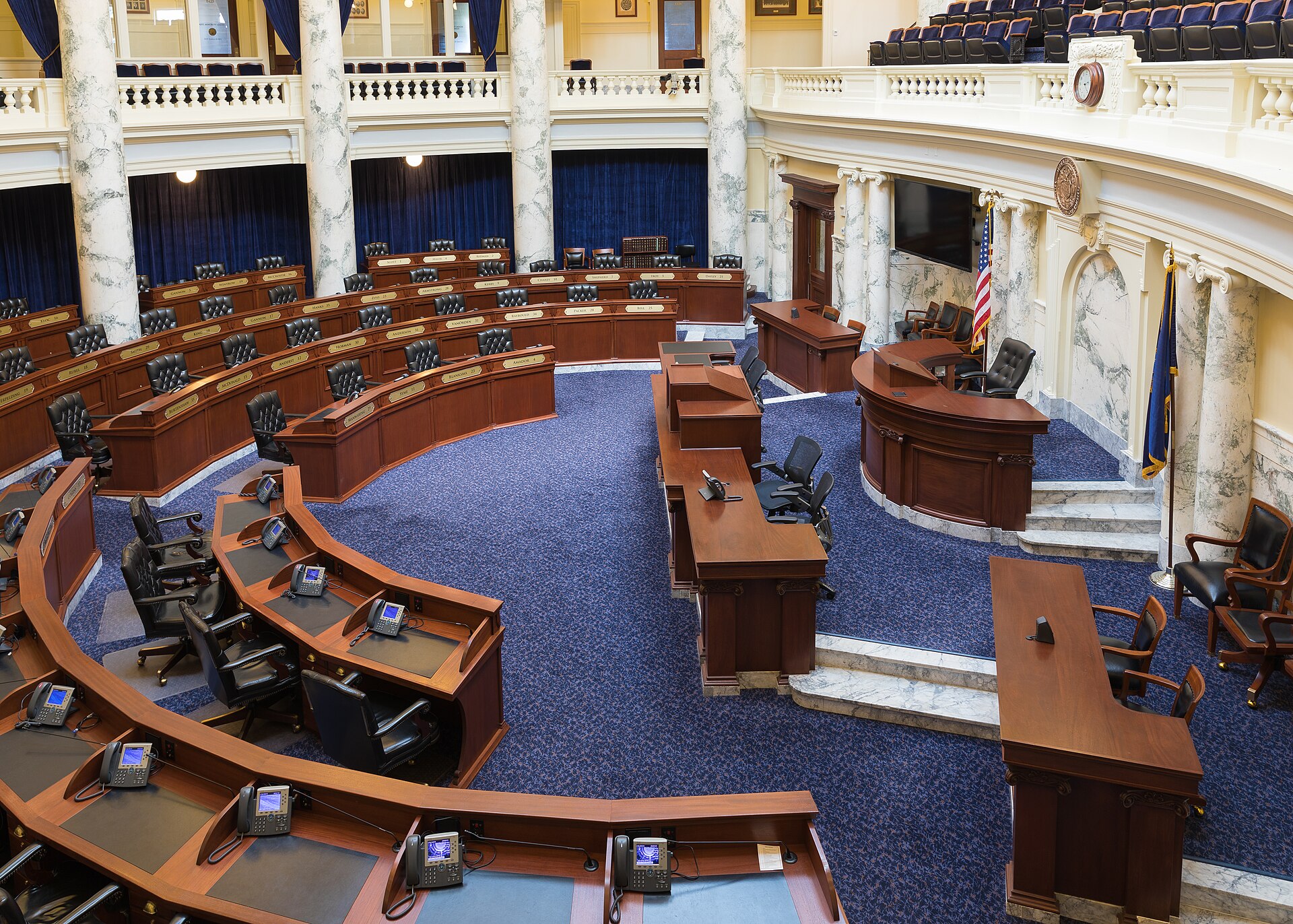

The 2024 codes: what the board proposed
The board chose to skip the 2021 ICC editions. DOPL's Justin Touchstone told the Senate Commerce and Human Resources Committee on Feb. 5, 2026, that the board "had concluded that the 2021 codes were not the right fit, while the 2024 codes were generally less restrictive and more flexible than both 2018 and 2021," according to the committee's minutes.8 The minutes record these parts of the package:
- Housing and mass timber: a 2024 IBC provision allowing five-story wood-frame buildings over a fire-protected base, and the 2024 mass timber rules (taller mass timber buildings, up to 18 stories) in place of the 2021 provisions Idaho adopted under 39-4109A.
- Lithium-ion batteries and garages: new rules on batteries in energy storage systems and EV charging. Touchstone cited "a 65 percent increase in lithium-ion battery fires between 2023 and 2024" in Idaho and a Coeur d'Alene police facility fire attributed to an e-bike battery; the board chose heat detectors in garages rather than smoke alarms, which are prone to false alarms. (The 65 percent figure is his testimony as recorded in the minutes; we did not find the underlying data.)
- Energy: for commercial buildings, deleting some lighting control and renewable energy requirements in IECC sections C405 and C406; for houses, keeping Idaho's 2018 insulation and U-factor tables and footnotes "to preserve continuity and avoid new cost shocks," and adding a prescriptive alternative to blower door testing made up of nine air-sealing measures.
Three groups testified in support: Sam Zahorka, president of the Idaho Association of Building Officials; Jason Blais, a building official on that group's board; and Ken Burgess of the Idaho Home Builders Association, who called the blower door alternative an "elegant" fix, particularly for rural Idaho. Sen. Lakey said he appreciated that the package "had tended to be less, not more restrictive." Sen. Guthrie moved approval, and the motion carried by voice vote.8 The board's minutes from Oct. 21, 2025, show the IRC changes in detail, including a new heat detector section for garages and a rewrite of the whole-house mechanical ventilation requirement.30
The same committee also approved a separate pending rule, docket 24-3930-2501, which Touchstone said would cut building permit fees in DOPL's fee table by 20 percent across all valuations because the board's fund, paid only by permit fees, was above its target cash balance.8 DOPL's fees apply where DOPL is the building department; Idaho Code 39-4112 says DOPL's building permit fees are set by the board's rules.40
The House rejects the 2024 codes
The House Business Committee heard docket 24-3930-2502 on Feb. 17, 2026. Its minutes say Touchstone "explained the board adopted the 2024 codes with amendments, citing safety, practicality and affordability as factors." Committee members asked about whole-house mechanical ventilation, sealing of registers and boots, recessed light fixtures, sprinkler requirements, whether fire alarms and sprinklers belong to the Fire Marshal rather than DOPL, heat detectors and interconnected smoke alarms in attached garages, "redundancy of code" and how often blower door tests are required. Zahorka (building officials), Burgess (home builders) and Lance Sayers testified in support, and board member John Cotner spoke as a builder.9
Rep. Thompson moved to reject the docket "due to the many concerns and questions regarding the proposed changes in addition to the incorporation by reference of the international code." Rep. Crane (District 13) supported the motion, "noting the need to create an Idaho Building Code." Rep. Berch offered a substitute motion to hold the rule in committee, explaining "his concern with rejecting the entire rule rather than specific items"; it failed on a voice vote. The motion to reject carried by voice vote, with Reps. Berch and Cheatum recorded as voting no.9
Because a pending non-fee rule that is not approved by concurrent resolution expires at sine die, the Senate committee's approval was not enough.10 The board's June 9, 2026, minutes record that the rulemaking "did not pass the House," that DOPL is drafting executive agency legislation "to relocate the code adoption language into statute," that it had done a "preliminary review of language proposed by the Idaho Home Builders Association (IHBA) during the 2026 Legislative Session," and that it was holding meetings with industry groups and legislators.27 The IHBA proposal itself is not in the minutes, and we did not find it as an introduced bill.
The next step: a 2024 code bill
At its Aug. 11, 2026, meeting, DOPL legal counsel Gabriel Arroyo reviewed the draft agency bill. According to the minutes, it would rewrite Idaho Code 39-4101, the "Declaration of Policy and Purpose" section for the Idaho Building Code, and "adopt the 2024 International Building Code, 2024 International Residential Code, 2024 International Energy Conservation Code, and the 2024 International Existing Building Code with all current amendments, revisions, or modifications made by the Board through Negotiated Rulemaking," taking effect "July 1, 2028 if passed."11 At the same meeting the board looked at the lithium-ion battery chapter (Chapter 43) released early from the 2027 International Fire Code and said it would watch the Fire Marshal's adoption. Its next meeting was set for Oct. 20, 2026.11 Draft agency legislation is not a bill until it is introduced; as of Nov. 21, 2026, the 2027 session had not begun.
If the draft passes as described, the 2018 codes would remain Idaho's house code for seven and a half years (Jan. 1, 2021, to July 1, 2028), and a future change to any edition would also need a bill. That is the approach Utah uses, described below. Testifying on any of these bills is open to the public; how it works is in Testifying and Public Comment.
How other states adopt codes
Every neighboring state uses ICC-based codes, but they adopt them in different ways and on different schedules.
Utah: the Legislature adopts by statute. Utah Code 15A-1-204 says "The Legislature shall adopt a State Construction Code by enacting legislation that adopts a nationally recognized construction code with any modifications," taking effect "on the July 1 after the day on which the legislation is enacted" unless the bill says otherwise. A state commission reports to the Business and Labor Interim Committee on each new edition, describing "the costs and benefits of each recommended change," but for the provisions that apply only to detached one- and two-family homes and townhouses it reports in 2022 "and, thereafter, for every second update." Under that rule the commission's report on house provisions comes with every second edition, about every six years on the ICC's three-year cycle.41 DOE lists Utah's residential energy code as the 2021 IECC with amendments, effective July 1, 2023, rated equivalent to the 2009 IECC with an impact of minus 28.10 percent, and its commercial code as the 2024 IECC and ASHRAE 90.1-2022, effective July 1, 2026.42
Washington: its own energy code. DOE lists the 2021 Washington State Energy Code for homes and commercial buildings, effective March 15, 2024, rated equivalent to the 2024 IECC for homes, with an efficiency impact of plus 25.30 percent compared with the model code it amends.16
Oregon: a state specialty code. DOE lists the 2023 Oregon Residential Specialty Code, effective April 1, 2024, rated equivalent to the 2018 IECC (impact minus 6.90 percent), and ASHRAE 90.1-2022 for commercial buildings, effective July 1, 2025.43
Montana. DOE lists the 2021 IECC with amendments for homes, effective Sept. 21, 2024, rated equivalent to the 2009 IECC (impact minus 11.20 percent), and the 2021 IECC and ASHRAE 90.1-2019 for commercial buildings.44
| State | Residential energy code (DOE) | Effective | DOE equivalent | Amendment impact | Who adopts building codes |
|---|---|---|---|---|---|
| Idaho | 2018 IECC with amendments | Jan. 1, 2021 | 2009 IECC | -19.90% | Board by rule, Legislature approves (energy code by statute)1512 |
| Utah | 2021 IECC with amendments | July 1, 2023 | 2009 IECC | -28.10% | Legislature by statute (15A-1-204)4241 |
| Montana | 2021 IECC with amendments | Sept. 21, 2024 | 2009 IECC | -11.20% | State agency rule (not checked for this lesson)44 |
| Oregon | 2023 Oregon Residential Specialty Code | April 1, 2024 | 2018 IECC | -6.90% | State specialty codes (not checked for this lesson)43 |
| Washington | 2021 Washington State Energy Code | March 15, 2024 | 2024 IECC | +25.30% | State code (not checked for this lesson)16 |
DOE's "amendment impact" compares each state's code with the model code edition it amends, not with other states, so a negative number means the state's changes make that edition less efficient. DOE's pages do not explain the sign. We read a negative number as less efficient than the model code, which fits DOE's own ratings: Idaho's amended 2018 code rates as equivalent to an older edition (2009), and Washington's positive number rates as equivalent to a newer one (2024). Treat all of these as DOE estimates.
Pictures, Numbers and Infographics
The lesson's main editions, dates, votes and limits in one place.
| Measure | Idaho | U.S. or other states | Place or year | Source |
|---|---|---|---|---|
| House code in force | 2018 IRC parts I, II, III, IX with amendments | ICC has since published 2021 and 2024 editions | Nov. 2026 | 1 |
| Residential energy code | 2018 IECC with amendments, effective Jan. 1, 2021 | UT and MT 2021 IECC; OR 2023 ORSC; WA 2021 WSEC | DOE, Nov. 2026 | 1516 |
| DOE equivalent of Idaho's residential energy code | 2009 IECC (impact -19.90%) | WA equals 2024 IECC (+25.30%); UT equals 2009 (-28.10%) | DOE, Nov. 2026 | 1542 |
| Electrical code | 2023 NEC, in statute | Published by NFPA | HB 337 (2023), effective July 1, 2023 | 23 |
| DOPL inspections switched to 2023 NEC | April 19, 2024 | Full enforcement by Jan. 1, 2025 | 25 | |
| Plumbing code | 2017 ISPC (2015 UPC) | IAPMO publishes the UPC | IDAPA 24.39.20 | 19 |
| Mechanical and fuel gas | 2018 IMC, 2018 IFGC, 2018 IRC parts V and VI | IDAPA 24.39.70 | 20 | |
| Fire code | 2018 IFC; appendices B, C and D | State Fire Marshal | 121 | |
| Building Code Board seats | 10, appointed by the governor, 4-year terms | Idaho Code 39-4106 | 28 | |
| Hearings before a new building code | At least 2, at least 60 days apart; notice to 13 groups | 39-4109(5) | 3 | |
| Hearings held on the 2024 codes | 11, in six cities | 2025, per DOPL testimony | 8 | |
| Senate committee on 2024 code rule | Approved, voice vote | Feb. 5, 2026 | 8 | |
| House committee on 2024 code rule | Rejected, voice vote (2 recorded no) | Feb. 17, 2026 | 9 | |
| Proposed effective date, draft 2024 code bill | July 1, 2028 | Utah: July 1 after enactment by default | Draft reviewed Aug. 11, 2026 | 1141 |
| HB 86 (2025), EV charging preemption | House 61 to 9; Senate 28 to 7 | Signed March 11, 2025 | 35 | |
| HB 706 (2026), single stair | House 63 to 7; Senate 18 to 17 | Effective July 1, 2026 | 37 | |
| HB 287 (2023), energy preemption | House 59 to 10; Senate 29 to 6 | Effective March 31, 2023 | 34 | |
| Fire code exemption for rural homes | Detached house on 5 acres or more outside city and impact area | Idaho Code 41-253(2) | 7 | |
| Proposed DOPL building permit fee cut | 20% across all valuations | Docket 24-3930-2501, Senate committee approved Feb. 5, 2026 | 8 |
Common mistakes
Reading "2020 Edition" as a code year
DOPL calls the Idaho residential and energy codes the "2020 Edition," but its own list explains that the label identifies the legislative session that adopted the amendments; the base books are the 2018 IRC and IECC.1
Assuming the city building code covers the wiring and plumbing
The building codes in 39-4109 expressly exclude "the incorporated electrical codes, mechanical code, fuel gas code, plumbing codes, fire codes." Electrical, plumbing and HVAC work fall under separate statutes, boards and, in many places, separate permits.3456 Lesson 03 shows who issues which permit in Jerome and Jerome County.
Thinking a city can adopt a newer or greener code on its own
A city may not adopt any part of a later IRC or residential IECC the board has not adopted (39-4116(4)(b)) and may not adopt energy rules that differ from or go further than the state code (39-9701(2)), which since 2023 applies even to local codes adopted before July 1, 2022.1312
Treating one committee's approval as adoption
The 2024 code rule cleared the Senate committee on Feb. 5, 2026, and still died, because a pending non-fee rule needs a concurrent resolution of both chambers or it expires at sine die (67-5291(5)).810
Reading the sprinkler exemption as a ban
Idaho Code 39-4116(3) exempts one- and two-family homes from code sprinkler requirements but says nothing prevents "any person from voluntarily installing an automatic fire sprinkler system."13
Comparing DOE impact numbers as if they ranked states
DOE's percent figures compare each state's code with the model edition it amends. Utah's minus 28.1 percent is measured against the 2021 IECC, Idaho's minus 19.9 percent against the 2018 IECC; the "equivalent code" column is the better cross-state comparison, and both rate as equivalent to the 2009 IECC.1542
Treating DOPL's draft bill as law
The Aug. 11, 2026, minutes describe draft agency legislation. It has to be introduced, pass both chambers and be signed, and as drafted it would not take effect until July 1, 2028.11
What we know, what we don't, and what the data can show
What we know
- Which editions are in force: DOPL's 2025 list, the current IDAPA rules and the statutes agree on the 2018 building, energy, mechanical and fire codes, the 2015 UPC and the 2023 NEC.1
- Who decides each code and how, from the statutes (39-4106, 39-4107, 39-4109, 39-4116, 39-9701, 54-1001, 54-2601, 54-5001, 41-253).
- What happened to the 2024 codes in 2026, from the committee minutes and the board minutes.8927
- How DOE rates Idaho's energy code against the model code and against neighboring states.15
What we don't know
- Whether the draft 2024 code bill will be introduced in 2027, in what form, and with what votes.
- What the Idaho Home Builders Association's 2026 statute proposal said; the board minutes mention it but do not describe it.27
- Which cities and counties have amended the codes locally, and how; there is no statewide list, and each local ordinance must be read.
- Whether the 2018 codes, or the deleted IRC sections, have measurable effects on safety, energy use or cost in Idaho houses; no agency measures that directly. Lesson 06 covers the quality evidence.
- The data behind DOPL's testimony of a 65 percent increase in lithium-ion battery fires from 2023 to 2024.8
- What the Building Code Board did on Oct. 20, 2026; its minutes were not posted when we checked.
What the data can show
- Local amendments: each city's and county's building code ordinance (in its municipal code) shows exactly which sections it amended and whether it made the 30-day notice and good-cause findings 39-4116(4)(d) requires.
- Rulemaking records: the Building Code Board's agendas, minutes, redlines and negotiated rulemaking comments, posted by DOPL, show who asked for each amendment.
- Legislative records: committee minutes, rule docket books and bill pages show votes, testimony and the stated reasons for rejecting a rule.
- Energy performance: DOE's state status pages and its published cost-effectiveness analyses show modeled savings; utility and HERS rating data, where a utility or rater publishes it, could show measured performance.
- Permits under each edition: local permit logs show the code edition each permit was issued under, which matters when an edition changes (DOPL's 2024 NEC notice tied the edition to the permit date).25
Questions people ask
Which code applies to a new house being built today?
In every Idaho city or county with a building program, and on state buildings DOPL permits, the 2018 IRC (parts I, II, III and IX) with Idaho amendments, the 2018 IECC with Idaho amendments, the 2023 NEC, the 2015 UPC-based plumbing code and the 2018 mechanical and fuel gas codes, plus local amendments where a city or county made them.1 The local building department's ordinance shows its amendments.
Why doesn't Idaho require fire sprinklers in new houses?
Because Idaho Code 39-4116(3) exempts single-family homes and two-unit dwellings from any code provision requiring them, and the state rule deletes IRC section R313.2.132
Can a city require solar-ready or EV-ready wiring?
EV charging stations, EV parking, upgraded conduit or other EV charging infrastructure may not be required in a building plan by the state or any local government (39-4109B). Other energy-related requirements that differ from or exceed the state energy code are preempted by 39-9701(2).1412
What is a blower door test, and does Idaho require one?
A blower door test uses a fan in a door frame to measure how leaky a house is. Idaho's amendment to the 2018 IECC lets the permit holder choose a visual inspection of the listed air-sealing items "in lieu of testing."2 The rejected 2024 package would have offered a nine-item prescriptive checklist as the alternative.8
Who hears an appeal of a code decision?
For DOPL's own building program, the Building Code Board is the board of appeals; at least three members hear each appeal, and decisions are due in writing within ten working days of the hearing (39-4107(2)).29 A city or county with its own program names its appeals body in its ordinance under IRC Part I, which it may amend.
When will Idaho adopt the 2024 codes?
Not before the 2027 session acts. The draft agency bill reviewed in August 2026 would take effect July 1, 2028, if passed.11
Does a new code force changes to an existing house?
Not by itself. Idaho Code 39-4111(3) bars a permit from requiring upgrades to "unaffected existing parts" that met the code when built, unless the agency proves the new work creates a specific substantial safety hazard.31
Hard questions
Should Idaho adopt the 2024 codes?
For: the building officials and the home builders' association both testified for the 2024 package in 2026; DOPL said it was less restrictive than the 2021 codes, added rules on lithium-ion batteries and gave rural builders a checklist alternative to blower door tests; and the IABO president said it could improve fire ratings that affect insurance premiums.8 Against: House Business Committee members questioned ventilation, sealing, detector and testing rules and objected to incorporating the ICC books by reference; Rep. Crane spoke of "the need to create an Idaho Building Code."9 What the evidence shows: the record shows the arguments and the votes, not measured outcomes; no Idaho study comparing houses built to the 2018 and 2024 codes was presented in either committee's minutes.
Should codes be adopted by statute or by rule?
Statute: legislators answer to voters for each edition, and Utah's system adds a cost-benefit report on every recommended change.41 Rule: a board of builders, officials, engineers, a fire official and a disability advocate can work through hundreds of technical sections in public hearings, which the Legislature cannot do in a 90-day session; the statute gave the board that job and required 60 days between hearings.283 What the evidence shows: Idaho now uses statute for the energy and electrical codes and proposes it for the building codes; the 2026 outcome shows that even under the rule path, one chamber's committee can stop an update.10
Should cities be free to require more efficient homes?
For local choice: energy savings accrue to owners over decades, utility costs and climates differ across Idaho, and cities once had that power. For one state code: the Legislature's own purpose statement in 39-4101 lists uniformity and construction cost, and HB 287 passed both chambers by wide margins.2234 What the evidence shows: DOE estimates Idaho's amendments reduce the model code's efficiency by about a fifth; for a move to the 2024 IECC, the same DOE page estimates $9,168 in added first cost per Idaho home, $464 a year in energy cost savings and a simple payback of 19.8 years. Those are DOE model estimates, not measured Idaho costs.15
Should new houses have sprinklers?
For: the ICC's model IRC includes the requirement (section R313.2) that Idaho deletes.2 Against: the Legislature exempted houses by statute and left sprinklers voluntary.13 What the evidence shows: this lesson found no Idaho data on house fire deaths or sprinkler costs in the records reviewed; lesson 05 covers fire authorities.
For reporters and advocates
Records that exist. DOPL posts the Building Code Board's agendas, minutes and rule redlines; the Legislature posts committee minutes, rule docket books, bill text, statements of purpose and roll calls; the administrative bulletin publishes every pending rule; each city and county publishes its building code ordinance and amendments; DOE posts each state's energy code status. Lesson 12, How to Report on Building Quality and Permitting, covers permit and inspection records.
Questions to ask. Which code sections has this city amended, and where are its good-cause findings and the 30-day notices 39-4116(4)(d) requires? Which edition was a given permit issued under? What will DOPL's 2027 bill say, and will it keep the board's amendments? What data supports the testimony on battery fires and blower door alternatives? What did the IHBA propose in 2026?
Getting records. Board correspondence, negotiated rulemaking comments and local ordinance files are public records under Idaho Code Title 74; how to request them is in Idaho Public Records Requests. Board and council meetings follow the open meetings law, explained in Idaho Open Meetings.
The Magic Valley angle. The board held one of its 2025 hearings on the 2024 codes in Twin Falls.8 Whether Jerome, Twin Falls, Kimberly, Gooding, Buhl and Hagerman, and their counties, amend the state codes is a records question: read each one's building code ordinance, and compare its amendments with the limits in 39-4116.
Where to go next
- Idaho Legislature: Idaho Statutes search: Free official text of Idaho Code with each section's legislative history. Search Title 39, Chapter 41 for the Building Code Act.
- Idaho Administrative Code (adminrules.idaho.gov): Free official text of DOPL's rules, including the building, electrical, plumbing and HVAC code amendments in IDAPA 24.39.
- DOPL Building Program and Idaho Building Code Board: Free. DOPL posts the adopted-codes list, board agendas, minutes and rule redlines; useful for following the 2024 code bill.
- Idaho Legislature committee minutes and bill pages: Free. Bill status, roll calls, statements of purpose and committee minutes for each session.
- ICC Digital Codes (free read-only access): International Code Council site with free read-only views of the IRC, IBC and IECC editions; paid tiers add search and printing. Industry standards body.
- U.S. DOE Building Energy Codes Program, state status: Free federal pages showing each state's adopted energy code, effective date and DOE's efficiency rating.
Still being checked (8 items)
These points could not be fully confirmed against a primary source when this lesson was written and fact checked in November 2026. The text above states each one as uncertain.
- Full first names of floor sponsors (Dixon, Palmer, Lakey, Redman) are not on the bill pages; only Rep. Sage G. Dixon is named in full, on the HB 337 statement of purpose.
- Whether DOPL's draft 2024 code bill will be introduced in 2027 and in what form; the Building Code Board's Oct. 20, 2026, minutes were not posted when checked.
- The content of the Idaho Home Builders Association's 2026 statute proposal mentioned in the June 9, 2026, board minutes.
- The data behind DOPL's testimony of a 65 percent increase in Idaho lithium-ion battery fires from 2023 to 2024.
- Whether the House or the full Legislature acted on docket 24-3930-2501 (the 20 percent DOPL permit fee cut) after the Senate committee approved it.
- How Montana, Oregon and Washington adopt their building codes (statute vs. agency rule) was not checked for this lesson; only DOE's energy code status pages were read for those states.
- The newest published editions of the Uniform Plumbing Code and the National Electrical Code were not checked for this lesson.
- DOE's status pages do not define the sign convention of the 'amendment efficiency impact' figures; this lesson reads a negative number as less efficient than the model code.
Last verified November 21, 2026. General education, not legal, tax, financial or real estate advice; every figure names its source and year in the Notes and Sources below. Data is revised: check the newest release before relying on any number.
Notes
- Idaho Division of Occupational and Professional Licenses, Building Program, "Idaho Adopted Codes" (2025 update): building, electrical, elevator, mechanical, plumbing and fire codes in force (read Nov. 21, 2026). Read it online. ↩
- IDAPA 24.39.30, Rules of Building Safety (Building Code Rules), Idaho Building Code Board, Section 600: 2018 IBC with amendments; 2021 IBC mass timber provisions; 2018 IRC parts I, II, III and IX with amendments to R101.2, R105.2, R302.1(1), R302.6, R302.13, R303.4, R313.1, R313.2, R403.1 and R602.10; 2018 IEBC; 2018 IECC commercial and residential provisions with amendments to Tables R402.1.2 and R402.1.4 and Section R402.4.1.2 (rule dates 7-1-24), current Idaho Administrative Code (read Nov. 21, 2026). Read it online. ↩
- Idaho Code 39-4109, "Application of codes," added 2002, ch. 345; amended through 2022, ch. 302 (HB 660): subsections (1) codes adopted and excluded, (2) accessibility, (3) no residential amendments more restrictive than the ICC, (4) effective January 1 of the following year, (5) two hearings at least 60 days apart with notice to listed organizations (read Nov. 21, 2026). Read it online. ↩
- Idaho Code 54-1001, "Declaration of policy" (2023 National Electrical Code adopted by the Legislature as the Idaho electrical code), added 2023, ch. 244 (HB 337) (read Nov. 21, 2026). Read it online. ↩
- Idaho Code 54-2601, "Declaration of policy and purpose of act, Idaho state plumbing code" (Uniform Plumbing Code as adopted by the Idaho Plumbing Board; local programs and amendments) (read Nov. 21, 2026). Read it online. ↩
- Idaho Code 54-5001, "Declaration of policy" (2006 IMC, IFGC and IRC parts V and VI and later editions adopted by the HVAC Board), added 2003, ch. 276; amended through 2008, ch. 255 (read Nov. 21, 2026). Read it online. ↩
- Idaho Code 41-253, "Statement of purpose, adoption of international fire code" (2000 IFC and later editions adopted by the State Fire Marshal; exemption for detached homes on five acres or more), first enacted 1970, ch. 190; amended through 2010, ch. 219 (read Nov. 21, 2026). Read it online. ↩
- Idaho Senate Commerce and Human Resources Committee, minutes of Feb. 5, 2026: Docket 24-3930-2501 (20 percent permit fee reduction) approved; Docket 24-3930-2502 (2024 codes) presented by Justin Touchstone, DOPL, with testimony by Sam Zahorka, Jason Blais and Ken Burgess, approved by voice vote on motion of Sen. Guthrie (read Nov. 21, 2026). Read it online. ↩
- Idaho House Business Committee, minutes of Feb. 17, 2026, Docket 24-3930-2502: motion by Rep. Thompson to reject carried by voice vote; substitute motion by Rep. Berch to hold failed; Reps. Berch and Cheatum recorded as voting nay (read Nov. 21, 2026). Read it online. ↩
- Idaho Code 67-5291, "Legislative review of rules," added 2023, ch. 314; amended 2024, ch. 308: subsection (5), pending non-fee rule not approved by concurrent resolution expires at sine die; subsection (6), approved rules effective July 1 (read Nov. 21, 2026). Read it online. ↩
- Idaho Building Code Board, minutes of Aug. 11, 2026 (draft executive agency legislation adopting the 2024 IBC, IRC, IECC and IEBC, effective July 1, 2028, if passed; 2027 IFC battery provisions; next meeting Oct. 20, 2026) (read Nov. 21, 2026). Read it online. ↩
- Idaho Code 39-9701, "Idaho Energy Conservation Code," added 2022, ch. 302 (HB 660); amended 2023, ch. 236 (HB 287) (read Nov. 21, 2026). Read it online. ↩
- Idaho Code 39-4116, "Local government adoption and enforcement of building codes": subsections (1) optional local programs, (2) required local adoption, (3) sprinkler exemption, (4) local amendments and limits, (5) agricultural buildings (read Nov. 21, 2026). Read it online. ↩
- Idaho Code 39-4109B, "Electric vehicle building plan requirements, preemption," added 2025, ch. 33 (HB 86) (read Nov. 21, 2026). Read it online. ↩
- U.S. Department of Energy, Building Energy Codes Program, "Idaho" state status page (residential 2018 IECC and commercial 2018 IECC/ASHRAE 90.1-2016, effective Jan. 1, 2021; equivalent codes 2009 IECC and 90.1-2013; amendment impact -19.90% and -4.50%) (read Nov. 20, 2026). Read it online. ↩
- U.S. Department of Energy, Building Energy Codes Program, "Washington" state status page (read Nov. 20, 2026). Read it online. ↩
- Idaho Code 39-4109A, "Mass timber construction," added 2021, ch. 244 (read Nov. 21, 2026). Read it online. ↩
- IDAPA 24.39.10, Rules of the Electrical Board, Section 600, Idaho Electrical Code (2023 NEC amendments, rule dates 4-4-25), current Idaho Administrative Code (read Nov. 21, 2026). Read it online. ↩
- IDAPA 24.39.20, Rules Governing Plumbing, Section 600, Idaho State Plumbing Code (2015 Uniform Plumbing Code with appendices A, B, C, D, E, G, I, J, K and L, with amendments), current Idaho Administrative Code (read Nov. 21, 2026). Read it online. ↩
- IDAPA 24.39.70, Rules Governing Heating, Ventilation, and Air Conditioning Systems, Section 600, Idaho Mechanical Code (2018 IMC, 2018 IFGC, 2018 IRC parts V and VI, with amendments including new section M1203.1 on carbon monoxide alarms), current Idaho Administrative Code (read Nov. 21, 2026). Read it online. ↩
- IDAPA 18.08.01, Adoption of the International Fire Code, State Fire Marshal, Idaho Department of Insurance, sections 001 and 056 (IFC appendices B, C and D adopted) (read Nov. 21, 2026). Read it online. ↩
- Idaho Code 39-4101, "Legislative finding and intent," added 1975, ch. 180; amended through 2002, ch. 345 (read Nov. 21, 2026). Read it online. ↩
- Idaho Legislature, House Bill 337 (2023), "Electrical Contractors and Journeymen," by the Ways and Means Committee: passed House 70 to 0 on March 20, 2023 (floor sponsor Dixon), passed Senate 35 to 0 on March 30, 2023 (floor sponsor Lakey), signed March 31, 2023, Session Laws ch. 244, effective July 1, 2023; bill text (read Nov. 21, 2026). Read it online. ↩
- Statement of Purpose and Fiscal Note, RS30697 / H0337 (2023), contact Rep. Sage G. Dixon (read Nov. 21, 2026). Read it online. ↩
- Idaho Division of Occupational and Professional Licenses, "2023 Code Enforcement Implementation," DOPL communication list, June 2024 (transition to the 2023 NEC effective April 19, 2024; full enforcement no later than Jan. 1, 2025) (read Nov. 21, 2026). Read it online. ↩
- Idaho Legislature, House Bill 704 (2024), "Electrical Code," by the State Affairs Committee: passed House as amended 46 to 23 on March 19, 2024; referred to Senate Commerce and Human Resources on March 20, 2024, with no later action shown (read Nov. 21, 2026). Read it online. ↩
- Idaho Building Code Board, minutes of June 9, 2026 (legislative update: rulemaking did not pass the House; executive agency legislation being drafted; review of IHBA proposal; electrical code to statute; State Fire Marshal awaiting 2024 codes) (read Nov. 21, 2026). Read it online. ↩
- Idaho Code 39-4106, "Idaho building code board created, membership, appointment, terms, quorum, compensation, meetings," added 1975, ch. 180; amended through 2021, ch. 222 (read Nov. 21, 2026). Read it online. ↩
- Idaho Code 39-4107, "Powers and duties" (board adopts codes and serves as board of appeals; no authority to waive code requirements), amended through 2023, ch. 15 (read Nov. 21, 2026). Read it online. ↩
- Idaho Building Code Board, minutes of Oct. 21, 2025 (2026 meeting dates; negotiated rulemaking on IDAPA 24.39.30 moving to the 2024 IBC and IRC) (read Nov. 21, 2026). Read it online. ↩
- Idaho Code 39-4111, "Permits required," and 39-4103, "Scope, exemptions" (state buildings under DOPL), including subsection (3) on unaffected existing parts, amended through 2011, ch. 228 (read Nov. 21, 2026). Read it online. ↩
- Idaho Code 54-1004, "Inspection of electrical installations," history beginning "added 1961, ch. 311" (read Nov. 21, 2026). Read it online. ↩
- Idaho Legislature, House Bill 660 (2022), "Building Codes," by the State Affairs Committee: introduced Feb. 17, 2022; passed House 53 to 15 on Feb. 28, 2022 (floor sponsor Dixon); passed Senate as amended 23 to 7 on March 25, 2022 (floor sponsor Lakey); House passed as amended 50 to 14; signed March 28, 2022; Session Laws 2022, ch. 302, effective July 1, 2022 (read Nov. 21, 2026). Read it online. ↩
- Idaho Legislature, House Bill 287 (2023), "Energy Code," by the State Affairs Committee: passed House 59 to 10 on March 14, 2023 (floor sponsor Palmer), passed Senate 29 to 6 on March 29, 2023 (floor sponsor Lakey), signed March 31, 2023, Session Laws ch. 236, effective March 31, 2023 (read Nov. 21, 2026). Read it online. ↩
- Idaho Legislature, House Bill 86 (2025), "Building Code," by the Business Committee: passed House 61 to 9 on Feb. 20, 2025 (floor sponsor Palmer), passed Senate 28 to 7 on March 5, 2025 (floor sponsor Lakey), signed March 11, 2025, Session Laws ch. 33, effective March 11, 2025 (read Nov. 21, 2026). Read it online. ↩
- Idaho Legislature, House Bill 104 (2025), "Building Code Act," by the Local Government Committee: Session Laws 2025, ch. 40, effective July 1, 2025 (read Nov. 21, 2026). Read it online. ↩
- Idaho Legislature, House Bill 706 (2026), "Idaho Building Codes," by the Business Committee: passed House 63 to 7 on March 24, 2026 (floor sponsor Redman), passed Senate 18 to 17 on April 1, 2026, signed April 10, 2026, Session Laws ch. 320, effective July 1, 2026 (read Nov. 21, 2026). Read it online. ↩
- Idaho Legislature, House Bill 18 (2025), "Building Code," by the Business Committee: introduced Jan. 16, 2025, referred to Business Jan. 17, 2025; bill text as introduced (read Nov. 21, 2026). Read it online. ↩
- Idaho Code 39-4109C, "Single stairway building exceptions," added 2026 by HB 706 (read Nov. 21, 2026). Read it online. ↩
- Idaho Code 39-4112, "Maximum permit fees to be assessed by the division" (read Nov. 21, 2026). Read it online. ↩
- Utah Code 15A-1-204, "Adoption of State Construction Code, amendments by commission, approved codes, exemptions" (effective Nov. 6, 2025) (read Nov. 21, 2026). Read it online. ↩
- U.S. Department of Energy, Building Energy Codes Program, "Utah" state status page (residential 2021 IECC, effective July 1, 2023; equivalent 2009 IECC; amendment impact -28.10%) (read Nov. 20, 2026). Read it online. ↩
- U.S. Department of Energy, Building Energy Codes Program, "Oregon" state status page (read Nov. 20, 2026). Read it online. ↩
- U.S. Department of Energy, Building Energy Codes Program, "Montana" state status page (read Nov. 20, 2026). Read it online. ↩
Check yourself
1. Which edition of the International Residential Code is the base of the Idaho residential code in November 2026?
DOPL's Idaho Adopted Codes list and IDAPA 24.39.30, Section 600.03, adopt the 2018 IRC parts I, II, III and IX with Idaho amendments.
2. Who adopted the 2023 National Electrical Code for Idaho?
Idaho Code 54-1001, added by HB 337 (2023, ch. 244), says the 2023 NEC 'is hereby adopted by the Idaho legislature.'
3. What model code is the Idaho State Plumbing Code based on?
IDAPA 24.39.20, Section 600, adopts the 2015 Uniform Plumbing Code with appendices and amendments under Idaho Code 54-2601.
4. Which committee rejected the 2024 building code rule (docket 24-3930-2502) on Feb. 17, 2026?
The House Business Committee minutes of Feb. 17, 2026, record that the motion to reject carried by voice vote; the Senate committee had approved it Feb. 5.
5. Under Idaho Code 67-5291(5), what happens to a pending non-fee rule that is not approved by concurrent resolution?
Idaho Code 67-5291(5) says such a rule 'shall expire upon adjournment sine die.'
6. Which part of the Idaho residential code may a city amend freely to reflect local concerns?
Idaho Code 39-4116(4)(c) allows local amendments to Part I, Part II, Section R301 design criteria and Part IX; accessibility and later editions are barred.
7. What does Idaho Code 39-4109B, added by HB 86 (2025), prohibit?
39-4109B bars the state and local governments from requiring EV charging infrastructure in building plans; HB 86 was signed March 11, 2025.
8. How does DOE rate Idaho's residential energy code with state amendments?
DOE's Idaho status page lists the 2018 IECC with amendments as equivalent to the 2009 IECC, with an efficiency impact of minus 19.90 percent.
9. How many members sit on the Idaho Building Code Board?
Idaho Code 39-4106 sets ten members appointed by the governor for four-year terms.
10. In Utah, who adopts the State Construction Code?
Utah Code 15A-1-204(2)(a): 'The Legislature shall adopt a State Construction Code by enacting legislation.'
Terms in this lesson
- Model code
- A construction code written by a private standards group (the ICC, NFPA or IAPMO) that has no legal force until a government adopts it, usually with amendments.
- International Residential Code (IRC)
- The ICC's model code for one- and two-family homes and townhouses. Idaho adopts parts I, II, III and IX as the Idaho residential code.
- International Building Code (IBC)
- The ICC's model code for buildings other than those under the IRC, such as apartments of three or more units and commercial buildings.
- International Energy Conservation Code (IECC)
- The ICC's model energy code for insulation, windows, air sealing and equipment. Idaho's version, the 2018 IECC as amended, is set by Idaho Code 39-9701.
- National Electrical Code (NEC)
- The National Fire Protection Association's wiring standard, NFPA 70. Idaho's Legislature adopted the 2023 edition in Idaho Code 54-1001.
- Uniform Plumbing Code (UPC)
- IAPMO's model plumbing code. Idaho's plumbing code is the 2015 UPC with amendments, called the 2017 Idaho State Plumbing Code.
- International Fire Code (IFC)
- The ICC's model fire code, adopted in Idaho by the State Fire Marshal under Idaho Code 41-253; it governs fire flow, hydrants and access rather than the house itself.
- Local amendment
- A change a city or county makes to an adopted code by ordinance, allowed in Idaho only within the limits of Idaho Code 39-4116.
- Negotiated rulemaking
- The Idaho Administrative Procedure Act process (Idaho Code 67-5221) in which an agency drafts a rule in public meetings with interested groups before publishing it.
- Pending rule
- A rule an agency has adopted that awaits legislative review; under Idaho Code 67-5291 a pending non-fee rule expires if not approved by concurrent resolution.
- Concurrent resolution
- A measure passed by both the House and Senate, used in Idaho to approve or reject administrative rules.
- Executive agency legislation
- A bill drafted by a state agency, with the governor's office, for introduction in the Legislature.
- Preemption
- A state law that overrides or bars local rules on a subject, such as Idaho Code 39-9701(2) on energy codes.
- Blower door test
- A test that uses a fan mounted in a door frame to measure air leakage in a house; Idaho's energy amendments allow a visual inspection instead.
- Incorporation by reference
- Adopting a published document, such as an ICC code book, by naming it in a rule or statute rather than printing its text.
Sources
- Idaho Code Title 39, Chapter 41, Idaho Building Code Act (2026-11-21) checked 2026-11
- Idaho Code 39-9701, Idaho Energy Conservation Code (2026-11-21) checked 2026-11
- IDAPA 24.39.30, Rules of Building Safety (Building Code Rules) (2026-11-21) checked 2026-11
- IDAPA 24.39.10, Rules of the Electrical Board (2026-11-21) checked 2026-11
- IDAPA 24.39.20, Rules Governing Plumbing (2026-11-21) checked 2026-11
- IDAPA 24.39.70, Rules Governing HVAC Systems (2026-11-21) checked 2026-11
- IDAPA 18.08.01, Adoption of the International Fire Code (2026-11-21) checked 2026-11
- DOPL, Idaho Adopted Codes (2025) (2026-11-21) checked 2026-11
- House Business Committee minutes, Feb. 17, 2026 (2026-11-21) checked 2026-11
- Senate Commerce and Human Resources Committee minutes, Feb. 5, 2026 (2026-11-21) checked 2026-11
- Idaho Building Code Board minutes, Aug. 11, 2026 (2026-11-21) checked 2026-11
- U.S. DOE Building Energy Codes Program, Idaho status (2026-11-20) checked 2026-11
- Utah Code 15A-1-204 (2026-11-21) checked 2026-11