Lesson 10 of 12 · about 50 minutes · Updated November 21, 2026
Buying New Construction Without Getting Burned
You'll be able to
- Explain what Idaho contractor registration under Idaho Code 54-5201 onward requires and what it does not test.
- Describe how to find a builder's registration, formal actions, trade licenses, court cases and recorded liens.
- Identify the two written disclosures a general contractor must give a buyer of newly built residential property under Idaho Code 45-525.
- Distinguish a code inspection, a private home inspection and a HERS rating, and what each covers.
- Describe the statutory clocks around a new-home purchase: lien filing, lien foreclosure, the repair notice and the statute of repose.
- Explain how the HOA declarant period and Idaho Code 55-3204A affect buyers in a new subdivision.
Start here: the short version
- Idaho registers builders; it does not test them. Since Jan. 1, 2006, anyone working as a contractor in Idaho must be registered with the Idaho Contractors Board, part of the Division of Occupational and Professional Licenses (DOPL). The application asks for insurance proof, ownership names and any past license trouble; it has no exam. DOPL's own FAQ says the law "requires registration, not licensure."1234
- Complaints against contractors more than doubled. DOPL's performance report counts 206 complaints against registered contractors in fiscal 2022 and 485 in fiscal 2025, with 15 final disciplinary actions in fiscal 2025.5
- A builder selling a new home owes the buyer a written disclosure. Idaho Code 45-525 requires a general contractor to give a buyer of newly built residential property (one to four units) a signed disclosure of lien waiver rights, insurance proof, extended title insurance and surety bonds before a contract over $2,000, and a list of subcontractors and suppliers before closing.6
- Defect claims start with a notice, not a lawsuit. Under Idaho's Notice and Opportunity to Repair Act, a homeowner must serve a written notice of claim before suing a builder; the builder has 21 days to answer.7
- The clock starts at completion. Idaho Code 5-241 starts contract claims at "final completion of construction" and tort claims no later than six years after it.8
- A 2026 bill to tighten contractor registration died in committee. House Bill 768 (2026), from the House Ways and Means Committee, was referred to the House Business Committee on Feb. 26, 2026, and went no further.9
- New homes are exempt from Idaho's seller disclosure form. The Property Condition Disclosure Act does not apply to a newly built home that has never been lived in, except for the annexation and city service statement.10
Law: Idaho Code as amended through the 2026 regular session (statute pages read Nov. 20 and 21, 2026); federal law and rules as published on Nov. 21, 2026; DOPL fees as posted for July 1, 2026; DOPL data from its fiscal 2025 performance report. Checked Nov. 21, 2026. Fees, forms and online portals change; check the issuing office.
Buying a newly built house in Idaho is a different transaction from buying a used one. The seller is usually the company that built it, the house may not exist yet when the contract is signed, and the paper trail that protects a buyer of an older home (the seller's disclosure form, years of owner history, a long record of how the house has held up) does not exist. What exists instead is a set of public records and statutory papers: the builder's state registration, the city or county building permit and its inspection history, the trade permits for wiring, plumbing and heating, any liens recorded against the lot, any court cases naming the builder, the disclosure statement Idaho law requires from general contractors, the purchase contract, the builder's written warranty, and the recorded covenants of the subdivision.
This lesson describes how each of those records works, where it is kept, what it shows and what it does not show. It is written for general education. It describes procedures and rules and does not tell any reader what to buy, whom to buy from, what to sign or when. Where a rule could not be confirmed from the primary record, the lesson says so and lists the point under "unverified."
The lesson builds on others. Who issues which permit is mapped in lesson 01, Who Touches a New House, and the step-by-step permit path with Jerome as the example is in lesson 03, Getting a Residential Permit. What the evidence says about construction quality is in lesson 06, Is Construction Quality Getting Worse? What happens after a defect appears (warranty claims, the repair notice process, DOPL complaints, courts) is in lesson 11, When Things Go Wrong: Remedies, and how reporters can use the same records is in lesson 12, How to Report on Building Quality and Permitting. From Part C of this series, the seller disclosure law, water, septic and irrigation questions for any buyer are in Buying a Home in a Growing Area, and how homeowners associations are created and controlled by the developer is in How HOAs Are Born and Who Controls Them.

Who is selling the house: builders, developers and the contract
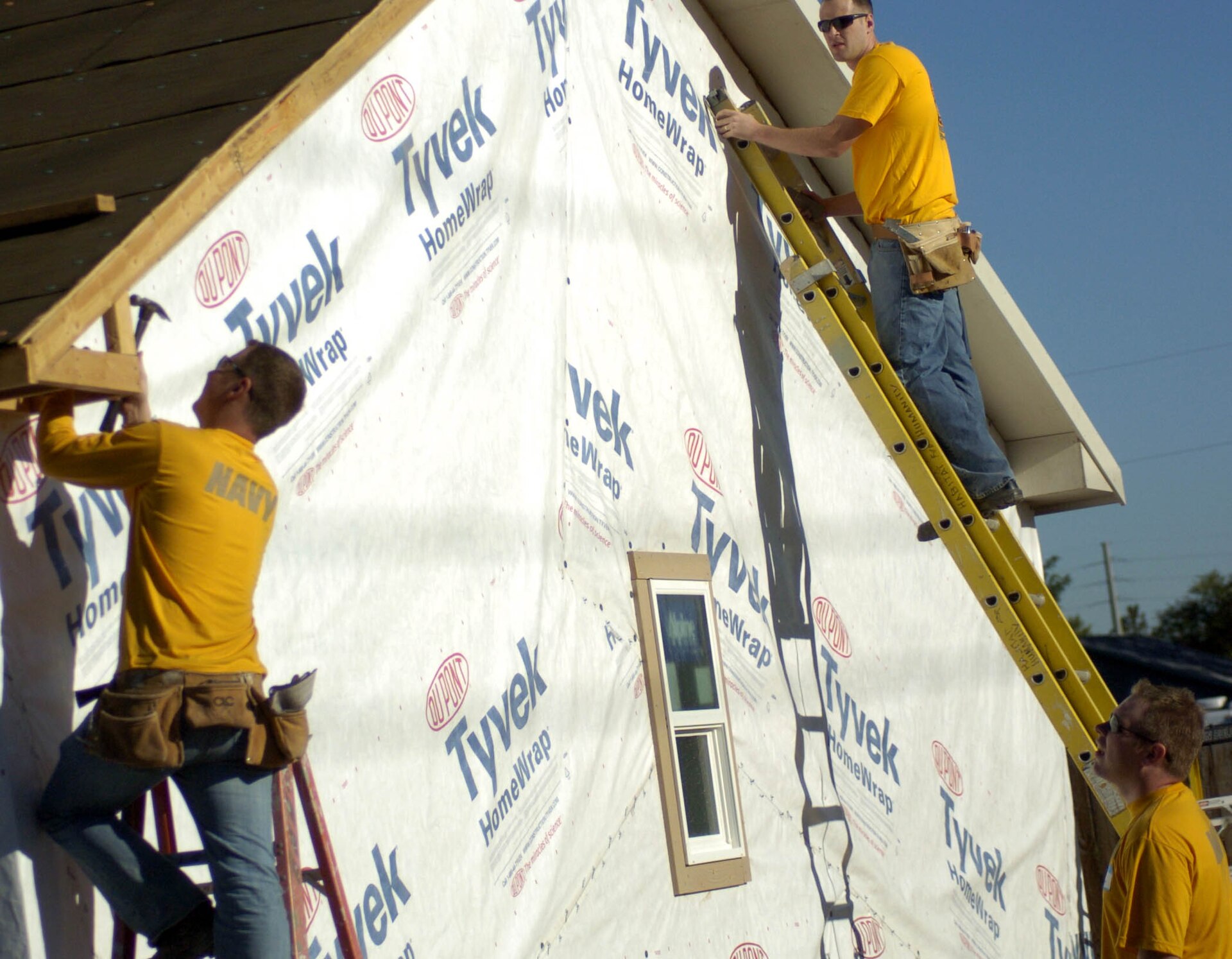
A new home reaches a buyer in one of three common ways. In a spec home sale, the builder has already built or started the house on its own lot and sells it finished or nearly finished. In a production or tract sale, the buyer picks a floor plan and options from a builder that owns many lots in a subdivision, signs a purchase contract and waits while the house is built. In a custom or contract-to-build arrangement, the buyer already owns a lot (or buys one separately) and signs a construction contract with a builder to put a house on it. The legal papers differ. A spec or production buyer signs a real estate purchase contract for land plus a house; a lot owner signs a construction contract for work on land the owner already holds. Several Idaho laws use both situations: Idaho Code 45-525 covers a contract with a homeowner to build on residential property and a contract with a purchaser "for the purchase and sale of newly constructed property."6
Behind most subdivisions there is also a developer (sometimes the same company as the builder, sometimes not) that bought raw land, got the plat approved, put in streets and utilities, recorded the covenants and sold lots. Lesson 01 and Subdivisions and Plats Step by Step in Part B describe that process. The developer usually controls the homeowners association at first, a point covered below.
The Idaho Contractor Registration Act
The Idaho Contractor Registration Act, Idaho Code 54-5201 onward, was passed in 2005 (2005 Session Laws, chapter 153) and took effect for contractors on Jan. 1, 2006. Section 54-5204 makes it "unlawful for any person to engage in the business of, or hold himself out as, a contractor within this state without being registered."2 A "contractor" is anyone who undertakes, offers, bids on or performs "construction," which the act defines broadly as building, altering, repairing, improving, moving, excavating or demolishing a building or other improvement to real property, plus construction managers.11
Registration means filling out an application under oath. Section 54-5210 lists what it must include:3
- a Social Security number or employer tax identification number;
- the business name and address;
- the name and address of each principal, member, partner, shareholder or other owner;
- a certificate of worker's compensation insurance, or a statement of why it is not required;
- a certificate of general liability insurance, including products and completed operations coverage, of at least $300,000 single limit (the insurer's name and policy number are released only to people who say they have a claim against the contractor);
- a statement of the type of construction the applicant will do; and
- a statement that the applicant and its owners have never had a contractor license or registration denied, surrendered or revoked in any state, or an explanation if they have.
The statute caps the registration fee at $150 a year. DOPL's Contractors Board page lists fees effective July 1, 2026, of $120 to apply, $60 for an annual renewal or $120 for a two-year renewal, and a $40 reinstatement fee on top of renewal; the board began moving contractors to two-year registration on Oct. 14, 2025.1 Section 54-5211 lets the board issue registrations for 24 months to five years.12
What the application does not ask for is any proof of skill: no exam on building codes, no exam on business law, no required years of experience, no bond. DOPL's FAQ puts it in one line: "The Act requires registration, not licensure."4 The board may "investigate, classify and determine the qualifications of applicants" under rules it adopts (Idaho Code 54-5207), but the qualifications listed in the statute are the insurance and disclosure items above.13
Who does not have to register
Section 54-5205 lists 18 exemptions.14 Four matter most to a buyer of new construction:
- State-licensed trades. People licensed under other Idaho laws, including chapters 10 (electrical contractors and journeymen), 26 (plumbing and plumbers) and 50 (heating, ventilation and air conditioning installation) of Title 54, do not need a separate contractor registration for the work their license covers. They may not hold themselves out as registered contractors.1415
- Small jobs. A single "casual, minor, or inconsequential" job under $2,000 for labor and materials is exempt, unless it is part of a larger project or split up to stay under the line.
- Employees and volunteers. Wage workers employed by a contractor, and volunteers on a nonprofit charitable build, are exempt; independent subcontractors are not.
- Owner-builders. An owner building on the owner's own property is exempt, but the exemption does not cover an owner who builds "with the intention and for the purpose of selling" during construction or within 12 months after completion, with intent to evade the act (paragraph (k)), or an owner otherwise regulated by the act who builds to sell promptly unless the owner lived in the house as a primary residence for at least 12 months before the sale (paragraph (l)).
The last exemption matters to buyers of houses sold by individuals. A person who builds a house and sells it within a year may be required to register, depending on the facts the statute names; a buyer looking up such a seller in DOPL's records may find no registration.
What registration requires day to day
Section 54-5214 requires a registered contractor to display its registration number "for public view in his place of business, on advertising, contracts, permits, company or business letterheads, and purchase orders and subcontracts" within 60 days of registration, and to tell the board within 30 days of a change of ownership or address.16 Section 54-5204(2) makes it unlawful for a contractor to hire another contractor that must be registered unless the second contractor shows "satisfactory proof" of registration.2 DOPL's FAQ adds that unregistered contractors can face denial of building permits, loss of lien rights and loss of the right to sue for payment.4
The penalties are in section 54-5217: working as a contractor without a current registration is a misdemeanor punishable by a fine of up to $1,000, up to six months in county jail, or both, and an unregistered contractor may not sue in an Idaho court to collect for work that required registration unless it proves it was registered (or exempt) "at all times during the performance" of the work.17
The Contractors Board and discipline
The Idaho Contractors Board has five members appointed by the governor: four contractors, one each from a northern, southeastern, southwestern and south central district, and one member of the public who has never been registered as a contractor. The south central district is Blaine, Camas, Cassia, Custer, Gooding, Jerome, Lincoln, Minidoka and Twin Falls counties. The board must meet at least once each calendar quarter, and DOPL's administrator runs the program day to day.18
Under section 54-5215, the board investigates on a written complaint "from a person who claims to have been injured or defrauded," or on other information. After an opportunity for a hearing, it may issue an informal letter of reprimand or a formal reprimand, suspend or revoke a registration, or impose a civil penalty of up to $1,000, for reasons that include failing to keep insurance, violating the Idaho Consumer Protection Act, lying to get a registration or a building permit, conduct that "constitutes dishonest or dishonorable dealings," and losing a license or registration in another place.19 The list does not include poor workmanship as such. A construction defect becomes a board matter when it also fits one of the listed grounds (for example, a misrepresentation to a consumer), a point lesson 11 takes up.
DOPL's fiscal 2025 performance report, filed with the state budget office in fall 2025, gives four years of numbers for the Contractors Board:5
| Idaho Contractors Board (state fiscal year, July to June) | FY2022 | FY2023 | FY2024 | FY2025 |
|---|---|---|---|---|
| Registrations ("Total Number of Licenses" in the report) | 20,788 | 21,775 | 22,773 | 20,597 |
| Complaints against registrants | 206 | 217 | 419 | 485 |
| Final disciplinary actions | 68 | 89 | 1 | 15 |
| New applicants denied | 0 | 0 | 0 | 1 |
| Complaints per 1,000 registrations (our calculation) | 9.9 | 10.0 | 18.4 | 23.5 |
For comparison, the same report shows complaints against licensed electrical contractors and journeymen falling from 211 in fiscal 2022 to 47 in fiscal 2025, against plumbing licensees from 150 to 81, and against HVAC licensees from 436 to 53.5 A complaint is an allegation, not a finding, and complaint counts rise and fall with how many people know where to complain, so these numbers measure complaints filed, not the quality of anyone's work. Lesson 06 discusses what this kind of data can and cannot show.
How we figured it: complaints per 1,000 registrations
Inputs. DOPL fiscal 2025 performance report, Idaho Contractors Board table: total registrations and complaints for fiscal years 2022 to 2025.5
Method. Complaints divided by registrations, times 1,000, rounded to one decimal. FY2022: 206 / 20,788 x 1,000 = 9.9. FY2023: 217 / 21,775 x 1,000 = 10.0. FY2024: 419 / 22,773 x 1,000 = 18.4. FY2025: 485 / 20,597 x 1,000 = 23.5. Final disciplinary actions per 100 complaints, same method: 33.0, 41.0, 0.2 and 3.1.
Limits. The report does not say whether a complaint filed in one year and resolved in the next is counted in both, why final actions fell from 89 to 1 between fiscal 2023 and 2024, or how many complaints concerned new homes as opposed to remodels or other work. A registration count is a count of registrants, not of active builders. These are our calculations, not DOPL's.
The 2026 bill that stopped
House Bill 768 (2026) was introduced by the House Ways and Means Committee on Feb. 25, 2026, and referred to the House Business Committee on Feb. 26; the bill page shows no later action.9 Its statement of purpose, which lists Rep. Josh Wheeler as the contact, says it would require "additional ownership and compliance information in contractor registration applications," update the board's investigative and disciplinary authority, clarify penalties and "corrective options," and set procedures for people "seeking new registration following disciplinary action."20 The Contractors Board heard an update on HB 768 from its executive officer at its March 26, 2026, meeting.21
The Coeur d'Alene Press reported on March 25, 2026, that Ken Burgess, a lobbyist for the Idaho Home Builders Association, said the bill would not move further. Burgess told the paper that lawmakers and the governor's office "view any kind of regulation as a barrier to entry" and that his group would "come back at it again next year"; Jessica Cargile, president of the North Idaho Building Contractors Association, described a "dramatic uptick" in consumer complaints. Those are statements reported in the news, not findings.22 The article gives the other side only through Burgess's description of it, and we did not find a recorded committee vote, hearing minutes or a public statement from opponents of HB 768. Lesson 07, Why Quality Can Fall as Code Grows, compares Idaho's registration law with the contractor licensing laws of Washington, Utah, Oregon, Nevada and California; it did not find a full record of earlier Idaho bills to license general contractors by exam.
Checking a builder, step by step
The records below are public. The procedure is what a buyer, a reporter or a loan officer would follow to see what the state, the courts and the county have on file about a builder. It is a description of how the records work, not a recommendation to rely on any one of them.
- Find the exact legal name and registration number. Idaho Code 54-5214 requires the registration number on the builder's contracts, advertising and permits.16 The legal name on the purchase contract may be a limited liability company that differs from the brand name on the sign at the subdivision entrance.
- Search DOPL's public registry. DOPL's Contractors Board page sends the public to the "Public Search" feature of its eDOPL online services (edopl.idaho.gov) to verify a registration, and says formal actions against registered contractors can be found there.1 The search shows whether a registration exists and its status. A registration record is not a finding that the builder's work is good: the state did not test it.
- Look for formal actions. DOPL says formal actions against registered contractors can be found through the public search.1 We could not confirm from DOPL whether complaints that did not lead to a formal action appear there, or which complaint records DOPL releases on a public records request; lesson 12 covers how to ask.
- Check the trades. Electrical, plumbing and HVAC work must be done by people licensed under Title 54, chapters 10, 26 and 50, and electrical and HVAC licenses are issued by examination (Idaho Code 54-1007 and 54-5010; lesson 07 has more).2324 Their licenses appear in the same DOPL search. On a new house the trade contractors are usually hired by the builder, so a buyer learns their names from the permit file or from the 45-525 subcontractor list described below.15
- Search the courts. Idaho's state court records are searchable through the Idaho iCourt Public Access Portal, linked from icourt.idaho.gov; the older Smart Search and Hearings Search portals remain available until Dec. 1, 2026, according to the iCourt page.25 A search by the builder's legal name may show lien foreclosure cases (often filed by unpaid suppliers or subcontractors), contract cases, construction defect cases and collection cases. A case filing is an allegation; the outcome is in the register of actions and the judgment. The module on court records research explains how to read a case file.
- Search the county recorder. Mechanics' liens, releases of lien, the plat, the covenants and the deed are recorded with the county recorder (Idaho Code 45-507 names the recorder for liens).26 Some counties offer an online index; others require a visit or a request.
- Check the subdivision's papers. The recorded plat, the declaration of covenants, conditions and restrictions (CC&Rs), and the homeowners association's articles and bylaws are part of the transaction (see below and Part C, lesson 07).
- Ask for the statutory disclosures. Idaho Code 45-525 requires two written disclosures from a general contractor, described in the next section.6
The general contractor disclosure, Idaho Code 45-525
In 2002 the Legislature added section 45-525 to Idaho's mechanics' lien chapter (2002 Session Laws, chapter 307), and amended it in 2004 (chapter 225). Its stated purpose is "to protect owners and purchasers of residential real property by requiring that general contractors provide adequate disclosure of potential liens."6 It applies to residential real property of one to four dwelling units, owner-occupied or not. A "general contractor" for this section is anyone who enters an agreement over $2,000 with a homeowner or prospective purchaser to build, alter or repair residential property, or with a prospective purchaser "for the purchase and sale of newly constructed property." That second clause brings a builder selling a finished or to-be-built house within the section.
The initial disclosure, before the contract
Before entering a contract over $2,000, the general contractor must give the homeowner or purchaser a disclosure statement, with an acknowledgment of receipt for the buyer to sign; the contractor keeps proof of receipt and gives the buyer a copy. The statement must tell the buyer that the buyer has the right:
- to require, at the buyer's reasonable expense, that the general contractor obtain lien waivers from subcontractors who provided services or materials;
- to receive proof that the general contractor has general liability insurance including completed operations, and worker's compensation insurance for its employees as Idaho law requires;
- to be informed of the opportunity to buy an extended policy of title insurance covering certain unfiled or unrecorded liens; and
- to require, at the buyer's expense, a surety bond in an amount up to the value of the construction project.6
The completion disclosure, before closing
Separately, the general contractor must give the purchaser a signed written list of the business names, addresses and telephone numbers of all subcontractors, materialmen (suppliers) and rental equipment providers that have a direct contract with the general contractor and supplied materials or work worth more than $500. It must arrive "within a reasonable time prior to" the closing of a purchase and sale agreement, or before final payment on a construction contract. The statute authorizes everyone on the list to tell the purchaser (or the purchaser's agent) what balance they are owed. The contractor is not liable for errors outside its personal knowledge, and it need not list lower-tier suppliers that work for its subcontractors.6
What happens if it is missing
Failing to give complete disclosures "shall constitute an unlawful and deceptive act or practice in trade or commerce" under the Idaho Consumer Protection Act (Idaho Code 48-601 onward).6 The lien statute also ties into it: a claim of lien for work covered by 45-525 must include "the required proof of disclosure and acknowledgment of receipt" (Idaho Code 45-507(3)(e)).26 DOPL's FAQ tells registrants that the board may discipline them for violating the disclosure rule.4 The section does not apply when a homeowner calls a contractor for an emergency repair or a needed repair to an electrical, plumbing or water system.
Mechanics' liens on a new house
A mechanic's lien is a claim against the land and building itself, filed by someone who worked on it or supplied materials and was not paid. Idaho Code 45-501 gives a lien to "every person performing labor upon, or furnishing materials to be used in the construction" of a building, and to engineers and surveyors who provided plans or surveys, and it treats every contractor and subcontractor as "the agent of the owner" for lien purposes.27 In plain terms, a supplier the builder never paid may have a claim against the house even if the buyer paid the builder in full.
The clocks are short and set by statute:
- A lien claimant must record the claim with the county recorder within 90 days after it finished its work or last furnished materials, and must serve a copy on the owner in person or by certified mail no later than five business days after filing (Idaho Code 45-507).26
- The lien expires six months after filing unless the claimant starts a foreclosure case in court within that time (or a payment or extension is endorsed on the record) (Idaho Code 45-510).28
- In any court case about the lien, the winning side recovers reasonable attorney fees and costs (Idaho Code 45-507(7)).26
Because the 90-day window runs from the claimant's last work, a lien can be recorded after the buyer closes. That is why the statute points buyers to lien waivers, the subcontractor list and extended title coverage. Lesson 11 covers the owner's side of a lien dispute.
How we figured it: a lien window, a hypothetical example
Hypothetical facts. A made-up supplier delivers cabinets to a new house on March 3, 2026. The buyer closes on March 20. These dates are for illustration only.
Rule and arithmetic. Under Idaho Code 45-507(2), the supplier may record a claim of lien within 90 days after March 3: March has 28 more days (to March 31), April 30 and May 31, which reaches 89 days on May 31, so day 90 is June 1, 2026. The supplier must serve the owner within five business days after recording. Under 45-510, if the lien was recorded on June 1, it binds the house until Dec. 1, 2026, unless a foreclosure case is filed by then. Whether a filing on the last day is timely, and how weekends and holidays count, are questions courts decide; this example shows only how the windows overlap a closing date.
Reading the purchase contract
A builder's purchase agreement is often the builder's own form, which can be longer than the standard resale form used by real estate agents. The clauses below are common subjects in builder contracts; each is described, with the law that bears on it where one exists. None is a statement about any particular builder's form.
| Clause | What it usually addresses | Idaho or federal law that bears on it |
|---|---|---|
| Parties and registration | Legal name of the seller and builder; registration number | Number must appear on contracts (Idaho Code 54-5214)16 |
| Plans, specifications and options | Which plan, which finishes, what "standard" means, substitution rights | No Idaho statute sets content; the contract governs |
| Price and escalation | Whether the price can rise with material costs before completion | No Idaho statute found; contract governs (see lesson 08 on material prices) |
| Deposits and earnest money | Amount, who holds it, when it becomes nonrefundable | Contract governs; real estate licensees' trust account rules apply when a broker holds funds (not covered here) |
| Completion date and delays | Estimated completion, delay causes the builder excludes | Contract governs |
| Inspections | Whether a buyer's own inspector may enter, and when | Contract governs; the city or county inspector's access comes from the permit |
| Warranty | Written limited warranty, its terms and exclusions | Contract governs; FHA loans require a one-year warranty form (see below)29 |
| Dispute resolution | Notice, mediation, arbitration, venue, jury waiver | Idaho Code 7-901; 9 U.S.C. 2; Idaho Code 6-250330317 |
| Statutory disclosures | 45-525 lien disclosure; annexation and city service status | Idaho Code 45-525; 55-2505(12) and 55-2508610 |
| HOA and declarant rights | Who controls the HOA and the design review committee | Idaho Code 55-3204A for HOAs formed after July 1, 202532 |
No seller disclosure form for a never-occupied home
Idaho's Property Condition Disclosure Act (Idaho Code 55-2501 onward) requires a seller of residential property to fill out a disclosure form about known defects. Section 55-2505 lists 16 kinds of transfers that are exempt. Number 12 is "a transfer that involved newly constructed residential real property that previously has not been inhabited," with one exception: the seller must still disclose annexation and city service status under section 55-2508.10 Part C, lesson 10, describes the form a resale buyer receives. For a new home, the information a resale form would give comes instead from the permit file, the 45-525 disclosures, the contract and the warranty.
Arbitration clauses
Builder contracts and written warranties may include an arbitration clause: an agreement that disputes will be decided by a private arbitrator instead of a judge or jury. Idaho's Uniform Arbitration Act, Idaho Code 7-901 (enacted in 1975), says a written provision to arbitrate future controversies "is valid, enforceable and irrevocable, save upon such grounds as exist at law or in equity for the revocation of any contract."30 The Federal Arbitration Act, 9 U.S.C. 2, says nearly the same for contracts "evidencing a transaction involving commerce."31 In practice, that means a signed arbitration clause is enforced like other contract terms unless a court finds a general contract defense (such as fraud or unconscionability) applies.
What arbitration changes, in general terms: the case is heard privately, usually under the rules of an arbitration organization named in the contract; the filing and arbitrator fees are set by those rules and the contract; discovery (the exchange of documents and testimony) is often narrower than in court; the decision is usually final, with very limited court review; and the result is not a public court record a later buyer can find on iCourt. Some contracts also waive a jury trial, set the county where disputes are heard, or bar class actions. Those effects depend on the wording, which is why the clause's text, the rules it names and any fee-sharing terms are the parts people read most closely. Whether a particular clause is enforceable is a question for a court or arbitrator, and lesson 11 discusses Idaho cases.
Builder warranties
We found no Idaho statute that requires a builder to give a written warranty on a new house or sets its length. The warranty a buyer gets, if any, is a contract term: the builder's own limited warranty, a warranty bought from a third-party warranty company, or both. Whether Idaho courts imply warranties in the sale of a new home, and how a written warranty or a disclaimer interacts with them, is covered in lesson 11.
How written warranties are usually organized
Some written new-home warranties are organized in tiers by length: a short period for workmanship and materials (finish items such as drywall, trim, paint, flooring), a longer period for the wiring, plumbing and mechanical distribution systems, and a long period for "major structural defects" such as foundation or framing failures, usually defined narrowly in the document. Warranty companies that sell such plans to builders (industry businesses, not public agencies) publish their own sample terms. The specific periods, definitions, exclusions and claim deadlines vary by document; we did not find a public Idaho data source on how many new homes carry which kind of warranty.
Exclusions that can appear in written warranties include normal shrinkage cracks in concrete and drywall within stated tolerances, damage from the owner's failure to maintain, changes the owner made, appliances covered by their manufacturers' own warranties, and consequential damages. Some warranties also require written notice within the warranty period and route disputes to arbitration.
The federal angle: FHA loans and appliance warranties
Two federal rules touch new-home warranties:
- FHA's one-year warranty. When the Federal Housing Administration (FHA) insures a mortgage on a newly built home, it requires the builder and buyer to sign a Warranty of Completion of Construction, form HUD-92544. HUD Mortgagee Letter 2019-05 (March 12, 2019) removed an older FHA requirement that some new-construction borrowers buy a 10-year protection plan, effective for case numbers assigned on or after March 14, 2019, but kept form HUD-92544, and states that "the one-year warranty commences on the date that title is conveyed to the buyer, the date that construction is complete, or upon occupancy, whichever date occurs first."29
- The Magnuson-Moss Warranty Act. The federal warranty law covers "consumer products." The Federal Trade Commission's interpretation in 16 CFR 700.1 says separate equipment attached to a house, such as furnaces, air conditioners and water heaters, are consumer products, but building materials "integrated into the structure of a dwelling" at the time of sale (beams, wallboard, wiring, plumbing, windows, roofing) are not, and that when a consumer contracts with a builder to build a home the building materials are not consumer products.33 In practice the furnace or water heater in a new home may carry its own manufacturer's warranty under federal law, while the house's structure is governed by the builder's contract and state law.
Maintenance schedules and the repair law
Idaho's Notice and Opportunity to Repair Act gives builders an affirmative defense if "the homeowner ... failed to follow the builder's or manufacturer's recommendations or commonly accepted homeowner maintenance obligations." To use that defense for a builder's recommended maintenance schedule, the builder "must show that the homeowner had written notice of these schedules and recommendations and that the schedules and recommendations were reasonable at the time they were issued" (Idaho Code 6-2504(5)(c)).34 A homeowner's manual or maintenance schedule handed over at closing is therefore a legal document as well as a guide: it can be part of a later defect dispute.
Time limits that run beside the warranty
A written warranty's length is separate from the time the law allows for a lawsuit. Idaho Code 5-241 says contract actions against anyone who designed, supervised or built an improvement to real property accrue (the limitation clock starts) "at the time of final completion of construction," and tort actions accrue no later than six years after final completion.8 The general limitation periods (for example, for written contracts) then run from those dates. Before filing suit for a construction defect against a "construction professional," a homeowner must first serve the notice required by Idaho Code 6-2503, which tolls the limitation period as that section describes.7 Lesson 11 sets out the limitation periods and the court cases that read them.

Public inspections and private inspections
Two different kinds of inspection happen on a new house, and they answer different questions.
The code inspection is done by the city or county building department that issued the permit (where no local building program exists, a private house gets no building permit or building inspection, since DOPL's building permits cover only state buildings under Idaho Code 39-4103 and 39-4111) and by the electrical, plumbing and mechanical inspectors who issued the trade permits. Its question is whether the work visible at each stage meets the adopted codes. DOPL's building program lists its inspection types by phone code: concrete slab (501), final (502), firestopping (503), footing and foundation (504), framing (505), insulation (506), masonry or concrete wall (507), roofing (508), wallboard (509) and other (510); its inspections are scheduled by phone or through its eTRAKiT online portal.35 Lesson 03 walks through the sequence. Passing these inspections means an inspector saw the items on the checklist and found them acceptable at that moment. It is not a warranty that the house is free of defects, and the codes set minimum standards, not finish quality (lessons 02 and 07).
The private inspection is done by a home inspector, engineer or other specialist the buyer chooses, when the contract allows access. Its question is whatever the buyer's agreement with the inspector says it is.
Home inspectors are not licensed by the state
Idaho does not license home inspectors. The Legislature's 2023 interim list of "Occupations Regulated in Idaho," prepared for the Occupational and Professional Licensure Review, lists building safety inspectors, elevator inspectors and the construction trades, and has no home inspector license.36 We found no 2024 to 2026 law creating one. Anyone may offer home inspections in Idaho; the credentials buyers see are private memberships and certifications from industry associations.
Those associations publish standards of practice, which define what a member inspection covers and excludes. They are industry documents, labeled here as such:
- The American Society of Home Inspectors (ASHI) standard, in the version with changes approved Jan. 8, 2026 (ASHI says the new changes are not yet effective), states in section 15.2 that the inspector is not required to determine "compliance of systems and components with past and present requirements, guidelines, codes, standards, regulations, laws, ordinances," nor to offer "warranties or guarantees."37
- The International Association of Certified Home Inspectors (InterNACHI) Home Inspection Standards of Practice, last revised in October 2022, likewise list "compliance with codes or regulations" among items the inspector is not required to report on, and say the inspector is not required to "offer guarantees or warranties."38
A private inspection is therefore a visual look at accessible parts of the house under the inspector's contract, not a code inspection and not a guarantee.
Pre-drywall and final private inspections
On new construction, private inspections are commonly scheduled at two points. A pre-drywall (or framing) inspection happens after framing, rough-in wiring, plumbing and ductwork, windows and usually insulation are in, and before the walls are closed; it is the last chance to see what will later be hidden. A final inspection happens near completion, before closing or the final walk-through. Some buyers add an inspection near the end of the first year, before a one-year warranty period ends. Whether any of these can happen depends on the purchase contract, since the builder controls the site until closing; some builder contracts restrict when outside inspectors may enter or require them to carry insurance.

Getting the permit file and inspection record
Every permitted house leaves a file: the permit application, the approved plans (or the builder's master plan for a production house), plan review comments, the trade permits, the inspection results with dates and inspector notes, any corrections ordered, and the certificate of occupancy or final approval. Who holds it depends on who issued the permit (lesson 01 and lesson 03).
- Find the permit number. It is on the permit card posted at the site, on the builder's paperwork (Idaho Code 54-5214 requires the registration number on permits) and in the city's or county's records.
- Check the online portal, if any. The City of Twin Falls Building Safety department runs a Building Permit Portal (its Cityworks system) for permit applications and inspection requests; inspection requests made in the portal by 7 a.m. are same-day inspections, and the city charges $50 for a re-inspection "only when an inspection has failed more than once for the same issue." Twin Falls has its own electrical, plumbing and mechanical inspection lines, so those inspections are done by the city there.39 Boise's PDS Online lets the public search by permit number and search historical surveys.40 DOPL's building program schedules inspections through its eTRAKiT portal.35 Whether a portal shows inspection results to the public, and in how much detail, differs from place to place; we did not find a public permit search for the City of Jerome or Jerome County, and lesson 03 describes how those offices handle permits.
- Ask for the file under the Public Records Act. Idaho Code 74-102 gives "every person" the right to examine and copy public records, with "a presumption that all public records in Idaho are open." An agency may require a written request that describes the records and a date range and includes the requester's name, contact information and a declaration of whether the requester is an Idaho resident.41 The module on Idaho public records requests explains deadlines, fees and exemptions. Building plans can raise exemption questions (for example for security or copyrighted plans), so some offices allow viewing but limit copies.
- Read the inspection history. Each line usually shows the inspection type, the date, the result (pass, fail, partial or correction notice) and sometimes a comment. A failed inspection followed by a pass shows a problem that was found and fixed; a string of failures on the same item shows a problem that took several tries.
- Match the trade permits. Electrical, plumbing and HVAC permits may be issued and inspected by the city (as in Twin Falls), the county, or DOPL, depending on the place. A building permit file may not include the trade inspections if a different office handled them.
- Confirm the final. A certificate of occupancy, or the jurisdiction's equivalent final approval, records that the building official allowed the house to be occupied.
Energy ratings and HERS scores
Some builders advertise an energy rating. The most common is the Home Energy Rating System (HERS) Index run by RESNET, a national nonprofit standards body; RESNET says certified home energy raters "conduct inspections to verify a home's energy performance."42 RESNET's consumer site says "a typical home built to 2006 energy efficiency standards scores 100," that "the lower the number, the more energy efficient the home," and gives the example that a score of 70 means 30 percent more efficient than a standard new home.43 A HERS score is a modeled rating of energy use based on the rater's tests and inspections; it is not a code inspection and says nothing about structural or finish quality. Which energy code edition applies to a new Idaho house, and how it is enforced, is in lesson 02, The Codes.
Walk-throughs, punch lists and documenting defects
The walk-through and punch list
Builder contracts may provide for a walk-through (sometimes called a new-home orientation) shortly before closing, in which the builder's representative and the buyer go room by room. Items needing repair or completion are written on a punch list, which both sides often sign. What happens to that list (whether items must be finished before closing, whether money is held back in escrow, or whether the builder commits to finish them within a stated time after closing) is set by the contract, not by statute. A punch list signed at closing becomes a dated record of what was visible on that day.
Documenting a defect
Defect disputes turn on dates and descriptions: when a problem appeared, what it looked like, when the builder was told and what the builder said. The repair statute's notice must describe the claim "in reasonable detail sufficient to determine the general nature of the defect," must be served in person or by certified mail, and starts the builder's 21-day response period (Idaho Code 6-2502 and 6-2503).447 Records people keep for that purpose typically include:
- dated photographs and video, with something in the frame for scale and location;
- written warranty requests (email, the builder's online portal, or letters), with copies of the builder's answers;
- notes of each visit by the builder's crews: date, who came, what was done;
- the maintenance log the builder's manual asks for (furnace filters, gutter cleaning, caulking, irrigation settings), because a failure to maintain is a defense under 6-2504(5)(c);34
- the permit file and inspection history, copied before any repair permit is opened; and
- reports from any independent inspector or engineer, with their dates.
Lesson 11 describes the full repair-notice process, including the builder's choices (inspect, offer to pay, or dispute), the 14-day deadline after an inspection and the 30-day window to accept an offer, and the limits on damages in 6-2504.734
The HOA and the declarant period
Many new subdivisions in Idaho's growing cities come with recorded covenants and a homeowners association. During the declarant period, the developer (the "declarant" in the recorded declaration) controls the association's board and usually its architectural or design review committee. For buyers of new construction, that means the developer or builder who sold the house also controls the body that enforces the covenants, sets the first budgets and assessments, and maintains common areas the developer built.
House Bill 361 (2025) added Idaho Code 55-3204A (2025 Session Laws, chapter 204) for associations formed after July 1, 2025. It lets the governing documents provide for declarant control but requires that, within 180 days after 75 percent of the lots are conveyed to owners other than the declarant or a builder, at least one-third of the board seats be offered for election by owners other than the declarant; once 95 percent of the development is "built and occupied," the declarant must begin turning over full control and finish within 12 months. The declarant keeps architectural review authority during declarant control unless the declaration says otherwise. An "adversely affected owner" may seek an injunction to require compliance within 30 days of sending written notice to the declarant.32 Associations formed before July 1, 2025, follow their own documents. Part C covers the details: How HOAs Are Born and Who Controls Them explains the turnover rules, and HOA Disputes covers fights between owners and boards.
Two points connect the HOA to construction quality. First, the repair statute counts an association as a "homeowner" and a possible "claimant," so defects in common areas built by the developer can be raised by the association; while the declarant controls the board, the people deciding whether to raise such a claim are appointed by the developer.44 Second, the declarant's design review authority means the developer approves changes owners want to make, including repairs that change a house's appearance.

What each record shows, and what it does not
Each record answers a narrow question. Reading any one of them as a verdict on a house or a builder is the most common error in this area.
| Record | Where it is kept | What it shows | What it does not show |
|---|---|---|---|
| Contractor registration | DOPL eDOPL public search | The builder registered, gave insurance proof and is current; formal actions | Skill, code knowledge, finances, unresolved complaints, quality of past homes |
| Trade licenses | DOPL eDOPL public search | Electrician, plumber or HVAC installer passed state licensing | Who actually did the work on a given house |
| Building permit and inspections | City, county or DOPL | Which code inspections were done, when, with what result | Items not on the checklist, finish quality, later damage |
| Certificate of occupancy | City, county or DOPL | The building official approved occupancy | A warranty of quality or of the absence of defects |
| Court cases | Idaho iCourt Public Access Portal | Lawsuits, lien foreclosures, judgments naming the builder | Disputes settled before suit, arbitrations, private warranty claims |
| Recorded liens | County recorder | Unpaid claims recorded against a lot, and their releases | Liens not yet recorded (90-day window) |
| 45-525 disclosures | From the builder | Buyer's lien rights; the list of subs and suppliers over $500 | Whether those subs were paid (they may tell the buyer the balance) |
| Private inspection report | From the inspector | The inspector's observations under its contract and standards | Code compliance; ASHI and InterNACHI standards exclude it |
| HERS rating | From the rater or builder | Modeled energy performance against a reference home | Structure, moisture, workmanship |
How Idaho compares with nearby states
Idaho's choice to register general contractors without an exam or bond is one of several models in the West. Two neighbors show the range.
- Washington also calls its system registration, but RCW 18.27.040 requires each registered contractor to file a surety bond of $30,000 for a general contractor or $15,000 for a specialty contractor (amounts set by 2023 Washington laws, chapter 213, with sections taking effect July 1, 2024). Anyone with a claim against the contractor, including a homeowner owed money for "breach of contract, including improper work," may sue on the bond.45
- Oregon licenses contractors through its Construction Contractors Board. ORS 701.122 requires the board to impose training "relating to business practices and laws affecting construction contractors" and to approve a test of that knowledge for license applicants.46 The Oregon test covers business and law, not building skills.
- Idaho requires $300,000 in liability insurance, a disclosure of past license trouble and a fee, with no bond and no test (Idaho Code 54-5210).3 Idaho does test and license its electrical, plumbing and HVAC trades (lesson 07).
Lesson 07 compares licensing in Utah, Nevada and California, and lesson 11 compares right-to-repair laws in other states.
Pictures, Numbers and Infographics
| Measure or rule | Idaho | U.S. or other states | Place or year | Source |
|---|---|---|---|---|
| Contractor registration required | Yes, since Jan. 1, 2006; no exam | Washington: registration plus bond; Oregon: license with training and test | Current law | 54-5204; RCW 18.27.040; ORS 701.12224546 |
| Liability insurance to register | At least $300,000 single limit | Not compared | Current law | 54-52103 |
| Contractor surety bond | None required | Washington: $30,000 general, $15,000 specialty | Washington since July 1, 2024 | RCW 18.27.04045 |
| Registration fees | $120 application; $60 a year or $120 for two years | Not compared | Effective July 1, 2026 | DOPL1 |
| Registered contractors | 20,597 | Not compared | FY2025 | DOPL report5 |
| Complaints against registered contractors | 206 (FY2022) to 485 (FY2025) | Not compared | FY2022 to FY2025 | DOPL report5 |
| Final disciplinary actions, contractors | 68, 89, 1, 15 | Not compared | FY2022 to FY2025 | DOPL report5 |
| Maximum board civil penalty | $1,000 | Not compared | Current law | 54-521519 |
| Disclosure threshold, 45-525 | Contracts over $2,000; subs and suppliers over $500 | Not compared | Since 2002, amended 2004 | 45-5256 |
| Time to record a mechanic's lien | 90 days after last work | Not compared | Current law | 45-50726 |
| Time to sue on a lien | 6 months after recording | Not compared | Current law | 45-51028 |
| Builder response to repair notice | 21 days | Not compared here (see lesson 11) | Since 2003 | 6-25037 |
| Tort claims accrue no later than | 6 years after final completion | Not compared here (see lesson 11) | Current law | 5-2418 |
| FHA new-home warranty | One year from title transfer, completion or occupancy, whichever is first (form HUD-92544) | Same nationwide | Since March 14, 2019 (10-year plan rule dropped) | HUD ML 2019-0529 |
| Home inspector license | None | Not compared | 2023 list; no later law found | Legislature36 |
| Twin Falls re-inspection fee | $50 after a second failure on the same issue | Not compared | Read Nov. 2026 | City of Twin Falls39 |
| HOA board seats for owners | One-third within 180 days after 75% of lots sold | Not compared here (see Part C) | HOAs formed after July 1, 2025 | 55-3204A32 |
Common mistakes
Treating a contractor registration as a license that tests skill
Idaho's registration confirms insurance, ownership and past license history and collects a fee; it has no exam (Idaho Code 54-5210; DOPL FAQ: "registration, not licensure").34 The trades are different: electrical and HVAC licenses are issued after examinations (Idaho Code 54-1007 and 54-5010).2324
Reading a passed final inspection or a certificate of occupancy as a quality guarantee
A code inspection checks listed items at one moment against minimum code. The building department does not warrant the house, and items outside the checklist (finish work, cosmetic issues, many durability questions) are not inspected. Lessons 02 and 07 explain what the codes do and do not cover.
Assuming the home inspector holds a state license or checks code
Idaho has no home inspector license, and the major industry standards exclude code compliance (ASHI 2026 standard section 15.2; InterNACHI standards).363738
Assuming that paying the builder in full ends lien risk
Subcontractors and suppliers have their own lien rights (Idaho Code 45-501) and up to 90 days after their last work to record (45-507), which can fall after closing. That is the reason 45-525 requires the subcontractor list and tells buyers about lien waivers and extended title coverage.27266
Expecting the seller disclosure form on a new house
A never-inhabited new house is exempt from the Property Condition Disclosure Act except for the annexation and city service statement (Idaho Code 55-2505(12)).10
Filing suit before serving the repair notice
Under Idaho Code 6-2503(1), a construction defect action filed before the homeowner serves the notice of claim "shall be dismissed by the court without prejudice" until the notice requirement is met.7
Treating the warranty period as the time limit for a claim
The written warranty's period and the legal limitation periods are separate. Idaho Code 5-241 starts contract claims at final completion of construction, not at the end of a warranty.8
Assuming the city building permit covers the electrical and plumbing work
Plumbing permits come from DOPL unless the city or county enforces an equivalent plumbing code (Idaho Code 54-2620); electrical and HVAC permits are governed by their own chapters (lesson 01). In Twin Falls the city inspects electrical, plumbing and mechanical work; in other places the trade inspector may be a state employee working from a different file.4739
Reading complaint counts as findings of bad work
DOPL's 485 complaints in fiscal 2025 are allegations; only 15 final disciplinary actions were reported that year, and the report does not break complaints down by type of work.5
What we know, what we don't, and what the data can show
What we know
- Idaho requires contractors to register with DOPL, with $300,000 liability insurance and no exam or bond (Idaho Code 54-5204, 54-5210).23
- Complaints against registered contractors rose from 206 in fiscal 2022 to 485 in fiscal 2025, and final disciplinary actions were 15 in fiscal 2025 (DOPL).5
- A builder selling newly built residential property must give the 45-525 disclosures, and failure is a deceptive practice under the Consumer Protection Act.6
- HB 768 (2026), which would have added registration information and discipline tools, did not get past referral to the House Business Committee.9
- FHA still requires a one-year builder warranty (form HUD-92544) and stopped requiring 10-year protection plans in 2019.29
What we don't know
- How many new Idaho homes are sold with which kind of written warranty, and how many warranty claims are paid or denied: no public agency collects this.
- How many DOPL contractor complaints involve new homes, and what they allege.
- How many builder contracts in Idaho contain arbitration clauses, and how many disputes end in arbitration (arbitrations are private).
- How many buyers receive the 45-525 disclosures on time; no agency audits compliance.
- Why final disciplinary actions fell from 89 in fiscal 2023 to 1 in fiscal 2024; the report does not explain.
What the data can show
- DOPL performance reports (annual, filed with the Division of Financial Management) can show complaint and discipline trends per 1,000 registrations by board over time.
- City and county inspection logs (Twin Falls Cityworks, Boise PDS Online, DOPL eTRAKiT, or records requests elsewhere) can show failed and repeated inspections for one builder's houses compared with others in the same city and year.
- iCourt case searches can count lien foreclosure and construction cases naming a builder by year.
- County recorder indexes can count mechanics' liens and releases recorded against lots in a subdivision.
- DOPL board minutes can show which disciplinary orders the Contractors Board approved and when.
Questions people ask
Does Idaho license home builders?
No. Idaho registers them. The Idaho Contractor Registration Act requires registration, insurance proof and disclosure of past license trouble, with no exam (Idaho Code 54-5204 and 54-5210). Electrical, plumbing and HVAC trades are licensed separately under their own chapters of Title 54.2315
What does the DOPL search show about a builder?
DOPL says its public search verifies registrations and shows formal actions against registered contractors.1 It does not rate builders. We could not confirm whether open complaints appear.
Can a buyer get the city's inspection record for a house?
Permit files are public records under Idaho Code 74-102, subject to the exemptions in the Public Records Act; some cities post permit and inspection data online (Twin Falls through its Cityworks portal, Boise through PDS Online by permit number).413940
Does Idaho law require a builder to give a written warranty?
We found no Idaho statute that does. FHA-insured loans on new homes require the builder's one-year Warranty of Completion of Construction (form HUD-92544).29 Warranties implied by Idaho case law are covered in lesson 11.
What is the "45-525 disclosure"?
Two papers a general contractor must give a residential buyer: a signed initial disclosure of the buyer's rights (lien waivers, insurance proof, extended title insurance, surety bond) before a contract over $2,000, and a list of direct subcontractors and suppliers who did more than $500 of work, a reasonable time before closing (Idaho Code 45-525).6
Can a buyer go to court if the contract has an arbitration clause?
Idaho Code 7-901 and 9 U.S.C. 2 make written arbitration agreements "valid, enforceable and irrevocable" except on grounds that would undo any contract. Whether a given clause covers a given dispute, and whether a defense applies, is decided case by case (lesson 11).3031
Who runs the HOA in a brand-new subdivision?
Usually the developer, during the declarant period set in the recorded declaration. For associations formed after July 1, 2025, Idaho Code 55-3204A requires owner-elected seats and a turnover schedule.32
What if the person selling a new house is not registered?
Owners building on their own property are exempt unless they build to sell with the intent to evade the act (paragraph (k)) or, for an owner otherwise regulated by the act, sell promptly without having lived there 12 months (paragraph (l)) (Idaho Code 54-5205(2)). Working as a contractor without registration is a misdemeanor, and an unregistered contractor may not sue to collect for the work (54-5217).1417
Hard questions
Should Idaho license general contractors with an exam or a bond?
For: Supporters of HB 768 and similar bills, including the Idaho Home Builders Association's lobbyist as reported by the Coeur d'Alene Press, describe a rise in complaints and a system that lets bad actors register easily; DOPL's own numbers show complaints more than doubling from fiscal 2022 to 2025.225 Washington's bond gives homeowners a fund to claim against for improper work.45 Against: The reporting gives the other side through Burgess, who said lawmakers and the governor's office see regulation as "a barrier to entry"; the general argument is that added requirements raise costs for small contractors; an exam like Oregon's tests business law, not building skill, and a bond of $30,000 covers little of a new home's price.46 Evidence: We found no study comparing defect rates in Idaho with licensing states. The complaint rise is measured; its cause is not.
Should builder contracts be allowed to require arbitration?
For: Arbitration can be faster and cheaper, keeps technical disputes before arbitrators who may know construction, and Idaho and federal law treat such agreements as enforceable.3031 Against: Buyers rarely negotiate the clause, discovery is narrower, results are private, so later buyers and regulators cannot see patterns, and court review is limited. Evidence: No public Idaho data counts construction arbitrations or their outcomes.
Does the repair-notice law protect buyers or builders?
For builders: The Notice and Opportunity to Repair Act gives builders a chance to fix a problem before a lawsuit and limits damages when a homeowner unreasonably refuses an offer (Idaho Code 6-2504(3)).34 For buyers: The same section removes those limits when a builder fails to make a reasonable offer or to complete repairs "in a good and workmanlike manner" (6-2504(2)), and the notice tolls the limitation period (6-2503(1)).347 Evidence: No agency tracks how many notices are served or how they end; lesson 11 looks at court cases.
Should new homes be exempt from the seller disclosure form?
For the exemption: A never-occupied house has no occupant history to disclose, and the builder's contract, warranty and 45-525 disclosures cover the sale. Against: A builder knows about soils, drainage, change orders and failed inspections a buyer may not; the form would put that in writing. Evidence: Section 55-2505 was enacted in 1994 and last amended in 2002; we found no Idaho study of the new-home exemption's effect.10
For reporters and advocates
Records that exist. DOPL registration records and formal actions (eDOPL public search), Contractors Board agendas and minutes, and DOPL's annual performance report with complaint and discipline counts;1215 city, county and DOPL permit files, plan review comments, inspection logs and certificates of occupancy (Twin Falls Cityworks, Boise PDS Online, DOPL eTRAKiT);394035 recorded liens, plats and CC&Rs at the county recorder; court filings through iCourt;25 legislative bill pages, statements of purpose and committee minutes for contractor bills such as HB 768 (2026);920 and HOA governing documents. Requests go in writing under the Public Records Act (Idaho Code 74-102; see Idaho public records requests).41
Questions to ask.
- To DOPL: how many fiscal 2025 contractor complaints involved new home construction; why final disciplinary actions fell to 1 in fiscal 2024; how many complaints alleged a 45-525 disclosure failure; how long investigations take.
- To a city building official: how many inspections per inspector per day; the failed and repeated inspection rate by builder for the last three years; how the city handles a builder with repeated failures.
- To legislators and the Contractors Board: what HB 768 would have changed in the application, why it was not heard, and whether a 2027 bill is planned.
- To builders and their trade groups: what warranty they offer, whether their contracts require arbitration, and how they handle the 45-525 subcontractor list.
- To buyers: whether they received the 45-525 disclosures, a maintenance schedule, and the permit file, and when.
The Magic Valley angle. Twin Falls runs its own building, electrical, plumbing and mechanical inspections and posts its inspection rules online, which makes its records the easiest local set to request.39 In smaller places such as Jerome, Kimberly, Gooding, Buhl and Hagerman, the permit office and the trade inspector may differ (lesson 03), so a records request may have to go to two or three offices. The Contractors Board's south central seat represents Blaine, Camas, Cassia, Custer, Gooding, Jerome, Lincoln, Minidoka and Twin Falls counties.18 Fairness rules for naming builders, and how to verify a defect claim, are in lesson 12.
Where to go next
- DOPL eDOPL Online Services: public license and registration search: Free state search of contractor registrations and trade licenses, with formal actions, run by the Division of Occupational and Professional Licenses. Search by name or number; useful to anyone checking a registration's status.
- DOPL Idaho Contractors Board: Free official page with registration fees, the board's statutes and rules, meeting minutes and the online complaint link. For homeowners, contractors and reporters.
- Idaho iCourt: Free statewide court case search run by the Idaho Judicial Branch; shows filings, hearings and registers of actions for district and magistrate cases. Search by party name.
- Idaho Attorney General, Consumer Protection Division: The state office that enforces the Idaho Consumer Protection Act, under which a failure to give 45-525 disclosures is a deceptive practice. It takes consumer complaints at no cost.
- Idaho Legal Aid Services: A nonprofit that provides free civil legal help to eligible low-income Idahoans and posts self-help information on housing and consumer topics.
- Idaho Court Assistance Office self-help: Free court forms and instructions from the Idaho Judicial Branch for people handling civil matters, including small claims, on their own.
- RESNET HERS Index consumer site: Free explanation from RESNET, the national standards body, of what a HERS energy rating means and how ratings are done.
Still being checked (10 items)
These points could not be fully confirmed against a primary source when this lesson was written and fact checked in November 2026. The text above states each one as uncertain.
- We found no Idaho statute requiring builders to give a written warranty or setting its length; this is a negative finding from our search, not a confirmed statement from an agency.
- How common tiered (for example one-, two- and ten-year) written warranties and arbitration clauses are in Idaho builder contracts: no public data found; described as general patterns only.
- Whether DOPL's public search shows complaints that did not lead to formal action, and which complaint records DOPL releases on request: not confirmed (DOPL's search page could not be read by our tools).
- Why Contractors Board final disciplinary actions fell from 89 in FY2023 to 1 in FY2024; DOPL's report gives no explanation.
- Whether the City of Jerome, Jerome County and other Magic Valley offices offer an online permit or recorder search: we did not find one, but did not confirm with the offices.
- Whether Boise's PDS Online public search shows inspection results by address (its home page lists search by permit number and historical surveys only).
- No recorded committee hearing, vote or minutes found for HB 768 (2026) beyond its referral to House Business on Feb. 26, 2026.
- Oregon contractor bond amounts and Idaho trade license bond requirements were not checked for this lesson.
- Idaho Code 54-1007 and 54-2620 amendment histories were not recorded; cited as current text.
- The Idaho Attorney General Consumer Protection, Idaho Legal Aid and court self-help URLs in learn_more were not re-read for this lesson.
Last verified November 21, 2026. General education, not legal, tax, financial or real estate advice; every figure names its source and year in the Notes and Sources below. Data is revised: check the newest release before relying on any number.
Notes
- Idaho Division of Occupational and Professional Licenses (DOPL), Idaho Contractors Board home page: fees effective July 1, 2026, transition to biennial registration from Oct. 14, 2025, Public Search and complaint links (read Nov. 20, 2026). Read it online. ↩
- Idaho Code section 54-5204, Registration required (Idaho Contractor Registration Act). History: added 2005, ch. 153. Current text on the Idaho Legislature website (read Nov. 20, 2026). Read it online. ↩
- Idaho Code section 54-5210, Application for registration. History: added 2005, ch. 153; amended 2009, ch. 89. Current text on the Idaho Legislature website (read Nov. 20, 2026). Read it online. ↩
- DOPL, Idaho Contractors Board, Frequently Asked Questions ("The Act requires registration, not licensure") (read Nov. 20, 2026). Read it online. ↩
- DOPL, Performance Report, fiscal year 2025 (posted October 2025), Profile of Cases Managed and board-by-board licensing and complaint tables for FY2022 to FY2025, including the Idaho Contractors Board, Electrical Board, Plumbing Board and HVAC Board (read Nov. 20, 2026). Read it online. ↩
- Idaho Code section 45-525, General contractors, residential property, disclosures. History: added 2002, ch. 307; amended 2004, ch. 225. Current text on the Idaho Legislature website (read Nov. 20, 2026). Read it online. ↩
- Idaho Code section 6-2503, Notice and opportunity to repair. History: added 2003, ch. 133. Current text on the Idaho Legislature website (read Nov. 20, 2026). Read it online. ↩
- Idaho Code section 5-241, Accrual of actions arising out of the design or construction of improvement to real property. History: added 1965, ch. 101; amended 2022, ch. 111. Current text on the Idaho Legislature website (read Nov. 20, 2026). Read it online. ↩
- Idaho Legislature, House Bill 768 (2026), Contractor Registration Act, by the Ways and Means Committee: introduced Feb. 25, 2026; reported printed and referred to the Business Committee Feb. 26, 2026; no later action shown (read Nov. 20, 2026). Read it online. ↩
- Idaho Code section 55-2505, Exemptions (Property Condition Disclosure Act). History: added 1994, ch. 366; amended 1997, ch. 229; 2002, ch. 333. Current text on the Idaho Legislature website (read Nov. 20, 2026). Read it online. ↩
- Idaho Code section 54-5203, Definitions (Idaho Contractor Registration Act). History: added 2005, ch. 153; amended 2022, ch. 94. Current text on the Idaho Legislature website (read Nov. 20, 2026). Read it online. ↩
- Idaho Code section 54-5211, Registration, inactive status, renewal. History: added 2005, ch. 153; amended 2020, ch. 320; 2024, ch. 86. Current text on the Idaho Legislature website (read Nov. 20, 2026). Read it online. ↩
- Idaho Code section 54-5207, General powers and duties of the board. History: added 2005, ch. 153; amended 2022, ch. 94; 2023, ch. 218. Current text on the Idaho Legislature website (read Nov. 20, 2026). Read it online. ↩
- Idaho Code section 54-5205, Exemptions from registration. History: added 2005, ch. 153; amended 2007, ch. 252. Current text on the Idaho Legislature website (read Nov. 20, 2026). Read it online. ↩
- Idaho Code Title 54, table of chapters: chapter 3 Architects; chapter 10 Electrical Contractors and Journeymen; chapter 12 Engineers and Surveyors; chapter 19 Public Works Contractors; chapter 26 Plumbing and Plumbers; chapter 45 Public Works Construction Management Licensing Act; chapter 50 Installation of Heating, Ventilation and Air Conditioning Systems; chapter 52 Idaho Contractor Registration Act (read Nov. 20, 2026). Read it online. ↩
- Idaho Code section 54-5214, Registration certificate, display. History: added 2005, ch. 153. Current text on the Idaho Legislature website (read Nov. 20, 2026). Read it online. ↩
- Idaho Code section 54-5217, Penalties. History: added 2005, ch. 153. Current text on the Idaho Legislature website (read Nov. 20, 2026). Read it online. ↩
- Idaho Code section 54-5206, Idaho contractors board. History: added 2005, ch. 153, as amended. Current text on the Idaho Legislature website (read Nov. 20, 2026). Read it online. ↩
- Idaho Code section 54-5215, Authority to investigate and discipline, suspension or revocation of registration. History: added 2005, ch. 153; amended 2018, ch. 348; 2020, ch. 320. Current text on the Idaho Legislature website (read Nov. 20, 2026). Read it online. ↩
- Idaho Legislature, Statement of Purpose and Fiscal Note, RS33414 / H0768 (2026), contact Rep. Josh Wheeler (read Nov. 20, 2026). Read it online. ↩
- DOPL, Idaho Contractors Board, minutes of March 26, 2026, Board Business: Legislative Update on House Bill 768, House Bill 703 and docket 24-2101-2501 (read Nov. 20, 2026). Read it online. ↩
- Carolyn Bostick, "'Bad actors' bill fails again," Coeur d'Alene Press, March 25, 2026 (news report; quotes from Ken Burgess, Idaho Home Builders Association lobbyist, and Jessica Cargile, North Idaho Building Contractors Association) (read Nov. 20, 2026). Read it online. ↩
- Idaho Code section 54-1007, Issuance of licenses, reciprocity (electrical). History: as amended. Current text on the Idaho Legislature website (read Nov. 20, 2026). Read it online. ↩
- Idaho Code section 54-5010, Examinations, notification, application (HVAC). History: added 2003, ch. 276; amended 2018, ch. 210. Current text on the Idaho Legislature website (read Nov. 20, 2026). Read it online. ↩
- Idaho Judicial Branch, Idaho iCourt page: Public Access Portal, and notice that the old Smart Search and Hearings Search portals remain available until Dec. 1, 2026 (read Nov. 20, 2026). Read it online. ↩
- Idaho Code section 45-507, Claim of lien. History: from 1893; last amended 2022, ch. 66. Current text on the Idaho Legislature website (read Nov. 20, 2026). Read it online. ↩
- Idaho Code section 45-501, Right to lien. History: from 1893; last amended 2001, ch. 152. Current text on the Idaho Legislature website (read Nov. 20, 2026). Read it online. ↩
- Idaho Code section 45-510, Duration of lien. History: from 1893; last amended 2015, ch. 278 and ch. 339. Current text on the Idaho Legislature website (read Nov. 20, 2026). Read it online. ↩
- U.S. Department of Housing and Urban Development, Mortgagee Letter 2019-05, "Removal of the FHA Ten-Year Protection Plan Requirements," March 12, 2019, effective for case numbers assigned on or after March 14, 2019 (read Nov. 20, 2026). Read it online. ↩
- Idaho Code section 7-901, Validity of arbitration agreement (Uniform Arbitration Act). History: added 1975, ch. 117. Current text on the Idaho Legislature website (read Nov. 20, 2026). Read it online. ↩
- 9 U.S.C. 2, Validity, irrevocation, and enforcement of agreements to arbitrate (Federal Arbitration Act), as amended by Pub. L. 117-90 (2022) (read Nov. 20, 2026). Read it online. ↩
- Idaho Code section 55-3204A, Homeowner's associations, powers, duties, enforcement (added by House Bill 361 of 2025). History: added 2025, ch. 204. Current text on the Idaho Legislature website (read Nov. 20, 2026). Read it online. ↩
- 16 CFR 700.1, Products covered (Federal Trade Commission interpretations of the Magnuson-Moss Warranty Act), paragraphs (c) to (f), eCFR (read Nov. 20, 2026). Read it online. ↩
- Idaho Code section 6-2504, Limitation on damages. History: added 2003, ch. 133. Current text on the Idaho Legislature website (read Nov. 20, 2026). Read it online. ↩
- DOPL Building Program, "Inspections and IVR Codes": inspection types 501 to 510 and scheduling by phone or the eTRAKiT portal (read Nov. 20, 2026). Read it online. ↩
- Idaho Legislature, Occupational and Professional Licensure Review interim committee, "Occupations Regulated in Idaho," meeting document dated Oct. 2, 2023 (no home inspector license listed) (read Nov. 20, 2026). Read it online. ↩
- American Society of Home Inspectors (industry association), "ASHI's Home Inspection Standard of Practice," approved changes as of Jan. 8, 2026 (marked not yet effective), section 15.2 General exclusions; copy posted on a Mississippi state website, mhid.ms.gov (read Nov. 20, 2026). Read it online. ↩
- International Association of Certified Home Inspectors (InterNACHI, industry association), Home Inspection Standards of Practice, last revised October 2022, limitations and exclusions (read Nov. 20, 2026). Read it online. ↩
- City of Twin Falls, Building Safety, "Inspections" page: Building Permit Portal (Cityworks), 7 a.m. same-day requests, $50 re-inspection fee, electrical, plumbing and mechanical inspection lines (read Nov. 20, 2026). Read it online. ↩
- City of Boise, Planning and Development Services, PDS Online home page: search by permit number and historical surveys (read Nov. 20, 2026). Read it online. ↩
- Idaho Code section 74-102, Public records, right to examine (Public Records Act). History: added 2015, ch. 140; amended 2018, 2020, 2022 and 2025 (ch. 298). Current text on the Idaho Legislature website (read Nov. 20, 2026). Read it online. ↩
- RESNET, "HERS Index" page (read Nov. 20, 2026). Read it online. ↩
- RESNET (Residential Energy Services Network, national nonprofit standards body), HERS Index consumer site, "What is the HERS Index?" (read Nov. 20, 2026). Read it online. ↩
- Idaho Code section 6-2502, Definitions (Notice and Opportunity to Repair Act). History: added 2003, ch. 133. Current text on the Idaho Legislature website (read Nov. 20, 2026). Read it online. ↩
- Revised Code of Washington 18.27.040, Bond or other security required; most recent amendment 2023 c 213 s 3, with sections effective July 1, 2024 (read Nov. 20, 2026). Read it online. ↩
- Oregon Revised Statutes 701.122, Training requirements for individuals and businesses; testing of business license applicant (ORS chapter 701, Oregon Legislature) (read Nov. 20, 2026). Read it online. ↩
- Idaho Code section 54-2620, Permits required, exceptions (plumbing). History: as amended. Current text on the Idaho Legislature website (read Nov. 20, 2026). Read it online. ↩
Check yourself
1. What does Idaho require of a general contractor before it may work in the state?
Idaho Code 54-5204 and 54-5210 require registration with insurance certificates and ownership disclosures; DOPL's FAQ says the act 'requires registration, not licensure.' The $30,000 bond is Washington's rule (RCW 18.27.040).
2. How much general liability insurance must an Idaho contractor show to register?
Idaho Code 54-5210(1)(e) requires a general liability policy including products and completed operations of not less than $300,000 single limit.
3. Under Idaho Code 45-525, before what kind of contract must a general contractor give the initial disclosure to a residential buyer?
Section 45-525(2) applies before any contract over $2,000 with a homeowner or with a purchaser for the purchase and sale of newly constructed property.
4. Within how many days after finishing work must a subcontractor record a mechanic's lien in Idaho?
Idaho Code 45-507(2): the claim must be filed within 90 days after completion of the labor or services or furnishing of materials.
5. How long does a recorded mechanic's lien bind the property if no court case is filed?
Idaho Code 45-510(1): no lien binds the building longer than six months after the claim is filed unless proceedings are commenced in court within that time (or a payment or extension is endorsed).
6. How long does a builder have to respond to a homeowner's written notice of claim under the Notice and Opportunity to Repair Act?
Idaho Code 6-2503(2): within 21 days after service of the notice of claim, the construction professional must serve a written response.
7. Does Idaho's Property Condition Disclosure Act require a seller disclosure form for a newly built home that has never been lived in?
Idaho Code 55-2505(12) exempts newly constructed residential property not previously inhabited, except that annexation and city service status must be disclosed under 55-2508.
8. What do the ASHI and InterNACHI standards of practice say about building code compliance?
ASHI's standard (changes approved Jan. 8, 2026), section 15.2, and InterNACHI's standards (rev. October 2022) both exclude code compliance; Idaho does not license home inspectors (Legislature's 2023 list of regulated occupations).
9. What did HUD Mortgagee Letter 2019-05 change for FHA loans on new homes?
ML 2019-05 (March 12, 2019) removed the ten-year protection plan requirements for case numbers assigned on or after March 14, 2019, and kept the Warranty of Completion of Construction (form HUD-92544), whose one-year term starts on the earliest of title transfer, completion of construction or occupancy.
10. For an Idaho HOA formed after July 1, 2025, when must at least one-third of board seats be offered to owners other than the declarant?
Idaho Code 55-3204A(1)(b), added by House Bill 361 (2025, ch. 204).
Terms in this lesson
- Contractor registration
- Idaho's requirement under Idaho Code 54-5201 onward that contractors file an application, insurance certificates and ownership information with the Idaho Contractors Board. It involves no exam or skill test, unlike a license.
- Idaho Contractors Board
- The five-member board in DOPL (four contractors from four regions and one public member) that registers contractors and may reprimand, fine up to $1,000, suspend or revoke a registration (Idaho Code 54-5206, 54-5215).
- Spec home
- A house a builder builds on its own lot before a buyer is found, then sells finished or nearly finished.
- General contractor disclosure (45-525)
- Two written statements Idaho Code 45-525 requires from a general contractor dealing with a residential buyer: an initial notice of lien waiver, insurance, title insurance and bond rights before a contract over $2,000, and a list of direct subcontractors and suppliers over $500 before closing.
- Mechanic's lien
- A claim against land and a building recorded by someone who worked on it or supplied materials and was not paid (Idaho Code 45-501). It must be recorded within 90 days and enforced in court within six months.
- Lien waiver
- A written statement by a subcontractor or supplier giving up lien rights for work that has been paid for.
- Extended title insurance
- Title insurance coverage beyond a standard policy that can cover certain unfiled or unrecorded liens; Idaho Code 45-525 requires that buyers be told of the opportunity to buy it.
- Arbitration clause
- A contract term sending disputes to a private arbitrator instead of a court; Idaho Code 7-901 and 9 U.S.C. 2 make such written agreements enforceable except on grounds that would undo any contract.
- Written limited warranty
- A builder's or warranty company's written promise to repair stated kinds of defects for stated periods, with stated exclusions; its terms come from the document, not from an Idaho statute.
- Pre-drywall inspection
- A private inspection after framing and rough-in work and before wallboard closes the walls, when wiring, plumbing, framing and insulation are still visible.
- Punch list
- A written list of items to repair or finish, usually made at the builder's walk-through before closing.
- HERS Index
- RESNET's energy rating scale on which a typical home built to 2006 energy standards scores 100 and lower scores mean more efficient homes; it is a modeled rating, not a code inspection.
- Declarant period
- The time when the developer that recorded a subdivision's declaration controls the HOA board; Idaho Code 55-3204A sets turnover steps for HOAs formed after July 1, 2025.
- Certificate of occupancy
- The building official's approval that a finished building may be occupied; it records that code inspections were completed, not that the house is free of defects.
Sources
- Idaho Code Title 54, Chapter 52, Idaho Contractor Registration Act (sections 54-5203 to 54-5217) (2026-11-20) checked 2026-11
- Idaho Code 45-525, General contractors, residential property, disclosures (2026-11-20) checked 2026-11
- Idaho Code 45-501, 45-507 and 45-510, mechanics' liens (2026-11-20) checked 2026-11
- Idaho Code 6-2501 to 6-2504, Notice and Opportunity to Repair Act (2026-11-20) checked 2026-11
- Idaho Code 5-241, accrual of actions for construction of improvements (2026-11-20) checked 2026-11
- Idaho Code 55-2505, Property Condition Disclosure Act exemptions (2026-11-20) checked 2026-11
- Idaho Code 55-3204A, HOA declarant control and turnover (HB 361, 2025) (2026-11-20) checked 2026-11
- House Bill 768 (2026), Contractor Registration Act, bill page and statement of purpose (2026-11-20) checked 2026-11
- DOPL Performance Report, fiscal year 2025 (2026-11-20) checked 2026-11
- DOPL, Idaho Contractors Board page and FAQ (2026-11-20) checked 2026-11
- HUD Mortgagee Letter 2019-05, Removal of the FHA Ten-Year Protection Plan Requirements (2026-11-20) checked 2026-11
- 16 CFR 700.1, Magnuson-Moss Warranty Act products covered (2026-11-20) checked 2026-11
- City of Twin Falls Building Safety, Inspections (2026-11-20) checked 2026-11