Lesson 1 of 14 · about 45 minutes · Updated November 5, 2026
Why Read the Medieval Church: The World of Aquinas, the Friend of God, Catherine and Francis
You'll be able to
- Place Francis (died 1226), Aquinas (died 1274), Catherine (died 1380), the Frankfurt author (later 1300s) and Luther (1483 to 1546) in order and explain how far apart they lived in time and place.
- Quote and explain canon 21 of the Fourth Lateran Council on yearly confession and Easter communion, and describe what canons 1, 3, 13 and 68 decreed.
- Describe the rise of the universities, the 1215 Paris ban on Aristotle's natural philosophy and how Aristotle came back into Latin teaching.
- Explain who the Franciscans, Dominicans, beguines and Friends of God were, using their own rules and the earliest records.
- Give the dates and main facts of the Avignon papacy, the Black Death and the Western Schism, and say who gave each mortality estimate.
- Show from Luther's 1518 preface, Calvin's Institutes and Leo XIII's Aeterni Patris why Protestant and Catholic readers both read these texts.
Start here: the short version
This module reads four medieval texts in their own words: the Summa Theologiae of Thomas Aquinas, the anonymous Theologia Germanica that Martin Luther printed in 1516 and 1518, the Dialogue and letters of Catherine of Siena, and the writings of Francis of Assisi together with the early lives and the Little Flowers told about him. The four come from a span of roughly two hundred years. Francis died in 1226, Aquinas in 1274, Catherine in 1380, and the unknown priest of Frankfurt wrote his little book in the later 1300s. They wrote in a Europe shaped by a strong papacy under Innocent III, the Fourth Lateran Council of 1215, the new universities of Paris, Bologna and Oxford, the recovery of Aristotle in Latin, the new orders of friars, lay movements such as the beguines, the papacy's long stay at Avignon (1309 to 1377), the Black Death (1347 to 1351) and the Western Schism (1378 to 1417). This first lesson sets out that world, places the four writers on a timeline and a map, and explains why Catholic and Protestant readers alike, from Luther and Calvin to Leo XIII, have kept reading them. Every fact carries a footnote, and the claims that circulate in popular books and sermons are rated at the end.
The module begins with the world these four sources came from. Module 79 already gives the medieval church in outline (Church History, Part A, lesson 09: The Medieval Church) and the late medieval crises of Avignon, Wycliffe, Hus and the Schism (lesson 10: Reform Before Luther). This lesson does not retell that outline. It goes closer to the ground: what a pope, a council, a university statute, a friar's Rule, a chronicler of the plague and a woman writing to a pope actually said, in documents that can be opened and read today. The later lessons then read each of the four texts at length: Aquinas in lessons 02 to 07, the Theologia Germanica in lessons 08 and 09, Catherine in lessons 10 and 11, and Francis in lessons 12 and 13. Lesson 14 pulls the module together with a reading plan.
Why read these four writers now
All four of these writers belonged to the Latin Church of the Middle Ages, and all four have been read with care by people who left that church or who never belonged to it. That fact alone makes them worth studying. A Lutheran, a Reformed Christian, a Methodist, a Catholic and an unbeliever reading a history of Christian thought will all meet these names, and the arguments between them often turn on what these writers said. The fairest way to understand those arguments is to read the sources.
Luther and the Frankfurt book
Martin Luther found a manuscript of a short German treatise on the spiritual life, printed part of it in 1516, and printed a fuller text in 1518. In the preface to the second edition, as Susanna Winkworth translated it in 1854, he wrote:
"This I say because I will have every one warned who readeth this little book, that he should not take offence, to his own hurt, at its bad German, or its crabbed and uncouth words. For this noble book, though it be poor and rude in words, is so much the richer and more precious in knowledge and divine wisdom. And I will say, though it be boasting of myself and I speak as a fool,' that next to the Bible and St. Augustine, no book hath ever come into my hands, whence I have learnt, or would wish to learn more of what God, and Christ, and man and all things are."1
(The stray apostrophe after "fool" is in the printed text: Winkworth marks the words "I speak as a fool" as a quotation from 2 Corinthians 11, and the opening quotation mark was lost in the electronic edition.) The same preface ends with a line that shows what Luther thought he had found: "I thank God, that I have heard and found my God in the German tongue, as neither I nor they have yet found Him in the Latin, Greek, or Hebrew tongue."1 Luther signed it "Dr. MARTIN LUTHER, AUGUSTINIAN of Wittemberg." In 1518 he was still an Augustinian friar and a professor at Wittenberg, the year after his Ninety-five Theses. The book he praised had been written by a priest of the Teutonic Order in Frankfurt more than a century earlier, by a man who lived and died inside the medieval Latin Church. Lessons 08 and 09 read the book itself.
Calvin reading Aquinas
John Calvin did not praise Aquinas, but he read him and answered him by part, question and article. In the Institutes of the Christian Religion (Henry Beveridge's translation of 1845), in the chapter on free will, Calvin reports the scholastic definition: "since liberty properly belongs to the will, Thomas Aquinas says (Part 1 Quast. 83, Art. 3), that the most congruous definition is to call free will an elective power, combining intelligence and appetite, but inclining more to appetite."2 That reference is to the Summa Theologiae, First Part, question 83, article 3, the same citation form this module uses. In the chapter on election Calvin turns to argument: "Nor let us be detained by the subtlety of Thomas, that the foreknowledge of merit is the cause of predestination, not, indeed, in respect of the predestinating act, but that on our part it may in some sense be so called."3 He then sets out to refute what he calls "the sophistry of Thomas."3 Whatever a reader thinks of Calvin's verdict, the passage shows a Reformer who had the Summa open in front of him. Lesson 07 sets Aquinas, the Council of Trent, the Augsburg Confession and Calvin side by side on grace and justification, each in his own words.
Wesley and the mystics
John Wesley, the Anglican priest whose preaching gave rise to Methodism, read the medieval and Catholic mystical writers closely in the 1720s and 1730s and then drew back from some of them. The Methodist historian Mark K. Olson writes that Wesley was introduced to the Theologia Germanica by William Law in 1732 and quotes a letter Wesley wrote to his brother Samuel in November 1736: "I think the rock on which I had the nearest made shipwreck of the faith was in the writings of the mystics, under which term I comprehend all, and only those, who slight any of the means of grace."4 Wesley's sentence is a warning, and it is also evidence that he had read them closely enough to fear their pull. The question of what Wesley later abridged and published from Catholic writers belongs to lesson 14.
Leo XIII and the modern Catholic revival of Aquinas
On the Catholic side, the modern prominence of Aquinas owes a great deal to one document. On August 4, 1879, Pope Leo XIII issued the encyclical Aeterni Patris, on the restoration of Christian philosophy. It says: "Among the Scholastic Doctors, the chief and master of all towers Thomas Aquinas, who, as Cajetan observes, because 'he most venerated the ancient doctors of the Church, in a certain way seems to have inherited the intellect of all.'"5 The encyclical asked Catholic schools and seminaries to teach philosophy in the spirit of Aquinas, and much of the Catholic teaching of the twentieth century followed from it. Lesson 02 tells Aquinas's life and lesson 03 shows how the Summa is put together.
Aquinas himself said who the Summa was for. Its prologue, in the English Dominican Fathers' translation of 1920, opens: "Because the doctor of Catholic truth ought not only to teach the proficient, but also to instruct beginners ... we purpose in this book to treat of whatever belongs to the Christian religion, in such a way as may tend to the instruction of beginners."6 (The omitted words are his citation of 1 Corinthians 3:1 to 2, "As unto little ones in Christ, I gave you milk to drink, not meat.") A book written for beginners can still be read by beginners. That is one more reason to read it, and to read it in its own words.
What the four texts are
The four texts differ in almost every way that a text can differ. The Summa Theologiae is a Latin teaching work of the university, written by a Dominican friar and master of theology between about 1265 and 1273 and left unfinished. The Theologia Germanica is a short German treatise on the inner life, written by an anonymous priest of a crusading military order, the Teutonic Knights, at their house in Frankfurt. Catherine of Siena's Dialogue is a book of conversation between the soul and God, dictated in Tuscan Italian by a laywoman of the Dominican third order in 1377 and 1378, and her letters went to popes, kings, mercenary captains, prisoners and her own family. Francis of Assisi left only a few short writings in Latin and one great song in the Umbrian dialect of Italian, the Canticle of the Creatures; most of what people "know" about him comes from lives and collections of stories written after his death. The table below sets them side by side.
| Writer | Dates | Main text read in this module | Language | Translation quoted here |
|---|---|---|---|---|
| Francis of Assisi | born 1181 or 1182, died October 3, 12267 | The Rule of 1223, the Testament, the Canticle of the Creatures; the early lives and the Little Flowers | Latin and Umbrian Italian | Paschal Robinson, 1906 |
| Thomas Aquinas | born about 1225, died March 7, 12748 | Summa Theologiae | Latin | Fathers of the English Dominican Province, 2nd ed., 1920 |
| The Frankfurt author ("Der Frankfurter") | wrote in the later 1300s (dates of his life unknown) | Theologia Germanica | German | Susanna Winkworth, 1854 |
| Catherine of Siena | born March 25, 1347, died in Rome in late April 1380 (April 29 in most modern references; Scudder's 1905 chronology gives April 30)9 | The Dialogue; the letters | Tuscan Italian | Algar Thorold (1896; abridged edition 1907); Vida D. Scudder, 1905 |
The order of the lessons follows the texts, which is why Aquinas comes before Francis even though Francis lived first. In the history told in this lesson, Francis comes first.
Europe from about 1150 to 1400
The world of these four writers was Latin Christendom: western and central Europe, where the bishop of Rome was acknowledged as head of the church, Latin was the language of worship, law and learning, and nearly everyone was baptized as an infant into the one church. Jews lived in many of its cities under laws that set them apart, Muslims ruled most of Spain until the 1200s and the eastern Mediterranean throughout, and the Greek churches of the East had been divided from Rome since the quarrels of the eleventh century (module 79, lesson 08: Rome and the East). Inside Latin Christendom the period from about 1150 to 1400 saw a sequence of changes that each of the four writers felt directly.
Innocent III and the height of the papacy
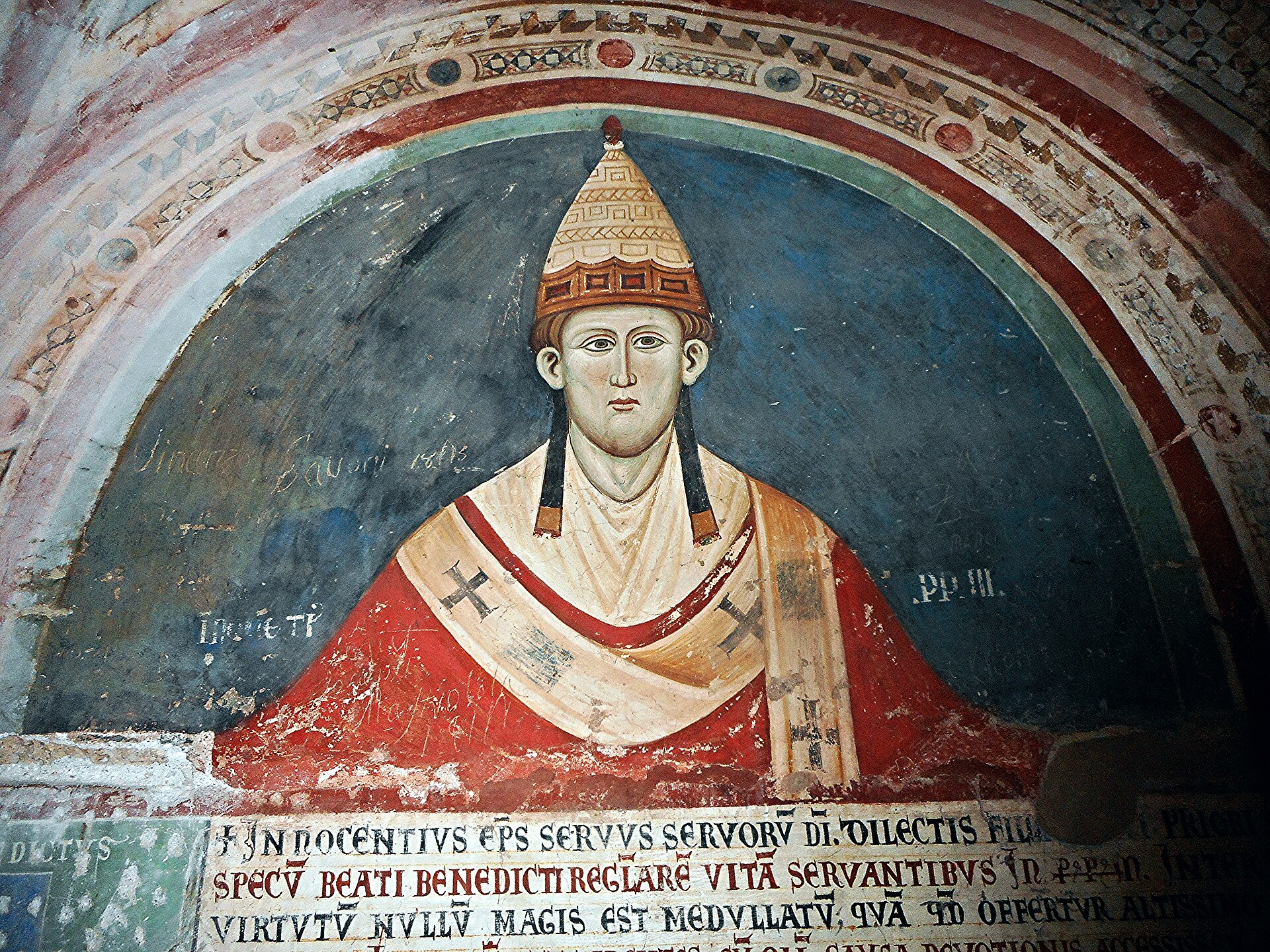

Lotario de' Conti di Segni was elected pope at Rome on January 8, 1198, the same day his predecessor Celestine III died, and took the name Innocent III.10 He was about thirty-seven. In eighteen years he intervened in the politics of the Empire, of England (where he placed the kingdom under interdict and received King John's submission), of France and of the Spanish kingdoms, called the Fourth Crusade (which ended in the sack of Constantinople in 1204) and the crusade against the Albigensians of southern France. The 1900s Catholic Encyclopedia, a Catholic reference that admires him, says of the Albigensian war that "despite the protest of Innocent, soon turned into a war of conquest."10 The same pope received Francis of Assisi and his first brothers in 1209 or 1210 and gave their way of life an oral approval, and he gave Dominic de Guzman leave to choose an approved rule for his preachers (lessons 02 and 12).711 He died at Perugia in July 1216, and the early Franciscan chronicler Thomas of Eccleston says Francis was present at his death.7
The Fourth Lateran Council, 1215
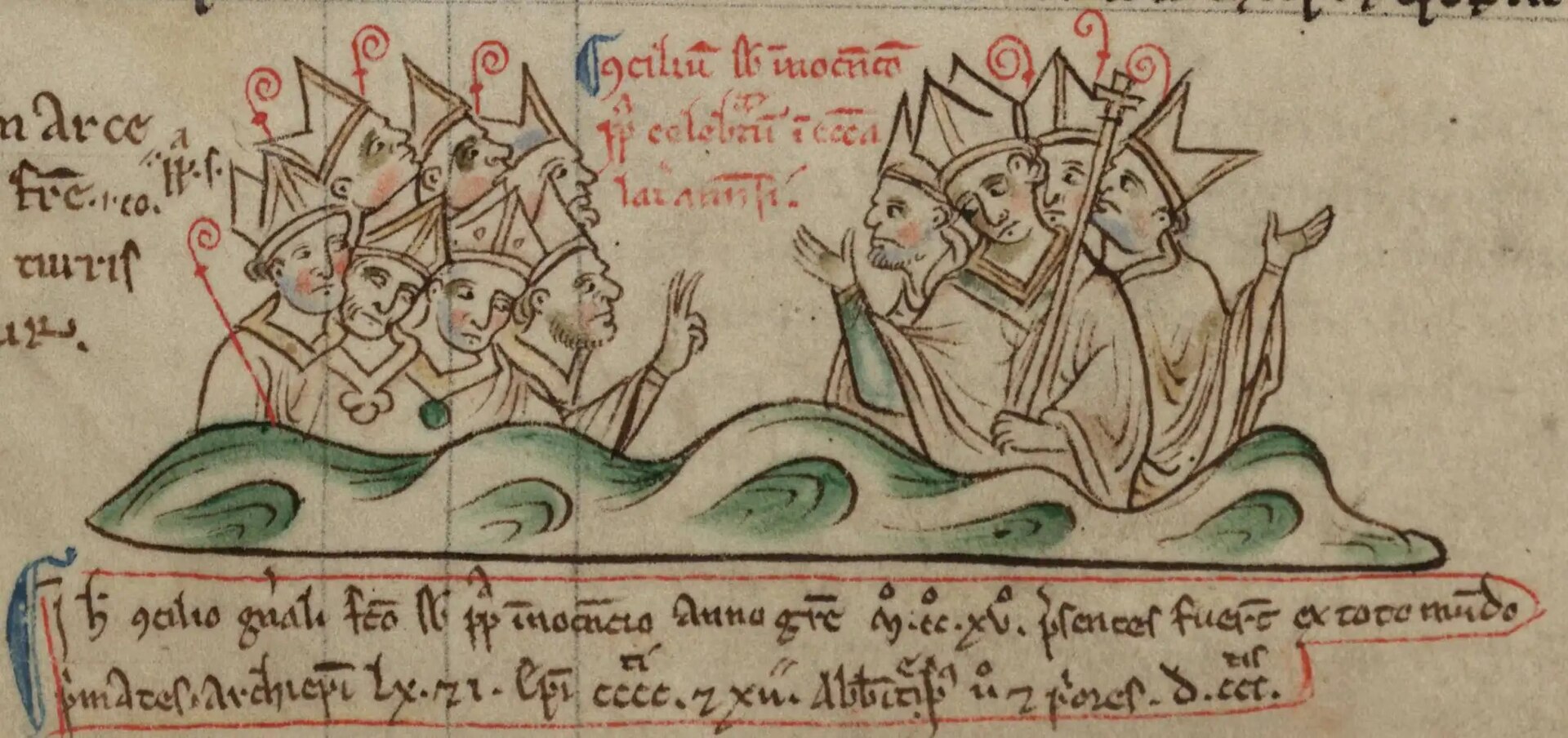

Innocent III opened the Fourth Lateran Council in the Lateran basilica at Rome in November 1215. The 1900s Catholic Encyclopedia's article on the council says that it "did in fact meet on 11 November, and its sessions were prolonged until the end of the month"; the same encyclopedia's article on Innocent gives the opening as November 15.4310 It was the largest council of the Middle Ages, and its seventy canons, or decrees, governed the daily religious life of western Christians for the next three centuries. Four of them matter for this module.
Canon 1 is a creed. Among its statements is the first conciliar use of the word for the change of the bread and wine in the Mass, as H. J. Schroeder's 1937 translation renders it: "There is one Universal Church of the faithful, outside of which there is absolutely no salvation. In which there is the same priest and sacrifice, Jesus Christ, whose body and blood are truly contained in the sacrament of the altar under the forms of bread and wine; the bread being changed (transsubstantiatio) by divine power into the body, and the wine into the blood."12 Aquinas would later write the classic scholastic treatment of this doctrine in the Third Part of the Summa, and Luther would reject the philosophical term while holding to the real presence of Christ's body and blood.
Canon 21 made yearly confession and Easter communion a duty of every Christian. Schroeder's translation reads:
"All the faithful of both sexes shall after they have reached the age of discretion faithfully confess all their sins at least once a year to their own (parish) priest and perform to the best of their ability the penance imposed, receiving reverently at least at Easter the sacrament of the Eucharist, unless perchance at the advice of their own priest they may for a good reason abstain for a time from its reception; otherwise they shall be cut off from the Church (excommunicated) during life and deprived of Christian burial in death. Wherefore, let this salutary decree be published frequently in the churches, that no one may find in the plea of ignorance a shadow of excuse."13
The canon goes on to tell the priest to act "after the manner of a skilful physician, carefully inquiring into the circumstances of the sinner and the sin," and it orders that a priest who reveals a confession be "not only deposed from the sacerdotal office but also relegated to a monastery of strict observance to do penance for the remainder of his life."13 This one decree created a vast demand for priests who could hear confessions well and preach on sin and virtue. The friars were trained for exactly that work, and a large part of Aquinas's Second Part, with its question-by-question treatment of the virtues and vices, served the same need (lesson 06). Catherine's letters and the Theologia Germanica both assume a world in which every Christian confessed and received communion at least yearly.
Canon 13 forbade new religious orders: "Lest too great a diversity of religious orders lead to grave confusion in the Church of God, we strictly forbid anyone in the future to found a new order, but whoever should wish to enter an order, let him choose one already approved."14 Francis's brothers already had Innocent's oral approval, and Dominic's preachers met the canon by adopting the Rule of St. Augustine in 1216. Both orders grew up under this decree, and the later quarrels over what the Franciscans were permitted to own were argued partly in its terms.
Two further canons belong in any honest account of the council. Canon 3 required secular rulers, under pain of excommunication, to "take an oath that they will strive in good faith and to the best of their ability to exterminate in the territories subject to their jurisdiction all heretics pointed out by the Church."15 Canon 68 ordered that "Jews and Saracens of both sexes in every Christian province and at all times shall be marked off in the eyes of the public from other peoples through the character of their dress," and that "during the last three days before Easter and especially on Good Friday, they shall not go forth in public at all."16 The council also launched a new crusade. These decrees are part of the world in which Aquinas wrote his articles on unbelievers and heretics (ST II-II, questions 10 and 11), in which Francis went to the Sultan at Damietta in 1219, and in which Catherine urged Gregory XI to lead a crusade. The lessons that come to those passages quote them exactly and give their context.
Cathedral schools and the rise of the universities
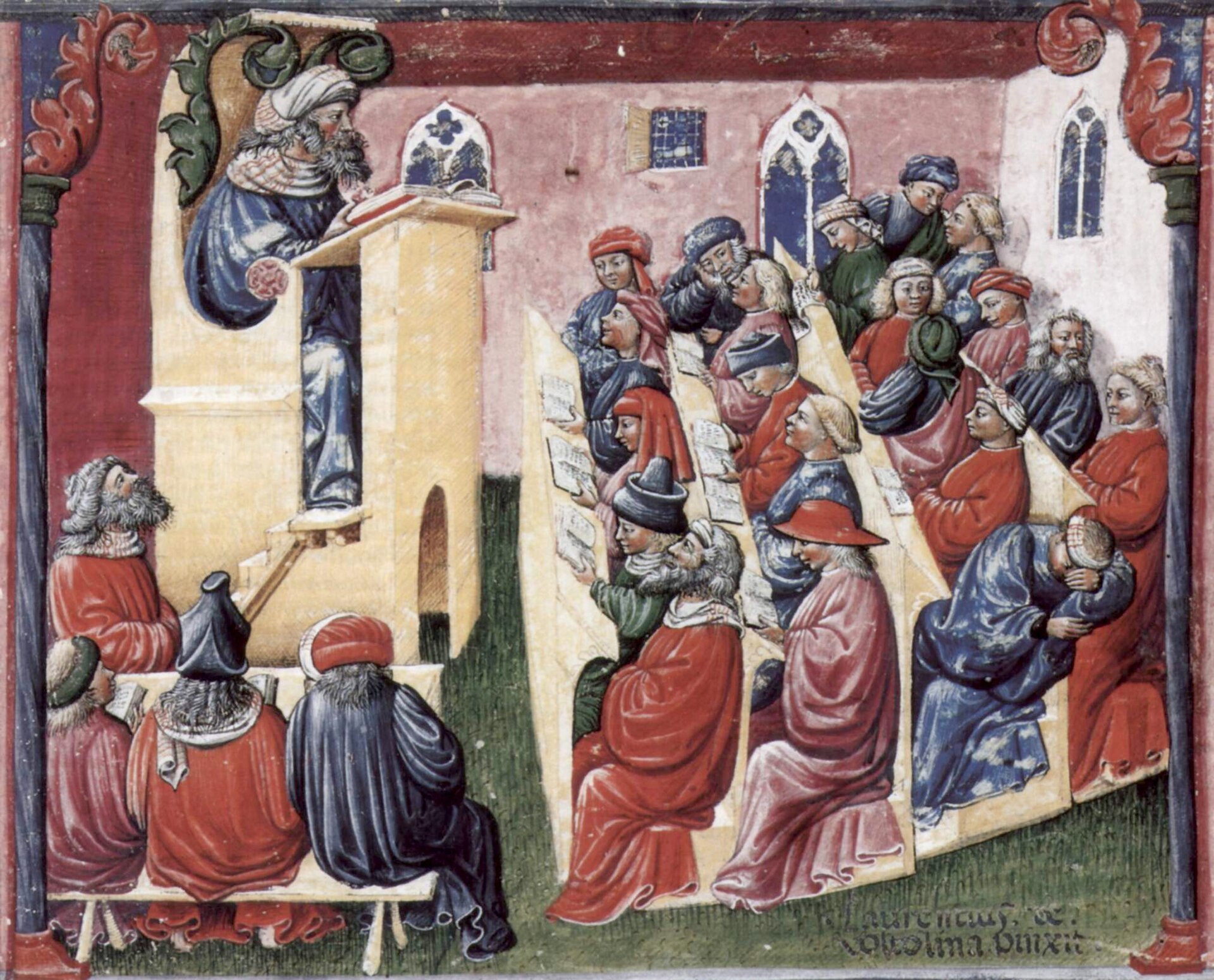

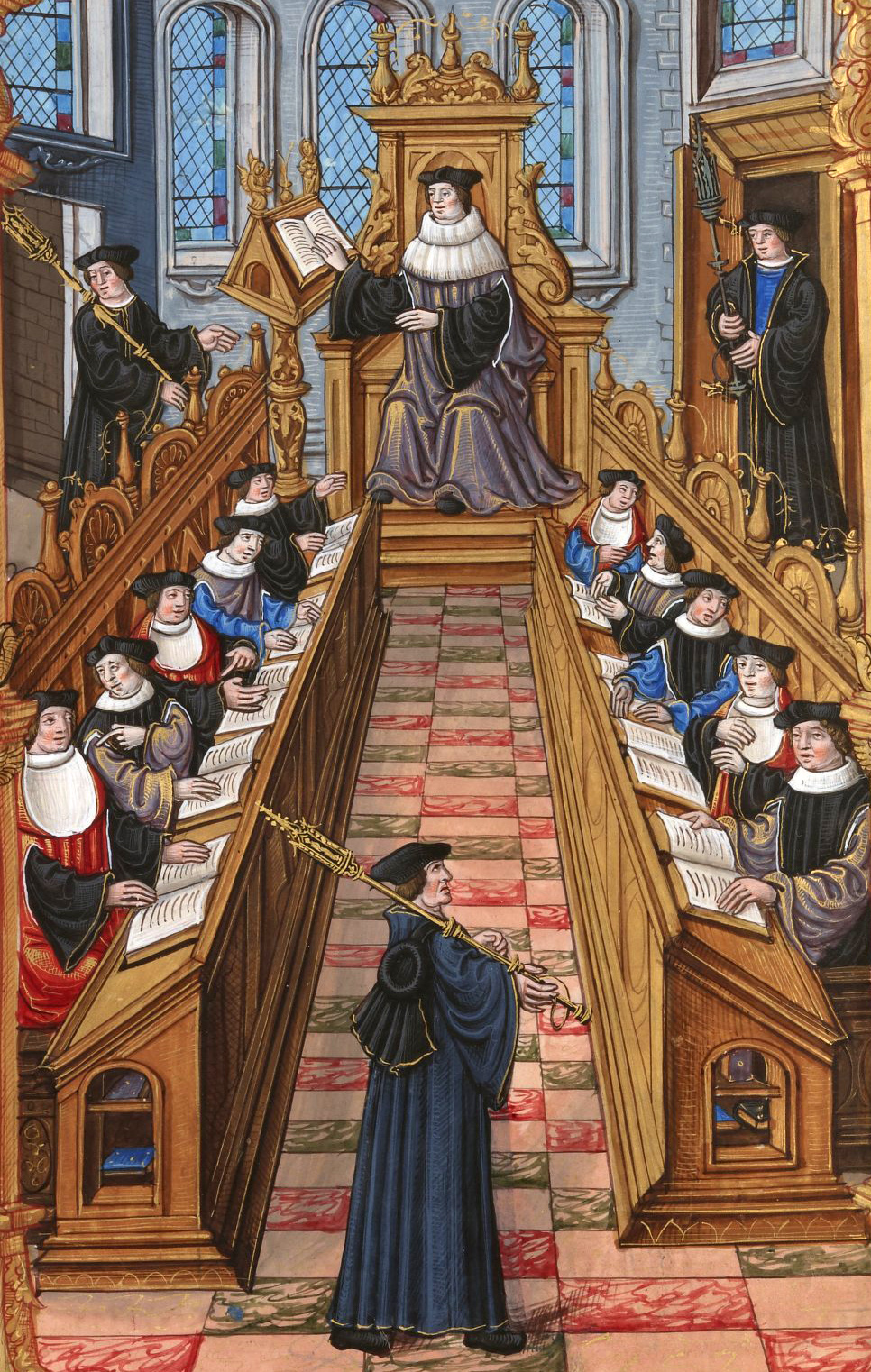
In the eleventh and twelfth centuries the schools attached to cathedrals, such as Chartres, Laon and the cathedral school of Notre-Dame in Paris, became centres of study, along with schools run by canons such as St. Victor in Paris. Masters and students gathered where good teachers were. In the late 1100s and early 1200s these gatherings organized themselves into guilds, the Latin word for which, universitas, simply meant a corporate body. The 1900s Catholic Encyclopedia sums up the pattern: "during the eleventh and twelfth centuries a revival of studies took place, in medicine at Salerno, in law at Bologna, and in theology at Paris."17 The same article notes the old legends that Oxford was founded by King Alfred, Paris by Charlemagne and Bologna by Theodosius II, and says that "These myths, though they survived well on into modern times, are now generally rejected."17 No university of this period has a single founding date. Bologna grew from its law schools, Paris from the masters of the cathedral and the left-bank schools, and Oxford from masters gathered there in the late 1100s.
The earliest surviving statutes of the University of Paris show how carefully the course was regulated. In August 1215, three months before the Lateran Council, the papal legate Robert de Courçon laid down rules for the masters and scholars at Paris. "No one is to lecture at Paris in arts before he is twenty years old. He is to listen in arts at least six years, before he begins to lecture."18 For theology the bar was higher: "no one shall lecture at Paris before he is thirty-five years old, and not unless he has studied at least eight years."18 Aquinas became a master of theology at Paris in 1256, at about thirty-one, younger than these statutes allowed. Lesson 02 explains how that came about.
The recovery of Aristotle in Latin
Before the 1100s, Latin readers knew only a small part of Aristotle's logic, mainly in the translations of Boethius (died about 524). Between about 1150 and 1270 nearly all of Aristotle's surviving works were translated into Latin, some from Greek and some from Arabic, often with the commentaries of the Muslim philosophers Avicenna (Ibn Sina) and Averroes (Ibn Rushd). The Jewish philosopher Moses Maimonides was translated in the same years. Aquinas cites all three in the Summa, calling Averroes "the Commentator" and Maimonides "Rabbi Moses," and he calls Aristotle simply "the Philosopher" (lesson 03).
The new books alarmed church authorities at first. Courçon's statutes of 1215 list what may be taught in the arts course and add: "The books of Aristotle on Metaphysics or Natural Philosophy, or the abridgements of these works, are not to be read, nor 'the doctrine' of master David de Dinant, of the heretic Almaric, or of Maurice of Spain."18 The translator's note in the same edition explains that Amalric of Bena and David of Dinant had been condemned at a council of Paris in 1210.18 The ban covered public lectures in the arts faculty at Paris, and it did not hold for long. By the middle of the century Aristotle's natural philosophy and metaphysics were being taught at Paris, and Aquinas spent much of his later career writing line-by-line commentaries on Aristotle's works. The tension did not go away. In 1277 the bishop of Paris condemned 219 propositions, some of which touched positions Aquinas had held (lesson 02).
The question Aristotle posed for Christian teachers was a question about reason and revelation, and Aquinas answered it in the very first article of the Summa. He asks "Whether, besides philosophy, any further doctrine is required?" and replies: "It was necessary for man's salvation that there should be a knowledge revealed by God besides philosophical science built up by human reason."19 Even truths about God that reason could reach, he goes on, needed to be revealed, "because the truth about God such as reason could discover, would only be known by a few, and that after a long time, and with the admixture of many errors."19 That article is the whole medieval university problem in a few lines, and lesson 03 reads it part by part.

The friars: Franciscans and Dominicans
The older monastic orders, such as the Benedictines and the Cistercians, lived in a fixed community behind walls, usually in the countryside, supported by land (module 79, lesson 07: Monks and the Desert Fathers). The new orders of the early 1200s were called friars, from the Latin fratres, brothers, or mendicants, from the Latin for begging. They lived in towns, owned little or nothing in common, moved from house to house, preached in the streets and squares, and lived on alms. Two of these orders produced two of this module's four writers.
The Franciscan Rule approved by Pope Honorius III on November 29, 1223, in the letter beginning Solet annuere, opens in Paschal Robinson's 1906 translation: "The Rule and life of the Minor Brothers is this, namely, to observe the holy Gospel of our Lord Jesus Christ, by living in obedience, without property and in chastity. Brother Francis promises obedience and reverence to the Lord Pope Honorius and to his successors canonically elected and to the Roman Church."207 "Minor Brothers" (Friars Minor) means the lesser brothers. At the end of his life Francis described how his way began, in the Testament he dictated in 1226: "The Lord gave to me, Brother Francis, thus to begin to do penance; for when I was in sin it seemed to me very bitter to see lepers, and the Lord Himself led me amongst them and I showed mercy to them. And when I left them, that which had seemed to me bitter was changed for me into sweetness of body and soul."21 Lesson 12 reads the Rule and the Testament in full.
The Order of Preachers, called the Dominicans after their founder Dominic de Guzman (died 1221), began as a band of preachers working against the Cathars of southern France. Having received from Innocent III permission to choose an existing rule, the brothers adopted the Rule of St. Augustine in 1216, and "The order was solemnly approved, 22 Dec., 1216" by Honorius III.11 The Catholic Encyclopedia notes that a second papal letter "determined the special vocation of the Order of Preachers as vowed to teaching and defending the truths of faith."11 Study was built into the Dominican life, and the order sent its best students to the universities. Thomas Aquinas joined it in 1244 against his family's wishes. Catherine of Siena belonged to its third order, the lay women called Mantellate, and her confessor and biographer Raymond of Capua became master general of the order.
The friars grew with astonishing speed, and they were not always welcome. Parish priests resented losing confessions, burials and offerings to them, and some university masters resented their place on the faculty. In the 1250s the Paris master William of Saint-Amour led a fierce attack on the mendicants, and Aquinas wrote against him (lesson 02). The friars also served the church's campaign against heresy. David Burr's introduction to the Franciscan Rule in the Medieval Sourcebook points out that "by the turn of the fourteenth century most inquisitors were either Franciscans or Dominicans."22 Both facts belong to the history of these orders.
Lay piety and the beguines
The 1100s and 1200s also saw a great movement of lay devotion outside the old orders. Some of it the church approved, such as the confraternities, the penitents who later formed Francis's third order, and the Dominican third order to which Catherine belonged. Some of it the church condemned, such as the Waldensians (followers of Valdes of Lyon, from the 1170s) and the Cathars. Between those two stood the beguines: groups of laywomen, mainly in the Low Countries and the Rhineland, who lived together or near one another in chastity and prayer, worked with their hands and cared for the sick, without taking permanent vows under an approved rule. Their male counterparts were called beghards.
The Catholic Encyclopedia gives two possible origins for the name: from St. Begga, patroness of Nivelles, "where, according to a doubtful tradition the first Beguinage was established," or "from Lambert le Bègue, a priest of Liège who died in 1180, after having expended a fortune in founding in his native town a cloister and church for the widows and orphans of crusaders."23 Local synods restricted them, and "They were condemned by the Council of Vienne (1312), but this sentence was mitigated by John XXII (1321), who permitted the Beguines, as they had mended their ways, to resume their mode of life."23 The German mystical preachers of the 1300s, Eckhart and Tauler among them, preached often to communities of women, including Dominican nuns and beguines. The Theologia Germanica warns repeatedly against a "false light" and a "false freedom" that its author saw in spiritual movements of his day, and lesson 09 asks whom he meant.
The Avignon papacy, 1309 to 1377
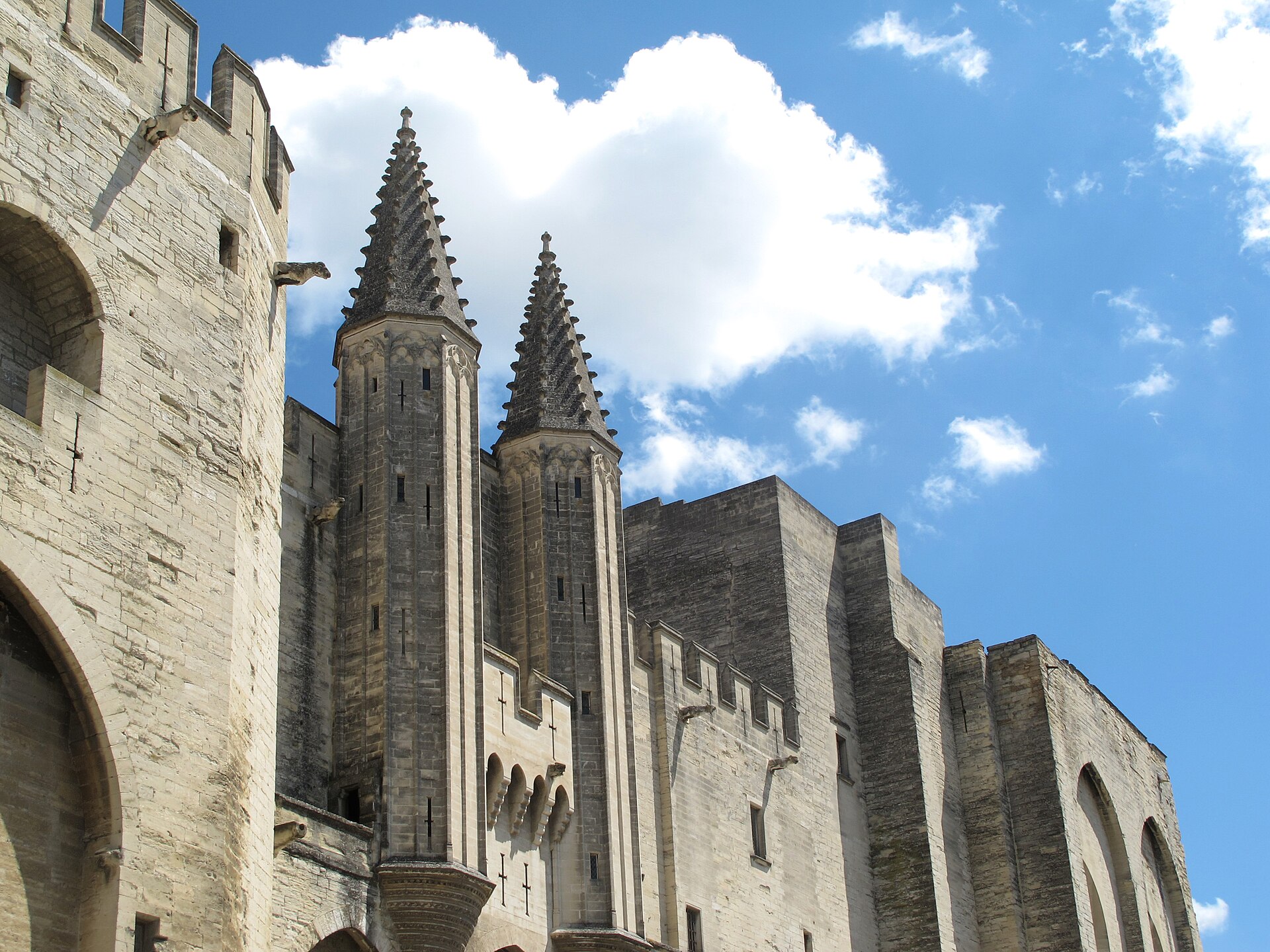

In 1305 the cardinals elected Bertrand de Got, archbishop of Bordeaux, as Pope Clement V. He never went to Rome. "For some time (1305-1309), Pope Clement resided at different places in France (Bordeaux, Poitiers, Toulouse), but finally took up his residence at Avignon, then a fief of Naples, though within the County of Venaissin that since 1228 acknowledged the pope as overlord."24 (The dash in the quoted date range is the encyclopedia's own; this module writes such ranges with "to.") Avignon itself became papal property in 1348, when Queen Joanna of Naples sold the city to Clement VI for 80,000 florins.25 The Catholic Encyclopedia's article on the city counts "nine popes, Clement V to Benedict XIII, inclusively" who lived there, counting the Avignon claimants of the Schism.25 All seven of the undisputed Avignon popes were French.
Italians in particular called the stay a "Babylonian captivity," after the Jewish exile in Babylon, a phrase Petrarch popularized and Luther later reused for the title of his 1520 treatise on the sacraments. Defenders of the Avignon popes have pointed to the disorder of Rome and the Papal States, the reform of papal finance and administration, and the safety of a city on the Rhone. Critics in the 1300s, Catherine among them, saw a bishop of Rome absent from his see. The papal court's efficient tax system also drew complaints across Europe and fed later demands for reform.
Catherine's letters show the pressure brought to bear on Gregory XI (pope 1370 to 1378). She calls him "sweet Christ on earth" and writes, in Vida Scudder's 1905 translation: "Come, come, and resist no more the will of God that calls you; and the hungry sheep await your coming to hold and possess the place of your predecessor and champion, Apostle Peter. For you, as the Vicar of Christ, should rest in your own place."26 In the same letter she urges him to make "the holy Crusade, which I summon you in His Name to do swiftly and without negligence."26 She went to Avignon herself, arriving on June 18, 1376 according to Scudder's chronology, and Gregory left for Italy that September and reached Rome on January 17, 1377.9 How much her visit moved him is a question this lesson's "Claims checked" section takes up, and lesson 10 tells the whole story.
The Black Death, 1347 to 1351
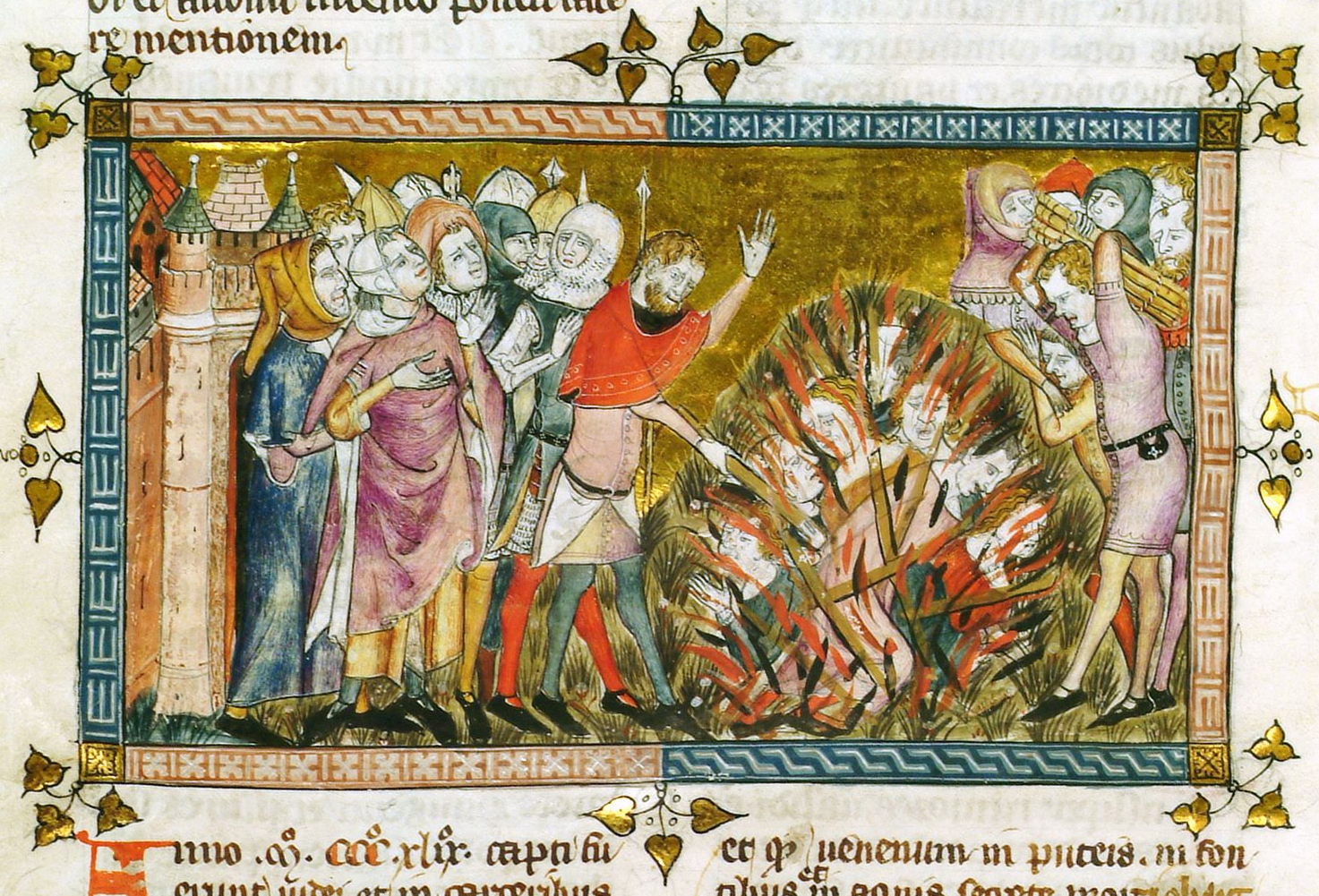

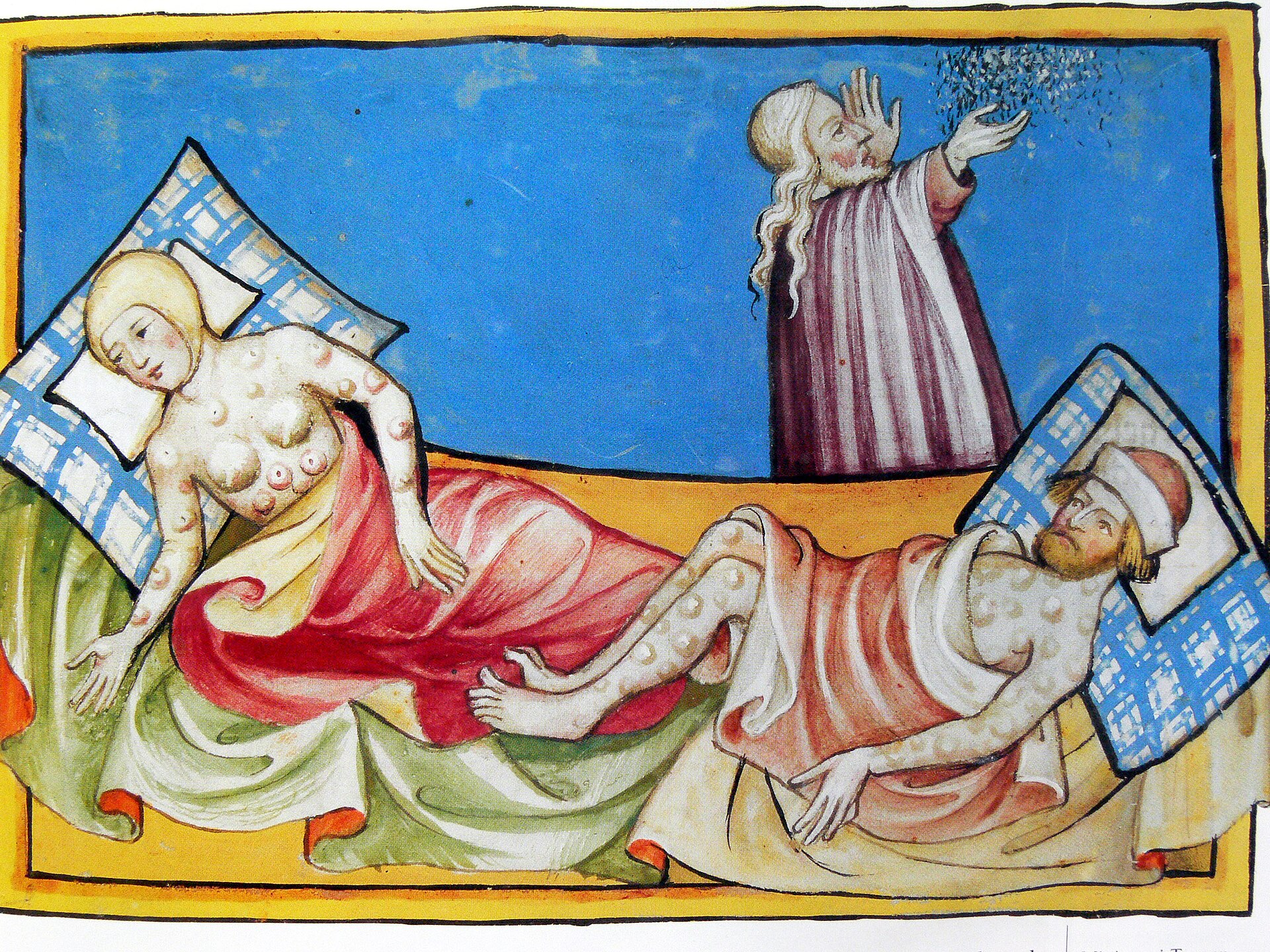
In 1347 a pandemic of plague, which modern laboratory work on skeletons from plague cemeteries has traced to the bacterium Yersinia pestis, reached the ports of Sicily and southern Europe by sea from the Black Sea region, and over the next four years it spread across nearly all of Europe. Later generations called it the Black Death. Its cost in lives can only be estimated, and the estimates have risen. Older surveys commonly spoke of about a third of Europe's people. The Norwegian historian Ole J. Benedictow, in The Black Death 1346 to 1353: The Complete History (2004), argued from local studies that the toll was far higher. As Oivind Larsen summarized the book in a 2005 review: "Case studies from districts in Europe where acceptable figures for mortality may be worked up, indicate that around 60 per cent of the population died. If the European population is estimated at 80 million at this time, it means that around 50 million were swept away by the Great Plague."27 Other historians accept lower figures. The range commonly given today runs from about a third to about sixty percent, varying greatly from place to place.
Contemporaries left their own numbers. Giovanni Boccaccio, introducing the Decameron, wrote of Florence in 1348, in J. M. Rigg's translation: "it is believed without any manner of doubt, that between March and the ensuing July upwards of a hundred thousand human beings lost their lives within the walls of the city of Florence, which before the deadly visitation would not have been supposed to contain so many people!"28 Boccaccio's "hundred thousand" is almost certainly higher than the city's whole population, and Rigg's introduction notes that Boccaccio himself was not in Florence during the plague.28 His description of the burial trenches is often quoted: the gravediggers laid the dead "by hundreds at a time, piling them up as merchandise is stowed in the hold of a ship, tier upon tier, each covered with a little earth, until the trench would hold no more."28
In Siena, where Catherine was born a year before the plague arrived, the chronicler Agnolo di Tura wrote, in the translation published by World History Commons: "It is not possible to describe this horrible thing with human speech." He describes burials without priests, liturgy or bells, and families who abandoned their sick, "father abandoned child, wife her husband, and one brother the other," and he records that he buried his own five children with his own hands.29 Susanna Winkworth, in the introduction to her translation of the Theologia Germanica, says that John Tauler stayed at his post in Strasbourg "when the Black Death was raging in Strasburg, where it carried off 16,000 victims."30 That number is her nineteenth-century figure and is not confirmed here.
The plague returned again and again. Catherine nursed the sick in the Sienese outbreak of 1374, and Raymond of Capua, whom she met that year, wrote that she cared for plague victims at risk of her life (lesson 10). The Frankfurt author wrote within a generation or two of the first wave. None of the four texts in this module describes the plague directly, and readers should not claim that any of them was "written in response" to it. They were written in a world that had lived through it.

The Western Schism, 1378 to 1417
Gregory XI died in Rome in March 1378. Under pressure from a Roman crowd demanding a Roman or at least an Italian pope, the cardinals elected the archbishop of Bari, Bartolomeo Prignano, on April 8, 1378, and he took the name Urban VI.31 Urban's harsh treatment of the cardinals turned most of them against him within weeks. Declaring that his election had been forced by fear, thirteen of them met at Fondi, in the Kingdom of Naples, and "On 20 September thirteen members of the Sacred College precipitated matters by going into conclave at Fondi and choosing as pope Robert of Geneva, who took the name of Clement VII."31 Clement soon settled at Avignon. The Catholic Encyclopedia frames the puzzle that followed: "The cardinals of 1378 held successive opinions. They had in turn testified for Urban, the first pope elected, on 8 April, and for Clement of Avignon on 20 September. Who were to be believed?"31
Europe divided along political lines. Scudder's chronology summarizes the first years: "England remains faithful to Urban: France and Naples, after wavering, declare for Clement."9 Catherine took Urban's side without hesitation, moved to Rome in November 1378 at his request, and spent the last eighteen months of her life writing to kings, queens, cities and cardinals on his behalf.9 She died in Rome in 1380, long before the Schism ended. A council at Pisa in 1409 tried to end the division by deposing both popes and electing a third, which only produced three claimants. The Council of Constance (1414 to 1418) received the abdication of the Roman pope Gregory XII, deposed the Pisan pope John XXIII and the Avignon pope Benedict XIII, and "On 11 November, 1417, the assembly elected Odo Colonna, who took the name of Martin V. Thus ended the great schism of the West."31 The same council condemned and burned Jan Hus in 1415 (module 102, Martyrs Briefs, lesson 05: Before the Reformation). The Catholic Church today counts the Roman line, from Urban VI to Gregory XII, as the lawful popes of the Schism.
A generation of Christians grew up not knowing for certain who the pope was, with saints on both sides. Catherine supported Urban, while the Dominican preacher Vincent Ferrer, later canonized, supported the Avignon line for years. The question of whether a general council could judge a pope, raised at Constance, was argued until the Reformation and beyond.
The German mystics and the Friends of God
In the Rhineland and southern Germany in the 1300s, a line of Dominican preachers taught a demanding mystical theology in German sermons. The first and most famous was Eckhart, called Meister Eckhart from his title as master of theology at Paris. The 1900s Catholic Encyclopedia gives his birth as "about 1260 at Hochheim, near Gotha" and his death in 1327 at Cologne (modern scholars usually place it in 1328).32 Eckhart was accused of heresy by the archbishop of Cologne, appealed to the pope, and died before the case ended. On March 27, 1329, Pope John XXII condemned "seventeen of Eckhart's propositions as heretical, and eleven as ill-sounding, rash, and suspected of heresy," adding that Eckhart had submitted to the Holy See before his death.32
His followers were more careful. John Tauler, a Dominican "born at Strasburg about 1300; died at the same place, 16 June, 1361," was a preacher whose sermons were printed many times and read by Luther.33 Henry Suso, also a Dominican, was "born at Constance on 21 March, about 1295; died at Ulm, 25 January, 1366."34 Around them gathered a loose fellowship of priests, nuns and laypeople who called themselves the Friends of God (Gottesfreunde). Winkworth's 1854 introduction describes them this way: "They often appealed to the declaration of Christ (John 15:15), 'Henceforth I call you not servants; for the servant knoweth not what his lord doeth; but I have called you friends; for all things that I have heard of my Father I have made known unto you;' and from this they probably derived their name of 'Friends of God.'"30 She adds: "The Association counted among its members priests, monks, and laity, without distinction of rank or sex."30
The Theologia Germanica came out of this world. A prologue found both in Luther's text and in a manuscript of 1497 at Wurzburg (published by Franz Pfeiffer in 1851) says, in Winkworth's rendering, that the writer "was of the Teutonic order, a priest and a warden in the house of the Teutonic order in Frankfort."35 Winkworth thought the book "was probably written somewhere about 1350, since it refers to Tauler as already well known," and modern scholars generally place it between about 1350 and 1400 (lesson 08 sets out who argues what).35 Its first chapter opens with Paul: "St. Paul saith, 'When that which is perfect is come, then that which is in part shall be done away.' Now mark what is 'that which is perfect,' and 'that which is in part.'"36
The four sources and how far apart they lived
It is easy to speak of "the medieval church" as if it were one moment. These four writers were separated by generations, and each lived in a different church situation.
Francis (1181 or 1182 to 1226) lived under Innocent III and Honorius III, at the height of papal power, in the years of the Fourth Lateran Council and the Fifth Crusade. He knew nothing of the universities from inside, wrote very little, and was dead before Aquinas could have been more than an infant. His Canticle of the Creatures begins, in Robinson's translation: "Most high, omnipotent, good Lord, / Praise, glory and honor and benediction all, are Thine."37
Aquinas (about 1225 to 1274) was born a year or so before Francis died. The Catholic Encyclopedia gives his birth as "1225 or 1227" and his death at Fossanova on "7 March, 1274," and the modern biographers James Weisheipl (Friar Thomas d'Aquino, 1974) and Jean-Pierre Torrell (Saint Thomas Aquinas, vol. 1, 1993 in French, 1996 in English) both favor about 1225.838 He lived entirely in the age of the friars and the universities, and in the generation when Aristotle was being absorbed. He died thirty-five years before the popes settled at Avignon in 1309.
Catherine (1347 to 1380) was born a century and a half after Francis and seventy-three years after Aquinas died. She lived in the Avignon years, through the plague, and into the first two years of the Schism. Her Dialogue opens with a soul "lifted by a very great and yearning desire for the honor of God and the salvation of souls," who "begins by exercising herself, for a certain space of time, in the ordinary virtues, remaining in the cell of self-knowledge, in order to know better the goodness of God towards her."39
The Frankfurt author wrote in the second half of the 1300s, in the generation after Eckhart, Tauler and Suso. He may have been writing in the very years Catherine was writing in Siena. Nothing suggests that either knew of the other.
Luther (1483 to 1546) printed the Frankfurt book about 140 years after it was written, about 240 years after Aquinas died, and almost 300 years after Francis died.
Their places were far apart as well. The straight-line distance from Paris, where Aquinas taught, to Naples, where he was a student and later taught again, is about 1,290 kilometres (800 miles). From Avignon to Rome is about 670 kilometres (410 miles), and from Siena to Avignon about 530 kilometres (330 miles). Catherine made that journey in 1376 by way of Florence, reaching Avignon in June. Siena and Assisi are only about 110 kilometres (65 miles) apart. Frankfurt, where the Frankfurt author wrote, is about 340 kilometres (210 miles) from Wittenberg, where Luther printed his book. These distances are straight-line figures computed from the cities' coordinates. Medieval travellers on roads and rivers went much farther.
The four sources on a timeline
The timeline below places the four writers, the German preachers who stand behind the Frankfurt book, and Luther, against the church events described above. The bar for the Frankfurt author is pale because only the range of possible dates is known.
The four sources on a map
The diagram below places the cities by latitude and longitude. It does not draw coastlines or borders, which changed often in these centuries, and the shaded areas only suggest where France, the German lands of the Holy Roman Empire and Italy lay.
How these texts reach a modern reader
Every quotation in this module comes from a public domain English translation that can be opened and checked online. The translations are old, and their English is old. The Dominican Fathers' Summa (1920) writes "Holy Ghost" and "I answer that." Winkworth's Theologia Germanica (1854) writes "saith" and "hath." Thorold's Catherine (1896, abridged 1907) and Scudder's letters (1905) are Victorian and Edwardian prose. Robinson's Francis (1906) is plainer. Modern translations exist for all four, and several are better, but they are under copyright and are quoted only briefly when at all. A reader who wants to check any quotation should be able to find the same words at the address in the footnote.
The Bible these writers used was the Latin Vulgate, the translation made about 382 to 405 at the request of Pope Damasus, and when they quote Scripture the Douay-Rheims English translation of that Latin text usually comes closest to what they read. Module 103 tells that Bible's history (The History of the Bible, lesson 04). Francis and Catherine quote Scripture from memory and from the liturgy far more than from a book, and Catherine could not have cited verse numbers: the chapter divisions still in use go back to the early 1200s, but the verse numbers were added only in the 1500s.

What the record shows and what it does not
- Documented fact: Innocent III was elected on January 8, 1198, and opened the Fourth Lateran Council in November 1215 (on November 11, by the Catholic Encyclopedia's article on the council). The council's canons survive, including canon 21 on yearly confession and Easter communion, canon 13 against new orders, canon 3 on heretics and canon 68 on the dress of Jews and Muslims. The Dominicans were approved on December 22, 1216, and the Franciscan Rule on November 29, 1223. Gregory XI reached Rome on January 17, 1377. Urban VI was elected on April 8, 1378, and Clement VII on September 20, 1378. Martin V was elected at Constance on November 11, 1417.
- The writers' own words: Luther's 1518 preface to the Frankfurt book, Francis's Rule and Testament, Catherine's letters to Gregory XI, and Aquinas's prologue and first article all survive and are quoted here from public domain translations.
- Contemporary report: Boccaccio's figure of over 100,000 plague dead in Florence and Agnolo di Tura's account of Siena are eyewitness or near-eyewitness reports, but their numbers are not counts. Boccaccio was not in Florence during the plague.
- Later legend: the founding of Paris by Charlemagne, of Oxford by King Alfred and of Bologna by Theodosius II are legends that the 1900s Catholic Encyclopedia itself rejected.
- Scholarly reading: the share of Europe's people killed by the Black Death is an estimate, from about a third in older accounts to about sixty percent in Ole Benedictow's 2004 study. The date of the Theologia Germanica (about 1350 to 1400) is an inference from its contents.
- Open questions: who the Frankfurt author was; how much Catherine's visit to Avignon moved Gregory XI to leave; whether the Summa was ever placed on the altar at the Council of Trent, as Leo XIII wrote in 1879.
Claims checked
"The Fourth Lateran Council invented confession." Rating: Refuted
Canon 21 made it a law of the whole Latin Church that every Christian past "the age of discretion" confess "at least once a year to their own (parish) priest" and receive communion "at least at Easter."13 The canon itself assumes confession already exists: it tells priests how to hear confessions "after the manner of a skilful physician" and punishes priests who reveal them.13 Private confession to a priest had been practiced for centuries before 1215. What the council created was a universal minimum and a penalty for neglecting it.
"Transubstantiation was invented in 1215." Rating: Partly supported
Canon 1 of the Fourth Lateran Council is the first decree of a general council to use the word: "the bread being changed (transsubstantiatio) by divine power into the body, and the wine into the blood."12 The council did not invent the belief that the bread and wine become Christ's body and blood, which is far older, and the word itself had already been used by theologians of the 1100s. The full scholastic explanation, using Aristotle's terms of substance and accident, came after the council, above all from Aquinas. The claim is right about the date the word entered a council's decree and wrong if it means the belief began then.
"The medieval church banned Aristotle." Rating: Partly supported
The 1215 statutes for Paris said "The books of Aristotle on Metaphysics or Natural Philosophy, or the abridgements of these works, are not to be read."18 The same statutes required Aristotle's logic, and allowed his Ethics on feast days.18 The ban applied to lectures in the Paris arts faculty, not to private reading or to other universities, and within about forty years Aristotle's whole corpus was being taught at Paris. A Dominican friar, Aquinas, then wrote line-by-line commentaries on it. A local ban did exist, and it did not last.
"Paris was founded by Charlemagne and Oxford by King Alfred." Rating: Refuted
The Catholic Encyclopedia reports both legends, with the legend that Bologna was founded by Theodosius II in 433, and says, "These myths, though they survived well on into modern times, are now generally rejected."17 The universities grew out of schools of the 1100s and have no founding charters from those rulers.
"The Black Death killed a third of Europe." Rating: Unresolved
No census exists. A third is the traditional figure, and some historians still give it. Ole J. Benedictow's 2004 study, as summarized by Oivind Larsen, found that local studies "indicate that around 60 per cent of the population died."27 Mortality varied enormously from place to place. A careful statement says that between about a third and about three-fifths of Europe's people died between 1347 and 1351, by different estimates.
"The Avignon popes were puppets of the French king." Rating: Partly supported
Clement V was under heavy pressure from Philip IV of France. The Catholic Encyclopedia, describing the posthumous process Philip demanded against Pope Boniface VIII, writes that "the merciless king, sure of his power, pressed for the opening of this unique trial," and that "Clement had to yield."24 All the undisputed Avignon popes were French. Yet later Avignon popes acted independently of the French crown on many questions, and the city itself was not French territory: it lay in the papal County of Venaissin and became papal property in 1348.2425 The charge fits Clement V best and the later popes less well.
"Catherine single-handedly brought the pope back to Rome." Rating: Partly supported
Catherine urged Gregory XI to return in writing ("Come, come, and resist no more the will of God that calls you") and in person at Avignon in the summer of 1376.269 Scudder's 1905 chronology says Gregory was "swayed by her representations."9 The same chronology records that Gregory had already, "On April 22nd," 1372, "in full consistory," announced "his intention of returning to Rome," four years before he met her.9 The war with Florence, the revolt of the Papal States and the pleas of others, including Bridget of Sweden before her death in 1373, all pressed in the same direction. Catherine's part was real. "Single-handedly" goes beyond the evidence. F. Thomas Luongo's The Saintly Politics of Catherine of Siena (2006) studies how her role was shaped and remembered (lesson 10).
"Catherine could not read or write." Rating: Partly supported
Most of Catherine's letters and the Dialogue were dictated to secretaries. Scudder's chronology, which follows Raymond of Capua's life, says that between 1364 and 1367 "she learns to read," and that in 1377, at the castle of Rocca d'Orcia, "she learns miraculously to write."9 On that account she could read from her late teens and could write, at least a little, in the last years of her life. Lesson 10 sets out what the sources say about the few writings that may be in her own hand.
"Francis and Thomas Aquinas knew each other." Rating: Refuted
Francis died on October 3, 1226.7 Aquinas was born in 1225 or 1227.8 Paintings that show them together, such as the Renaissance altarpieces that place saints of different centuries side by side, are acts of devotion, not records of a meeting. Aquinas did know the Franciscan Bonaventure, his colleague at Paris.
"At the Council of Trent the Summa was laid on the altar beside the Bible." Rating: Unresolved
Leo XIII wrote in Aeterni Patris (1879) that "the Fathers of Trent made it part of the order of conclave to lay upon the altar, together with sacred Scripture and the decrees of the supreme Pontiffs, the Summa of Thomas Aquinas, whence to seek counsel, reason, and inspiration."40 The encyclical gives no contemporary source for the statement, and this lesson could not locate one in the published acts of the council. The story is repeated in many books from the 1500s onward. Until a sixteenth-century record is produced, it should be cited as Leo XIII's statement and not as an established fact.
"A Reformer said: Take away Thomas and I will destroy the Church." Rating: Unsupported
Aeterni Patris says that "there were not lacking among the leaders of heretical sects some who openly declared that, if the teaching of Thomas Aquinas were only taken away, they could easily battle with all Catholic teachers, gain the victory, and abolish the Church," and its footnote for the sentence reads only "Bucer."41 No work, letter or page of Martin Bucer is cited, and this lesson found none. The saying should be treated as an unsourced attribution.
"Luther (or Tauler) wrote the Theologia Germanica." Rating: Refuted
Luther printed the book and wrote a preface to it. He never claimed it as his, and the prologue found both in his text and in the Wurzburg manuscript of 1497 names the author as a priest and warden of the Teutonic Order's house at Frankfurt.35 Winkworth explains that before the Wurzburg manuscript was found, "some, disregarding its authority, have ascribed the Theologia Germanica to Tauler, whose style it resembles so much that it might be taken for his work, but for the reference to him already mentioned."35 A book that cites Tauler as an authority was not written by Tauler. Lesson 08 tells the full history.
"The mysterious layman who taught Tauler was Nicholas of Basel, a secret Waldensian." Rating: Unresolved
Winkworth wrote in 1854 that "It is now known from contemporary records that this was Nicholas of Basle, a citizen of that Free town and a secret Waldensian," burned at Vienne in 1382.30 Later scholarship, beginning with the Dominican historian Heinrich Denifle in the 1870s, argued that the "Friend of God from the Oberland" described in the Strasbourg writings associated with Rulman Merswin was a literary creation and that the identification with Nicholas cannot stand. Most modern historians accept that the Oberland friend cannot be identified with any known person. Winkworth's sentence should not be repeated as fact.
Hard questions and answers
Why should a Protestant read writers from a church that required rulers to "exterminate" heretics?
Because the Reformers did. Luther printed the Theologia Germanica and ranked it next to the Bible and Augustine.1 Calvin cited Aquinas by part, question and article in order to argue with him.23 Canon 3 of the Fourth Lateran Council does say what it says, and this lesson quotes it exactly.15 Reading a medieval writer means reading him in his own setting, including its laws on heresy, and then judging each claim on its evidence. The same rule applies to the Reformers, whose own record on dissent is part of modules 79 and 102.
If the Fourth Lateran Council forbade new orders, how did the Franciscans and Dominicans survive?
Canon 13 told anyone who wished to found a house to "accept a rule already approved."14 Francis's way of life had received Innocent III's oral approval before the council, in 1209 or 1210.7 Dominic's community adopted the existing Rule of St. Augustine in 1216 and added its own customs, and Honorius III approved the order on December 22, 1216.11 The Franciscans then received a written Rule of their own in 1223.7 Both orders were, in canon law, building on approvals or rules already granted.
Was the Avignon papacy a "captivity" or a sensible move?
Both descriptions have defenders. The popes at Avignon escaped the violence of Roman factions, built an efficient administration and lived in a city that became their own property in 1348.25 Their critics, Catherine among them, held that the bishop of Rome belonged in Rome. She told Gregory XI, "For you, as the Vicar of Christ, should rest in your own place."26 The pressure of Philip IV on Clement V is documented.24 "Captivity" was a polemical word from the start, and the evidence supports a mixed verdict.
Can medieval numbers, such as Boccaccio's 100,000 dead, be trusted?
They tell what frightened people believed, and they are rarely counts. Boccaccio himself says the city "before the deadly visitation would not have been supposed to contain so many people," and his translator notes that Boccaccio was not in Florence during the plague.28 Modern estimates rest on tax lists, burial records and local studies, which is why Benedictow's figure differs from older ones.27 Agnolo di Tura's account of burying his own five children is evidence of suffering, not of percentages.29
Did the Black Death produce the German mystics and Catherine?
The dates rule out a simple answer. Eckhart died about twenty years before the plague arrived, and the condemnation of his propositions came in 1329.32 Tauler and Suso were preaching and writing before 1347.3334 Catherine was born a year before the plague reached Siena, and the Frankfurt author wrote after it. The plague belongs to the world of the later writers, and the texts themselves give it little direct attention. Any stronger link has to be argued from evidence the texts do not supply.
Do these writers belong to Catholics alone?
All four lived and died in communion with the Latin Church, and three of them (Francis, Aquinas and Catherine) are canonized saints. Leo XIII made Aquinas the model for Catholic philosophy in 1879.5 Their readers have never been Catholics alone. Luther's printing of the Frankfurt book, an English translation by a Protestant laywoman with prefaces by an Anglican clergyman (Charles Kingsley) and a Prussian diplomat (Bunsen), and Calvin's arguments with "the subtlety of Thomas" all show Protestant readers using these texts.13 Kingsley wrote in his preface that for "evangelical" Christians "Martin Luther's own words ought to be sufficient warrant," and that readers who did not trust Luther's name "must recollect, that the Author of this book was a knight of the Teutonic order; one who considered himself, and was considered, as far as we know, by his contemporaries, an orthodox member of the Latin Church."42 (Kingsley's "knight" goes beyond the prologue, which calls the author a priest.) The rest of this module lets each side state its own reading in its own words.
Learn more
- Church History, Part A, lesson 09: The Medieval Church: The medieval church in outline, which this lesson assumes.
- Church History, Part A, lesson 10: Reform Before Luther: Wycliffe, Hus, Avignon and the Schism in outline.
- The Canons of the Fourth Lateran Council (Internet Medieval Sourcebook): All seventy canons and the crusade decree in Schroeder's translation, the best single window on church life after 1215.
- Theologia Germanica, Winkworth translation (CCEL): Luther's preface, Kingsley's preface, Bunsen's letter and the whole book; read before lessons 08 and 09.
- Scudder, Saint Catherine of Siena as Seen in Her Letters (Project Gutenberg): Catherine's letters to Gregory XI and a dated chronology of her life and times.
- Leo XIII, Aeterni Patris (1879): The document behind the modern Catholic revival of Aquinas.
Still being checked (16 items)
These points could not be confirmed against a primary source when this lesson was written and fact checked in October 2026. The text above states each one as uncertain.
- Wesley's November 1736 letter to Samuel Wesley is quoted from Mark K. Olson's article; the original letter was not opened.
- The statement that the Summa was laid on the altar at the Council of Trent appears in Aeterni Patris (1879) without a contemporary source; no sixteenth-century record was located.
- Leo XIII's attribution to Bucer of the saying about taking away Thomas has no work or page cited; none was found.
- Older estimates of Black Death mortality at about one third are stated as the traditional figure without a specific author opened; Benedictow's 60 percent is taken from Larsen's review, not from the book itself.
- Winkworth's figure of 16,000 plague dead at Strasbourg is not confirmed.
- The modern view that the Friend of God from the Oberland was a literary creation (Heinrich Denifle and later scholars) is stated from general scholarly knowledge; Denifle's work was not opened.
- Catherine's death date: most modern references give April 29, 1380; Scudder's 1905 chronology gives April 30.
- Eckhart's death: the Catholic Encyclopedia gives 1327; the lesson follows the usual modern date of 1328 without a primary record opened.
- Weisheipl's and Torrell's preference for 1225 as Aquinas's birth year is stated from their known positions; the books were not opened.
- The use of the word transubstantiation by theologians of the 1100s before 1215 is stated without a named source opened.
- Jones and Nevell (2016) on the Toggenburg Bible image is taken from the Wikimedia Commons file description.
- Raymond of Capua's account of Catherine's care for the sick in the 1374 plague is left to lesson 10; Raymond's life was not opened here.
- The date by which Aristotle's natural philosophy was regularly taught at Paris (about the 1250s) is stated without the 1255 statute being opened.
- Innocent III's interventions in England and in the Fourth Crusade are stated from general knowledge; the Catholic Encyclopedia article confirms his age at election (thirty-seven), the Albigensian war and the council (checked Nov. 5, 2026). The CE article on Innocent gives his death as June 16, 1216, while the CE article on Francis and modern references give July 1216; the lesson follows July.
- The opening date of Lateran IV: the Catholic Encyclopedia's article on the council gives November 11, 1215, and its article on Innocent III gives November 15; the lesson now gives both. Tanner's introduction (papalencyclicals.net) says only November 1215.
- The statement that the chapter divisions in use today go back to the early 1200s (Stephen Langton) and the verse numbers to the 1500s is stated from general knowledge without a source opened.
Notes
- Martin Luther, preface to the 1518 edition ("Eyn deutsch Theologia"), as translated in Theologia Germanica, trans. Susanna Winkworth (London: Longman, 1854), "Historical Introduction by the Translator"; text from the Christian Classics Ethereal Library edition (Golden Treasury Series, 1893; introduction from the 1907 reprint) (retrieved Oct. 29, 2026). Read it online. ↩
- John Calvin, Institutes of the Christian Religion, trans. Henry Beveridge (Edinburgh: Calvin Translation Society, 1845), Book II, chapter 2, section 4, Christian Classics Ethereal Library (retrieved Oct. 29, 2026). Read it online. ↩
- John Calvin, Institutes of the Christian Religion, trans. Henry Beveridge (1845), Book III, chapter 22, section 9, Christian Classics Ethereal Library (retrieved Oct. 29, 2026). Read it online. ↩
- Mark K. Olson, "Luther and Wesley on the Theologia Germanica," Society of Evangelical Arminians, August 6, 2025, quoting John Wesley's letter to his brother Samuel Wesley, November 1736. The original letter was not opened for this lesson (retrieved Oct. 29, 2026). Read it online. ↩
- Leo XIII, encyclical Aeterni Patris (August 4, 1879), section 17, English translation at the Holy See website (retrieved Oct. 29, 2026). Read it online. ↩
- Thomas Aquinas, Summa Theologiae, Prologue, trans. Fathers of the English Dominican Province, 2nd and revised ed. (London: Burns Oates and Washbourne, 1920), New Advent online edition (retrieved Oct. 29, 2026). Read it online. ↩
- The Catholic Encyclopedia (New York: Robert Appleton Company, 1907 to 1912), article "St. Francis of Assisi," New Advent online edition, a 1900s Catholic reference (retrieved Oct. 29, 2026). Gives the birth year as 1181 or 1182, the death on October 3, 1226, the approval of the Rule by Honorius III on November 29, 1223 (Solet annuere), the visit to Innocent III, and Thomas of Eccleston's report that Francis was present at Innocent's death. Read it online. ↩
- The Catholic Encyclopedia (New York: Robert Appleton Company, 1907 to 1912), article "St. Thomas Aquinas," New Advent online edition, a 1900s Catholic reference (retrieved Oct. 29, 2026). Read it online. ↩
- Vida D. Scudder, trans. and ed., Saint Catherine of Siena as Seen in Her Letters (London: J. M. Dent; New York: E. P. Dutton, 1905), "Chief Events in the Life of Saint Catherine" and "Brief Table of Contemporary Public Events," Project Gutenberg ebook 7403 (retrieved Oct. 29, 2026). Read it online. ↩
- The Catholic Encyclopedia (New York: Robert Appleton Company, 1907 to 1912), article "Pope Innocent III," New Advent online edition, a 1900s Catholic reference (retrieved Oct. 29, 2026). Read it online. ↩
- The Catholic Encyclopedia (New York: Robert Appleton Company, 1907 to 1912), article "Order of Preachers," New Advent online edition, a 1900s Catholic reference (retrieved Oct. 29, 2026). Read it online. ↩
- Fourth Lateran Council (1215), canon 1, in H. J. Schroeder, Disciplinary Decrees of the General Councils: Text, Translation and Commentary (St. Louis: B. Herder, 1937), pp. 236 to 296, as given in the Internet Medieval Sourcebook, ed. Paul Halsall, Fordham University (retrieved Oct. 29, 2026). Read it online. ↩
- Fourth Lateran Council (1215), canon 21, in H. J. Schroeder, Disciplinary Decrees of the General Councils: Text, Translation and Commentary (St. Louis: B. Herder, 1937), pp. 236 to 296, as given in the Internet Medieval Sourcebook, ed. Paul Halsall, Fordham University (retrieved Oct. 29, 2026). Read it online. ↩
- Fourth Lateran Council (1215), canon 13, in H. J. Schroeder, Disciplinary Decrees of the General Councils: Text, Translation and Commentary (St. Louis: B. Herder, 1937), pp. 236 to 296, as given in the Internet Medieval Sourcebook, ed. Paul Halsall, Fordham University (retrieved Oct. 29, 2026). Read it online. ↩
- Fourth Lateran Council (1215), canon 3, in H. J. Schroeder, Disciplinary Decrees of the General Councils: Text, Translation and Commentary (St. Louis: B. Herder, 1937), pp. 236 to 296, as given in the Internet Medieval Sourcebook, ed. Paul Halsall, Fordham University (retrieved Oct. 29, 2026). Read it online. ↩
- Fourth Lateran Council (1215), canon 68, in H. J. Schroeder, Disciplinary Decrees of the General Councils: Text, Translation and Commentary (St. Louis: B. Herder, 1937), pp. 236 to 296, as given in the Internet Medieval Sourcebook, ed. Paul Halsall, Fordham University (retrieved Oct. 29, 2026). Read it online. ↩
- The Catholic Encyclopedia (New York: Robert Appleton Company, 1907 to 1912), article "Universities," New Advent online edition, a 1900s Catholic reference (retrieved Oct. 29, 2026). Read it online. ↩
- Robert de Courcon, papal legate, statutes for the University of Paris (August 1215), from the Chartularium Universitatis Parisiensis, vol. 1, no. 20, p. 78, trans. in University of Pennsylvania, Department of History, Translations and Reprints from the Original Sources of European History, vol. 2, no. 3, pp. 12 to 15, with translator's notes, as given in the Internet Medieval Sourcebook (retrieved Oct. 29, 2026). Read it online. ↩
- Thomas Aquinas, Summa Theologiae, First Part, question 1, article 1 (ST I, q. 1, a. 1), trans. Fathers of the English Dominican Province (1920), New Advent online edition (retrieved Oct. 29, 2026). Read it online. ↩
- "Second Rule of the Friars Minor" (the Rule of 1223), chapter 1, in The Writings of Saint Francis of Assisi, trans. Paschal Robinson (Philadelphia: Dolphin Press, 1906), p. 64, Internet Archive scan (retrieved Oct. 29, 2026). Read it online. ↩
- "Testament of the Holy Father St. Francis" (1226), in The Writings of Saint Francis of Assisi, trans. Paschal Robinson (1906), p. 81, Internet Archive scan (retrieved Oct. 29, 2026). Read it online. ↩
- David Burr, introduction to his translation of the Rule of 1223, "Medieval Sourcebook: The Rule of St. Francis, 1223," Internet Medieval Sourcebook, Fordham University (retrieved Oct. 29, 2026). Read it online. ↩
- The Catholic Encyclopedia (New York: Robert Appleton Company, 1907 to 1912), article "Beguines, Beghards," New Advent online edition, a 1900s Catholic reference (retrieved Oct. 29, 2026). Read it online. ↩
- The Catholic Encyclopedia (New York: Robert Appleton Company, 1907 to 1912), article "Pope Clement V," New Advent online edition, a 1900s Catholic reference (retrieved Oct. 29, 2026). Read it online. ↩
- The Catholic Encyclopedia (New York: Robert Appleton Company, 1907 to 1912), article "Avignon," New Advent online edition, a 1900s Catholic reference (retrieved Oct. 29, 2026). Read it online. ↩
- Catherine of Siena, letter "To Gregory XI" (1376), in Vida D. Scudder, Saint Catherine of Siena as Seen in Her Letters (1905), Project Gutenberg ebook 7403 (retrieved Oct. 29, 2026). Read it online. ↩
- Oivind Larsen, "Book review: Black Death and hard facts," Michael 2 (2005): 252 to 256, reviewing Ole J. Benedictow, The Black Death 1346 to 1353: The Complete History (Woodbridge: Boydell Press, 2004) (retrieved Oct. 29, 2026). Read it online. ↩
- Giovanni Boccaccio, The Decameron, trans. J. M. Rigg (London, 1903 edition reproduced by Project Gutenberg), vol. 1, the First Day's introduction (the description of the plague of 1348) and Rigg's introduction, Project Gutenberg ebook 3726 (retrieved Oct. 29, 2026). Read it online. ↩
- Agnolo di Tura del Grasso, Cronaca senese, in Rerum Italicarum Scriptores, vol. 15, part 6, ed. A. Lisini and F. Iacometti (Bologna, 1935), p. 555, in the English translation given, annotated by Shona Kelly Wray (the page names no translator), in "Italian Accounts of the Black Death," World History Commons (retrieved Oct. 29, 2026). Read it online. ↩
- Susanna Winkworth, "Historical Introduction by the Translator," in Theologia Germanica (London: Longman, 1854), on the Friends of God, Tauler and Nicholas of Basel, Christian Classics Ethereal Library (retrieved Oct. 29, 2026). Read it online. ↩
- The Catholic Encyclopedia (New York: Robert Appleton Company, 1907 to 1912), article "Western Schism," New Advent online edition, a 1900s Catholic reference (retrieved Oct. 29, 2026). Read it online. ↩
- The Catholic Encyclopedia (New York: Robert Appleton Company, 1907 to 1912), article "Meister Eckhart," New Advent online edition, a 1900s Catholic reference (retrieved Oct. 29, 2026). Read it online. ↩
- The Catholic Encyclopedia (New York: Robert Appleton Company, 1907 to 1912), article "John Tauler," New Advent online edition, a 1900s Catholic reference (retrieved Oct. 29, 2026). Read it online. ↩
- The Catholic Encyclopedia (New York: Robert Appleton Company, 1907 to 1912), article "Blessed Henry Suso," New Advent online edition, a 1900s Catholic reference (retrieved Oct. 29, 2026). Read it online. ↩
- Susanna Winkworth, "Historical Introduction by the Translator," in Theologia Germanica (1854), on the date of the book and the prologue of the Wurzburg manuscript, Christian Classics Ethereal Library (retrieved Oct. 29, 2026). Read it online. ↩
- Theologia Germanica, chapter 1, trans. Susanna Winkworth (1854), Christian Classics Ethereal Library (retrieved Oct. 29, 2026). Read it online. ↩
- "The Praises of the Creatures" (the Canticle of Brother Sun), in The Writings of Saint Francis of Assisi, trans. Paschal Robinson (1906), pp. 152 to 153, Internet Archive scan (retrieved Oct. 29, 2026). Read it online. ↩
- James A. Weisheipl, Friar Thomas d'Aquino: His Life, Thought, and Works (Garden City, N.Y.: Doubleday, 1974), and Jean-Pierre Torrell, Saint Thomas Aquinas, vol. 1, The Person and His Work, trans. Robert Royal (Washington, D.C.: Catholic University of America Press, 1996; French original 1993), chapter 1 in each. Cited for the scholarly preference for about 1225; the books were not opened for this lesson. ↩
- Catherine of Siena, The Dialogue, trans. Algar Thorold (London: Kegan Paul, Trench, Trubner, 1896; new and abridged edition, 1907), "A Treatise of Divine Providence," opening chapter, Christian Classics Ethereal Library (retrieved Oct. 29, 2026). Read it online. ↩
- Leo XIII, Aeterni Patris (August 4, 1879), section 22, Holy See website (retrieved Oct. 29, 2026). Read it online. ↩
- Leo XIII, Aeterni Patris (August 4, 1879), section 23 and the encyclical's note 37 ("Bucer."), Holy See website (retrieved Oct. 29, 2026). Read it online. ↩
- Charles Kingsley, Preface, in Theologia Germanica, trans. Susanna Winkworth (1854), Christian Classics Ethereal Library (retrieved Oct. 29, 2026). Read it online. ↩
- The Catholic Encyclopedia (New York: Robert Appleton Company, 1907 to 1912), article "Fourth Lateran Council (1215)," New Advent online edition, a 1900s Catholic reference, for the opening on November 11, 1215, the sessions to the end of the month and the seventy canons (retrieved Nov. 5, 2026). Read it online. ↩
Check yourself
1. Which canon of the Fourth Lateran Council (1215) required every Christian to confess at least once a year and receive communion at least at Easter?
Canon 21 begins "All the faithful of both sexes shall after they have reached the age of discretion faithfully confess all their sins at least once a year to their own (parish) priest." Canon 1 is the creed, canon 13 forbids new orders and canon 68 concerns the dress of Jews and Muslims.
2. What did Robert de Courcon's 1215 statutes for Paris say about Aristotle?
The statutes required Aristotle's logic and allowed the Ethics on feast days, but said "The books of Aristotle on Metaphysics or Natural Philosophy, or the abridgements of these works, are not to be read."
3. In what year did Luther publish the full edition of the Theologia Germanica with the preface ranking it next to the Bible and Augustine?
Luther printed a partial text in 1516 and the full text in 1518 with the preface quoted in this lesson. The 1497 date belongs to the Wurzburg manuscript.
4. Where did the Avignon popes live from 1309, and when did Gregory XI reach Rome?
Clement V settled at Avignon in 1309, and Scudder's chronology records that Gregory XI reached Rome on January 17, 1377. November 11, 1417 is the election of Martin V at Constance.
5. Who gave the estimate that around 60 percent of Europe's population died in the Black Death?
Benedictow's The Black Death 1346 to 1353: The Complete History (2004) argued from local studies for about 60 percent. Boccaccio gave a figure for Florence, and Agnolo di Tura described Siena.
6. Which two men were elected pope in 1378, beginning the Western Schism?
The cardinals elected Urban VI on April 8, 1378, and then, at Fondi on September 20, 1378, chose Robert of Geneva as Clement VII.
7. According to the prologue found in the Wurzburg manuscript and in Luther's text, who wrote the Theologia Germanica?
Winkworth translates the prologue: the writer "was of the Teutonic order, a priest and a warden in the house of the Teutonic order in Frankfort." The book cites Tauler, so Tauler did not write it.
8. How does this lesson rate the claim that Catherine of Siena single-handedly brought the pope back to Rome?
Catherine urged Gregory XI in letters and in person, but Scudder's chronology also records that Gregory announced his intention to return in April 1372, years before he met her, and other pressures pointed the same way.
Terms in this lesson
- Fourth Lateran Council
- The general council opened by Innocent III at Rome in November 1215 (the first session met on November 11). Its seventy canons included the creed with the word transubstantiation, the duty of yearly confession and Easter communion, a ban on new religious orders and laws on heretics, Jews and Muslims.
- Canon
- A decree or rule of a church council. Lateran IV issued seventy canons, numbered 1 to 70 in Schroeder's translation, followed by a separate decree on the crusade to the Holy Land.
- Friars (mendicants)
- Members of the orders founded in the early 1200s, chiefly the Franciscans and Dominicans, who lived in towns, owned little or nothing and lived on alms while preaching and teaching.
- Friars Minor
- "Lesser brothers," the name Francis gave his order. Their Rule was approved by Honorius III on November 29, 1223.
- Order of Preachers
- The Dominicans, founded by Dominic de Guzman and approved on December 22, 1216, for preaching and teaching. Aquinas was a Dominican friar, and Catherine belonged to its third order.
- Beguines
- Laywomen, mainly in the Low Countries and Rhineland, who lived in chastity and prayer and worked without permanent vows under an approved rule. The Council of Vienne condemned them in 1312, and John XXII eased the sentence in 1321.
- University (universitas)
- A corporate guild of masters and students. Paris, Bologna and Oxford grew out of the schools of the 1100s, without single founding dates.
- Avignon papacy
- The residence of the popes at Avignon on the Rhone from 1309 to 1377, called by its critics the Babylonian captivity.
- Black Death
- The plague pandemic that struck Europe from 1347 to 1351, killing between about a third and about three-fifths of the population by different modern estimates.
- Western Schism
- The division of the Latin Church between rival popes from 1378 to 1417, beginning with the elections of Urban VI and Clement VII and ending with the election of Martin V at the Council of Constance.
- Friends of God (Gottesfreunde)
- A loose fellowship of priests, religious and laypeople in the Rhineland and southern Germany in the 1300s, linked with Tauler and Suso, from whose circle the Theologia Germanica came.
- Teutonic Order
- A crusading military order of German knights and priests. The Theologia Germanica's prologue says its author was a priest and warden of the order's house at Frankfurt.
- Aeterni Patris
- Leo XIII's encyclical of August 4, 1879, on the restoration of Christian philosophy, which made Thomas Aquinas the model for Catholic philosophical teaching.
Sources
- The Canons of the Fourth Lateran Council, 1215 (Schroeder translation, Internet Medieval Sourcebook) (1215) checked 2026-10
- Robert de Courcon, Statutes for the University of Paris, 1215 (Internet Medieval Sourcebook) (1215) checked 2026-10
- The Rule of St. Francis, 1223, trans. David Burr (Internet Medieval Sourcebook) (1223) checked 2026-10
- Paschal Robinson, The Writings of Saint Francis of Assisi (1906) (1906) checked 2026-10
- Thomas Aquinas, Summa Theologiae, English Dominican translation (1920), New Advent (1265 to 1273 (translation 1920)) checked 2026-10
- Theologia Germanica, trans. Susanna Winkworth, with Luther's preface, Kingsley's preface and Bunsen's letter (CCEL) (later 1300s (translation 1854)) checked 2026-10
- Catherine of Siena, The Dialogue, trans. Algar Thorold (CCEL) (1377 to 1378 (translation 1896, abridged 1907)) checked 2026-10
- Vida D. Scudder, Saint Catherine of Siena as Seen in Her Letters (1905), Project Gutenberg (1905) checked 2026-10
- John Calvin, Institutes of the Christian Religion, trans. Henry Beveridge (CCEL) (1559 (translation 1845)) checked 2026-10
- Leo XIII, Aeterni Patris (Holy See) (1879-08-04) checked 2026-10
- Giovanni Boccaccio, The Decameron, vol. 1, trans. J. M. Rigg, Project Gutenberg (about 1349 to 1353 (translation 1903)) checked 2026-10
- Italian Accounts of the Black Death (World History Commons) (1348 (web edition)) checked 2026-10
- Oivind Larsen, Book review: Black Death and hard facts (Michael, 2005) (2005) checked 2026-10
- Mark K. Olson, Luther and Wesley on the Theologia Germanica (2025-08-06) checked 2026-10
- Catholic Encyclopedia (1907 to 1912): Innocent III, Universities, St. Francis of Assisi, Order of Preachers, Beguines, Clement V, Avignon, Western Schism, Meister Eckhart, John Tauler, Henry Suso, St. Thomas Aquinas (1907 to 1912) checked 2026-10
- Ole J. Benedictow, The Black Death 1346 to 1353: The Complete History (Boydell, 2004) (2004) checked 2026-10
- James A. Weisheipl, Friar Thomas d'Aquino (1974); Jean-Pierre Torrell, Saint Thomas Aquinas, vol. 1 (1996) (1974; 1996) checked 2026-10