Lesson 7 of 14 · about 55 minutes · Updated November 5, 2026
Faith, Grace and Works: What Catholics and Protestants Each Take from Aquinas
You'll be able to
- Explain what Aquinas teaches about the need for grace, the preparation for grace and the first grace in ST I-II, questions 109 and 114, and cite the articles.
- Name the four things Aquinas says are required for the justification of the ungodly (ST I-II, q. 113, a. 6) and their order of nature.
- Read the Council of Trent's chapters 7, 8, 9 and 16 and canons 9, 11, 12, 24 and 32 of Session VI and compare them with Aquinas.
- State the Lutheran and Reformed positions on justification, faith, merit and assurance from the Augsburg Confession, Calvin's Institutes and the Westminster Confession.
- Say exactly what Aquinas's phrase "in sola fide" in his lecture on 1 Timothy 1:8 does and does not claim.
- Describe what the 1999 Joint Declaration and the 1998 Catholic Response say about consensus, the condemnations and merit.
Start here: the short version
Six short questions near the end of the First Part of the Second Part of the Summa Theologiae (ST I-II, qq. 109 to 114) hold Thomas Aquinas's treatise on grace. They ask why human beings need grace, what grace is, how it is divided, what causes it, what it does (justification), and what follows from it (merit). Aquinas answers that fallen human beings cannot "merit everlasting life without grace," cannot even prepare themselves for grace "except by the gratuitous help of God moving him inwardly," and cannot merit the first grace at all. He also teaches that grace is a real quality given to the soul, that justification requires four things (the infusion of grace, the free will's movement toward God by faith, its movement against sin, and the remission of sins), that faith is "formed" by charity, and that a person in grace truly merits eternal life because the work "proceeds from the grace of the Holy Ghost." Three and a half centuries later these articles were read by both sides of the Reformation. The Council of Trent (Session VI, January 13, 1547) used much of Aquinas's vocabulary of causes, infused grace, charity and merit. Luther's 1517 Disputation against Scholastic Theology attacked Aristotle and the late medieval schools, the Augsburg Confession of 1530 taught that people "are freely justified for Christ's sake, through faith," and Calvin called the scholastic distinction between formed and unformed faith "nugatory." In 1999 the Lutheran World Federation and the Catholic Church signed a Joint Declaration on the Doctrine of Justification, whose Annex quotes Aquinas himself. This lesson sets each position out in its own documents' words, with chapter, article and canon numbers, so that Catholic, Lutheran and Reformed readers can each check what their own tradition and the others actually said.
This is the last of five lessons on the Summa. Lesson 02 told Aquinas's life, lesson 03 explained how the work and its articles are built (objections, "On the contrary," "I answer that," replies), lesson 04 read the Five Ways, lesson 05 read the Treatise on Law (ST I-II, qq. 90 to 108), and lesson 06 read the questions on happiness and the virtues, including the theological virtues of faith, hope and charity. The treatise on grace follows the Treatise on Law directly. Aquinas's teaching on grace rests on Augustine's writings against Pelagius, which Module 79 sets out in Church History, Part A, lesson 06; Luther's life is told in lesson 11 of the same module, and the later Lutheran and Reformed churches in Module 80, lesson 01 and lesson 03. This lesson does not retell those stories. It reads the texts.
Citations use the standard form. ST I-II, q. 113, a. 6 means the First Part of the Second Part, question 113, article 6; "ad 1" means the reply to the first objection. Quotations from the Summa are from the English Dominican Fathers' translation (second and revised edition, 1920) as given at New Advent, and each footnote links the question page. The Council of Trent is quoted in the Waterworth translation of 1848, the Lutheran Confessions in the Triglot Concordia translation (1921) given at BookOfConcord.org, and Calvin's Institutes in Henry Beveridge's translation (1845) at the Christian Classics Ethereal Library. Where a work is still under copyright, only short phrases are quoted.
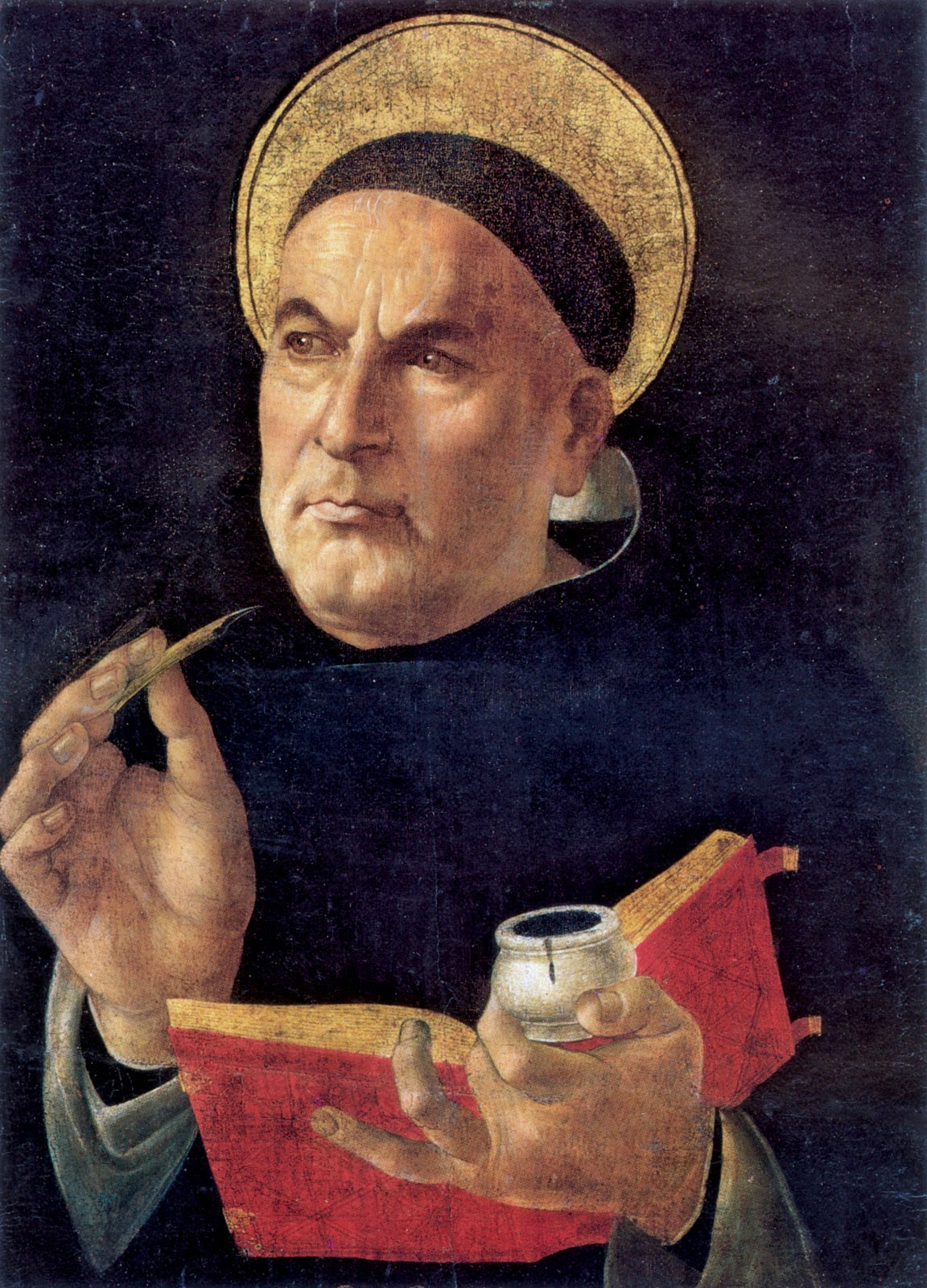

Where the treatise on grace sits in the Summa
The Prima Secundae is built around one question: how does a human being reach the end for which he was made, the vision of God that lesson 06 traced through ST I-II, qq. 1 to 5? Aquinas first treats the "intrinsic principles" of human acts (the powers of the soul and the habits, virtues and vices) and then the "extrinsic principles." The devil moves people toward evil by temptation; God moves them toward good in two ways, by instructing them through law and by helping them through grace. That is why the treatise on grace (qq. 109 to 114) follows the long Treatise on Law (qq. 90 to 108) and why lesson 05 ended where this lesson begins: the New Law, Aquinas wrote in ST I-II, q. 106, a. 1, consists chiefly in "the grace of the Holy Ghost." The six questions are these:
- Question 109, the necessity of grace (ten articles): whether without grace a person can know truth, will or do good, love God above all things, keep the commandments, merit eternal life, prepare himself for grace, rise from sin, avoid sin, and persevere.1
- Question 110, the essence of grace (four articles): whether grace puts something into the soul, whether it is a quality, whether it is the same as virtue, and in which power of the soul it resides.2
- Question 111, the division of grace (five articles): sanctifying grace and gratuitous grace, operating and cooperating grace, prevenient and subsequent grace, and the charisms of 1 Corinthians 12.3
- Question 112, the cause of grace (five articles): whether God alone causes grace, whether a disposition is required, whether grace is given to anyone who prepares, whether it is greater in one than another, and whether anyone can know that he has it.4
- Question 113, the effects of grace: justification (ten articles): what the justification of the ungodly is, whether grace, free will and faith are required, the four things required, whether it happens in an instant, their order, and whether it is God's greatest work and a miracle.5
- Question 114, merit (ten articles): whether anyone can merit from God, whether without grace, whether condignly, whether chiefly through charity, whether the first grace can be merited, for oneself or another, whether restoration after sin, increase of grace, perseverance, and temporal goods can be merited.6
Three other places complete the picture and are read below: the question on the virtue of faith in the Secunda Secundae (II-II, q. 4, especially a. 3, "Whether charity is the form of faith"),7 a sentence from Aquinas's lectures on 1 Timothy that is often quoted in arguments about "faith alone,"8 and the question on predestination in the First Part (ST I, q. 23).9 Jean-Pierre Torrell, in Saint Thomas Aquinas, vol. 1, The Person and His Work (French 1993, English 1996), dates the writing of the Prima Secundae to Aquinas's second Paris regency, about 1271; that dating is a scholar's reconstruction and is given here as his.10
Question 109: why grace is needed
Two states of human nature
Aquinas's whole answer turns on a distinction between human nature "in its integrity, as it was in our first parent before sin," and human nature "as it is corrupted in us after the sin of our first parent." In ST I-II, q. 109, a. 2 ("Whether man can wish or do any good without grace?") he writes:
"Now in both states human nature needs the help of God as First Mover, to do or wish any good whatsoever, as stated above (Article 1). But in the state of integrity, as regards the sufficiency of the operative power, man by his natural endowments could wish and do the good proportionate to his nature, such as the good of acquired virtue; but not surpassing good, as the good of infused virtue. But in the state of corrupt nature, man falls short of what he could do by his nature, so that he is unable to fulfil it by his own natural powers. Yet because human nature is not altogether corrupted by sin, so as to be shorn of every natural good, even in the state of corrupted nature it can, by virtue of its natural endowments, work some particular good, as to build dwellings, plant vineyards, and the like; yet it cannot do all the good natural to it, so as to fall short in nothing; just as a sick man can of himself make some movements, yet he cannot be perfectly moved with the movements of one in health, unless by the help of medicine he be cured."1
He then sums up the two needs of fallen people: "in the state of perfect nature man needs a gratuitous strength superadded to natural strength for one reason, viz. in order to do and wish supernatural good; but for two reasons, in the state of corrupt nature, viz. in order to be healed, and ... in order to carry out works of supernatural virtue, which are meritorious."1 Grace in this account does two jobs. It heals (gratia sanans, in the later language of Thomists) and it lifts the person above what nature could do (gratia elevans). Every later argument about Aquinas turns partly on how much weight a reader gives to the image of the sick man. Readers in the Reformed tradition have usually said the picture of a patient who "can of himself make some movements" understates the fall; Catholic readers have usually answered that Aquinas's patient still cannot cure himself, and that is the point of the image. Both readings are stated here as readings.
Love of God, the commandments and eternal life
Article 3 asks whether a person can love God above all things by natural powers alone. Aquinas says that in the state of perfect nature he could, since "to love God above all things is natural to man," but "in the state of corrupt nature man falls short of this in the appetite of his rational will, which, unless it is cured by God's grace, follows its private good, on account of the corruption of nature."1 Article 5 asks whether anyone can merit everlasting life without grace, and the answer is a flat no:
"Acts conducing to an end must be proportioned to the end. But no act exceeds the proportion of its active principle; and hence we see in natural things, that nothing can by its operation bring about an effect which exceeds its active force, but only such as is proportionate to its power. Now everlasting life is an end exceeding the proportion of human nature, as is clear from what we have said above (I-II:5:5). Hence man, by his natural endowments, cannot produce meritorious works proportionate to everlasting life; and for this a higher force is needed, viz. the force of grace. And thus without grace man cannot merit everlasting life."1
The "On the contrary" of the same article quotes Romans 6:23 in the Latin Bible's wording, "The grace of God is life everlasting," and a gloss that this is said "that we may understand that God, of His own mercy, leads us to everlasting life."1 The Latin Bible that Aquinas read is described in Module 103, lesson 04; the King James Version renders the same verse "the gift of God is eternal life through Jesus Christ our Lord."11
Can anyone prepare himself for grace?
Article 6 is the article Protestant and Catholic historians most often quote, because it deals with a phrase that became a battle cry in the late Middle Ages: facere quod in se est, "to do what is in oneself." The second objection states the view Aquinas is answering: "man prepares himself for grace by doing what is in him to do, since if man does what is in him to do, God will not deny him grace." Aquinas answers:
"... in order that man prepare himself to receive this gift, it is not necessary to presuppose any further habitual gift in the soul, otherwise we should go on to infinity. But we must presuppose a gratuitous gift of God, Who moves the soul inwardly or inspires the good wish. ... Hence it is clear that man cannot prepare himself to receive the light of grace except by the gratuitous help of God moving him inwardly."1
His reply to the second objection keeps the phrase and changes its meaning: "Man can do nothing unless moved by God, according to John 15:5: 'Without Me, you can do nothing.' Hence when a man is said to do what is in him to do, this is said to be in his power according as he is moved by God."1 The reply to the first objection gives his reading of the two Bible verses that later appear at Trent: "Man's turning to God is by free-will; and thus man is bidden to turn himself to God. But free-will can only be turned to God, when God turns it, according to Jeremiah 31:18: 'Convert me and I shall be converted, for Thou art the Lord, my God'; and Lamentations 5:21: 'Convert us, O Lord, to Thee, and we shall be converted.'"1
Historians of doctrine have argued that this article marks a change in Aquinas's own thought. Henri Bouillard (Conversion et grace chez S. Thomas d'Aquin, 1944) and Bernard Lonergan (articles of 1941 and 1942, later collected as Grace and Freedom) both held that in his early commentary on Peter Lombard's Sentences Aquinas allowed a natural preparation for grace, and that in the Summa he no longer did; Bouillard linked the change to Aquinas's reading of Augustine's late anti-Pelagian works. These are scholarly arguments, stated as theirs.12 The Summa text itself is plain: in ST I-II, q. 114, a. 5, ad 1, Aquinas notes that Augustine "was deceived on this point for a time, believing the beginning of faith to be from us, and its consummation to be granted us by God; and this he here retracts," and adds that "it is a truth of faith, that the beginning of faith is in us from God."6
Grace to persevere
The last article of the question (a. 10) asks whether someone who already has grace needs further help in order to persevere. The "On the contrary" quotes Augustine's On the Gift of Perseverance: "Why is perseverance besought of God, if it is not bestowed by God? For is it not a mocking request to seek what we know He does not give, and what is in our power without His giving it?"1 Article 9 gives the reason in plain terms: even the healed person "remains corrupted and poisoned in the flesh, whereby it serves 'the law of sin,' Romans 7:25," and "we cannot fully know what is for our good," so "we must be guided and guarded by God, Who knows and can do all things."1 Aquinas points to the Lord's Prayer ("Lead us not into temptation") as the believer's own confession of this need.
Questions 110 to 112: what grace is, how it is divided, and who can know he has it
Grace as a quality of the soul
Question 110 asks whether grace is something real in the person or only God's favor toward him. Aquinas answers that when God loves someone in the special way that Scripture calls grace, an effect follows in the one loved. In a. 2 he distinguishes two such effects. God's help that moves the soul "to know or will or do something" is not a quality but a motion; God also gives a lasting gift, and this is a quality of the soul. The "On the contrary" quotes a gloss on Psalm 103:15: "Grace is a certain beauty of soul, which wins the Divine love."2 In q. 111, a. 2, ad 1, he adds that "inasmuch as grace is a certain accidental quality, it does not act upon the soul efficiently, but formally, as whiteness makes a surface white."3
This is the part of Aquinas that the Reformation argument turned on most directly. Trent's chapter 7 calls the "alone formal cause" of justification "the justice of God, not that whereby He Himself is just, but that whereby He maketh us just," and its canon 11 condemns anyone who says "the grace, whereby we are justified, is only the favour of God."13 The Westminster Confession of 1646 says God justifies "not by infusing righteousness into them, but by pardoning their sins, and by accounting and accepting their persons as righteous."14 Both documents are quoted in full below.
Operating and cooperating grace
Question 111, a. 2 takes over a distinction from Augustine's On Grace and Free Will (ch. 17), which the article quotes: "God by cooperating with us, perfects what He began by operating in us, since He who perfects by cooperation with such as are willing, begins by operating that they may will."3 Aquinas explains:
"... in that effect in which our mind is moved and does not move, but in which God is the sole mover, the operation is attributed to God, and it is with reference to this that we speak of 'operating grace.' But in that effect in which our mind both moves and is moved, the operation is not only attributed to God, but also to the soul; and it is with reference to this that we speak of 'cooperating grace.' Now there is a double act in us. First, there is the interior act of the will, and with regard to this act the will is a thing moved, and God is the mover; and especially when the will, which hitherto willed evil, begins to will good. And hence, inasmuch as God moves the human mind to this act, we speak of operating grace."3
He applies the same pair to the habitual gift: "habitual grace, inasmuch as it heals and justifies the soul, or makes it pleasing to God, is called operating grace; but inasmuch as it is the principle of meritorious works, which spring from the free-will, it is called cooperating grace."3 The second objection of the same article quotes a sentence from Augustine's sermons that later writers on every side repeated: "He Who created thee without thyself, will not justify thee without thyself."3 Aquinas accepts it and explains that God does not justify a person without his consent, while the consent itself is moved by God.
Article 1 of the same question divides grace into "sanctifying grace" (gratia gratum faciens, the grace that makes a person pleasing to God) and "gratuitous grace" (gratia gratis data, gifts such as prophecy or healing given for the good of others). The "On the contrary" quotes Romans 11:6 in the Latin Bible's wording, "And if by grace, it is not now by works, otherwise grace is no more grace" (the New Advent page prints the reference as Romans 2:6, a misprint for 11:6).3
Can anyone know that he has grace?
Question 112, a. 5 asks "Whether man can know that he has grace?" This is the medieval form of the question of assurance, which became one of the sharpest points of difference in the sixteenth century. Aquinas says there are three ways of knowing. By revelation, "anyone may know that he has grace, for God by a special privilege reveals this at times to some." By certain knowledge of his own, "no one can know that he has grace," because the principle of grace is God, "Who by reason of His very excellence is unknown to us." And by signs:
"Thirdly, things are known conjecturally by signs; and thus anyone may know he has grace, when he is conscious of delighting in God, and of despising worldly things, and inasmuch as a man is not conscious of any mortal sin. ... Yet this knowledge is imperfect; hence the Apostle says (1 Corinthians 4:4): 'I am not conscious to myself of anything, yet am I not hereby justified.'"4
The "On the contrary" quotes Ecclesiastes 9:1 in the Latin Bible's wording: "Man knoweth not whether he be worthy of love or hatred."4 Calvin, as shown below, defined faith itself as "a firm and sure knowledge of the divine favor toward us."15 On this point the difference between Aquinas and the Reformers is real and stated plainly in both sets of texts.
Question 113: the justification of the ungodly
Justification as a movement from sin to justice
Aquinas's word is iustificatio impii, "the justification of the ungodly," taken from Romans 4:5 ("to him that worketh not, yet believeth in Him that justifieth the ungodly"). Article 1 asks whether it is the remission of sins, and answers that justification "taken passively implies a movement towards justice, as heating implies a movement towards heat." The justice in question is "a certain rectitude of order in the interior disposition of a man, in so far as what is highest in man is subject to God, and the inferior powers of the soul are subject to the superior, i.e. to the reason." Justification is "a transmutation from the state of injustice to the aforesaid state of justice," and because a movement is named from where it ends, "the transmutation whereby anyone is changed by the remission of sins from the state of ungodliness to the state of justice ... is called 'justification of the ungodly.'"5
Two features of this definition matter for what followed. Justification is a real change in the person, a movement of the soul from one state to another. And the forgiveness of sins is not set against that change: the same act that forgives also renews. In a. 6, ad 2 Aquinas says that "by the same act God bestows grace and remits sin."5 Trent would say justification "is not remission of sins merely, but also the sanctification and renewal of the inward man."13 The Lutheran and Reformed confessions would separate the two in thought (justification as God's verdict, sanctification as the renewal that always follows), while insisting that they are never separated in life.
Faith, free will and charity in justification
Article 3 holds that in an adult who can use reason, justification requires a movement of the free will, because "God moves everything in its own manner": "in him who has the use of reason, God's motion to justice does not take place without a movement of the free-will; but He so infuses the gift of justifying grace that at the same time He moves the free-will to accept the gift of grace."5 Article 4 asks whether a movement of faith is required, and answers with Romans 5:1 ("Being justified therefore by faith, let us have peace with God") and Hebrews 11:6:
"Now God moves man's soul by turning it to Himself according to Psalm 84:7 (Septuagint): 'Thou wilt turn us, O God, and bring us to life.' Hence for the justification of the ungodly a movement of the mind is required, by which it is turned to God. Now the first turning to God is by faith, according to Hebrews 11:6: 'He that cometh to God must believe that He is.' Hence a movement of faith is required for the justification of the ungodly."5
The reply to the first objection adds the point that separates Aquinas from the Reformers on the meaning of faith: "The movement of faith is not perfect unless it is quickened by charity; hence in the justification of the ungodly, a movement of charity is infused together with the movement of faith." An act of filial fear and an act of humility, he adds, "also concur."5 Faith for Aquinas is necessary and first; it justifies as a faith that loves.
The four things required for justification (a. 6)
Article 6 gives the list that this lesson's second diagram draws. The answer reads in full:
"There are four things which are accounted to be necessary for the justification of the ungodly, viz. the infusion of grace, the movement of the free-will towards God by faith, the movement of the free-will towards sin, and the remission of sins. The reason for this is that, as stated above (Article 1), the justification of the ungodly is a movement whereby the soul is moved by God from a state of sin to a state of justice. Now in the movement whereby one thing is moved by another, three things are required: first, the motion of the mover; secondly, the movement of the moved; thirdly, the consummation of the movement, or the attainment of the end. On the part of the Divine motion, there is the infusion of grace; on the part of the free-will which is moved, there are two movements ... of departure from the term 'whence,' and of approach to the term 'whereto'; but the consummation of the movement or the attainment of the end of the movement is implied in the remission of sins; for in this is the justification of the ungodly completed."5
The phrase "the movement of the free-will towards sin" means a movement of the will against sin: the person turns on sin and detests it, as a. 8 makes clear ("he who is being justified detests sin because it is against God"). Article 7 holds that the whole happens "in an instant," because "the infusion of grace takes place in an instant and without succession," although God sometimes prepares a person "gradually and successively." Article 8 sets the order of nature, with all four simultaneous in time:
"The aforesaid four things required for the justification of the ungodly are simultaneous in time, since the justification of the ungodly is not successive, as stated above (Article 7); but in the order of nature, one is prior to another; and in their natural order the first is the infusion of grace; the second, the free-will's movement towards God; the third, the free-will's movement towards sin; the fourth, the remission of sin."5
God's greatest work
Article 9 asks whether the justification of the ungodly is God's greatest work. The "On the contrary" quotes Augustine on John 14:12, "for a just man to be made from a sinner, is greater than to create heaven and earth," and the old collect for the Tenth Sunday after Pentecost: "O God, Who dost show forth Thine all-mightiness most by pardoning and having mercy."5 Aquinas grants that creation is greater in "the mode of action," since in creation "something is made from nothing," while in the greatness of what is made "the justification of the ungodly, which terminates at the eternal good of a share in the Godhead, is greater than the creation of heaven and earth, which terminates at the good of mutable nature." Article 10 answers that justification is a miracle in one sense (only God can do it) and not in another, "because the soul is naturally capable of grace; since from its having been made to the likeness of God, it is fit to receive God by grace." The "common and wonted course of justification," he adds, is that a person is converted "first by an imperfect conversion, that it may afterwards become perfect," though God sometimes moves a soul "so vehemently that it reaches the perfection of justice at once."5
Question 114: merit
Merit "only on the presupposition of the Divine ordination"
Article 1 asks the question every Protestant reader brings to this part of the Summa: "Whether a man may merit anything from God?" The objections are strong ones. The first cites Luke 17:10 ("We are unprofitable servants"); the second Job 35:7 ("If thou do justly, what shalt thou give Him?"); the third Romans 11:35 ("Who hath first given to Him, and recompense shall be made to him?"), concluding that "God is no one's debtor."6 Aquinas answers:
"Now it is clear that between God and man there is the greatest inequality: for they are infinitely apart, and all man's good is from God. Hence there can be no justice of absolute equality between man and God, but only of a certain proportion, inasmuch as both operate after their own manner. Now the manner and measure of human virtue is in man from God. Hence man's merit with God only exists on the presupposition of the Divine ordination, so that man obtains from God, as a reward of his operation, what God gave him the power of operation for, even as natural things by their proper movements and operations obtain that to which they were ordained by God; differently, indeed, since the rational creature moves itself to act by its free-will, hence its action has the character of merit, which is not so in other creatures."6
The replies then answer each objection:
"Reply to Objection 1. Man merits, inasmuch as he does what he ought, by his free-will; otherwise the act of justice whereby anyone discharges a debt would not be meritorious.
Reply to Objection 2. God seeks from our goods not profit, but glory, i.e. the manifestation of His goodness; even as He seeks it also in His own works. Now nothing accrues to Him, but only to ourselves, by our worship of Him. Hence we merit from God, not that by our works anything accrues to Him, but inasmuch as we work for His glory.
Reply to Objection 3. Since our action has the character of merit, only on the presupposition of the Divine ordination, it does not follow that God is made our debtor simply, but His own, inasmuch as it is right that His will should be carried out."6
The phrase "His own" in the third reply carries Aquinas's whole theory: when God rewards, he is faithful to his own decree and promise, and nothing in the creature puts him in debt. Joseph Wawrykow's study God's Grace and Human Action: "Merit" in the Theology of Thomas Aquinas (1995) argues that this "ordination" is the center of Aquinas's account and that his mature teaching places merit wholly inside God's prior gift; that is Wawrykow's reading, given here as his.12
Condign and congruous merit (a. 3)
Article 3 asks "Whether a man in grace can merit eternal life condignly?" (that is, by a real worthiness, de condigno). Aquinas answers with a distinction between the work as it comes from free will and the work as it comes from the Holy Spirit:
"Man's meritorious work may be considered in two ways: first, as it proceeds from free-will; secondly, as it proceeds from the grace of the Holy Ghost. If it is considered as regards the substance of the work, and inasmuch as it springs from the free-will, there can be no condignity because of the very great inequality. But there is congruity, on account of an equality of proportion: for it would seem congruous that, if a man does what he can, God should reward him according to the excellence of his power.
If, however, we speak of a meritorious work, inasmuch as it proceeds from the grace of the Holy Ghost moving us to life everlasting, it is meritorious of life everlasting condignly. For thus the value of its merit depends upon the power of the Holy Ghost moving us to life everlasting according to John 4:14: 'Shall become in him a fount of water springing up into life everlasting.' And the worth of the work depends on the dignity of grace, whereby a man, being made a partaker of the Divine Nature, is adopted as a son of God, to whom the inheritance is due by right of adoption, according to Romans 8:17: 'If sons, heirs also.'"6
The reply to the second objection, which had quoted the gloss that God "leads us to life everlasting of His own mercy and not by our merits," reads: "This saying is to be understood of the first cause of our reaching everlasting life, viz. God's mercy. But our merit is a subsequent cause." The reply to the third compares present grace to "the seed of a tree, wherein the whole tree is virtually."6 Article 4 adds that "merit chiefly rest[s] with charity," because "everlasting life consists in the enjoyment of God" and the mind's movement toward that enjoyment "is the proper act of charity."6
No one can merit the first grace (a. 5)
Article 5 states the limit of all merit:
"The gift of grace may be considered in two ways: first in the nature of a gratuitous gift, and thus it is manifest that all merit is repugnant to grace, since as the Apostle says (Romans 11:6), 'if by grace, it is not now by works.' Secondly, it may be considered as regards the nature of the thing given, and thus, also, it cannot come under the merit of him who has not grace, both because it exceeds the proportion of nature, and because previous to grace a man in the state of sin has an obstacle to his meriting grace, viz. sin. But when anyone has grace, the grace already possessed cannot come under merit, since reward is the term of the work, but grace is the principle of all our good works, as stated above (I-II:109). ... Hence it is manifest that no one can merit for himself the first grace."6
In the reply to the first objection Aquinas restates the place of faith: "man is justified by faith, not as though man, by believing, were to merit justification, but that, he believes, whilst he is being justified; inasmuch as a movement of faith is required for the justification of the ungodly."6 The later articles hold that "no one can merit condignly for another his first grace, save Christ alone" (a. 6), so that one person's merit for another is at most "congruous"; that "the increase of grace falls under condign merit" (a. 8); and that perseverance in this life ("of the wayfarer") does not fall under merit at all and must be asked of God (a. 9).6
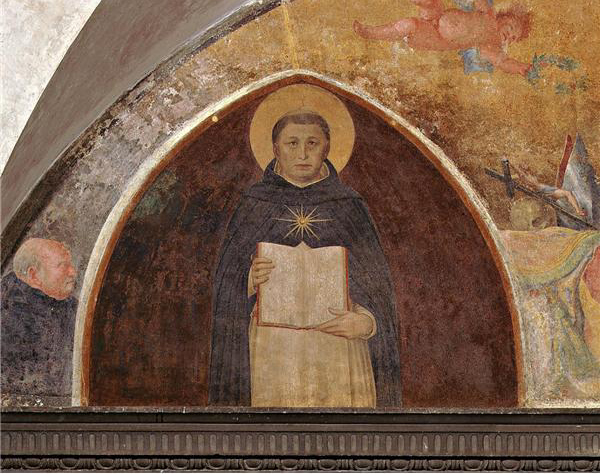

Faith formed by charity (ST II-II, q. 4, a. 3)
The Secunda Secundae, which lesson 06 surveyed, treats faith as a virtue in questions 1 to 16. Question 4, a. 3 asks "Whether charity is the form of faith?" The "On the contrary" is a single sentence that rests on Galatians 5:6: "Each thing works through its form. Now faith works through charity. Therefore the love of charity is the form of faith."7 The body of the article explains:
"... voluntary acts take their species from their end which is the will's object. Now that which gives a thing its species, is after the manner of a form in natural things. Wherefore the form of any voluntary act is, in a manner, the end to which that act is directed, both because it takes its species therefrom, and because the mode of an action should correspond proportionately to the end. Now it is evident from what has been said (Article 1), that the act of faith is directed to the object of the will, i.e. the good, as to its end: and this good which is the end of faith, viz. the Divine Good, is the proper object of charity. Therefore charity is called the form of faith in so far as the act of faith is perfected and formed by charity."7
The reply to the first objection gives the image Aquinas uses throughout: "Charity is called the form of faith because it quickens the act of faith." Article 4 then asks whether "lifeless faith" (fides informis, belief without charity, such as a person in mortal sin may still hold) can become "living faith" (fides formata), and answers, after reviewing the opinions of William of Auxerre and Alexander of Hales, that the same habit of faith can be lifeless and then living. In the reply to the third objection he writes a sentence that the 1999 Joint Declaration's Annex would quote: "Grace causes faith not only when faith begins anew to be in a man, but also as long as faith lasts. For it has been said above (I:104:1; I-II:109:9) that God is always working man's justification, even as the sun is always lighting up the air."7
This distinction between formed and unformed faith became one of the plainest lines between Aquinas and the Reformers. Calvin, in Institutes III.2.8, set out to "refute the nugatory distinction of the Schoolmen as to formed and unformed faith," arguing that true faith, "as the gift of the Spirit, cannot possibly be disjoined from pious affection" (the second phrase is from the section heading in Beveridge's edition).15 The Lutheran confessions made the same objection to the scholastic formula "faith formed by love." Both sides agreed that faith without love is not the faith that saves. They disagreed on whether love is what makes faith justify, and that disagreement is the subject of the Trent canons below.
"In sola fide": the lecture on 1 Timothy 1:8
A sentence from Aquinas's lectures on Paul's First Letter to Timothy (Super I ad Timotheum, chapter 1, lecture 3) is often quoted to show that Aquinas taught "faith alone." The Latin, as given in the Corpus Thomisticum text, reads:
"Horum legitimus usus est, ut homo non attribuat eis plus quam quod in eis continetur. Data est lex ut cognoscatur peccatum. Rom. VII, 7: quia nisi lex diceret: non concupisces, concupiscentiam nesciebam, etc.; quod dicitur in Decalogo. Non est ergo in eis spes iustificationis, sed in sola fide. Rom. III, 28: arbitramur iustificari hominem per fidem sine operibus legis."8
A close translation made for this lesson: "The lawful use of these [precepts] is that a man not attribute to them more than is contained in them. The law was given so that sin might be known. Romans 7:7: for I had not known concupiscence, if the law had not said, Thou shalt not covet, etc., which is said in the Decalogue. Therefore the hope of justification is not in them, but in faith alone. Romans 3:28: we account a man to be justified by faith without the works of the law."
Read in context, the sentence says exactly this much. Aquinas is commenting on 1 Timothy 1:8 ("we know that the law is good, if a man use it lawfully"). He has just divided the law into ceremonial and moral precepts, and he says the Apostle "seems to speak of the moral precepts, because he adds that the law was set down because of sins." The "these" (horum) are the moral precepts of the law of Moses, including the Ten Commandments. His claim is that the hope of justification does not lie in those precepts but in faith alone, and he cites Romans 3:28. The sentence does not define faith, and it does not say that faith justifies apart from charity; a few lines later the same lecture says that the just man does keep the law "as to the moral precepts," since "unless he kept it ... he would not be just."8 Read beside ST I-II, q. 113, a. 4, ad 1 and II-II, q. 4, a. 3, "faith alone" here means faith as against the works of the law, and the faith in question is, in the Summa's terms, faith quickened by charity. Readers on each side can fairly say two things: the phrase sola fide was not invented by Luther, and Aquinas did not mean by it what the Augsburg Confession meant. Medieval writers before Aquinas also used "faith alone" in commentaries on Paul (Joseph Fitzmyer's commentary on Romans, 1993, gives a list of patristic and medieval uses); that list is cited from Fitzmyer and has not been checked line by line for this lesson.12
Predestination (ST I, q. 23)
The treatise on grace presupposes what the First Part had said about predestination, which Aquinas treats as "a part of providence." Article 3 holds that "God does reprobate some," and defines the two sides carefully:
"Thus, as predestination is a part of providence, in regard to those ordained to eternal salvation, so reprobation is a part of providence in regard to those who turn aside from that end. Hence reprobation implies not only foreknowledge, but also something more, as does providence, as was said above (I:22:1). Therefore, as predestination includes the will to confer grace and glory; so also reprobation includes the will to permit a person to fall into sin, and to impose the punishment of damnation on account of that sin."9
Article 5 asks "Whether the foreknowledge of merits is the cause of predestination?" and answers no, with Titus 3:5: "Not by works of justice which we have done, but according to His mercy He saved us. But as He saved us, so He predestined that we should be saved."9 Aquinas rejects three views in turn: Origen's (merits in a former life), the Pelagians' ("the beginning of doing well came from us; and the consummation from God"), and the view that God predestines because he foresees good use of grace. He concludes that "whatsoever is in man disposing him towards salvation, is all included under the effect of predestination; even the preparation for grace," and quotes Lamentations 5:21 again: "convert us, O Lord, to Thee, and we shall be converted."9 Within the effects of predestination, one can be the reason for another: "God pre-ordained to give glory on account of merit, and ... He pre-ordained to give grace to merit glory."9
Readers in the Reformed tradition have often noted how close this article stands to Augustine and to their own confessions on unconditional election; Calvin's own Institutes (III.21 to 24) argue the doctrine at length from Augustine. The difference lies elsewhere: in Aquinas, merit sits inside predestination as one of its effects, while Calvin and the Westminster Confession reject the language of merit for the believer's works altogether.
The Council of Trent, Session VI (January 13, 1547)
The Decree on Justification was approved at the sixth session of the Council of Trent, "Celebrated on the thirteenth day of the month of January, 1547." It has sixteen chapters of teaching and thirty-three canons, each canon ending "let him be anathema."13 The council did not name Aquinas in the decree, and its fathers included followers of several schools (Thomists, Scotists, Augustinians). Historians commonly describe the decree's language of causes and of infused grace as close to Aquinas's; Hubert Jedin's History of the Council of Trent (vol. 2, German 1957, English 1961) gives the debates in detail.12 The texts below are quoted from the Waterworth translation of 1848.
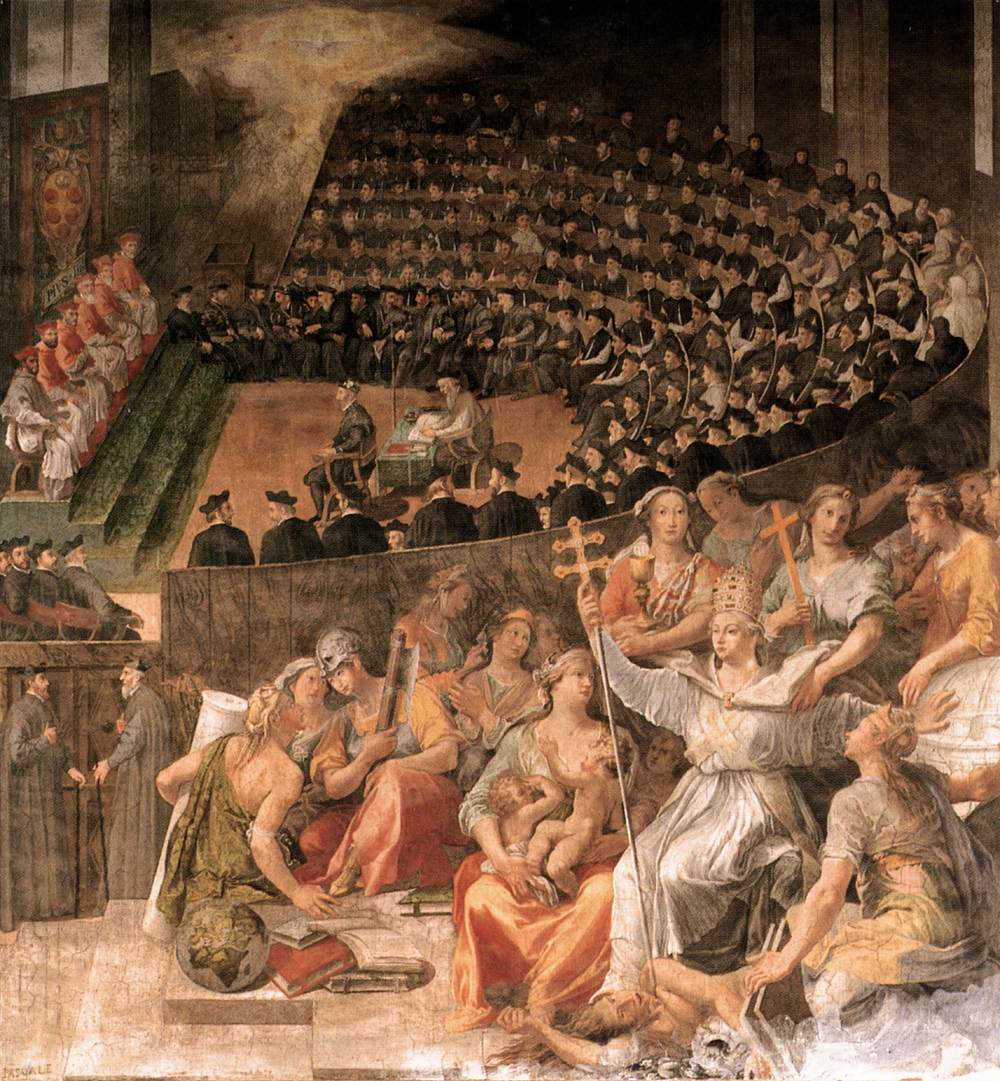

Preparation and prevenient grace (chapter 5)
Chapter 5 teaches that "in adults, the beginning of the said Justification is to be derived from the prevenient grace of God, through Jesus Christ, that is to say, from His vocation, whereby, without any merits existing on their parts, they are called." It continues:
"... while God touches the heart of man by the ... Holy Ghost, neither is man himself utterly without doing anything while he receives that inspiration, forasmuch as he is also able to reject it; yet is he not able, by his own free will, without the grace of God, to move himself unto justice in His sight. Whence, when it is said in the sacred writings: Turn ye to me, and I will turn to you, we are admonished of our liberty; and when we answer; Convert us, O Lord, to thee, and we shall be converted, we confess that we are prevented by the grace of God."13
(One word of the Waterworth text, a noun meaning the Spirit's enlightening, is left out at the ellipsis because of a site style rule.) The two verses, Zechariah 1:3 and Lamentations 5:21, are the same pair Aquinas set against each other in ST I-II, q. 109, a. 6, and the conclusion is the same: the will consents and can refuse, and it cannot begin without grace.
What justification is and its causes (chapter 7)
"This disposition, or preparation, is followed by Justification itself, which is not remission of sins merely, but also the sanctification and renewal of the inward man, through the voluntary reception of the grace, and of the gifts, whereby man of unjust becomes just, and of an enemy a friend, that so he may be an heir according to hope of life everlasting.
Of this Justification the causes are these: the final cause indeed is the glory of God and of Jesus Christ, and life everlasting; while the efficient cause is a merciful God who washes and sanctifies gratuitously, signing, and anointing with the holy Spirit of promise, who is the pledge of our inheritance; but the meritorious cause is His most beloved only-begotten, our Lord Jesus Christ, who, when we were enemies, for the exceeding charity wherewith he loved us, merited Justification for us by His most holy Passion on the wood of the cross, and made satisfaction for us unto God the Father; the instrumental cause is the sacrament of baptism, which is the sacrament of faith, without which (faith) no man was ever justified; lastly, the alone formal cause is the justice of God, not that whereby He Himself is just, but that whereby He maketh us just, that, to wit, with which we being endowed by Him, are renewed in the spirit of our mind, and we are not only reputed, but are truly called, and are, just, receiving justice within us, each one according to his own measure, which the Holy Ghost distributes to every one as He wills, and according to each one's proper disposition and co-operation."13
The same chapter continues with faith, hope and charity: "man, through Jesus Christ, in whom he is ingrafted, receives, in the said justification, together with the remission of sins, all these (gifts) infused at once, faith, hope, and charity. For faith, unless hope and charity be added thereto, neither unites man perfectly with Christ, nor makes him a living member of His body."13 Set beside ST I-II, q. 113, a. 4, ad 1 ("a movement of charity is infused together with the movement of faith") and II-II, q. 4, a. 3, the dependence of thought is easy to see, though the council used its own words and Scripture throughout.
Justified "by faith" and "freely" (chapter 8)
Chapter 8 is the council's reading of Paul's phrases:
"And whereas the Apostle saith, that man is justified by faith and freely, those words are to be understood in that sense which the perpetual consent of the Catholic Church hath held and expressed; to wit, that we are therefore said to be justified by faith, because faith is the beginning of human salvation, the foundation, and the root of all Justification; without which it is impossible to please God, and to come unto the fellowship of His sons: but we are therefore said to be justified freely, because that none of those things which precede justification-whether faith or works-merit the grace itself of justification. For, if it be a grace, it is not now by works, otherwise, as the same Apostle says, grace is no more grace."13
Chapter 8 matches ST I-II, q. 114, a. 5 point for point: nothing before justification, "whether faith or works," merits it, and the proof text is Romans 11:6, the verse Aquinas quoted there.
Against "vain confidence" (chapter 9)
Chapter 9, titled "Against the vain confidence of Heretics," says that sins are forgiven only "gratuitously by the mercy of God for Christ's sake," and that it must not be said "that they who are truly justified must needs, without any doubting whatever, settle within themselves that they are justified, and that no one is absolved from sins and justified, but he that believes for certain that he is absolved and justified; and that absolution and justification are effected by this faith alone."13 This is the council's answer to the Reformation teaching on assurance, and it follows the line of ST I-II, q. 112, a. 5: certainty of one's own state of grace is not had without a special revelation.
The merit of good works (chapter 16)
Chapter 16, "On the fruit of Justification, that is, on the merit of good works, and on the nature of that merit," is Trent's version of ST I-II, q. 114:
"And, for this cause, life eternal is to be proposed to those working well unto the end, and hoping in God, both as a grace mercifully promised to the sons of God through Jesus Christ, and as a reward which is according to the promise of God Himself, to be faithfully rendered to their good works and merits. ... For, whereas Jesus Christ Himself continually infuses his virtue into the said justified,-as the head into the members, and the vine into the branches,-and this virtue always precedes and accompanies and follows their good works, which without it could not in any wise be pleasing and meritorious before God,-we must believe that nothing further is wanting to the justified, to prevent their being accounted to have, by those very works which have been done in God, fully satisfied the divine law according to the state of this life, and to have truly merited eternal life, to be obtained also in its (due) time, if so be, however, that they depart in grace."13
The chapter closes with a sentence that both Catholic and Protestant readers have quoted: "God forbid that a Christian should either trust or glory in himself, and not in the Lord, whose bounty towards all men is so great, that He will have the things which are His own gifts be their merits."13 That sentence echoes a line of Augustine (Letter 194), which Aquinas's account of merit "on the presupposition of the Divine ordination" also expresses.
The canons (9, 11, 12, 24 and 32)
The canons state in negative form what the chapters teach. Five are central here, quoted in full:
"CANON IX.-If any one saith, that by faith alone the impious is justified; in such wise as to mean, that nothing else is required to co-operate in order to the obtaining the grace of Justification, and that it is not in any way necessary, that he be prepared and disposed by the movement of his own will; let him be anathema.
CANON XI.-If any one saith, that men are justified, either by the sole imputation of the justice of Christ, or by the sole remission of sins, to the exclusion of the grace and the charity which is poured forth in their hearts by the Holy Ghost, and is inherent in them; or even that the grace, whereby we are justified, is only the favour of God; let him be anathema.
CANON XII.-If any one saith, that justifying faith is nothing else but confidence in the divine mercy which remits sins for Christ's sake; or, that this confidence alone is that whereby we are justified; let him be anathema.
CANON XXIV.-If any one saith, that the justice received is not preserved and also increased before God through good works; but that the said works are merely the fruits and signs of Justification obtained, but not a cause of the increase thereof; let him be anathema.
CANON XXXII.-If any one saith, that the good works of one that is justified are in such manner the gifts of God, as that they are not also the good merits of him that is justified; or, that the said justified, by the good works which he performs through the grace of God and the merit of Jesus Christ, whose living member he is, does not truly merit increase of grace, eternal life, and the attainment of that eternal life,-if so be, however, that he depart in grace,-and also an increase of glory; let him be anathema."13
Canon 9 is worded with care. It condemns "faith alone" "in such wise as to mean" that nothing else cooperates and that no movement of the will is needed. Whether any Lutheran or Reformed confession taught "faith alone" in that sense became one of the questions the 1999 Joint Declaration took up. Canon 1 of the same decree, it should be added, condemns the opposite error just as plainly: "If any one saith, that man may be justified before God by his own works, whether done through the teaching of human nature, or that of the law, without the grace of God through Jesus Christ; let him be anathema."13
Luther on scholastic theology and on Thomas
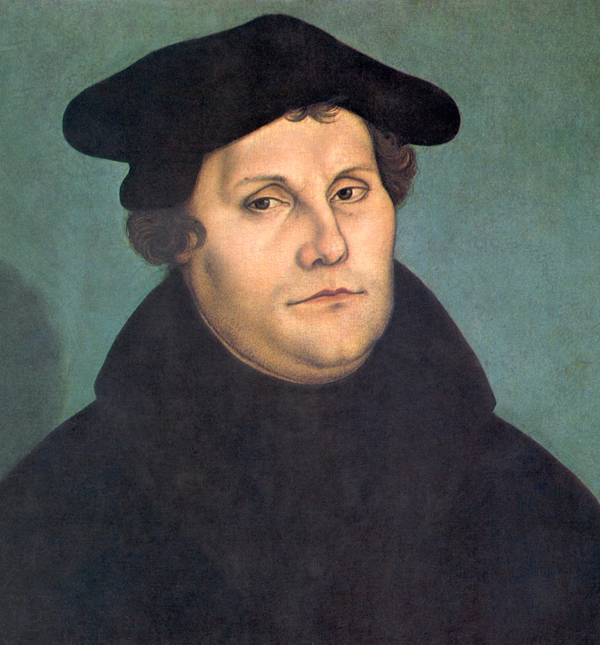

The Disputation against Scholastic Theology (September 4, 1517)
Luther wrote ninety-seven theses for a disputation held at Wittenberg on September 4, 1517, when his student Franz Gunther defended them for a degree; the date and the student's name are the usual ones in modern editions (the Weimar edition prints the theses in WA 1:224 to 228, and the English of Luther's Works is in LW 31:9 to 16).16 The quotations here are from the translation in Martin Luther's Basic Theological Writings, edited by Timothy F. Lull and William R. Russell (third edition, Fortress Press, 2012), which is still in copyright, so only single theses are quoted:
- Thesis 17: "Humans are by nature unable to want God to be God. Indeed, they want to be God, and do not want God to be God."
- Thesis 29: "The best and infallible preparation for grace and the sole disposition toward grace is the eternal election and predestination of God."
- Thesis 30: "On the part of humans, however, nothing precedes grace except indisposition and even rebellion against grace."
- Thesis 40: "We do not become righteous by doing righteous deeds but, having been made righteous, we do righteous deeds. This in opposition to the philosophers."
- Thesis 41: "Virtually the entire Ethics of Aristotle is the worst enemy of grace. This in opposition to the scholastics."
- Thesis 43: "It is an error to say that no one can become a theologian without Aristotle. This in opposition to common opinion."
- Thesis 44: "Indeed, no one can become a theologian without becoming one with Aristotle."
- Thesis 50: "Briefly, the whole Aristotle is to theology as darkness is to light. This in opposition to the scholastics."16
Two things about these theses are often missed. First, the named targets are mostly later schoolmen. Thesis 6 is directed "in opposition to Scotus and Gabriel" (Duns Scotus and Gabriel Biel), thesis 57 "in opposition to the Cardinal and Gabriel" (Pierre d'Ailly and Biel), and much of the disputation answers Biel's teaching on doing "what is in one."16 Thomas is not named in the theses as quoted in this edition. Second, on several points Aquinas and Luther stand on the same side against those targets. Thesis 18 calls loving God above all things "by nature" "a fictitious term, a chimera," and ST I-II, q. 109, a. 3 had already said fallen nature cannot do it without grace. Thesis 40, the reversal of Aristotle's rule that we become just by doing just acts, matches Aquinas's own teaching that the virtue which directs a person to good "as defined by the Divine Law" "cannot be caused by human acts ... but is produced in us by the Divine operation alone" (ST I-II, q. 63, a. 2).17 The disputation still rejects the frame Aquinas worked in, Aristotle's philosophy put to the service of theology, and on that point thesis 50 is blunt.
The Heidelberg Disputation (April 1518)
At the chapter of the German Augustinians in Heidelberg in April 1518 Luther presented twenty-eight theological and twelve philosophical theses. The best known set the "theologian of glory" against the "theologian of the cross," and some of them answer the scholastic account of grace and merit directly (same translation):
- Thesis 13: "Free will, after the fall, exists in name only, and as long as it does what it is able to do, it commits a mortal sin."
- Thesis 16: "The person who believes that he can obtain grace by doing what is in him adds sin to sin so that he becomes doubly guilty."
- Thesis 19: "That person does not deserve to be called a theologian who looks upon the invisible things of God as though they were clearly perceptible in those things which have actually happened [Rom. 1:20]."
- Thesis 25: "One is not righteous who does much, but the one who, without work, believes much in Christ."
- Thesis 26: "The law says, 'Do this,' and it is never done. Grace says, 'Believe in this,' and everything is already done."
- Thesis 28: "The love of God does not find, but creates, that which is pleasing to it."
- Thesis 29 (philosophical): "Whoever wishes to philosophize by using Aristotle without danger to their soul must first become thoroughly foolish in Christ."18
Thesis 19, with its echo of Romans 1:20, is often read as aimed at natural theology of the kind lesson 04 read in the Five Ways. Thesis 28 has been compared by both Lutheran and Catholic scholars with Aquinas's statement in ST I, q. 20, a. 2 that while our love is called forth by the goodness of its object, "the love of God infuses and creates goodness";19 Otto Hermann Pesch's large comparative study Theologie der Rechtfertigung bei Martin Luther und Thomas von Aquin (1967) is the standard work for such comparisons. The parallel is the scholars'.12
Luther's own words about Thomas
Luther's remarks about Thomas by name are harsher in tone than anything in the theses, and they appear mostly in letters, polemics and the later Table Talk. Three that can be checked in public domain or standard editions:
In the Address to the Christian Nobility of the German Nation (1520), in C. A. Buchheim's public domain translation, Luther urged that Aristotle's Physics, Metaphysics, Of the Soul and Ethics "be altogether abolished" from the universities and wrote: "I know Aristotle as well as you or men like you. I have read him with more understanding than St. Thomas or Scotus, which I may say without arrogance, and can prove if need be."20 In the same work he called the teaching that no bread and wine remain in the Sacrament "a delusion of St. Thomas and the Pope."20
In letters to George Spalatin in 1518 (in the English of Luther's Works, vol. 48, translated by Gottfried Krodel, 1963) Luther wrote on September 2 that "In spite of all the opinions of the Thomists" he hoped to defend his positions (LW 48:81), and on October 14, from Augsburg, that Cardinal Cajetan, a Dominican and the leading Thomist of the day, had answered him with "a verbose and long speech which he drew from the stories of St. Thomas" (LW 48:85).21 Krodel's notes to the same volume point out that Luther had been trained in the Nominalist school of William of Ockham and Gabriel Biel, which "had little respect for the system of St. Thomas," and that the arguments of his Dominican opponents Prierias and Cajetan "were drawn from late medieval Thomistic teachers."21
Stronger sentences are often quoted on websites, such as a line in which Luther supposedly called Thomas the "source" of all heresy. This lesson could not find those sentences in an edition opened for this task, so they are not quoted here and are listed as unverified. Scholars differ on how much of Thomas Luther read at first hand; Heinrich Denifle (Luther und Luthertum, 1904) argued that Luther knew the high scholastics poorly, and later scholars such as Pesch have weighed that charge with more care.12 The Smalcald Articles (1537), which Luther wrote, list among the errors of "the scholastic doctors" the claims "That since the fall of Adam the natural powers of man have remained entire and incorrupt," "that, by his natural powers, man can love God above all things," and "if a man does as much as is in him, God certainly grants him His grace" (Part III, Article I).22 Aquinas denied each of those statements in ST I-II, q. 109, aa. 2, 3 and 6, which suggests that Luther's targets in such lists were chiefly the late medieval schools he had studied.
The Augsburg Confession (1530) and Melanchthon
The Augsburg Confession was presented to Emperor Charles V on June 25, 1530. Its author was Philip Melanchthon, Luther's colleague at Wittenberg. Article IV, "Of Justification," reads in full in the Triglot translation:
"Also they teach that men cannot be justified before God by their own strength, merits, or works, but are freely justified for Christ's sake, through faith, when they believe that they are received into favor, and that their sins are forgiven for Christ's sake, who, by His death, has made satisfaction for our sins. This faith God imputes for righteousness in His sight. Rom. 3 and 4."23
Article VI, "Of New Obedience," follows at once:
"Also they teach that this faith is bound to bring forth good fruits, and that it is necessary to do good works commanded by God, because of God's will, but that we should not rely on those works to merit justification before God. For remission of sins and justification is apprehended by faith, as also the voice of Christ attests: When ye shall have done all these things, say: We are unprofitable servants. Luke 17:10. The same is also taught by the Fathers. For Ambrose says: It is ordained of God that he who believes in Christ is saved, freely receiving remission of sins, without works, by faith alone."24
Article VI quotes Luke 17:10, the verse that is the first objection in ST I-II, q. 114, a. 1. The quotation from "Ambrose" comes from a commentary on Paul then attributed to Ambrose (the work now called Ambrosiaster), which shows again that "faith alone" was a phrase the Reformers found already in the Latin tradition. Melanchthon's longer defense of Article IV in the Apology of the Augsburg Confession (1531) argues at length against the scholastic phrase "faith formed by love" and against the claim that people merit grace "of congruity"; the Apology is not quoted here.
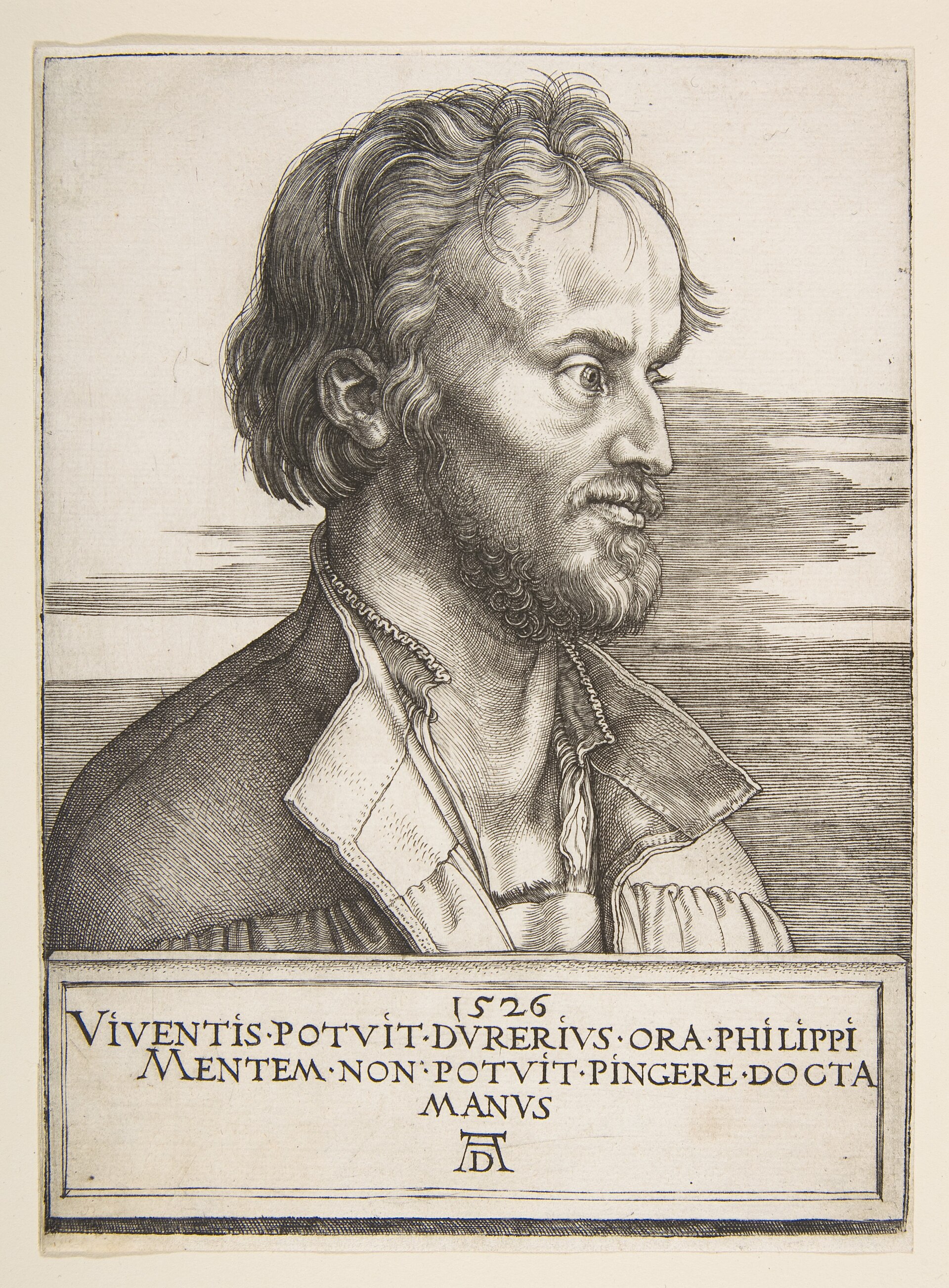

Calvin on justification, faith and merit
Justification defined (Institutes III.11)
John Calvin's Institutes of the Christian Religion reached its final Latin form in 1559. Book III, chapter 11 opens by calling justification "the principal ground on which religion must be supported," and section 2 gives Calvin's definition:
"A man is said to be justified in the sight of God when in the judgment of God he is deemed righteous, and is accepted on account of his righteousness; for as iniquity is abominable to God, so neither can the sinner find grace in his sight, so far as he is and so long as he is regarded as a sinner. ... On the contrary, a man will be justified by faith when, excluded from the righteousness of works, he by faith lays hold of the righteousness of Christ, and clothed in it appears in the sight of God not as a sinner, but as righteous. Thus we simply interpret justification, as the acceptance with which God receives us into his favor as if we were righteous; and we say that this justification consists in the forgiveness of sins and the imputation of the righteousness of Christ."25
Where Aquinas described justification as a movement in the soul, ending in the remission of sins, Calvin describes it as a verdict, using the picture of an acquittal at "the judgment-seat of God." That is the plainest single difference between the two accounts. Calvin also insists, in III.16.1, that the verdict never comes alone: "Christ ... justifies no man without also sanctifying him. These blessings are conjoined by a perpetual and inseparable tie." He sums up: "we are justified not without, and yet not by works, since in the participation of Christ, by which we are justified, is contained not less sanctification than justification."26
Faith and assurance (Institutes III.2.7 to 8)
Calvin's definition of faith in III.2.7 is the Reformed answer to ST I-II, q. 112, a. 5: faith is "a firm and sure knowledge of the divine favor toward us, founded on the truth of a free promise in Christ, and revealed to our minds, and sealed on our hearts, by the Holy Spirit."15 In III.2.8 he turns at once to "the nugatory distinction of the Schoolmen as to formed and unformed faith," and later in the chapter he says "what the Schoolmen say as to the priority of love to faith and hope is a mere dream ... since it is faith alone that first engenders love."15 The notes in this edition identify Calvin's main source for "the Schoolmen" in that section as Peter Lombard's Sentences (Book 3, distinctions 23 and 25), the textbook on which Aquinas himself had lectured.
Merit and reward (Institutes III.15)
Chapter 15 of Book III is titled, in Beveridge's English, "The boasted merit of works subversive both of the glory of God, in bestowing righteousness, and of the certainty of salvation." In section 2 Calvin objects to the word itself: "I ask, what need was there to introduce the word Merit, when the value of works might have been fully expressed by another term, and without offense? The quantity of offense contained in it the world shows to its great loss."27 He grants that "it was used by ancient ecclesiastical writers" and quotes Bernard of Clairvaux with approval. In section 3 he does not deny reward:
"And yet those good works which the Lord has bestowed upon us he counts ours also, and declares, that they are not only acceptable to him, but that he will recompense them. It is ours in return to be animated by this great promise, and to keep up our courage, that we may not weary in well-doing, but feel duly grateful for the great kindness of God. ... Thus good works please God, and are not without fruit to their authors, since, by way of recompense, they obtain more ample blessings from God, not because they so deserve, but because the divine benignity is pleased of itself to set this value upon them."27
A reader who sets this paragraph beside ST I-II, q. 114, a. 1 will find both men saying that God rewards works because he has chosen to, and both quoting Luke 17:10. The difference is whether that freely ordained reward can rightly be called merit and whether it reaches justification and eternal life. Calvin says no on both counts; Aquinas and Trent say yes, within grace.
The Westminster Confession (1646)
The Westminster Confession of Faith, written by the Westminster Assembly in the 1640s, became the standard of Presbyterian churches. Chapter XI, "Of Justification," section 1, reads in part: "Those whom God effectually calleth, He also freely justifieth: not by infusing righteousness into them, but by pardoning their sins, and by accounting and accepting their persons as righteous; not for anything wrought in them, or done by them, but for Christ's sake alone; nor by imputing faith itself, the act of believing, or any other evangelical obedience to them, as their righteousness; but by imputing the obedience and satisfaction of Christ unto them." Section 2 adds: "Faith, thus receiving and resting on Christ and His righteousness, is the alone instrument of justification: yet is it not alone in the person justified, but is ever accompanied with all other saving graces, and is no dead faith, but worketh by love."14 (Scripture references printed in the text are left out here.)
Chapter XVI, "Of Good Works," section 5, explains why works cannot merit: "We cannot by our best works merit pardon of sin, or eternal life at the hand of God, by reason of the great disproportion that is between them and the glory to come; and the infinite distance that is between us and God whom, by them, we can neither profit, nor satisfy for the debt of our former sins."14 Among the texts the Confession cites for that sentence are Job 35:7 and Luke 17:10, the very verses of the first two objections in ST I-II, q. 114, a. 1. The "infinite distance" between God and man is Aquinas's own premise ("they are infinitely apart"). Aquinas draws from it a merit that rests on God's ordination; Westminster draws from it that there is no merit at all.
Protestant readers who used Aquinas
Rejection of scholastic teaching on justification did not mean rejection of Aquinas on everything. Several Protestant theologians of the sixteenth and seventeenth centuries read and cited him on God, the Trinity, Christ, law and the method of theology. The names below are given with the scholars who have studied them, and the claims are theirs.12
- Peter Martyr Vermigli (1499 to 1562), an Italian Augustinian canon who left Italy in 1542 and taught at Strasbourg, Oxford and Zurich, had been trained at Padua in the scholastic method. John Patrick Donnelly's Calvinism and Scholasticism in Vermigli's Doctrine of Man and Grace (1976) traces his use of Thomist distinctions while he rejected Thomist teaching on justification and merit.
- Richard Hooker (1554 to 1600), the English theologian of the Laws of Ecclesiastical Polity (books 1 to 4, 1594), built his account of law on the scheme lesson 05 read in ST I-II, qq. 90 to 108. His sermon A Learned Discourse of Justification (preached 1586, printed 1612) defended justification by imputed righteousness while arguing that many who lived under the medieval church were saved; the exact wording of that sermon was not opened for this lesson and is paraphrased.
- Francis Turretin (1623 to 1687), professor at Geneva, wrote his Institutio Theologiae Elencticae (1679 to 1685) in the question-and-answer form of the schools, stating each question, the opponents' arguments and the answer. Richard A. Muller's Post-Reformation Reformed Dogmatics (four volumes, 2003 edition) is the main study of this "Reformed scholasticism."
Another Reformed professor of the same period, an Italian who taught at Strasbourg and Heidelberg and is often cited as the most Thomist of the early Reformed writers, is left unnamed here because of a site style rule; Muller and Donnelly discuss him.
In the twentieth century, Arvin Vos's Aquinas, Calvin, and Contemporary Protestant Thought (1985) argued that Protestant critics had often misread Aquinas on faith and reason, and Norman L. Geisler's Thomas Aquinas: An Evangelical Appraisal (1991) commended Aquinas's philosophy and natural theology to evangelicals while listing his teaching on justification, merit and the sacraments among the points where evangelicals must disagree. Matthew Levering, a Catholic theologian who has written on Aquinas and on Reformation debates, has argued in several books that the two sides share more of Augustine than their polemics admitted; that summary is a description of his general aim, not a quotation.12
Leo XIII and Aeterni Patris (1879)
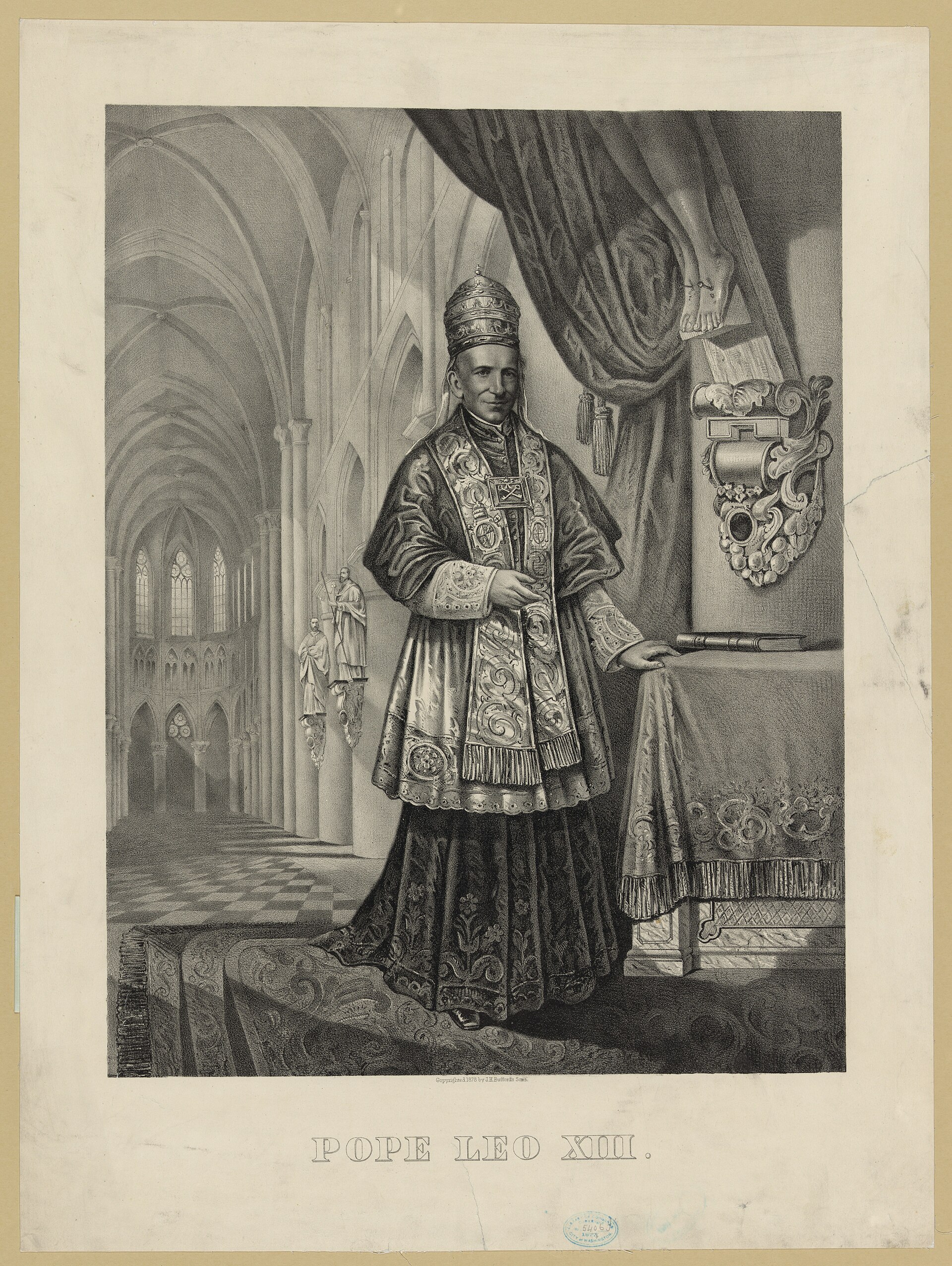

Leo XIII's encyclical Aeterni Patris (August 4, 1879) is the document that made Aquinas the official guide of Catholic philosophy and theology in the modern period; lesson 02 places it in Aquinas's later reputation. Two paragraphs bear on this lesson. Paragraph 18 says that Aquinas, "clearly distinguishing, as is fitting, reason from faith, while happily associating the one with the other, ... both preserved the rights and had regard for the dignity of each; so much so, indeed, that reason, borne on the wings of Thomas to its human height, can scarcely rise higher, while faith could scarcely expect more or stronger aids from reason than those which she has already obtained through Thomas."28 Paragraph 22 claims that "the Fathers of Trent made it part of the order of conclave to lay upon the altar, together with sacred Scripture and the decrees of the supreme Pontiffs, the Summa of Thomas Aquinas, whence to seek counsel, reason, and inspiration," and paragraph 23 that "there were not lacking among the leaders of heretical sects some who openly declared that, if the teaching of Thomas Aquinas were only taken away, they could easily battle with all Catholic teachers, gain the victory, and abolish the Church"; the encyclical's footnote 37 gives only one word as its source: "Bucer."28 Both claims are rated in "Claims checked" below.
The Joint Declaration on the Doctrine of Justification (1999)
After thirty years of dialogue, the Lutheran World Federation and the Catholic Church (through the Pontifical Council for Promoting Christian Unity) completed a Joint Declaration on the Doctrine of Justification, which was confirmed by an Official Common Statement with an Annex and signed at Augsburg on October 31, 1999.29 The text was later affirmed by the World Methodist Council (2006) and, in later years, by other church bodies; those later steps are noted without detail here.
The common confession (paragraph 15)
"In faith we together hold the conviction that justification is the work of the triune God. The Father sent his Son into the world to save sinners. The foundation and presupposition of justification is the incarnation, death, and resurrection of Christ. Justification thus means that Christ himself is our righteousness, in which we share through the Holy Spirit in accord with the will of the Father. Together we confess: By grace alone, in faith in Christ's saving work and not because of any merit on our part, we are accepted by God and receive the Holy Spirit, who renews our hearts while equipping and calling us to good works."29
The Declaration then sets out, topic by topic, a common statement followed by a Lutheran paragraph and a Catholic paragraph. Paragraph 26 states: "According to Lutheran understanding, God justifies sinners in faith alone (sola fide). In faith they place their trust wholly in their Creator and Redeemer and thus live in communion with him." Paragraph 37 says together: "We confess together that good works, a Christian life lived in faith, hope and love, follow justification and are its fruits." Paragraph 38 gives the Catholic understanding of merit: "When Catholics affirm the 'meritorious' character of good works, they wish to say that, according to the biblical witness, a reward in heaven is promised to these works. Their intention is to emphasize the responsibility of persons for their actions, not to contest the character of those works as gifts, or far less to deny that justification always remains the unmerited gift of grace."29 (In paragraph 37 the original sets off "a Christian life lived in faith, hope and love" with dashes, given here with commas.) Paragraph 41 concludes that the Lutheran teaching presented in the Declaration "does not fall under the condemnations from the Council of Trent," and that the condemnations of the Lutheran Confessions do not apply to the Catholic teaching presented there.29
The Annex, which quotes Aquinas
The Annex to the Official Common Statement, section 2C, reads: "Justification takes place 'by grace alone' (JD 15 and 16), by faith alone, the person is justified 'apart from works' (Rom 3:28, cf. JD 25). 'Grace creates faith not only when faith begins in a person but as long as faith lasts' (Thomas Aquinas, S. Th. II/II 4, 4 ad 3)."30 The Aquinas sentence is the reply to the third objection of ST II-II, q. 4, a. 4 quoted earlier in this lesson (the Annex gives its own translation). Section 2E speaks of judgment and reward: "In the final judgement, the justified will be judged also on their works ... We face a judgement in which God's gracious sentence will approve anything in our life and action that corresponds to his will," and it quotes the Lutheran Formula of Concord that God "promises to reward them gloriously in this and in the future life," ending: "Any reward is a reward of grace, on which we have no claim."30
The Catholic Response of 1998
Before the signing, the Catholic Church published an official Response to the draft (1998; the English text was printed in L'Osservatore Romano on July 8, 1998). It welcomed "a significant progress in mutual understanding" and said: "The Catholic Church is, however, of the opinion that we cannot yet speak of a consensus such as would eliminate every difference between Catholics and Lutherans in the understanding of justification." It found it "difficult to see how ... this doctrine on 'simul iustus et peccator' is not touched by the anathemas of the Tridentine decree," and on merit it said: "We can therefore say that eternal life is, at one and the same time, grace and the reward given by God for good works and merits."31 The Official Common Statement and its Annex were written in 1999 to answer those questions, and the signing followed. Theologically conservative Lutheran bodies outside the Lutheran World Federation (among them the Lutheran Church-Missouri Synod) did not accept the Declaration; Module 80, lesson 01, describes those bodies.
Schaeffer and the "nature and grace" critique
A different Protestant critique of Aquinas reached a wide evangelical readership through Francis Schaeffer's Escape from Reason (1968). Schaeffer's argument, in paraphrase, was that Aquinas gave "nature" (reason, philosophy, the created order) a measure of independence from "grace" (revelation and the things of God), and that later thinkers widened that opening until nature "ate up" grace and modern thought cut reason loose from God. Schaeffer presented this as a history of ideas running from Aquinas through the Renaissance to the twentieth century. Thomist scholars and some evangelical historians have answered that the reading does not fit Aquinas's own texts, in which, as ST I, q. 1, a. 8, ad 2 puts it, "grace does not destroy nature but perfects it,"32 and every good act of a creature depends on God as First Mover (ST I-II, q. 109, a. 2, quoted above). Schaeffer's life and work are the subject of Module 58, lesson 01. His thesis is stated here as his, and the replies as theirs.33
Side by side: five texts on five questions
The chart below sets five texts beside each other on the five questions this lesson has followed. Each cell is a short summary or quotation, with its exact place in the text, so a reader can check it. Summaries are the lesson's; words in quotation marks are the documents' own.
What each side takes from Aquinas
What Catholic teaching takes
Catholic teaching after Trent took from Aquinas, directly or through the schools, the account of grace as a real gift in the soul (q. 110), the division of operating and cooperating grace (q. 111), justification as both forgiveness and inner renewal (q. 113), faith formed by charity (II-II, q. 4), and merit as God's freely ordained reward of works done in grace, with no merit of the first grace (q. 114). Trent's chapter 7 language of final, efficient, meritorious, instrumental and formal causes follows the same Aristotelian frame that Aquinas used. Leo XIII's Aeterni Patris (1879) made Aquinas's philosophy the model for Catholic schools. The modern Catechism of the Catholic Church (1992; second edition 1997) quotes Aquinas many times in its section on grace and justification; the specific paragraphs were not checked for this lesson and are not quoted.
What Lutherans take
Lutheran readers have taken from Aquinas less on justification and more on God, Christ and the sacraments, while rejecting faith formed by charity and merit. They have often pointed to the parts of the treatise on grace that stand against late medieval teaching: no preparation for grace without grace (q. 109, a. 6), no merit of the first grace (q. 114, a. 5), predestination not caused by foreseen merit (ST I, q. 23, a. 5). The Joint Declaration's Annex quotes Aquinas in support of the common statement that grace creates faith "as long as faith lasts." Pesch's 1967 study argued that Luther and Aquinas, though they used different frames (Luther the language of personal address and promise, Aquinas the language of causes and habits), were closer on grace than the sixteenth-century polemics suggest; that is Pesch's argument, and Lutheran confessional scholars have contested parts of it.
What Reformed readers take
Reformed theologians from Vermigli to Turretin took from Aquinas a method (the scholastic question, distinction and reply), much of his doctrine of God and of providence, his account of law, and an Augustinian teaching on predestination that their own confessions share. Calvin's own attacks were directed at "the Schoolmen" and the Sentences tradition more than at Aquinas by name. In the twentieth century evangelical apologists such as Geisler used Aquinas's arguments for God's existence, while Schaeffer and presuppositional writers (Cornelius Van Til) criticized his account of nature and reason, as lesson 04 described for the Five Ways.
What the record shows and what it does not
- Documented text: Aquinas's treatise on grace is ST I-II, qq. 109 to 114; its articles say no one can merit eternal life without grace (q. 109, a. 5), prepare for grace without God's inward motion (q. 109, a. 6), or merit the first grace (q. 114, a. 5); they also teach real merit in grace (q. 114, a. 3) and faith formed by charity (II-II, q. 4, a. 3).
- Documented text: Trent, Session VI (January 13, 1547), chapters 7, 8, 9 and 16 and canons 9, 11, 12, 24 and 32, quoted above in the Waterworth translation.
- Documented text: the Augsburg Confession, Articles IV and VI (1530); Calvin, Institutes III.2, III.11, III.15 and III.16 (1559); the Westminster Confession, chapters XI and XVI; the Joint Declaration (1999), paragraphs 15, 26, 37, 38 and 41 and its Annex; the Catholic Response (1998).
- The authors' own words: Luther's theses of 1517 and 1518 and his 1520 remark that he had read Aristotle "with more understanding than St. Thomas or Scotus."
- Scholarly reading: that Aquinas changed his view of preparation for grace between the Sentences commentary and the Summa (Bouillard, Lonergan); that Trent's decree is close to Aquinas (Jedin and others); that Luther and Aquinas are closer than the polemics suggest (Pesch); that Luther's knowledge of Thomas was limited (Denifle, debated).
- Later claim, not documented from the time: that the Summa lay on the altar at Trent (first found here in Leo XIII, 1879); that Bucer said the Church would fall if Thomas were taken away (Leo XIII cites only "Bucer").
- Open question: how far the 1999 consensus settles the sixteenth-century condemnations, which the two churches themselves describe differently in the Declaration (para. 41) and the 1998 Response.
Claims checked
"Aquinas taught salvation by works." Rating: Refuted
The claim appears in popular Protestant preaching and websites. The text says the opposite of what the claim means. Without grace "man cannot merit everlasting life" (ST I-II, q. 109, a. 5); man "cannot prepare himself to receive the light of grace except by the gratuitous help of God moving him inwardly" (q. 109, a. 6); "no one can merit for himself the first grace" (q. 114, a. 5); predestination has no cause in foreseen merits (ST I, q. 23, a. 5).1 Aquinas does teach that works done in grace merit eternal life (q. 114, a. 3), and a reader may reject that teaching; it is a doctrine of merit within grace and does not fit the claim as worded.
"Aquinas taught sola fide, just as Luther did." Rating: Partly supported
The phrase is genuine: in his lectures on 1 Timothy 1:8 Aquinas wrote that the hope of justification is not in the moral precepts of the law "sed in sola fide" (Super I Tim., cap. 1, lect. 3).8 In the Summa, however, justifying faith is faith "quickened by charity" (I-II, q. 113, a. 4, ad 1) and charity is "the form of faith" (II-II, q. 4, a. 3). The Augsburg Confession's faith that believes "their sins are forgiven for Christ's sake" (Art. IV) and Trent's canon 12 against justifying faith as "confidence in the divine mercy" mark a difference the phrase alone does not show.
"The Council of Trent condemned justification by faith." Rating: Partly supported
Trent's chapter 8 teaches that "we are therefore said to be justified by faith, because faith is the beginning of human salvation, the foundation, and the root of all Justification." Canon 9 condemns "by faith alone" "in such wise as to mean, that nothing else is required to co-operate," and canon 12 condemns the definition of justifying faith as "nothing else but confidence in the divine mercy."13 Trent condemned specific accounts of "faith alone," including formulas Lutherans used; it did not condemn justification by faith as such.
"At Trent the Summa lay on the altar beside the Bible." Rating: Unresolved
The best-known source is Leo XIII's Aeterni Patris (1879), paragraph 22, which says the fathers of Trent laid on the altar "together with sacred Scripture and the decrees of the supreme Pontiffs, the Summa of Thomas Aquinas."28 The encyclical gives no contemporary source for the statement. This lesson did not find it in the council's decrees or in a sixteenth-century record opened for this task; whether the official acts or diaries of the council mention it was not checked. The story is old and widely repeated; its earliest record is not established here.
"Martin Bucer said: take away Thomas, and I will destroy the Church." Rating: Unsupported
Aeterni Patris, paragraph 23, says some leaders of "heretical sects" declared that if Aquinas's teaching "were only taken away" they could "abolish the Church," and its footnote 37 reads in full: "Bucer."28 No work, letter or page is given. No passage of Bucer's writings containing the saying was found for this lesson. Until a text is produced, the saying rests on an unsourced attribution.
"Luther hated Aquinas." Rating: Partly supported
Luther attacked Aristotle and the scholastics in strong words (Disputation against Scholastic Theology, theses 41 and 50), spoke of "a delusion of St. Thomas" on the Sacrament, and claimed to have read Aristotle "with more understanding than St. Thomas or Scotus" (1520).20 But the 1517 theses name Scotus, Biel and d'Ailly, not Thomas; the errors of "the scholastic doctors" listed in the Smalcald Articles are positions Aquinas himself rejected; and Luther's letters show his encounter with Thomism came largely through Dominican opponents such as Cajetan and Prierias.21 Luther's hostility to scholastic method and to Aristotle in theology is documented; "hated Aquinas" as a personal judgment goes beyond the texts opened here, and some harsher sayings attributed to him are unverified.
"Luther invented 'faith alone' by adding a word to Romans 3:28." Rating: Partly supported
Luther did add "allein" ("alone") to his German translation of Romans 3:28 and defended the addition in his Open Letter on Translating (1530); that letter was not opened for this lesson. The phrase itself was older: the Augsburg Confession, Article VI, quotes a commentary then attributed to Ambrose ("by faith alone"),24 and Aquinas wrote "in sola fide" in his lectures on 1 Timothy.8 The meaning Luther gave the phrase, as the Augsburg Confession states it, was his and the Reformers' own.
"The 1999 Joint Declaration ended the Reformation dispute over justification" or "it said Trent was wrong." Rating: Refuted
Both forms misstate the text. The Declaration claims "a consensus in basic truths" and says the Trent condemnations do not apply to "the teaching of the Lutheran churches presented in this Declaration" (paras. 40 and 41); it does not revoke them, and paragraph 42 says: "Nothing is thereby taken away from the seriousness of the condemnations related to the doctrine of justification. Some were not simply pointless. They remain for us 'salutary warnings' to which we must attend in our teaching and practice."29 The Catholic Response (1998) said "we cannot yet speak of a consensus such as would eliminate every difference."31 Several Lutheran and Reformed bodies outside the signing churches did not accept it.
"Catholic teaching says no believer can have any confidence of salvation." Rating: Partly supported
Aquinas says certainty of being in grace is not had except by revelation, but that a person may know it "conjecturally by signs" (ST I-II, q. 112, a. 5); Trent rejects the claim that the justified must believe "for certain" that they are justified (ch. 9), and the same chapter says "no pious person ought to doubt of the mercy of God, of the merit of Christ, and of the virtue and efficacy of the sacraments."13 The Joint Declaration, paragraph 36, gives the Catholic statement that a believer "may yet be certain that God intends his salvation."29 The difference with Calvin's "firm and sure knowledge" is real; "no confidence" overstates the Catholic texts.
"Calvin denied that God rewards good works." Rating: Refuted
Calvin wrote that God "counts ours also" the good works he gives and "declares, that they are not only acceptable to him, but that he will recompense them" (Institutes III.15.3).27 He denied that the reward is deserved and rejected the word "merit."
"Aquinas made nature and reason independent of God" (the Schaeffer thesis). Rating: Unresolved
This is an interpretation of intellectual history, put forward by Francis Schaeffer in Escape from Reason (1968) and repeated in evangelical teaching.33 Aquinas's own texts say every good act of a creature needs God "as First Mover" (ST I-II, q. 109, a. 2) and that "grace does not destroy nature but perfects it" (ST I, q. 1, a. 8, ad 2).32 Whether later thinkers used his distinction between nature and grace in the way Schaeffer described is a question of later history, on which scholars disagree.
Hard questions and answers
A Reformed reader asks: is Aquinas's "do what is in you" just semi-Pelagianism in Latin dress?
Not in the Summa. The phrase appears there in an objection (ST I-II, q. 109, a. 6, obj. 2), and the reply redefines it: a person "is said to do what is in him to do" only "according as he is moved by God."1 Question 114, a. 5 rules out meriting the first grace, and ST I, q. 23, a. 5 places "even the preparation for grace" inside the effect of predestination.9 The phrase did carry a semi-Pelagian sense in some later schoolmen, notably Gabriel Biel, and that is the sense Luther's 1517 theses and the Smalcald Articles attack. A Reformed reader can still object to Aquinas's account of free will cooperating with grace, but the objection should be aimed at what the articles say.
A Lutheran reader asks: if the justified "truly merit" eternal life, is God made a debtor to human beings?
Aquinas raised this objection himself ("God is no one's debtor," ST I-II, q. 114, a. 1, obj. 3) and answered that "it does not follow that God is made our debtor simply, but His own, inasmuch as it is right that His will should be carried out."6 Trent said God "will have the things which are His own gifts be their merits" (ch. 16).13 Lutherans answer, with Augsburg Article VI and the Annex to the Joint Declaration, that "any reward is a reward of grace, on which we have no claim."30 The two sides agree that God owes nothing in his own right. They disagree on whether God's promise makes the believer's works, in God's sight, a true ground of the reward.
A Catholic reader asks: why should the Church's teaching on justification be stated in Aristotle's language of causes, if Luther was right that Aristotle is foreign to the gospel?
Trent did use a fourfold scheme of causes (final, efficient, meritorious, instrumental, formal) in chapter 7, and Aquinas used Aristotle's account of motion to explain justification (q. 113, a. 6). Both treated the scheme as a tool for ordering what Scripture says: chapter 7 fills each "cause" with biblical language (the glory of God, "a merciful God," Christ's Passion, baptism, "the justice of God"). Leo XIII argued in Aeterni Patris that Aquinas kept "the rights" of reason and faith distinct.28 Luther's thesis 50 rejects exactly that tool.16 The disagreement is about method as much as content, and each side has given its reasons in its own documents.
An evangelical reader asks: did the Reformers attack Aquinas or someone else?
Both, in different measure. Calvin's sections on "the Schoolmen" cite Peter Lombard's Sentences, and Luther's 1517 theses name Scotus, Biel and d'Ailly.16 Some positions the Smalcald Articles attribute to "the scholastic doctors" were rejected by Aquinas.22 On other points, faith formed by charity, infused grace and merit, the Reformers' objections apply directly to Aquinas's own articles, and Calvin's attack on "formed and unformed faith" (III.2.8) is aimed at a distinction Aquinas taught in II-II, q. 4. Scholars from Denifle to Pesch have argued over how much of Aquinas Luther read; the documents settle what each man wrote, not what each had read.
An Orthodox or skeptical reader asks: is the Joint Declaration a real agreement or a diplomatic formula?
The Declaration claims "a consensus in basic truths" (para. 40), and commentators have called its method a "differentiated consensus" (a later description, not a phrase of the Declaration itself): common statements followed by separate Lutheran and Catholic paragraphs whose "remaining differences of language, theological elaboration, and emphasis" are, in light of the consensus, "acceptable" (para. 40); paragraph 43 lists "questions of varying importance which need further clarification."29 Its own method thus admits remaining differences, and the Catholic Response named some of them (simul iustus et peccator, merit, the role of justification as criterion).31 Readers can judge by setting paragraphs 15, 26, 37 and 38 beside Trent's canons and the Augsburg Confession, as this lesson's chart does. The Orthodox churches were not parties to the Declaration, and the Western terms of the dispute (merit, imputation, created grace) are not the terms Orthodox theology commonly uses; that difference is noted here and not treated further.
A teacher asks: can a Protestant and a Catholic read the treatise on grace together without one side giving up its convictions?
The texts make that possible, since every article states the objections fairly before answering them. A Protestant reader will find in ST I-II, q. 109 and q. 114, a. 5 an Augustinian insistence on the priority of grace that his own confessions share, and will find in q. 113 and q. 114, a. 3 the points where his confessions part company. A Catholic reader will find the roots of Trent's decree and will also find, in q. 112, a. 5 and q. 114, a. 1, Aquinas's own guard against presumption. Lesson 14 gives a reading plan for the Summa; the next lessons turn to the Theologia Germanica, the medieval book Luther printed in 1516 and 1518, which shows a different side of the late medieval world from the one the schools showed him.
Learn more
- Summa Theologiae I-II, q. 109 (start of the treatise on grace): Read the ten articles in order, then q. 113 and q. 114; the objections are as useful as the answers.
- Council of Trent, Session VI: The full decree, all sixteen chapters and thirty-three canons, in the Waterworth translation.
- Augsburg Confession, Article IV: The shortest classic statement of the Lutheran teaching; read with Articles VI and XX.
- Calvin, Institutes III.11: Calvin's full treatment of justification, including his debate with Osiander.
- Joint Declaration on the Doctrine of Justification (1999): Read paragraphs 14 to 43 and the Annex beside Trent and the Augsburg Confession.
- Module 79, lesson 06: Augustine and the Pelagian dispute: The background every side in this lesson claimed.
Still being checked (12 items)
These points could not be confirmed against a primary source when this lesson was written and fact checked in October 2026. The text above states each one as uncertain.
- Torrell's dating of the Prima Secundae to about 1271 is cited from general knowledge of his book; the book was not opened for this lesson.
- The date of the Disputation against Scholastic Theology (September 4, 1517), the name of the respondent Franz Gunther, and the page references WA 1:224 to 228 and LW 31:9 to 16 were not checked in the Weimar edition or Luther's Works; the theses themselves were quoted from the 2012 Lull and Russell edition.
- Stronger sayings about Thomas attributed to Luther on websites (for example that Thomas was the source of all heresy) were not found in any edition opened for this lesson and are not quoted.
- The scholarly positions attributed to Bouillard, Lonergan, Wawrykow, Jedin, Pesch, Denifle, Donnelly, Muller, Vos, Geisler, Levering and Fitzmyer are summarized from general knowledge of their books, which were not opened for this lesson.
- Richard Hooker's Learned Discourse of Justification (preached 1586; printed 1612 as recalled) is paraphrased; its wording and printing date were not checked.
- Whether the official acts or diaries of the Council of Trent record the Summa placed on the altar was not checked; the claim is traced here only to Aeterni Patris (1879).
- No text of Martin Bucer containing the saying attributed to him in Aeterni Patris, note 37, was found.
- The release date of the 1998 Catholic Response (often given as June 25, 1998) was not confirmed; the lesson gives only its printing in L'Osservatore Romano, July 8, 1998.
- The Catechism of the Catholic Church's use of Aquinas in its section on grace and justification is mentioned without paragraph numbers, which were not checked.
- Luther's addition of 'allein' to Romans 3:28 and his Open Letter on Translating (1530) are stated from general knowledge; the letter was not opened.
- The alt text for the Council of Trent painting and the other images describes them from their catalog titles and descriptions; the image files were not viewed for this lesson.
- The World Methodist Council's affirmation of the Joint Declaration in 2006 is stated from general knowledge.
Notes
- Thomas Aquinas, Summa Theologiae, literally translated by Fathers of the English Dominican Province, second and revised edition (London: Burns Oates and Washbourne, 1920), as given at New Advent, First Part of the Second Part (I-II), question 109, "The necessity of grace," articles 1 to 10 (retrieved Nov. 5, 2026). Read it online. ↩
- Thomas Aquinas, Summa Theologiae, literally translated by Fathers of the English Dominican Province, second and revised edition (London: Burns Oates and Washbourne, 1920), as given at New Advent, I-II, question 110, "The grace of God as regards its essence," articles 1 to 4 (retrieved Nov. 5, 2026). Read it online. ↩
- Thomas Aquinas, Summa Theologiae, literally translated by Fathers of the English Dominican Province, second and revised edition (London: Burns Oates and Washbourne, 1920), as given at New Advent, I-II, question 111, "The division of grace," articles 1 and 2 with replies (retrieved Nov. 5, 2026). Read it online. ↩
- Thomas Aquinas, Summa Theologiae, literally translated by Fathers of the English Dominican Province, second and revised edition (London: Burns Oates and Washbourne, 1920), as given at New Advent, I-II, question 112, "The cause of grace," article 5 (retrieved Nov. 5, 2026). Read it online. ↩
- Thomas Aquinas, Summa Theologiae, literally translated by Fathers of the English Dominican Province, second and revised edition (London: Burns Oates and Washbourne, 1920), as given at New Advent, I-II, question 113, "The effects of grace," articles 1, 3, 4, 6, 7, 8, 9 and 10 (retrieved Nov. 5, 2026). Read it online. ↩
- Thomas Aquinas, Summa Theologiae, literally translated by Fathers of the English Dominican Province, second and revised edition (London: Burns Oates and Washbourne, 1920), as given at New Advent, I-II, question 114, "Merit," articles 1, 3, 4, 5, 6, 8 and 9 with replies (retrieved Nov. 5, 2026). Read it online. ↩
- Thomas Aquinas, Summa Theologiae, literally translated by Fathers of the English Dominican Province, second and revised edition (London: Burns Oates and Washbourne, 1920), as given at New Advent, Second Part of the Second Part (II-II), question 4, "The virtue itself of faith," articles 3 and 4 with replies (retrieved Nov. 5, 2026). Read it online. ↩
- Thomas Aquinas, Super I Epistolam ad Timotheum lectura, chapter 1, lecture 3 (on 1 Timothy 1:8), Latin text in the Corpus Thomisticum, ed. Enrique Alarcon (University of Navarra), paragraph marked [87881]; the English renderings in this lesson are close translations made for it (retrieved Nov. 5, 2026). Read it online. ↩
- Thomas Aquinas, Summa Theologiae, literally translated by Fathers of the English Dominican Province, second and revised edition (London: Burns Oates and Washbourne, 1920), as given at New Advent, First Part (I), question 23, "Predestination," articles 3 and 5 (retrieved Nov. 5, 2026). Read it online. ↩
- Jean-Pierre Torrell, Saint Thomas Aquinas, vol. 1, The Person and His Work, translated by Robert Royal (Washington, D.C.: Catholic University of America Press, 1996; French original 1993), on the dating of the Prima Secundae; cited as a scholarly dating, not opened for this lesson. Read it online. ↩
- Romans 6:23, King James Version (1611), public domain, as given at Bible Gateway (retrieved Nov. 5, 2026). Read it online. ↩
- Secondary works named in this lesson and cited for the scholars' own interpretations (not opened in full for this lesson): Henri Bouillard, Conversion et grace chez S. Thomas d'Aquin (Paris: Aubier, 1944); Bernard Lonergan, Grace and Freedom: Operative Grace in the Thought of St. Thomas Aquinas (articles 1941 to 1942; book 1971); Joseph P. Wawrykow, God's Grace and Human Action: "Merit" in the Theology of Thomas Aquinas (Notre Dame, 1995); Hubert Jedin, A History of the Council of Trent, vol. 2, translated by Ernest Graf (1961; German 1957); Otto Hermann Pesch, Theologie der Rechtfertigung bei Martin Luther und Thomas von Aquin (Mainz, 1967); Heinrich Denifle, Luther und Luthertum (1904); John Patrick Donnelly, Calvinism and Scholasticism in Vermigli's Doctrine of Man and Grace (Leiden: Brill, 1976); Richard A. Muller, Post-Reformation Reformed Dogmatics, 4 vols. (2nd ed., Grand Rapids: Baker, 2003); Arvin Vos, Aquinas, Calvin, and Contemporary Protestant Thought (1985); Norman L. Geisler, Thomas Aquinas: An Evangelical Appraisal (Grand Rapids: Baker, 1991); Joseph A. Fitzmyer, Romans, Anchor Bible 33 (1993), on earlier uses of "faith alone." Read it online. ↩
- Council of Trent, Session VI (January 13, 1547), Decree on Justification, chapters 5, 7, 8, 9 and 16 and canons 1, 9, 11, 12, 24 and 32, in The Canons and Decrees of the Sacred and Oecumenical Council of Trent, translated by J. Waterworth (London: Dolman, 1848), pp. 30 to 49, as given at Papal Encyclicals Online (retrieved Nov. 5, 2026). Read it online. ↩
- Westminster Confession of Faith (1646), chapter XI, "Of Justification," sections 1 and 2, and chapter XVI, "Of Good Works," section 5, as given at Blue Letter Bible (retrieved Nov. 5, 2026). Read it online. ↩
- John Calvin, Institutes of the Christian Religion (1559), Book III, chapter 2, sections 7, 8 and 41 to 43 (on faith; notes citing Lombard, Sentences III, dist. 23 and 25), translated by Henry Beveridge (Edinburgh: Calvin Translation Society, 1845), Christian Classics Ethereal Library (retrieved Nov. 5, 2026). Read it online. ↩
- Martin Luther, Disputation against Scholastic Theology (Wittenberg, September 4, 1517), theses 6, 17, 18, 29, 30, 40, 41, 43, 44, 50 and 57, in Martin Luther's Basic Theological Writings, ed. Timothy F. Lull and William R. Russell, 3rd ed. (Minneapolis: Fortress Press, 2012), chapter 1, pp. 3 to 7 (publisher's sample chapter PDF; copyrighted translation, quoted briefly); Latin in the Weimar edition, WA 1:224 to 228; English also in Luther's Works (LW) 31:9 to 16 (the WA and LW page references were not opened for this lesson) (retrieved Nov. 5, 2026). Read it online. ↩
- Thomas Aquinas, Summa Theologiae, literally translated by Fathers of the English Dominican Province, second and revised edition (London: Burns Oates and Washbourne, 1920), as given at New Advent, I-II, question 63, "The cause of virtues," article 2 (retrieved Nov. 5, 2026). Read it online. ↩
- Martin Luther, Heidelberg Disputation (April 1518), theological theses 13, 16, 19, 25, 26 and 28 and philosophical thesis 29, in Martin Luther's Basic Theological Writings, ed. Lull and Russell, 3rd ed. (Fortress Press, 2012), chapter 3 (publisher's sample PDF; copyrighted translation, quoted briefly) (retrieved Nov. 5, 2026). Read it online. ↩
- Thomas Aquinas, Summa Theologiae, literally translated by Fathers of the English Dominican Province, second and revised edition (London: Burns Oates and Washbourne, 1920), as given at New Advent, First Part (I), question 20, "God's love," article 2 (retrieved Nov. 5, 2026). Read it online. ↩
- Martin Luther, Address to the Christian Nobility of the German Nation (1520), part III, section 25, and the section on the Bohemians, translated by C. A. Buchheim, Harvard Classics vol. 36 (New York: P. F. Collier, 1910), Internet Modern History Sourcebook, Fordham University (retrieved Nov. 5, 2026). Read it online. ↩
- Martin Luther, letters to George Spalatin of September 2, 1518 (Wittenberg) and October 14, 1518 (Augsburg), in Luther's Works, vol. 48, Letters I, ed. and trans. Gottfried G. Krodel (Philadelphia: Fortress Press, 1963), pp. 81 and 85, with Krodel's notes on the Thomists and the Nominalist school; text as given in a scanned copy at the Internet Archive (copyrighted translation, quoted briefly) (retrieved Nov. 5, 2026). Read it online. ↩
- Smalcald Articles (1537), Part III, Article I, "Of Sin," paragraphs 3 to 11, in Concordia Triglotta, ed. F. Bente and W. H. T. Dau (St. Louis: Concordia, 1921), as given at BookOfConcord.org (retrieved Nov. 5, 2026). Read it online. ↩
- Augsburg Confession (presented June 25, 1530), Article IV, "Of Justification," Triglot translation (1921), BookOfConcord.org (retrieved Nov. 5, 2026). Read it online. ↩
- Augsburg Confession, Article VI, "Of New Obedience," Triglot translation (1921), BookOfConcord.org (retrieved Nov. 5, 2026). Read it online. ↩
- John Calvin, Institutes of the Christian Religion, Book III, chapter 11, sections 1 and 2, "Of justification by faith," translated by Henry Beveridge (1845), Christian Classics Ethereal Library (retrieved Nov. 5, 2026). Read it online. ↩
- John Calvin, Institutes, Book III, chapter 16, section 1, translated by Henry Beveridge (1845), Christian Classics Ethereal Library (retrieved Nov. 5, 2026). Read it online. ↩
- John Calvin, Institutes, Book III, chapter 15, sections 2 and 3, "The boasted merit of works," translated by Henry Beveridge (1845), Christian Classics Ethereal Library (retrieved Nov. 5, 2026). Read it online. ↩
- Leo XIII, encyclical Aeterni Patris, On the Restoration of Christian Philosophy (August 4, 1879), paragraphs 18, 22 and 23 and note 37, English text at the Holy See (vatican.va) (retrieved Nov. 5, 2026). Read it online. ↩
- Lutheran World Federation and Catholic Church, Joint Declaration on the Doctrine of Justification (signed at Augsburg, October 31, 1999), paragraphs 14 to 17, 26, 27, 36 to 38 and 40 to 43, English text as a PDF ("original JDDJ English") at the Lutheran World Federation; text read from the PDF, with obvious scanning errors corrected (retrieved Nov. 5, 2026). Read it online. ↩
- Annex to the Official Common Statement of the Lutheran World Federation and the Catholic Church (1999), sections 2C and 2E, printed with the Joint Declaration in the same Lutheran World Federation PDF (retrieved Nov. 5, 2026). Read it online. ↩
- Response of the Catholic Church to the Joint Declaration of the Catholic Church and the Lutheran World Federation on the Doctrine of Justification (1998), "Declaration" and "Clarifications" nos. 1 to 3, English text from L'Osservatore Romano, July 8, 1998, as given at Catholic Culture (retrieved Nov. 5, 2026). Read it online. ↩
- Thomas Aquinas, Summa Theologiae, literally translated by Fathers of the English Dominican Province, second and revised edition (London: Burns Oates and Washbourne, 1920), as given at New Advent, First Part (I), question 1, article 8, reply to objection 2 (retrieved Nov. 5, 2026). Read it online. ↩
- Francis A. Schaeffer, Escape from Reason (London: Inter-Varsity Press, 1968), chapter 1, on nature and grace from Aquinas onward; paraphrased, not quoted (copyrighted). Replies by Thomist and evangelical scholars, among them Arvin Vos (1985) and Norman Geisler (1991), are given in summary. Read it online. ↩
Check yourself
1. According to ST I-II, q. 114, a. 5, can anyone merit the first grace for himself?
Aquinas concludes that "no one can merit for himself the first grace," because grace is "the principle of all our good works" and "all merit is repugnant to grace" considered as a gratuitous gift.
2. Which is NOT one of the four things Aquinas lists as required for the justification of the ungodly (ST I-II, q. 113, a. 6)?
The four are the infusion of grace, the free will's movement toward God by faith, its movement against sin, and the remission of sins.
3. In ST II-II, q. 4, a. 3, what does Aquinas call "the form of faith"?
"Charity is called the form of faith in so far as the act of faith is perfected and formed by charity"; it "quickens the act of faith."
4. What does Trent's canon 9 of Session VI condemn?
Canon 9 condemns "by faith alone" "in such wise as to mean, that nothing else is required to co-operate"; chapter 8 itself teaches that "we are therefore said to be justified by faith."
5. In his lecture on 1 Timothy 1:8, what does Aquinas say the hope of justification is NOT in?
Commenting on the moral precepts, he writes "Non est ergo in eis spes iustificationis, sed in sola fide": the hope of justification is not in them but in faith alone.
6. How does Calvin define justification in Institutes III.11.2?
"We say that this justification consists in the forgiveness of sins and the imputation of the righteousness of Christ."
7. What does ST I-II, q. 112, a. 5 say about knowing that one has grace?
Aquinas names three ways: revelation, certain knowledge (which no one has of his own grace), and conjecture by signs such as delighting in God.
8. Which sentence of Aquinas does the Annex to the 1999 Joint Declaration quote?
Annex 2C quotes ST II-II, q. 4, a. 4, ad 3 in its own translation.
Terms in this lesson
- Grace (gratia)
- In Aquinas, God's free help: both his motion of the soul toward good and a lasting gift that is "a quality of the soul" (ST I-II, qq. 109 to 111).
- Sanctifying grace
- Gratia gratum faciens, the grace that makes a person pleasing to God and joins him to God, as distinct from gratuitous graces (charisms) given for others (ST I-II, q. 111, a. 1).
- Operating and cooperating grace
- Augustine's distinction as Aquinas uses it: grace by which God alone moves the will to begin to will good (operating) and grace by which God helps the will that is already moving (cooperating) (ST I-II, q. 111, a. 2).
- Justification of the ungodly (iustificatio impii)
- Aquinas's term, from Romans 4:5, for the movement of a soul from sin to justice, completed in the remission of sins (ST I-II, q. 113, a. 1).
- Faith formed by charity (fides formata)
- Faith made living by the love of God; Aquinas calls charity "the form of faith" (ST II-II, q. 4, a. 3). Unformed faith (fides informis) is belief without charity.
- Condign merit
- Merit de condigno, by real worthiness; Aquinas holds that a work done in grace merits eternal life condignly "as it proceeds from the grace of the Holy Ghost" (ST I-II, q. 114, a. 3).
- Congruous merit
- Merit de congruo, by fittingness rather than strict worth; Aquinas uses it for the work considered as coming from free will and for one person's merit for another (ST I-II, q. 114, aa. 3 and 6).
- Facere quod in se est
- "To do what is in oneself," a late medieval phrase about preparing for grace; Aquinas restates it so that a person does it only "as he is moved by God" (ST I-II, q. 109, a. 6, ad 2), and Luther attacked it (Heidelberg thesis 16).
- Imputation
- Reckoning or crediting; in the Augsburg Confession, Calvin and the Westminster Confession, God's crediting of Christ's righteousness to the believer, received by faith.
- Sola fide
- "By faith alone." The Lutheran and Reformed teaching that faith is the sole means by which the believer receives justification; the phrase also occurs in earlier writers, including Aquinas on 1 Timothy 1:8, with a different sense.
- Anathema
- The formula ending each canon of Trent ("let him be anathema"), declaring the stated teaching excluded from the Church's faith.
- Simul iustus et peccator
- "At once righteous and a sinner," Luther's description of the believer; the 1998 Catholic Response named it as a remaining difficulty.
- Differentiated consensus
- The method of the 1999 Joint Declaration: shared statements on basic truths, followed by separate Lutheran and Catholic explanations whose remaining differences are judged acceptable (para. 40).
- Assurance
- A believer's certainty of being in God's favor; Aquinas allows it only by revelation or conjecturally by signs (ST I-II, q. 112, a. 5), while Calvin makes it part of the definition of faith (Institutes III.2.7).
Sources
- Summa Theologiae I-II, qq. 109 to 114 (English Dominican translation, 1920), New Advent (c. 1271 (translation 1920)) checked 2026-10
- Summa Theologiae II-II, q. 4, New Advent (c. 1271 to 1272 (translation 1920)) checked 2026-10
- Summa Theologiae I, q. 23, Predestination, New Advent (c. 1266 to 1268 (translation 1920)) checked 2026-10
- Summa Theologiae I, q. 1 and q. 20; I-II, q. 63, New Advent (c. 1266 to 1271 (translation 1920)) checked 2026-10
- Thomas Aquinas, Super I ad Timotheum, Corpus Thomisticum (Latin) (13th century) checked 2026-10
- Council of Trent, Sixth Session, Decree on Justification (Waterworth, 1848) (1547-01-13) checked 2026-10
- Augsburg Confession, Article IV (Triglot, 1921) (1530-06-25) checked 2026-10
- Augsburg Confession, Article VI (Triglot, 1921) (1530-06-25) checked 2026-10
- Smalcald Articles, Part III, Article I (Triglot, 1921) (1537) checked 2026-10
- Martin Luther's Basic Theological Writings, 3rd ed., sample chapter (Disputation against Scholastic Theology; Heidelberg Disputation) (1517, 1518 (edition 2012)) checked 2026-10
- Luther, Address to the Christian Nobility (Buchheim), Internet Modern History Sourcebook (1520) checked 2026-10
- Luther's Works, vol. 48, Letters I (Krodel, 1963), Internet Archive scan (1518 (edition 1963)) checked 2026-10
- Calvin, Institutes III.2 (Beveridge), CCEL (1559 (translation 1845)) checked 2026-10
- Calvin, Institutes III.11 (Beveridge), CCEL (1559 (translation 1845)) checked 2026-10
- Calvin, Institutes III.15 (Beveridge), CCEL (1559 (translation 1845)) checked 2026-10
- Calvin, Institutes III.16 (Beveridge), CCEL (1559 (translation 1845)) checked 2026-10
- Westminster Confession of Faith, chapters XI and XVI, Blue Letter Bible (1646) checked 2026-10
- Joint Declaration on the Doctrine of Justification with the Official Common Statement and Annex (LWF PDF) (1999-10-31) checked 2026-10
- Response of the Catholic Church to the Joint Declaration (1998), Catholic Culture (1998 (printed July 8, 1998)) checked 2026-10
- Leo XIII, Aeterni Patris, vatican.va (1879-08-04) checked 2026-10
- Romans 6:23, King James Version, Bible Gateway (1611) checked 2026-10
- Torrell, Saint Thomas Aquinas, vol. 1 (1996) (1996) checked 2026-10
- Pesch, Theologie der Rechtfertigung bei Martin Luther und Thomas von Aquin (1967), and other secondary works named in note (1967) checked 2026-10
- Schaeffer, Escape from Reason (1968) (1968) checked 2026-10