Lesson 6 of 14 · about 60 minutes · Updated November 5, 2026
Happiness, the Virtues and the Moral Life in the Summa
You'll be able to
- Explain, with article numbers, why ST I-II, q. 2 rejects eight candidates for happiness and why q. 3, a. 8 places it in the vision of God.
- Distinguish imperfect and perfect happiness and acquired and infused virtue, quoting I-II, q. 5, a. 5 and q. 65, a. 2.
- Name the theological, intellectual and cardinal virtues, the seat of each cardinal virtue and its parts in the Secunda Secundae.
- Compare the lists of capital vices in Cassian, Gregory the Great, Aquinas and modern usage.
- State fairly, in their own words, what Luther, the Augsburg Confession, Calvin, the Westminster Confession and the Catechism say about virtue.
- Rate common claims about Aquinas's ethics from the texts.
Start here: the short version
The Second Part of the Summa Theologiae is the longest part of the work, and it is about the moral life. Aquinas opens it with a question every person asks: what is a human life for? His answer, set out in the first five questions of the Prima Secundae (ST I-II, qq. 1 to 5), is happiness, and he tests every candidate in turn: wealth, honor, fame, power, health and the goods of the body, pleasure, the goods of the soul, and any created good at all. Each fails. "Final and perfect happiness can consist in nothing else than the vision of the Divine Essence" (ST I-II, q. 3, a. 8). From there the Summa explains how a person moves toward that end: by human acts, ordered or disordered passions, and stable habits called virtues. Aquinas takes the intellectual and moral virtues from Aristotle's Nicomachean Ethics, the four cardinal virtues (prudence, justice, fortitude, temperance) from a long Christian and classical tradition, and adds the three theological virtues (faith, hope, charity), which he says are "infused in us by God alone." Then come the seven gifts of the Holy Ghost, the beatitudes, and a treatment of vice and sin built on Gregory the Great's list of capital vices. The Secunda Secundae (II-II) takes each virtue in detail across 170 questions and closes with the active and contemplative lives. This lesson reads the key articles in the English Dominican translation of 1920, sets Aristotle's own words beside them, adds what Luther, the Augsburg Confession, Calvin and the Westminster Confession said about virtue and grace, and rates the popular claims about all of it.
The two lessons before this one read the Five Ways (lesson 04) and the Treatise on Law (lesson 05). The Treatise on Law sits inside the same Prima Secundae this lesson reads, at questions 90 to 108, and the treatise on grace follows it at questions 109 to 114, which lesson 07 reads with the Council of Trent, Luther, the Augsburg Confession, Calvin and the 1999 Joint Declaration. This lesson covers what comes first in the Second Part: the end of human life, the acts and passions by which people move toward it or away from it, the habits that make that movement steady, and the long survey of the virtues in the Secunda Secundae. Readers who want the layout of the whole Summa, and the parts of an article (objections, "On the contrary," "I answer that," the replies), will find it in lesson 03. Citations below use the standard form: ST I-II, q. 3, a. 8 means the First Part of the Second Part, question 3, article 8. Every link goes to the question page of the English Dominican Fathers' translation (second and revised edition, 1920) at New Advent.

Where the moral part sits in the Summa
The First Part of the Summa treats God and everything that comes from God. The Second Part turns to the human being, and Aquinas states why in the short prologue that opens it. The English Dominican translation reads: "Since, as Damascene states (De Fide Orthod. ii. 12), man is said to be made to God's image, in so far as the image implies an intelligent being endowed with free-will and self-movement: now that we have treated of the exemplar, i.e., God, and of those things which came forth from the power of God in accordance with His will; it remains for us to treat of His image, i.e., man, inasmuch as he too is the principle of his actions, as having free-will and control of his actions."1 The moral part of the Summa begins, then, with a claim about the image of God. Human beings are like God in that they act from their own understanding and will. A theology of the moral life is a theology of how the image acts.
The Second Part is divided in two. The Prima Secundae (I-II) has 114 questions and treats the moral life in general. The Secunda Secundae (II-II) has 189 questions and treats it in particular, virtue by virtue and state of life by state of life. Together they are larger than the First Part and the unfinished Third Part combined. Jean-Pierre Torrell, in Saint Thomas Aquinas, volume 1 (French 1993, English 1996), dates the writing of the Prima Secundae to Aquinas's second regency in Paris, about 1271, and the Secunda Secundae to 1271 and 1272, so the whole moral part was written in roughly two years of teaching.2 The order of the Prima Secundae, as the New Advent outline of the questions lays it out, runs:1
- Man's last end and happiness: questions 1 to 5.
- Human acts (the voluntary and involuntary, the acts of the will, the goodness and malice of acts): questions 6 to 21.
- The passions of the soul (love, hatred, desire, delight, sorrow, hope, despair, fear, daring, anger): questions 22 to 48.
- Habits in general: questions 49 to 54.
- The virtues (their essence, the intellectual and moral virtues, the cardinal and theological virtues, the mean of virtue, the connection of the virtues): questions 55 to 67.
- The gifts of the Holy Ghost, the beatitudes and the fruits: questions 68 to 70.
- Vice and sin, including original sin and the capital vices: questions 71 to 89.
- Law: questions 90 to 108 (lesson 05).
- Grace: questions 109 to 114 (lesson 07).
The order teaches something by itself. The end comes first, because everything else is judged by whether it leads to the end. Acts come next, because the moral life is made of acts. The passions follow, because the human being is a body as well as a mind, and the body's movements of love, fear and anger can help or hinder reason. Habits come after the passions, because a habit is what makes acts steady over time. Virtue is the good habit, and vice the bad one. Law and grace close the Prima Secundae because Aquinas calls them the two outward principles that move a person toward the good. The prologue to question 90, as the Christian Classics Ethereal Library edition of the same translation prints it, says so in one sentence: "the extrinsic principle moving to good is God, Who both instructs us by means of His Law, and assists us by His Grace."3
The last end: question 1
Question 1 has eight articles, and their titles alone set out the argument: does it belong to man to act for an end; is this proper to the rational nature; are a man's actions specified by their end; is there any last end of human life; can one man have several last ends; does man ordain all to the last end; do all men have the same last end; do all other creatures concur with man in that last end.4
The first article separates two kinds of action, and the separation shapes everything after it. In the "I answer that" Aquinas writes: "Of actions done by man those alone are properly called 'human,' which are proper to man as man. Now man differs from irrational animals in this, that he is master of his actions. Wherefore those actions alone are properly called human, of which man is master. Now man is master of his actions through his reason and will; whence, too, the free-will is defined as 'the faculty and will of reason.' Therefore those actions are properly called human which proceed from a deliberate will."4 One of the objections in the same article gives a homely example of the other kind: a man who "scratches one's beard, while intent on something else." Such acts are acts "of a man," Aquinas answers, but not properly "human" acts. Moral theology is about the acts a person chooses.
Article 7 asks whether all people have the same last end, and the answer has two halves that a reader should keep together. "As to the aspect of last end, all agree in desiring the last end: since all desire the fulfilment of their perfection, and it is precisely this fulfilment in which the last end consists, as stated above (Article 5). But as to the thing in which this aspect is realized, all men are not agreed as to their last end: since some desire riches as their consummate good; some, pleasure; others, something else." Aquinas then offers a comparison from taste: "to every taste the sweet is pleasant but to some, the sweetness of wine is most pleasant, to others, the sweetness of honey, or of something similar. Yet that sweet is absolutely the best of all pleasant things, in which he who has the best taste takes most pleasure. In like manner that good is most complete which the man with well disposed affections desires for his last end."4 The reply to the first objection makes the moral point plain: "Those who sin turn from that in which their last end really consists: but they do not turn away from the intention of the last end, which intention they mistakenly seek in other things."4 In this account even a sinner is seeking happiness. The sin lies in seeking it in the wrong place.
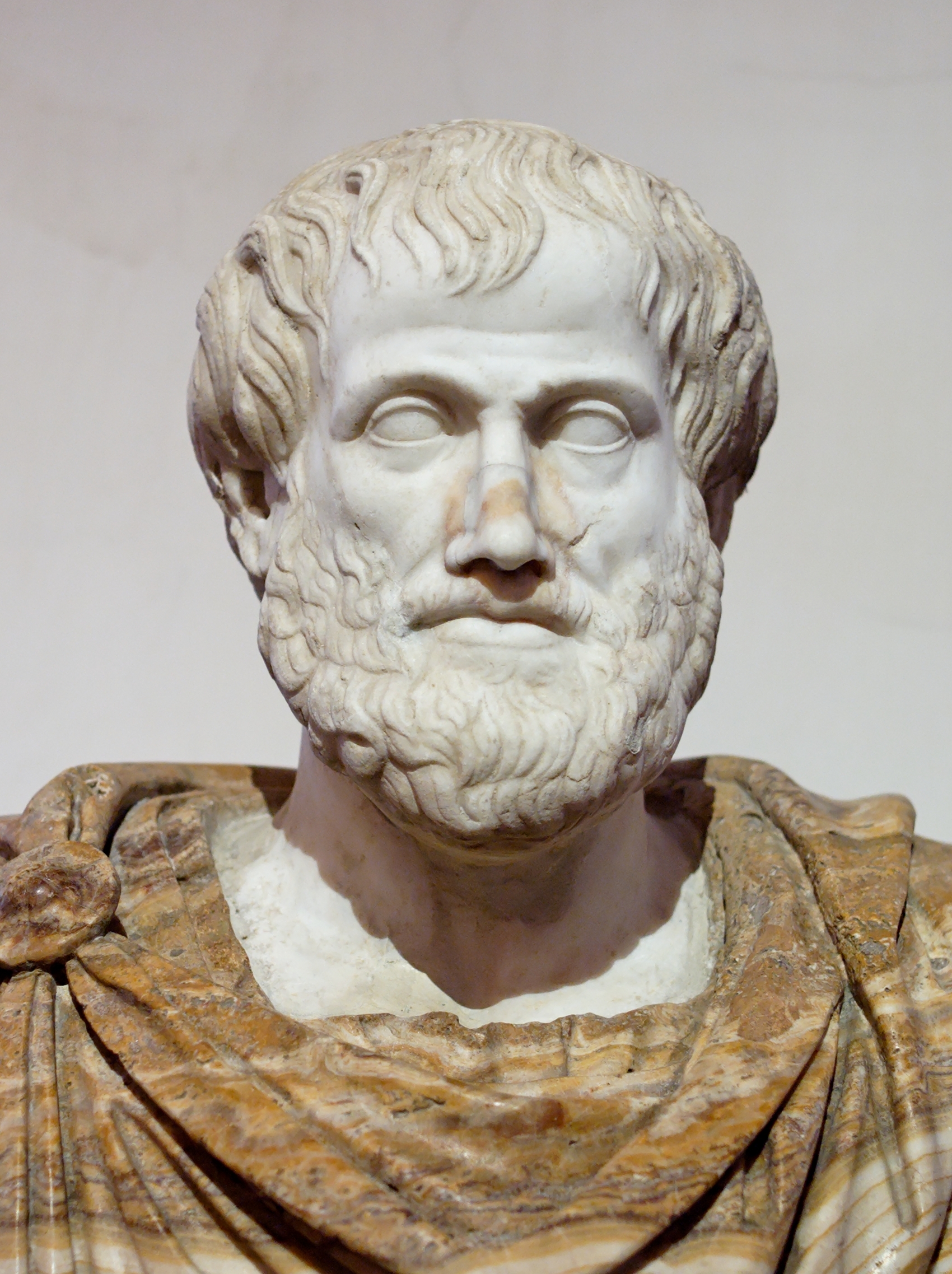
Aquinas did not invent the question. Aristotle had opened the Nicomachean Ethics the same way. In W. D. Ross's public domain translation (Oxford, 1908), Book I, chapter 4 reads: "Verbally there is very general agreement; for both the general run of men and people of superior refinement say that it is happiness, and identify living well and doing well with being happy; but with regard to what happiness is they differ, and the many do not give the same account as the wise. For the former think it is some plain and obvious thing, like pleasure, wealth, or honour."5 The "On the contrary" of article 7 cites Augustine instead: "Augustine says (De Trin. xiii, 3) that all men agree in desiring the last end, which is happiness."4 The pairing is typical of the Summa. A pagan philosopher and a Christian bishop are brought in to say the same thing from two directions, and Aquinas builds on both.
What happiness is not: question 2, article by article
Question 2 is titled "Things in which man's happiness consists," and it is a set of eight refusals. Each article proposes a good that people have taken for the highest good and shows why it cannot be the last end. The objections in each article argue for the candidate, often with Scripture or with Boethius's Consolation of Philosophy, a sixth-century book that had already made the same survey. The answers below are quoted from the "I answer that" of each article unless marked as the "On the contrary."6
Article 1: wealth
The first objection quotes Ecclesiastes 10:19 in the Douay wording, "All things obey money." Aquinas replies: "It is impossible for man's happiness to consist in wealth. For wealth is twofold, as the Philosopher says (Polit. i, 3), viz. natural and artificial." Natural wealth (food, drink, clothing, dwellings) serves the body, and artificial wealth, money, serves exchange. Both are means. A means cannot be the last end. The "On the contrary" borrows a line from Boethius: "wealth shines in giving rather than in hoarding: for the miser is hateful, whereas the generous man is applauded."6
Article 2: honor
"It is impossible for happiness to consist in honor. For honor is given to a man on account of some excellence in him; and consequently it is a sign and attestation of the excellence that is in the person honored." Honor follows from happiness; it does not make it. The "On the contrary" makes the point from Aristotle: "honor is not in the honored, but rather in him who honors."6
Article 3: fame or glory
"Man's happiness cannot consist in human fame or glory." The argument turns on knowledge. Human knowledge "is caused by the things known, whereas God's knowledge is the cause of the things known." Fame is what other people know about a person, and what other people know cannot be the cause of that person's perfection. Boethius supplies the sharper line in the "On the contrary": "many owe their renown to the lying reports spread among the people. Can anything be more shameful?"6
Article 4: power
"It is impossible for happiness to consist in power; and this for two reasons. First because power has the nature of principle, as is stated in Metaph. v, 12, whereas happiness has the nature of last end. Secondly, because power has relation to good and evil: whereas happiness is man's proper and perfect good. Wherefore some happiness might consist in the good use of power, which is by virtue, rather than in power itself."6 The last sentence is the hinge of the whole moral part. Power, like wealth, can be used well or badly. What makes the use good is virtue.
Article 5: the goods of the body
"It is impossible for man's happiness to consist in the goods of the body." The "On the contrary" gives the reason that every medieval student remembered: "Man surpasses all other animals in regard to happiness. But in bodily goods he is surpassed by many animals; for instance, by the elephant in longevity, by the lion in strength, by the stag in fleetness."6 The body exists for the soul, the article argues, and a thing cannot find its last end in merely keeping itself in being.
Article 6: pleasure
Aquinas does not despise pleasure. He calls it a "proper accident" of happiness, something that follows from having a fitting good: "every delight is a proper accident resulting from happiness, or from some part of happiness; since the reason that a man is delighted is that he has some fitting good, either in reality, or in hope, or at least in memory." Bodily delights, he notes, are better known, so "the name of pleasure has been appropriated to them" (a quotation from Ethics VII, 13), "although other delights excel them: and yet happiness does not consist in them." The "On the contrary" quotes Boethius once more: if pleasures could "render a man happy, there is no reason why we should not say that the very beasts are happy too."6
Article 7: the goods of the soul
This is the subtle article. Even knowledge and virtue, the soul's own perfections, cannot be the last end considered as the thing desired. "The soul, considered in itself, is as something existing in potentiality: for it becomes knowing actually, from being potentially knowing; and actually virtuous, from being potentially virtuous. Now since potentiality is for the sake of act as for its fulfilment, that which in itself is in potentiality cannot be the last end. Therefore the soul itself cannot be its own last end."6 The soul's activity of knowing and loving the highest good belongs to happiness, as question 3 will show, but the object of that activity lies outside the soul.
Article 8: any created good
The last article closes every door at once: "It is impossible for any created good to constitute man's happiness. For happiness is the perfect good, which lulls the appetite altogether; else it would not be the last end, if something yet remained to be desired. Now the object of the will, i.e. of man's appetite, is the universal good; just as the object of the intellect is the universal true. Hence it is evident that naught can lull man's will, save the universal good. This is to be found, not in any creature, but in God alone; because every creature has goodness by participation. Wherefore God alone can satisfy the will of man, according to the words of Psalm 102:5: 'Who satisfieth thy desire with good things.' Therefore God alone constitutes man's happiness."6 The psalm is numbered as in the Latin Vulgate (translated about 382 to 405 at the request of Pope Damasus) and the Douay-Rheims; it is Psalm 103:5 in the King James Version. The "On the contrary" quotes Augustine's City of God XIX, 26: "As the soul is the life of the body, so God is man's life of happiness." (On the Latin Bible these writers used, see module 103, lesson 04.)
What happiness is: question 3
Question 3 asks what happiness is, and its eight articles narrow the answer step by step: is happiness something uncreated; if created, is it an operation; of the senses or only of the intellect; of the intellect or of the will; of the speculative or the practical intellect; does it consist in the speculative sciences; in the knowledge of the angels; or in the vision of the divine essence.7
Article 1 makes a distinction that keeps the rest from confusion. "In the first sense, then, man's last end is the uncreated good, namely, God, Who alone by His infinite goodness can perfectly satisfy man's will. But in the second way, man's last end is something created, existing in him, and this is nothing else than the attainment or enjoyment of the last end." So: "If, therefore, we consider man's happiness in its cause or object, then it is something uncreated; but if we consider it as to the very essence of happiness, then it is something created."7 God is the object. Happiness, as something in the person, is the person's possession of that object.
Article 2 adds that this possession is an activity: "In so far as man's happiness is something created, existing in him, we must needs say that it is an operation. For happiness is man's supreme perfection. Now each thing is perfect in so far as it is actual; since potentiality without act is imperfect." Its "On the contrary" is Aristotle's definition, "happiness is an operation according to perfect virtue."7 Article 4 places that activity in the intellect, with delight in the will following from it. Its "On the contrary" is John 17:3: "This is eternal life: that they may know Thee, the only true God." Article 5 says it belongs to the speculative, not the practical, intellect, because the intellect's "highest object is the Divine Good, which is the object, not of the practical but of the speculative intellect."7
Article 8 is the conclusion this lesson's opening quoted. The "I answer that" begins: "Final and perfect happiness can consist in nothing else than the vision of the Divine Essence. To make this clear, two points must be observed. First, that man is not perfectly happy, so long as something remains for him to desire and seek: secondly, that the perfection of any power is determined by the nature of its object." The argument rests on the desire to know causes. Aquinas uses an eclipse as the example: a man who sees the sun darkened and knows it must have a cause "wonders about it, and from wondering proceeds to inquire. Nor does this inquiry cease until he arrive at a knowledge of the essence of the cause." The human mind that knows God only through effects, knowing "no more of God than 'that He is,'" still wants more. "Consequently, for perfect happiness the intellect needs to reach the very Essence of the First Cause. And thus it will have its perfection through union with God as with that object, in which alone man's happiness consists."7
The argument draws its line on wonder from Aristotle's Metaphysics (Book I, chapter 2, which Aquinas cites in the article) and its conclusion from 1 John 3:2, quoted in the "On the contrary": "When He shall appear, we shall be like to Him; and ... we shall see Him as He is." Readers who met the Five Ways in lesson 04 can see the link. The Five Ways reason from effects to the existence of a first cause. Question 3 says that knowing the first cause only that way is not enough to make anyone happy.
The requirements and the attainment of happiness: questions 4 and 5
Question 4 asks what happiness requires: delight, comprehension, rectitude of will, the body, the perfection of the body, external goods and the fellowship of friends.8 The last article shows how Aquinas holds together the two kinds of happiness that run through the whole Second Part. In this life, "the happy man needs friends, as the Philosopher says (Ethic. ix, 9), not, indeed, to make use of them, since he suffices himself; nor to delight in them, since he possesses perfect delight in the operation of virtue; but for the purpose of a good operation, viz. that he may do good to them; that he may delight in seeing them do good; and again that he may be helped by them in his good work." In the life to come, "the fellowship of friends is not essential to Happiness; since man has the entire fulness of his perfection in God. But the fellowship of friends conduces to the well-being of Happiness."8
Question 5 makes the two kinds explicit. Article 3 answers whether anyone can be happy in this life: "A certain participation of Happiness can be had in this life: but perfect and true Happiness cannot be had in this life." Its "On the contrary" is Job 14:1, "Man born of a woman, living for a short time, is filled with many miseries."9 Article 5 then asks whether a person can reach happiness by natural powers, and the answer is the doorway to everything this lesson and the next say about grace:
Imperfect happiness that can be had in this life, can be acquired by man by his natural powers, in the same way as virtue, in whose operation it consists: on this point we shall speak further on (I-II:63. But man's perfect Happiness, as stated above (I-II:3:8), consists in the vision of the Divine Essence. Now the vision of God's Essence surpasses the nature not only of man, but also of every creature, as was shown in I:12:4. ... Consequently neither man, nor any creature, can attain final Happiness by his natural powers.9
The two-level picture is the frame for the rest of the moral part. There is a happiness proportioned to human nature, which Aristotle described and which acquired virtue can reach in part. There is a happiness beyond human nature, the vision of God, which no creature reaches by its own powers. Article 8 adds that every person desires happiness "according to the general notion of happiness," since "to desire happiness is nothing else than to desire that one's will be satisfied," but that not all know "in what thing the general notion of happiness is found."9
Aristotle's own answer, set beside this, shows how much Aquinas kept and where he went further. In the Ross translation of the Nicomachean Ethics, Book I, chapter 7: "human good turns out to be activity of soul in accordance with virtue, and if there are more than one virtue, in accordance with the best and most complete. But we must add 'in a complete life.' For one swallow does not make a summer, nor does one day; and so too one day, or a short time, does not make a man blessed and happy."5 In Book X, chapter 7, Aristotle names the best activity: "If happiness is activity in accordance with virtue, it is reasonable that it should be in accordance with the highest virtue; and this will be that of the best thing in us. ... That this activity is contemplative we have already said."10 Aquinas agrees that happiness is activity, that it belongs to the highest power, and that the highest activity is contemplation. He differs on the object (the divine essence seen, not reasoned toward), on the place (chiefly after death), and on the means (a gift of God above nature).

Human acts and the passions: questions 6 to 48
Between happiness and virtue lie forty-three questions on acts and passions, the longest stretch of the Prima Secundae. They are the working parts of the moral life. Questions 6 to 17 take the act apart: what makes it voluntary or involuntary, the role of ignorance and fear, and the will's acts of intention, choice, counsel, consent and use. Questions 18 to 21 ask what makes an act good or bad. Aquinas answers that an act takes its goodness from its object, its circumstances and its end, and article 4 of question 18 explains why the end matters so much: "just as the being of a thing depends on the agent, and the form, so the goodness of a thing depends on its end." Its "On the contrary" quotes Boethius: "if the end is good, the thing is good, and if the end be evil, the thing also is evil."11 The reply to the third objection closes the obvious loophole: "an action is not good simply, unless it is good in all those ways: since 'evil results from any single defect, but good from the complete cause.'" A good intention does not make a bad act good.
The passions (questions 22 to 48) are the movements of the sense appetite that a person shares with animals: love and hatred, desire and aversion, joy and sorrow, hope and despair, fear and daring, and anger. Question 23, article 4 counts them: "there are altogether eleven passions differing specifically; six in the concupiscible faculty, and five in the irascible; and under these all the passions of the soul are contained."12 The "concupiscible" passions respond to good and evil simply; the "irascible" ones respond to good or evil that is hard to get or hard to avoid. Question 25, article 4 names four principal passions, and its "On the contrary" quotes a verse of Boethius: "Banish joys: banish fears: Away with hope: away with tears." Aquinas explains the four by time: "joy relates to present good, sadness relates to present evil; hope regards future good, and fear, future evil."13
For a reader shaped by the Stoic ideal of freedom from passion, or by a piety that distrusts all feeling, the Summa's treatment is a surprise. The passions are part of human nature as God made it. They are good when reason orders them and bad when they run against reason. The moral virtues of fortitude and temperance, as question 61 will show, exist to order exactly these movements. Aquinas does not ask the reader to stop feeling. He asks for feelings trained to fit what is true and good.
Habits and the definition of virtue: questions 49 to 56
A habit, in the Summa's Latin habitus, is not a mere routine. Following Aristotle's Metaphysics, Aquinas defines it as "a disposition whereby that which is disposed is disposed well or ill," either in regard to its own nature or in regard to its end (ST I-II, q. 49, articles 1 and 3).14 A habit sits between a bare power (the ability to see, to choose, to be angry) and a single act. It is what makes a person reliably able to act in a certain way, with ease and with pleasure. Good habits are virtues. Bad ones are vices.
Question 55, article 4 tests a definition of virtue that the medieval schools had gathered from Augustine. The first objection states it: "Virtue is a good quality of the mind, by which we live righteously, of which no one can make bad use, which God works in us, without us." The "On the contrary" names its source: "We have the authority of Augustine from whose words this definition is gathered, and principally in De Libero Arbitrio ii, 19." Aquinas accepts it, with one refinement: "This definition comprises perfectly the whole essential notion of virtue. ... But the definition would be more suitable if for 'quality' we substitute 'habit,' which is the proximate genus."15 In the same article he notes that the last clause, "which God works in us, without us," fits only the infused virtues: "If we omit this phrase, the remainder of the definition will apply to all virtues in general, whether acquired or infused." The sixth objection had quoted Augustine against the clause ("He who created thee without thee, will not justify thee without thee"), and the reply answers: "Infused virtue is caused in us by God without any action on our part, but not without our consent." That single clause is where the theology of grace enters the theory of virtue, and it comes back below.
Aristotle's account, which Aquinas follows for the acquired virtues, is in Book II of the Nicomachean Ethics. In the Ross translation: "Virtue, then, being of two kinds, intellectual and moral, intellectual virtue in the main owes both its birth and its growth to teaching (for which reason it requires experience and time), while moral virtue comes about as a result of habit, whence also its name (ethike) is one that is formed by a slight variation from the word ethos (habit)." And a few lines on: "men become builders by building and lyreplayers by playing the lyre; so too we become just by doing just acts, temperate by doing temperate acts, brave by doing brave acts."16 Chapter 6 gives the definition that Aquinas quotes in question 64: "Virtue, then, is a state of character concerned with choice, lying in a mean, i.e. the mean relative to us, this being determined by a rational principle, and by that principle by which the man of practical wisdom would determine it. Now it is a mean between two vices, that which depends on excess and that which depends on defect."16
The intellectual and moral virtues: questions 57 to 60 and 64
Question 57 takes over Aristotle's intellectual virtues from Ethics VI. Three perfect the speculative intellect: understanding (of first principles), science (knowledge of conclusions drawn from principles) and wisdom (knowledge of the highest causes). Article 2's "On the contrary" states it: "The Philosopher (Ethic. vi, 1) reckons these three alone as being intellectual virtues, viz. wisdom, science and understanding." Two perfect the practical intellect: art and prudence. "Art is nothing else but 'the right reason about certain works to be made,'" while prudence is "the 'right reason of things to be done.'"17 The difference is between making and doing. A craftsman can be a good craftsman and a bad man. Prudence, by contrast, needs a good will, because it is reasoning about how to live.
Article 5 of question 57 says why prudence is necessary to every good life: "Prudence is a virtue most necessary for human life. For a good life consists in good deeds. Now in order to do good deeds, it matters not only what a man does, but also how he does it; to wit, that he do it from right choice and not merely from impulse or passion."17 The moral virtues give the right desire for the end. Prudence finds the right means. Neither works without the other.
Question 64, article 1 then applies Aristotle's mean. Its "On the contrary" is the line from Ethics II, 6 that "moral virtue is a habit of choosing the mean." The "I answer that" explains it by measurement: the good of anything measured "consists in its conformity with its rule," and evil "consists in discordance from their rule or measure," which can happen "either by their exceeding the measure or by their falling short of it."18 Courage lies between cowardice and rashness. Generosity lies between stinginess and waste. The mean is not mediocrity; it is the point reason fixes as right, which Aristotle had called "the mean relative to us."
The four cardinal virtues: question 61
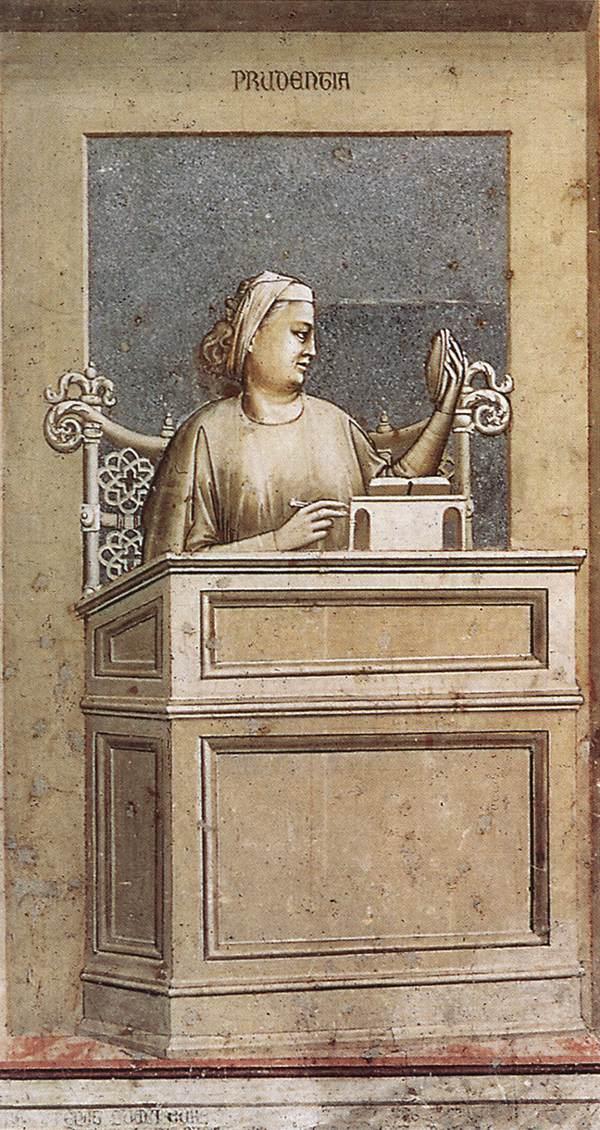
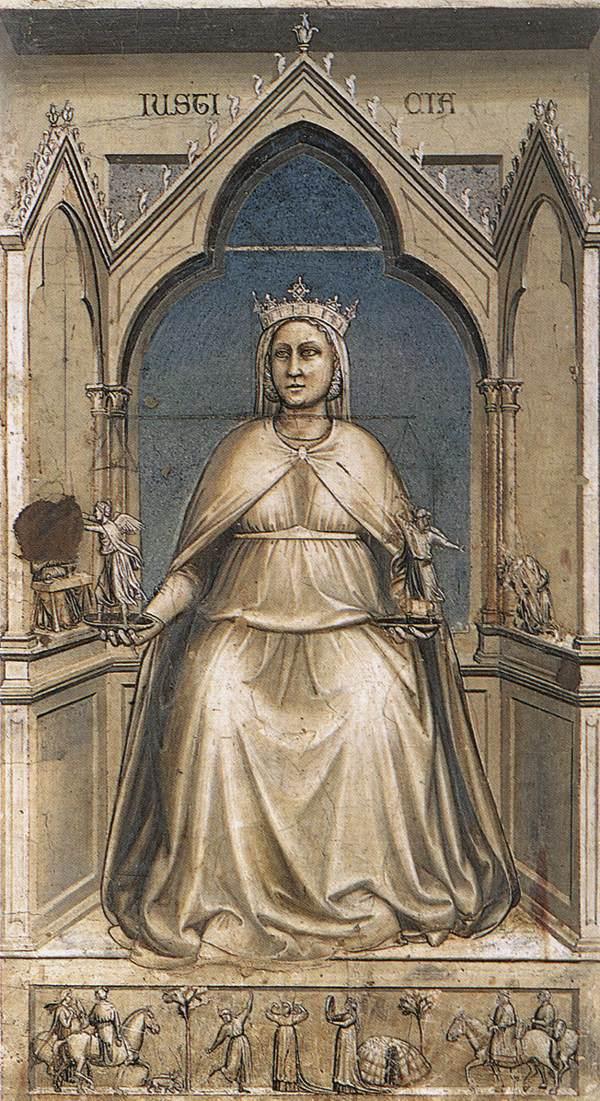
The word "cardinal" comes from the Latin cardo, a hinge. The four cardinal virtues are those on which the rest of the moral life turns. Question 61, article 1 places them among the moral virtues, with prudence as the one intellectual virtue among them, and its "On the contrary" quotes Ambrose on Luke 6:20: "We know that there are four cardinal virtues, viz. temperance, justice, prudence, and fortitude." Article 2 gives Gregory the Great's line, "The entire structure of good works is built on four virtues."19 The list itself is older than Christianity. In Book IV of Plato's Republic (Benjamin Jowett's translation), Socrates says of the rightly ordered city that "being perfect, is therefore wise and valiant and temperate and just."20 Wisdom 8:7, quoted in ST I-II, q. 57, a. 5, gives it in Scripture: "She teacheth temperance and prudence and justice and fortitude, which are such things as men can have nothing more profitable in life."17
Aquinas does not just accept the number. Article 2 argues for it from the structure of the soul:
For the formal principle of the virtue of which we speak now is good as defined by reason; which good is considered in two ways. First, as existing in the very act of reason: and thus we have one principal virtue, called "Prudence." Secondly, according as the reason puts its order into something else; either into operations, and then we have "Justice"; or into passions, and then we need two virtues. For the need of putting the order of reason into the passions is due to their thwarting reason: and this occurs in two ways. First, by the passions inciting to something against reason, and then the passions need a curb, which we call "Temperance." Secondly, by the passions withdrawing us from following the dictate of reason, e.g. through fear of danger or toil: and then man needs to be strengthened for that which reason dictates, lest he turn back; and to this end there is "Fortitude."19
The same article matches each virtue to a power of the soul: prudence to reason itself, justice to the will, temperance to the concupiscible appetite and fortitude to the irascible. The reply to the first objection ranks them: "Prudence is the principal of all the virtues simply. The others are principal, each in its own genus."19
Augustine had defined the same four virtues by love. In On the Morals of the Catholic Church, chapter 15 (translated by Richard Stothert in the Nicene and Post-Nicene Fathers, first series, volume 4), he wrote: "As to virtue leading us to a happy life, I hold virtue to be nothing else than perfect love of God. For the fourfold division of virtue I regard as taken from four forms of love." Temperance "is love giving itself entirely to that which is loved; fortitude is love readily bearing all things for the sake of the loved object; justice is love serving only the loved object, and therefore ruling rightly; prudence is love distinguishing with sagacity between what hinders it and what helps it."21 The Summa holds both pictures at once: the cardinal virtues as Aristotle's perfections of reason and appetite, and as Augustine's forms of love, which in Aquinas's terms are given their final form by charity (II-II, q. 23, a. 8, below). For Augustine's wider teaching on grace, see module 79, lesson 06.

The theological virtues: question 62
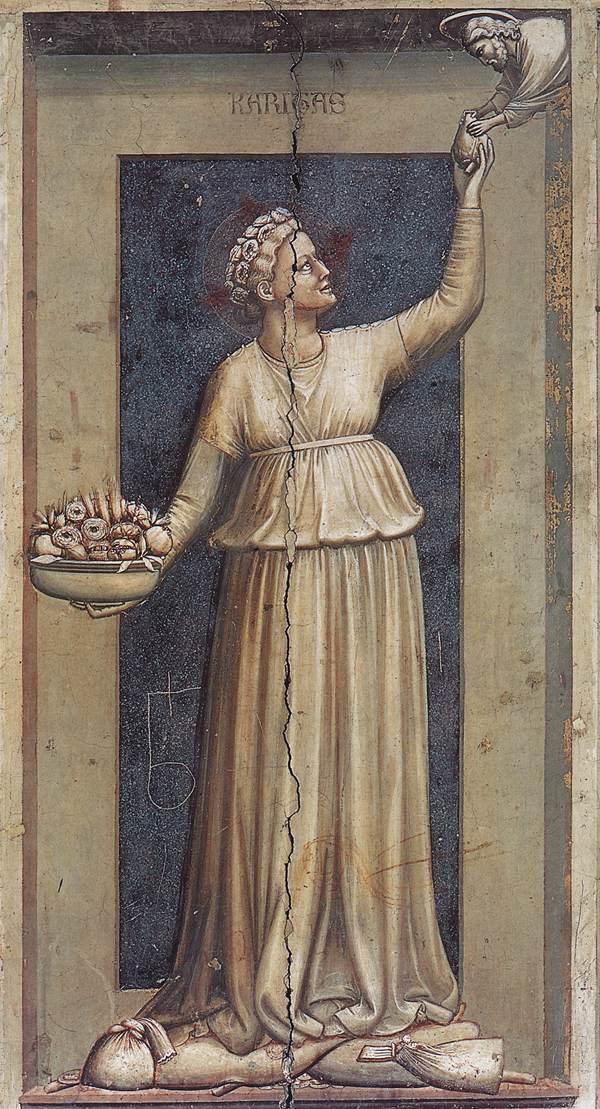
Aristotle knew nothing of faith, hope and charity as virtues. Question 62 adds them, and article 1 explains why the classical list cannot be the whole account. The answer goes back to the two kinds of happiness in question 5:
Now man's happiness is twofold, as was also stated above (I-II:5:5). One is proportionate to human nature, a happiness, to wit, which man can obtain by means of his natural principles. The other is a happiness surpassing man's nature, and which man can obtain by the power of God alone, by a kind of participation of the Godhead, about which it is written (2 Peter 1:4) that by Christ we are made "partakers of the Divine nature." And because such happiness surpasses the capacity of human nature, man's natural principles which enable him to act well according to his capacity, do not suffice to direct man to this same happiness. Hence it is necessary for man to receive from God some additional principles, whereby he may be directed to supernatural happiness, even as he is directed to his connatural end, by means of his natural principles, albeit not without Divine assistance. Such like principles are called "theological virtues": first, because their object is God, inasmuch as they direct us aright to God: secondly, because they are infused in us by God alone: thirdly, because these virtues are not made known to us, save by Divine revelation, contained in Holy Writ.22
Article 3's "On the contrary" is 1 Corinthians 13:13: "Now there remain faith, hope, charity, these three." Article 4 sets their order. "By order of generation," faith comes first, because "it is by faith that the intellect apprehends the object of hope and love," and hope comes before charity, because a person who hopes to obtain good through someone comes to love that one. "In the order of perfection," charity comes first, because it is "the form of them all."22 The same article adds a phrase easy to pass over: "habits are all infused together." The order is in the acts, not in the moment of receiving.
Acquired and infused virtue: questions 63 and 65
The difference between acquired and infused virtue is the place where Aquinas's ethics and his theology of grace meet, and readers of every tradition should look closely at it. Question 63, article 4 asks whether the virtue gained by practice is the same kind of thing as the virtue God infuses. Aquinas answers that they differ in kind even when they share a name, and he gives an example:
For instance, in the consumption of food, the mean fixed by human reason, is that food should not harm the health of the body, nor hinder the use of reason: whereas, according to the Divine rule, it behooves man to "chastise his body, and bring it into subjection" (1 Corinthians 9:27), by abstinence in food, drink and the like. It is therefore evident that infused and acquired temperance differ in species; and the same applies to the other virtues.23
The "On the contrary" of the same article quotes the Augustinian definition again: infused virtue is the one "which God works in us without us."23 Question 65, article 2 then asks whether the moral virtues can exist without charity. The answer has two parts, and both are needed:
As stated above (I-II:63:2), it is possible by means of human works to acquire moral virtues, in so far as they produce good works that are directed to an end not surpassing the natural power of man: and when they are acquired thus, they can be without charity, even as they were in many of the Gentiles. But in so far as they produce good works in proportion to a supernatural last end, thus they have the character of virtue, truly and perfectly; and cannot be acquired by human acts, but are infused by God. Such like moral virtues cannot be without charity.24
The article ends: "It is therefore clear from what has been said that only the infused virtues are perfect, and deserve to be called virtues simply: since they direct man well to the ultimate end."24 Aquinas grants real but imperfect virtue to pagans, "even as they were in many of the Gentiles," and he denies that anyone reaches the virtue that leads to the vision of God by practice alone. How Protestant confessions answered the same question is set out below, in the section on Luther, Calvin and the confessions.
The gifts, the beatitudes and the fruits: questions 68 to 70
The virtues, even the infused ones, are principles by which a person acts through his own reason and will. Aquinas holds that this is not enough for the life that leads to God, and in question 68 he adds the seven gifts of the Holy Ghost named in Isaiah 11:2 to 3 (in the Latin Bible and the Douay-Rheims, which list seven: wisdom, understanding, counsel, fortitude, knowledge, piety and fear of the Lord). The first article admits the difficulty openly: "If we speak of gift and virtue with regard to the notion conveyed by the words themselves, there is no opposition between them," and some theologians "have held that the gifts are not to be distinguished from the virtues." Its "On the contrary" cites Gregory the Great, who in the Moralia read the seven sons of Job as the seven gifts and the three daughters as faith, hope and charity.25
Aquinas's answer, in article 3, is that the gifts are habits that make a person ready to be moved by the Holy Ghost, as the moral virtues make the appetite ready to be moved by reason. Article 4 then matches each gift to a power:
Now the reason is speculative and practical: and in both we find the apprehension of truth (which pertains to the discovery of truth), and judgment concerning the truth. Accordingly, for the apprehension of truth, the speculative reason is perfected by "understanding"; the practical reason, by "counsel." In order to judge aright, the speculative reason is perfected by "wisdom"; the practical reason by "knowledge." The appetitive power, in matters touching a man's relations to another, is perfected by "piety"; in matters touching himself, it is perfected by "fortitude" against the fear of dangers; and against inordinate lust for pleasures, by "fear," according to Proverbs 15:27: "By the fear of the Lord every one declineth from evil."25
The reply to the first objection in that article uses a phrase that sums up Aquinas's view of the gifts: as regards their infusion, "the art is on the part of the Holy Ghost, Who is the principal mover, and not on the part of men, who are His organs when He moves them."25 The gifts are the place in the Summa's moral part where the believer is described as moved more than moving, and readers who think of the Summa as a system of human effort will find the language surprising.
Question 69 treats the beatitudes of Matthew 5. Article 1's "On the contrary" points out that some beatitudes, such as poverty, mourning and peace, are "neither virtues nor gifts," and the "I answer that" places them: a person approaches the happy end "by works of virtue, and above all by the works of the gifts, if we speak of eternal happiness, for which our reason is not sufficient, since we need to be moved by the Holy Ghost, and to be perfected with His gifts that we may obey and follow him. Consequently the beatitudes differ from the virtues and gifts, not as habit, but as act from habit."26 The beatitudes are the acts of a life shaped by virtue and gift, and they already share in the happiness they promise; the same article quotes Romans 8:24, "We are saved by hope." Question 70 adds the fruits of the Holy Ghost from Galatians 5:22 to 23, and article 3 defends "the number of the twelve fruits enumerated by the Apostle" (the Latin and Douay text of Galatians names twelve; the Greek and the King James Version name nine).27

Vice and sin, and the capital vices: questions 71 to 89
The treatise on vice and sin is the mirror of the treatise on virtue. Question 71, article 6 tests Augustine's definition of sin as "a word, deed, or desire contrary to the eternal law," and its "On the contrary" is short: "the authority of Augustine suffices (Contra Faust. xxii, 27)." The "I answer that" explains: "sin is nothing else than a bad human act," and an act is bad when it lacks "conformity with its due measure." There are two rules for the human will, the near rule of human reason and the first rule, "the eternal law, which is God's reason, so to speak."28 (The eternal law is treated in lesson 05.) The questions that follow treat the kinds of sin, their causes (ignorance, passion, malice, the devil), original sin (questions 81 to 83) and the effects of sin, including the distinction between mortal and venial sin (questions 87 to 89).
Question 84 asks how one sin causes another, and articles 3 and 4 take up the list of capital vices. Aquinas explains the word: "a capital vice is one from which other vices arise, chiefly by being their final cause," and "Gregory (Moral. xxxi, 17) compares these capital vices to the 'leaders of an army.'"29 The first objection of article 4 gives the list Aquinas defends: "vainglory, envy, anger, sloth, covetousness, gluttony, lust." The reply to the fourth objection explains why pride is not on it: "pride, like a universal vice, is not counted along with the others, but is reckoned as the 'queen of them all,' as Gregory states."29
Gregory's own text can be read in the Oxford translation of the Morals on the Book of Job (Library of the Fathers, 1844 to 1850), Book XXXI, chapter 45, section 87, on Job 39:25, "the exhortation of the captains, and the howling of the army":
For when pride, the queen of sins, has fully possessed a conquered heart, she surrenders it immediately to seven principal sins, as if to some of her generals, to lay it waste. And an army in truth follows these generals, because, doubtless, there spring up from them importunate hosts of sins. ... For pride is the root of all evil, of which it is said, as Scripture bears witness; Pride is the beginning of all sin. [Ecclus. 10, 1] But seven principal vices, as its first progeny, spring doubtless from this poisonous root, namely, vain glory, envy, anger, melancholy, avarice, gluttony, lust.30
Set side by side, the two lists differ in one place. Gregory has "melancholy" (in Latin tristitia, sadness), where Aquinas has "sloth" (acedia), which he treats in II-II, q. 35 and, following John of Damascus, defines as "an oppressive sorrow, which, to wit, so weighs upon man's mind, that he wants to do nothing."31 Both lists keep pride apart as the root or queen. The list most people now know as the "seven deadly sins" counts pride among the seven and drops vainglory, so it merges Gregory's queen with one of her generals. Gregory himself drew on an older monastic tradition. John Cassian, writing for monks in southern Gaul early in the fifth century, had opened Book V of his Institutes by announcing "the struggle against the eight principal faults": gluttony, fornication, covetousness, anger, dejection, accidie ("heaviness or weariness of heart"), vainglory and pride (in C. S. Gibson's translation, Nicene and Post-Nicene Fathers, second series, volume 11).32 For the monastic world in which these lists grew, see module 79, lesson 07.
The Secunda Secundae: virtue by virtue
The Prima Secundae speaks of virtue in general. The Secunda Secundae, the largest single part of the Summa, takes the virtues one by one. Its prologue gives the reason: "For there is less use in speaking about moral matters in general, since actions are about particular things." It also gives the plan. To avoid saying the same thing over and over, each treatise takes a virtue "together with its corresponding gift, opposite vice, and affirmative and negative precepts." And the whole of morals is gathered under seven heads: "Accordingly we may reduce the whole of moral matters to the consideration of the virtues, which themselves may be reduced to seven in number. Three of these are theological, and of these we must treat first, while the other four are the cardinal virtues."33 The same prologue explains what happens to the other intellectual virtues: art "does not pertain to moral science," and wisdom, understanding and knowledge are treated with the gifts that share their names.
Following the New Advent outline of the questions, the treatises run: faith, questions 1 to 16; hope, 17 to 22; charity, 23 to 46; prudence, 47 to 56; justice and the virtues annexed to it, 57 to 122; fortitude, 123 to 140; temperance, 141 to 170. Then come the graces given for others (prophecy, rapture, tongues, miracles: 171 to 178), the active and contemplative lives (179 to 182), and the states of life, including bishops and religious orders (183 to 189).33 Justice alone takes sixty-six questions, because under it Aquinas treats murder, theft, fraud in buying and selling, usury, false witness, slander, religion and its acts (devotion, prayer, sacrifice, vows), obedience, gratitude and truthfulness. One quoted article per virtue follows.
Faith: II-II, q. 4, a. 1
Article 1 of question 4 asks whether Hebrews 11:1 ("the substance of things to be hoped for, the evidence of things that appear not") is a fitting definition of faith. The "On the contrary" is a single short sentence: "The authority of the Apostle suffices." Aquinas then recasts the verse in the form of a definition: "faith is a habit of the mind, whereby eternal life is begun in us, making the intellect assent to what is non-apparent." He explains each part. Calling it "evidence" separates faith from "opinion, suspicion, and doubt, which do not make the intellect adhere to anything firmly"; "of things that appear not" separates it from "science and understanding, the object of which is something apparent"; and "the substance of things to be hoped for" separates "the virtue of faith from faith commonly so called, which has no reference to the beatitude we hope for."34 Question 2, article 9 adds how the act of faith comes about: "the act of believing is an act of the intellect assenting to the Divine truth at the command of the will moved by the grace of God."35 The questions on faith formed by charity (q. 4, a. 3), and the arguments between Catholics and Protestants over it, belong to lesson 07.
Hope: II-II, q. 17, a. 2
Question 17 shows that hope, as a theological virtue, is more than a feeling about the future. Article 1 defines its object, following the treatise on the passions: "the object of hope is a future good, difficult but possible to obtain." Article 2 says what that good is: "Wherefore the good which we ought to hope for from God properly and chiefly is the infinite good, which is proportionate to the power of our divine helper, since it belongs to an infinite power to lead anyone to an infinite good. Such a good is eternal life, which consists in the enjoyment of God Himself. For we should hope from Him for nothing less than Himself, since His goodness, whereby He imparts good things to His creature, is no less than His Essence."36 The vices opposed to hope are despair (q. 20) and presumption (q. 21), one by defect, one by excess.
Charity: II-II, q. 23, a. 1
The most quoted article of the Secunda Secundae may be the first article on charity, which asks whether charity is friendship. The "On the contrary" is John 15:15: "I will not now call you servants . . . but My friends." The "I answer that" draws on Aristotle's account of friendship in Ethics VIII and then goes past it:
According to the Philosopher (Ethic. viii, 2,3) not every love has the character of friendship, but that love which is together with benevolence, when, to wit, we love someone so as to wish good to him. If, however, we do not wish good to what we love, but wish its good for ourselves, (thus we are said to love wine, or a horse, or the like), it is love not of friendship, but of a kind of concupiscence. For it would be absurd to speak of having friendship for wine or for a horse.
Yet neither does well-wishing suffice for friendship, for a certain mutual love is requisite, since friendship is between friend and friend: and this well-wishing is founded on some kind of communication.
Accordingly, since there is a communication between man and God, inasmuch as He communicates His happiness to us, some kind of friendship must needs be based on this same communication, of which it is written (1 Corinthians 1:9): "God is faithful: by Whom you are called unto the fellowship of His Son." The love which is based on this communication, is charity: wherefore it is evident that charity is the friendship of man for God.37
Aristotle had doubted that friendship between gods and men was possible, because friends must be in some way equal. In Ethics VIII, 7 (Ross translation) he wrote that "when one party is removed to a great distance, as God is, the possibility of friendship ceases."38 Aquinas answers that God makes the friendship possible by sharing his own happiness. Article 8 of the same question then calls charity "the form of the virtues": "it is charity which directs the acts of all other virtues to the last end, and which, consequently, also gives the form to all other acts of virtue."37 Charity's acts (love, joy, peace, mercy, beneficence, almsgiving, fraternal correction) and the vices against it (hatred, sloth, envy, discord, contention, schism, war, strife, sedition, scandal) fill questions 24 to 46.
Prudence: II-II, q. 47, a. 8
Prudence is "right reason applied to action" (q. 47, a. 2, from Ethics VI, 5). Article 8 asks which of its acts is chief: "there are three such acts. The first is 'to take counsel,' which belongs to discovery, for counsel is an act of inquiry, as stated above (I-II:14:1). The second act is 'to judge of what one has discovered,' and this is an act of the speculative reason. But the practical reason, which is directed to action, goes further, and its third act is 'to command,' which act consists in applying to action the things counselled and judged. And since this act approaches nearer to the end of the practical reason, it follows that it is the chief act of the practical reason, and consequently of prudence."39 A person who deliberates well and judges well but never acts is not prudent. Question 48 names eight parts of prudence that must work together, drawn from Macrobius, Cicero ("Tully") and Aristotle: memory, reasoning, understanding, docility, shrewdness, foresight, circumspection and caution.40
Justice: II-II, q. 58, a. 1
Question 58, article 1 takes the definition of justice from Roman law, "the perpetual and constant will to render to each one his right," and defends it: "the proper matter of justice consists of those things that belong to our intercourse with other men," and the definition mentions "will" to show the act must be voluntary and "constancy" and "perpetuity" to show it must be firm. Aquinas restates it in the form of a habit: "justice is a habit whereby a man renders to each one his due by a constant and perpetual will."41 The definition is from the opening of Justinian's Institutes and Digest, which lesson 05 links to the medieval revival of Roman law. Question 80 lists the virtues "annexed" to justice, beginning with Cicero's six ("religion, piety, gratitude, revenge, observance, truth"), and the questions that follow treat religion, piety toward parents and country, observance and obedience, gratitude, truthfulness, friendliness, liberality and epikeia or equity.42
Fortitude: II-II, q. 123, a. 6
Fortitude binds the will to the good of reason against fear. Article 4 says that its chief matter is the fear of death, "the most fearful of all bodily evils," because "he that stands firm against great things, will in consequence stand firm against less things, but not conversely." Article 6 asks whether endurance or attack is the chief act of fortitude, and answers: "it is more difficult to allay fear than to moderate daring, since the danger which is the object of daring and fear, tends by its very nature to check daring, but to increase fear. Now to attack belongs to fortitude in so far as the latter moderates daring, whereas to endure follows the repression of fear. Therefore the principal act of fortitude is endurance, that is to stand immovable in the midst of dangers rather than to attack them."43 Question 124 then treats martyrdom as fortitude's highest act. Question 128 names its parts after Cicero: magnificence, confidence, patience and perseverance, with Macrobius's longer list discussed in the replies; magnanimity follows in question 129.44
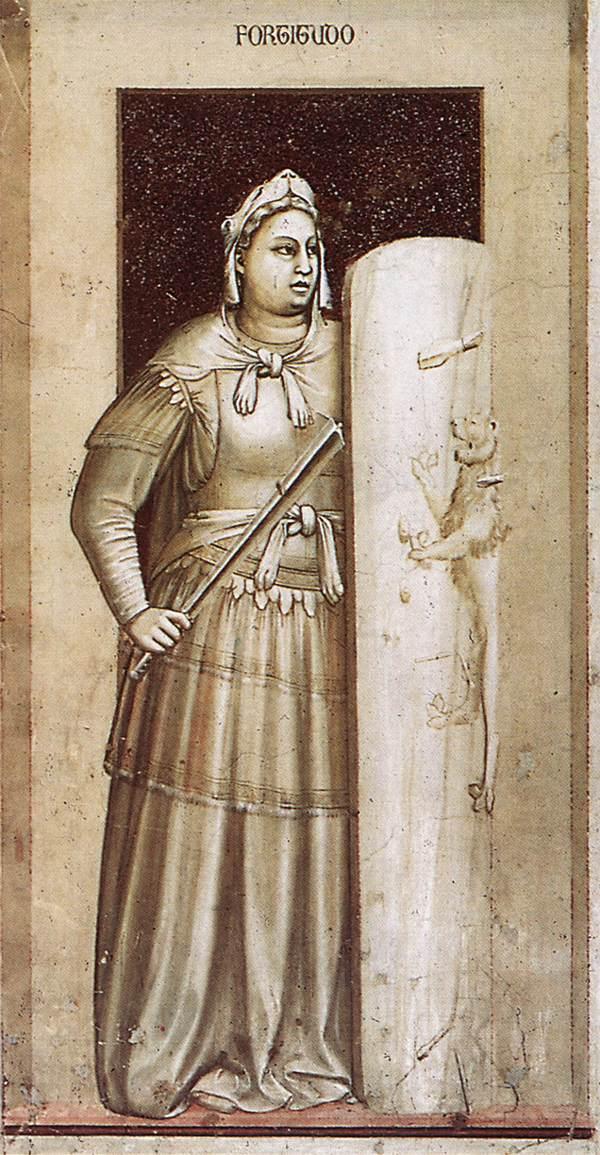

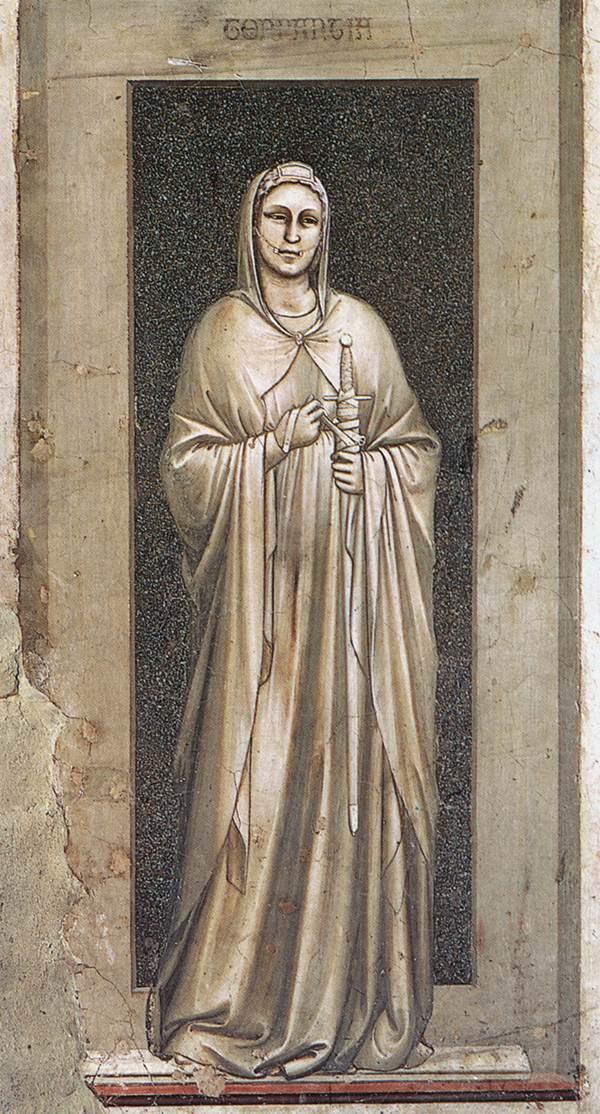
Temperance: II-II, q. 141, a. 6
Temperance in the broad sense is the moderation reason brings to all action, but as a special virtue it governs "the pleasures of touch," food, drink and sex, which are the hardest to moderate. Article 6 gives its rule: "Now all the pleasurable objects that are at man's disposal, are directed to some necessity of this life as to their end. Wherefore temperance takes the need of this life, as the rule of the pleasurable objects of which it makes use, and uses them only for as much as the need of this life requires." The "On the contrary" quotes Augustine: "In both Testaments the temperate man finds confirmation of the rule forbidding him to love the things of this life, or to deem any of them desirable for its own sake."45 Question 143 sorts temperance's parts into three kinds: integral parts ("shamefacedness" and "honesty," which loves "the beauty of temperance"), subjective parts or species (abstinence, sobriety, chastity and purity), and potential parts or annexed virtues (continence, humility, meekness and modesty).46 Humility, in this arrangement, is a part of temperance (through modesty), and pride, its opposite, is treated in question 162, followed by "Adam's sin which was pride" in questions 163 to 165, as the New Advent outline puts it.33

The active and the contemplative lives: questions 179 to 182 and 188
The Secunda Secundae ends with the different ways of living a Christian life. Question 179, article 1 begins with Gregory the Great: "There is a twofold life wherein Almighty God instructs us by His holy word, the active life and the contemplative."47 The active life is occupied with outward works of virtue; the contemplative life with the consideration of divine truth.
Question 182, article 1 asks which is better. The "On the contrary" is the story of Martha and Mary: "Our Lord said (Luke 10:42): 'Mary hath chosen the best part, which shall not be taken away from her.' Now Mary figures the contemplative life." The "I answer that" begins: "Nothing prevents certain things being more excellent in themselves, whereas they are surpassed by another in some respect. Accordingly we must reply that the contemplative life is simply more excellent than the active: and the Philosopher proves this by eight reasons (Ethic. x, 7,8)." The article then adds the qualification that is easy to miss: "Yet in a restricted sense and in a particular case one should prefer the active life on account of the needs of the present life. Thus too the Philosopher says (Topic. iii, 2): 'It is better to be wise than to be rich, yet for one who is in need, it is better to be rich . . .'"48 Article 4 adds that the two lives belong together in a single person over time. Its reply to the second objection says that the move from action to contemplation follows "the order of generation," while "the return from the contemplative life to the active is according to the order of direction, in so far as the active life is directed by the contemplative."48
Question 188, article 6 then ranks the religious orders, and its answer is the one most often linked to Aquinas's own Dominican order (on which see lesson 02). One work of the active life, teaching and preaching, flows from contemplation itself, "and this work is more excellent than simple contemplation. For even as it is better to enlighten than merely to shine, so is it better to give to others the fruits of one's contemplation than merely to contemplate." The other kind of active work, "almsgiving, receiving guests, and the like," ranks below contemplation "except in cases of necessity." So "the highest place in religious orders is held by those which are directed to teaching and preaching."49 The Dominican motto contemplari et contemplata aliis tradere (to contemplate and to hand on to others what has been contemplated) echoes the Latin of this article, which reads maius est contemplata aliis tradere quam solum contemplari, the sentence the English renders "so is it better to give to others the fruits of one's contemplation than merely to contemplate."50 The same pattern of contemplation flowing into action appears in Catherine of Siena, a Dominican tertiary, whose life and letters lessons 10 and 11 read.
Luther, Calvin and the confessions on virtue
The moral part of the Summa rests heavily on Aristotle's Ethics, and that reliance drew some of Luther's sharpest words. The Reformers' objections and their agreements are best read in their own words. The arguments over grace, justification and merit that follow from them belong to lesson 07; Luther's life is told in module 79, lesson 11.
Luther on Aristotle's Ethics, 1520
In his Address to the Christian Nobility of the German Nation (1520), Luther proposed a reform of the universities. In C. A. Buchheim's translation (Harvard Classics, volume 36, 1910), he advised "that the books of Aristotle, the Physics, the Metaphysics, Of the Soul, Ethics, which have hitherto been considered the best, be altogether abolished." Of the Ethics in particular he wrote: "Then there is the Ethics, which is accounted one of the best, though no book is more directly contrary to God's will and the Christian virtues. Oh that such books could be kept out of the reach of all Christians!" He then named Aquinas: "I know Aristotle as well as you or men like you. I have read him with more understanding than St. Thomas or Scotus, which I may say without arrogance, and can prove if need be."51
The same passage is less sweeping than a quick reading suggests. A few lines on, Luther wrote that he "would, however, gladly consent that Aristotle's books of Logic, Rhetoric, and Poetry, should be retained."51 His target was the use of the Ethics as the frame for Christian moral theology, the very use the Prima Secundae makes of it. His central objection, as he set it out in the 1517 Disputation against Scholastic Theology (read in lesson 07), was that Aristotle's rule "we become just by doing just acts," which the Summa accepts for the acquired virtues, cannot describe how a sinner becomes righteous before God.
The Augsburg Confession, Article XVIII
The Lutheran confession of 1530 did not deny natural moral ability. Article XVIII, "Of Free Will," in the English text published at BookofConcord.org, reads: "Of Free Will they teach that man's will has some liberty to choose civil righteousness, and to work things subject to reason. But it has no power, without the Holy Ghost, to work the righteousness of God, that is, spiritual righteousness; since the natural man receiveth not the things of the Spirit of God, 1 Cor. 2:14; but this righteousness is wrought in the heart when the Holy Ghost is received through the Word." The article goes on to quote a work then credited to Augustine, the Hypognosticon, listing among the "good" works of nature "willing to labor in the field, to eat and drink, to have a friend, to clothe oneself, to build a house, to marry a wife, to raise cattle."52
Set beside ST I-II, q. 5, a. 5 and q. 65, a. 2, the outline is similar: a good proportioned to nature that human powers can reach, and a good above nature that only God gives. The two texts part over what the natural good is worth before God and over how the higher good is received, which is the subject of lesson 07.
Calvin on the virtues of unbelievers
Calvin wrote at length about the moral gifts of pagan writers, and his tone toward them is warmer than many readers expect. In Book II, chapter 2, section 15 of the Institutes (Henry Beveridge's translation, 1845), he wrote: "Therefore, in reading profane authors, the admirable light of truth displayed in them should remind us, that the human mind, however much fallen and perverted from its original integrity, is still adorned and invested with admirable gifts from its Creator. If we reflect that the Spirit of God is the only fountain of truth, we will be careful, as we would avoid offering insult to him, not to reject or condemn truth wherever it appears. In despising the gifts, we insult the Giver."53
In Book III, chapter 14, he took up the virtues of unbelievers directly. Section 2: "First, then, I deny not, that whatever excellent endowments appear in unbelievers are divine gifts." He insisted that the difference between just and unjust rulers is real, and concluded that "those virtues, or rather images of virtues, of whatever kind, are divine gifts, since there is nothing in any degree praiseworthy which proceeds not from him." Section 3 then gives the other half: "For though they are instruments of God to preserve human society by justice, continence, friendship, temperance, fortitude, and prudence, yet they execute these good works of God in the worst manner, because they are kept from acting ill, not by a sincere love of goodness, but merely by ambition or self-love, or some other sinister affection." So "although from the performance the act seems good, yet from the perverse motive it is sin."54 Calvin's list in section 3 is the four cardinal virtues with continence and friendship added.
Both Calvin and Aquinas are reading Augustine here. In the City of God, Book XIX, chapter 25 (Marcus Dods's translation, Nicene and Post-Nicene Fathers, first series, volume 2), under the heading "That Where There is No True Religion There are No True Virtues," Augustine wrote that the virtues a mind seems to possess without God "are rather vices than virtues so long as there is no reference to God in the matter."55 Aquinas, in ST I-II, q. 65, a. 2, read the same tradition to mean that pagan virtue is real but imperfect, "even as they were in many of the Gentiles." Calvin read it to mean that such acts, judged by their motive and end, are sin.
The Westminster Confession, chapter XVI
The Westminster Confession of Faith (1646), chapter XVI, "Of Good Works," section 7, put the Reformed position in confessional form: "Works done by unregenerate men, although for the matter of them they may be things which God commands; and of good use both to themselves and others: yet, because they proceed not from an heart purified by faith; nor are done in a right manner, according to the Word; nor to a right end, the glory of God; they are therefore sinful, and cannot please God, or make a man meet to receive grace from God: and yet, their neglect of them is more sinful and displeasing unto God."56 (Scripture proofs, printed in the text, are omitted here.) The three tests in the section (the heart, the manner, the end) match closely the three things that ST I-II, q. 18 says make an act good: its object, its circumstances and its end. The Confession and the Summa use a similar anatomy of the act and reach different verdicts on the acts of those without grace.
Catholic teaching today on the virtues
The Catechism of the Catholic Church (second edition, revised after the Latin typical edition of 1997) sets out the virtues in an order the Summa's readers will recognize. Paragraph 1803: "A virtue is an habitual and firm disposition to do the good." Paragraph 1804: "The moral virtues are acquired by human effort." Paragraph 1805 calls four of them "cardinal" because "all the others are grouped around them," and quotes Wisdom 8:7.57 Paragraph 1813 says of faith, hope and charity: "They are infused by God into the souls of the faithful to make them capable of acting as his children and of meriting eternal life."58 The language of acquired and infused virtue, and the place of merit, are the parts of this teaching that Lutheran and Reformed readers dispute; lesson 07 sets out each side.
How to read the moral part of the Summa
The moral part is too long to read straight through, and the questions are written to be read one at a time. A reader new to it can start with the articles this lesson quotes, in this order: ST I-II, q. 1, aa. 1 and 7 (acting for an end); q. 2, all eight articles (the goods that are not happiness); q. 3, a. 8 (the vision of God); q. 5, aa. 3 and 5 (happiness in this life and beyond nature); q. 55, a. 4 (the definition of virtue); q. 61, a. 2 (why four cardinal virtues); q. 62, a. 1 (why theological virtues); q. 65, a. 2 (virtue with and without charity); then II-II, q. 23, aa. 1 and 8 (charity as friendship and as the form of the virtues); q. 47, a. 8 (the chief act of prudence); q. 123, a. 6 (endurance); and q. 182, a. 1 (the two lives).
Each article should be read whole, objections included. The objections are often the strongest statement of a view Aquinas will qualify, and the replies at the end carry much of the teaching. Aristotle's Nicomachean Ethics, Books I, II, VI and X, can be read alongside in Ross's translation, since Aquinas cites it on almost every page. Readers who want the Latin can compare any article with the Leonine text at Corpus Thomisticum. The parts of an article are laid out in lesson 03.
What the record shows and what it does not
- Documented fact: the Second Part of the Summa has two halves, the Prima Secundae (114 questions) and the Secunda Secundae (189 questions); the order of topics, the article titles and the text quoted in this lesson can be checked in the English Dominican translation (1920) and the Latin Leonine text.
- The author's own words: happiness "can consist in nothing else than the vision of the Divine Essence" (I-II, q. 3, a. 8); the theological virtues "are infused in us by God alone" (I-II, q. 62, a. 1); acquired moral virtues "can be without charity, even as they were in many of the Gentiles" (I-II, q. 65, a. 2); charity "is the friendship of man for God" (II-II, q. 23, a. 1).
- His sources, in their words: Aristotle's definitions of happiness and virtue (Ethics I, 7 and II, 6, Ross translation); Augustine's definition of virtue (gathered from De Libero Arbitrio II, as the Summa says) and his reading of the cardinal virtues as forms of love; Gregory the Great's seven principal vices under pride (Moralia XXXI, 45); Cassian's eight faults (Institutes V, 1).
- Dating, from scholars: the moral part was written in Aquinas's second Paris regency, about 1271 to 1272, on the dating given by Jean-Pierre Torrell (attributed; this lesson did not re-check the page).
- Later readings: Luther's 1520 attack on the Ethics, the Augsburg Confession's "civil righteousness," Calvin's "images of virtues" and the Westminster Confession's verdict on the works of the unregenerate are responses to the scholastic tradition, quoted in their own words above.
- Open questions: how far Aquinas's account of acquired virtue can stand apart from his theology of grace; whether the modern list of seven deadly sins comes from one identifiable source (this lesson did not trace it); and how Giotto's Padua Virtues relate to scholastic teaching (no direct link is documented here).
Claims checked
"The seven deadly sins are listed in the Bible."
Refuted. No biblical passage gives the list. Proverbs 6:16 to 19 in the King James Version says "These six things doth the Lord hate: yea, seven are an abomination unto him," but its seven are different items: "A proud look, a lying tongue, and hands that shed innocent blood," a heart that devises wicked imaginations, feet swift to mischief, a false witness and "he that soweth discord among brethren."59 The list grew in monastic writing: Cassian's eight faults in the early fifth century, Gregory the Great's seven principal vices under pride in the Moralia, and Aquinas's defence of Gregory's list in ST I-II, q. 84, a. 4.32 The chart above sets the lists side by side.
"Aquinas invented the seven deadly sins."
Refuted. Aquinas names Gregory as his source ("Gregory (Moral. xxxi, 17) compares these capital vices to the 'leaders of an army'") and treats pride as "the 'queen of them all,' as Gregory states."29 His list keeps vainglory and sets pride apart. The modern list, which puts pride among the seven, is not his.
"Aquinas taught that people can reach heaven by their own virtue."
Refuted. ST I-II, q. 5, a. 5 says the opposite in plain words: "neither man, nor any creature, can attain final Happiness by his natural powers." The theological virtues are "infused in us by God alone" (q. 62, a. 1), and only the infused virtues "direct man well to the ultimate end" (q. 65, a. 2).9 Whether Aquinas's account of merit and cooperating grace gives human acts too large a part is a separate question, argued between Catholics and Protestants in lesson 07.
"Aquinas simply baptized Aristotle."
Partly supported. The moral part takes over Aristotle's definitions of happiness as activity, of virtue as a habit lying in a mean, of the intellectual virtues and of prudence, and it cites "the Philosopher" constantly. It also departs from him at the decisive points: happiness lies in the vision of God (q. 3, a. 8), which no natural power reaches (q. 5, a. 5); the theological virtues and the gifts have no place in Aristotle (qq. 62 and 68); and charity is a friendship with God that Aristotle had said was impossible, since "when one party is removed to a great distance, as God is, the possibility of friendship ceases."38 Augustine, Gregory and Scripture supply as much of the structure as Aristotle does.
"The four cardinal virtues are a Christian invention."
Refuted. Plato's Republic, Book IV, already calls the well-ordered city "wise and valiant and temperate and just," and the book of Wisdom (8:7), which Aquinas quotes, names the four.20 The name "cardinal" comes to the Summa from Ambrose, whose phrase "four cardinal virtues" is quoted in I-II, q. 61, a. 1.19
"Luther and the Reformers rejected virtue and good works."
Refuted as stated. Luther attacked Aristotle's Ethics as the frame of Christian theology ("no book is more directly contrary to God's will and the Christian virtues"), but the Augsburg Confession grants that the will "has some liberty to choose civil righteousness," Calvin calls the virtues of unbelievers "divine gifts," and the Westminster Confession says that neglecting such works "is more sinful and displeasing unto God."52 What the Reformers denied was that such works justify or prepare a person for grace. The Westminster Confession, chapter XVI, is in fact a long treatment of good works.56
"Augustine called the virtues of the pagans 'splendid vices.'"
Partly supported. The idea is Augustine's: City of God XIX, 25 says virtues without reference to God "are rather vices than virtues."55 The phrase "splendid vices" (in Latin splendida vitia) does not appear in that chapter, and this lesson did not find it in the texts of Augustine it opened. The words should be treated as a later summary of his view, not a quotation.
"Prudence means caution."
Refuted for the Summa. Caution is one of eight parts of prudence in II-II, q. 48, and the chief act of prudence is "to command," that is, to act on what has been counselled and judged (II-II, q. 47, a. 8).3940 A person who deliberates and never acts lacks prudence in Aquinas's sense.
"Charity, in the Summa, means giving to the poor."
Refuted. Charity is "the friendship of man for God" (II-II, q. 23, a. 1) and "the form of the virtues" (a. 8). Almsgiving is one of charity's outward acts, treated later in the same treatise, along with beneficence and fraternal correction.37
"Aquinas despised pleasure and the body."
Refuted. He denies that pleasure or bodily goods can be the last end (I-II, q. 2, aa. 5 and 6), but he calls delight a "proper accident resulting from happiness," counts the passions as part of human nature to be ordered by reason, and gives temperance the rule of using pleasures "for as much as the need of this life requires" (II-II, q. 141, a. 6).645 The ascetic line he does draw is in infused temperance, which, citing 1 Corinthians 9:27, may "chastise" the body beyond the measure of human reason (I-II, q. 63, a. 4).23
"Aquinas said the contemplative life is always better than the active."
Partly supported. II-II, q. 182, a. 1 says "the contemplative life is simply more excellent than the active," and adds at once that "in a restricted sense and in a particular case one should prefer the active life on account of the needs of the present life." Question 188, article 6 ranks teaching and preaching, an active work that flows from contemplation, above contemplation alone.4849
"Giotto painted the Padua Virtues from the Summa."
Unsupported. Giotto's Virtues in the Scrovegni Chapel date from the first decade of the 1300s, and the set of seven (three theological, four cardinal) matches the Summa's seven. The same seven were standard in Christian teaching well before Aquinas (Gregory and Ambrose are quoted for them in I-II, qq. 61 and 68), and no source opened for this lesson connects the paintings to the Summa directly.
Hard questions and answers
A Lutheran asks: if infused virtue needs "our consent," is that not cooperation with grace in conversion?
The text is ST I-II, q. 55, a. 4, ad 6: "Infused virtue is caused in us by God without any action on our part, but not without our consent."15 Aquinas's view is that God alone causes the virtue and that the human will, moved by God, consents. The treatise on grace (I-II, qq. 109 to 114), which lesson 07 reads in full, works out how God moves the will. The Augsburg Confession, Article XVIII, says the will "has no power, without the Holy Ghost, to work the righteousness of God."52 Both texts deny that the will can begin the work. Where they differ, on what the moved will contributes and whether it can be called merit, is the ground of the 1999 Joint Declaration's discussions, read in lesson 07.
A Reformed reader asks: does Aquinas's real but imperfect pagan virtue deny the effects of the fall?
Aquinas holds that acquired virtue directs a person to "an end not surpassing the natural power of man" and that it can exist "without charity" (I-II, q. 65, a. 2).24 Calvin grants that the virtues of unbelievers are "divine gifts" and real enough to distinguish just rulers from cruel ones, and then judges the acts sinful because of their motive (Institutes III.14.2 to 3).54 The two agree on the outward fact and on the source of the gift in God. They disagree on the verdict, and the disagreement turns on how deep the fall's damage to the will goes, which the Summa treats in its questions on original sin and its effects (I-II, qq. 81 to 85) and Calvin in Institutes II.1 to 3. Readers can compare Calvin's own words in II.2.15, which warn against despising "the admirable light of truth" in pagan authors.53
A skeptic asks: is the vision of God an add-on to Aristotle's ethics, with no argument behind it?
Aquinas offers an argument, though it rests on premises a skeptic may not grant. ST I-II, q. 3, a. 8 argues that the intellect naturally desires to know the essence of a cause once it knows an effect, that no created good satisfies the will (q. 2, a. 8), and that the mind's desire would therefore be left unfulfilled unless it reaches "the very Essence of the First Cause."7 The argument assumes that a natural desire cannot be in vain and that God exists, which the Five Ways (lesson 04) try to establish. Aquinas also admits that the vision cannot be reached by nature at all (q. 5, a. 5), so his account of the final end depends on revelation and grace. Aristotle's own conclusion, that the highest happiness is contemplative (Ethics X, 7), gives the argument its starting point.10
An evangelical asks: is "virtue" a biblical word, or a Greek import?
Both. The King James Version uses the word in 2 Peter 1:5 to 7: "add to your faith virtue; and to virtue knowledge; And to knowledge temperance; and to temperance patience; and to patience godliness; And to godliness brotherly kindness; and to brotherly kindness charity." The list of the fruit of the Spirit in Galatians 5:22 to 23 (nine items in the King James Version: "love, joy, peace, longsuffering, gentleness, goodness, faith, Meekness, temperance") is the text behind I-II, q. 70.60 1 Corinthians 13:13 names faith, hope and charity, and the Summa quotes it for the theological virtues (q. 62, a. 3).22 The list of four cardinal virtues comes from Wisdom 8:7, a book in the Catholic and Orthodox canons that Protestant Bibles place among the Apocrypha, and from Plato. A Protestant reader can test each of Aquinas's virtues against the passages he cites; the classical framework is Greek, and the theological virtues and gifts come from Scripture.
A Catholic or Dominican reader asks: does the Summa make the active life second class?
Not in the way the question fears. II-II, q. 182, a. 1 calls the contemplative life "simply more excellent," but allows that the active life is to be preferred "in a particular case" and "on account of the needs of the present life." Article 4 adds that the active life is "directed by the contemplative," so the two belong together in one life.48 Question 188, article 6 puts teaching and preaching above contemplation alone, and the Latin of the article ("maius est contemplata aliis tradere quam solum contemplari") is echoed in the Dominican motto about handing on what has been contemplated.50 Catherine of Siena, a Dominican tertiary who combined prayer with letters to popes and service in plague time, is the example this module reads in lessons 10 and 11.
Learn more
- Summa Theologiae, I-II, questions 1 to 5 (New Advent): The treatise on happiness, short enough to read in an evening; start with q. 2 and q. 3, a. 8.
- Summa Theologiae, II-II, question 23 (New Advent): Charity as friendship with God, the most quoted question of the Secunda Secundae.
- Aristotle, Nicomachean Ethics, Book I (Ross translation): The text Aquinas answers on every page of the moral part.
- Calvin, Institutes III.14 (CCEL): The Reformed reading of the virtues of unbelievers, in Calvin's words.
- Module 79, lesson 06: Augustine and the Pelagian dispute: The background to the Summa's teaching that infused virtue comes from God.
- Lesson 07: Faith, Grace and Works: Where this lesson's questions about grace, merit and justification are argued in full.
Still being checked (6 items)
These points could not be confirmed against a primary source when this lesson was written and fact checked in October 2026. The text above states each one as uncertain.
- Jean-Pierre Torrell's dating of the Prima Secundae (about 1271) and Secunda Secundae (1271 to 1272) is cited from his book; the page was not re-opened in this build.
- The origin of the phrase "splendid vices" (splendida vitia) was not traced; it was not found in City of God XIX, 25 or in the other Augustine texts opened.
- The source of the familiar modern list of seven deadly sins (with pride among the seven and vainglory dropped) was not traced to a single text.
- The dates on the vices chart (Cassian early 400s, Gregory's Moralia late 500s) are approximate and were not footnoted to a dating source.
- Luther's point in the 1517 Disputation against Scholastic Theology is paraphrased here, not quoted; lesson 07 quotes the theses.
- No documented link between Giotto's Padua Virtues and the Summa was found; the paintings are dated 1306 on their Commons records.
Notes
- Thomas Aquinas, Summa Theologiae, I-II, prologue to the Second Part and outline of questions 1 to 114, literally translated by Fathers of the English Dominican Province, 2nd and rev. ed. (London: Burns Oates and Washbourne, 1920), New Advent (retrieved Nov. 5, 2026). Read it online. ↩
- Jean-Pierre Torrell, Saint Thomas Aquinas, vol. 1, The Person and His Work, trans. Robert Royal (Washington, DC: Catholic University of America Press, 1996; French ed. 1993), chapter on the second Paris regency and the list of works (dating of the Prima Secundae to about 1271 and the Secunda Secundae to 1271 to 1272; cited from the book, page not re-checked in this build). ↩
- Thomas Aquinas, Summa Theologica, I-II, q. 90, prologue, translated by Fathers of the English Dominican Province (Benziger Bros. edition, 1947), Christian Classics Ethereal Library (retrieved Nov. 5, 2026). Read it online. ↩
- Thomas Aquinas, Summa Theologiae, I-II, q. 1, aa. 1 and 7 (with objections and replies), literally translated by Fathers of the English Dominican Province, 2nd and rev. ed. (London: Burns Oates and Washbourne, 1920), New Advent (retrieved Nov. 5, 2026). Read it online. ↩
- Aristotle, Nicomachean Ethics, Book I, chapters 4 and 7, trans. W. D. Ross (Oxford: Clarendon Press, 1908), Internet Classics Archive, MIT (retrieved Nov. 5, 2026). Read it online. ↩
- Thomas Aquinas, Summa Theologiae, I-II, q. 2, aa. 1 to 8, literally translated by Fathers of the English Dominican Province, 2nd and rev. ed. (London: Burns Oates and Washbourne, 1920), New Advent (retrieved Nov. 5, 2026). Read it online. ↩
- Thomas Aquinas, Summa Theologiae, I-II, q. 3, aa. 1 to 8, literally translated by Fathers of the English Dominican Province, 2nd and rev. ed. (London: Burns Oates and Washbourne, 1920), New Advent (retrieved Nov. 5, 2026). Read it online. ↩
- Thomas Aquinas, Summa Theologiae, I-II, q. 4, a. 8 (and the article titles of q. 4), literally translated by Fathers of the English Dominican Province, 2nd and rev. ed. (London: Burns Oates and Washbourne, 1920), New Advent (retrieved Nov. 5, 2026). Read it online. ↩
- Thomas Aquinas, Summa Theologiae, I-II, q. 5, aa. 3, 5 and 8, literally translated by Fathers of the English Dominican Province, 2nd and rev. ed. (London: Burns Oates and Washbourne, 1920), New Advent (retrieved Nov. 5, 2026). Read it online. ↩
- Aristotle, Nicomachean Ethics, Book X, chapter 7, trans. W. D. Ross (Oxford, 1908), Internet Classics Archive, MIT (retrieved Nov. 5, 2026). Read it online. ↩
- Thomas Aquinas, Summa Theologiae, I-II, q. 18, a. 4, with the reply to objection 3, literally translated by Fathers of the English Dominican Province, 2nd and rev. ed. (London: Burns Oates and Washbourne, 1920), New Advent (retrieved Nov. 5, 2026). Read it online. ↩
- Thomas Aquinas, Summa Theologiae, I-II, q. 23, a. 4, literally translated by Fathers of the English Dominican Province, 2nd and rev. ed. (London: Burns Oates and Washbourne, 1920), New Advent (retrieved Nov. 5, 2026). Read it online. ↩
- Thomas Aquinas, Summa Theologiae, I-II, q. 25, a. 4, literally translated by Fathers of the English Dominican Province, 2nd and rev. ed. (London: Burns Oates and Washbourne, 1920), New Advent (retrieved Nov. 5, 2026). Read it online. ↩
- Thomas Aquinas, Summa Theologiae, I-II, q. 49, aa. 1 and 3, literally translated by Fathers of the English Dominican Province, 2nd and rev. ed. (London: Burns Oates and Washbourne, 1920), New Advent (retrieved Nov. 5, 2026). Read it online. ↩
- Thomas Aquinas, Summa Theologiae, I-II, q. 55, a. 4, with objections 1 and 6 and their replies, literally translated by Fathers of the English Dominican Province, 2nd and rev. ed. (London: Burns Oates and Washbourne, 1920), New Advent (retrieved Nov. 5, 2026). Read it online. ↩
- Aristotle, Nicomachean Ethics, Book II, chapters 1 and 6, trans. W. D. Ross (Oxford, 1908), Internet Classics Archive, MIT (retrieved Nov. 5, 2026). Read it online. ↩
- Thomas Aquinas, Summa Theologiae, I-II, q. 57, aa. 2, 4 and 5 (Wisdom 8:7 is quoted in a. 5), literally translated by Fathers of the English Dominican Province, 2nd and rev. ed. (London: Burns Oates and Washbourne, 1920), New Advent (retrieved Nov. 5, 2026). Read it online. ↩
- Thomas Aquinas, Summa Theologiae, I-II, q. 64, a. 1, literally translated by Fathers of the English Dominican Province, 2nd and rev. ed. (London: Burns Oates and Washbourne, 1920), New Advent (retrieved Nov. 5, 2026). Read it online. ↩
- Thomas Aquinas, Summa Theologiae, I-II, q. 61, aa. 1 and 2, literally translated by Fathers of the English Dominican Province, 2nd and rev. ed. (London: Burns Oates and Washbourne, 1920), New Advent (retrieved Nov. 5, 2026). Read it online. ↩
- Plato, The Republic, Book IV, trans. Benjamin Jowett, Internet Classics Archive, MIT (retrieved Nov. 5, 2026). Read it online. ↩
- Augustine, On the Morals of the Catholic Church, chapter 15, trans. Richard Stothert, Nicene and Post-Nicene Fathers, first series, vol. 4, ed. Philip Schaff (Buffalo, NY: Christian Literature Publishing Co., 1887), New Advent (retrieved Nov. 5, 2026). Read it online. ↩
- Thomas Aquinas, Summa Theologiae, I-II, q. 62, aa. 1, 3 and 4, literally translated by Fathers of the English Dominican Province, 2nd and rev. ed. (London: Burns Oates and Washbourne, 1920), New Advent (retrieved Nov. 5, 2026). Read it online. ↩
- Thomas Aquinas, Summa Theologiae, I-II, q. 63, a. 4, literally translated by Fathers of the English Dominican Province, 2nd and rev. ed. (London: Burns Oates and Washbourne, 1920), New Advent (retrieved Nov. 5, 2026). Read it online. ↩
- Thomas Aquinas, Summa Theologiae, I-II, q. 65, a. 2, literally translated by Fathers of the English Dominican Province, 2nd and rev. ed. (London: Burns Oates and Washbourne, 1920), New Advent (retrieved Nov. 5, 2026). Read it online. ↩
- Thomas Aquinas, Summa Theologiae, I-II, q. 68, aa. 1, 3 and 4 (with the reply to objection 1 of a. 4), literally translated by Fathers of the English Dominican Province, 2nd and rev. ed. (London: Burns Oates and Washbourne, 1920), New Advent (retrieved Nov. 5, 2026). Read it online. ↩
- Thomas Aquinas, Summa Theologiae, I-II, q. 69, a. 1, literally translated by Fathers of the English Dominican Province, 2nd and rev. ed. (London: Burns Oates and Washbourne, 1920), New Advent (retrieved Nov. 5, 2026). Read it online. ↩
- Thomas Aquinas, Summa Theologiae, I-II, q. 70, a. 3, literally translated by Fathers of the English Dominican Province, 2nd and rev. ed. (London: Burns Oates and Washbourne, 1920), New Advent (retrieved Nov. 5, 2026). Read it online. ↩
- Thomas Aquinas, Summa Theologiae, I-II, q. 71, a. 6, literally translated by Fathers of the English Dominican Province, 2nd and rev. ed. (London: Burns Oates and Washbourne, 1920), New Advent (retrieved Nov. 5, 2026). Read it online. ↩
- Thomas Aquinas, Summa Theologiae, I-II, q. 84, aa. 3 and 4 (objection 1 and reply to objection 4 of a. 4), literally translated by Fathers of the English Dominican Province, 2nd and rev. ed. (London: Burns Oates and Washbourne, 1920), New Advent (retrieved Nov. 5, 2026). Read it online. ↩
- Gregory the Great, Morals on the Book of Job, Book XXXI, chapter 45, section 87, in the Oxford translation, Library of Fathers of the Holy Catholic Church (Oxford: John Henry Parker, 1844 to 1850), Lectionary Central (retrieved Nov. 5, 2026). Read it online. ↩
- Thomas Aquinas, Summa Theologiae, II-II, q. 35, a. 1, literally translated by Fathers of the English Dominican Province, 2nd and rev. ed. (London: Burns Oates and Washbourne, 1920), New Advent (retrieved Nov. 5, 2026). Read it online. ↩
- John Cassian, Institutes, Book V, chapter 1, trans. C. S. Gibson, Nicene and Post-Nicene Fathers, second series, vol. 11, ed. Philip Schaff and Henry Wace (Buffalo, NY: Christian Literature Publishing Co., 1894), New Advent (retrieved Nov. 5, 2026). Read it online. ↩
- Thomas Aquinas, Summa Theologiae, II-II, prologue and outline of questions 1 to 189, literally translated by Fathers of the English Dominican Province, 2nd and rev. ed. (London: Burns Oates and Washbourne, 1920), New Advent (retrieved Nov. 5, 2026). Read it online. ↩
- Thomas Aquinas, Summa Theologiae, II-II, q. 4, a. 1, literally translated by Fathers of the English Dominican Province, 2nd and rev. ed. (London: Burns Oates and Washbourne, 1920), New Advent (retrieved Nov. 5, 2026). Read it online. ↩
- Thomas Aquinas, Summa Theologiae, II-II, q. 2, a. 9, literally translated by Fathers of the English Dominican Province, 2nd and rev. ed. (London: Burns Oates and Washbourne, 1920), New Advent (retrieved Nov. 5, 2026). Read it online. ↩
- Thomas Aquinas, Summa Theologiae, II-II, q. 17, aa. 1 and 2, literally translated by Fathers of the English Dominican Province, 2nd and rev. ed. (London: Burns Oates and Washbourne, 1920), New Advent (retrieved Nov. 5, 2026). Read it online. ↩
- Thomas Aquinas, Summa Theologiae, II-II, q. 23, aa. 1 and 8, literally translated by Fathers of the English Dominican Province, 2nd and rev. ed. (London: Burns Oates and Washbourne, 1920), New Advent (retrieved Nov. 5, 2026). Read it online. ↩
- Aristotle, Nicomachean Ethics, Book VIII, chapter 7, trans. W. D. Ross (Oxford, 1908), Internet Classics Archive, MIT (retrieved Nov. 5, 2026). Read it online. ↩
- Thomas Aquinas, Summa Theologiae, II-II, q. 47, aa. 2 and 8, literally translated by Fathers of the English Dominican Province, 2nd and rev. ed. (London: Burns Oates and Washbourne, 1920), New Advent (retrieved Nov. 5, 2026). Read it online. ↩
- Thomas Aquinas, Summa Theologiae, II-II, q. 48, a. 1, literally translated by Fathers of the English Dominican Province, 2nd and rev. ed. (London: Burns Oates and Washbourne, 1920), New Advent (retrieved Nov. 5, 2026). Read it online. ↩
- Thomas Aquinas, Summa Theologiae, II-II, q. 58, a. 1, literally translated by Fathers of the English Dominican Province, 2nd and rev. ed. (London: Burns Oates and Washbourne, 1920), New Advent (retrieved Nov. 5, 2026). Read it online. ↩
- Thomas Aquinas, Summa Theologiae, II-II, q. 80, a. 1 (objection 1 gives Cicero's six), literally translated by Fathers of the English Dominican Province, 2nd and rev. ed. (London: Burns Oates and Washbourne, 1920), New Advent (retrieved Nov. 5, 2026). Read it online. ↩
- Thomas Aquinas, Summa Theologiae, II-II, q. 123, aa. 4 and 6, literally translated by Fathers of the English Dominican Province, 2nd and rev. ed. (London: Burns Oates and Washbourne, 1920), New Advent (retrieved Nov. 5, 2026). Read it online. ↩
- Thomas Aquinas, Summa Theologiae, II-II, q. 128, a. 1, literally translated by Fathers of the English Dominican Province, 2nd and rev. ed. (London: Burns Oates and Washbourne, 1920), New Advent (retrieved Nov. 5, 2026). Read it online. ↩
- Thomas Aquinas, Summa Theologiae, II-II, q. 141, a. 6, literally translated by Fathers of the English Dominican Province, 2nd and rev. ed. (London: Burns Oates and Washbourne, 1920), New Advent (retrieved Nov. 5, 2026). Read it online. ↩
- Thomas Aquinas, Summa Theologiae, II-II, q. 143, a. 1, literally translated by Fathers of the English Dominican Province, 2nd and rev. ed. (London: Burns Oates and Washbourne, 1920), New Advent (retrieved Nov. 5, 2026). Read it online. ↩
- Thomas Aquinas, Summa Theologiae, II-II, q. 179, a. 1, literally translated by Fathers of the English Dominican Province, 2nd and rev. ed. (London: Burns Oates and Washbourne, 1920), New Advent (retrieved Nov. 5, 2026). Read it online. ↩
- Thomas Aquinas, Summa Theologiae, II-II, q. 182, aa. 1 and 4, literally translated by Fathers of the English Dominican Province, 2nd and rev. ed. (London: Burns Oates and Washbourne, 1920), New Advent (retrieved Nov. 5, 2026). Read it online. ↩
- Thomas Aquinas, Summa Theologiae, II-II, q. 188, a. 6, literally translated by Fathers of the English Dominican Province, 2nd and rev. ed. (London: Burns Oates and Washbourne, 1920), New Advent (retrieved Nov. 5, 2026). Read it online. ↩
- Thomas Aquinas, Summa Theologiae, II-II, q. 188, a. 6, Latin text (Leonine edition), Corpus Thomisticum, ed. Enrique Alarcon, University of Navarra (retrieved Nov. 5, 2026). Read it online. ↩
- Martin Luther, Address to the Christian Nobility of the German Nation (1520), trans. C. A. Buchheim, in Harvard Classics, vol. 36, ed. Charles W. Eliot (New York: P. F. Collier, 1910), section on the universities, Internet Modern History Sourcebook, Fordham University (retrieved Nov. 5, 2026). Read it online. ↩
- The Augsburg Confession (1530), Article XVIII, "Of Free Will," English text at BookofConcord.org (retrieved Nov. 5, 2026). Read it online. ↩
- John Calvin, Institutes of the Christian Religion, Book II, chapter 2, section 15, trans. Henry Beveridge (Edinburgh: Calvin Translation Society, 1845), Christian Classics Ethereal Library (retrieved Nov. 5, 2026). Read it online. ↩
- John Calvin, Institutes of the Christian Religion, Book III, chapter 14, sections 2 and 3, trans. Henry Beveridge (1845), Christian Classics Ethereal Library (retrieved Nov. 5, 2026). Read it online. ↩
- Augustine, The City of God, Book XIX, chapter 25, trans. Marcus Dods, Nicene and Post-Nicene Fathers, first series, vol. 2, ed. Philip Schaff (Buffalo, NY: Christian Literature Publishing Co., 1887), New Advent (retrieved Nov. 5, 2026). Read it online. ↩
- The Westminster Confession of Faith (1646), chapter XVI, "Of Good Works," section 7, Blue Letter Bible (retrieved Nov. 5, 2026). Read it online. ↩
- Catechism of the Catholic Church, 2nd ed., paragraphs 1803 to 1805 (Libreria Editrice Vaticana), vatican.va (paragraph 1803 at __P64.HTM; paragraphs 1804 and 1805 at https://www.vatican.va/archive/ENG0015/__P65.HTM) (retrieved Nov. 5, 2026). Short quotation of a copyrighted text. Read it online. ↩
- Catechism of the Catholic Church, 2nd ed., paragraphs 1812 and 1813 (Libreria Editrice Vaticana), vatican.va (retrieved Nov. 5, 2026). Short quotation of a copyrighted text. Read it online. ↩
- Proverbs 6:16 to 19, King James Version (public domain), Bible Gateway (retrieved Nov. 5, 2026). Read it online. ↩
- 2 Peter 1:5 to 7 and Galatians 5:22 to 23, King James Version (public domain), Bible Gateway (retrieved Nov. 5, 2026). Read it online. ↩
Check yourself
1. According to ST I-II, q. 3, a. 8, in what does final and perfect happiness consist?
Article 8 says final and perfect happiness "can consist in nothing else than the vision of the Divine Essence." Article 6 rejects the speculative sciences, and q. 4, a. 8 makes friends non-essential to perfect happiness.
2. Which of these does question 2 NOT reject as the last end?
Question 2 rejects wealth, honor, fame, power, bodily goods, pleasure, the goods of the soul and, in article 8, any created good at all.
3. What does Aquinas say about happiness in this life (I-II, q. 5, a. 3)?
"A certain participation of Happiness can be had in this life: but perfect and true Happiness cannot be had in this life."
4. Which pairing of a cardinal virtue with its seat in the soul matches I-II, q. 61, a. 2?
Prudence is in reason, justice in the will, temperance in the concupiscible appetite and fortitude in the irascible.
5. Why does Aquinas say the theological virtues are needed (I-II, q. 62, a. 1)?
The happiness that surpasses nature requires "additional principles" from God, called theological virtues because their object is God, they are infused by God alone and they are known only by revelation.
6. In Gregory the Great's list, as Aquinas defends it in I-II, q. 84, a. 4, what is the place of pride?
The reply to objection 4 says pride is "not counted along with the others, but is reckoned as the 'queen of them all.'"
7. How does II-II, q. 23, a. 1 define charity?
"It is evident that charity is the friendship of man for God," based on God's communication of his happiness.
8. Which text says that works done by unregenerate men, though good in their matter, "are therefore sinful, and cannot please God"?
The Westminster Confession (1646), chapter XVI, section 7. Aquinas, by contrast, grants that acquired virtue can exist without charity, as in many of the Gentiles.
Terms in this lesson
- Last end
- The final goal for whose sake a person does everything else. Aquinas argues in ST I-II, q. 1 that every human life has one, and in qq. 2 and 3 that it is God, possessed in the vision of the divine essence.
- Beatitude (beatitudo)
- Happiness in the full sense. In the Summa, imperfect beatitude is possible in this life; perfect beatitude is the vision of God after death (I-II, q. 5, a. 3).
- Habit (habitus)
- A stable disposition by which a power is disposed well or ill (I-II, q. 49). Good habits are virtues and bad ones are vices.
- Acquired virtue
- A virtue gained by repeated acts, as Aristotle described. It directs a person to a good proportioned to human nature and can exist without charity (I-II, q. 65, a. 2).
- Infused virtue
- A virtue caused by God, "without any action on our part, but not without our consent" (I-II, q. 55, a. 4, ad 6). The theological virtues are all infused.
- Cardinal virtues
- Prudence, justice, fortitude and temperance, from the Latin cardo, a hinge: the four on which the moral life turns (I-II, q. 61).
- Theological virtues
- Faith, hope and charity: virtues whose object is God, infused by God alone and known through revelation (I-II, q. 62, a. 1).
- Prudence
- "Right reason applied to action" (II-II, q. 47, a. 2); its chief act is to command. It is both an intellectual virtue and the first of the cardinal virtues.
- Charity
- "The friendship of man for God" (II-II, q. 23, a. 1), and the form of all the virtues, directing their acts to the last end (a. 8).
- Gifts of the Holy Ghost
- Seven habits, named from Isaiah 11:2 to 3 in the Latin Bible (wisdom, understanding, counsel, fortitude, knowledge, piety, fear), that make a person ready to be moved by the Holy Ghost (I-II, q. 68).
- Capital vice
- A vice from which other vices arise, chiefly as their final cause (I-II, q. 84, a. 3). Aquinas follows Gregory's seven, with pride set apart as their queen.
- Acedia (sloth)
- In II-II, q. 35, an oppressive sorrow about spiritual good that "so weighs upon man's mind, that he wants to do nothing." Gregory's list has melancholy (tristitia) in its place.
- Concupiscible and irascible
- The two parts of the sense appetite. The concupiscible responds to good and evil simply; the irascible to good or evil that is hard to reach or avoid (I-II, q. 23).
Sources
- Summa Theologiae, First Part of the Second Part and Second Part of the Second Part (English Dominican translation, 1920) (about 1271 to 1272; translation 1920) checked 2026-10
- Summa Theologica, I-II, q. 90 (CCEL) (about 1271; translation 1947 edition) checked 2026-10
- Summa Theologiae, II-II, qq. 183 to 189, Latin (Corpus Thomisticum) (about 1272) checked 2026-10
- Aristotle, Nicomachean Ethics, trans. W. D. Ross (1908), Books I, II, VIII, X (4th century BC; translation 1908) checked 2026-10
- Plato, Republic, Book IV, trans. Jowett (4th century BC) checked 2026-10
- Augustine, On the Morals of the Catholic Church (NPNF I, 4) (about 388) checked 2026-10
- Augustine, City of God, Book XIX (NPNF I, 2) (413 to 426) checked 2026-10
- John Cassian, Institutes, Book V (NPNF II, 11) (early 5th century) checked 2026-10
- Gregory the Great, Morals on the Book of Job, Book XXXI (Oxford translation) (late 6th century; translation 1844 to 1850) checked 2026-10
- Luther, Address to the Christian Nobility of the German Nation (Buchheim translation) (1520) checked 2026-10
- Augsburg Confession, Article XVIII (1530) checked 2026-10
- Calvin, Institutes, II.2 (Beveridge) (1559; translation 1845) checked 2026-10
- Calvin, Institutes, III.14 (Beveridge) (1559; translation 1845) checked 2026-10
- Westminster Confession of Faith, chapter XVI (1646) checked 2026-10
- Catechism of the Catholic Church, paragraphs 1803 to 1813 (1997 (2nd ed.)) checked 2026-10
- King James Version: Proverbs 6, 2 Peter 1, Galatians 5 (Bible Gateway) (1611) checked 2026-10
- Jean-Pierre Torrell, Saint Thomas Aquinas, vol. 1 (1996) (1993 French; 1996 English) checked 2026-10
- Giotto, The Seven Virtues, Scrovegni Chapel (Wikimedia Commons) (1306 (Commons record)) checked 2026-10