Lesson 21 of 22 · about 50 minutes
Readings: Genesis, Ruth, Jonah, Deuteronomy, Psalms, Micah, Ecclesiastes
You'll be able to
- Read seven passages aloud from the pointed text with modern Israeli pronunciation
- Parse every verb in Genesis 1:1 to 5 and Ruth 1:1 to 5 and explain the chain of wayyiqtol forms in narrative
- Read Genesis 1:1 to 5 from an unpointed text, as a scroll or a modern newspaper prints Hebrew
- Recognize synonymous, antithetic and progressive parallelism in Psalm 23 and Proverbs 1:7
- Spot pausal forms, retracted stress and other features a reader meets only in real texts
- Write your own translation of each passage before checking the one given
Seven passages. Two stories, a prophet's call, a creed, a psalm, a one-verse summary of what is good, and the opening of a book about why any of it matters. Every Hebrew line here is the text of the Westminster Leningrad Codex as the Open Scriptures data give it, with the cantillation marks removed and the vowels kept. Every translation is this course's own.
Work each passage the same way:
- Read the Hebrew aloud once without stopping, using the bracket guide where you need it.
- Find the verbs. For each one, name the root, the stem and the form (lessons 10 to 16; lesson 20 for the method).
- Find each verb's subject and object. Watch for אֵת, which marks a definite object.
- Use the word help for what you do not know.
- Write your own translation before you open the one in the collapsed block.
- Read the Hebrew aloud again. It should sound like sentences now.
| Passage | Kind of text | Grammar to watch |
|---|---|---|
| Genesis 1:1 to 5 | Narrative prose | the wayyiqtol chain; jussive; disjunctive clause; the article with prepositions |
| Ruth 1:1 to 5 | Narrative prose | construct chains; weak wayyiqtols; the Niphal; numbers |
| Jonah 1:1 to 3 | Narrative prose | imperatives; directional ָה; participle |
| Deuteronomy 6:4 to 5 | Speech, law | imperative; the weqatal as a command; suffixes on nouns |
| Psalm 23 | Poetry | parallelism; verbs with object suffixes; the Polel and Hiphil |
| Micah 6:8 | Prophetic speech | infinitives as nouns; infinitive absolute |
| Ecclesiastes 1:2 to 4 | Wisdom | superlative construct; participles; pausal forms |
Two reminders before you start. The divine name יְהוָה is read Adonai [a-do-NAI], "my Lord", by long Jewish practice, and the vowels written with it point to that reading; English translations traditionally print it "the LORD", and so do the translations here. And the stress in the bracket guides follows the accents of the codex, which sometimes put the stress somewhere you do not expect. Where that happens, a note says why.
1. Genesis 1:1 to 5: the first day
The first five verses of the Hebrew Bible are also some of the best first reading in Hebrew. The vocabulary is small, the verbs repeat, and you can see the narrative system working: one background clause, then a chain of wayyiqtols that moves the story one event at a time.
בְּרֵאשִׁית בָּרָא אֱלֹהִים אֵת הַשָּׁמַיִם וְאֵת הָאָרֶץ׃
Genesis 1:1, Westminster Leningrad Codex
[be-re-SHIT ba-RA e-lo-HIM et ha-sha-MA-yim ve-ET ha-A-rets]
וְהָאָרֶץ הָיְתָה תֹהוּ וָבֹהוּ וְחֹשֶׁךְ עַל־פְּנֵי תְהוֹם וְרוּחַ אֱלֹהִים מְרַחֶפֶת עַל־פְּנֵי הַמָּיִם׃
Genesis 1:2, Westminster Leningrad Codex
[ve-ha-A-rets ha-ye-TA TO-hu va-VO-hu ve-KHO-shekh al-pe-NEI te-HOM ve-RU-akh e-lo-HIM me-ra-KHE-fet al-pe-NEI ha-MA-yim]
וַיֹּאמֶר אֱלֹהִים יְהִי אוֹר וַיְהִי־אוֹר׃
Genesis 1:3, Westminster Leningrad Codex
[va-YO-mer e-lo-HIM ye-HI OR va-ye-hi-OR]
וַיַּרְא אֱלֹהִים אֶת־הָאוֹר כִּי־טוֹב וַיַּבְדֵּל אֱלֹהִים בֵּין הָאוֹר וּבֵין הַחֹשֶׁךְ׃
Genesis 1:4, Westminster Leningrad Codex
[va-YAR e-lo-HIM et-ha-OR ki-TOV va-yav-DEL e-lo-HIM BEIN ha-OR u-VEIN ha-KHO-shekh]
וַיִּקְרָא אֱלֹהִים לָאוֹר יוֹם וְלַחֹשֶׁךְ קָרָא לָיְלָה וַיְהִי־עֶרֶב וַיְהִי־בֹקֶר יוֹם אֶחָד׃
Genesis 1:5, Westminster Leningrad Codex
[va-yik-RA e-lo-HIM la-OR YOM ve-la-KHO-shekh KA-ra LAI-la va-ye-hi-E-rev va-ye-hi-VO-ker YOM e-KHAD]
Show the same passage without vowel points
This is how the same five verses look in a Torah scroll or a modern Hebrew book: consonants only. The maqaf and the sof pasuq are kept here to help you; a scroll has neither. Read it aloud. You know the words already, so your memory supplies the vowels, which is exactly how fluent readers read unpointed Hebrew.
בראשית ברא אלהים את השמים ואת הארץ׃
והארץ היתה תהו ובהו וחשך על־פני תהום ורוח אלהים מרחפת על־פני המים׃
ויאמר אלהים יהי אור ויהי־אור׃
וירא אלהים את־האור כי־טוב ויבדל אלהים בין האור ובין החשך׃
ויקרא אלהים לאור יום ולחשך קרא לילה ויהי־ערב ויהי־בקר יום אחד׃
Genesis 1:1 to 5, Westminster Leningrad Codex, consonants only
Notice what you lose. יְהִי "let there be" and וַיְהִי "and there was" differ only by the ו; but וירא could be וַיַּרְא "and he saw" or וַיִּירָא "and he feared", and only the context tells you. That is why the Masoretes added the points.
Word help
- בְּרֵאשִׁית [be-re-SHIT]: in (the) beginning. בְּ + רֵאשִׁית "beginning, first part", from רֹאשׁ "head". No article; see the notes.
- בָּרָא [ba-RA]: he created. Qal perfect 3ms of ברא. In the Qal, this verb always has God as its subject.
- אֱלֹהִים [e-lo-HIM]: God. Plural in form, used with singular verbs when it refers to the God of Israel (Gesenius, section 124).
- אֵת [et]: the definite object marker. Not translated.
- הַשָּׁמַיִם [ha-sha-MA-yim]: the heavens, the sky. Always plural in form.
- הָאָרֶץ [ha-A-rets]: the earth, the land. The article is הָ before א (lesson 7).
- הָיְתָה [ha-ye-TA]: was. Qal perfect 3fs of היה (III-he); feminine because אֶרֶץ is feminine.
- תֹהוּ וָבֹהוּ [TO-hu va-VO-hu]: formless and empty, a rhyming pair. The conjunction is וָ before a stressed syllable in a close pair.
- חֹשֶׁךְ [KHO-shekh]: darkness.
- עַל־פְּנֵי [al-pe-NEI]: over the face of, over the surface of. פְּנֵי is the construct of פָּנִים "face".
- תְהוֹם [te-HOM]: the deep, the primeval ocean. Used without the article, like a name.
- רוּחַ [RU-akh]: wind, breath, spirit. Feminine. The patah under ח is a furtive patah, said before the consonant.
- מְרַחֶפֶת [me-ra-KHE-fet]: hovering, sweeping. Piel participle feminine singular of רחף, agreeing with רוּחַ.
- הַמָּיִם [ha-MA-yim]: the waters. Plural in form, like שָׁמַיִם.
- וַיֹּאמֶר [va-YO-mer]: and he said. Wayyiqtol 3ms of אמר (I-aleph).
- יְהִי [ye-HI]: let there be. Jussive 3ms of היה, the short form of יִהְיֶה.
- אוֹר [OR]: light.
- וַיְהִי [va-ye-HI]: and there was. Wayyiqtol 3ms of היה. The dagesh of the wayyiqtol drops out of a yod with shewa.
- וַיַּרְא [va-YAR]: and he saw. Wayyiqtol 3ms of ראה. The final ה has dropped and the form is cut short (apocopated) (Gesenius, section 75).
- כִּי־טוֹב [ki-TOV]: that (it was) good. A clause with no verb: "that good".
- וַיַּבְדֵּל [va-yav-DEL]: and he separated. Hiphil wayyiqtol 3ms of בדל; the full imperfect is יַבְדִּיל.
- בֵּין ... וּבֵין [BEIN ... u-VEIN]: between ... and between. Hebrew repeats the preposition.
- וַיִּקְרָא [va-yik-RA]: and he called. Wayyiqtol 3ms of קרא. With לְ: "he called X (by the name) Y", that is, he named.
- לָאוֹר [la-OR]: to the light. לְ + הָאוֹר: the ה of the article drops and its vowel moves to the preposition (lesson 7).
- יוֹם [YOM]: day. לַיְלָה, here לָיְלָה in pause, [LAI-la]: night.
- עֶרֶב [E-rev]: evening. בֹקֶר [VO-ker]: morning; no dagesh in ב after the maqaf and a vowel.
- אֶחָד [e-KHAD]: one.
Notes
- Verse 1 without an article. בְּרֵאשִׁית has no article, which has led readers for two thousand years to two ways of taking the verse. Most translations read a complete sentence: "In the beginning God created the heavens and the earth." Others, following the medieval commentator Rashi, take בְּרֵאשִׁית as a construct, "In the beginning of God's creating", and read verses 1 and 2 as background to verse 3: "When God began to create the heavens and the earth, the earth was formless..." Both are defensible Hebrew. The translation below gives the familiar one and you should know the other exists.
- The disjunctive clause. Verse 2 begins וְהָאָרֶץ, waw plus a noun, not a wayyiqtol. Lesson 19 called this a disjunctive clause: it stops the action and paints the background. Then וַיֹּאמֶר in verse 3 starts the story moving.
- The chain. From verse 3 to the end of verse 5: וַיֹּאמֶר, וַיְהִי, וַיַּרְא, וַיַּבְדֵּל, וַיִּקְרָא, וַיְהִי, וַיְהִי. Seven wayyiqtols, one event after another (Gesenius, section 49).
- Jussive and wayyiqtol side by side. יְהִי אוֹר וַיְהִי־אוֹר: the command and its fulfillment, in two forms of the same short verb. The Hebrew is four words.
- The object first. וְלַחֹשֶׁךְ קָרָא לָיְלָה: here the clause begins with waw plus the prepositional phrase, and the verb is a perfect, not a wayyiqtol. Fronting the phrase contrasts it with the light: "and the darkness he called night".
- Retracted stress. קָרָא is normally stressed on the last syllable [ka-RA]. Here the next word לָיְלָה is stressed on its first syllable, and the codex moves the stress of קָרָא back to avoid two stresses in a row: [KA-ra LAI-la]. This retraction is called nesiga (Gesenius, section 29).
- יוֹם אֶחָד: "one day", not "the first day". From day two on, the text uses ordinals (שֵׁנִי, "second", in verse 8).
Translation
"In the beginning God created the heavens and the earth. The earth was formless and empty, darkness was over the surface of the deep, and the spirit of God was hovering over the surface of the waters. Then God said, 'Let there be light,' and there was light. God saw the light, that it was good, and God separated the light from the darkness. God called the light Day, and the darkness he called Night. And there was evening and there was morning, one day."
2. Ruth 1:1 to 5: a family leaves Bethlehem
The book of Ruth is four chapters of clear, careful storytelling, and its Hebrew is the classical prose of the books of Samuel and Kings. It opens like many stories, with וַיְהִי "and it happened", sets the time, then lays out a disaster in five verses.
וַיְהִי בִּימֵי שְׁפֹט הַשֹּׁפְטִים וַיְהִי רָעָב בָּאָרֶץ וַיֵּלֶךְ אִישׁ מִבֵּית לֶחֶם יְהוּדָה לָגוּר בִּשְׂדֵי מוֹאָב הוּא וְאִשְׁתּוֹ וּשְׁנֵי בָנָיו׃
Ruth 1:1, Westminster Leningrad Codex
[va-ye-HI bi-MEI she-FOT ha-shof-TIM va-ye-HI ra-AV ba-A-rets va-YE-lekh ISH mi-BEIT LE-khem ye-hu-DA la-GUR bis-DEI mo-AV HU ve-ish-TO u-she-NEI va-NAV]
וְשֵׁם הָאִישׁ אֱלִימֶלֶךְ וְשֵׁם אִשְׁתּוֹ נָעֳמִי וְשֵׁם שְׁנֵי־בָנָיו מַחְלוֹן וְכִלְיוֹן אֶפְרָתִים מִבֵּית לֶחֶם יְהוּדָה וַיָּבֹאוּ שְׂדֵי־מוֹאָב וַיִּהְיוּ־שָׁם׃
Ruth 1:2, Westminster Leningrad Codex
[ve-SHEM ha-ISH e-li-ME-lekh ve-SHEM ish-TO na-o-MI ve-SHEM she-nei-va-NAV makh-LON ve-khil-YON ef-ra-TIM mi-BEIT LE-khem ye-hu-DA va-ya-VO-u se-dei-mo-AV va-yih-yu-SHAM]
וַיָּמָת אֱלִימֶלֶךְ אִישׁ נָעֳמִי וַתִּשָּׁאֵר הִיא וּשְׁנֵי בָנֶיהָ׃
Ruth 1:3, Westminster Leningrad Codex
[va-YA-mot e-li-ME-lekh ISH na-o-MI va-ti-sha-ER HI u-she-NEI va-NE-ha]
וַיִּשְׂאוּ לָהֶם נָשִׁים מֹאֲבִיּוֹת שֵׁם הָאַחַת עָרְפָּה וְשֵׁם הַשֵּׁנִית רוּת וַיֵּשְׁבוּ שָׁם כְּעֶשֶׂר שָׁנִים׃
Ruth 1:4, Westminster Leningrad Codex
[va-yis-U la-HEM na-SHIM mo-a-vi-YOT SHEM ha-a-KHAT or-PA ve-SHEM ha-she-NIT RUT va-YE-she-vu SHAM ke-E-ser sha-NIM]
וַיָּמוּתוּ גַם־שְׁנֵיהֶם מַחְלוֹן וְכִלְיוֹן וַתִּשָּׁאֵר הָאִשָּׁה מִשְּׁנֵי יְלָדֶיהָ וּמֵאִישָׁהּ׃
Ruth 1:5, Westminster Leningrad Codex
[va-ya-MU-tu gam-she-nei-HEM makh-LON ve-khil-YON va-ti-sha-ER ha-i-SHA mi-she-NEI ye-la-DE-ha u-me-i-SHAH]
Word help
- בִּימֵי [bi-MEI]: in the days of. בְּ + יְמֵי, plural construct of יוֹם. Before יְ the preposition takes hireq and the yod goes silent (lesson 7).
- שְׁפֹט הַשֹּׁפְטִים [she-FOT ha-shof-TIM]: the judging of the judges, that is, "when the judges ruled". שְׁפֹט is the Qal infinitive construct of שׁפט, and הַשֹּׁפְטִים the participle used as a noun.
- רָעָב [ra-AV]: famine.
- בָּאָרֶץ [ba-A-rets]: in the land. בְּ + article.
- וַיֵּלֶךְ [va-YE-lekh]: and (a man) went. Wayyiqtol of הלך; see lesson 20.
- מִבֵּית לֶחֶם יְהוּדָה [mi-BEIT LE-khem ye-hu-DA]: from Bethlehem of Judah. בֵּית לֶחֶם means "house of bread".
- לָגוּר [la-GUR]: to live as a foreigner, to sojourn. לְ + Qal infinitive construct of the hollow verb גור. Before the stressed one-syllable infinitive the preposition takes qamets.
- בִּשְׂדֵי מוֹאָב [bis-DEI mo-AV]: in the fields of Moab, that is, the country of Moab, east of the Dead Sea. שְׂדֵי is a plural construct of שָׂדֶה; before its shewa, בְּ becomes בִּ.
- הוּא וְאִשְׁתּוֹ וּשְׁנֵי בָנָיו [HU ve-ish-TO u-she-NEI va-NAV]: he and his wife and his two sons. אִשְׁתּוֹ is אִשָּׁה with suffix (construct אֵשֶׁת, with suffix אִשְׁתּ־). שְׁנֵי is the construct of שְׁנַיִם "two". בָנָיו: "his sons", בֵּן with the plural suffix 3ms.
- שֵׁם [SHEM]: name. Here in construct: "the name of".
- אֱלִימֶלֶךְ [e-li-ME-lekh]: Elimelech, "my God is king". נָעֳמִי [na-o-MI]: Naomi, "my pleasant one". מַחְלוֹן [makh-LON] and כִּלְיוֹן [kil-YON]: Mahlon and Kilion.
- אֶפְרָתִים [ef-ra-TIM]: Ephrathites, a clan name for people of Bethlehem.
- וַיָּבֹאוּ [va-ya-VO-u]: and they came. Wayyiqtol 3mp of the hollow verb בוא. שְׂדֵי־מוֹאָב follows with no preposition: verbs of motion can take the place as a plain object.
- וַיִּהְיוּ־שָׁם [va-yih-yu-SHAM]: and they were there, they stayed there.
- וַיָּמָת [va-YA-mot]: and he died. Wayyiqtol 3ms of מות. The stress moves to the prefix and the last vowel is qamets hatuf.
- אִישׁ נָעֳמִי [ISH na-o-MI]: Naomi's husband. אִישׁ means both "man" and "husband".
- וַתִּשָּׁאֵר [va-ti-sha-ER]: and she was left. Niphal wayyiqtol 3fs of שׁאר "remain". The dagesh in שּׁ is the Niphal's assimilated nun (lesson 15).
- בָנֶיהָ [va-NE-ha]: her sons.
- וַיִּשְׂאוּ לָהֶם נָשִׁים [va-yis-U la-HEM na-SHIM]: and they took wives for themselves. נשׂא means "lift, carry"; "lift wives" for "marry" is mostly later Hebrew. נָשִׁים is the irregular plural of אִשָּׁה.
- מֹאֲבִיּוֹת [mo-a-vi-YOT]: Moabite (women). Feminine plural of the gentilic מוֹאָבִי.
- הָאַחַת ... הַשֵּׁנִית [ha-a-KHAT ... ha-she-NIT]: the one ... the second. Feminine, because they are women.
- עָרְפָּה [or-PA]: Orpah. The first vowel is qamets hatuf. רוּת [RUT]: Ruth.
- וַיֵּשְׁבוּ [va-YE-she-vu]: and they lived. Wayyiqtol 3mp of ישׁב. The stress moves back to the prefix before the one-syllable שָׁם.
- כְּעֶשֶׂר שָׁנִים [ke-E-ser sha-NIM]: about ten years. כְּ with a number means "about". שָׁנָה "year" is feminine, and with a feminine noun the numbers 3 to 10 take the form without ָה: עֶשֶׂר, not עֲשָׂרָה (lesson 17).
- וַיָּמוּתוּ [va-ya-MU-tu]: and they died. Wayyiqtol 3mp of מות; with the plural ending the stress stays on the root.
- גַם־שְׁנֵיהֶם [gam-she-nei-HEM]: the two of them also.
- יְלָדֶיהָ [ye-la-DE-ha]: her boys, her children. יֶלֶד "child, boy".
- וּמֵאִישָׁהּ [u-me-i-SHAH]: and (bereft) of her husband. מִן becomes מֵ before א. The dot in the final ה is mappiq: the ה is a consonant, the suffix "her" (lesson 2).
Notes
- Two וַיְהִיs. The first sets the time ("it happened in the days..."), the second states the event ("there was a famine"). Narrative often opens with וַיְהִי plus a time phrase.
- Weak verbs, nearly all of them. וַיֵּלֶךְ (הלך), לָגוּר (hollow), וַיָּבֹאוּ (hollow), וַיִּהְיוּ (III-he), וַיָּמָת and וַיָּמוּתוּ (hollow), וַיִּשְׂאוּ (I-nun and III-aleph), וַיֵּשְׁבוּ (I-yod). The only strong roots among the verbs are שׁפט, in the infinitive שְׁפֹט and the participle הַשֹּׁפְטִים, and שׁאר in the Niphal וַתִּשָּׁאֵר, whose middle letter is a guttural.
- Verse 2 is a list without a verb until וַיָּבֹאוּ: "The man's name (was) Elimelech, his wife's name Naomi..." Hebrew needs no verb "to be" in such clauses (lesson 19).
- The narrator's word for Naomi. In verse 3 she is still הִיא "she"; in verse 5 she is הָאִשָּׁה "the woman", left without husband or sons. The noun keeps her at a distance, alone. Verse 5 also repeats וַתִּשָּׁאֵר from verse 3: she was left, and then left again.
Translation
"In the days when the judges ruled, there was a famine in the land, and a man from Bethlehem in Judah went to live for a while in the country of Moab, he, his wife and his two sons. The man's name was Elimelech, his wife's name was Naomi, and the names of his two sons were Mahlon and Kilion. They were Ephrathites from Bethlehem in Judah. They came to the country of Moab and stayed there. Then Elimelech, Naomi's husband, died, and she was left with her two sons. They married Moabite women; the name of one was Orpah and the name of the other Ruth. They lived there about ten years. Then both of them, Mahlon and Kilion, died too, and the woman was left without her two boys and without her husband."
3. Jonah 1:1 to 3: the prophet runs
The book of Jonah is a short, sharp story about a prophet who does exactly the wrong thing. God says "go east"; Jonah goes west. The narrator tells it with the verb ירד "go down", over and over, as Jonah sinks lower.
וַיְהִי דְּבַר־יְהוָה אֶל־יוֹנָה בֶן־אֲמִתַּי לֵאמֹר׃
Jonah 1:1, Westminster Leningrad Codex
[va-ye-HI de-var-a-do-NAI el-yo-NA ven-a-mi-TAI le-MOR]
קוּם לֵךְ אֶל־נִינְוֵה הָעִיר הַגְּדוֹלָה וּקְרָא עָלֶיהָ כִּי־עָלְתָה רָעָתָם לְפָנָי׃
Jonah 1:2, Westminster Leningrad Codex
[KUM LEKH el-ni-ne-VE ha-IR ha-ge-do-LA u-ke-RA a-LE-ha ki-a-le-TA ra-a-TAM le-fa-NAI]
וַיָּקָם יוֹנָה לִבְרֹחַ תַּרְשִׁישָׁה מִלִּפְנֵי יְהוָה וַיֵּרֶד יָפוֹ וַיִּמְצָא אָנִיָּה בָּאָה תַרְשִׁישׁ וַיִּתֵּן שְׂכָרָהּ וַיֵּרֶד בָּהּ לָבוֹא עִמָּהֶם תַּרְשִׁישָׁה מִלִּפְנֵי יְהוָה׃
Jonah 1:3, Westminster Leningrad Codex
[va-YA-kom yo-NA liv-RO-akh tar-SHI-sha mi-lif-NEI a-do-NAI va-YE-red ya-FO va-yim-TSA o-ni-YA ba-A tar-SHISH va-yi-TEN se-kha-RAH va-YE-red BAH la-VO i-ma-HEM tar-SHI-sha mi-lif-NEI a-do-NAI]
Word help
- דְּבַר־יְהוָה [de-var a-do-NAI]: the word of the LORD. דְּבַר is the construct of דָּבָר. "The word of the LORD came (literally: was) to..." is the standard formula for a prophet's call.
- יוֹנָה בֶן־אֲמִתַּי [yo-NA ven-a-mi-TAI]: Jonah son of Amittai. יוֹנָה means "dove". בֶּן before maqaf has segol, and after a vowel it loses its dagesh.
- לֵאמֹר [le-MOR]: saying. לְ + infinitive construct of אמר, contracted. It introduces direct speech, like a colon.
- קוּם [KUM]: get up! Qal imperative 2ms of קום. לֵךְ [LEKH]: go! Qal imperative of הלך. Two imperatives without "and": "get up and go".
- נִינְוֵה [ni-ne-VE]: Nineveh, capital of Assyria, on the Tigris.
- הָעִיר הַגְּדוֹלָה [ha-IR ha-ge-do-LA]: the great city. עִיר is feminine, so the adjective is feminine; both have the article (lesson 8).
- וּקְרָא עָלֶיהָ [u-ke-RA a-LE-ha]: and call out against it. Imperative of קרא, then עַל with the suffix 3fs.
- כִּי־עָלְתָה רָעָתָם לְפָנָי [ki a-le-TA ra-a-TAM le-fa-NAI]: for their evil has come up before me. עָלְתָה: Qal perfect 3fs of עלה; רָעָתָם: רָעָה "evil" with the suffix 3mp; לְפָנָי: "before me", לְ + פָּנִים + suffix 1cs.
- וַיָּקָם [va-YA-kom]: and he got up. Wayyiqtol of קום, with retracted stress and qamets hatuf.
- לִבְרֹחַ [liv-RO-akh]: to flee. לְ + infinitive construct of ברח, with furtive patah.
- תַּרְשִׁישָׁה [tar-SHI-sha]: to Tarshish. The unstressed ָה is the directional he, "toward" (Gesenius, section 90). Tarshish was a distant port in the far west of the Mediterranean.
- מִלִּפְנֵי [mi-lif-NEI]: from the presence of. מִן + לִפְנֵי.
- וַיֵּרֶד יָפוֹ [va-YE-red ya-FO]: and he went down to Joppa (Jaffa), the port on the coast. No preposition: the place is the object of a verb of motion, as in Ruth 1:2.
- וַיִּמְצָא [va-yim-TSA]: and he found.
- אָנִיָּה [o-ni-YA]: a ship. The first vowel is a qamets read short; elsewhere the word is spelled אֳנִיָּה, with hateph qamets.
- בָּאָה [ba-A]: going, bound for. Qal participle feminine singular of בוא, stressed on the last syllable. The perfect 3fs בָּאָה "she came" has the same letters and is stressed on the first: [BA-a]. Only the accent tells them apart.
- וַיִּתֵּן שְׂכָרָהּ [va-yi-TEN se-kha-RAH]: and he paid its fare. נתן "give" with שָׂכָר "wages, hire" and the suffix "her", referring to the ship.
- וַיֵּרֶד בָּהּ [va-YE-red BAH]: and he went down into it, he boarded it.
- לָבוֹא עִמָּהֶם [la-VO i-ma-HEM]: to go with them (the sailors).
Notes
- Command and disobedience, word for word. God says קוּם "get up". The narrator answers וַיָּקָם יוֹנָה "and Jonah got up", exactly as in Genesis 12:4 Abram's וַיֵּלֶךְ answers לֶךְ. For one word the reader expects obedience. Then לִבְרֹחַ: "to flee."
- Down and down. וַיֵּרֶד twice in verse 3. In verse 5 Jonah goes down again into the hold of the ship, and in chapter 2 down to the roots of the mountains. The verb carries the story.
- A frame. Verse 3 begins and ends with תַּרְשִׁישָׁה מִלִּפְנֵי יְהוָה "to Tarshish, from the presence of the LORD". The repetition shuts the verse like a door.
- Six verb forms of weak roots in one verse: hollow (וַיָּקָם, בָּאָה, לָבוֹא), I-yod (וַיֵּרֶד), III-aleph (וַיִּמְצָא), I-nun (וַיִּתֵּן). Lesson 20 parsed each one with the Open Scriptures codes.
Translation
"The word of the LORD came to Jonah son of Amittai: 'Get up, go to Nineveh, that great city, and call out against it, for their wickedness has come up before me.' So Jonah got up, to run away to Tarshish, away from the LORD. He went down to Joppa and found a ship bound for Tarshish. He paid the fare and went down into it, to go with them to Tarshish, away from the LORD."
4. Deuteronomy 6:4 to 5: the Shema
These two verses are the Shema, named for its first word. In Jewish practice they are recited morning and evening, and they are among the first Hebrew sentences many children learn.
In the Leningrad Codex, and in printed Hebrew Bibles to this day, two letters of verse 4 are written large: the ע at the end of the first word and the ד at the end of the last. Here they are printed at normal size.
שְׁמַע יִשְׂרָאֵל יְהוָה אֱלֹהֵינוּ יְהוָה אֶחָד׃
Deuteronomy 6:4, Westminster Leningrad Codex (the large ע and ד printed at normal size)
[she-MA yis-ra-EL a-do-NAI e-lo-HEI-nu a-do-NAI e-KHAD]
וְאָהַבְתָּ אֵת יְהוָה אֱלֹהֶיךָ בְּכָל־לְבָבְךָ וּבְכָל־נַפְשְׁךָ וּבְכָל־מְאֹדֶךָ׃
Deuteronomy 6:5, Westminster Leningrad Codex
[ve-a-hav-TA et a-do-NAI e-lo-HE-kha be-khol-le-vav-KHA u-ve-khol-naf-she-KHA u-ve-khol-me-o-DE-kha]
Word help
- שְׁמַע [she-MA]: hear! Qal imperative 2ms of שׁמע. With a final guttural the imperative has patah.
- יִשְׂרָאֵל [yis-ra-EL]: Israel, addressed as one person (vocative).
- אֱלֹהֵינוּ [e-lo-HEI-nu]: our God. אֱלֹהִים with the plural-noun suffix 1cp.
- אֶחָד [e-KHAD]: one.
- וְאָהַבְתָּ [ve-a-hav-TA]: and you shall love. Weqatal 2ms of אהב. The perfect with ו carries on a command (lesson 12); the stress moves to the last syllable.
- אֱלֹהֶיךָ [e-lo-HE-kha]: your God. Suffix 2ms.
- בְּכָל־ [be-khol]: with all (of). כָּל before maqaf has qamets hatuf: [kol].
- לְבָבְךָ [le-vav-KHA]: your heart. לֵבָב, the longer form of לֵב. In Hebrew the heart is the seat of thought and will, not only of feeling.
- נַפְשְׁךָ [naf-she-KHA]: your life, your self. נֶפֶשׁ is the living being, often translated "soul".
- מְאֹדֶךָ [me-o-DE-kha]: your strength, your "muchness". מְאֹד is normally the adverb "very"; BDB lists it as a noun, "might, abundance", in only this verse and 2 Kings 23:25. The form is pausal: the ordinary form would be מְאֹדְךָ.
Notes
- Verse 4 has no verb after the imperative. Its four words can be divided in more than one way: "the LORD our God, the LORD is one", "the LORD is our God, the LORD alone", or "the LORD our God is one LORD". The Hebrew allows each, and translations differ.
- The large letters. Jewish tradition notes that the two large letters together spell עֵד "witness", as if the one who recites the verse bears witness. Whatever their origin, they also guard against misreading: a ע read as א would make שְׁמַע into a different word, and a ד read as ר would make אֶחָד "one" into אַחֵר "another".
- Three times בְּכָל־, each with a body-and-self word and the suffix "your": heart, life, strength. The last one is the surprise, an adverb turned into a noun.
Translation
"Hear, Israel: the LORD is our God, the LORD alone. You shall love the LORD your God with all your heart, with all your life and with all your strength."
(Other ways to render verse 4: "the LORD our God, the LORD is one"; "the LORD our God is one LORD".)
Hebrew poetry: parallelism
Before the psalm, a word on how Hebrew verse works. It has no rhyme, and scholars do not agree whether it has a regular meter. What it always has is parallelism: a verse is made of two lines (sometimes three), and the second line answers the first. The idea was set out in 1753 by Robert Lowth, an English bishop and Oxford professor of poetry, who named three main kinds. Later scholars have refined his categories a great deal, but his names are still useful for a beginner.
| Kind | What the second line does | Example in this lesson |
|---|---|---|
| Synonymous | Says the same thing again in other words, often adding something | Psalm 23:2: green pastures / still waters |
| Antithetic | States the opposite | Proverbs 1:7: the wise / fools |
| Progressive (Lowth's "synthetic") | Carries the thought further, completes it or gives a reason | Psalm 23:4: even though I walk ... / I will fear no harm, for you are with me |
Here is Lowth's antithetic kind at its plainest, the motto of the book of Proverbs:
יִרְאַת יְהוָה רֵאשִׁית דָּעַת חָכְמָה וּמוּסָר אֱוִילִים בָּזוּ׃
Proverbs 1:7, Westminster Leningrad Codex
[yir-AT a-do-NAI re-SHIT DA-at / khokh-MA u-mu-SAR e-vi-LIM BA-zu]
"The fear of the LORD is the beginning of knowledge; / wisdom and discipline fools despise." יִרְאַת is the construct of יִרְאָה "fear, reverence"; רֵאשִׁית is the word from Genesis 1:1; חָכְמָה [khokh-MA], with qamets hatuf, is "wisdom"; מוּסָר "discipline, instruction"; אֱוִילִים "fools"; בָּזוּ [BA-zu] "they despise", Qal perfect 3cp of the hollow verb בוז. The second line puts its object first, so the two lines meet in the middle: knowledge at the end of line one, wisdom at the start of line two.
5. Psalm 23: the shepherd
The most famous psalm is also a fine piece of Hebrew verse. It moves from the shepherd and his flock (verses 1 to 4) to a host and his guest (verses 5 and 6), and from speaking about God ("he") to speaking to him ("you") in verse 4, at the darkest point. Some psalms have places where the written text and the text read aloud differ (ketiv and qere, lesson 20). This one has none.
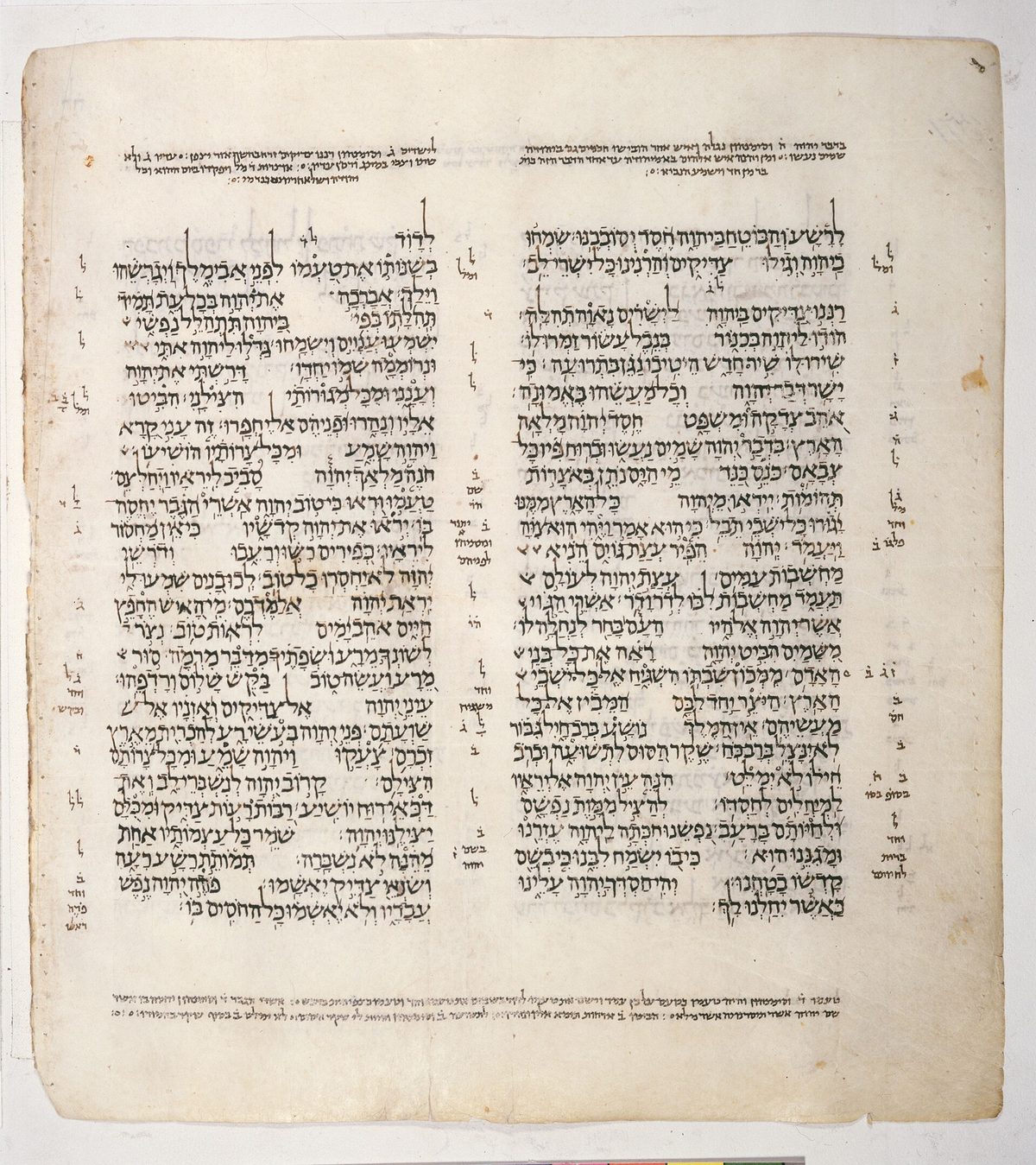
מִזְמוֹר לְדָוִד יְהוָה רֹעִי לֹא אֶחְסָר׃
Psalm 23:1, Westminster Leningrad Codex
[miz-MOR le-da-VID / a-do-NAI ro-I LO ekh-SAR]
בִּנְאוֹת דֶּשֶׁא יַרְבִּיצֵנִי עַל־מֵי מְנֻחוֹת יְנַהֲלֵנִי׃
Psalm 23:2, Westminster Leningrad Codex
[bin-OT DE-she yar-bi-TSE-ni / al-MEI me-nu-KHOT ye-na-ha-LE-ni]
נַפְשִׁי יְשׁוֹבֵב יַנְחֵנִי בְמַעְגְּלֵי־צֶדֶק לְמַעַן שְׁמוֹ׃
Psalm 23:3, Westminster Leningrad Codex
[naf-SHI ye-sho-VEV / yan-KHE-ni ve-ma-ge-lei-TSE-dek le-MA-an she-MO]
גַּם כִּי־אֵלֵךְ בְּגֵיא צַלְמָוֶת לֹא־אִירָא רָע כִּי־אַתָּה עִמָּדִי שִׁבְטְךָ וּמִשְׁעַנְתֶּךָ הֵמָּה יְנַחֲמֻנִי׃
Psalm 23:4, Westminster Leningrad Codex
[GAM ki-e-LEKH be-GEI tsal-MA-vet / lo-i-RA RA ki-a-TA i-ma-DI / shiv-te-KHA u-mish-an-TE-kha HE-ma ye-na-kha-MU-ni]
תַּעֲרֹךְ לְפָנַי שֻׁלְחָן נֶגֶד צֹרְרָי דִּשַּׁנְתָּ בַשֶּׁמֶן רֹאשִׁי כּוֹסִי רְוָיָה׃
Psalm 23:5, Westminster Leningrad Codex
[ta-a-ROKH le-fa-NAI shul-KHAN NE-ged tso-re-RAI / di-SHAN-ta va-SHE-men ro-SHI ko-SI re-va-YA]
אַךְ טוֹב וָחֶסֶד יִרְדְּפוּנִי כָּל־יְמֵי חַיָּי וְשַׁבְתִּי בְּבֵית־יְהוָה לְאֹרֶךְ יָמִים׃
Psalm 23:6, Westminster Leningrad Codex
[AKH TOV va-KHE-sed yir-de-FU-ni kol-ye-MEI kha-YAI / ve-shav-TI be-veit-a-do-NAI le-O-rekh ya-MIM]
Word help
- מִזְמוֹר לְדָוִד [miz-MOR le-da-VID]: a psalm of David, or for David. מִזְמוֹר is a song with music (root זמר; lesson 20). The לְ can mean "by", "for" or "belonging to the David collection"; the title does not say which.
- רֹעִי [ro-I]: my shepherd. Qal participle of רעה "tend, pasture" with the suffix 1cs.
- לֹא אֶחְסָר [LO ekh-SAR]: I do not lack, I shall not want. Qal imperfect 1cs of חסר.
- בִּנְאוֹת דֶּשֶׁא [bin-OT DE-she]: in pastures of green grass. נְאוֹת is a plural construct of נָוָה "pasture, abode"; דֶּשֶׁא is new grass.
- יַרְבִּיצֵנִי [yar-bi-TSE-ni]: he makes me lie down. Hiphil imperfect 3ms of רבץ with the suffix 1cs. רבץ is the word for animals lying down to rest.
- עַל־מֵי מְנֻחוֹת [al-MEI me-nu-KHOT]: beside waters of rest. מֵי is the construct of מַיִם; מְנֻחוֹת, plural of מְנוּחָה "resting place, rest".
- יְנַהֲלֵנִי [ye-na-ha-LE-ni]: he leads me (gently), as a shepherd leads a flock to water. Piel imperfect 3ms of נהל with the suffix 1cs. The middle letter is the guttural ה, which cannot double, so there is no dagesh.
- נַפְשִׁי יְשׁוֹבֵב [naf-SHI ye-sho-VEV]: he brings back my life, he restores me. יְשׁוֹבֵב is the Polel imperfect of the hollow verb שׁוב "return". Hollow verbs make their intensive stem by repeating the last letter instead of doubling the middle one (lesson 16). נַפְשִׁי, the object, comes first.
- יַנְחֵנִי [yan-KHE-ni]: he guides me. Hiphil imperfect 3ms of נחה with suffix; the III-he verb has lost its last letter before the suffix.
- בְמַעְגְּלֵי־צֶדֶק [ve-ma-ge-lei-TSE-dek]: in paths of rightness. מַעְגָּל is a track, a wagon rut (root עגל, "round", as in עֲגָלָה "cart"). צֶדֶק is what is right: both "right paths" (the correct ones) and "paths of righteousness".
- לְמַעַן שְׁמוֹ [le-MA-an she-MO]: for his name's sake. לְמַעַן "for the sake of"; שֵׁם with suffix.
- גַּם כִּי [GAM ki]: even though, even when.
- אֵלֵךְ [e-LEKH]: I walk, I go. Qal imperfect 1cs of הלך.
- בְּגֵיא צַלְמָוֶת [be-GEI tsal-MA-vet]: in a valley of deep darkness. גֵּיא is a ravine. צַלְמָוֶת was read by the ancient translators and the Masoretes as צֵל "shadow" + מָוֶת "death", hence "the shadow of death". Many modern scholars take it as one word from a root meaning "be dark", "deep darkness". Both readings are in standard translations.
- לֹא־אִירָא רָע [lo-i-RA RA]: I will not fear harm. Qal imperfect 1cs of ירא "fear". רָע "evil, harm".
- עִמָּדִי [i-ma-DI]: with me. A longer form of עִמִּי.
- שִׁבְטְךָ וּמִשְׁעַנְתֶּךָ [shiv-te-KHA u-mish-an-TE-kha]: your rod and your staff. שֵׁבֶט is a club or rod, also a scepter; מִשְׁעֶנֶת a staff to lean on (root שׁען "lean"). וּמִשְׁעַנְתֶּךָ is pausal.
- הֵמָּה יְנַחֲמֻנִי [HE-ma ye-na-kha-MU-ni]: they comfort me. Piel imperfect 3mp of נחם with suffix 1cs. The ending וּ is written defectively, with qibbuts.
- תַּעֲרֹךְ [ta-a-ROKH]: you set out, you arrange. Qal imperfect 2ms of ערך, I-guttural. שֻׁלְחָן [shul-KHAN]: a table.
- נֶגֶד צֹרְרָי [NE-ged tso-re-RAI]: in front of my enemies. צֹרְרִים are "those who show hostility", Qal participle of צרר with suffix 1cs.
- דִּשַּׁנְתָּ בַשֶּׁמֶן רֹאשִׁי [di-SHAN-ta va-SHE-men ro-SHI]: you have anointed my head with oil. Piel perfect 2ms of דשׁן, literally "make fat", that is, refresh with oil, as a host did for a guest.
- כּוֹסִי רְוָיָה [ko-SI re-va-YA]: my cup is overflowing, literally "my cup (is) abundance". כּוֹס "cup" is feminine.
- אַךְ [AKH]: surely, only.
- טוֹב וָחֶסֶד [TOV va-KHE-sed]: goodness and loyal love. חֶסֶד is the kindness that comes from a bond, faithful love.
- יִרְדְּפוּנִי [yir-de-FU-ni]: (they) will pursue me. Imperfect 3mp of רדף "pursue, chase" with suffix. Parse it yourself: hireq under the prefix and a plain ד with dagesh lene make it Qal. The Open Scriptures data tag it Piel (HVpi3mp/Sp1cs), but the Piel would be יְרַדְּפוּנִי, with shewa under the prefix and patah under ר. Lesson 20 warned that a code is someone else's parse.
- כָּל־יְמֵי חַיָּי [kol-ye-MEI kha-YAI]: all the days of my life. חַיִּים "life" is plural in form.
- וְשַׁבְתִּי [ve-shav-TI]: and I shall return, or and I shall dwell. See the notes.
- בְּבֵית־יְהוָה [be-veit a-do-NAI]: in the house of the LORD.
- לְאֹרֶךְ יָמִים [le-O-rekh ya-MIM]: for length of days, for as long as I live.
Notes
- Parallel lines. Verse 2 is the diagram above: place + verb-with-me, twice. Verse 3 pairs "he restores me" with "he guides me". Verse 4 is progressive: the danger, then the answer, then the reason. Verse 5 has three short lines, a tricolon: table, oil, cup.
- From "he" to "you". Verses 1 to 3 speak of the LORD in the third person. In verse 4, in the valley, the psalm turns to אַתָּה "you", and stays there through verse 5. Verse 6 steps back again.
- Suffixes do the work. Count the 1cs suffixes: רֹעִי, יַרְבִּיצֵנִי, יְנַהֲלֵנִי, נַפְשִׁי, יַנְחֵנִי, עִמָּדִי, יְנַחֲמֻנִי, לְפָנַי, צֹרְרָי, רֹאשִׁי, כּוֹסִי, יִרְדְּפוּנִי, חַיָּי. On verbs the suffix is נִי; on nouns and prepositions it is ִי or ַי (lesson 9). The poem is crowded with "me" and "my", all under someone else's care.
- Imperfects in poetry. Most verbs are imperfects (אֶחְסָר, יַרְבִּיצֵנִי, יְנַהֲלֵנִי...). In poetry the imperfect often states what habitually happens: "he makes me lie down", "he leads me". Translations use the present or the future; both are defensible.
- The puzzle of וְשַׁבְתִּי. As it is pointed, שַׁבְתִּי is the Qal perfect 1cs of the hollow verb שׁוּב, "I returned"; with ו as a weqatal, "and I shall return (to the house of the LORD)". But "return ... for length of days" is odd, and the ancient Greek translation has "dwell". From יָשַׁב "dwell" the form would be וְיָשַׁבְתִּי. The Open Scriptures data give the lemma 3427, יָשַׁב, as many translations do ("I shall dwell"). Read the text as it stands, [ve-shav-TI], and know that both "return" and "dwell" are honest translations.
Translation
A psalm of David.
The LORD is my shepherd; I lack nothing.
In green pastures he lets me lie down;
beside quiet waters he leads me.
He restores my life;
he guides me in right paths for his name's sake.
Even when I walk through a valley of deep darkness,
I fear no harm, for you are with me;
your rod and your staff, they comfort me.
You set a table before me in front of my enemies;
you have refreshed my head with oil; my cup overflows.
Surely goodness and faithful love will pursue me all the days of my life,
and I will return to (or: dwell in) the house of the LORD as long as I live.
6. Micah 6:8: what is good
The prophet Micah, from the countryside of Judah in the eighth century BC, imagines a worshiper asking what offering would please God: thousands of rams? rivers of oil? (6:6 to 7). This verse is the answer.
הִגִּיד לְךָ אָדָם מַה־טּוֹב וּמָה־יְהוָה דּוֹרֵשׁ מִמְּךָ כִּי אִם־עֲשׂוֹת מִשְׁפָּט וְאַהֲבַת חֶסֶד וְהַצְנֵעַ לֶכֶת עִם־אֱלֹהֶיךָ׃
Micah 6:8, Westminster Leningrad Codex
[hi-GID le-KHA a-DAM ma-TOV / u-ma-a-do-NAI do-RESH mi-me-KHA / ki im-a-SOT mish-PAT ve-A-ha-vat KHE-sed / ve-hats-NE-a LE-khet im-e-lo-HE-kha]
Word help
- הִגִּיד [hi-GID]: he has told, it has been made known. Hiphil perfect 3ms of נגד. The נ of the root has assimilated into the ג (I-nun, lesson 16): from הִנְגִּיד. No subject is named; "he" is God, or the sentence is impersonal, "you have been told".
- אָדָם [a-DAM]: human being, O mortal. A vocative.
- מַה־טּוֹב [ma-TOV]: what is good. After מַה and maqaf the next consonant is doubled.
- דּוֹרֵשׁ מִמְּךָ [do-RESH mi-me-KHA]: requires of you, seeks from you. Qal participle of דרשׁ; מִן with suffix 2ms.
- כִּי אִם [ki im]: except, only.
- עֲשׂוֹת מִשְׁפָּט [a-SOT mish-PAT]: to do justice. Infinitive construct of עשׂה; מִשְׁפָּט is justice, a right ruling.
- וְאַהֲבַת חֶסֶד [ve-A-ha-vat KHE-sed]: and to love faithful love. אַהֲבַת is the construct of אַהֲבָה, the infinitive of אהב used as a noun. The codex retracts its stress before חֶסֶד, as with קָרָא לָיְלָה in Genesis 1:5.
- וְהַצְנֵעַ לֶכֶת [ve-hats-NE-a LE-khet]: and to walk humbly, carefully. הַצְנֵעַ is a Hiphil infinitive absolute of צנע "be modest, careful", used like an adverb; לֶכֶת is the Qal infinitive construct of הלך (lesson 16), formed like שֶׁבֶת from ישׁב.
- עִם־אֱלֹהֶיךָ [im-e-lo-HE-kha]: with your God.
Notes
- Three infinitives, three things: עֲשׂוֹת, אַהֲבַת, הַצְנֵעַ לֶכֶת. Hebrew uses the infinitive the way English uses "to do" or "doing", as a noun. The last one pairs an infinitive absolute with an infinitive construct (Gesenius, section 113).
- חֶסֶד again, the word from Psalm 23:6. Micah does not say "do חֶסֶד" but "love חֶסֶד".
- Two spellings of "what". The first מַה has patah and doubles the next letter (מַה־טּוֹב); the second, וּמָה, has qamets. The vowel of מָה shifts with the sound that follows and with the accents, so expect to meet מַה, מָה and מֶה (Gesenius, section 37).
Translation
"He has told you, mortal, what is good, and what the LORD requires of you: only to do justice, to love faithful love, and to walk humbly with your God."
7. Ecclesiastes 1:2 to 4: vapor
The book of Ecclesiastes is the words of קֹהֶלֶת, Qohelet, a teacher who tests every claim about what makes life worth living. Its Hebrew is late, with features of the language of the Mishnah, such as the relative שֶׁ. It opens with its motto.
הֲבֵל הֲבָלִים אָמַר קֹהֶלֶת הֲבֵל הֲבָלִים הַכֹּל הָבֶל׃
Ecclesiastes 1:2, Westminster Leningrad Codex
[ha-VEL ha-va-LIM a-MAR ko-HE-let / ha-VEL ha-va-LIM ha-KOL HA-vel]
מַה־יִּתְרוֹן לָאָדָם בְּכָל־עֲמָלוֹ שֶׁיַּעֲמֹל תַּחַת הַשָּׁמֶשׁ׃
Ecclesiastes 1:3, Westminster Leningrad Codex
[ma-yit-RON la-a-DAM / be-khol-a-ma-LO she-ya-a-MOL TA-khat ha-SHA-mesh]
דּוֹר הֹלֵךְ וְדוֹר בָּא וְהָאָרֶץ לְעוֹלָם עֹמָדֶת׃
Ecclesiastes 1:4, Westminster Leningrad Codex
[DOR ho-LEKH ve-DOR BA / ve-ha-A-rets le-o-LAM o-MA-det]
Word help
- הֶבֶל [HE-vel], here in construct הֲבֵל [ha-VEL] and in pause הָבֶל [HA-vel]: breath, vapor, mist; something fleeting or empty. The older translation "vanity" means emptiness. It is also the name Abel.
- הֲבָלִים [ha-va-LIM]: the plural.
- אָמַר קֹהֶלֶת [a-MAR ko-HE-let]: says Qohelet. קֹהֶלֶת looks like a feminine Qal participle of קהל "assemble", used as a title for a man: "the one who gathers (people, or sayings)". The Greek translation rendered it Ekklesiastes, "member of an assembly", hence the English name.
- הַכֹּל [ha-KOL]: everything, the whole.
- מַה־יִּתְרוֹן [ma-yit-RON]: what profit, what is left over. יִתְרוֹן (root יתר "remain") occurs only in Ecclesiastes.
- לָאָדָם [la-a-DAM]: for a person, for humankind. לְ + article.
- בְּכָל־עֲמָלוֹ [be-khol-a-ma-LO]: in all his toil. עָמָל "hard work, trouble".
- שֶׁיַּעֲמֹל [she-ya-a-MOL]: which he toils. The relative שֶׁ, a short form of אֲשֶׁר, doubles the next letter like the article. Then the Qal imperfect 3ms of the same root, עמל: "the toil that he toils".
- תַּחַת הַשָּׁמֶשׁ [TA-khat ha-SHA-mesh]: under the sun. A phrase Qohelet uses more than twenty times.
- דּוֹר [DOR]: generation.
- הֹלֵךְ [ho-LEKH]: going, goes. Qal participle of הלך. (This is the form Strong's numbers file under 1980; וַיֵּלֶךְ is under 3212. Lesson 20.)
- בָּא [BA]: coming, comes. Qal participle of בוא. The perfect "he came" is also בָּא; here the parallel with הֹלֵךְ shows it is the participle.
- לְעוֹלָם [le-o-LAM]: forever, for a very long time.
- עֹמָדֶת [o-MA-det]: stands, remains. Qal participle feminine singular of עמד, in pause; the ordinary form is עֹמֶדֶת.
Notes
- A superlative. הֲבֵל הֲבָלִים, a singular noun in construct with its own plural, means "the most fleeting of all", "utter vapor", like שִׁיר הַשִּׁירִים "the Song of Songs", the finest song (Gesenius, section 133).
- Three forms of one word. הֲבֵל (construct), הֲבָלִים (plural), הָבֶל (pausal, at the end of the verse). The ordinary absolute form, הֶבֶל, does not appear in the verse at all.
- Pausal forms come at the strongest breaks in a verse, under the accents silluq (the last word) and atnah (the middle). The stressed vowel is lengthened or changed: הָבֶל for הֶבֶל, עֹמָדֶת for עֹמֶדֶת, מְאֹדֶךָ for מְאֹדְךָ in Deuteronomy 6:5. Lexicons list the ordinary form, so undo the pause before you look a word up (Gesenius, section 29).
- Participles for what always happens. הֹלֵךְ, בָּא, עֹמָדֶת: generations go, generations come, the earth stays. The participle gives the timeless present.
Translation
"Utter vapor, says Qohelet, utter vapor; everything is vapor. What does a person gain from all the toil he toils under the sun? A generation goes and a generation comes, and the earth stays as it is forever."
The oldest witness: the Great Isaiah Scroll
Every passage in this lesson comes from the Leningrad Codex of about 1008 AD. How far back does the text go? The Dead Sea Scrolls, found from 1947 on in caves near Qumran by the Dead Sea, include manuscripts of every book of the Hebrew Bible except Esther, more than a thousand years older than the codex. The best preserved is the Great Isaiah Scroll (1QIsa-a), about 7.3 meters long, with all 66 chapters of Isaiah in 54 columns, copied in the second century BC. It is kept in the Israel Museum in Jerusalem.
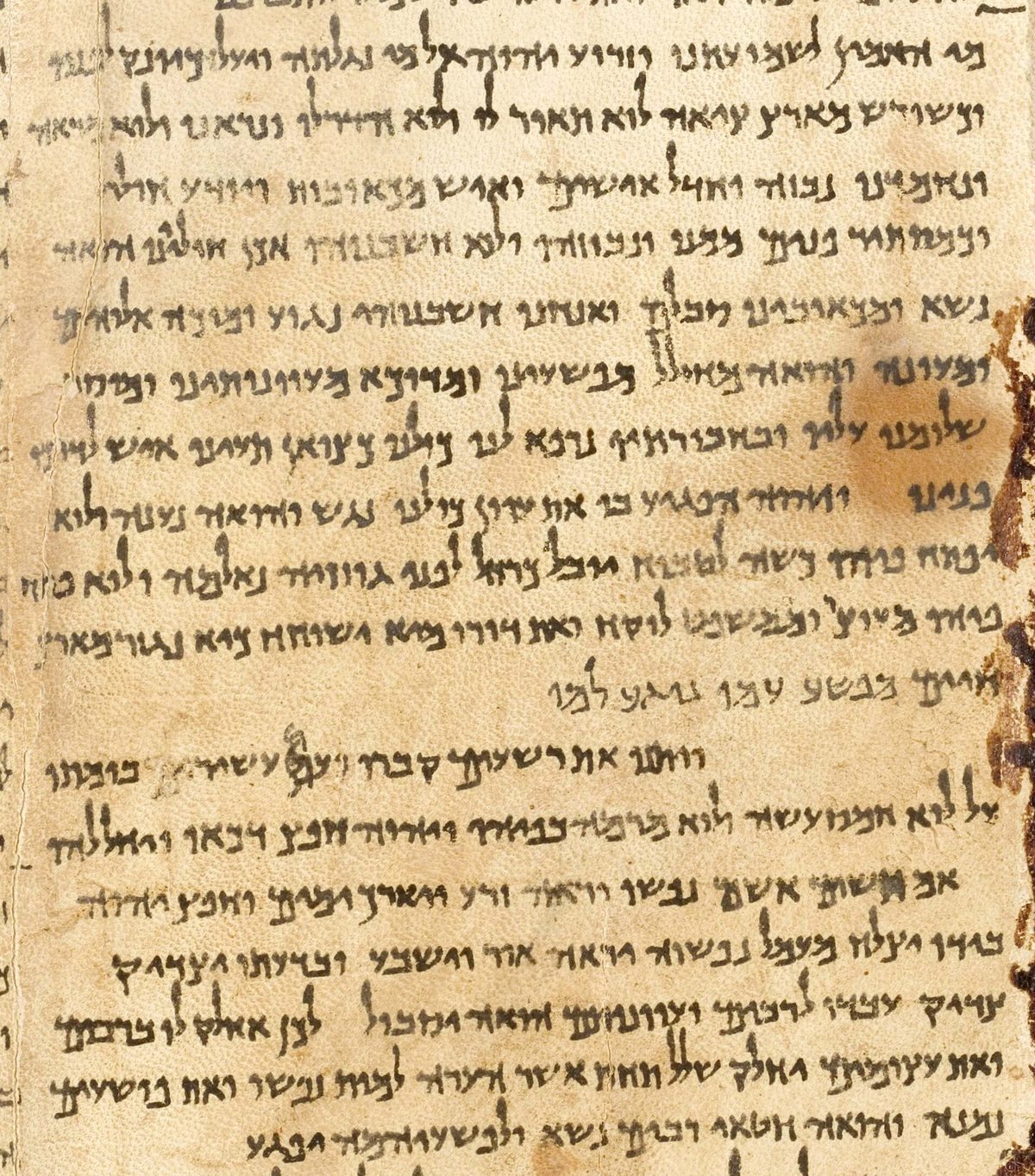
Look at the photograph and you see what the unpointed block of Genesis 1 above showed you: consonants only. The scroll often writes more vowel letters than the Leningrad Codex (for example כּוֹל with ו where the codex has כֹּל), and it differs from the Masoretic text in many small spellings and in a few readings. In most passages the two agree word for word, which is remarkable for copies made more than a thousand years apart.
Practice
- List the seven wayyiqtol verbs in Genesis 1:3 to 5 and give the root of each.
- What is the form of מְרַחֶפֶת (Genesis 1:2), and why is it feminine?
- Why is it לָאוֹר and not לְהָאוֹר?
- In Ruth 1:1, explain the form בִּשְׂדֵי.
- Parse וַתִּשָּׁאֵר (Ruth 1:3). Where is the Niphal's nun?
- In Jonah 1:3, how do you tell the participle בָּאָה "going" from the perfect "she came"?
- What does the ending of תַּרְשִׁישָׁה mean?
- Translate וְאָהַבְתָּ אֵת יְהוָה אֱלֹהֶיךָ and name the verb form.
- Name the kind of parallelism in (a) Psalm 23:2 and (b) Proverbs 1:7.
- Parse יְשׁוֹבֵב (Psalm 23:3). Why is there no dagesh?
- Give the ordinary (non-pausal) form of עֹמָדֶת and of הָבֶל.
- Read Genesis 1:3 aloud from the unpointed text: ויאמר אלהים יהי אור ויהי־אור. Which two words would be hard to tell apart without vowels?
Answers
- וַיֹּאמֶר (אמר), וַיְהִי (היה), וַיַּרְא (ראה), וַיַּבְדֵּל (בדל), וַיִּקְרָא (קרא), וַיְהִי (היה), וַיְהִי (היה).
- Piel participle feminine singular of רחף. It agrees with רוּחַ, which is feminine.
- When לְ (or בְּ, כְּ) comes before the article, the ה drops and the preposition takes the article's vowel and doubling (here qamets before א).
- בְּ + שְׂדֵי (plural construct of שָׂדֶה). Two vocal shewas cannot begin a word in a row, so בְּ becomes בִּ and the shewa under שׂ becomes silent: [bis-DEI].
- Niphal wayyiqtol 3fs of שׁאר, "and she was left". The nun has assimilated into the first root letter: the dagesh in שּׁ.
- By the stress: the participle is stressed on the last syllable [ba-A], the perfect on the first [BA-a]. Context helps too: אָנִיָּה בָּאָה תַרְשִׁישׁ describes the ship.
- Directional he: "toward Tarshish". It is unstressed.
- "You shall love the LORD your God." Weqatal 2ms of אהב, a perfect with ו carrying a command.
- (a) Synonymous. (b) Antithetic.
- Polel imperfect 3ms of the hollow root שׁוב. Hollow verbs form their intensive stem (Polel) by repeating the last letter, with holem after the first, instead of doubling the middle letter.
- עֹמֶדֶת; הֶבֶל.
- [va-YO-mer e-lo-HIM ye-HI OR va-ye-hi-OR]. יהי and ויהי look almost alike, and only the ו shows the second is the narrative form; you need context and the vowels to know that the first is a jussive.
Writing drill
Copy. Copy Psalm 23:1 to 3 by hand three times. First in print with every vowel point, slowly, checking each dagesh and shewa. Second in cursive, without vowel points, the way you would write a note in Hebrew. Third from memory, pointed, then check it against the text above. Set each verse out in two lines, as the parallelism divides it.
Compose. Write a two-line verse of your own in the style of Psalm 23:2: a place phrase and a verb with the suffix "me" in each line, the second line echoing the first. Use any verbs you know; the Piel and Hiphil are good for "he makes me ..." Then write one antithetic pair in the style of Proverbs: line A about the wise, line B about the fool.
Model answer
בְּבֵית אָבִי יַשְׁכִּיבֵנִי / בְּאֹהֶל אִמִּי יִשְׁמְרֵנִי
[be-VEIT a-VI yash-ki-VE-ni / be-O-hel i-MI yish-me-RE-ni] "In my father's house he lays me down; in my mother's tent he keeps me." This is made-up practice Hebrew. יַשְׁכִּיבֵנִי is the Hiphil imperfect 3ms of שׁכב "lie down" with suffix 1cs, "he makes me lie down"; יִשְׁמְרֵנִי is the Qal imperfect 3ms of שׁמר with the suffix 1cs, "he keeps me".
חָכָם שֹׁמֵעַ לְמוּסָר / וֶאֱוִיל בּוֹזֶה דָּבָר
[kha-KHAM sho-ME-a le-mu-SAR / ve-e-VIL bo-ZE da-VAR] "A wise man listens to discipline, / but a fool despises a word (of advice)." Also made-up. שֹׁמֵעַ and בּוֹזֶה are Qal participles; בּוֹזֶה is from the III-he root בזה "despise", a close cousin of בוז in Proverbs 1:7.
Speaking drill
Read aloud. Read each passage aloud twice, once slowly with the bracket guide and once at a natural pace without it. Then learn these three by heart; they are among the most quoted lines in Hebrew.
- בְּרֵאשִׁית בָּרָא אֱלֹהִים אֵת הַשָּׁמַיִם וְאֵת הָאָרֶץ [be-re-SHIT ba-RA e-lo-HIM et ha-sha-MA-yim ve-ET ha-A-rets]
- שְׁמַע יִשְׂרָאֵל יְהוָה אֱלֹהֵינוּ יְהוָה אֶחָד [she-MA yis-ra-EL a-do-NAI e-lo-HEI-nu a-do-NAI e-KHAD]
- יְהוָה רֹעִי לֹא אֶחְסָר [a-do-NAI ro-I LO ekh-SAR]
Question and answer. Answer in short Hebrew sentences.
- מַה בָּרָא אֱלֹהִים? [MA ba-RA e-lo-HIM] "What did God create?" Answer: אֶת הַשָּׁמַיִם וְאֶת הָאָרֶץ. [et ha-sha-MA-yim ve-ET ha-A-rets]
- מָה קָרָא אֱלֹהִים לָאוֹר? [MA ka-RA e-lo-HIM la-OR] "What did God call the light?" Answer: יוֹם. [YOM]
- מָה שֵׁם הָאִישׁ? [MA SHEM ha-ISH] "What was the man's name?" (Ruth 1) Answer: אֱלִימֶלֶךְ. [e-li-ME-lekh]
- לְאָן בָּרַח יוֹנָה? [le-AN ba-RAKH yo-NA] "Where did Jonah flee to?" Answer: תַּרְשִׁישָׁה. [tar-SHI-sha] (לְאָן, "to where?", is the everyday modern question word; the classical texts use אָנָה.)
- מִי רֹעֶה אֶת הַמְּשׁוֹרֵר? [MI ro-E et ha-me-sho-RER] "Who shepherds the singer?" (Psalm 23) Answer: יְהוָה הוּא הָרֹעֶה. [a-do-NAI HU ha-ro-E] "The LORD is the shepherd."
Reading
One more passage, with only word help: the priestly blessing from Numbers. It is three lines that grow longer each time, three words, then five, then seven, and every line has the divine name as its second word. Read it aloud, translate it yourself, then check.
יְבָרֶכְךָ יְהוָה וְיִשְׁמְרֶךָ׃
Numbers 6:24, Westminster Leningrad Codex
יָאֵר יְהוָה פָּנָיו אֵלֶיךָ וִיחֻנֶּךָּ׃
Numbers 6:25, Westminster Leningrad Codex
יִשָּׂא יְהוָה פָּנָיו אֵלֶיךָ וְיָשֵׂם לְךָ שָׁלוֹם׃
Numbers 6:26, Westminster Leningrad Codex
[ye-va-rekh-KHA a-do-NAI ve-yish-me-RE-kha / ya-ER a-do-NAI pa-NAV e-LE-kha vi-khu-NEK-ka / yi-SA a-do-NAI pa-NAV e-LE-kha ve-ya-SEM le-KHA sha-LOM]
Word help: יְבָרֶכְךָ, may he bless you (Piel jussive 3ms of ברך with suffix 2ms; the ר cannot double, so the vowel before it is lengthened); וְיִשְׁמְרֶךָ, and keep you (Qal jussive of שׁמר with suffix); יָאֵר, may he make shine (Hiphil jussive of אור "be light"); פָּנָיו, his face; אֵלֶיךָ, toward you; וִיחֻנֶּךָּ, and be gracious to you (Qal jussive of the geminate חנן with suffix 2ms; the dagesh in ךּ comes from an energic nun, Gesenius, section 58); יִשָּׂא, may he lift (Qal jussive of נשׂא; the nun has assimilated); וְיָשֵׂם, and set, give (Qal jussive of the hollow שׂים); שָׁלוֹם, peace, wholeness, well-being.
Notes. All six verbs are jussives, wishes in the third person. In most of them the jussive looks like the ordinary imperfect, and only the context and the setting (a blessing spoken by priests, verse 23) tell you it is a wish. "Lift the face toward" someone is to look on them with favor.
Translation
"May the LORD bless you and keep you. May the LORD make his face shine on you and be gracious to you. May the LORD look on you with favor and give you peace."
Checklist
- I have read all seven passages aloud and written my own translation of each before checking.
- I can parse every verb in Genesis 1:1 to 5 and Ruth 1:1 to 5.
- I can read Genesis 1:1 to 5 from the unpointed text.
- I can explain the wayyiqtol chain and the disjunctive clause in Genesis 1.
- I can name synonymous, antithetic and progressive parallelism and point to an example of each.
- I know what a pausal form and a retracted stress are, and I undo pausal forms before looking a word up.
- I can recite Genesis 1:1, Deuteronomy 6:4 and Psalm 23:1 from memory.
Updated October 28, 2026.
Check yourself
1. In Genesis 1:3, what is the difference between יְהִי and וַיְהִי?
Both are short forms of the imperfect of הָיָה. Alone, the short form is a jussive, a wish or command in the third person. With וַ and a following dagesh it is the wayyiqtol of narrative (Gesenius, sections 48 and 49).
2. Which kind of parallelism does Proverbs 1:7 show?
The first line says the fear of the LORD is the beginning of knowledge; the second says fools despise wisdom and discipline. The second line states the opposite case, as much of Proverbs does.
3. In Psalm 23:6, וְשַׁבְתִּי looks like a form of which verb, and how do the Open Scriptures data take it?
שַׁבְתִּי is exactly the Qal perfect 1cs of שׁוּב, 'I returned'. The expected form from יָשַׁב would be יָשַׁבְתִּי. Many translations read 'I shall dwell', and the Open Scriptures tags give the lemma 3427, יָשַׁב. Both readings have long histories.
4. Why does Ecclesiastes 1:4 end with עֹמָדֶת and not עֹמֶדֶת?
The last word of a verse is in pause. Pausal forms lengthen or change vowels under the main accent (Gesenius, section 29). The ordinary participle feminine singular is עֹמֶדֶת.
5. What does הֲבֵל הֲבָלִים in Ecclesiastes 1:2 express?
A singular noun in construct with the plural of the same noun forms a superlative, like שִׁיר הַשִּׁירִים 'the finest song' (Gesenius, section 133).
6. In Ruth 1:1, what is בִּימֵי?
When בְּ, כְּ or לְ comes before יְ, the two shewas cannot stand side by side; the preposition takes hireq and the yod becomes quiescent: בִּי. So בְּ + יְמֵי becomes בִּימֵי (lesson 7).
Terms in this lesson
- Parallelism
- The pairing of lines in Hebrew poetry so that the second echoes, contrasts with or carries forward the first. The main structural device of Hebrew verse.
- Colon
- One line of a poetic verse. Two lines make a bicolon, three a tricolon.
- Pausal form
- A form with a lengthened or changed vowel, used at a major pause in the verse, usually at the end (silluq) or the middle (atnah).
- Nesiga
- Retraction of the stress to the next-to-last syllable when the following word is stressed on its first syllable, as in קָרָא לָיְלָה, read [KA-ra LAI-la].
- Wayyiqtol chain
- A run of wayyiqtol verbs that carries a story forward one event at a time.
- Disjunctive clause
- A clause that starts with waw plus a noun instead of a verb, used for background, contrast or a new scene.
- Large letter
- A letter written larger than the rest by scribal tradition, as the ע and ד of Deuteronomy 6:4.
Sources
- Westminster Leningrad Codex with morphology, Open Scriptures Hebrew Bible (text of all passages, via the course lookup tool) checked 2026-10
- Unicode/XML Leningrad Codex (UXLC), tanach.us checked 2026-10
- Gesenius' Hebrew Grammar (Kautzsch and Cowley, 1910), sections 29, 48, 49, 124 and 133 checked 2026-10
- Brown, Driver and Briggs, A Hebrew and English Lexicon (1906), Internet Archive scan checked 2026-10
- Open Scriptures HebrewLexicon (digitized BDB) checked 2026-10
- Sefaria, Psalms 23 (Hebrew text with translations) checked 2026-10
- Wikimedia Commons, Leningrad Codex folio 8a (public domain; the folio of Psalms 32 to 34 is in the same Commons series) checked 2026-10
