Lesson 10 of 22 · about 45 minutes
Roots, the Seven Stems (Binyanim) and the Qal
You'll be able to
- Explain what a Hebrew root is and find the three root letters in a word such as מַמְלָכָה or וַיִּכְתֹּב
- Show how one root makes a family of related nouns and verbs, using מ־ל־ך, כ־ת־ב and ש־מ־ר
- Name the seven main stems (binyanim), give the 3rd masculine singular perfect of קָטַל in each, and state the usual meaning of each stem
- Tell a strong root from a weak one and name the main weak classes with the פ־ע־ל labels
- Parse a verb by root, stem, conjugation, person, gender and number, and read a morphology code like HVqp3ms
- Explain why grammars use קָטַל as the model verb and why real texts are read with שָׁמַר, כָּתַב and מָלַךְ
Read this verse and count how many times you see the letters מ, ל, ך.
וְאֵלֶּה הַמְּלָכִים אֲשֶׁר מָלְכוּ בְּאֶרֶץ אֱדוֹם לִפְנֵי מְלָךְ־מֶלֶךְ לִבְנֵי יִשְׂרָאֵל׃
Genesis 36:31, Westminster Leningrad Codex
"These are the kings who reigned in the land of Edom before any king reigned over the Israelites." Four words share the same three consonants: הַמְּלָכִים "the kings," מָלְכוּ "they reigned," מְלָךְ "reigning" (an infinitive) and מֶלֶךְ "king." The consonants carry the idea "reign, king." The vowels and the extra letters around them say whether it is a person, an action, a time, a plural. That is the single most useful fact about Hebrew words, and this lesson is built on it.
The root
Almost every Hebrew verb, and most nouns and adjectives, can be traced to a root of three consonants (Gesenius, section 30). The root letters are also called radicals. A root by itself is not a word you can say; it is an abstraction, a set of letters with a shared meaning. Words are made by setting the root into a pattern: a fixed frame of vowels, sometimes with prefixes, suffixes or a doubled letter.
Grammars write a root with its letters separated, מ־ל־ך, or as plain consonants, מלך. Final forms are ignored: the root of מֶלֶךְ is מ ל כ, the same letter whether it is written כ in the middle of a word or ך at the end.
Lexicons such as Brown, Driver and Briggs are arranged by root. To find מַמְלָכָה "kingdom" in BDB, you look under מלך, not under מ־מ. That is why finding the root is the first skill of reading Hebrew, and why lesson 20 builds on this one.
One root, a family of words: מ־ל־ך
| Word | Guide | Meaning | Pattern | Where |
|---|---|---|---|---|
| מֶלֶךְ | [ME-lekh] | king | segolate noun, CeCeC | Genesis 36:31 |
| מָלַךְ | [ma-LAKH] | he reigned, became king | Qal perfect | 1 Samuel 12:14; pausal מָלָךְ Psalm 93:1 |
| יִמְלֹךְ | [yim-LOKH] | he will reign | Qal imperfect | Exodus 15:18 |
| הִמְלִיךְ | [him-LIKH] | he made (someone) king | Hiphil perfect | 1 Samuel 15:35 |
| מַמְלָכָה | [mam-la-KHA] | kingdom, realm | noun with prefix מ and ending ־ָה | מַמְלֶכֶת Exodus 19:6 |
| מְלוּכָה | [me-lu-KHA] | kingship, the office of king | CeCuCā | הַמְּלוּכָה 1 Samuel 10:16 |
| מַלְכוּת | [mal-KHUT] | reign, royal rule, kingdom | abstract ending ־וּת | Psalm 145:13 |
| מַלְכָּה | [mal-KA] | queen | feminine of the segolate base malk- | הַמַּלְכָּה Esther 1:9; וּמַלְכַּת 1 Kings 10:1 (outside this course's books; BDB) |
Notice מַלְכָּה and מַלְכִּי "my king" from lesson 9. Both show the older base malk- that hides inside מֶלֶךְ. Nouns of this type are called segolates, because the dictionary form usually has two segols, stressed on the first syllable: מֶלֶךְ, אֶרֶץ, דֶּרֶךְ. Lesson 6 met their construct and plural forms; the base comes back whenever a suffix is added.
Two more families
כ־ת־ב "write." כָּתַב [ka-TAV] "he wrote." וַיִּכְתֹּב [va-yikh-TOV] "and he wrote" (Exodus 24:4). כָּתוּב [ka-TUV] "written" (Psalm 40:8). מִכְתָּב [mikh-TAV] "writing, something written" (Exodus 32:16, where the tablets bear מִכְתַּב אֱלֹהִים "the writing of God"). יִכָּתֵבוּ [yi-ka-TE-vu] "they are written" (Psalm 139:16, of days written in God's book), a Niphal in pause. Later books add כְּתָב [ke-TAV] "writing, document" (BDB).
שׁ־מ־ר "keep, guard, watch." שָׁמַר [sha-MAR] "he kept" (Genesis 37:11). שֹׁמֵר [sho-MER] "keeper, guard" (Genesis 4:9). מִשְׁמָר [mish-MAR] "custody, guard" (Genesis 40:3, בְּמִשְׁמַר "in custody"). מִשְׁמֶרֶת [mish-ME-ret] "charge, duty" (Genesis 26:5, מִשְׁמַרְתִּי "my charge"). הִשָּׁמֶר [hi-sha-MER] "be careful, guard yourself" (Genesis 24:6), a Niphal imperative.
Patterns: the other half of the word
If the root is the meaning, the pattern is the grammar. Each pattern is a template with slots for the three radicals. Grammarians write the slots as C1 C2 C3, or with the letters of the old model verb פָּעַל "do, make": פ for the first radical, ע for the second, ל for the third. Medieval Jewish grammarians took this method over from Arabic grammar, and the names of the stems come from it, as you will see below.
The dagesh in כָּתַב and יִכְתֹּב is the dagesh lene of lesson 2: כ starts the word, and ת follows a silent shewa, so both are hard. In כָּתַב the final ב has no dagesh and is said v; in יִכְתֹּב the כ after the vowel i is soft, kh. So the same root letters sound different in different patterns: [ka-TAV], [yikh-TOV]. Train your eye to see the letter, not the sound.
Some noun patterns worth knowing
| Pattern | Typical meaning | Examples |
|---|---|---|
| C1ōC2ēC3 (Qal participle) | the one who does it; often a job | שֹׁמֵר keeper, שֹׁפֵט judge, רֹעֶה shepherd |
| C1āC2ûC3 (Qal passive participle) | done, having had it done | כָּתוּב written, שָׁמוּר kept (1 Samuel 9:24), בָּרוּךְ blessed |
| miC1C2āC3 | place, instrument, or the thing done | מִשְׁמָר custody, מִכְתָּב writing, מִשְׁפָּט judgment, justice |
| C1eC2eC3 (segolate) | basic nouns of all kinds | מֶלֶךְ king, סֵפֶר book (a segolate with tsere), קֹדֶשׁ holiness (a segolate with holem) |
| ending ־וּת | abstract quality or office | מַלְכוּת reign |
These are tendencies, not laws. They help you guess, and the lexicon confirms.
The seven stems (binyanim)
A Hebrew verb root can appear in up to seven main patterns, called stems or, using the Hebrew word, binyanim (singular בִּנְיָן [bin-YAN] "building"). Each stem has its own prefixes, vowels and doubling, and each changes the meaning of the root in a regular direction: passive, causative, reflexive and so on (Gesenius, section 39). No single root appears in all seven, and most appear in only one or two. But once you know the seven shapes you can recognize the stem of almost any verb, and that is half of parsing it.
The names
Six of the names are simply the 3rd masculine singular perfect of the old model verb פָּעַל in that stem: נִפְעַל Niphal, פִּעֵל Piel, פֻּעַל Pual, הִתְפַּעֵל Hithpael, הִפְעִיל Hiphil, הָפְעַל Hophal (Gesenius, section 39). The basic stem is called קַל Qal, "light," because it has no added letters or doubling. So the name tells you the shape: if you know that the Piel of פעל is פִּעֵל, you know the Piel of שׁבר is שִׁבֵּר.
The seven stems of קָטַל
Gesenius' Paradigm B sets out the strong verb in the root קָטַל "kill." The forms below are the 3rd masculine singular perfect and imperfect in each stem, as in Gesenius (sections 43 and 51 to 54). A real verse for each stem follows in the next table.
| Stem | Perfect 3ms | Guide | Imperfect 3ms | Guide | Marks to look for | Usual meaning |
|---|---|---|---|---|---|---|
| Qal | קָטַל | [ka-TAL] | יִקְטֹל | [yik-TOL] | nothing added | simple action or state: he killed |
| Niphal | נִקְטַל | [nik-TAL] | יִקָּטֵל | [yi-ka-TEL] | prefix נ in the perfect; doubled first radical in the imperfect | passive or reflexive of Qal: he was killed |
| Piel | קִטֵּל | [ki-TEL] | יְקַטֵּל | [ye-ka-TEL] | doubled middle radical; i or a vowel, then e | active, often bringing about a state or intensifying: he slaughtered, massacred |
| Pual | קֻטַּל | [ku-TAL] | יְקֻטַּל | [ye-ku-TAL] | doubled middle radical with u vowel | passive of Piel |
| Hithpael | הִתְקַטֵּל | [hit-ka-TEL] | יִתְקַטֵּל | [yit-ka-TEL] | prefix הִתְ / יִתְ and doubled middle radical | reflexive or reciprocal of Piel: he killed himself; they killed one another |
| Hiphil | הִקְטִיל | [hik-TIL] | יַקְטִיל | [yak-TIL] | prefix ה in the perfect; long i (hireq yod) before the last radical | causative: he caused to kill |
| Hophal | הָקְטַל | [hok-TAL] | יָקְטַל | [yok-TAL] | prefix with o (qamets hatuf) or u vowel | passive of Hiphil: he was caused to kill, was made to |
In הָקְטַל and יָקְטַל the qamets is a qamets hatuf, said o (lesson 2), because it stands in a closed unstressed syllable. Many Hophal forms have u instead: הֻגַּד [hu-GAD] "it was told" (Ruth 2:11).
Three columns: simple, doubled, causative
The seven stems fall into three groups, and seeing the grid makes them easy to hold.
Real verbs in each stem
| Stem | Form | Guide | Root | Meaning | Where |
|---|---|---|---|---|---|
| Qal | שָׁבַר | [sha-VAR] | שׁ־ב־ר | he broke | Isaiah 14:5 |
| Niphal | נִשְׁבַּר | [nish-BAR] | שׁ־ב־ר | it was broken | Exodus 22:9 |
| Piel | שִׁבֵּר | [shi-BER] | שׁ־ב־ר | it shattered, smashed to pieces | Exodus 9:25 |
| Pual | קֻבַּר | [ku-BAR] | ק־ב־ר | he was buried | Genesis 25:10 |
| Hithpael | הִתְאַבֵּל | [hit-a-BEL] | א־ב־ל | he mourned (for) | 1 Samuel 15:35 |
| Hiphil | הִמְלִיךְ | [him-LIKH] | מ־ל־ך | he made king | 1 Samuel 15:35 |
| Hophal | הֻגַּד | [hu-GAD] | נ־ג־ד | it was told, reported | Ruth 2:11 |
One root, שׁ־ב־ר, shows how the first three stems relate. In Isaiah 14:5 the LORD שָׁבַר "broke" the staff of the wicked (Qal, simple action). In Exodus 22:9 an animal left in someone's care נִשְׁבַּר "was injured," literally "was broken" (Niphal, passive). In Exodus 9:25 the hail שִׁבֵּר "shattered" every tree of the field (Piel, many objects, thorough action).
וְלֹא־יָסַף שְׁמוּאֵל לִרְאוֹת אֶת־שָׁאוּל עַד־יוֹם מוֹתוֹ כִּי־הִתְאַבֵּל שְׁמוּאֵל אֶל־שָׁאוּל וַיהוָה נִחָם כִּי־הִמְלִיךְ אֶת־שָׁאוּל עַל־יִשְׂרָאֵל׃
1 Samuel 15:35, Westminster Leningrad Codex
"Samuel did not see Saul again until the day of his death, for Samuel mourned over Saul. And the LORD regretted that he had made Saul king over Israel." This one verse has four stems: יָסַף "he added, did again" (Qal), הִתְאַבֵּל "he mourned" (Hithpael), נִחָם "he regretted, was sorry" (Niphal), הִמְלִיךְ "he made king" (Hiphil). In הִתְאַבֵּל the prefix הִתְ is followed by the first radical א, and the dot in ב, the middle radical, is the doubling dagesh of the Hithpael.
What the stems mean, a little more exactly
- Qal. The plain meaning of the root. Both action verbs (שָׁמַר "keep," כָּתַב "write") and state verbs (כָּבֵד "be heavy," קָטֹן "be small") live here (Gesenius, section 43). Lesson 11 shows how state verbs look.
- Niphal. Usually the passive or reflexive of the Qal: נִשְׁבַּר "was broken," הִשָּׁמֶר "guard yourself." Some Niphal verbs simply have an active English meaning: נִלְחַם "fight," נִחָם "regret" (Gesenius, section 51).
- Piel. Gesenius and older grammars call it the intensive stem (Gesenius, section 52), and with some roots it does show many objects or forceful action, like שִׁבֵּר "smash." Very often, though, it turns a state into an action: Qal כָּבֵד "be heavy, be weighty," Piel כַּבֵּד "make weighty, honor" (כַּבֵּד אֶת־אָבִיךָ "Honor your father," Exodus 20:12); Qal "be holy," Piel וַיְקַדֵּשׁ "and he made holy" (Genesis 2:3). Some common verbs occur mainly in the Piel, such as דִּבֶּר "speak" (Genesis 21:1). Learn each Piel verb's meaning from the lexicon.
- Pual. The passive of the Piel, and with the Hophal one of the two least common stems. קֻבַּר "was buried."
- Hithpael. Reflexive ("do to oneself"), reciprocal ("to each other") or iterative ("go about doing"): וַיִּתְהַלֵּךְ "and he walked about, lived his life" (Genesis 5:22), וַיִּתְחַבֵּא "and he hid himself" (Genesis 3:8) (Gesenius, section 54).
- Hiphil. Causative of the Qal: מָלַךְ "reign," הִמְלִיךְ "make king"; כָּבֵד "be heavy," וַיַּכְבֵּד פַּרְעֹה אֶת־לִבּוֹ "and Pharaoh made his heart heavy" (Exodus 8:28) (Gesenius, section 53).
- Hophal. The passive of the Hiphil: הֻגַּד "it was told" (the Hiphil הִגִּיד means "tell").
Strong and weak roots
A strong root keeps all three letters, unchanged, in every form of every stem. שׁ־מ־ר, כ־ת־ב, מ־ל־ך, ז־כ־ר, פ־ק־ד are strong. Lessons 11 to 15 teach the verb with strong roots like these.
A weak root has at least one letter that behaves differently. Gutturals (א ה ח ע, and partly ר) cannot be doubled and prefer a-vowels and composite shewas. Nun at the start of a root often assimilates into the next letter. Yod and vav can turn into vowels or vanish. He at the end of a root is really a vowel letter. Grammarians name the classes by position, using the letters of פָּעַל or Roman numerals: a "Pe-Nun" or "I-Nun" verb has nun as its first radical. Lesson 16 teaches them all; here is the map.
| Class | Other name | Example root | A form from Jonah 1:3 or nearby |
|---|---|---|---|
| I-Guttural | Pe-Guttural | ע־ב־ר | וַיַּעֲבֹר "and he passed" (Genesis 12:6) |
| II-Guttural | Ayin-Guttural | שׁ־א־ל | שָׁאַלְתְּ "you (f.) asked" (1 Samuel 1:17) |
| III-Guttural | Lamed-Guttural | שׁ־מ־ע | שָׁמַע "he heard, listened" (Genesis 26:5) |
| I-Nun | Pe-Nun | נ־ת־ן | וַיִּתֵּן "and he gave, paid" (Jonah 1:3): the first nun has merged into the doubled ת |
| I-Yod / I-Vav | Pe-Yod | י־ר־ד | וַיֵּרֶד "and he went down" (Jonah 1:3): no yod of the root left in the prefix syllable |
| II-Vav / II-Yod (hollow) | Ayin-Vav | ק־ו־ם | וַיָּקָם "and he arose" (Jonah 1:3): the vav is gone |
| III-Aleph | Lamed-Aleph | מ־צ־א | וַיִּמְצָא "and he found" (Jonah 1:3): the aleph is silent |
| III-He | Lamed-He | ב־נ־ה | וַיִּבֶן "and he built" (Exodus 24:4): the final he has dropped |
| Geminate | Double Ayin | ס־ב־ב | second and third radicals the same: "go around" |
Weak roots are not rare exceptions. Many of the most common verbs in the language are weak: אָמַר "say" (I-Aleph, as in וַיֹּאמֶר), הָיָה "be" (I-Guttural and III-He), עָשָׂה "do, make," נָתַן "give," הָלַךְ "go," בּוֹא "come." Learn the strong verb first because it shows every pattern with all its letters in place; then the weak verbs are the strong verb with predictable changes.
The Qal: the simple stem
The Qal is by far the most frequent stem. Most verb forms you read in Genesis, Ruth or Jonah are Qal, and it is the stem a lexicon lists first. Its dictionary form, by convention, is the 3rd masculine singular perfect, "he did": שָׁמַר is glossed "to keep" in English word lists, but the Hebrew form itself means "he kept." Hebrew has no infinitive-shaped dictionary form like English "to keep." When a lexicon says שָׁמַר "keep, guard," that is a convenience.
Why grammars use קָטַל
Gesenius sets out the strong verb with קָטַל "kill," as many grammars before and since have done (Gesenius, Paradigm B). It is a good model because none of its letters is a guttural, a weak letter or a begadkephat letter that would change between hard and soft, so every form shows the pattern cleanly. The verb itself is rare in the Hebrew Bible: in the books our lookup tool covers it occurs once, אִם־תִּקְטֹל אֱלוֹהַּ רָשָׁע "O that you would slay the wicked, O God" (Psalm 139:19). The ordinary Hebrew words for "kill" are הָרַג and the Hiphil of מוּת. So this course uses קָטַל as a pattern in the paradigms, and real verbs, above all שָׁמַר, כָּתַב, מָלַךְ, זָכַר "remember" and פָּקַד, in the readings.
Watch one thing when you move from קָטַל to כָּתַב or שָׁבַר: begadkephat letters change their sound with their position (כָּתַב [ka-TAV], יִכְתֹּב [yikh-TOV]). The pattern is the same; only the dagesh lene moves.
Action verbs and state verbs
Qal verbs come in two kinds. Fientive (action) verbs describe something done: שָׁמַר, כָּתַב, מָלַךְ. Their 3ms perfect has patah in the second syllable. Stative verbs describe a condition: כָּבֵד "be heavy" with tsere, קָטֹן "be small" with holem (Gesenius, section 43). Lesson 11 conjugates both kinds.
Finding the root, step by step
Hebrew uses a small, closed set of letters for prefixes and suffixes. Jewish grammar teachers have long taught them with two memory phrases. מֹשֶׁה וְכָלֵב "Moses and Caleb" holds the letters that can be prefixed to a word: מ (from), שׁ (which, the short relative of lesson 9), ה (the article or the question marker), ו (and), כ (like), ל (to), ב (in). אֵיתָן "Ethan" holds the four letters that begin the imperfect: א י ת נ, which you will meet in lesson 12. Add the suffix letters of lesson 9 and the verb endings of lesson 11, and you have nearly every letter that can be "outside" the root.
- Take off the prefixes from the front: waw, article, prepositions. וּבְתוֹרָתוֹ becomes תוֹרָתוֹ.
- Take off the suffixes from the end: pronoun suffixes, plural and feminine endings. תוֹרָתוֹ becomes תוֹר.
- Take off pattern letters you recognize: the נ of the Niphal, the ה of the Hiphil, the הִתְ of the Hithpael, the מ of noun patterns like מִשְׁמָר, a vav or yod that is only a vowel letter.
- What is left should be three consonants. If only two are left, one root letter has dropped or turned into a vowel: you have a weak root, and lesson 16 tells you where to look. תּוֹרָה is in fact a weak root, י־ר־ה "teach, point out," whose first and last letters both hide (BDB lists it under ירה).
That last example is a warning not to stop too early. The vav of תּוֹרָה is a vowel letter for o, and the ת is a prefix of the noun pattern. The root letters are hiding in plain sight. Reading the vowels as well as the consonants is what lets you see that.
Roots with the same letters
Sometimes two or more unrelated roots happen to have the same three letters. Lexicons number them. BDB has four separate roots spelled ענה: I "answer," II "be occupied with," III "be bowed down, afflicted," and IV "sing." The Open Scriptures morphology marks such splits with letters after the Strong number, which is why the lookup tool shows codes like "5674 a" and "5674 b" for two meanings of עבר. When a gloss does not fit the sentence, check whether you are in the wrong root.
Not every word has a three-letter root
Some of the oldest nouns in the language, such as אָב "father," אֵם "mother" and יָד "hand," have only two consonants and are best learned as words, not derived from a verb. Gesenius discusses the old question whether many three-letter roots grew from shorter ones (Gesenius, section 30). A few nouns have four consonants: צְפַרְדְּעִים "frogs" (Exodus 7:28) is one. Names from other languages, such as פַּרְעֹה "Pharaoh," do not follow Hebrew roots at all. These are a small minority. For verbs, three-letter roots are the rule.
Parsing: the words you need
To parse a verb is to name everything its form tells you. A full parse of a Hebrew verb has six parts.
| Part | Choices | Example: שָׁמַרְתִּי |
|---|---|---|
| Root | usually three letters | שׁ־מ־ר |
| Stem | Qal, Niphal, Piel, Pual, Hithpael, Hiphil, Hophal | Qal |
| Conjugation | perfect, imperfect, waw-consecutive imperfect, waw-consecutive perfect, imperative, jussive, cohortative, infinitive construct, infinitive absolute, participle | perfect |
| Person | 1st, 2nd, 3rd (not for infinitives; participles show gender and number only) | 1st |
| Gender | masculine, feminine, common | common |
| Number | singular, plural (dual only in nouns) | singular |
So שָׁמַרְתִּי is "Qal perfect 1st common singular of שׁמר: I kept" (1 Samuel 25:21). Add any prefixes and suffixes: וַיִּכְתֹּב is "Qal waw-consecutive imperfect 3rd masculine singular of כתב: and he wrote" (Exodus 24:4). יִמְלֹךְ is "Qal imperfect 3ms of מלך: he will reign" (Exodus 15:18).
On the word "conjugation": in Hebrew grammar it names the form class (perfect, imperfect and so on), not the whole set of forms as in Latin or Greek. Some books call the perfect and imperfect "tenses," others "aspects," and many modern grammars call them by their 3ms shapes, qatal and yiqtol. This course says perfect and imperfect, like Gesenius, and explains what they mean in lessons 11 and 12.
Reading a morphology code
The lookup tool behind this course, and many online Hebrew Bibles, label every word with a code from the Open Scriptures Hebrew Bible. Once you know the parsing words, the codes read themselves.
| Position | Letter | Means |
|---|---|---|
| Language | H | Hebrew (A would be Aramaic) |
| Part of speech | V | verb (N noun, R preposition, C conjunction, T particle, P pronoun, A adjective) |
| Stem | q, N, p, P, t, h, H | Qal, Niphal, Piel, Pual, Hithpael, Hiphil, Hophal |
| Conjugation | p, q, i, w, v, j, h, c, a, r, s | perfect, waw-consecutive perfect, imperfect, waw-consecutive imperfect, imperative, jussive, cohortative, infinitive construct, infinitive absolute, active participle, passive participle |
| Person | 1, 2, 3 | |
| Gender | m, f, c | masculine, feminine, common |
| Number | s, p | singular, plural |
Examples from the tool: שָׁמַר HVqp3ms; וַיִּשְׁמֹר HC/Vqw3ms (the C before the slash is the conjunction waw); הִמְלִיךְ HVhp3ms; נִשְׁבַּר HVNp3ms; הִתְאַבֵּל HVtp3ms; שֹׁמֵר HVqrmsa (participle, masculine singular, a for absolute state). Notice that the same lower-case p means Piel in the stem slot and perfect in the conjugation slot: HVpp3ms is a Piel perfect, like שִׁבֵּר.
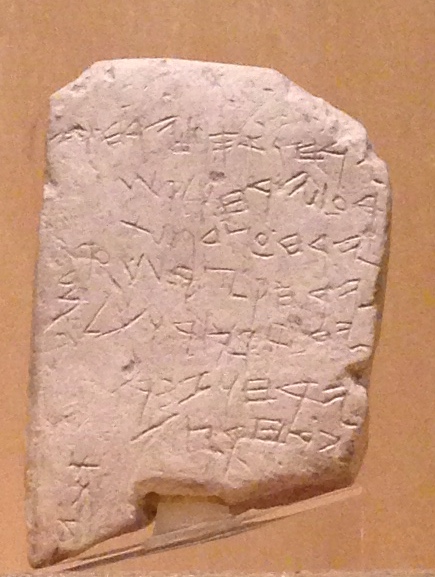
Example: finding roots and stems in a verse
וַיֹּאמֶר יְהוָה אֶל־שְׁמוּאֵל שְׁמַע בְּקוֹלָם וְהִמְלַכְתָּ לָהֶם מֶלֶךְ וַיֹּאמֶר שְׁמוּאֵל אֶל־אַנְשֵׁי יִשְׂרָאֵל לְכוּ אִישׁ לְעִירוֹ׃
1 Samuel 8:22, Westminster Leningrad Codex
Step 1. Strip the prefixes and suffixes. וְהִמְלַכְתָּ: take off וְ "and," the prefix הִ and the ending תָּ "you." Left: מלכ, root מלך.
Step 2. Identify the stem by its marks: prefix ה with hireq in a perfect, so Hiphil. "You will make king" (the waw with a perfect points forward, as lesson 12 explains).
Step 3. Do the same for the other words. שְׁמַע root שׁמע, Qal imperative "listen." בְּקוֹלָם preposition + קוֹל + "their." מֶלֶךְ the noun from the same root as the verb. לְעִירוֹ "to his city."
Translation: "The LORD said to Samuel, 'Listen to their voice and make a king for them.' And Samuel said to the men of Israel, 'Go, each to his city.'"
New words for this lesson
| Hebrew | Guide | Meaning |
|---|---|---|
| שָׁמַר | [sha-MAR] | keep, guard, watch, observe |
| כָּתַב | [ka-TAV] | write |
| מָלַךְ | [ma-LAKH] | reign, be or become king |
| זָכַר | [za-KHAR] | remember |
| פָּקַד | [pa-KAD] | attend to, visit, muster, appoint |
| שָׁבַר | [sha-VAR] | break (Piel: shatter) |
| מֶלֶךְ | [ME-lekh] | king (pl. מְלָכִים) |
| מַמְלָכָה | [mam-la-KHA] | kingdom |
| שֹׁמֵר | [sho-MER] | keeper, guard |
Practice
- Give the root of each word: הַמְּלָכִים, מִכְתָּב, וַיִּשְׁמֹר, מִשְׁמַרְתִּי, נִשְׁבַּר.
- Name the stem: הִקְטִיל, קֻטַּל, נִקְטַל, הִתְקַטֵּל, קִטֵּל, הָקְטַל, קָטַל.
- Which three stems double the middle radical?
- Which stem is the passive of the Hiphil? Of the Piel?
- Translate and name the stem: שָׁבַר, נִשְׁבַּר, שִׁבֵּר.
- What is the difference in meaning between מָלַךְ and הִמְלִיךְ?
- Read the code and translate: יִמְלֹךְ HVqi3ms.
- Write the code for שָׁמַרְתִּי (Qal perfect 1cs).
- Is נ־ת־ן strong or weak? Name its class.
- Why does כָּתַב sound [ka-TAV] but יִכְתֹּב sound [yikh-TOV]?
- Make the Qal perfect 3ms and Qal imperfect 3ms from the root ז־כ־ר "remember," following שָׁמַר and יִשְׁמֹר.
- In כַּבֵּד אֶת־אָבִיךָ (Exodus 20:12), what stem is כַּבֵּד, and how does its meaning relate to the Qal "be heavy"?
Answers
- מלך, כתב, שׁמר, שׁמר, שׁבר.
- Hiphil, Pual, Niphal, Hithpael, Piel, Hophal, Qal.
- Piel, Pual and Hithpael.
- Hophal; Pual.
- "He broke" (Qal); "it was broken" (Niphal); "he shattered, smashed" (Piel).
- מָלַךְ (Qal) "he reigned, became king"; הִמְלִיךְ (Hiphil, causative) "he made someone king."
- Hebrew verb, Qal, imperfect, 3rd masculine singular: "he will reign."
- HVqp1cs.
- Weak: I-Nun (Pe-Nun). The first nun often assimilates, as in וַיִּתֵּן.
- In כָּתַב the כ starts the word (hard k) and the ב follows a vowel (soft v). In יִכְתֹּב the כ follows a vowel (soft kh), the ת follows a silent shewa (hard t), and the final ב follows a vowel again (v). The root letters are the same.
- זָכַר "he remembered" (Genesis 40:23 has וְלֹא־זָכַר); יִזְכֹּר "he will remember" (Psalm 20:4).
- Piel (doubled middle radical, a then e). The Qal is a state, "be heavy, weighty"; the Piel makes someone weighty, that is, "give honor to."
Writing drill
Copy. Write the seven 3ms perfect forms of קָטַל in print, each on its own line with the stem name beside it in English. Then write them again in cursive, without vowel points, and then add the points from memory. Under each one, circle in your mind the marks of the stem: the נ of the Niphal, the dagesh of the doubled stems, the ה and long i of the Hiphil.
קטל נקטל קטל קטל התקטל הקטיל הקטל
That unpointed line shows why vowel points matter: Qal, Piel and Pual all look like קטל without them.
Compose. Choose one root you know (שׁמר, כתב, מלך or זכר) and write as many real words from it as you can: the Qal perfect 3ms, the Qal imperfect 3ms, the waw-consecutive form, the participle and any noun. Give each its meaning.
Model answer
Root שׁמר: שָׁמַר he kept; יִשְׁמֹר he will keep; וַיִּשְׁמֹר and he kept; שֹׁמֵר keeper, keeping; שָׁמוּר kept; מִשְׁמָר custody, guard; מִשְׁמֶרֶת charge, duty; הִשָּׁמֶר be careful (Niphal imperative).
Speaking drill
Chant the stems with the 3ms perfect, then the imperfect, until you can do it without looking:
- קָטַל, נִקְטַל, קִטֵּל, קֻטַּל, הִתְקַטֵּל, הִקְטִיל, הָקְטַל [ka-TAL, nik-TAL, ki-TEL, ku-TAL, hit-ka-TEL, hik-TIL, hok-TAL]
- יִקְטֹל, יִקָּטֵל, יְקַטֵּל, יְקֻטַּל, יִתְקַטֵּל, יַקְטִיל, יָקְטַל [yik-TOL, yi-ka-TEL, ye-ka-TEL, ye-ku-TAL, yit-ka-TEL, yak-TIL, yok-TAL]
- מֶלֶךְ, מָלַךְ, יִמְלֹךְ, הִמְלִיךְ, מַמְלָכָה, מַלְכוּת [ME-lekh, ma-LAKH, yim-LOKH, him-LIKH, mam-la-KHA, mal-KHUT]
Question and answer. A partner (or you, out loud) asks in English; you answer with a Hebrew word and its root.
- "How do you say 'he reigned'?" מָלַךְ [ma-LAKH], root מלך.
- "And 'he made king'?" הִמְלִיךְ [him-LIKH], Hiphil.
- "A keeper?" שֹׁמֵר [sho-MER].
- "It was broken?" נִשְׁבַּר [nish-BAR], Niphal.
- Then ask in Hebrew: מִי מָלַךְ [MI ma-LAKH] "Who reigned?" Answer: שָׁאוּל מָלַךְ [sha-UL ma-LAKH] "Saul reigned."
Reading
Three short texts about kingship, each with the root מלך.
יְהוָה יִמְלֹךְ לְעֹלָם וָעֶד׃
Exodus 15:18, Westminster Leningrad Codex
יְהוָה מָלָךְ גֵּאוּת לָבֵשׁ
Psalm 93:1 (opening), Westminster Leningrad Codex
מַלְכוּתְךָ מַלְכוּת כָּל־עֹלָמִים וּמֶמְשֶׁלְתְּךָ בְּכָל־דּוֹר וָדוֹר׃
Psalm 145:13, Westminster Leningrad Codex
Word help. לְעֹלָם וָעֶד "forever and ever" (עוֹלָם a long age, עַד perpetuity). מָלָךְ is מָלַךְ in pause. גֵּאוּת "majesty." לָבֵשׁ "he is clothed," a stative-type Qal perfect of לבשׁ "put on, wear." מַלְכוּתְךָ "your reign" (noun + 2ms suffix, lesson 9). וּמֶמְשֶׁלְתְּךָ "and your dominion," from מֶמְשָׁלָה "dominion" (root משׁל "rule"), with the 2ms suffix added to its construct base מֶמְשֶׁלֶת (Genesis 1:16 has לְמֶמְשֶׁלֶת הַיּוֹם "to rule the day"). דּוֹר וָדוֹר "generation and generation," that is, every generation.
Translation
Exodus 15:18: "The LORD will reign forever and ever." (Qal imperfect.)
Psalm 93:1: "The LORD reigns (or: has become king); he is clothed in majesty." (Qal perfect, pausal.)
Psalm 145:13: "Your kingdom is a kingdom for all ages, and your dominion is in every generation." (Two verbless clauses; the first plays on the noun מַלְכוּת twice.)
Updated October 28, 2026.
Check yourself
1. What is the root of מַמְלָכָה 'kingdom'?
The first מ and the final ־ָה belong to the noun pattern (maCCaCā). The three root letters are מ ל ך, the same as in מֶלֶךְ 'king' and מָלַךְ 'he reigned.' Final ך and medial כ are the same letter.
2. Which stem usually makes a verb causative ('make someone do or be something')?
Hiphil is the causative stem: מָלַךְ 'he reigned' (Qal), הִמְלִיךְ 'he made king' (Hiphil), as in 1 Samuel 15:35.
3. What does the morphology code HVqp3ms mean?
H Hebrew, V verb, q Qal, p perfect, 3 third person, m masculine, s singular. Lower-case p after the stem letter is perfect; a participle is r. Piel would be a lower-case p in the stem slot: HVpp3ms.
4. Why is the root ק־ו־ם (קוּם 'arise') called weak?
A weak root has a letter that changes, assimilates or drops. In Jonah 1:3 וַיָּקָם 'and he arose,' no vav is written at all. Roots like this are called hollow (II-vav).
5. Which pair shows the same root in Qal and Niphal?
שָׁבַר 'he broke' is Qal (Isaiah 14:5); נִשְׁבַּר 'it was broken' is Niphal (Exodus 22:9), with the prefix נ. The other pairs are a noun and a verb, a verb and a noun, and a perfect and a participle.
6. In the label 'I-Nun verb' (Pe-Nun), what does the I refer to?
Weak classes are named by the position of the weak letter in the root. Grammars use the letters of פָּעַל for the positions: פ first, ע second, ל third. נָתַן 'give' is I-Nun (Pe-Nun).
Terms in this lesson
- Root
- The set of consonants, usually three, that carries the basic meaning shared by a family of words: מ־ל־ך 'reign, king.' Also called the radicals.
- Pattern
- The fixed arrangement of vowels, prefixes, suffixes and doubling into which root letters are set: CāCaC gives שָׁמַר, כָּתַב, מָלַךְ.
- Stem (binyan)
- One of the seven main verb patterns, each with its own range of meaning: Qal, Niphal, Piel, Pual, Hithpael, Hiphil, Hophal. Hebrew binyan means 'building.'
- Qal
- The basic stem, Hebrew קַל 'light,' because it adds nothing to the root. Most verb forms in the Hebrew Bible are Qal.
- Strong root
- A root whose three letters all stay in place in every form, with no guttural, no weak letter (נ, י, ו, א, ה in certain positions) and no doubled letter: שׁ־מ־ר, כ־ת־ב, מ־ל־ך.
- Weak root
- A root with a letter that assimilates, drops, turns into a vowel or resists doubling: נ־ת־ן, י־שׁ־ב, ק־ו־ם, ב־נ־ה, and roots with gutturals.
- Conjugation
- In Hebrew grammar, the form class of a verb: perfect, imperfect, imperative, infinitive or participle, plus the waw-consecutive forms. Some books call these tenses or aspects.
- Parse
- To identify every grammatical feature of a form: root, stem, conjugation, person, gender, number, and any prefixes or suffixes.
Sources
- Gesenius' Hebrew Grammar (Kautzsch and Cowley, 1910), sections 30, 39, 43 and 51 to 54 (roots, stems, Qal, derived stems) and Paradigm B checked 2026-10
- Brown, Driver and Briggs, Hebrew and English Lexicon (1906), arranged by root: entries מָלַךְ, כָּתַב, שָׁמַר checked 2026-10
- Open Scriptures Hebrew Bible (WLC with morphology): source of the codes and attested forms checked 2026-10
- Open Scriptures HebrewLexicon (BDB and Strong digitized) checked 2026-10
- Westminster Leningrad Codex / UXLC checked 2026-10
- Sefaria, Genesis 36:31 checked 2026-10