Lesson 9 of 22 · about 48 minutes
Pronouns, Verbless Clauses and Pronominal Suffixes
You'll be able to
- Recite and recognize the independent personal pronouns, including the long and short forms אֲנִי and אָנֹכִי, הֵם and הֵמָּה
- Read and write verbless clauses such as אֲנִי יוֹסֵף and יְהוָה רֹעִי, and supply the English verb 'to be' in the right tense
- Attach the ten pronominal suffixes to singular and plural nouns, masculine and feminine, using סוּס and תּוֹרָה as models
- Read prepositions and the object marker with suffixes: לִי, לְךָ, לָךְ, לוֹ, לָהּ; עִמִּי; אֹתִי; אֵלַי; מִמֶּנּוּ
- Use the relative אֲשֶׁר (and its short partner שֶׁ) and understand the resumptive pronoun
- Ask and answer questions with מִי, מָה, אֵי, אֵיפֹה, מֵאַיִן, לָמָּה and the question marker הֲ
Abraham's servant meets a young woman at a well and asks her a question. She answers. Neither of them uses a verb.
וַיֹּאמֶר בַּת־מִי אַתְּ הַגִּידִי נָא לִי הֲיֵשׁ בֵּית־אָבִיךְ מָקוֹם לָנוּ לָלִין׃
Genesis 24:23, Westminster Leningrad Codex
וַתֹּאמֶר אֵלָיו בַּת־בְּתוּאֵל אָנֹכִי בֶּן־מִלְכָּה אֲשֶׁר יָלְדָה לְנָחוֹר׃
Genesis 24:24, Westminster Leningrad Codex
"Whose daughter are you?" is בַּת־מִי אַתְּ [bat-MI AT], literally "daughter-of who you." "I am the daughter of Bethuel" is בַּת־בְּתוּאֵל אָנֹכִי [bat-be-tu-EL a-no-KHI], "daughter-of Bethuel I." In those two verses you can also see four of the things this lesson teaches: an independent pronoun (אַתְּ, אָנֹכִי), a question word (מִי and the little הֲ of הֲיֵשׁ), a pronoun suffix on a noun and on prepositions (אָבִיךְ "your father," לִי "to me," לָנוּ "for us," אֵלָיו "to him"), and the relative word אֲשֶׁר "whom." By the end of the lesson you will read both verses without help.
The independent personal pronouns
Hebrew has a full set of stand-alone pronouns, like English "I, you, he." Unlike English, it has separate forms for "you" speaking to a man and "you" speaking to a woman, in the singular and the plural. Only "I" and "we" are common gender (the same for men and women). Gesenius gives the forms in section 32.
| Person | Hebrew | Guide | Meaning | Notes |
|---|---|---|---|---|
| 1st common singular | אֲנִי / אָנֹכִי | [a-NI] / [a-no-KHI] | I | Both are very common. Genesis 3:10 has אָנֹכִי; Genesis 45:3 has אֲנִי. |
| 2nd masculine singular | אַתָּה | [a-TA] | you (a man) | The dagesh in ת stands for an older n: *ʼantā. |
| 2nd feminine singular | אַתְּ | [AT] | you (a woman) | One of the few words that end in a shewa under a final letter other than ךְ (some verb forms, such as זָכַרְתְּ, do the same). |
| 3rd masculine singular | הוּא | [HU] | he, it | Also used for "that" after a noun (lesson 8). |
| 3rd feminine singular | הִיא | [HI] | she, it | In the Torah usually written הִוא: see below. |
| 1st common plural | אֲנַחְנוּ | [a-NAKH-nu] | we | A short form נַחְנוּ occurs a few times (Numbers 32:32). |
| 2nd masculine plural | אַתֶּם | [a-TEM] | you (men, or a mixed group) | |
| 2nd feminine plural | אַתֵּן / אַתֵּנָה | [a-TEN] / [a-TE-na] | you (women) | Rare. Genesis 31:6 has וְאַתֵּנָה, Jacob speaking to Rachel and Leah. |
| 3rd masculine plural | הֵם / הֵמָּה | [HEM] / [HE-ma] | they (men, or mixed) | Both forms are common and mean the same. |
| 3rd feminine plural | הֵנָּה / הֵן | [HE-na] / [HEN] | they (women) | הֵנָּה is the usual stand-alone form (Genesis 6:2). הֵן as a stand-alone pronoun is rare; the same letters usually spell the word "look!" |
Some patterns make the list easier to hold. Every second person form starts with אַתּ [at]: אַתָּה, אַתְּ, אַתֶּם, אַתֵּן. Every third person form starts with ה. Masculine plurals end in m (אַתֶּם, הֵם) and feminine plurals in n (אַתֵּן, הֵן), the same m and n contrast you will meet again in the verb endings of lessons 11 and 12. Hold onto that m for men and n for women: it comes back in every suffix table below.
Two words for "I"
אָנֹכִי is the older, fuller form, related to the Akkadian and Phoenician words for "I." אֲנִי is the shorter one. In Genesis and Ruth the two alternate freely; Gesenius notes that some later books strongly prefer אֲנִי (Gesenius, section 32). There is no difference in meaning that a beginner needs to worry about. Notice which one a writer uses and move on. Modern Israeli Hebrew uses only אֲנִי; אָנֹכִי sounds as old to an Israeli ear as "thou" does to yours.
Pausal forms
At a strong break in the verse (shown by the accents, usually at the end of the verse or the middle), many words lengthen a vowel. This is called pause. Pronouns are among the words you will meet most often in pause:
| Ordinary | In pause | Where you can see it |
|---|---|---|
| אֲנִי | אָנִי | Genesis 27:24 |
| אַתָּה | אָתָּה | Genesis 3:11, Jonah 1:8 |
| אַתְּ | אָתְּ | Genesis 12:11 |
| אֲנַחְנוּ | אֲנָחְנוּ | Genesis 29:4 |
A pausal form is the same word. When a form in a verse looks slightly "off" and it sits right before the sof pasuq ׃, pause is the first thing to suspect.
The Torah's הִוא
Read Genesis 3:12 in the Leningrad Codex and you will find "she" spelled הִוא: the consonants of הוּא "he" with the vowel of הִיא "she."
וַיֹּאמֶר הָאָדָם הָאִשָּׁה אֲשֶׁר נָתַתָּה עִמָּדִי הִוא נָתְנָה־לִּי מִן־הָעֵץ וָאֹכֵל׃
Genesis 3:12, Westminster Leningrad Codex
In the five books of the Torah the written text spells "she" as הוא nearly everywhere (only a handful of places, such as Genesis 14:2, have הִיא). The Masoretes, who added the vowels, did not change the letters; they put a hireq under the he to tell the reader to say [HI]. Gesenius treats this as a "perpetual" reading instruction that the manuscripts do not need to mark in the margin each time (Gesenius, section 32). So: in the Torah, הִוא with a hireq means "she." הוּא with a shureq means "he."
What the pronouns do
Subject of a verbless clause
The main job of an independent pronoun is to be the subject of a clause with no verb. A Hebrew verb already contains its subject (you will see this in lesson 11: שָׁמַרְתִּי is "I kept," one word). So a pronoun next to a verb is optional, and when it appears it usually adds weight.
Emphasis and contrast with a verb
When a pronoun stands beside a finite verb, read it as "I myself," "as for you," or with stress in your voice. God has just spoken of his own side of the covenant; then he turns to Abraham:
וְאַתָּה אֶת־בְּרִיתִי תִשְׁמֹר אַתָּה וְזַרְעֲךָ אַחֲרֶיךָ לְדֹרֹתָם׃
Genesis 17:9 (second half), Westminster Leningrad Codex
"And as for you, you shall keep my covenant, you and your offspring after you, for their generations." The verb תִשְׁמֹר already means "you will keep." וְאַתָּה sets Abraham against what God has just said about himself. Gesenius gathers this use in section 135.
The third person pronoun as a link
A third person pronoun often stands between subject and predicate, where English puts "is" or "are." Exodus 32:16 says of the stone tablets: וְהַלֻּחֹת מַעֲשֵׂה אֱלֹהִים הֵמָּה, "and the tablets, the work of God they (were)." It still is a pronoun, not a verb; it points back to the subject and helps the hearer find where the subject ends and the predicate starts. Modern Hebrew grew a regular copula out of this use. In classical texts, translate it as "is" or "are" when that reads best, but know what it is.
Verbless clauses
Hebrew has a verb "to be," הָיָה [ha-YA], but in present time it normally leaves it out. A noun or pronoun set next to another noun, an adjective, a participle or a prepositional phrase is a complete sentence. Gesenius calls this a noun clause (Gesenius, section 141). The four common types:
| Predicate is | Hebrew | Literally | Translation | Where |
|---|---|---|---|---|
| a noun | אֲנִי יוֹסֵף | I Joseph | I am Joseph. | Genesis 45:3 |
| a noun with a suffix | יְהוָה רֹעִי | the LORD my-shepherd | The LORD is my shepherd. | Psalm 23:1 |
| an adjective | כֵּנִים אֲנַחְנוּ | honest we | We are honest men. | Genesis 42:11 |
| a prepositional phrase | מֵחָרָן אֲנָחְנוּ | from-Haran we | We are from Haran. | Genesis 29:4 |
מִזְמוֹר לְדָוִד יְהוָה רֹעִי לֹא אֶחְסָר׃
Psalm 23:1, Westminster Leningrad Codex
"A psalm of David. The LORD is my shepherd; I shall not lack." רֹעִי [ro-I] is רֹעֶה "shepherd" with the suffix "my." Two words make the whole famous clause.
Word order in verbless clauses
Both orders occur. A rough guide that works most of the time (Gesenius, section 141):
- Subject first when the clause says who someone is, identifying them: אֲנִי יוֹסֵף "I am Joseph"; אָנֹכִי יְהוָה אֱלֹהֶיךָ "I am the LORD your God" (Exodus 20:2).
- Predicate first when the clause says what kind of person or thing someone is, classifying or describing them: כֵּנִים אֲנַחְנוּ "honest men are we"; בַּת־בְּתוּאֵל אָנֹכִי "Bethuel's daughter am I"; עִבְרִי אָנֹכִי "a Hebrew am I" (Jonah 1:9).
אָנֹכִי יְהוָה אֱלֹהֶיךָ אֲשֶׁר הוֹצֵאתִיךָ מֵאֶרֶץ מִצְרַיִם מִבֵּית עֲבָדִים׃
Exodus 20:2, Westminster Leningrad Codex
"I am the LORD your God, who brought you out of the land of Egypt, out of the house of slaves." אֱלֹהֶיךָ "your God" and הוֹצֵאתִיךָ "I brought you out" both carry the suffix "you" (masculine singular). Every Israelite hearer is addressed one by one.
Tense in a verbless clause
A verbless clause has no tense of its own. It takes its time from the story around it. In conversation it is usually present ("I am"); in a narrative about the past it is past ("the man was old"); in a promise it can be future. Supply whichever English form of "to be" the context needs.
"There is" and "there is not": יֵשׁ and אֵין
Existence has its own pair of words, neither of them a verb. יֵשׁ [YESH] means "there is, there are." אֵין [EIN] (construct of אַיִן) means "there is not." The servant's question הֲיֵשׁ בֵּית־אָבִיךְ מָקוֹם לָנוּ is "Is there in your father's house a place for us?" Ecclesiastes 1:9 ends וְאֵין כָּל־חָדָשׁ תַּחַת הַשָּׁמֶשׁ, "and there is nothing new under the sun." Possession uses the same words with לְ: יֵשׁ לִי "there is to me," that is, "I have." Hebrew has no verb "to have."
Negating a verbless clause
Use אֵין for "there is not" and for negating a participle (אֵין רֹאֶה "no one seeing," Exodus 22:9). Use לֹא before a noun or adjective predicate: לֹא־טוֹב "not good" (Genesis 2:18). Lesson 11 gives לֹא with verbs.
Pronominal suffixes: the idea
English "my horse" is two words. Hebrew says it in one: סוּסִי [su-SI]. The pronoun is a suffix, a short ending glued to the noun. The noun with a suffix is always definite ("my horse," never "a horse of mine"), so it never takes the article: הַסּוּס or סוּסִי, never both.
Grammatically, a noun with a suffix is in the construct state (lesson 6): סוּסִי is "horse-of me," just as סוּס הַמֶּלֶךְ is "horse-of the king." That is why the plural forms below are built on the plural construct סוּסֵי, and why nouns whose vowels change in the construct also change before suffixes (Gesenius, sections 33 and 91).
Suffixes and independent pronouns are related. Compare them and you will see the family likeness: אֲנִי and ־ִי (my), הוּא and ־וֹ (his), אֲנַחְנוּ and ־נוּ (our), אַתֶּם and ־כֶם (your, plural), הֵם and ־הֶם / ־ם (their). The second person suffixes use k where the independent pronouns use t.
Suffixes on singular nouns
The model noun in Gesenius is סוּס [SUS] "horse," chosen because its vowel never changes: the shureq is unchangeable, so only the ending moves (Gesenius, section 91). Next to it is a real noun with the same kind of unchangeable vowel, קוֹל [KOL] "voice," with a verse for every form that occurs in the books our lookup tool covers.
| Person | Suffix | סוּס model | Guide | Meaning | Real: קוֹל | Where |
|---|---|---|---|---|---|---|
| 1c sg | ־ִי | סוּסִי | [su-SI] | my horse | קוֹלִי | Genesis 4:23 |
| 2m sg | ־ְךָ | סוּסְךָ | [su-se-KHA] | your (m.) horse | קֹלְךָ | Genesis 3:10 |
| 2f sg | ־ֵךְ | סוּסֵךְ | [su-SEKH] | your (f.) horse | קוֹלֵךְ | Isaiah 10:30 |
| 3m sg | ־וֹ | סוּסוֹ | [su-SO] | his horse | קוֹלוֹ | Exodus 28:35 |
| 3f sg | ־ָהּ | סוּסָהּ | [su-SAH] | her horse | קוֹלָהּ | Proverbs 1:20 |
| 1c pl | ־ֵנוּ | סוּסֵנוּ | [su-SE-nu] | our horse | קֹלֵנוּ | Numbers 20:16 |
| 2m pl | ־ְכֶם | סוּסְכֶם | [su-se-KHEM] | your (m. pl.) horse | קוֹלְכֶם | Isaiah 58:4 |
| 2f pl | ־ְכֶן | סוּסְכֶן | [su-se-KHEN] | your (f. pl.) horse | rare | |
| 3m pl | ־ָם | סוּסָם | [su-SAM] | their (m.) horse | קוֹלָם | Numbers 14:1 |
| 3f pl | ־ָן | סוּסָן | [su-SAN] | their (f.) horse | קוֹלָן | Ruth 1:9 |
Notes on the table:
- Spelling with and without vav. The Leningrad Codex spells קוֹל both full (קוֹלִי) and short (קֹלְךָ, קֹלֵנוּ). The sound is the same [o]. Lesson 2 called these full and defective spellings.
- Shewa before ךָ and כֶם. In the Tiberian reading the shewa after the long vowel is vocal, so the guide gives [su-se-KHA] and [ko-le-KHA]. In quick modern speech many Israelis say [sus-KHA], [kol-KHA]. Either way, the stress falls on the suffix.
- 2nd masculine singular in pause. At a verse break ־ְךָ becomes ־ֶךָ: קוֹלֶךָ (Proverbs 2:3), שְׁמֶךָ "your name" (Genesis 32:28). Do not confuse it with the plural-noun suffix ־ֶיךָ, which has a yod.
- Mappiq. "Her" is ־ָהּ, with a dot in the he. Without the dot, ־ָה is the ordinary feminine ending: סוּסָה is "mare," סוּסָהּ is "her horse." In the classical reading the mappiq he is a real, lightly breathed h; modern speakers usually drop it and say [su-SA].
- Stress. The stress moves onto the suffix: [su-SI], [su-SO], [su-se-KHEM]. In ־ֵנוּ it falls on the e [su-SE-nu]. ־כֶם and ־כֶן (and ־הֶם, ־הֶן) are called heavy suffixes: they are a full stressed syllable of their own, and they pull the stress furthest from the noun, which is why nouns with changeable vowels shorten most before them.
Nouns whose vowels change
Most nouns are not as polite as סוּס. A changeable vowel shortens or drops when the stress moves to the suffix, just as it did in the construct state in lesson 6. Three examples you will meet constantly:
- מֶלֶךְ "king" builds on the old base malk-: מַלְכִּי "my king" (Psalm 2:6), מַלְכּוֹ "his king" (Numbers 24:7), מַלְכֵּנוּ "our king" (1 Samuel 8:20). Lesson 6 introduced this kind of noun, the segolate.
- אָב "father" adds a long i: אָבִי "my father" (Genesis 45:3), אָבִיךָ "your father" (Genesis 28:13), אָבִיךְ "your (f.) father" (Genesis 24:23), אָבִיו "his father" (Genesis 37:11). אָח "brother" works the same way: אָחִי, אָחִיךָ.
- שֵׁם "name": שְׁמוֹ "his name" (Genesis 2:19), שְׁמֶךָ "your name" in pause (Genesis 32:28).
When you meet an unfamiliar suffixed noun, strip the suffix, then look for the noun in the lexicon under its dictionary form. Lesson 20 shows how.
Suffixes on plural nouns
Plural nouns take a second set of suffixes. They all contain a yod, because they are built on the masculine plural construct ending ־ֵי (Gesenius, section 91). Watch for the yod: it is the quickest way to tell "his horses" from "his horse."
| Person | Suffix | סוּסִים model | Guide | Meaning | Attested |
|---|---|---|---|---|---|
| 1c sg | ־ַי | סוּסַי | [su-SAI] | my horses | יָמַי "my days," Psalm 39:5 |
| 2m sg | ־ֶיךָ | סוּסֶיךָ | [su-SE-kha] | your (m.) horses | סוּסֶיךָ, Micah 5:9 |
| 2f sg | ־ַיִךְ | סוּסַיִךְ | [su-SA-yikh] | your (f.) horses | וֵאלֹהַיִךְ, Ruth 1:16 |
| 3m sg | ־ָיו | סוּסָיו | [su-SAV] | his horses | סוּסָיו, Isaiah 5:28 |
| 3f sg | ־ֶיהָ | סוּסֶיהָ | [su-SE-ha] | her horses | יָמֶיהָ "her days," Genesis 25:24 |
| 1c pl | ־ֵינוּ | סוּסֵינוּ | [su-SE-nu] | our horses | יָמֵינוּ, Psalm 90:9 |
| 2m pl | ־ֵיכֶם | סוּסֵיכֶם | [su-se-KHEM] | your (m. pl.) horses | יְמֵיכֶם, Deuteronomy 11:21 |
| 2f pl | ־ֵיכֶן | סוּסֵיכֶן | [su-se-KHEN] | your (f. pl.) horses | rare |
| 3m pl | ־ֵיהֶם | סוּסֵיהֶם | [su-se-HEM] | their (m.) horses | וְסוּסֵיהֶם, Isaiah 31:3 |
| 3f pl | ־ֵיהֶן | סוּסֵיהֶן | [su-se-HEN] | their (f.) horses | rare |
The word יָמִים "days" in the right-hand column is the plural of יוֹם; its stem shortens to יְמֵי before the heavy suffixes (יְמֵיכֶם), but the suffix endings are exactly those of סוּסִים. In the 3rd masculine singular, ָיו is said [av]: the yod is silent and the vav is the consonant v. One pair sounds alike and differs only in spelling: סוּסֵנוּ "our horse" and סוּסֵינוּ "our horses." When reading aloud you cannot hear the difference; when reading the page, look for the yod.
Suffixes on feminine nouns
A feminine singular noun in ־ָה takes the suffixes on its construct base in ־ַת / ־ָת: the old t of the feminine ending comes back, exactly as it did in the construct state (תּוֹרַת יְהוָה, "the law of the LORD," Psalm 1:2). Gesenius' feminine model is סוּסָה "mare." Next to it is תּוֹרָה [to-RA] "instruction, law," a word with many attested suffixed forms.
| Person | סוּסָה model | Meaning | Real: תּוֹרָה | Where |
|---|---|---|---|---|
| 1c sg | סוּסָתִי | my mare | תּוֹרָתִי | Psalm 78:1 |
| 2m sg | סוּסָתְךָ | your (m.) mare | תוֹרָתְךָ | Psalm 119:44 (in pause תּוֹרָתֶךָ, 119:53) |
| 2f sg | סוּסָתֵךְ | your (f.) mare | ||
| 3m sg | סוּסָתוֹ | his mare | תוֹרָתוֹ | Psalm 1:2 (וּבְתוֹרָתוֹ) |
| 3f sg | סוּסָתָהּ | her mare | ||
| 1c pl | סוּסָתֵנוּ | our mare | ||
| 2m pl | סוּסַתְכֶם | your (m. pl.) mare | ||
| 2f pl | סוּסַתְכֶן | your (f. pl.) mare | ||
| 3m pl | סוּסָתָם | their (m.) mare | ||
| 3f pl | סוּסָתָן | their (f.) mare |
Before the heavy suffixes ־כֶם and ־כֶן the stress moves off the stem and the syllable before the suffix closes, so the qamets of ־ָת becomes patah: סוּסַתְכֶם. Some feminine nouns build their suffixed forms on a construct with a closed syllable instead: מַמְלָכָה "kingdom" (construct מַמְלֶכֶת, Exodus 19:6) gives מַמְלַכְתּוֹ "his kingdom" (Genesis 10:10) and מַמְלַכְתְּךָ "your kingdom" (1 Samuel 13:13).
Feminine plurals in ־וֹת keep the ־וֹת and then add the plural-noun set of suffixes, with its yod: סוּסוֹתַי "my mares," סוּסוֹתֶיךָ, סוּסוֹתָיו, סוּסוֹתֵינוּ, סוּסוֹתֵיהֶם (Gesenius, section 91). Real forms: תּוֹרֹתָיו "his laws" (Exodus 18:16) and, in pause, וְתוֹרֹתָי "and my laws" (Genesis 26:5).
עֵקֶב אֲשֶׁר־שָׁמַע אַבְרָהָם בְּקֹלִי וַיִּשְׁמֹר מִשְׁמַרְתִּי מִצְוֺתַי חֻקּוֹתַי וְתוֹרֹתָי׃
Genesis 26:5, Westminster Leningrad Codex
"Because Abraham listened to my voice and kept my charge: my commandments, my statutes and my laws." Count the suffixes: בְּקֹלִי "in my voice" (singular noun, ־ִי), then מִשְׁמַרְתִּי "my charge" (feminine singular, t restored), then three feminine plurals with ־וֹתַי. One small spelling detail: the WLC prints מִצְוֺתַי with the holem written over the vav's left corner, because here the vav is a consonant followed by an o vowel [mits-vo-TAI].
Suffixes on prepositions
Prepositions take the same suffixes. Some use the singular-noun set, some the plural-noun set, and a few have special forms you simply learn (Gesenius, section 103). These are among the most frequent words in the language, so they pay back the time spent.
לְ "to, for" and בְּ "in, with"
| Person | לְ | Guide | Meaning | בְּ | Guide |
|---|---|---|---|---|---|
| 1c sg | לִי | [LI] | to me | בִּי | [BI] |
| 2m sg | לְךָ | [le-KHA] | to you (m.) | בְּךָ | [be-KHA] |
| 2f sg | לָךְ | [LAKH] | to you (f.) | בָּךְ | [BAKH] |
| 3m sg | לוֹ | [LO] | to him | בּוֹ | [BO] |
| 3f sg | לָהּ | [LAH] | to her | בָּהּ | [BAH] |
| 1c pl | לָנוּ | [LA-nu] | to us | בָּנוּ | [BA-nu] |
| 2m pl | לָכֶם | [la-KHEM] | to you (m. pl.) | בָּכֶם | [ba-KHEM] |
| 3m pl | לָהֶם | [la-HEM] | to them (m.) | בָּהֶם / בָּם | [ba-HEM] / [BAM] |
| 3f pl | לָהֶן | [la-HEN] | to them (f.) | בָּהֵן | [ba-HEN] |
A few things to watch:
- לָךְ is normally "to you" said to a woman. But in pause, "to you" said to a man also becomes לָךְ. God says to Abram אָנֹכִי מָגֵן לָךְ "I am a shield to you" (Genesis 15:1). Abram is a man; the form is pausal. Context always settles it.
- לוֹ "to him" is spelled with holem-vav; do not confuse it with לֹא "not," which sounds the same.
- Poetry also uses לָמוֹ [la-MO] for "to them" (Genesis 9:26).
- The 2nd feminine plural is very rare: the only example is לָכֶנָה (Ezekiel 13:18). Genesis and Ruth often use the masculine forms for groups of women: Naomi asks her daughters-in-law וְהָיוּ לָכֶם לַאֲנָשִׁים "that they could be husbands for you" (Ruth 1:11), with masculine לָכֶם.
- With a dagesh after a word ending in a vowel you will also see לִּי, לּוֹ: the same words (a joining dagesh, Gesenius, section 20).
עִם "with," and the object marker אֵת
| Person | עִם "with" | Guide | אֵת object marker | Guide | Meaning |
|---|---|---|---|---|---|
| 1c sg | עִמִּי | [i-MI] | אֹתִי / אוֹתִי | [o-TI] | with me / me |
| 2m sg | עִמְּךָ | [i-me-KHA] | אֹתְךָ | [o-te-KHA] | with you / you (m.) |
| 2f sg | עִמָּךְ | [i-MAKH] | אֹתָךְ | [o-TAKH] | with you / you (f.) |
| 3m sg | עִמּוֹ | [i-MO] | אֹתוֹ | [o-TO] | with him / him |
| 3f sg | עִמָּהּ | [i-MAH] | אֹתָהּ | [o-TAH] | with her / her |
| 1c pl | עִמָּנוּ | [i-MA-nu] | אֹתָנוּ | [o-TA-nu] | with us / us |
| 2m pl | עִמָּכֶם | [i-ma-KHEM] | אֶתְכֶם | [et-KHEM] | with you / you (m. pl.) |
| 3m pl | עִמָּם / עִמָּהֶם | [i-MAM] / [i-ma-HEM] | אֹתָם / אֶתְהֶם | [o-TAM] / [et-HEM] | with them / them (m.) |
| 3f pl | אֶתְהֶן | [et-HEN] | them (f.) |
Every form in this table is attested in the books our tool covers; for example עִמִּי Genesis 39:7, עִמּוֹ Genesis 13:1, עִמָּהּ Genesis 3:6, אֹתִי Genesis 4:14, אוֹתִי Deuteronomy 32:51, אֹתוֹ and אֹתָם Genesis 1:27, אֶתְהֶן Genesis 19:8. Notes:
- The dagesh in the mem of עִמִּי shows that the m of עִם is really doubled (Gesenius, section 103).
- עִמָּךְ is "with you" to a woman, and also the pausal form for a man, just like לָךְ.
- A longer form עִמָּדִי [i-ma-DI] "with me" also occurs: הָאִשָּׁה אֲשֶׁר נָתַתָּה עִמָּדִי (Genesis 3:12) and כִּי־אַתָּה עִמָּדִי "for you are with me" (Psalm 23:4).
- The object marker before a suffix changes its vowel to o: אֹתִי, sometimes written full אוֹתִי. Before the heavy suffixes it goes back to e: אֶתְכֶם, אֶתְהֶם. With a suffix, the object marker is simply the Hebrew way to say "me, you, him, her, us, them" as the object of a verb.
- Do not confuse the object marker with the preposition אֵת "with," which is spelled the same without a suffix but takes an i vowel with one: אִתִּי "with me," אִתּוֹ "with him" (Genesis 8:1), אִתָּם "with them" (Genesis 42:7).
Prepositions with plural-type suffixes: אֶל and עַל
אֶל "to, toward" and עַל "on, over, about" take the plural-noun suffixes, yod and all (Gesenius, section 103). So do תַּחַת "under" and אַחֲרֵי "after."
| Person | אֶל | Guide | עַל | Guide |
|---|---|---|---|---|
| 1c sg | אֵלַי | [e-LAI] | עָלַי | [a-LAI] |
| 2m sg | אֵלֶיךָ | [e-LE-kha] | עָלֶיךָ | [a-LE-kha] |
| 3m sg | אֵלָיו | [e-LAV] | עָלָיו | [a-LAV] |
| 3f sg | אֵלֶיהָ | [e-LE-ha] | עָלֶיהָ | [a-LE-ha] |
| 2m pl | אֲלֵיכֶם | [a-le-KHEM] | עֲלֵיכֶם | [a-le-KHEM] |
| 3m pl | אֲלֵיהֶם | [a-le-HEM] | עֲלֵיהֶם | [a-le-HEM] |
Jonah 1:2 has וּקְרָא עָלֶיהָ "and call out against it (the city)," and Jonah 1:9 וַיֹּאמֶר אֲלֵיהֶם "and he said to them." The construct לִפְנֵי "before" is really "to the face of," so it naturally takes plural suffixes: לְפָנַי "before me" (in pause לְפָנָי, Jonah 1:2).
מִן "from" and כְּ "like"
מִן doubles itself before singular suffixes, which gives some surprising shapes: מִמֶּנִּי [mi-ME-ni] "from me," מִמְּךָ [mi-me-KHA] "from you," מִמֶּנּוּ [mi-ME-nu] "from him" and also "from us," מִמֶּנָּה [mi-ME-na] "from her." The plural forms are simpler: מִכֶּם "from you," מֵהֶם "from them." God asks Adam הֲמִן־הָעֵץ אֲשֶׁר צִוִּיתִיךָ לְבִלְתִּי אֲכָל־מִמֶּנּוּ אָכָלְתָּ, "Have you eaten from the tree that I commanded you not to eat from it?" (Genesis 3:11). Whether מִמֶּנּוּ means "from him/it" or "from us" is always clear from context. כְּ "like" takes a longer base כָּמוֹ: כָּמוֹנִי "like me," כָּמוֹךָ "like you" (Genesis 41:39). כָּמוֹנִי is in Isaiah 38:19.
Example: reading the suffixes in Ruth 1:16
וַתֹּאמֶר רוּת אַל־תִּפְגְּעִי־בִי לְעָזְבֵךְ לָשׁוּב מֵאַחֲרָיִךְ כִּי אֶל־אֲשֶׁר תֵּלְכִי אֵלֵךְ וּבַאֲשֶׁר תָּלִינִי אָלִין עַמֵּךְ עַמִּי וֵאלֹהַיִךְ אֱלֹהָי׃
Ruth 1:16, Westminster Leningrad Codex
Step 1. Find every suffix. בִי "on me." לְעָזְבֵךְ "to leave you (f.)," a verb form with the 2f suffix. מֵאַחֲרָיִךְ "from after you (f.)": אַחֲרֵי takes plural-type suffixes, so the 2f ending ־ַיִךְ, spelled here with qamets.
Step 2. The last four words are two verbless clauses. עַמֵּךְ עַמִּי "your (f.) people, my people," that is, "your people are my people." עַם "people" doubles its m before a suffix, like עִם.
Step 3. וֵאלֹהַיִךְ אֱלֹהָי "and your God, my God." Plural-type suffixes on a plural-shaped noun: ־ַיִךְ "your (f.)" and ־ָי "my" in pause.
Translation: "Ruth said, 'Do not urge me to leave you, to turn back from following you. For where you go, I will go, and where you lodge, I will lodge. Your people are my people, and your God is my God.'"
The relative: אֲשֶׁר and שֶׁ
אֲשֶׁר [a-SHER] means "who, whom, which, that." It never changes: the same word serves for men and women, singular and plural, subject and object (Gesenius, sections 36 and 138). You have already seen it in הָאִשָּׁה אֲשֶׁר נָתַתָּה עִמָּדִי "the woman whom you gave (to be) with me" and in Jonah's אֲשֶׁר־עָשָׂה אֶת־הַיָּם "who made the sea."
The resumptive pronoun
Because אֲשֶׁר itself does not show who does what to whom, Hebrew often adds a pronoun inside the relative clause that points back to the noun. English leaves it out; translate it away.
הָאָרֶץ אֲשֶׁר אַתָּה שֹׁכֵב עָלֶיהָ לְךָ אֶתְּנֶנָּה וּלְזַרְעֶךָ׃
Genesis 28:13 (end), Westminster Leningrad Codex
Word for word: "the land which you (are) lying on-it, to-you I-will-give-it and to-your-offspring." In English: "The land on which you are lying I will give to you and to your offspring." The ָהּ of עָלֶיהָ is the resumptive pronoun, pointing back to הָאָרֶץ (a feminine noun). A second one is in Joseph's words to his brothers:
וַיֹּאמֶר יוֹסֵף אֶל־אֶחָיו גְּשׁוּ־נָא אֵלַי וַיִּגָּשׁוּ וַיֹּאמֶר אֲנִי יוֹסֵף אֲחִיכֶם אֲשֶׁר־מְכַרְתֶּם אֹתִי מִצְרָיְמָה׃
Genesis 45:4, Westminster Leningrad Codex
"Joseph said to his brothers, 'Come near to me, please.' And they came near. And he said, 'I am Joseph your brother, whom you sold into Egypt.'" Literally "whom you sold me." Notice also אֶחָיו "his brothers" (plural suffix), אֵלַי "to me" and אֲחִיכֶם "your brother" (singular אָח with the long i before the suffix).
Relative clauses without a head noun, and compounds
אֲשֶׁר can stand without a noun before it: "the one who, that which, where." Ruth's אֶל־אֲשֶׁר תֵּלְכִי is "to (the place) where you go." It also joins with prepositions to make conjunctions: כַּאֲשֶׁר "as, when" (Genesis 21:1: כַּאֲשֶׁר אָמָר "as he had said"), בַּאֲשֶׁר "where" (Ruth 1:16 and 1:17).
The short relative שֶׁ
A short form שֶׁ [she] is joined to the next word and doubles its first consonant with a dagesh. It is rare in the older prose and common in Ecclesiastes and some psalms; it became the normal relative of later Hebrew and of modern Hebrew (Gesenius, section 36).
מַה־שֶּׁהָיָה הוּא שֶׁיִּהְיֶה וּמַה־שֶׁנַּעֲשָׂה הוּא שֶׁיֵּעָשֶׂה וְאֵין כָּל־חָדָשׁ תַּחַת הַשָּׁמֶשׁ׃
Ecclesiastes 1:9, Westminster Leningrad Codex
"What has been is what will be, and what has been done is what will be done, and there is nothing new under the sun." Four שֶׁ clauses, two verbless clauses with הוּא as the link, and אֵין at the end. Psalm 146:5 has אַשְׁרֵי שֶׁאֵל יַעֲקֹב בְּעֶזְרוֹ, "Happy is he whose help is the God of Jacob."
Asking questions
Hebrew questions use a small set of question words, all placed first in the clause (Gesenius, sections 37 and 150).
| Hebrew | Guide | Meaning | Example |
|---|---|---|---|
| מִי | [MI] | who? | מִי־אָתָּה "Who are you?" (Genesis 27:32) |
| מָה / מַה־ | [MA] | what? | מַה־שְּׁמֶךָ "What is your name?" (Genesis 32:28) |
| הֲ | [ha] | marks a yes/no question | הֲשֹׁמֵר אָחִי אָנֹכִי "Am I my brother's keeper?" (Genesis 4:9) |
| אֵי / אַיֵּה | [EI] / [a-YE] | where? | אֵי הֶבֶל אָחִיךָ "Where is Abel your brother?" (Genesis 4:9) |
| אֵיפֹה | [ei-FO] | where? | אֵיפֹה הֵם רֹעִים "Where are they pasturing?" (Genesis 37:16) |
| מֵאַיִן | [me-A-yin] | from where? | מֵאַיִן אַתֶּם "Where are you from?" (Genesis 29:4) |
| לָמָּה | [LA-ma] | why? | לָמָּה תֵלַכְנָה עִמִּי "Why would you go with me?" (Ruth 1:11) |
| מַדּוּעַ | [ma-DU-a] | why? for what reason? | מַדּוּעַ לֹא־יִבְעַר הַסְּנֶה "Why does the bush not burn up?" (Exodus 3:3) |
| אֵיךְ | [EIKH] | how? | וְאֵיךְ אָמַרְתָּ אֲחֹתִי הִוא "So how could you say, 'She is my sister'?" (Genesis 26:9) |
| מָתַי | [ma-TAI] | when? | מָתַי אֶעֱשֶׂה גַם־אָנֹכִי לְבֵיתִי "When shall I also provide for my own house?" (Genesis 30:30) |
The shapes of מָה
"What" changes its vowel by what follows (Gesenius, section 37). Most often it is מַה־ joined by maqaf, with a dagesh in the next letter: מַה־שְּׁמֶךָ, מַה־מְּלַאכְתְּךָ, מַה־זֹּאת. Before letters that cannot take a dagesh, especially א and ר, it is מָה: מָה אַרְצֶךָ "What is your country?" (Jonah 1:8). Before some throat letters you will also see מֶה. All three are the same word.
The question marker הֲ
A yes/no question is often just a statement with הֲ [ha] stuck on the front (Gesenius, section 100). It is written with hatef patah: הֲיֵשׁ "Is there?", הֲשֹׁמֵר "Is (I) a keeper?" Before a throat letter or a shewa it usually becomes הַ, and before a throat letter with qamets it becomes הֶ: הַעוֹד אָבִי חָי "Is my father still alive?" (Genesis 45:3). Do not mistake that הַ for the article. The article doubles the next letter or lengthens its vowel; the question marker does neither, and the sense of the clause tells you which you have. Ruth 1:19 has the women of Bethlehem asking הֲזֹאת נָעֳמִי "Is this Naomi?", a verbless question.
Example: a string of questions in Jonah 1:8 to 9
וַיֹּאמְרוּ אֵלָיו הַגִּידָה־נָּא לָנוּ בַּאֲשֶׁר לְמִי־הָרָעָה הַזֹּאת לָנוּ מַה־מְּלַאכְתְּךָ וּמֵאַיִן תָּבוֹא מָה אַרְצֶךָ וְאֵי־מִזֶּה עַם אָתָּה׃
Jonah 1:8, Westminster Leningrad Codex
וַיֹּאמֶר אֲלֵיהֶם עִבְרִי אָנֹכִי וְאֶת־יְהוָה אֱלֹהֵי הַשָּׁמַיִם אֲנִי יָרֵא אֲשֶׁר־עָשָׂה אֶת־הַיָּם וְאֶת־הַיַּבָּשָׁה׃
Jonah 1:9, Westminster Leningrad Codex
The sailors fire four questions: מַה־מְּלַאכְתְּךָ "What is your work?" (מְלָאכָה with the 2m suffix), וּמֵאַיִן תָּבוֹא "and where do you come from?", מָה אַרְצֶךָ "What is your country?" (pausal 2m suffix ־ֶךָ), וְאֵי־מִזֶּה עַם אָתָּה "and of what people are you?" (pausal אָתָּה). Jonah answers with a predicate-first verbless clause, עִבְרִי אָנֹכִי "I am a Hebrew," and a participle clause with אֲנִי: "and the LORD, the God of heaven, I fear, who made the sea and the dry land." In one answer he uses both words for "I."
New words for this lesson
| Hebrew | Guide | Meaning |
|---|---|---|
| סוּס | [SUS] | horse (pl. סוּסִים) |
| קוֹל | [KOL] | voice, sound |
| תּוֹרָה | [to-RA] | instruction, teaching, law |
| שֵׁם | [SHEM] | name |
| אָב | [AV] | father (אָבִי my father) |
| אָח | [AKH] | brother (אָחִי my brother; pl. אַחִים) |
| עַם | [AM] | people (עַמִּי my people) |
| רֹעֶה | [ro-E] | shepherd (רֹעִי my shepherd) |
| יֵשׁ / אֵין | [YESH] / [EIN] | there is / there is not |
| עִבְרִי | [iv-RI] | Hebrew (a person) |
Practice
- Give the independent pronoun for: "you" to a woman; "they" (men); "we"; "she."
- Translate אֲנִי יוֹסֵף and כֵּנִים אֲנַחְנוּ. Which one puts the subject first, and why?
- Write "his horse," "his horses," "her horse," "her horses."
- Translate קוֹלָם, קוֹלֵךְ, קֹלֵנוּ.
- What is the difference between סוּסָה and סוּסָהּ?
- Translate לִי, לָהֶם, עִמּוֹ, אֹתָנוּ, אֵלָיו.
- Write in Hebrew: "The LORD is my shepherd." "Your (m. sg.) God." "Our God."
- In אָנֹכִי מָגֵן לָךְ (Genesis 15:1), God speaks to Abram. Why is it לָךְ and not לְךָ?
- Translate מִי אַתְּ, מַה־שְּׁמֶךָ, מֵאַיִן אַתֶּם.
- Find the resumptive pronoun in אֲנִי יוֹסֵף אֲחִיכֶם אֲשֶׁר־מְכַרְתֶּם אֹתִי and translate the clause naturally.
- Turn the statement אָבִיךָ חָי "your father is alive" into a yes/no question.
- In Genesis 3:12, what does הִוא mean, and why is it spelled with vav?
Answers
- אַתְּ; הֵם or הֵמָּה; אֲנַחְנוּ; הִיא.
- "I am Joseph" and "We are honest men." אֲנִי יוֹסֵף puts the subject first because it identifies who the speaker is. כֵּנִים אֲנַחְנוּ puts the predicate first because it describes what kind of men they are.
- סוּסוֹ, סוּסָיו, סוּסָהּ, סוּסֶיהָ.
- "Their (m.) voice," "your (f.) voice," "our voice."
- סוּסָה is "mare," with the feminine ending (silent he). סוּסָהּ has a mappiq: the he is a consonant, and the word is "her horse."
- "To me," "to them (m.)," "with him," "us" (as an object), "to him."
- יְהוָה רֹעִי. אֱלֹהֶיךָ. אֱלֹהֵינוּ.
- It is the pausal form. At the verse break the 2nd masculine singular suffix on לְ takes the shape לָךְ, which otherwise is the feminine form.
- "Who are you?" (to a woman); "What is your name?" (to a man, pausal suffix); "Where are you (m. pl.) from?"
- אֹתִי "me" is resumptive. "I am Joseph your brother, whom you sold."
- הַעוֹד אָבִיךָ חָי "Is your father still alive?", modeled on Genesis 45:3. The question marker takes patah before the throat letter ע. (Putting it straight on אָבִיךָ would need the form הֶ, because the next vowel is qamets; that is why the model answer adds עוֹד "still.")
- "She." In the Torah the consonants of "she" are usually written הוא; the Masoretes added a hireq to show that it is read [HI].
Writing drill
Copy. Write the ten independent pronouns in print, then in cursive, saying each aloud. Then copy the singular and plural suffix tables for סוּס twice, once in print and once in cursive. Write the yod of the plural forms large enough that you notice it every time. Finish by copying these three lines in cursive:
יְהוָה רֹעִי
עַמֵּךְ עַמִּי וֵאלֹהַיִךְ אֱלֹהָי
מִי אַתָּה אֲנִי יוֹסֵף
Compose. Write five short verbless sentences about yourself and your family, using words you know. Include at least one pronoun subject, one noun with a suffix, one preposition with a suffix, and one question with an answer.
Model answer
אֲנִי דָּוִד "I am David."
שֵׁם אָבִי יוֹסֵף "My father's name is Joseph" (construct chain plus a suffix: "name-of my-father Joseph").
יֵשׁ לִי אָח "I have a brother" (there is to me a brother).
מֵאַיִן אַתָּה "Where are you from?" מִבֵּית לֶחֶם אָנֹכִי "I am from Bethlehem."
עַמְּךָ עַמִּי "Your people are my people" (said to a man).
Speaking drill
Read aloud, slowly, then at normal speed:
- אֲנִי, אַתָּה, אַתְּ, הוּא, הִיא [a-NI, a-TA, AT, HU, HI]
- אֲנַחְנוּ, אַתֶּם, אַתֵּן, הֵם, הֵנָּה [a-NAKH-nu, a-TEM, a-TEN, HEM, HE-na]
- סוּסִי, סוּסְךָ, סוּסֵךְ, סוּסוֹ, סוּסָהּ [su-SI, su-se-KHA, su-SEKH, su-SO, su-SAH]
- לִי, לְךָ, לָךְ, לוֹ, לָהּ, לָנוּ, לָכֶם, לָהֶם [LI, le-KHA, LAKH, LO, LAH, LA-nu, la-KHEM, la-HEM]
- יְהוָה רֹעִי לֹא אֶחְסָר [a-do-NAI ro-I lo ekh-SAR]
- עַמֵּךְ עַמִּי וֵאלֹהַיִךְ אֱלֹהָי [a-MEKH a-MI ve-lo-HA-yikh e-lo-HAI]
Question and answer. Say each question aloud, then answer it about yourself.
- מִי אַתָּה [MI a-TA] (to a man) or מִי אַתְּ [MI AT] (to a woman): "Who are you?" Sample answer: אֲנִי שָׂרָה [a-NI sa-RA] "I am Sarah."
- מַה־שְּׁמֶךָ [ma-she-ME-kha] "What is your name?" Sample answer: שְׁמִי דָּוִד [she-MI da-VID] "My name is David."
- מֵאַיִן אַתָּה [me-A-yin a-TA] "Where are you from?" Sample answer: מִבֵּית לֶחֶם אֲנִי [mi-BEIT LE-khem a-NI].
- הֲיֵשׁ לְךָ אָח [ha-YESH le-KHA AKH] "Do you have a brother?" Sample answer: יֵשׁ לִי אָח [YESH LI AKH] or אֵין לִי אָח [EIN LI AKH].
- אֵיפֹה סוּסְךָ [ei-FO su-se-KHA] "Where is your horse?" Sample answer: סוּסִי בַּשָּׂדֶה [su-SI ba-sa-DE] "My horse is in the field."
Reading
Three real exchanges from Genesis, each built on a short question.
וַיֹּאמֶר לוֹ יִצְחָק אָבִיו מִי־אָתָּה וַיֹּאמֶר אֲנִי בִּנְךָ בְכֹרְךָ עֵשָׂו׃
Genesis 27:32, Westminster Leningrad Codex
וַיֹּאמֶר יְהוָה אֶל־קַיִן אֵי הֶבֶל אָחִיךָ וַיֹּאמֶר לֹא יָדַעְתִּי הֲשֹׁמֵר אָחִי אָנֹכִי׃
Genesis 4:9, Westminster Leningrad Codex
וַיֹּאמֶר אֵלָיו מַה־שְּׁמֶךָ וַיֹּאמֶר יַעֲקֹב׃
Genesis 32:28, Westminster Leningrad Codex
Word help. וַיֹּאמֶר "and he said" (lesson 12). אָבִיו "his father." בִּנְךָ "your son," from בֵּן, base bin- before suffixes. בְכֹרְךָ "your firstborn," from בְּכוֹר. לֹא יָדַעְתִּי "I do not know" (a perfect: "I have not come to know," lesson 11). שֹׁמֵר "keeper, guard," a participle of the verb שָׁמַר you will meet in lessons 10 to 12. שְׁמֶךָ "your name," pausal. In בְכֹרְךָ the ב has no dagesh because the word before it ends in a vowel sound (lesson 4), so it is said [ve-kho-re-KHA].
Translation
Genesis 27:32: "Isaac his father said to him, 'Who are you?' He said, 'I am your son, your firstborn, Esau.'"
Genesis 4:9: "The LORD said to Cain, 'Where is Abel your brother?' He said, 'I do not know. Am I my brother's keeper?'"
Genesis 32:28: "He said to him, 'What is your name?' And he said, 'Jacob.'"
All three questions are verbless clauses, and so is Esau's answer. Esau's reply is subject first (identification). This time the speaker really is Esau, back from the hunt; a few verses earlier Jacob had used nearly the same words, אָנֹכִי עֵשָׂו בְּכֹרֶךָ (Genesis 27:19), to deceive his father. Cain answers first with a verb, לֹא יָדַעְתִּי, and then his counter-question is הֲ plus a predicate-first verbless clause: "a keeper of my brother, am I?"
Updated October 28, 2026.
Check yourself
1. What does סוּסָיו mean?
The suffix ־ָיו is the 3rd masculine singular suffix used on plural nouns. The yod comes from the plural construct ending ־ֵי. 'His horse' is סוּסוֹ.
2. How does Hebrew normally say 'I am Joseph'?
A present-time statement of identity needs no verb: pronoun plus noun is a complete clause. Genesis 45:3 and 45:4 have exactly אֲנִי יוֹסֵף.
3. Which pair is correct for 'his' and 'her' on the singular noun סוּס?
The 3rd feminine singular suffix is ־ָהּ with a mappiq (a dot) in the he, which marks a real consonant. סוּסָה without the dot is a different word, 'mare.' סוּסָיו and סוּסֶיהָ are plural nouns; סוּסְךָ and סוּסֵךְ mean 'your horse.'
4. In הָאָרֶץ אֲשֶׁר אַתָּה שֹׁכֵב עָלֶיהָ (Genesis 28:13), what does עָלֶיהָ do?
אֲשֶׁר does not change for case or gender, so Hebrew often repeats the pronoun inside the relative clause. English drops it.
5. Which word asks 'from where?'
מֵאַיִן is מִן 'from' plus אַיִן 'where.' Joseph asks his brothers מֵאַיִן בָּאתֶם, 'Where have you come from?' (Genesis 42:7). אֵיפֹה is 'where,' לָמָּה 'why,' מָתַי 'when.'
6. Why does Ruth 1:16 say וֵאלֹהַיִךְ 'and your God' with a plural-type suffix?
Suffix shapes follow the form of the noun. אֱלֹהִים has a plural ending, so 'my God' is אֱלֹהַי, 'your God' (m.) אֱלֹהֶיךָ, (f.) אֱלֹהַיִךְ, 'our God' אֱלֹהֵינוּ.
Terms in this lesson
- Independent pronoun
- A pronoun that stands as its own word, such as אֲנִי 'I' or הֵם 'they.' In Hebrew it is mostly used as the subject of a clause.
- Verbless clause (noun clause)
- A complete sentence with no verb: subject plus predicate, such as יְהוָה רֹעִי 'The LORD is my shepherd.' English supplies 'is,' 'are,' 'was' and so on from context.
- Pronominal suffix
- A pronoun attached to the end of a noun, preposition or verb: סוּסִי 'my horse,' לוֹ 'to him,' אֹתִי 'me.'
- Mappiq
- A dot inside a final ה showing that it is a real consonant h, not a silent vowel letter. It marks the suffix 'her': סוּסָהּ, לָהּ.
- Object marker
- The word אֵת / אֶת־ that marks a definite direct object. With suffixes it becomes אֹתִי 'me,' אֹתוֹ 'him,' אֹתָם 'them.'
- Relative pronoun
- אֲשֶׁר (and the short form שֶׁ) 'who, which, that.' It never changes form.
- Resumptive pronoun
- A pronoun inside a relative clause that points back to the noun the clause describes, as in 'the land which you lie on it.'
- Pause (pausal form)
- A slightly different vowel pattern on a word at a major break in the verse, often at the end. אַתָּה becomes אָתָּה, אֲנַחְנוּ becomes אֲנָחְנוּ.
Sources
- Gesenius' Hebrew Grammar (Kautzsch and Cowley, 1910), sections 32 to 37, 91, 103, 135, 138 and 141 checked 2026-10
- Brown, Driver and Briggs, Hebrew and English Lexicon (1906): entries אֲנִי, אָנֹכִי, אֲשֶׁר, מִי, מָה checked 2026-10
- Open Scriptures Hebrew Bible (WLC with morphology), used for every attested form in this lesson checked 2026-10
- Westminster Leningrad Codex / UXLC checked 2026-10
- Sefaria, Ruth 1:16 with translations checked 2026-10
- Sefaria, Genesis 24:23 checked 2026-10
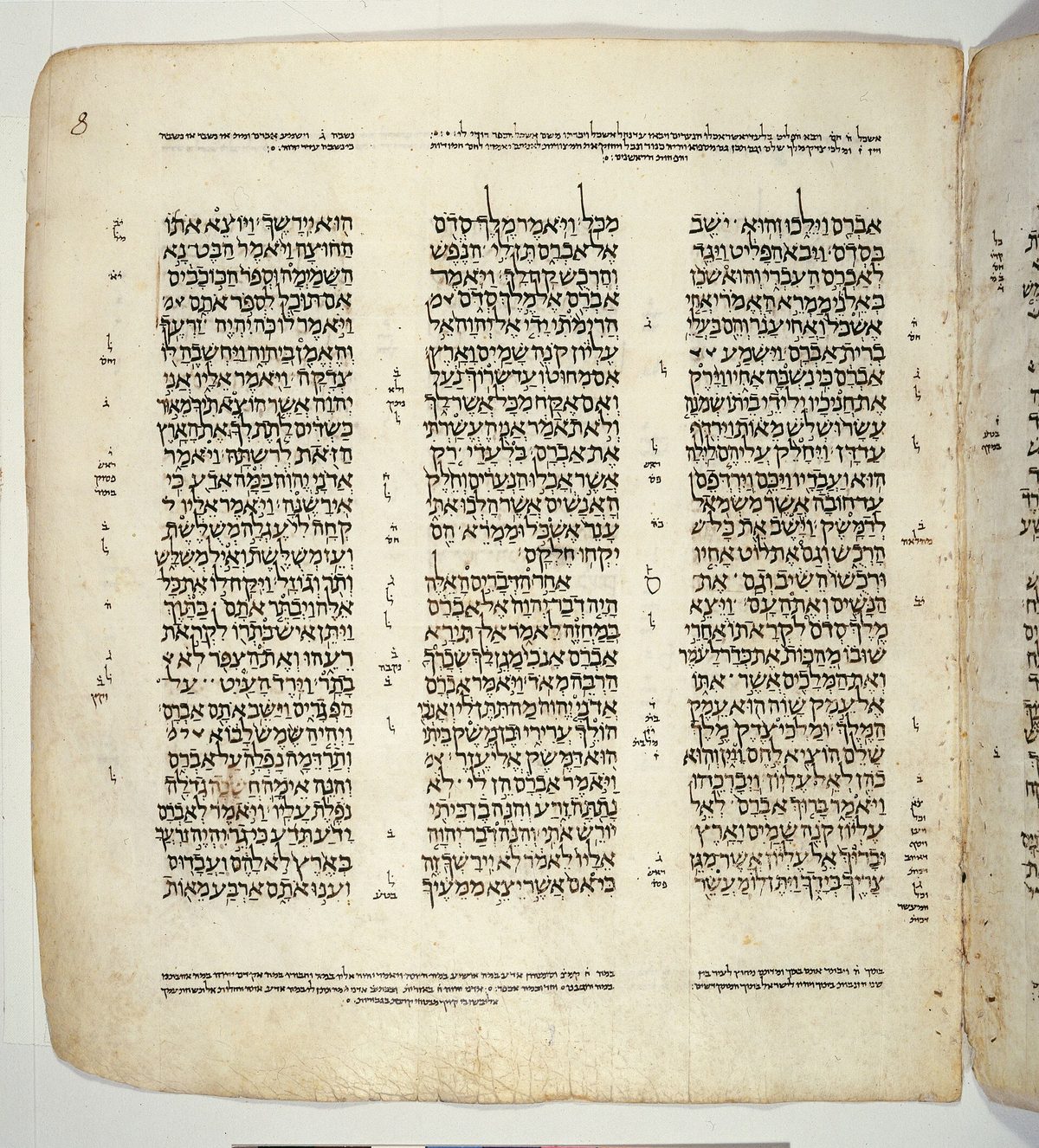
- Wikimedia Commons, Leningrad Codex folio 8a checked 2026-10
